



It has become one of the most common — and most misunderstood — terms in economic development. Consultants, developers, and corporate site selectors explain what the concept really means in practice.

This is your chance to understand what actually qualifies as Advanced Manufacturing — and what it signals to investors.

The convergence of science and industry now underway could signal a return of medicine production to American soil—if policy becomes the prescription rather than the diagnosis.
Infrastructure capacity, workforce access, permitting timelines, and longterm expansion potential are redefining what truly qualifies as a competitive industrial sites.

From aerospace and advanced materials to energy technology and robotics, a new generation of industries is reshaping the map of American manufacturing. Are cities ready?

Packaging decisions are no longer just about logistics and cost. From sustainability pressures to supply chain resilience, companies are rethinking facility design, material sourcing, and long-term manufacturing flexibility.

Rising power demand and grid uncertainty are pushing manufacturers to consider energy generation on their own property. From microgrids to behind-the-meter generation, companies are reevaluating energy strategy.

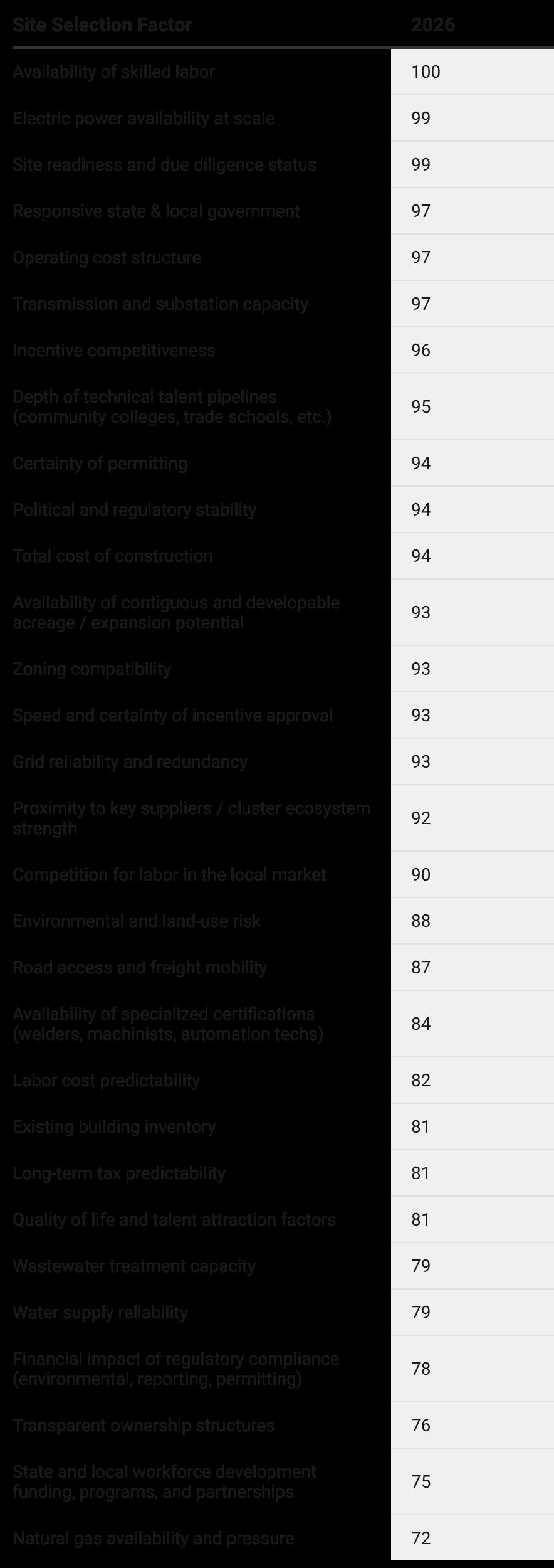
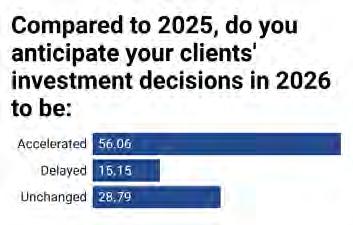
Each year, Area Development asks the people who make location decisions for a living — corporate executives and site selection consultants — what actually matters when choosing where companies invest. The latest survey reveals how priorities are shifting across workforce availability, infrastructure capacity, energy costs, incentives, and permitting timelines. Some factors remain remarkably consistent, while others are rising quickly as power constraints, supply chain resilience, and speed to market reshape the industrial landscape.
6 Editor’s Note
Who’s ready for readiness?
10 Featured Contributors
Meet the thought leaders who shared their expertise in Q1
12 Data Warehouse
Manufacturing jobs stuck in limbo
14 In Focus
When property laws hurt site 15 Market Report
Data center demand hasn’t let up
16 From the Podcast
Excertps from John Loyack, Justin McAfee, and James Walker
18 Frontline
Innovations and project insights from around the country
• Prefab data center partnership
• North Dakota’s power play
• Zyn factory opens in Colorado
•Google’s long term financing
22 First Person

Workforce pipelines are becoming one of the most decisive variables in site selection. Area Development’s new Manufacturing Talent Pipeline Rankings begin an annual look at how states are developing industrial talent and translating that workforce into real manufacturing employment.
James Tafel, president of the National Association of Foreign Trade Zones
80 Last Word
The stakes have raised for bureaucrats
Kentucky’s Product Development Initiative is translating preparation into performance.
By Kentucky Cabinet for Economic Development
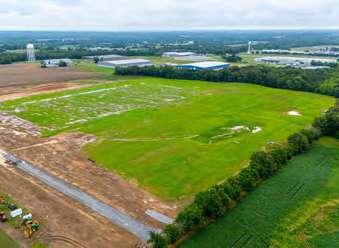
Prepared industrial sites in Kentucky are positioned for rapid development as part of the state’s speed to market economic growth strategy. Photo courtesy of KCED.
Companies across the country and around the world are seeking to expand their operations to meet growing consumer demand, which has put a premium on shovel-ready, available sites.
One of the most important factors for decision-makers considering a new location is finding states capable of providing quick and efficient turnaround times from the initial stages of a project to the start of operations.
“Ensuring that companies seeking to expand their operations have an upper hand by doing it here in Kentucky is critical to our state’s economy and workforce development,” Gov. Andy Beshear said. “The commonwealth is known for its business-friendly environment, and having sites ready for growing businesses is a key factor. I am proud of the growth we’ve seen with speed to market during my administration, and I appreciate the local and state economic development officials for their continued dedication to the commonwealth’s success.”
From Pikeville to Paducah, the commonwealth has taken an aggressive approach to meeting these growing demands, preparing sites in every corner of the state that allow businesses to
expedite project timelines in ways many other states cannot.
Kentucky’s speed-to-market and site selection initiatives are spearheaded by its Build-Ready sites and the Kentucky Product Development Initiative, which give the commonwealth a key advantage over competing states for businesses looking to locate or expand operations quickly and efficiently.
The Kentucky Product Development Initiative is a collaboration between the Cabinet for Economic Development and the Kentucky Association for Economic Development. Through the program, the state enables companies to locate in Kentucky while mitigating risks and delays normally associated with the construction process. The initiative provides funding for local communities to invest in site and building upgrades to support future economic growth and bring well-paying jobs to Kentuckians.
Two rounds of the previous iteration of the program in 2022 approved 96 projects statewide for nearly $90 million in funding. Including local contributions, those projects have generated more than $512 million in investments in Kentucky’s sites and buildings portfolio.
To date, 51 companies have located on pilot Product Development Initiative and Kentucky Product Development Initiative-funded sites, totaling more than $5.7 billion in capital investment and creating more than 7,400 new jobs.
The Kentucky Product Development Initiative also supports transformative site and infrastructure improvement projects, including the development of Build-Ready sites.With a Build-Ready site, much of the work — aside from vertical construction — has already been com-
pleted. That includes site control, archaeological, environmental and geotechnical studies, construction of a building pad, preliminary design work, approved site plan permits and necessary infrastructure installation. On a Build-Ready site, construction can begin immediately.
To be certified as Build-Ready, a site must include a pad capable of accommodating a 50,000-square-foot building, with the ability to expand to 100,000 square feet or more, and utilities extended to the site. Applicants — typically a city, county or economic development organization — must have filed necessary permits, preliminary building plans, cost estimates and schedule projections. A rendering of a potential building also is required.
The commonwealth is home to 30 available Build-Ready sites, with multiple additional locations working toward certification.
To date, 12 former Build-Ready-certified sites — including tracts in Barren, Butler, Christian, Graves, Hart, Laurel and Pulaski counties and five sites in Warren County — have been selected by companies for new location projects. These sites allow companies to bring operations online efficiently while creating jobs for local communities.
Kentucky’s continued investment in speed-to-market initiatives is laying the foundation for sustained economic growth and high-wage job opportunities across the state. These programs are already generating measurable results, positioning the commonwealth for continued success.For more information on the Kentucky Product Development Initiative, visit ced.ky.gov/kpdi. To learn more about Build-Ready sites and available locations, visit ced.ky.gov/BuildReady.
This article was paid for and written by Team Kentucky Cabinet for Economic Development and approved by Area Development.

In recent conversations with site selectors, attorneys, and utility executives, one theme keeps surfacing: the sites are scarce, the power is constrained, and uncertainty is slowing decisions.
Projects are penciled. Capital is allocated. Boards are aligned. But between land control, transmission capacity, workforce depth, and policy volatility, the margin for error has narrowed considerably. What once felt like manageable variables now function as gatekeepers.
That reality frames this issue’s focus on site readiness, energy, labor availability, tariffs, and the industries reshaping industrial growth.
Site readiness is no longer a marketing phrase. It is risk mitigation. Manufacturers cannot afford multi-year delays tied to incomplete environmental work, uncertain permitting timelines, or infrastructure that exists only in concept. The difference between a “marketed” site and a truly ready one can determine whether a project moves — or stalls.
Energy has become equally decisive. Electrification, AI, and data center expansion are straining grid capacity in regions that once assumed surplus. Access to reliable, scalable power now
2026 EDITORIAL ADVISORY BOARD
Scott Kupperman Founder KUPPERMAN LOCATION SOLUTIONS
Eric Stavriotis Vice Chairman, Advisory & Transaction Services CBRE
Brian Corde Managing Partner ATLAS INSIGHT
Amy Gerber Executive Managing Director, Business Incentives Practice CUSHMAN & WAKEFIELD
Alexandra Segers General Manager TOCHI ADVISORS
Dennis Cuneo Owner DC STRATEGIC ADVISORS
Courtney Dunbar Site Selection & Economic Development Leader BURNS & MCDONNELL
Ramya Gowda Managing Director, Global Strategy and Consultin NEWMARK
Bradley Migdal Executive Managing Director, Americas, Strategic Consulting CUSHMAN & WAKEFIELD
Marc Beauchamp President SCI GLOBAL
David Hickey Managing Director HICKEY & ASSOCIATES
Chris Schwinden Partner SITE SELECTION GROUP
Publisher Dennis J. Shea dshea@areadevelopment.com
Sydney Russell,
Publisher 1965-1986
Events / Business Development Director
Matthew Shea (ext. 231) mshea@areadevelopment.com
Media / Accounts Director
Justin Shea (ext. 220) jshea@areadevelopment.com
Editor Andy Greiner editor@areadevelopment.com
Staff and Contributing Editors
Kimberly Graulein
Mark Schantz
Steve Kaelble
Circulation/Subscriptions circ@areadevelopment.com
weighs as heavily as incentive packages. Communities aligning long-term generation planning with industrial recruitment are gaining an edge.
Labor remains the parallel constraint. Investment without a skilled workforce is stranded capacity. The conversation has matured beyond simple headcount to skills alignment, training pipelines, housing, and retention strategies.
Layered over all of it is tariff and geopolitical uncertainty. Supply chains are being recalibrated. Nearshoring strategies are under review. Policy risk now factors directly into capital allocation.
Meanwhile, industries of the future — advanced energy, AI infrastructure, next-generation manufacturing — are raising the bar on what readiness requires.
The question is no longer simply where a project can land.

It is where it can land — and operate
Andy Greiner
Chris Volney Managing Director, Americas Consulting CBRE
Matthew R. Powers, Lead Site Selection Consultant REDI SITE SELECTION
Scott J. Ziance Partner and Economic Incentives Practice Leader VORYS, SATER, SEYMOUR AND PEASE LLP
Chris Chmura, Ph.D. CEO & Founder CHMURA ECONOMICS & ANALYTICS
Alan Reeves Senior Managing Director, Global Strategy Consulting NEWMARK
Lauren Berry Director, Location Analysis and Incentives
MAXIS ADVISORS
Courtland Robinson Director of Business Development BRASFIELD & GORRIE
Dianne Jones Managing Director, Business and Economic Incentives JLL
Joe Dunlap Founder & Advisor, BLUEJ ADVISORS
Scott Canada President, Mission Critcal MCCARTHY
Production Manager Jessica Whitebook jessica@areadevelopment.com
Web Designer Carmela Emerson
Art Director
Victoria Corish
Business/Finance Assistant Barbara Olsen (ext. 225) olsen@areadevelopment.com finance@areadevelopment.com
Halcyon Business Publications, Inc.
President Dennis J. Shea
Correspondence to: Area Development Magazine
30 Jericho Executive Plaza
Suite 400 W Jericho, NY 11753
Phone: 516.338.0900
Toll Free: 800.735.2732 Fax: 516.338.0100


Mississippi is breaking new ground for business with record-setting speed to market. Shovel-ready sites and smoother processes coupled with collaborative communities and leadership help you turn the corner from investment to revenue faster.
Let’s break new ground together.


mississippi.org
Virginia is transforming an invasive blue catfish population into an economic development opportunity, supporting seafood processing, rural job growth and environmental restoration along the Chesapeake Bay
By Virginia Economic Development Partnership
Economic developers love to use the term “ecosystem” to describe the intricacies and players in various industries. But there are times when we engage with the word in its more literal sense.
The Chesapeake Bay is a major part of Virginia’s food and beverage industry, helping the Commonwealth rank third nationally in seafood industry landings in 2022. Now, with support and guidance from VEDP, Virginia researchers are working to protect the bay from a disruptive species.
Virginia and Maryland officials introduced the blue catfish in the 1970s to enhance recreational fishing opportunities along the bay and its tributaries. They have been dealing with the consequences ever since. An adult blue catfish can grow larger than 100 pounds and live for as long as 10 years in both freshwater and saltwater habitats, all the while preying on ecologically significant species in the bay, including the iconic blue crab.
“We’re getting fish that are completely full of nothing but baby clams and oysters,” said Michael Schwarz, associate director of the Virginia Seafood Agricultural Research and Extension Center, a Virginia Tech facility in Hampton. “They’ve eaten everything else and they’re still hungry. They’ll feed wherever they find food.”
Blue catfish have been found in intercoastal waterways as far south as Georgia, underscoring the importance of finding a solution — and Virginia officials are looking to industry to help. Working in their favor: Blue catfish meat is delicious, holds up well to frying and is rich in nutritional benefits. VSAREC data indicates that blue catfish surpass most other lean fish in heart-healthy omega-3 fatty acids. Catfish skin also contains large amounts of collagen, which is popular in the nutritional supplement and cosmetics industries. But the uses for blue catfish go beyond supplements. Fish skin is an emerging factor in burn treatment. Kerecis, an Icelandic biotech company with U.S. headquarters in Arlington County, helped pioneer the technique using fishing industry waste.
With research support from groups including Virginia Tech and VSAREC, the Virginia Institute of Marine Science and others, Virginia is working to develop a sustainable blue catfish fishery to support such innovators. In 2024, the Commonwealth distributed its first awards from the Governor’s Blue Catfish Processing, Flash Freezing, and Infrastructure Grant Program to Sea Farms Inc., a family-owned aquaculture and seafood processing business in Gloucester and Mathews counties on Virginia’s Middle Peninsula. Chris Sopko, Sea Farms’ vice president of

The Virginia Seafood Agricultural Research and Extension Center in Hampton, a division of Virginia Tech, is one of the Virginia research institutions working to solve the invasive blue catfish problem in the Chesapeake Bay.
operations, said the funding would allow the company to “buy and sell larger quantities of blue catfish [and] hire additional employees.”
The “additional employees” piece is crucial in a rural region that has traditionally drawn much of its livelihood from the water. Ideally, a robust fishery can become self-sustaining, growing to pull more catfish from the bay. VEDP’s Food and Beverage Manufacturing team is leading efforts to attract and expand seafood processing around the Chesapeake to support jobs, innovation and long-term economic resilience while revitalizing the seafood industry that has sustained the region for centuries.
“It’s a challenge and a tremendous opportunity,” Schwarz said. “The solution is to fish it down to a sustainable level. We could end up with a whole new fishery that is sustainable, reduce the environmental impact and end up with the best of both worlds in a bad situation.”
This article was paid for and written by Virginia Economic Development Partnership and approved by Area Development.


The companies that constitute Virginia’s food and beverage industry aren’t just doing business — they’re working to ensure the health of the resources they depend on.
From unique oyster growing and harvesting techniques to emerging dairy pasteurization methods to the efforts to combat the invasive blue catfish, Virginia food and beverage manufacturers are working to find innovative ways to grow their businesses sustainably.

Learn more about food and beverage sustainability in Virginia

Benton Blaine
Benton Blaine is a Managing Director at Cushman & Wakefield’s Total Workplace and Consulting practice, advising companies on location strategy, incentives negotiations, and site selection for major corporate expansions.
Page 80
Courtney Dunbar & Kevin Fox
Courtney Dunbar and Kevin Fox of Burns & McDonnell advise companies on site selection, infrastructure planning, and development strategy for major industrial and energy projects. Page 78

Ramya Gowda

Ramya Gowda is a Managing Director at Newmark’s Global Strategy Consulting practice, advising companies on site selection, incentives strategy, and economic development for complex corporate expansion projects. Page 75
Mark Cote
Mark Cote is Vice Chair of Savills’ Global Occupier Services practice, advising multinational companies on corporate real estate strategy and global site selection. Page 74


Beth Buckner & Beth Friedrich

Beth Buckner and Beth Friedrich of Moore & Van Allen advise companies on economic development incentives, site selection strategy, and structuring major expansion projects. Page 64
Courtland Robinson
Courtland Robinson of Brasfield & Gorrie works with companies on facility planning and construction strategy for largescale industrial, manufacturing, and infrastructure projects. Page 62

Mario Ochoa

Mario Ochoa is a Managing Director with JLL’s Advanced Manufacturing Group, advising companies on site selection, portfolio strategy, and industrial real estate for global manufacturing operations. Page 60
Tom Croteau
Tom Croteau is a Senior Managing Director at Maxis Advisors, advising companies on location strategy, incentives negotiations, and regulatory considerations tied to expansions. Page 14
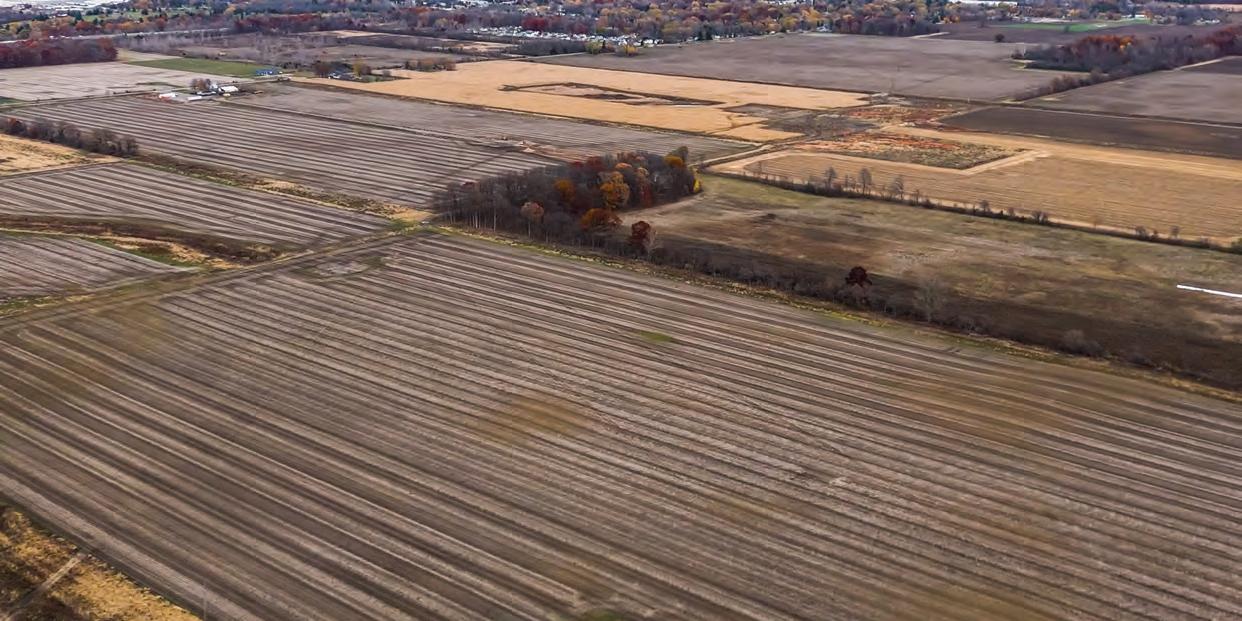
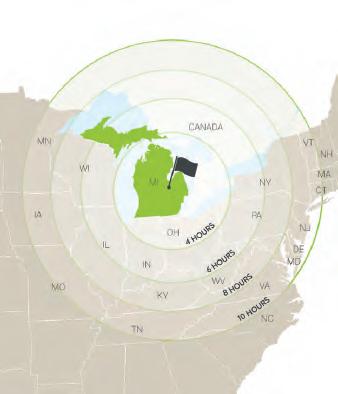
The 1,300-acre Advanced Manufacturing District of Genesee County is shovelready with unmatched potential

76,500 424
Manufacturing project announcements between July 2025 and February 2026, according to Area Development tracking
Potential jobs attached to projects tracked by Area Development
82
Median Jobs Per Project, according to Area Development analysis of job project announcements
Project announcements point to continued investment while employment trends underscore a shift toward capital-intensive, automation-driven growth.
-75,000 2026 vs 2025
Net Change In U.S. Manufacturing Employment
Year-Over-Year, Seasonally Adjusted
Sources: Area Development Project Announcement Tracker. Bureau of Labor Statistics.
Notes: Project counts, cap ex, and jobs figures reflect public disclosures and estimates available.

Ingredients: Supply chain resiliency. Legendary innovation. World-class talent. Exceptional quality of life. Fortified with 100% of your daily value of business support. Visit biz.DiscoverMiddlesex.com to schedule a meeting with an advisor in your industry.
By Tom Croteau, Senior Managing Director at Maxis Advisers
For decades, property ownership was one of the more straightforward variables in a site selection process. Zoning, price, access, and timing mattered far more than who ultimately held title. That assumption no longer holds.
Today, ownership itself has become a constraint—particularly for foreign manufacturers evaluating U.S. expansion. In some cases, it is now as consequential as labor availability, infrastructure capacity, or permitting timelines. Unlike those traditional factors, ownership rules are changing rapidly and unevenly across the country.
State-level legislation restricting land ownership by foreign nationals or foreigncontrolled entities is evolving at a pace that complicates long-term planning. In many states, these laws are updated frequently and vary significantly in scope. Some focus narrowly on agricultural land. Others extend to industrial or commercial property. Some apply to individuals. Others to companies or government entities. Still others combine both.
For companies considering U.S. investment, this creates uncertainty that did not exist even a few years ago. From
a site selection standpoint, it requires a far more detailed understanding of property law before a location can be considered viable.
Legislation, however, is only part of the picture. Economic development policy does not always move in lockstep with statutory restrictions. In some states, the law creates barriers while local development organizations remain open to foreign industrial clients. In others, the signal is the opposite.
Navigating that gap between law and policy has become one of the most challenging aspects of the process. It requires understanding not only the statutes, but how they are interpreted and enforced locally.
For many foreign manufacturers—particularly Chinese industrial companies—the result has been a more cautious approach. Some are diverting attention toward Europe or Mexico. Others are pausing, waiting for clarity on trade policy and tariffs.
The pending renegotiation of the USMCA agreement adds to that uncertainty. Companies evaluating a Mexicobased strategy to serve U.S. customers are doing so without a reliable view of future market access. That ambiguity has slowed decision-making.
At the same time, there is urgency. Many of these companies already serve U.S. customers. Tariffs, visa avail-
ability, and trade barriers affect pricing, competitiveness, and speed to market. Others are simply trying to shorten supply chains and operate closer to end users.
In this context, “wait and see” is not a lack of interest. It is risk management.
China represents a substantial share of global manufacturing output—far exceeding any other country. That production capacity does not disappear because of political tension.
From a practical standpoint, U.S. site selection professionals and policymakers must grapple with how engagement occurs, not whether it occurs. Protecting agricultural land and sensitive assets is essential. But ignoring capable foreign companies does not eliminate demand; it pushes activity elsewhere, encourages workaround structures, or delays investment.
There is historical perspective worth remembering. In the 1960s and 1970s, Japanese manufacturers faced skepticism in the U.S., particularly in automotive. Over time, competition drove improvements in quality and efficiency—benefiting both foreign producers and domestic industries.
That evolution did not happen in spite of competition. It happened because of it.
None of this minimizes legitimate national security
concerns. The United States already has a formal process through CFIUS to assess risks tied to foreign investment, and it has become an increasingly important consideration in site selection.
The challenge arises when broad restrictions remove the ability to evaluate projects on their individual merits.
From a site selection perspective, precision matters. Treating all foreign investment the same—regardless of industry, customer base, or location—limits options and introduces friction into a process already facing tight timelines and rising costs.
As property law increasingly shapes where projects can move forward, ownership restrictions must be evaluated early in any location strategy. It is no longer a back-end legal detail. It is a front-end site constraint.
Balancing security with flexibility—allowing projects to be assessed thoughtfully rather than broadly excluded—will determine who remains competitive in an increasingly complex industrial landscape.
Property ownership is no longer a back-end legal detail
Demand is a given. Power, timelines, and execution are not — and that’s where 2026 decisions are getting made.
By Area Development Research Desk
The data center conversation heading into 2026 looks familiar on the surface, and yet, things are very different underneath. It’s true that demand is still overwhelming supply. Capital is still available. Everyone still wants to talk about AI. What’s changed is where projects break, how long they take, and which markets can realistically execute.
Across the major brokerage outlooks, the consensus is less about growth and more about constraint management — power, timing, cost, and political risk — with consequences for site selection decisions being made right now.
JLL’s 2026 Global Data Center Outlook puts numbers behind what most of us are already experiencing: the industry is preparing to add nearly 100 gigawatts of capacity globally between 2026 and 2030, effectively doubling today’s installed base, while sustaining a fourteen percent compound annual growth rate through the end of the decade. JLL frames this as an infrastructure supercycle, estimating up to three trillion dollars in combined real estate, fit-out, and IT investment by 2030 — not aspirational growth, but capital already lining up behind committed demand.
The implication for corporate real estate teams is straightforward: capacity isn’t optional, and delay is expensive. But the path to delivery is increasingly uneven.
In the U.S., CBRE’s 2026 Data Center Outlook underscores how tight fundamentals have become. Vacancy across primary markets remains at historic lows, preleasing on projects under construction continues to hover well above historical norms, and pricing power remains firmly with landlords and developers. CBRE is explicit that this is no longer a twelve- to eighteen-month development conversation. Utility interconnection timelines of two to four years are now common in core markets, fundamentally reshaping how early site selection and power negotiations must begin.
That shift — from landdriven to power-driven site selection — runs through every major report.
Cushman & Wakefield’s Americas Data Center Update reinforces that power availability, not zoning or fiber, is now the gating factor in nearly every established hub . Northern Virginia, Chicago, Phoenix, Dallas–Fort Worth, and Atlanta remain dominant, but Cushman notes that congestion at the utility level is pushing developers and occupiers toward secondary and tertiary markets where grid capacity is more predictable, even if labor and vendor ecosystems are thinner.
This same dynamic shows up globally. Cushman & Wakefield’s European Outlook 2026 highlights that markets with stable regulatory regimes and
surplus power — particularly in the Nordics — are becoming disproportionately attractive for AI workloads, while traditional Western European hubs face mounting delivery friction tied to energy policy and permitting complexity.
Capital markets are responding accordingly. Colliers’ 2026 Global Investor Outlook shows data centers capturing roughly thirty-one percent of global private real estate investment in recent quarters, positioning digital infrastructure alongside industrial as a core allocation rather than a niche strategy . That influx of capital is a double-edged sword for occupiers: liquidity is strong, but competition for well-located, power-secured sites has intensified, and underwriting assumptions are less forgiving around entitlement risk and schedule uncertainty (Colliers).
Newmark’s U.S. Commercial Real Estate in 2026: A Sectorby-Sector Outlook situates data centers within a broader CRE stabilization narrative, but the subtext is important: digital infrastructure is no longer insulated from the realities of construction cost escalation, capital discipline, and political scrutiny (. Newmark’s framing reflects what many corporate teams are grappling with — integrating data center expansion into enterprise-wide capital planning rather than treating it as a standalone technical exercise.
What ties these outlooks together is not optimism about demand — that’s a given — but realism about execution.
Build costs continue to rise, with JLL projecting sustained mid-single-digit annual increases through the second half of the decade . Interconnection queues are lengthening, not shortening. Local opposition to large-scale infrastructure, particularly in power-constrained metros, is becoming more organized. In response, more projects are incorporating behind-themeter generation, battery storage, and hybrid power strategies earlier in the planning process, despite higher upfront capital requirements.
For corporate real estate and site selection leaders, the practical takeaway for 2026 is that site readiness is no longer a binary condition. It’s a spectrum defined by power certainty, entitlement risk, delivery sequencing, and political alignment. Markets that can demonstrate credible power timelines and coordinated permitting are separating themselves quickly. Those that cannot are being bypassed — regardless of incentives.
The next wave of data center development will not be won by the cheapest land or the loudest incentives package, rather by the regions that can prove, early and convincingly, that they can deliver megawatts on schedule.

All of the excerpts on this page are drawn from recent episodes of the Area Development Podcast. Hear the complete conversations and more expert voices at AreaDevelopment. com/podcasts or on your favorite podcast app.

James Walker, CEO, Nano Nuclear Energy
Area Development: If microreactors and small modular reactors are so promising, why aren’t they already powering data centers and military bases across the country?
Walker: “You’re right. It’s weird because the US I would say is in the lead quite substantially on the reactor technology front, especially advanced reactor systems, Gen Four reactors. But the fuel supply chain is atrophied hugely. So we are massively behind Russia and China on our ability to make the fuel that goes into our reactor systems. So it’s a bit of a weird situation.”
Area Development Magazine: So the technology is moving, but the supporting industrial base has fallen behind?
Walker: “One of the first facilities we’ll have is a conversion facility, which is essentially a chemical plant that takes yellowcake and makes uranium hexafluoride. Now you’re looking at a fairly big industrial operation for something like that, probably a couple hundred acres of siting, which are combined with certainly several hundred personnel.”
“If the enrichment facility goes ahead that we’re currently working on as well, that’ll be a fairly enormous facility too. It might have to be paired with a deconversion facility as well. So you’d be looking at a sort of a 500-acre industrial operation with staff numbering somewhere in the region about 800 people.”
The U.S. is in the lead on reactor technology, but the fuel supply chain is atrophied hugely
John Loyack, North Carolina Community College System
From our conversation about the growing shortage of skilled labor and how states are rebuilding workforce pipelines.
Area Development Magazine: Data shows the U.S. faces a growing shortage of skilled workers. What’s driving the gap?
Loyack: “I think there’s a number of things going on… It’s been years in the making. We’re paying off now for some of the decisions that were made a number of years ago.”
“I’m somebody who grew up in the 80s and 90s, and there was that huge push… there really wasn’t any other option other than to go to a four-year institution. It was all about get your degree.”
Area Development Magazine: So the workforce pipeline has to change?
Loyack: “Today things are different. Folks are recognizing there’s got to be a different path… We need to provide other options to folks who might not otherwise want to take a path to a four-year university.”
Justin McAfee, CEO and Founder, WrightOne
From our conversation about WrightOne’s move to Cedar Park, Texas, and what mattered most in the company’s solo site selection process.
Area Development Magazine: What were the top three factors that tipped the scale in selecting Cedar Park for your new HQ and manufacturing facility?
McAfee: “The first metric we were looking at was execution. The second metric was, are you able to align with us in terms of our company and where we need to be within 12 months? And Cedar Park completely shocked me. Every single time.”
“We hadn’t even talked about the incentive package. That was inspiring for me having these conversations with Cedar Park. The third thing was the timing. We needed to move fast.”
It wasn’t about the dollar amount. It was getting the support from the community that was top of mind.
Justin McAfee, WrightOne
For McAfee, workforce readiness meant more than general labor availability. It meant finding a place that could support the specific technical skills his operation required.
“Yes, it was one of the key conversations that we had at the very beginning. The first conversation that I had with Cedar Park actually was, these are the people I’m looking for. How does this play out in terms of locations for Cedar Park?”
“One of the things we’re doing in the recycling process is the machining aspect. When this part breaks down, it’s usually the PCB that breaks down. We recoup our margin through each lifecycle. We take this stator, pull off the PCB, and then we solder on an additional PCB. That takes a degree of skill. That’s exactly what we were looking for in terms of the community that could support that.”fast.”
Justin McAfee, WrightOne
On what he would tell another founder beginning a manufacturing site search:
“First to put together a list of cities. You may think 25 is good enough. No, go even further.”
“The second thing is, when you’re actually starting a process, the initial conversations that you have, it’s usually either with the mayor or it’s economic development.”
“The third suggestion is that as soon as you do the first meeting, you need to find someone to really help you through that process. My expertise is in manufacturing, not economic development.”
If you want, I can also make the Walker section feel even more like a classic print Q&A block, with fewer setup lines and a punchier headline/subhead.
By Kimberly Graulein Area Development Staff
The race to deliver AI compute is forcing data center developers to rethink the slow, sequential nature of traditional builds. A new partnership between JLL and InfraPartners is built around a simple premise: overlap more of the work, standardize more of the process, and get GPUs producing “first token” faster.
InfraPartners, an ODM manufacturer of prefabricated data centers, partnered with JLL’s data centers and critical environments team to pair prefab manufacturing with global project management, site work, and operations support.
Michalis Grigoratos, CEO and co-founder of InfraPartners told Area Development that the combined approach can remove months from the critical path by running parallel tracks: JLL advances pre-development and site work while InfraPartners manufactures major components off-site. “We’re able to remove the sequential phase from a traditional project,” he said, describing a model where site diligence, surveys and validation can happen while the asset is being built in a factory. He said the model can “take away basically anywhere between 13 and 22 months on typical hyperscale development,” which
he characterized as “about 48 percent acceleration.”
Matt Landeck, division president for data centers and critical environments at JLL, framed the partnership as a complementary fit. “We’re a service provider. We’re never getting into the prefab business, and Michaelis is in prefab and really not looking to go into being a service provider,” Landeck said. “When you eliminate the friction around potentially where we may be competing, that makes it quite easy…to work together.”
Both executives pointed to repeatability as a key advantage. Landeck said the goal is knowledge retention around a stable “basis of design,” enabling a “rinse and repeat approach” that can compress timelines further over multiple deployments. Grigoratos emphasized the operational upside of not having to retrain teams on every project. “We operate from a blueprint, and we don’t have to explain the same thing over and over again,” he said. “It makes me more profitable… and it makes JLL more profitable because they don’t have to learn every single project, every single time.”
The conversation comes as grid constraints and land availability push AI-grade builds into places that would have been unlikely candidates a decade ago. “From a JLL perspective, really it’s power and land is where we’re at,” Landeck said, adding that the challenge for emerging markets is building an ecosystem that can absorb construction surges and support long-term operations staffing.
Labor remains a looming constraint, particularly in remote power-rich areas such as West Texas. Grigoratos described a scenario where “a gigawatt AI factory” could require “anything between five
and 7,000 people on site” at peak. InfraPartners’ strategy is to “centraliz[e] the majority, 80% of the work in a factory environment,” he said, while leaning on JLL’s scale to forecast staffing needs earlier: “Say, hey, in three months, I need 200 people in this location.”
Capital is still flowing into the sector, Landeck said, even as higher rates change refinancing math. But both flagged a newer pressure point: real estate and infrastructure may become technologically obsolete before they are physically depreciated. That mismatch, they said, is likely to become a bigger board-level issue as AI deployments scale.
North Dakota’s entry into large-scale data center development is driven by a constraint — but not the one most markets are facing.
The state expects three to three-and-a-half billion cubic feet of excess natural gas within the next five to seven years as Bakken production continues to grow while export pipelines near capacity, according to Richard Garman of North Dakota Economic Development. Moving more gas out of state would require new interstate pipelines, a process that is slow, expensive, and politically fraught. Restricting production would also restrict oil output and tax revenue.
“So the question becomes: what do you do with that gas?” Garman says.
North Dakota’s answer has been to treat surplus natural gas as an in-state economic development input — converting it into gigawatt-scale power generation rather than exporting the fuel itself. Few industries can absorb that kind of load, but AI and high-performance computing facilities can. That approach is already visible on the ground. Applied Digital operates the state’s two largest data center campuses. Its Ellendale facility evolved from crypto mining into a large-scale data center build that began construction in late 2023 and reached commercial operations in late 2025, Garman says. A second campus near the Fargo region is under construction now, with site work underway despite winter conditions. The projects reflect a broader shift in how developers are evaluating markets. Loads that once measured ten or fifty megawatts are now planned in the hundreds, with long-term expansion targets approaching a gigawatt. In many traditional data center hubs, utilities are struggling to accommodate that growth on existing grids.
North Dakota’s advantage is less about incentives than conversion speed — how quickly surplus fuel can become delivered power. Garman points to a regulatory environment shaped by decades of large energy projects, where air, water, and carbon permitting processes are well understood and sequenced early.
The bet is straightforward: as grid constraints intensify elsewhere, markets that can turn stranded fuel into megawatts — rather than promises — will capture the next wave of AI infrastructure.
The challenge wasn’t the design. It wasn’t the equipment. It wasn’t even the product. It was the clock.
When Philip Morris International committed to building its new Zyn manufacturing facility in Aurora, Colorado, the timeline was already aggressive — and the site was not yet fully formed. There were no finished roads. Utilities were not fully connected. Infrastructure still needed to be extended.
“We didn’t have anything — no land, no state identified,” said Massimo Caffarelli, who oversees the Aurora project for PMI. “The timeline was very ambitious.”
In many markets, that would have delayed a project by a year or more. Instead, PMI compressed the process. Construction began before the full design was complete. Infrastructure advanced in parallel with vertical building work. Equipment procurement and installation moved alongside civil development.
For Caffarelli, urgency wasn’t simply a constraint. It became the organizing principle.
“Starting construction without a completed design was one of the main challenges,” he said. “We were designing the building and building at the same time.”
That shift — allowing the timeline to dictate the schedule rather than the reverse — required more than speed. It required coordination across contractors, utilities, regula-
tors, and workforce partners at a level typically reserved for megaprojects.
The facility itself spans more than 600,000 square feet and incorporates vertical process engineering to support PMI’s production flow. But the physical scale is only part of the story. The greater complexity lay in synchronizing infrastructure with construction.
Roads were developed while the plant structure rose. Utility connections were secured while interior systems were being installed. Power, water, and gas had to align with equipment commissioning — not months later, but within the same compressed window.
“I think the biggest challenge was clearly the timeline,” Caffarelli said. “We were able to build the factory while building the roads, creating all the utilities, in a very complex area.”
That complexity was magnified by proximity to Denver International Airport, where coordination and compliance require careful planning. At the same time, the surrounding area was undergoing residential development, adding another layer of infrastructure coordination.
Urgency alone, however, does not guarantee speed. Predictability does.
“Great projects require strong partnerships,” said Wendy Mitchell, President and CEO of the Aurora Economic Development Council, who helped guide PMI and the City of Aurora.
In practical terms, that meant aligning permitting and approvals with the compressed schedule. According to Mitchell, the company received a foundation permit within six months — a milestone that can stretch far longer in many jurisdictions.
For corporate site selectors, predictability may be
more valuable than incentives. A six-month permit on a large-scale manufacturing facility signals that a region can match the urgency of corporate capital.
The urgency extended beyond concrete and steel. PMI partnered with the Community College of Aurora to prepare operators before production began, integrating workforce readiness into the construction timeline. Employees were trained in safety, quality, and operational systems so that production could begin without a prolonged ramp-up period.
The result is a facility that moved from greenfield to production in roughly two years — a pace that reflects a broader shift in U.S. manufacturing strategy. Companies are no longer waiting for perfect sites. They are asking whether regions can mobilize quickly, solve problems in parallel, and protect aggressive schedules.
For Caffarelli, the lesson is simple but demanding.
“To be sure that everyone, despite when I started to give the timeline, everyone was laughing, really believing it was possible,” he said. “Then we got it.”
When Alphabet issued a 100-year corporate bond this winter, it wasn’t simply raising capital. It was financing a vision of infrastructure that extends into the next century.
The parent company of Google sold the ultra-long bond as part of a multibilliondollar debt offering to fund its accelerating investment in artificial intelligence and data center capacity. In corporate finance, century bonds are rare. In technology, they are
almost unheard of. Most companies borrow for five, 10, or 30 years. Alphabet chose 100.
The move reflects a fundamental shift in what technology companies are becoming. For decades, Google symbolized an asset-light business model driven by software and advertising. The AI era has changed that equation. Training and deploying large-scale models now requires hyperscale campuses filled with custom chips, cooling systems, transmission upgrades, and long-term power contracts. These are not short-lived investments. They are physical platforms designed to operate for decades.
Issuing 100-year debt aligns financing with that reality. When assets are meant to endure, so is the capital structure supporting them.
Historically, century bonds were issued by sovereign governments or regulated utilities — entities perceived as stable and foundational. Investor demand for Alphabet’s issuance suggests that major institutional buyers increasingly see Google in a similar light: not as a volatile tech company, but as a durable infrastructure operator with generational cash flow.
For site selectors, the takeaway is straightforward: data centers are no longer tactical deployments. They are permanent infrastructure plays. When a company finances projects on a 100-year horizon, it implies long-term commitments to regions that can support reliable power, water, fiber connectivity, and regulatory stability over decades — not election cycles.
For economic developers and corporate location teams alike, the message is clear: the companies building the digital backbone of the next century are financing it as if they intend to stay that long. The regions that host them must plan accordingly.
A central U.S. location delivering cost stability, logistics reach and industry-focused workforce development
By Oklahoma DOC
In today’s site selection environment, companies are weighing far more than labor rates and land prices. They are evaluating speed to market, energy security, logistics efficiency, workforce readiness, and longterm cost stability. Oklahoma continues to surface in those conversations because it delivers across all of those metrics—without sacrificing affordability.
Oklahoma consistently ranks among the lowest-cost states in the nation for doing business. That advantage begins with taxes. The state’s corporate income tax rate stands at just 4 percent—tied for the second-lowest rate in the country. For manufacturers and corporate investors modeling long-term operating costs, that difference compounds quickly over the life of a facility.
Beyond taxes, companies benefit from competitive labor costs, affordable utilities, and a business climate designed to minimize regulatory friction. WalletHub’s 2026 ranking placed Oklahoma #4 overall for Best States to Start a Business and #2 in the Business Cost category, citing factors such as small-business growth, startup density, financing availability, venture investment activity, and higher-education assets. The result is an environment where both startups and global manufacturers can scale efficiently.
Geography remains one of Oklahoma’s most durable advantages. Positioned at the crossroads of major interstate highways and rail corridors, the state provides efficient
access to both coasts and major population centers. For companies operating national supply chains, that central location shortens shipping times, reduces transportation costs, and improves coordination across distributed operations.
Oklahoma’s transportation network supports a range of industries—from aerospace and advanced manufacturing to energy, food processing, and logistics. Interstate highways intersect the state in all directions. Rail service connects to national carriers. Inland ports and air cargo capabilities add further flexibility. For companies that depend on predictable distribution timelines and real-time communication across regions, Oklahoma’s connectivity simplifies operations.
Speed to market increasingly determines project viability. Oklahoma addresses this head-on with a portfolio of infrastructureready industrial sites across the state. Many sites are equipped with access to utilities, transportation, and workforce pipelines, reducing the time between announcement and production.
From large-scale manufacturing campuses to specialized industrial parks, the state offers options that accommodate diverse industry needs. Public-private coordination at the local and state level helps streamline permitting, infrastructure alignment, and workforce training—critical components for companies seeking certainty in execution.
Workforce development continues to shape corporate location
strategy, and Oklahoma stands out in this category. The state ranks No. 1 in the South Central region for Workforce Development and No. 6 overall nationwide, according to WalletHub. That performance reflects a long-term commitment to aligning training programs with industry demand.
State-led workforce initiatives and partnerships connect employers with customized training, upskilling programs, and talent pipelines through community colleges and technical centers. For manufacturers and technology-driven industries alike, this alignment reduces ramp-up risk and supports sustained growth.
In practical terms, that means companies can launch operations knowing that local institutions are prepared to train and retrain workers as production evolves. It also reinforces Oklahoma’s ability to attract both domestic expansions and foreign direct investment.
Energy reliability and cost have reemerged as central concerns in site selection. Oklahoma offers both traditional energy strength and renewable leadership. The state has climbed to No. 4 nationally in renewable energy production, according to Motley Fool’s annual study. Today, 42 percent of Oklahoma’s total power generation comes from renewable sources.
That blend—abundant conventional energy alongside a rapidly expanding renewable portfolio—gives companies flexibility. Manufacturers with sustainability mandates can access renewable power at scale. Energy-intensive industries benefit from competitive rates and grid reliability. As corporate decarbonization goals
intersect with operational realities, Oklahoma’s energy mix provides options rather than constraints.
Oklahoma complements its cost advantages with a broad range of incentive programs and statesupported partnerships designed to lower upfront capital pressure and support long-term growth. Programs target job creation, capital investment, research and development, and workforce training.
Crucially, these programs are structured to align with measurable economic impact. Companies evaluating Oklahoma can expect coordinated engagement from state and local partners focused on accelerating timelines and reducing uncertainty. The emphasis is not only on attracting projects, but on ensuring their long-term success.
In a national landscape where costs are rising and timelines are tightening, Oklahoma offers a balanced equation: low taxes, competitive operating costs, strong logistics, renewable energy momentum, and a workforce system built for industry. It is not simply a low-cost option—it is a strategic location designed to support growth across sectors.
For companies evaluating expansion or relocation, Oklahoma represents a market where affordability and performance coexist. And in an era defined by operational certainty, that combination continues to gain attention

As tariffs, geopolitics, and supply chains reshape global manufacturing, we discuss why foreign trade zones should be considered by companies planning their next facility investment

As tariff policy shifts and trade uncertainty continues to shape corporate decision-making, Foreign Trade Zones (FTZs) are drawing renewed attention from manufacturers, distributors, and economic development professionals.
Area Development spoke with Jeff Tafel, President of the National Association of Foreign Trade Zones, about what his organization’s latest member survey reveals — and how companies should think about FTZ strategy in 2026.
Area Development: Jeff, for readers who may not be deeply familiar with the program, can you briefly introduce yourself and your organization?
Jeff Tafel: “My name is Jeff Tafel, and I am the president of the National Association of Foreign Trade Zones.”
Your association recently released a benchmark survey looking back at 2025. What prompted that effort?
Tafel: “We really didn’t know what to expect… we really wanted to take the temperature of the membership… look back over the past year… there’s certainly been that large amount of uncertainty and upheaval.”
And what did the data show?
Tafel: “49% of our members were reporting that their FTZ activity actually increased in 2025… 18% said that their levels stayed about the same.”
Nearly half of respondents reported increased activity in a year defined by tariff volatility and trade policy shifts. That’s a notable signal. Rather than retreating from global exposure, many companies appear to be leaning more heavily on structural tools that help manage it.
For a manufacturing executive evaluating a new facility, when does an FTZ meaningfully change the economics of a project?
Tafel: “It varies so much from organization to organization… it depends on what they’re manufacturing, what they’re distributing, what are the tariffs… so many factors that go into it.”
The impact is highly situational. Industry mix, sourcing strategy, duty rates, export exposure — all of these variables influence whether an FTZ structure delivers material savings.
Is there a simple trigger companies should look for?
Tafel: “What I tell folks in economic
development is, whenever you hear a prospect say import or export, think FTZ.”
That framing is straightforward. If a company’s supply chain crosses borders, an FTZ analysis should at least be part of the due diligence process.
Mechanically, how does an FTZ help companies manage tariffs and duties?
Tafel: “Customs looks at a Foreign Trade Zone as this little island within their rules… you can bring materials into the zone without paying any of the duties and fees… until those materials leave the zone.”
This “island” concept is foundational. Goods entering an FTZ are not immediately subject to duties. Instead, payment is deferred until the product leaves the zone and formally enters U.S. commerce.
And what does that mean for operations and finance?
Tafel: “That really helps with cash flow. It allows an organization to align those expenses… with their production and their sales cycles.”
For companies operating with tight working capital or long production timelines, deferring duties until product sale can create meaningful financial flexibility.
What about companies that export finished product?
Tafel: “If you export out of the zone… in most cases those things export out of the country completely duty and tariff free.”
That export advantage is particularly relevant for manufacturers using imported components to produce goods destined for international markets. In those cases, duties may never be paid at all.
We’ve heard a great deal about reshoring in recent years. Are FTZs part of that conversation?
Tafel: “We see it going both ways… it can really make it much more economically viable to reshore back to the US… as well as keeping jobs here.”
While FTZs are often associated with distribution hubs, they can also support domestic manufacturing strategies. For companies reconsidering global footprints, FTZ structures can reduce friction in bringing production closer to U.S. customers.
From a geographic standpoint, how widely available are FTZs?
Tafel: “There’s a Foreign Trade Zone in every state and in Puerto Rico… they do have to be within 90 miles or a 90-minute drive of a customs port.”
In practical terms, this means most major industrial regions already have access to an FTZ framework. For economic development organizations, the program can be an important, though sometimes underleveraged, asset.
What should communities or states be doing to better position themselves around FTZ strategy?
Tafel: “If the region you represent has an FTZ, make sure you understand it… And if there is not a zone… find out how can we start one.”
Understanding how to activate, promote, and administer an FTZ can influence how effectively it becomes part of a competitive site selection package.
Compliance is often cited as a barrier. What do companies need to understand before entering the program?
Tafel: “If you’re in the FTZ program, you
give CBP 365, 24/7 access… Everything that comes in the zone has to be reported… everything that leaves the zone has to be reported… those inventories must match.”
Participation requires discipline. Reporting standards are rigorous, and inventory controls must be exact. For some firms, that administrative burden can feel daunting at first.
Have you seen companies find operational upside in that discipline?
Tafel:“I had one member say that… it made their inventory management so incredibly efficient that they would never dream of leaving the program… they had actually zero shrinkage after they entered.”
While compliance standards are high, the resulting transparency and tracking can improve internal controls. For certain operators, that rigor becomes an operational advantage rather than merely a regulatory requirement.
Policy uncertainty remains a dominant theme in 2026. What are you watching most closely?
Tafel: “I think we’re all waiting to see what the Supreme Court will decide with the tariffs.”
Trade policy decisions at the federal level inevitably shape how aggressively companies pursue or pause expansion strategies.
Beyond court rulings, how is your organization engaging with policymakers?
Tafel: “What’s most important is that we spend a lot of time on Capitol Hill… educating Congress… to make sure they understand the program.”
Because FTZs are federally authorized but locally administered, sustained engagement is critical. The program’s long-term effectiveness depends on policymakers understanding how it supports domestic manufacturing, exports, and job retention.
As manufacturers and site selectors evaluate 2026 expansion plans, what’s the overarching takeaway? While the survey shows increased
activity in a volatile year, FTZs are not a universal solution. Their value depends on supply chain design, tariff exposure, export profile, and operational sophistication. But for companies whose business models involve cross-border flows, they remain one of the most structurally powerful tools available.
In an environment where tariff levels can shift, court rulings can alter legal authority, and global supply chains remain under scrutiny, FTZs offer something rare: predictability within a defined regulatory framework.
For manufacturers balancing cost, speed, and compliance, that predictability can matter more than ever.
This interview has been edited for length and clarity while preserving the integrity of Jeff Tafel’s remarks

Just outside Washington, D.C., Montgomery County pairs one of the nation’s most educated workforces with federal research assets, transit-connected development, and a deep life sciences cluster poised for its next phase of expansion
By Montgomery County Economic Development Corporation
Located just outside of Washington, D.C., Montgomery County, Maryland is home to a dynamic business community, leading academic institutions, and a highly educated, diverse workforce. Supported by a wide range of commercial developments, the County provides companies of every size and growth stage with the infrastructure and strategic positioning needed to succeed. Transit-connected office spaces, convenient access to three major airports—Washington Dulles International Airport, Ronald Reagan Washington National Airport, and Baltimore/Washington International Thurgood Marshall Airport— state-of-the-art laboratory space, vibrant mixed-use communities, as well as proximity to 18 federal agencies and 36 federal labs, create an environment where global corporations and emerging startups can easily attract and retain top talent.
Montgomery County is home to more than one million residents, and 33 percent of adults age 25 and older hold an advanced degree. Maryland ranks as the third most educated state in the nation and has the second-highest concentration of PhDs in the United States—an important advantage for companies in high-growth sectors including life sciences, technology, advanced manufacturing, cybersecurity, satellite and advanced communications, and defense. In fact, the more than 6,000 businesses those operate in the County, including global leaders such as Lockheed Martin, AstraZeneca, X-Energy, AeroVironment, United Therapeutics, Forterra, and Marriott International, that leverage this deep and diverse talent base to address complex global challenges and bring innovative products and services to market.
Top-tier academic institutions further strengthen the County’s talent pipeline. The Universities at Shady Grove—ranked among the top 20 in the country—and Montgomery College, the number one community college in Maryland, play a critical role in workforce development. Together, these institutions help position

Montgomery County as the anchor of the nation’s third-largest biopharma cluster and a thriving center for research, growth, and innovation.
Whether companies are starting off or are already well-established, they’ll find a robust ecosystem, strong partnerships, access to top talent, and the infrastructure that can enable their business to expand and grow, in a vibrant local culture that provides an unmatched quality of life for their employees.
In fact, four of the 10 most diverse cities in the United States—Germantown, Gaithersburg, Silver Spring, and Rockville— are located within the County. Residents enjoy award-winning dining, entertainment venues, more than 400 local parks, and convenient access to vineyards, golf courses, lakes, mountains, and forests, delivering a seamless blend of urban energy, suburban comfort, and natural beauty.
As Montgomery County continues to attract global companies and foster the expansion of key industries, it is advancing a portfolio of transformative development projects designed to meet future demand.
Viva White Oak
The Viva White Oak project is the County’s first-ever Tax Incremental Financing (TIF)
proposal. Located adjacent to the U.S. Food and Drug Administration headquarters and near Adventist HealthCare White Oak Medical Center, Viva White Oak is approved for more than 12 million square feet of mixed-use development. This $2.8 billion investment will include more than 3 million square feet of lab, office, and medical office space, along with retail and up to 5,000 residential units. With a targeted focus on life sciences and biohealth, Viva White Oak is poised to strengthen the County’s already robust life sciences cluster and is projected to generate at least 9,000 jobs.
The 13.9-acre North Bethesda Washington Metropolitan Area Transit Authority joint mixed-use development next to the Metro station will be anchored by the University of Maryland’s Institute for Health Computing – the County’s $3 million investment to support health technology development and research.
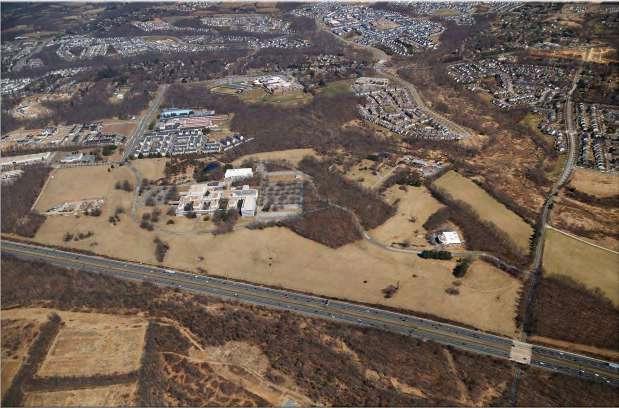
A 204-acre site in Germantown, formerly home to the COMSAT research facility, is also available for development. Prominently situated along I-270, the site is among the most visible in the region, with over 3,600 linear feet of direct highway frontage. The existing utilities and infrastructure on site, including a power substation and significant water/sewage capacity, provide a speed to market advantage.
These sites, and many others, offer businesses the chance to expand their footprint and strengthen their global presence by being an unrivaled strategic location, with world-class infrastructure and an exceptional workforce. As Montgomery County, Maryland continues to grow, it remains a leading destination for companies looking to expand, innovate, and advance their position in the global marketplace.
This article was written by Montgomery County Economic Development Corporation approved by Area Development Magazine.





By Kimberly Graulein, Area Development Staff
For manufacturers evaluating new facilities or expansions, workforce questions are no longer a latestage concern. They arrive early, shape shortlists quickly, and increasingly determine whether projects move forward at all.
In a labor market defined by demographic pressure, reshoring activity, and accelerating infrastructure investment, manufacturers are learning that legacy signals — such as where jobs already exist — are no longer enough.
The more relevant question today is forward-looking: Which states are actively producing the industrial workforce manufacturers will need, and how well does that supply align with real demand?
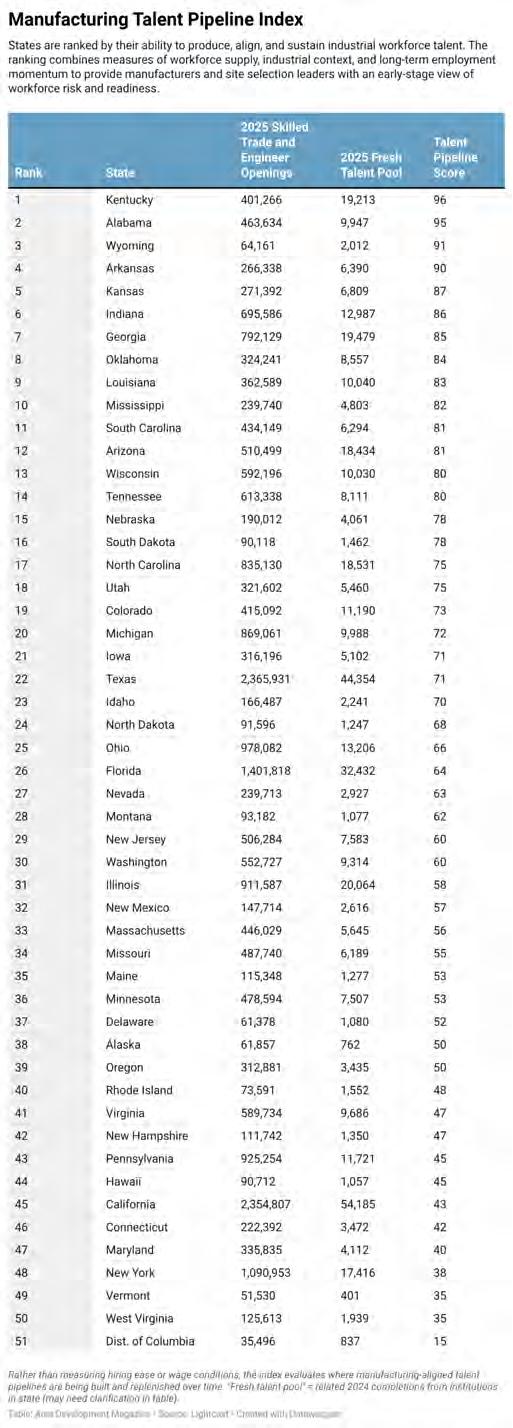
To answer that question, Area Development, in partnership with Lightcast, developed the Manufacturing Talent Pipeline Index, a new state-level ranking that evaluates where manufacturing-aligned workforce pipelines are being built, sustained, and positioned to support long-term investment.
For years, site selection decisions leaned heavily on existing labor markets. That approach worked when manufacturing growth was incremental and workforce mobility was relatively stable. Today, it is increasingly unreliable.
Across the country, manufacturers report persistent difficulty hiring skilled trades, engineering technicians, and industrial support roles — even in states with large manufacturing footprints. In many cases, the issue is not a lack of jobs, but a lack of new supply entering the workforce in the right occupations.
“In this era of demographic and AI disruption, labor market alignment is essential,” said Josh Wright, EVP of Growth at Lightcast. “The states best poised to lead the new industrial economy are the ones that are producing a fresh supply of potential skilled trades and engineering technology workers.”
That emphasis on production — not just employment — sits at the center of the Manufacturing Talent Pipeline Index.
The index evaluates states across three dimensions: pipeline output, industrial and occupational context, and long-term employment momentum. Each component is weighted to reflect how manufacturers experience workforce conditions in practice.

The largest share of the score is driven by pipeline output — specifically, the annual volume and concentration of postsecondary completions aligned to manufacturing, skilled trades, logistics, construction, and engineering technician roles. These “fresh talent” measures capture new entrants into the workforce, not the existing labor stock.
This distinction is critical. A state may have tens of thousands of industrial workers today and still face acute hiring challenges tomorrow if training systems are not replenishing supply.
Industrial and occupational specialization provide context. States with dense manufacturing and technical employment benefit from embedded expertise, supervisory depth, and institutional knowledge. These factors matter — but they do not guarantee future availability.
Finally, the index incorporates ten-year employment growth across industrial sectors, skilled technical roles, and total employment. Sustained growth can signal alignment between employers and training systems, while rapid growth can also point to tightening labor markets and rising competition for workers.
Together, these components offer a balanced view of where industrial talent is being produced and how it interacts with real-world labor markets.
One of the most common points of confusion in workforce discussions is the difference between workforce scale and workforce flow.
The Manufacturing Talent Pipeline Index deliberately separates the two.
Fresh talent measures reflect annual in-state completions from postsecondary and technical institutions — the new supply entering the labor market each year. Job counts, by contrast, provide context about the size and maturity of a state’s existing industrial workforce.
For manufacturers, this separation matters. Large job bases do not automatically translate into available workers, particularly in fast-growing markets. Conversely, smaller states may produce meaningful volumes of aligned talent relative to their size, even if their overall employment base is modest.
The index also surfaces an important structural distinction: the difference between states that produce industrial talent and those that absorb it.
Wyoming offers a clear example. On a pipeline basis, Wyoming performs well. Its training systems produce a steady stream of skilled trades and engineering technology graduates relative to the state’s size, reflecting focused, industry-aligned programs. In 2024, however, Wyoming produced roughly 2,100 completions aligned to skilled trades and engineering tech roles, while employers posted more than 6,300 new and replacement job openings in those occupations.
At first glance, that imbalance suggests local demand. But over the past decade, skilled trades and engineering tech employment in Wyoming has declined by about 2 percent. Outside of replacement hiring driven by retirements, the state has not experienced sustained growth in these roles.
The result is a familiar pattern: Wyoming trains industrial talent, but a significant share of that workforce ultimately leaves the state.
Of nearly 8,000 skilled trades and engineering tech workers who attended a Wyoming institution, only about 26 percent currently list Wyoming as their place of employment. In states such as Idaho, Kentucky, and Utah, closer to half of similarly trained workers remain in-state. This does not reflect a failure of Wyoming’s training system. It reflects the reality of a smaller, more dispersed industrial ecosystem that cannot consistently absorb all the talent it produces.
The index is intentionally designed to preserve this distinction. It rewards states for building aligned workforce pipelines, while still accounting for industrial density and long-term employment trends that shape where talent ultimately works.
The highest-ranking states in the Manufacturing Talent Pipeline Index do not follow a single workforce model. Instead, they share a commitment to intentional workforce production.
In these states, training systems are tightly aligned to manufacturing demand. Community colleges and technical institutions play a central role. Employers are engaged in shaping curricula. And pipeline capacity is treated as infrastructure — planned, funded, and sustained over time.
Some top-performing states combine strong training output with dense, diversified industrial bases that retain graduates locally. Others act as regional talent engines, feeding broader manufacturing ecosystems that extend beyond state borders.
W hat unites them is not size or legacy advantage, but alignment.
“States can produce large numbers of graduates and still face hiring challenges if training output is misaligned with occupational demand,” Wright said. “What matters is whether education and training systems are producing talent in the roles manufacturers are actually hiring for — and whether that production is sustained over time.”
L ong-term employment growth adds another layer of nuance. Sustained growth across manufacturing and skilled technical roles suggests that workforce pipelines and employer demand are moving in step.
At the same time, rapid expansion can strain labor supply. In some of the fastest-growing markets, manufacturers face intensified competition for talent, rising wages, and increased reliance on internal training or regional recruiting strategies.
The index does not attempt to resolve that tension. Instead, it reflects it — offering manufacturers a clearer picture of where workforce capacity exists and where additional diligence is required. Workforce Infrastructure as Competitive Strategy
For many states, workforce development is no longer treated as a support function. It is increasingly a core component of economic development strategy.
Over the past decade, states have expanded investments in technical colleges, apprenticeship systems, and employer-led training partnerships designed specifically around advanced manufacturing needs. In some regions, new facilities are planned alongside workforce initiatives — aligning curriculum development, equipment purchases, and training capacity with the projected labor needs of incoming projects.
This shift reflects a growing recognition that workforce pipelines function much like physical infrastructure. Just as utilities, transportation access, and site readiness influence investment decisions, the ability to produce skilled industrial workers at scale has become a defining competitive advantage.
For manufacturers evaluating locations today, the question is no longer simply whether workers are available — but whether the systems exist to keep producing them.
The Manufacturing Talent Pipeline Index is not a promise of easy hiring. It is a forward-looking assessment of where industrial talent is being produced, aligned, and replenished.
For manufacturers making long-term investment decisions, that distinction matters more than ever.
“ The infrastructure buildout is placing a premium on blue-collar and blue-collar tech workers,” Wright said. “While we are seeing a softening of the white-collar job market, the states at the top of this index are in an envious position: They’re primed to attract more manufacturing investment and help their residents find solid-paying industrial jobs.”
As workforce availability becomes the defining constraint on industrial growth, states that invest in pipeline capacity — not just attraction — are reshaping the site selection landscape.
This index captures that shift, offering manufacturers a clearer signal about where workforce conversations should begin
The Manufacturing Talent Pipeline Index is best used as an early-stage workforce screen.
It helps executives identify:
• W here industrial talent is being actively produced
• W hich states are aligning training systems to manufacturing demand
• W here workforce supply is more likely to be durable over time
From there, deeper diligence remains essential. Wage pressure, employer competition, commuting patterns, and retention dynamics will vary by project and by role.
What this index provides is clarity early in the process—when eliminating risk matters more than optimizing incentives.
Episode 11
Speedy Data Center Build Outs, Industries of the Future, and a First Person Account of a CEO Going Alone on Site Selection
Building the Al Economy: Faster Data Centers, Smarter Site Selection, and the Industries of the Future Host
Andrew Greiner opens....
28m
Episode 10
North Carolina Secretary of Commerce Lee Lilley and Christopher Chung, CEO of the Economic Development Partnership of North Carolina
North Carolina’s Growth Playbook: Talent, Infrastructure, and Supply Chain Resilience Host Steve Kaelble interviews North Carolina...
30m

Episode 9
Power, Timber, and the World Cup - How Energy, Materials, and Cities Are Being Rebuilt
From next-generation energy to next-generation cities, this episode of Frontline looks at how innovation is reshaping the foundations of American industry. Segment 1 - Nano Nuclear: James Walker, CEO of Nano Nuclear Energy, explains why small mod...
21m
Get the unfiltered conversations behind the projects.
From workforce shortages to grid constraints, from incentives strategy to megaproject execution—Area Development’s Site Selection & Facility Planning Podcast delivers the insight serious decision-makers rely on.
Listen anywhere. Learn something every time.
Subscribe wherever you get your podcasts — or visit AreaDevelopment.com/podcasts

By Area Development Research Desk
For decades, the bedrock question of corporate site selection was some version of the same calculation: where can we do this most cheaply? Labor arbitrage, tax incentives, real estate costs — the disciplines of location strategy were largely organized around the pursuit of the lowest delivered cost. That era is not simply fading. According to the results of Area Development’s 2026 Annual Survey of Site Selection Consultants, it has ended.
What has taken its place is something more complex and, in many ways, more demanding: a relentless focus on operational certainty. The question companies are now asking their advisors is not “where is cheapest?” but “where can we be sure this will actually work?” The shift — from cost optimization to risk mitigation, from lowest-cost to most-reliable — is reshaping how

sites are evaluated, how communities compete, and how the profession of site selection itself is practiced.
The survey, completed by leading location advisors across the United States, reveals a profession navigating an environment defined by compressed timelines, constrained infrastructure, a deepening shortage of qualified sites, and a macro backdrop of tariff volatility and political uncertainty that has made certainty itself a premium commodity. The data tell a story that is at once cautionary and instructive — and the voices of the consultants who responded add urgency and texture to every data point.
Perhaps no finding in this year’s survey is more striking than the near-universal elevation of speed as a primary project driver. Certainty of permitting registered among the top-tier factors for 94 percent of respondents. Site readiness and due diligence status — a factor that ranked at just 78 percent in last year’s survey — surged to 98.5 percent in 2026, one of the most dramatic year-over-year gains recorded across the entire dataset. Responsive state and local government held firm at 97 percent.
Read together, these numbers describe an industry in which the ability to move fast has become a decisive competitive advantage — not just for communities competing for projects, but for the companies pursuing them.
“Permitting speed and the absence of NIMBY activism have truly emerged as pivotal site selection factors here in 2026,” says John Boyd, Principal at The Boyd Company. “In corporate location, ‘timing is everything.’ More and more of our engagements are prioritizing ‘speed to market’ as an overriding project goal.”
Boyd’s observation reflects a structural shift in client priorities. Companies are racing to capture market share, secure patents, and establish brand dominance before competitors can react. In some cases the urgency
is regulatory: getting a project operational within the window of a time-sensitive federal contract or incentive program. Boyd points to a recent engagement in which fast permitting and strong community support helped identify a site in Middle Tennessee for MoldexMetric — a Culver City, California-based manufacturer — specifically so the company could qualify for federal contracts from the Department of Health and Human Services for N95 mask production.
“Being first to market helps some of our clients secure
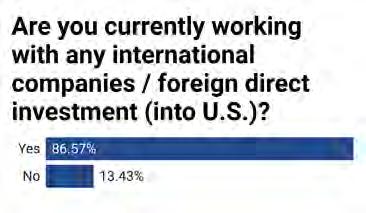
patents or establish a brand before competitors can copy or claim similar technologies,” Boyd adds. “For some projects, getting up and running sooner can also help clients qualify for certain time-sensitive incentives, especially those coming from federal programs.”
The implication for economic developers is direct: communities that can demonstrate a genuine, documented path from site selection to shovel in the ground — not a marketing claim, but an engineered and legally verified timeline — will increasingly win the projects that matter most.
If speed is the new competitive frame, energy is the new filter through which every location is first evaluated. Electric power availability at scale appears at 98.5 percent in the 2026 survey — essentially universal — with 82.6 percent of respondents rating it “very important,” the highest intensity score of any factor in the infrastructure category. Transmission and substation capacity comes in at 97 percent, with nearly three-quarters of respondents at the “very important” level. Grid reliability and redundancy follows at 92.5 percent.
These are not incremental changes. They represent a wholesale repositioning of energy infrastructure from a background utility concern to a front-of-process qualifying criterion.
“Our clients, especially those with loads over 25 MW, need us to evaluate the availability, cost, and timing
Area Development, 2025
Area Development, 2025
Area Development, 2025

Excellence thrives in Georgia because we understand what it takes for companies to grow and invest in making that happen. Find out how Georgia can partner with your business to deliver success.
Explore opportunities at Georgia.org
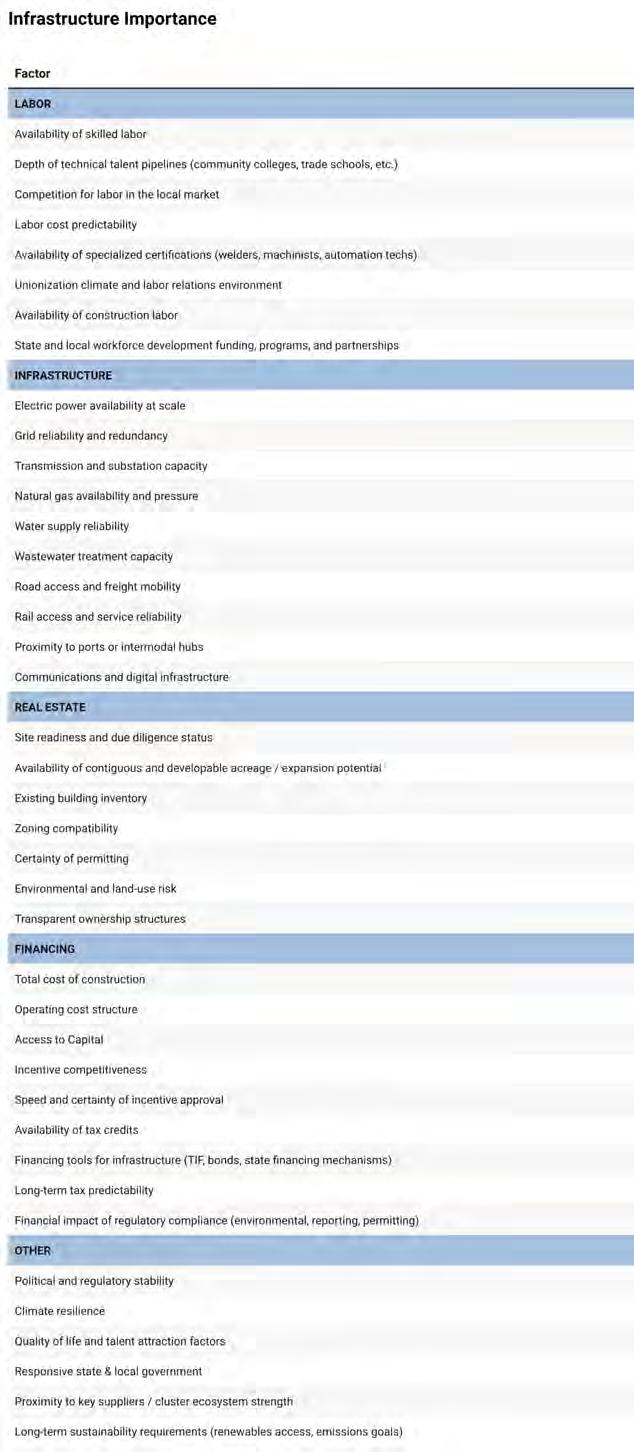
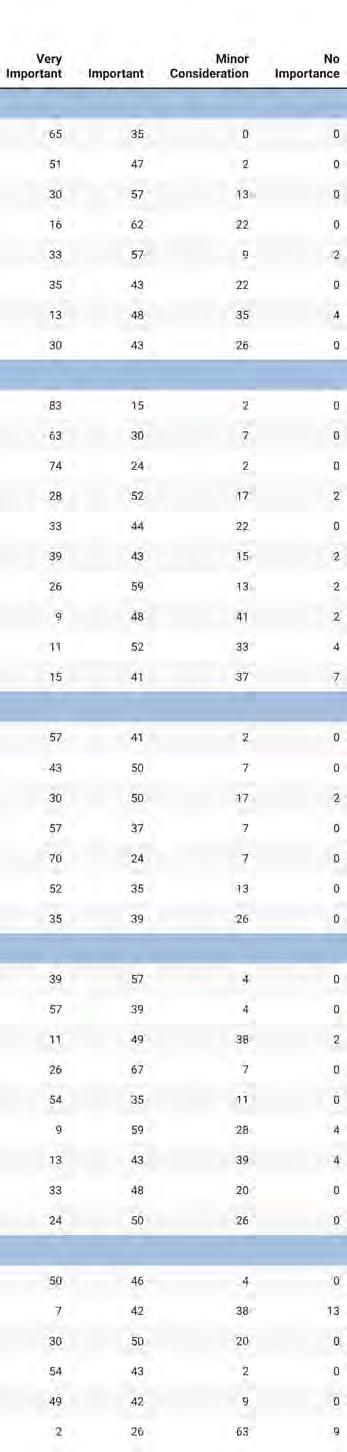

CENTRALLY LOCATED
LOW OPERATING COSTS
FAST PERMITTING

By Georgia Power Economic Development
In today’s economic development landscape, power availability is no longer an item on a checklist — it’s often the entire list. Across industries, from advanced manufacturing and life sciences to logistics and data centers, access to reliable, scalable energy has become one of the top factors influencing where companies choose to invest. In the past few years, corporate decision makers have consistently ranked energy availability among their most critical decision drivers. In many cases, power availability determines not just where a project lands, but whether it moves forward at all.
As demand for electricity accelerates — fueled by electrification, reshoring of manufacturing, and the rapid growth of high-density data operations — utilities, communities, and economic development partners must think several years ahead. The communities that end up welcoming new projects are those that treat energy infrastructure as economic infrastructure.
The world is rapidly evolving, and modern projects are moving at an unprecedented speed. Companies evaluating sites for large-load operations often require hundreds of megawatts of capacity, detailed infrastructure studies, and firm timelines before making final investment decisions. Waiting years for transmission upgrades or generation additions is rarely an option.
This shift has elevated electric utilities from service providers to strategic partners in the site selection process.
In Georgia, power availability has become a competitive differentiator. The state’s continued success in landing major automotive, information technology, and advanced manufacturing projects is rooted not only in its workforce and logistics advantages, but in its ability to deliver reliable energy at scale.
Georgia Power serves more than 2.8 million customers across the state and has taken a forward-looking approach to serving both existing customers and new large-load projects. Rather than reacting to growth, the company is utilizing its demand forecasting model and constructive regulatory environment to proactively build generation capacity, strengthen transmission infrastructure, and modernize the grid to accommodate future demand.
This includes a diverse generation mix designed to balance reliability, affordability, and sustainability. By maintaining a broad portfolio of generation resources and engaging in long-term planning through its Integrated Resource Plans, Georgia Power has positioned itself to meet both incremental load growth and transformational economic development opportunities.
Importantly for site selectors, proactive planning reduces uncertainty. When companies ask whether the grid can support a 200-megawatt facility on an aggressive timeline, they can be confident their answer is backed by engineering analysis, infrastructure investment, and confidence in long-term resource adequacy.
Just as communities now prioritize pad-ready sites and speculative industrial buildings, utilities must prioritize transmission expansion, substation development, and distribution upgrades in advance of confirmed projects.
Georgia Power works tirelessly to identify high-potential growth corridors and proactively invest in infrastructure. This forward investment shortens timelines for new projects and gives prospects and site selectors greater confidence during the RFI and site visit processes.
As a bonus, proactive infrastructure improvement has a positive effect on community resilience, ensuring that local grids remain strong through weather events, demand fluctuations, and the increasing electrification of homes, transportation, and industry. For residential and small commercial customers, the reliable demand that comes with large-scale projects has a positive impact as well, allowing Georgia Power to freeze base rates through the end of 2028 and even working within Georgia’s regulatory framework to deliver additional savings for customers at every opportunity.
For advanced manufacturers or logistics centers operating 24/7, downtime can mean millions of dollars in losses. For data centers, uptime is mission critical. The economic consequences of power interruptions are too significant for companies to accept uncertainty.
Georgia Power’s continued investments in grid modernization, storm resiliency, and system redundancy reinforce Georgia’s position as a reliable location for long-term investment. Strengthening the grid not only supports new projects but also protects the existing customer base, eliminating energy anxiety from both industrial and residential customers.
As electricity demand continues to rise nationwide, regions that proactively align energy planning with economic development strategy will maintain a competitive edge. For communities seeking to compete for the next generation of transformative projects, ensuring energy availability, reliability, and scalability may be the most important investment they make.
Georgia Power’s commitment to building capacity strategically to meet future energy demand, investing in transmission and distribution infrastructure, and collaborating closely with communities illustrates a key truth in today’s economic development: Power is not just a utility service — it is an economic development asset.
This article was paid for and written by Georgia Power Economic Development and approved by Area Development.

of electricity much earlier in the site selection process than in previous searches,” says Mark Williams, Founder and President of Strategic Development Group. “In many cases, it’s no longer a given that these ‘have to have’ variables will work, so they are addressed earlier in the search process. More frequently now, first contacts on searches are electricity providers.”
That sequence — reaching out to utilities before almost anyone else — would have been unthinkable in most searches a decade ago. Today it is standard operating procedure for a growing share of major projects.
Gray Swoope, President and CEO of VisionFirst Advisors, describes a recent international manufacturer search where the top criterion was identifying communities capable of supporting 295 megawatts by 2030. “That requirement immediately triggered transmission studies to evaluate feasibility, timing, and cost,” Swoope explains. “Even with those results, the differentiator was risk — which locations could realistically deliver power within the client’s timeline, including procuring long-lead equipment and, where needed, incorporating bridge solutions while major upgrades came online.”
Swoope is direct about what this means for market selection: “We are seeing markets fall out of consideration early when utilities cannot provide a clear path to power on the client’s timeline, including firm milestones and risk mitigation options. In many cases, locations are eliminated not because demand is impossible to serve, but because the schedule risk is too high.”
Larry Gigerich, Executive Managing Director at Ginovus, frames the underlying problem in structural terms. “Energy demand is outstripping supply in most places in the U.S. We have had the perfect storm — the federal government has not invested in the national electric grid in nearly 60 years, the aggressive push to reduce energy derived from fossil fuels impacted supply and reliability, zoning and planning regulations make it very difficult to build transmission lines to distribute power where it is needed, and data center and reshored manufacturing projects require significant power to operate.” Gigerich calls for an “all of the above” energy strategy — including nuclear — and notes that “massive investments will be required to ensure reliability and availability of power.”
Charles Sexton, Founder and CEO of Strategic Location Advisers, points to the data center sector as particularly illustrative of how energy concerns are reshaping location decisions. “Data centers, especially hyper-scale, are highly focused on energy availability
combined with quality of sites and potential constraints such as natural gas access and public opinion for their own power plant construction.” For communities that previously viewed industrial and manufacturing recruitment as their primary focus, the data center boom is reordering infrastructure priorities in ways that have cascading effects on every other sector competing for the same scarce power capacity.
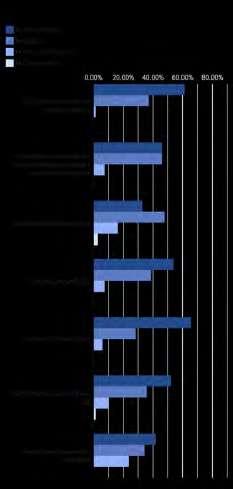

































Maryland is where quantum innovation meets real-world impact. Home to the NSA, NIST, IonQ — the first publicly traded quantum computing company — and the University of Maryland’s pioneering quantum research labs, this is the epicenter of discovery and commercialization. Quantum breakthroughs born here are set to transform industries — accelerating drug development, securing digital infrastructure, and revolutionizing advanced manufacturing. If you’re building the future, build it in Maryland.


Join the Capital of Quantum.



















business.maryland.gov/quantum

From advanced testing infrastructure to new manufacturing expansions, Tennessee is aligning workforce, research and site readiness to support the next generation of aerospace and defense investment
By Tennessee Department of Economic and Community Development
Aerospace and defense companies do not expand lightly. They require a location that delivers technical talent, infrastructure certainty, research proximity and long-term policy stability. In Tennessee, those fundamentals are not aspirational — they are already in place.
Today, more than 12,300 Tennesseans are employed in aerospace and defense across 164 companies statewide. Since 2019, the sector has grown by 44 percent, supported by more than $617 million in capital investment and more than 3,200 new job commitments. In 2024 alone, Tennessee exported more than $960 million in aerospace products and parts and $35.5 million in arms and ammunition, underscoring the state’s expanding role in both commercial aviation supply chains and national defense readiness.
That growth is not concentrated in a single market. It stretches from East Tennessee’s precision manufacturing base to Middle Tennessee’s aviation services corridor and West Tennessee’s industrial infrastructure.
Recent expansions highlight the sector’s acceleration. At the 2025 Paris Air Show, Howmet Aerospace announced its second Morristown expansion in less than a year, adding 217 new jobs on top of 50 previ-
ously announced positions. The investment reinforces Hamblen County’s role in advanced aerospace component manufacturing and reflects confidence in Tennessee’s workforce pipeline and operating climate.
Earlier this year, Barrett Firearms Manufacturing announced a $76.4 million investment in a new 250,000-square-foot Manufacturing & Technology Campus in Murfreesboro. The project will create 183 new jobs and will serve as the company’s primary global manufacturing site, while also housing the future U.S. headquarters of its Australian parent company, NIOA Group.
Behind these announcements is a deeper structural advantage: proximity to world-class testing and research infrastructure.
Arnold Air Force (AEDC) Base in Coffee County anchors one of the most advanced aerospace testing environments in the world. The Arnold Engineering Development Complex spans approximately 40,000 acres and includes nearly 70 aerodynamic and propulsion wind tunnels, rocket and turbine engine test cells, space environmental chambers and ballistic ranges. Supporting the U.S. Department of Defense, NASA and commercial aerospace clients, AEDC employs roughly 3,000 people and provides critical testing data that shapes
next-generation aircraft, missile and space systems.
Less than five miles away, the University of Tennessee Space Institute (UTSI) strengthens the region’s research and graduatelevel engineering capabilities. Established in partnership with the Air Force, UTSI supports advanced research in hypersonics and high-speed aerothermodynamics, aligning academic talent with federal research and private-sector demand. Tullahoma’s proximity to Huntsville, Alabama — one of the nation’s largest aerospace markets — further expands access to technical labor and collaborative opportunities.
To support continued sector growth, the Tennessee Department of Economic and Community Development is advancing the Middle Tennessee I-24 Industrial Site. The 1,800-acre contiguous property is being positioned for largescale advanced manufacturing and aerospace investment. Road access and wastewater improvements are being funded to accelerate readiness, and electric infrastructure will be managed by the Tennessee Valley Authority, providing long-term reliability.
A Tennessee College of Applied Technology (TCAT) campus is nearing completion on the site, with classes expected to begin by summer 2026. The TCAT system plays a central role in delivering tuition-free, industry-aligned
technical training, ensuring employers have a responsive workforce partner embedded directly within the development footprint.
Since 2019, Tennessee has produced more than 20,300 aerospace and defense-related graduates, reinforcing a talent pipeline that complements the state’s manufacturing base. For companies evaluating expansion, that scale of workforce alignment reduces ramp-up risk and shortens time to productivity.
Geographically, Tennessee’s central location places nearly 70 percent of the U.S. population within a day’s drive. Combined with multimodal logistics networks and a stable pro-business environment, the state offers aerospace and defense firms both operational reach and long-term predictability.
In a sector defined by precision and performance, Tennessee has built an ecosystem designed to meet the same standards. For aerospace and defense companies seeking room to scale without sacrificing capability, the Volunteer State is not just participating in the industry’s growth — it is helping shape its next chapter.
This article was paid for and written by Tennessee Department of Economic and Community Development and approved by Area Development.

Tennessee ranks among the best in the nation for getting business done. With ready-to-build sites, an abundance of reliable energy and a highly skilled workforce, Tennessee makes it easy for businesses to grow and thrive.
Discover what’s possible at TNECD.COM.
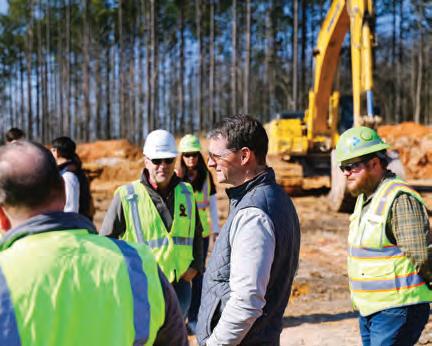

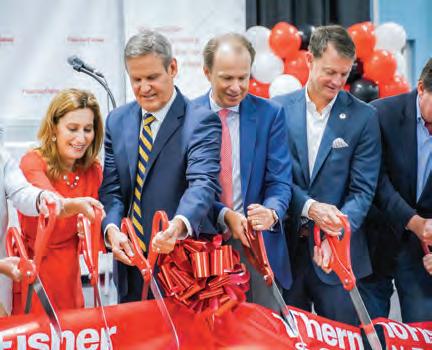
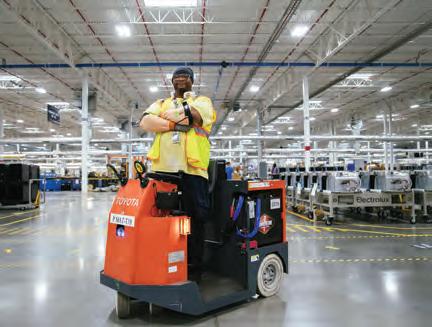

#2 Site Readiness Programs
#3 Energy Availability
#4 Cost of Doing Business
#5 Workforce Training Programs (Area Development 2025)

Behind the urgency around speed and energy lies a more fundamental constraint: there are simply not enough qualified sites. Site readiness and due diligence status, as noted, saw one of the survey’s most dramatic year-over-year jumps — a 20-point gain from 2025 to 2026. Availability of contiguous and developable acreage with expansion potential sits at 92.5 percent. Zoning compatibility and environmental and land-use risk both register above 88 percent.
“During the past decade, many of the best real estate sites have been developed for industrial projects throughout the U.S.,” Gigerich observes. “As a result, it is more challenging than ever to find an ample number of good sites for projects. With many states having different standards for what constitutes a certified or shovel-ready site, there is inconsistency in the marketplace when it comes to a site being ready to develop.”
The Site Selectors Guild has moved to address this directly through the launch of its REDI Sites program, which applies detailed engineering due diligence to real estate sites and works toward establishing a uniform industry standard for what “shovel ready” actually means — a standard that does not yet exist in consistent form across states and regions.
Shannon O’Hare of Cushman and Wakefield adds another dimension to the site scarcity problem: the compounding effect of rising costs on project timelines. “Cost escalations are proving difficult to manage. With rising costs and the uncertainty of budgets growing, we are seeing ‘approved’ projects revert for additional approvals. Multiple layers of approval add time, and with limited site availability, adding time is always a gamble. Will the project’s preferred site still be available when the project is approved to move forward?” It is a question, O’Hare notes, that companies are increasingly unable to answer with confidence.
Greg Burkart, Principal in Site Selection Services at Walbridge, describes the compounding pressure in stark terms: “The nationwide demand for data center development is tightening the market for power, sites, and skilled labor, which historically was distributed across large manufacturing projects. This is forcing some companies to reconsider where and when they can move forward. Additionally, community acceptance has become a top consideration affecting capital-intensive projects, including data centers. Site selectors will need plenty of lead time for engagement to get the local community comfortable with your project.”
Availability of skilled labor retained its position at the very top of the survey rankings, cited by 100 percent of respondents as important or very important. Depth of technical talent pipelines — including community colleges and trade schools — came in at 95.5 percent, up sharply from 79.7 percent a year ago. The message is not merely that labor matters; it is that the nature of the labor that matters is changing.
“Labor cost and availability continue to play a major role in site selection because they affect how quickly a project can get up and running and how competitive it will be over time,” says Alex Miller, Manager of Client Services at KSM Advisers. “Automation is helping address some labor challenges, but companies still need a dependable workforce to launch and run their operations. As a result, many location decisions are leaning toward markets with balanced
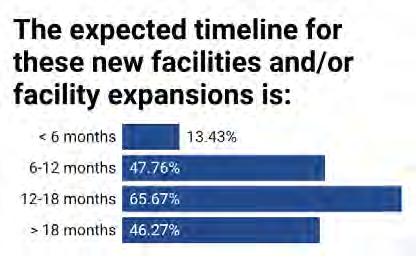
labor conditions that allow companies to scale without putting pressure on margins.”
Gigerich frames the talent challenge in generational terms. “The need for fewer undergraduate degrees and more associate degrees, along with industry-recognized credentials and certifications, has impacted the delivery of education and training across the U.S. With the significant growth of AI, automation, and robotics, there will be further disruption in the area of talent.” The communities that invest now in training pipelines aligned to technical credentials — welders, machinists, automation technicians — will be better positioned to compete for the high-value manufacturing and advanced industrial projects that are reshaping the location landscape.


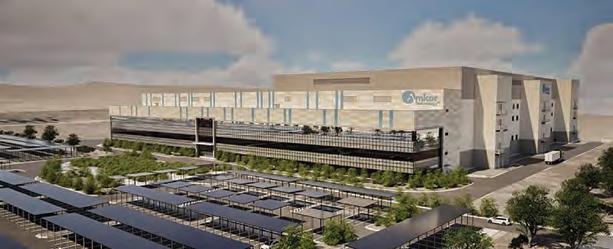

Which of the following will most affect your client’s expansion/investment plans in 2026?
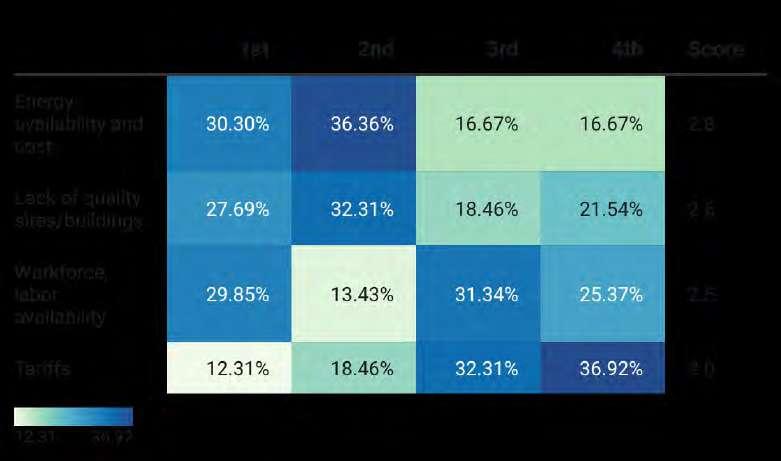
Among the survey’s most telling findings is the emergence of political and regulatory stability — cited by 94 percent of respondents — as a core site selection factor. Responsive state and local government held near the top of the overall rankings at 97 percent. And several consultants identified community opposition as a rising constraint that demands proactive management from the earliest stages of a project.
“The rise of NIMBYism in many locations in the U.S. is having a significant impact on how companies are evaluating potential locations,” says Gigerich. “NIMBYism started with people pushing back on distribution centers and then spread to data centers — now we are seeing pushback on manufacturing projects. As a result, site selectors and companies are being more proactive in sharing the benefits of a proposed project earlier in the process.”
At the macro level, the survey reflects an environment of broader uncertainty. Sexton notes that companies are making decisions “prior to or in light of potential federal administrative impacts — the right or wrong tweet or decision in the middle of the night can have a major impact on risk tolerance.” The observation captures something that does not easily fit into a percentage ranking but pervades every conversation
in the profession: the background hum of political and policy volatility that has made operational certainty harder to achieve and therefore more valuable when it can be found.
Steve Tozier of EY addresses tariff uncertainty directly. “Trade-related tax considerations have historically been a consideration for businesses as they evaluate where to locate new operations. However, the subject has elevated in importance over the last year in light of new tariff policy around the globe. In some cases, changes in the tariff landscape have prompted — and even accelerated — business investment into new jurisdictions. In other cases, site selection decision-making has slowed as companies analyze alternative options, including rethinking the sourcing of key equipment or production inputs from more tariff-optimal locations.” The ambidextrous effect — tariffs simultaneously accelerating some investments and paralyzing others — captures the fundamental challenge of operating in an environment where the rules keep changing.
Gregg Healy of Savills puts it plainly: “Our clients are realizing that it’s less about finding the cheapest location and more about minimizing disruption risk. Nearshoring and supplier realignment are pulling companies toward established supplier clusters, reliable power, and logistics certainty — often through phased expansions rather than all-at-once commitments. In








In Arizona, you’ll find the perfect balance of business opportunity and high-quality lifestyle that makes it a top state to live and work. Businesses benefit from pro-innovation policies and business stability. Residents enjoy a reasonable cost of living compared to other major metros and beautiful scenery, all while taxes remain low for everyone. With a highly skilled talent pool and a commitment to future-forward industries like semiconductors, electric and automated vehicles, and battery manufacturing, we’re maximizing our potential for generations to come.
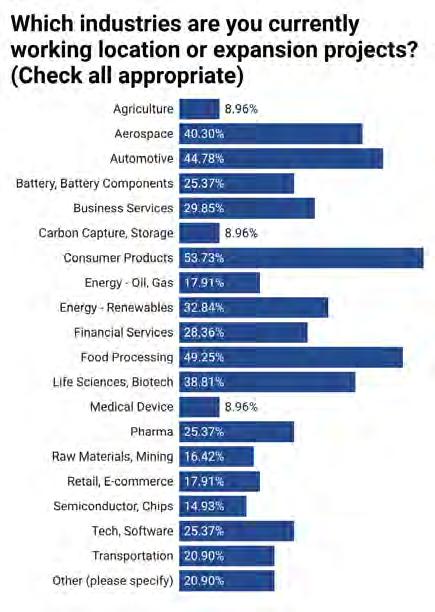
2026, political, regulatory, and financial volatility isn’t a side consideration — it’s directly influencing where companies go, how fast they move, and how much optionality they demand.”
Or, in Healy’s most distilled formulation: “In North America, site selection is no longer about cost — it’s about certainty.”
No survey of the current location environment would be complete without acknowledging the sector that stands
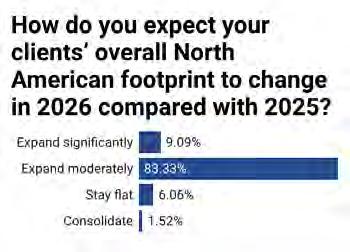
in sharpest contrast to the general mood of caution: defense and aerospace. Jeff Troan of Vista Site Solutions describes a market that is, in his words, “booming.”
With the U.S. defense budget approaching $1 trillion and executive branch proposals seeking $1.5 trillion — plus the pending SHIPS Act, which would establish a 25 percent federal tax credit for shipyard in-
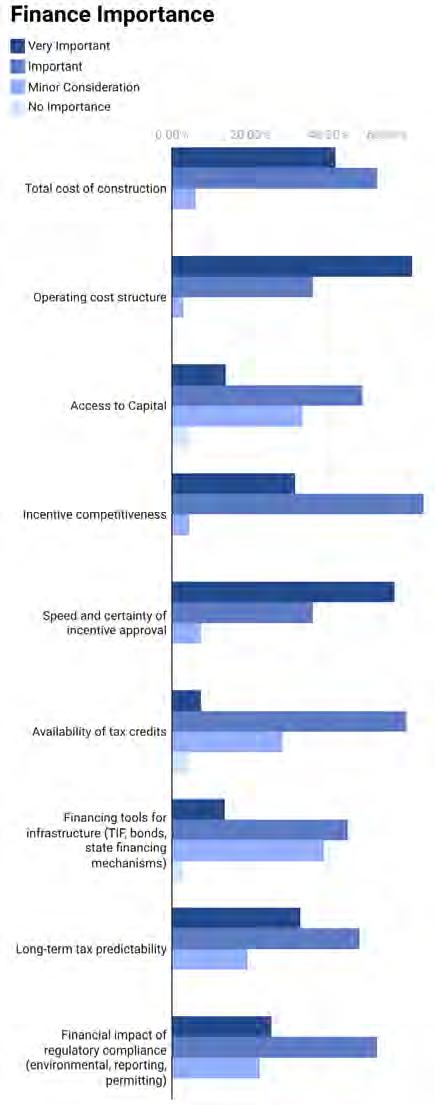

New nuclear innovation, forward-looking energy policy and workforce alignment position Kansas as a scalable partner for next-generation data center investment.
By Kansas, the State of Unexpected
Kansas is clearing constraints and building for the data center boom. The state has established a new data center incentive program, is building energy supply ahead of demand, and is aligning workforce efforts so it can be a preferred partner for data center projects — providing the AI revolution a fitting home in the heartland.
Thanks to a comprehensive, “allof-the-above” approach to energy supply, Kansas has power available today — with much more on the way.
Kansas is channeling its long history as a renewable energy leader to place it at the forefront of innovation when it comes to welcoming and developing new energy sources — including nuclear.
Already home to a 1,250 MW nuclear power plant, the state also is a proving ground for two promising and emerging forms of nuclear energy.
In 2025, TerraPower, a nuclear innovation company, announced a memorandum of understanding with Kansas to explore siting their flagship technology, the Natrium reactor and energy storage system. The company’s 345 MW sodium-cooled fast reactor is equipped to boost output to 500 MW of power when demand peaks.
TerraPower is working directly with regional energy provider Evergy to evaluate feasibility and explore potential sites in Kansas. While the technology’s potential still is being realized, momentum has been significant, with Meta agreeing to help fund eight U.S. reactor and storage systems coming online as early as 2032.
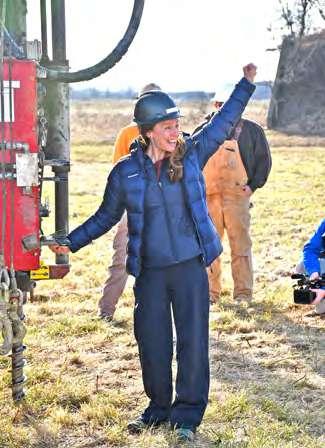
Whether it’s obtaining quick and direct permitting service from energy providers to get plugged into the grid right away, or the prospect of new energy sources, Kansas is all-in on addressing data center clients’ energy needs.
Kansas educational institutions are ready workforce development partners for the data center and cloud computing industry. With Computer Support Specialist Certificates to more advanced networking and cybersecurity degree and certificate programs, our education institutions also focus on training electrical and IT maintenance technicians.
In the meantime, another form of nuclear energy already is being built in Kansas.
At the end of 2025, Deep Fission broke ground on the world’s first miledeep nuclear reactor in Parsons. Part of a U.S. Department of Energy’s pilot program, it will provide power to the Great Plains Industrial Park.
Deep Fission’s Small Modular Reactors make their technology ideal for behind-the-meter nuclear power generation that could be stored in batteries at a synthetic geothermal campus, and then supplied directly to high-demand, on-site energy users.
Power, permitting, people and places with ready infrastructure are driving Kansas competitiveness for future data center projects. Policy provides the cherry on top. Enacted in 2025, the Kansas Data Center Sales Tax Exemption Program establishes a 20-year state and local sales tax exemption designed to attract largescale (at least $250 million), permanent data center developments to the state.
Kansas truly is the ideal state for data center development in 2026 and beyond.
Ready to get plugged in? Learn more about Kansas, the State of Unexpected, at kansascommerce.gov.
This article was paid for and written by Kansas and approved by Area Development.

vestments — Troan identifies a cascade of facility requirements flowing from military shipbuilding, aircraft maintenance and overhaul, drone warfare technology, and Army weapons production. “I haven’t spoken to a military contractor in the past year or two that isn’t being taxed to significantly expand production, resulting in a requirement for new facilities and tooling.” From the Gulf Coast to the Great Lakes, maritime-adjacent communities are finding that the Navy’s drive toward a 350-ship fleet — combined with new financing mechanisms for commercial shipbuilding — is creating location opportunities that did not exist five years ago.
The drone and autonomous systems subsector, Troan notes, is particularly notable because its requirements differ fundamentally from traditional defense manufacturing. “In many cases, this subsector requires more innovative software minds than capital investment, and we are seeing a whole new generation of aerospace companies emerge.” The location implications are distinct: proximity to university research ecosystems and deep software talent pools may matter as much as traditional defense-industrial infrastructure.
The aggregate picture that emerges from this year’s survey is one of structural tightening — in energy, in qualified sites, in talent, in timelines — against a backdrop of heightened volatility in trade policy, regulatory environment, and community sentiment. For economic developers, the message is both challenging and clarifying.
The communities that will win in this environment are not necessarily those with the most aggressive incentive packages or the lowest tax rates. They are the ones that have done the hard preparatory work: engineering-validated, genuinely shovel-ready sites; utilities with a documented and credible path to large-scale power delivery on a defined timeline; community engagement processes capable of getting ahead of NIMBY opposition; and governments that can respond with the speed and competence that compressed project schedules now demand.
“Site readiness, good infrastructure capacity, and competent local professionals continue to grow in importance for corporate decision makers,” Sexton observes. It is a short sentence that summarizes, perhaps better than any other in this year’s survey, what has fundamentally changed about site selection in 2026.
The old question — where can we do this cheapest? — has not disappeared. Cost still matters; operating cost structure registered at 97 percent in the survey,
and incentive competitiveness remains near the top of the rankings. But cost has been reframed. It is no longer the organizing principle of a location decision. It is one variable in a broader assessment centered on a more demanding question: where can we be certain this will work?
That certainty — of power, of sites, of permits, of talent, of community support, of regulatory stability — is what companies are paying for in 2026. And the locations that can deliver it are, increasingly, the ones that will define the next decade of American industrial geography.
While the consultant results capture how site selection professionals are advising clients in a constrained environment, the corporate survey results reveal how expansion decisions are being framed inside company boardrooms themselves. The 2026 data shows a respondent base that is cautious and deeply focused on the immediate, tactical realities of the balance sheet.
But the caution is not paralysis. It is strategic discipline in an environment where the cost of error — whether through a premature greenfield commitment, an undercapitalized budget, or a miscalculation of local labor dynamics — can turn a planned expansion into a multiyear liability. What the corporate data reveals is a sector that is still expanding, but doing so on terms that reflect a fundamentally different risk calculus than even five years ago. The era of betting big on unfamiliar markets is being replaced by a more measured approach: grow where you know, expand incrementally, and prioritize execution certainty over theoretical cost advantage.
The era of massive, “all-at-once” facility commitments is giving way to a more measured, risk-averse approach.

Only 14 percent of responding companies plan to open a brand-new U.S. facility in 2025. Instead, growth is being channeled into existing assets: 31 percent of respondents indicated plans to expand the physical footprint of an existing U.S. facility in 2026.
This “build-where-you-are” strategy acts as a hedge against the rising risks associated with greenfield development. Expanding within an existing footprint allows
companies to leverage known infrastructure, work with established utility providers who have already demonstrated their capacity to deliver, and avoid the site selection uncertainties that the consultant survey identifies as a growing constraint. When qualified sites are scarce and permitting timelines are unpredictable, the logic of expanding an existing operation — where power is already online, where zoning is compatible, where the workforce pipeline is understood — becomes overwhelmingly compelling.
As Gregg Healy of Savills notes, “Nearshoring and supplier realignment are pulling companies toward established supplier clusters... often through phased expansions rather than all-at-once commitments.” This phased approach allows companies to scale operations incrementally, adjusting to demand in real time rather than committing hundreds of millions of dollars based on demand forecasts that may be invalidated by tariff shifts, supply chain disruptions, or macroeconomic volatility before the project even breaks ground.
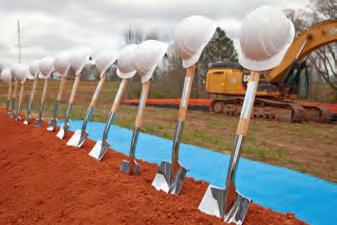

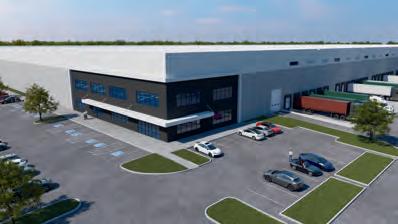
Henry County is an economic engine in the region, offering unmatched access to talent, markets, and a business-ready environment:
Henry County delivers a strategically connected, pro business environment backed by responsive support and the advantages of the Atlanta market.
Henry County offers an appealing, affordable quality of life with strong schools and vibrant communities that help employers draw and keep top talent.
With forward-thinking leadership and proven performance in attracting $1B in capital investments in 2025 alone, Henry is ready for what’s next. Discover how you can get involved at www.choosehenry.com



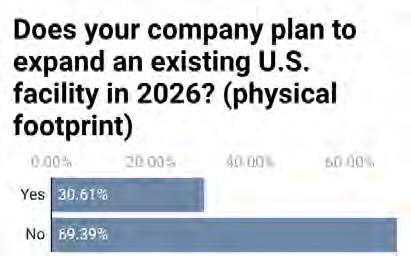
The preference for expansions over greenfield projects also reflects a broader truth about the current real estate environment: the locations companies already occupy were often secured in a less constrained market, when site options were more abundant and infrastructure capacity was less stressed. Walking away from that existing footprint to chase a lower-cost or higher-incentive location elsewhere increasingly looks like trading a known set of manageable risks for an unknown set of potentially unmanageable ones.
When asked which cost pressures most influence their investment plans, corporate leaders pointed squarely at the financial “entry price” of new projects. Construction cost inflation remains the primary deterrent, cited by 31 percent of respondents as the most influential pressure. This is followed closely by financing costs and the cost of capital at 29 percent, and labor cost escalation at 21 percent. These financial hurdles are causing a “reversion” in the project pipeline that has profound implications for how companies approach location strategy. Shannon O’Hare of Cushman and Wakefield observes that “with rising costs and the uncertainty of budgets growing, we are seeing ‘approved’ projects revert for additional approvals.” This internal friction adds time — a dangerous gamble when lack of quality sites or buildings is the second most cited factor affecting real estate plans. The reversion dynamic creates a vicious cycle. Projects that were financially viable six months ago are being reunderwritten because construction costs have risen 15 or 20 percent, or because financing rates have shifted enough to change the IRR calculation. The delay re-
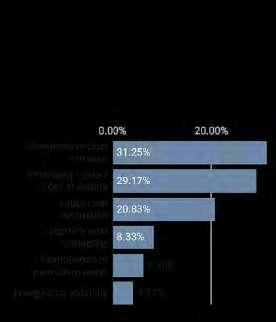
quired to secure additional internal approvals means that sites that were available when the project was first conceived may no longer be on the market by the time the project is cleared to move forward. And the scarcity of sites means that even a three- or six-month delay can be the difference between a successful project and a search that has to be restarted from scratch.
This cost pressure is not merely a function of inflation in the traditional sense. It reflects a broader repricing of risk across the economy. Lenders are requiring higher returns to finance industrial real estate in an environment of policy uncertainty. Contractors are building cost escalation clauses into bids because they cannot reliably forecast material costs over an 18-month construction timeline. And companies are discovering that the contingency buffers they built into project budgets are being consumed before groundbreaking, leaving little room for the inevitable surprises that emerge during construction.
The result is a corporate sector that is proceeding with expansion plans, but proceeding more slowly and with far greater scrutiny of every line item in the pro forma. The days when a project could move from concept to construction in 12 months are, for many companies, over.
The corporate perspective on labor shows a subtle but important shift from the consultant view. While consultants focus on the “depth of the pipeline,” corporate respondents are feeling the heat of competition for labor in the local market, with 38 percent ranking it as “Very Important.”
The daily operational reality is about retention and margin protection. It is about whether wage rates in a given market are rising so fast that they threaten the operating cost assumptions that justified the project in the first place. It is about whether a company can hire 150 production workers in a matter of months without triggering a bidding war with other employers in the same labor shed. And it is about whether turnover rates are low enough that training investments actually pay off, or whether workers are being poached by competitors before they reach full productivity.
Alex Miller of KSM Advisers points out, “Location decisions are leaning toward markets with balanced labor
conditions that allow companies to scale without putting pressure on margins.” This is reflected in the corporate ranking of factors, where workforce and labor availability was the number one factor affecting expansion plans for 54 percent of respondents — a figure that underscores just how central labor considerations have become to site selection, not as an abstract workforce development question but as an immediate operational constraint.
What the corporate data makes clear is that labor availability is being evaluated not in isolation but in the context of a broader assessment of whether a location can deliver operational stability. A market with abundant labor but unreliable power is not a viable option.
A market with low wage rates but a shallow talent pool that requires extensive training is a gamble. The search is for locations that offer not just low-cost labor, but dependable labor — workers who can be hired, trained,



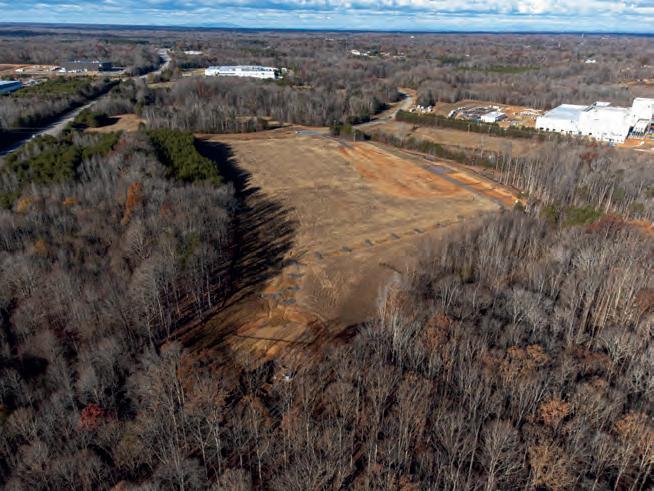

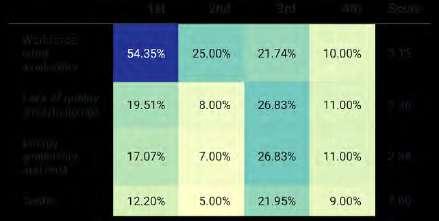
and retained without creating margin pressure or operational disruption.
Perhaps the most significant takeaway from the corporate data is the premium placed on stability. Political and regulatory stability was rated as “Very Important” or “Important” by over 83 percent of executives. In an environment where tariff uncertainty and sudden policy shifts can invalidate a business model overnight, the “cheapest” location is no longer the “best” location. The corporate survey does not ask respondents to define what political and regulatory stability means in operational terms, but the consultant quotes offer clues.
Charles Sexton of Strategic Location Advisers notes that companies are making decisions “prior to or in light of potential federal administrative impacts — the right or wrong tweet or decision in the middle of the night can have a major impact on risk tolerance.” What corporate decision-makers are seeking, in other words, is not merely a favorable policy environment but a predict-
able one — a jurisdiction where the rules are unlikely to change midstream, where permitting processes are transparent and consistently applied, and where local governments understand that responsiveness and competence are themselves economic development assets.
This search for stability extends beyond politics to infrastructure. The corporate emphasis on grid reliability and redundancy (78 percent very important or important) and water supply reliability (70 percent) reflects a recognition that operational certainty depends on utilities that can deliver not just capacity but dependability. A location that can offer abundant power today but cannot guarantee that power will be available reliably over the 20-year life of the facility is, from the corporate perspective, not truly shovel-ready.
As Gregg Healy summarizes, “Across North America, companies are choosing sites that can withstand volatility, not just minimize expenses.” The corporate data confirms that this is not rhetoric. It is the governing logic of how expansion decisions are actually being made in 2026.
JobsOhio’s
SiteOhio program
is designed to give companies certainty on timelines, infrastructure, and due diligence before a project even begins.
By Jobs Ohio
For companies planning large-scale manufacturing or life sciences facilities, the most valuable commodity in site selection is no longer just land — it is time. Delays tied to environmental reviews, utility availability, permitting questions, or incomplete due diligence can stretch project schedules by months or even years. For manufacturers operating in fast-moving industries, those delays translate directly into higher costs and missed opportunities.
Ohio has taken a proactive approach to addressing this challenge through SiteOhio, a statewide program developed by JobsOhio to ensure industrial sites are ready for investment before a company ever begins its evaluation process.
Rather than simply maintaining a catalog of available properties, the SiteOhio program involves a rigorous authentication process that verifies critical site conditions in advance. Utilities must be located at the property boundaries with adequate capacity, environmental and engineering due diligence must be completed, and relevant state and federal entities must provide concurrence that the site can move forward for development.
The result is a portfolio of sites where much of the traditional uncertainty surrounding development timelines has already been removed. Companies evaluating these properties can move forward knowing that key questions about infrastructure, environmental conditions, and regulatory alignment have already been addressed.
JobsOhio’s broader mission centers on creating new jobs across competitive industries including advanced aerospace
and defense, life sciences, and advanced manufacturing. Along with identifying suitable locations, the organization works with companies to support projects through customized financial incentives, workforce development resources, and connections with regional partners.
One recent example is Anduril Industries, which in 2025 selected Ohio for its first hyperscale advanced manufacturing campus dedicated to autonomous defense systems.
The company announced plans to invest more than $900 million and create 4,000 new jobs over ten years at a site in Pickaway County near Rickenbacker International Airport. The project represents the largest job-generating megaproject in Ohio’s history and underscores the state’s growing role in advanced defense manufacturing.
After a multi-month national search, the company cited Ohio’s available site options as a decisive factor in the location decision. The region’s strong aerospace and defense ecosystem, skilled workforce, and proximity to key customers — including WrightPatterson Air Force Base — further strengthened the case.
“Ohio is the state that gave us the best shot of hitting our timeline,” said Anduril Founder Palmer Luckey. “Some states are really good at pushing you out and slowing you down, and there are others that are great at pulling you in and speeding you up. That’s what Ohio was.”
A similar story has unfolded in the life sciences sector.
Biotechnology leader Amgen selected Ohio in 2021 for a major biomanufacturing facility. Construction of the site moved at an unusually rapid pace, reaching
completion and approval by the U.S. Food and Drug Administration in just 26 months — the fastest site completion in Amgen’s nearly 45year history.
The speed of development reflected both the site’s readiness for construction and its strategic location near major distribution infrastructure, allowing the company to bring the facility online faster than typical industry timelines.
In 2025, Amgen announced a further expansion of the facility backed by a $900 million investment, reinforcing Ohio’s role as a growing hub for biomanufacturing.
“Ohio offers a supportive business climate, skilled workforce, and strategic location, making it an ideal choice for this next phase of our investment,” said Amgen Chairman and CEO Robert A. Bradway.
Projects like Anduril and Amgen illustrate how prepared sites can reduce one of the most significant risks in facility planning: uncertainty about timelines.
Even well-located properties can face delays if utilities are not fully confirmed, environmental studies remain incomplete, or regulatory approvals must still be secured. By completing much of that groundwork in advance, SiteOhio helps reduce those unknowns
For companies evaluating new locations, the question is often simple: how quickly can a facility move from groundbreaking to production?
Programs like SiteOhio aim to provide that answer before the site selection process even begins.
This article was paid for and written by Jobs Ohio and approved by Area Development.
While our print feature focuses on the high-level strategic shifts in power and permitting, the digital edition of the 2026 Corporate and Consultant Surveys offers the granular detail necessary for complex decision-making. By visiting the Area Development website, you can access our complete suite of interactive Datawrapper visualizations, including the comprehensive categorical grid that combines Labor, Infrastructure, Real Estate, and Finance into a single, sortable interface.
Go beyond the aggregate data to explore how priorities shift within specific industry verticals, such as the booming Aerospace and Defense sectors or the energy-intensive world of Semiconductor manufacturing. Digital readers can also engage with the full Consultant Word Cloud to capture the qualitative nuances of the “speed to market” mandate and review five-year trend lines that reveal which site selection factors are accelerating in importance.
Experience the full scope of the 2026 results by scanning the QR code below or visiting .

The 2026 Corporate and Consultant Site Selection Surveys were conducted by Area Development to assess how business leaders and site selection professionals are evaluating expansion and location decisions amid rising execution risk, infrastructure constraints, and economic volatility.
The Corporate Survey reflects responses from 50 corporate executives actively involved in facility expansion, relocation, or capital investment planning. Respondents evaluated the relative importance of labor, energy, infrastructure, cost, regulatory, and timing considerations influencing their location decisions.
The Consultant Survey includes responses from 67 site selection consultants and location strategy professionals representing a broad range of industries, project sizes, and geographies. Consultants were asked to identify the factors most influencing their clients’ investment and expansion plans, as well as emerging risks shaping site selection strategy.
Both surveys allowed respondents to select multiple factors, recognizing that site selection decisions are driven by interconnected variables rather than single criteria. Percentages shown in the tables represent the share of respondents identifying each factor as influential in their decision-making process.
Where year-over-year comparisons are discussed in the editorial narrative, they are based on comparable question framing across survey cycles.
Presented together, the corporate and consultant results provide a dual perspective on the current site selection landscape — aligning how advisors are guiding projects with how companies themselves are weighing risk, readiness, and execution as they plan for 2026 and beyond.


By Mario Ochoa, Managing Director, Advanced Manufacturing Practice, at JLL
For decades, manufacturing location strategy followed a familiar script: minimize cost, maximize incentives, and secure enough labor to get a plant online. That playbook no longer works. W hat many companies now label “advanced manufacturing” is not simply a higher-tech version of traditional production. It is a fundamentally different operating model—one that places new demands on workforce quality, site readiness, resiliency, power reliability, and long-term adaptability. Companies that fail to recognize this shift risk choosing locations that look competitive on paper but break down under real operational pressure.
Having advised corporate occupiers across technology, industrial, and advanced manufacturing portfolios for more than two decades, I’ve seen firsthand how the definition of a “good site” has changed— and why location decisions today must be made with a longer, more disciplined lens.
Advanced manufacturing facilities are often more automated, more datadriven, and more capital-intensive than their predecessors. That efficiency reduces headcount, but it raises the stakes for every remaining role.
When a plant employs fewer people, each worker represents a larger share of output and institutional knowledge. The result is a workforce model that prioritizes reliability, technical aptitude, and retention over sheer availability. Labor pools that once supported high-volume manufacturing may struggle to support facilities that rely on automation technicians, controls engineers, and maintenance specialists to keep complex systems running continuously.
For site selection teams, this means moving beyond headline unemployment rates or wage averages. The critical questions now include:

How stable is the local technical workforce? How is the local and regional education system building the workforce pipeline?Where do mid-career replacements come from when attrition occurs? Can the region support long-term skill evolution as production systems change?
Communities that cannot answer those questions with specificity should raise immediate concern—regardless of incentive packages or short-term hiring promises.
Automation does more than alter production lines. It reshapes facility design, power demand, connectivity, and tolerance for disruption.
Advanced manufacturing plants often require higher ceiling heights, specialized floor loading, greater electrical capacity, and enhanced cooling. These needs reduce flexibility in site selection and increase dependence on infrastructure performance. A location that struggles with power reliability, water availability, or substation access may become a liability long after construction is complete.
From a corporate perspective, this shifts site evaluation from a transactional decision to a riskmanagement exercise. It is no longer sufficient to ask whether utilities can serve the facility at the time of opening. Companies must assess whether infrastructure can scale, adapt, and remain resilient over the life of the operation.
require aggressive hiring thresholds, rigid timelines, or extensive reporting may create friction that outweighs their financial value. The most effective incentives are those that support long-term operational stability, such as invested capital offset, workforce development, and infrastructure investment.
Companies should treat incentives as one variable in a broader risk-adjusted analysis, not as a deciding factor in isolation.
Another defining trait of advanced manufacturing strategy is portfolio alignment. Companies increasingly evaluate sites not as standalone investments, but as components of a broader operational network. Proximity to suppliers, customers, research partners, and logistics nodes matters more when production systems are tightly integrated.
that’s the operational reality advanced manufacturing sites must be built to sustain
The cost of getting this wrong is rarely immediate—but it is often severe.
In many sectors, advanced manufacturing investment is tied to compressed timelines. Market windows are narrow. Customer commitments are firm. Delays in site readiness, permitting, or utility delivery can cascade into lost revenue or broken contracts.
This reality underscores the importance of execution certainty. Companies should be wary of locations that rely heavily on future commitments rather than demonstrated capability. A site that requires extensive off-site infrastructure work, environmental remediation, or multi-layered approvals may ultimately cost more—even if initial incentives appear generous.
The most competitive locations today are those that reduce unknowns. They offer clear timelines, coordinated agencies, and proven track records of delivering complex projects on schedule.
Incentives remain part of the equation, but their relative importance has shifted. Tax credits and grants do little to offset operational disruption, labor instability, or infrastructure failure.
For advanced manufacturing projects, incentives must be evaluated alongside compliance risk and administrative burden. Programs that
This portfolio approach favors regions that can support multiple functions over time—manufacturing, R&D, distribution, and even headquarters operations. It also rewards flexibility: the ability to expand, retool, or repurpose facilities as technology and markets evolve.
From this perspective, site selection becomes less about winning a single project and more about sustaining long-term competitiveness.
Advanced manufacturing demands more from its locations—and from the teams selecting them. The metrics that once defined a “good deal” are no longer sufficient. Companies must interrogate labor depth, infrastructure resilience, execution certainty, and long-term adaptability with greater rigor than ever before.
Those who do will not only build successful facilities but also position themselves to compete in an industrial landscape where speed, precision, and resilience increasingly determine who wins—and who falls behind
Advanced manufacturing is a fundamentally different operating model
Domestic drug production is becoming a matter of national security, not just market strategy
By Courtland Robinson, MPA Director, Brasfield & Gorrie

Biology has become a technology, and technology is beginning to feel biological. We rarely stop to sense it, but we are living through an age of acceleration—where discovery builds on itself faster than we can comprehend. It took more than four centuries to get from the invention of the microscope to the discovery of penicillin. It has been just 75 years since the structure of DNA was revealed, and today gene therapies are finding their place in mainstream medicine.
In the span of a single generation, we have mapped the human genome, developed mRNA vaccines, harnessed next-generation genetic engineering technology for gene editing and drug development, and begun using artificial intelligence to design drugs, predict protein folding, and even personalize treatment plans.
America’s next great scientific leap will hinge not only on discovery but on the capacity to manufacture those discoveries at home. Across the United States, a new generation of pharmaceutical and biologics manufacturing facilities is rising to meet the promise of modern science, transforming the nation’s industrial base into an engine for the future of human health.
A recent Quality Matters report found that roughly half of all U.S.approved active pharmaceutical ingredients (APIs) depend on a single country for at least one of their key starting materials. The supply chain is heavily concentrated: about 41 percent of those materials
come exclusively from China, and another 16 percent are sourced solely from India.
According to the Information Technology and Innovation Foundation (ITIF), U.S. pharmaceutical companies conduct more than half of the world’s pharmaceutical research and development and are responsible for nearly half of all new treatments developed globally. Yet the United States produces well under half of the medicines it consumes and accounts for less than one-fifth of global pharmaceutical exports by value. Modern medicines require an industrial scale and an entirely new generation of facilities. The convergence of science and industry now underway could signal a return of medicine production to American soil—if policy becomes the prescription rather than the diagnosis.
Among the many forces driving the push for a more resilient medicine supply chain, natural disasters have hit a nerve that few policymakers can ignore. Recent events have underscored just how fragile pharmaceutical production can be when it is concentrated in a few vulnerable regions. In 2017, Hurricane Maria devastated Puerto Rico—crippling supplies of painkillers, antibiotics, and IV bags across the United States. And as recently as last year, Hurricane Helene forced shutdowns at key manufacturing sites in North Carolina, triggering nationwide shortages of IV solutions and dialysis fluids.
But nothing hit harder than the pandemic. COVID-19 caused systemic disruption across API exports, leading to shortages of antibiotics and many other common generic drugs. Before 2020, the vast majority of active pharmaceutical ingredients used in U.S. medicines—nearly three-quarters—came from overseas, largely from China and India. When the pandemic disrupted trade through lockdowns, export bans, and supply bottlenecks, many manufacturers found themselves unable to secure even basic generic drugs. COVID-19 did not just speed up breakthroughs in vaccines and gene therapies; it exposed how dependent the U.S. had become on foreign production and elevated manufacturing to a matter of national strategy.
What began as emergency measures during the pandemic—safeguarding supply chains and rebuilding domestic capacity—has evolved into a coordinated effort to treat U.S. pharmaceutical manufacturing as critical infrastructure. The result is an industrial policy with a surgical purpose: to secure the means of making modern medicine at home.
However, treating pharmaceutical manufacturing as critical infrastructure is not a novel idea—it is a page borrowed from the modern industrial playbook. Framing production capacity as essential to national security and economic competitiveness has proven an effective strategy in other sectors. Data centers, semiconductor fabs, and clean energy plants all leveraged their own geopolitical considerations—and each unlocked billions in public and private investment as a result. Logically, the ability to produce life-saving therapies is being recognized as a pillar of national strength, because where we make medicine matters.
To accomplish this, tariffs, drug pricing, and legislative overhauls under the One Big Beautiful Bill Act (OBBBA) have begun to reshape the economics of U.S. pharmaceutical manufacturing.
Tariffs, heavily debated in their effectiveness across industries, seem to be working in pharma because they align with both national security and domestic capacity goals. By raising the cost of importing active ingredients and finished drugs from China and India, the U.S. has effectively forced multinational drugmakers to reconsider their dependence on overseas production.
OBBBA is redefining how pharmaceutical companies assess where they invent, manufacture, and distribute their products. Key provisions include new policies to improve the safety and security of biological research, including a ban on federal funding for research in countries of concern; extending key incentives first introduced under the 2017 Tax Cuts and Jobs Act; and restoring immediate deductibility of domestic research and development costs. Perhaps most importantly, it extends 100 percent first-year expensing to entire manufacturing facilities rather than just capital equipment, allowing companies to deduct the full cost of new plant construction immediately rather than depreciating it over decades. This change fundamentally alters the investment calculus for advanced manufacturing in the United States, turning what was once a gradual recovery of cost into an instant balance-sheet benefit.
In literature, this shift is referred to as “peripety,” or the “shift in balance” moment we so often see in stories and cinema when the odds even out and the direction of the story changes—think Han Solo returning in the Millennium Falcon to save Luke from Darth Vader’s TIE Fighter, or when Rocky switches stances in the final rounds of the fight. For the U.S. life sciences and pharmaceutical sectors, this policy alignment marks that turning point: a chance to rebuild domestic production capacity, strengthen supply chain resilience, and restore strategic independence in a critical area of the American economy.
Capital expenditures aimed at growing capacity, capturing market
share, conforming with regulatory compliance, and optimizing production have captured recent headlines as pharmaceutical giants and biotech pioneers scale their research from the bench to the factory floor. These regional ecosystems are both expanding and emerging in places where workforce, infrastructure, incentives, and supply chains meet. Billions of dollars in capital expenditures have dominated the headlines, with states like North Carolina, New Jersey, Virginia, Indiana, Pennsylvania, Arizona, Kentucky, and Oregon announcing massive projects from well-known industry giants seeking to avoid punishing tariffs.
Biomanufacturing, one of the fastest-growing subsets within the pharmaceutical industry, is ground zero for testing the realities of U.S. production. These biologics—drugs and therapies produced from living systems rather than chemical synthesis—touch nearly every aspect of modern health, from cancer immunotherapies and mRNA vaccines to insulin, cosmetics, and probiotic supplements.
In the eyes of pharmaceutical manufacturers, the most competitive markets share a familiar DNA: close access to raw materials and customers, dependable and affordable power, a ready mix of skilled and unskilled labor, a maturing digital backbone, deep industry partnerships, and a regulatory environment that invites investment. Still, challenges will persist even in more developed regions, including systemic and skilled workforce shortages and lead times for essential power system components such as power distribution panels, transformers, switchgear, generators, and UPS systems.
Construction expertise in this field is highly concentrated. Modern drug production depends on a narrow supply of specialized trades—mechanical and process-piping specialists, electrical and instrumentation technicians, HVAC experts, millwrights, and increasingly, data and automation technicians who maintain the plant’s digital backbone. But many of these same trades are being absorbed by the high-wage data center boom, where demand for power infrastructure, precision cooling, and automation parallels the needs of pharmaceutical manufacturing. The result is an increasingly competitive labor market.
The U.S. pharmaceutical manufacturing sector was valued at roughly $129 billion in 2024, and most forecasts expect it to grow at a steady 5% to 7% annually over the next decade. The next wave of investment is focused on automation, AI-driven production, and smarter supply chains that shorten the path from lab to patient. Companies are also putting greater emphasis on sustainability, flexibility, and facility designs built for personalized medicine—plants capable of producing smaller, more targeted batches rather than mass-market drugs alone.
Precision medicine and AI are converging to reshape both how therapies are developed and how care is delivered. Major players like Johnson & Johnson, Eli Lilly, AstraZeneca, and Novartis are moving to strengthen their U.S. manufacturing base, investing heavily in advanced production and digital infrastructure.
Together, these shifts reflect a broader evolution: the U.S. is moving from a discovery-led pharmaceutical model to one defined by resilient, bio-industrial manufacturing.
By Beth Buckner, Member, Taxation, and Beth Friedrich, Director of Public Affairs, Moore & Van Allen
It ’s official — manufacturing projects are the hottest ticket in town. Manufacturing projects are among the most competitive investments in today’s site selection landscape. For companies evaluating expansion or relocation, a single manufacturing facility can represent a multiyear commitment of capital, labor and operational risk. Construction costs, supplier contracts, salaries and long-term capital expenditures combine to shape not only the performance of a facility but also its strategic value to the business. With so much at stake, what are companies actually looking for when evaluating candidate manufacturing sites?
In a capital-intensive industry, money talks. Lowering capital expenditures is a major consideration for board members evaluating where to expand or locate a manufacturing project. Direct grants from federal, state and
local entities that offset costs such as land acquisition, construction and infrastructure can materially affect total project economics. Locations able to reduce upfront capital pressure often rise to the top of a site selection shortlist by improving return profiles and reducing early-stage risk.
By the time a manufacturer initiates a formal site search, the window for meaningful site preparation has largely closed. Manufacturing investments are rarely made lightly; they often develop over years but can also be accelerated by sudden market shifts or external shocks, as seen during the COVID-19 pandemic. In either scenario, companies favor locations where key readiness factors are already in place. Water and sewer infrastructure are frequently among the most significant constraints. Many otherwise attractive sites lack systems capable of supporting modern manufacturing operations at scale. Heavy
infrastructure upgrades can materially affect project timelines and capital budgets, introducing risk that manufacturers must account for early in the decision-making process. Locations with funding mechanisms already established to address infrastructure gaps provide manufacturers with greater confidence and fewer unknowns.
Permitting is another critical variable. Lengthy or unpredictable permitting processes can delay projects, increase carrying costs and disrupt operational timelines. Bottlenecks often arise from staffing shortages, overlapping jurisdictions or regulatory requirements that evolve between project announcement and groundbreaking. Manufacturers increasingly prioritize locations where permitting processes are coordinated, transparent and predictable, allowing project teams to plan with confidence. Effective coordination with federal agencies further reduces schedule risk for complex projects.
The rapid growth of data centers has intensified competition for reliable, affordable electricity, placing power availability squarely on the radar of manufacturers planning expansion. Power cost and access now function as gating factors in many site selection decisions, particularly for energyintensive operations.
Capital investment incentives frequently carry more weight than job- or wage-based programs for manufacturers with large upfront expenditures. Many withholding- and income tax-based incentives scale with job creation, while capital expenditures often dwarf employment figures in manufacturing projects. Incentives tied directly to investment can better align with project economics. Examples include Arizona’s Qualified Facility Tax Credit, West Virginia’s Investment Tax Credit and Arkansas’ Tax Back Program.
F lexibility within incentive programs is also critical. Manufacturing projects frequently evolve over time due to tariffs, market conditions or supply chain disruptions. Programs allowing overachievement in certain metrics to offset underperformance in others provide manufacturers with needed latitude when planning projects five to 10 years in advance. Missouri and Indiana, for example, permit wage overachievement to increase incentive benefits even if job or investment targets are not fully met.
10%
that’s how low some states allow manufacturing property to depreciate for tax purposes
Manufacturers are paying closer attention to locations investing in long-term power capacity, including alternative energy sources such as nuclear, battery storage and renewables. Some states have taken steps to support large-scale energy infrastructure investment through targeted financing mechanisms. Alabama, for example, established an Energy Infrastructure Bank to provide financing for power-related projects, helping manufacturers assess long-term reliability and cost stability when evaluating sites.
Workforce considerations consistently rank among the top factors in manufacturing site selection. Availability, skill alignment and long-term pipeline sustainability all influence whether a location can support current operations and future growth. A site’s workforce profile is not only a reflection of labor supply but also an indicator of operational risk and scalability.
Manufacturers continue to face workforce challenges as experienced workers retire and fewer younger workers enter skilled trades pipelines. Locations demonstrating active engagement with community colleges, apprenticeship programs and certification initiatives signal a readiness to support workforce needs over time. Clear workforce strategies reassure manufacturers that labor constraints will not undermine long-term operational plans.
W hen manufacturers identify multiple sites that meet operational and logistical requirements, incentives often become a decisive factor. These programs are closely scrutinized for their impact on total cost of ownership and long-term financial performance.
Property tax treatment remains a core consideration for capital-intensive facilities. In states that tax both real and personal property, competitive locations often offer low base rates, accelerated depreciation or long-term reduction mechanisms. Some states allow manufacturing property to depreciate to a tax base as low as 10 percent, improving long-term cost profiles. Bond structures that place legal title with a public entity and lease property back to manufacturers can further reduce property tax exposure in exchange for payments in lieu of taxes. While administratively complex, these arrangements often provide the longest benefit horizons, commonly ranging from 20 to 40 years. Examples include Arkansas, Georgia and Kentucky. Other states, such as South Carolina, allow long-term payments in lieu of taxes without bonds. States offering full abatement of certain non-educational property taxes, such as Florida, or grants equal to a large percentage of the local tax base, such as North Carolina, can also be attractive, though these programs often offer shorter durations.
Manufacturing sales tax exemptions also materially affect project costs. Given the scale of manufacturing investment, sales tax exposure during construction and ongoing operations can be significant. While many states offer manufacturing exemptions, definitions vary. Whether equipment must be “directly used” in production or merely “necessary and integral” determines the breadth of the exemption. Treatment of electricity, natural gas, repairs and services further shapes ongoing tax liability. These distinctions can produce substantial differences in both initial and long-term operating costs.
Modern manufacturing site selection reflects a complex balancing of capital efficiency, operational certainty and long-term risk management. Companies evaluating new facilities are increasingly focused on locations that offer predictable infrastructure, reliable power, workforce alignment and incentive structures that match capital intensity. Sites that meet these criteria allow manufacturers to deploy capital with greater confidence and position facilities for sustained performance over time

By Andy Greiner, Editor
Shovel-ready. Development-ready. Certified. Investment-ready. The vocabulary of site readiness has expanded even as its meaning has remained stubbornly contested. Ask a company executive, a construction manager, a lender, or a state economic development official what “site readiness” means, and you’ll get a different answer from each. The one thing they tend to agree on: the gap between what programs promise and what companies actually need is still too wide, and the cost of that gap — in time, capital, and missed opportunity — is enormous.
We asked a cross-section of site selection consultants, economic developers, and construction professionals to define the term in their own words. Their responses reveal both real progress and persistent blind spots. What emerges, read together, is less a consensus definition than a layered argument — one that the programs being built across the country are still, in many cases, only partially answering
Start with the most fundamental question a company asks when it looks at a site: not “is this certified?” but “can I build here, how fast, and at what cost?” That deceptively simple question contains multitudes, and the distance between a community’s answer and the company’s needs is where most deals quietly die.
Tom Stringer, a site selection consultant with decades of experience who just founded Stringer Site Selection and Incentives, Inc., said watching communities oversell their inventory, offers perhaps the starkest version of the standard:
“Show me, don’t tell me: How quickly I can start building and what permits are required. When can I get a Certificate of Occupancy. Quote me the precise incentives and all costs for my usage. That’s it — anything short of that means your site is NOT ready. Most communities fall woefully short and try to buffalo folks regarding site readiness,”Stringer said.
It’s a demanding bar, and deliberately so. The closer a community gets to answering those three questions with precision and documentation, Stringer argues, the more competitive it becomes — not because it has earned a designation, but because it has genuinely reduced the company’s risk.
Courtland Robinson, MPA at Brasfield and Gorrie, frames the same idea through a risk and timing lens, and in doing so reveals why the upfront investment in preparation pays off not just for companies but for the communities making it:
“Site readiness is less a label and more a process. While it’s often oversimplified or over-defined, it ultimately comes down to risk and timing — confirming the site communication
By Steve Kaelble, Area Development Staff Editor
In site selection, time is money, and uncertainty is expensive.
As companies search nationally, Michigan stands out by helping communities get shovel-ready and offering a portfolio of sites that lets executives move fast and with confidence.
“In today’s world, clients are moving so fast that the sites that are prepared and already have due diligence completed are the ones that rise to the top of the list,” says Lindsey Cannon, managing director of Quest Site Solutions. To ensure these evaluations meet the highest national standards, Michigan enlisted Quest to serve as an independent third-party validator.
“We’ve recognized that it’s a highly competitive landscape,” says Paul O’Connell, vice president of real estate development for the Michigan Economic Development Corporation (MEDC). The MI Sites program, developed in collaboration with Quest, is a key answer for helping Michigan communities position their industrial sites for investment. “This is not a site certification program. This is a site readiness program. Our goal is to land the best of the best in terms of projects.”
tiers: bronze, silver, or gold. The tiers reflect levels of readiness and due diligence completed, and the vetting process uncovers opportunities to make each site even more attractive to investors. “The goal is to prepare everyone involved in the process and have a large portfolio of sites with third-party vetting,” Cannon says. “We’re educating communities and making them smarter, more ready. At the end, not only do they achieve their designation, but they
MI Sites participation. The criteria for the gold tier are pretty stringent, O’Connell notes, but a bronze designation still indicates a whole lot of value.
Take the case of Midbrook Manufacturing & Fabrication as an example. “We sought out a shovelready site that could get us up and running as quickly as possible,” says Jamie Willis, Midbrook’s chief operating officer. “We knew that the Jackson Technology Park North had received the MI Sites bronze certification, which removed a lot of time and risk from our site search. It resulted in us being in our brand-new, purpose-built facility much quicker than if we had to conduct all the necessary due diligence required for ourselves on numerous sites.”

also are provided with a marketing deliverable going into a lot of detail on all aspects of the site.”
MI Sites has established structured, consistent criteria for analyzing sites objectively and creating standardized documentation. Local communities submit sites for evaluation, which results in a deep dive into their attributes, resources, and readiness. The process leads to a mock site visit, O’Connell says, “with Quest leading it as if having a company in tow. They ask all the questions that site selectors would ask when a real project comes along.”
Each site is ultimately assigned to one of the MI Sites program’s three
Michigan stands ready to lend a hand when the process reveals site improvement opportunities. The Strategic Site Readiness Program (SSRP), for example, offers financial incentives, including grants and loans intended to build Michigan’s inventory of investment-ready sites. State support can help local sites move their way up the tier system, further their due diligence, and improve their readiness.
“We are being proactive and aggressive in creating great sites in the state of Michigan,” O’Connell says, “and also putting significant dollars behind it.” In the past three years or so, the state has invested more than $460 million in proactive site readiness grants.
It’s worth noting that sites don’t have to grab the gold to benefit from
What was good for Midbrook was also good for Jackson County, according to Keith Gillenwater, president and CEO of Accelerate Jackson County, who says MI Sites was helpful in building out Jackson Technology Park North. “The process was very thorough and ultimately led us to building one of the premier business parks in Michigan.”
Ultimately, programs such as MI Sites and the SSRP are about more than just preparing sites, says O’Connell. The initiatives are helping the state up its game in how it evaluates, prepares, and markets sites, and how it meets the needs of site selection professionals. “It’s not just the readiness of sites but the readiness of Team Michigan. It’s an overall readiness program in terms of addressing the needs of site selectors.”
To learn more about the MI Sites program or to view a portfolio of designated properties, visit michiganbusiness.org/mi-sitesprogram.

With world-class talent and thriving cities, Michigan offers everything your business needs to succeed. Find your landing spot for success with the Michigan Economic Development Corporation’s MI Sites program, a curated portfolio of the state’s most development-ready industrial properties.
Seize your opportunity at MICHIGANBUSINESS.ORG /MI-SITES-PROGRAM
can support the building, infrastructure, and ongoing operations without introducing avoidable uncertainty. When that work is done upfront, projects move faster, capital is deployed more confidently, and speed to market becomes a competitive advantage,” Robinson said. Robinson’s framing points to something programs don’t always make explicit: a certified or “ready” site isn’t primarily a marketing asset. It’s a risk transfer mechanism. The community absorbs the cost and uncertainty of early-stage due diligence so the company doesn’t have to. Nelson Lindsey, a principal with Parker Poe’s Location Solutions team, takes that idea one step further, arguing that readiness doesn’t require a site to have everything in place — only that the open questions have been clearly scoped:
“Site readiness means having cleared all the investigative reports — Phase 1 environmental, wetlands, archaeological — to remove any questions or concerns. And it means having an understanding of utility capacity. The utility lines may not be there, but if a community has planned to provide them in a timeframe that works for the company, that is just as good,” Lindsey said.
That distinction matters. A site doesn’t need a water main running to its fence line to be competitive — it needs a credible, funded plan to deliver one on a schedule that fits the project. What kills deals isn’t absence; it’s uncertainty.
Against that backdrop, states have been spending — and in some cases spending aggressively — to build out their inventories of development-ready sites. The wave of domestic manufacturing investment triggered by the CHIPS Act, the Inflation Reduction Act, and supply chain reshoring has created fierce competition for a dwindling supply of qualified large industrial sites. The result, across at least 27 states, is something approaching a national arms race in site preparation funding. What the best programs share is not just money, but a commitment to doing the investigative work before a company walks in the door.
One of the longer-running and most imitated programs in the country, Tennessee’s Select Tennessee Certified Sites Program uses third-party technical review handled by Austin Consulting to ensure rigor. Sites must have at least 20 net contiguous developable acres, clear environmental and geotechnical reviews, and demonstrated utility access. The state covers the consulting fee — no cost to the applicant community — and offers reimbursable grants for preparation on publicly owned sites. The result is a program that commands genuine credibility with site selectors, not just a logo on a brochure.
Virginia’s VBRSP has deployed approximately $282 million in matching grants between 2022 and 2024, with more under evaluation. The program targets sites of at least 50 acres, funding everything from environmental due diligence to utility extensions and civil site preparation. It was built collaboratively by VEDP, the Department of Environmental Quality, railroad representatives, utility companies, and civil engineers — a cross-agency structure that gives it credibility precisely because the people who will have to execute the work helped design the program.
At $750 million, the All Ohio Future Fund represents one of the largest single commitments to site preparation in the country’s history. What distinguishes it beyond scale is an accountability provision with real teeth: grant awardees must find a suitable end-user within five years. That structure forces communities to think about market fit, not just inventory — a subtle but meaningful shift in how readiness programs can be designed.
Alabama’s Site Evaluation and Economic Development Strategy Act, enacted in 2023, has moved quickly through successive funding rounds: $30.1 million in the first round, $23.5 million in early 2025, and a third round of $20 million expected. The program’s value is its flexibility — grant funding covers both the assessment phase and physical development, allowing communities to sequence investments based on what each site actually needs rather than fitting a fixed template.
North Carolina has appropriated approximately $119 million since 2022 with a specific focus on the hardest supply problem in the market: megasites over 1,000 contiguous developable acres. A companion Selectsite Readiness Program, established in 2024, targets properties under that threshold that are still capable of supporting major advanced manufacturing investment. In 2025, the program was extended to counties affected by Hurricane Helene — an acknowledgment that site readiness and community resilience are, in the long run, the same project.
Kentucky’s KPDI offers up to $100 million per project — covering utility upgrades and extensions, civil preparation, due diligence, and in some cases property acquisition. It is among the most generously funded single-project programs in the country and reflects a simple strategic bet: that removing financial friction at the top end of the market is worth the investment when the projects that land are of sufficient scale.
Created by executive order in December 2024, Maryland’s MBRSP is newer but notable for its tiered structure. Site Characterization Grants of up to $10,000 place sites on a 1-through-5 readiness scale; Site Improvement Grants then fund the work to move them up the ladder. Competitive projects are expected to show a 3:1 local match — a way of ensuring community skin in the game and filtering for sites with genuine local champions behind them.
Michigan: Strategic Site Readiness Program (SSRP)
Michigan has made site development a central pillar of its economic development strategy through the Strategic Site Readiness Program (SSRP), administered by the Michigan Economic Development Corporation on behalf of the Michigan Strategic Fund. The program provides grants and other support for land assembly, environmental remediation, utility extensions, transportation improvements, and other predevelopment work needed to prepare large industrial sites for investment. The initiative was launched with a $100 million state appropriation, with additional rounds of funding approved to accelerate preparation of strategic and mega-strategic sites capable of supporting major advanced manufacturing and supply chain projects.
Duke Energy: Site Readiness Program
Not every important program comes from a state capitol. Duke Energy’s Site Readiness Program, running since 2010 across Ohio and Kentucky, has generated over $2 billion in capital investment and more than 5,000 jobs by identifying, evaluating, and improving high-potential industrial properties — then marketing them nationally.
It’s a reminder that utilities, which have both a financial interest in industrial load and deep knowledge of infrastructure capacity, can be among the most effective partners in building genuine site pipelines.
North Dakota: Building the Foundation
North Dakota offers a useful counterpoint — a state that has recognized the imperative and is building its infrastructure honestly and without pretension about where it stands. Richard Garmin of North Dakota Commerce describes a program still in its early stages, and is candid about both the gap and the ambition:
“We were a little late to the show, but we’re in the show now. We’ve got a statewide site marketing platform up and running — an enterprise edition of LOIS and LASSO that every EDO and partner across the state can access. The next step is identifying sites and helping communities get ready: Phase 1 environmental studies, cultural evaluations, geotechnical work — to get six to nine months ahead of the game. Site availability is one of our biggest goals in the next year,” Garmin said.
Garmin’s framing—“we’re in the show now”—captures something important. North Dakota isn’t promising a pipeline of certified megasites. It’s promising to be organized and fast when the project arrives. For many states and communities, that’s not a consolation prize. It’s a realistic and achievable competitive position.
The investment is real. But the consultants who actually use these programs on behalf of clients are precise about where the gap between program design and company reality persists. Their concerns aren’t criticisms so much as a roadmap for the next generation of readiness work.
The most fundamental challenge, Scott Kupperman, owner of Kupperman Site Solutions, argues, is structural: the industry itself has no standards, which means “certification” can mean almost anything:
“Site selection as a consulting practice remains entirely unregulated. This allows for programs promoting site readiness that, while well-intentioned, lack any formal standards. Most consultants I’ve spoken with view these programs as having value based on the information they procure, rather than any claim of readiness or certification. Economic developers should not rely on readiness programs to replace local intelligence on site suitability for a particular prospective user,” Kupperman said.
The implication is worth sitting with: a certification is a data-gathering exercise, not a guarantee. A site that has completed a Phase 1 environmental and a geotech study is genuinely better positioned than one that hasn’t. But a certified site still requires company-specific assessment.
electric
Communities that treat the label as a sales conclusion rather than a starting point are not just overselling — they’re burning the credibility that programs take years to build.
Ramya Gowda, Managing Director within Newmark’s Global Strategy Consulting practice, pushes the frame further, arguing that the very definition of readiness is evolving faster than most programs are designed to track:
“Site readiness is now a moving target. The best sites are built for adaptability — from power upgrades and water reuse to workforce evolution and future expansion. True readiness also requires environmental certainty, permitting clarity, and community alignment,” Gowda said.
The “community alignment” piece is the one that Chris Camacho, the former president and CEO of the Greater Phoenix Economic Council who now serves as Senior Vice President focuse on real estate, global strategy, and incentives at Axon, has watched become not just relevant but decisive. He describes a shift in the competitive landscape that has accelerated dramatically in recent years:
“Physical site readiness is still probably the old standard definition — water, wastewater, gas, rail, at scale to meet growing demands of automation and AI. But a secondary definition is political readiness: do you have a state, county, and local council that are welcoming, and on the same page about their expectations? Three years ago I would have said that was material but secondary. Today it’s equally as important as the physical infrastructure. If you have the physical infrastructure in place but not the political alignment, companies may show initial interest — but they’ll weed those locations out, said Camacho.
Most site readiness programs assess infrastructure. Very few assess political will. Yet Camacho’s observation suggests that a community with impeccable utilities and a fractured local council is, in practical terms, less ready than a community with less infrastructure and genuine alignment behind the project.
Running beneath all of this is a supply crisis at the top end of the market that no certification program has yet solved. Alexandra Segers, general manager at Tochi Advisers, identifies the competitive dynamic that is quietly reshaping the site selection landscape for large manufacturing projects:
“Mega sites — over 1,000 acres — which are essential for large manufacturing projects, are currently hard to find. Some of the available sites have issues: insufficient useable contiguous acreage, wetlands or streams requiring extensive permitting, insufficient water or power. And increasingly, communities prefer data center projects. Property tax revenue over 10–15 years is the primary incentive for communities to locate a data center on a mega site,” Segers said.
The math communities are running isn’t irrational. A data center delivers immediate, predictable property tax revenue with relatively modest demands on local workforce development, housing, and municipal services. A large manufacturing facility creates far more jobs — the employment multiplier effect means approximately 2.2 to 3 indirect positions for every direct manufacturing job created — but those benefits are diffuse, slower to materialize, and harder to model in a budget presentation.
The result is a structural misalignment: the communities with the land that large manufacturers need are increasingly choosing a different customer. Until state and local incentive frameworks better account for the long-term regional value of manufacturing employment, communities will keep making the economically rational short-term choice. That’s a policy problem that site preparation funding alone can’t fix.
Kate Crowley, founder of CapCivic raises a dimension of readiness that rarely appears in program brochures but that shapes whether a project actually closes:
“When a company is evaluating a site, ‘site readiness’ includes being ready for financing. Lenders need clean title, current environmental reports, and clearly defined infrastructure scope and costs. Public financing tools move much faster when communities have already secured incentive designations like Opportunity Zones, created a TIF district, or updated local plans to reflect support for the investment. When these pieces are in place early, it becomes significantly easier for a project to secure financing approvals and move forward,” said Crowley.
Most state programs fund the physical preparation of sites. Fewer focus on the financial and regulatory scaffolding that allows a company to actually close on a transaction. A site that has completed its environmental studies but lacks clean title, or sits in a jurisdiction that hasn’t yet established the financial tools a deal might require, is not fully ready in the sense that Crowley describes. The infrastructure may be in place; the capital stack may not be. That gap can be as fatal to a deal as a missing water main.
Scott Canada, representing the construction perspective, returns the conversation to the literal ground — and to the category of surprises that no amount of marketing preparation can substitute for:
“Site readiness means ensuring the site can support the planned facility. This requires knowledge of past site use, subsurface conditions, utility and infrastructure needs, and confirming these factors can be managed through engineering, design, and construction. When these items are unknown prior to a shovel going in the ground, scheduling delays occur and costs rise — which is what we’re all trying to avoid,” Said Scott Canada, President, Mission Critcal at McCarthy Construction
Canada’s firm uses a Level of Detail (LOD) methodology to map underground utilities within and around proposed building sites, going well beyond the standard “Call before you dig” protocols. It’s a technical point, but it reflects a broader truth: the most common source of costly surprises in construction isn’t what’s visible above grade. It’s what’s invisible below it. Programs that fund environmental studies and utility access assessments but
don’t go deep — literally — on subsurface conditions are leaving a meaningful category of risk unaddressed. Matthew Sheaff, who worked on site readiness initiatives in both the Deval Patrick administration in Massachusetts and under Governors Raimondo and McKee in Rhode Island and now works for Phillip Morris International, notes that the lesson of those programs—the value of doing the work before a company asks—has only grown more relevant as competition has intensified. The programs that worked, he observed, were the ones that understood shovel-readiness not as a checklist but as a commitment to having already absorbed the uncertainty that companies don’t want to carry.
The programs are real, the investment is significant, and the intent is genuine. From Alabama’s $20 million SEEDS grants to Ohio’s $750 million Future Fund, states are allocating serious capital to build the kind of site inventory that companies need to make fast, confident location decisions. That investment is not wasted. Sites that have done the environmental work, secured the utility commitments, and established the political alignment behind them are genuinely more competitive than those that haven’t. But the voices in this roundup are a useful corrective to any temptation toward self-congratulation. Certification is a data set, not a guarantee. Political alignment matters as much as utility capacity. Financing readiness belongs in the conversation alongside geotechnical studies. And no program has yet cracked the megasite challenge in a manufacturing-competitive way, particularly as data centers offer communities a more immediately legible return.
The standard Stringer set at the top — show me when I can break ground, when I get my C of O, and exactly what it will cost — remains the right one. The best programs are moving toward it. The best communities understand that the work of getting there is not a marketing exercise. It’s a service to the company that hasn’t walked in the door yet.
By Mark Cote Vice Chair, Savills
that’s the estimated scale of federal capital targeting pilotto-commercial manufacturing $10B+
or years, “industries of the future” was a phrase that lived comfortably in pitch decks and conference panels. Today, it is showing up in real site searches, real capital stacks, and real pressure on communities to deliver something beyond incentives.
What has changed is not just technology, but the alignment of federal priorities, private investment, and executionready locations.
In our work advising emerging and growth-stage companies, particularly those coming out of venture-backed innovation pipelines, a clear pattern has emerged. The industries advancing fastest are not necessarily the most visible, but they are the ones positioned where public capital, private capital, and operational feasibility intersect. In many cases, these companies are not inventing entirely new sectors.
They are fundamentally changing how long-established industrial processes are carried out.
Capital flow has become one of the most reliable indicators of where future industrial growth will occur, but only if its purpose is understood. Federal programs, particularly through the Office of Strategic Capital and the U.S. Department of Energy, are increasingly focused on companies

that have moved beyond early research but have not yet reached full commercial scale.
This phase—often described as the “valley of death”— is where many promising technologies struggle to survive. A company may have proven its concept through pilot production and raised tens of millions of dollars, but scaling manufacturing can require multiples of that investment. Federal participation at this stage is less about market speculation and more about de-risking technologies viewed as strategically important to U.S. competitiveness. For site selection, this changes the conversation. These companies are not simply choosing a location; they are looking for a partner that can support rapid transition from innovation to execution.
Much of the most meaningful industrial innovation underway today is focused on process rather than product. In sectors tied to critical materials, advanced manufacturing, and national security, companies are rethinking how inputs are produced, refined, or substituted in ways that reduce environmental impact, improve efficiency, or lessen dependence on foreign supply chains.
These process-driven companies often do not fit legacy industrial models. Their facilities may combine research, testing, and early production under one roof. Their space requirements are highly specific. Their timelines are compressed. Locations that understand these dynamics—and are willing to adapt zoning, infrastructure planning, and development timelines accordingly—are far more likely to stay competitive.
Every emerging industry still relies on people, but traditional labor metrics rarely provide a complete picture. What matters most is not whether a workforce perfectly matches a company’s needs on day one, but whether a community has the capacity to design and deliver customized training as those needs evolve.
Many of the companies moving from pilot to scaled production are growing quickly, often increasing output several times over in short periods. That growth raises important questions about training models, talent pipelines, and whether research and development functions should be co-located with manufacturing.
Increasingly, companies are seeking locations that allow them to balance proximity to research ecosystems with the operational advantages of manufacturing-oriented communities. Places that can support that balance— through education partnerships, workforce flexibility, and realistic labor-shed planning—stand out early in the site selection process.
Beyond infrastructure and incentives, companies are asking a more fundamental question: why here? A location’s ability to articulate its role within a broader industrial ecosystem has become a meaningful differentiator. Federal designations, innovation hubs, and industryfocused programs help provide that context. They signal alignment with national priorities and give companies confidence that they are joining something larger than
a single project. For many emerging manufacturers, that sense of purpose matters as much as cost or speed.
At its core, site selection still comes down to people and place. But place is no longer just about geography. It is about intent, coordination, and the ability to support a company’s growth over time.
Technology will continue to advance regardless of political cycles. What will determine which industries scale successfully is how well capital, policy, and location strategy remain aligned. Over the coming years, the most successful projects are likely to come from companies that combine process innovation with thoughtful site selection—and from communities prepared to meet them at that intersection. The industries of the future are no longer hypothetical. They are being built now, in places that understand how innovation moves from concept to commercial reality
expansion begins with smarter location decisions — especially as automation, sustainability, and supply chain risk redefine the packaging industry
For decades, packaging operated behind the scenes — essential, reliable, and rarely in the spotlight. Today, it has become a $1 trillion global industry at the crossroads of automation, sustainability mandates, and geopolitical uncertainty. For companies planning new facilities or expansions, location strategy is not just about cost — it is about resilience, speed, and alignment with future-ready operations.
Packaging is highly material-dependent, from plastic resins and foam to metal, wood, or recycled fiber. For high-tech sectors, the material dependency becomes even more critical, as manufacturers rely on highly specialized materials such as electrostatic discharge (ESD) safe polymers, engineered foams, cleanroom-grade films, and precision-cut composites that require strict quality control and consis-
tent supply. Locating near suppliers shortens lead times, stabilizes quality, and supports recycled-content goals, all of which directly protect profit margins.
Tariffs on imported packaging materials, such as resin, paperboard, and aluminum, are reshaping cost structures and supply chains. To mitigate risk, packaging companies are diversifying suppliers, substituting materials, and regionalizing production closer to end markets.
Packaging manufacturers are looking to minimize freight costs and meet tight delivery windows. Locating near food, beverage, personal care, and pharmaceutical companies enables shorter shipping windows, lower freight costs, and faster design-to-market cycles. Flexible packaging firms tend to co-locate near food and beverage producers, while corrugated manufacturers rely on interstate adjacencies to
years
that’s how quickly many emerging manufacturers must move from concept to execution
By Ramya Gowda Managing Director Global Strategy, at Newmark
trillion
that’s the value of today’s global packaging industry
serve multiple regional customers within a day’s drive. Small shifts in freight or fuel costs can erase the advantage of lower labor rates, so modeling total logistics cost is essential.
Reliable and well-developed infrastructure is non-negotiable for a packaging plant. Manufacturers prioritize access to interstate corridors, intermodal terminals, and distribution hubs. Proximity to major highways reduces transit times and freight costs. Access to rail and intermodal terminals lowers transportation costs for bulk raw materials like resin, paper rolls, and aluminum, while supporting export flows for global customers. Packaging companies benefit from being near distribution hubs because it shortens delivery times, reduces transportation costs, and allows faster response to customer needs or supply chain changes. Many packaging companies have accumulated a patchwork of facilities through mergers and acquisitions — plants of varying ages, capabilities, and logistical advantages. Rationalizing these portfolios through network optimization, rightsizing, or relocation can reduce duplicate fixed costs, improve freight efficiency, and better align capacity with demand.
Automation is redefining packaging operations, but it has not reduced the need for people; instead, it has changed the kind of workforce required. Modern facilities depend on technicians who can calibrate robotics, maintain mechatronic systems, and integrate data platforms across production lines. The impact is even greater in the fast-growing high-tech packaging segment, where advanced electronics, semiconductors, and medical device products require precision automation, traceability, and tightly controlled environments. When evaluating a region, it is important to look beyond broad labor availability to the strength of technical training partnerships between local employers and colleges. The most competitive regions invest in workforce ecosystems, partnering with technical colleges and training centers to produce automation-ready talent.
For corporate decision-makers, labor discussions are shifting from “how much does it cost?” to “how quickly can we staff, train, and sustain?”
Packaging operations are energy-intensive, and grid instability or high rates can erase other cost advantages. Packaging lines are also capital-intensive and increasingly automated, and any interruption in power can impact production and delivery schedules. Before committing to a location, companies should evaluate the industrial rate stability, redundancy, and grid investment plans of local utilities.
Sustainability is now expected. Locations with renewable energy, recycling facilities, and circular supply chains hold a real advantage. Communities that invest in recycling or material recovery help companies meet Environmental, Social, and Governance (ESG) goals and strengthen operations.
Packaging plants, especially paper, plastics, and glass operations, face heightened scrutiny and must demonstrate responsible resource use, emissions management, and waste handling. Locations with clear permitting, strong environmental support, and efficient approval processes help reduce project risk and delays.
ESG expectations now come from customers as well as regulators. Major brands want packaging suppliers that meet carbon, recycling, and sourcing goals. Access to renewable energy, reuse and recycling networks, and water stewardship programs are not just “nice-to-have” — they are basic requirements for long-term competitiveness.
For companies, community fit is about matching brand values like sustainability, transparency, and responsible growth. That alignment often determines which projects move from concept to ribbon-cutting.
Packaging is just as critical to the future of manufacturing as electric vehicles or semiconductors. The cost of inadequate packaging is estimated to be 10 to 30 times higher than the cost of the packaging itself because of damage, returns, and lost sales. For high-tech goods, packaging failures can result in total product loss. Winning locations offer access to reliable materials and infrastructure with proximity to customers and a skilled workforce capable of running highly automated operations. The best regions for growth are not simply the cheapest — they are the most operationally ready, resilient, and strategically aligned with business goals
materials,
Get actionable talent benchmarks, competitive intelligence, and firmographic data with JobsEQ technology or by working with our team of economic consultants.
Chmura’s consulting team, including Ph.D. and Blue Chip economists, can provide economic and fiscal impact studies, industry & labor market analyses, competitor benchmarking, and economic development & strategic planning. They can also help you draw your own insights through our powerful JobsEQ software platform. Learn more at www.chmura.com.
Access JobsEQ from anywhere, at any time.
Answer your research questions with guided prompts from JobsEQ.
Chat live with economists and get responses in under a minute.
Create custom regions, industry groups, occupation groups, forecasts, and more.
Tell your region’s story with clear maps and charts.

Forecast which industries and skills will be in demand in the future.
Facilities facing interconnection bottlenecks are accelerating production by investing directly in resilient, on-site energy systems
By Courtney Dunbar, Site Selection & Economic Development Leader, & Kevin Fox, Program Director and National Engineering Manager, at Burns and McDonnell
Advanced manufacturers, large campus developers, and economic development agencies increasingly face delays between an approved site plan and a production-ready facility because they lack timely and dependable access to adequate electric power.
After nearly two decades of flat electricity demand, the United States has entered a new era of accelerated load growth driven by reshored manufacturing, process electrification, and growing power needs driven by data centers and artificial intelligence applications that now compete directly with industrial users for capacity. Utilities are working to expand transmission and distribution systems, but long interconnection queues, equipment backlogs, and multiyear planning cycles are extending timelines well beyond what project finance structures or market windows can support.
For manufacturers and industrial operators, this is now an investment decision. Waiting for grid access stalls investments, delays revenue generation, and prolongs operational uncertainty. On-site power generation removes that constraint by providing immediate, controllable electricity that keeps projects moving, protects critical
Reliable power has become a competitive advantage in industrial
processes, and decouples growth from external bottlenecks. Increasingly, the difference between stalled and scaled growth comes down to a power infrastructure decision.
Utility forecasts and market projections show a sharp rise in national peak demand as grid operators replace aging generation and accommodate unprecedented load growth driven by data center campuses. This tightening supply-demand balance means many manufacturers now face extended, uncertain interconnection timelines — often stretching five to 10 years — along with unpredictable long-term energy costs and heightened exposure to reliability risks tied to grid congestion and aging infrastructure.
W hile data centers illustrate the extremes of this demand landscape, manufacturing plants, chemical facilities, and industrial parks face similar exposure. Reshoring initiatives, automation investments, and accelerated project schedules make it increasingly impractical to wait for transmission and distribution expansion before beginning operations.
Traditional industrial development models have assumed that utilities could reliably deliver new or upgraded service within a project’s construction window. Today, multiyear equipment lead times and crowded interconnection queues challenge that expectation.
On-site generation breaks the interconnection and equipment bottleneck. Modular combined heat and power (CHP) systems, fuel cells, and solar-plus-storage solutions can be designed, permitted, and commissioned in months rather than years, potentially delivering power on a timeline years faster than waiting for grid upgrades. The result is
a direct path from groundbreaking to production while maintaining control and managing development risk.
CHP systems typically deliver energy savings of 30 percent to 40 percent when thermal loads are integrated. Industrial solar installations frequently reach payback in under five years, strengthening the business case for hybrid or fully on-site solutions.
Modern manufacturing tolerates little downtime. A single loss of power can cost millions in lost output, damage sensitive equipment, or trigger contract penalties and regulatory issues. On-site generation capable of islanded operation — meaning it can operate independently from the grid — provides resilience by sustaining operations during outages. When paired with battery storage, these systems also mitigate short-duration voltage sags, frequency instability, and other power-quality disturbances that could otherwise disrupt production processes.
Additionally, many manufacturers that invest in on-site generation can participate in grid support programs. Providing demand response, frequency regulation, or backup capacity can qualify facilities for revenue opportunities or utility incentives. Flexible on-site assets give facility owners more control over energy spend while contributing to broader grid reliability.
connection rules, air permitting requirements, and utility standby power policies. Early engagement with regulators and utilities helps eliminate development bottlenecks and clarifies technical expectations. Aggregated distributed generation or microgrid configurations can further increase flexibility and strengthen negotiating leverage for large industrial parks.
30 to 40 percent
that’s the typical energy savings when CHP systems integrate thermal loads
Developing an effective on-site generation strategy begins with a master plan, a long-range framework that aligns generation investments with expansion, resilience, modernization, and sustainability objectives. This planning effort requires detailed electrical load studies for current operations and future scenarios, including seasonal peaks and expansion phases. It also requires comprehensive site analysis to determine optimal locations for generation assets based on major loads, land availability, and fuel access. The plan must include defined contingency and resilience strategies outlining how the facility will operate during grid events, as well as environmental and permitting assessments covering air quality, noise, and stakeholder engagement requirements.
A well-structured master plan allows owners to evaluate capital costs, operations and maintenance requirements, federal tax credits, utility incentives, and potential financing models such as power purchase agreements or energy-as-a-service structures that reduce upfront investment and shift technical risk to specialized partners.
On-site generation can accelerate project readiness and reduce operational risk, but it remains a capital asset subject to regulatory, legal, and operational considerations. Solutions must meet inter-
New on-site generation may require upgrades to existing electrical distribution systems, process steam networks, or cooling infrastructure. Facilities built decades ago often have electrical equipment sized for lower loads than modern production demands, prompting upgrades to transformers, switchgear, or circuit protection. Thermal networks may need reconfiguration to fully capture and distribute waste heat from CHP systems.
Such infrastructure upgrades can be the largest cost driver after generation equipment itself. Evaluating them early during master planning allows owners to sequence investments, negotiate realistic lead times with suppliers, and synchronize upgrades with broader modernization initiatives.
Road maps should outline phased investment and define key decision milestones such as site selection, procurement, permitting, and commissioning. Road maps should also establish go-live targets and key performance metrics. Regular updates help align the plan with evolving market conditions, operational needs, and project constraints. On large campuses, phased deployment aligns generation additions with facility expansion, spreads capital requirements, and allows early-phase assets to generate returns while later phases advance.
Power availability can no longer be assumed and grid reliability is no longer guaranteed. Manufacturing and industrial operations once accepted occasional outages as part of doing business, but today they cannot. The shift toward mission-critical production environments requires a new approach to energy resilience.
Advanced manufacturing depends on precision, speed, and control. Yet interconnection backlogs, equipment bottlenecks, and accelerating load growth increasingly threaten those requirements. On-site generation provides a practical alternative — the ability to secure reliable, highquality power on a schedule defined by the project rather than the grid.
For owners and developers, on-site generation offers a direct way to secure the power needed to keep projects on schedule. The choice directly influences a facility’s schedule, operational reliability, and long-term growth.
As site scarcity shifts corporate decisions from parcels to people, execution—not assets—is becoming the real differentiator
By Benton Blaine, Managing Director Total Workplace and Consulting, at Cushman & Wakefield
Let’s face it, high-quality industrial sites are becoming harder to find, and one unique byproduct of that scarcity is heightened attention on the bureaucrats.
For years, great sites covered up a lot of bad behavior. Process flaws like missed deadlines, sloppy communication, and internal friction don’t matter much if the land, power, workforce, and numbers are perfect. But as options narrow, relationships, execution, and credibility take over. And from the corporate side of the table, what’s being revealed isn’t always flattering.
Inside most site searches, the decision rarely comes down to choosing a great option. It comes down to choosing the least flawed one. Every location has issues. Every community has constraints. The real question for companies is which problems they can live with—and which ones signal trouble down the road.
Distinction Matters More Now Than It Ever Has.
As site scarcity increases, corporate teams and their advisors spend less time comparing assets and more time evaluating how a place actually performs. Who communicates clearly? Who hits deadlines? Who understands the scope of the request? Who makes the process feel collaborative instead of combative?
And, pay attention to this uncomfortable truth: winning a project doesn’t necessarily mean a community performed well.
I’ve worked on plenty of projects that landed in locations where, candidly, I would cringe at the idea of working with the same group again. Missed deadlines. Poor communication. No internal process. Sometimes a bait-and-switch on fees or agreements. When a site is perfect, companies will tolerate that friction. When it isn’t, the process becomes the differentiator.
About ten years ago, I won a project— and then learned the other side didn’t want to work with me again. That moment changed how I look at this business. If I lose, I want to know how I got beat. If I win,

I want to know why—and what I could have done better.
At the end of every project, usually after I’ve bought the other party a drink to encourage honesty, I ask a simple question: What could I have done better?
That question exposes you. You have to be ready for the answer. But that exposure is the price of getting better. Rarely am I asked the question where the other party wants the answer. I’m not talking about a generic 1-5 grading scale with “other comments” in an online form. I mean an in person or teams, face to face, we want to be better and how can we do that, discussion.
The consulting world doesn’t give us the luxury of ignoring feedback. We don’t sell sites. We sell ourselves. If we don’t improve, we get pushed out. That’s why there are hundreds of people who call themselves site selection consultants, but only a few dozen with twenty years of experience.
Some public-sector organizations haven’t felt that pressure yet—and it shows.
For most of my career, the Southeast set the standard for quality teams. That reputation was earned. But turnover, wage pressure, and complacency have changed the landscape. Many of the best public-sector project managers now work for consulting firms or the companies they once helped recruit.
Meanwhile, other regions—the Midwest and Northeast, which I never thought I’d say—have reached their stride.
The irony is that some of the biggest “winners” today are masking serious internal issues. They keep landing projects because they control rare sites, not because the process is good. Utilities and rail partners often step in quietly to keep deals alive when state or local efforts falter.
Here’s the risk: companies don’t know any of this.
Consultants can navigate around a bad project manager. We know who to call and where decisions actually get made. But most projects are still company-led. When a company gets assigned the wrong person—the one who doesn’t communicate, doesn’t care, or doesn’t understand the process—they don’t know a better option exists. They just move on.
Winning a project should be celebrated. Then you should immediately watch the game tape. Even blowouts deserve review. If you don’t know why you won, you don’t know whether you’ll win again.
Confirm you understand the scope. Ask questions early.
If there’s a flaw, say it out loud. It’s our job to find it anyway.
And don’t hide mistakes—own them. Hiding them always makes things worse.
If this is just a job to you, companies will know. Great sites can carry almost any bad process. Even a good site can force us to overlook a lot. If you don’t have one of those, the best thing you can do for your community… is care.
From maintaining the bottom line for small businesses to keeping the assembly line moving for our major industries, NV Energy is powering Nevada’s future.
Our economic development experts work strategically to facilitate business location and expansion within Nevada. We can assist with pricing and renewable tariffs, site visits and provide the data critical to making an informed decision for business investment in Nevada.
We know there’s a lot on the line. That’s why we’re always there to power it.




.

Arizona is a global hub for emerging technologies and high-tech advancements that are shaping the future. Top companies from aerospace and defense, semiconductors, battery, electric and automated vehicles, AI, medical devices and more are making significant investments throughout the state. With vibrant culture, a business-friendly environment and 300+ days of sunshine every year, it’s easy to see why Arizona is a great place to innovate and scale.