


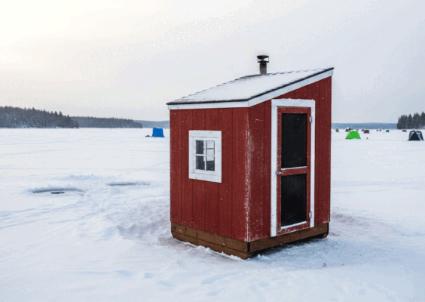
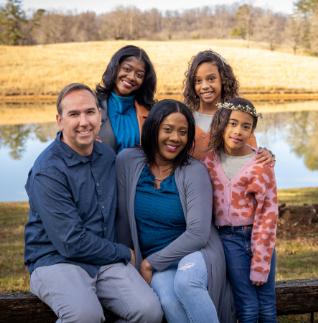






Winter has a way of telling the truth about things. The leaves are gone. The fields are bare. The air is sharp. What was once hidden by abundance now stands exposed. And yet, winter is not only a season of loss – it is also a season of waiting. Beneath frozen ground, life is quietly preparing to rise again.
In many ways, winter mirrors seasons in our own lives –when warmth fades, when energy wanes, when relationships strain, when grief settles in, or when faith feels more like endurance than celebration. We find ourselves in what some call the winter of our lives – not necessarily old age, but any season marked by barrenness, silence, or weariness of soul.
And it is precisely in those winters that love matters most. Not the sentimental kind. Not just the feeling that comes and goes. But the deep, resilient, God-shaped love that Scripture speaks about in its many forms.
The New Testament uses several words for love, each capturing a different facet of what God intends for our lives.
Storge is family love – the quiet, loyalaffectionthatbindsparents and children, siblings, and generations together. In winter seasons, storge shows up when family keeps showing up: a phonecall,amealdroppedoff,a grandparent’s steady prayers, a child’s unexpected hug. When life feels cold, God often warms us through the simple faithfulness of family love.
But above all stands agape – God’s self-giving love. Agape is not driven by emotion or convenience. It loves because it choosesto.ItgivesbecauseitreflectstheheartofGodHimself. “God is love,” Scripture says – not just loving, but love in His very nature.
Agapeisthelovethatmetusinourdeepestwinter.“ForGod so loved the world that He gave His only Son.” Not when we were warm and blooming, but when we were cold and barren in sin. Christ entered our winter—our darkness, our brokenness, our death—so that spring might come. And that is our hope: winter is never the end of the story for those who belong to Jesus.
Still, while we wait for full restoration, we live in the winters ofthisworld.AndGodcallsusnotjusttosurvivethem,butto love through them.
So what does love look like in the winter of our lives?
First, love perseveres. Paul writes in 1 Corinthians 13 that love “bears all things… endures all things.” Winter teaches endurance. Love stays when it would be easier to leave. It keeps praying when answers are slow. It keeps serving when thanks are scarce. In winter, love is faithfulness.
Second, love notices. Cold seasons often make people invisible. The grieving. The lonely. The elderly. The struggling family. The quiet teenager. Agape love opens our eyes to those shivering on the margins. A card, a visit, an invitation, a word of encouragement – small acts become blankets of grace.

Philia is the love of friendship – shared life, mutual encouragement, honest conversation. Winter can be isolating. We’re tempted to withdraw, to hibernate emotionally. But philia calls us out of isolation into companionship. Proverbs says,“Afriendlovesatalltimes.”Sometimesthegreatestgiftin winterisnotadvice,butpresence—someonewillingtositwith us in the cold and say, “You’re not alone.”
Eros is romantic love – the bond of affection and desire betweenhusbandandwife.Evenmarriagesexperiencewinter: routines replace romance, stress chills tenderness, unresolved wounds linger. Yet winter can become a time to tend the fire again—to choose patience, kindness, forgiveness, and intentional affection. In a world that treats eros cheaply, God calls couples to nurture it faithfully, especially when it takes effort.
Third,loveforgives.Unforgiveness is like icearoundtheheart–itfreezeslife.Winter is a time to let God thaw what has grown hard within us. “Be kind to one another, tenderhearted, forgiving one another, as God in Christ forgave you.” Forgiveness doesn’t deny the cold; it refuses to let the cold win.
Fourth, love hopes. Winter can convince us that nothing will ever change. But love believes in God’s promises. “Those who sow in tears shall reap with shouts of joy.” Love keeps planting seeds of faith even when the ground looks lifeless.
Finally, love points to Christ. Every form of love finds its sourceandfulfillmentinHim.FamilylovereflectstheFather’s heart. Friendship mirrors the companionship Jesus offers. Marital love displays His covenant faithfulness. Agape flows directly from the cross. When we love, we bear witness that Jesus is alive and at work among us – even in winter.
You may be in a winter season right now. Perhaps your body is tired. Your heart is heavy. Your prayers feel quiet. If so, hear this: God has not abandoned you. Winter is not punishment; often it is preparation. The Gardener knows what He is doing beneath the soil. And in this season, He calls us to love— deeply, intentionally, sacrificially. Because love is what keeps us warm until spring comes.
May our church be a people who love well in every season— who carry the warmth of Christ into the cold places of this world, trusting that, in Him, winter will not last forever.

ByJeanDavey
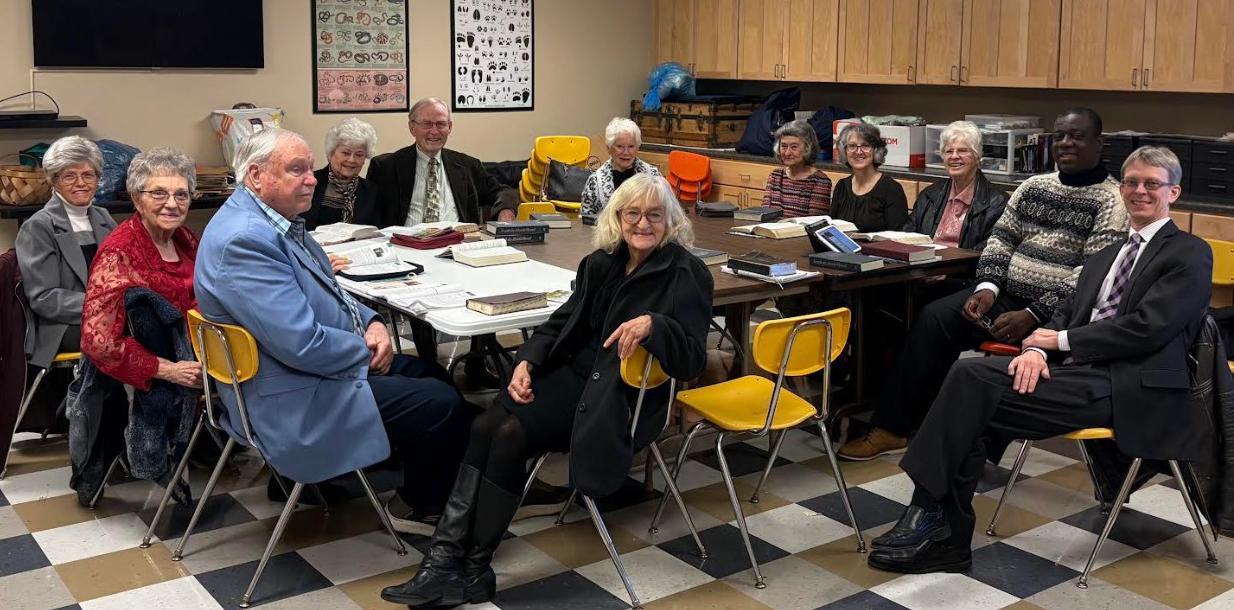
Forourlocalmissionsspotlightthismonth,wefocuson an adult Sabbath School class known as “Raymond’s” Sabbath School class. Oddly enough, this class is led by Raymond Assiongbon-Foly.
This class began in the 1990’s by Max Hammonds and DeWayne Butcher in the basement of the church. Later, the original class split each teacher starting a smaller class and gradually building. When Max Hammonds moved to Florida in 2006, the class and was taught by Richard Leonard and Carol Wetmore. With the completion of the CLC building, the class moved into its present location. WhenRaymondandhisfamilyjoinedthe Arden SDA Church in 2014, Dr. David Love and Carol Wetmore were teaching it. Raymond has been teaching it now for ten years. This class has two more teachers. Moses McCord teaches on the second Sabbath of the month, and Kellie May teaches on the fourth Sabbath of the month.
The class meets in the Community Life Center upstairs in the room immediately adjacent to the elevator, which is also the Pathfinders room. On a usual Sabbath, the class consists of around ten to fifteen members. Their age group is early 50’s and up.
outreach projects - local needs and foreign missions, and give enthusiastically!”
Moses McCord enjoys teaching this class and studying withotherpeople.Heemphasizedthateveryoneintheclass always does the weekly lessons. Most of the class members are lifelong Adventists who routinely like to be prepared each week for the class. He also enjoys the communion of studying together.
WhenKellieMayteaches,herfavoritepartofteachingthis class is the active discussion and when sensing she is sharing something encouraging. When she is a class member,herfavoritepartis“whenwetaketheopportunity toaskquestionsorrelatesomethingnewwehavelearnedor experienced.”
Some class members also shared what they like about this Sabbath School class. Phyllis Hutton said that she really likes the participation that the members give in class and that everyone really takes a part in sharing their experiences. She also liked that she is in a class with the same age group of people.
Jean and Glenn Hutchins have attended the class since the time when Dr. Love was their teacher. They enjoy all three
Raymond feels the goal of this class hasn’t changed much over the years. He says “this class deepens class members understanding of the word of God. It also strengthens the relational bond as a small trusting nucleus of the church family in sharing joy and burdens and caring and encouraging each other.” Raymond said this class used to behighlymissionfocusedbuthasevolvedintoaclasswhere deep personal relationships with one another are paramount.
TheclassfollowstheSabbathSchoolquarterly.Theybegin their class time sharing testimonies, praises and prayer requests, and they reserve the remaining 45 to 50 minutes forclassdiscussion. Theclassasawholedoesn’thavesocial interactions outside the class, however some members are part of other weekly gatherings and ministries.
Raymond says that the goal of this class is to “encourage a growingdesiretostudytheBibleandtheSpiritofProphecy so we are better equipped to share these beautifultruthswith others. We also emphasize supporting
oftheirteachersnow,andtheylovetheinteractionwiththe class lessons and feel very blessed to have a class like this. Jean said it is a comfortable, welcoming, loving class.
WeareblessedasachurchfamilytohavesomanySabbath School classes to choose from. We are sure if you are not already part of one, you will find one that suits your needs. The Sabbath School class is a wonderful way to get to know others while studying the Bible together.



byDanielReynolds
Seasons of emotional darkness, the winters of the soul, are more common than many imagine. Even faithful believers walk through times of depression, anxiety, spiritual dryness, or deep sorrow. Simultaneously, the scriptures and medical research give us practical tools for healing within mental health. The good news is that we are not alone — neither spiritually nor medically. God offers compassion, community, and hope. By combining biblical wisdom, community, prayer, and evidence-based mental health practices, we can learn how to break through these winter seasonsandfindhopeagain;tofindtheraysofsunlightabove the dark clouds that can often encumber us.
RecognizetheReality:It’sOkaytoFeeltheWinter
The strongest Christian has likely gone through some very dark periods of their life, and many renowned Christian authors write about their times of depression, including the Apostle Paul.Christians can often feel guilty about experiencing depression or anxiety, yet the Bible shows that God’s people often faced emotional heaviness. Elijah felt such deep despair that he prayed for his life to end (1 Kings 19).Davidweptthroughmanynightsand wrote psalms of sorrow and longing (Psalm 42 and Psalm 69). Jeremiah lamented his life in strong emotional terms (Jeremiah 20). Even Paul described being overwhelmed to the point of despair (2 Corinthians 1:8).
research continues to reinforce this truth.
• A2025meta-analysisofmorethanfiftystudiesfoundthat improving sleep quality significantly reduced depression and anxiety symptoms in over ten thousand adults.1
• A 2024 review of thirty-two trials involving more than 2,700 participants showed that aerobic or strength-based exercise led to meaningful improvements in both depression and anxiety.2
• Astudyreviewingninety-sixrandomizedtrialsfoundthat changes in lifestyle habits, including physical activity, improved diet, and better sleep routines, led to measurable reductions in depression, anxiety, and stress.3
• The “SMILES” randomized clinical trial demonstrated that adopting a Mediterranean-style diet significantly improved depressive symptoms over a 12-week period.4
This research highlights a simple truth. Caring for the body helps the mind heal. When Elijah was in deep despair, God first gave him sleep and food, not rebuke (1 Kings 19:5–8). Sometimesthemostspiritualthingyoucandoisrest,nourish your body, and be still, and know that He is God (Psalms 46:10).
Getting out-of-doors and exercising even during inclement or cold weather can be refreshing and good for the soul, and creating a regular schedule for exercise has also been shown to be helpful for mental health.
Spiritual reflection: See physical self-care as stewardship. Ask God to help you guard your rest, nourish your body, and maintainhealthyrhythmsthatcreateroomforemotionaland spiritual restoration.
RenewtheMind:AlignThoughtsWithTruth
Manyevidence-basedtherapiesfordepressionandanxiety–including cognitive behavioral therapy – emphasize the power of thoughts. Scripture teaches the same principle with even greater depth. Romans 12:2 calls believers to be transformed by the renewing of their minds. Philippians 4:8 urges us to focus on what is true, noble, right, pure, lovely, admirable, excellent, and praiseworthy.

God welcomes honesty. David says that when the righteous cry out, the Lord hears them and delivers them (Psalm 34:17). Modern psychology also affirms that acknowledging and naming our emotions can reduce their intensity and help regulate the brain’s stress responses. Admittingwearestrugglingisnotweakness.Itisthefirststep toward healing.
Spiritual reflection: Begin your journey by speaking openly to God. Share your burdens with a trusted believer. You do not have to pretend that you are “fine.”
Care for the Body: Physical Health Supports Emotional Health
Scripture teaches that we are integrated beings. What happens within and to our bodies affects our minds. Modern
One practice strongly supported by research is gratitude.
• A meta-analysis published in 2023 found that gratitude practices lowered depression and anxiety and increased emotional wellbeing.5
• Another study reported that gratitude improves sleep, reduces stress, and strengthens relationships, which together support better mental health.6
Gratitudedoesnotdenysuffering.Instead,itliftsourgazeto God’s goodness in the midst of struggle. Prayer and reading Scripture also has measurable calming effects, slowing the heart rate and improving emotional stability. Keeping a gratitude journal can measurably improve mental health.
Spiritual reflection: Speak biblical truth over your life. Replace the lie of worthlessness with the truth of Psalm 139:14. Speak Hebrews 13:5 when you feel alone. Begin a daily gratitude journal. Meditate on Bible verses that anchor your soul.
StandInCommunity:Don’tAllowWintertoIsolateYou Depression often drives people toward isolation, but both medical research and Scripture show that isolation deepens suffering. A large 2024 multi-study analysis found that reduced social connection, lower physical activity, and irregular daily rhythms were strongly linked with increased symptoms of depression and anxiety.7
God designed us for community. “It is not good for man to be alone” (Genesis 2:18) not only applies to marriage but also to community. In Romans 12:5 we are reminded that believers are members of one body. Ecclesiastes tells us that two are better than one. Galatians 6:2 instructs us to bear one another’s burdens.
Volunteering can also be a powerful way to break through seasons of depression because it gently shifts our focus from inwardpaintooutwardpurpose.Medicalstudieshaveshown that helping others is associated with lower rates of depression, reduced stress, and increased feelings of meaning and connection. Serving activates areas of the brain linked to reward and belonging, while also strengthening social bonds that protect mental health. Scripture reflects this truth, reminding us that “it is more blessed to give than to receive” (Acts 20:35) and that we are created for good works prepared by God (Ephesians 2:10). Within a church ministry, volunteering offers a safe and faith-filled way to rediscover purpose, experience community, and allow God to bring healing through loving service to others.
Spiritual reflection: Winter feels colder when you walk throughitalone.Reachouttoyourchurchfamily,pastor,ora trustedfriend.Allowotherstowalkbesideyou.Bevulnerable ifnecessary. Godoftenbringslightthroughthepresenceand ministry of others, or for others through volunteering.
SeekGodThroughPrayer:ALifelineintheDark Prayer is not a quick escape from emotional pain, and God doesnotpromiseimmediatedeliverance.Still,prayeranchors the heart and mind in God’s presence.Philippians4:6–7assures us that prayer, offered with thanksgiving, ushers in God’s peace, which guards the heart and mind. Romans 8:26 reminds us that when we cannot find words, the Holy Spirit intercedes for us withgroaningstoodeepforwords.
Medical research consistently shows that prayer can reduce stress, improve emotional regulation, and help to stabilize one’s mood.

Spiritual reflection: Make space for prayer each day. Allow the Lord to meet you in silence, Scripture reading, or journaling. Pray your fears, your tears, your doubts, and your longings. God invites you to bring every part of yourself to Him.
For many people, spiritual practices and lifestyle changes bring significant improvement. For others, depression or anxiety remains heavy. Seeking professional help is an act of
wisdom, not weakness. A growing field known as “lifestyle psychiatry” integrates mental-health treatment with evidence-based lifestyle interventions, helping individuals heal in holistic ways that align well with Christian stewardship.8
Christian therapists and counselors, as well as medical professionals can offer tools that complement spiritual practices. Medication is sometimes necessary and can be a grace that allows someone to move from survival to healing. Spiritual reflection: Pray for guidance, then reach out if you need help. God often works through physicians, counselors, and mental-health professionals just as He worked through Luke, the physician in Scripture.
Encouragement:LightWillReturn
Isaiah 26:3 promises perfect peace to the one whose mind is stayed on God. Micah 7:8 reminds us that although we sit in darkness, the Lord is our light. John 1:5 declares that the light shines in the darkness, and the darkness has not overcome it. Romans 8:38, 39 assures us that absolutely nothing can separate us from God’s love..
A poem from Mrs. C. W. Stark paints a beautiful picture of overcoming darkness with light:
“I learn, as the years roll onward and leave the past behind, That much that I counted sorrow but proves that God is kind;
The clouds but cover the sunshine, they cannot banish the sun;
Andtheearthshinesoutthebrighterwhenthewearyrainis gone.
We must live through the weary winter, if we would value the spring,
And the woods must be cold and silent before the robins sing;
The flowers must be buried in darkness before they can bud and bloom;
The sweetest and warmest sunshine comes after the storm and gloom.
We must stand in the deepest sorrow to see the clearest light;
And often from wrong’s own darkness comes the very strength of right.”
The winter of the soul does not last forever. God is present in every moment of it, and He will lead you toward spring.
If you are in a winter season, hear this clearly: God is with you.Yourpainisseen.YourtearsarenoticedbytheOnewho formed your inmost being. Scripture and science together affirm that healing is possible. By embracing honesty, caring for your body, renewing your mind with God’s truth, staying connected to community, cultivating gratitude, practicing prayer, and seeking professional help when needed, you lay the foundation for breakthrough to the light above the dark clouds around you.
Just as winter eventually gives way to spring, God brings renewal to weary hearts. Hold onto Him. He is working even now, and joy will come in the morning.
(Sources of foot-noted references are available in the on-line February 2026 Grace Notes, page 15.)

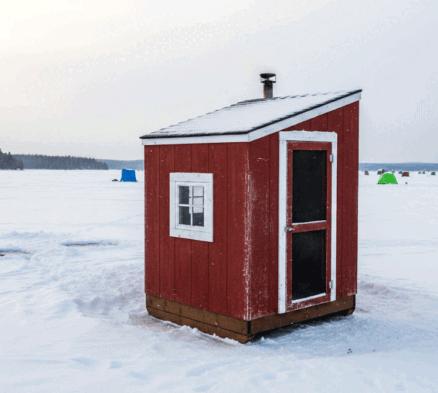
The propane heater had been warming the “ice shanty”slowlyformorethantwohours.Theeastern horizon wore a thin, pink collar of promise that the day would be clear and cold. Pawpaw (aka Albert Groot) was finishing his portion of the Cream of Wheat from the thermosbottle.Matthewwasmoreintentonthe10”hole in the ice than on breakfast.
“A watched pot never boils,” Pawpaw said. “I suppose a hole in the ice is about the same.”
Matthewneveravertedhiseyesfromtheholeintheice. “Except we don’t want anything boiling on the ice we’re sitting on, do we, Pawpaw?”
“I suppose not,” Pawpaw responded with a chuckle, settinghisbowlonthesmalltablebetweenthemthatwas becoming cluttered.
Matthew removed his heavy outer coat and hung it on back of his chair. “You did thisallwinterlongwhenyouwereakid?”
Pawpaw warmed his bare hands over the heater. “That was pretty much all there was to do – that and play hockey. And you can’t talk to anyone while playing hockey.”
“Oh?” Matthew became suspicious. He swished the hot cocoa around in his mouth before swallowing. “Is that why we’re here – to talk?”
“That and catch fish.”
“But you don’t care about catching fish, do you, Pawpaw?”
Matthew shut his eyes for a moment, then nodded but said nothing.
Pawpaw took another deep breath. “When we’re baptized at an early age . . . like you were. How old were you?”
“I was baptized at 10 years old.”
“Yeah. Well, people cut us some slack initially.” Pawpaw was not sure what to say next – and what not to say. “But as we get older, our church family expects to see Christian maturity begin to take hold.”
Matthew looked up at Pawpaw. “Present your bodies as a living sacrifice. Do not be conformed to this world, but be transformed by the renewing of your mind.” Matthew looked away. “That’s Romans 12:1 and 2 – or at least the substance of it.”
Pawpaw gazed at Matthew as if seeing him for the first time. “You’ve been giving this considerable thought, haven’t you?”
Matthew nodded. “Yes. I graduate from academy this next Spring. I will go to college, and I will be less an extension of my mother and more about just me.”
Matthew stopped watching the hole and turned to face his grandfather. “People will see me as me, and I want to givetherightimpression.Jesusdiedtojustifyme;Hewas resurrected and went to heaven to send me the Holy Spirit to sanctify me.
“Not really . . . but I care about you, Matthew.”
For the first time this morning, Matthew looked at Pawpaw instead of the hole they had drilled in the ice at 4:00 am. “Did you have something particular in mind?”
Pawpaw took a deep breath. “No, not really. It’s just that –atyourage,yourmothermustletyoumakemostofthe important decisions in your life from now on.”
Matthew nodded his head, his eyes again fastened tenaciously on the hole in the ice, watching for the slightest movement. “She said as much . . . about six months ago.”
“Uh-huh. I suspected so.” Pawpaw pushed his hands into his pockets where the handwarmers resided. “And your father isn’t here to . . . you know, talk to you like this.”
“I want to be a worthy temple for the Holy Spirit – all of me, my time, my talents, my money, what ever goes in or on my body. It all belongs to Him.” Matthew blinked his eyes rapidly and took a deep breath.
“Why?”
“Why what?”
“Why do you want to do this?” Pawpaw locked eyes with him.
“It’s a very important question, Matthew.”
Matthew shook his head and looked away. “Jesus loves me, Pawpaw. And I love Him and want to live my life for Him – and like Him.” Matthew folded his hands in front of his face and looked up at his grandfather. “The Holy Spirit is the only way that can happen for me.”
“And that’s the only correct answer, Matthew. Because HelovedusandgaveHimselfforus.”Pawpawnoddedto wherethefishinglinesdisappearedintotheice.“Bobber’s moving.”
“Yep. Saw it.”
“Any idea where all this is leading you? Ministry? Medicine? Botany?”
Matthew shook his head. “Not yet.”
Pawpaw smiled easily. “Like ice fishing, serious matters take time and patience.”
Matthew nodded and picked up the short fishing pole, as the bobber jiggered ever so slightly.

Iremember winters when I was a child in the Dakotas. The coldest temperatures during the eight years my family lived there ranged from around -20° to -33° F. Historically, the six coldest days ever measured in North Dakota ranged from -42° to -60°. With windchill, it got even colder; the coldest temperature with windchill factored in was -73°!
Most years our first snow flurries appeared in September. By October, there was measurable snow on the ground. Blizzards could bring in one to two feet of snow. Once the cold set in, snow drifts would pile higher and higher, taller than a car, as large as small buildings. In towns, where the snowplows ran, I remember massive snow piles, pushed or blown by the plows, that dto idn’t melt all winter long, which kids claimed as forts or mountains on which to play.
Out there, we learned dress for the weather in layers. I recall being stuffed into multiple pairs of pants with snowpants over top, a regular shirt and sweatshirt or sweater, woolen hat under a big jacket and hood, thick gloves, and “moon boots.” Thiswasgearforakidlikemeto help shovel the driveway or play in the snow. Outside, one’s breath froze in the air, and I would see little icicles onmydad’smustache.Cominginafterward,Iremember my face, neck, and hands feeling a prickly burning sensation from the temperature extremes.

stretching for miles. Other times, snowfall would block outthesun,andthewindmightbesogreatIcouldn’tsee morethanafewfeetaway.Atnight,theheadlightswould reflect off the swirling snow. Driving into the blackness, with only a bright reflection in your eyes, no discernible lanes, and no idea what might be directly in front of you, musthavebeennerve-wracking.Addtothatthethreatof unseeable “black ice,” which can spin a vehicle around uncontrollably, and you know that even at a young age, I was praying for God’s angel protection as we traveled. When the wind whipped up – which was often on the plains – snow would swirl through the air, glinting and gleaminginthesun.WhenDaddrove,Momliterallyhad her head out the passenger window in the blowing snow, helping Dad see what was ahead. In a daytime “ground blizzard,” the low wind whips up the snow to eight or more feet high; you can’t see anything around. But if you look straight up, the sky is blue and the sun is shining. At my grade school, snow drifted over the playground. We climbed up those drifts – almost as high as the top of thetwistyslide–whichweclearedoff–sowecouldslide down on our slick snowpants. We used the snow as a ramp,usingonlythelastlittlebitoftheladderstickingup outofit.Wewhizzeddown,rollingintothesnowintoan area fast getting trampled down by our boots.
The Bible only uses the word “winter” about 17 times. Seven of these are Jesus and Paul suggesting that in winter one would much rather stay put, not travel, and certainly not flee from Roman armies. In John 10, Jesus is in Jerusalem, celebrating the Feast of Dedication(Hanukkah),and it is winter. Of course, the concept of winter in the Middle East is considerably different than it is in North Dakota.
Walkingoutsidewasn’tourbigworry;wealwayscarried an emergency car kit, in case we got caught in a blizzard orthevehiclespunoffintoasnowdrift.Therewereafew stories of people who left their vehicle in blinding snow, couldn’t find their way, and died near their car or truck. So, we – like many other Dakotans – carried blankets, food,water,andashovelinourcar,incasewewerestuck for a time before being rescued.
As a kid, I remember sitting in the back seat, and watching the snow through the side and front windows. When the sun was out, I could see untarnished snow
Inlife,justlikeinyearlyseasons,wegothroughdifficult periods that seem long and emotionally or spiritually cold. Just as in my childhood, we took comfort in the thought of the last snow coming (April or May) and spring giving way to summer, so in our lives we remember God’s promise to Noah: “As long as the earth endures, seedtime and harvest, cold and heat, summer and winter, day and night will never cease” (Genesis 8:22).Andafterthosepersonalseasonsofdarkdays,now or at Jesus’ coming, we can rejoice, like the lovely girl in Solomon’s Song (2:11-12): “See! The winter is past . . . Flowers appear on the earth; the season of singing has come!”

(This fictitious story is based on a real-life incident. It’sbeingrepeatedbecausetheissuethatcausedit tobewrittenthefirsttimeisbackagain–moreseriously, more potentially deadly.)
Nurse Koszin spotted the young mother at the coffee machine tucked away in the far corner of the cafeteria. At this time of night, the serving line is closed, and the chrome and red laminate tables and chairs are neatly arranged – and empty. By the overhead spotlight, she can see the dark circles and the smeared mascara of a parent floundering in pity and pain.
“Mrs. Thompson? Mrs. Thompson. There you are,” she said lightly.
“Yes?!” The mother’s strident voice echoed through the empty room. “Is anything wrong?”
“No, no.” She tried to make her voice as reassuring as possible. “Little Janie is doing fine, actually improving. That’s why Doctor wanted to talk with you. He’s ready to remove the breathing tube and wanted to talk with you about the procedure. You know – what to expect.”
The mother’s eyes relaxed, but still looked haunted. “I’m just so worried.”Herwordsflowedoutlike dammed up water. “It’s been three days since she went into Peds ICU. I thought she was going to die.”
“Measles can do that,” the nurse said, her voice straining with her own emotion, “just sneak up on us without warning. It’s been years since we’ve seen measles pneumonia. Actually, there’s been no measles transmission at all since before 2000.” She paused and reflected. How far should she go? “When enough children aren’t immunized, the disease can break through.”
beyond her favorite tree to play in as a child. “The mother of my best friend spent four years in an iron lung,paralyzedfromtheneckdownwithpolio.Andshe was one of the lucky ones; she survived – in a wheelchair.”
“Why don’t they tell us these things? Why don’t we know?” The mother’s fists were balled up, waiting to punch some unseen adversary.
“Lots of reasons,” the nurse said with a sad smile, “mostly having to do with parents who love their kids and want to see them avoid the latest popular disease –in this case, autism. They took the thimerosal out of the vaccines in 2001. But autism rates continue to climb –probably because we’re more aware of it and better at detecting it.” She leaned against the back of the nearest chair, exhausted from the long shift at the hospital, exhaustedfromtheretellingofthesestatisticstofivesets of parents whose children had come through the Peds ICU in the last week. “The truth is – believe it or not –vaccinations don’t cause autism. They don’t cause exhaustion of the immune system. They save thousands of lives and billions of dollars in hospital costs – and prevent millions of infections like Janie has.”
“I can’t make heads or tails out of the information coming from the . . . the . . . whatever that agency is in Washingtonthat’ssupposedtotellus what’s the right thing to do.” The mother spoke with palpable anger.

“Well, yes. The CDC. That’s part of the problem.” The nurse reminded herself to be careful. “The information coming from that sourceisn’tasreliableasitusedtobe. Confusing I think is the right word.”
“Then whom do I trust to care for my child?”
Thenursesmiledreassuringly.“The same one you trusted to care for her now.”
“Dr. Johns?”
Nurse Koszin nodded. “He knows the right thing to do.”
“But they told us that the immunizations were dangerous.” The mother’s anxiety was turning to anger. “They said that the measles vaccine was causing autism. Then they said that the thimerosal in the vaccines was causing it.” Her quivering hand touched her forehead, brushing back loose strands of hair. “But they didn’t tell me that measles could kill my child!”
“Most young parents have never seen these childhood diseases – like I did when I was a kid.” The nurse’s memory flashed back to a little red-roofed house just
The mother’s balled-up hands opened. She looked at them, then folded them together as if to hide their owner in the darkened interior of their palms. She raised her hands to her mouth, touching her lips with a quiet prayer. “Janie’s going to be alright, isn’t she?” she whispered
“Yes, I think so,” the nurse quickly reassured her. She reached out her hand. “Let’s go talk to Doctor,” she said, claspingthetiredmother’shandandleadingherpastthe first row of tables. She stopped. “Do you have other children?” she asked earnestly.
Mother nodded with closed eyes.
“Get them vaccinated.”
Completing the Square
If you have read “Steps to Christ,” you will recognize these groups of words – the chapter titles in the book. They are, in order, the steps to take in Christian growth in Jesus. Each word or group of words is hidden in the puzzle in a rectangular shape, as demonstrated by the first words. Some word groups cross over each other and share letters. Some words can be found inside other groups.
“God’s Love for Man”
“Consecration” “The Work and the Life”
“The Sinner’s Need of Christ” “Growing Up into Christ” “A Knowledge of God”
“Repentance”
“Confession”
“Faith and Acceptance” “The Privilege of Prayer”
“Test of Discipleship” “What To Do With Doubt” “Rejoicing in the Lord” T


byGloriaAllen
Iam Jesus’ little lamb, Happy all day long I am, He will keep me safe from harm, Hold me gently in His arms.
GodusedaSabbathSchoolteachertoseedmymindwith a vivid mental image of His deep love for me. As a child, I thought of myself as Jesus’ Little Lamb. Reflecting on my eight decades, He used that image to keep me on right paths, to guide career choices preparing me for jobs matching my skills, to steer me toward wholesome relationships,andleadmethroughamyriadoflifechoices. Reading mission stories in grade school, I envisioned serving as a missionary nurse, but that was not God’s intention. In my freshman year of college, my younger sibling had a nasty bicycle accident. Sister’s heel caught in the spokes of her bicycle. I accompanied Dad’sdrivingtothedoctor’soffice,holdinga cold, wet cloth over the bleeding heel.
I handed over my “patient” to expert medical care, happy to observe the doctor cleansing the wound and sewing the gaping flaps together – until I wasn’t. Seeking a chair in the outer office, I reassessed career plans, moving me toward the teaching career I could not know was coming. Eventually, my heart song became “Savior, Like a Shepherd Lead Me.” In my twenties I chose Psalm 32:8 as my life verse: “I will instruct you and teach you in the way you should go; I will guide you with My eye.” Sounding safe and secure, I appreciated the comfort of that promise.
I did not foresee that God was testing the strength of my convictions, the tenacity to stand alone, if necessary – because when the school year ended, my husband departed for Spain accompanied by one of the graduating seniors.
Fastforwardto1991,afterseveralyearsofcommunityhealth ministry, nursing home administration, and a breadmaking business introducing elementary school children, parents and teachers to healthful living concepts, I was diagnosed with non-Hodgkin lymphoma, stage IV. But God wasn’t through with me yet.
I tackled cancer with vigor – “Give me your strongest treatment. Eradicate this cancer so I can go on with life.” After theinitialroundofchemo,landinginthehospitalthreetimes, and an anointing by my pastor and elders, I discovered Psalm 30:8, 9: “I cried out to You, O Lord; . . . What profit is there in myblood,whenIgodowntothepit?WillthedustpraiseYou? Will it declare Your truth? Hear, O Lord, and have mercy on me: God, be my helper!”
Initial treatments by my Johns Hopkins oncologist put me in remission. But it didn’t last long. “So, doctor, what’s next?” Nothing prepared me for his answer: “I don’t know of any prayers, nutritional approaches or alternatives. My patients just check out on time.”
I left the office pondering where my Shepherd would lead. James 1:5 came to mind: “If any of you lacks wisdom, let him ask of God . . . and it will be given to him.” I certainly didn’t know where to go, but I believed Jesus knew. So, I asked in faith. And waited.

Looking back, I see how vigilantly He guarded my soul: my husband succumbed to the secular philosophy of the sixties, Time Magazine blatantly proclaimed: “God is dead,” and lining the college bookstore shelves were volumes chipping away at my faith’s foundational pillars. For a season, my young heart wanted to try a “new” way of living, while employed at Shenandoah Valley Academy (Virginia). In a few weeks, I realized that without God at the core of my heart, there was only emptiness. So, I beat a path back to the green pastures and the still waters I had known.
I listened to what kind friends advised, reading their materials. Soon a pattern evolved: eat more fresh, raw food, not processed. It was the beginning of summer. That would be easy. My mother-in-law – battling breast cancer – was visiting. We could do this together. The sky’s the limit – just no heat.
And God blessed us with health. By Fall when cravings for warm food returned, I had learned: cooked food triggers release of white cells which the body considers enemies to be annihilated. A preponderance of raw food balances the white cells, and they remain cancer fighters.
In 2006 breathing challenges brought me again to my oncologist. His greeting wasn’t encouraging: “Time for hospice.” “No, doctor,” I countered. “I'm here for the new, improved cancer treatments developed in the past 16 years.”
Draining the fluid from my chest, he warned me that I probably had metastatic lung cancer. But no cancer cells were found in the fluid. I was a candidate for the new monoclonal antibody approach – mice building up antibodies specific to human cancers. A course of this new protocol and my doctor declared me a poster child for the new treatment. Though I still“walkthroughthevalleyoftheshadowofdeath,”I’velived cancer-free since then in God’s green pastures. My cup runs over. Goodness and mercy follow me.
(This fictitious story is based on a real-life incident. It’sbeingrepeatedbecausetheissuethatcausedit tobewrittenthefirsttimeisbackagain–moreseriously, more potentially deadly.)
Nurse Koszin spotted the young mother at the coffee machine tucked away in the far corner of the cafeteria. Atthistimeofnight,theservinglinewasclosed,andthe chrome and red laminate tables and chairs were neatly arranged – and empty. By the overhead spotlight, she could see the dark circles and the smeared mascara of a parent floundering in pity and pain.
“Mrs. Thompson? Mrs. Thompson. There you are,” she said lightly.
“Yes?!” The mother’s strident voice echoed through the empty room. “Is anything wrong?”
“No, no.” She tried to make her voice as reassuring as possible. “Little Janie is doing fine, actually improving. That’s why Doctor wanted to talk with you. He’s ready to remove the breathing tube and wanted to talk with you about the procedure. You know – what to expect.”
The mother’s eyes relaxed, but still looked haunted. “I’m just so worried.”Herwordsflowedoutlike dammed up water. “It’s been three days since she went into Peds ICU. I thought she was going to die.”
“Measles can do that,” the nurse said, her voice straining with her own emotion, “just sneak up on us without warning. It’s been years since we’ve seen measles pneumonia. Actually, there’s been no measles transmission at all since before 2000.” She paused and reflected. How far should she go? “When enough children aren’t immunized, the disease can break through.”
beyond her favorite tree to play in as a child. “The mother of my best friend spent four years in an iron lung,paralyzedfromtheneckdownwithpolio.Andshe was one of the lucky ones; she survived – in a wheelchair.”
“Why don’t they tell us these things? Why don’t we know?” The mother’s fists were balled up, waiting to punch some unseen adversary.
“Lots of reasons,” the nurse said with a sad smile, “mostly having to do with parents who love their kids and want to see them avoid the latest popular disease –in this case, autism. They took the thimerosal out of the vaccines in 2001. But autism rates continue to climb –probably because we’re more aware of it and better at detecting it.” She leaned against the back of the nearest chair, exhausted from the long shift at the hospital, exhaustedfromtheretellingofthesestatisticstofivesets of parents whose children had come through the Peds ICU in the last week. “The truth is – believe it or not –vaccinations don’t cause autism. They don’t cause exhaustion of the immune system. They save thousands of lives and billions of dollars in hospital costs – and prevent millions of infections like Janie has.”
“I can’t make heads or tails out of the information coming from the . . . the . . . whatever that agency is in Washingtonthat’ssupposedtotellus what’s the right thing to do.” The mother spoke with palpable anger.
“Well, yes. The CDC. That’s part of the problem.” The nurse reminded herself to be careful. “The information coming from that sourceisn’tasreliableasitusedtobe. Confusing I think is the right word.”
“Then whom do I trust to care for my child?”
Thenursesmiledreassuringly.“The same one you trusted to care for her now.”
“Dr. Johns?”
Nurse Koszin nodded. “He knows the right thing to do.”
“But they told us that the immunizations were dangerous.” The mother’s anxiety was turning to anger. “They said that the measles vaccine was causing autism. Then they said that the thimerosal in the vaccines was causing it.” Her quivering hand touched her forehead, brushing back loose strands of hair. “But they didn’t tell me that measles could kill my child!”
“Most young parents have never seen these childhood diseases – like I did when I was a kid.” The nurse’s memory flashed back to a little red-roofed house just
The mother’s balled-up hands opened. She looked at them, then folded them together as if to hide their owner in the darkened interior of their palms. She raised her hands to her mouth, touching her lips with a quiet prayer. “Janie’s going to be alright, isn’t she?” she whispered
“Yes, I think so,” the nurse quickly reassured her. She reached out her hand. “Let’s go talk to Doctor,” she said, claspingthetiredmother’shandandleadingherpastthe first row of tables. She stopped. “Do you have other children?” she asked earnestly.
Mother nodded with closed eyes.
“Get them vaccinated.”

This month we are excited to feature new members Trent and Sharline Bliven,whojoinedtheArdenSeventh-dayChurchinAugust2025.
Trent was born in Enterprise, Kansas. His parents worked for the Adventist Church and frequently moved, primarily residing in Oregon and Minnesota. He has one older brother and one older sister.
SharlinewasbornandraisedinTrinidadandTobago,whereshegrewupwith three sisters and three brothers.
Trent graduated from Thunderbird Adventist Academy in Scottsdale, Arizona, and earned his Bachelor of Technology Degree from Andrews University in 2002. Sharline attended elementary school in Trinidad and earnedherB.A.inPsychologyfromKaplanUniversityin2014.Sheiscurrently one semester away from obtaining her Master’s Degree in Teaching from Southern Adventist University.
Forthepasttwenty-fiveyears,Trenthasworkedasapilotforvariousairlines. He has been with Endeavor Airlines for the last seven years. Sharline worked for six years at Captain Gilmore Christian School, where she taught Kindergarten. She is now serving as the Administrative Assistant/Office Manager for our church.
Trent and Sharline met in an online Bible study group, which led to their dating.Theyhavenowbeenmarriedforfifteenyearsandhavethreedaughters: Janae, who is 27; Elaina, who is 14; and Megan, who is 11 years old.
Lived in the Chicago area for most of their marriage, theyfeltitwastimetomove out of the city. Trent traveled to the Asheville areaforwork,likedwhathe saw, and brought his family to check it out. After visiting, they felt it would be a good fit for them and moved to the area seven years ago.
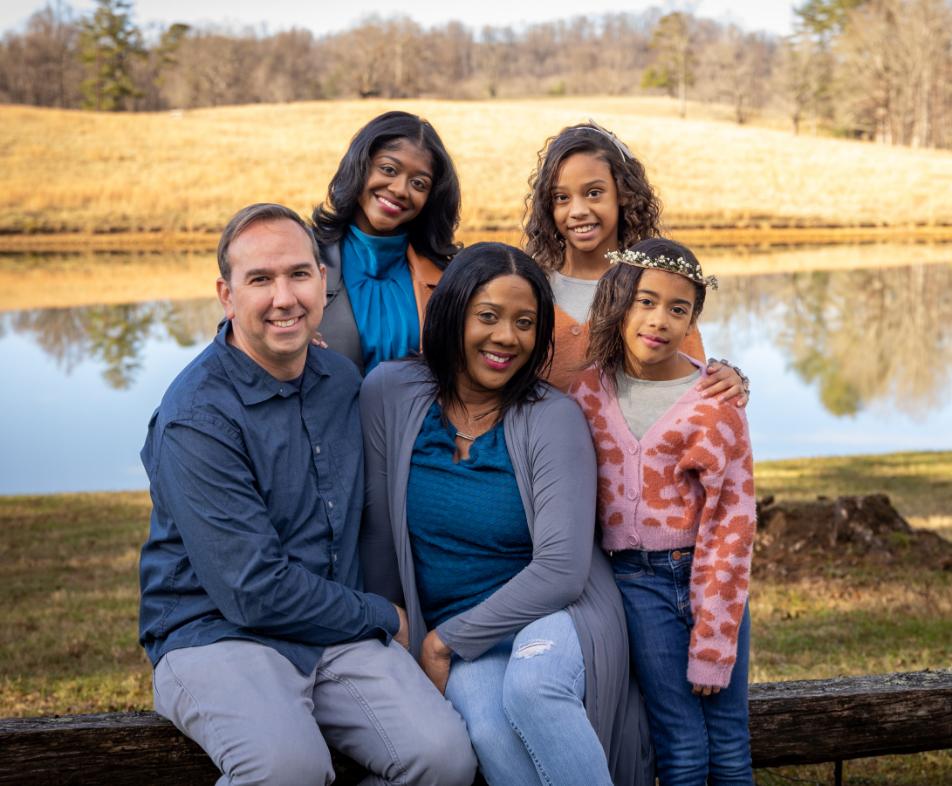
Their hobbies include hiking and camping. As a family, they enjoy traveling and experiencing different cultures. Sharline enjoys crafting and gardening, while Trent considers himself a "fixer-upper" andtakespleasureinhomeimprovementprojects.TheyhavetraveledtoCosta Rica, Europe, and the Central Pacific region, and Trent has also worked in Africa.
Trent was raised as an Adventist. When she was ten years old, Sharline's parents were introduced to the Adventist Church and decided to join. She was baptized at age fourteen at the Rainey Temple SDA Church in Trinidad. Before joining our church, Trent and Sharline attended another SDA church intheareabutbeganvisitingArdenregularlyandtrulyenjoyedthefellowship. They attend Josh Belanger’s Sabbath School Class.
We are so happy to welcome the Blivens to the Arden church family!
ArdenSeventh-dayAdventistChurch IsaSafePlacetoGrow.
Our Purpose is, by God’s Grace, to reflect His character in our community, to demonstrate a quality of life that will attract all to be reconciled to Jesus Christ, and to encourage people to become His loving, maturing disciples.
GraceNotesEditorialStaff:
Max Hammonds...............................................Editor
Chris Small.................................................Columnist
Jean Davey..................................................Columnist
Max Hammonds..................Reporter & Columnist
Pen Braister-Sturgis.....................................Reporter
Sara McCord.................................................Reporter
Dan Reynolds...............................................Reporter
Arizona McCord...............Reporter & Proofreader
Chris Small .....................................Special Graphics
Jim & Carolyn Sullenberger................Proofreaders
Nolan Darnell........................Mailing Management
Shirley Wallstrom...................Circulation Manager
Whitney Barron.................................Layout Design
Comments, suggestions and praises are always welcome. Please email or contact the church office.
Services each Saturday morning: Sabbath School Bible Study, 9:30 a.m. Worship Service, 10:45 a.m.
Location: 35 Airport Road, Arden, NC 28704
Located on Highway 280, (Airport Road), 1.5 miles east of I-26 exit 40, and a quarter mile west of Highway 25.
Church Office:
Office Manager: Sharline Bliven
Office Secretary: Summer Cronin Telephone: (828) 684-6700
Email: office@ardenadventist.org
Website: www.ardenadventist.com
Office Hours: Mon., Wed., Thurs.,9 a.m. to 3 p.m.
Arden Adventist Pastoral Staff: Senior Pastor: Eric Bates, D. Min. Email: ebates@carolinasda.org
Associate/Youth Pastor: Rich Maskelony, M .Div. Email: rmaskelony@carolinasda.org
GraceNotesis published monthly by the Arden Seventh-day Adventist Church. Subscription is free by calling or emailing the office.†Doyou have questions about what Adventists believe? Would you like to become a member of the Seventh-day Adventist Church? Would you like to study the Bible? You are invited to attend a Pastor’s Bible Study Class. Please call for location and time. All are always welcome.
† Disclaimer—The contents of Grace Notes, such as text, graphics, images, and other material contained in this magazine of the Arden Seventh-day Adventist Church are for informational purposes only. It is not intended to be a substitute for professional medical advice, diagnosis, or treatment. Always seek the advice of a qualified healthcare provider, who is knowledgeable and experienced in the use of specific medical or Lifestyle Medicine interventions, or about questions you may haveregardingamedicalcondition.Neverdisregardprofessional medical advice, or delay in seeking it, because of information published in this magazine. Neither Grace Notes nor the Arden Seventh-day Adventist Church recommend or endorse any specific tests, products, procedures, opinions, or other information that may be mentioned in published articles. Relianceonanyinformationprovidedissolelyatyourownrisk. If you have a medical emergency, call your healthcare provider or911immediately.


Arden Seventh-day Adventist Church 35 Airport Road Arden, North Carolina 28704 (828) 684-6700
If you no longer wish to receive Grace Notes, or if your address has changed, please contact us.




PREP INSTRUCTIONS:
Yield: 8 (1 cup) servings
Prep Time: 20 minutes
Pasta Fagioli (pronounced fah-ZHOO-lee) literally means “pasta and beans” – the traditional stew/soup of Italy and Sicily. Traditionally made with short tube-like ditalini pasta, it only requires just a “macaroni” type pasta. Feel free to use any canned beans available (typically white cannellini or pink cranberry beans) , any beans other than seasoned black beans. The combination of proteins in the beans and pasta, along with the squash and potatoes, makes this a complete meal.
Cooking Time: 25 minutes
Total Time: 45 minutes
RECIPE INGREDIENTS:
1-1/2 tablespoons olive oil
1/2 cup celery, diced
1/2 cup yellow onion, diced
1 teaspoon fresh garlic, minced
1/3 cup carrots, diced
1 bay leaf
1/8 black pepper
3/4 cup potato, chopped
1/2 cup dry pasta shells
INSTRUCTIONS:
1/2 cup butternut squash, chopped
2 cups northern beans, drained and rinsed
1-1/2 cups, fresh tomatoes, diced
2-1/2 cups low sodium vegetable broth
1/4 cup green onion, chopped
3/4 cup green beans, snipped/cut 1” long
3/4 cup zucchini squash, chopped
1/4 cup fresh basil, shredded
Follow the prep technique next to each ingredient. In a medium size stock pot add olive oil and sauté the celery, onions, carrots, garlic and bay leaf. Fold in the potatoes, butternut squash, green beans, pasta, northern beans and tomatoes with the vegetable broth. Bring the soup to a gentle boil, cover and lower the heat to a low simmer, cook for 15 minutes. Add the rest of the ingredients and simmer until squash is tender but firm.
NUTRITIONAL DATA:
calories 135.47, fat 3.32g, sat fat 0.41g, cholesterol 0mg, sodium 154.91mg, carbohydrates 22.39g, fiber 5.99g, sugars 4.56g, protein 4.53g
Created by Chef Edwin Cabrera, Copyright © AdventHealth


Wednesday Dec 31, 2025
A famous journalist once wrote, “The true secret of editing is to know what to place in the wastebasket.”
That’s good counsel for those who seek to live in grace during 2026 as well. The secret of successful living is knowing what to throw away, what to forget, what to discard. In the desk of life from 2025 there are likely many things you’d do better to be without.
Throw away the slights and the insults you received in the old year. Hanging on to them this long has already caused you to be something less than the kind and gracious person you’ve wanted to be.
Throw away the grudges you’ve nourished during the last 12 months. Though they’ve probably provided you with many moments of bitter satisfaction, they haven’t deepened your faith or your kindness even a little.
In 2026, collect coins if you wish; collect stamps; collect postcards; collect tropical fish. But don’t collect grudges. They are part of what lies behind that ought to be forgotten.
And finally, throw away your sins when you’ve repented of them, for Jesus promises to do the same: “I will be merciful toward their iniquities, and I will remember their sins no more” (Heb 8:12). “As far as the east is from the west, so far He removes our transgressions from us” (Psa 103:12).
Grace lets us lean into the future with joy and expectation.
So stay in it. -Bill Knott

Sources of foot-noted references from Featured article
1 – A 2025 meta-analysis of more than fifty studies found that improving sleep quality significantly reduced depression and anxiety symptoms in over ten thousand adults. (Li, Z., Zhong, T. & Meng, X. A meta-analysis study evaluating the effects of sleep quality on mental health among the adult population. BMC Public Health 25, 2992. 2025)
2 – A 2024 review of thirty-two trials involving more than 2,700 participants showed that aerobic or strength-based exercise led to meaningful improvements in both depression and anxiety. (Banyard H, Edward KL, Garvey L, Stephenson J, Azevedo L, Benson AC. The Effects of Aerobic and Resistance Exercise on Depression and Anxiety: Systematic Review With Meta-Analysis. Int J Ment Health Nurs. 2025)
3 – A study reviewing ninety-six randomized trials found that changes in lifestyle habits, including physical activity, improved diet, and better sleep routines, led to measurable reductions in depression, anxiety, and stress. (Amiri S, Mahmood N, Javaid SF, Khan MA. The Effect of Lifestyle Interventions on Anxiety, Depression and Stress: A Systematic Review and Meta-Analysis of Randomized Clinical Trials. Healthcare [Basel]. 2024)
4 – The “SMILES” randomized clinical trial demonstrated that adopting a Mediterranean-style diet significantly improved depressive symptoms over a 12-week period. (Jacka, F.N., O’Neil, A., Opie, R. et al. A randomized controlled trial of dietary improvement for adults with major depression [the ‘SMILES’ trial]. BMC Med 15, 23 [2017])
5 – A meta-analysis published in 2023 found that gratitude practices lowered depression and anxiety and increased emotional well-being. (Diniz G, Korkes L, Tristão LS, Pelegrini R, Bellodi PL, Bernardo WM. The effects of gratitude interventions: a systematic review and meta-analysis. Einstein [Sao Paulo]. 2023)
6 – Another study reported that gratitude improves sleep, reduces stress, and strengthens relationships, which together support better mental health. (Bohlmeijer, E.T., Kraiss, J.T., Watkins, P. et al. Promoting Gratitude as a Resource for Sustainable Mental Health: Results of a 3-Armed Randomized Controlled Trial up to 6 Months Follow-up. J Happiness Stud 22, 1011–1032. 2021)
7 – A large 2024 multi-study analysis found that reduced social connection, lower physical activity, and irregular daily rhythms were strongly linked with increased symptoms of depression and anxiety. (Zhang, Y., Stewart, C., Ranjan, Y., Conde, P., Sankesara, H., Rashid, Z., Sun, S., Dobson, R. J. B., & Folarin, A. A. [2025]. Large-scale digital phenotyping: Identifying depression and anxiety indicators in a general UK population with over 10,000 participants. Journal of Affective Disorders, 375, 412-422.)
8 – A growing field known as “lifestyle psychiatry” integrates mental-health treatment with evidence-based lifestyle interventions, helping individuals heal in holistic ways that align well with Christian stewardship. (PubMed, Lifestyle Psychiatry Review [2020])