
West Australian Catholic Migrant & Refugee Office
West Australian Catholic Migrant & Refugee Office
Collaborative projects for parishes and Catholic schools in support of the migrant and refugee person
Archdiocese of Perth & Perth metropolitan edition

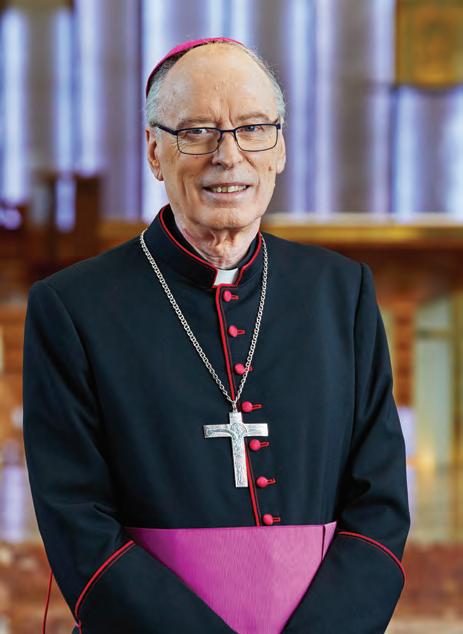
Most Rev. Donald Sproxton
Auxillary Bishop, Archdiocese of Perth
I am pleased to present the Draw Near Projects from the West Australian Catholic Migrant & Refugee Office (WACMRO), an agency of the Archdiocese of Perth. The resource sits under the Adsumus initiative from the Archdiocesan Parish Renewal Office.
The Draw Near Projects are designed to provide opportunities for the parish and school to work together with an archdiocesan agency to achieve specific faith formation and social outreach goals.
The projects can assist those who belong to a parish and school community to deepen their understanding of the baptismal promises and their role in the Church as missionary disciples by enabling individuals to seriously consider contributing to the life of the parish and school community through project involvement.
At the same time, the projects promote the common good, by assisting in the reception, protection, promotion and integration* of vulnerable visa-holders into the parish and broader Australian community.
* www.vaticannews.va/en/pope/news/2017-11/pope-message-world-day-of-migrants-and-refugees
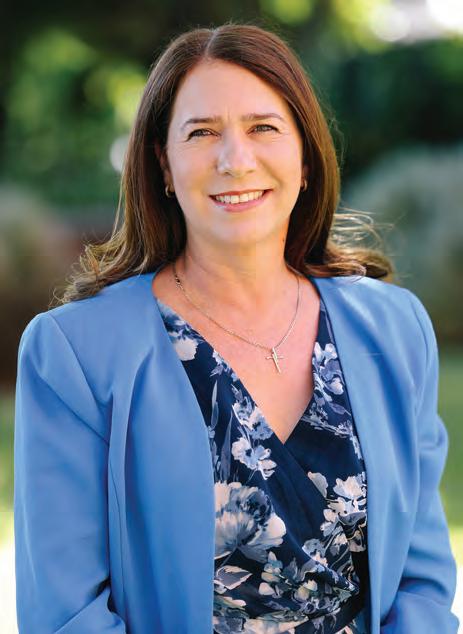
Mrs Annette Morey
Executive
Director,
Catholic Education Western Australia Ltd.
One of the key tasks of the Catholic school is ‘to form young people committed to the love, compassion and justice of the Gospel of Jesus Christ’ (Mandate of the Catholic Education Commission of Western Australia, Mandate 6). In this way, the Catholic school, in collaboration and partnership with Bishops, families and parishes prepares young people to live as Christians in the world.
I have mentioned these thoughts because the projects in this resource offer one way to further assist the Catholic school in the ongoing work of integrating Catholic Identity into all areas of school life through provision of learning and outreach opportunities that support ‘the Church’s commitment to the dignity of the individual’ (Mandate 6).
I note the Draw Near Projects reach beyond the parish-school collaboration to partner with other Catholic organisations supporting the projects. In this way, students, staff and parishioners are connected to the wider community pastoral networks and so given agency as they learn about the lesser-known social issues in contemporary society and how to respond, guided by Catholic social teaching principles.
You are invited to consider the utility of the Draw Near Projects to strengthen the parish and school, priest and principal relationship; assist evangelisation and mission goals; contribute to strategic and pastoral plans and parish-school collaboration initiatives.
The projects illustrate a synodal link between living the faith and seeking justice in daily life by providing an opportunity for the parish and school community to listen and respond to the vulnerable visa holder in Western Australia who is a migrant or refugee person.
In practice, each project invites the parish-school community to host a workshop(s) on Church teaching on the social reality highlighted; participate in data-informed pastoral activities in support of persons impacted; provide learning opportunities for students using project resources.
The projects are purposeful and provide the parish and school community a unique pastoral experience journey from faith formation and social awareness to action. To register your interest, scan the QR code on the back page.
Gregory Lowe Director, West Australian Catholic Migrant & Refugee Office (WACMRO)

Purpose
To assist the missionary activity and evangelising mission of the baptised by contributing to parish fostering of a ‘Christ-centred, faithful, vibrant, welcoming, inclusive and mission-oriented Church’1 and school engagement with the four pillars of Quality Catholic Education: Catholic Identity, Education, Community and Stewardship.2
To promote the Catholic worldview3 and integration of faith, culture and life through raising awareness of Church social teaching around migrant justice and pastoral care around the migrant and refugee person.
To build community resiliency through provision of place-based activities that:
• enable archdiocesan agency-parish-school partnering4
• animate pastoral responses to vulnerable migrants and refugees
• empower individuals to volunteer according to time and circumstance
• realise goals of the Laudato Si’ Action Platform.

1. Constitution for Parish Pastoral Councils 2018, Perth.
2. Catholic Education Commission Western Australia Quality Catholic Education Framework.
3. Catholic worldview: The contemplating of social reality and activities from the standpoint of faith.
4. The principle informing collaborative pastoral practice is ‘meaningful engagement with others ... to achieve shared goals.’ See: https://parishrenewal.com.au/table-of-contents/a-framework-for-archdiocesan-and-parishrenewal/
Implementation of the projects follows a phased approach to enable integration into existing parish and school calendars:
Phase 1 Meeting & Planning
• Parish-SchoolAgency leadership confirm project implementation plan details.
• Commitment Statement signed at a ceremony.
Phase 2 Key Actions & Project-specific Activities
• Faith Formation and Social Education workshop(s).
• Project-specific activities include classroom & outof-class learning opportunities for students and parish youth
Phase 3 Appreciation & Evaluation
• Certificates presented at a school assembly and parish mass.
• Survey.
• to organise the initial meeting and prepare an implementation plan
• to facilitate the Faith Formation and Social Education workshops
• to provide administrative support and access to the toolkit
• to ensure quality control through monitoring and evaluation.
Sustainability options and optional extras are available for each project.
Did you know...
Currently, there are 8.4 million persons seeking asylum, globally.5
An asylum seeker is someone who seeks permanent residency or citizenship in another country for fear of persecution for reasons of race, religion, nationality, membership of a particular social group, or political opinion if they return to their country.6
Currently, there are 443 persons in Perth on Bridging Visa E seeking asylum.7 They are from Afghanistan, Iran, Iraq, Sri Lanka, Pakistan and Vietnam. Persons seeking asylum are vulnerable due to:
- temporary or unresolved visa status
- ignorance of work rights
The Key Actions of Asylum Seeker Assist:
- culture and language barriers
- stigma around asylum seeker persons
• learn about why people seek asylum in Australia
• understand Church teaching around forced migration
• participate in activities to assist persons seeking asylum.
Project-specific activities
• Liturgical celebration of World Refugee Day (June 20)
• Collect and deliver curated food items (school) and hygiene products (parish) to the asylum seeker distribution point
• Student Council and parish youth group organise a monetary donation and participation in the CAPSA* National Week of Prayer and Action.
The project is suitable for parish and school communities in the Perth metropolitan area. Partner Organisation: Centre for Asylum Seekers, Refugees and Detainees (CARAD).
Start Date Beginning of Term 2 Beginning of Term 3 Beginning of Term 4
End Date End of Term 2 End of Term 3 End of Term 4
* Catholic Alliance for Persons Seeking Asylum
5. www.unhcr.org/refugee-statistics
6. www.roads-to-refuge.com.au. See also Migration Act 1958 (Cth) - Sect 5J. Also, see Sect 5H and the 1951 Refugee Convention and the 1967 Protocol Relating to the Status of Refugees: www.unhcr.org/media/conventionand-protocol-relating-status-refugees
7. homeaffairs.gov.au/research-and-statistics/statistics/visa-statistics/live/onshore-processing
The Philippines is the biggest seafarer-supplying country in the world...manning over 35% of the world’s merchant fleet, including container ships, oil tankers, bulk carriers and cruise ships.8
The term seafarer refers to a person who is employed in any capacity on board a sea-going ship registered in a territory for which the Convention9 is in force, other than a) a ship of war or b) a ship engaged in fishing.
Fremantle had 1500 ship visits in 2024.10 Around 45,000 crew members pass through the port of Fremantle annually.11
Seafarers are usually migrant workers and they are vulnerable due to:12 - power imbalance - remuneration - isolation - mental health issues - lack of access to communications
The Key Actions of Seafarer Assist:
• learn about the migrant seafarer
• understand Church teaching on the dignity of the human person and work
• participate in activities to assist seafarers.
Project-specific activities
• Liturgical celebration of Sea Sunday (2nd Sunday of July)
• Collect and deliver curated food items (school) and hygiene products (parish) and other requested items to Stella Maris, Fremantle
• Student Council and parish youth organise monetary donation
• Attend the Blessing of the Fleet.
The project is most suitable for parishes and schools in the Fremantle and Kwinana area. Partner Organisation: Stella Maris, Fremantle (an agency of the archdiocese of Perth).
Duration Option 1 Option 2
Start Date
Beginning of Term 3
End Date End of Term 3
Beginning of Term 4
End of Term 4
8. www.marineinsight.com/know-more/top-10-seafarer-supplying-nations-in-the-world/
9. Article 2, Seafarers’ Annual Leave with Pay Convention, 1976 (No. 146), International Labour Organisation.
10. Fremantle Ports Annual Report 2024. Page 6
11. fremantleshippingnews.com.au/2024/09/11/what-about-the-seafarers/
12. Modern Slavery within Maritime Shipping Supply Chains, UN Global Compact Australia, December 2022. Page 21.
Did you know...
In Australia, there are up to 41,000 persons impacted by various forms of modern slavery.13
Modern slavery includes forced labour which is when ‘a person uses coercion such as manipulation, control or violence, threats or lies to make someone feel they cannot stop working or leave their place of work’.14
Globally, there are 27.6 million persons trapped in forced labour.15 In Australia, the prevalence of forced labour is three times higher for migrant visa-holders than for non-migrants.16
Migrant workers are vulnerable to worker exploitation and forced labour due to ignorance of Australian law, work rights, visa conditions, and culture and language barriers.
The Key Actions of Modern Slavery Response:
• learn about how visa-holder persons are impacted by forced labour in Australia
• understand Church teaching on the dignity of work and human trafficking
• participate in activities to mitigate risk of contributing to forced labour in supply chains 17
Project-specific activities
• Liturgical celebration of St Josephine Bakhita feast day (8 February)
• Parish supplier analysis (and school if required) to identify risk in the supply chains
• Student Council and parish youth group organise monetary donation to support survivors and raise awareness of ethical purchasing.
This project is suitable for large metropolitan Catholic parishes and multi-streamed schools. Partner Organisation: The Australian Catholic Anti-slavery Network (ACAN), the Sisters of Charity Foundation, Global Freedom Network, Australian Catholic Religious Against Trafficking in Humans (ACRATH).
Duration February 8 to December 2
13. Global Slavery Index 2023.
14. www.modernslavery.gov.au/about-modern-slavery/types-modern-slavery
15. 2022 Global Estimates of Modern Slavery: Forced Labour and Forced Marriage. pp. 85, 88 (Walk Free, International Labour Organization (ILO), and IOM UN Migration).
16. Global Slavery Index 2023.
17. The supply chain is the interconnected journey that raw materials, components, and goods take during their assembly and before their sale to customers. www.mckinsey.com/featured-insights/mckinsey-explainers/what-issupply-chain
Did you know...
Temporary migrant seasonal workers fill essential labour shortages across horticulture, agriculture and meat processing industries.
Seasonal work is defined as ‘work that is available for part or parts of the year at approximately the same time each year’.18
Currently, there are around 30,000 temporary migrant seasonal workers in Australia with some 2,750 temporary migrant workers employed in rural and regional Western Australia.
Vulnerabilities of temporary migrant worker visa-holders can include: culture and language barriers, cultural dislocation, farm isolation, lack of connection to a community, separation from family, and remittance pressure.
The Key Actions of Seasonal Worker Connect:
• learn about temporary seasonal workers in Western Australia and their cultures
• understand Church teaching around cultural differences
• participate in cultural engagement of seasonal workers attending the parish Sunday Mass.
Project-specific activities
• Liturgical celebration of St Joseph the Worker (1 May)
• Student Council and parish youth group organise material donation eg: winter clothing
• Parish group to assist in preparing after-mass events for seasonal workers
• Regular after-mass events for the seasonal workers (provided by the parish, with the support of the school where appropriate).
This project is suitable for parish and school communities in proximity to temporary migrant workers (contact the WACMRO for a feasibility study for your community). Partner Organisation: Australian Catholic Migrant & Refugee Office (ACMRO).
Start Date
Negotiated among the parties involved.
Duration 12 Months
For further information: www.palmscheme.gov.au
Did you know... Australia has successfully settled more than 950,000 refugees and others in humanitarian need.19
Refugees are ‘people who have been forced to flee their homes and have crossed an international border to find safety in another country’.20
Globally, there are 37.9 million refugees.21 Australia resettles around 20,000 refugee persons per year as onshore Humanitarian Entrant permanent residency visa holders.22
Vulnerabilities of newly arrived refugee families include: trauma, cultural dislocation, culture and language barriers, navigation of the settlement process and social integration factors.
The Key Actions of the Refugee Family Support:
• learn about Church teaching on forced displacement and the culture of the family
• provide enrolment for the children of the family
• Request for volunteers to support the family for a fixed period.
Project-specific activities
• Liturgical celebration of Migrant & Refugee Sunday (last Sunday in September)
• School enrolment of the children of the family
• Student Council and parish youth group organise material donation to the family.
• Neighbours to Newcomers (N2N) adult volunteer group formed for either A or B:
A. Support a newly arrived family under the direction of the settlement agency
B. Sponsor a family through the Community Refugee Integration & Settlement Program.
The project is suitable for parish and school communities that can provide a N2N volunteer group.
Assisting organisations: Red Cross, MercyCare and Community Refugee Sponsorship Australia (CRSA).
Start Date Depends on the availability of the project.
Duration A. 12 months. B. 18-24 months
19. www.immi.homeaffairs.gov.au/what-we-do/refugee-and-humanitarian-program/about-the-program/about-theprogram
20. www.unhcr.org/us/what-refugee. The most widely accepted legal definition of ‘refugee’ is found in Article 1 of the 1951 Refugee Convention.
21. www.unhcr.org/refugee-statistics
22. www.homeaffairs.gov.au/research-and-statistics/statistics/visa-statistics/live/humanitarian-program
The see - judge - act23 pastoral cycle uses Catholic social teaching principles and analysed social data to:
• inform a praxis linking faith and migrant justice
• identify pastoral concerns of marginalised visa-holders
• formulate practical actions in support of the migrant and refugee person.
The Draw Near Projects utilise:
• a Head-Heart-Hands24 model of community engagement to highlight migrant justice issues on the periphery of social concern
• lean project management principles to facilitate implementation.
23. see - judge - act : ‘There are three stages which should normally be followed in the reduction of social principles into practice. First, one reviews the concrete situation; secondly, one forms a judgment on it in the light of these same principles; thirdly, one decides what in the circumstances can and should be done to implement these principles. These are the three stages that are usually expressed in the three terms: look, judge, act.’ (John XXIII, Mater et Magistra, 1961 n236).
24. The Head, Heart, and Hands model of community engagement emphasises the importance of integrating cognitive understanding (Head), emotional intelligence (Heart), and practical action (Hands). The aim is to create a comprehensive and transformative experience for community members, leading to greater engagement, ownership, and sustainability. This model is particularly useful for fostering community resilience and promoting sustainable practices.
What should the Parish Priest or School Principal do next?
1. Speak with the Parish or School about partnering to do one of the projects.
2. Register interest using the QR Code on the back page.
Are there fees payable to the WACMRO?
There is no charge by the WACMRO for the work it does in supporting a project.
Who participated in the pilot projects?
Applecross St Benedict’s Parish
Girrawheen Our Lady of Mercy Parish & Our Lady of Mercy Catholic Primary School
Innaloo / Karrinyup
Innaloo / Karrinyup Parish, Newman College, St Dominic’s Primary School and Our Lady of Good Counsel School
Nollamara Our Lady of Lourdes Parish & Our Lady of Lourdes Catholic Primary School
Perth St Mary’s Cathedral Parish
Thornlie Sacred Heart Parish & Sacred Heart Catholic Primary School
I didn't realise there are displaced persons living in our neigbourhood!
Parishioner attending the faith formation and social education workshop, Nollamara, WA
One of the best days of my life!
School sta member who attended the faith formation & social education day and delivered the food and hygiene care packages to the asylum seeker distribution point.
Asylum Seeker Assist challenged us with the reality of seeking asylum. After the faith formation and social education session, the community understood who we were helping and why!
Parish Priest, Lockridge, WA
"I enjoyed learning about the people we collected for.”
Year 9 Student, Perth, WA
We believe the Asylum Seeker Assist Draw Near Project is an excellent way to build community, deepen the faith of the parish-school community and assist some of the most forgotten in society in a just manner.
Justice, Healing & Inclusion Team, Archdiocese of Adelaide, SA.
We will be investigating our own supply chains to identify where there might be risk ... we do not want to support structures which exploit or enslave our brothers and sisters.
Dean, St Mary’s Cathedral, Perth, WA
This is an excellent initiative! What a wonderful afternoonthe class was full of joy.
Parent of a Year 6 student who attended the packing of food and hygiene packs.
It was a shock when we got the data analyzed and it indicated that we were using quite a few supply chains that were at high risk of contributing to modern slavery. I’m glad we found out and did something about it!
Parishioner, St Mary’s Cathedral Parish, Perth, WA
Our project will focus on our existing suppliers to see if there is risk of Forced Labour in the supply chains that bring us the goods and services we enjoy.
Parish Priest, Applecross, WA
Who is WACMRO?
The West Australian Catholic Migrant & Refugee Office (WACMRO) has been mandated to assist the Archdiocese of Perth and the Catholic dioceses of Western Australia in promoting the acceptance and settlement of vulnerable migrants and those who have sought refuge as humanitarian entrants into Australia in a manner that upholds their dignity to enable welcoming and a sense of belonging in the parish and broader community.
What does WACMRO do?
The WACMRO provides the Catholic community in Western Australia with the following:
• Visa process assistance and visa referral service
• Outreach projects for parishes and schools
• Programs for clergy and parishes on interculturality
• Events and networking promoting Catholic migrant communities
The work of the WACMRO contributes to the receiving, protecting, promoting and integrating of newly arrived migrants and refugees into the new life in Australia.
What is our method?
The WACMRO utilises research evidence, anecdote, analysed social data and Church social teaching to formulate place-based projects that aid integration and foster social cohesion.
Contact Us
08 9220 5950
wacmro@perthcatholic.org.au www.wacmro.perthcatholic.org.au
23 Victoria Square, Perth, WA 6000
PO Box 3075, Perth, WA 6832
In addition to the Catholic dioceses of Western Australia and Catholic Education Western Australia Ltd, the following entities also support, contribute or partner WACMRO in the work of the Draw Near Projects:

Scan QR Code to register or visit https://tinyurl. com/2s3nn5zk
Theological reflection on migrant justice and other supporting documents
‘I commend this resource from the West Australian Catholic Migrant & Refugee O ce. It provides an e ective model to enable diocesan agency-parish-school partnering by linking encounter-based faith formation to data-informed pastoral outreach opportunities at the local level.
Fr Khalid Marogi, National Director, Australian Catholic Migrant & Refugee O ce
Thank you for drawing near to humanity through, with and in your Son, Jesus.
O, Jesus, remind us that when we draw near to the migrant and refugee person, it is you that we are welcoming - in faith, in hope, and in love.
Holy Spirit, help us grow in charity and be ever ready to draw nearer to those in need, especially the displaced person.
We ask this through Christ our Lord. Amen.
St Frances Xavier Cabrini. Pray for us. St John Baptist Scalabrini. Pray for us.


An Agency of the Archdiocese of Perth
Acknowledgement of Country
The Catholic Archdiocese of Perth acknowledges the Traditional Owners of the lands on which we live. We acknowledge the continued deep spiritual connection and relationship of Aboriginal people to this country and commit to the ongoing journey of Reconciliation.
© Copyright 2025 West Australian Catholic Migrant & Refugee Office.
An online version of this document is available at: www.wacmro.perthcatholic.org.au