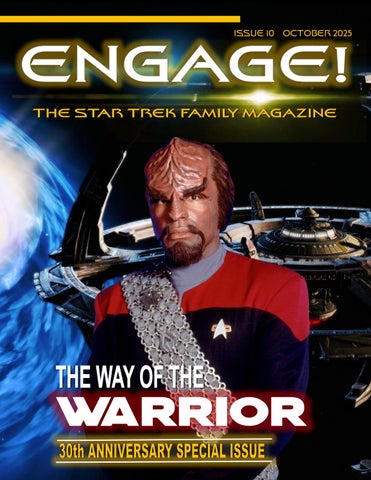
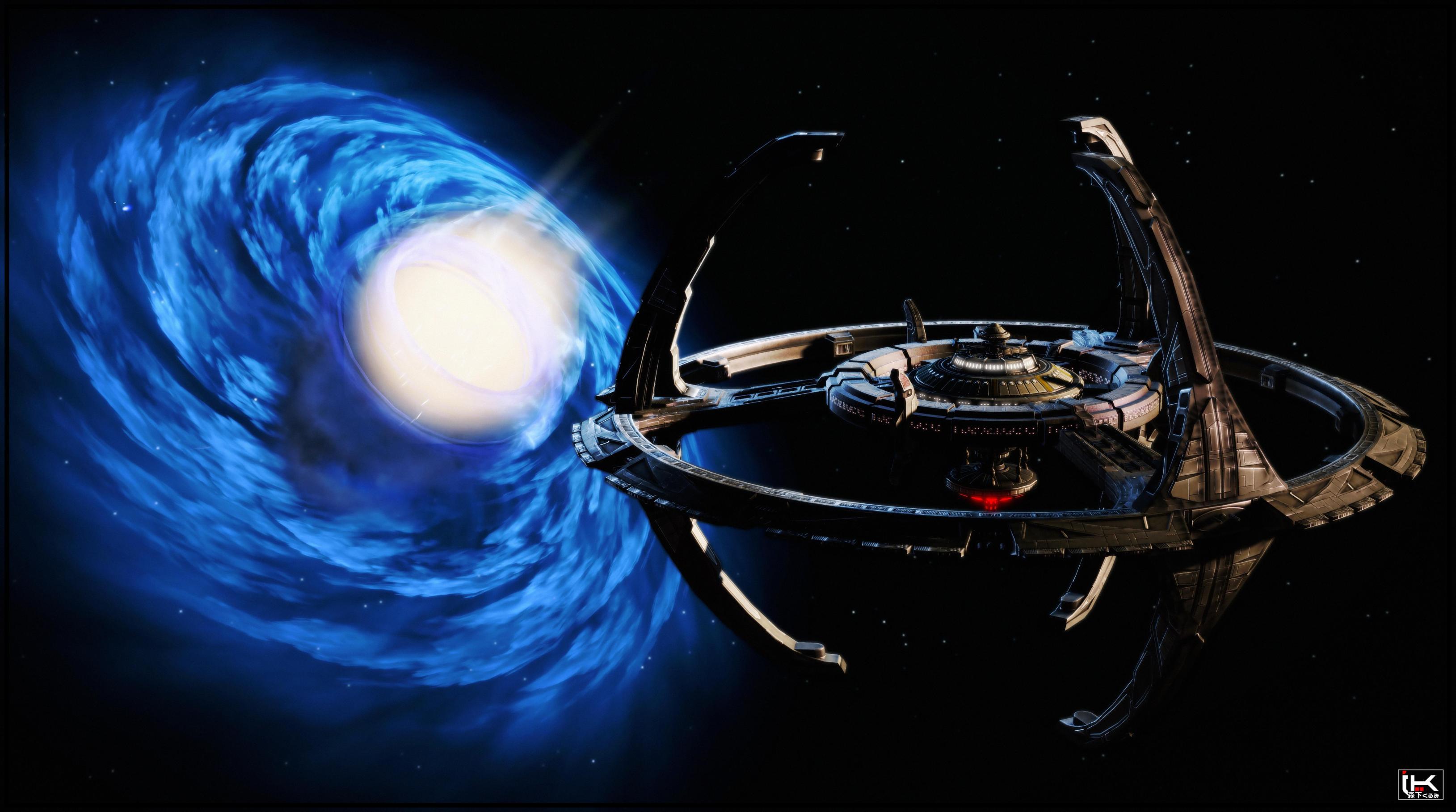
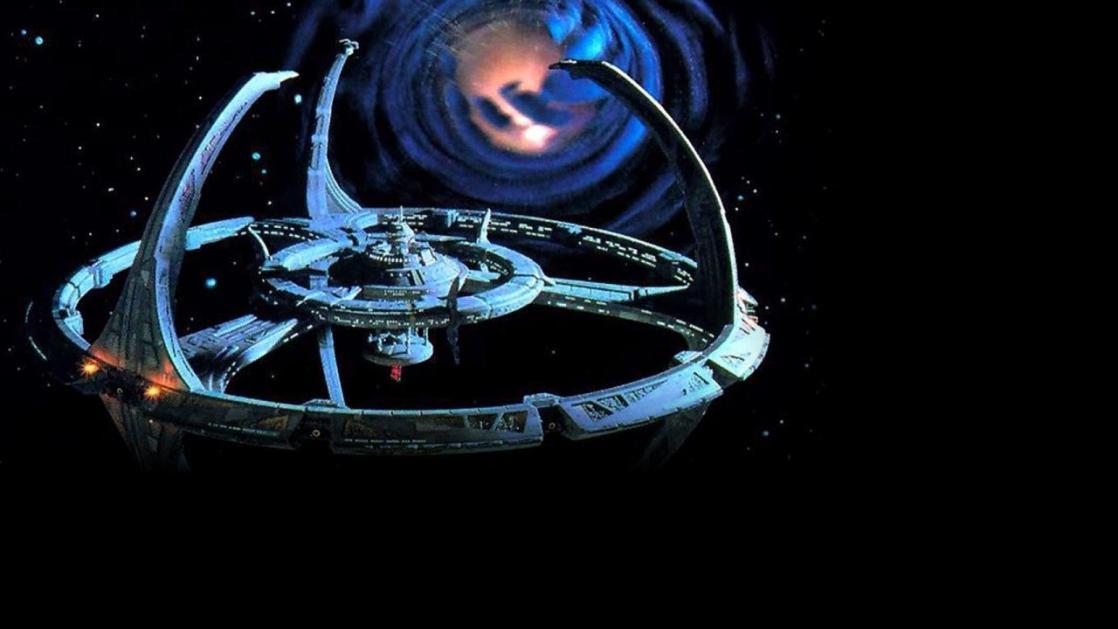
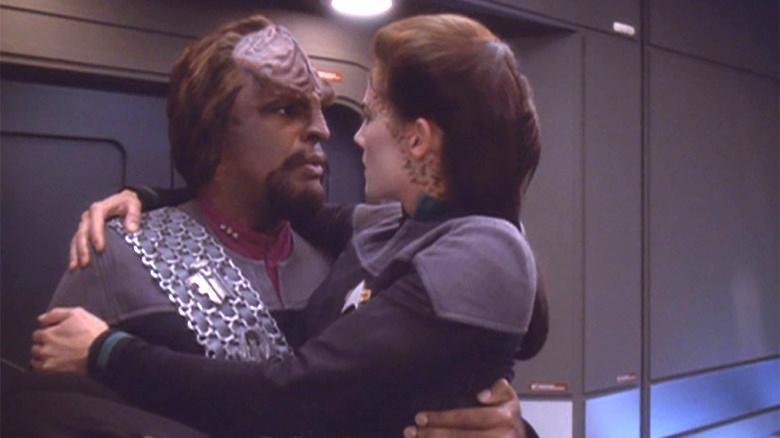
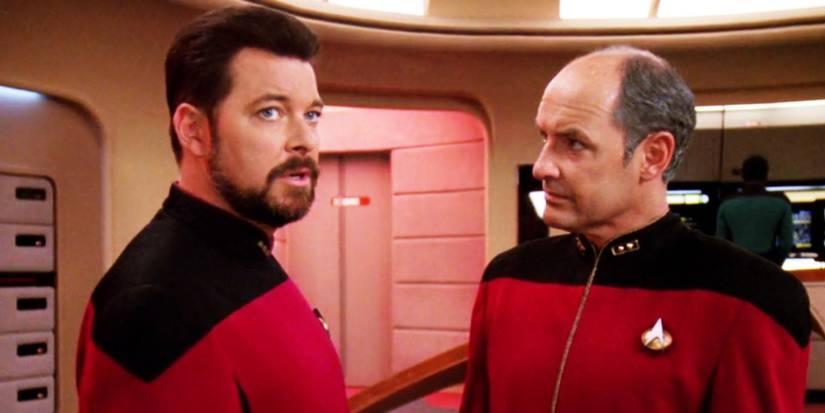
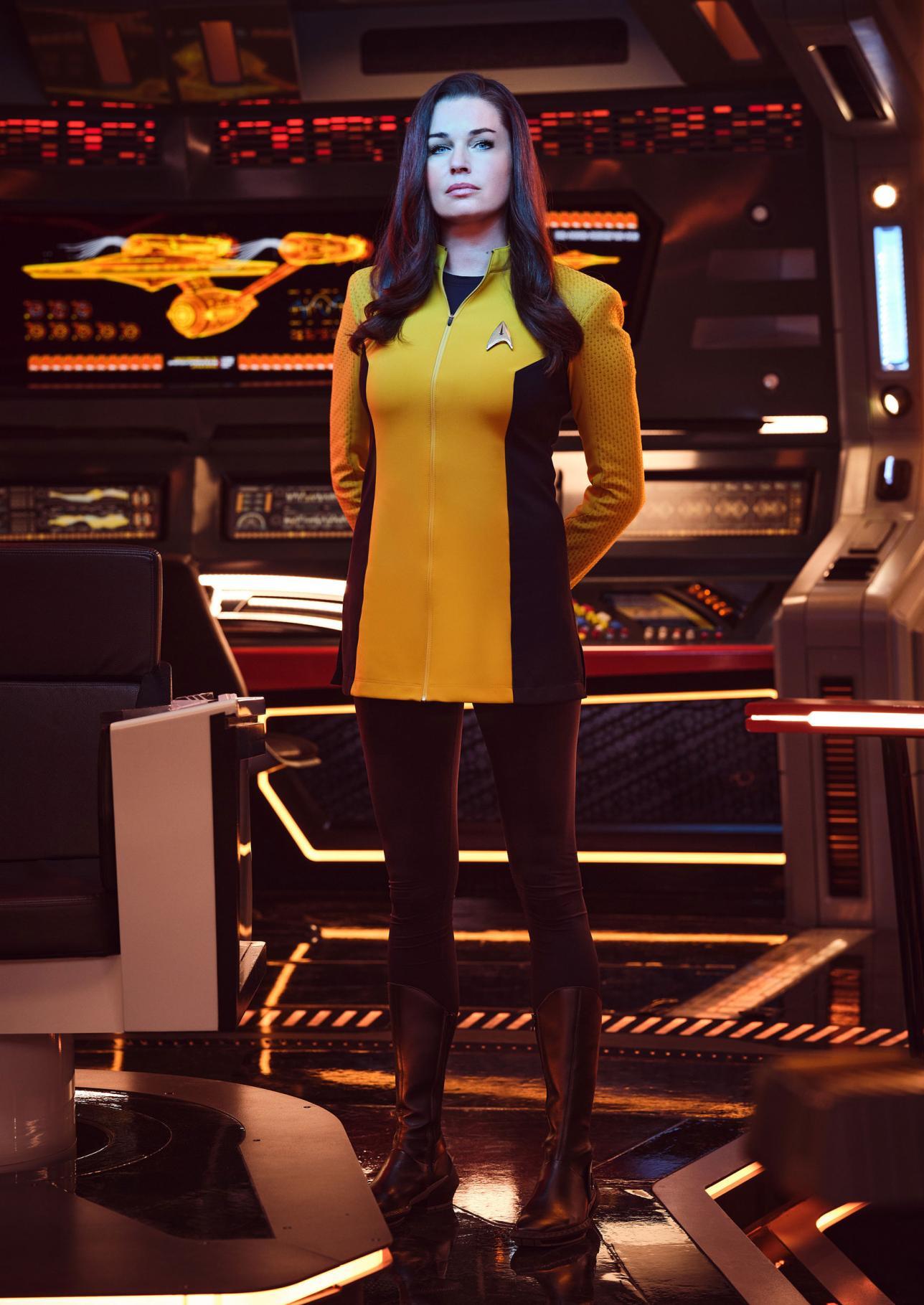
There are many moments throughout Star Trek history that are world-shaking events. Events that change the whole trajectory of a crew, a ship, a show One of those powerful events occurs in Deep Space Nine’s third season when a TNG staple crosses over into the world of DS9.
It’s no secret that this space station-bound show struggled to find its identity early on. Producers were looking for a way to bridge the gap, so to speak, to bring TNG’s massive audience over to Bajor.
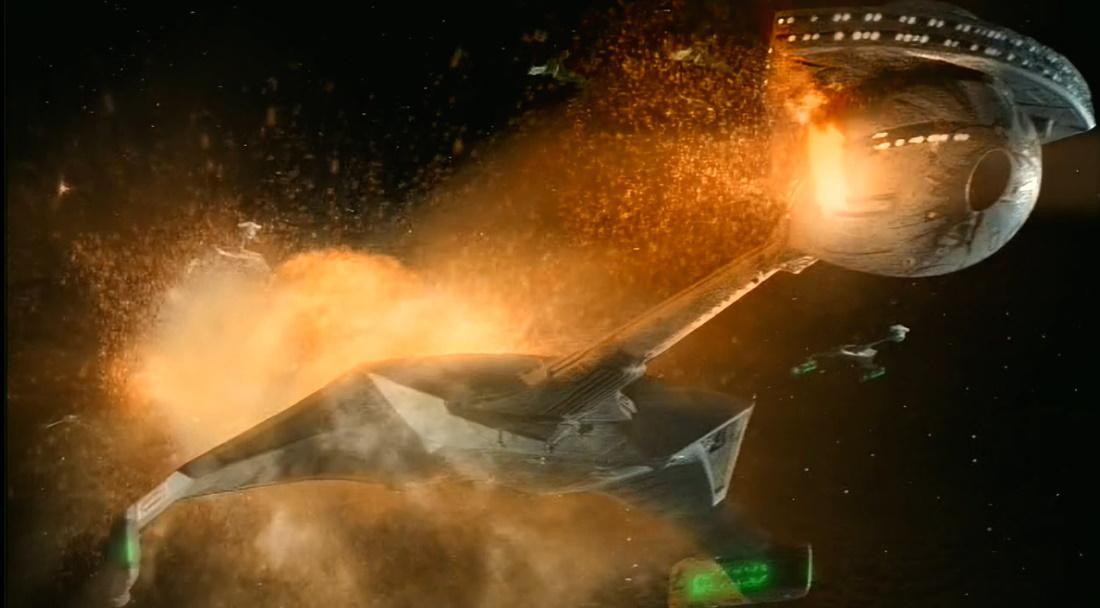
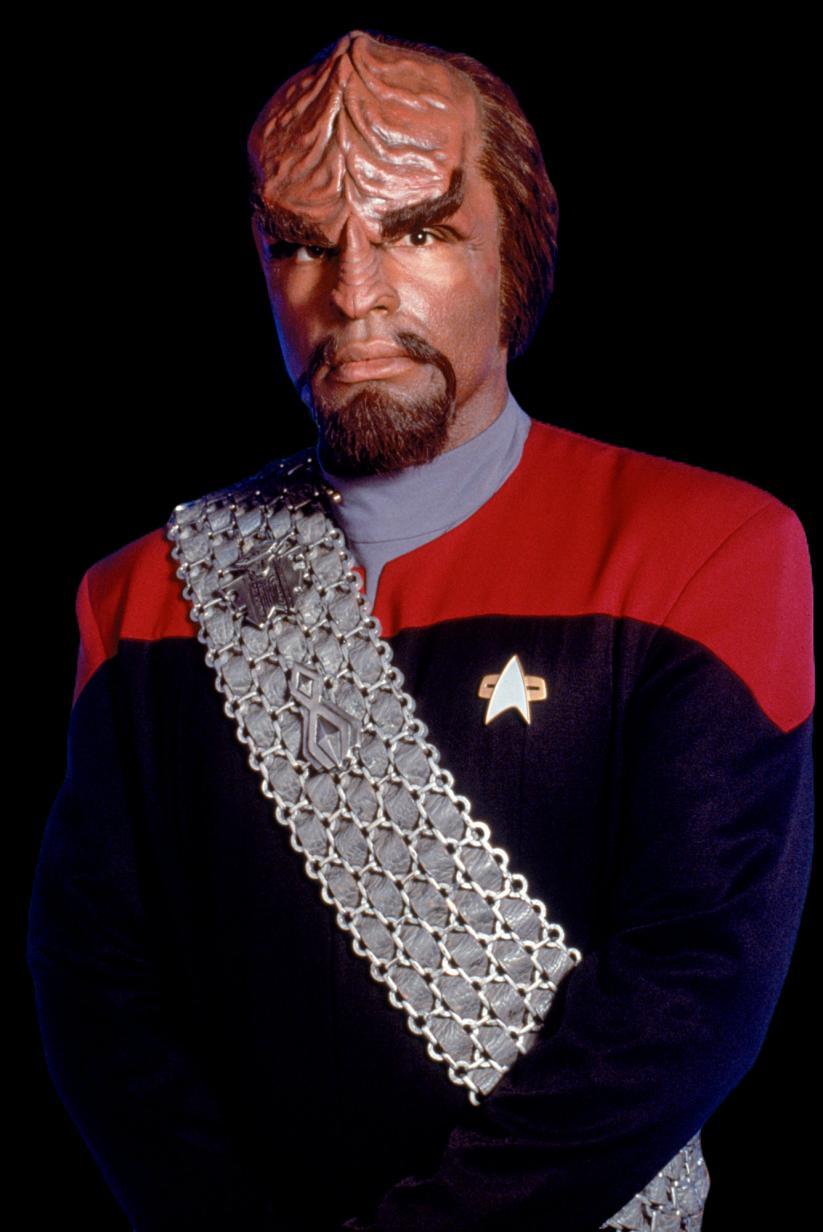
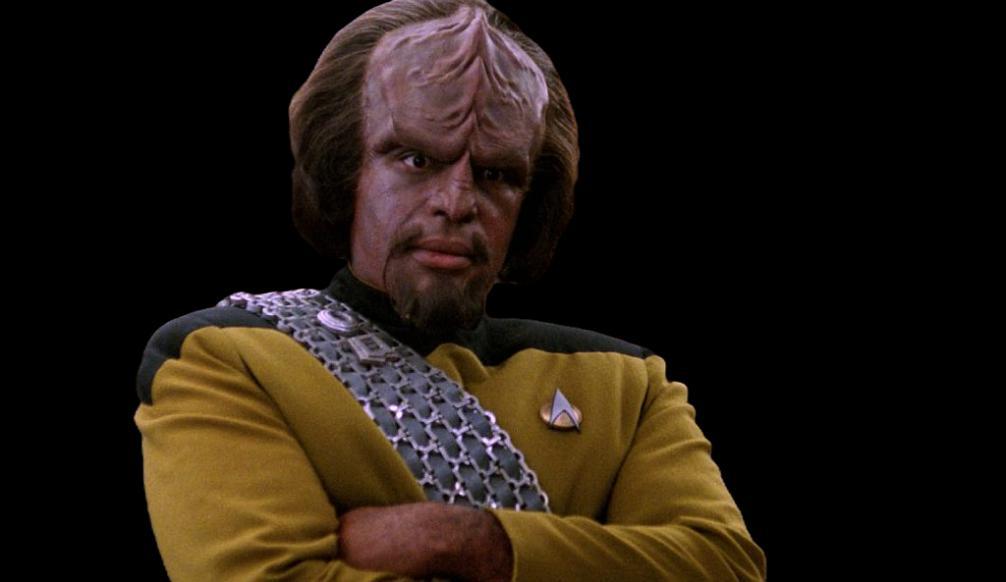
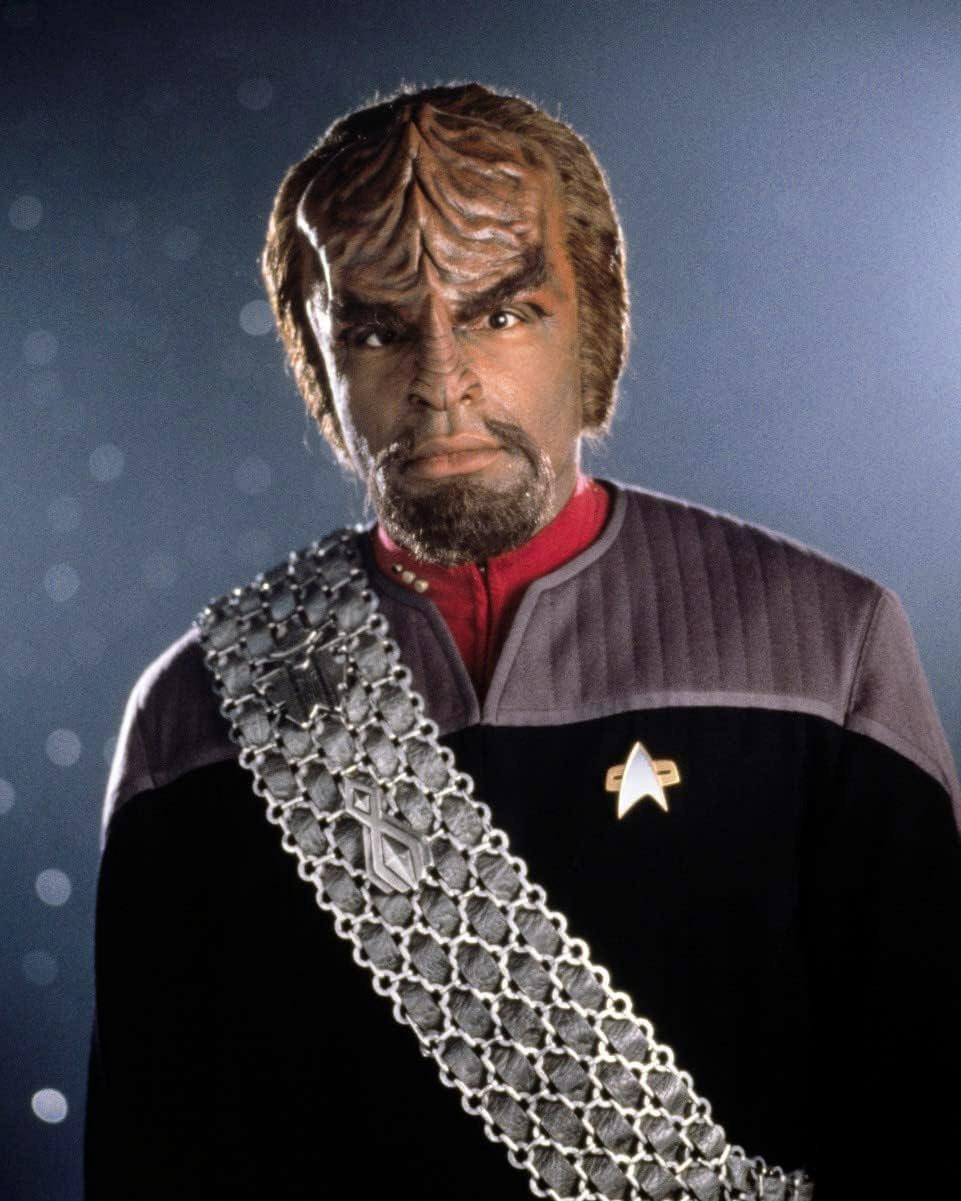
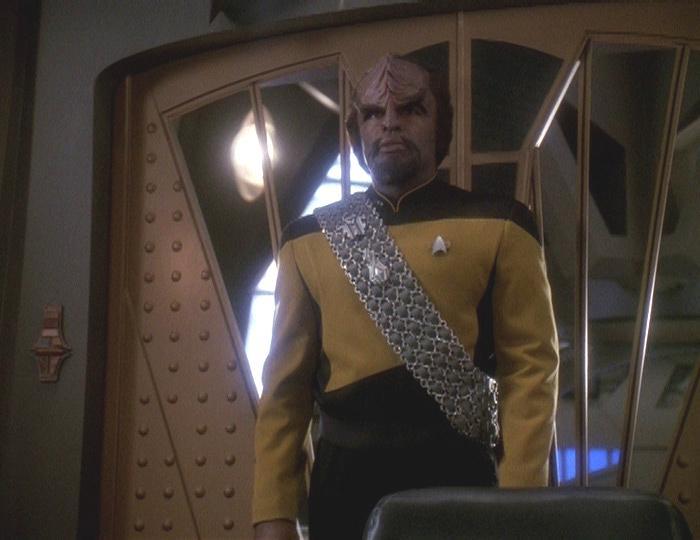
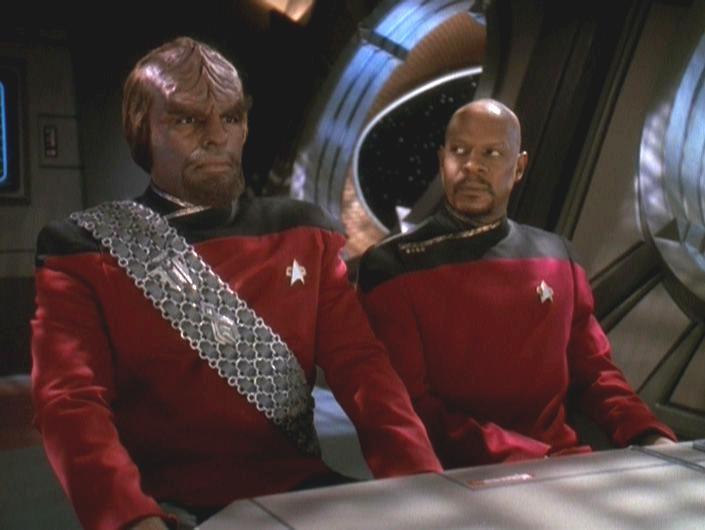
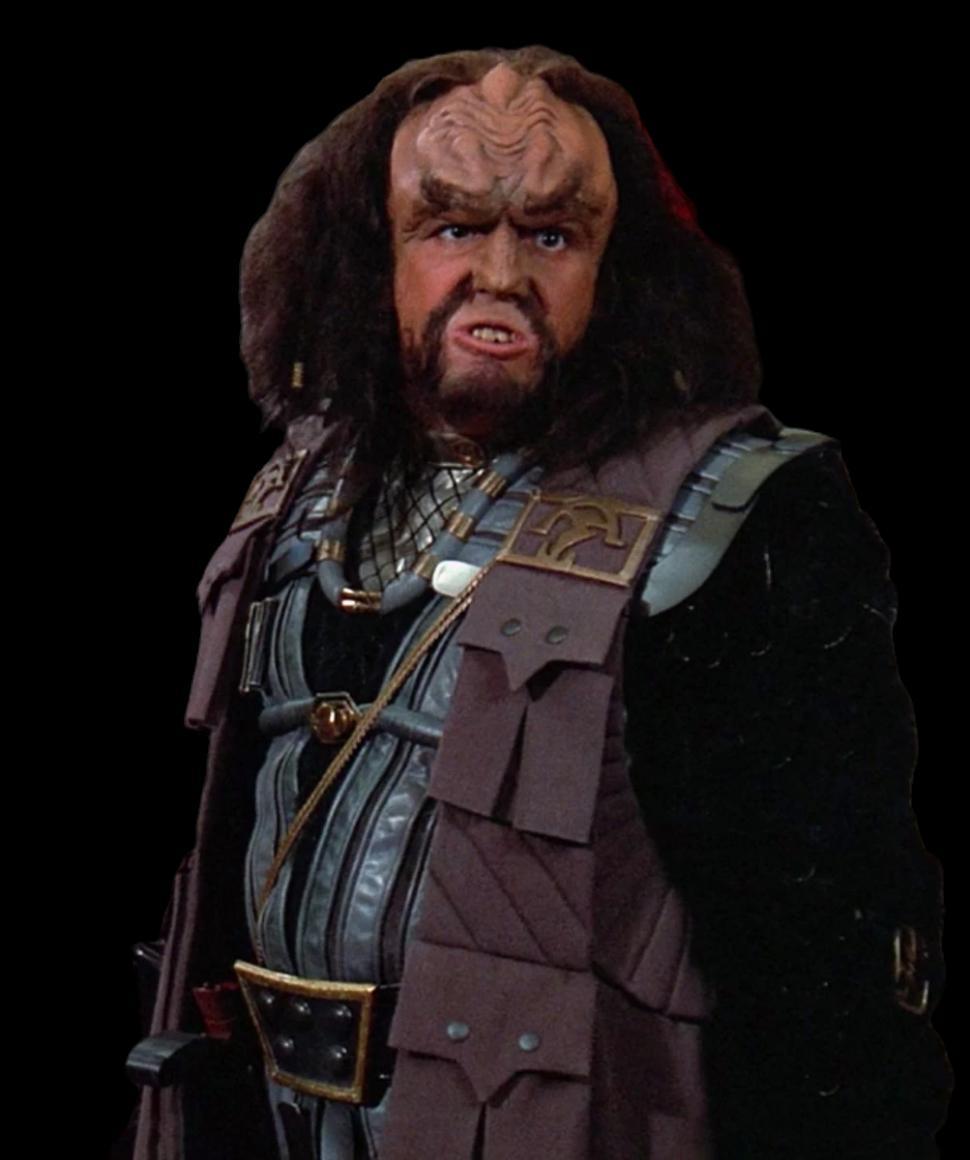
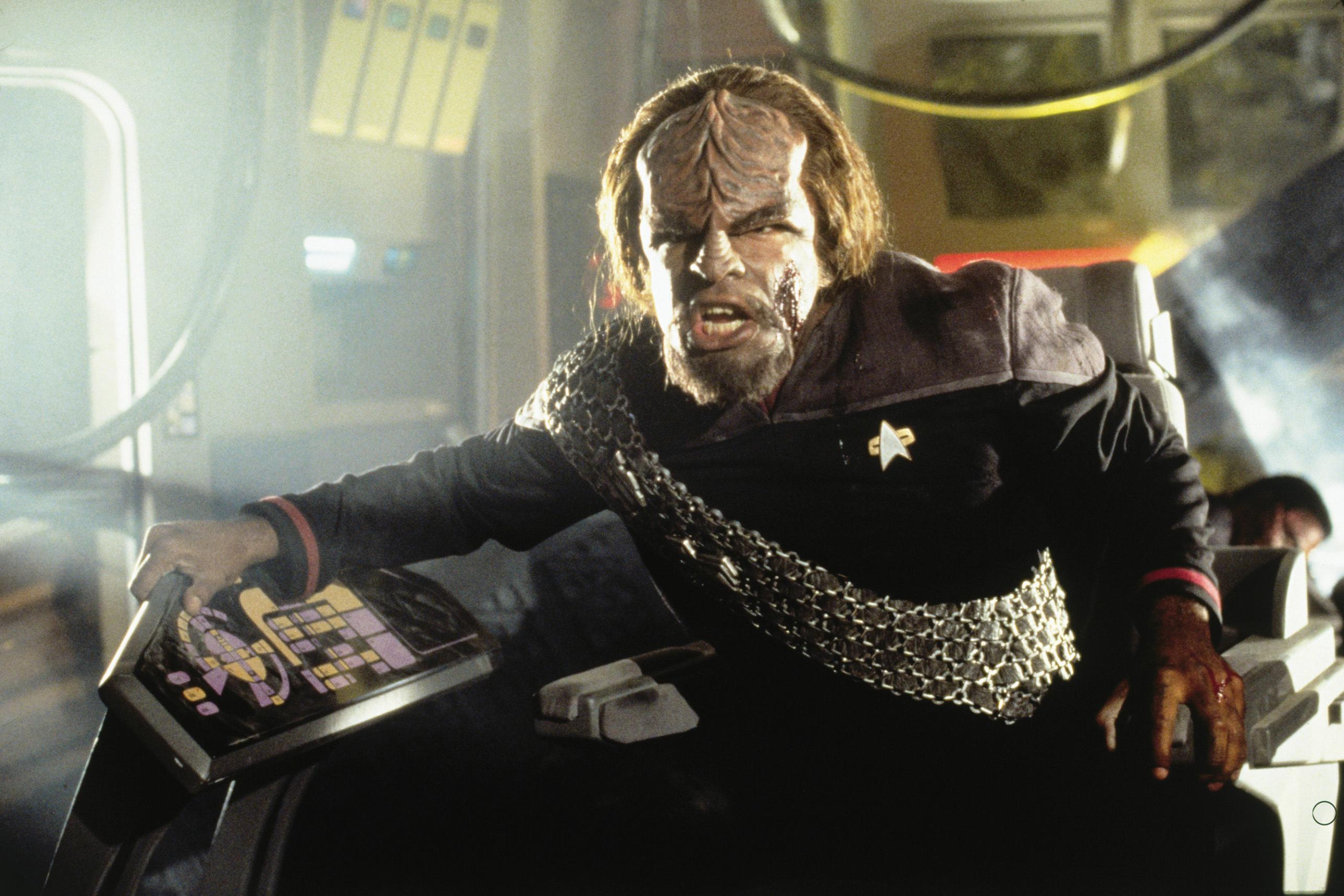
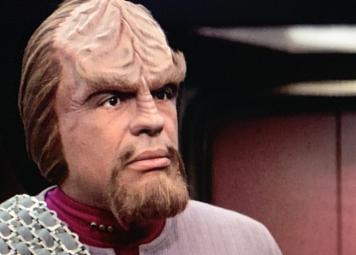
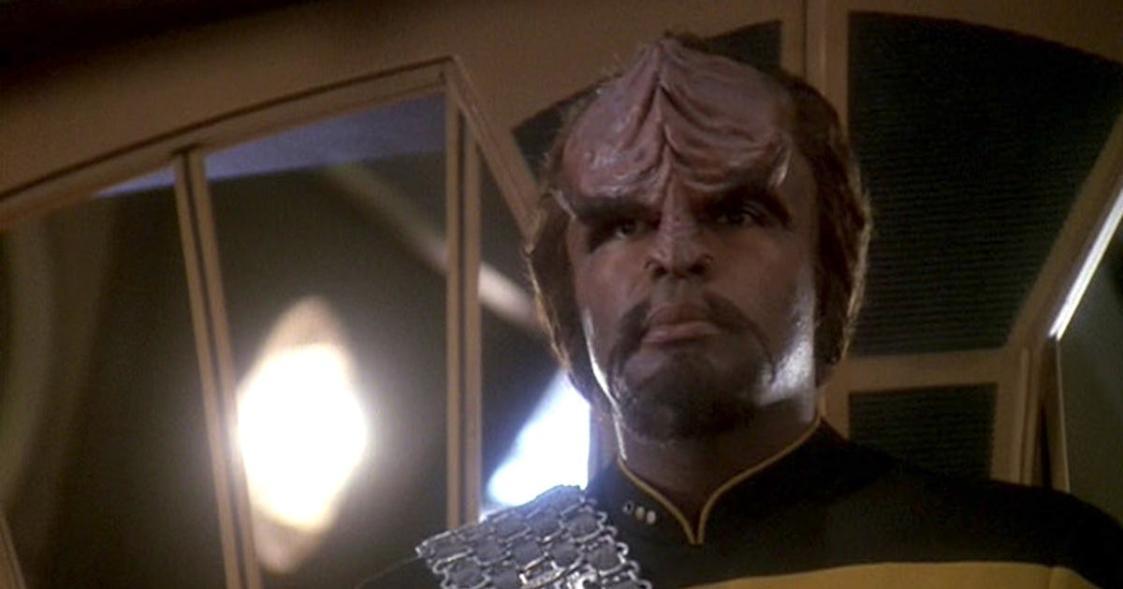
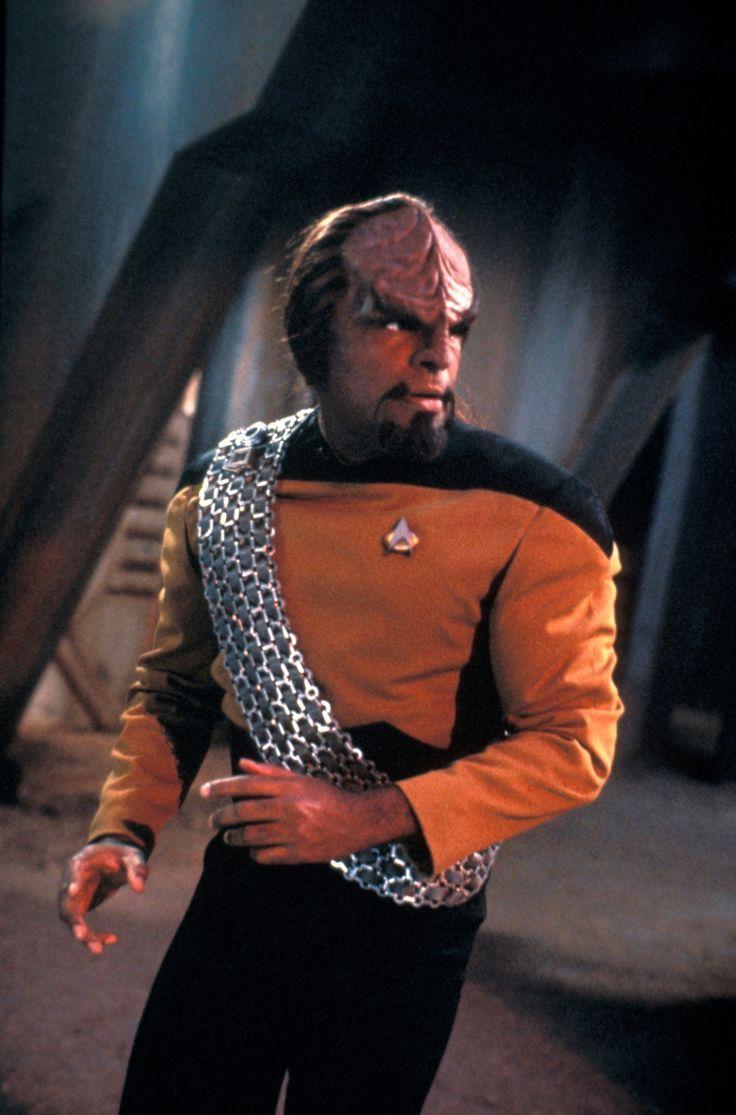
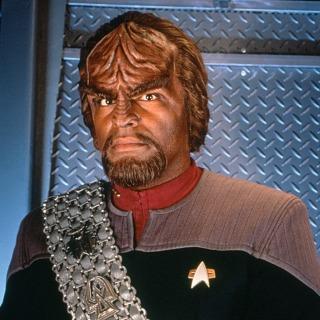
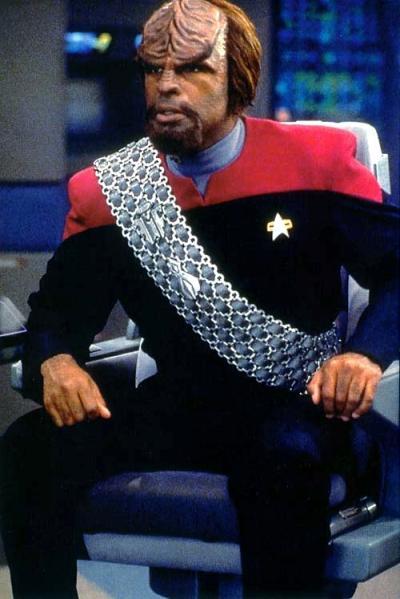
Enter Michael Dorn’s character, Worf. Having just had his own Starfleet posting destroyed at the Battle of Veridian VI (a shocking end to the much loved Enterprise-D), Worf’s character suddenly found himself with a lot of time on his hands. This was a marriage made in heaven, with producers looking to rock the peace between the Klingons and the Federation. Tensions with the Dominion had pushed these two great powers to the brink, and only someone who understood both sides would be the perfect intermediary. Worf came on to the station begrudgingly, not sure what he wanted to do with his career at this point. Though he may have joined this crew halfheartedly, his presence was a blunt wake-up call to the fans. The tenor of this show had changed. This show was different and it wouldn’t back down.
And Worf brought the muscle to back it up.
We are truly interested in receiving feedback from our readers and fellow fans! Really love an article that appears in our magazine? Truly disagree with someone’s take on a topic? How are we doing? Do you have suggestions for features, articles, etc.? CONTACT US Have you always wanted to write about your love for Star Trek? We are always looking for volunteer writers to join our team! Send us an email at the ‘Contact Us’ link at left!
** The Star Trek Family is a free, not
Mark Sickle Founder & Host Star Trek Family
• Editor’s Log
• Crossword Puzzle
• Fan Art
• Limericks
• Word
(Touch the Transporter to Engage!)
S
tar Trek: Deep Space
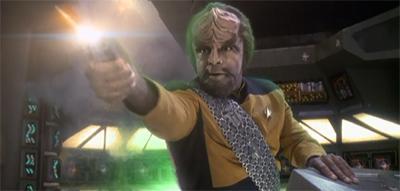
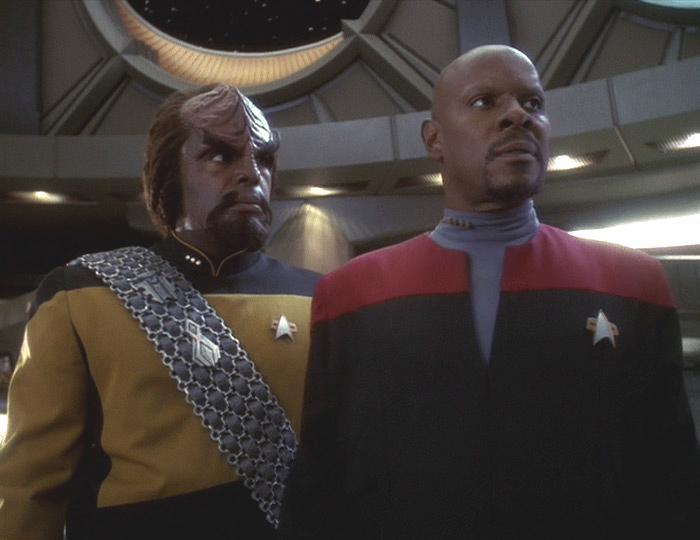
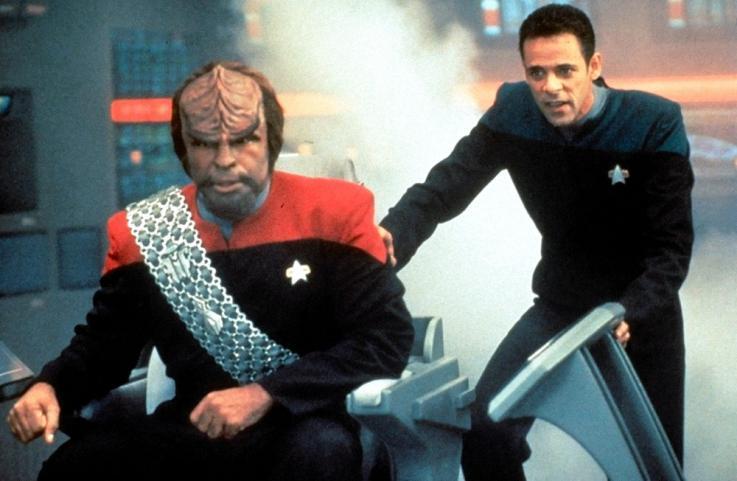
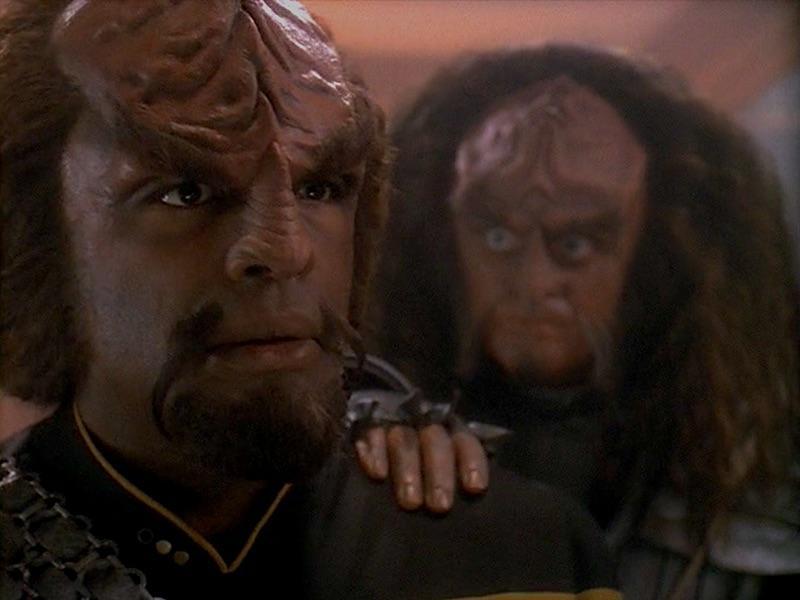
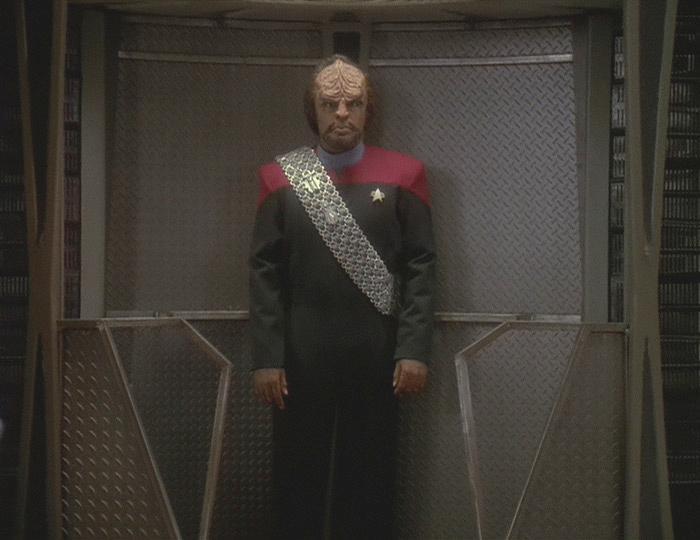
Nine was never quite the same after a certain Klingon walked onto the promenade. When Lt. Cmdr. Worf joined the crew in the Season 4 premiere “The Way of the Warrior” (first aired in 1995), it marked a turning point for the series. This fan-favorite episode didn’t just deliver epic space battles it gave DS9 a jolt of new energy by adding one of The Next Generation’s most popular characters to the mix. The result was a light-hearted yet dramatic shift in crew dynamics on the station, both in-universe and behind the scenes.
Worf’s grand entrance on DS9 came amid a crisis: A Klingon fleet arrived at the station, itching for a fight with the Cardassians. Captain Benjamin Sisko, facing a brewing Klingon-Cardassian war, calls in the only Klingon he can think of, the only Klingon in Starfleet Worf. Still mourning the recent destruction of the USS Enterprise-D, Worf beams over in full warrior mode, uncertain about his Starfleet future but dutybound to help. By the episode’s end, after intense battles and tough choices, Worf decides to stay on DS9, accepting a role as the station’s new Strategic Operations Officer (essentially Sisko’s strategic adviser). For Worf, this is a fresh start a bit like being posted to a remote frontier outpost but also one that rekindles his sense of purpose. For the DS9 crew, it’s the start of an exciting new chapter.
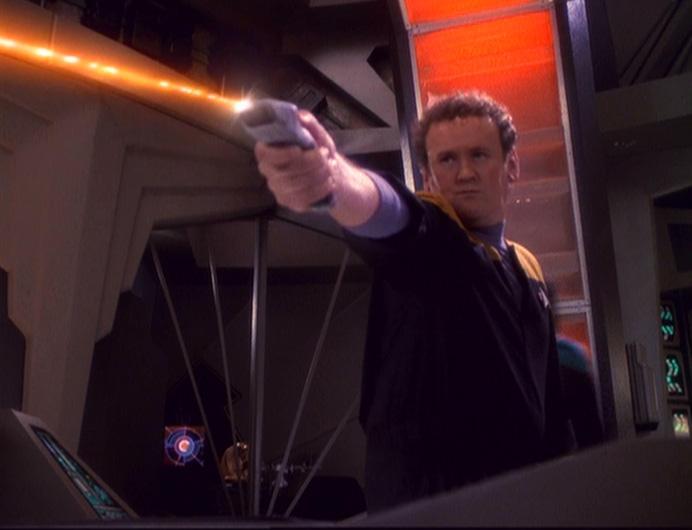
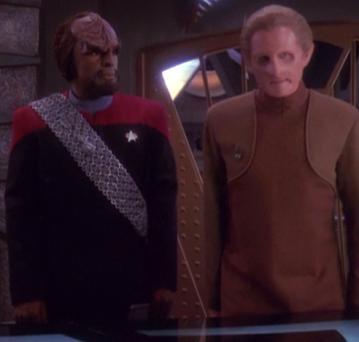
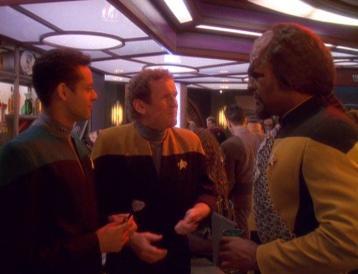
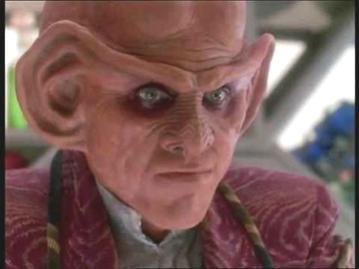
officer, and the interactions spark plenty of fun character moments. Old shipmate Chief Miles O’Brien gives Worf a warm welcome (the two served together on the Enterprise) and even tries to get the stoic Klingon to relax with a game of darts. Major Kira Nerys and Lt. Cmdr. Jadzia Dax, who had just come out of a holosuite in full costume, size up Worf immediately prompting Worf’s famously dry compliment about Kira’s hairpiece (“Nice hat,” he deadpans) and some curious looks. Security Chief Odo, ever impassive and phlegmatic, initially regards Worf warily, but the two soon find common ground in their dedication to duty. And of course, Quark, the Ferengi bartender, is none too pleased to see another Klingon on the station. He sarcastically quips that the last thing DS9 needs is more Klingons causing trouble. These light-hearted touches established Worf as both a familiar face and a bit of an outsider, injecting new humor and tension into the crew’s daily life.

From the get-go, Worf’s presence shakes things up on the station. Each DS9 regular gets a moment to meet the new Klingon
Despite being a seasoned Starfleet officer, Worf initially has a tough time adjusting to station life. Unlike the orderly starship corridors he’s used to, DS9 is a bustling crossroads of aliens (and the occasional chaos they cause). In one early mishap, Worf’s quarters are burglarized by a sneaky Dopterian thief, leaving the proud Klingon furious at the security breach. Odo gently reminds him that even the vaunted Enterprise had its share of intruders and incidents a humbling lesson that DS9 can be a bit more rough-andtumble than Worf’s previous posting. Worf even takes to sleeping aboard the USS Defiant for a while, preferring its quiet, spartan accommodations to the noisy promenade levels. Over time, though, he finds his place on the station and even develops a fondness for its quirks.
Worf’s arrival wasn’t just a happy accident of storytelling — it was a strategic move by the show’s producers to shake up DS9’s formula. By the end of
portunity in the show’s Dominion storyline: Ramp up the tension by having the Federation’s longtime allies, the Klingons, suddenly turn adversarial. Behr pitched a bold Klingon conflict arc, and fellow producer Rick Berman had an added masterstroke — bring in Worf to be at the center of it. After all, Worf was a fan-favorite from The Next Generation, and adding him was an “obvious attempt to boost DS9’s number of viewers and bring more publicity to the show.” The thinking was that Trek fans missing their Klingon fix (TNG had ended in 1994) would tune in for Worf’s adventures. It was a bold crossover of characters and a bid to bridge DS9 with the wider Star Trek franchise.
letting Worf dominate, ensuring the ensemble stayed balanced.
“The Way of the Warrior” served as a sort of second pilot, reintroducing the cast through Worf’s
with “The Way of the Warrior,” and on the first day of filming, the atmosphere was electric the old gang plus a new colleague. Actor Alexander Siddig (Dr. Julian
Dorn on board was going to be great fun and not the disruption some had feared. Dorn, himself, found joining DS9 both familiar and a little nerve-wracking many of the crew were TNG veterans whom he knew, which was comforting, but he was still the “new kid” among a tight-knit cast. He described the mix of excitement and jitters as “comfortable and familiar” on the surface, with an undercurrent of tension. Nonetheless, Dorn slipped into the role smoothly, and even the producers were impressed with how seamlessly Worf’s character meshed with DS9’s vibe.
Once Worf becomes a DS9 regular, the crew dynamic visibly evolves. As Strategic Operations Officer, Worf is effectively secondin-command for Starfleet matters
who represents the Bajoran side of the station’s command). It also means some adjustments for everyone. Worf’s strict Starfleet discipline initially clashes with DS9’s
more freewheeling atmosphere for example, during a Defiant mission early on, his hard-nosed command style rubs the easy-going engineers the wrong way until Chief O’Brien advises him to lighten up a bit. Worf, to his credit,
lone warrior. Over time, his presence brings out new sides of the others, as well: Sisko now has a fellow officer to confide in about Klingon politics, O’Brien gains an old friend to reminisce (and commiserate) with, and Dax finds a kindred spirit to spar with over Klingon bat’leth techniques and Klingon opera.
Indeed, one of the biggest changes Worf brings is a blossoming friendship and eventual romance with Jadzia Dax. Fans were treated to flirtatious banter between the two as early as Worf’s first episode. Jadzia’s cheeky familiarity with Klingon culture both intrigues and vexes Worf. Their relationship slowly builds into one of the show’s great romances, culminating in a marriage that delights the crew. This subplot added a lot of heart
that entails. Even gruff Worf softens in his own way; through Jadzia and his life on the station, he learns to unwind (a little) and embrace a broader definition of honor that includes his new Federation family. Over time, Worf earned a reputation as the station’s resident Klingon expert and a stalwart defender of DS9. When trouble came knocking, you could count on Worf’s hand at the phaser (or bat’leth) alongside Sisko, Kira and the rest.
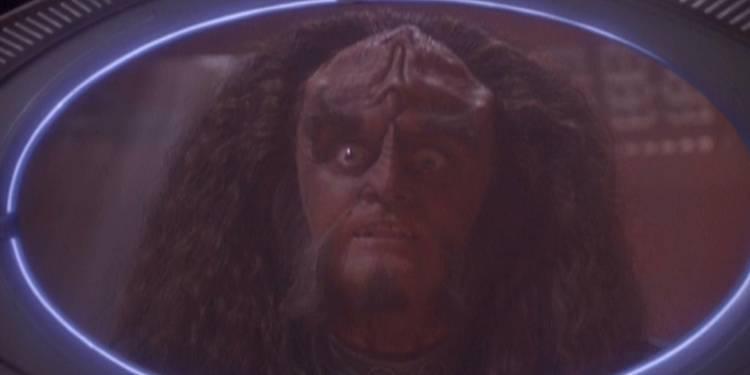
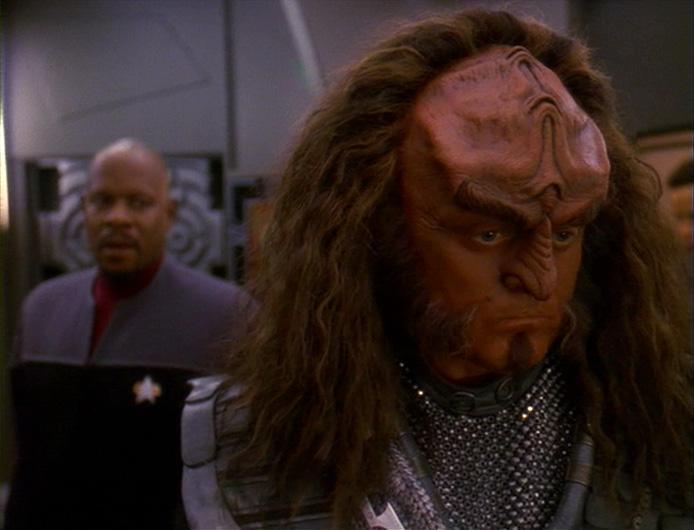
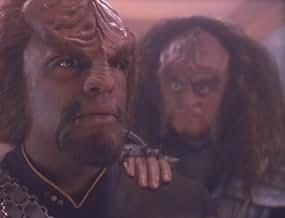
Worf’s inclusion in DS9 didn’t just add character drama it opened huge new story possibilities. His debut episode alone fundamentally alters the series’ political landscape. By standing up to Klingon Chancellor Gowron and refusing to join the invasion of
a period of uncertainty and conflict. Suddenly, DS9 finds itself on the front line of a cold war with the Klingon Empire, a far cry from the station’s earlier focus on Bajoran politics. This shift injected a surge of excitement and danger into the show’s narrative as one reviewer noted, “The Way of the Warrior” served to “shift the main arc in an unexpected direction” by using threats built up over seasons to propel DS9 into a new, more volatile phase. The Klingons became antagonists again, stirring up trouble throughout Season 4 and giving Worf plenty of chances to grapple with loyalty to his people versus duty to Starfleet. It also let the writers delve deeper into Klingon culture from Worf’s troubled family
Worf’s presence paved the way for some of DS9’s most memorable arcs. He plays a key role in the ensuing year of FederationKlingon hostilities and their resolution. In one daring mission,
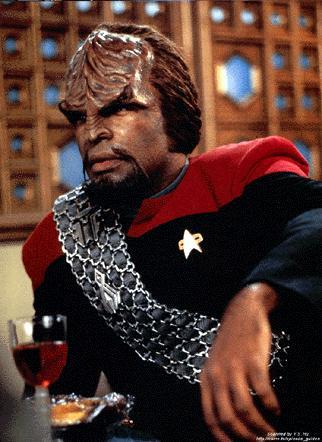
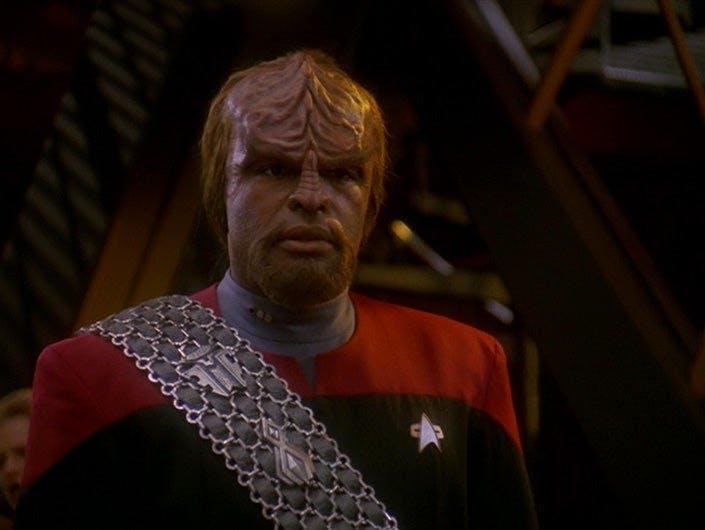
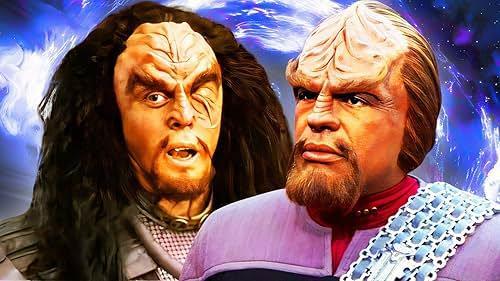
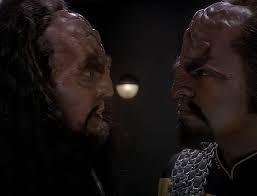
Sisko includes Worf on a covert team to infiltrate Klingon leadership and expose a Changeling impostor a mission that ends with Worf literally battling Chancellor Gowron to prove a point. Thanks to Worf’s actions (and a timely reveal by Odo), the plot to destabilize the Alpha Quadrant is uncovered, and the tenuous peace with the Klingons is eventually restored. This set the stage for the Dominion War storyline that would dominate DS9’s later seasons, with Worf continuing to be a central figure in those epic events. As the conflicts escalated, Worf’s tactical expertise and courage were invaluable, whether commanding the Defiant in a pitched battle or forming alliances. His friendship with Gen. Martok, for example, becomes a highlight. Worf earns Martok’s respect and even a place in the general’s Klingon house. In essence, adding Worf supercharged DS9’s story engine, giving the writers freedom to bring in big Federation versus Klingon versus
Dominion showdowns that might have seemed unthinkable back in Season 1.
From a production standpoint, the decision to bring Worf on board proved to be a complete success. The series enjoyed a newfound buzz in its fourth season; the two-part “The Way of the Warrior” grabbed a solid Nielsen rating on its premiere night and is still frequently cited as one of DS9’s finest hours. By taking the risk of adding a familiar face to an already mid-run show, the creators managed to both appease longtime Trekkers, who loved seeing Worf in action again, and enhance the ensemble we’d come to care about on DS9. The show’s tone grew more adventurous and interconnected with the wider Star Trek universe, all while retaining the depth and humor that set DS9 apart. In-universe, Cmdr. Worf found a new home and purpose; behind the scenes, Deep Space Nine found a boost that helped carry it through to its triumphant conclusion.
In a light-hearted way, one could say that Worf “completed the puzzle” of Deep Space Nine. He brought a dash of TNG’s legacy, a heap of Klingon bravado, and a heart that grew bigger with each season on the station. The crew of DS9 became stronger (and certainly more battle-ready) with a Klingon in their ranks, and the show itself gained new dimensions. Looking back, it’s clear that Worf’s transfer to the station in “The Way of the Warrior” was more than just a cool crossover it was a catalyst that transformed DS9’s trajectory. The mix of inuniverse impact (new alliances, new conflicts, new love) and realworld production savvy (creative risks and casting coups) paid off brilliantly.
For fans, Worf’s arrival gave us countless enjoyable moments from comedy to high drama. It’s a testament to DS9’s creative team that they could integrate such an iconic character without losing the ensemble chemistry. Instead, they made it even better. In true Klingon spirit, Worf’s joining the crew was a victory turning DS9 into an even more legendary chapter of the Star Trek saga, with our favorite warrior right at the heart of it.
MARTIN RANDALL: Martin is a freelance software developer, a serial technophile, and prides himself on his encyclopedic knowledge of Star Trek. He lives in Wakefield, UK with his wife Hazel, their two children, and three cats.
Episode Title: "The Way of the Warrior" Season: 4, Episodes 1 & 2
Air Date: October 2, 1995
Written
by:
Ira Steven Behr & Robert Hewitt Wolfe
Directed by: James L. Conway
Guest Stars: Michael Dorn (Worf), Robert O’Reilly (Gowron), J.G. Hertzler (Martok)
“The Way of the Warrior” marked a significant turning point not just for Deep Space Nine (DS9), but for the Star Trek franchise. Originally aired as a two -part season premiere for Season 4, the episode redefined the political landscape of the Alpha Quadrant, introduced The Next Generation’s Worf into the DS9 crew, and deepened the show's ongoing arc involving Dominion.
This episode transitioned DS9 into a darker, more serialized storytelling format, moving away from the traditional standalone adventure format of earlier Trek series. In particular, the focus on the Klingon Empire’s aggression toward Cardassia, and their willingness to fracture their alliance with the Federation, laid the groundwork for the eventual Dominion War.
Episode Synopsis
Starfleet receives word that a Cardassian separatist organized a coup and have overthrown the military central command. All communication has been cut off, and fear begins to spread throughout the Alpha Quadrant. Starfleet intelligence suspects that the Dominion and the Changelings may have been involved in the coup
Sisko receives word that the new Klingon flagship the Negh’Var has arrived with General
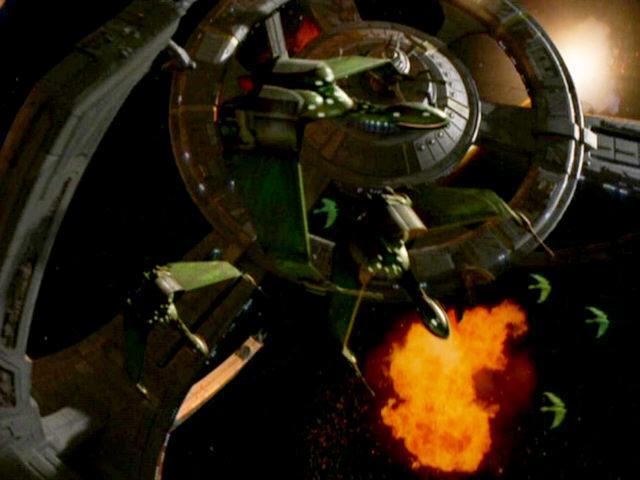
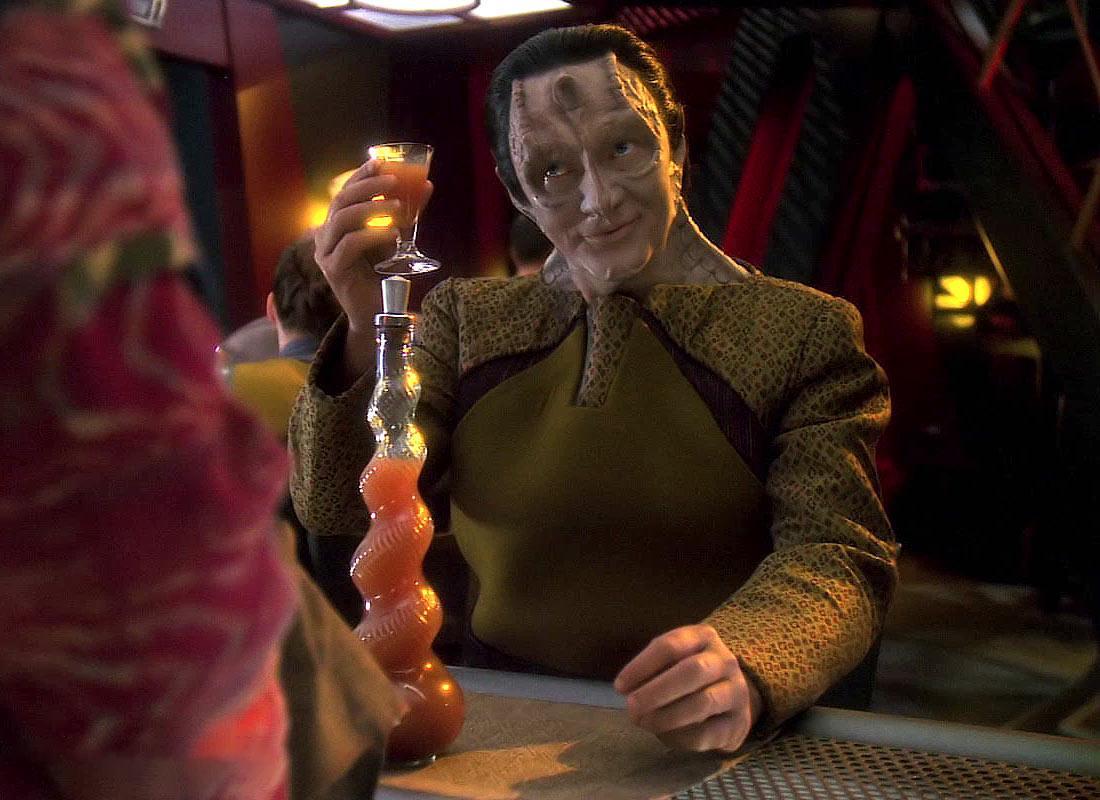
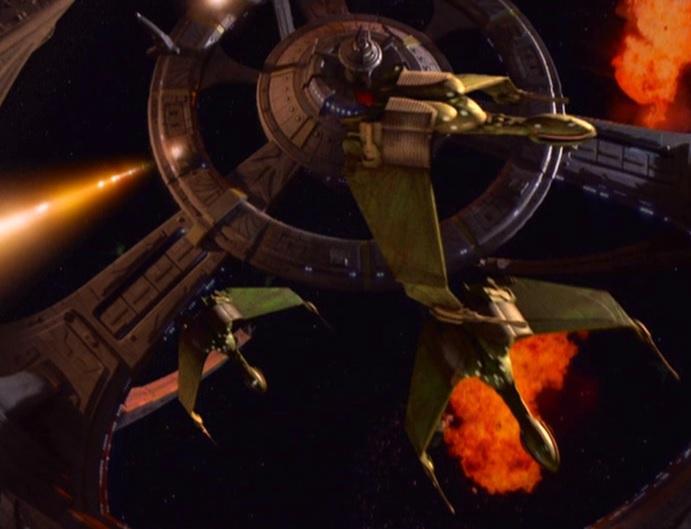
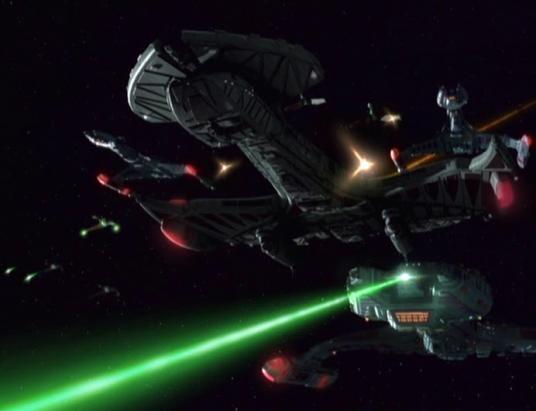
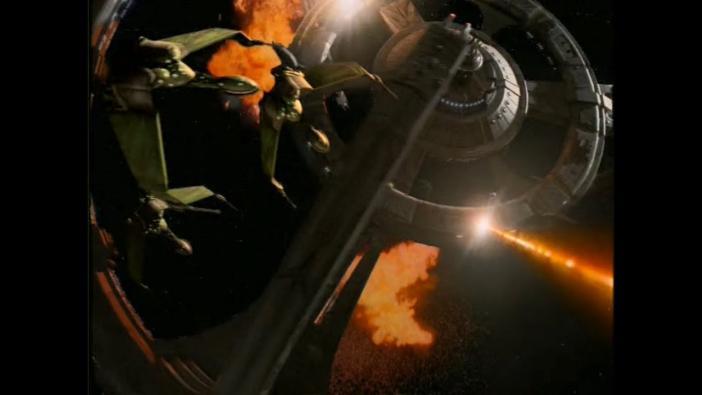
Martok in command. He asks Sisko to dock for his men to enjoy the station, Sisko agrees and then a fleet of Klingon Bird of Prey arrive. Martok tells them that they are there in a defensive operation to assist the Federation in protecting the Alpha Quadrant. However, while on the station the Klingons begin to aggressively badger the people, even going to the extent of assaulting Garak, the Cardassion tailor, as a sign of strength. Then they go as far as stopping ships in Bajoran space for illegal search of cargo and crew. To find out what the Klingons true mission is Sisco calls Starfleet Command to bring in someone who might understand their motives better. They bring Lt. Commander Worf from The Next Generation after the destruction of the Enterprise D to help mediate due to his unique status as both a Starfleet officer and a Klingon. Through his investigation it is revealed that this fleet is going on a mission to invade Cardassia Prime because they believe the government has been taken over by Changelings. The Federation cannot sanction this attack and immediately condemns the Klingons for this action. When Sisko refuses to hand over Cardassian space to the Klingons or allow their fleet to use DS9 as a staging ground, the Klingons attack. A full-scale battle breaks out above the station.
now armed with upgraded defenses, repels the assault. The Klingons withdrew, but not before having already invaded parts of Cardassian space and severely damaging relations with the Federation.
In retaliation, the Khitomer Accords, a longstanding treaty between the Federation and the Klingon Empire, are dissolved. The Federation is now left with a weakened Cardassia, an aggressive Klingon Empire, and the growing threat of the Dominion.
Why Did the Klingons Invade Cardassia?
The most immediate justification the Klingons offer is that the new civilian government in Cardassia has been infiltrated by the Dominion. While there’s no
“TherearemanyKlingonsthatfeelwehavebeenatpeacetoo longandthattheEmpiremustexpandtosurvive.Fearofthe Dominionhasgivenmypeopleanexcusetodowhattheywere borntodo.Tofightandconquer.” — Worf
Founders, has already demonstrated a willingness to destabilize Alpha Quadrant powers through espionage and manipulation.
To the Klingons, whose society values direct confrontation and strength, a preemptive strike is a logical response. Waiting for irrefutable proof might mean waiting too long. This is in stark contrast to the Federation’s diplomatic approach, illustrating the fundamental ideological differences between the two powers. While the fear of Dominion infiltration is presented as the primary motive, there's a subtext of opportunism. The Klingon Empire has long held a warrior-based culture that rewards conquest and territorial expansion. The fall of
likely saw the coup as a justification to seize territory and reassert Klingon dominance in the quadrant. When discussing the attack and why they would invade, Worf himself says: “The issue is not if there are Founders on Cardassia. There are many Klingons that feel we have been at peace too long and that the Empire must expand to survive. Fear of the Dominion has given my people an excuse to do what they were born to do. To fight and conquer.”
By invading Cardassia, the Klingons could expand their territory. The Carrdassian system is filled with rich planets, shipyards and resources that could be exploited. With Cardassia out of the way, it would allow a bigger buffer
Since the Klingons believe that the civilian government has taken over the military, that must mean that Changelings are involved. Therefore, by invading them now while they are weak, it would prevent them from truly gaining a foothold in the Alpha Quadrant and thus protecting themselves and their allies from the larger threat.
There is one other aspect to the invasion of Cardassia that comes into play, and that is its political implications. Gowron’s leadership is not unchallenged, and internal factions within the Empire have been unstable at best. War is often a great unifying force. By launching a high-profile military campaign Gowron can
consolidate his power and appeal to national sentiment within the Klingon High Council Gowron leveraged the invasion to solidify his political position both within the High Council and among the Houses. In addition, opposing the Federation objections and withdrawing from the Khitomer Accords, allows him to portray himself as a bold leader unwilling to be held back by weak allies.
Bringing Worf into the mix underscores this: Gowron offers Worf a seat on the Council if he supports the invasion. When Worf refuses and instead supports Federation policy, Gowron disavows him and seizes the opportunity to brand him as a traitor — thus avoiding dissent from Worf’s family name and House. It’s a classic case of silencing opposition through political theater.
Why Did the Klingons Break the KhitomerAccords?
The Klingons believe in honor and the glory of battle above all else. When the Federation refused to assist the Empire in the invasion of Cardassia, the Klingons assumed Starfleet were acting as cowards. Klingons value decisive action and loyalty to allies in battle so when Starfleet condemned those actions, this was seen as a betrayal to the Klingon Empire. This was one of the main reasons they left and they felt justified because in their eyes. Why maintain an alliance with a government that won’t support you and fight alongside you in battle? Starfleet and the Klingon
Empire still have many different cultural differences as well. The Khitomer Accords had always been an uneasy peace. Klingon honor culture and Starfleet’s diplomatic pragmatism had coexisted under the banner of mutual benefit, but they were never truly aligned. The events of this episode expose the fault lines that had existed all along. Once those tensions boiled over, the alliance was unsustainable.
The Klingons chose the path they believed was honorable, even at the cost of breaking the
alliance. Gowron knew the cost, but considered preserving honor and acting decisively more important than preserving diplomacy.
AShift in Deep Space Nine’s Narrative Tone
“The Way of the Warrior” is more than just a season premiere, it is a bold declaration of narrative transformation. With this pivotal episode, Deep Space Nine begins its definitive shift away from the self-contained, episodic structure of earlier Star Trek series, embracing instead a darker, more serialized storytelling approach that would ultimately culminate in the sweeping Dominion War arc.
From this point forward, the series grows increasingly complex, political, and morally ambiguous. It dives into the messier realities of power, loyalty, and survival in a galaxy teetering on the
and consequences echo across entire seasons.
Several key themes begin to crystallize in “The Way of the Warrior.” First, with the withdraw of the Khitomer Accords, it creates an uneasiness between the Alliances. Two powerful allies begin to mistrust each other, and tensions begin to fray. This episode underscores how quickly alliances can fracture when fear, pride, or political ambition take precedence over shared values.
Worf’s introduction as a main character isn’t just a fan pleasing crossover, it’s a thematic anchor. His ongoing struggle to reconcile his Klingon sense of honor with the Federation’s more diplomatic ideals embodies the tension between ideological purity and practical necessity.
With the presence of cloaked ships, battle readiness, and internal security, concerns mark a shift in tone, from exploration and diplomacy to defense and preemption.
This tonal evolution represents a major departure from The Next Generation’s relatively optimistic and orderly vision of the galaxy. Where TNG often portrayed the Federation as a stabilizing force in a chaotic universe, DS9 suggests that peace is neither inevitable nor permanent it is something to be fought for, maintained through vigilance, and occasionally compromised to preserve. Even allies, it warns, can become adversaries under the right or wrong circumstances. Ultimately, “The Way of the Warrior” doesn’t just set the
heavy burdens of command in a universe where the frontier is no longer just a place of wonder, but of war.
Legacy and Impact
“The Way of the Warrior” is widely regarded as one of Deep Space Nine’s finest hours, a landmark episode that not only revitalized the series but redefined its trajectory. Upon its release, the episode was met with strong ratings and renewed critical acclaim, signaling to both fans and skeptics that DS9 was no longer operating in the shadow of its predecessors it was forging its own, darker path.
The addition of Michael Dorn as Worf was a masterstroke, infusing the series with a familiar yet evolved presence. His charac-
ter served as a bridge between The Next Generation and Deep Space Nine, bringing with him a legacy of Klingon culture, personal conflict, and fan-favorite gravitas. But Dorn’s arrival was more than just a casting coup, it represented the thematic convergence of honor, war, and identity that would come to define the series’ latter half.
Visually, “The Way of the Warrior” broke new ground for the Star Trek franchise. The massive space battle over Deep Space Nine, with its dynamic camera work and cinematic effects, raised the bar for what could be accomplished on the small screen. It was a spectacle, yes, but one rooted in real, escalating stakes.
More significantly, the episode reshaped the geopolitical landscape of the Alpha Quadrant. By its conclusion, the once-stable alliances had unraveled, and a sense of looming dread had taken hold. The status quo was shattered:
The Federation Klingon Alliance was in ruins and replaced with suspicion and open hostility for one another. Cardassia was left leaderless and exposed, a formal shell of itself, and in the words of Gul Dukat a “third-rate power in the Quadrant.” The Dominion was ever patient and calculating, mostly hidden in the darkness waiting for the right opportunity to present itself and manipulate events from the shadows This new state of instability set the stage for the sprawling Dominion War arc that would dominate the latter seasons of DS9. The episode didn’t just hint at future conflict it made it inevitable. From this point on, the series embraced a more serialized, high-stakes narrative, with every political tremor and military engagement carrying long-term consequences.
In retrospect, “The Way of the Warrior” was not just a turning point for the series, it was a turning point for Star Trek as a
whole. It dared to ask what happens when utopia is tested, when diplomacy fails, and when war is no longer theoretical. It helped transform Deep Space Nine into the franchise’s most ambitious and morally complex installment, cementing its legacy as a series unafraid to challenge both its characters and its audience.
“The Way of the Warrior” is a masterclass in political storytelling and character development. The Klingons’ decision to invade Cardassia, driven by fear, honor, and opportunism, reflects real-world themes of preemptive war and the dangers of internal instability.
The dissolution of the Khitomer Accords reshaped interstellar politics, leaving the Federation diplomatically isolated at a time when unity was most needed. Worf’s internal struggle mirrored the galaxy’s moral dilemma: how to remain principled in a world that rewards aggression. Ultimately, this episode captures the essence of “Deep” in Deep Space Nine
I’ve been a Star Trek fan since I was a kid. I grew up on The Next Generation, fell in love with Deep Space Nine and Voyager. It was one of the few shows that my father and I would watch together and still share the love for the franchise today. The show’s ideals, hope, unity and moral courage have always meant something real to me. It gives me great pleasure to see where humanity can go and what can be achieved.
MICHAEL MARTIN:
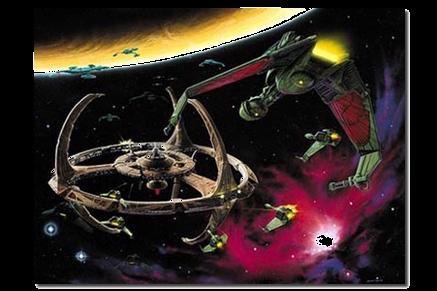
Star Trek Deep Space 9 - Way of the Warrior
Lightspeed Fine Art's Star Trek Deep Space 9 Way of the Warrior piece is available in several different configurations. Autographed version available. GET YOURS TODAY!




The Roman general and dictator Sulla was said to have the personal motto and epitaph, “No better friend, no worse enemy”. This pithy phrase sums up the tumultuous relationship between the Klingon Empire and the United Federation of Planets (UFP). Throughout the centuries of contact and conflict between these two powers they have been implacable enemies, stalwart allies or in a state of cold war. This article will seek to give context to any episode throughout the franchise that shows glimpses of their interactions in friendship or in war. The source material for this article will be onscreen content only and will avoid the use of beta canon. This treatise will not be exhaustive in any sense but will strive to create a barebones outline of events. This outline will cover the time period from the founding of the UFP to the end of the Dominion War.
EARLY ENCOUNTERS WITH THE KLINGONS
Before the foundation of the UFP the Klingons had already made their presence felt in the Alpha and Beta quadrants. By the early 20th century, the Vulcans had experienced violent encounters with Klingons. (DIS: “The Vulcan Hello”) Centuries later, during the events of Enterprise, the Klingons were still viewed as vicious marauders, taking advantage of any perceived weakness in their galactic neighbors. As humanity began to explore the galaxy, they too had confrontations with the Klingons. Fortunately for humanity and the budding UFP the Klingons soon be-
came very distracted by the fallout from the Augment incident in 2154 which introduced troubling alterations to the Klingon genotype. (ENT: “Affliction” and “Divergence”) After the formation of the UFP there erupted a cold war between the powers characterized by minor territorial skirmishes such as the battle of Donatu V in 2245. (TOS: “The Trouble with Tribbles ”)
THE FIRST FEDERATIONKLINGON WAR
The threat posed by the Klingons was always proportional to how united the great houses of the empire were. In the mid23rd century a Klingon spiritual leader named T’Kuvma, who saw the UFP as an existential threat to the Klingon way of life, was able to rally the great houses of the Empire to a common cause and a crusade against the UFP. Even though he lost his life at the Battle of the Binary Stars, (DIS: “The Battle of the Binary Stars”) T’Kuvma was successful in igniting a war between the two powers. This newfound unity allowed the Klingons to become a much greater threat than they had been pre-
viously, however unity among the houses did not last long. To compound this was the introduction of the cloaking device which gave the Klingons a tactical advantage. This crusade led to the Federation -Klingon War (2256-2257). Over 100 million Federation lives were lost and a large percentage of Starfleet had been destroyed. Many federation planets, starbases, and facilities had been utterly ravaged by the Klingons. Even Earth was on the brink of being attacked. The war ended eventually because of the former Terran Emperor Georgiou planting a bomb in a volcano on the Klingon homeworld Qo’nos, which led to a change of leadership in the Klingon council with L’Rell, a disciple of T’Kuvma, becoming its leader. L’Rell sought an end to the war so that she could consolidate her power. (DIS: “Will You Take My Hand?”)
COLD WAR AND A NEW ALLIANCE WITH THE ROMULANS
Following the first Federation-Klingon War there existed a tense cold war between the two powers that often led to violent
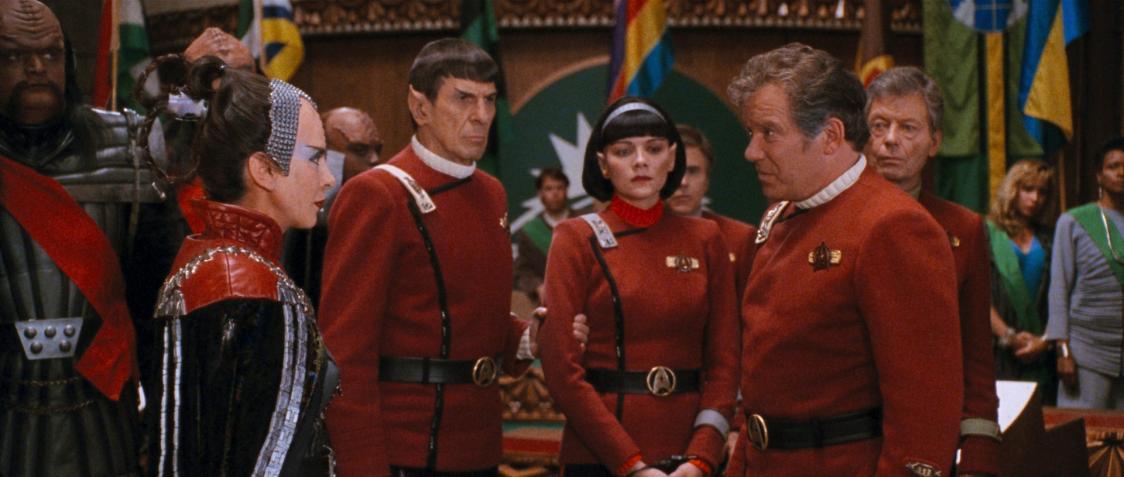
but contained clashes. This was often over territorial claims and the acquisition of resources such as dilithium. There seemed to be a general uptick in violence and active testing of each side's resolve and boundaries. It was during this timeframe that the Klingon Empire engaged in a strategic partnership with the Romulan Star Empire. This alliance was based primarily on technology exchange rather than direct military assistance. This is why Klingon D7 battlecruisers can be seen being used by the Romulans. (TOS: “The Enterprise Incident”.) However, in 2267, an event interrupted the status quo. This event was the Organian Incident (TOS: “Errand of Mercy”) where a species of noncorporeal cosmic beings forced a peace treaty upon the UFP and the Klingon Empire which created a fragile peace which lasted for decades. Neither side was particularly happy with the terms of the treaty but were seemingly powerless to disobey the Organians. The reason the enforcement of the peace treaty did not last longer nor the ultimate fate of the Or-
ganians is unknown.
LATE 23RD CENTURY PEACE INITIATIVES
In the late 23rd century a neutral zone was established between the UFP and Klingon territory in the Beta Quadrant (which may have been the result of the Organian Treaty, the sources are not clear). It was in the neutral zone that Nimbus III “The Planet of Intergalactic Peace” was established to be a point of contact between the powers. (Star Trek V: The Final Frontier ) There were other ongoing peace talks during this time such as those in 2289 at the Korvat led by the Trill ambassador Curzon Dax who had earned the respect of his Klingon counterparts. (DS9: “Blood Oath ”)
THE KHITOMER ACCORDS
The next development that transformed the relationship between the powers was the destruction of the Klingon moon Praxis in 2293. (Star Trek VI: The Undiscovered Country) This catastrophe was damaging to the Klingon Empire both environmen-
tally and economically. It highlighted a systemic flaw in the Klingon Empire which poured too many resources into war mongering and not nearly enough into sustainability. Realizing that pursuing continued aggression with the UFP was foolish, Chancellor Gorkon, leader of the Klingon Empire, sought to establish an honorable peace with the UFP. This set into motion the events which eventually led up to the creation of the Khitomer Accords. The Khitomer Accords abolished the neutral zone and was the framework for a (mostly) lasting peace.
NARENDRA III
One of the greatest events that cemented not only peace but an active alliance between the galactic powers was the Romulan attack on the Klingon outpost Narendra III in 2344. The Klingon Empire was so impressed by the heroic sacrifice of the crew of the USS Enterprise-C under the command of Rachel Garrett in the defense of the colony that they abandoned their alliance with the Romulans and sought to partner
THE KLINGON CIVIL WAR
A moment of truth that tested the durability of the UFP and Klingon alliance was the Klingon Civil War of 2367-2368. (TNG: “Redemption pt. 1” and “Redemption pt. 2”) With the assassination of Chancellor K’mpec the Klingon Empire was thrown into a succession crisis. Captain Jean Luc Picard was chosen to be the Arbiter of Succession because only an outsider could be trusted. This put the UFP in a difficult position to maintain neutrality and to honor the principles of the Prime Directive. At the conclusion of the succession rites Gowron was chosen to be Chancellor. The losing candidate, Duras, immediately contested the results accusing the UFP of meddling in Klingon affairs and so a Klingon civil war began. The UFP could not afford to get drawn into an internal matter of the Klingon Empire, so Starfleet could not directly aid the beleaguered forces of Gowron. Howev-
supplied covertly by the Romulans, who were the enemies of the Klingons since Narendra III. By aiding Duras they were trying to undermine the Federation-Klingon alliance. In order to verify the hand of the Romulans in the civil war, Starfleet created a blockade around the Klingon-Romulan border. To uncover cloaked ships crossing the border the Starfleet armada deployed a tachyon net. This blockade forced the Romulans to reveal themselves as they crossed into Klingon territory. Once this was widely known, support for Duras waned and Gowron’s forces were able to win the Civil War and cement his power. For the moment, the partnership between the powers was salvaged from possible ruin.
THE KLINGON — CARDASSIAN WAR
Less than a decade later, the Klingon Cardassian War (2372-2373) was an impossible strain on the alliance between the UFP and the Klingon Empire. The
port an unprovoked invasion of Cardassian space based loosely on the unproven accusations that shapeshifting Founders from the Dominion had infiltrated the ruling council of Cardassia. The Klingon invasion devastated Cardassian territory and had even annexed many planets in a fullscale attempt at conquest. When the Federation council condemned the invasion Chancellor Gowron withdrew the Empire from the Khitomer Accords. (DS9: “The Way of the Warrior”) Ironically, by invading Cardassia, the Klingons caused what they most feared Cardassia allying with the Dominion.
THE SECOND FEDERATION — KLINGON WAR
By the end of 2372 political tensions and Klingon saber rattling led to open hostilities between the Klingons and Starfleet. This conflict is called the Second Federation-Klingon war (2372-2373). The Klingons conquered some UFP territory such as the Archanis sector (DS9: “Broken Link”) and
launched other raids into Federation territories along their border. After brutal months of fighting, it was revealed that this conflict was engineered by the founders and was designed to weaken the powers of the Alpha Quadrant prior to an invasion. (DS9: “Apocalypse Rising”) After Gowron had discovered that he had been manipulated by the Dominion, (through a Founder in the guise of General Martok) he agreed to a cease fire with the Federation. Even with an armistice in place, the conflict continued for sometime.
THE ALLIANCE REFORGED
The event that brought the Klingons back into the Khitomer Accords was the invasion of the Alpha Quadrant by the Dominion and the revelation that the Cardassians had allied with the Dominion. (DS9: “By Inferno's
Light”) The massive Dominion fleet was able to drive the Klingons out of Cardassian space in short order. As the battered Klingon forces regrouped at DS9, Captain Sisko was able to convince the defeated Gowron that it was in the Klingons’ best interest to reaffirm the Federation -Klingon Alliance. This was a fortuitous turn of events because neither the Federation nor the Klingons had a chance of prevailing against the might of the Dominion alone. The Klingons even played an outsized role in the defense of the Alpha Quadrant once it was discovered that their ships were more resistant to the Breen energy dampening weapon. (DS9: “The Changing Face of Evil”) Their strategic partnership endured the blood and hardships of a bitter conflict and was strengthened through mutual
sacrifice. Through the Dominion War these often bitter rivals literally became each other’s salvation.
In conclusion, the history of Federation and the Klingons is a turbulent yet fascinating journey through the history of Star Trek canon. Hopefully, if you were not already immersed in the lore of the show, this article shed some light upon and gave context to this history.
JAMEY L. WYLIE: Jamey is a lifelong lover of all things Trek, especially the media of novels and comics. He is currently a professional school counselor and bivocational pastor. Jamey is married to Amanda, who enables his nerdiness.
(Click on the Coffee bag at left.)
There are arrivals in fiction that do more than expand a cast they redefine what a story can be. When Lieutenant Commander Worf walked onto Deep Space Nine in the two-part episode “The Way of the Warrior” (Season 4, Episodes 1–2), it felt like a tectonic shift. The series, already layered with political tension and moral complexity, became denser, sharper, darker. And Worf himself a soldier without a ship, a man torn between blood and duty stepped into a crucible that tested every part of his identity.
These episodes are not just an introduction: they are a hinge. They show Worf at his most conflicted and demand a choice that will define him.
A Displaced Klingon
When we first see him, Worf is not the officer we remember from The Next Generation. The Enterprise-D has been destroyed at Veridian III. His captain and crew are scattered. He tells Sisko that after the loss of the Enterprise, he went to the monastery on Boreth, meditating and trying to decide whether to resign from Starfleet. The admission cuts to the core: Worf is a man adrift. Klingon by blood, Star-
fleet by training, but suddenly without an anchor.
Summoned to DS9, he looks visibly ill at ease as he surveys the Promenade. Civilians, Ferengi merchants, Bajoran clergy, Cardassian exiles, Starfleet officers all in noisy proximity. It is the opposite of the Enterprise’s polished hierarchy. Worf’s reaction is silence, his disapproval written in the stiffness of his shoulders.
Gowron’s Temptation
The Klingon Empire arrives with fire in its belly. Gowron claims Cardassia has fallen under Dominion control, and the Klingons will act with or without Federation approval. When he greets Worf, it is not as a stranger but as a prodigal son. Gowron offers him the one thing that has eluded him for years: the promise of belonging.
Gowron: “You are a Klingon, Worf. Stand with us, and your family’s disgrace will be erased. Reject us, and you will be nothing.”
It is everything Worf once longed for. And yet he refuses. His voice is quiet but steady: Worf: “I am a Starfleet officer. The Federation is my home.” That choice costs him
dearly. By turning his back on Gowron, Worf loses what had been restored. The House of Mogh is cast out once again. But his refusal also clarifies something: he will not let his honor be dictated by the shifting politics of the Klingon Empire.
Odo s Blunt Advice
The clearest mirror to Worf’s turmoil comes from Odo. In one of their first exchanges, the shapeshifter reads the conflict plain on Worf’s face: Odo: “You’re trying to decide whether to stay in Starfleet or leave it. Frankly, I don’t care which choice you make. But you owe it to Captain Sisko to let him know which side you’re on before it’s too late. Enjoy the view.” It is brusque, unsentimental and exactly what Worf needs to hear. He cannot meditate forever. He must choose. And in choosing Starfleet, he accepts both the costs and the clarity that come with it.
What Worf Brings
Worf’s tactical expertise proves indispensable. As Klingon fleets move against Cardassia, he alone can decode their strategies. When Klingon boarding parties storm DS9, Worf’s presence tips the balance. We see him fight in the corridors, bat’leth flashing, every strike a declaration: this is who I am, and this is what I defend.
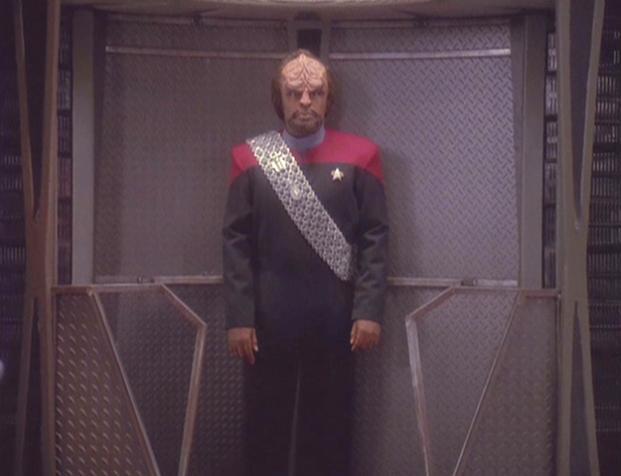
Later, when the smoke clears, Sisko offers him a new role: Strategic Operations Officer. The title sounds bureaucratic, but it is a position tailored to Worf bridging Klingon aggression and Federation defense. He accepts, not because DS9 feels comfortable, but because retreat is no longer an option.
Humor and Humanity
For all his severity, The Way of the Warrior gives us glimpses of Worf’s human side. When Bashir and O’Brien invite him to darts, he deadpans: “I do not play games.” But later, he
hurls a dart with such force it embeds deep in the wall. The humor lies not in a punchline but in his discomfort a reminder that adaptation will not come easily.
Even Quark gets a moment with him, pouring a drink with his usual flourish.
Quark: “Let me guess Klingon bloodwine.”
Worf: “Prune juice. Chilled.”
The line lands as a wink to those who know his quirks, but also as a reminder: Worf is not here to play a caricature. He is his own man, even in his smallest choices.
Sisko’s Role
Sisko recognizes Worf’s potential immediately. He sees not just a Klingon warrior, but a man capable of commanding respect and reshaping the station’s balance. DS9 thrives on contrasts Bajorans and Cardassians, Ferengi and Starfleet, prophets and politics. Worf is another blade in that forge. By the end of the two-parter, Sisko has not just defended his station; he has gained an officer who makes DS9 sharper, steadier, and more dangerous to its enemies.
A Warrior’s Choice
Watching Worf in these episodes reminds us why Deep Space Nine holds up. It is not only about space battles and political
intrigue — though the two-parter delivers plenty of both but about transformation under pressure. Worf arrives ready to resign, his future uncertain. Instead, he finds purpose in fire and conflict. His decision to stay, to side with Starfleet over empire, is more than personal. It is a reminder that identity is not fixed by blood or politics but forged by choice.
In the middle of battle, he shouts the line that fans will always remember:
Worf: “Perhaps today is a good day to die!”
It is not resignation but resolve. In the chaos of Klingons overrunning the station, Worf is choosing to fight, to stand with
Starfleet. The declaration is less about death than about clarity: whatever happens, he has made his choice.
Conclusion
The Way of the Warrior doesn’t just add Worf to the cast it transforms him. From Boreth to the Promenade, from Gowron’s temptation to Odo’s blunt advice, from the chaos of Klingon boarding parties to the clarity of his final stand, Worf finds his footing. His honor, briefly restored after years of disgrace, is stripped away again — but this time by his own hand, in loyalty to Starfleet.
DS9 gives him a new context: a place where being an out-
sider is not a curse but a shared language. And it all begins here, with a warrior stepping onto a station that didn’t ask for him but became greater because he stayed.
MELISSA A. BARTELL: Melissa A. Bartell is a writer, podcaster, voice actor, improviser and kayak junkie currently living on Florida's Nature Coast. She has one husband, two dogs and only one kayak (so far). Find her at : MissMeliss.com or on social media:
Bluesky | Facebook | Instagram | Mastodon
“The Way of the Warrior ” isn’t just a standout episode of Star Trek: Deep Space Nine it’s a turning point for the entire series. With the arrival of Worf, a seismic shift in galactic politics, and a darker, more serialized tone, the episode set the stage for the Dominion War arc and firmly established DS9 as Star Trek’s boldest and most complex chapter. Packed with unforgettable scenes, here are five of the most impactful moments that define the episode’s legacy.
Worf’s Arrival on Deep Space
Nine
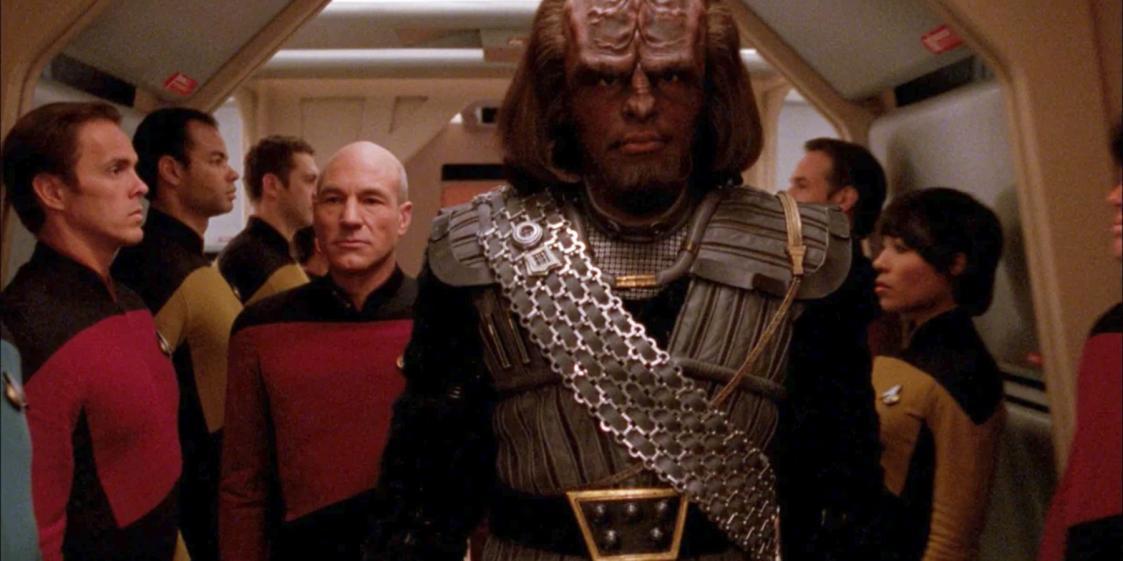
Worf’s entrance onto Deep Space Nine is more than just the return of a beloved character — it’s a statement. Clad in full Klingon regalia, he steps onto the promenade like a warrior entering contested territory, his every movement deliberate and heavy with purpose. The camera lingers on him as he surveys the station, his expression stoic but contemplative, a man caught between two worlds: Starfleet duty and Klingon heritage.
The reactions around him are subtle yet telling. Civilians and officers glance at him with curiosity, recognition, even a hint of wariness. His reputation precedes him, not just as the first Klingon in Starfleet, but as someone who has stood at the crossroads of empires. His presence alone raises the stakes, underscoring the tension already hanging in the air due to the Klingon Empire’s growing aggression.
In that single walk across the promenade, Deep Space Nine shifts tone. This is no longer a distant outpost hosting scientific inquiries and political squabbles this is now a frontline. Worf brings with him the weight of war, honor, and legacy. His arrival signals that the series is stepping fully into a more volatile, morally complex narrative space where the threats are larger, the diplomacy more fragile, and the choices far more consequential.
The Klingon Fleet Arrives at Deep Space
Nine
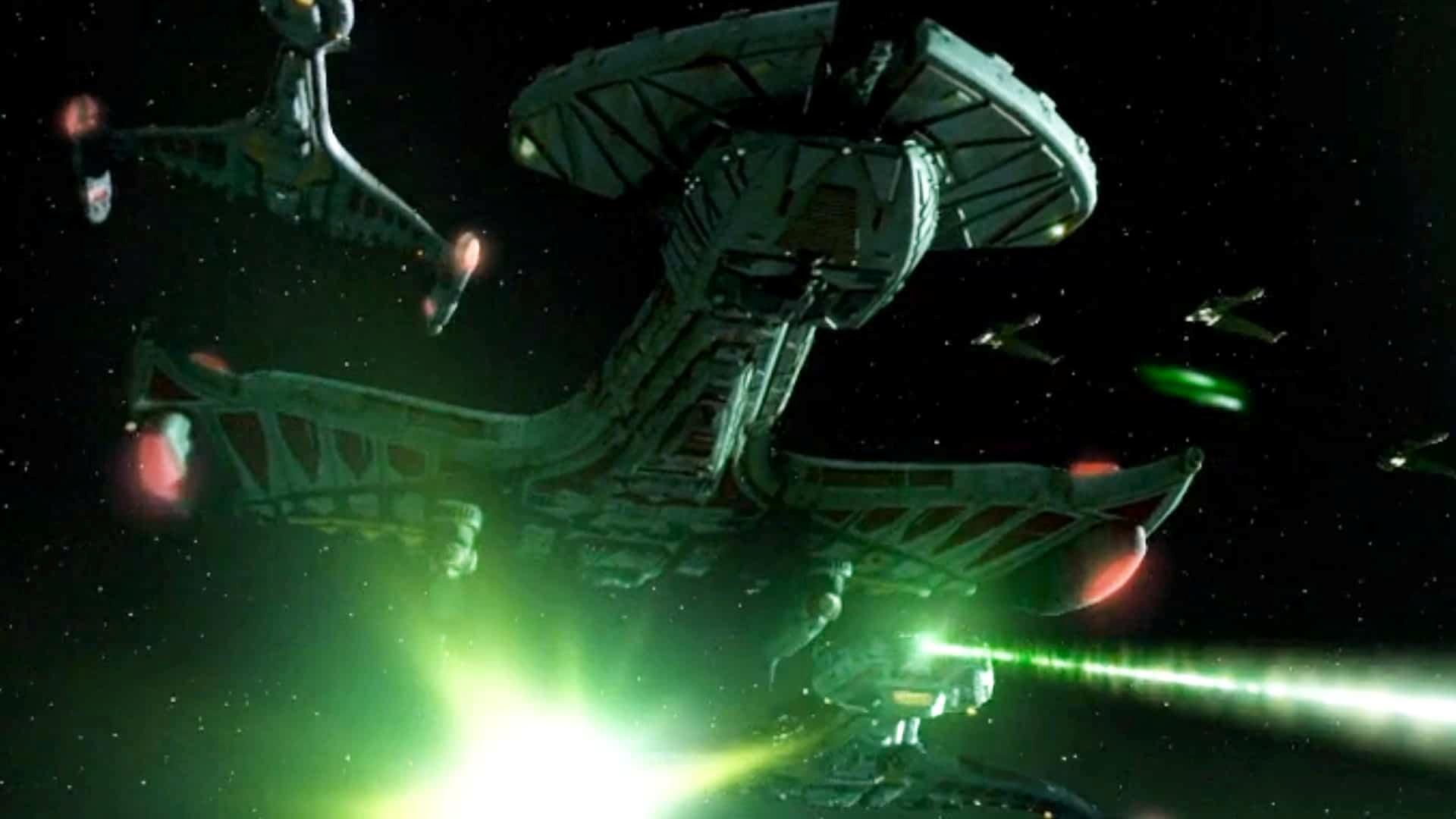
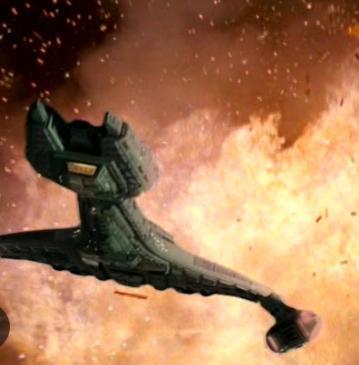
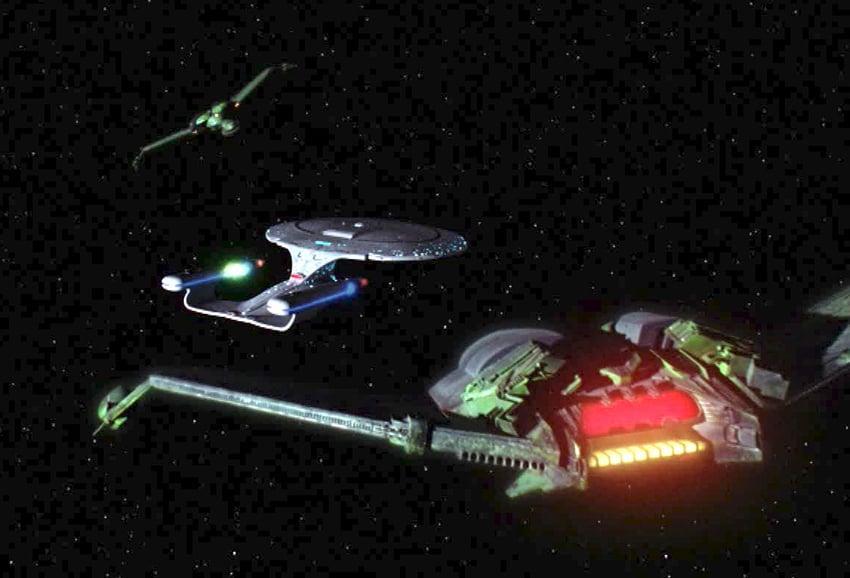
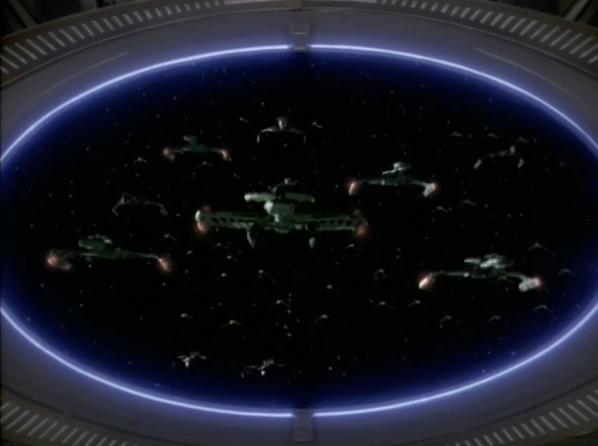
The arrival of the Klingon fleet is a masterclass in building tension through spectacle. As one ship after another decloaks in rapid succession, the void around Deep Space Nine transforms from quiet emptiness into a battlefield waiting to ignite. Dozens of imposing Klingon warships emerge from the shadows like predators surrounding their prey. Birds-ofPrey, Vor'cha-class cruisers, and other vessels form a tight noose around the station.
Visually, it’s one of the most aweinspiring sequences in Star Trek up to that point. The sheer scale of the fleet is overwhelming, dwarfing DS9 and casting literal and metaphorical shadows over the station. The camera pans across hulls bristling with
weaponry, while Kira and Sisko stare grimly at the tactical display, watching as their isolation becomes inescapable.
But it’s not just the size of the fleet that makes the moment powerful, it’s what it represents. This isn’t a diplomatic mission or routine patrol. The Klingons didn’t come to talk; they came to intimidate. Their arrival is a show of force, a challenge wrapped in tradition and cloaked in aggression. Gowron might smile and speak in veiled language, but the truth is written in disruptor banks and uncloaking signatures.
This moment marks the collapse of any illusion that the Klingon Empire is still a predictable ally. It’s the beginning of a new era where alliances are tested not through words, but through positioning of fleets and readiness for war. The Federation is no longer dealing with isolated incidents or rogue factions it’s now staring down one of the galaxy’s great powers, coiled and ready to strike.
In that instant, the stakes of Deep Space Nine are permanently elevated. Diplomacy may still be on the table but so is battle, and the Klingons just laid their cards down.
The Massive Space Battle
Over Deep Space Nine
What begins as political tension and diplomatic posturing erupts into one of the most visually stunning and narratively significant battles in Star Trek history. As the Klingon fleet turns hostile, Deep Space Nine, once a remote outpost, becomes the site of a full-scale, high-orbit siege. And for the first time, we see the station not just as a diplomatic hub or a command center, but as a fortress.
The Klingon ships swarm like a pack of wolves, sleek and fast, their green disruptor blasts lighting up space as they engage with Defiant, while attacking the Cardassian transport ship with the council members and Gul Dukat on board. The choreography of the battle is breathtaking: ships twist and turn through phaser and explosions, with rapid tactical decisions made in the command center echoing the chaos outside.
Then DS9 itself joins the fight.
This is the moment the station truly earns its reputation. The new Starfleet-installed weapons systems long discussed but never fully seen in action unleash their fury. Pulse phasers roar to life, torpedoes launch in furious salvos, and the station military precision. The station doesn't just defend itself; it hits back hard.
Kira and O'Brien’s command of the defense grid is tense and exhilarating. Every order is a matter of survival. Shields flicker under bombardment. Hulls rupture. Federation officers fight not from the bridge of a starship, but from a fixed point that cannot flee, only endure.
For Star Trek, a franchise traditionally focused on exploration and diplomacy, this was a seismic moment. It was the first time viewers witnessed a station, not a starship, hold the line in a cinematic, largescale space engagement. The scope of the effects, the sound design, and the fast-paced editing all pushed the boundaries of what could be done on the 1990s television budget.
But beyond the spectacle, the battle symbolized a larger truth: the Federation’s era of idealism was
under siege. The time for negotiation had ended, for now, and the galaxy was changing. This was no longer about skirmishes and border disputes. War had come to the doorstep of Deep Space Nine, and the station answered with fire.
Hand-to-Hand Combat:
The Bridge Crew Defends Ops
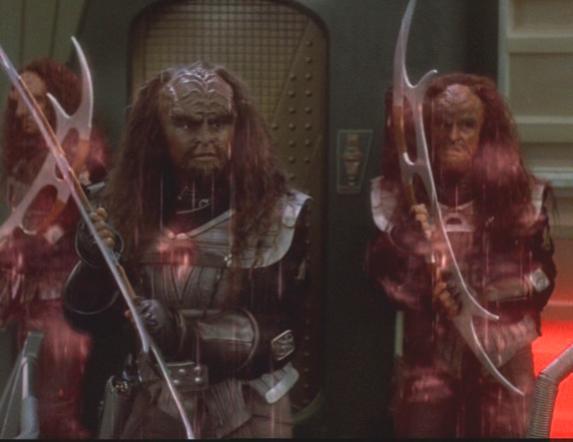
As Klingon warriors storm the Operations center, the bridge crew, typically seen commanding from consoles, are thrown into brutal melee combat. Phaser fire is exchanged in the tight, metallic corridors before being rendered useless in the chaos of close quarters fighting. The tension is immediate, and the scene turns kinetic as the Klingons breach the command center.
Sisko charges into battle with the same intensity he brings to his captain’s chair, swinging fists and hurling enemies with the strength of a man protecting his home. Kira, fierce and agile, fights like the former resistance fighter she is, grappling, ducking, disarming with ruthless efficiency. Odo, always the enigma, uses his shape-shifting abilities in brief but effective moments to outmaneuver attackers.
Dax and Worf, expertly using their Klingon weapons in close quarters fight off two or three attackers at once. Even Dr. Bashir, a still green Starfleet officer gets his moments in saving Odo’s life in the crossfire. This isn’t sanitized or choreographed combat; it’s messy, chaotic and driven by character. Every punch feels heavy, each landing harder. It's a moment where uniformed officers become warriors, forced to fight for control of their own station.
Elsewhere, in one of the most surprising and satisfying sequences of the episode, Garak and Gul Dukat, former enemies and uneasy allies, find themselves side by side, backs against the wall as Klingons pour through a corridor.
What begins with verbal barbs (as always, Garak can’t resist a dig at Dukat) quickly becomes an improvised tag-team brawl. The two Cardassians fight with unexpected synergy, Dukat using brute force and military training, while Garak, ever the covert operative, is more precise and cunning. They dispatch their attackers with grim efficiency, and while they exchange no words of reconciliation, their mutual respect, if only for a moment, becomes unmistakable.
It’s a thrilling and layered scene: these two men, once political adversaries on opposite ends of Cardassia’s hierarchy, are now shoulder to shoulder in survival. The irony is rich. The choreography is tight. And the performances by Andrew Robinson and Marc Alaimo elevate it to one of the episode’s standout moments.
Worf’s Return to Duty in a New Uniform
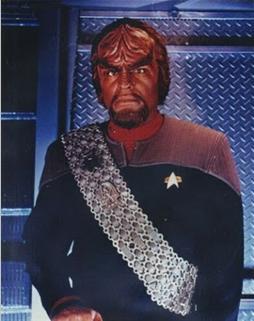
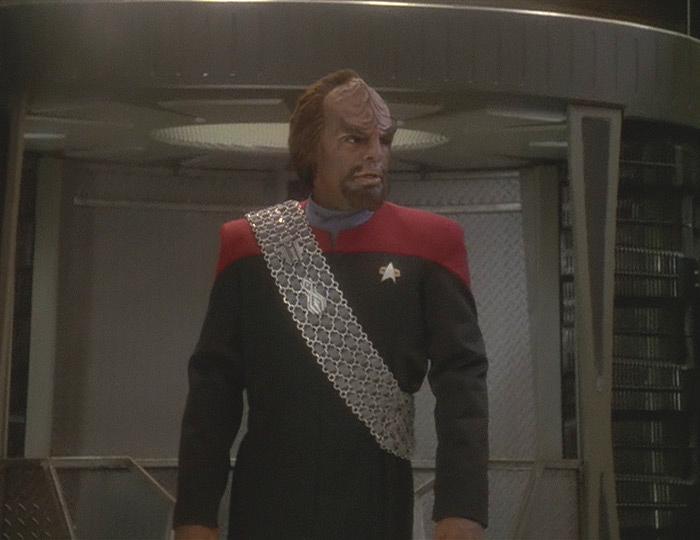
As the dust settles from battle and the immediate threat recedes, “The Way of the Warrior” closes not with fanfare, but with quiet resolution. In a moment understated yet deeply symbolic, Worf comes up to OPS wearing the red uniform, a visual and emo-
Nine as Strategic Operations Officer.
This is not just a costume change. It’s a statement of identity.
Throughout the episode, Worf stood at a crossroads, torn between his Klingon heritage and his Starfleet duty, between loyalty to his people and loyalty to his principles. He’s faced a moral and cultural reckoning, forced to reject Gowron’s war-driven vision and, in doing so, accept the personal cost: the loss of his family’s honor in the eyes of the Empire. It's a familiar pain for Worf, but this time, the stakes are deeper. His decision carries galactic consequences.
doesn’t just reject the path laid out for him by Klingon tradition. He claims his own.
The image of Worf walking onto the Ops deck in his new uniform is subtle, but powerful. The red of command glows with fresh significance it’s not just a promotion, it's a rebirth. He’s no longer the isolated Klingon aboard the Enterprise. Here on DS9, surrounded by shifting alliances and moral ambiguity, he’s found a place where his dual identity is not just tolerated, it’s needed.
The crew welcomes him not with ceremony, but with respect. A nod from Sisko, a brief but meaningful exchange with
Kira, a quiet acknowledgment tures say everything. Worf has found not just a post, but a purpose.
This final moment en-
MICHAEL MARTIN: I’ve been a Star Trek fan since I was a kid. I grew up on The Next Generation, fell in love with Deep Space Nine and Voyager. It was one of the few shows that my father and I would watch together and still share the love for the franchise today. The show’s ideals, hope, unity, and moral courage have always meant something real to me. It gives me great pleasure to see where humanity can go and what can be achieved.
What is a “Family?”
Merriam-Webster’s first definition of a family is: the basic unit of society consisting of two parents rearing their children.
It also lists that it applies to a collection of plants, soils, things, and even chemical compounds. Yet, how does this word apply to Star Trek?
In this case, it is Star Trek: The Next Generation fourth season, episode two entitled “Family.” Written by veteran script writer Ronald D. Moore, who wrote for this series, DS9 and Voyager (and was involved with thirteen other series, the most recent being “For All Mankind”).
In this episode, he brings us three different story lines about what it is to be a family.
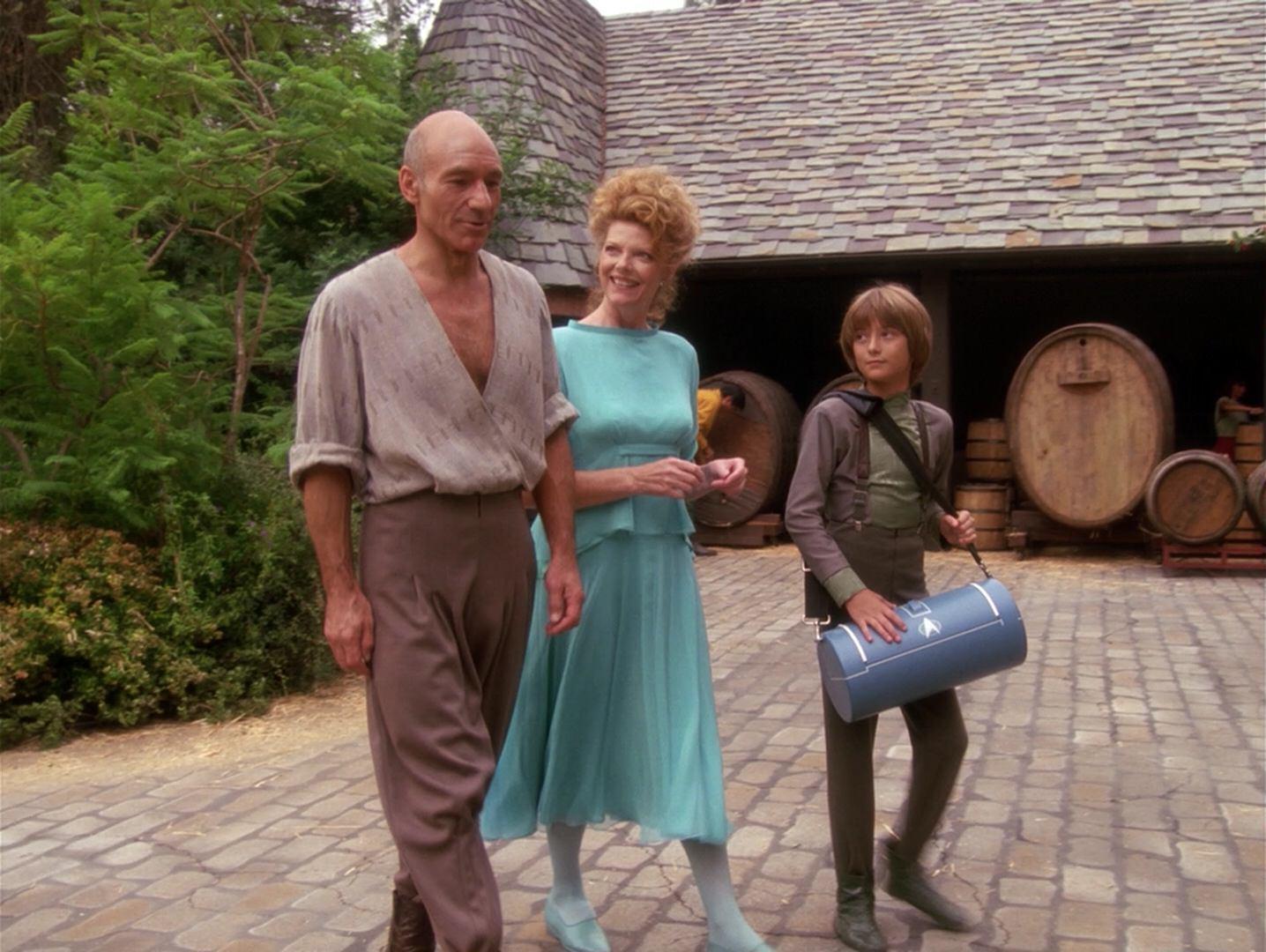
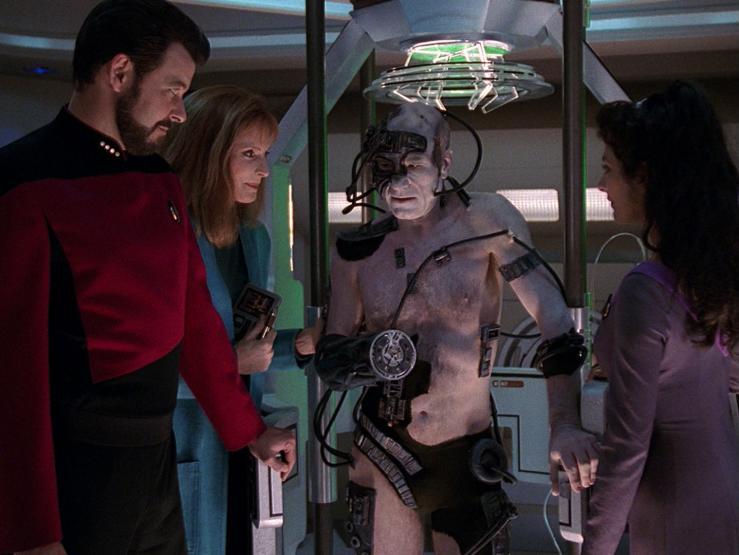
The main story was about Picard, returning to his family’s home in France, confronting his brother, his own fears of accomplishment and how the Borg nearly took away who he was. The second was how Wesley would react to a message from the past. In particular, a message recorded by his long passed father after Wesley was born. Both of these stories would have been enough to fill an entire TV episode, yet there was a third.
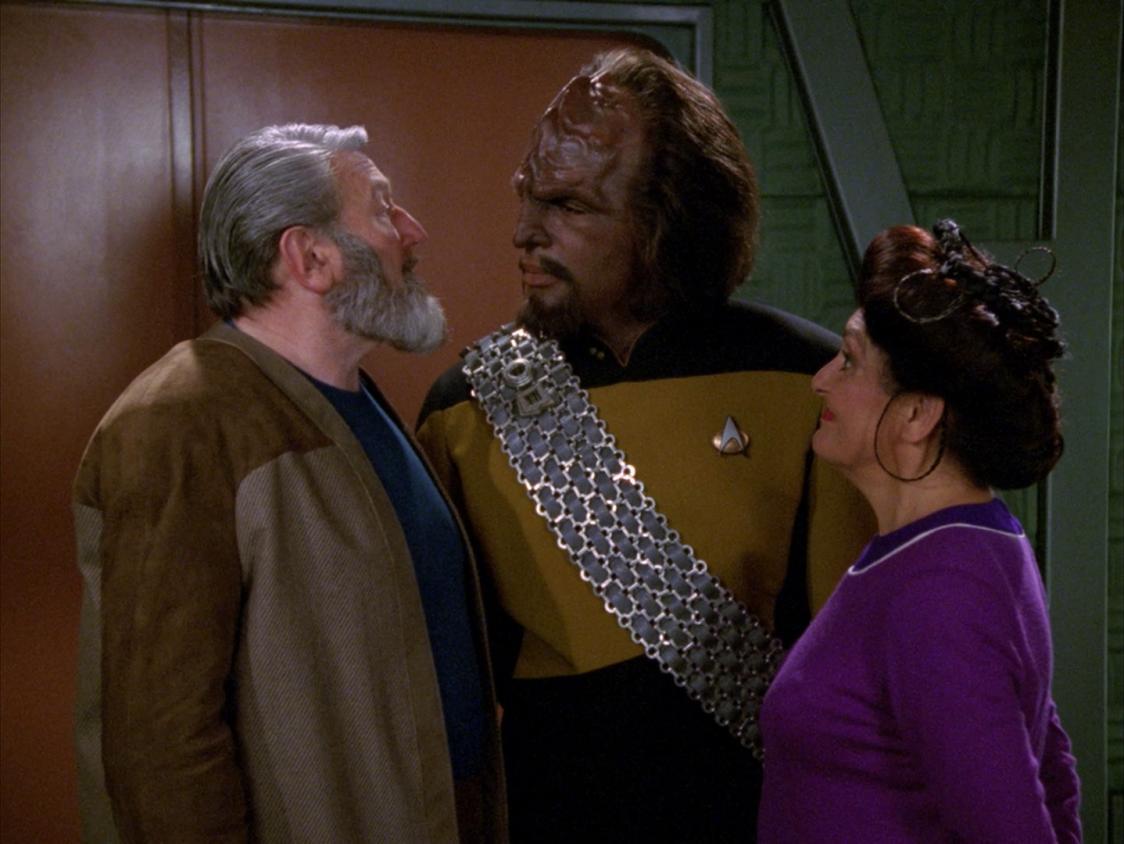
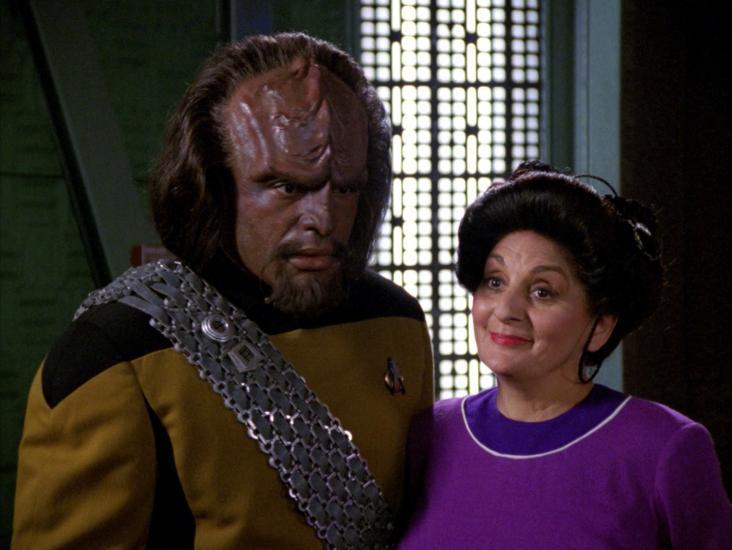
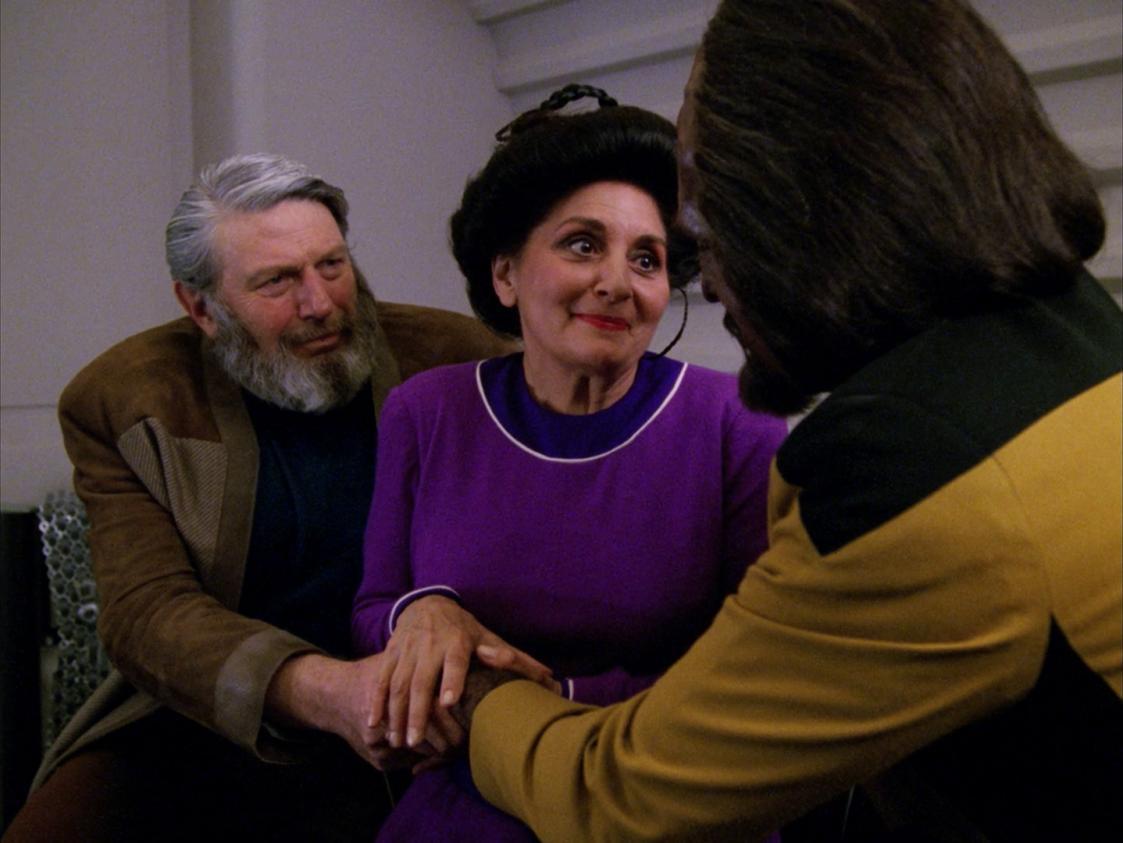
And this brings us back to the definition of a family. The third part of the story is about Worf’s relationship with his parents. His adopted parents.
The origins of the story goes back to season three, episode seventeen entitled “Sins Of The Father,” also written by Ronald D. Moore. We learn that Worf has a biological brother named Kurn and that secrets of
Klingon defenses were given to the Romulans. Worf’s biological parents were killed at Khitomer leaving the brothers orphans. To protect the Klingon empire from knowing who really gave a way the secrets, Worf accepts “discommendation,” a dishonor that he had to live with.
In the episode “Family,” the Enterprise returns to Earth for
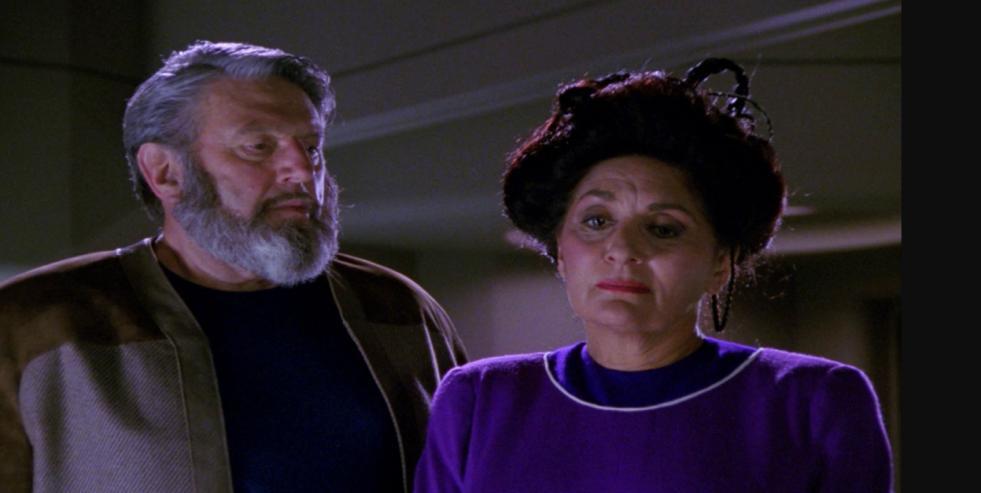
repairs after the conflict with the Borg at Wolf 359. Visiting the ship are Worf’s adopted parents, Sergey, and Helena Rozhenko (played by the brilliant Theodore Bikel and Georgia Brown) while in space dock.
As a child, Worf is taken in by Sergey and Helena as an adopted son. He was raised alongside their biological son Nikolai and
training, while Nikolai pursued a science background.
What makes the episode
“Family” so special is the way Ser-
loved being aboard his favorite starship, admitting owning all the plans and technical information.
As any child knows, when
Worf as he is more concerned about dealing with the discommendation on his own.
This is where the episode shines. Sergey and Helena try to consol their son, yet Worf feels that this is his “cross to bear” and he wishes to be left alone. Yet, Sergey and Helena offer unconditional love for their adopted son and in the end, Worf accepts that love and understanding that his parents offer to him.
This is what makes adopting parents so unique. My aunt and uncle could not have children, so they adopted two Korean orphans. It did not matter that they were from another country, another culture, another language, my aunt, and uncle treated them as if they were their
biological children. I grew up only knowing that they were my cousins. It did not matter to me that they looked different; they were a part of my family and that was that. I think that is what makes adoptive parents so special. They do all that can be done to make the adopted children a part of their families. We see it in this episode the way Sergey and Helena speak about how they feel about Worf. It is Worf who has to accept that he is a part of their family and the love they bestow on him. Because of this unconditional love, in the third season of Star Trek: Picard, episode three entitled “Seventeen Seconds,” Worf refers to his lineage as the “House
of Rozhenko.” Pretty powerful stuff.
And, as grandparents, Sergey and Helena stepped in to help Worf by taking in his son Alexander. However, it was Alexander that could not fit into living in a human world and returned to his father. Sometimes being a foster parent does not work out. Yet, when Alexander joined the Klingon Defense Forces, even though Sergey and Helena were not happy about that decision, they still supported their grandchild.
To all the adopted children, to all the adopting parents in the world, you continue to show that a family is more than
what was described back in the 1950s as the “Nuclear Family.” That is, a male dad, a female mom and two-point five kids (who was that half kid?). To me, a family will always be what we make of it. Even if the kid is a Klingon.
STEPHEN MIRKIN: I first learned about science fiction the moment I was able to reach the on/off knob on my parents’ black-and-white TV set. Being born in 1956, I was there on Sept. 8, 1966 to watch the first episode of Star Trek Since then, I have watched every TV series and every movie, and I only look forward to the next great Star Trek moment.
It’s 1998 and you’re sitting in front of your television with a bowl of popcorn getting ready to watch another exciting episode of Star Trek: Voyager on UPN. Only this time, this episode feels a little bit different. A little bit controversial. It’s a story about deciding whether we should continue to use research that was discovered through unethical means.
“Nothing Human” is the 8th episode of Voyager’s 5th season. It was written by Jeri Taylor and directed by David Livingston.
Our story begins with a 2hour photographic essay from The Doctor. Everyone is obviously annoyed by it. But they desperately cling on to the hope that the ship would go into Yellow Alert. But as Commander Chakotay stated, “Harry, you and I were lucky enough to enjoy the Doctor's scintillating exhibition for two full hours. Would it really be fair of us to deny our friends the same unforgettable experience?”
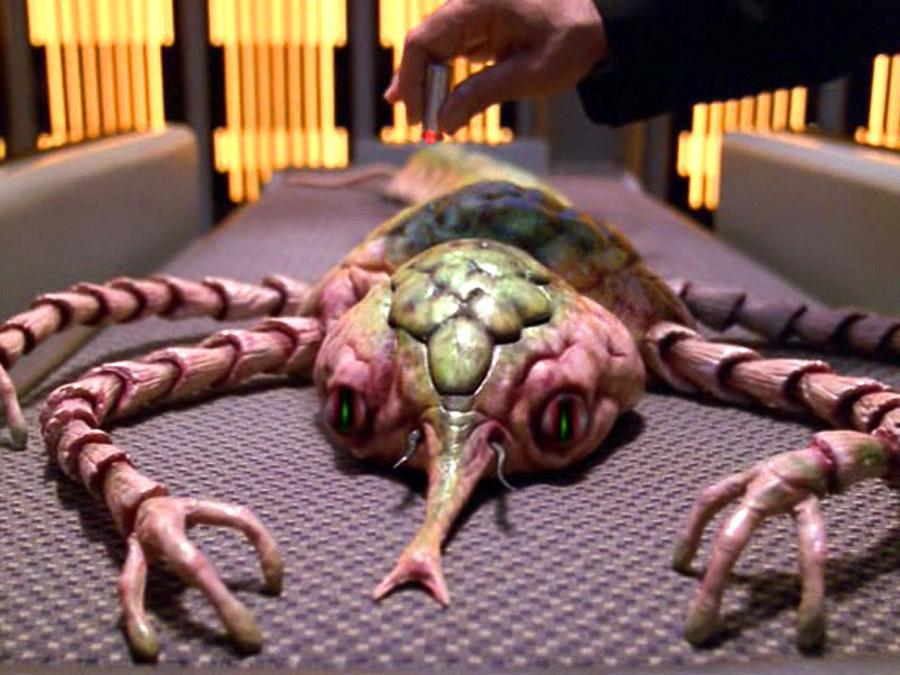
As everyone returns to their duties, the ship gets hit by a huge energy wave and suffers minor damage. An audio was downloaded into the ship’s database and Captain Janeway believes it to be some form of communication. They decide to follow the ion trail left behind to find the source of the communication. The trail ends with them finding a ship that has suffered heavy damage. Ensign Kim finds a nonhumanoid lifeform on board and beams it to sickbay. After analyzing the creature’s injuries, The Doctor tells Janeway he won’t be able to treat it because the tricorder doesn’t understand what
it’s scanning. B’Elanna comes into sickbay to give Janeway an update. The creature leaps off the bed, flies through the forcefield and attaches itself to B’Elanna. Everyone is trying to come up with different ways to help B’Elanna and the creature. The Doctor decides that he needs to learn more about Exobiology but Janeway suggests that he look in-
to the ship’s database to find someone who is a leading expert in the field of Exobiology. This is where the story begins to feel uncomfortable for its viewers. The Doctor chooses to work with Crell Moset because of his expertise in non-humanoid exobiology. Kim warns The Doctor that this may not be a good choice because he’s Cardassian and Car-
dassians do not have a good reputation. Kim is possibly referring to The Occupation of Bajor and Starfleet’s other encounters with them. The Doctor states, “I don't care if he's the nastiest man who ever lived, as long as he can help us save B'Elanna.” Little does he know that his very words will come back to haunt him. To hear The Doctor speak those words made me very uncomfortable and I saw him differently. The Doctor always speaks of “Do no harm,” yet he was willing to work with someone who may or may not be unethical, in order to save his friend’s life. Does the end really justify the means? Well, that’s for us to decide.
When The Doctor meets Crell, he takes an instant liking to him and discovers that he shares a few similarities with him. Both are very knowledgeable in their fields of study, they tend to improvise using the resources that they have, and they are not fully respected among their colleagues. Yet, Kim tells Crell that The Doctor has friends. Eventually, The Doctor puts Crell on this high pedestal as he has a habit of doing with people he shares a commonality
with or who adore him, such as Dejaren, Iden, and the Qomar.
The Doctor hero worships Crell. The story becomes more complicated when we meet Ensign Tabor, a Bajoran who works in engineering and both he and B’Elanna protest about The Doctor using Crell’s research and a holographic version of him to help save B’Elanna. She asks that The Doctor gets a second opinion stating, “As far as I'm concerned, they're all cold-blooded killers.”
The Doctor recreates Crell’s laboratory. When viewing it, the laboratory comes off very dark and creepy. Although it’s futuristic looking, it feels ancient and barbaric as if something sinister happened in that God-awful place.
As The Doctor is impressed by Crell’s laboratory, Crell talks about how he was on Bajor during the Occupation, trying to come up with a cure for the Fostossa Virus. He claimed that he didn't have resources and that many lives were lost during that time. He did not have the proper staffing or equipment and he had to improvise on his experiments using different procedures. Yet The Doc-
tor countered with the fact that he saved thousands of lives from the virus.
As The Doctor and Crell continue to speak, The Doctor looks at Crell’s tray of medical equipment. It’s outdated. The Doctor is very concerned with using an outdated scalpel on the creature stating, “especially when we have such advanced equipment at our disposal.” Crell counters with, “...they remove us from our subjects. Actually feeling the anatomy, the consistency of the internal organs, it can be very instructive.” The Doctor appears to be even more uncomfortable when he cuts open the creature with the ancient scalpel as if he were carving a turkey. The creature begins to scream, and The Doctor is unnerved. Crell’s response was “it's a hologram.” The Doctor states, “I guess as a hologram myself, I have a certain empathy.” In this scene, we can clearly see the difference between The Doctor and Crell. One values life while the other does not. It is at this point that The Doctor is starting to question who Crell actually was.
Crell’s program begins to fluctuate and The Doctor takes him offline for Harry and Tabor to repair. As The Doctor is in sickbay checking on B’Elanna, he is surprised by her attitude towards Crell stating, “I never took you for someone who would make generalizations based on race.” No matter how much The Doctor tries to convince her to give Crell a chance, she will not budge. She holds fast to her principals. As soon as he gets Crell online, Tabor immediately be-
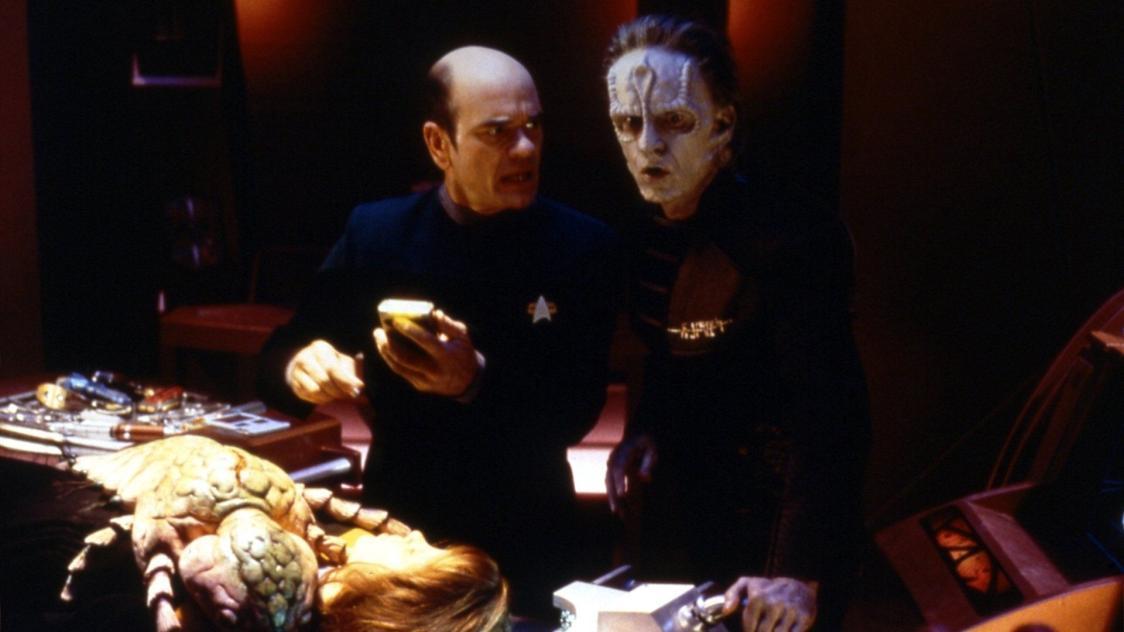
comes angry when Crell is activated. Tabor shouts out, “He killed my brother, my grandfather, hundreds of people. He's a mass murderer!” Everyone tries to calm him down, but he continues to scream and has to be restrained. “Moset performed experiments on living people. Thousands of Bajorans were killed in his socalled hospital.” Crell says that this is a misunderstanding, and is immediately transferred back to Holodeck Two. At this point I began to question the hologram itself. Although Crell the hologram is not the real Cardassian Exobiologist, he is still aware of all the experiments that took place. I wonder if the hologram is showing signs of sentience.
Tabor explains what happened to his family and people while speaking with The Doctor and Chakotay. The Doctor explains that Crell saved thousands of Bajoran lives from the virus with his
experiments. Tabor fires back with, “By infecting hundreds of people so that he could experiment with different treatments. old, helpless people like my grandfather, because he considered their lives worthless.” Hmmm… this reminds us of the comment that Crell made earlier about the holographic creature, “it’s just a hologram.” This is an example of Crell deeming certain lives worthless.
The Doctor believes that these could be rumors and that there is no information about this in the database. Yet Chakotay states that he did hear rumors about an infamous Cardassian doctor. Before they leave, Tabor requests that the program be destroyed and the research deleted. In addition to that, B’Elanna also states that she won't allow Crell to operate on her because if she does “I'll be benefiting from other people's suffering.”
Eventually the Doctor is provided with information that supports Tabor’s claims. Seven of Nine states “It is curious. The Borg are accused of assimilating information with no regard for life. This Cardassian did the same, and yet his behavior was tolerated." In other words, you can’t condemn one group for committing a crime while not condemning another for the same thing. Also, if Seven and Kim were able to find information in the database concerning Crell, why didn’t The Doctor find it? He had access to that information. Even while talking to the hologram, he could have still looked up the information on his own. There were so many signs prior to Tabor’s outburst, that The Doctor should have gone back and reviewed the information that he found. To me, it’s unethical that he did not do that. To me, he violated those three important words, “Do no harm.”
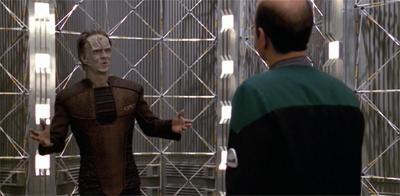
The Doctor visits Crell in his laboratory and recollects to him the information discovered. Crell states that he's just a hologram and he has no memory of it. The Doctor reminds him that despite the program’s brilliance, everything is based on Crell’s work. “Medically, ethically, it's wrong.” Crell reminds The Doctor that there's always a price to pay. The Doctor fires back with “Sometimes that price is too high. Torture?” he asks. Crell says, “Your word, not mine,” as he con-
tinues to come up with reasons to justify his research and experimentation. Continually reminding The Doctor of how he saved thousands of lives and created a cure for the virus. I only wish The Doctor reminded him of how he ordered samples of the virus but he didn't bother to get the enzymes needed to synthesize it. I would have loved to hear the explanation behind that. But it didn't matter how many times The Doctor argued the negative of Crell’s experiments, Crell had a twisted
response for it. Based on this argument, it seems as if The Doctor may have been manipulated into using Crell’s research by the hologram, in order to save B’Elanna. I find it odd that this is the second time that Crell used the phrase “it’s just a hologram,” as if being a hologram excuses him of any wrongdoing. I wonder if the hologram itself may have been starting to show signs of sentience because of the number of excuses he was using to justify everything that the real Crell did.
Later we find out that Tabor put in a request to be relieved of duty because he objected to the medical policy on board the ship, but that Chakotay denied it. Eventually, the captain and her crew had a discussion of what should happen to B’Elanna. While Chakotay and Tuvok were on B’Elanna’s side, fighting for her medical wishes to be honored, The Doctor and Tom were concerned about saving her life. The captain agreed that everyone was
right, but she was only concerned about the well-being of B’Elanna. She gives The Doctor permission to go ahead with the procedure.
Crell and The Doctor conduct the procedure. The Doctor takes over because Crell didn't care if he killed the creature as long as B’Elanna was saved. EventuallyThe Doctor was able to save both the creature and B’Elanna, but at a price. That price was not honoring B’Elanna’s medical wishes. Janeway states, “Losing you was unacceptable. I know you're angry, but we need to put this behind us.” B’Elanna states “You can't order someone to get rid of an emotion, Captain. You had no right to make that decision for me!” Janeway says, “I did what I thought best.”
When The Doctor is visiting with Crell, he tells him, “Captain Janeway has left your future in my hands. She believes that, as Voyager's Chief Medical Officer, it's up to me to decide whether your program remains in
our database.” Is this Janeway's idea of “wrestling with the morality of the situation?” Allowing The Doctor to make the final decision on what happened? Was she trying to wash her hands of this as well?
While The Doctor was speaking with Crell, I felt as though he was trying to get the hologram to express some form of remorse to redeem himself, but he didn't. He didn't care about what happened. As long as he got the job done and received credit for it, it was a good day for him. He told The Doctor that he couldn’t erase the program or the research because he needed him.
But The Doctor stood fast on his principles, morals, and policies. He did not believe in the use of inhumane practices. Crell states, “Where was your conscience when B'Elanna was dying on that table? Ethics? Morality? Conscience? Funny how they all go out the airlock when we need something. Are you and I really so
different?” The Doctor quickly responded with, “Computer, delete Medical Consultant Program and all related files,” and walked out of Holodeck Two with his head held high.
This episode unpacks a lot of lessons and emotional responses. Yet, the events of this episode still occur today. Should we continue using research that was gathered through the torture of animals and humans? Should we use products that were designed through means of torture? Should respecting the medical wishes of a patient be absolute? Humans have been pondering this and many other questions for thousands of years. Although these questions may worry you, what I can say is that humans have improved in the areas of medical and scientific research. We have found other ways to be able to test animals and humans in a more humane way by learning the history behind them. History isn’t pleasant but it’s there for us to learn from. Just remember: those who don’t learn their history are doomed to repeat it.
MARISSA ANNE: Marissa
Anne is an employee of the State of Indiana. She enjoys Star Trek, especially Star Trek: Voyager. She lives in Indiana with her family.
M
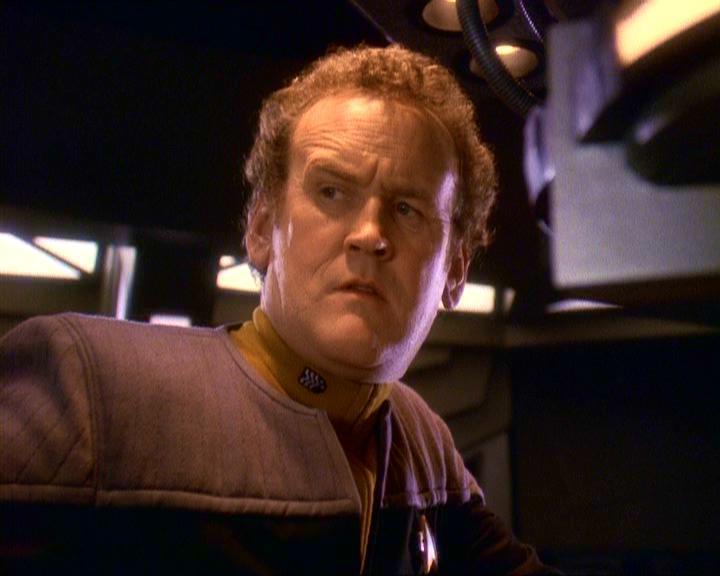
iles O’Brien doesn’t command starships or confront ancient alien gods. He’s something rarer in the world of Star Trek: a working man, a husband, father, and engineer; trying to hold his world together while everything around him falls apart. Over the course of Deep Space Nine, O’Brien becomes the unexpected emotional center of the series, routinely subjected to immense psychological, physical, and moral suffering. This recurring narrative pattern, known to fans and writers as the “O’Brien Must Suffer” trope, isn’t merely cruel storytelling. It’s a deliberate narrative lens, through which DS9 explores trauma, resilience, and the cracks in Starfleet’s utopian façade. By placing its most relatable character under extraordinary pressure, the show reveals what life on the final frontier costs, not just in battles fought, but in identities shaken, families tested, and wounds carried in silence.
Early Career
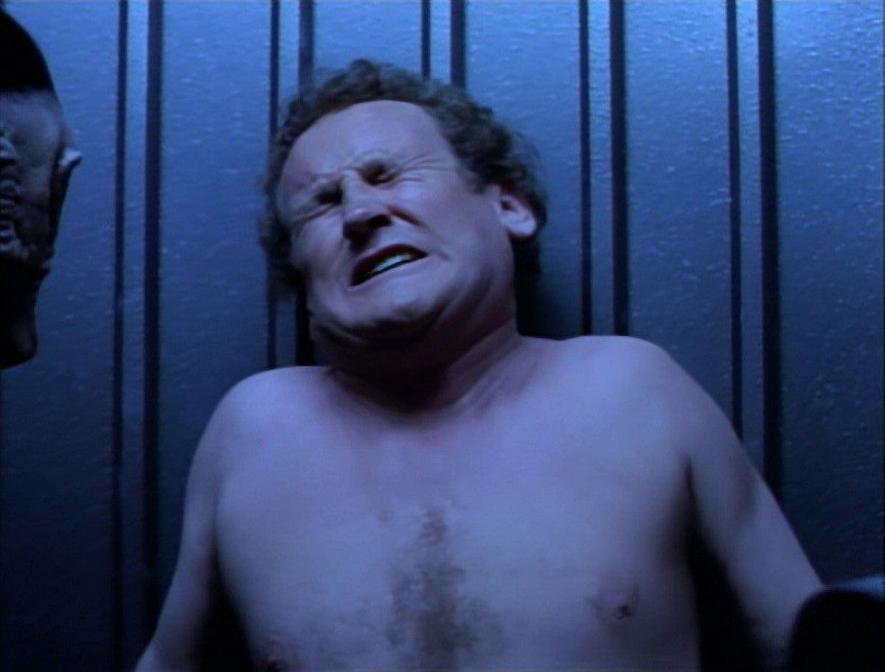
Miles O’Brein was introduced to us as the transporter chief in Star Trek: The Next Generation. We know that before he had served under Captain Maxwell during the Federation Cardassian War where he was witness to great atrocities such as the massacre at Setlick 3, where he was forced to have to kill a Cardassian solder in self-defense. He is listed as a non-commissioned officer who has extensive technical expertise in transporter and engineering areas. He was transferred to Deep Space Nine as the Chief of Operations and maintains all the station’s systems.
The trope of the “O’Brien must Suffer” was coined as a fan made trope used to refer to the often-running narrative device where Chief O’Brien as the hardworking everyman engineer, is repeatedly put through the emotional, psychological and physical wringer in ways few other Star Trek characters are. The phrase is both humorous and grim, a kind of inside joke among fans and writers, but one that underscores very real thematic purpose and storytelling function.
Producers would lean into O’Brien’s everyman persona hard by putting him into circumstances that tested him physically, emotionally, and morally. This allowed the viewers to empathize with him and the trials that he endures throughout the series. Let’s look at some of the most enduring episodes and examine his hardships.
“Armageddon Game” (Season 2 Episode 13)
This is one of the first times that O
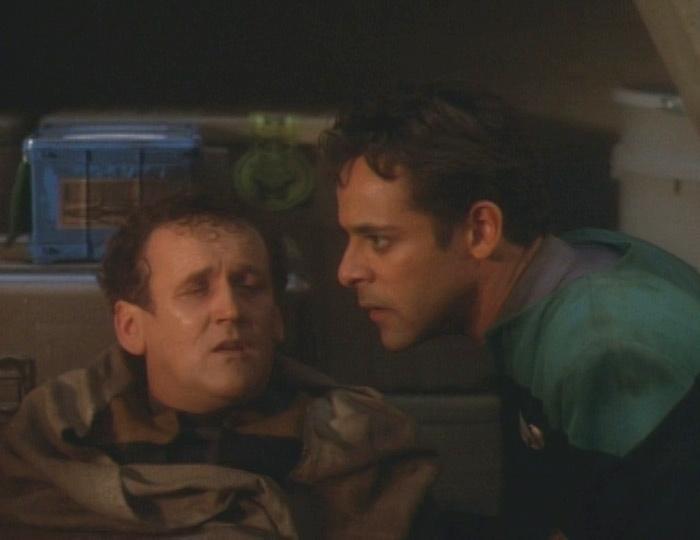
into a situation that causes him turmoil. In this episode, Doctor Bashir and O’Brien are assisting these two waring factions to eliminate a biological weapon. Once they are almost complete, the factions attempt to eliminate all traces of this virus, including everybody involved in its destruction. A shoot out ensues, and Miles and Bashir manage to escape and take refuge on a remote planet.
Once they arrive, Bashir notices that O’Brien had been exposed to a small portion of the virus and begins to show symptoms. It then becomes a race of time to not only get rescued, but to hide out from the enemies sent down to finish the job.
As the disease is a slow active virus, that causes weakness, fever, and eventual death. This kind of makes the suffering feel invisible at first, as he pushes through, continuing to survive with Bashir. As the episode continues, we watch him visibly deteriorate; his face white, movements
He’s dying slowly and painful, with no cure in sight.
This gradual breakdown strips O’Brien of his usual stoic strength and showcases just how vulnerable he really is, especially when he is not even aware of his exposure.
In addition to the physical breakdown he experiences, he also is dealing with some emotional trauma as well. While he is stranded on this planet slowly dying and not really being able to fix the problem, he also is dealing with the fact that if he dies, he is leaving with his wife and daughter back at the station with no real explanation as to how he died. It goes to show the audience that he really cares about his family and doesn’t want to hurt them in any way.
“Tribunal” (Season 2 Episode 25)
The second episode that continues the trope of O’Brien must suffer, “Tribunal” is one of those episodes where we get a glimpse of how the justice system in Cardassia works. In this episode Miles and Keiko are finally going on a romantic vacation together and while on their way to their destination they are captured by a Cardassian ship and Miles is taken into custody under suspicion of espionage.
It is not bad enough to have your wife watch as they beat
him in the runabout and take him away and place him in a holding cell. When they arrive at Cardassia Prime he is immediately subjected to a strip search, have his teeth removed for identification purposes and then subjected to intense abuse without even knowing what he has been charged with.
The Cardassians have already chosen his sentence of death, and his so-called lawyer continues to try to get him to plead guilty without any information as to what he was charged with. He is put on trial in front of the entire planet and is used as a pawn in a political fight against the Maquis.
This episode shows that once again Miles is subjected to physical harm as they take pieces of DNA such as hair and teeth samples. He is forced to have to deal with the knowledge that he has been charged and convicted to a crime which he does not even know what it was. He must watch his wife stand by helpless and watch this mockery of a trial.
“Whispers” (Season 2 Episode 14)
What makes this episode interesting isn’t so much about physical torment or torture in any sense of the word. What this episode does is create a psychological torment throughout the episode.
The story line goes that Miles has come back from a meeting with the Paradas, in advance of some peace talks, however when he returns, he notices strange things going on.
Keiko is very distant towards him; Sisko and the others are holding secret meetings behind his back. He cannot access certain systems and lockout of preparations that he should have access to. He begins to suspect that there is something wrong and tries to find out what could be happening. He grows increasingly paranoid and questions whether his friends and colleagues are real or imposters. Everywhere he turns is constant mistrust and conspiracies. Even a routine lesson with Jake about simple mechanical things becomes untrustworthy. He eventually escapes from the station and travels back to the Parades to warn them that there is a conspiracy going on and the station has been compromised. As he returns to the planet, everyone is waiting there, and we find out that the O’Brien that we have been watching throughout the episode is the imposter and the real Miles had been taken hostage and cloned to be used as a weapon. Before we see this, however, he is shot in a short phaser battle, and the imposter dies while the real one watches.
“Whispers” is one of the most memorable DS9 episodes, not just for its twist ending, but because is effectively puts the audience in the head of a man whose reality is crumbling. It’s a slow burn psychological thriller, and a classic example of the “O’Brien Must Suffer” narrative.
“Hard Time” (Season 4 Episode 19)
Perhaps the best “O’Brien must Suffer” episode and is considered one of the darkest, most emotionally raw, and the most psychological complex explorations of O’Brien character, and perhaps of any character of any of the Star Trek franchises.
This episode begins with Miles being arrested by an alien government on Agartha and accused of espionage. According to their laws, he is sentenced to 20 years of incarceration, but those 20 years are implanted directly into his mind in a matter of a couple of hours. He believes that he spent 20 years inside a prison and experienced everything, except it was all just simulated memories.
When he returns to DS9, those memories are as real to him as actual experiences. He vividly recalls being locked in a cell with another prisoner, Ee’Char, who became his friend and eventually his victim. As the years passed and driven by hunger and hopelessness, he kills him. Back on the station he suffers from extreme PTSD with flashbacks, insomnia, guilt, and violent outbursts. He begins to unravel emotionally and psychologically, which by the end is so overcome with guilt he at-
tempts to commit suicide. He is saved at the last minute by Dr. Bashir and through him begins to open up about his experiences and trauma and begins to take the first steps at healing.
Why does this episode succeed as the best above all others like it. It begins with Colm Meaney’s haunting, grounded performance. He doesn’t act like a man post trauma, he embodies it. With subtle gestures, staring into nothing, trembling hands, the forced smiles, say more than any monologue. In the final scene, when he finally breaks down and admits he wants to die, it is devastating human.
This episode explores real world issues, like PTSD, Mental Health and Suicide. For a show in the 90’s, it didn’t just tell a story, it held up a mirror to the reality of trauma; particularly male trauma which was often minimized. This episode also doesn’t end with real closure like so many other episodes. O’Brien isn’t cured at the end; he is just beginning his healing process. It makes the viewer aware that one conversation won’t fix everything, and it acknowledges that it will be a long healing process and will be a slow, painful one as well.
Why does it have to be Miles O’Brien?
Miles O’Brien stands out as everyman, a working-class hero with no special powers, just grit, integrity and a wrench. That’s precisely why the writers chose him as the character to suffer: because he was relatable, human and real. When O’Brien breaks down, it’s not a galaxy-ending crisis, it’s the
quiet, unbearable weight of ordinary trauma, and it hits harder than any space battle ever could. The mantra “O’Brien Must Suffer” became more than a running joke in the DS9 writers’ room. It became a storytelling engine, one that allowed Star Trek to explore mental health, trauma, guilt, isolation, and resilience through a character who felt like he could be any one of us. And in doing so, it gave the franchise some of its most powerful, sobering, and enduring episodes.
In the end, O’Brien suffered not because the writers hated him but because we loved him. And every time he came out the other side, a little more broken but still standing, he reminded us that courage doesn’t always wear a captain’s uniform. Sometimes, it wears a tool belt, carries a thermos, and just keeps showing up.
MICHAEL MARTIN: I’ve been a Star Trek fan since I was a kid. I grew up on The Next Generation, fell in love with Deep Space Nine and Voyager. It was one of the few shows that my father and I would watch together and still share the love for the franchise today. The show’s ideals, hope, unity, and moral courage have always meant something real to me. It gives me great pleasure to see where humanity can go and what can be achieved.
There are a lot of big, explosive moments in Deep Space Nine’s Season 4 opener “The Way of the Warrior.” Worf joins the crew, the station gears up for battle, and the Klingons come charging in with all their bluster. But for me, one of the most memorable parts of that episode isn’t the phaser fire or the political twists it’s Quark and Garak quietly talking about root beer.
If you’ve watched DS9 for any length of time, you know those two characters are outsiders through and through. Quark, the Ferengi bartender, is forever grumbling about Federation regulations and how much latinum he’s losing under Starfleet’s nose. Garak, the exiled Cardassian tailor, is a man of secrets and shadows, far too experienced to buy into Starfleet’s shiny optimism. Seeing them together is always a treat because you never quite know whether they’ll end up sharing wisdom or trading barbs.
So when Quark hands Garak a glass of root beer, it’s hilarious on the surface watching these two cynics sip something so syrupy and “happy” is already comedy gold. But then Quark nails it: the root beer is the Federation. “Bubbly, cloying, happy.” Garak agrees, calling it “insidious.” And Quark goes further: drink enough of it, and you start to like it.
That line always sticks with me, because it says so much about what DS9 does differently from other Trek shows. The Federation isn’t portrayed as evil, but from the perspective of someone on the outside, its sweetness is almost a form of soft pressure. You don’t have to conquer anyone
when you can just charm them into adopting your values. It’s assimilation with a smile. And honestly? Quark’s right — it is scary how easily that can happen. His own nephew Nog is the perfect example: one taste of Starfleet life, and suddenly the kid’s signing up for the Academy and leaving Ferengi tradition behind.
What I love about this scene is that it doesn’t feel like a big speech or a heavy-handed critique. It’s just two guys sitting in a bar, sharing a drink, and speaking a quiet truth that most of the Starfleet characters would never admit. It’s one of those little DS9 moments that reminds you the Federation’s ideals aren’t universally seen as pure and perfect. They can feel cloying, even dangerous, depending on where you’re standing.
And yet — the scene doesn’t end on pure cynicism. After all their snark, Garak asks Quark if he thinks the Federation can actually save them from the storm that’s coming. Quark pauses, and says simply: “I hope so.” That line gets me every time. For all their suspicion of the Federa-
tion’s “root beer” nature, these two outsiders still recognize that it’s their best shot at survival. That’s DS9 in a nutshell. It takes Star Trek’s utopia and shows us its cracks not to tear it down, but to make it feel more real. The root beer scene is funny, sharp, and just a little bit sad. And honestly? It’s one of the reasons I love this show so much.
MARTIN RANDALL: Martin is a freelance software developer, a serial technophile, and prides himself on his encyclopedic knowledge of Star Trek. He lives in Wakefield, UK with his wife Hazel, their two children, and three cats.
A question that is often battered about is: what is a hero?
For some, it’s that person who best influenced their lives. Or it can be a person that you least expected to be a hero and their actions cause you to realize that they are a true hero. In my life, I have had my heroes like Neil Armstrong, Dodger pitcher Sandy Koufax and the father of improvisational humor, Jonathan Winters. I grew up in awe of their exploits and their actions which helped to shape the person I am today.
Yet, let us consider this concept through the visored eyes of one Lt. Commander Geordi La Forge. Geordi began as a lowly Lt. Junior Grade on board the USS Enterprise-D as a helmsman. He moved up the ranks, displaying exceptional engineering skills and was promoted to chief engineer of the Enterprise. This is important to know since the two people that would fit the bill of a hero to Geordi were from his past, his distant past and they were engineers. Those examples are from a couple of my personal favorites from TNG: the film First Contact, while the other is from season six, episode four “Relics.”
Let’s consider the past in the form of “Relics.” A little reminder: this is the episode that brought back one of Star Trek’s more beloved characters Montgomery Scott, or Scotty as he was often referred to. Scotty was Chief Engineering officer aboard the USS Enterprise “no bloody A, B, C or D” as Scotty would say in the episode. He is found aboard the USS Jenolan which crashed onto the surface of a Dyson sphere, 75
years in the past. Scotty survived by placing his body in the transporter buffer. Once revived, he finds himself in a future that has no place for him. This is established as Scotty tried to help Geordi with engineering issues, yet Geordi dismisses him and his “old school” methods of engineering. Feeling himself a “relic” (hence the episode’s name), he only wants to return to his time aboard his beloved Enterprise, then commanded by Kirk. How does Scotty prove his worth to Geordi? The Enterprise-D
is trapped inside the Dyson sphere; having been drawn to its center and the star it contains with no hope of escaping. Geordi and Scotty, aboard the damaged Jenolan are able to restore power using Scotty’s knowledge of the workings of this “antique” spacecraft. This impresses Geordi, who could not have done the impossible without Scotty’s expertise. In the end, once opening the doors of the sphere, wedging the Jenolan in them with the use of the shields, the Enterprise-D is allowed to escape. Yet, to do this, the Jenolan is destroyed in the process. In return for saving the Enterprise and the loss of his ship, Scotty is given a shuttle craft to travel to wherever his desires lead him. The last person to say goodbye to Scotty is Geordi. Scotty tells him that the Enterprise is in safe hands and Geordi has the biggest smile, showing the newfound respect he has for the old engineer. Did Scotty’s actions automatically cause Geordi to consider him to be his hero? I believe so. A
hero is someone you respect, someone you can look up to, to inspire you, even if that was not the case until you interact with that person.
Now, let us consider a well -known hero of Geordi’s from the distant past, which being the inventor of warp drive, Dr. Zefram Cochrane. For all of us fans of Star Trek, he first appeared on TOS in season 2, episode 9 “Metamorphosis.” In it, he appears young due to his relationship with the ‘Companion.’ Cochrane comes across as a very noble person, giving up leaving the planet as the Companion
would die if she were to leave it. Kirk and the Enterprise leave so that the two may live out their lives in solitude.
Geordi, as are we, surprised to learn that Cochrane was not the noble person the “press” made him out to be. In First Contact, the crew of the Enterprise finds him in a bar, drunk and hitting on Troi. And that building the Phoenix (the name of the craft) was done purely for financial reasons and not for the betterment of humanity.
When Geordi interacts with Cochrane over repairs to the Phoenix, Zefram meets Lt. Barclay
pening until Geordi explains that the crew members are suffering from “hero worship.” This includes himself and that he went to Zefram Cochrane High School. Geordi explains that, in the future, a statue will be erected of him with his hand “reaching toward the future.” Cochrane wishes to have nothing to do with hero worship. Yet it is Riker who reminds Cochrane of the words he spoke about “not just being a great man, just be a man.” In the end, as we all know, the Phoenix successfully broke the warp barrier and Cochrane makes first contact with the Vulcans, ushering a new step for humanity. In the end, Cochrane becomes the person that Geordi and others would come to “hero worship.”
Since First Contact is a time travel story, there isn’t any proof that, had the Borg not gone back in time, as did the Enterprise and its crew, that these events would have happened as well? Or
doesn't matter. What does matter is that Cochrane, in the future, would become the person that deserved the admiration of those that knew the story of the Phoenix and first contact with the Vulcans.
In the end, what is a hero to you? A family member? A sports hero? A military hero? Or is it just someone that helps another person without any expectation in return other than a “thank you.” Take a moment and think who your heroes might be. Are they someone who inspires you or helps you or are they just there for you? They might be the last person you expected them to be, like Scotty was for Geordi. Or, learning that they might not be the perfect person you thought they were, yet their actions prove them to be that person as Cochrane was for Geordi.
If you ever meet your heroes, like the time I got to meet Jonathan Winters at the super-
reply, like Jonathan did for me, to say “you’re welcome” in return.
Author’s note: The episode “Relics” and the film First Contact were both written by Ronald D. Moore. I have the utmost respect for Ron and his writing skills. Nearly every script he has written for the TV series or movies he has been involved in shows these abilities. Thank you, Ron, for your great storytelling. I guess that makes him a hero of mine.
STEPHEN MIRKIN: I first learned about science fiction the moment I was able to reach the on/off knob on my parents’ black-and-white TV set. Being born in 1956, I was there on Sept. 8, 1966 to watch the first episode of Star Trek Since then, I have watched every TV series and every movie, and I only look forward to the next great Star Trek moment.
Alan Anderson is the treasurer and historian of the Klingon Language Institute. I know Alan because of my involvement with the local fan-run Star Trek Convention, Starbase Indy. He was gracious enough to grant me an interview and extended an invitation to the qep’a’ wejmaH cha’DIch, which took place July of 2025 in Indianapolis, Indiana.
I was happy and comfortable going to the gathering. Over the years I’d met several Klingons at Starbase Indy. Walking in, a woman I knew was busy getting drinks and snacks set up, so I wandered around. I’m fine talking with strangers, so I sat next to a woman who, as it turned out, was also a guest. Her husband had joined the Klingon Language Institute online several years back. This was their first time in Indy. She said her husband thoroughly enjoyed his membership and was elated to meet friends in real life.
A little later a man went to the front of the room with his backpacker guitar, and everyone got quiet. A backpacker guitar is smaller than a regular one, and is somewhat teardrop or anvil shaped. Rich (his Earth name) began leading the group in various Klingon songs. In between songs he told stories of traveling across the country with his guitar.
At Starbase Indy, I’d met a young woman who was just learning Klingon. She proudly recited a nursery rhyme while stumbling over her words. At the qep’a’ wejmaH cha’DIch this same young woman was participating in Klingon-only conversations. During the meeting, she received a
pin for her high honors and achievements in the language. I told her how impressed I was, and she smiled broadly.
I was told that Dr. Marc Okrand was in our midst. Dr. Okrand was a linguist who had invented both Klingon and Vulcan languages for the Star Trek universe. He didn’t have any idea the language would take off the way it did. A couple years later, Lawrence M. Schoen founded the Klingon Language Institute and history was born.
The entertainment consisted of a cabaret type show with the members singing, dancing and reciting. Some were very good. I saw a bat’leth demonstration, choreographed expertly with several participants. One man sang “Knights in White Satin” by the Moody Blues in Klingon. At the end, the audience raised their phones with the lights on to represent candles or lighters. That was awesome.
During the cabaret, I was next to Marc in the back of the room. I introduced myself and told him why I was there and that
I’d be able to say I’d met him. He responded, “You can say you met me.” I don’t think he wanted to be interviewed. I can’t really blame him; it was a party, after all. But he was a kind and friendly man. I spoke to several other people, one of whom was a woman who’d made the trip from Poland for the qep’a’ wejmaH cha’DIch. Another was Jeremy, a member since the Klingon Language Institute was in its infancy. He had a great singing voice and led the room from the rear.
I sat for a while with Michelle, a jewelry maker. Her husband was one of the Klingons running the show. I wore my bracelet she’d made of brown and orange beads, sparklies, and a dangling bat’leth.
Soon, we all gathered in a circle and played Hokey Pokey. All body parts mentioned had to be spoken in Klingon. For that I needed help, so Rich told me the Klingon word for scalp, but I can’t remember it. When the circle came round to Marc, he gave the group a new word for pelvis: yIlyu’. So, we all put our yIlyu’ in, our
yIlyu’ out, put our yIlyu’ in and we
(Touch the Transporter to Engage!)
INTERVIEWS AND PERSPECTIVES
This month, I got a chance to sit down with Alan Anderson a fellow Trekkie and Klingon language expert. Alan dishes on the history of the Klingon Language Institute, the annual convention event held by KLI, how to best get involved in the Klingon language, and KLI’s collaboration with the Starbase Indy convention.
• Mona Mehas “I am nothing if not prolific”
MONA: Alan, tell our readers a bit about yourself.
ALAN: I'm a computer programmer by disposition and training, following my father's example. Though I retired after a 30-year career as a software engineer, I still enjoy "recreational" programming.
I was involved with a high school robotics team for 20 years, as the team's lead software mentor. I still help out the team on occasion.
I'm part of a local "Makerspace." It's a communitybased workshop where members have access to power and hand tools of all sorts and a place to use them. I liken it a gym membership, but instead of things like treadmills and weight machines and stair climbers, there are things like table saws and sewing machines and welding equipment and 3-D printers and lathes.
I somehow find myself on the board of several distinct nonprofit organizations, and as the treasurer for three of them.
And of course I'm very involved in the Klingon language and its community of speakers.
MONA: How did you first discover Star Trek? Were you an instant fan
ALAN: Star Trek and I share a birthday. It first aired when I turned 5 years old. I was much more interested in Saturday morning cartoons, though, and I remember being
I vaguely remember seeing it once, and asking my mother "Why does that man have pointy ears?" She said she thought it was because he was an alien or something.
By the mid-1970s, I enjoyed discussing the show with friends at school and in my Boy Scout troop. I wasn't fanatic about Star Trek, but I liked it, along with science fiction stories in general.
MONA: Were you always a language nerd, or was Klingon the first language that really excited you?
ALAN: I studied a bit of Hebrew in Sunday School, and took a couple of years of Spanish classes in High School. I never thought of languages as anything particularly interesting; they were just part of the world. I guess I was exposed to enough of them that I could recognize and produce non-English sounds, including the "shch" of Russian. I did think French was weird, with its abundance of silent letters and unfamiliar vowels.
When I was gifted a copy of The Klingon Dictionary, though, I discovered that Klingon was a nifty little language with a grammar that didn't resemble anything I knew. I was actually a little disappointed that it wasn't something I could use.
MONA: When did that interest expand to include the Klingon Language Institute?
ALAN: I got access to email at work shortly after I received The Klingon Dictionary, and I discovered the existence of "mailing lists". Any message sent to the list address was emailed back out to all of the list's subscribers. There were several Star Trek-focused lists, and I subscribed to them. The only one that was active was the "tlhIngan-Hol" list, and it was very active when I joined it in 1995. I discovered that people were regularly and successfully using Klingon to communicate, and I was hooked. Suddenly, my copy of the dictionary was useful for more than just decorating a bookshelf.
The mailing list was run by the Klingon Language Institute. Its website, while primitive by 21st Century standards, was full of useful information about the organization and the language. I joined the KLI that year.
MONA: Can you tell us about the KLI? What is it exactly?
ALAN: From the KLI website: "The Klingon Language Institute is a 501(c)3 nonprofit corporation and exists to facilitate the scholarly exploration of the Klingon language and culture."
MONA: Can you talk about its history and purpose?
ALAN: It was started by Dr. Lawrence Schoen in 1992 as a hobby project to pass the time between teaching jobs. He established it not as a fan club, but as a scholarly organization with a peer-reviewed quarterly journal.
The KLI provides resources for people who want to study the Klingon language. Each year since 1994 it has held a several-day-long conference, where mem-
bers can meet in person to practice face-to-face conversation and share their skewed zeal for the language. Its decades-old mailing list still exists, and has been joined by Facebook pages and a Discord server. There is also the New Words List, collecting vocabulary that we've learned since the publication of The Klingon Dictionary and Klingon for the Galactic Traveler
Discord is where most of the activity happens, with questions, discussions, debates, wordplay, poetry and occasional roleplay. There are regular voice/ video chats focusing on such things as games, grammar discussions, Shakespeare study, and Klingon-only general conversation.
And of course the annual conference, which is called qep'a' (regularly translated as Grand Meeting), still takes place. It's been in Indianapolis for the last several years.
MONA: What is your role with KLI and what exactly does that entail?
ALAN: For a great many years, the KLI was run almost single-handedly by Dr. Schoen as Director. Volunteers stepped in to manage the mailing list and website, to coordinate specific things such as the Klingon Shakespeare Restoration Project and the Klingon Language Certification Program, and to handle the logistics of the qep'a' when it wasn't in the Philadelphia area.
In 2018, he started planning the reorganization of the KLI's leadership, with an active Board of Directors, and an eye for his stepping down as the sole Director. I was one of three volunteers whom he identified as doing the bulk of the KLI's activities, and we eventually became the founding Board of a newly reorganized and reincorporated Klingon Language Institute in 2022.
My specific role on the Board is as Treasurer. I also hold the office of Grammarian, continuing the tradition set by the First Grammarian, who goes by the name Qanqor (or Krankor). That makes me responsible for knowing Klingon grammar well enough to explain it properly.
I maintain the online KLI Events Calendar, which began in 2020 to list when regular online meetings are scheduled. It also holds the official schedule of events for the in-person conference and its online counterpart.
I've also been the primary liaison with the hotel for the qep'a' in Indianapolis, since I'm reasonably local. I produce a lot of the incidental printed material for the event, like the name badges and language game cards.
MONA: Tell us about the annual KLI convention. What happens there? What can a newbie expect?
ALAN: The "Great Meeting" was a three-day event in Philadelphia in 1994. It was a hotel-based followup to the Klingon Language Camp that was held in Minnesota the previous year. About a dozen people attended. It was aspirationally named qep'a' wa'DIch, the First Great Meeting. Then qep'a' cha'DIch the next year had a few more attendees, and more than 30 at qep'a' wejDIch in 1996, the first one I attended. By that time, several people had become skilled enough to carry on extended conversations without having to resort to the dictionary every few words. It was several days of mixed instruction and presentations, eating lunch and dinner out as a group, and open gameplay in the evenings.
After several decades, there's a traditional schedule. Most attendees meet informally in the morning at
the hotel-provided breakfast. There are a couple of hours of beginners' lessons, with a separate session of discussion and practice for more skilled speakers. Lunch is often at a local restaurant, accompanied by informal conversation in and about Klingon. After the first day's Opening Ceremonies, with introductions and songs, afternoons are organized presentations and language games. Dinner is a repeat of lunch. After dinner people either play games or just sit and chat about random topics, often in Klingon. Occasionally we've shown a video like the recorded stage production of A Klingon Christmas Carol or a Klingondubbed version of The Trouble With Tribbles. Opportunities for beginners to engage with more experienced speakers are always available, for practice and individual guidance. There's usually a scheduled session of "curse warfare" in the hotel pool. Certification exams are offered in the evening, so people can attempt to prove their skill with the language and be officially acknowledged.
And of course the last evening is a pizza party, followed by the qep'a' rey' ("special performance") or Cabaret. People will perform skits, songs, speeches, and generally celebrate the language.
MONA: What advice would you offer to people who are just beginning to learn Klingon?
ALAN: Don't do it alone! Join the KLI Discord and follow along. Ask questions. Try things. Accept suggestions. Read everything. Take criticism graciously, not personally.
Duolingo is a good starting point, but it can't be the only resource. A copy of The Klingon Dictionary is essential; it describes the grammar that everyone must use in order to be understood. The #resources channel on Discord has a good list for people getting started.
MONA: You’re also active with Starbase Indy… can you talk about that?
ALAN: There was a time when the group who had been running Starbase Indy for a while decided it wasn't going to take place one year. Another group stepped up to ask for volunteers and made it hap-
pen. I showed up to the initial call for help that year, but I didn't have the time to do anything useful. The next year, however, I got pulled into working on the website and other bits of Information Technology. I've done a few presentations on Klingon over the past few years in addition to being a general helper during the convention.
MONA: What is your job with SBI?
ALAN: I'm nominally the IT administrator. I'm supposed to make sure the website does its job, and I have the responsibility of helping manage email addresses and online documents.
MONA: SBI’s mission includes humanitarianism and STEM education. What does that mean to you, and why do you think those things are important in today’s world?
ALAN: Humanitarianism is largely about kindness. It means treating people as having value. It focuses on improving the quality of life for everyone, but especially for those who are suffering.
STEM education provides a basis for understanding the world and the physical consequences of actions. It exercises critical thinking skills, which are essential for distinguishing between attractive fiction and objective truth.
Today's world seems increasingly tribal, with an everpresent "us" vs "them" mentality. Humanitarianism tries to emphasize that "we" includes others. Helping them doesn't mean hurting us, and usually benefits us as well.
MONA: What advice would you give to young people pursuing careers in STEM fields?
ALAN: Be humble. Take joy in the ability to understand the world on its own terms. Learn to communicate that joy to others.
MONA: I know you have done some consulting and translating for the Star Trek franchise. Would you talk about your accomplishments along those lines?
ALAN: I was brought in to assist the official Klingon translator for Discovery during its first season. I acted as backup for urgent issues when she was not immediately available.
One thing that I'm extra happy about was being able to provide the Klingon version of "Previously, on Star Trek: Discovery" for Mary Chieffo.
I did a line of Andorian for Lt. Cmdr. Owosekun, when the Universal Translator was mangling everyone's speech. That led to my being asked for more Andorian (and some Orion) in a later season, including the words to the Andorian opera that was heard in one episode. I also created the pidgin spoken on the planet of "parasitic ice," which was probably planned to be used more but got sidetracked when COVID-19 disrupted the filming schedule.
I translated a line for Uhura to say in Andorian to Hemmer for Star Trek: Strange New Worlds
Alan was also interviewed on the Starbase Indy Podcast. Click the button below to go to that podcast episode to hear more!
LISTEN NOW!
MONA: What message would you send new fans of Star Trek?
ALAN: IDIC: Infinite Diversity in Infinite Combinations Dr. Jones: "The glory of creation is in its infinite diversity." Mr. Spock: "And the ways our differences combine to create meaning and beauty." Like what you like, and let others like what they like. Star Trek is not one thing. Gatekeepers are anti-IDIC.
MONA: Where can people say hello in person (con schedule)?
ALAN: I won't necessarily be following a definite schedule, other than attending sessions that I want to see. I expect there will be a fan table for the KLI (and for KAG, the Klingon Assault Group) that I might frequent. And I don't plan to miss the Klingon room party.
MONA: Where can we find you on the internet (websites, social media, etc?)
ALAN: I do not have a significant internet presence. The most appropriate way to find me online is on Discord. I go by the name ghunchu'wI'.
potentially useful links:
http://www.technokats.org/ Kokomo High School's TechnoKats Robotics Team https://www.shakmakerspace.org/ SHAK Makerspace (Spirit of Haynes and Apperson in Kokomo) https://www.kli.org/ the Klingon Language Institute https://www.kli.org/events the KLI Events Calendar https://www.kli.org/discord an invitation to the KLI Discord
MONA MEHAS: Mona Mehas (she/her) is a retired disabled teacher in Indiana USA. Twice nominated for a Pushcart Prize (Paddler Press 2023, TV-63 Project, 2025) and Best New Poet (Lucky Jefferson 2024). Mona’s work has appeared in multiple publications and online museums. She helps edit a small press, works with an online Star Trek fan magazine, and is Indiana Co-Leader for Authors Against Book Bans. Mona is editing her second novel while perpetually distracted by her next chapbook.
https://linktr.ee/monaiv https://monamehas.net https://bsky.app/profile/monaiv.bsky.social
Worf and Jadzia first met in Quark's bar
All their adventures would take them quite far
Jadzia likes what she sees
Worf sweeps Dax off her feet
Quark thinks that Worf's drink of choice is bizarre
I'll be brave now the way I wasn't then
No longer to your orders I will bend
Picard knows I'm holding back
It's time he had all the facts
I may not be proud, but now I'm content
I'm Number One, the second in command
By my fellow crewmates side, I will stand
I'll be firm when I must
In me they know they can trust I have your back, I'm your number one fan