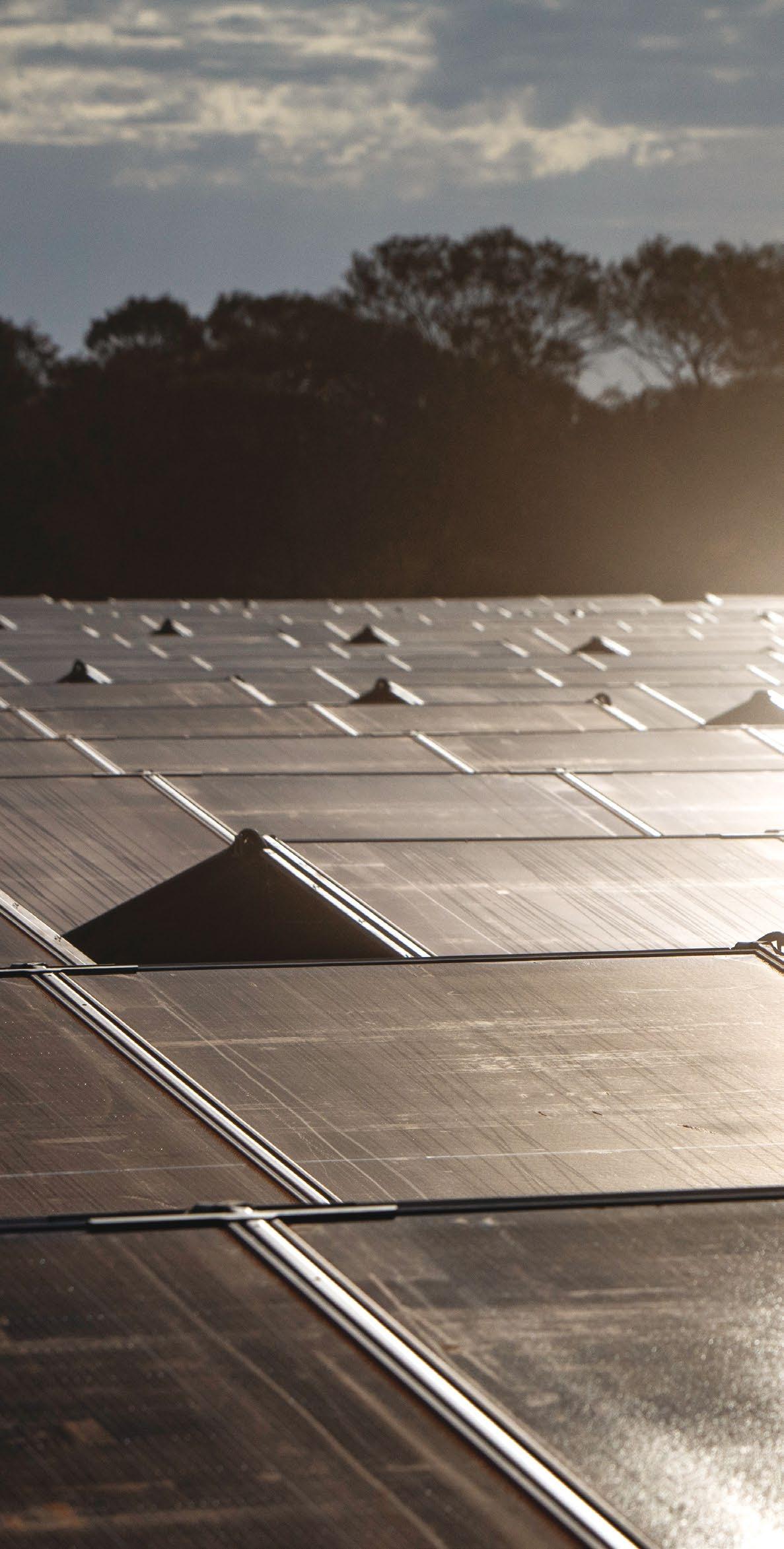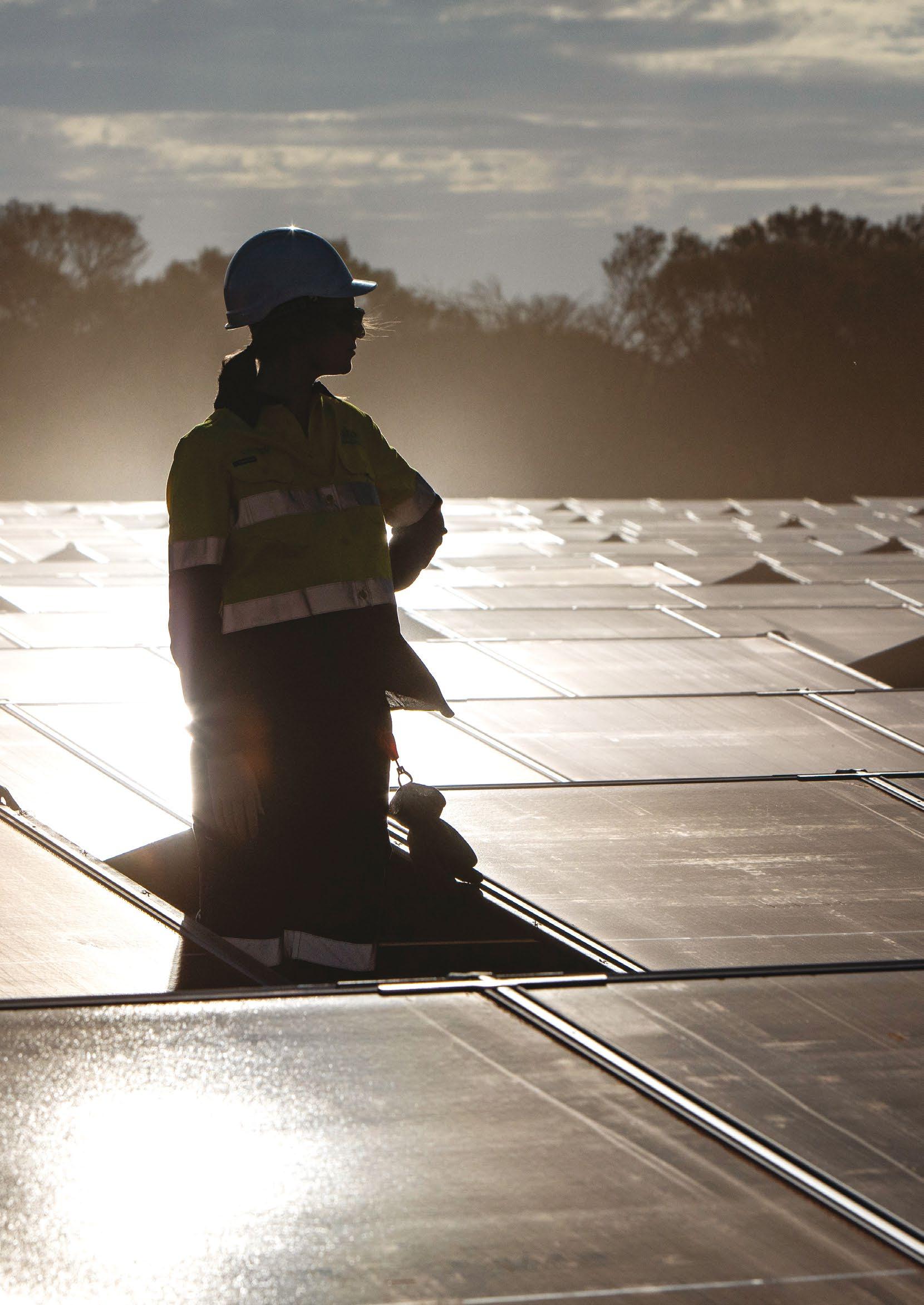
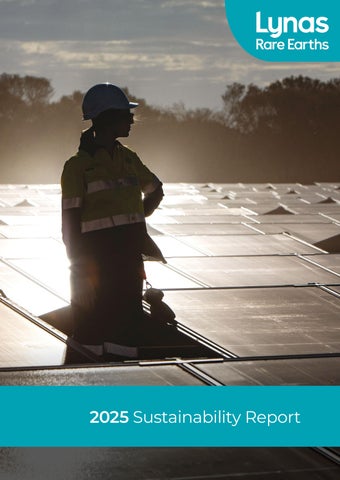
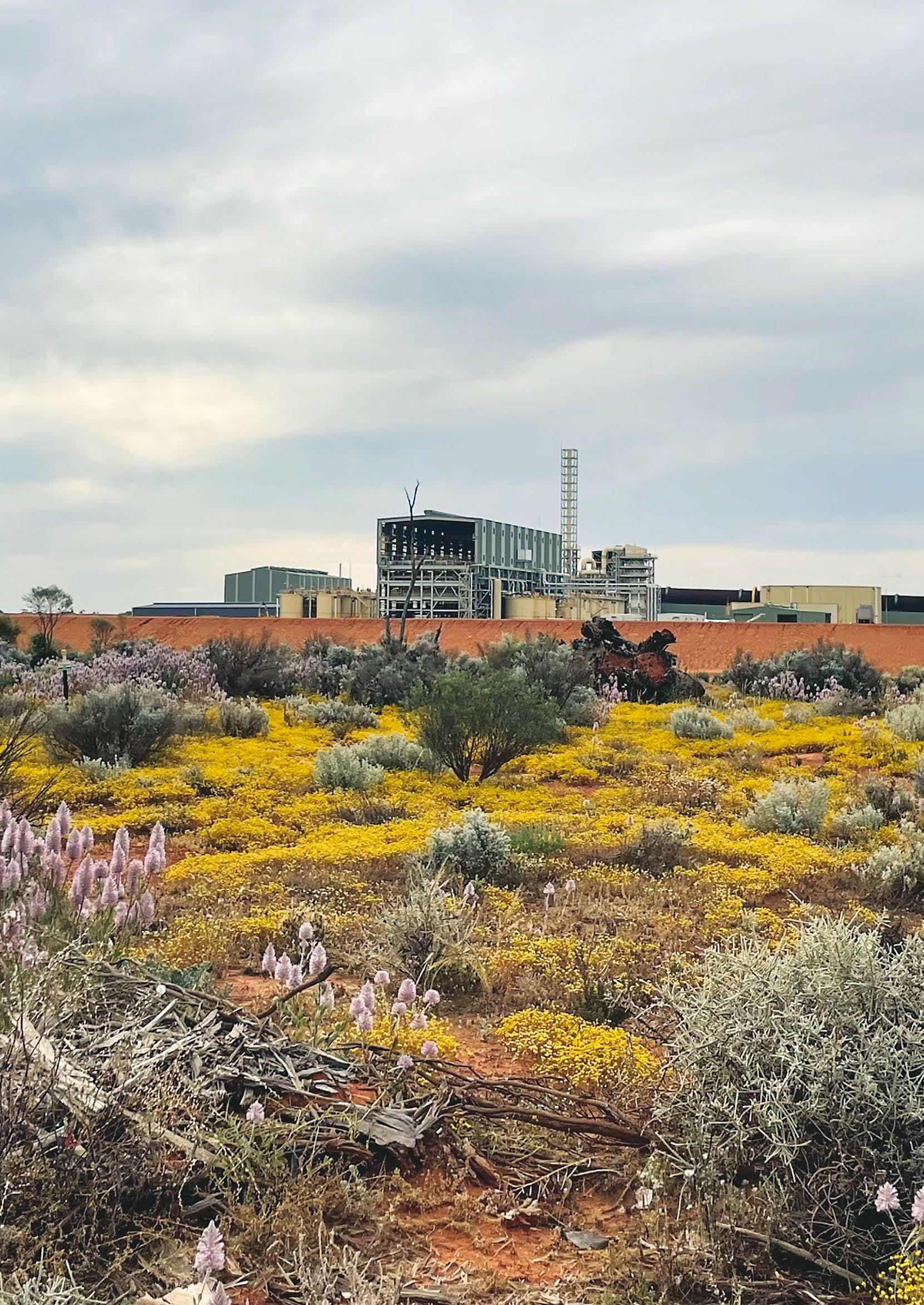
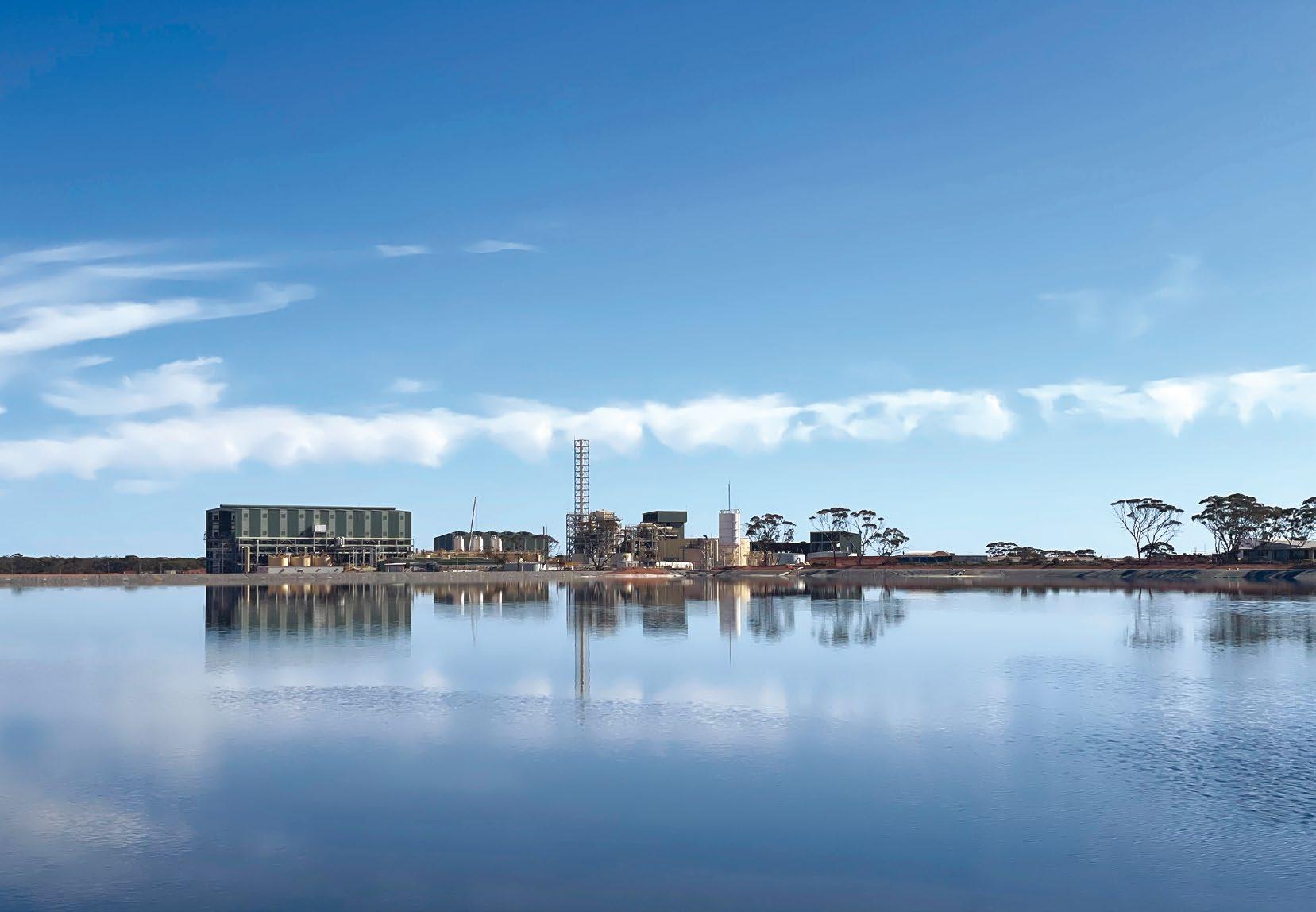
Cover: Lynas’ Kalgoorlie Rare Earths Processing Facility – photo by Kristy Bodycoat.
5th Modern Slavery Statement released Modern Slavery and Code of Conduct Training in Malaysia and Australia
1,127 2 employees 33.3% women on Board
5th Modern Slavery Statement released Modern Slavery and Code of Conduct Training in Malaysia and Australia
1,127 2 employees 33.3% women on Board
This has been an exciting year for Lynas Rare Earths as our Lynas 2025 capital projects were largely concluded and the new Mt Weld hybrid power station was constructed. From a supply chain resilience perspective, production of our first two separated Heavy Rare Earth products commenced during the year, making Lynas the only commercial producer of separated Light and Heavy rare earths outside of China.
These significant developments support our continued growth as an ethical and responsible rare earths producer and valued supplier to global manufacturing supply chains.
As we grow, we maintain our commitment to ensuring that our people and operations meet the high environmental, social and governance (ESG) standards expected by our communities, customers, investors and other important stakeholders.
In keeping with this commitment, we are pleased to present the 2025 Sustainability Report which sets out our performance in the 2025 financial year (1 July 2024 – 30 June 2025) and our objectives for the year ahead.
During the year, Lynas delivered expanded operations and processing capacity, as well as sustainability initiatives related to power generation and water recycling.
This included replacing the existing diesel power station at Mt Weld with a new, hybrid renewable power station. The solar and gas components of the power station were constructed during the year and are now operating and commissioning of the four new wind turbines recently began.
A solar array was also commissioned at the Lynas Malaysia advanced materials plant during the year, and Malaysian renewable energy projects were supported through the purchase of Renewable Energy Certificates.
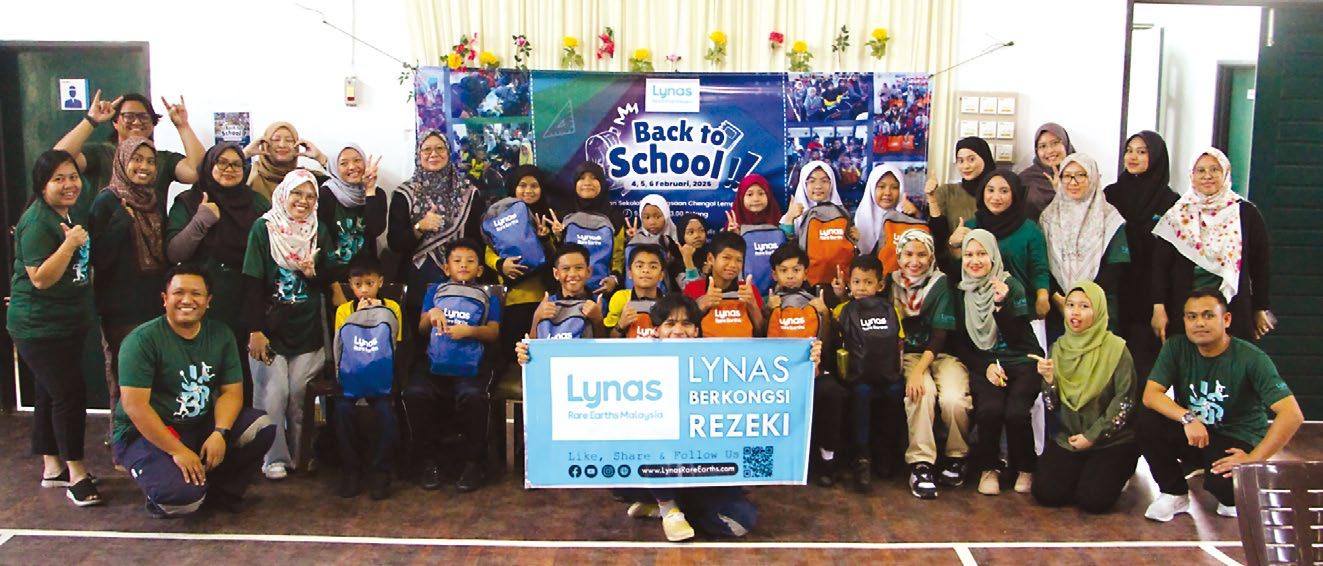
From a community perspective, Lynas continues to be an active part of our local communities in Western Australia and Malaysia. In addition to local employment and procurement opportunities, this year our people contributed hundreds of hours to support local STEM (science, technology, engineering and maths) education programs. We also supported a wide range of community programs across our four priority areas: education and training, health and sport, the environment, and vulnerable communities. We encourage you to read more about how Lynas is making a difference in the Caring for our Communities section of this Report.
In FY26 we embark on our Towards 2030 strategy, which includes optimising investments made as part of our Lynas 2025 growth initiative as well as new growth opportunities. This is an exciting time for Lynas, and sustainability and transparency remain a focus for our Company.
We welcome your feedback on this Sustainability Report and look forward to continued progress in these areas during the 2026 financial year.
John Humphrey Chair, Board of Directors
Amanda Lacaze CEO & Managing Director
The Lynas Rare Earths (Lynas) Sustainability Report 2025 outlines the Company’s ongoing commitment to report progress on sustainability initiatives. This Report reflects progress towards the principles of the United Nations Global Compact (UNGC), to which we are a signatory, and towards achieving the UN Sustainable Development Goals. The UN Global Compact is the world’s largest corporate sustainability initiative.
The content of this report is also informed by the Global Reporting Initiative (GRI) Sustainability Reporting Guidelines which are referenced in the ASX Corporate Governance Council, Corporate Governance Principles and Recommendations, 4th edition.
This report covers all operating sites and has been prepared in accordance with the GRI Standards: Universal Standards (GRI 1, GRI 2, GRI 3), plus the GRI 14: Mining Sector 2024. A copy of the GRI Content Index with links to relevant sections of the document is provided in the Navigation Index (available in the Appendix). This Report also references the World Economic Forum’s Four Pillars – Principles of Governance, Planet, People and Prosperity.
Lynas has an excellent track record of compliance with local laws and regulations and adopts international best practices in all jurisdictions.
Lynas participates in the following external accreditation and ESG initiatives:
• UN Global Compact
• Global Reporting Initiative (GRI)
• Task Force for Climate-related Financial Disclosures (TCFD)
• ISO Standards 9001, 14001, 45001
• MSCI ESG ratings
• ISS ESG ratings
• S&P Global ESG ratings
• Together for Sustainability (EcoVadis Sustainability Assessment)
• Life Cycle Assessment of our products
• Development of ISO TC 298 Rare Earth
• UN Guiding Principles on Business and Human Rights
• Sustainalytics ESG ratings
• FTSE Russell ESG ratings
The annual ISO surveillance audits were conducted at Mt Weld and Lynas Malaysia during the year and both operating sites were recertified for ISO 9001:2015 (Quality Management), ISO 14001:2015 (Environmental Management) and ISO 45001:2018 (Occupational Health and Safety Management). Mt Weld and Lynas Malaysia have been certified since 2012. Lynas’ new Kalgoorlie site was in ramp up in FY25 and has not yet commenced ISO certification.
In 2024, the International Organization for Standardization (ISO) published an amendment that requires organisations to consider relevance of climate change risks in their analysis of the organisations context and needs of interested parties. In FY25, climate change aspects and risks were considered within the development, maintenance, and effectiveness of ISO management systems.
In March 2025, the Department of Atomic Energy Malaysia (Atom Malaysia) undertook its annual compliance audit for the Lynas Malaysia advanced materials plant and the outcome was a ‘’very satisfactory’’ rating. This is the highest possible rating, and reflects the plant’s excellent record of regulatory compliance.
A summary of Lynas’ entities, operations and financial statements for 1 July 2024 to 30 June 2025 are reported separately in the FY25 Annual Report available at https://lynasrareearths.com/investors-media/.
All references to Lynas, the Group, the Company, refer to Lynas Rare Earths Limited (ACN 009 066 648) and its subsidiaries. All references to a year are the financial year ended 30 June 2025 (FY25), unless otherwise stated.
The process to verify the integrity of this report includes internal controls such as incident tracking, management assurance over compliance obligations and environmental risks which are reviewed annually and as required, and Board oversight. External assurance is provided by annual audits of environmental management practices, regulatory monitoring including Department of Environment reporting in Malaysia and Department of Water and Environmental Regulation, Department of Energy, Mines Industry Regulation and Safety reporting, NGER (National Greenhouse and Energy Reporting) and tailings facility audits in Western Australia.
Lynas participates in external verification initiatives including annual ISO accreditation audits and biennial EcoVadis sustainability assessments. No additional external assurance has been sought regarding the content of this report.
Lynas appreciates any feedback which will help the Company improve future reporting and communication with stakeholders. We invite you to send your comments or suggestions to: investorrelations@lynasre.com
Lynas Rare Earths Ltd is a publicly listed company incorporated in Australia and headquartered in Perth, Western Australia. Lynas is the only commercial producer of separated Light and Heavy Rare Earths outside of China. Lynas sources feedstock from the high grade, long life Mt Weld rare earths deposit in Western Australia.
Lynas was established as a responsible rare earths producer and produces materials that are traceable from mine to finished product. Lynas also offers mine to motor traceability with selected downstream manufacturing partners.
The rare earths concentrate produced at Mt Weld undergoes initial processing at our Kalgoorlie Rare Earths Processing Facility in Western Australia or at the Lynas Malaysia advanced materials plant in Gebeng, Malaysia. The resulting mixed rare earths are then separated into rare earth products at Lynas Malaysia.
Lynas’ rare earth products include Light Rare Earths: Neodymium and Praseodymium (NdPr) used in magnets, Lanthanum (La), and Cerium (Ce). In FY25, Lynas expanded its Heavy Rare Earths product range to five products: separated Dysprosium (Dy), Terbium (Tb), unseparated Samarium/Europium/Gadolinium; Holmium concentrate; and unseparated SEGH.
Rare earth materials are used in a range of high tech and green tech applications including hybrid and electric vehicles, wind turbines and electronics. The key markets for these materials are manufacturing supply chains in east Asia, north America and Europe.
Lynas aims to be the supplier of choice for our customers and a leader in sustainably produced rare earths. This vision lives through our people and the way we do business. Shared values and a culture which unlocks the potential of our people are fundamental to our success.
Our values
Care Achievement Diversity Expertise Sustainability
We care for and respect each other, our communities and the environment. We make sure we all go home safe and well.
We are resilient and committed. We overcome challenges to achieve our goals.
We are driven to be the world’s best in Rare Earths and to earn the respect of our customers.
We are a multicultural company. We value and embrace diversity.
We are passionate about contributing to a sustainable future and green technologies.
Our vision and values guide our approach to ESG. We live and work by our values every day.
Our ESG approach
• Health & safety is our #1 priority
• Diverse and engaged workforce
• Protecting human rights and preventing modern slavery
• Meeting the challenges of climate change
• Nurturing biodiversity
• Conserving water and reducing emissions and waste
• Making a positive contribution to our communities
• Respecting the values and cultural heritage of our communities
• Innovating for environmentally responsible technologies
• Engaging with stakeholders
• Managing risks GOVERNANCE
• Being ethical and compliant
At 30 June 2025, Lynas’ Board of Directors had six members – five are independent and the sixth is the Chief Executive Officer (CEO) and Managing Director. The Chair of the Board is an independent Non-Executive Director. The Board has three Committees, each comprising independent Non-Executive Directors, including the Committee Chair. The Board and each Committee has a Charter setting out its responsibilities.
The FY25 Lynas Rare Earths Corporate Governance Statement outlines the skills and experience each Board member contributes, as well as their independence, tenure, responsibilities for the full Board and its committees, and other significant Board positions. For more information on our corporate governance practices, see our Constitution and Board Charter which are available on the Lynas website at https://lynasrareearths.com/about-us/ corporate-governance.
At a Board level, sustainability (including climate change) is overseen by the Board on recommendations from the Audit, Risk & Environment, Social & Governance (ESG) Committee and the executive. At an executive level, the Lynas Leadership Team is responsible for sustainability including climate change.
The Lynas Board has adopted the industry best practice gender diversity target of 40:40:20, which represents 40% women, 40% men, 20% any gender. Performance against this target may vary due to the timing of Board composition changes. As at 30 June 2025, 33.3% of the Board of Directors were women. Further information on diversity at Lynas is provided in Section 6.1 Dignity & Equality.
The performance of the Board, its committees and individual Directors is evaluated on a regular basis.
This report covers key sustainability aspects which reflect the material issues of Lynas’ operations. Material issues are those where we have a significant effect on the economy, environment and/or society (positive or negative), and which have a substantive influence on the assessments and decisions of stakeholders.
The process for determining FY25 material issues comprised four key steps: research, identification, prioritisation and validation. This process was undertaken with a cross-functional team to ensure that we considered the full scope of the effects of our activities, both within our own operations and through interactions with investors, customers, communities, suppliers, and other stakeholders. Research included material issues guidance from the GRI Mining Sector Standard 2024 and the SASB Metals & Mining Materiality Finder.
The following materiality matrix for FY25 presents material issues for Lynas in FY25 together with an assessment of impact and importance to our stakeholders. These material issues are continued areas of focus for the Company as we drive sustainable value creation.
The materiality assessment is conducted with reference to double materiality i.e. it considers the internal effect on the business as well as the effect on society and the environment from our operations.
MATERIAL
WATCHLIST
MATERIAL
A Health and Safety
B
C Water and Wastewater Management
D Resource Efficiency and Waste Management
Critical Incident Risk Management
E Innovation and Financial Sustainability
WATCHLIST
F Cyber Security
G Product Responsibility and Stewardship
H Communities and Human Rights
I Ethics and Anti-corruption
J Employee Engagement and Equal Opportunities
Significance of environmental, social and economic impacts
Our material priorities are aligned with the United Nations’ Sustainable Development Goals:
Health and Safety
Water and Wastewater Management
Resource Efficiency and Waste management
Critical Incident Risk Management
Innovation and Financial Sustainability
In addition to the materiality assessment, Lynas engages with stakeholders on an ongoing basis – ranging from an annual customer satisfaction survey to regular information sharing and consultation with our local communities and engagement with investors (see Appendix 1: Stakeholder Engagement).
We communicate progress to investors though our Annual Report (available in the Investors section of our website www.lynasrareearths.com), through financial reports and investor briefings for quarterly, half-year and full-year results and at the Annual General Meeting. We also communicate to a wide range of stakeholders through presentations to meetings and conferences, community consultations and engagements, media interviews, and since 2019, via annual Sustainability/ESG Reports available on our website at www.lynasrareearths.com.
Anti-bribery and corruption risk assessment
In FY25, Lynas had operating sites in Australia and Malaysia. Transparency International’s 2024 Corruption Perceptions Index1 scores countries on the perceived level of public corruption on a scale of 0 (highly corrupt) to 100 (very clean). According to the Index, Australia scored 77 out of 100 while Malaysia scored 50 out of 100, above the average global score of 43.
Training on ethical behaviour and anti-bribery and corruption
Lynas has zero tolerance for bribery and corruption and the Lynas Rare Earths Code of Conduct and Lynas Rare Earths Anti-Bribery Policy (available at lynasrareearths.com/about-us/corporate-governance) outline the standard for business ethics, integrity and behaviour.
In FY25, Lynas staff completed annual Code of Conduct and Anti-Bribery and Corruption training, in line with our Code of Conduct, Supplier Sustainability Policy & Code of Conduct, and Conflicts of Interest policy.
Lynas employees are required to comply with multiple policies regarding ethical behaviour. This includes our Code of Conduct, available in both English and Malay. Employees who are found to have breached our Code of Conduct or our Anti-Bribery Policy are subject to disciplinary action which may include termination of their employment and referral to relevant authorities.
Lynas continues to identify opportunities to improve our anti-bribery and corruption program.
There were zero confirmed incidents of corruption in FY25. Further information is provided in Section 9 Data Performance Tables.
Lynas engages with internal and external stakeholders on anti-bribery and corruption initiatives. In FY25, the new global anti-bribery and corruption supplier assessment questionnaire continued to be implemented as part of supplier onboarding. Code of Conduct and anti-bribery and corruption training was also made available to Lynas Malaysia’s local suppliers.
4.3.1 Seeking advice about ethical and lawful behaviour and organisational integrity
Lynas is committed to ensuring that employees, contractors, business associates and community members can raise concerns regarding bribery, corruption or other improper conduct without being subjected to victimisation, harassment or discriminatory treatment, and to have such concerns properly investigated.
There are multiple avenues for employees to raise concerns or report incidents. This includes: raising issues or concerns with a supervisor or manager, Vice President People & Culture, General Counsel, or via an independently operated, confidential Disclosure Line, Lynas SpeakUp. This service is available in both English and Malay. Disclosure line training was provided to all staff as part of annual Code of Conduct & Anti-Bribery and Corruption training in FY25.
1 https://transparency.org.au/2024-corruption-perceptions-index
The Lynas Whistleblower Policy contains protections and confidentiality provisions for whistleblowers, consistent with applicable legislation, as well as contact details for the Lynas SpeakUp disclosure line.
Demonstrating a continued awareness of the Lynas SpeakUp disclosure line, there were 2 reports to the disclosure Line in FY25. Both reports were investigated and a breakdown of reports is provided in Section 9 Data Performance Tables. Awareness of reporting mechanisms was assessed as part of the biennial Employee Engagement Survey in 2024 and found:
• 99% of staff agreed with the statement “I know how to report unsafe or unlawful behaviour”; and
• 90% of staff agreed with the statement “I feel confident that something will be done if I make a report on unsafe or unlawful behaviour’’.
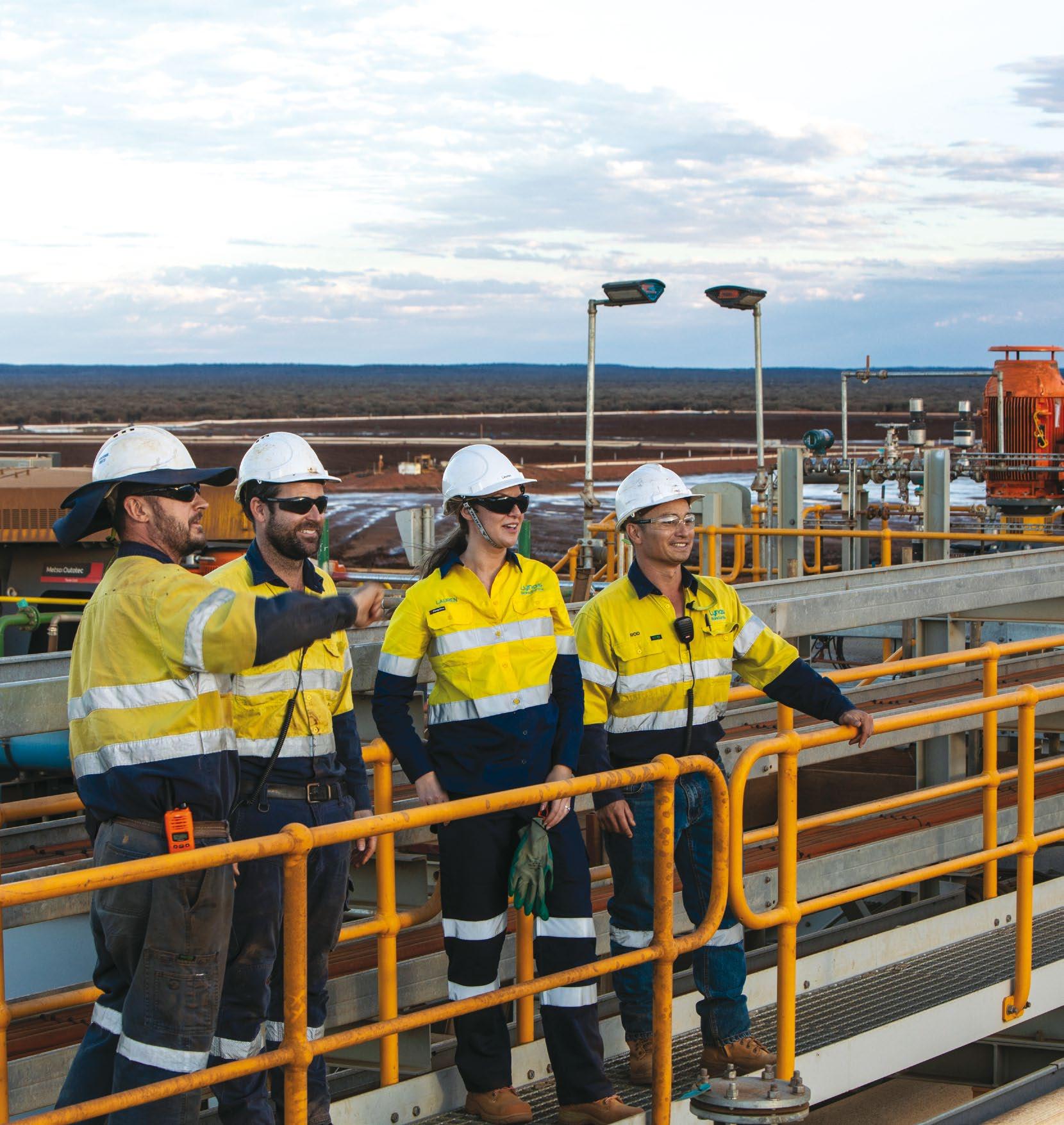
Lynas takes a proactive approach to risk management. Key risks and opportunities are continually assessed and identified, and the Group’s objectives and activities are aligned with these risks and opportunities The Board is responsible for risk management within Lynas and the Board’s Audit, Risk & ESG Committee oversees the management of the Group’s key risks and opportunities, including climate-related risks and opportunities. The Committee undertakes a quarterly review of the Group’s key business risks and key controls as well as the performance of key risk indicators established to monitor the key business risks.
Lynas has established a Risk Management Policy and a Risk Management Framework which form part of internal controls and governance and are used to manage risk within the organisation. The Framework encompasses the key principles, oversight structure, risk appetite and processes to manage key risks across the Group and provides consistency in risk management practices and decision making.
Lynas adopts the Three Lines of Defence in the risk governance structure. The First Line of defence comprises Operational Management, who oversee the key day-to-day activities and are responsible for risk management at the business and operational level; the Second Line of defence comprises the risks and compliance oversight functions, supporting First Line risk owners to monitor and manage risks; the Third Line of defence comprises internal and external audits which provide assessments of the risk and control environment to the Lynas Leadership Team and the Board.
Lynas operates in a changing environment and is therefore subject to factors and business risks that will affect future performance. In FY25, Lynas continued to improve the risk management systems and processes and enhanced the Group’s internal audit function following its introduction in FY23. The FY25 Annual Report (available at https://lynasrareearths.com/investors-media/) sets out principal risks and uncertainties that could have a material effect on Lynas’ future results, including climate-related risks and opportunities.
Further information in relation to risk oversight and management is outlined in the annual Corporate Governance Statement available at https://lynasrareearths.com/about-us/corporate-governance/.
Governance of information and cyber security risk is overseen by the Board on advice from the Audit, Risk & ESG Committee. At an executive level, the Chief Financial Officer (CFO) oversees Group IT services and operations and is responsible for information security. Updates are provided to the Audit, Risk & ESG Committee.
Lynas undertakes network penetration testing and regular IT audits and cyber security health checks in conjunction with external specialists to confirm compliance with security standards. Lynas continues to work towards applying the standards of our IT security management system under the NIST standard. Group IT services is also responsible for business continuity plans and third party supplier IT requirements.
In light of Lynas’ unique position in the global rare earths supply chain, Lynas has an internal policy on the use of Generative AI tools. Cyber security awareness training and phishing simulation testing was conducted for all staff during the year.
Given the ongoing nature of disinformation campaigns, the only effective long term response is to ensure that all stakeholders have access to accurate information. Lynas continues to work to ensure that factual and scientific information is available to our customers, communities, shareholders, media and other stakeholders. Social media safety and education programs for staff were also rolled out during the year.
Critical incident planning and emergency management are essential to the Lynas risk management process. Lynas has established operational strategies, organisational structure, and management processes for use by Lynas employees, contractors, and external agencies during an emergency response.
During the year, whole-site and area evacuation drills for Lynas employees and contractors were conducted. Skills training for the site emergency response teams included self-contained breathing apparatus, firefighting, hazardous chemical management, vertical rescue, and road crash rescue.
All operations’ emergency management processes are aligned with key aspects of the Australasian Inter-service Incident Management System (AIIMS).
Tests of this process have included multiple mock exercises and desktop exercises utilising a site’s Incident Management Team, including:
• Explosive trucks vs light vehicle;
• Scaffolding collapse;
• Enclosed building chemical spill; and
• Dump truck loss of control.
All mock exercises involved management of single or multiple causalities.
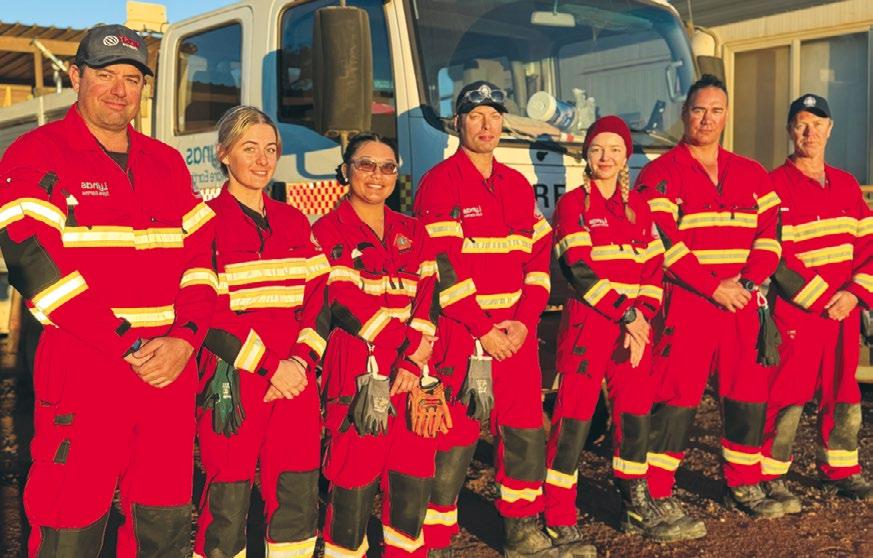
This year the Mt Weld Emergency Response Team (EMT) teamed up with the neighbouring Gold Fields Granny Smith EMT to compete in the Chamber of Minerals and Energy’s Surface Mine Emergency Rescue Competition held in Kambalda, Western Australia, in May.
The competition provided an opportunity to test and hone the team’s emergency response skills through simulated emergency situations while sharing their experience and knowledge with fellow participants. Lynas team members each dedicated over 150 hours to emergency response training in the lead up to the competition, with the common goal of making the industry safer for all.
The combined team participated in number of events including Fire Fighting, Vehicle Extrication, Team Skills, Rope Rescue, First Aid, Incident Management and Theory, competing alongside 15 other teams.
This joint team effort reflects the strength of mutual aid partnerships in the mining industry, reinforcing shared values of safety, teamwork, and emergency readiness.
All site evacuations, mock exercises, and desktop exercises conducted are formally reviewed. This review process, including the identification of actions, and tracking of any areas for improvement, ensures that our emergency response processes continue to evolve and improve, instilling confidence in our ability to handle any situation.
Lynas’ remuneration objective is to ensure that shareholder value is maximised by the attraction and retention of talented people. The remuneration framework takes into account the unique skills of our people, the global nature of the rare earths business, the complexity of the critical minerals supply chain and priorities for our operations, customers and shareholders, including climate-related initiatives.
Executive remuneration consists of a fixed pay component and an ‘at risk’ or performance related component. This comprises a Short Term Incentive (STI) which supports the delivery of annual performance goals selected by the Board considering the budget and Lynas’ strategic initiatives and a Long Term Incentive (LTI) focused on long term performance goals which create sustained value for shareholders. The STI and LTI also include employees in roles that have considerable influence on outcomes associated with capital management, operational leadership and major capacity growth projects or have specialist expertise in strategic areas for Lynas.
Lynas also offers a company-wide employee profit-share scheme (excluding those eligible for STI/LTI) to provide all employees an opportunity to contribute to and benefit from the company’s success.
The Lynas Short Term Incentive (STI) rewards performance in core business drivers. In FY25, this included EBITDA, NdPr Production, NdPr Production Rate and NdPr Operating Costs, as well as key non-financial performance metrics that are of particular importance to shareholders, including Strategic Plan/Business Plan; Health, Safety and the Environment (HSE); Sustainability (including climate-related objectives); and People and Culture. Based on these outcomes, 40% of the STI will vest.
The Long Term Incentive (LTI) recognises that capital projects are a substantial growth driver for the company. The LTI for the three year period from 1 July 2022 to 30 June 2025 has two components which are designed to be aligned with the creation of sustainable long term shareholder value. The first of these components is Relative Total Shareholder Returns (TSR) assessed over a three year period, relative to other peer group companies. The second component is related to targets aligned with Lynas’ strategic growth objectives. Further details are available in the Remuneration Report of the 2025 Annual Report available on our website at https://lynasrareearths.com/ investors-media
In Australia, Auditor independence is regulated under the Corporations Act 2001, Australian Auditing Standards issued by the Auditing and Assurance Standards Board and APES 110 Code of Ethics for Professional Accountants (including Independence Standards) issued by the Accounting Professional & Ethical Standards Board (APESB). Audit partner rotation occurs after a maximum of five years. The most recent rotation of Lynas’ audit partner was in 2023.
As the only commercial producer of separated Light and Heavy rare earths outside of China, Lynas is actively engaged with governments around the world and contributes our expertise to addressing critical minerals supply chain challenges. Governments outside China, including Australia, Japan, the United States and the European Union, are taking action to secure a diverse and resilient supply of rare earth materials for industry.
Lynas Rare Earths is a member of the Western Australian Government’s Future Battery & Critical Minerals Industry taskforce and the European Raw Materials Alliance (ERMA).
5.5.1 U.S. lobbying activities
2025 reports filed by lobbyists representing Lynas Rare Earths are available from the U.S. House of Representatives at: https://disclosurespreview.house.gov.
5.5.2
As a leader in the Australian critical minerals industry, Lynas is a member of key industry associations. Through these associations, we share and develop industry best practice and contribute to industry and policy discussion and debate.
Lynas’ major industry association memberships are with the Minerals Council of Australia (MCA) and the Chamber of Minerals & Energy of Western Australia (CME WA). Both the MCA and CME WA support the Paris Agreement and its goal of net zero emissions by 2050 and Lynas is committed to this goal.
Details of memberships of associations can be found in Appendix 3: Memberships and Initiatives.
At June 30 2025, Lynas had 1,127 employees across Malaysia and Australia. Employees and contractors working on Lynas sites are held to the same high safety standards as Lynas employees and receive equivalent safety training.
Lynas undertakes a biennial company-wide Employee Engagement Survey, most recently undertaken in June 2024. This Survey achieved a participation rate of 87% (up from 59% in 2022).
The survey found:
• 94% of staff agreed with the statement “I believe the work we do is important because Lynas is a sustainable and environmentally responsible producer of rare earths” (up from 93% in 2022)
• 88% of staff would recommend Lynas as a great place to work (up from 87% in 2022)
• 94% of staff agreed with the statement “I feel safe at work” (up from 93% in 2022)
• 88% of staff agreed with the statement “I am respected at work” (up from 86% in 2022)
Site-based action plans have been developed and actioned in response to feedback received in the 2024 Employee Engagement Survey.
6.1.1 Diversity % (age, gender, ethnicity)
Valuing and embracing diversity in all its forms is a core value at Lynas. We set measures to monitor our progress. In FY25, the objectives included goals related to gender equality and cultural diversity. The objectives set by the Board are included in Section 9 Data Performance Tables.
Lynas continues to focus on the development of talent within our business. At the end of FY25, female employees represented 25% of total employees (up from 24% in FY24). The percentage of female employees in senior executive positions was 23% (defined as all managers and above including CEO, CEO-1, -2, -3) (down from 25% in FY24). The total number of females in operating roles increased to 23% in FY25 (from 21% in FY24).
Priorities in FY25 also included employment of First Nations peoples in our business and increasing workforce mobility to promote cultural diversity.
A high level of staff mobility between Australia and Malaysia continued in FY25, including specialists from our Malaysian operations who are assisting with the ramp up of the Kalgoorlie Rare Earths Processing Facility. The number of First Nations employees in Australia and Malaysia remained stable in FY25.
Lynas prioritises local employment opportunities in each of the regions in which we operate. In FY25, local employees represented 93% of the workforce and expatriates accounted for 7% of the workforce, including Malaysian team members assisting with the ramp up of the new Kalgoorlie Facility.
The median age of employees in FY25 was 30-50 years old. A breakdown of diversity data is provided in Section 9 Data Performance Tables.
OUR FY25 ACHIEVEMENT
Total female employees
OUR CY2026 TARGET Increase gender equality in operations roles (YoY).
Lynas is committed to gender equality and is working to continue to reduce gender pay gaps. We recognise there is work to be done in our organisation and across the critical minerals industry to attract and retain women and we have set a target of 30% women in our workforce by the end of CY2026.
In Australia, Lynas Rare Earths reported under the Workplace Gender Equality Act (WGEA) for the year ending 31 March 2025 for Australian operations.
In line with WGEA gender pay gap reporting, in March 2025, Lynas published our gender pay gap results for employees in its Australian operations in line with the Workplace Gender Equality Amendment (Closing the Gender Pay Gap) Act 2023. This data represents an overview of Lynas Rare Earths’ Australian operating sites and offices which employed 274 people (excluding the CEO) in the 2023–2024 reporting period. Of these employees, 29% were women and 71% were men. The gender pay gap is the difference in average earnings between women and men in the workforce.
Key figures from the 2023-2024 reporting period showed the gender pay gap for managers and senior managers at Lynas is closer to zero than the average for the industry comparison group:
• Average total remuneration gender pay gap of 1.2% vs industry average of 20.3%
• Median total remuneration gender pay gap of 23.6% vs industry at 22.4%
WGEA public data reports and Lynas’ Gender Pay Gap Report are available on our website at https://lynasrareearths. com/about-us/corporate-governance or on the WGEA website at www.wgea.gov.au
We value our people and recognise the dignity that comes from fair compensation. All Lynas employees receive pay and entitlements that are consistent with legislative requirements in Australia and Malaysia and applicable legislation including working time and conditions is followed. Lynas also provides benefits, leave and allowances to foster employee wellbeing.
In Malaysia, we offer training, flexible working hours for non-operations employees, maternity leave above statutory requirements, part-time work transition from maternity leave, paternity leave and health schemes. Lynas Malaysia also operates a childcare facility for the children of Lynas Malaysia team members.
In Australia, we offer training and development opportunities. As a best practice employer, we offer 18 weeks of parental leave for the primary carer of the child (biological or adoption related) and continue to make superannuation payments throughout this period. We also offer full pay for three weeks of parental leave to Lynas employees with 12 months continuous service to provide support to their dependents where an employee’s partner, de facto, spouse, has given birth to a child and is the primary caregiver.
Lynas is committed to paying and exceeding a living wage. Lynas Malaysia monthly wages (without overtime) have been assessed against available living wage data for Malaysia and all employee salaries are at or above the living wage for the relevant city.2
According to an economic impact assessment prepared by an external organisation in 2022, 99% of jobs created at Lynas Malaysia are in the middle and high-income categories and average income for a Lynas Malaysia employee is approximately three and a half times the average income in the state where the Lynas Malaysia plant is located and approximately three times the national average income.3
At Lynas, safety is our first priority. This means we are focused on production that is safe for our people, safe for our communities, and safe for the environment.
Lynas’ safety reporting is aligned with the ISO 45001 (Occupational Health and Safety Management) guidelines for the recording and reporting of occupational injuries and illnesses. Lynas’ safety performance data includes both employees and contractors.
2 https://www.kwsp.gov.my/documents/d/guest/20241115_booklet_belanjawanku_en_005_ol-compressed
3 https://lynasrareearths.com/lynas-malaysias-economic-impact-report-2021/
The 12-month rolling Lost Time Injury Frequency Rate (LTIFR) as at 30 June 2025 was 1.8 per million hours worked (June 2024: 1.04 per million hours worked). The 12-month Total Recordable Injury Frequency Rate (TRIFR) at 30 June 2025 was 3.6 per million hours worked (June 2024: 5.0 per million hours worked). While the TRIFR reduced in FY25, the LTIFR increased slightly and Lynas will continue to focus on improving health and safety programs in FY26.
Care and ensuring that everyone working at Lynas goes home safe and well is a core value of our company. Our safety approach includes safety training, audits, behaviours, and meetings.
OUR FY25 ACHIEVEMENT
Commenced PASS rollout at Western Australian operations.
OUR FY26 GOAL
Reduce Total Recordable Injury Frequency Rate (TRIFR) YoY.
Lynas has a global safety leader and a Group-wide Safety Council to review and assess safety concerns and priority actions on monthly basis and whenever required.
In FY25, a wide range of Health and Safety assessments or awareness programs were completed by Lynas employees. This includes training in mental health.
Critical events are managed through the Global Critical Risk Registers, the controls are reviewed per operation and communicated through the sites risk assessment process (Job Hazard Analysis, Take 5) and the Golden Rules (Malaysia) and Life Saving Rules (Western Australia) programs.
Lynas always seeks to share learnings across sites and in FY25 the Group commenced rolling out the PASS safety program to Western Australian sites. PASS successfully operates at the Lynas Malaysia plant. In Western Australia, PASS has been adapted to include a prompt to discuss TAKE 5 and Life Saving Rules.
6.2.2 Access to nonoccupational medical and healthcare services
The health and wellbeing of our people is a priority for Lynas. Health and wellbeing treatment and support is consistently made available to both direct and contract employees. Lynas’ operating sites have on-site medical assistance.
An independently operated Employee Assistance Program (EAP) is also available to all staff on a confidential basis.
6.2.3 Emergency Response Program
As noted in 5.2 Critical incident planning, this year all operations emergency management processes were aligned with key aspects of the Australasian Interservice Incident Management System (AIIMS) and this process was tested through multiple site mock exercises and desktops utilising the site’s Incident Management Team.
What attracted you to the mining industry?
I was drawn to the mining industry as I grew up in a rural mining town in Queensland. Many of my high school peers did apprenticeships, but I always had my eyes set on STEM and university. I found a natural fit in geology with my passion for rural and regional Australia. I have completed a Bachelor of Geology with first-class honours in Geoscience and Certificate III in Mines Rescue (ERT).
As soon as I did my first geology class at university, I knew I wanted to pursue it as a career. Since pursuing geology, I have found a passion for rare earths and being a part of Australia’s clean energy transition. At the same time, I get to make a difference in emergency response at Lynas’ Mt Weld operation.
What do you enjoy most about your role as a mine geologist?
Being a mine geologist at Lynas means I get to spend time both indoors and outdoors, working on projects and guiding and advising mining operations at the face. You never know what your day will be like. I’m now completing a PhD in heavy rare earth carbonatites with support from Lynas.
6.3.1
At Lynas, we believe our people should have meaningful training and development opportunities. Training and development opportunities are provided to 100% of Lynas Rare Earths employees in Australia and Malaysia.
Lynas employees participate in annual performance reviews and each respective department manager works with their team members on development opportunities with support from the People and Culture team. Lynas has a formal talent management process that includes mentoring and succession planning as well as initiatives focused on skills development, such as executive mentoring programs and career advancement programs to develop skills and experience that prepare employees for senior management.
Lynas employees in Malaysia and Australia received approximately 58 hours of training per employee in FY25. The training provided to Lynas employees includes functional/process training, Safety, Health, Environment, Cyber Security training, and wellbeing and other skills.
6.3.2
Lynas Rare Earths is committed to protecting the human rights of all people with whom we have dealings, including our employees, our business partners, and all people in our host communities. This is reflected in our Human Rights Policy which can be found on our website https://lynasrareearths.com/about-us/ corporate-governance
Our responsibility to protect human rights and manage the risk of modern slavery applies to our own global operations as well as to our supply chains and we take this responsibility seriously. In FY25 we released our fifth Modern Slavery Statement in line with the Australian Modern Slavery Act, outlining our commitments and our actions to prevent modern slavery in our organisation and in our supply chains. This Statement and associated policies and codes of conduct are available at https://lynasrareearths.com/about-us/corporate-governance
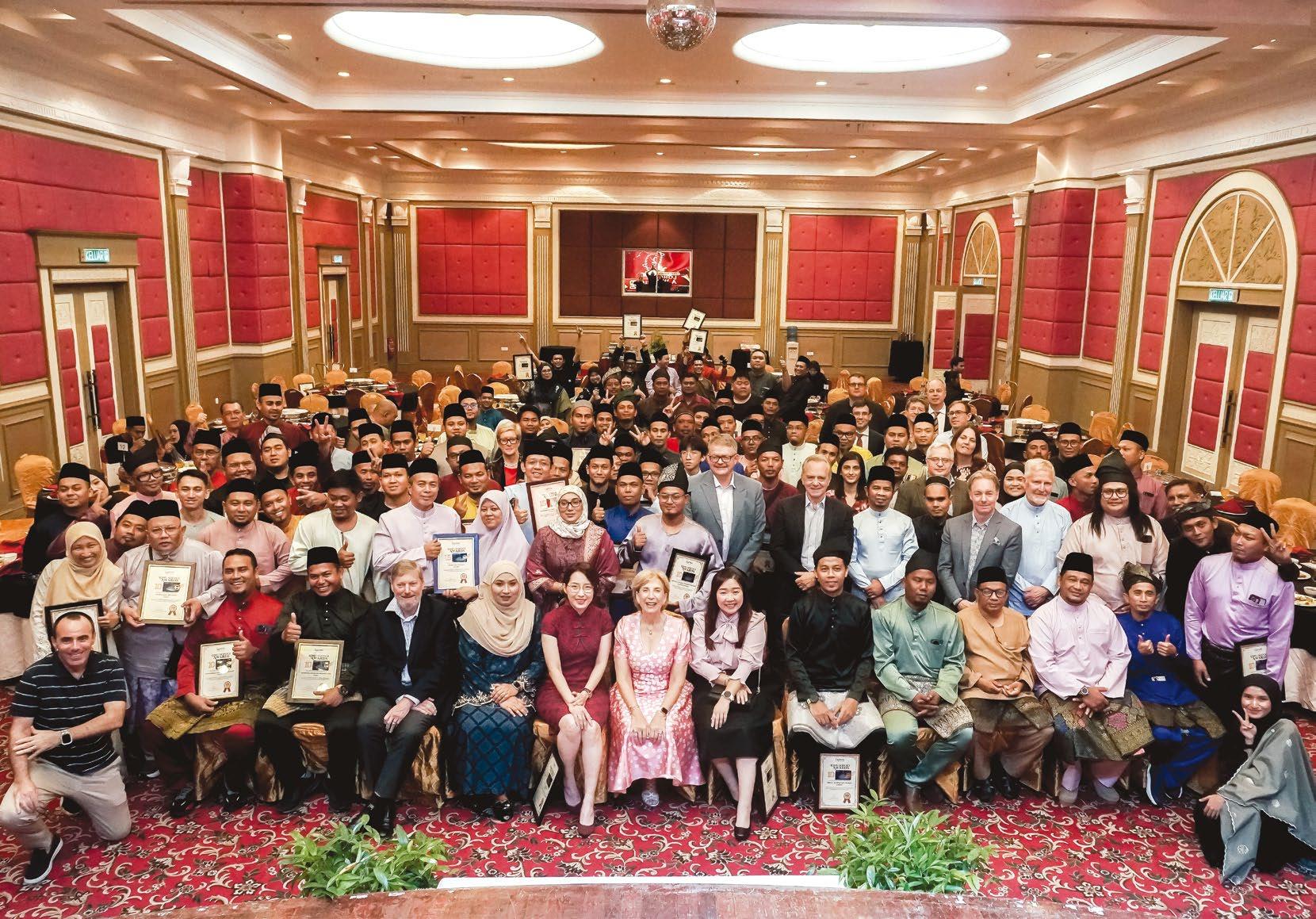
Lynas is a signatory to the United Nations Global Compact (UNGC), which includes the protection of human rights and the elimination of all forms of forced and compulsory labour as part of its Ten Principles. In FY25, Lynas participated in UNGC education sessions on a range of issues from climate change to diversity, human rights and the environment.
In relation to Children’s Rights, the Lynas Human Rights Policy sets out our commitment to never using child labour and Lynas actively supports initiatives related to children’s education and health in the communities in which we operate. As stated in the Lynas Code of Conduct, Lynas does not employ any person who is below the minimum legal age for employment and forbid the use of children under the minimum legal working age of fifteen (15) years old; whichever is higher, as labour. Employees under eighteen (18) years of age must not carry out hazardous work. The Lynas Supplier Code of Conduct sets the same expectation for our suppliers.
6.3.3
As a lawful and compliant company, Lynas follows applicable laws in the countries in which we operate. Our Human Rights Policy, annual Modern Slavery Statement, and our Supplier Sustainability Policy and Code of Conduct, outline our commitments to upholding human rights and preventing modern slavery. We have an independently operated Disclosure Line that is available to employees, contractors, business associates and members of the community to report any concerns or breaches of our policies.
6.3.4 Use of security guards
Lynas does not operate in high risk jurisdictions. As outlined in our Human Rights Policy, Lynas is committed to ensuring that security at all operations is managed in line with the protection of human rights.
6.3.5
Lynas has policies and procedures in place to mitigate the risks of modern slavery at our operations and in our supply chains. This includes our Human Rights Policy, employee Code of Conduct, and Supplier Sustainability Policy and Code of Conduct which requires all suppliers to agree to respect the basic rights of employees, implement strong health and safety and environmental protection standards, and not use “conflict minerals”. Our policies and codes of conduct state our commitment not to engage in or support the use of any form of forced, compulsory or illegal labour and expressly forbid the employment of anyone under the minimum legal working age or fifteen (15) years old; whichever is higher.
Lynas has assessed the risk of modern slavery among our people as very low due to the policies and procedures we have in place. This includes prioritising local employment, directly supervising all on-site employees and contractors, and following a process to ensure that no illegal foreign workers are engaged as either employees or contractors at our sites. In FY25 Malaysian and Australian staff attended annual Modern Slavery training sessions.
Lynas will continue to identify opportunities to strengthen our human rights approach, including through relevant external engagement and initiatives. This includes preventing modern slavery, including forced labour and human trafficking.
In line with the Commonwealth Modern Slavery Act 2018 Guidance for Reporting Entities, the Lynas Rare Earths FY25 Modern Slavery Statement will be released prior to 31 December 2025.
Lynas aims to minimise effects on the environments in which we operate and to minimise our lasting footprint. As a large energy user, whilst also being a producer of technologies that are essential to a low carbon economy, we understand we have a role to play by actively reducing our Greenhouse Gas (GHG) emissions and efficiently using both energy and water at our sites.
The Lynas Environmental Policy outlines our commitment to care for and minimise our effects on the environments in which we operate. The Lynas Malaysia and Mt Weld operating sites are accredited to the ISO 14001:2015 International Standard for Environmental Management Systems.
Lynas has never been involved in an incident resulting in harm to public health or the environment, reflecting the strength of our processes and policies.
Key climate-related areas of focus in FY25 included:
• Construction of new 65MW Mt Weld hybrid power station and progressive commissioning of gas and solar
• Commissioning of Lynas Malaysia solar array
• Climate Transition Working Group identification of GHG emissions reduction opportunities, in line with Lynas’ Climate Change Policy
• New whole of company GHG data management system to enhance data consistency
• Pre-assurance assessment of climate-related disclosures in preparation for FY26 mandatory reporting
Lynas’ FY25 climate-related financial disclosures are available in the FY25 Annual Report available at https://LynasRareEarths.com/investors-media
The Lynas Rare Earths Climate Change Policy outlines the Company’s approach to the challenges of climate change and includes the Company’s commitment to target Net Zero emissions by 2050. It is available at: https://lynasrareearths.com/about-us/corporate-governance
OUR FY25 ACHIEVEMENT
Preparation for new Australian mandatory climate reporting requirements:
• New GHG data management system implemented
• FY25 climate disclosures voluntarily guided by core content areas of AASB S2
OUR FY26 GOAL
Complete work towards first company-wide Climate Transition Plan including site based GHG reduction target for Lynas Malaysia
Life Cycle Assessment (LCA) of GHG emissions is part of capital expenditure assessments. Lynas also undertakes LCAs as part of the sustainable management of the product life cycle. In FY22, an independent validation of the Lynas LCA methodology was undertaken by an independent third party. This found the LCA conforms with ISO standards 14040 and 14044.
Lynas remains focused on reducing energy use and GHG emissions in our operations. Our climate strategy includes reducing reliance on fossil fuels by investing in clean energy solutions as well as process and product innovation.
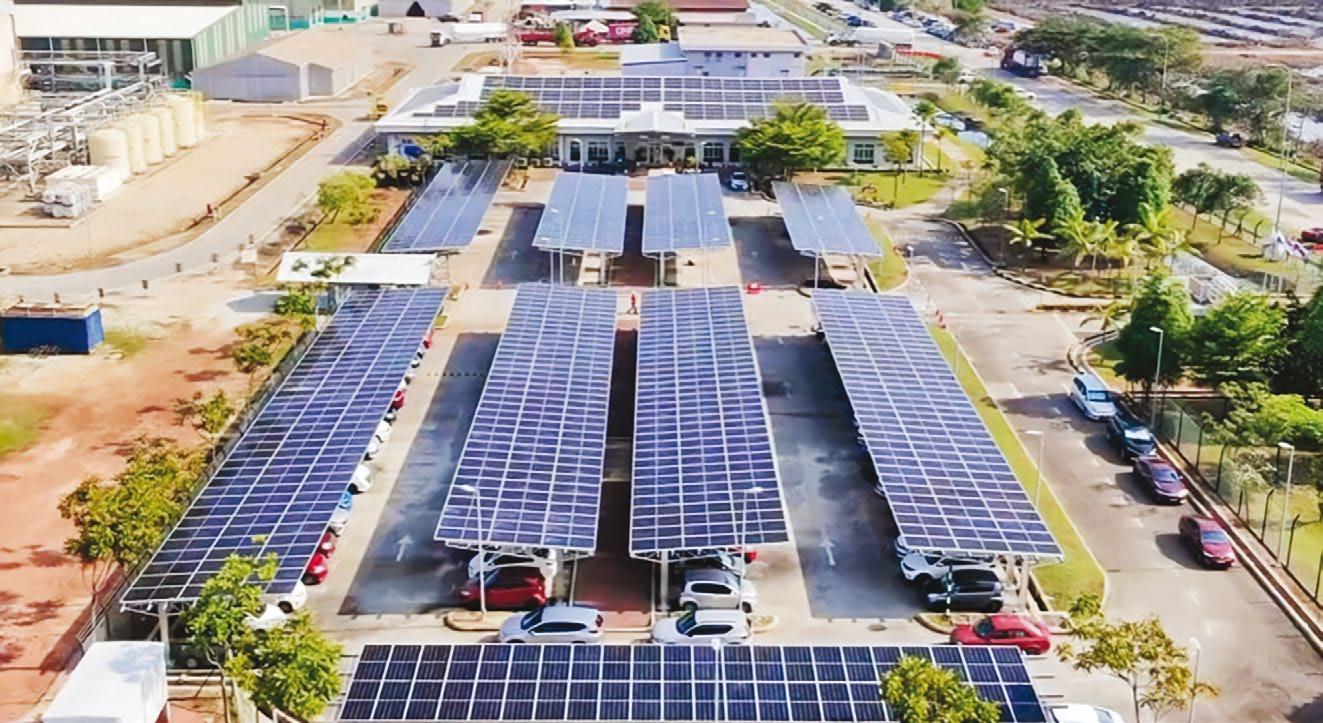
Lynas has established a multi-disciplinary Climate Transition Working Group to share knowledge and initiatives across sites.
In FY25, excellent progress was made on the 65MW Mt Weld hybrid renewable power station by Lynas’ Power Purchase Agreement (PPA) partner, Zenith Energy. The gas and solar components of the power station were constructed and gas was commissioned. In the September 2025 quarter, solar was commissioned and the four wind turbines have been constructed and are being progressively commissioned..
In 2025, Lynas Malaysia commissioned its 0.75MW rooftop solar array, Malaysian Renewable Energy Certificates equivalent to 60,000Mwh were purchased, and training was provided to Lynas Malaysia team members on energy conservation and climate action.
Our performance
For energy consumption data by site, please refer to Section 9 Performance Data Tables.
Mt Weld energy use
Lynas’ Mt Weld operation generates electricity on site to meet all site needs. Diesel and gas (LNG) were used for energy generation in FY25 and diesel was also used for vehicles and stationary equipment. Energy consumption at Mt Weld increased in FY25 compared to FY24, primarily due to the commencement of 24-hour mining as well as major construction projects underway on site as part of the Mt Weld Expansion project which is now largely complete.
As noted in Case Study 3, the transition from a diesel power station to the Mt Weld hybrid renewable power station is underway and is expected to reduce GHG emissions intensity. Gas and solar assets were constructed in FY25 and the 65MW hybrid power station is targeted to be fully operational in FY26.
After commencing production in the June quarter of 2024, the Kalgoorlie Rare Earths Processing Facility was in the ramp up phase during FY25.
During the year, gas (liquified petroleum gas (LPG)) and electricity were used on site, with electricity supplied by the South-West Interconnected System (SWIS) transmission network. According to publicly available sources, the SWIS electricity grid connected to Kalgoorlie generated approximately 39% of electricity from renewable sources in FY254
The completion of construction and transition to operations resulted in a change to the energy mix in FY25. This included a significant decrease in heavy vehicle diesel use and an increase in gas (LPG) use as kiln utilisation increased.
Following continued grid outages in FY25, Lynas is assessing reliable electricity options for the Kalgoorlie Facility.
4 Source: wa.gov.au
Lynas Malaysia energy use
The Lynas Malaysia plant primarily uses natural gas and grid electricity. Some diesel is consumed in machines and processes. The 0.75MW rooftop solar array was commissioned and began operating in FY25.
OUR FY25 ACHIEVEMENT
Mt Weld hybrid power station gas plant constructed and commissioned and solar farm constructed
OUR FY26 GOAL
Mt Weld – 65MW hybrid power station (solar, wind, battery, gas) commissioned and fully operational
Our performance
Lynas monitors and reports on total Scope 1 and Scope 2 GHG emissions in line with the GHG Protocol and Australia’s National Greenhouse Energy Reporting (NGER). Our Scope 1 and Scope 2 GHG emissions data is available in Section 9 Performance Data Tables.
Scope 3 emissions are divided into different categories and Appendix 4 provides an overview of the evaluation status for each category.
In compliance with the Australian National Greenhouse and Energy Reporting Act (NGER), Lynas reports Scope 1 and Scope 2 GHG emissions associated with the Mt Weld and Kalgoorlie sites in Western Australia to the Clean Energy Regulator.
Lynas Rare Earths’ GHG methodology is available at: https://lynasrareearths.com/sustainability/ our-commitment-to-esg/
Lynas conducted Life Cycle Assessments for our products and calculated an emission average of 30kg CO2-eq per kg of REO from our internal LCA on year 2019 basis.
A Life Cycle Assessment for permanent magnet motors used in water pumps has also been conducted in conjunction with value chain partners. This assessed the manufacturing data from two electric motor pumps, one an induction motor using copper coil for an electromagnet, and the second a permanent magnet motor using neodymium-ironboron magnets. The manufacturing of the pump from rare earth permanent magnets was shown to have 50% lower carbon dioxide equivalent emissions and over 10 years, will produce 75% lower carbon dioxide equivalent emissions. In addition, the permanent magnet motor pump was 50% lighter than the induction motor pump.
Lynas’ key biodiversity goals are to:
• Protect the environments in which we operate;
• Avoid adverse effects on biodiversity through application of the mitigation hierarchy; and
• Achieve zero significant environmental incidents.
Lynas does not operate in or adjacent to Commonwealth or State listed priority ecological communities, threatened ecological communities, or World Heritage areas and in FY25 there were no significant environmental incidents.
Mt Weld September 2025. The Mt Weld hybrid power station has 4 wind turbines (6MW each) which are constructed and coming online. Solar and gas components of the power station are now operating.
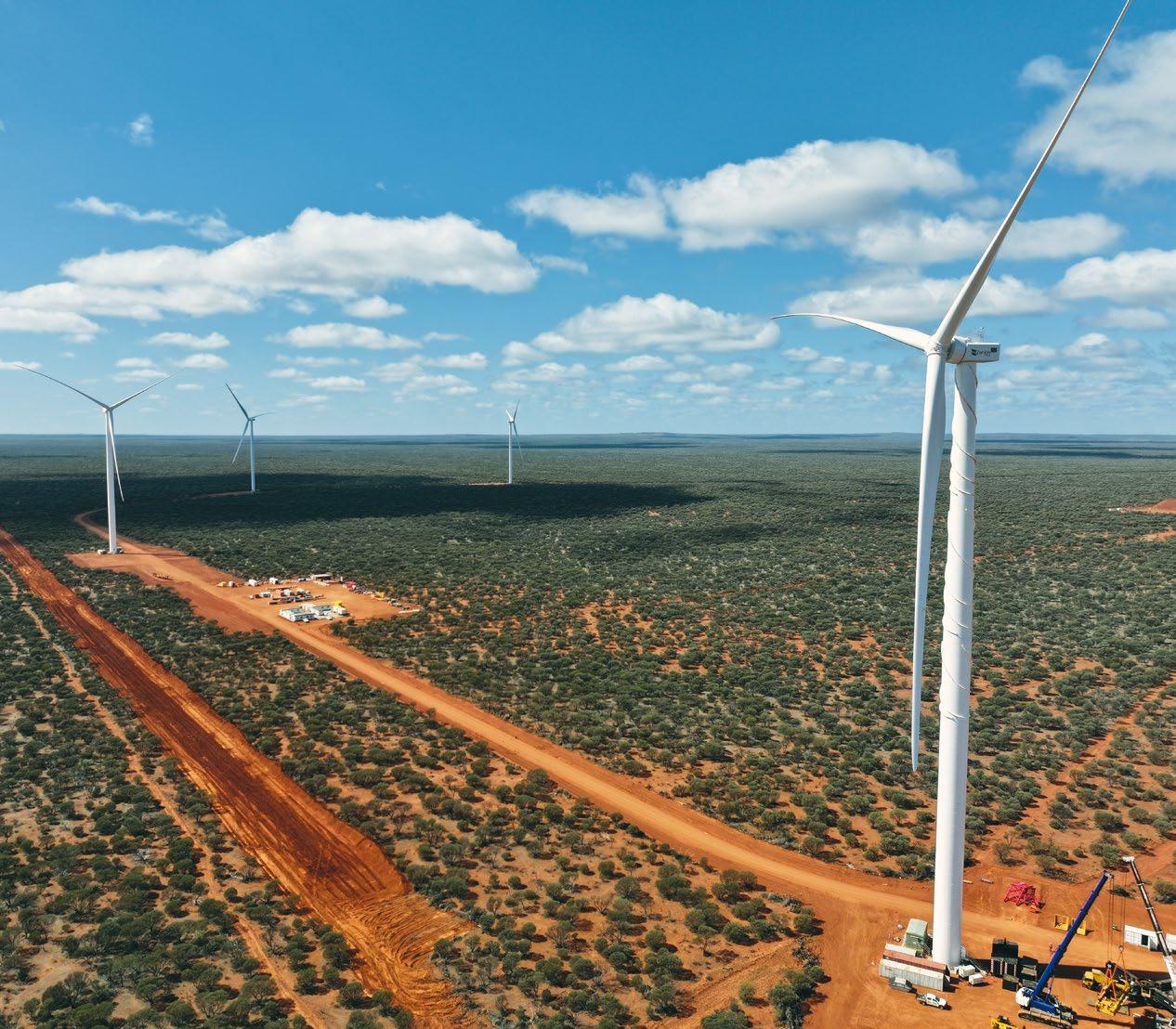
Significant progress was made on construction of the 65MW Mt Weld hybrid power station by Lynas’ PPA partner, Zenith Energy, during FY25. The gas generation plant and solar farm have now been successfully commissioned and commissioning of the four wind turbines is underway. The Hybrid Power Station is capable of running on renewable energy only in periods of high renewable generation
In Malaysia, the 0.75MW solar array at the Lynas Malaysia advanced materials plant is now operating and contributing to the plant’s energy mix. While the solar array represents a small part of the plant’s energy use, its performance will be evaluated as part of further plans for renewable energy solutions for the plant. In the meantime, Malaysian Renewable Energy Certificates equivalent to 60,000 MWh were purchased for 2025.
Continuing to invest in and evaluate cleaner energy solutions is an important step towards our sustainability goals and Lynas’ energy transition.
The Lynas Environmental Policy outlines the company’s commitment to protect biodiversity at operational sites located in, or adjacent to protected areas, or areas of high biodiversity value outside of protected areas, through application of the mitigation hierarchy. The Lynas Leadership Team is responsible for the implementation of the Lynas Environmental Policy which is overseen by the Board of Directors.
The Mt Weld operation is situated on approximately 2,800ha of mining leases. The site is in a remote area of Western Australia in the Murchison Interim Biogeographic Regionalisation for Australia (IBRA) bioregion.
Since 2011, Lynas has been completing terrestrial and subterranean ecological surveys conducted by experienced external biodiversity experts to understand the flora, vegetation and fauna (both vertebrate and invertebrate) species on land and below the surface to complete detailed environmental impact assessments. The flora and vegetation of Mt Weld are typical of the region and are dominated by a mulga woodland with some localised mallee and spinifex communities. No rare or geographically restricted plant species are known to occur. No conservation reserves or Ecological Sensitive Areas intersect the project area.
At Mt Weld, Lynas implements an Environmental Management Plan that includes a mitigation hierarchy that sets objectives and targets for flora, fauna, surface water, and ground water. We perform quarterly groundwater seepage monitoring surrounding our Mt Weld tailings storage facilities with water analysis performed by an independent third party. No groundwater quality impact has been recorded. In addition, 16 years of vegetation health monitoring has shown no significant impacts on flora surrounding the Mt Weld site. Annual Rehabilitation Monitoring is undertaken, including vegetation trials. Under Ministerial Statement 1216, the first Mt Weld Compliance Assessment Report was submitted in FY25.
Mt Weld has an approved Radiation Management Plan (RMP) as prescribed by the Work Health and Safety (Mines) Regulations, 2022 and with an eleventh iteration approved by Department of Energy, Mines, Industry Regulation and Safety in May 2024. The RMP meets the WorkSafe Western Australia (2024), Managing naturally occurring radioactive material (NORM) in mining and mineral processing5 guide. Ongoing monitoring has shown there is no increase in background radiation.
As part of the Mt Weld Expansion project, a Fauna Management Plan has been developed, with the objective of ‘protecting terrestrial fauna so that biological diversity and ecological integrity are maintained’. The aims of the plan include:
• Minimise disturbance and other environmental impacts on significant fauna habitats;
• Minimise fauna vehicle strikes; and
• Minimise increases in introduced fauna.
7.3.3
The Mt Weld area has been subject to several Ethnographic and Archaeological surveys dating back to 1983. A comprehensive Cultural Heritage survey (archaeological and ethnographical surveys) was undertaken in 2022 in conjunction with elders from the Nyalpa Pirniku Traditional Owner group. As a result of this work, 100% of the Mt Weld expanded footprint has now been surveyed.
7.3.4
A Mine Closure Plan approved by the Department of Energy, Mines, Industry Regulation and Safety fulfils the requirements for decommissioning, rehabilitation and closure of the Mt Weld Project. The fifth iteration of the Mine Closure Plan was approved in December 2023.
The 2023 Mine Closure Plan was prepared with the aim of progressively rehabilitating and closing the Mt Weld Project so that all closure obligations are met and there is no unacceptable liability to the state of Western Australia and the community.
Lynas anticipates that the post mining land use for most of the Project will be ‘Pastoral Land’. We are committed to the rehabilitation of all disturbed areas to the agreed final land use(s). The proposed post mining land use has been discussed with key stakeholders throughout the life of the Project. Further consultation with key stakeholders, including pastoral land holders and the Wangkatja Tjungula Aboriginal Corporation (WTAC) Traditional Owner group will take place as the mine progresses to ensure that pastoral use remains the most suitable post mining land use. The Mine Closure Plan includes a closure implementation schedule.
5 https://www.worksafe.wa.gov.au/sites/default/files/atoms/files/241366_gl_norm-ii_web.pdf
In June 2023, 20 existing transects were monitored using the Ecosystem Functional Analysis method, comprising 12 analogue and eight rehabilitation sites located on the 2008 rehabilitation. Five years of monitoring has shown that performance indicators have been achieved for vegetation closure objectives on the 2008 rehabilitation sites. The total area regenerated at Mt Weld to date is 3.01ha of rehabilitation, and 1.50ha of rehabilitation trials.
The 2020 rehabilitation sites were assessed in 2023. Perennial seedlings have established since the previous assessment with some increases in plant density recorded at two rehabilitation sites. Monitoring will continue to be conducted annually over the coming years to assess performance against indicators for closure criteria.
The Kalgoorlie Facility is sited within the Coolgardie bioregion which is characterised by low hills and plains of infertile sandy soil. This is a transition zone between the Mediterranean climate of Australia’s south-west coast and the country’s dry interior.
A vegetation buffer has been retained around the perimeter of the site and a vegetation monitoring program has been established to monitor for weed introduction and overall health of retained vegetation. Progressive vegetation initiatives will increase the visual amenity of the vegetation buffer and promote growth of native species to improve diversity and density of vegetation.
Kalgoorlie
During the year, the Kalgoorlie Rare Earths Processing Facility submitted its Compliance Assessment Report (CAR) to the Department of Water and Environment Regulation (DWER). The CAR provides an update on activities taken during the reporting period, including environmental monitoring and rehabilitation activities to minimise impacts on visual amenity. The CAR is publicly available on the Lynas website at: https://lynasrareearths.com/ kalgoorlie-western-australia
In FY25, rehabilitation works continued at the Kalgoorlie site, including mulching and seeding of the buffer area. Irrigation was established to enable planting of our first batch of seedlings that were grown in partnership with the Kalgoorlie-Boulder Urban Landcare Group (KBULG) nursery. To date, the total area rehabilitated is 1.93ha.
The first iterative Closure Plan for the Kalgoorlie Facility was approved by DEMIRS in February 2022. The next iteration of the mine closure plan will be submitted in FY25. The general closure objective is for an industrial post mining land use.
The Lynas Malaysia advanced materials plant is situated on a 100ha site in the Gebeng Industrial Estate, a purpose-designed chemical/petrochemical zone in Gebeng, Malaysia.
In line with our commitment to international environmental best practice, detailed environmental monitoring since the start of Lynas Malaysia’s operations in 2012 has consistently demonstrated that there is no environmental impact of Lynas Malaysia’s operation on the public and the environment and that Lynas Malaysia is compliant with regulatory requirements and international standards. Information concerning the Company’s environmental monitoring programs is available at www.LynasRareEarths.com.
Lynas Malaysia implements an Environmental Management Plan in line with regulator requirements. This includes environmental monitoring which is conducted in accordance with internationally accepted sampling.
In addition, Lynas Malaysia implements an Environmental Radiological Monitoring Program that includes monitoring at 1km, 5km, 10km and 20km from the Lynas Malaysia plant. In the over 10 years of monitoring since Lynas Malaysia began operating, there has been no increase in background radiation levels at 1km, 5km, 10km and 20km from the Lynas Malaysia plant.
Lynas Malaysia lodged a Decommissioning Plan with the Department of Atomic Energy in 2011, setting out plans for decommissioning, rehabilitation and closure of the Lynas Malaysia plant at the end of its operating life. The Decommissioning Plan is updated as required.
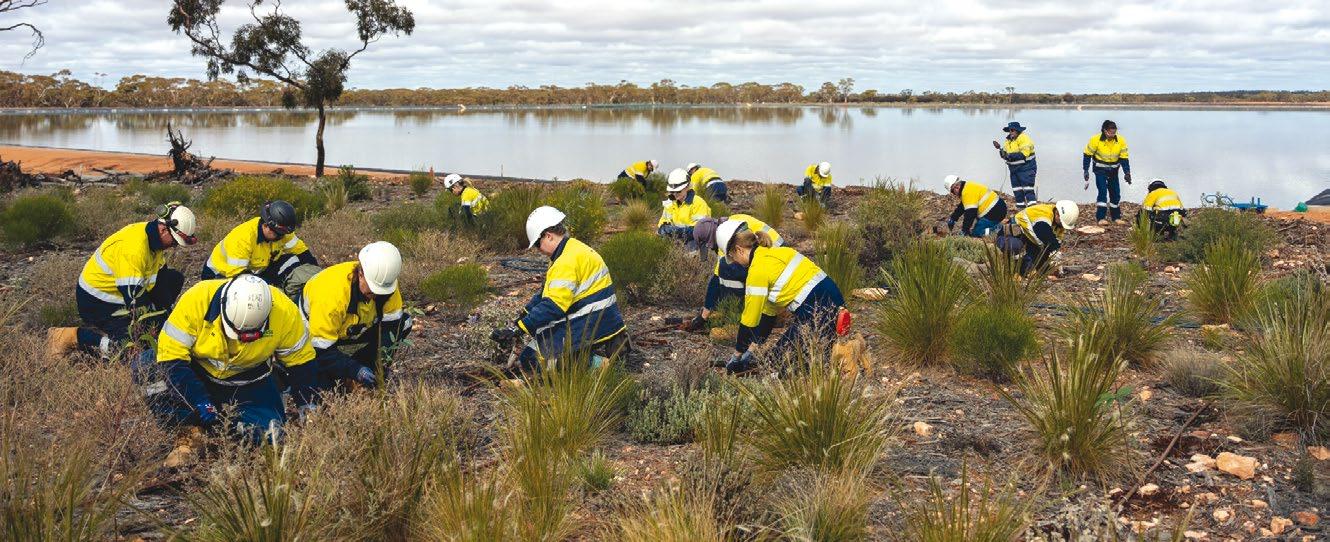
Revegetation activities at the Kalgoorlie Rare Earths Processing Facility, September 2025
At Lynas’ Kalgoorlie Rare Earths Processing Facility, team members planted hundreds of native trees under the expert guidance of Lynas community partner Kalgoorlie-Boulder Urban Landcare Group (KBULG).
Lynas announced a three-year partnership with KBULG in 2023 and KBULG spent over two years cultivating and caring for the native seedlings in preparation for planting at the Lynas Kalgoorlie site.
Revegetation of the boundary at our site followed the commissioning of the Facility in 2024 and subsequent ground preparation included the installation of a water reticulation system to help the trees to flourish and ripping and mulching of the buffer area. The planting will enhance biodiversity, support local wildlife habitats and increase visual amenity around our Facility.
OUR FY25 ACHIEVEMENT
• Mt Weld water recycling plant constructed
• 27% water recycled at Mt Weld
OUR FY26 TARGET
Commission new Mt Weld water recycling plant and increase % tailings water recycled
Lynas is committed to caring for and minimising our impact on the environments in which we operate. Clean and sufficient water is a critical resource for society and for Lynas’ operations. As part of our focus on continuing to minimise freshwater usage in our operations, all Lynas operating sites have a water management plan that is implemented on site.
Mt Weld uses groundwater and recycled water and has established internal objectives and targets in line with the Lynas Environmental Policy to recycle process water. The percentage of recycled water used at Mt Weld was 27% in FY25, slightly lower than the 29% achieved in FY24 due to the requirements of major construction activities on site during the year.
In conjunction with the Mt Weld Expansion project, a $30m recycled water treatment plant was constructed in FY25. This larger, more efficient water recycling plant will deliver a significant step change improvement in internal water recycling and is expected to increase tailings water recycle yield to up to 90% and significantly reduce groundwater abstraction.
Mt Weld abstracts groundwater from below the open pit mining activities. As a result, the open cut mine is progressively dewatered and this provides safe geotechnical conditions for mining. The groundwater is brackish in dissolved salts and requires reverse osmosis treatment to produce high quality water to the rare earth separation process. The salty brine water from the reverse osmosis is evaporated. Increasing the recycle of process water will help to reduce the abstraction of groundwater.
In Kalgoorlie, our new Rare Earths Processing Facility has been designed to use treated recycled grey water for processing. The recycled grey water is a by-product from the City of Kalgoorlie-Boulder’s wastewater treatment facility. It is supplied under a commercial agreement with the City. Potable water for the Kalgoorlie Facility is supplied by the local water authority.
In Malaysia, Lynas uses scheme water (city water) provided by the local water utility provider. Lynas Malaysia has three process water ponds with a total capacity of 38,000m3 which can supply water to the plant as needed at a rate of approximately 600m3/hr at 100% capacity. A dedicated water flow meter has been installed to measure the incoming city water, enabling our team to precisely monitor water consumption. Research and development into water and chemical recycling at Lynas Malaysia continued during the year.
There were no significant water-related incidents during FY25.
Lynas is committed to responsibly managing and reducing effluents. This includes operating zero discharge sites or reducing or recycling effluents where possible. All effluents are monitored and measured.
Lynas’ sites in Western Australia, Mt Weld and Kalgoorlie, are zero discharge sites. This means they have on site wastewater management systems and do not discharge wastewater into the environment.
In Malaysia, Lynas operates two wastewater treatment plants which operate in compliance with regulations. Once water has been used in Lynas Malaysia’s operations, it is treated and tested to ensure that it meets water quality standards prescribed by the Department of Environment prior to being released. Wastewater quality is strictly governed by Malaysian Industrial regulations and water quality standards. Wastewater quality samples are assessed by Lynas’ on-site laboratory and by an accredited independent third party laboratory.
Once the treated water is deemed suitable for release, it is tested at 11 water quality monitoring stations along the Balok River. The Department of Environment has publicly stated that water leaving the Gebeng Industrial Estate is of a higher quality than water entering the Estate due to water treatment undertaken prior to discharge.
Lynas reports on air emissions to the National Pollutant Inventory annually for Australian sites. Air emissions data is available in Section 9 Performance Data Tables.
Air quality monitoring at Mt Weld included high-volume environmental dust monitoring from several locations across the site as part of the Mt Weld Radiation Management Plan. All samples were found to be within acceptable limits in FY25.
Lynas carries out ambient and stack release measurements at Lynas Malaysia and Lynas’ Kalgoorlie site.
Lynas Malaysia, ambient air quality is measured at three locations within 5km from the Lynas Malaysia plant. Lynas met all emissions standards during FY25.
Radiological air monitoring is also undertaken at Lynas Malaysia via two Aerosol Monitoring Systems that measure external radiation and radon-thoron activity concentrations at two locations (onsite and in the city of Kuantan). Monitoring shows there has been no change to background levels at both locations since Lynas Malaysia’s operations commenced in 2012.
Lynas’ approach to waste management is reduce, reuse, recycle. Waste management involves numerous systems to control waste management processes and identify the most appropriate methods of disposal as a last resort. All waste materials are stored and disposed of in a safe and responsible manner.
Across our Western Australian sites, Mt Weld and Kalgoorlie, and our Perth head office, separation of recycling materials is conducted to facilitate efficient recycling.
We participate in the Containers for Change initiative at both our Mt Weld and Kalgoorlie facilities with funds going to support local not for profit community organisations.
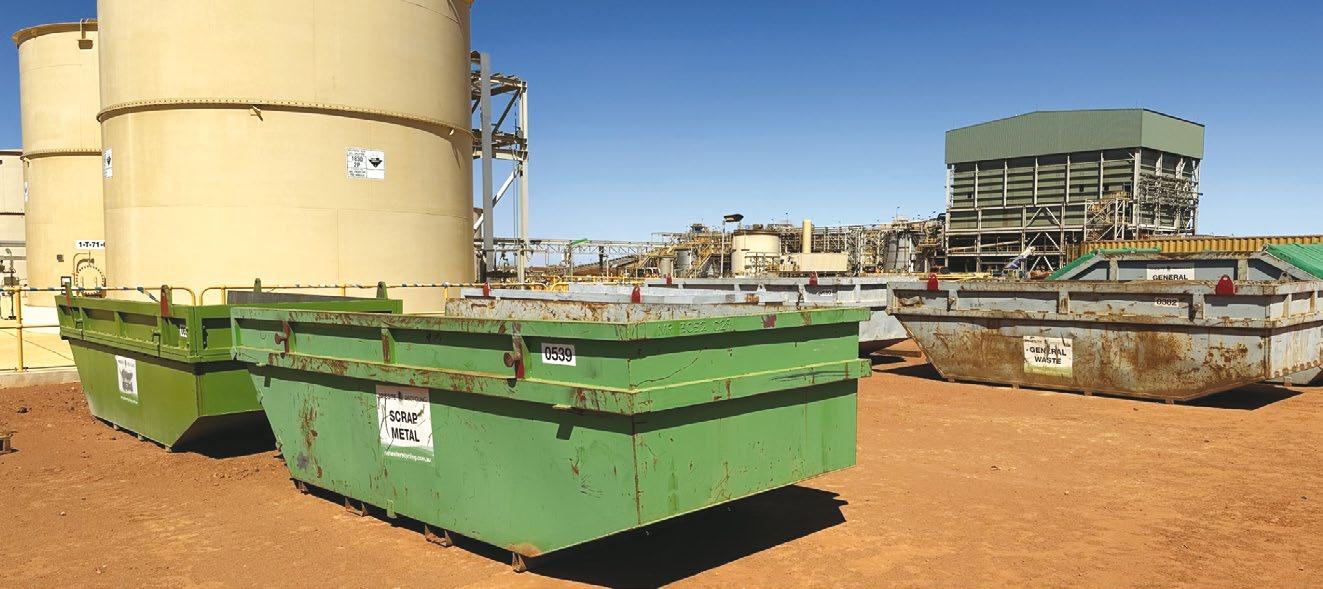
Lynas recycles a range of materials from our sites including:
• Plastic bottles and cans
• Scrap metal
• E-waste
• Used oil
Controlled and scheduled waste
• Batteries
• Aerosol cans
• Fluorescent tubes and globes
• Intermediate bulk containers (IBCs)
Mt Weld operates an on site licenced landfill and engages licensed third party operators to collect and manage controlled waste. Controlled Waste is traceable via the Department of Water and Environment Regulation (DWER) waste tracking network.
Lynas’ Kalgoorlie site engages licenced 3rd parties to collect and disposed of controlled waste to authorised waste facilities within the Kalgoorlie region.
In Malaysia, scheduled wastes generated from operations are managed and stored responsibly in purpose built facilities approved by regulators, or collected by a licensed waste contractor approved by the Department of Environment, Malaysia.
Mt Weld tailings deposition and consolidation
Rare earths production generates tailings at Mt Weld, composed of the gangue minerals, unrecovered rare earth minerals, and water from the floatation process. In keeping with our reduce, reuse, recycle approach, Mt Weld implements accelerated mechanical consolidation of tailings so tailings water can be recycled and tailings can be stored in Mt Weld tailings storage facilities (TSFs) for future re-processing.
In 2025 there were zero significant incidents at the Mt Weld tailings storage facilities.
Lynas’ commitment to maintaining tailings storage facilities in line with industry standards is included in the Lynas Environmental Policy. At an executive level, the Lynas Leadership Team is responsible for the execution of this Policy.
A Tailings Storage Facility audit is undertaken on an annual basis by an independent third party. The audit report is submitted to WA DMIRS as an appendix to annual environmental reporting and a report is submitted to WA Department of Mines, Petroleum and Exploration (DPME). The annual TSF audit of the Mt Weld tailings storage facilities was completed in January 2025 and facilities were found to be compliant with State regulatory requirements. OUR FY25 ACHIEVEMENT
Annual audit of each tailings and by-product storage facility by an independent expert
Mt Weld manages tailings in accordance with a site specific operations manual that is audited as part of the annual geotechnical and management audit by an independent third party subject matter expert.
Mt Weld monitors tailings storage facilities for safety, stability and impact. This includes routine stability monitoring, routine lateral seepage monitoring, routine groundwater seepage monitoring and monthly storage volume assessment based on production budget. Risk assessments of tailings facilities include a six-monthly internal review of critical controls. Actions are raised for any improvements as required.
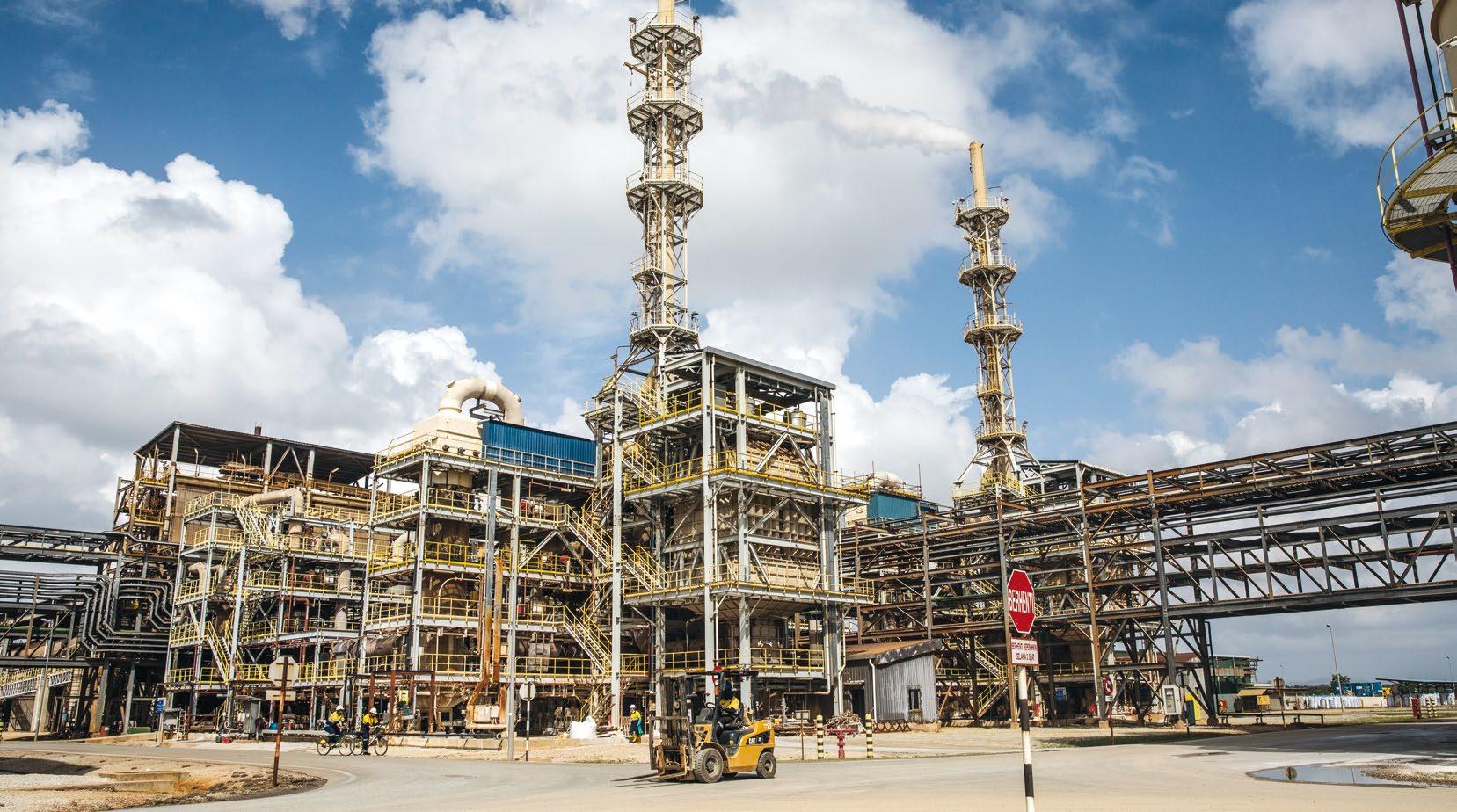
The Kalgoorlie Rare Earths Processing Facility produces two by-products, a gypsum and an iron phosphate, as part of its processing. These by-products are non-hazardous, not dangerous goods and while the iron phosphate contains very low level naturally occurring radioactive material (NORM) that is found in our Mt Weld ore, this very low level is not classified as radioactive for transport purposes in Australia.
The Kalgoorlie Facility manages tailings in accordance with the site specific operations manual which is audited as part of an annual Tailings Storage Facility audit conducted by an independent third party subject matter expert.
Our Malaysian operations produce two solid residues as by-products of processing which are stored in dry stacked facilities:
• A magnesium rich gypsum known as NUF (Neutralisation Underflow) which is non-toxic and non-radioactive; and
• An iron phosphate material known as WLP (Water Leached Purification) that contains very low level Naturally Occurring Radioactive Material (NORM).
NUF has been shown by Golder Associates (2014) and Standards and Industrial Research Institute of Malaysia (SIRIM) (2018) to be a non-toxic and non-hazardous material with negligible human health risk. In addition, its chemical composition showed potential for use in agriculture and the manufacturing of cements. NUF is nonhazardous according to the Globally Harmonised System of classification and labelling of chemicals. NUF is not classified as a dangerous good by the criteria of international air, road and sea transport (UNTDG, IMDG, IATA).
In line with the variation to Lynas’ Malaysian operating licence in October 2024, Lynas Malaysia has committed 1% of Lynas Malaysia’s gross sales to a research and development program overseen by the Malaysian Atomic Energy Licensing Board (AELB) and directed towards developing methods for removal of naturally occurring radioactive material (NORM) from residues. Lynas manages the Research and Development (R&D) investment funds and has dedicated senior scientists to progress developments alongside researchers from leading Malaysian and Australian institutions.
Construction of the Permanent Disposal Facility (PDF) for WLP residue from the Lynas Malaysia plant was completed during the year. The first two cells have been filled with dry stacked WLP residues and capping is underway. The filling of a 3rd cell is ongoing.
During FY25, Lynas re-estimated the cost to permanently store NUF residue in a Long Term Disposal Facility and an additional $9.4m has been included in the provision for restoration and rehabilitation as at 30 June 2025.
We care for the communities in which we work and live, making it a priority to take an active role in building better communities.
We aim to share the sustainable benefits of our operations by making a positive contribution in our four priority areas:
• Education and training;
• Health and sport;
• The environment; and
• Supporting vulnerable communities.
The Lynas Community Policy outlines our commitment to employing local people and sourcing from local businesses in each of our operations. We have internship programs at Lynas Malaysia and Mt Weld with a focus on employing local young people.
Lynas acknowledges and respects the Traditional Owners of the lands on which we operate. In Western Australia, we aim to increase training, employment and supplier opportunities for Aboriginal and Torres Strait Islander peoples and enrich our workforce through inclusion, understanding and appreciation of Aboriginal and Torres Strait Islander cultures. In FY23, Lynas’ first Reconciliation Action Plan (RAP) was approved by Reconciliation Australia. This Reflect level RAP provides the framework for the development of our reconciliation commitments and Lynas has continued to progress RAP actions this year, including providing online cultural awareness training for all employees in Australia.
Our approach to local engagement includes information and consultation with local communities as well as partnerships with community organisations and educational institutions. Lynas undertakes a stakeholder identification process and engages and consults with our local communities and other interested parties regarding environmental approvals. Lynas undertakes Economic Impact Assessments for major projects and assessments of the effects of significant changes to our operations on our local communities.
Lynas has a Community Feedback and Grievance Procedure that guides our response to feedback and grievances received from community members.
In FY25, there was continued engagement and consultation with our communities in Malaysia and Western Australia, including regarding the Mt Weld Expansion project and the new Kalgoorlie Rare Earths Processing Facility.
In all locations, Lynas participates in local community, business and education activities and meets with members of our local communities. We also participate in community forums and publish information for community members including Frequently Asked Questions (FAQ) and project updates.
8.1.1 Absolute number and rate of employment
At June 30, 2025, Lynas employed 1,127 people across Malaysia and Australia. Our employees include geologists, engineers, metallurgists, tradespeople, process technicians and others in support functions across both operating sites (Mt Weld and Lynas Malaysia) as well as our new Kalgoorlie Rare Earths Processing Facility in WA (which was under commissioning and achieved first production in the June quarter of FY24) as well as professional and administrative functions undertaken at our offices in Perth, Western Australia and Kuala Lumpur, Malaysia.
In FY25, expatriates accounted for 3% of our employees across our operations. This includes Malaysian employees who are assisting with the ramp up of the new Kalgoorlie facility across plant operations, engineering, maintenance and process improvement.
In FY25, Lynas’ planned U.S. Facility was not constructed or operational and had zero employees.
Further detail on employee figures, including turnover, is available in Section 9 Performance Data Tables.
8.2.1 Business resilience
FY25 annual revenue increased to $556.5m, primarily as a result of increased NdPr production and sales, while Net Profit After Tax (NPAT) was lower at $8.0m. Contributing factors included additional depreciation on plant and equipment for the Kalgoorlie Facility and Mt Weld expansion, coupled with lower than nameplate production at the Kalgoorlie Facility.
Lynas Malaysia is proud to continue its support for local students through its Back-to-School program, which has supported the education goals of local communities around Kuantan every year for the past 14 years.
The Back-to-School program is designed to provide local families on low incomes with practical assistance in the form of school uniforms, shoes, bags and stationery supplies. It runs over 3 days and involves Lynas team members from across this business.
A total of 800 students from 18 local schools participated in the 2025 program, the largest number since the program began.
Lynas’ Back-to-School program is a targeted approach to support our local communities to be resilient and to support the next generation of STEM students to achieve their educational goals.
Coinciding with the announcement of the Company’s FY25 financial results, on 28 August 2025, Lynas announced the Towards 2030 strategy to accelerate the Company’s next phase of growth. Towards 2030 has two key elements:
1. Harvest – Optimise performance from the Lynas 2025 capital investments to deliver returns for shareholders, including ramping up assets in line with customer demand and market growth; and
2. Grow – Grow the business by: adding resource and scale; increasing downstream capacity; and expanding into the outside China metal and magnet supply chain.
8.2.2
In line with our commitment to prioritising local procurement, in FY25, 73% of inputs for Australian operations were procured at the local level (i.e. Western Australia) and 88% of inputs for Malaysian operations were procured at country level (Malaysia). Lynas is a key customer to many local suppliers, including First Nations owned businesses. In FY25, Lynas spent over $40m on contracts with First Nations owned businesses in Western Australia.
See Section 9 Performance Data Tables for Lynas’ direct economic value generated and distributed in FY25.
Supplier sustainability initiatives
Lynas requires all suppliers to follow the Lynas Group’s Supplier Sustainability Policy and Code of Conduct which reiterates and incorporates our commitment to the Ten Principles of the United Nations Global Compact, ILO conventions and the Lynas Business Conduct Standards.
Minimum requirements for suppliers are incorporated into the Supplier Sustainability Policy & Code of Conduct, including respecting the basic rights of employees; implementing health, safety and environmental protection standards; not using “conflict minerals’’; not to engaging in or supporting the use of any form of forced, compulsory or illegal labour; and expressly forbidding the employment of anyone under the minimum legal working age or fifteen (15) years old; whichever is higher.
Lynas recognises the risk of suppliers not complying with our Supplier Sustainability Policy and Code of Conduct. To address this, we have a Supplier Management Process that includes due diligence, supplier self-assessments and supplier audits. We continue to assess the efficiency of this process and opportunities for improvement
In FY25, $430.8m was invested in capital and mine development projects invested in property, plant equipment and mine development. FY25 brought to a conclusion the $1.5b Lynas 2025 capital investment program.
Following the end of the financial year, on 28 August 2025, Lynas announced and successfully completed a $750m equity raising. The proceeds will be invested in delivering on the Towards 2030 growth strategy.
Lynas did not conduct share buybacks or issue any dividend payments in FY25.
Investing
Rare earths are used in future facing technologies designed to lower emissions and reduce energy consumption, as well as to improve efficiency, performance, speed, durability, and thermal stability. Lynas has an in-house research and innovation (R&I) team that is focused on both continuous improvements and breakthroughs in processing, consumption of resources including energy, water and chemicals, and new product development. Lynas also collaborates with leading universities and research institutions in Australia, Malaysia and around the globe on research projects.
The Lynas R&I team have utilised internal expertise in product purity, surface and formulation to develop new clean energy technologies. The clean energy technologies require a new generation of catalysts, materials and processes able to facilitate hydrogen generation, transport, storage and distribution as well as capturing and adding value to carbon dioxide. Lynas partners with global players in the energy sector, new equipment makers and leading universities across the world on R&D initiatives.
Lynas invested approximately $13.7 m in R&D during 2025.
Developing industry standards
Lynas has been active in international standards development for Rare Earth supply chain. This includes involvement in the development and publication of ISO traceability standards covering the rare earth supply chain from mine to magnets; participating in working group activities related to Sustainability standard development; and active involvement in the creation of ISO standards for rare earth analytical methods.
In the future, Lynas will continue our active participation as a voice for the establishment of international standards based on market and industry needs. This includes championing issues faced by responsible rare earth producers such as Lynas and assisting with the development of tools to ensure that rare earths products entering the supply chain are sourced from legal miners and producers who abide by best practices on environmental stewardship, human rights and sustainability.
8.4.1 Total taxes and royalties paid
Taxes and royalties paid in FY25 totalled $26.6m.
Lynas Malaysia’s Pioneer status (income tax exemption) is in place through to January 2026.
The focus of our social investment is in the areas of education and training, health and sport, the environment, and supporting vulnerable communities.
In FY25, direct community investment and related expenditures across our operations were approximately $0.47m, plus employee volunteering hours and ad hoc sponsorship and donations.
Key community investment initiatives for our Western Australian and Malaysian operations are outlined in Case Study 6 below.
Lynas makes it a priority to take an active role in building better communities. We aim to make positive contributions by focusing on local initiatives in four key areas; education and training, health and sport, the environment, and vulnerable communities.
The below table outlines examples of other key community investment activities in Australia and Malaysia during FY25.
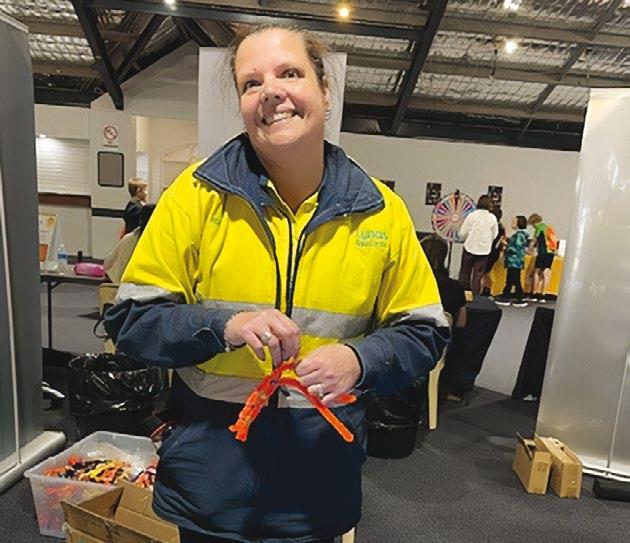
5-year commitment to Curtin University’s Moorditj Yorga Scholarship for mature-aged First Nations women to attain an undergraduate degree.
Lynas booth at the Science After Dark science fair held at the Museum of the Goldfields as part of National Science Week.
Volunteering at the inaugural Kalgoorlie STEM Festival as part of National Science Week.
Long term member of the Laverton Cross Cultural Association (LCCA), supporting art gallery and youth engagement and development activities.
Sponsored the Culturally Diverse Training Award at the Goldfields Regional TAFE Awards.
WA Local Giving Program supporting grassroots initiatives in the communities where we live and work.
University student site visits..
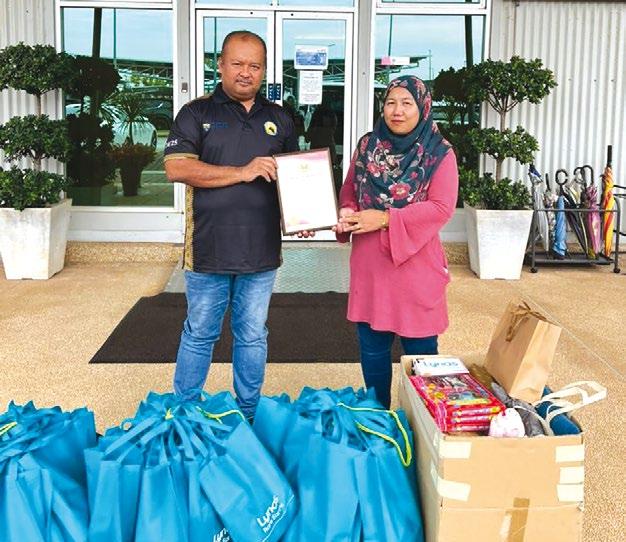
Staff volunteering programs to maintain community facilities; painting and gardening at local schools and preschools.
Back-to-School program in FY25, supporting 800 children across 18 participating schools.
Lynas Malaysia Local Giving Program launched in Malaysia in 2025, supporting community and education initiatives.
University student site visits.
Case Study 6: Supporting communities through local investment initiatives (continued)
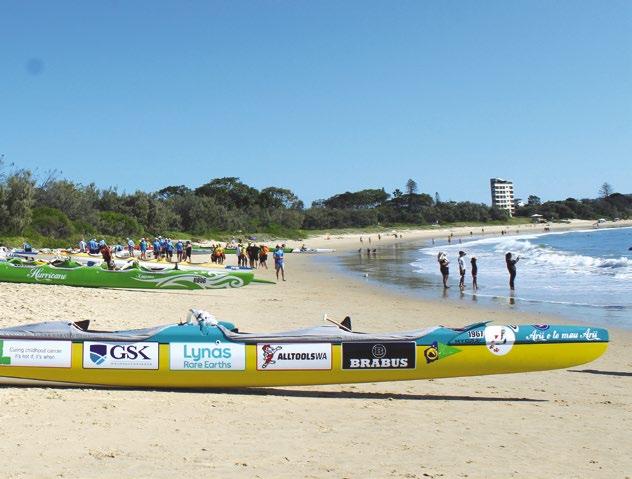
Australia
Stephen Michael Foundation community partnership for Laverton youth programs. Cycling Development Foundation youth activities in Laverton, including cycling skills, group rides and bike repairs.
3-year (2024–2026) Hurricane Outrigger Canoe Club WA Local Giving Program.
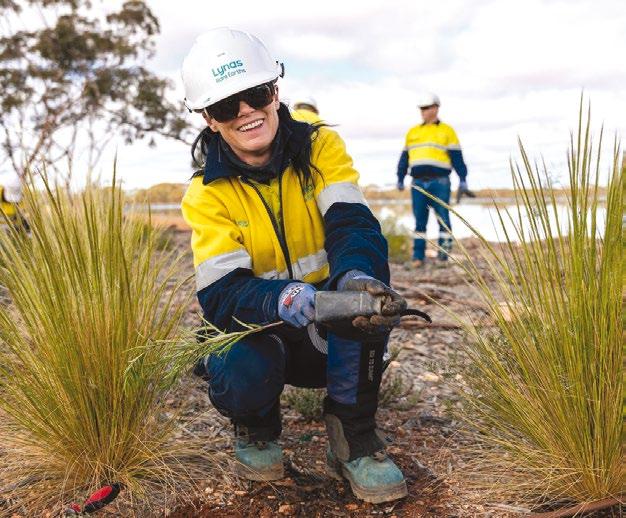
Australia
3-year (2023-2026) sponsorship of Kalgoorlie-Boulder Urban Landcare Group (KBULG); staff participation in annual Tree Planting Day.
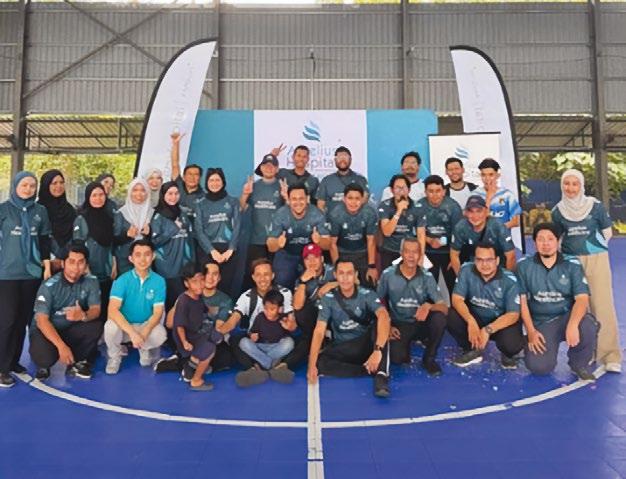
Malaysia
Health and optometry checks for community members during bi-monthly recycling programmes with local villages. Football, netball, futsal, bowling and badminton games with the community and surrounding community teams.
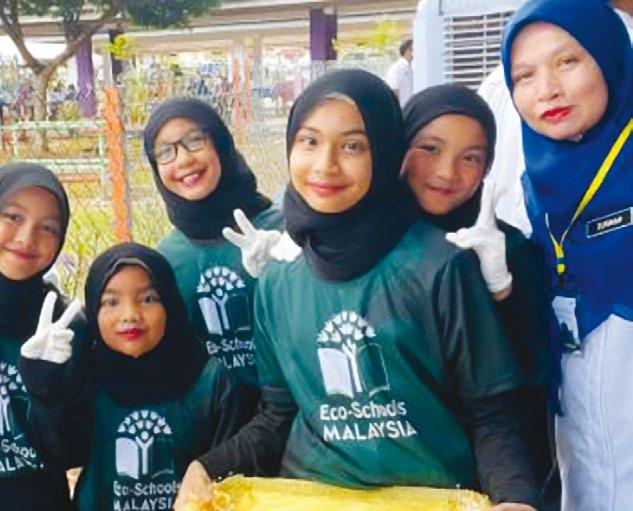
Malaysia
Supported EcoSchools Pahang program integrating climate change education within the national curriculum for primary and secondary schools.
Case Study 6: Supporting communities through local investment initiatives (continued)
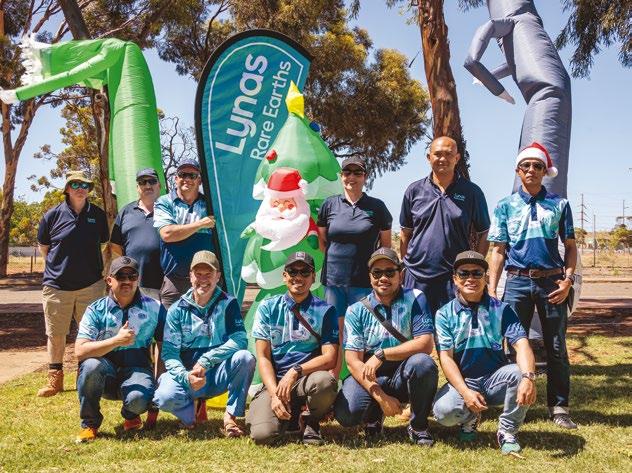
Australia
Supported the Kalgoorlie Christmas in the Park lunch, which brings the community together and provides lunch to all attending and a gift for all kids.
Spinifex Sponsorship – 2025 GABC Yuwa Aboriginal Business Conference & Expo.
Hosted the NAIDOC Week Elders Lunch at our Laverton accommodation.
WA Local Giving Program (twice yearly small community grants).
Sponsorship of 2025 NAIDOC Youth Ball, Kalgoorlie.
Rotary Club of Boulder Charity Auction.
Marlaku Morapoi family camp.
KBCCI Goldfields Business Awards – Disability & Healthcare Services Award.
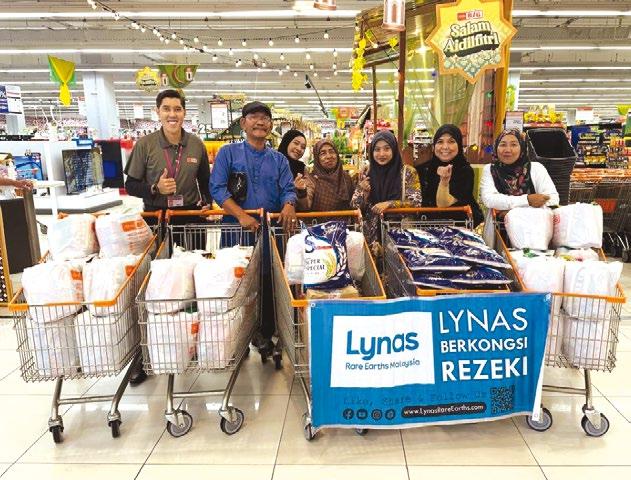
Annual Back to School program.
Chinese New Year donations to community, childcare and aged care centres.
Hari Raya contribution of grocery supplies to 19 local communities.
Donations of groceries and essential supplies to local community organisations.
As part of our commitment to reconciliation and cultural inclusion, we were pleased to support NAIDOC Week celebrations in both Laverton and Kalgoorlie.
For the third consecutive year, we supported the NAIDOC Youth Ball in Kalgoorlie, which brings together young people for a night of culture, celebration and youth pride.
We also hosted the NAIDOC Week Elders lunch at our Laverton accommodation village organised in collaboration with the Laverton Community Resources Centre. The lunch was attended by community members and assisted by the students from the Shooting Stars program at Laverton School, who gained valuable hospitality experience and skills through their involvement.
These initiatives provide meaningful opportunities for our employees to connect with Aboriginal and Torres Strait Islander communities in the areas where we work.
Certified to ISO 9001:2015 (Quality Management), ISO 14001:2015 (Environmental Management) and ISO 45001:2018 (Occupational Health and Safety Management).
* Lynas’ new Kalgoorlie site was in ramp up phase in FY25
Anti-corruption
Confirmed incidents of corruption
Incidents confirmed in FY25 related to previous years
Incidents confirmed in FY25 related to the current year
View Lynas’ anti-bribery policy: https://lynasrareearths.com/wp-content/uploads/2021/04/Anti-Bribery-Policy.pdf
Reporting unethical behaviour
All reports of unethical behaviour are investigated and disciplinary action is taken where conduct is found to have breached the Lynas Code of Conduct or other relevant policies and procedures.
Concern
View Lynas’ Code of Conduct policy: https://lynasrareearths.com/wp-content/uploads/2023/09/Code-of-Conduct_updated-18September-2023.pdf
View Lynas’ Human Rights policy: https://lynasrareearths.com/wp-content/uploads/2024/08/Lynas-Human-Rights-Policy_22August-2024.pdf
View Lynas’ Whistleblower policy: https://lynasrareearths.com/wp-content/uploads/2023/09/Whistleblower-Policy_updated-18September-2023.pdf
Proportion of women (%)
* Senior executives defines as all managers and above including CEO, CEO-1, -2, -3
** 40:40:20% is a best practice gender equality target and represents 40% women, 40% men, 20% any gender. Performance against this target may vary due to the timing of Board composition changes.
View Lynas’ Equal Opportunity Policy: https://lynasrareearths.com/wp-content/uploads/2025/06/Lynas-Equal-Opportunity-PolicyJune-2025.pdf
View Lynas’ Occupational, Health and Safety policy: https://lynasrareearths.com/wp-content/uploads/2021/04/Occupational-Health-andSafety-Policy.pdf
Mt Weld energy produced and energy consumed
Reporting
1 Data updated in line with FY25 NGER reporting
Kalgoorlie energy produced and energy consumed
Lynas Malaysia primary and secondary energy produced and energy consumed Primary
* Renewable Energy Certificates issued for Malaysian renewable energy projects and consistent with GHG Protocol Scope 2 Quality Criteria View Lynas’ Energy policy: https://lynasrareearths.com/wp-content/uploads/2021/04/Energy-Policy.pdf
Our GHG Performance Metric tonnes of CO2 equivalents (tonnes CO2-e)
View Lynas’ Climate Change policy: https://lynasrareearths.com/wp-content/uploads/2023/11/Lynas-Climate-Change-Policy-28-Nov23.pdf
** Data updated in line with FY25 NGER reporting.
^ Data amended
* Includes both treated recycled grey water and potable water.
Air Quality: Site level (tonnes) Sulphur oxides (SOx)
Malaysia Monitored at stack and ambient air Monitored at stack and ambient air Monitored at ambient air
* Air emissions at Mt Weld and Kalgoorlie are primarily attributed to the combustion of diesel in mining machinery, transport, power generation and processes. Data included is consistent with Australia’s National Pollutant Inventory reporting requirements (not applicable for Malaysian operations).
** PM10 (dust) excludes emissions from materials handling.
View Lynas’ Environment policy: https://lynasrareearths.com/wp-content/uploads/2024/08/Lynas-Environmental-Policy_22-August-2024.pdf
* FY24 % decrease due to Malaysian employees supporting Kalgoorlie Facility ramp up.
* Turnover by gender was not calculated in FY22 or FY23
FY25 Direct Economic Contributions
Cost of sales
Total employee costs (wages and other payments)
Community investment
Tax and royalty payments
Grants received in relation to property, plant and equipment
556.5m
$96.1m
$0.47m
$26.6m
$5.5m
View Lynas’ Community policy: https://lynasrareearths.com/wp-content/uploads/2024/01/231128-Community-Policy.pdf
None of our projects have required physical or economic resettlement in the last ten years.
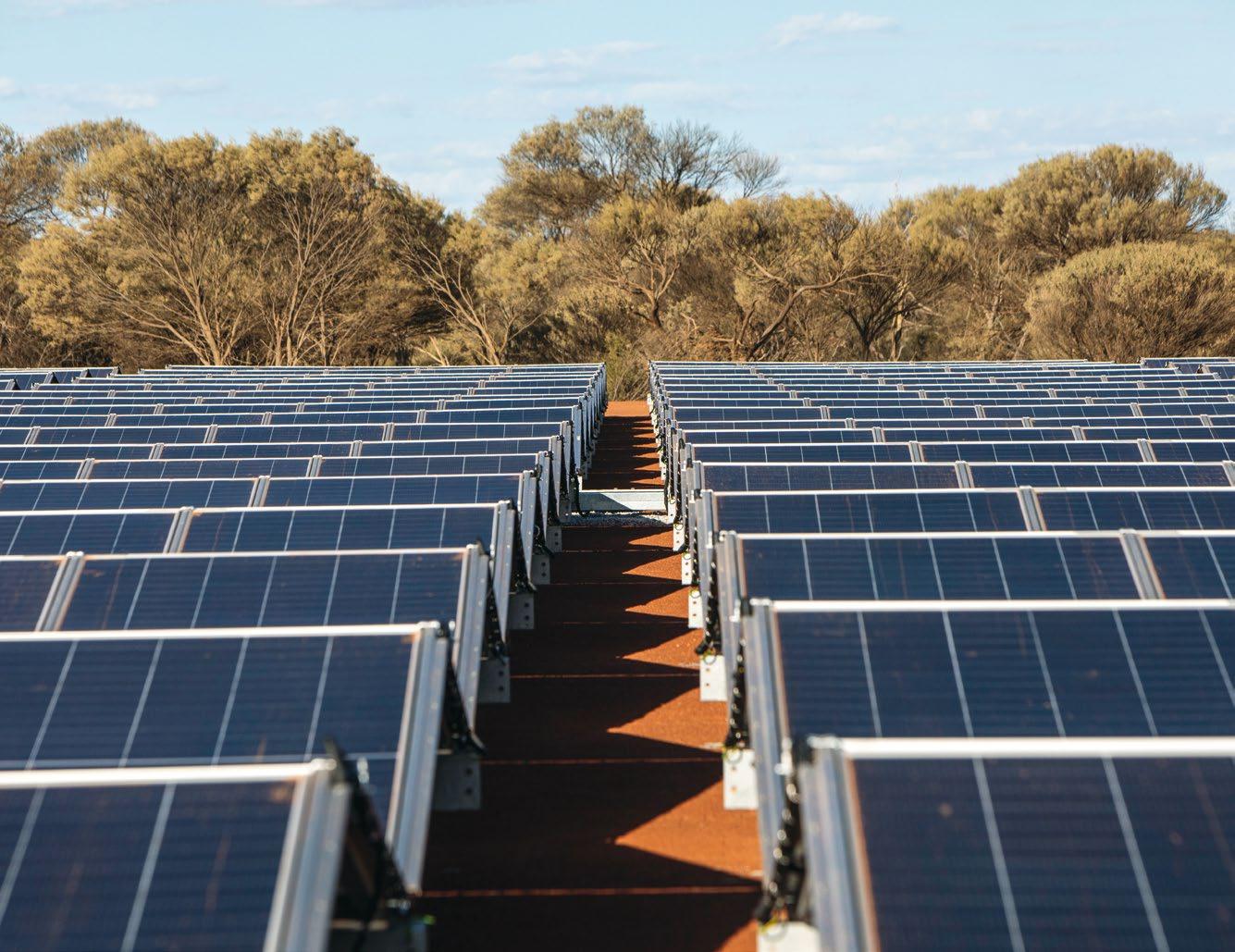
Stakeholders Engagement
Employees All Staff Briefings and Q&A with the CEO and executive team (held online)
Internal communication channels including daily pre-start meetings, team meetings,
Company emails, site notices, intranet and company events
Employee training programs including safety, technical and leadership
Employee consultation on operational changes and safety matters
Company employee profit share scheme
Employee engagement survey
Customers Regular engagement, including face to face and electronic communication
Annual customer satisfaction survey
Ongoing R&D and product development
Mine to magnet traceability and life cycle analysis conducted in collaboration with customers and downstream partners
Visits to customer operations and customer visits to Lynas operations
Participation in development of industry ISO standards
Shareholders and Investors Regular webcast briefings including quarterly, half year and full year results
Meetings and briefings with investors including post-result roadshows, conferences, and site visits
ASX announcements and email alert systems that allow interested parties to register for automatic notifications
Annual General Meeting (in person and online)
Suppliers and contractors Priority given to development of capable local suppliers
Strategic relationships and partnerships developed with contractors and suppliers
Meetings, communication and reviews with strategic suppliers and contractors
Supplier Sustainability Policy & Code of Conduct and supplier audits
Stakeholders Engagement
Government and regulators
NGOs
Ongoing engagement with government representatives in operating countries and key markets
Ongoing reporting to and communication with regulators and government bodies on environmental performance and other key indicators in operating countries
Public information including financial results and social contribution
Providing site visit opportunities
Involvement in UN Global Compact and industry forums
Direct engagement with relevant NGOs
Reporting, ASX announcements and media releases
Maintenance of high environmental and community standards
Development of corporate policies
Communities Ongoing direct engagement with host communities
Prioritising local procurement
Support for community groups, programs and events
Lynas Local Giving Program to support grassroots community organisations with small grants
Educational institutions Site visits and work placement opportunities
Graduate and intern programs
Joint research opportunities
Participating in employer expos and industry forums
Research collaborations with CSIRO, ANSTO, Curtin University, Minerals Research Institute of WA, Japan Oil, Gas and Metals National Corporation (JOGMEC)
STEM-focused education programs incl. support for Pahang EcoSchools initiative in Malaysia
Participating in wide range of industry forums and events
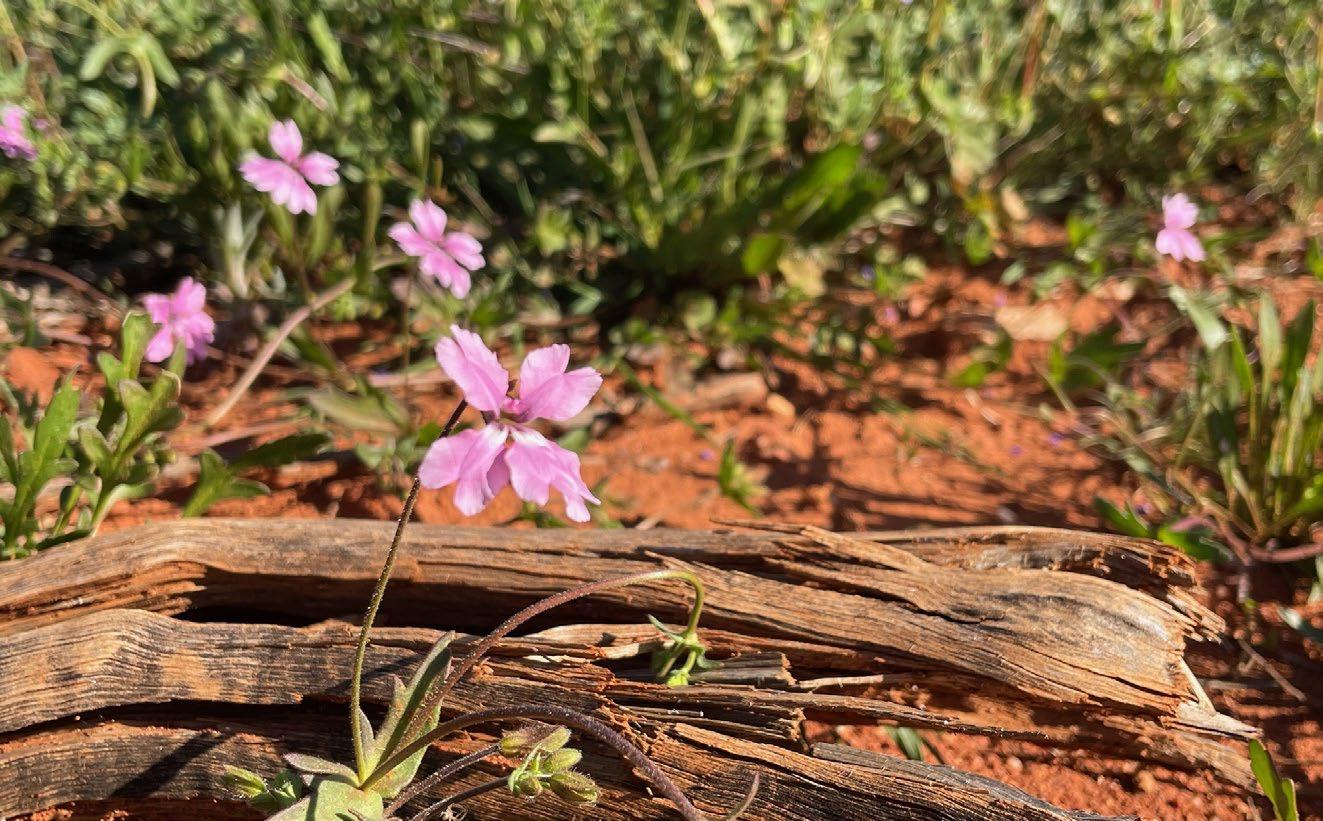
The Index includes indicators from GRI 14: Mining Sector 2024 that are relevant for our business. Unless otherwise noted, all data applies for the year ended 30 June 2025. Disclosures for which we do not provide significant content in this report have been omitted from this table. GRI Standard Disclosure Location
General disclosures
2-1 Organisational details
2-2 Entities included in the organisations sustainability reporting
Our Operations – Page 6
Our Operations – Page 6
2-3 Reporting period, frequency and contact point Letter from Our Board Chair and CEO – Page 2
2-4 Restatements of information
2-5 External assurance
Our GHG performance – Page 40
Our Sustainability Reporting – Page 4
2-6 Activities, value chain and other business relationships Our Operations – Page 6
2-7 Employees Caring for our People – Page 15 Employment and wealth generation – Page 30
2-8 Workers who are not employees Caring for our People – Page 15
2-9 Governance structure and composition Principles of Governance – Page 7
2-10 Nomination and selection of the highest governance body Quality of governing body – Page 8
2-11 Chair of the highest governance body Letter from Our Board Chair and CEO – Page 2 Quality of governing body – Page 8
2-12 Role of the highest governance body in overseeing the management of impacts Quality of governing body – Page 8
2-13 Delegation of responsibility for managing impacts Quality of governing body – Page 8
2-14 Role of the highest governance body in sustainability reporting Quality of governing body – Page 8
2-15 Conflicts of interest
2-16 Communication of critical concerns
2-17 Collective knowledge of the highest governance body
Ethical Behaviour – Page 10
Quality of governing body – Page 8
Risk and Opportunity Oversight – Page 12
Quality of governing body – Page 8
2-18 Evaluation of the performance of the highest governance body Quality of governing body – Page 8
2-19 Remuneration policies
Remuneration – Page 14 Pay equality – Page 16
2-20 Process to determine remuneration Remuneration – Page 14
2-22 Statement on sustainable development Stakeholder engagement and material topics – Page 9
2-23 Policy commitments Quality of governing body – Page 8
2-24
Page 8
2-25 Processes to remediate negative impacts Letter from Our Board Chair and CEO – Page 2 Caring for our Planet – Page 20–29
2-26 Mechanisms for seeking advice and raising concerns Protected ethics advice and reporting mechanisms – Page 10–11
2-27 Compliance with laws and regulations Our Sustainability Reporting – Page 4
2-28 Membership associations Appendix 2: Memberships and Initiatives – Page 51
2-29
Market Presence
202-1 Ratios of standard entry level wage by gender compared to local minimum wage
202-2 Proportion of senior management hired from the local community
Indirect Economic Impacts
203-1 Infrastructure investments and services supported
203-2 Significant indirect economic impacts
Procurement practices
Caring for our People – Page 15
Caring for our People – Page 15 Employment and wealth generation – Page 30
Caring for our Communities – Building Prosperity –Page 30–36
Caring for our Communities – Building Prosperity –Page 30–36
204-1 Proportion of spending on local suppliers Caring for our Communities – Building Prosperity – Page 31
Anticorruption
205-1 Operations assessed for risks related to corruption Ethical Behaviour – Page 10
205-2 Communication and training about anti-corruption policies and procedures
Ethical Behaviour – Page 10
205-3 Confirmed incidents of corruption and actions taken Ethical Behaviour – Page 10
Tax
207-1 Approach to tax
207-2 Tax governance, control, and risk management
Caring for our Communities – Building Prosperity –Page 30–36
Risk and Opportunity Oversight – Page 12 Energy
302-1 Energy consumption within the organisation
302-3 Energy intensity
302-4 Reduction of energy consumption
Water and Effluents
303-1 Interactions with water as a shared resource
303-2 Management of water discharge-related impacts
303-3 Water withdrawn
303-4 Water discharge
303-5 Water consumption
Caring for our Planet – Page 20–22
Caring for our Planet – Page 20–22
Caring for our Planet – Page 20–22
Caring for our Planet – Page 26–27
Caring for our Planet – Page 26–27
Caring for our Planet – Page 26–27
Caring for our Planet – Page 26–27
Caring for our Planet – Page 26–27
305-1 Direct (Scope 1) GHG emissions
305-2 Energy indirect (Scope 2) GHG emissions
305-3 Other indirect (Scope 3) GHG emissions
305-4 GHG emissions intensity
305-5 Reduction of GHG emissions
305-7 Nitrogen oxides (NOx), sulphur oxides (SOx) and other significant air emissions
Waste
306-1 Waste generation and significant waste-related impacts
306-2 Management of significant wasterelated impacts
306-3 Waste generated
306-4 Waste diverted from disposal
306-5 Waste directed to disposal
Supplier environmental assessment
308-1 New suppliers that were screened using environmental criteria
Employment
401-1 Total number and rates of new employee hires and employee turnover
401-2 Benefits provided to full-time employees that are not provided to temporary or part-time employees
401-3 Parental leave
Caring for our Planet – Page 20–22
Performance Data Tables – Page 39–40
Caring for our Planet – Page 20–22
Performance Data Tables – Page 39–40
Caring for our Planet – Page 20–22 Appendix 4: Scope 3 Evaluation Status – Page 52
Caring for our Planet – Page 20–22
Performance Data Tables – Page 39–40
Caring for our Planet – Page 20–22
Performance Data Tables – Page 39–40
Performance Data Tables – Page 41
Caring for our Planet – Page 27–28
Caring for our Planet – Page 27–28
Caring for our Planet – Page 27–28
Caring for our Planet – Page 27–29
Caring for our Planet – Page 27–29
Caring for our Communities – Building Prosperity – Page 32
Caring for our Communities – Building Prosperity – Page 30–31
Performance Data Tables – Page 41
Caring for our People – Page 15–16
Caring for our People – Page 16
Occupational Health and Safety
403-1 Occupational health and safety management system
403-2 Hazard identification, risk assessment, and incident investigation
403-2 Occupational health services
403-4 Worker participation, consultation, and communication on occupational health and safety
403-5 Worker training on occupational health and safety
403-6 Promotion of worker health
403-8 Workers covered by an occupational health and safety management system
403-9 Work-related injuries
Training and Education
404-1 Average hours of training per year per employee
404-2 Programs for upgrading employee skills and transition assistance programs
404-3 Percentage of employees receiving regular performance and career development reviews
Diversity and Equal Opportunity
Location
Caring for our People – Page 16–17
Caring for our People – Page 16–17
Caring for our People – Page 16–17
Caring for our People – Page 16–17
Caring for our People – Page 16–17
Caring for our People – Page 16–17
Caring for our People – Page 16–17
Performance Data Tables – Page 38
Caring for our People – Page 18
Caring for our People – Page 18
Caring for our People – Page 18
405-1 Diversity of governance bodies and employees Principles of Governance – Page 7–8, Caring for our People – Page 15
405-2 Ratio of basic salary and remuneration of women to men
Non-discrimination
406-1 Incidents of discrimination and corrective actions taken
Child Labour
408-1 Operations and suppliers at significant risk for incidents of child labour
Forced or Compulsory Labor
409-1 Operations and suppliers at significant risk for incidents of forced or compulsory labour
Performance Data Tables – Page 38
Caring for our People – Page 16
Performance Data Tables – Page 37
Caring for our People – Page 19
Human rights and preventing modern slavery – Page 18–19
Security Practices
410-1 Security personnel trained in human rights policies or procedures Use of security guards – Page 19
Local Communities
413-1 Operations with local community engagement, impact assessments, and development programs
413-2 Operations with significant actual and potential negative impacts on local communities
Supplier Social Assessment
414-1 New suppliers that were screened using social criteria
Public Policy
415-1 Political contributions
Caring for our Communities – Building Prosperity – Page 30–36
Caring for our Communities – Building Prosperity – Page 30–36
Caring for our Communities – Building Prosperity – Page 32
Risk and Opportunity Oversight – Page 12
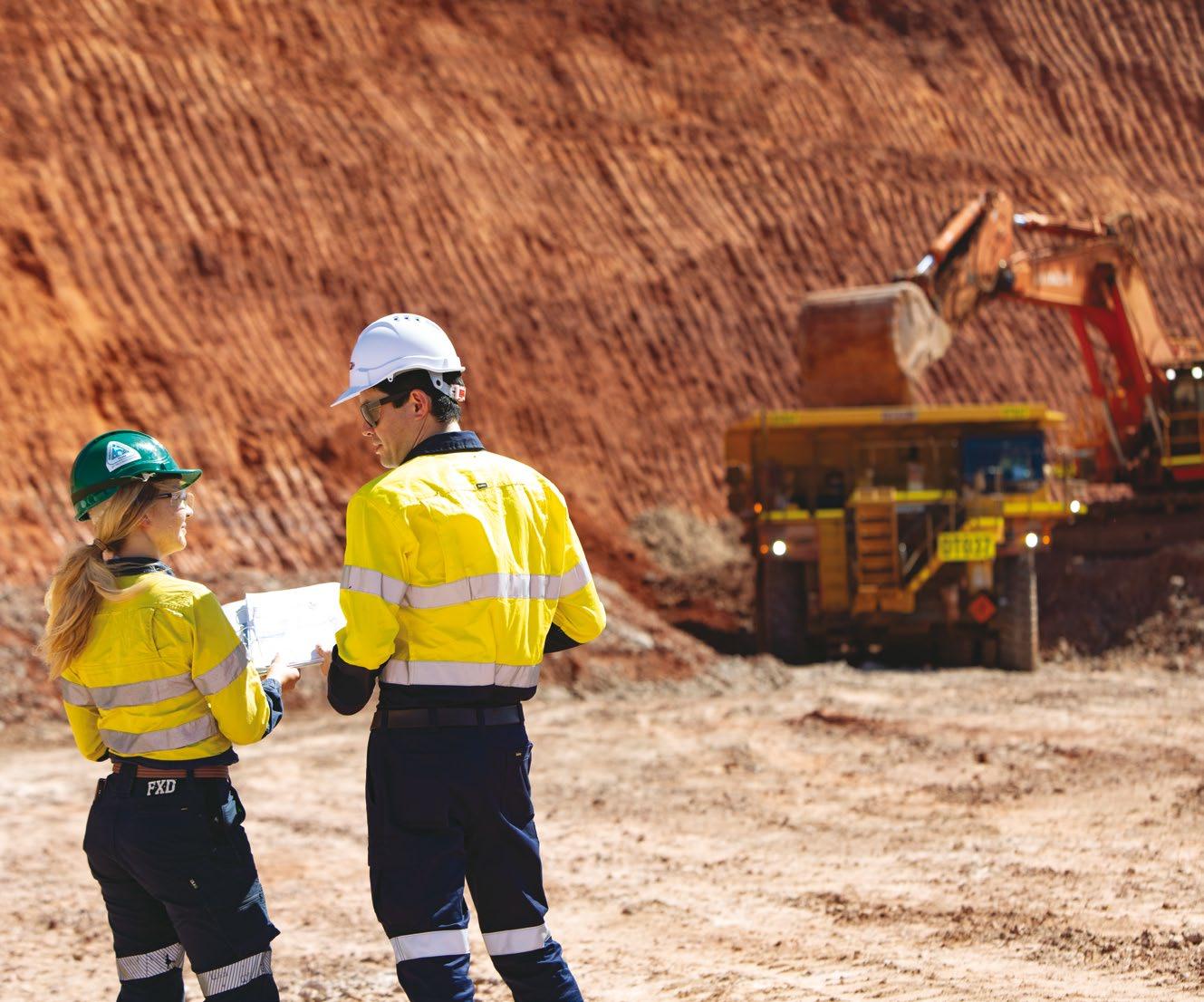
Malaysian memberships:
• Malaysian Australian Business Council
Australian memberships:
• Minerals Council of Australia
• The Chamber of Minerals and Energy of Western Australia
• Kalgoorlie-Boulder Chamber of Commerce and Industry
• Goldfields Aboriginal Business Chamber
• Australian Resources & Energy Employer Association
Category 1: Purchased Goods and Services
Category 2: Capital Goods
Category 3: Fuel- and Energy-Related Activities Not Included in Scope 1 & 2
Category 4: Upstream Transportation and Distribution
Category 5: Waste Generated in Operations
Category 6: Business Travel
Category 7: Employee Commuting
Category 8: Upstream Leased Assets
to 30 tCO2eq per year, composed mainly of Air Travel emissions
Category 11: Use of Sold Products
Category 12: End-of-Life Treatment of Sold Products
Category 13: Downstream Leased Assets
applicable
Category 14: Franchises Not applicable
Category 15: Investments Not applicable
ABN 27 009 066 648
Registered Office
Level 4, 1 Howard St
Perth WA 6000
p +61 8 6241 3800
e general@lynasre.com
Malaysian Office
PT17212 Jalan Gebeng 3
Kawasan Perindustrian Gebeng
26080 Kuantan, Pahang Darul Makmur
Malaysia
p +60 9 582 5200
e general@lynasre.com