Statewide 501(c)(3) providing training, technical assistance, and policy support to local governments, affordable housing builders, and advocates on affordable housing. We also are active in policy advocacy and research at the state and local levels.
Our Work Includes:
• Ensuring compliance with local, state, and federal affordable housing programs
• Designing effective affordable housing programs
• Building the capacity of nonprofit housing providers
• Guiding land use planning for affordable housing
• Conducting research and data analysis
Topics for Today
• State of the State: Housing Legislation Edition
• Mandatory v. Optional Housing Tools
• Local Policy Toolkit to Address Affordable Housing
HOUSING POLICY IS HOTTTTT!!
Big Picture: Our Affordable Housing Policy Focus
Increase Supply
Target Subsidies
Update land use rules to allow more types of homes in more places.
Dedicate public resources to fill gaps the private market can’t address.
Ensure
Long-Term
Affordabilit y
Keep publicly supported homes affordable for the long run.
Build Resiliently
Make housing resilient, safe, and sustainabl e
The Live Local Era
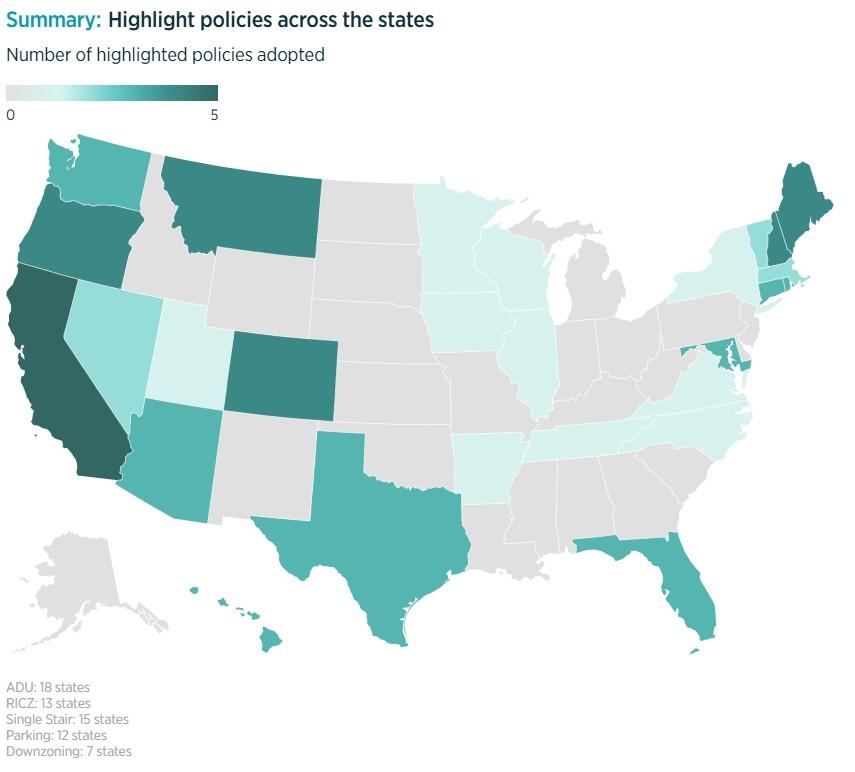
More State Action on Housing Policy
Source: Mercatus Center, Housing Policies
Highlight
State Housing Regulatory Policy Playbook – compiled largely from Mercatus Center’s Menu of Options
1. Permit Accessory Dwelling Units (ADUs)
2. Allow middle housing types
3. Allow residential uses in commercial zones (RICZ)
4. Cap minimum lot size requirements
5. Allow transit-oriented development
6. Limit parking mandates
7. Require “specific and objective” approval criteria/administrative review
8. Allow third-party reviews of building plans
9. Reform protest petitions
12. Limit objectors’ standing to sue
13. Limit fees exacted by local governments
14. Allow factory-built housing
15. Eliminate aesthetic mandates and materials bans
16. Allow single-stair multifamily design
17. Allow lower-cost elevators
Four Flavors of State Housing Reform
State Mandates + Preemptions
State Mandates Tied to Housing Needs
Data/Permit Metrics
• Live Local Act Land Use Mandate
• California Regional Housing Needs Assessment (RHNA)
• Massachusetts’ 40B Program
• New Jersey Fair Share Program
• Do X, you get Y (state funding) Incentive Route
Extra Incentive Route
• Local governments get extra money/extra priority for state funds if they do X, Y, Z
• California Pro-Housing Designation Program
SHIP and SAIL: Florida’s Core Affordable Housing Programs
• SHIP: deployed to 123 local governments to build new affordable homes (homeownership and rental), repair existing housing to allow seniors to age in place, retrofit for special needs, provide down-payment assistance, and rehabilitate existing housing, among other uses.
• SAIL: Funds the construction and rehab of multifamily rental homes.
• Both programs are flexible, reliable frameworks that can meet evolving housing priorities.
Funding for Affordable Housing
Live Local 4.0? 2023
• Live Local Act enacted (SB 102) 2024
• Land use mandate amende d by SB 328 • New Opt-Out for Multifam ily Middle Market (MMM) in SB 7074 2025
• Land use mandate amende d again by SB 1730 2026 • ????
Live Local Land Use Mandate
Allowing affordable housing in commercial, industrial, and mixed-use areas
What it Does:
Qualifying multifamily and mixed-use affordable housing developments are allowed by right in areas zoned for commercial, industrial, or mixed-use (including PUDs).
To qualify, a development must:
• Be located in an eligible zone district
• Reserve at least 40% of units as affordable rentals to households earning up to 120% of AMI for at least 30 years
• Be multifamily or mixed-use, with at least 65% of the building used for residential purposes (if mixed-use)
• Meet all other local laws and regulations
What is a qualified project entitled to?
Favorable entitlements for density, height, floor area ratio, use, parking, and administrative approval.
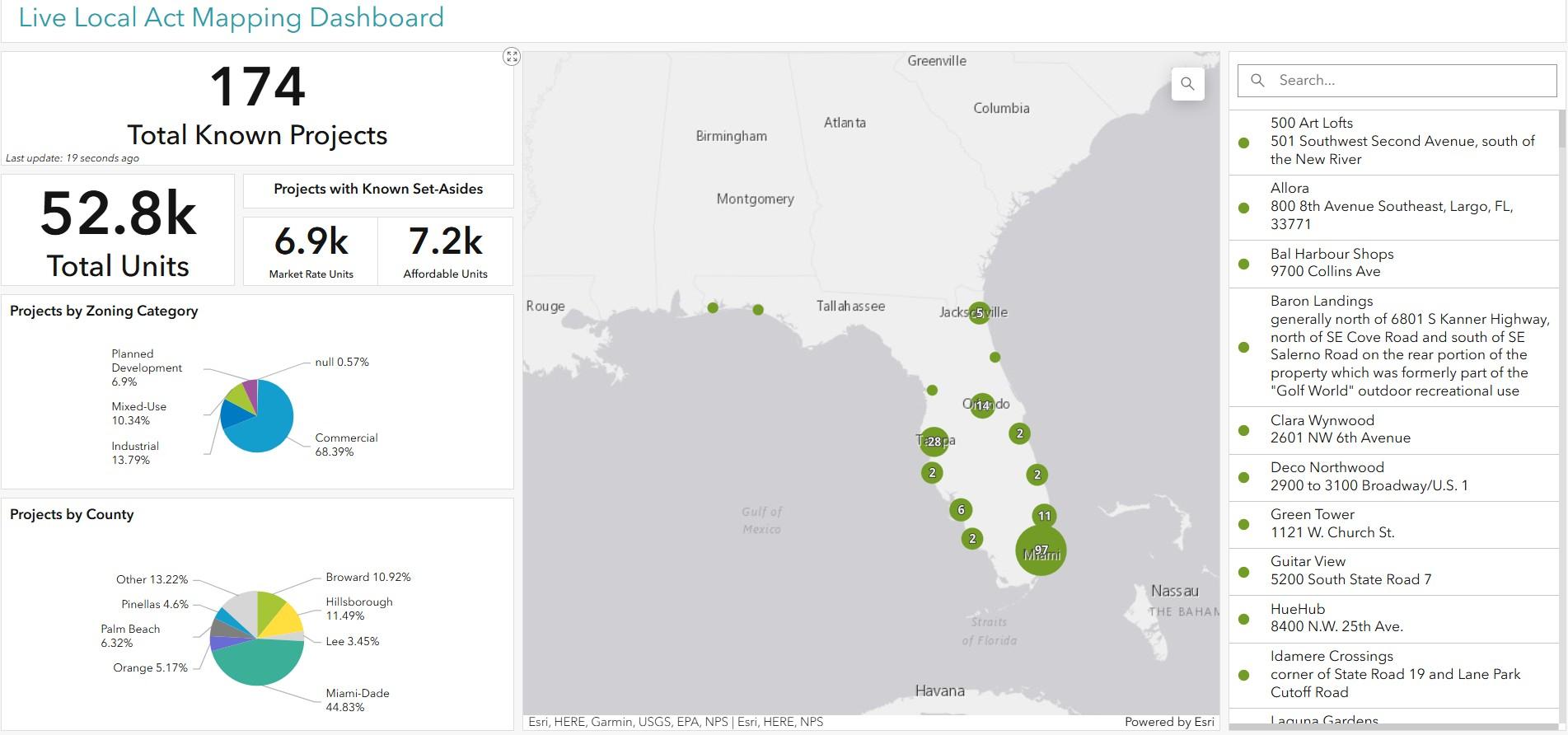
Tracking the Live Local Land Use Mandate for Affordable Housing in Commercial, Industrial, & Mixed-Use Areas –link here to our interactive dashboard
Local Governments Can “Compete” with Live Local: City of Sarasota Downtown Density Bonus Example
• Provides 4x density in four targeted downtown districts for developments that set aside as affordable at least 15% of units exceeding the base density
• Affordability: 60-120% AMI
• At least 1/3 of attainable units must serve households 80% or below AMI
• No more than 1/3 must serve 100-120% AMI
• Ownership and rental housing
Optional local affordable housing tool– s. 125.01055(6)/s.
166.04151(6)
Allows affordable housing on certain parcels without a land use change if the project meets the following criteria:
• Use: Multifamily or mixed-use residential
• Location: Any area zoned for commercial or industrial use
• Affordability: At least 10% of units affordable for households up to 120%
AMI (local governments can require lower incomes to be served)
Regulatory Effect
• Can act as a super-waiver of local zoning and land use laws – full local control
• (“Notwithstanding any other law or local ordinance or regulation to the contrary . . . “)
• Self-executing: No ordinance or
Visit
https://flhousing.org/resource-libra ry/ for this Guidebook
YIGBY! Yes-in-God’s-Backyard Empowering faith-based groups to build affordable homes
• Passed and signed into law via Senate Bill 1730 (2025)
• Allows local governments to approve housing on certain parcels owned by religious institutions as long as at least 10% of the homes are “affordable” per s. 420.0004
• Eligibility: land owned by a religious institution which
• 1) contains a house of public worship; or
• 2) is contiguous to a parcel with a house of public worship.
• This is a new optional tool for local governments to unlock faithbased land for affordable housing.
• The Florida Housing Coalition estimates this tool can unlock over 30,000 parcels for affordable housing statewide.
• First adopter: St. Petersburg
YIGBY! Yes-in-God’s-Backyard Empowering faith-based groups to build affordable homes
CATEGORY
KEY POINTS
Eligible Land
Local Control
Affordable Units
Housing Types + Tenures
Income Levels
Affordability Term
Development Standards
Approval Process
Land owned by religious institutions with or next to a house of worship
Local governments decide where and how to apply YIGBY
Minimum 10%; higher percentages allowed
Rental or ownership; single-family or multi- family
Up to 120% AMI; lower levels allowed
Not defined in statute; local discretion
Fully determined by local governments
Case-by-case or via local policy/ordinance
Policy Areas We’re Watching in 2026
SHIPTaxes and SAIL
LiveFunding Local SAIL
LiveFundingLocal
Accessory4.0Dwelling
FloridaUnitsStarter Homes Act Land Use and RuralPermittingHousing Policy
SB 48 (Gaetz)/HB 313 (Nix)
Housing
ADU Bill
SB 48: Passed 3/3 committees
HB 313: Passed 1/4 committees
Bills not identical
• Would require every local government, by 12/1/26, to adopt an ordinance allowing accessory dwelling units (ADUs) by-right in all areas zoned for single-family homes.
• Also prohibits localities from:
• Prohibiting the rental of an ADU (SB 48: allows localities to limit rentals of less than 1 month)
• Requiring that the owner of the ADU reside in the primary unit
• Increasing parking requirements when unnecessary
• Requiring a public hearing, variance, conditional use, special permit, special exception or other discretionary action
HB 837 (Busatta)/SB 962 (Bradley)
Affordable Housing
Live Local 4.0 version 1
HB 837: Passed
committees
SB 962: Passed 1/3 committees
• Small tweak to the Live Local Act’s land use mandate for affordable housing in commercial, industrial, or mixed-use areas
• Makes clear that farms, farm operations, or associated uses, including the packaging and sale of products raised on the premises are not considered commercial, industrial, or mixed-uses
• Important because this could end up being the Live Local vehicle for 2026
SB 1548 (Calatayud)/HB 1389 (Redondo)
Affordable Housing
Live Local 4.0 version 2
Live Local Land Use
Mandate
SB 1548
• Expands eligibility to property owned by a county, municipality, or school district
• Prevents localities from restricting eligible height through other dimensional means
• Clarifies that farms and farm operations are not considered commercial, industrial, or mixed use
HB 1389
No hearings on either bill yet Bills not identical
Florida Fair Housing Act
• Makes clear that sovereign immunity is waived if a governmental entity violates the Florida Fair Housing Act
• Clarifies it is illegal to discriminate against affordable housing in land use decisions
• Expands eligibility to all future land use designations that allow commercial, industrial, and mixed uses, all areas within ¼ mile of a transit stop, and areas ½ mile from a major transportation hub
• Gives builders the option to set-aside 20% of rental units at 80% AMI (in addition to 40% at 120% AMI)
SB 948: Passed 1/3 committees
SB 948 (McClain)/HB 1143 (Nix):
Local Government Land Development Regulations and Orders
Florida Starter Homes Act
HB 1143: Passed 0/3 committees Bills identical
• Basics: creates statewide rules allowing smaller homes on smaller lots when connected to public water & sewer
• Specifics:
• Prohibits localities from requiring lot sizes greater than 1,200 square feet
• Requires localities to allow 1-4 units (SFH, townhouses, duplexes, triplexes, quadplexes) on eligible lots
• Limits local rules on setbacks, lot coverage, lot dimensions, height, FAR, minimum unit size, etc.
• Allows administrative lot splits
• Development shotclocks
• Parking standards
• Factory-built housing allowed in all single-family detached zones (new)
• Summary: Allows residential lots with water and sewer access to have 1-4 homes on very small lots, with modest setbacks, limited open space requirements, and at least three stories.
https://flhousing.org/resource-library/
Local Housing Toolkit Five-Part Framework for Local Advocacy
Use Every Available Dollar to Meet Local Housing Needs
#1: Establish and Sustain Local Housing Trust Funds
#2: Tap into Every Public Funding Opportunity
#3: Target Subsidies to Where They’re Needed Most
#4: Reduce Costs through Fee Waivers and Property Tax Relief
#5: Bring in Private Capital and Community Partners
Strategy Highlight #1: Establish and Sustain Local Housing Trust Funds
• A recurring, dedicated local funding stream for affordable housing is one of the most effective ways a community can meet its housing needs.
• Local funds can close the gap not met by federal and state programs (and can be more flexible)
• Local housing trust funds can support:
Strategy Highlight #1: Establish and Sustain Local Housing Trust Funds
Funding sources include: Model examples in Florida:
General Revenue
Proceeds from Public Land Sales
In-Lieu Payments and Builder Contributions
TIF Revenue
Local Bonds
Linkage Fees
Infrastructure Surtax
Public-Private Partnerships
Orange County
Broward County
Palm Beach County
Fort Myers
Pinellas County
Collier County
Coral Springs
Daytona Beach
Miami-Dade County
Strategy Highlight #3: Target Subsidies to Where They’re Needed Most
• Affordable housing resources are limited, so they should be directed where they will have the greatest impact and where the need is most urgent.
• Strategic considerations for Subsidy Programs
• 1. Prioritize Low-Income Households (<60% or 80% AMI) and Households at Risk of Homelessness
• 2. Strive for Permanent Affordability
• 3. Balance Supply-Side and Demand-Side Subsidies
• 4. Support a Range of Housing Types
• 5. Prioritize Location for Greater Impact
• 6. Leverage Public Land
• 7. Address Rental Housing Needs Directly
Modernize Zoning to Expand Housing Opportunities
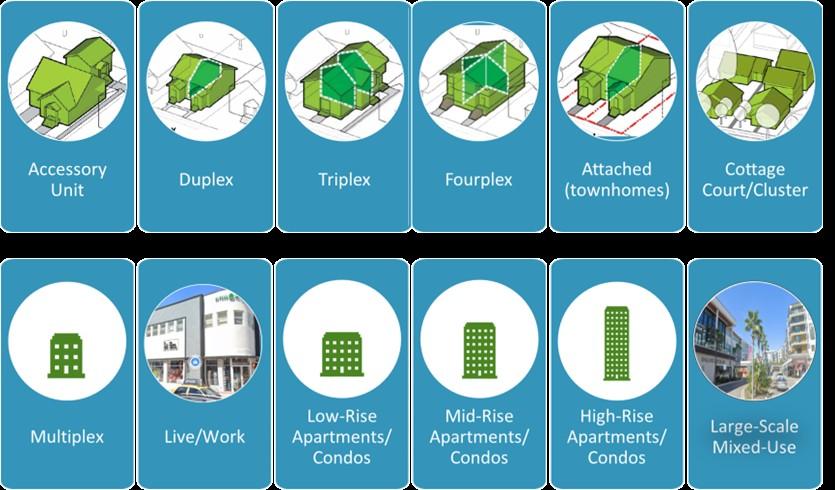
#1: Legalize More Homes of More Shapes and Sizes in More Places
#2: Unlock Density Through Regulatory Reforms
#3: Revive the Starter Home
#4: Align Housing Strategies with Smart, Resilient Planning
#5: Require Affordable Homes in Exchange for Increased Allowances and Incentives
#6: Streamline Permitting
#7: Turn Underused, Non-Residential Spaces Into Homes
Strategy Highlight #1: Legalize More Homes of More Shapes and Sizes in More Places
Legalize in local Comprehensive Plan + zoning code:
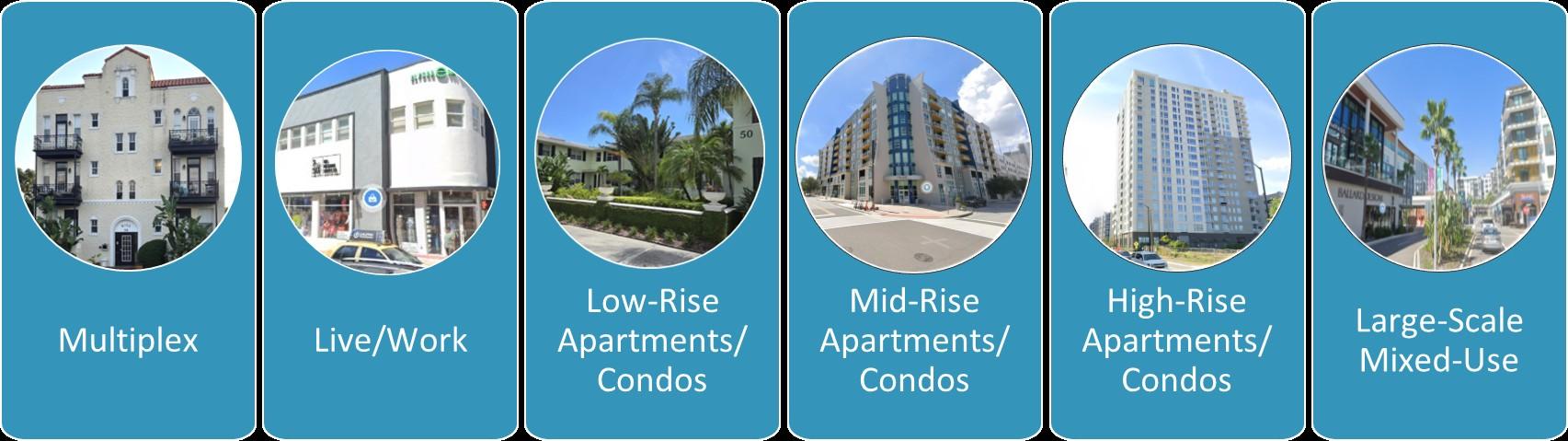
Live/Work, Mid-Rise, High-Rise, Mixed-Use
Images Source: Google Maps
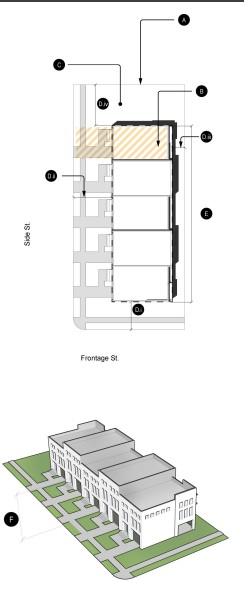
Images Source: City of Portland
FACTORY-BUILT HOMES
Strategy Highlight #2: Unlock Density Through Regulatory Reforms
• Legalizing more homes goes beyond increasing the type and number/density expressly allowed in the rules.
• Adding by right flexibility for other building and site requirements that can indirectly limit these homes ensures they can actually be built.
Strategy
Highlight #4: Align Housing Strategies with Smart, Resilient Planning
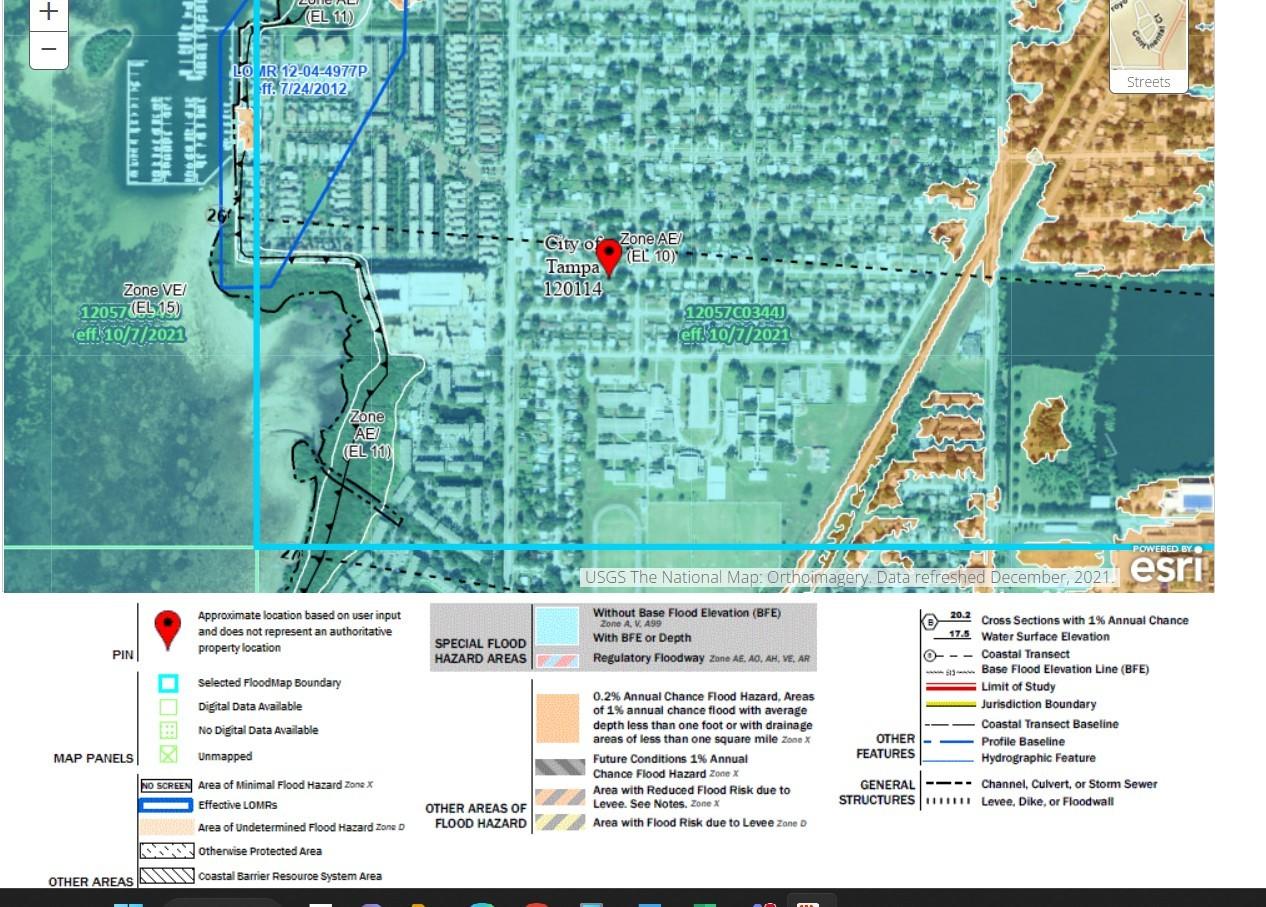
• Focus more housing where there’s good infrastructure, access to amenities, and lower flood risk.
• Coordinate more homes with infrastructure investments in emerging development areas.
• When building in risk-prone areas can’t be avoided, require stronger building and site design standards.
Put Land to Work for Affordable Housing
#1: Use Public Land for Public Good
#2: Prioritize Safe, Sustainable, and Resilient Locations
#3: Buy Land Now, Build for the Future
#4: Partner with Community Land Trusts (CLTs)
Strategy Highlight #1: Use Public Land For Public Good
• Identify and prioritize publicly owned land that's suitable for affordable housing - don't let valuable land sit idle when it could serve the community.
• Using public land puts local governments in the driver's seat when it comes to creating the affordable housing they want to see:
Identifying Public Land Adopting Land Disposition Policies
Key factors:
Access to infrastructure
Physical dimensions
Proximity to amenities
Development readiness
Strong land disposition policies:
Long-term affordability
Serve the lowest-income households
Partner with CLTs
Build with resiliency in mind
Strategy Highlight #4: Partner with Community Land Trusts (CLTs)
CLTs offer distinct benefits to protect public affordable investments for the long term:
Maximizes the use of public land for permanently affordable housing
Preserves subsidies through resale restrictions
Tracks long-term affordability and compliance
Relieves local government of long-term stewardship responsibilities
Partner with existing CLTs or inspire new ones through seed funding, technical assistance, and capacity-building offered by FHC's CLT Institute.
Join the growing list of public entities in FL who are putting public land to work for affordable housing:
Alachua Boynton Beach CRA Broward County Collier County Daytona Beach Escambia County/City of Pensacola
Fort Myers Fort Myers CRA Hendry County School Board Hernando County Melbourne Miami-Dade County
Miramar Ocala Pasco County School Board Pinellas County Pinellas County School Board Sanford