Chemical Resistance Guide
Solutions for Tough Chemical Environments
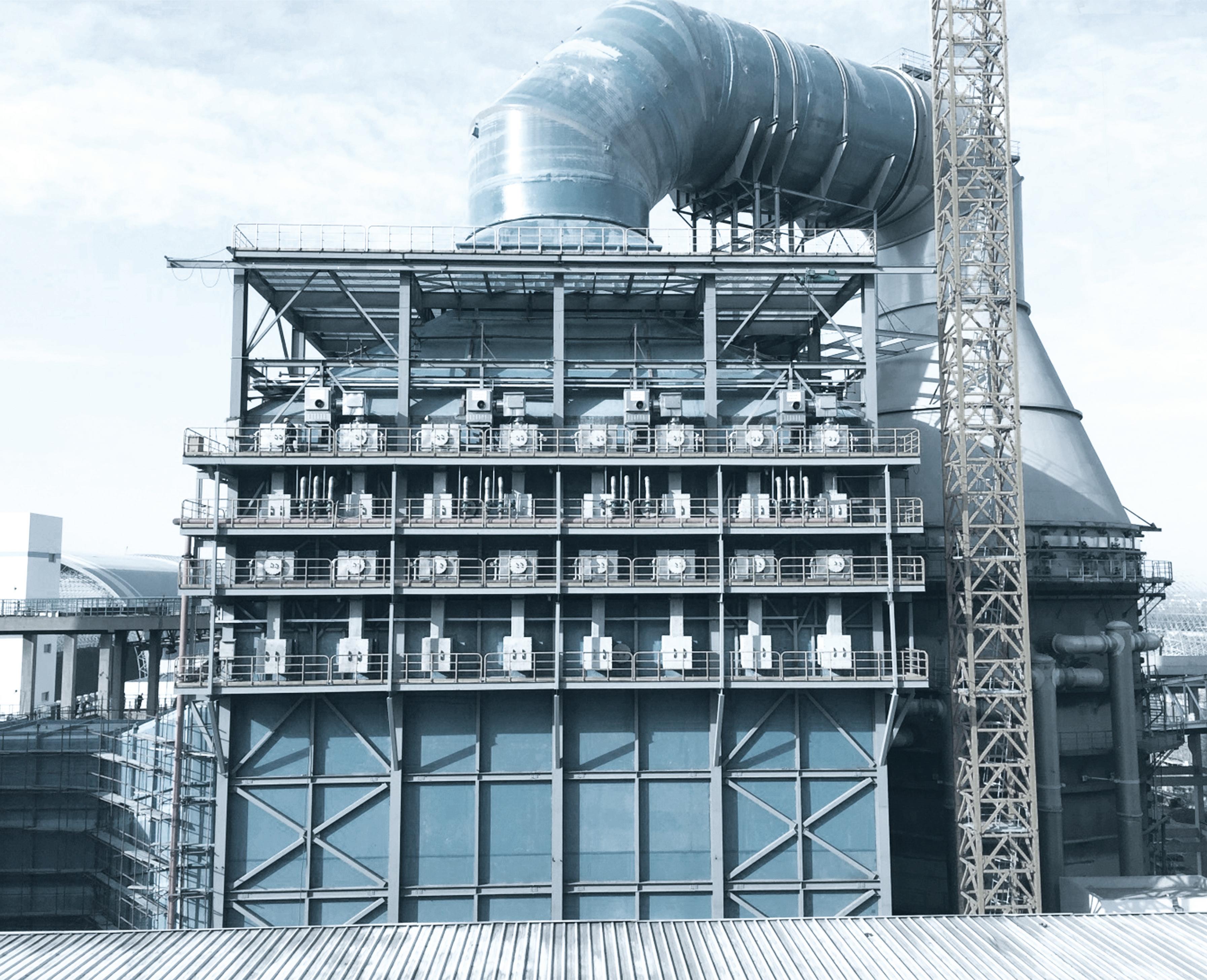
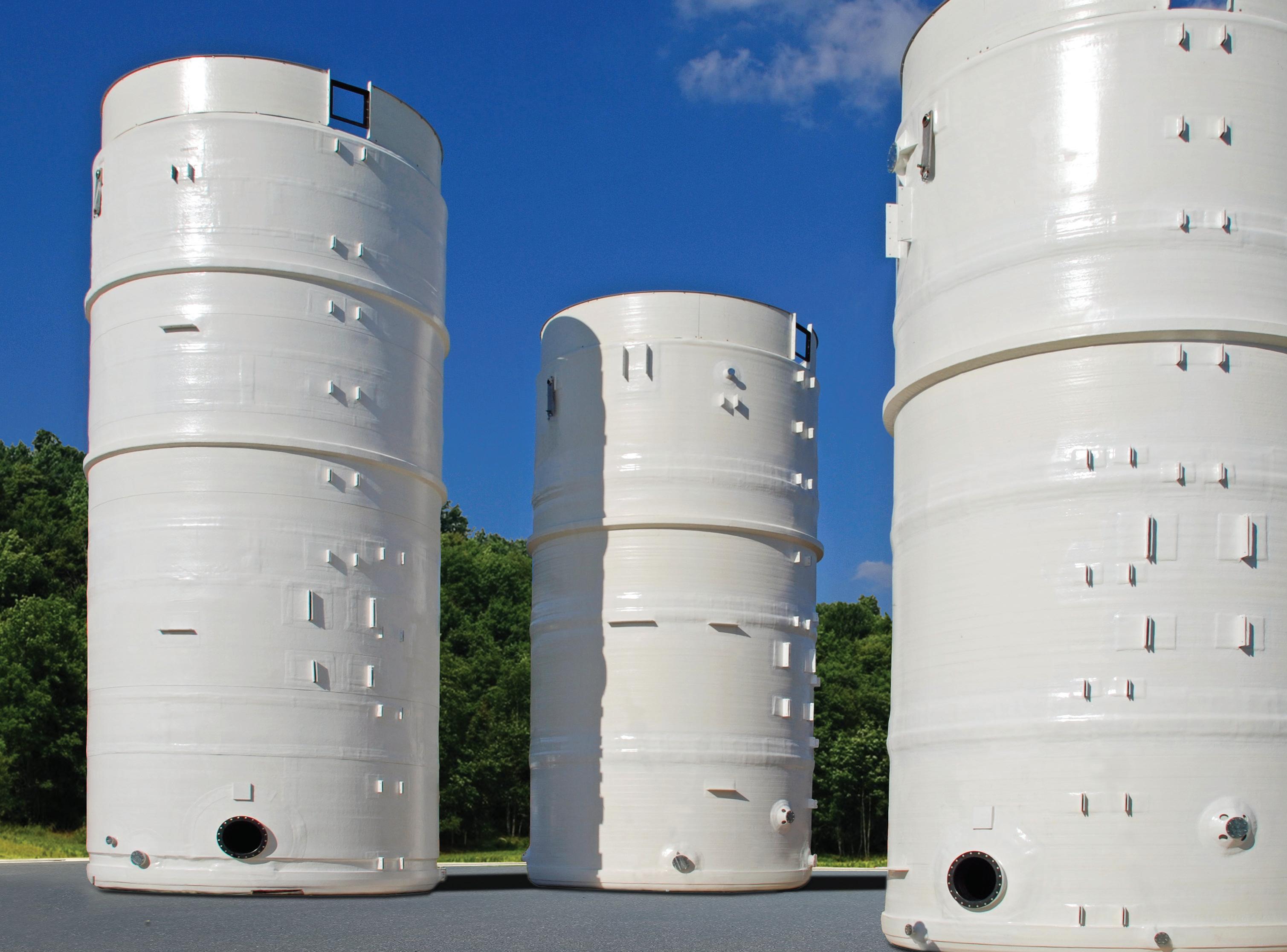
AOC is leading the composites industry in the fight against damaging and costly corrosion. Our Vipel corrosion-resistant formulations set the global standard for proven performance in fiberreinforced polymer (FRP) applications. Trust AOC for corrosion resistance in pipes, tanks, and other equipment for a wide range of chemical industries, including water and wastewater treatment, chemical processing, pulp and paper, mining and power generation. With unparalleled strength and durability, AOC formulations combat corrosion in the harshest conditions.
Partner with AOC for our superior products, industry leadership, professional expertise and commitment to quality.
This guide is designed to assist fabricators of FRP components in selecting the appropriate formulation for parts which will be exposed to highly corrosive environments. The data presented is the result of years of extensive laboratory testing and actual field exposure in North America and Europe.
System selection is determined by the chemical service and environment to which the equipment will be exposed, end-user specifications and preferences, or fabricator recommendation. AOC corrosion advisors also are available any time to answer questions.
Users frequently specify the system and laminate construction for particular applications. The requirement may be based on past experience, manufacturer recommendations, the supplier of the chemicals being handled, or the manufacturer of an equipment package. Fabricators should always confirm the source of selection and the acceptability of equivalent alternate systems.
When users depend on fabricators to recommend a system, it is critical that the user states all aspects of the application and service. Fabricators should get the following information from users:
• The common name and, when possible, the chemical name. For example, muriatic is a common name for hydrochloric acid. This information is generally contained in the Safety Data Sheet for the medium.
• Concentration of each of the chemical components.
• Specific gravity of each chemical solution or mixture.
• pH, if it is an aqueous system.
• Maximum operating temperature (not design temperature) and any anticipated temperature excursions.
• Pressure and/or vacuum conditions. For tanks, it is also important to know if filling will be by pressure, such as from a tank wagon.
• Any use in food and drug applications, where applicable.
• Length of exposure to the medium if less than continuous. For example, the laminate may need to withstand only occasional splashes of exposure.
• Process description, where a reaction such as neutralization takes place in the tank.
• Fire retardancy, where applicable, including flame spread rating and smoke requirements.
Normally a suitable formulation can be selected from the AOC Chemical Resistance Guide based on the information in the “Gathering Data” section above. A few comments on information featured in this guide should be noted:
• Temperature data presented in the guide represents the highest temperature at which the individual product has demonstrated acceptable service life in a laboratory environment or in actual field use.
• Testing of coupons is ongoing, and environments not tested may be done at the customer’s request.
• Serviceability should not be interpreted to mean the full retention of all visual and mechanical properties, but rather an expectation of how a properly designed and fabricated structure will perform.
• Short exposure periods at higher temperatures usually do not affect product integrity if the heat distortion temperature of the cured formulation is not exceeded. However, the highest temperature reached and the exposure duration at this temperature should be indicated when making inquiries.
• This list does not apply to mixtures of different media unless explicitly stated. It contains chemically declared media and some brand name chemicals, which were not precisely identified with respect to chemical composition.
• When the concentration is listed as less than 100%, the remaining product is water, unless specifically stated otherwise.
• The chemical resistance of Vipel formulations can be negatively affected by fillers or thixotropic additives, and should not be used in the corrosion barrier in most applications.
Bisphenol A Epoxy Vinyl Ester
Epoxy Novolac Vinyl Ester
Bisphenol A Fumarate Polyester
Vipel F007
Vipel F010
Vipel F013
Vipel F085
Vipel F086
Vipel F282
Lower VOC/HAP bisphenol A epoxy vinyl ester.
Excellent corrosion resistance to both acidic and alkaline environment. Suitable for equipment subjected to high static and dynamic loads.
Higher styrene bisphenol A epoxy vinyl ester. Offers the best resistance to hot caustic solutions.
Suitable for elevated temperatures. Excellent resistance to acidic and mild alkaline environments. Performs well in a wide range of acidic oxidants and solvents.
Higher heat distortion temperature than Vipel F085. Preferred over standard epoxy novolac in chlorine and other oxidated environments.
Proven resistance to both acidic and alkaline environments. A powdered alkyd version of F282 is available.
Broad chemical resistance at moderate temperatures. Resistant to many petroleum products including kerosene, heating oils and crude oils.
Vipel F737
Isophthalic Polyester Vipel F701
Vipel F764
Vipel F774
Terephthalic Polyester
Vipel F798
Higher elongation versions of F701 used primarily where additional flexibility is important, such as in filament winding and pultrusion processes.
A high-reactivity formulation that meets UL 1746 and Steel Tank Institute requirements. Field-proven for many fuel blends.
Provides a higher heat distortion temperature while maintaining a higher elongation compared to F764. Vipel F774 also meets UL 1746 and Steel Tank Institute requirements. Field-proven for many fuel blends.
Vipel F798 is a high reactivity formulation certified to UL/ULC 1316 for single and double wall underground gasoline storage tanks. Vipel F798 provides lower HAP content and higher elongation to provide improved crack resistance while maintaining a high HDT. F798 is also suitable for corrosion applications where standard Isophthalic and Terephthalic formulations are used.
Vipel K022
Brominated
Bisphenol A
Epoxy Vinyl Ester
Vipel K026
Versions are available to achieve ASTM E84 Class I and Class II flame spread. Excellent resistance to both acidic and alkaline environments. Provides exceptional thermal and mechanical properties.
Can meet ASTM E84 Class I flame spread and smoke development without antimony trioxide. Excellent resistance to both acidic and alkaline environments. Provides exceptional thermal and mechanical properties.
Brominated Epoxy Novolac Vinyl Ester
Vipel K095
Brominated Isophthalic Polyester Vipel K733
Can meet ASTM E84 Class I flame spread and smoke development without antimony trioxide. Excellent resistance to acidic and mild alkaline environments. Performs well in a wide range of acidic oxidants and solvents. Suitable for elevated temperatures.
Versions are available to achieve ASTM E84 Class I flame spread with or without antimony trioxide. Exhibits mild corrosion resistance to acidic environments.
Vipel F010-H2O
Bisphenol A
Epoxy Vinyl Ester
Elastomeric Bisphenol A
Epoxy Vinyl Ester
F013-H2O
Vipel F017
Isophthalic Neopentyl Glycol Polyester Vipel F707-PVA
Certified to NSF/ANSI 61 standard for use in potable water applications and sodium hypochlorite. When used as directed, the fabricator does not need to perform additional testing to manufacture NSF/ANSI 61 compliant coatings.
Designed as a primer for bonding fiberglass laminates to steel, concrete and other substrates. Exhibits improved interlaminar adhesion and can be used to manufacture composites with extra flexibility.
PVC bonding formulation with broad chemical resistance at moderate temperatures.
Many of the applications and chemical services listed in the guide make reference to NOTES in the column adjacent to the chemical. These notes are an integral part of the listing recommendation and must be strictly followed. The notes will indicate those applications requiring different veil materials, cure systems, liner construction or thickness and post curing requirements.
In those instances where the specific application is not listed, the fabricator is encouraged to contact AOC. The information in the “Gathering Data” section above should be included and directed to:
Corrosion Product Leader
Phone: +1 901 854 2800
E-mail: corrosion@aocformulations.com
Number Remark
Our recommendations should not be taken as inducements to infringe any patent or violate any law, safety code or insurance regulation. The term resistance is used in the sense which is commonly used in the trade, not as the complete retention of all optical and mechanical characteristics. Refer to ASTM G 15 and ASME/ANSI RTP-1 for common corrosion definitions.
The resistance of Vipel formulations to chemical environments listed in this guide has been established according to ASTM C581 and the ASME/ANSI RTP1 standard coded “Reinforced Thermoset Plastic Corrosion-Resistant Equipment.”
The Vipel Chemical Resistance Guide and its contents are the confidential and proprietary information of AOC and it may not be modified, altered, deconstructed or presented in any other manner without the explicit authorization of AOC and/or its legal counsel.
Abbreviations
1 Contact our corrosion specialists NR Not recommended.
2 Double synthetic veil should be used in the chemical resistant barrier
“ALL” in concentration column refers to concentrations in water.
3 Double C-glass veil should be used in the chemical resistant barrier “100” in concentration column refers to the pure chemical.
4 Acid resistant glass should be used in the chemical resistant barrier
5 Chemical resistance barrier thickness should be 5 mm
6 Benzoyl peroxide/amine cure system is recommended (for chemical resistant barrier)
7 Acid resistant glass recommended in the structural wall
8 Post cure recommended for improved service life.
9 Satisfactory up to maximum stable temperature of stored component
10 Stored chemical can discolour in contact with FRP laminate
11 Vipel® F013 series should be used instead of Atlac® F010 series.
12 Safety Data Sheet of specific chemical required
13 Stored chemical can discolour in contact with Novolac Vinyl Ester FRP laminates
14 Vipel F764, Vipel F774 or Vipel F798 resins are preferred products over Vipel F701.
15 Only F010, F007, F013, F015, F701, F737 and F764 are suitable for FDA/USDA applications.
16 Vipel K022 or K026 preferred
“SAT'D” in concentration column refers to maximum dissolved solute in water at a given temperature/pressure.
anhydride
Acetone : Methylethyl ketone: Methylisobutyl ketone : H2O
Acetonitrile
Acetyl acetone 100 NR NR NR NR NR NR NR NR NR NR NR NR
Acetyl
Acrolein (= Acrylaldehyde)
Acrolein (= Acrylaldehyde) 21 - 100 NR NR NR NR NR NR NR NR NR NR NR NR NR NR
Acrylamide
Acrylic acid 1
Acrylic acid
Acrylic latex
Acrylonitrile 100 NR NR NR NR NR
Ammonia (wet gas) See Ammonium hydroxide
Ammonia, liquified
bisulfite black Liquor
Ammonium hydroxide (aq. ammonia)
hydroxide (aq. ammonia)
Ammonium hydroxide (aq. ammonia)
Ammonium hydroxide (aq. ammonia)
Ammonium thioglycolate
thiosulfate
Aqua regia (HCl : HNO3 = 3 : 1)
Benzene : Ethyl benzene
Benzyl alcohol (= hydroxy toluene)
Benzyltrimethylammonium chloride
Biocides
Biodiesel/FAME (max
methanol)
Black liquor (pulp mill)
Bleach, Calcium hypochlorite
Bleach, chlorine dioxide
Bleach, chlorine water
Bleach, Lithium hypochlorite,
Bleach, Sodium hypochlorite
Borax (Sodium tetraborate, Sodium borate)
Boric acid
Brine, chlorinated
Brine, salt
Bromine, liquid
Bromine gas, dry
Bromine gas, wet
Bromine Water
Butanediol (all isomers)
Butanol (n-) (= Butyl alcohol, all isomers)
glycol
Butoxyethanol (2-)
Butoxyethoxyethanol (2,2-)
acetate
Butyl acrylate
diglycol
Butyl stearate (5% in mineral spirits)
See Calcium hypochlorite
See Chlorine dioxide
See Chlorinated water
See Lithium hypochlorite
See Sodium hypochlorite
See Chlorinated brine
See Sodium chloride
Cane sugar liquor & sweet water
Carboxy
Caustic
Chlorine / Hydrochloric acid, wet
Chlorinated brine,
Chlorinated brine, pH 2.5 - 9
brine, pH > 9
Chlorine
Chloroacetic acid (Monochloroacetic acid)
Chloroacetic acid (Monochloroacetic acid)
Chloroacetic acid (Monochloroacetic acid)
Chloroethylene (1,1,1-)
Chloroform
Chloroparaffin
Chloropyridine (tetra)
Detergents,
Di 2-ethylhexyl phosphoric acid (in kerosene)
Dibutyl sebacate
Dibutylamine (n-)
Dichloroacetic acid
Dichlorobenzene
Dichloroethane
Dichloroethene
Dichloromethane (= Methylene chloride)
Dichloropropane
Dichloropropene
Dichloropropionic acid
Dichlorotoluene
Diesel fuel, Aromatics, Methanol
Diesel fuel, No Aromatics, No Methanol
Diethanol amine
Diethyl amine
Diethyl aniline
Diethyl benzene
Diethyl formamide
Diethyl maleate
Diethyl
Diethyl sulfate
Diethylene glycol
ether
Dimethyl acetamide
Dimethyl amine (DMA)
Dimethyl aniline (= Xylidine)
Dimethyl formamide (DMF)
Dimethyl morpholine (2,6-)
Dimethyl phthalate
Dimethyl sulfate
Dimethyl sulfide
Dimethyl sulfoxide (DMSO)
Dinonyl phthalate
Chemical Substance
phthalate
Dioctylsulfosuccinate sodium salt
Dioxane (1,4-)
Diphenyl ether (Diphenyl oxide)
Dipiperazine sulfate
Dipotassium phosphate (Hydrogen phosphate)
Dipropylamine (n-)
Dipropylene glycol
Disodium phosphate (Hydrogen phosphate)
Chemical Substance
Ethylenediaminetetraacetic acid, EDTA
Ethylene dibromide
Ethylene dichloride
Ethylene glycol
Ethylene glycol monobutyl ether (2-Butoxyethanol)
Ethylene oxide
Ethylhexanol (2-)
Ethylhexylacrylat (-2)
Eucalyptus oil
Fatty acids (C12 or
Glycolic
Gypsum Slurry
Isobutanol (= isobutyl alcohol)
Isopropanol (Isopropyl alcohol)
Isopropylamine See Propylamine
Isopropyl myristate
Limestone slurry See Calcium carbonate
Mercury (I) chloride) (Mercurous chloride)
Mercury(II) chloride (Mercuric chloride)
Mercury(II) nitrate (Mercuric nitrate)
Methyl bromide, gas
Methyl ethyl ketone
Methyl isobutyl ketone (MIBK)
Methyl methacrylate
Methylamine
Methylcellosolve
Methylchlorophenoxyacetic acid (MCPA)
Methylchlorophenoxypropionic acid (MCPP)
Methyldiethanolamine
Methylene bromide
Methylene chloride See Dichloromethane
Methyleneblue salts pH 2-5.5, aqueous
Methylpentanol (2-)
Methylstyrene
Molasses and Invert molasses (2 < pH < 9)
Monochloroacetic acid See Chloroacetic acid
Monochlorobenzene See Chlorobenzene
Monoethanol amine
Muriatic acid
Octanoic acid See Caprylic acid
Octylamine (all Isomers)
Oils (grease, lube, Vegetable)
Pentanedioic
Pentanol See Amyl alcohol
Pentasodium triphosphate See Sodium
Phthalate esters
Piperazine dihydrochloride
Plating solution, Cadmium
(3.2% Cadmium oxide, 10% Sodium cyanide, 1.2% Sodium hydroxide)
Chemical Substance
Plating solution, Chrome
(18.5% Chromic acid, 0.6% Sodium fl uosilicate, 0.01%
Sodium sulfate)
Plating solution, Gold (23%
Potassium ferrocyanide, 0.2%
Potassium gold cyanide, 0.8%
Sodium cyanide)
Plating solution, Lead (8% Lead, 0.8% Fluoboric acid, 0.4% Boric acid)
Plating solution, Nickel (11.3%
Nickel sulfate, 1.4% Nickel chloride, 1.1% Boric acid)
Plating solution, Nickel
(43.7% Nickel sulfate, 3.5% Ammonium chloride, 3.5% Boric acid)
Plating solution, Silver (3.9% Silver cyanide, 6.5%
Potassium cyanide, 1.6%
Potassium carbonate, 4.5% Sodium cyanide)
Plating solution, Tin Fluoborate (18.3% Stannous fl uoborate, 7.4% Metallic tin, 9.1% Fluoboric acid, 2.3% Boric acid, 0.1% Naphtol)
Plating solution, Zinc Fluoborate (49% Zinc
fl uoborate, 4.4% Ammonium chloride, 5.9% Ammonium fl uoborate)
Plating solutions (other types)
Polyacrylamide
Polyester resins (styrenated)
Potassium pyrophosphate See Tetrapotassium diphosphate
Sodium bicarbonate :
carbonate (15%:20%)
Sodium borate
Sodium
(active
Sodium phosphate See Mono-, Di-, Ortho-, Tri-
Sodium polyacrylate
Sodium sulfhydrate See Sodium hydrosulfide
Sulfamic acid
Sulfated detergents See Sulfonated detergents
Sulfanilic acid
Sulfonated detergents
Sulfur
Sulfur trioxide gas, dry
Sulfur trioxide gas, wet FUMES
Sulfuric acid >80
Sulfuric acid (= Oleum)
Sulfuric acid : Ferrous sulfate
Sulfuric acid : Phosphoric
Sulfurous acid 10 120 /
Sulfuryl chloride
Sulfite/ Sulfate liquors (Pulp mill)
Sulfonyl chloride, aromatic ALL
Superphosphoric acid
acid
Tetrachloroethylene (Tetrachloroethene)
Tetrachloropyridine
Tetrapotassium pyrophosphate (Potassium pyrophosphate)
Tetrasodium ethylenediaminetetraacetate (Na-EDTA)
Tetrasodium pyrophosphate
(tetrahydrofuran)
(tetrahydrofuran) >
Thioglycolic acid See
Thionyl chloride
Tobias acid (2-naphthylamine - 1-Sulfonic)
Toluidine (0-, m-, p-)
(Ester
Tributylamine -N
Trichloroacetaldehyde
Trichlorobenzene
Trichloroethane
Trichloromonofluormethane
Trimethylene
Tripotassium phosphate (K5O10P3)
Trisodium
Tritolyl
Americas +1 866 319 8827 americas@aocformulations.com
Europe, Middle East, Africa +41 52 644 1212 emea@aocformulations.com
China
+86 25 8549 3888 china@aocformulations.com
Asia Pacific +41 52 644 1212
asiapacific@aocformulations.com
AOC is a registered trademark of the AOC group of companies.
The information contained in this publication is based on laboratory data and field experience. We believe this information to be reliable, but do not guarantee its applicability to the user’s process or assume any liability for occurrences arising out of its use. The user, by accepting the products as described herein, agrees to be responsible for thoroughly testing each such product before committing it to production.
Vipel® , the AOC name, the AOC logo, and the Trusted Solutions logo are registered trademarks of the AOC group of companies.
Nothing herein is to be construed as granting permission to use, or inducing or recommending the use of any patent or resulting invention without a valid license.
The information and recommendations contained herein are to the best of our knowledge accurate and reliable, but no rights whatsoever may be derived by any party other than those expressly agreed to with a selling entity of the AOC group of companies in a legally binding agreement. AOC hereby makes no warranty of any kind, express or implied, including those of merchantability and fitness for purpose. Unless explicitly agreed to in writing by AOC otherwise, all offers, quotations, sales and deliveries of AOC products are subject to the general conditions of sale of AOC
© 2026 – AOC Group of Companies
For more information email: americas@aocformulations.com visit: aocformulations.com