CAREERS GUIDE 2019
THE AUSTRALIAN NATIONAL UNIVERSITY
LAW STUDENTS’ SOCIETY




Editor’s
President’s
Public
Community
Working
Criminal
International
Private
Ashurst
Minter
Allens
Clifford
Jones


THE AUSTRALIAN NATIONAL UNIVERSITY
LAW STUDENTS’ SOCIETY
Editor’s
President’s
Public
Community
Working
Criminal
International
Private
Ashurst
Minter
Allens
Clifford
Jones
Dear ANU Law Students,
On behalf of the Australian National University Law Students’ Society, we would like to welcome you to the 2019 edition of the Australian Government Solicitors Careers Guide.
This year we strived towards providing an insightful and wide-spanning guide covering numerous career opportunities open to all law students both during and post your law degree. This year’s addition of Criminal Law, Family Law, and Legal Academia is indicative of the plethora of sub-sectors within the legal profession. We hope that it inspires you to consider pathways you may never have thought existed, or affirms your motivation to enter into a desired path. There are diverse opportunities available to us from the beginning of our degrees to not only define our career paths but also to help us develop, perfect and expand our skills. This guide presents contributions from a variety of students and graduates, identifying that there is career opportunities at each stage of your degree. We encourage you to challenge yourselves and remember that there are numerous ways to achieving your goals!
Foremost we would like to express our sincere appreciation for our sponsors without whom this guide would not have been possible. Your continued support allows us to provide an increasingly comprehensive guide each year and connect with an impressive number of law students.
We are also extremely grateful to our contributors for so kindly sharing their experiences and testimonials. Your guidance has been nothing short of invaluable and inspiring, and we wholeheartedly thank you for giving back to the ANU Law community. We hope that your advice provides ANU Law Students with a profound idea of how their degrees and university experience will lead them into incredible futures.
Please refer to the useful links pages at the end of each section for additional information. If there are any questions regarding this guide, please feel free to email us at lsscareers@anu.edu.au We wish you all the best on your career journey.

Thanaya Naidu (2019 ANU LSS Vice President Careers) Michelle Wang and Johnathan Grech (Careers Directors)
DISCLAIMER: The views expressed in this publication do not necessarily reflect those of the editors or the Australian National University Law Students’ Society. Best efforts have been made to ensure all information in this publication is correct as at February 2019 but is subject to change without notice. This information is merely advisory and should not be relied upon as being professional advice. This publication is distributed free of charge with the understanding that the authors, editors and any persons related to this publication are not responsible for the results of their actions or omissions on the basis of any information provided in this publication.
Welcome to the 2019 Careers Guide, proudly supported by Australian Government Solicitor.
I would firstly like to thank the Careers portfolio for all of their hard work in preparing an outstanding Careers Guide. I would also like to thank all of our Sponsors for their continued support of the ANU Law Students’ Society.
I am absolutely thrilled with the quality of the Guide that has been put together this year and cannot wait for you to read it. This year’s guide continues to push boundaries, highlighting an even more expansive array of career options than ever before. With this in mind, I am confident that the 2019 Careers Guide will prove a valuable resource for helping you determine your future career path and providing you with a variety of job application tools.
This Guide showcases only a mere few of the fantastic opportunities available to ANU Law students and graduates, both within Australia and the broader international landscape. Use this Guide as a foundation to help you consider your options, prepare for the job application process and seek out more information on a particular firm or field. We hope that you find the information inside useful!
Beyond publications, the LSS has an array of very exciting Careers events ahead. I strongly encourage you to attend them, whether that be our flagship Clerkship Information Evening (which is set to have more firms in attendance than ever before), or the variety of workshops and skills events yet to come. Use these events to your advantage, to get an indication of the type of environment you want to work in and the skills you need to get there.
Finally, to you, good luck! I hope that this Guide continues to instil the belief that you can have a career in whatever field and whatever firm you want. One undeniable fact that I’ve learnt this year is that a law degree from the ANU is highly valued. Remember that and be proud of the fact that you are studying at one of the country’s best law schools. The options ahead are endless!
All the best,
Rocky Lagudi President ANU Law Students Society lss@anu.edu.au



Applying for internships, clerkships and graduate roles can be an exciting process for those entering a new phase of their legal careers. Yet, the process can often be intimidating and stressful. The following section attempts to break down some of the steps within the application process to provide fresh perspective on securing the ideal position. Additionally, there is information and advice on preparing yourself for the application process.
When applying for any role it is important to plan ahead to ensure that you have adequate time to research the role and organisation, prepare for any assessment centres and practice for interviews. This is particularly important for clerkship or graduate application periods when the applications for different roles close at the same time.

A cover letter is a “get to know me” on paper. Let your personality shine through your writing. It’s the best place to highlight and expand on the exciting things you’ve done that are overlooked on your resume. Explain how your experiences in a professional and non-professional environment have provided you with the skills necessary to effectively perform in the position you are applying for.
Don’t panic if you have little to no professional experience starting out. Everyone starts from nothing. My trick was to always talk about my passion for the position that I was applying for. Admittedly, this is easier with positions that you actually want rather than those that you are just hoping to get for the sake of experience, but a little effort at the start goes a long way in the future.
A lot of job advertisements nowadays provide a criteria that they want you to address in your covering letter. The best way to make sure you’ve covered everything, or at least as many as you possibly can, is to check items off as you write. As difficult and uncomfortable it might be to write in first person or to brag about yourself, it definitely pays off.
By Anwesha Sinha
A 5th year Arts/Law student who is current working at the Tenants Union ACT.
Remember cover letters are not only to let the employers know why you are the ideal candidate for the position but also to let them know what the position does for you. That is, how does the position benefit you and what you hope to gain from working with the company. Show initiative. Subtly, but surely, let them know that you’ve done your research by talking about the whole range of opportunities the company can provide for your professional development and what makes you want to work with them.
The last thing is to put effort into your cover letter. It sets you apart so make sure it is specific to every position that you apply for. It is tedious, it can be overwhelming and definitely is time consuming, but a cover letter is important and don’t let anyone tell you otherwise. You might be shortlisted from the first dozen application simply on your resume, but they might shortlist again for who they want to interview- that’s when your cover letter plays a pivotal role.
This material was kindly provided by ANU Careers
Frank Ashbury
27 Appleby Rd
Chapman ACT 2611
041234567
frank.ashbury@gmail.com
Mr James Smith, Graduate Recruitment Manager ABC Bank
210 Bourke St
Sydney NSW 2001
16 April 2017
Dear Mr Smith,
After speaking to Jason Williams at the Tertiary to Work careers fair in Canberra last week, I wish to apply for a graduate position in the investment banking stream with ABC Bank. My interest in investment banking has grown over the last several years, particularly after my summer internship experience at WeInvest last year.
I am currently in my final year of a B. Commerce/B. Laws degree at Australian National University (ANU) and I hold a distinction average. I have been an active member of the Finance and Banking Society (FINSOC) at ANU and the Financial Services Institute of Australasia (FINSIA) for the past two years.
I developed strong analytical skills through my research into the deregulation of East-Asia’s financial sector in the past five years. I enhanced my strong communication skills as a volunteer guide at the National Museum and my teamwork skills in my part-time retail assistant role at David Jones. My organisational skills have been further developed in my position as paralegal with the commercial law firm Smith & Partners. I enjoy playing rugby and as a rugby coach for under 14s, I used initiative and my problem-solving ability in running local competitions.
ABC Bank’s global outlook and recent expansion into East-Asian markets appeal to both my legal and commerce backgrounds. I would enjoy contributing to ABC Bank’s growth in deregulated markets overseas, as well as in the domestic sector. I would also welcome the opportunity to learn from experienced staff in the mentoring program within ABC Bank’s graduate program.
Thank you for your time in this matter. I look forward to the opportunity to discuss my application further with you and can be contacted on 0412 345 678.
Yours sincerely,
Frank Ashbury frank.ashbury@mail.com

First and foremost – the headshot! Indulge in a professional headshot so that you are not recycling a cropped photo of your 21st on your LinkedIn profile.
These are some key questions to ask yourself as you create your resume.
Is the information relevant?
Your resume should include a number of essential categories:
1. Your personal details y our name, address, email, phone number, and LinkedIn URL.
2. Education , importantly your tertiary studies and expected graduation date.
3. Employment history is the most pertinent to potential employers. In this section be specific and avoid using generalised descriptions. Prioritise your accomplishments and the skills you adopted rather than menial tasks you completed. Remember the phrase ‘results over responsibilities’. If you have legal experience it should come first.
4. Be creative and personalise your interests and additional achievements.
5. At the foot of your resume should be your references , include names and contacts to make everything available to your employer on first instance.
By Lucy Bannon
A fourth year Arts/Law student who has public and private legal sector experience and studied at Harvard University and The Hague Academy of International Law.
Is it concise?
Make your resume aesthetically pleasing to ease the job of HR who are churning through hundreds of resumes. This can be achieved through writing concisely, avoid cluttering the space, maximising line spacing, using a professional font in size 11 or 12 and manipulating formatting to make your headings stand out whilst adhering to a maximum length of two pages. Remember to always list the content from most to least relevant.
Is it customised to the role and firm?
This is two-step process. First tailor your resume to the role description by relating your accomplishments to the required characteristics. Secondly, tailor your resume to the firm itself. Seek out their recent work, areas of practice, corporate values, and specialities of the relevant partners. Most of this information will be easily accessible online. Demonstrate that you have taken the time and effort to learn about your potential employers.
Is it grammatically correct?
Finally, take the time to ensure that your resume is well-formatted, concise and grammatically correct. After you feel you have satisfied this step ask a friend to repeat the process. This is a simple task that if overlooked can prove fatal to the success of your application.
This material was kindly provided by ANU Careers
Frank Ashbury
27 Appleby Rd Chapman ACT 2611 0412 345 678 frank.ashbury@gmail.com
OBJECTIVE Driven and energetic, I am seeking to start my career in investment banking by using my strong communication and problem-solving skills and further developing my leadership skills in a graduate position with a leading multinational investment bank.
EDUCATION
2016 – expected completion 2019
Bachelor of Laws/Bachelor of Commerce, Australian National University, Distinction average.
2017 Semester Exchange to University of Amsterdam
2015 Narrabundah College, ACT. ATAR: 98.2
SKILLS SUMMARY
Communication
• Developed strong oral communication skills through my role as Community Volunteer with Oxfam Australia, presenting Oxfam’s work at community groups and schools, tailoring my language to different audiences.
• Further developed written communication skills by drafting legal documents in my work as paralegal with Smith and Partners.
[Continue skills summary below]
PROFESSIONAL EXPERIENCE
March 2015 – present
Paralegal, Smith & Partners, commercial law firm, ACT Drafting legal documents
• Trial preparation, including interviewing clients
ADDITIONAL EXPERIENCE
Mar 2017 – present Committee member, Finance & Banking Society (FINSOC) – ANU Branch
• Contribute to regular committee meetings and decision making on terms of reference and priorities and FINSOC events
[Continue experience below]
VOLUNTEER EXPERIENCE
2017 – present
Learning Community Ambassador, Global Challenges Learning Community
OTHER ACHIEVEMENTS
2016 ANU College of Business & Economics Undergraduate Merit Award
PROFESSIONAL MEMBERSHIPS
2016 – present Student member, Financial Services Institute of Australasia (FINSIA)
REFEREES
Sam Smith, Partner
Tracey Johnson, Finance Analyst Supervisor Supervisor Smith & Partners, Commercial law firm
02 6123 4567

1. Be yourself. An organisation should be looking for individuals, not replicas out of a mould. If they are taking the ‘cookie cutter’ approach to hiring, ask yourself whether you really want to work there.
2. Stand out from the crowd by avoiding clichés and regurgitating buzz words as they do not demonstrate independent thinking.
3. Do not be late, but do not be very early either! If you get to the interview location more than five minutes before your scheduled interview, find somewhere nearby to chill– most interviewers are busy people and often have numerous meetings and commitments scheduled.
4. Do not undersell yourself or the research you have done. Be prepared to ask questions and set out what you want to gain from the position. That shows that you’ve engaged with the information available on the role and organisation.
5. Find yourself a mentor or someone who has worked in a similar role, so that they can give you advice and help you think of questions and issues that might arise in an interview.
By Jodie Newall
6. If you require something from a role such as flexible working arrangements, do not be afraid to ask for it. Remember that you will never get something if you do not ask for it.
7. If you have not heard back from the organisation within a reasonable period after the interview you can enquire politely, but acting arrogant or as if you’ve already got the role does not make a good impression. 8. It’s ok to be nervous!
In general when applying for jobs do not feel like you need to have a career planned out during or straight after university. In fact, be prepared to run with it and see where you end up. If anyone asked me when I was studying, whether, I would find the areas that I have worked in interesting, engaging or part of my career plan, I would have said no. Every single role and practice area I have worked in has been fabulous for my development as a lawyer and I’m so glad I took up those opportunities. It can be easy to decide that working in a certain area or role would be out of your comfort zone and therefore not attempt it but, it is important to cease every opportunity. You will never know what happens if you do not.
Some of this material has been kindly provided by ANU Careers
Interviews are largely used to determine whether you will fit into the culture of a company and assess why you want to work there and what you want to get out of the role.
Types of interviews
There are different types of interviews, the most common being one-on-one, group interviews (involving multiple candidates) and panel interviews (involving one candidate and more than one interviewer). Clerkship and graduate application processes can often involve a combination of interviews types, each of which contain a variety of questions.
Types of questions
General questions
These are predominately used to gain a better understanding of your personality, career aspirations and why you would fit within the organisation and role.
Examples
1. Where do you see yourself in three to five years?
2. What are looking to gain from this role/organisation?
3. What is the biggest challenge you think you will face in this role?
4. How do you deal with making mistakes or not achieving a goal?
5. How do you deal with stressful situations?
6. What motivates you?
Situational/hypothetical
These questions allow the employer to assess at your ability to analyse a problem, think quickly and provide practical solutions to a problem. The employer is also interested in the reasoning process that you go through in tackling the hypothetical scenario.
Sector knowledge
You may need to demonstrate your level of knowledge about a technical issue relevant to the role or industry. Ensure that you are up-to-date and aware of key issues. It can be useful to understand a problem or situation from different perspectives and be able to contrast and analyse different opinions. When researching, try and identify the firm’s perspective.
Asking questions
It is essential that you prepare questions in advance of the interview to ask the employer, as this is a great opportunity to demonstrate your knowledge, skills and enthusiasm for the job. Some questions may even come to mind while you’re at the interview. Your questions should reflect your knowledge of the position as well as the organisation. Do not ask questions that can easily be answered by looking at the employer’s website. Instead, take the opportunity to demonstrate that you have done your research.

Networking may seem daunting, but realising what networking techniques work for you is the key to using it effectively. Personally, I’ve never gotten a job directly from a networking event and am not aware of anyone who has.
I got my first job in a law firm by asking the director to meet for coffee. I didn’t expect to come out of it with a job, and certainly I was not overwhelmingly impressive because, I barely remembered saying more than two words. I knew that I would stand out better one on one than when I was fighting to speak to a partner at a networking event, and I got lucky that this partner I emailed was willing to meet me for coffee to mentor me.
Making networking work for you is the easiest way of making it seem not like networking. If you feel more comfortable talking to someone one on one, connect to people in an industry who you admire or would like to work with via email or LinkedIn and ask to meet them for coffee. This way you can get a chance to know them without having to fight to get noticed.
By Julia Breiger
A 5th year Arts/Law student who has extensive private sector paralegal experience.
If you think you’re better bouncing off other people and talking in a group, go to as many networking events as you can, and bring friends who can make it seem less intimidating.
Networking events are designed to help you get to know other law students, lawyers and firms. They can be a great way to figure out what jobs are available and get an idea of different firms’ ethos and work culture. It’s also a way to build networks with students and colleagues who may help you get a job. Even if you do not feel like you stand out to potential employers, networking events serve other purposes and some can be useful.
Remember there are opportunities to network in our daily lives. At university we are surrounded by well-connected, experienced people, whether it is a lecturer, someone you meet at the library or a judge at an LSS competition. It is important to foster the relationships you build with like-minded people as you never know when they may be useful.
As ANU students we are fortunate to have a variety of extracurricular opportunities available to us. Yet many find that there is an inherent pressure to boast an impressive list of extracurricular activities, maintain a good GPA, work, have a social life etc. One of the challenges many students face is choosing what extracurricular activities to participate in.
Key tips:
1. Engage in activities which will bolster your legal, leadership and communication skills but be conscious to balance this with something that you are only doing for personal reasons even if it is going for a run or doing yoga.
2. Choose activities which will expand upon the skills you already have.
3. Push yourself to try something which is out of your comfort zone.
4. Do everything in moderation, while it is great to demonstrate to an employer you can manage numerous responsibilities, it is important to know your boundaries.
By Rhiannon Oats
A final year JD student.
There is always going to be someone who has done more, my top tip is find what works for you.
The PARSA 6 A Side Competition runs all year round on Sunday afternoons at Willows. Everyone forms a nice small community and it is a great way to meet new people. The teams are mixed and the environment is inclusive of all skill levels. My advice - make sure you have plenty of subs! P.S. You don’t need to be a PARSA member to join this competition.
I did novice negotiations and was a semi-finalist. Given the practical skills I gained - I can’t recommend it highly enough. Most legal disputes are settled by negotiations, so of course it pays to have some experience in that area. The judges are practicing lawyers who have extensive expertise and provide excellent feedback. It’s a great opportunity to practice your skills in trying to meet someone, find common ground and actually identify the right dialogue to achieve a resolution.

I started university with the best of intentions - that I was going to be the most committed member of those ten clubs I signed up to on Market Day, maintain a healthy lifestyle and get HD’s in every subject.As university began, I could feel my free time dwindling away.
As I’m sure you’ll hear many times - you get out of university what you put in. But heed my cautionary tale, don’t stretch yourself so thin you can only dip your toes into university life. I truly began to find balance at university when I prioritised the clubs I felt I could give the most to with my skills and time, and the ones that would reward me back. Personally, this began with the ANU Law Students Society - whilst this isn’t a plug, as a first year law student, this society gave me a lot of direction. It allowed me to meet new people (and start to see some familiar faces in my classes), have some friends that were interested in the same events, and learn relevant skills to my degree.
Extra-curricular activities are such an important part of university life, and open you up to a completely new avenue of people and opportunities. Nevertheless, it is subject to the balancing act we all try to perfect, as we begin to understand how we manage our time, and what truly makes us tick. Don’t be afraid to band up with a team of mates and try something completely new - whether it be a sport, hobby, or secret passion!

By Adelaide Bragias
A 2nd year Criminology/Law
student.

Having an awareness of current political events and general news more broadly made applying for jobs much easier. Personally, I found being aware of headlines made me more interested in the industries I was applying for, and reinforced my desire to work in that sphere. Numerous applications I completed specifically asked for current events and policy changes which impacted their field, which highlighted the importance of remaining aware of developments wherever you apply. In particular, if you are considering a future in the public service, having a basic understanding of the breakdown of Parliament and the balance of power is important.
A top tip for an interview would be to research any current pieces of legislation before Parliament that are relevant to the Department you are applying for. For example, it you are applying for the Department of Social Services, check if there are any social services bills before Parliament. Research if there are any amendments, what minor parties are saying about the bill, and the chances of the bill actually passing in Parliament. In the private sector, I have no doubt similar knowledge would be invaluable in an interview.
At the end of an interview, you will always be asked if you have any questions. I always relied upon current
By Charles Light
Charles is a recent ANU graduate who is currently a Tipstaff at the NSW Supreme Court.
stories in the headlines and asked prospective employers their opinion on the story. Whether it be the ALP’s proposed plan for changing the dividend imputation system, understanding possible changes to negative gearing, the ongoing Royal Commission, or a recent decision handed by the High Court – you can spin any of these events into a question for an employer by asking how they believe this change will impact their industry.
Personally, the easiest way I found to be across news events was by downloading the ABC News app and reading the politics, business and current events section each day. Stories published by the ABC often have a “key points” section which breaks down a news story into three points, so if you’re lazy like me, you can still get across the news! Staying up to date is a really easy way to impress a potential employer during an interview, as it shows that you are well read, have initiative and understand the broader context of society.
The ANU Graduate Diploma of Legal Practice (GDLP) is ideal for those who have completed a Bachelor of Laws or Juris Doctor and are seeking to be admitted as a legal practitioner in Australia and some other jurisdictions.
> Start your Practical Legal Training with a 4-day intensive in Canberra, Sydney, Melbourne or Brisbane and complete the rest of the course online
> Finish in as little as 6 months
Apply now
WEB legalpractice.anu.edu.au/gdlp
EMAIL slp.studentadmin@anu.edu.au
FACEBOOK facebook.com/ANUGDLP
PHONE
+61 2 6125 3483



Practical Legal Training programs that better activate your career.
• Study full-time or part-time - online
• Just 5 days face-to-face learning
• Onsites held at the University of Canberra
• Emphasis on task-based learning
• Four start dates in Canberra in 2019
• Part of the ACT legal profession since 2004
• 1-to-1 lecturer support
Con
Pana Lawyer, Federal Government
of Australia
Graduate of the Practical Legal Training program

The Australian Federal public sector and the State and Territory governments offer a diverse range of opportunities for ANU law graduates. Being positioned in Canberra, ANU students have the opportunity to work or volunteer in a public sector role during their degree. There are no concrete career paths for graduates to follow in public law, rather numerous paths to enter and flexibility to move between roles, departments and organisations. Positively working in the APS provides job security, excellent benefit schemes and promotes a healthy work-life balance.
A great advantage of the public sector is the opportunity to find and develop solutions to fundamental problems of justice, social policy and fairness. With this can often come great reward and a personal sense of satisfaction. Many of the roles presented in this chapter involve engagement with a broad spectrum of the community with whom ANU law students may normally not have the opportunity to meet.


By Zareen Qayyum.
Application top tip!
Keep up to date with opportunities by speaking to representatives at careers fairs and looking online. Not all paths to the same career begin through the graduate program, and applying for summer internships or the Temporary Employment Register may also take you to interesting roles in unexpected ways!
What attracted you to this role and what does it entail?
During law school, I always wanted a taste of work outside of corporate law and the opportunity to not only apply the law but also change it. The Attorney-General’s Department offered this in its policy-making roles. In my roles at the Attorney-General’s Department I have done both casework in the Mutual Assistance and Extradition section, and policy work in the Private International Law and Commercial Policy section. The policy work I have completed includes researching for briefing packs to the Hague Conference on Private International Law and drafting memorandums about foreign bankruptcy policy.
How has ANU helped you to get to where you are?
ANU’s location in Canberra uniquely shapes the opportunities available to students here because they can explore a variety of paths through careers fairs that advertise public service graduate programs. We also have access to academics that may have a foot in the public sector and speakers from that sector who regularly attend events at
the law school. This meant that from early on in my degree, I was aware of the opportunities that the Attorney-General’s Department offered and what a job there would entail.
One of the ways ANU directed me towards the Attorney-General’s Department was my participation in a number of international law electives I took at university, including the International Organisations course in Geneva. I met international law practitioners and like-minded students who inspired me to seek a non-traditional career with my law degree.
How did you find this role?
I entered my first role at the Attorney-General’s Department after applying to the Temporary Employment Register and waiting for many months until I was called for an interview in a sporadic hiring round. Once my contract at the Mutual Assistance and Extradition section finished, I moved to the Private International Law Section – a role I entered after making it known to my colleagues that I was passionate about working at the Department and about international law.

By Tom Matz
What is the most rewarding aspect and the most challenging aspect of your role?
The most rewarding aspect of my role is the opportunity to develop practical knowledge of the legal profession, which is only possible when you work closely alongside solicitors and counsel. The most challenging aspect of this role is the task of putting yourself in the head of the solicitor, with the goal of making their life as easy as possible through the work that you do.
What have you learnt from this role?
As part of the litigation process, I have learnt how firms prepare for potential litigation by ensuring documents are ready to go when needed. I have also learnt the importance of pre-court communication, as well as how to best brief counsel to prepare for proceedings.
When applying for any role, I always think it is better to find the name and email address of the top HR manager or firm partner and send an email directly to them. This reduces the amount of internal work required at a firm to get your application to the people who can actually make a decision on what to do with them - ultimately increasing your chances of getting an interview.
What personal qualities are required for success in your role?
Attention to detail and good organisational skills are the most important qualities required for my role. However, it is also important to be a good communicator who is not afraid to ask questions or receive criticism.

By Lauren Skinner
An Aurora Project intern.
Don’t be afraid to let your personality come through in personal statements and cover letters, employers are interested in who you are, rather than just your grades and accomplishments. They want to see how you will fit into their work environment. In particular, be clear and honest about why you want the role and what you hope to gain from it.
The Aurora Project organises legal internship placements for university students and graduates in organisations working with Indigenous peoples throughout Australia. I assisted in drafting the NT Aboriginal Justice Agreement, which is an agreement between the NT government and Indigenous communities in the Territory. The agreement aims to reduce incarceration and recidivism rates of Indigenous Territorians; to encourage Indigenous leadership; and to improve access and navigation of Government services by Indigenous Australians. I had the opportunity to visit two remote communities to conduct community consultations.
I completed the elective ‘Indigenous Australians and the Law’ and found it both fascinating and horrifying. It sparked my interest in working with Indigenous Australians and the Aurora Project offered me the perfect opportunity to see what this area of the law would be like. While I wasn’t working directly with Indigenous clients, my internship gave me the opportunity to experience life in the Northern Territory and to get a feel for what working in a government position in this area would entail. This has provided me with more direction for
when I graduate and has also allowed me to make strong contacts with potential future employers. If you are at all interested in working with Indigenous Australians, I would highly recommend applying for an Aurora Internship. The options for organisations and locations are extremely diverse and offer a perfect opportunity to experience legal work firsthand.
One of the best parts of this internship was having the opportunity to experience working in government and to weigh-up the benefits of working in government compared to a non-for-profit organisation. It was also important for me to get a taste of what working in this area would be like, as the ongoing criminalisation and poor treatment of Indigenous Australians can be quite confronting and upsetting. I wasn’t sure whether it was something I could handle. While at times the work was overwhelming, I found it extremely motivating to be around people who were similarly driven to work to improve justice outcomes for Indigenous Australians. I learnt a lot about the benefits of having a supportive team of colleagues and was given a lot of support in my role.

By Grace Dudley A Case Officer in Merits Review.
What attracted you to this role?
I was attracted to the Ombudsman due to its focus on assisting the community in its dealings with government. I also enjoyed Administrative Law at university and was lucky enough to be offered a position just after graduating. The role I was offered was a unique opportunity for me as it had varied legal, policy and engagement opportunities which were focused on the early stages of implementing the Ombudsman’s oversight role over the FOI Act in the ACT. In just over a year I have been able to learn the work that goes into a project; from implementation before the FOI Act commenced to its present stage of full operation.
Another chief reason I was initially attracted to stay the Ombudsman was because I had developed a strong relationship with my boss, who continues to be a mentor to me. I have been fortunate enough to be surrounded by empowering, supportive people at work which is so important in the early stages of my career.
What have you learnt from this role?
This role has taught me how to use my technical legal skills in the area of administrative and information law. I manage merits review cases from beginning to end.
Say yes to opportunities offered to you.
This involves analysis of the case file, liaison with the applicant and respondent in the matter which uses dispute resolution skills, and conducting legal research to draft reviewable decisions. In this kind of role, I have over time learnt how to trust my instincts, to think strategically about my work, and to manage different interests. Due to the small size of my team I have been able to work on project management skills and have learnt the importance of communicating clearly with others to achieve the most effective results.
This job equipped me with the skills required in the APS and in a range of professional jobs, such as conducting thorough research, writing briefs and reports, managing your time, working within a team and with senior employees, using effective communication skills, and thinking strategically.
What advice would you give your university aged self?
I would suggest that it is important to always be open to different opportunities. You may not know or expect which particular field your first job will be in, but if you are surrounded by supportive mentors and are given the chance to develop a broad range of skills, you can learn an immense amount.
What does your role entail?
The AAT provides independent review of a wide range of administrative decisions made by the Australian Government and some non-government bodies. It is similar to a court insofar as it hears parties to a dispute, but dissimilar in so far as the AAT is tasked primarily with reviewing the merits of government decisions, whereas courts consider the legality of those decisions.
My role as a Tribunal Assistant requires me to assist members of the AAT before, during and after hearings, and to assist in delivering registry and client services. On a typical day, I might be asked to:
• Undertake hearing attendant duties;
• Update the Tribunal’s computerised case management systems;
• Conduct pre-hearing liaison with parties; and
• Assist with the preparation of Tribunal orders, directions, decisions and reasons for decisions.
What is the most rewarding aspect and the most challenging aspect of your role?
The most rewarding aspect of the role is the opportunity to observe matters progress from mere applications for review, to hearing, and to the final decision. Along the way, I have been able to further my understanding of how disputes are resolved, how parties interact with each other, and how hearings are conducted. The most challenging aspect was the steep learning curve, and thoroughness which is required of me as a representative of the AAT. There are a wide number of administrative tasks that need to be completed in order for the Tribunal to operate smoothly and efficiently. As such, I needed to learn what these tasks were, and be able to action them correctly.
What personal qualities are required for success in your role?
1. Good communication skills;
2. Ability to liaise effectively with registry clients, including Tribunal members, other staff, parties to applications and their representatives with sensitivity, tact and awareness of different client needs;
3. Ability to develop productive relationships and work collaboratively in a team environment; and
4. Ability to acquire and maintain a general working knowledge and an understanding of the functions, practices and procedures of the Tribunal.

By Sam Hagan A Tribunal Assistant.

What does your role entail?
By Matt Ryan A Policy Officer in the Reform and Competition Advocacy team.
Get a clear idea of the work the ACCC does before applying. Every government department and agency releases annual reports, and this is a great place to start.
This role is broadly about considering and advocating for changes in the law to ensure the Australian economy is more competitive and consumers are better protected. Day-to-day, I draft submissions to government reviews and committees, draft guidelines for businesses to explain how recent changes in the law may affect their legal obligations, and conduct legal research.
During my grad year, I saw the diversity of the organisation, I helped investigate major Australian companies for breaching the Competition and Consumer Act, briefed senior staff to appear at Senate Estimates, drafted policy papers on a broad range of legal issues, and assisted in assessing multi-billion dollar corporate mergers.
What attracted you to this role?
Something that attracted me to the ACCC was the work-life balance of the Australian Public Service. At the ACCC there is a really positive culture of having a life outside of work. One example is that if you work more than your required 7.5 hours a day, you are able to claim the excess time as ‘flex’ which you can take as leave. This means that if you’re working overtime consistently to meet a deadline, for example, you’re rewarded with more time off.
At the ACCC you can work in really interesting areas of corporate law - without the corporate hours and burnout.
Another attraction of the ACCC is the range of high profile work you can do. In the last year, for example, the ACCC has assessed the Channel Nine/Fairfax merger, investigated a cartel in the banking industry, and reported on the power of the digital platforms such as Facebook and Google.
A third factor that made me apply for the ACCC was that I could work for the public good. The remit of the agency is to protect consumers and ensure that the Australian economy works for everyone. It’s a nice coming home from work and knowing that you played a part in that.
What advice would you give your university aged self?
The advice for my university aged self would be to try and see what’s out there in terms of a potential career. There is a wide range of possible legal careers and working at one of the big corporate firms is just one of many.

By Darcy Jackman
What does your role entail?
I worked on the Inquiry into the incarceration rates of Aboriginal and Torres Strait Islander people when the Commission began receiving submissions from various government, non-government and private organisations. I was allocated three chapters to work on: Alcohol and Other Drugs, Women, and Police Accountability. I was assigned to the Commissioner of the Inquiry, Judge Matthew Myers, and we worked closely together to draft the three chapters for the final report. My role entailed going through every submission to the Inquiry and drawing out information relevant to my assigned topics. I also conducted research using academic and non-academic articles and would sit-in on consultation meetings with stakeholders. In the latter half of my internship I began to draft chapters for the final report with the information I had collected.
What is the most rewarding aspect and the most challenging aspect of your role?
The most rewarding aspect of working as a legal intern at the ALRC was a sense that I was giving back to the community. While as an intern you are generally stuck at a computer, I think it was still clear that the work was important and that law reform was urgently needed to
I think that any work experience is good work experience. Many other interns at the ALRC had completed internships prior to this at the Aboriginal Legal Service, Legal Aid and Justice Reinvest.
reduce the number of Indigenous people in incarceration. I was also fortunate to be able to work closely with the Commissioner, Judge Matthew Myers, who has become a friend and mentor. He took a lot of time during my internship to discuss my future and different opportunities I may wish to consider post-graduation.
The most challenging aspect of the role was feeling overwhelmed by the content of the submissions. I often felt like no law reform report was going to be able to fix the complex problems facing Aboriginal and Torres Strait Islander people in the criminal justice system.
What have you learnt from this role?
I learned that it was possible to combine my passion for social justice with a career in law. I really enjoyed my time at the Commission and it pushed me to find a position after I graduated from ANU law that allowed me to feel like I was positively contributing to my community.
Attorney General’s Department/Australian Government Solicitors https://www.ag.gov.au/About/Careers/Pages/default.aspx https://www.ag.gov.au/About/Careers/Graduateprogram/Pages/default.aspx https://www.ag.gov.au/About/Careers/Pages/Indigenousemploymentprograms.aspx
ACT Government Solicitor
http://www.actgs.act.gov.au/careers_at_actgs
General Federal Department https://www.apsjobs.gov.au/ https://www.indigenouscareers.gov.au/ NAAJA
http://www.naaja.org.au/get-involved/careers/
Commonwealth Ombudsman https://www.ombudsman.gov.au/What-we-do/careers
Administrative Appeals Tribunal http://www.aat.gov.au/about-the-aat/working-at-the-aat
Australian Competition and Consumer Commission https://www.accc.gov.au/about-us/careers
Australian Law Reform Commission https://www.alrc.gov.au/about/careers

Working at AGS can set you up for a
We are unique among legal practices in Australia because we are a government agency set up to provide legal services to the Australian Government.
Behind the scenes of almost every high-profile news item concerning the government and a legal issue, AGS is there. We believe we have the resources and expertise to perform this role in a way that no one else can – and we are the only practice with offices in each Australian capital city. You could start your legal career with us. We accept applications for graduate employment in February–April each year.


We encourage applications from Aboriginal and Torres Strait Islander students and graduates.
Visit our website for free online publications – Legal Briefings, Commercial Notes, Litigation Notes and Express Law which provide updates on cases, legal developments and new legislation, results of judgments and appeals, as well as information on all the areas of law we specialise in.
You can keep up-to-date with the latest legal publications, job opportunities, training and events by following us on Twitter.

Community legal centres are established and run by each state or territory, giving them the opportunity to focus on specific social issues of the state or territory. These centres are not-for-profit and are different from public, government run organisations and private firms. They form a third sector, which attempts to advance the community’s access to justice, legal education and social welfare.
There are a diverse range of centres designed to tackle different issues or tailored to serve different sectors of the community. It is important to research what each centre aims to do and who can access their services before you apply. Completing the ANU Clinical Program or volunteering at one of the centres is an excellent way to gain an idea of the work they do and give back to the legal community.
Some of the Community Legal Centres have established graduate programs such as Legal Aid (NSW) or dedicated internship programs such as Legal Aid (NT), yet, most hire as needed and it is important to build networks in these organisations and look at relevant job boards.

What Does Canberra Community Law do?
CCL provides advice and advocacy for Centrelink issues, Housing ACT and Disability Discrimination. It is also home to the Dhurrawang Aboriginal Human Rights program and provides a duty service at ACAT, where people who are facing eviction from Housing ACT can seek legal advice. I had the pleasure of shadowing two separate solicitors while working at CCL. This was fastpaced and exciting, as much of the time a duty lawyer has as little as half an hour to learn the facts of a situation and represent that individual in the Tribunal.
What did the Role Entail?
This is a great opportunity to experience what a law firm does daily. Day-to-day duties require running reception, and conducting general administration duties such as creating files, distributing and sending mail, scheduling and confirming client appointments, and data entry. You will be asked to conduct research for solicitors, sit in on the weekly CCL meeting and shadow the Duty Solicitor at ACAT.
A key role of an Admin Intern is to be the first point of contact for many seeking legal advice, and you can gain invaluable experience in being able to identify and synthesise the clients legal problem for the solicitors. All those years of applying HIRAC to problem questions finally comes in handy!
What is the most rewarding aspect and the most challenging aspect of your role?
There is nothing more rewarding than being able to help someone. Interning at Canberra Community Law means that you are part of team that assist some of the most vulnerable people in Canberra. The matters CCL work on can be anything from domestic violence victims
who have fled from another state to find housing in Canberra or a person experiencing disability discrimination because a venue does not have disabled access. Helping those in need can be incredibly humbling and feels pretty amazing when it goes right.
In saying that, this can also be the most challenging aspect of the role. Interpersonal skills are absolutely necessary. There have been times where I have had someone crying on the end of the phone telling me about a quite distressing situation. This is rare, however, and I have only experienced it twice. If handling people in emotionally intense situations is difficult for you, this internship may not be for you.

By Sarah Monahan. An Admin Intern.

By Zelie Appel
Volunteering as a paralegal for the Youth Law Centre was an eye-opening experience and a fantastic opportunity which I would strongly recommend to anyone considering applying. It was the first time I began to see my law degree as more than a series of abstract concepts and stressful assessments, and realised that it is a practical tool which can be used to fight for social equality.
What does the role entail?
As paralegals, each morning we would select cases to work on for the day. This could involve drafting letters of demand, performing legal research, checking for conflicts of interest and contacting clients. We would also conduct client interviews and brief solicitors, who would then provide legal advice.
What was the most rewarding and/or challenging part of the role?
For me, client interviews were both terrifying and very rewarding. I was very nervous going into these interviews at first, unsure of how to address clients, what questions I should ask to draw out relevant facts or how to brief solicitors concisely without missing information. Interviews could also be very confronting as clients coming to Legal Aid were at a crisis point, and often facing extremely difficult circumstances.
When applying convey your passion for social justice, and highlight any of your relevant skills or experience.
However, these interviews were also incredibly rewarding and fun. For the most part, clients were humorous and very friendly. The facts of the cases were also interesting and varied. One of the great things about YLC was the range of legal issues we were dealing with. Because the Centre wasn’t confined to one area of practice, we were exposed to employment law, tenancy law, family law, criminal law and consumer law.
What have you learned from the role?
The main takeaway was realising that I wanted to work for Legal Aid in the future. I was truly inspired by the team of solicitors working there, who were brilliant and dedicated to helping clients and to teaching us as much as they could. However, the practical skills I gained conducting interviews, performing legal research and working on files were really valuable. I found that by the end of the semester, I was asking more directed questions in interviews as I learned the more common legal issues and solutions, which meant I was able to brief solicitors more efficiently. I also became more confident speaking with and assisting clients, which often required compassion and patience.

By Anna McNee
Tailor your applications for the clinical programs to what each community legal centre does, and demonstrate your experience and genuine interest in the relevant area of law.
What is the most rewarding aspect and the most challenging aspect of your role?
The most rewarding part of being a volunteer paralegal at the EDO was working on a project which had community-wide concerns and helping people who didn’t have the financial capability to seek advice from a private law firm. Having said that, one of the most challenging aspects of the role was working with the knowledge that sometimes people who genuinely needed legal assistance had to be turned away from the centre because the EDO simply did not have the people or resources to take on any further matters. This experience definitely brought to light the underfunding and associated issues community legal centres face on a daily basis.
What advice would you give your university aged self?
Make the most of the internship and clinical program opportunities ANU offers - many students do not get the opportunity to undertake course-credited work placement as part of their degree, nor get exposed to the community legal centre environment. Make sure you balance out your life (and resume!) by participating in sports, student societies, and activities which you genuinely enjoy - academics isn’t always everything!
What personal qualities are required for success in your role?
There isn’t really a measure of whether you are a “successful” volunteer paralegal or not, but to make the most of the opportunity and give back to the community, I found that the following personal qualities are useful and/or necessary:
• Passion or interest in the area of law you are working in;
• Willingness to do any task you are asked to do - it’s not all legal research and brief writing (someone has to do the photocopying!);
• Having completed the Administrative Law subject;
• Strong written and oral communication skills; and
• Ability to multitask and prioritise work.
What does the organisation do?
The ALS is an Indigenous non-government organisation which provides legal representation, advice, culturally appropriate information and referrals for Indigenous Australians. These services are offered through criminal law, children’s care and protection law, family law and civil law divisions. The ALS also provides research and advice for law reform and policy development.
What does your role entail?
Firstly, I provided labour, doing research or performing administrative tasks. This is not as boring as it sounds; the environment is fast-paced and there is an awesome sense of satisfaction in helping lawyers who are under resource constraints. The second aspect of my role was practical and had plenty of variety. From talking to clients to driving the lawyers or court officers around in course of their daily duties, learning about local social and cultural issues or even appearing for clients in the Magistrate’s Court for the more minor matters. If you are enthusiastic and can engage with the diverse range of stuff that come up, you are likely to be given more responsibility. The people at the ALS are inspired by seeing students take an active interest in their brand of social justice lawyering and will go out of their way to encourage any passion in it that you demonstrate.
An intern’s role will also vary between legal divisions and ALS branches. Some branches are accustomed to having interns and will know how to delegate tasks to you from your arrival, while others may require you to be initially proactive in asking for work and demonstrating your capacity. Providing the lawyers with feedback about what is and isn’t manageable is a really healthy thing for the organisation generally. The branches that are less familiar with volunteers might be more rural ones, and while volunteering at an outback branch
might not immediately appeal to you, it can be an incredibly immersive and educational experience.
What is the most rewarding aspect and the most challenging aspect of your role?
The most rewarding aspect of the role is that you become aware of the many ways that social, cultural and economic marginalisation creates undesirable interactions with the law, and how many Indigenous Australians are affected by that. It can educate you about the nuances of racial division in Australia, but still leave you motivated to learn more and be more involved. The most challenging aspect of the role is flexibility. At certain points, there may be no work, followed by numerous strict deadlines.

By Dave Ierace
I have completed a range of tasks from shadowing paralegals and solicitors to creating briefs for upcoming cases. After a few months of volunteering I was given the opportunity to attend and assist another paralegal at the Magistrates Court. At court I occasionally sit-in on interviews with someone who has recently been incarcerated and see how solicitors note vital information in a short period of time before appearing in Court an hour later. I also perform a range of administrative tasks such as answering phone calls from the public, writing letters to clients about their matters, lodging documents at the Magistrates Court, and helping out colleagues in a range of miscellaneous matters.
During my time at Legal Aid I have learnt all about the practical side of the legal profession. In the classroom we are taught how to construct arguments and research effectively, which only represents a small portion of what happens in the legal workplace. Legal Aid has taught me the day-to-day legal skills such as communicating to clients, preparing documents, navigating the courts and much more. Importantly, I have been able to see how clients move through the criminal justice system; from their initial arrest to final sentencing.
The other set of important skills I have learnt from Legal Aid relate to working in a team environment. In order to get work done and have a good time whilst doing it, effective teamwork and communication is required. I have learnt when to ask for assistance, when to show initiative, how to deal with interpersonal conflict and how to get along with others in a working environment.
How did you know that this role was for you?
To be honest I did not know this role was for me until I had been volunteering for quite some time. I applied in first year in order to gain some practical experience and Legal Aid was kind enough to offer me the chance to work as a volunteer. I didn’t know what part of the organisation I was going to be volunteering for and was a while before I realised that I enjoyed the criminal department the most. In the beginning I was also unsure whether I enjoyed working in criminal law. However, once I started helping out in a greater capacity with more challenging tasks I realised that I truly loved the role. I enjoyed turning up and seeing the team and getting involved in the daily tasks. Ever since then I have enjoyed the team environment immensely and have developed a real passion for the criminal justice system. For those wanting to volunteer at organisations such as Legal Aid I would recommend applying early on in your degree because it is worth it once you get the hang of it all.

By Andrew Harris
A volunteer paralegal working in the criminal law department.
General Advice
https://www.actlawsociety.asn.au/public-information/useful-links http://www.naclc.org.au/cb_pages/clc_jobs.php
Canberra Community Law
https://www.canberracommunitylaw.org.au/useful-links.html
https://www.canberracommunitylaw.org.au/jobvolunteer-opportunities.html
Youth Law Centre
https://www.youthlawact.org.au/index.php/who-we-are/links https://www.legalaidact.org.au/what-we-do/youthlaw-centre
Women’s Legal Service
http://womenslegalact.org/support-us/volunteer/
Legal Aid (ACT)
https://www.legalaidact.org.au/about-us/working-at-legal-aid
Tenants Union ACT
http://www.tenantsact.org.au/about-us/working-with-us/
Environmental Defenders Office
http://www.edoact.org.au/volunteer_2018
Aboriginal Legal Service NSW/ACT
http://www.alsnswact.org.au/about-als/get-involved/jobs/ http://www.alsnswact.org.au/about-als/get-involved/volunteers/


Working as a judge or magistrate can be described as the apex of the legal world due to position they have to influence the law and society. It has to be noted that the process to becoming a judge or magistrate is complex and competitive due to the small number of jobs available and the differing appointment processes in each state and territory. Starting your professional career as an associate or tipstaff can be an excellent way to build your network, gain a clearer idea on how judges complete their work and reach decisions. Barristers are a type of lawyer who specialises in advocacy work before a Court and providing advice to solicitors. They are self-employed and independent from law firms which results in autonomy over the work one can focus on. Becoming a barrister generally involves completing reading requirements, which consistent of an exam and being supervised by a tutor.

What does your role entail?
By Riley Boughton
Apply early and apply often. It never hurts your chances to be put on a temporary employment roster and it never hurts to apply again – many associates applied multiple times and got in.
The job of any associate is to support a judicial officer in their work. In the Magistrates Court, that means acting as a private secretary to the Magistrate and acting as the court officer running the court. As the Magistrate’s private secretary, I help manage the Magistrate’s day. I ensure that they have all their files, manage their diary and manage the Magistrate’s time from police officers seeking warrants to registry staff requiring documents to be signed. As the court officer running the court, I organise all matters listed in court that day. I ensure that all parties are present and manage the order in which the matters run. It’s my job to call up a defendant from the cells and my job to administer the oath on witnesses. I even get to open the court and close the court (the person who yells ‘please stand!’).
It’s an all-encompassing role that lets me experience the full breadth of matters travelling through the Magistrates Court – and with such unique perspective as well.
What is the most rewarding aspect and the most challenging aspect of your role?
There’s no doubt that the best part of the role is the post-court discussion. Not only do I get to watch criminal cases all day (and a variety of other matters), but I then get to speak to the Magistrate about why they made certain decisions, what they expect from lawyers and the compelling elements of each case.
However, the role has its challenging aspects. You’re always required to be thinking of at least four things at once. Court doesn’t run without you – it’s entirely on you to make sure that you’ve got the files, that you’ve got the court setup, that you’ve got all the parties ready and that you know what’s happening. But if you like the pressure as I do, then this ends up being just another rewarding aspect of the job.
What advice would you give your university aged self?
Volunteer, sign up and get involved with every opportunity that you possibly can. I understand the pressures of university – not only do you need to get decent grades, but you need to work to pay the bills and maintain some semblance of a social life.
However, it was these opportunities that eventually landed me where I am working today; not just because they were on my resume, but because they gave me a taste of the various jobs and roles out there in the legal profession.
What does your role entail?
The role of a barrister is quite varied depending on your practice and the needs of your client. My practice is very diverse in terms of the type of work I do. It ranges from personal injury and professional negligence, administrative review, care and protection hearings, coronial matters, through to criminal matters, including summary hearings, jury trials, sentences and court of appeal work.
What my role entails varies depending on the type of matter I am briefed in. The work I carry out ranges from providing written advice on issues such as liability and quantum for personal injury or medical negligence matters, through to appearing as counsel in tribunals or courts in summary hearing and jury trials, sentences and in appeals. This may entail not only oral advocacy, but written submissions as well.. All of my work also involves a level of client and professional relationship management.
What is the most rewarding aspect and the most challenging aspect of your role?
The most rewarding aspect of my role is the advocacy. I love being in court and on my feet. I particularly enjoy cross-examination when you can forensically pull apart someone’s evidence and systematically get the concessions you are seeking. I also thoroughly enjoy making submissions, be they prepared such as in sentencing hearings, or be it thinking on my feet and addressing an objection or an issue that has arisen. The most challenging aspect of my role can be the sheer volume of work and the time required to do a thorough job. It can be difficult to take the time required and still find some work life balance. On occasion it can also be challenging to deal with some of the factual material and evidence you see in matters.
As you are self-employed, the business administration side of the role, such as bookkeeping and paying your taxes is also not that enjoyable. Overall, the rewards outweigh the challenging aspects!
What personal qualities are required for success in your role?
Being self -directed and motivated are crucial for success as a barrister. It is also crucial to have the ability and confidence to back yourself in decision-making and also being able to constantly learn and hone your craft. In criminal law, you additionally need to develop an ability to effectively deal with some fairly harrowing or challenging material and clients on occasion. Good manners and being respectful toward everyone in the justice system are also important. I find that the more challenging the material you are dealing with, the more you need to maintain your courtesy and manners to effectively get through the matter. A decent sense of humour and a glass of red wine at the appropriate time also never go astray.

By Katrina Musgrove
Katrina was an ACT and Commonwealth prosecutor before coming to the bar in 2016.
What does your role entail?
I advise and appear on behalf of clients in courts and tribunals across a range of matters – predominantly industrial relations law, discrimination law, administrative law, commercial law and professional discipline. Preparing a matter for hearing involves many stages and tranches of work including: giving advice on prospects of success, drafting affidavits, analysing evidence, and writing submissions. Then of course there is the court/ tribunal hearing itself, which involves examining and cross-examining witnesses and making oral submissions. Before reaching the final hearing, there may be many interlocutory skirmishes along the way, where you’ll have a ‘mini-hearing’ on a discrete issue involved in the preparation of the matter for final hearing.
What is the most rewarding aspect and the most challenging aspect of your role?
The most rewarding aspect of the job is probably also the most challenging part – being responsible for the conduct of someone’s case at the final stage before the judge. At that point, the barrister is the one who has to make the final ‘call’ on forensic decisions and how to conduct the case. It is a big responsibility, which means a big sense of reward when you win. When you lose, there can still be a sense of reward (especially if you feel that you put the best possible case forward for your client) but naturally it feels even better when you win!
What journey lead you to this role?
It feels like it was a long journey to get here. I first knew I wanted to be a barrister way back when I worked as an associate to a judge on the High Court. However, it took me 10 years from that time to actually realise my intentions and go to the Bar. The delay was the result of a mixture of wanting to do some other things first (like study overseas, travel, have children) and a fear of leaving the safe world of being an employed solicitor with a secure salary! Mind you, although it feels like a long journey, I don’t think I would change anything.
What advice would you give your university aged self?
Work hard and get the best results you can, because marks do matter and they do help down the track, although they certainly aren’t the “be all and end all”. Chop and change when you are in the early stages of your career so you get a broad experience base. Then it gives you more options down the track or at least a better sense of which direction you want to go in.
What have you learnt from this role?
So much. I’m still on a massive learning curve. Probably the biggest lesson so far is never be afraid to question what you see and don’t assume that everyone else has it “right” just because they’ve done it before. Also, at some point you have to back yourself, be brave and realise that you too are the adult in the room.
What attracted you to this role?
Freedom to be my own boss and answer to no one but myself (and the court), the intellectual rigour, and the challenge of doing a “hard job” that not many people can do.
In theory I was also attracted to the flexibility of the Bar, but in the early years the workload is very intense so the flexibility has often felt more theoretical than real! With time, hopefully I will be able to find the flexibility in practice.
How did you know this role was for you?
I’m not sure that I even know this, yet! But I would say that now that I am at the Bar, it does feel like I have reached a “conclusion” in the sense that I can’t imagine going into anything else for the foreseeable future. As a solicitor, I was always thinking about the next job, the next move, and so on. So the feeling of having finally “arrived” is perhaps a way of knowing that this is the role for me.
Don’t be too eager to slot yourself into a pigeon-hole at a law firm as soon as you graduate!

By Prue Bindon Prue
is an ANU Alumni with a background in commercial law before she came to the bar in 2016.
Australian Capital Territory Supreme Court Associateships https://www.courts.act.gov.au/supreme/public/employment_as_an_associate
Australian Capital Territory Magistrates Court Associateships https://www.courts.act.gov.au/magistrates/about_the_court/working_as_an_associate_to_a_magistrate_and_research_assistant_to_the_magistrates
Federal Court Associateships http://www.fedcourt.gov.au/about/employment/associates
High Court Associateships
http://www.hcourt.gov.au/employment/applying-for-an-associateship-with-a-justice-of-the-high-court-of-australia?qh=YTozOntpOjA7czoxMDoiZW1wbG95bWVudCI7aToxO3M6ODoiZW1wbG95ZXIiO2k6MjtzOjk6ImVtcGxveWVycyI7fQ%3D%3D
New South Wales Supreme Court Associateships http://www.supremecourt.justice.nsw.gov.au/Pages/sco2_aboutus/sco2_careers.aspx
Becoming a Barrister https://www.actbar.com.au/coming-to-the-bar/
Becoming a Judge or Magistrate https://www.sydneycriminallawyers.com.au/blog/becoming-a-magistrate-or-judge-in-nsw/

Criminal lawyers are generally classified into two categories. On the one side are prosecutors who are employed by a State, Territory or the Commonwealth government and represent the Crown. On the other side are defence solicitors those who represent the accused parties. Defence solicitors can work in public organisations and private firms. Many State, Territory or the Commonwealth Departments of Prosecution run clerkship or internship opportunities which can lead to graduate jobs, whilst there is no similarly directed path into criminal defence firms. Working in criminal and family law can be extremely rewarding for all parties as you are making a tangible difference to one’s life during what often is often an extremely stressful period. Compassion and resilience to dealing with emotive and difficult facts are all beneficial traits for both specialisations.
Family lawyers deal with a wide demographic of people, family structures and situations; from property settlements, to divorces, to adoptions. This means it is a rarely considered mundane. Due to dealing with clients in a very individualised setting, a significant aspect of family law involves counselling clients and helping them through often drastic life events.


By Emma Henke
What does your role entail?
I worked within a small team assisting prosecutors prepare for trials. This included conducting legal research, reviewing evidence and drafting legal arguments. I also attended court to assist with the smooth running of trials and proofing of witnesses. I was fortunate enough to go “out bush” to assist during circuit courts at Tennant Creek, Yuendemu and Papunya.
What have you learnt from this role?
Undoubtedly, the most valuable part of the experience was the skills I gained and the unparalleled exposure to the reality of the law’s operation. I was exposed to the reality of how the legal system disproportionately affects Indigenous Australians. This experience allowed me a unique opportunity to interact with complainants and witnesses (often by way of interpreter). I learnt about their stories within the legal system and how language and cultural barriers affect ones’ experience of the system.
Employers of these organisations have told me they are eager to have law students come to help out. While it does necessitate financial security to travel and work without funding, the experience is undoubtedly worthwhile and formative. You can consider completing the internship as part of the Law Internship course as you can receive course credit for it.
The opportunity to research real legal problems in a fast-paced environment gave me a unique glimpse of life after law school and allowed me to enhance my legal research skills. Moreover, I was afforded the opportunity to appear in court and practice my advocacy skills.
How did this contribute to my ANU degree?
I completed this internship as an ANU ‘Law Internship’ which allowed the internship to count as one subject. I took particular interest in how courtroom layout and architecture affects Indigenous Australians’ access to justice choosing to write my 4800 word research paper on that topic. Returning to Canberra and undertaking this project allowed me to reflect on my experiences in the NT in a way that I was unable to while I was wrapped up in the whirlwind experience. I found reading academic writing on a similar experience also gave me new perspectives to view what I was exposed to.
What journey lead you to this role?
I knew very early on that criminal defence was the area in which I most wanted to practice. I was very lucky and was offered a place in a small firm a few weeks before being admitted as a solicitor. A week after I was admitted I was appointed to the NSW Legal Aid General Crime Panel, which meant providing duty solicitor services to the Queanbeyan Local Court. I also received a number of referrals from ACT Legal Aid and the Aboriginal Legal Service as well as accepting retainers from private clients in both NSW and the ACT.
What personal qualities are required for success in your role?
The most important skills for a first year solicitor are time and relationship management. Developed organisational skills are also indispensable. A solicitor might sometimes be required in three separate courts in a single day, with client conferences booked between appearances. Missing a scheduled court date can be catastrophic for both client and practitioner and ensuring a diary is managed correctly is vital to building a successful practice.
Managing relationships with personnel from every facet of the judicial system is also fundamental. A criminal solicitor needs to maintain professional relationships with police, corrections staff, prosecutors, magistrates, registrars, judges, associates, court officers and of course, clients and witnesses. This is more than just a matter of professional courtesy. Respectful communication and trust, even between opposing parties, is the currency upon which the court system operates. The administration of justice is as cooperative as it is adversarial, and no solicitor can provide competent services to a client in the absence of cooperative relationships.
What is the most rewarding aspect and the most challenging aspect of your role?
The most challenging aspects of the role relate to the subject matter of the work. Some matters involve clients experiencing extraordinary levels of disadvantage. Others are clients for whom the result of a matter can have significant consequences in terms of their career development. Some matters contain very confronting allegations. It can, at times, also be challenging to manage theexpectations of a client regarding the range of available options. The challenge for a solicitor is to provide clear and accurate advice in such a way as to ensure each client can make an informed choice about their options.
Developing skills as an effective advocate in criminal courts requires a mixture of confidence and humility and can only be obtained with many hours of practice. Preparation is key. Mistakes are inevitable. The challenge is to learn from each experience, incorporate that into one’s practice and move forward.
For finding an entry into criminal practice I would offer some advice:
• Spend as much time in court as possible. Get to know the language and etiquette of the court, it will prove invaluable when starting out.
• Get some work with a firm early on in your degree. Experience is very important to potential employers because the time available for training and mentoring new staff is extremely limited. Anything that reduces the time a potential employer needs to spend developing basic competencies will be looked upon favourably.
• Take on relevant extracurricular activities.
• Get experience in advocacy.
• Be involved in programs that demonstrate an ability to work effectively under pressure. The work of a criminal solicitor is fast paced and extremely dynamic.
Try and get involved in activities that demonstrate the ability to absorb large workloads and adapt to unforeseen circumstances.

By Ben Smith
Ben has extensive experience in criminal law having worked for private firms and Community Legal Centres. He is a current PhD candidate at ANU.

What does your role entail?
By Sinead Allen
I am lucky to have a great deal of variety in my role at McKenna Taylor. I spend a lot of time doing legal research tasks and preparing briefs for Counsel, which involves analysing a brief of evidence and drawing observations on the strengths and weaknesses of the case. I’m also often tasked with things like chasing up expert witnesses, analysing CCTV footage and taking notes in client conferences. On top of this, I also spend a lot of time running back and forth to Court to file documents and taking care of other administrative tasks such as photocopying and archiving.
How did you find this role?
I was recommended for this role based on my volunteer work with the Aboriginal Legal Service, which I became involved with through the ANU’s Indigenous Community Legal Clinic. I had mentioned to my course convener that I was looking for paid work in a criminal firm, so when they became aware that McKenna Taylor was looking for a paralegal, they passed my name along.
Application top tip!
Don’t wait for a position to be advertised, put yourself out there and show them that you’re keen!
Canberra law firms are notorious for hiring through recommendations and personal connections, so its important to get yourself out there. Volunteering is a great place to start, as it helps you to make valuable connections within the legal community, whilst gaining practical experience in a legal setting.
What personal qualities are required for success in your role?
There’s always lots going on in a criminal law firm, so organisation and time management are key. You also need to have good people skills as you spend a lot of time interacting with clients and their families, as well as chasing things up with Court staff and other stakeholders involved in the criminal justice system.
I think that resilience is another important quality that is often overlooked. This might mean being able to bounce back when a client is refused bail or when you’re involved in a case that doesn’t go your way. You’re also dealing with a lot of confronting material on a daily basis due to the nature of the cases that are handled by criminal firms. I am lucky that I work in a very supportive team, which makes things easier, but a career in criminal law definitely isn’t for the faint

By Crystal Holt A paralegal/ administrative assistant at Watts McCray.
Application top tip!
Apply. If you get an interview, be your true, genuine self. You already have the skills needed to get to the interview, now you just need to demonstrate you fit the culture of the firm.
What is the most rewarding aspect and the most challenging aspect of your role?
Family Law is very rewarding due to the real, tangible, positive difference you can make to someone’s life in what can be a tough time. However, it can also be quite a confronting field to work in. My main challenge is finding the details of matters overwhelming. As a part time paralegal, I sometimes need to learn the ins and outs of a client’s unique situation, while only meeting them briefly once or twice or sometimes never. Although this can seem difficult, it can also help you balance the emotive aspect and ease into the work in a more moderated way.
The emotion inside this field can be confronting, but the rewards that derogate from working in family law substantially outweigh this. Clients are often so grateful for all the hard work paralegals put in. Moreover, I find that the lawyers are profoundly grateful for your assistance to create the best outcome for the client.
What have you learnt from this role?
Working as a paralegal will teach you many technical and practical skills, such as collating briefs and using E-filing systems. The less practical side, however, has been rich with lessons. I have been exposed to incredi-
bly experienced lawyers and learnt from their excellent mediation skills, people skills, professionalism and dedication to justice and fairness. It is so important to gain mentors in your time at any job. Learning from other people’s first hand life and careers experience has been invaluable.
What personal qualities are required for success in your role?
In law school, you learn many tangible skills to be a good lawyer in the ‘real world’, like how to answer a problem question. But some of the most important lessons required to work in many client facing fields of law are missing: the ability to be empathetic and compassionate, yet professional and efficient. It is vital in Family Law that you can understand their experience and the importance of your work has on their life. It is a fine balance between being understanding and professional and is a skill that can be developed over time. If you have trouble with client interaction I suggest emerging yourself in extracurricular activities such as Client Interview competitions where you can develop these skills.
CRIMINAL LAW
DPP Plate Mock Trial Competition
https://www.actlawsociety.asn.au/events/event/the-dpp-plate-mock-trial-competition-5
International Criminal Court Moot
http://iccmoot.com/organization/
ASIO Graduate Opportunities
http://www.graduateopportunities.com/employers/asio/
ACT DPP
https://www.dpp.act.gov.au/employment/current_vacancies
NSW Public Defenders Internship
https://www.publicdefenders.nsw.gov.au/Pages/public_defenders_intern.aspx
Commonwealth DPP
https://www.cdpp.gov.au/careers
FAMILY LAW
General Advice
https://gradaustralia.com.au/law/family-law-area-of-practice
The Michael Taussig QC Family Law Essay Awards
https://www.familylawsection.org.au/events/event/michael-taussig-qc-family-law-essay-awards-73
NSW Legal Aid
https://www.legalaid.nsw.gov.au/what-we-do/family-law

This section covers public and private international law. Public international law concerns itself with nations, their relations and actions, and intergovernmental organisations. Private international law is centred on corporations and their actions. International law provides the perfect opportunity for those who want to work overseas, broaden their cultural horizons and deal with a range of global issues from human rights to global warming.
The path to establishing a career in international law is perhaps more complicated than other sectors. Graduates can get involved by representing their nation state, working for an intergovernmental organisation or international law firm.


By Tudor Filaret
How did you know this role was for you?
This opportunity ticked many boxes- professional, academic, and personal interests. Looking back, the nature of the work meant that all of my work was going towards a case which would be formative to history and jurisprudence in areas of law that interest me. It was also quite personally satisfying working on the conflicts in the Former Yugoslavia, as I was originally born in Romania. Bringing together my interests in an international diplomatic environment meant that this opportunity was perfect for me.
I discovered that I wanted to work in an international environment. I genuinely enjoyed learning from others’ life experiences and the world more broadly. The learning opportunities that come with living in a foreign country are rare and unparalleled, and with the right approach, I have made the most out of it.
What personal qualities are required for success in your role?
The top personal quality that I have found useful is the ability to be resilient and adapt to change in an overseas environment. When I initially arrived in The Hague, it was difficult adjusting to the cultural norms of the Dutch. Working with colleagues from different nationalities further added to the complexities of adjustment.
Application top tip!
Take every extracurricular opportunity offered by the ANU as these opportunities offer invaluable development that is directly applicable to an international organisation.
To overcome slight frustrations and reach understanding, I became curious in other’s personal motivations and their life experiences. This opened my mind and as a natural consequence, made working in a diverse environment and living in a foreign environment very enjoyable. The best outcome with taking this approach is that it often attracts lifelong friends, as was the case with my ICTY colleagues.
Another personal quality I have found to be useful is to stay motivated on tasks that were long and repetitive, such as reviewing a large volume of documents. To stay motivated on tasks such as this, I would remind myself of the value of the work. The most valuable thing I could do was to motivate my other team members. As we were going through the same experience, spreading positive energy meant that it came back around to me. Again, this made working on repetitive tasks pleasant.

What does your role entail?
By Kathy Liu
intern
Application top tip!
Highlight or even improve any language abilities you have – this will make you equally competitive with all those other people applying in Europe who inevitably know at least two languages.
I was responsible for filtering and deciding on the jurisdictional validity of communications from ordinary citizens alleging the perpetration of crimes under the ICC’s jurisdiction. This meant I had to assess the validity of the communication against the substantive jurisprudence of the Court. Additionally, I also processed evidence by extracting metadata contained within each piece and ensuring the integrity of the evidence was preserved so that it would still be useful and reliable in court.
Later, I also interned for the Appeals Section of the Office of The Prosecutor, which essentially acts as the legal advisor to The Prosecutor on complex points of law. This meant that a lot of my time was occupied by case law research of other international criminal courts and tribunals. As a result, a lot of research memos were involved, as well as the proofreading of submissions.
What is the most rewarding aspect and the most challenging aspect of your role?
The most rewarding part of my role was being part of an international institution whose mission was to fight against impunity and enforce global justice. This made me feel like I had the potential to make great changes
to the community and the world we live in, even if it meant I was just editing for typos.
However, this also made the role challenging. Prior to entering the institution, you have great optimism that everything you do there will make a concrete and immediate effect on moving towards the institution’s mandate. Realistically, like any other organisation, your work will inevitably only form a small part, but together, interns within these types of organisations do form an important foundation and are vital to their proper functioning.
How did you know this role was for you?
As with anything, I was never one hundred percent certain that I would enjoy this role, especially when there are so many other factors to consider when moving your life overseas for half a year. I always endeavoured to keep an open mind and remind myself to make the most of this opportunity that I’m lucky to have!

By Diya Sharma A legal intern.
What does your role entail?
IOM is the leading intergovernmental organization in the field of migration. My role involved compiling humanitarian claims and designing resettlement pathways for entrants, to ensure a seamless integration upon arrival in Australia. Visa lodgments on behalf of offshore humanitarian applicants can often involve reference to complex and overlapping legislation, an ideal opportunity to practice those legal research skills!
As a component of the resettlement strategy, I engaged overseas missions, employers, community organizations, lawyers and migration agents. This highlighted the significance of community membership participation, in ensuring orderly and humane management of migration. I also dabbled in other projects involving the intersection of modern slavery framework and migration, and skilled visa pathways.
How did you know this role was for you?
Having completed various internships and electives in the migration and refugee law space, this role extended the knowledge I developed in law school, and put theory into practice.
A passion for migration law, specifically humanitarian refugees, motivated me to apply, and it proved to be an
Application top tip!
Be proactive in seeking opportunities which demonstrate a strong interest in a particular field, and you will find the right organisation for you.
insightful taster into what a career in the field could look like.
IOM also fostered a work culture which aligned with my values and priorities. The office was staffed with a diverse range of nationalities and disciplines, which made for a dynamic workplace and broadened my perspectives. I was granted a high degree of autonomy over my portfolio and with the support of my colleagues, provided with an array of professional and personal development opportunities.
What is the most rewarding aspect and the most challenging aspect of your role?
It was rewarding to witness international legal instruments materialize in Australia and the Pacific specific projects. The role enabled me to contribute in a meaningful way to the development of programs at the forefront of domestic and international migration law.
However, it involved a pool of highly vulnerable clients in a highly politically charged context. It proved difficult personally assessing the weight of a humanitarian claim against legislative priorities. This ‘balancing act’ is a fundamental component of migration programming, and exposed me to real world obstacles in the application of migration law.

What attracted you to this role?
By John Grech An intern at Allbright Law.
Make your application unique. Firms have to consider hundreds of applications, many of which have similar characteristics. So, highlighting your individuality, and how this would benefit the workplace is vital.
My attraction to this position was headed by a longtime goal to work internationally (particularly in China) in commercial and corporate law. The exposure to Chinese legal and corporate cultures, acquiring a more dynamic level of internationality and commerciality, increasing my language skills, as well as just living in a different environment were all important factors in guiding this decision.
What personal qualities are required for success in your role?
Perhaps the most important factor is a need for adaptability and flexibility. Cross-cultural differences and language barriers – broadly speaking – demanded a certain level of personal “malleability,” alacrity and enthusiasm.
What have you learnt from this role?
This position taught me that even in the face of intensely confronting situations, remaining professional, composed, and undeterred is important in the legal world. Apart from this, I was exposed to more substantive legal matters such as contract formation, note taking during meetings, administrative duties, proofreading and editing various documents, and participating in educational seminars on comparative Chinese and Australian law.
What advice would you give your 1st year self?
Throughout law school there is an overbearing yet inherent pressure to know the exact direction of your future career. It is my opinion, however that University and particularly the ANU exist fundamentally to guide the individual’s talents, passions, ambitions, and goals toward a self-fulfilling and successful career, whatever form this may take. To do this, utilise the opportunities and experiences available through the College of Law, the LSS, and the ANU at large. Volunteering, extra-curriculars, competitions, law workshops, and networking events are all ways to do this. Whilst it is important to base your decision to participate in these on your personal strengths or interests, I would also encourage trying something outside of your comfort zone. This might help you realise what you definitely like (and dislike).
I would especially advise bettering the ability or skill of ‘networking’, which in turn will lead to a wider array of people within your professional network. This network will prove crucial when building your résumé and employment portfolio.
International Court of Justice
https://www.icj-cij.org/en/employment
United Nations Office of Legal Affairs
http://legal.un.org/ola/employ.aspx
ANU Japanese Arbitration and Negotiation Moot Competition
https://programsandcourses.anu.edu.au/course/LAWS4266
Humanitarian Law
https://beyondlaw.com.au/career-paths/international-opportunities
United Nations High Commissioner for Refugees
https://www.unhcr.org/internships.html
Internships around Europe
https://law-ektron.tulane.edu/uploadedFiles/Summer_Abroad/Countries/Cambridge/Prof%20Hlass%20summer%20 intern%20research.pdf
Human Rights Careers
https://www.humanrightscareers.com/
Euro based job board
https://www.eurobrussels.com/jobs/legal



The role of a legal academic involves numerous aspects and allows for a fair amount of self-directed university involvement and research. Legal academia provides the opportunity to often practice as a lawyer and teach overseas through university secondment practices. Some solicitors and barristers have the opportunity to tutor subjects or be involved in a university.
Many say that being an academic involves a high amount of focus and discipline to ensure that research is completed on schedule and administrative tasks attended to. Therefore these are important to consider before beginning an academic career. It must be highlighted that legal academia like other legal fields is highly competitive and requires excellent research skills and academic history.

I have been a legal academic for the whole of my career. I graduated from the ANU with an Arts/Law degree, completed a postgraduate masters course at Oxford University, and recently completed a PhD by publication. I was invited to join the ANU whilst studying in Oxford. Perhaps I am a product of my generation in that I have had one career and one employer, plus I took significant time out of the workforce to parent three children, but I don’t regret any of it.
What does your role entail?
The nature and challenges of my work have changed considerably over my career. Now my role entails convening and teaching (40% of my workload), research (40%) and administration and outreach (20%). I find teaching and research equally rewarding: they satisfy the extrovert and introvert in me. The most enjoyable aspect of teaching for me is getting students to think critically about the law and understand its principles.
What I enjoy about research is drilling down into a complex area of law and making sense of it in a way that will assist judges and practitioners. An academic has more freedom to explore legal problems thoroughly and from interesting angles without the pressure of billing clients. However, securing research funding is crucial these days; doing research that has impact and contributes to the public good is vital. Nonetheless, there is still considerable freedom to pursue issues of personal interest and concern.
What personal qualities are required for success in your role?
Personal qualities required for success as an academic include excellent time-management skills (I generally work alone and unsupervised and need to juggle small, urgent tasks with large, long-term projects), a touch of perfectionism (but not too much), empathy and concern for the welfare of one’s students and colleagues, along with good interpersonal skills, and finally, comfort with delayed gratification (research projects can be long and arduous; publication rewards come slowly).
What advice would you give your university aged self?
I would give two pieces of advice to my university-aged self. First, chill a little! It’s easy to get caught up in the demands of studies and career and forget to enjoy other aspects of life as well. Academic work is definitely not a nine-five job, so you need to set boundaries.
Secondly, do a PhD and do it full-time. It can be difficult to secure an academic job without a PhD, but more importantly, it will give you invaluable training in research and writing, and a solid knowledge base to kick-start your publishing career. In my mid-twenties, I thought I’d been a student for way too long, but looking back I wish I’d done honours in Arts as well as Law and enrolled in a PhD immediately after my masters degree. My tip for securing an academic career is to be strategic: research in a neglected area, such as Torts or Equity; get some teaching (eg tutoring) experience and higher education qualifications, such as a Higher Education Academy fellowship, and enrol in that PhD.

By Professor Pauline Ridge
What does your role entail?
My role as an academic is quite broad and varied. Most academics have three responsibilities: teaching, research, and ‘service.’ My own interests are around public law – the law around government and the exercise of power so. Currently, I am teaching JD Administrative law, Advanced Administrative law and Citizenship law in the Masters program.
My research is in citizenship law, gender and constitutional law, and I have an interest in law, biography, oral history, and archives. I have been able to extend my service to responsibilities within the law school (Chair of the Reconciliation and Action Plan Committee and a member of the Visitors Committee) and ANU (ANU Gender Institute Management Committee), as well as beyond the ANU in pro bono work in citizenship law and public policy contributions.
What is the most rewarding aspect and the most challenging aspect of your role?
I must admit that I find all aspects of academic life rewarding! I love teaching and sharing my interests with students, and I have found the opportunity to meet with so many interesting students over the last 25 plus years enriching. I also enjoy following the careers of many former students.
I have always enjoyed being able to choose an area of research of my own choosing and contributing to the thinking around it – and I have also been able to maintain my practicing certificate so I have been involved in the development of citizenship law itself and I have linked the practical work I do with my research and public policy work. Another rewarding aspect is the opportunity to meet academics from all around the world. I had a sabbatical period based in two Universities in Israel – Tel Aviv University and Hebrew University and it was a wonderful period.
The biggest challenge is in balancing all aspects of your work. Having a family and being committed to balancing work and family, and other community responsibilities, is a healthy way to ensure you don’t do academic work all the time!!
What journey lead you to this role?
I studied Arts/Law in the mid to late 1980s at the University of Melbourne and then undertook my articles at Corrs Chambers Westgarth in Melbourne in 1989. After being admitted to practice I then worked for a further two and half years at Corrs before attending Harvard Law School. My decision to undertake graduate study was based mainly on wanting to take a break from practicing law and think through what I wanted to do next. It was while I was at Harvard that it dawned on me that being an academic would be a great career as I love all aspects of what academics do!
My journey is set out more at http://www.womenaustralia.info/leaders/biogs/WLE0613b.htm

By Professor Kim Rubenstein

By Professor Kath Hall
What does your role entail?
There are 3 main parts to my job - teaching (Corporations Law; LJE; Transnational Anti-Corruption Law (LLM)), research (ie I am part of a large research project on reform to Corporate Whistleblowing Laws in Australia), engagement (I’m the Deputy Director, Transnational Research Institute on Corruption (ANU), Chair IBA sub-committee on Corruption, and Chair College of Law Access & Equity Committee). Within each of these roles there are many smaller jobs so it can be challenging making it all fit.
What is the most rewarding aspect and the most challenging aspect of your role?
Rewarding; I love teaching (really!) I plan to still be giving lectures and talking with students when I’m 70+. I also love engaging with stakeholders (IBA, Government, NGOs) on the regulation of corporations in developing economies (ie foreign bribery laws). I lived in Asia for many years and know there is incredible poverty in this part of the world - the extent of which can be pretty overwhelming. I have also seen the benefits good foreign investment can bring. I believe my generation will be judged for what we did (and didn’t do) to address global inequality, so I want to do what I can.
Challenging: Academic writing (it takes so long!) and course/teaching admin.
What advice would you give your university aged self?
Be yourself! In law (and life) we are always comparing ourselves with others. This makes us think we have to do what everyone else is doing to succeed. It also makes us think we are never quite good enough. I now know this isn’t true. So I would tell myself focus on what you love, what you are good at and what makes you happy, and the rest will work out. There really is no one else in the world quite like us - so our paths have to be our own. I would also say - things aren’t always going to be easy or fun but in the end the tough times will teach you the most in life and you will end up being grateful for them.
Opinions and blogs
https://gradaustralia.com.au/law/planning-your-law-career-path-in-academia https://www.lexisnexis.com/legalnewsroom/lexis-hub/b/careerguidance/posts/pursuing-a-career-in-legal-academia
https://www.timeshighereducation.com/unijobs/en-au/listings/australia/ https://thesiswhisperer.com/read-some-phd-student-blogs/
ANU Opportunities
https://law.anu.edu.au/about-us/job-opportunities-anu-law


Private sector law is perhaps one of the most diverse sub-sections of law due to the numerous fields within, the different sizes and structures of companies and organisations and the ever growing transnational nature of the industry. There are different types of work, the most common being litigious, transactional or advisory.
The size of a firm is often indicative of the types of clients it usually assists and of the level of speciality a lawyer may achieve. For example, a sole practitioner will often practice in different areas whilst a senior partner at a large multinational firm will generally specialise and become renowned for their skill.
One of the best ways to gain experience in this field is by applying for clerkship and internship programs, particularly in commercial law. They are an excellent way to develop legal skills, broaden your commercial knowledge and identify what practice groups or specific fields interest you.
When considering different opportunities it is important to assess what firm’s culture suits you. Whilst there are many perks to working in private law, it is important to think about the work-life balance you are hoping to achieve because certain private law firms expect more of its solicitors than organisations in other industries.

By Penny Wong A paralegal’s perspective
top
When I started my law degree, I struggled with a lack of confidence in my abilities and this often held me back from applying for opportunities or being proactive in seeking them out. I have now learnt to always apply for opportunities that catch my eye and be proactive in finding them.
What does your role entail?
I conduct legal research, draft court documents, create briefs and letters to Counsel, and liaise with clients. I also perform a wide range of data and administration tasks using corporate information systems such as LEAP. In order to perform these tasks efficiently and accurately, I rely on a number of core skills including attention to detail, organisation and time management, problem-solving and an advanced knowledge of Word and Excel processing.
What is the most rewarding aspect and most challenging aspect of your role?
The most rewarding aspect of my role comes from being able to use my legal skills to achieve just outcomes for clients who have suffered from serious physical and psychological trauma. The most challenging aspect of the job is dealing with the lengthy process of litigating a dispute. It can be very difficult to observe the impact of this process on your client, particularly if they are suffering from ongoing or permanent disability and are unable to access appropriate treatment and care until they receive compensation.
What have you learnt from this role?
My role has given me the opportunity to develop strong interpersonal skills which are often overlooked at university. I have learnt from regularly conducting interviews with clients that communication skills such as empathy and active listening are important aspects of working in a legal environment. These skills are easily transferable to other roles I have worked in and have allowed me to more effectively navigate the complexities that arise when dealing with clients from diverse and disadvantaged backgrounds.

What attracted you to the role?
By May Oboodi
May has extensive paralegal experience in employment law at Bradley Allen Love and is currently an associate to Vice President Hatcher SC of the Fair Work Commission.
My path arose out of a business need: the Employment team at BAL Lawyers required a paralegal and thought I was suitable. I quickly found that the variety of the work (litigious and advisory) as well as the complexity of the legal landscape surrounding employment and industrial relations highly engaging. Uniquelt, Employment law is one of the only areas of commercial law where your client base can vary dramatically between large enterprises and individual employees. Using your legal skills and knowledge to assist clients to resolve their employment issues is extremely rewarding.
What did your role entail?
I would undertake legal research, prepare documents for court, and even liaise with clients. What I am especially grateful for during my time at BAL lawyers was the amount of responsibility and autonomy that I was afforded. This allowed me to develop my written legal skills as well as to receive hands on experience when it came to drafting complex legal documents such as enterprise agreements.
I now play a different role in the dispute resolution process. As an associate at the FWC, I receive the applications that I was once involved in drafting. I am gaining a sophisticated understanding of the dispute resolution procedure as well as witnessing outstanding advocacy and decision-making.
What advice would you give your university aged self?
Seek more opportunities early on. It is important to follow your natural curiosities and to constantly expand your knowledge and skill base. Seeking guidance from a later year student would be a wonderful starting point – I never underestimate the lessons and tips that are reflective of first-hand experience.
When applying for roles, approach any application with confidence. I look back on many university experiences such as travelling, choosing to undertake exchange in a foreign language, and living at college as being invaluable. University is not only a time to increase your knowledge of the law; it should also be a time to learn more about the world around you, interact with people that you normally would not encounter, and build the social skills and resilience that will equip you through adulthood. These are the qualities that will ultimately set you apart in the workforce.
Application top tip!
Do not doubt yourself and thereby exclude yourself from opportunities for fear of rejection.

What does your role entail?
By Alice Zhu
When applying for a role, look up new amendments to migration legislation and policies, as the law in this area is constantly changing. It’s both useful and impressive when someone understands the changes and its effects.
My role is split into several different aspects. I work on visa applications, Administrative Appeals Tribunal cases, Federal Court cases and I also manage client relationships. Working on visa applications involves researching legislative requirements, ensuring that client documents meet the criteria and then lodging and running various visa applications.
I also work on Tribunal and Federal Court cases regularly. I write submissions for both which entails a large amount of research, not just into case law and legislation, but also into current news and world events. It is interesting to be able to use current events to prove why and how the law applies in a case, which is something I didn’t do very much of at university. Fortunately, I have been exposed to a lot of Court proceedings which is something I was never exposed to during my studies.
I also maintain and manage client relationships, which can be both rewarding and frustrating. Because I speak Mandarin Chinese, I deal with a number of our Chinese clients and it’s gratifying to be able to understand them better and know how to help them. Due to the nature of migration law, I am privy to their personal stories and the privates details of their lives.”This makes every case unique and gives me a sense of purpose.
What is the most rewarding aspect and the most challenging aspect of your role?
I find the most challenging parts of my role are the never-ending deadlines and large number of cases. The main difficulty is ensuring that I follow up with each client so that we receive all the information and documents needed to meet the deadlines.
The most rewarding aspect is definitely being able to make a difference in people’s lives. I’m lucky enough to work in a firm that is able to take on a number of cases pro bono or at a reduced fee. It’s always humbling to remember what a big impact we can make on people’s lives and to see how grateful people are when we help them is a huge reward.
What personal qualities are required for success in your role?
You need to develop a great attention to detail. Clients, generally, aren’t able to remember everything perfectly and, as a result, they often give inconsistent information which can be a huge problem in migration law. It’s also important to be determined and hardworking, because the cases don’t ever stop and you need to constantly be on top of everything.
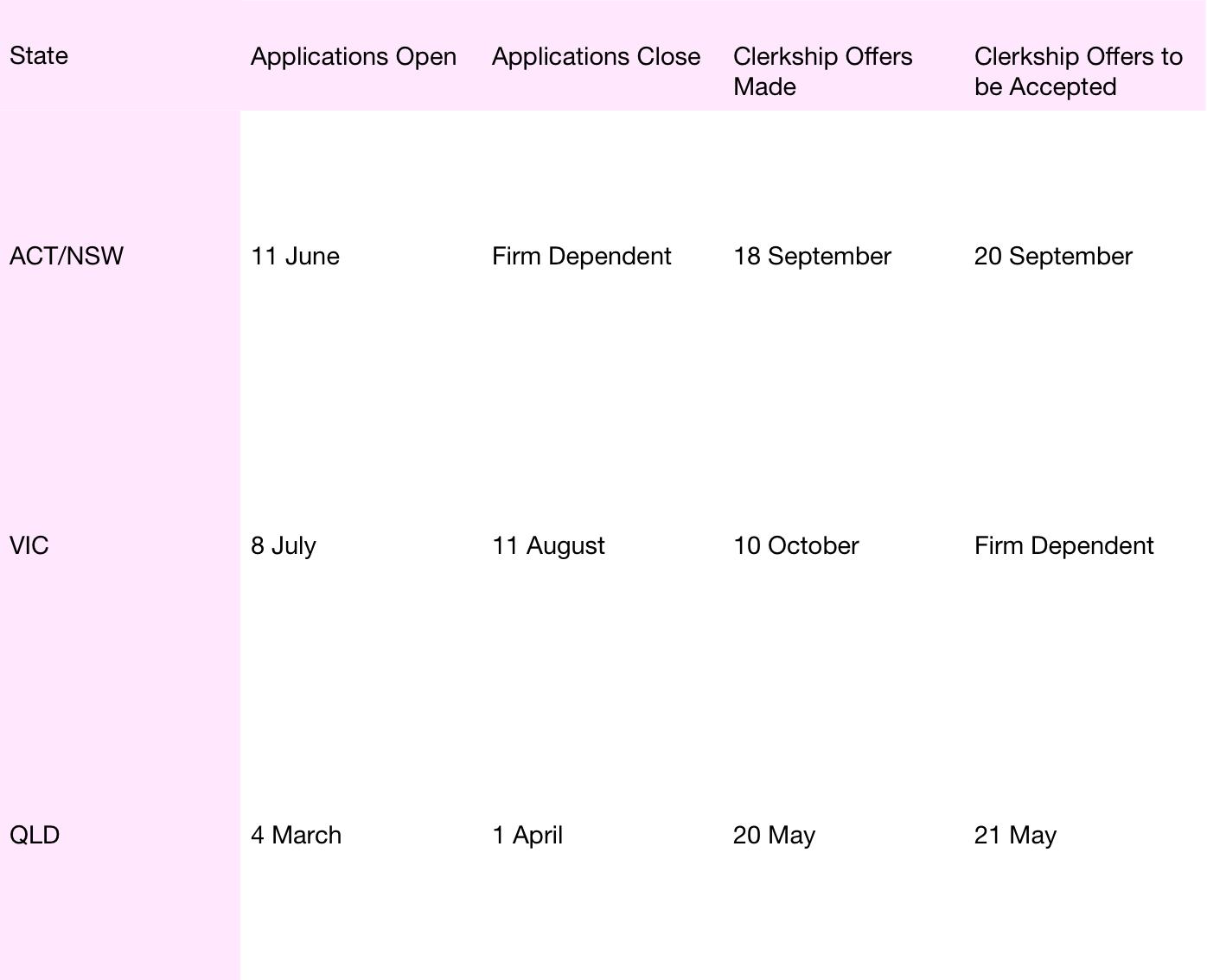

As a global law firm with a rich history spanning almost 200 years, we’ve established ourselves as a leading adviser to corporates, financial institutions and governments, on all areas of the law including finance, M&A, disputes and competition. We’re renowned for helping our clients navigate through a complex and constantly evolving global landscape. With 26 offices across the world’s leading financial and resource centres, we offer the reach and insight of a global network combined with deep local market knowledge. Our people are our greatest asset. We bring together lawyers of the highest calibre with the expertise, industry experience and regional know-how to provide the incisive advice our clients need. As a global team we have a reputation for successfully managing large and complex multi-jurisdictional transactions, disputes and projects.
As a junior lawyer, your enthusiasm is in overdrive. Everything is interesting. You have a million questions for everyone. You want to be the best. And for me, I wanted to be the best lawyer and leader I could be.
Right now I’m a corporate and tax lawyer, buying and selling companies, structuring investments and having the occasional battle with the ATO.
So, a little while after I started at Clayton Utz, I joined the social committee. A powerful assembly fuelled by lunchtime pizzawielding lawyers making important decisions like choosing the Christmas party theme. They knew I liked pizza, but had no idea I was gay. You see, I wasn’t out at work yet and this became a genuine source of anxiety for a good two years.
But In May 2015 this all changed...
To listen to Luke’s full story, go to: claytonutz.com/graduates
Academic brilliance certainly counts, but graduates who thrive here have something extra – a natural passion for connecting with people and a strong sense of self. That’s what staying true is all about. If you have these qualities, Clayton Utz is for you.

If you’re a law student in your penultimate year, our Clerkship Programs will expose you to the fast pace of a full-service commercial law firm and show you the law in action. You’ll be working under the guidance of some of the sharpest legal minds in Australia, on challenging, complex and high-profile transactions and matters. You’ll be mentored by partners and lawyers who are leaders in their fields, in a firm where individuality is embraced and innovation actively encouraged.
It’s not just about wearing a suit. There’s always a gap between theory and practice, and post-university prospects can be daunting. How do you make the leap to working in the industry?
That’s where we come in.
Once you’ve completed your studies, our national Graduate Program gives you the perfect foundation for your legal career. Our 2.5 week orientation program is designed to ensure that you’ll hit the ground running. It consists of PLT+, local training and a national orientation week in Sydney.
Our rotations will help you discover different areas and find the right fit. From day one you’ll be working on complex and sophisticated legal issues, and with our innovative learning and development approach, you’ll get the support to become the best you can be.
• Three rotations of six months in our national practice groups
• mentoring from some of the best lawyers in the country
• a buddy who’ll give you the inside information
• meaningful performance feedback so you know you’re on the right track
We hire most of our Graduates from our Clerkship Programs. Occasionally, additional opportunities may arise. These opportunities will be listed on our website.

• continuing legal education programs and professional development support
• the chance to participate in our Community Connect and Pro Bono programs and really give back
• social and sporting activities, because we know it’s not all work and no play.







careers.kwm.com/en/graduates-australia


As an elite international law firm headquartered in Asia, we are reshaping the legal market by challenging our people and our clients to think differently about what a law firm can be today, tomorrow and beyond.
We thrive on exceeding the expectations of our clients, and as such the world’s leading organisations turn to us to unlock their biggest opportunities and deliver solutions to their most vexing challenges.
With ambitious thinking and innovation in our DNA, we partner with our clients to bring to life pioneering solutions which will help them to adapt, reinvent and grow. We believe innovation comes from giving our people room to grow, and as such actively encourage input and ideas from all levels of the firm.
Our people are encouraged to think differently and shape their own career path, supported at every step of the way, with world-class training, coaching and hands-on experience. There is no ‘one size fits all’ career model, and we offer multiple opportunities for our lawyers to gain experience and thrive.
At King & Wood Mallesons we provide you with the opportunities to reimagine a career in law to become what you want to be. Are you ready?
KEY STATISTICS:
• Most Popular Overall Law Employer in the 2018 AFR Top 100 Graduate Employers Rankings
• One of the Top 100 Graduate Employers in GradAustralia’s 2018 Student Survey
• Top 15 global brand*
• 27 international offices;
• One of the largest international legal networks in the Asia region with 500+ partners and more than 2000 lawyers;
• Our clients range from a mix of global financial and corporate powerhouses through to new industry-makers and all levels of government
• With an unmatched ability to practise Chinese, Hong Kong, Australian, English, US and a significant range of European laws under one integrated legal brand, we are connecting Asia to the world, and the world to Asia.
*Source: 2018 Acritas Global Elite Law Firm Brand
The King & Wood Mallesons network extends across the following regions:
• Asia Pacific (Australia, Mainland China including Hong Kong, Japan, Singapore)
• Europe
• Middle East
• North America
kwm.com/careers
Our clerkships give you a clear picture of what it’s like to be a lawyer at King & Wood Mallesons. You’ll get to know our people, the way we like to work, our culture, practice areas, clients and more.
During your clerkship, you’ll learn:
• The day-to-day skills to get you started
Taking instructions, meeting with clients, drafting memos/documents, managing your practice and professional relationships.
• Our core practice teams – who they are, what they do, how they’re structured, the clients they work for, and of course, your role within them.
• Our culture – you’ll be exposed to (and encouraged) to get actively involved in the many activities and events that define KWM.
• Our people – you’ll find that people from every part of the business will help you by sharing their knowledge and ensuring youhave everything you need to succeed.
Your role
Clerks usually work in one or two different practice groups, depending on the length of the c lerkship.
You’ll be allocated a supervisor in each of your practice groups and you’ll work closely with the partners, senior associates and solicitors in that team. It’s a hands-on role, so you won’t just be watching from the sidelines.
Our people are encouraged to get involved in the many social and sporting activities that go on in the firm as well as the broader community.
We offer a unique training experience with multiple rotations and a bespoke comprehensive learning and development program for our graduates. We invest heavily in development to support graduates in fulfilling their potential.
What you’ll learn
The program provides a practical business foundation for junior lawyers. You’ll receive:
• Meaningful work covering a wide range of practice areas
• Client contact and an in-depth understanding of how they operate in a commercial and regulatory environment
• The opportunity to work as part of a team with a range of partners, senior associates and solicitors in different practice groups
• A practical understanding of areas of our legal practice
• A comprehensive knowledge of the firm, our technology, our resources, our processes and, of course, the people you’ll work with.
As part of the Graduate Program, we also offer a Practical Legal Training (PLT) course with the College of Law to our Australian Law graduates, ensuring that you meet the requirements for admission to legal practice.
The program also promotes and supports the mobility of our staff across our offices by giving you the opportunity to apply to go on exchange in one of our interstate or overseas offices. Through this, you are able to access a greater choice and variety of destinations and on-thejob experience.

People & Development Coordinator, Canberra
T +61 2 6217 6751
bonnie.robinson@au.kwm.com
MinterEllison is a prestigious, international law firm, headquartered in Australia. As one of AsiaPacific’s leading firms, we’re borderless. We have the best people, working on the best matters, regardless of location. Our multidisciplinary and industry-facing lawyers collaborate closely across our offices in Australia, New Zealand, Asia and the UK. Our independence means we can adapt in parallel with our clients and market demand. In fact, we often lead the way.
With MinterEllison, you can be a global leader too. You’ll have the opportunity to work with renowned lawyers and experts from around the world. And to build remarkable solutions that go beyond one region’s laws and grasp the global picture. Essentially, you can be as agile, innovative and creative as we are.
Our award-winning Clerk and Graduate Programs ensure a supportive and highly engaging experience to provide you with the best career start. Be assured that you will become a wellrounded lawyer; developing excellent technical and business skills; and collaborating with a highly reputable legal network.
Our graduates accelerate their legal and business acumen through exposure to our partners, lawyers and professionals in our collaborative and innovative work environment. You will have the opportunity to rotate across different practice areas, and be exposed to inspiring and challenging transactional, advisory and litigation work.
The world is being disrupted and market demands are changing. The next generation of graduates will transform the future of legal services – we can give you the skills you need to do it well.
Which is why we celebrate and invest in our people. We consistently have a record number of promotions, and last year, won the award for ‘Best Learning & Development Program’ at the Australian HR Awards. We’re committed to helping our people achieve their best. And our development programs and initiatives are second to none.
We’re always working to open more doors for you. Recently, we restructured our organisation to make it even easier to collaborate across all our offices and access an international network of brilliant legal thinkers. Our structure also offers new career paths, allowing you to seamlessly work across multiple practice areas.
Contact Gill Morphett Talent Business Partner gill.morphett@minterellison.com graduates.minterellison.com
Clerkship positions
Number of positions available: 6-8
Opening date: Tuesday 11 June 2019, 9am
Closing date: Sunday 14 July 2019, 11.59pm
Method of application: graduates.minterellison.com
MinterEllison Virtual Internship
Want to experience a true-to-life day of a MinterEllison lawyer? Our interactive virtual internship offers you an insight into the commercial work we undertake here at MinterEllison. Curious?

I chose MinterEllison because of its emphasis on learning. There is a strong culture of knowledge-sharing and mentorship, which is particularly important for young lawyers. I find the people here are warm, knowledgeable and eager to teach.”
Ann Wen Vacation Clerk

The world is full of relentless disruption. Now is the time to reimagine the future as we know it.
The next generation of graduates will mark a change in closing the gap between who we are today and where we are headed to better meet market demands. More than ever, we need creative thinkers, innovators and agents of change.
The game has changed. Be part of it.
At Allens, we’re focused on equipping our people with the skills and experience they need to be the lawyers of the future. We’re ready to define tomorrow. Are you?
With us, you’ll be more than a lawyer. Our people are technical experts, but they’re also trusted business advisers who think bigger, more broadly and more strategically. Together, we solve complex legal challenges, and collaborate across practice areas and disciplines to guide our clients.
We work across borders too, thanks to our alliance with Linklaters. This provides opportunites for our firm and our people, including annual rotations in Linklaters London, Hong Kong and Singapore being available to our graduate lawyers.
An early legal career at Allens includes highly tailored training through the Allens Academy. Developed in partnership with the Australian National University, our Graduate Diploma in Legal Practice will help you transition from law graduate to legal expert and trusted business adviser.
In a rapidly changing world, we seek opportunities to innovate, embracing creative thinking , new approaches and emerging technology. We don’t just seek opportunities to benefit ourselves and our clients, we believe strongly in driving positive change to do right by our community too, as demonstrated through our strong pro bono practices.
Our teams are open, inclusive and encouraging , giving you the opportunity to learn and grow while feeling supported. You’ll have the flexibility to drive your own career, and we’ll recognise your achievements and hard work as you progress through the firm. Are you ready to begin?




A clerkship at Allens is the first step in a rewarding legal career, and will give you invaluable insights into our work and culture. With support from a buddy and development supervisor, you’ll work on real matters for real clients and be involved in a variety of projects. The programs:
> run from three to 10 weeks;
> are available at our Brisbane, Melbourne, Perth and Sydney offices;
> feature ongoing support, including a buddy system; and
> include exposure to one or two practice groups.
In each rotation, you’ll gain a depth of experience that comes from seeing matters through to the end, and get exposure to stimulating legal challenges. At Allens, we don’t work in silos, meaning you won’t be limited to working with only one partner or by your practice areas. You’ll work alongside a range of partners and lawyers, giving you exposure to a wide variety of tasks. Working with different teams and leading organisations, you’ll grow a solid skills base and develop the agility needed to thrive in our ever‑changing world. The programs include:
> two 12‑month rotations in your areas of interest;
> secondment options in London or Asia, via our alliance with Linklaters;
> ongoing supervision, coaching and mentoring;
> completing a Graduate Diploma in Legal Practice (via Allens Academy); and
> a 12‑month weekly legal seminar series (Cornerstone Program).

One of Allens 2019 Graduates and Australian National University JD alumni Will Brown shares his clerkship experience in a feature with Lawyers Weekly.
Having spent the best part of five years studying at the ANU, it felt like the right time to make the move from the nation’s capital to the place most commonly mistaken for the nation’s capital, Sydney. After several brief glimpses into life at Allens, it was with much excitement that I awaited the start of my Summer Clerkship. I could picture it – exciting work, new colleagues, and Christmas functions to boot. I did not, however, foresee a trip to the Sydney Children’s Hospital, an advanced screening of Jumanji, losing to a rival firm in soccer (controversially and in wet weather…) and karaoke on a Thursday night somewhere in Surry Hills.
Trying to imagine life inside a commercial law firm is quite difficult. Most of the work is confidential and each person’s experience and perspective differs greatly. I had always thought - or at least hopedthat I would fit in and that I would be given a chance to use my skills not just commercially, but in the context of helping other people too.
After several days of training and exploring the less travelled parts of Microsoft Word, we were let loose onto the floors to join the teams for our first rotation. For me, this was Technology, Media and Telecommunications (TMT). Here, I was met with genuine warmth and excitement. The arrival of clerks, I was told, meant it was almost Christmas.
In the weeks since, I have had the privilege to work on large-scale service agreements in addition to novation deeds, licences, advice on cryptocurrencies and even the issue of zero-ratings and net neutrality. It has been a process of constant learning, navigating new laws and trying to anticipate the regulation of new and exciting concepts.
By the same token (couldn’t help myself), I have also worked on a number of Allens Accelerate matters. Accelerate works with aspiring entrepreneurs in the embryonic stages of starting their own companies, many of which could have a big impact on a number of sectors in the coming years.
What has really rounded out my experience has been the chance to work on pro bono matters. While clients are always grateful for receiving advice, there is something really rewarding when you can make a difference for a client that would not ordinarily be in a position to access legal services. Allens has a strong commitment to pro bono work and clerks are encouraged to get involved from day one.
Aside from having front-row seats for a senior colleague’s rendition of Geri Halliwell’s It's Raining Men, the highlight of my Allens experience has been the people. There is a genuine team spirit among the clerks and it has been a pleasure getting to know so many interesting people from all over the country.
Special thanks must go to the entire TMT and People & Development teams, without whom my experience would not have been as seamless and enjoyable as it has been. In the last few weeks, a sense of confidence has been instilled in me by the lawyers I work alongside. Despite having complex matters to attend to before Christmas, they have all taken the time to explain new concepts to me and give me detailed feedback on their work.
Particular thanks must go to Ian McGill, my supervising partner. No matter how busy he has been, Ian has set aside time to review my work and provide feedback which has allowed me to increase the standard of my work immeasurably. His approachability has allowed me to ask questions and to work with confidence, without fear of making mistakes while I learn. I am also grateful to Connie Ye and Alice Williams who have also been formally involved in mentoring me during this process.
Now I can't wait to see where my career at Allens takes me!
What areas of law do we practice?
Across Australia, our core areas of focus are Corporate, Banking & Finance, Litigation & Dispute Resolution and Antitrust & Competition.
Why are we different?
Firstly, our collaborative and adaptable culture. We work together across borders, languages and legal systems, sharing insights and expertise to achieve our clients’ commercial goals. Secondly, we’re pioneers, working on many ‘first of a kind’ deals. Finally, it’s the nature of our people. Highly professional and self-assured, with an entrepreneurial streak, they embrace our culture of learning and are more than happy to share their expertise and knowledge.
Your contacts
Kelly Byrnes, National HR Manager & Melissa Urquhart, HR Advisor
Grads.Sydney@cliffordchance.com
Grads.Perth@cliffordchance.com
Clerkships
Students must be at least penultimate year and eligible to participate in the 2021 Graduate Program
When are our clerkships held?
Our Clerkship program in Sydney runs in Winter; in 2019 it will run from 1 July – 19 July
Our Clerkship program in Perth runs in Summer; in 2019 it will run from 2 December to 20 December
How many clerks do we take?
Sydney: 4 – 6
Perth: 4 – 6

How many graduate jobs do we offer?
Sydney: 4 – 6
Perth: 2 – 4
Do we make graduate offers to the open market, or just through clerkships?
Graduate offers are primarily made from the clerkship pool however applications from students unable to complete a clerkship program are still accepted and considered.
How / when should students apply?
Sydney
Applications open: March 11, 2019
Applications close: May 19, 2019
Perth
Applications open: July 15, 2019
Applications close: August 4, 2019
What kind of work can a clerk expect to do?
Our clerkship program is designed to provide you with a real insight to life at Clifford Chance in Australia.
Throughout the program, you will work alongside all levels of lawyers, including partners, while you assist with real-time matters.
You will have two seat rotations, allowing you to experience two of our three practice areas.
Throughout the clerkship you will hear from various departments across the region, helping you to develop a comprehensive understanding of life in a magic circle law-firm.


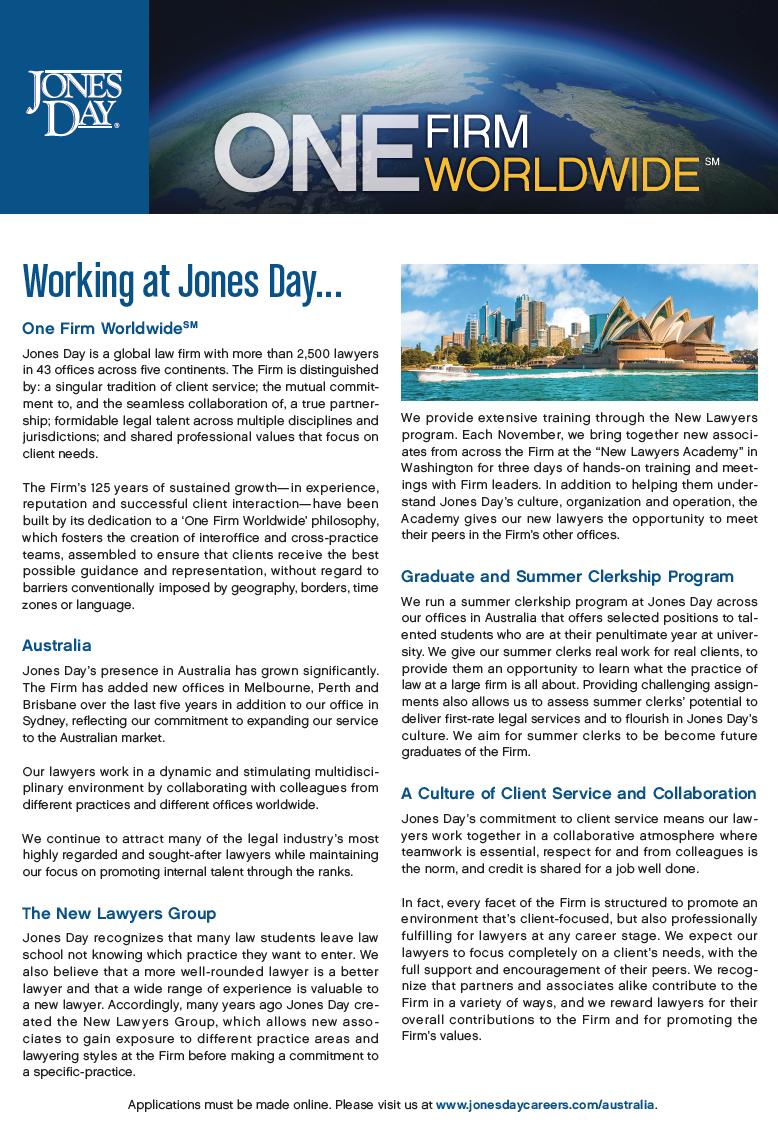
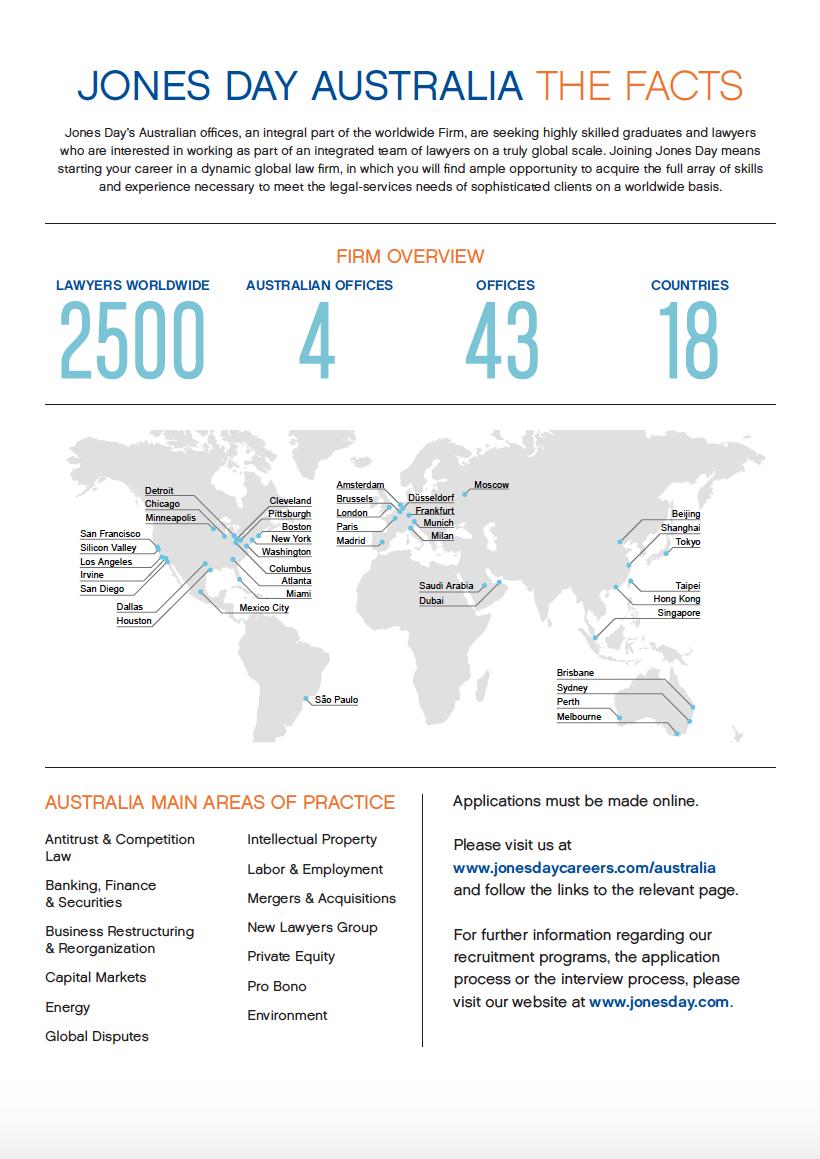

With 27 offices around the world, we can show you exactly what a world class law firm has to offer, giving you the chance to work as part of an international team, on high-profile matters, for some of the most significant organisations in the market.
Our focus is on the future: the future needs of existing and new clients, the future of the legal profession and investing in our future lawyers. That’s why we aim to attract the best talent from a broad range of backgrounds, ensuring we are optimising our position as a progressive, forward thinking professional services business. At Herbert Smith Freehills, you’ll be given the opportunity to develop the skills you need to help solve our clients’ most complex challenges in thoughtful and innovative ways.
We recruit people with the desire and ability to be exceptional, commercial lawyers. This means that we look for more than just a great academic record and strong technical aptitude. We seek people who are curious, empathetic and understand the importance of building relationships with clients and colleagues. We also look for an international mind-set and a desire to work within our global network, not just one office.
Complex cross-border deals. A market-leading Disputes division. Worldwide reach. If you’re ready to be a part of it all, we’re looking forward to hearing from you.
There’s nothing more important than finding a role and an organisation that’s right for you and there’s no better way to really get to know our profession than gaining practical, hands-on experience. Our vacation clerkships will immerse you in our business, networks and the international world of law. We encourage students to participate in our vacation clerkship program and we fill the majority of our graduate positions through this program.
As a vacation clerk, you will be given extensive training on all aspects of the firm, drafting and research skills. Current lawyers and partners will speak to you about what they do and the nature of work in each part of the firm. You’ll attend workshops and presentations that will give you an insight into the depth and breadth of our practice areas and international reach.
You’ll be invited to a range of events giving you the opportunity to network with partners, associates and graduates, as well as with your fellow vacation clerks.
We offer a range of summer and winter clerkships across our Australian offices. If you have queries about graduate or vacation clerk positions, please visit our website: careers.herbertsmithfreehills.com/au/grads/ vacation-clerkships or contact one of our graduate recruitment team.
SYDNEY
Approximate number of positions 30-40
Clerkship programs Summer 2019/20
Applications for all 2019/20 programs open 11 June 2019
Applications for all 2019/20 programs close 14 July 2019
Offers made 18 September 2019
Please note: An application should only be submitted to the office where you intend to start your career as a graduate. Multiple applications will not be considered.
Our global practice groups
• Alternative Legal Services (ALT)
• Competition, Regulation and Trade
• Corporate
• Dispute Resolution
• Employment, Industrial Relations and Safety
• Finance
• Projects and Infrastructure
• Real Estate