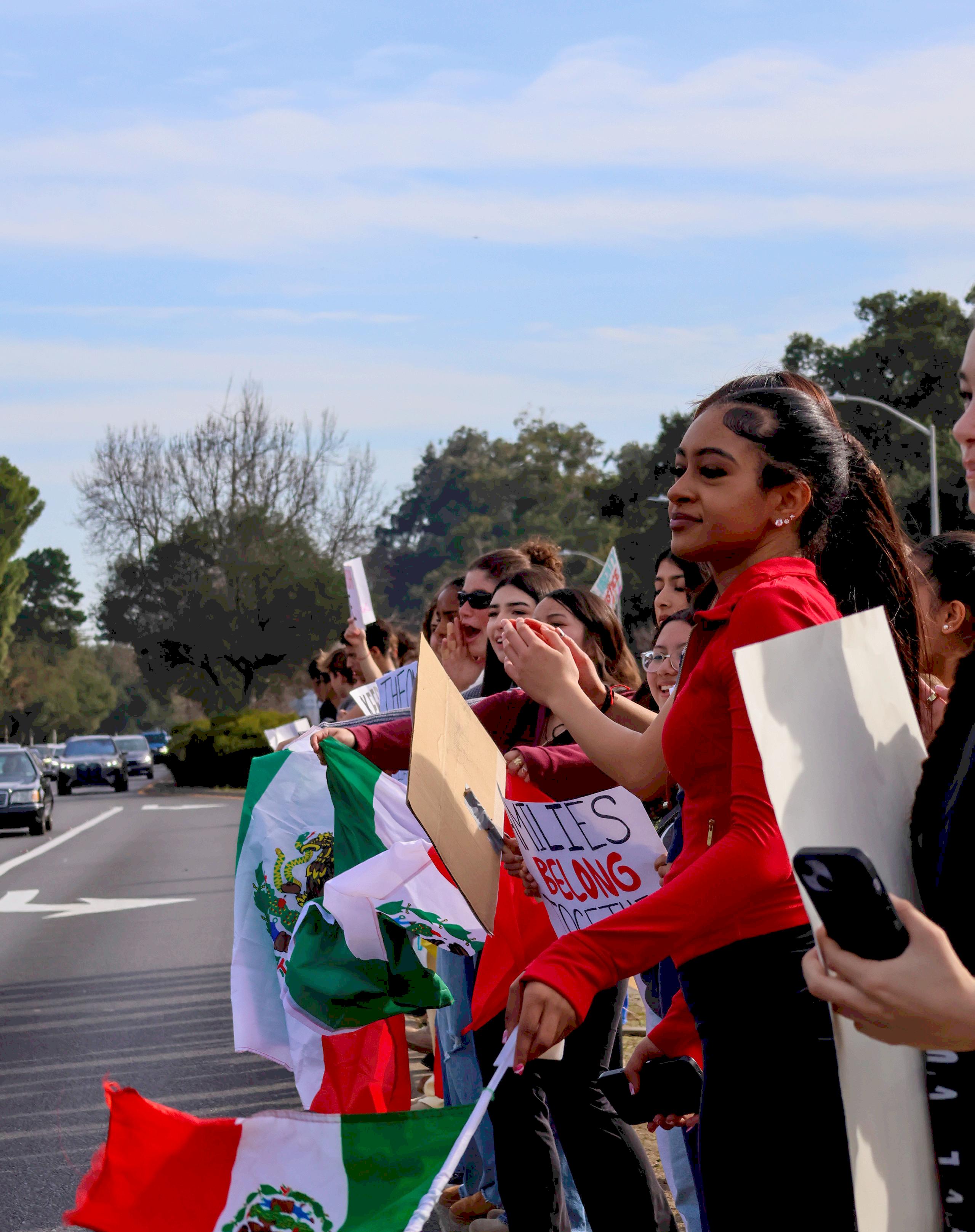
A nation at a turning point: Venezuelans on the removal of Nicholas Maduro, pg. 30
A nation at a turning point: Venezuelans on the removal of Nicholas Maduro, pg. 30
2026 Volume 8 Issue 3
The goals of Anthro magazine, Palo Alto High School’s activism-focused journalism publication, are to highlight the impact of local and global activism on the Paly community, serve as a safe place to discuss these issues, and ensure that student voices are heard. Along the way, we hope to promote diversity, inclusion and respect, use respectful language and not engage in or support hate speech or the targeting of individuals.
Dear Readers,
We are excited to present the third edition of Anthro magazine this school year! In this edition, we continue to report on advocacy and highlight local activists.
Following the campus tragedy in February, mental health and the safety of our students are at the forefront of the school community’s mind. In “You are not alone,” Anthro collected students’ quotes and thoughts about the tragedy. We thought it was especially important to share students’ opinions and to highlight the importance of creating a culture of kindness at Palo Alto High School. In our editorial, we explore how we can change the school’s culture and how to foster open conversations about mental health. By expanding community events, providing and attending webinars like the upcoming April 15 Getting Youth to Talk session, and avoiding competition and comparison among friends, we believe that Paly can become an emblem of a welcoming mental health school.
This cycle, we also wanted to focus on student activists, specifically through club features. Many students join clubs with the intention of making a difference in their community, and in this edition, we chose to feature a few clubs that are doing just that. Writer Cailey Lilly Quita reported on Artruism, and how they use art to create meaningful conversations about social issues. Reporters Richard Klinkner and Doreen Hou spoke with members of the Clinical Psychology Club about how they offer peerto-peer mental health support for students.
Lastly, this issue of Anthro highlights how nationwide and even worldwide issues have an effect on our community. In the second year of Donald Trump’s presidency, the actions of Immigration and Customs Enforcement in Minnesota and the removal of Venezuelan President Nicholas Maduro have both been points of contention that students and adults alike have been very vocal about. In “Will ICE come here?” reporters Chapin Walker and Jeshurun Wang cover Paly students who are personally affected by ICE. “A nation at a turning point” by Jeshurun Wang and Benji Sandel focuses on getting Venezuelans’ opinions on the removal of President Nicholas Maduro, and how their opinions may differ from those of people living in the Bay Area.
We are thankful to our staff for their constant help getting this issue ready for you to read and for your continued support. This will be our final edition as Editors-in-Chief, and we hope you enjoy reading this issue. Enjoy Anthro Volume 8.3!
– Editors-in-chief Hadrien de Martel and Mihika Sridhar
Editors-in-Chief
Hadrien de Martel
Mihika Sridhar
Managing Editors
Motoko Iwata
Amily Zhang
Features Editor
Jeshurun Wang
Business Manager
Richard Zhang
Staff Writers
Julia Curtis
Naomi Espinoza
Araina Gupta
Doreen Hou
Richard Klinkner
Caitlin Ko
Cailey Lilly Quita
Alex Rytokoski
Benji Sandel
Sebastian Tung
Chapin Walker
William Xue
Photographers
Alexander Lawson
Arjun Jindal
Artists
Doreen Hou
Joyce Ma Adviser
Paul Kandell

Letters to the Editors
The staff welcomes letters to the editors. We reserve the right to edit all submissions for length, grammar, potential libel, invasion of privacy and obscenity. Send all letters to anthromagazine. paly@gmail.com or to 50 Embarcadero Road, Palo Alto, CA 94301.
Printing & Distribution
Anthro is printed by Folger Graphics in Hayward, California. The Palo Alto Parent Teacher Association mails Anthro to every student’s home. Past issues are available at anthromagazine.org.
Publication Policy
Anthro, a social activism magazine published by students in Palo Alto High School Incubator class, is a designated limited open forum for student expression and discussion of issue of concern to its readership. Anthro is distributed to its readers and the student body at no cost. For more on our policies please visit anthromagazine.org.
Creating a culture of kindness
News briefs
Students react to recent war in Iran
Closure of Churchill crossing
Protecting Palo Alto
Students speak out
“You are not alone”
The cost of beautification
Climate: changed
Youth Climate Advisory Board
Art with a purpose
Minding mental health
Will ICE come here?
A nation at a turning point
Howling back
Down under with social media



COMMUNITY UNITED – Students take the stage during the annual Cultural Assembly on March 31. This event was a moment where students, no matter their background, felt like they were a part of a community that prioritized and supported them. Events like these are a meaningful way to create a culture of kindness and inclusivity at Paly. Photos by Luca Vostrejs
Our school can become one that priotizes student
It is important for our campus as a whole to come together and to integrate empathy and support into our campus’s culture.
This comes among a greater trend in the Palo Alto area, where students have struggled greatly with mental health. But we, the school community, can provide support to our students by helping one another, looking towards kindness, and checking on our friends’ mental health.
For too long, suicides and mental health have been considered taboo in the Palo Alto community. We haven’t created a culture where students feel comfortable sharing their thoughts and feel that they belong.
But the district is beginning to move in the right direction. Mare Lucas, a community mental health activist and former Palo Alto High School parent who frequently talks at school board meetings, spoke about her son’s experience during community events.
“I was so struck that my son was so happy after International Day, because he really felt that it was the one day that everybody in Paly was just a student,” Lucas said.
The Cultural Assembly, therapy dogs on campus and the expansion of the Wellness Center’s services are all meaningful changes the Paly administration has already implemented to help students’ mental health.
up conversations about mental health. But our administration can go even further. Paly should work to implement mental health check-ins for all students. Even if it is just once a month during Advisory or PRIME, we need to foster an environment where students feel comfortable with the idea of speaking about their mental health.
As Lucas remarks, it can be difficult to see if someone is struggling with mental health.
not having a good Paly experience, and it hurts my heart,” Lucas said. “There’s a lot of kids who don’t feel welcome there, don’t feel they belong, or don’t feel smart enough.”
“I just bump into too many kids who are not having a good Paly experience and it hurts my heart,”
– MARE LUCAS, mental health activist
“The other thing people don’t get is that just because you’re sunny on the outside doesn’t mean you’re not in pain on the inside,” Lucas said.
Even if they may not appear at risk on the outside, everyone needs support. Teachers, administrators, parents and students can and have formed cultures where students feel accepted.
These events are so important because they help students feel that they belong. They are a significant step toward shifting Paly’s culture from one of competition to one of support and kindness.
Informational sessions PAUSD is hosting, such as the It’s Okay to Say Suicide workshop with the JED foundation, and the upcoming virtual webinar on April 15, Getting Youth to Talk, are also meaningful ways the district is opening
Even if they may not appear at risk on the outside, everyone needs support. Teachers, administrators, parents and students can help to form cultures where students feel supported. Nick Mehta, the father of Summer Mehta, who died by suicide in February, reflected during the March 12 special listening session on a place where Summer felt empowered.
“For our Summer, Paly Theatre was her invincible refuge for restoration,” Mehta said. “It was the place she could be herself. It was a place where she felt she belonged. It was her home as much as her physical home, and that is 100% due to the culture that Ms. [Sarah] Thermond created.”
But there are many students at Paly who don’t feel integrated into the community.
“I bump into too many kids who are
Students take an important role in creating the change to make Paly a home for every student, and to do this, we must first eliminate hostility on campus. Any type of anti-LGBTQ+ hate and bullying must be condemned. To create a refuge for restoration in our entire school, students need to feel safe. Joking or making fun of someone for their sexuality is extremely harmful and creates a negative culture that should never be tolerated.
Supporting one another, and providing strong social support by asking people around us if they need help, and minimizing unhealthy competition are also other ways we can create a culture of kindness at Paly.
According to a study conducted by the Journal of Research in Health Sciences, social support plays a big role in reducing the risk of suicide. Through the open discussion of mental health with checkins, school events that unite the student body, and helping one another, the entire Paly campus can become a welcoming school, supporting and prioritizing mental health.
It is not a shift that will happen overnight, but it is possible, it’s beginning, and we can make it happen.
Mental Health Resources:
Any person who is feeling depressed, troubled or suicidal can call or text 988, the National Suicide Prevention Lifeline. Other resources include: the Crisis Text Line (text HOME to 741741), The Trevor Project for LGBTQ+ support (call 1-866-4887386) and the LGBTQ Youth Space.
Text by AMILY ZHANG
As negotiations between the Palo Alto Educators Association and the Palo Alto Unified School District continue, teachers are calling for salary increases that keep pace with inflation and sustained health care coverage.
PAEA has proposed a 9% salary increase for the current year and an additional 8% raise for the 2026-27 school year, along with continued full health benefits.
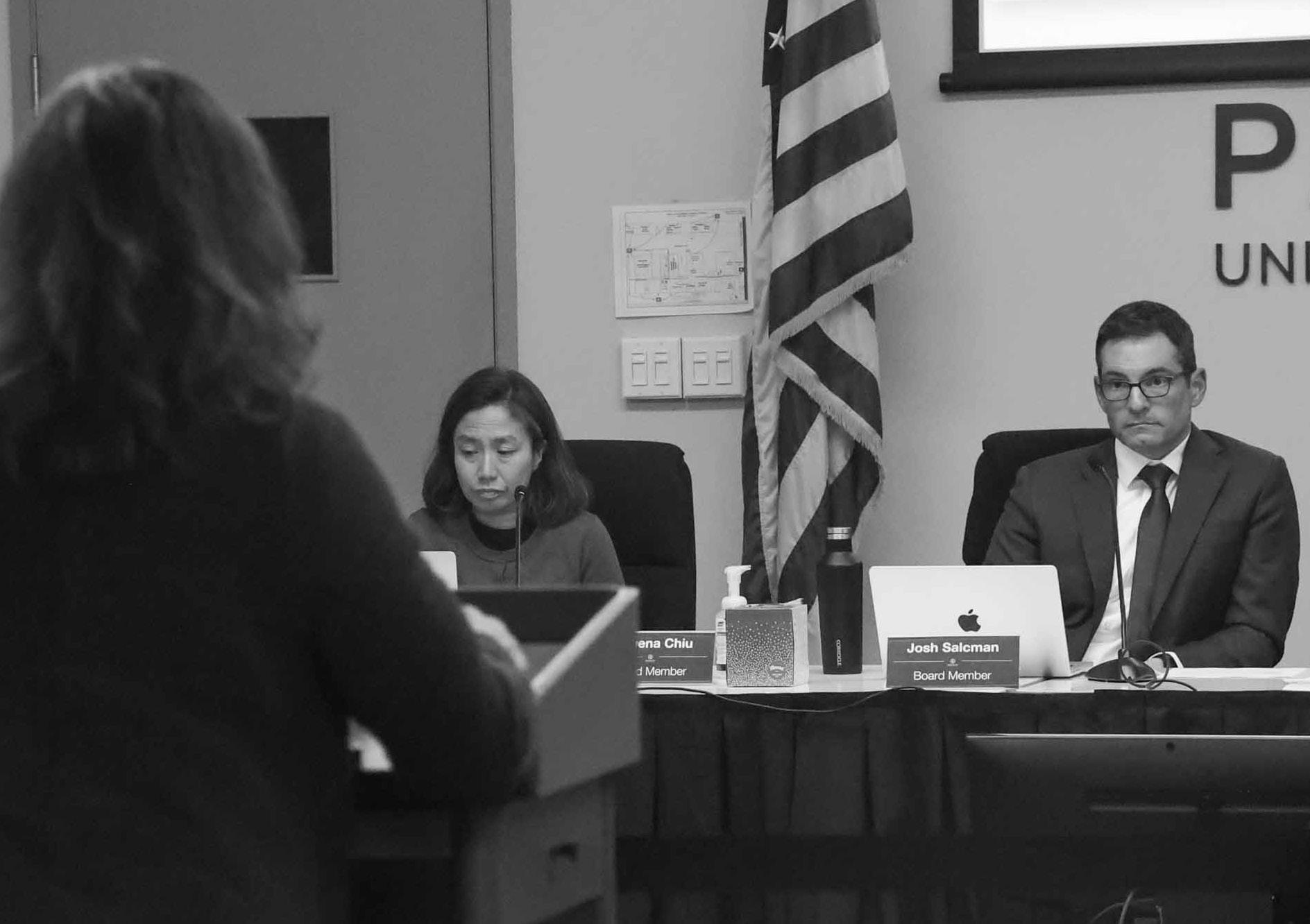
Dylan Chen, a student board representative, said the district has pushed back on those demands.
“The district has pushed back on those demands, they are offering a 2% annual raise and maintaining current health care coverage through the 2027-28 school year.” Chen said.
The negotiations come as teachers raise concerns about retaining staff in Palo Alto’s high cost of living, especially since neighboring districts offer much higher salaries. Talks between the district and the union are ongoing.
Text by JULIA CURTIS
Palo Alto High School students are concerned as Immigration and Customs Enforcement officers are deployed to join airport security starting March 24, with immigration control officers now managing TSA lines under Donald Trump.
Palo Alto High School senior Elise Andrade says ICE does not belong in TSA because it instills fear in passengers.
“People should be able to travel without feeling unsafe or like they’re going to be targeted based on their ethnicity or the language they’re speaking,” Andrade said. “It sucks that immigrants are being used as scapegoats and pawns in the Trump administration’s agenda. If they [Trump Administration] weren’t allotting an astonishingly large amount of money to ICE, they’d be able to spend it on the TSA agents and the DHS.”
On March 24, ICE officers were deployed to 14 U.S. airports — none of which are in the Bay Area — in an attempt to convince Democrats to fund the Department of Homeland Security, according to Trump’s Instagram page.
“If the Radical Left Democrats don’t immediately sign an agreement to let our Country, in particular, our Airports, be FREE and SAFE again, I will move our brilliant and patriotic ICE Agents
to the Airports where they will do Security like no one has ever seen before, including the immediate arrest of all illegal Immigrants,” Trump wrote in an Instagram post.
Due to the current government shutdown, TSA agents aren’t being paid. According to the New York Times, 11% of TSA workers aren’t showing up to work, making lines at large airport security checkpoints increasingly long.
In Instagram posts, the president said ICE agents would bring immigration control to airports and “arrest all illegal immigrants” while shortening lines.
“I look forward to moving ICE in on Monday, and have already told them to get ready,” Trump wrote on social media. “No more waiting; no more games!”
Congress Democrats had previously opposed funding for the DHS unless changes could be made to federal law enforcement officers, including better identification, a new code of conduct and more use of judicial warrants.
While federal agents usually have a presence at airports for Customs to prevent trafficking, they haven’t been present at TSA screenings. According to Trump, ICE would guard exit lanes and check passenger IDs until Democrats agree to fund the DHS.
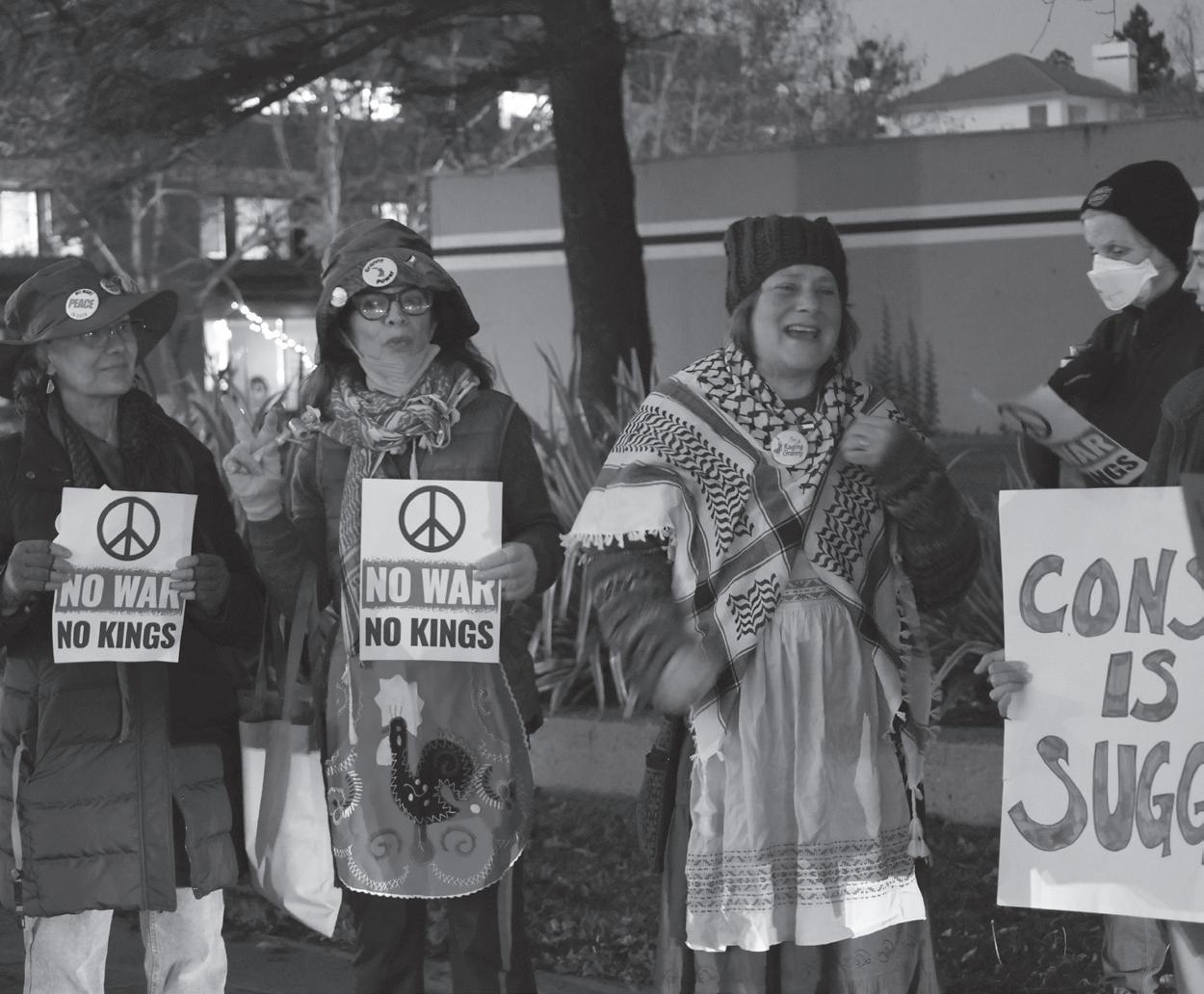
On No Kings Day, protests raged across the nation as people came out in large numbers.
In Palo Alto, protesters lined up and down the street of El Camino Real in what is the third series of No Kings. Many people were spotted with signs criticizing tech company Palantir and the ongoing war in Iran compared to previous No Kings demonstrations.
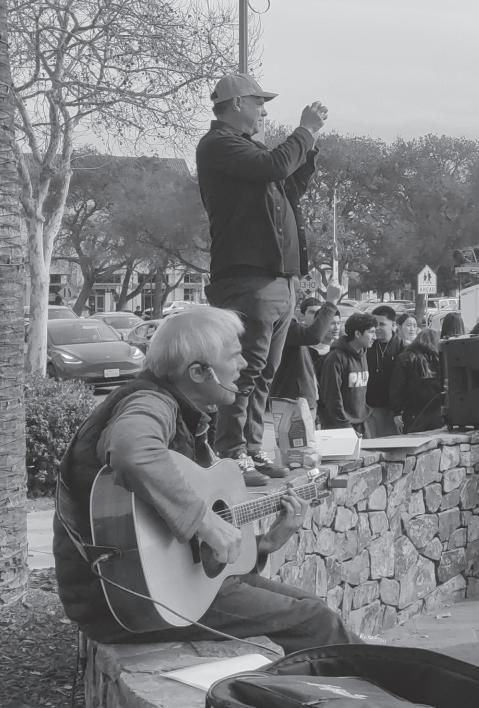
On El Camino, there were many protesters on the sidewalk adjacent to Palo Alto High School. Subsequently there were stands set up on Paly campus that were spread throughout the school parking lots and downwards on the street. An interesting addition to the protest were the many bands playing live music, often with witty lyrical plays about the current administration.
About 300 protesters gathered Saturday at Palo Alto’s Stanford Shopping Center, holding signs rejecting the Trump administration’s domestic and foreign policies before joining a larger “No Kings” protest on the Peninsula. It was one of over 3,000 such demonstrations held nationwide on March 28.
Some onlookers showed support by cheering as protesters passed. No counterprotest was visible. The crowd marched toward El Camino Real at about 2 p.m., where more protesters joined.
The Palo Alto and Sunnyvale protests were organized by Mountain View Voices for Peace and Justice, along with Together We Will and the Sunnyvale Democratic Club. The groups also organized a “No Kings” march last year.
According to a junior volunteer Brennan Bailey at activism organization ‘Indivisible’ at No Kings 3.0, the protest was a good experience.
“It was pretty successful, mostly older people, no agitators, no law enforcement, went pretty smoothly,” Bailey said. “There was light music and there were many stations where people would go to get information, pins, and sign petitions about certain issues.”
According to Bailey, these displays are important.
“Mostly I volunteered and protested to get people to believe that doing something is important and to get people to mobilize,” Bailey said.

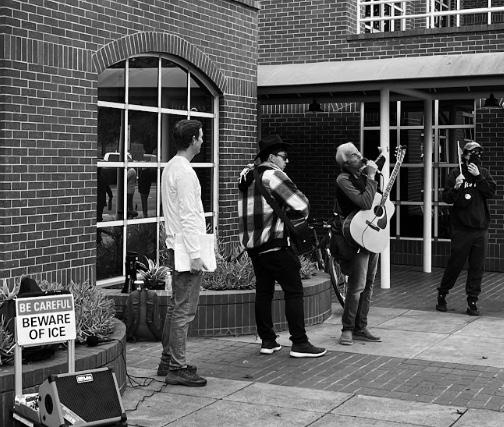
Organizers from Our Revolution coordinated a demonstration outside Palantir’s office on 100 Hamilton Avenue in Palo Alto on Feb. 5, where roughly 100 protesters gathered outside the office during the morning to disrupt work. This is part of a growing series of tech-linked activism throughout the Bay Area.
According to activist and Paly junior Brian J. Miller, he is against Palantir in Palo Alto.
“Having Palantir in Palo Alto, especially downtown where there are a lot of people, is an invasion of community privacy,” Miller said. “It makes me feel unsafe and we should not be subjected to the surveillance that the plaintiff is trying to roll out.”
Local organizers have intensified criticism of Palantir Technologies over its contracts with the U.S. Immigration and Customs Enforcement (ICE). One way they have done this is by staging protests that connect corporate influence with federal enforcement practices.
“Recently there have been talks of policies between the U.S. Government and Palantir that if we do not pay attention can be a severe infringement on our personal privacy,” Miller said. “Only we can actively limit their involvement in our daily lives.”
In the broader Bay Area, protesters have focused on Palantir locations and affiliated locations. In protest against Palantir, groups have often blocked streets outside of Palantir locations. Organizations also looked outside of Palantir, targeting Founders Fund, a venture capital firm co-founded by Peter Thiel, and its office location in San Francisco.
In response, Palantir CEO Alex Karp said protesters demonstrating against ICE should support the use of his company’s tools in the government, arguing, “Our product actually, in its core, requires people to conform with Fourth Amendment data protections,” Karp said. Nevertheless, protests continue throughout the Bay Area.
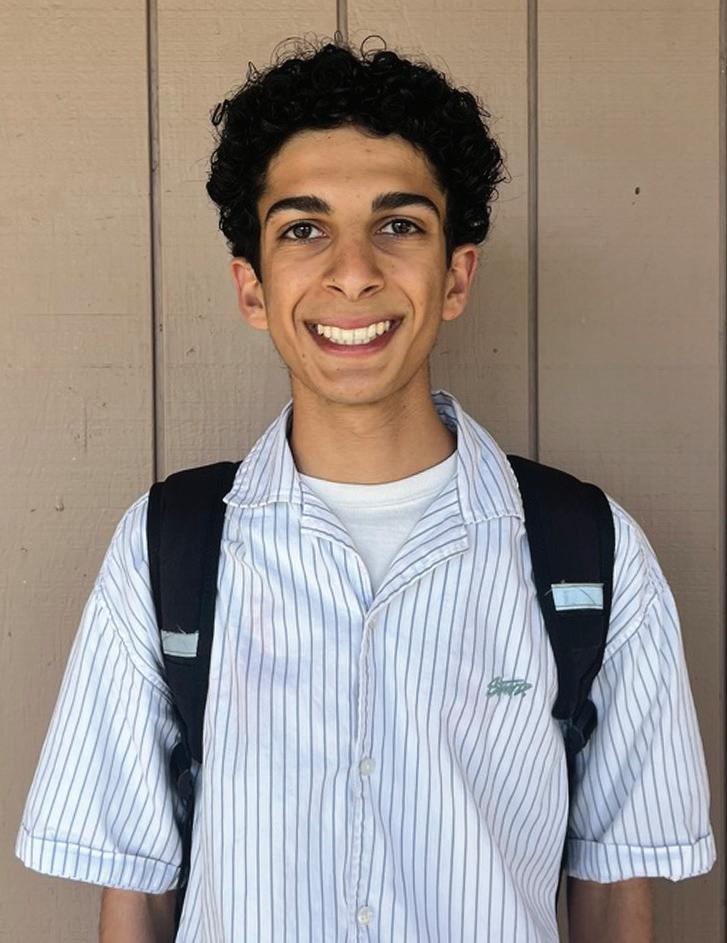
“This hopefully marks the beginning of change in the nation. Still, it is unfortunate that such change is coming at the cost of people’s lives. It is frightening not knowing what will come, and having some family there without being able to get in contact with them is scary.”
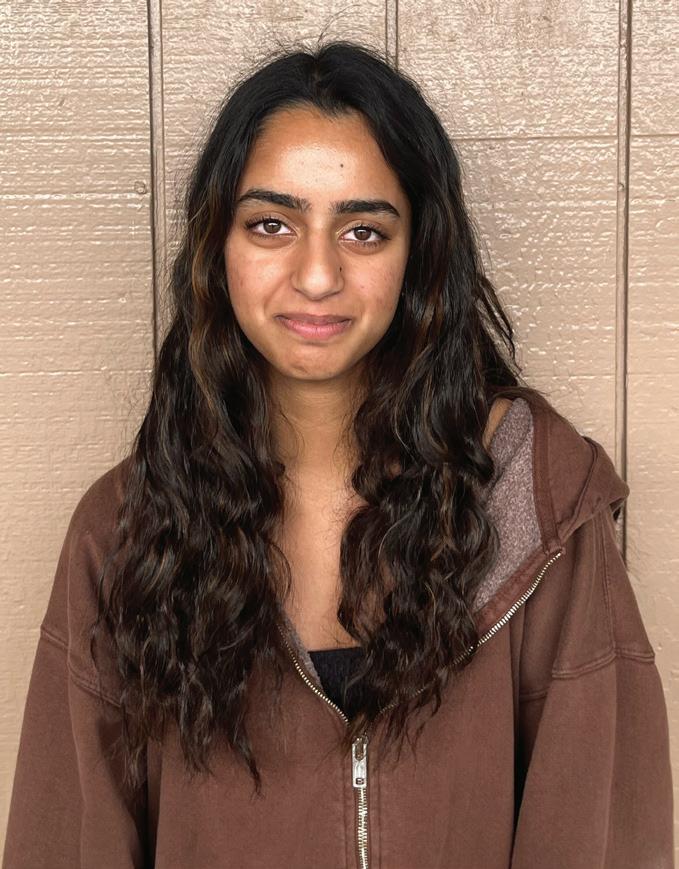
“We do see that the Irani government was very oppressive. It was not a very democratic government for the people of Iran whatsoever. But when taking military endeavors, we also have to be very careful about whether we create more harm or more good, and what we see our future impacts being.”
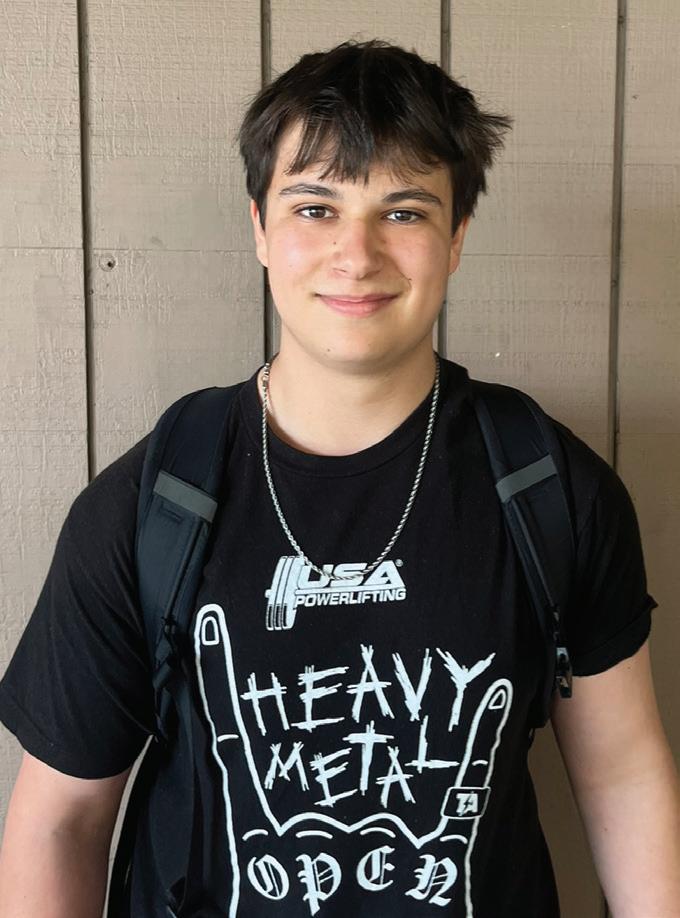
“The U.S. consistently thinks ... they know the Middle East better than countries in the Middle East, and they consistently get proven wrong. ... We learned a lot about the Chinese military weapons proving to be a lot worse than we expected, and also learned about the importance of ballistic missiles and cheap drone warfare.”
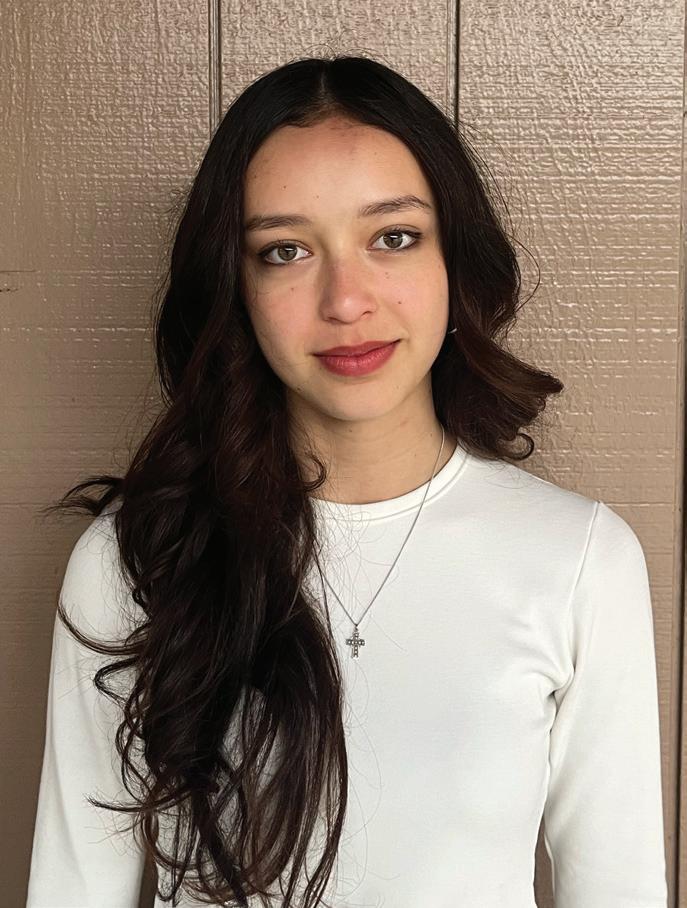
“Even though Donald Trump’s intentions are to bolster US involvement in Iran, what he’s doing is inadvertently hurting the American people because we’ve already seen the price of gas jump by $1 nationally. … This war seems to be, from his perspective, very pro-America, when right now the only effects we are seeing are that it is hurting America.”
Text and photo by CAITLIN KO
Facing board members, educators, and students alike, board representative Dylen Chen confronts a stark truth: Palo Alto needs to implement real change.
“What I heard from students was honest, heavy, and very clear,” Chen said. “We’re tired of condolences, and we want action.”
With the recent death of a Paly student on the train tracks on Churchill Ave., changes are being made by the city, the school board, and even local residents.
Trackwatch, an old organization meant to monitor Palo Alto crossings, has been brought back by parent volunteers. Not only are the volunteers monitoring the Churchill crossing, but they are also stationed at all four Caltrain crossings in Palo Alto.
Working together with the school board, the City Council signed a contract with Orion Security to place guards at the four intersections as well.
Along with the guards, council member Pat Burt explained that Palo Alto is working with Caltrain to implement new anti-intrusion technologies funded by VTA.
“The ones that were visible were all of the solar delineators and bollards and markings to try and make that intersection safer,” Burt said. “What's not so visible is a rail century technology that uses LAR and video cameras, and is AI empowered to detect irregular behaviors — either a person where they shouldn't be or a vehicle.”
LiDAR — light detection and ranging
— uses pulsed lasers to detect the distance between objects. RailSentry uses this technology to observe an area and alert railroad operation groups to prevent collisions.
Lastly, there have been anti-trespassing panels placed around the outside of crosswalks. These panels are covered in raised, pyramid-shaped bumps that make it significantly harder to walk across.
The school has also implemented school-wide training for all teachers. Assistant superintendent Yolanda Conaway explained it was meant to develop the necessary skills to better support their students.
“Whenever we are talking about anyone who intervenes with an individual wanting to end their lives, it is so important to have trained individuals,” Conaway said. “[Without training], the chances of someone being able to effectively respond to someone in need [...] reduce.”
Another proposal is closing off the Churchill crossing entirely.
During the Palo Alto Unified School District board meeting on Feb. 10, then-superintendent Don Austin expressed a need to close off the crosswalk despite the concerns of nearby residents.
“I made a statement recently that I think Churchill Ave. should be closed. I got a lot of people who wrote back about how inconvenient it will be for their travel,” Austin said. “I’m fully aware of that, [...] and it doesn’t matter. I’m not looking for a permanent closure, [...] I think a temporary closure is exactly what we need right now.”
Train-related deaths are not new to Palo Alto, and suggestions for solving this issue have been made before.
Back in 2021, the Expanded Community Advisory Panel (XCAP) was tasked with evaluating information related to alternative grade crossings, which is when a railway intersects a road at the same level.
It voted on the implementation of grade separations for train crossings, including the Churchill intersection. These separations would allow for the train to either
pass over or under the intersecting road.
According to Gregory Brail, a Palo Alto resident and former member of XCAP, there were several different options: a partial underpass, a bike/pedestrian tunnel, a train viaduct, and a car underpass. Out of these options, the partial underpass had the most support from councilors, and the train viaduct would be the most effective.
The partial underpass would introduce a car intersection in the space currently available, meaning surrounding houses would not be affected. The cars heading towards the intersection would then only have the options of turning right or left onto Alma.
A train viaduct would raise the tracks above the ground; however, the price of construction would cost up to several hundred million dollars, which was out of budget at the time.
“Because the bikes could sail right under and the cars could sail right under, traffic would be better,” Brail said. “You'd have a very hard time getting to the tracks. It would actually be quieter for the students because the train would be up high. It would be great, but it would be so expensive.”
Beyond that, Brail noted that residents surrounding the Churchill crossing have consistently been against railway construction.
Some residents, like Noga Arditi, are reluctant to begin construction due to noise.
“I live by Churchill, and there’s already a lot of noise around my house,” Arditi said. “I feel like the constant construction will be too disruptive, and with how long it’s going to take, I think there should be other alternatives.”
Aside from the noise, traffic issues caused by the blockage may discourage local residents from supporting the closure.
“There are a lot of people who are going to be uncomfortable with anything that increases traffic or anything that makes it harder to get around,” Brail said.
With hundreds of Paly students cross-
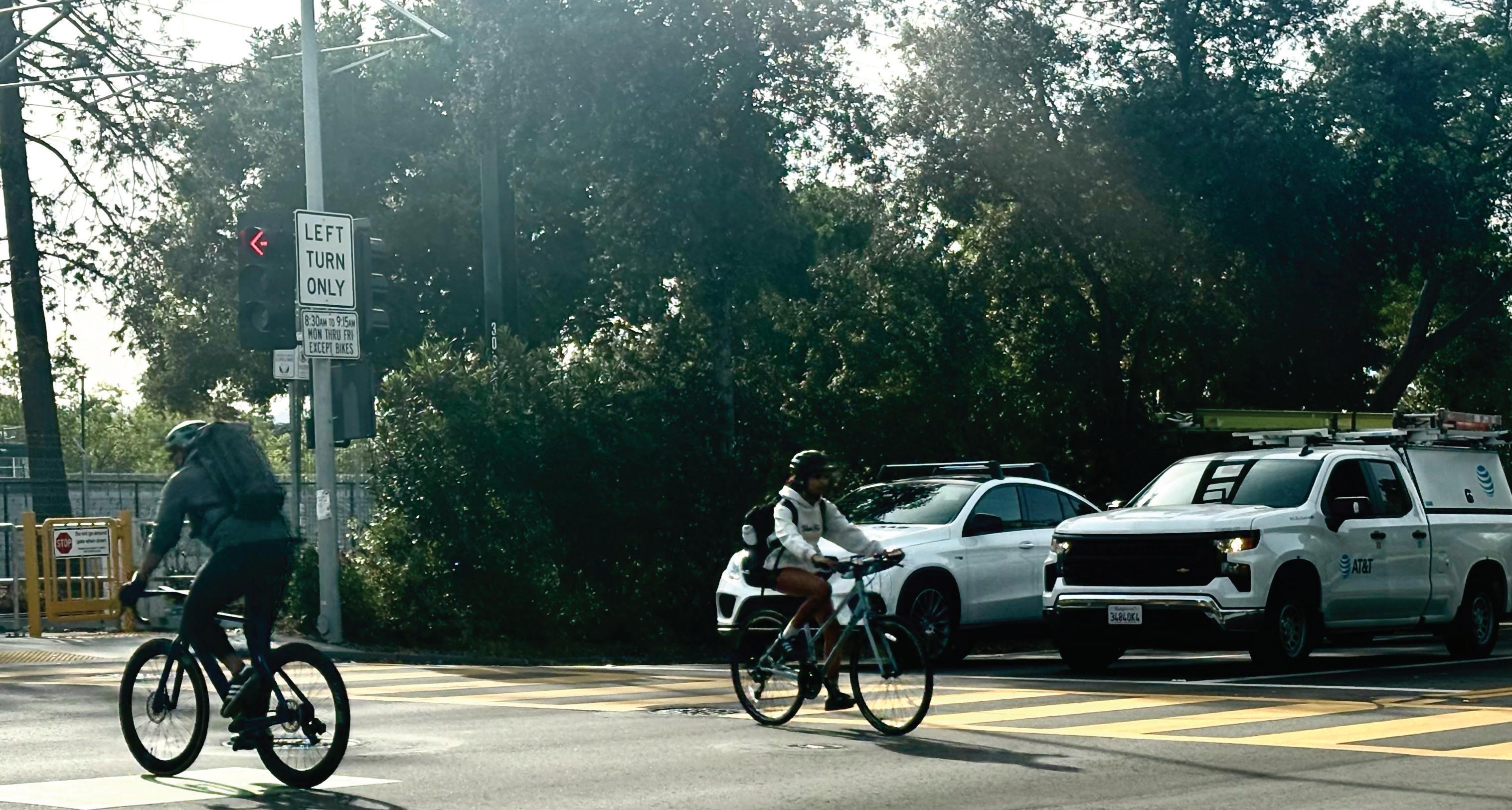
ing Churchill every day, sophomore Helen Li feels that closing the crosswalk would do more harm than good.
“Too many students go through that way, and not just students,” Li said. “Adults going through their everyday lives, going to work, they go through that crossing. Closing will only increase traffic congestion.”
Because of the complications that come with closing the tracks, residents and students alike seem to disagree with this approach. However, there is still an expectation that the district should be making changes.
“This is a recurring issue, and the district should have taken action a while ago,” Li said. “It just feels like this would receive a lot of backlash.”
According to PAUSD assistant superintendent Yolanda Conaway, the school district does not necessarily have the power to implement the closure in the event that the change is agreed upon.
“Within the district, there are some things we don't have control over,” Conaway said. “We may not have the final decision-making in what happens with public rail infrastructures, or decisions regarding railway access.”
The parties with the most influence over decisions regarding the grade crossing
include the city of Palo Alto and the Peninsula Corridor Joint Powers Board, which is the government organization that owns Caltrain.
Because Caltrain has ownership over the tracks, any changes made need to be approved by the organization. Even before the change can be approved, it has to go through the school board and the city.
Nadia Naik, co-founder of Californians Advocating Responsible Rail Design and former chair of XCAP, explained that there have been several material changes that affect how construction would proceed.
These changes include the electrification of Caltrain, which introduces significant complications due to the new overhead wires.
“Caltrain now has very specific limitations on when construction can take place, known as work windows, and on how far machinery and workers must be from the active train line, since we are required to keep all trains running while we build grade separations,” Naik said.
Because of these limitations, the initial plans for the Churchill crossing are no longer fully applicable.
“The original concepts that XCAP reviewed had to expand to be much longer and wider,” Naik said. “This, along with
inflation, has significantly impacted the cost of all the grade separations, now far exceeding the money that is available. In addition, the costs of constructing grade separations have ballooned while the funding available has become more limited.”
Overall, while closing the crossing may not be possible, there are still other changes being made. The main importance is supporting all members of the community as best as possible while still acknowledging the fact that mental health is a complex issue.
“Sometimes we can put all of the supports available in place, and we will still have tragedy,” Conaway said. “But what I do know is that we have the power to reduce the influence of suicide, and we can prevent suicide. So we’ve got more work to do, and we're excited about getting started on some of that.”
If you or someone you know is struggling with mental health, contact the resources below:
Suicide and crisis lifeline: 988
Youth & Teen Suicide & Crisis Hotline: 1-888247-7717
Trevor Project support for LGBTQ+ Lifeline: 1-886-488-7386
Santa Clara County Suicide & Crisis Hotline: 1-855-278-4204
aspires to help improve the “
Ifeel intimidated by the police a lot,” Palo Alto High School senior Isabella Nunez said. “I have seen videos of the police manhandling people, and the way they shout commands at you, it would scare me. I mean they’re supposed to be protecting people and keeping them safe. … I guess I also feel more intimidated as a woman. If they manhandle me or search me I’d feel really scared.”
Nunez is one of many community members with an apprehensive view of law enforcement. The publicized murder of 46-year-old George Floyd in 2020 and the killing of Renée Nicole Good
or “excellent,” down from 78% in 2011.
Although Palo Alto is ranked the 11th safest American suburb, according to financial advisor SmartAsset, Nunez says she still feels influenced by social media and news to fear law enforcement.
Acting Palo Alto police chief James Reifschnieder is trying to combat these skeptical views of police.
“We don’t want the Paly or the Gunn (High
know what’s happening is important, and could be improved. I think the police could be more engaging with students and have a less intimidating appearance.”
“We don’t want the Paly or the Gunn student who is walking to school to see a police officer go by and be fearful.”
JAMES REIFSCHNIEDER , Police Chief
In fact, police used to have a presence at every PAUSD high school, but stopped due to the pandemic. Through the School Resource Officers program, officers did not only monitor safe driving, but built relationships with staff and students.
“The most important part of that program was the regular presence of the same two cops on campus regularly in a non-enforcement setting,” Reifschnieder said. “It gave us a great opportunity to have those officers be able to build a rapport with the students and have the students feel like they could interact with them [officers] more informally, to get to know them as a person and not just some guy or some gal with a badge.”
In addition to the familiarizing SRO program, the police’s Psychiatric Emergency Response team receives specialized training paired up with a clinician to respond to mental health calls from teens in crisis. Reifschnieder says this program is especially necessary in PAUSD, a district which has experienced three teen suicide clusters in under 20 years.
“It gives us that extra tool on the belt when we have a trained mental health professional who can take the lead,” Reifschnieder said. “PER came to Palo Alto in 2021, and we were one of the first two agencies in the country to establish it. … From an officer perspective, responding to suicide calls is emotional and impactful and something that I would wish away for all my officers if I could.”
Many student impressions of police officers, like sophomore Zev Gur’s, stem from ongoing conflicts with federal immigration control officers.
“I think here, the police have mostly good intentions,” Gur said. “But I’ve seen a lot of news articles about ICE officers shooting women in other areas.”
Many people confuse federal with local agents, however they have different duties, limitations and rights, according to Reifschnieder. This difference means police are not allowed to be in “cahoots” with federal agents like ICE officers, according to Reifschnieder..
a safety issue. … If you have a question, then call us, and we’ll get to the bottom of it. Our most basic job is to keep the peace, so I’d rather have us try to get involved and mediate some sort of a safe resolution than have people wonder.”
“I think here, the police have mostly good intentions,” Gur said. “But I’ve seen a lot of news articles about ICE officers shooting women in other areas.”
ZEV GUR , sophomore
“There’s a law called the California Values Act that was enacted several years ago that puts a bunch of limitations on local law enforcement’s ability to cooperate with federal officials for purposes of immigration enforcement,” Reifschneider said. “The only way we would get involved [with federal enforcement] is if there were
While he recognizes some fear around law enforcement, Reifschnieder acknowledges how necessary policing is when done right.
“I recognize that there’s skepticism and additional attention being paid to law enforcement, some of which is well-deserved,” Reifschnieder said. “Just remember that we need good law enforcement, and we need good people to do it. If there’s one thing cops like, it’s kids, so don’t be afraid to come talk to us. I suspect
that if you did, you would walk away feeling better about the police officers that serve your community.”
Text by JULIA CURTIS and SEBASTIAN TUNG
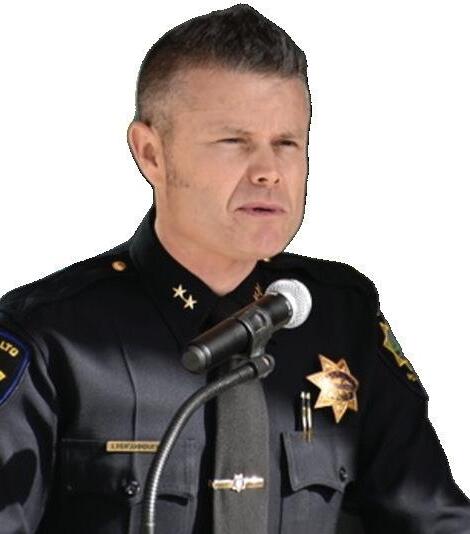
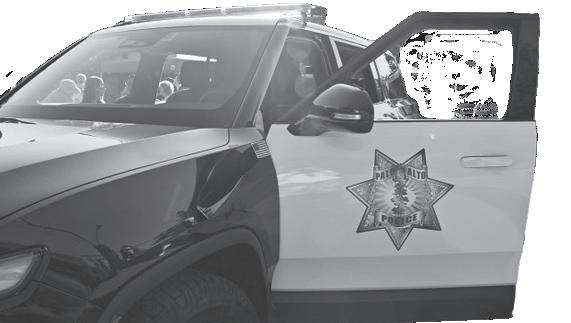
ROLL OUT (right) – A police vehicle’s door opens at a Palo Alto Police Foundation event. Photos courtesy of Jane Gee, Palo Alto Police Foundation member WITH GREAT POWER COMES GREAT RESPONSIBILITY (left) – Acting Chief Reifschnieder speaks last month to the Palo Alto Police Foundation, as he assumed the role of Chief. His main philosophy as chief is to be respectful to both officers and civilians alike. “I tell folks, you gotta treat everything like a relationship,” Reifschnieder says. “Even if they’re the “bad guy” today, it doesn’t mean that I have to treat them unprofessionally or disrespectfully.” Photos courtesy of Jane Gee, Palo Alto Police Foundation member
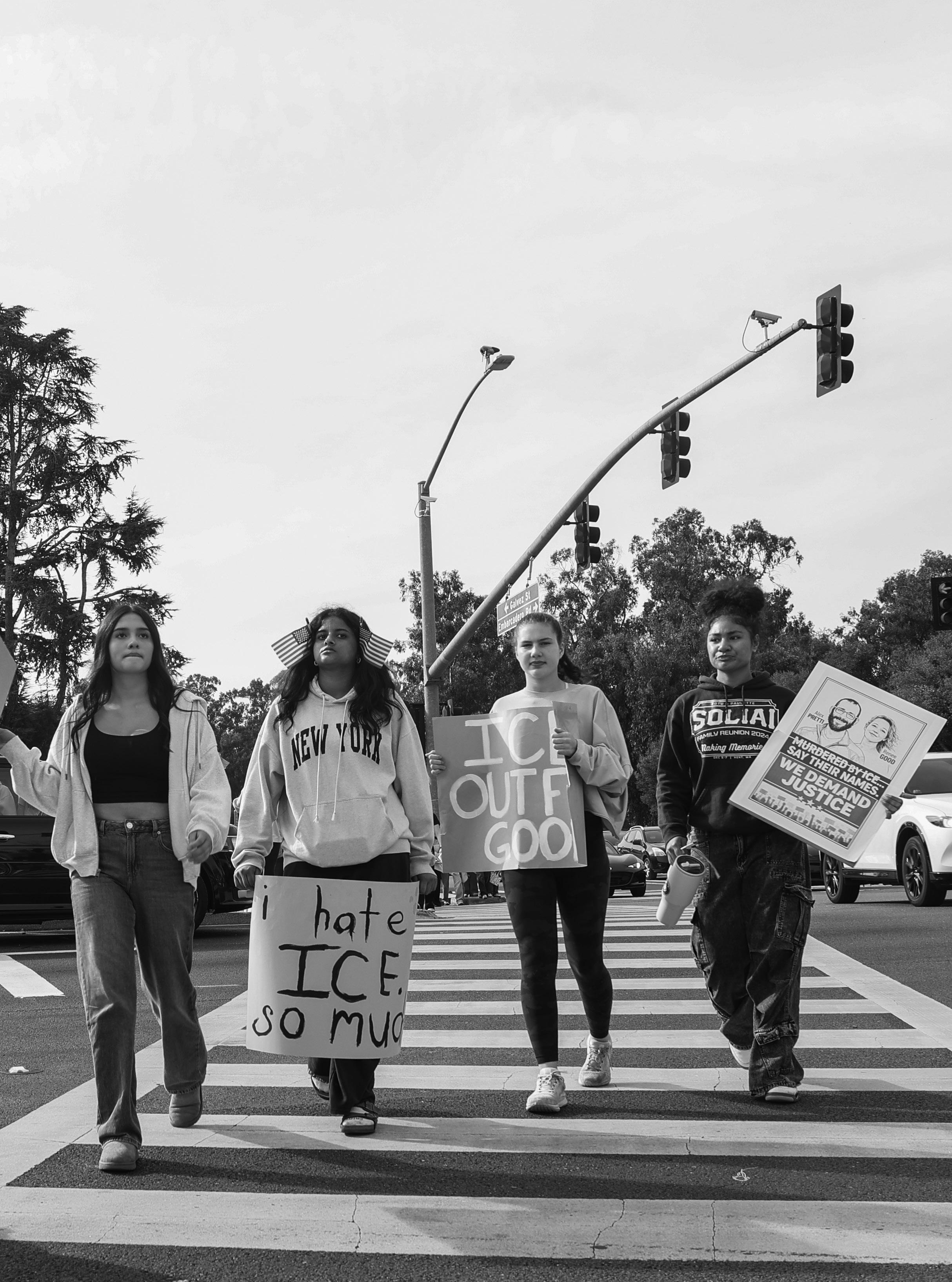
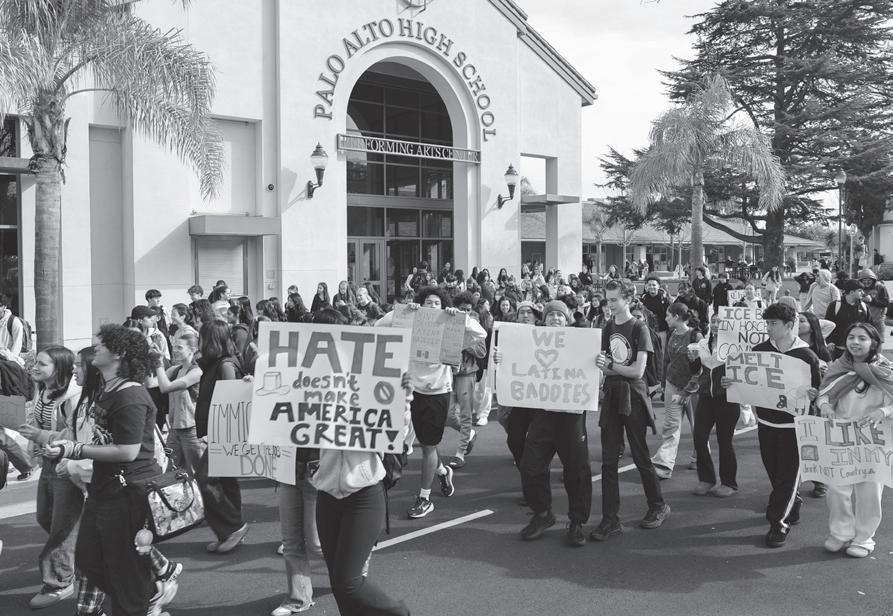
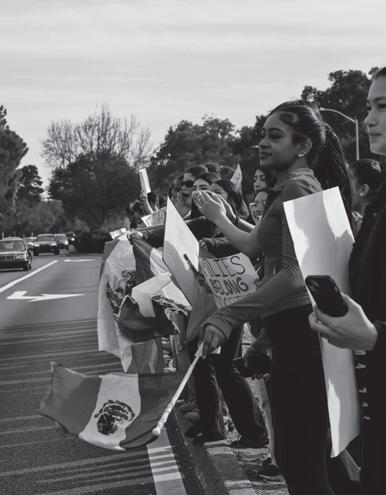
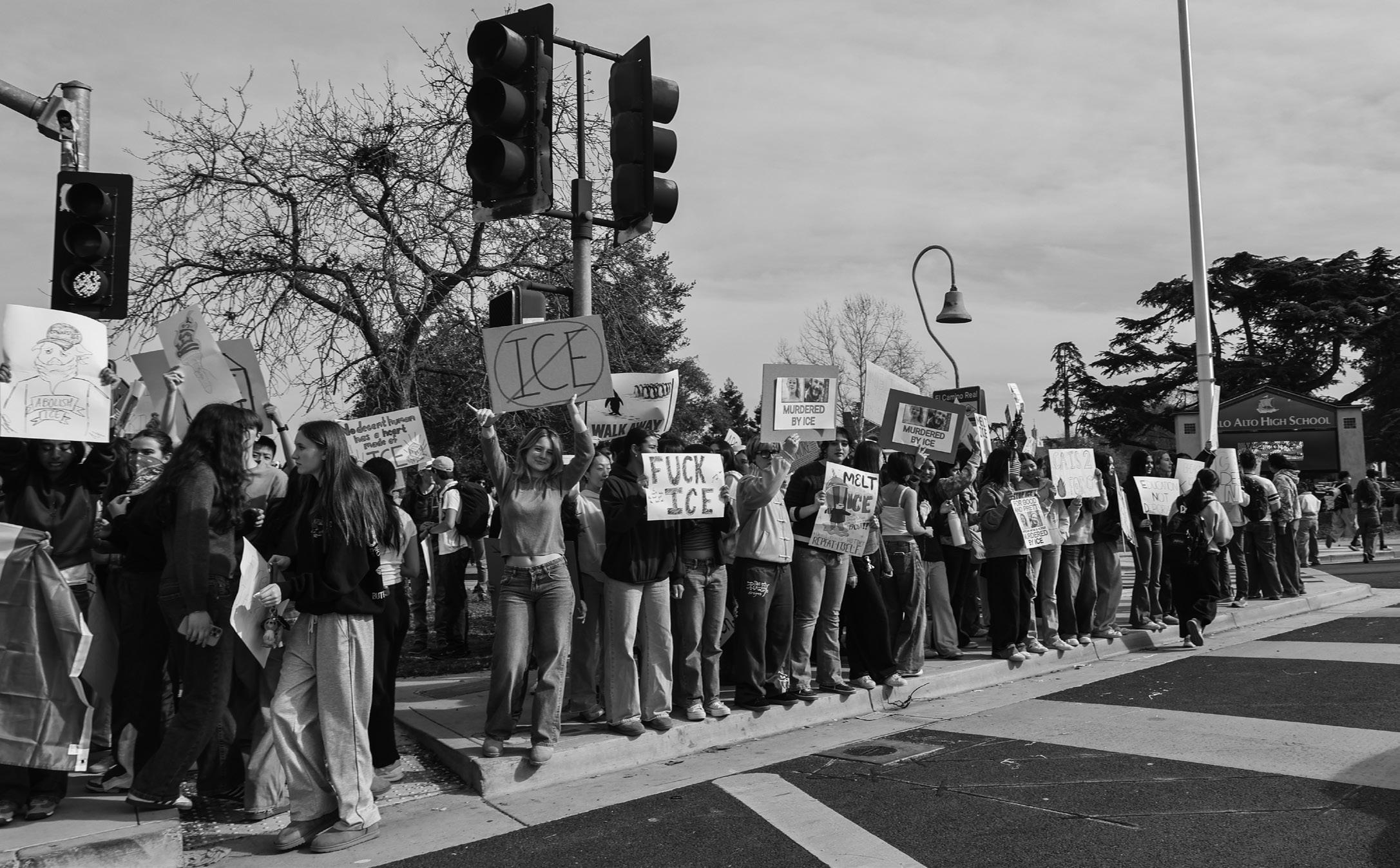
Students showed up to protests around Palo Alto speaking out against ICE, the Trump administration and U.S. foreign policy
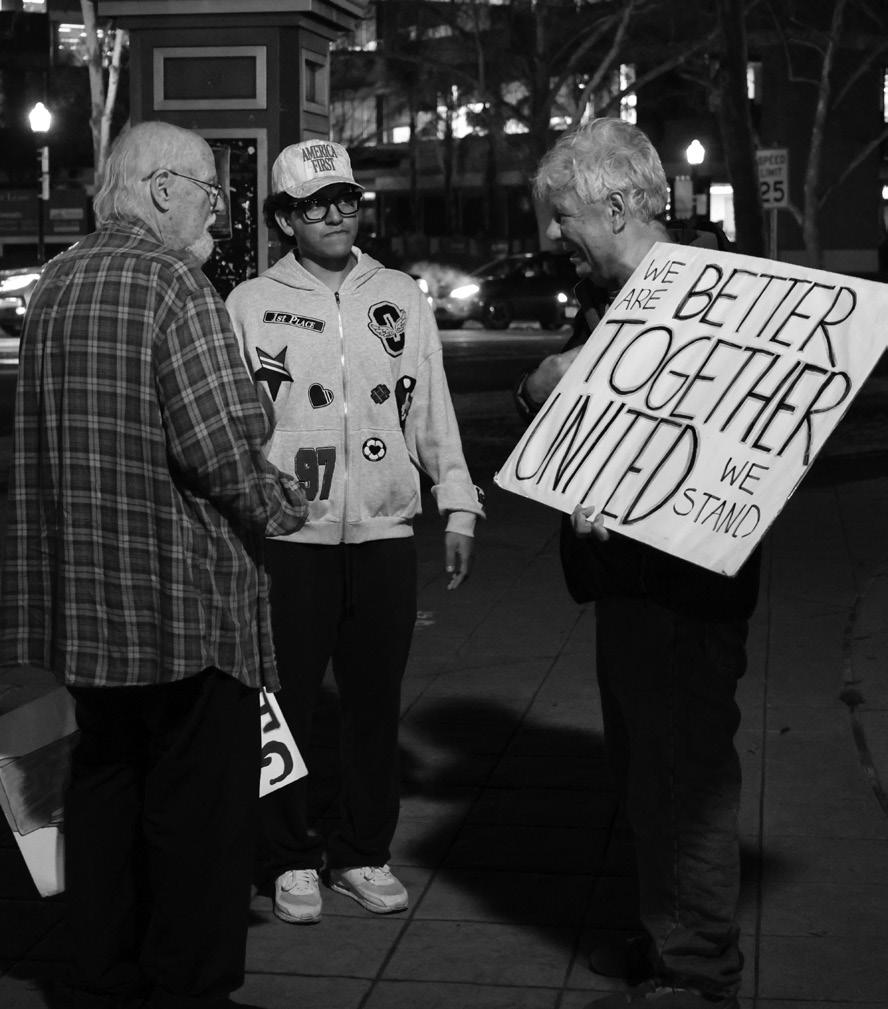
BETTER TOGETHER (above) – Protesters gathered in Gateway Plaza in Mountain View to voice their concerns about the removal of Venezuelan President Nicolas Maduro. Photo by Amily Zhang
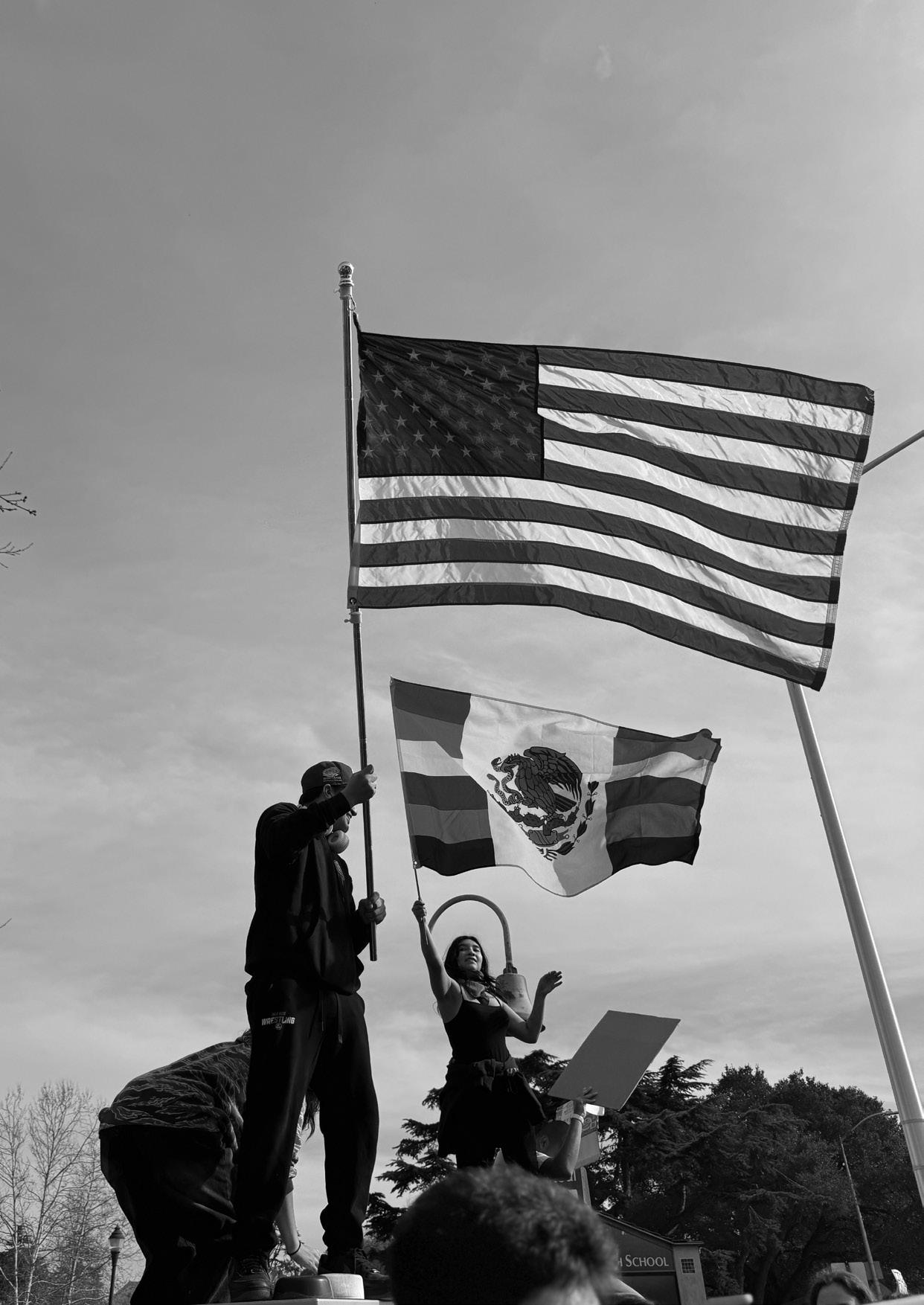
FLAGS UP (left) – Two Palo Alto High School students raise an American flag and a rainbow Mexican flag high into the air. One student, who asked not to be named, said students are protesting the two recent killings in Minneapolis by the U.S. Immigration and Customs Enforcement agency. “I am representing the LGBTQ and the Mexican-American community,” the student said. “I want to see more open-minded people to immigration, fair rights for all to those who came into this country. Photo by Jeshurun Wang
In reaction to the loss by suicide of Summer Devi Mehta, a Palo Alto High school student, students were vocal about next steps. I told students I was cataloging student reactions and solutions and asked if they would send me a paragraph with their thoughts. Anthro received more responses than are included here. Some responses were excluded in part or completely out of space concerns, and some because they raised concerns with experts we consulted on suicide reporting guidelines. We appreciate all who contributed their perspectives.
Ithink
Paly overall has a very clique community. Some groups are easier to navigate. Some aren’t. This is true even within the theatre community. I think theatre is one of the better, more inclusive communities. I wish there was somewhere elsewhere that is not just theatre that could accommodate anyone who’d like to join with a group of people to eat lunch. A campaign on loneliness and the effects, how to accommodate loneliness and a message that tells people they don’t need to go deal with this alone would be lovely.
—
Ami Yamaguchi,
senior
I’m devastated but not surprised that another student has died by suicide this year. While many others have blamed academic competition, there are probably more nuanced factors at play; because of that, I think accessible and free mental health care (such as the Allcove center at midtown) needs to be implemented across the Bay Area.
— Teresa Wang, senior

Ido not think that Palo Alto schools are currently safe for queer youth. As a student, I personally view transphobia as the most unchecked, blatant form of prejudice at Paly. This is a group that has to watch political figures spew violent hate toward their community, only to face discrimination from their own peers for simply being who they are. I have so much love for the trans community, as an ally, as a friend, and as a family member. Seeing young people, students younger than me, take their own lives terrifies me. Nobody should be left wondering if their friend, sibling, or child, will one day go to school and never come back home. I would urge the district to work to ensure school can be a place that is safe and welcoming to all.
—Lily Williams, senior
Any person who is feeling depressed, troubled or suicidal can call or text 988, the National Suicide Prevention Lifeline. Other resources include: the Crisis Text Line (text HOME to 741741), The Trevor Project for LGBTQ+ support (call 1-866-488-7386) and the LGBTQ Youth Space.
I’vemade it through four years of high school in Palo Alto. The month before my sophomore year ended, I got lost mentally. I don’t know what happened, but a combination of receiving death threats, pent-up anxiety, and stress caused me to burn bridges between my friend group and me at the time. Part of me now thinks it was to avoid the pain of not being able to see them as often. Summer and Ash were both true to themselves, something I couldn’t do for another few years after I realized I was trans. I’ve been a high schooler for four years, and I think there’s been more than four suicides since then. Funnily enough, each time someone dies, my parents don’t know what to say – but the support I get from my friends and community is outstanding. No kid should have to comfort a 15-year-old whose friend just killed themselves, but our shared knowledge here in Palo Alto lies in our ability to support others through grief, even though our ability to prevent it may not be as strong.
— Anonymous, senior
Ifeel such a mix of emotions surrounding this whole situation. Right now, I’m trying to be supportive in the best way I can, but it is incredibly difficult to see the impact this situation has had on friends, classmates, teachers, and the rest of the community. The fact that PAUSD are in not our first, not second, but THIRD suicide cluster is so baffling to me – this should not be normal anywhere in the world. I am also so proud of so many of my fellow peers for being some of the first to take initiative towards change. With this effort from our community, it truly seems change will happen.
— Olivia Carlstrom, junior

Having multiple suicides happen at this school district I’m just at a loss for words. My best friend died by suicide this summer. We have our whole lives ahead of us. This is not normal. This should never be normalized. Please, don’t feel ashamed to seek help so you are able to remain a friend, a sister, a brother, a family member, a son, a daughter, a boyfriend, a girlfriend, just anyone. You deserve to be here. You are not alone. You are loved. Please never forget that. Please stay safe.
— Ivy Lee, senior
Iwishpeople spoke more about the consequences, especially towards minority populations, that bullying and harassment can have. I’ve seen many students acknowledging the mental health issue and the academic/performance pressure issues, but less have come to highlight that one reason that Summer was bullied was for her trans identity. This issue is extremely nuanced, and I wish more people would realize that things like this happen for a variety of reasons, not just mental health concerns.
—Maeve Williams, senior
ESPINOZA
With administration planning to remove campus portables, Speech and Debate will lose a treasured community
Palo Alto High School administrators are planning to remove the campus portables over the summer.
Assistant principal Jerry Berkson said the portables will be relocated because they are no longer necessary.
”They [the portables] were put in as a temporary thing about 10 years ago,” Berkson said. “Now that all major construction is done, there is no reason to have them, so they will bring it back to a nicer looking place.”
Berkson said the Speech and Debate program losing their portable is an unfortunate but necessary change.
portables] are not beautiful.”
The Paly Speech and Debate program currently uses the space as a community hub that is open to members of the program all day, twice per week.
Program Director and Head Coach Kyle Hietala said the space has been important for students beyond honing their skills.
“Our administration advocates for mental health support ... [and] quality of after-school extracurriculars, and then we end up seeing these spaces being taken away,”
— Kyle Greenberg, sophomore debater
“There are a lot of clubs on campus who would love to have a community space, and I would love to have something for them,” Berkson said. “I don’t think it’s realistic [to keep the Speech and Debate portable]. It would defeat the purpose of getting rid of the portables. They [the
“P6 is a place … where students feel like they belong, where they can receive mentorship and talk through really difficult situations, [and] where they can gather to mourn suicides or process tragedies that seem to happen at our school all too often,” Hietala said.
According to Hietala, P6 is different from other supportive spaces on campus because of its high degree of student involvement.
“It [P6] is largely student-created and ‘student-owned’ — it’s not something that the district or administration created,” Hietala said. “Students made it a space where they feel safe, and they made it a space where they belong. That makes a big difference for how it’s perceived and how it’s used.”
Hietala said that maintaining these kinds of spaces is important for promoting student wellbeing.
“One of the things that gets lost at Paly sometimes is the basic infrastructure that it takes to help students feel like … they belong,” Hietala said. “We really should be listening to students … and leaning into student momentum where

we see it.”
Sophomore debater Kyle Greenberg said the space has been central to building community across the Speech and Debate program.
“Everyone is in a different space during the actual practice, so P6 ends up becoming this communal area,” Greenberg said. “We get to communicate with our coaches outside of practice and have that interpersonal connection that both increases the quality of our team
and allows us to grow our communication skills outside of the formal setting of debate.”
“Students made it a space where they feel safe, and they made it a space where they belong.”
— Kyle Hietala, Speech and Debate program director & head coach
Greenberg said losing P6 will mean a downgrade for the Speech and Debate program and makes him concerned about the choices made by Paly’s leaders.
“It’s really interesting when our administration advocates for mental health support [and] it advocates for quality of after-school extracurriculars, and then we end up seeing
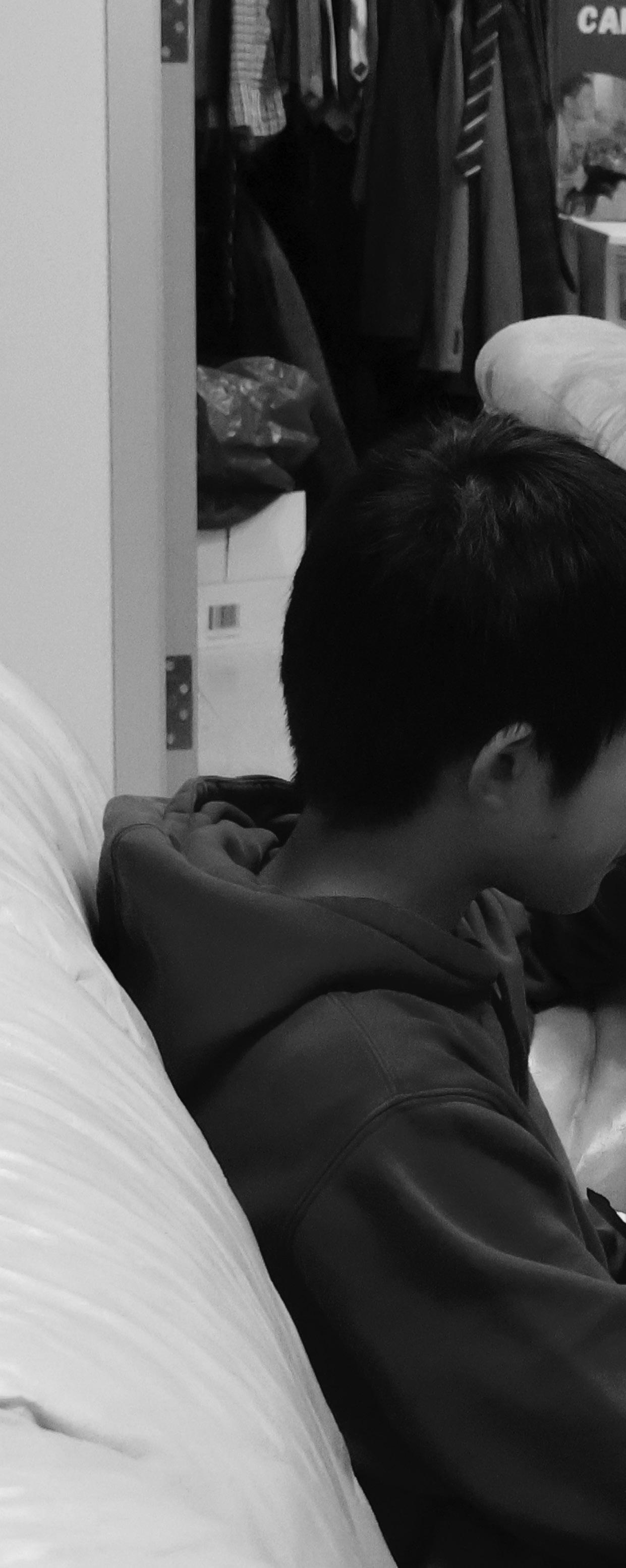
CHILLING OUT – Speech and Debate students relax and enjoy snacks before practice after school in P6. Sophomore Kyle Greenberg said he routinely uses this space to connect with peers. “When school ends, we all go [to P6] on Mondays and Tuesdays and there are all these people from different events,” Greenberg said. “It's such a nice area to hang out with people in.” (Photo by Naomi Espinoza)
these spaces being taken away,” Greenberg said. “[They are] safe spaces for so many kids. It makes me wonder whether or not we are truly applying these ideals in the actions of our administration.”
Palo Alto’s Youth Climate Advisory Board (YCAB) is taking the initiative to shape environmental policies and education in the city to address the issue of local climate change.
Established in September 2024, the 11-member student board evolved from the Palo Alto Student Climate Coalition, which previously focused on advocating at City Council meetings.
Now, YCAB collaborates directly with Palo Alto city officials on initiatives focused on educating youth and increasing climate awareness.
Aiden Miao, junior and chair of YCAB, explained the committee’s plans for this school year.
“We’re planning to go to middle schools throughout Palo Alto, some public, some private, and give presentations on public transportation and also help kids get directly connected to the resources directly around the school,” Miao said.
According to senior and YCAB member Kiara Yoon, the board is divided into several subcommittees that focus on different areas of sustainability and collaborate closely with city officials.
“The board is split into subcommittees that focus on different aspects of sustainability within the city,” Yoon said. “There’s transportation, electrification, and wastewater…We collaborate with the city to give advice on climate legislation, and we also lead youth initiatives in the city to educate on climate action.”
According to Yoon, she serves on various subcommittees, helping to run social media accounts that promote events.
“My committee, specifically media, is involved in creating social media posts and advertising YCAB to new members,” Yoon said.
Last year, the board focused on surveying local youth to assess their understanding of sustainability and resources. The results from the surveys showed that students wanted to use public transportation but found it difficult to access.
“We ran a bunch of surveys asking
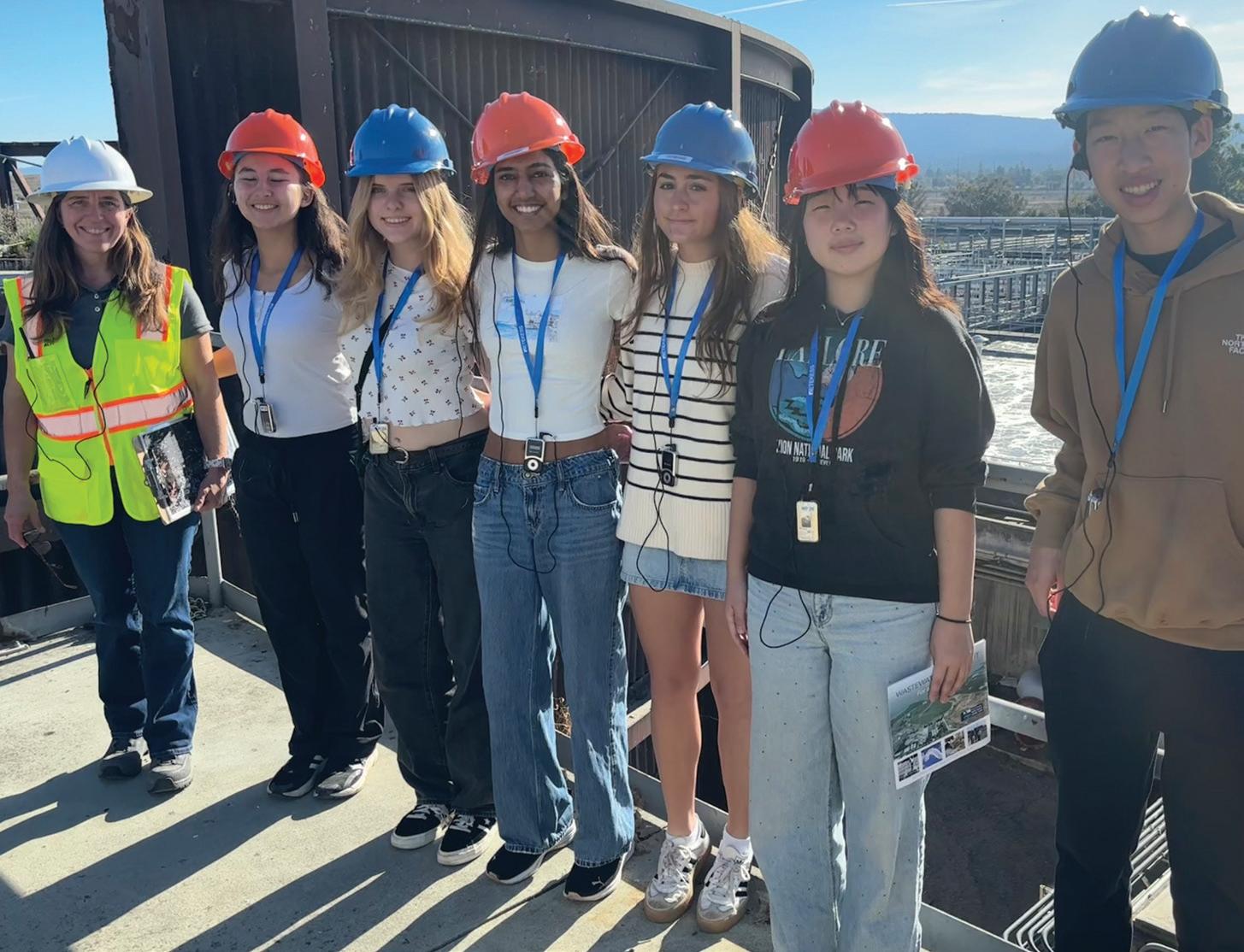
management and provided feedback on making the tours more accessible to youth. “We toured the wastewater treatment plant, learned about biosolid processing and roles of public and business in environmental engineering careers, and provided feedback on how to make ongoing tours more accessible and engaging to youth and the general public,” Yoon said. Photo Courtesy of Elise
youth about their knowledge of sustainability,” Miao said. “We tried to use that data to help the transportation team at the City of Palo Alto make changes that help youth use [public transportation] more easily.”
Apart from surveys, YCAB has also hosted workshops and events for the public, including holding Earth Day booths and activities for the community.
“One of them was trying to plan a rain barrel painting workshop for elementary school students,” Yoon said. “Another one was, we helped organize a succulent painting and planting workshop at the Rinconada Library.”
Yoon, a second-year member, applied and interviewed after seeing advertisements for the board through the city. According to Yoon, with this position, students’ ideas can
be taken seriously by others.
“It’s just having the role in and of itself that makes people listen to you,” Yoon said. “Being able to communicate with people who work in the city government…and teachers at Paly…allows us to communicate with actual people. I got to talk with Mr. HB a lot about how we can better sort our trash and how we can best support our custodians.”
Despite their initiatives taking a long time to have observable results, Miao emphasizes the importance of patience.
“Even though a lot of the work we do might not have an immediate impact, it’s something that definitely helps the city longterm and can build year over year as new people come into the board,” Miao said.
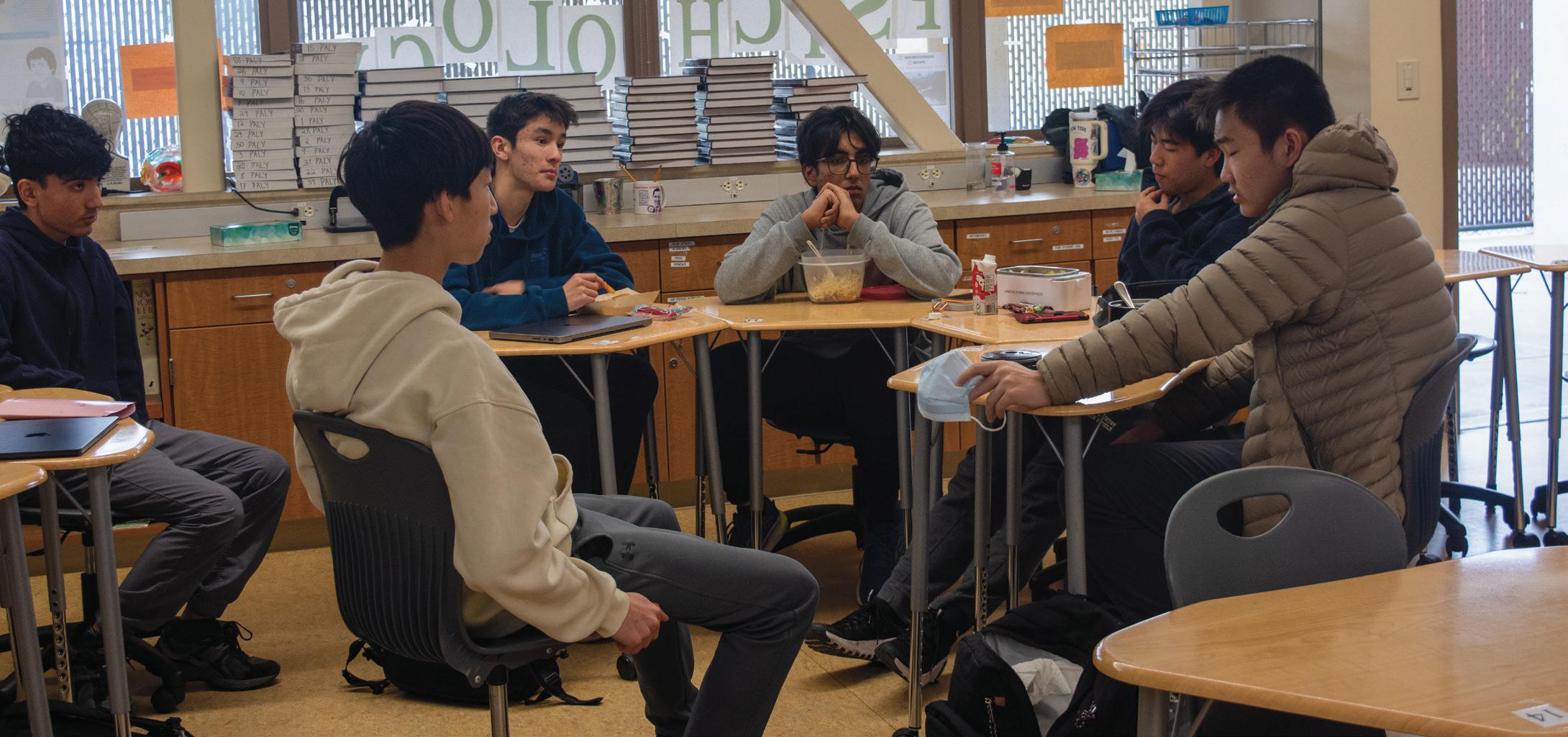
Photo by Naomi Espinoza
Palo Alto High School’s Eco Club encourages students’ involvement in climate conservation. Meeting during lunch on alternating Tuesdays in Room 806, the club focuses on its current project, the Climate Progress Center, a website featuring expert interviews and accurate climate data. Through this site, members hope to help students connect their passions to careers.
According to the club’s co-presidents, Paly juniors Aiden Miao and Agastya Parikh, they plan to continue expanding the website through the rest of the year and over the summer.
“A main part of the website is to help students discover ways that their passions, majors and careers can be applied to fight climate change,” Miao said. “Our goal is for each featured major to be paired with expert insights. It’s been a great way to personally learn about more areas of climate change and meet some really cool people.”
Miao also says the website will combat climate anxiety, inspire action and show accurate global progress.
“There are a lot of confusing narratives in the media about climate change,” Miao said. “We hear simultaneously about positive and negative climate news, and it can be very confusing. Although practically millions of people care about climate change, very few know how much progress the world has actually made against it. We’ve gotten permission from Project Drawdown, a world leader in climate solution data, to use their data to try to demonstrate progress.”
Besides recent virtual projects, Eco Club has been helping the school be more environmentally friendly for over 10 years.
Eco was part of the group that petitioned for that. We try to do a lot of things that make real change at Paly.”
Club member Ryan Saket also encourages students to take more personal responsibility regarding the climate.
“An individual who, for example, takes shorter showers or doesn’t drive as much to conserve their energy, does not make a huge difference,” Saket said. “The big difference is [made] when a lot of people collectively do it.”
“The school buses you see in the parking lot are electric. … Paly Eco was part of the group that petitioned for that.”
— AIDEN MIAO, junior
“One of the projects we did a couple of years ago was to help electrify the school buses,” Miao said. “The school buses you see in the parking lot are electric. … Paly
According to Parikh, it’s these students’ daily, individual climate awareness that is the most important part of conservation.
“There are a lot of things that people do as part of their daily life when they do not realize the impacts they have,” Parikh said. “If you know what impacts it has, you can minimize your effects on the planet.
Inside room 106 at Palo Alto High School, art isn’t just a decoration. It’s dialogue. As students gather around tables surrounded by numerous drawings on the walls, creativity becomes a shared language.
The Artruism Club is a blend of art and altruism that is building bridges between social awareness, emotional well-being, human connection and artistic expression.
The club focuses on two main goals: raising social awareness and creating interpersonal connections. It empowers members to think deeply about issues that matter while using art to create meaningful conversations.
Club president Charlotte Liu joined freshman year and said it was originally founded during the pandemic to raise money for those affected by COVID-19. Students offered commissions where people could pay for a piece of art, and then the money would be donated.
While the club no longer participates in that specific project, it hasn’t stopped its mission to help others through art.
we had club members design bookmarks to be produced and then given out to students who checked out books,” Liu said. “I feel like it added a nice reward and a motivator that, ‘Now that you’ve checked out a book, you also have this bookmark made by another Paly student to be used while you’re reading.’”
Looking ahead, Liu said that the club is planning to collaborate with a local food bank to increase awareness of food insecurity.
with people, and I feel like art is a great medium for that.”
Liu said that while the club is focused on art, it isn’t just limited to artists. Since a major focus of the club is volunteering, it is open to everyone.
“Arturism has always had a mission to improve the community through art be it the works we create or giving opportnities for others to create their own.”
— MAYA ANGELA CHENG , Club Member
“With the current administration being volatile with the SNAP benefits being cut, we’re aiming to create postcards that are motivating and cute because they’re meant to be sent to volunteers as a morale boost,” Liu said.
“[Art] is similar to activism because it’s personal, which resonates with people, and I feel it is a great medium for that.”
— CHARLOTTE LIU, Club President
“I feel like now we’re not really focused on commissions anymore,” Liu said. “But our main mission is still intact, where we’re using our art to help with and improve initiatives.”
The club’s most recent projects focus more on the school community than on the greater area.
“In collaboration with the Paly library,
Lastly, Liu said that Artruism is aiming to collaborate with the Paly Wellness Center.
“We’ll be creating sticker designs that will be given to the Wellness Center to be used for Mental Health Awareness Month in May,” Liu said.
Liu shares that she has an interest in politics, but feels that she is centered on being analytical rather than emotional, which leads to her feeling distant. She joined the Artruism club to help ground herself.
“Art is naturally individualistic and unique to you,” Liu said. “It’s similar to activism because it’s personal, which resonates
“Naturally, this club attracts artists, but there’s no barrier of ‘you need to be this good to join,’” Liu said. “Part of this club is also volunteering, so it’s good if you want to contribute to a good cause.”
One such member, Maya Angela Cheng, is currently a junior but joined the Artruism Club her freshman year. She explains what she hopes to contribute to the community through the club.
“Artruism has always had a mission to improve the community through art, be it the works we create or giving opportunities for others to create their own,” Cheng said. “I hope that, project by project, we can continue to achieve that goal, no matter how big or small our projects are.”
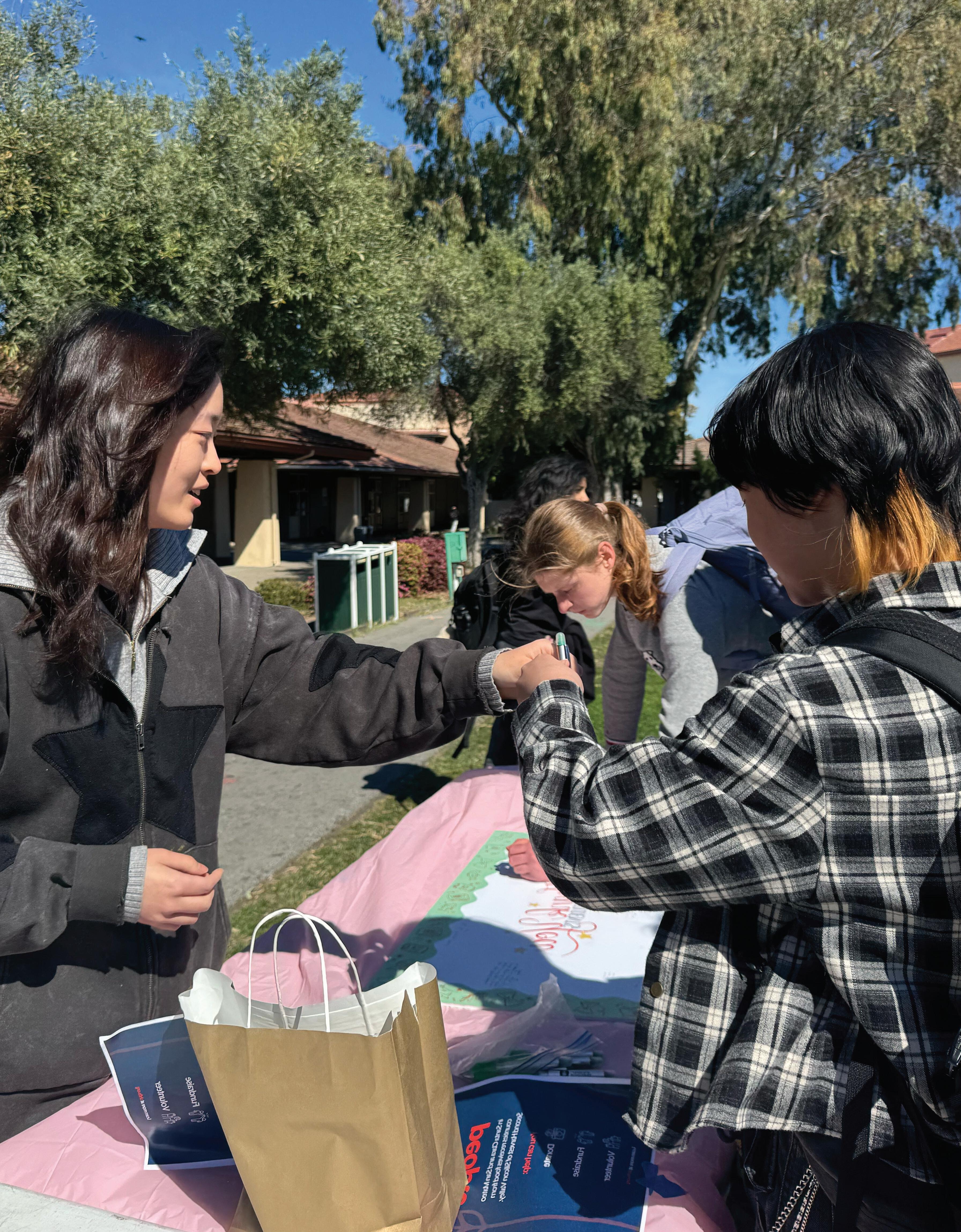
GIVING BACK TO THE COMMUNITY – Artruism Club President Charlotte Liu handing out pens to club members to sign a thank-you poster for the Second Harvest Volunteers at their tabeling event on March 5th, 2026. The club led the campaign in appreciation for the who have been working to provide for people locally after the recent events with SNAP benefits. It was also an opportunity to learn about their impact and for those who signed their names to design buttons
Psychology Club offers peer-topeer mental health support for students
The Department of Health and Human services for Disease Control and Prevention estimates that about 49.5% of adolescents have had a mental health disorder at some point in their lives.
Fighting against these issues and the high-stakes pressures of student life, the Palo Alto High School Clinical Psychology Club has emerged as one of the many campus resources aimed at supporting students’ mental health and well-being. The club meets bi-weekly on Wednesdays during lunch in room 858.
Junior Isabella Zheng, co-president of the club, said she created it to provide students with ways and spaces to better manage the stress around them.
“The main reason we started this club is [because] we really want to improve the mental health condition of students at Paly,” Zheng said. “Since this is a really stressful district, we really hope students can develop some ways to relieve stress when they’re coping with schoolwork and stuff.”
with procrastination, which is pretty common among the students in high school. We also teach them how to cope with depression, anxiety, or all the stuff that usually can be seen around the campus.”
In doing this, Luo and Zheng use campus resources and partner with other clubs to organize activities throughout the year.
“Last year we hosted a PRIME with the Wellness Center and with [the] Origami Club,” Luo said. “ So we have [attendees] have fun with the Origami Club to release some stress. ... We really hope to cooperate with the Wellness Center, and we are also planning in the future to do some slime making, and all those kinds of events for the students to basically have some fun.
“Since this is a really stressful district, we really hope students can develop some ways to relieve stress, like when they’re coping with schoolwork and stuff.”
- ISABELLA ZHENG, Clinical Psychology Club co-president
Selena Luo, a junior and co-president of the club, and Zheng take a practical approach in using psychology to help students manage various stressors in their lives.
“We help them through the perspective of psychology,” Luo said. “For example, during the class, we teach them how to cope
egies] that you can do,” Luo said. “Since we already give those options ... and even if they [want to participate in the discussiowsn], they know some of the analogy of it, and they can try to, first of all, deal with it themselves, or second, go to the Wellness Center, or talk to us.”
“We feel like the more you know about these disorders [mental disorders], the less you’re afraid to talk about them and to share your ideas with others.”
- ISABELLA ZHENG, Clinical Psychology Club co-president
Despite the successes Luo and Zheng have had with their club, they have also endured their fair share of obstacles, with one of their greatest ones being getting people to open up and have conversations about their mental health.
“People have [these] problems, but are shy to [talk about them] and have this conversation with others,” Luo said. “Sometimes during the club, it’s pretty hard to engage with students.”
Luo shared that to get students the help they need without feeling pressured, they offer multiple solutions that don’t require students to share their problems with the class.
“When we talk about those mental [health issues], we have some [coping strat-
Regardless of Zheng and Luo’s ininital struggles, they emphasize the importance of their effort within this club.
“We feel like the more you know about these disorders [mental disorders], the less you’re afraid to talk about them and to share your ideas with others,” Zheng said.
Zheng hopes that passing on the coping strategies that have worked for her to her peers will ensure that they won’t have to face the pressure of student life alone.
“As a student at Paly, I’ve experienced a lot of stress myself, and the way I cope [with] that is to research some psychology studies that help me to increase ... my overall mental health, and that’s really helpful to me,” Zheng said. “I hope to share those experiences with other students as well.
EASING THE LOAD — Clinical Psychology Club presidents Isabella Zheng (left) and Selena Luo (right) wrap up the day’s presentation about coping with burnout, stress, and calming down an overloaded brain. “Our goal is … simple,” Zheng said. “It’s just to help the students know if there’s a better way to deal with [things than] what they’re doing right now.” Photo by Richard Klinkner

Bay Area students feel threatened by nationwide customs enforcement
In Nick’s house, a knock on the door means something different. His family freezes. Eyes dart toward the entrance. Nobody speaks until someone carefully peers through the window to see who is standing outside. Is it a neighbor? A stranger? A man in a vest with a badge? This is the reality for Nick, a Bay Area High School Student, every day, an immigrant who asked that his real name not be used out of fear of ICE. He has grown up in a country that does not always feel like it belongs to him, in a home where the sound of footsteps on the front porch can send a chill through the room. For his family, ICE is not a distant political issue debated in Washington or in the comment sections of news articles. It is a quiet but persistent fear for him and his family that they could be separated at any moment. It is the reason they hold their breath when someone knocks.
“It’s always in my head every time we get a knock on the door, or someone talks about immigration raids on the news,” Nick said.
Nick said the fear is not tied to a single event but to a pattern of stories he picks up from relatives and loved ones.
“I hear stories from cousins and friends whose uncles or aunts got pulled away by ICE agents at work or on the street,” Nick said. “It’s like an everyday worry that someone could just show up at our door and tear our family apart.” According to a Pew Research Center article, 59% of Latinos say they have seen or heard of ICE arrests or raids in their local area in recent months, showing the immense impact ICE has had throughout the U.S.
Nick expressed moral outrage towards the killing of people in the United States by ICE agents, the most prominent of which occurred in Minneapolis. “When I see news about ICE agents shooting people, like the killing of a woman in Minneapolis … I feel sick and angry,” Nick said. “It seems like instead of protecting people, these operations are hurting families and communities.” Currently, a quarter of U.S. adults live in fear that they or someone close to them could be deported by Immigration and Customs Enforcement at any moment, according to the Pew Research Center. Conversations about immigration have become a regular part of family life for Nick, as he and his parents often discuss current events at the dinner table, especially when enforcement activity increases in certain cities.
affecting students across the country by low ering their attendance and grades.
more, and for that, I’ve been doing worse in school because that’s all I think about,” Nick said. “I worry that if I’m not home, I’ll be more exposed to problems with ICE, or people in my family might be in danger while I’m not home.”
School who also asked that her real name not be used out of fear of ICE, a child of undocumented migrants, oust the Trump administration for its handling of the de portation of documented immigrants in her view. “They say they’re going to de port criminals, but they take away innocent people who work hard and sometimes even have documentation,” Olivia said. “There’s also a feeling of helplessness because I’m very proud of my culture.”
“Even though we are a nation of immigrants, there have been a lot of instances of being an ti-immigrants.“
— ADAM YONKERS, Foreign
“They tell me they’re proud of who we are but also remind me to be careful and aware of our rights because they’ve lived through fear and know how real it can feel,” Nick said. The uncertainty has also shaped his daily choices. Nick said his family avoids international travel out of concern about reentry, even if it means missing important events. “I can’t just jump on a plane because we’re afraid of not being able to come back,” Nick said. “That means missing tournaments and important family moments. Part of my brain is always thinking about whether I’ll be able to chase my dreams without fear hanging over me.”
Not only are Bay Area students feeling unsafe when traveling, according to a study by Stanford education professor Thomas Dee, reported by The Journalist’s Resources, the 2025 immigration crackdown is also
her family use the program. The program is meant to provide a clear temporary res idence status that protects the individual from deportation and grants legal work au thorization.
er or not you have documentation, so my siblings are also afraid because they have DACA, but since the president hates us, there is a possibility for him to take that pro gram away,” Olivia said. According to the U.S. Citizenship and Immigration Services website, new DACA requests are not cur rently being processed by the government. However, requests for renewing DACA sta tus continue to be filed and processed.
been affecting her academic performance due to the constant stress.

“I feel distracted when all I’m thinking about is whether or not we are safe, and it affects the quality of my school work,” Olivia said.




Magazines include Anthro, Chomp, Ink, Proof, Veritas, Via Verde


Ecstatic. That is the word Eliana Krulig, a Venezuelan immigrant mother living in the Bay Area, used to describe her reaction to the removal of Venezuelan President Nicholas Maduro in early January.
“My husband came to tell me, and I was in disbelief,” Krulig said.
“And then when he told me, ‘I’m not joking’; I not only got excited, but I actually started crying,
because it was such a big emotion for me, and for my family, or for everyone I know from Venezuela that this terrible, you know, horrible person, had finally been removed from our country.”
Krulig, who immigrated to the United States from Venezuela in 2005, was one of the lucky few who left early and had the means to do so.
“I want to say over the past seven to eight years, immigration was more like survival,” Krulig said. “You’re escaping, you’re walking out with a backpack and no money and no idea where you’re going. … You cannot survive in this country [Venezuela].”
Krulig is one of millions of Venezuelans living outside the country. According to the Pew Research Center, 1.2 million people are living in the U.S. who identify as Venezuelans, and whose story is wrapped up with the pain of the Maduro regime and the emotions around its fall.
Even after leaving the country, Krulig still feels love for her home country. She reminisces on the old memories and people that she had to leave behind.
“I talked to my family regularly,” Krulig said. “I still have friends from school, from college, and everyone… I think the sentiment is pretty universal.”
According to Krulig, even though the removal of Maduro is a sense of freedom for Venezuelans, she is still cautious about other potential leaders in the background who have supported his violent regime that could come to power afterwards.
leave office and decided to crack down massively against the opposition party.
Luis thinks that by putting the temporary leaders in charge, there is a bigger chance that by putting pressure on those leaders, change would really happen for the long term.
“You’re escaping, you’re walking out with a backpack and no money and no idea where you’re going. … You cannot survive in this country [Venezuela].”
— ELIANA KRULIG , local Venezuelan
“We’re cautiously optimistic that this is not the end of the dictatorship, because they have such a well-oiled machine that’s been in place, you know, for 25-26 years,” Krulig said. “So, yes, you remove Maduro, but he’s, I mean, he was the guy at the top, but he’s not, you know, the head of the snake. There are other people up there that are, that continue, you know, the government’s objectives and oppression.”
Luis, a local Venezuelan adult who requested to stay anonymous due to the Venezuelan government holding onto his personal information agrees with the approach the United States government is taking.
“[In the] first week of January, when Maduro was taken out of power, everyone thought that immediately Maria Corinna Machado would be put in place to run the country,” Luis said. “I actually don’t disagree with the approach that’s being taken right now, [by briefly leaving those] in power right now that are the same people that were there before.”
Machado, who won the election against Maduro in 2024, according to NPR, won the 2025 Nobel Prize in Norway for her efforts to promote democracy in Venezuela. Even after winning the election against Maduro, however, Machado was forced to flee the country because Maduro refused to
“So I think that it’s okay to provisionally leave those people in, [and to] put pressure on them to have them do what needs to be done,” Luis said.
Additionally, according to Luis, Venezuela’s government is framing the new regime change by the United States as an intentional act and not forced upon by America.
“If you hear the rhetoric that they have inside Venezuela, they make it seem like they’re doing everything on their own terms, individually and against the US government,” Luis said. “But if you look at what they’re doing, these are things that they would have never done if it wasn’t because they’re getting pressure from the US.”
you’re hoping that there’s like a resistance movement that will come in that will be more pro-American,” Yonkers said.
Beyond that, Yonkers said he believes that recent events in Venezuela could pose a weakness for the U.S. globally, as China or Russia could use the same rationale America used in the removal.
“The Trump administration is saying that we are going to run Venezuela just because we don’t like the regime,” Yonkers said. “I think that moves us away from respect of nationhood and sovereignty, and it creates opportunities for China and Russia to, in some way, justify their actions.”
Luis supports putting pressure on current members of the Venezuelan government for improvements for the country, instead of putting in someone who has never had experience within the role.
“If you were to bring someone to a place where there’s so much chaos and that person doesn’t actually have the right people in the right positions … it’s gonna fail, everything’s gonna fail,” Luis said. “So I think that it’s okay to leave those people in, [and] put pressure on them to have them do what needs to be done.”
“You will have to be Venezuelan and live in Venezuela to understand how painful it is for those who are there and those who are outside, and therefore why we are all so excited.”
Palo Alto High School teacher Adam Yonkers, who teaches Foreign Policy, expresses his own hesitancy towards the long-term success of the U.S. removal of Maduro, citing the U.S.’s heavy reliance on the local population revolting against the tyrannical government.
“But I think what you’re seeing is that by removing Maduro and leaving a lot of the people that were like his lieutenants,
LUIS, Venezuelan
Luis’s response to Americans who tell him that the U.S. has no business interfering in Venezuelan affairs is that they do not understand the gravity of the emotion that is associated with Venezuelans for Maduro’s removal.
“[What] I would tell them is that, you know, you will have to be Venezuelan and live in Venezuela to understand how painful it is for those who are there and those who are outside, and therefore why we are all so excited,” Luis said.
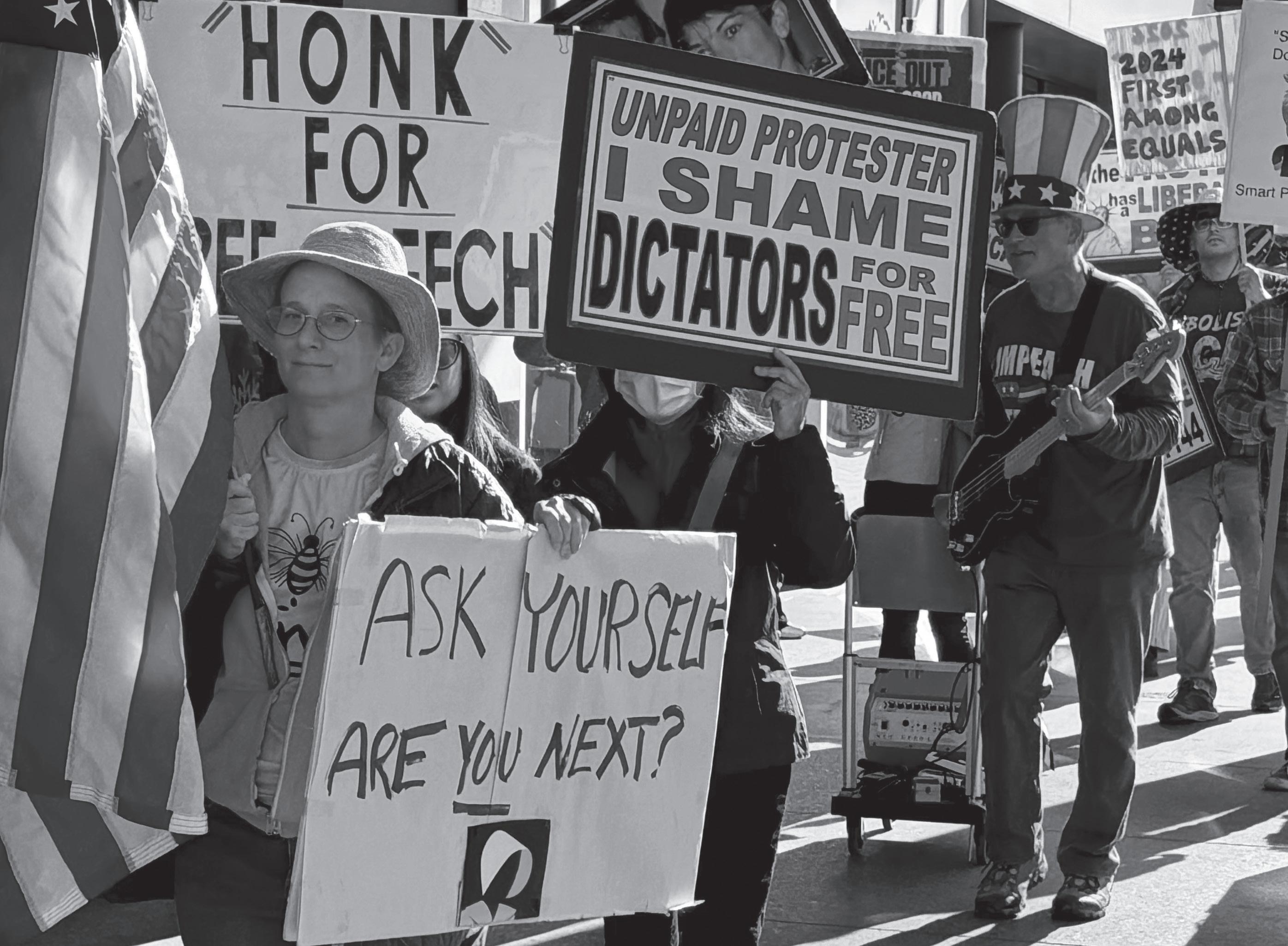
Ayear ago, on a Saturday afternoon outside the Stanford Shopping Center, two protesters, one dressed as Waldo and the other as Jesu Christ, stood outside a Tesla dealership, shouting and holding up signs as theft tried to catch the attention of passing shoppers according to Scott Herscher, the founder of The Wolves. It was the first event he ever organized.
“Two people showed up,” Herscher said. “And I thought, maybe I am not so weird.”
Today, Herscher’s activist organization holds demonstrations three times a week across the Bay Area: Mondays at Whole Foods in Palo Alto, Tuesdays at the Redwood City courthouse, and Saturdays at Stanford Shopping Center.
What started as a two-person turnout has grown into a tight-knit community of hundreds of activists united around economic justice, immigration rights, and what Herscher describes as the collapse of democratic accountability.
Herscher studied at UC San Diego before becoming a software engineer at Apple, a career path that looks nothing like that of a protest organizer.
However, after Trump’s second inauguration, he felt politically hopeless. Because of this, he briefly joined Indivisible, a national organization founded during Trump’s first term by former Democratic staffers, but said the fit wasn’t right.
“I said, f— it, I’ll just start my own thing,” Herscher said. “I didn’t have any aspirations for anything. I’m just a weird dude, so I figured it’ll probably just be me and a couple other people.”
Unlike
chapters of national organizations, the group doesn’t need to maintain outside compliance before acting, and Herscher says that’s exactly the point.
“If we have an idea for something we want to do, we can make it happen the next day,” Herscher said. “You don’t have to get approval from anybody except ourselves, which I love.”
He has no plans to expand beyond the Bay Area. Scaling up nationwide would only recreate the restrictions he was trying to escape in the first place.
“I have no aspirations to take this nationally or bigger,” Herscher said. “I really like being hyperlocal. I have found that with national organizations that have local chapters, the local chapters are all constrained. And I just want to go do stuff.”
At the core of nearly everything, the Wolves’ protest centers on a single overarching concern: wealth inequality. Herscher describes the United States as the wealthiest country in history, yet also one of the most unequal.
“We’re living in a time of unprecedented wealth inequality,” Herscher said. “We’re also living in a time in which we’re one of the wealthiest countries in the history of the world. How do you square those two things? How do you square that there are a few people who have a f— ton of money, and then the rest of us are scrambling around to get the sloppy seconds?”
In his view, extreme wealth doesn’t just distort the economy; it distorts democracy itself. Billionaires, he argues, can exert political pressure that ordinary citizens simply cannot.
“Billionaires shouldn’t exist,” Herscher said. “If you’ve got a system where one small set of people can amass that much wealth at the expense of everybody else,
you have an inherently unequal system, which is also inherently anti-democratic.”
One example of that fight is a ballot initiative that The Wolves have been actively supporting. According to CBS News, this measure, known as the “billionaire tax,” would impose a one-time 5% wealth tax on the state’s approximately 225 billionaires.
This bill is intended to offset Medi-Cal cuts triggered by this year’s federal budget reconciliation bill. According to Herscher, the group has been focused on collecting signatures to get it on the November ballot.
“A guy who’s got $100 billion will be left with $95 billion,” Herscher said. “I’m not crying any tears.”
Polling, Herscher says, shows most Californians support the measure. He sees it as a sign that public sentiment is shifting.

“People are starting to wake up,” Herscher said. “They’re realizing maybe billionaires are not the solution, they’re the problem.”
But pushing that kind of change through the political system is easier said than done. Herscher described weeks of attempts to meet with staff at Rep. Sam Liccardo’s Campbell office, only to be turned away at the door each time.
“He works for us,” Herscher said. “We pay his f—--- salary, and they wouldn’t open the door. But if we were Mark Zuckerberg, they would let us in. Mark Zuckerberg and I — we are both one vote, one person, yet because his bank account is a lot larger than my bank account, my representative won’t talk to me. That’s inherently anti-Democratic.”
His frustration may be more than just a personal experience. A 2015 study published in the American Journal of Political Science found that the members of Congress were more than five times as likely to meet with individuals when those people were identified as campaign donors.
One area where Herscher says the group has struggled is attracting high school protestors. He noted that a student organized a walkout in Los Altos that drew 200300 participants, but that the energy rarely carries over into cross-generation participa-
tion.
“It doesn’t feel like the twain [two groups] shall meet,” Herscher said. “You were doing your thing, we were doing our thing, but there’s no congealing happening there. I would love to see events where we’ve got you guys [students] speaking and us listening and vice versa, but that’s not happening, which is kind of a bummer.”
Molly Schumer, a scientist and mother who regularly attends the group’s demonstrations, says the stakes for younger generations are exactly what compels her to keep showing up.
“I am worried about the future for my kids and worried about the future for democracy and science in America,” Schumer said. “It feels like a moral obligation when so much is going wrong.”
For young people following these protests, she had a direct message.
“We are at a critical moment in our democracy,” Schumer said. “I’m lucky that I grew up in a time when our rights were much less constricted than they are now. For young people, it’s the future that you are choosing.”
Still, Herscher remains committed to nonviolent protest as the primary strategy, and points to decades of political science research to back it up.
One study from the Harvard Kennedy School of Government found that nonviolent campaigns were more effective at producing change and identified a threshold that Herscher himself often cites.
“There’s this magic number of 3.5%,” Herscher said. “If 3.5% of the population is activated and engaged in civil resistance, historically, we win. We don’t have that many levers; it’s one lever. That’s the one we’re gonna pull.”
He is also clear about why peaceful protest works beyond just the numbers.
“When people see this on TV and people see people peacefully protesting, not engaging in violent behavior, and then getting shot and beaten, it turns people who might not have been with them, with them,” Herscher said. “That’s why Martin Luther King was very intelligent and made a point of being non-violent. Then, it showed up on TV news that night, seeing non-violent people of color getting the s— kicked out of them by white cops, and it turned the electorate’s sentiments around.”
For now, Herscher says he will continue to show up, always with signs and support, outside the Tesla dealership in Palo Alto, every Saturday afternoon, with a big smile on his face.
“We have fun,” Herscher said. “If you’re not having fun, you’re not doing it
Australia’s social media ban for kids under 16 sparks global debate
You pick up your phone after a long day of school, ready to scroll on your favorite social media app for a few minutes. But what if your account had suddenly been deleted and you were unable to create another one?
Starting Dec. 10, this has become the reality for millions of Australian kids under the age of 16 as social media platforms started to enforce new age restrictions.
Australia, on Dec. 10, became the first country in the world to enact a nationwide social media ban for kids under the age of 16, marking a major shift in government regulation of online platforms.
This ban sets a global precedent, with proposals of legislation to combat similar issues being debated around the world, including the U.S.
The Australian Parliament passed the Online Safety Amendment (Social Media Minimum Age) Act 2024 on Nov. 29, 2024 after almost two years of back and forth
deliberation.
Platforms were given one year to prepare for compliance before enforcement began.
According to Julie Inman Grant, Australia’s eSafety Commissioner, this legislation covers 10 major platforms, including Instagram, TikTok, X and Reddit.
Companies are expected to take the necessary steps to ensure that underage users cannot use their platforms, with heavy fines being set for companies that fail to comply with the legislation.
Grant, a key advocate for the ban, has described it as a protective step to give children time to build digital skills before being exposed to social media.
However, many see the blanket ban as overreaching, reflecting the tension between protecting children and preserving their digital rights.
The Australian government framed this law as a protective measure.
Officials said the law was passed to combat online harms such as mental health risks, cyberbullying, addiction, and sexual exploitation.
The concerns that fueled Australia’s ban are not specific to that country.
Many other countries, including Spain and France, have also proposed similar restrictions.
In the U.S., lawmakers are exploring how to regulate social media access for children.
Republican Rep. Anna Paulina Luna introduced a bill in the House on Feb. 5, 2026, with the aim to protect kids from social media harms.
algorithmic recommendations for children under the age of 17.
In a 2024 New York Times opinion article, U.S. Surgeon General Vivek Murthy wrote, “Legislation from Congress should shield young people from online harassment, abuse, and exploitation and from exposure to extreme violence and sexual content that too often appears in algorithm-driven feeds.”
Stanford psychiatric professor and addiction expert Anna Lembke stated in an email that teen behavior on social media can meet the clinical definition of addiction, which she defined as the compulsive use of a substance despite the harm it causes.
“When kids get addicted to social media, one of the biggest harms is ‘opportunity costs,’ meaning all the things kids are not doing because they’re spending so much time online, like not sleeping, not studying, not moving their bodies, and not socializing in real life,” Lembke said.
Lembke emphasized that excessive social media use is especially detrimental to children due to side effects such as depression, anxiety, loneliness, and fear of missing out.
“A ban means you don’t have access. You’ve cut off access to all kinds of speech, and that’s where it gets overboard. It prevents your ability to speak to many, many audiences, and that’s a pretty obvious problem under the First Amendment.”
—
CORYNNE MCSHERRY, Legal Director of the Electronic Frontier Foundation
Her legislation is a companion legislation to the Kids Off Social Media Act, which is a bipartisan bill that Hawaiian Democratic Sen. Brian Schatz proposed in the senate on Jan. 28, 2025.
If passed, the Kids Off Social Media Act, which, as stated in the legislation, would prohibit platforms from allowing accounts for children under the age of 13 and
“Kids and teens are more vulnerable to social media addiction because they tend to be more sensitive to peer validation,” Lembke stated. “They also tend to underestimate the risks.”
Palo Alto High School AP Computer Science teacher Roxanne Lanzot says that she has seen the effects of social media firsthand.
“From my experience of observing kids in classrooms and observing kids in schools, I absolutely have witnessed a shift in student levels of happiness, levels of pro-social behaviors decreasing, sleep deprivation increasing, and anxiety increasing,” Lanzot said.
Lanzot says she believes that governments taking action is a step in the right direction.

“I am encouraged to see that the Australian government is trying to do what they can to protect their citizens and respond to some sort of more disturbing details about the effects of social media on young people, which I think increasingly are documented and should disturb all of us,” Lanzot said.
Paly sophomore Helen Li says she believes a social media ban will be more harmful than beneficial.
“I don’t think it’ll really address the root problems they say it will help with,” Li said. “For example, if they say it will help mental health, I don’t think it will because banning social media will cut [kids] off from their friends and create worse issues.”

ment.”
Beyond the loss of speech, McSherry says that the enforcement of a social media ban is problematic and forces users to give up their right to stay anonymous on the internet.
“Kids and teens are more vulnerable to social media addiction because they tend to be more sensitive to peer validation. They also tend to underestimate the risks.”
— ANNA LEMBKE, Stanford professor and Medical Director of Addiction Medicine
Corynne McSherry, legal director of the Electronic Frontier Foundation, says that bans like Australia’s risk isolation and cutting teenagers off from important information.
“They [children] need access to information just as much as adults do, and in some cases, more than some adults do because they don’t have the kind of ability and agency that an adult has,” McSherry said.
Concerns have also been raised about this law’s implementation and the legal implications it brings.
McSherry says similar proposed bans in the U.S. would not comply with the First Amendment.
“The First Amendment protects our right to access information as well as our right to receive and as well as our right to speak,” McSherry said. “...A ban means you don’t have access. You’ve cut off access to all kinds of speech, and that’s where it gets overboard. It prevents your ability to speak to many, many audiences, and that’s a pretty obvious problem under the First Amend-
“There’s the other problem of how do you enforce a ban without basically spying on people or deputizing companies to spy on people,” McSherry said. “There’s been some proposals that will require people to show an ID before they can access the internet or access particular sites. And for lots of people, showing an ID is not a small burden.”
Lembke says that she treats these types of bans as a policy experiment, in the sense that it remains to be seen if the ban actually keeps kids off of these platforms.
“Kids are amazingly good at circumventing safeguards,” Lembke stated. “But implementation aside, I think what Australia has done is a good thing. … Maybe it won’t work, but we have to start trying something to improve the mental well-being of kids.”
Palo
Palo