Plastic Merchants of Myth: Circular Claims Fall Flat
PLASTIC MERCHANTS OF MYTH : CIRCULAR CLAIMS FALL FLAT
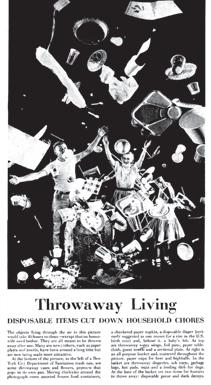
This image featured in a 1955 LIFE magazine article called "Throwaway Living" which celebrated a new, modern lifestyle populated by a variety of "disposable items (which) cut down houseold chores". 70 years later the same casual attitude to plastic waste is pervasive, propped-up by the false assertions of the plastics industry that recycling is the solution to plastic waste.
2.1
EXECUTIVE SUMMARY
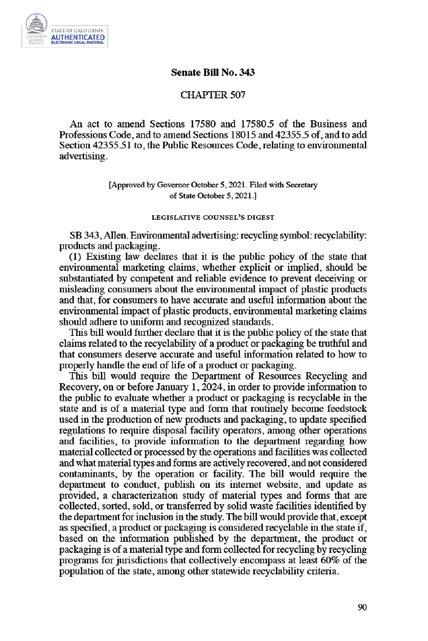
Corporations must stop calling plastic products and packaging 'recyclable' or 'circular'.
After decades of meager investments accompanied by misleading claims and a very well-funded industry public relations campaign aimed at persuading people that recycling can make plastic use sustainable, plastic recycling remains a failed enterprise that is economically and technically unviable and environmentally unjustifiable.
In 2018, as part of their latest iteration of promoting plastic recycling as a sustainable long-term pathway, the plastics and fast-moving consumer goods (FMCG) industries began touting the concept of a “circular economy for plastics” and committed to “voluntary business action” to eliminate problematic or unnecessary plastic packaging and ensure that 100% of plastic packaging was reusable, recyclable, or compostable by 2025.1
2025 was supposed to be the year that recycling would finally be proven to be an effective solution to the global plastic pollution and waste crisis. Instead, it has brought news of the “devastating” closure of California’s largest PET#1 bottle recycler2 and several other U.S. facilities, along with a warning in the European Union that the “plastic recycling industry is facing imminent collapse.”3 As the end of 2025 approaches, it is clear that voluntary commitments have failed to solve the plastic pollution crisis. Companies have not kept their promises, and it is time to demand more. Big brands like Nestlé, PepsiCo and Coca-Cola plainly intend to continue relying on single-use plastics to deliver
“There was never an enthusiastic belief that recycling was ultimately going to work”
LEWIS FREEMAN
SOCIETY OF THE PLASTICS INDUSTRY
SPEAKING ON NPR DOC. IN 2020
their products, betting on the failed concept of plastic recycling despite knowing it is not a viable solution.
The latest U.S. government data indicates that just 5% of U.S. plastic waste is recycled annually,4 down from a high of 9.5% in 2014.5 Meanwhile, the amount of singleuse plastics produced every year continues to grow,6 driving the generation of ever greater amounts of plastic waste and pollution.
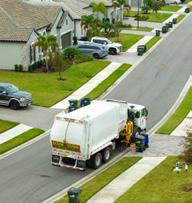
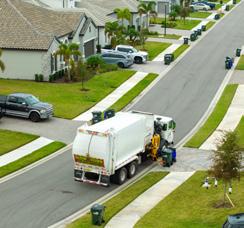
Despite the equivalent of 80 trash trucks per day7 of unmanaged plastic waste entering U.S. lands, rivers, and coastal waters and increasing concern about the environmental and human health impacts of microplastic exposure,8 the companies and big brands that make and sell disposable plastic products continue to promote recycling as the answer to our mounting plastic problem. The relentless focus on this ineffective and unworkable approach flies in the face of the hard facts presented in the previous two Greenpeace USA “Circular Claims Fall Flat” reports9 and this new 2025 update. These reports collectively offer an unclouded assessment of the state of plastic recycling in the U.S. over a five-year period, providing transparent, traceable data that counters the flood of industry-sponsored statistics and wishful thinking posing as credible evidence.
The Introduction to this report tells the story of how the plastics and products industries and their front groups and associated organizations – the Merchants of Myth – have pushed the false promise of recycling as a solution to the
The two previous Circular Claims reports published by Greenpeace.
growing plastic pollution crisis over the past 40 years. Section 1 maps out the key players in this misinformation network, provides examples of the money flows between them and their misleading messages and tactics, and exposes the circular blame game they engage in to confuse the public as plastic recycling continues to fail.
In the wide spectrum of disinformation propagated by the Merchants of Myth, misleading labels and claims about recyclability on plastic products and packaging are the most direct deceptions aimed at consumers. Individual companies, retailers, and the plastics industry as a whole regularly make false and unsubstantiated claims about the recyclability of their products, to avoid product bans and negative consumer perception of wasteful products and packaging.10 Many manufacturers use labels that indicate their products are recyclable when they are not recycled today and never have been.11 Meanwhile, the lack of strong federal regulation drives states to enact their own laws to hold companies accountable for false claims about recyclability and to protect consumers and the environment from the associated harms.12
This and the two previous “Circular Claims Fall Flat” reports focus on the legitimacy of “recyclable” claims and labels on plastic products and packaging in the U.S. The comprehensive surveys whose results are presented here were performed at the U.S. national level and, for the first time in this update, specifically in California. California’s
current recyclability labeling laws are among the strictest in the country, and the new law that will take effect for products manufactured after October 4, 2026 (described in Section 2) will eliminate existing loopholes.
Because product companies typically label their products for national sales, California’s requirements will largely become the national standard. Consequently, a thorough, transparent assessment of all key factors relevant to determining compliance is required. Entities responsible for monitoring compliance and litigating violations of the law must have access to comprehensive, credible data in order to support enforcement actions and ensure accountability.
The 2020 “Circular Claims Fall Flat” report was a landmark achievement: a pioneering comprehensive survey of post-consumer plastic waste recycling that identified the U.S.’s approximately 370 materials recovery facilities (MRFs) and the types of plastic waste accepted into recycling systems. That survey fact-checked decades of claims by the plastics and products industries purporting that all plastics are recyclable13 and proved that a 2016 report on plastic acceptance and recycling levels by the front group Sustainable Packaging Coalition (SPC) was wildly exaggerated and incorrect.14
In this 2025 update, a new first-of-its-kind plant-level assessment of existing U.S. post-consumer plastic waste recycling/reprocessing facilities was performed to credibly define the post-consumer plastic waste recycling capacity
in the U.S. for specific material types and forms, providing a detailed, transparent assessment.
This survey confirmed that capacity for domestic recycling/reprocessing of plastic waste is extremely limited:
• Only 21 facilities with a combined maximum capacity to process 21% of PET#1 bottle waste generated in the U.S. are in commercial operation.
• No facilities were identified that commercially and continuously recycle/reprocess baled PET thermoform waste from MRFs.
• Only 22 facilities with a combined maximum capacity to process 22% of HDPE#2 containers (bottles, jugs, jars, tubs) and packaging waste are in commercial operation.
• Only 2 facilities with a combined maximum capacity to process 2% of rigid PP#5 waste are in commercial operation.
• No operating facilities were identified that process other types of post-consumer rigid plastic waste (PS#5, LDPE#4, PLA, PVC#3, and “Other” plastic).
What’s more, this detailed survey proves that there has been no net gain in rigid post-household plastic waste recycling/reprocessing capacity since 2018 – a year that marked a turning point for the plastic recycling myth, because that is when China stopped accepting massive amounts of plastic waste from the U.S. and other countries. Just five new post-consumer rigid plastic waste recycling/reprocessing facilities have been identified that began commercial operation in the U.S. during or after 2018 and were still in operation as of October 2025, while six facilities have shut down during this period (see Section 3.5.2).
Section 4 presents the results of Greenpeace USA’s 2025 California Post-Consumer Rigid Plastic Waste and Recycling Assessment. This proves that no material type or form of plastic packaging meets
all four key criteria to legally use a recyclable label under California’s new labeling law, SB 343, which will take effect in October 2026. The only two potential exceptions are clear PET#1 beverage bottles collected separately through the bottle redemption program and natural HDPE#2 bottles and jugs.
After more than four decades of false claims, it is time for the plastics and products industries to acknowledge that plastic recycling is a failed concept. Unlike with paper or metals, there are two insurmountable barriers that prevent plastic recycling from ever working at scale: toxicity and economics. The vast majority of plastic products and packaging produced each year cannot be safely recycled back into new food-grade plastic products,15 and the flood of 500 million tons/yr of cheap new plastic production16 kills the business case for largescale investment in plastic recycling.
Post-consumer plastic waste has never made sense to recycle and will never make sense to recycle. The Merchants of Myth have led a 40-year campaign to have plastics viewed as recyclable in the same way as aluminum or cardboard – but plastic waste has never belonged in curbside recycling bins, because plastics are synthetic and made up of countless different formulations that cannot be safely converted back into recycled plastic. It’s time for the Merchants of Myth to stop deceiving consumers and for policy makers to stop contaminating recycling streams with plastic waste. Greenpeace USA demands that big brands act now to eliminate single-use plastics and packaging and not rely on the fiction that a “circular economy for plastics” can someday be created to put an end to the persistent problem of plastic pollution. Companies should no longer use false recyclable labels and claims as a smokescreen to divert attention from the real changes that are needed.
Greenpeace calls for immediate action by companies, governments, front groups, and other plastics industry players:
1. Companies must discontinue using polluting plastic packaging and food service items.
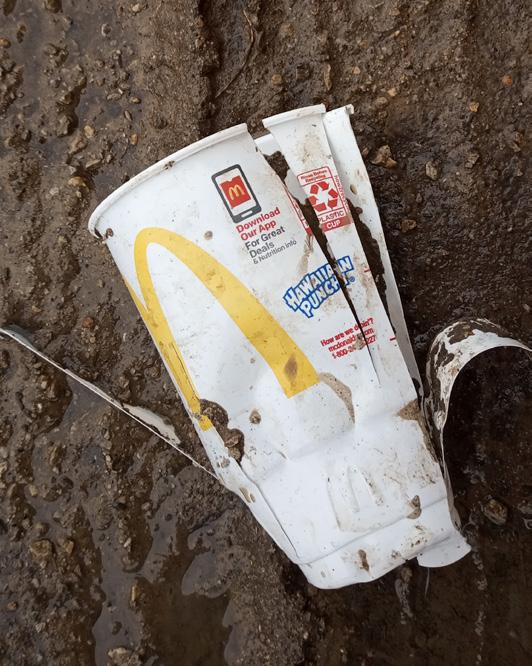
• The single-use plastic food service products most commonly found in cleanups, including cups, lids, clamshells, utensils, and trays, must be banned. These items have never been widely recycled in the U.S. and likely never will be.
• Companies must aggressively reduce reliance on all types of single-use plastic packaging and publicly support (directly and through relevant trade associations) reusable/refillable container schemes at the state and federal level.
• Quick-service restaurant companies should implement “Skip the Stuff” practices nationwide to reduce pollution and waste of ancillary items.
2. Companies and the recycling industry must be truthful and transparent with the public.
• MRFs must not accept plastic waste in curbside bins unless they will sort the collected materials into clean bales and sell them to U.S. plastic recyclers.
• MRFs must tell the public exactly which facilities they ship their baled materials to, including paper, metals, glass, and plastics, and provide data on how much of that material is recycled, landfilled, and incinerated.
3. Organizations must stop promoting plastic recycling.
• Organizations such as the World Economic Forum, and the United Nations Environment Programme must stop referring to a circular economy for plastics, a costly distraction that has delayed progress toward real solutions.
• Organizations must stop advocating for plastic recycling as the solution to the plastic waste and pollution problem, including adoption of minimum requirements for recycled plastic content.
human health and the environment.
INTRODUCTION: UNMASKING THE MERCHANTS OF MYTH
In 1988, the executive director of a leading plastics industry–funded front group, Council on Plastics and Packaging in the Environment,18 published a newspaper column proclaiming: “Plastic is just about the most recyclable material there is. Soon it will be possible to collect and recycle virtually all plastic materials collected from the post-consumer waste stream. It’s just that most people aren’t aware of it yet.”19 This falsehood was echoed 20 years later by the managing director of the Plastics Division of the American Chemistry Council (ACC), who stated that “plastic recycling companies are able to accept all kinds of materials.”20
But after decades of industry claims that all plastics are recyclable and that recycling is the solution to the growing problem of plastic pollution and waste, the truth is self-evident: The persistently very low U.S. and global plastic recycling rates demonstrate that recycling is not a legitimate fix. Plastic recycling has been an obvious failure for years. If any other industry were to tout a solution with a success rate of just 5%21 as the only possible answer to a problem of its own creation with massive public health and environmental implications, the outcry would be deafening and the legislative response swift.
So what has enabled this false promise to survive for so long?
As the Center for Climate Integrity (CCI) observes in its 2024 report “The Fraud of Plastic Recycling,” “Underpinning [the] plastic waste crisis is a decades-long campaign of fraud and deception about the recyclability of plastics.”22 That campaign has been led by the stakeholders that benefit financially from promoting the plastic recycling myth. These are the only entities still claiming that recycling will someday work to meaningfully reduce plastic pollution and waste.
As detailed in the book Merchants of Doubt,24 the tobacco industry effectively stalled progress on public health protections for 50 years by spending many millions of dollars casting doubt on the vast array of medical evidence proving that inhaling cigarette smoke caused cancer and other diseases. The plastics and products industries and their front groups and associated organizations have been plastic “Merchants of Myth,” using the same tactics and spending millions of dollars of their own to promote the plastic recycling lie, in spite of the mountain of evidence – including actual mountains of plastic trash – proving that plastics are fundamentally not safe or economical to recycle.
QUICK RECAP: FIVE REASONS WHY MECHANICAL AND CHEMICAL RECYCLING HAVE FAILED AND WILL ALWAYS FAIL
Plastic waste is:
1. extremely difficult to collect,
2. virtually impossible to sort for recycling,
3. environmentally harmful to reprocess,
4. often made of and contaminated by toxic materials, and
5. not economical to recycle, since high-quality new plastic is cheap and abundant.
Importantly, due to systemic limitations in feedstock quality, health regulations, and limited production capacity, post-consumer recycled
plastic from household waste is not being produced at commercial scale for food-grade uses globally or in the U.S., and likely never will be. While there is some availability of food-grade PET#1 for beverage bottles only, there are growing toxicity concerns here, too.25
Importantly, due to toxic compounds created during the recycling process, food safety regulations, and economics, post-consumer recycled plastic from household waste is not being produced at commercial scale for food-grade uses globally or in the U.S., and likely never will be.26
THE TIMELINE OF DECEIT
The plastics industry has been working to shape society's view of plastic waste for over 70 years. Starting in 1953 with the launch of Keep America Beautiful, their line has been that plastic waste management is primarily the responsibility of individuals. Since then their advertising campaigns have flipped
between hopeless despair and blind optimism. The 'crying Indian' adverts of 1971 suggest that plastic pollution is the fault of litterers and not the companies that produce or sell single use plastic packaging. The incredibly upbeat 'Plastics make it possible' commercials of the late '80s and early '90s celebrated the uses of plastic while industry insiders, including those at the Society of the Plastics Industry, were aware of how unrealistic it was that the problem of plastic waste would ever be solved.
starting a 70+ year campaign focused on individuals relationship with waste plastic. No mention of plastic producers. 1953
Resin Codes which look like the chasing arrows recycling symbol, introduced by SPI (now PLASTICS)
1987
American Plastics Council created a series of adverts promoting a unequivocally positive vision of plastic, as a force for social good, countering growing negative public sentiment about plastic waste.
Gary Anderson, student at USC, designs the 'chasing arrows' to represent paper recycling.
1971
Keep American Beautiful's infamous ‘Crying Indian’ campaign framed a waste and polution crisis as being about the conscience of the individual.
1989
"If
the public thinks that recycling is working then they’re not going to be as concerned about the environment."
LARRY
THOMAS, FORMER HEAD OF SOCIETY OF THE PLASTICS INDUSTRY
1994
“we are committed to the activities, but not committed to the results”
2008
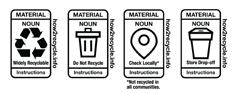
The ‘Check Locally’ and ‘Store Drop-Off’ messages imply that recycling is widespread, just maybe not in your community or store, when in fact most plastic is unrecyclable anywhere. The new symbols released September 2025 do not address this problem.
“There was never an enthusiastic belief that recycling was ultimately going to work”
LEWIS FREEMAN
SOCIETY OF THE PLASTICS INDUSTRY SPEAKING ON NPR DOC. IN 2020
Coca-Cola announces 25% of all beverages globally to be sold in reusable/refillable bottles.
Coca-Cola quietly abandons reuse target in favor of recycled material.
2019
2023
Coke, Dr Pepper and Pepsi launched ‘Every Bottle Back’, a commitment to circular plastics which sounds good but is practically impossible.
2019
Founded by global oil and chemicals firms “building unique and impactful circular solutions” but doing little of anything meaningful.
ACC spends $30M+ promoting Advanced Recycling, previously known as Chemical Recycling, a widely discredited solution to the growing stock-piles of plastic awaiting recycling.
In 1988 the 'chasing arrows' symbol was championed for all seven types of plastic resin - suggesting that all plastic is equally recyclable. It's not. In 2008 of the 'How2recycle' symbols further muddied the water - even if the consumer does 'Check Locally' or use a 'Store Drop-off' that does not mean those items will be successfully recycled. 2019 saw big oil and the plastics industry form the disingenuously named Alliance to End Plastic Waste. Now in the mid 2020s, the plastics industry is leaning heavily on the idea that 'Advanced' or 'Chemical' recycling will solve the problem of plastic waste, even as inherent economic and environmental barriers prevent these technologies from being viable at scale. Real solutions - investing in reuse and refill models, or simply producing much less plastic, especially for use in throwaway packagingare not only ignored by the plastics industry, but strongly opposed.
Renewed global criticism of single-use plastics exploded around 2017, due to the first global quantification of plastic pollution in the ocean,27 grisly photos of its fatal effects on ocean life in documentaries like the BBC’s Blue Planet,28 China’s ban on plastic waste imports,29 and the major increases in plastic production in the U.S. by petrochemical companies.30
Following the tobacco industry’s playbook, the plastics and products industries’ response was a massive increase in funding for groups such as The Recycling Partnership (TRP) and the Global Plastic Action Partnership, media advertising, and other public relations efforts to boost promotion of the plastic recycling myth. U.S. tax records reveal that TRP’s annual funding skyrocketed from $0.9 million in 2011 to $37 million in 2023 – a more than 40-fold increase.31 As evidence of the human health risks and planetary harms of single-use plastics mounted, the amount of funding to the Merchants of Myth continued to rise.
The plastics industry will never voluntarily admit that plastic is not recyclable, with industry organizations like the ACC and the Association of Plastic Recyclers (APR) instead clinging to the excuse that, even after four decades of investment in recycling programs and infrastructure, plastic recycling is still “in its infancy”32 or “in the ‘embryonic stage’ of its development.”33
But just as the tobacco industry’s initially successful tactic of systematic promotion of disinformation ultimately failed it after 50 years of falsely claiming that cigarettes were safe to smoke,35 it is beginning to fail the plastics and products industries. And just as Big Tobacco can no longer claim that cigarettes are not dangerous because not all smokers develop lung cancer, the plastics industry must be prohibited from promoting the false narrative that all plastics are recyclable and brushing aside health and environmental concerns because 5% of plastic waste is recycled.
“A small number of petrochemical companies including Exxon and Mobil began a decades-long campaign… in the 1980s to convince the public that mechanical recycling would solve the plastic waste and pollution crisis. This campaign, which is ongoing today, succeeded in convincing the public that plastics were recyclable. This gave ExxonMobil cover for decades to continue producing more and more plastic unchecked.”
STATE OF CALIFORNIA V. EXXONMOBIL36
“Why say, because it can’t be recycled today, we should stop claiming it to be recyclable?”
MATT SEAHOLM PRESIDENT AND CEO OF THE PLASTICS INDUSTRY ASSOCIATION, SEPTEMBER 1, 202334
“For more than half a century, the plastics industry has engaged in an aggressive campaign to deceive the public, perpetuating a myth that recycling can solve the plastics crisis. The truth is: The vast majority of plastic cannot be recycled, and the recycling rate has never surpassed 9%.“
ROB BONTA ATTORNEY GENERAL OF CALIFORNIA
The Merchants of Myth have been highly effective in their efforts to quell doubts about the safety and growing ubiquity of plastics over the past decades, much as the Merchants of Doubt succeeded in their tobacco-related efforts for a half-century. The public outcry about plastic waste in the early 1990s receded thanks to an intensive campaign aimed at convincing people that recycling offered a practical approach to dealing with the problem.37 States and municipalities promoted plastic recycling as a way to reduce the need for landfills, although recycling capacity lagged far behind production.38
In much the same way that the tobacco industry cynically continued making people sick by promoting its carcinogenic products as “safe” long after the risks
were established, the Merchants of Myth are putting human health at risk and harming the environment by continuing to position the massive expansion of single-use plastics as unproblematic, invoking the illusion of recycling as a solution.
The idea of a circular economy for plastics has been called “the greatest toxic greenwashing hoax in history.”39 But labeling these actions benign “greenwashing” is too kind – that term trivializes the widespread and growing harm done by the perpetuation of lies about plastic recycling. It is time to finally reject the false claims by the Merchants of Myth that have enabled the vast expansion of single-use plastics production, pollution, and waste, putting the health of people and the planet in danger.
CIRCLES OF INFLUENCE: BIG OIL, THE RECYCLING LOBBY, RETAIL AND FMCG BRANDS
1. MAPPING THE MERCHANTS OF MYTH: MEMBERS, MESSAGES AND TACTICS
The plastics, packaging, and recycling industries have waged a decades-long misinformation campaign to perpetuate the myth that plastic is recyclable.40 In fact, the most recent official U.S. government data indicates that in 2019, of the estimated 44 Mt of plastic waste managed domestically, just 5% was recycled, with the vast majority (86%) being landfilled and the rest incinerated.41
Drawing from existing sources and public information, this section paints the big picture of the Merchants of Myth network, describing its main members and their funding, their key deceptive messages and primary propaganda tactics, and the circular blame game they play with regard to the causes of the failure of plastic recycling.
1.1.2 PETROCHEMICAL INDUSTRY
The petrochemical companies producing plastics and the trade associations they fund began touting the false solution of plastic recycling in the 1980s,42 and they remain the leading players in the Merchants of Myth network to this day. Trade organizations promoting the plastic recycling myth include:43
• The Alliance to End Plastic Waste (AEPW), an industry-backed coalition of plastic producers and petrochemical companies44 formed in 2019 that heavily promotes the fantasy of a circular economy for plastics.45 In 2022, Planet Tracker reported that 8 of the top 20 single-use plastic waste makers were AEPW members.46 The group received a staggering $66 million in contributions in its first year and reported an annual income of $80 million (an increase of 21%) in 2023.47
• The American Chemistry Council (ACC), which represents nearly 200 companies “engaged in the business of chemistry.”48 Members of the Plastics Division, many of which are also members of AEPW, include various U.S. petrochemical companies that produce plastics as well as plastic waste pyrolysis companies such as Brightmark.49 A trade association funded by its member companies, ACC reported an annual income of $181 million to the IRS in 2023.50
• The Association of Plastic Recyclers (APR), the selfdescribed “voice of plastic recyclers.”51 The APR owns two recycling industry publications that promote plastic recycling: Plastics Recycling Update and Resource Recycling. According to financial reports submitted to the IRS, its income increased more than sevenfold between 2011 and 2023, from $0.7 million to $5.3 million.52
• The National Association for PET Container Resources (NAPCOR), the trade association for the PET plastic packaging industry in the U.S., Canada, and Mexico. NAPCOR represents nearly 70 companies, including major petrochemical and plastic corporations.53 The group reported annual revenues in the range of $624,000 to $836,000 between 2011 and 2018, but the figure jumped to $1.3 million in 2019 and had risen to $1.7 million by 2024.54
• The Plastics Industry Association (PLASTICS), which calls itself “the voice of the plastics industry.” Members include plastic processors, equipment manufacturers and mold makers, material suppliers, and recyclers.55 During the period from 2011 to 2023, the annual revenue reported by PLASTICS to the IRS ranged between about $10 million in most years to around $30 million in years when National Plastics Conferences were held.56
PROPAGANDA TECHNIQUES USED BY PETROCHEMICAL INDUSTRY TRADE ASSOCIATIONS
The Alliance to End Plastic Waste has been widely criticized for engaging in greenwashing, with critics noting that in its first five years, leading members produced over 1,000 times more plastic than it cleaned up.57 The organization proudly claims to have supported over 80 projects worldwide aiming to “help end plastic waste and transition towards a circular economy for plastic”58 – but it reportedly quietly abandoned its initially stated goal of diverting 15 million tons of plastic waste from the environment by the end of 2023, when it became clear that it was ludicrously far from achieving this objective.59 In fact, the AEPW reports the cumulative impact of its work since 2019 as a meager 239,985 tons of unmanaged waste reduced.60 To put this into perspective, it is estimated that over 50 million metric tons of unmanaged macroplastic waste is produced globally each year.61
The American Chemistry Council has similarly used the tactic of publicizing impossible and deceptive voluntary goals as part of its promotion of false solutions to the plastic waste and pollution crisis, including its 2018 objectives that “100% of plastics packaging is reused, recycled or recovered by 2040” and “100% of plastics
packaging is recyclable or recoverable by 2030.”
Setting a goal two decades in the future cannot be seen as a credible commitment; it is a delay tactic. What’s more, the terms “recover” and “recoverable” are known to be linked to “energy recovery,” or incineration.63 In short, the organization was promising to make all plastic packaging burnable by 2030.
In addition to attempting to mislead investors, governments, and the public into believing that we can recycle our way out of the plastic pollution crisis through investment in “advanced recycling technologies,”64 the ACC has pushed for the use of mass balance systems as a requirement for “attainment of the national standard for recycled plastics in packaging and credibility of marketing claims.”65 The U.S. Environmental Protection Agency (EPA) has rejected this approach, stating that “Allowing producers to advertise that a product contains ‘recycled content’ based on the amount of recycled material purchased is deceptive”66 and recommending that sustainable plastic packaging contain at least 15% postconsumer recycled content by weight.67
The Association of Plastic Recyclers also employs various tactics to promote false messages on plastic
THIS SQUARE REPRESENTS 50 MILLION METRIC TONS OF UNMANAGED MACROPLASTIC WASTE PRODUCED
GLOBALLY, ANNUALLY
recycling, including giving out awards to “individuals and organizations who have made great strides in improving plastics recyclability.”68 In May 2025, the APR announced a new campaign called “Recycling in Action” that coordinates public tours of materials recovery facilities (MRFs) and plastic recycling facilities, ostensibly to “demonstrate how recycling works.”69 Inspection of the list of tour sites shows that just one is a post-consumer plastic waste reprocessing facility (KW Plastics in Alabama). This campaign promotes the myth that MRFs are “recycling” facilities; more accurately, it should be called “Collection and Plastic Bottle Sortation in Action.”
NAPCOR has been accused of a range of deceptive practices intended “to mislead the public into believing disposable water bottles and other single-use containers are far more likely to be recycled than they actually are.”70 This includes pushing the misleading claim that PET plastic bottles are “100% recyclable”71 and even environmentally friendly, with the group asserting that “Multiple studies . . . have shown that PET plastic packaging is better for the environment compared to alternatives such as aluminum and glass packaging.”72
NAPCOR has also promoted the myth of endless recyclability, stating that “up to 100% of a PET package can be made from recycled PET, which can, in turn, be recycled again and again.”73 These claims fly in the face of countless studies showing the environmental harms of PET packaging,74 which is estimated to account for 12% of solid
THIS
SQUARE REPRESENTS THE
239,985 TONS, THE CUMULATIVE IMPACT OF THE
ON UNMANAGED WASTE REDUCTION SINCE 2019
waste produced globally each year,75 and the fact that “in most regions, PET bottles are intended for single-use packaging and are disposed after first use.”76 They are also contradicted by NAPCOR’s own most recent data, which cites a U.S. PET bottle collection rate of 33% and an average of 16.2% of post-consumer recycled PET (rPET) content in U.S. bottles and jars – both of which are described as the highest levels ever.77
In 2023, PLASTICS launched its million-dollar “Recycling is Real” campaign,78 complete with a website, promotional videos, and advertisements showcasing “Recycling Stories.”79 The campaign’s digital ad effort, targeting government officials, elected lawmakers, and brands, aimed to counteract messages from groups like Greenpeace that have criticized plastic recycling as ineffective and misleading.80 Many of the “Stories” – just a few of which are actually about facilities that recycle post-household plastic waste – employ testimonials by low-income workers, often in small towns, emphasizing their reliance on the recycling industry for their livelihoods.81 Other industries that have been exposed for using this wellknown propaganda technique, which exploits the workers’ economic vulnerability and perceived credibility,82 include the tobacco,83 coal,84 and asbestos industries.85
PLASTICS has also been called out by Greenpeace USA and others for lobbying efforts to pass preemption laws prohibiting local bans on the use of single-use plastic products (see Section 1.3).
The CBA claims to represent “over 2,000 iconic brands” –including companies that manufacture food, beverages, and household and personal care products – and lobbies on behalf of those brands in Washington, D.C., and in key states across the country.86 In written comments to the U.S. Federal Trade Commission (FTC) as the agency revised the Green Guides (discussed in Section 2) in 2023,87 the CBA argued for a very loose definition of “recyclable” that environmental experts worried would allow companies to “slap the ‘recyclable’ label on virtually anything”88 –including all types of single-use plastics.89
“The Consumer Brands Association believes companies should be able to stamp ‘recyclable’ on products that are technically ‘capable’ of being recycled, even if they’re all but guaranteed to end up in a landfill.”
LISA SONG PROPUBLICA, SEPTEMBER 9, 202490
1.1.4 ORGANIZATIONS FUNDED BY THE PLASTICS AND PRODUCTS INDUSTRIES
The Recycling Partnership (TRP) TRP’s stated goal is to “[work] with communities, companies, and policymakers to help advance the entire recycling industry.”91 U.S. tax records show that the organization experienced a staggering 40-fold increase in funding between 2011 and 2023, from $0.9 million to $37 million.92
Current funding partners include plastics and products companies such as Braskem, the Dow Chemical Company, Eastman Chemical Company, ExxonMobil, Indorama, LyondellBasell, Milliken, and Total Energies,93 with ExxonMobil reportedly investing $1.5 million in 201894 and tax declarations showing that Milliken contributed $1.25 million between 2021 and 2023.95 Several front groups that receive funding from the plastics and products industries, such as the ACC, APR, and PLASTICS, are also listed as funding partners,96 and tax declarations show that the AEPW contributed $3.68 million between 2022 and 2023.97
Additional product and retail industry funders include Coca-Cola ($1.99 million in 2020), PepsiCo ($4 million between 2020 and 2021), and Walmart ($6.99 million between 2020 and 2024).98
The Recycling Partnership leads many plastic recycling promotion activities and supports campaigns led by others, as evidenced throughout this report.
U.S. Plastics Pact
The U.S. Plastics Pact is a consortium of businesses, nonprofit organizations, government agencies, and research institutions that “work together toward a common vision of a circular economy for plastics.”99 It received $1.2 million in funding in 2022 and $1.9 million in 2023.100
Sustainable Packaging Coalition (SPC)/How2Recycle
SPC is a subsidiary of the GreenBlue Institute, which is registered as a nonprofit in the U.S. It describes itself as “a membership-based organization that believes in the power of industry to advance sustainable packaging, through education, collaboration and action,” with membership encompassing “the entire packaging value chain.”101
According to financial reporting to the IRS, GreenBlue’s revenue increased nearly fivefold between 2015 and 2023, from $1.9 million to $8.8 million.102 One of its “most visible success stories”103 is How2Recycle , launched by SPC in 2012.104 Since then, product companies have flooded store shelves with thousands of products in plastic packaging with misleading or blatantly false How2Recycle labels.105 In September 2025, the City of Philadelphia filed a lawsuit against two product companies (S.C. Johnson & Son and Bimbo Bakeries) for their use of the How2Recycle Store Drop-off recyclable label on plastic film products and packaging, to stop the harms caused by plastic pollution and contamination in curbside recycling bins.106
“Let’s be clear. The label’s primary purpose is not to help consumers navigate recycling, but to protect the illusion that plastic recycling works.”
2025107
PETER BLAIR, JUST ZERO, REPORTED BY GRIST, SEPTEMBER 26,
1.2 MERCHANTS OF MYTH: MAIN DECEPTIVE MESSAGES
The Merchants of Myth use a common script to promote singleuse plastics and plastic recycling. Some of their main messages are fact-checked in this section.108
1. FALSE CLAIM: RECYCLED CONTENT REDUCES PLASTIC WASTE AND POLLUTION.109
Truth: As described in “Circular Claims Fall Flat Again,”110 the concept of using recycled content in plastic packaging is a hoax masquerading as an achievable goal with positive environmental benefits. Creating safe, food-grade recycled plastic is infeasible using the vast majority of post-consumer plastic feedstocks, and even the limited amount of recycled PET used in beverage bottles today has been found to have health risks.111
What’s more, products sold with claims of recycled content generally do not provide traceable proof of the origin of the alleged plastic waste, and there is no guarantee that it is contributing to reducing plastic waste or pollution in the U.S. For example, as detailed by The New York Times in 2022, the alleged recycled PET used in Driscoll’s berry packaging was imported from Thailand,112 but since the U.S. does not export PET waste to Thailand,113 the waste PET used to make the berry containers was not from domestic sources.
Even more concerning is that there are no widely used methods to prove that the “recycled PET” is actually recycled rather than virgin plastic,114 and CalRecycle does not require proof of recycled content to meet the AB 793 recycled content mandate in PET bottles.115
2. FALSE CLAIM: LACK OF C URBSIDE R ECYCLING COLLECTION IS W HY P LASTICS A REN’T R ECYCLED AT A HIGHER RATE . 116
Truth: California’s low plastic recycling rate shows this isn’t true. Curbside residential recycling has been widespread in the state since 1989, when the California Integrated Waste Management Act (AB 939) mandated that all California cities and counties implement solid waste diversion plans.117 Still, in 2021, the California Statewide Recycling Commission determined that only PET#1 and HDPE#2 bottles and jugs meet the criteria for being considered recyclable statewide.118 This shows that lack of access to curbside recycling is not the main cause of
low plastic recycling rates or limited acceptance of plastic items for recycling at MRFs.
3. FALSE CLAIM: PLASTIC ITEMS ACCEPTED IN CURBSIDE RECYCLING BINS WILL BE RECYCLED.119
Truth: While Waste Management (now called WM) and other waste companies try to hide behind the excuse that the final fate of an accepted item is “business confidential,” reporters have exposed that many accepted plastic items are not recycled, but rather are incinerated or disposed of.120 Accepting items in curbside bins that processing facilities do not want creates contamination that increases costs to consumers.
4. FALSE CLAIM: PLASTIC ITEMS PUT IN STORE DROP-OFF RECYCLING BINS WILL BE RECYCLED.
Truth: Several major U.S. retailers offer store drop-off bins for items that are not accepted
in curbside recycling, such as plastic bags and film. Multiple investigations have shown that flexible plastics collected in store recycling bins were not recycled, but instead were incinerated or disposed of in landfills.121
5. FALSE CLAIM: “RECYCLE-READY” PLASTIC PACKAGING IS A SIGN OF MEANINGFUL PROGRESS.
Truth: Many companies – including Driscoll’s, with regard to its PET thermoform clamshell containers for berries – tout their unrecyclable plastic packaging as being “recycle ready.”122 This is deceptive because it suggests to consumers that the packaging can and will actually be recycled, despite a lack of recycling facilities purchasing thermoform bales and there being no guarantee that this material will ever meet the U.S. national and California legal requirements for claiming recyclability (see Section 2).
6. FALSE
CLAIM:
PLASTICS CAN BE RECYCLED OVER AND OVER AGAIN.
Truth: PET beverage bottles account for the majority of recycled plastic in the U.S. and globally, yet significant material losses are incurred during sortation and recycling. The Recycling Partnership admits that 17% of PET bottles are lost in sorting in MRFs,123 and processing of PET bottle bales is estimated to recover only around 70% of the incoming material.124 The material yield thus diminishes
substantially in each iteration. In addition, toxicity concerns have been raised with regard to the use of recycled PET, as discussed previously in this section.
7. FALSE CLAIM: PLASTIC PACKAGING CREATED THROUGH THE PURCHASE OF MASS BALANCE CERTIFICATES COUNTS AS RECYCLED CONTENT.
Truth: Companies such as Mondelēz have claimed to be “contributing to the sourcing of recycled plastics via the ISCC mass balance approach, helping to support a more circular pack economy in the U.S.”125 According to the California Department of Justice, ISCC mass balance certificates are a “false and misleading accounting scheme” with no environmental benefit.126 Environmental journalism platform Grist describes them as “a convoluted credit system [that] allows companies to label virgin plastic as recycled.”127 As mentioned previously, the U.S. EPA concurs, describing the scheme as deceptive.128
8.
FALSE CLAIMS: LIFE CYCLE ANALYSES (LCAS) SHOW THAT PLASTICS ARE BETTER THAN OTHER MATERIALS FOR THE ENVIRONMENT.129
Truth: The plastics industry’s LCAs typically focus only on greenhouse gas emissions, ignoring
plastic’s “many other devastating consequences to public health and the environment – from marine litter and toxic chemicals that leach out of plastics to hazardous air pollution from waste incineration.”130 Furthermore, the industry’s claims that pyrolysis, or advanced recycling, is beneficial from a greenhouse gas emissions perspective have been proven false.131
9. FALSE CLAIM: PLASTIC RECYCLING MUST BE GIVEN MORE TIME TO WORK.
Truth: Despite recent claims by organizations such as the ACC and APR that plastic recycling is still “in its infancy”132 or in the early stages of its development,133 the plastics industry has been promoting it as a solution to the plastic waste problem since the 1980s, when it “led an influential drive encouraging municipalities to collect and process recyclable materials as part of their wastemanagement systems.”134
10.
FALSE CLAIM:
THE WORLD WILL ALWAYS HAVE PLASTIC WASTE, SO WE HAVE TO RECYCLE IT.
Truth: Companies created a throw-away culture by pushing single-use plastics on consumers.135 There are economic, safe alternatives to single-use plastics, including sales of sodas in reusable bottles,136 home carbonation machines,137 and reusable school lunch trays,138 among many other options.
1.3 MERCHANTS OF MYTH: PRIMARY PROPAGANDA TACTICS
The Merchants of Myth use a variety of tactics to promote the plastic recycling myth and delay serious regulation of single-use plastics. The following are just a few examples:
1. Voluntary company goals promising to reduce plastic use, increase recyclability, or stop distribution of specific plastic products. As documented by Reuters in 2020,139 history is littered with failed voluntary corporate pledges regarding plastic recycling, proving that they are little more than a distract-and-delay tactic. Examples include:
• Corporate 2025 Goals. The highly touted 2025 goals set by the signatories of the Ellen MacArthur Foundation’s Global Commitment for plastic use reduction, plastic recyclability, and recycled content have failed at a group level and for individual companies. By mid-2024, companies were starting to revise or abandon their goals and push back the timelines for implementation, with weak excuses such as claiming the original objectives were too ambitious140
• The first element in the U.S. Plastics Pact’s “Roadmap to 2025” report, published in June 2021, is “Define a list
of packaging that is problematic or unnecessary by 2021 and take measures to eliminate them by 2025.”141
In January 2022, the U.S. Plastic Pact released its Problematic and Unnecessary Materials List, described as “a first step to accelerating progress toward a circular economy for plastic packaging in the United States”
Figure 3: Aldi store brand pretzels sold in PVC containers142
and identifying “11 items that are not currently reusable, recyclable, or compostable at scale in the U.S. and are not projected to be kept in a closed loop in practice and at scale by 2025.”143 As of September 2025, surveys of products sold in U.S. stores show that many U.S. Plastics Pact members are still selling products containing materials on this list (see e.g. Figure 3).
• Coca-Cola: In 2022, Coca-Cola committed to have 25% of its drinks sold in refillable or returnable glass or plastic bottles or cups by 2030.144 By the end of 2024, the company was reported to have quietly dropped this goal, replacing it with a weaker commitment regarding use of recycled content in all primary packaging.145
• Kroger: In 2018, Kroger announced that it would voluntarily eliminate single-use plastic bags from all of its 2,700-plus stores by 2025.146 However, the company’s 2024 Environmental, Social & Governance Report indicated that it was still some 2,000 stores short of meeting that objective and “[continuing] to explore how to achieve progress on this challenging topic.”147
2. Media campaigns with deceptive claims. In 2023, the U.S. National Advertising Review Board recommended that the American Beverage Association alter an online and TV advertisement for the “Every Bottle Back” initiative because it made false claims about PET bottle recycling.148
3. Promotion of grossly false plastics acceptance databases. The Earth911 website instructs consumers on whether a specific plastic item is accepted for recycling in their local area and where to find a drop location to leave it for recycling.149 Groups linking to the site include How2Recycle.150 However, inspection of the information provided on the Earth911 website proves that it is inaccurate and could lead to dangerous, costly contamination in curbside recycling bins. For example, the site incorrectly instructs residents across California to place plastic bags and plastic cups in their curbside bins, but this is prohibited by almost all California recycling programs because most MRFs do not accept them.
4. Publication of wildly inflated performance data. Since solid waste regulation has always been
managed at a state or local level, there is limited reliable data available from independent sources on national access to curbside recycling. For example:
• The Recycling Partnership and GreenBlue (SPC/ How2Recycle) Community Recycling Program Acceptance Data: overstates primary recycling program acceptance rates for a wide range of single-use plastic packaging, such as 56% for PET thermoforms, 61% for PET cups, and 60% for HDPE cups and lids.151 As detailed in Section 3, the comprehensive survey carried out for this report shows that just 8% of Americans have access to recycling systems that accept PET thermoforms, 6% have access to systems that accept any type of plastic cup, and 1% have access to recycling systems that accept any type of loose plastic lid.
5. Publication of reports claiming there is future potential for plastic recycling. For example:
• In a 2019 report, Closed Loop Partners listed 98 providers of “transformational technologies” with the supposed potential to “stop plastic waste, keep materials in play and grow markets.” 152 As of 2025, the vast majority of these – at least 93 – either never progressed past the concept stage or have gone bankrupt or shut down.153
• Groups such as the ACC heavily promote chemical recycling, claiming that this approach can process complex and contaminated plastics that traditional mechanical recycling cannot handle, thereby contributing to a circular economy.154 However, critics highlight various concerns, including cost, toxic emissions, inefficiency and energy use, environmental justice issues, and limited impact.155
6. Pilot projects claiming there is a future potential for plastic recycling. Examples include:
• Secondary sortation: As exposed by PBS Frontline and NPR in the 2020 Plastic Wars documentary, the plastics industry has launched multiple pilot facilities for secondary sortation of plastic waste that have not succeeded at commercial scale.156 Even after that investigation highlighted the persistent use of misleading claims about secondary plastic recycling, the ACC continues to promote these technologies.157
• Materials Recovery for the Future (MRFF): The ACC’s highly publicized MRFF pilot project was intended to show that flexible plastics could be collected in curbside bins and sorted and sold for recycling/reprocessing.158 While the scheme’s promoters claimed it was a success,159 the program only ran from 2020 to 2022 and was shut down due to supposed operational challenges and a need for further infrastructure and market development. Despite this failure, TRP has recently announced another MRF film project in San Antonio, TX.160
7. Lobbying for preemption laws and against reduction in single-use plastics. The Plastics Industry Association was called out in 2018 by Greenpeace USA, As You Sow, The Sierra Club, and other groups for its collaboration with the American Legislative Exchange Council (ALEC) on lobbying efforts to pass preemption laws – anti-democratic laws that prohibit local bans on the use of plastic bags, expanded polystyrene foam cups, and other single-use plastic products161 – at the state level.162 This campaign led several companies –including Clorox, Coca-Cola, PepsiCo, S.C. Johnson, and General Motors – to leave the organization.163 PLASTICS no longer publicly reveals the names of
member companies and does not list “product companies” as a member category.
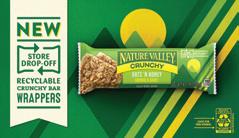
8. Leadership and excellence awards that promote false plastic recycling claims. For example, SPC gave its 2021 Innovation in Recovery award to General Mills for its “Nature Valley Store Drop-Off Recyclable Snack Wrapper.”164 As investigations by the likes of Bloomberg and CBS News have shown, the Store Dropoff recyclable label is a false promise, with much of the material consumers drop off ending up in landfills.165
9. Trade groups and NGOs receiving funding from the plastics and products industries to project credibility. Examples include:
• GreenBlue (SPC/How2Recycle): GreenBlue describes itself as “an environmental nonprofit on a mission to accelerate the transition to a regenerative, just, and sustainable materials economy.”166 Product companies pay an annual membership fee to use How2Recycle labels – including the deceptive Store Drop-off and Check Locally labels commonly seen on flexible plastic packaging.
THE U.N.
IMPORTERS OF RECYCLED PLASTIC
PRODUCERS OF NEW PLASTIC
THE PLASTIC RECYCLING INDUSTRY
CONSUMERS FOR NOT DOING IT RIGHT POOR INFRASTRUCTURE AND GREENPEACE
PRODUCT COMPANIES
PLASTICS
RECYCLING ISN’ T WORKING, BUT WHO IS TO BLAME?
ACCORDING TO THE MERCHANTS OF MYTH
THE OIL INDUSTRY BOTTLE DEPOSIT SYSTEMS
THE US GOVERNMENT
1.4 MERCHANTS OF MYTH: CIRCULAR BLAME GAME FOR CAUSES OF PLASTIC RECYCLING FAILURE
The Merchants of Myth have been recycling their false claims for 40 years. Now that the latest iteration of plastic recycling promises – the “voluntary commitments” made by the signatories of the EMF Global Commitment – have failed, they are engaging in a circular blame game instead of admitting the truth and focusing on implementing real solutions:
• Product companies blame the plastic recycling industry for not creating a larger supply of recycled plastic for them to use,167 and they blame consumers for not wanting to pay more for recycled plastic.168
• The plastic recycling industry blames product companies for not buying available recycled plastic or entering into long-term contracts.169
• The recycling industry, product companies, and the government blame lack of infrastructure for low rates of recycling.170
• Product companies and the plastic recycling industry blame consumers for not putting their plastic waste into recycling bins,171 and the recycling industry blames Greenpeace and others for publishing reports critical of plastic recycling that cause consumers to become cynical about doing so.172
• The plastics, products, and recycling industries blame the government for lack of supportive public policy, consumer education, and public funding for plastic recycling.173
• Product companies blame the U.N. for not creating a level playing field to allow them to buy more expensive recycled plastic.174
• The U.S. plastic recycling industry blames imports of recycled plastic for undercutting their business.175
• Governments, including public recycling agencies, blame the plastics industry for producing too much cheap new plastic, undermining the economics of plastic recycling.176
• The plastics industry blames the oil industry for keeping prices too low to make plastic recycling economical.177
• The North American PET trade association says that bottle deposit systems are needed to collect enough PET bottles for recycling.178
• The beverage industry and curbside recycling industry say that curbside collection is effective for collecting PET bottles for recycling and that bottle deposit systems hurt curbside recycling.179
All of these players refuse to admit the obvious –plastic products and packaging cannot be recycled at meaningful scale, and recycled content cannot be significantly increased because of two fatal flaws: (1) inherent, uncontrollable toxicity in recycled plastic and (2) the prohibitively high costs of even downcycling plastic into non-food-grade uses.
2. U.S. AND CALIFORNIA LEGAL REQUIREMENTS FOR CLAIMING PLASTICS ARE RECYCLABLE
As detailed in the 2020 “Circular Claims Fall Flat” report,180 U.S. claims and labels relating to environmental benefits of products are regulated at the national level by the Federal Trade Commission’s Green Guides, established by the FTC pursuant to its authority under U.S. Federal Trade Commission Act.181 Codified in the U.S. Code of Federal Regulations (16 CFR 260, Guides for the Use of Environmental Marketing Claims), the Green Guides contain standards and examples to help companies understand what constitutes deceptive or misleading environmental advertising.182
The Green Guides are not legally binding regulations, are not enforced at the federal/national level, and do not preempt state or local laws. In addition, they have not been updated since 2012.183 Notably, the Green Guides permit the use of “qualified” recyclable labels that indicate that some products are accepted in curbside recycling bins in only a few communities. The industrysponsored How2Recycle program took advantage of this in the development of its misleading Check Locally label, which has been used on thousands of plastic products and packaging materials (see box on p33).
This, together with the lack of enforcement and other loopholes exploited by product companies, resulted in California passing a sweeping labeling
reform law in October 2021. SB 343, known as the “Truth in Labeling” or “Truth in Recycling” law, prohibits the use of qualifications such as “check locally” as well as any form of the term “recyclable” or circular chasing arrows symbols on products and packaging that are not collected for recycling by programs that collectively serve at least 60% of the population of the state, among other criteria.184 Several other states, including Indiana, Maine, Michigan, and Rhode Island, have also adopted statutes that incorporate all or parts of the Green Guides into state law, permitting enforceability at the state level.185
Compliance with California’s new labeling law will be required for all products sold in the state that are manufactured after October 4, 2026. As noted in the comments provided to the U.S. FTC by Greenpeace USA and other NGOs in April 2023, “Since California has the largest state population… and products are typically labeled for nationwide sales, it is likely that most product companies will design their product labels to comply with California’s law.”186 Claims on company websites are also subject to the law. Thus, it is expected that the entry into force of SB 343 will catalyze corrections to the widespread use of false and misleading recyclable labels across the country.187
2.1 U.S. FTC GREEN GUIDES REQUIREMENTS
“there is no real benefit to consumers in being informed that a product or package is technically recyclable if a program is not available enabling them to recycle"
Under the Green Guides, a product is considered recyclable only if it “can be collected, separated, or otherwise recovered from the waste stream through an established recycling program for reuse or use in manufacturing or assembling another item.”188
The Green Guides specifically preclude entities from marketing certain products as recyclable, stating that “If any component significantly limits the ability to recycle the item, any recyclable claim would be deceptive” and that “an item that is made from recyclable material, but, because of its shape, size, or some other attribute, is not accepted in recycling programs, should not be marketed as recyclable.”189
In clarifying the guidance regarding claims of recyclability, the previous revision of the Green Guides stated that “For a product to be called recyclable, there must be an established recycling program, municipal or private, through which the product will be converted into, or used in, another product or package”190. The FTC also acknowledged the EPA’s observation that “there is no real benefit to consumers in being informed that a product or package is technically recyclable if a program is not available enabling them to recycle the material after use.”191
the FTC requires that recycling facilities be available to a “substantial majority” of U.S. residents, defined to be at least 60%, and that the collected product be used in the manufacturing or assembly of a new item.192
Therefore, the key factors required to determine an item’s recyclability at the national level are:
• Access to collection of an item in an established recycling system: The U.S. population’s access to collection of a specific item is determined through two factors: access to curbside recycling for that item (factor 1) and percentage of MRFs that accept that item (factor 2).
• Existing U.S. recycling/reprocessing capacity for an item (factor 3): Access to curbside recycling and acceptance of a plastic item at an MRF alone do not provide a sufficient or “reasonable” assurance to a consumer that it will be manufactured into another item. Sufficient market demand and domestic recycling/reprocessing capacity must exist for a plastic product to be considered “recyclable.”193 Without this, the plastic material collected by the MRFs will not be purchased by manufacturers and will not be recycled into other products.194
2.2 CALIFORNIA LEGAL REQUIREMENTS
There are two primary sets of legal codes that recycling labels must comply with in California: Business and Professions Code (BPC) 17580–17581 (the Environmental Marketing Claims Act) and Public Resources Code (PRC) 42355.51, known as SB 343. As stated on the CalRecycle website, SB 343’s legal requirements are intended to identify “what gets recycled.”195 That clearly does not include items that could theoretically be recycled in a laboratory or by some unknown process that may become available in the future, or that are converted into fuel or exported to an unknown fate, such as being burned in a cement kiln in Canada or Mexico.
SB 343 prohibits use of the chasing arrows symbol or any other indicator of recyclability on products and packaging unless certain criteria are met. The four key criteria of the law can be summarized as follows:196
• Collection: The product must be “collected for recycling by recycling programs for jurisdictions that collectively encompass at least 60 percent of the population of the state.”
• Sortation: The product must be “sorted into defined streams for recycling processes by large volume transfer or processing facilities . . . that process materials and collectively serve at least 60 percent of recycling programs statewide.”
• Recycling/Reclaiming: The product must be “of a material type and form that routinely becomes
feedstock used in the production of new products or packaging.”
• Basel Contamination Level: The defined streams must be “sent to and reclaimed at a reclaiming facility consistent with the requirements of the Basel Convention.” (As described in the European Commission’s Waste Shipments Correspondents’ Guidelines No. 12 on the classification of plastic waste, this requires a 2% maximum contamination level in sorted bales.197)
By extension, there must be sufficient recycling or reprocessing (which CalRecycle typically calls “reclaiming”) capacity to handle at least 60% of the waste generated by a particular product in California, and enough facilities must exist and be in operation to process that waste. Otherwise, the item cannot possibly “get recycled” as intended by the law and CalRecycle.
Notably, SB 343 explicitly disallows “qualified” recyclable labels such as “check locally” or “product may not be recyclable in your area,” which had arguably been considered permissible under California’s prior legislation incorporating the Green Guides (BPC 17580.5).
In Section 4 of this report, all four key SB 343 criteria are analyzed, the specific gaps in information required to make a determination about recyclability status are outlined, and data is provided to make that determination for a range of plastic products and packaging.
“…does not include items that could theoretically be recycled in a laboratory or by some unknown process”
HOW2RECYCLE LABELS PROHIBITED UNDER TRUTH IN LABELING LAW
How2Recycle, created by the Sustainable Packaging Coalition, is a subsidiary of the GreenBlue Institute has created three particularly deceptive How2recycle labels that fall foul of the labeling restrictions established by SB 343:
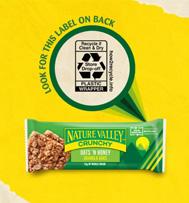
• Store Drop-off: The How2Recycle website states that “In the US, plastic bags, wraps, and films aren’t accepted in most curbside or drop-off programs. However, many of these packages are eligible for Store Drop-off recycling.”198 Using this label allows companies to claim their flexible plastics are recyclable and suggests to consumers that these items will be recycled, but in reality, there is no pathway or capacity to collect, sort, and recycle flexible plastic packaging in the U.S. (see box in Section 3).
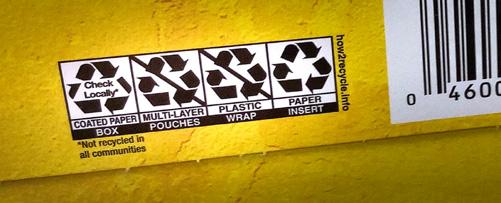
• Check Locally: This label indicates that an item is recyclable, with the disclaimer that this may not be the case in all areas. It has been widely used by product companies on packaging that is not remotely recyclable, including items that are generally not accepted in curbside bins (such as plastic packaging bonded to cardboard).
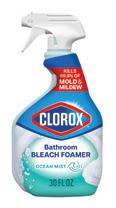
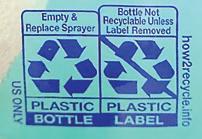
• Not Recyclable Unless: This version of the How2Recycle Not Yet Recycled label commonly appears on products with integrated non-recyclable components, such as unrecyclable shrink sleeves (see Clorox bottle, next page).
SB 343 requires that a product or its packaging can only be labeled as recyclable through a store drop-off program if it
has a demonstrated recycling rate of at least 60% through 2029 and 75% by 2030, meaning not less than that amount of the product or packaging sold in the state is collected, sorted, and reprocessed into new products or packaging.199 This is not the case for flexible plastics anywhere in the U.S. (see box in Section 3).
SB 343 also requires that products and packaging meet specific criteria to be considered recyclable (outlined in Section 2.2) and to be presented as such, explicitly stating that “Displaying a chasing arrows symbol or any other statement indicating the product is recyclable
How2recycle labels create confusion. The Clorox pistol spray bottle (right) has a full-body shrink sleeve label on the PET#1 bottle so it can only be recycled if the consumer dismantles the pack. The Old El Paso taco kit pack needs three separate bins, with the plastic coated card box likely not to be recyclable in your area, or anywhere.
directly on the product shall be deemed to be deceptive or misleading” for any product or packaging that does not meet those criteria.200 The Check Locally label fails to meet these conditions because recyclability claims in California must be based on statewide access and infrastructure, not on whether a few local programs might accept the item. If a product isn’t collected, sorted, and recycled at scale across the state, any conditional claims – like “check locally” – are considered misleading and not permitted.
Conditional language like “bottle not recyclable unless label removed” is likewise considered misleading under California’s Environmental Marketing Claims Act, which SB 343 reinforces. CalRecycle’s implementation guidance indicates that if the entire package isn’t recyclable in its as-sold form, it cannot be labeled recyclable at all – even if a component (like the bottle without the label) technically could be.
In recognition of these issues, GreenBlue (SPC/ How2Recycle) and TRP have recently joined forces to
create a new “Recycle Check” label with a QR code that links to TRP’s National Recycling Database.201 Notably, this database contains only information on acceptance of products in recycling bins,202 not on whether the products are actually sorted and recycled. Thus, while the new label omits the arrows, it still fails to provide accurate information on the recyclability of items that use it.
How2Recycle has also recently redesigned its “Legacy” Not Yet Recyclable, Store Drop-off, and Check Locally labels,203 removing the circular arrows symbol from the new “Pro” labels “out of an abundance of caution”204 (see Figure 6). The new Check Locally, Store Drop-off, and Do Not Recycle labels are arguably still not compliant with SB 343 because they contain the text “How2Recycle.info.” The new symbols are still communicating the same misleading information to the consumer, that effective recycling happens in-store, or at certain locations and not others.
3. U.S. NATIONAL POST-CONSUMER RIGID PLASTIC WASTE AND RECYCLING ASSESSMENT
In February 2020, Greenpeace USA published the results of its first-of-its-kind comprehensive survey of postconsumer plastic waste recycling in the U.S., in a report titled “Circular Claims Fall Flat.”205 The survey examined the specific types of plastic waste accepted by the U.S.’s approximately 370 MRFs and estimated the country’s total post-consumer plastic waste recycling/reprocessing capacity, in order to determine which consumer plastic products meet the legal definition of “recyclable” in the U.S. Updated results were published in October 2022, in “Circular Claims Fall Flat Again.”206
In this third iteration of that landmark survey, 385 operating U.S. MRFs that sort post-consumer plastic waste were identified and acceptance of specific plastic products at each facility was again assessed. The 2025 survey also includes a groundbreaking new plant-level assessment of existing post-consumer plastic waste recycling/reprocessing facilities, to more accurately define the national and regional recycling capacities in the U.S. for specific material types and forms. Such a detailed assessment is necessary to expose the truth behind the disingenuous narrative promoted by the plastics and products industries and the other Merchants of Myth – that mere acceptance in a curbside recycling bin means that an item is recyclable and will be recycled. Put simply, plastic items will not be recycled and cannot be claimed to be recyclable in the U.S. unless sufficient recycling or reprocessing capacity exists to handle them.
Post-household flexible plastic waste – including bags, films, and food wrappers – has never been collected in meaningful amounts in the U.S., nor sorted or actually recycled/reprocessed into new products. The Recycling Partnership, citing a Flexible Plastics Association report, stated in 2021 that “the current residential recycling rate for film and flexible packaging is just 2%.”207
Two primary pathways for collection of flexible plastic waste – collection through curbside recycling bins and store drop-off – have been proposed and tested in the U.S., and they have both failed. MRFs almost universally do not accept flexible plastics because they harm sortation equipment systems and are difficult to separate mechanically,208 and the material collected is contaminated with no real value.209 TRP’s own estimate indicates that just 1% of U.S. households have access to curbside recycling programs that accept monolayer PE film;210 other types of flexible packaging, including multilayer film, are almost universally not accepted. This is consistent with TRP’s recent statement that “less than 1 percent of the nearly 5 million tons [of film and flexible packaging] generated nationally is recycled.”211
Although many Americans have access to storedrop off collection options, TRP allows that this avenue is problematic because it is less convenient than curbside recycling and not all forms of films and flexibles are accepted. Consequently, it acknowledges that “this collection method cannot be solely used to reach a 30% recycling rate for film and flexible packaging”212 (in line with EMF’s definition of recyclable213), and it is even less likely to ever meet the requirements stipulated in the U.S. FTC Green Guides and by SB 343 (see Section 2). What’s more, investigations by several organizations have revealed that flexible plastics collected in store recycling bins are often not recycled, but instead are incinerated or disposed of in landfills.214
As a result, the assessment described in this report, as in the 2020 and 2022 reports, focuses on postconsumer rigid plastic waste.
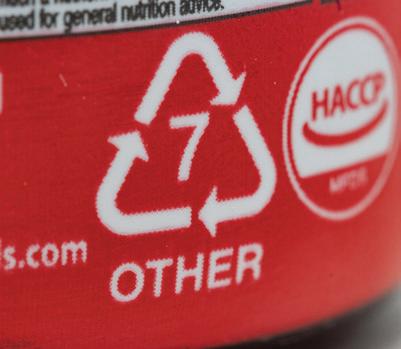
Pl astic resi n Iden tification Code s
3.1 SUMMARY OF RESULTS
Table 1 summarizes the results of the 2025 U.S. national MRF survey and detailed plastic recycling/reprocessing facility assessment survey, which indicate that only PET#1 bottles and HDPE#2 containers come close to meeting the U.S. FTC’s definition of recyclable. Even for these materials, with current U.S. recycling/reprocessing capacity able to handle less than 25% of the waste
generated annually, it is highly unlikely that the 60% threshold established by the FTC is met. Consistent with the findings from 2020 and 2022, no other material types or forms are collected, sorted, or recycled/ reprocessed in sufficient volumes to be considered recyclable under the terms set out in the Green Guides or SB 343.215
TABLE 1: 2025 U.S. POPULATION’S ACCESS TO MUNICIPAL COLLECTION AND CAPACITY FOR RECYCLING/REPROCESSING INTO NEW PRODUCTS
PLASTIC ITEM
thermoforms: 0%
Can product be labeled as “recyclable” per U.S. FTC Green Guides?
and caps
No Plastic plates
Plastic cutlery, straws, |and stirrers
Plastic packaging tray forms
Notes:
Column A: % determined from 2025 U.S. MRF survey (details provided in Appendix B).
Column B: It is estimated that about 60% of U.S. residents have access to established curbside recycling collection transported to MRFs (see Section 3.3). The 60% access factor was applied to the MRF acceptance data (column (A)) to determine the specific access rate by product type.
Column C: Details provided in Section 3.5 and Appendix C.
Column D: Overall assessment of whether the item can legitimately be claimed or labeled
PS#6: 0 No
PS#6: 0 No
No
as recyclable based on % of total population with access to municipal collection (column (B)) and availability of facilities capable of recycling collected materials into new products (column (C)). The Green Guides require that a significant (>60%) portion of the total U.S. population have access to established recycling programs to claim an item as recyclable, and the collected products must be manufactured into new items. 216
Bottles cannot have non-recyclable or non-sortable shrink sleeves.
2 Natural and colored HDPE bottles and jugs are combined because recycling facilities do not distinguish between the two feedstocks, making separate analysis impossible. Natural HDPE bottles and jugs have a higher recycling rate than colored containers.
The total recycling/reprocessing capacity for the two widely accepted plastic items remains low, at 21% for PET#1 bottles and 22% for HDPE#2 containers – under the 30% threshold set by the EMF New Plastics Economy initiative for determining whether a plastic product is recyclable.217 As in 2020 and 2022, no type of plastic packaging in the U.S. meets the EMF NPE definition of “recyclable” in 2025.
While the Association of Plastic Recyclers claims that “mechanical recyclers already have ample capacity to significantly increase the amount of plastics recycled,”218 the results of this survey prove that is a false claim. U.S. capacity for recycling PET#1 bottles and HDPE#2 containers remains limited, and there is negligible capacity for recycling any other type of post-consumer rigid plastic waste. This survey therefore confirms the finding from previous years that no types of single-use plastic food service or packaging items can be claimed as recyclable in the U.S., according to the federal government’s definition.
As the 2021 Plastic Fast Food Survey revealed, fast food companies use many types of single-use plastics, including PET#1, HDPE#2, LDPE#4, PP#5, and PS#6 cups, lids, clamshells, trays, bags, and cutlery.219 Americans have negligible access (<8%) to MRFs that accept these items, and the items are not reprocessed in the U.S. Reprocessing/ recycling capacity for PP#5 items is estimated at just 2%, suggesting that the vast majority of the collected PP#5
waste is disposed of to landfill or incinerated. As described in Section 3.5, PET clamshell thermoforms have negligible value, and there are currently no commercial mechanical recycling/reprocessing facilities that are known to be purchasing PET#1 thermoform bales from U.S. MRFs and recycling them into new products.220
3.2 2025 U.S. PLASTIC WASTE GENERATION BY TYPE
To assess the recycling rate of specific types of plastic products and packaging, granular waste data is required. The U.S. EPA’s “Advancing Sustainable Materials Management: Facts and Figures Fact Sheet,” last published for the year 2018,221 contains the most recent official government estimates of plastic waste generation by material type and form (see Appendix A).
Given the age of this data, waste generation rates must be adjusted to account for the increase in production and sales of single-use plastics in the intervening period. Packaging experts Smithers estimate an annual growth rate of 3.7% for single-use plastic packaging between 2020 and 2025.222 Table 2 shows the U.S. EPA’s estimates for plastic waste generation by material type and form in 2018, and the updated estimates for 2025 based on this growth rate.
TABLE 2: 2018 BASELINE AND 2025 ESTIMATE OF U.S. RIGID PLASTIC PRODUCTS AND PACKAGING WASTE GENERATION
3.3 U.S. POPULATION ACCESS TO CURBSIDE RECYCLING (FACTOR 1)
Not all Americans have access to established community recycling systems. Therefore, the percentage of the U.S. population with access to such systems is the first factor that must be determined.
The EPA recognizes municipal curbside collection of recycling as sufficient infrastructure to ensure that deposited materials are collected and delivered to a functional MRF for sortation.223 Lack of access to curbside recycling is commonly cited by federal, state, and local governments and the plastics and products industries as a major barrier to improving
recycling rates.224 Based on recent calls for public funding to improve access to curbside recycling225 and widespread acknowledgement, including from the EPA,226 that access to drop-off recycling is not equivalent to access to curbside recycling, only the latter is counted as access to an established recycling system in this study.
In its August 2024 “Assessment of the U.S. Recycling System,” the EPA states that “Roughly 40 percent of households do not have access to recycling services for packaging materials equivalent in quality to trash disposal services,”227 which is in line with The Recycling Partnership’s estimate that about 60% of Americans have access to established recycling systems.228
With these figures in mind, the same estimate for the percentage of the American population with access to established recycling systems is used in this update as in the 2022 and 2020 “Circular Claims Fall Flat” reports: 60%. However, it’s important to note that this estimate is conservatively high. There are multiple other reports that indicate that national access to curbside recycling may be lower, including an August 2024 estimate from the EPA that cites a mean estimated level of just 44%.229
In addition, access does not equal use. A 2024 TRP
report states that only 43% of American households participate in recycling.230 A March 2025 Waste Dive article reports that at an APR conference a few days earlier, a TRP representative stated that “curbside collection is flagging,” while a recycling industry expert acknowledged that “curbside collection volumes are down by an estimated 50% over the last 10 years.”231 This trend has not been helped by the fact that, after China implemented its National Sword import restriction policy in 2018, many cities across the U.S. ended curbside collection for recycling because of rising costs, as tracked by Waste Dive through 2019.232 Recent announcements of cities ending curbside recycling due to cost and contamination include Winter Garden, FL (2024),233 York, SC (2024),234 and (2024).235
3.4 PERCENTAGE OF U.S. MRFS THAT ACCEPT A SPECIFIC ITEM (FACTOR 2)
WCNC, CHARLOTTE, SPECTRUM WINTER
Table 3 in Section 3.1 provides a summary of the 2025 survey’s results. Details of the methodology are given in Appendix B. A map of the 385 operating municipal waste MRFs identified in the 2025 survey is shown in over.236
FIGURE 6: THE 385 U.S. RESIDENTIAL MATERIALS RECOVERY FACILITIES
OPERATING IN 2025 3.5 EXISTING U.S. RECYCLING/ REPROCESSING CAPACITY (FACTOR 3): ASSESSMENT OF
U.S. POST-CONSUMER RIGID PLASTIC WASTE RECYCLING/
REPROCESSING FACILITIES
3.5.1 ASSESSMENT SCOPE
According to the Green Guides, for a plastic item to be labeled as recyclable, established facilities that recycle or reprocess the collected and sorted waste into plastic resin for use in manufacturing or assembling another item must exist.237
Put simply: If sufficient facilities are not in operation to recycle/reprocess specific types of post-consumer plastic waste, then those particular items cannot be claimed to be recyclable.
No clear, comprehensive assessment of U.S. recycling/reprocessing capacity for specific types of post-consumer plastic waste appears to be available in the public domain. For the purposes of this report, Greenpeace USA sought to fill this gap. Five plastics and recycling industry data sources238 were analyzed to produce a detailed plant-level assessment of recycling/reprocessing capacity in the United States.
ASSESSMENT COUNTS MAXIMUM CAPACITY, NOT ACTUAL RUN RATES
This survey reports the maximum capacity of U.S. facilities that recycle post-consumer rigid plastic waste, rather than the actual run rates. It therefore represents a conservatively high estimate, assuming that all facilities operate at full design throughput. Even under those ideal conditions, the results show that U.S. capacity still falls well short of the 60% threshold required to claim that plastics are recyclable under the law (see Section 2).
The plastic recycling industry itself acknowledges that existing post-consumer plastic waste recycling/ reprocessing facilities are not running at full capacity.
As APR President and CEO Steve Alexander recently admitted, “There’s a persistent narrative that plastics recycling is limited by a lack of infrastructure or technical capability. That’s simply not true. Mechanical recyclers have ample built capacity . . . across all major resin types to produce more recycled plastic and reduce reliance on virgin plastic.”239 Alexander cites a March 2025 APR study that found that post-consumer plastic reclaimers in the U.S. and Canada operate at 64% capacity for PET, 65% for HDPE, and 58% for polypropylene.240
Industry representatives blame a range of issues for this, including:
• Lack of efficient, modern collection infrastructure241 and insufficient supply of plastic waste242
• Variability of curbside acceptance243
• Product companies not purchasing recycled plastic because new plastic (including off-spec resin244) is cheaper245
• Availability of cheaper recycled plastic imported from countries with less stringent environmental regulations246
Included in the survey were all identified facilities that 1. process post-consumer plastic waste, including facilities that also process post-industrial plastic scrap at the same location;
2. process rigid containers and packaging, including food service ware (e.g., cups, plates);
3. are in commercial operation; and 4. are located in the U.S.
Details on these facilities are provided in Appendix C. Not included in the survey are additional facilities identified using the cited sources that
1. process only post-industrial (pre-consumer) plastic scrap;
2. process flexible/film plastic waste;
3. process bulky rigid durables (e.g., buckets, totes, horticultural containers); and 4. are located outside of the U.S.
Appendix D provides details on all identified facilities. Only domestic facilities were included in the assessment because its purpose was to evaluate U.S. capacity for recycling plastics and compare it with U.S. plastic waste generation. It would be neither responsible nor credible to include plastic recycling facilities in neighboring countries, because those facilities’ capacity must be allocated to managing those countries’ own plastic waste. With estimated plastic recycling rates of just 8%247 and 5%,248 respectively, both Canada and Mexico clearly have insufficient capacity to handle their own waste. Plastic recycling rates in other Central American countries are also very low.
Only facilities that process rigid plastics were included in the assessment because flexible plastics are generally not accepted in U.S. curbside recycling systems (see box in Section 3).
CHEMICAL RECYCLING PLANTS
At the time the assessment was performed, six chemical recycling plants in commercial operation in the U.S. were identified.249 Only one of these was included in the survey: the Eastman methanolysis plant in Kingsport, TN. This facility is reported to be in commercial operation and to process a range of PET wastes, including carpet, textiles, automotive parts, and opaque PET bottles.250 A conservatively high estimate of 20% of Eastman’s feedstock was assumed to be PET bottles. The five other pyrolysis plants that were in operation at the time of the assessment were not included because they primarily process clean commercial plastic waste film (not rigid plastics), and the refining of pyrolysis oil converts the vast majority of plastic waste into fuel, which is not legally recognized as “recycling.”251 The PureCycle polypropylene recycling plant in Ironton, OH, was not included because it was not in commercial operation at the time of the assessment.252
Post-industrial plastic recycling facilities that process only post-industrial plastic scrap were not included in the assessment. The OECD, U.S. EPA, state agencies, and others reporting on plastic waste generation focus on post-consumer plastic waste. This category encompasses all post-commercial plastic waste, including items such as pallet wrap film waste that consumers never touch. Post-industrial plastic scrap is the clean, uniform plastic scrap left over from product manufacturing.
The few recycled content laws in the U.S. require the use of post-consumer recycled content and
expressly exclude post-industrial scrap.253 Plastic scrap from product manufacturing is clean, new plastic that can be reprocessed and fed back into the same production line. Recycling plastic scrap is a normal business process for the plastic manufacturing industry. A review of the Plastics News recyclers/ brokers list shows that the majority of plastic recycling/ reprocessing facilities operating in the U.S. handle post-industrial waste.254
3.5.2 ASSESSMENT RESULTS
The survey revealed that U.S. capacity for recycling/ reprocessing post-consumer rigid plastic waste is extremely limited:
• PET#1 bottles: 21 facilities with a combined maximum capacity to process 21% of U.S. PET bottle waste were identified.
• PET#1 thermoforms: No mechanical plastic recycling facilities were identified that commercially and continuously recycle/reprocess baled PET#1 thermoform waste from MRFs. While some PET#1 bottle recyclers may process a minimal amount (<5%) of PET#1 thermoforms with bottles, the already low PET#1 bottle recycling capacity was allocated to that category. Any allocation of PET#1 bottle processing capacity to thermoforms would only further lower the PET#1 bottle recycling capacity.
• HDPE#2 containers: 22 facilities with a combined maximum capacity to process 22% of HDPE#2 containers (bottles, jugs, jars, tubs) and packaging waste were identified.
• PP#5 bottles/tubs/cups/trays/plates: 2 facilities with a combined maximum capacity to process 2% of rigid PP waste were identified
• PS, LDPE, PLA, PVC, and “Other” plastic: No operating facilities were identified that process these types of post-consumer plastic waste.
The total maximum recycling/reprocessing capacity for all 43 identified facilities is just 1.5 million tons/yr. To provide perspective, this is less than the amount of new plastic produced by ExxonMobil’s two U.S. polypropylene factories in 2024 (1.8 million tons).255
The average capacity of these facilities is very small, at just 35,234 tons/yr. The average capacity of the PET bottle recycling plants is 40,580 tons/yr, which is about 9% of the amount of new PET plastic produced by a single Indorama bottle manufacturing plant in Alabama (450,000 tons/yr).256
Table 3 provides a detailed summary of the results. Details on the facilities identified are provided in Appendix C.
TABL E 3: SUMMARY OF U.S. FACILITIES RECYCLING POST-CONSUMER
PLASTIC WASTE BY MATERIAL TYPE AND FORM
1. Containers include bottles, jugs, tubs, and jars that can hold liquids or powders.
2. Packaging includes rigid food service products (e.g., cups, bowls) and packaging (trays, clamshells, cartons, lids).
3. Thermoforms are rigid food service products (e.g., cups) and packaging (trays, clamshells, lids) made from molding sheets of PET#1 into forms. Bottles and jars are made by blowing preformed shapes.
Tables 4 to 6 show the number and capacity of operational facilities that process PET#1 bottle, HDPE#2 container, and PP#5 container and rigid packaging waste, by geographical region. This analysis is relevant because it is well accepted that transportation costs are a major factor in the viability of recycling markets, especially for low-value plastics.257
TABLE 4: REGIONAL CAPACITY FOR PET#1 BOTTLE RECYCLING/REPROCESSING
TABLE 5: REGIONAL CAPACITY FOR HDPE#2 CONTAINER RECYCLING/REPROCESSING
TABLE 6: REGIONAL CAPACITY FOR PP#5 CONTAINER AND RIGID PACKAGING RECYCLING/REPROCESSING
U.S. POST-CONSUMER RECYCLING/ REPROCESSING CAPACITY FOR PP#5 RIGID PLASTIC WASTE
The lack of capacity to recycle or reprocess postconsumer rigid polypropylene #5 plastic waste is worth highlighting, because the Merchants of Myth have gone to great lengths to deceive U.S. consumers and legislators into believing that PP#5 products are recyclable.
In 2016, How2Recycle announced that PP was “moving up to the Widely Recycled category” and no longer needed to be labeled Check Locally, explaining that “availability to recycling isn’t the only factor that How2Recycle analyzes; we also look to whether or not a package is likely to be sorted correctly at materials recovery facilities, as well as reprocessed effectively.”258 In 2019, however, it was reported that the American Chemistry Council’s production and recycling figures showed that PP was “one of the least recycled postconsumer plastics, at a rate below 1 percent for postconsumer recovery.”259
After Greenpeace USA contacted How2Recycle in late 2019 to preview the findings of the 2020 “Circular Claims Fall Flat” report,260 which indicated that only 31% of the U.S. population had access to recycling systems that accept PP#5 tubs and containers and highlighted various other issues with their recyclability, How2Recycle reinstated the Check Locally qualification for PP#5, citing “changes in U.S. recycling programs.”261
This decision was reversed in July 2022 for rigid PP tubs, bottles, jugs, and jars, following a supposedly successful two-year campaign by the “Polypropylene Recycling Coalition,”262 launched under TRP’s leadership with the stated goal of improving recovery and recycling of PP#5 waste and developing end markets for “high-quality recycled polypropylene.”263
The Coalition’s first annual report, however, published in October 2024, projected that its efforts had resulted in “an estimated 64 million pounds [32,000 tons] of incremental polypropylene recycled annually”264 – the equivalent of less than 2% of the post-consumer PP#5 rigid plastic waste generated each year in the U.S. (see Table 6).
In response to media reports, several companies have removed the How2Recycle labels from their PP#5 containers. As shown in Figure 7, for example, Target’s new label for its PP#5 yogurt tubs (the red label, designed in 2024) no longer features the Widely Recycled label included on the older blue label (designed in 2022).
Critically, this detailed survey proves that there has been no net gain in post-household plastic rigid waste recycling/reprocessing capacity since 2018 – a year that marked a turning point for the plastic recycling myth, because that is when China stopped accepting massive amounts of plastic waste from the U.S. and other countries. Despite claims at the time that Chinese companies were rushing to set up shop in the U.S. to fill the gap,265 new domestic recycling capacity has failed to materialize.
FIGURE 7: TARGET YOGURT TUBS SHOWING REMOVAL OF HOW2RECYCLE LABEL
Five facilities that recycle/reprocess post-household rigid plastic waste were identified that began commercial operation in 2018 or later and are still in operation as of October 2025:266
• Alpek (CarbonLite): PET recycling facility in Pennsylvania (60,000 tons/yr)
• Eastman: PET chemical recycling in facility Tennessee (24,000 tons/yr post-consumer capacity for opaque PET bottles)
• Republic Services/Blue Polymers: PET recycling facility in Indiana (40,000 tons/yr)
• Republic Services: PET recycling facility in Nevada (40,000 tons/yr)
• Vertix: HDPE container recycling in facility Ohio (25,000 tons/yr)
The total rigid post-household plastic waste recycling capacity of the five new facilities is approximately 189,000 tons/yr.
Six facilities were identified that closed in 2018 or later:
• Alpek (Clear Path): PET recycling facility in North Carolina (64,000 tons/yr)267
• Evergreen: PET bottle recycling facility in California (50,000 tons/yr)268
• rPlanet Earth: PET bottle recycling in California (40,000 tons/yr)269
• Pactiv Evergreen: PET bottle recycling facility in Michigan (capacity unknown)270
• PreZero: HDPE and PP container recycling facility in South Carolina (30,000 tons/yr)271
• Trigon: HDPE container recycling facility in Pennsylvania (10,000 tons/yr)272
The total capacity of the facilities that closed was at least 194,000 tons/yr. Therefore, there has been no net gain in U.S. rigid post-consumer plastic recycling capacity from 2018 to 2025.
4. 2025 CALIFORNIA POST-CONSUMER RIGID PLASTIC WASTE AND RECYCLING ASSESSMENT
Table 7 outlines the four key criteria in the California SB 343 Truth in Recycling labeling law (described in Section 2.2) and the data sources employed in this assessment. The determination of criterion 1 is simpler than for the national survey; since California households are generally required to participate in curbside recycling programs, lack of access to established recycling systems is not considered a factor.
TABLE 7: MAIN SB 343 CRITERIA AND SOURCES OF DATA FOR ASSESSMENT
1. Collection: The product must be “collected for recycling by recycling programs for jurisdictions that collectively encompass at least 60 percent of the population of the state.”
2.Sortation: The product must be “sorted into defined streams for recycling proce sses by large volume transfer or processing facilities . . . that process materials and collectively serve at least 60 percent of recycling programs statewide.”
3. Recycling/Reclaiming: The product must be “of a material type and form that routinely becomes feedstock used in the production of new products or packaging.”
4. B asel Contamination L evel: The defined streams must be “sent to and reclaimed at a reclaiming facility consistent with the requirements of the Basel Convention.”
1 State of California (2021),
2 European Commission (2021) p. 5
60% of Californians have access to curbside recycling bins that accept a particular item.
60% of California MRFs sort the item into a bale type that is purchased by recycling/reprocessing facilities without further sortation.
Recycling/reprocessing facilities that purchase California’s waste have capacity for 60% of the amount of the item waste.
Maximum contamination level of 2% in sorted bales. 2
SB 343’s labeling restrictions will take effect for all products sold in California that are manufactured after October 4, 2026. The summary in Table 8 of the results of the present assessment shows that, as of mid-2025, no type of plastic packaging meets all four key criteria to legally use a recyclable label under SB 343, with two potential exceptions:
• Clear CRV PET#1 beverage bottles: California BPC § 17580(e) effectively exempts plastic beverage containers that are in the bottle deposit system (California Redemption Value, or CRV) from SB 343’s restrictions 273 In September 2025, the “only reclaimer processing Grade B bales at a large scale” in California shut down.274 The four remaining PET#1 bottle recyclers primarily process clean, segregated PET bottles collected at redemption centers and do not recycle
2025 California MRF survey of item acceptance in curbside recycling bins (Section 4.2)
CalRecycle sortation data published in the RDRS system, confirmed by background data collected by CalRecycle for its SB 343 Preliminary Findings Report (Section 4.3)
Detailed survey of recycling/ reprocessing facilities in California (Section 4.4)
CalRecycle bale composition data published in SB 343 2023 Preliminary Findings Report and 2025 Final Findings Report (Section 4.5)
PET#1 bottles collected through curbside recycling programs (Grade B bales).
• Natural HDPE#2 bottles and jugs: While food-grade recycled HDPE is not produced at large scale due to associated toxicity risks, natural HDPE#2 bottles and jugs are a unique subset and are in high demand because the natural color can be dyed to other colors for use in products like orange detergent containers.275 Although there is insufficient processing capacity for all HDPE rigid plastic waste produced in California, assuming that the state’s three identified recyclers/ preprocessors that accept this material type prioritize natural HDPE#2 bottle/jug material due to its high value, their combined capacity could be sufficient to meet the 60% capacity requirement.
TABLE 8: SUMMARY OF RESULTS OF 2025 CALIFORNIA POST-CONSUMER RIGID
PLASTIC WASTE AND RECYCLING ASSESSMENT
A
PLASTIC ITEM
% of CA Curbside Recycling Bins That Accept Item (>60% Required)
B
% of CA MRFs That Sort Item into Defined Bales (>60% Required)
C
Maximum CA Recycling/ Reprocessing Capacity for Item (>60% Required)
D
Basel Convention Contamination Limit in Sorted Bales (<2% Required)
Expanded polystyrene (EPS) food service FAIL: 5% FAIL: Sorted bales not created in CA FAIL : 0% FAIL: No sorted bales created No
Plastic lids and caps (loose) FAIL: 5% FAIL: Too flat or small for sorting FAIL: PS#6: 0% PP#5: 0% FAIL: Lids not sorted into bales No
Plastic plates FAIL: 5% FAIL:
PS#6: Sorted bales not created in CA PP#5: 17% FAIL: PS#6: 0% PP#5: 0% FAIL: PS#6: 0% PP#5: 37% No
Plastic cutlery, straws, and stirrers FAIL: 1% FAIL: Too small for sorting FAIL: 0% FAIL: Cutlery not sorted into bales No
Plastic packaging trays FAIL: 3% FAIL: Too flat and odd-shaped for sorting FAIL: 0%
FAIL: Packaging trays not sorted into bales No
1 California BPC § 17580(e) effectively exempts plastic beverage bottles that are in the bottle deposit system (CRV) from SB 343’s restrictions.
2 Natural HDPE#2 milk jugs/containers pass if capacity prioritizes them.
3 Natural HDPE#2 bottles/jug bales are at the limit to pass (5% contamination, could potentially improve to 2%).
4 Natural HDPE#2 bottles/jugs are a unique subset that may pass the criteria.
These findings are consistent with and supported by findings and statements by CalRecycle and the California Statewide Recycling Commission regarding recyclability in the state:
• The August 31, 2021, Senate Third Reading Analysis of SB 343 states: “According to CalRecycle, only plastics with the code #1 for PET, used in water and soda battles, and #2 high-density polyethylene (HDPE), used in milk jugs and shampoo bottles, are commonly recycled. Even other types of products made from PET and HDPE are not readily recyclable in California. . . . The rest of the resin types #3
through #7 are generally not recycled.”276
• SB 1335 (the Plastic Packaging Act) requires CalRecycle to maintain a List of Approved Food Service Packaging, which includes products that meet specific reusable, recyclable, or compostable criteria. This list does not include any type of rigid plastic bowl, cup, plate, container, or tray as recyclable; the only plastic items included are the Meisei Co. HDPE Sushi Tray Lid-20 and 30, both listed as HDPE#2.277
• The California Statewide Recycling Commission has determined that only PET#1 bottles and HDPE#2 bottles/jugs are recyclable in California.278
4.1 2025 CALIFORNIA PLASTIC WASTE GENERATION
BY TYPE
CalRecycle published limited data on California’s plastic waste generation by material type and form in two 2024 reports. The first, “2021 DisposalFacility-Based Characterization of Solid Waste in California,”279 provides a high-level categorization of post-consumer plastic waste generated in the state in 2021. The total figure, including rigids, durables, flexible plastic, and trash bags, is 5,445 thousand tons (Figure 8). Excluding flexible plastics, trash bags, durable items, and remainder/composite plastics, the total for rigid plastics and packaging is 2,347 thousand tons.
FIGURE 8: 2021 CALIFORNIA STATEWIDE DISPOSAL DATA (U.S. TONS)
The second, a “Source Reduction Basene Technical Report” created for the Plastic Pollution Prevention and Packaging Producer Responsibility Act (SB 54),280 is based on 2023 data. It estimates that 2,900 thousand tons of plastic, comprising single-use plastic packaging and food service ware, were sold, offered for sale, or distributed in California during that year. This estimate includes both rigid and non-rigid (flexible) plastics, and detailed data on specific material types and forms is not provided.
For the purposes of the present assessment, more granular data is required. Using the 2025 values extrapolated from the national plastic waste generation data in the U.S. EPA’s latest “Advancing Sustainable Materials Management: Facts and Figures Fact Sheet”281 (shown in Appendix A) as a baseline, it is possible to credibly estimate waste generation rates for specific material types and forms in California by scaling the national data according to the state’s share of the total population. Per the most recent U.S. Census information, California represents 11.5% of the U.S. population.282
Table 9 shows the results of these calculations.
TABLE 9: ESTIMATED RIGID PLASTIC PRODUCTS AND PACKAGING WASTE GENERATION IN CALIFORNIA (BASED ON 2025 U.S. NATIONAL ESTIMATES)
The estimate produced here by extrapolating from the EPA’s data is far lower than CalRecycle’s estimate of the total amount of rigid plastic products and packaging waste produced annually in the state (2,347 thousand tons/yr, based on 2021 data). This suggests that the approach this study takes of using the EPA’s data for calculating recycling rates is highly conservative. Since the actual amounts of different types of plastic waste generated may be higher, the recycling rates may in fact be even lower.
4.2 ACCEPTANCE OF ITEMS IN CALIFORNIA CURBSIDE RECYCLING BINS (CRITERION 1)
Acceptance of a specific plastic waste item in curbside recycling bins is the first step in the recycling process. As part of the comprehensive U.S. national survey (see Section 3.4 and Appendix B), California’s 76 operating MRFs were evaluated to determine which specific types of plastic waste are accepted for collection. So-called “dirty MRFs” were not included in this analysis because they process mixed municipal
solid waste, making it impossible to distinguish between materials that could be recycled and those destined for disposal.
The 2025 California MRF survey results are shown in column (A) of Table 10. Only two plastic items meet the 60% curbside recycling acceptance requirement: PET#1 bottles and HDPE#2 containers.
4.3 SORTATION OF ITEMS INTO DEFINED STREAMS IN CALIFORNIA MRFS (CRITERION 2)
After collection, MRFs separate material types and forms into bales based on demand by plastic waste recyclers/reprocessors. Across the U.S. and in California, MRFs typically create only sorted bales of PET#1 bottles and HDPE#2 bottles/jugs, because strong end market demand exists only for those items. It’s generally not considered cost-effective to sort PET#1 thermoforms or PP#5 rigids, due to issues such as low bale values, sortation challenges, contamination issues, and limited demand. This is reflected in column (B) of Table 8.283
4.4 RECYCLING/REPROCESSING CAPACITY FOR CALIFORNIA’S POST-CONSUMER PLASTIC WASTE
(CRITERION 3)
Collection and sortation of plastic waste are the just first two steps in the recycling process – for a plastic item to be considered recyclable in California, recyclers/ reprocessors that handle that specific type of plastic waste must exist.
SB 343 recognizes this in two places (emphasis added):284
• PRC § 42355.51(b)(1) specifies that “a product or packaging that displays [any] symbol or statement indicating the product or packaging is recyclable, or otherwise directing the consumer to recycle the product or packaging, is deemed to be a deceptive or misleading claim . . . unless the product or packaging is considered recyclable in the state pursuant to subdivision (d) and is of a material type and form that routinely becomes feedstock used in the production of new products or packaging.”
• PRC § 42355.51(d)(2)(B)(i) stipulates that a material type and form labeled as recyclable must be “sorted into defined streams for recycling processes by large volume transfer or processing facilities . . . that process materials and collectively serve at least 60 percent of recycling programs statewide, with the defined streams sent to and reclaimed at a reclaiming facility consistent with the requirements of the Basel Convention.” These legal requirements are not met if no facilities exist to process a given material type and form, or if the existing facilities have insufficient capacity to serve at least 60% of California’s recycling programs.
As a part of the U.S. national survey described in Section 3.5, a survey of plastic waste recyclers in California was performed to identify facilities that reclaim bales of sorted rigid household plastic wastes from California MRFs. Included in the survey were all identified facilities that
1. process post-consumer plastic waste only, including facilities that also process post-industrial plastic scrap at the same location;
2. process rigid containers and packaging, including food service ware (e.g., cups, plates);
3. are in commercial operation; and
4. are located in California.
Not included in the survey were additional identified facilities that
1. process only post-industrial (pre-consumer) plastic scrap;
2. process flexible/film plastic waste;
3. process bulky rigid durables (e.g., buckets, totes, horticultural containers); and
4. are located outside of California.
The names and locations of the identified facilities are provided in Appendix C.285 As Table 10 shows, just four post-consumer PET #1 bottle recyclers and three post-consumer HDPE #2 bottle and packaging recyclers were identified in California. There is insufficient recycling/reprocessing capacity in the state to meet the 60% legal requirement for any material type or form of plastic waste.
TABLE 10: SUMMARY OF CALIFORNIA FACILITIES RECYCLING POST-CONSUMER PLASTIC WASTE BY MATERIAL TYPE AND FORM
PLASTIC ITEM
PLA#7 plates, cups, bottles, and packaging
4.5 CONTAMINATION LEVELS IN PLASTIC WASTE BALES PRODUCED BY CALIFORNIA MRFS AND
COMPLIANCE WITH
BASEL CONVENTION (CRITERION 4)
As described in the previous section, SB 343 stipulates that the sorted plastic waste sent to reclaiming facilities for recycling must be “consistent with the requirements of the Basel Convention.”286
The Basel Convention’s Plastics Amendments (2019) require plastic waste shipments to be “almost free from contamination and other types of waste,” which has been defined and implemented in practice by Basel parties to fall below a 2% non-target material concentration level by weight.287 In effect, the Basel requirements prohibit mixed plastic waste bales and place strict levels on contamination in plastic waste bales created by MRFs.
In December 2023, CalRecycle released the SB 343 Material Characterization Study Preliminary
Findings Report.288 Basel Action Network (BAN) and The Last Beach Cleanup performed comprehensive, detailed assessments of the legal requirements of SB 343 and California Assembly Bill (AB) 881, the material characterizations and other information provided in the SB 343 report, and California’s plastic waste export data, publishing the results in a Fact Briefing in February 2024.289 A key finding was that all plastic waste bales produced by California MRFs contain contamination levels well above 2%, meaning they cannot be categorized as “recyclable” under SB 343.
In the SB 343 Material Characterization Study Final Findings Report published in April 2025, CalRecycle added additional sampling data for several categories of plastic waste and a new material type and form (PET thermoforms). Appendix E provides a comparison of the 2023 preliminary data and the 2025 final data, which was assessed using the method described in the BAN/Last Beach Cleanup report. With the exception of natural HDPE#2 bottles and containers, all of the bale categories again failed to meet the SB 343 contamination threshold.
Corporations must stop calling plastic products and packaging ‘recyclable’ or ‘circular’.
The Merchants of Myth would have us believe that we can recycle our way out of the plastic pollution crisis – but after four decades of broken promises and lack of results, it is clear that this is a failed and unworkable solution.
With every year that passes, the need for meaningful change becomes more urgent. It is estimated that in the U.S., just 5% of plastic waste is recycled290 – and with plastic production projected to continue to increase in the future and the amount of plastic pollution sure to rise along with it,291 radical action must be taken to halt this trajectory, curbing demand and increasing product lifespans.
Uncontrolled global plastic production means using virgin plastic will always be cheaper than any other option. This undermines the real solutions that are
needed to end the plastic pollution crisis and protect human and planetary health.
Governments must agree to a strong Global Plastics Treaty that protects our climate by keeping oil and gas in the ground and drastically cutting plastic production. If current estimates that plastic production is set to double or even triple in the next 25 years prove correct, it could account for more than a fifth of the world’s remaining carbon budget by 2050,292 which will undermine efforts to control the climate crisis.
We urgently need to cut plastic production and use if we are to limit global warming to below 1.5 degrees. As governments negotiate the Global Plastics Treaty, big brands need to stop relying on single-use plastics and transition to reuse and refill systems.
WHAT WE ARE CALLING FOR
We echo and expand the demand made in both the State of California’s 2024 lawsuit against plastics producer ExxonMobil293 and the City of Philadelphia’s 2025 lawsuit against product companies S.C. Johnson & Son and Bimbo Bakeries:294
We are in the midst of a crisis. After more than 40 years of investment, recycling capacity in the U.S. falls far short of being able to handle the amount of plastic that is used and collected for recycling today, with most facilities focused on just a few types of plastic waste.
The time for half-solutions has passed. To meet the urgent need for reducing plastic production, pollution, and waste:
1. COMPANIES MUST DISCONTINUE USING POLLUTING PLASTIC PACKAGING AND FOOD SERVICE ITEMS
• The single-use plastic food service products most commonly found in cleanups, including cups, lids, clamshells, utensils, and trays, must be banned. These items have never been widely recycled in the U.S. and likely never will be.
• Companies must aggressively reduce reliance on all types of single-use plastic packaging and publicly support (directly and through relevant trade associations) reusable/refillable container schemes at the state and federal level.
• Quick-service restaurant companies should implement “Skip the Stuff” practices nationwide to reduce pollution and waste of ancillary items.295
2. COMPANIES AND THE RECYCLING INDUSTRY MUST BE TRUTHFUL AND TRANSPARENT WITH THE PUBLIC
• MRFs must not accept plastic waste in curbside bins unless they will sort the collected materials into clean bales and sell them to plastic recyclers.
• MRFs must tell the public exactly which facilities they ship their baled materials to, including paper, metals, glass, and plastics, and provide data on how much of that material is recycled, landfilled, and incinerated.
3. ORGANIZATIONS MUST OWN UP TO THEIR MISTAKES AND STOP PROMOTING PLASTIC RECYCLING
• Organizations such as the World Economic Forum and the United Nations Environment Programme must stop referring to a circular economy for plastics, a costly distraction that has delayed progress toward real solutions.
• Organizations must stop advocating for plastic recycling as the solution to the plastic waste and pollution problem, including adoption of minimum requirements for recycled plastic content.
4. GOVERNMENTS MUST SECURE A STRONG UN GLOBAL PLASTIC TREATY
• The treaty must include provisions to reduce plastic production overall and to phase out harmful chemicals and products, to protect human health and the environment.
APPENDIX A:
U.S. EPA 2018 SUSTAINABLE MATERIALS MANAGEMENT REPORT – TABLE 8 FOR PLASTICS296
* Mechanical and non-mechanical recycling.
‡ Nondurable goods other than containers and packaging.
§ Due to source data aggregation, PET cups are included in "Other Plastic Packaging".
** All other nondurables include plastics in disposable diapers, clothing, footwear, etc.
*** Injection stretch blow molded PET containers as identified in Report on Postconsumer
PET Container Recycling Activity in 2017.
National Association for PET Container Resources. Recycling includes caps, lids and other material collected with PET bottles and jars.
† White translucent homopolymer bottles as defined in the 2017 United States National Postconsumer Plastics Bottles Recycling Report. American Chemistry Council and the Association of Postconsumer Plastic Recyclers.
¥ Other plastic packaging includes coatings, closures, lids, caps, clamshells, egg cartons, produce baskets, trays, shapes, loose fill, etc.
PP and HDPE caps and lids recycled with PET bottles and jars are included in the recycling estimate for PET bottles and jars.
Other resins include commingled/undefined plastic packaging recycling.
Some detail of recycling by resin omitted due to lack of data.
Neg. = negligible, less than 5,000 tons
HDPE = High density polyethylene PET = Polyethylene terephthalate PS = Polystyrene
LLDPE = Linear low density polyethylene PLA = Polylactide
APPENDIX B:
2025 SURVEY OF U.S. MATERIALS RECOVERY FACILITIES FOR PLASTIC WASTE ITEM ACCEPTANCE IN CURBSIDE RECYCLING BINS: SURVEY
METHODOLOGY AND PUBLIC TRANSPARENCY
LINK TO APPENDIX B
Greenpeace USA’s original comprehensive, objective survey of acceptance by U.S. MRFs of plastic items collected through curbside residential recycling systems has been continually updated since its creation in October 2019 and was carried out for this update in January to March 2025. The survey was performed and verified by technically qualified volunteers of The Last Beach Cleanup:297 two registered professional chemical engineers and a recycling industry expert. The technical experts involved have no financial conflicts of interest related to legitimate recyclable labels for plastic products that would influence the assessment or results. The acceptance information was found in the public domain and is publicly shared to promote transparency and establish a traceable account of facts related to “recyclable” claims and labels for plastic products. The details of the survey were captured in a spreadsheet that is publicly available on the Greenpeace USA website.
Survey of Plastic Item Acceptance: A “MRFshed” approach was employed to survey the acceptance of plastic items sent to recycling facilities by U.S. residents who have access to curbside recycling. A MRFshed is defined “as a group of communities that funnel material into the same materials recycling facility (MRF).”298 Through web searches, each MRF was investigated for the public disclosure of items accepted for curbside recycling. About one-third of the MRFs provided information on acceptance of plastic items at the facility.
When MRF acceptance information was not found, a search of websites of local cities or counties that direct recycling to a specific MRF was performed. If this secondary approach revealed no information about the MRF, recycling guidance provided by the MRF owner (e.g., Republic Services’ Recycling Simplified299 guidelines to customers) was captured. The acceptance guidance provided by MRFs and local municipal governments ranged from complicated “wizard” search tools to easily understandable text and photos. Where there was inconsistency between text and photo guidance, all items listed or shown were considered accepted. This approach was intentionally conservative to avoid bias.
Use of the Survey: The survey was performed and verified by two registered professional chemical engineers and a recycling industry expert. The information in the survey spreadsheet may be quoted with attribution to the original source of the information (provided by links in the spreadsheet). The 2025 U.S. MRF survey results may be quoted with attribution to Greenpeace USA.
Survey Updates: Submissions by MRFs and local governments are welcomed to update or correct the information found and presented. Links to publicly available information are required to revise the traceable account. Since external links may change at any time, we request notification of a broken link. Please send updates with links to lastbeachcleanup@gmail.com.
APPENDIX C: SURVEY OF U.S. POST-CONSUMER RIGID
PLASTIC WASTE RECYCLING/REPROCESSING FACILITIES
States: MRF
ADS Recycling Before 2018 Shippenville PA NE HDPE bottles, per company brochure
Small amount of post-commercial PP may be recycled (auto bumpers).
ADS Recycling (formerly Jet Polymer) Before 2018 Fort Payne AL S HDPE bottles, per company brochure
Small amount of post-commercial PP may be recycled (auto bumpers).
ADS Recycling Before 2018 La Grange GA S HDPE bottles, per company brochure
Small amount of post-commercial PP may be recycled (auto bumpers).
ADS Recycling Before 2018 Cordele GA S HDPE bottles, per company brochure
Small amount of post-commercial PP may be recycled (auto bumpers).
ADS Recycling Before 2018 Pandora Ohio MW HDPE bottles, per company brochure
Small amount of post-commercial PP may be recycled (auto bumpers).
ADS Recycling Before 2018 Winchester KY S HDPE bottles, per company
Sustainability Report states 542 million lbs/yr of post-industrial and post-consumer plastic waste recycled. Assume 50% post-consumer plastic waste. No data on individual facilities available. Divided equally between 6 facilities shown on company website. Georgia plant shutdown announcement in 2025.
Sustainability Report states 542 million lbs/yr of post-industrial and post-consumer plastic waste recycled. Assume 50% post-consumer plastic waste. No data on individual facilities available. Divided equally between 6 facilities shown on company website. Georgia plant shutdown announcement in 2025.
Sustainability Report states 542 million lbs/yr of post-industrial and post-consumer plastic waste recycled. Assume 50% post-consumer plastic waste. No data on individual facilities available. Divided equally between 6 facilities shown on company website. Georgia plant shutdown announcement in 2025.
Sustainability Report states 542 million lbs/yr of post-industrial and post-consumer plastic waste recycled. Assume 50% post-consumer plastic waste. No data on individual facilities available. Divided equally between 6 facilities shown on company website. Georgia plant shutdown announcement in 2025.
Sustainability Report states 542 million lbs/yr of post-industrial and post-consumer plastic waste recycled. Assume 50% post-consumer plastic waste. No data on individual facilities available. Divided equally between 6 facilities shown on company website. Georgia plant shutdown announcement in 2025.
APPENDIX E: DETAILED ASSESSMENT OF MATERIAL CHARACTERIZATION DATA WITH RESPECT TO BASEL CONVENTION REQUIREMENTS
Table E-1: Summary of Results of CalRecycle Study with respect to Basel Convention Y48 Threshold – Comparison of 2023 Preliminary and 2025 Final Reports (all results are percentages; major changes denoted in red)
Mixed with plastic fractions creating a mix other than PP, PE, PET
Contamination of target plastic or target mixture (PP, PE, PET) with other plastics or materials (denoted by (a))
Total contamination including with unrecyclable forms of polymers (denoted by (b))
MT&F Category
X02 gable top cartons (non-CRV)
X03
(non-CRV)
1 Mixed plastics are not compliant by definition.
REFERENCES
AFPM. (2018, April 11). In petrochemical industry, a second wave of growth brought by shale. https://www.afpm.org/newsroom/blog/ petrochemical-industry-second-wave-growth-brought-shale Alexander, S. (2024, November 21). Real challenge in plastics recycling is economics, not capacity. Letter to Plastics News. https://www. plasticsnews.com/perspective/real-challenge-plastics-recycling-economics-not-capacity
Alexander, S. (2025, August 20). Recyclers have the capacity – Let’s use it. Plastics Recycling Update. https://resource-recycling.com/ plastics/2025/08/20/recyclers-have-the-capacity-lets-use-it/ Alliance to End Plastic Waste. (n.d.). Home page. Retrieved September 10, 2025, from https://www.endplasticwaste.org
Alliance to End Plastic Waste. (n.d.). Test-bedding solutions for change. Retrieved September 10, 2025, from https://www.endplasticwaste. org/what-we-do/projects
Alliance to End Plastic Waste. (n.d.). Who we are. Retrieved September 10, 2025, from https://www.endplasticwaste.org/ who-we-are/about#network
Alpek. (2025, May 30). Alpek will cease operations at its PET facility in North Carolina. https://www.alpek.com/pr-alpek-will-cease-operations-at-its-pet-facility-in-north-carolina/ American Beverage Association. (n.d.). Together, we’re committed to getting every bottle back. Retrieved September 10, 2025, from https:// www.americanbeverage.org/initiatives-advocacy/creating-sustainable-solutions/
American Chemistry Council. (n.d.). About ACC. Retrieved September 10, 2025, from https://www.americanchemistry.com/about-acc American Chemistry Council. (n.d.). Plastics Division membership. Retrieved September 10, 2025, from https://www.americanchemistry. com/better-policy-regulation/plastics/plastics-division-membership American Chemistry Council. (2018, May 19). U.S. plastics resin producers set circular economy goals to recycle or recover 100% of plastic packaging by 2040. https://www.americanchemistry.com/ chemistry-in-america/news-trends/press-release/2018/u.s.-plastics-resin-producers-set-circular-economy-goals-to-recycle-or-recover-100-of-plastic-packaging-by-2040
American Chemistry Council. (2020, May 28). Flexible packaging recycling in material recovery facilities pilot. https://www.americanchemistry.com/better-policy-regulation/plastics/resources/ flexible-packaging-recycling-in-material-recovery-facilities-pilot American Chemistry Council. (2021a). 5 actions for sustainable change: A plan for Congress to accelerate a circular economy for plastics. https://plasticmakers.org/resource/5-actions-for-sustainable-change-a-plan-for-congress-to-accelerate-a-circulareconomy-for-plastics/ American Chemistry Council. (2021b). Principles for the advanced recycling of plastics using a mass balance approach. https://www.americanchemistry.com/content/download/9931/ file/Principles-for-the-Advanced-Recycling-of-Plastics-Usinga-Mass-Balance-Approach.pdf
American Chemistry Council. (2022, April 12). The potential economic impact of advanced recycling and recovery facilities in the United States. https://www.americanchemistry.com/content/ download/10845/file/Potential-Economic-Impact-of-Advanced-Recycling-Recovery-Facilities-in-the-US.pdf
American Chemistry Council. (2022, March 15). Reports: Secondary sortation economically attractive and necessary to scale up recycling. https://www.americanchemistry.com/chemistry-in-america/ news-trends/press-release/2022/reports-secondary-sortation-economically-attractive-and-necessary-to-scale-up-recycling Association of Plastic Recyclers. (n.d.). About Extended Producer Responsibility packaging laws. Retrieved September 10, 2025, from https://plasticsrecycling.org/tools-and-resources/policy-hub/ policy-priorities/packaging-epr-laws/
Association of Plastic Recyclers. (n.d.). APR Certified PCR directory. Retrieved May 10, 2025, from https://plasticsrecycling.org/ tools-and-resources/apr-tools/apr-pcr-certification/apr-pcr-certification-directory/
Association of Plastic Recyclers. (n.d.). APR Recycling Leadership Awards. https://plasticsrecycling.org/apr-recycling-leadership-awards/
Association of Plastic Recyclers. (n.d.). Buyers & sellers directory. Retrieved May 10, 2025, from https://plasticsrecycling.org/ tools-and-resources/buyers-sellers-directory/
Association of Plastic Recyclers. (2023, March 16). Recycled plastic content requirements are here and more are coming soon. Here is what you need to know. https://plasticsrecycling.org/resources/ recycled-plastic-content-requirements-are-here-and-more-arecoming-soon-here-s-what-you-need-to-know/ Association of Plastic Recyclers. (2023, November 15). The Association of Plastic Recyclers celebrates America Recycles Day. https:// plasticsrecycling.org/resources/the-association-of-plastic-recyclers-celebrates-america-recycles-day/ Association of Plastic Recyclers. (2025, April 29). Nationwide tours will demonstrate how recycling works for inaugural Recycling in Action month. https://plasticsrecycling.org/resources/nationwide-tourswill-demonstrate-how-recycling-works-for-inaugural-recycling-inaction-month/
Association of Plastic Recyclers. (2025, May 21). 2025 plastic recycling capacity in the US and Canada. https://plasticsrecycling.org/ resources/2025-plastic-recycling-capacity-in-the-us-and-canada/ Averett, S. (2012, June 18). Symbol of change: A look at the How2Recycle labeling system. Waste360. https://www.waste360. com/waste-recycling/symbol-of-change-a-look-at-the-how2recycle-labeling-system
Banks, S. L., Jackman, S. E., & Lourié, B. (2025, April 11). Countdown to compliance: California’s new “recyclable” labeling law. Greenberg Glusker. https://www.greenbergglusker.com/tox-of-the-town/countdown-to-compliance-californias-new-recyclable-labeling-law/ Basel Action Network. (n.d.). Plastic waste trade data, United States exports. https://www.ban.org/plastic-waste-project-hub/trade-data/ usa-export-data-annual-summary
Basel Action Network & The Last Beach Cleanup. (2024, February 12). Fact briefing: California state’s own data reveals consumer plastics are not recyclable and are being exported illegally. https://wiki.ban. org/images/9/9d/FactBriefingCaliforniaPlasticWaste.pdf
BBC Earth. (2017). Blue planet II. https://www.bbcearth.com/shows/ blue-planet-ii
Beaumont, H. (2024, December 5). How the plastic industry undermines democracy by blocking bans. Environmental Health Network. https://www.ehn.org/plastic-industry-undermines-democracy
Benyathiar, P., Kumar, P., Carpenter, G., Brace, J., & Mishra, D. K. (2022). Polyethylene terephthalate (PET) bottle-to-bottle recycling for the beverage industry: A review. Polymers (Basel) 14(11), 35745942. https://doi.org/10.3390/polym14122366
Bettenhausen, C. (2024, June 5). Fulcrum BioEnergy abandons trash-to-fuel plant in Nevada. C&E News. https://cen.acs.org/energy/ Fulcrum-BioEnergy-abandons-trashfuel-plant/102/web/2024/06
Beyond Plastics & IPEN. (2023). Chemical recycling: A dangerous deception. https://www.beyondplastics.org/publications/chemical-recycling
Beyond Plastics & The Last Beach Cleanup. (2022). The real truth about the U.S. plastics recycling rate: 2021 report. https://www. beyondplastics.org/publications/us-plastics-recycling-rate
Bofiliou, T., Willis, J., Guessous, N., & Kozlowski, N. (2022). Alliance to End Plastic Waste: Barely credible. Planet Tracker briefing paper. https://planet-tracker.org/wp-content/uploads/2022/08/AEPW.pdf
Boren, Z., Howard, E., & Budiastrawan, I. P. A. (2024, November 20). Companies behind campaign to “end plastic waste” produced 1,000 times more plastic than it cleaned up. Unearthed. https:// unearthed.greenpeace.org/2024/11/20/alliance-to-end-plasticwaste-oil-chemical-exxon-shell-total/ Brock, J. (2020, October 5). Set, miss, repeat – Big brands and plastic recycling targets. Reuters. https://www.reuters.com/article/world/ asia-pacific/set-miss-repeat-big-brands-and-plastic-recycling-targets-idUSKBN26Q1ML/
Brock, J., Volcovici, V., & Geddie, J. (2021, July 29). The recycling myth: Big Oil’s solution for plastic waste littered with failure. Reuters. https:// www.reuters.com/investigates/special-report/environment-plastic-oil-recycling/
The Brownsville Herald. (2008, February 11). Plastic: Recycle the bags or replace them? https://www.newspapers.com/image/36360122
California’s Statewide Commission on Recycling Markets and Curbside Recycling. (2021, July 1). Policy recommendations. https://calrecycle. ca.gov/recyclingcommission/ CalRecycle. (n.d.). Accurate recycling labels. Retrieved September 10, 2025, from https://calrecycle.ca.gov/wcs/recyclinglabels/
CalRecycle. (n.d.). Enforcement. Retrieved September 10, 2025, from https://calrecycle.ca.gov/lgcentral/enforcement/ CalRecycle. (n.d.). List of approved food service packaging. Retrieved September 10, 2025, from https://www2.calrecycle.ca.gov/ListofApprovedFoodServicePackaging/
CalRecycle. (n.d.). Plastic minimum content standards and reporting for beverage manufacturers. Retrieved September 10, 2025, from https://calrecycle.ca.gov/bevcontainer/bevdistman/plasticcontent/ CalRecycle. (n.d.). Recycling and Disposal Reporting System (RDRS). Retrieved September 10, 2025, from https://calrecycle.ca.gov/ swfacilities/rdreporting/
CalRecycle. (2023, December 28). SB 343 material characterization study preliminary findings. https://www2.calrecycle.ca.gov/Publications/Details/1729
CalRecycle. (2024, February 13). Public meeting notice: SB 343 preliminary findings report informational session. Agenda posted at: https:// www2.calrecycle.ca.gov/PublicNotices/Details/5313
CalRecycle. (2024, May 30). 2021 disposal-facility-based characterization of solid waste in California. DRRR-2024-1737. https://www2. calrecycle.ca.gov/wastecharacterization/study
CalRecycle. (2024, December 31). Source reduction baseline technical report: A Plastic Pollution Prevention and Packaging Producer Responsibility Act needs assessment cumulative report. DRRR-2024-1747. https://www2.calrecycle.ca.gov/Publications/Details/1748
CalRecycle. (2025, April 4). SB 343 material characterization study final findings 2023/2024. https://www2.calrecycle.ca.gov/Publications/Details/1751
CBS Sunday Morning. (2024, April 14). Critics call out recycling “fraud” by plastics industry. https://www.youtube.com/watch?v=RwppgbZwrpg
Celik, Y., Shamsuyeva, M., & Endres, H. J. (2022). Thermal and mechanical properties of the recycled and virgin PET – Part I. Polymers 14(7), 1326. https://doi.org/10.3390/polym14071326
Center for Climate Integrity. (2024). The fraud of plastic recycling. https://climateintegrity.org/uploads/media/Fraud-of-Plastic-Recycling-2024.pdf
Center for Climate Integrity. (2025). The fraud of advanced recycling. https://climateintegrity.org/projects/advanced-recycling-fraud CEPR. (2024, December 18). The Chinese plastic waste import ban: Lessons for EU policy. https://cepr.org/voxeu/columns/chinese-plastic-waste-import-ban-lessons-eu-policy
Changing Markets. (2020, September 3). Talking trash: The corporate playbook to false solutions to the plastic crisis. https://talking-trash. com/wp-content/uploads/2020/09/TalkingTrash_FullReport.pdf
Chartres, N., Cooper, C. B., Bland, G., Pelch, K. E., Gandhi, S. A., BakenRa, A., & Woodruff, T. J. (2024). Effects of microplastic exposure on human digestive, reproductive, and respiratory health: A rapid systematic review. Environmental Science & Technology 58(52), 39692326. https://doi.org/10.1021/acs.est.3c09524
City of York. (2024, August 26). City to end curbside recycling services. https://www.yorksc.gov/media/7096
Closed Loop Partners. (n.d.). US and Canada recycling infrastructure and plastic waste map. Retrieved May 10, 2025, from https://www. closedlooppartners.com/research/us-and-canada-recycling-infrastructure-and-plastic-waste-map/
Closed Loop Partners. (2019). Accelerating circular supply chains for plastics: A landscape of transformational technologies that stop plastic waste, keep materials in play and grow markets. https://www. closedlooppartners.com/wp-content/uploads/2021/01/CLP_Circular_ Supply_Chains_for_Plastics_Updated.pdf
Consumer Brands Association. (n.d.). Membership benefits. Retrieved September 10, 2025, from https://consumerbrandsassociation.org/ membership-benefits/
Consumer Brands Association. (2023, April 22). Consumer Brands Association submission for April 2023 FTC Green Guides 04 22 23. https://www.regulations.gov/comment/FTC-2022-0077-0965
Copley, M. (2024, June 9). Creating a throw-away culture: How companies ingrained plastics in modern life. NPR. https://www. npr.org/2024/06/09/nx-s1-4942415/disposable-plastic-pollution-waste-single-use-recycling-climate-change-fossil-fuels
Corkery, M. (2019, April 7). Beverage companies embrace recycling, until it costs them. The New York Times. https://www.nytimes. com/2019/07/04/business/plastic-recycling-bottle-bills.html
Cottom, J. W., Cook, E., & Velis, C. A. (2024). A local-to-global emissions inventory of macroplastic pollution. Nature 633, 101–108. https://www. nature.com/articles/s41586-024-07758-6
Cramer, K. (2016, August 11). Sharpening our gaze on packaging recyclability. How2Recycle. https://fr.how2recycle.info/news/2016/ sharpening-our-gaze-on-packaging-recyclability
The Daily Item. (1988, June 10). Plastics – A great future recycling promise. https://www.newspapers.com/newspage/481879341/ Davies, W., & Farris, E. (2025, July 28). The best sparkling water maker for bubbly beverages on demand. Bon Appétit. https://www. bonappetit.com/story/best-soda-makers
Dell, J., MacKerron, C., & Smith, T. (2018, October 26). Why are “sustainable” companies supporting plastic bag lobbyists? As You Sow. https://www.asyousow.org/blog/sustainable-companies-support-plastic-bag-lobbyists
Dhaka, V., Singh, S., Anil, A. G., Naik, T. S. S. K., Garg, S., Samuel, J., Kumar, M., Ramamurthy, P. C., & Singh, J. (2022). Occurrence, toxicity and remediation of polyethylene terephthalate plastics. A review. Environmental Chemistry Letters 20(3), 1777–1800. https://doi. org/10.1007/s10311-021-01384-8
DiFrisco, E. (2022, November 2). Hold the plastic, please: Reusable food tray project reduces waste and toxics. Center for Environmental Health. https://ceh.org/latest/press-releases/hold-the-plasticplease-reusable-food-tray-project-reduces-waste-and-toxics/ Dinman, E. (2025, May 7). Spokane’s recycling bin blues: Many plastics end up incinerated despite residents’ best efforts. The Spokesman-Review. https://www.spokesman.com/stories/2025/may/07/ spokanes-recycling-bin-blues-many-plastics-end-up-/ Duke Nichols Institute. (2022). Plastic pollution policy country profile: Mexico. https://nicholasinstitute.duke.edu/sites/default/files/ projects/Plastic-Pollution-Policy-Country-Profile-Mexico.pdf Earth911. (n.d.). Recycling search. https://search.earth911.com Earth911. (2024, February 12). How to use Earth911 to improve your community’s recycling & reuse results. https://earth911.com/ home-garden/how-to-use-earth911-to-improve-your-communitysrecycling-reuse-results/ Eastman. (n.d.). It’s the Feedstock™: Unlocking the value in waste. Retrieved September 10, 2025, from https://www.eastman.com/en/ sustainability/environmental/circularity/circular-solutions/its-thefeedstock
Ellen MacArthur Foundation. (n.d.). Designing out plastic pollution with the circular economy. https://www.ellenmacarthurfoundation.org/ topics/plastics/overview
Ellen MacArthur Foundation. (n.d.). The U.S. Plastics Pact. https://www. ellenmacarthurfoundation.org/us-plastics-pact
Ellen MacArthur Foundation. (2013). Towards the circular economy, vol. 1. https://www.aquafil.com/assets/uploads/ ellen-macarthur-foundation.pdf
Ellen MacArthur Foundation. (2016). The New Plastics Economy: Rethinking the future of plastics. https://www.ellenmacarthurfoundation.org/the-new-plastics-economy-rethinking-thefuture-of-plastics
Ellen MacArthur Foundation. (2020). New Plastics Economy Global Commitment: Commitments, vision and definitions. https://www. ellenmacarthurfoundation.org/global-commitment/global-commitment-annual-reports-and-resources
Ellen MacArthur Foundation. (2021a). 2021 Global Commitment progress report, Driscoll’s. https://www.ellenmacarthurfoundation.org/ global-commitment-2021/signatory-reports/ppu/driscolls
Ellen MacArthur Foundation. (2021b). The Global Commitment 2021 progress report. https://www.ellenmacarthurfoundation.org/ global-commitment-2021/overview
Ellen MacArthur Foundation. (2022). The Global Commitment 2022 progress report. https://www.ellenmacarthurfoundation.org/ global-commitment-2022/overview
Ellen MacArthur Foundation. (2023, October 31). The Global Commitment: A common vision for a circular economy for plastics. https:// www.ellenmacarthurfoundation.org/global-commitment/overview
Ellen MacArthur Foundation. (2024). The Global Commitment 2024 progress report. https://content.ellenmacarthurfoundation. org/m/528a7cd095787dec/original/The-Global-Commitment-2024-Progress-Report.pdf
Ellen MacArthur Foundation. (2024, November 18). Now live: The Global Commitment 2024 annual report. https://www.ellenmacarthurfoundation.org/news/now-live-the-global-commitment2024-annual-report
Elliott, S. (2007, March 13). Dig this campaign. The New York Times. https://www.nytimes.com/2007/03/13/business/media/12adnewsletter1.html
Enck, J., & Dell, J. (2022, May 30). Plastic recycling doesn’t work and will never work. The Atlantic. https://www.theatlantic.com/ ideas/archive/2022/05/single-use-plastic-chemical-recycling-disposal/661141/ Enerkem. (2024, June 30). Enerkem to retire its Edmonton biofuels facility. https://enerkem.com/newsroom/enerkem-to-retire-its-edmonton-biofuels-facility
Eunomia. (2023). The 50 states of recycling: A state-by-state assessment of US packaging recycling rates. https://www.ball. com/getmedia/eb3620b7-e8af-44af-83cd-fb8606753600/50STATES_2023-V12.pdf
European Commission. (2021). Waste shipments correspondents’ guidelines no. 12 on the classification of plastic waste. https://environment.ec.europa.eu/system/files/2021-12/Correspondents’%20 guidelines%20No%2012%20final%20Nov%202021%20corr1.pdf ExxonMobil. (2025). 2024 annual report. https://investor.exxonmobil. com/sec-filings/annual-reports
Fox, S. (2025, July 6). The Recycling Partnership’s push to make film and flexible packaging recyclable at scale. Recycling Product News. https://www.recyclingproductnews.com/article/43453/ the-recycling-partnerships-push-to-make-film-and-flexible-packaging-recyclable-at-scale GAIA. (2022). Tracking trends in advanced/chemical “recycling.” https://www.no-burn.org/wp-content/uploads/2022/08/Plastics-Burning-Legislative-Alert_Final_August182022.pdf
Gallenberger, M. (2024, February 7). Portage Council votes to end curbside recycling program that hasn’t recycled anything for years. Lakeshore Public Media. https://www.lakeshorepublicmedia.org/ local-news/2024-02-07/portage-council-votes-to-end-curbside-recycling-program-that-hasnt-recycled-anything-for-years Gerassimidou, S., Lanska, P., Hahladakis, J. N., Lovat, E., Vanzetto, S., Geueke, B., Groh, K. J., Muncke, J., Maffini, M., Marin, O. V., & Iacovidou, E. (2022). Unpacking the complexity of the PET drink bottles value chain: A chemicals perspective. Journal of Hazardous Materials 430, 128410. https://doi.org/10.1016/j.jhazmat.2022.128410 Gonzalez, G. (2019, October 16). APR: Chemical recycling is not “silver bullet” for plastics challenges. Waste Dive. https://www.wastedive. com/news/apr-chemical-recycling-plastic-sej/564995/ Goodman, P. S. (2022, March 14). How high oil prices threaten a California plastic container business. The New York Times. https:// www.nytimes.com/2022/03/14/business/russia-ukraine-supplychain-plastic.html
Government of Canada. (2023, May 5). Recycled content and labelling rules for plastics: Regulatory framework paper. https:// www.canada.ca/en/environment-climate-change/services/ canadian-environmental-protection-act-registry/recycled-content-labelling-rules-plastics.html
GOV.UK. (n.d.). Ellen Macarthur Foundation. Find and update company information service. Retrieved September 10, 2025, from https:// find-and-update.company-information.service.gov.uk/company/06897785
GreenBlue. (n.d.). About GreenBlue. Retrieved September 10, 2025, from https://greenblue.org/category/greenblue/ GreenBlue. (n.d.). Home page. Retrieved September 10, 2025, from https://greenblue.org GreenBlue. (n.d.). Pro + plus. Retrieved September 10, 2025, from https://greenblue.org/projects/how2recycle/how2recycle-forward-label/ GreenBlue. (2024, January 5). How2Recycle upgrades recyclability of certain rigid polypropylene (PP) formats. https://greenblue. org/2024/01/05/how2recycle-upgrades-recyclability-of-certain-rigid-polypropylene-pp-formats/
GreenBlue. (2025, April 23). How2Recycle unveils new design for Store Drop-off label. https://greenblue.org/2025/04/23/new-sdolabel-design/ Greenpeace USA. (2020a). Circular claims fall flat: Comprehensive U.S. survey of plastics recyclability. https://www.greenpeace.org/usa/ report-circular-claims-fall-flat/ Greenpeace USA. (2020b). Deception by the numbers. https://www. greenpeace.org/usa/deception-by-the-numbers/ Greenpeace USA. (2022). Circular claims fall flat again. https://www. greenpeace.org/usa/circular-claims-fall-flat-again/ Greenpeace USA. (2023). Forever toxic: The science on health threats from plastic recycling. https://www.greenpeace.org/usa/ forever-toxic/
Gutman, M., Simon, E., Park, C., Simpson, T., Kofsky, J., Schlosberg, J., Brooksbank, T., Yamashita, S., & Kim, S. R. (2023, May 23). We put dozens of trackers in plastic bags for recycling. Many were trashed. ABC News. https://abcnews.go.com/US/put-dozens-trackers-plasticbags-recycling-trashed/story?id=99509422
Gutman, M., Simon, E., Park, C., Simpson, T., Schlosberg, J., Brooksbank, T., & Nichols, M. (2024, April 23). Plastic bags from Walmart US recycling bins tracked to controversial plastic facilities in Southeast Asia. ABC News. https://abcnews.go.com/US/plastic-bags-walmart-us-recycling-bins-tracked-controversial/story?id=109491232
Ha, K. O. (2023, September 29). Don’t trust plastic snack wrappers with recycling instructions. Bloomberg. https://www.bloomberg. com/news/features/2023-09-29/us-store-drop-off-plastic-recycling-often-ends-up-in-landfills
Helmer, J. (2023, February 15). “Skip the Stuff” laws aim to get rid of takeout trash. Foodprint. https://foodprint.org/blog/ skip-the-stuff-laws/ Horton, H. (2024, December 3). Coca-Cola accused of quietly dropping its 25% reusable packaging target. The Guardian. https://www.theguardian.com/environment/2024/dec/03/coca-cola-accused-dropping-reusable-packaging-target
Houssini, K., Li, J., & Tan, Q. (2025). Complexities of the global plastics supply chain revealed in a trade-linked material flow analysis. Communications Earth & Environment 6, 257. https://www.nature. com/articles/s43247-025-02169-5
How2Recycle. (n.d.). Check Locally. Retrieved September 10, 2025, from https://how2recycle.info/about-the-how2recycle-label/ check-locally/
How2Recycle. (n.d.). Store Drop-off: US only. Retrieved September 10, 2025, from https://how2recycle.info/about-the-how2recycle-label/ store-drop-off-us-only/ ICIS. (n.d.). Recycling. https://www.icis.com/explore/ sectors/recycling/ Indorama Ventures. (n.d.). AlphaPet. Retrieved September 10, 2025, from https://www.indoramaventures.com/en/ worldwide/780/alphapet
Instrumentl. (n.d.). The Recycling Partnership. https:// www.instrumentl.com/990-report/recycling-partnership-inc#past-awards-received
Jambeck, J. R., Andrady, A., Geyer, R., Narayan, R., Perryman, M., Siegler, T., Wilcox, C., & Lavender Law, K. (2015). Plastic waste inputs from land into the ocean. Science 347, 768–771. https://doi.org/10.1126/science.1260352
Johnson, A. (2024, December 14). City announces end of curbside recycling program due to costs and contamination issues. Hoodline. https://hoodline.com/2024/12/city-announces-end-of-curbsiderecycling-program-due-to-costs-and-contamination-issues/ Johnson, J. (2025, June 9). Pennsylvania recycler, HDPE outdoor furniture maker closes. Plastics News. https://www.plasticsnews.com/ news/pennsylvania-recycler-outdoor-furniture-maker-shuts-down Just Zero. (2025). Greenwashed 2024: A look at corporate greenwashing and tips on how to spot it. https://just-zero.org/wp-content/ uploads/2025/04/Just-Zero-Greenwashed-2024-Report.pdf
Karali, N., Khanna, N., & Shah, N. (2024). Climate impact of primary plastic production. Lawrence Berkeley National Laboratory. https://doi.org/10.2172/2336721
Kazdin T. (2024, November 4). PPRC 2024: Addressing the packaging recovery problem. Recycling Today. https://www.recyclingtoday.com/ news/pprc-2024-addressing-the-packaging-recovery-problem/ Kazi, T. (2025, September 23). Consumer income pressure erodes appetite for recycled goods, resin in US. S&P Global. https://www. spglobal.com/commodity-insights/en/news-research/latest-news/ chemicals/092325-consumer-income-pressure-erodes-appetite-for-recycled-goods-resin-in-us
Kaufman, D. (2025, September 9). EPA begins hazardous substances removal from former Omni Polymers facility in Toledo, Ohio. https:// www.epa.gov/newsreleases/epa-begins-hazardous-substances-removal-former-omni-polymers-facility-toledo-ohio Kroger. (2018, August 23). Kroger to phase out single-use plastic bags by 2025. https://ir.kroger.com/news/news-details/2018/Kroger-toPhase-Out-Single-Use-Plastic-Bags-by-2025/default.aspx Kroger. (2024). 2024 environmental, social & governance report. https://www.thekrogerco.com/wp-content/uploads/2025/03/ Kroger-Co-2024-ESG-Report.pdf
Langton, L. G. (2023, February 10). Alliance to End Plastic Waste defends failures after achieving 0.2% of its targets. Packaging Insights. https://www.packaginginsights.com/news/alliance-to-end-plasticwaste-defends-failures-after-achieving-02-of-its-targets.html
The Last Beach Cleanup. (n.d.). 2021 fast food plastic survey. https:// www.lastbeachcleanup.org/fastfoodsurvey
The Last Beach Cleanup. (n.d.). Global chemical recycling plant counter. Retrieved September 10, 2025, from https://www.lastbeachcleanup.org/globalchemicalrecyclingplantcounter
The Last Beach Cleanup. (n.d.). Home page. Retrieved September 10, 2025, from https://www.lastbeachcleanup.org
The Last Beach Cleanup. (2025, April 16). 2025 California post-consumer rigid plastic waste processors/recyclers. https://www.google. com/maps/d/u/0/viewer?mid=1-6Q7zr7ES4RSJDYatxt6aRBdA-hslgE& ll=35.98551255455789%2C-119.2482077&z=8
The Last Beach Cleanup. (2025, October 5). U.S. residential material recovery facilities. https://www.google.com/maps/d/u/0/viewer? ll=32.662148462142305%2C-99.00628889999996&z=5&mid=1t Qn5xjS6XH5GtOGvHy4TWuF1q10LJe8
The Last Beach Cleanup & Beyond Plastics. (2022, May 4). The real truth about the U.S. plastic recycling rate. https://www.lastbeachcleanup.org/_files/ugd/dba7d7_5ae55cdb66d241239e8ae123c96ec9b8.pdf
The Last Beach Cleanup, Just Zero, Plastic Pollution Coalition, Beyond Plastic, Center for Biological Diversity, & Greenpeace USA. (2023, April 24). Guides for the use of environmental marketing claims – Green Guides review, matter no. P954501 (docket FTC2022-0077). https://www.lastbeachcleanup.org/_files/ugd/ dba7d7_f88bab1ed83146b59e07464e7e0150b9.pdf
LeBlanc, R. (2019, May 9). An overview of polypropylene recycling. LiveAbout. https://www.liveabout.com/an-overview-of-polypropylene-recycling-2877863
McNees, M. (2022, August 3). How2Recycle upgrades polypropylene to “Widely Recyclable.” Recycling Today. https://www.recyclingtoday. com/news/how2recycle-upgrades-polypropylene-recyclability/ McNees, M. (2023, March 28). Report finds “untapped potential” in curbside film collection. Recycling Today. https://www.recyclingtoday. com/news/mrff-report-plastic-film-recycling-pilot-program/ Metz, S., Wholf, T. J., & Schechter, D. (2024, December 2). Starbucks promotes recycling to customers but many plastic cups end up in the trash. CBS News. https://www.cbsnews.com/news/starbucks-plastic-cups-recycling-trash/
Milbrandt, A., Coney, K., Badgett, A., & Beckham, G. T. (2022). Quantification and evaluation of plastic waste in the United States. Resources, Conservation and Recycling 183, 106363. https://doi.org/10.1016/j. resconrec.2022.106363
Mondelēz. (2024, September 18). Mondelēz International makes progress toward packaging goals with advanced recycling technology in Triscuit packaging. GlobeNewswire. https://www.globenewswire.com/news-release/2024/09/18/2948275/35903/ en/Mondel%C4%93z-International-Makes-Progress-Toward-Packaging-Goals-with-Advanced-Recycling-Technology-in-Triscuit-Packaging.html
Montgomery, B. (2022). Economic propaganda in the United States (CMC senior theses, Claremont McKenna College). https:// scholarship.claremont.edu/cgi/viewcontent.cgi?article=4142&context=cmc_theses
Monver, P. R. (2023, March 20). Is a testimonial a propaganda technique? Niva.io. https://niva.io/library/propaganda-testimonials Moore, P., & Staub, C. (2020, May 21). Slipping through the cracks. Plastics Recycling Update. https://resource-recycling.com/plastics/2020/05/19/slipping-through-the-cracks/ Musulin, K. (2018, May 18). ACC aims to recycle, recover or reuse 100% of plastic packaging by 2040. Waste Dive. https://www.wastedive. com/news/American-Chemistry-Council-recycle-recover-plastic-packaging-2040/523179/
NAPCOR. (n.d.). NAPCOR members. Retrieved September 10, 2025, from https://napcor.com/napcor-membership/membership-directory-resources/
NAPCOR. (n.d.). PET reclaimers. Retrieved May 10, 2025, from https:// napcor.com/recycling/pet-reclaimers/ NAPCOR. (n.d.). “What is PET?” Retrieved September 10, 2025, from https://napcor.com/about-pet/ NAPCOR. (2020, April 20). Trade associations align in support of beverage container deposit programs. https://napcor.com/news/ manufacturing-container-focused-trade-associations-align-in-support-of-beverage-container-deposit-programs/ NAPCOR. (2023, March 6). PET plastic bottles have a significantly lower environmental impact compared to glass bottles and aluminum cans. https://napcor.com/news/pet-plastic-bottles-have-a-significantly-lower-environmental-impact-compared-to-glass-bottles-and-aluminum-cans/ NAPCOR. (2024, December 12). 2023 US PET bottle recycling rate reaches highest level in decades; Recycled PET content in US bottles reaches highest level ever. https://napcor.com/news/2023-petbottle-recycling-reach-new-heights/
National Institutes of Health. (n.d.). Life cycle environmental impacts of PET plastic water bottles. Retrieved September 10, 2025, from https://nems.nih.gov/sustain/Pages/PETWaterBottleImpact.aspx
Newberger, E. (2019, July 24). Coca-Cola, PepsiCo break ties with plastic lobbying group amid mounting scrutiny over pollution. NBC News. https://www.cnbc.com/2019/07/23/coca-cola-pepsico-break-ties-with-plastics-industry-association.html
OECD. (2022, June 3). Global plastic waste set to almost triple by 2060, says OECD. https://www.oecd.org/environment/global-plastic-wasteset-to-almost-triple-by-2060.htm
Oller, S. (2022, May 25). Big Food’s sustainable packaging goals hit supply and demand reality. Waste Dive. https://www.wastedive.com/ news/big-food-sustainable-packaging-goals-challenges/624351/ Oreskes, N., & Conway, E. M. (2010). Merchants of doubt: How a handful of scientists obscured the truth on issues from tobacco smoke to climate change. Bloomsbury.
Paben, J. (2022, September 8). Thermoform-to-thermoform bill draws mixed reactions. Plastics Recycling Update. https:// resource-recycling.com/plastics/2022/09/08/thermoform-to-thermoform-bill-draws-mixed-reactions/ Packaging Dive. (2025, March 11). Companies begin to signal changes to 2025 plastic targets. https://www.packagingdive.com/news/ plastic-packaging-sustainability-goals-changed/720372/ Packaging Europe. (2022, February 11). The Coca-Cola Company pledges to achieve 25% refillable or returnable portfolio by 2030. https://packagingeurope.com/news/the-coca-cola-company-pledges-to-achieve-25-refillable-or-returnable-portfolio-by-2030/7859.article
Palmer, E. (2019, September 15). S.C. Johnson joins Coca-Cola and PepsiCo in ditching ties to Plastics Industry Association: “This trend will only continue.” Newsweek. https://www.newsweek.com/ sc-johnson-joins-coca-cola-pepsico-ditching-ties-plastics-industry-association-this-trend-1461222
Parton, M. (2025, January 13). Despite an earlier pledge, Kroger has yet to eliminate single-use plastic bags. Modern Retail. https://www. modernretail.co/operations/despite-an-earlier-pledge-kroger-hasyet-to-eliminate-single-use-plastic-bags/ PBS Frontline & NPR. (2020). Plastic wars. https://www.youtube.com/ watch?v=-dk3NOEgX7o
Pecci, K. L., Blair, P. W., & Budris, K. P. (2022, February 9). 5 ways Big Beverage sabotages recycling reform. Conservation Law Foundation. https://www.clf.org/blog/big-beverage-playbook-to-avoid-responsibility/ Plastic Pollution Coalition. (2025, April 11). New California bill (AB 473) threatens to gut “Truth in Labeling” law (SB 343). https://www. plasticpollutioncoalition.org/blog/2025/3/11/new-california-bill-ab473-threatens-to-gut-truth-in-labeling-law-sb-343
Philadelphia Court of Common Pleas Civil Division, (2025, September 24). The City of Philadelphia v. Bimbo Bakeries USA and S.C. Johnson & Son. https://www.phila.gov/media/20250924115338/Plastic-Film-Recycling-Deception-Complaint.pdf
Pitti, A. (2025, January 20). PureCycle Technologies is already in cost hell. Seeking Alpha. https://seekingalpha.com/article/4750693-purecycle-technologies-is-already-in-cost-hell
Plastics Industry Association. (n.d.). Become a member. Retrieved September 10, 2025, from https://plasticsindustry.org/ become-a-member/
Plastics Industry Association. (n.d.). Recycling is Real. https:// recyclingisreal.com
Plastics Industry Association. (2023, September 14). Plastics Industry Association launches Recycling is Real advocacy campaign. https:// www.plasticsindustry.org/newsroom/plastics-industry-association-launches-recycling-is-real-advocacy-campaign/
Plastics News. (n.d.). Plastic recyclers/brokers (2025). Retrieved May 10, 2025, from https://www.plasticsnews.com/businessdata/439/ Plastics%20Recyclers/Brokers (subscription required)
Plastic Recyclers Europe. (2025, September 11). Wave of surging plastic recycling plant closures hits Europe. https://www. plasticsrecyclers.eu/news/wave-of-surging-plastic-recyclingplant-closures-hits-europe/
ProPublica. (n.d.). Alliance to End Plastic Waste Inc. Nonprofit explorer. https://projects.propublica.org/nonprofits/organizations/832463179
ProPublica. (n.d.). American Chemistry Council. Nonprofit explorer. https://projects.propublica.org/nonprofits/organizations/530104410
ProPublica. (n.d.). Association of Plastic Recyclers Inc. Nonprofit explorer. https://projects.propublica.org/nonprofits/organizations/521779031
ProPublica. (n.d.). Green Blue Institute. Nonprofit explorer. https:// projects.propublica.org/nonprofits/organizations/10706799
ProPublica. (n.d.). National Association for Pet Container Resources Inc. Nonprofit explorer. https://projects.propublica.org/nonprofits/ organizations/561590867
ProPublica. (n.d.). Plastics Industry Association Inc. Nonprofit explorer. https://projects.propublica.org/nonprofits/organizations/131325282
ProPublica. (n.d.). The Recycling Partnership Inc. Nonprofit explorer. https://projects.propublica.org/nonprofits/organizations/371622018
ProPublica. (n.d.). US Plastics Pact LLC. Nonprofit explorer. https:// projects.propublica.org/nonprofits/organizations/851372760
Pyzyk, K. (2023, March 23). American beverage ad’s “aspirational” claims overstate PET bottle recycling practices, ad panels say. Packaging Dive. https://www.packagingdive.com/ news/american-beverage-every-bottle-back-claims-overstate-pet-bottle-recycling/645595/
Pyzyk, K. (2025, February 12). Pactiv Evergreen to close Michigan plant, cut 153 jobs. Packaging Dive. https://www.packagingdive. com/news/pactiv-evergreen-kalamazoo-michigan-plant-closure-layoffs/739878/
Quinn, M. (2021, June 23). Amid rising interest in packaging policy, bottle bill changes still struggle to break through. Waste Dive. https:// www.wastedive.com/news/bottle-bill-container-deposit-2021-policy-struggle/602151/
Quinn, M. (2023, September 19). Plastic industry’s $1M “Recycling is Real” campaign designed to reclaim the narrative. Waste Dive. https:// www.wastedive.com/news/plastics-recycling-is-real-campaign-beyond-plastics-greenpeace/694061/
Quinn, M. (2025, February 11). California PET recyclers adapting ahead of Evergreen downsizing. Waste Dive. https://www.wastedive. com/news/evergreen-partial-closure-pet-california-mexico-exports/739798/
Quinn, M. (2025, March 18). Brightmark files for bankruptcy at Indiana chemical recycling facility. Waste Dive. https://www.wastedive.com/ news/brightmark-bankruptcy-ashley-indiana-sale-process/742791/
Quinn, M. (2025, March 28). Data, transparency could shed light on curbside collection challenges. Waste Dive. https://www.wastedive. com/news/data-transparency-curbside-recycling-challenges-plastics-recycling-conference/743831/
Quinn, M. (2025, September 29). California recyclers look for new PET solutions in wake of rPlanet closure. Waste Dive. https://www. wastedive.com/news/california-recyclers-pet-markets-rplanet-closure-calrecycle/761357/
Rachal, M. (2024, August 20). 28% of PET bottles are being recycled, The Recycling Partnership reports. Packaging Dive. https://www. packagingdive.com/news/pet-bottles-packaging-recycling-coalition-data/724654/
Rachal, M. (2025, March 21). Packaging groups back bipartisan recycling bill in Congress. Packaging Dive. https://www.packagingdive. com/news/congress-recycling-infrastructure-accessibility-act-reintroduced/743223/
Rachal, M. (2025, August 19). Blue Polymers takes over food-grade rPET pellet production in California. Packaging Dive. https://www. packagingdive.com/news/blue-polymers-republic-services-rpet-pellet-california/757933/
Recycling Magazine. (2022, February 7). Film and flexible packaging recycling. https://www.recycling-magazine.com/2022/02/07/ film-and-flexible-packaging-recycling/
The Recycling Partnership. (n.d.). Community recycling program acceptance data. Retrieved September 10, 2025, from https:// recyclingpartnership.org/recycling-data/
The Recycling Partnership. (n.d.). Home page. Retrieved September 10, 2025, from https://recyclingpartnership.org
The Recycling Partnership. (n.d.). Our funding partners. Retrieved September 10, 2025, from https://recyclingpartnership.org/ funding-partners/
The Recycling Partnership. (n.d.). Recycle check: Empowering people with real-time local recycling information. Retrieved September 10, 2025, from https://recyclingpartnership.org/recyclecheck/
The Recycling Partnership. (n.d.). Your one-stop source for community recycling program data. Retrieved September 10, 2025, from https:// recyclingpartnership.org/data/
The Recycling Partnership. (2020, July 8). Press release: The Recycling Partnership launches Polypropylene Recycling Coalition to improve and increase America’s recovery of plastic packaging and strengthen the circular economy. https://recyclingpartnership. org/press-release-the-recycling-partnership-launches-polypropylene-recycling-coalition-to-improve-and-increase-americas-recovery-of-plastic-packaging-and-strengthen-the-circular-economy/
The Recycling Partnership. (2021a). Addressing the challenge of film and flexible packaging data. https://recyclingpartnership.org/ wp-content/uploads/dlm_uploads/2021/04/FF_Whitepaper_final.pdf
The Recycling Partnership. (2021b). Paying it forward: How investment in recycling will pay dividends. https://recyclingpartnership.org/ paying-it-forward/
The Recycling Partnership. (2022, June 8). New recycling coalition to improve recovery of plastic packaging and enhance the circularity of PET packaging. https://recyclingpartnership.org/new-recycling-coalition-to-improve-recovery-of-plastic-packaging-and-enhance-the-circularity-of-pet-packaging/
The Recycling Partnership. (2024b). State of recycling. https:// recyclingpartnership.org/residential-recycling-report/
The Recycling Partnership. (2025, March 21). Diverting incidental film and flexibles from landfill – San Antonio, Texas: Case study. https://recyclingpartnership.org/diverting-incidental-film-and-flexibles-from-landfill-case-study/
Recycling Today. (2022, September 27). PreZero US to close South Carolina plant. https://www.recyclingtoday.com/news/prezero-us-closing-south-carolina-plant/ Riker Danzig. (2019, July 23). Deceptive environmental marketing? Recent challenges to advertisements for “recyclable” and “compostable” coffee pods. https://riker.com/blog/environmental-law/ deceptive-environmental-marketing-recent-challenges-to-advertisements-for-recyclable-and-compostable-coffee-pods/ Science History Institute. (n.d.). History and future of plastics. Retrieved September 10, 2025, from https://www.sciencehistory.org/ education/classroom-activities/role-playing-games/case-of-plastics/history-and-future-of-plastics/ Seal, B. (2024, April 8). Latest chemical recycling plant closing spurs concern over the industry’s viability. Environmental Health News. https://www.ehn.org/chemical-recycling-plant-closing Shain, S. (2023, September 1). Can plastic recycling ever really work? The New York Times. https://www.nytimes.com/2023/09/01/ headway/plastic-recycling-california-law.html
Sharp, R., & Goff, S. (2025, March 11). “Chemical recycling” is a toxic trap. NRDC. https://www.nrdc.org/resources/chemical-recycling Smith, A. (2025, February 19). Plant closures highlight larger migration. Resource Recycling. https://resource-recycling.com/ recycling/2025/02/19/plant-closures-highlight-larger-migration/ Smith, A. (2025, May 7). APR training highlights challenges in film recycling. Plastics Recycling Update. https://resource-recycling. com/plastics/2025/05/07/apr-training-highlights-challenges-in-film-recycling/
Smith, R. L., Takkellapati, S., & Riegerix, R. C. (2022). Recycling of plastics in the United States: Plastic material flows and polyethylene terephthalate (PET) recycling processes. ACS Sustainable Chemistry & Engineering 10, 2084–2096. https://doi.org/10.1021/ acssuschemeng.1c06845
Smithers. (2020). Sustainability and regulation impacting growth of single-use plastic. https://www.smithers.com/resources/2020/oct/ single-use-plastic-packaging-sustainability-growth
Song, L. (2024, August 15). When is “recyclable” not really recyclable? When the plastics industry gets to define what the word means. ProPublica. https://www.propublica.org/article/plastics-industry-redefine-recyclable-ftc-grocery-bags
Song, L. (2024, August 29). Biden EPA rejects plastics industry’s fuzzy math that misleads customers about recycled content. ProPublica. https://www.propublica.org/article/epa-rejects-mass-balanceplastics-recycling-safer-choice
Song, L. (2024, September 9). These household brands want to redefine what counts as “recyclable.” ProPublica. https://www. propublica.org/article/recycling-recyclable-plastics-consumer-brands-association
Spevacek, J. (2024, February 20). Debunking the “fraud of plastic recycling.” Plastics Today. https://www.plasticstoday.com/sustainability/debunking-the-fraud-of-plastic-recycling-
State of California. (2021). Public Resources Code 42355.51. In SB 343: Truth in Labeling for Recyclable Materials. https://leginfo.legislature.ca.gov/faces/billNavClient.xhtml?bill_id=202120220SB343
State of California. (2021, August 31). Senate Bill 343 (Allen): Senate third reading analysis. https://billtexts.s3.amazonaws.com/ca/ ca-analysishttps-leginfo-legislature-ca-gov-faces-billAnalysisClientxhtml-bill-id-202120220SB343-ca-analysis-343678.pdf
State of California. (2024). California Business and Professions Code § 17580(e). https://leginfo.legislature.ca.gov/faces/codes_displaySection.xhtml?lawCode=BPC§ionNum=17580.&article=7
State of Indiana. (1992). Indiana Code § 24-5-17: Environmental marketing claims. https://law.justia.com/codes/indiana/title-24/ article-5/chapter-17/
State of Maine. (2024). Title 38, § 2142: Advertising and marketing claims; waste reduction and recycling. https://legislature.maine.gov/ statutes/38/title38sec2142.html
State of Michigan. (1976). Michigan Compiled Laws § 445.903: Unfair, unconscionable, or deceptive methods, acts, or practices in conduct of trade or commerce. https://www.legislature.mi.gov/Laws/MCL?objectName=MCL-445-903
State of Rhode Island. (2023). Title 6, § 6-13.3-1: Declaration of policy (Environmental Marketing Act). https://law.justia.com/codes/ rhode-island/title-6/chapter-6-13-3/section-6-13-3-1/
Staub, C. (2020, February 5). Key curbside plastics no longer “widely” recyclable. Plastics Recycling Update. https://resource-recycling.com/plastics/2020/02/05/key-curbside-plastics-no-longer-widely-recyclable
Staub, C. (2024, March 26). RPET imports driving “perfect storm” for reclaimers. Plastics Recycling Update. https:// resource-recycling.com/plastics/2024/03/26/rpet-importsdriving-perfect-storm-for-reclaimers/ Steimel, K. G., Hwang, R., Dinh, D., Donnell, M. T., More, S., & Fung, E. (2022). Evaluation of chemicals leached from PET and recycled PET containers into beverages. Reviews on Environmental Health 39(2), 251–260. https://doi.org/10.1515/reveh-2022-0183
Stephens, H. (2024, July 3). Reverse vending machines for recycling are gaining traction outside of bottle bill states. Waste Dive. https:// www.wastedive.com/news/reverse-vending-machines-recycling-olyns-cycle-ball-coca-cola/720117/ Stina. (2021). Assessing the state of food grade recycled resin in Canada and the United States. http://www.plasticsmarkets.org/jsfcode/ upload/wd_492/20211201120602_9_jsfwd_492_q2_1.pdf Story of Stuff. (2023). Bring back refill. https://www.storyofstuff.org/wp-content/uploads/2023/10/Story-of-Stuff_BringBack-Refill-Report.pdf
Superior Court of the State of California, County of Los Angeles. (2023, November 21). The Last Beach Cleanup, plaintiff, v. Stater Bros. Markets, Revolution Plastics Holdings LLC, Revolution Sustainable Solutions, LLC, and AM Testing & Services, Inc., defendants, and California Department of Resources Recycling and Recovery. Case no. 22STCV18252. https://trellis.law/doc/234818854/real-party-in-interest-california-department-resources-recycling-recovery-s-statement-in-response-to-defendants-demurrers-filed-by-california-department-recycling-recovery-defendant
Superior Court of the State of California, County of Los Angeles. (2024, October 30). The people of the State of California, acting by and through Los Angeles County Counsel Dawyn R. Harrison, plaintiff, v. Pepsico, Inc.; Pepsi Bottling Ventures Llc; the Coca-Cola Company; and Reyes Coca-Cola Bottling, Llc; and Does 1-25, inclusive, defendants. https://file.lacounty.gov/SDSInter/lac/1169727_FiledPlasticsComplaintAgainstPepsiCoandCoke.pdf
Superior Court of the State of California, County of San Francisco. (2024, September 24). The people of the State of California, ex rel. Rob Bonta, Attorney General of California, plaintiff, v. Exxon Mobil Corporation, defendants. https://oag.ca.gov/system/ files/attachments/press-docs/Complaint_People%20v.%20 Exxon%20Mobil%20et%20al.pdf
Sustainable Packaging Coalition. (n.d.). About us. Retrieved September 10, 2025, from https://sustainablepackaging.org Sustainable Packaging Coalition. (n.d.). SPC Innovator Awards. https:// sustainablepackaging.org/engagement/spc-innovator-awards/ award-winners/
Sustainable Packaging Coalition. (2016). 2015–16 centralized study on availability of recycling. https://www.plasticsmarkets.org/jsfcode/ srvyfiles/wd_151/spc_centralized_study_plastic_1.pdf
Tabuchi, H., & Choi-Schagrin, W. (2021, September 8). California aims to ban recycling symbols on things that aren’t recyclable. The New York Times. https://www.nytimes.com/2021/09/08/climate/ recycling-california.html
Tamoor, M., Samak, N. A., Yang, M., & Xing, J. (2022). The cradle-to-cradle life cycle assessment of polyethylene terephthalate: Environmental perspective. Molecules 27(5), 1599. https://doi.org/10.3390/ molecules27051599
Thomas, D. S., Kneifel, J. D., & Butry, D. T. (2024). The U.S. plastics recycling economy: Current state, challenges, and opportunities. NIST Advanced Manufacturing Series 100-64. https://nvlpubs.nist.gov/ nistpubs/ams/NIST.AMS.100-64.pdf
Tita, B. (2018, October 27). Chinese firms snap up U.S. sites to process scrap. Wall Street Journal. https://www.wsj.com/articles/chinesefirms-snap-up-u-s-sites-to-process-scrap-1540641611 Tobacconomics. (2018). Tobacco control policies and employment. https://www.economicsforhealth.org/files/research/468/Tobacco-and-Employment-Policy-Brief-FINAL-Web-Version.pdf
Toloken, S. (2019, November 5). GM exits Plastics Association as environmental pressure campaign continues. Plastics News. https:// www.plasticsnews.com/news/gm-exits-plastics-association-environmental-pressure-campaign-continues
Toloken, S. (2022, March 2). 175 countries commit to creating plastics pollution treaty. Plastics News. https://www.plasticsnews.com/news/ plastics-pollution-treaty-negotiations-get-green-light Toloken, S. (2025, March 27). APR seeks “level playing field” on recycled plastics imports. Plastics News. https://www.plasticsnews. com/news/apr-seeks-work-us-trade-agencies-level-playing-fieldrecycled-plastics-imports
Toloken, S. (2025, May 1). Plastics firms say lack of clarity could put a chill on chemical recycling. Plastics News. https://www. plasticsnews.com/news/unclear-regulations-risk-chilling-effect-chemical-recycling
Toto, D. (2018, April 9). ExxonMobil commits $1.5M to The Recycling Partnership. Recycling Today. https://www.recyclingtoday.com/ news/exxonmobil-funds-the-recycling-parnership/ Toto, D. (2024, April 1). Plastics Recycling Conference 2024: Recyclers face numerous headwinds. Recycling Today. https://www. recyclingtoday.com/news/plastics-recycling-conference-2024-recyclers-face-numerous-headwinds/
U.K. Registry of Charities. (n.d.). Ellen MacArthur Foundation. https:// register-of-charities.charitycommission.gov.uk/en/charity-search/-/ charity-details/5003211/accounts-and-annual-returns UNEP. (n.d.). The New Plastics Economy Global Commitment. https:// www.unep.org/new-plastics-economy-global-commitment UNEP. (2019, May 11). Report of the Conference of the Parties to the Basel Convention on the control of transboundary movements of hazardous wastes and their disposal on the work of its fourteenth meeting. UNEP/CHW.14/28. https://www.basel.int/ TheConvention/ConferenceoftheParties/ReportsandDecisions/ tabid/3303/Default.aspx
U.S. Census Bureau. (2024). Annual estimates of the resident population for the United States, regions, states, District of Columbia, and Puerto Rico: April 1, 2020 to July 1, 2024 (NST-EST2024-POP). https://www.census.gov/data/tables/time-series/demo/ popest/2020s-national-total.html
U.S. EPA. (n.d.). National overview: Facts and figures on materials, wastes and recycling. https://www.epa.gov/facts-and-figures-aboutmaterials-waste-and-recycling/national-overview-facts-and-figures-materials
U.S. EPA. (2020a). Advancing sustainable materials management: 2018 tables and figures. https://www.epa.gov/facts-and-figuresabout-materials-waste-and-recycling/advancing-sustainable-materials-management
U.S. EPA. (2020b). Advancing sustainable materials management: Facts and figures fact sheet. https://www.epa.gov/facts-and-figuresabout-materials-waste-and-recycling/advancing-sustainable-materials-management
U.S. EPA. (2023). Best practices for solid waste management: A guide for decision-makers in developing countries: Addressing plastic waste. EPA 530-R-23-011. https://www.epa.gov/system/files/ documents/2023-07/SWM_PlasticWaste-Final.pdf
U.S. EPA. (2023, April 20). Green Guides review, matter no. P954501: U.S. Environmental Protection Agency comments on the Federal Trade Commission’s proposed rule entitled “Guides for the Use of Environmental Marketing Claims.” https://www.regulations.gov/comment/ FTC-2022-0077-1366
U.S. EPA. (2024a). An assessment of the U.S. recycling system: Financial estimates to modernize material recovery infrastructure. EPA 530R-24-010. https://www.epa.gov/system/files/documents/2024-12/ financial_assessment_of_us_recycling_system_infrastructure.pdf
U.S. EPA. (2024b). EPA’s Safer Choice and Design for the Environment (DfE) Standard. https://www.epa.gov/system/files/documents/2024-08/epas-safer-choice-and-design-for-the-environmentdfe-standard-with-changes-in-green.pdf
U.S. EPA. (2024c). Recycling needs survey and assessment: Report to Congress. EPA 530-R-24-012. https://www.epa.gov/system/files/ documents/2024-12/recycling_needs_report_and_appendix.pdf
U.S. FTC. (n.d.). Green Guides. https://www.ftc.gov/news-events/ topics/truth-advertising/green-guides
U.S. FTC. (1998). 16 CFR § 260. https://www.govinfo.gov/content/pkg/ FR-1998-05-01/pdf/98-11455.pdf
U.S. FTC. (2012a). 16 CFR § 260. https://www.ftc.gov/sites/default/ files/documents/federal_register_notices/guides-use-environmental-marketing-claims-green-guides/greenguidesfrn.pdf
U.S. FTC. (2012b). The Green Guides: Statement of basis and purpose. https://www.ftc.gov/sites/default/files/attachments/press-releases/ ftc-issues-revised-green-guides/greenguidesstatement.pdf
U.S. FTC. (2022, December 14). FTC seeks public comment on potential updates to its “Green Guides” for the use of environmental marketing claims. https://www.ftc.gov/news-events/news/press-releases/2022/12/ftc-seeks-public-comment-potential-updates-its-greenguides-use-environmental-marketing-claims
U.S. Plastics Pact. (n.d.). Home page. Retrieved September 10, 2025, from https://usplasticspact.org
U.S. Plastics Pact. (n.d.). U.S. Plastics Pact Activators. Retrieved September 10, 2025, from https://usplasticspact.org/about/activators-of-the-u-s-plastics-pact/
U.S. Plastics Pact. (2021). Roadmap to 2025. https://usplasticspact. org/wp-content/uploads/dlm_uploads/2021/06/USPP_Roadmap-to-2025_6.15.21.pdf
U.S. Plastics Pact. (2021, June 15). U.S. Plastics Pact unveils national strategy to achieve 2025 circular economy goals. https://usplasticspact.org/u-s-plastics-pact-unveils-national-strategy-to-achieve2025-circular-economy-goals/
U.S. Plastics Pact. (2022). Problematic and unnecessary materials report. https://usplasticspact.org/wp-content/uploads/dlm_uploads/2022/01/U.S.-Plastics-Pact-Problematic-Unnecessary-Materials-Report-1.25.2022.pdf
U.S. Plastics Pact. (2024). Impact report 2023–2024. https:// usplasticspact.org/wp-content/uploads/2025/02/USPP_2023-24ImpactReport.pdf
U.S. Plastics Pact. (2025). Overcoming barriers to increasing the use of PCR in the U.S. https://usplasticspact.org/wp-content/ uploads/2025/04/2025_Overcoming_PCR_Barriers_Final.pdf Voloschuk, C. (2025, September 17). rPlanet Earth closes its doors. Recycling Today. https://www.recyclingtoday.com/news/rplanet-earth-closes-its-doors-pet-recycling-california/ Voorhees, J. (2024, November 24). How the plastic industry misleads consumers: Paid TikTok influencers, shady Facebook ads, and questionable math. FieldNotes. https://fieldnotes.co/investigations/ napcor-positively-pet-plastic-misinformation
Wallach, J. (2022, November 14). Beyond the bottle: Solutions for recycling challenging plastics. McKinsey. https://www.mckinsey. com/industries/chemicals/our-insights/beyond-the-bottle-solutions-for-recycling-challenging-plastics
Waste Dive. (2019, November 15). How recycling has changed in all 50 states. https://www.wastedive.com/news/what-chinese-importpolicies-mean-for-all-50-states/510751/
Whitmer, M. (2025, July 22). Asbestos cover-up. Asbestos.com. https://www.asbestos.com/featured-stories/cover-up/ Winters, J. (2022, October 20). The selective accounting behind the plastic industry’s climate-friendly claims. Grist. https://grist.org/ climate/the-selective-accounting-behind-the-plastic-industrys-climate-friendly-claims/
Winters, J. (2025, May 12). The misleading accounting behind your “recycled” plastic. Grist. https://grist.org/accountability/recycled-packaging-triscuit-mondelez-mass-balance-chemical-recycling/ Winters, J. (2025, September 26). A “coordinated campaign of deception”: Philly sues 2 companies over misleading recycling labels. Grist. https://grist.org/accountability/philadelphia-sues-ziploc-sc-johnson-bimbo-bakeries-recycling-symbol-how2recycle Wolman, J. (2022, July 13). The chemical exec pushing advanced plastics recycling. Politico. https://www.politico.com/newsletters/ the-long-game/2022/07/13/the-chemical-exec-pushing-advanced-plastics-recycling-00045400
Yoder, K. (2024, June 12). How the recycling symbol lost its meaning. Grist. https://grist.org/culture/recycling-symbol-logo-plastic-design/ Ziani, K., Ioniță-Mîndrican, C.-B., Mititelu, M., Neacșu, S. M., Negrei, C., Moroșan, E., Drăgănescu, D., & Preda, O.-T. (2023). Microplastics: A real global threat for environment and food safety: A state of the art review. Nutrients 15(3), 617. https://doi.org/10.3390/nu15030617
ENDNOTES
1 Ellen MacArthur Foundation (2020) p. 4
2 Voloschuk (2025)
3 Plastics Recyclers Europe (2025)
4 Milbrandt et al. (2022). This is lower than the estimated global recycling rate of 9% (Houssini et al. (2025), OECD (2022)).
5 This higher estimate included material exported to other countries for recycling, even though much of that plastic waste was ultimately burned or dumped (see Beyond Plastics & The Last Beach Cleanup (2022) p. 3).
6 Packaging experts Smithers (2020) predict a compound annual growth rate for production of single-use plastics of 3.7% per year.
7 Extrapolation of Jambeck et al.’s (2015) data to 2025. Assumes large dump truck capacity of 28,000 lbs.
8 See e.g. Chartres et al. (2024), U.S. EPA (2023) p. 6, and Ziani et al. (2023).
9 Greenpeace USA (2020a, 2022)
10 The Last Beach Cleanup et al. (2023)
11 The Last Beach Cleanup et al. (2023)
12 Tabuchi & Choi-Schagrin (2021)
13 The Daily Item (1988)
14 Sustainable Packaging Coalition (2016). It’s worth noting that SPC has now removed that report from its website, but a link to the web page describing it can be found via the Wayback Machine: https://web.archive.org/ web/20161127055144/https://greenblue.org/ press/findings-released-from-spc-centralized-study-on-availability-of-recycling/
15 Greenpeace USA (2023), Stina (2021)
16 IUCN (2024)
17 Helmer (2023)
18 According to the Center for Climate Integrity (2024), the Council on Packaging in the Environment (COPE), originally founded as the Council on Plastics and Packaging in the Environment (COPPE), was a front group created by the Society of the Plastics Industry (SPI) and petrochemical companies to promote plastic recycling. It was established in 1986 with a Dow executive as its chairman and SPI as its secretariat. COPE’s steering committee members included DuPont, Shell, Dow, and the Flexible Packaging Association. Mobil was also a member company. The organization was disbanded in 1996.
19 The Daily Item (1988)
20 The Brownsville Herald (2008)
21 Beyond Plastics & The Last Beach Cleanup (2022) p. 2, Milbrandt et al. (2022)
22 Center for Climate Integrity (2024) p. 1
23 CBS Sunday Morning (2024)
24 Oreskes & Conway (2010)
25 Gerassimidou et al. (2022), Steimel et al. (2022)
26 Enck & Dell (2022)
27 Jambeck et al. (2015)
28 BBC Earth (2017)
29 CEPR (2024)
30 AFPM (2018)
31 ProPublica, “The Recycling Partnership Inc”
32 Wolman (2022)
33 Toto (2024)
34 Shain (2023)
35 Oreskes & Conway (2010)
36 Superior Court of the State of California, County of San Francisco (2024) p. 32
37 Center for Climate Integrity (2024)
38 U.S. EPA (n.d.)
39 The Last Beach Cleanup, home page
40 See e.g. Center for Climate Integrity (2024), Changing Markets (2020), PBS Frontline & NPR (2020), Superior Court of the State of California, County of Los Angeles (2024), and Superior Court of the State of California, County of San Francisco (2024).
41 Milbrandt et al. (2022). This estimate, made for the U.S. Department of Energy, includes plastic waste from residential, commercial, and institutional sources and comprises durable products, nondurable products (such as single-use plastic cups), containers, and packaging. Post-industrial (pre-consumer) plastic scrap was not included in the waste generation estimates.
42 See Center for Climate Integrity (2024), PBS Frontline & NPR (2020), and Superior Court of the State of California, County of San Francisco (2024) pp. 86–89.
43 Center for Climate Integrity (2024)
44 Alliance to End Plastic Waste, “Who We Are”
45 Alliance to End Plastic Waste, home page
46 Bofiliou et al. (2022)
47 ProPublica, “Alliance to End Plastic Waste Inc”
48 American Chemistry Council, “About ACC”
49 American Chemistry Council, “Plastics Division Membership”
50 ProPublica, “American Chemistry Council.” The Plastics Division’s funding is not broken out from the total, but the ACC’s 2023 filing does report that the vice president of this division received $768,220 in compensation that year.
51 Association of Plastic Recyclers (2023, November 15)
52 ProPublica, “Association of Plastic Recyclers Inc”
53 NAPCOR, “NAPCOR Members”
54 ProPublica, “National Association for Pet Container Resources Inc”
55 Plastics Industry Association, “Become a Member”
56 ProPublica, “Plastics Industry Association Inc”
57 Boren et al. (2024). See also e.g. Bofiliou et al. (2022).
58 Alliance to End Plastic Waste, “Test-Bedding Solutions for Change”
59 Langton (2023)
60 Alliance to End Plastic Waste, home page. Unmanaged waste is waste that ends up in public ecosystems or illegal landfills or is burned in the open.
61 Cottom et al. (2024)
62 American Chemistry Council (2018)
63 Waste Dive reported in May 2018 that the ACC had pointed to the EnergyBag program in Omaha, NE – which sent collected plastic waste to be burned in a cement kiln – as an example of “recovery.” See Musulin (2018).
64 American Chemistry Council (2021a), Greenpeace USA (2020b) p. 3
65 American Chemistry Council (2021a) p. 10. See also American Chemistry Council (2021b).
66 U.S. EPA (2023, April 20) p. 22
67 U.S. EPA (2024b) pp. 17–18
68 Association of Plastic Recyclers, “APR Recycling Leadership Awards”
69 Association of Plastic Recyclers (2025, April 29)
70 Voorhees (2024)
71 NAPCOR (2023)
72 NAPCOR, “What Is PET?”
73 NAPCOR, “What Is PET?”
74 See e.g. Dhaka et al. (2022), National Institutes of Health (n.d.), and Tamoor et al. (2022).
75 Benyathiar et al. (2022)
76 Benyathiar et al. (2022)
77 NAPCOR (2024)
78 Plastics Industry Association (2023)
79 Plastics Industry Association, “Recycling is Real”
80 Quinn (2023)
81 The Ultra-Poly, Envision, and Eastman videos, for example, feature statements such as “If we stopped recycling stuff, you’d be cutting the jobs of at least 250 people at this site,” “I wouldn’t have a job without recycling,” and “Advanced recycling is real. I wouldn’t have a job without it.”
89 In early 2025, the CBA sponsored new legislation in California (AB 473) that environmental NGOs said would gut SB 343 and allow product companies to do exactly that. Faced with significant opposition by NGOs and businesses, the bill was reportedly pulled on April 10, 2025 (see Plastic Pollution Coalition (2025)).
90 Song (2024, September 9)
91 The Recycling Partnership, home page
92 ProPublica, “The Recycling Partnership Inc”
93 The Recycling Partnership, “Our Funding Partners”
94 Toto (2018)
95 Instrumentl, “The Recycling Partnership”
96 The Recycling Partnership, “Our Funding Partners”
97 Instrumentl, “The Recycling Partnership”
98 Instrumentl, “The Recycling Partnership.” See also The Recycling Partnership, “Our Funding Partners.”
99 U.S. Plastics Pact, home page
100 ProPublica, “U.S. Plastics Pact LLC”
101 Sustainable Packaging Coalition, “About Us”
102 ProPublica, “Green Blue Institute”
103 GreenBlue, home page
104 Averett (2012)
105 Yoder (2024)
106 Winters (2025)
107 Winters (2025)
108 In addition to the resources cited at the beginning of this section (c.f. note xx), sources that have documented these false claims include Brock et al. (2021), Center for Climate Integrity (2025), and Just Zero (2025).
109 U.S. Plastics Pact (2025)
110 Greenpeace USA (2022)
111 Gerassimidou et al. (2022), Steimel et al. (2022)
112 Goodman (2022)
113 Basel Action Network (n.d.)
114 Celik et al. (2022)
115 CalRecycle, “Plastic Minimum Content Standards and Reporting for Beverage Manufacturers”
116 The Recycling Partnership (2021b) pp. 12–13
117 CalRecycle, “Enforcement”
118 California’s Statewide Commission on Recycling Markets and Curbside Recycling (2021) p. 94
119 Waste Management, “Recycling 101”
120 See e.g. Dinman (2025).
121 See e.g. Gutman et al. (2023, 2024), Ha (2023), and Metz et al. (2024).
122 Ellen MacArthur Foundation (2021a)
123 The Recycling Partnership (2022)
124 Moore & Staub (2020), Smith et al. (2022)
125 Mondelēz (2024)
126 Superior Court of the State of California, County of San Francisco (2024) p. 91
127 Winters (2025)
128 U.S. EPA (2023, April 20) p. 22
129 Winters (2022)
130 Winters (2022)
131 See e.g. Superior Court of the State of California, County of San Francisco (2024) pp. 86–89.
132 Wolman (2022)
133 Toto (2024)
134 Science History Institute (n.d.)
135 Copley (2024)
136 Story of Stuff (2023)
137 Davies & Farris (2025)
138 DiFrisco (2022)
139 Brock (2020)
140 Packaging Dive (2025)
141 U.S. Plastics Pact (2021), p. 4
142 Aldi is a U.S. Plastics Pact “Activator Accelerator” (see U.S. Plastics Pact, “U.S. Plastics Pact Activators”).
143 U.S. Plastics Pact (2022). The list includes plastic cutlery, stirrers, and straws; opaque or tinted PET bottles; polyethylene terephthalate glycol (PETG); polyvinyl chloride (PVC) and polyvinylidene chloride (PVDC); polystyrene (PS) and expanded polystyrene (EPS); intentionally added perfluoroalkyl and polyfluoroalkyl (PFAS) substances; and label constructions deemed problematic (for example, due to use of difficult materials such as PETG, PVC, or PLA).
144 Packaging Europe (2022)
145 Horton (2024)
146 Kroger (2018)
147 Kroger (2024) p. 47. See also Parton (2025).
148 Pyzyk (2023)
149 Earth911, “Recycling Search”
150 Earth911 (2024), How2Recycle, “Check Locally”
151 The Recycling Partnership, “Community Recycling Program Acceptance Data”
152 Closed Loop Partners (2019)
153 Examples of providers that have gone out of business include the Agilyx pyrolysis plant in Oregon, Brightmark (RES Polyflow) pyrolysis plant in Indiana, Enerkem gasification plant in Canada, Fulcrum Bioenergy pyrolysis plant in Nevada, and Renewlogy pyrolysis plant in Utah. See Seal (2024), Quinn (2025, March 18), Enerkem (2024), Bettenhausen (2024), and Brock et al. (2021).
154 E.g. American Chemistry Council (2022, April 12).
155 See e.g. Beyond Plastics & IPEN (2023), Greenpeace USA (2022), and Sharp & Goff (2025).
156 PBS Frontline & NPR (2020)
157 American Chemistry Council (2022, March 15)
158 American Chemistry Council (2020, May 28)
159 McNees (2023)
160 The Recycling Partnership (2025)
161 Beaumont (2024)
162 Dell et al. (2018)
163 Newberger (2019), Palmer (2019), and Toloken (2019)
170 See e.g. Eunomia (2023), Kazdin (2024), The Recycling Partnership (2024b), Thomas et al. (2024), and U.S. EPA (2024a).
171 Pecci et al. (2022)
172 Spevacek (2024)
173 Kazdin (2024), Toloken (2025, May 1), U.S. Plastics Pact (2025)
174 Toloken (2022)
175 Staub (2024)
176 U.S. Plastics Pact (2025)
177 Spevacek (2024)
178 NAPCOR (2020)
179 Corkery (2019), Quinn (2021)
180 Greenpeace USA (2020a)
181 U.S. FTC, “Green Guides”
182 Riker Danzig (2019)
183 The FTC initiated a formal process to revise the Green Guides in 2022 (see U.S. FTC (2022)), but as of the time of publication no updated version has been released.
184 State of California (2021)
185 State of Indiana (1992), State of Maine (2024), State of Michigan (1976), State of Rhode Island (2023). Rhode Island’s Environmental Marketing Act empowers the State Attorney General to bring a suit for violations of the Green Guides.
186 The Last Beach Cleanup et al. (2023)
187 Banks et al. (2025)
188 U.S. FTC (2012a), 16 CFR § 260.12(a), p. 62129
189 U.S. FTC (2012a), 16 CFR § 260.12(d) and (a), pp. 62129, 62125; see also 16 CFR § 260.12(d), Examples 2 and 6, pp. 62129–62130.
190 U.S. FTC (1998), 16 CFR § 260.3(e), p. 24247
191 U.S. FTC (1998), 16 CFR § 260.1(b), p. 24242
192 U.S. FTC (2012a), 16 CFR § 260.12(a–b) p. 62129
193 U.S. EPA (2024a)
194 According to the U.S. FTC (2012b), pp. 174–175, “Unqualified recyclable claims for categories of products that municipal recycling programs collect, but do not actually recycle, may be deceptive. To make a non-deceptive unqualified claim, a marketer should substantiate that a substantial majority of consumers or communities have access to facilities that will actually recycle, not accept and ultimately discard, the product. As part of this analysis, a marketer should not assume that consumers or communities have access to a particular recycling program merely because the program will accept a product.”
195 CalRecycle, “Accurate Recycling Labels”
196 State of California (2021). Additionally, the law states that products and packaging may only be labeled recyclable in California if they are designed to be recyclable, contain no components (such as inks, adhesives, or labels) that hinder recyclability, and are free of intentionally added harmful chemicals, including perfluoroalkyl or polyfluoroalkyl substances (PFAS) at concentrations at above 100 parts per million.
197 European Commission (2021) p. 5
198 How2Recycle, “Store Drop-off: US Only”
199 State of California (2021)
200 State of California (2021)
201 The Recycling Partnership, “Recycle Check”
202 The Recycling Partnership, “Your One-Stop Source for Community Recycling Program Data”
203 GreenBlue, “Pro + Plus”
204 GreenBlue (2025)
205 Greenpeace USA (2020a)
206 Greenpeace USA (2020b)
207 The Recycling Partnership (2021a) p. 2
208 Recycling Magazine (2022)
209 See e.g. Smith (2025) and Wallach (2022).
210 The Recycling Partnership (2021a) p. 4
211 Fox (2025). This finding is also consistent with the assessment of acceptance of plastic bags and films by U.S. MRFs carried out as part of the comprehensive survey detailed in Section 3.1, which determined that less than 1% of Americans (and 3% of California residents) have access to municipal collection systems that accept plastic bags and films.
212 The Recycling Partnership (2021a) p. 4
213 Ellen MacArthur Foundation (2020) p. 13
214 See e.g. Gutman et al. (2023, 2024), Ha (2023), and Metz et al. (2024).
215 This is consistent with findings and statements by CalRecycle concerning what is recyclable in California (see Section 4).
216 U.S. FTC (2012), 16 CFR § 260.12(d), p. 62129
217 This is the target threshold across “multiple regions, collectively representing at least 400 million inhabitants”; see Ellen MacArthur Foundation (2020) p. 13.
218 Alexander (2024)
219 The Last Beach Cleanup, “2021 Fast Food Plastic Survey”
220 As the president of the APR has reportedly stated, there is limited incentive for MRFs to separate out thermoforms, which they generally view as “a relatively low-volume commodity that doesn’t justify the sorting costs and bunker space.” See Paben (2022).
221 U.S. EPA (2020b)
222 Smithers (2020)
223 U.S. EPA (2024a)
224 See e.g. Eunomia (2023), Kazdin (2024), The Recycling Partnership (2024b), Thomas et al. (2024), and U.S. EPA (2024a).
225 The national-level Recycling Infrastructure and Accessibility Act (RIAA), first introduced in the U.S. Congress in 2022 and reintroduced in 2023 and 2025, proposes grants to expand curbside recycling programs and other activities to improve nationwide recycling. See e.g. Rachal (2025, March 21).
226 U.S. EPA (2024a) p. 5
227 U.S. EPA (2024a) p. 4
228 The Recycling Partnership (2021b). More specifically, TRP estimates that 56% of the population has access to established curbside collection services and 4% have access to established drop-off services.
229 U.S. EPA (2024c) p. 9
230 The Recycling Partnership (2024b) p. 4
231 Quinn (2025, March 28)
232 Waste Dive (2019)
233 Johnson (2024)
234 City of York (2024)
235 Gallenberger (2024)
236 The Last Beach Cleanup (2025, October 5)
237 U.S. FTC (2012), 16 CFR § 260.12(d), p. 62129
238 Association of Plastic Recyclers, “APR Certified PCR Directory”; Association of Plastic Recyclers, “Buyers & Sellers Directory”; Closed Loop Partners, “US and Canada Recycling Infrastructure and Plastic Waste Map”; NAPCOR, “PET Reclaimers”; and Plastics News, “Plastic Recyclers/Brokers (2025)”
239 Alexander (2025)
240 Association of Plastic Recyclers (2025, May 21)
241 See e.g. comments by Steve Alexander, President and CEO of APR, in Gonzalez (2019).
242 See e.g. Association of Plastic Recyclers, “About Extended Producer Responsibility Packaging Laws.”
243 Toto (2024)
244 Toto (2024)
245 Alexander (2024, 2025)
246 Toloken (2025, March 27)
247 Government of Canada (2023)
248 Duke Nicholas Institute (2022)
249 The Last Beach Cleanup, “Global Chemical Recycling Plant Counter”
250 Eastman, “It’s the Feedstock™: Unlocking the Value in Waste”
251 GAIA (2022)
252 Pitti (2025)
253 Association of Plastic Recyclers (2023, March 16)
260 Communications between John Hocevar, Greenpeace USA, and Nina Goodrich, Sustainable Packaging Coalition (How2Recycle), in November 2019.
261 Staub (2020)
262 GreenBlue (2024), McNees (2022)
263 The Recycling Partnership (2020)
264 The Recycling Partnership (2024a) p. 4
265 Tita (2018)
266 This does not include facilities that opened and closed again during this time frame. Capacity details are provided in Appendix C.
267 Alpek (2025)
268 Quinn (2025, September 29). The PET bottle recycling portion of the Evergreen plant was shut down in early 2025. Evergreen sold the PET pelletizing portion of the plant to Republic Services, which imports rPET flake from its facility in Nevada for additional processing into rPET pellets.
269 Voloschuk (2025)
270 Smith (2025)
271 Recycling Today (2022)
272 Johnson (2025)
273 Specifically, California BPC § 17580(e) (State of California (2024)) states that “displaying a chasing arrows symbol or otherwise directing a consumer to recycle a consumer good shall not be considered misleading pursuant to . . . Section 42355.51 of the Public Resources Code. However, the requirements of BPC § 17580(a) still apply.”
274 Voloschuk (2025)
275 Greenpeace USA (2023). Colored HDPE#2 plastic can only be downcycled to gray or black plastic, which is not popular with product companies.
276 State of California (2021, August 31) p. 2
277 CalRecycle, “List of Approved Food Service Packaging”
278 California’s Statewide Commission on Recycling Markets and Curbside Recycling (2021) p. 94
279 CalRecycle (2024, May 30)
280 CalRecycle (2024, December 31)
281 The methodology for this calculation is provided in Section 3.2 of this report.
282 U.S. Census Bureau (2024)
283 The reported results are based on data collected by CalRecycle from MRFs and other waste handling facilities through the Recycling and Disposal Reporting System (RDRS) on the number of facilities that create sorted bales of waste by material and type, obtained for 2024 via a public records request. The amount of sorted waste and the destination are also reported. See CalRecycle, “Recycling and Disposal Reporting System (RDRS).”
284 State of California (2021)
285 See also The Last Beach Cleanup (2025, April 16).
286 State of California (2021), PRC § 42355.51(d)(2)(B)(i)
287 European Commission (2021) p. 5
288 CalRecycle (2023)
289 Basel Action Network & The Last Beach Cleanup (2024)
290 Milbrandt et al. (2022)
291 OECD (2022)
292 Karali et al. (2024)
293 Superior Court of the State of California, County of San Francisco (2024) p. 145
294 Philadelphia Court of Common Pleas, City of Philadelphia (2025)
295 Helmer (2023)
296 U.S. EPA (2020a)
297 The Last Beach Cleanup is a non-profit 501c3 organization whose mission is to reduce plastic pollution.