Annika Nielsen Architecture Student
213-392-3591
annilizn@gmail.com || aniels10@pratt.edu
Skills
Education ㅡ
References
Thomas Hanrahan, Professor hanrahan@pratt.edu (718) 399-4304
Lapshan Fong, Professor lfong@pratt.edu (646) 400-2454
Jonathan Scelsa, Professor jscelsa@pratt.edu +1 (917)727-1228
Zachary Joslow, Architect
“Undisclosed Recipients” zjoslow@gmail.com
Rhinoceros: 3D modeling, Rendering, 2D Orthographic Drawing
Adobe Suite: Illustrator, Photoshop, Indesign, After Effects, Premiere Pro
Rendering Softwares: V-Ray, Lumion, TwinMotion, Rhino
CNC Milling Certified: Techno HD II 2136, Techno LC 4896, via RhinoCAM
Laser Cutting: Universal VLS-660, Universal VLS-660, Universal ILS-12 15OD
Model Making - Bristol, Plaster Casting, Concrete Casting, Foam, Wood
Autodesk: Revit, AutoCAD
Spanish Proficiency
Pratt Institute / Pursuing B Arch degree
Exp graduation 2026 - 3.8 GPA
Completed courses in Design, 2D and 3D Representation, Construction Documents, Technics, Statics and Strength of Materials, Assembly Systems, Steel Design, and Concrete Design
Fall 2021 final project selected for permanent archive
Piedmont High School
Graduated 2021, 4.23 GPA
Founder and Co-President of Piedmont Academic Decathlon
Winner of Senior Excellence in Spanish Award 2021
Pep Marching Band, Alto Saxophone Section Leader
Community College
Calculus III, Linear Algebra, Berkeley City College, 2020-2021 Japanese 1A/1B, San Jose Community College, 2020-2021 ㅡ
Work Experience
Research Assistant / Pratt Institute, January 2024 - present
Conduct architectural research-based tasks, create 3D models, drawings, and renderings
Design Intern / “Undisclosed Recipients” May to November 2023
Developed furniture designs, created 3D models, renders, and technical drawings for the production of furniture and lighting
Food Service / Kitchen Team Member, Barista
Sweetgreen, May to August 2022
Project Juice, July 2020 to August 2021
Prepped food and beverages, ran financial transactions, and assisted customers in popular chain restaurants
Math Tutor May 2018-2021
Contents
Sarah D. Roosevelt Market Space
Fall 2023 - Semester 5 with Professor Tom Hanrahan
04
Twisted Tubes
Fall 2022 - Semester 2 with Professor Alexandria Maskymova Representation 3
02
Clinton
Spring 2023 with Professor
05
Envelope
Fall 2021with Professor
03
Clinton Hill Cinematheque
2023 - Semester 4
Professor Jonathan Scelsa
Envelope Study
Semester 1
Professor Lapshan Fong
Astoria Bathhouse
Fall 2022 - Semester 3
with Professor Karolina Czeczek
01 - Cascading Sound and Community Space
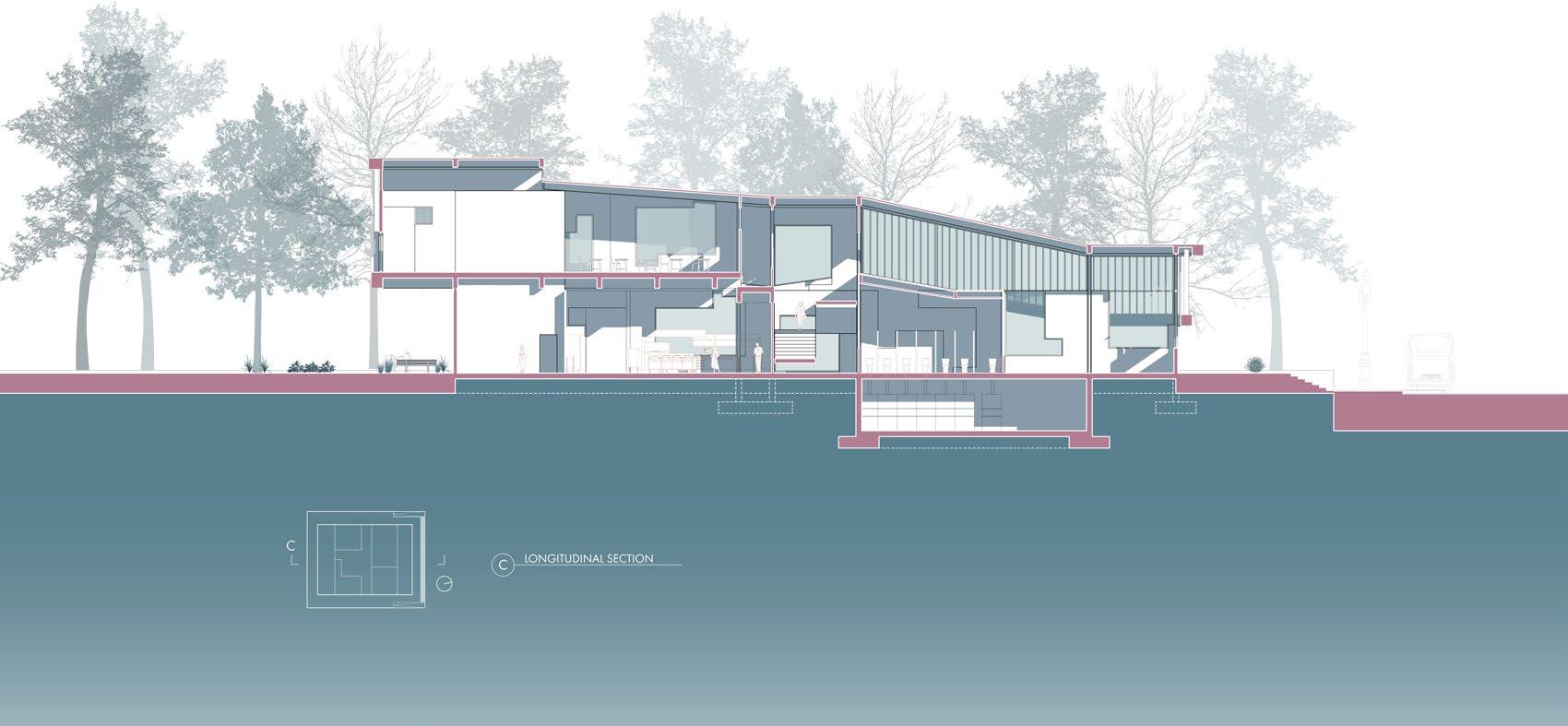
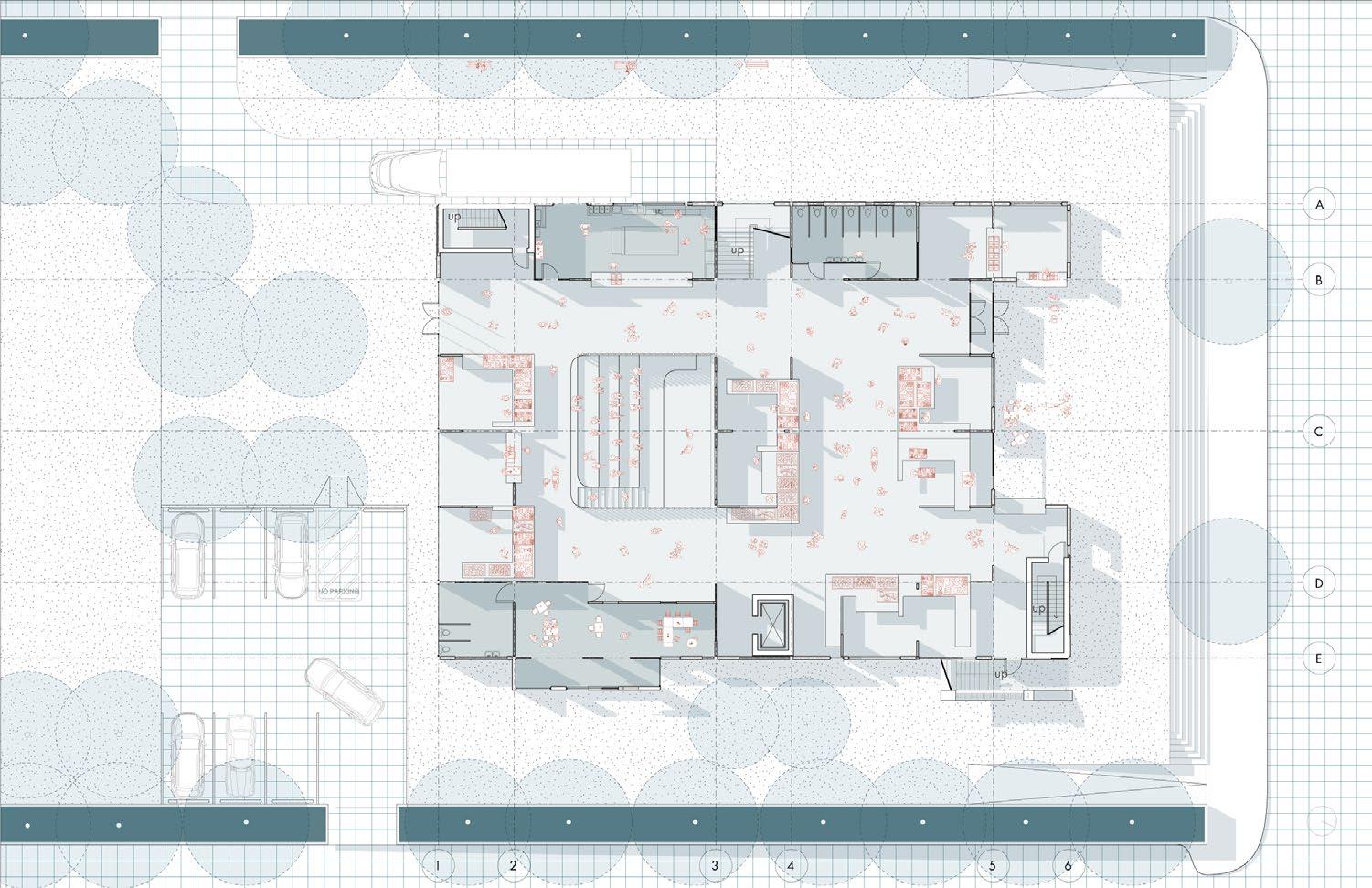
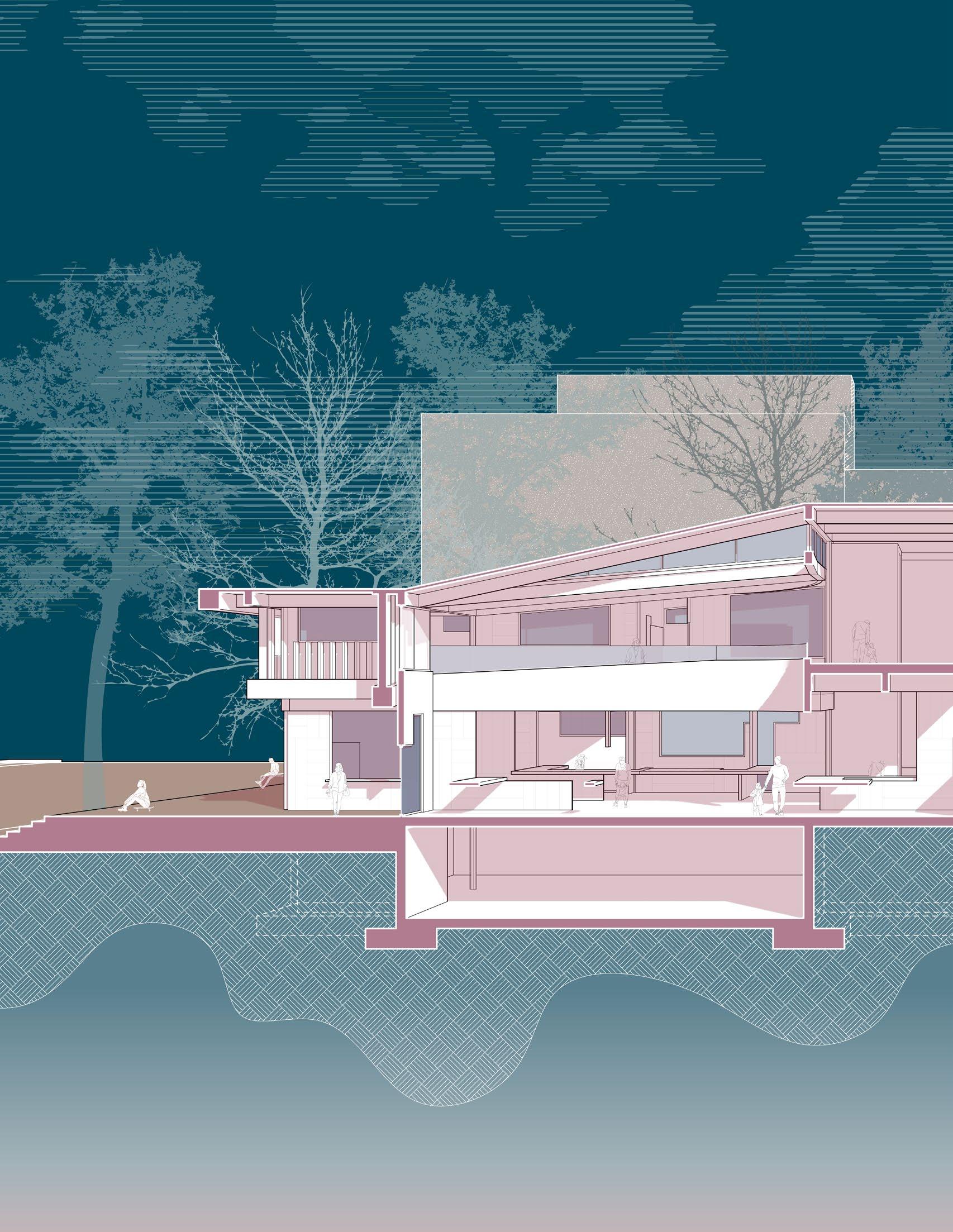
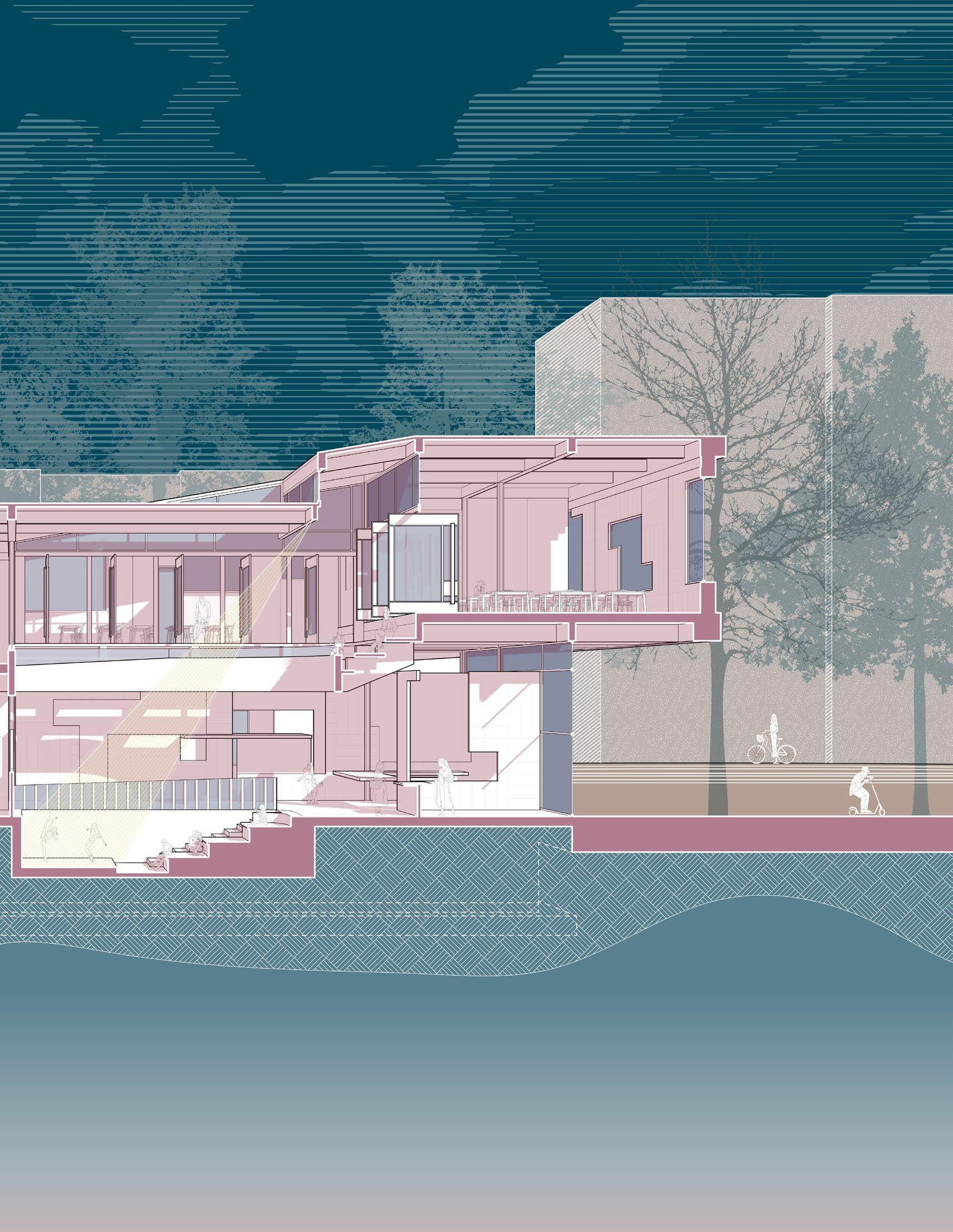
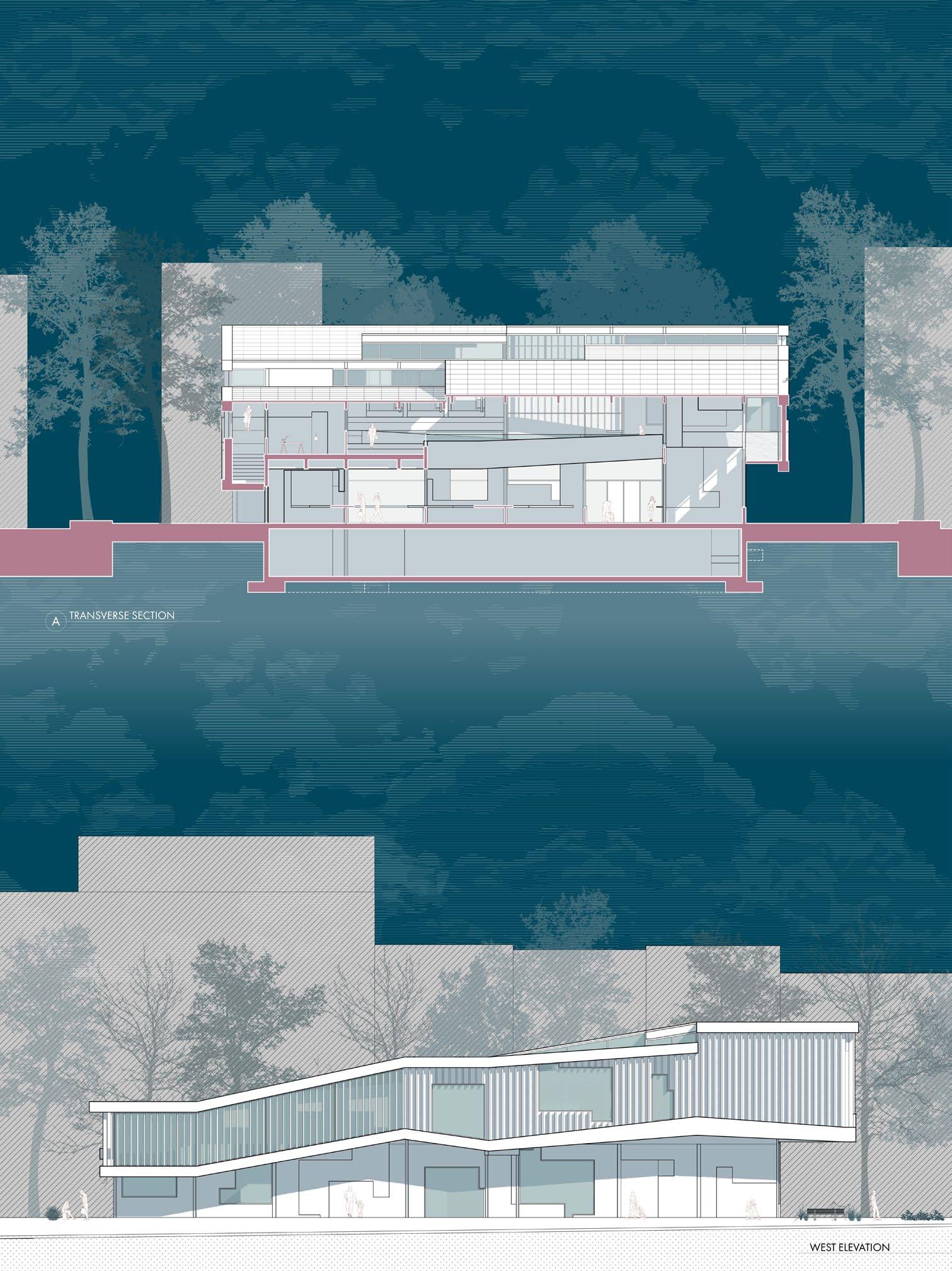
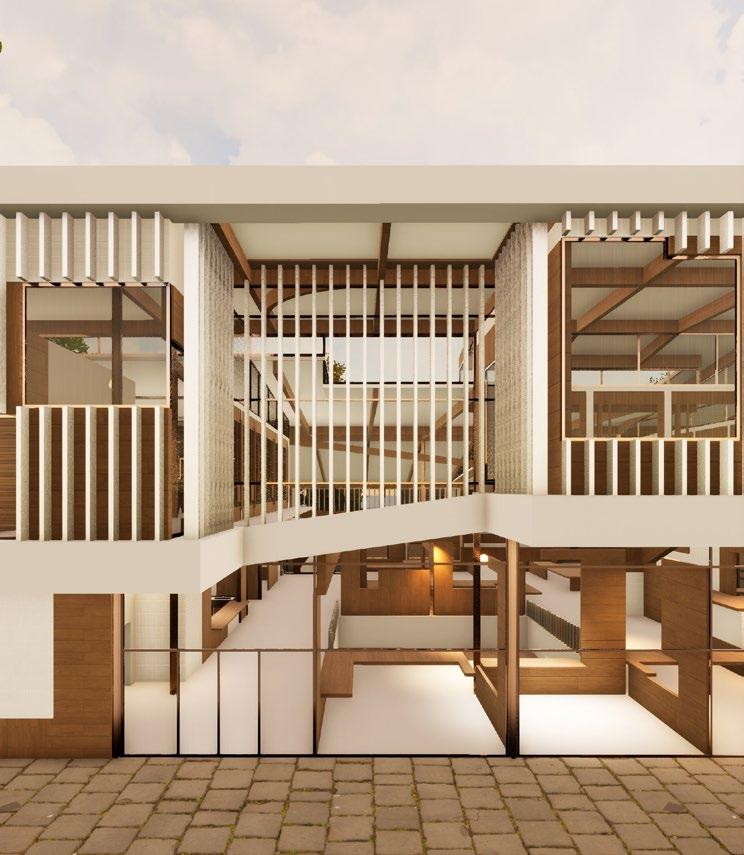
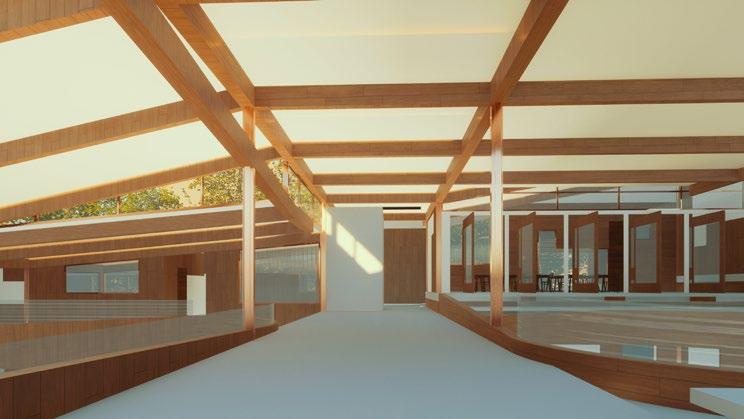
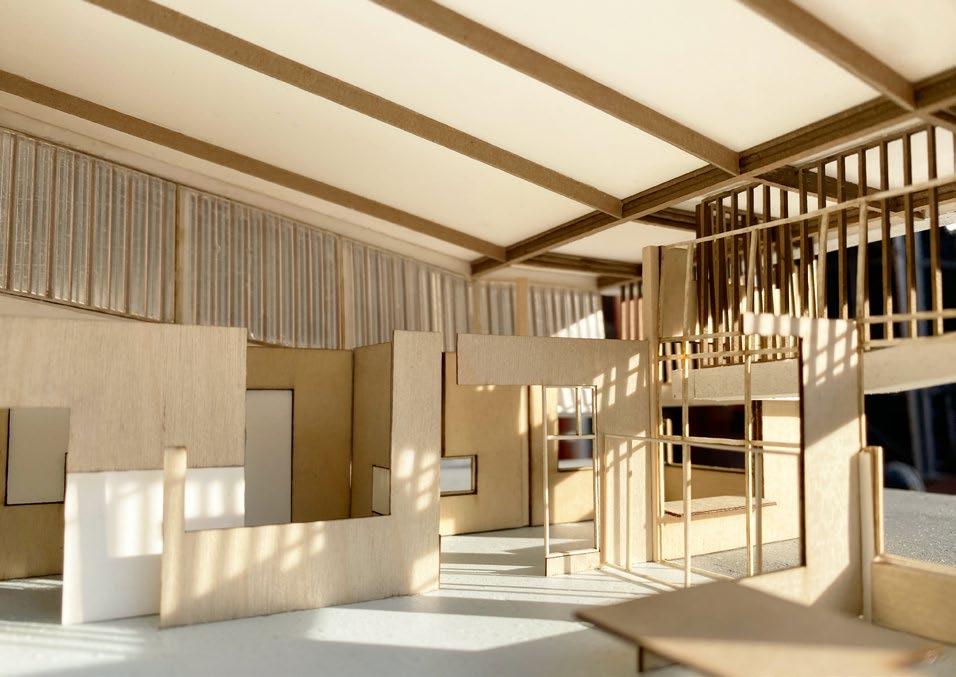
The market, situated in Sarah D. Roosevelt Park, is its most enclosed on its North façade, facing the busy E. Houston Street. As one walks through the space it opens up to expose double height spaces.
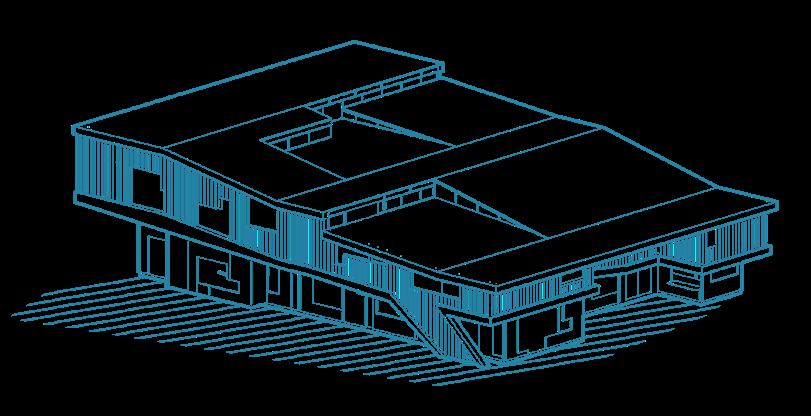
The buildings shape invites in the user with a cascading flow in both roof and floor, which expands up as one walks through the building.
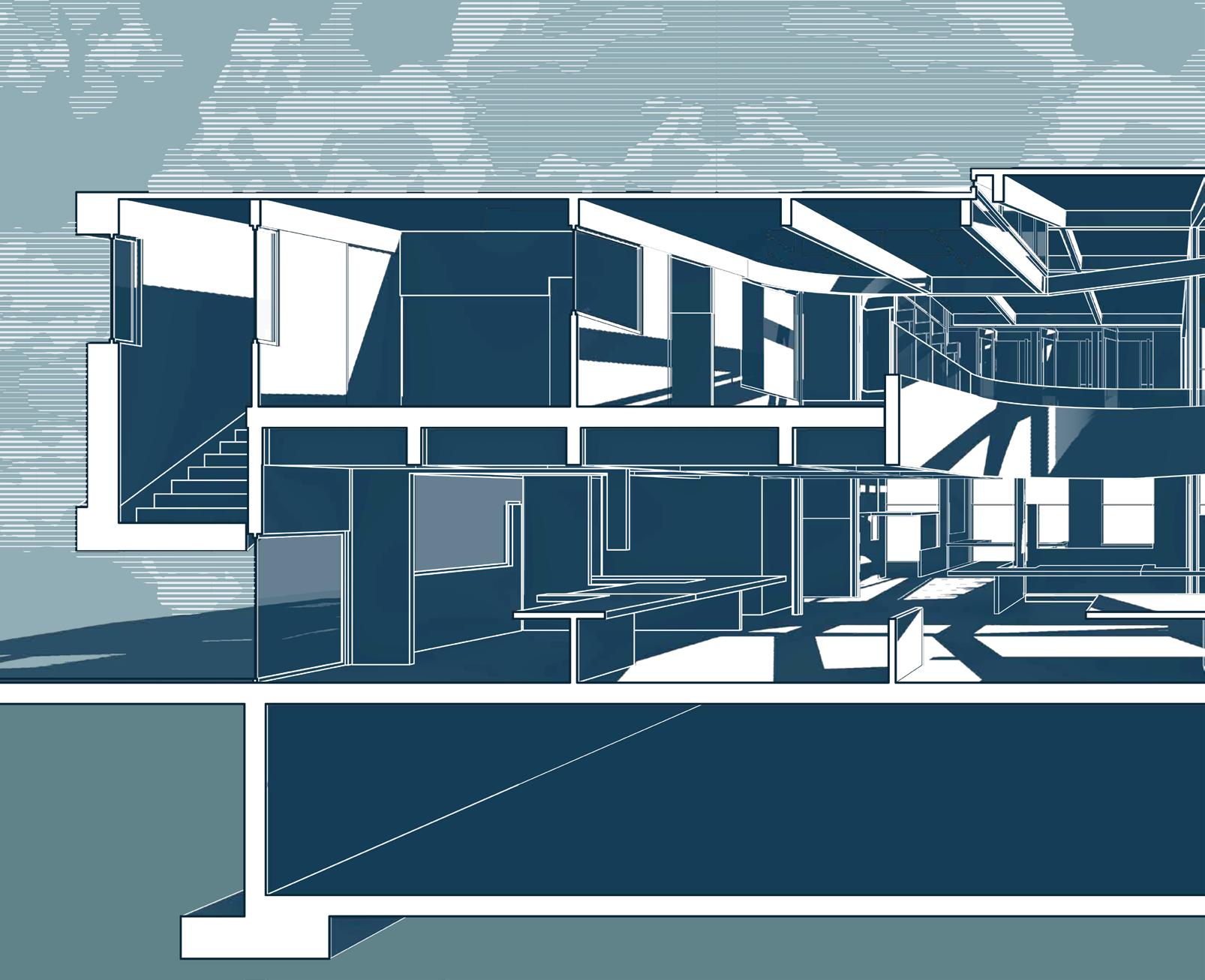
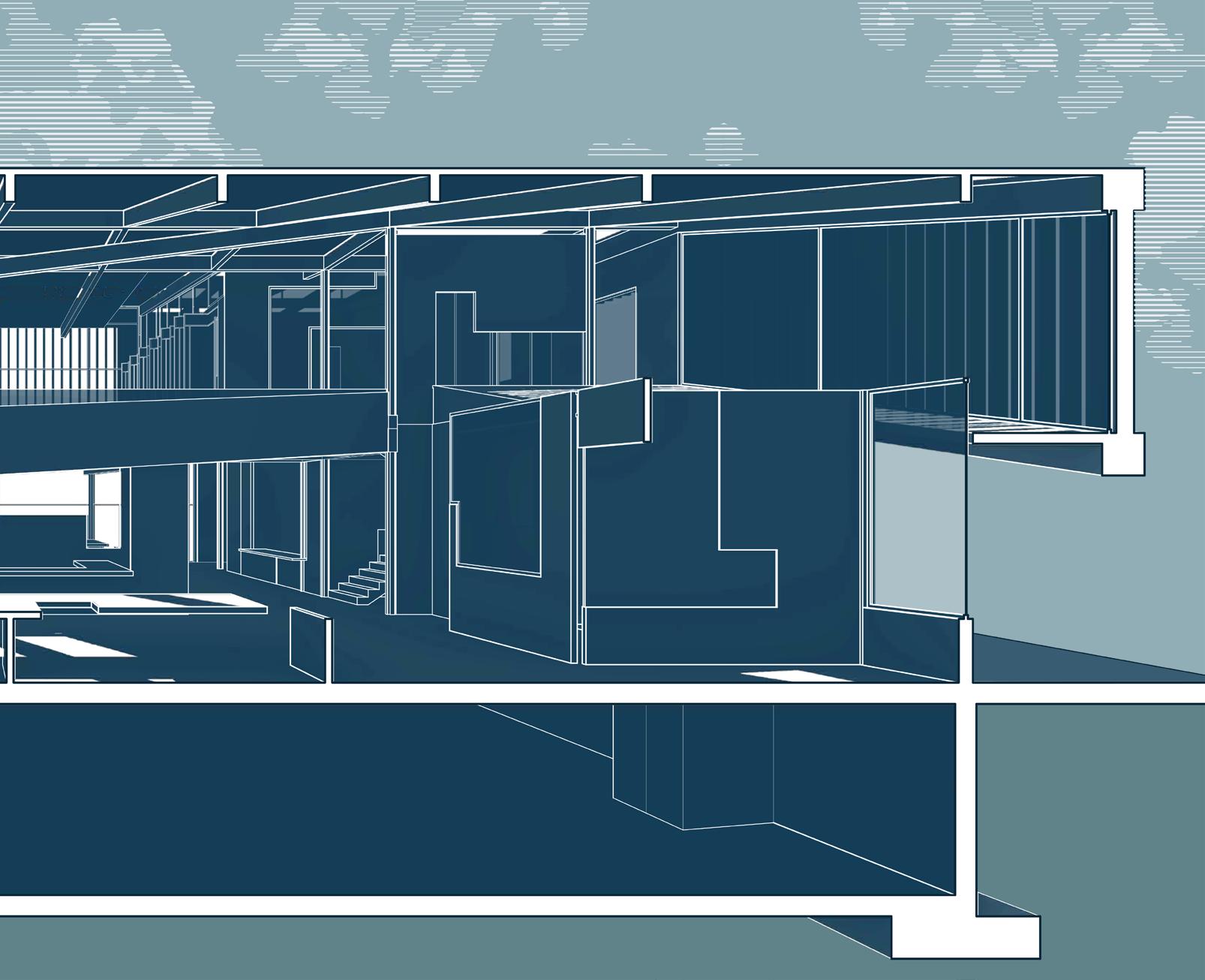
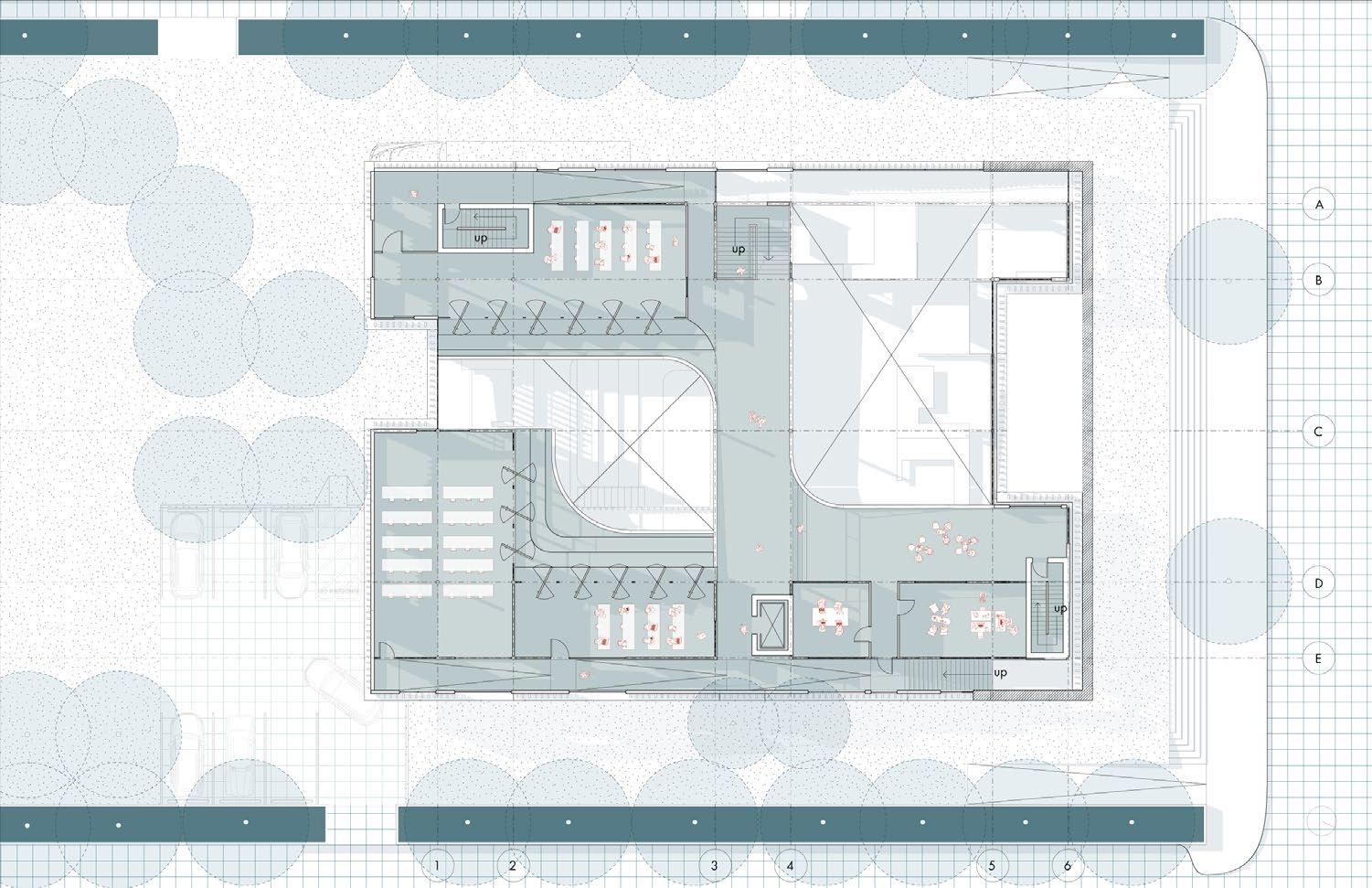
Its floor plan allows for large double height spaces between 6 cores arranged in an ABABA grid. This allows for unobstructed viewing of events and an open marketplace.
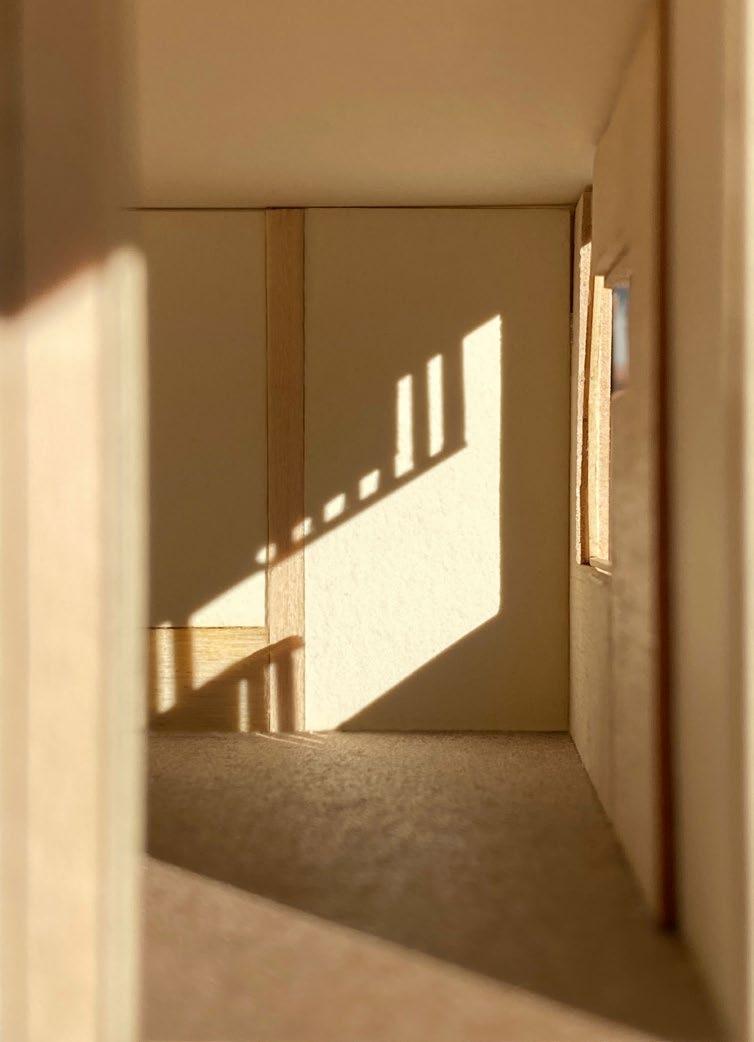
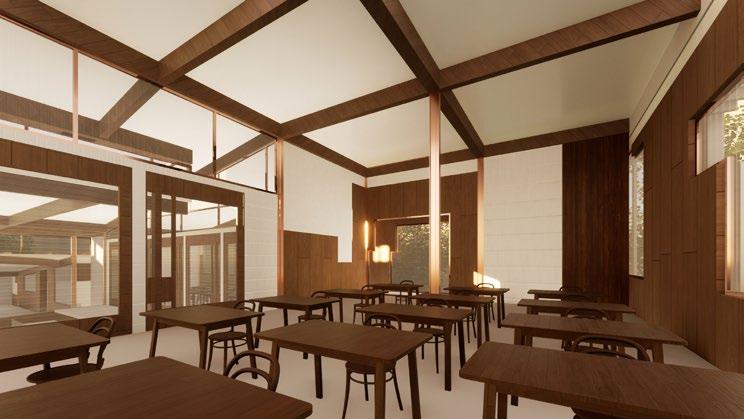
Professor Tom Hanrahan in collaboration with Sangmin Kim Semester 5 - Fall 2023 rhino - illustrator - photoshop - twinmotion - revit - laser cut - autocad model photo: interior classroom view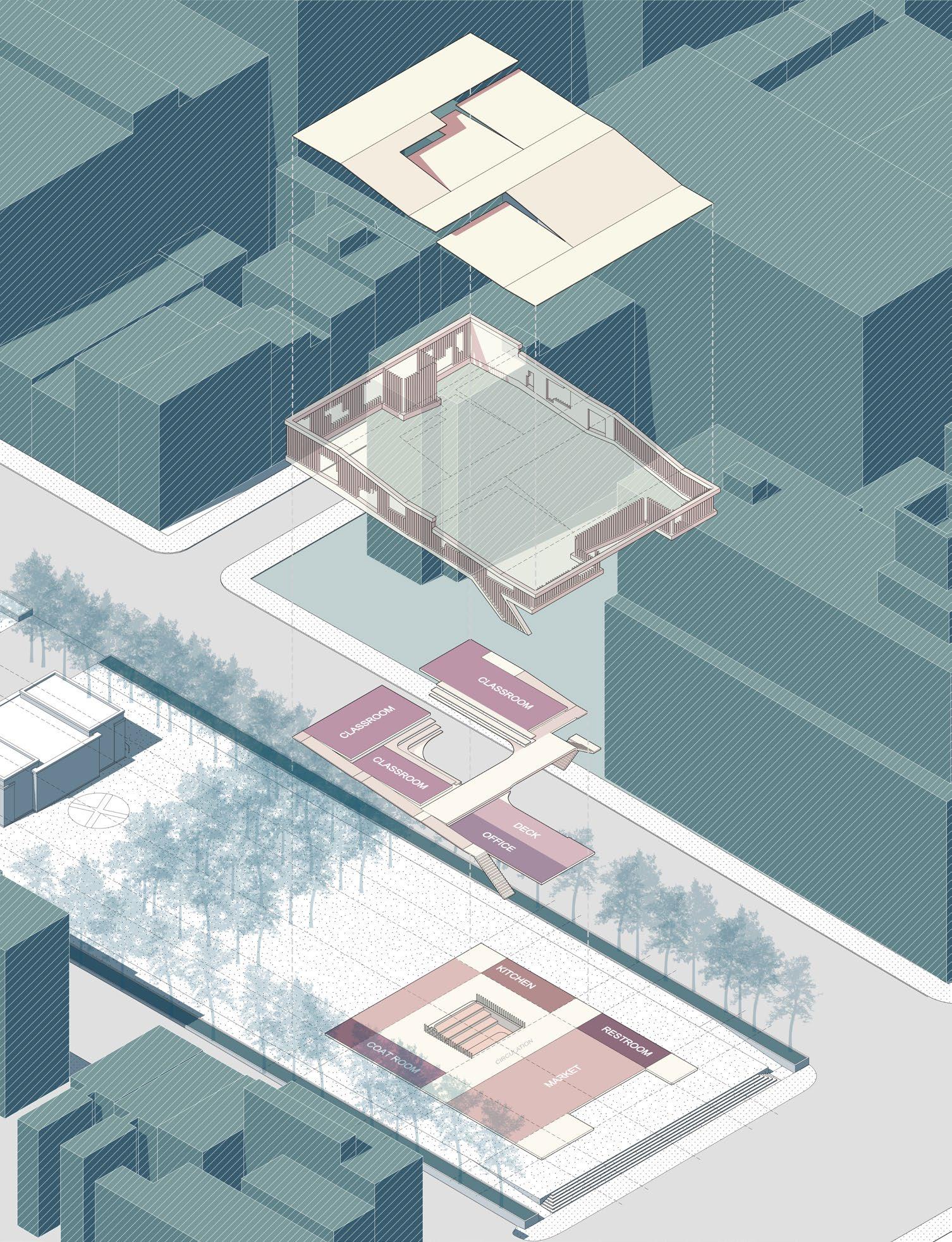
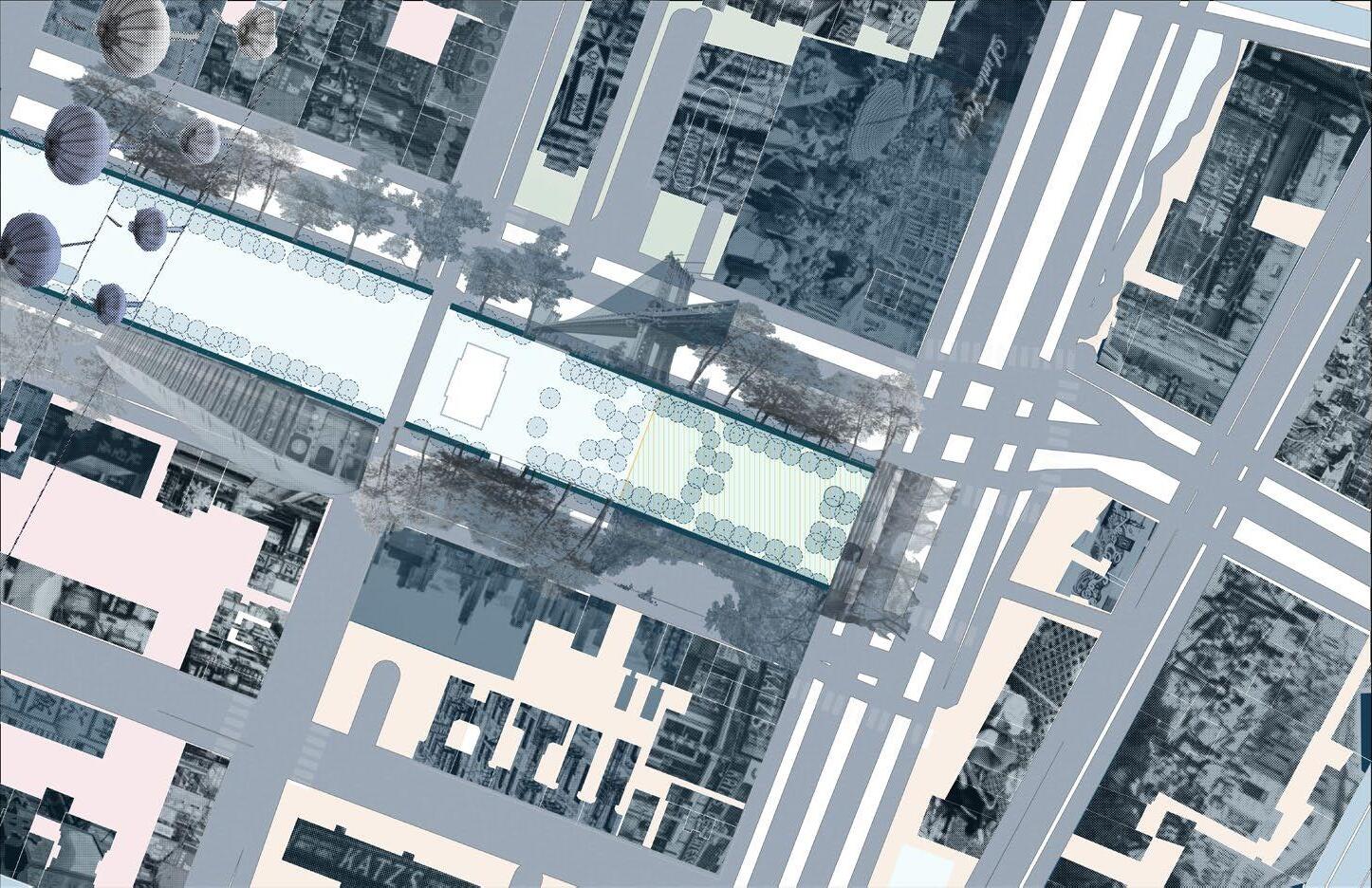
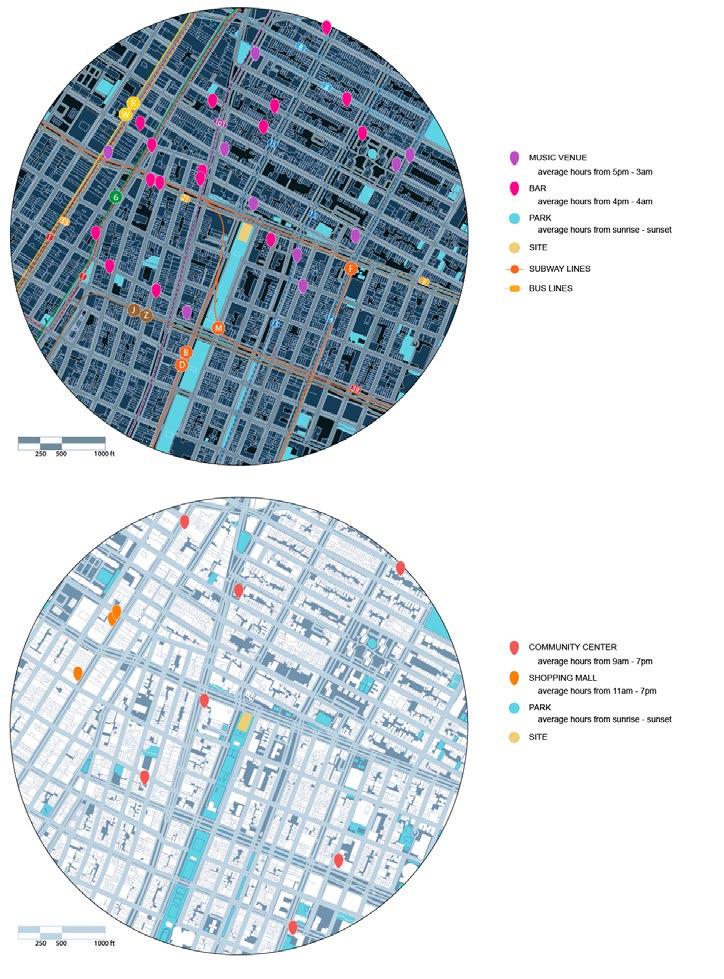
The surrounding neighborhood(s) contribute to the interesting quality of area, with the character of Little Italy, the Lower East Side, and Chinatown meeting at the edge of each neighborhood. The Sarah D. Roosevelt Park stretches down across multiple neighborhoods and at its end on the North side, lies in an area with many mixed use lots. In the area across the street from the site, there is an alley which has been re-purposed as a performance space, hosting many musical events and art galleries, mostly before the Covid lock down.
A study of the area during varying times, as well as numbers from a New York government survey of the community, revealed a lack of community space, events and programming.
This in turn became a driving force of the design’s development.
 neighborhood collaged plan
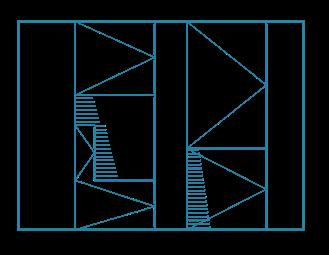
Located in between the Lower East Side and Chinatown, the proposed design is for a market and event space, a program which acts as an extension of an existing artist and musical performance space in an alleyway just across the street. roof plan
axonometric building view
Slab and Roof Connection
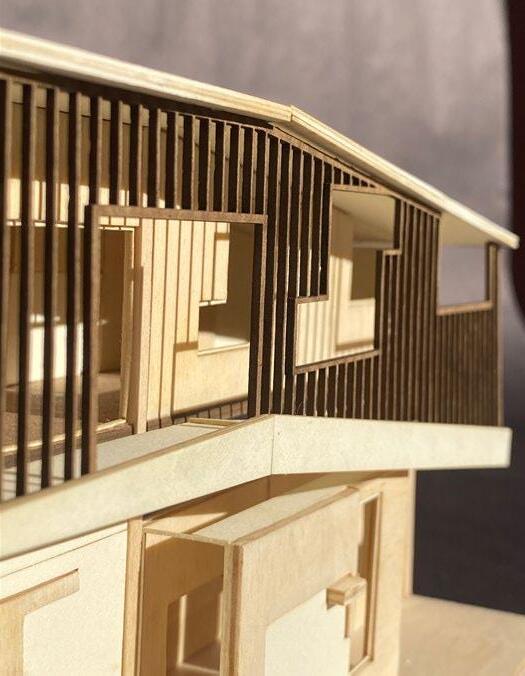
In order to accommodate the programming of the building, the slabs fragment and rise as one walks through. The way that the slabs fragment follows the form of the roof, replacing the slopes for a change in elevation while still following the same overall form. The roof is constructed through one plane that breaks and folds. The breaks allow for windows to penetrate the flowing surface and bring light into the surrounding rooms. The cascading form of the roof also allows for a large amount of glazing and openings for the event space around the back.
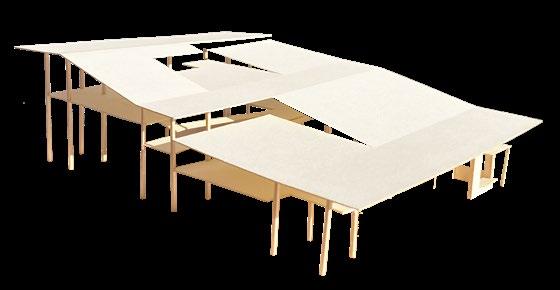 slab and roof diagrammatic model 1/16” = 1’
Annika
slab and roof diagrammatic model 1/16” = 1’
Annika
Project: Market Hall
Date: Fall 2023 - Semester 5
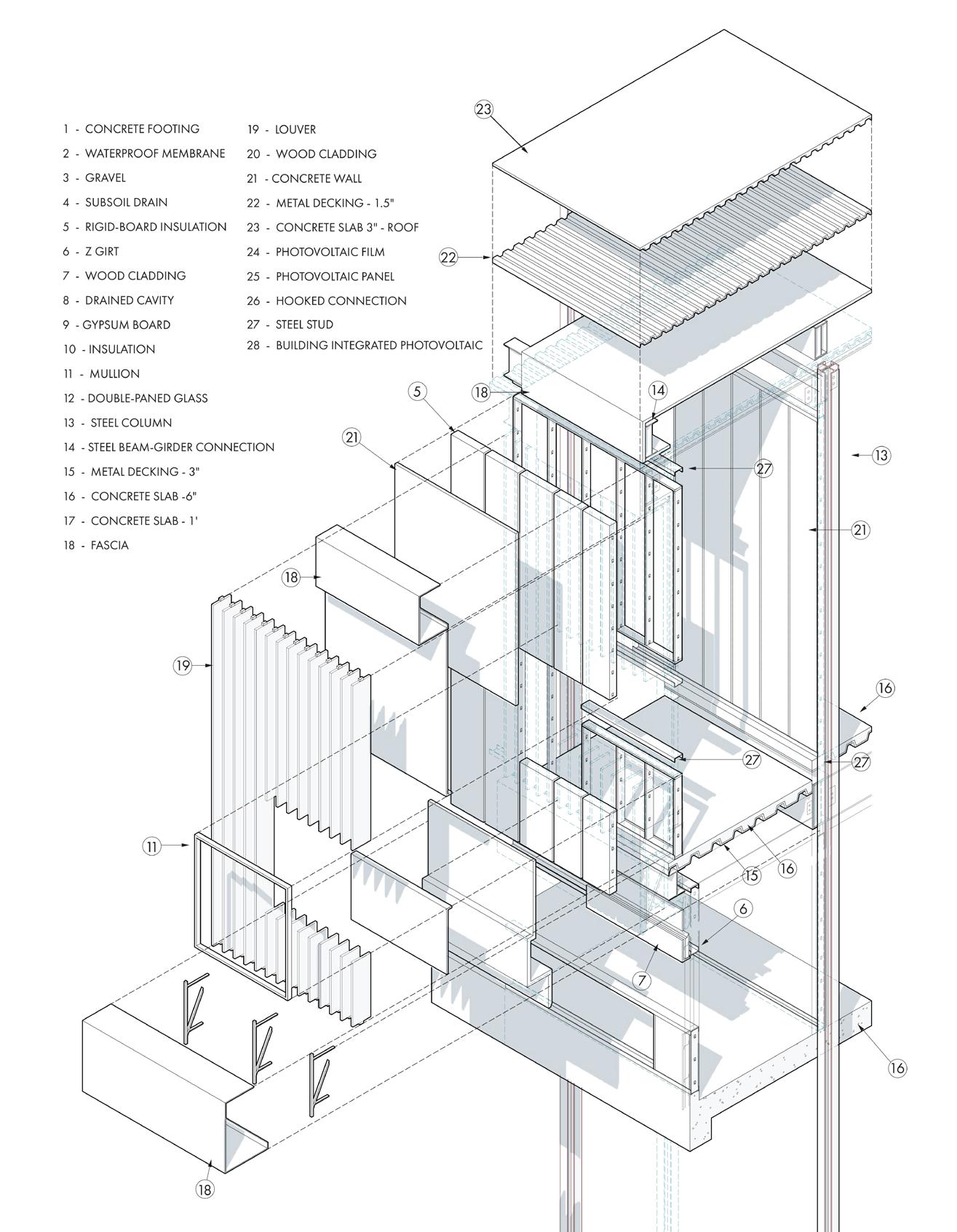
exploded wall section
 Annika Nielsen Architecture Portfolio
Project: Market Hall
Date: Fall 2023 - Semester 5
1 - CONCRETE FOOTING
2 - WATERPROOF MEMBRANE
3 - GRAVEL
4 - SUBSOIL DRAIN
5 - RIGID-BOARD INSULATION
6 - Z GIRT
7 - WOOD CLADDING
8 - DRAINED CAVITY
9 - GYPSUM BOARD
10 - INSULATION
11 - MULLION
12 - DOUBLE-PANED GLASS
13 - STEEL COLUMN
14 - STEEL BEAM-GIRDER CONNECTION
15 - METAL DECKING - 3"
16 - CONCRETE SLAB -6"
17 - CONCRETE SLAB - 1'
18 - FASCIA?
19 - LOUVER
20 - WOOD CLADDING
21 - CONCRETE WALL
22 - METAL DECKING - 1.5"
23 - CONCRETE SLAB 3"
24 - PHOTOVOLTAIC FILM
25 - PHOTOVOLTAIC PANEL
26 - HOOKED CONNECTION
27 - STEEL STUD
28 - BUILDING INTEGRATED PHOTOVOLTAIC
02 - Clinton Hill Cinematheque + Recording Space
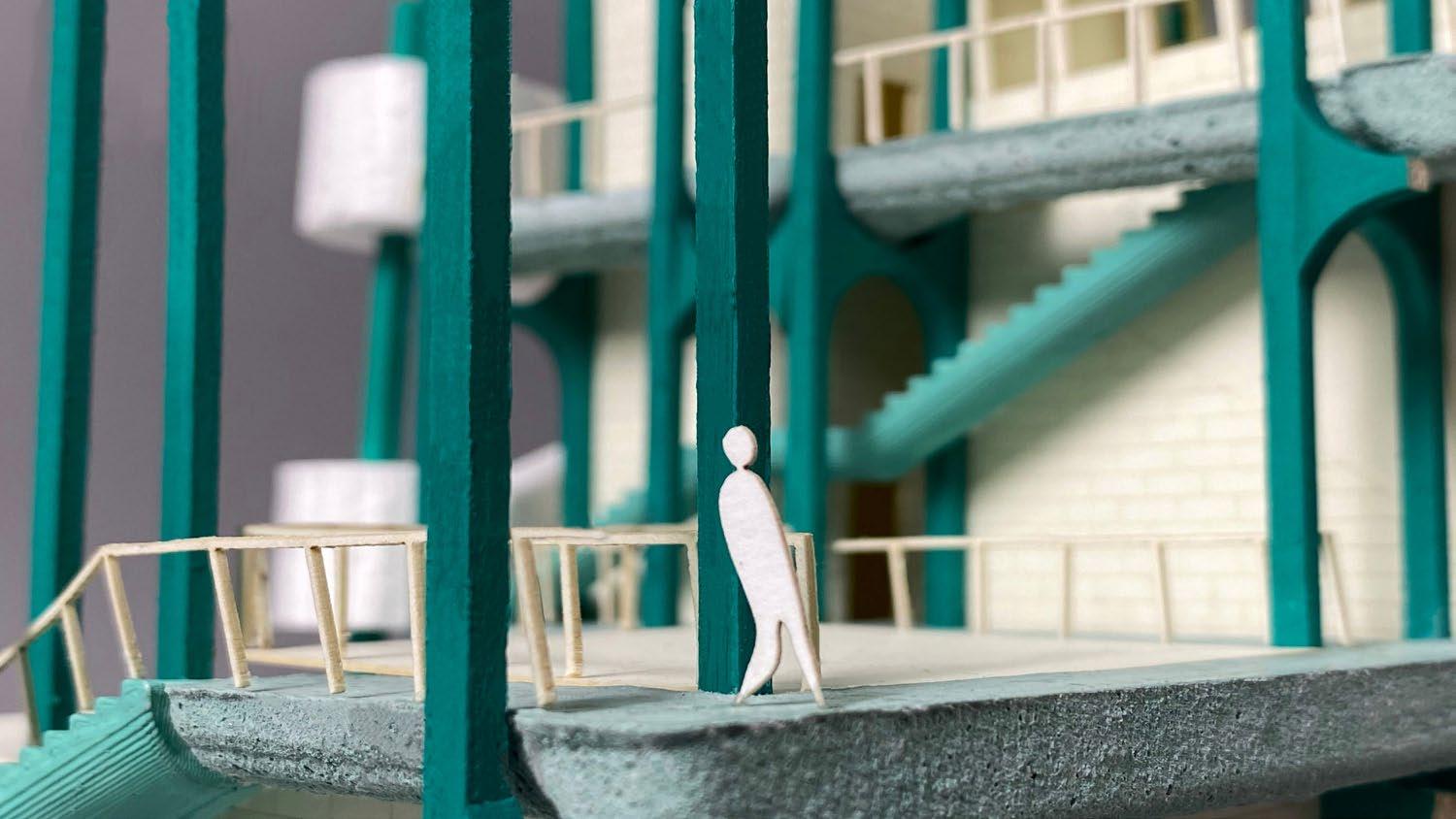
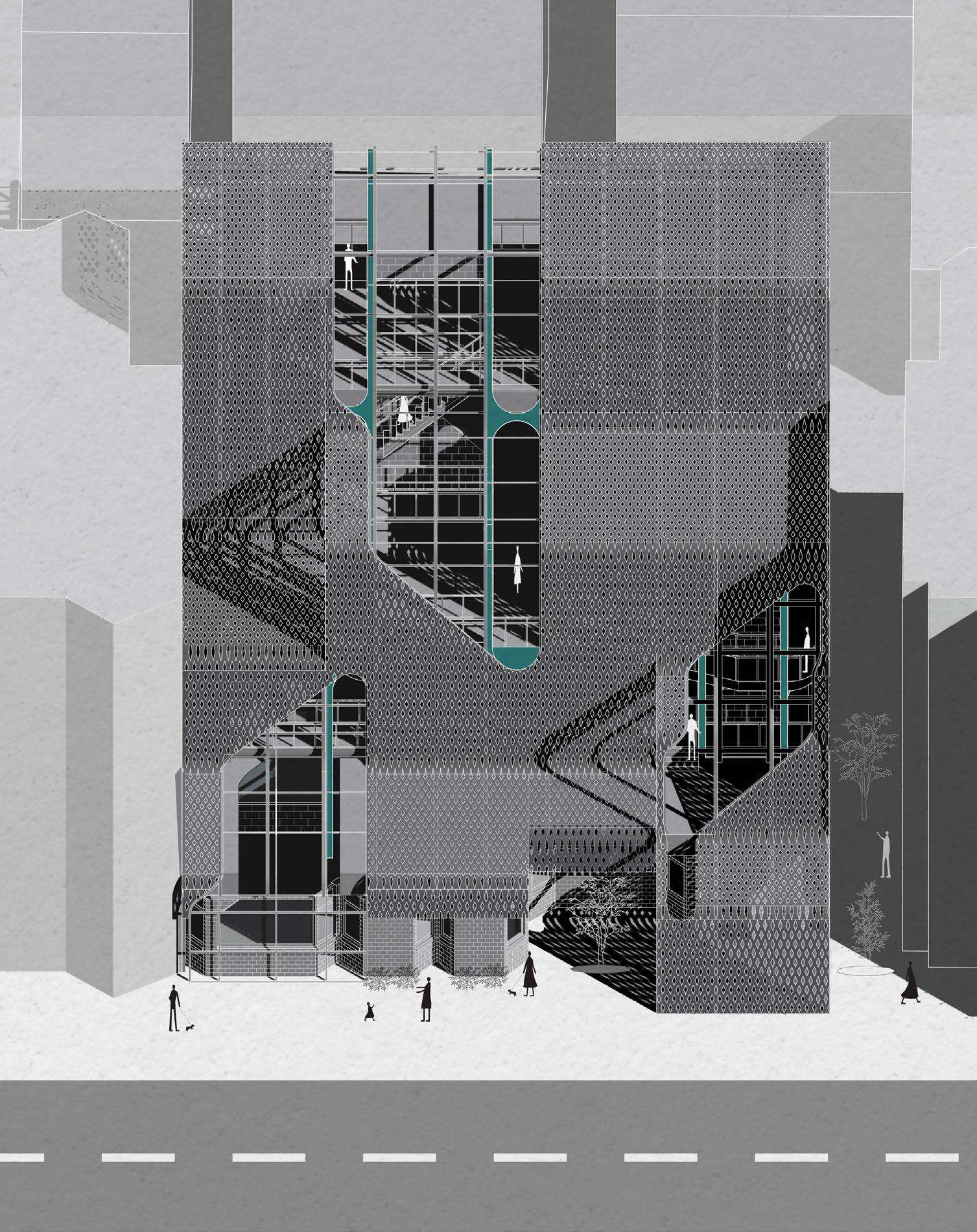
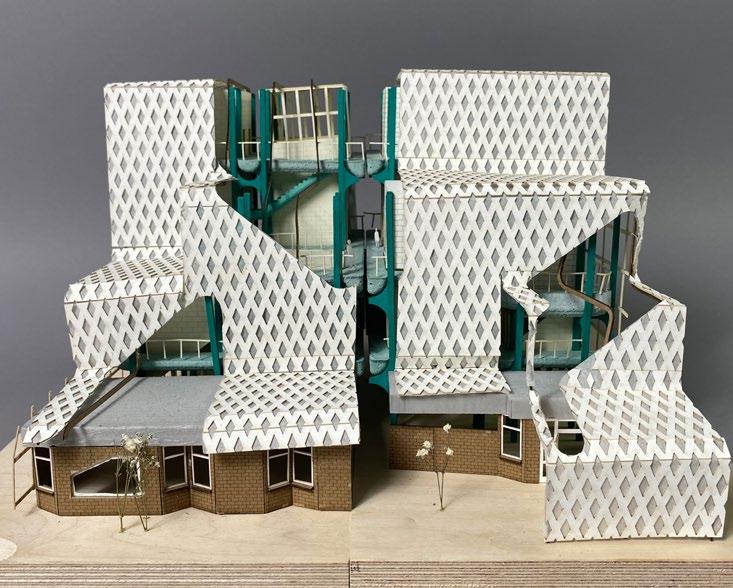
The project, developed as an addition to an existing building, explored strategies to implement new typology while still incorporating the new into the existing programs, structures, and form of the original building. The Clinton Hill Library is a Lindsay Box library, characterized by the low structure, open floor plan and, unfortunately, its poorly-lit interior. Thus the addition had to find a way to open up that interior, as well as keep that feeling of open circulation while still enclosing the areas and incorporating the new programs of a cinematheque and recording spaces.
 model view
Semester 4 Spring 2023, with Professor Jonathan Scelsa
rhino - illustrator - photoshop - lumion - cnc milling - plaster casting - laser cut - autocad - after effects
massing model
model view
Semester 4 Spring 2023, with Professor Jonathan Scelsa
rhino - illustrator - photoshop - lumion - cnc milling - plaster casting - laser cut - autocad - after effects
massing model
Project: Clinton Hill Library Addition
Date: Spring 2023 - Semester 4
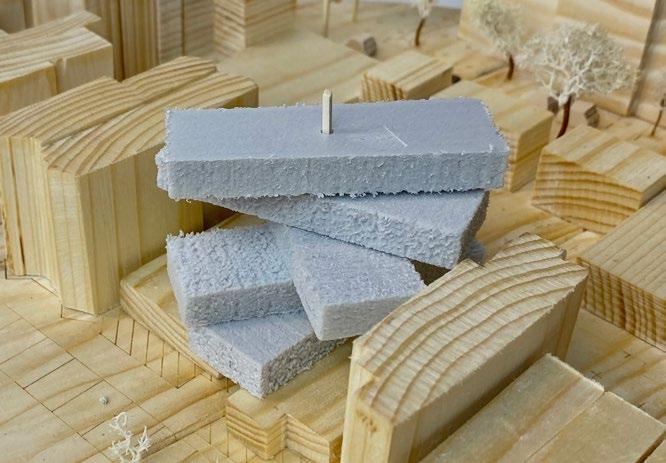
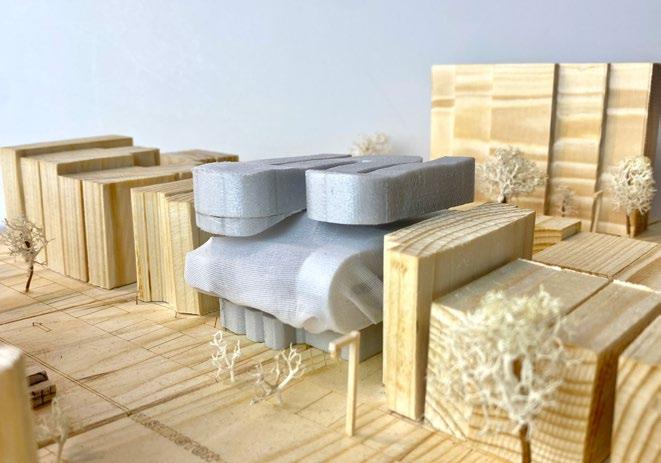
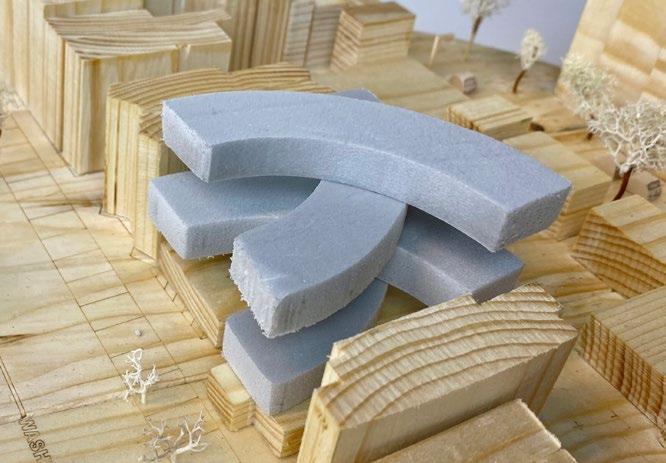
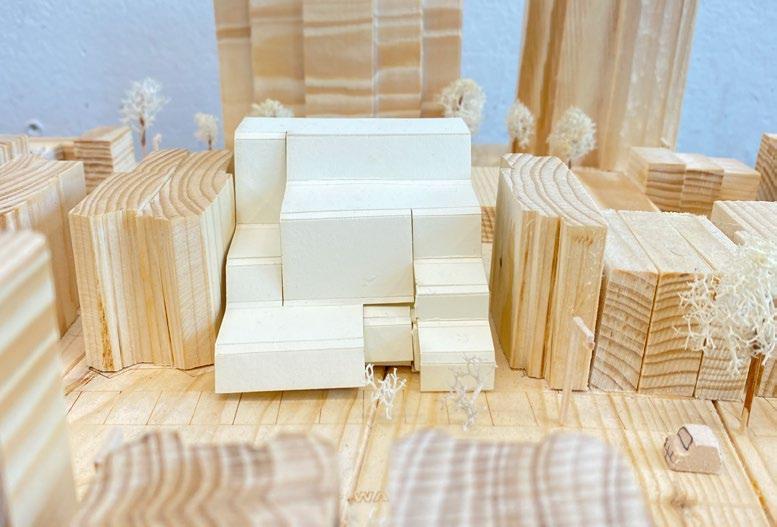
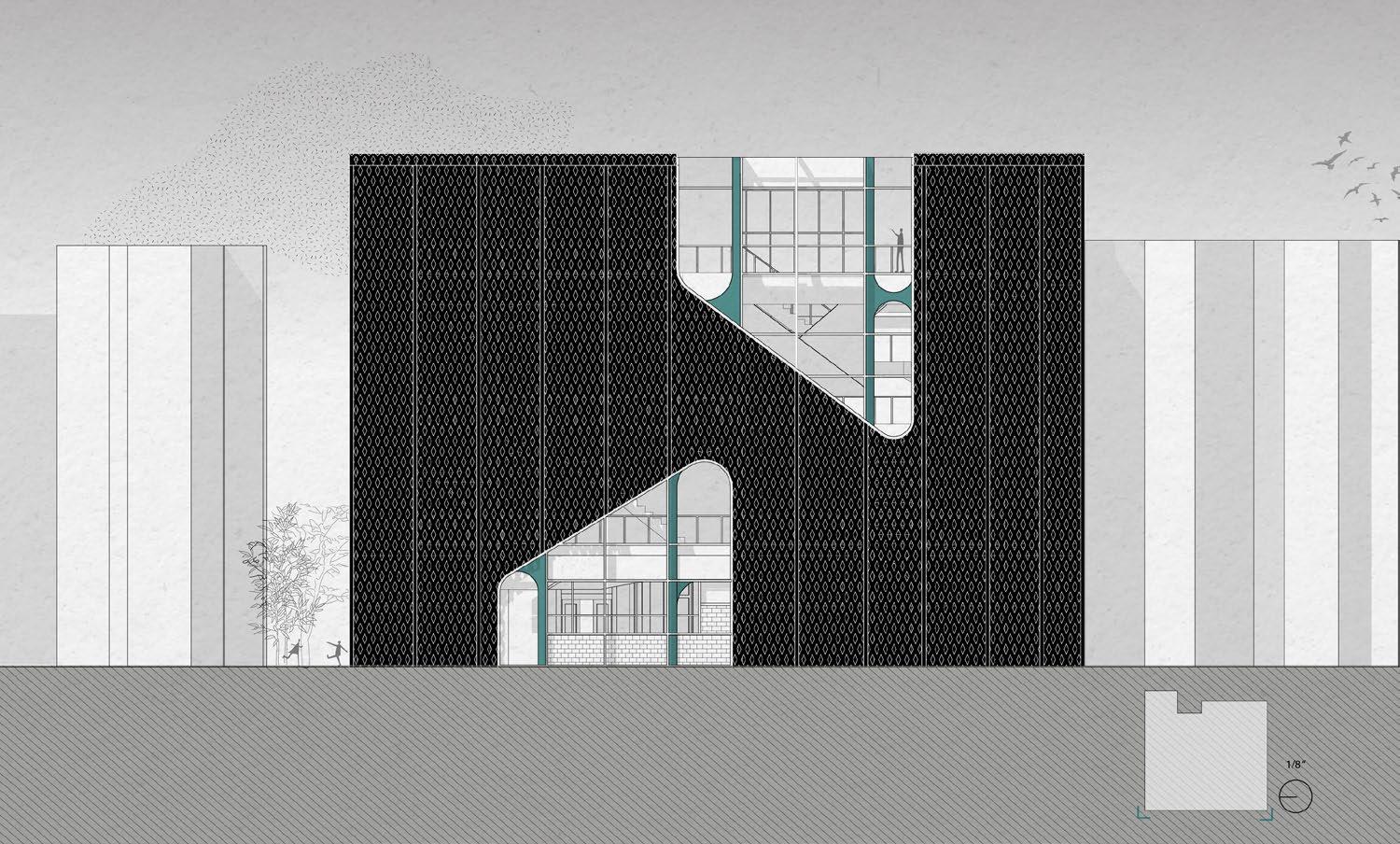
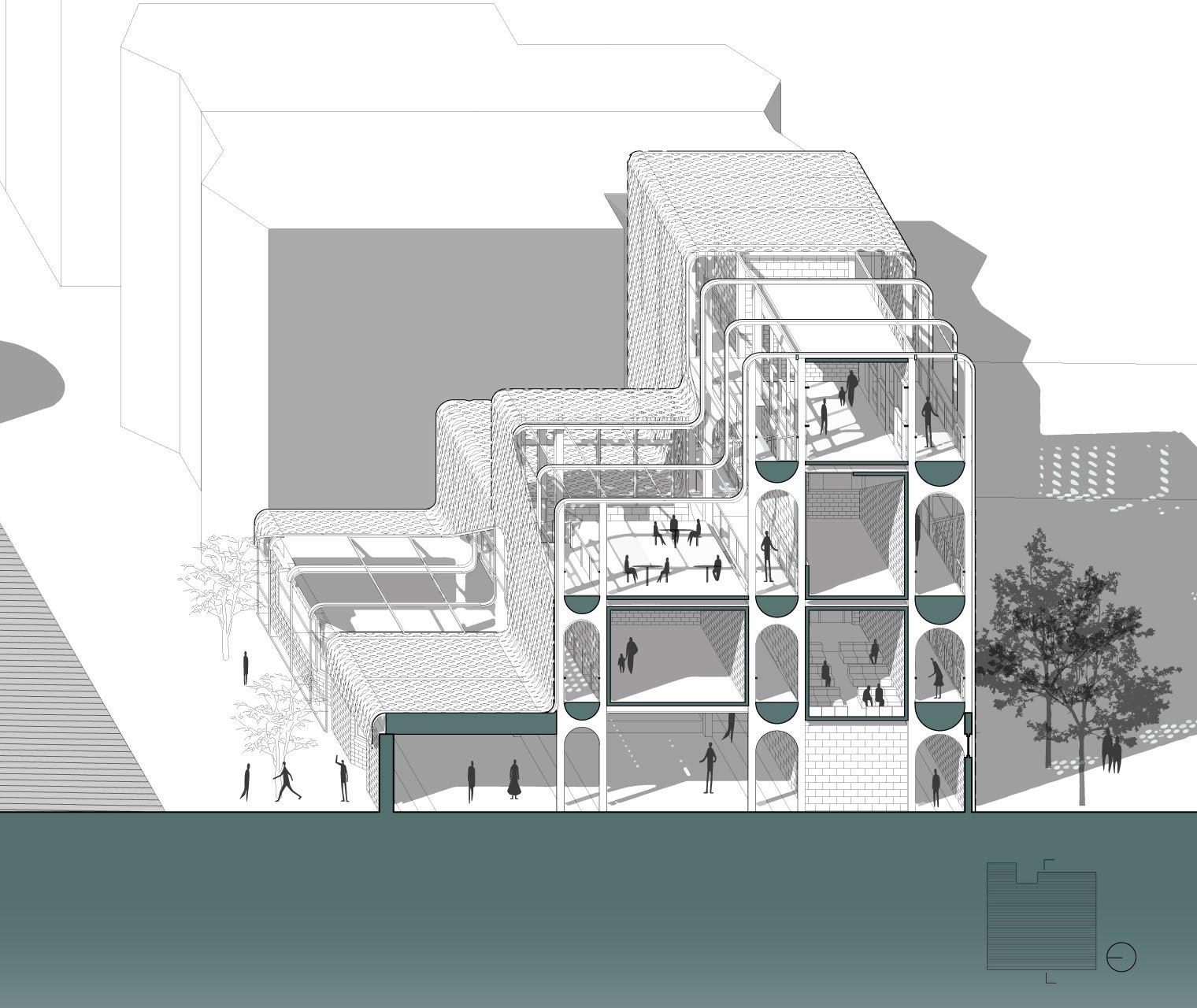
The building was created with a flowing facade over terraced masses. From the elevation, the building’s openings and skylights, which stretch over the flowing facade in plan, line up, giving the illusion of a flattened profile. Following precedent studies, the building’s form was found through exploration of stacked masses. The final iteration came from a terraced stack which could allow the lower floors to all access sunlight.
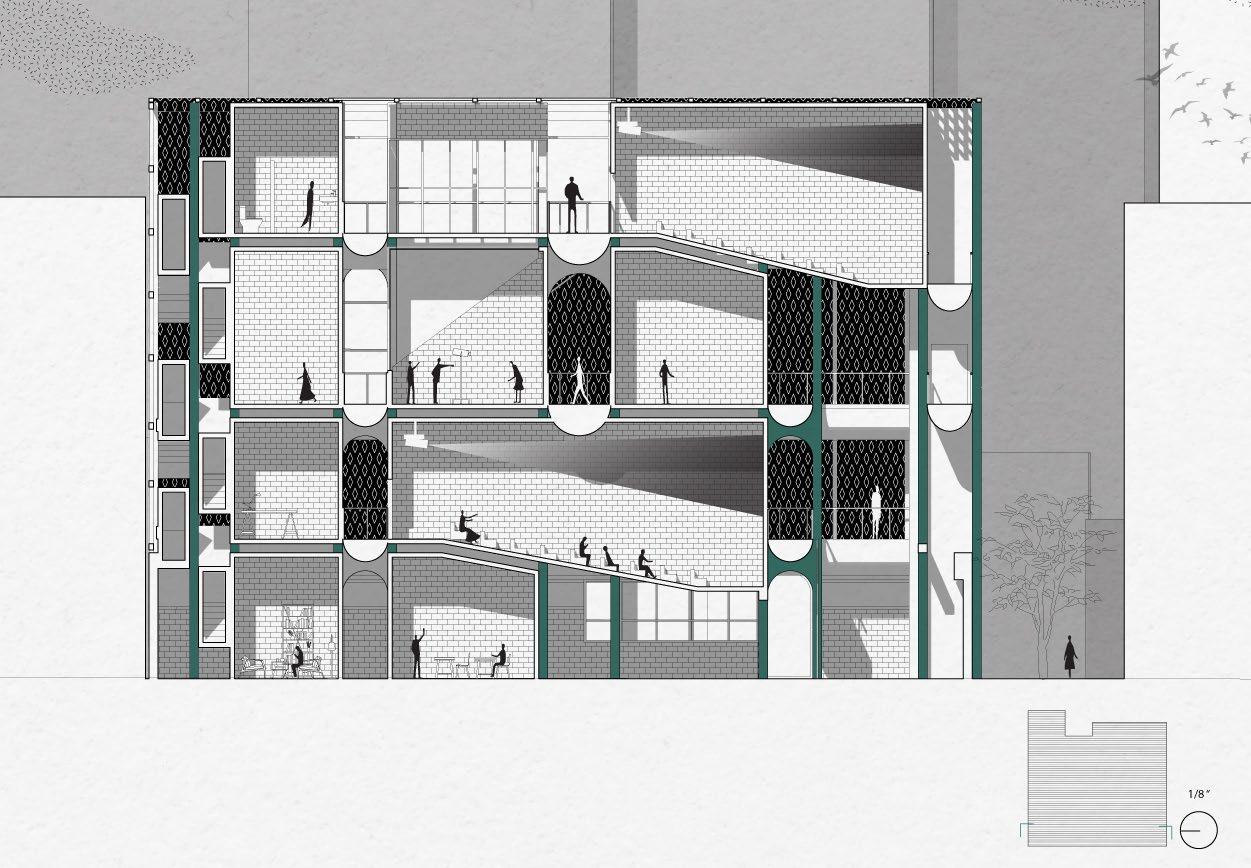
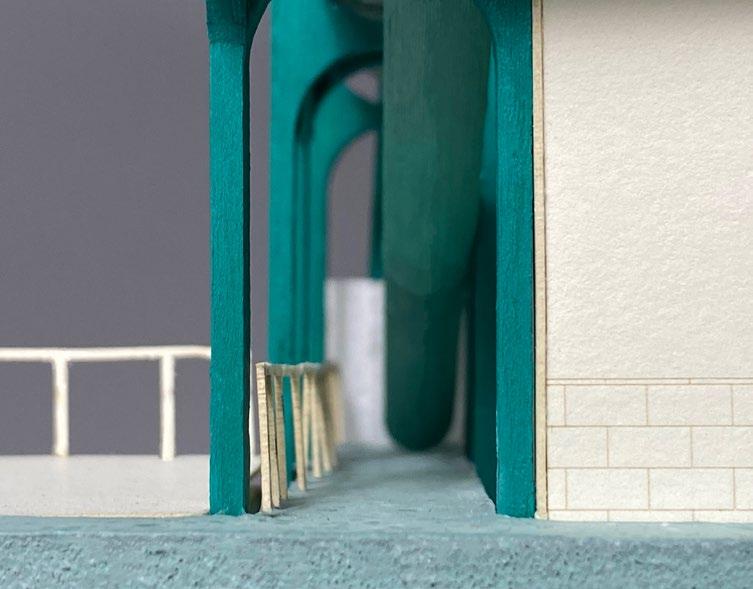
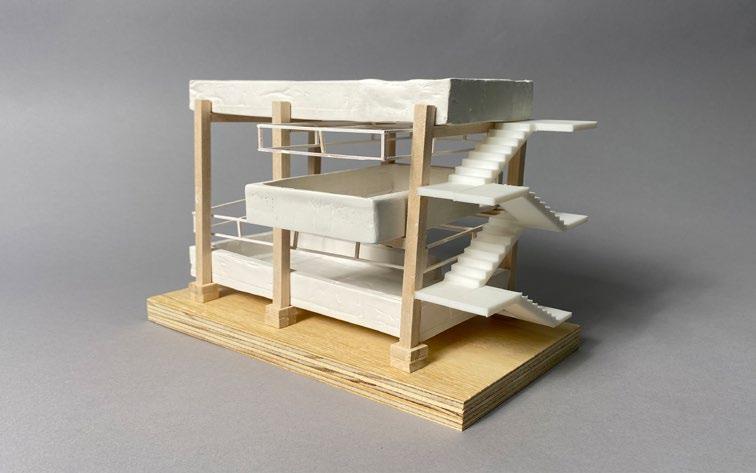
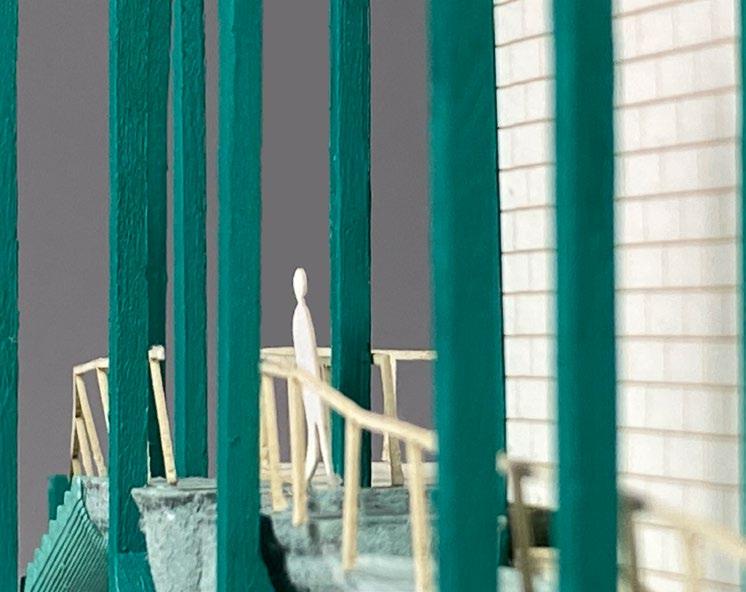
Each room is inset and accessible via the circulation, and the thickened profile of the walkways fit into the cast-like columns, which stretch to accommodate the circular bottoms of each walkway, the twisting egress stair, and block-like classrooms, recording spaces, and theatres.
 Annika
Project: Clinton Hill Library Addition
Date: Spring 2023 - Semester 4
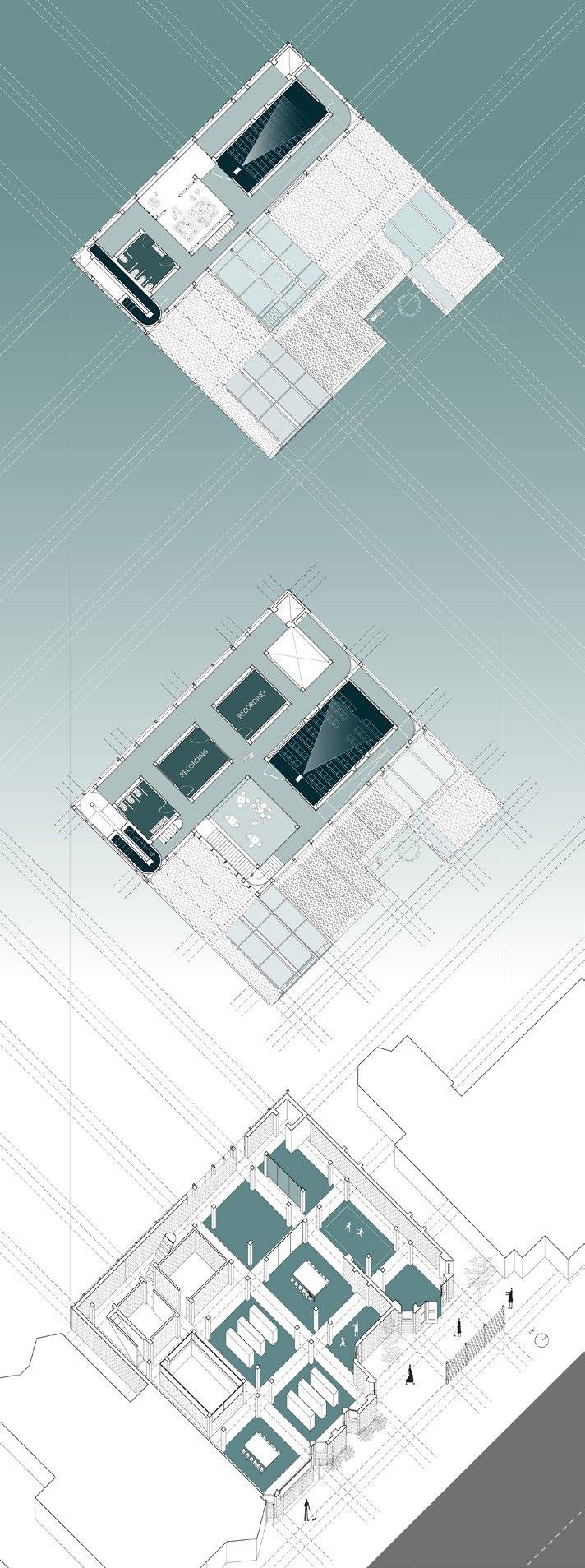
The final building and form remains rather diagrammatic in both plan and section, creating a clear relationship between the solid and void aspects of the design.
The building’s structural grid was a large driving factor of any allocation of space, and it bled into the division of the ground floor as well, bring more order to what had originally been a space lacking any interior divisions.
The initial design exploration began from work with George Howe and William Lescaze’s proposal for the new Museum of Modern Art in the 1970s. Its design featured rotating glass and concrete galleries held up by cast-like column structures. The study continued from there and incorporated, conceptually, Le Corbusier’s Domino (below). These cast-like columns and rectangular forms can be seen in the final massing.
- Astoria Bathhouse and Pool Addition
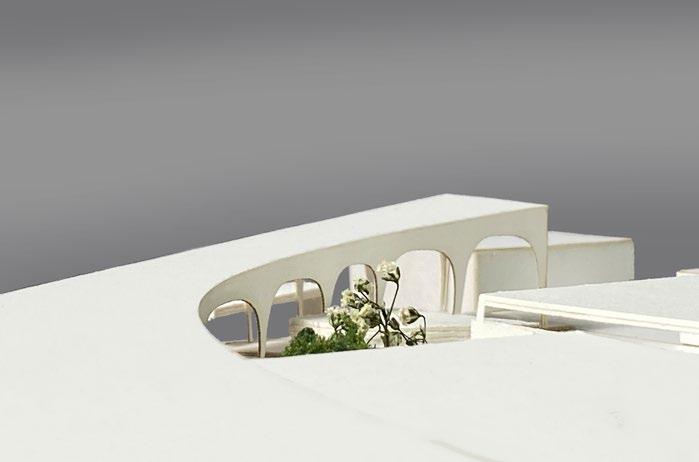
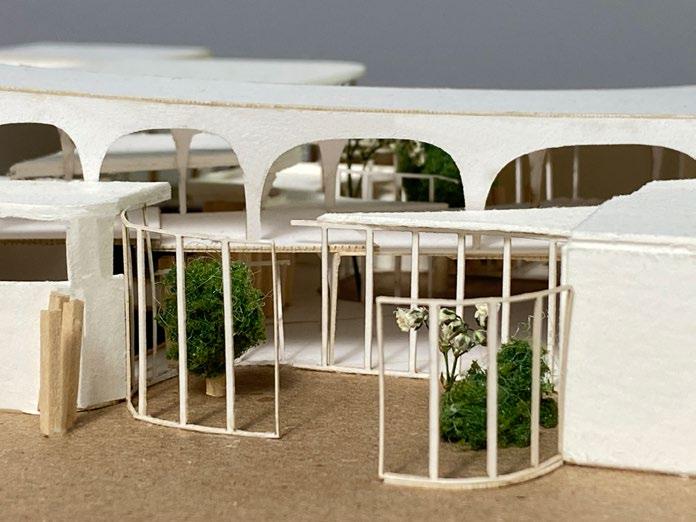
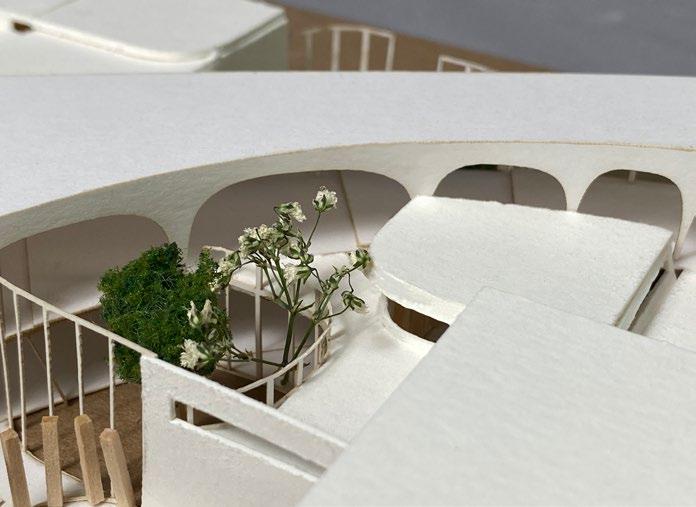
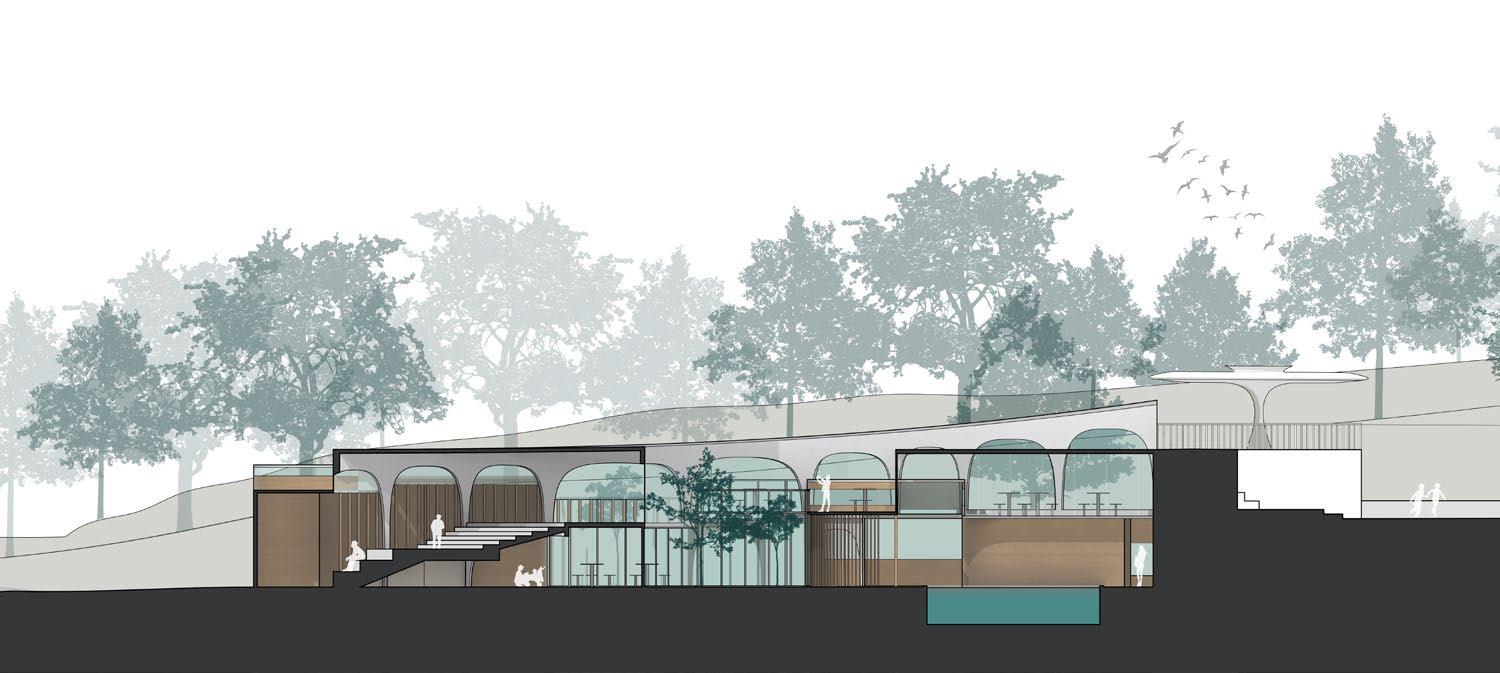
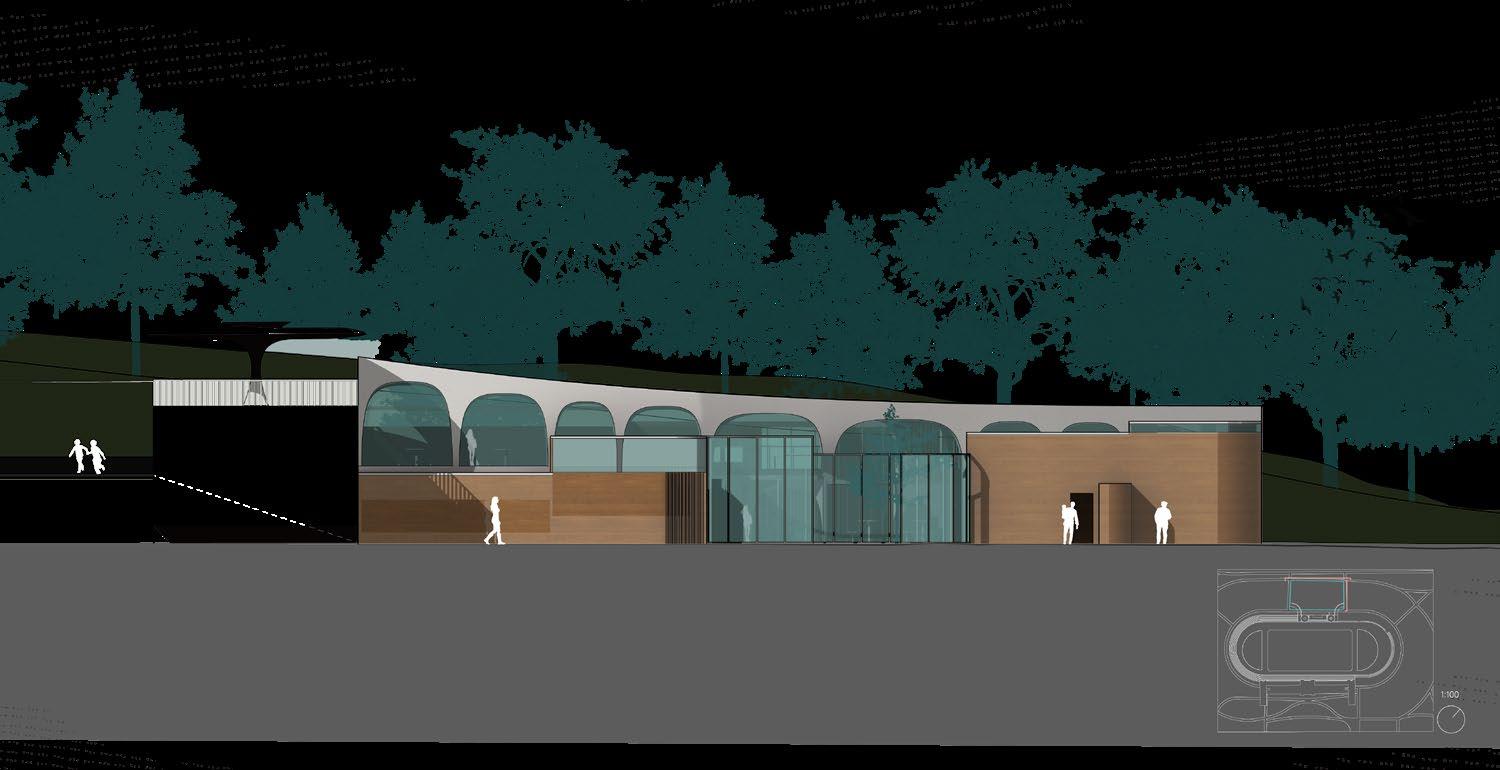
Designed as an addition to the Astoria pool located in Queens, New York, this bathhouse houses a performance space and is accessible during the off-season of the Astoria pool. Beginning from work with a precedent, Toyo Ito’s Tama Art University Library, the walls curve along and against a guiding grid, and a sloping ramp-like structure arches down, providing a connection between the existing Astoria pool deck and the bathhouse.
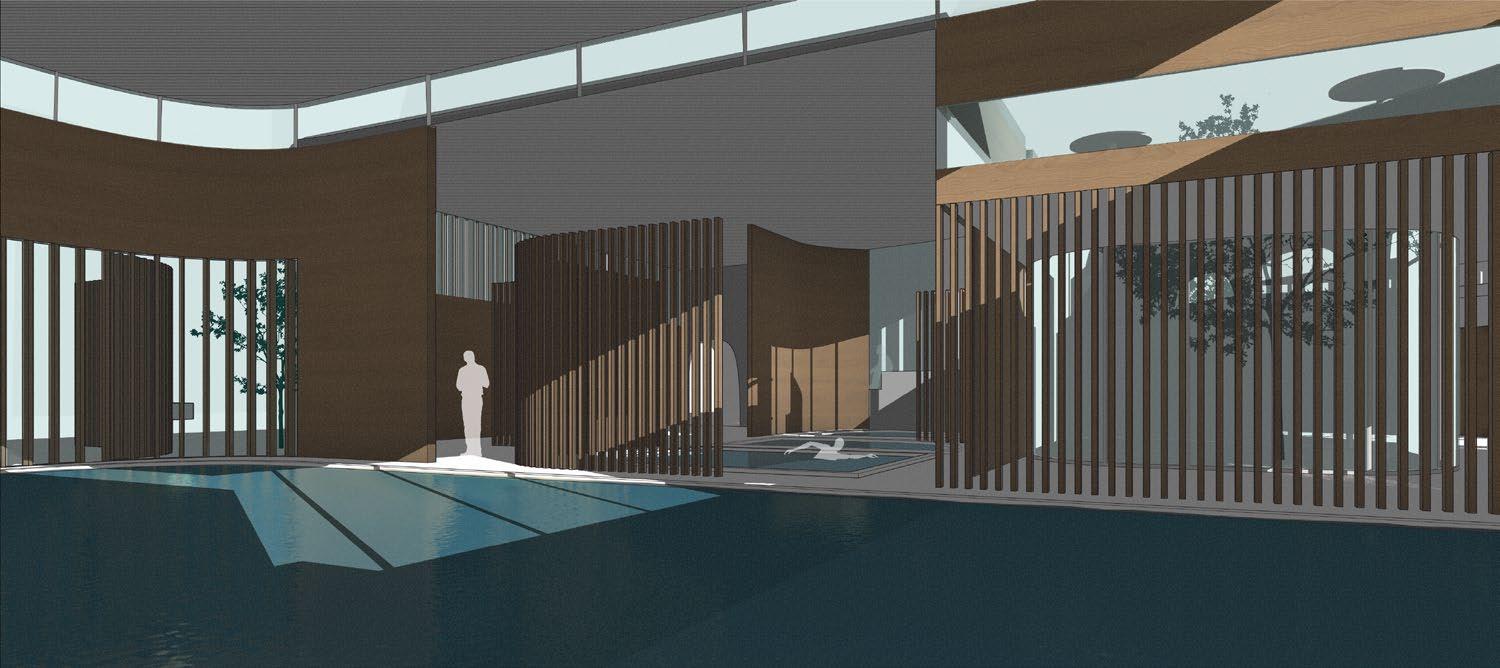
Each room exists as its own unit with the levels of each roof varying. In the space between each roof, clerestory windows fill the space as a strip, bringing in light to the space while till maintaining privacy for the pools, bathing areas and locker room.
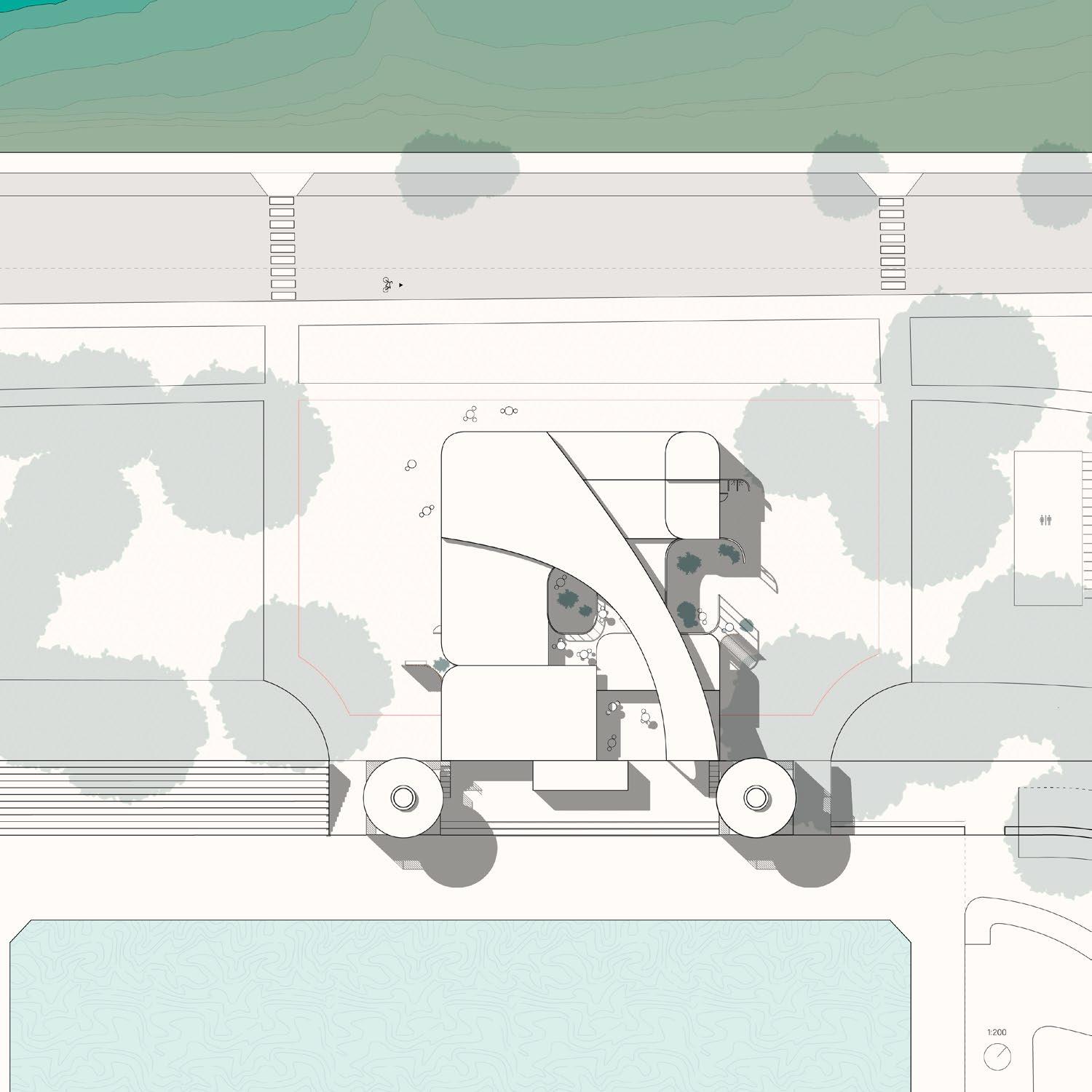
roof plan
Within the ramping connection from the bathhouse to the Astoria pool the sloped floor provides the space for an amphitheatre and performance space. The arched windows along the slope bring in a connection between the exterior, ramp, and interior bathing space.
Annika Nielsen Architecture PortfolioProject: Astoria Pool + Bathhouse
Date: Fall 2022 - Semester 3
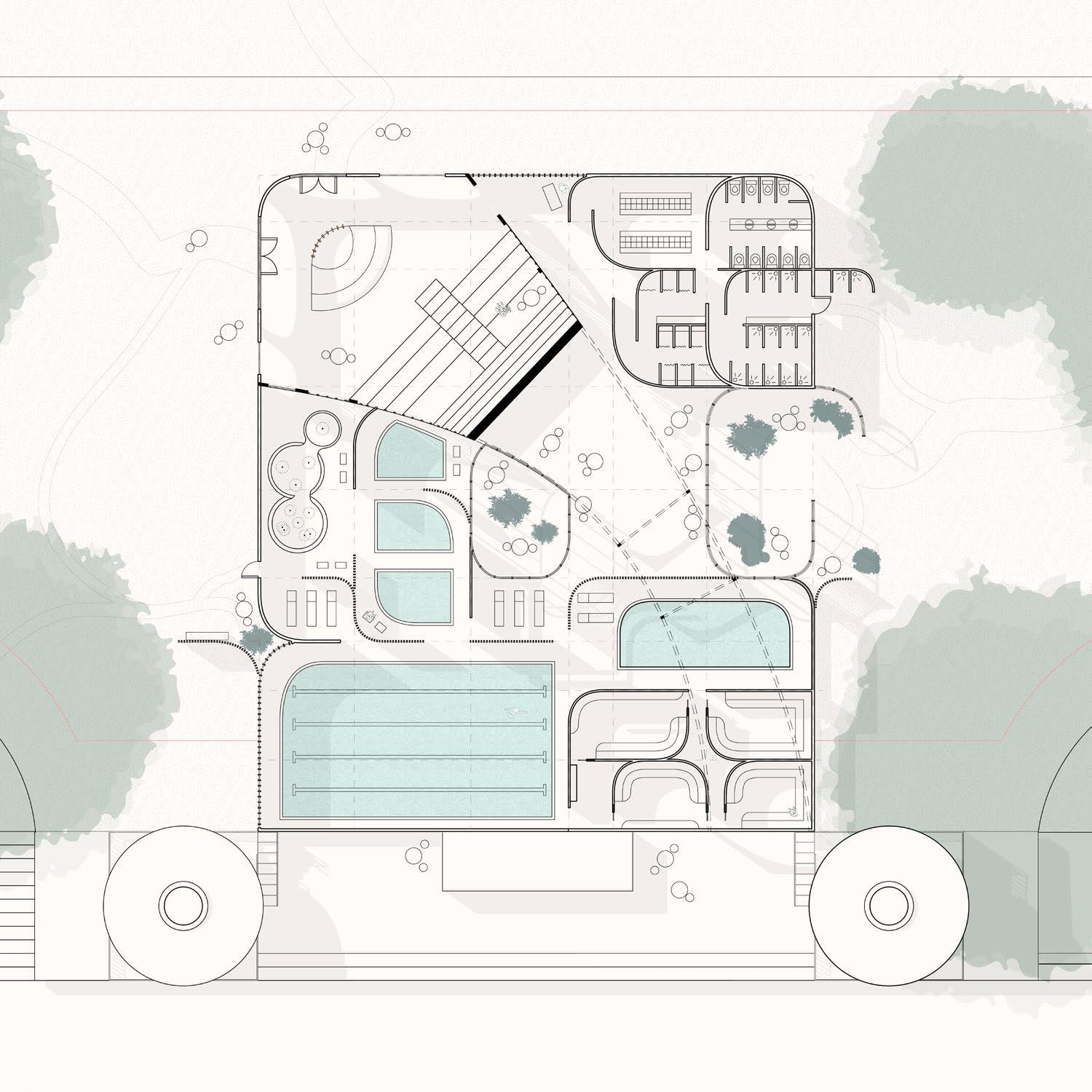
ground floor plan
The building’s program holds an event space adjacent to the main entrance before moving into the locker rooms, wading pools, lap pools, and saunas. Beginning from a grid, the walls curve to enclose each of these programs, with extensions of the curves continuing out to form exterior areas such as courtyards, or even a smaller rest area with seating and planted space.
 Annika Nielsen Architecture Portfolio
04 - Twisted Tubing
Semester 3 Representation - Fall 2022 with Professor Alexandria Maskymova
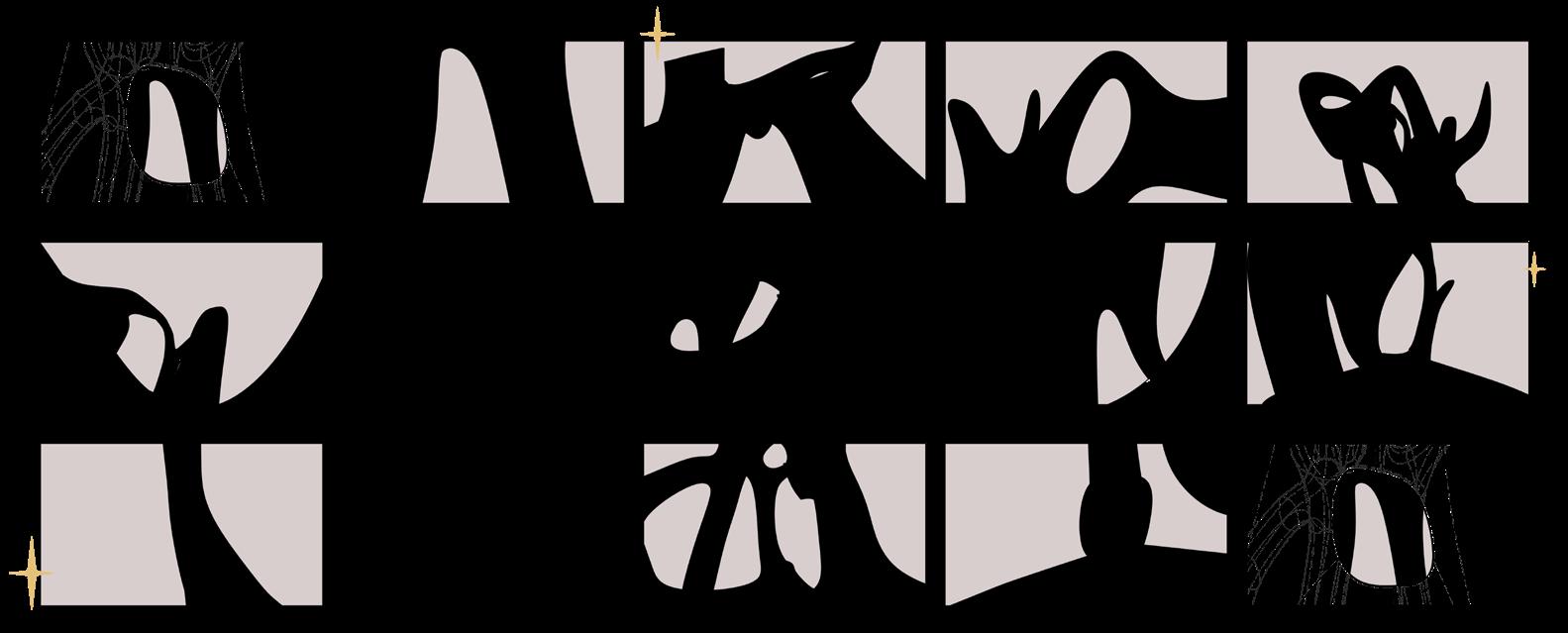
Representational Study
An experiment on organic forms and rendering
This project explored creating and representing an organic form, inspired by the form of the human heart. It was formed through using Sub D modeling in Rhinoceros 7 and explored through vray rendering, twinmotion, and animation (which was story-boarded above). Through the twisting and curving forms, the materiality renders showed how VRay could handle and represent unconventional materials on curving forms.
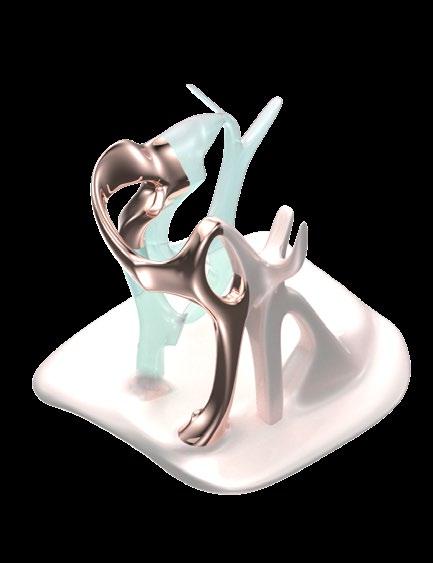
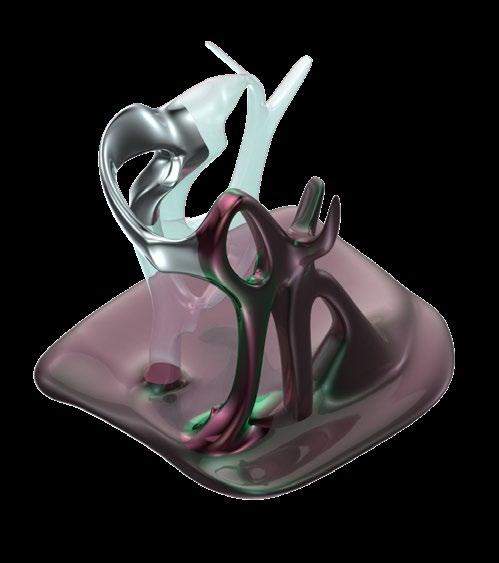
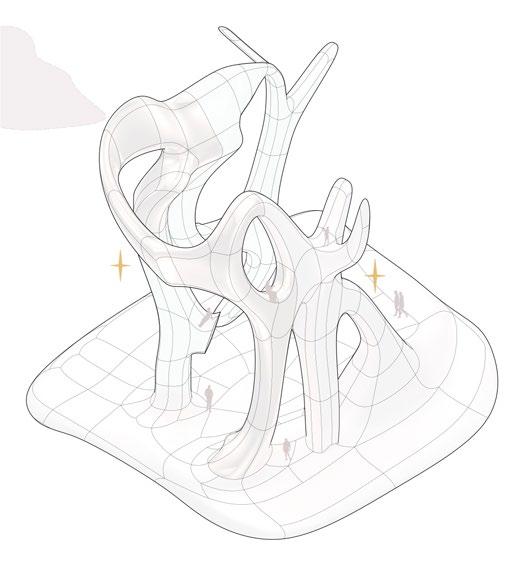
materiality studies
rhino-subd modeling - illustrator - photoshop - vray - cnc milling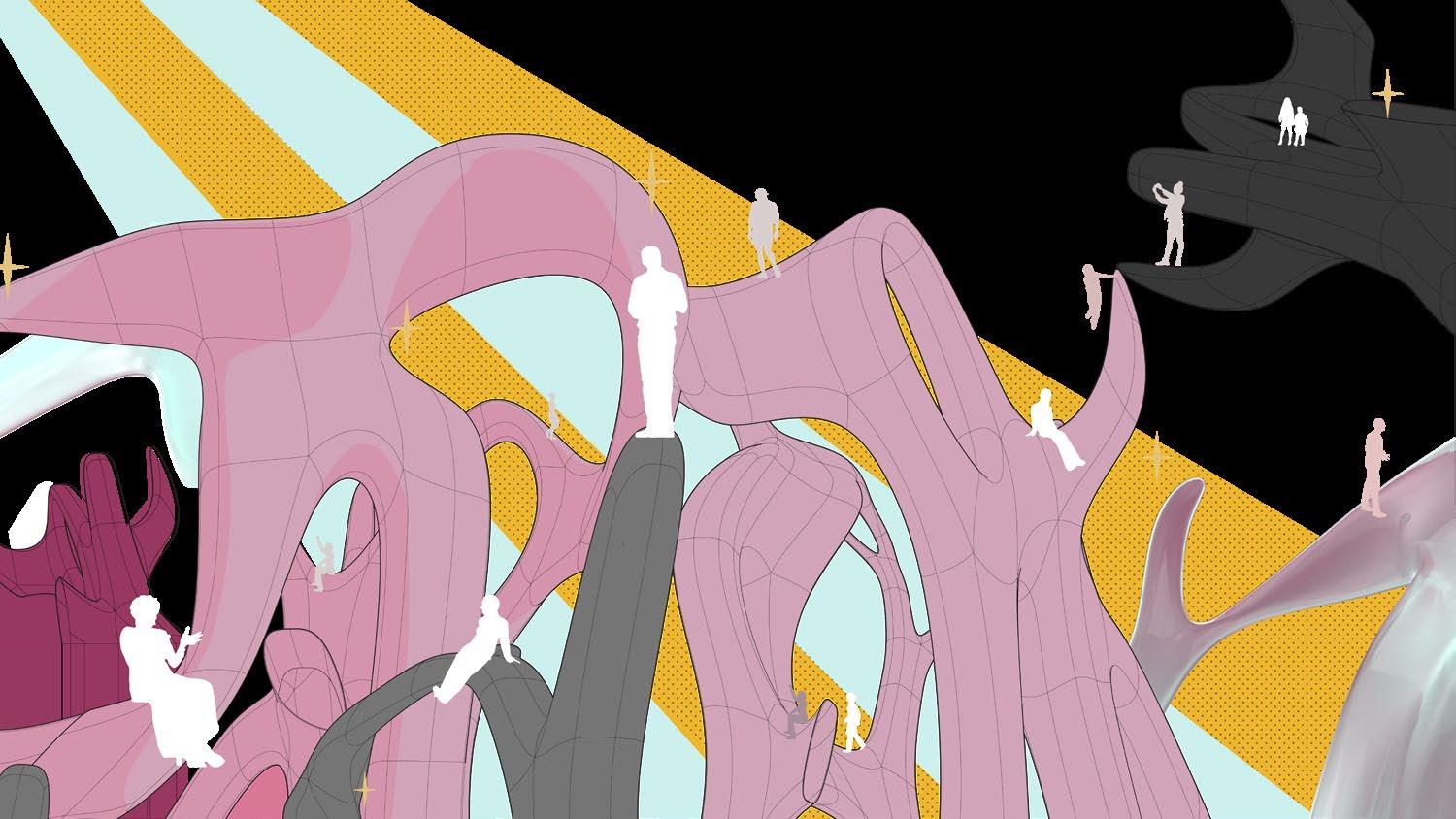
05 - Miscellaneous
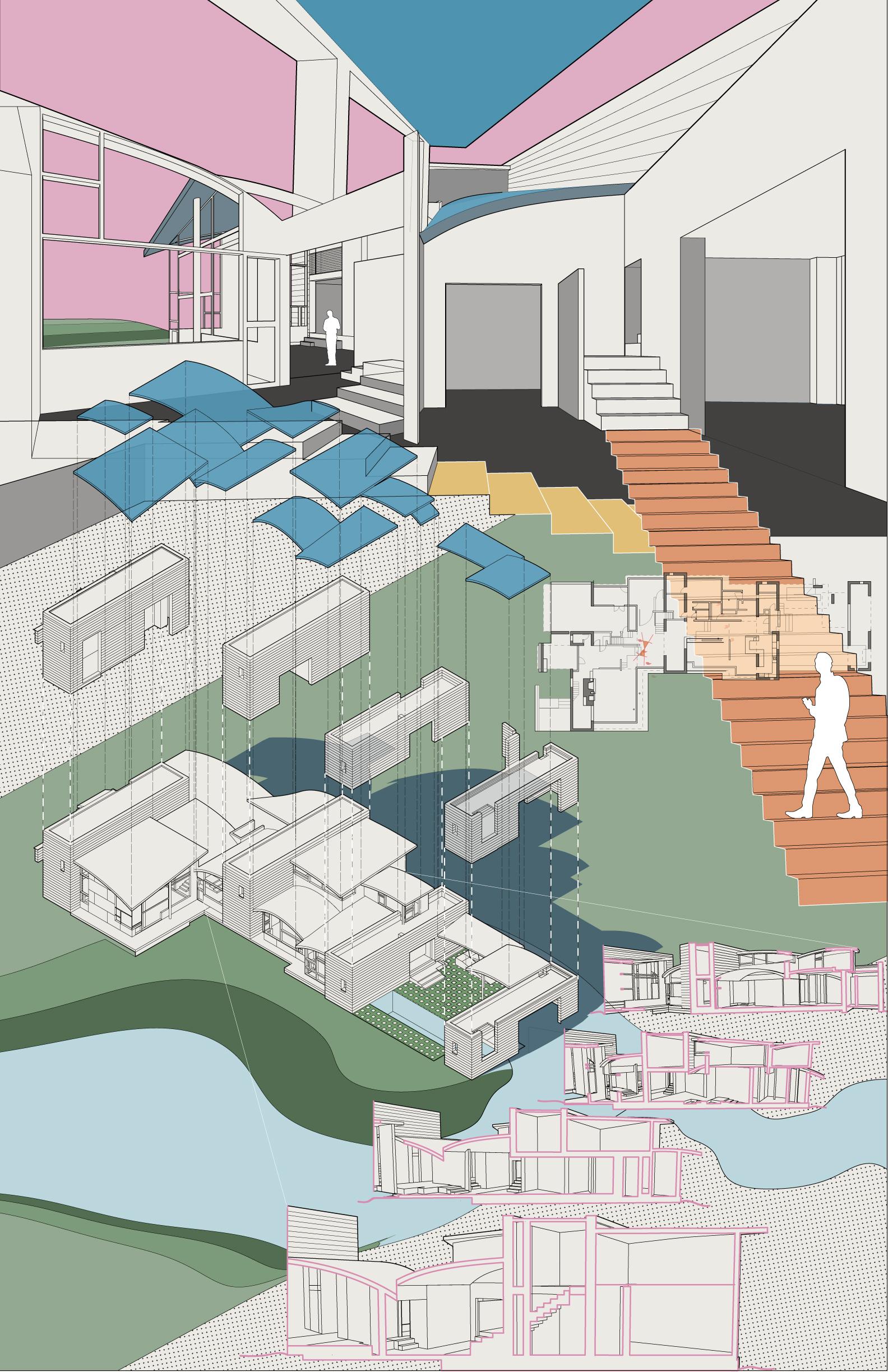
Stretto House Case Study
Spring 2022, Semester 2 - Representation with Lapshan Fong
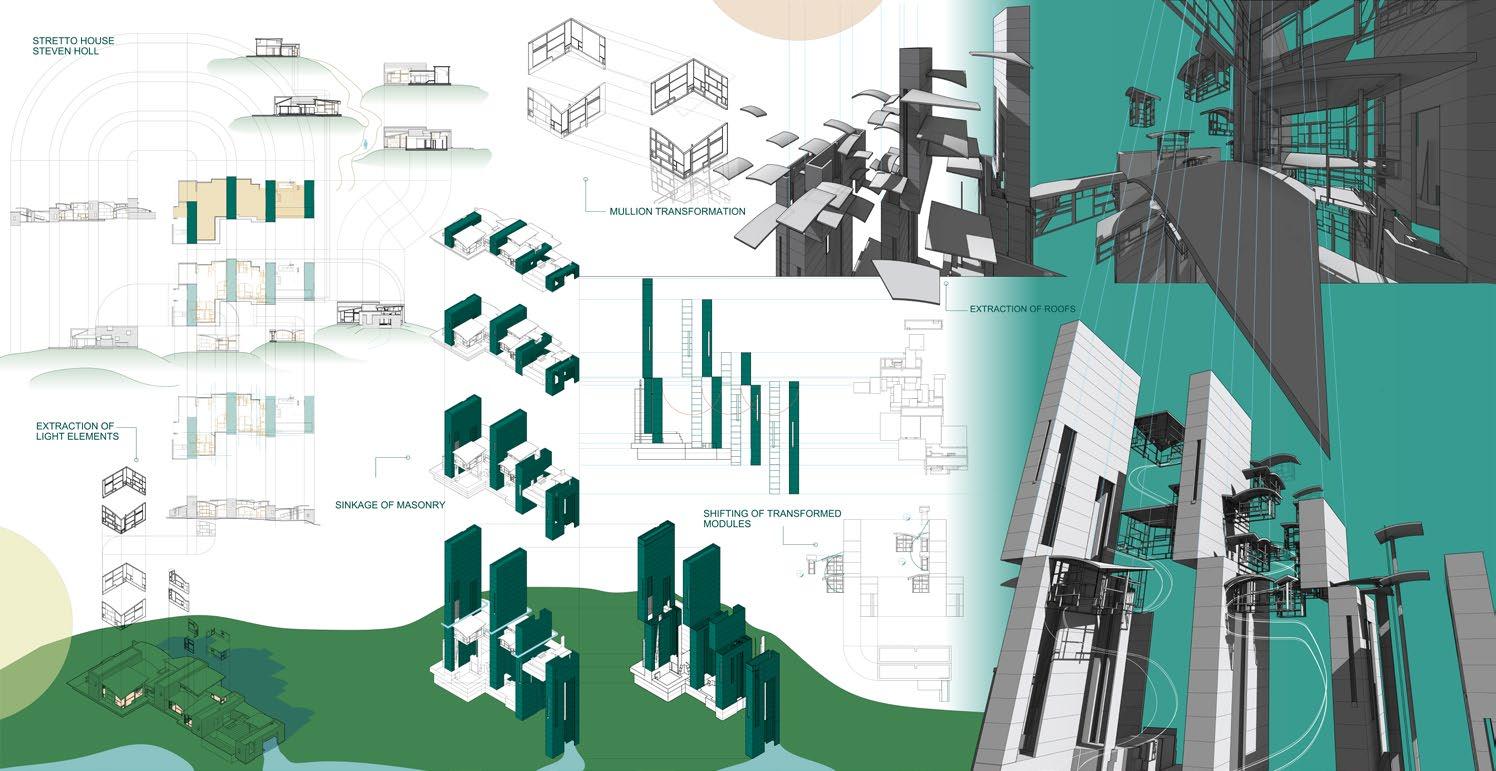
a breakdown of the house + resulting experimental changes
Studies of Steven Holl’s Stretto House led into a deeper breakdown of the building’s organizational elements and ideas of light and void. Exploring the sinking of heavy masses and the almost floating roofing system between, this project taught the basics of Rhino, it’s 2D workflow, and adobe illustrator and photoshop.
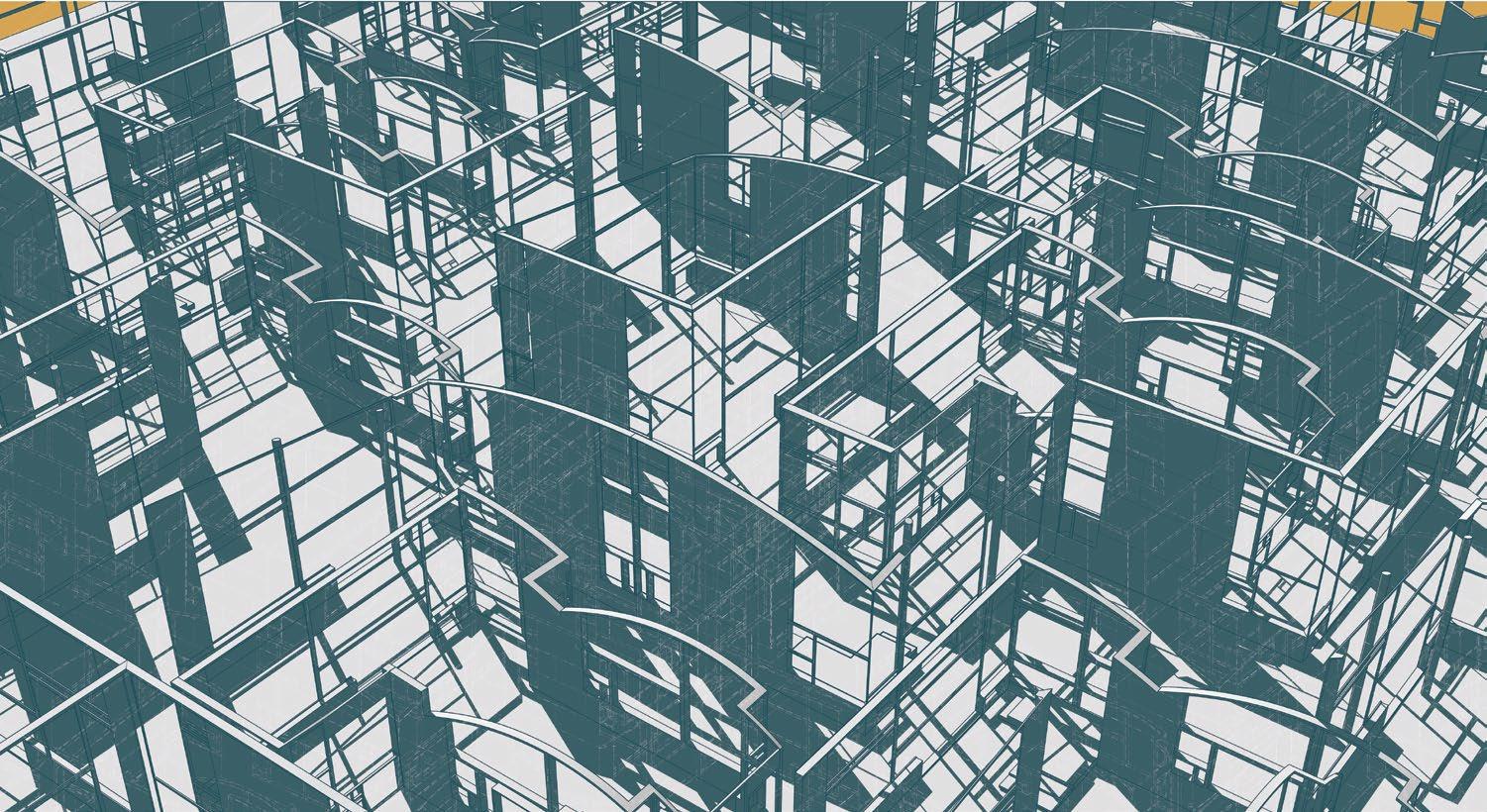
representational study of Steven Holl’s Stretto House
 Annika Nielsen Architecture Portfolio
05 - Envelope Study
Semester 1 - Fall 2021, with Professor Lapshan Fong
Design 101
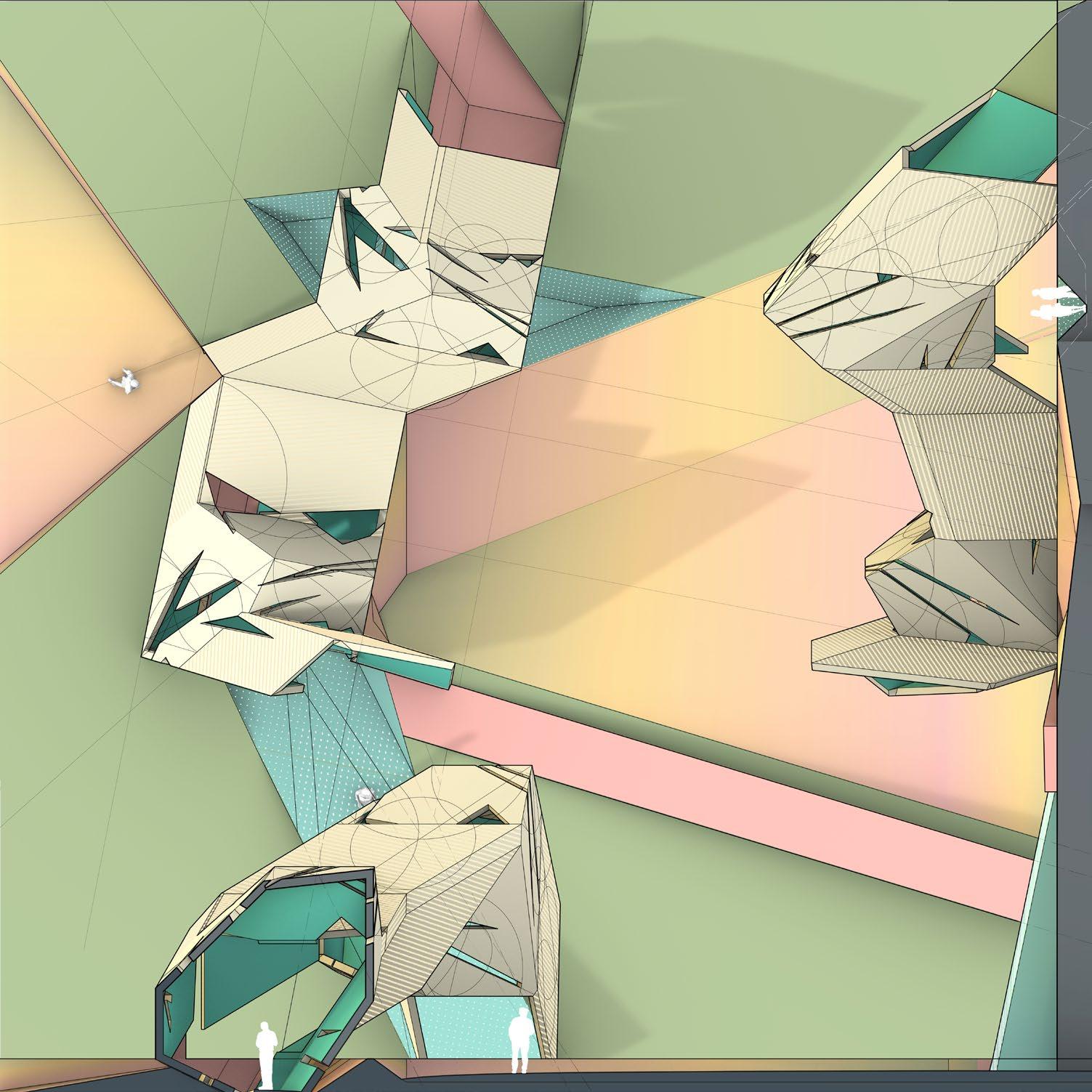
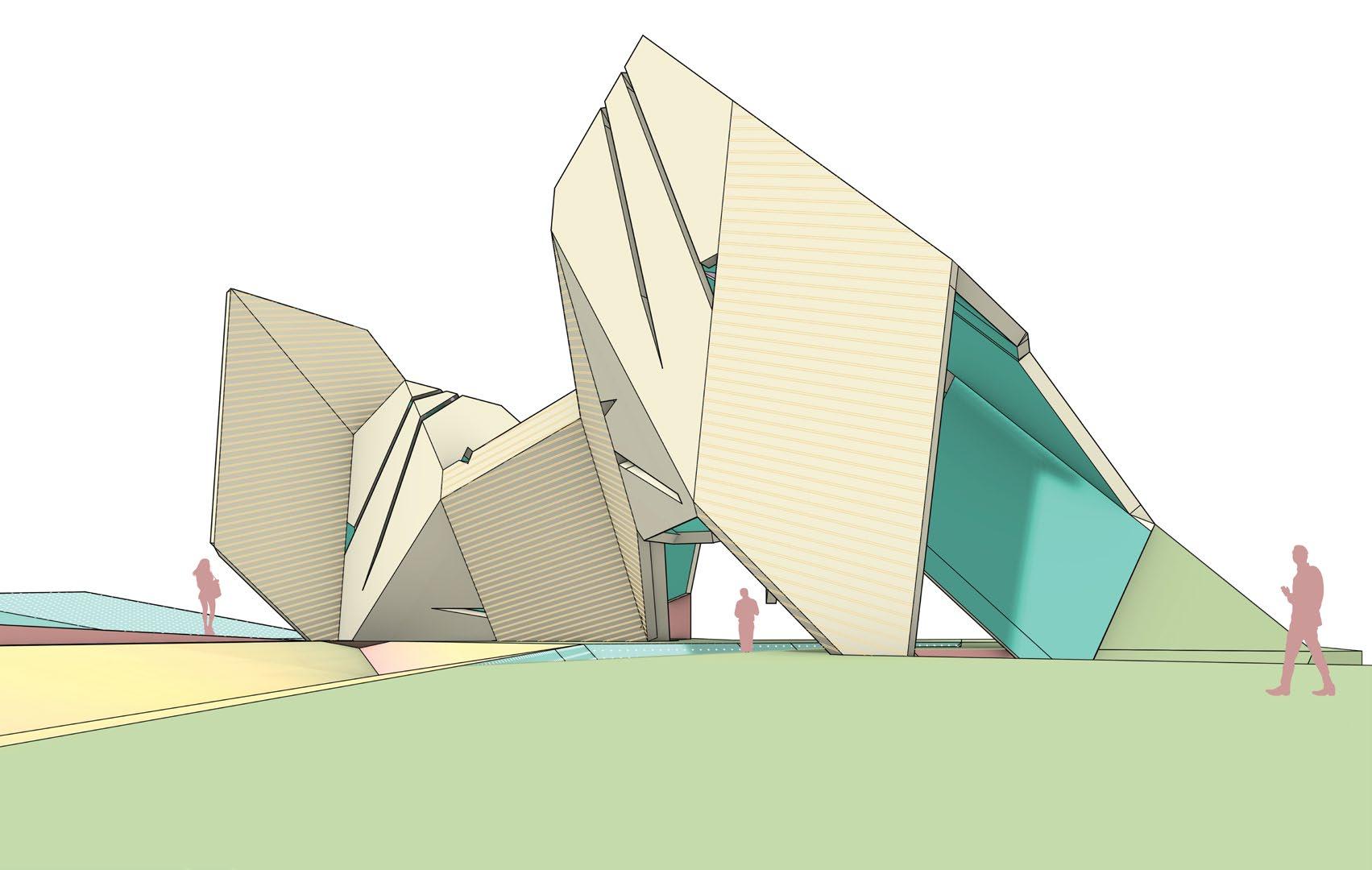
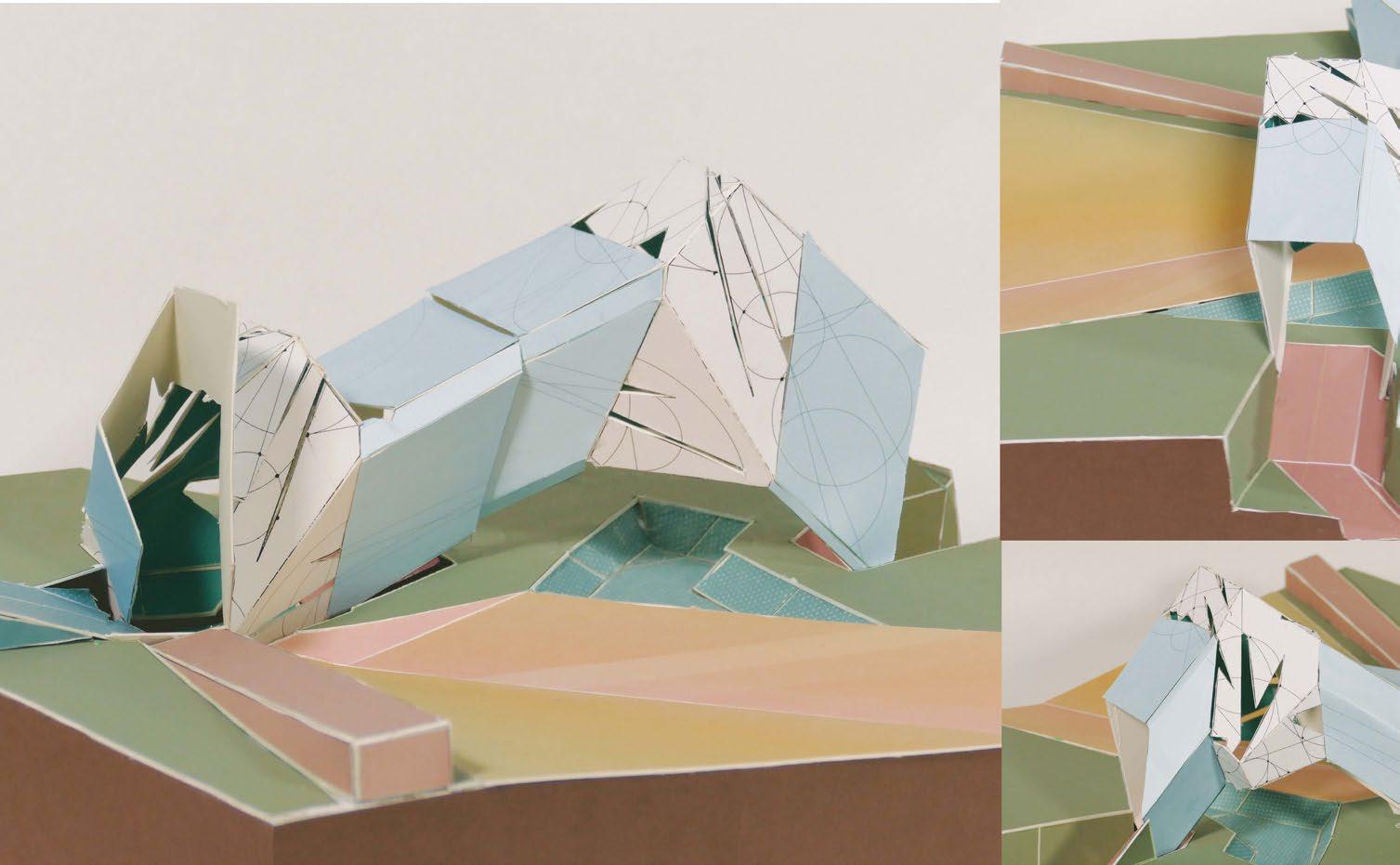
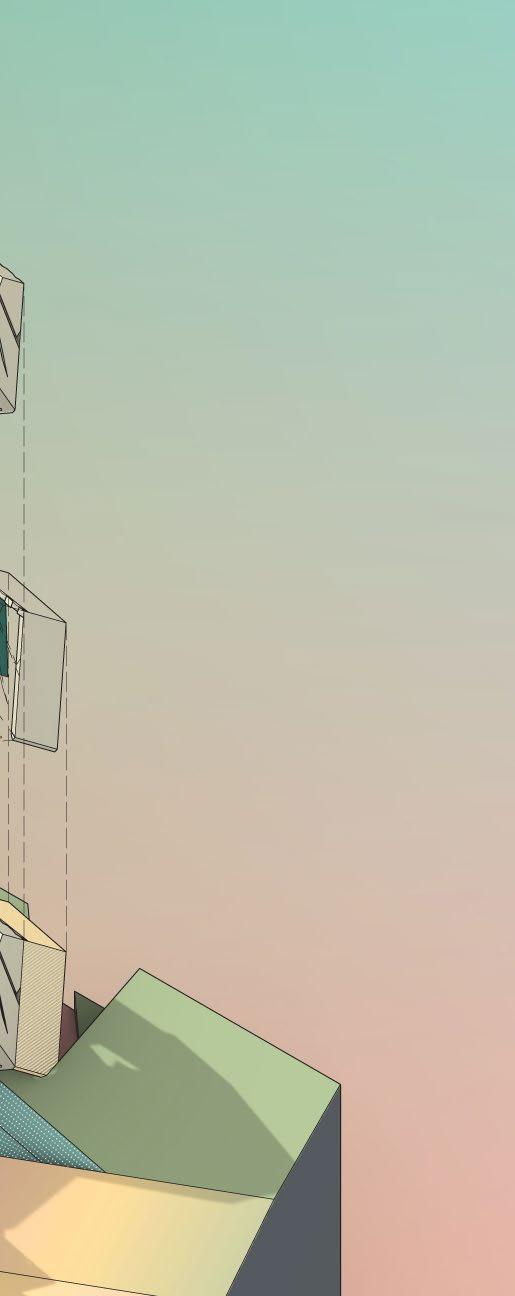
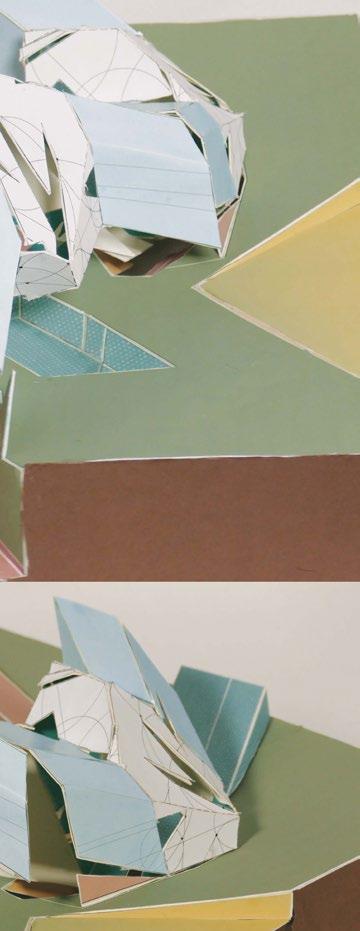
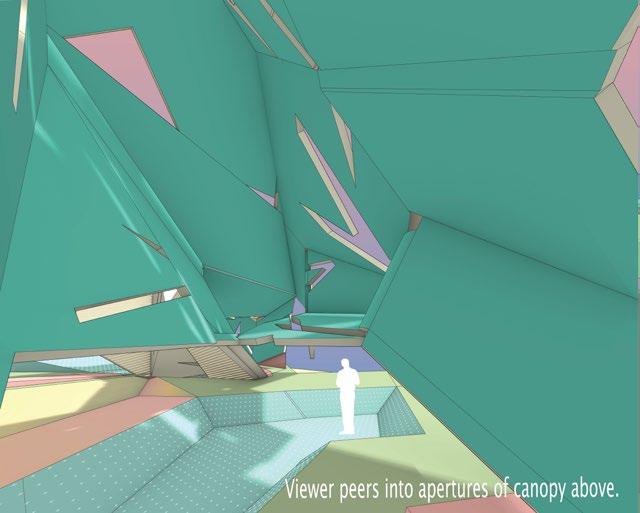
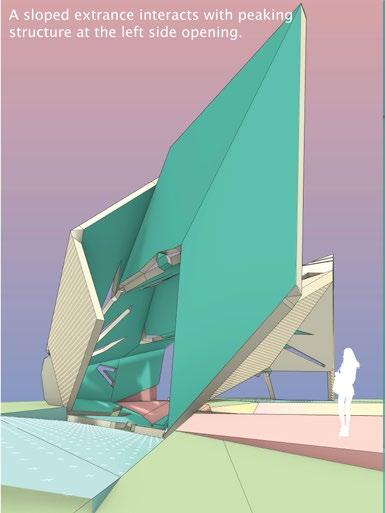
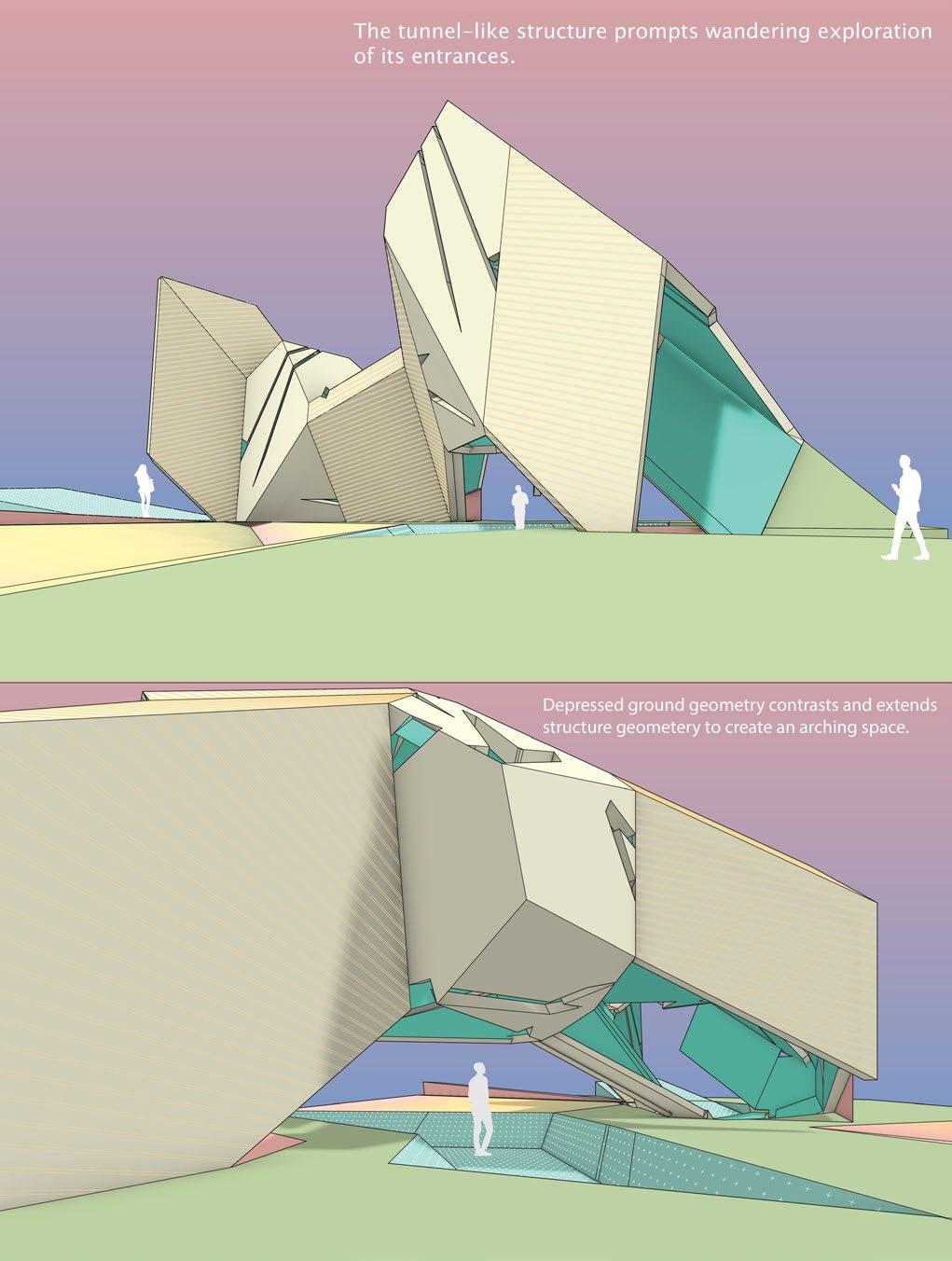
Exploring form through apertures, solid and ground.
As the first design project, this study established the first ideas of space, void, ground, and relationship of inhabitant to both interior and exterior spaces. Beginning from rule-based drawings, the idea of every decision being made from a rule was very rigorously followed.
rhino - illustrator - photoshopInterior and exterior spaces stemming from aperture and stereotomic form studies. The initial form was duplicated and the connected via extrusions of the form’s edge.
Project: Envelope Study
Date: Fall 2021 - Semester 1
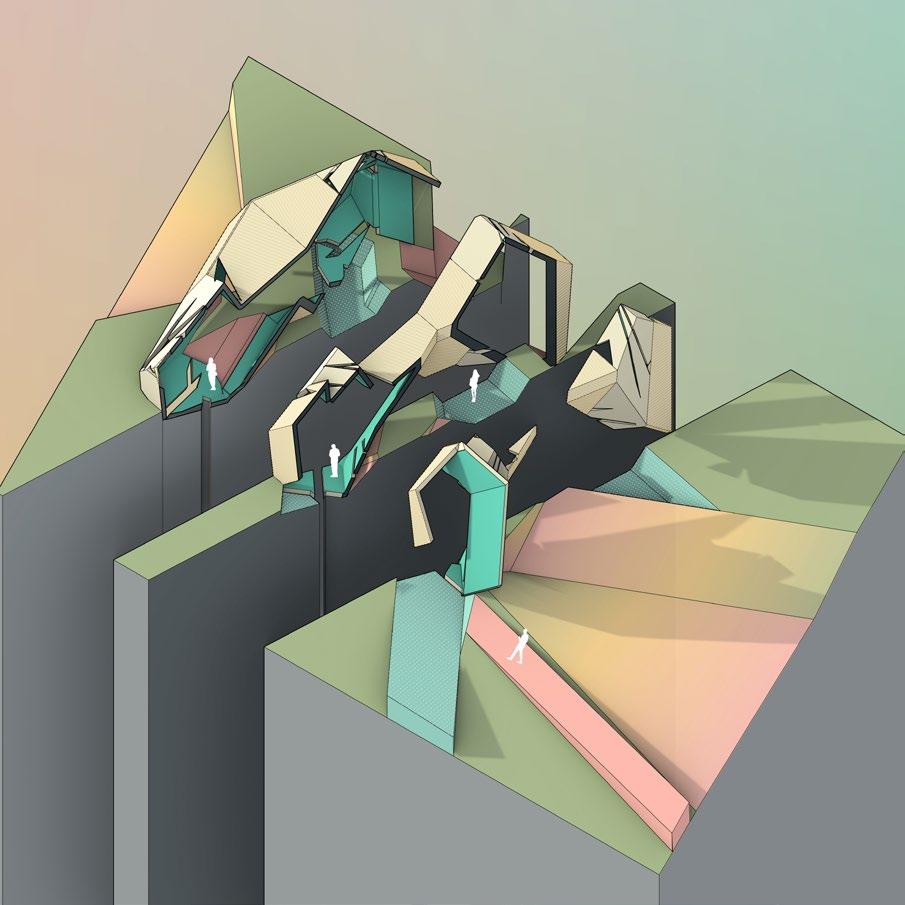
cut axonometric
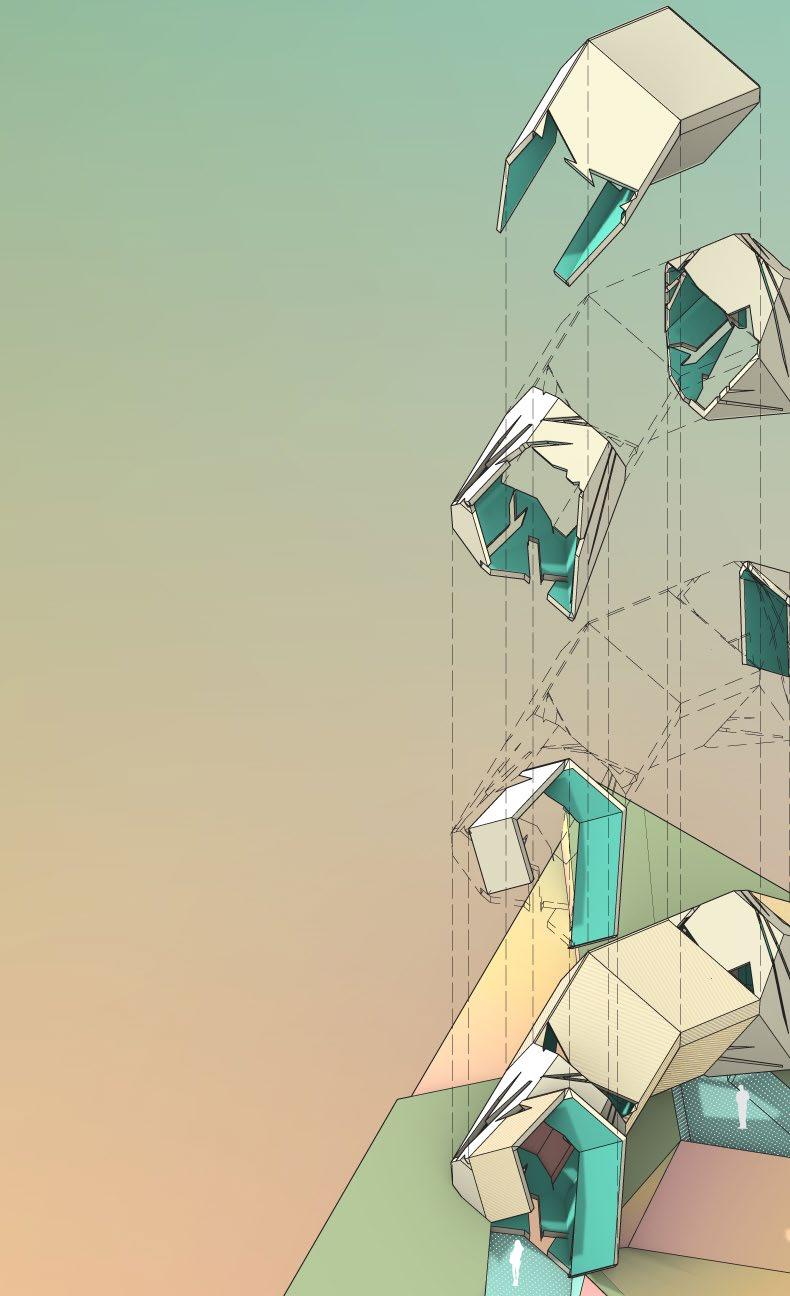
 exploded axonometric
model photos
exterior views
exterior views
Annika Nielsen
exploded axonometric
model photos
exterior views
exterior views
Annika Nielsen
CONTACT
PHONE:
(213) 392 - 3591
SOCIAL:
instagram: @aniels.arch
EMAIL:
aniels10@pratt.edu
annilizn@gmail.com