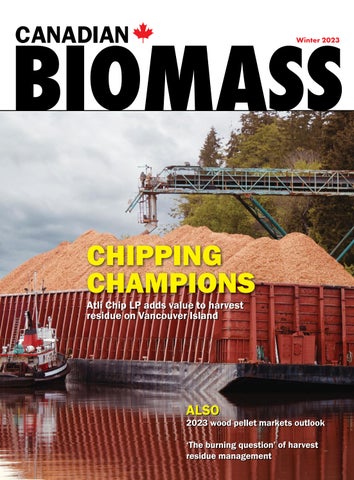
Atli Chip LP adds value to harvest residue on Vancouver Island
ALSO 2023 wood pellet markets outlook
‘The burning question’ of harvest residue management
hargassner-northamerica.com
10 CHIPPING CHAMPIONS
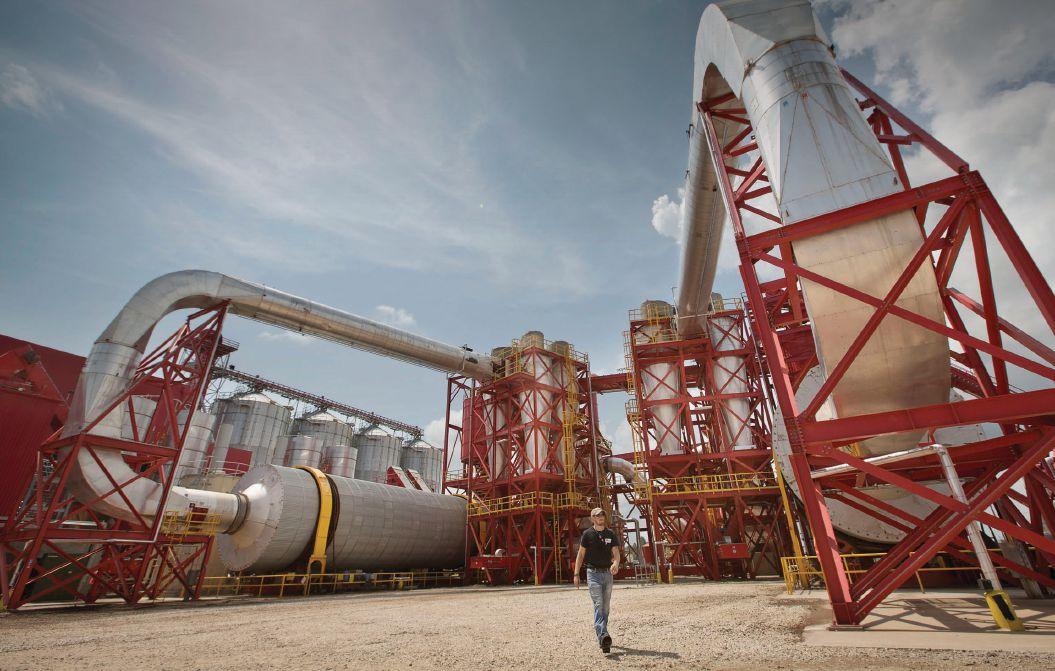
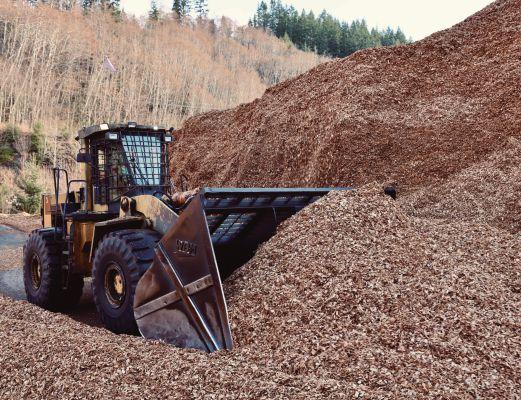
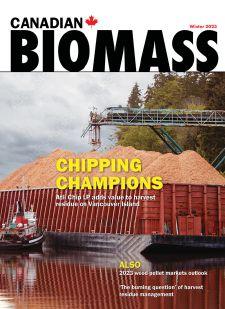
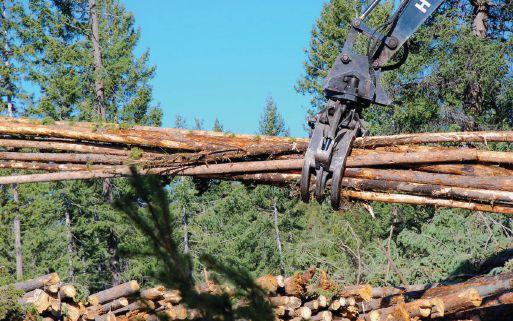
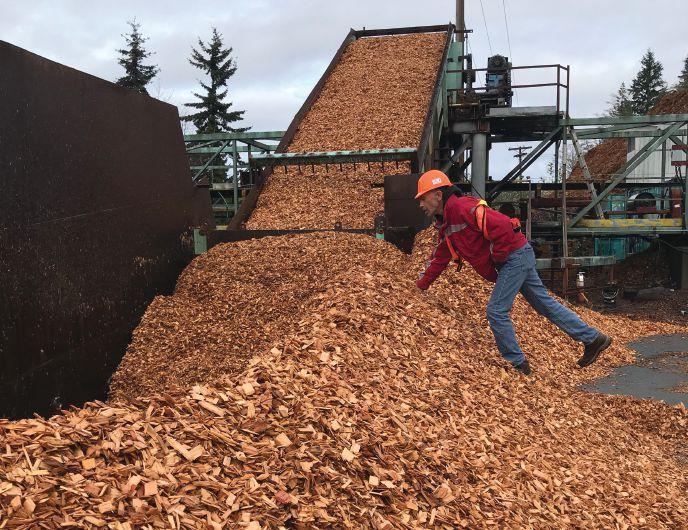
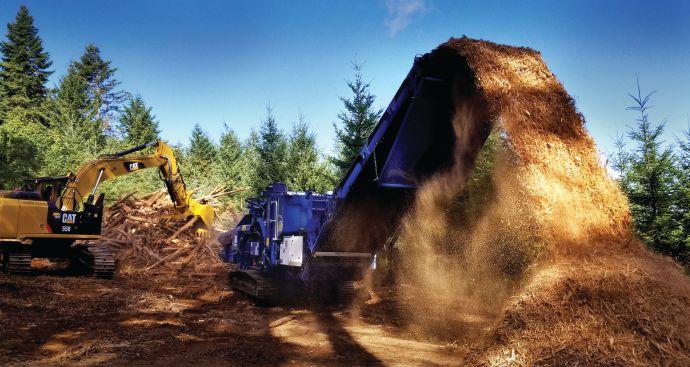
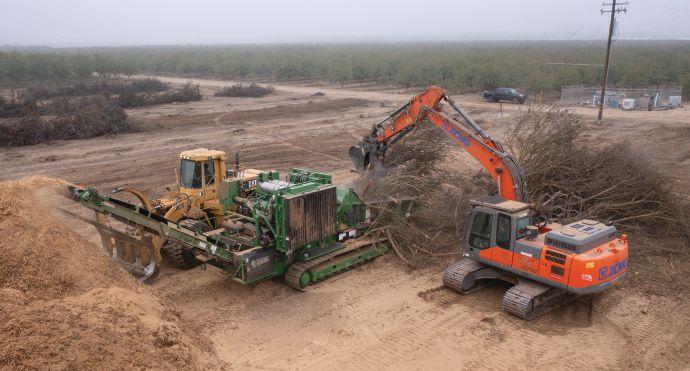
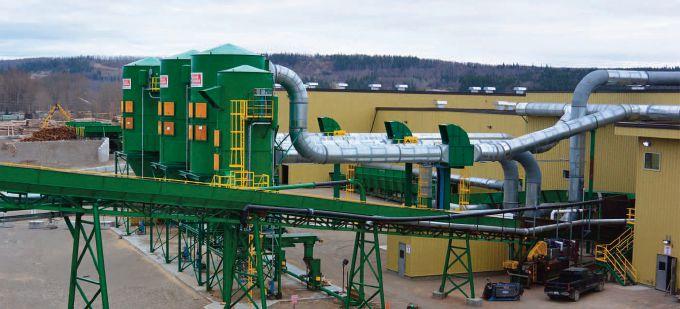
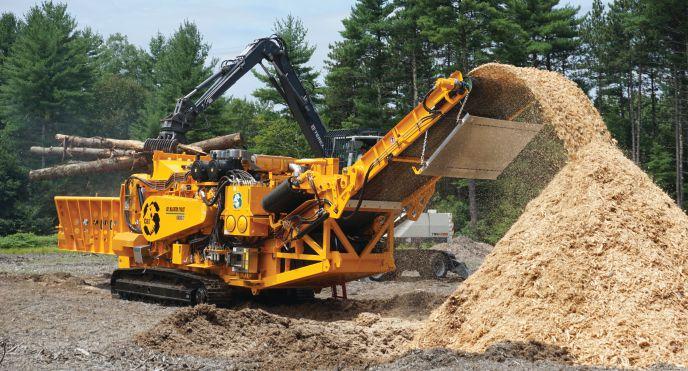
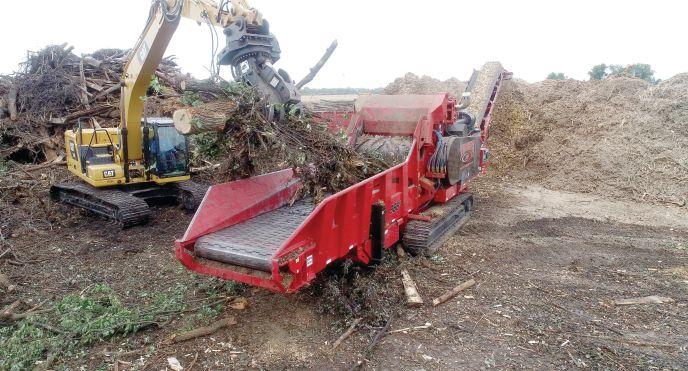
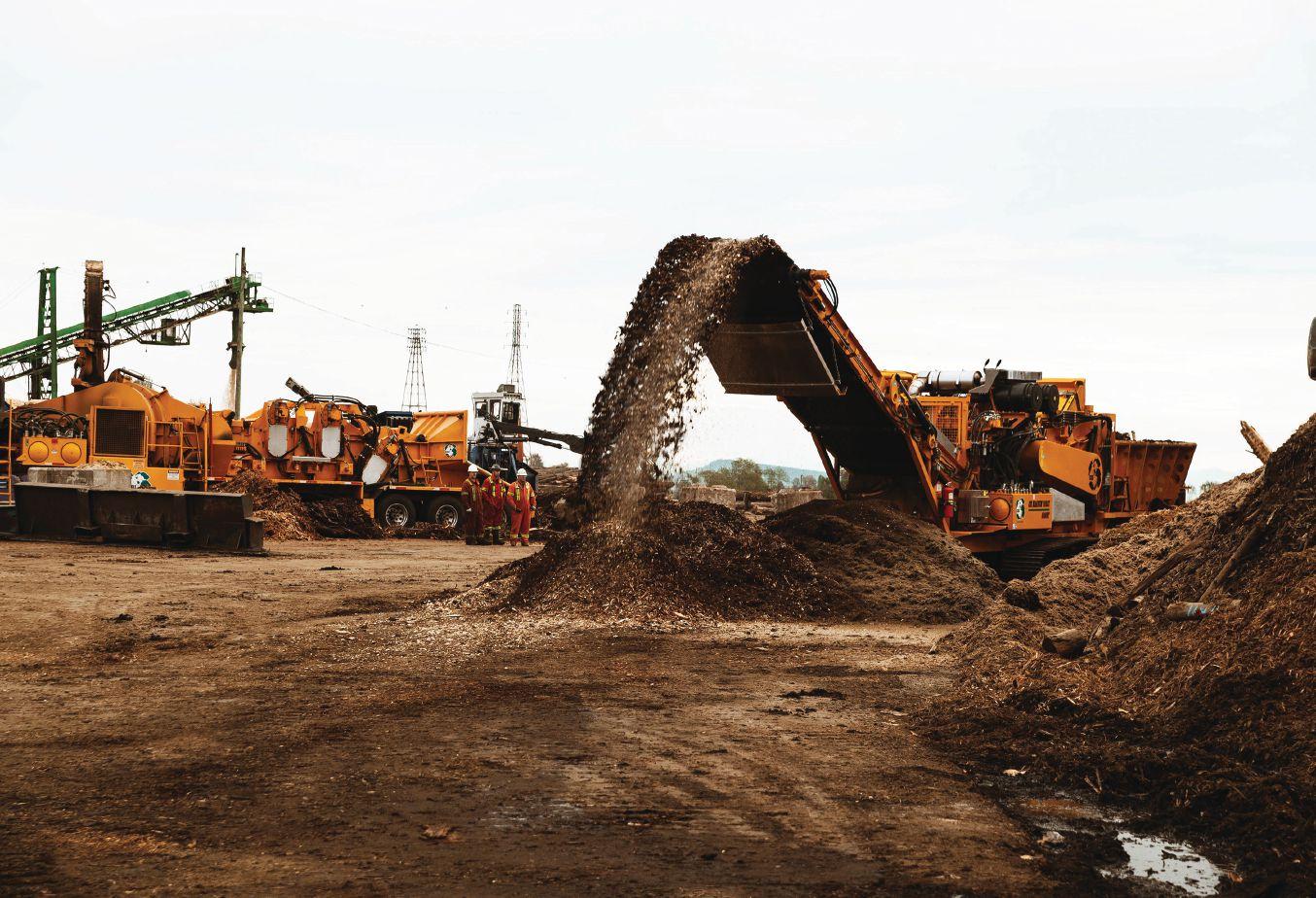
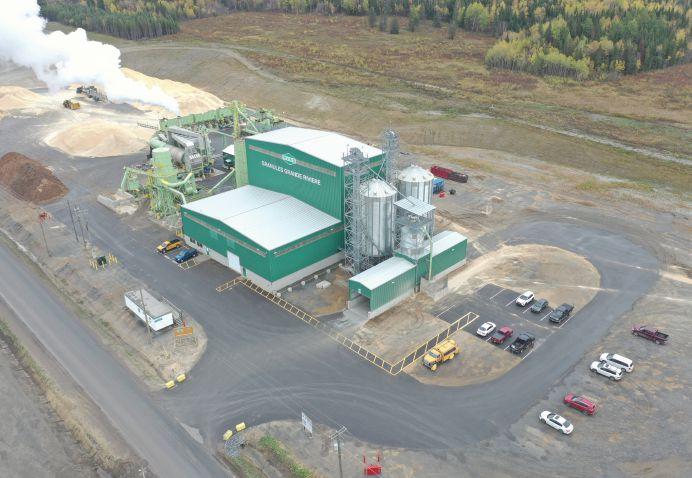
A chipping plant co-owned by ‘Namgis First Nation’s Atli Resources, Wahkash Contracting, and Paper Excellence is humming along in Northern Vancouver Island adding value to logging residue.
8 2023 pellet outlook
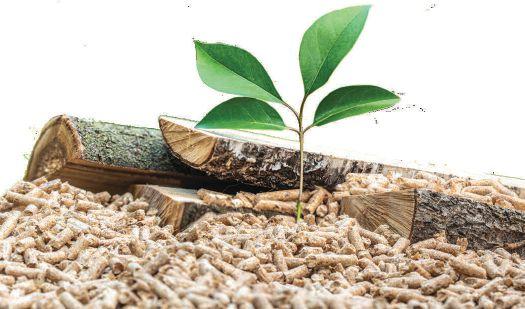
The wood pellet sector is facing two critical challenges this year: inflation and the Russian invasion of Ukraine. FutureMetric’s William Strauss shares the expected impact on global supply and demand.
12 The burning question
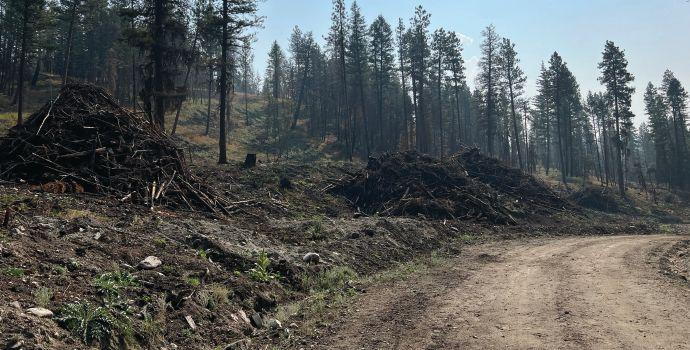
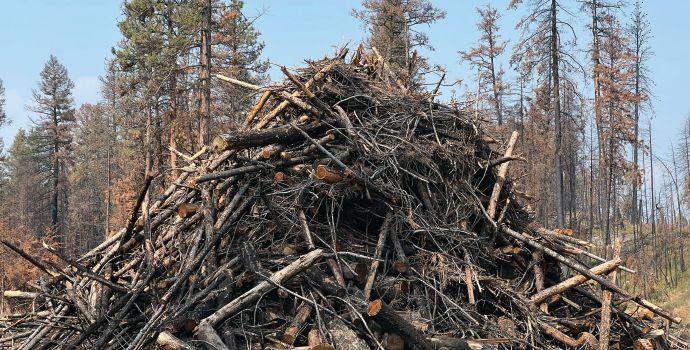
Researchers identify potential forest management alternatives to slash pile burning that would make better use of residual fibre across a range of operational conditions in B.C.
16 Chipper vs. grinder
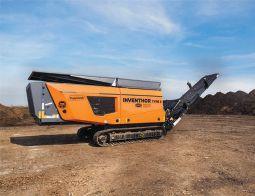
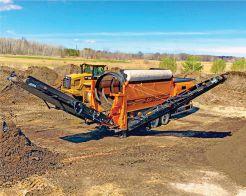
A roundup of advice from chipper and grinder suppliers on choosing the right machine for your woody biomass harvesting needs, factoring in budget, productivity, site demands and more.
20 Grand plans
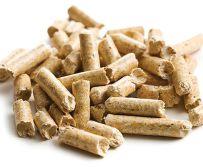
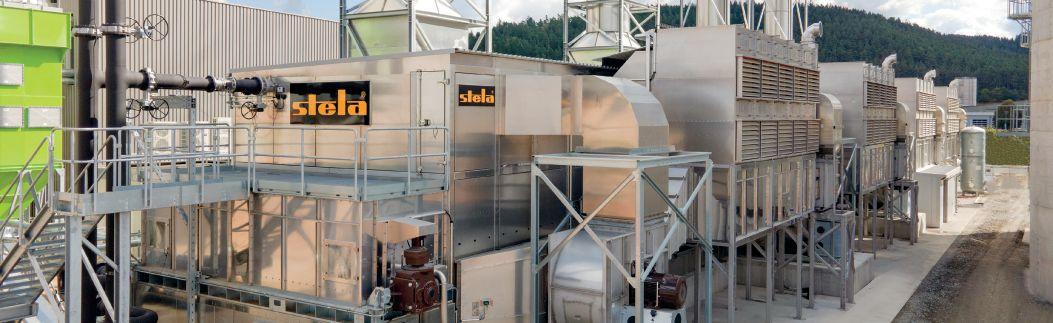
Grand River Pellets’ $30-million capital project at its New Brunswick pellet plant will more than double its nameplate capacity and allow feedstock flexibility.
ORebranding waste
Is it time to stop saying logging ‘waste’?
ne man’s toxic sludge is another man’s potpourri.”
A memorable quote for me during my family’s annual viewing of How the Grinch Stole Christmas. That’s the Jim Carry one – a polarizing movie, to be sure, but I’m team love it.
The hairy green antihero utters these words as he collects bags of garbage from nearby Whoville and appears to feed them into some sort that keeps the lights on in his rather unpleasant lair. This movie is more than 20 years old now. I’d like to waste-to-energy system is a bit more advanced than simple incineration, and that he was a Who before his time.
es. Among their suggestions – in fact the one they argue is the “most important step we can take towards more responsible management of harvest residues” – is for industry to stop viewing logging slash as waste and therefore an afterthought.
We themed this issue around biomass harvesting and one Canadian company that’s following in the Grinch’s green footsteps is Sustane Technologies in Nova designed to divert 70,000 tons per year ofue-added biomass pellets, synthetic fuels, and feedstock for higher value polymers. when they were on the cusp of opening their demo plant in Chester. In this issue, Tristin Mabey with BioApplied shares the latest on their facility and mandate to transform waste on page 22.
Continuing our biomass harvesting theme and turning our focus to the forest inevitably led us to address the elephant in Western Canada’s forest industry: slash pile burning.
Five researchers authored an article on page 12 that challenges the industry to rethink residue management practic-
be managed with as much care and stewardship as the high-value logs that B.C. is known for.”
Being in the business of words, my contribution is to suggest a rebrand.
The term waste implies something to be discarded with no purpose. It’s no longer useful. We in the bottom-feeding biomass world know that’s not the case, but the larger forest or agriculture industries (and government, for that matter) continue to view our feedstock as something to be -
tainty don’t view slash as waste, but rather their bread and butter as a chip plant in northern Vancouver Island. Yet, as CEO
tied to a complex and changing web of incentivising policy and good relationships with other forestry companies.
Now, I’m not suggesting we go with “potpourri,” but certainly I’ll be making a concerted effort to drop the term “waste” for more appropriate language describing the feedstock we value so much.
And here’s to hoping our society learns to value that feedstock as well. •
Volume 23 No. 1
Reader Service
Print and digital subscription inquiries or changes, please contact Serina Dingeldein, Audience Development Manager Tel: 416-510-5124 Fax: 416-510-6875 email: sdingeldein@annexbusinessmedia.com
Mail: 111 Gordon Baker Rd., Suite 400 Toronto, ON M2H 3R1
Managing Editor - Maria Church (226) 931-1396 mchurch@annexbusinessmedia.com
Contributors - Gordon Murray, William Strauss, Eric Nance, Dominik Roeser, Carly A. Phillips, Caren Dymond, Werner A. Kurz, Andrew Snook and Tristin Mabey.
Group Publisher - Anne Beswick abeswick@annexbusinessmedia.com Ph: (416) 410-5248 Mobile: 416-277-8428
Western Sales Manager - Tim Shaddick twshaddick@gmail.com Ph: (604) 264-1158 Fax: (604) 264-1367
Media Designer - Curtis Martin
President/COO - Scott Jamieson
Canadian Biomass is published four times a year: Winter, Spring, Summer and Fall. Published and printed by Annex Business Media.
Publication Mail Agreement # 40065710
Printed in Canada ISSN 2290-3097
Subscription Rates: Canada - 1 Yr $57.00; 2 Yr $102.00 Single Copy - $9.00 (Canadian prices do not include applicable taxes) USA – 1 Yr $121.50 CDN; Foreign – 1 Yr $138.00 CDN
B.C. EARMARKS $50 MILLION TO INCREASE FIBRE ACCESS
“We know that access to fibre is one of the most critical challenges facing the industry and we’re working hard to find new sources,” Premier David Eby said at the Truck Loggers Association (TLA) convention in Vancouver in January.
Eby said the funds would be funnelled through the Forest Enhancement Society of BC (FESBC). Funding will be used for projects and programs that increase the use of low-value or residual fibre, including trees damaged by recent wildfires and waste left over from logging that would otherwise be burned in slash piles.
“Programs to assist in short-term mitigation for our workers and communities is welcomed. Our desire is that this leads to part of the reforms needed to ensure longer-term sustainability of our members,” said Bob Brash, TLA executive director.
“The FESBC is a proven partner in delivering projects on the ground that benefit communities, workers, and the health of our forests,” Forests Minister Bruce Ralston said in a statement. “Forestry is – and will remain – a foundation of B.C.’s economy.
ANAERGIA TO SUPPLY RNG TO IRVING OIL’S SAINT JOHN REFINERY
Irving Oil and Anaergia have announced a partnership that will supply Canada’s largest refinery with renewable natural gas (RNG), as well as Irving Oil’s other operations such as delivered natural gas.
The RNG will be produced at Anaergia’s Rhode Island Bioenergy facility, where food waste and other organic wastes that would otherwise have been landfilled, are transformed into renewable fuel.
About 350 million cubic feet of RNG will be supplied annually from Anaergia Inc. into the regional pipeline where it will reduce the need for conventional natural gas supply to Irving Oil’s operations, including the Saint John refinery in New Brunswick.
The Rhode Island Bioenergy Facility, located near Rhode Island’s central landfill in Johnston, is designed to divert over 100,000 tons per year of waste from landfills and it is the largest anaerobic digester processing organic waste in New England.
NOVA SCOTIA POWER WILL USE MORE BIOMASS: PROVINCE
Nova Scotia Power will be using more sustainably harvested biomass over the next three years under a new renewable electricity standard that requires the utility to purchase 135,000 MWh of readily available renewable energy in 2023, 2024 and 2025.
The closure of Northern Pulp in Pictou, N.S., and an increase in damaged trees from hurricane Fiona means biomass is likely to be the only readily available option during that time, the province said in a news release.
As market prices have declined, forestry workers should know that government has their backs. That’s why we are taking action today and providing increased funding to get more fibre to the mills that need it.”
CANADA’S WOOD PELLET EXPORTS FORECAST TO GROW 5%: USDA
The U.S. Department of Agriculture’s Foreign Agriculture Service (FAS) is forecasting that Canada’s wood pellet production will remain stable and its exports will grow by five per cent.
In their annual report released in January, FAS Canada estimated the country’s producers totalled 3.5 million metric tons of wood pellets in 2021, and stated 2022 numbers are expected to be similar.
The report also noted about 90 per cent of that production was exported, and 2022 export numbers are expected to be even higher, with limited domestic demand.
BOREA CANADA TO EXPAND QUEBEC FOREST BIOPRODUCTS PLANT
A Quebec producer of essential oils and hydrosols from forest residues is expanding its business thanks to federal funding assistance.
BoreA Canada will receive over $100,000 in financial assistance from Canada Economic Development for Quebec Regions (CED) to acquire and install specialized production equipment to improve its productivity and production capacity.
BoreA Canada’s operations use recovered forest residue and include the transfer of residual production material to a cogeneration plant. The expansion project will see the company move to a new building, increase production, and reduce its GHG emissions by 85 per cent, according to a CED news release.
Jean-Claude Villeneuve, president of BoreA Canada, said in the release they plan to purchase and install specialized equipment that will enable them to increase productivity while reducing their environmental impact.
Researching the future
OBiomass research holds key to unlocking a world of possibilities
By Gordon Murray
ur vision at the Wood Pellet Association of Canada (WPAC) is two-fold. First, to grow a resilient pellet sector that creates green, renewable products at the forefront of the global transition to a low carbon economy. And second, to maximize the sector’s innovation in the bioeconomy.
We’re a small team with a big passion for excellence and unsurpassed commitment to safety, sustainability, our members, and to the communities that depend on our sector to do things right.
I believe the wood pellet sector hits it out of the park most days – we’re creating responsible, renewable and sustainable energy to displace fossil fuels, we’re improving our safety record year over year, and we are investing in people and communities.
As the world’s population continues to grow, so will the demand for cleaner energy solutions and better products. The fact is that it’s research that is going to propel us forward. WPAC is one of the few forest sector associations in Canada with a research arm. Our success depends on provincial and federal governments, scientists and academics, safety experts, producers and our customers who support us with both funding, expertise and time.
For over 15 years WPAC has partnered with the Biomass and Bioenergy Research Group (BBRG) at the University of British Columbia. The work has been so successful that in 2019 we hired one of UBC’s star graduates, Fahimeh Yazdan Panah, Ph.D., as our director of research. Fast forward to today, Fahimeh is globally recognized for her leadership in greenhouse gas solutions and research related to the safe use, storage and transportation of pellets.
TRAILBLAZERS
Today wood pellets are gaining international recognition as a gateway to producing different types of high value fuels and
biomaterials. Through our research and collaboration with partners, we are trailblazing on the product development, safety and supply fronts.
There’s a great source of pride among these trailblazers, and rightly so. Shahab Sokhansanj, Ph.D., BBRG’S research leader at the University of British Columbia says, “Our engineers and scientists focus on the gap between the raw biomass source and biomass conversion,” adding that, “No other place in the world is as focused on pelletization mathematical modelling, on logistics of feedstock supply and post-production handling of pellets as our group.”
It should be noted that Sokhansanj received the 2016 International Bioenergy Conference and Exhibition’s Founders Award for his contribution to the development of engineering science around post-harvest handling of biomaterials, and a gold medal in drying science at the International Drying Symposium held in Valencia, Spain, in 2018.
The fact is we are making real tangible breakthroughs. Over the past four years, with funding from the federal government under the Canadian Agricultural Partnership, WPAC and BBRG collaborated on research focused on production, logistics and commercialization of marketable pellets from underutilized low-quality biomass in Canada. Key achievements included:
1. Pre-processing and pelletizing low-quality biomass and generating pellet production data using a newly purchased pilot-scale pellet machine;
2. Developing and comparing supply chain scenarios and identifying the most cost-efficient supply chain scenario considering the possibility of integration with existing grain and wood pellet supply chains; and
3. Identifying a clear commercial pathway to make marketable pellets from low-quality biomass resources a success, including developing quality certification.
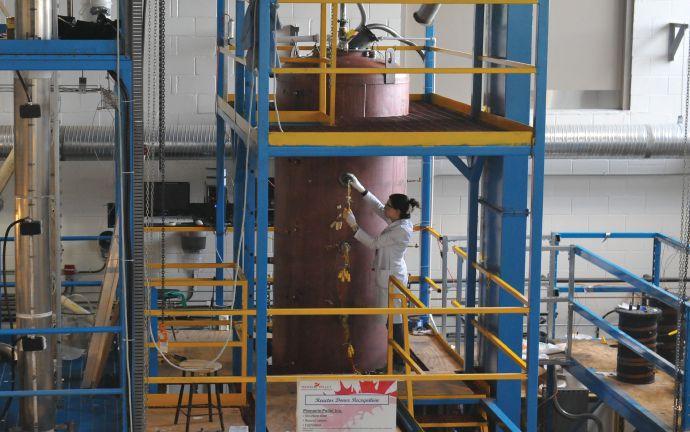
WPAC’s Fahimeh Yazdan Panah, Ph.D, works in the laboratory of the Biomass and Bioenergy Research Group (BBRG) at the University of British Columbia. Photo courtesy UBC BBRG.
Research is also making our sector safer. Fifteen years ago, there were a series of fatal accidents that involved stevedores going into ship holds carrying pellets and being overcome by carbon monoxide. No one really understood what was creating this dangerous situation. We knew we had to dig into this issue to find out why it was happening and what steps we could take to prevent these tragedies. We installed a pilot-scale pellet silo in the lab to study the effects off-gassing. The collection of that data set the foundation of international standards and practical procedures that are being used globally for the storage, handling and transportation of wood pellets.
Federal funding has also enabled further research into fibre pile management. Our group has studied the effects of fibre stored in piles, and the self-heating and combustion that can occur over time. The risk of spontaneous ignition increases if the raw material or biofuel becomes moist, the stored volume is large, and the ambient temperature is
high. This research and resulting study have created new best practices for fibre pile management.
NEW FRONTIERS
We are currently taking proactive steps now to ensure a strong funding foundation for ongoing research and product development by building on our positive relationship with the Government of Canada and on the success of our current research initiatives to further mobilize new biomass feedstock sources.
BBRG and WPAC have applied for a new five-year research funding agreement with the Government of Canada under the recently announced Sustainable Canadian Agricultural Partnership (SCAP) program for the period of April 1, 2023, to March 31, 2028.
There are lots of synergies between wood and agri-pellets. Solving the logistical complexities associated with the dispersed crop residues and reducing the high ash/chlorine contents in herbaceous crops would make agri-pellets another source of low carbon feedstock.
THE SKY IS THE LIMIT
We now know the answer to a lot of questions that we didn’t know 10 years ago. Today, that data is the foundation of international standards and practical procedures that are keeping people safer, contributing to the global fight against climate change, reducing energy poverty here in Canada, and unlocking the door to the new bioeconomy; one where pellets spark new pathways, products and innovations.
But we know we have new frontiers to cross and more opportunities to explore. We will only get there through collaboration and investment. As Gary Bull, Ph.D., professor and head of the University of British Columbia’s Department of Forest Resources Management, says, “Wood pellets have an incredibly important role to play in society, and we will see a huge evolution. The opportunities for using wood pellets right here at home and around the world are basically limitless.” •
Gordon Murray is the executive director of the Wood Pellet Association of Canada.
Challenges ahead A 2023 wood pellet markets outlook
By William Strauss
The wood pellet sector is facing two critical challenges this year: the impact of inflation on the pellet fuel supply chain, and the impacts of the Russian invasion of Ukraine on the global supply and demand.
CHALLENGE: HIGHER WOOD COSTS
High inflation is creating challenges in every sector. For pellet manufactures, there are obvious concerns about labour costs, consumables costs, and power costs. However, the largest cost to producing wood pellets is the cost of the delivered woody feedstock.
Pellet factories, as FutureMetrics has stated in a number of presentations, are “bottom feeders”. They depend on the residuals from sawmills and from managed working forest harvests. Pellet plants cannot pay sawlog pricing for feedstock. Thus, the demand by primary users of forest products, i.e., sawmills, impacts the supply of the sawmill and forest by-products. (On average, about 60 per cent of a sawlog becomes lumber or other finished products. The rest is sawdust, edge slabs, and bark.)
Part of the current pellet feedstock challenges in North America derive from the U.S. federal government’s response to high inflation. Higher interest rates make the cost of home ownership higher. The monthly mortgage cost for a typical home in the U.S. has doubled in the past 18 months. As a result, starts for new private homes in the U.S. have declined significantly since earlier this year.
The drop in demand for lumber has led to a slowdown in sawmilling output. This is most acute in Western Canada. According to the Forisk Blog (forisk.com) “…in Western Canada, there has been at least 1.7 BBF of announced capacity curtailments in 2022, mostly motivated by increased log prices and falling lumber prices, which
reduces or eliminates margins.”
Less output by sawmills cascades into less sawmill residuals. And lower demand for sawlogs lowers the production of forest residuals.
Adding to the cyclical downturn in the housing market are high diesel fuel prices. A significant proportion of the cost of feedstock delivered to a pellet factory is embodied in the cost of the diesel fuel used for transportation. The larger the draw radius of the pellet factory (i.e., the larger the factory, or the slower the forests grow at higher latitudes), the more sensitive is the factory to changes in diesel fuel costs.
Pellet producers in almost all locations, not just in North America, are experiencing similar challenges.
Housing markets are traditionally cyclical and eventually housing starts will revert to trend. Diesel fuel costs may reset at a higher “new normal” which would
mean higher costs in every sector in which transportation is needed.
CHALLENGE: RUSSIAN INVASION
The Russian invasion of Ukraine and the resulting sanctions have roiled every sector of the global economy. Energy markets, including the wood pellet sector, have been strongly impacted.
As Table 1 shows, Russia, Belarus, and Ukraine contributed about 15 per cent to the total international trade in wood pellets in 2021.
The majority of that trade went into Western Europe. Many of the pellet producers in Western Russia are certified under both SBP and ENplus, thus allowing their use in the European and UK industrial and heating markets. As a result of the Russian aggression in Ukraine, those certifications have been suspended indefinitely. Subsequently, direct imports
into western Europe from Russia and Belarus have almost gone to zero.
The impacts from this sudden shortage have been dramatic. Both the industrial and heating pellet sectors have experienced unprecedented price spikes.
Several factors have mitigated the initial impacts; allowing spot prices to fall from their record highs.
Aas of mid-December 2022, the winter weather in Europe has been unusually mild. For example, the sum of heating degree days (in C) for October, and November in Vienna was 476 and 488 in 2020 and 2021 respectively. In 2022 is was 382. Lower than usual heating demand has allowed stocks of pellets to be increased, taking some pressure off of prices. Natural gas prices in Europe have also fallen significantly from their highs, which is motivating increased use of natural gas over pellets.
In the industrial sector, unexpectedly slack demand in the UK has allowed some cargos to partially fill the EU heating pellet gap. For example, the long-delayed start and ramp up the MGT Teeside 299 MW heat and power project means that at least the equivalent of about one million tonnes per year (about 20,000 tonnes per week) of pellet production that was built to supply that plant can spill into other markets. Also in the UK, at the time of this report, the Lynemouth power station (three 133 MW boilers or the equivalent of well over 1.5 million tonnes per year of pellet fuel demand) has been offline for many weeks.
But both of those mitigating circumstances will likely fade. The weather will turn cold and the power stations in the UK will soon be consuming pellets at their expected rates.
While Russian pellets are not being shipped directly into major EU markets, some Russian pellets may be “leaking” into some European countries. One possible pathway is via Turkey. Turkish exports to EU countries increased significantly as the sanctions kicked in.
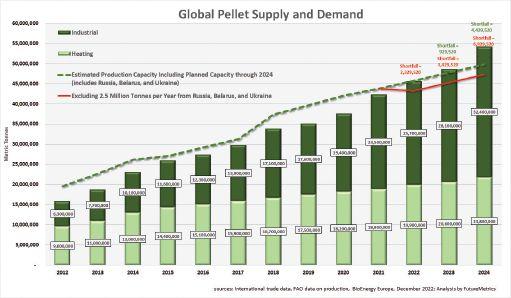
Without the exports from Russia and Belarus (and Ukraine), even considering some leakage, the global supply of pellets is significantly short of demand. Figure 8 shows historical demand and supply and forecast demand based on current policies. As the chart shows, the markets were already tight in 2022 prior to the sanctions. The sudden and unexpected drop of supply made the aggregate global markets for pellets over two million tonnes per year short in 2022 (the red text above the bars), assuming that nearly one million tonnes per year of sanctioned pellets are still entering the markets.
The green text in 2023 and 2024 shows how much new supply that has not been formally announced needs to be built to match expected demand.
Much of the 2023 shortfall is due to growth in the heating markets. Many small domestic heating pellet plants in Europe are not tracked and thus their plans for expansion are unknown. However, Europe’s production growth has traditionally kept up with demand growth.
The markets, particularly in Western Europe, will still be significantly short at least into 2023. New pellet production or expanded production that requires new equipment cannot happen quickly. A new pellet factory, from concept to full production, takes at least two years; and typically, it takes longer.
There is an added complication to having supply catch up to demand in the EU heating pellet markets. The heating markets are essentially spot markets. There are no seven- or 10-year offtake agreements to support the construction of a new pellet factory. There is the potential that millions of tonnes of Russian supply could re-enter Europe at some point and compete for market share. This uncertainty may hinder investment decisions for new production capacity that targets the current shortage in the EU heating markets.
Perversely, the Russian sanctions have created opportunities.
In terms of supply, one country is strongly benefiting from the sanctions on Russian pellets. South Korean imports of Russian wood pellets have increased by a factor of about seven from the long-term monthly average.
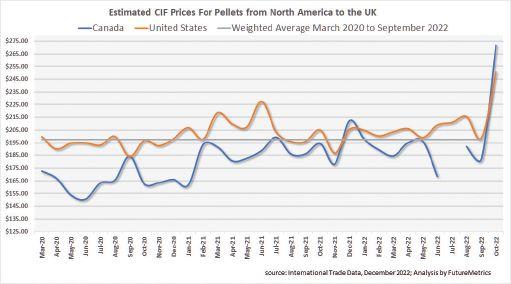
In terms of price, producers that have excess capacity that is not committed to offtake agreements are very happy (particularly given the higher wood costs mentioned earlier). As Figure 11 shows, the average price for pellets imported into the UK from U.S. and Canadian producers shot up in October 2022 by nearly $70/tonne from the recent average.
CONCLUSION
The uncertainty generated by high-inflation and by the war in Ukraine (and the follow-on impacts from sanctions) makes predicting the duration and ultimate consequences of market disruptions impossible for the near and medium terms.
However, the proven carbon benefit and economic value of using a renewable solid fuel for heat and dispatchable power generation, and emerging new markets for densified biomass as feedstock in biochemical and sustainable aviation fuel production, means that the rest of this decade and into the next will see continued growth in the sector.
Editor’s note: This is a condensed version of an article published on our website. Read the full article with additional graphs at www.canadianbiomassmagazine.ca. •
William Strauss, Ph.D., is the president of FutureMetrics, www.futuremetrics.com.
Chipping champions
Atli Chip LP adds value to logging residues on Vancouver Island
By Maria Church
Ahumble chipping plant is grinding out economic benefits in Northern Vancouver Island, creating value from salvage wood that would otherwise be burned as a by-product of logging operations.
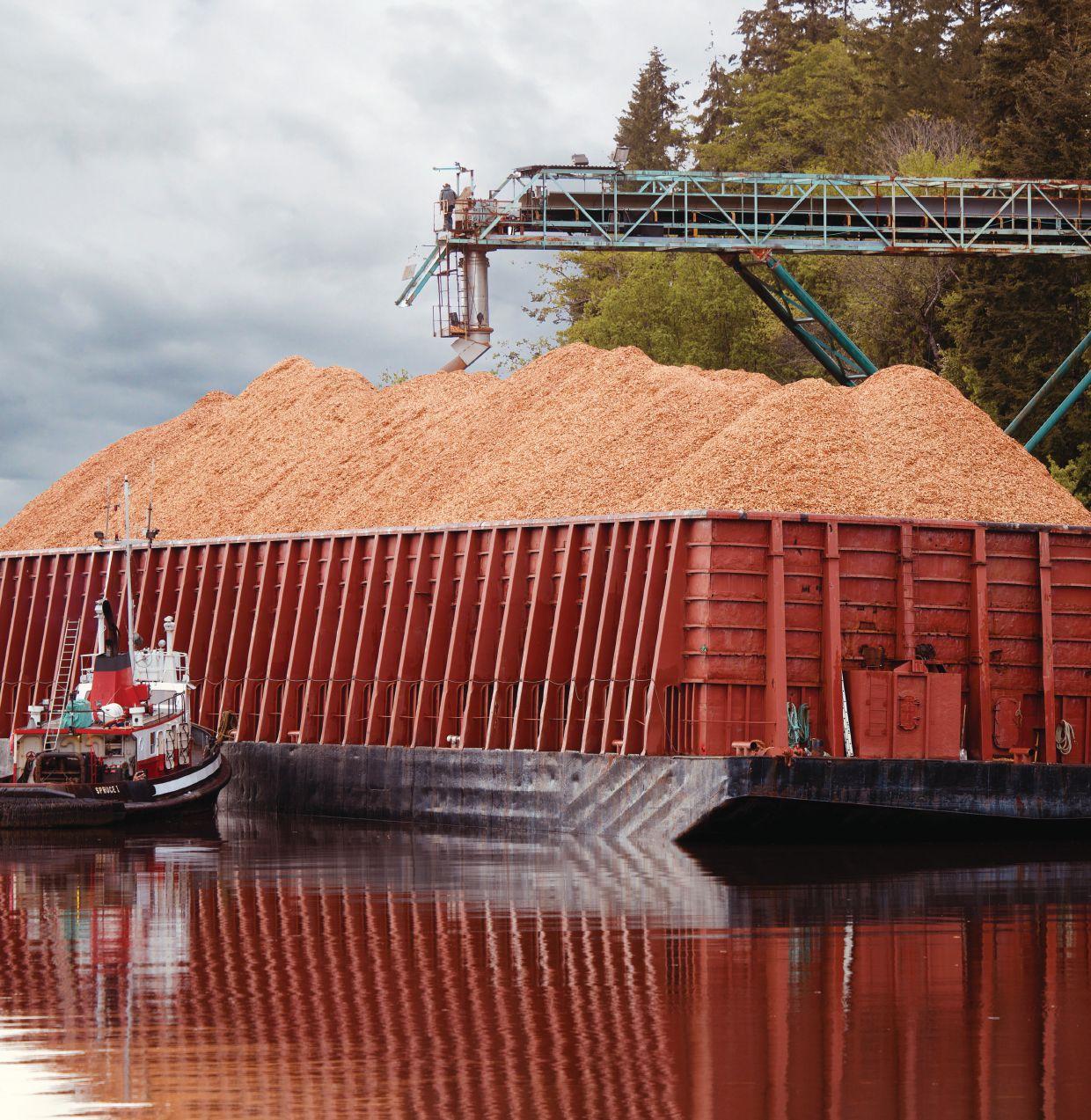
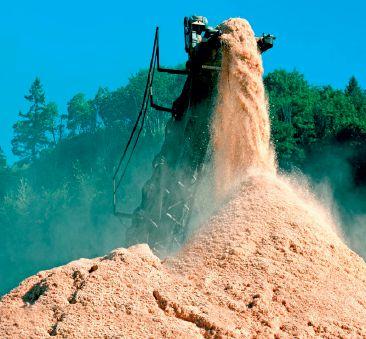
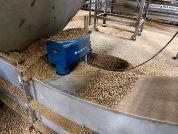
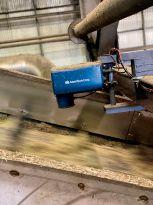
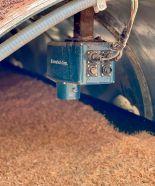
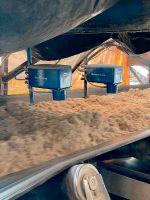
Atli Chip in Beaver Cove processes around 200,000 cubic metres of salvage fibre, supplying chips and hog fuel to B.C.’s coastal pulp mills.
The chip plant came under new co-ownership in 2021. The ‘Namgis First Nation’s beneficially owned Atli Resources Limited Partnership owns 60 per cent of the operation, Vancouver Island logger Wahkash Contracting owns 25 per cent, and pulp and paper giant Paper Excellence owns 15 per cent.
Atli Chip CEO Doug Mosher, a registered professional forester with over 35 years of experience working in resource industries, says partnerships and policies have made the chip plant an integral component of the coastal bioeconomy.
“There are incentives now for forest licensees to, rather than leave fibre in the woods and later burn it or let it rot, to bring it to the chip plant. It’s really turned a corner. And we’ve built relationships with forest licensee and private suppliers to make this all happen,” Mosher says.
The main policy driver was in 2020 when B.C. introduced fibre recovery zones that penalize forest companies for what is considered excessive slash in areas deemed economical to haul out. The coast fibre recovery zone covers significant portions of Vancouver Island and the mainland coast where primary harvesters pay triple the waste rate (stumpage) for “avoidable” slash left on a harvest block.
Anticipating a flood of salvage fibre hitting the market, Atli Chip’s owners jumped on the opportunity to work together to capitalize on their location and expertise.
The chip plant site was constructed about 20 years ago as a biomass power plant. The owners sold shortly after to a salvage and dryland sort company that operated it as a chip plant, supplying fibre to coastal pulp mills.
The ‘Namgis First Nation, under their forestry economic development corporation Atli Resources LP, purchased and took a majority stake in the company in 2021, working in partnership with the nearby pulp mills, owned by Paper Excellence, and local logger Wahkash Contracting. Atli Chip Limited Partnership was born.
The three partners are not only in name – their staff and contractors play pivotal roles in the day-to-day operations to turn logging residues into profit.
FROM STAND TO CHIP
Fibre heading to Atli Chip is first handled by various forest companies. Any residual
fibre within the recovery zones or within economic hauling distances are then collected by salvage contractors overseen by Atli Resources.
Mosher says the longest round trip for sourcing salvage is around five hours. Any longer and the fuel costs eat up any profit from the fibre.
“The distance is less important than the quality of roads. If they’re just off the highway, that’s fine. But most of the wood is in the old growth areas and a lot of that is in the mountains. It’s slower going, steeper in a lot of places, and you can’t get everything out of there,” Mosher says.
Once fibre enters the chip plant’s gates, full-time Atli Chip employees take over the process, overseen by Wahkash Contracting’s co-owner and plant manager Warren Roberts and office manager Ashley Boese. Logs are weighed and piled up in the yard, anything from two-foot
The Vancouver Island chip plant processes around 200,000 cubic metres of salvage wood each year. Photo courtesy Atli Chip.
“chunks” up to 25 feet in length and 30 inches in diameter.
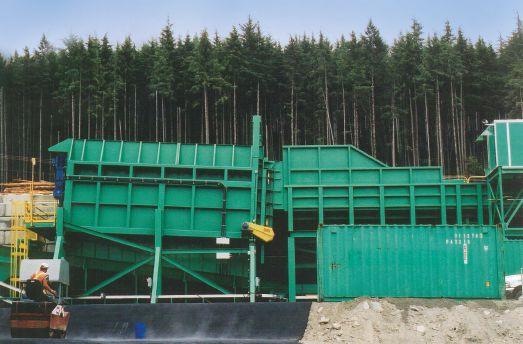
A continuous flow of logs are fed into a hefty 25-foot DEAL processor – a cradle-style debarker top fed by mobile equipment, which includes a Komatsu front-end loader, Hitachi log loader and a Caterpillar grapple loader.
The debarked fibre then runs via Belterra conveyor belts in the “big black hole,” Mosher says, that is the Carthage 12-knife, 2,800-hp chipper.
“This chipper is quite a unique one from what we’ve been told by the experts because it takes some of the most diversified fibre, at least in the province. It can handle the small chunks and not just round logs,” Mosher says. This sets Atli Chip out from your typical chipping plant. But with that uniqueness comes higher costs that need to be carefully managed and, ultimately, paid for by the customer.
The chips are then sent through a USNR double deck 10x20-foot screen to filter out different sizes. A 2-inch round hole top overs screen and a ¼-inch round hold fines screen. A Columbia Machine Works grizzly re-chips oversize with the re-chipped material blow back to re-screen.
Chip and hog product is then piled on the site’s concrete pad, ready for transporting via loaders and conveyors and a Pullmaster Winch Corp. donkey that moves the waiting barges into position. Once loaded onto barges, the products are managed entirely by Paper Excellence, which ships them to their pulp mills for processing.
PROGRESS WITH PARTNERS
Like most businesses, industry partnerships are an essential cog to Atli Chip’s profitability.
The chip plant has struck deals with the large licensees, private landowners, dryland sort operators and forest management companies in the area, including Western Forest Products and Mosaic Forest Management. Western has made significant volumes of harvest residue and pulp logs available to Atli Chip from two of their tree farm licenses and private land in the area. Mosaic and Wahkash Contracting have delivered significant volumes of residue fibre and pulp logs directly from their field operations. Mosaic has also allowed Atli Chip access to their dewatering property when needed to process fibre brought in on log barges from further away.
The chip plant has also benefited from support from the Forest Enhancement Society of BC, and Natural Resources Canada’s Indigenous Forestry Initiative.
FPInnovations is another partner. “They have been helping us out on various aspects of the operations, giving advice or making suggestions,” Mosher says.
“Atli Chip is also grateful to Tale’Awtxw Aboriginal Capital Corporation who provided initial financing assistance and on-going business expertise,” says Jim Bennett, Atli Resources’ director and treasurer. “Many people came together to make this project happen and is a great example of interested partners working together for the common good.”
EYE ON THE FUTURE
In order to keep a chip plant running, it must have access to old-growth logging sites, Mosher says. Second-growth logging does not produce the volume of harvest residues needed to support a plant running full time. That volume also needs to be sourced locally enough to make economic sense.
Atli Chip has its sights set on a few new sources of fibre as it navigates B.C.’s changing forest landscape. As the province continues to incentivize projects to reduce slash-pile burning and produce secondary products, there may be grant opportunities to ship fibre from further away, or to source historical fibre from blocks where slash is piled but not yet burned.
“There are many moving parts with government policy: dealing with old growth and working with First Nations reconciliation,” Mosher says. “We’re watching that right now very closely to see how we can adapt.”
Atli Chip is eyeing a few on-site expansion projects as well, including increasing the size of their log yard and hog fuel storage areas, which would give them more flexibility in run times with more on-site storage.
“For Atli Chip, our big push, is to adapt and be innovative, and to work with our partners – and that includes the major forest license holders, neighbouring First Nations and community landowners. If we’re all working together, it gives us a better chance of producing a good chip product and keeping employment going,” Mosher says. •
IEM ROTARY DEBARKER
The 30 foot long DEAL Processor manufactured under license using technology now owned by IEM.
It is the first live floor open bottom rotary debarker (technology specific to IEM) that can accept logs up to 30 feet long and 40 inches in diameter; wood rich dry land sort debris; and residual wood fibre sources from logging activities.
It maximizes recovery of fibre from the wood basket and is truly proven green technology.
Located on the way to world famous Telegraph Cove (Canadian whale watching Mecca) it has been visited by people from all around the world.
The burning question
Researchers address harvest residue management in B.C.
By Eric Nance, Dominik Roeser, Carly A. Phillips, Caren C. Dymond and Werner A. Kurz
The management of harvest residues has long been a challenge for British Columbian operators who are tasked with balancing wildfire fuel loading, planting space, and financial, operational, and regulatory constraints. Now, society’s concerns about carbon emissions have been added to that list and practices will have to change.
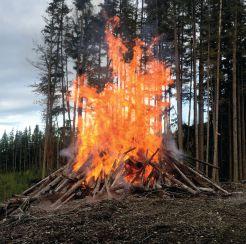
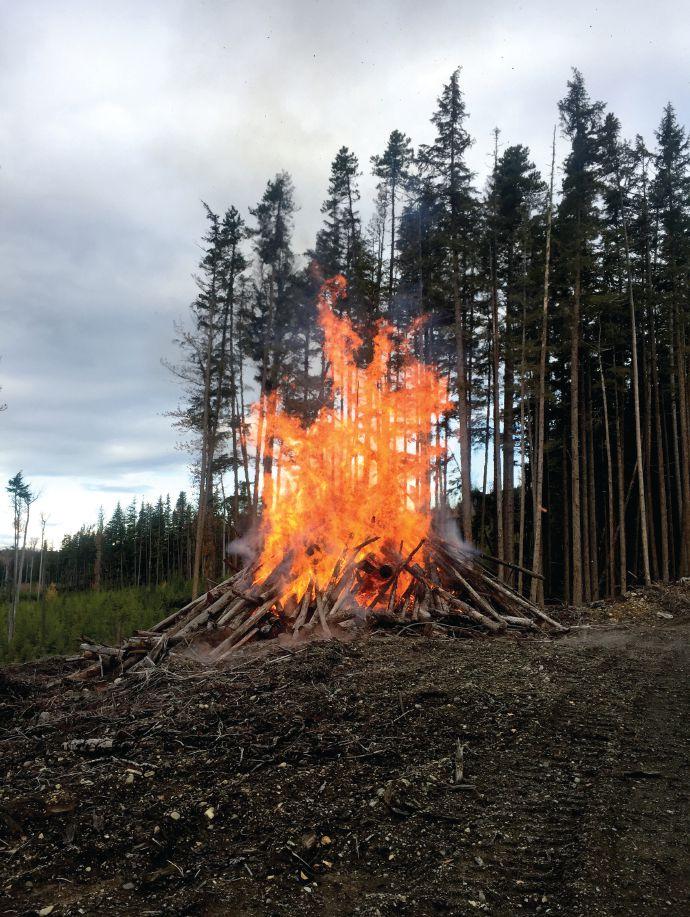
Common practice in the industry today includes either leaving residues piled in the cutting area to decompose or open-burning residues with the practice of slash-pile burning (SPB). While these low-cost treatments may meet the minimum management requirements, more needs to be done to improve their use and management moving forward.
SPB is a considerable emissions source, producing an array of harmful greenhouse gases (GHG) and particulate matter, and accelerating the release of carbon to the atmosphere. These factors enhance climate change and have negative human health impacts. In some areas, open burning of residues can also have negative impacts on ecological functions, such as future stand productivity and small mammal habitat. Furthermore, harvest residual fibre could be flowing to the bioeconomy, where it can be used for value-added products or bioenergy that can displace more carbon intensive alternatives.
There are potential management alternatives to SPB that may serve to better use residual fibre across a range of operational conditions. Considering current B.C. and Canadian climate targets, transitioning away from SPB and towards more sustainable alternatives will help mitigate GHG emissions and improve forest stewardship.
ALTERNATIVES
Redistribution after whole-tree harvesting: Leaving residues dispersed across the cutting area can increase soil carbon stocks,
improve soil nutrients, provide shaded planting spots and wildlife habitat, and reduce soil erosion. Residues can be left whole or can first be masticated with a chipper, grinder, or chopper-roller before being redistributed from the roadside or landings. While retaining residual fibre
can improve site level tree growth and stand productivity, this alternative should only be employed where planting efforts will not be hindered, and wildfire fuel loading will not exceed acceptable levels. Brush-mats and road amendments: Brush-mats made from residual branch-
Common forest industry practice in B.C. is to pile and open burn harvest residues. Photo by Eric Nance.
es, tops, and small round wood can reduce soil rutting and compaction from forest machines, mitigating the associated increases in water runoff and sediment transport. Furthermore, residues piled on trails are compressed, promoting decomposition and retaining nutrients (in particular nitrogen) in the cutting area, which might otherwise be lost during SPB. While brush-mats are mostly associated with stem-only and cut-to-length harvesting operations, this technique can also be employed during conventional whole-tree harvesting, whereby primary transportation machines (skidders, etc.) bring residues from roadside piles back into the cutblock, applying them to main trails during return trips.
The use of mulched right-of-way harvesting residues for surfacing on temporary roads can reduce road failure from rutting, when compared with standard soil-surfaced roads. Using residues in this way can have less environmental impact and be less cost prohibitive than upgraded gravel surfacing.
Left decked in oriented piles: If residues need to be left in the cutting area, pre-sorting residues during processing to separate and deck round-wood into oriented piles can be a better alternative to leaving them piled in “hay-stacks” or SPB. Preliminary studies by FPInnovations have demonstrated that oriented decking can reduce the wildfire risk of the pile, provides the opportunity for secondary users to easily access the decked wood if future markets emerge, and does not require significant incremental cost to operators.
Mobile burning containers: If wildfire fuel loading must be
reduced, but markets don’t exist to use the residues, employment of mobile burning units (air curtain burner, etc.) are an effective alternative to SPB. Controlled burning in these units can reduce emissions (in particular methane) with higher efficiency combustion, while creating biochar and ash byproducts which store carbon and can be redistributed as soil amendments. Additionally, the use of these units nearly eliminates the risk of fire escape during the treatment.
Liquid and solid biofuels: Certain types of logging residue can be a valuable feedstock for liquid and solid biofuels, including: pellets, briquettes, hog fuel, liquid transport fuels, and others. Using residues for liquid or solid fuel provides emissions benefits when they are used to displace fossil alternatives like coal and gasoline. Initial capital investment and procurement costs of feedstock are likely to be prohibitive in many B.C. harvest conditions. Though small-scale, mobile conversion systems address some of these costs and are a promising alternative to centralized processing facilities.
Other products: Residues can also be used to create novel or non-commodity wood products in B.C. Research has expanded the use of wood fibre to include products like bio-based polymeric materials, textiles, building insulation, and many more. While residues can be used as feedstock for these products, current demand is relatively low. What is more practical in the short term, is use of low quality or small-dimension roundwood for small-scale manufacturing of products like rail ties, fenceposts, firewood, or finger-joined boards.
A PATH FORWARD
Residue management is complex and has interactions with many environmental (e.g., fire risk) and operational (e.g., transportation distances) factors, creating a system that is highly dependent on site- level conditions – there is no one-size-fits-all solution. Where possible, residues should be used in the bioeconomy, whether that be for energy production, or small-scale products manufacturing. These opportunities can provide GHG emissions benefits relative to the business-as-usual practices, increase timber supply, and provide job opportunities for British Columbians.
When diverting residues to the bioeconomy is not practical, other treatments can reduce emissions and better support forest ecosystems when compared with SPB. Importantly, partial solutions can be implemented.
More responsible management of residues will, however, come at a higher cost than the current leave-it or burn-it practices. Transportation and processing costs, coupled with relatively low market values for residual fibre, can limit opportunities for operators and investors. We don’t expect that forest managers and operators will take on higher cost treatments voluntarily, and therefore solutions are needed that reduce and share these costs of fire risk mitigation and emissions reductions.
Possibly the most important step we can take towards more responsible management of harvest residues is a shift of our mindsets from the view that residues are a waste byproduct of harvesting. Residues are a component of the fibre profile alongside the others, which should be managed with as much care and stewardship as the high-value logs that B.C. is known for. The more we start planning for residues as we lay out our cutblocks, and not as an afterthought once the logs are gone, the more operational effi
ciencies we will be able to command, the lower our costs will be for treatment and processing, and the smaller our emissions will be in the forest.
The pool of residual fibre is massive in our province, and any incremental shift we can make towards better future management could have a truly meaningful impact on our forests and the growing bioeconomy.
We gratefully acknowledge the financial support of the Government of Canada through the Low Carbon Economy Leadership Fund and Province of British Columbia through the Ministry of Forests, Lands, Natural Resource Operations and Rural Development, as well as the contributions and
support of the Pacific Institute for Climate Solutions’ Wildfire and Carbon project. •
Eric Nance, master of science, forest operations and management at the University of British Columbia (UBC). Dominik Roeser is an associate professor forest operations, UBC. Carly A Phillips is a researcher-in-residence at the Pacific Institute for Climate Solutions. Caren C. Dymond is a forest carbon and climate change research scientist with the Ministry of Forests, Government of British Columbia. Werner A. Kurz is a senior research scientist with Natural Resources Canada, Canadian Forest Service.
Possibly the most important step we can take towards more responsible management of harvest residues is a shift of our mindsets from the view that residues are a waste byproduct of harvesting.
Every year, millions of tons of industrial waste are turned into millions of dollars of reusable materials. CPM and Di Più Systems help make that happen.
We’ve joined forces to bring you the world’s best mechanical and hydraulic briquetting technology.
Together, we’re taking the fossil out of fuel.
Residue management is complex and interacts with many environmental and operational factors that are site specific. Photos by Dominik Roeser.
Chipper versus grinder
Which one is better? Depends on the application
By Andrew Snook
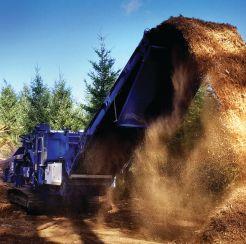
Chippers and grinders both have their places in the world of woody biomass processing. When deciding between a chipper or a grinder for woody biomass operations, knowing the type of products you need to produce for your customers is key.
“What’s your customer buying? What’s the end product that you’re making? What are they looking for?” asks Michael Spreadbury, product manager for forestry and recycling equipment at Astec Industries.
If the customer is looking to purchase an engineered chip with very particular specifications, a drum chipper is likely to be the more appropriate choice.
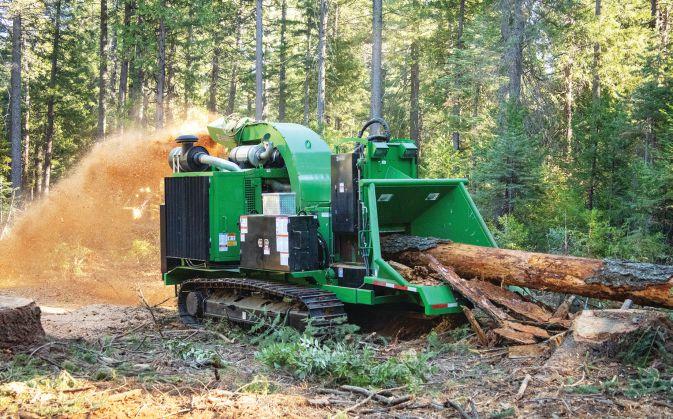
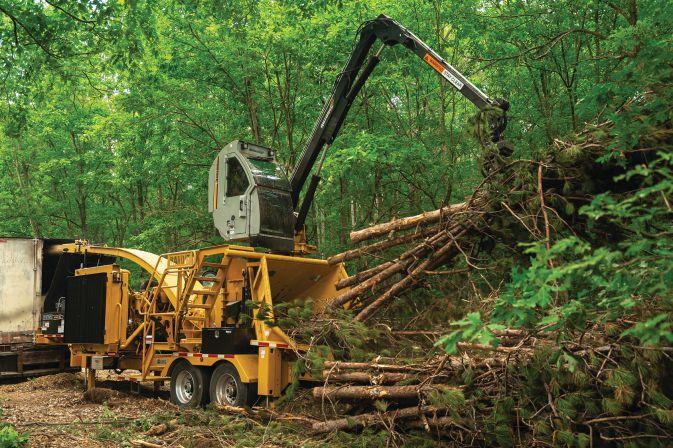
“If it’s a logging or land clearing operation that wants to process whole trees at a fast rate, and produce a quality dimensional chip, then a whole tree chipper is normally the preferred option,” explains Jason Morey, marketing manager for Bandit Industries.
“CBI drum chippers are more suited for the production of fuel products made from woody biomass while our disc chippers are more often used in pulp and paper,” adds Jonathan Gilmour, regional sales manager for CBI, a Terex brand. “We recommend a chipper when processing virgin materials only. They are not fitted for wood recycling or processing contaminated feeds. Chippers tend to be more application specific.”
An advantage of operating a drum chipper is that is very fast and efficient at making a consistently sized end product.
“The biggest advantage of a chipper is efficiency. They are extremely efficient in taking virgin woody biomass and turning it into a saleable chip product. So, if that’s your sole business, and that’s all you’re ever going to do, a chipper is a sensible solution,” Gilmour says.
But to get that efficiency, having the
right feedstock is key. Drum chippers work much more efficiently with clean wood.
“As we say: garbage in, garbage out,” Spreadbury says. “If you’re trying to do tops, logging residuals or really odd-sized pieces, you’re going to have a very hard time making a really nice consistent product with a drum chipper.”
“Wood contaminated with dirt or rocks will dull chipper knives,” adds Jamey Brick, COO for Rotochopper. “If the wood
has been skidded, it has picked up enough dirt to quickly dull knives. Also, material like slasher debris doesn’t feed into a chipper very evenly because it contains smaller pieces that the feed system cannot control. Dull knives make the problem even worse because they will pull the wood inward instead of cutting it cleanly.”
EMBRACING THE GRIND
If the feedstock is dirty, a grinder may be the better option.
If feedstock is contaminated, a grinder is a preferable option designed to tackle abrasive material. Photo courtesy Astec Industries.
Chippers tend to be more application specific, ideal for fast whole-tree processing. Photo courtesy Bandit Industries.
“For contaminated wood, a grinder can use hardfaced teeth designed for abrasive materials. A chipper can rapidly lose efficiency as knives lose their edges, but a grinder is designed to operate with blunt teeth. So grit and gravel doesn’t affect the grinder as much as it does a chipper,” Brick says. “A chipper works best with straight logs versus logs with lots of branches and limbs. Grinders tend to handle irregular pieces more efficiently.”
Grinders are good choices for producing woody biomass where the customer specifications have more room to vary.
“If they’re just looking for more of a boiler fuel, they don’t care as much about the size specs that they’re looking for. A grinder would be a better choice,” Spreadbury says. “A grinder is much more diverse. You can put all kinds of different things in there. And by changing the tooling, you can radically change the end product that you’re getting out of the machine.”
For producing residential wood pellets, the feedstock needs to be relatively clean, and a chipper is likely the better option for processing the wood due to its ability process clean feedstock quickly.
“If you’re going into industrial pellets that can be a little dirtier, so you can get into some grinder type applications,” Brick says.
That said, there are biomass-fuelled power plants that require clean wood chips and microchips for specific specifications. If you’re burning wood chips in a power plant that was converted from coal, wood chips have a tendency to flow better in the feeding bins than grindings.
“With a lot of your traditional coal-powered plants, the angles of the hoppers are designed for coal, so when you start throwing wood waste in it, chips often flow better than the shredded texture from a wood grinder. The ground material has a higher tendency to bridge up, where chips are generally more of a defined length – no frayed edges on them – so they flow better through conventional power plants than a ground wood product,” Brick explains.
He adds that with power plants set up to use “true biomass” it’s generally not as big of a deal to use dirtier feedstock. One big advantage with these plants is that you can get a broader source of feedstock from grinders.
“The tops of the trees have no value for making wood or paper, so you generCB_WIF_WINTER23_JLR.indd
Combustible Dust Specialists
ally leave them behind, but they don’t feed into a chipper very well. With a grinder however, the feed system allows them to feed through just fine,” Brick says. “In a modern forest that’s been planted and is set up to harvest on cycles, you don’t necessarily want all this logging slash left behind. Burning it out in the woods isn’t a good option. So, with a grinder, you can process it for use in biomass plants that are designed to handle this type of material.”
This is also true for other types of power generation, like district energy systems, for example.
“It really comes down to the end product. If a biomass system features bins with the right slopes and conveyor belts and augers that aren’t too narrow, down sized material from a grinder works very well. That means a waste material can be turned into energy or heat,” Brick says.
Another advantage of having a grinder is its ability to be used in a diverse number of markets.
“A grinder is a much more versatile
piece of equipment,” Gilmour adds. “Let’s say a customer’s business diversifies, they will have the ability to utilize that machine in a wider spectrum and range of material types. We have had operators purchase a grinder for woody biomass and later use the same machine to process C&D right through to wind turbine blades. Several manufacturers offer machines that can be reconfigured from grinding to chipping applications or vice versa.”
KNOW YOUR FLEET
When deciding on a chipper or grinder to purchase, Brick says reviewing your existing fleet is also important.
“A blower discharge is a defining feature of a typical chipper, which allows covered trailers to be filled from the back end. So, if the rest of your business is already set up around chip vans, a grinder may involve additional changes to your operation. A grinder typical features a conveyor discharge, which loads trailers from the side. This is something that you would need to
plan for.”
Brick adds that factoring in the landings is also important.
“Where are you located, and what sized equipment can you get in your landings? Grinders, traditionally, are long compared to chippers and some of the landings aren’t big enough to support that. Chippers are a little bit more compact. Where a grinders conveyor could add 20 feet or more onto the machine’s footprint.”
MAINTENANCE FACTOR
Brick says that grinders, in general, have fewer maintenance requirements than a chipper.
“The knives on a chipper have to be sharp. You’re going to want to start out the day with sharp knives. And in general, you’re sharpening them at noon for the second half of the day to keep them sharp and efficient. If you have clean wood, that might not apply. But if you have dirty wood, those knives are getting dull. Once they start getting dull, you’re not making that nice defined product, you’re making a stringier product with less defined length,” he says.
“Depending on the particular application you’re in, you’re always going to have to go in there and check and make sure everything is good,” Gilmour adds. “But the actual going in there to do physical work is much more spread out on a grinder than a chipper.”
THE RIGHT TOOL FOR THE RIGHT JOB
At the end of the day, both grinders and chippers have a place in the world of woody biomass applications.
“In Ireland, we say, ‘horses for courses.’ There’s a perfect horse for every racecourse. And there’s no one perfect horse
A review of your existing fleet is an important factor in a purchase decision. Photo courtesy CBI.
for every racecourse. It depends on what you’re trying to do. Both have distinct advantages and distinct disadvantages,” Gilmour says.
Morey says his advice to companies looking into sourcing a chipper or a grinder is to do their homework reviewing the available options before purchasing anything.
“Definitely do your research and determine which manufacturers machines will work best for your operation. Ensuring there is adequate support in your area is also very important. Bandit has a variety of videos on our website outlining each machine, and a high quality dealer network across North America. So, no matter where you are located, we can usually service that area,” he says.
Morey also recommends requesting opportunities to demo the machines.
“If it comes down to a couple of manufacturers that they may be interested in, reach out to the companies or the dealers to say, ‘Hey, we are interested in going this direction. Can we try it out?’ Normally, we
like to bring the machine out for a day or two, especially with a specific application we are trying to achieve. We want to work with the customer or potential buyer to make sure our machine is capable of producing that product, which we’re usually fairly certain it will. But sometimes, if it’s a special product, it might take a little lon-
ger,” he says.
“But when it comes down to a couple of manufacturers, definitely look at that opportunity to demo this equipment. It’s an expensive investment, but it does last a long time, and making sure that it performs at a high level and that produces the product they need is very important.” •
Look for opportunities to demo machines before purchasing, especially if you need a specific application. Photo courtesy Rotochopper.
Grand plans
New Brunswick pellet producer embarks on $30-million expansion project
By Maria Church
Grand River Pellets Limited came online within the last four years and has ramped up to become an important player in the Maritime pellet world. The pellet producer’s key to success is its role as a value-added consumer of sawmill by-products.
The plant is located near the St. Leonard sawmill in northwestern New Brunswick. J.D. Irving Limited’s six sawmills in New Brunswick and one in Maine, as well as a number of independent suppliers, send their sawdust and shavings to Grand River Pellets.
Operating since May 2019, the pellet plant has taken on a $30-million capital project that will more than double its nameplate capacity and allow feedstock flexibility.
“We built our plant to do 100,000 tonnes a year, but we brought in new raw materials [dryer sawdust] and managed to bring it to about 140,000, which is what we’ll do this year [2022],” explains Nicholas MacGougan, general manager of Grand River Pellets. “With the capital project, we are doubling the drying capacity of the mill and we’ll go from 140,000 to 220,000 once it’s commissioned and fully operational.”
A staff of 30 on four operating shifts allows Grand River Pellets to run 24/7. MacGougan says they don’t expect the expansion will changes those numbers.
PROJECT SCOPE
In November, the Grand River Pellets team was about halfway through the project, with all civil work complete and mechanical installation well underway.
The project will essentially double all outdoor equipment, which, for Grand River, is everything before the silo that feeds the pelletizers. The procurement list included a biomass burner, dryer, and wet and dry milling. It will also see
additional equipment added in to process larger-sized material.
“Today we can really only effectively use sawdust and shavings.,” MacGougan says. “We’re building in flexibility on both lines to be able to use more low-value material like sawmill bark or biomass from the forest.”
Two new pellet presses and associated cooling and screening material, as well as a new storage silo, round out the capital project.
The new outdoor processing equipment is being installed as a completely separate line, with the two streams merging in a dry silo that feeds into the pelletizers. Adding a full new line allows the plant to continue operations through the capital project.
MacGougan expects the new line to be up and running in May 2023.
MILL FLOW
Residues entering the Grand River Pellet site are offloaded and stored in outdoor piles. On the existing line, fibre heads through a Schutte Buffalo wet hammer mill before entering the Thompson rotary dryer, heated by a KMW walking floor biomass burner running on hog fuel from the adjacent sawmill. Dried material is then treated to a Schutte Buffalo dry hammermill and fed into a dry silo awaiting the presses.
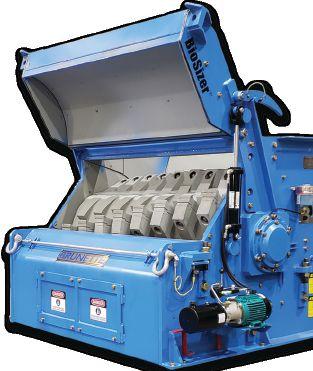
The new processing line will begin with a new Brunette BioSizer to treat wet material. A new KMW biomass burner will fuel the new PDI rotary dryer. A large Andritz dry hammermill will process the fibre before heading to the silo.
The plant was designed with each of the five original Promill pellet presses feeding into its own dedicated cooler and
Grand River Pellets’ $30-million capital project will more than double its nameplate capacity and allow feedstock flexibility. Photo courtesy Grand River Pellets Limited.
screen. The two new ProGranul Toro pellet mills will keep with this configuration and have their own cooling and screening.
“It’s a higher cost way of doing it, but in terms of the quality, we’re very happy with it. It makes sure the pellets are cooled rapidly with very high durability and gets rid of the moisture so there are less corrosion issues,” MacGougan says.
A new Mecafa bucket elevator will bring finished pellets to the two new Symaga silos being built next to the current two Scafco silos, bringing total storage capacity up to 1,800 tonnes.
For dust safety measures, MacGougan says they’ve benefited from participation in the Wood Pellet Association of Canada’s Safety Committee, which gives them access to best practices and lessons learned across the pellet industry.
“Being exposed to that brought the level of understanding for our folks up big time. We were able to have those learnings [such as bow-tie analysis and inherently safer design] all up front in the design engineering,” he says.
OPTIMISM FOR PELLETS
Grand River Pellets produces 100 per cent industrial pellets, all of which are transported by truck to the Port of Belledune and shipped to utility customers in Europe.
Despite this, MacGougan says they see a “huge opportunity” on the horizon for domestic wood pellet use in the Maritime provinces.
“We’re quite optimistic on the longterm prospects of the domestic heating market for pellets,” he says. “The market is tiny today relative to the pellet production capacity. Ninety per cent of the maritime pellet production is exported. But we don’t see ourselves forever being solely in the export market … that’s where we are at today and that’s really a function the historic push to electrify heating in New Brunswick.”
Yet, residential bioheat is an attractive option as federal and provincial low-carbon policies take effect over the coming decade, MacGougan says.
New Brunswick homes and businesses are highly reliant on electric heating and much of that load is supplied by fossil fuel-fired power stations. With the federal government’s pledge to phase out coal by 2030 and carbon taxes coming into play to disincentivize fossil fuels – the provinces will need to find alternative, higher cost sources of dispatchable electricity. Residential bioheat could take some of the peak electrical load off during the winter months.
“We could then use the electricity for more high-value end uses, like electrifying transport, which is already going to require huge investment on the electrical grid to move transportation away from gasoline,” MacGougan says.
“We think pellets have a real place to play to take heating loads away from oil, electricity, directly where the heat is needed,” he says. •
a Variety of Materials: - Oversized “Bush-Grind” Hog Fuel - Trim Blocks,Wood Chips & Overs - Pre-Ground Demolition Materials
Typical Urban Wood Waste
The expansion project is adding an entirely new line to the plant, allowing the existing line to continue to run during construction. Photo courtesy Grand River Pellets Limited.
AThe Sustane-able way
Repurposing municipal solid waste for bioeconomy benefits
By Tristin Mabey
cross the country, approaches are being sought to become more sustainable and achieve carbon neutrality. Achieving net-zero emissions by 2050 is an ambitious but attainable goal with technology advancements and cross-industry collaboration.
A viable option to reduce the country’s reliance on fossil fuels is to transition to a renewable natural resource such as biomass. Harvesting of biomass typically involves wood and agricultural products, but in Chester, N.S., the team at Sustane Technologies is looking at the production a bit differently – by using municipal solid waste.
Sustane Technologies is a clean-technology company. They have taken patented separation technologies and integrated these with other known technologies into a complete holistic process. Sustane has built the first commercial-scale facility capable of converting up to 70,000 tonnes of municipal solid waste (MSW) annually. This will result in over 90 per cent of materials being diverted from landfills and into value-added products upon full rampup of the facility.
Producing biomass from MSW has positive rippling effects on the local municipality; the extended lifespan of landfills, value-added products from waste, healthier communities, high-quality jobs and more. The MSW received at Sustane is waste collected after recycling and organic separation by householders at the roadside.
THE SUSTANE WAY
The first North American Sustane commercial demonstration facility operates in the Municipality of Chester in Nova Sco-
tia. At the facility, MSW from Chester and neighbouring municipalities is separated using patented technologies to remove metallic and other pieces of non-organic materials. The remaining mass of material is primarily organic. It is processed using a patented thermal conditioning system, which breaks down the organic biomass, allowing the density difference of any remaining small and micro-sized plastics within the stream to separate.
The different material streams are now ready for transformation into products and energy. A small portion of the downstream energy produced from waste is in turn used to supply the energy to the plant to run the entire process, so fully self-SUSTANE-able!
The organic portion of material that has passed through all the separation processes is transported to a dryer, and further processed into uniform biomass pellets. They are now ready for use in different energy markets. The plastics stream is converted through pyrolysis into two grades of synthetic fuels. One grade is suitable as fuel and the other is suitable potentially as feedstock to produce higher-value polymers, thus achieving full material circularity. The waste stream valorization produces a revenue stream, also an important part of the Sustane-able model.
THE NOVA SCOTIAN ADVANTAGE
Nova Scotia is a leading province in MSW management, and with the deployment of Sustane’s patented technologies, it has the potential to begin eliminating local landfills, improve the overall health of communities, and boost the bioeconomy. Sustane is supported by public and private partners in Nova Scotia, including the Nova Scotia
Innovation Hub (NSIH), a not-for-profit organization supporting bioeconomy firms on their path to commercialization.
The NSIH works to foster collaboration with a range of enterprises, entrepreneurs, feedstock suppliers, industry partners and members of government to advance Nova Scotia’s bioeconomy.
ACHIEVING NET-ZERO
Biomass pellets produced using Sustane’s technologies are carbon neutral, offering a competitive advantage for end-users. But the benefits don’t stop there. For every tonne of garbage that comes to the Chester landfill, its carbon emissions are reduced by 2.5 tonnes – that’s equal to 40,000 cars taken off the road. Achieving a more circular economy supports the goal of reaching net-zero emissions, and that’s something we can all support.
The bioeconomy is a regenerative system that works together to repurpose and reuse renewable bioresources. Sustane’s operations are a shining example of what is possible when people work together to make the world a more sustainable place to live. There is an enormous quantity of solid waste generated each and every day around the world. Likewise, there are an abundant number of landfill sites within communities similar to Chester. Will your community be next? •
Tristin Mabey is the communications and administrative associate at BioApplied, a consulting firm that specializes in helping clients develop and deploy advanced technologies in renewable resource sectors. Sharing successes and opportunities within the bioeconomy is what fuels Tristin’s passion for the industry.
COMPACT CHIPPERS
∙ 20XP or 2090 (20” capacity)
275 – 350 horsepower engine options
∙ 270-degree swivel or forestry-style discharge Optional Kelsa loader
HIGH PRODUCTION TRACK CHIPPERS
4- models available (20” – 30” capacity)
∙ 415 – 875 horsepower engine options
Select models available with cab and loader
∙ Durable Caterpillar track undercarriage
CAB AND LOADER TOWABLE CHIPPERS
∙ 2-models available (2590 or 3590XL)
Rotobec cab and loader
∙ Cab swivels with loader for easy operation
Eliminates the need for an auxiliary loader
TRELAN DISC-STYLE CHIPPERS
2-models available (686 or 786)
∙ 800 to 1,050 horsepower engine options
Produces a high-quality paper chip
∙ ¾”, 7/8” or 1” chip sizes
If you haven’t tried a Bandit unit for your operation, please contact a local Bandit dealer, email marketing@banditchippers.com or visit our website www.banditchippers.com and we will be happy to assist you!