With a 72 V battery, three operating modes, and an additional Boost Mode, the BRA series is the most powerful battery blower from STIHL.
noise reduction
A new noise-reduction system produces a low frequency, making the BRA series ideal for working in noise-sensitive areas
HMi display
Quickly select the power level, set the speed control, and view the battery status all from the new HMI display.
BRA 500 PROFESSIONAL BATTERY BACKPACK BLOWER
BRA 600 PROFESSIONAL BATTERY BACKPACK BLOWER
From
By Mike Jiggens
Getting ready for the winter season
It pains me to write this because this issue deals with a subject I’m not entirely comfortable talking about at this time of year. But business is business and it’s time to start thinking about that four-letter word –snow.
It’s still officially summer as I write this, and snow is furthest from my mind. There remains the stretch run of golf season and plenty of nice weather ahead. Nevertheless, at least for the time being, I must fast-forward through my mind to the fall and winter seasons. This issue is our “fall and winter preparation” edition.
Not all of this issue’s content is geared toward that theme –there is still enough to remain grounded in the current growing season – but industry professionals should be aware of certain things before the leaves (and that four-letter word) begin to fall.
We have stories that deal with maintenance practices aimed at putting turf to bed for the season as well as technologies designed to enhance winter maintenance efficiency. It’s certainly relevant content, even if we’re not ready to embrace the coming of the coldest season just yet.
The latter half of the fall and the entire winter season represent the majority of the indus-
try’s off season or non-growing season, but there’s plenty of work that needs to be done during this period. Many landscape contractors and lawn care companies offer snow and ice services in the winter, and there are important things to know about ensuring their equipment gets them through the season.
Vigorous fall and winter preparations can impact a company’s bottom line
During the fall cleanup period, weeks preceding snow’s arrival, there is the issue of fallen leaves. Should they be gathered and disposed of or left to remain on the lawn during the winter months? Research would suggest the former, but lawn care professionals’ actions will be based on their customers’ desires. Armed with the latest research, lawn care professionals can at least share that information with their customers, enabling them to make more learned decisions.
Preparing for fall and winter involves more than putting seasonal equipment away for a few months. There is a right way and a wrong way to store equipment during the off-season, and we have some advice to share about that in this issue.
Vigorous fall and winter preparations can impact a
company’s bottom line. By offering customers fall cleanup and winterization packages, additional revenue streams can be created during the off season. This also nurtures a sense of trust between the contractor and the client by demonstrating a commitment to yearround care.
Winterizing clients’ irrigation systems can avoid costly expenses and ensure that they are happy when spring arrives.
Contractors who begin their fall and winter preparations early – in other words, before the snow flies – stand a better chance of watching their business grow and seeing their customers returning.
Despite ongoing concerns about high insurance costs for providing snow-clearing services, the work is necessary. It provides surfaces that are safe to drive and walk on, allowing customers to get to work and make appointments on time.
Snow and ice professionals can sometimes face criticism for not arriving at a customer’s location at a time the client demands, but when there are several customers to attend to following a significant snow event, not everyone can be pleased.
These professionals do the best they can under trying circumstances, often working throughout the night to ensure their customers’ needs are fulfilled.
Snow clearing may not be the world’s most glamorous job, but it’s one of the winter season’s most important.
www.turfandrec.com
Reader Service
Print and digital subscription inquiries or changes, please contact Angelita Potal, Customer Service Tel: 416-510-5113 apotal@annexbusinessmedia.com
Mail: 111 Gordon Baker Rd., Suite 400 Toronto, ON M2H 3R1
Editor Mike Jiggens mjiggens@annexbusinessmedia.com
Advertising Manager Rebecca Lewis 519-400-0322 rlewis@annexbusinessmedia.com
Audience Development Manager Anita Madden 416-510-5183 amadden@annexbusinessmedia.com
Group Publisher Anne Beswick 416-410-5248 abeswick@annexbusinessmedia.com
CEO Scott Jamieson sjamieson@annexbusinessmedia.com
Printed in Canada ISSN 1186-0170
PUBLICATION MAIL AGREEMENT #40065710
SUBSCRIPTION RATES
Published 7 times a year – Jan/Feb, March, Apr/May, June/July, Aug/Sept, October, Nov/Dec
Canada – 1 year $35.70 CDN; 2 year $45.90 CDN; 3 years $56.61 CDN (plus applicable taxes; single-copy$7.00 CDN USA – 1 year $48.96 CDN HST 86717 2652 RT0001
Occasionally, Turf and Recreation will mail information on behalf of industry related groups whose products and services we believe may be of interest to you. If you prefer not to receive this information, please contact our circulation department in any of the four ways listed above.
All advertising is subject to the publisher’s approval. Such approval does not imply any endorsement of the products or services advertised. Publisher reserves the right to refuse advertising that does not meet the standards of the publication.
Early Order Program (EOP) is here!
Plan ahead, lock in savings, and secure the products you need for next season. Take advantage of exclusive discounts, flexible financing options, and guaranteed product availability when you order early. Don’t miss out on this limited-time opportunity to maximize your purchasing power and prepare your business for success.
FALL SNOW MOULD SAVINGS
BEST OF CLASS OPTIONS
As we prepare for winter, gear up for our winter savings program to combat snow mould. Our exclusive program offers the best savings with Canada’s latest technology!
Program Period: August 1 to November 30, 2025
Sports Turf Canada rebrands itself with new name and logo
Sports Turf Canada has rebranded itself as the Canadian Sports Fields Association.
The change in name reflects the growing usage of the term “turf” to mean artificial turf and not natural grass.
“Extensive work was done considering this development and the impacts of the use of the word ‘turf’,” a message to Sports Turf Canada members stated.
“The board felt we needed to align globally within our industry while also ensuring our branding and identity continue to reflect our association’s values, positioning and our member’s interests. Our association has spent 38 years building an organization that has repeatedly sustained change, and we are stepping into a future that reflects both who we are and where we are going collectively.”
This marks the third change of name over the years for the organization. It was founded as the Sports Turf Association when it was originally an Ontario-based group. Sports Turf Canada was chosen as a more suitable name when the association branched out into British Columbia and Atlantic Canada.
“We will continue to keep our sights on our priorities which are our members, our programs and our promise of better sports fields,” the association’s message continued. “We remain committed to providing you with the professional education you need. Although we will have a new look, we are still the same great association. In the coming months you will slowly see a shift to our new look while honouring our history. Our history is what got us here today and we move forward with excitement for our future.”
Women’s leadership reception returns to Equip Expo a 3rd time
For the third year due to popular demand, Equip Exposition will offer its Women’s Leadership Reception, which is designed to help women leaders in the green industry connect and build their professional networks while attending the international landscape, outdoor living, and equipment exposition.
Equip will be held Oct. 21-24 at the Kentucky Exposition Center (KEC), while the reception will be held Thursday, Oct. 23, from 5-6 p.m. at the KEC.
It will be preceded by a special panel discussion on women in the green industry.
“Women are an important part of our almost 30,000 attendees and exhibitors who come to Equip, and we’re proud to offer the Women’s Reception and other networking opportunities to bring women leaders in the green industry together,” says Kris Kiser, president and CEO of the Outdoor Power Equipment Institute which owns the award-winning trade show.
The Women’s Leadership
Reception is sponsored by Belgard, Hunter Industries and SiteOne.
Prior to the reception is the panel discussion titled, “Power Players: Women Shaping the Future of the Industry,” which includes Sara Hey, president of Bob Clements International; Shelia Matthews, chief people officer at Wilson360; and Bre Schoultz, the content creator behind Chickanic.
Panelists will share their experiences in the landscaping and outdoor power equipment industries.
Whether registered as exhibitors, landscapers, contractors, distributors, or dealers, all women attendees can participate in the panel and reception.
Attendees must RSVP to attend the reception when they register for Equip. After the reception, shuttle transportation will be provided from the KEC to the Kentucky International Convention Center for the Equip signature concert by Big & Rich with Gretchen Wilson, sponsored by Gravely.
PHOTO: OPEI
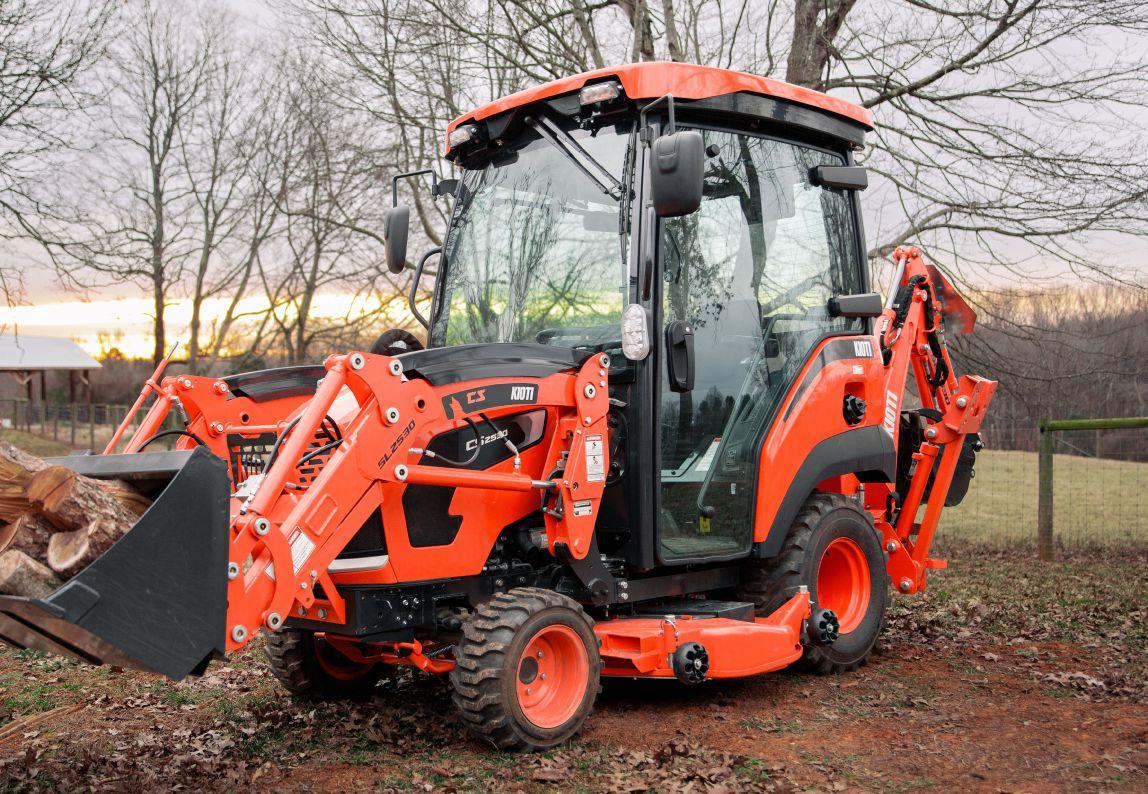
Preparing tractors for frigid winter
A practical guide for ensuring tractors run smoothly in cold weather
By Joel Hicks
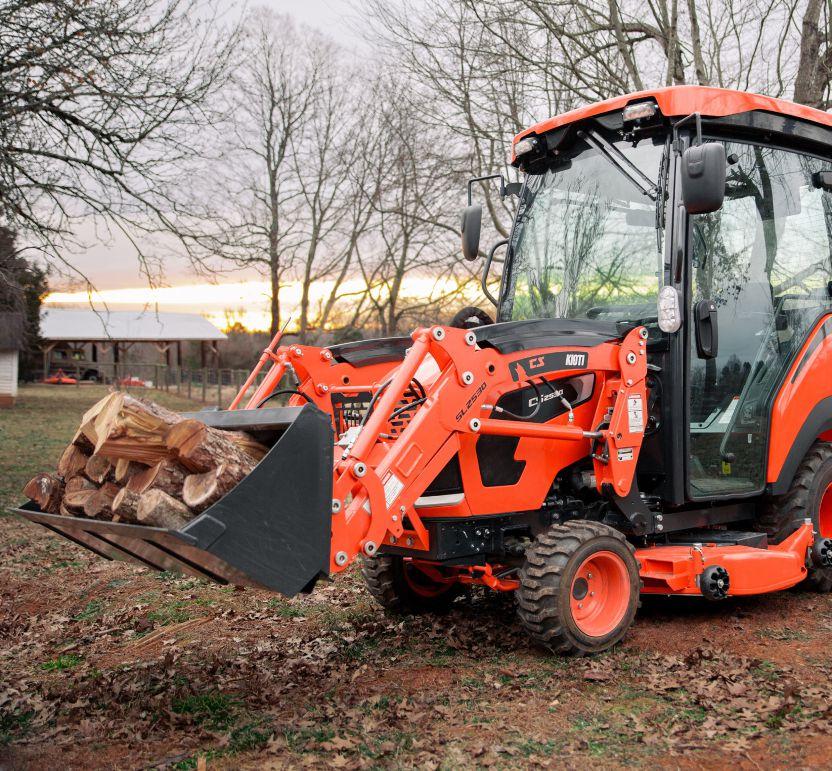
As the summer ends, most landscape professionals shift gears – some wrap up mowing and planting, while others prepare for leaf or snow removal. No matter the workload ahead, now is the time to focus on tractor maintenance. A few proactive steps today can prevent costly breakdowns this winter and ensure your machine is ready to perform when spring arrives.
Seasonal upkeep isn’t just about keeping your tractor clean – it’s essential to protect your investment, extend the life of your machine, and keep operations safe. Cold Canadian winters can quickly turn minor mechanical issues into major problems fast. By handling maintenance tasks now, you’ll help your tractor run smoothly all winter and make spring start-up a breeze.
This guide outlines practical steps to prepare your tractor for the frigid winter months ahead, whether you’ll be using it for snow removal or storing it until spring.
Pre-winter checklist
Inspect for wear to ensure winter readiness. Cold weather can make minor issues much worse if overlooked. A worn belt or hydraulic line may not seem like a problem in July, but it can bring work to a halt in January. Before freezing temperatures set in, thoroughly inspect the following components:
• Belts and hoses for cracks and visible wear.
• Battery connections – ensure they’re secure and clean away any corrosion.
• Tires for tread depth and grip sufficient for winter traction.
• Hydraulic lines for leaks or signs of wear.
If your tractor saw heavy use during the spring and summer, consider scheduling a tune-up with your dealer. A trained technician can identify issues you might miss and handle tasks unique to your machine. This ensures your tractor is winter-ready and provides a clear maintenance record. This is also a great time to review your owner’s manual. It offers guidance tailored to your tractor’s specific needs and recommended maintenance schedule.
In areas where winter temperatures drop below minus 6.7 degrees Celsius (20 degrees Fahrenheit), small issues can quickly become major problems. Taking these maintenance steps now helps prevent costly repairs and unexpected downtime.
Switch to cold-weather fluids.
Tractor engines need the right fluids to function efficiently in freezing conditions. As temperatures drop, standard oils thicken, adding strain on the engine and hydraulics. Before the cold weather arrives, swap standard oils for winter-grade versions that maintain viscosity in freezing conditions. Don’t forget to:
• Flush systems completely before adding winter fluids to prevent mixing with previous fluids.
• Refer to your owner’s manual to confirm correct fluid types.
• Add fuel conditioner to prevent gelling and injector clogging. After adding, let the engine run for about 15 minutes to circulate it properly.
Fuel and fluid problems are leading causes of winter start-up issues. Using winter-grade fluids is critical in cold regions to prevent engine strain and freezing.
Equip your tractor for winter work. Even in winter, landscapers rely on tractors for snow removal, ice management and site prep. Outfitting your machine with the right winter accessories ensures efficiency and safety.
• Block heaters support reliable engine starts in freezing weather.
• Battery warmers and blankets help maintain the battery’s power and prevent cold-related damage.
• Tire chains or winter tires improve traction on icy or snowy surfaces.
“As
temperatures drop, standard oils thicken, adding strain on the engine and hydraulics”
• Cab enclosures protect operators from the elements.
These upgrades not only boost tractor performance but also reduce accident risk.
Winter storage tips. If your tractor won’t be in use over the winter, proper storage is key to a smooth spring start-up. Cold temperatures, moisture, and inactivity can cause damage just as easily as heavy use. Before storing your machine for the season, follow these steps: Clean your machine thoroughly: Dirt, grass, and debris that are caught in the machine accelerate corrosion. A thorough wash reduces the risk of rust and long-term damage and makes spring start-up easier. Protect from the elements: Store your tractor indoors if possible. If outdoor storage is
your only option, cover your tractor with a high-quality tarp and park it on gravel, concrete, or wood rather than on dirt to reduce moisture exposure. In colder months, winter moisture can quickly cause rust. Elevate tires to avoid flat spots and rotate them monthly if possible.
Remove the battery: Cold weather drains battery power and can crack casings. Disconnect and store it in a warm, dry location, recharge fully before reinstalling.
Top off fluids and lubricate: Fill the transmission, hydraulic, and fuel systems to prevent condensation. Spray exposed metal parts with anti-corrosion protectant.
Conduct monthly checkups : Even in storage, start the engine briefly once a month to circulate oil and spot potential
issues early.
Canadian winters can be tough on both people and machines. Whether your tractor is working through snow or sitting idle until spring, preparation is key. A few hours of preventive maintenance in the fall can save you frustration and costly repairs later. New or old, premium or standard – every machine
needs winter prep to perform its best.
Reliability is everything when it comes to tractors, especially in winter conditions. Give your tractor the attention it deserves this fall, and it will reward you with dependable performance when you need it most.
Joel Hicks is product line manager for tractors at KIOTI.
Seasonal upkeep extends the life of tractors and keeps operations safe.
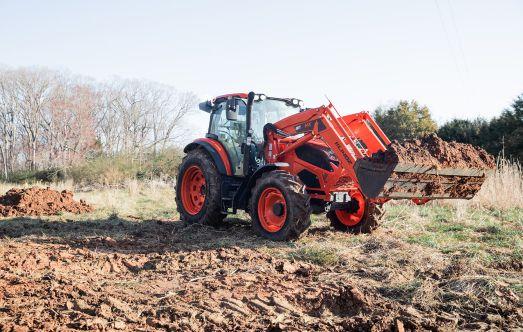
Tractors are often used for various tasks all year-round and must be properly maintained for optimal functionality in all seasons.
Equipment storage in six easy steps
Taking time in the winter will help avoid spring frustration.
By
Josh Jans
Summer is officially over and after a busy season, you’re probably ready for a break – and so is your equipment. Taking a little time now to get your machines ready for winter will save you time and possibly some frustration come spring. These six steps won’t just make spring prep easier; they’ll also keep your equipment running better and lasting longer.
Stabilize fuel before storing
Stale, old gas can spell trouble for engines, no matter what climate you’re in. Gasoline breaks down over time as it’s exposed to oxygen and draws moisture. The breakdown begins to form gummy deposits in the fuel, which can cause an engine to run poorly.
Fuel stabilizers work in both two- and four-cycle engines. Add one ounce of fuel stabilizer per two gallons of fuel before storing the equipment for the season. This will keep the fuel protected and fresh for at least 12 months. Another tip: Storing equip-
ment with a partially filled fuel tank is fine. No need to fill it up if you add stabilizer.
Wash and rinse your sprayer
The end of the season is the best time to fully drain, clean and rinse sprayers. The chemicals that pass through your sprayer can cause corrosion, create clogs and damage parts, especially if left in the machine when it’s not in use.
To prepare your sprayer for storage, thoroughly rinse the tank, hoses, wand and all accessories with clean water until the fluid runs completely clear. Once fully rinsed, run the pump to allow the lines to dry fully. This ensures there is no residual water left in the system that can freeze, and potentially damage the pump and other components.
Sprayers stored in colder climates can also benefit from adding a pump conditioner or non-toxic RV antifreeze to protect the system. Put two to three gallons (7.5 to 11 litres) of pump conditioner in your sprayer and pump it through the system until it
reaches the nozzles. Once the conditioner has circulated through the lines, shut down your sprayer and store it for the winter with the pump conditioner remaining inside.
Check and properly store batteries
Recommendations for batteries going into winter storage depend on the battery type. Before storing lithium-ion battery-powered machines, charge or discharge (by operating the machine) the batteries to between 40 per cent to 60 per cent (50 per cent is optimal). Fully charging to 100 per cent before storage can shorten battery life. The temperature that batteries are stored at will also affect their long-term life. The ideal storage environment for lithium-ion batteries is a cool, dry location with a consistent temperature between 50 degrees Fahrenheit to 70 degrees.
Lead-acid batteries should be fully charged and in good condition before going into winter storage. If the battery is stored undercharged, the remaining charge will continue to deplete, and the battery will
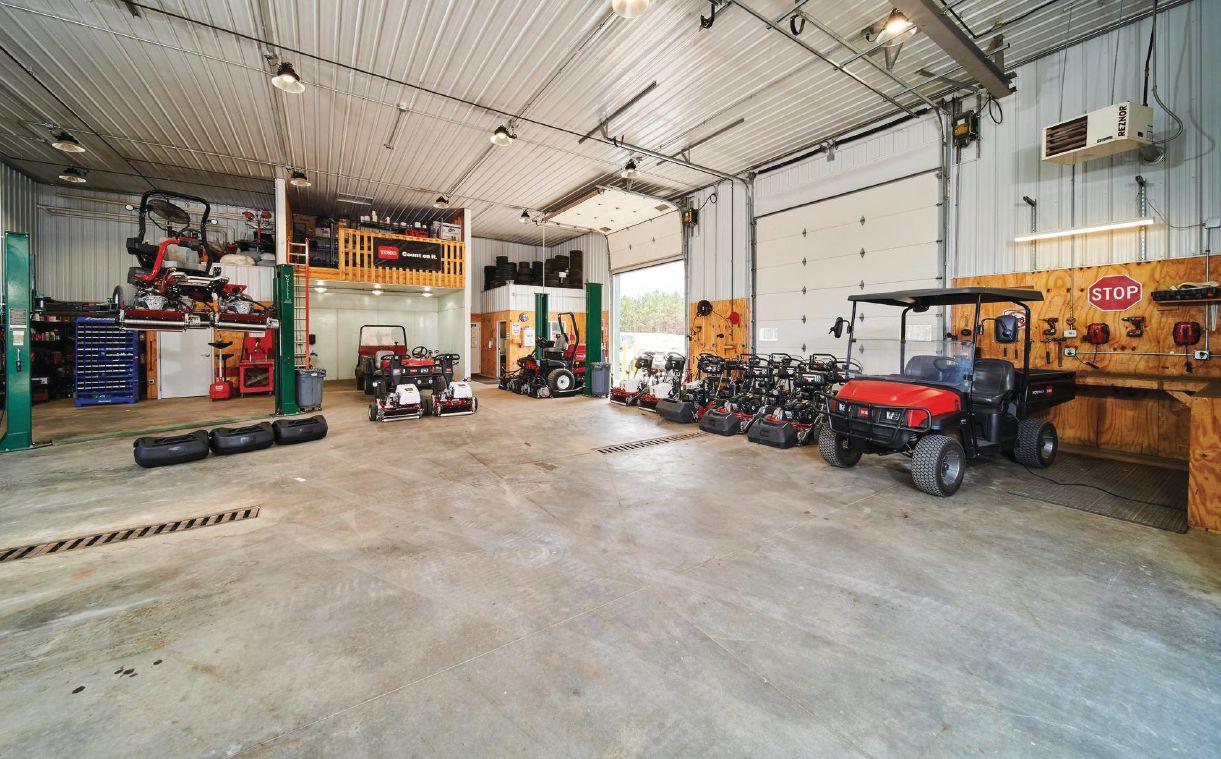
Photograph shows equipment properly stored in a neat and organized manner.
lose its ability to work well. Plus, if the battery is partially discharged, the electrolyte inside can freeze and crack the battery case, causing a leak or even a complete battery failure.
Corrosion is another issue to look for before storing lead-acid batteries. A dirty battery will discharge more than a clean battery, so it’s recommended to clean the terminal ends and put sealers on them as well. Keep in mind that a weak battery being stored throughout the winter will likely need to be replaced in the spring.
While your equipment doesn’t need to be in a climate-controlled building, it should at least be kept dry
Take care of fluids
To protect your machine before storing it for the winter, a general recommendation is to change the oil, grease the machine and check the coolant level. Refer to your operator’s manual for specific recommendations on your machine. It’s important to maintain a reasonable level of coolant mix, even in moderate climates. Corrosion inhibitors in the coolant help protect metal cooling system components from corrosion, rust and scale buildup.
If you change the oil, be sure to use the proper engine oil viscosity grade or weight for your machine. Document any routine maintenance you perform so you’ll know when the next service is due.
Pump up tires
Flat spots can develop on tires that are stored for an extended time, and you don’t want them on tires that will be driving on turf. To avoid flat spots, inflate tires to the maximum pressure as indicated on the tire before storing for the season. This will help the tire retain its shape; just be sure you bring the inflation back down to operating level when you put your machines and trailers back in service in the spring.
Protect against winter weather
While your equipment doesn’t need to be in a climate-controlled building, it should at least be kept dry. A shed or garage is ideal but even covering it with a tarp is better than leaving it out in the elements.
Taking these low-cost, low-effort steps now can help ensure a seamless start to your spring season by keeping your equipment running smoothly and extending its lifespan.
Josh Jans is marketing manager, sports fields and grounds, for the Toro Company.
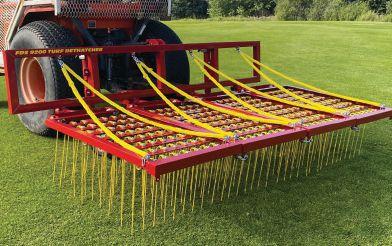
Unsurpassed in Quality and Function. fds 9200 Turf Dethatcher
Quad or 3-Point Hitch
Manufactured in Canada for Canadians
Technology and winter maintenance
Several impactful technologies are reshaping ice management
By Craig Sandmann
The winter maintenance industry has undergone a significant transformation over the past two decades.
Long gone are the days of relying on paper logs, TV forecasts and radio updates to manage operations. Today’s contractors have access to a wide array of digital tools that have elevated the industry standard.
Smartphones alone offer capabilities that would have been unimaginable a generation ago. Yet, while many companies have adopted basic technology for communication and recordkeeping, fewer have fully embraced the most advanced, integrated systems now available – systems that can effectively automate key aspects of ice management.
These innovations don’t just make life easier for contractors. They help companies operate more safely, efficiently and profitably. With persistent labour shortages and growing client expectations, leveraging the right technology has become more essential than ever.
Here are some of the most impactful technologies currently reshaping ice management:
Automated material application
One of the most persistent challenges in ice management is determining the correct
material type and quantity for each job. Mistakes can have serious consequences. Apply too little, and you risk slip-and-fall incidents and costly liability claims. Apply too much, and you erode profits, increase refueling trips and contribute to environmental damage, especially when using salt.
Many operators, out of caution, tend to over-apply materials, which may solve the immediate problem but creates long-term inefficiencies. Automated material application systems offer a smarter solution.
Modern controllers now allow for precision application by automatically adjusting output based on the vehicle’s speed and site-specific settings. For instance, as a truck accelerates, the system increases the application rate to maintain consistent coverage.
When it slows down, the rate decreases accordingly. Geofencing capabilities ensure material is applied only within the designated property boundaries, preventing waste and liability.
More advanced controllers eliminate guesswork altogether. Rather than relying on a numbered dial (e.g., a setting of “6” or “8” based on personal experience), operators can input an exact application rate, such as two pounds of material per 1,000 square feet. When the equipment is properly calibrated, the system ensures this target is met precisely.
These tools not only save material and improve coverage but also enhance driver safety. With the equipment managing application details, drivers can keep their focus on navigation and road conditions. Additional features like auto-vibration help prevent clogging and keep the system functioning smoothly without requiring manual intervention.
By simplifying the job and reducing the level of expertise required, automated systems can also make it easier to hire and retain staff. In today’s competitive labour market, technologies that lower the barrier to entry can provide a crucial advantage.
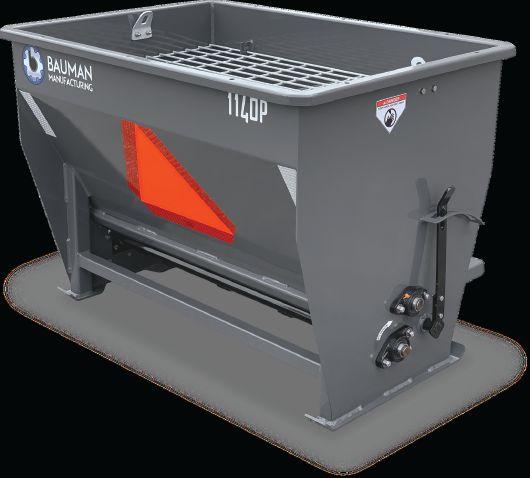
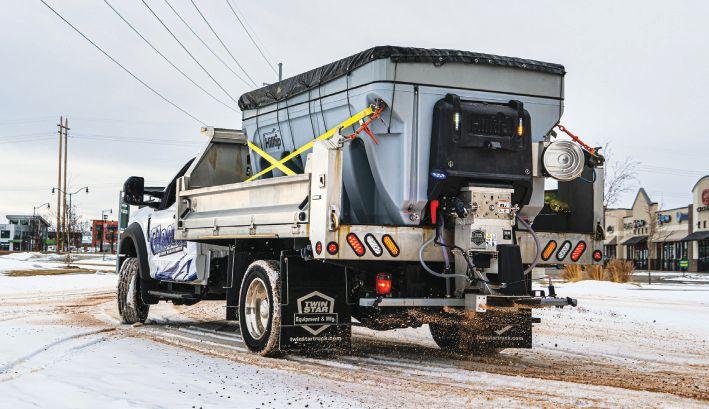
Automated material applicators help to remove the guesswork when spreading.
Craig Sandmann is managing director
Real-time weather monitoring and decision support
Another critical component of effective ice management is understanding current and forecasted weather conditions. The effectiveness of different de-icing and anti-icing materials can vary dramatically depending on surface temperature, humidity and precipitation type.
Modern spreader controllers are now equipped with sensors that track these variables in real-time. They can monitor road surface temperatures, atmospheric conditions and other environmental metrics, while also downloading hyper-localized forecasts.
When this information is combined with historical site data and material performance records, the system can make smart, data-driven recommendations on which materials to use and how much to apply. For example, if a site’s surface temperature is expected to drop significantly overnight, the system might recommend a product with a lower effective temperature.
What makes these technologies even more powerful is their integration with automated spreader systems. Once the controller recommends an application method, the operator simply approves the suggestion, and the system takes care of the rest.
In many cases, this automation results in more effective outcomes than even the most experienced operators can achieve on their own. People often default to familiar
materials and techniques, but a system that pulls data from dozens of real-time and predictive sources can deliver a level of precision and confidence that’s hard to match manually.
GPS and GPRS tracking for enhanced oversight
Fleet tracking has been available for years, but the latest GPS and GPRS solutions take it several steps further. Basic GPS can show where your trucks are. GPRS-enabled systems, however, offer two-way communication between the equipment in a fleet and the management dashboard, delivering a far richer set of data.
These integrated systems provide real-time updates on where each vehicle is located, what materials they’re using and how much has been applied. Contractors can even adjust application rates or update geofences remotely from a computer, tablet or smartphone.
Additionally, route optimization features can use GPS data to recommend the most efficient job sequence based not only on proximity but also expected refilling intervals. This can dramatically cut down on time and fuel costs, while reducing wear and tear on vehicles.
Integrated reporting and liability management
The ability to generate comprehensive, accurate reports is another area where modern technology shines. Integrated
systems now combine data from equipment controllers, weather sensors and GPS units into a single platform, making it easy to generate detailed reports without pulling information from multiple sources.
These reports are crucial not just for internal documentation but also for client transparency and legal protection. In the event of a slip-and-fall claim, contractors can access precise logs showing when a site was treated, what materials were applied and under what conditions. Some systems can even drill down to specific zones within a property, providing exact records of application rates for the area in question. By reducing the reliance on manually entered data, these systems improve accuracy and save administrative time. And with more robust documentation, contractors can better protect themselves from liability while demonstrating value to their clients.
The power of integration
While some of these technologies have each existed in isolation for some time, the real power lies in their integration. When these systems work together, communicating seamlessly and supporting each other, contractors gain a comprehensive, real-time command centre for their entire operation.
Integrated technology empowers companies to improve safety, enhance service quality, lower costs, and attract and retain workers. It also enables contractors to deliver professional, data-driven service.
Pre-season snow and ice preparations
Things to look for or consider before snow clearing begins
By Mike Jiggens
Winter’s arrival is just around the corner, and snow and ice contractors are getting their equipment and materials ready for the season’s first flakes. Snow and ice professionals have plenty of options at hand for clearing snow, including such attachments as front-mounted blowers and various types of blades.
Driving these attachments may include trucks, tractors, RTVs, wheel loaders or skid steers. Contractors may prefer one type of vehicle over another, but they should be aware of the strengths and limitations of available snow-clearing attachments, says Jonathan Gardner, product manager of construction equipment with Kubota Canada.
For example, not all blades are the same, he says. Fixed blades may not clean an uneven paved area evenly while articulated blades will do a better job when surfaces are uneven. V-blades, with their ability to expand and contract, may be better suited for clearing snow from sidewalks.
Contractors who prefer blades for pushing snow should pay careful attention to their blade’s cutting edge, Gardner advises.
“Make sure it’s not damaged. Make sure your cutting edge is in good shape because, without that, you’re not going to get down to the pavement or cement to clean the snow.”
He adds that attachments with moving parts should ensure the operator isn’t going to experience a “jolt” when going up and over a curb, thereby protecting the operator, the vehicle and the attachment.
“Make sure all those pieces are working and functioning,” Gardner says.
For hydraulic attachments, be sure the hydraulic lines aren’t packed, he says, and that they have no leaks. He adds that operators likely won’t be enamored to have to make repairs when outside temperatures are well below freezing.
“Snow removal is definitely a rough game.”
Looking for cracks in the frame and ensuring nothing is broken is something contractors must do prior to clearing snow, Gardner says.
Purchase considerations
If a contractor is looking to purchase new equipment, there are considerations to bear in mind, he says. Trip edges, for example, aren’t just there for clean snow edging. They help protect the operator. While clearing snow, operators tend to work as quickly as possible, knowing there are other jobs to be done within a limited amount of time. A snow-covered curb may be unseen, and the operator could injure himself if he plows into it without such protection.
“When it comes to repairing your equipment – safety-wise –make sure your seat belt is in working condition because you get those big jolts. If it’s a tractor or an RTV, you want to make sure your tires are at the correct pressure, and you want to make sure you have the tread depth to get the traction. If you don’t have the traction to clean an incline, you’ll slip and run backwards and end up in a ditch or something. Tires must be up to pressure and have the necessary traction.”
Good side lighting on the vehicle is imperative, he says, especially when snow removal work is frequently done at night when commercial parking lots are empty.
Although great strides have been made in recent years with the introduction of battery-powered landscaping equipment, gasoline and diesel power are the better options for winter work, Gardner says. Battery power in the winter is good for about four hours, he says, and it’s less with heavy loads.
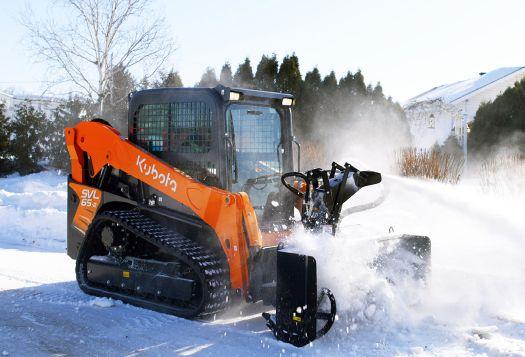
A front-mounted snow blower gives snow and ice contractors another option beyond blades.
“In snow removal, lots of times it’s heavy load, so now you take away time there. In cold weather, you lose battery longevity as well. When snow removal happens, you could be working four, five, seven, eight hours through the night, and you need a machine that has the hours of operation. You can’t stop to charge your battery for a day to go back and clean snow.”
This gives gasoline and diesel-powered machinery a “huge” advantage, Gardner says.
Most snow-clearing equipment can handle both heavy, wet snow and light, fluffy snow, but it’s a question of volume.
“If you’re doing a parking lot out west and you’ve got a foot of fluffy snow, you’re going to be able to gather more to push further than you would if you had that same amount with wet, heavy snow out east.”
Some attachments are built specifically for handling heavier snow. Gardner says purchasing a blower attachment than can handle heavier snow is a better investment
than depending on one built for lighter snow that will have difficulty handling heavier loads.
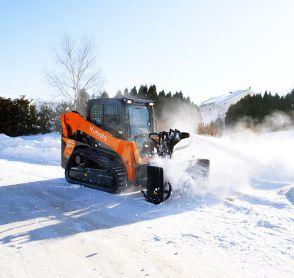
Many contractors prefer to use compact track loaders for snow removal because they’re machines that can be used all year long and won’t be sitting idle during the winter months. Gardner said it is important that tracks have the proper tread depth.
“Tread depth is important to make sure that when you go out there, you’re getting the traction you need to remove the snow.”
DO MORE, CREW MORE
When you need a utility vehicle to do more with the whole crew, you can rely on the versatility, and capability of the reliable, all-improved RTV-X CREW. Quickly and effortlessly switch from a 2-seater with industry-leading carrying capacity to a 4-seater with room for everyone using the innovative K-Vertible bed. Reimagine what your utility vehicle is capable of with the RTV-X CREW, the newest member of the RTV-X family. Since 2004, the RTV-X series has been Canada’s top-selling diesel pure utility vehicle*, which has become our favourite family tradition. *Based on power product marketing 2023
Fall is time for aeration, overseeding
These practices address common turf challenges and rejuvenates soil health. By Spencer Beckwith
While it’s tempting to think the growing season is winding down, in the north, fall’s cooler temperatures present an ideal opportunity to strengthen your turf’s foundation. Among the most impactful practices are aeration and overseeding – two techniques that address common turf challenges and rejuvenate soil health. Although misconceptions exist about what an ideal aeration and overseeding routine should look like, understanding the key best practices for these procedures is quite straightforward.
What is aeration and why does a lawn need it?
Over time, soil becomes compacted from regular foot traffic, mowing and natural settling. This compression limits the flow of air, water and nutrients to grass roots – ef-
fectively choking a lawn. Aeration combats this by mechanically removing small plugs of soil, creating openings that allow roots to “breathe” and absorb what they need to thrive.
The benefits of aeration extend beyond simply loosening soil. It enhances root development and improves the overall structure and drainage of the lawn. Aeration also boosts microbial activity, which plays a vital role in nutrient cycling. These same microbes help break down and prevent thatch buildup, a troublesome layer of dead grass and roots that can harbour pests and disease. Fall is particularly advantageous, especially for cool-season grasses because they resume actively growing as summer heat fades.
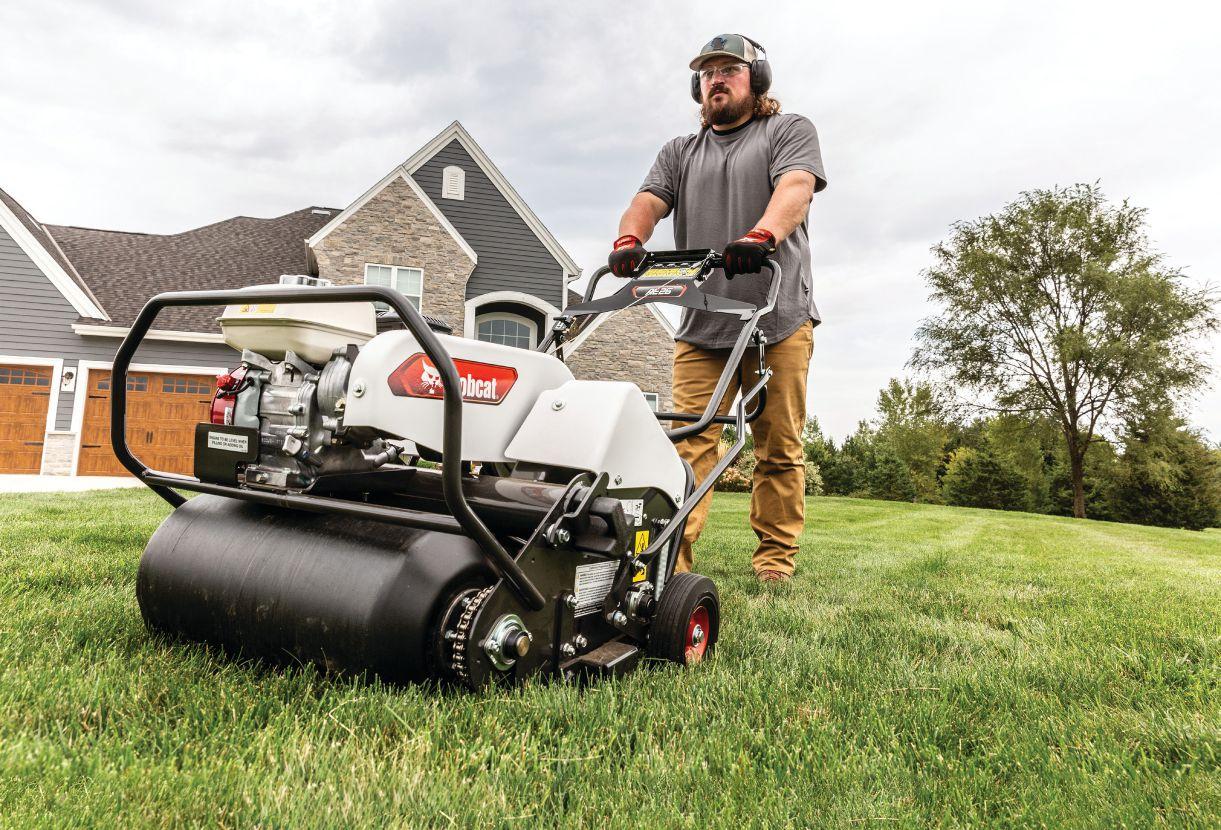
For this process, selecting the right turf equipment can make all the difference. Professionals and homeowners can choose between tow-behind, stand-on or walk-be-
hind aerators that are engineered to withstand the rigors of demanding conditions.
Power of overseeding: A lush lawn starts with new growth
Overseeding involves spreading new grass seed over an existing lawn. Not just for filling in bare spots, overseeding is a way to introduce newer, more resilient grass varieties that can better withstand pests, disease, drought, and heavy use. When paired with aeration, overseeding becomes even more effective – utilizing the aeration holes and plugs to create ideal points of seed-tosoil contact, improving germination rates. Like aeration, fall is the prime time to overseed cool-season grasses. The moderate temperatures and increased moisture help seeds germinate quickly and establish strong roots before winter. Overseeding at the right time revitalizes a tired lawn and supports long-term turf health.
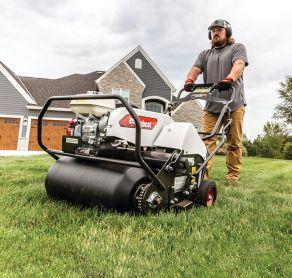
Aeration creates openings in the soil that allows roots to “breathe.”
Best practices before and after aeration and overseeding
Like all landscaping projects, preparation is key. A few days before aerating, mow the lawn slightly shorter than normal. Following this, a thorough watering will help soften the soil while allowing sufficient time for the moisture to settle and not be muddy. It’s also important to flag hidden obstacles like sprinkler heads and invisible fencing to avoid damage as aerators can pull soil cores from depths of two to five inches beneath the ground surface.
After aerating and overseeding, allow the soil plugs to decompose naturally as they return valuable nutrients to the ground and release beneficial microbes. Keep the soil consistently moist, without oversaturating, to promote seed germination and root establishment. Minimize foot traffic and hold off on mowing until the new grass reaches a height of at least three inches.
It’s important to avoid aerating and overseeding newly sodded or seeded lawns until they’ve had a full year to establish. Consider performing these tasks annually. Lawns that see a lot of use or grow in dense clay or subsoil might benefit from more frequent aeration.
While DIY aeration and overseeding is possible with rented equipment, these processes can require precise timing and technique. Partnering with a professional lawn care provider ensures the job is done correctly – and at the right time for your specific grass type and soil conditions. Professionals not only have access to high-quality equipment but also bring expert knowledge about regional grass types, soil health, and seasonal timing.
As you are preparing for winter, don’t forget to care for your equipment Finally, taking the time to properly winter-
ize your landscaping equipment – from aerators to mowers – is crucial to ensure they perform well, last longer, and are ready to operate come the following spring. Preparing your equipment for storage now can save you from expensive repairs and downtime next season.
Be sure to check your operator’s manual for recommended off-season maintenance tasks, such as changing the air, oil, and fuel filters, and checking belts for wear. Addressing these issues now can help you prevent mechanical problems later.
Store your equipment in a clean, dry space to shield it from winter conditions like moisture and freezing temperatures. For the best results and to make sure every step is done correctly, don’t hesitate to reach out to your local dealer for service support and any questions you might have.
Spencer Beckwith is a product specialist with Bobcat Company.
ARTIFICIAL TURF INSTALLATION STEP BY STEP
A look back at the resurfacing of Guelph’s Alumni Stadium
By Mike Jiggens
The installation of an artificial turf sports field isn’t a project that can be accomplished in a day. The average person on the street may think it’s simply a matter of placing a synthetic “carpet” atop the ground, allowing sporting events to be played upon it almost immediately afterward. It’s not that simple.
Cam Lawrie, facility supervisor for Alumni Stadium at the University of Guelph, outlined the elaborate process of installing an artificial turf field in February during the Ontario Turfgrass Symposium in Guelph.
In 2024, it was acknowledged the existing artificial turf surface at Alumni Stadium had reached the end of its life expectancy and needed replacement. The synthetic Turf Revolution surface was originally installed in 2012 and served as the temporary home field of the Canadian Football League’s Hamilton Tiger-Cats in 2013 while the team awaited completion of the new Tim Hortons Field (renamed Hamilton Stadium in 2024).
Lawrie said the former Turf Revolution field featured 16-millimetre fibres infilled with styrene-butadiene rubber (SBR) atop a gravel sub-base. It was replaced in the spring of 2024 with a GreenFields Allsport Diamond field with slightly shorter fibres, a 15-millimetre shock pad beneath it and infilled with SBR.
The field replacement project got underway on March 1, 2024. Although the playing surface itself had met the end of its lifespan, it was determined the field’s infill still had some life remaining and could be reused. Lawrie said that because the cost to dispose of the old surface was based on its weight, removing and reusing the infill helped to save money.
The infill was brushed into piles and set aside to be spread onto the new surface once it was installed.
Four days after beginning the project, work began to remove the older surface. Concrete saws were used to cut the fabric into small-
er pieces for easier disposal. That part of the project was interrupted a few days later, however, when periods of rain and snow forced a two-week delay after almost half of the surface had been removed.
Lawrie said he anticipated the field replacement project would take about five weeks to complete, but the delay contributed to what became a 10-week undertaking, “but that’s the nature of that time of year.”
Turf’s arrival
The stadium’s new turf arrived on March 25 in 43 rolls that were removed from several trucks with a telehandler. Once the old turf was completely removed, it was discovered the gravel sub-base was uneven and required proper grading before the new surface could be installed. New material was added, and the sub-base was compacted accordingly.
“We wanted to raise the level of the base just a little bit so that it wasn’t a huge step down off the track to the turf,” Lawrie said.
The new artificial turf surface at Guelph’s Alumni Stadium.
By April 4, the field was ready for laser leveling. Lawrie praised the contractor’s leveling work prior to the arrival of the laser level which was used sparingly to finish the job. Another round of compaction followed before work on the sub-base was completed on April 8 – a 14-day project.
“It was an important part at this step to get it right.”
The process ensured the new artificial turf surface would remain flat and consistent over the entire field.
Laying out the new surface began April 10. Lawrie said little in the way of hightech equipment was used during this stage of the project, with mostly tape measures and string lines utilized.
“It was pretty basic concepts they used.”
Reference points were marked directly onto the gravel to indicate where the sidelines, goal lines and midfield points would be located. Each roll of artificial turf was assigned a specific number to ensure it would be laid in its proper place on the field.
The first roll of new turf was laid on April 15. The shock pad was installed down one side of the field before being covered with rolls of the new surface material.
“It was very important to get these first rolls right because all your other rolls are referenced to this first roll.”
Lawrie said if the inaugural roll was positioned crooked or was a little off, each successive roll would be altered. Getting the first few rolls laid proved to be time consuming, but once they were down and formed a reference point, the rest of the process went smoothly, he said.
Lawrie said he was surprised to learn the shock pad was held together with packing tape but added that once it bore the weight of the surface itself and the infill, “it’s probably not going anywhere.”
About half the field was placed and glued together by April 16. Over the course of the next week, the remainder of the turf rolls were installed, work on the end zones had begun, and cutting around the field’s perimeter and at the corners was done.
Glueing in hash marks
Football-specific installations got underway on April 24, including the cutouts and glueing of hash marks along the sidelines and down the middle of the field. Fibres were shaved from the turf surface to accommodate the placement of marks and numbers. A “glue crew” was tasked with adhering the cutout marks and numbers to the turf’s backing.
Simultaneously, preparations were made for the installation of soccer lines so that they didn’t need to be painted whenever the field was used for soccer. Soccer lines were glued in April 28 while April 29 was earmarked for the Gryphons logo to be installed.
“This process was not a one-day thing,” Lawrie said. “This actually played out over a few days.”
He said the logo installation process took as long as it did because it came in multiple
pieces bearing an intricate design that required some pieces to be glued in and be allowed to set in before other pieces could be added. There was still work to be done on the logo by the first of May.
Infilling began on May 2 – a process that was spaced out over a few days.
“It’s applied in thin layers over a period of days so that they can appropriately brush the fibres and get them to stand up so that none remain trapped underneath, and you get a nice, consistent surface.”
The field was finally handed over to the university on May 7.
Lawrie said there were several “weird” bits of plastic found on the field after it had been installed. He figured the pieces –which were brushed off the field – were part of the manufacturing process.
He said the new turf’s life expectancy is about 10 years, but suggested proper maintenance could buy it a couple more years.
Field Day highlights at the GTI turf plots
Summer event
showcased research plots and promoted networking
By Dr. Sara Stricker
The annual Guelph Turfgrass Institute (GTI) Turfgrass Research Field Day has been a longstanding tradition at our research station, and the 2025 edition once again proved why we continue to host this free event for the industry. Despite the cool, overcast start to the morning, the energy among participants quickly warmed the grounds. Turfgrass professionals, researchers, and industry partners from across Ontario made their way to the University of Guelph’s GTI to connect, learn, and share ideas.
This year’s Field Day showcased the latest innovations in turfgrass science while reinforcing the sense of community that sustains the industry. Attendees not only discovered new approaches to turf management but also had the chance to forge connections over coffee, a complimentary lunch, and lively discussions along the tour route.
“Coming to the Field Day is about more than just the research plots,” one attendee said. “It’s about seeing familiar faces, meeting new colleagues, and realizing we’re all working toward the same goals.”
Industry demonstrations
An exciting aspect of the Field Day each year is the live equipment and product demonstrations. This year’s lineup did not
disappoint, offering a glimpse at technologies that promise to shape the future of turf management.
• G.C. Duke Equipment set up an autonomous Husqvarna Automower, an all-wheel-drive robotic mower designed to handle slopes and challenging terrain. It was interesting to watch the device pivot along the boundary lines to produce a noticeable striping pattern. They also showcased the Stinger Gateway Applicators, tools that bring efficiency and precision to fertilizer and product applications. Together, the equipment underscored a trend toward reducing labour demands while maintaining high-quality turf.
• Simplistic Lines quite literally “made their mark” with their SWOZI
GPS-guided line painter. The demonstration highlighted how quickly and accurately sports fields can be lined with this technology, saving time while ensuring perfect straight lines and arcs – a valuable tool for municipalities, schools, and professional teams alike. The accuracy of the painted lines was rather impressive, with reliable stop/ start positions programmed into the system.
• EGO showcased the increasing viability of battery-powered equipment, including the zero-turn ride-on mower that has been on loan to the University of Guelph this summer. As municipalities and golf courses look to reduce carbon footprints and noise pollution, battery power is becoming more than
Dr. Sara Stricker is the communications and outreach co-ordinator at the Guelph Turfgrass Institute.
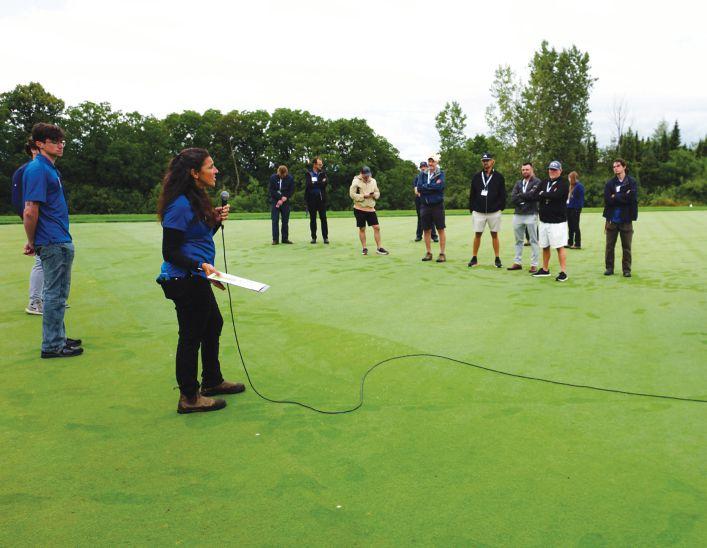
Dr. Katerina Jordan introduces her graduate students Kieran and Efe and their projects on take all patch.
a novelty; it’s becoming a practical solution.
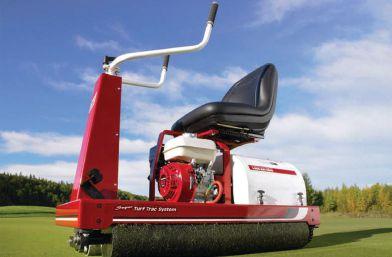
• Allett Canada brought its signature reel mowers, including a heavy-duty rideon model featuring a roller system that produced the kind of sharp, professional-quality stripes seen on professional sports fields and golf courses.
• Vanden Bussche Irrigation demonstrated its digital platform, highlighting how intuitive and user-friendly it is for turf managers. They also showcased the ease and precision of operating Rain Bird irrigation heads, using the GTI property as an example, emphasizing efficiency and control in water management.
• Finally, EcoTea demonstrated its organic-based product applied to greensheight creeping bentgrass. With growing interest in soil health and microbial products, this demonstration prompted
thoughtful questions from turf managers curious about integrating sustainable practices into their programs. These demonstrations offered not just a glimpse of what’s new but also sparked discussions about how such technologies can be adapted to local contexts – whether that means Canadian climates, budget realities, or specific facility needs.
Research highlights
Of course, the heart of GTI’s Field Day remains the research tours. Attendees were guided through a series of active research plots, where faculty, graduate students, and research associates shared findings and discussed ongoing projects.
This year’s highlights included:
• Evaluation of Overseeding Sports Fields with Different Species. Wear and tear on community and professional fields can make a huge difference to
athlete safety, so we are testing which turf species and cultivars can improve recovery and durability, in combination with an alternative herbicide. The overarching message from this trial, which was supported by the Ontario Turfgrass Research Foundation, is that perennial ryegrass establishes very quickly in bare patches.
• NTEP Perennial Ryegrass Trial. A cornerstone of turfgrass evaluation, this multi-year trial from the National Turfgrass Evaluation Program provides valuable data on the performance of perennial ryegrass cultivars under Canadian conditions. The data from this trial will be publicly available on NTEP.org at the conclusion of the fouryear multi-site project.
25_008065_Turf_And_Rec_OCT_CN Mod: August 22, 2025 11:05 AM Print: 08/25/25 page 1 v2.5
RESEARCH
way-height turf, this study addresses water management challenges faced by golf course superintendents. The 2025 season provided the perfect conditions to produce localized dry spot symptoms! This study is supported by AquaAid.
• Low-Input Putting Green Cultivar Trial. As water restrictions and environmental pressures grow, the ability of cultivars to perform under reduced fertility and irrigation is becoming increasingly critical. The Alliance for Low Input Sustainable Turf (A-LIST) is evaluating cultivars in multiple locations across North America, but the GTI is the first Canadian location.
• TWCA Perennial Ryegrass Drought Evaluation. Drought tolerance is a major focus for the Turfgrass Water Conservation Alliance (TWCA), and GTI’s participation ensures that Can-
adian turf managers have access to relevant performance data. Varieties that pass the rigorous standards for green-up after drought will qualify for the TWCA seal.
• A-LIST Kentucky Bluegrass Cultivar Trial (Lawn Height). For homeowners, municipalities, and sod growers, the focus on low-input performance of Kentucky bluegrass offers insights into sustainable lawn care.
• Non-Conventional Herbicide Pre-Emergent Crabgrass Trial. With shifting regulations and public perception around pesticides, identifying effective alternatives for crabgrass control is essential for the lawn care industry. This study is supported by Neudorff and is evaluating several formulations against seeded smooth crabgrass and rough crabgrass as compared to an industry standard.
• No mow May and Leave the Leaves. Two lawn care practices went viral on social media, so we put them to the test. The No Mow May plots were not mowed until June 1 and then scalped down to 2.5 inches and this damage was still evident in August. Leave the Leaves created bare patches which were invaded by clover.
Each stop on the tour reminded attendees of the GTI’s dual role: addressing practical challenges faced by turf managers today, while also anticipating the demands of tomorrow. From sports fields to golf greens to municipal parks, our research aims to support the entire spectrum of turfgrass use.
Building community
Beyond science and equipment, the GTI Field Day is equally about fostering collaboration. Attendees were able to connect
This highly practical guide covers the full complement of tools green industry professionals need to create a successful environmental program on golf courses and grounds. TheEnvironmentalStewardshipToolkit offers a comprehensive analysis of all relevant issues, including environmental management, resource management, community engagement, and document management.
The emphasis throughout is on the development of programs that are both sustainable and practical, combining the protection and renewal of environmental systems with a workable business plan. Regulatory issues as well as concerns of owners, customers, and the community at large are also addressed.
$106.50 | Item #0470635162
with the Guelph Turfgrass Institute team, including director Dr. Katerina Jordan, researcher Dr. Eric Lyons, station manager Sean Jordan, assistant station manager Erica Gunn, research technician John Watson, and graduate students Kieran Molony and Efe Engin. These conversations offered a rare chance to engage directly with the people driving turfgrass research, opening the door for knowledge sharing and new professional relationships.
Between sessions, participants mingled over coffee, exchanged stories about seasonal challenges, and discussed how the day’s insights could be applied back at their own facilities. Thanks to the generous support of sponsors, a complimentary lunch further encouraged networking in a casual, welcoming atmosphere.
“The conversations over lunch are just as valuable as the research updates,” a
participant noted. “You leave with new contacts, new ideas, and a stronger sense of belonging to this industry.”
Looking ahead
As the day wrapped up, the conversations didn’t stop – attendees lingered, exchanging contact information, planning future collaborations, and discussing which demonstrations had left the biggest impression. The GTI team is already looking forward to the 2026 Field Day, which promises another slate of research updates, demonstrations, and networking opportunities. Each year builds on the last, creating a stronger, more connected turfgrass community. Until then, the message from the 2025 event is clear: innovation and collaboration are alive and thriving at the Guelph Turfgrass Institute.
A big part of hosting events like the Field Day is helping people feel comfortable
coming to us with their questions. Upon being here once, you know that you can bring turf samples right to our front door for analysis at the Turfgrass Diagnostics Clinic. After you’ve sat in the same classroom where the Diploma in Turfgrass Management and Turf Managers Short Course are taught, it’s easier to picture yourself – or a mentee – joining the program. Meeting the people who answer the phones, guide the tours, and collect the data makes a lasting impression. That sense of openness and connection is a huge reason why we host these public events: to show that our doors are always open, and that the Guelph Turfgrass Institute is here as a resource for the entire turfgrass community.
Stay connected with GTI by signing up for the newsletter at www.GuelphTurfgrass.ca or following us on social media @ GuelphTurf.
FLEET MANAGEMENT
MANAGEMENT STRATEGIES FOR FLEET INDUSTRY
Fleet managers face added pressure to keep assets running efficiently
By Daniel Simpson
With summer turning to fall, landscaping fleets have experienced their the busiest time of the year. As demand for mowing, maintenance, and seasonal services increases, fleet managers face added pressure to keep assets running efficiently, manage tight schedules, and minimize downtime.
Managing internal assets and owner-operated equipment for landscape contractors across Canada demands unwavering vigilance to maintain peak asset and equipment performance. Implementing in-house maintenance programs becomes critical, ensuring every asset stands ready to tackle the season’s demands, effectively warding off the spectre of costly downtime during their busiest months.
CP Energy, a Calgary-based company operating nearly 300 assets across broad geographic areas, faced challenges like those encountered by many landscaping operations. Managing inventory, conducting inspections, and tracking maintenance to ensure Department of Transportation (DOT) compliance required substantial manual effort, leading to ineffi-
ciencies and delays. By systematically addressing these challenges through optimized in-house maintenance strategies, CP Energy saw a boost in efficiency, accountability, and operational readiness.
Fueling efficiency with transparent data
On many levels, readily available maintenance data like work order status, service timelines and costs, and fuel spend are crucial for landscape fleets. At CP Energy, for example, this accessible data across its teams helped improve operator and technician accountability. For landscape contractors, such transparency means fewer delays and better-coordinated teams, especially during critical project timelines.
As Krystal Ray, DOT compliance senior analyst for CP Energy, describes, “It’s been really helpful for managers to have access and be able to check it any time they want to, even in the evenings. Then they com-
municate with me if they’ve seen or found an issue, either with the driver or the technician. It’s been great for more accountability for their drivers versus accountability for me, to them, to their driver, or me to the driver.”
Landscape contractors can mirror this practice by providing team leaders with direct, round-the-clock access to data about equipment, asset statuses, and ongoing maintenance requirements. This empowerment helps maintain high performance levels, especially during intense operational periods like spring and summer.
Tailored inspections lead to better asset health
Routine inspections are a cornerstone of effective fleet optimization, reducing unexpected downtime and repair costs. CP Energy found success by customizing inspection forms to match technician workflows. This small yet impactful change helped simplify inspections, reduce pencil-whipping, and increase the accuracy of defect reporting.
CP Energy utilized custom inspection forms to accommodate the unique needs of internal assets and owner-operated equipment, enhancing inspection accuracy and efficiency. This approach prevented minor issues from escalating into major breakdowns, a valuable strategy for landscape contractors managing assets that face frequent heavy use and challenging environmental conditions.
Landscape contractors managing diverse fleets, from heavy-duty trucks to
Daniel Simpson is manager of product marketing at Fleetio, a fleet maintenance and optimization platform.
Daniel Simpson.
specialized landscaping equipment, can replicate this by tailoring inspections specifically to their operational needs. Custom inspections ensure critical components like hydraulics, cutting blades, tires, and safety systems are consistently in top condition, minimizing downtime during the busy landscaping season.
Overhauling inventory management to minimize downtime
Effective inventory management is another critical element of optimizing an in-house maintenance program. Initially, CP Energy faced substantial downtime due to inadequate parts inventory tracking. Implementing a structured inventory management approach helped reduce downtime and improve parts availability. CP Energy modernized its inventory with a thorough reset of warehouse operations, which included organizing parts to improve inventory visibility. Establishing reorder points and maintaining accurate, real-time tracking of parts usage helped the company avoid unnecessary downtime due to shortages. Landscape contractors can adopt similar practices to maintain critical equipment, such as mowers, trimmers, and loaders, ensuring parts availability and reducing the costly delays associated with waiting for replacements.
Building accountability into maintenance processes
A successful in-house maintenance strategy relies on solid accountability measures. CP Energy implemented daily tracking of maintenance tasks and automated work order management, ensuring technicians accurately documented their work. Technicians at CP Energy were required to clock in and out of each work order, providing precise records of maintenance activities. This transparency enabled timely task completion and reduced delays.
Landscape businesses adopting similar automated tracking measures can ensure tasks are addressed promptly, reducing the likelihood of equipment failures
during critical operational periods. Additionally, providing clear visibility into daily tasks and their completion establishes a culture of accountability and continuous improvement. Managers can quickly identify and resolve operational inefficiencies or recurring maintenance issues, keeping the fleet at peak performance levels.
Enhanced communication for improved decision-making
Fleet optimization hinges on maintenance and clear communication. By centralizing fleet data, CP Energy improved communication channels across all levels of the organization. Technicians, managers, and accounting teams can access the same data simultaneously, making informed decisions about maintenance priorities and budget allocations.
Landscape contractors can implement similar centralized systems that ensure data-driven discussions around asset health and maintenance expenditures. Improved communication eliminates guesswork and allows for precise planning and budgeting. Data transparency also helps identify equipment nearing the end of its lifecycle, aiding strategic planning for replacements and new investments.
and smoother daily operations. Landscape contractors can achieve these notable returns by prioritizing efficient in-house maintenance processes. Regular, structured maintenance extends asset life and directly impacts the bottom line through increased uptime and optimized resource utilization.
CP Energy’s shift toward optimized inhouse maintenance practices significantly reduced service interruptions. The fleet experienced fewer unexpected failures, improved compliance with regulatory standards, and smoother operations, thanks partly to data-driven communication.
“We definitely communicate as much, if not more, than previously, but it also makes communication more targeted,” Ray explained. “You have that data right there in front of you to pinpoint or direct questions about certain things.”
Landscape companies can increase productivity and grow a healthier bottom line by investing in proactive in-house maintenance. This foresight, leading to less unexpected downtime and more predictable maintenance expenses, allows contractors to sharpen their financial forecasts, manage budgets with greater precision, and deploy resources with strategic intent. Ultimately, this holistic approach to optimizing the fleet creates a lasting competitive edge in a market where operational efficiency truly distinguishes success.
Health & Safety
By CCOHS
The Canadian Centre for Occupational Health and Safety (CCOHS) promotes the total well being of workers in Canada by providing information, training, education, systems and solutions that support health and safety programs and injury and illness prevention. www.ccohs.ca
Know the risks of lower back injuries
The variety that comes with landscaping, groundskeeping and maintenance work can be rewarding, but it also brings the risk of musculoskeletal injuries – especially to the lower back. Back injuries are the most common type of injury linked to manual handling tasks. While it may not be realistic to eliminate hazards entirely, there are ways to reduce both the number and severity of injuries.
Understand the risks
Anyone who lifts, carries, pushes, or pulls is at some risk of injury. In landscaping and turf maintenance, tasks often involve repeated bending, having to handle heavy or awkward loads, and working outdoors in challenging conditions. Back injuries can happen suddenly but are more often the result of strain building up over time. To prevent injuries, consider how a lift is performed and factors like workflow, equipment, work pace, and the environment.
Lighten the load
The best way to prevent back injury is to reduce or eliminate heavy manual handling. Whenever possible, use powered or mechanical systems to limit physical effort. Tools like lift tables, conveyors, wheelbarrows, trucks, and dollies can make moving materials safer. Using simple tools like gravity chutes can also aid in disposal, if workers receive proper training on how to use them safely.
Simplify tasks
When heavy handling cannot be avoided, look for ways to reduce the demand of the work. Careful planning can prevent unnecessary re-handling of the same materials, such as moving sod or soil more than once. Make loads lighter by splitting them into smaller containers, using lightweight packaging, or having two people share the task. Changing the type of movement also makes a difference. Lowering is less de-
manding than lifting, pushing is easier than pulling, and pulling is easier than carrying. Shorten lifting distances and travel routes to reduce strain and alternate heavy tasks with lighter ones to prevent fatigue from building up.
Avoid risky movements
Even when materials are not heavy, awkward movements like bending, twisting, or reaching can cause injury. Design jobs so workers can avoid these positions. Storing the most used supplies at a comfortable height, making sure there is room to turn the whole body, and keeping tools within easy reach all reduce strain. Containers with handles or loads shaped so they can be held close to the body are safer for workers to carry. Balanced and sturdy containers prevent sudden shifts that could put stress on the back.
Provide shovels with a variety of shaft lengths. Longer shafts (up to chest height) ease the strain on back muscles by reducing the amount of bending required. Shorter lengths result in better stability when transferring the load. In general, when the blade is placed on the ground, the total shovel length should come up to the worker’s elbow when their arms are at their side.
Consider the work environment
The work environment plays an important role in injury prevention. Adequate lighting (around 200 lux) helps workers see clearly. Extra lighting and colour contrast can improve depth perception in stairways or narrow passageways.
For outdoor work, temperature must also be considered. In cold conditions, tasks should be limited when the wind chill falls below minus 25 degrees Celsius, and work stopped below minus 35 degrees. Proper insulated clothing protects against hypothermia and helps maintain dexterity in the hands. In hot weather, workloads should be reduced when the temperature
Work pace can also affect injury risk. Pressure to rush often leads to tension, which makes muscles more prone to injury. Frequent lifting without enough recovery time adds to the problem. Ideally, workers should have some control over their pace and the ability to rest when needed. If that is not possible, schedule extra breaks, such as short pauses in the morning and afternoon in addition to lunch. Short, frequent rests can be just as effective as longer ones. Workers new to a job or task should also be given more breaks to help them adjust.
Encourage workers to report any discomfort early so hazards can be identified and corrected.
Training and education
Workers should understand the hazards of manual handling and be shown safe techniques. Training should be specific to the actual tasks being performed, since no single “correct” method of lifting applies in every case.
Some practices prove useful in most situations. Workers should plan their lifts, clear their path, and warm up muscles before starting. Standing close to the load with a stable stance, keeping the natural curve of the spine, bending the knees, and tightening abdominal muscles all help protect the back. Lifts should be smooth and controlled, with the load kept close to the body, avoiding any twisting or jerking. Breathing normally and staying relaxed can help reduce tension. No one should attempt a lift that feels unsafe.
Back injuries are common but not inevitable. When you combine good job design, ergonomics, education, and safe work practices, your crews can continue to work safely and efficiently through every season.
“Very impressive. It effortlessly cleared the driveway while barely making a dent in the battery.”
Handle the toughest winters. No gas. No oil. Just power.
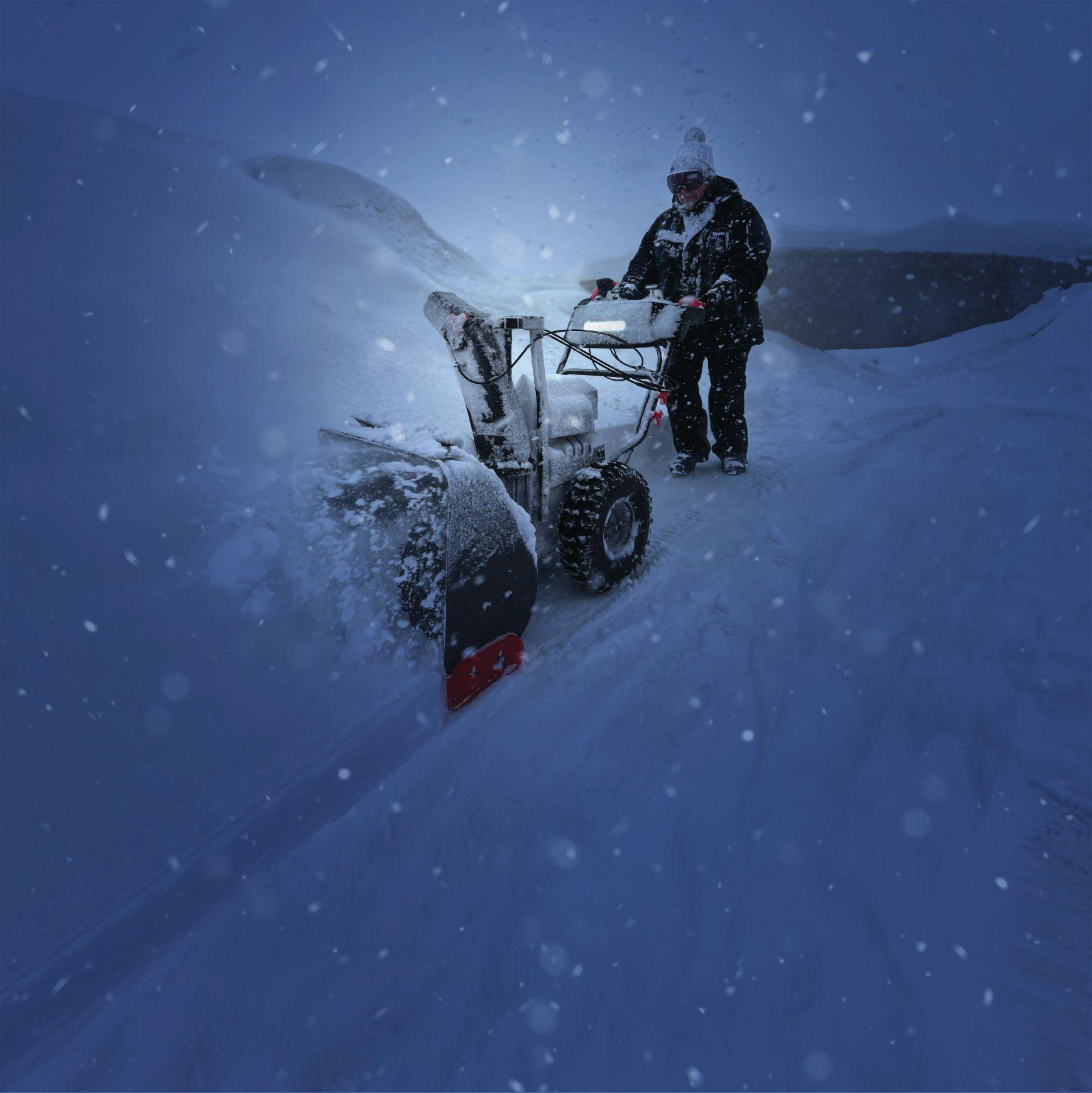
The Kress professional 2-stage snow blower delivers high performance in harsh winter conditions – clearing up to 8 inches off a 21-car parking area and precisely dropping it up to 52 feet away. All on a single charge.
This beast starts instantly, runs ultra clean, and packs all the features you’d expect from the most advanced blower on the market.
See your local Authorized Kress Dealer and make this winter your most productive yet.
Scan this code to find your local Kress dealer.
Julio Tomé Cloverdale Mowing Cloverdale, BC
SMARTER TECHNOLOGY.
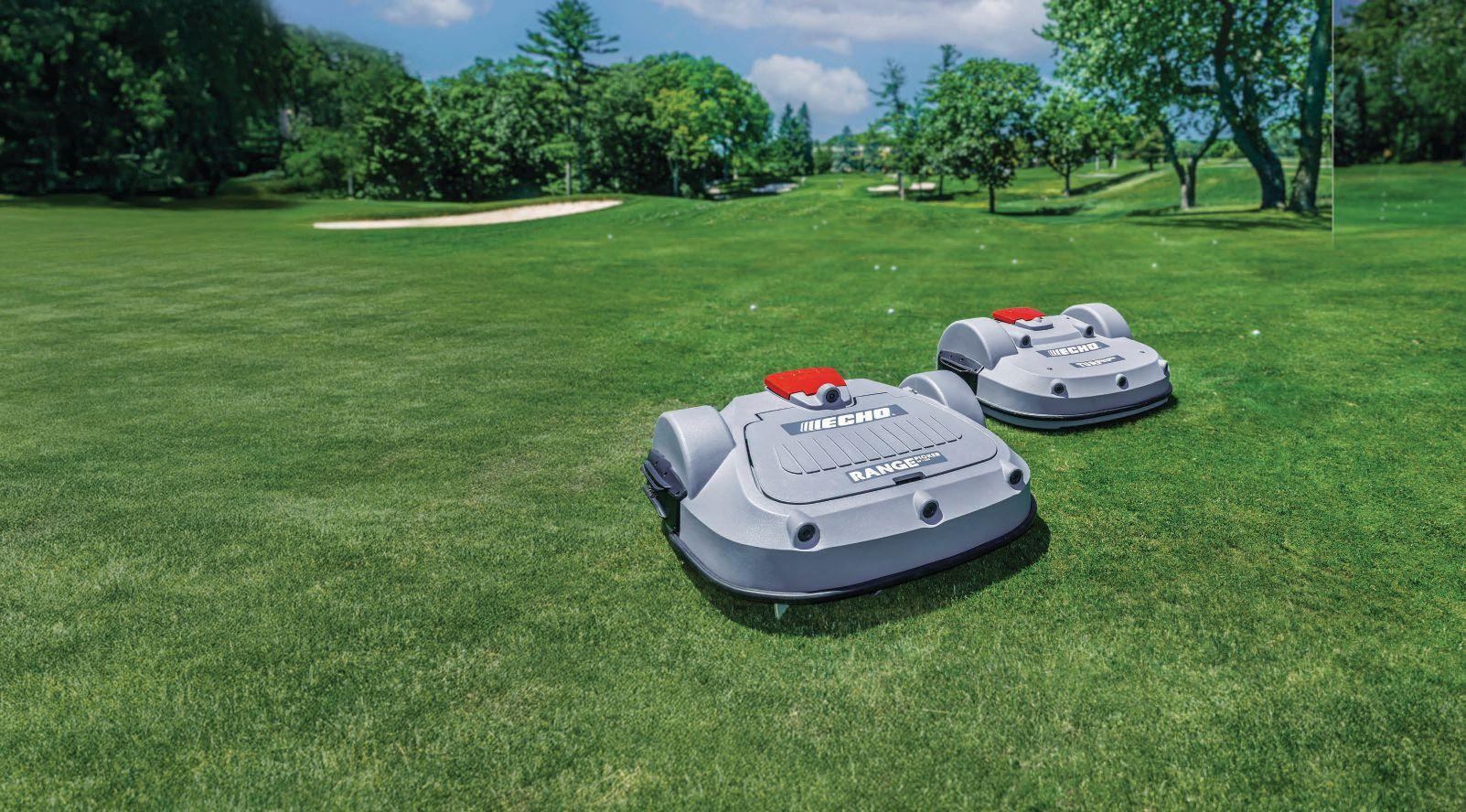
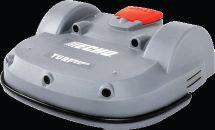
With the new WiseNav update, say goodbye to boundary wire limitations. This update will take your robot's precision to the next level. Now, navigate without the need for a boundary wire, providing three times more mowing capacity and significantly reducing your workload. This update is also applicable to golf ball pickers.
Exclusively available for GPS-RTK robot models.
PATTERN MOWING & PICKING
With centimeter accuracy
FULLY AUTONOMOUS
Charges, Cuts & Dispenses golf balls on its own
COMBINES WITH TM-2050
MULTI-ZONE OPERATION
Use on sport fields, parks and golf courses
SUSTAINABILITY AND RELIABILITY
Zero emissions with zero noise pollution
For a complete autonomous solution for your driving range
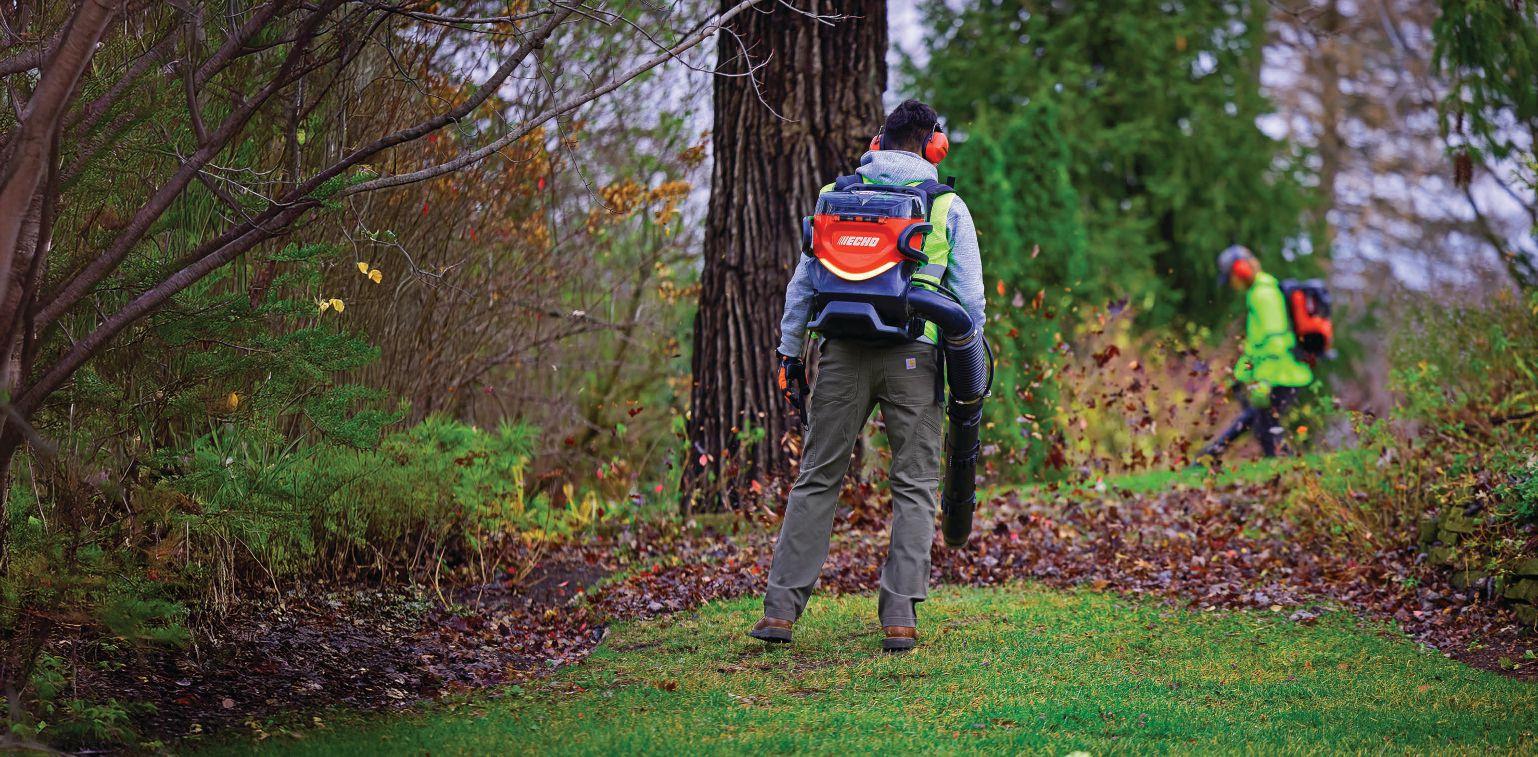
The ECHO X Series is a collection of best-in-class tools, engineered for professionals to conquer the toughest jobs e ortlessly. This powerful lineup of battery-powered equipment maximizes productivity and e ciency, ensuring peak performance on every task. Backed by a two-year commercial warranty, you can trust in their superior quality and reliability.