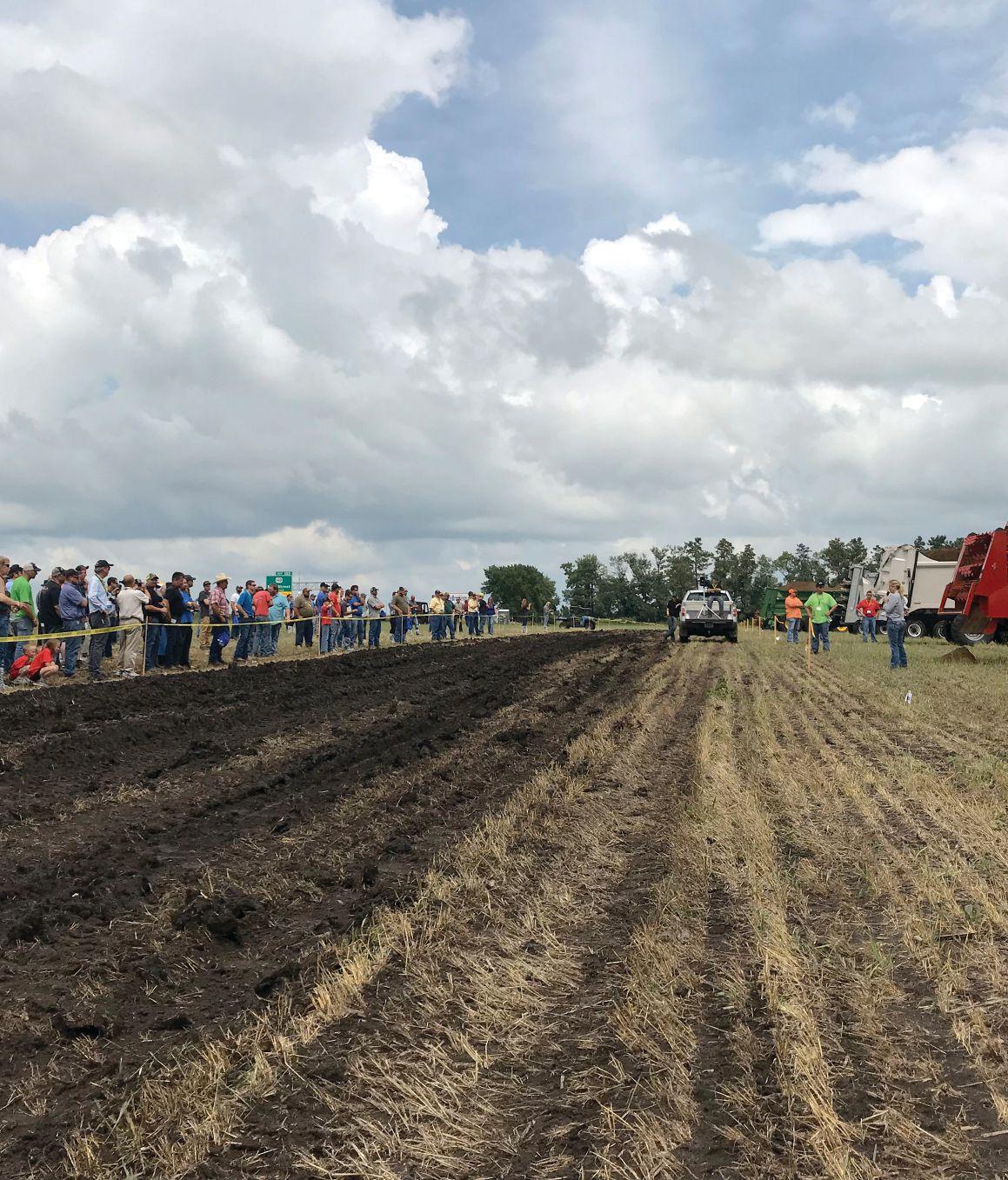
• Manure emissions during agitation and processing
• Applying fall manure for hybrid rye
• Nitrification inhibitors and manure
• Real-time nutrient sensing for precision manure application
• Biochar and manure management
• Nitrogen mineralization in treated manures
• Manure innovations of the Northeast
• Manure separation systems
• Interaction of cover crops and manure
• Interactive calculator to estimate manure value
In Cooperation with: Expo Partners:
FEATURES
Business
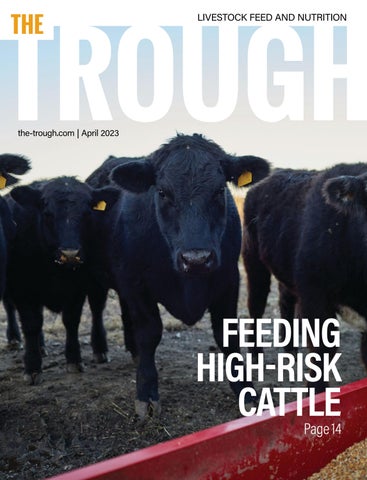
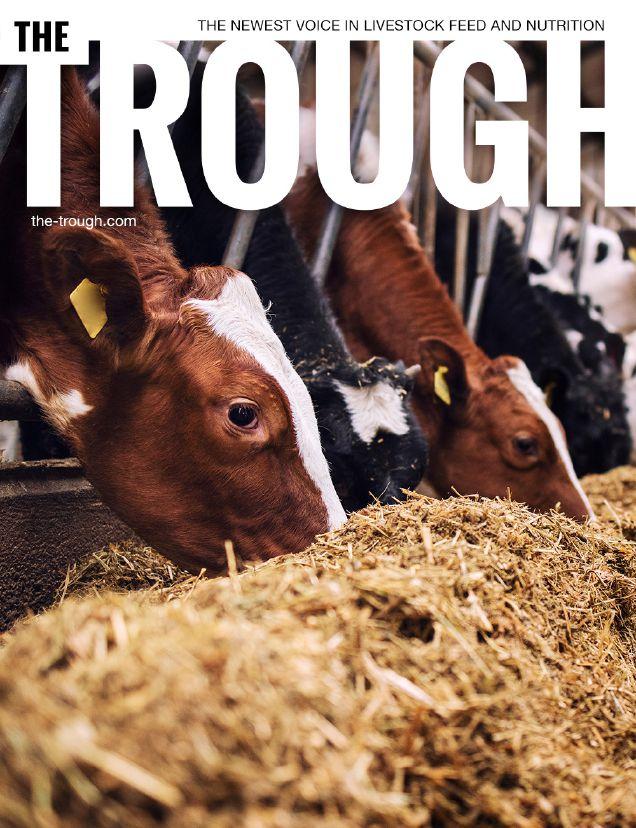
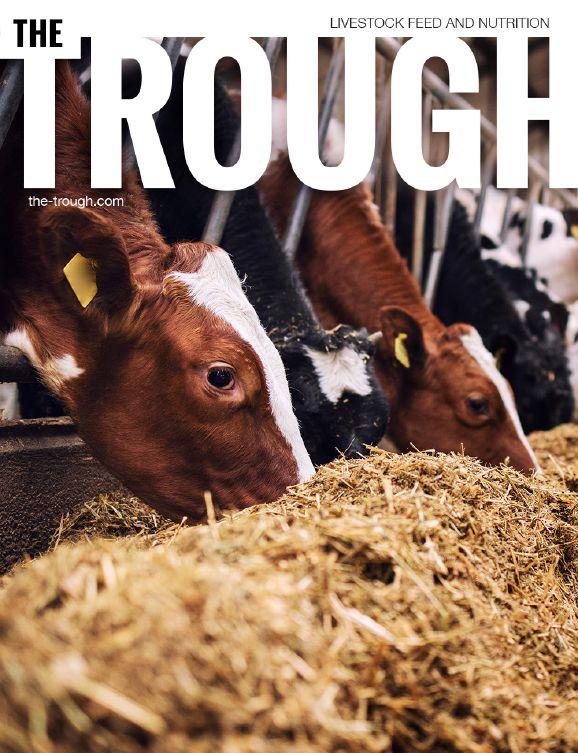
High-risk cattle have often been viewed as more expensive to feed. New research has founud that this may not be the case.
What makes cattle high-risk?
An ordinary-looking calf might be high-risk because they have no vaccination history, or have been transported for a long stretch.
DEPARTMENTS
04 From the editor
The industry is poised for big growth, but there are also challenges that lie ahead.
Industry news
The latest on provincial funding, new facilities opening stateside and an update on avian influenza in Canada.
8 Farm focus
Manitoba-based Rich Lane Farms share how they maintain optimal health for their herd.
10 Animal health
African swine fever virus is causing trouble overseas. The best practices can help you stay prepared.
12 Innovation
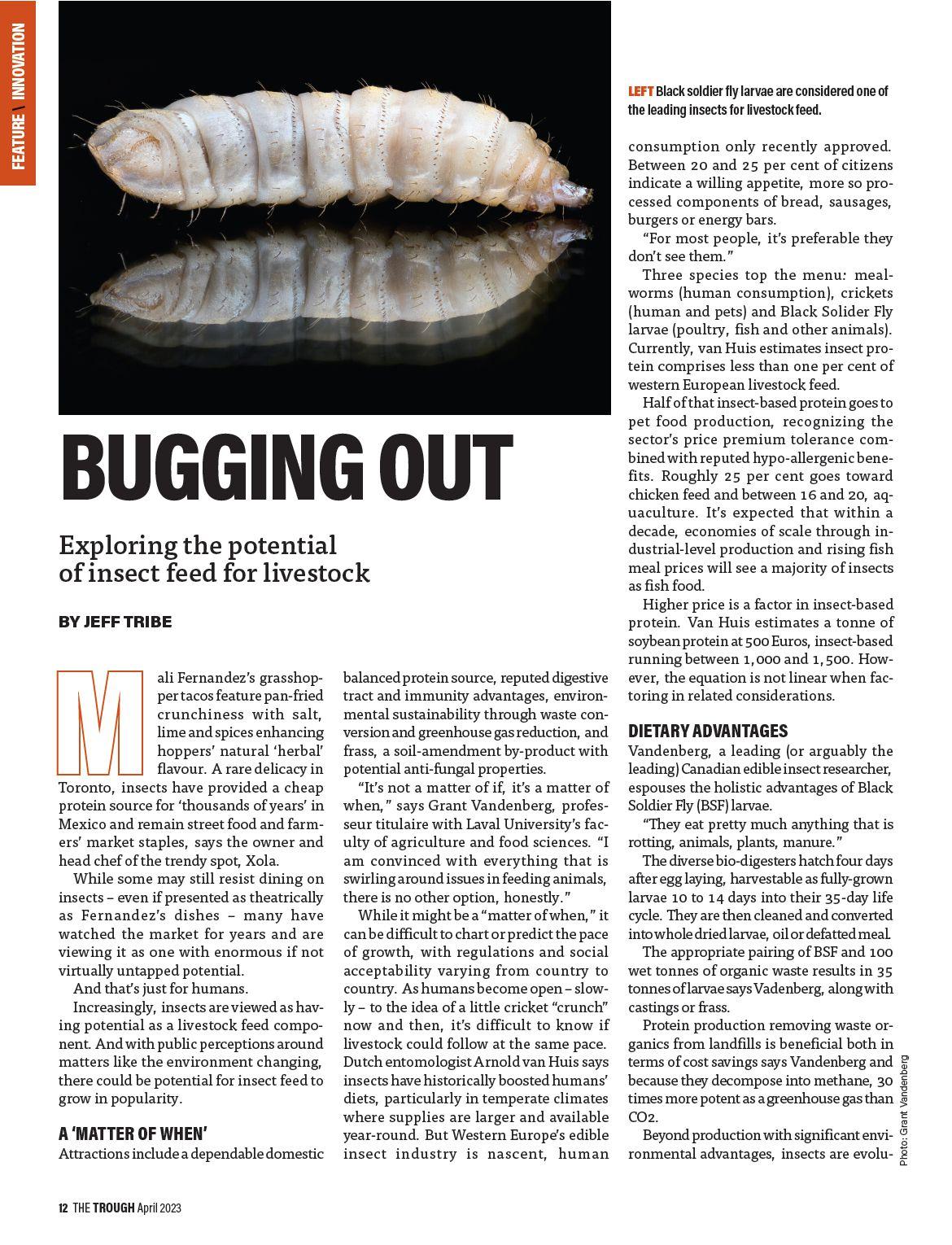
Insect feed could be the tiniest next big thing.
16
New products
News from Nutreco, Avivagen, BASF, Cargill and more.
Guest column
A historical perspective on pasture management for swine.
From our sister publications including Hatchery International, Canadian Poultry and Manure Manager: will fishmeal availability remain stable throughout 2023? What are the best feed formulations to help broilers mainstain optimal health in the winter? And, is it possible to mitigate methane emissions from manure through diet? the-trough.com/features
This is only the beginning
It’s been a whirwind few months, but we’re finally ready to say “hello.” Welcome to the first issue of The Trough! Beyond this page you will find content assembled by our expert team including features on animal health, innovation, business and successful farm practices, as well as product news, industry updates, extension perspectives and more.
While the hard work we’ve put in over the last few months might have given us the impression that all eyes are on us – and not just because of Alison Keba’s eye-catching and edgy magazine design – we must also remember that our eyes need to be focused on the industry. Once our readers close the magazine, they’ll be going back to work – whether that’s in a feedlot, a grain field, a milking parlour, a lab or an office. We launched The Trough because the industry is moving at a high speed; Canada’s estimated animal feed and grain market (including pet food) is $12.1 billion as of 2021, and is growing at an annualized rate of 4.3 per cent. But we also know that the industry is filled with challenges and common issues. After all, if everything were sunshine and rainbows, we would simply publish a catalogue of the latest technology and products.
As producers seek to help livestock live their best lives, feed decisions are of the utmost importance. There are a number of environmental and economic factors that threaten the optimal health of livestock. Poultry producers are grappling with highly pathogenic avian influenza (HPAI), while swine producers in North America are watching the African Swine Fever Virus (ASFV) situation overseas carefully, wanting to plan for a worst-case scenario without panicking. For more on a North American perspective on ASFV, check out Page 10. High-risk livestock, such as animals with compromised immune systems, are also a difficult issue to navigate, which is why on Page 14 we outline new research that discusses the advantages of limit-fed diets for high-risk cattle. We also highlight success stories, such as the innovative, Alberta-based Rich Lane Farms (Page 8), and look at the potential innovation of insect-based livestock feed on Page 12.
Because of the pace at which the industry moves, we also know that there’s only so much we can cover through three print issues a year. That’s why The Trough aims to be a truly multi-platform media brand. If you haven’t already, go to www.the-trough.com to subscribe to our biweekly eNewsletter for up-to-the-minute industry updates. Farmers are as busy as they are tech-savvy, so we also plan to deliver content that is friendly for on-demand and on-the-go consumption, like webinars and podcasts. These issues are nuanced, and deserve that kind of coverage. Thank you for opening up the first issue – we’re excited to go on this journey with you.
BREE RODY, Editor
SELENIUM & VITAMINS A, B12, D3 & E
DOSING HAS NEVER BEEN EASIER
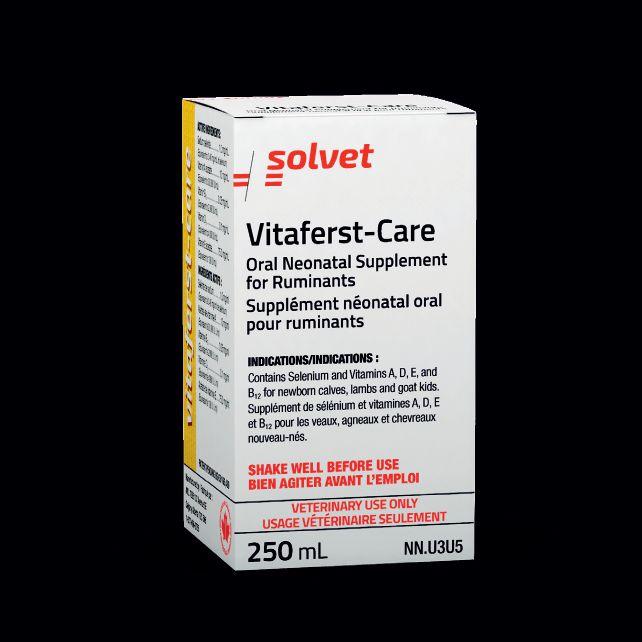
is a convenient oral supplement designed to address the neonatal nutritional needs of calves, lambs and goat kids.
One Oral Dose instead of multiple needles
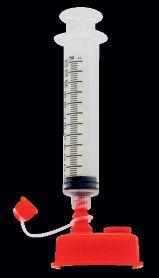
Draw off cap and oral syringe included with every bottle
To be administered after colostrum to avoid passive immunity impairment.
Vitaferst-Care’s Oral Formulation
Includes: Selenium to promote growth New, fortified level of selenium
Vitamin A to promote neonatal immunity
Vitamin D3 to support growth and metabolism
Vitamin E to stimulate the immune system
Vitamin B12 for cell growth and support of the immune system
For more information on Vitaferst-Care TM contact your veterinarian.
FeedAssurance updated to Version 4.0
FeedAssurance, a feed safety certification program for feed manufacturers, which is owned and administered by the Animal Nutrition Association of Canada (ANAC), has been updated to version 4.0. Certificate holders were previously informed of the impending updated standard, and were given a full year, until March 1, 2023, to transition and implement the new standard.
The new version addresses industry and scientific advancements, and alights with the anticipated modernized Feed Regulations . It contains new requirements for specific elements such as biosecurity, supplier approval, crisis management, feed defence and feed fraud.
“The updates made to FeedAssure ensure that certified facilities
continue to evolve to maintain the highest standard in feed safety,” said Melissa Dumont, executive director at ANAC, in a statement. “The voluntary implementation of the FeedAssure® version 4.0 (2022) program by commercial feed businesses demonstrates their commitment to providing safe feed for livestock protecting them from feed risks including domestic and foreign animal diseases, and contaminants.”
The update was made possible through financial support from the Government of Canada through the Canadian Agricultural Partnership’s AgriAssurance Program.
Mexico softens decree on GM corn imports
The U.S. government has requested formal trade consultations with Mexico in the most recent update to the dispute between the two nations over genetically modified (GM) corn.
In late 2020, Mexico issued a presidential decree on GM corn, saying that it would ban GM corn in the diets of Mexicans (and, by extension, livestock) as well as end the use of herbicide glyphosate by Jan. 31, 2024. In recent months, the U.S. has engaged in informal talks with Mexican officials over the impending ban. In February, Mexico modified the decree to eliminate the deadline to ban GM corn for animal feed and industrial use.
All data as of 2021
13.2 million
Tonnes of feed consumed by Canadian cattle annually (beef and dairy)
9.67 million
4.7 million
Tyson to open new processing facility, close two
Tyson Foods has confirmed that it will open a new hatchery facility in southwest Arkansas in the hope of supporting its current processing facilities in nearby Hope and Nashville.
According to reports, the facility will be 131,000 square feet and is estimated to be completed in 2024.
Tyson has confirmed that the new facility will employ workers from its existing plants and will also create new job opportunities for area workers, although it has not provided an estimate on the number of new jobs created.
Despite opportunities ahead, Tyson has said that recently, some of its chicken business has not met expectations.
In a call to analysts following the release of its Q1 results, CEO Donnie King noted disappointment in that sector. “For chicken, when compared to expectations from last quarter, a few different things didn’t go as planned,” he said. “Most notably, demand didn’t appear in the parts of the market where we had expected. As a result, we had to move things around and we experienced higher cost.”
As such, Tyson has confirmed that it will shutter two plants this spring – one in Van Buren, AK and one in Glen Allen, VA. Reports indicate that the two plants employ more than 1,600 workers combined.
Tyson’s impending closures are relatively in line with other food processing companies; Beyond Meat, Coca-Cola, Frito Lay (PepsiCo) and McCormick have all announced recent or impending cuts to its processing workforces.
Percentage of Canadian feed consumed by swine
Percentage increase of national feed consumption from 2020
Percentage increase of feed consumption from 2020 among swine destined for export
Percentage of Canadian feed consumed by “other” livestock – bison, horses/ponies, sheep, finfish, ducks/geese, rabbits, elk and deer
Penn State professor to study additives’ effects on methane emissions
Alex Hristov, Penn State distinguished professor of dairy nutrition, has received a $2 million grant from the USDA to study the link between dietary supplements in dairy cows and overal methane emissions. Specifically, Hristov will look at supplementing the feed of lactating dairy cows with either 3-Nitrooxypropanol or a species of red seaweed, and whether or not that reduces the amount of methane emitted by the animals in the long-term. The project will take place over three years, with the period of study covering two lactations, or almost two years.
The project will study dairy cows at two
different sites with varied feed-management conditions.
The methane inhibitor 3-Nitrooxypropanol (commercial name Bovaer) was developed by Dutch corporation DSM. It has been approved as an additive in Europe, Brazil and Chile, but not yet in the U.S. The red seaweed to be tested is Asparagopsis taxiformis, which grows in some tropical ocean waters. In Hristov’s short-term studies, the red seaweed reduced methane emissions by up to 63 per cent but also decreased feed intake and milk yield when ved at 0.5 per cent of feed dry-matter intake. Hristov has already said this appears to be an impractical source as a supplement, unless mass-produced in aquaculture conditions.
The funding comes through the USDA’s Natural Resource Conservation Service (NRCS).
Avian influenza at a glance in Canada
The poultry industry is on alert as it watches the unfolding situation with highly pathogenic avian influenza (HPAI) in Canada and abroad. The outbreak has been present in both Canada and the U.S. since early 2022 and has had numerous effects on the animal agriculture industry including rising egg prices, cancelled industry events and the deaths of tens of millions of both farmed and wild birds throughout the continent.
The first three months of the year saw a number of cases in birds including commercial poultry across Canada as confirmed by the Canadian Food Inspection Agency (CFIA). All information is as of March 22.
British Columbia: The most recent detections in British Columbia occurred in January, with eight detections in a mix of commercial and non-commercial premises. Additionally, eight skunks found dead in the Metro Vancouver Area in February tested positive for the illness, according to B.C.’s Agriculture Ministry. The skunks were found in residential areas. At press time, there are 34 infected premises, 69 previously infected (released) premises and approximately 3.7 million birds infected.
Alberta: The most recent detections in Alberta occurred in November 2022, with four detections in a mix of commercial and non-commercial premises. At press time, there are 11 infected premises, 49 released premises and approximately 1.4 million birds infected.
Saskatchewan: The most recent detections in Saskatchewan occurred in November 2022, with two detections (one commercial and one non-commercial). At press time, there are four infected premises, 28 released premises and approximately 495,000 birds infected.
Manitoba: The most recent detection in Manitoba occurred in November, with one detection at a
non-commercial premise. At press time, there are no infected premises and 21 released premises, with 287,000 birds infected.
Ontario: In mid-March, the Toronto Zoo announced that it would close most of its bird enclosures to the public following the confirmation of two cases of avian flu in Southern Ontario. Those are the most recent detections in the province, and the first of 2023. At press time, there are seven infected premises and 38 released premises, and approximately 757,000 birds infected.
Quebec: Five detections were declared in Quebec in February and two in late January, all in commercial premises. At press time, there are 12 infected premises and 19 released premises, and approximately 757,000 birds infected.
Atlantic Canada: New Brunswick, Nova Scotia and Newfoundland and Labrador have all had at least one detection in the first three months of 2023. There are currently three infected premises in the region (one in New Brunswick, two in Nova Scotia), seven released premises and approximately 12,400 birds infected across the three provinces. According to CFIA, there have been no known cases in P.E.I.
Stateside, White House officials have stated that the administration is contemplating a mass vaccination campaign for poultry. In terms of danger to human health, Health Canada has stated that “although different strains of avian flu virus circulate year-round among birds, the virus does not usually spread to people.”
Avian influenza has been detected in both commercial and non-commercial presmises across Canada since 2022.
Alex Hristov, Penn State professor of dairy nutrition
QUALITY IS KEY
Richard and Kristy-Layne Carr give insights into their herd’s nutrition plan
BY JULIENNE ISAACS
Richard Carr was only 12 when his parents sold their family farm in southern Manitoba and he moved into town.
But farming was already in his blood.
As a teen, Carr worked part-time at dairy farms while completing high school. Later, he worked as a herd manager for 13 years on a dairy farm. “That’s where I got into the rhythm of dairy nutrition,” he says. “I worked closely there with nutritionists and veterinarians.”
These days, nutrition is always front-ofmind at Rich Lane Farms, which Carr owns with his wife Kristy-Layne. In 2022, the Carrs were named Manitoba’s Outstanding Young Farmers of the year. It was a sign of how far they’ve come as a family and as farmers.
Kristy-Layne’s education is in agronomy and animal science, and her family farming background is in grain and beef cattle. When the couple married in 2006, they started a hobby farm with a few beef cattle from Kristy’s 4H days on his home quarter in La Broquerie. Both worked off-farm to make ends meet while they gradually grew their herd to 250 head and expanded their acreage.
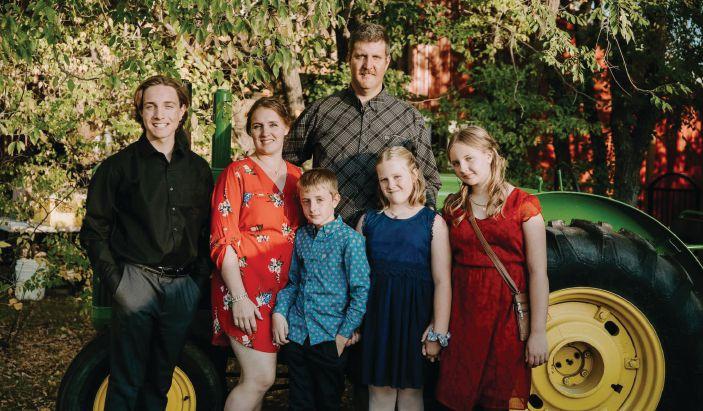
They also grew their family, adding children Slade (now 15), Elora (12) and twins Nate and Isabel (nine).
But they wanted to farm full-time, so something had to change.
In 2018, the Carrs were chosen for Dairy Farmers of Manitoba’s New Entry Program. They sold off a lot of their acreage and most of their beef herd, retaining 60 of their Black Angus commercial beef cattle, and
added a milking operation. These days, they milk 55 dairy cows in a double eight milking parlour.
NUTRITION PLAN
The cornerstone of the Carrs’ nutrition plan for both herds is forages.
“The fundamental premise of all the diets on the farm is to focus heavily on the forage itself, producing the most high-quality forage we can. The base ingredient of all the rations is corn silage,” says Carr.
The Carrs sideline as seed dealers for Horizon, and grow Horizon silage corn with good digestibility, meaning high starch and lower lignan, he adds.
They also grow forages, mostly ryegrass, as well as Japanese millet, alfalfa and forage oats. They cut fall rye for silage in early June, and the crop has worked really well for them, says Carr.
“Corn silage and rye is the basis for our dairy cows. The first cut of our common annual rye usually will be used for young stock on the dry cows in the dairy. [The] second and third cuts have higher feed value and go to the milking cows,” he says.
The alfalfa can be trickier: it has potential to be really good, but it’s pricier and winterkill has been an issue in the area, says Carr. “We have quite a few hog barns in the area, too, and [use] hog manure is a nutrient source. Hog manure application timing in alfalfa is critical–three or four days too late has impacted the stand. We typically apply right after the first or second cut, before too much regrowth has come back.”
Japanese millet has served them well too: it’s hardy and has grown well both under
excess moisture and drought conditions over the last couple of years. They’ve used it for their beef herd. There is a caveat, though: its protein content is lower, says Carr.
“Nutritionally speaking, we haven’t had the high protein content as we’ve had with fall rye. [With] fall rye we can get up to almost 21 per cent protein, and the common annual rye last year was 22 per cent protein. The millet is [around] 12 to 16 per cent. The Digestible Neutral Detergent Fibre is a little higher on the millet so it’s not as digestible. But it’s still a very good feed for us,” he says.
SUPPLEMENTING WHEN NECESSARY
It’s important to the Carrs to produce as much of their animals’ diet on the farm as possible, but they do use supplements when necessary.
“Our end goal is to use as few purchased commodities as we can for the makeup of our milking cow diet. They produce the milk that pays the bills, but they require
All
images courtesy of Rich Lane Farms
ABOVE The Carrs are hoping to hit a balance of 72/28 per cent forage and supplement diet for their herd this spring.
the most nutrition,” he says.
Their goal, in general, is to use 70 per cent forages, 30 per cent supplements; they’ve hit that goal in the past. This past year they reached 68/32.
“This spring, I’m looking to push that goal further and hit 72/28. Soon we’ll go into last year’s third-cut rye and that tested extremely well. I’m hoping to keep the production where it’s at and reduce our supplements,” he says.
Occasionally, when growing conditions aren’t ideal, they have to rely more heavily on supplements.
“Our feed quality has to be very high. We’ve lost acres because of standing water and our corn wasn’t where we wanted it to be–not enough starch to it. So in the purchased supplement, we increased the starch so we had enough total starch in our diet,” he says.
The Carrs rely on frequent, broad testing of their bale silage to ensure the herds get the right percentages. Once they start feeding, if cows aren’t milking to what they sampled for, they’ll sample again. Because corn silage ferments over time and can
change a bit, they sample that every two to three months.
“A lot of that is just watching your production and your cows. This time of year, when it’s very cold, the cows may need more energy, so we monitor the cows and adjust the nutrition to match their requirements,” says Carr.
Self-reliance has its merits, but the Carrs know when it makes most sense to pull in external resources. This principle plays out in another key area on the farm–equipment.
The only tractors the Carrs own are a skid steer, a tractor for bedding and one for snow clearing. As far as field equipment goes, Rich Lane Farms relies on custom operators for planting, spraying, harvest-
ing, cutting and baling.
“The only thing I’ll do on the forage side is to haul the bales home and for corn harvest, the custom chopper comes, hauls to the yard, and then I pack the silage pile,” says Carr. “We have a good relationship with our custom operators and we work very closely on timing. When I grew up on my parents’ dairy farm, they milked 70 cows and equipment shared with my grandparents, and [harvest took a week]. Now we do the same acres, the custom chopper comes in, does 10 rows at a time and does my corn in an afternoon.”
Times have changed, but one thing hasn’t: the Carrs’ love of farming and the land.
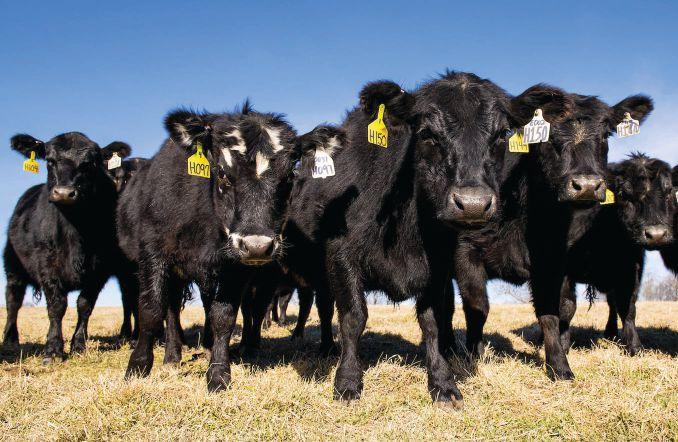
ABOVE The Carrs’ cows enjoy a diet that includes corn silage and rye (dairy) and Japanese millet (beef).
RIGHT Richard Carr, back, and Kristy-Layne Carr, second from left, grew their farm while they were growing their family.
A primer on African swine fever
Diligence with feed can be a strong defense
BY JACK KAZMIERSKI
The African swine fever virus (ASFV) has been infecting wild pigs for hundreds of years, according to Declan C Schroeder, PhD, molecular virology and associate professor, veterinary population medicine at the University of Minnesota.
Schroeder explains that ASFV originated with pig populations in Africa (hence the name of the virus), and that the current outbreak is affecting regions in Asia and Europe. The virus has never made its way to North America, and currently (as of press time), there are no known cases of ASFV in Canada or the U.S.
However, the fact that it has spread to nearby countries as close as Haiti and the Dominican Republic, and as recently as 2021, is reason enough for some pork producers in North America to on high alert. Elsewhere, some countries that have not yet had confirmed cases of ASFV themselves, but have witnessed outbreaks in neighbouring countries, have begun taking an educational approach; for example, while there have not yet been cases of ASFV in the U.K., following the confirmation of the virus in Italy, Stewart Houston, pig sector chairman of the not-for-profit U.K. farming assurance scheme Red Tractor published a blog post urging the country’s swine farmers to be vigilant and step up biosecurity efforts and smart feed practices.
ONLY MANAGED BY CULLING
This virus is lethal. In short, infection leads to organ failure, and there’s not way to treat infected pigs. “When it gets into animals, it’s 100 per cent death,” adds Schroeder. “It’s hard to control, so essentially, the only way we manage it is by culling.” When the virus hit China in 2018, Schroeder says that more than 60 per cent of the country’s pig population had to be destroyed.
Scientists are working on a vaccine for pigs, but it’s still in the trial phase. “They’re testing vaccines in
Vietnam, and there are a few large-scale trials taking place, but in terms of a cure, we’re still in the early days of a vaccine,” explains Schroeder.
Mitigation strategies are available, and there are chemicals that can be used to clean up a facility after an outbreak, but there’s nothing to mitigate an outbreak once an animal is infected.
A ROBUST ADVERSARY
ASFV is exceptionally robust and measures that would normally kill some other viruses have proven to be ineffective when attempts have been made to destroy ASFV. The University of Minnesota recently reported that the virus is able to survive temperatures up to 100 degrees Celsius (212 degrees Fahrenheit), which is the
ABOVE A 3D illustration of the African Swine Fever virus, which is said to have a 100 per cent lethality rate among pigs
temperature at which water boils, for extended periods of time.
“If you boil something for 20 minutes, you would think that would kill it,” adds Schroeder, “But actually, when it comes to this virus, its structure is maintained. And that has completely surprised us. We weren’t expecting that. It was assumed that at that temperature, everything would have dissolved, but that didn’t happen with this virus.”
HOW ASFV SPREADS
The good news is that ASFV does not spread easily by air. If it did, then, like SARS-CoV-2, it would be able to spread rapidly. That said, ASFV could make its way into North America in a variety of ways, and precautions must be taken surrounding the import of feed, as well as travel (note: also unlike SARS-CoV-2, ASFV does not affect humans).
In his blog post, Houston outlined how ASFV could potentially spread, including “movement of infected live animals, contaminated equipment, or infectious products,” as well as farm workers who might have travelled abroad.
Houston added the following advice: “An important precaution is to ensure that all visitors and farm workers are using dedicated clothing and boots when entering pig premises, and that any vehicles and equipment entering the premises are cleaned and disinfected before and after. If you employ seasonal or workers from abroad, it’s important that they are able to read the biosecurity protocols, which may mean making them available in other languages. It is also crucial to ensure that people who look after or visit your pigs understand the disease risk of bringing back meat products, particularly wild boar meat or pork products, from affected countries.”
“Humans are the culprit,” adds Schroeder. “This virus is really stable in meat, so if we bring in food from a country that’s infected, then that’s one of the most likely ways the virus would make it to North America. That’s why there are signs at airports telling people not to bring in meat.”
THE FEED FACTOR
A major risk for pork producers is feed.
Just like food imported for human consumption, pig feed can carry ASFV, spreading the virus to new populations of pigs. “We import feed and ingredients that go into feed from ASFV-infected countries,” adds Schroeder. “One of the papers I published shows that if this virus was in feed, it would survive a trip around the U.S. because ASFV can survive in feed for 23 days without any degradation of the virus.”
The fact that ASFV is so resilient, and so difficult to destroy, suggests that extra vigilance may be required on top of current Canadian and U.S. biosecurity protocols. For example, the Canadian Food Inspection Agency (CFIA) recommends holding feed ingredients in storage prior to feeding in order to reduce viral survival. Although that’s good advice, the CFIA quotes the
ABOVE The Canadian Food Inspection Agency (CFIA) counts feed monitoring among key biosecurity steps to protect against ASFV
following guidelines from the Canadian Pork Council (CPC): hold feed ingredients “at a temperature of 20 degrees Celsius for 20 days or 10 degrees Celsius for 100 days.”
However, Schroeder’s research suggests that the virus can survive 100 degrees Celsius for 20 minutes, and that it can survive in feed for up to 23 days. That said, Schroeder is quick to point out that we still don’t have all the answers, and that more research needs to be done in order to determine what kind of viral load would be needed in order to infect a new host through feed. We just don’t have those answers at the moment.
In the meantime, before we find answers to all the unknowns, the CFIA is warning pork producers to buy feed only from trusted sources that have proper biosecurity measure in place.
“Producers and feed manufacturers who purchase ingredients to produce pig feed should know the origin of the ingredients,” the CFIA warned in a recent advisory. “Producers and feed importers should verify that feed ingredients were produced and handled using proper biosecurity measures. Feed importers should be able to provide feed purchasers with information on how the ingredients were produced and handled before entry into Canada.”
VIGILANCE, NOT PANIC
With a 100 per cent fatality rate, ASFV can have a devastating impact on pig populations, which in turn translates into a significant economic loss. Even if ASFV were to be detected in only a small number of animals within a herd, the entire population would have to be culled in order to prevent the spread of the disease.
“The impact would be huge,” explains Schroeder, “Because it will affect everything, including local production, as well as our ability to export, and we export a lot.”
“Although more research is needed, there’s no reason to panic.”
In addition, all the industries that support pork producers would be impacted. Moreover, an ASFV outbreak could lead to food shortages on a more global scale. “As you know, 40 per cent of the world still eats pork as a protein source,” adds Schroeder. “So you’d have to consider if we could supply the world’s protein if we had to cull a large number of our pigs.”
While the idea of ASFV infecting pigs in North America is frightening, there’s no reason for alarm at this point in time. Pork producers need to be vigilant, and as Schroeder concludes, we can be thankful that the virus has never been a problem on our continent, and that it would be difficult for it to spread.
“To be fair,” concludes Schroeder, “Our virus security in North America is pretty good, which is probably the reason we haven’t seen ASFV here yet. The good news is that this is not readily spread via aerosols, and although it can spread through ticks, it’s not the species of ticks we have here in North America. So, although more research is needed, and we need to remain vigilant, there’s no reason to panic.”
tionarily appropriate poultry and fish fare.
“It’s a very complete protein profile,” says Vandenberg, noting fish will literally jump out of the water to eat frozen BSF larvae.
Additionally, research has identified the potential for enhanced micro gut and immune system benefits, attributable to kaitin (outer insect shell).
“It is normally indigestible but stimulates the immune system,” says Vandenberg, adding study into the possibility it might help eliminate antibiotics in weaner pigs is currently underway. There are also indications feeding insect lipids to weaner pigs may have anti-bacterial activity.
Frass, “Insect poop, essentially,” Vandenberg smiles, is an organic soil amendment which also may perform anti-fungal activity against phytopathogens, for example, fusarium in wheat.
“The bottom line is value along the entire value chain.”
The Canadian Food Inspection Agency (CFIA) is a world leader in approving insect-based protein for animal feed, Vandenberg credits. Base material is currently limited to plant-based, pre-consumer waste. Applications are reviewed on an individual case-by-case basis.
“It’s not a generic approval.”
Like any other food or feed, insect-based protein is also subject to an array of federal and provincial regulations.
WHAT PRODUCTION LOOKS LIKE (FOR NOW)
Industrial capacity will be required to move insect-based feed forward says Vandenberg, currently representing a tiny fraction of North American consumption.
Barbara Campbell, regional director, Atlantic Canada with National Products Canada (NPC), a non-profit company promoting early-stage innovation, says there are currently three large insect-based protein companies in Canada, five mid-size and over 20 smaller entities.
Industry benchmarking indicates for BFS larvae, a 100,000-square-foot facility processing 100 tonnes of organic waste
daily represents a ‘really viable business’ says Campbell. “And can reach cost parity with fish meal on a high day.”
She uses a comparative analogy between insects and a tennis court-sized field of corn. The insect ‘field’ features crops stacked 20 layers high, growing 24/7 regardless of climate, harvested every 10 days, including the cobs, husks, root ball and soil, all of which are up-cycled into saleable product.
“It’s exponentially more sustainable to produce protein this way.”
Progress is ongoing. Entosystem in Drummondville, Que. opened its 100,000-square-foot expansion this January (2023), while at full capacity, Aspire in London, Ont. will be the world’s largest cricket producer. Entomo Farms currently runs ’120-million head’ of crickets in three 20,000-square-foot retrofitted chicken barns near Peterborough, Ont. where they are fed fed four different grains, a vitamin mix and have constant access to fresh water. They are harvested around five-and-a-half weeks of age save for breeding stock bedded in peat moss. Eggs hatch in a few weeks.
The challenge lies in end users requiring a proven, consistent supply before committing, and producers needing a commitment prior to investment. End users can’t currently expect to fulfil large-scale demand with insect-based protein says Campbell. However, she adds that interested parties could consider research study participation.
“Collaborate and get involved,” she suggests. “It’s coming.”
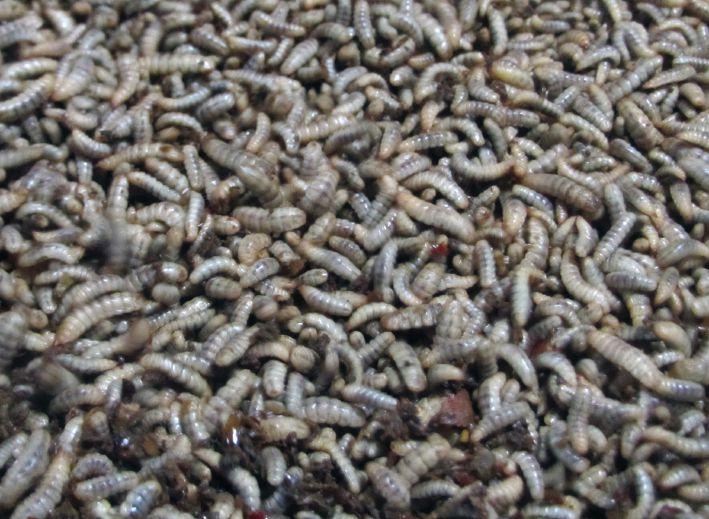
ABOVE Insect feed can be grown with a smaller footprint than grains, which some cite as an environmental advantage.
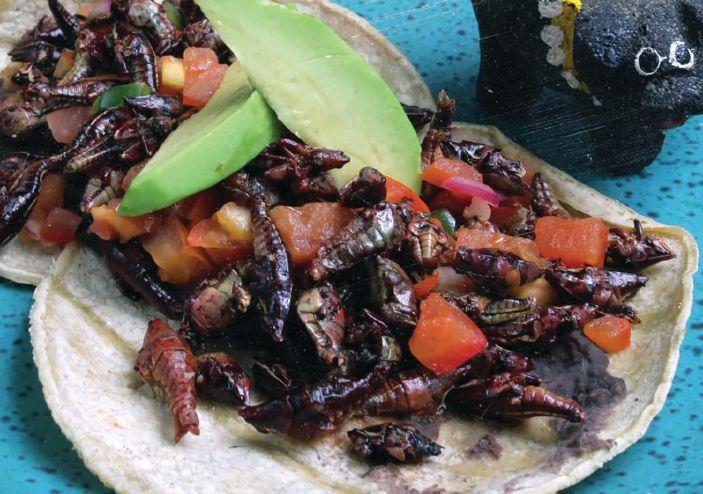
BELOW Insect-based protein for humans, like Xola’s grasshopper tacos, are growing in popularity, albeit slowly.
Feeding high-risk cattle
New research shows limit-fed diets can work
BY JAMES CARELESS
Good news for cattle farmers: “High-risk cattle” can be raised on a cost-effective “limit-fed” diet just like “low-risk cattle”, without the cows suffering negative health effects.
That’s the finding of a recent study by the Arkansas Agricultural Experiment Station, the research arm of the University of Arkansas System dvision of agriculture. This means any high-risk cattle they acquired can be fed the same way as “lowrisk cattle”, saving farmers money without compromising on growth goals.
For the record, high-risk cattle are typically calves with no history of vaccinations, or any history at all. They can also be young cattle who have been transported for an extended period of time, and/or mixed in with other lots at a sale barn.
In contrast, low-risk cattle have undergone a preconditioning period with vaccinations from youth. Yearling cattle from a single source with a known health record are also considered to be low-risk of suffering adverse health effects from limit-fed diets. “Historically, we’ve always thought that high-risk cattle – because they’re coming from a ranch or a farm where they were typically fed roughage – need a high level of roughage in their diets before being transitioned to a more energy-dense diet as they go through their pre-conditioning process,” says Daniel Rivera, the Experiment Station’s associate professor of Animal Science. Rivera is the director of the division of agriculture’s Southwest Research and Extension Center in Hope, Ark. where this study was done.
“Unfortunately, roughage is more expensive to feed cattle on a per-unit of energy or protein basis, compared to some of the diet concentrates, but with high-risk cattle we’ve always felt that this is a necessary evil.”
THE STUDY
As documented in the Arkansas Agricultural Experiment Station online report, “Study Shows No Negative Health Effects on Limit-Fed Diet in ‘High-Risk’ Cattle”, the study fed three groups of high-risk cattle
in three different ways. Starting in January 2022, the control group was fed two per cent of their body weight in grain and grain by-product pellets plus free access to Bermuda grass hay. The second group was “limit-fed” grain pellets at 1.75 per cent of their body weight, while the third group was limit-fed in the same manner, but received grain and grain by-product pellets at 2.25 per cent of their body weight.
The study ran over 63 days, and was conducted using 168 yearling cattle in total. The average weight of the cattle — half of which were bulls requiring castration while the other were steers — averaged 470 pounds each. They were purchased from sale barns in Arkansas and Texas.
“The cattle were randomly assigned to pens in groups of seven,” says Rivera. “We measured their body weights when they first came in, and that was the body weight that we used to develop the amount of feed based for all three groups. “In all cases, the animals were fed twice a day once in the morning
HOUSING
HIGH-RISK CATTLE
When possible, veterinarians recommend high-risk cattle be housed in smaller pens of approximately 100 head with 13 inches of bunk space per head.
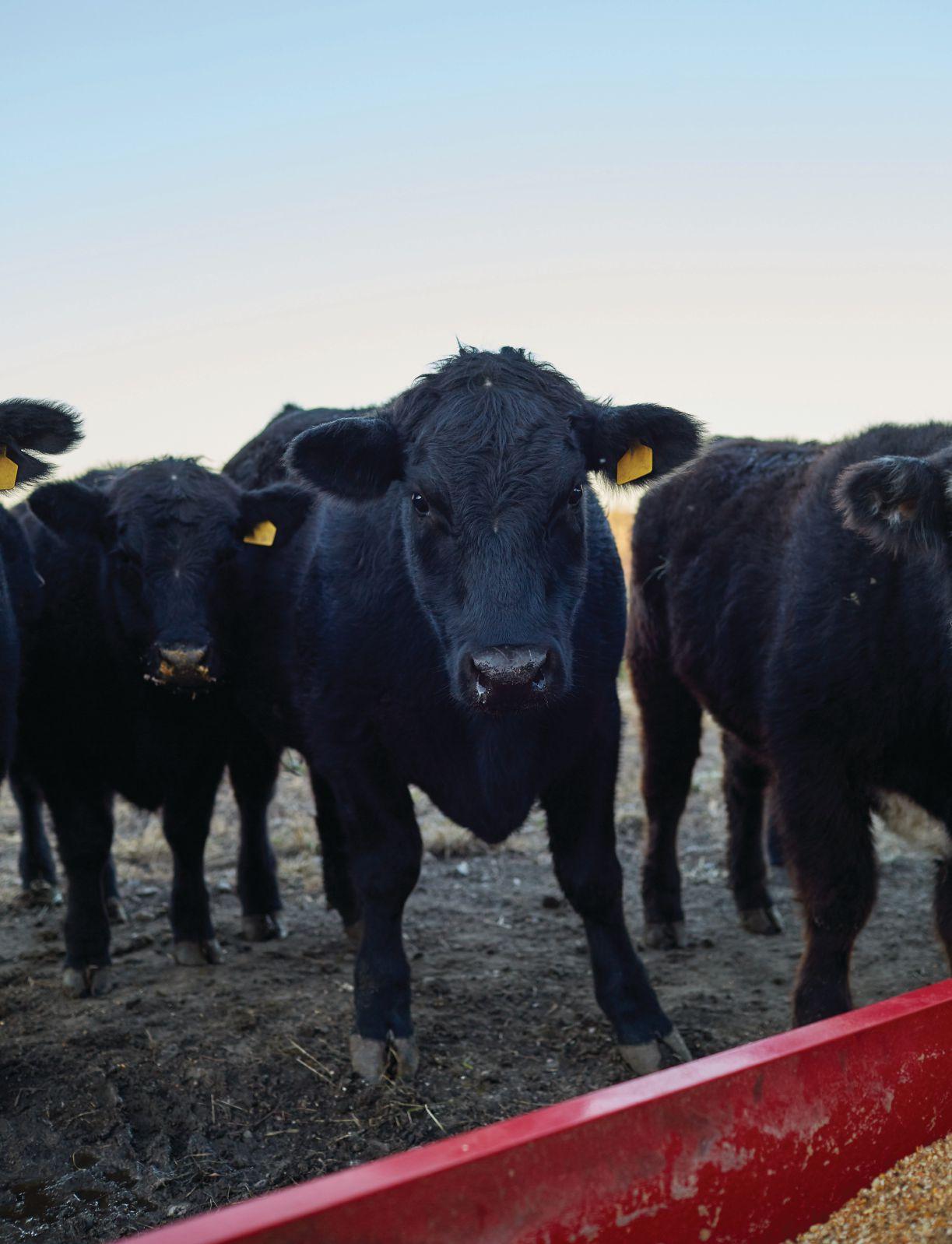
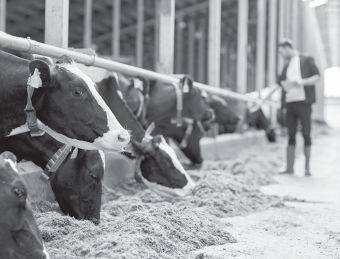
ABOVE Historically, many have believed that high-risk cattle need a high level of roughage in their diets, which can be expensive.
around eight o’clock, and then sometime around one or two in the afternoon. Any animals that were displaying symptoms of respiratory disease and a temperature above 104 degrees Fahrenheit were removed to different pens, treated with, then returned to their home pens and original.”
During the study period, all 168 cattle underwent the same two-month preconditioning phase. This included the yearlings being vaccinated against respiratory and clostridial pathogens, plus deworming, treatment with long-acting antibiotics, and receiving growth-promoting implants.
“All were weighed on days zero, 21, 42, and 63 before being shipped to a commercial feedlot in New Mexico where they were adapted to a growing diet and then a finishing diet,” says Rivera.
POSITIVE RESULTS
Based on the cattle weigh-in results, the study’s researchers found that the control group cattle (fed 2.25 per cent of their body weight in grain pellets daily plus free access to hay) and the group limit-fed 2.25 per cent of their body weight in grain pellets daily and no hay both experienced average weight gains of about 2.8 pounds daily. In contrast, the group being limit-fed 1.75 per cent of their body weight in grain pellets daily and no hay gained slightly less than two pounds per day.
At the same time, none of the three groups showed any significant signs of rumen distress due to their diets, nor was the level morbidity from bovine respiratory disease significantly higher in one group compared to the other two. In fact, the only noticeable difference was based on the amount of grain pellets fed daily to the two no-hay groups, and their resulting weight gain over 63 days.
For Daniel Rivera and his research team, these results challenge long-held beliefs about high-risk cattle that have been costing cattle farmers extra money in roughage for decades. “For the past 50 [to] 60 years, it has been conventional wisdom that highrisk cattle need to be fed more expensive hay as a necessary component of their diets,” Rivera told The
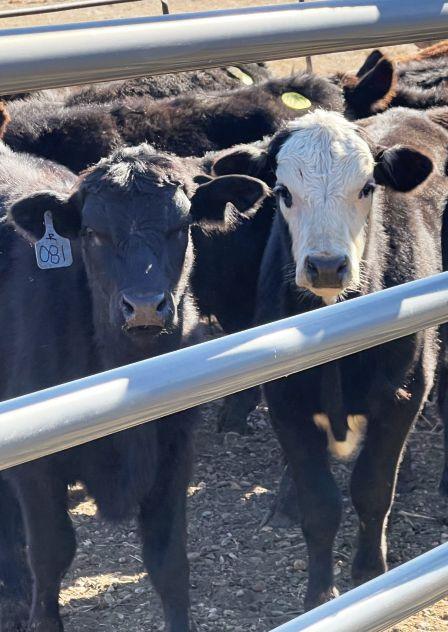
RIGHT Cattle can be considered ‘high risk’ if they have no vaccination history, have been transported for an extended period of time, or due to other factors
Trough. “Although there needs to be more research done to confirm our results on a broader basis, the initial results we’ve recorded suggest that the conventional wisdom is wrong.”
IMPLICATIONS FOR CATTLE FARMERS
This ground-breaking study by the Arkansas Agricultural Experiment Station has serious implications for cattle farmers, all of them positive.
First, not being required to feed high-risk cattle differently than low-risk cattle simplifies operations for these farmers, allowing them to use one common approach instead of two. This saves money – especially due to being able to feed them grain pellets exclusively – and time.
“ It has been conventional wisdom that high risk cattle need to be fed more expensive hay... The results suggest that conventional wisdom is wrong.”
Second, the fact that high-risk cattle do not require special diets makes it easier for farmers to decide whether or not to buy them. Given that high-risk cattle are often cheaper than their low-risk cousins, this can improve the farmers’ bottom lines.
Third, being able to achieve desired weight goals for high-risk cattle using pellets offers a degree of financial security to the farmers who buy them. This too is financial good news. So too is the fact that highrisk cattle who are exclusively fed pellets are not at significant risk of developing stomach problems than low-risk cattle.
“What we fundamentally learned during this study is that we can avoid feeding high-risk cattle hay if their grain pellets are sufficiently high in the right nutrients and byproducts,” says Rivera. “This is important news for cattle producers everywhere.”
Nutreco takes minority stake in BiomEdit
Netherlands-based Nutreco has taken a minority stake in microbiome biotech company BiomEdit. The two companies recently entered into a long-term strategic research and commericla partnership to bring livestock and aquaculture producers new feed additives developed through microbiome technology. Nutreco CEO Fulco van Lede said in a statement that the investment will help the company “super-charge our supply of proprietary ultraspeciatly ingredients, speed up progress on our purpose of feeding the future and create a more sustainable future for our industry.”
Farmatan – Natural scour prevention
Feed the mama, protect her babe!
• Add Farmatan granules to Cattle, Sheep or Goat minerals to support healthy immune function
• Helps reduce severity of common young animal scours
• Tannic acid supplement to support gut health and improve performance throughout all production stages
• Improves protein conversion and reduces ammonia
• Suitable for conventional or organic livestock
• Can be added to loose mineral, via TMR or mixed into tubs or mineral blocks
• Calf paste and boluses now available
“We think Farmatan is an awesome product! We use it to fight a lot of coccidiosis and other scours. Now, our kids are practically market ready at weaning.”
Avivagen publishes peer-reviewed paper on safety of OxBC
Avivagen’s scientific team has published a peer-reviewed paper describing the discovery, natural occurrence, scientific significance, commercial livestock applications and safety of OxBC, the active ingredient of its OcC-beta Livestock. The peer-reviewed paper appears in a special edition of the journal “Animals,” dedicated to the topic of alternatives to antibiotics. The paper reports key scientific evidence regarding OxBC mode of application including the fact that OxBC does not have any direct anti-bacterial activity and thus does not contribute to the potential rise of antibiotic resistant bacteria. The publication can be accessed at: https://www.mdpi.com/2076-2615/13/2/289/pdf
BASF, Cargill expand cooperation to U.S.
Agriculture giants BASF and Cargill have recently expanded their cooperation, adding the U.S. to their existing feed enzymes development and distribution agreement. The two companies will co-develop customer-centric enzyme solutions. BASF provides its enzyme research and development strengths, while Cargill provides its knowhow in application and broad market reach in order to form a join innovation pipeline for animal protein producers. With the expanded geographical reach, the two aim to bring better solutions to U.S. customers while crafting the next generation of enzymes.
“Raising pigs on pasture is a task that needs to be tackled with flexiblity, as many factors impact forage management.”
A historical perspective Pasture management systems for swine
BY CHELSEA BECKER, WITH SUPPORT FROM DAVE HARTMAN AND ELIZABETH HINES
Pasture-based management systems for pigs are currently increasing in popularity. Those who wish to start a pasture-based pig operation are remiss to learn that science-based management practices are difficult to find. Rearing pigs on pasture requires managing a complex relationship between the pig, forages, and soil. Pigs have limited digestive capabilities and will not utilize the pasture like ruminants would. Due to this complex relationship, significant focus should be placed on the producer’s goals for forage management and using those goals to influence the way they manage their pigs.
Pasture is managed in generally one of four ways when rearing pigs:
PERMANENT
A permanent system refers to a pasture that has been seeded with perennial forage. This type of pasture will be reseeded based on the farmer’s needs and stocking rate but does not require annual re-seeding. However, it is important to note that continual pasture systems result in the lowest possible yield as the forage is not given time to recover. A successful permanent system will require the growth stage and lifespan of forage to be the main priority.
TEMPORARY/ANNUAL
A temporary/annual system is the inverse to a permanent system; it is seeded with annual forage and will not grow back after its initial growing season. Using a temporary system will require the farmer to reseed the pasture on an annual basis. This type of management system tends to be convenient to a farmer, but the continuous grazing negatively impacts the roots causing recovery to slow down. It would be beneficial to keep your stocking rates low when using annual or temporary pasture management systems to keep forage damage to a minimum.
ROTATION
Rotation systems involve rotating your crops to allow for a more consistent growing season. Within this system, perennial grasses and legumes are put on a rotation schedule with grain crops. After the pigs
have utilized the grasses and legumes for several growing seasons, the residual materials on the field are plowed down and replaced with a grain crop. The cycle will repeat itself allowing the farmer to take advantage of multiple growing seasons and a large variation of crops5. Having grazed forage in the rotation will allow the farmer to build fertility, reduce weed, insect, and disease pressure for subsequent crops.
These three pasture systems can be managed in various ways. The most common type of management being used is a rotational system. In this system, swine are rotated throughout the available pastures, allowing those that are vacant time to rest and regrow. Resting your paddocks allows the forage time to renew its energy sources, deepen its root system, and enhance production through increased growth efficiency. Rotational systems require the farmer to implement a rigid rotation schedule to ensure the pigs do not inflict severe damage onto the forage and the soil.
HOGGED-DOWN
Lastly, a hogged-down pasture system is allowing your pigs to completely tread down and consume the available forage and mature grain after the plant has matured and died off. Historically, this management system was implemented before mechanical harvesting was widely available. Hogging down is still being used today as an alternative to land clearing or machine harvesting. However, it is not to be used as your sole source of pasture management, but rather as a form of field and crop maintenance, and it is good convention to allow your pigs access to a pasture crop field while placing them on a hoggeddown pasture.
When choosing which management system is right for your operation, it is important to consider the types of forage available, space allotted, geography of land, and size of herd. Raising pigs on pasture is a task that needs to be tackled with flexibility, as there are many environmental factors that impact forage management and will require continual changes for an operation to successfully manage pigs and land in a manner that is environmentally sound and profitable in today’s niche markets.