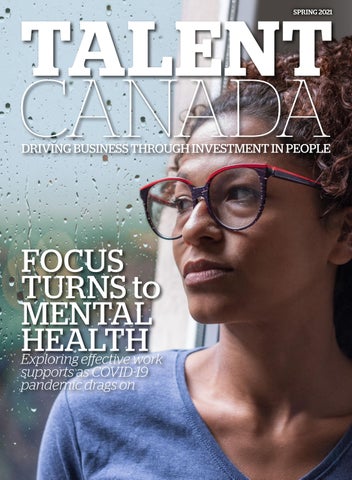

FOCUS TURNS to MENTAL HEALTH
Exploring effective work supports as COVID-19 pandemic drags on
Feeling anxious? Sad? Not yourself?
AbilitiCBT can help!
AbilitiCBT offers a suite of therapistguided digital therapy programs to help people when and where they need it.
AbilitiCBT is free in Ontario and Manitoba through our partnerships with the provincial governments.
AbilitiCBT is internet-based cognitive behavioural therapy (iCBT) guided by a professional therapist through a digital platform accessible anywhere. AbilitiCBT combines the convenience of virtual access with the same clinical benefits of in-person therapy to provide meaningful mental health support to people struggling with a variety of conditions, such as anxiety, depression, insomnia, pain management, grief and loss, and many others.


What our national governor-general saga taught us about background
ONLINE
Legal steps & missteps
Several commentaries by employment lawyer John Hyde are posted in this new weekly online series at TalentCanada.ca. This editorial partnership with Hyde HR Law takes a deeper look at issues in which organizations can be proactive to prevent legal issues, and highlight where common errors occur.


As the COVID-19 pandemic extends past the one-year mark, workplace focus is shifting to mental health.
(Page 12)
By Marcel Vander Wier

By Jack Burton
By Treena Hein

FROM THE EDITOR
BY MARCEL VANDER WIER
When it comes to layoffs, has all civility been lost?
Getting laid off is a crushing experience. Most of us have endured it at some point in our careers, and if you haven’t, consider yourself one of the lucky ones.
I’ve been laid off twice — the golden era of the media industry came to an abrupt end during the 2008 financial crisis, one year into my journalism journey.
In fact, it was the first layoff I endured at my hometown newspaper in Grimsby, Ont., that got my wife and me started on a cross-country journey with pitstops in northern British Columbia, Prince Edward Island, and Yukon Territory. Yes, in that order. But that’s a story for another time.
When it comes to layoff procedure, there’s a right way and a wrong way to do it — and from recent events resulting in social media outrage, it seems that some of us may need a refresher course.
By now, you’ve likely heard about the final chapter of Bell Media’s all-sports radio format in Vancouver.
On Feb. 9, the morning show for TSN 1040 AM cut away during a commercial break, whereupon it was announced that the station would be reprogrammed within three days.
The news was followed by the playing of Green Day’s popular high-school graduation track “Good Riddance (Time of Your Life)” before the airwaves turned to music.
The company cut three all-sports radio stations that day — the other two in Winnipeg and Hamilton, Ont. The Feb. 9 layoffs were in addition to hundreds more made a week prior by Bell.
The social media backlash was instant and severe, with many questioning the timing of the layoffs, with Bell Let’s Talk Day only in the recent rearview.
And the choice to segue into the station’s new era by way of Green Day’s “Good Riddance” is so ironic, it’s almost laughable.
Then there was the abrupt closure of Huffington Post Canada’s operations in March, which saw 23 staffers laid off as part of the parent company’s greater restructuring.
The password for the Zoom meeting where the layoff announcement was made? “Spring is here,” according to media and social media reports. You literally can’t make this stuff up!
Before I go any further, I’ll admit that letting an employee go is a difficult issue to get right. Layoffs are abrupt by nature, and news of them is almost always swift and severe.
But cutting away to Green Day? Or circulating passwords alluding to brighter days ahead?
Pandemic rules are no excuse for a lack of empathy for your workforce.
These options should come nowhere near a situation as serious and potentially devastating as employee layoffs.
When done right, layoff messaging should include equal parts of simplicity, compassion, and sensitivity.
Transparency is helpful; truth is paramount. A temporary extension of key employee benefits or providing access to career transition opportunities is gold standard.
Respect and empathy for your employees is upmost, even when their next step may be out the door. It shouldn’t have to be said that appropriate handling of the difficult moments can be greatly beneficial to your business when things turn around.
Times are tough right now, and the COVID-19 can be blamed for much of it. A year of isolation and economic turmoil has led to much pain for the labour market.
But let’s make one thing clear. Pandemic rules are no excuse for a lack of empathy for your workforce. | TC
Spring 2021, Vol. 2, No. 2
Reader Service
Print and digital subscription inquires or changes, please contact Beata Olechnowicz, Audience Development Manager
Tel: (416) 510-5182
Fax: (416) 510-6875
Email:
bolechnowicz@annexbusinessmedia.com
Mail: 111 Gordon Baker Rd., Suite 400, Toronto, ON M2H 3R1
EDITOR
Marcel Vander Wier
mvanderwier@annexbusinessmedia.com
ACCOUNT MANAGER
Wendy Serrao wserrao@annexbusinessmedia.com
647-628-3610
ACCOUNT COORDINATOR
Trish Ramsay tramsay@annexbusinessmedia.com
MEDIA DESIGNER
Brooke Shaw
GROUP PUBLISHER
Todd Humber thumber@annexbusinessmedia.com
COO
Scott Jamieson sjamieson@annexbusinessmedia.com
MAILING ADDRESS
111 Gordon Baker Road, Suite 400, Toronto, ON M2H 3R1
Publication Mail Agreement #40065710
Printed in Canada
ISSN 2563-0164 (Print)
ISSN 2563-0172 (Online)
Published four times per year (Winter/Spring/ Summer/Fall) by Annex Business Media
SUBSCRIPTION RATES
Canada – 1 Year $ 26.50 (+ applicable tax) Best pricing (Can/USA/foreign) available online at talentcanada.ca
Occasionally, Talent Canada magazine will mail information on behalf of industry-related groups whose products and services we believe may be of interest to you. If you prefer not to receive this information, please contact our circulation department in any of the four ways listed above.
ANNEX PRIVACY OFFICER
privacy@annexbusinessmedia.com Tel: 800-668-2374
No part of the editorial content of this publication may be reprinted without the publisher’s written permission. ©2021 Annex Publishing and Printing Inc. All rights reserved. Opinions expressed in this magazine are not necessarily those of the editor or the publisher. No liability is assumed for errors or omissions. All advertising is subject to the publisher’s approval. Such approval does not imply any endorsement of the products or services advertised. Publisher reserves the right to refuse advertising that does not meet the standards of the publication.
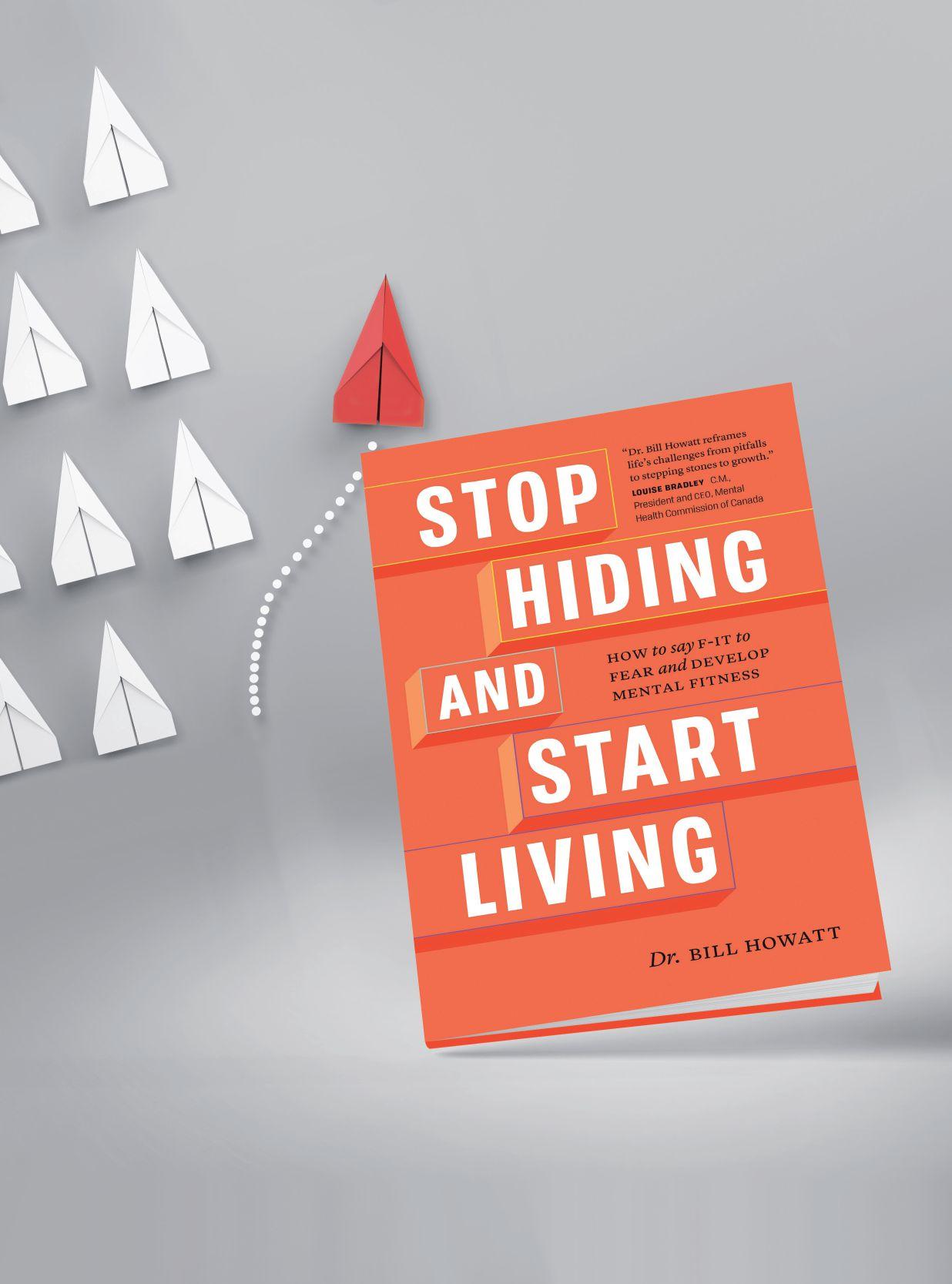
Stop Hiding and Start Living
Dr. Bill Howatt
Take charge of your own happiness with a proven method to build your mental fitness and focus on what matters. Why do some of us bounce back after stresses and failures, while others struggle to pull through? It’s not about natural resilience. It’s that those who are able to move confidently through setbacks have developed good coping skills – and you can, too.
In this interactive guide, mental health expert Dr. Bill Howatt presents a proven five-part model to move you past the rut in your life and toward happiness.
Talent Canada has partnered with Annex Bookstore to bring you industry-leading titles designed to help busy professionals become more effective leaders. It features dozens of books focused on mental health, employment law, HR, diversity and so much more.
To shop our full selection of

BRIEFS
Saskatchewan introduces threehour vaccine leave
Saskatchewan announced in March that people will get paid time off from work to get their first dose of a COVID-19 vaccination. As reported by the Canadian Press, the province amended its occupational health and safety regulations to allow an employee to get a special leave from their job to get inoculated. The change took immediate effect, and means an employee is entitled to take three consecutive hours off to receive a shot without losing any pay or benefits.
EU sets out virus pass plan to allow free travel by summer
In March, the European Union’s executive body proposed issuing certificates that would allow EU residents to travel freely across the 27-nation bloc by the summer as long as they have been vaccinated, tested negative for COVID-19 or recovered from the disease. According to the Associated Press, with summer looming and tourism-reliant countries anxiously waiting for the return of visitors amid the coronavirus pandemic, the European Commission foresees
the creation of certificates aimed at facilitating travel between EU member nations.
Middle managers make or break immigrant-inclusive teams: report
The group that makes or breaks efforts to build immigrantinclusive teams in the workplace is middle managers, according to a new report published by the Toronto Region Immigrant Employment Council. While workplace inclusion starts at the top with executive leadership, it is the everyday choices and actions of middle managers that pave the way to success or failure when it comes to immigrant professionals reaching their full potential. This group has significant influence over what happens after an immigrant is hired, whether they feel part of their team, offering the feedback they need to grow, and ultimately the extent to which they progress in the organization.
Uber to give U.K. drivers minimum wage, pension, holiday pay
Uber is giving its U.K. drivers minimum wage, pensions and holiday pay, following a recent court ruling that said they
should be classified as workers and entitled to such benefits. The ride-hailing giant’s March announcement came after it lost an appeal last month at the U.K. Supreme Court following a years-long court battle. The court’s decision holds wider implications for the country’s gig economy, according to the Associated Press. Uber said it’s extending the benefits immediately to its more than 70,000 drivers in the U.K.

Military reeling as new defence chief steps aside amid misconduct allegations
The Canadian Armed Forces is reeling after news that defence chief Admiral Art McDonald is being investigated for misconduct, only weeks after military police launched an investigation into allegations against his predecessor. As reported by the Canadian Press, McDonald “voluntarily stepped aside” in late February while military police investigate unspecified allegations. He is on paid leave. McDonald took over as the chief of the defence staff in January from Gen. Jonathan Vance, who is now being investigated after allegations of inappropriate behaviour.
Federal COVID-19 benefits extended for workers, parents
In February, Prime Minister Justin Trudeau said the federal government is adding 12 weeks of eligibility to two key benefits for unemployed workers and parents at home with children.
According to the Canadian Press, the extra life for the Canada Recovery Benefit and the Canada Recovery Caregiving Benefit will raise the maximum number of weeks available to 38 from 26. Trudeau also says the federal sickness benefit will be expanded to four weeks from two, so workers can stay home if they’re feeling ill, or have to isolate because of COVID-19.
Alberta, Ottawa to distribute $465M to front-line workers
Front-line workers in Alberta who are at the greatest risk of contracting COVID-19 are to receive one-time, $1,200 cheques under a cost-shared federalprovincial program. Premier Jason Kenney said in February that the $465 million is to go to about 380,000 public and private-sector employees, the Canadian Press reported. He called it a way to reward them for their work, despite personal risk, to keep people safe and the economy going during the pandemic.

Aviation expert warns travel restrictions could bankrupt airlines
An aviation consultant warned that tougher travel restrictions announced in January could have devastating ripple effects across Canada’s airline industry. Robert Kokonis, founder and managing director of aviation consulting firm AirTrav Inc., told the Canadian Press the restrictions will trigger reorganization among
the country’s air carriers, including bankruptcies or outright failures. The effects will also hurt airports, as well as travel agents — hundreds or thousands of whom could be put out of business, according to Kokonis.
Class-action lawsuit filed against RBC over vacation pay
A Winnipeg woman is the lead plaintiff for a $750-million class-action lawsuit against the biggest bank-owned brokerage in Canada, claiming it failed to pay vacation pay to her and many other investment advisers for years. The Winnipeg Free Press reported that, according to a statement of claim filed in the Ontario Superior Court of Justice, RBC-Dominion Securities allegedly breached its legal duties by not fairly compensating many of its nearly 1,500 current advisers across the country, as well as those it previously employed. The claims have yet to be tested or proven in court. It is expected that RBC-DS will defend against the action and deny any allegations in court.
Companies band together on rapid testing in back-towork effort
Some of Canada’s top airlines, banks and sports teams came together in February to pilot rapid tests identifying COVID-19 in hopes that they can find a way to reopen workplaces. According to the Canadian Press, the pilot is being run by the University of Toronto’s Creative Destruction Lab, which has partnered with 12 companies, including Air Canada and Rogers Communications Inc., to experiment with antigen tests that take about 15 minutes to deliver results. Those behind the project believe it could give Canada’s corporate world a road map to quelling the spread of COVID-19 in workplaces that have had to close or have struggled to contain outbreaks.
JOB STOPS AND STARTS
600 — Hudson’s Bay Co. is permanently laying off more than 600 workers across Canada amid ongoing store closures due to COVID-19 lockdowns. Nearly half the company’s department stores remained temporarily closed as of February. The permanent layoffs represent less than five per cent of the company’s total workforce, a spokesperson told the Canadian Press.
Unknown — Bell Media cut staff, including on-air broadcast roles, as part of a streamlining process in February. A spokesperson said there have been a limited number of staff reductions, but did not specify how many jobs had been cut. The company indicated the roles were cut due to programming decisions as part of a streamlined operating structure.
259,000 — Statistics Canada said the economy added 259,000 jobs in February, almost wiping out losses sustained over the previous two months. February’s reopenings saw gains largely in Ontario and Quebec, and in sectors highly affected by tightened public health restrictions. The national unemployment rate fell to 8.2 per cent, the lowest level since March 2020 at the onset of the COVID-19 pandemic.
1,500 — Air Canada will temporarily lay off 1,500 unionized employees and an unspecified number of management staff as it cuts more routes in response to harsher travel restrictions. Air Canada will temporarily suspend service on 17 routes to the U.S. and other international destinations until at least April 30, the company said Feb. 9.
8,000 — On Feb. 10, Dutch beer brewer Heineken announced plans to cut 8,000 staff, nearly 10 per cent of its global workforce, as part of a cost-cutting reorganization after a pandemic-dominated year that saw it sink to a net loss of C$310 million. With bars and pubs around the world closed during coronavirus lockdowns and alcohol bans in some of its markets, Heineken sold eight per cent less beer than in 2019. Revenue fell nearly 17 per cent, according to the Associated Press.
213,000 — Statistics Canada says the economy lost almost 213,000 jobs in January as employment fell to the lowest level since August last year, wiping out the gains made in the fall. The losses were almost entirely concentrated in Ontario and Quebec, and mostly in the retail sector as lockdowns and restrictions closed many businesses.

5,000 — Best Buy said Feb. 25 that it had laid off 5,000 full-time store workers earlier in the month, even as the company’s sales soared during the pandemic as homebound people bought laptops, TVs and other gadgets. According to the Associated Press, the company said it cut the jobs because more shoppers are choosing to buy online instead of coming inside its stores. Best Buy said it will replace the 5,000 full-time employees with 2,000 part-time workers.


1,600 — Bombardier Inc. said Feb. 11 it will reduce its overall workforce by about 1,600 jobs as it moves to cut costs. The company said it is making the cuts as it consolidates its Global aircraft completion work in Montreal and reviews options for underutilized hangar and industrial space at its Quebec facilities.

WORK BEHAVIOUR
BY MINA MOVASSELI
Protecting a unique company culture in a fractured world
What happens to the companies that were inspired by the Google culture during a time where remote work has become the new norm?
You know — that culture that promotes ping-pong tables, beers at work, and free lunches, gathering within it a pool of people who want to work in an environment that is also focused on collaboration and innovation.
What happens when that environment is focused more on physical experiences and materials to bring people together?
Well, evidently, it becomes harder to replicate virtually.
Sometimes it is in that physical experience of playing a game of ping pong, sitting in the lounge area, or having a conversation at the coffee station that gives people new perspectives. And where many people end up bouncing ideas off of one another.
This relates to another piece of the puzzle — the “mission and vision” of the company.
This is at the heart of most companies and it is what attracts new candidates and current employees to feel like they are a part of something bigger.
MAINTAINING INNOVATION
The question now is: how do we continue pushing forward innovation and collaboration within a remote environment?
If we look to human psychology — specifically at Maslow’s “Hierarchy of Needs” theory — it shows us that once humans have certain needs met starting with food, water and shelter, then they want to have
When companies lose their top talent, it is often due to the employee feeling like their ideas were not respected.
their safety and security needs met. Once those are satisfied, they want to feel like they belong through relationships, including with peers and friends.
Next, and below the top of this ladder, is a person’s “self-esteem needs,” which indicates that humans can be motivated through feelings of respect by others, respect of others, confidence, achievement, status and recognition.
This can help us understand how a new company culture can be born, which is vital to attracting new employees and retaining old ones.
How? By first creating a safe and secure space, and then making sure people have good working relationships.
This isn’t just putting locks on doors, but rather creating a level of trust within the company and individual teams. This allows people to feel comfortable and access the part of their brain that is more creative.
Next, we can move towards motivating employees by increasing their level of self-esteem. In this part of Maslow’s hierarchy, we can see that if teams are able to understand each other’s views and respectfully debate, then confidence is built — leading to a willingness to want to share new ideas.
This is crucial because when companies lose their top talent, it is often due to the employee feeling like their ideas were not respected by others or simply silenced and not given the space to think outside the box.
FIVE WAYS TO PIVOT YOUR CULTURE
These motivational needs can be seen as opposing the current ways of attracting employees with fancy game rooms and office snacks.
But from the skeleton of that model, we can see that those able to make it work understand that humans like to be reinforced in order to continue doing another task.
So, it might seem that they are giving them free lunches for their work, but the leadership of the company is also making sure their employees are reinforced with words of appreciation. Time is given to them to acknowledge their work and effort.
Below are five methods to make virtual cultures innovative and collaborative at their core:
• Personality profiling (by a professional consultant): this helps identify skill sets and potential, then builds upon it. For example, Myers-Briggs, 16 Personality Factors, OCEAN, DiSC.
• External understanding: comprehending any external forces in an employee’s life that need to be worked around, such as a sick family member or picking up a child at school.
• Access to fun workshops: dedicated to building the confidence of the employee through forums such as storytelling workshops.
• Company therapist: focused on helping guide the employee to better understand their thoughts and actions.
• Company coach: techniques taught to help workers learn how to speak up, think more creatively, relax their mind and feel happier in their life.
This approach gets to the core of what is needed as humans, proving that you don’t need expensive ways to create a good culture and help your team be innovative.
If your staff trust what the company is doing and they feel seen, heard and understood, then they will give their time, energy and knowledge to be part of the cause. | TC
Mina Movasseli is a behavioral scientist and founder of The Mindful Blueprint in Toronto.
HIRING TRENDS
BY ROBERT HOSKING
Robert Hosking is senior vice-president and managing director of search practices at LHH Knightsbridge in Toronto.
How COVID-19 has transformed the recruitment process
The one-year anniversary of the first COVID-19 lockdown has come and gone, and the pandemic’s impact on the recruitment process for Canadian businesses — across all industries — has been undeniable.
At the outset of the pandemic, recruitment slowed while companies took a reactive “wait-and-see” approach. Mid-level businesses were hit hardest as organizations downsized or opted to rely on internal resources to fill roles. And people felt hesitant to leave their organizations during the early days of COVID-19, despite experiencing increased levels of stress and exhaustion.
With vaccines and renewed hope on the horizon, 2021 is likely to be a year of opportunity at all levels. And it appears there will be no shortage of candidates ready to apply for the opportunities to come.
According to a recent LinkedIn poll conducted by LHH Knightsbridge, nearly 70 per cent of 681 respondents were actively looking for a new job in January, so no surprise that February’s loosened restrictions brought some optimism, with the unemployment rate falling at 8.2 per cent and the labour underutilization rate shrinking back to 16.6 per cent — the same levels as in the early stages of the pandemic.
ATTENTION ON HEALTH AND WELLNESS
The added stress and exhaustion resulting from the pandemic have put health and wellness at the
forefront of decision-making for both employers and candidates.
Organizations will now be judged on how well they weathered the pandemic and took care of their employees. Meanwhile, candidates may choose to prioritize roles which allow them to work closer to home or find entirely remote opportunities, allowing for a flexible work environment they’ve become accustomed to.
Many would assume, with the financial challenges influenced by the pandemic, compensation would be top of mind for employees. Yet, with staff now settled into the remote work environment, priorities around workplace flexibility and the close-to-home mindset have surpassed demands for additional monetary payment.
WILL EXECUTIVES THROW IN THE TOWEL IN 2021?
The uncertainty presented by the pandemic played out differently at the C-suite level, with less of a delay in recruitment at the upper-most levels attributed to the assumption that these roles were critical to recovery.
At the executive level, a sense of loyalty and desire to help their organization navigate the challenges presented by the pandemic kept them in place.
However, executives who stayed to stabilize companies may leave once markets become stable again. This includes some opting for early retirement.
The pandemic-driven challenges within the workplace, specifically in the context of re-
cruitment, have shed a spotlight on the importance of having updated succession and emergency plans in place, in case of a leader’s sudden departure.
As executives’ transition and step down from their roles, many organizations have realized they do not have the appropriate plans in place to ease transitional leadership.
Organizations that do not have an emergency plan and succession plan should consider creating one, as they will offer a way forward in these transitions.
It is extremely important that these women, who have been proportionally disadvantaged by the pandemic, are recognized and heard.
Meanwhile, an essential aspect of the future of recruitment will come from companies’ abilities to adapt to a virtual world. The pandemic has shown us that technology can provide flexibility for employees and increase productivity.
With a continuing demand for individuals with digital skills, finding the right technology leaders will be a crucial indicator of success in the years to come.
INTERIM AND CROSS-BORDER OPPORTUNITIES
With vaccines and renewed hope on the horizon, 2021 is likely to be a year of opportunity at all levels.
DIVERSITY, DIGITAL SKILLS IN SPOTLIGHT
Throughout the pandemic, women faced much higher levels of unemployment than men, because women disproportionately work in industries with low-paid or shift work that were more impacted.
In addition, women of colour in Canada have reported facing higher unemployment in comparison to white women, highlighting one of the many inequities the pandemic has exacerbated in Canada.
Interestingly enough, as women in low-paid roles starting falling out of the job market, we started seeing a significant closing of the gender pay gap in Canada.
As companies make decisions about the coming year, many are opting for interim hires.
This is especially true in some of the hardest-hit industries, such as hospitality, travel, entertainment, and retail. These industries are cautiously banking on large pent-up demand and rapid growth once they reopen, fueling the interim hiring model in the short-term.
The pandemic has also created more acceptance of interim work as organizations have leaned into this option over the past year.
Remote work will also continue to play out across organizations — and across borders. Working in the increasingly digital world enables people to live and work anywhere.
With a new government in the United States that favours collaboration and partnership, more new U.S.-based opportunities are expected to open for Canadians.
Greater talent opportunities will exist for companies that continue to embrace flexibility. | TC
WORK LEADERSHIP
BY COLOMBA VANI
What our national governor-general saga taught us about background screening
Since the Julie Payette saga began unravelling in 2020, many HR communities have been shocked that the toxic work environment fostered by the former governor general and her secretary Assunta Di Lorenzo escaped scrutiny for so long.
It was disheartening to see how negligent the federal government had been in hiring at that high level without conducting any form of background check.
In our workplaces, we are consistently held to a high degree of checks and balances by our governments, both provincial and federal. And yet, it would seem, they were unable to uphold the same degree of accountability in their own workplace.
Frankly, it was appalling that Payette’s starstruck employers failed to unearth her poor employment track record — a legacy of abusive leadership — that a few simple pre-employment phone calls could have revealed.
STRENGTHENING VIOLENCE PREVENTIONS
On Jan. 1, in a bid to rectify their own negligent hiring, the federal government quickly added amendments to the Canada Labour Code within the workplace harassment and violence prevention regulations to “expand the existing prevention of violence framework.”
“Known as Bill C-65, these amendments will strengthen provisions in the Canada Labour Code by putting in place one comprehensive approach that takes all forms of harassment and violence into consideration,” the official announcement reads. “This will help departments to better prevent, respond to, and provide support to those affected by

harassment and violence in the federal public service.”
What the bill does is mandate employers to conduct third-party searches into a complaint of workplace harassment, and to follow the third-party recommendations once the investigation is completed. The bill has also put in place a penalty system that allows employers to be fined up to $250,000 if they fail to comply with the new occupational health and safety or labour regulations.
COVID-19 COMPLEXITIES
Like most workplace practices up -
ended by the pandemic, the renewed focus on background screening has pushed many an employer into a corner.
The way to manage this effectively is by further scrutiny. Once an optional practice, background screening is rapidly becoming the new normal for many organizations.
We are going to see it become part of the onboarding process, to be continued post-employment by HR departments.
Yet while the awareness has been built, many companies lack the know-how involved in thorough
Colomba Vani is the director of human resources at Pactiv Canada, a manufacturer and distributor of food packaging and products in Toronto.
background screenings. They don’t know how to drive privacy laws. They don’t know how to distinguish between good qualifications and lessthan-complete ones.
COVID-19 has piled on further complexities to the process of background screenings by way of court closures, shutdowns of academic institutions, and an overburdened medical system. As such, delays in acquiring verification of applicants’ criminal, academic, and drug histories may lead employers to bypass the screening process altogether.
Add to it the ongoing war for top talent — it hasn’t been easy for hiring managers to judge whether they need to loosen or tighten their screening protocols.
STRATEGIES FOR SCREENING STAFF
Faced with these odds, organizations can incorporate a few best practices that can help mitigate challenges when conducting background checks.
Get social media reliant: We are all part of a multigenerational workforce that is heavily influenced by what’s on social media.
In addition to the official police checks, credit checks, education and health checks, employers will need to start scrutinizing applicants’ social media history and activity to determine a fit for their organization.
If the candidate is applying for a government position, are they spewing anti-government sentiments in their social media posts? Are they inciting or condoning racist acts that are socially and morally inappropriate? Are they toting hate and/or violence on their Facebook and Twitter feeds?
On the flip side, close social media scans can make applicants’ nervous that their freedom of speech and privacy are being impinged upon. Employers will have to find a
balance. And the balance is going to be in a policy.
To establish a policy, they must not only drive it through the federal and provincial regulations, but they also have to get it scrutinized through the legal department.
A robust hiring policy that encapsulates background checks and onboarding procedures will mitigate pre- and post-employment issues.
Use common sense, and approach background screenings holistically: HR departments can no longer just be HR departments. They have to be a litigator. They have to act as police reformers. They have to have balance and they have to do it all with common sense.
Case in point, if an individual’s background screening reveals a decade-old criminal activity and they haven’t since had any run-ins with the law, how does one employer hire this person versus another employer? It boils down to how inclusive the organizational culture is and the job type the candidate is applying for.
Scores have lost their jobs during COVID-19. Increasingly, background checks will now show that applicants have not been able to hold job positions for more than a few months.
That’s to be expected. Countless businesses have been terminated and hiring freezes are the order of the day.
It therefore behooves employers to consider a candidate’s entire background to make a sound judgment on eligibility.
Towards that end, ask in-depth, open-ended, behavioural questions to clarify gaps in resumés. This is not new. It should never be a yes/no answer. It’s important for hirers to get to know their employees or the people they’re trying to hire. A cookie-cutter approach won’t work.
Conduct third-party background checks: Depending on the size of an
organization and its HR department — and budget-permitting — engaging a third-party provider with stellar credentials to conduct background checks helps to protect organizational reputations. It’s a fair and equitable way for organizations to navigate a tricky legal landscape.
However, candidates must be made aware of the company’s policy to conduct third-party screenings. Hirers must divulge the name of the screening company, how they will conduct their background search, and whether the candidate will be contacted by them. Candidates’ must be given the right to consent or not to a third-party screening.
Ensure a culture of inclusivity when performing background checks: Making sure individuals feel safe during a screening process is critical now, more than ever.
Once an optional practice, background screening is rapidly becoming the new normal for many organizations.
It must be made clear to candidates that the screening is carried out in a just manner, and they have every right to screen the company, as well. This makes a contentious process a win-win.
Hirers need to ensure that candidates can have open and honest discussions with them during the process and that individuals understand why there is a need to conduct background checks. It goes hand in hand with an inclusive corporate culture and positive brand experience. If all else fails, pick up the phone and have a direct conversation with colleges, universities, and references cited by the applicant. It’s an old one, but a keeper.
There is no doubt that HR is feeling the full brunt of a tough job market. Employers need to embrace the shifting practices and what HR needs to deliver for the business at this pivotal point for the industry.
The creation of Bill C-65, albeit in bad precedence, helps organizations to add an extra layer of scrutiny to alleviate unwanted controversy. | TC
COVER STORY
AS PANDEMIC LENGTHENS, SPOTLIGHT IS ON MENTAL HEALTH
Virtual event explores opportunities for effective workplace supports in a digital era
BY MARCEL VANDER WIER
The far-reaching effects of the COVID-19 pandemic have found an unfortunate resting place — our minds.
Since March of 2020, the world of work has been flipped upside down and citizens across Canada and the rest of the world are facing unique and difficult social situations.
“What’s really happened through COVID-19 and 2020 is that the number of stressors we’re being faced with has exponentially increased,” said Nigel Branker, president, health and productivity solutions and executive vice-president at Morneau Shepell in Toronto.
Working from home, assisting school-aged children with online learning or worrying about family members in long-term-care facilities have all played a factor in reduced levels of mental health and well-being, he said.
Essentially, people are being bombarded from all sides, said Branker, noting that the sheer magnitude of stress has resulted in a “small silver
Two expert roundtables explore mental health strategies and solutions for the workplace, discussing how business leaders can take advantage of digital opportunities to assist their staff through this unique time.
lining” of reduction in stigma around mental health.
On Jan. 22, Talent Canada hosted a live virtual event in partnership with AbilitiCBT by Morneau Shepell — “Future of Work: Mental health supports in a digital era.”
The event consisted of two expert roundtables exploring strategies and solutions for the workplace, with panelists discussing how business leaders can take advantage of digital opportunities to assist their staff through this unique time.
MENTAL HEALTH HAS DECLINED
Mental health has become the focal issue as Canada closed in on the oneyear mark of COVID-19-related lockdowns and social restrictions, said Paula Allen, senior vice-president and global leader of research and total well-being at Morneau Shepell.
“Very soon after the pandemic began, we realized this wasn’t just about washing hands, wearing a mask and physical distancing,” she said. “This really was about making sure that


your people were well supported… Because if you don’t do that, there is no business continuity plan.”
Morneau Shepell’s Mental Health Index™ (MHI) has been tracking the changes in this space among the working population, even before COVID-19 reached Canadian soil. According to the index, mental health issues have continued to erode across the nation throughout the pandemic.
Optimism has declined and feelings of isolation have risen, noted Allen. “This is impacting us in a deep way.”
CHANGING MENTAL HEALTH LANDSCAPE
As the COVID-19 pandemic continues, mental health is becoming a “re -

ally important business issue,” said Branker. Unfortunately, many are not coping well, and that should be cause for concern among employers.
If MHI data has revealed anything, it’s that the situation is really serious, he said.
“Not to be alarmist, but what the data reveals is… the magnitude of how much people are struggling.”
It’s important for workplace leaders to understand that mental health needs can vary by income, age, gender and race — among other factors, said Branker.
“You don’t know where people are (at) and employers really need to evolve their strategies to recognize that one size doesn’t fit all.”
The work context is powerful in this space, said Allen: “Those individuals who have received support from employers —
their mental health has not declined as much as others.”
Open discussion of the issue and resources available, as well as offering flexible-work opportunities have helped to alleviate pressures, she said.
“This has been a wake-up call, if you’ve allowed yourself to be woken up.”
NEW-LOOK WORKPLACE CONDITIONS
Changing workplace conditions have played a role in rising stressors, said Allen.
“It’s not just working from home; it’s how you do groceries, it’s how your children are schooled — that’s a lot,” she said.
“The human mind doesn’t really love change — even positive change we have difficulty adapting to without stress.”
And COVID-19 isn’t affecting a small
sector of the population. Frankly, it’s the opposite, said Allen.
“It’s about a full population having their (mental health) risk level increase,” she said, noting overall impact can vary a great deal.
Burnout tripled in 2020, compared to the year prior, said Allen.
The amount of change people are faced with can be “cognitively exhausting,” said Mark Henick, principal and CEO of Strategic Mental Health Solutions in Toronto.
“There is a change curve here, and it does get a little bit easier as we go,” he said. “When we do come out of this — and we eventually will come out of this — how are people going to be when they change back, if we have to go back into traditional workplaces?”
“While that may seem like good news, that’s probably going to be just as stressful
EMPLOYEE MENTAL HEALTH SUPPORT IS HERE TO STAY
By Nigel Branker, president, health and productivity solutions and executive vice-president at Morneau Shepell.
Many Canadians have been working remotely for a full year now. Throughout the pandemic, employers have been called on to implement well-being strategies to address the unique challenges that employees have been facing. This is consistent with findings from Morneau Shepell’s monthly Mental Health Index™, which indicates a steady decline of the working population’s mental well-being compared to a pre-pandemic benchmark, and demonstrates a clear connection between employee mental health, disability management and business continuity.
Beyond the challenges of today, employers must recognize the long-term impact of mental strain and prepare for the looming hurdles presented by a post-pandemic world. In our recent virtual event with Talent Canada, “Future of Work: Mental health supports in the digital era”, industry experts set the stage for an incredibly important conversation that employers and business leaders need to be having about employee well-being and the solutions required to facilitate a successful return to the post-pandemic workplace.
Below is a recap of our discussions.
KNOCKING DOWN BARRIERS
Our first panel discussion, “Removing barriers in a changing mental health landscape,” explored the importance of proactive and preventative mental health solutions. Historically, employers have taken a reactive approach to employee mental health, often waiting until a problem arises before taking action and implementing solutions, and contributing to the hesitancy and stigma surrounding mental health in the workplace.
Conducting regular proactive temperature checks is critical to better understand how employees are feeling.
“This will allow employers to identify areas of improvement before a stressor or manageable mental health concern escalates,” said panelist Paula Allen, global leader, research and total well-being at Morneau Shepell. “It also enables employers to proactively implement the necessary tools, resources and services to meet the ever-changing needs of employees and ensure that mental health in the workplace remains a top priority.”
FINDING PRACTICAL SOLUTIONS
Our second panel discussion, “Practical mental health solutions for the workplace,” focused on the necessary solutions to keep up with the evolving work and disability management landscape.
Luckily, there are many digital solutions that can be leveraged to help minimize declining employee mental health and add to an organization’s overall well-being toolbox.
“It’s important to remember that employees are often navigating family matters and personal issues outside of the workplace as well,” said panelist Chris Taylor, chief human resources officer at Best Buy Canada.
“A combination of targeted solutions at both the individual and family plan level is critical to improve employee well-being and optimize disability management. It’s crucial that employees feel supported no matter what they are going through – both personally and professionally.”
Digital solutions are an effective and accessible option for employees who may be struggling with mental health concerns.
One of these tools is AbilitiCBT, Morneau Shepell’s internet-based cognitive behavioural therapy (iCBT) solution, which is free in Ontario and Manitoba thanks to a partnership with these provincial governments.
AbilitiCBT is guided by professional therapists and is accessible 24/7 from any device. The program combines the convenience of virtual access with the same benefits of in-person therapy and provides support for a range of conditions including anxiety, depression, and many others, with a focus on enabling individuals to build critical coping skills for the near- and long-term.
To learn more about AbilitiCBT, visit myicbt.com.

as when we came out in the first place, because we just got used to this.”
While isolation is an issue, communication has improved through a variety of video-based platforms, said Chris Taylor, chief human resources officer at Best Buy Canada in Burnaby, B.C.
“In a pandemic that has brought so much negativity to the world, for us — from a mental health perspective — it’s accelerated us even more than the track we were on.”
REMOVING WORKPLACE BARRIERS
While mental health in the workplace has received plenty of attention over the last number of years, calls continue for further change.
And after centuries of stigma, meaningful change, such as preventative mental health, is on the horizon, said Henick.
“We are just starting to scratch the surface,” he said. “When you scratch a little bit deeper, you notice that there still are some pretty serious systemic issues at play within the system.”
Many workplaces remain in “reactive intervention mode,” only responding when there is a crisis, said Henick.
“When we can give people skills when the company’s doing well, that they might need, we can better support them… when we get into (slumps).”
Mental health is a collective responsibility — employers and governments are now raising this as an agenda issue, said Allen.
“When you’re feeling drained, when you’re feeling compromised, it sometimes feels like you just don’t have that energy to take that next step,” she said.
“That’s why it’s so important for us to pay attention to who’s around us, and when you see that behaviour change, to just be human — make sure that you let that person know that you care; be beside them and help them take that next step (towards) care.”
STOCKING YOUR MENTAL HEALTH TOOLBOX
A variety of practical mental health solutions already exist for employers, said Kristen Coady, vice-president of client experience,
health and productivity solutions at Morneau Shepell. Usage of tools depends on risks facing the workforce, she said.
“Ensuring that there’s efficacy and effectiveness in the tool” is key. “Because if you invest in something that your employers are not going to use, or are not going to actually like the experience… it’s not a great investment.”
Internet-based cognitive behavioural therapy (iCBT) is an option for employers seeking solutions, said Branker, noting the provincial governments of both Ontario and Manitoba have partnered with Morneau Shepell to offer its AbilitiCBT solution free to residents aged 16 and older.
ICBT is a type of psychotherapy that recognizes the links between what we think, how we feel, and how we behave, he said.
“As (iCBT) becomes a little more mainstream, then the question for employers is: to what extent do you leverage some of this (type of solution as part of your mental health strategy)?”
Branker said iCBT could in particular be better utilized as a preventative tool. “Why do we have to wait until they’re off work to make it available to them? If we can help people earlier in the process, I think everyone wins.”
Employers should also research return-to-work and disability management tools for staff who may experience severe cases of men-
tal illness, said Coady. “Disability doesn’t happen overnight. Absence prevention programs, policies — things that are managed consistently — can really help you identify those risks and not wait to engage the experts, or not wait until a disability claim to be involved.”
ADVICE FOR EMPLOYERS
Looking towards the future, mental health will be a major focus in the coming year and beyond. The latest MHI data reveals major implications for the workplace going forward.
“I do think this will get worse and it will continue to translate into higher turnover, higher disability, more drug costs,” said Branker. “This is a real business issue for at least the next couple of years.”
For mental health to really evolve, it will require the same attention from employers as diversity and inclusion, or engagement, he said.
COVID-19 impacts will continue to reverberate for years in terms of financial and psychological strain, added Henick.
“If you weren’t convinced already why you needed to have effective preventative and (proactive) mental health-care systems in your workplace, this should be all the proof you need.”
“It’s the right thing to do,” he said. “But it’s also good business, as well.” | TC
BECOME A POWERFUL NEGOTIATOR


THE HEART OF RECOGNITION IS MOTIVATION
Experts weigh in on workplace rewards amid the COVID-19 pandemic
BY JACK BURTON
I’d like to talk about a neurochemical called dopamine.”
It’s Friday afternoon, and while many across the country may be preparing their home offices for another Zoom happy hour, Dr. Michael Mousseau, national well-being and engagement consultant for Gallagher Canada in Calgary, is busy showcasing his background in neuroscience with a lesson in what makes employees tick.
For all the perks that home offices have provided employees with, ranging from more flexibility to a far briefer commute, the shift to the remote workplace has also introduced a number of obstacles in making outstanding talent feel recognized.
Current circumstances mean that the ability for organizations to engage in traditional forms of talent recognition — such as awards galas
— currently ranges anywhere from limited to impossible.
Even the process of observing and keeping track of exemplary performances becomes notably more difficult without the line of sight or physical presence that office environments once provided.
CREATING THE RIGHT ENVIRONMENT
Considering the many obstacles, it’s not hard for employers to feel unmotivated in prioritizing organizational recognition efforts.
However, a closer look at the impact that proper recognition can have
on employee engagement and work culture — especially when it’s more difficult than ever for employers to cultivate those elements — may have companies reconsidering.
This is where that dopamine, which Mousseau describes as a key motivational neurochemical, comes back into play.
“When I think about employee recognition,” he said, “I think about managers and leaders creating what I call ‘dopamine highways’ in their employees.”
In simpler terms, “if we look at what the heart of recognition is, it’s really motivation.”
“As humans, (we) move towards something that’s satisfying, or move away from threats, right?” Mousseau explained.
“So, if we start thinking about this in the context of business — as managers, we probably should continually be creating environments that are rewarding and motivating for employees.”
Pandemic or not, how employers use recognition to build cultures of positivity and motivation is changing, he said.
While honouring employees through company emails or social media posts certainly extends the reach of recognition, it’s not about the actions so much as it is about making a regular habit of performing them.
“We’re shifting away from the culture of recognition being an ‘Employee of the Year’ celebration” towards a paradigm where recognition becomes “a daily part of the culture, embedded in the fabric of an organization,” said Mousseau.
Central to this shift is the responsibility for employers to refocus efforts toward recognizing and fulfilling the specific needs of the individual worker, rather than looking at targets or remuneration alone.
“Managers need to really find ways to think ‘What motivated this person?’ and less about ‘OK, how much money do I need to give them?’” he said.
COVID EFFECT ON CULTURE
Company culture in particular is one area significantly affected by the shift to the remote workplace, with the sense of community that shared office environments offer mostly lost when working from home.
Yet, recognition offers a solution to this inherent disconnection that remote work has
brought to company cultures, according to Robert Half Canada district president Koula Vasilopoulos in Calgary.
“Recognition programs really foster a deep connection with the company, and working really becomes more that just doing a job and receiving a paycheque,” she said.
Using recognition to foster this employer-employee connection “definitely creates a positive company culture.”
The positive culture that proper recognition has the potential to forge not only makes employees feel accomplished, but has the cascading effect of motivating others to put in the work to also share that feeling.
“When somebody is shining and they’re rewarded,” said Vasilopoulos, “others want to follow that example in hopes of being rewarded and recognized as well.”
TOWARDS EMPLOYEE ENGAGEMENT
Emerging from this combination between an optimized company culture and a workforce that feels recognized is, at the individual level, an engaged employee.
“One of the best ways to engage employees is to make them feel like they’re a part of something bigger than themselves,” said Brian Kreissl, publishing manager for HR, occupational health and safety, and payroll publications at Thomson Reuters in Toronto.
He stressed how important it is “to make them feel like they’re more than just a cog in the wheel and give them an understanding that their role, and what it does, matters.”
Kreissl is quick to distinguish that despite popular misconceptions, “engagement” as a concept amounts to a lot more than simply productivity.
Engaged team members are not just productive, he said, but also willing to go the extra mile, with this increased effort often stemming from a deep satisfaction with their jobs and employers.
Another area that recognition-driven engagement fosters is loyalty.
Now more than ever, employers should be making a habit of giving employees their due if they want to cultivate the loyalty necessary to retain their talent into the future, according to Kreissl.
“It’s going to be very important to ensure that companies continue to do this sort of thing,” he said.
“Once the economy starts to really improve, people will remember how they were treated throughout the pandemic.”
Current recognition programs — or lack thereof — will go a long way in determining whether organizations emerge from the pandemic with a more engaged and loyal workforce, or if they experience a mass exodus of dissatisfied talent.
VARIOUS OPTIONS AVAILABLE
While the uncertain conditions of COVID-19 should be treated as an incentive to increase recognition programs, the financial toll that the pandemic could be taking across many organizations may have them worried about how exactly to approach this.
“When it comes to raises, many companies had to put cost-saving measures into place, and some of them even had to do salary freezes,” said Vasilopoulos.
“Individuals may be OK to stay in their current role if that organization isn’t able to provide a financial raise or increase this year,” she said, noting it’s still on employers to ensure that their team feels taken care of.
“If you’re not able to do any kind of financial increases, I think there are other ways that you can provide to reward, that may be low or even no cost.”
Some low- or no-cost avenues of recognition include home-office supply stipends, professional development programs, extra time off, or even things as simple as recognition-centric virtual events or sending gifts of thanks to employees’ homes, said Vasilopoulos.
The question remains, however. Are these initiatives toward employee satisfaction and positive acknowledgement really suitable replacements when money may not be as viable an option at the moment?
They might just be, she said.
“At the end of the day, employees want to do meaningful work and feel valued. When companies do a good job of ensuring that their employees feel like that — that in itself, to me, is a recognition program.” | TC
Jack Burton is a freelance writer in Toronto.
DECADES-LONG JOURNEY GETS ‘REALITY CHECK’
The need to ensure a diverse and comfortable workforce is no longer optional
BY TREENA HEIN
As we progress in 2021, it’s clear that the need to boost diversity and inclusion (D&I) in the workplace has reached unprecedented levels.
During the past two years — and especially in 2020 — social justice movements such as Idle No More and Black Lives Matter have amplified decades-old concerns about D&I in the workplace and beyond — and company leaders are now responding with action.
“As a business community, we haven’t made as much progress with diversity and inclusion over the last three to four decades as we’d like, but now there is a reality check,” said Dr. Susan Black, CEO at the Conference Board of Canada in Ottawa.
“This issue isn’t going to go away, and it behooves every organization to make sure it’s addressed effectively.”
ALL-ENCOMPASSING EFFECT ON BUSINESS
Indeed, by now, leaders at companies and organizations who don’t make

D&I a priority are putting their enterprises in very real risk of losing a competitive edge and even, in time, of shutting their doors.
Among the very serious consequences of not addressing D&I is the inability to recruit and retain the employees needed to make the business function. Already there are worker shortages in many sectors of the Canadian economy.
Company leaders need to ensure now and in the future that they’re doing everything possible to attract and retain people from all backgrounds simply to ensure enough employees.
Beyond enough workers, D&I directly impacts on business success in other ways.
Many studies have shown that a diverse workforce (employees from all backgrounds) and one that’s inclu-
sive (all employees feel comfortable and important) results in increased revenue, productivity and innovation.
That is, a diverse set of employees produces a more diverse range of ideas than those that are more uniform, and employees in an inclusive workplace are much more engaged and motivated to perform at their best.
In addition, companies that don’t have strong D&I could lose customers to those that do. The issue is becoming more public every day and those companies who don’t engage risk losing market share.
For example, consumers are making note right now of which Canadian companies have joined the BlackNorth Initiative, where firms have vowed to share D&I strategies and increase Black representation in their workforces.
Social justice movements have amplified concerns around diversity and inclusion.
Treena Hein is a freelance writer in Ottawa.
Several public disclosure regulations relating to D&I also exist in Canada and more are likely to follow. It’s a requirement, for example, for all firms listed on the Toronto Stock Exchange to publicly disclose how many women sit on their boards and any efforts underway to increase that number (or explain why).
In addition, effectively addressing D&I also reduces the risk of a company being sued for breaches of workplace human rights laws.
BEGINNING THE JOURNEY
But, while the need for D&I is very clear, it can be difficult for leaders of a business or organization to know how best to get started.
The good news is that there has never been more sound guidance available to eventually create a workplace where people want to be hired and are supported to succeed — regardless of ethnicity, sexuality, gender, disability, or country of origin.
FIRST GATHER DATA
Zakeana Reid, COO at the Canadian Centre for Diversity and Inclusion (CCDI) in Calgary, advises gathering of data at the leadership team level in the form of an external assessment.
“In my opinion, top leaders must first seek to understand how their leadership team defines D&I,” she said. “These concepts are not universal yet, and some people still only see diversity in terms of gender.”
“We need to know where leaders are at in their understanding of these concepts because progress will only go as far as that understanding.”
“So, once you determine where the bulk are sitting, so to speak, you can then work to move the bulk forward to truly understand what D&I encompasses, and also prepare your team for this process. Becoming aware of biases can feel uncomfortable.”
CONNECT THE DOTS
The next step is for leadership to connect D&I with the business issues the
organization is facing, said Reid. “Are you attracting and retaining top talent? People are attracted to organizations where they see ‘themselves’ represented and where they hear others saying positive things about their employers.”
“If an organization is having difficulty attracting a broad range of candidates, leaders may want to look inside and see if they have created an environment that is welcoming to diverse applicants.”
Leaders must also examine employee engagement scores, and compare the “overall” organization scores with the experiences of designated groups, she added.
“Is there a difference? Lack of employee engagement may be a sign of
Additionally, in D&I data gathering by CIBC, leadership found that the company was achieving good success in hiring diverse employees but wasn’t doing enough to support new hires.
‘DEMYSTIFY THE PROCESS’
After data gathering comes engagement, said Reid.
“D&I is organizational change and requires a ‘change management’ approach,” she said. “Organizational change requires individual change. There can be a lot of pushback. Some employee identity groups may feel threatened because the organization is actively focusing on increasing D&I.”
“We must demystify the process and reinforce the idea that one person’s
“As a business community, we haven’t made as much progress with diversity and inclusion over the last three to four decades as we’d like.”
lack of inclusion and may show up as reduced customer satisfaction.”
CONDUCT A D&I CENSUS
Black also sees gathering data to be the first step, and recommends that companies conduct a D&I census of leadership and workers.
She noted that large organizations already have a lot of diverse groups, and leaders need to figure out what they are and how these different groups are experiencing their workplace.
For example, Canadian plumbing company EMCO — as reported in a 2019 CCDI case study entitled “EMCO Corporation – A case study in diversity and inclusion” — did a D&I census that examined diversity but also asked questions such as: “What are the perceptions of our leadership team?” and “What are we doing that may be causing people to feel disconnected, unappreciated or frustrated?”
gain is not necessarily another’s loss.”
Black also emphasized that engagement must include everyone and focus on communication. She suggests starting discussion groups where ideas about specific strategies are generated.
One strategy to increase D&I at CIBC, among others, has been to create an internal online community where new and established employees across the country connect with each other.
The road to making a workplace more diverse and inclusive will not be reached overnight, said Reid.
“A common pitfall is thinking you will be done, because you will never be done,” she said.
“As the journey moves forward, the benefits of D&I will begin to show, and progress will eventually reach a level where it’s embedded in the organizational DNA. The journey might be smoother then, but it’s never-ending.” | TC
HR CORNER
BY ANTHONY ARIGANELLO
Anthony Ariganello is president and CEO of Chartered Professionals in Human Resources Canada (CPHR Canada), with headquarters in Vancouver.
The new modern workplace: resets, rethinks and the great leap forward
Over a year ago, the world of work changed overnight, as did our lives. Together, but apart, we have faced a health crisis unlike any other — one on a global scale that has touched us all on an individual basis.
Whether we have lost loved ones, jobs or entire businesses, the past year been both catastrophic and a catalyst for better times to come.
What we have endured and what we should expect moving forward is not so much a reset for the modern workplace as it is a great leap forward.
We have seen innovation unleashed on an exponential level, while at the same time realizing the overall effectiveness of a mostly remote workforce.
Mindful of the losses suffered, the pandemic has challenged us all, but it has also accelerated a world of positive change that had been deadlocked in discussion for years.
Now, with vaccinations making their way into global distribution, albeit unevenly, a light is emerging at the end of the tunnel.
However, as our focus shifts towards what the new normal on the other side of that tunnel looks like, there is no denying that the world of work has been forever changed — and in many cases for the better.
A CHANGE IN LEADERSHIP MINDSET
This has come about in no small part by a long overdue change of thinking spurred by pure necessity.
Even those leaders who are better equipped to manage change than most have really had to turn to their HR people to help deal with what has been a daily deluge of challenges arising almost exclusively around people matters — from pandemic fears to sick
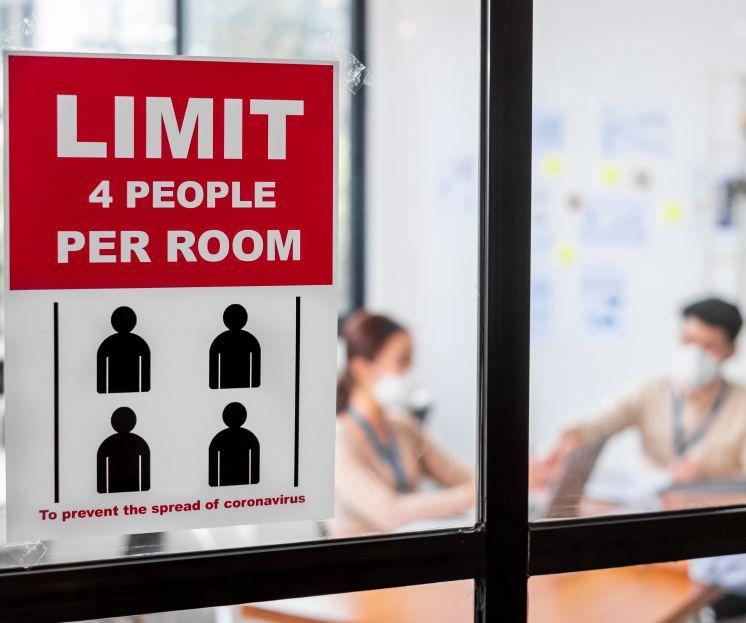
leaves and the rise of mental health issues — all while trying to keep their core businesses afloat.
If there is one thing the pandemic exposed glaringly, it is the need for inspired leadership at a root level. During good times, leaders don’t truly matter as much, but in times of extended crises, their presence alone can inspire the confidence needed to adapt and survive.
As a result, for those in HR profession, the past year provided nothing less than a proving ground for a skill and mindset that has never been more called upon by leadership in every part of organizations.
That mindset is hinged upon keeping people first in the minds of decision-makers, and as has become readily apparent at all levels of
industry and government, the need for people-first leadership is greater than ever. More importantly, it is also likely to be the minimum bar of entry for organizations looking to thrive in our new reality.
A TREND TOWARDS FLEXIBLE FUTURES
As per the findings of CPHR Canada’s 2020 HR Trends Report with Insights West, what has changed most is the thinking around the physical workplace itself.
Drawing upon the representative bodies of CPHR BC & Yukon, Alberta, Saskatchewan and Manitoba, the survey pointed to a way of thinking at once completely new — and yet both familiar and welcome to HR professionals.
While only one in three employers had or offered remote-working possibilities pre-pandemic, that number surged to 94 per cent in pandemic times.
Interestingly, looking past the public-health emergency phase, over two-thirds of employers surveyed are factoring flexible-work arrangements — with one in five aiming to have as many employees working remotely as possible.
And while these numbers vary from the province to province — with the West Coast taking a significant lead in introducing and/or considering new flexible-work options — the trend towards flexibility and the employee experience rings true throughout.
That is welcome thinking to a profession which has always espoused the strategic value of both for some time.
KEEPING THE CONNECTIONS ALIVE
From an HR perspective, these numbers are telling, filling in the details of a picture that has been evolving for some time and will invariably continue to do so as the new modern workplace begins to take form in a world without many old norms.
Without a doubt, the future workplace will be nothing if not dynamic — a hybrid of time-tested best practice wed with a wonderland of previously underused technological potential and workplace flexibility.
As such, continuing to develop and utilize the range of connectivity tools at our disposal is essential, and has been discovered by teams large and small, more specifically-oriented and accessible than just 12 months ago.
From Zoom to Microsoft Teams to Sharepoint, Yammer, Slack, Twitter, Chatter, Jive and a host of other platforms, we have all grown as technological adepts and that needs to continue.
As a membership-based body that thrives in a face-to-face medium

such as our annual conference and multiple symposiums, CPHR BC & Yukon has nonetheless thrived with a host of online offerings.
These have ranged from weekly Wake Up and Wind Down zooms, to hot-button webinars targeting key COVID-19 matters, to a greater wealth of ongoing special events than we might have ever had need to consider.
COVID-19 concerns, the issues ahead are many.
FORGING A PEOPLEFIRST WORKPLACE
Answering the call, as HR professionals we have had the opportunity to incorporate a lot of new thinking into a lifetime of learning from inspiring conferences, books and podcasts. More importantly, we had to put those learnings to the test.
As a result, not only are larger swaths of leadership realizing HR as an essential business partner, but the profession itself exudes newfound confidence as topics well-learned have been transformed into skill sets well-earned.
In a very real sense, while the past year has felt interminable, we have actually stepped into something of a time machine in terms of “business as usual.”
Now, with vaccinations making their way into global distribution, albeit unevenly, a light is emerging at the end of the tunnel.
Maintaining that connectivity, particularly within a profession or team with a passion for learning, has been a rewarding challenge that has also laid a road map for opportunities previously unconsidered.
RETURN TO NORMAL UNLIKELY
For all the challenges we have faced in isolation, they will only become more manifest as we come together.
One need only consider the scenario of someone disinclined to be vaccinated wanting to return to the physical workplace to see that basic truth, but beyond the varying provincial laws which govern such matters, it is the day-to-day that will define the shape of workplaces to come.
From creating ergonomically spaced workplaces, to being able to ensure a safe workplace, to addressing the issue of additional sick days due to
Whether we would have adapted as quickly and effectively without being forced into it is a point worth considering as we aim to consolidate a new sense of normalcy — as maintaining that dynamism is key to culture, communications and commerce alike.
For some businesses, the time away from the office is leading towards a far less physical future. For others, the return to brick-and-mortar space is mandated by the business model itself, albeit with a bit more space around the water cooler.
Between these two hyperbolic ends, we can expect manifold combinations as we begin to rebuild, not anew, but with a new sense of shared humanity, and a definitive confidence in our previously untapped abilities to get the job done, regardless of setting.
As for sticking the landing in this great leap forward, therein lies the challenge for every workplace. But by remaining flexible, engaging and people-minded, the landing may prove less important than the human momentum we build. | TC
OFFICE ODDITIES

Mariners president resigns following hurtful comments
Seattle Mariners CEO and president Kevin Mather is the latest baseball executive to land in hot water. In February, he apologized and resigned after he made disparaging comments about several employees while giving an update on the club’s organizational strategy, personnel moves and club finances. Mather made the remarks in an address to the Breakfast Rotary Club in Bellevue, Wash., which was later posted online, according to the Associated Press.

Federal workers were paid $819M to stay home
One in three of Canada’s public servants were granted paid time off work during the first nine months of the COVID-19 pandemic, at a cost of $819 million, the Canadian Press reported. Employees unable to work remotely despite being asked were paid through a provision known as the “699” pay code, allowing “other leave with pay.” As of April 2020, the number of workers approved for this leave was more than 73,000. That number fell to 9,000 by November. In total, 39 per cent of federal employees were approved for this leave.
Ontario mayor under fire for breaching code of conduct
In February, Mattawa, Ont., Mayor Dean Backer faced sanctions after an attempt to shield a family member from workplace discipline, the Canadian Press reported. The incident took place in March 2020, where the mayor allegedly had a heated confrontation with the town’s CAO, demanding the CAO act on his family member’s behalf. The mayor allegedly wanted changes made to a letter of discipline in his family member’s municipal employment file. The pressure on the CAO led to an early retirement, according to a report presented to council. Mattawa is 62 kilometres east of North Bay, Ont.
B.C. lawyer suspended for faking expense claims

A British Columbia lawyer overseeing professional standards at the Law Society of B.C. was suspended in February after falsifying expense claims, according to the North Island Gazette. Kenseelan Gouden’s infractions occurred between 2017 and 2018. On Feb. 16, he was given a 16-month suspension connected to his tenure as CEO of the Courthouse Libraries Society. Among the falsified claims were several for trips not related to work, receipts modified to have higher values and some knowingly duplicated expenses.
California deputy drops lawsuit against Raptors president
A law enforcement officer in California has dropped his lawsuit against Toronto Raptors president Masai Ujiri. The suit stemmed from an altercation in the 2019 NBA Finals, when Alan Strickland alleged he suffered injuries as Ujiri attempted to get on the basketball court following his team’s championship-clinching victory in Oakland. Strickland was seeking US$75,000 in damages, according to the Associated Press. Ujiri’s counter-suit alleging unauthorized use of force by the deputy was also dropped. Video footage showed the officer shove Ujiri twice before the team president responded.
Halifax Transit’s Valentine’s contest goes awry
Public backlash in Nova Scotia cancelled a Valentine’s Day contest called “Love in Transit.” The Halifax Transit authority had asked the public to share stories of love on the city’s buses and ferries, many responded with disturbing accounts of verbal, physical and sexual harassment, and genderbased violence, according to the Canadian Press. The transit authority pulled the campaign on Feb. 3, and issued an apology, saying any passengers experiencing abusive behaviour should contact police.
Grocery industry sues Seattle over hazard-pay law
Two grocery industry trade groups have filed a lawsuit against the city of Seattle over its new law mandating US$4-an-hour pay raises for grocery stores, the Seattle Times reported. The law, which went into effect Feb. 3, applies to grocers with more than 500 employees worldwide and stores larger than 10,000 square feet in Seattle. It mandates the pay boost for all workers in retail locations, a bump that stays in effect as long as Seattle remains in a declared civil emergency. The lawsuit by the Northwest Grocery Association and the Washington Food Industry Association declares the new ruling “invalid and unconstitutional,” interfering with collective-bargaining processes and singling out large grocery companies.

“My career has taken me across the public sector in two provinces, working as an HR professional in roles from entry level, up to leadership positions. I believe the CPHR designation has, as a preferred qualification on many postings, assisted in screening me into a number of job competitions in which I became the successful candidate.ˮ
Karen Pettit, CPHR Victoria, BC
CPHRs understand change leadership and achieve results. Now is the time to get your CPHR designation with our executive path. To be eligible you must be a member of a CPHR association, have a degree in any major, have 10 years of senior applied HR experience, and have held an executive position.
In these uncertain times, ensure your HR team consists of CPHRs who will help your executive team apply the best people management strategies.
Contact info@cphrbc.ca and get started today.