



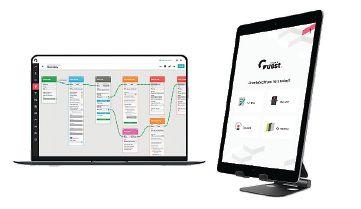
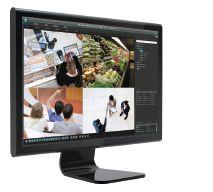







The Latest IP Technology Dealers Corner Thousands of Independent Dealers Personalized Customer Service
24/7 Monitoring 365 Days a Year
• Wholesale Monitoring
• Interactive Services
• Video Monitoring
• Managed/Hosted Card Access
• Advanced Web Services
• Acqusition and Funding Program
COVID-19 means security suppliers and professionals have to step up their innovation game By
Alanna Fairey
Jason Spielfogel
CANASA Update A special message from the executive director By Patrick Straw 12 Lessons Learned Business and deals during the pandemic By Victor Harding


SBy Neil Sutton
o this is what it’s like to work from home. During my career, I’ve resisted any offer of flex work. I prefer to ply my trade in an office environment. I find it improves my focus and helps me organize my day. I have a comfortable office space to work in, an adjustable desk and coffee in the kitchen.
I’ll admit that maybe that viewpoint is already outmoded. Enabled by technology, the mobile workforce has been pervasive throughout our society for many years now.
But it’s no longer a simple matter of preference or lifestyle. I am working from home now because a) we are told it is for our safety and those around us and b) it’s the right thing to do.
Writing and researching about COVID-19 has kept me busier than ever. There are a million security stories to tell right now about the pandemic, and I’ll never get to all of them. So I’m productive at home — more so than I ever thought I could be.
I’ve downloaded several new video-conferencing apps to communicate with the outside world, updated some older ones, and used FaceTime more in the last few months than I have in the last few years.
I am also one of the lucky people who can work from home during this pandemic. I’ve come to think of my office almost as a luxury, not a necessity.
The only major change in my work habits is my children are at home with me too. Most parents fill in as part-time tutors even during the best of times. Now I am helping my kids connect to virtual lesson plans.


What I have learned from talking to security professionals since mid-March is that many of their experiences aren’t all that different from mine.
They are connecting with their co-workers through webcams and collaborating on projects through file-sharing tools. They are sharing their experiences, good and bad, on social media.
We are all adjusting to a new reality and maybe surprising ourselves a little in the process.
I’m not entirely sure what will happen when society begins to return to normal but I expect I will go back to my office and resume my regular schedule. This experience, however, is going to temper my view of work from now on, as I’m sure it will for so many of us.
It is also going to bring changes to the security world. For certain, it will alter our understanding of pandemic planning and disaster recovery. Plans will inevitably change, as will their perceived value.
There will be many lessons learned and it will take years for them to be fully understood, never mind implemented.
During this unusual time, I am grateful that I can continue to work from home. But I am more grateful to the front-line workers who can’t go home.
Your Partner in Securing Canada Security Products & Technology News is published 8 times in 2020 by Annex Business Media. Its primary purpose is to serve as an information resource to installers, resellers and integrators working within the security and/or related industries. Editorial information is reported in a concise, accurate and unbiased manner on security products, systems and services, as well as on product areas related to the security industry.
Group Publisher, Paul Grossinger 416-510-5240 pgrossinger@annexbusinessmedia.com
Associate Publisher, Jason Hill 416-510-5117 jhill@annexbusinessmedia.com
Editor, Neil Sutton 416-510-6788 nsutton@annexbusinessmedia.com
Associate Editor, Alanna Fairey 416-510-5228 afairey@annexbusinessmedia.com
Media Designer, Graham Jeffrey gjeffrey@annexbusinessmedia.com
Account Coordinator, Kim Rossiter 416-510-6794 krossiter@annexbusinessmedia.com
Circulation Manager, Shawn Arul sarul@annexbusinessmedia.com Tel: 416-510-5181
COO, Scott Jamieson sjamieson@annexbusinessmedia.com
EDITORIAL ADVISORY BOARD Victor Harding, Harding Security Services Carl Jorgensen, Titan Products Group Antoinette Modica, Tech Systems of Canada Bob Moore, Axis Communications Roger Miller, Northeastern Protection Service Sam Shalaby, Feenics Inc.

111 Gordon Baker Rd, Suite 400, Toronto, ON M2H 3R1 T: 416-442-5600 F: 416-442-2230

Whatever happens to the future of office work, we owe them a huge debt and much respect. @SecurityEd
Printed in Canada ISSN 1482-3217
416-510-5181 Mail: 111 Gordon Baker Rd, Suite 400, Toronto, ON M2H 3R1
SUBSCRIPTION RATES: Canada: $43.00 + HST/yr, USA: $98.00/yr and International: $112.50/yr Published

Tel: 800-668-2374
No part of the editorial content of this publication may be reprinted without the publisher’s written permission. ©2020 Annex Publishing & Printing Inc. All rights reserved.
Annex Publishing & Printing Inc. disclaims any warranty as to the accuracy, completeness or currency of the contents of this publication and disclaims all liability in respect of the results of any action taken or not taken in reliance upon information in this publication. PUBLICATION


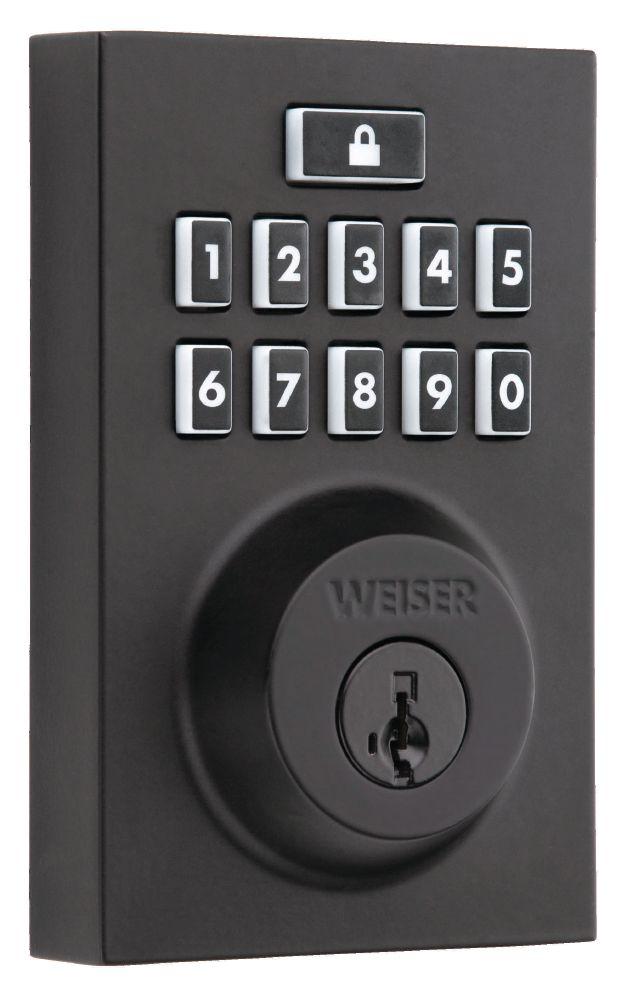
ADD A LEVEL OF SECURITY AND STYLE TO YOUR HOME WITH THE CONTEMPORARY SMARTCODE 10
• Z-Wave plus wireless technology
• New contemporary design
• 10 digit backlit touchpad with one touch locking
• Motorized deadbolt - enables true remote locking and unlocking

• Sleek metal design for enchanced quality
• Features 30 user access codes and 1 master code
• SmartKey and Bump Guard
A virtual panel of professional security providers assesses the impact of the coronavirus on day-to-day practices
The security industry is probably more prepared than many others to cope with the rigors of a global health crisis like COVID-19, but like almost everybody, security service providers have had to make some changes in order to carry on.
“We’ve obviously, like everyone, had to adjust,” says Richard McMullen, partner, security solutions, FCi Security Solutions, in Ottawa. “The security integration world has changed.”
McMullen was one of four participants in a recent video conference (March 27), hosted by SP&T News. The other three were: Colin Bodbyl, chief technology officer, Stealth Monitoring in Toronto; Patrick Straw, executive director of the Canadian Security Association (CANASA); and Roger Miller, president of Halifax-based Northeastern Protection Service.
For the most part, integration projects have been able to proceed as originally planned, says McMullen.
In many cases, commercial and institutional buildings are largely vacant during business hours due to physical distancing policies and the vast majority of building tenants are working from home as they are able.
“[Sites] are very, very quiet right now,” he says. “I can tell you that we do a lot of work in the government space here in Ottawa and some of these large office towers or complexes that would have literally thousands of employees sometimes have very, very few. That’s the new reality. That allows us to get work done efficiently and effectively without necessarily coming into contact with people as well.”
The monitoring industry has had to make some major adjustments, notes Bodbyl, in order to maintain service. His company runs three monitoring centres in three different countries, which has afforded them some flexibility, but the nature of a central station is just that: “central.”
“The majority of staff who can, work from home — that’s option No. 1,” says Bodbyl. “What is challenging is a lot of technology and a lot of products that are used for monitoring purposes and platforms are not necessarily designed for people to work from home.”
(ULC recently provided some guidelines on how stations should adapt to work-from-home




policies. Refer to the April issue of SP&T News for more details.)
One of the key lessons the industry will be able to take away from the coronavirus is how to adapt more quickly to future crisis situations, notes Bodbyl.
“A lot of things that we have in our industry are set up for centralized operations, so I think we’ll see a lot of innovation stemming from this as far as how we get those roles into a position to where they can be completed from home. Obviously, install and integration needs to be done on site, but monitoring operations are traditionally done in a monitoring centre. There’s a lot of controls that we’re able to put in place by having a monitoring centre, but that will have to change eventually,” he says. “Even if there’s not a pandemic, there’s other issues that can cause your business to need to be dispersed and work from home.”
Straw says that all the security businesses he’s spoken to since this situation developed have been extremely co-operative, sharing best practices.
CANASA operates a monitoring committee, which has been meeting on a weekly basis. “One thing that’s been really refreshing to see is the co-operation between the Canadian monitoring station community. They’ve been offering each other assistance,” he says. The organization also started a Facebook group, which has “exploded” with activity, he says, as security professionals rush to share information and collaborate.
Likewise, security associations across North America have also been in contact with one another in order to serve as a guide to their member companies and across the security industry, says Straw.
In general, obtaining security products and parts hasn’t become an issue — distributors have been able to fulfill orders with minimal disruption. “We haven’t seen any real decrease in the supply chain, especially here in the city (Ottawa),” says McMullen.
“We’re seeing some empty shelves,” adds Miller. “The distributors and manufacturers are doing a great job and trying their best to keep the shelves stocked and keep material handy. We’ve got some great distributors in Canada who are able to reach out across the country and into their U.S. counterparts, but there are some delays with some products, which is understandable… For the most part, it’s been great. There are a few items that are not readily available but nothing we can’t overcome.”
Bodbyl agrees that, to date, there haven’t been any major issues, but a shortage in some products may occur if the earlier impact of the disease on China creates a ripple effect.
Miller says his company developed a pandemic plan in the early 2000s in the wake of the SARS crisis and the COVID-19 situation has now moved that into action. “So this is a test... to see how it works,” he says. “For us, it’s been communicating with our clients and with our staff effectively and efficiently and giving them accurate information.”
“I think that we can all look back and learn some lessons,” adds McMullen. “It’s sort of business as ‘unusual’ right now… Moving forward, these are lessons that are going to have to form part of our normal routine.”


Wood Hotel selects door locks that blend in
The world’s tallest wooden building, an 18-storey hotel and facility in Brumunddal, Norway, is using VingCard Essence Mobile-Access ready door locks. Located within Mjøstårnet Tower, the Wood Hotel also houses apartment units and offices.
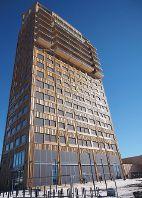
The Wood Hotel required an access control solution that would blend in with its aesthetic. Using the VingCard Essence means all electronic components are encased within the doors, with only the handle and RFID/BLE reader visible.
The solution uses encryption to eliminate the risk of unauthorized key cloning. When used in online mode, hotel staff have the ability to cancel lost or stolen keycards. “Mjøstårnet Tower is an outstanding accomplishment in engineering innovation and design, and it is only appropriate for the Wood Hotel to be safeguarded with the latest in security access technology that the industry has to offer,” said Arthur Buchardt, owner of Mjøstårnet, in a statement.

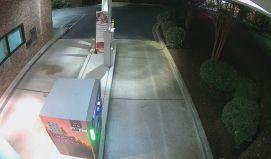
Tennessee-based Wilson Bank & Trust has upgraded 40 of its locations with surveillance equipment from Hanwha Techwin.
According to a statement, the bank required IT-based PoE cameras and DVRs/NVRs that could retain a minimum of 90 days of footage. Prior to the upgrade to Hanwha cameras, the bank operated a mix of different systems from various surveillance manufacturers, some of them a decade old. By switching to the new system, the bank has realized savings in terms of installation and maintenance. The new equipment includes several panoramic cameras and network IR dome cameras. Camera placement includes the building interiors and exteriors, parking lot entrances and ATMs. In each location, cameras are connected to a dedicated NVR. High resolution cameras have also reportedly helped the bank identify a suspected individual in a fraud case.


• Graybar Canada announced the appointment of Cory Morris as the new vicepresident, Atlantic Region. This appointment follows the recent assignment of Jason Taylor to executive vicepresident and general manager.
New turnstiles for U. of Pittsburgh

The University of Pittsburgh has installed Aeroturn’s X-Wing turnstiles in its Trees Athletic Center. Aeroturn deployed three X-Wing lanes on a modular platform system. According to a statement, this site was chosen as a testing ground due to the amount of heavy use from students. Aeroturn also integrated the university’s existing blackboard readers as well as an extra proximity reader at one lane.
“Working with the DeniscoKindler Group and the University of Pittsburgh was a pleasure as everyone worked together seamlessly to ensure that the Athletic Center project was a success,” said Michael Stoll, vice-president of technical sales & marketing, Aeroturn.

• Helena Andreas has been appointed SVP group communications & people at Securitas AB.
• Arcules announced the appointment of Bruce Nisbet as senior director of sales. In this role, Nisbet will help guide
Please continue to check with event organizers regarding COVID-19 updates.
July 28-29, 2020
Grower Day East St. Catharines, Ont. www.growerday.ca
Aug. 18-19, 2020 Grower Day West Abbotsford, B.C. www.growerday.ca
September 16, 2020 Security Canada Atlantic Moncton, N.B. www.securitycanada.com
September 21-23, 2020
Global Security Exchange Atlanta, Ga. www.gsx.org
October 5-8, 2020
ISC West Las Vegas, Nev. www.iscwest.com
October 6, 2020
BackyardProduction / iStock / Getty Images Plus
BIoT Forum Toronto, Ont. www.biotforum.ca
October 21-22, 2020
Security Canada Central Toronto, Ont. www.securitycanada.com
November 18-19, 2020
ISC East New York, N.Y. www.isceast.com


the regional sales teams and develop strategic initiatives for expanding the reach of the company’s cloud-based services.
• Stanley Security has appointed Chadi Chahine as Chief Financial Officer and Kara Pelecky as Chief
Information Officer.
• Alex Housten has joined dormakaba as the designated new chief operating officer for Access Solutions AMER, which includes businesses in the U.S., Canada, Mexico and South America.




By Colin Bodbyl

Vendors and end users are exploring camera and analytics tools to detect and track the virus
The rapid spread of COVID-19 has created overwhelming demand for everything from surgical masks to toilet paper; even video surveillance has been caught up in the surge.
“Video surveillance has an important role to play, as always, in keeping people safe.”
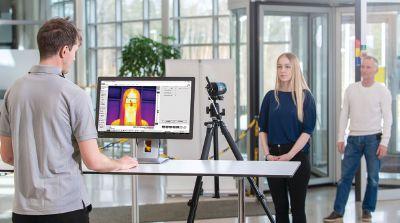
Thermal surveillance cameras with temperature monitoring are traditionally used for measuring the temperature of critical infrastructure. With COVID-19 however, measuring human body temperature has suddenly become its most popular use case. Video analytics are also playing a role in fighting COVID-19 by monitoring social distancing, an application that was previously unheard of.
With fever being a key symptom of COVID-19, health-care workers and regular citizens alike went in search of the easiest and fasted way to test people’s temperatures without coming into contact with them. There are two popular methods for doing this, thermal cameras and infrared thermometers. The science behind both products is the same. Thermal is most simply described as a region of the infrared light spectrum which is not visible to the human eye. So, while one product uses the term thermal and the other uses infrared, they are both measuring the same spectrum of light or waves emitted by heat.
Thermal cameras use a sensor array to capture infrared. Similar to a traditional camera’s image sen-
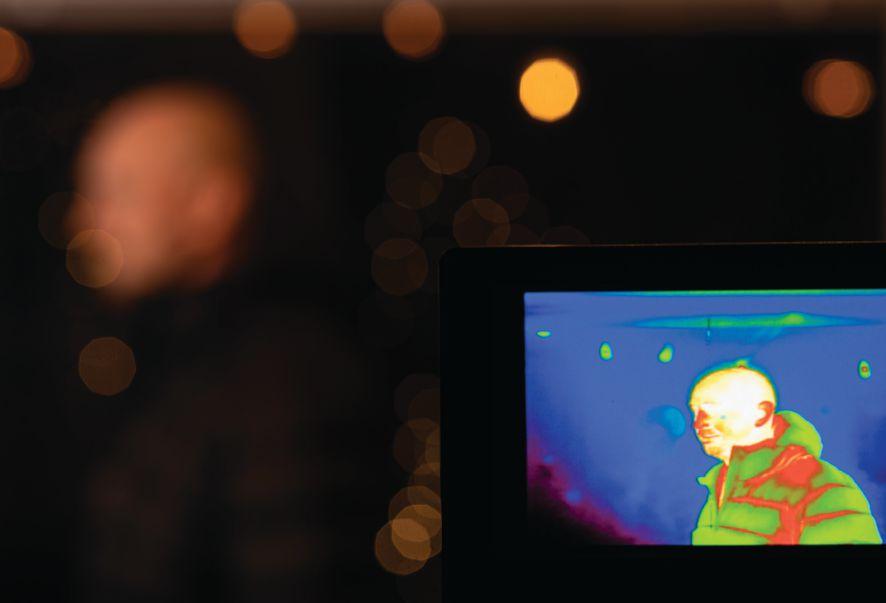
sor, the array has a pixel dimension which is used to capture thousands of reference points in a scene and display them as an image. Not all thermal cameras can produce temperature measurements. Accurately measuring temperatures requires a radiometrically calibrated camera.
For more precise measurements, some cameras also use a black box as a temperature reference point. A black box is a separately powered device that is placed in the camera’s view and maintains a consistent temperature which the camera can then use to compare against other temperatures in the scene. Different cameras have different ranges of accuracy and not all cameras are accurate enough to determine if a person has a fever or not.
The alternative to a thermal camera is an infrared thermometer. As mentioned, an infrared thermometer also measures light waves created by heat. Where an infrared thermometer differs from
a thermal camera is that it uses a different sensor called a thermopile that converts the infrared light into heat which then creates an electrical signal that is ultimately measured to determine a temperature reading. Infrared thermometers have similar accuracy ranges to thermal cameras, but only measure a single point where the device is aimed, whereas thermal cameras can measure a larger area and are in turn less likely to miss something.
Another technology that has seen an increase in interest due to COVID-19 is video analytics or AI typically used to detect intruders. Video analytics are capable of distinguishing between people, vehicles and many other objects. Using the same technology, analytics providers are also able to determine distance between people as well as the total number of people in an area, two key measures in reducing the spread of COVID-19. While the implementation of this might seem challenging,
one company, Voxel51, has applied the technology to live public video feeds from around the world. They are also publishing the data openly so others can see if people are following social distancing measures and how that behaviour correlates to the spread of the virus.
Technology like thermal imaging has already played a key role in reducing the spread, while video analytics is collecting data that is key to understanding the adherence to and effectiveness of social distancing measures.
We do not know how long COVID-19 will impact our lives or when life will go back to normal, but video surveillance has an important role to play, as always, in keeping people safe, only this time it is not from criminals but rather a dangerous virus.
Colin Bodbyl is the chief technology officer of Stealth Monitoring (www. stealthmonitoring.com).
By Patrick Straw
This column finds our country severely challenged by the coronavirus pandemic which has impacted our lives and businesses.
While there is no clear date as to when this present crisis will ease and when we can return to some notion of normalcy, it is important to understand that we, your association, remain convinced that we will win this battle.

That being said, our primary concern is for the safety and wellbeing of our employees, members, colleagues and customers as we continue to isolate at home. CANASA continues to support the key role that our members play at this time to secure the safety and security of Canadians.
We have all watched in awe as our first responders and health-care workers continue
“It is at a time like this that we all need to stay engaged with each other.”
to risk their lives to protect our population and provide compassionate care for those affected by this pandemic.
We thank them for all of their selfless sacrifices.
CANASA continues to provide support to our members and the industry at large. We have participated in online discussions with a number of key industry players and plan to continue to provide opportunities to contact and communicate.
Health Canada has continued to stress that by staying at home, continuing social distancing, practicing good hygiene by washing your hands often, and staying in touch with family, friends and colleagues, we will reduce

the spread of this terrible disease and lessen the curve of infections.
And to stay in touch, we urge you to share your stories on social media platforms available by CANASA through Facebook (Canadian Security Online), Twitter and LinkedIn. It is at a time like this that we need to all stay engaged with each other. So share your stories. Start a conversation.
It appears that the coronavirus will be with us for some time to come. We will all have to endure more change in the weeks ahead. But CANASA is here to help. Please feel free to contact me directly at any time: email me at pstraw@canasa.org.
Lastly, the amount of engagement company to company in supporting fellow CANASA members has been extraordinary, showing the class of our members from coast to coast.
Stay safe. Be well. And thank you.
Patrick Straw is the executive director of CANASA (www.canasa.org).
21 – 22, 2020

BBy Victor Harding
Some security sectors are faring better than others, but the impact has been felt across the industry
ased on my canvassing of security dealers, it appears most parts of the industry will be hit from the COVID-19 shutdown. This is despite security being declared an essential service. People I talked to said this year’s revenue will be down anywhere from 15-35 per cent.
Residential service and installs in the alarm industry are virtually dead. Nobody wants anybody in their homes. Remote technical work is still being done where required and possible. Alarm.com panels shine in these times. Regarding their monitored accounts, most dealers have experienced a sizable increase in calls from customers asking for extra time to pay and a general slowdown in payments for monitoring.
Interestingly enough, those with customers on pre-authorized payment (PAP) are not being affected as much — something to note for the future. Some are reporting a small increase in cancellations, partly because customers are at home and don’t need the system as much, and partly for financial reasons.
Residential door-knockers have really been hit hard. One door-knocker I talked to said he had done 20 installs in a period where he would normally do 120. Over the next 4-5 months he thinks he will lose 600-700 new installs. The next few months — April to October — are the prime time for door-knocking. The call centres, which provide leads to some of these door knockers, are for the most part shut down.
Some residential dealers will use the federal government’s CEWS wage supplement program to keep some staff in place. Others will attempt to get government-backed loans. Others will just have their employees go on EI.
Integrators that generally rely on doing larger commercial jobs and have been hit hard as well. Essential service work is getting done with extra costs for the technicians working under COVID-19 conditions. Almost all new business has dried up. An integrator I talked to in Canada says his revenue in this fiscal year will be down 3040 per cent.
On the positive side, at least there is some commercial work being done, unlike with residential. Also, apparently, there has been an increase in break-ins to commercial spaces which may create some new business.
Monitoring stations have had to incur the expense of setting up the majority of their employ-

ees to work from home — which is not a bad thing for the future but a considerable expense.
The problem for stations is they will not likely see the necessary immediate drop in revenue (30 per cent) to qualify for the CEWS program. It will likely be three to six months before they see the effects.
Fire services have been deemed an essential service too, but they have also struggled. The ones I talked to have laid off a high percentage of staff. Fire dealers are sending techs out when they are absolutely called upon to do so. But fire installation jobs have, for the most part, ceased completely while the annual test and inspections have merely been put on hold.
With the guard business, business conditions are a mixed bag. With so many businesses shut down, any guards attached to these businesses are not working.
On the other hand, drug stores and grocery stores have mostly hired new guards to control the traffic going into the store and inside the store. A lot of this new extra work for guard companies is coming at higher than normal rates.
For all those security businesses that have been really hurt, owners have cut back expenses to the bare minimum and perhaps for the first time are doing some short term cash flow forecasting.
Valuations and deals will be affected negatively by the virus shut-down as well.
On a macro level, we have entered into a time of increased financial risk. Increased risk usually
translates into lower valuations, less capital being made available and more expensive when it is offered, larger hold backs and perhaps longer payouts from buyers.
On the flip side, as the virus shut-down has the opportunity to do more damage, there will be those who may have to sell or those who just think they have had enough. Well-financed buyers may be able to pick up some deals, although my guess is that the sellers here will be smaller players and maybe more alarm and guard companies than integrators or fire companies.
Although some deals are still closing, others have been delayed and others simply cancelled altogether. Offers I have seen coming in for alarm accounts are coming with bigger holdbacks. Buyers are worried about increased cancellations. I have read the immediate future bodes better for smaller “tuck-in” deals than for the larger “platform” deals, which makes sense to me.
Most companies will go through a period of lower or much lower revenues for the next year, which will make it problematic for those wanting to sell after the shut-down is over. Buyers usually look carefully at the “trailing 12 months earnings.” This will force sellers to delay their plans to sell for at least a year or more.
Overall my information is that despite being an essential industry, the security industry, like so many others, has been hit hard and that it will take more than a year for most to recover.
Victor Harding is the principal of Harding Security Services (victor@hardingsecurity.ca).

Two areas of the security market under extra scrutiny are product availability and connecting with customers online
By Alanna Fairey
The novel coronavirus (COVID-19) pandemic has had significant impact on the world at large — including the security industry.
According to Memoori’s report, “Coping with COVID-19: Potential Impact on the Physical Security Industry,” the forecast for 2021 will ultimately depend on how the measures to control COVID-19 take hold.
The report states that if the pandemic is under control by September 2020, world sales
of physical security equipment could return to growth by the second quarter of 2021.
Reflecting back on SARS, Ebola and the 2008 recession, Danielle van Zandt, security analyst for Frost & Sullivan, noted that certain areas of security received more attention and more spending rather than a decline.
“Do I think that the market cycle will be different? I think it depends on how and where the security product is being sold to,” van Zandt said in an interview with SP&T News
O V I D - 1 9
The situation created by COVID-19 has challenged our collective resolve. It has forced us to re-examine the way we work and how we relate to our co-workers, customers and partners. It has taken a devastating toll on our economy and put many industries and jobs in jeopardy. Most difficult of all, lives are being lost and all most of us can do is stay in our homes. These are difficult days and there may be many more ahead.
But in the last few weeks, we have also found new ways to be creative, to tell stories, and to connect with our readers and partners — whether that’s through webinars, virtual roundtables or simply an encouraging phone call or video chat from time to time. We couldn’t have done any of these activities without the support and leadership of the security industry in Canada.
Whenever we have questions about how security professionals are coping with these dramatic changes, there are people who are more than willing to step up and answer, taking time away from their own busy lives and businesses. They are leading by example and sharing their knowledge so that all of our readers may benefit.
Our friends at the Canadian Security Association (CANASA), ASIS International and the International Association for Healthcare Security & Safety (IAHSS) have been there for us, as have many other trusted and valued industry colleagues. We thank you all for your support, especially the frontline and essential workers who are out there keeping us safe. Please let us know what we can do to help you during these challenging times.
Sincerely,
Canadian Security, SP&T News and Sécurité Québec staff
“A lot of public sector markets right now are probably the one area where any new projects could get off the ground.”
— Danielle van Zandt, Frost & Sullivan
“A lot of public sector markets right now are probably the one area where any new projects could get off the ground…. Everybody else is kind of in this state of pause until the market comes back.”
Chris Larocca, CEO of Nortek Security & Control (NSC), shared that from a supply chain and production standpoint, the company has not faced much of a hiccup other than having to spend a few extra dollars to airship product due to the shutdown in China.
“The teams in China, our vendors, even our own facilities are back to almost 100 per cent. And product is flowing from China,” Larocca said. “We did a pretty good job of bridging the gap and getting product from there to here. And we mitigated about that month on the water by air shipping it.”
Larocca added that one of the more noticeable disruptions in Nortek’s supply chain and production was when the company faced a onemonth delay, which involved getting workers and vendors back to full capacity.
“From a change standpoint, other than the cost impact, we have plenty of inventory,” Larocca said. “We’ve been able to keep that pretty consistent where we normally run and operate.
“If customers need orders or distributors, installers, vendors need product, we’ve got it domestically. It really hasn’t been much of an impact other than cost things a little bit more on the logistics side.”
Vaughan, Ont.-based fire alarm and security service manufacturer Mircom Group of Companies also saw very little disruption in their supply chain when COVID-19 broke out.
Maintaining a distribution facility down in Niagara Falls, N.Y., Rick Falbo, Mircom’s executive vice-president of business development, shares that the flow of goods between Vaughan and New York State has been largely uninterrupted thus far.
“At this point in time, we do offer service right across Canada,” Falbo said.
“We’re anticipating that this trend is only going to get a little worse through the month
The rise of the pandemic has also created the possibility of advancements in surveillance and access control.
According to Frost & Sullivan security analyst Danielle van Zandt, the coronavirus will result in an increased interest in analytic solutions.
“Some companies have already had customers asking to turn their surveillance analytics, and use them in a different way that really only requires a programming adjustment on the vendor side,” van Zandt said.
“It’s not very intensive, which would allow the transformation to happen.”
Instead of surveillance analytics being used to sense the environment or the climate of a room, van Zandt said they could be utilized for another purpose.
Rather than monitoring the temperature of a machine or an area of a facility, the option would be to detect fever in a person and then send that information to security teams on the ground.
Dimitrios Pavlakis, digital security analyst at ABI Research, expects that biometrics and surveillance will also see some changes.
Currently the trend for biometrics is going away from contact modalities like fin-
gerprint. Pavlakis predicts that contactless modalities such as face recognition will be on the rise, especially in the health-care sector.
“I predict that surveillance initiatives will increase many-fold to monitor if the population is not queuing to the lockdown to any security protocols if they are protected,” Pavlakis said.
“If they show, even with behavioral analytics, you can determine the somatic physiological behaviour for an individual if they might be up to something suspicious.”
Both van Zandt and Pavlakis predict that COVID-19 will be a push for new innovative technologies, especially in regards to surveillance and access control.
“I think a lot of intelligence tools are really going to boom at this point because whatever city you are in is constantly giving out different streams of data,” van Zandt said.
Reiterating that biometrics can provide an additional layer of security and guarantee a secure audit trail, Pavlakis adds that the COVID-19 pandemic will inspire innovative security technologies.
“Challenge has always brought forth a new wave of technological innovations,” Pavlakis concludes.
— Alanna Fairey
before things get better.”
With a fairly large service offering right across Canada from coast to coast and down in South Florida, Falbo shares that a number of property managers and owners are hesitant to have outside providers like Mircom come onsite, resulting in a number of postponements for annual inspection work.
Surprisingly, according to Falbo, Mircom’s 40 technicians working in the Florida facility have reported that the facility has not been impacted to the same degree as Canada.
“In Canada, we’ve been impacted in the 2030 per cent cancellation or postponement range approximately, whereas in Florida, it’s probably more in the five to 10 per-cent range in terms of postponements,” Falbo shared. “I’m in daily contact with my branch managers across North America and I was surprised that Florida hasn’t seen the same impact that we’ve had up here in Canada.”
While Florida seems to be less affected, Falbo added that New York City and New Jersey — where a large swatch of Mircom’s U.S. business is based — has been heavily impacted by the pandemic.
The virtual show must go on Installations and business transactions are not the only activities being postponed as a result of COVID-19 — tradeshows and events have been cancelled and rescheduled since the outbreak.
With show organizers being forced to postpone or shutdown tradeshows, security equipment manufacturers have had to find new ways to promote and market their new products.
One of the potential trends that has come from COVID-19 is the idea of virtual tradeshows.
“The hardware is available to be installed if customers want. The industry has not shut down — it’s still there.” — Chris Larocca, Nortek Security & Control
While virtual tradeshows may be an option for the foreseeable future, this is not the preferred path moving forward for Larocca.
Though he acknowledges that virtual tradeshows are a good forum to get their customers in a digital space, Larocca says that the intimate one-on-one discussions that they can have with customers are lost in the virtual space.
“The products that we typically have are best demonstrated in person, and the interaction with that customer we need to go through for some of those products,” Larocca explains. “I think there’s a loss when you do it virtually.”
In preparation for the original ISC West show in March, Nortek had a plethora of innovative products they were planning

to launch. Larocca says they will now be launched at the rescheduled ISC West, which will be held Oct. 5-8.
“With the types of products that we have, it’s something that’s best when it can be demonstrated to a potential customer where they can see some of the functionality,” Larocca added. With the hopes of continuing to get Mircom in front of as many industry participants and prospective customers as possible, Falbo shares that he would be open to participating in virtual tradeshows in the future.
“If there’s a way to do that online as opposed to live in person, and it’s as effective or more so than live trade shows are, Mircom would love to explore that and participate in something like that going forward,” Falbo said.
According to van Zandt, shows like ISC West are so ubiquitous the prospect of them shuttering and going virtual may not be likely.
However, van Zandt predicts that shows for point solutions or very niche markets could potentially move to more virtual scales.
“If you have a show where you maybe only have a couple of hundred people versus something like ISC which we have 20,000, that kind of capacity can be managed in a very cool way,” van Zandt said. “I don’t think you can get 20,000 individuals to participate in a virtual trade show, but for a very specific niche industry, I think you could because those people are going with a very specific goal.”
While the COVID-19 pandemic has created uncertainty for the future, security equipment manufacturers are continuing to do everything that they can to mitigate the impact on the supply chain, and other production challenges, in order to get product to market.
“The hardware is available to be installed if customers want. The industry has not shut down — it’s still there,” Larocca concludes.
“We will continue to try and be more proactive in the way that we touch and feel customers through the digital world.”



By Jason Spielfogel
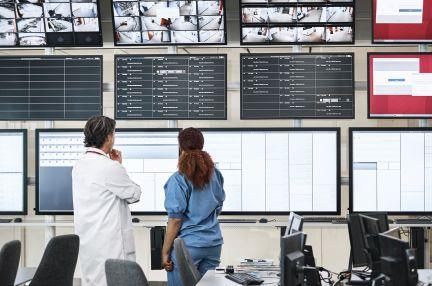
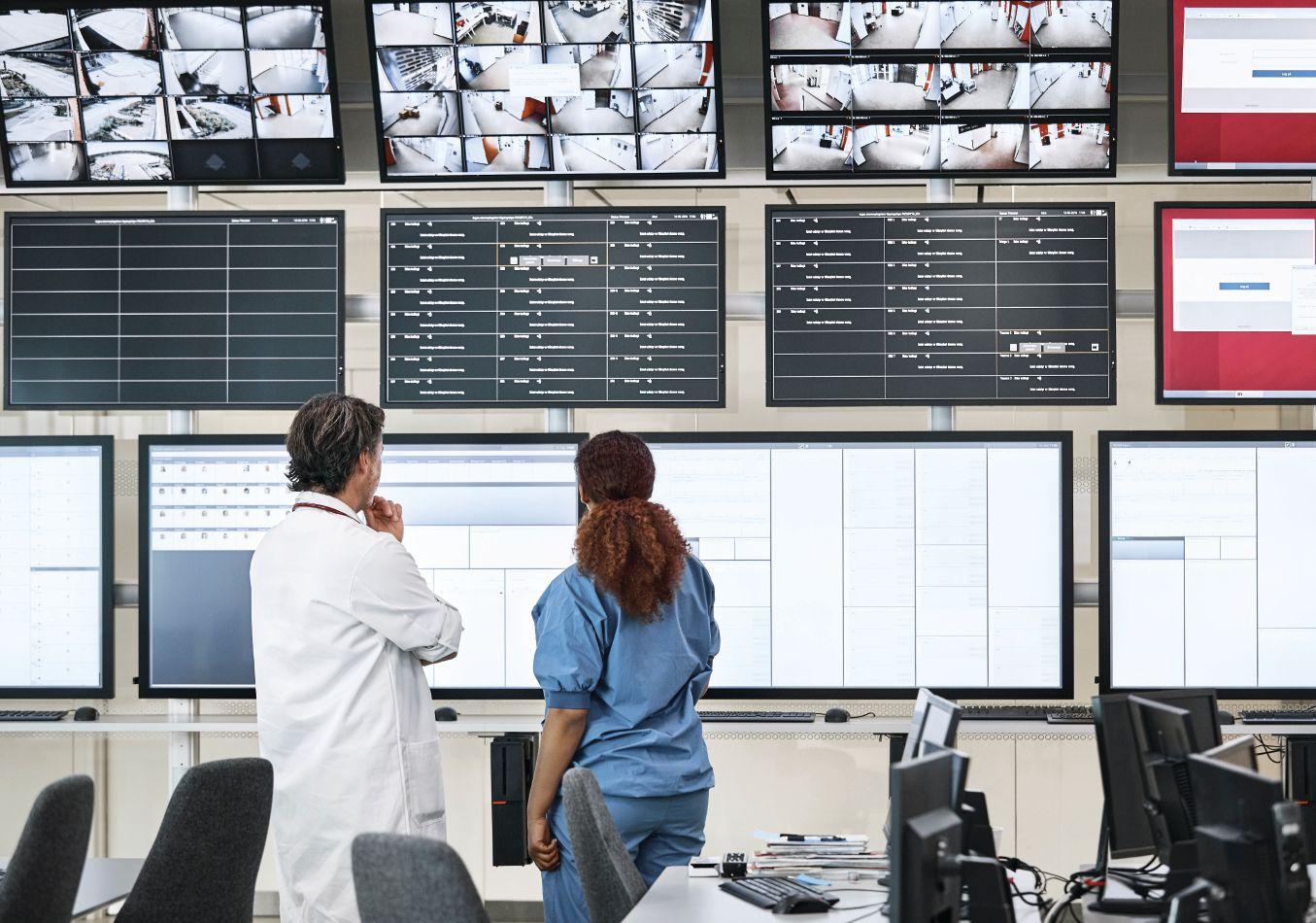
The health-care market has a range of specific physical security requirements that make providing complete protection to hospitals challenging.
Pharmacies and pharmaceutical storage areas need to remain secure against unauthorized personnel with systems in place that recognize and track which employees are entering and why. Numerous secure zones in a hospital need access control, such as quarantined areas or secure wards. All of this is complicated by the fact that health-care facilities can be fast-paced; doctors and nurses need quick and easy ac-
cess to areas during emergencies. When dealing with an environment as complex as a hospital, it’s crucial for integrators to understand the many facets that go into securing the facility, from the emergency room to the maternity ward.
Whether it is in the heat of an emergency or simply going about a normal day, hospital employees need to have frictionless access to secure areas that they are authorized to enter. This fact requires identity management and access control systems that are easy to use, fast and reliable. Various smart card readers and access control solutions,
utilizing RFID, NFC or UHF technologies, can be implemented to fit this environment.
The doors that must be protected in a hospital can vary greatly in their needs for locking mechanisms and access systems, ranging from external-facing entryways to smaller cabinets that contain sensitive pharmaceuticals. These could be implemented as new areas of a hospital are constructed or they might need to be retrofitted onto current rooms to replace outdated equipment. In any case, the solutions need to work well with the hospital’s needs and current systems.
In addition to monitoring em-
ployee access rights, hospitals also need to track critical assets to ensure they haven’t been lost or stolen. This can include tracking where wheelchairs and gurneys are stored on the campus or tagging packages that are at high risk of theft, such as medication like painkillers. These and other customizable applications can be accomplished by using RFID and NFC tags. The same solutions can be used to monitor the location of infants or patients at risk for wandering.
Smart card credentials and readers can handle allowing or denying access, but they are even more powerful and agile when paired with a physical access management platform. These platforms can track movements and easily change parameters around access for certain users or times of the day. The specific needs for access points, which may change over time, could impact the locking mechanism needed for one doorway or another throughout a hospital environment.
What health-care facilities need
Health-care facilities require as little down time as possible at their entryways to secure areas. When an access path is taken out of commission, it ideally should be for as short a time as possible. Integrators should consider exploring wireless locks as one way to speed up an install and cause less disruption for both doctors and patients.
Wireless locks can be implemented into doors easier and faster than their wired counterparts, which expand the areas of interruption and increase install times. Hospital employees need quick and easy access around a hospital to best help their patients. Blocking or eliminating the use of a doorway, which is necessary for wired solutions that require the installation of multiple different elements, could impede critical functions. For example, patients might have their activity or sleep upset, both of which are necessary elements of recovery. A shorter installation time with wireless locks means that work can be more easily scheduled at a convenient time for patients and doctors, which is a value proposition that integrators who only offer wired solutions cannot compete with.
“In addition to monitoring employee access rights, hospitals also need to track critical assets.”
Due to the nature of their work, health-care centres collect and maintain many types of sensitive data. In the event of a breach, patients’ sensitive information could be maliciously accessed via a weak point in the network. Endpoint devices that have access to the network should be cybersecure against breach vulnerabilities. When many systems are interconnected, having proper cybersecurity protocols among all devices is a necessary step to ensure that all systems on a hospital’s network are running smoothly. Integrators should work with trusted technology partners who have a proven track record of cybersecurity success to better ensure their clients are prepared in the event of a breach.
Security providers have, for years, been finding new ways to utilize existing infrastructure, and one consistent area of overlap is among video systems, analytics and business intelligence. Integrators should take this same approach when installing in a health-care environment.
Video analytics, when used alongside access control systems, can provide valuable insight into a variety of areas. Users in healthcare are engaging with analytics to improve consumer experiences and help doctors, nurses and other employees to more effectively provide patient service. For example, when integrated with access control systems, analytics can provide insight into busier times of days, trends in patient needs and more in an effort to better assist in scheduling during peak periods. In turn, hospitals can be sure they are staffed properly to provide better patient support and improve patient outcome.
Certain doorways, such as those housing high-risk patients, have trigger points that let administrators know of a variety of event types: door holding, door forced, etc. Integrators who opt to pair this with video analytics provide their end users with the situational
awareness necessary to make an informed decision. For example, if a health-care provider does not close a door after leaving a patient room, data gathered from access control and video analytics can alert administration to this incident, but simply closing the door will fix the issue. On the other hand, if a patient is actively trying to escape their room, administrators can deploy on-site staff to de-escalate the situation. Keeping people safe and secure is the goal of access control, so suggesting tools like video analytics will further contribute to increased insight into patient and employee behaviours.
The goal in access control within health-care environments is very similar across all applications: keeping the wrong people out while letting the right people in.
Above and beyond, hospitals must be able to track and locate critical equipment or resources while also monitoring all the people entering secure areas and their reasons for doing so.
To be successful, integrators must understand that hospitals are unique environments dedicated to openness, but also have many security considerations to take into account. Integrators who have a solid understanding of the ins and outs of health-care security will be better positioned to make relevant recommendations and will more easily gain the trust of end users.
At the end of the day, healthcare facilities are focused on providing the best level of care for their patients, and that includes keeping them safe, securing their critical medications, and protecting their sensitive information. It is the job of the integrator to help them accomplish these goals as efficiently as possible.
Jason Spielfogel is the director of product management for Identiv (www.identiv.com).

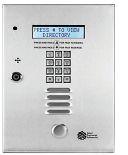
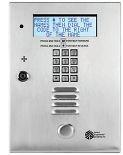
The New TEC1A series has a 1,000 user capacity and its ultra slim profile is 2” in depth. The TEC1A series is available with a two line or four line LCD directory display that is easily read in direct sunlight or at night. Key features include two relays standard, four cards per code, 10 system facility codes and a 1,500 event log buffer. The user can program the TEC1A series using Selcom Premium with full software features or Selcom Basic through several communication methods which include Ethernet via NIC, a phone line or from the keypad of the unit. www.selectses.com
Panasonic i-PRO Sensing Solutions
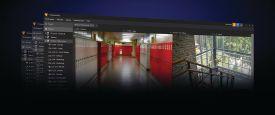
Video Insight Video Management System (VMS) is an enterprise VMS platform with plug-in architecture and versatile programmable features that fully integrates the i-PRO MonitorCast Access Control platform. Enhancements to Video Insight include: smart sensor integration that triggers alerts upon vape detection; visitor management integration; support for Intel 9th generation chipsets for enhanced server performance; a preview of facial recognition redaction to blur individuals’ faces on recorded video used in forensic investigations for privacy protection; and more.
security.us.panasonic.com
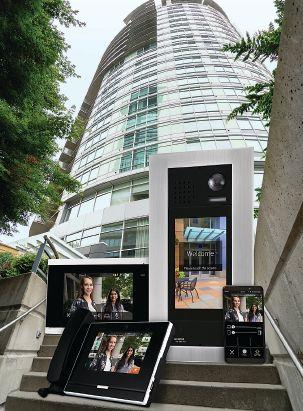
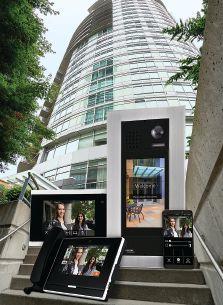
Aiphone’s IXG Series IP Multi-Tenant Video Intercom is complete with PoE stations and a cloud-based tenant app. According to the company, the user can start small and expand at any time. As a network-based solution, the IXG Series is a means to connect mixeduse buildings throughout an entire complex. www.aiphone.com
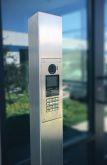
Pedestal PRO has introduced a freestanding entry station tower for use with Aiphone’s multi-tenant GT Series. Pedestal PRO’s 64TOW-AIP-001-304 is a low-profile, brushed stainless steel tower designed to accommodate the Aiphone GT-DMBN-SSP Video Entry Station component. Its modern shape features a tapered top and mirror-finished corners and provides a turn-key mounting option for use in decorative entryways, glass lobbies or anywhere that wall mounting is not desirable or possible. It is also suitable for outdoor use; its #304 stainless steel construction is rust-resistant and can withstand Category 5 hurricane force winds. www.pedestalpro.com
AlertEnterprise

Enterprise Visitor Identity Management (VIM) creates friction-free security for access governance. Users control the full visitor lifecycle end-to-end with on-site registration email and web pre-registration; self-service kiosks; and available facial recognition technology. In a time of increased risk of contagious disease, health and safety workspace access governance plays a critical role in returning to jobs and keeping the workforce safe. According to the company, VIM can help an organization identify at-risk individuals, and enforce health, safety and compliance policies.
www.alertenterprise.com
ICT
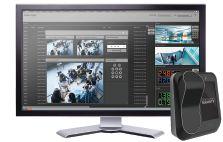
Protege GX version 4.3.285 adds advancements including integration with Princeton Identity Biometrics. This integration allows Princeton Identity iris scanners to be incorporated into a Protege GX system, providing quick and secure identity verification. A “Fast User Disable” feature prevents unauthorized parties from continuing to gain access after their record has been disabled at the server. Also, large sites can now use additional download servers to share the load and improve download speeds. www.ict.co
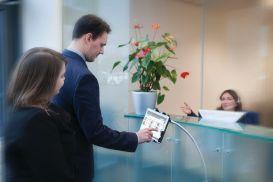
According to the company, Symmetry GUEST speeds the flow of visitors while improving customer service. It operates on any tablet, smartphone or PC using any web browser. Visitors receive a visitor pass via their smartphone, or check-in and print their pass. Employees pre-register visitors who check-in via the receptionist, touch screen monitor, tablet or using their smartphone. Watch lists notify responsible parties when banned visitors are pre-registered and checked-in. Symmetry GUEST’s cloud-based architecture sets up in minutes. www.amag.com/guest

Traction Guest’s enterprise Visitor Management System is built for enterprise-grade facilities. Traction Guest scales globally to deliver a low-code environment that provides unique configurations depending on business units, security levels and office geography. Safety protocols, compliance requirements and emergency procedures are all managed from a single, centralized system. With features that include screening questionnaires, ID scanning, watchlists and more, Traction Guest says it helps organizations create visitor experiences, while protecting their facilities, employees and guests.
www.tractionguest.com
The security alarm industry is highly fragmented with several thousand independent dealers operating in Canada. The larger dealer is often motivated to acquire the smaller competitor for the aforementioned reasons.
Many of these smaller dealers, even though they may have hundreds of accounts, are only marginally profitable. These businesses are unable to provide a sustainable income to the owner and the owner may accordingly be motivated to sell to a competitor. The smaller dealers, because of their higher per account costs, often find selling accounts very attractive as the example below illustrates:
The purchase price for a portfolio of accounts may vary based on a number of factors, including: 1) Signed monitoring agreements; 2) Term of agreement; 3) Auto renewal of agreement; 4) Pre-authorized payment provision; 5) Credit scores; 6) Accounts receivables aging; and 7) Type of equipment installed (age, ability to service, system functionality).

Many of the smaller companies in the industry are motivated to sell their accounts or companies to not only ease the financial strain they may be under but also, in the case of a share sale, to avail themselves of the favourable enhanced capital gains tax under the capital gains exemption.
A share sale would typically result in a lower purchase price because the shares cannot be written off (amortized) against income by the purchaser, as is the case with the sale of accounts. However, the after-tax net purchase price to the seller may be greater. The purchaser may also be reluctant to purchase shares because of the heightened due diligence required to determine the veracity of the company’s assets and liabilities.
The seller of shares, being a “Canadian Controlled Private Corporation,” may be in a position to take advantage of the enhanced capital gain tax rate resulting in only 50% of the gain being taxable and when combined with each owners “lifetime capital gain exemption” of $866,912 may

When compared to the complications and expense of luring a customer out of an existing monitoring agreement and
















































































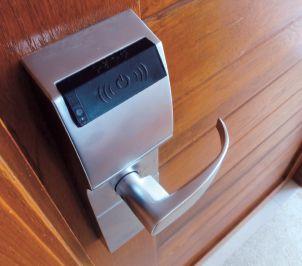


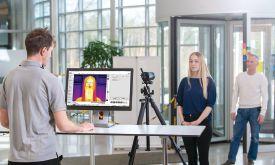
FLIR announced the FLIR A400/A700 Thermal Smart Sensor and Thermal Image Streaming fixed camera solutions for monitoring equipment, production lines, critical infrastructure and screening for elevated skin temperatures. According to FLIR, these highly configurable smart camera systems provide accurate, non-contact temperature monitoring across a wide range of disciplines. The FLIR A400/ A700 Thermal Smart Sensor solution initially will be prioritized for those responding to COVID-19. www.flir.com
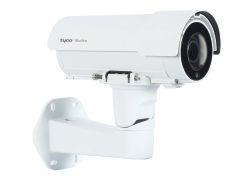
The Illustra Pro Gen3 Bullet is available with standard or telephoto lens and in megapixel resolutions of 3MP and 4K. It provides a selection of video images to match operational requirements and is suited for deployments in medium and large-sized facilities. Smart Wide Dynamic Range reduces configuration time while improving the quality of the video stream in varying lighting environments. The bullet can adjust contrasting and overall scene balance without operator intervention. Setup times are also reduced with the addition of configuration profiles. www.johnsoncontrols.com
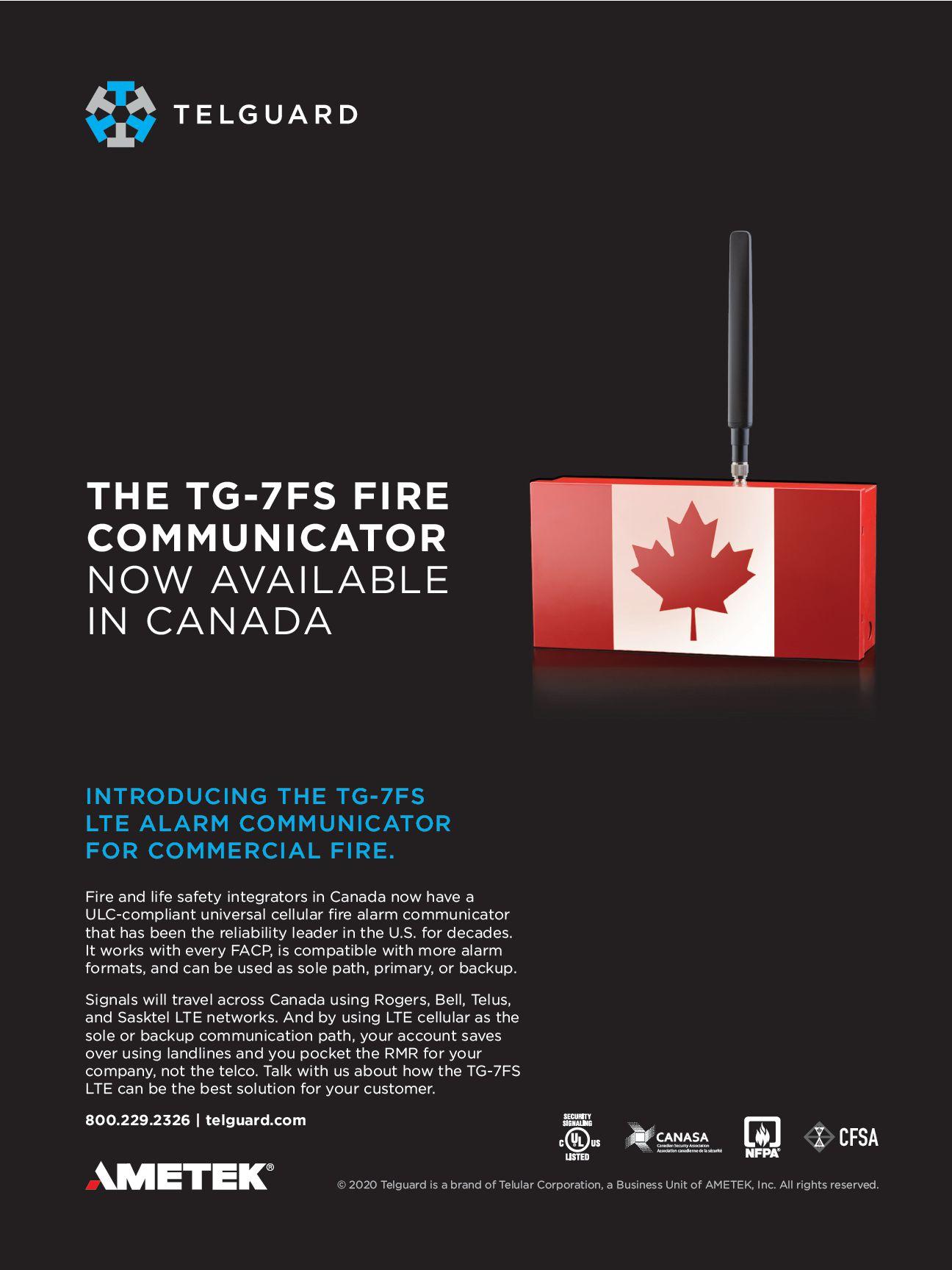
Telguard announced its cellular alarm communicator for commercial fire, the TG-7FS LTE-A, is now available in Canada. The TG-7FS is a universal cellular communicator and works with virtually every fire alarm control panel. Using Canada’s LTE cellular networks, the TG-7FS transmits alarm signals from the fire panel to the designated monitoring station. The TG-7FS LTE-A meets ULC S559 and ULC S304 standards and has been listed for use in Canada.
www.telguard.com
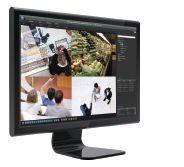
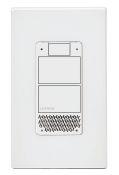
Leviton’s Decora Smart Voice Dimmer with Amazon Alexa built-in offers smart lighting and a voice assistant in a single device. Homeowners can benefit from Amazon Alexa’s voice command capabilities directly from a light switch. The Voice Dimmer doesn’t take up counter or desk space and provides the functionality of Alexa and smart lighting control built right into the wall. The Voice Dimmer (part number DWVAA), is a suitable replacement for standard light switches to add lighting control and intelligence to any area of the home.
www.leviton.com/voicedimmer
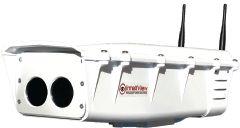
IntelliView Technologies announced the Dual Camera Analytic Module - Methane (DCAM-M), its first machine vision system designed for continuous monitoring and autonomous real-time detection and alerting of methane leaks. The DCAM-M is the latest installment in IntelliView’s leak detection series and consists of a thermal imager, a visual sensor, and built-in patented and proprietary image processing software. The fixed-format optical gas imaging (OGI) camera integrates the GF77a Gas Find IR, FLIR System’s first uncooled infrared sensor spectrally filtered to visualize methane, sulfur dioxide and nitrous oxide in any lighting condition. www.intelliviewtech.com
IDIS has enhanced its IDIS Center VMS, adding new features and functions targeted at small to mid-sized enterprises and multisite customers. New features now included with the cost-free, licence-free IDIS Center VMS include MapVue, a search function that speeds up operator navigation across building layouts and floor plans. Its intuitive interface helps users to view live and play back video streams across multi-camera systems, while maintaining an overview perspective of their facilities’ layouts and camera positions. MapVue also provides easy bookmarking. www.idisglobal.com
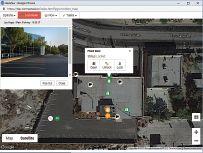
Powered by Google Maps, GeoView lets users interact with their system solutions through real-time views of their facility. GeoView brings the power of Google Maps to the Connect ONE cloud-hosted security management platform. With GeoView, users see the current status for all locations and installations instantly in a wide-area satellite map. GeoView lets dealers offer different levels of managed services for recurring monthly revenue. www.simplifywithconnectone.com
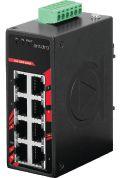
LNX-C800 and LNX-C800G series are 8 port industrial compact unmanaged Ethernet switches embedded with 8*10/100Tx RJ45 ports (8*10/100/1000 for LNXC800G series). The compact form of the IP30 metal casing switch is significantly smaller than the LNX-800A and LNX-800AG series, which allows for a more versatile implementation, according to the company. Devices like security cameras, wireless access points, alarms, traffic controllers, sensors and tracking devices found in traffic management, oil and gas pipelines, and weather tracking may benefit from this compact version when space is limited. www.antaira.com


• FREE text & email notifications • FREE unsupervised openings & closings • FREE report distribution for you and your customers