

TMA debuts new Five Diamond level
The Monitoring Association says it’s time to expand its wellregarded program to dealers p. 6
Tech to watch from this year’s ISC West
Three major technologies you should keep your eye on p. 11
Q&A: Aru Bala, ADT
The new president of ADT Canada discusses everything from home automation to commercial growth plans p. 22
































16 It pays to socialize How you can best use social media to market security products and services, and reach more clients.
By Will Mazgay

20 Security Summit Canada Preview
Summit speakers Craig Campbell, Steve Van Till and Bob Harris offer a taste of what’s in store for June 13.
By Neil Sutton
6 Line Card
• TMA ramps up Five Diamond program to include dealers
• Qognify updating product strategy post OnSSI acquisition
• Toronto weapons detection firm making its mark
• Axis debuts new chipset
11 Camera Corner Tech to watch from ISC West By Colin
Bodbyl
12 Lessons Learned The uncertain future of residential monitoring By Victor Harding 13 CANASA Update It’s showtime! By Patrick Straw


IBy Neil Sutton
have a history of trend-spotting at big shows. Partly because I want to be able to capture some of the major themes in articles and columns when I return back home and partly because it helps me get a sense of what’s important to the industry.
Regular columnist Colin Bodbyl has written an excellent summary (see p. 11) of some of the major technologies on display at ISC West this year (AI, radar and drones) and where they are in their current development (full steam ahead, stalled, or somewhere in between).
What particularly interested me at ISC West was the Security and Safety Things (SAST) booth.
I wrote about SAST last year, not long after their debut at the GSX conference in Las Vegas last September. I met with their CEO, Hartmut Schaper, and we had a conversation about what SAST is — a Bosch start-up that is building an Android-based camera operating system and an app store where developers can sell applications designed for surveillance cameras. When we first met, they were testing the OS with facial recognition and LPR apps.
We met again in Vegas, only this time at ISC West this past April. The SAST booth was a football-themed extravaganza complete with bleachers, uniforms, foam fingers and fresh popcorn. More importantly, the booth also housed app developer partners who already have working examples of apps such as queue management and intrusion detection.
These apps may not be the most compelling in the long run, but they are at least familiar concepts in security surveillance and a good place to start if you want to demo a product. What intrigues me far more are the possibilities
once this really gets off the ground.
We’re all familiar with app stores and their utility for phones, tablets and laptops. We’re also familiar with the staggering range of apps that can be downloaded, from the de rigueur (maps and social media interfaces) to the silly (time wasters for subway journeys).
This idea, applied to the humble surveillance camera, isn’t likely to yield such a plethora of software, but it does open up the imagination a bit. It also invites developers from outside security to contribute their own ideas.
The other half of this equation is the cameras themselves. Initially, those will come from manufacturers who have joined the Open Security and Safety Alliance, a non-profit that was established at the same time as SAST. Initial members included Bosch (naturally), Hanwha Techwin, Milestone, Pelco and Vivotek. The group has since expanded to include other manufacturers, as well as developers and integrators.
OSSA members have already developed prototype cameras, so production models surely can’t be far behind.
While at the show, I heard anecdotally that the next trend in security might actually be a return to closed, proprietary systems — to better offset the growing complexity of surveillance ecosystems and the massive amounts of intelligence they gather and process. I think there will always be a place for these types of set-ups, but I’m betting the future will be an open one.



Your Partner in Securing Canada Security Products & Technology News is published 8 times in 2019 by Annex Business Media. Its primary purpose is to serve as an information resource to installers, resellers and integrators working within the security and/or related industries. Editorial information is reported in a concise, accurate and unbiased manner on security products, systems and services, as well as on product areas related to the security industry.
Group Publisher, Paul Grossinger 416-510-5240 pgrossinger@annexbusinessmedia.com
Account Manager, Adnan Khan 416-510-5117 akhan@annexbusinessmedia.com
Editor, Neil Sutton 416-510-6788 nsutton@annexbusinessmedia.com
Associate Editor, Will Mazgay wmazgay@annexbusinessmedia.com
Media Designer, Graham Jeffrey gjeffrey@annexbusinessmedia.com
Account Coordinator, Kim Rossiter 416-510-6794 krossiter@annexbusinessmedia.com
Circulation Manager, Aashish Sharma asharma@annexbusinessmedia.com Tel: 416-442-5600 ext. 5206
COO, Scott Jamieson sjamieson@annexbusinessmedia.com
President & CEO, Mike Fredericks
EDITORIAL ADVISORY BOARD
Colin Doe, Veridin Systems Canada Anna Duplicki, Lanvac
Victor Harding, Harding Security Services
Carl Jorgensen, Titan Products Group Antoinette Modica, Tech Systems of Canada Bob Moore, Axis Communications Roger Miller, Northeastern Protection Service Sam Shalaby, Feenics Inc.

111 Gordon Baker Rd, Suite 400, Toronto, ON M2H 3R1 T: 416-442-5600 F: 416-442-2230
PUBLICATION MAIL AGREEMENT #40065710
Printed in Canada ISSN 1482-3217
CIRCULATION
e-mail: asingh@annexbusinessmedia.com Tel: 416-510-5189 • Fax: 416-510-6875 or 416-442-2191
Mail: 111 Gordon Baker Rd, Suite 400, Toronto, ON M2H 3R1
SUBSCRIPTION RATES: Canada: $42.00 + HST/yr, USA: $74.00/yr and International: $84.50/yr Published 8 times a year


Occasionally, SP&T News will mail information on behalf of industry-related groups whose products and services we believe may be of interest to you. If you prefer not to receive this information, please contact our circulation department in any of the four ways listed above.
Annex Privacy Officer privacy@annexbusinessmedia.com Tel: 800-668-2374
No part of the editorial content of this publication may be reprinted without the publisher’s written permission. ©2019 Annex Publishing & Printing Inc. All rights reserved.
Annex Publishing & Printing Inc. disclaims any warranty as to the accuracy, completeness or currency of the contents of this publication and disclaims all liability in respect of the results of any action taken or not taken in reliance upon information in this publication.


125 years of experience in putting the security of others first.

We understand you need to protect more than brick-and-mortar, which is why ADT does more than monitor. ADT has a wide range of alarm and security options for organizations of any size to help protect people, goods, and data. With 24/7 surveillance, solutions against intrusion and fire, remote monitoring, interactive services and more, ADT has a security solution for your organization. Join those who trust ADT with their livelihoods and protect your business.
Why choose ADT canada?
We are an integrator, meaning we can take over nearly any of the existing security equipment you have on-site.
We are customer-service oriented, innovative and technology savy. With over 125 years of experience and 15 branches in Canada alone, including four monitoring stations, you can trust the experts.
The Monitoring Association recently announced it has expanded its Five Diamond program to include dealers.
“We saw the need to cast a wider net.”
— Ivan Spector,TMA
The program, which has been in existence since 2003, recognizes central monitoring stations that have achieved a level of excellence
and meet certain TMA criteria including a high standard of customer service, a commitment to reducing false dispatches, and all operators have successfully passed TMA training courses.
There are more than 100 central stations in North America that have earned the Five Diamond designation, approximately 10-15 of which are located in Canada. The expanded program, which was first announced in March, allows Five Diamond recognized stations to include their dealers.
Qognify is in the process of absorbing its recent acquisition of On-Net Surveillance Systems (OnSSI), which was completed in January, and is restructuring its approaches to both R&D and sales as the organizations are combined.
OnSSI as a corporate name has gone away in favour of a unifed Qognify, said Ken LaMarca, vice-president of sales, during the recent ISC West show in Las Vegas. However its flagship Ocularis VMS product is now a key element of the Qognify product line-up. Qognify now has at least three VMS suites at its disposal: it’s own VisionHub product, Cayuga, which comes to Qognify from SeeTec (a division of OnSSI that was also acquired) and Ocularis.
There are a few other VMS products in the mix which will still be supported, said LaMarca, but those three brands will be the major products going to market for the foreesable future. He added that Cayuga’s strength is retail, Ocularis provides strong investigative tools for clients like law enforcement and VisionHub is suited to larger projects like municipalities and airports, as well as other users who need to support tens of thousands of cameras.
Qognify will focus its R&D in two major centres, said LaMarca: Israel and Germany. Previous R&D facilities in New York have been disbanded, but the company will maintain testing facilities there.
As for the channel strategy, there are “still some
“We saw the need to cast a wider net with the Five Diamond program. We think [the program] is very important for TMA and its members and for those companies that have achieved Five Diamond certification. This was one way to go about that,” explained Ivan Spector, president of TMA, and the president of Sentinel Alarm, based in Montreal.
The idea was proposed two years ago, said Ralph Sevinor, president and CEO, Wayne Alarm Systems, a member of the TMA Five
moving pieces,” said LaMarca. Qognify has traditionally sold direct to dealers whereas OnSSI products are available through distribution. “The challenge here is how to fit the models together into one.”
All three companies — Qognify, OnSSI and SeeTec — were supporting different dealer programs. Those will continue for the balance of 2019 and may be evaluated and rationalized into a single program at some point, said LaMarca. Overall, he said, the acquisition of OnSSI by Qognify has broadened the company’s appeal, allowing it to address enterprise customers as well as the mid-tier. The company has also increased its global footprint, allowing it to reach into new locations and expand its presence.
— Neil Sutton
Diamond committee and a TMA past-president. He added that there was clearly support for expanding the existing program. “Some of the Five Diamond facilities asked if they could extend the program to some of their best dealers,” he said.
According to Sevinor, some of the details are still being worked out — like what exactly the criteria for dealer recognition should look like — and the program extension will be available on an invitation-only basis. Sevinor anticipates that the top 10 to 20 per cent of dealers working with Five Diamond stations will be asked to apply.
One major reason for this program extension is the success the Five Diamond program has achieved to date. “People are truly seeing the value,” said Sevinor. “TMA gets a significant amount of calls asking us to verify if a company is TMA Five Diamond. That’s been a driving force. Some companies are writing [a requirement for Five Diamond certification] into their spec…. It’s not just a seal of approval. There’s some teeth to it.”
It’s early days yet for the dealer program, but “we’re getting great response,” said Spector. “We’re looking to increase our landscape and footprint in terms of membership and bring in those forward-looking and forward-thinking companies.”
— Neil Sutton






The city of Sacramento, Calif., has installed a solution to help monitor the health of its security devices in near real-time.
Sacramento, the state capital and home to over half a million people, has more than 1,000 video surveillance cameras deployed across the metropolitan area. An area of concern was monitoring the health of those devices and detecting a fault quickly in the event of a problem. The city deployed Stanley’s IntelAssure powered by Viakoo, which provides intelligent automation to detect and diagnose failures and recommend fixes to minimize downtime.
IntelAssure was installed across 20 critical servers, resulting in increased uptime. “It allows us to respond to system health across our system in a very proactive manner,” said Lily Su, IT manager, City of Sacramento, in a statement.


• Louroe Electronics announced that Cameron Javdani, previously the director of sales and marketing, has been named president of Louroe effective July 1.
• Biamp has appointed David Woolf as the company’s new senior director, global marketing. In this role, Woolf oversees company’s corporate communications, product marketing, demand
Tanzania adds new tech to e-passports
The government of Tanzania is now utilizing HID’s citizen ID solutions in order to add e-Visa and e-Permit capabilities to its e-Passport.
The new visa and residence permit, which are web-based, enable visitors and residents of Tanzania to receive a validated credential for travel or residency.
“We plan to continue expanding this solution to our country’s border crossings and across the broader global community as we become a showcase for efficient, comprehensive and integrated e-Immigration solutions,” said Dr Anna Peter Makakala, Tanzania’s Commissioner General of Immigration, in a statement.
According to HID Global, it has been the nation’s primary supplier for an endto-end solution for issuing e-passports since 2018. Tanzania now has a single citizen identification system.



generation, web properties, public relations and social media.
• The Security Industry Association (SIA) has selected Mark McCourt as the recipient of the 2018 Sandy Jones Volunteer of the Year Award.
• Arecont Vision Costar has announced the appointment of Troy Fairchild as vicepresident of technical services.
Boat company buoyant about perimeter protection

AIM Marine, an Ottawa-based boat sales and repair shop, is using Senstar’s perimeter protection and lighting products to help prevent theft on premises.
The store’s owner, David Scott, wanted to add extra security precautions to his 235m perimeter fence after two thefts from his storage yard. “My initial impression was that these systems were cost-prohibitive for a business of my size,” said Scott in a statement. But his research indicated that Senstar also produces options for smaller businesses.
“The Senstar LM100 luminaires provide high quality, direct illumination along the fence line,” added Senstar product manager Todd Brisebois.
Since the installation of the perimeter solution, there have been no further theft attempts.


Fairchild most recently served as director of global technical services for Pelco by Schneider Electric.
• VMS provider Intelligent Security Systems (ISS) has announced the hiring of Shawn Mather as the company’s director of sales.
• Bold Group, formerly Bold Perennial, has appointed Dan Reynolds as vice-president of operations.
May 29, 2019
Security Canada Alberta Edmonton, Alta. www.securitycanada.com
June 3-6, 2019
Electronic Security Expo Indianapolis, Ind. www.esxweb.com
June 6, 2019
ADI Expo Winnipeg, Man. www.adiglobal.com
June 13, 2019
Security Summit Canada Toronto, Ont. www.securitysummitcanada.com
June 19, 2019
Security Canada West Richmond, B.C. www.securitycanada.com
September 8-12, 2019
GSX Chicago, Ill. www.gsx.org
September 11, 2019
Security Canada Atlantic Moncton, N.B. www.securitycanada.com
September 17, 2019 ADI Expo Vancouver, B.C. www.adiglobal.com
October 8, 2019 ADI Expo Ottawa, Ont. www.adiglobal.com
October 12-16, 2019
TMA Annual Meeting Napa Valley, Calif. www.tma.us
October 22, 2019
CANASA Monitoring Station Symposium Toronto, Ont. www.canasa.org
October 23-24, 2019
Security Canada Central Toronto, Ont. www.securitycanada.com
October 29-30, 2019
Securing New Ground New York, N.Y. sng.securityindustry.org

Security Canada East Sheraton Laval
Apr 24, 2019
Security Canada Ottawa
Ottawa Conference & Event Centre
May 8, 2019
Security Canada Alberta
River Cree Resort & Casino
May 29, 2019
Security Canada West River Rock Casino Resort June 19, 2019 Serving Dealers Across Canada
Halifax | Moncton | Edmonton
Patriot One Technologies Inc., a Torontobased firm that is making waves with its weapon detection technology, exhibited at ISC West, the annual security technology exhibition, which ran in Las Vegas, April 10-12, for the first time this year.
Since its founding in 2016, the firm has grown and adopted new technology through both acquisition and partnership.
Most recently, in late March, the firm partnered with defence contractor Raytheon Canada Ltd., which has strength in radar technology. Raytheon will provide Patriot One $3 million, in non-dilutive cash financing, for further development of its PATSCAN Cognitive Microwave Radar (CMR) solution. CMR uses low-powered radar sensors to detect guns, knives and bombs, and a machine-learning powered database of weapons signatures to verify their authenticity — the technology is currently in the pilot installation phase.
Patriot One’s CEO Martin Cronin said of Raytheon, “We’re in a really in-depth dialogue with them about specific areas of help and follow-on pieces of this partnership that we can get into.”
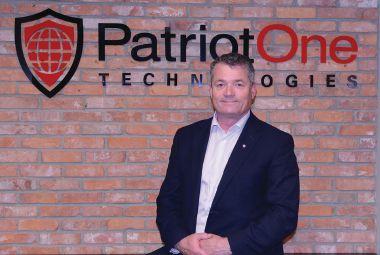
The firm’s acquisition of New Brunswickbased EhEye Inc., which closed in January of this year, provided Patriot One with a video platform, Video Recognition Solution (VRS), that works with existing camera infrastructure to pick out weapons. It can also detect incidents like falls, fires, trespassing, fights or suspicious activity. VRS is in pilot installations as well.
Also, the firm developed a solution to detect airborne molecular signatures of explosives, deadly chemicals and harmful drugs, as a result of a joint venture announced in January, called Sotech Secure LLC, between Patriot One and Nano-Bio Detection Systems LLC, a Wyoming company that holds licensed technology from the University of Texas. This solution will be going into pilot installations this summer.
Cronin also noted partnerships with IBM and Cisco Systems, which helped with network archi-
“What we’re putting in place is the ability to really scale and grow and meet global appetite.”
— Martin Cronin, Patriot OneTechnologies
tecture and access to clients.
“Key strategic partnerships are the way in which we’ll really achieve global success,” said Cronin.
The company has also grown through increased exposure to potential investors. Patriot One went public on the TSX Venture Exchange in November of 2016, but just recently graduated to the Toronto Stock Exchange’s main board.
Cronin is enthusiastic about the stock’s bump up: “It gets more eyes on the stock and more institutional interest. There are funds which generally don’t invest on Venture which take a piece of everything on the TSX main board.” He continued, “When you’re an early stage technology company, stock is volatile and a bit floppy, and I think being on the TSX main board perhaps provides a little bit more stability.”
The firm is moving toward a full commercial rollout. Cronin said, “What we’re putting in place is the ability to really scale and grow and meet global appetite.”
Cronin said there has been interest for Patriot
One’s technologies across a wide spectrum of sectors, such as education, retail, mass transit, banks, tourism/hospitality, stadiums and event centres — “anywhere the public gather and may be at risk of acts of violence.”
The CEO said the firm’s three solutions work under the principle of discrete and unobtrusive security, and can be totally concealed from view. “People don’t need to know it’s there, or at least will be unencumbered by it,” said Cronin. The firm’s technologies also eliminate the need for intrusive pat downs, metal detectors or x-ray scans.
The goal, according to Cronin, is to pull these technologies together into a multi-sensor detection platform, so different types of threats can be identified at the earliest possible point. When a weapon is found, an alert is sent out, which can be networked to access control, police, and to affected civilians through SMS, email or a web interface.
“This is a made-in-Canada solution to a truly global problem,” Cronin said.
— Will Mazgay
Axis Communications is touting the cybersecurity effectiveness of its latest chipset, ARTPEC-7, introduced at ISC West, held recently in Las Vegas, Nev. Axis showcased the technology at a media event immediately before the exhibits area opened to conference attendees. Axis founder Martin Gren said the chipset “is our ability to control what’s going on in the camera” including performance, compression, analytics and cybersecurity.
According to Gren, the latest iteration of the chipset is improved over previous versions in two key areas: secure boot and signed firmware. A secure boot, he said, prevents a potential attacker from resetting a camera to its original factory spec and introducing malware that could compromise its performance. Signed firmware means that only authorized firmware can be installed on Axis cameras, according to the company. Axis also says it is one of the few manufacturers that develops its own chipsets.
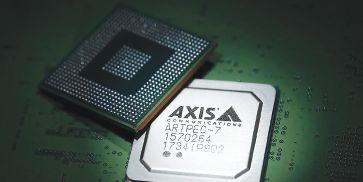
The new chipset also features improved low-light imaging and compression and the ability to run analytics on the edge. ARTPEC-7 is initially available with Axis P1375 and P5655-E PTZ network cameras. It will be available in other Axis products over time. “We haven’t really talked about the chipset too much in the past, but in this day and age, we think it’s important,” said Fredrik Nilsson, vice-president, Americas, alluding to the increased emphasis on cybersecurity in surveillance products in recent times.
— Neil Sutton

By Colin Bodbyl
While there were no clear winners this year, the industry is poised for some potential breakthroughs

Every year around the beginning of April, thousands of security professionals descend on Las Vegas to attend ISC West, North America’s largest security trade show.
The show itself can be overwhelming, with over 30,000 people in attendance. While it may be a tiring event, it can also be the most valuable week of the year for industry insiders where they have a chance to see thousands of products side by side in one location while meeting in person with key partners. Another benefit is being able to see new products before they are formally released into the market.
Analyzing new products across so many different vendors often reveals clear trends in the industry. Here are a few I noticed.
Artificial intelligence (AI) is now everywhere. Last year it was the most new and exciting technology at the show, but this year it was hard to find AI that was truly unique. Open source AI has created a proliferation of the technology that can do anything from facial recognition to natural language search where operators can search recorded footage using terms like “man in red shirt” to find very specific video clips. At face value it is difficult to tell which manufacturers have proprietary offerings and which of those are using free open
“Radar remains a sleeping giant that will inevitably become a huge part of the security industry.”
source technology and presenting it as their own. One thing for certain is that AI is becoming easy to access and vendors who do not catch up soon will stand out as laggards by next year’s show.
Only a couple of years ago, drones earned their own section at the show, but the excitement around them is wearing off. While there were still plenty of drones on display at ISC, the booths had far smaller crowds than in previous years. In many cases, the booths and products themselves had not changed at all. The legal legislation preventing the widespread use of UAVs outside of line of sight is still in place, with few signs of changing anytime soon. At this point, it appears to be a waiting game for the technology whose development has far outpaced the progression of the legislation that governs its use.
In recent years, we saw new radar products enter
the market as the costs of radar technology decreased, but it seems to have hit a plateau with no new products or vendors of note this year. Radar, or a similar technology like Lidar, will eventually compete aggressively against simple object-oriented video analytics. For now, this technology is in a similar position to drones where one small change to market conditions could create explosive growth and wide spread adoption. In the case of radar, that catalyst will be another step change in costs that make it less expensive per square foot of coverage than a high-end video analytic.
There were no clear technology winners at ISC West this year, though AI has certainly gone from hype to reality. Drones, on the other hand seem frozen in time as users wait for a green light from regulators. Radar remains a sleeping giant that will inevitably become a huge part of the security industry in the future, but for now it seems to be slowing down. The show itself continues to gain in popularity, and for good reason. Meeting with key partners and finding new technology could not be more convenient. Walking the show this year was both educational and exciting, but if previous shows are anything to go by, next year’s ISC West will be even better.
Colin Bodbyl is the chief technology officer of Stealth Monitoring (www.stealthmonitoring.com).

IBy Victor Harding
Despite positive vibes for DIYs and telcos, the reality for Canada’s established security firms may be different
have read several articles in the U.S. security media recently that talk about how great the residential side of the alarm industry is these days.
This position contrasts sharply with what I hear when I talk to independent alarm dealers in Canada, most of whom are now spending an increasing amount of time on commercial projects and ignoring the residential market. I have to believe it is because the residential market in Canada these days is a difficult place to gain traction and make money.
Supposedly, the number of residential accounts in the U.S. increased by seven per cent in 2018. A seven per cent increase in one year is huge, almost unbelievable. I would like to know who benefited from this increase.
Was it the big national companies, the midsize regional dealers, the smaller dealers or the telcos? My bet is that the smaller alarm dealers did not experience a seven per cent increase in residential monitored accounts. Also, what is happening in the U.S. industry might not also be happening in Canada. The U.S. economy is on a roll.
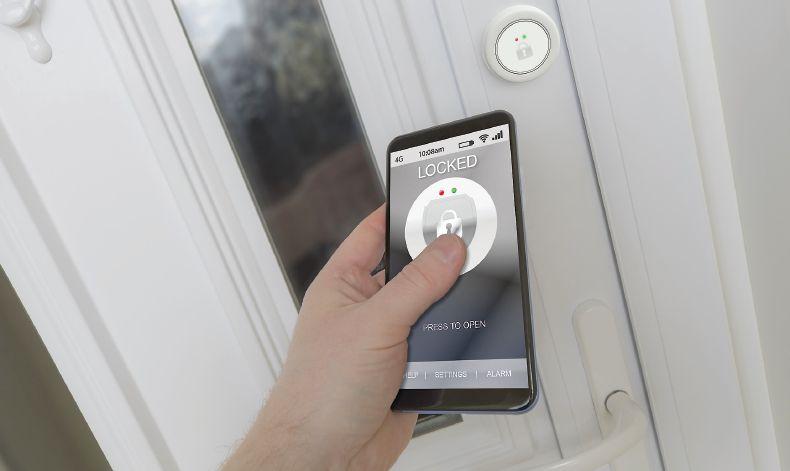
The articles I read talk about the enormously high percentage of customers going with the connected home concept and that this is a major reason for an increase in residential monitored systems. There is no doubt that interactive panels have jazzed the residential alarm market up. However, how many more people are buying a fully-monitored alarm system simply because of interactive panels is another question.
I also tend to think that the U.S. market has moved faster than Canada on the whole subject of the “connected home.” Relatively speaking, the connected home is less expensive in the U.S. Having your alarm dealer install cameras and door locks and tie them both into monthly monitoring at $45-$50/month makes for an expensive alarm system.
But the statement that really got my attention is one I have read and also heard at conferences recently — that the potential threats to the residential monitoring market from the cable/ telcos, DIY and the Amazons and Googles of this world are not really threats and that in fact all of these “outside” players have actually helped the residential alarm dealer.
And anybody in Canada who thinks that the telcos here are not taking their “pound of flesh” is
simply out of touch with the residential market. Most smaller and mid-sized dealers tell me they simply cannot compete with the deals that these Canadian telcos can offer and have switched their focus to commercial.
Regarding the idea that DIY is no threat, recently two of the larger DIY companies in the U.S., SimpliSafe and LifeShield, have been acquired for good prices. If DIY is not a threat, why would private equity and ADT move so quickly to buy them up?
Granted I don’t think the Canadian market is as well developed with DIY as the U.S. Independent dealers in Canada could offer DIY systems, but I have not seen many do that. What worries me most about DIY is my theory that there is a percentage of customers who will be totally happy with a DIY system. They may well get someone to help them install it, but it will go unmonitored. DIY, in my mind, is a threat.
Also, Amazon and Google have just recently added to their initial products, Ring and Nest, and are now offering the products for a full security systems. I believe that a portion of the marketplace will install these systems but will not opt for monitoring. They are less expensive than professionally installed systems and if the customer decides to take monitoring, it is only $10 a month.
On top of all these outside threats, there are other issues facing mainstream alarm dealers in tackling the residential market today:
• More and more, they are being forced to underwrite the installation of cell units in a high percentage of homes as home-owners drop their land lines. This is not always a financial win for the dealer.
• Dealers of all sizes tell me about the hassle of dealing with the phase out of the 2G network. Replacing 2G with the next generation wireless is not always a profit generating exercise. Then, in the not too distant future, 3G will have to be phased out.
• Residential customers are questioning the value of an alarm system if neither the police nor guards can or will respond in a timely manner. Police across the country are gradually insisting on “verified alarms” before responding. While it is a positive step for the industry, this development costs the dealer and their customers money.
• Inherently dealers know that know that overall the “Cost to Create” a new residential account today is much higher than for a commercial account.
• I hear from dealers how much more difficult it is to actually service and get paid for residential service today.
In Canada, I think the reality for small, medium-sized and even the large alarm players is that the residential market is tough sledding.
Victor Harding is the principal of Harding Security Services (victor@hardingsecurity.ca).
By Patrick Straw
With CANASA’s spring events well underway, we look forward to great things happening this fall
Security Canada began the spring portion of the trade show season in Laval, Que., on April 24. Attendance was well up from 2018 with a sold out show floor. 2019 is shaping up to be an important year with Security Canada trade shows offering the industry a hands-on look at the products and services leading manufacturers have on offer.

In conjunction with Security Canada East, CANASA held their Annual General Meeting at which time a new slate of board members was elected. We’re pleased to announce that Gordon Hebb, vice-president at Wilson’s Security, is the new CANASA president and will serve a term of two years.
The annual general meeting was also a time to thank Ellery Demedash for his stellar service as president over the past two years. Under his guidance, with consultations from me as execu-
tive director, CANASA has enhanced industry relations with ASIS International and the Security Industry Association (SIA) as well as expanding the popular annual scholarship program. (Winners will be announced shortly.)
For more information on the Annual General Meeting and the new board, please visit www. canasa.org.
The next stop was Security Canada Ottawa, held on May 8. This important security event began the day with a special keynote address from Phil Gurski, president and CEO of Borealis Threat & Risk Consulting, focusing on the many factors revolving around terrorism.
Here’s the rest of the lineup for May and June: Security Canada Alberta will take place on May 29 at River Cree Resort and Casino in Edmonton, Alta. For all the information on this important event in Alberta’s capital, please visit www.securitycanada.com/attend/alberta.
Security Canada West will be held June 19 at River Rock Casino Resort in Richmond, B.C.
Please visit www.securitycanada.com/attend/ west for all the details.
The last two shows of the year are in Moncton on Sept. 11, with the show in Toronto Oct. 23 and 24 rounding out a truly exciting year for the security industry. Visit www.securitycanada. com for more information.
As executive director of CANASA, I have been in extensive discussions with a number of colleges including Seneca, Humber, Mohawk, Centennial, Conestoga and Cite to develop a security technology program. This initiative would create the opportunity to provide security organizations with a regular stream of tech graduates focused on the security industry.
Watch for more information coming on our website: www.canasa.org.
Patrick Straw is the executive director of CANASA (www.canasa.org).









Craig Campbell CEO, Avante Logixx
Craig Campbell will share his journey from 17-year-old guard to entrepreneur and CEO of a multiservice security company.

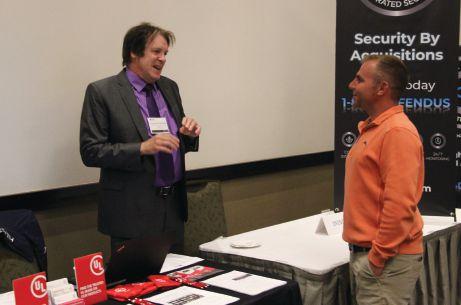




Steve Van Till CEO, Brivo
Steve Van Till will offer examples from his award-winning book on how cloud, mobile, big data, IoT and social media are revolutionizing security

Bob Harris President, Attrition Busters
Two great sessions from Bob Harris: “Picking up the money you’re leaving on the table” and “Beating the DIYs at their own game.”

Presented by

Aru
Bala President, Canada, ADT
Aru Bala is the president of ADT Canada and senior vicepresident, corporate strategic transformation, during a period of ambitious growth for the company.

Social media sites like Facebook and Twitter can be major promotional tools to reach clients and attract new ones. But you have to know how to make the most of your message.
By Will Mazgay
Security systems and equipment have traditionally been sold door-to-door or through radio and TV ads, but with the growing power of social media, this is changing.
Firms that sell security solutions are looking for a cheap and effective alternative to traditional advertising, and social media provides that.
According to Bill Hensley, senior director of marketing for Nortek Security & Control, “Most smaller dealers don’t begin to have the budget to look at local area TV.”
Pascal Bergeron, national director of dealer sales at ADT Canada, argues that TV and radio ads are not just expensive, but ineffective: “TV and radio are very expensive. People are watching less TV, and sometimes with the radio you pay a lot and you miss the target. Social media is safer for dealers, and they have more return on investment.”
He says his dealers are seeing improved sales and exposure by using social media, and he recommends all of the dealers representing the home security giant invest in it.
A lack of customer engagement is also an issue with radio and TV: “If I put an ad on the radio or I have a spot on TV, there’s no interaction with that customer, I don’t know who those customers are unless they contact me,” says Sean O’Leary, president and CEO of SafeTech

Alarm Systems, a Toronto-based alarm and security equipment dealer, installer and monitor. “Whereas, I can ask Facebook to recirculate my ad or my dissemination to the same group, over and over again. It’s this idea of repetitive market targeting.”
Even other digital advertising methods have drawbacks. “Google search costs have grown substantially in the past year,” says Dina Abdelrazik, analyst for security industry research firm Parks Associates. “Small and medium-sized dealers can’t afford search ads anymore, and smaller dealers are shifting their advertising spend to Facebook, where dealers can get more leads for lower cost.”
O’Leary says, “There’s no question that payper-click is very expensive. When you’ve got companies like Rogers and Bell in our space... it becomes prohibitive to duke it out with them. So, then you just try to find other mediums.”
Graybar Canada, a wholesale distributor of security equipment, which represents brands like Alarm.com, Interlogix, Pelco and Aiphone, is taking advantage of paid social media (ads and sponsored posts) through Facebook and Linke-
“With paid social media we’re able to target specific demographics.”
— Julie Darnbrough, Graybar Canada
dIn. Julie Darnbrough, the firm’s marketing and communications developer, says, “With paid social media we’re able to target specific demographics such as job title, location, age, interests…etc. This is extremely valuable as we can measure engagement.”
O’Leary says most of his efforts go towards boosting the content shared on Facebook, SafeTech’s preferred social medium: “We create different videos and different information cases and we disseminate that.”
Another important aspect of social media for O’Leary is building trust with customers, which includes contributing to social media network groups, being a part of a dialogue and developing a reputation as a security expert. “A lot of stuff you do online, it’s first about giving back. You really have to give to the medium and once you become a trusted source and a known source, or an expert, more people will circle back to you,” he says.
O’Leary’s social media strategy boils down to reaching a target audience, sharing informative content to educate followers about his products and services, and building lasting relationships: “Do your best to educate and hopefully entertain as well.”
Darnbrough, whose firm is also building and sharing multimedia content, like videos, blogs and case studies, says, “Having a basic information-based website isn’t enough today. Customers are looking to make connections with brands they can rely on and trust.”
However, Darnbrough cautions that once a firm starts churning out content for followers, it needs to maintain that engagement: “One of the main differences between digital and traditional marketing is the expectation of creating content. With digital and social media, your audience expects fresh content more frequently — sometimes even multiple times a day. If you’re not able to commit to posting content

on a regular basis it can lead to your audience losing interest.”
For the dealers involved in Nortek’s dealer program, which marketing director Hensley supports across North America, “On the social front, we’re wrapping up a guide document for our dealers on how they can best use the tools that we’re providing to maximize their exposure and their social channels in their area.”
Bergeron says ADT provides social media guidelines for its dealers, but the guidelines are more focused on how to best represent the brand and mistakes to avoid, such as misrepresenting offers or changing ADT’s iconic logo to suit personalized branding. “The guidelines are more what not to do, than what to do. We just want to protect the brand. What they (dealers) should do, normally they are good with,” he says. He explains that ADT audits dealers, visiting their websites and social media pages, and provides constructive feedback when aspects might need improvement.
Hensley says Nortek is also “trying to produce a lot of new video content for the dealer to be using, whether it’s on social or posting on their website, or sharing with the customer…video is a key thing. It’s what we’re trying to make a lot more of this year.” He also says Nortek tries to focus on competencies that are difficult for most dealers to do, and video can be tough for some.
Bergeron says that while ADT provides im-
ages and videos for dealers to help craft their social media presence, the firm’s dealers create their own messaging. When it comes to shooting videos he says, “Sometimes they (dealers) will prefer to do their own because they can have their logo and it can be more personalized than the ADT generic logo.”
O’Leary says SafeTech has never utilized marketing support or content from its manufacturer partners, and instead has crafted its own digital presence. SafeTech’s Facebook page and website are filled with videos emphasizing the personalized service of the dealer over the value proposition of the equipment, in many of which the CEO himself plays a starring role as the face of his brand.
While the prospect of controlling their own message may be attractive to dealers, it can be time-consuming. So, Hensley says he advises dealers to leverage what Nortek’s central marketing team is doing to promote the manufacturer’s offerings.
“We have our social media manager posting on multiple different channels across security and other brands. And then for dealers, it’s as simple as following us there, and then when there’s something that makes sense, repost it to your followers and add that local level — ‘we’re the supplier of that product in the area,’ for example,” he says. “We’re just trying to make it easy. Most dealers have got way too much to do, so the easier the manufacturers can make it with these tools the better.”
When it comes to providing marketing sup-
“Do your best to educate and hopefully entertain as well.”
— Sean O’Leary, SafeTechAlarm Systems
port for individual dealers, Hensley says it’s a matter of playing to strengths, as some are very clear on what they need, while others need a helping hand to find what works for their business. “Some dealers are better at installing, some are better at selling, and so for those who may be better at the installation part, we’ve got to have more of the cookie cutter availability of the assets. For those who have a phenomenal sales force and just occasionally need some fresh tools and graphics, it can be a little bit easier. It’s a spectrum,” he says.
In terms of where most dealers are at in their embrace of social media, Bergeron says about half of his dealers have jumped on board while the other half are “more old fashioned.” He says, “The Yellow Pages are dying, everybody’s going on the Internet, so of course it’s (social media) the new way to do business.”
O’Leary concurs. “We cancelled all of our Yellow Pages ads… we stopped receiving the value so we ended up cancelling a lot of the traditional things.” He says SafeTech still does some direct mail and telemarketing, but in general, his firm had to scale back use of traditional media because they were becoming cost prohibitive and unsuccessful.
Hensley says his experience with social media adoption is a mixed bag as well. “Some dealers embraced social early on and built reasonable networks. Others are maybe a little late to the game or don’t have the energy or the knowhow to make it work,” he says.
For Graybar, “Social media and digital strategies are going to be our main content distribution platforms as we move forward ... we’ll likely have a 50/50 split between digital and traditional, but as we begin to create more digital content these ratios will begin to favour online platforms,” says Darnbrough, who explains that with traditional marketing strategies it’s very difficult to track and measure engagement, which is where social media provides an edge.
Hensley says that ultimately dealers want to have a social media presence, so that they can be a part of trending conversations — they can find customers and customers can find them. He continues, “Social media isn’t just one thing anymore. It’s Twitter, LinkedIn, Facebook — wherever customers are, dealers should be ready to be there.”
Bergeron says that exposure is vital for dealers: “If the customers don’t see you, you cannot make any sales.” He continues, “Of course, the more dealers invest, the more results they have.”

Security Summit Canada’s line-up of speakers will address some of the vital and exciting trends in monitoring and security on June 13 in Toronto of the
By Neil Sutton

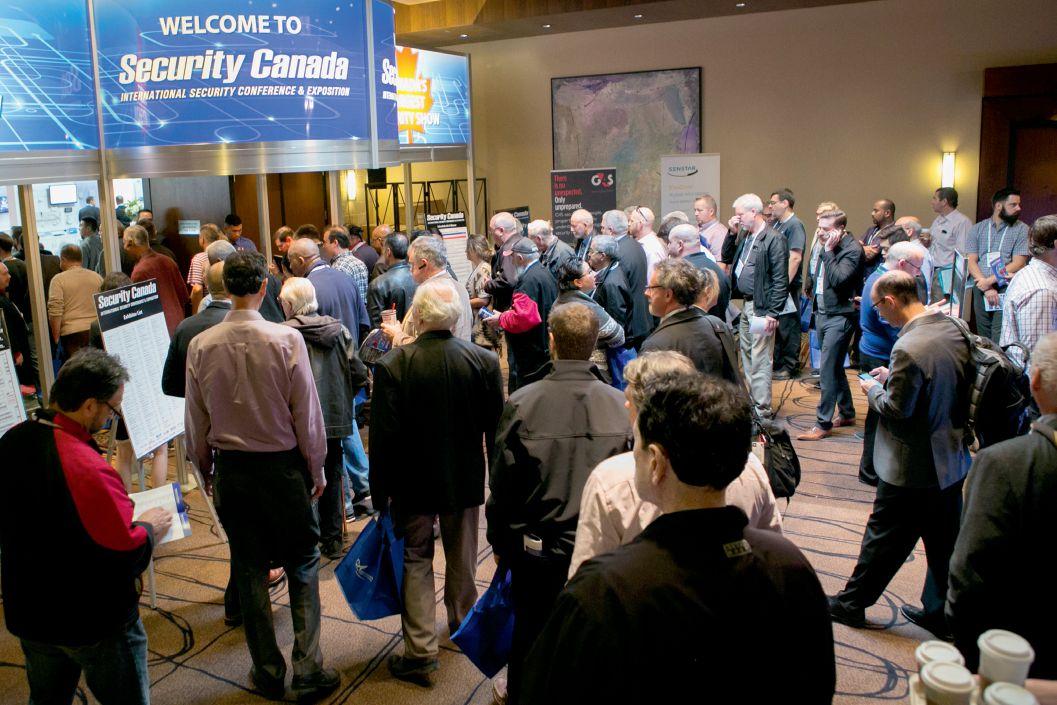
You can’t have a great conference without great content and great speakers. SP&T News has lined up some of the security industry’s best for this year’s installment of Security Summit Canada, an annual event designed to challenge and inspire Canada’s alarm and security community of dealers and installers.
This year’s line-up of speakers features entrepreneurs and free thinkers who will address some of the most highly debated topics in security — DIY, the cloud, standing out from the competition — and offer practical advice on how to grow your business. In addition to Craig Campbell, Steve Van Till and Bob Harris (all featured below), a keynote address will be provided by ADT’s new president of Canada, Aru Bala. You can read more about Aru’s thoughts on the industry in a Q&A on p.22 of this issue. To register for Security Summit Canada, which will be held June 13 at the International Centre, Mississauga, Ont., please visit www.securitysummitcanada.com.

At age 42, Craig Campbell already has a quarter decade of industry experience under his belt.
He started out as a security guard at age 17 and within five years, had set the wheels in motion to establish his own security business. Campbell was the founder and CEO of Total Security Management (TSM), a guarding operation that ultimately employed almost 3,000 people across North America. Campbell sold the Canadian operations of TSM to GardaWorld in 2013 and turned his focus to other aspects of his security business, such as screening and investigations, as well as other investment opportunities.
Campbell has an entrepreneurial background — his father was also a business owner — but he
says his own path was “somewhat accidental… When I decided to make it something for myself, it was a combination of naivety and this desire to solve problems and do a good job.”
He acknowledges some mistakes were made along the way, but it was a “relentless pursuit of customer excellence” that fueled his company’s growth and success.
The second chapter of Campbell’s profes sional career starts with a second company — Re silience Capital, an investment firm he founded that supports other entrepreneurs, most of whom also operate in the security business. More re cently, Campbell took over the role of CEO of Avante Logixx, a Toronto-based security provider that offers high-end residential security services, as well as locksmith services, guarding and decorative hardware under separate divisions. Last year, Avante purchased the assets of Veridin Systems Canada, a Toronto-based security integration firm with clients across the country.
explains. “It’s a combination of the cost of technology coming down, the cost of manpower going up, the convergence of mobile first, and other technologies. [It’s changing] how you go to an end user and secure their risk.”
There are many more challenges and opportunities on the horizon, says Campbell. “We’re never done — there’s always going to be more to learn and more to fix and more to course correct. But the chapter two, so to speak, is building it again but building it differently.”
Campbell will trace his professional journey and share his philosophy of business growth at a special session at Security Summit Canada.

Steve Van Till CEO, Brivo
For some, the cloud might seem like a relatively new innovation in security technology, but Steve Van Till has been talking about it for two decades.
Van Till is the president and CEO of Brivo, a cloud-based access control and surveillance company he co-founded in 1999. “It was a solid 10 years of wandering in the desert talking about that before the rest of the industry perked up,” he says. “Now, I think, the industry is moving wholesale toward cloud.”
Campbell’s second major foray into the security market comes at a time when new technology is helping to drive major innovation and the industry is more accepting of a risk-
Van Till published a book on the subject in 2017, “The Five Technological Forces Disrupting Security: How Cloud, Social, Mobile, Big Data and IoT are Transforming Physical Security in the Digital Age.” The volume was recognized
“What we’re doing with clients is getting them as much knowledge as possible.” — Bob Harris,Attrition Busters
as ASIS International’s security book of the year in 2018.
“When I started to write book, I thought I wasn’t even going to talk about cloud, because that train has already left the station, but a lot of people in security don’t feel that way or have only come to that viewpoint recently,” says Van Till.
The major challenge to cloud adoption hasn’t been technology, but perception, he explains. “It’s this big cognitive dissonance thing.”
Most people are trusting major aspects of their lives to the cloud without realizing it or maybe they simply haven’t connected the dots. “Where do you keep your money? Where’s your stock portfolio? How do you interact with your medical institutions? They’re all in the cloud,” argues Van Till. “I think the task that some of us have is to point out to people that they’re not really that controversial anymore, they’re a part of your life already and they should be part of the toolset that you’re using for your security customers.”
The cloud is the overarching theme in Van Till’s book, with social media, mobile technology, big data and IoT explored as aspects of that technology structure. Once consumers accept technology and vote with their dollars, some of the labels become obscured or less important in the grand scheme of things, he says.
Like the cloud, IoT has been around in one form or another for many years. But do home users actively think about the technology when they’re using it? “The fact that these things in your home are IoT devices simply goes right past most people,” he says. “It’s not even an important element of the marketing to residential buyers. What you care about is it’s a smart thermostat that you can control remotely.”
Van Till will explore these themes in greater depth at Security Summit.

Bob Harris President, Attrition Busters
Bob Harris is one of the most positive people you’re likely to meet in the security industry, but he can also see the tragedy.
“It’s tragic, because the majority of security dealers large and small are leaving tons of money on the table,” says Harris. “Basically on every sales call, service call and phone call. At
the end of the day, people are not going to buy something off you if they don’t know you offer it.”
Harris is the president of Attrition Busters, an organization dedicated to helping alarm companies reduce customer attrition and raise their level of customer service. Harris will offer two seminars at Security Summit Canada: “Picking up money you’re leaving on the table” and “Beating the DIYs at their own game.”
For Harris, picking up that cash that may have been overlooked is often just a matter of paying attention and instilling that same mindset in your staff.
“What this session does is go over a whole host of things that can be done that are super simple to deploy and get buy-in from the whole team,” he explains. Lesson 1: Know what you can offer, make sure everyone in the company knows too, and then pass along that knowledge to your customers. It might just be a simple upgrade to a smoke detector, but those dollars add up.
“They have a customer for 20 years with the same yellow plastic smoke detectors and they never say a word. There’s a great upgrade opportunity there. There are literally dozens of those [examples],” says Harris.
DIY might still be a controversial term amongst security professionals, but knowledge is power, argues Harris.
“What we’re doing with clients is getting them as much knowledge as possible about the DIYs, what they really are — is it something we want to entertain, with some component of it in our business as well?”
Even the term Do-It-Yourself might be something of a misnomer, he says. “I think a lot of those DIY ‘easy’ installations aren’t as easy as they make it out to be.”
DIY security products may require additional technical support and product replacements. And while DIY might present lower up-front-costs to the consumer or home-owner, how much are they really saving?
And how do they stack up against the value of a professionally monitored security system? These are aspects that are not always well understood or articulated by professional home automation installers and monitoring providers, says Harris.
“There is a bit of a knowledge deficit in terms of how it’s perceived by the industry or for that matter, if it’s a right fit for them to play with and incorporate. In many cases, it’s a significant cost of attrition for us. How do we combat it? The only way to do that is to understand what it is.”
Harris says both his presentations at Security Summit Canada will be interactive, so bring your thoughts, questions and opinions.

Covers are Proven Effective for Over 35 Years
covers and buttons help prevent vandalism and accidental activation, without restricting legitimate operation. Ideal for use in areas where there is a risk of malicious misuse of safety appliances. Cover with horn sounds when lifted
install

Aru Bala, president, Canada; SVP, corporate strategic transformation, ADT

By Neil Sutton
Like most organizations that provide monitored security services, ADT is undergoing change, both reacting to and helping to shape the market.
In recent months, the security giant has launched a new alarm panel (Command and Control), acquired a major DIY company (LifeShield) and most recently at ISC West in April, announced the launch of its ADT Commercial division. SP&T News sat down with ADT Canada president Aru Bala in the weeks prior to ISC West to get his take on these developments. For more insights from Bala, be sure to attend Security Summit Canada (www.securitysummitcanada.com) on June 13 in Toronto, where he will featured as the keynote speaker.
SP&T News: ADT has made some major announcements and acquisitions in the last year. What is happening with the organization?
Aru Bala: ADT is going through a major transformation. We are still one of the few pure security players. That’s a big advantage for us and the customers see that as well. We have a lot of room to grow. For the last two years, we have been expanding in the commercial area in North America. We have built a billion-dollar-plus business in commercial alone. That’s the speed we are growing the business. For some of the new, disruptive elements, like DIY, we acquired LifeShield. It’s kind of a chassis for building that business. This is trend that is happening — we get it. It’s in the early stages, but that’s going to grow significantly as well.
We are making changes as a company. We are investing in new technologies. The Command panel is up and running in America. There’s a lot of changes we are doing in that fashion so we are in line or ahead of the market.
“We are making changes as a company. We are investing in new technologies.”
SP&T: What is the planned rollout for Command and Control in Canada?
AB: In terms of overall direction, we will standardize the panel and the app strategy together. The U.S. is going through the pilot right now, so we’ll iron out the problems and probably bring it to Canada in the later part of this year. It’s exciting. It’s a great technology. It gives us the foray into the IoT side of the business as well.
SP&T: What is ADT’s view of home automation and IoT?
AB: I think home automation can be an opportunity or a threat for us. It’s how we deal with it. Opportunity-wise, if we can reinvent ourselves into the IoT space through the hub strategy… there’s the telcos or security companies. A few players have hubs in the home now. Security companies have the lead there and the opportunity there in terms of converting that into an IoT hub. If that happens, we have an opportunity to connect all the IoT devices into a central device and have an integrated app for our customers. Customers want one app. The Control app controls almost all of the IoT devices we can hook up to that panel — lighting, thermostats, garage doors, cameras. It’s a fantastic experience. The Command panel is advanced Z-Wave based technology.
SP&T: Are IoT devices like the Command panel going to help the monitoring industry increase the market penetration rate?
AB: Yes, the penetration of 20-25 per cent has been the industry rate for ages now. My feeling is more on how flexible we want to make the pricing. That’s going to determine
how we’re going to expand the marketplace. Canada is a population of 35 million with 14 million homes… and roughly two million monitored homes. [The security industry] is boxed into these standard packages of what we sell now. But how do you provide flexibility of pricing for customers? How do you open up pricepoints even to the $10 range. [The customer might say] “I want a doorbell — that’s all I need.” Then it will open up the market segment wider. Flexibility is the key. That will open up new segments, which will increase the penetration. It will be a different model, where customers can [opt for] standalone devices. “I need one doorbell, one camera, one motion sensor…” or whatever it is. Or it could be a DIY option. “I can pay only so much, but I want DIY installation, I want DIY monitoring.” Then the pricepoints are completely different. Proficient monitoring will be there as well. All the new DIY systems will expand the market… rather than cannibalize the [professional] side. It’s good for the industry.
SP&T: What sort of feedback are you getting from dealers?
AB: They are asking for flexibility. They are asking, “Can we go into the renters’ market?” The next generation are not staying in homes for too long. Also, the size of homes are coming down. The renters’ market is increasing faster than home ownership, so those needs are there. Also [dealers] are looking for new technologies as well. In terms of home automation, a lot dealers are catching up. Some of them are leading it as well. There’s a few trends so we can get at these segments rather than the traditional segment. But

everybody understands it has to be something new. Some new market segments will open up. The dealers are seeing the same as well.
SP&T: What’s your plan for the commercial market?
AB: If I talk about the U.S., it’s a huge success story for us. We are growing at phenomenal rates… at least three to five times higher than the market. Even in Canada, we’re growing at a very rapid pace, but we are just starting on the commercial side. In the U.S., we have built a billion dollar platform for commercial. [ADT launched its ADT Commercial brand at ISC West in April.]
SP&T: In Canada as well?
AB: In Canada, we are building the business as we speak. Currently, it’s growing at a very rapid pace. A lot of big customers are moving to us. We may look at potential acquisitions in this space for Canada.
SP&T: The Canadian market was flagged by ADT as an under-performer in the last earnings report. What is your take on that?
AB: 2018 has been a tough year for ADT Canada, but the good news is, these are opportunities for us. That’s how I’m viewing it. We have changed our structure and how we go to market and we are reorganizing. It’s in the process. It’s a great start we are seeing. We are winning back the marketplace. I’m more positive about the transformation. In Canada, change management is much faster. We are using this timing to transform ourselves at ADT Canada. From an innovation perspective, you will see a lot more coming. We are going to use this platform to take it to the next level. We’re going to fight hard on the customer side. We’re not just looking at a turnaround, we are looking at a transformation.

Interlogix
TruProtect is a commercial security solution that unifies intrusion monitoring, access control and video surveillance into a single platform. This new platform enables users to scale the solution from a few doors to large, multi-site operations that require customized integrations. The solution’s modular “add-asyou-go” design enables users to add capacity and functionality as required. Users can scale a system from a standalone intrusion panel to a fully networked security system.
www.interlogix.com

Southwest Microwave
The IP-based INTREPID Model 336-POE Long Range
Digital Microwave Link couples field-proven RF detection performance with secure network connectivity. With a range of 457 meters, operating at K-band frequency, Model 336-POE is suited for the protection of fence lines, open areas, gates, entryways, walls or rooftops. The sensor employs advanced digital signal processing algorithms to optimize discrimination between intrusion attempts and environmental disturbances, mitigating risk of site compromise while preventing nuisance alarms. www.southwestmicrowave.com

Smart Areas partitioning for the 2GIG GC3 security panel is available immediately to every GC3 system – even installed systems – via the new v3.2 firmware release, with no added hardware modules required. According to NSC, with Smart Areas, the GC3 is the first wireless self-contained partitioning panel in the marketplace, including an interface, controller, wireless transceiver, and communicator in one package. GC3 provides the ability to arm and disarm up to four partitions independently.
www.2gig.com/smart-areas
Maxxess InSite combines systems intelligence and human intelligence to detect and respond to unfolding events in real-time — all of which is queued, organized and displayed on an intuitive user interface. Maxxess InSite enables early action, allowing IT, operational technology and physical security departments within organizations to correlate data and improve response. This new system is categorized as an Awareness and Response Coordination System. InSite features an open-architecture framework to accommodate virtually any security or business intelligence application. www.maxxess-systems.com


The Senstar LM100 hybrid perimeter intrusion detection and intelligent lighting system combines two key security functions in one product, acting as a deterrent against intruders by detecting and illuminating them at the fence line. Its engineered lighting is environmentally friendly and is specially-designed to minimize light pollution. The Senstar LM100 hybrid perimeter intrusion detection and intelligent lighting system recently received the Fixture Seal of Approval (FSA) from the International Dark Skies Association (IDA). www.senstar.com
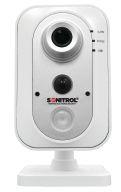
TotalGuard Smart Hub & Wireless Devices offers a security solution for small and medium business markets. This new offering includes a variety of wireless sensors that connect to the new TotalGuard Smart Hub, expanding reach and alarm capabilities. TotalGuard is an allin-one, edge-based device that acts as a standalone IoT panel. Each TotalGuard device includes the Sonitrol impact activated audio detection, glass break analytics, video verification and surveillance, motion and wireless connectivity that is all professionally monitored by a Sonitrol central station.
www.sonitrol.com
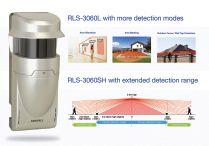
OPTEX has developed new versions of its product firmware and configuration software for its laser sensor, REDSCAN RLS-3060 series, that brings greater functionality to the existing models. Version 8.0 of the RLS-3060 series firmware and REDSCAN Manager feature a number of upgrades for the long-range, 190 degrees 2D LiDAR series. Both models, the RLS-3060L and RLS 3060SH, will offer more flexibility in managing dry contacts with the option to switch from normally open (N.O.) to normally closed (N.C.).
www.optexamerica.com

Designed to detect the shattering of framed glass mounted in an outside wall, the 1128 Wireless Glassbreak Detector is a fully supervised, low-current shock and glassbreak sensor that provides added detection coverage up to 20 feet. By detecting both high and low frequencies, the 1128 reduces the chance of false alarms. It’s also suitable for armour-coated glass. For maximum flexibility and coverage, the 1128 Wireless Glassbreak Detector can also be mounted on the ceiling or on an opposing wall.
www.dmp.com

BOLT Locks use specially crafted tumblers to memorize a vehicle’s ignition key the first time it is inserted into the lock. One complete turn of the key moves the tumblers to fit that one specific key, resulting in a uniquely programmed lock. The stainless steel pin of the Coupler Pin Lock fits couplers from 1/2inch to 3 3/8-inches in 1/8-inch increments. BOLT’s coupler pin lock secures the locking lever from any movement and serves dual purposes: locking a trailer ball when hitched to a vehicle or making the coupler unusable when off of the vehicle.
www.boltlock.com
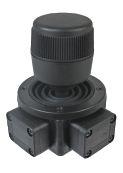
Designed specifically for keyboard integration, the JC series multi-axis Hall effect joystick measures 26mm below panel making it a suitable solution where space is limited. Applications include security and surveillance cameras, medical devices and measurement systems. The JC series utilizes proven Hall effect technology to provide up to 5 million lifecycles of control. With over a dozen handle options, the JC series may be configured with up to three axes and two pushbuttons. The JC series features a precision spring centring mechanism that provides an optimal return-to-centre voltage of 80mV.
www.apem.com
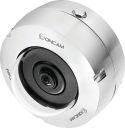
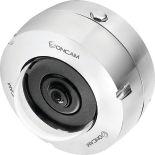
The Evolution 05 and 12 Stainless Steel Camera line features design enhancements that further position the device as a solution for surveillance needs in the most demanding environments. Oncam’s Evolution Stainless Steel cameras provide resilient protection in areas where resistance to the elements and compliance to stringent regulations are paramount. The camera enclosure is compact and aesthetically pleasing, making it a solution for applications that feature high-end architecture. www.oncamgrandeye.com
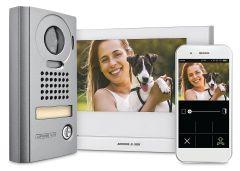
The updated JO Series video intercom enables homeowners and small businesses to control front-door access onsite or from virtually anywhere using a cloudbased mobile app. The new entry-level unit also has built-in options for recording visitors. The updated JO Series provides door access using the best of both worlds — a hard-wired, inhome master station with 7-inch screen for instant contact with visitors or wireless control inside or outside a home or business via the mobile app.
www.aiphone.com

want to hear your customer success stories. Submit your nomination today! Visit www.sptnews.ca for additional details. Deadline for entries: July 12, 2019


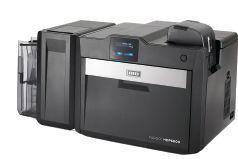
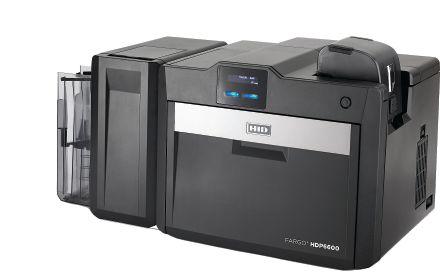
The HID FARGO HDP6600 printer is the company’s sixth-generation retransfer printer under HID’s FARGO brand. HID Global has completely reengineered the retransfer printing concept and redesigned the printer from the ground up to accelerate high-volume, high-quality printing, and lower the printing cost per card and deliver energy efficiency. HID has combined patent-pending iON “instant on” technology with other advancements to enable simultaneous film printing and card retransfer processes. www.hidglobal.com
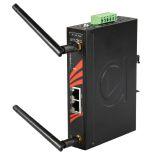
Antaira Technologies
Antaira Technologies’ AMS7131 Series is designed for industrial and enterprise wireless access applications. Embedded with the Atheros XSPAN family chipset, it features network robustness, stability and a wide network coverage with a very low voltage input of 9VDC to a high voltage output of 48VDC. Based on IEEE 802.11 a/b/g/n, the access point supports highspeed data transmission of up to 867Mbps. The AMS-7131 Series is capable of operating in different modes. It can be used as an access point, WDS Station, transparent bridge or repeater. www.antaira.com
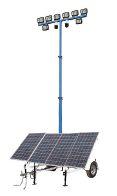
This solar-powered LED surveillance tower that features two IP security cameras, four 265-watt solar panels, a 1,000aH capacity battery bank with a battery charger, a solar generator and a telescoping mast that deploys eight LED light heads and the two security cameras up to 20 feet. The entire assembly is mounted on a single axle aluminum trailer for easy transportation. The SPLT-1.06K-LM20-8XWP50-2XPTZ.23X2TB-AT-BC-W4G security system is equipped with two 1080p full HD high-resolution security cameras. www.larsonelectronics.com
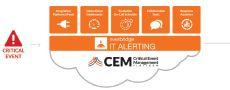
New features within the Everbridge IT Alerting solution including Smart CMDB Group Lookup and self-service IT alert subscription. With these new capabilities, IT Alerting enables organizations to dynamically target the correct IT fulfiller/resolver resources based on the up and downstream relationships in their CMDB, eliminating the complexities of managing logic on communication templates. The new IT Alerting features also include self-service IT alert subscription capabilities for business users to receive meaningful and context-based alerts, increasing awareness and reducing overall alert fatigue.
www.ITAlerting.com
ZKTeco
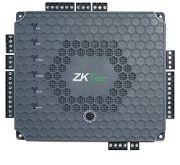
The Atlas Series consists of RFID and Biometric door access control panels which have an embedded web application, eliminating the need for access control management software. Atlas is available in 1, 2 and 4-door panels and can support up to 84 doors. These panels are powered by POE+ and can also communicate over WiFi. Features include user enrollment and management, door control and monitoring, lockdown, reporting, maps, anti-passback, first-card opening, multi-card opening, card design and duress PINs and more.
www.zktecousa.com
Yale
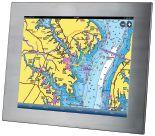
TRU-Vu Monitors has released a new 15” sunlight readable touchscreen monitor with a waterproof stainless steel panel-mount enclosure. The new SRMHTRWP-15V features a 15” screen with over 1,500 nits of brightness, making it suitable for use in direct sunlight or other high ambient-light conditions. The 5-wire resistive touch screen can be activated by a bare or gloved finger, pen, stylus or nearly any other object. It is highly resistant to dirt, dust or moisture on the screen. The waterproof stainless steel panel-mount enclosure enables this model to be flush-mounted. www.tru-vumonitors.com
Johnson Controls has added two new appliances to its video security products portfolio: Tyco Analytics Appliance and Tyco Transcoder. When added to existing IP recorders, the hardware offloads video processing from network video recorders, increasing system capabilities without overhauling the infrastructure. The Tyco Transcoder increases transcoding by 14 channels to meet live streaming requirements with constrained network bandwidths while maintaining a small form factor. The Tyco Analytics Appliance adds up to 16 useable analytic channels beyond what is available on the network video recorder. www.americandynamics.net
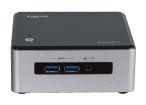
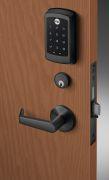
The nexTouch Sectional Mortise Lock features a separate keypad, lever and optional security deadbolt. The lock is offered with a choice of a capacitive touchscreen or push button keypad. Both versions feature an ergonomic design with an illuminated keypad. A privacy mode feature works to temporarily disable the exterior keypad to prevent additional entry. The nexTouch Sectional Mortise Keypad Lock features a low battery indicator when the batteries should be changed. If the batteries drain, users have the option to touch a 9V battery to the terminals on the front of the lock and enter a PIN code, enabling one-time access.
www.yalelocks.com