Delegation visits Toronto and Ottawa to create new business opportunities p.6
Q&A with CANASA’s new Executive Director
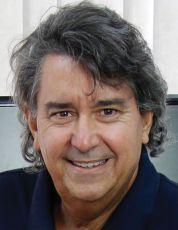
Industry veteran Patrick Straw shares his vision for the Canadian Security Association p.21
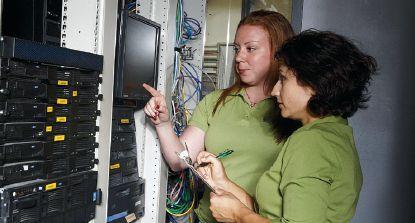
Multi-factor security for today’s installer
Back ups and redundancy are key elements of a modern security program p.26
Scott Hill
EDITOR’S LETTER
WBy Neil Sutton
In a word
hen I started researching dealer programs for our cover story, I expected to hear a lot about discounts, volume-based incentives, marketing support and all the usual trappings of channel-based programs.
Of course, I did hear about these things — they are dealer programs, after all — but what I didn’t expect was a strong emphasis on communication, listening and feedback. It makes sense that would be the case, yet it’s not something that first leaps to mind. And overall it’s a very positive development.
My impression of the security industry, formed over the last decade or so, is that it’s a people-driven business. Relationships stretch across years, sometimes decades. There’s an informal, sometime jovial, atmosphere that stands apart from the product descriptions, spec sheets, partnership agreements, contractual obligations, and so on.
You hear it at conferences and on trade show floors. You can see it in people’s faces and the way they shake each other’s hands. In many cases, it’s what allows business to get done.
By taking that feedback mechanism and weaving it into more formalized dealer programs, the vendors are acknowledging that side of the business and taking advantage of it in a way that makes sense for everyone. What they’re doing is levelling the playing field and showing a willingness to be flexible and move with the
times. In other words, they’re listening, and all sides — vendor, dealer and end user — will ultimately benefit. The end result is improved products, better delivery mechanisms and possibly even more coherent integrations across product lines.
This isn’t necessarily a new development. Dealer and end user councils have been around for a long time, and smart vendors have always known when to keep their ears open. They know that market research and customer feedback can be very powerful tools. It’s the vendors that march ahead with product development without having a solid grasp of how those products are sold and used that tend to fall by the wayside over time. I don’t need to name names, but you can probably think of a few companies that ultimately suffered for not paying attention to what their dealers and end users were telling them.
Of course, dealer programs aren’t a cure-all for what ails the security industry. But in talking to some of the vendors, it was the frankness and sincerity around the communication piece of the puzzle that pleasantly surprised me.
If you’re a dealer, I hope this has been your experience and you’re able to communicate well with your suppliers. If you aren’t, maybe you should be asking yourself — or them — why.
Your Partner in Securing Canada Security Products & Technology News is published 8 times in 2017 by Annex Business Media. Its primary purpose is to serve as an information resource to installers, resellers and integrators working within the security and/or related industries. Editorial information is reported in a concise, accurate and unbiased manner on security products, systems and services, as well as on product areas related to the security industry.
Group Publisher, Paul Grossinger pgrossinger@annexweb.com
Publisher, Peter Young pyoung@annexweb.com
National Account Manager, Jennifer Dyer jdyer@annexweb.com
Editor, Neil Sutton nsutton@annexweb.com
Art Director, Graham Jeffrey gjeffrey@annexweb.com
Colin Doe, Veridin Systems Canada Anna Duplicki, Lanvac Victor Harding, Harding Security Services Carl Jorgensen, Titan Products Group Antoinette Modica, Tech Systems of Canada Bob Moore, Axis Communications Roger Miller, Northeastern Protection Service Sam Shalaby, Feenics Inc.
Annex Publishing & Printing Inc. disclaims any warranty as to the accuracy, completeness or currency of the contents of this publication and disclaims all liability in respect of the results of any action taken or not taken in reliance upon information in this publication.
SMART HOME Solutions
class manufacturers and products for complete Smart Home Solutions.
> Security Panels
> Wi-Fi Doorbells, In/Outdoor Cameras
> Smart Thermostats
> Electronic Locks and Deadbolts
> Garage Door Controllers
> Smart Lighting and Outlets
> Sensors
> Translators and Repeaters
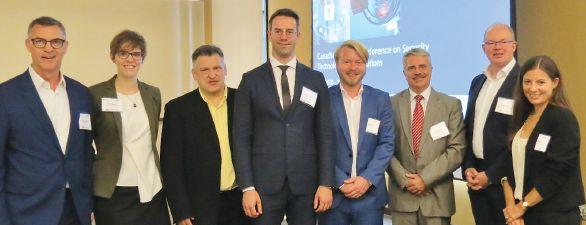
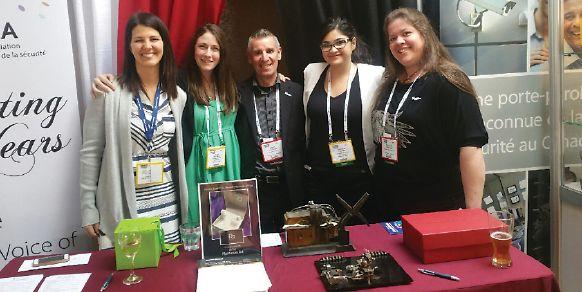
The German delegation: Detlev Weise (Exploqii), Elena Gerken (Canadian German Chamber), Frank Kuschmierz (Conet Solutions), Christian Stursberg (German Ministry of Economic Affairs), Frank Middendorf ( Burg Wächter), Frank Fronzeck ( SecureSystems), Peter Reimers (Tescon), Yvonne Denz (Canadian German Chamber).
THE PARTICIPANTS
exploqii gmbh
Headquarters: Berlin
Expertise: Short instructional videos on a variety of security-related topics in multiple languages exploqii.com/en/canada
Burg-Wächter
Headquarters: Wetter (Ruhr)
Expertise: 90-year-old, family-owned business that produces safes and cabinets with biometric locking capabilities www.burg.biz
CONET Solutions GmbH
Headquarters: Hennef
Expertise: Unified Communications Radio Suite, a software solution that permits conferencing between a wide variety of communications platforms and standards www.conet.de/EN/CONET
megafunk schütze Headquarters: Neukirchen
Expertise: Security technology with a focus on resource saving and recycled material, including an energy-efficient wireless
security lock www.megafunk-engineering.com
SecureSystem GmbH Headquarters: Berlin
Expertise: Security solutions for ISO containers (sea freight containers), including access control and remote tracking www.securesystem.net
TESCON Headquarters: Salzgitter Expertise: High security and counter-ter-
rorism products including bollards, road blockers, and crash-rated gates www.tescon-security.de/en
Zippermast GmbH Headquarters: Bischofswiesen (also an office in Florida)
Expertise: Mast system that can extend eight feet, originally developed for Unmanned Ground Vehicles (UGV) www.zippermast.com
Security Canada Atlantic
Doubletree Halifax-Dartmouth
September 13, 2017
Security Canada Central Toronto Congress Centre October 18-19, 2017 Come
LINE CARD
Applications
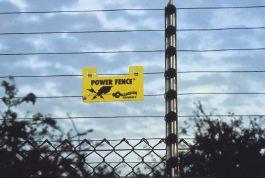
U.K. pulse fence stands guard for more than a decade
In 2006, George Allinson Transport, a U.K. logistics company invested in a Gallagher monitored pulse fence to protect its lorry depot in Darlington. Partner GALFEN, the original installer, inspects the system twice a year to carry out any necessary maintenance and ensure all zones are operational.
“The system needs little maintenance however ensuring that GALFEN check it out on a regular basis helps protect the longevity of the fence and gives us peace of mind that the system continues to protect our site,” says business owner David Allinson. According to Gallagher, the fence system “deters, detects any disturbances and defends if anyone attempts to break into the premises by delivering a short, sharp shock.”
Allinson adds, the system has been effective “to ensure the perimeter of our site is protected from intruders.”
Appointments
• TOA Canada has announced the appointment of Rico Lucia to director for TOA Canada Corp.
• Alex Asnovich, Hikvision’s director of marketing for Canada and the U.S., has been named to a top 50 influential CMOs list by Forbes magazine.
• Vicon Industries has announced that Fredrik Wallberg is
Georgia school district taking advantage of analytics
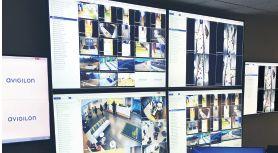
More than 100 schools in the Fulton County School System in Altanta, Ga., have deployed a surveillance system to enhance student safety.
Fulton, the fourth largest school district in Georgia, with more than 96,000 students and 12,000 full-time employees, has installed Avigilon surveillance technology, including cameras with selflearning video analytics, NVRs, and Avigilon Control Center software. Avigilon Access Control Manager has also been deployed to secure physical access points. According to Avigilon, the video analytics utilize a deep learning AI search engine. Fulton operators can, for example, search through instances of a person or vehicle across all cameras on site to help reduce investigation times.
joining the company as its director of A&E services.
• Qognify has appointed Dan Hindman to vice-president of sales EMEA and Eran Noam to vice-president of global strategic partnerships.
• Speco Technologies recently announced three new additions to its staff: Dave Williams, director of national accounts
The city of Lévis, Que, is using a traffic preemption solution to help ensure emergency vehicles are able to move through intersections safely and quickly.
An Opticom Emergency Vehicle Preemption (EVP) system works with intersection controllers to help ensure safe passage. The system sends a request to the controller ahead of the vehicle’s arrival at the intersection. When the request is granted, the light turns green and the vehicle is able to safely proceed through the intersection. The city has equipped 28 intersections and 19 vehicles with the EVP technology from Global Traffic Technologies. According the company, the system allows emergency vehicles to avoid potentially dangerous traffic situations. Lévis has a population of approximately 144,000, serves as the headquarters of Desjardins Financial Securities, and is also the location of a major Ultramar oil refinery.
for North America; James Hoang, partnering and integration manager; and Rebecca Brady, director of marketing.
• Cisco recently named Rola Dagher as the new president of Cisco Canada. Dagher joins the company from Dell EMC, where she held a variety of leadership roles.
October 4, 2017
Focus On Drones Toronto, Ont. www.focusonseries.ca
October 7-11 2017
TMA Annual Meeting Scottsdale, Ariz. www.tma.us
October 12, 2017 Anixter Showcase Toronto, Ont. www.anixter.ca
October 17, 2017
Central Station Monitoring Symposium Toronto, Ont. www.canasa.org
October 18–19, 2017
Security Canada Central Toronto, Ont. www.securitycanadaexpo.com
October 27, 2017
Anixter Showcase Montreal, Que. www.anixter.ca
November 14-15, 2017 Sector Toronto, Ont. www.sector.ca
November 15-16, 2017 ISC East New York City, N.Y. www.isceast.com
November 16, 2017 ADI Expo Montreal, Que. www.adiglobal.ca
November 21, 2017 BICSI Canada Regional Meeting Mississauga, Ont. www.bicsi.org
November 22, 2017 Anixter Showcase Edmonton, Alta. www.anixter.ca
Ivan Spector named president of The Monitoring Association
Ivan Spector has been voted president-elect of The Monitoring Association (TMA).
“I am very honoured and humbled to serve in the position of president,” said Spector in a statement.
Spector is the president of Montreal-based Sentinel Alarm Co. and serves on the executive committee for TMA. Spector is also a founding member of the Security Industry Alarm Coalition (SIAC) and has served in multiple capacities at the Canadian Security Association (CANASA), including on the board of directors, as chair of its response committee and as
national president.
TMA (previously known the Central Station Alarm Association) has appointed 33 presidents since its incorporation in 1950. Spector will be the first Canadian in the position.
Four other officer positions were also decided: Don Young, ADT; Morgan Hertel, Rapid Response; and Steve Butkovich, CPI will become vice presidents; Alan Gillmore IV, Gillmore Security, will become treasurer. The new appointments will become official at TMA’s next annual meeting, in Scottsdale, Ariz., Oct. 7-11.
market watch
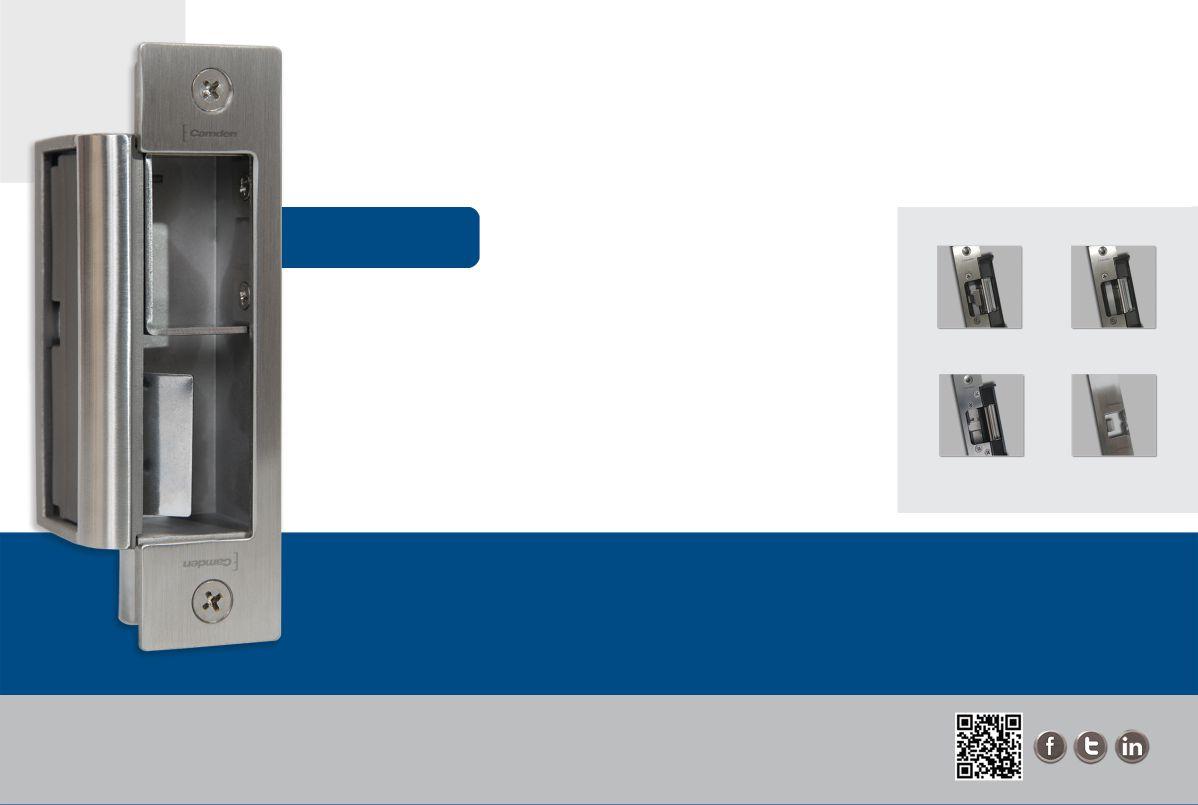
• UL 1034 burglary and UL 10C, 3 hr. fire rating (fail secure only)
• Non-handed, compatible with virtually all mortise and cylindrical locksets
• Easy deadbolt keeper and latch monitor placement
• Selectable 12/24V, AC/DC
• Selectable Fail Safe/Fail Secure
• Latch monitoring standard
• Easy fit wiring connectors for power and monitoring
• 5 yr. warranty
Ivan Spector
NEWS BITES
BICSI names Toronto as host city for two events
BICSI, the association dedicated to advancing the information and communications technology community, recently announced that Toronto will host for its upcoming 2019 and 2021 conferences. The 2019 event will held April 8-11 and the 2021 event on April 19-22 — both at the Toronto Congress Centre.
“We chose Toronto as the location for our largest ICT show in Canada, because of its unique benefits as Canada’s largest city and the fourth largest city in North America, with a diverse and global population. It is also a global centre and capital city for business and finance, and we expect that the BICSI conference attendees will thoroughly enjoy their experience here at one of the most liveable and most competitive cities in the world,” said Brian Ensign, BICSI president, in a statement.
Resolver acquires emergency notification firm
According to a statement on its website, Toronto-based Resolver has completed the acquisition of Global AlertLink, a Charleston, West Virginia-based software company offering expertise in emergency notification and business continuity management.
“Expanding into the business continuity, emergency notification and disaster recovery markets is a natural extension of our existing solution,” said Will Anderson, CEO of Resolver, in a statement.
This is the second recent acquisition by Resolver. Last December, the company finalized the acquisition of a risk management suite of products from Wynyard Group Ltd. based in Auckland, New Zealand.
Vicon unveils new marketing message
Vicon Industries has adopted a new corporate identity and tagline, “Simple Solutions for a Complex World.”
According to the company, “Vicon’s rebranding is the culmination of several years of research and development, resulting in the launch over the past year of the new Valerus VMS and VAX Ac-
cess Control platforms, as well as a completely redesigned line of cameras.”
Bret McGowan, Vicon’s senior vice-president of sales and marketing, announced the new brand in an open letter to Vicon employees and customers. He states, “We’ve
realized there’s a need in the market for a solutions provider that can take the pain out of the entire security experience… Vicon is striving to be that alternative, easyto-deal-with company capable of delivering an entire video and access control solution.”
The new branding will be included on all of Vicon’s marketing and communications moving forward. The company also recently launched a new website.
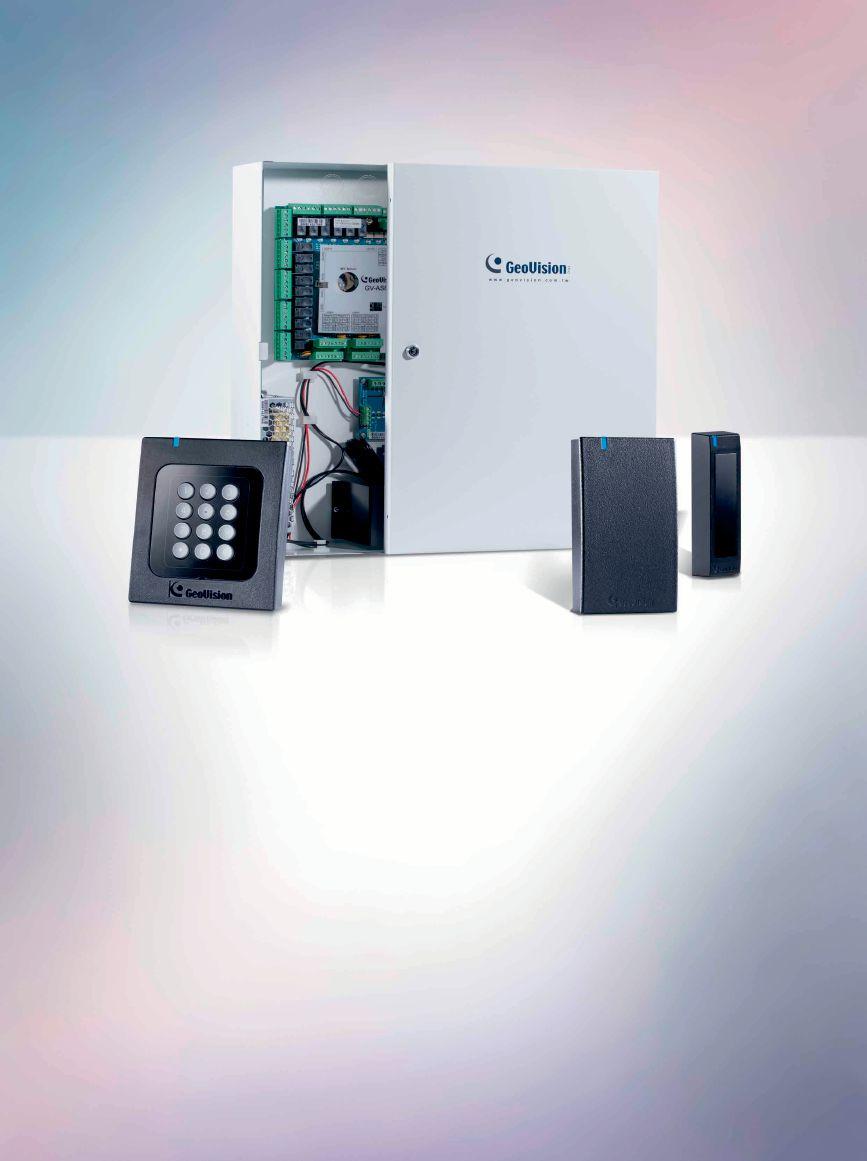
GV-Access Control with the UL Certification
Brings more safety to your installation
There are thousands of Access Control brands in the market today With Underwriters Laboratories Inc. (UL) certificated, GeoVision Access Control can bring more safety to your installation.
GV-Access Control provides the most advanced full security solution by integrating seamlessly with GeoVision VMS, and IP products, which provides you with easy and safe accesss to both live and recorded video from any access event
Will Anderson
Securitas ES opens Toronto office location
Securitas Electronic Security (Securitas ES) has officially opened its new Toronto headquarters. Tony Byerly, Securitas ES president, based in the company’s Cleveland office, presided over a ribbon-cutting ceremony with Dan Marston, senior director and general manager, Securitas ES Canada. Customers and vendor partners were also invited to the opening event.
According to the company, the facility houses sales, operations and regional support in more than 10,000 sq. ft. of work space. Prior to opening, the building was completely renovated and now features an engineering centre, warehouse, staging lab and “video collaboration centre.”
Byerly said in opening remarks that the new office marked the last stage of separation of Securitas ES from its former parent Diebold. Securitas completed the acquisition of Diebold’s electronic security business in February 2016. Byerly also noted that the acquisition and inte-
LETTER to the editor
Re: Can We Cloud? (SP&T News, June/July 2017)
Your “Can We Cloud” article was a bit shallow and seemed to serve someone’s purpose. I get that “…security experts have a vested interest in keeping it secure if they wish to prolong their business.” However, after bandwidth costs, security and trust are the biggest impediments. How do we know that the Cloud is really being handled by “security experts”? How can we know that good protocols are being followed? Even in the current decade, the log of Internet mishaps shows some serious carnage: Target (2013), Home Depot, Neiman Marcus, Wendy’s and
gration of the business into Securitas’ portfolio is part of two major trends inside the organization: specialization and collaboration. The former refers to the degree to which the integration side of the business can offer specialized services, the latter to the opportunities the company can capitalize on by leveraging all aspects of its business, including guarding services and monitoring.
Securitas also announced the relaunch of its Pinkerton brand in Canada earlier this year — the company offers complementary riskbased services and solutions.
Chipotle in April 2017. Would we assume that these folks had IT security resources that it considered expert? I would, otherwise I would never do business with them. They put out impressive security and information protection statements but… oops.
The Cloud has been around for about 25 years. However, it wasn’t noticed until it got a sexy name. It still has a long way to go to win me (and others) over. It needs to be able to concretely show me how really secure my information is. In the meantime, I’m hanging on to my NAS and my own security protocols.
Len Babin, CPP, ABSP Primoris Associates Inc.
Jeff Hennessy, area installation manager, SES Canada; Kevin Engelhardt, Executive Vice President Operations & Enterprise, SES; Dan Marston, senior director and general manager, SES Canada; Tony Byerly, President, SES; Chris Jaynes, district service manager, SES Canada; Mark Drysdale, area installation manager, SES Canada.
CANASA UPDATE
By Patrick Straw
Education initiatives underway
CANASA is working on new ways to provide education and training resources for its members
The Canadian Security Association (CANASA) has undertaken a number of recent initiatives to provide the security industry with much-needed educational resources. These include:
Alarm Technician Course Review: The Alarm Technician Course (ATC) is a successful technical training course developed by CANASA and is administered in association with Centennial College. The course offers a wide range of topics relevant to security technicians. Consultations are now underway to update and add additional modules to the content offering. The intent is to make sure the course stays relevant and current in its content.
Using Canadian Colleges for Technical Resources for our members: There is currently an initiative to connect college graduates who have recently completed Electrical Technician or related courses with companies looking for new talent to train for security installations and service. It is a huge need in our industry and could potentially fill a void that we currently have.
In development is a security sales program being created in conjunction with the Canadian Professional Sales Association (CPSA) specifically for CANASA members. This program will be designed for security sales professionals with the expected roll-out later this year. The CPSA is the leading professional sales organization in Canada with over 20,000 sales professional members.
Mark your calendars for Security Canada Central
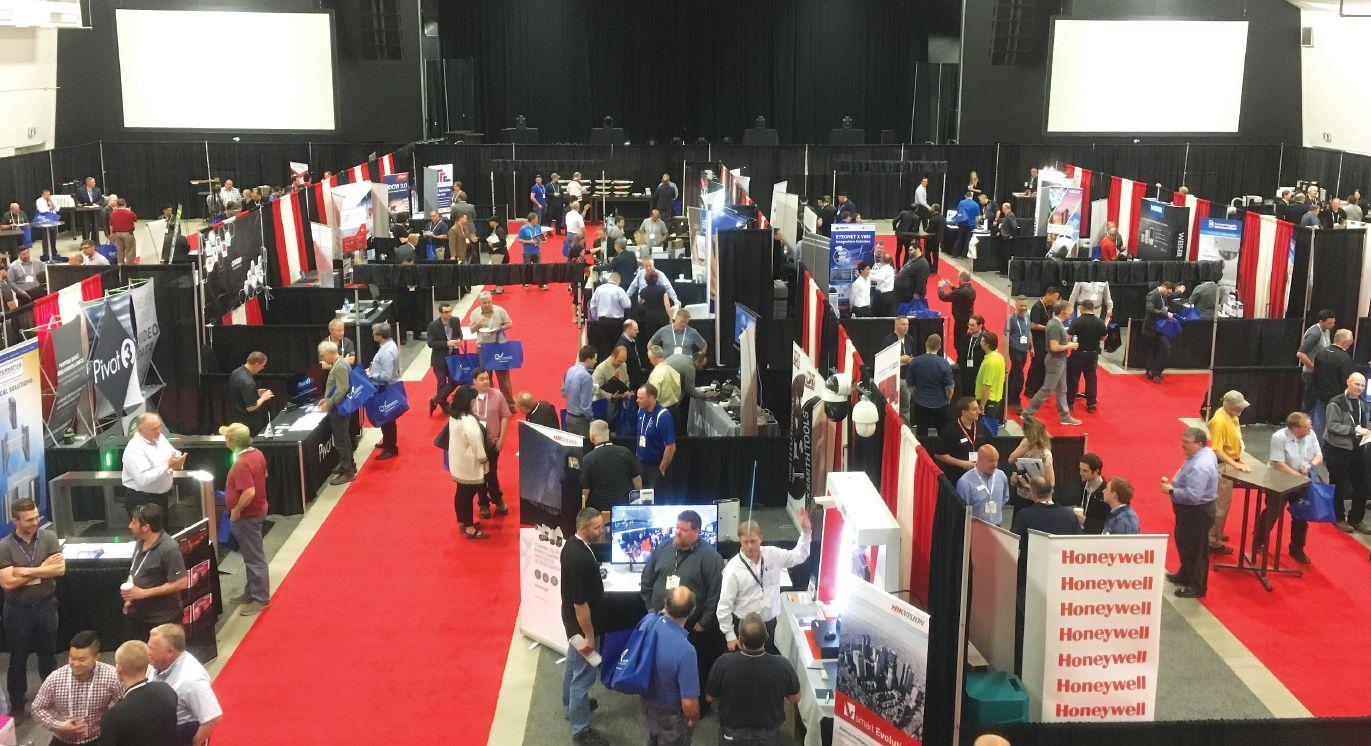
For over 30 years, Security Canada Central has provided security professionals with the opportunity to experience new products, technologies and
services that can enhance their businesses. The 2017 Toronto show will kick off with a presentation by an RCMP Critical Infrastructure Expert, giving a fascinating perspective on Terrorism and Canada. This year offers an even bigger event with over 160 exhibitors and manufacturers seminars. So mark your calendars and don’t miss Canada’s biggest security event of the year. Security Canada Central will be held in Toronto on October 1819. Please visit www.securitycanadaexpo.com for registration information. Security Canada is sponsored by Armstrong’s, Pelco, Pivot3, SecurTek, Senstar and TOA.
What’s new online?
CANASA has also launched new online initiatives. Please visit www.canasa.org to explore membership, golf and event opportunities plus all the latest security-related information.
Patrick Straw is the executive director of the Canadian Security Association (www.canasa.org).
Patrick Straw
SPECIAL FOCUS Security Canada 2017
Security Canada
Spring-Summer showcase roundup
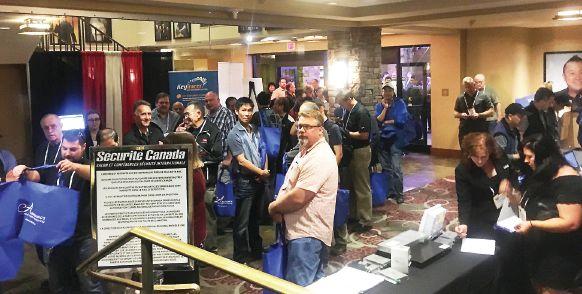
Security Canada, produced by the Canadian Security Association (CANASA), held events this spring in Montreal, Edmonton, Ottawa and Vancouver, showcasing products, solutions and technologies for security industry professionals. Attendees were able to enjoy product demonstrations,
and Chantal Bélanger,
conversations, meetings and educational opportunities. Security Canada will make two more stops this year: Halifax on Sept. 13 and Toronto on Oct. 18-19. More information on these events is available on the Security Canada conference and exhibition website (www.canadiansecurityexpo.com).
Doors open at the last summer stop for CANASA: Security Canada West in Richmond, B.C., on June 21.
Ellery Demedash, CANASA’s new national president, with Stuart Armour, president of CANASA’s B.C. Regional Council.
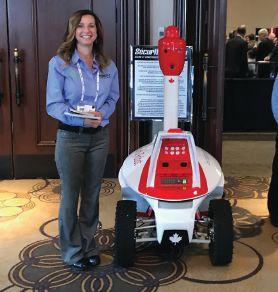
Amanda Reinharz, Robotics Assistance Devices, was an exhibitor at the Security Canada East show.
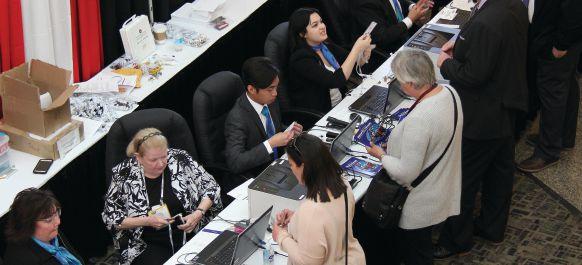
Attendees pick up their badges for the Security Canada Ottawa event on May 31.
The Security Canada calendar started this year with the East show, held in Laval, Que.
Pictured: Vanessa Blouin, Résidencia Sécurité Inc.; Erin Marsden, Board & Council Liaison, CANASA; Denis Primeau, Groupe Securite Alarma Inc. and president of the CANASA Quebec Regional Council; Romina Payami, Member Specialist, CANASA;
Advic Sécurité Inc. and vice-president of the CANASA Quebec Regional Council.
The Security Canada Alberta showcase was held May 10 in Edmonton
Photos: CANASA staff members and SP&T News
LESSONS LEARNED
TBy Victor Harding
How connected are we to the connected home?
What to expect from residential security systems in the not-too-distant future
he residential burglar alarm sector still represents a great opportunity for security dealers but it has to be approached the right way.
We don’t have great stats in Canada on market penetration, but as best we know, it is still not much higher than 20 per cent. Compared to products or services like smart phones or highspeed Internet, there appears to be a lot of room for growth.
Secondly there continues to be a general acceptance by insurance companies and the authorities that alarm systems work and do their job. Also, because of the advent of services like Rogers Smart Home Monitoring, there is so much more good advertising out there about what a security system can do. I also like the fact that if you are looking for just a basic system, the equipment costs are dropping and the technology is getting better every day.
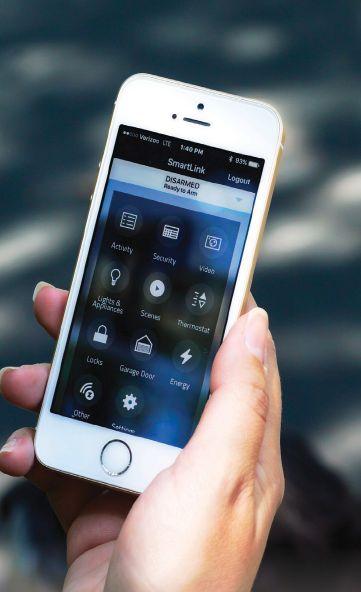
There is a new wave hitting the residential alarm market that is making it much more attractive. Consumers are realizing that an alarm system can do so much more for them than simply send a signal to the monitoring station if a contact is broken. The security system is in fact the core unit to what is fondly referred to as the “connected home” allowing the customer to do things like: Unlock the doors of their house from their smart phone; view the inside or outside of their home from anywhere in the world; and control the lights or temperature in their home from any computer or smart phone.
The “connected home” has arrived and it is a trend that cannot be ignored. The “connected home” starts with the alarm system. Imperial Capital in their Premises Control and Automation Review estimate that currently about “27% of homes in the U.S. with an Internet subscription have some form of security/home control solution … and that the penetration rate for total fee-based security systems would increase from 21.2% in 2016 to 29.6% in 2020 and then to 42.0% by 2024.”
Basically, they are saying that the move to premise control and automation with the connected home is going to double the penetration rate for alarm systems — a tall order. In my view, while Canada is lagging behind the U.S., it is happening here as well, only more slowly.
However, this movement comes at a much higher cost for the installing dealer and the customer. It is not going to be accepted by everyone
because it is too expensive. First, the cost to install these systems with automatic locks and cameras, etc. is huge compared to what it was — thousands of dollars. To help offset these costs and to pay for the line costs associated with cell and alarm.com, monitoring rates are increasing dramatically.
I believe that we will see more players like Ackerman Security popping up in Canada and the U.S., making a living out of “taking over” these high priced systems.
“There is so much more good advertising out there about what a security system can do.”
For whatever reason, even with the buzz around the “connected home” and “premise control,” I don’t see nearly as much emphasis on the part of the average security dealer in Canada on residential alarms as there used to be. Most dealers I run into do residential alarms as an exception. Why? Well first with or without the connected home technology, the residential market is just too competitive — even more than the commercial alarm market. It is difficult if not impossible to make money on the installation of a residential alarm anywhere. Dealers I talk to will do residential systems that are connected to their commercial accounts but will ignore phone calls from prospective customers who they think are just price shopping.
Now, even more so with the connected home technology out there, most installers of residential systems have to offer a fortune just to get a new three-year monitoring contract. A lot could mean $400 of equipment plus installation costs plus maybe a sales commission. The Barnes-Buchanan 2017 Annual Review indicated that the average Cost to Create a new account in the U.S. is close to 30X RMR — with that RMR rate being is a lot higher than it used to be. If you want to be serious player in the residential market today, you either have to be well-financed, be an authorized dealer, or be a telco or cable company. Of course, there are exceptions.
Amazingly enough, to add insult to injury, most of the stats that I have seen recently show residential accounts having higher attrition rates overall than commercial accounts on balance. Who would have thought?
So there is opportunity for some in the residential market place.
Knowing what I know about the residential market for alarm systems, here is what I would insist on in terms of all new residential installations. You have heard me say many of these things before:
• Expect that about only 20 per cent of your customers will want a connected home system right now.
• Having said that, I would still try to install all my new systems with the latest interactive panels regardless of whether the customer wants the interactive services now or not. The connected home is coming.
• I would insist that every new account without exception sign a properly constituted monitoring agreement with a good waiver of liability clause in it. Contracts are more compulsory now when selling your company than they used to be. Go to www.canasa.org to get copies.
• Regardless of what services are offered, I would not sign any customer up in any part of the country for less than $20/month.
• On the other hand don’t make your systems too expensive. I like between $25-$40 /month for non-connected home accounts.
• Try to sell lifetime warranty for $5-10/month extra. This avoids fights over service call invoices.
• Video verification is coming, so try to sell your new customers on cameras.
• All new systems should go in on pre-authorized payment only. Worth more. No invoicing.
• If possible, try to get a credit score on as many of the new systems as possible. This will give you a good idea as to how long a customer will last. Any score under 625 is more risky.
• Don’t “give the ship away” to get the new account. Make sure that you get paid back in no more than 18 months. Better financed dealers can go to 24 months.
• Install all new accounts with cell or interactive technology. Land lines are going the way of the dodo bird.
• Make sure to set up all accounts for downloading. You don’t want to have to roll a truck needlessly.
• Install all your new accounts on a line that you, not the station, own.
Victor Harding is the principal of Harding Security Services (victor@hardingsecurity.ca).
By Peter Janis
Reduce the rumble
Ambient
noise can be devastating in critical environments, particularly to operators on headsets
The security business spans many different branches.
One of the most interesting is in the area of mission critical environments such as military bases, regional utilities, large industrial plants and 9-1-1 call centres. These environments all share the need for security monitoring and the challenges of ensuring effective communication.
When it comes to audio monitoring, the challenge comes when attempting to separate the dialogue from the ambient noise. All too often, audio playback files end up being murky, or even impossible to comprehend. The problem is the microphone. The human brain and our auditory system are superbly crafted to distinguish between what is important and what is not. For instance, you can be at a concert and somehow manage to communicate with a friend even though the sound pressure level and ambient sound energy is significantly louder that the human voice. Our ears are able to focus on the source while ignoring sounds coming from other directions. This is combined with visual cues such as body language and lip reading.
When you consider the complexity, the human brain is truly a remarkable device. A microphone is different: it has no way of differentiating between the wanted conversation and the unwanted sounds from the air conditioning system, outside traffic, background dialogue between staffers, and the combined ambient noise. A microphone flattens out all of the information and delivers the amalgam of ambient noise that reaches the diaphragm.
The solution to the problem is simple. One must control the ambiance so that the “signal to noise” ratio is acceptable and reasonable intelligibility is achieved.
“A microphone has no way of differentiating between the wanted conversation and unwanted sounds from the air conditioning, outside traffic, and the combined ambient noise.”
When noise is produced, the sound energy reflects off of hard surfaces such as windows, doors, walls, floors and furniture. To compensate, staffers naturally speak louder to raise their voices above the din. As they do this, the energy in the room elevates as it reflects of the hard surfaces and the noise problem self-amplifies to the point where it becomes problematic. To solve the problem, one must decrease the ambient noise by providing a release valve for the energy. This is best done by mounting absorptive acoustic panels to between 15 and 25 per cent of the available wall space. An effective solution is to distribute 2” (5cm) thick high density glass wool panels around the room.
Placement is often not critical as the ambient noise is everywhere. Increasing the density
of the panels in areas that produce a higher noise level will help contain it. If wall space is limited, suspending clouds or baffles from the ceiling is a highly effective option as sound energy penetrates the acoustic panel from both sides, thus effectively doubling the performance. One must simply pay attention during installation to ensure the acoustic panels do not interfere with the lighting fixtures, fire sprinklers and ventilation systems. Once installed, the ambient noise will be significantly reduced and the comfort level for staffers will be enhanced. This not only makes the space more comfortable, it also reduces communication errors.
It is worth mentioning that operators suffer a major health concern with their headsets when in noisy environments. There is a misconception that with a headset, one can better control the ambient noise as the voice and headphone is essentially connected to the operator. The problem here is that when multiple operators are speaking at the same time, their voices compete and they instinctively circumvent the problem by increasing the volume of the headset going to their ears.
What they do not realize is that they are almost always listening to sound pressure levels that far exceed the safety standards set by OSHA (Occupational Safety and Health) and this level of exposure can lead to permanent hearing loss. Reducing the ambient noise is not only the best solution, but truly the only viable one.
Peter Janis is the president of Primacoustic, based in Port Coquitlam, B.C. (www.primacoustic.com).
CAMERA CORNER
By Colin Bodbyl
VVideo surveillance myths
Popular depictions of the way cameras might be used has often distorted the facts
ideo surveillance is inherently controversial.
Most people are recorded on surveillance cameras dozens of times each day without ever giving consent. While there is little to worry about if you are not doing anything wrong, people tend to feel uncomfortable being recorded. Combine these feelings of discomfort with the lack of public education around how these systems work, and it does not take long before myths emerge.
“The reality is that facial recognition software requires very specific criteria to work properly.”
The biggest myth that ever impacted the surveillance industry was started by a popular TV show called CSI. Unfortunately, the show was hitting its peak right at the time HD surveillance cameras were gaining in popularity. CSI routinely portrayed detectives enhancing video surveillance footage to capture impossibly fine details. In one scene from the show, detectives used recorded footage of a crime to digitally zoom in and capture a reflection in the victim’s eye. Of course, this is impossible, and end users understand this better now, but at the time the show was airing, many integrators were faced with end users who believed this to be reality, especially with the newly introduced HD cameras.
Today, new myths circulate about video surveillance. These myths are primarily driven by other global trends like cyber security. With the recent NSA hacks many end users have become concerned that government agencies (both foreign and domestic) could be spying on them through the millions of cameras already in existence. While backdoors to any network device are clearly a possibility, it’s infinitely less likely that anyone has secretly hacked into those cameras and is watching them live from the other side of the earth.
Intercepting data already in transmission can be done without being detected, but hacking in and watching someone’s cameras without them knowing could only be done for very short periods of time. This is because video steaming
is the No. 1 most bandwidth-intensive service on the Internet. Even the most novice IT department would notice the sudden burst in data usage required to live stream a small surveillance system. For residential systems, the bandwidth restrictions are even tighter where the ISP could block or shut down your service for live streaming video 24 hours a day. While remote video streaming is a reality and widely in use, it would be near impossible for any agency to secretly stream that video off your network without anyone noticing.
Another interesting myth we face today is one regarding facial recognition. Like remote video streaming, facial recognition is very much a reality and the technology has been successfully deployed for years. The myth however, revolves around just how this technology is being used. End users often expect that facial recognition can run on any surveillance footage and that police use this technology on the millions of public cameras to track and identify wanted individuals.
The reality is that facial recognition software requires very specific criteria to work properly. This includes a high-resolution image of the subject’s face, at the correct angle, with
the correct lighting. We saw these limitations very clearly after the Boston Marathon bombings. Police had surveillance footage of the suspects that was good enough for friends and relatives to recognize them. However, despite both suspects having registered driver’s licences and the older brother being in the FBI’s database, facial recognition could not be used to match the surveillance images to those that existed in the database. Facial recognition is a powerful technology, but it cannot simply be applied to any camera.
Today’s myths come from modern fears made reality after the NSA hacks were revealed to be true and after facial recognition became more widely publicized. Unfortunately, like all myths, these are great exaggerations of the truth and the average person has a lot less to worry about than they might realize. We have come a long way since the years of CSI and have slowly seen end user understanding of surveillance footage improve, but as a controversial industry we can always be sure that where one myth ends, another begins.
Colin Bodbyl is the chief technology officer for UCIT Online (www.ucitonline.com).
QA &
Patrick Straw is a familiar face to many in the Canadian security industry — more so now that he has joined the Canadian Security Association (CANASA) as its new executive director.
Straw has a 30-year career in the industry, working in multiple aspects from distribution to integration and also serving on CANASA’s Ontario board. SP&T News recently sat down with Straw to get his thoughts on CANASA’s leadership and how the organization might evolve further to meet the needs of today’s security professional.
“Let’s face it, there are just a lot more products and a lot more integrators and it is important that we keep them active with CANASA.”
SP&T News: What are some of the top priorities facing CANASA today?
Patrick Straw: While our industry is getting more diversified and many more companies are coming into the security space, we need to work diligently to ensure that CANASA is the brand that represents security in Canada.
We need to be able to mobilize resources, such as our web site, Twitter, LinkedIn, Facebook
Patrick Straw, Executive Director, CANASA
By Neil Sutton
and our communication with our members. This is an area where we need to build on the infrastructure that we already have in place and all of these options need to be reviewed. Providing sources of education for our members is and always will be a top priority for CANASA and I am working with some partners to make additional resources readily available.
SP&T: Do you have any short-term goals as the new executive director you can outline?
PS: I have already attended several regional industry events and was able to talk with dozens of people from all parts of our industry, many of whom I have known for a long time. I have also participated in several Regional Council Meetings to hear what our members are talking about and what they would like to see from us.
Getting to know the office staff was also a first step priority and to get the team focused on a very “customer service” attitude with our members. As we have some newer staff, I have also initiated some in-house training sessions so that they know what our members do and to better understand the structure of our industry. We have a great team and I am very positive about us all working together as we move forward.
SP&T: What do you feel the role of a security association should be? How is CANASA meeting these needs and is there room for improvement?
PS: A security association, like all associations, must be representative of the needs of its members. We, of course, have our unique issues dealing with Police and Fire dispatches as a result of our activity but much of the role is communication, education and unification for the common goal of mutual success and maintaining a
high standard for our industry. Improvement will come from engaging more of our members to participate, growing our membership to cover a wider gamut of security providers or manufacturers and to modernize our offerings.
SP&T: What is the role of CANASA in terms of outreach, interaction with other associations or authorities having jurisdiction (AHJs), and acting as an industry ombudsman?
PS: With regards to AHJs, government at all levels and the many associated topics, this is a high priority.
In the short time that I have been here, we have reacted quickly to communicate with jurisdictions who are proposing changes to bylaws, etc., which affect our members in several provinces. Our regional councils try to keep on top of these situations and I will personally be attending meetings when possible to represent CANASA.
As for the U.S.-based associations, I know that we actively participate in several of them to date, particularly relating to monitoring stations and we will continue to do so.
This is a topic I will most likely be able to shed more light on in the future after I have had time to get to know them and how we can work together. As a general statement, there is a great value to tapping into available experience and resources. Many jurisdictions around the world have already been through a lot of the changes that are just starting to happen here.
SP&T: You are the third executive director since JF Champagne left in 2015, so there will naturally be some questions about the organization’s stability. How are you addressing those?
PS: I was quite surprised when I arrived to find that there was not the chaos that one could have suspect-
ed. We have a very strong Board of Directors and the leadership on this board stepped in and kept any important functions rolling along nicely. We also have a great team here, some whom are senior staffers who have been around for a long time. We have a few loose ends to clean up, but generally we are in good shape.
My management style is very open and we discuss many of the things that we want to do as a group first. This has been warmly received, and so far so good. Let’s not kid ourselves — there is lots to do, but we are starting from a good spot.
SP&T: CANASA used to be known primarily as an alarm association, but obviously times have changed. How is CANASA keeping pace and what can it offer the professional security community today?
PS: Good question. As I stated earlier, we recognize that the alarm component is only a portion of the overall security landscape.
Most of our member installer companies however have always done a little bit of everything, serving the needs of their customers. As some of the technology has become simpler and easier to use, others in the building infrastructure world are grabbing opportunities to sell and install — particularly in the video market.
But the alarm, access control, door hardware business and all the peripheral things around that are still done mostly by some version of the traditional security company. Let’s face it, there are just a lot more products and a lot more integrators and it is important that we keep them active with CANASA, so we can all work together to strengthen our industry.
We need to be a constant and up to date source for education, training, networking and advocacy.
LET’S TALK
Are security vendors and partners experiencing a golden age by communicating with each other more effectively?
By Neil Sutton
Last spring, during the ISC West conference in Las Vegas, a small group of manufacturers and channel partners hosted a presentation called “Why can’t we be friends?”
The title, somewhat tonguein-cheek, was designed to spark some debate about the relationships between the security industry bodies that design and produce security tools and those that sell and install them. A thought-provoking comment came from panellist Tim Palmquist, vice-president, Americas, for Milestone Systems, who offered that “loyalty is a consequence of partnership” and that “we also talk about how we can stand up for one another. We have to work together as partners
to get through all of the day-to-day.”
Another important observation from Palmquist during that same panel: good channel programs can help establish the rules of engagement and provide valuable support.
In a more recent interview with SP&T News, Matt Fishback, Milestone’s business development manager, Americas, provided some additional detail on how the company has recently revised its own dealer program, which has provided some improved alignment with training and certification.
“But what we’ve really done this year that will have the biggest impact moving forward is we’re taking a strong look and really determining how we interact with our dealers,” says Fish-
back. “Looking at the way that we do it and how we can improve how we work with them in the future. It’s been a focus for us, and me in particular, in 2017. We’re learning a lot and we’re hoping to make some significant improvements in the upcoming years.”
Seeking feedback from dealers and engaging them in conversation, i.e., making them a more integral part of the overall process, is paying dividends for security providers across the board.
“Honeywell likes to take a step back and let these dealer-to-dealer conversations happen organically.”
— Brian Baldo, Honeywell
Brian Baldo, strategic account and dealer program manager for Canada at Honeywell Security and Fire, says the Honeywell Authorized Dealer Program has undergone tremendous change since it debuted more than 25 years ago. At the time, it included only a “handful of dealers” across North America and Latin America, but has expanded exponentially since then. Some of that more recent change has to do with Honeywell’s realignment around its security and fire pillars.
“As recently as last year, we expanded the program to not only include intrusion, video and access products, but also fire products due to many of our dealers looking to expand into that category,” says Baldo.
Feedback has been a major component of that change — and also encouraging dealers to talk to one another.
“The program is managed by Honeywell, but driven by dealer participation. Our dealers take control of the direction and communicate that to our management. The program contin-
ues to evolve based largely on the direct interaction we get from our dealers — it becomes exactly what they’re looking for and need,” explains Baldo. “When you hear from your peers what’s working or not working in a given marketplace, other dealers listen and have insightful conversations. Honeywell likes to take a step back and let these dealer-to-dealer conversations happen organically, as they tend to build great business relationships while sharing best practices.”
Online Support
Support and communication mechanisms are also much better than they were 25 years ago due the availability of platforms that support feedback and outreach (like social media, or, more simply, email).
“At the heart of our program are continual communications,” offers Jennifer Elliot, director of channel management at Montreal-based Genetec. Through newsletters, webinar tools and information provided through the Genetec Portal, Elliot says the company is able to offer timely information to its partners, tailored to meet the needs of a particular customer engagement “whether that customer is an airport, a law enforcement agency, a retail outlet, a utility, a corporation, etc. We strive to provide our partners with the right tools for every situation.”
“At the heart of our program are continual communications.”
— Jennifer Elliot, Genetec
Online training and certification tools have become a vital component of dealer programs. Honeywell offers a “Discover Online Training” module in addition to those offered in more traditional classroom settings, for example.
According to Hikvision’s director of sales, Vince Lupe, the surveillance company has created a learning and development department “that is constantly creating and refining training material,” available in both in-classroom and online formats. “Online courses cover video surveillance technology, products and system design. We offer several professional certification programs.” Lupe says the company is adding new partners “on a weekly basis” and currently about 20 per cent of its dealers are located in Canada.
Fishback says Milestone has seen “drastic uptake” in its elearning courses lately, even though it will continue to offer instructor-led
• August/September 2017 23
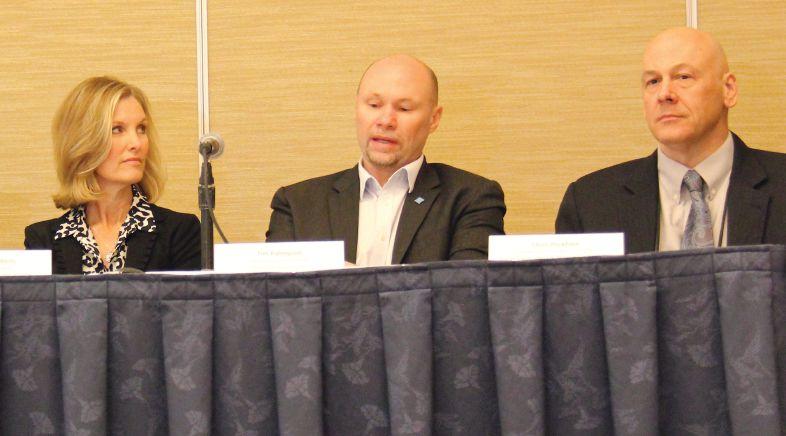
Milestone’s Tim Palmquist (centre) offers thoughts on dealer relationships at an ISC West panel. Other panellists included: Christie Hamberis, Scansource (left) and Christopher Peckham, Kratos
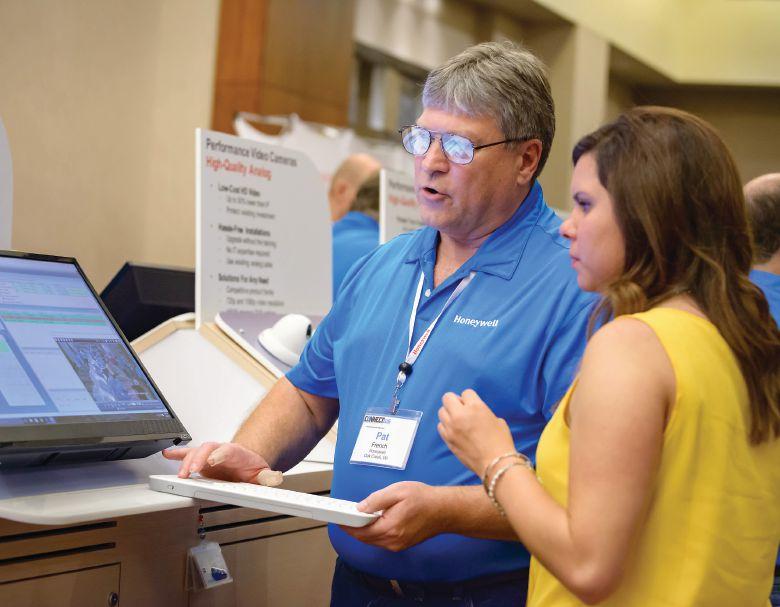
Honeywell dealers have an opportunity to meet with product experts at an annual partner event called CONNECT.
Image supplied by Honeywell
learning for those who prefer it.
“It’s much easier for our partners to use these e-learning tracks to gain knowledge to help them save time at the customer site,” he says.
“We’ve invested a lot in the last two years — continuing to bring more classes to our e-learning portal. It really gives them a tool for all areas of their organization for them to become more efficient.”
Rebuilding
While channel and dealer programs are, by necessity, evolving, a number have been rebuilt from the ground up to respond to the changing market, and by extension, dealers’ needs. Camera manufacturer Dahua, for example, revamped its entire program earlier this year.
“The reason we did that is we want to provide new advantages and incentives,” says Dahua Technology channel marketing manager Anabel Soto. The company is now offering a five-year warranty across the board for its partners,and has added a partner care program as well as a dedicated resource to help with project quotes and bids, and other incentives. It now operates a three tier program (two-star, three-star and four-star), providing additional advantages for its dealers in the top ranks. “We really want our dealers to feel as though they are an extension of the Dahua family,” she says. “That is our goal with providing all of this support. They are definitely not alone, and we are here to support them with whatever challenges or opportunities that may arise.”
Honeywell’s owned tiered program, which is now labelled Silver, Gold and Platinum, is also incentive-based and encourages dealers to climb the ranks by unlocking “even more benefits the more we work together,” says Baldo.
But, as with all dealer programs and incentives, the proof is in the results. A Honeywell dealer for 18 years, Roger Barnes, of Burlington, Ont.-based Roger’s Security Systems, says “it has changed huge. What we’re finding is it’s more of an open forum now.”
Barnes says a consequence of Honeywell’s reorganization around its fire and security businesses has been to encourage more discussion and cooperation between dealers and integrators. And ultimately, business begets more business.
“What we’re finding is it’s more of an open forum now.”
— Roger Barnes, Roger’s Security
Barnes started as a Silver Honeywell dealer under the current iteration of its program, but was able to move up to Platinum recently. “Honeywell is setting it up so the dealers are more interactive with each other. If there’s any issue with products or coming up with ideas, they’re having open forums with the dealers. It didn’t used to be that way.”
Milestone’s latest dealer pro-
gram is essentially still in pilot mode, says Fishback, with an initial rollout in the U.S. It will likely debut globally sometime next year. Milestone recently created advisory boards made up of end users, staff members and channel partners to serve as a feedback mechanism. It also sends out an annual survey to its partners globally (there are approximately 600 in Canada currently) to gain
information about products, support and how they feel about their relationship with Milestone. “The data gathered provides extremely valuable information,” he says.
“We have a lot to learn,” continues Fishback. “We are continually trying to learn what’s valuable to our dealers and what we can provide today and what we can do a better job of. That’s really a focus of mine this year — trying to figure that out and listen and make the changes that will help them become more successful. When we’re more successful, they’re more successful.”
security Circles of
By Scott Hill
A layered approach that encourages back-ups, redundancy and multi-factor authentication helps keep assets safe
As technology and knowledge advance, clients are expecting more and more from their security installers and certified dealers.
Part of that reliance stems from the fact that they are looking to their security providers to stay current on security trends and be familiar with recognized security theory/ principles. The security dealer who is able to present his/her security recommendations in a cognizant and professional manner, referencing established security principles, is bound to stand out from the masses.
One of the Security Principles that security providers would be advised to implement into their proposals/recommendations is that of Layered Protection.
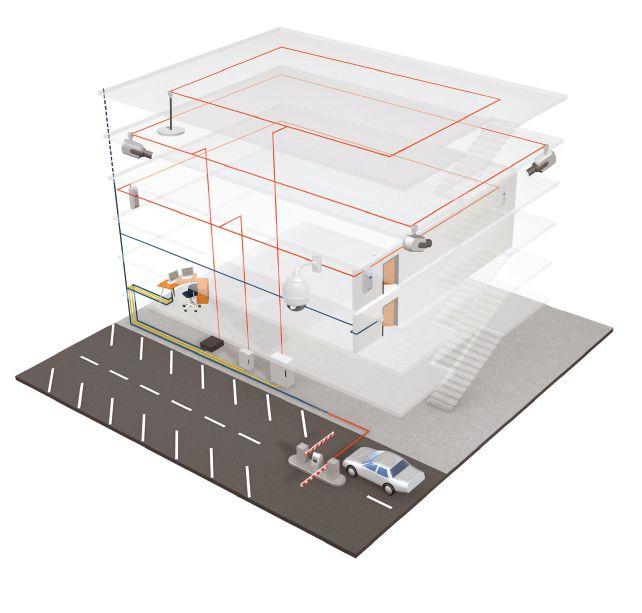
Layered Protection or Defence in Depth is a security concept where assets are protected by rings of security measures. In the center of the rings is the protected or critical asset. As you progress from the outer to the sequential inner rings, at each layer, the security measures get more stringent. The reasoning behind this concept is illustrated as follows.
layman’s terms, security professionals should avoid “putting all their eggs in one basket.”
There are multiple advantages that will be realized by an installer/dealer when applying this concept to their proposals and quotes. A prime advantage is that, by showing a thorough understanding of physical facility security concepts, their clients will have more confidence in their recommendations and proposals. By doing this, they are positioning themselves to be regarded as an expert in their field, which will give credibility for all future transactions and ensure repeat business.
“Proper security design builds in redundancies/ contigencies to ensure any critical asset is not protected by a single security source.”
Although the critical or protected asset might be secured behind a locked door, if the access device (key, fob card, etc.) key is lost, stolen, or copied, then anyone in possession of said device would have unlimited access to the asset. Proper security design builds in safety measures and security redundancies/contingencies to ensure that any critical asset is not protected by a single security source. In
A second advantage to implementing defence in depth approach to security proposals is the ability and need to include contingencies/redundancies into a security plan. We can show this advantage by the following example.
A client has commissioned an access control system to protect their facility. A fob system is proposed and accepted. All exterior doors are protected (outer perimeter) with a reader that would require a fob to access the protected area. A reader is also put on the office door that contains the physical protection system (computer) which is running the required software for the access control system. The access level required to access this office would be set so that only administrators’ fobs would allow access to the room. But what happens if the fob is copied, stolen or lost?
Access control systems are put in place to detect, delay or deter potential intruders if they attempt to access the protected area. Control to a building
#1 Home Security Company in Canada
125 years of security expertise
Monitoring Centres across Canada
Bilingual Service
can be managed by one of three (or a combination) processes. Access can be granted through something you have (key, fob, etc.), something you know (access code, password, etc.) or something you are (fingerprint, retinal scan, voice print, etc.). The stricter the security requirements are for the facility, the more controls and combinations are put in place.
Our previous example is an office with the critical equipment (asset) that requires protecting. Establishing that a single security solution (fob reader) is not sufficient to protect their area, a complete security recommendation would include (at least) one additional security measure to ensure that this asset is properly protected.
As demonstrated, in this example, we have already implemented a security measure that deals with “something they have” — a fob will allow access through the office door. As our earlier scenario questioned — what if the fob is in unfriendly hands, how do we still protect the office? The answer would be with a second security measure — in our example, something only an authorized person would know — like a numeric code.
Scott Hill of 3D Security Services is a Registered Condominium Manager (RCM) with the Accredited Condominium Managers of Ontario, a Physical Security Professional (PSP) with ASIS and a Certified Project Manager (CSPM) with the Security Industry Association. A biometric measure, in addition to a physical fob and/or a password
When citing the Layered Security concept in their proposal or secu-
Choose Bosch for integrated security solutions
Increase security and automate functions for easy operation. Trigger and execute audio announcements based on security events. Manage data with enterprise-wide control of video and security devices. Bosch products integrate seamlessly to help you create complete security solutions.
Watch our video to learn more: http://bit.ly/integratesecurity
rity design, the dealer and/or installer will propose (sometimes as an option, sometimes as a recommendation) that an additional security measure be added to the security design. In this case, something simple like door contact with a numeric keypad inside the protected area. Once the door is opened, the person that is entering the critical area will have a predetermined time to enter a numeric password (specific to each individual) which will terminate an alarm. If no (or the wrong) code is entered, the alarm is sounded. This alarm may be monitored so that an appropriate response (police or security personnel) can be dispatched to attended the site and deal with any intrusion. In our example, the fob system would be listed as the primary security measure and the door contact/keypad would be the secondary security measure.
The secondary measure can be a monitored camera, motion sensors, pressure mat, or any one of many intrusion detection systems (IDS). What matters most is that the two systems integrate with each other and protect the critical asset in a different, but harmonious manner.
Security installers and dealers seeking to increase their usefulness to their valued clients, will look to implement the Layered Security concept. First and foremost, it will better protect their client’s property. An additional benefit is that it will raise the client’s perception of their professionalism and their organizational commitment to providing viable security solutions. A final advantage will be the increased sales for the equipment that will secure their protected or critical asset. This is truly a win-win proposition for the client (who is properly protected) and the dealer who can ensure that they are selling/installing sufficient, proper, and enough equipment to exceed their client’s expectations.
Product Previews Biometrics
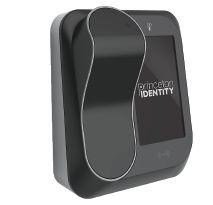
Multi-factor identity management
Princeton Identity
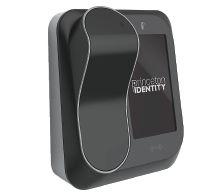
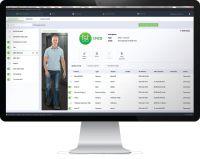
IOM Access200 is a feature-rich biometric solution with the ability to provide flexibility for various access control applications. The IOM Access 200 is presented in a compact design featuring multimodal (face & iris) and multi-factor capabilities (PIN & card). Utilizing patented technologies, the IOM Access200 is configurable and works with variety of protocols (including OSDP).
www.princetonidentity.com
Ruggedized biometric reader Safran identity and security
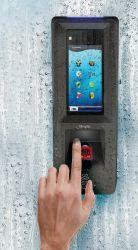
Based on the same platform as the entire SIGMA product line, the outdoor MA SIGMA Extreme is specifically designed to operate in harsh conditions, resisting rain, snow, dust and salt mist. The ruggedized biometric reader is designed for secure access control in challenging environments, such as mines, seaports, airports and industrial sites. In addition, all components adapt to demanding operating conditions, such as a field-proven, large area optical fingerprint sensor, a high visibility display, and a powerful loudspeaker. www.morpho.com
Indoor security camera with facial recognition
Netatmo
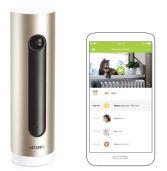
Due to its Artificial Intelligence algorithm, Netatmo Welcome’s Pet Detection is able to track motion caused by pets in real time. Users can choose to ignore motion alerts caused by pets or keep them running to check on their companions. With face recognition technology, Welcome also alerts users on their smartphone about intruders. www.netatmo.com
NVR with facial biometrics
American Dynamics
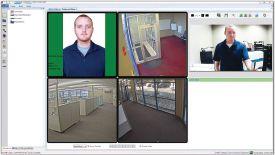
Facial biometrics can be added to a VideoEdge network video recorder (NVR). Users can conduct a SmartSearch within VideoEdge to automatically find a matching face and view the associated corresponding video. This allows security operators to identify criminals, terminated employees, VIPs and other persons of interest, while also enrolling and saving known faces with video associated for faster future investigations. Users are able to save up to 1,000 faces per NVR enrollment database. www.americandynamics.net
Fingerprint solution HID Global
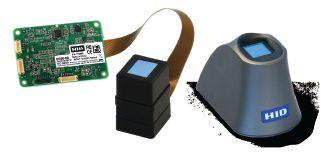
Lumidigm M-Series fingerprint solutions bring multispectral imaging technology into challenging yet cost-sensitive applications such as time and attendance, physical access control, banking, and health care. The enhanced M Series enables OEMs and IT security integrators to deliver authentication solutions that ensure customers, staff and citizens are who they say they are, reducing identity fraud risk and minimizing user frustration. Proven biometric identity protection provides reliable image capture for users in all conditions and high-performance liveness detection that prevents fraudulent use of fake or stolen biometric data. www.hidglobal.com
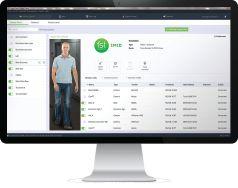
Biometric visual identification FST Biometrics
IMID Access 4.0 uses a fusion of biometrics-based technologies for identification-oriented applications, including access control, employee time-and-attendance and retail consumer experience. Utilizing FST’s visual identification technology, IMID Access can be implemented in low-light environments, is equipped to overcome fraud attempts, and employs long-term enrollment.
www.fstbm.com
Product Previews The latest in security technology
ATM lock
Sargent and Greenleaf
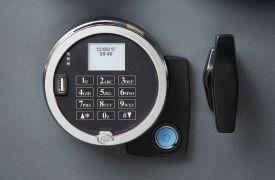
The A-Series with Display is the newest lock in the company’s ATM access control management system. The 30-character display screen includes universally recognizable texts, codes and icons. Regardless of native language, technical background or traffic and noise volume around the vicinity of the lock, the display screen allows trouble-free lock interpretation. With a verified USB flash drive, up to 1,000 events can be uploaded to coordinate and analyze the security for auditing. www.sargentandgreenleaf.com
Monitored smoke/CO detector
Honeywell
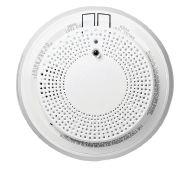
Honeywell released its first-ever professionally installed and monitored wireless combination smoke and carbon monoxide (CO) detector for homes. The 5800COMBO helps to protect homeowners from multiple dangers through continuous central station monitoring, compared to unmonitored detectors. The battery-powered 5800COM BO contains a built-in transmitter that allows central stations outside the home to monitor alarm events in the home — such as smoke and CO gas — as well as monitor for maintenance conditions. www.security.honeywell.com
Access control platform
Tyco Security Products
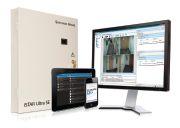
C•CURE 9000 v2.60 offers advanced access control policy enforcement and customization, after-hours reader groups, expiring clearances and other features. This latest version of the security and event management platform also supports IPV6 address protocols for the iSTAR Ultra door controller and introduces a new C•CURE 9000 Web Client user interface. Enhancements give the ability to configure the platform to create a new event after a number of consecutive rejections. www.swhouse.com
Request-to-exit detector
Camden Door Controls
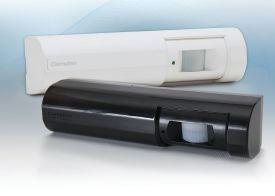
The CM-RQE70 - PIR ‘Request-to-Exit” detector includes door contact, card reader and switch inputs, two relay outputs, sounder and tamper alarm — and factory default operating modes that are selectable by the press of a button on the circuit board. The CM-RQE70 is be smaller, so it can be installed in more places, including door frames. Detector mounting and wiring is simplified with a plug-in wiring harness. www.camdencontrols.com/ rexdetector
Product Previews The latest in security technology
Cloud concierge solution
Galaxy Control Systems
Galaxy Cloud Concierge offers end users a turnkey, Cloudbased, fully hosted and managed access control and monitoring solution that integrates video surveillance, visitor management, elevator control, locks and turnstiles into a unified platform. Galaxy Control Systems offers Cloud Concierge in three configurations: an on-site, user-managed, Cloud-based system; a remote Cloud-based, user-managed integrated system; and a remote Cloud-based, reseller/integrator managed integrated system. Cloud Concierge incorporates AES encryption to ensure the security of data. cloud.galaxysys.com
Metal cabinets
STI
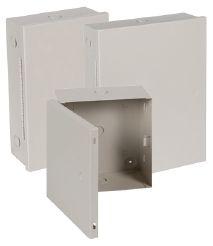
STI’s UL/cUL Listed Metal
Protective Cabinets are offered in a variety of sizes to house electronic devices. Suitable for junction and power supply boxes, the heavy-duty cans are constructed with a powder coated metal to help protect cabinet against corrosion. They have a continuous piano type hinge with the option of a key or thumb lock and seven ½, ¾ inch conduit knockouts. For indoor use, the enclosures mount on the wall enabling the protected units to be in their designated location.
www.sti-usa.com
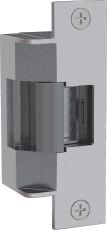
Electric strikes HES
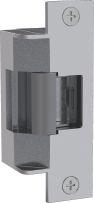
HES has upgraded the 7000 and 7501 series electric strikes with a new dual-voltage feature to provide greater flexibility for installers and eliminate the need to stock both single- and dual-voltage product. The 7000 and 7501 Series electric strikes support 12 and 24 VDC installation to simplify the ordering process compared to the previous single voltage option. The 7000 and 7501 Series are fail safe/fail secure, accommodate cylindrical latch bolts, are tamper-resistant, and suitable for metal and wood framing for commercial facility installations.
www.hesinnovations.com
Mobile situation management solution Qognify
Powered by CloudScann, Qognify Extend is a new suite of integrated mobile solutions designed to extend the effectiveness of an enterprise’s control room and operations. The suite includes modules such as: SeeItSendIt to enable field personnel to report into the control room using their smartphones; Live Video Broadcast is a special module allowing field personnel to broadcast live video directly to the control room; Dispatch provides operators with simple Computer Aided Dispatch (CAD) functionality; and Qognify VICC (Visual Intelligence Command Center).
www.qognify.com
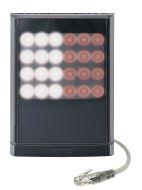
IP illuminators Raytec
Internet/home security software
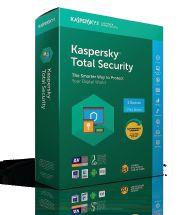
Kaspersky Lab
Kaspersky Total Security and Kaspersky Internet Security are designed to protect the modern household and help people secure their connected devices. System Watcher, the company’s improved anti-ransomware technology can combat the most complicated ransomware. To ensure users’ data stays private, a new App Lock feature for Android lets users set up a secret code to access select apps and keep others from seeing instant messages, images, emails and other sensitive files. www.kaspersky.com
VARIO2 IP Hybrid Illuminators combines Infra-Red, White-Light, IP connectivity and PoE technology into a single networked package. VARIO2 IP Hybrid utilises Raytec’s latest PLATINUM Elite twincore SMT LEDs which are over 200 per cent more powerful than previous generation LEDs. This allows Raytec to integrate all the performance of two full size illuminators (one Infra-Red and one White-Light) into one much smaller hybrid platform. www.rayteccctv.com
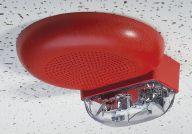
Addressable speakers SIMPLEX
TrueAlert ES Addressable Speaker Technology includes addressable speakers with individual on-off audio control for each device. The speakers have the capability to deliver audio messages to specifically targeted areas within a building, allowing the fire alarm panel to be programmed and select exactly which speakers are used — and what message is played on them — during an emergency. Like the entire SIMPLEX TrueAlert ES family of notification appliances, the speakers provide appliance self-testing capability that takes only seconds to complete, as well as advanced programming and reporting features.
www.tycosimplexgrinnell.com
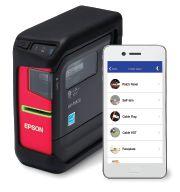
Professional label maker
K-Sun
The Epson LABELWORKS LW-PX400 is a portable industrial label and wire-marking printer for creating professional labels and markers wirelessly or via USB. The LW-PX400 can work wirelessly in the field via Bluetooth, using iLabel and Datacom apps for iOS and Android mobile devices or Label Editor Professional software for PC. Label Editor Lite software is available for Mac. Pre-loaded TIA-606-B patch-panel templates from selected hardware manufacturers make it possible to fit data into different-sized panels. www.ksun.com
HAS BEEN PROVIDING MONITORING SERVICES TO OUR DEALERS.
However, how do you gauge a Station’s commitment to its Dealers?
Early on, we owned wholesale and retail accounts, over half our revenue came from our retail subscriber base.
In essence we were like every other monitoring station, competing with our Dealers.
On many occasions we would be bidding for the same account, competing with our Dealers.
Partners and competitors on the same court, it just wasn’t good business.
How strong is our commitment?
We gave up retail monitoring and in doing so we surrendered over half our monthly revenue, Partnering with our Dealers.
We wrote our non-compete promise to our all dealers, partnering with our Dealers.
That’s right. Overnight. We gave up half our revenue.
We decided to fully commit Lanvac® to wholesale monitoring only, the dawn of a new era.
We did, we did it willingly, we did it on principle, and our conscience is clear. Welcome to LANVAC®, a monitoring station that truly is your partner in monitoring. John Georgoudes LANVAC®
For over 34 Years, Lanvac® has been at the forefront of innovation and excellence in Canadian Alarm Monitoring. www.lanvac.com
Montreal 5800 rue Iberville, Montreal, QC, H2G 2B7
Ottawa 2212 Gladwin Crescent Unit B6, Ottawa, ON, K1B 5N1
Toronto 2863 Kingston Road, Scarborough, ON, M1M 1N3
Vancouver 2830 Douglas Road, Burnaby, BC, V5C 5B7
AT YOUR FINGER TIPS
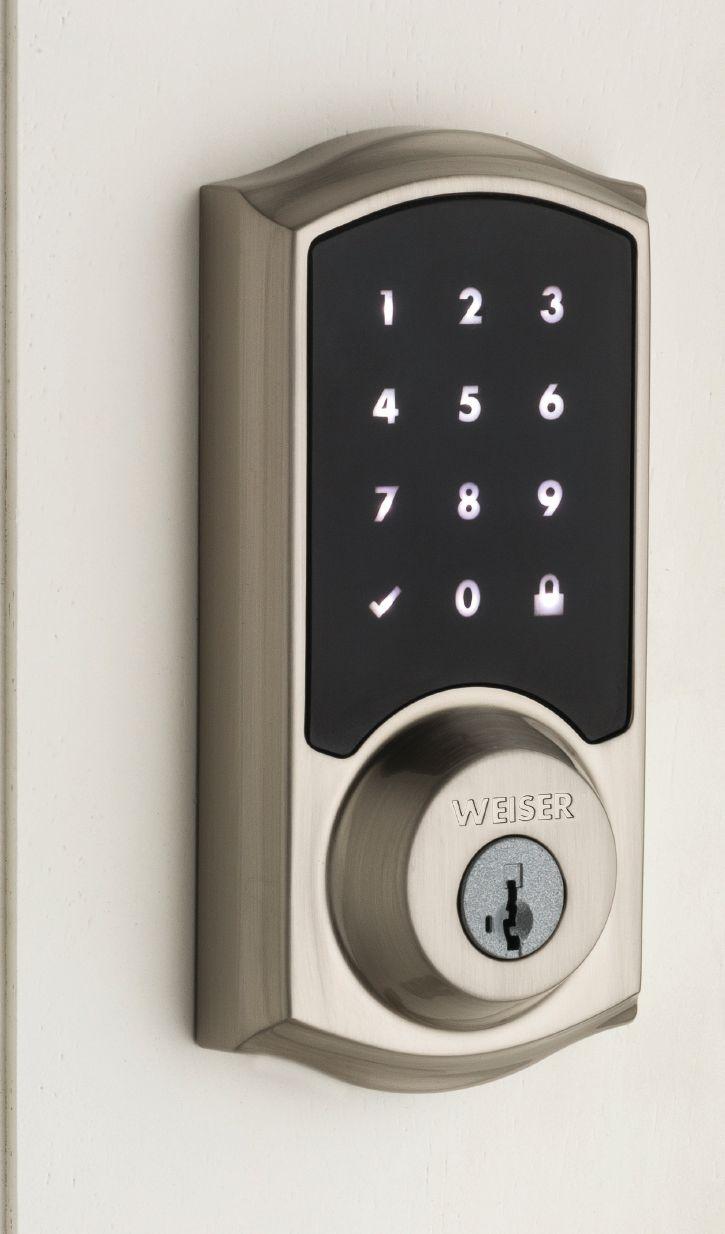
Weiser’s Home Connect Technology enables your Weiser door lock to wirelessly communicate with other devices in your home. Imagine locking your door from your cell phone or receiving a text message letting you know your child just got home from school. Home Connect Technology has the power to make it happen.