Supporting strong flock protection through trusted in ovo technology since 1992.
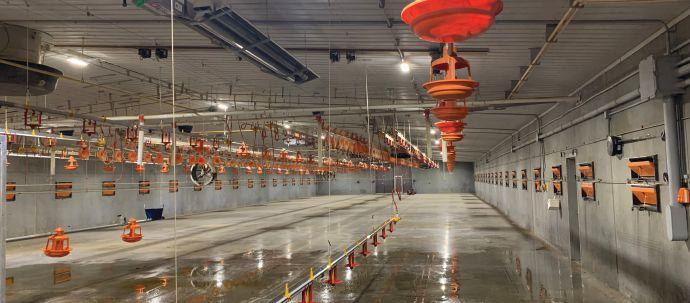
As the pioneer of in ovo technology, it’s not that we’ve been around for 30 years but what we’ve been doing to support hatchery success. From defining in ovo vaccination best practices to partnering with customers to provide valued solutions, Embrex® has helped hatcheries globally through trusted technology, service and results.
Discover the Embrex® Innovation Story at Embrex.com/InnovationStory.
by Brett Ruffell
Protecting poultry from trade concessions
Trade deal discussions can be unsettling for the poultry industry. While supply management offers many benefits, including stability for consumers, producers and other members of the supply chain, access to supply managed markets is often used as a bargaining chip during negotiations.
And the significant concessions Canada has made during recent pacts have real world impacts here at home, not just on chicken, egg and turkey producers but on feed providers, hatcheries and other suppliers.
“We know Canada is a trading nation and we support that,” says Roger Pelissero, chair of Egg Farmers of Canada (EFC). “But on the other side, we know the benefits that supply management brings.”
Now, EFC and the four other organizations representing Canada’s supply managed sectors have come together to support proposed federal legislation aimed at protecting these industries during future trade negotiations. It’s titled Bill C-282, An Act to amend the Department of Foreign Affairs, Trade and Development Act (supply management). Set to be debated in the House of Commons this fall or early winter, the private members’ bill would safeguard the sustainability of supply managed industries by preventing further market access concessions in future trade agreements.
“Every trade deal that’s out there would be honoured,” Pelissero notes. “But say there’s a new trade deal that comes along – what it does is it protects our sectors from a little bit more of that slice of pie being given away.”
He says that politicians he’s spoken to have been supportive of the bill, although some question the need for it. That’s because the federal government has pledged to protect supply management and says it has no plans to grant any further concessions. To that, Pelissero says that a statement is only a statement. A bill, on the other hand, is much more powerful because it would re -
“We know Canada is a trading nation and we support that. But we know the benefits that supply management brings.”
quire a vote in the House to change. “When we explain it that way, they understand our reasoning – why we would be looking for this bill.”
Then there’s the possibility of renegotiating existing agreements. For instance, some fear if the U.S. were to re-enter the Comprehensive and Progressive Agreement for Trans-Pacific Partnership (CPTPP), it might seek additional access to Canada’s poultry and dairy sectors. It’s something poultry organizations have raised with government officials. “If the U.S. is
looking for additional access above and beyond what’s already allowed in that trade agreement, we would strongly argue against it because it would almost be double-dipping,” Pelissero says, referring to additional access already granted through the Canada-United States-Mexico Agreement (CUSMA). Bill C-282 would prevent – or at least create a significant barrier to – that happening.
With the proposed legislation coming before the House soon, poultry organizations are encouraging producers to contact their MPs to voice support for the bill.
On the topic of trade deal impacts, Pelissero says the rollout of the Poultry and Egg OnFarm Investment Program has gone well.
As a refresher, the program provides Canada’s poultry producers with non-repayable contributions of almost $647 million over 10 years to invest in their barns and make their farms more competitive.
Pelissero says the program provides the perfect framework for the expected CUSMA mitigation funding that the federal government has yet to unveil.
Marie-Claude Bibeau, Minister of Agriculture and Agri-Food in Canada, insists that the CUSMA package is a priority. Says Pelissero of his discussion with her, “She did reinforce that it’s in her mandate letter and it’s something on her radar and we need to get it done.”
canadianpoultrymag.com
Reader Service
Print and digital subscription inquiries or changes, please contact Angelita Potal, Customer Service Rep. Tel: (416) 510-5113
Email: apotal@annexbusinessmedia.com
Mail: 111 Gordon Baker Rd., Suite 400, Toronto, ON M2H 3R1
Subscription Rates Canada – 1 Year $32.50 (plus applicable taxes) USA – 1 Year $91.50 CDN Foreign – 1 Year $103.50 CDN GST - #867172652RT0001
Occasionally, Canadian Poultry Magazine will mail information on behalf of industry-related groups whose products and services we believe may be of interest to you.
If you prefer not to receive this information, please contact our circulation department in any of the four ways listed above.
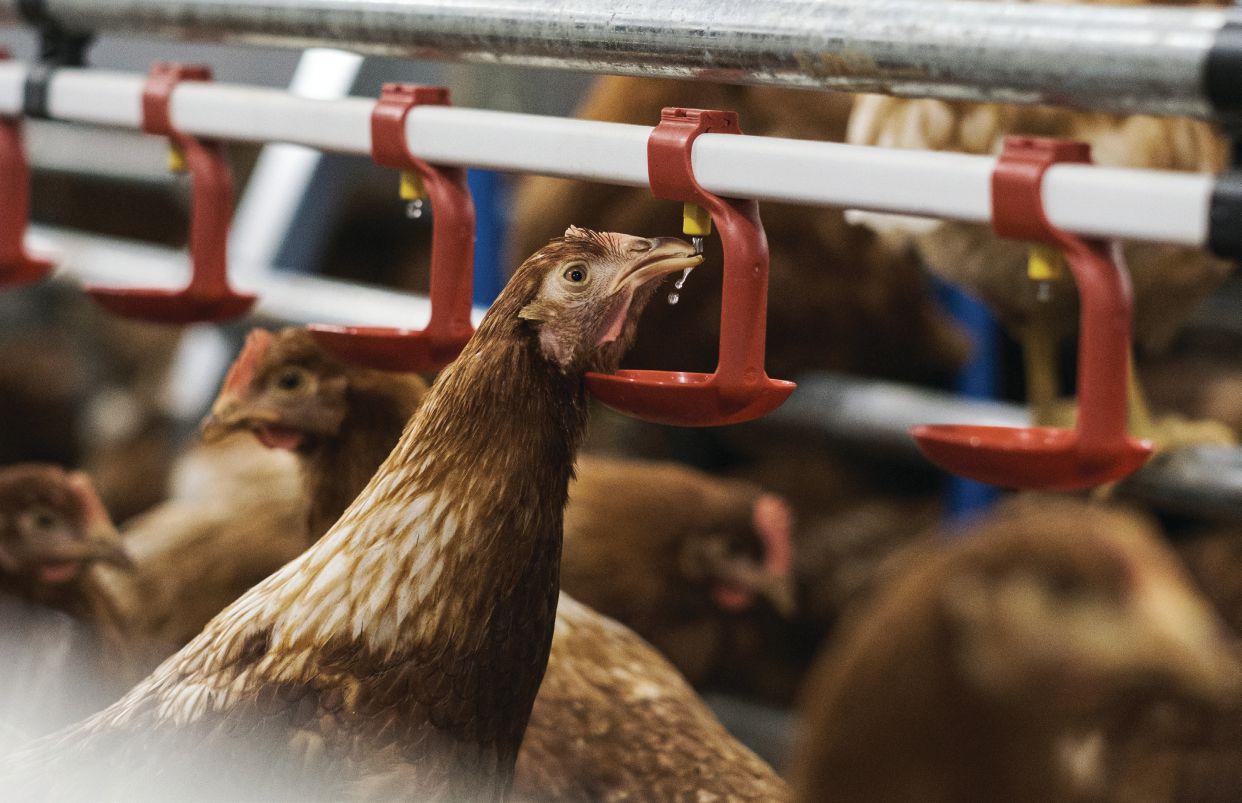
Farmers around the world trust our drinking systems to deliver a consistent flow of fresh water to their flocks for the best laying performance, and with our littergard cup your litter will remain dry and your birds healthy.
Glass-Pac Canada
St. Jacobs, Ontario
Tel: (519) 664-3811
Fax: (519) 664-3003
Carstairs, Alberta
Tel: (403) 337-3767
Fax: (403) 337-3590
Les Equipments Avipor
Cowansville, Quebec
Tel: (450) 263-6222
Fax: (450) 263-9021
Specht-Canada Inc.
Stony Plain, Alberta
Tel: (780) 963-4795
Fax: (780) 963-5034
What’s Hatching
Avian influenza persists in Quebec
Cases of highly pathogenic avian influenza continue to be confirmed in commercial poultry flocks in Quebec. The latest case was confirmed in a flock on July 22 in Saint-Gabriel-de-Valcartier, according to information from the Canadian Food Inspection Agency. Information concerning the size of the flock involved, or the species of birds in the flock has not yet been disclosed. The four most recent HPAI cases in Canada have all been in Quebec.
Senate concludes hearings on B.C. floods study
The Senate Committee on Agricultural and Forestry has concluded hearings for its study on the impact of the devastating 2021 floods on British Columbia’s agriculture industry and the federal and provincial governments’ response to the crisis. The committee will prepare a report on the study with recommendations for the federal government, which it intends to release in the fall. It is expected to include proposals around flood protection and climate change mitigation.
Canada bans raw chicken, eggs produced in several states
Cross-border grocery shoppers might get a surprise on the way back – raw poultry and egg products produced in Michigan and 20 other states can’t be brought into the country due to the threat of avian influenza. The Canadian Food Inspection Agency says that all poultry products and byproducts that are not fully cooked and canned or hermetically sealed that were sourced, processed or packaged in certain U.S. states are not allowed to enter the country.
$1.2M
is how much the federal government is setting aside for three organizations to help them launch insurance products for Canadian poultry producers. 3
is the number of organizations receiving the funds to roll out insurance programs, including POIQ, CEIRA and EQCMA.
Feds commit funds for poultry insurance programs
In late July, federal agriculture minister Marie-Claude Bibeau announced over $1.2 million for three organizations to roll out insurance products to help poultry producers better manage risks and mitigate losses that may result from a disease outbreak.
In addition to economic losses, disease outbreaks can have major impacts on animal welfare, food supply and producer mental health. By supporting industry partners, the federal government is contributing to the development of tools that help farmers manage these risks.
The recipient organizations include: Les Producteurs d’œufs d’incubation du Québec (POIQ); the Canadian Egg Industry Reciprocal Alliance (CEIRA); and Équipe québécoise de contrôle des maladies avicoles (EQCMA).
POIQ will receive up to $531,813 to implement and sustainably manage the Régime d’indemnisation des producteurs d’œufs d’incubation (Hatching Egg Producer Compensation Plan). This group insurance plan
was developed to cover losses and costs associated with the control of two diseases: Salmonella enteritidis or Mycoplasma synoviae Along with protecting farmers against financial hazards of these conditions, the plan also helps to ensure members adhere to testing protocols, mandatory reporting of any contamination and that farmers take the necessary steps to reduce the risk of spread.
CEIRA will receive up to $408,485 to update the compensation model for its insurance product that covers table egg producers against avian influenza. The changes will help ensure the viability and sustainability of this insurance tool. The funding also supports activities to raise awareness of CEIRA’s insurance products to poultry producers across Canada.
EQCMA will get up to $337,126 to develop and launch an insurance product to cover table egg producers against false layer syndrome, a health problem that affects the reproductive system of laying hens and causes a significant decrease in productivity.
LRIC Update
By Lilian Schaer
Livestock Research Innovation Corporation (LRIC) fosters research collaboration and drives innovation in the livestock and poultry industry. Visit www.livestockresearch.ca or follow @LivestockInnov on Twitter.
The future of livestock innovation
Innovation is widely touted as the source of solutions to many of the big issues facing animal agriculture, from climate change and environmental footprint to antimicrobial resistance and animal health and welfare.
According to Livestock Research Innovation Corporation (LRIC) CEO Mike McMorris, Ontario has a very good livestock innovation system, but as with anything, there are always ways to do things better – and it’s important to stay on top (or better yet, ahead) of changing trends and issues.
“Our organization has a mandate of continuous improvement, achieved best by working with all parties in the system, which includes industry organizations, University of Guelph and the Ontario Ministry of Agriculture, Food and Rural Affairs,” he explains.
It’s that mandate that led to a recent review of the innovation system by LRIC’s International Research Advisory Committee, a process that included a review of written briefs, and surveys of University of Guelph faculty and industry organizations. McMorris is pleased with the response rate of 53 faculty and 11 industry organizations, noting it demonstrates keen interest in charting a new course forward.
“The report is concise by design and brings clear focus to the need for more collaboration between industry, government and academia,” he says. “This is something we’ve been hearing about anecdotal-
“The report is concise by design and brings clear focus to the need for more collaboration.”
ly for some time, and this report confirms the need to make this a stronger priority for the livestock industry.”
The resulting report includes 10 recommendations developed by the committee that reflect the feedback received and can help result in meaningful change:
1. Closer working relationships between research and industry, along with well-defined problem statements from the industry
2. Adequate funding for Ontario’s new research and innovation facilities to ensure optimal return on the investment
3. Establishment of research priorities using a collabora-
tive approach that involves industry, government, and faculty
4. Willingness by the livestock sector to look sideways and learn about the issues and opportunities in other sectors
5. Competitively priced overhead charges at research facilities
6. More focus on the entire innovation system instead of one of siloed activities
7. Collaboration by industry, government and faculty to create a new system of Getting Research Into Practice (GRIP) with an industry champion for each project.
8. Include excellence in GRIP and building strong relationships with industry as part of the faculty reward system
9. Engage social sciences to help improve adoption of research results
10. A Canada-first focus in commercialization.
According to McMorris, LRIC will be focusing on two specific areas over the next year: developing a new process of setting research priorities and a new model for getting research into practice.
LRIC is recommending annual “Shark Tank” sessions to give researchers early industry input into research ideas and priorities. As well, cross-disciplinary research proposals –projects that include faculty from more than one department or school – should be encouraged and incentivized, and the timing of OMAFRA’s release of its research priority document should be consistent to give more time for industry input and proposal submission.
Industry, faculty, LRIC and OMAFRA must all work together to develop a new GRIP system. This should include enhanced communications, coordination of an annual livestock conference to bring together sector representatives for learning and discussion, and GRIP training and tools for researchers. As well, participation in GRIP should be included in faculty reward programs to encourage more widespread uptake and adoption.
“These recommendations also underscore the need for new poultry research facilities in Ontario, which, as we’re seeing in dairy and beef, will serve as the springboard for driving innovation in the sector,” adds McMorris.
The full IRAC report is available on the LRIC website at www.livestockresearch.ca.
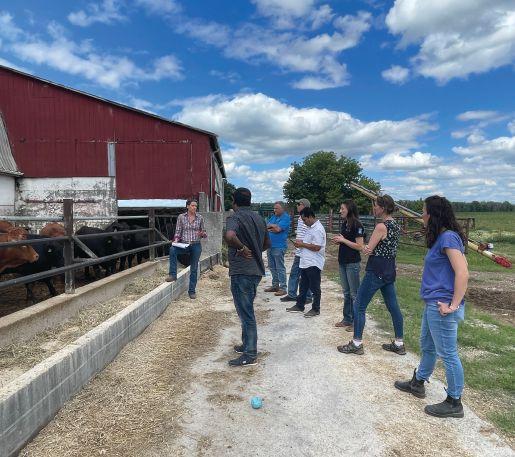
Early career researchers from University of Guelph on a farm tour as part of LRIC efforts to strengthen relationships between farmers and researchers.
World of Water
By Mary K. Foy
Biosecurity and your water system
Well sure, I know I’m supposed to clean my water system and treat my water, but how does the biosecurity on my farm affect the water?” Let me tell you a little story.
Greg was responsible for almost 100,000 birds every flock. He had been growing birds for over 20 years and was regularly a top performing grower. When it came to his water he would clean between flocks occasionally, but he had a good well and had never had any real water issues.
That’s why he was confused when one morning he opened the door to the barn and noticed some odd activity. As a few birds got up and moved around it stood out to him that none of them were eating or drinking. He had that stomach drop some of us know too well.
“Oh gosh, here it is….” What do you do first? Are they sick? Is it my equipment? Is the air moving? Too hot? Too cold? Is the feed auger working? Greg bent over to trigger a drinker, more out of habit than really thinking anything was wrong. Nothing. He walked 10 feet – still nothing. “No, no, no” he was thinking. He crossed to the other water line. Still nothing. Why would the water be off? Just totally off?
Some quick checking found that the water was not off. The pressure gauge was normal. There was no major leak – in fact his water meter was at a standstill – not a good sign. At the end of a water line, he took off a cap. A slight trickle of water poured onto the litter and then a few chunks of “something” dropped.
Greg started taking caps off the lines, putting buckets under them and flushing them. Immediately there were piles and piles of wet gunk falling into the buckets. The debris looked like red cabbage coleslaw. What in the world was going on his water line?
“Any reasonable measures we can take to reduce the size of that foreign population only helps us as growers.”
triggering every single drinker for fresh water then lowering lines) Greg was finally able to at least get water to his birds. Some of the sample he had flushed from the lines was sent to a forensics microbiological laboratory.
What had grown in his water line was an Auerobasidium spp. This is a yeast-like fungi that is common in the soil, especially agricultural soil. When the soil is dormant and dry the Auerobasidium spp. fungi release spores. Many of us may have seen this species on shower curtains or damp drywall. Young colonies will be pink then turn brown then black as they age. What had happened for this to wind up in Greg’s water line?
took his four-wheeler into his barns doing all the things we do to get ready for birds being placed.
The Auerobasidium spp. had come from the neighbors dormant, dry tilled land on Greg’s four-wheeler tires and was now, unbeknownst to Greg, in his barn. The daily stirring that occurs in a barn got the Auerobasidium spp. up on the drinkers then the warmth and the water source allowed it to flourish. It took a few weeks, but once the Auerobasidium spp. began to grow (in the perfect conditions for it) it took over the flora of the water line.
After a long day of work (raising water lines, putting in a water line cleaner, letting it sit a few hours, flushing it out,
After a few days of digging into the issue and asking questions, we found out that Greg had a neighbor that grew soybeans. A week before Greg got the last flock placed his neighbor was tilling under his now-dormant (for the season) crop land. Greg had gone over to the neighbor’s farm in his four-wheeler a few times that same week. Then he came back to his own farm and
If Greg had simply washed his four-wheeler tires before going into his barns and had water treatment going in his water lines, he most likely would have avoided this near catastrophe. No, rinsing some tires does not make them perfectly organism free, but what our biosecurity measures do is reduce the load of foreign organisms we bring onto the farm.
A smaller number of organisms has less of a chance of becoming a dominant population over the flora that is already present on a farm. Any reasonable measures we can take to reduce the size of that foreign population only helps us as growers. “
Mary K. Foy
Weeden Environments and Jefo Inc.
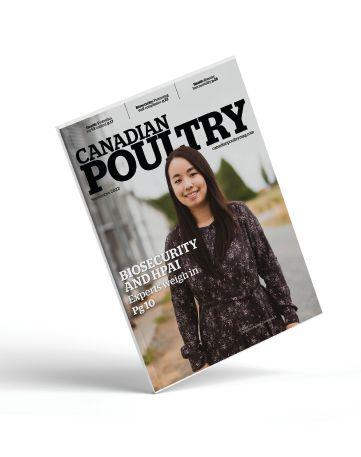
Biosecurity and avian influenza
Experts
from
different provinces discuss the role of biosecurity in Canada’s outbreak this year.
By Lilian Schaer
It’s not over yet, and already 2022 will be one that Canada’s poultry industry is unlikely to forget. It’s the year that brought the latest outbreak of Avian Influenza (AI) to Canada, affecting farms and flocks across the country as well as wild bird populations.
Despite its scope and severity, the crisis could have been much worse. A combination of industry-wide preparedness, earlier outbreaks in Europe tied to migratory bird patterns, and in particular, diligent attention to biosecurity all combined to lessen the impact and minimize the spread in Canada.
We checked in with a few industry experts across the country for their perspectives on the outbreak, particularly with respect to biosecurity.
Dr. Tom Baker is Manager and Incident Commander of Ontario’s Feather Board Command Centre, which coordinates poultry industry emergency response to disease outbreaks. Dr. Tom Inglis is the founder and a managing partner of Poultry Health Services Ltd. in Airdrie, Alberta. Dr. Luke Nickel leads Poultry Health Services’ operations in British Columbia
from his base in Abbotsford. Dr. Gigi Lin is a veterinarian with Canadian Poultry Consultants Ltd., also based in Abbotsford, B.C.
What was the scope and scale of Avian Influenza in your province?
Baker: Compared to 2015, when AI last hit Ontario, this outbreak was more intense and extensive, stretching in clusters from the southwestern tip of the province to the Quebec border. Twenty-six flocks were infected compared to only three in 2015, with wild birds playing a key role. About 23% of affected Ontario flocks were backyard flocks, which is a significant difference from 2015, and we had quite a diversity of flock types affected, particularly ducks and geese. Our last case was on May 18, and recovery is well underway in terms of virus elimination.
Inglis: We had the greatest number of cases and birds infected and destroyed in Alberta. We hadn’t seen highly pathogenic Avian Influenza in domestic poultry in Alberta for several decades, so it was new for us to be the centre of the majority of activity. The spread was from wild birds, and we had unrelated outbreaks in different regions. We spent more time talking about aerosol spread instead of infection
entering the barn on people. The outbreaks were across the province and across commodity groups, with a mix of commercial farms and backyard flocks.
Lin: It’s been unprecedented not only in Canada but globally with so many cases. Our practice got the first case in B.C. in April; we were lucky the first case was not in a dense commercial poultry area. We had a total of 18 cases in B.C., with four in commercial flocks and the rest in small flocks. It was not as bad as it could have been.
Nickel: We’ve had AI challenges in B.C. in 2004 and in 2014, so most producers are up to speed on the consequences of poor biosecurity and what that can cause. The B.C. industry moved to a red biosecurity status before we had any confirmed cases here and that helped us get ahead of it.
What tools or approaches were used to try to contain the outbreaks in general?
Baker: Collaboration between government agencies and industry was key. This was very well done with a lot of communication like webinars with small flock growers and daily updates on calls with industry, which really helped keep awareness up. You can’t control what flies overhead but you can
say diligent attention to biosecurity helped lessen
protect your flock and take steps to do so.
Inglis: We were looking at dead bird surveillance as a primary tool as opposed to swabbing all the flocks, which was a major improvement. Producer-collected samples let people test on-farm, and with smaller samples we didn’t use as many resources that were in shortly supply. The testing was also more accurate; we were finding AI more in dead birds.
Lin: Our biggest challenge was that our provincial laboratory had been damaged by the flood last November and it was still closed in April. I must give so much credit to the industry, especially the leaders running the Emergency Operations Centre for the
four feather boards in B.C. The conversation started last fall to get all the vets together on AI and prepare, and we went to red level biosecurity before we had a confirmed case in B.C.
Nickel: A lot of practical things were done like setting up extra disinfection areas for vehicles coming on-farm and people going in and out of barns, minimizing the amount of movement between sites and not sharing equipment, for example.
How big a role did biosecurity play in management of the crisis?
Baker: We knew this outbreak was coming so we discussed ahead of time and agreed that we would call for heightened biosecurity
across Ontario the first time we saw a suspect case in any domestic poultry flock. We activated that on March 26 with a list of measures and we think that it definitely played a role in preventing spread. Everything contributes; there is no single tactic but the system as a whole works together.
Inglis: I’ve been teaching and working on biosecurity for my whole career and the hardest thing is you never know how bad it could have been, you never know what you could have prevented. Nothing beats real experience, but we’ve done exercises, so we were as good as we could be even though geography is pretty punishing here with the population so spread out.
Looking
ahead to the next one
Official industry and government debriefs are still underway, but few early “lessons learned” include:
• Keeping biosecurity front and centre, including through regular refreshers for everyone in the industry
• Adding air flow and filtering to future biosecurity considerations
• Industry staying mobilized and aware of potential risks
• More timely, detailed and transparent communication
• Allocating more resources and surge capacity, especially with veterinarians
• Supporting routine surveillance work and epidemiological studies to boost understanding of AI
Experts
the impact and minimize the spread of avian influenza in Canada during this year’s outbreak.
Lin: It was huge. AI is a contagious disease and with resources so stretched with outbreaks in many provinces, biosecurity is what keeps the virus from going elsewhere. It also helps in dealing with a confirmed outbreak, from how to handle manure to how to deal with culls.
Nickel: It played a major role and was quite successful at minimizing the number of commercial farms infected. People took what industry and vets were telling them seriously and followed precautions. Even little things make a difference, especially in B.C. where farms are so close together. That’s why biosecurity is even more important here.
Which biosecurity practices were found to be most successful and why?
Baker: Most critical is separating flocks from direct or indirect exposure to a contaminated environment. Even if you don’t see wild birds, they may have been there and in cool, wet weather, the virus hangs around. When you think about the possibilities for exposure, that gives a bit more motivation for proper compliance with the measures and you can break that cycle of exposure.
Lin: There isn’t one thing, it’s a combination. I always recommend clients make a checklist for biosecurity that is relevant to their farm; it makes biosecurity more practical and reminds you of what needs to be done to keep disease away from the premise, not just the flock. One factor we can’t control is the natural environment, like wind direction, rain fall, or topography for water drainage, so we have to adjust for that to minimize what is coming into the barn. It’s more complex than just shutting the barn door.
Nickel: It’s everything together. For example, even if you’re the best handwasher but you don’t change your boots, the system can fall apart. The biggest lesson is to make sure you are thinking through why you do things and don’t be in a rush. Try to keep up the practices you’ve learned even after the outbreak. Even if it seems as though biosecurity is a small thing and there are bigger issues at play, it becomes a big issue if your flocks gets the disease.
ROSS DELIVERS
• Leading FCR
• Impressive Daily
• Strong Livability
• Highest Yield
• Excellent Breeder
Performance
• Exceptional Livability
Building for biosecurity
A closer look at the all-important barn entrance and other barn aspects that support maximum biosecurity.
By Treena Hein
The barn, especially the barn entrance area – is a critical factor for ensuring biosecurity measures are properly carried out in poultry barns. Everyone in the industry wants to make sure biosecurity is the best it can be, but how do we get there?
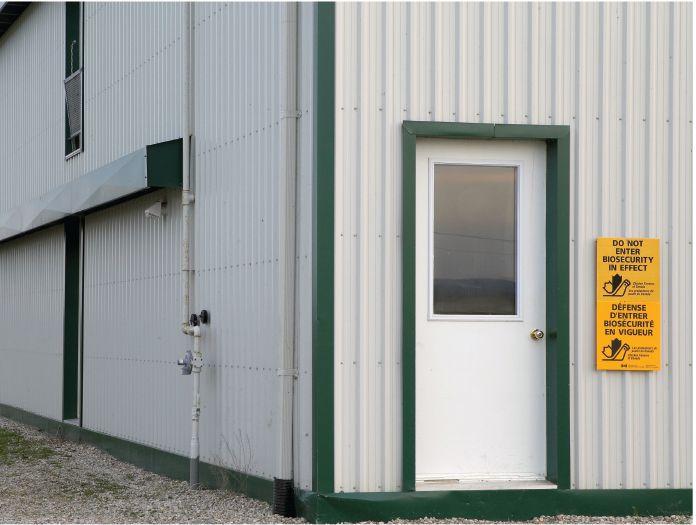
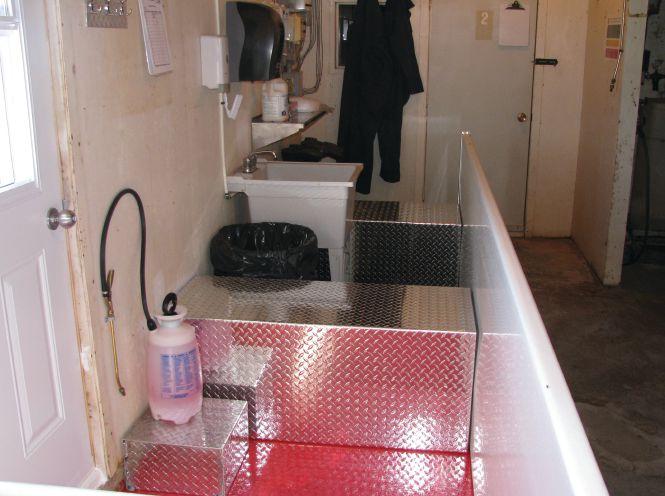
Chicken Farmers of Canada (CFC) guidelines outline the area needed in barn entrances to ensure enough room for mandatory footwear change and putting on premises coveralls. In addition, “a demarcation is required in the change area,” adds Steve Leech, CFC director of food safety and animal health, “and a barrier is highly recommended to fully enclose the restricted area.” Egg Farmers of Canada (EFC) guidelines similarly only require demarcation in the change area.
However, among those that believe strongly that physical barriers in the entry should be mandatory is Dr. JeanPierre Vaillancourt, a professor at University of Montreal and a member of CRIPA (Swine and Poultry Infectious Diseases Research Centre.
Neither ECF nor CFC tracks the number of chicken barns in Canada that have barriers versus demarcations, although CFC confirms that some chicken barns in Canada have barriers in place. Is it time that all barns should have them?
Optimizing the barn entrance
As noted in the compliance story in this issue of Canadian Poultry, demarcation in the entrance area does not ensure that boot changing, handwashing and donning premises coveralls are done every time a person enters the barn – especially in light of the fact that the virus for highly-pathogenic avian influenza is present in wild bird droppings that could be on the ground outside the barn or anywhere else workers or visitors have walked before they enter the barn.
Demarcations on the floor also do not do a good job preventing those in premises boots and coveralls from easily going outside for whatever reason, and then back in the barn.
“I do clinics in Canada and around the world, and they know I am there to present about biosecurity and they ignore
the clean/dirty zones right in front of me,” says Vaillancourt. “I was on a poultry farm in Quebec in late April 2022 for example, and there were migratory birds on top of the barn that I was taking pictures of. The farmer was in the barn and forgot something in his truck and came out wearing barn coveralls and boots into the yard where wild bird droppings were certainly on the ground. And I guarantee it’s the same in the rest of the country.”
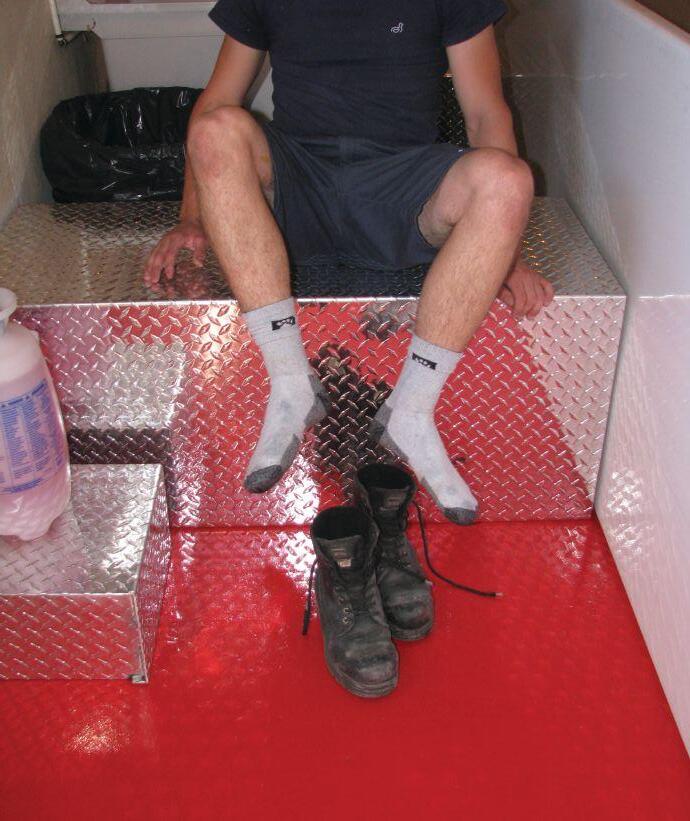
To solve this problem, “a small hallway with two benches (physical barriers), making three zones, would be the best,” says Dr. Manon Racicot, a senior veterinary epidemiologist at Canadian Food Inspection Agency and adjunct professor at the University of Montreal, who has done many biosecurity studies with Vaillancourt.
“In the first area, the ‘dirty zone’ where
Experts say it’s critical that poultry barn entrances be designed with biosecurity in mind.
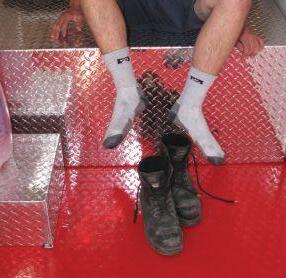
you enter and leave the building, you remove your footwear and jacket,” she explains. “A closet or closed wardrobe to put coats and shoes in is a good idea. You then sit on the bench and swing your feet over to the second zone. Here in the handwash zone, you wash your hands using a sink or alcohol-based sanitizer. You then sit on the second bench and swing your legs over to the third restricted zone, where you put on farm boots and coveralls.”
This three-zone hallway area should have enough room for one person at a time to do all this, but not be any larger. “Unused space in the entrance tends to become a storage area for equipment and supplies,” says Racicot.
The benches should ideally be removable to facilitate cleaning and disinfection of the entrance at the end of each flock (or oftener) but must extend to the floor to avoid the circulation of litter and dust between areas. If there isn’t enough space for this hallway in the barn, the front door might need to be moved or a building extension constructed. In terms of whether the industry needs mandatory
phase-in of entry areas with barriers like benches, Leech says CFC really wants to emphasize that each producer should do their own evaluation.
“They should examine their barn entrances and compliance rate with protocols and make any necessary changes to ensure biosecurity is respected,” he says. “But they also need to look at how pathogens can enter through water, pests and possibly air inlets.”
Other important entry aspects
In terms of other aspects of biosecurity in barns, Racicot and Vaillancourt advise that entry doors should have a spring that closes the door automatically. This ensures entry of flies and so on is minimized.
It also prevents workers from leaving the door open to bring down the temperature in the entrance area during the summer heat. That is, farmers need to buy a fan or install air conditioning to ensure the entrance area is cool, especially for premises with breeders where workers spend the entire day within the barn, says Racicot. Access to a washroom is also an issue for these workers.
Barn Management
The entrance door should also automatically lock, which prevents a visitor from entering the building without respecting the biosecurity measures. A lock system with numbers is probably an easier system to manage than keys.
To get in, visitors could call for the code and be supervised by the farmer or farm worker already in the restricted zone to follow the proper boot, handwashing and coverall steps, or follow the farmer or farm worker who is doing the steps ahead of them as they enter the barn together.
Carcass handling
From a biosecurity standpoint, experts advise against taking out bird carcasses through the front door used by employees and visitors.
“A covered chute that puts dead birds into an outdoor container is an ideal solution,” says Vaillancourt. “When there is no alternative but the door of employees and visitors, put a container in the clean area of the barn that remains in the building at all times and another container in the dirty area to avoid leaving dead birds on the floor and crossing the hygiene barrier/delimitation without applying the right precautions (e.g., changing boots).”
He adds that final disposal of the carcasses should be in a closed container with no access to wild birds and other animals. Leaving carcasses outside nearby each barn until the end of the day is attractive to wildlife and is posing a risk of introducing a disease.
Location and materials for barns
In the view of these scientists, there should also be strict norms for new poultry barn builds in Canada, including minimum distances from other poultry facilities. “They do this in Australia and in Italy,” Vaillancourt says. “In Italy, they have a series of risk factors that they look at, including distance from other farms, before they allow construction to occur.”
Research by Vaillancourt, Racicot and their colleagues has found that recommended distances from one poultry barn to another can vary from 0.5 km to 20 km, depending on factors like which pathogens are considered and prevailing winds.
CFC says that currently in Canada, chicken barn locations are provincially legislated and that these regulations can vary from municipality to municipality.
On July 22, a fourth farm in Quebec had an HPAI outbreak, in a turkey flock in Saint-Gabriel-de-Valcartier. On July 25, Vaillancourt said he was quite sure it was a turkey farm (at least two of the other eight Quebec cases have been on turkey farms) and reports that there is another commercial poultry operation very, very close to this farm. Vaillancourt is surprised HPAI outbreaks are continuing in Canada and believes that this shows the environment is very contaminated with HPAI.
Other considerations
In terms of barn construction materials, poultry farmers are already aware that materials should be durable, easy to clean (scrape and sweep) and easy to disinfect through pressure washing and application of disinfectant. (See the November 2021 edition of Canadian Poultry for a story on the benefits of Insulated Concrete Form construction for biosecurity and more).
However, farmers may not typically include a fumigation room in the barn design. “Objects or equipment that cannot be washed with water can be disinfected through hand wiping, but fumigation is recommended,” says Vaillancourt. “It’s more thorough and a better standard procedure because leaving disinfection done by hand means it doesn’t already get done.”
A fumigation room should be located near the entrance. This room must be airtight and have two accesses, one from the outside to place equipment into it, and another access inside to recover the disinfected items. No one in Canada or beyond wants disease to enter poultry barns and everyone wants compliance with required barn biosecurity measures to be as high as possible. Time will tell if the three-phase entry or other aspects described in this and the other article in this issue will become mandatory over time to achieve this.
For maximum biosecurity at the barn entrance, experts recommend having three zones separated by barriers, including a ‘dirty zone’, a handwashing zone and a zone to put on boots and coveralls.
Seeking synergy
New probiotic prospects for controlling necrotic enteritis.
By Jane Robinson
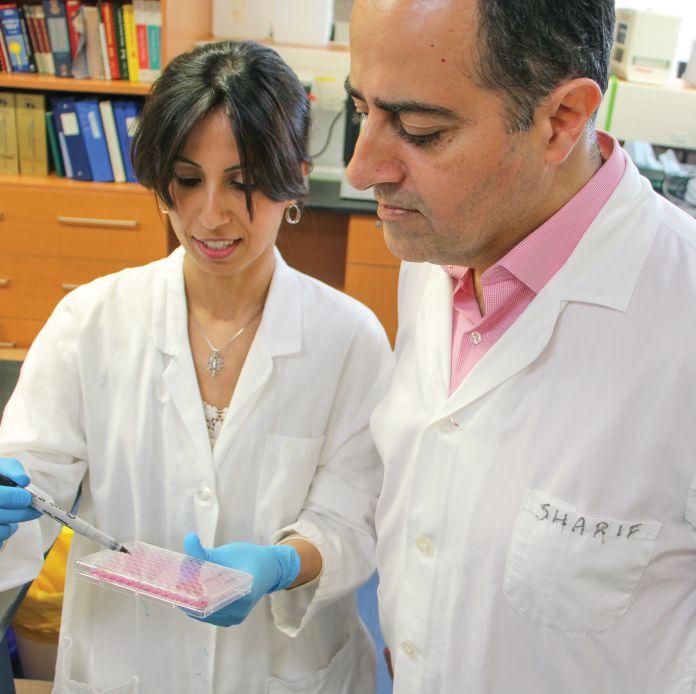
Dr. Shayan Sharif’s latest research on necrotic enteritis (NE) takes two different approaches to controlling the disease and one of its key causal agents, Clostridium perfringens. He’s identified new strains of probiotic bacteria and created a new NE vaccine, and is now hoping to discover added synergy by combining them.
Sharif, associate dean of research and graduate studies, Ontario Veterinary College at the University of Guelph, is leading a large research project investigating the use of beneficial microbes to improve poultry health, as researchers continue exploring antibiotic alternatives in Canadian poultry production. “We know that birds with a healthier gastrointestinal tract are less likely to allow pathogenic bacterial infections,” says Sharif.
The big picture for the multi-disciplinary project is to look for ways to mitigate the risk of NE in broiler production. It’s a disease that primarily concerns broilers, but NE can also impact the layer industry and possibly turkeys.
For Sharif’s piece of the puzzle, he’s looking at the use of beneficial microbes (probiotics) in the poultry gut and also looking to create better vaccines against NE. There are currently no approved NE vaccines registered in Canada.
Probiotics are well recognized in their role to improve gut health, boost immunity and arm birds with a stronger defense against pathogens. Sharif and his research team began their project by isolating more than 50 strains of lactobacilli – beneficial microbes that are naturally occurring in the bird’s gut, and
screened them in the lab to identify which would be more efficacious against C. perfringens
Reduce the risk with probiotics
In the first part of their research project, they used several strains of lactobacilli to evaluate the ability of the microbes to reduce the risk of infection from C. perfringens. “We’re tapping into the mechanism that microbes use to reduce the risk of disease,” says Sharif.
The probiotic cocktail was administered orally to young birds before they were challenged with C. perfringens and they then measured the amount of the pathogen in the bird’s gut, in addition to
severity of necrotic enteritis. “We found that if we gave young birds the lactobacilli before they were exposed to C. perfringens , there was a significant reduction in the amount of C. perfringens and a significant reduction in the clinical severity of the disease,” says Sharif.
Prevent the disease with vaccines
The second part of the project involved developing a new vaccine for NE to test in the lab and in a semi-commercial setting at the University of Guelph’s Arkell Research Station. “Like any vaccine, we are trying to boost immunity to disease by using the bird’s own immune system to mount a response against C. perfringens
Dr. Shayan Sharif (right), associate dean of research and graduate studies, Ontario Veterinary College at the University of Guelph.
in order to protect itself from the pathogen.”
To test the new NE vaccine, they used a different beneficial microbe (lactococcus) to deliver the vaccine. Like the lactobacilli strains used in the probiotic, lactococcus is also a beneficial microbe that has been used for the delivery of recombinant vaccines to several species, including mammals and birds.
“Lactococcus delivers its cargo – the antigens against C. perfringens – into the bird’s gut and at some point is cleared from the gut. But we found that this probiotic delivery mechanism could also have some beneficial effect against C. perfringens in the bird.”
Young birds were inoculated orally with the lactobacilli-based vector vaccine and then challenged with C. perfringens. They found that inoculation can help boost the bird’s immune response to protect it from NE, as measured by a reduction in gut lesions and an improvement in the intestinal mucosa.
Safe and efficacious alternatives
Both strategies for controlling NE brought similar,
encouraging results. “We found that we can indeed reduce the risk of NE in poultry using both beneficial microbes and with vaccines, and results from both approaches were quite comparable,” says Sharif. Those findings are feeding into the third and final part of the five-year study.
“What we want to do now is combine the two probiotics that were used separately in the first part
Sharif is investigating the use of beneficial microbes to improve poultry health, as researchers continue exploring antibiotic alternatives in Canadian poultry production.
of this project – lactobacilli in the probiotic and lactococcus in the vaccine –put them both in the gut and see if they synergize to multiply the impact of these two approaches to controlling NE,” say Sharif. “Hopefully in about a year’s time, we’ll have the answer to this part of the project.”
Commercializing new control options
The question of when new antibiotic alternatives like these could be commercially available is anyone’s guess. Sharif is confident that they have two safe and efficacious products – one in the form of a beneficial microbe and one in the form of a vaccine.
“We have done our lab testing and the next level would be to take these products to commercial testing,” says Sharif. “But it’s really the interest of the industry that drives the next steps towards commercialization.”
One of the good outcomes from the COVID pandemic is the time it takes to bring a new vaccine to market. “If COVID vaccines have given us any indication of how long it could take to develop a new vaccine – it could be a matter of months to hit the market and not years, as it would have been in a pre-pandemic era,” he says.
He’s hopeful that with all the testing they have done on these new options for mitigating the risk of NE from C. perfringens that producers don’t have to wait for years before we could see these products in the market.
NE is a complex disease that does not have just one root cause. There are many parameters that come into play – beyond the presence of C. perfringens – including the presence of other pathogens, dietary components including high protein, and the bird’s genetics. “I am developing a better appreciation for how complex this disease is,” says Sharif. “We will never eliminate NE, but we are going to find a way to develop a better strategy for mitigating the risk of this disease for our poultry industry. Maybe the products we’ve created, or a combination of therapies, will be a good solution for the future.”
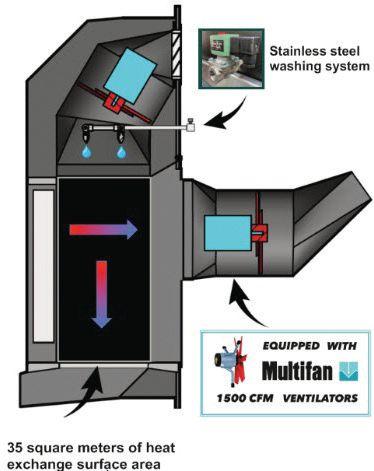
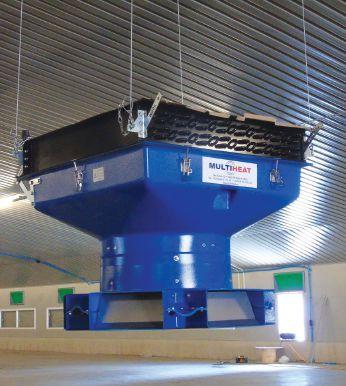
Avi-35 Hybrid Heat Recovery Unit
Multiheat Hot Water Heaters
• • No CO2 production
• Drier Litter
• Reduction of ammonia
• No open flame
• Lower energy costs
• Easy to clean
• Available up to 375,000 BTU
• Provides up to 50% fuel savings
• Lowers energy consumption
• Reduces CO2 and ammonia emissions
• Lowers relative humidity which improves air quality resulting in drier litter
• Automatic washing system
• Energy efficient variable speed motors
Wall Inlet by TPI
• “W” shape produces 2 jets of fresh incoming air allowing for optimal performance during minimum ventilation
For a quote contact your local dealer or call us for a dealer near you.
• When flap is open over 35% (maximum ventilation) air is directed downwards providing a cooling effect
The incredible nominations we received for this program’s third year highlighted just how many influential women there are working in Canada’s agriculture industry.
To our Top 7 recipients, those who nominated an influential woman, those who offered support through social media or tuning into the podcast series on AgAnnex Talks, and to our generous sponsors:
CONGRATULATIONS
WOMEN IN CANADIAN AGRICULTURE WINNERS
Presented by
Sponsored by
Christine Noronha
Heather Watson
Karen Tanino
Lana Shaw
Lisa Mumm
Mary Ruth McDonald
Valerie Carney
Biosecurity compliance
Faced with disease threats, experts say training and monitoring are key to barn staff adherence.
By Treena Hein
Biosecurity on poultry farms is again in the spotlight this year due to widespread outbreaks of highly-pathogenic avian influenza (HPAI) – the first time this has happened in seven years. The two major outbreaks in Canada in 2004 and 2015 caused severe industry financial losses.
Since December 2021, outbreaks occurred in poultry flocks in Nova Scotia, Ontario, Alberta, New Brunswick, Manitoba, Quebec and Saskatchewan. This HPAI strain also entered hundred of flocks across the US and in Europe. Over 20 countries placed temporary bans on the import of Canadian birds or poultry products from some areas or provinces.
It’s therefore a good time to assess onfarm biosecurity protocols and adherence (compliance) with those protocols.
Steve Leech, director of food safety and animal health at Chicken Farmers of Canada (CFC), notes that pathogens can enter a barn through people, equipment, pests or through water or air. Regarding this spring’s HPAI outbreaks, Leech explains that the Canadian Food Inspection Agency (CFIA) is doing an epidemiological analysis of farm infections, and this report will guide the entire industry in terms of any additional protocols or compliance issues that may need to be
addressed. Continuous education with all members of the supply chain about biosecurity is important.
To date, according to Leech, it appears that the majority of infections were ‘single-point’ infections (that is, not farm-tofarm). Leech considers these findings to be “a very positive reflection on our biosecurity system, which involves farmers,
veterinarians and many other farm services. Our communication with CFIA is ongoing and we’ve also been in touch with some of our counterparts in other countries to share knowledge.”
Leech believes that HPAI transmission via ventilation could have played a large role. “With wild birds infected with HPAI, their proximity to air inlets when they
landed in fields beside barns,” he says, “subsequent transmission through air into the barns, is a plausible transmission route that needs to be further explored.”
Egg Farmers of Canada (EFC) currently has a couple of research projects related to controlling virus transmission, one on AI headed by Dr. Shayan Sharif at the University of Guelph.
Dr. Jean-Pierre Vaillancourt, a professor at University of Montreal and a member of CRIPA (Swine and Poultry Infectious Diseases Research Centre), notes that flies may be of particular concern. He has been studying on-farm biosecurity protocols and compliance for many years, in Canada, the US, Europe and Africa, sometimes in collaboration with Dr. Manon Racicot, a senior veterinary epidemiologist at CFIA and adjunct professor at the University of Montreal.
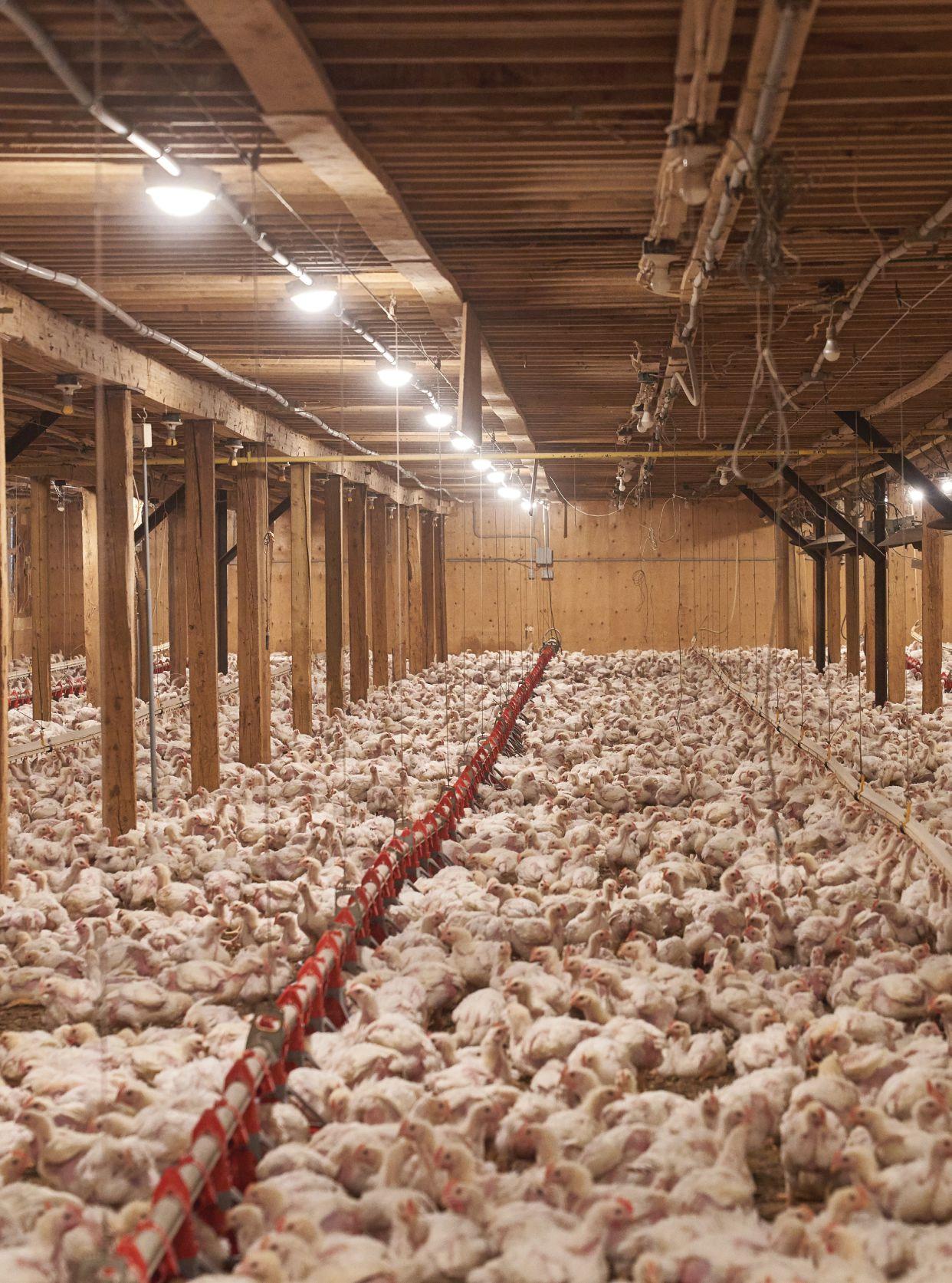
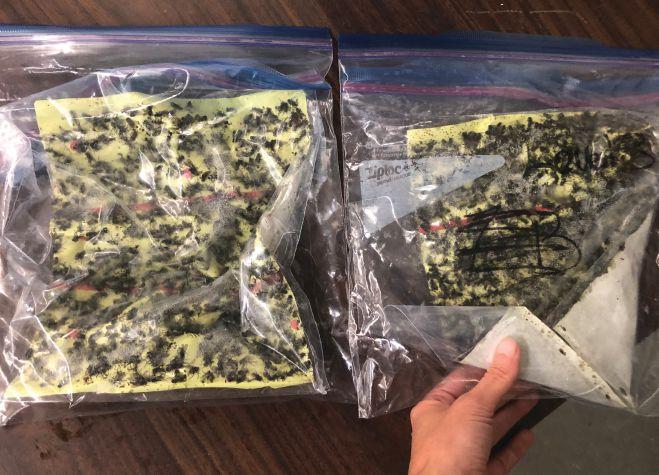
Because studies in Japan have found that flies are carriers of the HPAI virus, they carried out a small study of flies in mid-July 2022, funded by the Quebec government. They analyzed 600 flies from a three-storey turkey Quebec barn, and have found so far that many flies were carrying HPAI on the second. No flies were trapped in outdoor traps. Third floor analysis was taking place at publication time (end of July) and plans are being made to test darkling beetles.
On July 22, a fourth farm in Quebec had an HPAI outbreak, in a turkey flock in Saint-Gabriel-de-Valcartier, according to the CFIA. On July 25, Vaillancourt said he was quite sure it was a turkey farm and that he is surprised outbreaks are continuing. He believes this shows the environment is very contaminated with HPAI.
Three other recent HPAI cases were confirmed in La-Jacques-Cartier Quebec on June 28, July 3 and July 9, at least two in turkey flocks. The other most-recent case was on June 8 near Langley, BC.
Researcher’s perspective
In terms of on-farm biosecurity protocols, both CFC
and EFC on-farm food safety program guidelines require change of footwear, hand sanitation and donning of premises coveralls for workers and visitors to poultry barns, in addition to other requirements.
However, Vaillancourt and Racicot are not convinced that poultry workers on every Canadian farm are aware of protocols and/or comply with them consistently. “I have little evidence that compliance has improved over the years, since we did the study in 2011,” Vaillancourt says. “This is certainly what I observe when I go to farms, whether they are in Canada, the US or the parts of Europe I have visited in recent years.”
Regulations cannot be enforced, so education and training is key. Family members also need to be trained properly, adds Racicot.
“I ask them to show me the data that training is working, that it has value, and none of them have shown this to me,” Vaillancourt reports. “Also, if you check, a lot of employees never get biosecurity training. It’s very uneven. I understand that not all farms have workers but where they do, it’s not sufficient for the farmer to just tell them what to do. The workers need proper training and to understand the ‘why’ behind the training. You have to motivate them to do what needs to be done, every time.”
EFC confirms that egg farmers are trained on biosecurity
LAYER
A Quebec study of HPAI-infected barns found many flies were carriers of the virus.
The future of egg farming
Egg Farmers of Canada is committed to the next generation of egg farmers. Our national young farmer program and women in the egg industry program are focused on preparing the future leaders of our sector. We’re proud to create opportunities for leadership, continuing education, skill-building and mentorship. Contact your egg board if you or someone you know is interested in participating.
Get all real-time performance data at a glance
(within the on-farm food safety program) by the provincial egg boards and it’s the farmers’ responsibility to train their employees. CFC’s ‘On-Farm Food Safety Program’ has a specific chapter on training farm workers for biosecurity and more. Under the program and its audits, all farm workers must be trained and evaluated, with training records kept for each worker.
Vaillancourt adds that in Quebec (he’s not sure about other provinces), there are more and more people working on farms who have Spanish as a first language, so this means that training needs to be in that language. “Even for English and French workers,” adds Racicot, “reading capacities are an issue. Videos, clear signs with pictograms, etc. are needed.”
Automated compliance
Vaillancourt and Racicot believe that in addition to proper training, the future of biosecurity protocol compliance should be in automated barn sensors systems that prevent lapses in compliance through real-time feedback.
“We’ve been investigating RFID chip technology that is in place in hospitals in contagious settings, where you trigger an alarm if you aren’t in the proper gear or don’t use the hand sanitizer dispenser,” says Vaillancourt. “We did a pilot study and it showed this made a difference on poultry barns. In that study, we put chips in off-farm shoes with employee permission so that an alarm would go off if the shoes were worn past the barn entry (i.e. clean area).”
In a second study, done with Maximus, a maker of barn control systems, the farm boots are chipped, two antennas are displayed, one in the dirty and one in the clean area. The system monitors boot and hand sanitizing compliance and can trigger an alarm when biosecurity breaches occur. “We’re now working with Maximus to commercialize a system for poultry or pig barns,” says Vaillancourt. “We’re looking at where the RFID antennas need to be placed, and so on.”
In 2020, Racicot and Vaillancourt presented results of a prototype called the MediHand Trace System (inspired by the system developed by Maximus) at the Poultry Tech Summit in Atlanta, Georgia. On a Quebec egg farm, 254 entries and exits by four employees were recorded for 17 days in 2019. Boots were changed 93 per cent of the time and hands were sanitized 68 per cent.
For the nine non-compliant shoe events, compliance only increased by 22 per cent after hearing the alarm, and for the 81 non-compliant hand sanitizing event, 32 per cent were corrected after the alarm rang. In the broiler farm trial, boot compliance was total and hand sanitizing compliance was 73 per cent. Out of the 15 non-compliant hand sanitizing occurrences, only one was corrected after the alarm rang.
From these results, Racicot and Vaillancourt conclude that a continuous monitoring system seems to improve biosecurity compliance (almost twice the compliance percentage compared to previous studies) and should be used to reward and motivate employees by providing personal performance and peer comparison data.
Meet the 2022
Please join us along with our sponsors in congratulating the following four producers selected as part of this year’s program:
CONRAD Vanessen Egg farmer, Egg Farmers of Alberta director, Coaldale, Alta.
EMMA Rutherford Broiler farmer, Woodstock/Embro, Ont.
DR. TERYN Girard Veterinarian, Prairie Livestock Veterinarians, Red Deer, Alta.
DAVID Arand Turkey farmer, Atwood, Ont.
For more on each of our honourees, visit canadianpoultrymag.com/top-4-under-40/ or scan here!
Listen to exclusive podcast interviews with our winners now!
Hen mortality
Understanding it at peak broiler breeder production.
By Dr. Benoit Lanthier
Mortality can be due to disease but can also be a management problem.
Poor flock management can cause high mortality leading into production or persistent mortality throughout the life of flock.
To determine mortality issues possibly related to management, begin by creating an accurate picture of the causes of mortality. Post-mortem examinations will provide much of the information. However, be careful when interpreting data from post-mortems.
If data is collected from only a few hens, the results may be misleading as several different diagnoses within a small population will not provide an accurate conclusion.
A good practice when troubleshooting higher than normal mortality for a flock or a complex is conduct post-mortem examinations on all the daily mortality of affected flocks once a week. This practice
will increase the sample size and give a good representation of the cause.
After collecting, it is recommended to group the data in broad categories. Examples include infection, prolapse, sudden death syndrome, runt, lameness, and no lesions. Each case should be put in the category that best describes the primary issue.
The data can then be graphed giving the farm manager a broad perspective of mortality causes. Understanding the main cause of mortality is important to make targeted adjustments to a management program.
Photo stimulation Preparation for photo stimulation
A common cause of hen mortality is inadequate preparation for photo stimulation. The pullets need to have the right weight, age, fleshing and fat reserve to respond well to photo stimulation and achieve a high peak of egg production
with low mortality.
Poorly conditioned pullets will fail to respond to photo stimulation and will have low peak production and increased mortality. When photo stimulated, poorly conditioned pullets may die due to prolapses, sudden death syndrome (SDS), or peritonitis issues and may have issues associated with overstimulation including a high number of double yolk eggs.
Some poorly conditioned pullets do not mature properly and will become overweight producing few to no eggs. Overweight pullets are also more susceptible to mortality than hens at target weights.
Flock uniformity is an important part of preventing mortality. A flock with poor uniformity will have both immature and overweight pullets at photo stimulation. Both the poorly conditioned and the overweight pullets will have more issues after photo stimulation than pullets that are correctly conditioned.
A flock should be ready for photo
Providing the correct amount of feeder space so that all hens can access and eat comfortably is important for flock uniformity and, in turn, preventing weight related mortality.
OCT. 18, 2022
10:00AM MT / 12:00PM ET
INSPIRE | LEARN | LEAD | CONNECT
Register for this free, virtual mentorship-style event with some of the most influential female leaders in Canadian agriculture.
Hear from the 2022 Influential Women in Canadian Agriculture program and other industry trailblazers on important topics such as leadership, balance, and communication.
Join Lana Shaw, Megz Reynolds, Valerie Carney, Heather Watson, Lisa Mumm and more for an afternoon of interactive discussions as they share their experience, offer guidance and discuss their journey in agriculture.
Gold Sponsors Bronze Sponsor
Platinum Sponsor
stimulation between day 147 (week 21) and 154 (week 22) depending on the line (see our Parent Stock supplements for more information at www.cobb-vantress. com). If the flock is not in the correct condition at the recommended time, it is possible to wait an additional week to give the first light increase, but it’s not advisable to wait longer than one week. The best way to determine if a flock is ready for photo stimulation is to evaluate fleshing scores and pelvic fat reserves. At photo stimulation, all females should have a fleshing score of three or higher. The majority (>90 per cent) of the pullets should also have enough pelvic fat reserves. Having enough, but not too much fat, is essential for the hormonal response to photo stimulation.
Photo
stimulation program
Pullets are usually on an eight-hour light program in the pullet house. The goal is to increase to 14 hours as fast as possible. A good strategy is to increase from eight to 12 hours for the first increase. After two weeks of 12 hours of light per day, increase the light length by one hour every week until the flock is receiving 14 hours each day. When light is increased too quickly, flocks show signs of overstimulation such as a high percentage of double yolks, peritonitis and prolapses.
Along with length, light intensity is also increased. The intensity is increased between 50 and 100 Lux (5 to 10 fc) on the
first increase in day length.
Feed
management
Feeding from photo stimulation to peak egg production
Giving large feed increases beginning at photo stimulation through the onset of production can overstimulate the pullets. Hens are especially sensitive to aggressive feed increases when production is less than 30 per cent. Once 30 per cent of the flock is laying, larger feed increases can be given. Please refer to your Cobb technical service advisor for more details on how to manage feed coming into production.
Feed availability
Feed should be equally available to all the hens and distributed in less than three minutes. So that all hens have easy access to feed, correct feeder space is necessary. We recommend at least six inches (approximately 15 cm) of chain feeder space per bird or 10 to 12 hens per pan (30 cm /11.8 in. diameter).
Poor feed distribution or feeder space can create problems for the flock. Smaller hens that cannot compete for feed may not consume enough feed to sustain themselves and egg production will drop or even stop. These hens are also susceptible to diseases such as bacterial arthritis. The bigger hens, that outcompete smaller hens, will become overweight leading increasing their risk for weight related mortality issues.
It is very important that pullets find feed and water after transfer. This is especially important when birds have different feeding systems in the pullet and production houses (ie: going from pan feeders to chain feeders). The pullets will also need to learn to jump onto the slats. Placing enrichments (slats or perches) in the pullet house can train the pullets how to jump. If chain feeders are used in the pullet house and they are low enough, birds can also learn to jump over the feeders.
It is highly recommended to spend a lot of time walking the house to move the birds towards the slats so they can find water. Likewise, be present at each feeding time and walk around the house to move birds towards the feeders if needed.
Nutrition
Good nutrition is essential to promote high performance in broiler breeders. If there is a high number of hens dying of SDS, it is possible feed formulation is wrong. High sodium in feed and/or water can cause SDS, hypophosphatemia (phosphate depletion) and hypokalemia (potassium depletion). Review the feed electrolyte balance and test the water if SDS occurs in the flock.
Calcium tetany is also a problem associated with feed. Using large particles of calcium in the feed and providing oyster shells in the afternoon are good ways to meet the hen’s calcium requirements. Switching from Developer to Breeder feed should be done at first egg to supply the calcium that the hens need for egg production. If breeder feed is given too early, the birds will not be able to absorb calcium efficiently when egg production starts. If breeder feed is given too late, bone calcium reserves can become depleted.
Environment
The environment is very important to promote good performance. Stresses such as loud sounds, visitors, and poorly maintained equipment can cause mortality. A stressful event worth noting is heat stress which happens primarily at feeding time. While eating and digesting, the birds generate a lot of metabolic heat. Observe
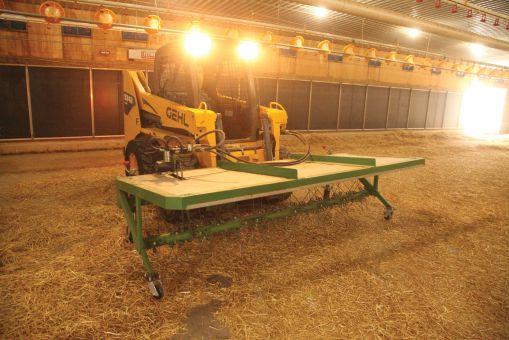
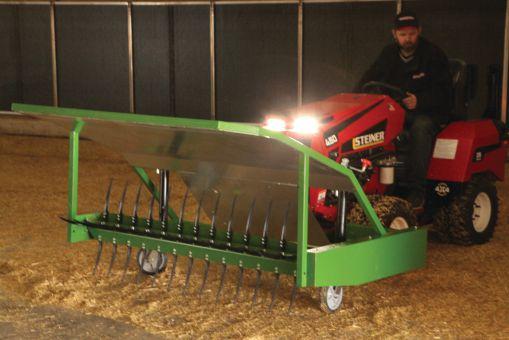
Quick Attach Bedding Management for Poultry Barns
Quick Attach Bedding Management for Poultry Barns
Benefits of the Rotary Fork
Benefits of the Rotary Fork
• Use less straw (also works for shavings)
Use less straw (also works for shavings)
• Create a base that is nice and flat for waterers & feeders
• Save on fuel vs. blown in bedding
• Fast and easy process, can be done by 1 person
• Barn setup according to your own schedule, not dependent on weather
• Barn setup according to your own schedule, not dependent on weather
2 Sizes Available:
• 9’ Fork (9’ 8” Overall Width)
• 5’ Fork (70.5” Overall Width)
• Available in Skid Steer, ALO & Manitou
• Available in Skid Steer, ALO & Manitou mounting configurations
•
• Hydraulically Driven using aux. machine hydraulics
• Levelling jacks to set bedding depth
• Fits standard Ventrac / Steiner implement
• Fits standard Ventrac / Steiner implement mounting brackets
• Belt Driven using machine drive pulley
•
• Levelling jacks to set bedding depth
• Visit our website for links to videos of the Rotary Fork in action Another great product from:
Visit our website for links to videos of the Rotary Fork in action
Another innovation available from:
Another innovation available from:
Line Equipment Ltd. 8582 Hwy 23 N., Listowel ON N4W 3G6 PH. (800) 463-7622
the flock following feeding and note if hens are panting. In severe cases, acute heat stress can cause immediate death. However, heat stress can also cause peritonitis leading to death. Heat stress can also cause blood pH imbalances which can disrupt the calcium metabolism and predispose hens to calcium tetany. To cool birds during feeding, it is recommended to turn on all the fans around feeding time (turn them on one hour before and off about two hours after cleanup).
Male management
Male aggression can cause hen mortality through back injuries. To help prevent male aggression, sexual synchronization between the sexes is important. When males are ahead in maturation, the females may be reluctant to mate, and cause males to become aggressive. The best way to synchronize a flock is to keep males and females on the standard body weight.
The body weight differential between males and females is ideally less than 18 per cent. When body weight differential is higher than 30 per cent, hen
Post Mortems
are a good practice when troubleshooting higher than normal mortality.
mortality due to male aggression is usually increased. If the body weight differential is higher than 30 per cent, lower the male ratio temporarily to give females time to mature and accept the males. Be aware that even with a well synchronized flock, a high male to female ratio can also lead to high female mortality.
Conclusions
High hen mortality can be caused by management issues and feed formulations. It is important to have a regular post-mortem program in place to evaluate the main cause of death and group it in broad categories. Understanding of the main cause of mortality is important for making targeted adjustments to a management program. Refer to our recently released Cobb On-Farm Post-Mortem for Broiler Breeders Guide for a step-bystep guide to conducting post-mortem examinations (available at Cobb-vantress.com/resources).
Dr. Benoit Lanthier is technical services representative with Cobb-Vantress.
This research was funded by the Canadian Poultry Research Council as part of the Poultry Science Cluster, which is supported by Agriculture and Agri-Food Canada (AAFC) as part of the Canadian Agricultural Partnership (CAP) program. Additional support was received from the Natural Sciences and Engineering Research Council of Canada (NSERC) and the Claire and Jean-Pierre Léger Foundation.
Cracking the code
Necrotic enteritis vaccine work leads to new understanding of C. perfringens.
By Lisa McLean
Canadian broiler farmers need to be on guard against necrotic enteritis (NE), a devastating poultry disease that can wipe out a young flock. It’s a threat they traditionally manage with the use of preventative antibiotics — a practice the industry has committed to ending in the near future, in its continued commitment to reduce antibiotics. Preventative use of category I and II antibiotics has already been banned since 2014 and 2018, respectively.
Dr. Martine Boulianne, poultry research chair, Faculty of Veterinary Medicine of the University of Montreal, is leading a research team to develop a vaccine against NE, by first understanding various strains of Clostridium perfringens , the naturally occurring bacteria that leads to the disease. This fall, her research partners at the University of Calgary will use Boulianne’s work to develop in ovo vaccines using genes of interest her team has identified.
“The key to vaccine efficacy is to understand the exact mechanisms of the pathogen,” Boulianne says. “When and how does it attach itself, and when does it start to produce the toxins that are so deadly?”
Seven hours from administration to lesions
C. perfringens is part of the normal microbiota of chickens, but with thousands of strains, not all of them lead to NE. “Often if you’ve had a case of NE on the farm, it will re-occur if you have a pathogenic strain as well as the presence of risk factors,” says
Boulianne. “C. perfringens strains persist for years in their environment – we even find it in the cracks on a floor.”
But she says even if a pathogenic strain is present on a farm, producers who are extra diligent at eliminating risk factors may be able to prevent the pathogen from multiplying in the bird’s gut. Among the mitigation practices, producers would need to maintain good control of coccidiosis outbreaks, and pay particular attention to feed – ensuring it is not too high in protein and easily digestible.
Using an experimental model with adequate risk factors and the right C.
perfringens strain, Boulianne says it takes as little as seven hours for NE to set in, creating telltale intestinal lesions that ultimately lead to poor growth or death in young birds.
Not all bacteria strains are created equal
As part of the research project, Boulianne’s team categorized a total of 79 C. perfringens strains from different geographical regions, and from healthy and diseased poultry birds. They tested each strain in repeated models to determine whether it was pathogenic (harmful,
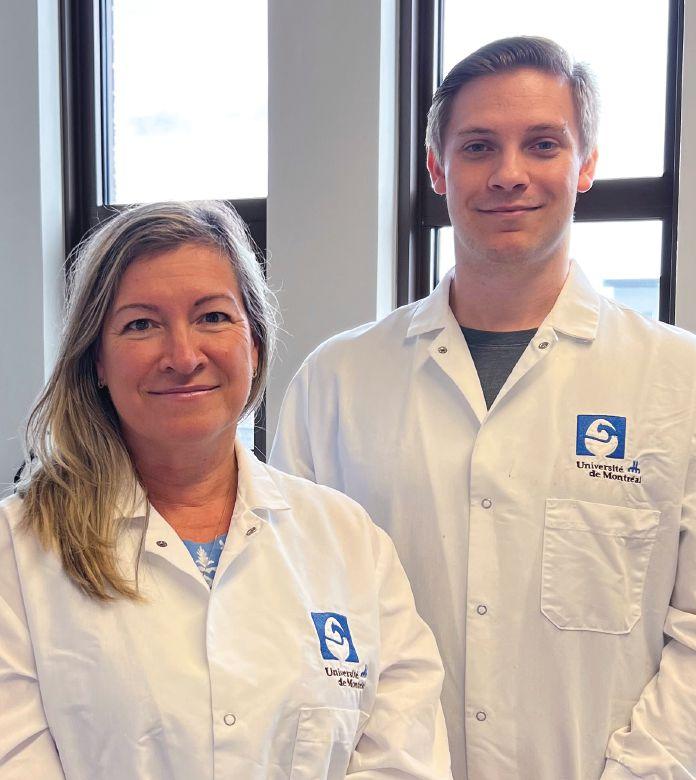
Dr. Martine Boulianne and PhD student Nicolas Deslaurier.
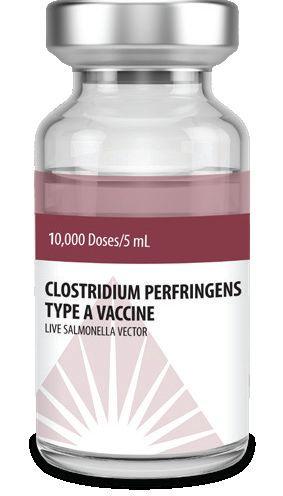
Announcing Necrotic Enteritis Vaccine
Clostridium Perfringens Type A Vaccine:
The only mass-administered vaccine available for controlling necrotic enteritis in chickens that has been demonstrated to meet CFIA and USDA standards for purity, efficacy, potency, and safety.
Only vaccine for necrotic enteritis that stimulates an immune response against a-toxin and Netb toxin of C. perfringens Type A. Clostridium perfringens Type A vaccine has been shown to be effective for the vaccination of healthy chickens day of age or older against necrotic enteritis due to Clostridium perfringens Type A.
Talk to your Huvepharma sales representative or contact customer service at customerservice@huvepharma.ca
leading to the development of lesions) or commensal (not harmful).
“Deciding what is pathogenic and what is commensal – and then cracking the genetic code – is essential to compare both types of strains. It is only then that you can find out which genes are different and involved in the pathogenicity,” Boulianne says.
By taking this approach, she notes the team has made discoveries that open up a new understanding of C. perfringens. A gene that the scientific community knows as “netB” is largely considered to be the signature for pathogenic strains — but Boulianne’s team proved that wasn’t necessarily true.
“Our analysis showed some strains that are netB positive that don’t cause lesions, and others that will. We also found some netB negative strains that
created lesions in our models. It opens the door to finding another gene of virulence,” she says.
Location, location, location
By completing the necessary laboratory analysis, Boulianne’s team has identified several genes located on the pathogen’s surface that will make the best vaccine candidates.
“If we want to make a vaccine, we need to consider the first thing the bird comes into contact with on the bacteria — the bacterial surface,” says Boulianne. “If the genes are located in the cytoplasm, inside of the bacteria, it won’t stimulate the immune system the way we need.”
Next steps
After identifying 10 genes of interest, the team is generating protein from each gene,
to be used in the next step of the project – delivering proteins in ovo to test whether they generate an immune response. When that work is done, Boulianne hopes to challenge birds from inoculated eggs with an NE infectious model in early 2023.
“We are starting to see some resistance to the antibiotics we currently use to control NE, and there’s no way of knowing how long the in-feed antibiotics will be effective,” says Boulianne. “If we want to remove the use of category III antibiotics, we need to plan for the future, and that means controlling NE with as many tools as possible.”
Boulianne is working closely on this project with Drs. Joshua Gong and Dion Lepp at Agriculture and Agri-Food Canada, Dr. Faizal Careem at the University of Calgary, and her University of Montreal PhD student Nicolas Deslaurier.
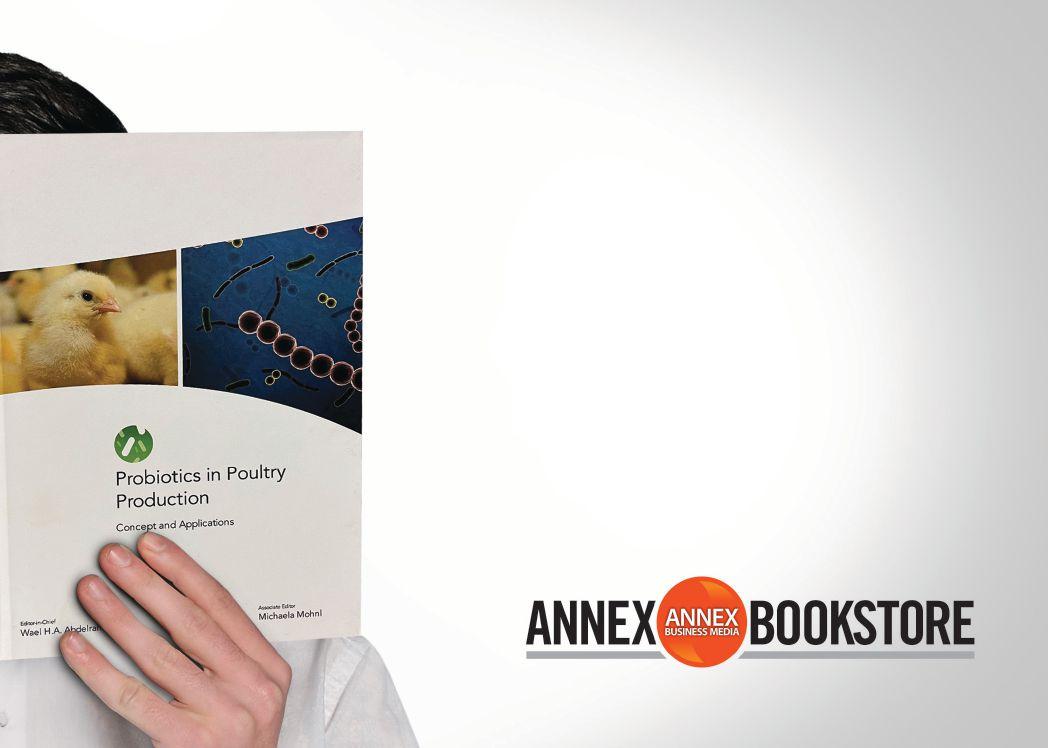
PROBIOTICS IN POULTRY PRODUCTION
This book gives a comprehensive overview of the mode of action of probiotics and the theories behind it.
In addition, it highlights the main benefits of using probiotics in poultry production, such as maintaining gut health and integrity, reducing gut inflammation, modulating the immune system, preventing bacterial lameness, preventing reproductive tract infections, combating various enteric pathogens and improving performance.
The chapters of this book illustrate various studies, which show the efficacy of probiotics in reducing livestock and poultry diseases, potentially reducing the need for antibiotic intervention, in addition to improving production performance.
$74.40 Item #0955501180
Barn Spotlight
Hillsvale Colony
Location
Cut Knife, Sask.
Sector Turkeys
The farm
Hillsvale Colony is a big farming community. They raise dairy and beef cows, pigs, layers and recently started producing turkeys, which they ship to Sofina. They provide fresh market birds for Christmas and Thanksgiving and freezer birds for around easter. Martin Wurz manages the turkey barn with help from two assistants.
The need
The colony had long been wanting to get into turkey production. In early 2020, they got the opportunity to do so. That’s when they bought turkey quota from Clarke’s Turkey Farm in Esterhazy, Sask. Clarke’s agreed to raise turkeys for the colony for one year while they built a new turkey barn. The colony worked with Big Dutchman on the facility, which they opened last year.
The barn
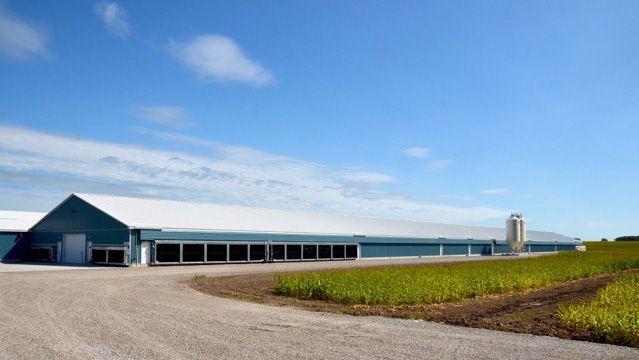
The 60 ft. by 400 ft. facility is an all-in, allout turkey barn. They keep their flock in the brooder part of the barn for roughly 30 to 35 days. At that point, they open some panels and give them access to the rest of the barn. “We find by doing that there’s absolutely zero stress in the birds when you go to move them,” Wurz says. “They just transition to the new part of the barn.” As part of that process, they have separate feed and waterlines for brooding and finishing. For ventilation during the brooding phase, they use sidewall inlets because they’re quieter. They then transition to tunnel ventilation at the finishing stage.
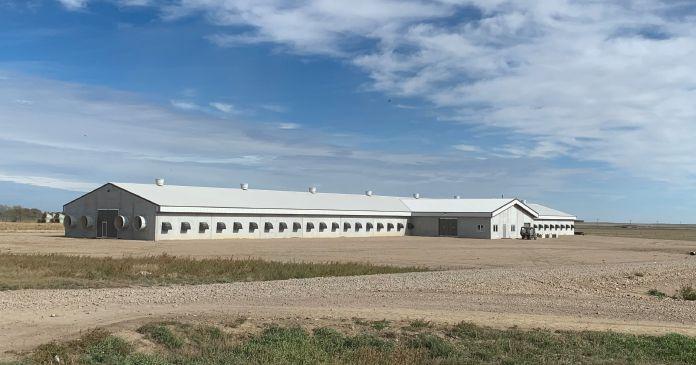
The colony built a 60 ft. by 400 ft. turkey barn after buying quota from another producer in 2020.
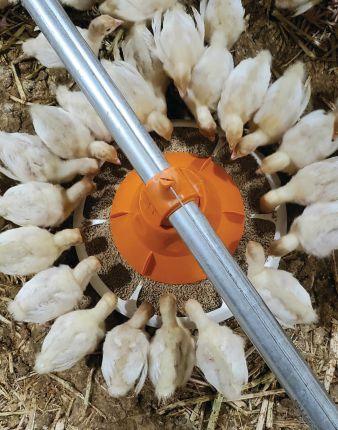
They went with larger feeding pans with an eye towards one day producing toms instead of just hens.
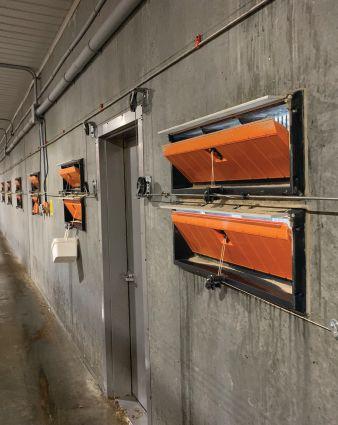
The producers use sidewall inlets during the brooding stage, as they’re a quieter option.
The facility is an all-in, all-out barn that houses flocks during both the brooding and finishing stages.
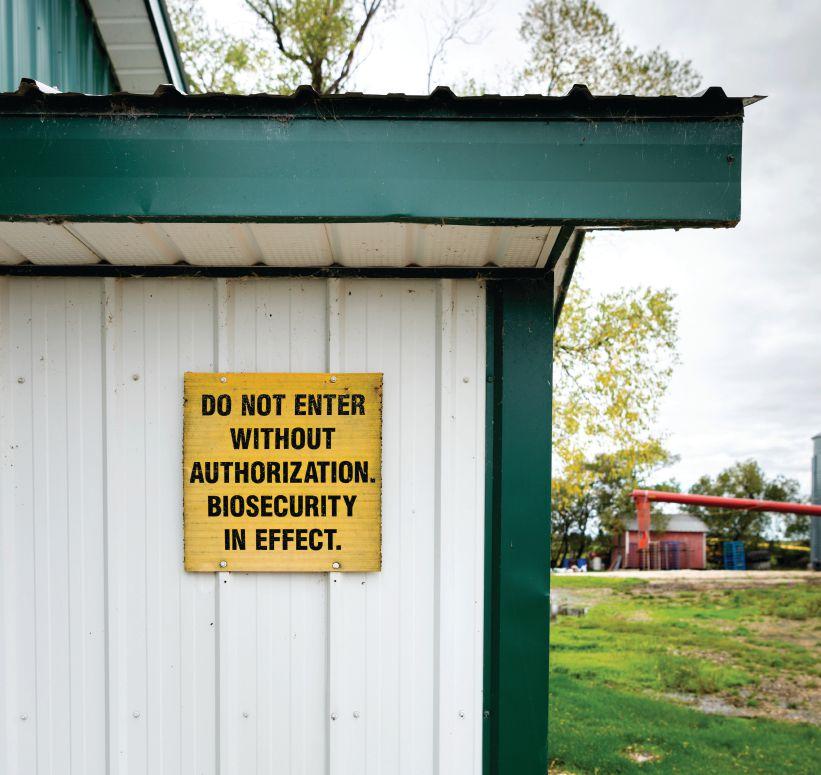
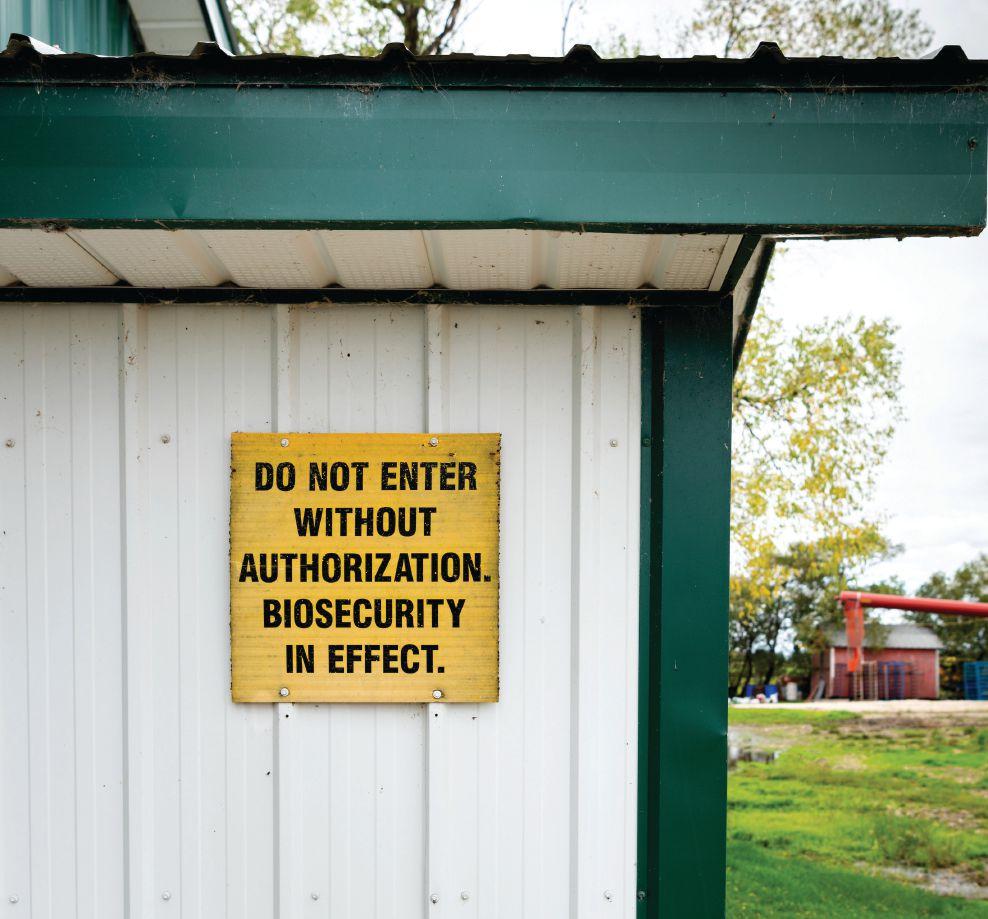
BIOSECURITY
YOU HAVE AN INSTINCT TO PROTECT. WE HAVE AN INSTINCT TO PROTECT FAST.
Introducing Poulvac® Procerta™ HVT-IBD. Timing is everything in a poultry operation, and Zoetis created its newest vector vaccine to put time back on your side. Backed by the latest science resulting in excellent overall protection, studies found that Poulvac Procerta HVT-IBD protected chickens fast against classic and important variant IBD strains.1-3 It’s a quick way to full protection from infectious bursal disease. Contact your Zoetis representative.
Brown A. et al., Early Onset and Duration of Immunity of a Recombinant HVT-IBD Vaccine Against Virulent, Variant, and Very Virulent Infectious Bursal Disease Challenges. American Association of Avian Pathologists, Virtual Conference, Jul 30-Aug 6, 2020
Brown A. et al., Efficacy of a recombinant HVT-IBD vaccine in layers following virulent, variant, and very virulent IBD challenge, International Poultry Scientific Forum, Atlanta, GA (virtual), Jan 25-26, 2021.