Protection against infectious laryngotracheitis, Marek’s and infectious bursal diseases in one shot
The latest innovation from the manufacturer of VAXXITEK® HVT+IBD in
Proven safety for your flock
18 Pellets with punch
New poultry feed treatment uses essential oils to manage necrotic enteritis.
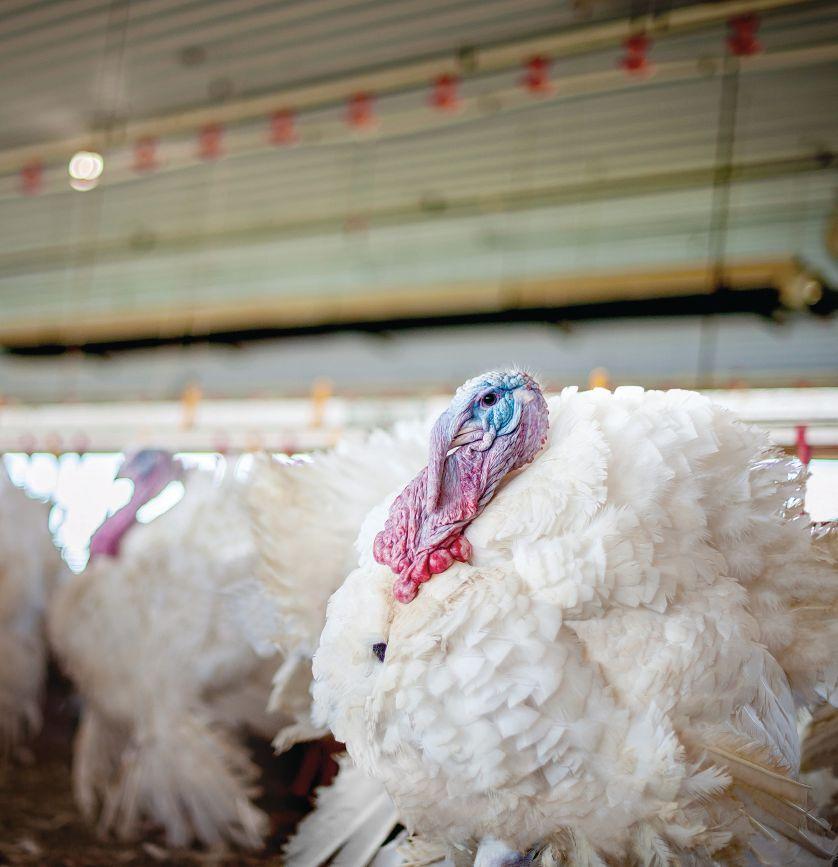
Starting turkeys off right Research shows trace minerals help set young turkeys up for a healthy, productive life.
Simplifying woody breast detection
While its causes remain a mystery, new technologies enable processors to better spot the condition.
by Brett Ruffell
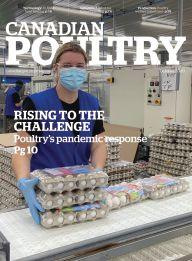
A pandemic can’t stop them
While interviewing our first Top 4 Under 40 honourees, I noticed these young leaders shared something in common apart from their impressive barn management accomplishments.
They’re also passionate about giving back – to their industry, community and those in need. And these producers won’t let a pandemic slow them down.
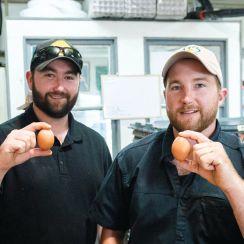
Take Anneke Stickney, for example. A chicken and egg producer from Ontario, one of the ways she gives back is by coordinating an Egg Farmers of Ontario (EFO) program for her region where they donate hardbroiled eggs to local schools.
But when the pandemic emerged, she faced significant hurdles. Volunteers were no longer allowed into schools. What’s more, children in her region did remote learning for months on end.
Thus, Stickney and her EFO colleagues had to find an alternative to keep their donations flowing to children in need. Their solution was to partner with the Children’s Foundation on its Food & Friends at Home initiative, a student nutrition program that was tweaked due to the pandemic. It supports youth by delivering healthy snack kits to their homes.
Stickney helped provide over 120 cases of hard-boiled eggs monthly to the program, which
was then used to feed students from over 100 schools in her region. “So, it provided students with a nutritious lunch or snack that they would have normally been provided at school,” Stickney says.
Other Top 4 Under 40 recipients adapted to the pandemic by providing online learning experiences. For instance, Harley Siemens, an egg and pullet farmer from Manitoba, collaborated with Agriculture in the Classroom to take students on a virtual tour of his farm. About 180 classes tuned in to the Zoom event and he answered their questions at the end. Additionally, Siemens did something similar for University of Manitoba students.
“You may think what you do is just the same old, same old but people are really amazed
by it.”
In Saskatchewan, chicken farmer and Top 4 Under 40 honouree Tiffany Martinka held a virtual barn tour during the pandemic as well. She promoted it on Instagram with modest expectations and was thrilled when 120 classrooms tuned in.
Martinka started sharing her farm’s story on social media because, as the primary caregiver of a daughter with special needs, she saw it as an opportunity to fulfil her passion for advocacy from home. That approach was perfectly suited for these times
and she’s taken it to new heights.
Last summer, for example, the chicken farmer worked with Farm & Food Care to deliver a series of Facebook Live presentations about her farm’s broiler cycle. Each week, she showcased the growth of her chickens and discussed topics related to where the birds were at in that cycle.
So, what motivates these producers to go above and beyond for others and for their industry, even in the face of a pandemic? Martinka says that with so few people in the poultry industry, she feels a responsibility to stand up and share her story. And for her, online is the perfect way to accomplish that. “As generations go by, people are becoming more and more removed from the family farm. Social media provides us with this opportunity to give people that connection.”
For those producers who feel shy about sharing their story, Siemens says they should feel proud about what they do and, thus, confident when talking about it. “You may think what you do is just the same old, same old but people are really amazed by it,” he says.
Pre-pandemic, Top 4 Under 40 honouree Richard Boer, an egg and speciality chicken producer from B.C., volunteered with Project Canaan’s egg farm in Eswatini, Africa. The experience inspired him to continue to help feed the hungry.
I’m happy to share that our entire series of Top 4 Under 40 podcasts is now available. Just visit canadianpoultrymag.com/ podcasts to hear more from these young leaders.
canadianpoultrymag.com
Reader Service
Print and digital subscription inquiries or changes, please contact
Anita Madden, Audience Development Manager Tel: (416) 510-5183
Email:
amadden@annexbusinessmedia.com
Mail: 111 Gordon Baker Rd., Suite 400, Toronto, ON M2H 3R1
Account Coordinator Alice Chen achen@annexbusinessmedia.com 416-510-5217
Media Designer
Curtis Martin
Group Publisher Michelle Allison mallison@annexbusinessmedia.com
COO Scott Jamieson sjamieson@annexbusinessmedia.com
PUBLICATION MAIL AGREEMENT #40065710
Printed in Canada ISSN 1703-2911
Subscription Rates Canada – 1 Year $32.50 (plus applicable taxes) USA – 1 Year $91.50 CDN Foreign – 1 Year $103.50 CDN GST - #867172652RT0001
Occasionally, Canadian Poultry Magazine will mail information on behalf of industry-related groups whose products and services we believe may be of interest to you. If you prefer not to receive this information, please contact our circulation department in any of the four ways listed above.
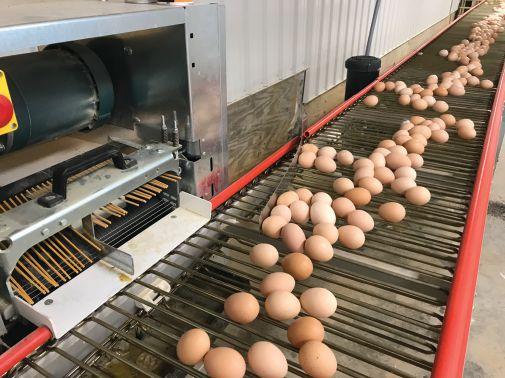
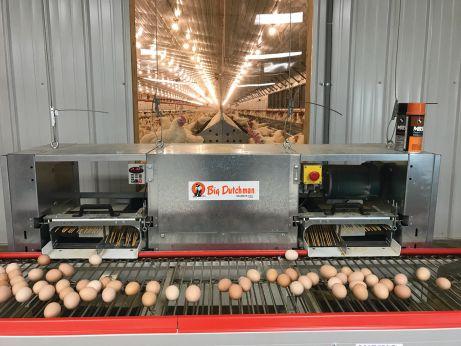
Lubing Conveyors are the safest ride for your eggs from nest to packer
The Lubing name has become one of the most trusted names in the industry because of our exceptional quality, reliability, performance and trouble-free operation.
Custom Configurations - Lubing Breeder Conveyors can be configured to work with any imaginable requirements; any necessary curves, heights and distances.
System Specifications - Available in 14-in and 20-in widths.
System Benefits - Eliminates manual labor of egg collection and reduces egg damage.
Fast Installation - Components ship completely preassembled for easy, quick installation.
Superior Service Life - With more than 40 years developing conveyor products, Lubing conveyors have an established reputation for longest lasting product life in the market
Les Equipments Avipor
Cowansville, Quebec
Tel: (450) 263.6222
Fax: (450) 263.9021
Specht-Canada Inc.
Stony Plain, Alberta
Tel: (780) 963.4795
Fax: (780) 963.5034
What’s Hatching
Chore-Time names new vice president and general manager
Tina Streit has been promoted to vice president and general manager for Chore-Time. In her new position, Streit will be responsible for overall global management, including operations, engineering, sales and service. She will lead the management team in developing and driving key strategic initiatives, as well as partner with Chore-Time’s distribution network to best serve global customers.
Canadian Poultry XPO cancelled
Organizers of the inaugural Canadian Poultry XPO announced recently that the event, which was scheduled for November in Stratford, Ont., has once again been cancelled. With significant pandemic parameters remaining around large-scale gatherings in the fall, the decision was made to include a scaled-down version of the poultry event in next April’s Dairy XPO.
Report ranks fast-food companies according to chicken welfare practices
World Animal Protection, a global animal activist organization, recently published a report called “The pecking order 2021” that ranks fast-food restaurants globally based on the chicken welfare practices in their supply chains. In addition to the global assessment, it also created 14 local rankings. In Canada, Burger King received the best score of 54 per cent, or Tier 3 (“Making progress”) and McDonald’s received 43 per cent, also a Tier 3. Burger King’s scores are largely the result of the company’s signing of the Better Chicken Commitment, a welfare policy for broilers that many large food companies have adopted.
months ago is when Canadian demand for chicken wings became particularly strong, according to CFC.
Chicken wing supply issues resolved
There have been media reports this summer about a global shortage of chicken wings, leading to soaring prices in some countries.
Chicken Farmers of Canada (CFC) acknowledges that the Canadian market had some moderate supply issues earlier in the summer. However, the organization says those challenges have been mostly resolved. What’s more, it says prices in Canada didn’t increase as much as they did in other countries.
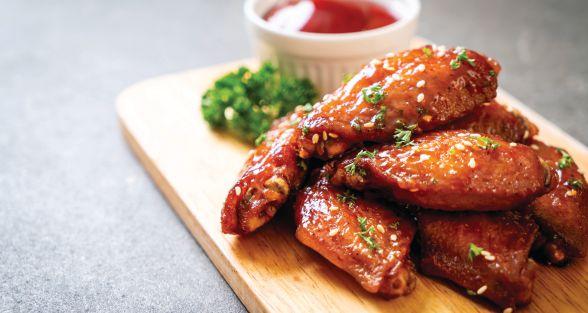
Canada faced chicken wing supply issues earlier this year, caused by soaring demand and challenges related to the pandemic.
CFC says those supply issues were due to several factors, not just one. But it was mostly an issue of demand, not supply.
“Demand for wings has been extremely high this year, likely due to people seeking out comfort foods and trying new cuts at home and with takeout,” says Lisa Bishop-Spencer, CFC’s director of brand and communications.
Canadian wing demand in general has been exceptionally strong over the past 15 months. As a result, restaurants that have always followed a strong delivery model didn’t have to change their business model that much during the pandemic, Bishop-Spencer observes.
“Wings travel well and hold up during delivery conditions. Plus, they align with consumer desire
for comfort food during the pandemic. People are also making more wings at home, too – the air fryer revolution helped a lot there,” she says.
As for the impact of COVID-19, foodservice represents about 40 per cent of the Canadian chicken industry’s total production.
At the height of the pandemic in 2020, people turned to buying their food at retail, but it wasn’t enough to fill the gap left by foodservice. Thus, the Canadian chicken sector reduced its production by about 10 to 12 per cent for the spring/summer period of 2020.
Now that provinces are reopening their economies, those numbers are rising again. However, Canada doesn’t produce enough chickens to meet its domestic demand for wings. So, the country has to import some wings, mainly from the U.S. and Brazil.
But those countries have also had their challenges over the course of the last year.
“So, yes, supply was tight – but demand, on the other hand, has shifted, too,” Bishop-Spencer explains. “Production has already started to increase, both here and in other countries. We can expect the availability of wings to increase, as well.”
5 questions with agricultural historian Jodey Nurse
Jodey Nurse is an agricultural researcher who’s spent years examining the history of Canada’s supply managed industries. A few years ago, she led a study that explored the roles of women in the egg farming industry. Her findings were used to found Egg Farmers of Canada (EFC)’s program for women in the egg industry. Now, she has a book coming out on women’s involvement in agricultural societies and fairs. We asked her five questions.
How did you end up researching women in the egg sector?
I was a postdoctoral fellow at the University of Waterloo and I was working with Bruce Muirhead on issues related to the history of supply management. During that time, I was working closely with EFC. They identified a couple of areas that they wanted to know more about, and part of that is women’s involvement in the industry. There were women regionally and provincially that had attained the highest positions, but not at the national level.
What was your specific focus?
The research goals of this project were to document the history of women’s involvement in egg farming specifically, and also poultry and agricultural industries more broadly. But it was also to conduct an analysis of the barriers that hinder women’s participation in leadership roles. And then the third component of this work was to identify the strategies that we could use to help women overcome those barriers.
What was one of the main barriers you uncovered?
Women that were egg farming or in those managerial and advisory roles – these were really busy women. They also had a lot of responsibilities at home and were also really engaged in their communities. So, trying to then give time also to these other leadership roles in their specific commodity sector, especially at a national level, was difficult.
What’s one strategy for overcoming a common barrier?
Some of the strategies that I identified in the study, and EFC has developed their own program to tackle some of these, are first building confidence. Some women in the industry have a sense of alienation and maybe lack of confidence in their ability, because of the legacy of women not being recognized as farmers but more as farm helpers. So, building women’s confidence is key, and that comes through industry knowledge, but it also comes through some of those softer skills like improving public speaking. This way, not only will they feel like they have the broad industry knowledge that you need, but they will also have that important skill set.
What’s next for you?
I’m now back working as a research assistant professor at the University of Waterloo with Bruce Muirhead. We’re focused on publishing a book on the history of supply management in Canada. But we’re also working on a transnational study of controlled production schemes. I also have my own book coming out later this year based on my Ph.D. dissertation titled Cultivating Community: Women and Agricultural Fairs in Ontario
Jodey Nurse is a research assistant professor in the Department of History at the University of Waterloo.
Supreme Court clears path for defamation suit against CBC for show on chicken content
The Supreme Court of Canada won’t hear a bid by the CBC to halt a defamation lawsuit from Subway over a report on the fast-food chain’s chicken sandwiches.
The decision clears the way for the suit to proceed in Ontario court.
In January, the Ontario Court of Appeal set aside a judge’s decision to dismiss Subway’s suit without a hearing on its merits, saying the untested claim was far from frivolous and deserved a thorough airing.
The CBC television show Marketplace said in 2017 that about half the DNA in Subway chicken was in fact chicken and the other half soy, based on testing done at Ontario’s Trent University.
A Subway expert on DNA methods and food testing said the tests were seriously flawed and their results inaccurate, maintaining the company’s own tests found no more than one per cent soy.
Test results from laboratories in Canada and the U.S. showed that the Canadian chicken products tested had only trace amounts of soy, contradicting the accusations made on Marketplace.
“The stunningly flawed test by Marketplace is a tremendous disservice to our customers. The safety, quality and integrity of our food is the foundation of our business. That’s why we took extra caution to test and retest the chicken. Our customers can have confidence in our food. The allegation that our chicken is only 50 per cent chicken is 100 per cent wrong,” said Subway president and CEO Suzanne Greco in a press release responsing to the independent test results.
In a related decision, the Supreme Court also declined to hear Subway’s challenge of a parallel appeal court ruling that prevented the chain’s negligence claim against Trent from proceeding.
Announcing Necrotic Enteritis Vaccine
Clostridium Perfringens Type A Vaccine:
The only mass-administered vaccine available for controlling necrotic enteritis in chickens that has been demonstrated to meet CFIA and USDA standards for purity, efficacy, potency, and safety.
Only vaccine for necrotic enteritis that stimulates an immune response against a-toxin and Netb toxin of C. perfringens Type A. Clostridium perfringens Type A vaccine has been shown to be effective for the vaccination of healthy chickens day of age or older against necrotic enteritis due to Clostridium perfringens Type A.
Talk to your Huvepharma sales representative or contact customer service at customerservice@huvepharma.ca
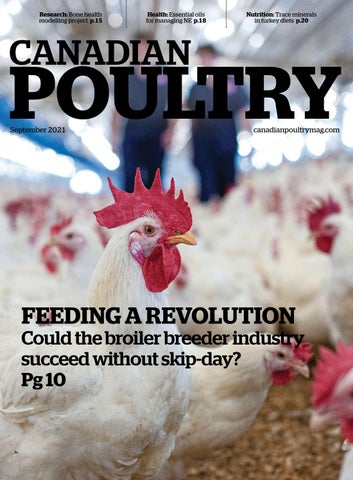
Feeding a revolution
Could the broiler breeder industry succeed without skip-day? These two producers think so.
By Treena Hein
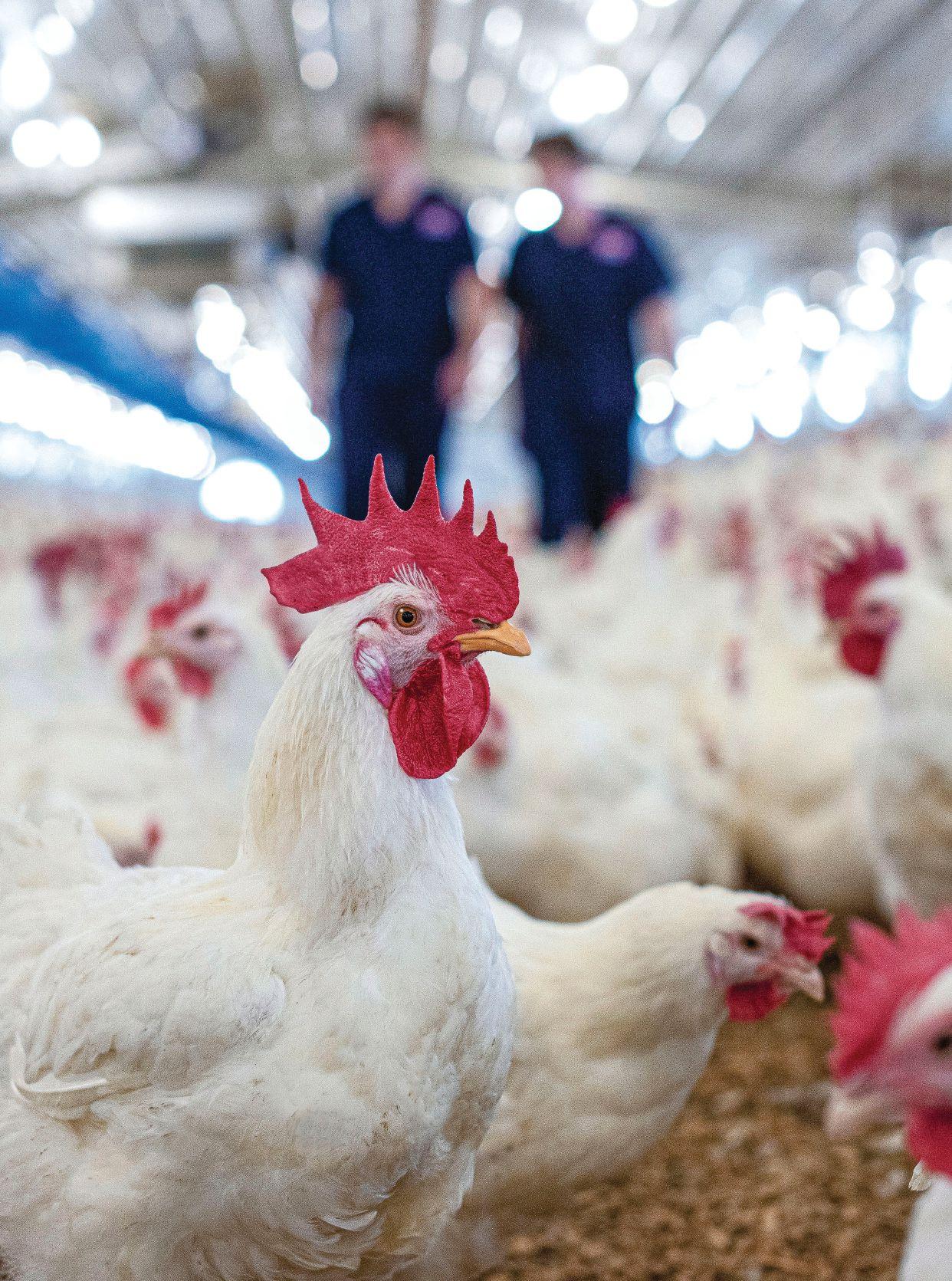
Skip-day feeding, the practice of not giving feed to broiler breeder pullets every day as a way to control growth, is still the norm in Canada, the U.S. and some other countries. Here in Canada, it’s currently an acceptable practice under the National Farm Animal Care Code (NFACC) for broilers. Due to animal welfare concerns, it is banned in the European Union.
Drew Black suggests the reason there hasn’t been more movement in Canada towards daily feeding is because it does not necessarily lead to better welfare outcomes.
“Each producer finds the management practices that is best suited to them and that they feel delivers the best performance, quality and bird health and welfare,” explains Black, who is executive director at the Canadian Hatching Egg Producers (CHEP). “Yet, of course, knowledge and practices are never static and are constantly evolving. Some producers find that daily feeding works best for their flocks, while others find skip-day
delivers the results.”
CHEP has funded feeding research in the past through the Canadian Poultry Research Council (CPRC) and Black says it would support more in future. He adds that CHEP will “strongly support” the evolving science and accordingly propose any needed updates to the NFACC and the CHEP Animal Care Program.
There are at least two broiler breeder farmers in Canada who have done every-day feeding (EDF) for many years. They achieve EDF in somewhat different ways, but both report two major things: complete success and the attention of major broiler industry stakeholders.
Feed line cover and more
It was eight years ago that Innovative Poultry Group in Port Williams, N.S., switched to daily feeding. It is a co-operative that owns Synergy feed mill and broiler breeding operations and Maritime Chicks hatchery.
Gary McAleer, vice president of operations, says that “like others who use skip-day, we were having trouble with intussusception on feeding days because the birds got too excited. Also, on off-feed days, the pullets would scratch a lot due to hunger and stress. It would cause shavings to go into the chain feeders and jam them.
“Another issue we saw with skip-day is that when the birds are fed, the more docile ones don’t get enough feed. The more aggressive birds take most or even all the feed.”
McAleer decided to give EDF a go. He switched his pullets to a bulky fine-grind feed, did some feed line modifications and fed them in the dark, which he says keeps them calm. “I’ve watched them using low-light cameras,” he reports, “and they know exactly where the feeder is.”
Three years ago, he went further, designing a system that involves a cover for the feed line that’s lifted once the feed line is full. “It’s very simple and easy to install,” McAleer says. “It cost about $10,000, including labour. The birds all line up and they know that when the feed line motor stops running the cover will lift and they will all be able to have their meal.”
From the start, McAleer and his team also separated aggressive and non-aggressive eaters to different pens to further reduce competition. At day 18, each bird is weighed and those at the lower end (about 35 per cent of them) are moved to another pen. It takes about 72 man-hours for the team to grade a 9,000-bird flock.
Over the past few years, a lot of U.S. poultry industry people have come to see how McAleer achieves EDF success. “Cobb, in particular, has brought many people here,” he says. “I also did a presentation in 2019 at the broiler breeder and hatchery conference in North Carolina and I’ve shared videos. Everyone says they can’t believe how calm the birds are.” Innovative Poultry Group is not a CHEP member and McAleer says he’s had no contact with
Gary McAleer switched to daily feeding in response to some challenges with the skip-day.
CHEP on this topic.
Beyond his operation’s own measures of success, McAleer has also received independent recognition. For the last four years in a row, he and his team have received the Flock Award from Cobb, a recognition of top-performing poultry operations in North and Central America that use Cobb genetics.
These awards, McAleer says, prove not only that EDF is doable but also that it produces excellent results. “I know it’s easier to raise broiler breeders on skip-day feed, but our company is proof that it can be done successfully with EDF.”
U.S. and Europe
In terms of adoption of different feeding programs in the U.S. broiler breeder industry, Chance Bryant, Cobb’s technical service
director for North America, says,
“We know as an industry that change is inevitable and we have to be willing to adapt and implement new approaches in management to maximize the health and well-being of birds. Learning new and better ways to feed pullets that will provide a more welfare-friendly environment is important to our industry. All indications are that Gary’s system is working well and this or something similar could be useful for us going forward. I would say 50 to 75 per cent of our industry has investigated either Gary’s or something similar, on a small scale.”
In Europe, one common method the broiler breeder industry uses to achieve EDF is utilizing spin feeders (a spinner on the bottom of a hopper) that spreads
pelletized feed to the birds. For this method to work, a good-quality pelleted feed is needed.
The Cobb EU team has seen success with the program.
Lowering the feed line
Jeff Notenbomer, owner of Willow Creek Poultry in Monarch, Alta., uses an EDF method that also involves equal instant access to feed. He is currently chair of the CHEP Research Committee, the Alberta Hatching Egg Association and the Poultry Innovation Partnership, and a CPRC director. Notenbomer has never used skip-day feeding, and neither did his father before him. “My father came into the broiler breeder industry from being a table egg farmer,” he explains, “and he just made feeding every day work, like
What the research says
Early photostimulation and spin feeding
A study out of the University of Georgia published in 2019 found that the age at sexual maturity in broiler breeder pullets can be significantly advanced with the use of a less restrictive growth curve during rearing.
Alternate feeding program
Another study out of the University of Georgia published in 2020 found that, overall, feeding broiler breeders soybean hulls on off-feed days improved body weight uniformity and egg production.
Effects of non-daily feeding
A University of Guelph study published in 2020 assessed the effects of alternative feeding strategies during rearing on the behaviour of broiler breeder pullets. It found that pullets fed non-daily showed signs of hunger and frustration during off-feed days.
Twice-daily feeding
A study published in 2020 by a team of scientists at Wageningen University & Research in the Netherlands found that broiler breeders fed twice per day were calmer than those fed once daily.
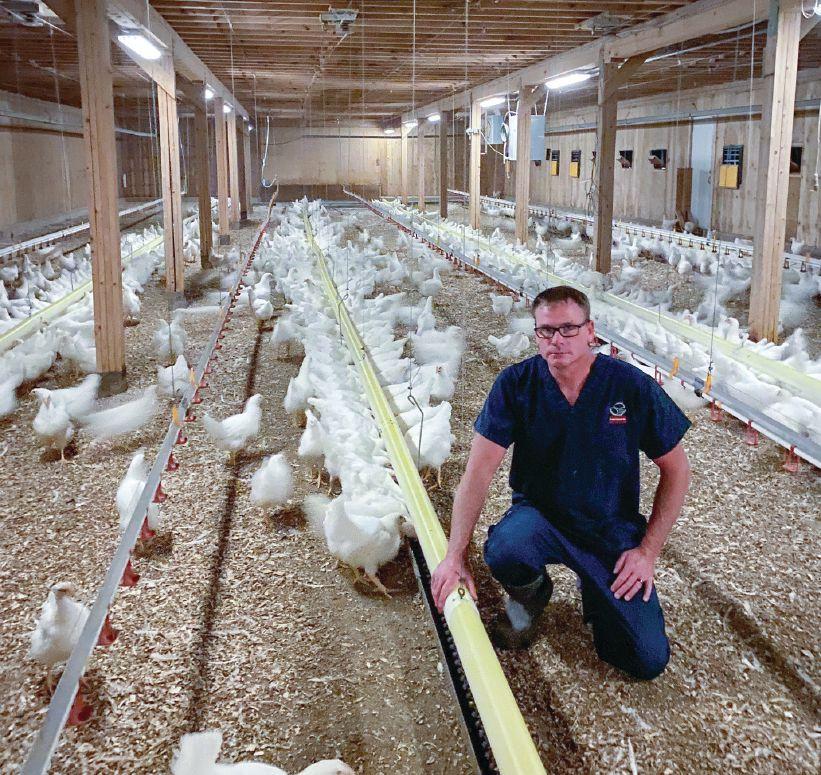
Two Canadian broiler breeder farmers have done every-day feeding for many years, catching the attention of major industry stakeholders.
he had for layers. I think if we ask the question of how to be a good broiler breeder farmer, the answer is that you make sure stress is low. Any stress on
pullets a daily meal in less than two minutes really eliminates stress around feeding.”
Unlike McAleer’s feed line cover-lift
bird level, and then the lights come on. “For it to work, you need to have 20 per cent more feeder space than birds,” he explains. “You also need to be there at every feeding to make sure the equipment doesn’t malfunction. You want to make sure any issue is dealt with right away so that the birds aren’t stressed.”
Notenbomer also feeds 25 per cent less than the Aviagen charts. “So, we have huge savings with that, but also stronger birds and much less disease than those who do skip-day feeding,” he says. “I think EDF pays for itself pretty much instantly.”
For those wanting to try EDF, Notenbomer recommends starting in the male barn and/or the spiking barn, where feed lines are shorter and you can install a lowering system and perfect the system before moving on to the pullet barns. The goal is to get all birds equal access to feed within two minutes.
“This is where extra feed space is important,” he asserts. “Birds need to find their spot on the feed line. If all the spots are taken, they start running around to find a spot. This running around stress needs to be limited as much as possible. If all the birds can find their spot with their equal portion of feed in around two minutes, that would be an A+ EDF system.”
In first trying the system in your male and/or spiking barn, Notenbomer says, “You’ll also see for yourself, before you do it with the pullets, how much less feed, how much less disease, how much stronger the birds are. I have seen research that shows what the stress of skip-day feeding does to the birds.”
Another U.S. perspective
In 2019, animal nutrition company AB Vista brought Notenbomer to Texas to share his EDF knowledge. This topic was requested by several of their customers, says AB Vista senior technical manager Dr. Tara York. These customers are among the top 10 broiler/broiler breeder producers in the U.S. In addition, one of them requested to visit Notenbomer’s operation to learn more.
York notes that both ensuring the birds are obtaining the proper nutrition and correct distribution of feed are important with an EDF program. “This may require changing the feeding systems within pullet houses along with how the birds are managed daily,” she explains. “The U.S. is also very cost driven, and the cost to feed pullets and transport feed every day will increase costs.” She adds that the current benchmarking system in the U.S. does not equate higher pullet costs to better breeder performance.
“An old saying is that raising broiler breeders is more an art than a science, and EDF is changing the artwork completely,” she says. “However, [companies in] the U.S. are moving in this direction and perfecting their artwork, so in the next two to three years, many will most likely begin transitioning from skip-day to EDF in pullets.”
Looking forward, Notenbomer believes it would be better for his Canadian peers if they started to consider EDF adoption now, rather than face a scenario where they have to change to EDF rapidly because strong consumer pressure against skip-day feeding has reared its head. He thinks that when a major player like Tyson makes the shift, everyone in North America will have to shift.
“It would be better to do it at a wise pace instead of being forced to do it in a hurry,” Notenbomer says. “Don’t be scared. The benefits are there, feed cost savings, better bird health, less reliance on antibiotics. It’s a change but it’s not hard to do. The first step is accepting that it is possible.”
Jeff Notenbomer, owner of Willow Creek Poultry in Monarch, Alta., uses an every-day feed method that also involves equal, instant access to feed.
Meet the 2021
Please
or scan here!
LIsten to exclusive podcast interviews with our winners Now!
ANNEKE Stickney
Stickney Poultry Farm, Elora, Ont.
RICHARD Boer
Brightside Poultry, Chilliwack, B.C.
TIFFANY Martinka Martinka Chicks, St. Benedict, Sask.
HARLEY Siemens
Siemens Farms, Rosenort, Man.
This research was funded by the Canadian Poultry Research Council as part of the Poultry Science Cluster, which is supported by Agriculture and Agri-Food Canada (AAFC) as part of the Canadian Agricultural Partnership (CAP) program. Additional support was received from Egg Farmers of Canada, Royal DSM and Avimix Nutrition.
Mineral nutrition matters
New modelling project to help researchers bone up on bone health.
By Lisa McLean
Phosphorus and calcium are essential minerals for bone – and egg – health, but exactly how they’re absorbed and used in the life cycle of a laying hen is not well understood. Now, a research team is examining how these minerals travel, with an eye toward improving hen welfare and environmental stability.
Marie-Pierre Létourneau-Montminy in Laval’s Animal Science Department has an international partnership with the French National Institute for Agriculture, Food and Environment (INRAe) to develop a model that will lead to an understanding of precisely how dietary calcium and phosphorus travel through the digestive tract, soft tissues, bone and eggs of both pullets and laying hens.
“Calcium and phosphorus are tightly linked,” Létourneau-Montminy says. “In general, the hen has to take some calcium from the bone to deposit it in the egg’s shell, and that process delivers phosphorus, which is then lost in manure. Inefficiency around phosphorus is one aspect we are trying to understand.”
She notes producers are facing more pressure to reduce their environmental impact and improve animal welfare. With better information about a hen’s mineral requirements at critical windows, industry may eventually be able to reduce phosphorus inputs and manure disposal costs and also reduce bone problems in hens.
Létourneau-Montminy’s team has
completed similar modelling work on pigs and broiler chickens. She says the team’s initial plan was to apply the same approach to laying hens, but they soon realized the specific data their model required – such as information about digestion and how calcium is solubilized and bone growth in laying hens – is dated.
To get the information they need, her team will run two projects simultaneously. One will be a modelling project that will describe the fate of phosphorus and calcium in the digestive tract that will give them more accurate information about digestibility. In a parallel project, they will raise laying hens to 100 weeks with two different dietary phosphorus levels.
Researchers will test the hens’ bones for mineral content as well as body composition in fat and lean mass using a bone scanner tool used in human medicine. She hopes the project will give a better understanding of how bone evolves, and the amount of calcium that transfers to eggs as hens age.
Létourneau-Montminy says the re -
searchers are also interested in determining the point in the cycle where the hens mobilize their bones to fulfill eggshell. The work is expected to be completed by 2023.
“We will generate the data and integrate it with our model to simulate protein growth, lipid growth, bone growth and the movement of calcium and phosphorus following egg development within the hen daily and weekly,” Létourneau-Montminy says. “A modelling approach allows us to adapt quickly with precision feeding and to predict daily requirements throughout a hen’s life cycle and will help us understand where more data and research are required.”
Létourneau-Montminy indicates the modelling approach will eventually provide important insights into nutrition requirements for hens at various stages, including current – and potentially extended – life cycles. She says the project also allows the opportunity for the Canadian research team to consolidate its ongoing work with important international partners.
The modelling project is intended to help understand how dietary calcium and phosphorus travel through the digestive tract, soft tissues, bone and eggs of both pullets and laying hens.
Health
This research is funded by the Canadian Poultry Research Council as part of the Poultry Science Cluster which is supported by Agriculture and Agri-Food Canada as part of the Canadian Agricultural Partnership, a federal-provincial-territorial initiative. Additional funding was provided by Chicken Farmers of Saskatchewan, and in-kind support from L.E.L. farms and Gowans Feed Consulting.
Pellets with punch
New poultry feed treatment uses essential oils to manage necrotic enteritis.
By Lisa McLean
Canadian chicken and turkey producers won’t have to wait much longer for a product that controls a problematic poultry disease as effectively as preventative antibiotics. Thanks to a decade of research that led to product development and successful on-farm trials using essential oils, researchers expect their feed treatment for controlling necrotic enteritis (NE) will soon be on the market.
NE is a devastating poultry disease that starts in a bird’s gut and often leads to death in young birds. Drs. Qi Wang and Joshua Gong, research scientists with Agriculture and Agri-Food Canada (AAFC), have used microencapsulated essential oil products to control NE and to study its impact on chicken growth performance. They recently put the product to the test on broiler farms.
“Development of viable alternatives to antibiotics to control NE disease has become highly significant to the poultry industry,” Wang says. “For this project, our original plan was to conduct six trials on Ontario farms to see how the product performed on real farms.”
The researchers successfully completed five on-farm trials before the research was halted due to the COVID-19 pandemic. But during one of the trials the farm experienced an NE outbreak and the team was able to see their product in action.
“In this trial, we had two treatments – one higher dose and one lower dose –as well as a positive and negative control group. Both doses eliminated the out-
break,” Wang says. “We saw improved gut health and improved growth performance – it was what we had hoped for.”
Wang says the product, which uses materials that are already safe for consumption, involves a unique process of spray-drying the essential oil into a powder form to encapsulate and protect the essential oil. From there, the oil powder is added to feed and undergoes a pelleting process. The product is in the pre-commercialization stage with Gowans Feed Consulting.
“Microencapsulation of the product protects the essential oil so it can improve the amount being delivered to the bird’s gut,” Gong says.
“It is more effective to control pathogens and improve gut health and the on-farm trials provide proof of concept that our product works.”
Gong notes the finished product will come at a higher price than antibiotic-treated feed, but it is comparable to other antibiotic alternatives on the market.
“There are already several sectors waiting for this product, including organic producers and those who produce antibiotic-free chickens for the premium market,” Gong says.
As a next step, Wang says their commercialization partner is working to access the technology required to produce the product on a commercial scale. She says the spray dryer, which is essential to manufacturing the product, is a popular technology in other fields such as foods and pharmaceuticals, but so far accessing one for commercial use has been challenging.
“We knew incorporating the essential oils into feed would make it easier for producers to use on farms, but there may be a delay in getting the spray-drying process set up,” Wang says. “With some additional work we may be able to deliver the product in liquid form through drinking water in the short term. Our goal is to get this to market as soon as possible.”
Two research scientists from Agriculture and Agri-Food Canada developed a feed treatment that uses essential oils to control necrotic enteritis.
Starting off right
Trace minerals help set young turkeys up for a healthy, productive life.
By Lilian Schaer
Research shows that trace minerals can play a crucial role in setting young turkeys up for a healthy, productive life.
The starter phase is a stressful one for poults – they’re growing rapidly while also dealing with environmental stressors and challenges to their immune systems. And that’s where trace minerals like zinc, copper and manganese can make a difference in their longterm health and productivity, according to Dr. Leonardo Linares, global poultry nutritionist with Zinpro Corporation.
He spoke at the Midwest Poultry Show this year about how trace minerals improve performance and bone health in turkeys. He also discussed how supplementing trace minerals from amino acid complexes can positively impact bird efficiency and welfare.
Faster-growing birds have more bone problems
The change in turkey growth over the past almost 60 years has had a significant impact on the birds’ skeletal development, Linares noted, which has led to an increase in bone health issues.
In 1963, a bird at 20 weeks of age weighed approximately 7.9 kg. In 2005, that 20-week weight had increased to 21 kg, and by 2017, it had reached 23 kg.
“They (the birds) are three times heavier than they were 60 years ago. They lean more upfront, as the breast is heavier, putting pressure on the femur,” he explained. “After 14 to 16 weeks of age, femur fracture is becoming more common, so
you lose all the investment you have put into the turkey.”
Positive impacts of trace mineral supplementation
Most recently, Linares completed two studies looking at turkey performance when birds are fed trace minerals. Zinc, manganese and copper trace minerals from both amino acid complexes and inorganic sources were fed to breeder hens and then to their offspring in the starter phase.
• 60 ppm of zinc sulphate replaced with complex zinc;
• 40 ppm of zinc sulphate and 40 ppm of manganese sulphate replaced
with complex zinc and manganese; and lastly
• 40 ppm of zinc sulphate, 40 ppm of manganese sulphate and all inorganic copper replaced with amino acid complex-derived trace minerals.
In both studies, poults overall showed higher body weight gain and lower feed conversion ratios when fed amino acid complex-derived trace minerals compared to birds fed only inorganic sources of zinc, manganese and copper.
The feed conversion ratio of poults from breeder birds that were fed the trace mineral complexes increased by three percent. At the same time, poults given trace mineral complexes during the starter phase showed a feed conver-
Adding trace mineral complexes to poultry diets is simple, as they can be included through premixes.
sion ratio improvement of 4.6 per cent.
Linares also noted a significant difference in the manganese ash content in the tibia of poults from breeders fed trace mineral complexes if the poults themselves were also given trace mineral complexes.
“The bones of poults fed sulphates and not given performance minerals have wider growth plates, so more chance to develop lameness,” he said.
Even if only the breeders or the poults were fed trace mineral complexes, the outcome would still result in homogenous growth and a lower risk of mobility issues.
Overall, the research showed that if producers supplement breeder rations with zinc, manganese and copper complex-derived trace minerals, their offspring will have both better bone health and feed conversion.
At the same time, noted Linares, if those same trace mineral complexes are added to poults’ diets, their performance and feed conversion improved by four to seven points, with a positive 2.2 to 1 return on investment over sulphates until the birds hit 13 weeks of age.
Applying research outcomes in the barn
Linares says it is important for producers to pay attention to skeleton development and to adjust turkey diets to avoid structural problems with leg bones as the birds mature and gain weight.
That means balanced nutrition that includes calcium and phosphorus, vitamin D3 and trace minerals like zinc, copper and manganese to support the healthy development of bones as well as tendons and cartilage.
“The recommendation is for a partial replacement of the inorganic trace minerals with 40 ppm of zinc, 40 ppm of manganese and 7 ppm of copper from amino acid complexed metals,” he added. “This is essential to increase absorption rates of these vital elements to support formation and maintenance of the skeleton and avoid important losses on performance and mortality due to leg issues.”
Adding trace mineral complexes to poultry diets is relatively simple. That’s because they can be included through premixes either at the feed mill or on-farm for producers mixing their own rations. The key is to ensure the correct minerals are added in the proper amounts to avoid deficiency or toxicity problems, Linares cautioned.
Partially replacing inorganic mineral sources with amino acid complexed trace minerals will come with added costs, but that will be offset by better bird performance. Linares estimated that better feed conversion ratios, less lameness and fewer late-life mortalities due to leg issues are expected to offer producers a minimum two to one return on investment.
“With genetic improvements, we have seen big increases in performance but also decreases in welfare traits in birds, leading to issues with bones. You can get improvements on progeny skeletal development if you feed the breeders with trace minerals,” he concluded.
“There is benefit on performance and welfare improvement and there is economic support for producers on the return on investment when you feed both breeders and birds in the grow-out phase.”
Simplifying woody breast detection
While its causes remain a mystery, new technologies enable processors to better spot the condition.
By Lilian Schaer
The poultry industry is turning to technology for new ways to tackle the issue of woody breast in chicken.
Although it is possible to detect the condition in a live bird, the most common and accurate method is by examining the carcass after slaughter.
However, it’s an imprecise process, and the availability of skilled labour is increasingly a challenge for processing plants.
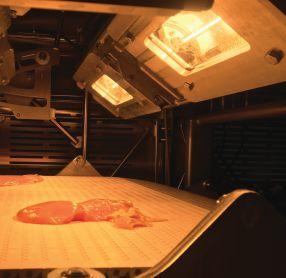
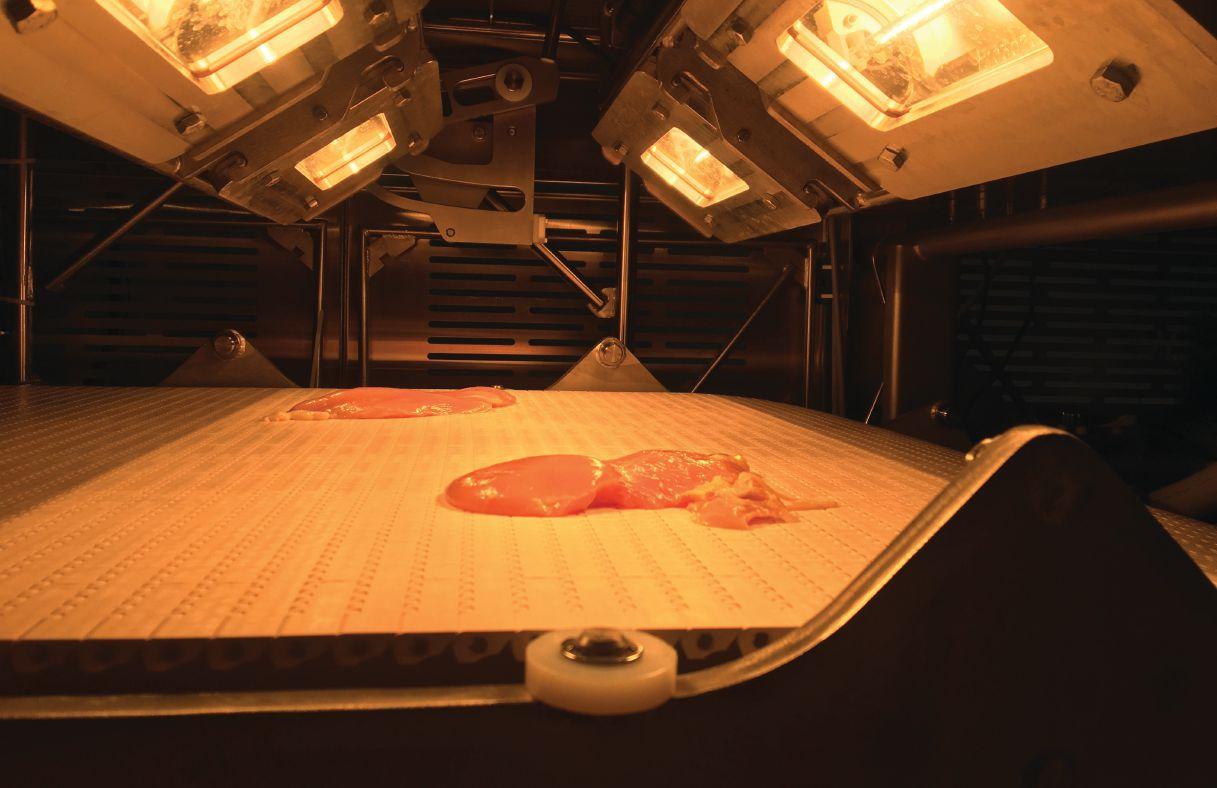
Now, advances in vision technology, artificial intelligence and mobile sensing are giving way to new tools for processors to identify and handle woody breast in poultry going through the plant.
Woody breast is a muscle abnormality in chicken breasts that affects the Pectoralis major muscle and causes it to harden. This hardening can range from a small spot to the whole muscle. In some cases, the muscle may be paler in colour with tell-tale white lines and display other signs like surface hemorrhaging and
fluid on the muscle surface.
According to Eduardo Souza, vice president of research and development at Aviagen, woody breast affects the texture and chewiness of breast meat when measured either by texture analyzer or a human taste panel.
Affected breast meat can hold less water and has a higher ultimate pH level, both of which impact drip loss, marinate uptake and cooking loss. Breast fillets with severe woody breast are generally downgraded at the processing plant and diverted into product lines where toughness is not a concern.
To date, the industry hasn’t been able to pinpoint precisely what causes the condition, making it challenging to develop mitigation or prevention strategies, Souza says. It is seen to varying degrees in all broiler chicken strains raised to different finished weights and under a range of management systems. According to Souza, it is present in
North America (mainly in the U.S.), Europe, Brazil and other chicken-producing countries, but the incidence level is not openly or officially reported.
In the U.S., though, estimates peg the cost of woody breast to the American industry at more than $200 million annually in lost yield, higher processing costs and lost business due to product quality issues.
It’s important to note, though, there is no evidence of an infectious origin, which means there are no human health or food safety implications. Instead, the problem is a product quality issue. Currently, trained personnel assess carcasses on the line to measure and record the incidence and severity of wooden breast. Technological advances, though, are changing the detection game.
Hyperspectral imaging
One such solution is Waterloo, Ont.based P&P Optica’s hyperspectral im -
Waterloo, Ont.-based P&P Optica’s hyperspectral imaging technology can detect differences in meat composition to identify issues like woody breast.
aging technology. Their Smart Imaging System had its start in the meat industry as a tool to detect foreign objects, but as the technology has grown more sophisticated, it can now look at differences in meat composition to identify issues like woody breast.
“Unlike human eyeballs and standard vision systems, we see the chemistry and can identify chemical signatures as we look at meat products,” explains P&P Optica CEO Olga Pawluczyk. “Woody breast has a chemical signature. We are trying to emulate human behaviour based on chemical composition and remove the inconsistency (of human inspection).”
The system is being trialed at Georgia-based Fieldale Farms, one of the world’s largest independent poultry producers. The company operates two slaughter facilities and one further processing plant, handling approximately 140 million birds annually.
“We sell value-added niche products, so we can’t afford to have those products rejected for quality issues by our customers,” says Corbett Kloster, director of food safety & quality assurance at Fieldale. “Finding good employees is becoming more difficult, and the speed and competitiveness of the work make identifying this (condition) with a human eye more difficult.”
Through a combination of imaging, computing, artificial intelligence and machine learning, P&P Optica’s system works at line speed in the Fieldale plant to analyze each breast and decide whether it needs to be diverted to a different product line because of signs of woodiness. It’s been in place since last fall, and according to Pawluck, work is ongoing to fine-tune the system and its algorithm to make it better able to detect ever-smaller amounts of woody breast.
Accelerometers
Researchers at the University of Arkansas are also working on a solution. Poultry science professor Casey Owens and assistant professor of animal science Yan Huang, along with Qinghua Li, as-
• Exacon’s brand name since 1987
• Available in sizes 12” to 60”
• White or Black polyethylene flush mount housings
• Designed to meet the rigorous demands of farm/agricultural ventilation
• Energy efficient Multifan, MFlex or North American motors
• Fiberglass housings available in 50” and 60” diameter
TPI WALL AND CEILING INLETS
• TPI is a well known manufacturer of high quality polyurethane inlets
• High quality and high insulation value results in precise manufacturing delivering high tolerance for better ventilation control
• Wall inlets, ceiling inlets and tunnel inlets
• TPI wind hoods and wind hoods with built-in light trap also available
PUR AG AIR FILTRATION SYSTEM
• High quality L7 Pathogen barrier filter with prefilter significantly reduces the chance of air transmitted diseases. (ie bird flu and other influenza viruses)
• Clarcor provides a complete system such as filter housing frame designed for eaves and side air inlets
• This system makes installation of filters easy and practical plus reduces the risk of non-filtered air from entering the building
GREENBREEZE BASKET FAN
• Designed for more air flow and consistent pattern
• Precise guard spacing reduces air restriction
• Easy to open front guard allows easy cleaning
• Includes hanging bracket to allow direction adjustment
• Variable speed, efficient motor 115/230v
GENIUS I-TOUCH VENTILATION CONTROL
• The well known and proven Genius control line is now available as a Touchscreen interface
• Navigates like an I-Pad by simply touching, swiping or dragging on a 7” or 10” touch screen
• Available with up to 8 variable stages and between 15 to 30 on/off relays
• A slave is available to expand to 50 on/off relays Many options including light control, bird scales, perch scales and bin scales
• Built-in wifi allows easy access to the internet for managing, viewing and recording history on FarmQuest website
LIGHT TRAP/DARK OUT
• High light reduction
• Low resistance to air flow
• Simple Installation
• Easy to clean
• Uses P.v.c.
snap release spacers
Tips for producers
Based on current industry research and observation, producers are encouraged to reduce the risk of woody breast by:
• Ensuring good early growth during the first two weeks of life and avoiding exacerbated growth later on;
• Reducing lysine levels in the ration when birds are growing most rapidly, which is between 15 to 32 days, depending on when they are sent to market;
• Maintaining good ventilation and air quality with CO2 concentrations under 2,000 parts per million;
• Managing barn temperature to prevent core body temperature elevation;
• Avoiding feed additives that can increase body temperature or lower birds’ heat tolerance; and
• Supplementing bird nutrition with antioxidant protecting and ensuring feed ingredient quality.
sociate professor in the department of computer science and computer engineering, received funding last year from the U.S. Poultry and Egg Association for research involving accelerometer technology.
Accelerometers are what let Fitbits and smart watches count steps and detect motion; they can also measure vibrations, which is how the research team wants to use them for woody breast detection.
The theory is that woody breasts vi -
Handheld device
Research led by Dr. Amit Morey in the Department of Poultry Science at Auburn University has resulted in a handheld device that can instantly identify and measure woody breast. It uses bio-electrical impedance analysis to differentiate severely affected breast fillets from those without woody breast by analyzing the meat’s electrical properties.
The device can be used as a quality assurance verification tool in a processing plant to check for human error in
“Unlike human eyeballs and standard vision systems, we see the chemistry and can identify chemical signatures as we look at meat products.”
brate and transfer vibration differently from so-called normal breasts. Researchers will be attaching accelerometers to the breasts of live birds to try to identify motions associated with woody breast. At the same time, devices will be placed on top of deboned breast meat to measure vibrations as they move through the meat and correlated with any signs of woody breast.
AGRO-DESIGN CONSTRUCTION Ltd.
• All Poultry Related Buildings & Sheds
• Serving South Central Ontario-East of Hwy. #6
Art Kloosterman (705) 944-8952
sorting breasts; during the research study, approximately 10 per cent of woody breast fillets detected by the device had been categorized as normal by human inspectors.
Prevention
Ultimately, though, the most effective solution would be preventing the issue from happening in the first place, and research remains ongoing. A key area of research has been to understand the factors which influence oxygen and antioxidant levels and how they may contribute to the onset of woody breast.
According to Souza, Aviagen has ongoing trials internally and with customers to investigate various factors. They include the environment, management and nutrition, which might influence muscle development and growth and contribute to the incidence and severity of woody breast.
Although data has been encouraging, no one factor has been identified as the sole cause of the condition and it is likely multifactorial in origin, he notes.
World of Water
By Mary K. Foy
What is that stuff on my filter?
Oh, the lonely life of the little water filter in the workroom. We pass by it day after day watching it get darker in colour and occasionally wondering when we should change it out for another pristine white one. It plugs away doing its job without fuss or complication.
What, exactly, is it doing, though? Are you using it to its most efficient level? What the heck is that orange coating that gathers on the filter? Why is it slimy sometimes? The basic answer to “what is it doing” is that it is filtering minerals and large particles out of the incoming water (it does not filter out bacteria). This little workhorse can actually be a big help to a grower once they know what they are looking for on the filter.
Why are we interested in removing these minerals in the first place? An overload of minerals in our watering systems can impact performance through three major paths:
1. Ingested minerals can have an impact on bird health and performance.
2. Minerals can be a food source for many types of bacteria, yeasts, molds, fungi and algae.
3. Minerals that build up in the watering equipment can keep it from performing as efficiently as needed.
One of the reasons we remove the minerals from the water is that they can have a detri -
mental impact on bird health. Magnesium is a good example of this. It often shows up gray and grainy in our filters and can cause the birds to have diarrhea or “flush” (think Milk of Magnesia and what it does for us!).
Sulfur is one that is hard to miss – it usually smells bad and is black with a little bit of slime on the filter. The sulfur itself can irritate a bird’s intestines, but the more detrimental result of having sulfur in the well is that there are numerous bacteria that can use it as an energy source.
That brings us to the second path in which minerals can affect bird performance: promoting bacterial growth. Elemental sulfur is actually yellow in colour. The sulfur we usually find on the filter is black and
slimy. That is actually sulfur that has been broken down by bacteria.
The easily recognizable “rotten egg” smell is hydrogen sulfide gas, a by-product of the bacterial growth. The black slimy stuff on the filter that smells like rotten eggs not only indicates there is a mineral issue with the sulfur, but also that there is a bacteria issue that will now move to the birds.
This is also true of the iron that most of us, at one time or another, have encountered. Sure, we all know how it turns everything orange, especially the filter, but there are a few other issues with having high iron. One issue is that it tastes bitter. Large amounts of iron in the system can cause the birds to drink less water than they should. Iron is another
mineral that the bacteria can live off of. E. coli is notorious for using iron as a sole source of food.
Also, iron is a perfect example of the third pathway that minerals can take to have a detrimental impact on the performance of our birds: equipment issues. Iron and calcium are two of the more common minerals that leave mineral “scale” in our water systems. This mineral scale can seal over the drinkers, making it almost impossible for a bird to have the strength to trigger it. This is especially true for our chicks. They simply do not have the strength to crack open a mineral-sealed drinker.
Also, instead of sealing a drinker shut, mineral scale can build under the lip of a drinker and keep it open, causing wet floors. On top of all this, the mineral scale that builds up in a water line is an ideal environment in which all kinds of living organisms thrive. They are protected down deep in the ant farm-like cavities of the mineral scale from most water treatments. Besides collecting minerals from the source, the filter can also indicate that the well pump is sitting too low or that there has been a change in the aquifer. A sudden buildup of clay, sand or silica can all be indicators that the water source or the pump needs some attention.
So, the next time you pass by that lonely little filter, take a minute to really check it out and see if it has some information to share.
Mary K. Foy is the director of technical services for Proxy-Clean Products. The U.S. company’s cleaning solution is used in Canada as part of the Water Smart Program developed by Weeden Environments and Jefo Inc.
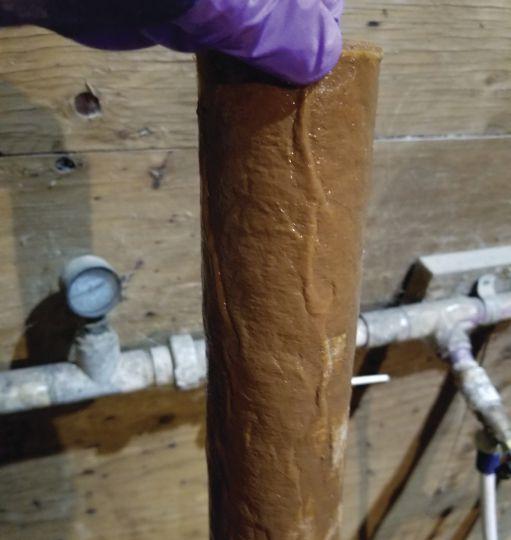
Completely clogged filters like this no longer have the ability to filter out additional minerals that are entering the system.
Barn Spotlight
Noble Farms
Location
Armstrong, B.C.
Sector Broilers
The business
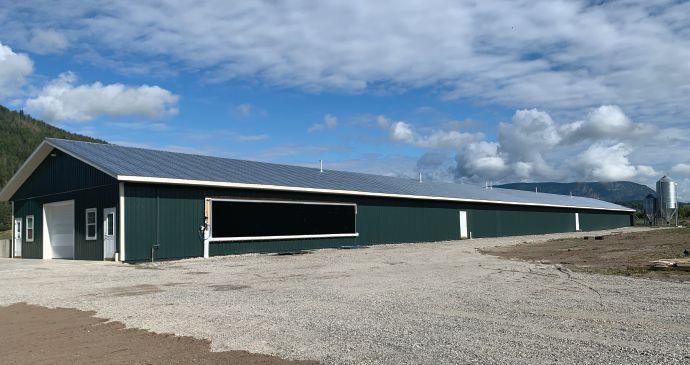
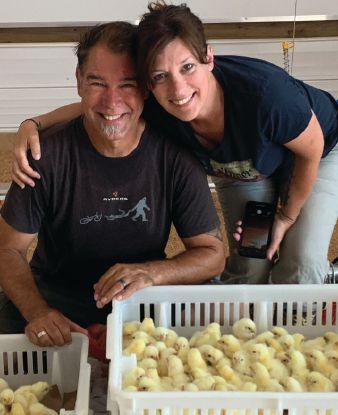
For 20 years, Ray and Melanie Baylis have managed chicken farms for absentee owners. Dubbed Worksinmotion Consulting, they have three full-time employees. They also own a broiler operation that they opened last year called Noble Farms.
The need
The couple long dreamt of opening their own chicken farm. In 2018, they got that opportunity. That year, they won the new entrant lottery and quickly began planning their own farm using the years of knowledge they’d gained overseeing the construction of three new barns for their clients. “When it came time to build our own barn, I had a very good idea of exactly what I wanted to do,” Ray Baylis says.
The barn
The producers knew from the start that they wanted to go with insulated concrete forms (ICF) instead of the more traditional stick frame building. The approach appealed to them because they thought a well-sealed barn would be more energy efficient, deliver better protection against pests and allow for more control over airflow. The barn opened last August. A few flocks in, they say it’s performing even better than they’d anticipated. The producers say the insulation value of the facility is around R16 or R18 – whereas the value of a traditionally built barn would be around R10. “I figure my utility bill is probably a good 20 per cent less than a regular stick frame building,” Baylis says.
Barn Spotlight highlights new and renovated barns and hatcheries. Do you know of a good candidate to be featured? Let us know at poultry@annexweb.com.
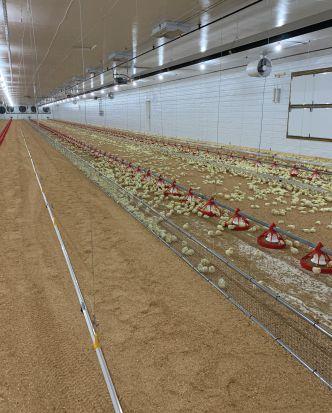
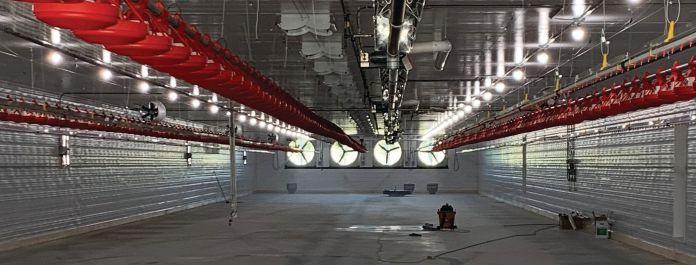
To combat the summer heat, the barn includes evaporative cooling pads, which work by evaporating water to cool the inside of the poultry house.
The producers went with tunnel ventilation using SKOV BlueFans, which are 55-inch variable speed fans that gradually turn on and, thus, don’t startle the birds like traditional on/off fans do.
After 20 years of managing other people’s farms, Ray and Melanie Baylis opened their own broiler farm last year.
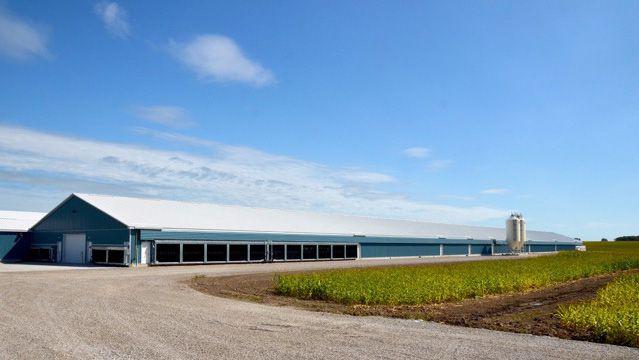
The producers say insulated concrete forms delivermore energy efficiency, better pest prevention and greater control over airflow.
The future of egg farming
Egg Farmers of Canada is committed to the next generation of egg farmers. Our national young farmer program and women in the egg industry program are focused on preparing the future leaders of our sector. We’re proud to create opportunities for leadership, continuing education, skill-building and mentorship. Contact your egg board for more information.
YOU HAVE AN INSTINCT TO PROTECT. WE HAVE AN INSTINCT TO PROTECT FAST.
Introducing Poulvac® Procerta™ HVT-IBD. Timing is everything in a poultry operation, and Zoetis created its newest vector vaccine to put time back on your side. Backed by the latest science resulting in excellent overall protection, studies found that Poulvac Procerta HVT-IBD protected chickens fast against classic and important variant IBD strains.1-3 It’s a quick way to full protection from infectious bursal disease. Contact your Zoetis representative.
1 Brown A. et al., Early Onset and Duration of Immunity of a Recombinant HVT-IBD Vaccine Against Virulent, Variant, and Very Virulent Infectious Bursal Disease Challenges. American Association of Avian Pathologists, Virtual Conference, Jul 30-Aug 6, 2020
Brown A. et al., Efficacy of a recombinant HVT-IBD vaccine in layers following virulent,