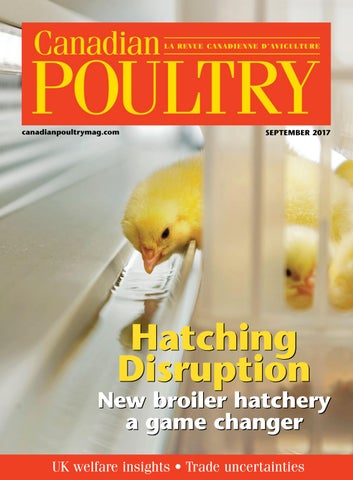
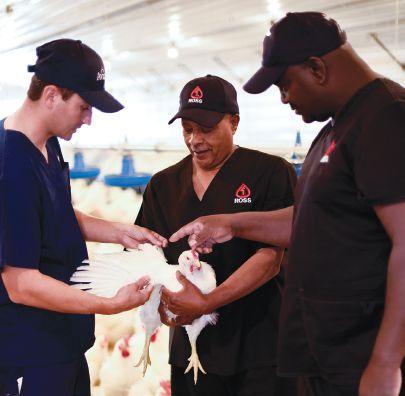
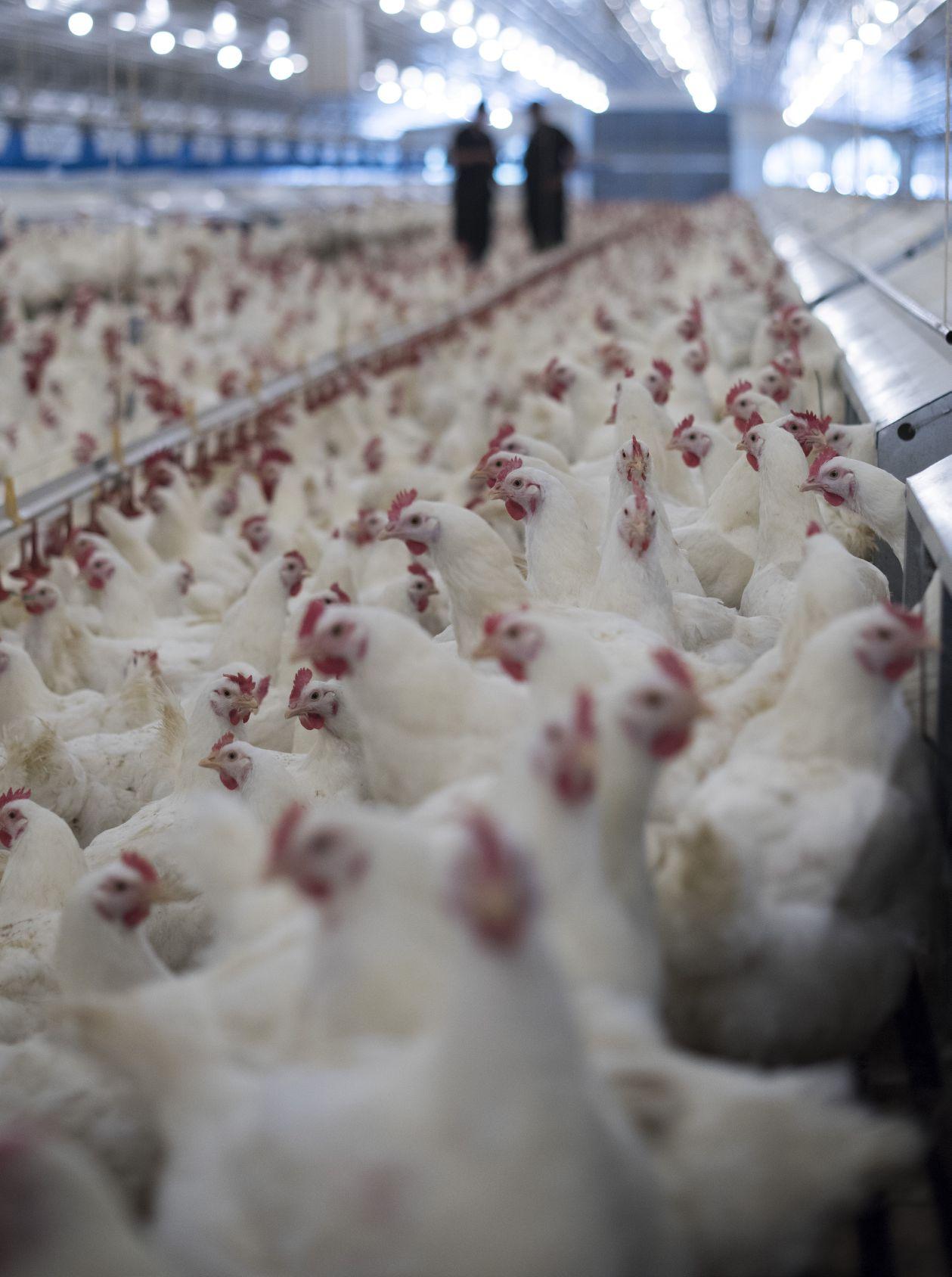
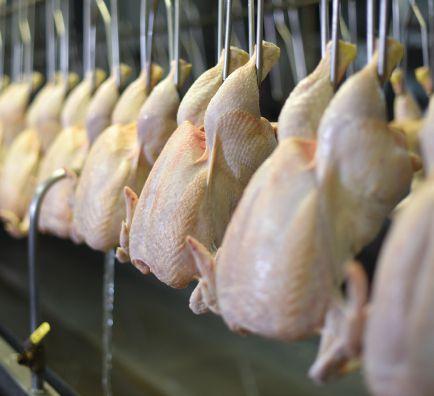
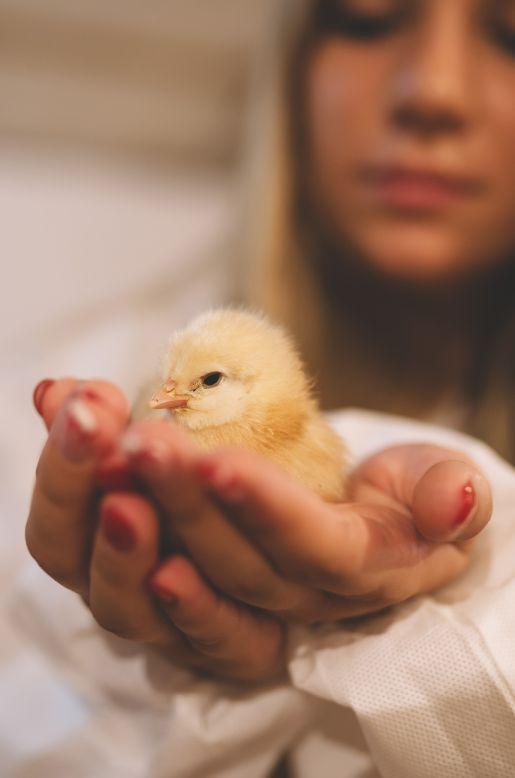
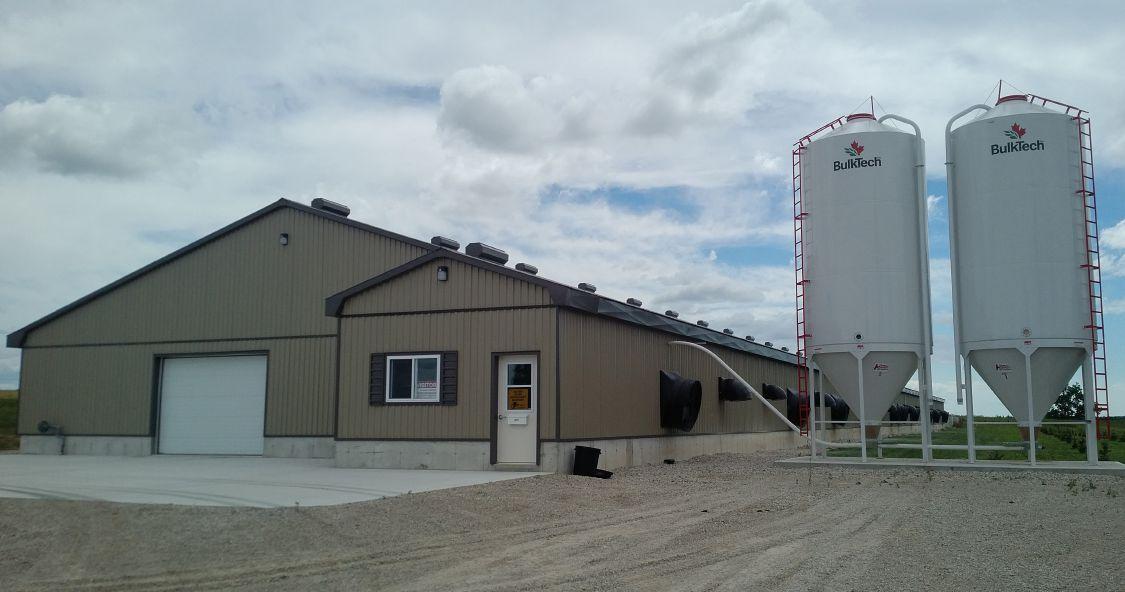
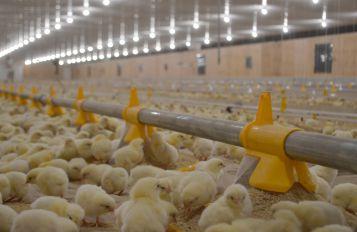
COVER STORY: A new broiler hatchery in Stratford, Ont. uses cutting edge technology. by Jennifer Paige
14
WELFARE: A U.K. perspective on welfare
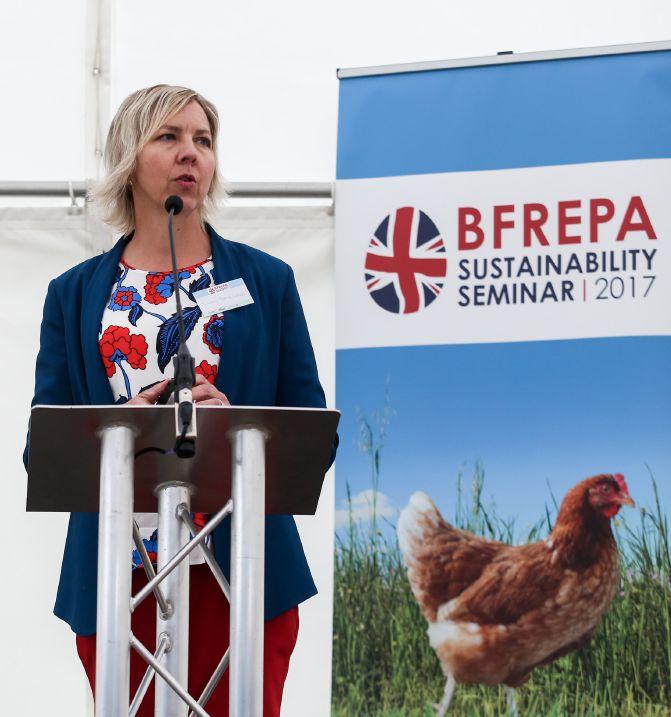
Renowned researcher Dr. Victoria Sandilands discusses her work at Scotland’s Rural College. by Treena Hein
20
PRODUCTION: Getting to know you
Stakeholders reflect on the new code of practice for the care and handling of layers. by Treena Hein
24
TRADE: Uncertainties abound
Trade discussions cause unease. by Treena Hein
28
HEALTH: Protection against the AI threat
An exploration of the newest vaccines. by Treena Hein
32
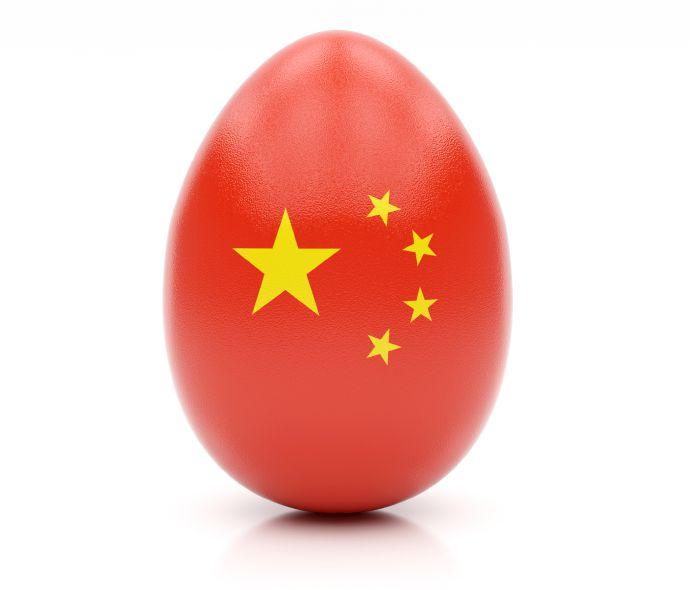
BUSINESS: China’s poultry industry in transition
Modernization and shifting consumer preferences are creating new market opportunities. by Lilian Schaer 36
RESEARCH: Feeding broiler breeders In search of alternate strategies. by Lilian Schaer
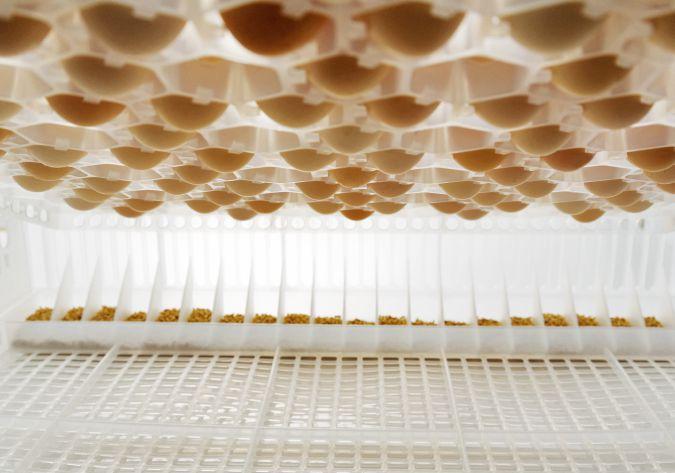
Cutting edge broiler hatchery
FROM THE EDITOR
BY BRETT RUFFELL
A powerful story to tell
I was determined to find a memorable way to celebrate Canada’s 150th birthday, being such a special milestone. What better venue to show my pride at than at the Toronto Blue Jays game, I thought. Luckily, my family and I were able to land some nice seats along the first baseline.
The party didn’t disappoint. (Though the home team getting trounced 7-1 dampened the mood a bit. Also, the Boston Red Sox wore Fourth of July uniforms on Canada Day for some reason – one player even warmed up in stars and stripes boxers. But I digress…)
I couldn’t help but feel patriotic watching dozens of Canadian soldiers unveil a massive version of our flag for the national anthem. But by far the most moving moment was watching a World War II vet rise from his wheelchair to throw the first pitch. Indeed, while the team came up short on the field, the organization did an excellent job of stirring up patriotism.
Now, Canadian Poultry and our colleagues at Annex Business Media are looking to do the same. We’re dedicating a week to honouring agriculture and farmer contributions to this country. Dubbed Ag150, every day for five days starting September 18 we’ll look back at the issues that have shaped Canadian farming, including poultry production, as well as what may lie ahead.
We’ll detail agriculture’s most significant milestones, profile some of our longeststanding barns, including a century-plus old egg operation that’s still thriving, and delve into scientific and technological advances that will shape production for years to come.
We’ll also have numerous leaders from across the spectrum reflect on their industry’s past, present and future as part of our coverage. On that note, one of the most informative discussions I’ve had during my
time with Canadian Poultry was with Robin Horel, president at Canadian Poultry & Egg Processors Council.
As the leader of an organization representing members in all four commodity groups, including chickens, turkeys, eggs and hatching eggs, Horel has a unique grasp of the wide range of issues facing poultry as a whole. During our interview, the full version of which will be available on Ag150.ca, he outlined the distinct issues each sector faces.
What’s more, Horel singled out the biggest challenge he sees all poultry groups sharing for years to come: aggressive animal activism. “They’re turning their attention away from communicating with consumers towards blackmailing customers and holding their brands for ransom,” he said.
Such tactics have been effective in convincing retailers and food service companies to adopt policies that Horel feels lack scientific backing. For instance, in his opinion demanding that egg producers go “cage-free” will do nothing to improve animal welfare, food safety or nutrition but will drive up costs.
That said, he sees a better way forward for poultry. “I think that industry’s got a good story to tell and it needs to revolve around sustainability,” he says, citing the push for slow growing broilers as an example. “You can produce a chicken that grows in double the amount of time a current chickens grows but to do that you’ll need twice as many resources, twice as many barns and almost twice as much feed… So I think our story is a good one.”
Be sure to visit Ag150.ca for more from Horel plus other can’t-miss coverage – you’ll even have a chance to win an iPad! n
Occasionally, Canadian Poultry Magazine will mail information on behalf of industry-related groups whose products and services we believe may be of interest to you. If you prefer not to receive this information, please contact our circulation department in any of the four ways listed above.
As the egg laying industry continues to evolve, equipment manufacturing companies must do the same. At LUBING we are fully aware of our need to progress with the changing industry and that is why our culture of innovation is the reason for our success. LUBING is leading the way by offering a wide variety of products for today’s Cage-Free housing demands as well as bio-security concerns.
Nipple Drinking Systems
Pullets / Layers with and without LitterGuard Cups
Egg Conveying Systems
Curve conveyors customizable to nearly any application Belt Conveyors ranging from 18, 24, 36, and 48 inches (capable of delivering up 600 cases/hr)
Accumulator Tables
Custom-made, all-stainless tables for all situations
Perch Systems
Ergonomic design allows birds to perch comfortably Reduces stress and helps create a calm environment
Glass-Pac Canada
St. Jacobs, Ontario
Tel: (519) 664.3811
Fax: (519) 664.3003
Carstairs, Alberta
Tel: (403) 337-3767
Fax: (403) 337-3590
Les Equipments Avipor
Cowansville, Quebec
Tel: (450) 263.6222
Fax: (450) 263.9021
Specht-Canada Inc.
Stony Plain, Alberta
Tel: (780) 963.4795
Fax: (780) 963.5034
Reducing antimicrobial use WHAT’S HATCHING HATCHING
FThe AMU strategy eliminates the preventive use of Category II antimicrobials by the end of 2018.
Canadian Poultry and Egg Processors Council, Turkey Farmers of Canada, and the Canadian Association of Poultry Veterinarians.
ollowing the successful elimination of Category I antibiotics for disease prevention in Canadian chicken production, Chicken Farmers of Canada has established timelines to further its strategy to eliminate the preventive use of antimicrobials of human importance.
The antimicrobial use (AMU) strategy eliminates the preventive use of Category II antimicrobials by the end of 2018, and sets a goal to eliminate the preventive use of Category III antibiotics by the end of 2020.
The AMU is an industrywide initiative that was developed in tandem with all industry stakeholders, including the Animal Nutrition Association of Canada, the Canadian Hatchery Federation, the Canadian Hatching Egg Producers, the
The key elements of the AMU strategy include defining antimicrobial use and analyzing antimicrobial resistance (AMR) trends, reviewing best management practices, ensuring effective controls of AMU in Canada, educating stakeholders on the issues of AMU and AMR and researching and determining the availability of alternative products.
Chicken Farmers of Canada’s policy will maintain the use of ionophores, those antimicrobials not used in human medicine, along with antibiotics for therapeutic purposes to maintain the health and welfare of birds.
“Chicken Farmers of Canada has been a leader in antimicrobial stewardship, and this strategy provides continued confidence to consumers, customers, and
to governments,” Benoît Fontaine, Chair of Chicken Farmers of Canada, said. “This strategy provides a sustainable means of meeting consumer expectations, while maintaining the ability for farmers to protect the health and wellbeing of their birds.”
Consumers can be assured that Canadian chicken is free of antibiotic residues, and has been for decades. Canada has strict regulations with respect to antibiotic use and withdrawal times to ensure that chicken reaching the marketplace does not contain residues, which is monitored by the Canadian Food Inspection Agency.
This decision builds on the objective of eliminating the preventative use of antibiotics of human importance, guided by a comprehensive strategy that involves reduction, surveillance, education, and research.
The AMU strategy is consistent with the Canadian government’s Action Plan on Antimicrobial Resistance.
New commercial turkey hatchery coming south of the border
SOUTH DAKOTA
Hendrix Genetics is pleased to announce an investment plan of $25 million for a brand new turkey hatchery in Beresford, South Dakota with the capacity for 35 million hatching eggs. This new hatchery will be used in addition to Hybrid’s aligned network of hatcheries throughout the U.S. and Canada.
The new hatchery, plus the capacity within the aligned
partners, offers the capability of hatching 60 million eggs for the commercial market.
The facility will be outfitted with cutting-edge equipment, featuring Petersime incubators, to ensure the highest biosecurity and poult quality. Facility construction began in August at the Beresford location, which sits approximately 56 km south of Sioux Falls, S.D., and is well connected to the interstate system to transport
Gender identification before incubation
ONTARIO
A non-invasive scanning technology will soon be used to identify the gender of day-old eggs before they are incubated. The technology is set to streamline the hatchery process, create new tech-sector jobs and redirect resources previously used to raise male chicks. Research funded by the Egg Farmers of Ontario through the Agricultural Adaptation Council was conducted at McGill University to bring the concept of gender identification of unhatched eggs to full-scale commercialization. The project is in its second phase and will be fine-tuned in preparation for a commercial application that would be available for sale to hatcheries around the world.
“This is a very sophisticated technology that includes state-of-the-art visioning,” Tim Nelson, CEO of Livestock Research Innovation
day-old poults to the U.S. market.
Access to a skilled workforce and the support of the local community were elements of the decision process for Hendrix Genetics.
With this newest hatchery announcement, as well as upcoming plans for future investments, Hendrix Genetics aims to strengthen its global supply chain and network of owned and aligned distribution.
Corporation, the group partnering with Egg Farmers of Ontario to bring the technology to market, said. “There is a tremendous amount of design work that goes into creating this new system that, at full capacity, could scan and identify male and female, and fertile and non-fertile eggs at 50,000 eggs per hour.”
The knowledge that comes from being able to identify the gender of day-old eggs will give hatcheries new information. Female eggs can be incubated for hatching and infertile or male eggs can join the table or processing stream.
“This new technology will offer tremendous new opportunities to Ontario’s hatchery
industry,” Harry Pelissero, general manager of Egg Farmers of Ontario, said. “Redirecting day-old male eggs opens new market opportunities, and focuses hatchery resources of energy, water and other resources to hatching female eggs. It’s really going to be a game-changer.”
Commercialization of the technology will involve working with established hatchery automation companies, as the new technology requires custom-fitting to each hatchery, and is expected to create up to 30 jobs in Ontario, including visioning system technicians.
“We’ve already had interest and requests from hatcheries around the world that are very excited about the potential of this new technology,” Pellisero said. “We are now moving into testing prototypes in Ontario hatcheries to be sure the accuracy and speed we have in the lab can be achieved at the commercial level. We expect to go to market in 2018 with the first commercial hatchery application.”
COMING EVENTS
OCTOBER 2017
October 4-6, 2017
41st Annual Poultry Industry Workshop Banff, Alta.
For more information, visit: poultryworkshop.com
NOVEMBER 2017
November 2, 2017
Harvest Gala 2017 Guelph, Ont.
For more information, visit: farmfoodcareon. org/#sthash.eD7WME1S. dpuf
November 7, 2017
Poultry Innovations Conference and Banquet London, Ont.
For more information, visit: poultryindustrycouncil. ca/education-extensionevents/innovations-conference
For more information, visit: fmc-gac.com/programsservices/agricultural-excellence-conference/
November 29, 2017
Eastern Ontario Poultry Conference
St. Isidore, Ont.
For more information, visit: poultryindustrycouncil. ca/education-extensionevents/eastern-ontariopoultry-conference/
HATCHING HATCHING
Nutreco completes acquisition of Hi-Pro Feeds N
utreco has completed the acquisition of Hi-Pro Feeds, after satisfying all closing conditions and having received regulatory approvals. As part of the integration, Nutreco’s combined animal nutrition businesses in North America, consisting of Shur-Gain, Landmark and Hi-Pro Feeds, will now trade under the name Trouw Nutrition.
Hi-Pro Feeds is a leading manufacturer and distributor of animal feed in North America. The company network comprises of 15 individual feed mills with operations spanning three states in Southwest U.S. and Western Canada serving over 5,000 customers.
Nutreco’s global animal nutrition activities trade under the company brand Trouw Nutrition, with the exception of North America where its nutritional solutions have been brought to the market under a variety of company brands.
The Trouw Nutrition global R&D network consists of five research centres – including Trouw Nutrition Agresearch in Burford, Ont., and over 50 collaborations with universities and research institutes around the world.
The strength of the global innovations of Trouw Nutrition, together with the combined global and local expertise to turn the sciencebase into practical, applicable nutrition solutions will provide additional benefits to customers throughout North America.
In Canada, Shur-Gain will become the key product brand that will be used for all premixes, farm minerals, concentrates and complete feed. The Shur-Gain dealer network will also retain its existing branding. In the U.S., both Hi-Pro Feeds and Shur-Gain will be retained as product brands under Trouw Nutrition.
During the integration phase of Hi-Pro Feeds into the Trouw Nutrition organization, Daren Kennett will lead the Western Region, which includes Manitoba, Alberta, British Columbia, as well as the Hi-Pro Feeds operations in the U.S., reporting to Jacques Leclerc.
Poultry Industry Council: CELEBRATING 20 YEARS OF SERVICE TO THE INDUSTRY
What are the most significant changes you’ve seen in the Canadian poultry industry during the past 20 years?
“The last 20 years has been very impressive. Productivity has increased for both meat birds and layers coupled with great gains in feed efficiency, bird nutrition, bird welfare and disease prevention. Canadian poultry producers have steadily adopted new techniques and technologies to ensure their farms remain competitive and sustainable. They have also been well-served by their marketing boards and PIC in terms of ongoing investments in research and transfer of research results, particularly with biosecurity. This has all helped to create a vibrant and growing industry. However, we cannot assume the current production base and current technologies will just keep on delivering as they do now.”
vice-president of Clovermead Farms and past chair of the Poultry Industry Council.
What do you see ahead for Canada’s poultry industry?
“We all know that the pressures on agriculture are numerous and so we must constantly innovate and we can’t afford to be afraid of new ideas. We must continue to invest substantially in research and innovation and then apply the results.
Precision Agriculture will inevitably be a key factor over the next few years and the poultry industry needs to be involved now to determine how it will inform and improve the health of birds, humans and the environment and more.
Among many other challenges, two stand out. One is the need to reduce greenhouse gas emissions associated with livestock operations. The other is the need to continually dialogue with consumers and retailers on such topics as bird welfare, antibiotic resistance and farming practices. Is it time to discuss the certification of livestock producers? The challenge of modern agriculture is to retain our social license to produce. To be sure, the next twenty years will be challenging, exciting and enlightening.”
Deborah Whale,
If you could protect your farm this way, you wouldn’t need any cleaners or disinfectants.
These are some of the products eligible for the Vetoquinol Club points program. Sign up today at vetoquinolclub.ca and reap the benefits. club
Vetoquinol would like to remind you of the importance of a good biosecurity protocol and its implementation on a daily basis.
NEED MORE INFORMATION? CONSULT YOUR BIOSECURITY SPECIALIST.
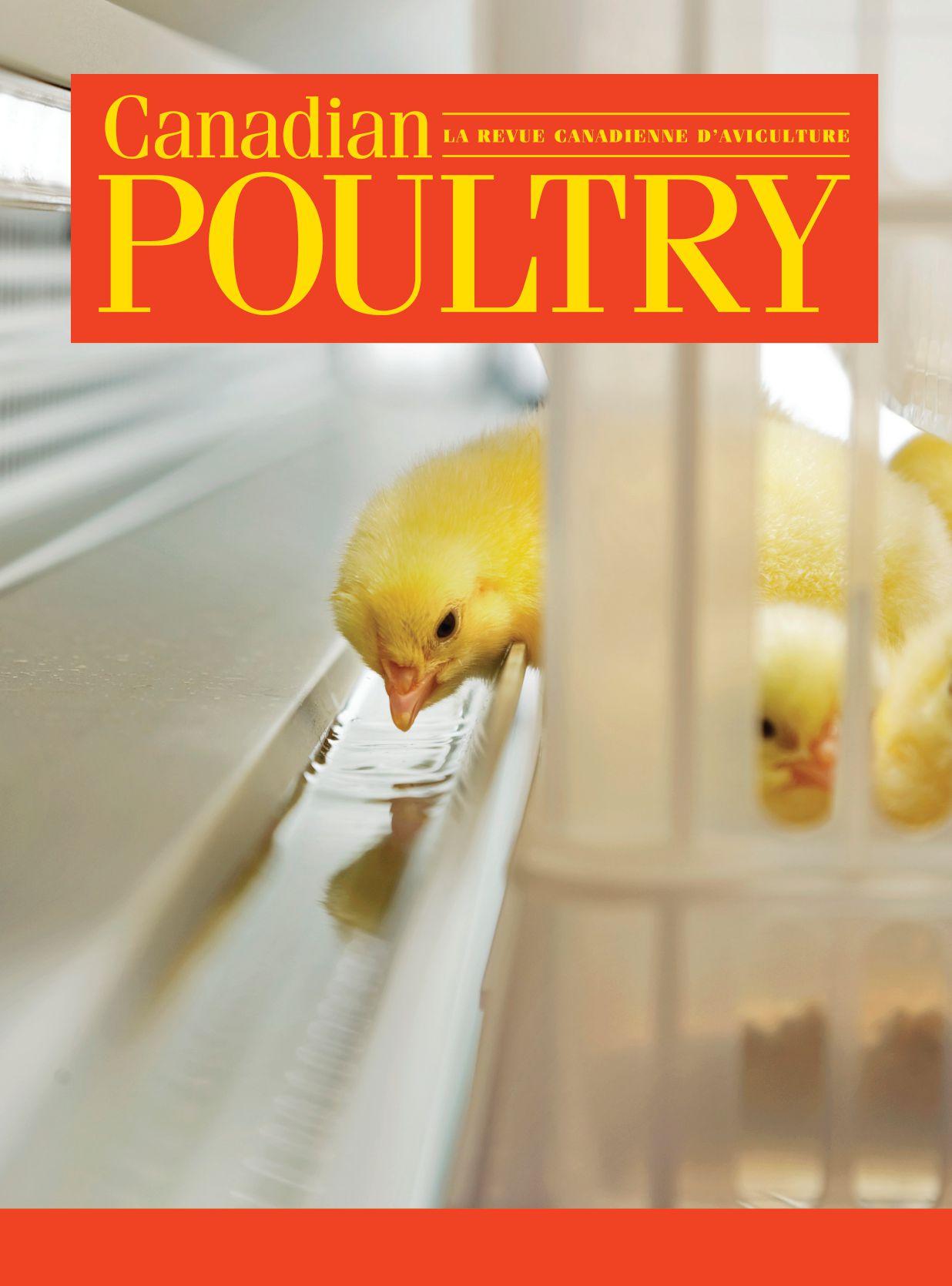
Cover Story Hatching Disruption New Ontario facility moves industry forward
by Jennifer Paige
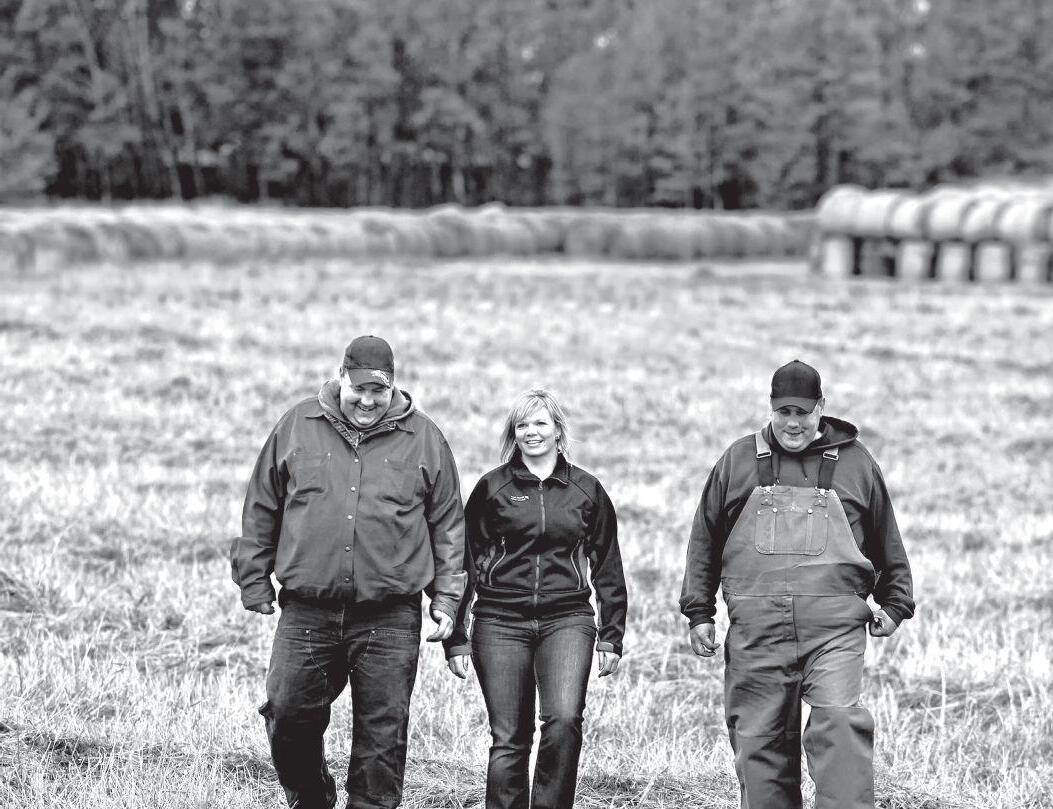
Frustrated with a lack of capacity and the dwindling quality of chicks, a farmer-driven plan was hatched to bring a new, innovative technology to Ontario. A little over a year ago Ontario farmers Dave Brock and Murray Booy began a discussion around the current state of Ontario’s broiler hatching capacity and the growing need to evolve the industry towards Raised Without Antibiotics (RWA) production. “In Ontario the broiler guys were looking for a stronger quality chick because of the desire to move to RWA production. It is a production challenge and they are looking for the highest quality chicks they can get,” Brock, a long-time Ontario egg hatching producer, says.
POST
EMERGENCE FEED
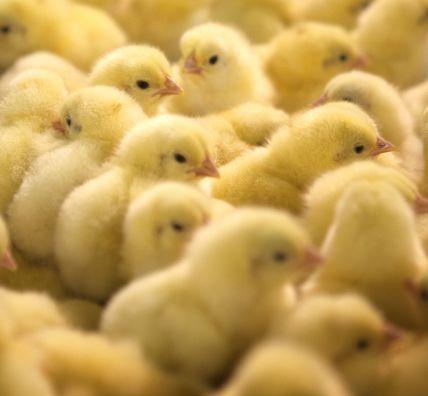
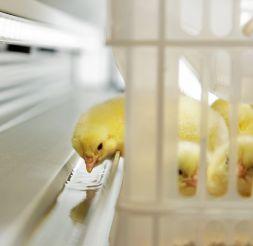
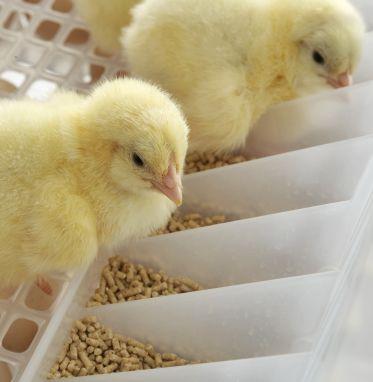
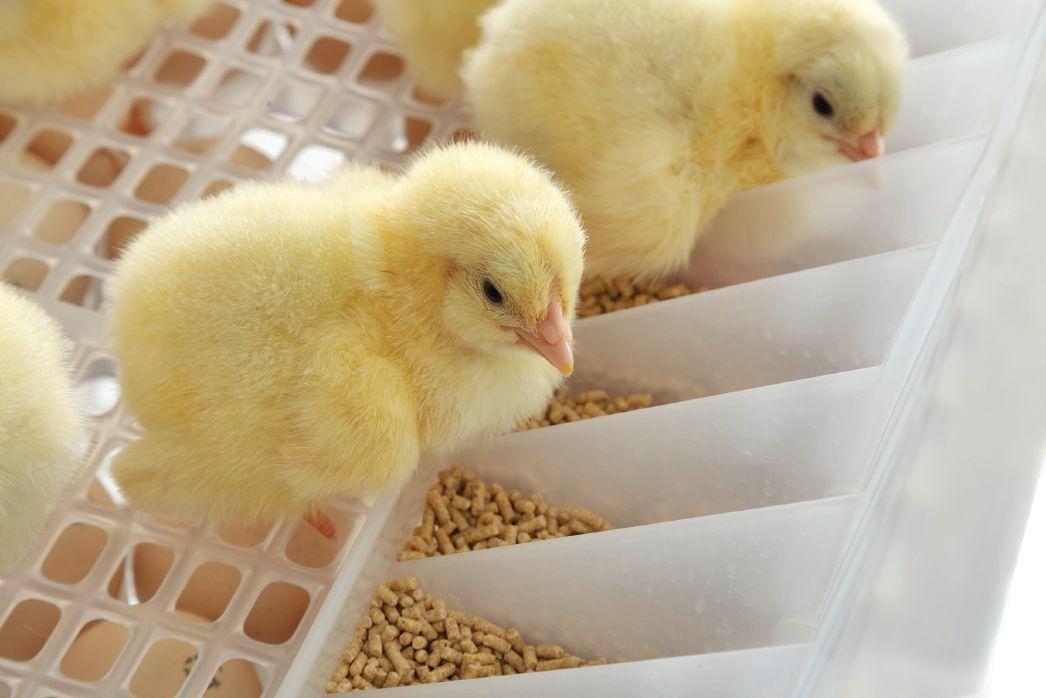
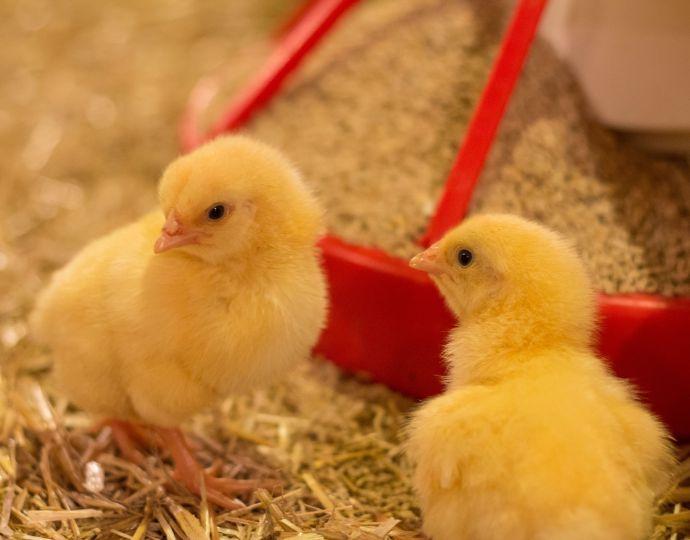
Chicks are provided with feed and can start eating immediately after hatching, allowing the residual yolk to be used for the final development of important organs and the immune system.
Booy explains that there are only three major producers of chicks in the province, all of which use traditional technologies. “I was formerly on the Chicken Farmers board and have certainly attended several farmer meetings over the last several years and there has been quite a bit of discussion around chick supply and chick quality across Ontario. The current market structure is insufficient to meet the growing demand and evolving tastes of Ontario consumers,” Booy says.
Brock and Booy initiated Trillium Hatchery Inc., a consortium of Ontario farmers with the goal of opening a new leading-edge hatching facility in the province. Booy says that having the hatchery owned and governed by farmers with a collaborative structure was important to ensure a fresh, new approach to the chicken value chain in the province.
“The company will be owned and directed by farmers
for farmers where the return on investment is not only measured on the financial statements, but measured where it really matters, in the barn,” Booy says of the plan.
Fast-forward a year and the farmer-directed initiative is now well underway. In June, Trillium Hatchery Inc. purchased land in Stratford, Ont., and began site preparations to build the 65,000-square-foot hatching facility that will hold an initial capacity of approximately 16 million chicks per year.
“My production is around 16 million chicks. I tend to have a steady egg supply line because I have four major flocks and so that is what is giving us the base but we hope to add other egg hatching producers as the demand increases,” Brock says.
The project comes with a $20 million price tag and will utilize the HatchCare system, a revolutionary incubation and chick care system, that is said to produce stronger chicks in a more animalfriendly manner (see sidebar for more). The Trillium Hatchery will be just the second hatchery in Canada and the third in North America to adopt the HatchCare system.
In an effort to create the most successful and efficient operation, Booy and Brock called upon Doug Kaizer, chief financial officer of Synergy Agri Group Ltd., the first hatchery in Canada to adopt the HatchCare system.
Kaizer was instrumental in bringing the HatchCare system to Canada in 2015 and quickly agreed to become the third founding partner in Trillium Hatchery Inc. Trillium stakeholders plan to draw on the experiences learned by the Synergy Agri Group Ltd. to develop the most modern, up-to-date
HatchCare hatchery.
“My role in this project is to take the things that we have learned so far and make changes in the Trillium hatchery. There are some improvements there already but every day we are continuing to get a better understanding of the system’s full potential,” Kaizer says. “What we are doing right now is absolutely the baseline of the system. There are a number of opportunities to advance these facilities even further.”
SYNERGY’S EXPERIENCE
As of January 2017, the Synergy hatchery, which is located in Port Williams, N.S., has been producing 200,000 HatchCare broiler chicks per week and has been in operation for two years. “The Nova Scotia Hatchery has proven itself to be superior in all aspects of incubation and hatching performance and has shown the benefits, both financial and on-farm performance, for the broiler and egg hatching farmers,” Booy says.
In terms of the outcomes of the HatchCare system, Kaizer says implementing it was the best decision his company ever made. He says the advanced production process has proven
“I think the biggest thing that we are going to bring to the table is the future of growing chicken. This hatchery system sets the broiler farmer up to be a very good broiler farmer.”
to have several benefits to the chicks, the environment and and also to farmers.
He reports improvement in chick health, mortality, weight gains and feed conversion. The system is producing stronger chicks with less infection, resulting in reduced antibiotic use.
“I think the biggest thing that we are going to bring to the table is the future of growing chicken. This hatchery system sets the broiler farmer up to be a very good broiler farmer. It hits all the things in the future we are aiming for by 2020 and this hatchery is going to help the broiler producers be that 2020 farmer,” Kaizer says. Producers
The Trillium Hatchery will be located in Stratford, Ont., hold an initial capacity of approximately 16 million chicks per year and is scheduled to begin production in October 2018.
Cover Story
receiving the HatchCare chicks report improvement in early brooding, with the chicks being less demanding, less stressed and arriving with a built-in pattern for eating, drinking and resting.
INDUSTRY IMPACT
The Trillium Hatchery is scheduled to begin production in October 2018. Industry members say the opening will be a significant step forward. “I think there is a huge anticipation for this from Ontario broiler producers. I think that they are keen to see it happen and the sooner the better,” Brock says.
Robin Horel, president and CEO of the Canadian Poultry and Egg Producers Council, says the creation of the new hatchery is certainly a positive step for the industry, but he doesn’t expect to see any major impact nationally.
“New technology and investment is always good for the industry but on a national level we aren’t going to see any major impact from any one-single hatchery,” Horel says. “The industry has been growing phenomenally in recent years and so I believe that this will just contribute to that momentum.”
In terms of moving towards RWA production, he notes that nothing is going to slow consumer demand or expectations for RWA production, but new technology and production innovations may make things easier for farmers. “The industry will move to RWA no matter what technology is being used. But, if there are ways to develop stronger chicks it will certainly aid producers,” Horel says. “I am familiar with the HatchCare system but I have not been to the Nova Scotia hatchery myself. I understand the science and that stakeholders are happy with the results they are seeing but I can’t personally say that this technology is proven. However, if it is making the production process easier for producers, then all the better.” n
The HatchCare System
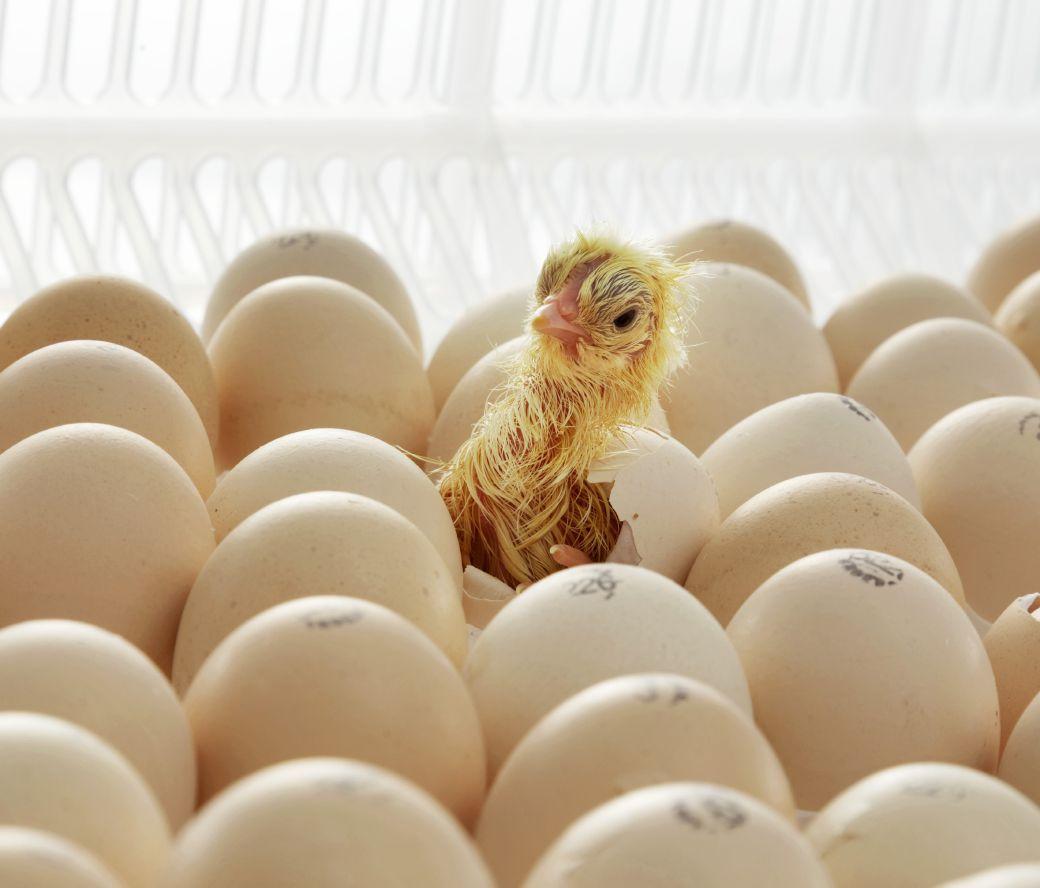
Developed in the Netherlands by HatchTech, the HatchCare incubation and chick care system underwent years of testing before coming to market in 2014. The system begins by allowing for the fertility of the eggs to be checked using new lighting methods. From there, only 100 per cent viable embryos are incubated.
The chicks then hatch under optimum and uniform conditions. They remain in individual crates, known as the HatchTraveller, from hatching to delivery. This provides ongoing uniformity in temperature, airflow, and humidity. The HatchTraveller also holds the egg in the most favourable position for hatching and is designed to separate the chicks from the egg shell once emerged.
But the real game changer is in the system’s ability to provide food, water and light immediately after hatching. In traditional hatcheries chicks are shipped right after emergence and do not receive food and water until after they’ve settled in at the farm.
“Instead of a traditional hatch where they go two days back, we take them a day ahead, and there are significant benefits to that,” Kaizer says. “Brooding conditions are different, they are easier, the mortality is less. There is less
four-day, 10-day Coccidiosis and that strength continues on with high growth rate and higher feed conversion.”
A number of studies have been conducted on the benefits of providing immediate access to food and water with results showing that early food and water can improve growth performance, often resulting in higher body weight and breast meat yield. Residual yolk uptake also shows significantly higher in chicks that have been fed immediately.
“It is actually helping with the absorption of the residual yolk sac. Within the residual sac there are all the antibodies that came from the mother hen, and with faster absorption, it helps develop the immune system of the chick,” Brock explains.
Booy adds that they have seen tremendous amount of interest from farmers in Ontario that are in, or are moving in the direction of, organic or RWA production models, because of the strength of the chicks’ immune system. “The main reason farmers want this hatchery system is because these chicks are arriving to the barn stronger, heavier, healthier, which gives the barn manager less challenges all the way through the growing cycle.”
We’re here to help your business thrive.
Agriculture is a business like no other. That’s why you need a financial advisor with a background in the business. With TD Agriculture Specialists like Jolene, you have one. So when the Franke twins needed financial advice to help grow their grandparents’ farm, Jolene was ready to help. Today, the Frankes have a thriving operation with over 250 head of cattle. Share the benefit of our experience. Talk to a TD Agriculture Specialist today.
Welfare
A U.K. perspective on welfare
Renowned researcher
Dr. Victoria Sandilands discusses her work at Scotland’s Rural College.
BY TREENA HEIN
Housing and managing poultry in ways that are sensitive to the birds’ needs while respecting the sustainability of farming in the United Kingdom is the focus of Dr. Victoria Sandilands work. Sandilands is a senior behaviour and welfare scientist at the Monogastric Science Research Centre at Scotland’s Rural College.
Sandilands recently spoke at the University of Guelph’s Campbell Centre for the Study of Animal Welfare in Guelph, Ont., as part of the centre’s ongoing animal behaviour and welfare seminar series. Her research on poultry welfare is wide-ranging, from examining conditions in furnished cages to the humane killing of birds on farms on small and large scales. She teaches and supervises students on a variety of topics, and serves as current president of the World’s Poultry Science Association (U.K. Branch). She is also an active member of the International Society for Applied Ethology.
“Increasingly, my work involves collaboration with well-known poultry companies, animal welfare organizations and industry councils,” she says. “The poultry industry is a relatively
Sandilands believes that in the future, there will be an interesting tension between the pressure retailers are bringing to bear on the U.K. poultry industry and the need to champion research evidence so that science gains more power to influence consumers.
intimate group of people, and I like to think we are working towards similar goals in many instances. We need to work towards practices that result in better animal welfare, but we have to support the sustainability of farming as well.”
Sandilands was always interested in animals, but decided against the veterinary path. During her undergrad
degree in California, when she briefly studied northern elephant seals, she got hooked for life on animal behaviour. “I had a choice between a master’s program in wild animal or farm animal behaviour, and decided on farm animals,” she explains. “My PhD was in laying hens because, from a practical point of view, they are easy to study. I still wasn’t sure at that point about
MARKET FORCES
studying poultry further, but I discovered the more you study chickens, the more you realize you don’t know. There is so much to learn. If you do any research project, you are only addressing one small aspect, and a few research projects don’t necessarily give you a definitive answer.”
For example, her beak trimming research is ongoing. According to Sandilands, the U.K. had allowed the infrared method, but was looking to ban all trimming by 2016. Sandilands was part of a “Beak Trim Action Group” made up of scientists, vets and many industry and government officials, and her studies – along with those of other researchers – convinced the group that the U.K. was not yet ready to ban beak trimming. Sandilands noted that even in large free-range flocks, substantial feather pecking can occur with untrimmed birds, and research continues into how pecking can be reduced beyond trimming.
During her talk at the University of Guelph, Sandilands gave an overview of how egg production in the U.K. has developed – within a relatively very short period – from backyard flocks to large commercial operations, and from one type of chicken to two distinct lines: broilers and layers. “In the 1950s in the U.K., we had 80 per cent of egg production in small free-range flocks, 12 per cent in barns and eight per cent in cages,” she explained. “By the 1980s, we had 95 per cent of layers in cages, four per cent in barns and one per cent free range. When battery cages first came out, they were for holding individual birds so that farmers could identify and cull the layers that did not perform well. In 2015, the U.K. now has about 51 per cent of layers housed in cages, 2.5 [per cent] in barns, 44 [per cent] in free-range production and 1.5 [per cent] in organic production. So the way hens are housed varies widely from decade to decade.”
Cages are disappearing in North America and Europe due to public pressure and new research results, but a
Welfare
“No system is better than any other on all factors.”
new element has been added recently, with major supermarkets and restaurants wanting only cage-free eggs by 2025. “The supermarkets think they’re doing the right thing, but nothing with housing systems is black and white,” Sandilands said. “No system is better than any other on all factors. We have a situation where we might not have a market for caged eggs in future, but it’s also worrying for free-range producers here because when there are only free-range and barn eggs, the freerange farmers’ premium margin will be smaller.”
Sandilands and colleagues from various organizations have made some presentations and held friendly debates over the fact that housing systems
aren’t clear cut in terms of animal welfare and to set out the pros and cons of each option, but it’s difficult to reach large numbers of people this way. “In addition, it’s really hard to convince people that furnished cages for example, have some real benefits, as it’s the behavioural aspect of a hen’s life that captures people so much,” she explains. “The fact that birds can’t behave normally in a cage, can’t dust bathe and forage, is more important to people than air quality and other factors. People have a picture in their minds of cage-free life for a hen, and don’t understand the scale of free-range or barn production and what it means for a hen to live in these cage-free systems with thousands of other hens. But
Month
National Chicken Month Recipe Contest!
To mark our 2 nd annual National Chicken Month, submit your favourite chicken recipe for a chance to win a Raised by a Canadian Farmer prize pack AND have your recipe featured on our website!
Send your recipe to communications@chicken.ca by September 30th, 2017.
Concours de recettes pour le Mois national du poulet!
Afin de marquer notre 2e Mois national annuel du poulet, soumettez votre recette de poulet préférée pour courir la chance de gagner un prix de la marque « Élevé par un producteur canadien » ET voir votre recette publiée sur notre site Web !
Envoyez votre recette par courriel à communications@poulet.ca d’ici le 30 septembre 2017.
Contest rules and regulations can be found on chicken.ca or chickenfarmers.ca as of September 1st, 2017.
Les détails et règlements du concours seront disponibles sur poulet.ca ou producteursdepoulet.ca à compter du 1er septembre.
Chicken
if you’re trying to feed several million people eggs on a daily basis, it’s going to be large-scale.”
RESEARCH INFLUENCE
Sandilands’ research continues to shed light on bird welfare. For example,
Welfare
broiler-breeders (who are restricted feed) were thought to be hungry based on their behaviour, so some research has focused on how to use fibre and appetite suppressants to make birds feel satiated while still maintaining a healthy growth curve. But new studies by Sandilands and other scientists
have shown birds who spend more time eating have stress hormone levels and overall behaviours similar to birds fed restricted diets.
Other studies by Sandilands and her colleagues are investigating methods for necessary culling of small numbers of birds on-farm in terms of welfare, ease of use, cost, etc. That research has found various humane tools are no quicker than traditional hand wringing and that hand wringing can be improved with better techniques. She also notes it’s very satisfying to see her research into more humane on-farm euthanasia of larger numbers of birds using mixtures of argon and carbon dioxide in the case of disease outbreak being implemented by at least one company in the U.K.
Sandilands is particularly excited about establishing an objective way to measure chronic stress in laying hens. Stressed hens show less brain neuron formation. Once the method of measuring this is completely established, the industry will have a solid way to compare chronic stress levels of hens housed in various systems.
Going forward, Sandilands believes there will be an interesting tension between the pressure retailers are bringing to bear on the U.K. poultry industry and the need to champion research evidence so that science gains more power to influence consumers.
“In the end, things have a way of working out,” she concluded. “Many bird welfare topics are not pleasant, and we have a responsibility to look at these things, but I come from a practical perspective as well. If I had 10 chickens, I would not keep them in a furnished cage, for example, but we have hundreds of thousands of birds and the need to feed our population with high-quality eggs, so how do we house hens in a way that recognizes welfare but allows farmers to still make a living? I’m glad the battery cages have disappeared in Europe and are disappearing in North America, but we can’t push for changes that destroy agriculture or run it down.”
Production Getting to know the new Code of Practice
As the industry digests the new Code of Practice for the care and handling of layers, stakeholders reflect on its creation.
BY TREENA HEIN
In March, the National Farm Animal Care Council (NFACC) announced the release of the revised Code of Practice for the care and handling of laying hens, a nationallydeveloped guideline for livestock care, which is also used as a regulatory reference and the foundation for industry animal care assessment programs.
NFACC’s code development process is described as a uniquely consensus-based, multi-stakeholder approach that ensures credibility and transparency through scientific rigour, collaboration and consistency. The process of updating the layer code took about four years and was led by group that included egg farmers, animal welfare and enforcement representatives, scientists, transporters, egg processors, veterinarians and government personnel. This 17-member team was aided by a fiveperson scientific committee that included expertise in laying hen behaviour, health and welfare. A public comment period was also held in the summer of 2016 to allow the public and stakeholders to provide input.
In the March press release, Glen Jennings, egg farmer and chair of the code development committee described the new code as balancing hen welfare, behaviour and health “in a manner that is sustainable and achievable by farmers.”
Barbara Cartwright, CEO of the Canadian Federation of Humane
Animal housing was discussed at length during the four-year code development process.
Societies, uses the word “unprecedented” to describe the code’s minimum standards of care. She believes the code “represents the most significant change we’ve ever seen in Canada’s egg industry,” with “the most rigorous standards for egg-laying hens in North America.” Indeed, the new code includes requirements for perching, foraging and dust bathing, no matter what type of housing is used, as well as new guidelines for beak trimming, methods for on-farm euthanasia and the additional requirement of a written farm euthanasia plan.
In Cartwright’s view, the most important change in this code over its 2003 predecessor is the introduction of new standards for cage-free systems and the phase-out of battery cages, which she
notes have been shown to cause suffering by animal welfare scientists. And although the phase-out is “much longer” than the Federation considers acceptable, Cartwright does say on the other hand that “it doesn’t diminish how meaningful a change this is in the long-term. The industry changes in the years to come will be major, requiring new barn builds, conversion of existing barns, personnel training and new management and maintenance practices across the country.”
Housing was discussed at length during code development, notes Jackie Wepruk, NFACC general manager and project coordinator. “The code committee recognized that while freedom of movement is an important welfare consideration, good health, protection from injury and other
THE GREAT HOUSING DEBATE
welfare considerations were also critical for the wellbeing of birds,” she explains. Wepruk adds that although the transition to non-conventional housing had already begun, the code committee also needed to ensure that all farmers could meet the timelines.
Roger Pelissero, chair of Egg Farmers
of Canada, echoes Wepruk’s comments. “The new code recognizes that transitioning to a new production system is a substantial undertaking,” he says, “and that timelines must be achievable by producers who may need to build new barns or order and install new equipment, for example.”
Electricity Independence
Featuring YANMAR continuously run combined heat and power units
Faromor CNG Corp. have introduced electricity independence for today’s farm operations. As electricity prices continue to increase operators can gain significant utility cost savings. With ease of installation and high reliability these units deliver an energy balance by continuously monitoring power demand and output. By utilizing a highly efficient engine and capturing nearly all the remaining heat, the YANMAR micro CHP system is up to 2.6 times as efficient as current centralized power. They are able to generate the right amount of power at the right time. At Faromor, we strive to provide sustainable solutions.
Wepruk agrees. In terms of what she found most satisfying in the process, she identifies watching how relationships and understanding grew between the diverse groups. “We are very fortunate in Canada that our society values collaborative approaches and that we have a history of animal welfare advocates working with farmers on animal welfare standards,” she observes.
“We need to treasure and preserve this ability to work together. A considerable investment in time and effort is required to develop codes that both meet the needs of animals and are implementable by farmers. The layer code development committee deserves full kudos for their effort to build consensus and focus on doing the right thing for hens and farmers.”
As she looks to the future, Cartwright is looking forward to the new housing to come for all Canadian hens. She explains that consumers are starting to ask questions about whether cage-free systems are in fact more humane than battery cage systems, and “without standards like the ones in this new code, cage-free systems are like one big battery cage. The standards in this code are an acknowledgement from industry that enrichments that support natural behaviours are absolutely necessary for hens.” Cartwright notes that as more Canadian egg producers embrace cage-free systems, it was important from her perspective to ensure during the code development process “that cage-free is as humane as it sounds. Right now, many cage-free systems are overcrowded and have absolutely no enrichments for the hens, like foraging space or places to perch. That’s why we pushed so hard for cage-free enrichment requirements in this code.”
MORE TO COME:
In an effort to help Canadian farmers meet the requirements of the new code and transition to enriched or cage-free housing by 2013, Canadian Poultry magazine has prepared a special supplement packed full of advice and resources. Watch for the special ‘Cage-Free Supplement’ in our upcoming October issue! n
Trade Uncertainties abound
Questions around trade agreements have the farming community feeling uneasy as poultry leaders vow to protect supply management.
BY TREENA HEIN
With a new president in office in the United States, the Canadian agriculture industry and many other sectors are keeping a close eye on trade agreement developments. In general, Turkey Farmers of Canada chair Mark Davies notes, “There’s a lot of uncertainty in the farm community about trade agreements, and not just with supply managed commodities.”
With unease brewing, we asked industry leaders to weigh in with some insights.
CETA
First, there’s the Comprehensive Economic and Trade Agreement (CETA) held between the European Union and Canada. This pact will be fully implemented over the next six years, but while it affects dairy and other agricultural products, it does not have a direct impact on eggs, turkey or chicken.
TPP
The U.S. withdrew from the Trans-Pacific Partnership (TPP) trade agreement in January, putting ratification among the remaining 11 nations in flux. As to whether or not Canada will be pursuing completion of the deal, Global Affairs Canada says, “Canada is open to opportunities that would strengthen free
SOUTHERN NEIGHBOURS RUFFLE FEATHERS
Under new leadership the U.S. has withdrawn from the TPP, criticized Canada’s supply management system, and made it a known target for upcoming NAFTA talks.
trade within the Asia-Pacific and advance our economic interests in the region.”
Canadian Poultry and Egg Processors Council (CPEPC) president Robin Horel says his association would not be opposed to Canada pursuing ratification of a TPP deal.
“Although we were not pleased with the significant amount of additional access to the Canadian market for broiler chicken, table eggs, turkey and broiler hatching eggs that the Canadian negotiators gave up when they negotiated the TPP, we understood that they made the best deal they could, taking into account the additional access they were able to negotiate for other Canadian products, particularly other Canadian agricultural products…CPEPC went on record as supporting the TPP deal that was struck,”
Horel says.
He adds that even though the domestic market access commitments were significant under the current TPP, “we believed that certainty for our industry would be good for investment and growth. Having said that, if TPP does not get renegotiated, those additional market access commitments go away and that is a benefit to our supply managed poultry and egg industries.”
However, Horel notes that if other Canadian industries could benefit from a renegotiated TPP deal, CPEPC would not be opposed, but rather expect fewer market access concessions than the current version.
“Frankly, I would have expected virtually all of the increased imports to come from the U.S., given their proximity to
our market, their cost structure and our working relationship with them,” he adds. “If a new TPP is negotiated without the U.S., and if there are some market access concessions given for Canadian poultry and egg products, I am unsure which of the TPP countries would be able to supply.”
Davies does not see the current TPP terms as positive for turkey producers.
“Over the full implementation period of 18 to 19 years, as it stands the TPP allows for a 71 per cent increase in import access, the current equivalent of four million kilograms or $271 million, with a Canadian farm output loss of 4.5 per cent,” Davies says.
According to the executive director of Chicken Farmers of Canada, Mike Dungate, the TPP, as it reads now, would allow access to 2.1 per cent of Canada’s chicken market, which would have provided certainty for Canada’s chicken industry over a long period. But, he adds, without the U.S., the chicken aspect will have to be renegotiated.
NAFTA
Finally, there’s the North American Free Trade Agreement (NAFTA), which took effect in 1993. In early March, U.S. commerce secretary Wilbur Ross announced negotiations on changes and additions to NAFTA would start later this year.
Ross stated in a Bloomberg News interview that Mexico and Canada “know they’re going to have to make concessions. The only question is what’s the magnitude and what’s the form of the concessions.” He says items were missed in the original agreement, others handled incorrectly, and that “several chapters need to be added because of the digital economy and other things that have developed subsequently.”
Horel calls NAFTA renegotiations a big unknown. “I expect there will be a number of pundits that will express their thoughts about renegotiating NAFTA being an opportunity to dismantle supply management,” he says. He wonders if Canadian negotiators will believe there is something to be gained in other sectors
Trade
“Canada is a trading nation, but we want supply management maintained.”
by giving increased access to our poultry market to the U.S.
Horel also does not see a lot of opportunity for export gain in NAFTA renegotiations. “Certainly, the U.S. is a low cost producer and among the world leaders in exports of poultry and egg products. There could be some niche market gains in Mexico,” Horel adds.
Access for American chicken to the Canadian market under NAFTA is based on the previous year’s production level in Canada. This being the case, access is always increasing.
“The balance of trade is already in the favour of the U.S., so we would push back hard on any suggested tweaks,” Dungate says. “Mexico is the largest U.S. chicken export market and Canada is third. We mostly import high-value items like breast meat and wings. We have respected NAFTA from the start and have never tried to block U.S. access or any other access to our market, so it’s tiring to hear the constant myth that we block imports to drive prices up. There is an overall perception that supply management equals a closed market, but it
equals a predictable market. Globally, only about 10 per cent of the world’s chicken production is traded. We are the thirteenth-largest importer of chicken in the world.”
Egg Farmers of Canada (EFC) explains the volume of eggs imported into Canada is managed by Tariff Rate Quotas (TRQs), which limit imports to a predetermined volume, keeping them predictable. Current TRQs for NAFTA are almost three per cent of each previous year’s domestic production. For the TPP as written, it’s 19 million dozen eggs per year phased in over the 18-year implementation period, and for the World Trade Organization it’s 21.37 million dozen eggs per year.
“We continue to monitor the status of trade negotiations closely,” says Rowan Weerdenburg, EFC communications officer.
It’s expected that all other commodity groups will be watching as well. “Market access is always a concern,” Davies says. “We are not against trade. Canada is a trading nation, but we want supply management maintained.” n
the confidence to stand up for an industry that I love. The program has given me
–
Egg Farmers of Canada is proud to support and empower the next generation of agricultural leaders. Learn more about our national young farmer program at eggfarmers.ca
Laura Buys, national young farmer program alumna
Health Protection against an ongoing threat
An exploration of the newest AI vaccines.
BY TREENA HEIN
Avian influenza (AI) is a significant issue for the entire poultry industry with the potential to disrupt food production within a given country or even on a worldwide scale. And, because the virus exists in wild bird populations, it can be spread easily and has recognized potential to mutate into new and more dangerous strains.
Major companies are working hard to produce vaccines against this disease. There are several currently on the market, but they differ in mode of action (see sidebar online) and even method of delivery. Here’s a round up of the newest developments.
RECOMBINANT NDV-H5NX, NDV-H7NX, NDV-H9NX – AVIMEX
Developed by: Jörgen A. Richt, director of the United States Department of Homeland Security’s Center of Excellence for Emerging and Zoonotic Animal Diseases at Kansas State University (KSU), and Wenjun Ma, associate professor at KSU, in collaboration with Adolfo GarciaSastre, director of the Global Health and Emerging Pathogens Institute at Mount Sinai Hospital, New York. Avimex provided some funding and holds worldwide rights.
Use so far: One form of the vaccine has been approved and deployed in Mexico and Egypt.
Type of vaccine: Live and killed recombinant Newcastle disease virus
Details:
AI exists in wild bird populations, it spreads easily and has recognized potential to mutate into new and more dangerous strains.
• Also protects against Newcastle disease.
• Enables test for Differentiating Infected from Vaccinated Animals (DIVA Compatible).
• Allows for production against new strains within weeks.
• Currently the only vaccine on the market that can be administered in aerosol format, which means thousands of birds can be treated in a matter of hours. Tests will also be conducted this year relating to administration to poultry by water uptake.
VECTORMUNE AI – CEVA
Use so far: Commercially available in Mexico, Egypt and Bangladesh. Registered in the U.S. with 100 million doses stockpiled for the U.S. Department of Agriculture (USDA).
Type of vaccine: Live vector vaccine in frozen form.
Details:
• DIVA compatible.
• Effective against H5NI AI subtypes as well as Marek’s disease.
VACCINE ROUNDUP
•
•
•
•
•
•
•
• Quality Assurance
• Measuring Performance
• Live vector vaccines avoid interference of maternally derived antibodies that stop early vaccination in hatcheries.
INTERVET NOBILIS H5, H7 AND H9 VACCINES – MERCK
Use so far: Nobilis H5N2 used in Mexico
and Egypt; H9 used in Middle East region and North Africa; H7 not yet used.
Type: Inactivated
Details:
• H5N2 DIVA compatible.
• H5N2 effective against H5N1 infections.
• Inactivated vaccines are easy to apply, with long immunity duration.
AVIAN INFLUENZA VACCINE, RNA – MERCK
Developed by: Harris Vaccines (acquired by Merck in 2016)
Type: Non-living recombinant
Use so far: Merck has filled a stockpile order from the USDA for 48 million doses
Details:
• Can be DIVA compatible.
• Non-living recombinant vaccines have a rapid response to new strains and a good safety profile.
SEVERAL AI VACCINES DEVELOPED BY MERIAL
• TROVAC AIV H5 (effective against H5N1)
Killed virus; more than a billion doses have been sold in Mexico and Central America. Also licenced in Italy and Pakistan. Only USDA-licensed AI vaccine that allows administration to dayold chicks.
• GALLIMUNE Flu H5N9 (effective against H5N1 as well)
Inactivated; DIVA compatible.
• BIO FLU H7N1+H5N9
Killed virus; licenced in Italy, Mexico and Vietnam.
• GALLIMUNE 208
Killed virus; licenced in six Middle Eastern countries.
Use so far: USDA conditional license granted for chicken, further studies in progress. The USDA awarded a contract for Zoetis to produce 34.2 million doses in 2016 and another 34.2 million doses in 2017.
Details:
• Not strictly DIVA compatible.
• Protection against other H5 subtypes varies depending on divergence in the vaccine strain.
Business China’s poultry industry in transition
Modernization and shifting consumer preferences are creating new market opportunities.
BY LILIAN SCHAER
For most marketers and producers of goods, the Chinese market spells opportunity. After all, the world’s most populous country boasts a potential 1.4 billion customers and its middle class and consumer purchasing power are both on the rise.
Research by consultants McKinsey & Co. suggests that by 2022, more than three-quarters of China’s urban consumers will earn between 60,000 and 229,000 Yuan Renminbi (approximately $11,600 to $44,400) a year. Only four per cent of urban Chinese households’ earnings were in that range in 2002, but that figure had already increased to 68 per cent by 2012.
That change can be attributed directly to the rapid pace of industrialization and urbanization that has been ongoing in China since the 1980s. According to the World Bank, only 16 per cent of China’s population lived in urban areas in 1960. That figure increased to 56 per cent in 2015 and is expected to reach 60 per cent by 2020. Today, 188 of its cities are larger than Chicago and the country’s rapid pace of change continues unabated.
According to Dr. Mark Lyons, global vice-president and head of Greater China for Alltech, it takes courage and commitment to succeed in the Chinese market, where transparency is the new focus. Lyons spoke at a breakfast event at the
China is the world leader by far with 29.9 million metric tons in 2015, followed distantly by the United States and India, which produced 5.7 and 4.3 million tons respectively during the same period. One metric ton of eggs is the equivalent of 18,895 eggs.
International Production and Processing Expo in Atlanta this past winter.
Along with other sectors, China’s agriculture, too, has been modernizing and mechanizing at an astonishing rate, with farm land consolidation creating larger farms and enabling implementation of new food safety and quality rules and a growing focus on the environment.
The feed sector is also consolidating, Lyons said. Alltech’s 2017 Global Feed Survey shows China is still the world’s largest feed producer, but the country’s feed mill count has declined by almost 30 per cent as the sector evolves from one that is fragmented to one that is segmented and integrated into the food chain.
Twenty per cent of the world’s poultry is in China, including 8.8 billion broilers, 1.2 billion layers/breeders and four billion water fowl. One-quarter of layer farms are considered large, with more than 50,000 birds, and 33 per cent are mid-scale, with 20,000 to 50,000 birds per farm.
China presently produces approximately one-quarter of the world’s poultry meat, with projections showing both production and consumption increasing in the next decade. With respect to egg production, China is the world leader by far with 29.9 million metric tons in 2015, followed distantly by the United States and India, which produced 5.7 and 4.3
GLOBAL EGG PRODUCTION
RODENT CONTROL trapped like rats » They’ll be «
These are some of the products eligible for the Vetoquinol Club points program. Sign up today at vetoquinolclub.ca and reap the benefits. club
GREAT PALATABILITY BAITS
• Low or no wax formulations
• Grains and food grade oils ingredients
• Greater acceptance for better results
• Different actives for rotation
GIVE THEM BAITS THAT THEY WILL LIKE!
Business
MULTIFAN FIBREGLASS CONE FANS
• Maximum air performance
• High efficiency, high durability
• Optimal aerodynamic air intake
• Low noise level
• Easy to maintain, install and clean for optimal hygiene
• Lifetime bearings
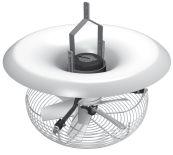
V-FLO FAN
• Optimal air distribution in the poultry house with the purpose to create an ideal climate
• Create an active microclimate at animal level
• Control humidity level
• Constant low airspeed at animal level
• Reduction in energy costs through vertical airflow with a special aerodynamic shaped conical outlet
• Exacon’s brand name since 1987
• Available in sizes 12” to 60”
• White or Black polyethylene flush mount housings
• Designed to meet the rigorous demands of farm/agricultural ventilation
• Energy efficient Multifan, MFlex or North American motors
• Fiberglass housings available in 50” and 60” diameter
RECOV-AIRE HEAT EXCHANGERS
• Recovers wasted heat from exhaust and transfers to incoming air
• Reduces humidity and improves air quality for improved livestock performance
• Large tube type heat exchange core vs plate type stays cleaner longer and is, fully accessible for easy cleaning
• Many installations in poultry, swine and commercial applications have proven these models are cost efficient and effective
• Recovers in excess of 50% of wasted exhaust heat
• New split core for ease of cleaning
SELECT DOSER AND SELECT DOSER MAX
• Select Doser dispenses products accurately into low and high pressure watering systems through it’s tubing via compression and peristalic action.
• Aggressive products and powders never pass through the pumps mechanism that can cause premature wear and maintenance.
• New improved Model 640 is now simple to use with one tube size
• New Select Doser Max can now operate in high pressure and volumes
• The well known and proven Genius control line is now available as a Touchscreen interface
• Navigates like an I-Pad by simply touching, swiping or dragging on a 7” or 10” touch screen
• Available with up to 8 variable stages and between 15 to 30 on/off relays
• A slave is available to expand to 50 on/off relays
• Many options including light control, bird scales, perch scales and bin scales
• Built-in wifi allows easy access to the internet for managing, viewing and recording history on FarmQuest website
million tons respectively during the same period. One metric ton of eggs is the equivalent of 18,895 eggs.
Lyons listed five key trends driving poultry industry change in China: growing integration in the egg and poultry sectors; growing consumer awareness of environmental pollution caused by farming that is putting pressure on farms; need for antibiotic-free production as testing and legislation become stricter; consumer demands for quality; and high feed costs.
High feed costs are also one of the industry’s biggest challenges, with corn, which makes up 80 per cent of China’s poultry rations, costing more than twice the international market price. Persistent disease outbreaks result in expensive losses for the industry and hamper consumer confidence.
Exports are declining as China faces stiff competition from Brazil and Thailand in Japan – its biggest international market – and domestic consumption is flat-lining as chicken is considered a lower class protein compared to pork, seafood and beef.
As China becomes wealthier, consumers are starting to pay more attention to issues like production standards, quality, animal welfare and the environment.
Strict new laws governing pollution from livestock farms, air quality, animal care and disease control, water quality and standardized large-scale production have been introduced that are putting pressure on farms to achieve compliance. For farms that don’t comply, or are located in areas the government has designated not suitable for commercial livestock production, a national farm shutdown policy is in place.
According to Lyons, any foreign companies hoping to successfully do business in China must be in the country and be prepared to make a long-term commitment to the market. China is different than other countries and building a business there is not for the faint of heart, he said. n
Research Feeding broiler breeders
In
search of alternate strategies.
BY LILIAN SCHAER, FOR LRIC
Modern commercial broiler breeders need to be feed restricted in order to control their growth rate and prevent obesity, lameness and reproductive problems. Although the birds are fed above their maintenance requirements, they exhibit behavioural signs of chronic hunger.
In North America, feed restriction is managed either through daily quantitative feed restriction or non-daily feeding schedules where birds receive no feed on one or more non-consecutive days per week and receive a greater quantity of feed on the remaining days. There is currently very limited research into the welfare implications of these feeding practices.
Dr. Stephanie Torrey at the University of Guelph is studying alternative feeding strategies for broiler breeders. In addition to evaluating different feeding schedules, her work is also looking at providing additional feed in the form of fibre. This would allow the birds to receive a larger quantity of feed without growing.
At three weeks of age, 1,680 Ross 308 females were put into groups of 70 pullets per pen at a stocking density of 7.7 birds per square metre and eight centimetres of feeder space each. Pullets were fed one of four isocaloric dietary treatments from three to 22 weeks of age: daily commercial diet (control), daily alternative diet, 4/3 feeding frequency of a commercial diet or a graduated commercial diet with varying on-feed days per week. The alternative diet included 40 per cent soybean hulls
In addition to evaluating different feeding schedules in simulated commercial conditions, a study at the University of Guelph is also looking at providing additional feed in the form of fibre.
and one to five per cent calcium propionate, which increased over time. Growth rate and flock uniformity were measured at weeks three, six, 10, 14 and 17 through a random subsample of 25 pullets per pen. All birds were weighed at 22 weeks and assigned a maturity score. A different subsample of 10 pullets per pen was scored every other week for feather coverage (as an indirect measure of feather pecking), and foot lesion and hock burn prevalence. Litter moisture was determined weekly; feeding motivation was also tracked and blood samples were taken.
Initial results are showing that pullets on a 4/3 feeding frequency were smaller
and less mature. Their energy use was less efficient, but they were better able to adjust to their feeding regime and anticipate feeding days more accurately.
Overall, project results to date suggest that non-daily feeding schedules used with commercial stocking densities slow feather loss and reduce body weight but do not increase flock uniformity. This work will lead to an assessment of the welfare implications of restricted feeding. n
This article is provided by Livestock Research Innovation Corporation as part of LRIC’s ongoing efforts to monitor and report on Canadian livestock research developments and outcomes.
FIBRE FOR FEED?
EQUIPMENT FOR SALE
Yamasa 100cs per hr Egg Grader 9 yrs old, all Stainless Steel construction, includes Modern Matic Egg washer ,pre accumulator for inline use, Egg loader,4 automatic packers with Denesters. Domino A200+ inkjet system (for egg coding). Runs perfect, we are upsizing. Available early 2018. Please contact Marcel at 613-806-2847 for viewing or any questions. Can be seen in operation on appointment. Call for pricing
INSECT CONTROL
PERSPECTIVES
BY THE CENTER FOR FOOD INTEGRITY
What’s on Consumers’ Minds?
What’s on consumer’s minds? Each year, The Center for Food Integrity (CFI) conducts trust research to take a deeper dive into what’s important to today’s consumer. It gives us crucial insights into how to continue to earn trust in food and agriculture on issues that matter most. As we celebrate our 10-year anniversary, we bring you the top 10 findings on consumer attitudes from the latest research.
1
Healthy, affordable is top of mind. Ranking 19 general life issues including healthcare, energy costs and the U.S. economy, six of the nine most concerning life issues are foodsystem related. The top concern at 71 per cent is rising healthcare costs, followed by keeping healthy food affordable at 69 per cent.
2
Websites are their #1 source. It’s no surprise that 17 per cent ranked websites as their number one source for food system information. That figure increases to 27 per cent when Google is factored in. “Friends not online,” also at 17 per cent, speaks to the influence of peers.
3
They feel more empowered. Forty per cent believe they have access to all of the information they need about where food comes from, how it’s produced and its safety. That’s up from just 17 per cent in 2008 – a significant and meaningful shift.
4
“Family” is trusted. When asked to independently rate their level of trust on food-related issues from a list of 15 sources, family doctor and family came in first and second, respectively. Not far behind, and with very similar ratings, were university scientists, dietitians, friends, nutrition advocacy groups and farmers.
5 Curiosity about agriculture is high. When it comes to overall impressions of agriculture, nearly 70 per cent have a somewhat or very positive view about agriculture and 80 per cent expressed a strong desire to learn more about how food is produced and where it comes from. It represents a great opportunity to engage to earn trust.
6
Confidence in food safety jumps. Nearly half strongly agree with this statement: “I am confident in the safety of the food I eat.” That’s a big jump from 35 per cent in the previous year’s research. Since it was first measured in 2007, we continue to see an upward trend.
7
Trust grows for government food agencies. Thirty-eight per cent strongly agree with the statement: “Government food agencies are doing a good job of ensuring the safety of the food
we eat.” This is up considerably from 24 per cent in the previous year’s research.
8
Skepticism underscores humane animal treatment. While 61 per cent strongly agree with the statement “If farm animals are treated humanely, I have no problem consuming meat, milk and eggs,” only 38 per cent strongly agree that U.S. meat is derived from humanely treated animals. That points to an opportunity for agriculture to increase engagement and bridge the gap.
9
They’re not sure farmers are doing enough. For the first time, respondents were asked to rate their level of agreement with the following statement: “Do U.S. farmers take good care of the environment?” While 42 per cent strongly agree, more than half – 51 per cent – are ambivalent. They’re just not sure farmers are doing enough.
10
The food system is headed in the right direction. The research shows a fairly significant upward trend in the number of consumers who feel the food system is headed in the right direction – 55 per cent, compared to 40 per cent in the previous year’s research. Only 22 per cent say it’s headed down the wrong track and 23 per cent are unsure.
We see consumer confidence growing in some areas and uncertainty in others. Regardless, there’s always work to do when it comes to earning trust in how food is produced, who’s producing it and how it impacts health and our environment. The key is an ongoing commitment to engage with authentic transparency – connecting with consumers on the values we all share for safe, wholesome food, and the highest standards of care for animals, our communities and the planet. n
To learn more, visit www.foodintegrity.org to download the latest research, “Inside the Minds of Influencers: The Truth About Trust.”