Ready to expand? We learn how you want to grow, then create a financing package that helps you do it. Work with the leading lender to agriculture, agribusiness and agri-food in Canada. Let’s talk business.
fccfinancing.ca
Shawn Conley
Janine Moyer
Leslie Ballentine
FROM THE EDITOR
BY KRISTY NUDDS
Outside the Box
Here’s a shocking statistic: 64 per cent of British Columbians believe that chicken contains steroids and hormones, according to a survey conducted by the B.C. Chicken Growers Association (BCCGA). Since neither of these chemical agents have been allowed in any Canadian chicken since 1963, why does the misconception of their use in chicken production still persist?
That’s a complicated question to answer, but it’s obvious the “status quo” in marketing to consumers is missing the mark.
The BCCGA directors discussed how best to talk to the public about what concerns them about chicken production, and elicited the help of a marketing firm. The result is a unique social media marketing campaign that sees “The Chicken Squad”, an elite enforcement agency fighting the “bad guys” — those wanting to use steroids and hormones (see article page 34).
A joint initiative between the BCCGA and the B.C. Chicken Marketing Board, the incredibly creative campaign features actual B.C. chicken growers starring as action heroes fighting the use of banned substances in the production of B.C. chicken. A movie trailer was the final product, and included muscle cars, guns and all the action typical of a film produced in Hollywood.
Fifteen B.C. chicken growers and their families participated in the campaign and appear in 10 YouTube episodes, where during “auditions” they discuss the realities of chicken farming and all of the food safety and animal care programs they follow, as well as the fact that farms are family run and owned.
The goal of the campaign is to educate consumers about chicken production, something survey data showed is
necessary. It’s also necessary because if an agricultural commodity group fails to do this, others will, and it’s not necessarily 100 per cent factual.
For example, the fast-food chain A&W caused a backlash from the Canadian beef cattle industry when it launched it’s “Better Beef” campaign, promoting the use of steroid, hormone, and antibioticfree beef in it’s hamburgers. The company responded by saying that it’s sourcing beef without “additives” in response to private data it indicating that’s what consumers want.
Although the beef industry countered with statistics on how little hormones and antibiotics are used or end up in finished product, consumers didn’t know that ahead of time and A&W took advantage of existing misconceptions.
At the Saskatchewan Stock Growers Association annual general meeting and convention in Moose Jaw this past June, the vice president of purchasing and distribution for A&W also said it wasn’t the company’s responsibility to educate consumers.
This is a very telling statement and one all agriculture industries need to pay attention to.
In my opinion, thinking outside the box with respect to marketing to and educating consumers, such as what was achieved by The Chicken Squad, needs to become the new status quo if the battle against consumer misconceptions is to be won. n
Digital Editor – AgAnnex Lianne Appleby – lappleby@annexweb.com 226-971-2133
Publisher/Sales Manager
Marilyn White – mwhite@annexweb.com 519-400-2424
888-599-2228 ext 237 • fax: 888-404-1129
Account Coordinator
Mary Burnie – mburnie@annexweb.com 519-429-5175 • 888-599-2228 ext 234
Media Designer
Emily Sun
Group Publisher
Diane Kleer – dkleer@annexweb.com
President
Mike Fredericks – mfredericks@annexweb.com
Mailing Address
P.O. Box 530, 105 Donly Dr. S., Simcoe, ON N3Y 4N5
Publication Mail Agreement #40065710 RETURN UNDELIVERABLE CANADIAN ADDRESSES TO CIRCULATION DEPT., P.O. BOX 530, SIMCOE, ON N3Y 4N5. email: subscribe@canadianpoultrymag.com.
Canada – 1 Year $30.00 per year (with GST $31.50, with HST/QST $33.90)
GST – #867172652RT0001
USA – 1 Year $ 66.00 USD Foreign – $75.00 per year
Occasionally, Canadian Poultry Magazine will mail information on behalf of industry-related groups whose products and services we believe may be of interest to you. If you prefer not to receive this information, please contact our circulation department in any of the four ways listed above.
Got Lubing? Contact your local Lubing Distributor for more detailed information.
Glass-Pac Canada
St. Jacobs, Ontario
Tel: (519) 664.3811
Fax: (519) 664.3003
Carstairs, Alberta
Tel: (403) 337-3767
Fax: (403) 337-3590
J. Dean Williamson Ltd. London, Ontario
Tel: (519) 657.5231
Fax: (519) 657.4092
As easy as
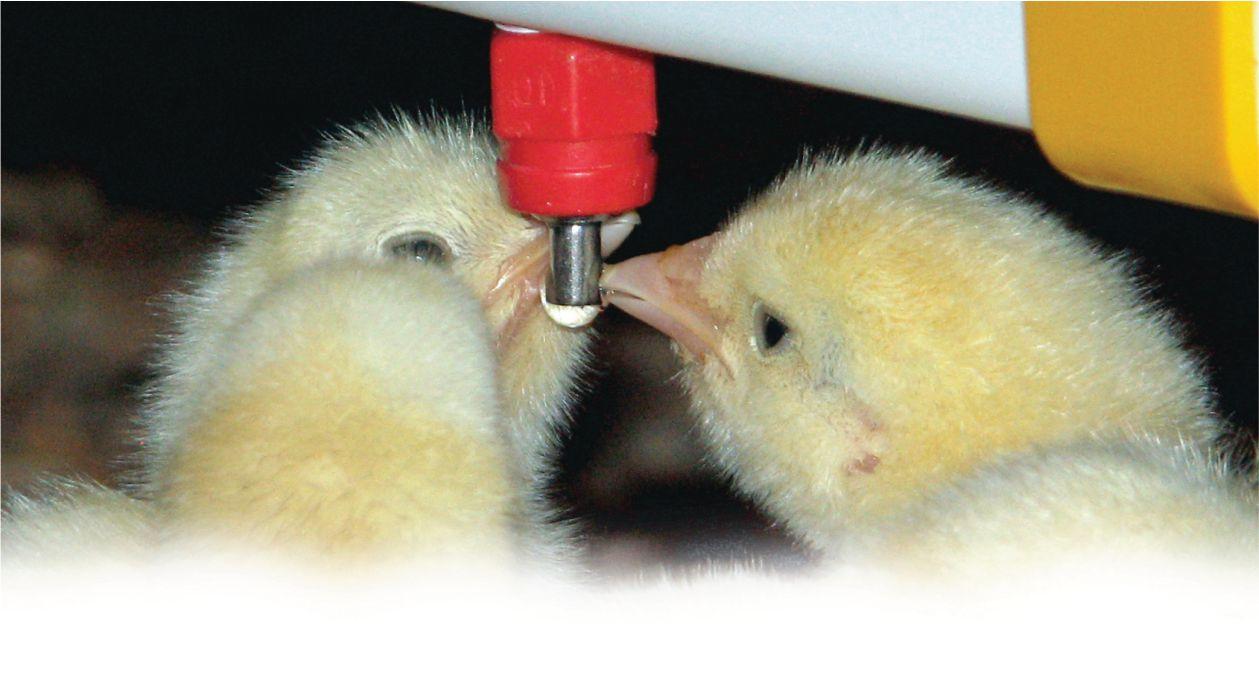
1) Large bottom pin that holds a drop of water to attract day old birds to nipple / great starts / average first week mortality below 1%.
2) Greater side flow with minimal triggering force allows all birds to easily trigger the nipple and get off to a great start. Great Starts = Fantastic Finishes!
3) Both, vertical and side action, deliver the Opti-mum flow rates and ability to grow a 4 lb small bird up to a 10 lb Jumbo bird with the same nipple. After hundreds of house updates, customers are consistently seeing improved weight gains of up to 1/2 lbs/bird with dry litter conditions!
Les Equipments Avipor
Cowansville, Quebec
Tel: (450) 263.6222
Fax: (450) 263.9021
Alberta
Tel: (780) 963.4795
Fax: (780) 963.5034
Poultry Code of Practice Funding WHAT’S HATCHING HATCHING
The federal government has announced $2.2 million in funding to the National Farm Animal Care Council (NFACC) to update and develop poultry codes and further advance best practices for the care and handling of other farm animals.
Parliamentary Secretary Pierre Lemieux said in a release that the investment “will help the industry enhance its competitiveness both at home and abroad through promotion of assurance systems that will benefit the entire value chain.”
The NFACC is the organization responsible for reviewing the national Codes of Practice for farm animals, via the Canadian Animal Health Coalition (CAHC).
NFACC has the mandate to develop and review the
Codes of Practice for the care and handling of livestock and to communicate current farm animal welfare activities.
The CAHC will build on previous work done with the NFACC and will update existing animal care codes for the poultry sector and develop three new codes of practice for additional sectors. Guidance materials will be developed to ensure that farmers have access to the latest, most up-to-date codes and assessment programs, assuring customers that the product they choose has been raised to the strictest standards of animal welfare.
This funding announcement reinforces the importance of having up-to-date Codes of Practice, and the status of Canada’s world-class food and agriculture systems, CFC Chair David Janzen said in a release. The Codes themselves are reviewed regularly to ensure that high standards for animal care are present in all types of livestock rearing
and transport. They also make up the backbone of CFC’s animal care programs, he says.
The Codes are sciencebased and go through rigorous examination, discussion, and assessment, including a 60-day public comment period. CFC’s Animal Care Program (ACP) is based on the poultry Code of Practice and will be updated to incorporate changes made during this Code revision.
CFC has been working on the Poultry Code review committee during this latest process and has led the charge to update the Code and ensure that the highest standards and guidelines are included. The next phase of the Code review process will be launched with this new funding, and it is anticipated that the new Code of Practice for poultry will be completed by early 2016.
The funds announced are from Agriculture and AgriFood Canada through their AgriMarketing Program, a part of Growing Forward II.
The Chicken Farmers of Saskatchewan (CFS) have been given an investment of $275,000 to undertake a research project on disease control from Agriculture and Agri-Food Canada (AAFC).
CFS plans to use the investment to identify and characterize new variants of the
CFS gets Research Funding Agriculture in
the Classroom
Federal Agriculture Minister Gerry Ritz and Saskatchewan Agriculture Minister Lyle Stewart announced a new $1-million, five-year funding agreement with Agriculture in the Classroom Saskatchewan. This represents a $550,000 increase in funding over the last five-year period.
Minister Ritz said: “Our Government understands the importance agriculture plays in rural and urban communities and in Saskatchewan as a whole. By understanding modern agriculture, young people will value Saskatchewan-made products and recognise the importance of the industry to the regional, national and global economies.”
Minster Stewart commented: “Agriculture in the Classroom plays an important role in helping students connect with agriculture. We are pleased to support their efforts to engage our youth in agriculture and improve their
avian reovirus and determine how they are transmitted. It also aims to evaluate the safety and effectiveness of vaccines for inclusion body hepatitis (IBH) in field trials.
This project is a step in the development of vaccines for avian reovirus and IBH, two diseases which are a common problem for many broiler producers. If commercialized,
these vaccines have the potential of reducing economic losses in the Canadian broiler chicken industry and the need for therapeutics by preventing instead of treating these diseases.
The research will be conducted through the University of Saskatchewan by Dr. Susantha Gomis and will assist the industry in improving flock health and reducing the usage of antibiotics.
understanding of primary production and the entire agriculture industry.”
Greater public awareness about agriculture is necessary for the continued growth of the industry and to help attract youth, innovation and investment.
The Provincial Government is providing $750,000, with the remaining $250,000 being provided through the federalprovincial Growing Forward 2 agreement.
Interim Executive Director of Agriculture in the Classroom, Chantel Heintz noted that the number of
Agriculture in the Classroom Saskatchewan has received increased funding to pay for increased enrollment
students in AITC-SK agriculture education programming increased to 26,500 in 2013, a 74 per cent increase from 2012. Through the use of curriculum-based resources, Agriculture in the Classroom aims to increase students’ awareness and understanding of the importance of agriculture to Saskatchewan’s economy and culture.
COMING EVENTS
SEPTEMBER
September 9-11, 2014
Canada’s Outdoor Farm Show, Canada’s Outdoor Park, Woodstock, Ont. www.outdoorfarmshow.com
OCTOBER
October 7-9, 2014 Poultry Service Industry Workshop, The Banff Centre, Banff, Alta. www.poultryworkshop.com
October 19-23, 2014
Asia Pacific Poultry Conference, ICC Jeju, Jeju, Korea. www.appc2014.org
October 29, 2014
Canadian Poultry Sustainability Award and Symposium, Hanlon Convention Centre, Guelph, Ont. www.CPsustainability.com
DECEMBER
December 10, 2014
Prairie Livestock Expo (formerly Hog and Poultry Days), Victoria Inn Hotel & Convention Centre, Winnipeg, Man. www.prairielivestockexpo.ca or email: info@prairielivestockexpo.ca
We welcome additions to our Coming Events section. To ensure publication at least one month prior to the event, please send your event information at least eight to 12 weeks in advance to: Canadian Poultry, Annex Business Media, P.O. Box 530, 105 Donly Dr. S., Simcoe, ON N3Y 4N5; email knudds@annexweb.com; or fax 519-429-3094. Please write ‘Event Submission’ in the subject line.
WHAT’S
HATCHING HATCHING
CFIA Can Issue Monetary Penalties
The Government of Canada recently announced that it is allowing the Canadian Food Inspection Agency (CFIA) to issue monetary penalties to businesses that do not meet Canada’s meat safety requirements. The new regulatory amendment expands Administrative Monetary Penalities (AMPs) to the Meat Inspection Act and the Meat Inspection Regulations, 1990. This regulatory amendment
will allow CFIA inspectors to issue an AMP for noncompliance with 84 provisions of the Meat Inspection Act (MIA) and the Meat Inspection Regulations (MIR). These provisons include items related to: food safety (control programs such as HACCP) and non-food safety (labelling and consumer protection).
AMPs do not replace existing inspection and enforcement tools, but instead offer
the Agency an additional tool in managing non-compliance situations.
The expansion of the AMPs to include the MIA and MIR supports other activities being undertaken by the CFIA, such as those outlined in the Healthy and Safe Food for Canadians Framework.
The CFIA will be working with the Canadian meat industry to help gradually transition to the new regulations.
U.S. Reforms Poultry Inspection
For the first time in 50 years, the United States Department of Agriculture (USDA) announced reforms to the processes for inspecting poultry facilities.
Under the Poultry Modernization Act, poultry processors are now required to perform microbiological testing at two points in their production process to prevent salmonella and campylobacter contamination, instead of addressing it after it occurs.
Agriculture Secretary Tom Vilsack said the plan “imposes stricter requirements on the poultry industry and places our trained inspectors where they can better ensure food is being processed safely.”
Maximum line speeds are capped at 140 birds per minute “in response to public comment,” he said. However, Tom Brown, president of the National Chicken Council, said not allowing faster speeds meant “that politics have
trumped sound science.” He noted that a successful pilot program in the U.S. had been conducted operating at 175 birds per minute.
Under a separate, voluntary system, companies would sort their own birds for quality defects before presenting them to agricultural department personnel.
As companies become more proactive, the number of government inspectors would be cut.
Dimmable Linear LED Sealed Panel Fixture
Models Available
A) SPL/65-2-22WLED 4914
B) SPL/65-3-22WLED 6794
C) SPL/65-2-28WLED 5567
D) SPL/65-3-28WLED 8151
Input
Operating
Beam
Maintenance
Rated
Warranty
PIC Update
Precision Feeding
New innovative tool can improve flock uniformity
by Martin Zuidhof, University of Alberta, and Kimberly Sheppard, Livestock Research Innovation Corporation
The hatching egg industry faces increasing production and welfare challenges due to ongoing genetic progress in broilers. The gap between growth potential and target body weight is increasing. Commercially, the genetic potential of individual birds is often not achieved because equal distribution of increasingly restricted amounts of feed is difficult. Feeding management (quantity of feed, frequency, and timing of feed delivery, feeder design, and feeder space) affects uniformity of distribution of feed, which ultimately affects uniformity of body weight. Poor body weight uniformity results in reduced reproductive success because of overweight and underweight birds.
INNOVATOR
Dr. Martin Zuidhof of the University of Alberta and his research team have been developing a Precision Broiler Breeder Feeding System that aims to provide an innovative, integrated feeding management solution that will dramatically improve flock uniformity.
For these reasons, Dr. Martin Zuidhof and his research team at the University of Alberta have been developing a Precision Broiler Breeder Feeding System toward providing an innovative integrated feeding management solution that will dramatically improve flock uniformity, increase chick production from each hen by close to 10 per cent, and improve bird welfare by providing feed more frequently than commercial management systems currently allow. The aim of the feeding system design is to control individual bird feed intake by precisely matching individual real-time body weight measure-
ABBREVIATIONS USED
BW Body weight
CV Coefficient of variation
(inverse measure of flock uniformity)
P Probability that 2 or more groups are equal
PBBFS Precision Broiler Breeder Feeding System
R2 Correlation coefficient
ments to body weight targets.
The initial prototype was built and tested in 2013. With it, the researchers completed a 20-week pilot study with a small group of free run broiler breeder pullets, identifying design issues along the way and improving the design. A beta prototype has been manufactured, and a full 60-week broiler breeder precision feeding trial is underway. Although two pilot studies have now been conducted, this article focusses primarily on results from the scientifically replicated second pilot study on the first prototype.
In free run birds, the Precision Feeding Station controlled individual bird feed intake by accurately matching real-time body weight measurements of individual birds to body weight targets. All birds were able to individually enter the feeding station and eat in a protected enclosure. Birds were weighed in the station and offered feed if they were below the target body weight or gently removed from the station if they were heavier. Meal size and the amount of time they could spend eating were controlled by software settings. Output from the bird and feeder scales (2 readings per second) illustrate the form of the data the researchers were able to collect with the system. The meal size was less than the daily feed required to grow at the target rate so that birds received multiple meals each day. This allowed individual birds to “graze” throughout the day, which stabilized their metabolism. It is likely that more frequent feeding is beneficial for gut health. Wilson et al. (2013) found that feeding broiler breeders daily compared to skip-a-day improved gut health compared to every-other-day feeding.
PILOT RESEARCH PROJECT #1
The first pilot study ran for 14 days, with a small flock of 25, 52-week-old Ross 708 broiler breeder hens. Birds weighing less
than 3.5 kg were allowed to eat feed from the station for a 2.5 minute feeding bout before being gently ejected from the station. The researchers observed a significant decrease in the coefficient of variation in body weight of 0.17% per day. Birds in the low body weight group (those under 3.5 kg at the start of the trial) had a higher rate of gain than birds in the high body weight group (3.5 kg or higher at the start; 14.1 vs. -6.5 g/d). The results confirmed that short term precision feeding improved flock uniformity in older free-run broiler breeder hens.
PILOT RESEARCH PROJECT #2
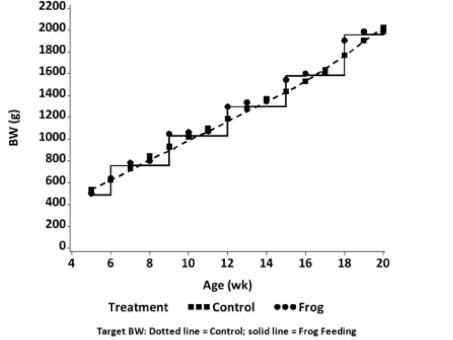
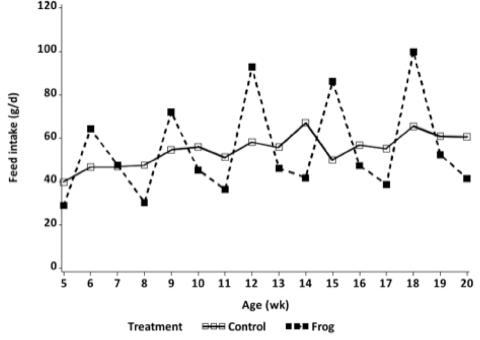
A second pilot project was started with 40 birds, but due to a design issue that has been corrected for the second generation prototype, the researchers were only able to feed 20 young birds reliably with the first prototype. At 4 weeks of age, 20 Ross 308 broiler breeder pullets were randomly assigned to two treatments (10 per treatment): Control, where the target body weight was updated hourly, and a Frog Feeding treatment, where the target body weight curve increased in ‘jumps’ once every 3 weeks. The frog feeding curve was designed to intersect the Control body weight curve approximately 1.5 weeks after the ‘jump’. On average, the body weight targets were the same in both treatments. The Frog feeding treatment was designed to simulate over- and under-feeding of broiler breeders that may occur in practice, particularly if flocks are not weighed often enough. Since the body weight treatment was applied to individual birds, each bird was an experimental unit, even though they were housed in a single pen. If a bird was over its target body weight, it was ejected from the station. It received feed whenever its body
weight was below the target. Meal size (amount of feed in the feeder) was adjusted and feeding bout duration (how long the birds were allowed to eat) several times over the course of the experiment to optimize functionality and to ensure birds could divide their feed over multiple meals per day.
TRAINING DAY-OLD PULLETS
To train day-old pullets to eat feed from the station, a simple protocol with low labour input was developed. Feed was provided on chick paper on the litter outside the feeding station, and feed was also placed inside the station to entice birds to enter. In a matter of less than an hour, the first curious pullets had entered the station and started eating feed inside the station. The chick paper outside the station was removed, and after 3 days, the inside of the feeding station was the only place birds could eat feed, and all of the pullets ate ad libitum from the station for the first 3 weeks.
RESULTS
Flock uniformity at 20 weeks of age was very high. The coefficient of variation in body weight was consistently below 5%. This compared to a coefficient of variation of over 9% in the extra 20 birds that were fed once per day in a conventional manner. Birds fed with the Precision Broiler Breeder Feeding System had a flock uniformity of 100% (birds within 10% of the mean body weight) in both treatments for 7 of the last 10 weeks of the pilot study.
The Precision Broiler Breeder Feeding System can be used by all broiler breeders (pullets, hens, cockerels, and roosters). The
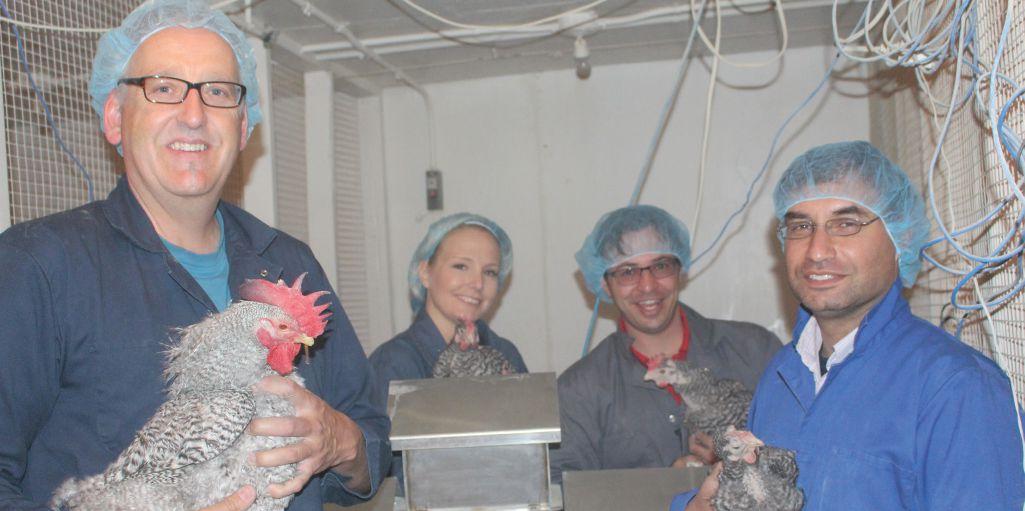
(LtoR) Martin Zuidhof, Teryn Gilmet (MSc student), Paulo Carneiro (PhD student), and Mohammad Jalal (visiting professor, from Jordan) with the prototype.
PIC Update
Figure 1. Body weights (BW) of birds on Control and Frog Feeding treatments, illustrating the ability of PBBFS to manipulate BW automatically using real time measurements of BW to decide whether or not to allow birds to eat feed.
researchers have successfully achieved two different body weight profiles, confirming that the Precision Broiler Breeder Feeding System was able to feed individuals according to separate body weight targets (Figure 1) by allowing differential access to feed. Figure 2 illustrates the variation in feed intake that resulted in achieving the different treatment body weight curves.
INFORMATIONAL VIDEO
The prototype Precision Broiler Breeder Feeding System worked better than expected, and the researchers wanted to let people know what they have developed and discovered to date. They produced a YouTube video to disseminate the results of the pilot project to help potential users of the system and the general public understand its benefits. The video provides background to the problem of achieving high flock uniformity, tells the story of the Precision Broiler Breeder Feeding System development, and identifies key results to date. The anticipated benefits are also outlined. The video can be viewed on YouTube or on the Poultry Research Centre Website.
To read more, please visit www.poultryindustrycouncil.ca.
NEXT STEPS
Three graduate students are currently working on the project. Teryn Gilmet, an MSc student, will build on her behavioural observations during the second pilot study. Her main objective is to determine how the PBBFS impacts welfare and bird behaviour, particularly in relation to behavioural vices such as aggression. Paulo Carneiro and Sheila Hadinia, both PhD students, are evaluating the efficiency and metabolism of broiler breeder hens and roosters fed from the PBBFS compared to conventional skipa-day feeding regimens. They will relate individual feed intake patterns to efficiency and body conformation. Flock uniformity and productivity in both systems will be the focus of their work.
Figure 2. Actual Feed intake of birds on Control and Frog Feeding treatments, illustrating the ability of PBBFS to use real time body weight (BW) measurements to allow birds to eat feed, or not. BW targets were updated hourly in the Control treatment, and once every 3 weeks in the Frog Feeding treatment.
Once preliminary studies are underway, we intend to apply for funding to run a full-scale commercial trial. Because of the information we can collect on individual birds, and the ability to control feed intake at a bird level, we can actually run a broiler breeder experiment with an ‘n’ equivalent to the size of a commercial flock (e.g. 5,000 hens and 500 roosters)!
ACKNOWLEDGEMENT
Thanks to the entire project team shared a common vision for the PBBFS, and continually challenged each other to improve the design and functionality of the feeding station.
• Dr. Martin Zuidhof (Principal Investigator)
• Dr. Irene Wenger (Project Manager)
• Chris Ouellette (Agricultural Engineer)
• Airell DesLauriers (MSc student – modelling energy efficiency)
• Dr. Clover Bench (Ethologist)
• Teryn Gilmet (MSc student – animal behaviour)
• Josh Perryman (summer student)
• Mark Fedorak (Electrical Engineer – Xanantec Technologies Inc.)
• Chris Kirchen (Mechanical Engineer – Karve Machine Inc.)
• Dr. Edmond Lou (Electrical Engineer – Xanantec Technologies Inc.)
• Dr. Koos Van Middelkoop (Consultant – Koosidee, the Netherlands)
Financial support for the project was provided by Poultry Industry Council, Alberta Livestock and Meat Agency, Agriculture and Food Council, Alberta Innovates Bio Solutions, Danisco, Alberta Hatching Egg Producers, Canadian Hatching Egg Producers, Alberta Chicken Producers, and Maple Leaf Poultry. n
CPRC Update Update on Projects Led by Nutrition Chair
The National Sciences and Engineering Research Council of Canada (NSERC), poultry industry and University of Saskatchewan came together in August 2013 to establish an Industrial Research Chair (IRC) in Poultry Nutrition and Dr. Henry (Hank) Classen was appointed to the position. CPRC Member Organizations contributed to the initiative through CPRC along with eight other industry stakeholders, including:
Funding for the IRC in Poultry Nutrition covers more than a research position — it is a research program. Dr. Classen designed a complete five-year research plan including graduate students, support staff and other research inputs. Funding commitments are dedicated to these research activities as well as the Chair position.
In addition to Dr. Classen, the NSERC-IRC program has expanded to include a core that includes a Research Associate, Head Technician and Research Assistant. A Post-Doctoral Fellow position has been funded and will be filled in future. The group also includes three PhD. students, three MSc. students and an undergraduate student, all of whom are conducting research projects under Dr. Classen’s supervision.
A feature of the NSERC-IRC is that the university agrees to hire a tenure-track faculty member in Poultry Science to ensure that the position is maintained after the NSERC-IRC term expires. Dr. Karen Schwean-Lardner was appointed as an Assistant Professor of Poultry Science in the Department of Animal and Poultry Science effective June 1, 2014, to fulfill this obligation. Dr. Schwean-Lardner previously held the position of Research Scientist and Manager of the Poultry Research and Teaching Unit at the University of Saskatchewan.
The NSERC-IRC group presently has five projects underway with many more to come. Present projects include:
1. Determining the impact of extent and rate of starch digestibility on performance, behaviour and welfare of broiler breeders, research lead Aman Deep, PhD. candidate and recipient of the 2012 CPRC Scholarship. The objective of this research is to determine if starch digestibility rate
affects broiler breeder growth and reproductive performance, energy metabolism, satiety and behaviour. The project is expected to be completed by the end of this year.
2. In vitro assessment of starch digestibility, research leads Namalika Karunaratne, MSc. Student - wheat, and Dr. Classen - barley, corn, oats. The objectives of this research are to determine the effect of cultivar and grain growing environment on the rate of starch digestibility using an in vitro model of the chicken digestive tract and the relationship of starch characteristics to the rate and extent of starch digestion. Completion date is September 30, 2014.
3. In vitro assessment of protein digestibility, research lead Dervan Bryan, PhD. candidate. The objective of this research is to fill a knowledge gap on the lack of research on the rate of protein digestion in poultry species. An in vitro model will be developed to assess protein-rich ingredients for the rate and extent of protein digestibility.
4. The use of hydrolyzed dietary proteins during the first five days of turkey life to enhance gut maturation, bird health and long term productivity; and on gut development in broiler chickens, research leads Megan DeVisser, MSc. candidate and Kailyn Beaulac, undergraduate student. This research is designed to determine the effect of protein source on early turkey development and gastrointestinal tract development (DeVisser), and to determine the effect of phytate on broiler chicken gut development (Beaulac). Expected completion: August 31, 2015.
5. Examining the value of protein from cereal grains in laying hen diets using high levels of crystalline amino acids. This research consists of determining protein and amino acid requirements of laying hens (Dinesh Kumar, M.Sc. candidate), phase feeding of amino acids to laying hens based on weight gains (Dr. Classen) and determining if hens can self-select their amino acid requirements (Dr. SchweanLardner). Completion is scheduled for August 31, 2015.
The NSERC-IRC Chair in Poultry Nutrition is an example of cooperation among government, universities and industry to support a comprehensive program in a targeted research area.
For more details on any CPRC activities, please contact The Canadian Poultry Research Council, 350 Sparks Street, Suite 1007, Ottawa, Ontario K1R 7S8, phone: (613) 566-5916, fax: (613) 2415999, email: info@cp-rc.ca, or visit us at www.cp-rc.ca. n
Barn Management The Perfect Climate Controller
Ideally, it would tell us the “true” temperature
BY SHAWN CONLEY
Regardless of the season and climate, the same factors come into effect when trying to maintain target conditions in poultry barns. Depending on whether your barn is in British Columbia, Ontario, or another country, these factors can figure much differently into your ventilation calculations. Temperature, humidity, and air movement are the three that we’re talking about, and it would be huge progress if we had a climate controller that would truly take all three into consideration to keep conditions ideal. Climate controllers should focus on this in the coming years, taking us into the future of agricultural ventilation.
We hear meteorologists talk about “real feel” temperatures — humidex, or heat index — as well as wind chill in the cooler months. If we think about the inside of a barn as a kind of microweather system, we can really see how it impacts the comfort of the birds. For any of us that have spent any time in any of the Gulf States in the U.S. (or the wrong July day in Ontario), even if the temperatures are relatively comfortable — say around 25°C / 77°F — it can feel pretty oppressive when combined with 80 per cent humidity, or even higher as a storm is rolling in. Alternatively, especially in the Western provinces in winter, wind can make the already sub-zero temperatures unbearable, and a little moisture combined with 5°C chills to the bone. I’ve never been colder than the day I was caught riding my motorcycle home
LOOKING TO THE FUTURE
The next step in poultry barn climate control may be controllers that take heat index and evaporative cooling into effect
in the rain and a temperature drop from 20° C to 8°C.
COMBINATION EFFECTS
With the importance of humidity, wind chill, and temperature established, what do we need to do? When it comes to poultry, we know that when the combination of temperature and humidity added together in the barn approaches 160, we are in the danger zone for heat related mortality. Our first line of defense is air exchange — just get the hot air out
so the birds can continue to release the BTUs of heat they are generating into the cooler air, and move the moisture they pant (their version of sweating) away. The second is to get that air moving over the birds at a velocity that adds a wind chilling effect to it. In some cases this effect can be 15°F. Our last line of defense is to utilize water to cool even further.
I’ve talked before about a side effect of cooling by evaporative cooling pads or fogging / misting, and the respected ventilation expert; Mike Czarick, has talked about the same problem in his summer
Consumers Want to Choose Canadian Chicken
When it comes to trusting a label, the majority of Canadians (77%) would trust a farmer’s group over a retailer or manufacturer, and that’s thanks to you.
The new Raised by a Canadian Farmer brand will tell shoppers, right on the package, that their chicken meets the highest standards of care, quality and freshness, and that it was raised in Canada by dedicated farmers like you.
Canadians
want to know the story behind their food: help us tell it.
Tell your friends and family to ask their stores to carry the Raised by a Canadian Farmer label.
Barn Management
ventilation schools. When adding water to the air to reduce the temperature, humidity increases 2.5 per cent for every degree F. The problem here is that a 2.5 per cent humidity increase results in a 0.5 F perceived temperature increase, so we lose half of the ground we seem to gain (this is another case for using the combined calculation to give a true temperature). It would be better to increase air speed, and directly apply water to the birds using a sprinkler system to multiply the wind chill effect and keep humidity 20 per cent lower, according to Yi Liang of the University of Arkansas. I think this sprinkling effect could be incorporated into control systems calculations of wind chill.
So, back to the point, our problem with maintaining ideal conditions is that we are guessing at the actual effect of the changes we are making. OK, it’s clear that reducing the temperature is pretty straightforward, but without knowing the humidity levels, we still have to observe the birds on a hot day to see if they are panting too much or being too inactive, or consuming less feed to tell for sure what that temperature really means. In setting up ventilation and controls, I’ve seen many times where producers didn’t realize that wind chill was too high as well, with young birds huddling, or older birds sitting down due to high tunnel wind speed, leading to breast blister and button problems or hock burn. A controller system that factors these
TEMPERATURE IS PRETTY STRAIGHTFORWARD, BUT WITHOUT KNOWING HUMIDITY LEVELS, WE STILL HAVE TO OBSERVE THE BIRDS ON A HOT DAY TO SEE IF THEY ARE PANTING TOO MUCH OR BEING TOO INACTIVE
issues in would allow more peace of mind on hot days, especially for farmers who have off farm jobs, are busy cropping, or are managing multiple farms. On cold days, piling that can occur quickly if birds are chilled could also be prevented with a few strategically placed anemometers (wind meters) linked to the controller.
• 7 inch colour touch screen allows all zones to be seen simultaneously
• Modular architecture allows you to design a system that’s the right size for your operation
• Fully compatible AA9600 replacement
• Email notifications
ESTIMATING VARIABLES
With anemometers, humidity sensors, and temperature sensors working in concert to provide continuous feedback, creating a logarithm to take temperature + humidity – wind chill effect should be an achievable goal that can be used to build a new type of target temperature curve — maybe we call it the wintempumidity curve? Whatever it is, I think it could be a great way to estimate they interaction of all the variables, and create the optimum growing conditions, allowing us to manage the climate without having to do daily tweaks to our ventilation program. If we could establish that, for example, 80 F + 60 per cent humidity - 15 F wind chill at 600 feet / min - 10 F sprinkler effect = 75 F true temperature (this is not necessarily correct, just a potential example), and we can establish a range of acceptable values for our target curve, this could be an excellent way to know how comfortable our birds really are. The controller could adjust all the variables to reach the target if it knows this “true temperature.”
In a perfect world, we’d have a controller that would take the heat index (temperature and humidity), and the effect of wind chill heat loss into its calculations of perceived temperature, and ventilate / heat / cool based on a combination of all of these. It would involve some complex calculations, and a hefty processor, but I think it can be done, and done affordably enough for producers to justify purchasing a system. It just may the next step in the evolution of poultry barn climate control. n
Innovation Recycling manure into money
Ontario processor turns waste products into a valuable product
BY JEANINE MOYER FOR FARM & FOOD CARE
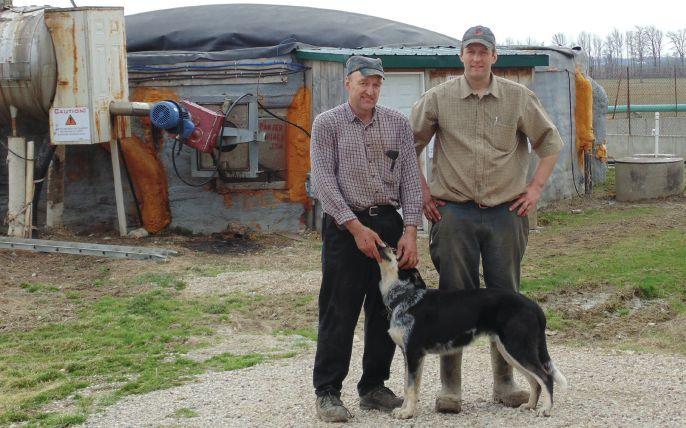
Efficiency motives Earl Martin. And in his drive to create efficiencies on his beef and poultry farm, he credits his most recent enterprise — installing an on-farm anaerobic biodigester.
Martin first considered installing the biodigester, an innovative approach to solving a problem, as a solution to an onfarm disposal issue. Farming with his two sons, Martin also owns and operates a provincial poultry processing plant, ENS Poultry, outside of Elora, Ont. Since the outbreak of BSE in 2003, costs of disposing offal — or unwanted chicken organs — have skyrocketed, so developing the on-farm biodigester was Martin’s solution to eliminating the expense and recycling the offal. The biodigester also heats the poultry plant, two houses on the farm and generates a profitable revenue stream from hydro.
“It’s a great idea – we take waste products and make a more valuable product,” says Martin, who feeds the biodigester system with poultry offal, cattle manure, waste water from the poultry plant and, based on availability, additional waste products from food manufacturers.
With the ability to generate 100kW of continuous electrical capacity, Martin has been selling power generated from his 500 cubic metre biodigester to the Ontario Power Authority (OPA) for almost three years. He sells the electricity to the OPA and buys back hydro for his own use.
EFFICIENCY THE DRIVER
Earl Martin and his son Stewart in front of their anaerobic digester. They developed it to eliminate waste products and create something more valuable.
“We make a few pennies off every kW we sell,” he says, explaining that despite the additional benefits of the digester, he relies on the hydro revenue stream to pay for the system. Martin expects to have his digester paid off in 10 years, and faster if the system was operating at maximum capacity. The biodigester has only been running an average of 68-70 kW since set up, something that concerns Martin.
FEEDING THE ANIMAL
“Originally, I wanted to get rid of my hydro bill,” says Martin, listing the opportunities of installing an on-farm biodigester. But his expectations of the system grew when he realized how much work it takes to run the boidigester efficiently. Biodigesters need a delicate balance of
contents for the bacteria to digest, or break down the products efficiently, creating methane gas. A genset (generator and motor combination) connected to the biodigester converts the methane gas into hydro. Methane gas runs the motor while the generator produces hydro, creating excess heat in the process.
The hydro is sold to the OPA and Martin uses water pipes to carry the heat from the genset system to heat two homes and the farm’s poultry plant. “Feeding the digester is like feeding cattle, it needs a balanced, low-protein diet,” he says. “The difference is cattle will quit eating when they’re full, but the digester never stops, even when it can’t digest something properly, making it sick.”
Martin’s biodigester is “fed” on-farm waste, a mixture that keeps the bacteria
healthy and can be easily broken down to produce the desirable gas. Adding additional feed, like natural sugars, can give the bacteria a boost, increasing efficiency and maximizing output. Martin’s biggest headache is sourcing off-farm products to boost the bacteria activity and increase gas and hydro production. Byproducts from food processors are ideal additives to feed the biodigester, but according to Martin, are currently in limited supply. Without the right balance, or content mixture, the biodigester loses efficiency or kills the bacteria. The vital bacteria can die within 24 hours and take up to 10 days to grow back, resulting in significant downtime and production loss.
ON-FARM APPLICATIONS
“It’s hard for someone to tell you how to run a biodigester, you have to get a feel for it,” says Martin, explaining that, despite,
or because of his challenges keeping the biodigester healthy and fed properly, he’s developed a “feel” for the system. Intuition has become part of Martin’s management skills. Even the texture is important, he explains, because, while the consistency doesn’t yield additional gas, keeping the contents of the biodigester flowable is part of an efficient system. Martin uses wash water from the poultry plant to maintain a desirable consistency of the system’s contents, and is pleased with the efficiency of recycling the water into a new product.
The consistency helps produce another benefit, or byproduct, of the biodigester — digestate. Martin’s biodigester produces, on average, 24 cubic metres of digestate daily. A liquid byproduct, the digestate is high in ammonium-nitrate and used as a valuable fertilizer source on Martin’s 400 acres of corn, soybeans, wheat and hay. “But it’s still important
to take soil samples to check the nutrient value of the digestate,” notes Martin. Digestate hasn’t replaced Martin’s purchase of field crop fertilizer completely, but it has helped reduce input costs.
The popularity of biodigesters is growing throughout Ontario. Innovation and efficiency are developing practical onfarm systems like Martin’s biodigester, and the compounded benefits are proving farmers have a lot to gain. In Martin’s case, he needed to find a way to dispose of a waste product and cut his hydro bill. In addition to achieving his initial needs, he’s been able to eliminate his home and on-farm heating bills, produce his own field crop fertilizer and generate a new revenue stream selling hydro. Martin admits it’s a lot of work, but the pay offs continue adding up. n
This article is one in a series produced by Farm & Food Care Ontario.
LOUIS COULOMBE, DVM Technical Services Veterinarian
ALANO Sales Representative Western Region
WILLIAMS Product Manager
BRAULT Sales Representative Quebec Region
MEET THE A
A TEAM at your service.
Merial provides industry-leading innovation to enhance the health, well-being and performance of Canadian poultry flocks. And thanks to our dedicated A Team of avian specialists, we’re also leaders in customer care and service. Our specialists are focused on solutions to improve your productivity and profitability, through a comprehensive selection of vaccines, delivery systems and services that address crucial poultry health challenges.
Contact your regional avian specialist. You’ll enjoy the one-on-one, hands-on, first-rate service we’ve built our reputation on. You can always count on us.
TO LEARN MORE
MICO
PHIL
DOMINIQUE
JIMMY LOBUSTA Sales Representative Ontario and Atlantic Regions
NORMAND LAMOTHE National Sales Director
TEAM
ISABELLE TREMBLAY-SUMMERS Director of Production Animals
Pest Control Battling the Buzz
The
“Fly Girl” is studying natural alternatives for fly control
BY KAREN DALLIMORE
Justine Shiell has worked hard for her nickname. Studying fly control in poultry barns has become her specialty as she works towards her Master’s degree at the University of Guelph. What exactly is it about flies that have captured this researcher’s attention?
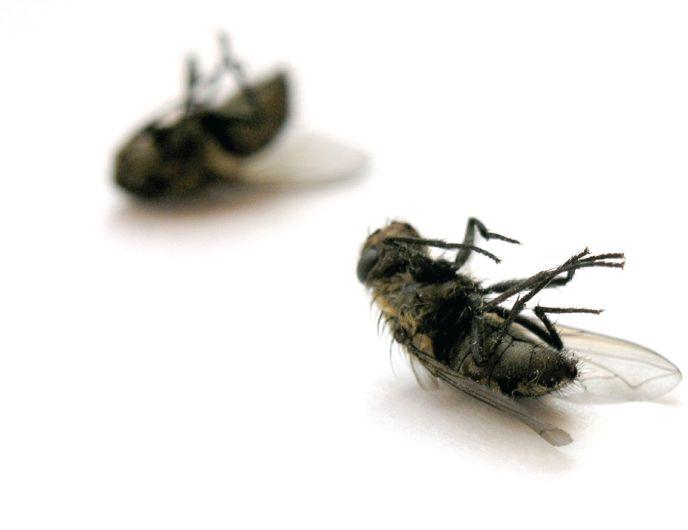
Flies are a nuisance and not just to poultry. They annoy farm workers and can disperse from barns to neighbouring houses and businesses where health concerns can even lead to legal challenges. Inside the barns, flies can spread filth and disease, reduce feed efficiency and increase production costs. Chemical control has led to resistance concerns.
When combined with other poultry pests such as darkling beetles, a 1994 U.S. estimate puts the cost of pesticides at $.07 per bird, exclusive of labour costs and other fly management efforts.
At a duck barn in Beamsville, deep in the heart of the populated communities of the Niagara Region of Ontario, Shiell is testing the use of various control methods on the fly population. While manure management and pesticides are commonly used to control flies, her research is comparing several natural alternatives that may offer other management tools in the fly fight.
Poultry manure provides a suitable environment for flies to reproduce. The fly life cycle can be as short as ten days in warm temperature; each female can lay 500 eggs in manure or other decaying material where the maggots feed through their larval stages and become pupae, emerging as adults about 4-5 days later. With ten to 12 generations per year
CONTROLLING FLIES
A University of Guelph student, known as the “Fly Girl,” is comparing several naturally occurring products to control populations of the house fly in poultry barns
in poultry barns, Shiell told delegates at the 2014 Poultry Industry Council Research Symposium in Guelph, Ont., the population increases can be exponential.
Her preliminary work has so far compared the use of naturally occurring products such as boric acid, acetic acid, diatomaceous earth and hydrated lime in laboratory and field tests to control populations of the house fly Musca domestica, the most abundant and annoying fly species in poultry facilities.
In the laboratory, preliminary results point to significantly lower adult fly emergence rates for duck manure treated with two concentrations (1.9 and 4.7 per cent) of acetic acid (vinegar) and boric acid. However, the treated manure didn’t deter the flies from landing or laying eggs. Shiell postulated that the results
may be due to a lower pH stimulated by the acetic acid while boric acid can act as a stomach poison to maggots.
Many unanswered questions have emerged as her work continues: does the manure treatment have any environmental impact? Is there any impact of the treatment on the bird’s feet or meat? Will the treatment be economically feasible?
Meanwhile, the Fly Girl’s work will continue to investigate control methods both in the laboratory and the barn through the fall of 2014. At the same Beamsville duck farm, Shiell plans to use infrared technology to look for patterns of fly density in manure of different temperature and moisture levels in this floorreared, litter-based production system. Do flies prefer to lay their eggs under water lines? Under feeders? We should know those answers later this year. n
Research
Red Lights Improve Production
The higher wavelengths of red light penetrate the skull and brain tissue more easily to stimulate estradiol production
BY KAREN DALLIMORE
Thomas A. Edison invented the incandescent light bulb in 1879. The story goes that he came up with the idea because he was afraid of the dark, but the reason doesn’t matter much anymore. What matters now is that the incandescent bulb that has served us so well for 135 years is being removed from the market in Canada by the end of 2014 and we need a replacement.
What are the options? For those involved in the poultry industry, light emitting diode (LED) bulb lighting can be a good alternative. Not only does LED offer energy savings, it may also offer production advantages.
Alex Thies, from Thies Electrical Distributing Co. Inc., owns the company in Cambridge, Ontario, that has now designed a 60 per cent red LED bulb suitable to withstand agricultural use. His father started the development of the bulb three years ago in collaboration with University of Guelph researcher Gregoy Bedecarrats.
In a current study being done by Master’s student Mikayla Baxter at the University of Guelph, these light bulbs are being tested on a large scale in a commercial barn housing 45,000 birds in three-tiered enriched cages.
The extra red light has been shown to
UofG research shows 60 per cent red spectrum LED bulbs have both production and financial benefits.
improve production in laying hens. As Baxter explained, birds have extra-retinal photoreceptors deep within the brain. Red light contains higher wavelengths, which penetrate through the skull and brain tissue more easily to stimulate estradiol production, which in turn translates into lower age at first egg as well as longer and higher peak produc-
tion than for hens kept under the shorter wavelengths of green or blue light.1 The flock at Dykstra’s Poultry Farm was monitored from 19 weeks of age to the end of their laying cycle at 70 weeks of age. There were approximately 250 bulbs in the 22,500 square foot barn.
Baxter, under the supervision of Dr. Gregoy Bedecarrats, analyzed egg produc-
EXTRA RED LIGHT
Protecting our environment, on the farm and in the office
Egg Farmers of Canada is proud to support renewable energy through our environmental partnership with Bullfrog Power.
Nous protégeons notre environnement, à la ferme et au bureau
Les Producteurs d’œufs du Canada sont fiers de favoriser l’énergie durable par le biais de leur partenariat avec Bullfrog Power.
- Dr Martin Clunies
tion, egg quality, body growth, estradiol and cortisone levels and spectral output.
In summary, it appears that the 60 per cent red spectrum LED bulb promoted egg production by approximately two per cent without any adverse effects on the growth and welfare of the birds when compared to fluorescent lighting (CFL bulbs).
Baxter called this increase “biologically and financially significant” when she presented her findings to the 2014 Poultry Industry Council Research Symposium in Guelph, Ontario. Her findings indicated a peak egg production of 98 per cent and a persistency of over 90 per cent before the end of the study timeline. The birds averaged 345 eggs over 364 days and although the shell quality decreased as the birds aged this proved to be controllable with calcium supplementation.
She did also mention, however, that she ran into some trouble with the design of the bulb. The spectral output did not change over time but the bulbs began filling up with water during 1800 psi industrial cleaning. It turns out that the high-pressure water was entering the bulb through the pigtail socket wires. The bulb has since been re-designed with a one-piece aluminum housing to make it dust and waterproof in the barn environment to withstand cleaning and disinfecting.
As for energy consumption, another cage trial indicated a significant difference between light sources, with incandescent using more energy than CFL (compact fluorescent), and both using more energy than LED bulbs.
Baxter will be continuing her research, presently monitoring a third flock of pullets to further validate the results.
While the 60 per cent red spectrum LED bulbs are CSA and UL approved and now commercially available for purchase, Thies, the bulb developer, will continue to work with Manitoba and Ontario Hydro to obtain Energy Star approval for the bulbs so that their PowerSmart programs will recognize them.
Thies is also looking for farms to participate in additional pilot projects involving green spectrum LED bulbs.
“A flat layout board inside the bulb is populated with 10 1-watt LED’s,” he explained. “For a 10W bulb we can add whatever colours we like.” For layers, the red spectrum LED has 6 red, 2 green and 2 blue bulbs on its layout board. For broiler farms though, green should be the major colour, using 6 green, 2 blue and 2 red bulbs. Thies welcomes enquiries from farms willing to test the efficacy of both red and green spectrum LED bulbs.
DOING THE MATH
In poultry barns, the majority of lighting is compact fluorescent or T8 flourescent but LED has been making big inroads over the last two years.
What would be the savings be from using CFL or LED bulbs in your own barn?
LED bulbs can be inserted into the same fixtures (E26 sockets) as incandescent or CFL bulbs. The bulb itself costs approximately $49 but it has a lifespan of 7 years, in comparison to CFL bulbs ($4) or incandescent ($.40) which last for roughly one year.
A layer barn will have the lights on 16 hours per day, 7 days a week, 52 weeks per year, a total of 5824 hours per year. A broiler barn will be about 12 hours per day for 42 days per crop, 6 crops per year, plus 5 days for clean out and barn prep at 8 hours per day, for a total of 3064 hours per year.
As a sample comparison, consider a small layer barn with 100 bulbs and electricity at $.175/kWh:
CFL:
• Cost of bulbs: 100 x $1 = $100/year
• Energy usage: 14 W/bulb x 100 bulbs x 5824 hours per year = 8153.6 kWh/year x $.175/kWh = $1,426.88/year
LED:
• Cost of bulbs: 100 x $49 = $4900/7 years = $700/yr.
• Energy usage: 10 W/bulb x 100 bulbs x 5824 hours per year = 5824 kWh/year x $.175/kWh = $1,019.20/year n
1 Baxter et al., 2014, Poultry Science 93:12891297
Markets
Halal Chicken
The growing market for halal foods offers new opportunities for Canadian
poultry
BY LESLIE BALLENTINE
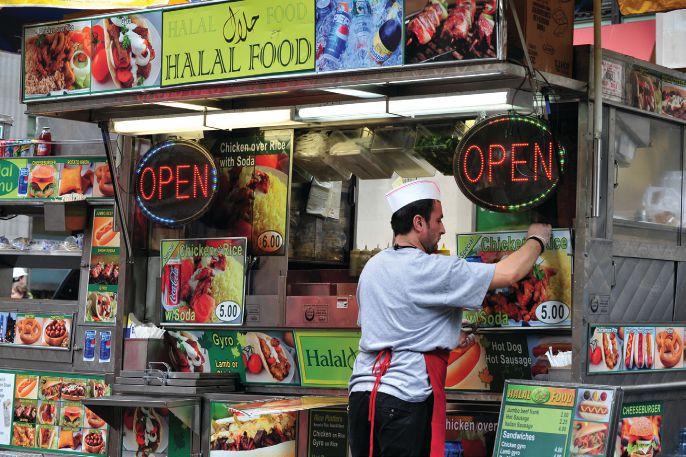
With Canada’s Muslim community forecasted to triple by 2031 plus a growing demand by non-Muslims for halal foods, food industry observers predict this to be a bright spot in Canada’s meat market.
Statistics Canada reports that in 2011 about one million Muslim-Canadians made up 3.2 per cent of Canada’s population; making it the fastest-growing religion in Canada.
According to Agriculture and AgriFood Canada, the market value for halal food products in Canada today is estimated to be about $1 billion. For those unaware, halal foods are foods that observant Muslims are allowed to eat or drink under Islamic dietary law. The criteria specify both what foods are allowed, and how the food must be slaughtered and prepared. Halal addresses mostly meats and meat by-products of which a significant portion is poultry. Over 30 federally inspected plants in addition to provincial plants offer halal slaughter in Canada.
Halal products are appealing to nonMuslims too. In many countries, halal products are not seen as a religious product but as a product of higher quality with consumption becoming more commonplace amongst non-Islamic demographics. According to Canadian Grocer Magazine, “the concept of halal has extended far beyond a religious choice, also attracting consumers who are environmentally conscious [and] health conscious.” The magazine explains that, “Halal is perceived to
GROWING OPPORTUNITY
According to Agriculture and Agri-Food Canada, the market value for halal food products in Canada today is estimated to be about $1 billion.
be a more humane and ecological way of processing meat, resulting in a perception that the product is also of higher quality, safer and cleaner.”
In the U.K. for example, halal meat makes up 11 per cent of all meat sales, compared to a UK Muslim population of just 3 per cent. According to other market research reports, in Russia only 25 per cent of halal meat consumers are Muslim.
As Canadian retailers seek to cater to the growing demand, halal products are becoming more widely available. At one time, halal food products could only be found in specialty stores in large urban centres, but this is starting to change. More large retailers, such as Loblaws, Sobeys, Metro and Wal-Mart are starting to carry halal poultry products in select locations. Much in the same way as specialty eggs and organic products were first introduced by retail chains, halal poultry products are slowly gaining space in the
meat counter. Unlike specialty eggs and organic however, halal does not require any different growing practices by the conventional poultry producer.
A recent visit to a Toronto Loblaws Super Store found a selection of fresh halal chicken from whole chicken to skinless and boneless pieces as well as processed products including chicken hot dogs, chicken bacon and chicken bologna. All were locally processed. All were priced comparably to other specialty chicken lines. All were labelled certified.
And halal goes beyond the grocery store. A website search finds more than 300 halal restaurants in Toronto and 250 in Montreal alone. These include popular fast food chains and even Asian, Portuguese, and Italian cuisine.
Sargent Farms, which is Canada’s only plant devoted 100 per cent to handslaughtered halal chicken, specializes in the food service trade. According to com-
pany sales manager Gary Roffel, customers are willing to pay a premium for their traditional hand slaughtered chicken. But it’s not who you might think. Roffel referred to a recent survey the company has undertaken saying, “I was surprised to learn that it’s the younger generation that is most interested in purchasing our hand slaughtered products (vs mechanical halal slaughter) not the older, more traditional generation as one might expect.” The company is now beginning to supply traditional supermarket chains, and while he wasn’t able to confirm a growing demand by non-Muslims, Roffel did agree that domestic demand could support a wider market.
In recognition of the growing market, Ottawa announced tighter rules for halal label claims this past April. Halal claims on food labels, packaging or advertising material must now include the name of the certifying body. “This will provide
consumers with assurances that the food meets a certifying body’s standard,” the government said in a press release, “and will allow them to obtain specific information about the standards the food has met.”
The Canadian Food Inspection Agency (CFIA) won’t be establishing federal standards for what can be labelled as halal, nor will it establish requirements for becoming a halal certifying body. That will be left to the Muslim community to sort out. But all recognize the importance of this enforceable labelling change. “Potential benefits include increased consumer confidence in halal-labelled products, fewer consumer complaints, increased demand for halal-claimed food products and increased demand for certifying services provided by halal certifying bodies,” the CFIA said.
Those within the community agree. Omar Subedar serves as the secretary gen-
eral and official spokesperson of the Halal Monitoring Authority, (one of several certifying bodies). He says that the inability of meat processors to meet the rising demand for halal meat, coupled with a lack of oversight, had opened the door for exploitation. He recently told the Toronto Star that the new labelling laws will help protect and inform consumers and help give them confidence when purchasing labelled foods.
At Eastern Halal Meat in Toronto shoppers tend to agree. Amin travels weekly to the shop because he trusts the sourcing of their products. He was unaware of the recent change to the labelling law but welcomed it, saying it may encourage him to buy his meat at a more conveniently located supermarket chain. “I am willing to pay more, but only if I can be certain that I am getting what I am paying for,” he said.
While The Canadian Poultry and Egg
Processors Association and the Chicken Farmers of Canada were not able to provide specific market data, Pam Kellogg, vice-president of marketing at Maple Leaf Foods, has previously said retail sales growth for halal is outstripping other market segments. She cites Nielsen sales volume figures that show the halal segment of fresh chicken is growing at six per cent per year, which is greater than the total fresh chicken growth at one per cent.
In 2012 Maple Leaf Foods launched Mina, a line of certified hand-slaughtered chicken. The fresh line currently offers six varieties. Then in 2013 the company added several frozen products including chicken strips and a whole frozen turkey. Kellogg explained to Canadian Grocer Magazine that: “Only a small portion of halal shoppers [buy] halal chicken at traditional grocery and mass stores because it’s difficult to find halal offerings that are zabeeha by hand,” referring to the
slaughtering process. “Offering products such as Mina is an easy way to attract and retain an influential consumer population that’s seeking a trusted halal product in a convenient way,” she said.
Halal food certification is increasingly sought for Western-influenced meat products too. Products including sausages, luncheon meats, canned, chilled and frozen chicken, turkey and beef products and ready meals are becoming available. These offerings are in keeping with a 2005 Canadian consumer survey that found that half of the participants reported purchasing ready-made meals, and the majority wanted to see an increased availability of processed meats.
Although not nearly as many halalcertified products are launched in North America compared to the UK and elsewhere, there is still a small but blossoming market in Canada. The Halal Foodie blog regularly reports on new products. And
the market has even matured enough to warrant its own annual food show attracting over 30,000 visitors a year in the past two years. The Halal Food Fest is designed to link halal suppliers with restaurants, retailers and consumers.
The export market is also seen to be an important one for Canadian food makers. Maple Lodge Farms, a federally registered facility, has been shipping its prepared halal products to the Middle East and Southern Asia for years. This is ahead of Canada’s cattle industry which is just now looking at halal export potential with more serious interest.
With consumer demand for halal meats predicted to grow substantially both within and outside Canada, together with stronger consumer interest in halal certified prepared foods, Canadian retailers and food service outlets are responding. Canada’s poultry sector has an opportunity to capitalize too. n
MERCK’S GOING GREEN
Marketing
The Chicken Squad
The B.C. Chicken Growers launched a unique social media campaign to dispel
myths about how chicken is grown
BY DAVID SCHMIDT
Actual chicken growers as action movie stars fighting the use of hormones and steroids in the production of B.C. and Canadian chicken? That’s the unlikely premise of the Chicken Squad, a recent social media campaign by the B.C. Chicken Growers Association (BCCGA) and the B.C. Chicken Marketing Board.
“We started working on the program three years ago,” says BCCGA president Ravi Bathe. “Our association directors talked a lot about how we talk to the public about things they are concerned about. Three years later, here we are.”
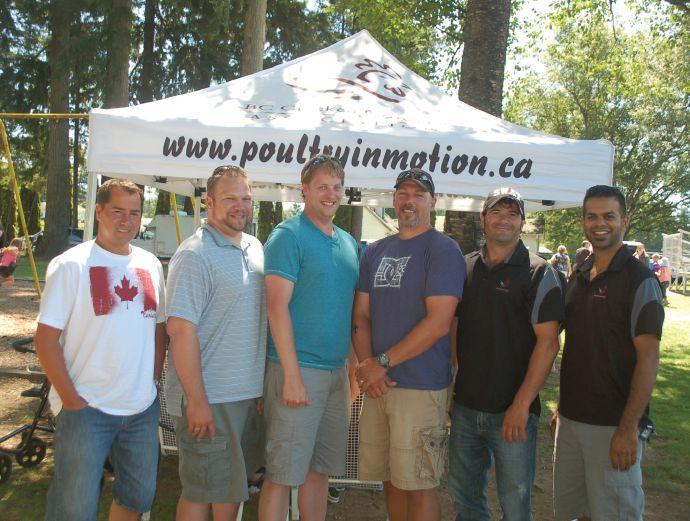
Bathe plays the primary “good guy” in the series of ten YouTube videos and an action movie “trailer” which can be viewed at www.chickensquad.ca. BCCMB director Kerry Froese acted as the main “villain” while other growers from both the Lower Mainland and the Okanagan took parts as supporting members of the cast. Even Chicken Farmers of Canada chair David Janzen appears in a cameo role as the good guys’ mentor. A total of about 15 growers and their families participated.
The short videos include “auditions” for the movie, grower interviews, outtakes and, of course, the movie trailer.
Even though the videos were shot in mid-winter and included a rather chilly scene where several end up in a backyard pool, the growers had a blast.
“I’m now looking to Hollywood,” one joked, claiming “I’ve already turned
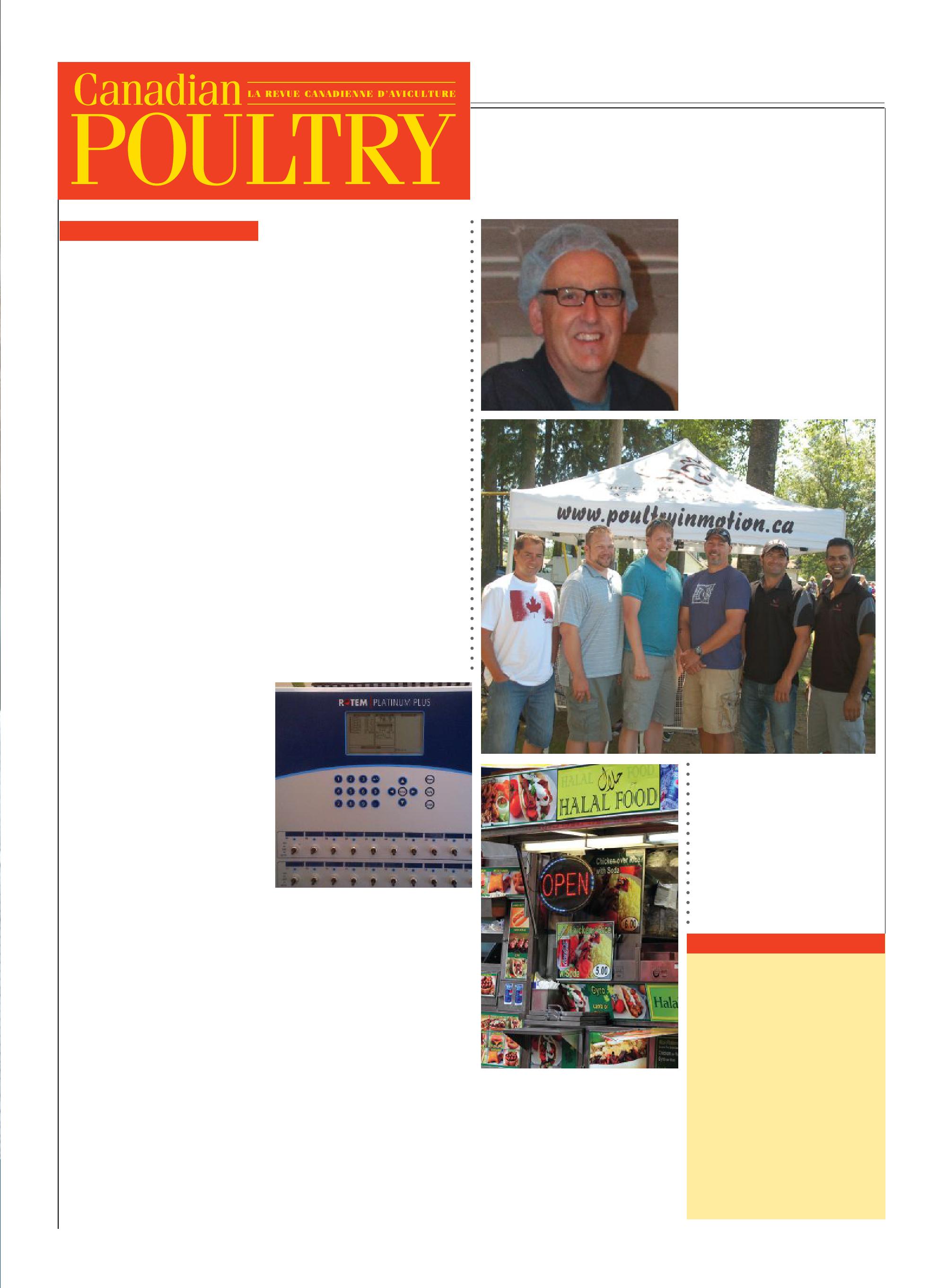
From (LtoR) Mike Braun, Kerry Froese, Chris Kloot, Lance Nickel, Mark Bartel, and Ravi Bathe, some of the growers/actors that participated in a unique social media campaign.
Right: filming a scene
down several offers.”
Relevention Marketing, the public relations and marketing firm contracted to coordinate the project shares their enthusiasm.
“The most rewarding part of the process was working with real chicken farmers and seeing the relationships and friendships which developed,” says Relevention marketing strategist Steffan Janzen. “To ask them to do something vulnerable and be able to laugh at themselves was great.”
REACHING CONSUMERS
The program is based on consumer misconceptions about the use of hormones
and steroids in chicken production.
“The most concerning statistic is how many consumers believe chicken contains hormones and steroids,” Janzen says, noting a recent survey showed 64 per cent of British Columbians believe that. The videos therefore clearly spell out that the use of hormones and steroids to produce chicken in Canada has been banned for 50 years.
Misconceptions are particularly prevalent among the young.
“We looked at the issue of trust between consumers and farmers. Do consumers trust the people who are growing their food?” Janzen asks, adding “there
MEET THE “CHICKEN SQUAD”
Marketing
SELECT DOSER
• Select Doser dispenses products accurately into low and high pressure watering systems through it’s tubing via compression and peristalic action.
• Aggressive products and powders never pass through the pumps mechanism that can cause premature wear and maintenance.
• New improved Model 640 is now simple to use with one tube size
• New Select Doser Max can now operate in high pressure and volumes
Centrifugal Cooling System
– 24” diameters • Polyethelyne housing
• with Multifan or Performa+ Leeson motors
Genius picture Ge-430
• Genius 430LS Livestock climate control
• User friendly Interface (hot Keys)
• Large Display Screen for easy viewing
• Up to four variable stages and 30 off/on relays
• Expandable to 50 relays with relay module
• Up to 12 temperature sensors , one Humidity sensor
• Up to 12 heat zones, 12 cool stages, 2 light programs
• Up to 5 water metering, 2- 0-10volt outputs for dampers
• can operate Dual, natural and tunnel ventilation
• Multiple applications Genius controls from 3 – 10 stages
• Genius 420 Series control , up to 4 variable, 20 off/on
• New Genius Dimmable Light control
• New feed Bin monitoring control
• New Genius 420LS control system – larger screen and capacity
72” fan
• Heavy Duty fiberglass housing
• Heavy Duty 6 blade alum. Propeller
• Twin gates Size A belts with Auto tensioner
• 3 hp , single or 3 phase motor
• Optional cone for max air flow
LIGHt traP/ Dark OUt
• High light reduction
• Low resistance to air flow
• Simple Installation
• Easy to clean
• Uses P.V.c. snap release spacers
was a direct correlation between age and the level of trust. The younger the consumer, the less the trust.”
He says the campaign’s aim was to “increase the level of trust among younger urban consumers,” calling them “a highly skeptical group.”
They are also difficult to reach using traditional media, which is why a YouTube campaign was selected.
“Social media is becoming the norm now so we wanted to harness it,” Bathe says.
He would not reveal how much the campaign cost, but insists “the benefits outweighed the cost.” Although it was funded in part by provincial Buy Local funding Bathe notes the campaign was already being developed before the funding program was announced.
By the end of June, the videos had attracted a total of 175,000 views. The campaign also led to appearances on major Vancouver television and radio stations and interviews in many urban papers.
“It’s about making people aware that we have all these programs,” Bathe says.
“Part of the purpose is to build goodwill so when something happens there’s a level of comfort among consumers,” Janzen says, adding there is opportunity to do more with the material developed for the campaign.
That is something growers are considering.
“We are looking at the next steps,” Bathe says. “We hope to do more things like this in future.” n
Community
Social Responsibility
Egg farmers across Canada are giving back to their communities
BY THE EGG FARMERS OF CANADA
Geneve Newcombe and her husband Craig, egg farmers in Port Williams, Nova Scotia, feel strongly about teaching their children about the value of giving back to the community.
So when Geneve heard that Egg Farmers of Canada was a sponsor of the Canadian Breast Cancer Foundation CIBC Run for the Cure, she didn’t hesitate: she and her three children, all in their late teens and early 20s, signed up to take part in the run in Halifax.
The family has done the run twice now — happy to do something for others, and pleased that Egg Farmers of Canada is a sponsor of the event.
Social responsibility comes naturally to egg farmers. Right from the beginning, EFC has always strived to incorporate social responsibility into all aspects of its organization.
TRADITION OF AGRICULTURE
“I believe that social responsibility is rooted in our traditions as an agricultural industry,” says Peter Clarke, chairman of Egg Farmers of Canada. “When egg farmers came together in the 1970s to develop a self-regulating supply management system, they were demonstrating a willingness to work together for the common good of consumers and farmers. They also understood there was a need to earn the trust of their stakeholders by operating in a socially responsible manner.
Research has confirmed this. Through
(LtoR) John Penner, EFC Chief Executive Officer
Tim Lambert, Kurt Siemens, EFC Chairman Peter Clarke, and Marcel Laviolette were some of the farmers present at EFC Downtown diner.
Inset: David, Robert and Kathleen Newcombe
donations, fundraising, sponsorship, volunteering and taking part in events, nine out of ten farmers are giving back. Across the country, they are strong contributors to their communities.
DEEP ROOTS
“Because most egg farms in Canada are family-owned and have often been oper-
ating through several generations, our farmers are deeply rooted in and committed to giving back to their communities,” adds Peter Clarke.
Egg boards are also strong community supporters. Egg boards and EFC contribute more than $1 million a year to causes through donations, fundraising and sponsorship of community events and organizations. Collectively, they sup-
DOWNTOWN DINER
l
l
l
l
l
l
POULTRY
ENVIRONMENT PROBLEMS
One of the purposes of practical housing and equipment is to provide for the biological, economic and welfare needs of the birds.
Fortunately, the scientific literature contains a great deal of information on these needs, so that a recommended approach to practical problems is to start with an appraisal of the requirements and responses of the birds. Then, designers and engineers can provide for these needs.
This book provides information on the needs and responses of poultry to aspects of the climatic environment, by means of reviews of the scientific literature. Biological responses to environmental factors are discussed, as well as some principles of the movement of air through and within buildings.
Many of the principles apply to both indoor production and to the housing attached to free range systems.
Community
port close to 200 community programs, causes, charities and events.
EFC has been collaborating with Food Banks Canada for more than two decades, and over the years it has donated millions of eggs to the organization — more than one million last year alone.
At one of its recent events in Ottawa, Egg Farmers of Canada hosted a successful Downtown Diner near Parliament Hill. EFC served egg sandwiches created by Marc Doiron, a chef and owner of the local restaurant Town, to parliamentarians, their staff and the public; in return, the organization encouraged donations to Food Banks Canada and added their own donation. As a result EFC was able to present Food Banks Canada with a $10,000 cheque.
Earlier this year, Egg Farmers of Canada announced a new partnership with Breakfast Club of Canada, an organization that gives children access to a nourishing breakfast.
SUPPLY MANAGEMENT
Geneve Newcombe says the system of supply management is part of the underpinning of egg farmers’ commitment to their community. By giving egg farmers an income they can count on, the system brings stability to the industry and enables farmers to think about more than just the future of their farm.
“Stability helps keep you anchored in the community,” she says. And being anchored in the community makes it easier to give back. n
FOR SALE
Diamond 8200 egg grader with six packers
Stainless steel loader and preloader. Purchased new in 1989 and operated two days per week. Also for sale a stainless steel Diamond tray washer. Located in Nova Scotia. For information please call (902) 899-6077 or (902) 261-2823.
HERE’S THE POINT
BY LESLIE BALLENTINE
Do the means justify the ends?
Canadians are being watched as never before. We’ve come to expect that we’ll be videotaped on security cameras, that we’ll be data mined by internet providers (and now by our own government) and that we can be Googled by anyone. The popularity of undercover reality TV reflects that as a society we are accepting of, even if uncomfortable with, the idea of being secretly watched.
At the same time, the role of undercover journalism has become a point of debate as moral and ethical lines are being blurred. The Rob Ford saga is a case in point. The public is outraged when “The State” is seen to be invading privacy. Yet, we are forgiving if not supportive when it is done by those we perceive as good; even when it is done outside the confines of the law.
Calling them “undercover investigations” may lend an air of legitimacy but citizen spying is still unauthorized spying.
Once the domain of card-carrying journalists and law enforcement, today “undercover investigations” and the often accompanying “gotcha videos” have become commonplace. Some in Canadian society have been granted limited rights to violate our privacy. But we don’t extend that right to just anyone – for example, to a disgruntled neighbour or business competitor. In fact, we’ve created legislated protections and legal recourses to address such violations. But where the law is concerned, there is still a lot of grey.
Animal agriculture in particular is being increasingly targeted using unauthorized spying by animal activists. A quick search on YouTube shows more than 25 pages of hidden videos allegedly showing animal abuse on farms. A similar search shows barely any hidden videos of old age homes, day cares, classrooms and hospitals. All of which are also areas of potential and, sadly, occasional abuse. Even in the rare case where human abuse videos are posted, it is generally a family member or whistleblower, not some self-serving vigilante group, behind the camera.
Obviously, when they do capture legitimate misdoings, underhanded tactics can lead to beneficial outcomes. Those found responsible for the cruelty should not only lose their jobs but should be legally punished, just as with other forms of industrial espionage. However, that’s not necessarily the purpose behind spy missions aimed at agriculture. If it were, then these self-appointed investigators wouldn’t wait weeks, to make their accusations. They would respect the due process of law and not be calling press conferences. And they wouldn’t be profiting.
Marketing the spoils of spying for a wider purpose should be seen as crossing the line.
Based on the theory that: “If I see it, it must be true,” these activist spy missions carry weight with the public and division within the industry. The implication that brutality and neglect is “standard practice” in farming is the true purpose behind such spying. Activists have learned that when used on the farm and food community, this strategy often gets them what they demand.
What we can’t know is just how many hidden videos of farms never see the light of day because there is nothing untoward to see. What we can’t know is the context of heavily edited videos because never are we allowed to see complete footage. What we can’t know is which farm will be next.
Marketing the spoils of spying for a wider purpose should be seen as crossing the line
Yes, employees have lost their job, farms have lost customers and food companies have been punished in the court of public opinion. Yet, in Canada at least, there are seemingly few if any convictions for farm animal mistreatment that are hinged on hidden videos.
What we can know is that the footage and accusations will live on in marketing campaigns — cue the melodramatic music, role the footage and run the sensationalized donation appeal.
This activist business model is just that — business. A lucrative way to raise more money to undertake more spying that can be used to pressure more businesses, sectors and governments.
We have activist groups, media and some within the industry encouraging and enabling spying. What we don’t have, but what we do need, is a public debate on the ethics of vigilante spying.
Here’s the point: We can’t stop undercover investigations. We can’t prevent all cases of bad actors. We can’t end fundraising and marketing tied to underhanded tactics. But we can follow the lead of other animal-reliant sectors by reducing the risk and eliminating the enticements that spying on farmers affords. n
TD is committed to helping farmers build for the future.
The Franke twins first came to us in 2001 with an ambitious plan to grow their grandparents’ farm. Though they were barely over 20, their TD Agriculture Specialist quickly recognized their potential and backed their plan. Over the years, Jolene has been there for every major financial decision affecting the farm, helping it grow to thousands of acres and over 250 head of cattle. A personalized approach to agriculture finance, like Jolene’s, is something all TD Agriculture Specialists bring. Maybe it’s time you brought one to your farm.