RAS - Winter 2022

Page 1


COLUMNS

Power Struggle Why the world needs RAS Ask the Expert Nurturing RAS in the Faroe

Chile’s first post-smolt facility

Salmones Austral is producing 280gram juveniles of Atlantic salmon in a

Growing in Signapore

Singapore RAS hopes to be a local solution for the country’s food security

From the editor

Try something new

We spend a lot of time in the industry talking about the largescale builds that are pushing the technology for recirculating aquaculture systems (RAS) to its limits. Sometimes, I think we take for granted how new this industry still is.

RAS is still brand new to many parts of the world and it takes bold producers to make their mark in a part of the world where the technology has yet to be proven. This is why this issue’s cover story fascinates me.

In a country where RAS has been seen at much smaller scales (three to 30-ton production facilities), new commercial projects are suddenly popping with annual production targets that range from 2,500 to 5,300 tons. We see a burgeoning RAS industry in Japan and the projects are not just for raising Atlantic salmon, but for mackerel and trout.

Further south, we also get a glimpse of Singapore through our latest RAS Talk interview with Esben Johnsen, CEO of Singapore RAS. He shares his experience in starting a new project for an island country that is looking to become more self-sufficient in its food production. However, this particular project is very early days, so there are still challenges to face ahead.

Now, Scotland is a part of the world that knows Atlantic salmon very well. But there is a group of Scottish producers who are collaborating with Italian researchers on a proprietary technology for purifying water in a RAS. A pilot

project by FishFrom Ltd. is looking into photocatalytic ozonation, a hybrid technology that combines photocatalysis and ozonation at the same time. It is being supported by the European Institute for Innovation and Technology and they believe it could be a breakthrough in mitigating off-flavours in their RASraised salmon.

Chile is another RAS player that has been around for decades but we share a story about Salmones Austral and its first post-smolt facility. The system is already up and running and they are expecting to produce seven million salmon at 300 grams annually. With a little more knowledge and experience, they have ambitions of growing the fish up to 500 grams in the next few years.

What I’m learning from this issue is that the RAS industry is not for the faint of heart, nor is it for those who like the safe bet. If RAS is truly to become the future of aquaculture, there will be plenty more stories of people who are doing something that has never been done before. It would be irresponsible of us here at RAStech Magazine to cast a skeptical eye on projects like these, because only time itself will judge what projects will become sustainable. In the meantime, the industry should welcome as many innovators out there as it dares to attract. The race to meet the global food demand will require all our best ideas.

If you have unique RAS projects that we don’t know about yet, you can always email me at jkodin@annexbusinessmedia.com.

www.rastechmagazine.com

Reader Service

Print and digital subscription inquiries or changes, please contact Angelita Potal, Audience Development Manager Tel: 416-510-5113

Email: apotal@annexbusinessmedia.com

Mail: 111 Gordon Baker Rd., Suite 400, Toronto, ON M2H 3R1

Editor Jean Ko Din 437-990-1107 jkodin@annexbusinessmedia.com

Associate Publisher Jeremy Thain 250-474-3982 jthain@annexbusinessmedia.com

Account Manager Morgen Balch 519-429-5183 mbalch@annexbusinessmedia.com

Group Publisher Anne Beswick 416-410-5248 abeswick@annexbusinessmedia.com

Audience Manager Urszula Grzyb 416- 510-5180 ugrzyb@annexbusinessmedia.com

COO Scott Jamieson sjamieson@annexbusinessmedia.com

Printed in Canada

SUBSCRIPTION

RAStech is published as a supplement to Hatchery International and Aquaculture North America.

Occasionally, RAStech will mail information on behalf of industry related groups whose products and services we believe may be of interest to you. If you prefer not to receive this information, please contact our circulation department in any of the four ways listed above.

Annex Privacy Office privacy@annexbusinessmedia.com Tel: 800.668.2374

No part of the editorial content of this publication may be reprinted without the publisher’s written permission © 2022 Annex Business Media. All rights reserved. Opinions expressed in this magazine are not necessarily those of the editor or the publisher. No liability is assumed for errors or omissions.

All advertising is subject to the publisher’s approval. Such approval does not imply any endorsement of the products or services advertised. Publisher reserves the right to refuse advertising that does not meet the standards of the publication.

Made possible with the support of

SMARTFLOW

SmartFlow connects all Vaki Smart Pumps, Graders and Counters for full overview and control of the fish handling system.

LEARN

Geo Salmo to use Artec Aqua’s hybrid RAS

Geo Salmo has chosen on-shore aquaculture supplier, Artec Aqua, to provide the hybrid recirculating aquaculture system (RAS) for its land-based salmon farm project in Iceland.

The planned facility which will be located in Þorlákshöfn, near Reykjavik, is expected to produce 18,900 tons of gutted Atlantic salmon.

According to the Icelandic aquaculture company, Artec Aqua will be responsible for the design, engineering, construction and completion of the entire facility. The total contract value is between NOK 1.5 and 1.8 billion (US$1.5 million and $1.8 million) for the development of the plant’s first phase.

Construction is scheduled to start in the third quarter of 2023.

The project will use Artec Aqua’s Hybrid System. The temperature profile of the water that comes from wells at the plant in Þorlákshöfn “fits very well” with Artec Aqua’s self-developed hybrid system, said the company. The hybrid system will recycle up to 70 per cent of the water.

“This is a very exciting project that combines our hybrid technology with the advantages of staying in Iceland, where seawater will be supplied via boreholes and filtered naturally through lava rock,” said Ingegjerd Eidsvik, chief executive officer of Artec Aqua. “Being chosen as a total supplier is a confirmation of Artec Aqua’s track record from land-based aquaculture facilities, our technology and the unique expertise that our team possesses.” -

Thai shrimp RAS firm pledges to cut antibiotics use

Charoen Pokphand Foods PCL (CP Foods), a leading provider of shrimp raised in recirculating aquaculture system (RAS), said that a working group committed to reducing the use of antibiotics in aquaculture is making headway.

CP Foods is part of the sustainability-focused Seafood Business for Ocean Stewardship (SeaBOS) initiative.

SeaBOS is made up of 10 companies that are committed to lead a global transformation towards sustainable seafood production and a healthy ocean.

Apart from agreeing to phase out the use of antibiotics in aquaculture, the companies also agreed to reduce their greenhouse gas emissions in line with the Paris Accord.

CP Foods is a part of a SeaBOS taskforce that is focusing on antibiotics stewardship in the aquaculture industry.

In a recent interview with the Bangkok Post, Dr. Sujint Tham-

masart, chief operating officer for CP Foods, said the task force is preparing to finalize the SeaBOS Antibiotics Code of Conduct by October this year.

Once completed, the code of conduct will be implemented by SeaBOS members.

The top priorities of the code include:

• Requiring that antimicrobials that are medically important for human medicine be used used only for therapeutic use under veterinary oversight.

• Eliminating the use of sharedclass antimicrobials which are important to human medicine for growth promotion purposes globally

• Working with experts, partners and stakeholders to identify new and better ways to improve animal welfare and reduce the need for antimicrobials

Ex-Nordic Aquafarms

execs form ‘smaller, leaner, faster’ American RAS

Former Nordic Aquafarms president Eric Heim and his wife Marianne Naess, who was executive vice president of the land-based aquaculture company, have formed a new company to compete in the United States recirculating aquaculture system (RAS) market.

The couple, who announced their departure from the Norway-based company he founded with his Naess in July this year, have formed a new company called Xcelerate Aqua. The company is

headquartered in Portland, Maine.

“Smaller, leaner, and faster is the motto here.” Heim describe the new company in his LinkedIn post. “Small enough to significantly reduce complexity and local impacts, but with key advantages that match larger scale benefits.”

“This is what the RAS sector needs to deliver financial proof of concept on acceptable timelines and to open up more site development opportunities in the U.S. in the coming years,” he said.

PUMPS

Xcelerate Aqua is committed to innovations that push environmental and social stewardship forward, he said.

Xcelerate Aqua will create and invest in new companies that achieve smart and efficient aquaculture growth.

The former Nordic Aqua boss said Xcelerate Aqua is in the final stages of due diligence for a first site in eastern U.S.

Heim and Naess were among the founders of Nordic Aquafarms in 2014. Four years later, the

company announced plans to build RAS facilities in Belfast, Maine and in Humboldt County, California.

Scientists, residents raise concern over RAS plans in Maryland

A project to build a recirculating aquaculture system (RAS) facility to grow salmon in a tidal estuary in Maryland, could harm the local population of sturgeon which are considered an endangered species. This was the concern raised by scientists, environmentalists and residents who attended a recent hearing held by the Maryland Department of Environment (MED).

The hearing on Aug. 10, was one of the first official meetings where members of the public were able to speak about the plans of Norwegian aquaculture company, AquaCon, to build a 25-acre RAS facility near Marshyhope Creek, on the Eastern Shore of Maryland. The MED still has to decide on whether to permit AquaCon to go through with its plans, which is expected to produce more than 15,000 tons of salmon each year.

People opposed to the project are worried that discharge water from the facility could alter the water quality and salinity of the creek and cause nutrient pollution.

“This is a unique habitat for sturgeon in Maryland waters,” Dr. Dave Secor, a professor at the University of Maryland Center for Environmental Science, was quoted in the Chesapeake Bay Foundation CFB) website. “Atlantic sturgeon come here year after year after year. AquaCon is an existential threat to the smallest of Atlantic sturgeon populations, and that’s a very bold statement.”

The professor was among the people who attended the hearing to explain the risks of the facility to the local sturgeon population.

“This permit is missing significant technical information,” said Alan Girard, director of the CFB for the eastern shore.

Girard said he was referring to questions raised in Maryland’s Department of Natural Resources (DNR) comment on the AquaCon project. The department works with MED when it comes to writing permits. Among the departments questions included:

Does the purge water need to be maintained at a temperature other than the ambient temperature of the incoming water from the Marshyhope Creek?

Will salinity of the discharge water from the facility be treated to match the salinity of of the water in Marshyhope Creek? Will there be any changes to the pH of the creek water?

Have limits for nutrients and suspended solids for the discharge been determined?

The state’s DNR also said that to minimize impacts to spawning fish species, withdrawal of water from the Marshyhope Creek should only be allowed if the intake pipe is covered with a filter, having a nominal mesh size of one millimetre, and that the intake velocity does not exceed 0.50 feet per second to minimize the potential of the facility’s fish eggs and or larvae coming through.

- NESTOR ARELLANO

Scottish Sea Farms welcomes record number of visitors

Scottish Sea Farms hosted 270 visitors across its farming estate this year, including at its RAS freshwater hatchery in Barcaldine, Scotland.

The company said this new drive for visitors is to help increase awareness and understanding of the aquaculture sector in Scotland.

Many of the visitors have approached Scottish Sea Farms directly while others were introduced to the sector through Salmon Scotland, the press release said.

“The beauty of people coming out to the farm is that they get to see what we do and speak to the team in person,” said Scallastle Farm Manager Michael Keenan. “No question is off-limits. In fact, we encourage open, honest, constructive discussion.”

Keenan added that with most of his team living locally, the visits have also been an

opportunity to share why salmon farming is important to remote Scottish communities. Every department in the company has been involved in this “cross-company effort.” Though the company noted these visits are a significant investment in time, the team deems them as well worth it.

Donald Buchanan, head of processing at Scottish Sea Farm’s facility in Scalloway, said providing an authentic experience is crucial.

“We don’t do anything differently on

the day of a visit, other than take time out of our normal day to show guests around,” he said. “When your facilities and farms run as they should do every day, there’s no need… It’s further affirmation that we are doing the right thing as a business.”

The company has been hosting visits for years but, more recently, there has been a conscious decision to invite as many interested parties as possible (halted temporarily by the pandemic).

“Visiting Scottish Sea Farms has been a great experience for our students,” said Daniel Merryfield, programme lead for MSc. Sustainable Aquaculture at Plymouth University. “The staff that hosted us have shown a genuine desire to practise and promote ethical fish farming – minimising the environmental footprint and maintaining welfare.”

Girl Power!

Go for all-female populations to reduce maturation and optimize your production output

Check out our product range SalmoRAS4+ and SalmoRAS4+IPN, optimized for full-cycle salmon farming in land-based RAS-system. Both products have All-female (only female populations) as standard and are highly selected for strong growth. Triploid is an additional optional treatment that makes the females sterile, resulting in zero maturation. That is what we call Girl Power!

Find out more at bmkgenetics.com/products/salmoras4 or contact:

Harry Tziouvas

Global Sales Manager, Salmon +44 (0) 782 337 4568 harry.tziouvas@bmkgenetics.com

Power Struggle

Maddi Badiola, PhD, PM, is a RAS engineer and co-founder of HTH Full Spectrum (fullspectrumaquaculture.com; HTHaqua.com) in Basque Country, Spain. Her expertise include energy conservation, lifecycle assessments and RAS global sustainability assessments. Email her at mbadiolamillate@gmail.com.

Why the world needs RAS

It is obvious that we need to produce food in general, and RAS is the way and answer in aquaculture. However, in the current scenario of global change and uncertainty, it is difficult to predict how RAS fish producers are going to survive.

Many farms are shutting down due to high operational costs, mainly for feed ingredients that have tripled in price and energy supply costs for dwindling supply. Should not the governments do something? Could not the big energy players make the effort of decreasing their benefits by decreasing the energy prices?

It may make a tiny change for them but a huge one for the rest of us mortals. Energy prices are dictating the industry’s direction. Many projects are on stand-by while many others have decided not to proceed as the short-term future does not look bright at all (dark, I would say). It’s sad to see this happening.

Given the world’s current situation, I would like to make a case of why the recirculating aquaculture systems (RAS) industry is so important and why we should all support it – from engineers and consultants, to producers and consumers; passing through politicians, governments and the big players.

Reason 1 is that animal health and welfare are becoming more and more of a concern among consumers; not to mention that the number of vegans (and all the different derivatives) has tremendously increased in the last few years.

The poultry industry is a good example, although the same happens (or it is questioned) in the cattle and pig industries. The number of chickens that are held in a cage has been a topic of debate for a long time. Stocking densities could make the difference between a happy and an unhappy animal.

On the other hand, we have the debate of how we can produce more protein for our increasing population, when available land is finite and becoming more expensive.

In my opinion, the intensive way of production (within reason) is the way to go. I

guess this is why I am a staunch defender of the RAS industry. Because unquestionably, RAS is synonymous with intensive. Nevertheless, and needless to say, the level of intensiveness must be in line, without compromising the welfare of the fish. This is both a systems design and operations management issue.

Reason 2, the aquaculture industry is a relatively new way of animal production. Therefore, it has been meticulously supervised and challenged from the beginning.

From ponds to cages, raceways using flowthrough, and lately in-land tanks of recirculating water, these all make up a big picture of where we can produce fish.

I have seen tanks where I could hardly see the water due to the amount of fish per cubic metre. Was this farm aware of fish welfare? Were those fish happy? It’s hard to answer the question.

There was an interesting study published in July this year called “Finding the “golden stocking density: a balance between fish welfare and farmers’ perspective.” It turns out that based on reports from 30 companies in 12 different countries and visits to more than 50 farms rearing 24 species, there is no such thing as a golden stocking density.

In this study in Frontiers in Veterinary Science, the authors offered a small guide of management practices that emphasized extensive water quality checks and monitoring to determine the most suitable environmental strategies for each production application. Without any doubt in my mind, RAS is the

most suitable environment and technology to monitor to be able to have pertinent parameters visible at a glance. Though, it is necessary to mention that each RAS is still unique to its own context. The RAS theory is always beautiful and seems easy to apply but it is not.

Twelve years ago, I began my aquaculture career unintentionally. My passion, at the time, was in the wine sector. It still is, but I have become a huge advocate of the aquaculture industry and RAS technology. And I will spread the world to educate people about it.

I have taken up the responsibility of showing consumers what aquaculture is and everything involving it – from decreasing the burden from the oceans, to creating a great variety of products in the marketplace, from bio secure environments to embracing the circular economy with (nearly) zero waste production.

You will always hear me say my motto: farmed is the way, RAS the technology. Food is crucial in our lives; it is human’s fuel. Food production is more technology-based than ever and this sector needs energy as fuel.

If the ones that should push the change do not do it, let’s do it ourselves. We must move off-shore aquaculture to in-land production. Let’s convert away from our dependency in non-renewable energy and create efficient and sustainable operations. This is how we can battle against the energy prices; how we can battle against the power brokers.

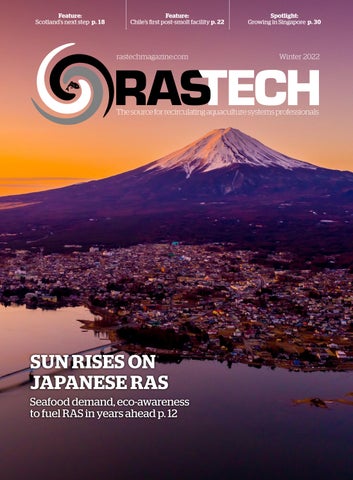
Sun rises on Japanese RAS

Seafood demand, eco-awareness continue to fuel RAS hope but big volumes still likely years ahead.

The country famously known for exporting around the world its love for sushi and sashimi is rapidly importing recirculating aquaculture system (RAS) expertise to boost its own aquaculture industry.

Several RAS operators have opened up shop and announced plans for multitonne harvests within the next two years.

One recent entrant into the Japanese RAS scene is Proximar Seafood AS. The Norwegian land-based aquaculture company is building a facility in a town, at the foot of Japan’s famous Mt. Fuji. Joachim Nielsen, chief executive officer of Proximar, says his company intends to locally produce 5,300 tons a year of fish for the Japanese market.

For Nielsen, Japan is an ideal place for RAS because the country has a stable political and economic framework. The country also has a highly-educated workforce.

“In terms of operating a RAS, we find the Japanese culture among the best in the world,” he says. “A highly hygienic standard, loyal and dutiful are important characteristics for a successful operation in RAS.”

Local production, imported tech

“Our focus is on Atlantic salmon, bringing in Norwegian know-how and building a platform with relevant industrial experience from the Norwegian aquaculture industry,” Nielsen tells RASTech Magazine

He says Proximar was drawn to the country because of the huge Japanese market. “For us, Japan is an interesting market for many reasons. It is the Number 3 economy in the world, and it has a large population of 126 million people.”

The company has commissioned Israel’s AquaMaof Technologies Ltd., to provide the RAS technology for its facility. Completion is scheduled for 2023.

Construction is “60 per

cent completed,” according to the Proximar executive.

In April this year, Proximar signed a 10-year deal with conglomerate Marubeni Corp. that will see one of Japan’s largest sogo sosha (general trading company) exclusively distribute in Japan the salmon grown from the facility.

Mitsubishi is known as a heavy industry company and automaker, but the company has recently set its sights on Japan’s RAS space as well. Rather than importing, the company believes Japan should be producing its own

salmon.

“There are few suitable locations for conventional salmon aquaculture (ocean farming)… The vast majority of the world’s farmed salmon is produced in Norway and Chile,” says Midori Mukushi, spokesperson for Mitsubishi’s land-based salmon farming arm.

“As the global demand for salmon grows, we have been exploring how to expand production by utilizing new technologies… We pulled the trigger and we started to consider land-based production of salmon.”

Proximar Seafood will be located in a town at the foot of Mount Fuji.

In July, Mitsubishi announced a partnership with Japanese seafood company, Maruha Nichiro Corporation, to build a RAS facility in the town of Nyuzen, in the coastal city of Toyoma, in Japan’s main island of Honshu.

Mitsubishi expects to begin operations in 2025 and make its first delivery in 2027. The company is aiming for an annual production capacity of 2,500 tons.

Kamome Mirai Suisan meanwhile is targeting Japan’s mackerel market. The company plans to commence construction of a RAS facility for growing mackerel in the town of Namie in the Fukushima Prefecture by Winter of 2022, according to Hiroyuki Usui, chief executive officer.

The closed-cycle facility will use engineering technologies developed by

Yokohama-based engineering company, JGC Group.

“We have been working on business development and trying to obtain the necessary subsidies in order to commercialize the project,” says Usui. “Currently, we are in the process of preparing for the construction of a small land-based facility in Okayama Prefecture for demonstration breeding… Kamome Mirai Suisan is preparing to start operations in 2024.”

Supply and demand

“The Japanese are an avid consumer of seafood and willing to pay a premium price for high quality, safe and fresh fish products,” says Jesse Ronquillo, lead faculty of the aquaculture program at British Columbia’s North Island College and a former aquaculture research scientist at the University of British Columbia.

“For this reason, many aquaculture companies are rushing to construct RAS facilities in Japan using the latest technologies to supply the strong demand.”

Aside from Atlantic salmon, freshwater and sea trout, silver salmon are now being introduced and reared in RAS facilities in Japan, according to Ronquillo.

The Japanese government has encouraged the creation of a consortium of industry, academia, and government to improve the operation and manage -

Innovation Beyond Measure

Results Beyond Expectation

Where Water Drives Innovation.

ment of closed recirculating aquaculture systems for various marine fish species such as s flounder, pejerrey, kuruma shrimp, whiteleg shrimp, abalone, and the freshwater eel Anguilla japonica , which is considered to be the most expensive fish in Japan, says Ronquillo.

He says that apart from Proximar, Mitsubishi and Kamome Mirai other aquaculture companies that have waded into the Japanese RAS pool include: Kotoura Grand Salmon, Mitsui-owned FRD Japan, and Pure Salmon (also known as Soul of Japan).

Kotoura Grand Salmon from Tottori Prefecture aims to produce silver salmon in a land-based system using groundwater and a proprietary recirculating-filtration system with production target of 600 metric tonnes annually.

FRD Japan, which is headquartered in Saitama City, scaled up from a small land-based trout hatchery to a larger pilot plant in Kisarazu City in Chiba Prefecture. The company’s target out -

put is 30 metric tonnes of trout per year.

Pure Salmon, which is owned by private equity fund 8F Asset Management Pte. Ltd. is building a facility with 10,000-ton per year capacity in Tsu City, Mie Prefecture. The facility is also using RAS technology from AquaMaof.

Eco-awareness

There are two other factors driving RAS adoption in Japan, according to the Philippine-born Ronquillo.

The first is the effect of legal restrictions concerning pollution load, in the form of total effluent regulations and the Water Pollution Prevention Act.

“Aquaculturists are held responsible for the damages caused by eutrophication, and solutions are demanded of them, especially for reducing freshwater and saltwater levels of nitrogen and phosphorus,” explains Ronquillo who also earned a Master’s degree and doctorate in aquaculture from Japan.

The second factor is the consumer awareness trend toward safety in aquaculture products. “Consumers now demand safe, responsible, and stable seafood products as efficiently as possible.”

These and the 2011 earthquake which damaged the Fukushima Daiichi Nuclear Power Plant and led to the leak of radioactive substance into the environment, solidified the country’s shifted

Jesse Ronquillo, North Island College

tide towards land-based fish farming.

“This event led to a further realization that the best way to pursue the implementation of the Good Aquaculture Practice (GAP) method is through closed recirculating aquaculture systems for both freshwater and saltwater

cultures,” says Ronquillo.

In a 2013 national consultation meeting on the future of fish farming, the Fisheries Agency of Japan encouraged Japanese fish farmers to actively engage in land-based aquaculture.Environmental-friendly strategies have becme

a primary focus among RAS players. For example, Mitsubishi is relying on natural water resources to cut down energy use, says Mukushi. The facility will use ground water from the Kurobe River and deep seawater from Toyama Bay. The clean water and low stable

An artist rendering of the Kamomi Mirai Suisan RAS facility
PHOTO: KAMOME MIRAI SUISAN

temperature will enable the facility to use less energy in creating a water environment suitable for land-based production.

“We understand that our biggest advantage will be water resources,” according to Mukushi. “By utilizing the superior water resources in Nyuzen, we will be able to keep the water environment suitable for production.”

tors in terms of large-scale Atlantic salmon.”

Usui of Kamome Mirai agrees.

“The scale of RAS business in Japan is relatively smaller than foreign RAS cases, with the exception of foreign companies such as Proximar Foods and Soul of Japan,” he says.

He also believes it will take longer to commercialize a RAS business in Japan “because of the environmental meas -

“Most RAS projects in Japan are still small-scale... We are still years ahead of competitors, in terms of large-scale Atlantic salmon.”

Future outlook

The future is bright and the “market is stable,” says Nielsen but the local RAS industry is still in its infancy.

“Most RAS projects in Japan are still small-scale, from three to 30 tons, as far as we are aware,” he says. “We do not see that many large-scale initiatives, and we are still years ahead of competi -

ures and need for coordination with fishermen’s cooperatives, and coordination with local governments.”

Other hurdles he mentioned include the limited number of fish fry species and lack of RAS professionals and expertise in Japan.

“We also believe there will be some time before we see any significant

production capacity as building and operating a RAS facility is complex and requires experienced personnel from the industry,” says Nielsen. Since most of the RAS projects in the country are still at their demonstration phase, “naturally, some will fail, and some will succeed,” he says.

“However, there are initiatives with large0scale and the fact of large-scale operators being present in Japan will stimulate interest in RAS in general,” Nielsen adds.

“It is difficult for us to determine if the current growth is problematic,” says Usui. “On the other hand, as the market grows, more and more companies will enter the market. This will increase the technology of inshore aquaculture, create a value chain that does no exists and increase the value of the RAS technology.”

Proximar Seafood began construction in March.
Joachim Nielsen, CEO of Proximar Seafood AS

Scotland’s next step

A

strategic partnership between Scotland and Italy

will jumpstart the production of a key species in Scotland.

Atlantic salmon is Scotland’s most iconic fish. Over the years, farming of the species has greatly expanded. But with concerns over the environmental consequences of open net pens, an increasing number of land-based, recirculating aquaculture systems (RAS) are now emerging. Taking advantage of this opportunity is FishFrom Ltd. in Dunkeld, Perthshire in central Scotland. With more than 120 years experience, the company has been researching and designing RAS systems since 2012 with a view to supplying premium quality farmed salmon with technology that minimizes environmental impact and maximizes animal welfare. Now it’s due to commercialize a new RAS technology through a strategic partnership with the Universities of Trento and Bologna and The Innovation Hub of Trentino (HIT) in Italy.

New partnership

FishFrom Ltd. director and co-founder,

Andrew Robertson, explains that a visit to the Freshwater Institute in West Virginia led to plans to establish a commercially viable opportunity to farm Atlantic salmon using RAS. Robertson and his team connected with the Universities of Trento and Bologna through a collaboration with EIT food, a community that is part of the European Institute for Innovation and Technol-

An artist rendering of FishFrom Ltd.’s planned commercial facility.

ogy (EIT). EIT is an independent EU body that promotes innovation and entrepreneurship across Europe.

With work underway to gain investment for a prototype farm, plans are in place to grow Atlantic salmon from 150 grams to five kilograms. FishFrom Ltd. will be taking a systematic approach in two phases, the first of which is to install the RAS equipment into the farm. The first laboratory prototype unit will then be developed by the University of Trento, followed by a larger unit at 600m3, which will take the team to phase two. This phase involves constructing a 3,600-tonne RAS facility and creating and installing the commercial scale of the prototype filtration unit at 30,000 square metres.

“Phase One is ostensibly a 50-tonne model producing two generations of fish; each of 25 tonnes,” said Robertson. “This will enable us to show our customers that the fish looks and tastes good. We want to prove to potential investors that our work is commercially viable, and we believe that we have a very strong case to take the proprietary technology to the wider aquaculture market.”

“The big feature of this new technology is that it uses photocatalytic ozonation – light and ozone – to purify water,” said Professor Francesco Parrino of the University of Trento. “Photocatalytic ozonation is a combination of photocatalysis and ozonation at the same time. We have found that combining both results in synergistic effects that degrade pollutants and remove pathogens. The efficiency of ozonation can be limited by ozone-resistant pol -

lutants, while photocatalysis can be slow and less efficient on its own, but photocatalytic ozonation overcomes these challenges. It will cut production costs significantly and could be a breakthrough in the RAS field.”

Production plant

The fish will live in a fully controlled environment with highly oxygenated water kept at a constant temperature of 12 C and reared up to a maximum stocking density of 75 kilograms per cubic metre. The fish will be fed a formulated diet made from sustainable sources such as fish offcuts and specifically designed for RAS production. Some of the huge benefits for RAS farming includes capturing all waste products and converting them for re-use; there are no impacts from the weather, nor parasites including sea lice, pathogens or predators. The fish can also be farmed close to market, reducing food miles and packaging.

The new technology will also make it possible to avoid separate harvest tanks that require an integrated flow-through system. Instead, the fish will be harvested straight out of the grow-out tanks and humanely slaughtered in accordance with globally recognized welfare standards.

“Trento University has developed the proprietary technology and now needs to take it to the next commercial scale that would fit into a recirculation system for our phase one,” says Russell Ferguson, business manager at FishFrom Ltd. “The University of Bologna will carry out trials using sea bass and sea bream at water temperatures of

around 26 or 27 C. This will demonstrate that the technology can work at different water temperatures and with different species.”

Addressing off-flavour

One of the unique aspects of Trento University’s proprietary technology is the ability to remove the muddy taste that can sometimes occur in fish that have been reared on RAS farms. This taste occurs when bacteria such as streptomyces, myxobacteria and actinomycetes build up in the water, producing molecules called geosmin (GSM) and 2-methylisobomeol (MIB). These are then absorbed into the gills and tissues of the fish, accumulating in their flesh. Removing these compounds from fish requires around 12 days of depuration where the fish are removed from their grow-out tanks, put into a flow-through system and purged before they are harvested. Fitted as part of FishFrom Ltd.’s RAS, this will eradicate GSM and MIB, eliminating the need for depuration.

“The impact of depuration is quite significant during the final days prior to harvest,” says Robertson. “The fish are likely to be double-handled and will be off feed for quite a while. This leads to significant weight loss and also more stress, which needs to be taken into consideration when it comes to flesh quality and texture. Harvesting the fish straight from their last grow-out tank and skipping depuration means that we can avoid the issues of high cost in terms of equipment and energy requirements and negative impacts on fish welfare. Eliminating that muddy

taste will make our system stand out, once we prove that it’s commercially viable at scale.”

“The bacteria molecules that give fish that muddy taste are difficult to eliminate with normal cleaning procedures,” said Parrino. “Our noses can detect even very small amounts, so it becomes impossible to sell fish that have this taste. However, our technology can solve the problem at a molecular level.”

Room to grow

Over the years, much has been written

about the increase in the number of landbased aquaculture facilities due to the rising demand for seafood in line with population growth. Public awareness of the advantages of RAS has been increasing. There is an understanding of the reduced risk of disease, the elimination of vaccines and other treatments, the ability to build facilities closer to market resulting in a shorter time from water to plate, with reduced transportation costs. Advanced filtering capabilities reduce water pollution from feed and faeces, while RAS enables continuous harvest

year-round. There is also no need to farm fish against the challenges of doing so at sea, says Robertson.

“Unlike at sea, where temperatures can vary as much as 16 degrees from summer to winter with varying levels of oxygen as a consequence; the temperature and other water parameters are fully controlled in RAS,” said Robertson. “Issues such as sea lice and amoebic gill disease are well documented, with efforts being made to trait-select resistance to them but a lot of work is still required. This isn’t an issue in RAS. Our next step is to prove that our systems can demonstrate the advantages of RAS, but we fervently believe that we will have an operation that can not only provide good looking, tasty fish, but also produce them at a low cost.”

With the new technology under development, FishFrom Ltd. has also had discussions with other RAS operations that have either devised their own technologies or purchased existing ones. Sharing information on farming and beyond farming itself, such as oxygen generation methods or the handling, treating and reprocessing of waste, as well as avoiding fishmeal and fish oil, has enabled FishFrom Ltd. to formulate its thinking and further refine its technology, says Ferguson. Work is also underway at the final stage of the process, when the product is ready for sale. The awareness of consumers in making responsible choices for the environment and their own health, and how they perceive fish quality, will be studied further, along with the new technology’s impact on flesh colour and texture, says Parrino.

Understanding how much people would pay to be sustainable is extremely important,” he said. “This, along with trials and tests, will form a key part of our work. Also, if you want to make RAS sustainable, it must become industrially appealing. It cannot remain a scientific curiosity. It must be able to demonstrate economic advantages. Then we need to consider how the environment is being affected. Rearing salmon at sea brings challenges, so using RAS facilities can help aquaculture to protect inland and marine ecosystems from more intensive, offshore farming with a high environmental impact.”

Andrew Robertson, director and founder of FishFrom Ltd., and business manager, Russell Ferguson.

Chile’s first postsmolt facility

Salmones Austral is producing 280-gram juveniles of Atlantic salmon in a new facility.

The Chilean salmon producing company, Salmones Austral, is operating its new post-smolt, land-based farm, Los Arrayanes, since February 2022. The facility is expected to produce seven million fish of 300 grams annually.

With an investment of about US$35 million, the facility aims at higher efficiency and reduced risks, allowing a better use of the company’s aquaculture licenses with a lower exposure to fish diseases usually present at the sea.

Although very similar to Lerøy’s “Laksefjord” in Norway, the Chilean post-smolt farm contains several technological innovations and solutions that turn Los Arrayanes into a unique land-based unit, with the largest single recirculating aquaculture system (RAS) volume in Chile.

THE FACILITY

This land-based site was built in Llaguepe, about 70 kilometres away from Puerto

Montt, between mid-2020 and February 2022, next to an estuary historically linked to salmon production in Chile.

Designed to rear Atlantic salmon from 40-gram fry to 280-gram post-smolt, this RAS unit is located on the southeastern shore of the Reloncaví estuary, a body of water to which four rivers and a hydroelectric power plant flow, and which is characterized by a higher temperature surface layer (>11 C), low salinity (< 25 ppt) and high oxygen concentration. In this way, the farm can obtain both fresh and brackish water from deep wells located within the premises, which allow them to only require UV filters in the inlet water.

Los Arrayanes was designed with three independent RAS: winter (40-80 grams), summer (80-150 grams) and post-smolt (150-280 grams), while a fourth RAS unit is expected to grow fish up to 500g and be built over the coming years.

Temperature and salinity differ between the three rooms, looking to progressively

resemble the natural conditions that fish will encounter at the sea (14 C and 5 ppt in winter, 13 C and 14 ppt in summer, and 12 C and 26 ppt in post smolt). The winter system has eight 275m3 tanks, while the summer one has eight 500m3 tanks, and post smolt has six 1,250m3 tanks, making this the largest RAS unit in Chile.

THE OBJECTIVES

According to the Freshwater assistant manager at Salmones Austral, Nelson León, the main purposes of this facility are to reduce the time exposure of fish to the risks involved by farming at the sea (diseases, low oxygen concentrations, algae blooms, etc.) and to produce a robust fish better adapted to the fattening conditions. “These fish are already eating by the following day after transference to the sea, something that does not occur when transporting fish from freshwater smolt farms to sea water,” he said.

With eight batches per year, the facility is expected to annually produce around 2,100

tonnes of fish. The third batch was the first one to complete the entire cycle throughout the tree RAS by mid-August. “Those fish should be harvested between Q2 and Q3 2023, when we will continue the performance evaluation at our processing plant,” he added.

Regarding the reception of fry and dispatch of smolts, Nelson León explained that “the fry arrive by truck, while the smolt are dispatched via a salmoduct, directly to the well boat, after having been graded, vaccinated and counted”.

SPECIAL CHARACTERISTICS

Automation and low water consumption are some of the main features of this farm. For example, the entire site requires a renewal of 88 liters of water per second within the 13,700 m3 that are 99 per cent recirculated in the different systems.

Automatic backwash of biological filters in each of the systems is another special characteristic, which helps reduce human operational errors from occurring. Likewise, the site has centralized temperature control, food distribution, water intake,

Salmones Austral is gathering knowledge and experience to increase the average weighing of postsmolt up to 500 grams.

water levels in the tanks, lime preparation and distribution, and water flow, which shuts off in the event of electric power cuts.

“Our heat interchangers are also very important, since they allow us to regulate temperature with a 35 per cent lower consumption compared to conventional systems,” said the freshwater assistant manager of Salmones Austral.

FOLLOWING STAGES

Regarding the future for this facility, the company’s plans include building up all the rooms for those production stages up to 40 grams, starting from eyed eggs. Likewise, Salmones Austral expects to

gather enough knowledge and experience while operating this unit to increase the average weighing of post-smolt up to 500 grams.

Chile concentrated most of the RAS facilities for salmon production worldwide until the country was affected with ISA virus in the year 2007. As liquidity scarce in most companies due to the massive outbreak big investments were reduced, and the local industry lost some ground as leader in the development of land-based RAS farms. Now, Salmones Austral has broken this tendency and joins the global trend of increasing the stocking weight of these fish.

The UV and Ozone water treatment specialist for fresh and salt water in aquaculture

Natural technologies to improve water quality & fish welfare

Easy to install, operate & maintain

State-of-the-art controls & communications

Live OPEX calculator & trending

Nurturing RAS in the Faroe Islands

The Faroe Islands, which are placed in the middle of the North Atlantic Ocean, together with other Nordic countries like Iceland and Norway, have a strong and proud tradition of fish farming.

Few societies are as closely tied to marine life as the Faroe Islands. The sea around the islands is rich in life, and utilization of these resources is an absolute necessity as these are the foundation of the Faroese society and economy. Well over 90 per cent of the Faroese export is from ocean resources.

Although Faroese companies started breeding salmon in the 1970s, the major marine industry in the Faroes up until 2012, have been traditional fishery and trawling.

Nevertheless, in the past 10-15 years, aquaculture has grown massively and has become just as important as the fishing industry. In 2021, 48 per cent of Faroese exports (worth US$700 million) was from the aquaculture industry.

The Faroe Islands is the world’s leading salmon producer measured relative to population with 1.8 tonnes per capita. Cold-water fish species, like Atlantic Salmon (salmo salar), are especially suited for breeding in the North Atlantic. The marine environment is close to ideal due to the stable conditions provided by the Gulf Stream.

The water temperature is cool and steady. It only varies approximately 5 C during the year. The coldest temperature in winter is 6 C, while the temperature in the late summer months can increase to 11 C. Besides the cool and steady temperatures, conditions like strong currents, clear water, and accessible fjords all support ideal environments for breeding healthy and robust salmon in the Faroes.

Today, three companies produce and export farmed salmon from the Faroe Islands. These are Bakkafrost, Hiddenfjord, and MOWI. Together, these companies harvested almost 95,000 tonnes of salmon in the Faroes last year. The development of harvested salmon from 1996 to 2021 is shown in Figure 1.

(See page 26.)

LAND-BASED FACILITIES

In 2021, the three aquaculture companies transferred 20,000 tonnes from land-based facilities to ocean sites. The land-based facilities which are spread all over the country vary in production and produce up to 2,500 tonnes a year each.

Just like the marine environment influences the quality of breeding in the ocean, the local natural environment plays a big role in land-based facilities. It is important for fish welfare and robustness that process water temperatures are low and constant. The climate

in the Faroe Islands is relatively cool and stable with mild winters, having an average temperature of 3 C, and cool summers with an average temperature of 13 C. The cold and steady climate gives excellent conditions for the salmon industry in land-based facilities.

The type of system chosen for a landbased facility often depends on the availability of water and water temperature in the area. Some facilities, like in Iceland, are placed in areas with plenty of cold water, encouraging flow-through or reuse systems. Arranging the plant according to optimal utilization of natural resources reduces energy consumption and optimizes production.

In places like the Faroe Islands, where water is a limited resource, RAS systems are the most common ones. Like flowthrough and reuse systems, RAS facilities depend on the natural environment, as process water temperature and quality are affected (e.g. the inlet water and air used for degassing).

Johan J. Joensen is a marine engineer and the managing director at SMJ Aqua, a non-bias engineering consultancy in the Faroe Islands (www.smjaqua.com). He is head of technical design for numerous RAS plants in the Faroe Islands and the North Atlantic.
Extension of the Bakkafrost facility at Viðareiði, to reduce the biological risk and increase its production capacity.

We supply complete piping systems for land-based aquaculture, from design to installation.

SIMONA Stadpipe offers services from the ’post-it note’ phase to completion, and monitors projects from the initial idea to production and the installation of the system at site.

Process water temperature in RAS increases with time due to biological activity and excess energy from mechanical processes.

In the Faroe Islands, process water is mainly cooled in passive seawater cooling systems, which utilize the low and steady temperature in the sea. Seawater cooling systems are low in energy consumption compared to active cooling systems.

In most Faroese land-based facilities, salmon is grown to post-smolt size before it is transferred to sea to grow out to slaughter size. Faroese natural environment for breeding salmon in the fjords is ideal.

Therefore, full-size grow-out facilities are not expected as long as the fjords have the capacity to increase production. However, full-size grown saltwater facilities might be expected in the future

to meet the market’s growing demand.

HISTORY

The success of the Faroese aquaculture hasn’t always been as evident as it is today.

After the first companies started breeding salmon in the 1970s, rapid and considerable uncontrolled growth in the number of licenses given in the Faroese fjords was seen during the 1980s.

By the end of the 1980s, the number of farming licenses had reached a total of 63. Due to the high density of licenses, a disease outbreak in the early 1990s caused vastly high mortality and stated the need for a more controlled utilization of our natural resources and environments.

The Faroese veterinarians implemented regulations and legislations

with a focus on disease prevention, fish welfare, and environmental protection. Throughout the 1990s and 2000s, periods of good health and good prizes were substituted with new health crises, causing high mortalities. This resulted in even more stringent legislation, often referred to as one of the world’s most strict aquaculture veterinarian regulatory regimes.

The main purpose of the legislation was to create predictable environments for aquaculture in the Faroese fjords for fjords to keep providing the industry with the ideal natural environments for many years to come and, at the same time, reduce the risk of disease outbreaks.

Since 2007, stringent legislative reforms have proven their success, and only minor to moderate disease outbreaks have been in the industry since then. Even though the number of licenses has halved from 63, the sector’s production has grown significantly.

To keep the marine environment clean and healthy for many years to come, aquaculture companies are required by law to perform regular checks on the water quality and the seabed.

The legislation also specifies requirements for effluent discharge for landbased aquaculture facilities. These requirements include the minimum distance from the effluent discharge water to other aquaculture activities, the placement of effluent discharge compared to the seabed environment and current, and analysis of the effluent water. The Faroese aquaculture is supervised by the Faroese Food and Veterinary Authority and the Environmental Agency.

Figure 1: Fish farming, harvested salmon and trout in the Faroe Islands. Source: www.hagstova.fo

It’s like when your kids leave home.

You want to make sure they have been prepared with the skills and tools they need to thrive in the big wide world. That’s how we feel about your fry. Early nutrition is essential for life performance. Skretting’s latest diet for trout ensures that your fry receive optimal nutrition in the early stages to prime for faster growth and better yield, while taking care of your farming system.

Nutra Sprint for trout - setting your fish up for life

INFLUENCE ON SOCIETY

Today, the aquacultural industry is crucial for the Faroese society and economy. A major objective of the Faroese aquaculture policy is social sustainability, stating that the ocean’s resources should benefit the Faroese society and create jobs across the country.

Other sectors are highly affected by aquaculture activities; for instance, suppliers of feed, nets, cages, etc., the shipping industry, the construction industry, and many more. These industries are expected to link a few of thousand people to the aquaculture industry.

The Faroe Islands has been the breed-

ing ground for outstanding salmon producers like Bakkafrost and Hiddenfjord. Vendors supporting the industry have also gone from locally working for the Faroese salmon industry to assisting salmon producers all around the North Atlantic with knowledge and experience.

Bakkafrost’s 30,000 m3 RAS facility at Strond rears smolts from five to 600 grams.
PHOTOS:

EWOS TRANSFER CLEAR

Utilizing years of research from our R&D centers along with proof of performance from customers worldwide, EWOS now offers revolutionary RAS hatchery transfer feeds that address water quality, biofilter efficiency, and most importantly, performance.

Growing in Singapore

Singapore RAS hopes to be a local solution for the country’s food security

Singapore RAS seems like an obvious name for an obvious solution.

When the island country of Singapore imports more than 90 per cent of its food supply, this new RAS project hopes to be a local solution.

Esben Johnsen is the chief executive officer overseeing this project. Coming from Norway’s oil and gas industry, he understands the power and possibilities that land-based aquaculture could bring to the region.

In 2019, the Singapore government announced its “30 by 30” food security strategy to support local farms to grow and expand. The goal is to achieve an overall domestic production target of 30 per cent by the year 2030.

According to the inaugural Singapore Food Statistics 2021, Singapore is currently producing eight per cent of seafood consumed domestically.

The Singapore Food Agency, which conducted the survey, is looking to support the “30 by 30” target by introduing a series of co-funding initiatives, including a pledge of more than 23 million Singapore dollars (US$16.3 million) towards research and development in sustainable urban food production.

In the latest RAS Talk podcast episode, co-hosts Jean Ko Din and Brian Vinci talked with Johnsen about what it has been like to start a new Atlantic salmon RAS project in Singapore and

the Southeast Asian market.

RAS Talk: Why choose Singapore for your RAS project?

Esben Johnsen: So it’s not a single answer, it’s a little bit a series of reasons for it. First of all, because I love the region, I’ve been living and working in the region, I think, a total of 17 years. And appreciate the region very much. Of

course, Singapore came out as the most expensive place to do it. But we also realized that you need to look at the whole thing, particularly factoring in the risks, the security of supply of water, electricity, manpower.

You need to make sure that you can get the feed in, that you don’t have problems with your import of food elements and these sorts of things. If you just have one minor incident in a RAS,

Esben Johnsen hopes to pionner locally-grown Atlantic salmon in Singapore.

then of course, you wipe out the whole difference in cost-benefit you might have in choosing maybe Kuching or Johor (in Malaysia) or somewhere else. And then when you work in the opportunities, you then see that post the Singapore market looks the best.

RAS Talk : And speaking of the Singapore market, maybe part of the appeal of building a project in Singapore is the

country’s “30 by 30” food sufficiency target. Can you talk about that and how you feel Singapore RAS will play a role in that?

Johnsen: Singapore, being an island, has always imported more than 90 per cent of the food supplies for many, many years. So they have had a series of policies and strategies trying to minimize it. This has gone on for at least

10,15 years. And then, in 2019 I think, they created this 30/30 strategy. By 2030, we want to have 30 per cent of the food needs to be made locally through aquaculture or agriculture.

RAS Talk: With this as your first RAS project, how does your expertise in the energy industry come into play?

Johnsen: My major time in the oil and gas has been in product development, project management. A lot of it has also been product initiation, maturation, and taking it through the different stages, so that was very important when we went into this one.

When we’re going through the initial learning period and reading up on the history of RAS and what had happened in northern Europe, particularly in Denmark, in Poland, and Switzerland, what we saw was there was initially perhaps quite a lot of issues around project management.

Another element is more on the energy, especially then when you’re

Artist rendering of Singapore RAS’s planned facility layout.

talking about here, Atlantic salmon in the tropics. Because you have a much larger degree of your OpEex (operating expenses) research going into keeping the water cool, so then coming from the energy side, there is a whole series of new things that comes in. So, we’ve been focused looking at heat pumps, looking at photovoltaic panels, but also new development like special paint you would use on the outside that reducing the energy losses of the building.

RAS Talk: For your Singapore project, what are you thinking for your first phase and build-out phase, in terms of capacity per year?

Johnsen: We started in beginning of 2020 with a feasibility study. We looked at

locations, we looked at what was the most successful RAS facilities for grow-out that has had been built in Europe. You start small, you start around 1,000 tonnes per annum, you then build a path to 3,000 tonnes per annum. And so, you first get the first 1,000 tonnes per annum up and running, you build up your operational experience the skills of the staff, you build up all your SOPs (standard operating procedures) and so forth. Once you have that in control, you can then take your next step. That seems to be the best path forward.

It was really by coincidence that that the 3,000 tonnes per annum, which was our end sort of sizing we would like to come up to, is already 30 per cent of the Singapore market. So it ties

Esben Johnsen has lived in Singapore for 17 years.
“There’s perhaps not that sense of urgency as you would think. 2030 looks far away.”

in fully with the “30 by 30” strategy.

RAS Talk: Keeping in mind the 30 by 30 target, I would think that it would be a more hospitable environment, site selection wise and regulations wise in terms of that region’s interest in RAS development, but how have you been finding it?

Johnsen: I think there’s a feeling –that is not just with this project, but also the other projects – that there’s perhaps not that sense of urgency as you would think. t’s taken us longer and that is perhaps not appreciated. 2030 looks far away. It’s seven years, but in this type of environment, or in

this type of project, that is more or less the time you need. So, you don’t have the luxury of an awful lot of issues and problems. So, you would expect more urgency. But it’s not really felt, that urgency, is there yet.

RAS Talk: Do you feel pressure for Singapore RAS to be successful in that region?

Johnsen: You are now looking into supplying to a local market where you can become an important player to fulfill the “30 by 30” strategy, so there is not time for a second chance when we know, seven years to 2030, and five years from the start of production. So

from a project point of view and from a country point of view, yeah, there is high pressure.

RAS Talk: In talking about that pressure and the government’s policies for food security, I’m wondering about the capital raise that you need to put together for the 1,000 tonnes?

Johnsen : That has been a bit harder than originally thought, so we have seen interest, but it hasn’t been so easy as initially expected. And I think there is a lot of interest here in funding the project with a short-term, early cash flow. And so in that area, it’s easier to find capital, which is almost like an oil and gas. From your first cash payout to your first harvest, you’re talking about two to three years. It’s not been easy to find that, though we found some interested. But I must say, we have had to go back to Norway to find people where the whole RAS discussion and awareness around RAS, is more available to find the interested parties.

Showcase

Blue Ocean Technologies signs with Hima Seafood

Norway-based sludge and water treatment company Blue Ocean Technology has landed a US$3 million contract to service recirculating aquaculture system (RAS) facility of what has been billed as the world’s largest land-based trout farm.

Blue Ocean Technologies chief executive officer Hans Runshaug said his company will deliver complete sludge treatment with dewatering and drying of fish sludge at the Rjukan, Norway facility of Hima Seafood. The facility which will be fully operational in 2023, is expected to

Kvarøy Smolt signs with AKVA group for its RAS hatchery upgrades

Kvarøy Smolt has chosen AKVA group Land Based Norway at Sømna, as supplier in connection with the further upgrading of its hatchery facility located in Mo Industripark, Mo i Rana. The delivery includes, among other things, 10 fish tanks, inlet and outlet systems and CO2 aeration.

General Manager Arnt-Magne Vollan of AKVA group Land-Based Norway says that he believes part of the success of the project so far has been the good cooper-

produced 9,000 tons of trout annually.

“We are proud to have won yet another major sludge treatment contract,” said Runshaug. “The technology scores on low energy consumption, compact area requirements and high dry matter levels. All this provides cost savings and a better ESG accounting for the fish farmers.

The agreement includes Bluehouse systems belt filters BF5000 and Bluehouse systems screw presses S-750 – with complete setup including washing and disinfection systems, complete piping

ation between the local players.

The project, which began in 2021, is a further upgrade of hatchery facilities for Kvarøy Smolt in Mo Industripark. When this step is completed, the entire 35-yearold facility will be newly renovated. With the latest upgrades, Kvarøy Smolt will

systems, all electrical and control systems.

There is also an option for the eversludgeTM system for complete maintenance, operation and 24/7 remote monitoring of the plant.

The Rjukan facility is is designed to operate with reduce energy consumption and carbon footprint.

Earlier Hima entered into an agreement with Norway colocation company Green Mountain to reuse of waste heat from the data center in the trout farm. www.blueoceantechnology.no

exceed NOK200 million (US$20.2 million) in investments in the hatchery facilities in recent years. Start-up for AKVA group is planned towards the end of the year with a six-month installation time.

“We are very pleased to be chosen as a supplier and see it as a declaration of confidence when Kvarøy Smolt chooses to extend our good collaboration,” says Vollan.

Kvarøy Smolt has a concession of 5.5 million smolt and has applied to extend this to 8.5. After the latest upgrades, the facility will be sized to handle this increase.

www.akvagroup.com

Greenhouse gas-based salmon feed validated by BioMar

A salmon feed developed by String Bio, a company developing feed ingredients from greenhouse gases, has been validated by the global aquafeed maker BioMar.

String Bio of India announced this week that its animal nutrition product, PRO-DG, has been successfully tested and validated by BioMar for use “across various species in different geographies and varying farm management practices.”

PRO-DG is an alternative protein ingredient with optimal nutritional factors, manufactured by the platform. The product also provides traceability, significantly optimizes the use of land and water, and provides sustainability to the feed value chain.

String Bio said that BioMar paid particular attention to the evaluation of this new unicellular protein, which they have been working on for some time together with String Bio. The intention of biologically evaluating the product, calculating its value in diets, and trying to help the process of commercial acceleration of this interesting new raw material.

“It’s a great milestone to have the validation studies done by Biomar, an industry leader in the Aqua nutrition sector,” said Dr. Ezhil Subbian, co-founder and chief executive officer of String Bio. “We look forward to taking the work ahead with them to drive commercial adoption of novel ingredients in aquaculture.”

“The preliminary results of the validation highlight the biological potential of PRO-DG as a protein alternative within our current basket of raw materials to reduce carbon emissions,” said Fernando Norambuena, BioMar’s global category manager for novel raw materials.

www.stringbio.com

New PR Aqua team members

PR Aqua announced members to join its design team.

Benjamin Daniel is the new a junior mechanical engineer. A recent graduate from the University of Victoria in British Columbia, he holds a degree in Mechanical Engineering and has previously worked in marine construction and with remotely operated vehicles.

Leandro Rebutoc is based in Calgary, Alberta, Caanda. He joins the PR Aqua team as a CADD Technologist Administrator. He brings with him 13 years of experience working with drafting and design applications from the oil and gas industry. Some of his responsibilities include computer-aided design (CAD) administration, user training, user support and process improvement.

PR Aqua is an aquaculture design firm based in Nanaimo, B.C. Some of its featured projects include Grieg Seafood BC’s Atlantic salmon smolt RAS facility in Gold River, Ideal Gish in Waterbury, Conn. and Kuterra in Port McNeil, B.C. www.praqua.com

• In-house fabrication allows us to build custom or engineered packages for any size aquaculture application.

• We specialize in turn key solutions, certified to any required global standard.

• We integrate complete ozone or oxygen packages into either new or existing projects.

Authorized Dealer:

Showcase

5 Removing organic matter

5 Reducing Ammonia and Nitrite

5 High active surface area

5 Energy efficient

5 High oxygen saturation

5 Removing CO2

5 Energy efficient

5 Polishing water Go to: www.BIO-BLOK.com info@BIO-BLOK.com

Commercial Filtration Systems

Customized for your fish farm, hatchery or research operation!

Our Commercial LSS Packages are custom engineered to meet your specific needs.

• Marine and Freshwater

• Mechanical filtration

• Chemical filtration

• Ultraviolet disinfection

• NEMA enclosed controls

• Bio-filter towers

• De-gassing towers

• Wide variety of flow rates

• Flow control valves

• Protein skimmers

• Variable frequency-drive pumps

• Temperature management

RAS Academy is coming soon

With more and more projects for recirculating aquaculture systems (RAS) popping up around the world, there is a fast-growing demand for skilled aquaculturists that can work with this technology.

RAStech Magazine and the Freshwater Institute is launching a new online introductory course for planning and designing RAS. From unit process design to calculating mass balances, the RAS Academy will take users through the fundamentals of RAS for fish culture.

The online course is currently in development to be made available on RAStech’s website later this year.

“RAS operators are required to wear many hats these days – be part engineer, part biologist, part nutritionist, mechanic and so on,” said Jeremy Thain, associate publisher of RAStech Magazine. “By no means do we see the academy’s courses as a substitute for getting hands-on learning at an in-person RAS educational operation, however we’re hoping that our courses may act as a stepping stone for many.”

The curriculum will be based on the Freshwater Institute’s four-day RAS course which was first developed in 1995 in partnership with Cornell University. The course was held at Cornell until 1999, after which the combined Cornell/Freshwater Institute course continued to be taught independently by both institutions until Cornell University stopped offering the in-person course in 2015.

“We have been teaching an annual in-person course on RAS for over 20 years, and the online RAS Academy is a great way to extend that,” said Brian Vinci, director of the Freshwater Institute. “The online platform will make the content accessible to more people for learning on their own schedule, and prepare them for the next steps in RAS operations.”

The in-person course is taught annually at various locations across the United States. This year, the RAS course was held in Miami, Fla. on Aug. 16-19.

“Of course, we couldn’t fit the entire four-day, in-person course into the introductory online courses, so we are planning to develop more courses in 2023 with advanced topics like planning and design of RAS,” added Vinci. “We are also developing courses that cover our most recent research results as a way to quickly extend those new findings to the stakeholders who can put them to use.”

Oddesse appoints head of component production

Oddesse has announced the appointed Christian Zutz as head of component production.

Zutz has been working in the company as a production engineer and technologist since August 2012.

On July 1, Johannes Eichler was also promoted to be the new deputy head of component production. Eichler joined the team in January 2018 and previously worked in work preparation. www.oddesse.de

AD INDEX

Adsorptech 32

Aquacare Environment Inc 15

Aqua Logic Inc. 13

AquaMaof Aquaculture Technologies, Ltd....................................................................... 2

Aquatic Enterprises, Inc. 36

Aquatic Equipment & Design Inc. 35

Aqua Ultraviolet 14

Benchmark Genetics Iceland hf 9

BIO-UV GROUP 23

Ewos Canada Ltd. ....................................... 29

EXPO-NET Danmark A/S 36

Faivre Sarl 7

Fresh By Design 32

HTH aquaMetrics LLC 31

Innovasea 21

Integrated Aqua Systems Inc. 20

Linde Gases United States................. 40

Lykkegaard A/S 18

Merck Animal Health Aqua 5

Norcan Electrical Systems Inc. 36 OxyGuard International 19 PR Aqua, ULC 26 Pure Aquatics 37

RASTECH magazine ............31, 33, 39

Reed Mariculture Inc. 37

RK2 Systems Inc. 33 Silk Stevens 37

Simona Stadpipe AS 25

Skretting North America 27

Structural Armor WRS 17

Tongxiang Small Boss Special Plastic Products Ltd. 11

Trome vof 37

Tropical Marine Centre Ltd. 35

VEK Environmental Ltd 35

Aqua 28

Recirculation System Design, Supply and Construction.

• Commercial Farms, Hatcheries, Aquaponics, Research Labs, Public Aquariums, Live Holding & Wet Storage Systems.

Extensive range of components from leading equipment manufacturers.

Fresh Tips

From the experts at the Freshwater Institute

The RAS salmon taste test

Many RAS-grown fish are marketed as local, sustainable options. While these characteristics are commonly pointed out as differentiators, how does the eating experience compare? Atlantic salmon from both a freshwater and saltwater RAS producer were compared to commodity salmon by a 100-person tasting panel of salmon users to find out.

The three varieties of salmon were obtained from a processor and shipped to a consumer sensory testing centre. Each fillet portion was drizzled with one tablespoon of olive oil and one teaspoon of course salt and baked at 400 F to an internal temperature of 145 F. All three salmon were served one by one to each member of the tasting panel in a randomized order and panelists were asked to score their liking of several attributes on a nine-point scale from “Extremely Dislike” to “Extremely Like”.

Visual appearance, aroma, and colour were judged before tasting. Scores in these attributes for the three salmon varieties ranged from 5.96 to 6.43, or the “Slightly Like” category. There were no statistical differences detected in liking between the three salmon types, however, JAR scoring indicated that colour in the two RAS produced fish could be improved to be darker or brighter.

Panelists were then asked to taste the fillets portions. Scores for the tasting attributes flavour, juiciness, firmness, and fattiness ranged from 5.97 to 6.69, which fits between the “Slightly” to “Moderately Like”. Once more, no differences in liking score were detected for these attributes.

In the flavour category, JAR scores determined that salmon from the saltwater RAS was “Slightly Too Strong” while flavour from salmon grown in the freshwater RAS was judged “Too Weak”. Commodity salmon flavour was judged to be “Just About Right”. In the case of firmness, salmon from the saltwater RAS was judged to be “Just About Right” while both freshwater RAS and com-

modity salmon were “Slightly Too Soft”.

Texture was the only attribute in which significant differences in liking score were detected, with both RAS-produced fish scoring higher than commodity salmon. Salmon from saltwater RAS (6.54) and freshwater RAS (6.49) scored between “Slightly” and “Moderately Like” while commodity salmon (5.86) scored just below “Slightly Like”. Higher texture scores from the RAS salmon suggest differences in the many factors known to impact this attribute.

Some explanations for this difference could include the effects of continuous swimming exercise on muscle tissues or shorter delivery times to processors and consumers made possible by local production. Despite this difference in texture liking, the final “Overall Liking” score was no different for any of the salmon.

After scoring for appearance and taste, panelists were asked to rate their purchase intent for each portion of salmon. All of the salmon were scored neutrally between 3.15 and 3.31 (“Might Or Might Not Buy”) with no differences in purchase intent between any of the salmon options. Panelists were then asked if each salmon fillet was produced locally, would they prefer to purchase that fillet over one produced in Norway, Chile, or

Canada. Thirty-nine per cent of panelists said they would prefer the locally produced RAS fish to imported options, while 19 per cent said they would not. The final 42 per cent said where the fish was produced would make no difference.

Panelists were further asked if they would pay a premium price for each salmon had it been produced locally. Twenty-six per cent said they would, while 45 per cent said they would not, and 29 per cent said this would make no difference. While there appeared to be a preference for locally produced fish, a smaller portion of consumers would be willing to pay an unspecified premium. While locally produced RAS supply is low, targeting select consumers could provide a benefit through premium price. However, as supply increases, relying on locally produced preference to increase volume sold with prices closer to those of commodity salmon could be a longer-term competitive advantage for RAS grown fish.

Liking and purchase intent for Atlantic salmon grown in either freshwater or saltwater RAS were similar to each other and to commodity salmon. Fish grown in RAS had a preferred texture and this or the underlying reasons could be a differentiator for RAS grown fish.

Radar figure comparing liking scores of several attributes of saltwater RAS, freshwater RAS and commodity Atlantic salmon. Asterisks denote statistically significant difference in texture.

APRIL 20 – 21, 2023

JW Marriott Orlando, Grande Lakes I Florida, USA

The international conference and trade fair on Recirculating Aquaculture System (RAS) technology

RASTECH 2023 IS THE AQUACULTURE CONFERENCE YOU CANNOT MISS!

Pure Oxygen

Increase tank capacity and yield with Linde technology for aquaculture. Our SOLVOX® oxygenation products deliver pure oxygen to help ensure an optimal growing environment. The expansive range of dissolution and oxygen distribution systems is designed for high efficiency, excellent utilization, and peak hydrodynamic conditions inside the tank. Linde experts can develop a system customized to meet your specific needs. Contact us today.

lindeus.com/aquaculture

Turn static files into dynamic content formats.

Create a flipbook
Issuu converts static files into: digital portfolios, online yearbooks, online catalogs, digital photo albums and more. Sign up and create your flipbook.