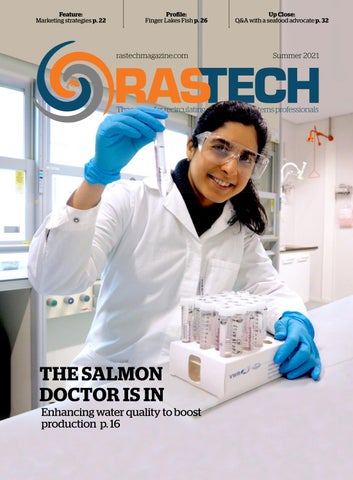
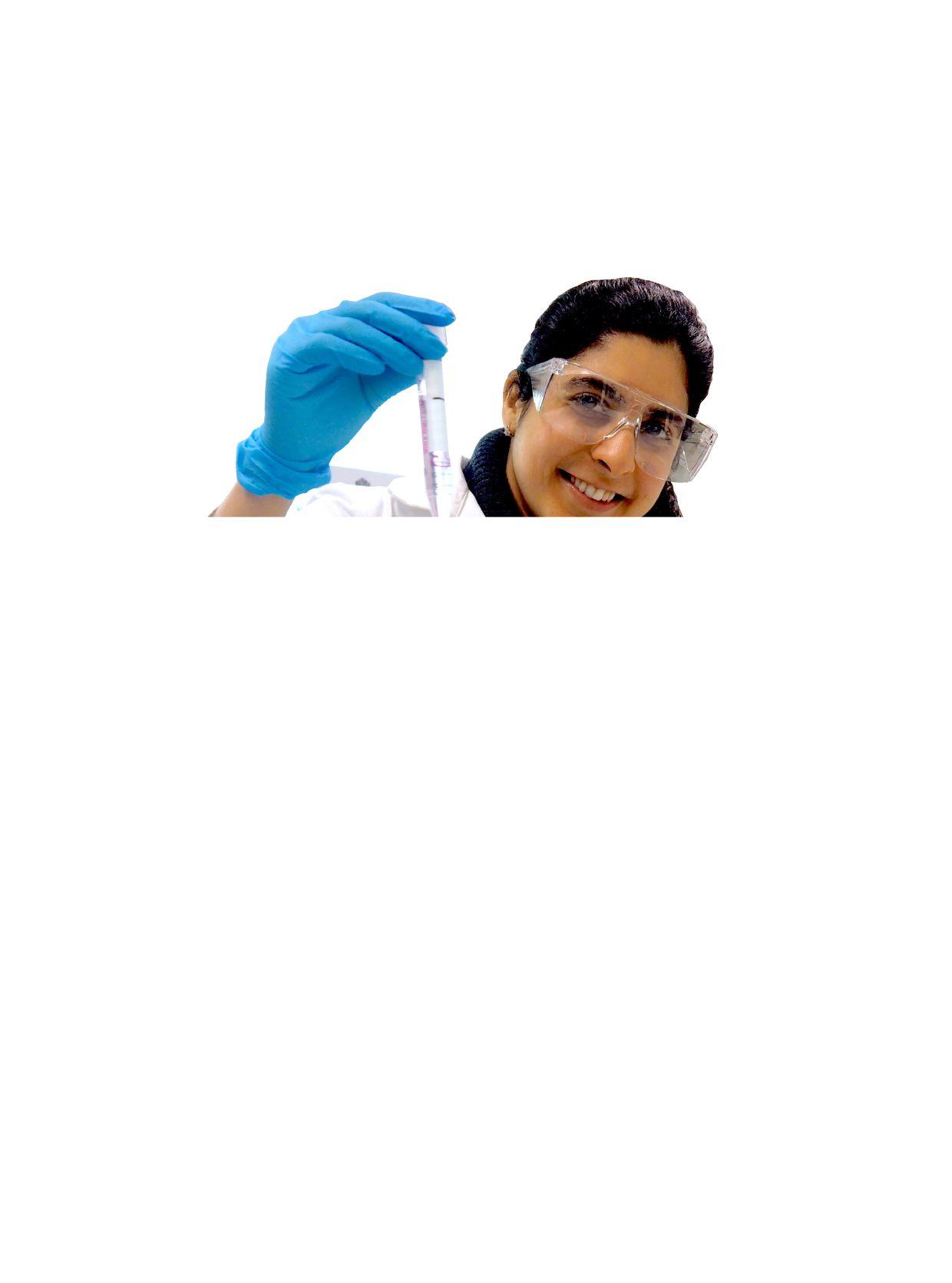
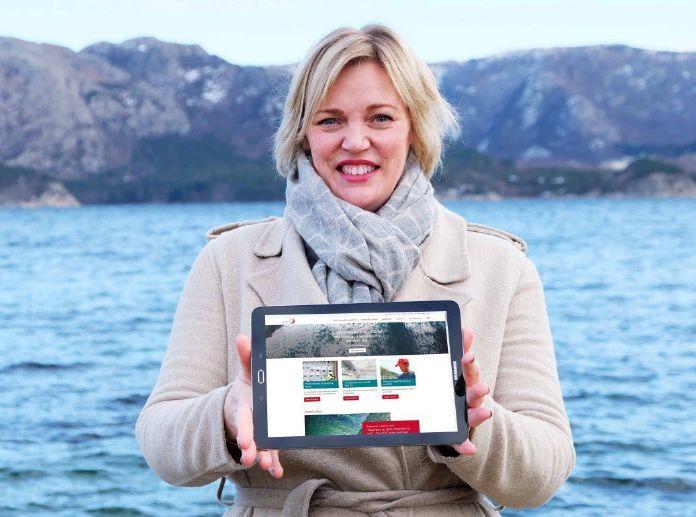
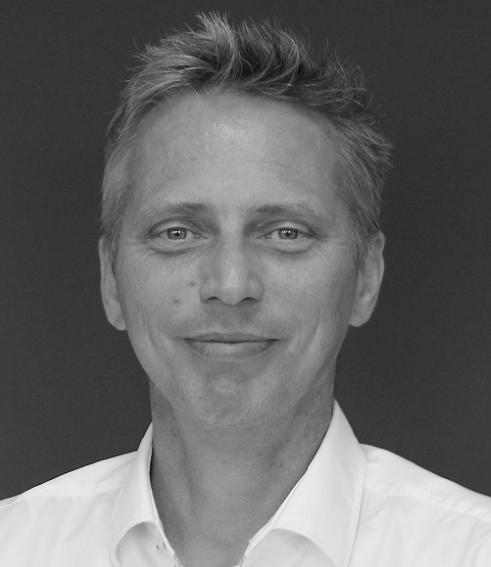
The salmon doctor is in Career pivot leads to development of breakthrough system for PhD holder
COLUMNS
12 | Power struggle Finding ways to boost energy efficiency
14 | Ask the expert Key elements for fish welfare in RAS
38 | Fresh tips
Chiller maintenance tips
The moment of truth Marketing may solve the consumer education gap, but can it create preference
The Coho choice New York-based RAS facility separates itself from the pack with judicious choice in species and go-to-market strategy BY LIZA MAYER 32
The future of seafood Q&A with Jennifer Bushman, sustainable seafood advocate
From the editor
By Mari-Len De Guzman
Farmers’ market
With more RAS producers coming into the fold and starting to bring their products to their end consumers, the focus is now turning to branding and marketing.
Developing strategies for getting RASraised seafood to market and developing a consistent market demand – even a steady consumer following – will be the next big challenge for RAS producers.
The COVID-19 pandemic has brought to the forefront the need – and the advantages – for producers to think about the end consumers and how to win them over. With the restaurant and hotel industries negatively impacted by business closures, a significant segment of the market for seafood producers had suddenly disappeared, forcing them to rethink their post-harvest strategies of getting their products to market. From investing in vertical integration and post-harvest processing, to developing a retail strategy that was previously non-existent, these were some of the lessons that many aquaculture producers have had to learn over the course of less than a year.
Having a retail strategy, however, is not just about getting your products on the shelves of supermarkets and farmers’ markets. It’s about getting people to buy them, over and over.
A strategic branding and marketing plan can make or break your product. The seafood aisle of the grocery store can get really crowded, and standing out
from the pack will be the objective of the marketing plan.
If recent consumer behaviour studies are any indication, you’ll need more than a catchy tagline to build a consumer following. It’s about telling a story that compels your market to action.
We had the privilege of interviewing one of the industry’s renowned sustainable seafood advocates and market strategists, Jennifer Bushman, at a recent RAS Talk episode, which I co-host with Freshwater Institute director Brian Vinci. Bushman outlined some simple, yet impactful, ways that producers can reach and influence consumers. We highlight some excerpts from that interview on page 32, but you can listen to the full podcast episode online (www.rastechmagazine.com/podcast).
Marketing is about storytelling. The most compelling stories, the ones that speak to consumers’ needs and wants, are the ones that will ultimately influence their buying decisions.
In RAS, it’s the story of sustainability, the story of an alternative to producing seafood without depleting our natural resources. It’s the story of fish grown in optimal conditions, the story of the people, the farm technicians who look after the health and welfare of the fish.
RAS producers are already demonstrating they’re up to the challenge, and are doing some amazing things on the marketing front (see page 22), with help from some of the best marketing minds in the food industry. Consumers are in for a treat.
www.rastechmagazine.com
Reader Service
Print and digital subscription inquiries or changes, please contact Urszula Grzyb, Audience Development Manager
Tel: (416) 510-5180 Fax: (416) 510-6875
Email: ugrzyb@annexbusinessmedia.com
Mail: 111 Gordon Baker Rd., Suite 400, Toronto, ON M2H 3R1
Editor
Mari-Len De Guzman
289-259-1408 mdeguzman@annexbusinessmedia.com
Associate Editor Jean Ko Din 437-990-1107 jkodin@annexbusinessmedia.com
Associate Publisher Jeremy Thain 250-474-3982 jthain@annexbusinessmedia.com
Group Publisher Todd Humber thumber@annexbusinessmedia.com
COO Scott Jamieson sjamieson@annexbusinessmedia.com
Printed in Canada
SUBSCRIPTION
RAStech is published as a supplement to Hatchery International and Aquaculture North America.
Occasionally, RAStech will mail information on behalf of industry related groups whose products and services we believe may be of interest to you. If you prefer not to receive this information, please contact our circulation department in any of the four ways listed above.
All advertising is subject to the publisher’s approval. Such approval does not imply any endorsement of the products or services advertised. Publisher reserves the right to refuse advertising that does not meet the standards of the publication.
Made possible with the support of
Benchmark Genetics appoints new global RAS chief
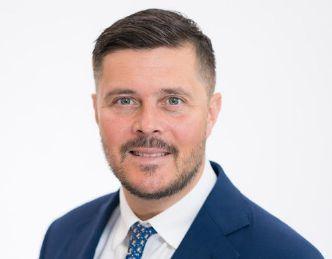
Aquaculture genetics company Benchmark Genetics has named an Atlantic salmon production expert as its new global technical manager for recirculating aquaculture system (RAS). Before joining the Iceland-based company, Andrew Cree Preston was head of aquaculture production and operations at AquaMaof Aquaculture Technologies.
In his new role, Preston will focus on customer service and sharing his operational, academic and technical skills and experiences to help the customers succeed and reach their production targets, according to Benchmark.
Preston is an expert in numerous aquatic species, including Atlantic salmon, Rainbow trout, Brown trout, Atlantic cod, and Ballan wrasse. During his academic career, he was involved in research projects with leading global aquaculture, nutrition, and pharmaceutical companies.
He holds a PhD in Aquaculture from the Institute of Aquaculture at the University of Stirling, Scotland. He has had several researcher positions, including a postdoctoral at the University of Stirling following his PhD.
Preston worked at AquaMaof from 2017 until his move to Benchmark. His role in the company included leading research and development, heading the development of aquaculture production and operations, leading knowledge transfer, managing lean and process refinement.
Atlantic Sapphire calls Q1 ‘lost quarter’
Still reeling from a massive die-off at its recirculating aquaculture system (RAS) facility in Florida in March, Atlantic Sapphire released its annual report which revealed mounting losses.
“The March 23 incident plus several smaller fish losses made Q1 2021 a ‘lost quarter’ for biomass gain in the U.S.,” according to the company’s first quarter operational update.
Atlantic Sapphire also said its Denmark operation’s biomass gain in Q1 2021 was “affected by poor performance on lead batches due to gill damage and fish movement issues.”
The company said it only produced 421 tons of fish from its Homestead, Florida facility and 300 tons from its Denmark facility during the first three months of 2021.
The company’s annual report also indicated that Atlantic Sapphire suffered a net loss of US $55.2 million in 2020 compared to $13.2 million the previous year.
Revenues for 2020 were $6.3 million, up from $5.5 million in 2019.
Atlantic Sapphire has blamed flaws in its Miami RAS facility for the deaths of some 500 tons of fish in March. The company reported that elevated gas levels due to a RAS design flaw could be the cause of the mortalities in its Miami Bluehouse facility. Atlantic Sapphire said it was in the process of correcting the flaw just before the incident occurred.
In 2020, Atlantic Sapphire’s Denmark facility reported massive mortality at its grow-out system in Hvide Sande in Denmark, affecting more than a quarter of a million fish.
A week following the loss, Johan E. Andreassen, chairman and chief executive officer of Atlantic Sapphire USA, announced that he is tapping Bjørn-Vegard Løvik to join Atlantic Sapphire as the company’s interim chief operating officer.
“Following a challenging start to 2021 for the company, which has involved operational disturbances and elevated mortality, especially tied to fish movement issues, smolt facility and the loss of biomass on March 23, we are making organizational changes to the U.S. operation for increased efficiency and reliability,” said Andreassen.
Løvik will replace Dharma Rajeswaran who has been Atlantic Sapphire’s COO since 2017.
Løvik is chief executive officer of investment firm Alsco AS which was founded by the Andreassen and Løvik families. Løvik is also a co-founder of Atlantic Sapphire.
Løvik, who has significant experience in the salmon farming industry and the broader seafood industry, will be reporting to Andreassen, “as part of a restructuring of the organization to improve transfer of information, knowledge and accountability,” the press release said.
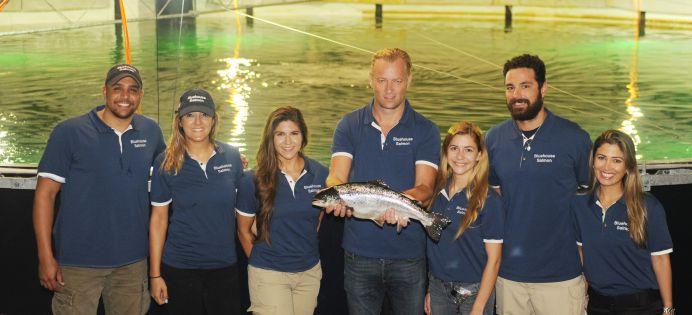
Atlantic Sapphire CEO Johan Andreassen, with his team at the Bluehouse facility, holding up a harvest-size salmon during the company’s first harvest event in September 2020
UAE fund invests in landbased aquaculture
Middle Eastern private equity firm Abu Dhabi Catalyst Partners is placing a bet on land-based fish farming.
The investment firm “channeled investments in 8F Asset Management’s land-based aquaculture fund, which reached its final close of $358.8 million,” according to a press release.
8F Asset Management is a global investment group that develops land-based fish farms using recirculating aquaculture system (RAS) technology. 8F owns Pure Salmon which has multiple RAS projects in Poland, Japan, France and the United States.
“We are excited to have Pure Salmon establish its global hub in ADGM (Abu Dhabi Global Market) and look forward to seeing their business grow and continue to contribute a significant and positive social and environmental impact,” said James Munce, chief operating officer of Abu Dhabi Catalyst Partners.
The Abu Dhabi Global Market is an international financial centre and free zone located on Al Maryah Island in Abu Dhabi.
Abu Dhabi Catalyst Partners is a joint venture with Mubadala Investment Company and Falcon Edge Capital. It has a $1-billion fund partnering with investment firms and industry-leading businesses.
Kvarøy Arctic offers $10,000 scholarships for women in aquaculture
Kvarøy Arctic is accepting applications for its second annual Women in Aquaculture scholarship.
The scholarship, hosted in partnership with Seafood and Gender Equality (SAGE), will provide two female undergraduate or graduate students with a US$10,000 stipend and a paid, one-month summer internship at Kvarøy Arctic’s Norway farm site.
Two scholarships are available this year for one applicant from any country and a second applicant from countries in Africa. Applications will be open through June 22.
“We started this scholarship program at the beginning of 2020 because we recognize it’s harder for women to break into the farm-level operations of aquaculture globally,” says Kvarøy Arctic CEO Alf-Gøran Knutsen. “The pandemic delayed our plans for last year’s recipients to join us on the farm but not our dedica-
Nordic Aquafarms gets green light from California
Nordic Aquafarms received another dispatch of good news for its planned land-based salmon facility in the Samoa Peninsula at Humboldt Bay, California.
The lead agency investigating the project’s environmental impact recently rendered a favourable finding on the company’s proposed recirculating aquaculture system (RAS) facility.
In its Mitigated Negative Declaration (MND),
the County of Humboldt said it found “no significant adverse environmental effect” in accordance with the California Environmental Quality Act (CEQA) guidelines for Nordic Aquafarms’ development permit and special permit application.
The MND for the project looked into the project’s impact on factors such as water quality, air quality, agriculture and forest resources, greenhouse gas emissions, tribal
tion to supporting them in their career development and to continuing this program.”
Recipients will be welcomed to continue their internship each year they are in school, and will be considered for employment upon graduation.
The inaugural program hosted with the James Beard Foundation received a swell of applications motivating Kvarøy Arctic to go beyond its plan to award one scholarship. Scholarships were awarded to three women in 2020, from Tunisia, South Africa and the United States.
SAGE is committed to building an inclusive, diverse, and equitable seafood industry that attracts new talent, ready to move the industry into a bright, post-pandemic future. This scholarship Kvaroy Arctic’s like-minded mission to SAGE’s purpose,” said SAGE Founding Director Julie Kuchepatov.
cultural resources, and wildlife.
Nordic Aquafarms’ proposed project includes building a $400-million land-based farm at the site of the decommissioned Samoa Pulp Mill facility. The project will also create 80 jobs for residents of Humboldt County.
The Humboldt County Planning and Building Department will receive public comments on the proposed Mitigated Negative Declaration from April 23 to May 24.
2020 Scholarship Recipient Marwa Mechlaoui on her first day at Kvarøy Arctic
PHOTO: KVARØY ARCTIC
James Munce
In the news
Canadian aquaculture tech firm gets $2.5M seed fund
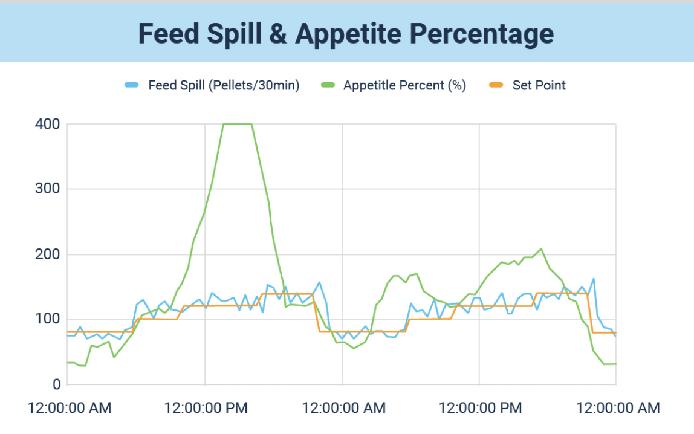
Canadian artificial intelligence (AI) solutions company ReelData has landed US$2.5 million in seed investment from American venture capital firm S2G Ventures to further develop its fish feeding software for land-based aquaculture.
Over the last two years, the Canadian company has developed a pioneering AI feeding software specifically designed for land-based aquaculture. The system helps land-based aquaculture operators boost the accuracy of their feeding operations and avoid wasteful overfeeding and growth-inhibiting underfeeding.
The company is currently working with several leading land-based fish farms, including Atlantic Sapphire.
ReelData’s Automated Feeding System is solving one of the biggest business and sustainability problems facing land-based aquaculture. Inaccurate feeding leads to wasteful overfeeding and growth-inhibiting underfeeding, both are costly and produce health risks to the fish.
Mathew Zimola, CEO of ReelData said his company will use the fund to scale its AI feeding software across the land-based industry. The company will also continue the
ReelData’s AI software interacts with a farm’s feeding system to calculate and adjust feeding accordingly.
development of its land-based biomass estimation camera, and build a predictive health analytics platform.
ReelData also plans to open an office in Europe.
“This funding is all to build out technology and support the farmers and industry ReelData wholeheartedly believes in,” a
press release from the company said. S2G Ventures invests in food supply chain. The company’s previous investments include Beyond Meat, Good Eggs and many more. In 2020, S2G Ventures expanded with a $100 million ocean and aquaculture specific fund to increase innovation and sustainability within seafood.
Venture capital firm hosts free workshop for women in aquaculture
Global aquaculture venture capital firm Hatch Accelerator Holding Ltd., is rolling out a free mentorship and support workshop aimed at female entrepreneurs in the aquaculture industry.
The virtual program will run from Aug. 17 to Sept. 11 this year.
The Hatch Women Innovation Studio is targeted towards female founders and entrepreneurs looking into aquaculture or alternative seafood as a market to scale their business or validate their technology, according to Hatch’s website.
Participants will have access to coaching and mentorship from a global network of female mentors to develop business models and value proposition, build a minimum viable product, product testing, generating initial traction, legal advice, customer discovery, marketing, fundraising, and access to Hatch’s intelligence portal and virtual office platform.
Hatch said the program is an “equity-free workshop for you to develop your project’s commercial scalability, technological readiness, and industry fit.”
There is no cost to join but attendance is limited to 15 teams or companies with two people per team.
To learn more or to register, visit www.hatch.blue/innovation-studios.
The Hatch Women Innovation Studio targets female founders and entrepreneurs who are looking to scale their aquaculture business.
Land-based aquaculture firms among recipients of new Canadian funding
The Canadian government has awarded $5.4 million to aquaculture projects in British Columbia to help build a greener and sustainable seafood sector in the province.
The goal of the Fisheries and Aquaculture Clean Technology Adoption Program is to support 36 projects that are contributing to clean economic growth in British Columbia. The province also announced a contribution of more than $785,000 towards these projects.
Among the businesses that received funding were projects involving recirculating aquaculture systems (RAS) and land-based aquaculture:
Berezan Shrimp Co. Ltd., a land-based shrimp farm in Langley, B.C., received $296,310 in funding to invest in a new water treatment and filtration system to reduce total suspended solids and nitrogen in the water, thus reducing the amount of water exchanges required to maintain water quality standards within a RAS.
EWOS Canada of Surrey, B.C. received $384,000. EWOS will invest in a new waste water treatment and recycling system that will reduce waste discharge and water consumption at the company’s facility.
Miracle Springs Inc. of North Vancouver, B.C., one of Canada’s largest land-based producers of rainbow trout, will use the $68,580 it received to purchase a composting system to process fish waste, reducing waste and the need to transport waste offsite.
Northern Divine Aquafarms Ltd. of Sechelt, BC., Canada’s only producer of certified organic farmed Fraser River white sturgeon, will use the $69,227 it received to support the installation of a solar-powered composting system to process fish waste. This will eliminate groundwater pollution, reducing waste and the need to transport waste offsite.
Nova Harvest Ltd of Bamfield, B.C. received $95,000. It will invest in new phytoplankton production technologies for its shellfish hatchery.
The aquaculture and fisheries sectors contribute approximately $4.5 billion annually in gross domestic product and provide thousands of jobs across Canada — many in Indigenous, rural and coastal communities.
“As we work to strengthen Canada’s blue economy, sustainability must underpin all our investments and actions,” Bernadette Jordan, Minister of Fisheries, Oceans, and the Canadian Coast Guard, said.
Salmon Evolution eyes 70,000-ton production by 2030
Salmon Evolution says its has a “clear roadmap” to reach an annual production of 70,000 tons in nine years.
In its recently released 2020 report, the company says it is “on track for about 25,000 tonnes capacity by 2024, and has a clear roadmap for 70,000 by 2030.”
“Indeed, our project at Indre Harøy is massive, but we have clear ambitions beyond this,” said Chief Executive Håkon André Berg in his opening letter in the report. “The partnership with Dongwon Industries, one of Korea’s largest salmon importers, is a clear testament to this and a solid validation of our (hybrid flow-through system) technology and its applicability for regions outside Norway.”
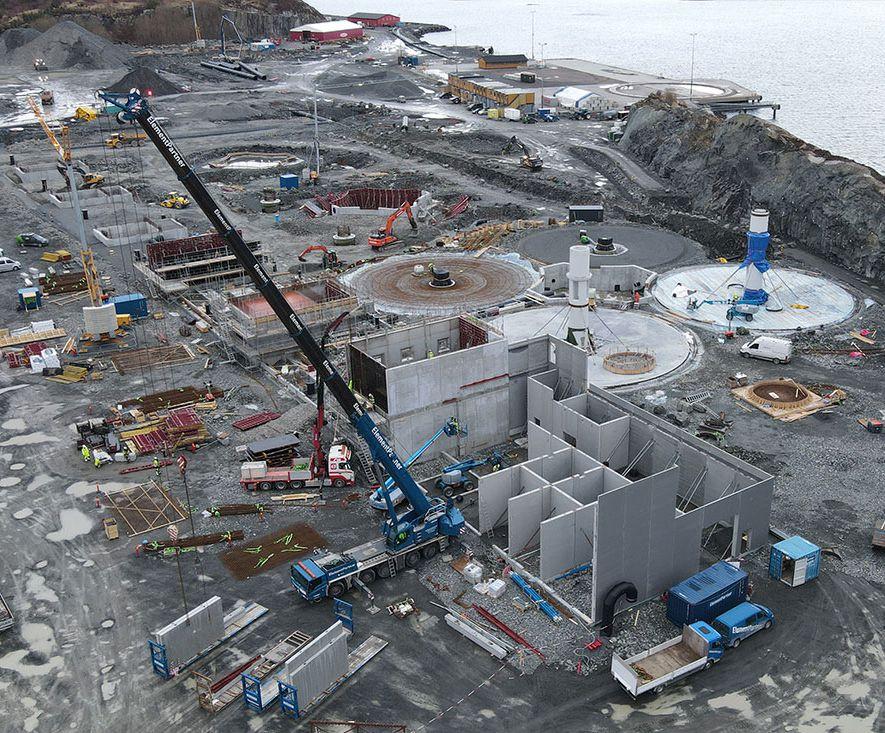
The report highlighted several key company milestones, including the construction of its first production facility at Indre Harøy, Norway. It is expected to be the largest land-based salmon farm in the country with an annual harvesting capacity of 31,500 tons “head-on-gutted” salmon once fully developed.
The company also expressed international ambitions with the joint venture with Dongwon Industries for a 16,800-ton production facility in South Korea. The company hints it will be its first grow-out production targeted in 2024 with possibilities for further expansion with local partners.
Salmon Evolution reported a loss of US$2.1 million and a financial loss before taxes of $2 million.
The company raised $30.9 million in March 2020 in the middle of the COVID-19 pandemic outbreak and commenced construction of its groundbreaking project at Indre Harøy in May.
Salmon Evolution also raised $5.5 million through a private placement from Korean seafood giant Dongwon Industries. This was followed by a $59.9 million private placement in September ahead of the company’s listing at Euronext Growth.
Salmon Evolution’s Indre Harøy facility under construction
Flushing out off-flavour in RAS salmon
Increased water flushing and shorter depuration system hydraulic retention time (HRT) lead to low levels of off-flavour in Atlantic salmon in RAS, according to a new study by The Conservation Fund Freshwater Institute (FWI).
Research scientist John Davidson presented FWI’s latest findings on April 14 at the Aquaculture Europe 2020 virtual event. The study found that increased water flushing and HRT rates of 2.4 to 4.6 within a 10-day period showed the lowest residual levels of geosmin (GSM) and 2-methylisoborneol (MIB) in water and fish flesh. Both are common off-flavour compounds that contribute to the earthy, musky taste that consumers do not like.
“Obviously, the holy grail would be to develop technologies and strategies to eliminate off-flavour in the primary RAS and not need depuration,” said Davidson during his virtual presentation.
“However, I don’t think we’re at a place currently where we can have full assurance that these newer strategies can always reduce and remediate off-flavour from fish in the immediate RAS. So we need more research.”
In the study’s first trial, market-size Atlantic salmon originally cultured in a semi-commercial scale freshwater RAS tank were moved to a separate system and exposed to a concentrated GSM and MIB levels to boost concentrations before the trial.
The fish were then randomly stocked in 12 partial reuse sytems (PRAS) which had
Web-based tech offers insight on RAS feeding
Researchers from Portugal-based SPAROS presented findings from a RAS feeding experiment at Aquaculture Europe 2020 on April 14. The study used Feednetics, a web-based application that uses a mechanistic nutrient-based model to predict fish growth and composition over time based on temperature, feed intake and feed properties.
been cleaned and pre-disinfected with 250mg/l hydrogen peroxide. Three flushing rates were applied to randomly selected PRAS which resulted in mean system HRTs of 2.4, 4.6, and 11.3-h.
Higher waterborne GSM levels were detected in tanks that operated at 11.3-h HRT than those in 2.4 and 2.46-h. Similar results were also observed in fish flesh.
A second trial was carried out but with a two-by-two factorial design evaluating the effects of dissolved oxygen concentration and fish swimming speed created by adjusted water velocity on off-flavour remediation.
Specified swimming speeds and dissolved oxygen levels did not improve depuration. However, Davidson said system design may need to be modified, perhap using velocity boosting pumps, to achieve higher swimming speeds.
— BY JEAN KO DIN
The study compared two highenergy trout feeds, including one designed for RAS. The study found the RAS feed led to an 11 per cent shorter production cycle, improved FCR by 0.1 units and a decrease in total nitrogen (-12 per cent) and phosphorus (-25 per cent) wastes, explained Ana Nobre, SPAROS product manager and environmental engineer Based on Feednetics results, the decrease in the average water temperature affects the non-RAS feed proportionally more. The total phosphorus waste increases about 29 per cent when decreased by two degrees celsius.
“With the high energy feed, the production cycle (to grow fish from 50g to 1kg) increases by 35 days under the low temperature profile. At 13 C, the total production time considering the two feeds lag by about one month, with the RAS feed representing savings of around €82 per ton of fish,” said Nobre.
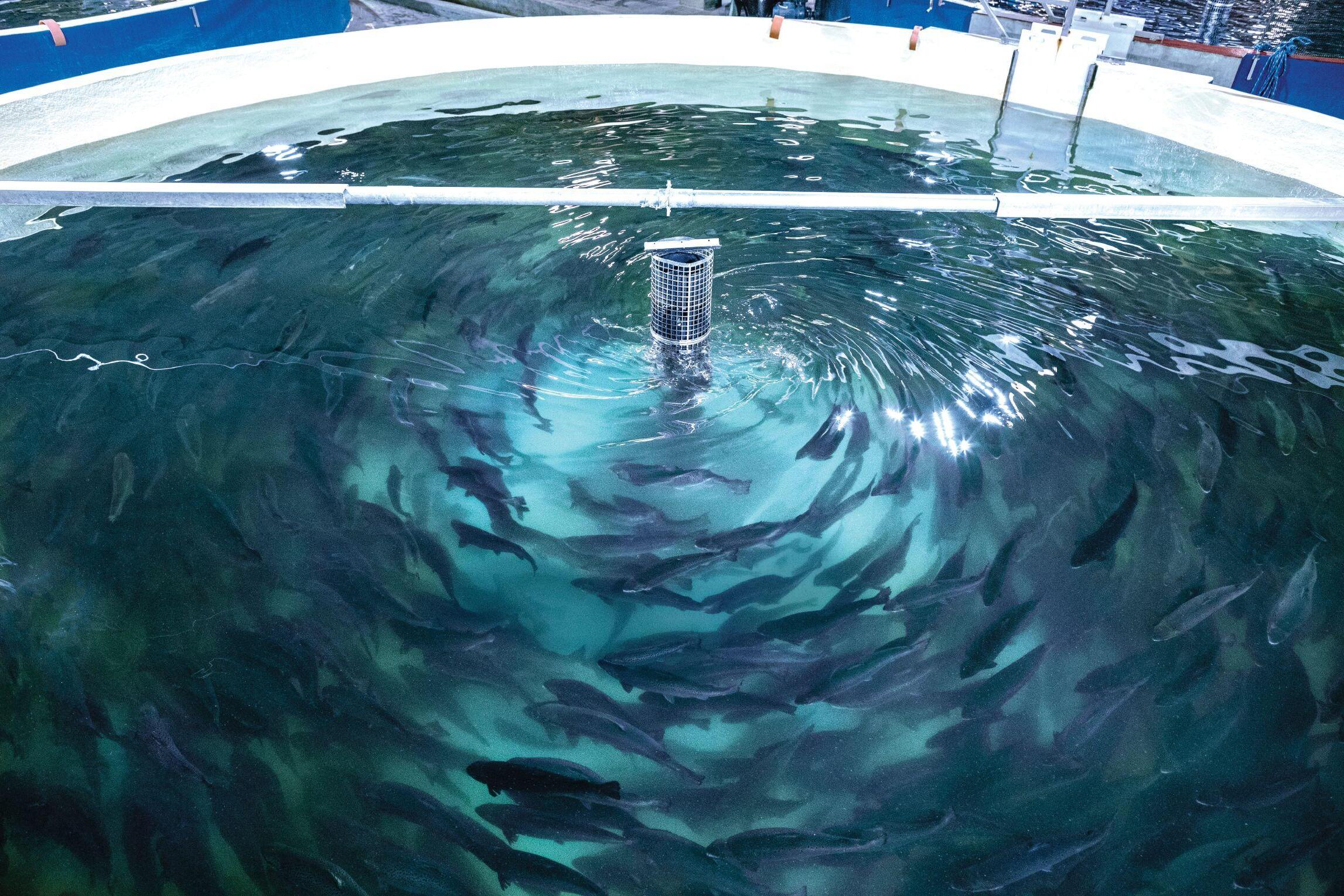
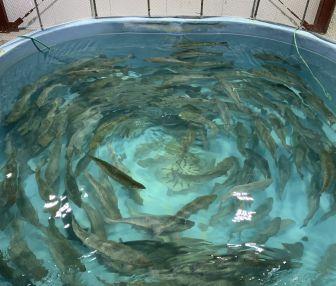
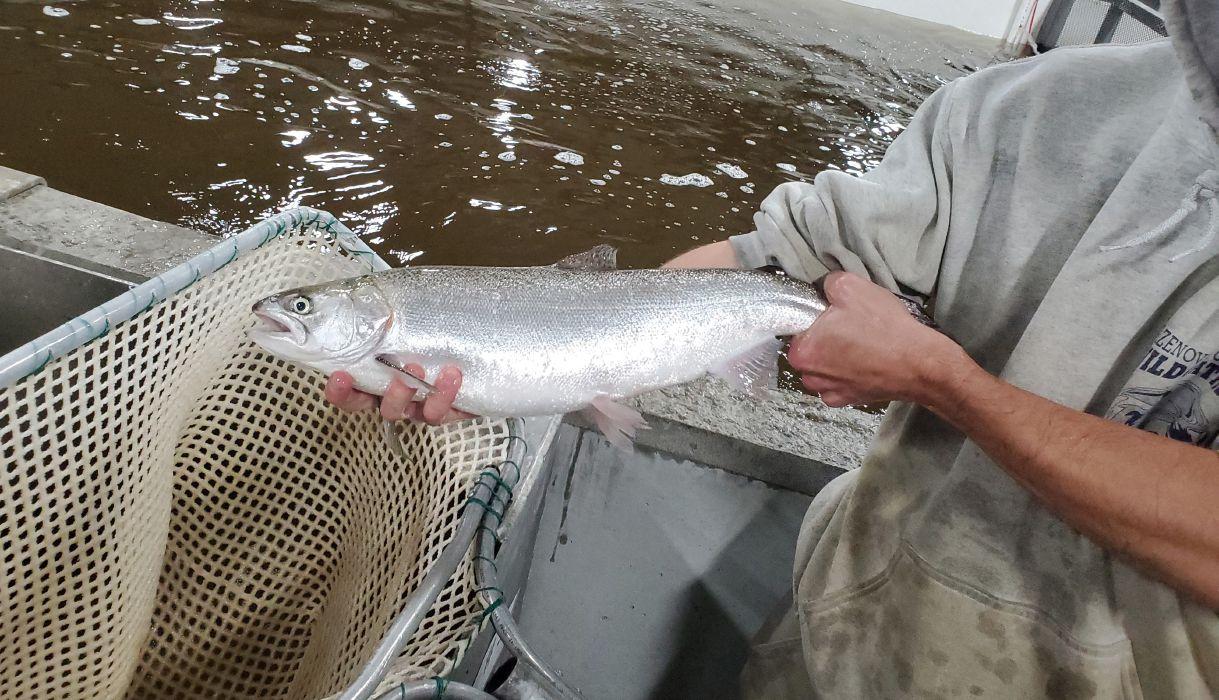
Atlantic Salmon in a purge tank at the Freshwater Institute
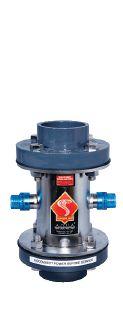
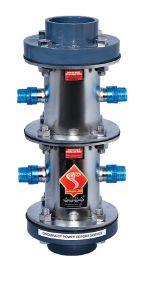
Understanding UV systems in RAS
Ultraviolet (UV) disinfection has proven to be one of the safest, most effective treatment methods against pathogens in RAS water tanks. However, UV systems are also very sensitive to water conditions, require dedicated maintenance as control and real-time monitoring is difficult at best.
Aran Lavi, vice-president of product and head of sales for Europe and global aquaculture for Atlantium Technologies, presented at Aquaculture Europe 2020 to share a few guidelines to help RAS producers make more informed decisions about their UV water treatment systems.
Atlantium Technologies specializes in tailor-made disinfection solutions for aquaculture facilities.
“The main challenge, when it comes to sizing and deciding on UV systems suitable for your production needs, is how to predict its ability to deliver the required water biosecurity based on the technical specifications only,” said Lavi at his virtual presentation on April 14.
Because a UV dose cannot be measured in the same way that DO and CO2 levels can be monitored constantly, Lavi said there are four factors that producers can examine to understand the UV dose and effectiveness within their RAS. These are the flow rate, UV transmittance (UVT), power outputs of the lamps and overall system design.
“It’s important to know this equation because the basis for reliable and sustainable operation of a UV system depends entirely on the system’s ability to monitor, or at least, account for each of these factors,” he said.
Often times, the difference between third-party validated and non-validated systems can be two to three times less flow, or more energy consumption.
Although non-validated systems tend to be cheaper, Lavi warns that “there are no magic wands” and companies should invest in reliability.
Norwegian Veterinary Institute (NVI) approval is not a substitute for thirdparty validation, like EPA or DVGW, he said. The sytem should also be designed according to minimum UV dose. However, without validations, this is
impossible to verify, he added.
Having a lamp output sensor per lamp is a good way to monitor UV output. The majority of UV systems might have an indication of the kilowatts going into the lamp but not a sensor that measures the actual UV power emitted by each of the lamp in the system. Otherwise, the UV dose is strictly theoretical, he said.
UVT is one of the dominant factors to assessing UV dose in a system. Lavi recommends systems that have integrated UVT sensors that allow users to monitor how UVT changes considerably duringa production cycles.
“A UV system without a dedicated UVT system should be considered inferior and less inclined to deliver the required performance,” Lavi said.
Most UV systems work on fixed flow setups without real-time flow measurement feeds. This should also be considered inferior because it does not adjust according flow rate changes
within the RAS.
The more lamps in a UV system, the more difficult it is to monitor and control performance and apply effective maintenance. Lavi recommends having one to four lamps within one system will provide producers more durable and dependable performance.
— BY JEAN KO DIN
Aran Lavi
Power Struggle
By Maddi Badiola
Maddi Badiola, PhD, is a RAS engineer and co-founder of HTH aquaMetrics llc, (www.HTHaqua.com) based in Getxo, Basque Country, Spain. Her specialty is energy conservation, lifecycle assessments and RAS global sustainability assessments. Email her at mbadiolamillate@gmail.com or contatct her through LinkedIn, Facebook and Instagram.
Finding ways to boost energy efficiency
The current global population growth forecast carries with it an increase in demand for food. In order to meet this demand, it is necessary to increase production by 70 per cent and thus, the energy production will need to be increased by 30 per cent (according to FAO and several scientific research). Between 2000 and 2014 for example, energy consumption in food production systems alone went up 27 per cent although the intensity decreased by an average of 18.5 per cent, offering hope that some things are changing and the systems implemented are working in a more efficient way. The decrease in the energy intensity of food production systems means improvement in economic energy efficiency.
The yearly amount of wild-caught seafood worldwide has stayed the same over the past decades while the amount raised through aquaculture has risen dramatically. The U.S. is not the biggest producer of seafood but it is the leading global importer. Approximately 90 per cent of seafood consumed in the U.S. are imported, 50 per cent of which come from aquaculture. In 2018, the ‘seafood deficit’ was valued at about US$16 billion, representing the largest single import deficit in the country. The U.S.’s reliance on seafood imports is a cause of concern over food safety and security, apart from the trade deficits it creates. There is a need to expand the aquaculture industry, with high-quality and efficient RAS playing an important role. Therefore, improving these systems as a whole will be key and crucial to reduce the mentioned deficit and to improve U.S. food security.
Risks and opportunities
With population growth and the corresponding increase in food production, the energy consumption increases tremendously, creating an imbalance. The forecasted population growth will cause a tremendous
global increase in food demand, while at the same time the forecasted energy production growth seems to be unacceptable in the current scenario. What can the aquaculture sector do? Traditional sources of energy are limited. Hence, it is necessary to strive for greater energy efficiency in food production systems, and the RAS sector has the opportunity and the responsibility to be a leader in this.
indirect energy consumption from the supply of inputs, as well as the transport/logistics to the final consumer prevails among the production of food itself. And here is where I see another opportunity. RAS can be located closer to the consumer than a sea cage. The transport chain is therefore decreased and so is the energy consumed and the pollution generated. That is a risk worth taking, in my opinion.
One of the most important lessons I have learned (and keep learning on a daily basis) is that risks are not always bad, there are good risks called opportunities. And I have to admit that it has taken me some time to embrace this idea. But it is true. Risk management needs to deal with threats and opportunities. We need rethink and look deeper. How will the suggested implementation improve my business? Will my company be the first one launching such a product? Can I benefit from using limited amounts of energy within my system? Those are also risks.
Compared to other aquaculture systems, RAS is quite innovative and it is there where the opportunity resides. The opportunity is to look into the positive side of the relatively high ammount of energy consumed; whether it is looking on how to decrease such consumption (i.e. efficiency) or searching for cleaner and “greener” energy sources.
We all know that the food industry, including the aquaculture sector, is more than just the production site. It is also a transportation system to the markets. Studies have stated that the general trend observed in food production in developed countries indicate that
The RAS sector recognize these opportunities and obligation. But we need to work together and move in the same direction to achieve the success and reputation of a reliable and trustworthy industry. RAS producers can shorten distances with the consumer and a large ammount of the energy used can be green energy. Let’s focus then at being more efficient. Recovering energy from some of the processes within the system and knowing exactly where the energy is consumed are two key aspects where the industry needs to focus.
Only that which is measurable and measured can be improved. Energy is the third most important and costly input in a RAS, with the first and second being feed and labor, respectively. This industry looked into the risks of using high amount of wild fish for feed production and those became an opportunity. Currently, the aquculture feed industry is groundbreaking in research and development projects to be more sustainable. They saw opportunities where they were pointed out.
The energy must follow the same path and make the RAS industry a pioneer in this regard in the global food industry.
Using green energy will significantly increase energy efficiency in RAS production.
Ask The Expert
By Åsa Maria Espmark
Dr Åsa Maria Espmark is a senior scientist in Nofima, Norway. For the last 20 years her scientific interests have been related to welfare, welfare indicators and stress, both in Atlantic salmon and the cleaner fish species lump fish and Ballan wrasse. Espmark has been coordinating several national and international projects, like the EU projects OrAqua and FutureEUAqua. Since October 2017, she has been the Center Director for CtrlAQUA SFI, partly funded by Research Council of Norway, aiming at developing technological and biological innovations to make closed containment systems a reliable and economic sustainable technology.
What are the key elements to promote and ensure fish welfare in a RAS environment?
To farm fish in recirculating aquaculture systems requires skilled and dedicated employees. RAS systems are filled with technologies that need to be managed well to fulfill fish health and welfare. When done correctly, RAS has many advantages, also for fish welfare. Maybe the biggest advantage is the possibility to have full control of the system and water quality, and hence fish welfare and performance. This advantage can also turn out to be the contrary if water quality and housing conditions are not properly taken care of. If we are considering the use of RAS for post-smolt or even land-based to market size, we also have the advantage of keeping the fish longer away from open sea, thus longer away from sea lice and escapee. Additionally, this gives the possibility to produce salmon in areas not otherwise suited for aquaculture, leading to locally produced food and jobs.
At Nofima, we are hosting CtrlAQUA, a centre for research-based innovation aiming towards biological and technological innovations to further develop RAS and semi-closed containment solutions for production of salmon post-smolt. Welfare is
central in CtrlAQUA and there is much research to promote. In this short article I will give a few examples.
Avoid deadly gas
To be able to utilise the advantages with RAS and ensure
good welfare, there are some challenges that need to be solved. The formation of hydrogen sulfide has for long been a huge threat in RAS, with the risk of massive and acute mortalities. Significant research to establish analysing
methods, identify limit values and early warning markers, and determine long-term effects of sublethal concentrations are on-going. In addition, good practices of how to avoid formation of hydrogen sulfide are also being produced.
Nofima researcher Khurram Shahzad is securing velocity and distribution with computational fluid dynamic.
Find the right water quality for RAS
As already mentioned, good water quality is one key factor for good welfare. It has been shown that there are needs for RAS-specific limit values for essential water quality variables, as many recommended limit values are still based on research performed in flow-through (FT) systems, and since some of them may differ between FT and RAS. Mota et al., (2019) demonstrated this for carbon dioxide, and showed a growth penalty with CO2 concentrations from 5 to 40 mg/l (Figure 1), without any severe welfare effects. However, the effect on growth already at lower concentrations than the recommended 15 mg/l, suggests that in RAS the CO2 levels should be kept even lower. The authors suggest 12 mg/l in RAS (Mota et al., 2019).
Be more careful with ozone in saline water
To maintain good water quality in RAS, water treatment is needed to remove unwanted particles and gasses. In CtrlAQUA ongoing research deal with biofilters, CO2 degassing, UV and ozone treatment, in addition to disinfection strategies. Many farmers prefer to treat the RAS water with ozone to reduce the coloration and increase the visibility in the water. However, due to the formation of bromines in ozone-treated saline water, that may be toxic for the fish. The risk of using ozone in saline water is higher than to use it in freshwater. In freshwater, ozone significantly improved water clarity, diminished bacteria counts, and reduced dissolved metals. It can also lead to increased salmon growth (Davidson et al., 2021). On the contrary, salmon is sensitive towards ozone in saline water, and Stiller et al., (2020) demonstrated that ozone concentrations of 500 mV (44 µg as l-1 as Cl2), that it just below what is recommended for turbot (Scophthalmus maximus) and sea bass (Dicentrarchus labrax), turned out to be acutely lethal for salmon and was especially harmful for the gills. For salmon in brackish water, 350 mV (10 µg as l-1 as Cl2) is considered safe (Stiller et al., 2020).
Give the fish possibilities for exercise
Exercise in fish has proven to be beneficial for welfare, and a lot of research has concluded the same (e.g. Totland et al., 2011). One way to facilitate training is with water velocity (Castro et
al., 2011), and there has been a need to define water velocities that provide the optimal swimming speed for exercise in salmon in RAS. Timmerhaus et al., (2020) exposed salmon post-smolt to velocities of 0.5, 1.0, 1.8 and 2.5 BL/sec. It was seen that the weight increased linearly with velocity. It was also a linear increase in muscle cell density, indicating that the weight increase was indeed an increase in muscle mass, caused by exercise. However, the welfare of the fish at the highest velocity (2.5 BL/ sec) was not good, as shown by the increased number of severe skin damages. Also, schooling was observed after a few days with the highest velocities. The reason for this behavioural change is not proven, but the assumption may be because the fish tried to form some hiding places from velocities. It may also be because possible uneven distribution of velocities in the tanks resulted in places with lower velocities that were more preferred places for the fish than the higher velocity areas. From this study it was concluded that recommended swimming speed in RAS for post-smolt is 1.0 to 1.5 BL/sec (Timmerhaus et al., 2020).
The image on page 14 shows a snapshot of welfare research performed in CtrlAQUA for salmon post-smolt. Most of them are also relevant for market size production, but for land-based to slaughter also other welfare issues may arise. You are welcome to visit the website (www.ctrlaqua.no) for more information about the research done in the centre.
(For a list of literature referred to in this article, please email the editor at mdeguzman@annexbusinessmedia.com)
CM AQUA TECHNOLOGIES A Water Treatment Company You Need
With more than 30 years of experience in fish farming and water treatment together with our team, engineers and biologists that ensure the optimal solution within several important functions such as water filtration, sludge treatment, disinfection and oxygenation- we are assertive that we can deliver the best filter specifically for you.
Galaxy Skimmer
With a highly efficient ventures that works both freshwater and saltwater. This is considered the most cost effective skimmer in the market.
CONTACT US NOW! +45 2117 5600 info@cmaqua.dk www.cmaqua.dk
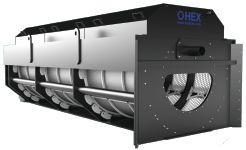
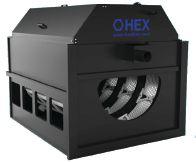
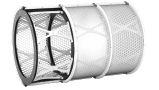
Hex Drumfilter
New X Series is completely rust resistant which is very reliable and need little maintenance.
Figure 1. Growth penalty caused by CO2 during the RAS phase was carried over to the flow through on-growing phase (Mota et al., 2019).
The salmon doctor is in
Career pivot leads to development of breakthrough system for PhD holder
By Jennifer Brown
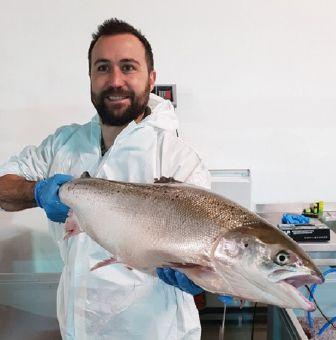
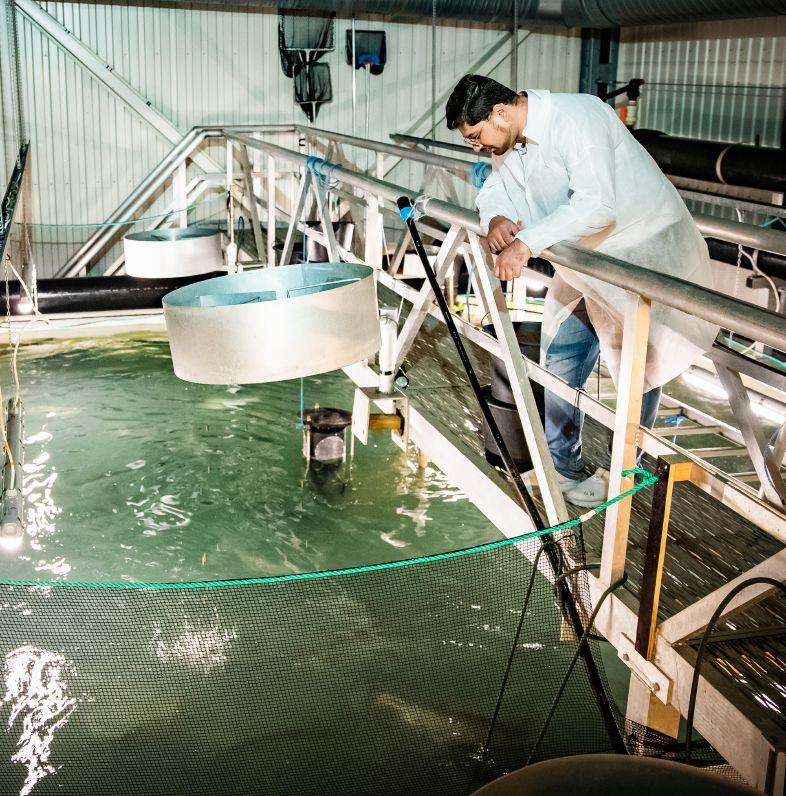
Sharada Navada had never given much thought to the production cycle of farmed salmon until a challenge presented itself to her as she was working at a wastewater management company.
As a process engineer, Navada’s career aspirations were primarily focused on making positive changes for the environment, but her fascination with fish species and interest in seeing them grow in better conditions led her to develop a powerful new treatment process for recirculating aquaculture systems (RAS).
“I think of it as being like destiny because I had set out to be an environmental engineer,” says Navada, who works with Sandefjord, Norway-based Kruger Kaldnes AS (Veolia Water Technologies, Norway). “I thought I would be dealing with wastewater, and I always had an interest in doing something about sustainability or something related to cleaning up the environment.”
Kruger Kaldnes is a supplier of recirculating aquaculture systems for the land-based aquaculture sector. Now, the company is the
first RAS supplier with someone on their team who holds a PhD in “salinity adjustment on Moving Bed Biofilm Reactor (MBBR).”
The 30-year-old, originally from Mumbai, India, recently completed her PhD dissertation, which addressed “salinity acclimation strategies for nitrifying bioreactors in recirculation aquaculture systems.”
Her PhD was part of CtrlAQUA SFI, an international project to develop technological and biological solutions for closed-containment aquaculture. It’s the result of a collaboration between Nofima, Krüger Kaldnes AS and Norwegian University of Science and Technology. Nofima, which researches sustainable food, are leaders in RAS technology research. The system is now being used at the Nofima Research Institute.
The chief executive officer of CtrlAQUA SFI and senior researcher at Nofima, Åsa Maria Espmark, says Navada’s dissertation and results directly benefit the industry as a whole.
“This field has been subject to some amount of guesswork earlier, and this is one of the first systematic works of research that has been conducted in this field. Several of Sharada’s results were ready a couple of years ago, and they have already been applied by Nofima and within the industry,” says Espmark.
Navada joined Veolia in Pittsburgh, Pennsylvania, having completed her Master of Science degree in environmental engineering at Carnegie Mellon Univer-
sity where she studied water chemistry and water treatment.
“It just turned out that Norway was doing aquaculture, and we had an aquaculture request at the same time in the U.S., so I was put on a standard fish farming tender for that project, and that’s how I got involved in the whole aquaculture field,” she says.
A year after starting work in Norway, Navada began her industrial PhD dissertation on the water treatment challenges faced in land-based farming of Atlantic salmon at the University of Science and Technology (NTNU) in Trondheim. In February, she defended her dissertation addressing technological and biological solutions for closed systems and Atlantic salmon farming.
The challenge
In a RAS facility, Atlantic salmon begin life in freshwater and then be transferred to seawater. One of the biggest challenges is managing that transition from freshwater to seawater, says Navada.
“The fish produce ammonia, and it’s very toxic to them. To keep the fish alive, we need to remove that ammonia using the treatment system,” she says. “Specifically, I was looking at the biological process of ammonia removal – which is the process that is most critically affected when we change the salinity.”
Her goal was to find ways to make the biological system more tolerant to salinity changes. “If you have the salinity change and it impacts the bioreactor performance, then you produce ammonia
““I am a vegetarian and prefer the fish to be alive. Every day of research has made me fall even deeper in love with these fascinating creatures.”
– Sharada Navada
or nitrate, and both are very toxic to the fish. The goal was to avoid this happening.”
The solution
In approaching the challenge, Navada considered various solutions to address the poisonous ammonia produced by the fish. In land-based fish farming facilities, biofilters are used to reduce the ammonia content in the water. The effect of the bioreactor can be reduced by the content of salt in the water. This can lead to ammonia poisoning or nitrite accumulation.
Navada’s PhD dissertation addressed how to “mature” the bioreactor in the most optimal way in relation to the content of salt in the water and ensure the best conditions for the fish. One of
the questions she wanted to investigate was: How fast is it possible to change from freshwater to seawater?
“First, we tried to see if we could simply increase the salinity at different rates in a RAS system – either slow or fast, and whether we could do it without harming the fish. What we found was that no matter how fast or slow, we would still have a drop in the efficiency of the bioreactor,” she explains. “What that means is it’s quite tricky to increase the salinity in a freshwater system.”
From there, Navada wanted to see if there were any microbial strategies to make the bioreactor more tolerant to salinity changes. “That’s how we did the rest of the experiments to see if we could make this whole system more tolerant to salinity change even before we put the
fish in, because once you put the fish in, then you are very limited by what you can do,” she says.
Another option would have been to have a separate area for fresh water and a separate area for seawater so that the fish don’t have to go through the entire salinity change at all. Still, it would be expensive to have different departments and would have meant much fish handling from one to the other.
“Through my research, we discovered it makes it easier to do this entire salinity change in the same system without having to move the fish and not have a separate system for seawater – that’s the biggest advantage of doing this,” she says.
The process they arrived at was that in the RAS system, the water from the fish
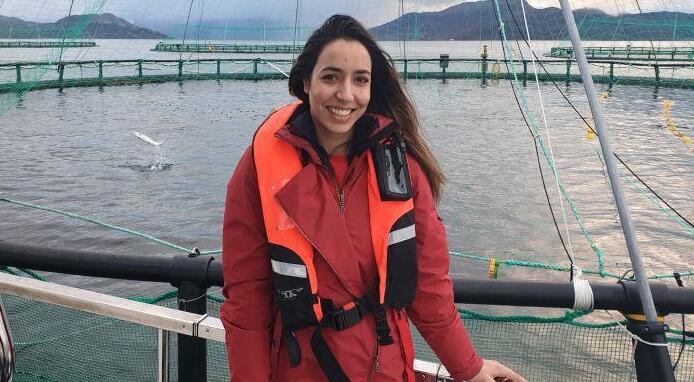
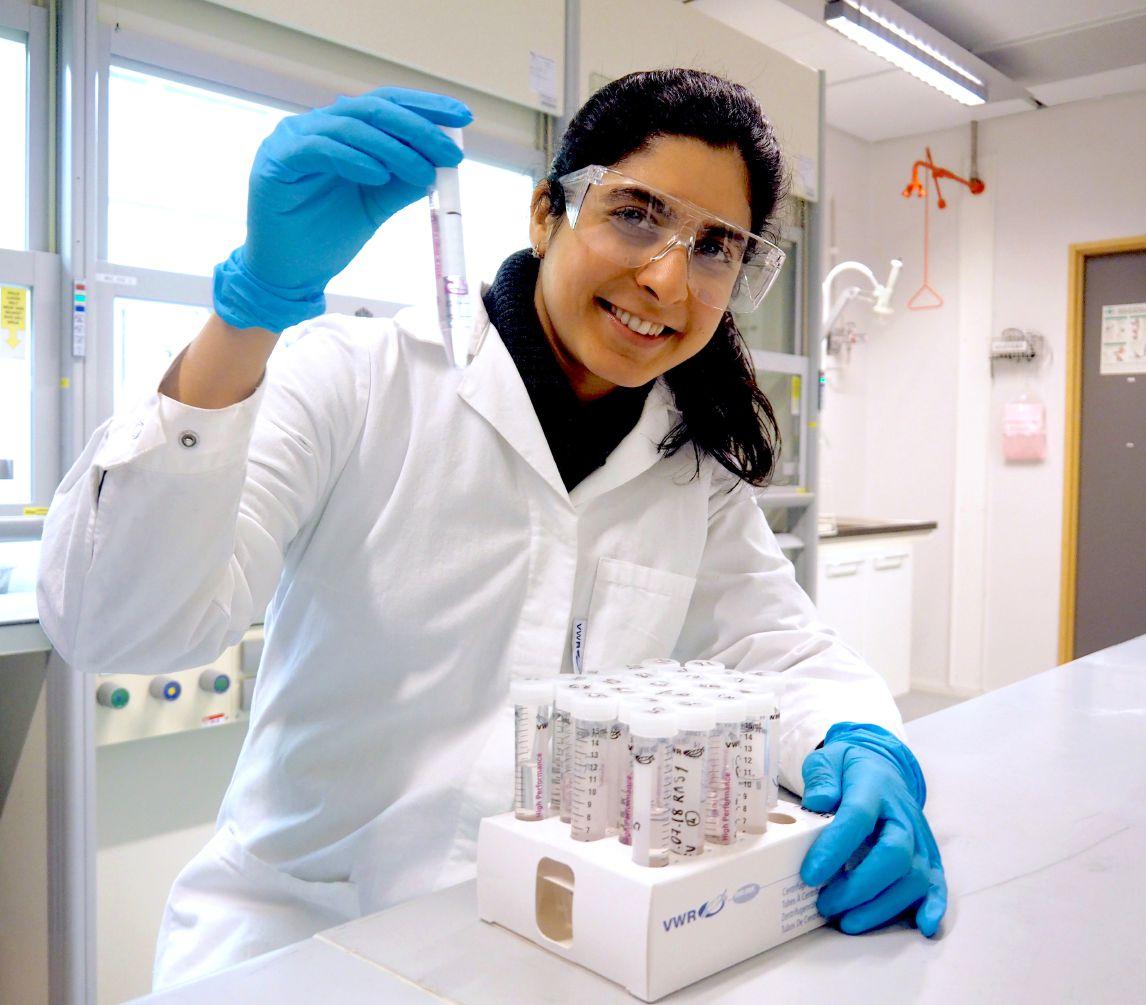
As a process engineer, Sharada Navada wants to make a positive impact on the environment.
tanks goes through mechanical filtration to remove the particles the fish produce and from the fish feed.
“Then it goes into what we call the moving bed biofilm reactor,” says Navada. “It’s an aerated tank and has plastic carriers. You can see the bacteria growing on the plastic carrier, and that bacteria removes the ammonia produced by the fish. In a nutshell, that’s what the
bioreactor does,” she says.
As a vegetarian, Navada doesn’t eat salmon but says she has a deep desire to see them produced under better conditions.
“Every day of research has made me fall even deeper in love with these fascinating creatures,” she says. It’s why she finds research on water quality to improve fish welfare and sustainable fish
farming so rewarding. “I want the fish to have a good life. The demand for seafood is increasing, and non-sustainable fishing is emptying the oceans. RAS can represent a sustainable solution by producing seafood in land-based systems with water treatment and reuse.”
Next steps
“Now we’re looking at removal of nitrogen through denitrification and recovery of nutrients such as phosphorus. I am quite interested in those technologies in which you can further reduce water consumption through additional biological processes in water treatment processes,” she says.
And while Navada never planned to have a career in aquaculture, she sees so many opportunities to take her research further.
“At the moment, I feel that aquaculture is a fun field to be in because it’s developing so fast. After doing my PhD, I like researching and discovering new things. Wastewater treatment is a mature field and doesn’t have as much scope to develop new things as much as aquaculture,” she says, noting that she also has an interest in the possibilities of aquaponics.
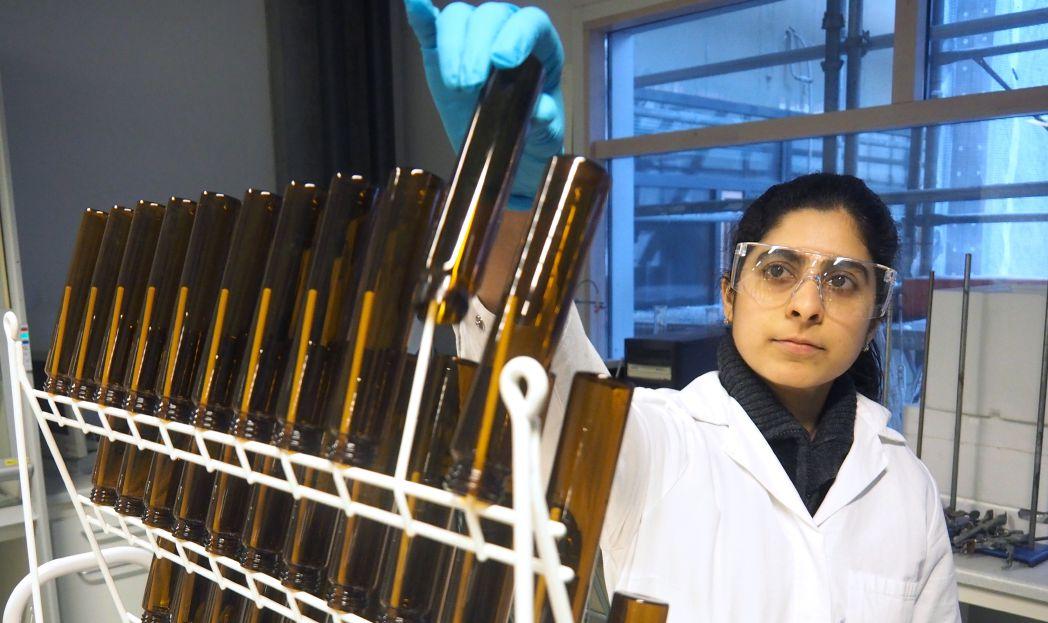
Navada was on a quest to discover ways to make RAS biological systems more tolerant to salinity changes.
The moment of truth
Marketing may solve the consumer education gap, but can it create preference for RAS brands?
By Lynn Fantom
Awell-dressed woman walks up to the fish counter at a gourmet grocery on the upper east side of Manhattan and asks for salmon. “I want wild and organic,” she says.
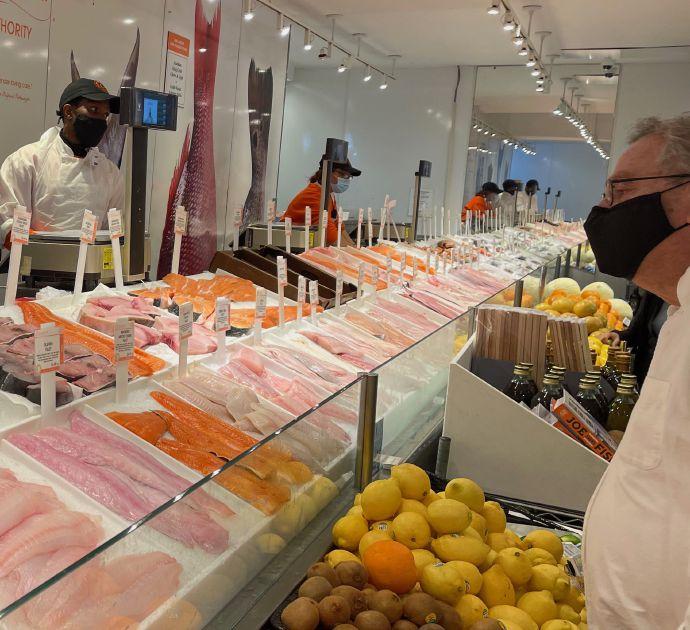
That anecdote, both funny and true, illustrates just how confused most consumers are about their seafood options today. Addressing this dilemma is taking on new importance now as more RAS producers enter the marketplace and more Americans confidently tackle cooking fish at home.
Leading RAS companies, both behemoths and niche players, are upping their game in marketing. After an artful pivot from restaurant to retail, they are studying the essence of how consumers make buying decisions. It’s not just about a new distributor or slogan.
As Nordic Aquafarm’s Erik Heim said after a recent round of research, “When these people stand at the seafood counter and there are price and attribute differ-
ences, what, in the end, guides their final choice?” That’s the moment of truth.
Inside that consumer’s head is a lot of noise, after all. Are there micro-plastics in wild-caught fish? But what about the antibiotics in farmed fish? After seeing the documentary Seaspiracy on Netflix, many wonder if they should be eating fish at all. It’s all likely mislabeled anyway.
“The greatest challenge by far is education,” says James MacKnight, who strategized the marketing for Ideal Fish. “And it’s a long, arduous, uphill journey.”
IDEAL FISH: ONE-TO-ONE SELLING
When MacKnight began working with founder, Eric Pedersen, two years ago, he first focused on the name of the Connecticut-based RAS producer – Great American Aquaculture – and recommended changing it to Ideal Fish. A fish raised in RAS, he postulated, was the “purest fish available”: no growth hormones, no antibiotics, no GMOs, no
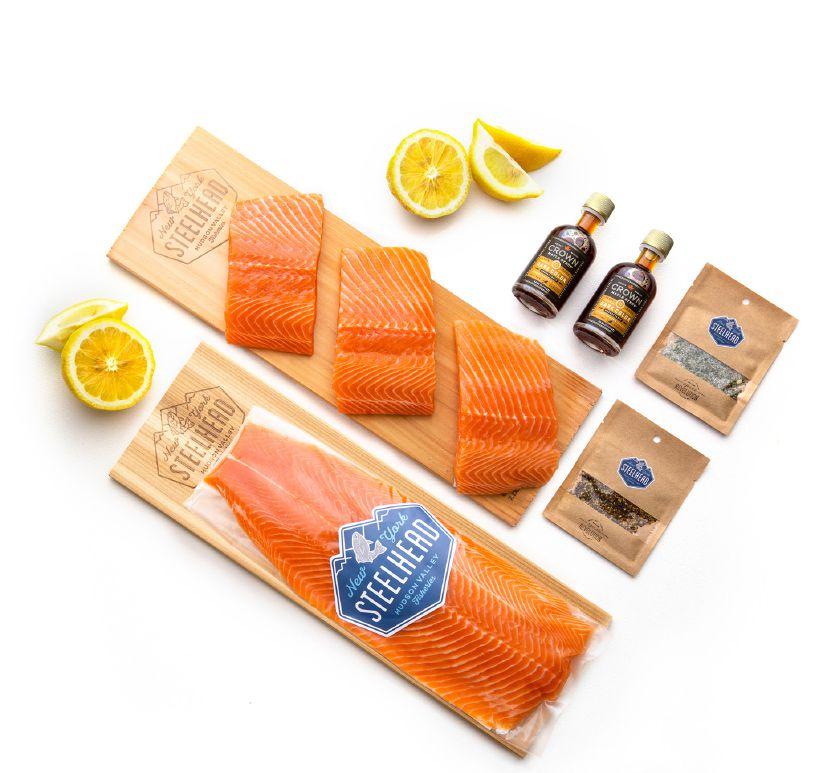
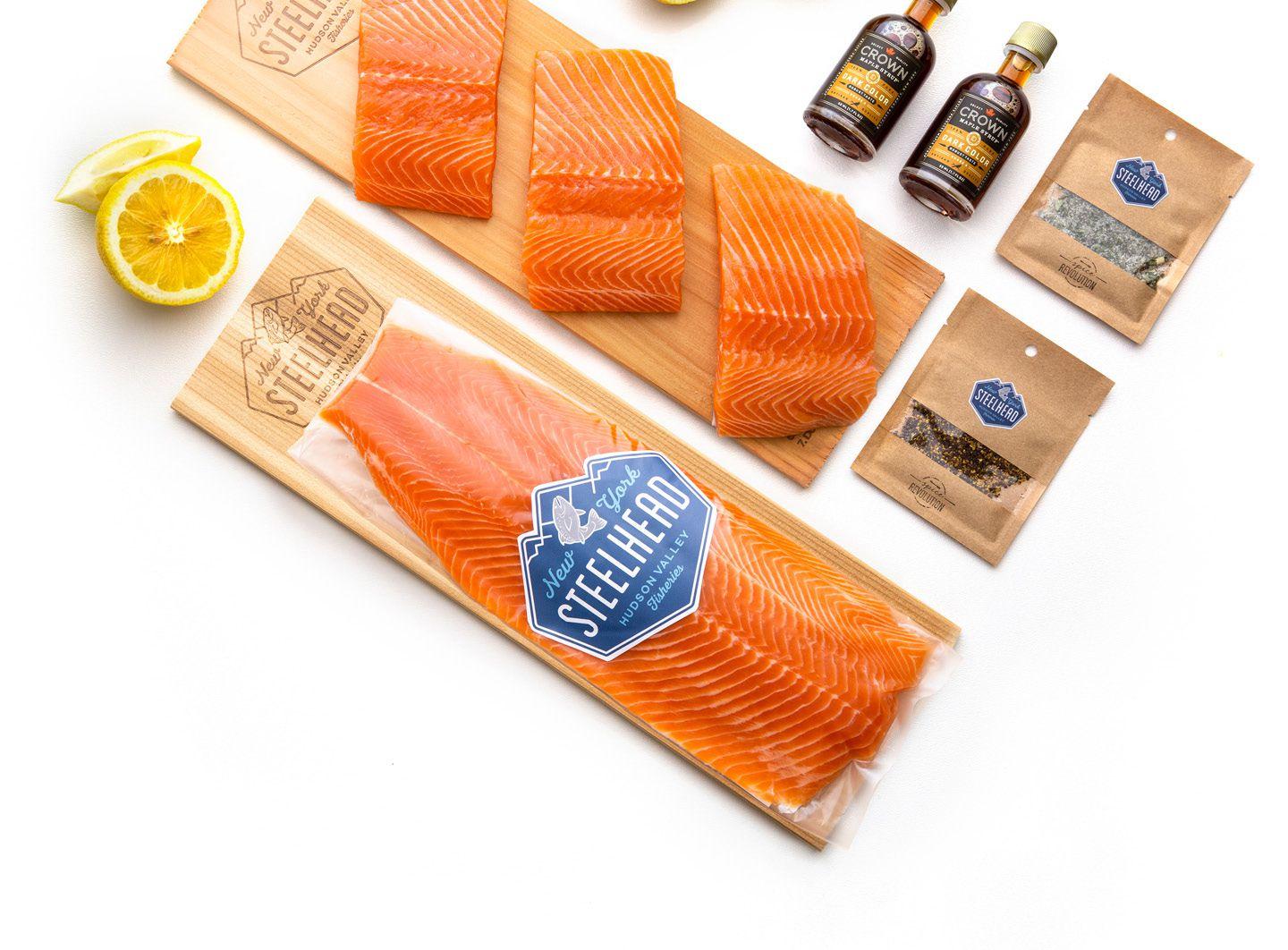
Online marketers like Hudson Valley Fisheries and Ideal Fish offer add-ons, like cedar planks and seasoning, to complement fresh and smoked fish. This Hudson Valley Fisheries grill kit was featured in
microplastics, as the website now proclaims. His first step was to stand in the shoes of the customer.
MacKnight also realized that the customer for Pedersen’s RAS-farmed branzino, which costs more than its cousins raised in Mediterranean net pens, would have to be passionate enough about these attributes to pay for them. So, he went to the upscale northeast purveyors, Kings Food Markets and Balducci’s, to launch.
A marketer’s choice of retailer or restaurant is not only a way to reach target customers. It affects brand perception as well. Within two months, a story about Ideal Fish appeared in The New York Times.
But the process of educating the consumer continues – “one fish at a time,” MacKnight says. He has accompanied his distributor on sales calls to retailers “so they, in turn, can go and educate people as well.” At one point, he told the distributor that his dream was to see a section in the middle of the fish counter for “raised in RAS – because it’s a different beast altogether.”
Oprah Magazine.
Marketing expert Max Francia sold designer fragrances, George Foreman grills and houseplants prior to arrival as marketing director at Atlantic Sapphire.
Last October, that enthusiasm drove MacKnight to found The Educated Fish, a venture to identify best-in-class companies in RAS and help get them established in the U.S.
The e-commerce site of Ideal Fish (MacKnight still leads its marketing) has proven to be a vehicle for that. Nova Scotia-based Sustainable Blue is now selling its Atlantic salmon there. Online shoppers can also buy rainbow trout and caviar, introduced in March. The carefully vetted fish selections, including smoked varieties, come solo or in sampler packs. Plus, there are add-ons, like two seafood rubs and cedar planks. They’re convenient for the consumer and increase the seller’s average order size.
The online venture is not going to rival Whole Foods any time soon, but it is increasingly sophisticated. To maximize sales, cookies from website visits chase down consumers on Facebook to give them another chance to buy. The company has also engaged experts to build a database for remarketing to customers.
HUDSON VALLEY FISHERIES: INTEGRATING CONSUMER TOUCHPOINTS
Hudson Valley Fisheries was about to launch its own e-commerce site when COVID-19 hit the New York metro area last spring, and slashed sales 60 per cent overnight. But a new direct-to-consumer
channel was just a start. Public relations consultant Heidi Raker and her internal counterparts formulated savvy promotions, such as the Kit for a Cause. The offer featured steelhead trout fillets, two cedar planks, and cold-smoked steelhead, siphoning a portion of sales to a relief fund for restaurant workers. That touched the hearts of New Yorkers.
When The New York Times called the smoked product “alluring” and suggested readers might grill steelhead for their Fourth of July cookouts, readers clicked “buy.”
“We’re so energized and motivated by this,” company president John Ng now says.
Tackling AquaBounty’s unique marketing challenges
When Sylvia Wulf joined AquaBounty in 2019, she hit the ground running, and hasn’t stopped since. The food service veteran can communicate a comprehensive, consumer-driven marketing strategy in ten minutes flat.
You need to know your stuff when it comes to a challenge like selling genetically-engineered salmon.
First up for Wulf was research to address consumer perception and acceptance. With her new hire David Melbourne, a 14-year alumnus of Bumble Bee, she engaged experts to conduct both quantitative and qualitative consumer research. They gauged “the vocal minority,” whose minds would never be changed, at only 20 per cent. Through the subsequent qualitative research, the team began to understand how to communicate to the other 80 per cent.
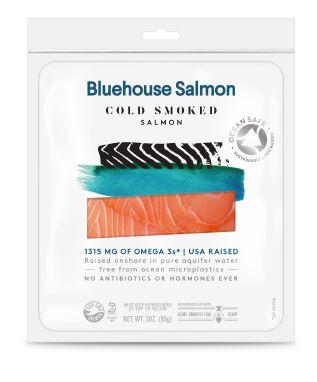
Contemporary graphics and strong product features make the most of limited space on Atlantic Sapphire’s Bluehouse Salmon packaging.
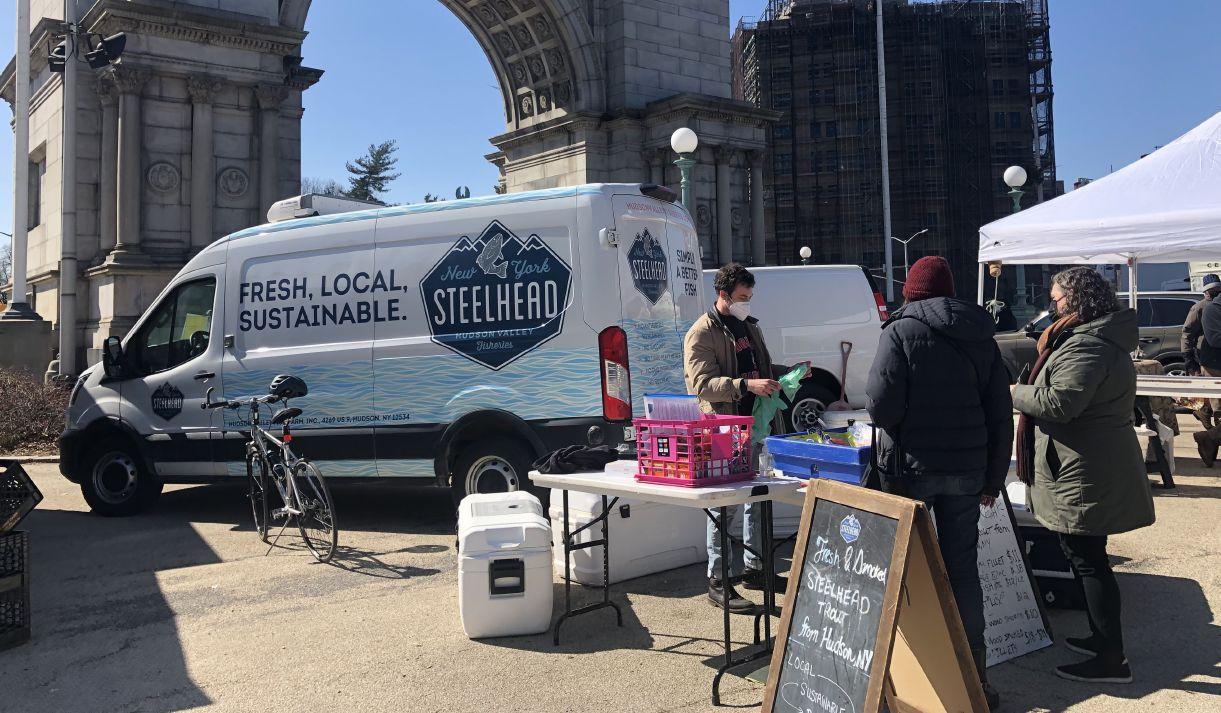
But he wasn’t a fan of farmers’ markets, another alternative to shuttered restaurants. His “young and motivated” team convinced him to try a small test. When it showed promise, Hudson Valley Fisheries expanded to four of GrowNYC’s mega greenmarkets, which include Union Square (which lures 400,000 a day on a nice fall weekend, according to Bloomberg Businessweek). Ng’s verdict: “We’re looking to expand. It’s been a huge boost.”
Such a “test and learn” methodology improves marketing performance in all environments. Another best practice is to surround the consumers at all touchpoints with integrated marketing messages. Hudson Valley Fisheries has mastered both.
“Healthy, local, sustainable” echoes from conversations with Ng to chalk boards at farmers markets to a restaurant’s online menu to the company web
That learning was put into action in 2020 on social media platforms, including LinkedIn, Instagram, Facebook and Twitter. The company retained Ohio-based ad agency Fahlgren Mortine, instituting a disciplined approach to social media with a publishing calendar and consistent messaging.
Last year also put a spotlight on the impacts of climate change. “We have a fish engineered for today’s challenges,” Wulf says. “Our story resonates with consumers, and social media helps us tell it.”
“Because our fish requires fewer resources, we can provide more of a healthy protein for the same investment,” she adds. AquAdvantage Salmon, as the AquaBounty salmon has been branded, grows to market size in 16 to 20 months compared to 28 to 32 months for conventionally farmed Atlantic salmon, according to the company.
But getting it to consumers is also a challenge. Food service leaders like Aramark, Compass Group and Sodexo have refused to distribute genetically engineered salmon. But with its first harvest in late February in Indiana, AquaBounty has been able to conduct a robust sampling program among distributors. Samuels & Sons, one of the largest seafood wholesalers in the U.S., has been the first to sign on. “We have several others that we’ve been in dialogue with, refining point-of-purchase messaging and pricing strategy,” Wulf adds.
And therein may lie AquaBounty’s best tool in the marketing toolkit: price. “Consumers told us they cared about three things: affordability, accessibility, and taste,” Wulf says. “That allows us to market to a wide range of consumers with commodity pricing.”
Taste and attributes like colour and nutrition also remain front and centre as the company moves forward. That may include creating innovation through selective breeding. “We are a science-based organization, unlike many seafood producers. Biotechnology is a core competence,” Wulf says.
AquaBounty has partnered with Purdue University on a rigorous sensory program so that it will have a trained panel in place to understand consumer acceptance from a sensory perspective. “My hypothesis is that among the reasons why Americans consume half the seafood of their European counterparts is a flavour issue,” she notes.
Wulf also touts a partnership with the Culinary Institute of America, the highly reputed culinary college whose chefs collaborate on critical issues like sustainability. Wulf values this dialogue “because I think that the seafood industry is ripe for innovation that makes the product even more accessible to consumers from a preparation standpoint.”
– LYNN FANTOM
site, which evokes a food magazine. There, images of fillets garnished with lemon and parsley, lots of recipes, and testimonials from The New York Times and Oprah Magazine add impact.
It takes some searching to find an image of a fish tank, but there is one in a three-minute “brand documentary.” However, it only appears after aerial views of a truck emblazoned with “local, fresh, responsibly raised” driving through the green farmlands of the Hudson Valley. Of course, the truck driver has a beard.
This does not feel like industrial fish farming. The associations are much stronger with the organic farm products
for which the Hudson Valley is known. Alignment with those concepts drove Ng from the moment he bought his farm in 2014. Making aquaculture part of the local food movement wasn’t a “marketing ploy,” says Ng. “It was our philosophy.”
ATLANTIC SAPPHIRE: CONSUMER CENTRICITY
Some RAS marketers think consumer eyes glaze over at the mention of technology, but Atlantic Sapphire’s marketing director Max Francia has seen them light up in the Bluehouse, the company’s massive RAS production centre in Holmstead, Florida. In fact, when the company began
Introducing Polaris C
SAVE TIME ON DATA COLLECTION AND MANAGEMENT
Polaris C has a Bluetooth function that guarantees e cient data transfer. To make things even more smooth, we are introducing NFC tags. The tags are mounted on fish tanks, pens or cages to make identification of the location accessible. Just scan the tag and measure - Polaris C will do the rest.
Preorder now
selling its Atlantic salmon last fall, the team decided to update its website by adding sections on technology, among other enhancements.
Atlantic Sapphire’s target is interested in two primary issues: nutrition and the environment, according to Francia. Education about how RAS delivers healthy and sustainable salmon requires a platform, he says.
“And, for us, our Bluehouse is what makes us so unique,” Francia points out. The brand name, used for both the retail product and its physical complex, conveys “a better connection to nature,” just like a greenhouse.
Hudson Valley Fisheries has expanded its greenmarket presence in New York to include GrowNYC’s flagship location at Grand Army Plaza in Brooklyn and Union Square in Manhattan, which attracts up to 400,000 visitors a day.
So, the marketing team doesn’t shy away from Atlantic Sapphire’s large-scale breakthrough technology. The home page of the new website, launched in March, features luxurious video of silver salmon swimming through blue-toned water followed by diners enjoying an opulent meal. The technology yields the end result.
Scroll down to a headline, “Innovative Aquaculture” that suggests: “Think of a Bluehouse like a greenhouse.” Another video, scored with a soaring symphony, follows employees wearing hardhats among tanks and electronics inside the facility. A voice-over exhorts, “change is for the brave.”
This elevates employees – job candidates and investors being among the target for the new site. But make no mistake: “Atlantic Sapphire works with a laser-focused approach on the consumer,” Francia says. “Every aspect of what we do, whether it’s market research, designing packaging or developing a pricing strategy, has our end consumer in mind.”
To satisfy that consumer’s needs, the new site also includes video recipes showing an array of salmon preparations, all set to music with a beat you can dance to.
Francia, an expert in consumer-driven marketing, represents a new breed of professional attracted to aquaculture. An MBA from MIT’s Sloan School of Management, he grew up among the elite marketers at Procter & Gamble. “I’ve always wanted to impact consumers,” he says.
NORDIC AQUAFARMS: QUALITY COUNTS
It will likely be two and a half years before the Maine and California facilities of
Nordic Aquafarms have product (and lots of it, at a projected combined production capacity of 60,000 tons).
Even so, the team is already thinking about the consumer, its brand, and an approach to the markets.
As an early step, a professional research firm conducted both qualitative focus groups and quantitative phone interviews. Guided by these insights, Nordic Aquafarms president Heim says it will leverage regional and local strengths, in contrast to Atlantic Sapphire with its nationwide distribution. “Sustainable seafood produced close to the consumer,”
its website declares.
So, what do these consumers in the northeast and California footprints think? No surprise, they have varying degrees of knowledge and different associations with wild, net pen, and landbased salmon, as well as toward steelhead as a substitute in the market, Heim says. Traceability is important. And the good news is that salmon-buying consumers, including regular shoppers, appear willing to switch to local products.
“But you need to deliver the right quality to the market,” Heim emphasizes.
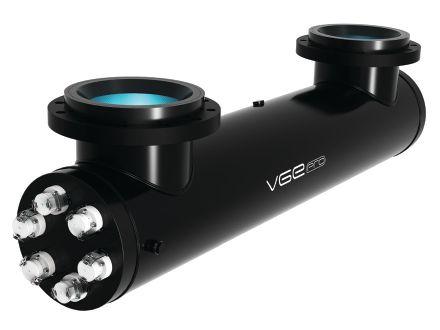
Ensure sustainable disinfection that meets the highest standards for your recirculating aquaculture system
Consumers have an array of seafood options at a Manhattan gourmet grocery. “What, in the end, guides their final choice?” asks Nordic Aquafarms’ Erik Heim.
PHOTO: LYNN FANTOM
The Coho choice
Upstate New York-based RAS facility separates itself from the pack with a judicious choice in species and go-to-market strategy
By Liza Mayer
There are many words to describe Finger Lakes Fish but “unconventional” is top of mind. In contrast to the mega land-based farms currently being built in the United States, the company’s approach is to start small with a provable model that could later scale up.
Even its choice of species is unconventional: Coho salmon (Oncorhynchus kisutch) instead of the more popular Atlantic salmon that many emerging land-based fish farmers are gravitating towards.
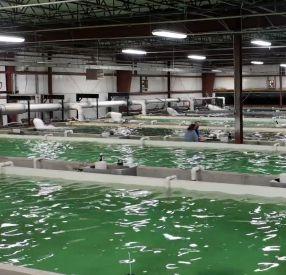
At its 43,000-sq.-ft. RAS facility on Technology Park Boulevard in Auburn, New York, CEO Phil Gibson and his 15-strong team of aquaculture specialists are in a constant state of learning and adapting to prove this complex and often finicky technology.
But while their tenacity is starting to bear fruits (they’re already certified by Best Aquaculture Practices and by Safe Quality Foods), Gibson would be first to acknowledge that there were many false
starts. For instance, the initial decision to use fibreglass fish tanks was scrapped because it was very difficult to keep them from leaking, and COVID-induced disruptions made it very challenging and very costly to get the required tank components.
“At that point it became more feasible for concrete raceways. And because the concrete contractors didn’t have any work because of the pandemic, it kind of worked out for us.”
But as many of the emerging landbased farmers know, after one issue is solved, a few more would crop up because RAS technology is still in its infancy as far as its use in salmon grow-out operations.
After switching fish tanks, the next U-turn was on the choice of a local plumbing company.
“There’s a very steep learning curve building these things,” says Gibson. “You look at a design on paper and then you try and translate it into something that you’ve never had any experience with,
work really was quite slow so we actually had to replace them almost a year ago now.” The job went to a national plumbing company that had more experience.
Sure-fire ideas
There were, however, many things that the company got right the first time. One of them was the choice of the city of Auburn as farm site.
Auburn is an “opportunity zone,” Gibson says. “There are tax benefits to locating here, that’s number one; and number two, there are a number of aquaculture programs in the local colleges in Upstate New York. So the opportunity to tap into that labour source was irresistible because people experienced in land-based aquaculture are very few and far between.”
The staff all live in the area or within a general area, with most of them having a two-year or four-year degrees in either aquaculture or marine biology.
Auburn’s relatively lower cost of electricity and water was another advantage.
A staff member at Finger Lakes Fish shows off healthy looking Coho salmon at the company’s 43,000-sq.-ft. RAS facility in Auburn, New York.
PUMPS GRADERS COUNTERS
As anyone in the field knows, after feed, energy ranks second in terms of costs in a RAS facility, and much of that energy is used in pumping the water. “In as far as energy costs, we’re 30 per cent more efficient than other land-based operations just because of the way that we have these built,” says Gibson.
And, by operating in a former mill workshop, the electrical infrastructure was already there so the company was able to lower the typical overhead costs associated with new land-based aquaculture facilities.
“That was a real bonus for us. We took this building, which is in an industrial park and was ready to go so we were able to construct over the course of about a year-and-a-half to get to where we’re at right now,” he says.
The decision to farm Coho was another thing the company believes it got right from the get-go. Gaining a competitive advantage in this space means distinguishing one’s self from the competition, says Gibson.
“The market is saturated with Atlantic
salmon, there’s hardly any Coho salmon. Most of the Coho salmon is raised internationally, in Chile and Equador, and goes to the Japanese market and very little comes into the United States. So we really don’t have a lot of competition within the space. The wild Coho salmon fisheries have been functioning very poorly of late.”
The fact that Coho doesn’t have to have a saltwater component in the growth cycle added to its attractiveness because that quality makes it much simpler to raise, he added.
Focus on fish
Gibson became a partner in the company in 2017 after starting out in 2015 as an industry consultant. In that role, he leveraged his deep technical expertise on sustainability issues, earned from years working in fishing and production in southeast Alaska and later on as head of corporate seafood operations for the Safeway supermarket chain.
“The partners (behind Finger Lakes) reached out to me for consulting and
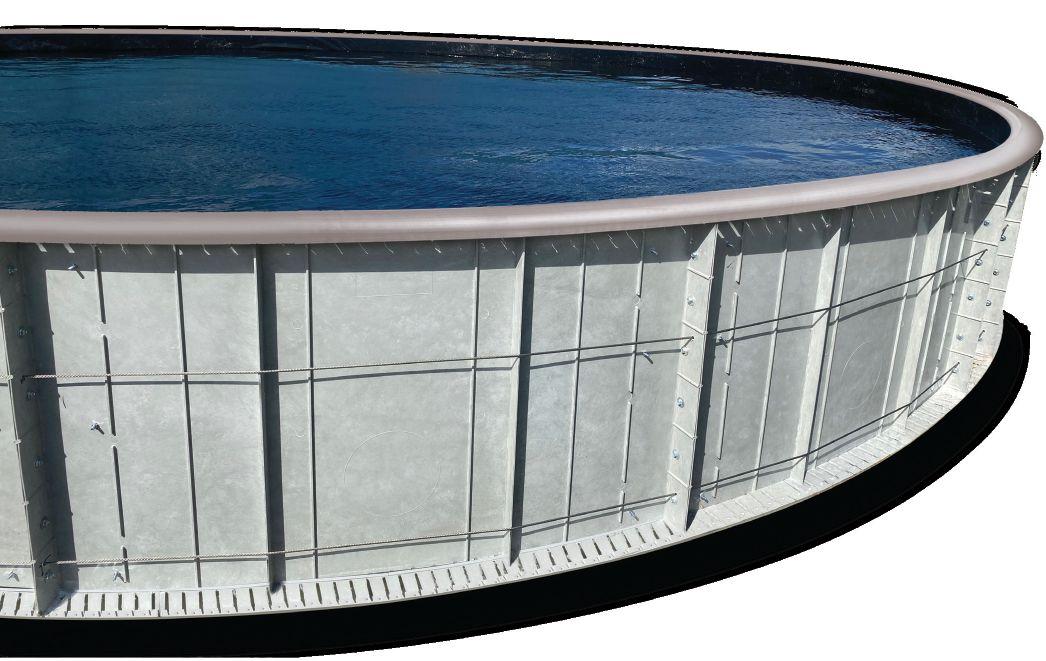
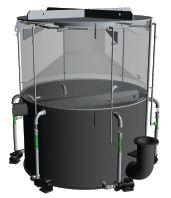
The new standard in quality engineered RAS tanks
marketing programs and then as I got more involved, I became an investor in the company. It just evolved to where I was asked to become CEO,” says the Washington State native who now splits his time between New York and his home state.
“I’ve gotten deeply involved in the environmental and sustainability aspects of the seafood industry,” he says. Thus, for him, leading a land-based fish farm that has sustainability as a philosophy and investing his own money into it was a natural segue.
“I’ve been an advocate of land-based aquaculture since 2005. What I brought to the company is the big picture. For the people that work here, the focus is on the fish and not on the business of marketing that fish.”
•
•
The type of RAS system plays a crucial role in ensuring that focus remains squarely on fish wellbeing and the farm’s efficiency. For that, the company brought in British Columbia-based John L. Holder of JLH Consulting, who champions the Mixed-Cell Raceways (MCR) technology developed by Barnaby Watten. But Holder put his own spin on it.
“What I’ve done is I put it together in a certain way that makes it very, very efficient,” says Holder.
MCRs or “MxCell” incorporates “circular-motion virtual tanks” into the traditional linear raceway. The payoffs are the consistent distribution of high-quality water throughout the rectangular tank and not just in the first half of it, as well as dependable distribution of oxygen and solids removal, Holder explains.
“Before, with standard raceways, because it’s a plug flow or an underflow, the best water quality is in the first half of the raceway. The next 25 per cent after that is still okay but the water in the last quarter of the tank is virtually not usable by the fish. By having the MxCell raceway, we’ve eliminated that problem because we’re putting 30 to 40 per cent of the water into these circular-motion virtual tanks. So the quality of the water at the beginning is as good as the water at the end of the raceway. So all of a sudden you’re using a 100 per cent of that raceway when compared to 75 per cent in the old days,” he says.
He added that rectangular tanks are
inexpensive to build compared to other systems such as the big round tanks that are typical in RAS facilities. “They are also very easy to use for grading and harvesting fish as everything’s on the same plane. It’s very economical: we only have to pump the water or lift the water by roughly 45 to 50 cm, which is virtually nothing.”
Finger Lakes Fish uses municipal water, which it dechlorinates to make it
optimal for the fish. The facility has eight raceways measuring 7-ft. deep, 6-ft. wide and 80-ft. long, each of them containing 67,000 gallons of water. Maximum density per raceway is 85 kilos per cubic metre.
“But we’re nowhere near that density yet,” says Gibson. “We’re running way below capacity right now, we’re running at about 45. We bring in, every three months, about 120,000 eggs from our
INTELLIGENT DESIGN
supplier in British Columbia. We use heat trays for incubation and that’s the capacity our incubator trays could do right now. We’re still building our inventory.”
Due to COVID-19 lockdowns, running below capacity may well work in the farm’s favor. Since April 2020, it has been harvesting small batches of coho weighing between 3- and 4-lbs each. The fish reach this weight within 16 to 18 months from hatching.
“The fish that we have are not large enough for the grocery trade yet. So one way that we’re selling is to go into food service. Now that the areas are beginning to open back up, you’re getting more restaurant trade.”
Finger Lakes Fish only sells head-on gutted Coho currently. Once the facility is in full production, it will work with processors who will distribute the fish themselves.
“We’ll have our own customers but our processors will also be our customers and they will sell to their food service and retail customers.” It would be ideal, he says, if clients sell the product under the LocalCoho brand at least initially. “But I’m not going to be insistent on that because we need to build business,” he says.
Today, “getting the system to operate correctly” is the biggest challenge before
Gibson and his team.
“There’s a pretty steep learning curve on making sure that we get the water levels right, that we maintain water quality, that we build the biofloc for the filtration system to be more efficient. That takes time. That’s not something you just put a bunch of media in the water and it’s immediately going to go to work. You’re going to have to build bacteria levels up and that takes quite a bit of time and you can actually destroy that bacteria if you don’t handle the water properly.”
Mortality rates in the grow-out phase have been at three to four per cent, but it’s something that can still be improved as efficiency and precision improves.
Automating operational processes is currently in the works.
“While we were in building stages any fish transfers or grading were done by hand, which stresses the fish. Right now we’re installing the fish pumps and graders and counters so that we can make this a whole lot more efficient and less stressful.”
As for the big picture, Gibson sees expansion beyond this 370-tonne pilot facility. The plan, or at least the hope, is to roll out twelve 2,000-tonne facilities in several locations across the United States over the next 15 years so that LocalCoho is always close to the market.
“I really believe this is the future. And like I said, I put my money where my mouth was. I’ve been advocating this for 15 years. So, instead of just buying stock in a company and just watching it either grow or not grow, I get to participate in the miracle of land-based aquaculture.”
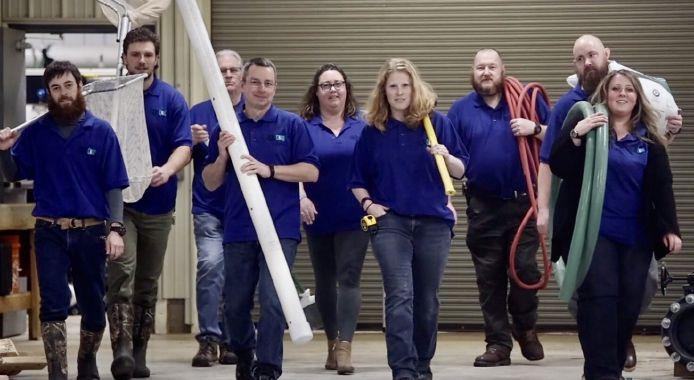
Some staff members at Finger Lakes Fish with CEO Phil Gibson (third from left, in the back). The opportunity to tap into the labour pool in Auburn was irresistible, says Gibson.
The future of seafood
Kvaroy Arctic, Riverence Trout, Pacifico Aquaculture and Verlasso Salmon are only some of the aquaculture producers Jennifer Bushman has worked with, all in an effort to help them tell their sustainability stories. A top culinary expert turned seafood advocate, Bushman is on a mission to help shape the future of sustainable seafood. RAS Talk podcast hosts Mari-Len De Guzman and Brian Vinci sat down with Bushman to get her insights about the aquaculture industry’s role in the quest to make food production more sustainable, and briding the gap between producers and consumers.
RAS Talk: There are things that resonate with the consumer that RAS producers in particular should be telling their story around. Is that fair?
Jennifer Bushman: That’s very fair. It also could be the beautiful environment, or the heritage, or do you have solar on the farm, that people can learn about how you’re contributing? I work with Alexandra Cousteau, she is Jacques Cousteau’s granddaughter, and she talks a lot in Oceans 2050 about changing the mindset of those that are needing to feed themselves. No one wants to think of themselves any longer as consumers, or we “consume” goods. We want to be thought of as contributors. How does my purchase contribute to economy? How does it contribute to a more environmental, sustainable food system. Even just the language and the storytelling of changing this mindset from consumption to contribution through RAS, what are those elements that really differentiate it from a more sustainable, ethical food source, makes me feel that I am contributing to the fight against climate change or disruptive food systems that only perpetuate bad habits.
RAS Talk: What are the things that we can do as an industry or producers themselves, in particular, to help consumers toward the right information in this social media world where there is a bombardment of information – both facts and fiction?
JB: We have to first recognize that humans naturally want simple answers to very, very complex problems, and that we get overwhelmed. And when we do get into the weeds on a topic, people tend to tune us out. So, there are things that you can do –whether it’s short, impactful bullet points – I think that people have to feel that there’s hope. You can’t come out and say that this is the answer to a disruptive food system, you have to come out with the solutions. And when you put that solution-based thinking around what you’re doing, you can have people feel as if they are empowered. It really does address in some ways what happened with Seaspiracy in that we have to have a path that we believe in and we have to be empowered in solution-based thinking. And when we do that in a simple way, people will follow and of course your taste-buds and all those things end up firing on all cylinders. If it tastes great, and we give simple solutions for putting it on the table, I think that really is the path to success.
RAS Talk: Is there a producer education component to this as well, and what are some of the conversations that are happening there?
JB: We’re deeply engaged in education all the time. Some of it is let’s put everything on the table that you’re doing. Let’s see what some of the holes are… Look at the entire thing. What are those things that are going to stand out so that you can start an educational narrative? And there are places that you can tell that story where you have to make an investment. Then there are places where it’s easy. Social media has given us a really great opportunity to engage with people – chefs, buyers – just by going on Instagram, knowing a name or watching different conversations you can find your way into a relationship that can build business as well as build messaging around what it is that you’re doing.
RAS Talk: What do you think about landbased, recirculating aquaculture as a solution? Do you think there are aspects of it that can resonate?
JB: In order to find a seat at the table in the future of food, it’s going to take all inputs to feed a growing population. There will not be enough room for ocean sites especially with large-scale farming, concessions, and site planning is going to be important. There are going to be places on land that are going to be more ideal to farm than others. I think that those solutions, the right species in the right place and rearing it in the right way will create what we will then see as the future of food, and the future of fish and seafood.
Q&A with Jennifer Bushman, sustainable seafood advocate
Jennifer Bushman
Showcase
Wireless monitoring in the palm of your hand
Former AKVA Group chief executive, Trond Severinsen, returns in the aquaculture sector with a new technology he claims will disrupt the water sensor market.
Severinsen has partnered with Canadian seafood tech company, Sedna Technologies, to launch a new wireless monitoring sensor system.
The Sensor Globe is a multi-functional sensor the size of a small grapefruit. It was orignally designed to monitor water quality and animal welfare for the live lobster industry on Canada’s East Coast. It contains microsensors for optical oxygen, temperature, pH, acceleration and shock. Later this year, microsensors for nitrate, ammonia and salinity micro-sensors are expected to follow.
According to the company website,
customers will be able to build their own units with various micro-sensors and monitor real-time data through an app on a mobile device or on the Internet. Offline-mode allows the device to log data for up to 90 days at a time, then retrieve it and upload the data for analysis through the Sedna Cloud.
Unlike other sensors, the Sensor Globe has an adjustable internal ballast so that it can either float like a small iceberg, sink or have neutral bouyancy. It measures only 95 mm in diameter, weighs 325 grams and is designed to “flow with the fish” through pipes, hoses, fish pumps, lice treatment and other machinery.
“We discover new uses and markets for the Sensor Globe concept just about every week right now,” says Severinsen. www.sednatech.io
AquaMaof
appoints new customer support manager
AquaMaof Aquaculture Technologies Ltd. is looking to boost its customer service division with the addition of new division manager, Guy Alon.
Alon will manage cross-organizational customer service processes, create new methodologies for customer success and lead the division’s growing team in its ongoing customer support operations.
“I am happy to join AquaMaof in these exciting times of company growth and a range of projects under development,” says Alon in a
Blue Ocean announces new head of service
Blue Ocean Technology AS in Bergen Norway has a new addition to its team.
Håvard Pihlstrøm has been appointed head of service and aftermarket. He will be responsible for building the company’s service network and will manage service and maintenance services in Norway and internationally, including the startup and testing of new installations. He also oversees servicing and maintenace of Blue Ocean facilities.
According to a company statement, Pihlstrøm will be a key figure in cooperation
with the company’s partnership with Scneider Electric regarding system development, architecture for monitoring and control (EcoStruxture), preventative maintenance based on machine learning and customer environmental reporting modules.
Pihlstrøm is a mechanical engineer who specializes in subsea technology, instrumentation and 3D modelling. He previously served as a subsea project engineer at ClampOn and has previous experience from SeaSmart and CCB. www.blueoceantechnology.no
company statement. “I look forward to contributing my experience to help expand the company’s customer service offerings, as part of the company’s vision and strategy to continue investing resources in this area, and advancing it to even higher professional levels.”
Alon has almost 30 years of experience in the Israeli aquaculture industry. He previously served as chief executive of DagOn - Ma’agan Michael, a world-class fish breeding centre in Menashe, Israel. www.aquamaof.com
SEAREN wins top eco label by Solar Impulse
Cincinatti-based SEAREN was awarded a Solar Impulse Efficient Solution label for its water purification device.
The Vacuum AirLift, or VAL, is an aquaculture water treatment technology that offers biomass management via water circulation, fine particulate extraction, gas exchange and oxygenation in a single device.
Traditional RAS requires substantial gas stripping, aeration, particle extraction and HVAC with multiple primary movers.
VAL-based RAS reduces or eliminates auxiliary subsystems, reducing complexity, physical footprint and cost.
VAL utilizes a physical process that does not require chemical additives and reduces moving parts in contact with water, maintenance and discharge into the environment. As part of a photo bioreactor-based waste processor, VAL removes 96 per cent of total suspended solids and dissolved organics. Total organic carbon was reduced from 210 to 7.8 mg/l.
In independent testing against other foam fractionators, the VAL was 45 per cent more effective in reducing total suspended solids using 66 per cent less energy.
In order to be awarded the Solar Impulse label, the device underwent a rigourous assessment by independent experts, according to five standards: clean water, clean energy, infrastructure, sustainable communities and responsible consumption.
The Solar Impulse Foundation is a non-profit organization based in Lausanne, Switzerland. Its 1,000 Solutions program was first created in 2015 to encourage and fast-track new ways to build clean and sustainable solutions for climate change. www.searen.com
Skretting overhauls website
Skretting has relaunched its website to offer more user-friendly and customer-focused features.
Åshild Vestbø, digital communications specialist with the Skretting Division, says the global brand’s 23 websites were redesigned in response to a dramatic increase in visits and users in the last year. In 2020, Skretting.com received 1.6 million page views and more than 640,000 visitors.
“A lot of effort has gone into making the content fresher and more valuable to visitors,” Vestbø said. “At the same time, our full product
catalogue has had a complete overhaul, enabling users to easily filter, explore and compare Skretting products. New filtering options have also been included in our popular news section, making it easier for visitors to read more about subjects they are most interested in.”
The redesign began in 2020 with input from the company’s global network. The project was followerd by a comprehensive testing programme with new supplier, Delaware Digital.
www.skretting.com
Innovation Beyond Measure
•
•
•
•
•
•
•
•
Where Water Drives Innovation.
Commercial Filtration Systems
Customized for your fish farm, hatchery or research operation!
Our Commercial LSS Packages are custom engineered to meet your specific needs.
• Marine and Freshwater
• Mechanical filtration
• Chemical filtration
• Ultraviolet disinfection
• NEMA enclosed controls
• Bio-filter towers
• De-gassing towers
• Wide variety of flow rates
• Flow control valves
• Protein skimmers
• Variable frequency-drive pumps
• Temperature management
AKVA Land
Based appoints new managing director
Kenneth Bak has been appointed the new managing director of AKVA group Land Based AS.
Bak was previously the BU controller at AKVA group Land Based and has been acting as the interim managing director for AKVA group Land Based since January 1.
Forty-eight-year-old Bak has a background as a state-authorized public accountant and has a cand.merc.aud from Aarhus University.
“This opportunity presents me with the fortunate chance to lead an innovative company that has served our industry with products and services at the forefront of technologym,” Bak said in a company statement. “It’s a very exciting opportunity, and I’m looking forward to keeping our momentum in creating a high performing organization delivering best in class project execution. I’m certain we can redeem the company’s full potential.”
Recirculation System Design, Supply and Construction.
• Commercial Farms, Hatcheries, Aquaponics, Research Labs, Public Aquariums, Live Holding Systems – we do it all!
• Representing leading RAS equipment manufacturers.
Johan Fredrik Gjesdal, COO Land Based, welcomed Bak’s new appointment.
“We wish Kenneth Bak the best of luck with his new challenges. He has shown great capabilities and we are very satisfied to promote within AKVA group,” he said.
Bak will be located in Frederica, Denmark.
www.akvagroup.com
Kenneth Bak
AD INDEX
Adsorptech Pg. 31
Aquacare Environment Inc. Pg. 11
Aqua Logic Inc. Pg. 35
AquaMaof Aquaculture Technologies, Ltd. Pg. 2
Aquatic Enterprises, Inc. Pg. 36
Aquatic Equipment & Design Inc. Pg. 37
Aqua Ultraviolet Pg. 40
Arvotec Pg. 29
Balmoral Tanks Ltd. Pg. 28
Biomar A/S Pg. 33
CM Aqua Technologies Pg. 15
DrTim’s Aquatics, LLC. Pg. 39
Faivre Sarl Pg. 27
Fresh By Design Pg. 31
HTH aquaMetrics LLC Pg. 19
IBIS Group Inc. Pg. 37
Innovasea Pg. 27
Integrated Aqua Systems Inc. Pg. 30
Lykkegaard A/S Pg. 10
Only Alpha Pool Products Pg. 5
OxyGuard International Pg. 24
PR Aqua, ULC Pg. 29
Pure Aquatics Pg. 36
RASTECH Magazine Pg. 11, 19, 20, 21,29
Reed Mariculture Inc. Pg. 18
Reef Industries, Inc. Pg. 27
RK2 Systems Inc. Pg. 33
Silk Stevens Pg. 36
Somerset Environmental Solutions LLC Pg. 19
Tropical Marine Centre Ltd. Pg. 37
Veolia Water Technologies AB - Hydrotech Pg. 33
VGE International B.V. Pg. 25
Customization available upon request.
Fresh Tips
From the experts at the Freshwater Institute
Chiller maintenance tips
Mechanical chillers are an essential piece of equipment to properly maintain water temperatures for cold water species in RAS. A mechanical chiller is a self-contained unit consisting of a condenser, compressor, heat exchanger, temperature controller, flow switch, and associated electrical components. Depending on the application, the chiller can either be air or water cooled. Both types of chillers require similar upkeep and inspections to maintain efficient operation.
Inspecting heat exchangers
The heat exchanger on most chillers contains a spiral shaped metal tube (i.e., coil) that has cold refrigerant running through it. As process water passes over the coil, it is cooled before exiting the heat exchanger. Heat exchanger coils need to be inspected for mineral buildup and organic matter that can reduce efficiency. An inspection camera or boroscope can be used to view inside the barrel of a heat exchanger (Figures 1 and 2), and coils with fouling or mineral buildup should be cleaned promptly.
Depending on the operating and water conditions, some heat exchanger coils may need to be cleaned more often. At the Freshwater Institute, chiller heat exchangers are inspected every six months. Always follow your chiller manufacturer’s cleaning and maintenance recommendations for each unit.
Testing flow and pressure switches
All chillers should be equipped with a flow or pressure switch to shut the compressor off if water fails to flow through the heat exchanger, thereby preventing catastrophic damage to the unit. Safety switches should be tested monthly to ensure that the compressor stops running when the water flow stops. Flow and pressure switches can be tested by ma -
nipulating valves to bypass the chiller and confirm that the compressor shuts off when water flow stops. This is also a good time to confirm that minimum water flow rates are being delivered to the chiller. Keep spare switches on hand and repair, replace, or adjust switches that do not shut off the compressor when tested.
Inspecting temperature controller
All chillers are equipped with a temperature controller to display the temperature set point and inform the chiller when to turn on and off. It is important to check the set point daily against the RAS water temperature to ensure that the controller is reading accurately, cycling as intended, and providing the desired RAS water temperature. Inconsistencies may require temperature calibration or adjustments to hysteresis settings. Datalogging the temperature can provide insight on chiller duty cycle and could indicate if chillers are sized correctly or if performance is beginning to decline.
Inspecting condenser
Both air- and water-cooled chillers need their condensers cleaned to maintain proper refrigerant pressures. Air cooled chillers, typically used for light to medium duty applications, have metal cooling fins that cover copper tubing with a fan mounted at the top of the
condenser. The fan blows or draws air across the coils to cool the refrigerant and convert it from a gas back to a liquid. These cooling fins can become clogged with dust and debris. Cooling fins can be cleaned out with compressed air but may sometimes need to be washed with a garden hose depending on how much debris has accumulated.
A water-cooled chiller, typical for medium to heavy duty applications, operates in a similar manner but using cold water to cool the refrigerant gases. Over time, the condensing heat exchanger can become clogged with mineral scale buildup depending on water quality and will need to be de-scaled with a proper non-corrosive cleaning solution. Installing a strainer on the cooling water line can prevent particles from clogging the line and prolong time between cleanings. Inspect condensers monthly and schedule any cleanings during the coolest part of the day to minimize temperature increases in the RAS while the chiller is offline for maintenance.
Leak checks
Check the chillers weekly for leaks. This includes water leaks at all valves, pumps, and fittings, as well as any refrigerant leaks. Look for signs of oil around any of the refrigerant fittings or solder joints. Finding a small leak before large volumes of refrigerant are lost could save time and money and prevent temperatures from rising in the RAS water while an ineffective chiller is repaired by a specialist.
Maintain instruction manuals and SOPs for the chillers you have on your site. Replacement parts for some systems can take days or weeks to ship and receive. Accordingly, having an inventory of multiple key spare parts for each model of chiller on site will allow for timely repair.
By performing these few routine tasks, you can extend the life of your chillers, minimize down time, and optimize the growing conditions for your fish.