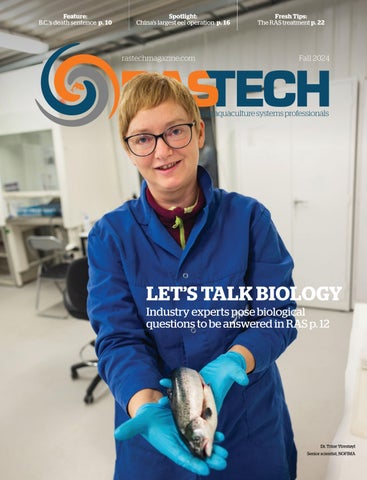
Industry experts pose biological questions to be answered in RAS p. 12
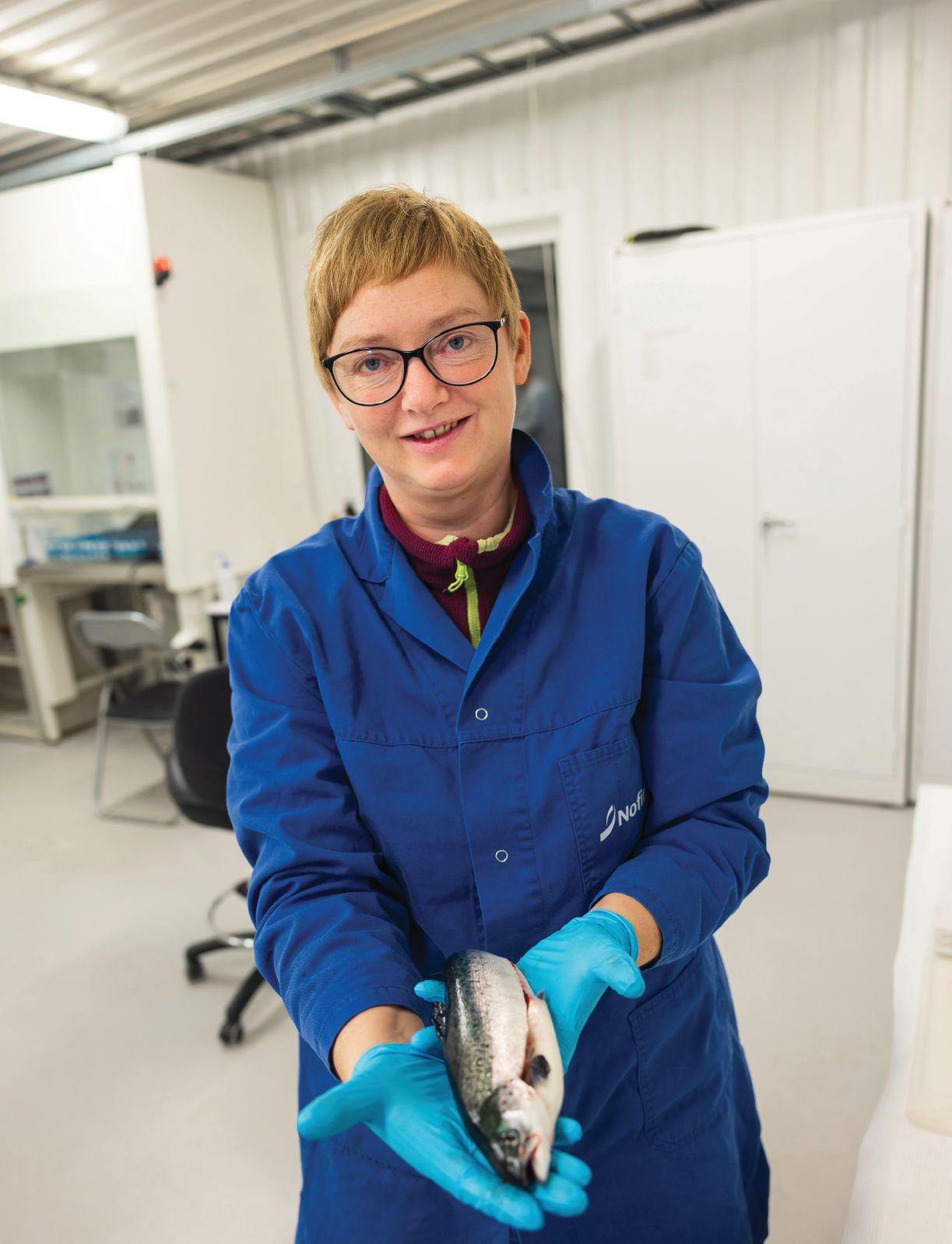
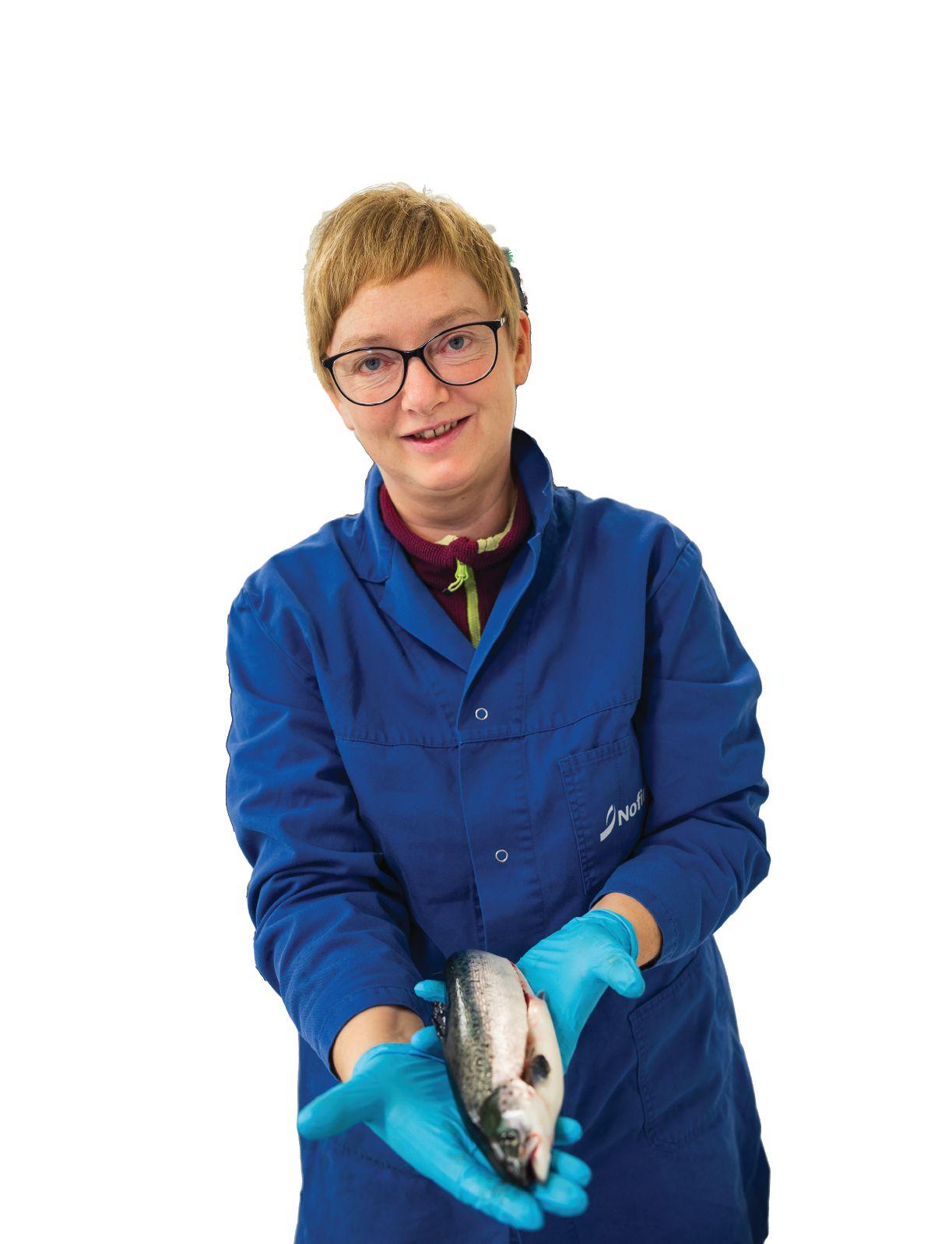
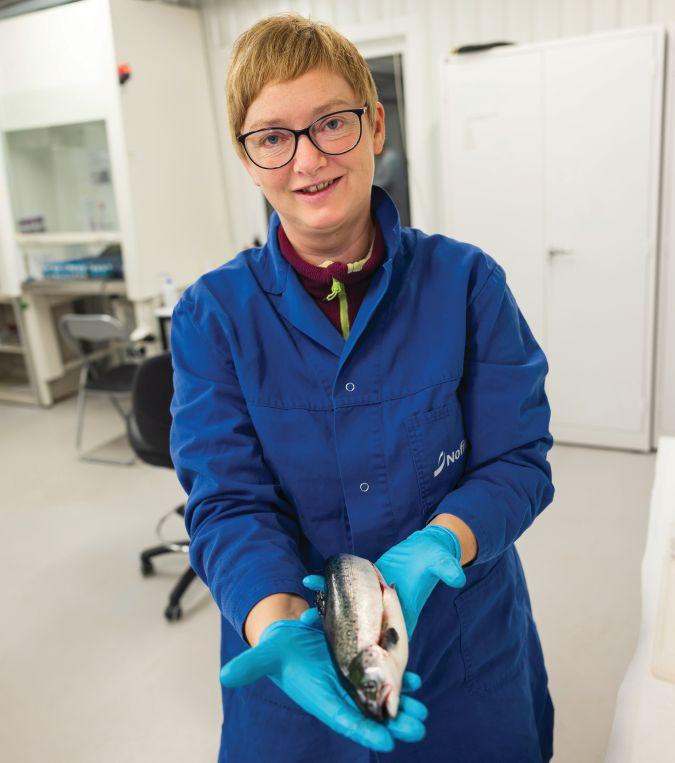
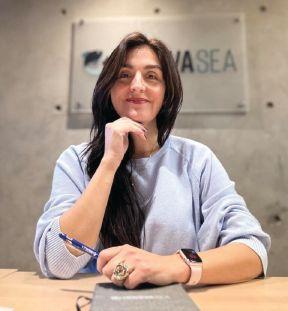
Dr. Trine Ytrestøyl Senior scientist, NOFIMA
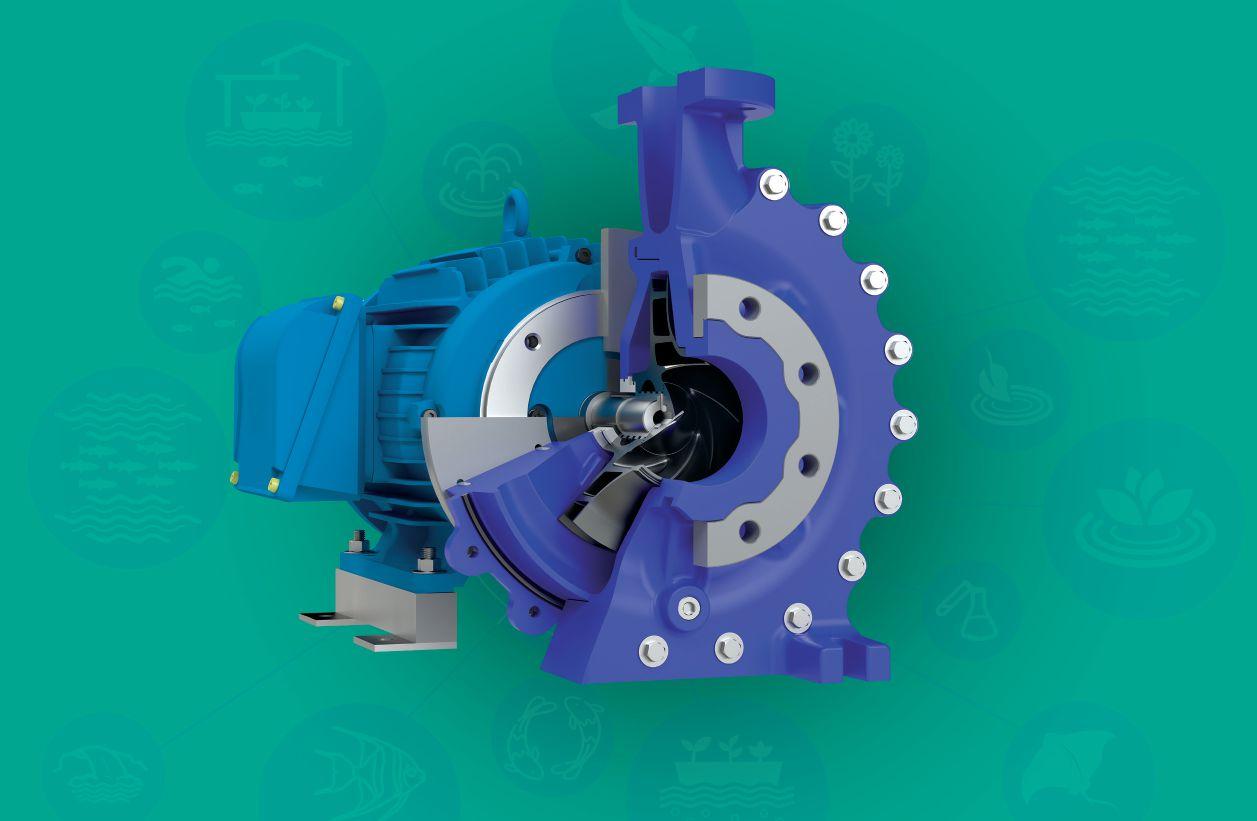
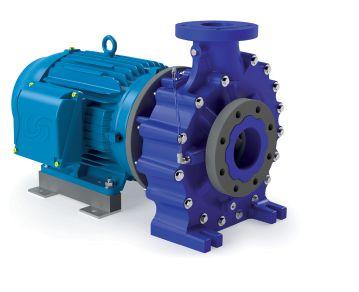
SIMPLICITY UNRIVALED
• EASE OF MAINTENANCE
• CLOSE COUPLED - NEMA JM & ISO MOTOR FRAMES
• UNIQUE ANSI/ISO FLANGE SYSTEM
INNOVATION UNPARALLELED
• TRUE BACK-END PULLOUT
• THROUGH-BOLT DESIGN
• PROPRIETARY POLYESTER & VINYL ESTER FOR WARM SEA WATER & CORROSIVE FLUID APPLICATIONS
SCAN THE QR CODE TO LEARN MORE ABOUT
B73LEAN ® : SUPERIOR
• ENCLOSED IMPELLER DESIGN
• 84% PEAK EFFICIENCY
• RESIN RICH INTERNAL HYDRAULIC PASSAGES
DESIGN FOR MAXIMUM
EFFICIENCY
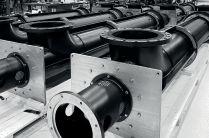
B73lean® ensures inlet and discharge ports are interchangeable with existing metal and plastic pumps conforming to ANSI/ASME B73.1 and ISO 2858 specifications.
B73lean® provides the ability to close-couple to various NEMA and IEC motor frame designs. This benefit provides lower acquisition costs and reduces the overall footprint when comparing to outdated, long-coupled pump and motor configurations.
• ANSI B73.1
• ISO 2858
KO DIN
NESTOR ARELLANO
JONES
From the editor
By Jean Ko Din
RAS leaders wanted
For those who are just tuning in to the recirculating aquaculture systems industry (RAS) in North America now, it may seem as though the United States and Canada are becoming more and more unhospitable. Investors and other outside observers might look at the current situation and raise an eyebrow at the fact that the tumultuous political and regulatory landscape may just be too much of a risk.
One only has to look at recent news to feel as though RAS projects are just simply not the right avenue for aquaculture in Canada and in the United States. But as a person in the industry media, I am also acutely aware of how appearances can be decieving.
Unfortunately, the news cycle favours bad news. When a project loses 20 per cent of its fish stock, or rising construction costs force a company to liquidate its assets, or a local company ousts the company that once acquired it, or regulatory uncertainty forecasts broken supply chains; all these headlines capture clicks. It captures traffic, engagement and discourse.
Again, as a person in the industry media, I can’t deny the importance of following these types of stories. It is not to feed in the distrust of an industry that is still finding its feet in North America. In fact, for me, it is more about understanding the challenges more deeply with whatever details these projects can offer to the rest of the community. It’s to allow others to learn from it and reveal systematic problems that need to be solved by innovative pioneers.
But on the other hand, there are so many RAS projects in Canada and in North America that have carved their own place in the market. There are projects that make head-
lines less often because they have been quietly operating and growing successfully for decades. They get less attention because they’ve built a system and a model that has worked for them and year over year, it is business as usual. Not to say that these legacy projects don’t have their own challenges to face, but they are the ones that are solving their own problems as they come; just like any other farm does.
This is what our team has been reflecting on in the past few months. Since we hosted our RASTECH 2024 Conference and Trade Fair in Charlotte, N.C., we’ve realized how much the RAS industry craves new leaders and role models. The early pioneers that the community had laid its hopes on have proven to be false idols, so they want to hear from those who can say that they’ve done what they’ve set out to do and they’ve been doing it for a long time. We heard time and time again, we need to hear more from the success stories.
That is the challenge that was put forward to me for this publication and it is one that our team is working towards. We have some new projects in mind that I cannot yet announce at the time of this print publication. But, just know that your message has been received and that there are things brewing in the background.
Despite all the difficult challenges that the RAS has faced, even on the global stage, there is a returning optimism coming up among the community. Successful first harvests, new project deals, and whispers of expansions are bubbling again. The year is not yet over and as any aquaculturist knows, tides can turn very quickly and completely.
Keep in touch with me at jkodin@ annexbusinessmedia.com.
www.rastechmagazine.com
Reader Service
Print and digital subscription inquiries or changes, please contact
Angelita Potal, Audience Development Manager Tel: 416-510-5113
Email: apotal@annexbusinessmedia.com
Mail: 111 Gordon Baker Rd., Suite 400, Toronto, ON M2H 3R1
Editor Jean Ko Din 437-990-1107
jkodin@annexbusinessmedia.com
Associate Editor Seyitan Moritiwon 519-429-5204
smoritiwon@annexbusinessmedia.com
Associate Publisher Jeremy Thain 250-474-3982 jthain@annexbusinessmedia.com
CEO Scott Jamieson sjamieson@annexbusinessmedia.com
Printed in Canada
Subscription Rates
Canada $37.00, United States – $48.00 CAD, Foreign - $62.00 CAD
All prices are for 1yr subscription and in Cdn funds.
ISSN 2817-7266 - Print
ISSN 2817-7274 - Online
Occasionally, RAStech will mail information on behalf of industry related groups whose products and services we believe may be of interest to you. If you prefer not to receive this information, please contact our circulation department in any of the four ways listed above.
All advertising is subject to the publisher’s approval. Such approval does not imply any endorsement of the products or services advertised. Publisher reserves the right to refuse advertising that does not meet the standards of the publication.
Barramundi Group partners with AquaBioTech for Brunei RAS
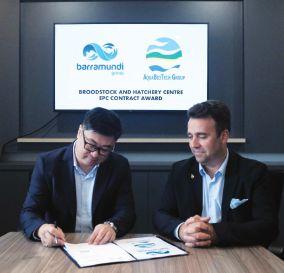
Barramundi Group Ltd. has awarded Malta’s AquaBioTech Group a contract for the design, supply, installation, and commissioning of a RAS hatchery and live feed facility for barramundi (Lates calcarifer) in Brunei Darussalam.
This new facility comes after an earlier investment in its already operational RAS nursery.
“A second state-of-the-art RAS facility in the country enhances its overall food and biosecurity posture and adds another cornerstone in its nascent but fast-growing aquaculture sector,” James Kwan, CEO of Barramundi Group said in a press release.
The production capability will be over six million juveniles per year and the facility will cater for additional juvenile requirements for a new 3,000 MT land-based RAS grow-out facility. The company is also in the intermediate design phase of this facility, for its 17-hectare Mengsalut site, with AquaBioTech Group.
“This project will be a significant catalyst for the development of barramundi and other land-based aquaculture initiatives in Brunei, strengthening food security and enabling the country to explore new export markets” said Shane A. Hunter, AquaBioTech Group’s CEO.
Danish Export Association and AquaCircle merge to boost Denmark’s aquaculture
Danish Export Association and AquaCircle have merged to form a new organization, called Danish Export – Fish Tech, to strengthen Denmark’s aquaculture towards sustainable food production based on energy-efficient technologies.
This ensures the relevant players in the industry have a single entry point for export promotion, commercial activities and political advocacy, a press release from the Danish Export Association states.
The Danish Export Association is a non-profit association that plans and executes export campaigns linked to international trade fairs and exhibitions. AquaCircle is a “Danish knowledge cluster” that creates information on Recirculating Aquaculture Systems (RAS) for different areas of the industry.
With the merger, the Danish Export Association will now play a more prominent role in political advocacy with AquaCircle.
Danish Export – Fish Tech will also organize export promotions and networking activities.
“It is important that we can ensure the best possible conditions for industry players by creating a stronger voice together. Our members in Danish Export – Fish Tech are dependent on a strong aquaculture industry in Denmark to be able to develop in the export markets. Therefore, I am pleased that through the merger with AquaCircle, we can also create a stronger political voice,” said Martin Winkel Lilleøre, head of Fish Tech at the Danish Export Association.
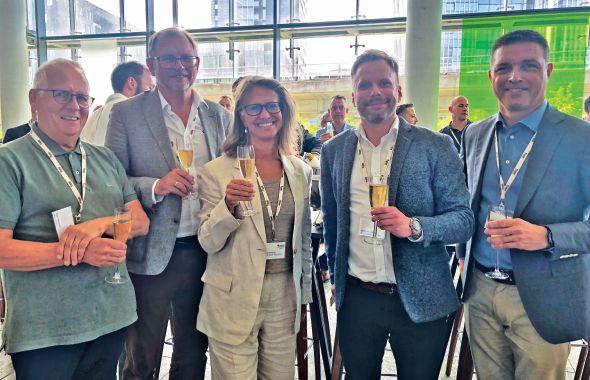
From left to right, Bent Højgaard, consultant, Pisco Group, and co-founder of AquaCircle, Jesper Heldbo, secretary general, AquaCircle, Anette Galskjøt, CEO, Danish Export Association, Martin Winkel Lilleøre, head of Danish Export - Fish Tech, Paw Petersen, CEO, OxyGuard International, and chairman at AquaCircle.
Barramundi Group CEO James Kwan signs deal with AquaBioTech CEO Shane Hunter.
Great Northern Salmon receives grant for RAS facility, changes company name
Great Northern Salmon, formerly named Katahdin Salmon, has been awarded a US$5 million EPA grant to construct its RAS facility in Millinocket, Maine.
The company also received a grant of US$1 million from the Maine Department of Economic and Community Development (DECD) for the same purpose. The company said in a press release that these contributions reduce its overall capital expenditure and enable it to start construction with a fully prepared and excavated site, reducing the construction cost and timeline. The construction schedule advantage is estimated to be six months.
“Being selected for a substantial grant like this by the EPA speaks to the high-quality work that our development partner “Our Katahdin” has put into developing the former paper mill site and also the great potential for Katahdin Salmon to repurpose the site,” said Marianne Naess, chief executive officer of Great Northern Salmon.
The Millinocket facility will be located on the 1,400-acre property that belonged to the Great Northern Paper Company which
permanently closed in 2008.
“(Great Northern Salmon) has been a good name for the initial development phases in Maine. Now that the company is entering into a new phase, it is the right time to transition to a name that reflects the developments of the company and the way forward but that still ties the company to the local community,” said Naess.
“This EPA-funded project will clear the way for Great Northern Salmon’s (formerly Katahdin Salmon) aquaculture project which has secured major project permits and is scheduled to begin construction in 2025,” said Sean DeWitt, president of Our Katahdin.
The company said the contractor will be selected within the next few months with a remediation starting later in the summer.
Great Northern Salmon selected Nofitech as the designer for the facility.
“Nofitech´s reputation for delivering on expectations for cost, performance, and schedule, proven through its repeat business with several customers, was also an important factor in the decision,” said Dean Guest, head of RAS technology.
Robert Hundstad, chief executive officer of Nofitech said this is the beginning of a long-term partnership for both companies.
Soul of Japan secures $211M for Asia’s largest RAS salmon farm
Soul of Japan K.K. (SOJ), a Japanese aquaculture company, has announced that it has secured a long-term debt facility worth JPY 33 billion (US$211 million) to develop Asia’s largest land-based salmon farm.
It will be housed in a total of 70,000m² of building space, spanning over a 137,000m² plot and will produce 10,000 tonnes of Atlantic Salmon annually. It will double as a pet nutrition facility and is located in Tsu City which is at an optimal distance from Japan’s most populous
cities, Tokyo, Nagoya, and Osaka.
This funding is provided by Sumitomo Mitsui Banking Corporation (SMBC) for the GK Mie RAS Atlantic Salmon Project.
“This debt financing allows us to accelerate our growth and contribute to Japan’s food security while minimizing our environmental footprint. We are committed to delivering high-quality, locally produced salmon to consumers,” said Erol Emed, CEO of SOJ.
SOJ is partnering with Pure Salmon
Technology to implement advanced RAS technology, and high-quality salmon production. The transaction is supported by 8F Asset Management, an asset manager of private equity funds that own the Pure Salmon Group.
PHOTO: GREAT NORTHERN SALMON
Power Struggle
By Maddi Badiola
Maddi Badiola, PhD, PM, is a RAS engineer and co-founder of HTH Full Spectrum based in Basque Country, Spain and USA. She is executive director of the Florida Marine Aquaculture Coalition. Her expertise include energy conservation, lifecycle assessments and RAS global sustainability assessments. Email her at mbadiolamillate@gmail.com.
The importance of the bigger picture
Holistic, comprehensive, complete, total –these were the words
I repeatedly heard when I did my Project Management Master’s degree three years ago.
My teachers emphasized the need of having this approach every time we are taking over a new project. Believe it or not, this was one of the compliments I got when I did my PhD viva from both of my directors and the jury. They told me that I can look at the bigger picture. And maybe that is why I find it easy to involve every stakeholder in every project I carry out.
This is the reason for me to say that the Canadian government’s Fisheries and Oceans Canada (formerly known as the Department of Fisheries and Oceans, DFO) has not taken
into account all the parties involved in the decision of banning cage salmon farming in British Columbia (B.C.) by 2029. I mean, prohibiting cage farming while bringing all that production (i.e. more than
Commercial Filtration Systems
Customized for your fish farm, hatchery or research operation!
Our Commercial LSS Packages are custom engineered to meet your specific needs.
• Marine and Freshwater
• Mechanical filtration
• Chemical filtration
• Ultraviolet disinfection
• NEMA enclosed controls
• Bio-filter towers
• De-gassing towers
• Wide variety of flow rates
• Flow control valves
• Protein skimmers
• Variable frequency-drive pumps
• Temperature management
All our systems are pre-plumbed and fully water tested prior to shipping. Call us today at 206.937.0392 www.AquaticEnterprises.com
65,800 metric tonnes annualy) inland.
As an advocate and openly declared pro-RAS person, I am not going to disagree that Recirculating Aquaculture Systems (RAS) are the future of aquaculture. But, I do understand that there has to be a transition, and maybe not even a full switch to this type of technology.
Obviously, this will take years. This is a long, very longterm objective. How many projects, individual projects from different groups of investors have we seen announced in the last decade? Or in the last 20 years? And how many of them have become real?
Finding the appropriate land, getting all the permits, the construction of the facility and the systems, system maturation,
finding and training people, and the actual fish growth – these are some of the steps (from the biggest perspective) that someone has to go through before having fish in the market.
I guess we all agree that the five-year timeframe given by the Canadian government, is not realistic. At all. Of course, this is in an ideal scenario: no backlogs, no issues, where all that is needed is in place, staged and ready to go. Unfortunately, even if the land was there, the permits were issued, the construction went smoothly and fish grew as expected, B.C. has a basic obstacle, among others: energy. Or being more precise, the lack of it.
Let’s look at RAS as a whole. It is a system that is pumping water 24/7. What would be an imperative requirement?
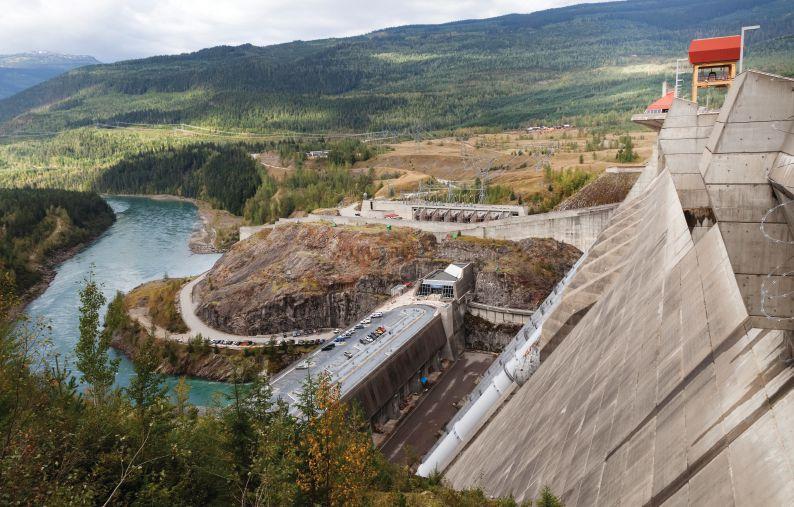
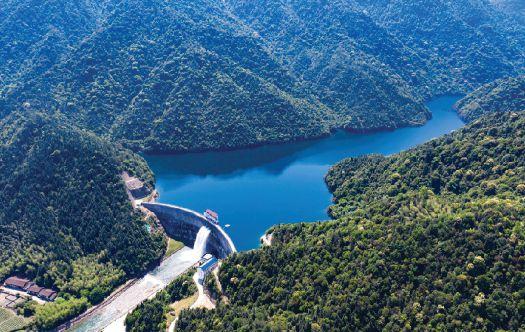
Revelstoke Canyon Dam in the Columbia River in British Columbia
Energy. Now, let’s include in the equation of B.C.’s electricity grid a production of about 66,000 mT of fish using RAS technology. The energy demand will inevitably (and not being a math expert) increase.
Currently, about 87 per cent of electricity in B.C. is produced by hydroelectric sources, five per cent from biomass (relying mostly on waste from B.C.’s extensive forestry industry), four per cent from wind, and the rest includes natural gas, refined petroleum products, and solar. Then, there is a 10-year plan to increase the electricity production focusing on renewable energies.
So how would it be feasible to cover the actual demand plus the “new” aquaculture production inland in five years, if the government’s plan to increase the electricity will be
Recirculating Aquaculture Systems are the future of aquaculture. But I do understand that there has to be a transition, and maybe not even a full switch.
finished in 10 years? Assuming that this plan had already included such fish production.
I spoke to Rob Walker (CEO of Gold River Aquafarms) and John Holder (CEO of JLH Consulting), both B.C. locals and experts in the field, to understand a little bit more about the situation. Both agree that in an ideal world and having already a site selected, at least six years would be needed to have fish in the market (2-3 years for permits, 1+ for construction, 2 years for fish growout).
Nevertheless, in reality, the
sites are not there. Roads? Running power lines? Don’t get me started. Freshwater shortage is real, permits are a challenge, and of course energy, the big unkown and forgotten. By 2030, there is already expected to be a B.C. power shortage. With all that, does the government understand the risks of such a fiveyear time frame decision? It has been proven and we know that RAS has many advantages when compared to other technologies, but inherently, there are some issues which cannot be avoided.
As in most of my articles, I like to make some questions for the debate. Does the Canadian government fully understand what this transition to landbased would require in terms of energy infrastructure? Has the aquaculture industry been
asked about this transition? And more importantly, does the Canadian government conceive what it is logistically needed to even make this work?
Although there are pros and cons, let’s assume the Northwest salmon aquaculture industry wants to stay and address the risks and impediments to embracing RAS production systems. Site selection and energy are the very heart of this dilemma with serious resource limitations.
Lastly, three points that I would like to remind you as my teachers did:
1. Stakeholders: identifying them is the base of every project.
2. Communication and transparency: basic of project management.
3. Teamwork: essential requirement in RAS industry.
Premium selection of salmon ova for the specific requirements of the land-based production environment.
This product is selected for high growth and reduced early maturation (All-Female) or even complete elimination of early maturation (All-Female Triploid).
Learn more about our products bmkgenetics.com/products Contact
British Columbia’s death sentence
By
The Canadian government is looking to land-based aquaculture to replace net pen salmon farming in British Columbia’s coastal waters.
But, few in the industry are optimistic about this move.
All eyes were on British Columbia (B.C.) this past summer as Fisheries and Oceans Canada (formerly known, and still commonly recognized as the Department of Fisheries and Oceans or DFO) announced its transition plan to permanently close salmon net pen farming in its coastal waters by 2029.
As part of this transition plan, DFO Minister Diane Lebouthillier announced on June 19 that the office is looking to issue nine-year licenses for new closed containment projects on land and at sea.
“Only closed containment systems in water or on land will be considered for salmon aquaculture licenses in coastal British Columbia,” said Min. Lebouthillier, as translated from French.
“Our government, however, recognizes that closed containment systems are much more expensive and can also result in an additional financial burden. That is why in order to ensure greater predictability for these businesses, I’m announcing nineyear licenses to successful applicants for closed containment production.”
The official document of the transition plan is set to be released at the end of July (after the publication of this issue). However, with the initial details shared at the press conference, many aquaculturists are criticizing the feasibility of Min. Lebouthillier’s path forward.
Feasibility concerns
More than 65,800 tonnes of Atlantic salmon are produced annually in open net farms along the province’s west coast.
According to a study published in April in the Sustainability journal, these farm closures would divert C$1.2 billion (US$875 million) away from B.C.’s local economy, or about C$447 million (US$328 million) in the country’s GDP contributions.
The study, titled “Assessing Consumer Implications of Reduced Salmon Supply and Environmental Impact in North America,” forecasts that the decrease in Canadian salmon supply will also trigger significant price increases to more than C$30 per kilogram by 2026. Canadian salmon is currently priced at around C$22/ kg. Increased salmon imports to North America could also mean increased carbon emissions from shipping and transport.
“There hasn’t been any considerations, or so it seems, on the social science side of
things, and the economics and the cultural importance to Indigenous and coastal communities,” said Dr. Stefanie Colombo, an author of the study and Canada Research Chair in Aquaculture Nutrition at Dalhousie University.
“The current government is very focused on carbon emissions and carbon credits... All of the social consequences, I don’t think are part of the decision.”
Regulatory hurdles
Five years is not remotely feasible for new projects to be able to replace B.C. salmon production, said K.C. Hosler, general manager and chief technical officer at PR Aqua. Site selection, permitting, design, and construction can take more than five years to accomplish. And yet, Hosler said the government has not done its due diligence in helping streamline these processes.
“I think that demonstrates just how ill-informed the government is about the
How the DFO’s transition plan hurts B.C. aquaculture as a whole
Jean Ko Din
The Canadian government is looking to new closed containment projects as it plans to remove all B.C. net pen salmon farms by June 2029.
decision,” he said. “We routinely talk to people who put in their application and the government uses every minute available to them, out of the year they have to respond, before they will grant the licence, right up to the day. They will not process it faster. They are not motivated to do so.”
PR Aqua has been part of the B.C. aquaculture industry for 35 years. Hosler said that he is heartbroken to see the DFO move forward with a decision that hurts the potential for aquaculture to grow.
“We grew out of the salmon farming industry, and in support of the salmon farming industry,” said Hosler. “Despite the fact that we’ve moved from an equipment manufacturing company into a company that is focused on land-based technology… we’re still very supportive of the local industry and the net pen industry in particular.”
Given the many challenges he and his team have faced in the permitting process for Gold River Aquafarms, CEO Rob Walker is also skeptical of the government’s intention to replace 65,800 tonnes of farmed salmon production.
Gold River Aquafarms plans to build a land-based recirculating aquaculture systems (RAS) facility in a former sawmill in northern Vancouver Island. Once built, the facility is designed to raise 3,000 tonnes of Steelhead annually. The Gold River project’s permitting process with the DFO took more than two years to complete and is currently, applying for its provincial water permits.
“I think the government has really played on that antagonism, setting one industry against the other and it doesn’t make sense to me. We can grow together,” said Walker.
Losing confidence
DFO first announced its intention to shut down salmon farms in Discovery Islands and Campbell River, B.C. in December 2020. The federal ministry outlined an 18-month phase-out period in which no transfer of fish between hatcheries and farms was permitted.
Mowi Canada West and Cermaq Canada
filed a lawsuit against the DFO and in April 2022, the federal court overturned the ministerial order, ruling that DFO breached the licence holders’ rights to procedural fairness, as it came without warning or proper consultation and engagement with the industry.
Even still, the uncertainty within the industry resulted in millions of fish culled, salmon farms closed operations, and young professionals began moving away.
“That’s probably my biggest fear,” said Hosler. “With the decline in it and the uncertainty in it over the last few years, we’ve seen a lot of talented people just leave B.C., seeking jobs elsewhere, so they could stay in salmon farming.”
More than 6,000 jobs are affected by the salmon farm closures in the province. Additionally, there are about 1,000 supply companies that will also be affected indirectly, including feed suppliers, technology providers, engineers, etc.
“This decision will signal continued industry stagnation and uncertainty, resulting in a continued lack of investor confidence,” said Trevor Stanley, managing director of fish feed supplier, Skretting North America. “The result is reduced investment in innovation, ultimately forcing us to look for growth and investment opportunities in other progressive aquaculture sectors.”
Potential for RAS
B.C.’s rugged coastline stretches for 25, 725 kilometres between the Pacific Ocean and the Rocky Mountains. It’s diverse geography features sandy beaches and dramatic cliffs, dominated by valleys and fjords.
Hosler said there is great potential for land-based aquaculture to flourish in his home province, but this is a potential that has to be explored in the long term.
“I think there needs to be a deep dive on looking beyond the obvious, industrial sites that exist to understand where we could build sites,” he said. “I just know that people are coming to B.C. and talking to us about projects, are spending a year to two years to find appropriate sites for their production.”
Hosler said he believes that the province still has great potential for RAS. Most of the smolt facilities operated by Mowi Canada West, Cermaq Canada & Grieg Seafood B.C. use RAS but the final growout is done in the ocean in net pens. For full land-based production, Kuterra Salmon, Taste of B.C., and Habitat Life are some examples currently in operation.
“There’s probably 20 sites that can support 1,000-ton production to every one that can support 5,000 tons of production,” he said. “So there’s probably a need to almost look at a distributed approach to spread out those infrastructure requirements. So I can see that being a potential path to explore.”
Infrastructure would be the biggest challenge for potential recirculating aquaculture sites. Access to large amounts of freshwater is a challenge, as well as access to the B.C. power grid.
“Perhaps you don’t need freshwater, if you’re bringing in fingerlings, in the case of trout or smolts from another facility, maybe you can make that work. There are, of course, Atlantic salmon hatcheries all over the place because of the existing industry, so maybe a land-based farm could somehow use saltwater only,” explained Walker.
The province runs mostly on hydroelectric power, and so the drought conditions of the past few years have also affected its power utilities. In the past few years, many parts of the province conducted planned outages during the colder months to relieve the strain on electricity production. The government has had to import power from out of the province.
“In my mind, the DFO decision is very siloed thinking,” said Walker. “They just made a decision that they think is just easy, just move everything into a container. And they haven’t taken all of these other big environmental effects into account. And so it’s really going to be challenging.”
Even still, Walker believes there is great potential for land-based projects in the province. In fact, during their site studies, he says his team considered many potential locations for their project.
Let ’ s talk biology!
Academics and industry members look at biological logistics questions
By Matt Jones
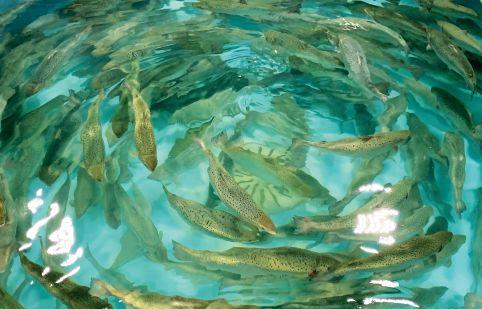
While recirculating aquaculture systems have been around for some time in one form or another, they are perceived by many as a new technology. And with any new technology or technique, it can take time to figure out all the ins and outs of how that technology works, and how it can be best applied.
The ins and outs that are currently being explored by academics and industry partners in RAS are the biological logistics of raising fish in such systems. There are still many questions remaining about how best to employ RAS to ensure the best quality of fish at the end of the process.
RASTech Magazine spoke with several academics and industry members to find out more about the biological questions that remain for RAS.
Aquamaof’s Dr. John F. Taylor, a salmonid biologist with over 20 years of experience, says there are a variety of individual questions that are being examined. However, they mostly address aspects of the same high-level logistic question.
“What is it in the RAS environment that makes a good fish?” asks Taylor. “There’s this question whether RAS produced fish are not as robust as (those reared in) a traditional flowthrough system. Is that environmental exposure variation?”
HOT ENOUGH
NOFIMA’s Trine Ytrestøyl is no stranger to these topics. Her research focuses heavily on physical parameters that could impact fish biology and fitness, such as photoperiod and salinity, as well as water temperature. A key question she has examined is whether it is best for fish to be in a constant high temperature in RAS, or would it be better to fluctuate the temperature to include some lower temper-
Through a survey conducted last year, NOFIMA learned that another key concern for RAS farmers is particles in the water.
atures as well.
“NOFIMA and some partners are running a trial now to see if there is an effect from reducing the temperature from the normal around 12 to 13 degrees down to eight degrees,” explains Ytrestøyl. “We don’t have the results from this yet, but that’s one of the questions that farmers are concerned about. Is it good for the fish to experience some more variation in temperature, so that when it comes into seawater pens where there obviously are variations in temperature linked to daylight and the season? In nature they have certainly adapted to be able to handle changing environments. There is ongoing research, but I think we need to do more.”
Raising fish at a higher temperature rears them more quickly, making that effectively the standard in an industry that is often focused on growing a fish as quickly as possible. However, Ytrestøyl notes that there is some data that shows that parts of the fish grow differently than others based on temperature – particularly, the heart is more rounded and believed to have a lesser pumping capacity in fish grown in higher temperatures.
“When you do things quickly, everything may not be able to catch up,” says Ytrestøyl. “The organ development may suffer and you may have malfunctions of the vertebra and other heart morphology. Some colleagues of mine have projects on this.”
A MATTER OF PARTICLES
Through a survey conducted last year, NOFIMA learned
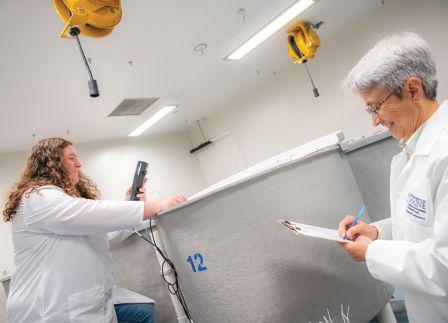
Understanding water quality in relation with fish health is a key question for RAS farmers and operators.
that another key concern for RAS farmers is particles in the water – generally either remnants of food or feces. Even though some is filtered out in the system, there’s generally more of those elements in a RAS system than in a pure flowthrough system.
“How will that affect performance, the gills for example?” Ytrestøyl asks hypothetically, identifying topics that require further research.
“You have higher turbidity in RAS water than in flowthrough systems. There’s potential to do more condensation of the particle sizes. For example, are there some particle sizes that are causing more problems? We don’t really know too much about this. So water quality is always important.”
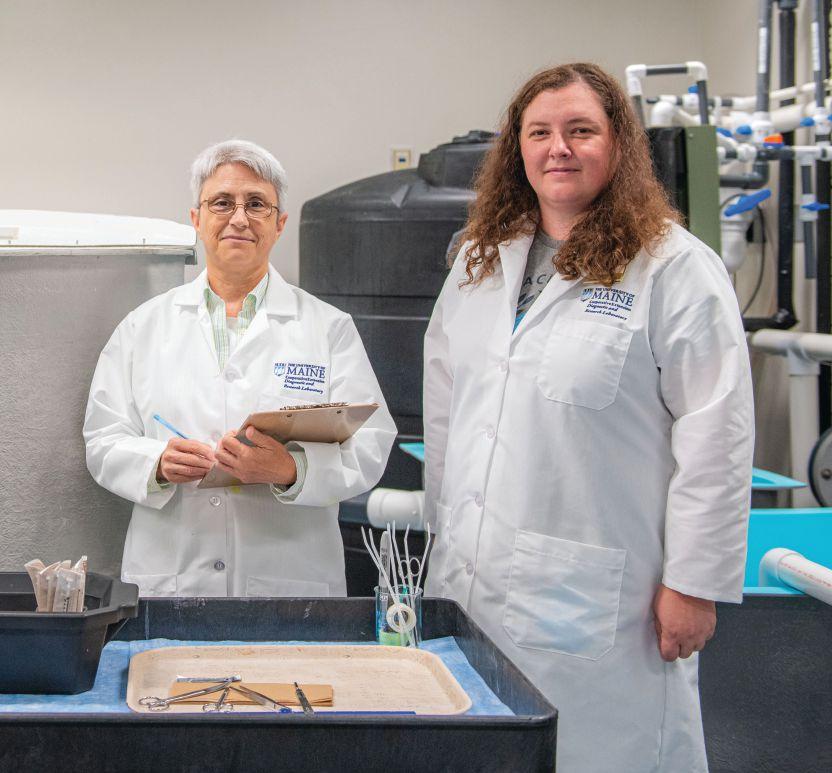
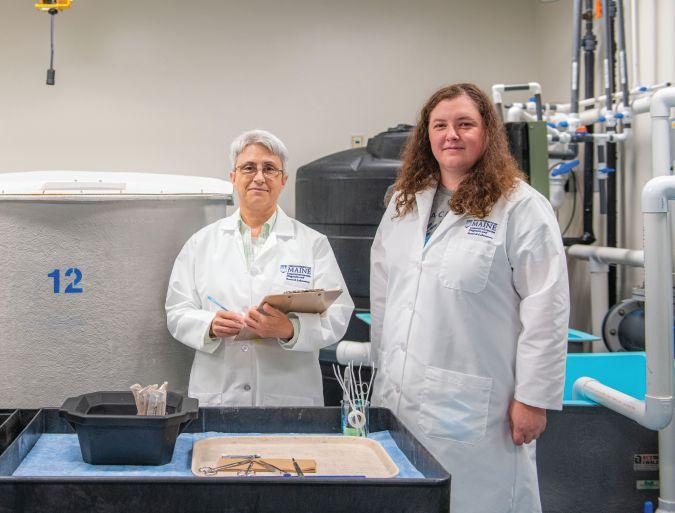
Prof. Deborah Bouchard, director of the University of Maine’s Aquaculture Research Institute, is currently work-
Innovation Beyond Measure
Results Beyond Expectation
Where Water Drives Innovation.
ing on a project looking at sustainable aquaculture systems for Atlantic salmon, among other projects. She says that the top priorities that industry has identified for the project are water quality, alternative feeds for fish meal and, in particular, working on feeds that lead to waste that can be effectively filtered.
“Fish can actually get diarrhea,” notes Bouchard. “No one thinks about that, but they do. And so we want to make the fecal matter bigger and bulkier so it’s easier to filter out of the water.”
NOTHING FUNNY ABOUT THAT TASTE
Bouchard notes with a chuckle that as an aquatic animal health specialist, she was, at best, skeptical when she heard claims that RAS systems would be free from disease issues. While a land-based recirculating system isn’t going to have problems with sea lice or other parasites like that, bacterial pathogens and microorganisms can still cause significant challenges. Microorganisms such as geosmin and Methyl-Isoborneol (MIB), which can cause a dirt smell and an off muddy-type of flavour in salmon, are a particular concern.
“With catfish, people eat it all the time and don’t worry
LONG-LASTING AQUACULTURE PUMPS
about it at all,” says Bouchard. “That’s how we’re used to catfish tasting. But for salmon, we don’t want it to have any off-flavour. So we’re working on issues to mitigate that. You can eliminate it slowly by purging, but then your water usage is going to go up waiting for them to purge from that off-flavour.”
A DISCONNECT?
Dr. Taylor notes that a question that he has is whether there is a disconnect between raising fish in land-based systems with an aim to moving them into open-net sea pens.
“When we breed for full land-based, do we need different traits compared to sea cages?” asks Taylor. “What happens when you hold your land-based stock on land yet maybe a portion of those offspring go to sea?”
Dr. Marie Smedley, head of breeding programs for Xelect Genetics – who actually studied under Taylor during her PhD – echoes the sentiment, noting that it does follow common sense. If an animal is already in the wild environment, theoretically, they should compare better to those raised in a more sheltered RAS project where they are not exposed to pathogens. But is it a moot point?
“If you were guaranteed that you’ve got more animals
Dr. Deborah Bouchard says the top priorities for that industry has identified for her research project at University of Maine are water quality, alternative feeds for fish meal and, in particular, working on feeds that lead to waste that can be effectively filtered.
transferred to sea, if your survival rate is lower and there’s a risk of pathogen exposure and all the environmental licenses, it’s almost a moot point,” says Smedley. “With genetics, it’s important to bear in mind that you are selecting for cumulative generational gains. You’re still selecting these animals that have performed better in the net pens in the end, whether they were reared in a land-based system RAS system initially or not.”
Professor Bouchard isn’t aware of any academic research into that question specifically, but she is aware of a company based on the east coast of Canada and the United States that are pursuing experiments of that type. But she isn’t convinced that there would be a significant difference.
“Most of our fish are raised on land until they’re smolt as it is,” says Bouchard. “Even the hatcheries that are raising smolt are partial recirculating or full recirculating already, so I don’t know that it would really create that much of a difference.”
NOFIMA also continue to study nephrocalcinosis – a build up of calcium in the kidney which could cause injury or illness. Ytrestøyl notes this continues to be a hot topic in the wider aquaculture sector, and whether it is a problem with unique dimensions in RAS is currently being researched through several projects.
“That’s a huge problem for the fish when its going to seawater because it destroys the kidney, which is important for regulation,” says Ytrestøyl. “If you have severe nephrocalcinosis the fish will die after seawater transfer. If they’re mild, it can improve and survive.”
FURTHER RESEARCH AVENUES
One thing Ytrestøyl would like to see more of is more studies of the entire life cycle of the fish, as opposed to focusing on specific phases. Unfortunately, due to the time and money involved in such an effort, that type of research is rare.
“It’s not easy to get the whole picture, but of course, it’s
possible to gather data from the commercial industry and do some sort of mapping of trying to link together factors in early life with performance in seawater and do statistics on large data sets,” says Ytrestøyl. “That would be one way to get ahead a bit faster rather than running like five different trials to test all the different protocols and options.”
Bouchard notes that the aquaculture industry in general is also grappling with issues of egg quality – and related reproductive biology – and that RAS is no exception. So she would be very interested to see further research conducted on reproductive physiology to find markers in their stock that both land-based and aquaculture in general could benefit from.
NOFIMA research scientist, Dr. Trine Ytrestøyl says nephrocalcinosis continues
China’s largest eel RAS operation
Ze Hui Aquaculture aims to build sustainable eel RAS industry in China. By Nestor Arellano
In 2012, China exported 71,000 tons of eel valued at US$1.7 billion, according to a country’s General Administration of Customs. With a growth rate of 38.23 per cent yearon-year, China’s eel production industry is seen as one of the largest and fastest growing in the eel production world.
Some reports say that as much as 85 per cent of the world’s eel supply can be traced back to Chinese aquaculture farms. With this growth comes the uncertainty of lack of regulations, traceability and even concerns of around possible glass eel smuggling.
At least one Chinese aquaculture startup aims to dispel this perception by building what could be the country’s largest recirculating aquaculture system (RAS) facility for raising eel.
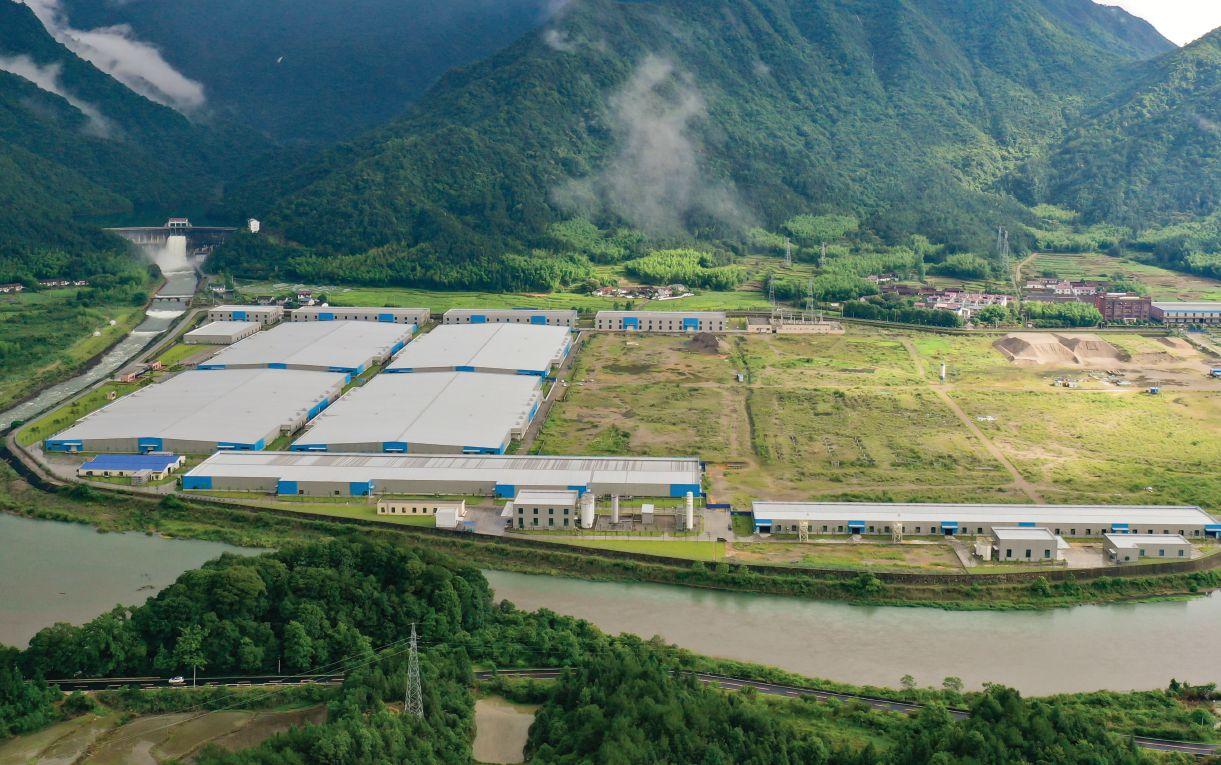
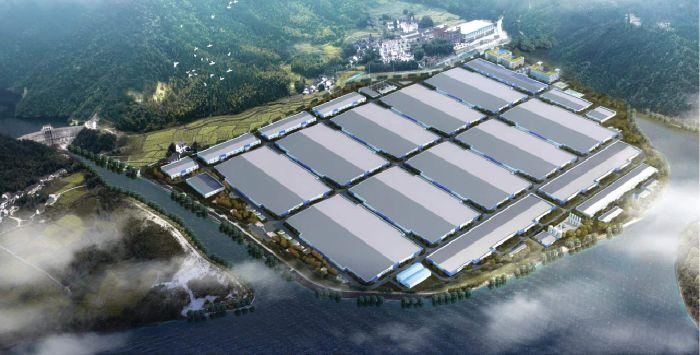
Nestled in the foothills of the picturesque old city of Nanping, in the southeastern water-rich Chinese province Fujian if the 520,000 sq. m. facility of Zehui Aqua-
culture. The company aims to produce no less that 15,000 tons of eel annually.
Fujian Province is China’s largest eel producer. In 2021, the province accounted for 43 per cent of the country’s eel production. It was followed closely by Guangdong Province which accounted for 42 per cent.
RAS revamps traditional eel
Zehui Aquaculture is among the largest of the handful of eel RAS companies in the country. The rest are small aquaculture operators.
“Currently, eel farming in China is mainly done by small farms, with an annual output of 100-200 tons, and there are more than 1,000 such farms,” according to Changlin Ye, aquaculture operations manager for Ze Hui.
Changlin holds a master’s degree in aquaculture from Nova Scotia’s Dalhousie University. He worked in a tilapia farm in Vancouver from 2014 to 2017. In late of
2017, he decided to go back to China, and join the Zehui team.
Many of these smaller “traditional eel farms”, he said, employ flowthrough systems which require large amount of water and endanger the environment. “They discharge a lot of water and produce lots of pollution.”
“The system is affected by external climate, making water quality parameters unstable and prone to disease,” says Changlin. “These are among the pain points that prompted reforms in the eel farming industry.”
The reforms in China’s eel aquaculture space, he says are also geared towards greater sustainability, accountability, product traceability, and improved regulations.
New kid on the block
Ze Hui Aquaculture was founded in 2017 by Naijiing Chen, an entrepreneur who was involved in grain trading and real es-
Zehui Aquaculture aims to produce about 15,000 tons of eel annually at it’s planned facility in Nanping City.
tate development.
Naijiing’s hometown had a long history of traditional eel farming. These farms were plagued by drawback such as highwater consumption, uncontrollable farming environment, risks of fish disease, and unstable harvests.
Naijiing believed that RAS was the ideal technology for mitigating these risks inherent to the local eel aquaculture.
“Our goal is to become China’s leading eel farming enterprise,” according to Naijing. “We will innovatively develop eel aquaculture and processing business while building a healthy and prosperous eel farming industry.”
Zehui contracted Danish RAS technology provider Billund Aquaculture to build the system for the Nanping facility. The US$275 million project included, 560 water tanks, a grow-out building, RAS, eel processing facility, feed production, logistics facility, and a research & development centre.
The ongoing global eel supply challenges resulted in some difficulties for Zehui. However, the company sources its glass eel from South America and North America.
The project was divided into two phases. The first phase, which was completed in 2022, reached its targeted annual produc-
Zehui Aquaculture has contracted Billund Aquaculture to build its system for an estimated US$275 million.
tion of 6,000 tons. The second phase has a target annual production of 10,000 tons.
UltrAqua, Denmark-based company, provided the disinfecting and water quality systems for the facility.
Protection of the region’s natural ecology and rich water re-
“Our goal is to become China’s leading eel farming enterprise,” says founder, Naijing Chen.
source was a primary concern for the local government. With Zehui’s commitment to sustainability and environmental conservation, the company also received the support of the local government.
Zehui also created nearly 200 jobs in the area.
Future of China’s eel industry
Traditional eel farming has been around in China for decades. It was only in the early 1970s that experiments in larger scale eel farming began.
From 2017 to 2021, the country’s production of eel rose from 217, 300 ton to 255, 300 tons.
Today China is one of the largest if not the largest producer of eel in the world.
Chianglin foresee more and more aquaculture operators adopting advance technologies to improve eel production.
“Like the pig and chicken farming industries which have transitioned from small household operations to medium and large enterprises, the eel industry will also undergo integration in the future,” he says. “Most small farms and non-compliant farms will be eliminated.”
“Creating a premium brand is key to winning in the market,” Changlin explains. “On the other hand, continues optimization and improvement in production are needed to increase output and reduce cost.”
Despite its many advantages, the cost of building a RAS eel farm is extremely high compared to that of building a traditional farm.
Part of Zehui’s strategy for success is to not limit itself to eel production.
Zehui’s facility will also handle eel processing. The facility will have a grilled eel processing factory as well as an eel feed factory with an annual output of 36,000 tons.
Changlin estimates that the company has cornered five per cent of the Chinese eel market. Zehui plans to export its products to Japan, United States, Russia, and Southeast Asian nations.
Zehui Aquaculture’s facility will be nestled in the Fujian Province, China’s largest eel production hub.
Innovasea adds new team members to Chilean operations
Innovasea has appointed Fidel Pardo and Ana Maria Moris to join its Chilean operations.
Pardo will serve as Innovasea’s outside sales specialist for the land-based aquaculture unit and Moris as a senior product manager and lead product development for its global digital aquaculture solutions.
“As a former production manager, I understand what it takes to raise fish successfully,” said Pardo. “Now, I have the chance to use this expertise to empower businesses to develop and improve their facilities.”
Moris has an executive MBA from the University of Barcelona and is working towards a master’s in digital transformation. “I’m excited to join Innovasea and help develop digital products that will truly make a difference in the industry,” said Moris.
Together, both Pardo and Moris have more than 50 years of industry experience helping companies oversee their aquaculture operations and achieve their business and commercial goals.
“Fidel’s proven track record makes him an invalu -
able addition to the team,” said Innovasea managing director, Juan Pablo Barrales. “His first-hand experience with the equipment and real-world challenges farmers face makes him uniquely qualified for this role.”
“Ana’s addition helps us to ensuring our technology continues to evolve with our customers’ needs,” said Innovasea vice-president, Tim Stone.
Smarter, stronger, more economical drum filters
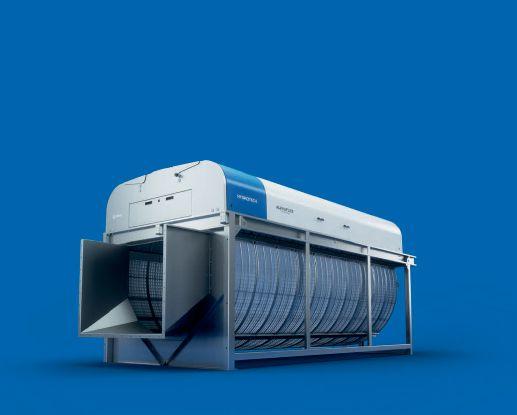
The Hydrotech Drum Filter Value series focuses on reduced maintenance, increased component quality and simplified operation – all to give your plant maximum filtration performance at a minimum operational cost.
Left: Ana Maria Moris.
Right: Fidel Pardo
Ace Aquatec and Shrimp Welfare Project team up for humane shrimp stunning
Aquaculture technology specialists, Ace Aquatec, have partnered with the Shrimp Welfare Project to expand access to humane stunning solutions amongst shrimp producers globally.
In a press release, Ace Aquatec stated the need to introduce more humane slaughter methods for shrimp, one of the world’s most widely produced aquatic species. Immersion in ice-water slurry is a common method of slaughter around the world, but
there are concerns that this technique may not sufficiently stun decapods during the slaughter process.
Shrimp Welfare Project aims to provide 24 shrimp producers across the globe with a free electrical stunner until the end of 2025. Producers need to be committed to a minimum stun volume of 2000 metric tonnes per annum and improve welfare practices to the best of their capacity.
Ace Aquatec said its Prawn Humane Stunner Universal
(A-HSUTM)™ provides effective, safe and rapid in-water stunning solutions, stunning the shrimp unconscious in less than a second and reducing handling, and therefore stress.
“We’re proud to be collaborating with Shrimp Welfare Project to further our mutual goal of making humane stunning solutions accessible to shrimp farmers everywhere. With evidence pointing to shrimps’ sentience, and their sensitivity to inadequate slaughter methods, there’s an acute need to revolutionize shrimp slaughter processes globally. This partnership is taking steps to address the issue
on an industry-wide scale, and we hope to expand it further in the coming months and years,” said Tara McGregor-Woodhams, chief sales & marketing officer at Ace Aquatec.
“We are excited to partner with Ace Aquatec. Humane slaughter of animals is crucial for maintaining good welfare throughout the entire process. We are keen to actively collaborate with the shrimp farming industry and support them in making the transition towards humane slaughter. This partnership is a significant step in advancing our mission, and we look forward to seeing the positive impact it will have on shrimp welfare globally,” said Krzysztof Wojtas, head of programmes at Shrimp Welfare Project.
Sustainability
HOSTED BY Ian Roberts, Director of Communications at MOWI Canada, Scotland, Ireland
Presented by Sponsored by
Sponsored by
Presented by
Krzysztof Wojtas
Tara McGregorWoodhams
Triogen® delivers 16 ozone generators to Scottish salmon farms
Triogen® by BIO-UV Group has delivered 16 ozone units including one of the company’s new PPO3 ozone generators to Scottish salmon farms in 2024.
The ozone generators were manufactured at the Triogen® facility in East Kilbride, near Glasgow. This order follows on from the performance success of the Triogen ozone generation units installed at fish farms over the past decade.
“We continue to deliver to operators in the UK aquaculture sector and contribute significantly to the health and well-being of fish and humans alike,” said Simon Marshall, deputy general manager of BIO-UV Group and managing director of Triogen®.
Triogen® is BIO-UV Group’s Scotland-based company, a water treatment specialist. In 2019, BIO-UV Group acquired Triogen® from SUEZ, benefiting from 35 years of experience in water treatment and disinfection using ozone and UV in the UK market.
“Thanks to our proactive approach and strong customer service, we have had the opportunity to work with numerous fish farms in the UK, supplying new equipment and providing emergency support. At the end of 2023, BIO-UV Group was called in following a breakdown of water treatment equipment. We were able to respond quickly and within 48 hours delivered and commissioned a device that enabled the owner to save their production," Marshall added.
DESIGN | EQUIPMENT | SOLUTIONS
Fresh Tips
By Curtis Crouse
The RAS Treatment
Closed-containment landbased aquaculture systems have clear advantages over open systems in terms of pathogen exclusion. Unfortunately, even under the most stringent biosecurity measures fish will still be susceptible to the interplay of environment, stress, and opportunistic infection. Coping with fish diseases can be challenging given the limited number of approved drugs for aquaculture, but they offer the chance to administer static or recirculated bath treatments to preserve fish health.
Universal considerations
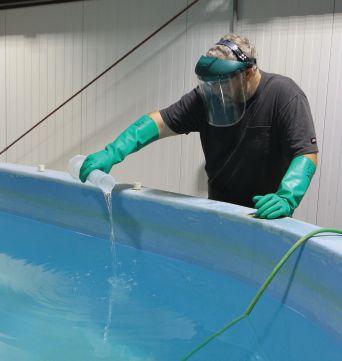
Some considerations will apply across any type of system when planning a bath treatment for fish. The first is that the fish should be examined by a veterinarian to diagnose their condition and recommend the appropriate course of treatment. Any drugs or therapeutants should be used in accordance with their labeling, withdraw times, and approval status. It is best to initiate a bath treatment with the cleanest system possible to reduce the amount of therapeutant inactivated by biological buildup in the tank.
Plan to fast fish the day before scheduled treatments, flush solids collection areas, and brush the tank and unit process surfaces if the fish are well enough to cope with this added stressor. Fasted fish in clean water will also reduce the oxygen demand during the bath treatment. Be sure to plan for discharge of the treated water. Depending on the compound used and discharge permitting regulations, the water may need to be neutralized prior to release. Any time a treatment bath is not neutralized, it is important to note that the concentration in the culture water will only be diluted at the rate of decay or make-up water addition, prolonging the exposure for the fish well past the intended bath duration. Any time a bath treatment is administered, a competent technician should stay nearby
to monitor for environmental conditions and signs of stress from the fish.
Fish exhibiting signs of stress indicate that the water quality is deteriorating or the treatment is having an adverse effect. In this case, the environment should be corrected, or the treatment abandoned.
Flowthrough systems
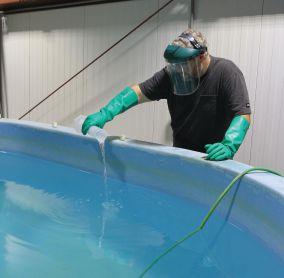
The most likely treatment method in a flowthrough system is a static bath. For this, the water entering and leaving the tank is turned off, and the therapeutant is added to the culture tank at the desired concentration and held for the appropriate duration.
It is important to dilute the added compound and adequately mix it into the culture water to ensure an even concentration across the entire tank. Maintaining water quality will be a major concern in a static bath treatment. Dissolved oxygen can be quickly depleted, and carbon dioxide can quickly accumulate without water exchange. Supplemental oxygen, like diffuser stones in the tank, is a prerequisite for a successful static bath treatment of even a short duration.
Partial reuse systems
Compared to a fully recirculating system
(RAS), a partial reuse system (PRAS) relies on relatively high water exchange rates to dilute nitrogenous waste. This allows PRAS to be designed without biofiltration. Because there is no need to consider the health of the biome in the biofilter, the full recirculation loop of a PRAS can be treated.
Treating the PRAS in this way allows the gas conditioning processes of the system to remain in use to preserve the environment for longer treatment duration. However, nitrogenous wastes can accumulate even if fish have been fasted before treatment while the make-up water exchange is off. Additionally, the larger volume will require more therapeutant to reach target concentrations. If PRAS configuration allows, individual tanks may be treated as a static bath, similar to a flow-through system.
Fully recirculating systems
Weighing the impact of a drug or therapeutant on the microbial health and function of a RAS biofilter is as important as the health benefit to the fish. Compromised biofilter performance will lead to reduced nitrification and potentially toxic concentrations of ammonia or nitrite.
The entire recirculating loop can be treated with a compound known not to impact biofilter performance. This method reduces the risk of environmental complications and will result in a long-duration bath. If a prescribed treatment is expected to compromise biofilter performance, the biofilter must be bypassed, and the rest of the system or individual tank treated as if it were a PRAS or static bath.
The compound used must be neutralized or diluted after treatment before contacting the biofilter. Even done successfully, collapsing the biomedia bed while bypassed carries its own potential risks. Future design criteria, including measures to keep a bypassed biofilter media bed expanded, flexible piping configurations, and bankable make-up water reservoirs, could mitigate some risks of using therapeutics in RAS.
Crouse
The approach to bath treatment will depend on the characteristics of each facility.