RAS - Fall 2023

Page 1


Since blutanQ was launched, most major RAS developers have taken advantage of our support services that cover design, technical, commercial and construction project input.

The recent award of BSI Kitemark Certification for customer service reinforces our promise of customer care from start to finish.

• Unique and protected epoxy coated steel tanks

• BSI Kitemark certification for customer service

• Added value warranties and regular inspection options

• 40‐year track record

COLUMNS 12

Power Struggle On harnessing the power of AI

| Fresh Tips Five freedoms of animal welfare in RAS

From the editor

All shapes and sizes

This issue is a bit of a showcase of the different shapes and sizes that recirculating aquaculture systems can be designed. It emphasizes to me how versatile and disruptive this technology can truly be.

On the other hand, I’ve also seen how difficult it is to establish standards or best practices that can apply across the industry. It’s a balancing act that is interesting to watch.

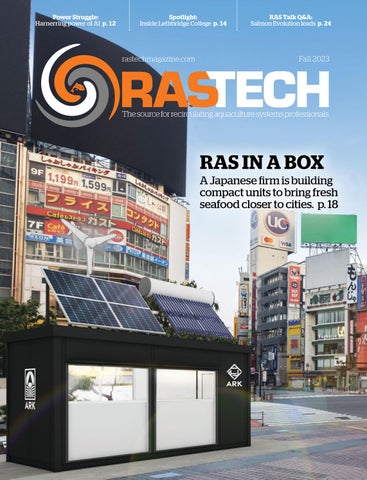
The cover story is definitely one that will catch the eye. Last issue, we explored the idea of smaller scale, more simplified RAS as a prudent foray into land-based production, but here’s ARK Inc. that is taking it to another level. With its prototype about the size of a shipping container, these micro RAS units could really shorten that distance from the farm to the table.

Bonnie Waycott’s story talks about how planting these units closer to communities could become a gamechanger for local food security, especially in a city like Fukushima. It’s exciting to see the possibilities of new projects like these that are thinking outside the box – or rather, thinking in a smaller box.

On the other side of the spectrum, we feature Salmon Evolution. I share an expert of a recent RAS Talk episode with CEO Trond Håkon Schaug-Pettersen about the company’s first large scale facility and its plans of becoming even larger.

Whether it’s ARK Inc.’s micro RAS box or Salmon Evolution’s hybrid megafarm, sustainability must be an integral part of the system design. It’s a more complex challenge as Salmon Evolution works its way to its 31,500 tonnes capacity goal for 2028, but I’m glad that it’s something that is being

talked about at Phase One (7,900 tonnes).

Schaug-Pettersen gave us the example of one company initiative in which they are capturing their solid waste and turning it into a rich fertilizer ingredient for local farmers.

I wish I had also asked him about the company’s push to be run on 100 per cent renewable energy. This company is truly leading in having both a profitable and sustainable business.

If this issue were to have a secondary theme, it would definitely be the circular economy. Lethbridge College just opened its doors to a brand new recirculating facility with the goal of exploring the potential of aquaponics.

This aquaculture research institute is prioritizing the future of circular food production. They are conducting a series of different studies of how fish waste can feed plant production. You know what they say, one fish’s trash can be a plant’s nutrient treasure. With 51 brand new modules, I’m sure there are new RAS frontiers just waiting to be explored.

Speaking of new frontiers, I’d like to enlist your help in finding more stories like the ones from this issue. I’m sure there are interesting RAS projects out there that we are overlooking. There are no projects too small or too specific that the general industry can’t learn or derive inspiration from. I want to truly challenge myself and the editorial team to find new stories in new places.

I would also like to take this opportunity to invite you all to take a look our the RAS Talk podcast with myself and Brian Vinci, director of Freshwater Institute. New projects are something that we explore on a monthly basis. You can send me your ideas at jkodin@annexbusinessmedia.com

www.rastechmagazine.com

Reader Service

Print and digital subscription inquiries or changes, please contact Angelita Potal, Audience Development Manager Tel: 416-510-5113

Email: apotal@annexbusinessmedia.com

Mail: 111 Gordon Baker Rd., Suite 400, Toronto, ON M2H 3R1

Editor Jean Ko Din 437-990-1107 jkodin@annexbusinessmedia.com

Associate Editor Maryam Farag 437-788-8830 mfarag@annexbusinessmedia.com

Associate Publisher Jeremy Thain 250-474-3982 jthain@annexbusinessmedia.com

Account Manager Morgen Balch 519-429-5183 mbalch@annexbusinessmedia.com

Account Coordinator Catherine Giles 416-510-5232 cgiles@annexbusinessmedia.com

Group Publisher Anne Beswick 416-410-5248 abeswick@annexbusinessmedia.com

Audience Manager Urszula Grzyb 416- 510-5180 ugrzyb@annexbusinessmedia.com

COO Scott Jamieson sjamieson@annexbusinessmedia.com Printed in Canada

SUBSCRIPTION RAStech is published as a supplement to Hatchery International and Aquaculture North America.

Occasionally, RAStech will mail information on behalf of industry related groups whose products and services we believe may be of interest to you. If you prefer not to receive this information, please contact our circulation department in any of the four ways listed above.

Annex Privacy Office privacy@annexbusinessmedia.com Tel: 800.668.2374

No part of the editorial content of this publication may be reprinted without the publisher’s written permission © 2023 Annex Business Media. All rights reserved. Opinions expressed in this magazine are not necessarily those of the editor or the publisher. No liability is assumed for errors or omissions.

All advertising is subject to the publisher’s approval. Such approval does not imply any endorsement of the products or services advertised. Publisher reserves the right to refuse advertising that does not meet the standards of the publication.

Made possible with the support of

SMARTFLOW

HIGH LEVEL EFFICIENCY & ACCURACY

SmartFlow connects all Vaki Smart Pumps, Graders and Counters for full overview and control of the fish handling system.

In the news

Norway’s Bulandet Miljøfisk rebrands as Bue Salmon

The Norwegian land-based fish producer Bulandet Miljøfisk has taken on a new name.

The company recently announced that from now on it will go by the name Bue Salmon. The rebranding and relaunch was carried out in collaboration with KIND Conceptual Branding.

The rebrand project won six awards at the World Brand Design Society Awards 2023, including gold for packaging design.

Bue Salmon operates in Norway’s westernmost island community of the Bue Islands. The company uses land-based flowthrough technology that draws seawater from the North Sea to raise Atlantic salmon.

Then named Bulandet Miljøfisk, the company was given land-based licenses for salmon and trout in the Askvoll municipality in Sogn og Fjordane in 2017. It had a permit to produce 5,500 tons, however, there are now plans to expand further. The company started post-smolt production in May 2022.

“As Bulandet Miljøfisk, we have achieved many important milestones. One of these was the start of post-smolt production in May 2022. This milestone marked the transition from a development project to an operational land-based aquaculture company. Bue represents this transformation — a natural step in our evolution that reflects our ambitions for a modern and sustainable production of salmon on land,” according to a press release from the company.

Japanese spark plug maker eyes shrimp RAS project with NaturalShrimp

Japanese spark plug maker, Niterra Co. (formerly known as NGK Spark Plug), is dipping its toes into the shrimp recirculating aquaculture system (RAS) space with a recent licensing agreement with biotechnology aquaculture company, NaturalShrimp.

The agreement signed with Niterra will allow the Japanese company to use NaturalShrimp’s shrimp growing technologies for trial purposes.

NaturalShrimp is known for its patenting a shrimp RAS technology for commercial use. Apart from manufacturing spark plugs, Niterra also explores opportunities in various business sectors, including mobility, food, medical, energy and environment. Niterra also intends to develop a sensor-enabled RAS. Niterra owns and operates a research facility for developing techniques and practices of shrimp cultivation.

“We currently have a team working on a land-based aquaculture system that detects changes in ammonia levels to stabilize the environment for healthy shrimp growth and production. We believe the use of NaturalShrimp’s proprietary technologies will further advance our capabilities to produce

premium quality shrimp using a high degree of automation within an indoor environment,” said Dirk Schapeler, president of Niterra Ventures Company

Under the terms of the agreement, NaturalShrimp will provide Niterra access to its proprietary electrocoagulation (EC) and hydrogas technologies to test the suitability and viability of the patented technology in shrimp cultivation within small-scale, locally-owned aquaculture farms.

The trial period is expected to take up to six months from the deployment of the required equipment at the chosen trial location. This equipment includes electrocoagulation equipment, hydrogas and water dosing equipment, assorted connectors and other necessary components.

“Niterra is the first company in Asia to license our technology, expanding our opportunity to provide fresh, naturally grown shrimp in one of the world’s largest seafood markets. We expect a successful initial trial that will lay the groundwork for additional agreements with different species,” said Gerald Easterling, chief executive of NaturalShrimp.

Geo Salmo signs power agreement for hybrid RAS

Geothermal energy company, ON Power, will provide electricity to the hybrid recirculating aquaculture system (RAS) facility of Icelandic land-based salmon farmer, Geo Salmo.

Under the terms of its contract, ON (Orka Náttúrunnar) Power will provide up to 28 megawatts of electricity for GeoSalmo’s facility in Þorlákshöfn, near Reykjavik, Iceland. It is one of the largest fresh fish export harbours in the country.

The facility uses Artec Aqua’s self-developed hybrid flowthrough system, which will recycle up to 70 per cent of its water consumption. Geo Salmo hopes to produce 18,900 tons of head-on-gutted Atlantic salmon with 100 per cent renewable energy. Iceland’s planning agency recently confirmed its

environmental assessment. ON Power is the second-largest electricity producer in the country and operates the fourth-largest geothermal power plant in the world. The

company is one of the subsidiaries of Reykjavik Energy which is owned by the City of Reykjavik, Akranes and Borgarbyggd. ON Power produces and sells geothermally generated electricity for the Icelandic market.

“It’s reassuring to know that the energy for the project comes from our municipality, and we appreciate ON’s reliability and power. Using Icelandic energy for environmentally friendly food production is reducing economically beneficial and helps reduce the carbon footprint of food production globally,” said Jens Thordarson, GeoSalmo CEO.

The future is Female!

Learn more about our product range for land-based farming at Aqua Nor, Trondheim 22nd – 24th of August, Stand A-115

Check out our product range SalmoRAS4+ and SalmoRAS4+IPN, optimized for full-cycle salmon farming in land-based RAS-system. Both products have All-female (only female populations) as standard and are highly selected for strong growth. Triploid is an additional optional treatment that makes the females sterile, resulting in zero maturation. That is what we call Girl Power!

Find out more at bmkgenetics.com/products/salmoras4 or contact:

Harry Tziouvas

Global Sales Manager, Salmon

+44 (0) 782 337 4568

harry.tziouvas@bmkgenetics.com

Maine suspends Nordic Aquafarm’s RAS permits

Maine’s Department of Environmental Protection (DEP) suspended two permits held by Nordic Aquafarms for its recirculating aquaculture system (RAS) project.

In a June 21 ruling, Maine DEP suspended the company’s Site Location of Development Law and Natural Resources Protection Act Permit and its Air Emissions License for the facility.

Both permits are vital for the construction of a RAS facility in Belfast, Maine. The suspension orders do not cover Nordic Aquafarms’ Maine Pollutant Discharge Elimination System Permit. With these suspensions, no construction may proceed, no alteration of the site may occur, and no permitted equipment may be installed or operated during the license suspension, according to the order.

Nordic Aquafarms’s proposed land-based salmon farm, which includes a stretch of intertidal land to run the intake and outfall pipes for the facility to and from Penobscot Bay, has encountered multiple legal hurdles in recent years. The company hoped to begin production in 2020. Environmental groups and opponents of the project, dispute the company’s contention that it purchased the intertidal lands. But in April, the company itself also requested Maine DEP to pause its permit deadlines for the project.

The permit suspensions allows the court “to fully adjudicate the issues raised by project opponents without allowing the delay caused by the endless litigation to run the clock on the permits,” CEO Brenda Chandler said in a press release.

- NESTOR ARELLANO

Blue Star to expand its soft shell crab RAS in South Carolina

Miami-based seafood producer Blue Star Foods Corp. is working with the South Carolina Department of Commerce to expand the company’s crab recirculating aquaculture systems (RAS) operation in the state.

The company said its expansion plans were made possible when it recently granted an option to purchase land in Beaufort County, South Carolina for its RAS facility. The land has 9.47 acres, which can accommodate up to a 100,000-square-foot building. An approximate investment of US$11,410,000 in real property will be used to construct the new facility.

“We are thrilled to partner with Beaufort County, South Carolina in expanding our softshell crab RAS shedding operations, processing & cold storage facility,” said John Keeler, chairman and chief executive of Blue Star Foods. “Our Special Purpose Vehicle (SPV) financing will kick-off once we execute our agreement with Beaufort County, and along with $3 million in incentives, will enable us to access less dilutive capital in order to purchase the land and

build our facility.” He said the project will create 48 new jobs over the next three years.

Atlantic blue crab is going to be the main source of crabs to support the facility production. Blue Star aims to raise 3.5 million crabs per year.

In April this year, Blue Star reported $12.8 million in revenue for 2022 but also said its plans for RAS expansion is taking longer than previously planned. In 2021, the company also purchased Canadian RAS pioneer, Taste of BC Aquafarms Inc.

A press release from Blue Star said the company is working with the South Carolina Department of Commerce on economic development and incentives specific to the crab project in Beaufort County. The company is reviewing the incentive summary with the proposed tax breaks, abatements and other incentives offered for the project in order to finalize the capital needed to build the facility. Preliminary proposals from South Carolina are offering up to $3 million in incentives.

In the news

Salfjord gets green light to raise salmon

Norwegian company, Salfjord AS, has secured permits to raise salmon at its planned land-based facility at the Tjeldbergodden industrial park in Aure, western Norway.

The permits provided by the Møre og Romsdal county council allows for a maximum standing biomass of 21,000 tons. This is equivalent to 27 licenses for conventional fish farming in the sea with an annual output of 36,500 tons of head-on, gutted salmon.

It also allows the Salfjord to produce 30 million smolt per year.

“We’ve worked purposefully on this for a long time, and are very pleased that the permit is

now in place,” said Salfjord co-founder and chief executive officer Hans Ramsvik. “We’re now looking forward to a dialogue in finding the right partners and exploring financing models.”

The company said it expects the cost of developing the

plant to be betwee NOK 7 to 7.5 billion (US$650 to 700 million).

Ramsvik said he is aiming for the first phase of growout production to be ready in 2026.

Salfjord is working with land-based aquaculture system

provider Artec Aqua. The company develops hybrid flowthrough and recirculating aquaculture systems (RAS).

“Having Artec Aqua on the team reduces uncertainty for construction time and costs,” said Ramsvik. “Thanks to its hybrid system – a flowthrough solution with recycling of up to 65 per cent of the water quantity – we’ll also overcome technological, operational and biological challenges.”

He said his company is also looking into circular opportunities by possibly using waste heat from a nearby methanol factory to provide energy for Salfjord’s facility.

Swedish researchers turn fish waste to biogas

Digesting fish waste to produce biogas – the idea may be off-putting to some, but researchers from the University of Gothenburg in Sweden are intent on starting a circular, land-based aquaculture project this summer that zeroes in on the digestion of solid fish waste.

“By breaking down fish faecal matter in an anaerobic environment – known as digestion – we can obtain a concentrated gas mixture of 70 per cent methane that can be used as fuel. This can make aquaponics a source of energy,” according to Victor Lobanov, doctoral student of marine biology at the University of Gothenburg. “Fish waste contains a lot of nutrients. These should also be usable in aquaponics to enable even more sustainable food production than today.”

Before we go any further, the digestion is not going to be done by researchers or fish.

Lobanov’s “goal is to create modular digestion systems that can be integrated into existing aquaculture and aquaponic facilities,” according to a post on the University of Gothenburg website.

There has been an increasing implementation of

aquaponics, the combination of recirculating aquaculture with hydroponics. The method uses nutrient-rich water produced by fish to fertilize plants in a closed, non-soil system. The model emulates natural fertilization that occurs in rivers and lakes. Solid fish waste has been a by-product of the process “with no particular value, until now.”

The researchers hope to produce biogas that can be used by for the energy needs of aquaponics farms. “There is significant interest from the industry, and the technology could also be used in other animal husbandry applications such as piggeries,” according to the university.

“In many countries, the quantity of fertilizer produced in livestock farming is a problem. It can only be spread on fields during certain times of the year and removing wastes from the farm is associated with extra costs during pumping and transportation. Digestion of the fish solids reduces the quantity of waste produced by farms while additionally producing energy and a great fertilizer for hydroponics,” said Lobanov.

- NESTOR ARELLANO

RAS_HTHaquametrics LLC_Summer23_CSA.indd 1
2023-05-03 9:44 AM

Power Struggle

Maddi Badiola, PhD, PM, is a RAS engineer and co-founder of HTH Full Spectrum (fullspectrumaquaculture.com; HTHaqua.com) in Basque Country, Spain. Her expertise include energy conservation, lifecycle assessments and RAS global sustainability assessments. Email her at mbadiolamillate@gmail.com.

On harnessing the power of AI

Artificial Intelligence (AI) has become one of the most popular topics currently, in any industry, roundtable or forum worldwide.

Four years ago, Bill Gates went so far as to say that if he could go back in time, he would have found an AI company. The truth is, in our corner of the universe, Bill Gates had no problem becoming the richest man in the world thanks to his company, Microsoft.

Intuition, experience, and word-of-mouth advice have traditionally been a part of aquaculture development, but technological advances such as AI systems, machine learning and data analytics are becoming increasingly important to complement and replace old methodologies.

Today, aquaculture plays a key role in feeding three billion people, and, since fish have a low carbon footprint compared to other sources of animal protein, the smart and sustainable development of this industry is becoming increasingly important. In fact, I believe it is the key for the future of humanity.

The truth is that AI is a paradigm-shifting technology that will change the world. It has immense disruptive potential in all sectors and areas of our lives. Its value and benefits for the human being are unquestionable, although it also entails challenges and risks for which society and the current legal systems cannot provide

an adequate response to AI must be adequately understood and managed.

In order to have a better understanding of AI and be able to write about it (admitting beforehand that I am far from being an expert), I read different magazines to learn about the different projects that are currently out there and there are a few that caught my eye:

1. There is a project developed by Google (called Tidal) that uses underwater camera systems and facial recognition tools to monitor fish, analyse their behaviour and detect possible diseases.

2. Umitron Cell is one of many smart fish feeders with the ability to manage and control 400 kg of feed remotely, which allows farmers to avoid visiting the fish cages

everyday.

3. Another example is Atarraya Inc., a Mexican company with more than 10 years of experience helping shrimp farmers using machine learning technology and AI to predict and detect diseases, in addition to improving the quality of the microbial ecosystem and using less water, compared to traditional cultivation. Food seems to be, in many cases, the common factor. From what I can see from these three projects, AI systems allow producers to have greater visibility and knowledge of what is happening underwater. On the other hand, machine learning for companies dedicated to cultivating salmon, shrimp, and other types of highly consumed fish, has developed solutions for their

food. These systems learn the tendencies and appetites of each species and identify the best volume of food they need and at what time to supply it. Feeding optimization conserves energy in both upstream and downstream supply chain and value chain impacts.

As you have probably noticed, these mentioned projects are being implemented in offshore aquaculture. But what about RAS? Is AI not already being implemented in RAS? I reached out to Matt Zimaola, CEO and founder of ReelData AI to interview him. (Thank you!)

Before anything, I was sincere about my zero understanding about AI. He laughed, of course. He assured me that land-based aquaculture provides a superior ability to optimize every aspect of the farms and embrace circular economy principles, making it (nearly) the perfect industry/systems for its implementation.

Being aware of what is going on underwater and thus being able to tune water parameters decreases the risks, making systems and farms more efficient. The most effective feeding is done when real-time population appetite is known, adjusting feed levels accordingly to maximize biomass while limiting waste. Are my fish hungry or will they waste food and money instead? AI offers non-intrusive, autonomous, and highly accurate estimation results.

ReelData’s objective is to help industry to scale up and

ReelBiomass being tested in turbid and high-stocking conditions

make farms bigger while managers can focus on other important aspects of the operations. Thus, to be a win-win trade, one of the challenges facing technology implementation within the industry is that these producers need to be guided to adopt it.

Feed, feeding behaviours, appetite… and what about energy? Can AI make any improvement? Matt said that by improving feeding regimes and strategies, energy consumption could be, with time, decreased by 20 per cent. It was then when I remembered that several months ago I had the opportunity to openly discuss with Aaron Switzer (hatchery supervisor at Michigan Department of Natural

Resources) in a webinar hosted by Hatchery International energy efficiency in hatcheries.

I was happy to see that energy audits, something that I have been advocating for over 10 years, are being implemented in the industry. Nevertheless, in order to improve systems efficiency and potentially reduce energy consumption, we agreed that other actions should be taken:

1. Educating people and changing operators’ mindsets about the importance of an energy-efficient system is key both from an economic and environmental point of view;

2. Designers should look carefully at water, energy and oxygen when designing a

system;

3. That which is not measured is an unknown, so measure to make the right decisions and take action; and

4. Implement good thermal insulation, LED lights, energy recovery (e.g. excess heat from the air to heat up your water), VFDs, and renewable energies.

After my interview with Matt at ReelData and being more aware about the projects and successes that AI is giving to the industry, I guess we should add another fifth point here: 5) implementation or at least trials with AI systems.

I have found that AI in aquaculture is ahead of its time, meaning it will be a while before AI reaches its potential

with a meaningful, productive, and cost-effective role in the industry. Many of you know me; I am modern but skeptical and cautious about these things. As one of my business partners says, “Let’s wait and see if they are still around in two to three years.”

Technology advancements can be very rapid but not very well welcomed or at least not very well implemented in RAS. I see a difference with AI and I see it because of who is developing it. I see a real opportunity for it and I believe that energy efficiency will be benefitted from it, which makes me extremely happy! Stay tuned for the next article, this one has been too short for such a hot and trending topic.

Doors open at Lethbridge College

A new RAS research facility in Alberta, Canada hopes to develop new advances in aquaponics

In their desire to expand, or even get up and running, RAS operations face challenges with effluent content. However, new tools are in development to help with this, using cutting-edge RAS research equipment at the Aquaculture Centre of Excellence/Centre for Sustainable Food production at Lethbridge College in Alberta, Canada.

“We are very excited to have a new, state-of-the-art facility and an extensive range of equipment we’re testing and developing for aquaponics, RAS and hydroponics research,” says Centre chair John Derksen. “For fish studies, this includes aerobic bioreactors, our own revolutionary biofilters, dewatering disc filters for fish sludge, and automated microclimate control systems, with pilot-scale RAS and 51 experimental aquaponics modules from 80 to 700 litres in size.”

He adds that “to enhance our research capacity, we have also developed 42 micro-aquaponics units that are vertical

and shelf-based. Simple to operate, these systems have already provided valuable data for us for our mass balance studies, which define where the nutrients go when fish are fed (i.e. fish mass, dissolved nutrients, suspended and settled solids, and plant tissue).”

The team designed and constructed its own RAS system, incorporating its research findings into the design.

Five fish species have been studied so far and mostly in aquaponics: tilapia, rainbow trout, coho salmon, barramundi and grass carp, with carp tilapia and rainbow trout being the principal species for performance testing in RAS systems. Studies include treatment methods for fish water, waste and mortalities, refining biofilter systems and production of fertilizer from fish waste. Projects to come will include fish feed testing and containerized aquaponics production.

“Aquaponics production is the future, in my view,” says Centre researcher Dr. Nick

Savidov. “Its circular nature is extremely sustainable, and I believe we’ve globally only scratched the surface of its potential.”

Derksen adds, “we know that fish waste issues are holding back the expansion of aquaculture in Canada and elsewhere, and in a recent meeting with personnel from the Department of Fisheries and Oceans, we told them aquaponics is the answer, not constructed wetlands.”

Savidov explains that in addition to all their other projects at the Centre, “we are creating a really robust new simulator so that fish farmers who want to expand can do so confidently through aquaponics as a fish waste solution. The simulator will determine how much phosphorus or other nutrients they will be producing at various levels of expansion and calculate the size of greenhouse required to use these nutrients. It’s very exciting that they can make money with their fish waste and produce even more local, fresh food. We’ve shown that about three grams of fish feed is all

The new facility has 51 experimental aquaponics modules from 80 to 700 litres in size.

that’s needed to support one m3 of plant growth.”

One well-established North American aquaponics operation is Superior Fresh in Wisconsin, where they’ve been growing organic greens and Atlantic salmon since 2017. The operation has a semi-decoupled RAS system, with interconnected but separate greenhouse and aquaculture operations. The same water usually flows through both, then is cleaned and recirculated.

In Canada, a new aquaponics company called Stack Industries is doing things a little differently. At their large facility in British Columbia near the US border currently under renovation, they will cultivate organic rainbow trout and a highly-nutritious crop called water lentils, with first harvest expected in early 2024. Water flow will be decoupled in that the fish RAS system and water lentils system will have their own process flows. There will be very limited mixing and different temperatures maintained. Fish waste will spend 15 days in a biodigester and then added to the water lentil tanks. After waste removal, the filtered water will go through a UV system and a moving-bed bioreactor where bacteria will convert ammonium from the fish waste to nitrite and nitrate.

Bioreactors at Lethbridge

In the early 2000s, for the first time in the world, aerobic bioreactors for aquaculture use were proposed, designed and proven in an aquaponic facility at Crop Diversification Centre South in Brooks, Alberta. They were further

modified and improved at the Aquaculture Centre of Excellence through an aquaponics project that ended in 2021.

The Centre has computer-controlled aerobic bioreactors at its disposal, which achieve complete conversion of all the solid fish waste produced. Liquid solids are turned into a high-value liquid fertilizer in three weeks using a proprietary process. In addition to fish waste, mortalities and offal can also be added to the bioreactors, after going through the Centre’s industrial grinder.

With regards to the quality of their fertilizer product, Derksen points out that not all fish fertilizer is equal. “Most are smelly, ours is odorless,” he says. “The level of plant-available nutrients is generally lower in other products, where our nutrients are 100 per cent plant-available, in mineral form. Ours is also completely stable and very safe, without any human pathogens, like E.coli or Salmonella. We’ve shown it has no biological activity even after a year, so there’s no risk of containers exploding or change in available nutrient levels. We are close to selling the intellectual property to a company that will commercialize the process.”

In addition, further automation of the bioreactor is coming. “We’re automating so that every time the drum filter backwashes, it fills a reservoir that goes into the bioreactor and there’s no handling of backwash needed,” says Derksen. “Also, the Opto22 platform that automates the hydroponics is being set up to control our fed-batch biore

DESIGN | EQUIPMENT |

actors. It’s a very user-friendly platform that allows modifications to easily be made.”

Biofilters

Another innovation at the Centre is the high-efficiency black carbon water-polishing trickling biofilters that achieve very high water quality.

For almost 20 years, Savidov had been testing black carbon (made using a process called pyrolysis, that converts all biological material into charcoal) as a soilless growing media for hydroponic plants, and he wondered how it would work to filter fish waste. Savidov, Derksen and others have been working on their black carbon biofilter aquaculture beds for about four years, and found that they are extremely effective and reliable as both a fine mechanical filter and biofilter.

“The black carbon possesses dramatically more surface area for bacterial colonization than any other material or product available,” Savidov explains. “Black carbon is amazing because it’s so stable and has an incredibly large pore area. In one gram, less than a teaspoon, you have a surface area of

2,000 to 3,000 square feet. The microscopic nanopores offer great buffering capacity, the larger micropores can host legions of beneficial bacteria and the still larger mesopores retain particulates. And the black carbon never has to be replaced or backwashed. We have created something unique in the world.”

The water quality is truly outstanding. “It’s crystal clear, even in the tilapia tanks, and we get better dissolved oxygen too,” says Savidov. “We went from an 80-micron to 30-micron drum filter that takes most of suspended solids out, and anything that gets mineralized is removed by the trickling filters. We don’t even have to use a fluidized sand filter, so the black carbon filters have a dual role. This is incredibly important because many aquaponics operations have failed because they didn’t handle the solids effectively. And the cost is nothing compared to other biofiltration systems.”

Only about 10 per cent of flow goes through the trickling filter, in a side loop. The carbon filter nitrifies 95-100 per cent of the ammonia, at a rate of 64 litres per minute (total facility

volume: 80,000 litres). And while the bed does take up floor space, Derksen, Savidov and their colleagues have also created vertical systems. To keep the entire bed aerobic, they’ve injected oxygen into every layer, but oxygen-rich water can also be forced to flow through the layers.

In a real-world application, Derksen and Savidov recently gave some of their ‘activated’ carbon to a Red Deer, Alberta aquaponics company called NextGen Aqua to which they provide consulting. “We put some black carbon in a barrel on the side of our system for

about four weeks to let the bacteria grow, and then gave it to this client for use in their biofilter bed,” Derksen explains. “It worked perfectly for them since day one. It was totally seamless for them, with ammonia levels completely controlled from the start.”

Savidov adds that “the water is so clean that we don’t need to add water to backwash our drum filter (we use the water from the black carbon filter), and we don’t need to discharge. This again reduces the environmental footprint and it’s another huge step closer to a zero-waste aquaponics system.”

Centre for Sustainable Food Production

Unique approach

Savidov explains that the Aquaculture Centre of Excellence pursues an “ecosystem approach” to design the most efficient food production system that will not pollute the en-

vironment with phosphorus or other wastes.

This approach is different from so-called decoupled systems, where two monoculture systems, hydroponics and aquaculture, are simply com-

bined to utilize just a part of nutrients produced by fish.

These decoupled systems represent what Savidov calls a “hydroponic approach,” where the water is not recirculated back to the fish. In this case, the biofiltration ability of plants to remove such pollutants as phosphorous and nitrogen is not fully utilized for the benefit of fish production.

What is even more important, he says, is that decoupling interrupts the natural development of beneficial organisms, which form the ecosystem.

“That’s why it can be called a hydroponic approach as opposite to an ecosystem approach,” he says.

“Unfortunately, the hydroponic approach is often the

result of the lack of understanding how aquaponics really works. In the decoupled systems, the water (containing residual minerals) still needs to be discharged, while in aquaponics the same water can be recirculated indefinitely, without discharging.”

Savidov is proud that the Centre has nine small aquaponics systems which have been continuously recirculated for 19 years.

“With our filter beds, bioreactor use, production of the best fertilizer possible and our ecosystem approach,” he says, “we are bringing aquaculture to its potential through aquaponics, to be the first animal protein production system that’s zero waste.”

Black carbon bed
Post-carbon filtration

RAS in a box

A Japanese firm is building compact units to bring fresh seafood closer to cities. By Bonnie Waycott

For the past three years, landbased recirculating aquaculture systems (RAS) have been drawing attention in Japan, with companies keen to establish new ways of meeting demand in the seafood-loving island nation.

Salmon farmer Proximar Seafood is making final preparations to produce Atlantic salmon at the foot of Mount Fuji, while land-based shrimp farming may be key to Japan’s shrimp supply.

Kansai Electric Power (KEPCO) has been farming Pacific whiteleg shrimp since March 2022 using a system called the Indoor Shrimp Production System (ISPS). This was jointly developed by aquaculture engineering firm International Mariculture Technology Engineering Inc. (IMTE) and the Japan International Research Center for Agricultural Sciences (JIRCAS).

Offshore farms have long been viewed as a potential game changer for fish production. But although they are growing

rapidly around the world, they are threaded with huge challenges and can potentially come at the detriment of the environment. Add to this other challenges like stricter regulations and a shortage of ideal locations, and the expansion of offshore farming has become more difficult.

In contrast, RAS farms have various advantages – they treat and re-use water, typically use bio-filtration to reduce ammonia toxicity and can be sited closer to urban consumption areas, making it possible to lower transportation costs and distribute fresh produce. But there are also challenges. RAS farms consume vast amounts of energy, require costly indoor spaces and have continuous and substantial operational requirements. Furthermore, their investment costs are high.

With this in mind, some have been rethinking whether RAS farms could become smaller and more accessible, not just to big companies with significant capital but also to ordinary people.

CUTTING EDGE OF SMALL RAS

The coastal region of Shonnan near Tokyo is home to one innovative start-up that may have a solution. CSO and co-founder of ARK Inc., Yosuke Kurihara, has been pioneering a smart, sustainable land-based seafood farm in the area since establishing his company in 2020. His solution is a closed circulation system that supports off-the-grid aquaculture with solar power generation and a solar hot water supply. But most importantly, it helps clients cultivate aquaculture anywhere.

“One major issue with RAS is that it’s a very centralized system,” said Kurihara. “If it’s not done on a large-scale, it doesn’t make a profit, so those who can get involved tend to be individuals or companies with a lot of capital who can invest at once. Of course, this is indispensable, especially in future when we will have to feed a population of nearly nine billion, but I wondered whether there was a way to farm fish or shrimp in various locations using a

An early prototype rendering of an ARK system in the middle of Tokyo’s Shibuya Square.

smaller system. This is what we are focusing on at ARK – small distributed closed recirculating aquaculture systems that are able to farm a variety of different species and in which anyone can get involved.”

ARK’s units are about 10 square metres and cleverly designed to fit in a parking spot. They can grow fish, shrimp or seaweed in any location, and come with a tank that can contain around 7.3 tons of water. The units have everything that a species needs to survive. Sensors are in place to measure water supply and quality, while an Internet connection allows farmers to see what is happening inside their units in real-time.

An automated feeding sys -

tem makes it possible to feed fixed amounts at certain times, while parameters such as water temperature, oxygen levels and nitrate can be measured regularly. There are also cameras installed underwater so that

everything happening in the tanks can be seen with the naked eye, while farmers can download data from their units using an app and receive notifications accordingly.

Thanks to solar power gener-

ation, which removes the need to heat the water and run up high energy costs, the units also save a considerable amount of energy, said Kurihara. They can also run without any external energy supply for 24 hours with lithium ion batteries.

LETTING THE OCEAN REST

Kurihara is optimistic that one day his units will bring fresh seafood to cities, the countryside and to communities, if ARK Inc. can create an industry in which the units can generate a significant amount of produce.

In the long term, he believes that land-based aquaculture will develop further in Japan and that new innovations like

A closer look of vannamei shrimp raised in an ARK unit

his will be key to an area of aquaculture that needs further investment and development to meet demand and become more sustainable.

Japanese consumers are also aware of issues such as the rising cost of seafood, declining numbers of fish that are making certain species unavailable and how the ocean is changing, he said. This has led to strong interest and demand in the country for ways to procure seafood without relying too heavily on fishing vessels or the ocean itself.

Kurihara believes that landbased aquaculture will play a significant role in ensuring that seafood-conscious consumers like the Japanese can continue to enjoy fish, shellfish

“Through our units, we are aiming to give the ocean a break, or let it rest.”

and more.

It’s also a way of letting the ocean “rest,” and guaranteeing that future generations will be able to reap its benefits, said Kurihara.

“Through our units, we are aiming to give the ocean a break, or let it rest,” he said. “Land-based aquaculture is one way to slowly reduce activities at sea. It’s impossible to say please stop fishing from tomorrow or please stop offshore

farming but we can, at least, ease the pressure on the ocean by introducing more land-based activities. This will help to ensure that the bounties of the ocean survive in future and are enjoyed by the next generation. Our units can also help others, such as fishermen who are suffering from decreased catches and a resulting lower income, by providing them with an opportunity to try land-based aquaculture. We receive many

enquiries every year and the vast majority are from people who want to try farming fish or shellfish on land. We hear from former fishermen, restaurant owners and fisheries cooperatives.”

RAS FOR RECOVERY AND RESILIENCE

On a cold Friday afternoon, life for millions changed in a few minutes when northeastern Japan was struck by one of the most powerful earthquakes in recorded history on March 11, 2011. The damage from the earthquake and resulting tsunami, as well as from the accident at the Fukushima Daiichi nuclear power plant soon afterwards, forced hundreds of thousands to evacuate their homes.

Twelve years on, and the region looks very different, with the combined efforts of professional reconstruction teams, local residents and support from the international community making a huge impact towards returning life to normal.

Kurihara’s RAS units have been involved in this reconstruction thanks to a partnership between ARK Inc. and JR (Japan Rail) East Japan. Through the partnership, work is underway in Namie station, Fukushima prefecture, to rear shrimp and sell them under the name Namie Shrimp.

Although reconstruction in the area is over, Fukushima prefecture continues to live with the aftermath of the nuclear accident and the impact on its reputation, which is delaying economic recovery and impacting tourism. Together with

ARK Inc., JR East Japan has been investigating ways to revitalize Fukushima’s economy and rebuild the prefecture by using rail infrastructure to create a base for food production and distribution.

“Seafood is an important product in Fukushima but local fishermen

are still suffering, not only because of the nuclear accident but also because of the upcoming release of treated water into the Pacific,” said Kurihara.

“Together with JR East Japan, we felt that land-based aquaculture could help the area rebuild by offer-

ARK Inc. marine biologist, Joris Jeursen and Yosuke Kurihara, co-founder & chief science officer

ing a new seafood product that is farmed away from the ocean in a controlled environment and is unique to Namie. If it can also provide employment to fishermen who have lost work because of the reputation of their seafood, that’s a huge source of support. Our units can be

installed very easily but their production volume is still low, so we hope that the number of users increases over time and we can install more. We are delighted that landbased aquaculture can take root in Fukushima in this way, and we want our units to be a way of gaining a new

income, creating an industry, and in more simple terms just helping.”

Looking forward, Kurihara summed up the importance and need for collaboration and the sharing of knowledge in the RAS sector.

“Further improving our RAS units will depend on the extent to which we can work with those in other regions,” he said. “There is a lot of RAS-related knowledge in Europe, for example, a lot of large-scale projects, expertise, research and technical innovations, and working with academia, research organizations and companies is something that we are very keen to do in future. Collaboration and sharing experiences are critical. I am also optimistic about the focus and value of RAS in Japan and around the world, and I believe that there is room for our work to grow.”

ARK-V1 at Ryukyu Univeristy

Leading with confidence

Salmon Evolution CEO looks ahead to Phase 2 of its Norway facility

After a successful Phase One, Salmon Evolution is proceeding to the next stage of its facility expansion with confidence. This Norwegian-based aquaculture company is building a facility in Indre Harøy, Norway with a total annual production capacity of 31,500 tonnes head-on, gutted salmon by 2028. The first phase of this hybrid flowthrough and recirculating facility has yielded a production capacity of 7,900 tonnes. Phase Two aims to double this.

CEO Trond Håkon Schaug-Pettersen says he remains confident in the direction of the company. In the latest episode of RAS Talk, he shares his thoughts on harnessing the simplicity of a partial reuse system, preparing for expansion and his overall outlook on Salmon Evolution’s future.

RAS Talk: As Phase One becomes finalized, can you share with us a little bit about Phase Two?

Trond Håkon Schaug-Pettersen: We have been planning and preparing for Phase Two for some time, which is another 7,900 tonnes. That will take production to almost 16,000 tonnes in total, which I think is quite a sizable operation. Phase Two and Phase One combined is 50 per cent of the total project. Phase Three will take it to almost 32,000 tonnes fully developed. And now we have signed a contract with contractors (Artec Aqua) and over the

coming months, we’ll continue with design and preparations. The target is to sort of make the final investment decision and start building by the end of this year.

RAS Talk: The company has spoken a lot about selecting this previously abandoned quarry in Indre Harøy as the perfect place for this hybrid system. As you also prepare for North American expansion, what’s on your list wish list for a new site?

Schaug-Pettersen: Yes, obviously, for us, in that our Indre Harøy is sort of the gold

standard. But I think we have to accept that you will not necessarily find everything you have at Indre Harøy elsewhere. But at the same time, it’s perfectly possible to find good alternative sites, other places.

The most important thing we need is water. We need to have seawater access, and we need water of a certain quality and temperature. With our concept, we have the same production throughout the year, we don’t want to have seasons without in our facilities; so you want to have the same production in February as you have in August.

And then other things, such as topog-

Salmon Evolution CEO Trond Håkon Schaug-Pettersen

raphy of the of the land, is important. Also, we look at infrastructure. Especially in North America, there are a lot of places that are very remote, you might not have access to the energy grid. And that’s something that’s very sort of expensive to, to get a hold of if it’s not already in place. And finally, with existing value chains, access to people – a place where it’s attractive to live – because we’re going to be a big employer.

I think we have taken quite a methodical approach to scanning the coastline, both on the West Coast and on the East Coast. And this is a process that is still ongoing… but the ambition is over the coming months and quarters, to narrow in on one or more specific sites and then start the focus work on developing specific sites, and doing the permitting work, and so on.

RAS Talk: The only real difference that I see between the partial reuse model that’s used in North America is it doesn’t sound like there’s a solids filtration as part of the 66 per cent internal water recirculation for a given tank and I know that each of your tanks operate independently.

It sounds more like the 33 per cent that is discharged is all combined and then screen filtered to remove any of the solids before they get to the environment. Then you send clean water to the ocean. Is that correct?

Schaug-Pettersen: Yeah, so when you filter out the solids in the 33 per cent wastewater that goes out, what we do is that we, inside the tanks with the reuse loop, we take out that water where we have the cleanest water within the tank.

So at the top, you have very clean water, and that goes through a reuse loop. And then, near the bottom is where we collect the waste, then you have a very low percentage of dry content in the waste. So then, we have a dewatering station where we increase the dry content to maybe like 75 per cent. And then, we have offtake agreements with local farmers in the region that have a bioreactor. They produce biogas, and they also use it as fertilizer on the fields.

Because of the salmon waste’s high salt content, they mix it in with their own

manure. It’s a highly effective waste material that we can deliver.

RAS Talk: In the episode, you share the lessons the team has discovered about water supply in the Phase One operations. One in particular that captured the public’s attention is the disease outbreak that took place in April that caused a mortality event. What can you tell us about what happened there and how important it was to act swiftly when events like this happen?

Schaug-Pettersen: And I think so far, as a general note, it’s gone very well. We’ve had very strong biological performance, we’ve also had very low mortality levels. They’ve been able to produce a very good quality salmon with a very quick production cycle. But end of April, we suddenly saw an increase in the daily mortality levels. This was not like, a sudden mass mortality event but it was a sudden in -

crease. And, and this was caused by AGD (ameobic gill disease).

Because we are disinfecting the intake of water with our UVs, this was not on the sort of top of the list of so far risk factors, but that is a very common challenge for the conventional industry. Taking in water from the ocean, there is still a risk that you can get contaminated and there are well-proven treatment methods for it. And that’s mainly by using freshwater treatment.

So when we saw the situation coming, we lowered the temperature to slow down the infection, we reduced the feeding, and we also increase the UV dosage on the intake water. We had one batch that we were planning to start harvest regardless, so that was sort of expedited and managed to get that out with I would say very good result in a strong market.

What we will be doing now going forward is we will maintain a higher UV dosage on the intake water to avoid this problem in the

Innovation Beyond Measure

Results Beyond Expectation

• 100% Titanium Heat Exchangers

• Hot & Cold Water Loop Systems

• Available with Tube Sheet, Helical Coil, or Plate

• Compact Designs

• Easy Installation

• Salt & Fresh Water Safe

• Chiller & Heat Pump Packages

• Electric Heaters & Gas Boilers

Where Water Drives Innovation.

future. In addition, we’ve also installed and now have a fully operational freshwater production plant at our site. We can now take action on immediate notice and this gives us an opportunity to… have an integrated part of our fish transfer processes. So, I think we are in a very good position.

RAS Talk: I want to lean into your financing background. As a previous chief financial officer and a chief executive, what would you say are the advantages and disadvantages of being a publicly traded company?

Schaug-Pettersen: Being listed has truly been instrumental in realizing our business plans. It’s a way to be able to raise risk capital and equity, and you are appealing to a much broader investor base.

I think, also, this is a very capital-intensive industry. At least up until now, a lot of the projects have been heavily reliant upon equity as the main source of financing. We managed to get hold of quite a lot of that financing at attractive terms. And being listed gives comfort to the banks and that has all enabled us to get attractive debt financing.

And I think, as you refer to the flip side of being listed, is much more scrutiny. You are reporting your results, you are reporting all your news and events. When you’re developing a company, it’s more comfortable to sort of go under the radar, but at the same time, that’s just part of the package. And I think what’s been important for us, especially after the event in April.

This is, for us, in monetary terms, it’s not very big numbers, but it obviously causes concerns so then, it’s all about advocating the investor base. We spent a lot of time talking to investors, shareholders, analysts, etc.

I think this is a new industry, and there have been challenges earlier as well, and people are sort of cautious. But I think it sort of boils down to you have to have respect that, that there are still things to learn… and be open on both the opportunities, but also the challenges. Overall, it has been a very good experience for us that we have been able to realize our plans.

and Ian Roberts, Director of Communications at MOWI Canada, Scotland, Ireland
with Mari-Len De Guzman, Aquaculture Writer and Editor
Presented by
Sponsored by

AgrifoodJobsite.ca is Canada’s premier online job portal for the growing agrifood sector. A laser focus on the right people across the country’s largest agrifood media audience means you get the right applicants the first time. No more massive piles of unqualified applicants, just professional employers reaching qualified professionals.

Powered by the top agrifood media brands in Canada, the reach to over 500,000 industry professionals on AgrifoodJobsite.ca is amplified by:

Website advertising to 185,000 qualified monthly site visitors

A comprehensive and magnifying reach across multiple associated job boards

Email promotion and job alerts to 131,000 industry emails using Canada’s largest CASL-compliant direct access to agrifood professionals

Social media promotion to all brand networks on Facebook, Instagram, Twitter and LinkedIn

Laksesystemer and Agrilight partner on LED luminaires

Laksesystemer and Agrilight has partnered on LED luminaires developed specifically for land-based aquaculture.

Following more than three years of preparations, the companies have formalized its cooperation and are for the release of a commercially available product. The objective is to reduce the stress level of the fish, improve feed utilization and to reduce the energy consumption.

“When we learned to know Agrilight, we discovered a new world of knowledge on the use of light for efficient production of food,” said Ole Gabriel Kverneland, general manager at Laksesystemer AS. “It is truly inspiring to work with a knowledgeable and dedicated partner as Agrilight and we complement each other so well that we have now decided to formalize the partnership. Norway is one of the front runners when it comes to production of fish, but when it comes to the use of lights, I’m certain that we have a lot to learn from agriculture and from the greenhouse industry.”

“Even though the light is developed for salmon, the initial results have been so promising that we are already involved in testing for species such as Tilapia, as well as snails,” Kvernelan adds.

Agrilight is specialized on the development and production of light for livestock and has cooperated with Laksesystemers mother company Fjøssystemer 20 years. Experience from light control for cows, poultry, goats, insects and greenhouse (with their sister company Hortilux) are now supporting the development of new solutions with specific properties for fish.

WWW.LAKSESYSTEMER.NO

VDS and Aller Aqua collaborate to provide RAS shrimp feed

In partnership with VDS, a premix specialist, Aller Aqua has developed a range of feed products that are specifically designed for use in shrimp RAS systems.

These systems are becoming increasingly popular in Europe as they allow to produce high-quality, fresh shrimp products with short distances to market.

The new feed products developed by Aller Aqua and VDS are designed to provide rapid feed availability and high feed performance, addressing key concerns of shrimp producers.

“We look back at a long cooperation with VDS as experienced partner in shrimp feed production. Together, we noticed the same shrimp producer demands about feed availability and performance as well as

physical quality. With the growing demand, we found it was time to get together and develop an optimal feed for shrimp farmed in RAS,” said Hanno Slawski, group R&D director at Aller Aqua.

“Feeds have been tested in our own RAS system, where we found faster growth and remarkably even size distribution of shrimp with the now market-ready products. Shrimp farmed in RAS is a growing market and our feed concentrate solution in combination with Aller Aqua’s experience in feed manufacturing, raw material selection, and high standard for physical pellet quality, have led to a range of products that have already gained customer attention,” said Koen Blanchaert, CEO of VDS.

The success of the on-farm trials conducted using the new feed products has generated interest among shrimp producers and the aquaculture industry. The new feed has proved to deliver faster growth and a more even size distribution of shrimp, improving the efficiency and profitability of shrimp farming operations.

WWW.ALLER-AQUA.COM

Framo pumps to be installed at Norwegian ocean research centre

Norwegian government agency Statsbygg has awarded Framo the development contract to supply pump systems for the Norwegian Ocean Technology Centre, currently under construction in Trondheim.

The delivery includes 96 pumps that will pump huge amounts of water to create ocean currents in the research facility’s basin.

The system will be used by the Norwegian University of Science & Technology (NTNU) and the SINTEF energy research institute to carry out the research, education and innovation that ocean industries require in order to succeed.

The goal is to develop and test new technology related to the ocean, increase the safety and efficiency of existing technology, and strengthen Norway’s position as a leading ocean technology nation.

The basin at the research facility is 60 metres long, 50 metres wide, and 12 metres deep, making it possible to test innovations and large, complex structures under realistic conditions.

“This is the largest single installation we have ever delivered in terms of pump

quantity,” said Terje Ljones, sales manager at Framo Aquaculture. “Our system will pump enormous amounts of water to simulate ocean currents together with realistic waves. The capacity is 225 cubic metres per second, equivalent to 810,000 cubic metres per hour. That’s approximately double the normal flow rate of the Nidelven River in Trondheim. That says something about the capacity.”

The energy-optimized pumps will be installed in return channels within the pool wall and will have individual speed control to provide great flexibility in varying the flow rate at different depths. The order also includes water straighteners in front and behind the pump, frequency converters, installation equipment, and a control system that will be integrated together with the plant’s main control system.

“This is the first contract for the new pump model SX1000, a permanent magnet motor-driven pump based on the pump systems we have designed and developed since 2018. The pumps have a proprietary motor and propeller blades,” said Ljones.

WWW.FRAMO.COM

Commercial Filtration Systems

Customized for your fish farm, hatchery or research operation!

Our Commercial LSS Packages are custom engineered to meet your specific needs.

• Marine and Freshwater

• Mechanical filtration

• Chemical filtration

• Ultraviolet disinfection

• NEMA enclosed controls

• Bio-filter towers

• De-gassing towers

• Wide variety of flow rates

• Flow control valves

• Protein skimmers

• Variable frequency-drive pumps

• Temperature management

Tips

Five freedoms of animal welfare in RAS

Favourable fish growth and performance metrics do not necessarily confirm that acceptable fish health and welfare standards have been maintained. However, maintaining good fish health and welfare will generally result in favourable fish growth and performance metrics.

One way for RAS facilities to differentiate between the two goals is to frame fish health and welfare procedures within the Farm Animal Welfare Council’s five freedoms benchmark, which forms the basis of many international animal welfare protocols.

Ensuring good fish welfare in the RAS will yield better performance, preserve public opinion of the industry, and appeal to growing numbers of consumers becoming more conscious of humanely raised standards. Below are some considerations for how RAS operators can provide for each of the five freedoms.

Freedom from hunger (and thirst)

In the case of fish, the focus of the first freedom is providing an appropriate diet and ration. Diet selection should consider the nutritional requirements of the fish based on species, life stage, and weight.

Appropriate feed storage will maintain the nutritional integrity and wholesomeness of diets prior to use. Feed pellet size should also be such that all fish in the population are able to capture and consume the feed.

Finally, automatic feeding events should be frequent and large enough to satiate all the fish in the tank if not using on-demand feeders. Providing adequate nutrition and ration will also help optimize fish growth and reduce aggressive behaviour.

Freedom from discomfort

The second freedom outlines that an appropriate environment is provided to the animal. The water quality and temperature in the culture tank should thus be within normal ranges for the species grown.

Critical water quality parameters should be continuously measured and set to alarm if outside of thresholds. A tested alarm response protocol and adequate spare parts will help technicians quickly bring the environmental parameters back within range.

Additional monitoring with regularly scheduled tests for parameters such as nitrogen wastes and solids can help operators maintain healthy environments. Maintaining optimal water quality and preventing sudden changes will reduce stress in the population and provide the best possible growing conditions.

Freedom from pain, injury, or disease

Providing freedom from pain, injury, or disease centers around implementing strong disease prevention and diagnosis procedures. The first line of defense is good biosecurity protocols including sanitation, disinfection, vaccination, and

movement procedures that prevent the introduction of pathogens into the facility.

If changes in behaviour, concerning mortality trends, or early signs of illness are observed, a veterinarian should be consulted and prescribed treatments administered promptly to alleviate stress and prevent the spread of disease. Individual fish exhibiting signs of pain or distress could be removed from the population.

Having a disease monitoring plan with contact information for a local veterinarian or diagnostic lab can help reduce reaction time if a disease outbreak occurs in the RAS. The culture tank, fish moving equipment, or any other item that may contact the fish should also be regularly inspected for sharp edges or any other hazards that could cause injury to a fish.

Minimizing the loss of both fish numbers and growth from a disease will help keep production goals on schedule.

Freedom to express normal behaviour

Freedom to express normal behaviour is facilitated by providing animals with sufficient space and access to social interactions with others.

Necessary space for fish can consist of rearing in appropriately sized culture tanks and maintaining prescribed biomass stocking density that allows fish the opportunity to turn around, move side to side, up, and down in the water column, and swim freely.

Water velocity should also be

considered based on the normal swimming behaviour of the species cultured. In a correctly sized and stocked culture tank, fish should be able to have normal social interactions with others and likewise be able to flee and avoid negative interactions when necessary.

Freedom from fear and distress

A proper animal welfare mindset from the operator and accommodating the first four freedoms will go a long way to preventing mental suffering and distress.

Staffing well-trained and observant technicians that can spot signs of distress can help quickly alleviate potential problems. Minimizing contact with the fish is also a good way to reduce opportunities for stress. However, tank-side work and fish transfer/harvest events will be necessary.

Limit this time when possible and avoid brightly coloured clothing or sudden lurching movements that elicit startle responses. When moving fish, crowd them only as tight as needed to complete the task and avoid overloading nets. Strive to minimize the time fish spend in nets and out of water.

When handling fish, always do so in a gentle manner. Consider anesthetics and therapeutics for longer moves or hauls and pain relief for invasive procedures.

Finally, fish should always be harvested using humane methods that minimize stress and preserve product quality.

Advanced Oxygenation

Increase tank capacity and yield with Linde technology for aquaculture. Our SOLVOX® oxygenation systems work in both saltwater and freshwater to create a healthier environment for growing fish. Our range of low-maintenance dissolution and distribution solutions outperforms traditional air-based systems, providing better efficiency, utilization, and hydrodynamic conditions inside the tank. Linde experts can develop a system customized to meet your specific needs. Contact us today.

lindeus.com/aquaculture

Turn static files into dynamic content formats.

Create a flipbook
Issuu converts static files into: digital portfolios, online yearbooks, online catalogs, digital photo albums and more. Sign up and create your flipbook.