



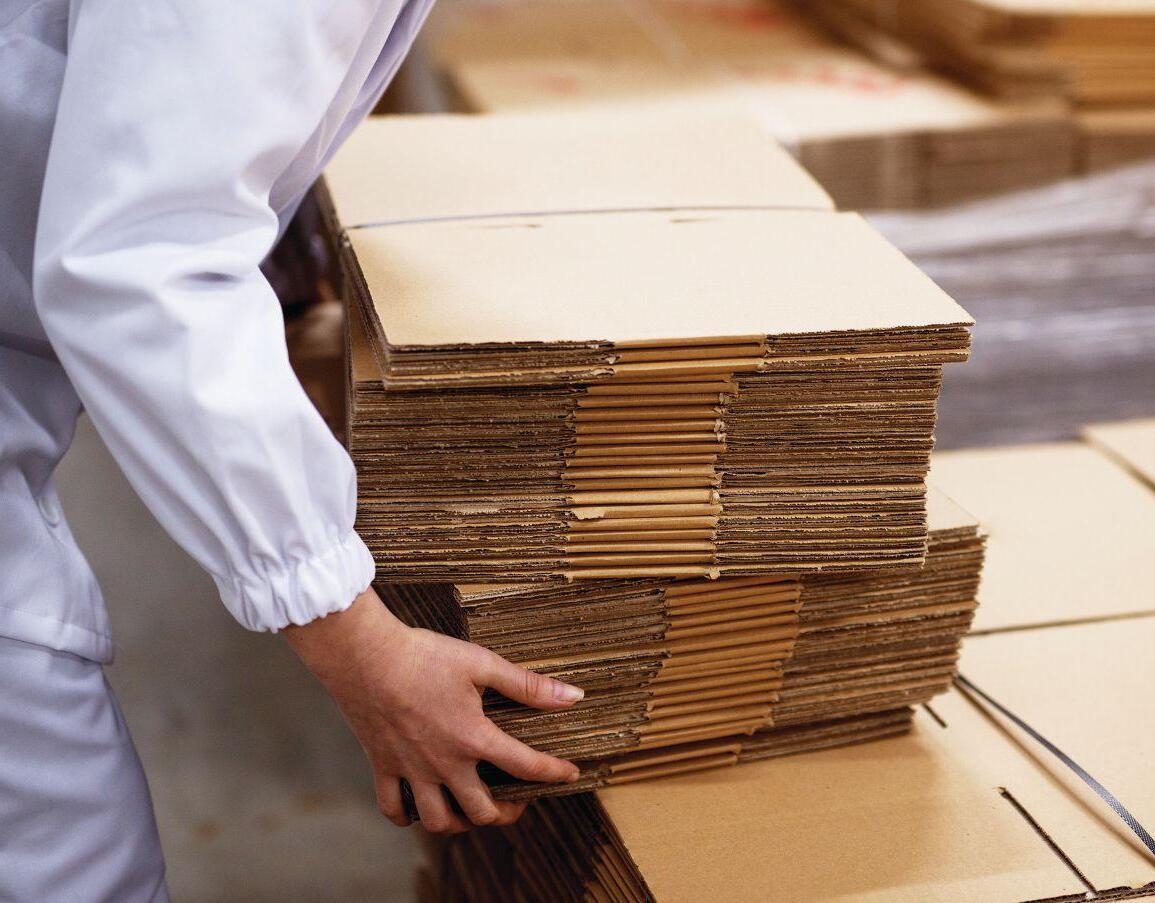
Sheet defects, holes, web breaks and reduced speed in your recycled board production?
Improve machine cleanliness and runnability with Kemira’s new Quick Inversion Polymers.
• Pump-and-Go
• Excellent Fixative
• Drainage and Retention booster
• FDA Food Contact compliant



AGreek philosopher, Heraclitus, once said, “The only constant in life is change.”
The Canadian pulp and paper industry is mature, strong and resilient. It has adapted to evolving conditions of the market, the economy and consumer demands, staying as relevant and essential as it was a century ago.
However, the past few decades have ushered in drastic changes in more ways than one. Economic upheavals aside, it has been a period marked with immense technological advancements, forcing every industry to rethink the way they operate. Climate change, sustainability and net zero have been integral to discussions about the future. Another change that the world is experiencing at moment is disruptions caused by the global COVID-19 pandemic. While industries had already begun their digital transformation journeys, the pandemic has accelerated this further.

Sukanya Ray Ghosh Editor
Pulp & Paper Canada’s recent human resources survey revealed that 51 percent of mill management were thinking of investing in new equipment. Forty-six percent were considering software (ERP, PLM, asset management, etc.) investments in the near future and 39 percent said predictive analysis and artificial intelligence is on their radar for technology adoption.
Thirty-two percent had plans for investing in cybersecurity infrastructure. The data indicates that technology adoption in some form or other is on the minds of mill operators looking to strengthen the future of their operations.
To facilitate such crucial conversations, Pulp & Paper Canada is introducing its first ever live in-person event this year – OptiPaper. The one-day conference is scheduled to take place on May 17 at the Montreal Airport Marriott In-Terminal Hotel. OptiPaper’s sessions will focus on key topics such as adoption of advanced technologies; predictive maintenance; cybersecurity risks; movement towards a net-zero zero-carbon future; and increasing efficiencies of legacy systems. The latest technologies and options available for process optimization and mill profitability will be a key part of the discussions. Our publication is partnering with industry experts from across the country to offer practical, in-depth information to all industry stakeholders.
The conference will welcome pulp and paper professionals; mill superintendents; consulting engineers; mill management and C-suite executives; paper converting professionals; woodlands and logging operations professionals; government representatives; and more.
Join in to be a part of this conversation. It is for you and about you. If you have suggestions about the topics you would like discussed, send me a note at srayghosh@annexbusinessmedia.com.
On behalf of the entire Pulp & Paper Canada team, I wish all of you a Happy New Year. PPC
READER SERVICE
Print and digital subscription inquires or changes, please contact Barb Adelt, Audience Development Manager Tel: (416) 510-5184
Editor
SUKANYA RAY GHOSH 416-510-5225
srayghosh@annexbusinessmedia.com
National Accounts Manager LAURA GOODWIN 289-928-8543
lgoodwin@annexbusinessmedia.com
EDITORIAL/SALES OFFICES
Fax: (416) 510-6875
Email: badelt@annexbusinessmedia.com
Mail: 111 Gordon Baker Rd., Suite 400, Toronto, ON M2H 3R1
COO SCOTT JAMIESON 519-429-5180
sjamieson@annexbusinessmedia.com
Group Publisher TODD HUMBER 416-510-5248
thumber@annexbusinessmedia.com
111 Gordon Baker Rd., Suite 400, Toronto, ON M2H 3R1 Phone: 416-442-5600
PRODUCTION
Media Designer EMILY SUN
Account Coordinator KRISTINE DEOKARAN kdeokaran@annexbusinessmedia.com
Print in Canada
ISSN 0316-4004 (Print) ISSN 1923-3515 (Digital)
PUBLICATION MAIL AGREEMENT #40065710
SUBSCRIPTION RATES
Canada $57.50 - 1 year; $92.50 - 2 year
USA $139.00 CDN per year Overseas - $150.00 CDN per year
Occasionally, Pulp & Paper Canada will mail information on behalf of industry related groups whose products and services we believe may be of interest to you. If you prefer not to receive this information, please contact our circulation department in any of the four ways listed above.
Annex Privacy Office privacy@annexbusinessmedia.com Tel: 800-668-2374
The editors have made every reasonable effort to provide accurate and authoritative information but they assume no liability for the accuracy or completeness of the text or its fitness for any particular purpose. All rights reserved. The contents of this publication may not be reproduced in part or in full without the publisher’s written permission © Annex Business Media.
Sustaining member, Pulp and Paper Technical Association of Canada; Member, Alliance for Audited Media.


Red Leaf Pulp receives $3.8 million to commercialize innovative pulping technology
Red Leaf Pulp has received $3.8 million from Sustainable Development Technology Canada (SDTC) to commercialize its innovative pulping technology. This pulping technology uses wheat straw and other sustainable agricultural resources along with wood-based pulp in traditional applications.
“As sustainability efforts intensify globally, and tissue and packaging suppliers realize the advantages of an annual feedstock such as wheat straw, Red Leaf’s technology is gaining momentum in the marketplace,” said Martin Pudlas, CEO. “Along with our consortium partners Allnorth, Valmet, IEM and CNG, we appreciate the significant support of the federal government towards making Red Leaf’s innovations a success.”
The innovative pulping technology will allow Red Leaf Pulp to leverage existing agricultural resources, support the agriculture industry, as well as lower the carbon intensity associated with producing paper and packaging materials. The sustainable alternative uses a fibre source that does not contribute to deforestation.
“Canadian entrepreneurs are driving the innovation that is moving us towards a more sustainable and prosperous future. This investment will enable Red Leaf Pulp to rapidly accelerate and commercialize its ideas and continues the momentum of public and private commitments to advancing clean technology,” said Leah Lawrence, president and CEO of SDTC.
This funding will also assist in coproduct commercialization efforts that
The Paper Excellence Group has announced the successful closing of its previously-announced acquisition of Domtar, a provider of fibre-based products, on November 30. This acquisition strengthens the position of the Paper Excellence Group in the industry. It also increases its global reach, adds to its pulp and paper production significantly and expands its product range to include airlaid nonwovens and containerboard.
will potentially allow Red Leaf’s facility to become planet positive.
“There couldn’t be a better time to invest in a greener, more sustainable future for all Canadians. Cleantech innovation, entrepreneurship and commercialization are key to the vital shift to a healthier environment and a net-zero carbon economy. The SDTC funding announced today will boost our leadership in climate and waste reduction technology and help foster a truly Canadian success story,” said the Honourable Francois-Philippe Champagne, Minister of Innovation, Science and Industry. “Now is the time for ambitious climate action. Cleantech innovation, entrepreneurship and commercialization are key to the vital shift to a healthier environment and a net-zero carbon economy. Today’s announcement will boost our leadership in climate and waste reduction technology and help foster a truly Canadian success story.”
“Innovative clean technologies are good for the economy and critical to solving the twin crises of climate change and nature loss. Kelowna’s own Red Leaf Pulp is demonstrating this, using agricultural by-products with no previous enduse as inputs for their products, creating value where there was none and turning organic matter into recyclable products,” said the Honourable Jonathan Wilkinson, Minister of Natural Resources.
Red Leaf Pulp’s initial plant is currently under development in Regina, Saskatchewan. When it commences production in 2024, it will have the capacity to produce approximately 182,000 tonnes of market pulp annually from wheat straw collected from local producers.
“Today marks a major milestone in the growth of the Paper Excellence Group,” said Joe Ragan, global CEO of Paper Excellence. “We are excited to welcome Domtar and its impressive team to the Paper Excellence family. Under John Williams and Domtar’s capable management, we look forward to Domtar’s continued success across its manufacturing network in the U.S. and Canada.”
Domtar will operate as a stand-alone
Canfor announces changes to its senior leadership team Canfor Corporation’s senior leadership team has undergone a few changes recently. The company has appointed Pat Elliott to the role of chief financial officer (CFO) for Canfor and Canfor Pulp. Elliott retains his position and responsibilities as senior vice-president of sustainability.
Canfor has appointed Alan Nicholl to the position of executive vice-president of bio-based solutions and pulp operations. Additionally, Nicholl has also been appointed as the president and CEO of Arbios Biotech (Arbios). Arbios is a joint venture between Canfor and Licella Holdings that is focused on converting biomass to low carbon biofuel.
“In Alan’s new role he will build a bioinnovation team that will unlock the full value of each log by diversifying our business into bio-based solutions as low carbon, renewable products become increasingly valued,” said Don Kayne, president and CEO of Canfor. “In addition, Pat’s corporate finance leadership experience with Canfor has positioned him to take on the role of CFO. Pat will continue to maintain the financial discipline for which Canfor is known and respected.”
Elliott became a part of Canfor in 2001. He has served as an executive on the company’s finance team since 2011.
Nicholl joined the company in 2008. Most recently, he served as the chief financial officer of Canfor and Canfor Pulp and executive vice-president of finance for Canfor Pulp Products.
business entity within the Paper Excellence Group. Domtar’s current CEO and management team will remain in place. No changes are being made at this time to Domtar’s locations, business plans and employee base.
“As part of the Paper Excellence Group, the future is bright for Domtar,” said John Williams, president and CEO of Domtar. “We will continue to earn the right to be the supplier of choice to our customers with sustainable paper, pulp and packaging products.”

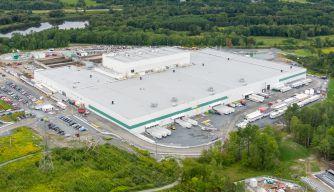
Kruger Products’ Sherbrooke plant doubles future tissue machine size and production Kruger Products has announced that it is doubling the size and production of its future LDC (light dry crepe) tissue machine in the Brompton borough of Sherbrooke. The machine is scheduled to be commissioned in 2024.
On Feb. 26, 2021, the company had announced a $240-million expansion project to install the machine and add two converting lines. It is now increasing the investment by $111.5 million, for a total of $351.5 million.
The double-wide machine, which features LDC technology, will be able to produce at least 60,000 metric tonnes of premium-quality tissue products annually for the Canadian and U.S. markets.
The new Kruger Products Sherbrooke tissue plant was commissioned in 2021. Creating 180 jobs, the plant was constructed during the pandemic. The company invested $600 million in this state-of-theart plant and artificial intelligence, which is expected to create 321 jobs in total.
“The additional production capacity will enable us to drive our company’s growth and continue to supply our customers across North America with highquality tissue products such as Cashmere, SpongeTowels, Scotties and Purex in Canada, and White Cloud in the United States,” explained Dino Bianco, CEO of Kruger Products.
Kruger Products’ major expansion project will create 141 jobs over the next three years and bring significant benefits to the region: $165 million in estimated direct spending and more than 660,000 construction person-hours.
The Government of Quebec, a partner in the project, provided a $165-million loan through Investissement Quebec. The additional investment of $111.5 million is entirely funded by Kruger Products and a bank syndicate.
“Quebec’s pulp and paper industry needs to renew and modernize itself. Kruger Products’ acquisition of this new machine is a great example of technological innovation, which will allow it to double its production capacity. It’s the kind of initiative that will boost the industry’s performance and growth,” said Pierre Fitzgibbon, Minister of Economy and Innovation and Minister Responsible for Regional Economic Development.
Genevieve Hebert, MNA for Saint-
François and Deputy Government Whip, emphasized the importance of quality jobs created by Kruger Products since 2018 and those to be added by 2024. “Brompton’s industrial gem continues its expansion in the hyper-efficient production of high-quality tissue products. The company’s investments in my riding are major and their spinoffs considerable for our region. Kruger has deep roots in our region and we are proud of its capacity for innovation which makes us shine.”
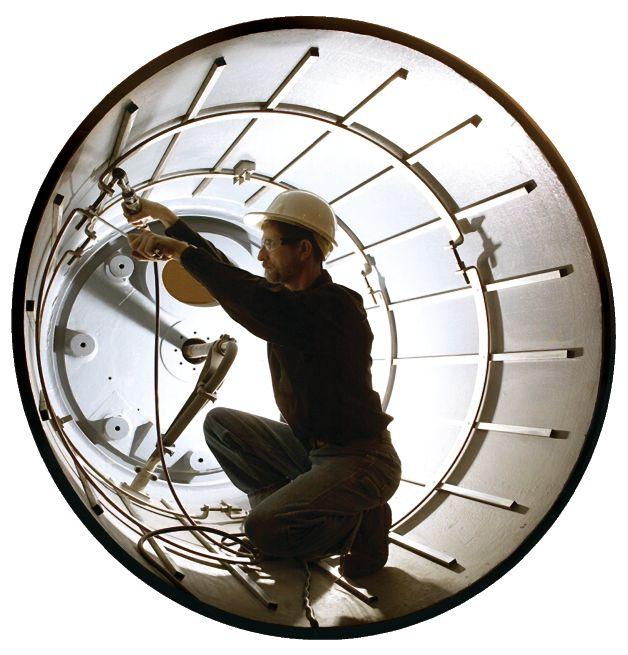
Proper installation and repair of your dryer equipment will maximize drying capacity by keeping all the dryers in service. Kadant has the specialized knowledge and experience for safe, reliable, and expert installation of your rotary steam joints, syphons, dryer bars, and related equipment.


Two workers lost their lives and one was injured in a tragic accident when a scaffold collapsed into equipment in Domtar’s Winsor pulp and paper mill in Quebec. The accident took place on Oct. 26, 2021, at around 1:35 am.
One of the workers was taken to the hospital, where his life was declared to be not in danger, according to a statement released by Domtar. The other two workers, Yan Baillargeon and Hugo Pare, were trapped underneath.
The Surete du Quebec, the Sher-
New UBC bioenergy facility to work towards reducing reliance on carbon-intensive fossil fuels
The University of British Columbia has a new research and demonstration facility that will focus on speeding up the development of low-carbon, market-ready bioenergy products and carbon-negative energy systems.
The new Biorefining Research and Innovation Centre (BRIC) will build on the work conducted by the university’s Clean Energy Research Centre (CERC) over the past 15 years. Top academic researchers and industry partners will team up to create technologies that could reduce our reliance on carbon-intensive fossil fuels significantly.
“There is enormous potential for biomass like BC forest waste to help meet both local and global renewable energy needs,” says Dr. Xiaotao Bi, director of BRIC and CERC and a professor of chemical and biological engineering at UBC.
“BRIC offers a unique opportunity not only to transform organic materials into low-carbon, high-value fuels and other bioproducts but to do so at a demonstration scale in a virtually risk-free environment.”
BRIC will first assess the technical effectiveness and economic potential of each candidate technology. The UBC team will then collaborate with partner companies to create prototypes and demonstrate their ability to produce quality bioproducts at scale.
BRIC’s projects will include:
• advanced two-stage fluidized bed gasification technologies to convert forest,
brooke Fire Department and the Regie Intermunicipale of Winsor carried out rescue efforts, assisted by the mill’s emergency unit. Keeping the complexity of the situation in mind and to ensure safe rescue, the rescue efforts took some time to be completed.
Unfortunately, on Oct. 27, 2021, the rescue team discovered that Baillargeon had passed away in the accident. On Oct. 28, 2021, Pare was discovered dead as well, after being recovered from the debris.
agricultural and municipal waste into low-carbon biofuels (e.g., a novel twostage fluidized bed gasification pilot plant for future commercial-scale demonstration at a BC pulp and paper mill)
• novel microwave-assisted fluidized bed catalytic pyrolysis technology to improve the quality of two intermediate products in the biofuel production process: bio-oil (a potential petroleum substitute) and biochar (a carbon sink, soil conditioner and reducing agent)
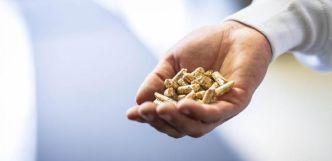
• novel horizontal pulsating fluidized bed torrefaction technology that will produce second-generation (torrefied) wood pellets for energy-intense applications (e.g., power plants and metallurgical processing)
“By using biomass residues to their full potential, BC could cut greenhouse gas emissions by up to 15 percent of its 2005 levels and its consumption of fossil fuels by nearly a third,” says Bi. “The lowcarbon and carbon-negative technologies that will be developed at BRIC will help Canada meet its 2030 and 2050 greenhouse gas mitigation targets and potentially reverse some of the environmental damage that has already been done.”
Canada Foundation for Innovation, the BC Knowledge Development Fund, Western Economic Diversification Canada and the UBC Faculty of Applied Science support this $8 million BRIC project.
Domtar extended its condolences in a statement. It said, “Our thoughts and sympathies go out to the families of Mr. Pare and Mr. Baillargeon and to the families affected by this tragic accident. This tragedy affects and saddens us all. We are focusing our efforts on supporting our colleagues and their families. Domtar would like to thank all those who have worked tirelessly to assist.”
Both men were working for a subcontractor employed by Domtar to do major work at the mill.
Kimberly-Clark recognized as climate leader for achieving GHG goals
Kimberly-Clark received a 2021 Climate Leadership Award for ‘goal achievement in greenhouse gas management.’ The Center for Climate and Energy Solutions and The Climate Registry honoured the company with this award. This award recognizes companies that are able to achieve the aggressive greenhouse gas (GHG) reduction goals they set for themselves.
“We are honoured to receive this prestigious award for reducing greenhouse gas emissions across our operations, especially since we were recognized for ‘Excellence in Greenhouse Gas Management and Goal Setting’ as part of the Climate Leadership awards in 2018,” said Juan Marin, global energy and climate leader at Kimberly-Clark. “Our work to minimize the carbon footprint of our brands and businesses and do our part in the fight against climate change is part of how we deliver our purpose to provide better care for a better world.”
Kimberly-Clark’s sustainability strategy includes a 2030 target of a 50 percent reduction in its Scope 1 and Scope 2 GHG emissions and a 20 percent reduction in GHG emissions in two Scope 3 categories – both from a 2015 base year.
The company stated in a release that it has a comprehensive approach in place to achieve its climate goals. Energy conservation, switching to lower-carbon fuels and increased use of renewable energy are part of this strategy. PPC
By Derek Nighbor
Canada’s forests and sustainably sourced products, whether they be manufactured wood products or wood residuals to make pulp and paper or forest bioproducts, are among the most powerful weapons in Canada’s climate change arsenal as we work to reduce emissions, store more carbon and displace more fossil fuel intensive materials in the coming years.
Canadian forestry is rooted in the principles of sustainability, biodiversity conservation and supporting forest health and renewal. Workers in our sector have for decades acted as our first line of defense in monitoring and managing these dynamic ecosystems.
Canada’s forest sector was one of the few industry groups that got behind ‘The Kyoto Protocol’ in the late 1990s. We were early adopters of industry targets to help Canada meet its Paris Agreement commitments, and we are currently finalizing an action plan to be the blueprint for how the sector will help Canada achieve a net-zero carbon economy by 2050. In fact, we believe we are one of the few industries in the country that can go beyond net-zero – and do it well before 2050. We just need the right enabling conditions by Canadian policymakers.
While there has been a consistent carbon sink in managed forests, the past decade has also seen considerable areas of forest affected by pest outbreaks and fires. These have created a large source of carbon emissions into the atmosphere, because trees killed in affected forests stop sequestering carbon and instead emit carbon. Sustainable forest management ensures these forests retain their potential for storing carbon while respecting the wildlife and biodiversity and renewing our forests to keep them as forests forever.
Our globally recognized approach to sustainable forest management has been one of the factors helping Canada retain more than 90 percent of its original forest cover. We harvest less than one percent of harvestable forests per year and replant 400 to 600 million seedlings annually. Canada is home to nine percent of the world’s forests and 36 percent of the world’s independently certified forests
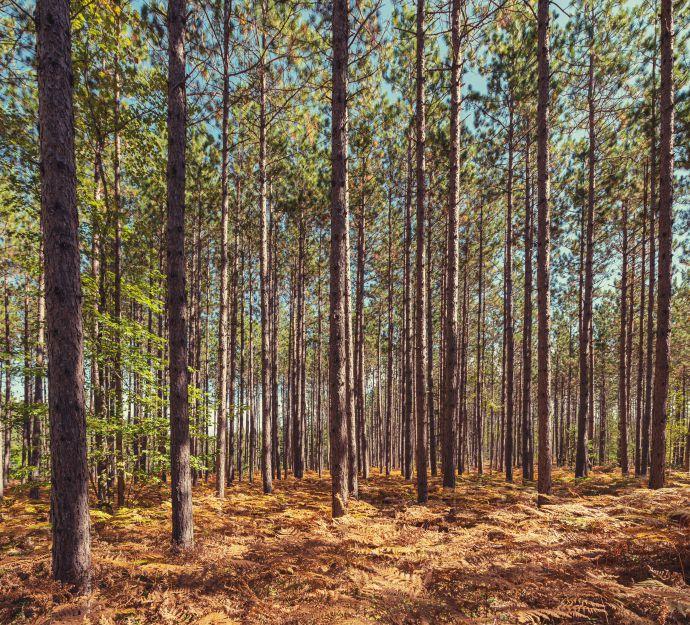
which makes us a global leader in sustainable and responsible sourcing.
By 2030, Canada’s forest industry will be in a position to remove the equivalent of 30 megatonnes of CO2 from the atmosphere each year through innovative efforts in our woodlands operations, at our mills, along our supply chain, and through the products we make that store carbon and can displace more fossil fuel intensive materials. Those removals represent more than 10 percent of Canada’s goal under the Paris Agreement and is equivalent to taking over nine million cars off the road.
Canadian forestry is on a path to be a zero-waste sector and we do this by producing an array of products using every part of the tree. Today, almost 60 percent of Canada’s forest industry runs on bioenergy which used to be considered waste, and that number is growing. At the same time, wood lignin is being used to create more eco-friendly adhesives and asphalt, while wood-fibre is being used to create more eco-friendly water filters, medical
masks and paper products. Even tree sugars can be used in a range of bioplastics with medical applications such as bone implants. These products are in addition to the carbon-storing lumber we provide that is needed for national construction projects and housing.
As we work to create the green, family-supporting jobs the next generation of Canadians need, we are supporting Canada’s net-zero carbon future by reimagining the resources and products we use every day through a cleaner, greener lens. Now is the time for us to leverage the power of sustainable forest management as a nature-based climate solution to deliver on our international commitments, grow our forest-based economy and help our forests adapt to a changing climate. PPC
Derek Nighbor is the President and CEO of the Forest Products Association of Canada, a voice for Canada’s wood, pulp, and paper producers nationally and internationally in government, trade, and environmental affairs.
Meet the winners of Pulp & Paper Canada’s inaugural Hall of Fame contest.
By Sukanya Ray Ghosh
The Canadian pulp and paper industry is standing strong and thriving because of the immense efforts of the incredible workforce. Over the years, several industry leaders and innovators have revolutionized the industry, taken it forward and have been the pillars on which the sector has built its success. The inaugural Hall of Fame contest celebrates and honours three such legends who have spent several decades contributing to its growth and inspiring generations of people after them.
These legends are so passionate about being a part of the pulp and paper industry that they continue to contribute with equal zeal even today. Read about their amazing journey and how they changed the industry.
President, Aurel Systems Inc.
Larry Wasik’s 49-year-journey in the pulp and paper industry started with his interest in computers. After graduating from the University of British Columbia as a chemical engineer, Wasik’s friend told him about a position at Canfor’s Port Mellon Pulp Mill that required a person knowledgeable in computers to do process control.
Wasik joined the computer control team and later became the assistant technical superintendent, overseeing the mill’s environmental programs and computerized process control developments. In 1972, he created his first process simulator to be used in process control at the mill.
In 1980, Wasik joined a consulting group, H.A. Simons, as a consulting engineer. It was here that he started his other career – creating tools that people could use to improve the processes in pulp and paper. In the 15 years he spent in the company, Wasik went on to become a plant-wide process manager, spearheading the plant-wide process design of five successful green field mills and numerous re-builds and culminating in the $1.3 billion expansion at Howe Sound Pulp and Paper.
Wasik has played a lead role in on-site process optimization studies in North American mills as well as in Brazil, Australia, New Zealand and Siberia. In parallel, he led Simons’ computer process simulation department using CADSIM, a graphical interface program he developed in 1986, combined with MASSBAL steady-state simulator. He specialized in developing first principles balances for all aspects of pulp and paper mills.
Wasik’s overall material balances; water and energy balances; sodium, sulphur, potassium, chloride and metal ion balances; and pulping and bleaching balances became standards that are still used in the industry today. By 1996, he had developed a stand-alone dynamic process simulator, CADSIM Plus that has

become a leading technology for pulp and paper simulations.
Wasik has provided process simulation services to engineering consultants and operators in various capacities working as an employee, consulting engineer and principle of his own research company, Aurel Systems Inc. He has developed a steam and power dynamic simulation for the reduction of steam demand swings at Kapuskasing. He developed online dynamic data reconciliation for the plant-wide energy system at Crofton and for batch digesters at Temiscaming. Moreover, he has trained and assisted numerous operating and consulting companies in the use of process simulation. Wasik has also donated countless copies of CADSIM Plus to universities and technical institutions around the world through Aurel’s Academic Software Program.
“An interesting fact that stands out to me is that Larry has had an indirect impact on shutting down four fossil-fired power boilers in British Columbia. This is a testament to the energy savings and reduced environmental impacts attained through optimization that are still to this day made possible using the CADSIM Plus dynamic process simulator,” adds Daenzer.
As a member of organizations such as TAPPI, PAPTAC and PACWEST, Wasik continues to be involved through conferences
and trade shows, always seeking new opportunities to connect with members and foster partnerships.
Wasik, still very passionate about innovating, considers the process simulator his most significant contribution to the pulp and paper industry.
“Coming from a time when calculations were done on a spreadsheet or a calculator or by hand, and putting graphics in front of that and making the graphics interpreted was certainly both challenging and interesting to me,” says Wasik.
Despite the process simulator being highly successful, Wasik has not stopped innovating further. Currently, he is leading his team at Aurel Systems Inc. to research the ability to track a process live. His team has developed the ability to track the process and do real-time optimization with it.
“We’re now positioning it as a process control tool that could work right alongside the process and make sense out of the data. That’s a huge effort that we’ve put about nine man-years of research into,” he shares.
Wasik also enjoys mentoring young talent coming into the industry. He recalls mentoring a bright young person at Port Mellon. He hired him, shared his experience and now takes pride in the fact that his mentee did very well at the mill. At H.A. Simons, when he was working on his software, he had nine young engineers working there who he was able to motivate and inspire. At Aurel Systems Inc., Wasik takes in summer students on a regular basis and enjoys seeing them grow.
When asked about what’s next for him, Wasik says that at some point he has to retire. “I’m still working on developing some bits of the tool, pushing its limits, making it faster, so it can track the processes, and do real-time optimization. And my focus is on getting the younger people that are in our company to do all the things that I do and launch increasingly better tool sets.”
HONGHI TRAN
Professor emeritus and director of the pulp and paper centre, University of Toronto
A renowned researcher, Dr. Hongi Tran’s contribution to the Canadian pulp and paper industry has been immense
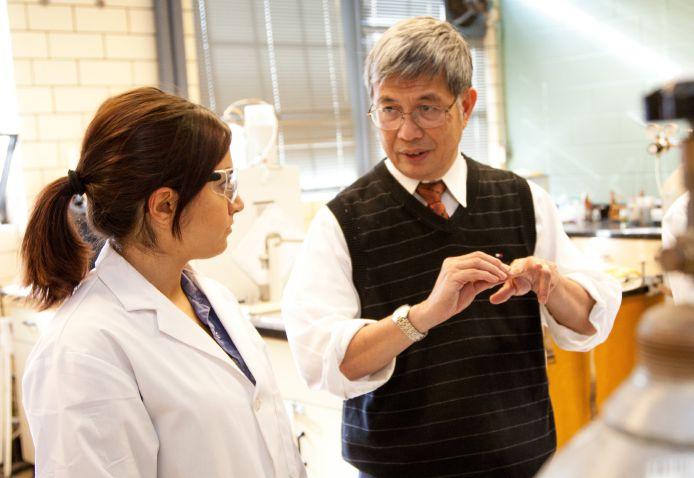
throughout his career. Tran’s entry into the industry is quite an interesting story. Originally from Japan, Tran received his Master’s Degree from Shizuoka University in Japan and went on to work in the glass industry.
When he arrived in Canada in 1978, he was initially unable to find a job in his field. Tran decided to go back to university and study further to build a proper career. He joined the University of Toronto, where a professor who specialized in ceramic engineering was highly impressed with his work in Japan and the thesis he had written there. He offered Tran a position on a project. The project was to take a look at how a superheated tube got corroded in the recovery boiler in a pulp and paper mill in Thunder Bay.
With no knowledge of pulp and paper mills, he turned to his experience in the glass industry and was able to figure out what went wrong. Three years later, Tran presented at an international chemical recovery conference in Vancouver and instantly became famous. He graduated with a Ph.D. in Chemical Engineering from the University of Toronto and was hired by Douglas Reeve & Associates, a Toronto consulting company. His work took him to kraft pulp mills in Canada, the U.S. and even Brazil.
Tran’s research focus is on energy and chemical recovery in kraft pulp mills. By applying fundamental knowledge obtained from university research to industrial settings, he has helped solve
numerous operating issues in the chemical recovery process.
Tran’s research group was responsible for the development of high-intensity sootblowing nozzles which greatly enhanced the cleaning ability in recovery boilers, as well as the low pressure sootblowing technology and partial borate autocausticizing technology.
“His theory and practical knowledge in kiln and recausticizing operations have led to key operational parameters to improve white liquor production while minimizing scaling and plugging, ring formation in kiln and dusting in kilns,” says Thanh Trung, University of Toronto Research Consortium member and collaborator.
Over a career spanning more than four decades, Tran successfully established and directed eleven consecutive research consortia at the University of Toronto and obtained support from over 50 companies from eight countries. His research was supported by various government agencies, including the Natural Sciences and Engineering Research Council of Canada (NSERC), Industry Canada the American Forest and Paper Association and the Department of Energy.
Through his leadership, Tran has supervised/co-supervised over 130 graduate students, post-doctoral fellows and research staff and 100 undergraduate students. He has authored/co-authored over 310 refereed papers and a textbook and has eight patents.
In addition to his academic duties, Tran has served on and chaired numerous committees, international meetings and conferences, including as program chair of the 1995 International Chemical Recovery Conference (ICRC), and as conference chair of the 2008 ICRC. He has been an instructor of the annual Kraft Recovery Course held by the Technical Association of the Pulp and Paper Industry (TAPPI) since its establishment in 1987 and has chaired the course since 2006. He was the first chair of the council of directors for the Canadian Pulp and Paper Network for Innovation in Education and Research (PAPIER), an alliance of eight major pulp and paper centres in Canada. He also served as the inaugural editor-in-chief of the Journal of Science and Technology for Forest Products and Processes (J-FOR) published by PAPTAC (Pulp and Paper Technical Association of Canada) from 2011 to 2014.
Tran and his research consortium have led the way with innovative solutions for the pulp and paper industry, particularly in the area of chemical and energy, for many years. Through the consortium, the group is able to bring in real industrial problems and address the core issues by breaking down the problem to fundamental issues to device solvable and, more importantly, implementable solutions for the industry. His latest research is moving the focus of the research consortium to innovative bio-energy and bio-fuel.
Tran has won numerous prestigious awards for his contribution to the pulp and paper industry. These include the 2013 John S. Bates Gold Medal from PAPTAC, the 2017 Gunnar Nicholson Gold Medal from TAPPI, the 2014 ICRC “Lifetime Achievements and Contributions” Award, and the 2020 American Forest & Paper Association (AF&PA) Leadership Award for “Advancing the understanding of kraft recovery boiler technology, operation and safety”.
He was named a TAPPI Fellow in 2000, one of the first PAPTAC fellows in 2015, and a Canadian Academy of Engineering Fellow in 2016. He was inducted to the Paper Industry International Hall of Fame in 2017 and the Engineering Alumni Network (EAN) Hall of Distinction, the University of Toronto in 2021. He was recently named to the 2021 Paper 360o Top 50 Power List.
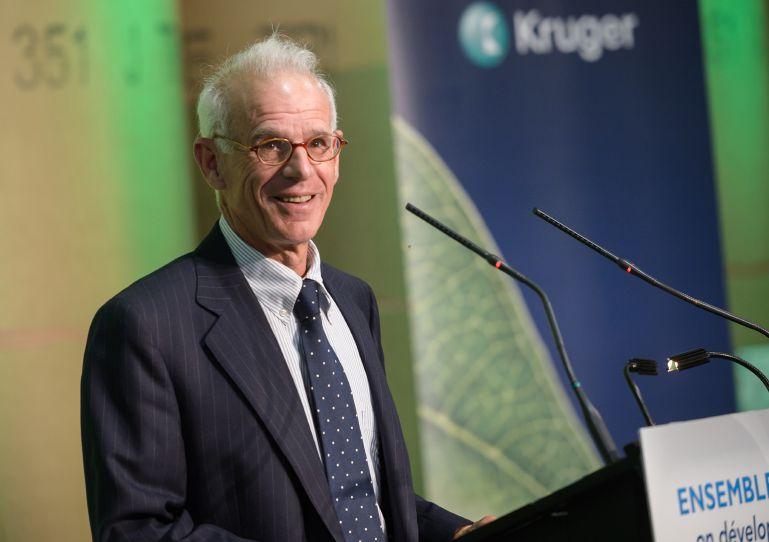
To the young generation looking to join the industry, he says, “I believe that if I can do it, anybody can do it. The industry has many challenges. So, it is very exciting to work here if you want to help the industry or society. Any type of engineer would be able to find a good fit in the pulp and paper industry.”
Chairman of the board and CEO, Kruger Inc.
Joseph Kruger II was born into the pulp and paper industry and has been a recognized leader for several decades now. His grandfather Joseph Kruger, a paper merchant, founded the company in 1904. His father, Gene H. Kruger took over the company in the late 1920s and took it forward.
“I often joke that I spent the first 20 years of my career carrying my father’s briefcase. He was my mentor and I learned everything by his side. My father, Gene H. Kruger, truly was a visionary and a builder. He had such courage and determination to succeed,” says Joseph.
For several decades, Joseph Kruger II has been a leader whose vision, business acumen and entrepreneurial courage were the driving forces behind Kruger Inc.’s transformation into one the most innovative and sustainable paper companies in Canada.
Early on, Joseph had the foresight to
recognize how the rise of information technology would affect Kruger Inc.’s legacy business sectors. He led the company on a successful journey of diversification that began with a bold decision: the acquisition of Scott Paper’s Canadian assets, in 1997. These would later come to be known as Kruger Products.
In the following years, he led the company through a succession of acquisitions and major capital projects that not only strengthened its foundation but enabled it to keep all of its paper plants in operation through the Great Recession, and then to embark on a period of unprecedented transformation.
Today, Kruger Inc. is a leading supplier of newsprint, coated paper, containerboard and corrugated packaging, in addition to being at the forefront of the circular economy as one of Canada’s largest paper recyclers. It is also a pioneer in the manufacture of cellulose filaments and the development of new eco-friendly specialty papers.
Over the years, Joseph Kruger II earned the admiration of colleagues and peers as one of the most innovative and progressive entrepreneurs in Canada. He is seen as a caring leader concerned with protecting the environment and resources, and with securing the future of the company for the benefit of future generations.
“Joseph Kruger II is truly a Canadian icon and a pillar of the Quebec community, employing multigenerational families and committed to supporting the livelihood of many people. Although very private, he has been recognized as a brilliant business entrepreneur who has expanded the company beyond its pulp and paper origins. Truly one of a kind, he is a visionary with a pragmatic perspective, indelible memory and creative flair,” says Nancy Marcus, Kruger Product’s former chief marketing officer.
Joseph led the company as a fearless business leader whose determination to sustain all of Kruger Inc.’s paper mills during the 2008 global financial crisis led to the preservation of strategic manufacturing assets, including the Trois-Rivieres, Wayagamack and Corner Brook plants.
Today, these facilities are still in operation, providing quality jobs and contributing to the economy of the communities they call home. They have also been key components in the company’s strategy for future growth and expansion, with such milestones as the 2017 rebuild of Kruger’s largest newsprint machine, PM10, into a high-performance linerboard machine, and the recent creation of a new specialty papers division.
Under Joseph’s leadership, Kruger Inc. has become increasingly focused on sustainable practices, technological upgrades, product development and, more recently, the integration of artifi cial intelligence capabilities, making it a key player in the modernization of the Canadian pulp and paper industry.
Joseph also prioritizes knowledge transfer and education through vari ous scholarships, internship programs and research funding. The company also works in partnership with industry associations, research chairs and business startups to conduct R&D.
definitely given Kruger a solid foundation for another 100 years of success.”
Known for having an insatiable thirst for new ideas, Joseph Kruger II has always fostered a culture of innovation at Kruger Inc. As a result, the company has invested in and built some of the most innovative pulp and paper manufacturing technology in the past three decades.
Prominent examples include Wayagamack’s PM4, which remains one of the best paper machines in the world nearly 18 years after its commissioning; Trois-
Riviere’s PM10, which was entirely rebuilt in 2017 to manufacture Kruger’s exclusive XTR linerboard; and, most recently, Kruger Products’ new state-of-the-art Sherbrooke Tissue Plant featuring a highly advanced TAD tissue machine.
When asked what message he has for the pulp and paper industry, Joseph says, “Respect your employees and care for them; never neglect your customers; invest in new technology; focus on climate change; and let’s be proud of who we are – we make essential products.” PPC
1 2021-12-13 2:11
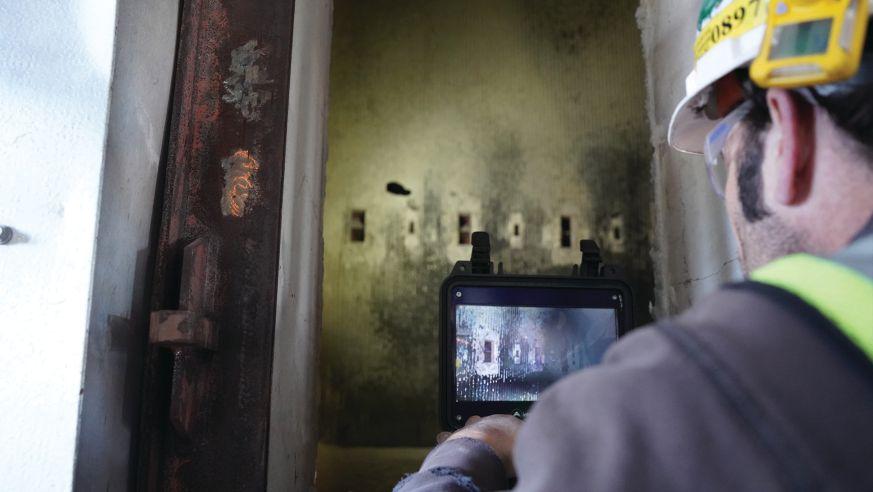
About his entrepreneurial courage, Francois D’Amours, Kruger Inc.’s executive vice-president and chief operating officer, says, “I have a lot of admiration for our leader who had the courage to maintain all of our paper mills through the worst crisis in our industry, as well as the vision and audacity to diversify the business. Very few leaders could say that they re-shaped their company the way Mr. Kruger did, like a true builder with remarkable business intelligence. He has
View and track potential defects in capital equipment from up to thirty feet away with Valmet Robotic Inspection Services. Learn more at valmet.com
FPInnovations working on lignin-based asphalt mix
By Andrew Snook
Aleader in research and development in Canada’s forestry sector is currently working on a way to create greener roads with the help of lignin.
FPInnovations, a private not-for-profit organization that specializes in the creation of solutions in support of the Canadian forest sector’s global competitiveness, are working on a way to replace some of the bitumen in asphalt mixes with lignin, a natural by-product in the manufacturing of pulp. Lignin is considered a natural wood glue that binds together the cellulose fibres in plants. FPInnovations believes that lignin can potentially serve the same purpose in asphalt pavement and help reduce the amount of bitumen needed in asphalt mixes.
The organization acknowledges that there are two significant hurdles that come with trying to replace bitumen with lignin.
The first challenge is that it is still not entirely understood how a combination of bitumen and lignin will react in cold weather. Until recently, the combination had only been tested in milder winter conditions in areas of Europe (upwards of 50 percent bitumen replacement). That changed this past fall when the City of Thunder Bay paved a section of the Mapleward Road landfill with a bitumenlignin asphalt pavement. The location was an ideal choice as there is a nearby supply of lignin available courtesy of FPInnovations’ and Resolute Forest Products’ thermomechanical pulp bio-refinery that was commissioned in 2019.
“We are very happy to be part of this project and to contribute our knowledge,”
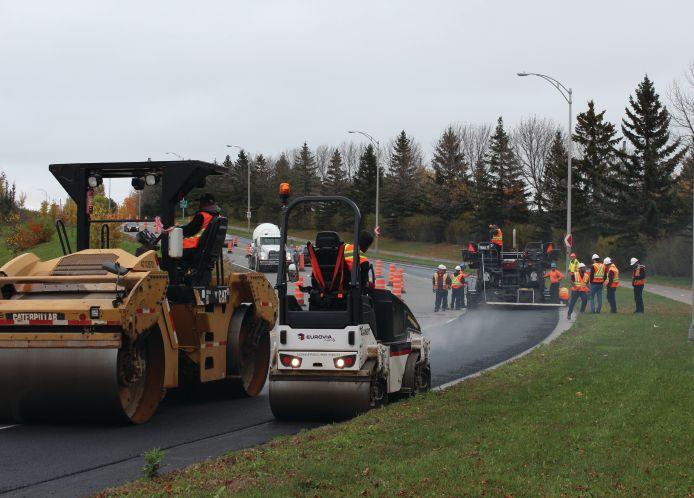
stated Fred Hakala, general manager of Pioneer Construction, field test partner in Thunder Bay, Ont. in a recent release from FPInnovations. “Tests must demonstrate that the product obtained from the substitution of bitumen with lignin will offer equivalent, if not superior qualities to the existing products, but the economic impact must also be clearly evaluated, for both asphalt producers and customers.”
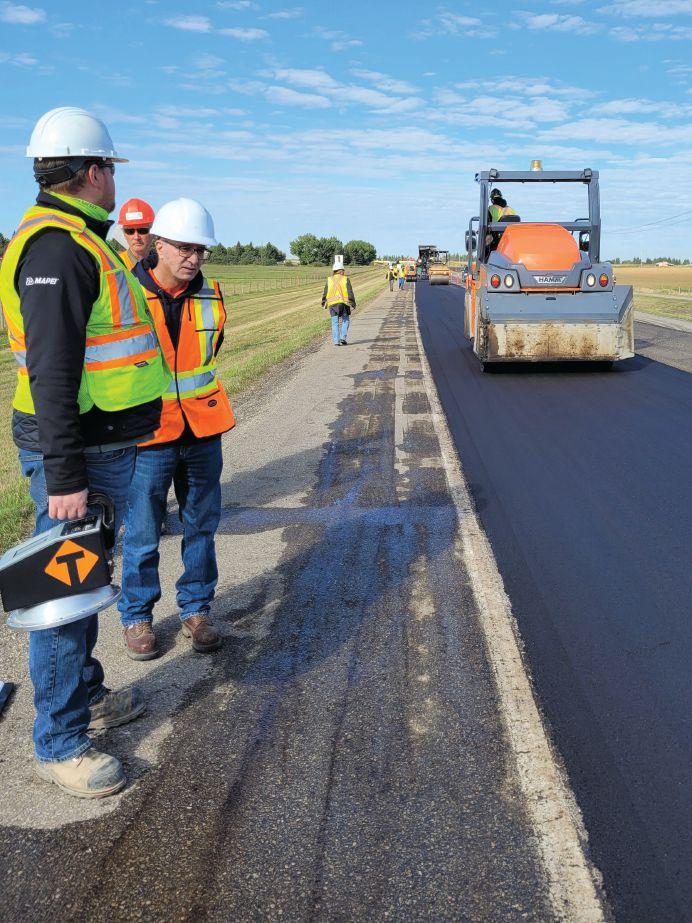
In Northern Alberta, Sturgeon County also chose to participate in running a pilot project this past fall using a ligninmodified mix with the assistance of field test partner Park Paving, headquartered in Edmonton.
“We are excited to participate in a project bringing sustainable products to the marketplace,” stated Richard Hart, general manager at Park Paving in a recent release from FPInnovations. “Our climate requires specialized materials to withstand the many freeze/thaw cycles, and the quality of asphalt cannot be compromised
as a result of bitumen substitution. The final product must meet or exceed current specifications as well as provide a positive economic impact for the rate payer.”
The percentage of lignin being substituted for bitumen at the Thunder Bay and Sturgeon County pilot projects is five percent, while a third pilot project that recently got underway in Quebec City has a 10-percent lignin substitution for bitumen. The pavement for all three pilot projects will require significant amounts of time to be tested thoroughly.
“For all sites, monitoring will last several years to assess the performance of the lignin-modified pavements under different climatic variations,” says MarieClaude Thibault, communications specialist at FPInnovations.
The second challenge will be integrating lignin into the asphalt production processes. FPInnovations has undertaken this challenge and is currently working alongside several members of the asphalt
value chain, including governments, universities, process specialists and lignin and asphalt producers.
FPInnovations Transportation and Infrastructure group lead researcher Allan Bradley says that the early results are promising.
“Finding the right percentage of lignin to substitute for bitumen while improving asphalt performance attributes such as fatigue strength, rutting resistance, pullout resistance, resistance to crack degradation, noise (tire-to-road contact) and load-bearing capacity will be key to the project’s success. Additional lab testing will also focus on verifying how lignin can affect asphalt thermal cracking performance, a critical property to improve in our climate,” he says.
“Finding the right percentage of lignin to substitute bitumen while improving asphalt performance attributes will be key to success.” ~ Bradley
In addition to being able to meet industry standards for quality in the final products, FPInnovations will also have the challenge of trying to enter a market where bitumen is a tried-and-true product that is commonly used and well known by all members of the asphalt industry.
FPInnovations recently stated that it has initiated discussions with asphalt producers and other key players to try and solve this challenge. FPInnovations is also in discussions with the City of Edmonton and the provinces of Quebec and British Columbia to perform additional pilot projects.
“These upcoming field trials are intended to find the optimal mix formulation that achieves performance improvements while minimizing negative impacts, using compounds that will keep the final product competitively priced,” Bradley says.
FPInnovations stated that if a formulation is used where five to 10 percent of the bitumen is replaced by lignin, and there ends up being a 20-percent market penetration of the new asphalt product,
it could potentially generate an annual demand of 40,000 to 80,000 tonnes of lignin that could open up a new market for high-value lignin from Canadian kraft pulp mills.
In Hinton, Alta., West Fraser already produces sustainably produced lignin at its pulp and paper plant through a process generated by the LignoForce System, which was jointly developed by FPInnovations and NORAM Engineering.
“We are thrilled to see the preliminary results from field trials using the lignin produced by our plant,” stated Rod Albers, manager for energy and bio-product development for West Fraser in a recent release from FPInnovations. “This is an important
step towards achieving an efficient product made from natural, renewable material derived from Canadian forest fibre that performs in the challenging weather conditions roads experience.”
In addition to creating a new market for Canadian forest products, the environmental benefits would be significant. FPInnovations stated that if it is feasible to substitute five to 10 percent of the bitumen in a typical asphalt mixture with lignin, it could reduce CO2 emissions in the range of 16,000 to 31,000 tonnes annually; and on a national scale, it could reduce GHG emissions in the range of 117,000 to 260,000 tonnes of CO2 eq. annually. PPC
Industry perspectives on achieving net zero in Canada’s pulp and paper sector.
By Treena Hein
Net zero is an eventual goal held by every industry in Canada, in alignment with the federal government’s goal for the country to reach net zero across all sectors by 2050. This achievement may be aided in some instances by various types of government support, but mostly it will be achieved by the perseverance and innovation of leaders at individual companies.
In the Canadian pulp and paper sector, companies have already done a significant
amount to reduce carbon emissions. As they’ve met goals set in the past, firms across the industry have also put stringent future goals in place along with tangible roadmaps to get there. At the same time, companies also point to the need for government policies that will allow the sector to make more gains at a faster pace.
“Canada’s pulp and paper sector has been a leader in carbon emissions reduction for decades,” explains Graham Kissack, vice-president of environment, health and safety and corporate communication at Paper Excellence. “We estab-
lished 1990 baselines and goals after the Kyoto Accords and we’re one of just a few industrial sectors that have demonstrated significant reductions since then. Overall, we’ve been really successful by aggressively cutting energy use and switching away from fossil fuels.”
Seth Kursman, vice-president of corporate communications, sustainability and government affairs at Resolute Forest Products, agrees that energy conservation measures and fuel switching have enabled the most significant GHG reductions, even when measuring overall emissions
on an intensity basis.
By fuel switching and investing in energy projects, in 2020, Paper Excellence produced carbon emissions that were 60 percent less than what was produced in 1990. Today, 84 percent of their energy comes from renewable sources like black liquid and waste bark, along with hydroelectric power. This energy mix is similar for companies across the sector. “From just our current operating mills, that’s a difference of almost a million tonnes a year compared to 1990,” says Kissack. “If we include our shutting down of non-competitive facilities, it swells into two million tonnes a year. We’ve made a lot of investment in new technologies and assets, switching to boilers, for example, that generate more energy per unit of fuel combusted.”
In 2014, Resolute accomplished an important milestone in being onsite coal-free in Canada and the U.S. Like Paper Excellence and others, Resolute has increased the use of biomass, done some switching to gas-fired boilers, and uses hydroelectric power. “In terms of scope 1 (onsite generation) and scope 2 (purchased electricity) emissions, we’ve achieved reductions of 85 percent by the end of 2020 versus emission levels in the year 2000,” says Kursman. “Our initial goal over a decade ago was to reduce by 65 percent by 2015 and we exceeded that target. Now we have a goal to reduce scope 1 and 2 GHG emissions by 30 per-
cent by 2025 with 2015 as the baseline.”
At Cascades, vice-president of communications, public affairs and sustainability Hugo D’Amours explains that “on top of the fact we were built around
recycling, Cascades has reduced by 50 percent the intensity of the emissions of its mills since the reference year 1990 (scope 1).” The company’s fourth action plan sets bold carbon reduction objectives for 2021 to 2025, and also 2030.
Some use of carbon market offsets also exists in Canada’s pulp and paper sector. For example, Paper Excellence has used offsets since 2007 with its scope 1 ‘carbon-neutral’ writing paper call Sage. Verified offsets are purchased by Paper Excellence according to the size of each Sage order, says Kissack, ensuring that the small amount of carbon associated with production is nullified.
Many members of the public may not realize that the pulp and paper sector is also innovating in many exciting ways with regard to replacing the use of fossil fuels in every industry.
For example, Canfor Pulp Products and Licella Fibre Fuels (an Australiabased biofuels start-up) have jointly

formed Arbios Biotech, explains Kate Lindsay, senior vice-president and chief sustainability officer at the Forest Products Association of Canada (FPAC). Licella’s first-of-its-kind Catalytic Hydrothermal Reactor technology will be used to economically convert low-value biomass from wood waste and pulp mill waste into biocrude oil. Lindsay adds that “a recent global alliance between Arbios Biotech and Shell Catalysts and Technology aims to create a biorefinery focused on lowcarbon intensity and the circular-economy to further upgrade the biocrude into biofuels, with applications in heavy-duty vehicles and aviation.”
Lignin is also being re-captured in Canada so that it can be used to displace various fossil-fuel-based products. Canada’s first commercial-scale lignin recovery plant is located at West Fraser’s pulp mill in Hinton, Alta. Here, the 30 tonnes of lignin produced daily can be used to displace fossil-fuel-based chemicals in the production of manufacturing adhesives, resins and composite materials, saving both energy and money. Lindsay adds that “the mill has also been working to replace the phenol formaldehyde resins in its plywood operations with lignin produced at the Hinton pulp mill. Every tonne of lignin substituted [in this way] prevents one tonne of CO2e from entering the atmosphere.”
This year, FPAC has undertaken a thorough review of its ‘30 by 30’ Climate Change Challenge initiative with the objective of pivoting this work to contribute to the Canadian government’s goal of the country being net zero by 2050.
But according to FPAC, Canada’s forest
Canadian Pulp and paper sector carbon reduction: the broad strokes
• Most sector reductions have come from reducing energy use and switching energy sources
• Some use of carbon market offsets is also occurring
• Innovation that applies to other industries is already here: using low-value biomass from pulp mill waste to make biocrude oil, and upgrading biocrude into biofuels
• Lignin is also being captured at one site in Canada, which can be used to displace various fossil-fuel-based products in adhesives and more
• Past goals to reduce emissions have been reached by many firms, and more are set
• Transparency, accountability and strong governance are critical in leading the way forward
sector is one of the few industries with the potential to go beyond net zero. This can be achieved through the removal and storage of carbon in wood-based products, continued ‘greening’ of operations, enabling other sectors to transfer off of fossil fuel energy, and reducing landbased emissions through ‘climate smart’ forestry.
“As we map the path to net-zero carbon by 2050, the sector continues to pursue opportunities towards nextgeneration bio-refinery capabilities and the development of new bio-sourced products,” Lindsay says. “We also see opportunities for further commercialization of Bioeconomy with Carbon Capture and Storage (BECCS), such as the recent announcement by Stockholm Exergi in Sweden (a BECCS-plant connected to existing biomass combined heat and power plant), for negative emissions.”
In Kissack’s view, the single biggest challenge to net zero for Paper Excellence is quite specific. “Along with the rest of the pulp and paper industry, we’re look-
According to FPAC, Canada’s forest sector is one of the few industries with the potential to go beyond net zero. This can be achieved through the removal and storage of carbon in wood-based products, continued ‘greening’ of operations, enabling other sectors to transfer off of fossil fuel energy, and reducing land-based emissions through ‘climate smart’ forestry.
ing forward to the emergence of some technology to reduce fossil fuel use in our lime kilns,” he notes. He adds that the federal government’s decision to go to $170/tonne for carbon is especially challenging for energy-intensive industries like pulp and paper, but that “we look forward to working with the federal government and provinces on the right policies that recognize the investments that will be needed and policies that will foster those investments.”
Kursman believes the pulp and paper industry plays a critically important role in managing climate change and that “sustainable forestry is an inextricable part” of a truly global response. He also notes the importance of raising the bar. “Goals must be aspirational yet achievable,” he says. “Companies in the forest products industry and beyond need to embrace a spirit of continuous improvement. We should judge success not by what people say but by what they do. Commitments must be backed up by transparency, accountability and strong governance.”
“The old paradigm,” he adds, “that assumes what’s good for business is bad for the environment or what’s good for the environment is bad for business is way off the mark. People who view the world from that perspective are not real leaders and they don’t contribute constructively to addressing the complex challenges of our time. We have a collective responsibility in building a truly sustainable future, and that requires collaboration and a recognition of industry’s contributions.” PPC

By J. David McDonald
Drying is the most energy-intensive operation in the pulp and paper manufacturing process. Agenda 2020 (now APPTI) estimated that the paper industry in the United States alone consumed 400 million GJ/year of energy to dry paper at a cost of $1.5 billion [1]. Given this cost and environmental impact, reduction in drying by increased pressing is a critical objective of the industry. For this reason, APPTI set the ambitious goal of reaching 65 percent solids entering the dryer section. Considering that the current level of dryness after the press section ranges from 45 to 55 percent, and there are over 10,000 paper mills in the world, even a small improvement would have a significant impact on the world’s carbon emissions.
Modelling pressing
The first step in improving pressing is understanding the factors that control it. Pressing is a non-linear process having many inter-related variables, making it difficult to study. Moreover, the process takes place in a matter of milliseconds over distances of a few centimetres, making it the proverbial black box. A mathematical model is necessary to untangle this process.
There has been a long history of modelling pressing. Pressing exerts pressure on wet webs causing water to flow from the web into the felt(s) and cavities in the backing roll(s) (Figure 1). Because the web is mostly water, early models assumed that initially pressure was exerted on the water between fibres and as the water was removed, pressure shifted from water to fibres which provided structural support. However, this
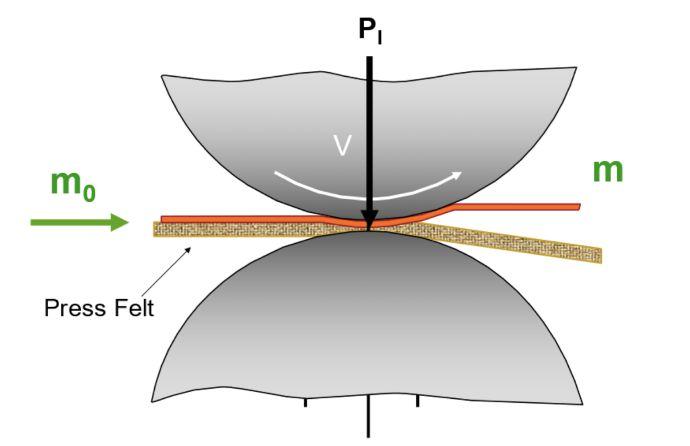
approach had serious shortcomings. For example, it did not predict the widely held observation that press impulse (pressure multiplied by time or the equivalent, line load divided by speed) accounted for most water removal over a wide range. The problem occurred because fibres are not solid, impermeable cylinders. Rather, they are porous flexible structures containing substantial water. Applied pressure acts not only on the water between fibres but also on water inside fibres by pressing on their flexible walls. As water is removed in pressing, water facing low resistance flows out first, followed by water facing higher resistance in smaller channels between fibres, and then from the increasingly smaller pores from within fibres. In short, the problem is one of decreasing permeability. This has been successfully modelled by a Decreasing Permeability Model (DPM) [2].
In addition to permeability, two other
important factors govern pressing. First, there is a limit to the amount of water that can be removed by pressing. The web reaches an equilibrium moisture when pressure is applied for a very long time [3]. Second, when pressure is released, some water expelled from the web may flow back into the web or simply stay with the web when separated from the felt. These actions are termed rewet [4].
The above factors acting together determine the amount of water remaining in a web after pressing. The amount may be expressed as moisture ratio, the weight of water divided by the weight of fibre. This is the inverse of solids content which is normally used by the industry. The moisture ratio resulting from pressing is illustrated by a characteristic pressing curve for a typical paper machine (Figure 2).
In the flow-controlled regime, water removal is dominated by the flow between and from fibres. In the pressure-
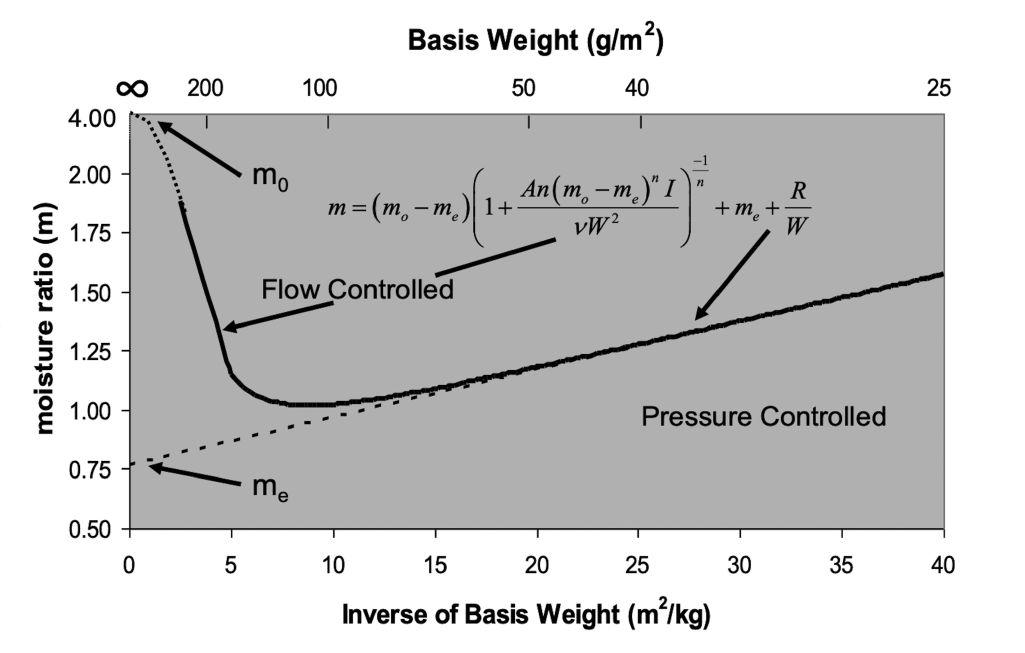
controlled regime, the surface tension of water in the pores of the fibre cell walls and rewet dominate. These regimes correspond to terms in the Decreasing Permeability Model equation as illustrated in the figure.
As shown in Fig. 2, there are two major regimes of pressing. One is “flowcontrolled”, dominated by the first term in the equation which describes water flow from between and within fibres. The governing parameters are press impulse (I), basis weight (W), viscosity of water (γ) and two furnish dependent coefficients (A,n), as well as the incoming moisture ratio is m0. The other regime is “pressure-controlled “(or rewet regime) which is dominated by the equilibrium moisture (me), and rewet R. These two regimes are commonly plotted against the inverse of basis weight which at low basis weight gives a straight line with slope R and intercept me.
The first step in optimizing a press section, or evaluating new equipment, is identifying the regime of operation which
determines the changes that may increase water removal. In the flow-controlled regime, moisture ratio is lowered by increasing press impulse (I), lowering basis weight by meeting quality specifications by other means, or raising the web temperature (which lowers water viscosity, γ). In the pressure-controlled regime, the moisture ratio is lowered by increasing the peak pressure in the nip to lower equilibrium moisture me or felt selection to reduce rewetting.
There is a limit to the amount of water that can be removed from a web using mechanical means [4]. At a given pressure, the web will reach an equilibrium moisture beyond which additional water cannot be pressed out. This is particularly important for lightweight paper grades (< 100 g/m2) where pressing has removed the majority of water that constitutes the flow control regime. Removal of additional water requires increased peak pressure. At the highest peak pressures in commercial presses, equilibrium moisture approaches 60 percent. Although higher
peak pressures could achieve solids contents greater than 60 percent, the cost of more durable roll covers and felts are a barrier. There may also be paper quality concerns. Unless the cell wall of fibres can be modified through enzymes or genetics, to permit easier water removal, the goal of higher solid contents after pressing has reached a physical limit.
After mid-nip, some expelled water may return to the web. This action, called ‘rewet’, proceeds by two mechanisms: water flows from the felt back into the paper (flow rewet) andwater remains with paper surface during separation of the felt and paper (separation rewet) [4]. The flow term depends on the webfelt contact time in the expanding nip and post-nip. This form of rewet is remedied by minimizing contact time after the nip.
Separation rewet is the portion of water at the felt/paper interface that stays with paper upon separation. It is strongly related to the surface structure of the felt. Water at the interface splits in proportion
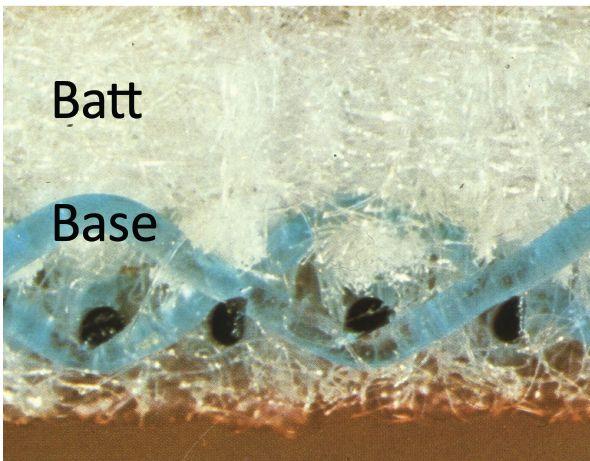
to the surface tension forces exerted by each material. This rewet can be reduced by using felts with finer batt fibres (but this is limited by plugging), increasing the surface energy of batt fibres, pressing to lower moisture content, minimizing post-nip contact between the felt and web and, in shoe presses maintaining high pressure until abrupt decrease at nip exit [4].
For years, it has been a common belief that a uniform pressure distribution on a web gives better water removal. But is this really true? This conviction is based on observations that, for lightweight papers, felts with a more uniform structure and finer batt fibres (Figure 3) give higher solids content after a press. This result has been attributed to more uniform pressure. However, there are two mechanisms in play: water removal in the press nip and rewet when pressure is relieved in the expanding nip. Which one dominates? Recent findings have shown that higher solids from finer felts is due to less rewet [4].
Felt structure is also important for market pulp where basis weights range from 600 to 1,100 g/m2. It is a common observation that pulp pressed by coarse felts which apply non-uniform pressure, require less energy to dry in air flotation dryers. The accepted wisdom was that the larger exposed surface area of the embossed pulp sheet gave better heat transfer and evaporation in the dryer. However, somewhat surprisingly, it was shown

Dr. Tran is Professor Emeritus in the Department of Chemical Engineering & Applied Chemistry, and Director of the Pulp & Paper Centre, University of Toronto.
that non-uniform pressure, not a larger exposed surface, caused the higher solids content [5]. Highly pressed zones produce low local permeability which provides high resistance to water flow. However, water can easily flow in the plane of the web to adjacent lightly pressed areas that have low resistance to exit the web. Evidence obtained using an instrumented pilot press suggests that this same phenomenon takes place using finer felts for lightweight grades. Finer felts remove less water mid-nip but give less rewet than coarse felts. Because rewet dominates, the net result is a dryer sheet.
Wet pressing matters. A dryer web entering the dryers will lower operating costs by lowering energy consumption. The decreased energy will also assist in the industry’s contribution to mitigating climate change. Through modelling, it is possible to identify and optimize the key factors that affect press section dewatering.
1. McDonald, J.D. and Kerekes, R. J., Estimating limits of wet pressing on paper machines. Tappi J. 16(2):29 (2017).
2. McDonald, J.D., Hamel, J., and Kerekes, R.J., Design equation for paper machine press sections. J. Pulp Paper Sci. 25(11):401(2000).
3. McDonald J.D. and Kerekes, R.J., Rewet in wet pressing of paper. Tappi J. 17(9):479(2018).
4. Kerekes, R.J. and McDonald, J.D., Equilibrium Moisture Content in Wet Pressing of Paper. Tappi J. 19(7):333(2020).
5. McDonald, J.D., Pikulik, I.I., Ko, P.L. and Owston, T.H., Optimizing market pulp felt design for water removal. J. Pulp Pap. Sci. 28(1):17 (2002).
J. David McDonald is president of JDMcD Consulting Inc., an adjunct professor at McMaster University and a PAPTAC Fellow.
By FPInnovations
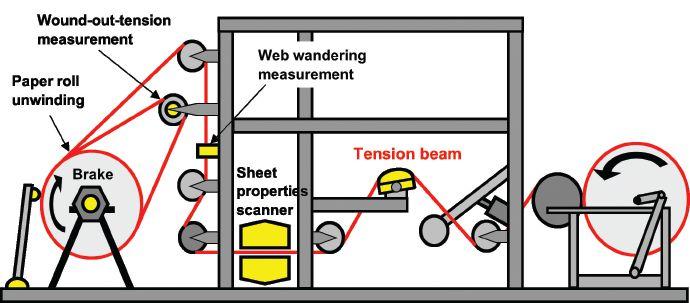
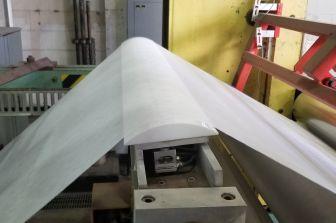
From paper linerboard and tissue, to aluminum foil and plastic films, FPInnovations Roll Testing Facility (RTF) can test any flexible web materials and can troubleshoot roll performance and web handling issues. In 2002, FPInnovations opened the doors to its RTF in Montreal, Quebec to investigate and fix issues such as baggy edge and wrinkles for which often the producers themselves were unable to identify the root causes. Almost 20 years and 4,000 rolls later, RTF’s goal remains the same: help producers improve product performance and efficiency in converting and printing operations.
Web breaks, bagginess, wrinkles and other roll structure defects can seriously hamper a producer’s efficiency, customer satisfaction, as well as the bottom line. Most of the time, these issues are related to poor web uniformity.
Through a complete analysis of web uniformity and roll structure, RTF can identify sources of web-related issues on the printing press and converting line.
“RTF provides a unique set of profiles of key paper properties, such as tension, caliper and moisture in order to troubleshoot complex and long-standing issues and determine the root cause of the problem,” explains Frédéric Parent, P. Eng., senior scientist of the paper products innovation group. Pinpointing problematic areas and providing recommendations for corrective actions help mills address complaints and costly claims.
Good rolls can be compared against problematic ones through a benchmarking service that aims to pinpoint the differences between the two to solve the problems at hand. The outcome and deliverable of any RTF analysis include a full report with supporting data, an interpretation of the results and recommendations for corrective actions.
RTF has serviced mills from Canada, the U.S., Asia, and Europe.
“Regardless of who the customer is, it
comes down to three essential ingredients for producers: a high-quality product, minimum rejects, and a uniform web, all of which RTF can help achieve,” explains Parent. “Depending on the issue, the savings realized from improved efficiency can be in the order of millions of dollars per year for a typical paper machine.”
RTF can improve mills’ bottom lines through enhanced efficiency, fewer web breaks and increased sales.
1. Improving paper machine efficiency: Ridges and non-uniform profiles resulted in a mill having to reject the first 20 inches of paper at the front edge of the paper machine. With RTF analysis, FPInnovations was able to help the mill link the issues to specific paper machine unit operations such as press loading and drying uniformity. Implementing RTF’s recommendations improved paper machine efficiency by seven percent, translating into millions of dollars saved annually.
2. Increasing sales and competitiveness: One mill had a long-standing issue with baggy edges, causing wrinkles, rejects and end user claims. RTF’s recommendations enabled the mill to solve this issue by correcting the CD tension profile with dryer surface resurfacing, facilitating the production of high-quality, lighter-grade products. This opened the mill up to additional markets that were previously inaccessible. The result: a significant increase of millions of dollars in annual sales.
3. Cutting paper breaks: Crepe wrinkles and a burst issue caused several web breaks per day on printing presses at another mill. RTF analysis revealed the issue was related to the use of a non-appropriate winding curve. This correction reduced the number of paper breaks by four per day and saved the mill more than $1 million per year.
FPInnovations’ expertise and unique facilities such as RTF and other instrumentation and testing equipment are all part of the equation that can help paper producers as well as producers of other flexible materials in remaining profitable in a highly competitive, global industry. PPC
For more information about FPInnovations’ Roll Testing Facility, please contact Frédéric Parent, senior scientist of paper products innovation group, FPInnovations, at frederic.parent@fpinnovations.ca.
Indigenous communities, Mercer Peace River partner on inclusive consultation.
By Kristina Urquhart
Aunique partnership between a pulp mill and several Indigenous communities in Alberta is aiming to establish a more inclusive consultation process for forest management.
In cooperation with First Nations and Métis Settlements in its Forest Management Areas (FMAs), the Mercer Peace River (MPR) woodlands team has begun Traditional Land Use projects (TLUs) aimed at building and maintaining ongoing communication and trust between all parties.
One of the ways they are developing knowledge-sharing is through a webbased tool called the Spatial Viewer, which houses planning data from MPR, as well as historical and cultural data, shared by Indigenous communities through a data sharing agreement with Mercer.
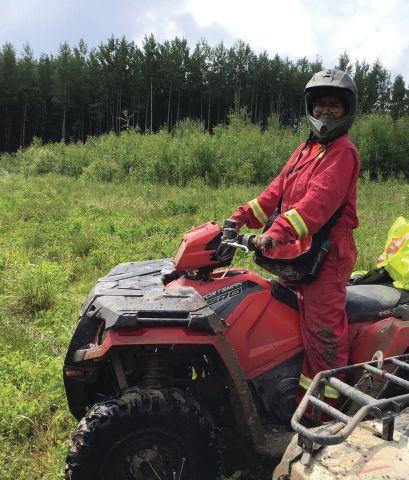
As a data entry specialist for Horse Lake First Nation in Hythe, Alta., Tina Horseman has been responsible for adding data points reflecting the nation’s traditional and cultural values into the system since the project started in 2019.
Horseman has transcribed over 1,100 points, lines and polygons so far, and says there is long term value in the project that extends beyond the partnership with Mercer Peace River. “The data will
be there for future generations so they can know what’s on the land,” she says.
The effort is personally meaningful to Horseman, who works closely with the elders in her community to uphold Horse Lake First Nation’s history. In 2003, her grandfather catalogued many of the region’s points of cultural significance, which formed the basis of the data set she’s been working on.
“I remember when my grandfather was out showing my uncle and my auntie where all these spots were before he passed away,” she says. “I wasn’t able to go on any of the site visits, so I thought it was really important that these places be put into the Spatial Viewer.”
Mercer Peace River is located about 500 kilometres north of Edmonton and manages about 2.7 million hectares of Alberta forest across two 20-year renewable government FMAs and three hardwood timber allocations, which provide the fibre needed for the mill’s softwood and hardwood kraft pulps. The company’s forest management planning process lasts for about two years and involves collaboration with Indigenous communities and the public.
How that collaboration occurs has evolved significantly with the introduc-
Horseman has transcribed over 1,100 points, lines and polygons so far, and says there is long term value in the project that extends beyond the partnership with Mercer Peace River.
“The data will be there for future generations so they can know what’s on the land,” she says.

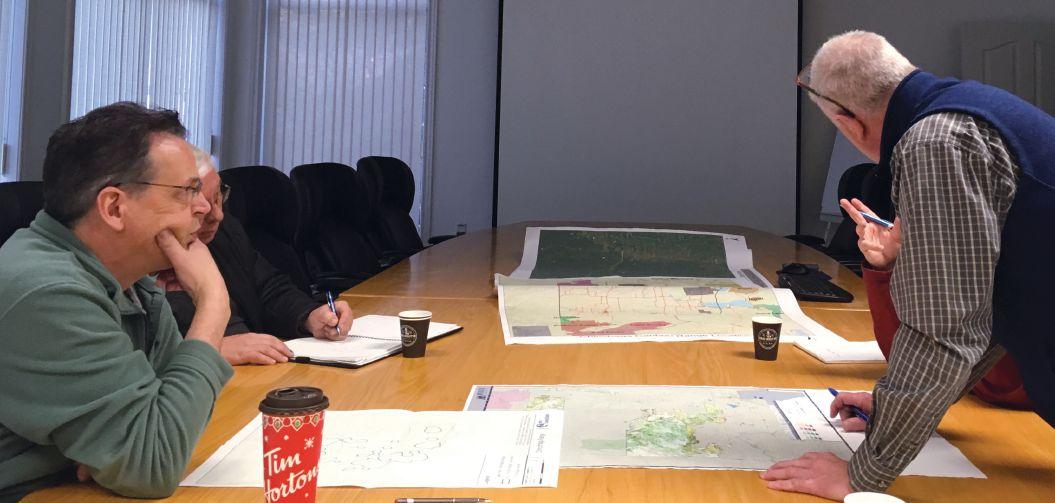
tion of the TLUs. Communities and their consultation staff manage a large number of project files from many different proponents.
In some cases, as Gilmen Cardinal, consultation manager with Peerless Trout First Nation in Peerless Lake, Alta. explains, there may be 50 trappers to consult with on a given request — and historical or contemporary TLU data is not always readily available for the consultation process.
The TLU and Spatial Viewer provide the additional time and ability to have ongoing information sharing to ensure that consultation and engagement are dynamic, accessible and meaningful.
The TLUs, which are jointly funded by the Forest Resource Improvement Association of Alberta (FRIAA) and Mercer Peace River, were developed in direct response to feedback from communities about opportunities to improve consultation, engagement and sustainable forest management, says Jenna Strachan, Indigenous relations superintendent at MPR.
Now, when the regulatory consultation process formally begins with the First Nations and Métis Settlements that are located within MPR’s FMAs, the ongoing knowledge sharing means “we can enter into a really well-informed dialogue about Mercer’s plans and the data we have, and
It’s a lot easier on the consultation side when we’re responding back to requests,” says Broderick.
the community’s values and interests on the land base,” Strachan says.
At the heart of the TLUs is the community-led collection of knowledge and data. Under a traditional land use agreement and with funding from FRIAA, Indigenous communities are able to employ their members to investigate and document important parts of the landscape within the FMAs.
Many communities are adding this collected data to the secure Spatial Viewer platform. Among the historical and cultural features that can be entered into the system and displayed on maps are burial and birthing sites, cultural campsites, cabins, medicinal plants, streams, hunting and trapping areas, and trails.
The Spatial Viewer has provided a permanent place to weave together information from many disparate sources, including maps, binders, spreadsheets, flash drives and oral stories that have been
passed down over generations.
“It’s a lot easier on the consultation side when we’re responding back to requests,” says Kieran Broderick, RPF, an advisor for the Industry Relations Corporation (IRC) at Horse Lake First Nation who works to uphold Aboriginal and inherent Treaty rights. “We now have that information on the Spatial Viewer right at our fingertips.”
Silvacom FMS, which specializes in cloud-based forest management, developed the Spatial Viewer as a web-based Geographic Information System (GIS). Mercer, in partnership with the Indigenous community participants, worked together to customize the tool to work more effectively for all users.
The tool organizes spatial data layers from all parties in a way that is easy for technical and non-technical users to explore. This is an important feature, since the Spatial Viewer is widely used within both the MPR organization and the communities. As a secure cloud platform, the Spatial Viewer allows everyone to connect through one system. Data from Spatial Viewer is readily translated into maps or housed in a document management system.
Users can access topography, wet areas mapping, provincial datasets and highresolution images — including a “leaf-on,
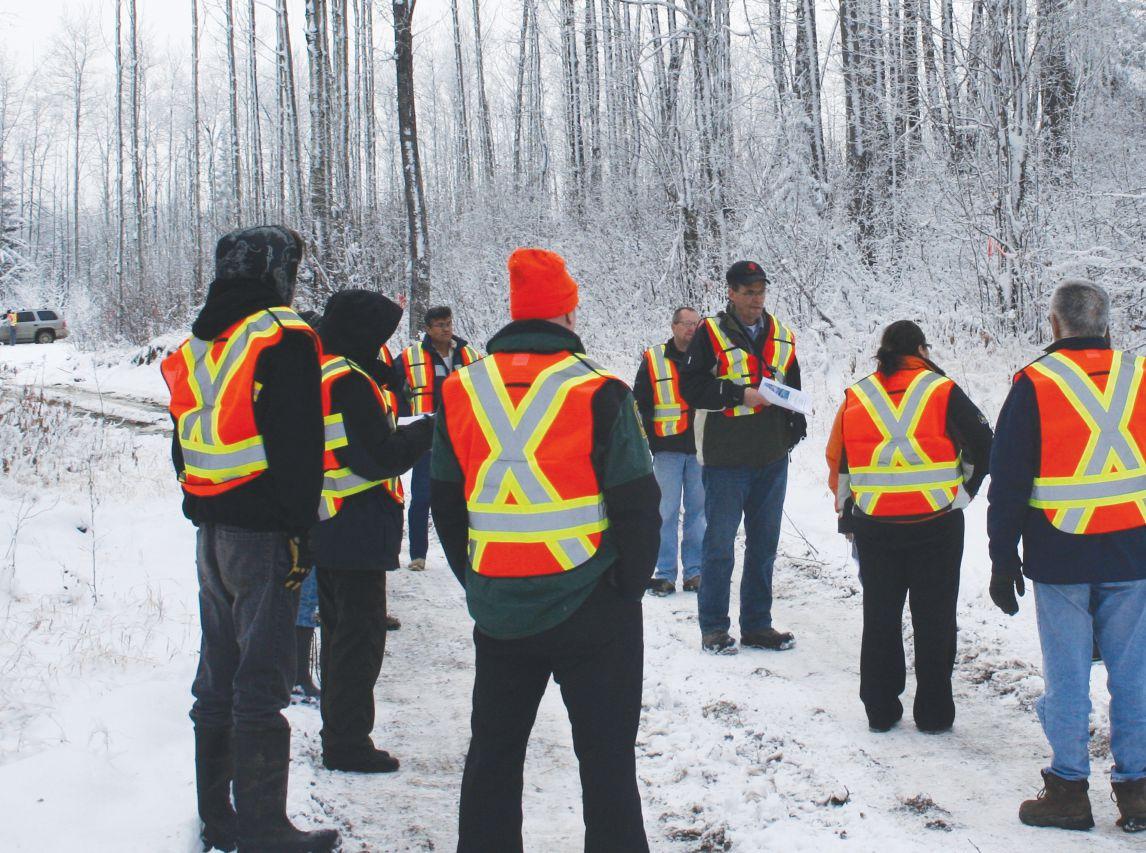
leaf-off” feature that allows for leaves to be digitally removed from images in order to observe the ground and waterways during full-foliage periods.
Because the Spatial Viewer is a twoway information system, MPR is also able to add its planning data and highresolution imagery. In addition to this information, “we can also share the history of areas that we have operated in the past, and where we plan to harvest in the future,” says Strachan.
“We also share other important landscape data including other industry dispositions so that the communities can see more fully the different activities on the land base to help us develop more mutually favourable plans or mitigation.”
The TLUs, and the use of the Spatial Viewer, have opened up the conversation
when it comes to Mercer’s forest management practices. Mitigation may mean things like additional buffers around moose lick complexes, leaving large unharvested areas for caribou, or reducing site preparation measures to ensure berry or medicinal plant regeneration.
Mutually favourable plans may include harvesting in a region to bring moose back to a habitat, or reduce wildfire risk. The participants can also use modelling to predict where certain species of interest to Indigenous community members may be located.
“It’s not necessarily about ‘do or don’t operate,’ it’s more about ‘how,’” says Strachan. “And, if we operate in an area with key values identified, what do we need to consider to protect and maintain the values?”
If a proposed plan needs to be modified to accommodate certain cultural fea -
tures, the relationship and the landscape data is now there to discuss possible buffer zones or no-go areas.
“Mercer was willing to listen to PTFN and work with us when it comes to cultural and traditional values and the things we’d want to protect,” says Cardinal. “They’ve set the standards high for all logging companies to follow this business plan and work with the Nations. It would go a long way, even if it takes an extra year or so to plan.”
Working together on the tool has helped to develop trust. At Cardinal’s suggestion, MPR added a key feature to the Spatial Viewer: the ability for communities to control permissions on their data, meaning MPR can’t necessarily see every point on the system if they haven’t been granted access. This helps the communities use the Spatial Viewer for their own data-tracking purposes.
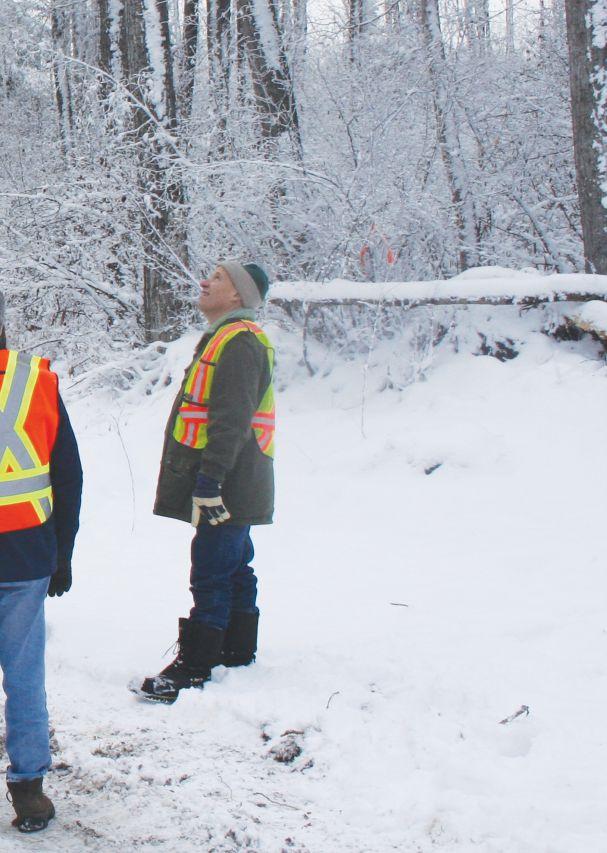
As part of the partnership, MPR offers the tool at no cost, and provides ongoing training and support. While some communities are moving fully to the Spatial Viewer as a data management system, others are using it in addition to their existing systems.
“We didn’t want accessibility to this system and this type of engagement to be limited by the communities having to pick and choose which system to use,” says Strachan. “We didn’t want to add any additional financial burden or to reduce their in-house capacity. We wanted to have it free of charge so they can engage more meaningfully.”
Since the design of the TLUs are community-led, improvements are always ongoing. MPR is exploring new capabilities for the Spatial Viewer such as further refining categories of information, adding audio and video files and linking to government application portals.
“Some communities are using the traditional land use project to identify and collect the Indigenous place names for their traditional territory and sharing that with us,” says Strachan.
“And we’re looking at ways to include these Indigenous
place names into our own shared mapping system, which we think will be a benefit in consultation when we can speak to elders and community members.”
The Spatial Viewer has been a valuable asset in completing other work for Peerless Trout First Nation. “I use it for everything,” says Cardinal. “I get zipped shapefiles from industry — oil and gas and other logging, access roads, pad sites.”
Horse Lake First Nation is also adding points beyond the scope of its involvement with MPR, including for the expansions of the Trans Mountain pipeline and the Pembina Peace Pipeline.
“Going forward, the more information that we are able to add into the system, I believe the more areas will get protected for the exercise of inherent Treaty and Aboriginal rights,” says Broderick.
Before Horse Lake First Nation had the tool, industrial companies would often send out workers to conduct site evaluations, but those workers didn’t necessarily have all of the information about a given place, says Horseman.
As a result, “a lot of projects got approved that maybe shouldn’t have,” she says. “If they didn’t know, what can you do? But now they do.”
PPC
Kristina Urquhart is the former editor of Pulp & Paper Canada.

Voith adds three new apps to Papermaking 4.0 portfolio Voith is introducing three new apps, OnEfficiency.BreakProtect, OnView.VirtualSensorBuilder and OnView.MassBalance, on its IIoT platform OnCumulus. The new digitalization solutions feature high safety standards. The applications are designed to help pave the way to the digital paper mill.
OnEfficiency.BreakProtect uses artificial intelligence to analyze the process data bundled in OnCumulus. Thereby, it automatically detects various critical process conditions that can lead to breaks. This allows the development of specific countermeasures and the reliable prevention of tear-offs.
With OnView.VirtualSensorBuilder, Voith introduces a user-friendly app that allows paper manufacturers to quickly and easily create virtual sensors themselves with just a few mouse clicks. Once installed, operators can use OnView.VirtualSensorBuilder to continuously calculate, visualize and control relevant quality values, such as strength values, in real time. Combined with OnCumulus.Suite, the digital application identifies critical values and provides preventive warnings, allowing personnel to make immediate improvement adjustments.
OnView.MassBalance maps the current stock flows in an intuitive Sankey diagram
and provides information on deviations that are no longer within the standard range. If a defined warning threshold is exceeded, the application automatically highlights the relevant area in the diagram and recommends suitable action to avoid fibre losses.
With the help of OnView.DigitalEye, the accuracy of OnView.MassBalance can be increased even further. The innovation makes it possible to analyze recovered paper quality even before stock preparation with the help of artificial intelligence. The AI application OnView.DigitalEye is currently undergoing final testing as part of pilot installations at national and international customer sites and is expected to be available in 2022. Another application that will be launched in 2022 is OnView. Energy from Voith. The app visualizes and analyzes energy consumption and CO2 emissions in production. voith.com
As part of its Industrial Internet offering, Valmet has developed winder diagnostics to help its board and paper customers optimize the overall performance of their winder. Winder Diagnostics is an essential part of its winder reliability agreement.
This service aids in better maintenance predictability, which results in
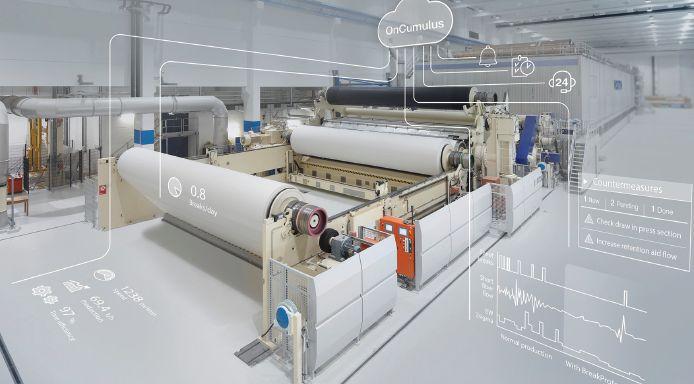

fewer unplanned stops and improved winder performance. Winder Diagnostics provides information from the winder, allowing for quick reactions to sudden abnormalities and immediate maintenance scheduling.
Valmet has developed its Winder Diagnostics in close collaboration with select customer mills to ensure that it is usable and useful.
“The collaboration with mills was started at a very early stage of the development process. It has been very important to exchange ideas and development needs and receive feedback from genuine user experiences all along the way,” said Markku Savioja, global product manager for board and paper service technology at Valmet.
Valmet Winder Diagnostics is available for all types of winders. Any board or paper mill can be connected to the service. The application always comes with a Valmet Performance Center (VPC) remote support agreement as a minimum. Through the agreement, customers can consult Valmet’s experts and receive remote support to ensure winder runnability. The experts will take action based on the results of the data analysis as well as give recommendations on valueadding services.
The service runs in the company’s cloud environment, where it analyzes and visualizes the data received from the winder. The application is accessed through the Valmet Customer Portal. Both the customer and Valmet have the same view. valmet.com
ABB releases second edition of ABB Fiber Guide
ABB recently announced the release of the second edition of the ABB Fiber Guide. The comprehensive reference guide covers extensive information on fibre.
The Fiber Guide was originally published by Lorentzen & Wettre in 2006. The latest edition features the ABB brand and covers new advancements in measurement, such as fibre morphology online measurement tools like its L&W Freeness and Fiber Online.
Lorentzen & Wettre supplied the pulp and paper industry with a number of different products to evaluate the quality of pulp, including wood chips, classifiers, laboratory digesters, among other things. Leveraging its expertise and long history supporting pulp testing, L&W brought out the first Fiber Guide edition.
After acquiring L&W in 2011, ABB decided to carry forward the heritage of supporting the industry with educational materials with the publication of this second edition.
ABB noted in a statement that the purpose of this book is to support and motivate people working in all areas of the pulp and paper industry, by introducing new methods for paper making. It is specifically written for people working with the production of pulp and their developers, customers and suppliers. new.abb.com
Kemira introduces new technology to address stickies challenge in recycled paper and board
Kemira has introduced a new quick inversion polymer technology that can help address a key challenge for recycled paper and board producers: stickies from tapes, glues and labels used in recovered and recycled packaging material.
There is an increase in the use of recycled fibres in paper and board production. However, contaminants, like the stickies, can reduce production efficiency and product quality.
Kemira’s new quick inversion polymers provide high hydrophobic particle fixation. They have been successful in improving machine cleanliness and with it, machine runnability and efficiency in both recycled linerboard and tissue grades.
“These products are the result of significant research into the right molecular weight and charge to find the optimal fixation performance to control the stickies,” says Michael Wallace, senior manager, wet end applications at Kemira.
The quick inversion polymers are multipurpose products. In addition to being a fixative for stickies control, they work as retention and drainage boosters. This helps in improving dewatering performance, for example in high-grammage paperboard grades. It also helps in improving the efficiency of other chemicals, such as sizing, in the papermaking process.
Kemira’s quick inversion polymers are part of its KemForm Retention and Drainage concept. The products are available under the FennoPol tradename globally. They do not require complicated or costly polymer make-down equipment at the mill site. kemira.com
Ahlstrom-Munksjo releases compostable oxygen barrier mono-material
Ahlstrom-Munksjo has launched PureBarrier, a mono-material oxygen barrier technology that is made of 100 percent cellulose fibres and is compostable. This launch is aligned with the company’s “from Plastic to Purpose” campaign.
The PureBarrier technology is based on the Genuine Vegetable Parchment (GVP). It has oxygen and gas barrier properties, as well as natural wet strength. The material is grease resistant and does not contain loose fibre or added chemicals. Using a biopolymer, it can be made heat sealable. The material is biodegradable and compostable.
“Our ‘from Plastic to Purpose’ campaign continues to raise awareness on the possibilities of fibre-based solutions as a renewable option,” said Robyn Buss, executive vice-president of AhlstromMunksjo’s food packaging and technical solutions.
“Oxygen barrier properties present a significant technological challenge for fibrous material as it is a porous structure by nature,” said Dr. Noel Cartier, vicepresident of research and development (R&D) for advanced solutions and parch-
ment businesses.
The company uses responsibly sourced and renewable wood pulp to produce PureBarrier. It is certified according to Forest Stewardship Council standards and is biodegradable and certified compostable with OK COMPOST/ OK COMPOST HOME from TUV.
PureBarrier is already being used commercially in coffee capsule lids and brewing materials for espresso systems. It is currently being evaluated for nonfood applications.
ahlstrom-munksjo.com
The Twin Rivers Paper Company has received compostability certification from the Biodegradable Products Institute (BPI) for its portfolio of EcoBarrier PFAS-free packaging papers.
In order to receive the BPI compostability certification, products have to undergo extensive third-party testing to ASTM standards that ensure that the items can be safely cycled back into the soil at a commercial composting facility. The BPI certification mark helps users identify whether an item is compostable or not.
“In addition to meeting our customers’ stringent grease-resistance performance requirements, we’re committed to helping customers meet their sustainability goals,” stated Rachel Van Wychen, director of sales for specialty packaging and technical at Twin Rivers Paper. “With the achievement of BPI certification, our EcoBarrier products are 100 percent recyclable, biodegradable and compostable, making EcoBarrier papers the optimal substrate for sustainable packaging.”
Twin Rivers Paper was one of the first in the industry to commercialize a nonfluorinated oil and grease-resistant paper. The company has continued to leverage its barrier expertise and papermaking technology, expanding its FDA-compliant PFAS-free offering in April 2021 with the addition of EcoBarrier Plus paper engineered for heavy grease-resistant applications.
twinriverspaper.com
The Canadian forest products sector is passionate and devoted – not just to the industry itself, but also to its local communities. Here we share the initiatives of pulp and paper companies working to make positive social, environmental and economic impacts across the country.
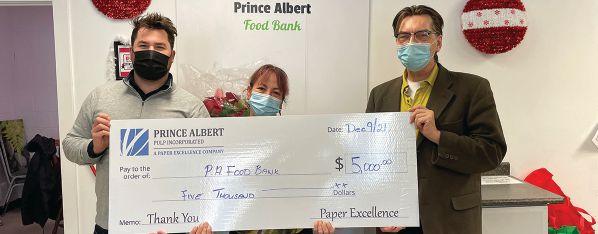
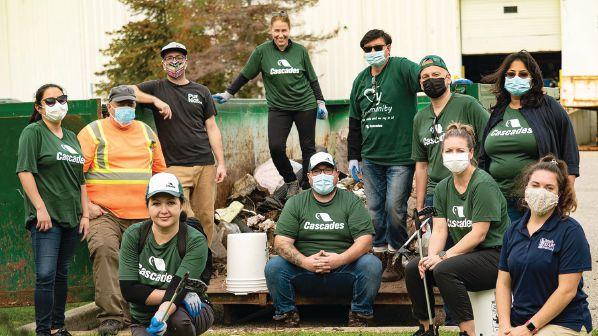
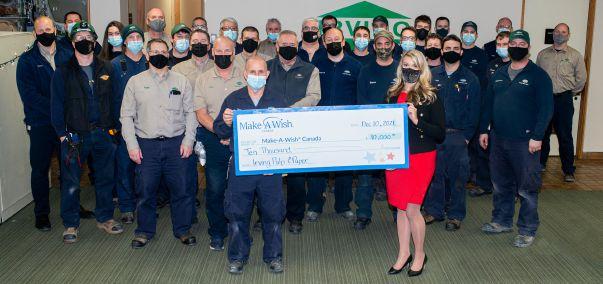
The Kruger Products’ New Westminster, B.C. plant team donated $10,000 to the Greater Vancouver Food Bank, along with a food drive collection. Additionally, their annual United Way campaign raised $14,829 in 2021.
Alberta-Pacific Forest Industries helped keep the local food bank stocked during the holiday season with their donation.
Let us help you share your successes. Tag @PulpPaperCanada or use #PPCGivingBack on Facebook or Twitter, or send an email to the editor at srayghosh@annexbusinessmedia.com. We’d love to hear from you!

Focused on helping mills around the world identify technology solutions which address industry challenges often intensified by recruitment and retention issues






SCA Pure or Black Spruce
We’re happy to boast that our first year in North America has been a “Pure” homerun! This is the result of the combination of our very northern fiber and our brand new state of art pulp mill. In fact, we’re told by our customers that SCA Pure is a pulp that performs equally as well as the finest of Canadian softwoods.
Pure properties
SCA Pure is our premium quality NBSK pulp, offering worldclass strength properties and outstanding environmental performance, naturally complying with FSC® (FSC C013162).
That’s why we have named our new product SCA Pure. Pure, as in pure performance, pure profitability, and pure sustainability.
A Pure commitment
Chasing currency fluctuations and spot markets is a very poor long-term strategy. We, SCA, will build our pulp business on the shoulders off long-term relationship with customers in North America and Europe.
Yes, we are an ocean away and that’s why we have inventory in the Northeast, Southeast and Midwest.
When you think SCA think Softwood commitment to North America, Let’s talk!
For more information please contact Magnus Person, magnus.t.persson@sca.com, phone +46 72 556 43 99.