


Capping off a year of pulp mill and sawmill curtailments and closures nationwide, on Dec. 20 Nova Scotia premier Stephen McNeil announced there would be no extension to the Boat Harbour Act for Northern Pulp –thus forcing the bleached kraft pulp mill to withdraw its effluent drainage pipe from a lagoon adjacent to Pictou Landing First Nation by Jan. 31. On the one hand, the #NoPipe collective of fishers, First Nation residents and environmental activists was elated, following years of lobbying for the pipe’s removal from what has become one of the region’s most polluted sites.
But shortly after the cheers died down, Paper Excellence, Northern Pulp’s parent company, confirmed the mill would close because its proposed replacement – an activated sludge system that would deposit diffused, treated effluent to open waters in a local strait – had not been approved by the province (read more in our news story on p. 6).

Kristina Urquhart Editor
It was a dark day for the province’s forestry industry. McNeil announced the government is spending $50 million to provide support and skills training to affected workers across the supply chain – surely cold comfort to the scores of workers whose future employment outcomes are now uncertain, especially amid growing concerns about the longevity of Nova Scotia’s forestry industry without the mill, and, as a result, the health of the province’s economy.
What’s going to happen to the mill long term remains to be seen, but, at least in the short term, media reports illustrate an industry decimated – 300 people out of a job at the mill itself, plus an estimated 2,400 affected in the supply chain. Northern Pulp purchased shavings, bark and wood byproducts from sawmills, which in turn bought logs from Northern Pulp. With the pulp mill closed, harvesting operations will dwindle, many sawmills will shutter, trucking contracts will dry up, and the more than 30,000 private woodlot owners in Nova Scotia will be deprived of a good portion of their business. The Port of Halifax has lost its largest customer; the region has lost one of its biggest employers.
At the time of this writing, Paper Excellence had informed the province that it would proceed with a new environment assessment report for the wastewater treatment facility – its only shot to make this closure a temporary one. The company will have up to two years to provide additional scientific information on the project. There are also unconfirmed reports that Paper Excellence will move the mill into a hot idle to maintain the boilers – but putting the mill on pause requires government approval because it involves draining the water (which wouldn’t contain chemicals) needed to run through the boilers back into Boat Harbour.
Paper Excellence purchased Northern Pulp in 2011, and with it, inherited the distrust of a community that has been fighting for decades with the mill’s various owners to stop the flow of untreated effluent into Boat Harbour’s settling ponds. With this next phase, the company will need to do more than add statistics to a government-ordered report. Paper Excellence has the opportunity to start from the ground up and build a new, stronger – and transparent – relationship with the Indigenous community, and with other local stakeholders.
If an idle doesn’t happen, or even if it does, Nova Scotia’s forestry industry collectively must harness this chance to rebuild by welcoming new projects that support the bioeconomy and sustainable harvesting. It must also identify alternative markets for fibre that are not so dependent on the business of one company.
No matter what comes next, the entire supply chain must work together. There will be a new path – even if we can’t yet see the forest for the trees. PPC
Editor KRISTINA URQUHART 416-510-5143 kurquhart@annexbusinessmedia.com
National Accounts Manager LAURA GOODWIN 289-928-8543 lgoodwin@annexbusinessmedia.com
Group Publisher TODD HUMBER 416-510-5248 thumber@annexbusinessmedia.com
COO
SCOTT JAMIESON 519-429-5180 sjamieson@annexbusinessmedia.com
EDITORIAL/SALES OFFICES
111 Gordon Baker Rd., Suite 400, Toronto, ON M2H 3R1 Phone: 416-442-5600
Media Designer EMILY SUN
Account Coordinator
STEPHANIE DEFIELDS sdefields@annexbusinessmedia.com
Circulation Manager
BEATA OLECHNOWICZ bolechnowicz@annexbusinessmedia.com email: bolechnowicz@annexbusinessmedia.com
Tel: 416-510-5182
Fax: 416-510-6875 (main) 416-442-2191
Mail: 111 Gordon Baker Rd., Suite 400, Toronto, ON M2H 3R1
Printed in Canada
ISSN 0316-4004 (Print)
ISSN 1923-3515 (Digital)
PUBLICATION MAIL AGREEMENT #40065710
SUBSCRIPTION RATES
Canada $57.50 - 1 year; $92.50 - 2 year
USA $107.00 USD per year
Overseas - $115.50 USD per year
Occasionally, Pulp & Paper Canada will mail information on behalf of industry related groups whose products and services we believe may be of interest to you. If you prefer not to receive this information, please contact our circulation department in any of the four ways listed above.
Annex Privacy Office privacy@annexbusinessmedia.com Tel: 800-668-2374
The editors have made every reasonable effort to provide accurate and authoritative information but they assume no liability for the accuracy or completeness of the text or its fitness for any particular purpose.
All rights reserved. The contents of this publication may not be reproduced in part or in full without the publisher’s written permission © Annex Publishing & Printing Inc.
Sustaining member, Pulp and Paper Technical Association of Canada; Member, Alliance for Audited Media.




The world does not need more food packaging. It needs better, renewable ones.
Chemistry plays a key role in increasing sustainability and reducing food waste by enabling safe and functional fiber-based packaging.
But the features that make a food package more sustainable, more durable or smarter are almost always invisible. It’s time to pay attention to the unseen.
READ MORE: KEMIRA.COM/ BOARD-SEE-THE-INVISIBLE
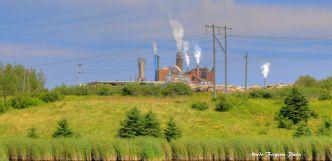
Northern Pulp confirms closure, will re-apply for plan approval Northern Pulp will close Jan. 31, eliminating 300 direct jobs, following the Nova Scotia premier’s announcement on Dec. 20 that the province’s deadline will stand for the mill to stop diverting effluent into Boat Harbour.
On Jan. 2, the mill’s parent company, Paper Excellence, informed the province that it will continue the environmental assessment process for its proposed effluent treatment plant in the interim while the mill is closed.
The mill is Nova Scotia’s main consumer of sawmill residuals, and its closure affects an estimated 2,400 workers in the provincial supply chain.
“I was hoping it wouldn’t come to this,” McNeil said about the decision in a press conference on Dec. 20. “I am extremely disappointed to say the least.”
McNeil also announced a $50-million transition fund to support forestry workers who will be displaced by the government’s decision with access to training, career coaching and job search assistance. Kelliann Dean, deputy minister of intergovernmental affairs and trade, will lead the team of government and industry representatives responsible for administering the funds.
McNeil indicated the support program would be available to most workers in the forestry industry – aside from mill owners – including Northern Pulp employees, truckers and contractors.
The province is hosting a series of open houses for affected workers to access available resources, and is working with the community’s economic development partners to host information sessions for local businesses. Companies that may be impacted by the pulp mill’s closure will hear about current opportunities in their region and have an opportunity to share their ideas.
McNeil also said that as part of the transition process, his government would be examining Northern Pulp workers’ pension plans to ensure they wouldn’t be cut short.
Nova Scotia passed the Boat Harbour Act in 2015, allotting five years for the kraft pulp mill to implement an alternate plan for its wastewater treatment. The current system deposits untreated effluent into lagoons at Boat Harbour, which is adjacent to Pictou Landing First Nation.
In Feb. 2019, Northern Pulp submitted an environmental assessment application to the province for a new activated sludge treatment (AST) system, which would see 85 million litres of treated effluent routed daily into Northumberland Strait via a 15-kilometre pipeline.
That application was protested by local environmental groups – and lacked sufficient scientific information, according to the province.
Northern Pulp submitted a follow-up report on Oct. 2, with third-party assessments stating that the mill’s AST system would deliver diffused, treated effluent and would not have adverse effects on the fish or environment.
Days before McNeil’s announcement that he would not extend the Boat Harbour Act, Nova Scotia Environment Minister Gordon Wilson said Northern Pulp’s most recent report was incomplete, and requested the mill complete another environmental assessment report.
Among the requirements of this new report, the mill must describe: other methods of treating effluent, measures that may prevent negative environmental
Canfor will remain a public company after a minority shareholder vote in December that ended the arrangement agreement with Great Pacific Capital Corporation to take full control of the company.
effects, a program to monitor those effects and a public information program.
Paper Excellence will have until April 2022 to complete the report.
Later this year, forest products company Chantiers Chibougamau plans to restart the Lebel-sur-Quévillon pulp mill and cogeneration facility under the new name Nordic Kraft.
The idled mill, which was owned by Domtar until 2005 and purchased by Chantier Chibougamau in 2018, will employ about 300 people.
The company has already employed about 180 people to begin work on recommissioning the mill’s equipment and adding new digital technologies. Chantiers Chibougamau is also looking to fill roles including industrial mechanics, instrumentation and control, lab technicians, welders, engineers and more.
The government of Quebec will own a minority stake in the mill and is fronting about 40 per cent of the $342 million investment, including a 10-year loan for $120 million.
Nordic Kraft says increased demand for tissue and consumer products that require kraft packaging led to the decision to restart the mill, which will source softwood chips from Quebec to produce about 300,000 tons of pulp annually.
According to a company news release, approximately 45 per cent of the votes cast by proxy by minority shareholders were in favour of the arrangement, which falls short of the majority required to approve the deal.
Canfor announced in October 2019 that an independent committee of its board of directors reached a deal with Great Pacific to take the company private by selling its remaining shares for $16/share. Great Pacific already owns 51 per cent of Canfor’s shares.
A week later, minority shareholder Letko, Brosseau & Associates released a statement opposing the Great Pacific offer, saying the deal is “very opportunistic and significantly undervalues” Canfor.
Canfor says it plans to “continue to diversify its business and pursue growth strategies in positioning itself for long-term success and sustainability.”
– reported by Maria Church, Canadian Forest Industries

Irving Tissue opens $470M plant, invests another $400M
Irving Tissue has officially opened its $470-million tissue plant in Macon, Georgia and, based on a new, additional $400-million investment, will soon double its capacity.
An opening ceremony was held Nov. 13 with Irving Tissue president Robert K. Irving and other local dignitaries.
Irving Tissue’s Macon plant employs more than 200 people. It produces ultrapremium household paper products including bath tissue and paper towel.
The first phase of the expansion involved 1.5 million person hours of work for contractors during construction with over 1,000 people on site at peak. Phase Two of the project will begin immediately and is expected to involve approximately one million person hours of work for contractors.
The second phase of the project represents an additional $400 million investment, adding another 150 jobs and will be completed by January 2022. “We’ve already ordered an additional ThruAir Dry machine that will be a duplicate of what we already have in our Macon plant,” said Irving. “This facility is part of an integrated value chain from sustainably managed forests to the store shelf. Most of the pulp for Macon products comes from our mill in Saint John, New Brunswick.”
Construction of the Macon plant doubled Irving Tissue’s annual ThruAir Dry capacity, increasing it by 75,000 tonnes, the equivalent of 15 million cases; Phase Two will increase that to a 30-millioncase capacity.
CEO
David Anderson has been promoted to president and CEO of Millar Western Forest Products.
Outgoing CEO J. Craig Armstrong
retired January 1 and became vice-chair of the Millar Western board of directors.
“Over the course of a 32-year career with Millar Western, and particularly in his past decade of service as senior executive, Craig has made extraordinary contributions to the growth and advancement of the company and left an indelible mark on our industry as a whole,” says the board of directors in a statement.
Anderson brings 14 years of working for Millar Western, most recently as chief
operating officer, to his new role.
“Dave has garnered extensive experience in all aspects of our business, from product marketing and development through finance to the executive management of operations,” says the board.
“In doing so, Dave has demonstrated not only his exceptional analytical and leadership abilities, but his commitment to the core values that have made the company strong, helping it this year mark its 100th anniversary.”
Proper installation and repair of your dryer equipment will maximize drying capacity by keeping all the dryers in service. Kadant has the specialized knowledge and experience for safe, reliable, and expert installation of your rotary steam joints, syphons, dryer bars, and related equipment.



Kimberly-Clark Corporation’s board of directors has elected the company’s chief executive officer Michael D. Hsu as chairman.
Hsu, 55, succeeds Thomas J. Falk, who retired from the company and the board at the end of 2019 after serving as chairman for the past 16 years.

“As part of the board’s ongoing focus on succession planning, both Mike and Tom have worked closely with the board to plan this transition,” says Ian Read, independent lead director, on behalf of the board.
“Since joining the board in 2017, Mike has demonstrated strong leadership of Kimberly-Clark’s business and championed a strategy to deliver balanced, sustainable growth,” Read says.

Tissue World will welcome 200 exhibiting companies from nearly 70 countries to its exhibition and conference in Miami from March 10-13. Organizers expect the event to draw more than 2,500 attendees for the largest gathering of the international tissue industry in North America.
The conference theme, “Ready for Reinvention, Ripe for Disruption: Will the 20s Roar for Tissue?” will explore the geopolitical, technical, legislative and behavioural forces at work in this dynamic market.
Speakers include: Kim Underhill, Kimberly-Clark North America group president; Jason Limongelli, J.D. Irving vice-president, woodlands; Esko Uutela, Fastmarkets RISI principal; David Cowles, Valmet global business manager – nanotechnologies; Pete Augustine, Fabio Perini North America president (read more from Augustine on p. 12); and more.
“The fundamentals of the U.S. tissue business have changed significantly in recent decades, and the rate of change continues unabated,” says Agnes Gehot, Tissue World’s deputy event director. “The country with the most advanced tissue machines and highest tissue consumption per capita is seeing the rise of private label, changes in consumer preferences and an intensifying trade war that is shaping the industry’s future.” Register at tissueworld.com.
Corner Brook Pulp and Paper is eliminating 22 permanent positions at its newsprint mill in Corner Brook, Newfoundland, which the company says is an effort to keep labour costs down.
The affected workers will remain full-time but will be reassigned as casual employees instead.
West Fraser Timber Co. has been named one of Canada’s Top 100 Employers for 2020 by Mediacorp, the orgnaization that compiles the list.
“This is the seventh year we’ve been recognized as one of Canada’s Top 100 employers. Our company is what it is today because of our dedicated employees,” says Ray Ferris, president and CEO. “It is our goal to constantly improve and to encourage everyone to achieve great performance. There will always be challenges, but it is how we get through them that is important.”
Employers are graded on eight criteria: physical workplace; work atmosphere and social; health, financial and family benefits; vacation and time off; employee communications; performance management; training and skills development; and community involvement.
West Fraser says it was chosen for a number of factors, including its community “give where you live” approach to charitable support. The company has designated a portion of its pre-tax profits to charitable and community giving, with a majority of the donation dollars being distributed by mill managers who live and work in the local communities.
Fortress Global Enterprises has laid off the remaining 73 staff at its dissolving pulp mill in Thurso, Quebec after announcing Dec. 10 that it had failed to secure a buyer for the company.
Three days later, the company filed a restructuring application with the Superior Court of Quebec.
All of the members of the board of directors have resigned except for president and CEO Giovanni Iadeluca and CFO Kurt Loewen, who are assisting Deloitte as it monitors the restructuring.
As a result of the closure, a nearby sawmill owned by hardwood flooring company Lauzon Planchers de bois exclusifs has also closed. The sawmill supplied wood chips to the Fortress plant, and had already stopped its own logging operations in October 2019 after Fortress temporarily closed.
David Lauzon, the sawmill’s CEO, has stated that his mill plans to find an alternate fibre source and reopen this year.
Port Hawkesbury Paper to develop wind farm plan for green energy
Port Hawkesbury Paper has signed a memorandum of understanding with Canada Infrastructure Bank (CIB) and IFE Project Management Canada to collaborate on a new wind farm project in Nova Scotia that would transport green energy to its paper mill.
The three organizations will conduct due diligence work during the project evaluation and planning phase of the 112-megawatt Pirate Harbour Wind Farm. CIB has indicated it may invest in the project once the research has been completed, but Port Hawkesbury Paper and IFE will be leading the overall design, construction and financing.
The Point Tupper–area wind farm would be comprised of 28 four-megawatt wind turbines, 15 kilometres of overland transmission lines and two kilometres of subsea cables.
The proposed wind farm would reduce the mill’s reliance on fossil fuels for energy, resulting in reduced greenhouse gas emissions.
Moody’s: Paper and forestry products outlook negative in 2020
The outlook for the global paper and forest products industry this year remains negative, Moody’s Investors Service says.
Earnings from paper, paper packaging and market pulp will all decline primarily as excess supply causes prices to fall. Wood products is the only subsector that will see improvement.
“We expect operating earnings for the global paper and forest products industry to decline by two per cent to four per cent in 2020,” says Ed Sustar, a Moody’s senior vice-president. “Lower prices across most sub sectors will be the primary driver for lower earnings, as well as the ongoing secular demand decline for paper, partially offset by lower costs for recycled fibre.
Paper packaging and tissue – In the paper packaging and tissue subsector, operating earnings will decline by about two per cent in 2020 on the back of lower corrugated container prices, given capacity additions haven’t yet been absorbed by weaker demand growth. Consumer packaging and tissue prices will stay at current levels, while recycled fibre costs will remain below the long-term average as China’s contamination restriction lessens its imports.
The report also indicates average containerboard prices in North America will fall four per cent in 2020, and possibly even further thereafter if most of the announced machine conversions to packaging grades occur at the same time. Approximately 1.2 million tons of new containerboard capacity will start up in late 2019 and early 2020 at mills across North America.
The rise in e-commerce and environmental concerns about plastic packaging will increase paper-packaging demand, but will be partially offset by right-size packaging.
Approximately 280,000 tons of new tissue capacity will start up in 2020, representing about 2.5 per cent of North American capacity. Moody’s predicts that higher-cost capacity will be curtailed to ensure favourable supply and demand conditions. (For more on the future of the tissue market, turn to p. 14.)
Commodity and specialty paper –Operating earnings for commodity and specialty paper firms, meanwhile, will fall by about five per cent.
Prices will fall for most grades of commodity paper, as curtailments have not kept pace with declining demand. Nevertheless, specialty and non-integrated commodity paper producers will benefit from lower pulp and recycled fibre costs.
Moody’s also predicts demand for some specialty paper grades will increase as consumers switch to paper-based substitutes over single-use plastics such as paper cups and straws.
Market pulp – Market pulp producers will see operating earnings decline by around nine per cent in the coming year, Moody’s says, driven by excess inventories and lower average hardwood and softwood pulp prices. Although pulp prices will begin to rise as inventory levels normalize, average prices in 2020 will remain below 2019 levels.
Demand for pulp will remain muted as orders slow, particularly from China amid high trade tensions with the U.S. Moody’s predicts pulp capacity may exceed demand starting in 2021 if announced expansion projects start at the same time.
Cascades, Resolute named to Canada’s top corporate R&D spenders list
Cascades and Resolute Forest Products have been named to the 2019 list of Canada’s Top 100 Corporate R&D Spenders.
Research Infosource Inc., an R&D research firm, compiles the Top 100 ranking based on companies who that have made financial commitments in increase Canada’s global competitiveness in the knowledge economy.
Cascades ranked #65 on the list after spending $30.8 million on research and development in 2018. The company operates an R&D Centre in Kingsey Falls, Quebec, with nine laboratories staffed with 40 professionals who tackle challenges across pulping, papermaking, microbiology, recycling and tissue.
Resolute ranked #79 after spending $15.6 million on R&D in 2018.
In May 2019, Resolute inaugurated a biorefinery plant at its Thunder Bay, Ontario pulp and paper mill with the eventual goal of large-scale production of bio-chemicals derived from wood.

LUBExpert’s work orders are lists of assets that need attention. Let them guide you point by point through your facility. Know which bearings need grease, what type, and how much. Stop guessing!
By FPInnovations
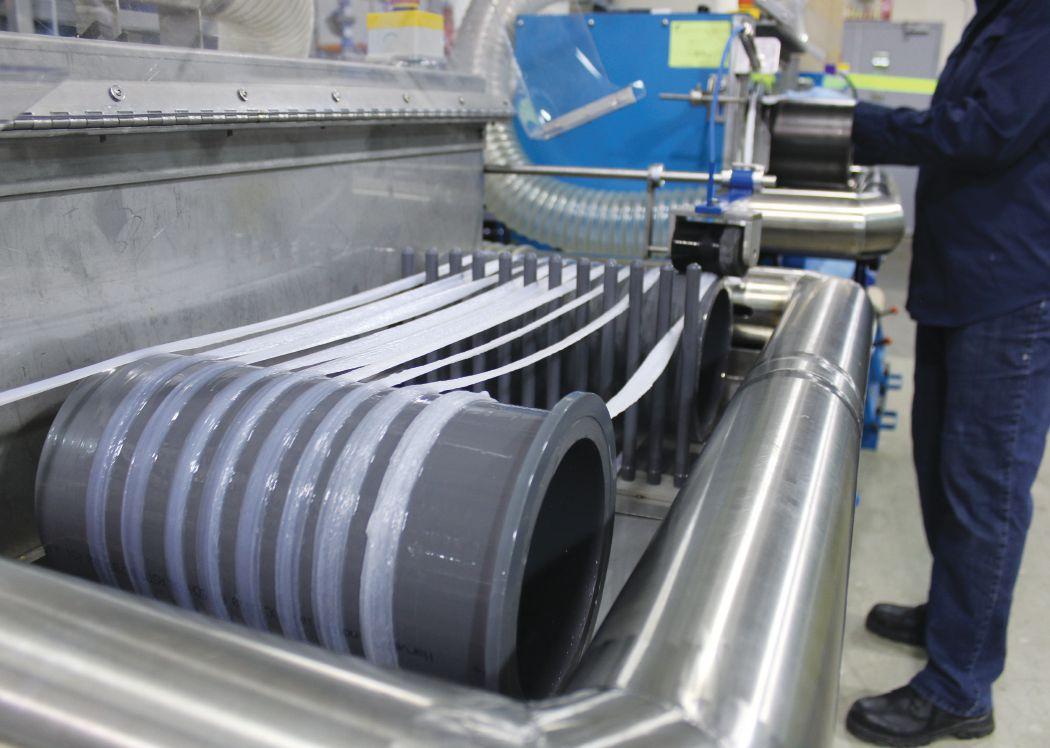
Whatwas once old is new again. Researchers and technicians from FPInnovations’ biomaterials group have joined forces, using their ingenuity to develop an enhanced version of a dated lab device that is now poised to allow for the design of innovative new manufactured fibres on a larger scale. The spinneret is a modular device used to safely and continuously produce fibres by regenerating dissolved cellulosic products. It is part of FPInnovations’ Next Generation Designer Fibre Facility. What is unique about the spinneret is that it uses a chemically modified pulp dissolved in an aqueous solution called dope. When used in a wet-spinning process, it regenerates to form a continuous fibre similar to yarn. The process is more sustainable than other dissolved cellulose practices due to the elimination of several chemicals, including carbon disulphide
and ionic liquids.
This is how it works: The dope is pumped from a container through the spinneret head, much like a showerhead, and into the first bath where it forms into fibres. Interchangeable spinneret heads have a different number of holes in different sizes and shapes to generate a variety of fibres. From that point on, it passes through a series of other baths before the final product is dried and spun onto a spool.
There are many uses for the new materials, such as fibre, films and pellets. The new materials can be used in applications that require high absorbency, such as diapers and other hygienic products, as well as for wound care. The types of novel fibres the spinneret may eventually make can also be used in construction and electronic materials – and for uses right out of sci-fi novels, such as engi-
neered human-tissue.
“The spinneret is a great achievement for FPInnovations, which turned an outdated device into cutting-edge equipment capable of producing a highperformance, sustainable material that opens the way to tremendous possibilities,” says Eric Olivier, senior director of the bioproducts group. “But most of all, the key to success lies in the collaboration among our teams who combined their respective expertise to make the most of an existing technology.”
With the pilot-scale spinneret fully operational, it is a step that could eventually enable Canada’s pulp mills to carve out new roles for themselves as the producers of entirely new manufactured fibres for a whole range of materials that are only now being explored.
For more, contact Eric Olivier at eric.olivier@fpinnovations.ca. PPC

THE LARGEST TECHNICAL CONFERENCE FOR PAPER PROFESSIONALS FROM CANADA AND AROUND THE WORLD!

By Kristina Urquhart
Larry Montague, president and CEO of the Technical Association of Pulp and Paper Industry (TAPPI) and Pete Augustine, TAPPI board chair and president of Fabio Perini North America, recently shared some insights on the industry’s sustainability efforts in the U.S., where TAPPI is based.
The 104-year-old organization boasts members in over 66 countries and developed standards that are accepted by the Pulp & Paper Technical Association of Canada (PAPTAC) and used throughout mills in North America.
P&PC: We’ve seen softer demand for fibre here in Canada over the last year and as a result have seen many closures, particularly on the sawmill side, and production curtailments. What’s the sentiment among TAPPI’s membership about the current market landscape in North America?
LM: Things slowed a bit in 2019. It’s not over at this time that you’re interviewing us; it could go more or less. [The trade deal] that the current administration in the U.S. is trying to work out with China is going to open that up a little.
In 2018, U.S. exports of old corrugated containers (OCC) were up 4.2 per cent, even with the Chinese tariffs. Also in 2018, Canada and Mexico accounted for 44 per cent of exports of this product – so the U.S. kept 44 per cent of OCC in North America. I have people from China contacting me a lot about trying to buy either shuttered mills or mills that people are going to be turned loose so that they can make raw materials to be sent over to China [to] avoid some the tariffs imposed on them and us.
It’s not as bad – according to the economists that I’ve listened to this year – as they thought it would be. I’ve been feeling pretty good about that.
P&PC: Going into 2020, one of the biggest conversations is paper as an alternative to plastics. Why are sustainability and recycling critical to the public perception of pulp and paper going forward? What more can mills do?
LM: My bottom line is, if we don’t do it as an industry, who’s going to do it? The world demands it.
Mark Pitts at AF&PA recently said our products are the most recycled products on the globe. More than glass, aluminum and plastics combined. So [the pulp and paper industry is] doing a very good job at sustainability and recycling. In the U.S., we plant three to four trees for every one harvested. We have to be good stewards of [our forests]. We respect our natural raw materials. We utilize our crops in a sustainable


way. This is exactly what a tree is – a crop, just like corn or anything else in agriculture, but we take care of the land, we think a lot better than we used to. There’s less water used in the manufacture of paper than there used to be. The water’s cleaner when it leaves a mill than when we took it in.

One of our issues is we don’t tell [our story] to everybody. We let the heresy go on out there because we had a tough time challenging it before.
P&PC: What are the benefits of TAPPI membership for a mill in Canada?
LM: TAPPI is open to members from all countries around the globe. We currently have 495 TAPPI members in Canada. Richard Berry of Celluforce just completed his three-year term on our board of directors and gave us a lot of insights on what Canadians are looking for.
TAPPI members have access to technical paper information, and member discounts on training. They have a discount to our conferences, our press products and much more. We’re [hosting] webinars and leadership training online. The board also approved us to expand our TAPPI training centre outside Atlanta. The bottom line is the knowledge and networking for all members of all TAPPI families around the world.
PA: I don’t think you can beat the impact of hands-on training, or even as a member coming to a conference and being able to tour various facilities. It really opens people’s eyes as to what are some best practices happening in other parts of the paper industry. The expertise in the industry certainly isn’t bounded by geography.
This interview has been condensed and edited. PPC
To
• The Circular Bioeconomy: The Way Forward
• Opportunity Knocks: Investing in the New Bioeconomy
• The Critical Role of Governments in Developing the Bioeconomy
• Accelerating the National Bioeconomy Strategy
PLUS:
Half-Day Workshops on Energy, Fuels, Bio-Based Materials and Community Bioeconomy
Industry Tours to Regional Facilities Demonstrating the Circular Bioeconomy in Action
Full-Day Pre-Conference Wood Products Safety Summit
An update on tissue industry trends in North America and beyond going into

By Treena Hein
As it has been in the past, the current market outlook for tissue is strongly tied to demand, but consumer concerns over sustainability – concerns that span all sectors, not just pulp and paper – mean that new products made from greener materials and processes may take flight.
Before we look into that and other factors affecting current demand, as well as what’s ahead for tissue markets in 2020, let’s take a quick glance at pulp price trends and production capacity. Pulp prices are presently at historic averages, and the price of recycled fibre has decreased as well, notes Suzanne Blanchet, chair of TAPPI’s tissue division and former president and CEO for Cascades Tissue Group.
On the production side, because the pulp market has been slow, some pulp producers have been taking downtime, explains Peter Berg, director of knowledge for paper and forest products at McKinsey. “As far as we can see, there has
been about 160,000 tonnes of bleached sulphate kraft pulp market-related downtime in Canada so far in 2019,” he says at the time of our interview. “This curtailment was partly due to difficult wood sourcing but also to slow pulp sales.”
Moving on to what’s most in demand, Bruce Janda, senior consultant of business intelligence at Fisher International and Forest2Market, notes that over the last few decades – and even after the 200809 recession – consumers have never stopped buying ultra-premium toilet paper. “It’s become the norm in the U.S. and it’s the biggest tissue market segment in North America,” he says.
But, while North American demand for toilet paper and other tissue products is very strong, it is still outpaced by demand in China. Blanchet notes that in China for example, paper towels and napkins are becoming increasingly popular in restaurants.
However, Janda cautions that China is in an economic slowdown (which many believe is worse than what’s been reported), and that growth there in both tissue
production and demand will likely continue to be low for the next while. Indeed, Berg says that China’s tissue production growth rates in 2018 were about half of those in 2017.
In Berg’s view, China’s tissue production and usage will not have much impact on Canadian tissue production due to the fact that tissue production worldwide is very much a regional sector with relatively little trans-regional trade, and also the fact that Chinese imports from North America (mainly from the U.S.) are almost negligible. In the other direction, the U.S. imports only about 10 per cent of its tissue needs, he says, and only part of that comes from China. However, Berg adds that if the U.S. trade tariffs against China remain in place long enough, Chinese tissue exports to the U.S. are likely to decrease and Canadian producers might be able to step in to fill that small gap in the U.S. market.
Sustainability is a large consumer concern across all purchases right now. With tis-
sue, concerns seem to currently centre most on fibre supply with some focus on processing methods. “I think use of alternative sources of fibre are welcomed by consumers like recycled fibre is, but recycled fibre should be number one,” says Blanchet. “At the same time, there is still a perception that recycled materials won’t be as soft, but with today’s technology, it has reached a satisfying level of softness.”
Janda notes that almost a third of tissue products used in the U.S. and Canada are used away from home – napkins, paper towels and toilet paper in restaurants and so on – and 80 per cent of that is already recycled. And while he says there’s “excitement” about using alternatives such as wheat straw, oat straw, sugarcane debris, bamboo, “we’ll have to see what happens. Bamboo has been grown as a dedicated crop, and I’m not sure that that’s more environmentally friendly than replanting trees in forested areas. It’s certainly fastergrowing than trees, so it makes sense on land that doesn’t support forests.”
Tissue products with “greener” designs should be a shoo-in for consumer attention, but consumer acceptance of new offerings can be complex. New toilet paper rolls from Scott without the cardboard tube, for example, should attract consumers concerned about the planet, but only time will tell. Charmin has introduced the Forever mega-sized home toilet paper roll, and while fewer tubes are required compared to the equivalent amount in conventional rolls, the firm seems to be marketing them as time-saving product (replacement is not needed as often) and not as a greener one. Because Forever rolls also require a special holder that takes up already-limited space in the washroom, their future seems uncertain.
But what about products that aren’t bleached snow white – shouldn’t they be snapped up by all of today’s consumers who are looking for products made with fewer chemicals? “I don’t see why we shouldn’t use beige products in our homes,” says Blanchet, “but I’ll tell you, about 10 years ago, we made beige paper
towels at Cascades for a large retailer’s brand and it was discontinued a few years later because it wasn’t selling enough.” Similarly, Janda says that while he gets asked about non-bleached products all the time, he doesn’t see them taking off in the near future, based on results from consumer studies. “Women buy 90 per cent of tissue and use about 80 per cent in the home,” he says, “and they want white.”
He says he is excited, however, that there are proposals to replace the clear plastic overwrap on packages of toilet paper with a paper version. “There’s a dissonance for consumers in that toilet paper is a product made from renewable materials but it’s wrapped in plastic,” he says. “Images of all the plastic in the oceans [are] really bothering people, and I think paper overwrap is worth a shot.”
In terms of other sustainability factors, Janda points to absorbency of tissue products (improvements in absorbency from Through Air Drying (TAD) or other structured processes that allow less product to be needed per use). “Yes, extra absorbency does require either extra fibre or processing equipment, but if consumers use less sheets, that’s good for the planet, and companies that sell high-performance products should benefit,” he says. “And, depending on the product format or what it’s used for, there may be less production energy involved per sheet or per use.” Berg adds, “Many actions that are right from the angle of environmental sustainability are also positive from an economic sustainability perspective, improving margins.”
In terms of sustainability concerns about tissue processing, Janda says issues relating to effluent have generally been solved but that innovations to reduce energy use are yet to come. On the effluent front, he notes that many mills have started to close up water systems and avoid water waste that all has to be treated and discharged. In addition, some mills are recovering wastewater after treatment and reusing it. “Mills in arid regions are starting to use reverse osmosis membrane filters and other advanced separa-
Janda says that while he gets asked about non-bleached products all the time, he doesn’t see them taking off, based on results from consumer studies.
tion technology to further close up the water systems, resulting in lower fresh water consumption and waste volume discharged,” he says.
In the area of energy use, Janda says 40 per cent of all tissue in the U.S. is now made using TAD and, although both its electrical and thermal energy consumption are higher compared to other processing options, it’s now the standard for new plants across North America. For example, Kruger Products is currently constructing a $575 million TAD ultrapremium tissue mill in Sherbrooke, Quebec. “There has been exploration of how to create different tissue structures,” Janda explains. “[like] how to get air pockets that provide absorbency without needing to blow air through, and we’ve also gone through waves of using different processes such as NTT and ATMOS, but they’ve all come up relatively short.”
Berg believes that due to new plant investments in China, North America and other regions, overcapacity will persist for some time. “This will keep the cost pressure on producers and force the closure of older machines,” he predicts. “Cost pressure in some regions is also being further fueled by ongoing structural changes in the retail and distribution parts of the value chain, including the balance between private-label brands and the growth of e-commerce.”
In terms of sustainability, all three experts agree that consumer demand for greener products and processes are likely to increase. More “green” gains could be made in away-from-home products, says Blanchet, and gains in consumer purchasing of greener products for home use will require the leadership of a big brand.
As a last thought, both Janda and Blanchet point out that tissue should be promoted by the pulp and paper industry and tissue brands as the best way to complete sanitary handwashing. Blanchet says research has proven that use of paper towels is more effective than air dryers in reducing bacteria.
Janda adds, “With the Norwalk virus being more common and other contagious flus and colds, we need more handwashing going on. Away-from-home, paper towels should be a part of that.” PPC
Treena Hein is an award-winning, Ontario-based freelance science and tech writer.
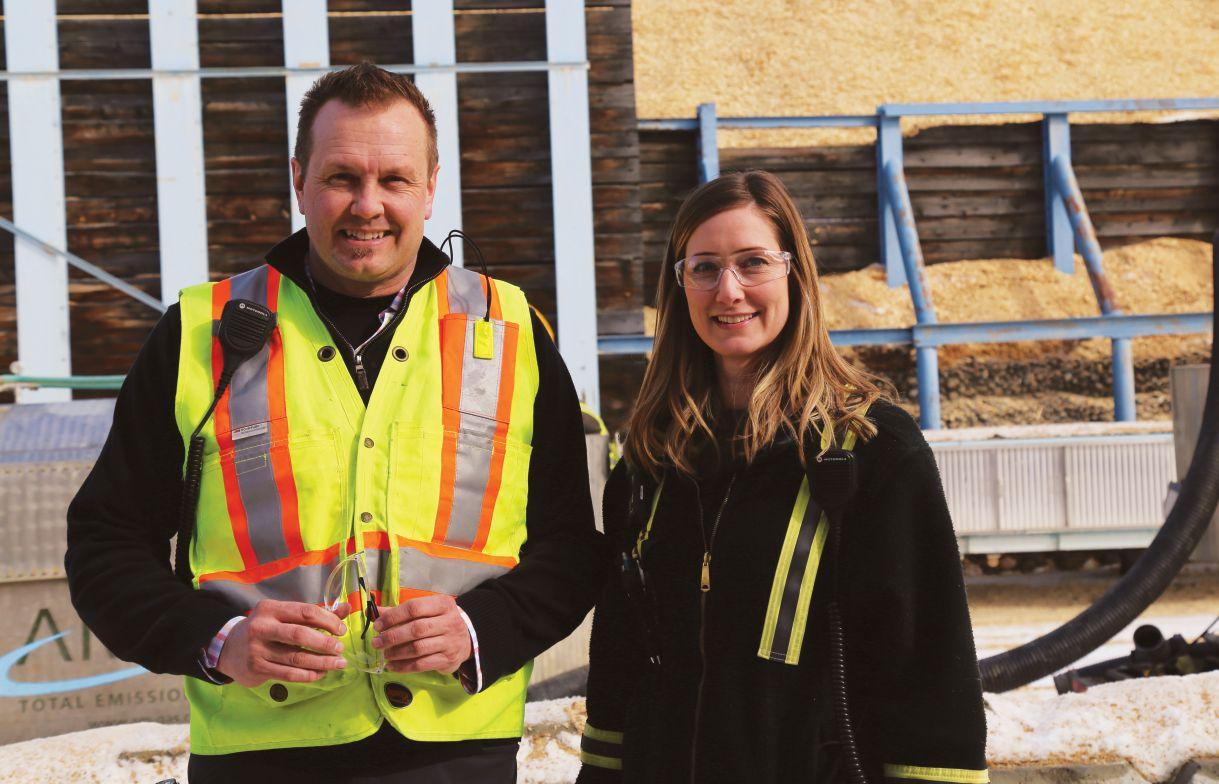
Millar Western’s anaerobic hybrid digesters convert wastewater organics into biogas used to power pulp drying
By Maria Church
It’s been two years since a pulp mill in northern Alberta cut the ribbon on what is likely the largest anaerobic treatment facility of its kind in the world. Now that the proverbial dust has settled, the real benefits of the facility are crystal clear: reduced environmental impact, higher pulp production and lower costs.
Millar Western’s bioenergy facility at its pulp mill in Whitecourt, Alta., is using anaerobic hybrid digesters (AHDs) to remove organic material from the mill’s wastewater stream and convert it to biogas that is then used to generate power. Steam from the process is captured and
used in the pulp drying process.
At its current capacity, after two years of running successfully, the bioenergy plant can generate 10 per cent of the mill’s electricity requirements – a significant offset for a facility that is a major power consumer.
“The bioenergy project was an opportunity for Millar Western to utilize more of the energy that’s in the wood we harvest,” says Jeff Shipton, manager of corporate environmental services for Millar Western. “We’re able to take a waste stream from the mill and turn it into a green energy source that we can use to generate power and steam on our site and thereby reduce our utilization of power from the grid and natural gas consumption.”
As the first application of this technology in a pulp mill setting, the project presented a steep learning curve for the Millar Western team, Shipton says. The scale of the facility and the northern Alberta climate were unique challenges.
“We’re moving a lot of wastewater through the system, generating a lot of gas and removing a lot of hydrogen sulphide; and doing it in a northern climate has its own challenges,” he says.
How was it done successfully? “We had a great group of people,” Shipton says. “Millar Western dedicated the right number of staff to this project and let us focus on start-up and optimization.
“We also had the benefit of a good business environment. There’s a lot of cuttingedge technology here. All the pulp and paper companies in the province are leading edge, committed to reinvesting in their businesses to improve their performance.”
Shipton notes that all levels of government were supportive, with the project receiving funds from Natural Resources Canada’s Investments in Forest Industry Transformation (IFIT) program and from the Alberta ecoTrust program. “This project was a good example of how governments and industry can come together to solve some of these greenhouse gas issues,” he says.
Millar Western’s Whitecourt operations – a two-hour drive northwest of the company’s Edmonton headquarters – include a sawmill, a pulp mill and woodlands operations. The company has a second sawmill in Fox Creek, Alta., and a remanufacturing facility in Acheson, just outside Edmonton. In all operations, Millar Western’s goal is to use the whole tree with zero waste.
Logs are supplied to the Whitecourt mill site from woodlands certified to the SFI sustainable forest management standard and the PEFC and FSC chain-ofcustody standards. The sawmill produces 330 million board feet of lumber annually, with all byproducts used to create valuable products: wood chips are used in the company’s adjacent pulp mill and at a neighbouring newsprint facility; wood shavings and other residuals are transferred to a regional medium-density fibreboard plant; and bark and other remaining wood waste is sent to a nearby biomass-fired power plant for conversion to green energy.
The pulp mill produces around 320,000 air-dried metric tonnes per year. Millar Western launched the bioenergy project to use even more potential from the wood chips expended in the pulp manufacturing process, and to further reduce the environmental impact from discharge of the pulp mill’s treated effluent into the Athabasca River.
“Alberta has some of the most stringent regulations when it comes to industry effluent discharged back into the environment,” says Lindsay Boyce, environmental process specialist with Millar Western. Producing power from the effluent is a way to make use of material in the process that would otherwise go to waste, she says.
The pulp manufacturing process uses about 10,000 litres of water a minute. The wastewater treatment process begins at the AHD tanks – three glass-lined, 10,000-cubic metre tanks running parallel to each other.
“We use water in our process and we need to treat that water before it’s discharged into the environment. So we take organics that are in the wastewater and we use bacteria to treat the organics to bring the wastewater up to a quality that exceeds our permit requirements and minimizes impacts on the receiving waters. In the process of doing that, these bacteria produce methane. We take the methane gas and produce energy that we can use in the mill,” Boyce says.
Millar Western cut the ribbon on the bioenergy project in late 2016. While the technology has been used in the oil and gas industry for some time, it was a novel application in a pulp mill, and is one of the world’s largest anaerobic digester treatment systems of its kind.
The pulp manufacturing process uses about 10,000 litres of water a minute. The wastewater treatment process begins at the AHD tanks – three glass-lined, 10,000cubic metre tanks running parallel to each other. Bacteria of different varieties are present at various stages in the digesters.
“There are different types of bacteria that all work together. It’s a step-by-step process. You have one type of bug that takes the organics and converts it to a simpler form that the next bug can use. And the final step is the bugs that create the methane that we can burn in our engines,” Boyce explains.
The digesters create 600 to 900 cubic metres per hour of methane, which then flow to the eight-by-45-metre aerobic biological scrubbers. The scrubbers remove hydrogen sulphide from the gas and generate about 700 to 1,100 cubic metres of biogas each hour, which is sent to GE Jennbacher engines equipped with power turbines.
The entire process has the capacity to generate six megawatts of power, as well as three tonnes per hour of steam from Cain Industries heat recovery steam generators. The steam is used in the pulp drying process, which means less natural gas is burned at the dryers.
Sending the wastewater to the anaerobic digester process ahead of the mill’s existing aerobic effluent treatment system has further reduced the “organic loading” in the mill’s final effluent, as well as the volume of water discharged back into the Athabasca River, Shipton says. It has also reduced the mill’s freshwater intake and chemical consumption, and cut greenhouse gas emissions.
On top of the environmental benefits, the increased capacity of the new treatment system has also eased a previous bottleneck at the mill. “We’ve been able to raise our pulp productivity by over 20,000 tonnes a year,” Shipton says.
More capacity also means more flexibility in the pulp grades produced, he says. “That has allowed us to adapt to changing market requirements. We’re able to shift our focus and create different grades for different end users.”
Now that the path has been forged to introduce AHD technology to the pulping process, the future is full of possibilities for Millar Western and other forest product companies.
“We’re utilizing as much of each tree that we harvest as we can. This is the first step in terms of biofuels and the bioeconomy. We’re taking the waste stream and converting it into biogas, into methane. The next step for the forest sector is to look at higher-valued commodities – turning it into liquid biofuels, biopharmaceuticals or other bioproducts,” Shipton says.
For now, the Millar Western team continues to study methods to optimize the process and resulting biogas and power generation.
“We generate a lot of data and making sense of it all is a lot of work. There’s a lot of sitting down and analyzing. It’s a work in progress, and we’re always looking for the next advancement,” Boyce says.
This article was previously published in Canadian Biomass, with files from the Alberta Forest Products Association. PPC
An Ontario containerboard mill is using a Quebec-made rotary press for sludge management
By Kristina Urquhart
Anew rotary press installed at an Ontario mill is dewatering paper sludge to improve product cleanliness, and to help cut down on tipping charges during disposal.
Sonoco’s Brantford paper mill received a single two-channel Fournier Rotary Press in October 2019 from Tecumseth, a Toronto-area distributor that services the pulp, paper and wastewater industries.
Fournier’s press technology was developed in Quebec and converts mill sludge to high solids, or “cake,” using relatively little energy – a single press unit uses a five HP (3.7 kW) motor and a six-press unit clocks in at 20 HP (15 kW). Sonoco Brantford’s press includes a 7.5 HP motor.
The rotary press can process primary effluent from dissolved air flotation (DAF), rotary drum thickeners (RDT) and cleaner rejects, as well as more-difficult-to-dewater secondary sludge, whether sourced from aerobic composting, anaerobic digestion or clarifiers. The resulting solids content averages about 30 per cent.
Ken Klempner, president of Tecumseth, says that the Fournier press is a recent addition to the pulp and paper market after initially being developed for dewatering in municipal applications.
With a smaller footprint than a screw press or belt press, the rotary press is completely enclosed to help to keep chemical smells at bay, and an automated five-minute flush cleans the filter plates every day. A sludge pump controlled by a variable frequency drive ensures maintenance of feed pressure, which can be adjusted from two to eight psi. Constant and consistent pressure allows the press to operate automatically. The system is monitored and controlled by a PLC and can be interfaced with a mill DCS or SCADA system.
The sludge pump feeds into a flocculation unit, which mixes the sludge with a polymer solution fed in at a constant rate. Once the flocculated sludge enters the
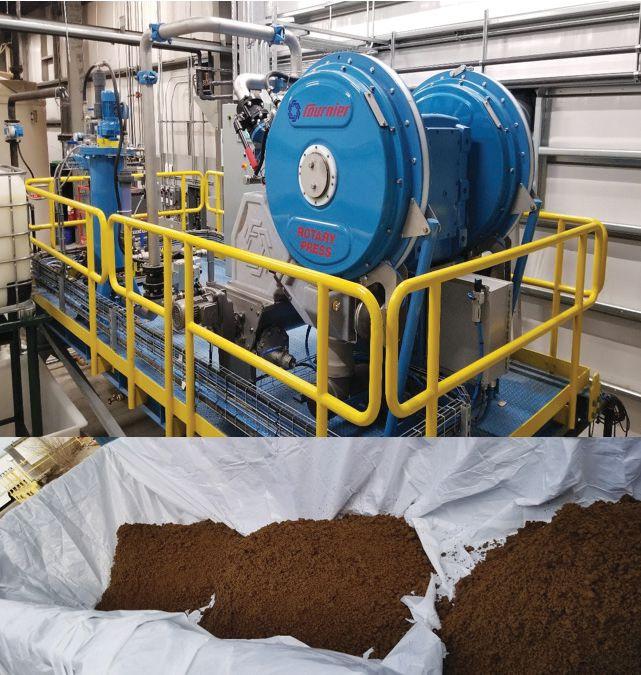
watering channel at the top of the press, it gets pushed at low pressure between two stainless-steel filter plates rotating continuously at about one RPM.
The sludge thickens as it travels around the channel, draining water as it goes. The friction caused by the sludge moving slowly toward a restricted outlet at the bottom of the press creates enough back-pressure to dewater the solids to a dry cake.
The cake can then be removed for disposal, helping to minimize hauling costs and decrease tipping charges.
Sonoco’s Brantford mill receives sludge from a secondary treatment operation at about 2.7 per cent solids and thickens it to as much as 20 per cent cake solids.
Prior to the rotary press installation, secondary sludge was either directed back into the process or taken away from the mill by tanker truck.
Another Tecumseth client, Alberta Newsprint Company, recently replaced a belt press and screw press combination with two eight-channel Fournier rotary presses that have turned sludge containing 16 per cent solids into cake with 27 per cent solids.
The level of dryness achieved by rotary presses make them ideal for setting up sludge-to-energy systems, says Klempner. Organic sludge with over 25 per cent dryness can be used in a cogeneration burner to create energy. PPC

IN THE FOREST, ON THE MILL FLOOR OR IN THE OFFICE
Talent Canada, a new information source from the publisher of Pulp & Paper Canada, is designed to provide your senior management team and front-line leaders the information they need to find, keep and engage the best workforce.
Topics covered include:
• Recruitment and retention
• Employment law and compliance
• Employee engagement and productivity
• Mental health in the workplace
• Addition and disability issues
• Return to work and accommodation
• Leadership tips and best practices
• And so much more!
How critical is wood chip size distribution during kraft pulping operations?
By Augusto Quinde
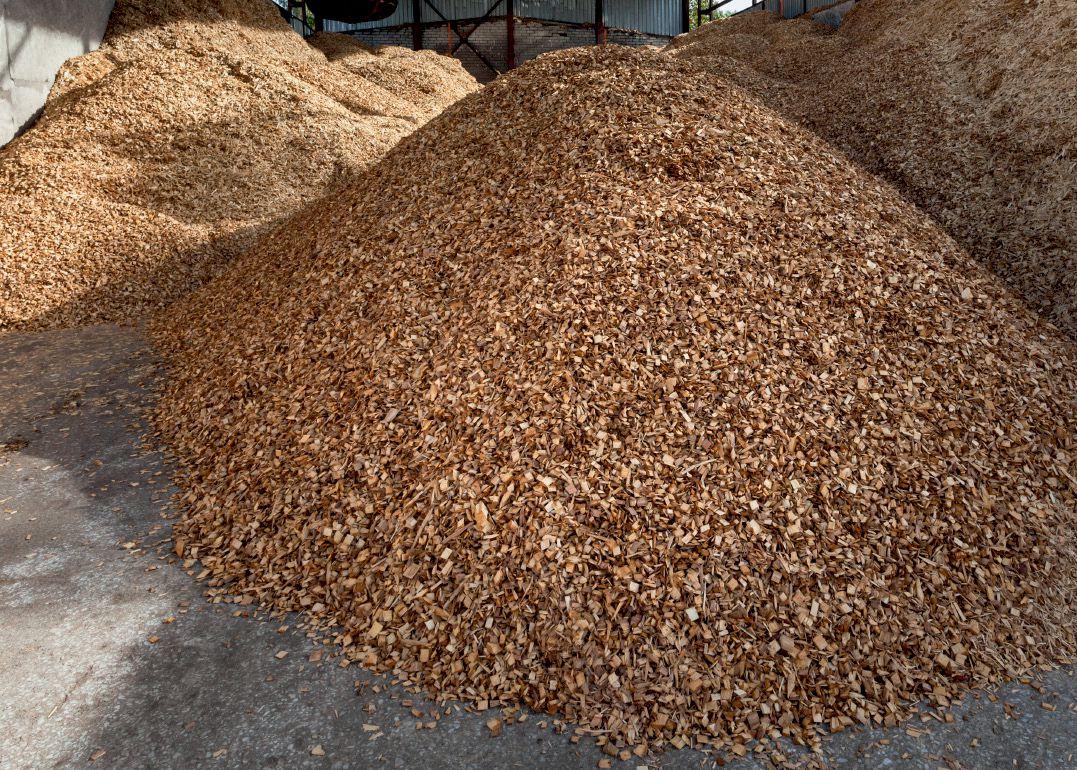
Many kraft pulp mills around the world experience problems related to wood chip supply and quality. Sourcing of good-quality wood chips can be timeconsuming. Wood chip suppliers offer hardwood and/ or softwood chips, sawmill residue chips, whole-log chips and whole logs, either with bark or debarked.
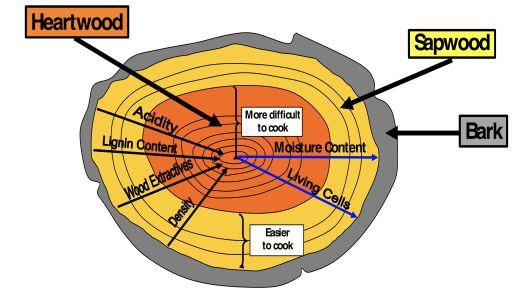
After the 1990s, kraft mills in Western Canada have been using not only sawmill residue chips but also whole-log wood chips. The sawmill residue wood chips come from the outside of the logs – known as the sapwood, which is characterized by having fibres with less lignin, lower density, less wood extractives, less acidic, higher moisture content and more living cells. The fibres coming from the sapwood are easier to cook.
When using whole logs, the chips are originated from both the sapwood and the heartwood (the inside of the stem). The characteristics of the fibres from the heartwood are the opposite as those in the sapwood: more acidic, more lignin, etc.
Because of the more sophisticated computer systems at sawmills, more wood is being used for lumber rather than for pulping, and consequently pulp mills have to use more wholelog wood chips. This situation implies the increase of variables during pulping that may result in less uniform pulp. So kraft pulp mills using sawmill residues are better off than mills using whole log chips or a mixture of these wood chips.
Heartwood is more difficult to penetrate with cooking liquors than sapwood. Furthermore, when going from the periphery towards the centre of the stem (pith), it must be observed that chemical and physical changes are gradual, and that the outer and inner annual rings are the two extremes.
Therefore, when pulping a whole log, one must consider its wide range of wood densities, pH, lignin contents, moisture content and so on. (See Figure 1.) Thus, even pulping only one wood species, the resulting pulp is not expected to be uniform due to the different chemical and physical characteristics. This explains the non-uniformity of the kraft pulping process (i.e., production of rejects, Kappa number variability, etc.). If two or more wood species are used for pulping, then the number of variables will increase accordingly.
In addition to the above considerations (i.e., sapwood versus heartwood) there are more variables to consider during kraft pulping operations that affect the quality of the pulp and of the black liquor. These variables can be grouped as:
1. Wood chip variability: Wood species, chip storage, bark content, moisture content, biological knots, decayed wood, wood chip size distribution, etc.
2. White liquor (WL) variability: Sulphidity percentage, white liquor concentration in gpl or lb/ft3, white liquor quality expressed as dead load (i.e., Na2CO3, Na2SO4), etc.
3. Digester control variability: liquor-to-wood ratio, alkali charge, H-factor (temperature and time), sulphidity and residual effective alkali, chips bed packing/chips flow conditions, liquor flows, digester sizes, etc.
The main goals of a kraft pulping process are uniform delignification, high cooking yield, high pulp quality, high screen room efficiency and low recovery load (i.e., organic & inorganic). All these goals can be achieved only if the mill can secure high-quality wood chips, high-quality white liquor and a stable digester control strategy.
When looking at the quality of the wood chips (i.e., variability), the wood chip size distribution and the moisture content seem to be the variables that need special attention; however, the wood chip size distribution is perhaps the most important variable with regards to wood chip quality. In some countries, the chip size distribution is the basis for payment of sawmill chips, for control of chippers and for monitoring the wood chips for digesters.
• The ideal wood chip dimensions for kraft pulping might be 25 mm long, 25 mm wide and four mm thick.
• A mill having the proper chip screening system might show a chip size distribution as per Table 1 (p. 23).
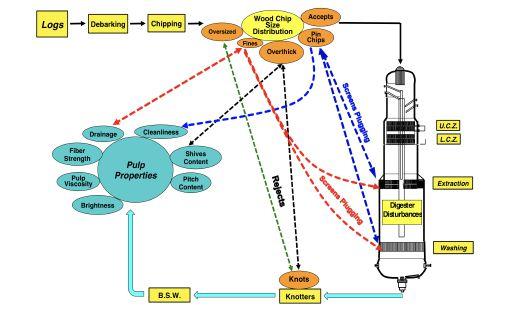
The size and the size distribution (i.e., proportions in percentage) of the wood chips is very important during kraft pulping not only because of the effects during the pulping operations (i.e., pulp yield, pulp quality, digester operations) but also for the

consequences on the post-digester handling (i.e., washing, screening, cleaning and refining) of the pulp. See Figure 2.
During kraft pulping, the rate-limiting dimension of the wood chips is its smallest, which is its thickness. Most mills reprocess (condition) the over-thick chips by using mechanical means to make them more responsive to pulping processes.
If one tries to compensate the excessive chip thickness by having longer cooking times or higher alkali charges, then the result will be a fully cooked centre of the chip with overcooked outer parts of the chips, lower pulp yield and decreased pulp strength.
When using too-thick chips, the cooking liquor will not fully penetrate the centre of the chip and the result is an uncooked centre that ends up as a shive or a knot in the rejects fraction.
Using a high proportion of oversized (i.e., > 45 mm) and/or over-thick (i.e.,

> eight mm thickness) wood chips and/ or biological knots must generate a large proportion of knotter rejects, and in the re-cooking of this fraction, they will continue to generate (again and again) significant amounts of knotter rejects.
This recirculation should be minimized, as it contributes to a more heterogeneous pulping with a penalized pulp yield, pulp quality, processing costs and reduced pulp capacity of the mill. The amount of knotter rejects is an indication of the proportion of oversized/over-thick chips in the digester feed. An ideal knotter reject level is around 0.5 per cent.
The best strategy for an efficient pulping operation is to minimize the usage of oversized/over-thick chips, allowing more quantities of accept chips to fill that volume than occupied by re-circulated knots. This is very helpful in a digester-limited mill, because it increases pulp production.
Many production managers focus their interest on increasing their pulp yield by making physical changes to their digesters and/or by using digester additives like digester surfactants and/or polysulphides. When using digester additives, the poly-
sulphides option is the one that gives better yield increase (i.e., ~ two per cent) but you need a high initial capital expense. A better way to improve pulp yield is by using an excellent or acceptable wood chip size distribution, paying special attention to the chip thickness. A wood chip classifier system is a must management decision in a modern kraft pulp mill.
An increase of pulp yield of one per cent for a 1,000 TPD mill will allow using almost 17,000 tons less o.d. wood. This savings can equate around a million dollars or more a year, depending on the wood chip costs. Some pulp mills have a normal range of knotter reject levels between five and eight per cent, and the savings in wood are noticeable under these conditions.
Most continuous cooking digesters are working above their original designs by almost 50 to 100 per cent, and the most difficult task for the operators to keep the digesters running is to keep the chip column moving. This requires consideration of a list of factors like digester chip level,






Typical
Oversized chips
Over-thick chips
Accept chips*
Pin chips
Fines
2% - 5% < 2%
5% – 10% < 2%
82% - 88% 88% - 90%
5% - 10% < 5%
2% - 6% < 0.5%
* Some systems include “large accept chips” and “small accept chips”
chip bed pressure, chip compaction, flows of chips and liquors, wood chip size distributions, and some digester disturbances such as screen plugging, channeling, etc.
In chip column movement, the forces acting on the wood chips are gravity, buoyancy, liquor friction, wall friction and the weight from the chip column. Gravity is the only force that we cannot influence, while the others can be manipulated, controlled and considered when designing new digesters or rebuilding old ones.
Uneven wood chip size distributions contribute to poor cooking conditions and a variable pulp quality. Pin chips have a shape and size similar to matches and a width-to-thickness ratio smaller than two. Pin chips tend to plug the void between chips, causing a higher flow resistance in the chip bed. Reduction in the overall percentage of undersized chips in the digester feed improves the circulation rate and increases yield by reducing overcooking of undersized chips.
A steady digester chip level secures an optimum chip pressure, chip compaction and chip column movement in the digester. The downward velocity of the wood chips changes through the digester due to a few factors: liquid flow, degree of delignification, the height of the chip column, and the liquid level in the digester.
If there is a slow movement of wood chips along the digester walls, then the result is a poor wiping of the digester screens and consequently a strong contribution to screen plugging. Then, later, when the chips near the digester walls come out, they must be overcooked, giving large Kappa number swings at the blow line.
Chip compaction can be defined as an expression of how much the wood chips inside of a digester have been compressed
in relation to the feed. Chip compaction, or packing of the chips, increases towards the bottom of the digester as a function of the Kappa number, the production rate, the chip level, dilution factor, and, to a minor degree, the liquor-to-wood ratio.
• When a ft3 box is filled with wood chips and there is not compaction, then the compaction is measured as one. But, if there is a compaction, then the box can be filled with two ft3 of loose wood chips and the compaction is two.
• For a smooth moving chip column, the corresponding compaction at the bottom of the digester should be between 1.8 to 2.0.
In taller digesters, there is an increase of the chip bed height that leads to problems caused by chip bed packing, like poor runnability and digester washing. Digester developers found solutions to these problems by increasing the digester diameter that allowed getting shorter digesters, and/or by building a separate vessel for impregnation (a two-vessel digester). Shorter digesters reduce the pressure of the chips at the bottom of the digester and improve washing.
When the Kappa numbers are reduced, the wood chips are more easily compressed. At lower Kappa numbers, the void volume between the wood chips is reduced. Then, at high Kappa numbers, the digesters can be taller than low kappa digesters without developing excessive compaction.
In cases where the compaction is too low, there are two scenarios: a) the wood chips can be pulled from the chip column into the screens and ultimately plug them; and b) there is a risk of channeling through the chip column. However, if the compaction is too high, the channeling can be along the digester walls.
Channeling is a very common disturbance in a continuous digester that contributes to variability of Kappa numbers. Channeling can occur when the chip column has a different diagonal chip-packing density that creates a channel of liquor flowing where the packing density (compaction) of the wood chips is the lowest. This channeling causes the wood chips and cooking liquor to not to react with each other, and to exchange heat in the appropriate way, resulting in big Kappa number and alkali variations.
Liquor circulation is the appropriate way to add the liquor(s) to the digester, which affects the temperature uniformity at the periphery (i.e., circumferential temperature gradient). Furthermore, a uniform distribution of filtrates influence chip column and liquor flow patterns in the different zones of the digester.
Channeling flow of chips and/or liquor affects the variability of some pulping parameters (i.e., residence time, cooking chemicals profile and temperature profile) when passing through the different zones in the digester, resulting in higher reject levels and lowered screened yield. For some researchers, the main reason for channeling seems to be a poor digester bottom washing.
Excessive amounts of fines in the digester feed will place additional load (i.e., black liquor solids) on the recovery boilers that can result in lost production for a recovery limited mill.
Reducing the proportions of undersized wood chips in the digester feed must improve the liquor circulation rates and also increase the pulp yield by reducing overcooking of undersized chips. This reduction can help to shrink the white liquor application and, in turn, reduce the load in the recausticizing area. PPC Augusto Quinde is president of AQuinde Pulping Consulting in Vancouver. For a copy of this paper including conclusions and references, contact kurquhart@annexbusinessmedia.com.
Rayonier Advanced Materials, a producer of cellulose-based technologies including high-purity cellulose, has increased prices of its high-alpha and high-viscosity cellulose specialties products by six per cent or as contracts allow.
The cellulose specialties business includes acetate, ethers, micro-crystalline cellulose, nitrocellulose and other grades.
The company says the price changes are necessary to partially offset ongoing inflationary pressures and sustain investment in its capital-intensive manufacturing capabilities to ensure its ability to continue producing high-quality products.
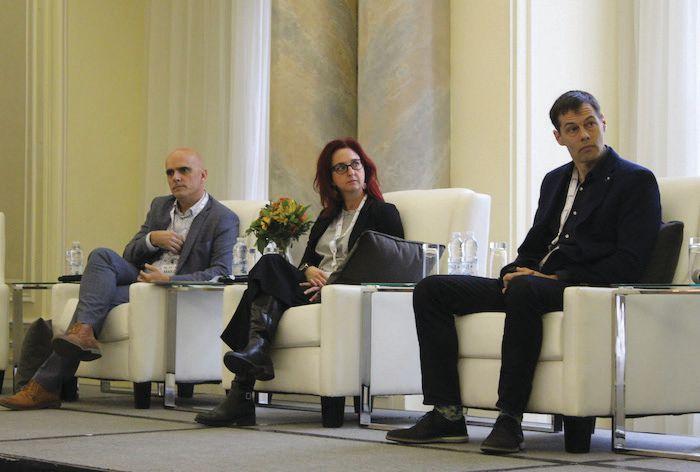
As governments, industries and the general public become more concerned about the threat of climate change, the bioeconomy is set to play a major role in developing a low-carbon, circular economy. But there are multiple barriers to this, such as the need for more capital to scale up projects, more communication with the public, and more access to market.
At the Scaling Up Bio 2019 conference, which ran Nov. 4-6, 2019 in Ottawa, speakers spoke about these and other issues to approximately 195 attendees.
Sandy Marshall, chair of Bioindustrial Innovation Canada, kicked off the presentations, noting that the bioeconomy is “a truly pan-Canadian opportunity.” Given the size of Canada’s forests and agricultural fields, the bioeconomy will help all provinces’ economies diversify, he explained. But to do this successfully, industry needs to take advantage of the infrastructure in place in the forests and integrate into the circular economy.
This is not possible without the commercialization of bio projects, Marshall argued.
This is where the BioDesign Consortium comes into play. The group has a shared vision for the future of the bioeconomy: creating a biomass climate that supports scaling up Canadian companies, establishing a committed innovation policy and financing, developing innovation clusters, and building anchor companies in Canada.
“The bioeconomy is an enabler, we must look at it as a strong driving component of economic growth in forestry and agriculture,” Marshall said.
Iain Stewart, president of the National Research Council of Canada (NRC) agreed, noting in his presentation that clusters
Swedish pulp producer Domsjö Fabriker AB has partnered with Ecohelix AB, a scale-up company, to establish a demoscale plant for production of the hemicellulose copolymers.
The companies are already operating a pilot-scale plant located at the Domsjö Fabriker mill. This pilot plant has been used to verify the raw material, the process, the products and to produce sample material for potential customers, who have given enough feedback to warrant a larger demo plant.
Ecohelix, which developed the copolymers, will construct and deliver the demo plant at the Domsjö Fabriker mill, manage the operation of the demo plant to verify the raw material, process and products in larger scale, and gather data for the next development step, an industrial scale production unit.
Domsjö Fabriker will supply the raw material stream to the demo plant, provide space in an existing building, and supply utilities, services and support.
The Ecohelix products are hemicellulose copolymers with high amount of functional groups, excellent barrier properties and low viscosity. Typical applications include various pulp and paper chemical and cosmetics applications where the polymer’s unique properties can be used. Also, the polymers are highly efficient ingredients in formulations for gas and grease barriers. In many applications, the Ecohelix polymers will replace fossil-based products. Additional applications are under development.
like BioDesign have helped start a dialogue within the industry and between government, universities and non-profits.
There is “no simple answer for why the sector is not achieving its potential,” Stewart said. There are a range of barriers, such as regulatory and market issues, and the need for financial investment, expertise and know-how.
The National Research Council is “a resource available to your sector,” he told the audience. The NRC conducts research for clients, supports business innovation and public policy, and develops intellectual property in collaboration with companies. Small companies looking to scale up their business can apply for the Industrial Research Assistance Program, Stewart explained.
To read more about what happened at the conference, visit pulpandpapercanada.com and search “Scaling Up Bio.” – reported by Ellen Cools, Canadian Forest Industries
CO2 Solutions Inc. has filed for bankruptcy under the Bankruptcy and Insolvency Act (Canada).
Ernst and Young acted as trustee to assist CO2 Solutions in its restructuring efforts.
The filing of the notice follows the review of the corporation’s strategic alternatives by all the independent directors of the board of significant cost overruns in connection with the completion of the CO2 capture unit located at the pulp mill of Resolute Forest Products in Saint-Félicien, Quebec.
CO2 Solutions was working to develop and commercialize the technology for stationary sources of carbon pollution. PPC

packaging demand to boost coatings market
Shareholder and consumer demands for more sustainable packaging have businesses increasing measures to provide environmentally friendly alternatives, according to a new report from Smithers called “The Future of Functional & Barrier Coatings for Paper & Board to 2024.”

The market for functional and barrier coatings used in paper and board packaging applications topped three million tonnes in 2018; the total market will increase by an additional 1.5 million tonnes to 2024, adding roughly $3.2 billion to the total value at constant 2018 prices, an average CAGR of 7.7 per cent.
There is a growing trend to change from solvent-based coatings to water-based, which will reduce volatile organic compounds (VOCs) emissions and provide safer working environments for workers. Much developmental work is underway to progress commercially viable water-based functional and barrier coatings for paper and board packaging applications in an effort to find alternatives to extruded plastics, especially polyethylene and PET. Biomaterials will ultimately result in the erosion of the

Emerson has released the Rosemount MS Slurry Sensor with the Rosemount 8782

Slurry Transmitter, a slurry magnetic flow meter designed for high noise and slurry applications. The “Slurry Mag” provides a flow measurement solution for customers with fluids that contain large solids, pulp or sand.
Optional advanced process diagnostics help provide insight into performance through a high process noise detection diagnostic as well as enable proactive maintenance in applications where coating may be a concern, such as in pulp digester applications where pitch from the wood fibres may result in coating of the meter. emerson.com
petroleum-based polymer coatings market. Improved coating application technologies, such as curtain and slide coating processes, are creating the opportunity for greater efficiencies in coating processes. smithers.com
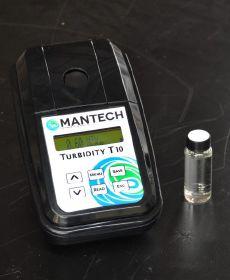
Turbidity meter for analysis
MANTECH‘s T10 turbidity meter is able to be implemented as a manual or automated turbidity solution for measuring NTU/FNU results alongside other parameters such as pH, conductivity or alkalinity.

Alternatively, the T10 meter can be used for a series of field analyses, and then results can be uploaded to a PC or LIMS system.
The T10 Turbidity Meter includes improved calibration and analysis speed, an IP-67 splash resistant casing, a portable option through use of four AA batteries, adjustable measurement options, a user-friendly digital interface and USB power and data transfer. mantech-inc.com
Kemira increases sodium chlorate capacity
Kemira is adding more sodium chlorate capacity to its Eastover, South Carolina site with a US $20 million investment.
Sodium chlorate is the main component used in the production of chlorine dioxide (ClO2), which is produced on-site at pulp mills and is the primary bleaching agent for kraft pulp.
Construction on the capacity expansion began in 2019 and the new production unit is expected to be operational in early 2020. The construction has contributed to local employment with about 50 sub-contractors working on the addition project at Eastover.
“As global consumption of bleaching chemicals continues to increase, we are excited about this investment in our sodium chlorate capacity in the Americas to ensure our ability to effectively serve our customers globally,” says Kim Poulsen, president, pulp and paper and region head, Americas. kemira.com

IIoT-enabled compact scanner for paper producers
Honeywell has launched the Industrial Internet of Things (IIoT)-enabled Experion MX Q6088 Compact Scanner, designed for paper producers, flat sheet manufacturers and original equipment manufacturer (OEM) machine vendors.
The scanner supports a broad portfolio of high-performance sensors, including combined weight and moisture measurement with Honeywell’s MXIR infrared sensor technology.
The Q6088 complements Honeywell’s quality control system for the paper industry (Experion MX), which has advanced multi-variable machine direction and cross direction controls. It is suitable for most paper and flat sheet manufacturing processes, including tissue, board and coating lines.
The scanner leverages Honeywell’s QCS 4.0, which transforms data into actionable insights for improved process quality and production performance. The cloud-based solution continuously monitors scanner and sensor health, production quality and control/process performance, delivering a “call to action” to stakeholder mobile devices. honeywellprocess.com
Genome project to identify Canfor feedstock
Genome British Columbia is heading up a new project at Canfor that will accurately and quickly identify the tree species present in pulp and paper feedstock.
Knowledge of feedstock composition has a direct impact on how it is processed – knowing what mix of spruce, pine or fir (SPF) trees is present will inform how to treat the material.

The project team, led by the University of British Columbia’s Dr. Richard Hamelin, will design ready-touse DNA detection and quantification assays that can generate an accurate ratio of tree species in the feedstock.
“Current means of determining species rely on time-consuming microscopic examinations,” says Dr. Paul Bicho, who leads the Canfor Pulp Innovation team. “We need a timely way to determine species proportions in powdered biomass that serves as a feedstock to our pulp mills and we anticipate savings well into the millions of dollars when this tool is fully operational.”
The project will last just over a year. At its conclusion the team will have generated prototype demonstration kits. Extensive testing and validation of the method, and technology transfer to the Canfor team, will allow forest industrial partners to manage their biomass mixtures in an efficient, rapid and accurate manner.
“This is a prime example of how a BC-based partnership can address a global industry challenge,” says Dr. Pascal Spothelfer, president and CEO of Genome BC. “The project also demonstrates the transferability of genomic tools from one application, such as pest identification, to another DNA-based project of tree species identification.” genomebc.ca
Linerboard mill sees energy savings with smart cleaner Coldwater, a paper machine solutions provider, recently started up its EZ eco smart cleaner system on a top former and bottom wire at a North American linerboard mill.
After 60 days in operation, the mill says the cleaning system is exceeding expectations for wire cleanliness, elimination of stickies, elimination of pas -
Cascades to purchase more interest in containerboard mill
Cascades is purchasing Caisse de dépôt et placement du Québec (CDPQ)’s interest in Greenpac Holding, a lightweight containerboard mill located in Niagara Falls, New York.
CDPQ owns a 20.2 per cent interest in Greenpac. The expected purchase price is approximately US$93 million. The transaction is expected in early 2020.
As of Dec. 11, Cascades owned a 66.1 per cent interest in Greenpac, a joint venture created in partnership with CDPQ, Jamestown Container Companies and Containerboard Partners.
“This transaction is an important part of Cascades’ strategic plan, and will improve our available cash flow,” says Mario Plourde, president and CEO of Cascades, in a statement. “This decision is another step in a series of actions that we have carried out over the past few years to improve our position in an increasingly competitive market.”
Greenpac manufactures a lightweight linerboard made with 100 per cent recycled fibres on a machine with an annual production capacity of 540,000 short tons. The mill employs 152 people. cascades.com
sivation chemical, sheet break reduction, and resulting in a significant reduction in energy/water consumption.
The EZ eco smart cleaner’s design uses traversing high-pressure rotating heads that deliver 2,200 psi (150 bar) water pressure through 32 jets creating shear forces from rotation, which cleans of all types of forming wires. The five-inch (130-millimetre) diameter head delivers twice as much coverage area in the same amount of time as a traditional oscillating shower.
This technology gets fabrics clean with less water, reducing freshwater consumption by 95 per cent. The technology also minimizes mist, eliminating the need for mist removal equipment.
The linerboard mill indicates it achieved the following benefits after 60 days of operation: A 30 per cent reduction in sheet breaks, elimination of stickie deposits on the headbox, water savings of 50 million gallons per year, energy savings of 672,000 KWh per year and CO2 reduction of 410 tons per year. coldwaterseals.com
Voith Group completed its acquisition of BTG on Dec. 1, 2019.
The Swiss-based BTG provides optimized and customized solutions for a range of applications, primarily for paper manufacturers.
The previously announced acquisition agreement was signed on September 19, 2019 between Voith and Spectris plc, the former parent company of BTG, for a total gross cash consideration of EUR 319 million.
BTG will continue to operate under the established BTG brand, and customers will be able to purchase through their existing sales channels.
BTG supplies companies mainly in the areas of packaging, graphic papers and tissue. Its portfolio includes beds and rods for film-metering size presses, highperformance ceramic and cermet coating blades, and pulp and paper process control sensors and laboratory instruments. The company also offers data analytics, automation and software. voith.com
Harmac Pacific receives $800K for sludge treatment system
The Nanaimo, B.C.–based Harmac Pacific is receiving $862,5000 for a new sludge treatment system under the CleanBC Industry Fund, funded through carbon tax revenue.
This covers approximately half the cost of Harmac’s new $1.7-million ionization treatment process to de-water sludge so that it can be burned in its boilers, thereby reducing the amount of natural gas the company needs to burn, reports Business in Vancouver (BIV).
The sludge is the byproduct from turning wood waste into pulp. Currently it is filtered through a screw process to remove moisture, and then incinerated in Harmac’s boilers, producing steam for the pulp mill’s processing and to drive turbines to generate electricity.
According to BIV, the filtering process does not get all the moisture out of the sludge. The new technology will help reduce the sludge’s moisture content to a point where it will burn. harmacpacific.com
Cascades has launched a new, fully recyclable cardboard container for fresh food packaging in the North American market, as an alternative to traditional solutions that historically have not had a recyclable interior coating.

The new cardboard tray is certified according to Forest Stewardship Council (FSC) standards and, in addition to being recyclable, is made from 100 per cent recycled fibres (mainly from post-consumer sources).
The tray uses a water-based barrier coating that protects it against humidity and helps to preserve the freshness of foods. The company says this patented coating does not affect the recyclability or compostability of the cardboard, and is a replacement solution for the traditional wax- or plastic-based applications widely used in cardboard food packaging.
The tray’s resistance to humidity and ability to maintain its rigid form when refrigerated make it a solution for packaging fruits, vegetables and proteins.
“This tray allows tons of fibres to be diverted from landfills,” says Luc Langevin, president and chief operating officer of Cascades Specialty Products Group.
This made-in-Canada packaging solution meets Food and Drug Administration (FDA) requirements. cascades.com
The Kruger Products Gatineau plant has been certified ISO 50001 for energy management, making Kruger Products L.P. the first company to receive the certification from the Bureau de normalisation du Quebec (BNQ).
The tissue manufacturer’s Gatineau plant has significantly improved its environmental performance since 2009, reducing its energy intensity by 25 per cent.
“With the ISO 50001-based energy management system, we can continuously monitor our energy intensity, maintain the energy savings achieved and continually improve our energy performance,” says Daniel Morneau, general manager at the Gatineau plant, in a statement. “We now have a structured system in place that involves all of the plant’s operating teams that are working towards a common goal – to continuously improve our environmental performance.”
Kruger implemented its corporate Green Value Creation Program to promote innovation and investment in large-scale energy efficiency projects in all its establishments across North America.
The company has reduced its greenhouse gas emissions by nearly 50 per cent and its water use by 40 per cent over the past decade. kruger.com
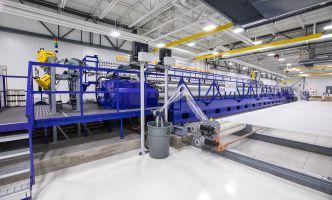
Voith inaugurates multi-milliondollar paper
Voith has installed one of the largest paper looms of its kind in North America, with a width of over 17 metres, at the Voith Paper Fabric & Rolls Systems facility in Appleton, Wisconsin.
The manufacturer says the multimillion dollar investment will allow it to provide perfectly fitted dewatering fabrics it for its customers.
Voith held an inauguration event at its facility on November 13.
“Because of the laminated structure of the woven fabric that maintains void volume throughout operation, press fabrics created on the Infinity loom allow higher running speeds and ultimately result in the generation of more product,” says Jeff Berg, vice-president operations, Voith Paper Fabric & Rolls Systems North America.
The Infinity family of Voith’s press fabrics produced on the Infinity loom include the ToughLine and FineLine series. voith.com
APP Canada to debut new uncoated paper
APP Canada will expand its Paperline portfolio of products with Paperline Gold, a premium grade paper with 98 per cent brightness, in early 2020.
Paperline Gold is one of APP’s premium grade papers, which are ideal for colour printing and high-end business communications and designed to produce sharp, clear copy and excellent print results with acid-free content. The paper has been developed to meet the demands of modern office and home printing.
The Paperline brand offers a full selection of bright white and various shades of colour paper. Paperline conforms to quality management systems of ISO 90012000, ISO 14001, and sources fibres from PEFC–certified sources.
Asia Pulp & Paper (APP) is based in Indonesia and China and has an annual combined pulp, paper, packaging product and converting capacity over 19 million tons per annum. appcanada.com
Millar Western installs PulpEye quality control system
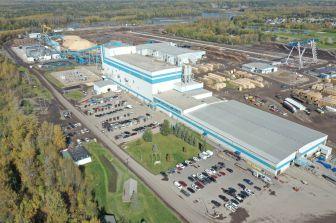
Millar Western has installed a PulpEye quality control system to its Whitecourt, Alberta BCMTP pulp mill.
The delivery consists of analyzer modules for CSF, fibre dimensions, shives, brightness and crill.
The PulpEye base unit comprises a cabinet with space for three analyzer modules measuring pulp quality parameters online from one or more sampling positions. Modules connected in the system provide data analysis and control of any specific fibre property. When needed, more modules can be added via additional cabinets.
When the Whitecourt pulp mill began production in 1988, it was designed to produce 210,000 air-dried metric tonnes (ADMT) of BCTMP per year.
Today, the mill’s capacity stands at 320,000 ADMT. The pulp mill produces BCTMP pulps, using hardwood as well as softwood as raw material, in 20 different pulp grades for use in products such as fine printing and writing papers, paperboard, specialty papers, tissue and towelling.
“Research studies have shown that crill is the single variable having the strongest connection to paper or board strength,” says Lars Norin, director at PulpEye Canada. “The more crill there are on and around the fibres, the stronger the paper or board will be. By measuring the amount of crill, it is possible to pre-calculate the strength of paper and board and hence define the refining needed to optimize the amount of crill.” pulpeye.com

The Canadian forest products sector is passionate and devoted – not just to the industry itself, but also to its local communities. Here we share the initiatives of pulp and paper companies working to make positive social, environmental and economic impacts across the country.

Alberta-Pacific selected Waylon Auger (back left) as the winner of its Aboriginal Education Partnership Program. Auger will receive full tuition for post-secondary education up to five years.

Let us help you share your successes. Tag @PulpPaperCanada or use #PPCGivingBack on Facebook or Twitter, or send an email to the editor at kurquhart@annexbusinessmedia.com. We’d love to hear from you!


SCA Pure or Black Spruce
We’re happy to boast that our first year in North America has been a “Pure” homerun! This is the result of the combination of our very northern fiber and our brand new state of art pulp mill. In fact, we’re told by our customers that SCA Pure is a pulp that performs equally as well as the finest of Canadian softwoods.
Pure properties
SCA Pure is our premium quality NBSK pulp, offering worldclass strength properties and outstanding environmental performance, naturally complying with FSC® (FSC C013162).
That’s why we have named our new product SCA Pure. Pure, as in pure performance, pure profitability, and pure sustainability.
A Pure commitment
Chasing currency fluctuations and spot markets is a very poor long-term strategy. We, SCA, will build our pulp business on the shoulders off long-term relationship with customers in North America and Europe.
Yes, we are an ocean away and that’s why we have inventory in the Northeast, Southeast and Midwest.
When you think SCA think Softwood commitment to North America, Let’s talk!
For more information please contact Magnus Person, magnus.t.persson@sca.com, phone +46 72 556 43 99.