
Making the most out of recycled fiber
Strength is a combination of fiber quality, fiber treatment, machine parameters, and chemicals. Kemira provides a broad portfolio of dry strength additives that give you the flexibility to optimize your production and cost. Turn improved strength into value through fiber and chemical savings, product quality upgrades, increased productivity, and basis weight reduction.
KEMIRA.COM

PULP PAPER &

Softwood standoff continues
The U.S. Department of Commerce (DOC) is at it again. On May 21, the DOC recommended a combined countervailing and anti-dumping duty of 18.32 per cent on Canadian softwood lumber imports after a second administrative review — more than doubling the current rate of 8.99 per cent for “all others” producers (p. 6).
The doubling-down is not set in stone until the department produces a final review in the fall, but if it feels like déjà vu, that’s because it is. The DOC reviews its anti-subsidy (countervailing) and anti-dumping duties annually, and it was only in November of 2020 that they established the current rate. The battles tend to drag on: it was just last August that Canada was victorious in the World Trade Organization’s appeals court after a dispute on U.S. duty rates from 2017.

Since 1982, the crux of the softwood lumber file has been that U.S. lumber producers believe Canadian stumpage fees set by and paid to the provinces unfairly “subsidize” our producers, while U.S. prices abide by their competitive private market. The tariff disputes that have been ongoing since the last Softwood Lumber Agreement (SLA)’s expiry in 2015 have been backed by the U.S. Lumber Coalition, which represents American producers.
The protectionism evident in this new proposed rate jump has already become a hallmark of the Biden camp, but really, this administration has been no different from the governments before it. It’s America first, and that’s certianly part of what’s behind this latest possible hike. Slap the Canadians with more tariffs to give U.S. woodlot owners a perceived leg up.
But America first is not necessarily America better. The National Association of Home Builders, for example, a U.S.-based advocacy organization, has been very vocal about the fact that such hefty duties on Canadian softwood drive up the prices in the U.S., too, ultimately hurting American consumers.
In 2008-09, disputes over the then-SLA, coupled with the economic downturn, pummeled British Columbia’s forestry sector, which never fully recovered (until it blew wide open during the pandemic, of course). So what do increased tariffs do to long-term demand for Canadian producers in a post-COVID world, once lumber prices flatten and consumer demand begins to wane? If sawmills start to suffer again, we know where that leaves the pulp and paper industry.
All levels of Canadian government and supporting organizations stress the need for a new agreement, and express their frustration not just at the flipflopping rates, but the rates themselves. B.C. remains the largest Canadian exporter of softwood lumber to the U.S. and supports about 100,000 jobs in the province. As news came down from the DOC in May, Susan Yurkovich, president of the B.C. Lumber Trade Council, said, “Our strong hope is that the U.S. industry will end this decades-long litigation and instead work with us to meet demand for the low-carbon wood products the world wants, including American families. Until then, we will continue to vigorously defend our industry against these meritless allegations.”
It’s time for a new chapter, and we know that Canada and the U.S. can work together well. Other partnerships are finding a way – the $3-billion Paper Excellence-Domtar acquisition (p. 6) attests to that. To have a onceCanadian, now U.S.-owned organization picked back up by a Canadian company – well, that’s one win for the Canadian pulp and paper industry. In another win, turn to p. 12 to see the champs in our second annual Top 10 Under 40 contest. These young leaders are thoughtful and curious, and they are already master collaborators. They make the future of pulp and paper look pretty promising. PPC
READER SERVICE
Print and digital subscription inquires or changes, please contact Barb Adelt, Audience Development Manager
Tel: (416) 510-5184
Fax: (416) 510-6875
Email: badelt@annexbusinessmedia.com
Mail: 111 Gordon Baker Rd., Suite 400, Toronto, ON M2H 3R1
Editor KRISTINA URQUHART 416-510-5143 kurquhart@annexbusinessmedia.com
National Accounts Manager LAURA GOODWIN 289-928-8543 lgoodwin@annexbusinessmedia.com
Group Publisher TODD HUMBER 416-510-5248 thumber@annexbusinessmedia.com
COO
SCOTT JAMIESON 519-429-5180 sjamieson@annexbusinessmedia.com
EDITORIAL/SALES OFFICES
111 Gordon Baker Rd., Suite 400, Toronto, ON M2H 3R1 Phone: 416-442-5600
PRODUCTION
Media Designer GRAHAM JEFFREY gjeffrey@annexbusinessmedia.com
Account Coordinator CATHERINE GILES cgiles@annexbusinessmedia.com
Printed in Canada ISSN 0316-4004 (Print) ISSN 1923-3515 (Digital)
PUBLICATION MAIL AGREEMENT #40065710
SUBSCRIPTION RATES
Canada $57.50 - 1 year; $92.50 - 2 year
USA $139.00 CDN per year Overseas - $150.00 CDN per year
Occasionally, Pulp & Paper Canada will mail information on behalf of industry related groups whose products and services we believe may be of interest to you. If you prefer not to receive this information, please contact our circulation department in any of the four ways listed above.
Annex Privacy Office privacy@annexbusinessmedia.com Tel: 800-668-2374
The editors have made every reasonable effort to provide accurate and authoritative information but they assume no liability for the accuracy or completeness of the text or its fitness for any particular purpose.
All rights reserved. The contents of this publication may not be reproduced in part or in full without the publisher’s written permission © Annex Business Media.
Sustaining member, Pulp and Paper Technical Association of Canada; Member, Alliance for Audited Media.


Kristina Urquhart Editor
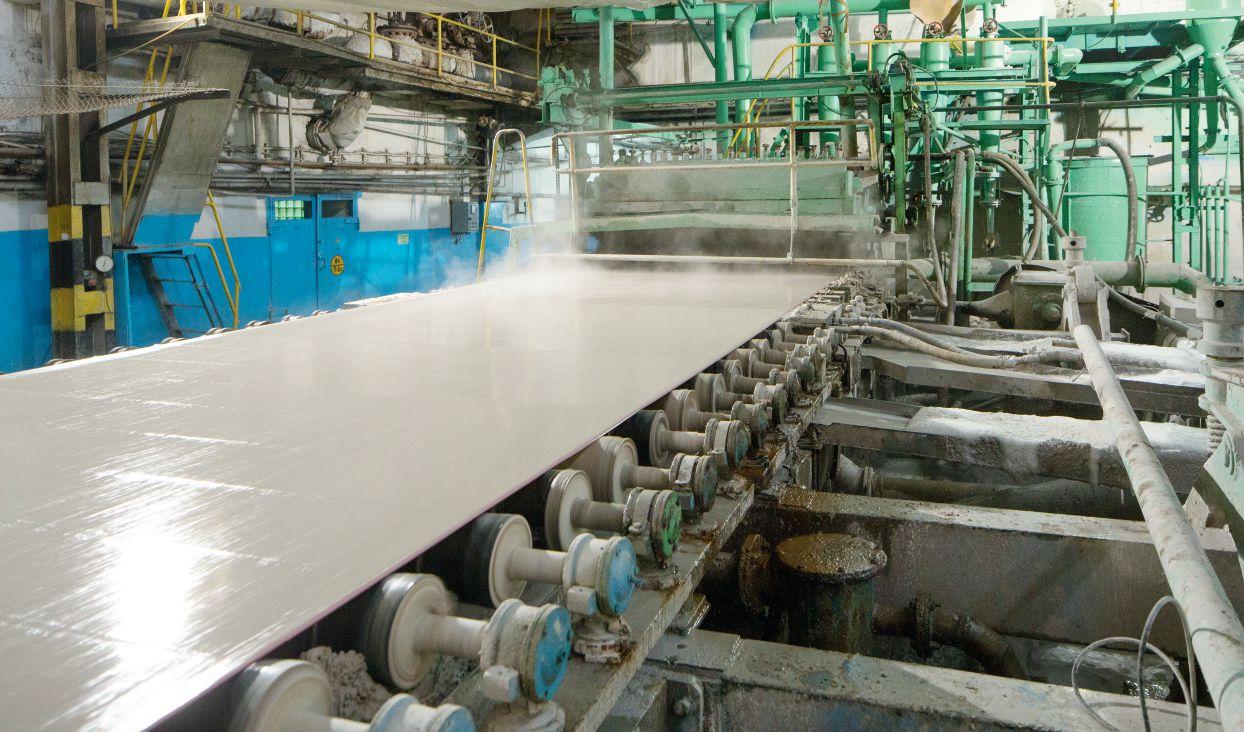
Cut downtime with fewer sheet breaks
ABB Sheet Break Performance
ABB Sheet Break Performance helps curb profit loss due to unplanned downtime. Built on a powerful data analytics and machine learning engine, operators get advanced warnings for impending breaks and the rapid identification of the root cause within a minute of occurring. This connected service also identifies ideal parameters to help maximize operational performance under all conditions. With valuable insight into issues affecting runnability, mills can reduce production upsets and increase profit potential.
Learn more at: abb.com/pulpandpaper
Paper Excellence to buy Domtar in $3B deal
Paper Excellence will acquire papermaking giant Domtar in an all-cash agreement with an enterprise value of approximately US$3 billion.
Paper Excellence, based in Richmond, B.C., will buy Domtar shares for $55.50 each.
After the transaction closes, Paper Excellence intends to continue the operations of Domtar as a stand-alone business entity. Domtar, which is headquartered in Fort Mill, S.C., will continue to be led by its management team.
Paper Excellence plans to retain Domtar’s corporate and production locations in Canada, which include mills in Windsor, Que., Espanola, Ont., Dryden, Ont. and Kamloops, B.C.
The purchase price represents a premium of about 37 per cent to Domtar’s closing share price on May 3, 2021, the last trading day prior to Domtar’s statement responding to media reports regarding a potential merger or acquisition between Domtar and Paper Excellence, and a premium of approximately 44 per cent to the 30-day volume-weighted average price as of May 3, 2021.
“We are excited to add Domtar and its employees to the Paper Excellence global family,” says Joe Ragan, global chief financial officer of Paper Excellence, in a statement.
“This marks a major step in our global strategy of identifying well-positioned assets and positioning them for growth. Domtar is a natural fit for our culture of operational excellence. We are enthusiastic about entering the American market as we continually improve Paper Excellence’s ability to serve its expanding blue-chip customer base.
“We have long admired Domtar’s expansive global footprint and believe that it will be a valuable addition to Paper Excellence. We look forward to investing in Domtar’s assets and people for long-term growth.”
John D. Williams, president and chief executive officer of Domtar, says, “This transaction validates our long-term strategic plan for our leading paper and pulp businesses, and for our continued expansion into packaging.
“Our dedicated employees have been instrumental to Domtar’s success and I am glad to see that this transaction supports the strategy that our team has worked so hard to develop over the last several years. As part of Paper Excellence, we will build on that momentum.”
The deal has been unanimously approved by the Domtar board of directors.
The transaction is expected to close in the second half of 2021, subject to Domtar shareholder approval and closing conditions.
U.S. aims to double softwood lumber duties
The U.S. Department of Commerce has issued its preliminary determination in the second administrative review of Canadian softwood lumber imports.
The department concluded that Canadian imports are “heavily subsidized and dumped into the U.S. market” and issued a combined anti-subsidy and anti-dumping rate of 18.32 per cent, which is more than twice the current combined rate of 8.99 per cent.
The U.S. Lumber Coalition says the U.S. lumber industry is open to a new U.S.-Canada softwood lumber trade agreement “if and when Canada can demonstrate that it is serious about negotiations.”
The federal government says businesses in both Canada and the U.S. will be ‘hurt’ by the duties.
Mary Ng, minister of small business, export promotion and international trade, says that Canada will challenge the review.
“This is entirely unjustified and will hurt consumers, businesses and workers on both sides of the border,” she says in a statement. “U.S. duties on Canadian softwood lumber products are a tax on the American people. They make housing less affordable for Americans and hinder economic recovery from the COVID-19 pandemic.
“We will keep challenging these unwarranted and damaging duties through all available avenues. We remain confident that a negotiated solution to this longstanding trade issue is not only possible, but in the best interest of both our countries.”
B.C. Minister of Forests, Lands, Natural Resource Operations and Rural Development Katrine Conroy and B.C. Minister of State for Trade George Chow echoed Ng’s comments.
“B.C. is frustrated and very concerned about the continued effect these unjustified punitive duties are having on our forest sector and on the families in communities throughout B.C. whose livelihoods depend on it,” they say.
B.C. is the largest Canadian exporter of softwood lumber to the U.S., and is a major contributor to the provincial economy and supports about 100,000 direct and indirect jobs in the province.
The U.S. Department of Commerce is not expected to issue final results on its review until November 2021.—with files from Ellen Cools, Canadian Forest Industries
Paper Excellence to shutter Mackenzie pulp mill
Paper Excellence is permanently closing the Mackenzie Pulp Mill located in Mackenzie, B.C., the company says.
Production at the mill was originally curtailed in June 2020 due to market impacts caused by COVID-19 and the lack of local economic fibre. A total of 260 employees worked at the mill.
Since acquiring the Mackenzie mill in 2010, Paper Excellence invested more than $360 million in the facility.
But the company says the small production capacity and the fibre issues meant the mill could not be globally competitive.
“Paper Excellence looks forward to the B.C. government’s continued focus on competitive mid-term timber supply and modernization of forest policy while ensuring an equitable distribution of access to forest tenures to support the diversity and competitiveness of the sector and the production of high value products,” says the company in a statement.
Where possible, Mackenzie employees have been relocated to other Paper Excellence facilities across Canada. The company will meet the terms of the collective agreement with UNIFOR Local 1092 and make severance payments.
The company says all gaseous, liquid and solid chemicals, and residues have been safely removed from the Mackenzie mill site.
A small number of employees remain to provide 24/7 monitoring while the development of a long-term remediation plan begins and the company explores ways to repurpose the facility in the future.
Northern
Pulp
submits new project plan to Nova Scotia
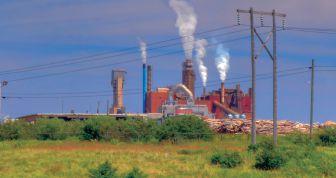
Northern Pulp has delivered a new proposal to the government of Nova Scotia that parent company Paper Excellence Canada says “dramatically improves” its previous effluent treatment plan.
The proposal was submitted to the environment department on May 14. The province must now determine what type of environmental assessment will be required.
Graham Kissack, vice-president, EHS and corporate communications for Paper Excellence, says more details on the proposal are forthcoming.
The company recently withdrew its last environmental assessment application to further integrate stakeholder input. At that time, Kissack said the modernization plans would include a public dashboard to display live environmental data, third-party administration of environmental compliance testing, new advanced effluent treatment systems, and the implementation of oxygen delignification, among other elements.
“We have taken the time to listen and review input received over the past few years to inform the development of environmental transformation and modernization plans for everything from community engagement to forestry practices to addressing odour, air, and water emissions,” said Kissack in a statement. “We are committed to doing things differently.”
The mill closed in January 2020 at the end of a five-year deadline set by the province to remove its effluent drainage pipe from the waters of Boat Harbour. The province has not yet approved any of the kraft
pulp mill’s plans for a replacement wastewater treatment facility, saying that further environmental data is required in order for Northern Pulp to get the green light.
Cleanup of the Boat Harbour aeration lagoons is ongoing.
Chipping facility acquired by Indigenous-operated partnership
The North Island Chipping facility in Beaver Cove, B.C., located on the traditional territory of the ‘Namgis First Nation, has
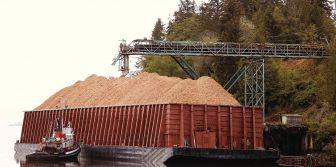
been acquired by Atli Chip Limited Partnership.
The newly formed Atli Chip Limited Partnership is majority owned by Atli Resources L.P., a forest company beneficially owned by the ‘Namgis First Nation.
SERVICE 360
Proper installation and repair of your dryer equipment will maximize drying capacity by keeping all the dryers in service. Kadant has the specialized knowledge and experience for safe, reliable, and expert installation of your rotary steam joints, syphons, dryer bars, and related equipment.

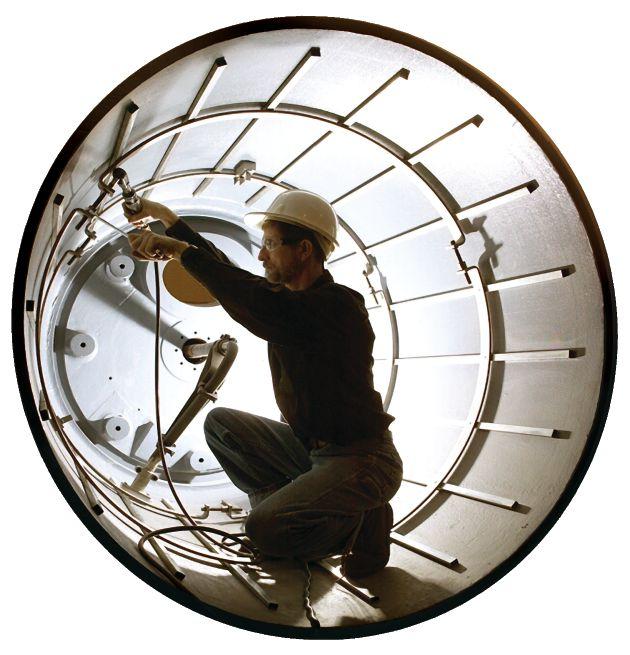

Photo:
The chipping facility produces wood chips for use in the pulp and paper industry. The facility is capable of processing 300,000 to 400,000 m3 of chips per year using local supplies of pulpwood and salvage wood. The facility was built in 2003 to convert dry land sort waste fibre and salvage logs into sellable wood chips.
Atli Chip Limited Partnership has minority stakes from Wahkash Contracting Ltd. and Paper Excellence.
The company has also entered into a long-term agreement with Paper Excellence to supply certain feedstock to the facility and to then receive wood chip production. Atli Chip has already delivered its first barge of slash chips to Paper Excellence.
“We are very excited about the opportunity for Atli Chip Limited Partnership to take over operations of this facility to meet the growing needs of the industry and to acquire a business that we believe will have long-term economic and environmental benefits for the ‘Namgis people and the North Island as a whole,” says Don Svanvik, ‘Namgis chief councillor, in a statement.
“The ‘Namgis have long been a significant contributor to the economic health of the North Island and this acquisition will continue that tradition. We look forward to
working together with our new partners.”
Doug Mosher, chief executive officer of Atli Resources, says a key goal of the new business is to increase the utilization of local waste and salvage wood in the operations.
“Because this operation is capable of producing a quality chip product from multiple lengths of wood inputs, it can serve a key role in reducing the amount of residual fibre often left behind after primary forest harvesting,” he says.
Better use of residual fibre has been a goal of the provincial government in recent years. “Added fibre that can be processed will result in less slash burning of postharvest waste, reducing smoke and carbon emissions, benefiting our local populations,” Mosher says.
Another key goal of this acquisition is to support local ‘Namgis business operations and employment while at the same time supporting local businesses.
Canfor Pulp CEO joins SFI board of directors
Canfor Pulp CEO Don Kayne has joined the board of directors of the Sustainable Forestry Initiative (SFI), representing the economic sector.
SFI also announced several other
Rayonier to sell newsprint mill, six lumber facilities
Rayonier Advanced Materials (RYAM) has agreed to sell newsprint and lumber facilities in Ontario and Quebec to GreenFirst Forest Products, a Canadian lumber company.
The assets include the newsprint mill in Kapuskasing, Ont., as well as six lumber mills located in Chapleau, Cochrane, Hearst and Kapuskasing in Ontario, and in Béarn and La Sarre in Quebec.
Also included are property, machinery, inventory, permits, licenses and other related assets. The agreement excludes accounts receivable and accounts payable.
The lumber mills produced 604 million board feet in 2020 with a combined nameplate capacity of 755 million board feet, and manufacture forest products used in residential and commercial construction, including dimensional lumber, wood chips and by-products.
The purchase price is approximately US$214 million including inventory on hand at the time of closing, which will translate to about 85 per cent in cash
and 15 per cent in common shares of the capital of GreenFirst.
“The sale of the lumber and newsprint businesses allows us to divest noncore assets at an attractive valuation and positions Rayonier Advanced Materials to further invest in the earnings growth of our core high-purity cellulose assets and its biofuture while also reducing overall debt. Through our ongoing ownership in GreenFirst, we expect to participate in further upside while maintaining optionality to monetize at an appropriate time,” says Paul G. Boynton, president and chief executive officer of Rayonier Advanced Materials, in a statement.
RYAM and GreenFirst will also enter a 20-year residual fibre supply agreement to meet the continued fibre sourcing needs of RYAM’s high-purity cellulose, high-yield and paperboard operations in Témiscaming, Que.
The transaction is expected to close in the second half of 2021, after Jul. 31.
appointments: Karla Guyn, CEO of Ducks Unlimited Canada, as board chair; Catherine Grenier, president and CEO of Nature Conservancy of Canada, for the environment sector; and Ellen Shultzabarger, state forester and director, Pennsylvania Bureau of Forestry, for the social sector.
Guyn was first elected to the SFI board in 2016. Mike Doss, president and CEO of Graphic Packaging International, takes over her role of vice-chair effective immediately.
Kevin Edgson, president and CEO, EACOM Timber Corporation, will serve as secretary-treasurer until October 2021 when Brent Keefer, CEO, American Forest Management, takes over the role.
As a board director, Kayne will serve a three-year term. He was appointed president and CEO of Canfor Corporation in 2011 and the CEO of Canfor Pulp in 2012. Canfor has forests and mills certified to the SFI Forest Management Standard and the SFI Fiber Sourcing Standard in both Canada and the United States along with multiple mills in Sweden.
Kayne brings a global perspective to the SFI board having started his career at Canfor as a regional sales representative in 1979 and spending 10 years as Canfor’s vice-president of sales and marketing where he became one of the lead architects of Asian market development for British Columbia lumber.
“I am very pleased to be joining the SFI board and look forward to working in collaboration with the team to ensure the sustainability of our forests while also supporting the production of renewable forest products that are contributing to the global low-carbon economy,” Kayne says.
Global hardwood fibre for pulp up at the end of 2020: WRQ
Hardwood fibre costs for pulp mills worldwide increased modestly at the end of 2020 but were still substantially lower in many markets compared to late 2019, according to the latest Wood Resources International wood fibre market report.
Increased demand for hardwood fibre in key pulp-producing countries and a weaker U.S. dollar resulted in higher hardwood pulplogs prices in Q4 2020.
The Global Hardwood Fiber Price Index (HFPI) was up 1.4 per cent from Q3 ’20 to Q4 ’20, the second quarter-over-quarter increase of the U.S. dollar–denoted index from its 15-year low in Q2 2020.
Prices rose the most in Latin America
and Indonesia, while the price gains were more modest in North America and Central Europe.
Despite prices increases during the second half of 2020, hardwood pulplog costs were substantially lower in Q4 ’20 than in the Q4 ’19 in most of the 15 countries tracked by the Wood Resource Quarterly, with prices declining by five to 15 per cent year-overyear in U.S. dollar terms.
Softwood fibre costs also increased globally in Q4 ’20, except for pulp mills in the U.S. and Germany, where healthy production levels in the sawmilling sector generated more residuals and, as a consequence, mills had less need for costlier pulplogs.
Prices for softwood residual chips in the U.S. Northwest fell by three per cent quarter-over-quarter and were as much as 19 per cent lower than in the Q4 ’19 because of high operating rates in the region’s sawmills. In the U.S. South, where fibre prices typically fluctuate much less than in the U.S. Northwest, average chip prices were down one percent quarter-over-quarter to a two-year low.
In Germany, softwood chip prices continued to slide in Q4 ’20. The significant increase in byproducts generated by Germany’s lumber producers has positively impacted the total softwood fibre costs for the pulp industry in the region.
In just three years, wood chip prices have fallen by half to a level last seen in 2003, according to the WRQ. The reduced fibre prices are good news for German pulp producers as wood fibre costs account for almost 50 per cent of the manufacturing costs.
Softwood fibre price changes were mixed over the past year. There were declines in North America, Central Europe, Russia, Brazil, Oceania and Japan compared to increases in the Nordic countries, Chile and China. When averaged out, there was ultimately a slight rise in the Global Softwood Fiber Price Index (SFPI) during 2020.
The annual average SFPI of slightly less than $87/odmt was the lowest level since 2004.—Wood Resources International
OFIA names new president and CEO
The Ontario Forest Industries Association (OFIA) has appointed Ian Dunn as its new president and chief executive officer. Dunn, who was already serving as interim president of the
Researcher Pierre
Lepoutre
has died at 87
Pulp and paper industry veteran Pierre Lepoutre has died, says the Pulp & Paper Technical Association of Canada (PAPTAC) in a statement.
Lepoutre was 87. He was born July 28, 1933 and passed away Dec. 17, 2020 in Boulder, Col.
“Pierre will be remembered by the industry for his longterm contributions to the coating sector and as the founder of the Paper Surface Science Program at the University of Maine,” says the association. “PAPTAC extends its sincerest condolences to Pierre’s family.”
Lepoutre won PAPTAC’s John S. Bates Memorial Gold Medal in 2012 for his work in pulp and paper science and technology.
In addition to his previous post at the University of Maine’s chemical and biological engineering department, Lepoutre was once employed as a researcher at Paprican in Montreal, which is now FPInnovations.
association, will also serve as president of the Canadian Lumberman’s Association (CLA).
Dunn is a Registered Professional Forester with a master’s degree in forest conservation. In 2018, he was appointed by Lieutenant Governor in Council to the Ontario Species at Risk Program Advisory Committee.
In 2019, Dunn was a recipient of Canadian Forest Industries Top 10 Under 40 award for next-generation leaders. He has worked in forestry and environmental management roles throughout Ontario and Canada.
Dunn began his employment with the OFIA in 2015 and has served as director of forest policy, executive director of policy and operations, and most recently as interim president and CEO.

“From supporting economic development in partnership with stakeholders and rights holders, to the adaptation and mitigation of climate change, I have seen the ability of this industry to address some of society’s biggest challenges, and I am proud to represent it,” says Dunn.
Roger Barber, chair of the board of directors, says, “Ian has a keen interest in forest sector policy and has distinguished himself as a dedicated advocate for the forest industry and the communities who rely on this sector for their economic health. He has worked closely with the board of directors for the last six years, and we are confident that under his leadership, the OFIA will continue to provide significant value to its members and the province as a whole.”

Ian Dunn
Boiler optimization: Lower GHG emissions, increase profit
By FPInnovations
Mills are constantly looking for ways to increase profitability while decreasing their greenhouse gas (GHG) emissions. The advent of the new federal carbon tax offers new opportunities for forest sector companies to do both by optimizing the operations of their biomass and chemical recovery boilers. FPInnovations’ approach to reducing natural gas consumption, to maximizing use of biomass as a fuel, and to reducing emissions is well-proven and has been demonstrated at many mills across Canada.
Room for improvement? Always!
Biomass and chemical recovery boilers are a large, once- or twice-in-a-lifetime, capital investment for a mill. Consequently, most of the boilers in Canada have been in service for many decades. Just like an old sports car, they require regular tuning and maintenance to ensure optimal performance.
FPInnovations’ boiler optimization service can maximize efficient and sustainable operation of boilers, leading to significant savings as well as an important reduction of GHG emissions.
Two decades ago, FPInnovations developed and patented an approach to boiler optimization that has been further improved and developed over the years. The approach employs unique software and measurement tools as well as a set of proven guidelines that take into consideration each mill’s specific situation and needs.
Depending on whether the target is a recovery boiler or a biomass boiler, optimizing a boiler’s performance can:
• Increase revenue by over US$2.5 million per year in additional pulp production for a 1,000 tpd kraft mill
• Reduce boiler shutdowns for water washing, which translates to savings of US$0.5 - $2.5 million per year
• Reduce natural gas consumption by US$1 - $3 million per year
• Better control TRS, particulate and other air emissions
• Improve energy efficiency, and hence contribute to the reduction of overall carbon emissions
And the cherry on top? Boiler operations can be improved with small or no capital investment.
How is a boiler optimized?
The approach is slightly different depending on whether the boiler is a biomass boiler or a chemical recovery boiler. However, the first step in both cases is to benchmark the boiler design and operational data to identify possible issues and, therefore, opportunities for improvement.
FPInnovations then conducts mill visits and performs baseline evaluation and optimization trials involving measurement, monitoring and analysis:
• Combustion air temperature, pressure, flowrate and vertical splits
• Combustion air flow distribution
• Char bed and furnace temperature profiles using handheld infrared and/ or fibre-optical pyrometers
• Carryover measurements around the bullnose level
• Liquor analyses, liquor firing parameters and liquor gun and spraying nozzle setup
• Ash sampling and analyses
• Flue gas emission monitoring Issues and opportunities identified are then discussed with mill staff, and decisions are made to adjust boiler operation. Adjustments include how the fuel
(black liquor or biomass) is distributed as it enters the boiler. Similarly, the split of combustion air entering the boiler at different levels, as well as around the circumference of the boiler, is carefully balanced to enhance mixing and reduce the chimney effect in the upper furnace.
Multiple rounds of measurements and monitoring are conducted to ensure that the process is fully optimized and to confirm the improvement of boiler operation. The end result: a well-tuned boiler that can efficiently burn more biomass or black liquor, use less natural gas, and reduce air emissions and carbon footprint.
For more information, please contact Wenli Duo, lead scientist at FPInnovations, at wenli. duo@fpinnovations.ca or Stéphan Larivière, pulp and paper industry sector leader, at stephan.lariviere@fpinnovations.ca. PPC
FPInnovations is a not-for-profit organization that supports the Canadian forest sector’s global competitiveness. fpinnovations.ca
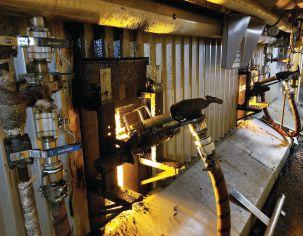
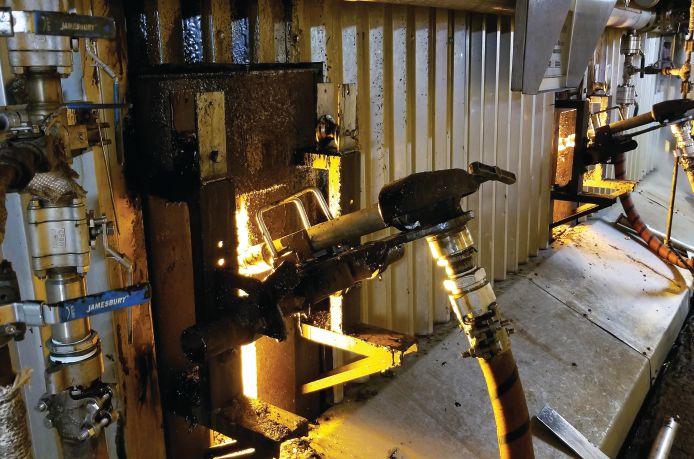
Liquor nozzles on a recovery boiler.
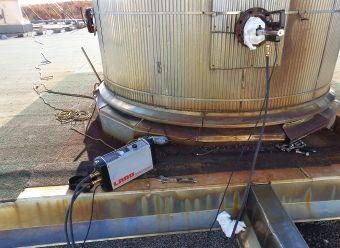
Acid dew point measurement on a recovery and biomass boiler stack.
Photos: FPInnovations
Call for proposals for federal innovation program
The federal government has launched a new call for proposals under the Investments in Forest Industry Transformation (IFIT) program, and the deadline is July 22.
Investments in successful projects will help advance Canada’s forest sector bioeconomy and low-emission energy future while creating and maintaining jobs, says Natural Resources Canada.
The program supports the adoption of transformative technologies and product diversification, increases forest sector competitiveness and supports economic prosperity as the sector recovers from COVID-19.
For-profit companies located in Canada that either produce forest products in an existing facility (i.e. pulp, paper or solid/ engineered wood products) or are/will be new entrants in the Canadian forest sector for the purpose of the proposed project are eligible to apply.
The IFIT program requires applicants to submit a diversity and inclusion plan as part of their project proposal submission.
Budget 2021 announced up to $54.8 million over two years, starting in 2021–22, to Natural Resources Canada to increase the capacity of the IFIT program, following increased uptake and successes in previous years.
Kruger Products makes plastics pact for circular economy
Kruger Products has joined a national industry-led network to develop a circular economy for plastic in Canada.
The company is the first tissue manufacturer to sign the Canada Plastics Pact (CPP), which has set four targets for its signatories to achieve by 2025.
Signatories will explore problematic or superfluous plastic packaging and take action to eliminate their use. By 2025 they also plan to develop 100 per cent recyclable, compostable or reusable plastic packaging; to ensure 50 per cent of plastic packaging is effectively recycled or composted; and that 30 per cent of recycled content is used across all plastic packaging.
Kruger Products recently launched its 10-year sustainability strategy, Reimagine 2030, which includes a target of reducing the virgin
Ontario’s Forest Biomass Action Plan out for public review
Public review and comment on the Ontario government’s draft Forest Biomass Action Plan wraps up mid-June.
Following the release of Ontario’s Forest Sector Strategy in August 2020, the Ontario Ministry of Forests and Natural Resources created a working group consisting of members from the forest biomass supply chain to develop the draft Forest Biomass Action Plan.
The plan has five main objectives: identifying pathways to markets for forest biomass; supporting demand for forest bioenergy and bioproducts; improving the business and regulatory environments for using forest biomass; supporting pathways for Indigenous community involvement in forest biomass value chains; and communicating, collaborating and informing on forest biomass opportunities.
An updated version of the plan will follow after the public consultation period.
plastic in its trademark branded packaging by 50 per cent by 2030. Currently, 89 per cent of Kruger Products’ packaging for its trademark branded products is fibre-based, such as its paperboard facial tissue boxes and coreboard for bathroom tissue and paper towels.
Alberta awards over $6M to emissions projects
Several industry projects are among the 17 winners of a challenge for $33 million in funding from the Alberta government.
The province, through Emissions Reduction Alberta (ERA), has selected projects in the forestry, agriculture and food sectors at the pilot, demonstration, or first-of-kind commercial deployment stage of development.
One of the winning projects was for ATCO Gas, which will produce renewable natural gas from the Millar Western Whitecourt pulp mill’s wastewater treatment anaerobic digester. If successful, the project could allow Millar Western to convert approximately 99 per cent of the methane in the biogas to RNG, which meets pipeline quality standards.
Another was for FPInnovations to develop a bitumen-lignin hot mix asphalt formulation to be used in the paving industry.
The third project is for Millar Western’s Whitecourt mill to use a Pulp Expert System (PES) powered by AI at the refining stage of the pulping process to reduce energy consumption and improve product quality. Once fully implemented, the project is expected to reduce GHG emissions by over 23,000 tCO2e annually through reduced consumption of grid electricity.

TOP 10 UNDER 40
Meet the winners of Pulp & Paper Canada’s second annual Top 10 Under 40 contest
By Kristina Urquhart
The future of pulp and paper looks bright. Armed with a strong work ethic, initiative, curiosity, and a commitment to training and safety, the 2021 winners of our Top 10 Under 40 program are setting the bar for young professionals across the industry in management, operations, maintenance, sales, support and research.
Want to recognize a future leader? Nominations for the 2022 contest open at the end of this year. Congratulations to our 2021 winners!
YU SUN
Manager, TMP & stock prep, Catalyst Crofton Crofton, BC
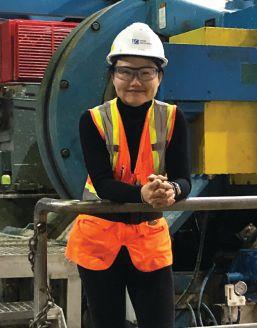
Yu Sun knows pulp and paper. When Sun, 36, joined Catalyst Crofton four years ago as an operations specialist, she brought four degrees with her: a bachelor’s degree in environmental science, a master’s degree in biotechnology, a second master’s in environmental engineering, and a doctorate in pulp and paper engineering and chemistry.
After moving from her native China, Sun spent four years as a research assistant at Université du Québec à TroisRivières, which was where she earned her PhD, and another three years at the University of British Columbia as a postdoctoral research fellow at the school’s Pulp and Paper Centre. There, she concentrated on pulp brightness after bleaching, and on reducing refining energy while improving pulp quality via chemical applications in the TMP process.
Only a year and a half after joining the Crofton mill, Sun was promoted to her current role “based on her early success and her ability to work well with both the operations crews, her area team and management,” says Steve Bird, Catalyst Crofton’s general manager. Now, Sun oversees mechanical, electrical and
instrumentation maintenance of the stock prep department, and liaises with the paper side to ensure pulp quality meets the specifications of the mill’s 40-odd paper grades.
She’s also active with PAPTAC as both a member and representative of Catalyst Crofton. In 2019, she co-authored and presented a paper at the PACWEST Conference, called “Benefits and successes of leveraging a KMAP tool in our TMP plant.”
“Yu Sun is a very accomplished person for somebody still early in their career,” says Bird.
MATT BROERE
Technical services superintendent, Domtar Dryden, ON

At just 30 years old, Matt Broere oversees a team of 12 people who provide Domtar Dryden’s technical support in quality, environment and production. Broere joined the mill as a process engineer in 2016, shortly after earning two bachelor’s degrees in chemistry and chemical engineering from Lakehead University.
By 2017, he had moved up to operations supervisor of recaust/kiln, where he developed standard operating procedures, scheduled maintenance work and ensured compliance of safety, environment and quality.
Now, Broere’s role extends to strategic development, reliability planning, continuous improvement and leadership workflows. In addition, he makes sure the quality specifications of the final product meet the needs of the mill’s customers. His commitment to quality and safety are further seen in his management of the site’s ISO 9001 quality program, and in his cochairing of the joint occupational health and safety committee.
In their nomination, Marie Cyr, Domtar Dryden’s general manager, and Rajanesh Kumar, production manager, say Broere “is a supportive leader, mentoring entry-level process engineers and providing strong coaching to enhance their development and exposure both within the organization and the industry.
He is viewed in very high regard by his peers and leaders.”
As a mentor, Broere sets an example for his team by committing to his own professional development. He is a Certified Professional Engineer, certified Six Sigma Black Belt, and Project Management Professional, and he has completed training through both PAPTAC and TAPPI. He also led a conference for PAPTAC’s bleaching committee in Dryden, and participated in presentations at PACWEST.
“He is no stranger to dedicating the time, hard work and energy to creative thinking and actively leading the Dryden team to successful results,” say Cyr and Kumar.
JAWAD JEAIDI
Process engineer, CanmetENERGY
Varennes, QC

Work ethic, initiative, leadership, excellence, kindness — these are just some of the words that appeared repeatedly in Jawad Jeaidi’s multiple nominations from colleagues throughout his pulp and paper career.
At 35, Jeaidi’s contributions to the industry are already lauded. He’s authored over two dozen technical papers for conferences, several peer-reviewed papers related to forestry transformation and the bioeconomy, and a book chapter. Jeaidi is particularly focused on retrofitting pulp and paper mills into biorefineries, exploring opportunities in lignin and ensuring the long-term sustainability of the industry.
Having started his career as a consultant for the manufacturing industry, Jeaidi joined CanmetENERGY, Natural Resources Canada’s clean energy technology research centre, for the first time in 2014. He spent over four years as a process engineer, where he helped to create digital tools for process monitoring and optimization, before moving on to White Birch Paper’s mill in 2018 to work as a continuous improvement coordinator and then a technical supervisor.
While there, he helped with an energy efficiency project on the paper machine’s vacuum system that led to the development of a waste heat recovery system. In March 2021, Jeaidi rejoined CanmetENERGY, where he explores innovative solutions such as artificial intelligence applications in pulp and paper.
“His strategic thinking and ability to adapt and identify best global practices made him contribute significantly to projects such as the commissioning and qualification of a new production line and successful application of grant proposals for energy-efficiency projects,” says colleague Olumoye Ajao. “This attests to his leadership qualities.” So does Jeaidi’s commitment to leadership skills training and courses in project management.
Says Ajao: “Many decades from now, we will still be able to look back and recognize his lasting impact on the Canadian pulp and paper industry.”
DEVIN KELLY
Operations specialist – machine room, Mercer Celgar Castlegar, BC

Devin Kelly “has a passion for continuous improvement that is unparalleled, and an ability to systematically problem solve that is beneficial to the success of the area,” says his manager Jeff Dechaine.
Consider this: Kelly, a third-generation pulp and paper worker, professional engineer and Six Sigma Green Belt, has led multiple improvement initiatives in his five years in the machine room, including a profiling steam box design, construction and install for PM1, vacuum optimization and PH control design projects for the pulp machine, and production loss analysis implementation and tracking.
“He has developed disciplined systems that will outlive his tenure and that are valuable tools to ensure the future success of the department,” says Dechaine.
Colleagues and vendors say that what makes Kelly, 37, special are his eagerness to learn, his ability to ask thoughtful questions, and his penchant for rallying the team. One vendor credited Kelly’s synthesis of information, risk mitigation and change process management as the reasons a press efficiency project was able to move forward with upgrades.
In addition to working on his chops in improvement, Kelly is chair of the area Safety Captain Committee and has completed interview and supervisor training.
“The passion, commitment, and energy that he puts into his role here at Mercer has led to significant reliability, production and morale improvements,” says Dechaine. “He is a leader beyond his years, and a shining example of what the next generation of leaders in our industry can be.”
HARPUNEET GHUMAN
Section lead, energy & carbon, West Fraser Timber Co. Quesnel, BC
In eight years, Harpuneet (Perry) Ghuman has risen the ranks at West Fraser, earning four promotions including to his current role.
As section lead for energy and carbon, the 33-year-old Ghuman manages the company’s energy and emissions strategy across all mills. He works directly with government, energy providers, consultants and experts to inform energy projects and policies at the company.
After earning his undergraduate degree in chemical engineering in India, where he was born, Ghuman moved to Canada

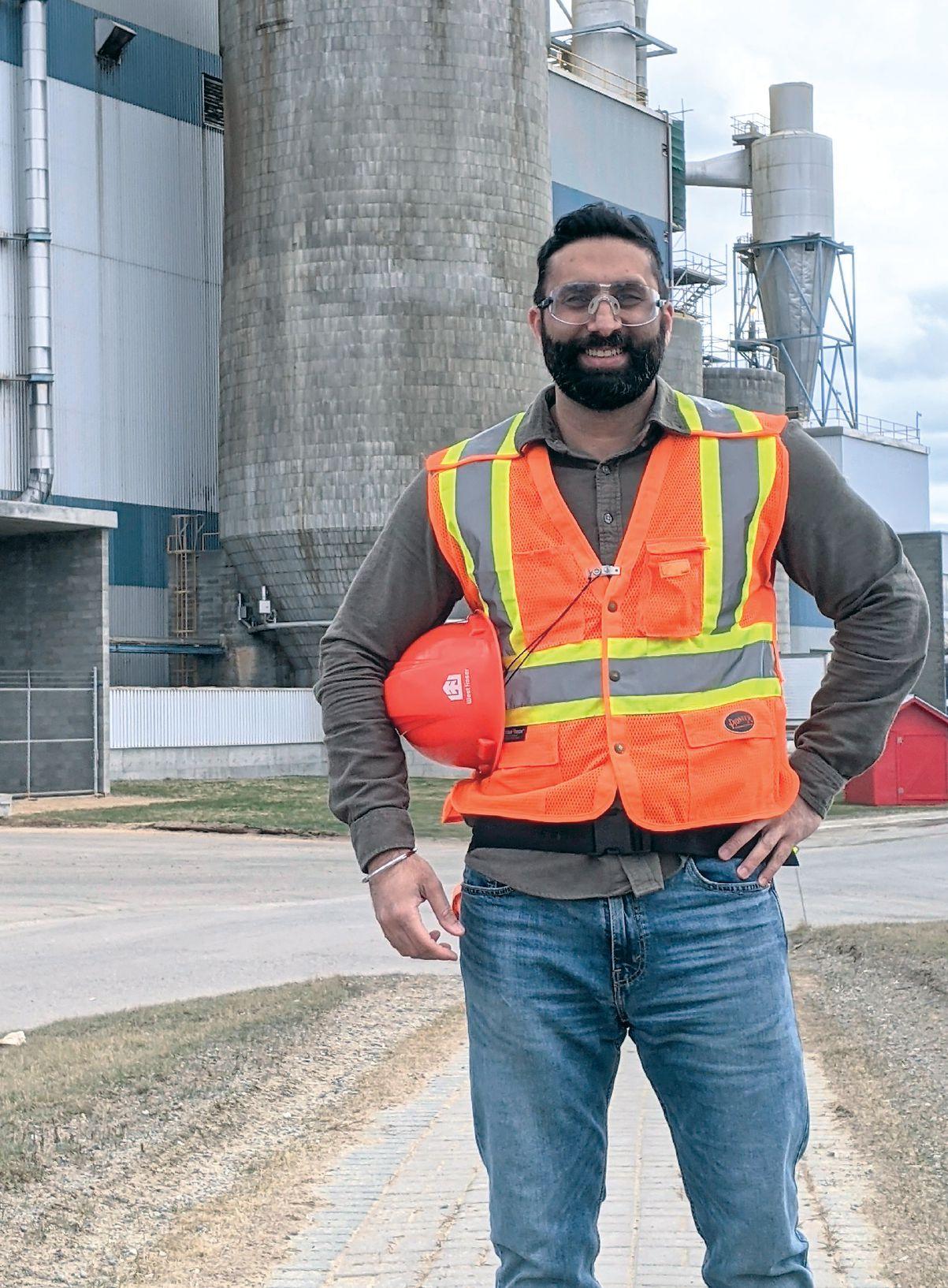
in 2011 to obtain his master’s degree in natural resources and environmental studies at the University of Northern British Columbia. He joined West Fraser’s Quesnel River pulp mill in 2013 as a lab technician before moving to a process engineer role in charge of compliance to ISO 9001.
Before assuming his current role, Ghuman spent just over a year as industrial energy manager at the mill, during which time he earned his Professional Engineer credentials and directed multi-stakeholder projects including a process upgrade that saved 50 GWh/year, and a steam optimization project that could reduce CO2 emissions by 10,000 tonnes/year.
Sam Walker, energy management consultant at Stillwater Energy, says that one of the notable things about Ghuman is his humble attitude and appreciation of his peers.
“Perry is quick to remind people that the success of these projects is due to the teamwork of the technical, engineering and operations employees, and to the operators who identified and advocated for these opportunities from the start,” Walker says. “He’s an impressive emerging leader.”
JEAN-SÉBASTIEN VIENS
Director, demand and supply planning, Cascades Candiac, QC
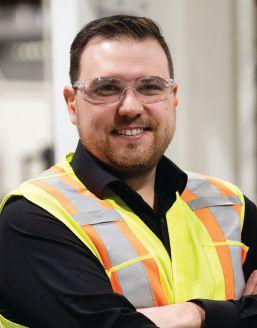
Jean-Sébastien Viens has had a busy year. As the new director of demand and supply planning for the Cascades PRO business segment of Cascades Tissue Group, responding to the COVID-19 crunch on the market has been an additional challenge.
“He is a rising star in his field of supply chain, which has clearly been one of the most important fields in 2020/2021,” says Annie Noel, Viens’ supervisor. “His strong knowledge of the tissue manufacturing operations, the equipment and the clients’ needs are assets for the corporate team.”
Viens, 34, became a Cascader in 2014 when he joined the converting plant in Granby, Que. as a production planner. In just over a year, he’d been promoted to corporate planner, a position he held until right before COVID hit. Now, as director of demand and supply planning, Viens oversees a team of production planners, distribution planners and demand planners across five conversion plants and seven warehouses.
Noel says Viens is a proponent of using technology to simplify and enhance experiences for staff and customers alike. After the company implemented a SAP IBP tool, Viens recorded training
videos for staff. “His goal was to promote and drive better planning to leverage production efficiencies but also to meet customer expectations,” she says. “Learning and sharing knowledge is important to Jean-Sébastien.”
Viens, who recently achieved his APICS certification from the Association of Supply Chain Management, regularly imparts his wisdom to his team via lunch-and-learn sessions.
“Jean-Sébastien embodies the value of fierce determination by continuously looking for solutions for the client and the company,” Noel says. “He is an excellent example of a young, powerful, dedicated, knowledgeable and focused employee.”
ALI ELAHIMEHR
Senior scientist, development & implementation, FPInnovations Vancouver, BC
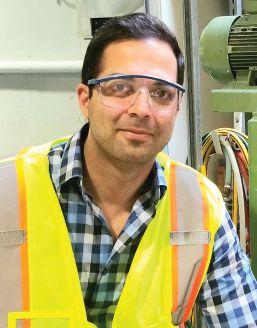
Ali Elahimehr’s specialty has been mechanical pulping ever since he graduated from the University of British Columbia’s doctoral program in 2013. While there, he worked with a consortium of 16 companies to develop and test solutions for energy and cost reduction in mechanical pulping.
“His experimental and theoretical work with an enhanced model to understand the effect of refiner plate design on refining performance was ground-breaking, enabling researchers to better predict energy-saving potential of refining,” says Zhirun Yuan, Elahimehr’s manager at FPInnovations. “Over 10 years, Ali has had a leadership role in the development and implementation of energy-saving strategies resulting in more than 83 gigawatt-hours per year of clean electrical energy savings in B.C. — enough to power 7,644 homes for a year.”
Elahimehr, 39, took his pulping expertise to West Fraser’s Quesnel River Pulp in 2013. There, he served as process engineer for a BCTMP upgrade that included the development of the world’s first LC-refining system in a $15.4-million project. When Elahimehr was promoted to senior process engineer in 2016, he embarked on another project, this time with FPInnovations and UBC, and developed a novel way to reduce energy on the BCTMP line.
“These projects provide strong examples of Dr. Elahimehr’s ability to realize innovative new concepts for operational development that result in substantial environmental impact and energy savings for the benefit of the industry,” says Yuan.
Now at FPInnovations, Elahimehr is exploring new product development opportunities for mechanical pulp, and working with members to reduce cost and improve quality of TMP and BCTMP. He continually gives knowledge back to the community through peer-reviewed papers and conference presentations.
ANDREW WASIK
Chief operating officer, Aurel Systems
Vancouver, BC
As Andrew Wasik, 37, prepares to take over the family busi-

ness from his dad, Larry, “he is wearing many hats for our small outfit,” says Renaud Daenzer, manager of mineral processing at Aurel Systems.
As COO, Wasik acts as Aurel’s project manager, business development manager and customer relations manager. He started his career developing software and C++ modules for the company’s CADSIM Plus process simulation program.
“He has developed complete machine room whitewater mass and energy balances for Tembec, a fully functional operator training simulator at West Fraser’s Hinton mill, and helped execute and deliver an array of projects with strict timelines for consultants servicing the pulp and paper industry,” says Daenzer.
Wasik is generous with professional development opportunities, Daenzer says. In addition to sharing his own knowledge with industry at conferences such as PAPTAC’s PaperWeek, Wasik ensures his colleagues have the equipment, software and training they need to succeed. When the pandemic hit, Wasik quickly delivered workstations to the homes of his staff and enabled secure processes so they could do their job remotely.
“Leaders of his nature are few and far between,” says Daenzer of Wasik. “His work ethic and capacity for multitasking is incredible, his communication style is effective and compassionate and above all he is a true family man, displaying the same values to the Aurel Systems family as to his own.”
MAHIMA SHARMA
Director, environment, innovation & mill regulations, Forest Products Association of Canada (FPAC) Ottawa, ON

As she’s climbed up in her career, Mahima Sharma, 34, has proven herself to be invaluable to FPAC’s senior leadership team, says Derek Nighbor, FPAC CEO. “Her work is instrumental in ensuring that FPAC maintains its reputation for housing the latest and most relevant scientifically verified data on environmental performance,” he says.
In her role, Sharma assesses environmental regulations for mills, analyzes and reports on sustainability measures, and works with FPAC’s membership to communicate the stance of the forest products sector on issues pertaining to climate change, air, water and chemicals. She was also responsible for spearheading a partnership with Statistics Canada to ensure the government has access to current forest sector data through reporting by FPAC’s membership.
As lead on the association’s innovation file, Sharma is also hard at work promoting the part the forest sector plays in solutions to climate change and the low-carbon economy.
Sharma has been building on her knowledge ever since her post-secondary schooling, when she earned two bachelor’s degrees in biochemistry and chemical engineering, and two master’s degrees in chemical engineering and health administration. She cut her teeth in compliance when she joined FPAC in 2014 as an environmental analyst.
“Mahima has deep technical knowledge, a ready grasp on complex files, and is highly respected and trusted by her colleagues,” says Nighbor. “She is an important conduit between the industry and the federal government on issues related to carbon, innovation and the forest bioeconomy.”
LEONARDO GOMEZ
Project coordinator, Mercer Peace River Pulp Peace River, AB

When Leonardo Gomez, 32, joined Mercer’s Peace River mill in August 2015 as a junior project engineerin-training (EIT), he was quick to impress the team, says supervisor Allison Quinney.
Gomez was fresh off a stint as an EIT in the energy sector, having completed his mechanical engineering technologist diploma at the Northern Alberta Institute of Technology and a bachelor’s degree in mechanical engineering at Lakehead University.
“Leo presented himself as a high achiever with a passion for learning and drive for success,” Quinney says. “He has a keen ability to turn concepts and ideas into fruition based on methodical evaluation of various options, weigh the benefits and risk, and then apply this same methodology in execution.”
As a result, Gomez identifies “the opportunity for the organization while mitigating financial risk exposure and optimizing net benefit,” says Quinney. “This same approach has positioned him well to adapt to adverse conditions and determine the best outcome when faced with unexpected challenges, particularly in light of imminent construction deadlines during annual shutdowns.”
This we’ll-find-a-way attitude is what has carried Gomez through to his designation as a Professional Engineer, management of projects up to $5 million, and assistance on an ongoing overhaul of the mill’s wood room. It’s also led him to dip into the fibre handling side, where he bridges projects and operational reliability, and to work on acquiring his Project Management Professional certification.
“Leo is a driven, dedicated and energetic team member who is always willing to go the extra mile to seek innovation, more responsibility and ways to deliver value to the MPR organization,” says Quinney. PPC
Keywords


ManufacturingJobsite.ca is Canada’s premier online job portal for the growing manufacturing sector. A laser focus on the right people across the country’s largest manufacturing media audience means you get the right applicants the first time. No more massive piles of unqualified applicants, just professional employers reaching qualified professionals.
Powered by the top manufacturing media brands in Canada, the reach to over 500,000 industry professionals on ManufacturingJobsite.ca is amplified by:
Website advertising to 185,000 qualified monthly site visitors
A comprehensive and magnifying reach across multiple associated job boards
Email promotion and job alerts to 131,000 industry emails using Canada’s largest CASL-compliant direct access to manufacturing professionals
Social media promotion to all brand networks on Facebook, Instagram, Twitter and LinkedIn
ON A ROLL
Kruger Products’ new tissue manufacturing facility combines digital processes, automation and teamwork to deliver strong early results
By Kristina Urquhart
After a gruelling year of COVIDrelated curtailments and closures in pulp and paper, it was welcome news for the industry when Kruger Products announced in February that their new state-of-the-art tissue plant had been completed on time and on budget.
The Sherbrooke, Que. facility features a through-air-dry (TAD) tissue machine and three converting lines, which previously have been commissioned. At the time of this writing, the TAD machine was well along its maturity, just three months after starting up.
“We originally envisioned a multi-year maturity curve, which is very common in the industry,” says Michael Yang, senior vice-president, supply chain and operational excellence at Kruger Products.
“Right off the bat, this is as close to a vertical start-up, especially on the tissue machine, than I’ve seen in my career.”
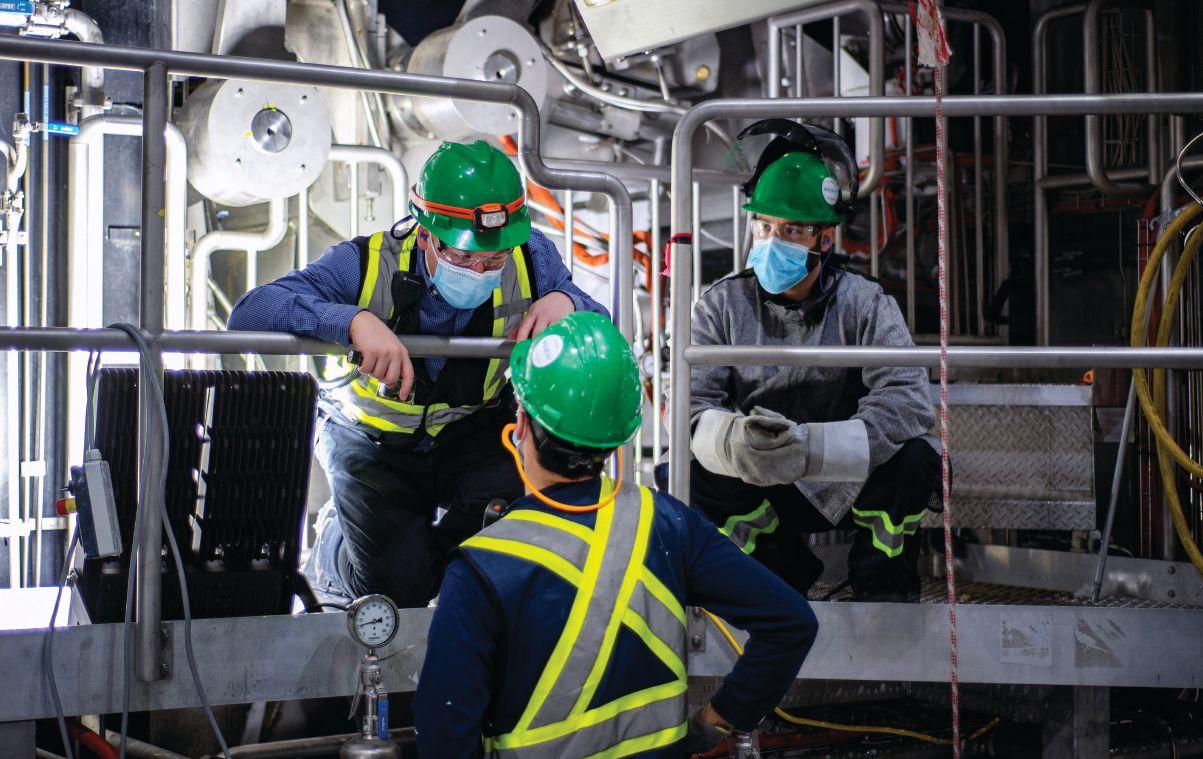
Many of the plant’s 180 employees are new to the pulp and paper industry. Kruger partnered with local vendors to conduct off-site classroom training covering the mechanical and electrical systems, safety features and machine technology. Employees from Kruger Products’ other tissue and converting plants, and from the corporate functions, travelled to the Sherbrooke plant to help with training and commissioning.
“We invested heavily in the operating and information technologies that we’ve overlaid into the equipment here,” Yang says. “We have far more digital information on this site than any in Kruger Products plant so far, so we’re able to solve the start-up issues that you would typically see in an operation like this.”
While advances in new technology helped to make the start-up more seamless, Yang notes there was a bigger force at work. “It’s the partnership and the collaboration,” he says. “Our team members have gained lots of experience in this technology over the last 10 years.”
Kruger Products installed its first TAD machine at its Memphis, Tenn. plant in 2013. That $322-million machine adds 60,000 metric tons (tonnes) per year to Kruger’s production capacity. The Sherbrooke plant is responsible for an additional 70,000 tonnes of ultra-premium bathroom tissue and paper towels, sold in Canada under the Cashmere®, SpongeTowels ® and Purex ® brands, and as White Cloud® in the U.S.
The company maintains a close relationship with its equipment suppliers – for example, the new tissue machine was manufactured by the same supplier
Workers are extensively trained on the TAD tissue machine at Kruger Sherbrooke. “The goal is to have a deep understanding of the technology,” says Mike Yang.
Photos: Simon Duquette/Agence
as the Memphis machine. Yang credits this ongoing trust as another driving force for the smooth start-up. “We’re there from day one in terms of specifying in detail exactly what we want and how we want it,” he says. “We don’t just buy something off the shelf.”
COVID-19 challenges
Kruger Products announced the Sherbrooke investment in August 2018, which brought one million hours of construction work and $250 million of the plant’s $575-million total price tag into Quebec’s economy.
The team was well underway with the build when the pandemic hit. On-site, the team quickly ramped up its COVID-19 safety protocols: separating workgroups; enforcing physical distancing; reminding staff to intensify their hygiene routines and watch for symptoms; controlling entry and exit points; and supplying plenty of PPE.
The pandemic added extra complexity to the installation and commissioning of machinery from OEMs located overseas as supply chain bottlenecks intensified. Some processes required in-person visits, adding unexpected logistics as Kruger Products’ staff and vendor representatives complied with quarantine periods on both ends of their trips.
“There was a lot of management and collaboration with them to make sure we got equipment off of their shores and towards us,” Yang says. In some cases, factory acceptance tests were completed on-site rather than ahead of time. The company also invested in technology so suppliers could view the equipment virtually and in real-time to provide support and troubleshooting.
A massive machine
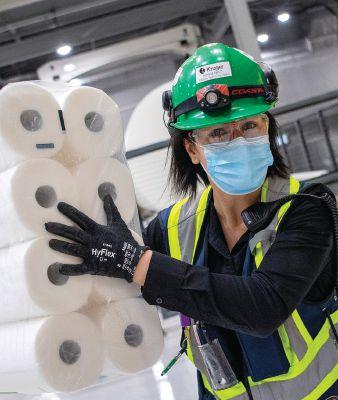
Sherbrooke’s showpiece is the TAD tissue machine, which uses virgin fibre sourced from a variety of North and South American pulp suppliers to produce 2.5-metre wide parent rolls for bathroom tissue and paper towel.
“The TAD is the best in the market right now in terms of ability to generate bulk, and to meet and improve softness and absorbency specifications in our finished product,” says Yang. “What’s fundamentally different with a TAD process over conventional processes is that we’re forming a three-dimensional structure in
the sheet, right from when we form the fibres. Combine that with our proprietary materials and it really gives us that competitive edge,” he says.
Puffing up the sheet with air means the TAD machine uses less overall fibre than its dry-crepe counterparts, which in turn leads to reduced fibre costs for the plant. The process does consume somewhat more energy than traditional methods because of the vacuuming and additional TAD step. The Sherbrooke plant currently uses natural gas and electricity for its energy supply, but Yang says Kruger Products is already looking at alternative energy methods.
Automating production
As Kruger Products’ most advanced facility, the Sherbrooke plant makes use of robotics, artificial intelligence and data analytics.
“We’ve invested heavily in the site in terms of digitization of the manufacturing,” says Yang. “The amount of data points that we have is quite advanced.”
Customized dashboards allow operators to dive into production data and access reports on usage, consumption and other metrics, which help the company work toward its lean manufacturing and operational excellence goals.
“Having the tools and the right mindset come together [create] a very capable team that’s delivering the results that we’re seeing,” says Yang.
Staff on the shop floor at Sherbrooke work alongside a variety of robotics, including collaborative robots, autonomous mobile robots (AMRs) and tradi-
tional industrial robots housed behind protective barriers. The AMRs transport material using sensor detection to stick to pre-determined routes away from pedestrian paths.
A material handling system makes light work of moving the 100-inch parent rolls between the tissue machine and the packaging area.
“As [rolls] come off the tissue machine, they’re automatically positioned, labeled and wrapped,” says Yang. A collaborative robot arm applies an identifying sticker to each roll so it can be tracked as it moves on to the converting area to be split into consumer-sized rolls. Automatic conveyors transport the rolls to packaging machines, which bundle and wrap the products together before boxing them up for distribution.
“It’s a pretty lean facility,” notes Yang. “It’s designed with a high-performance mindset. Our approach around operational excellence, what we hired and trained for, coupled with designing the infrastructure, the equipment, the process flow – it’s all designed to be highly efficient, highly automated and highly self-sufficient.”
The company says its commitment to operational excellence creates a culture of continuous improvement through engagement and empowerment of team members in the operation. The program builds team capabilities through deployment of best practices and development of team proficiencies. “It is also empowering our teams to own results and to have autonomy decision-making at the line level through deployment of the lean management system,” says Yang.
In a statement coinciding with Sherbrooke’s opening on Feb. 26, Kruger Products CEO Dino Bianco announced the company will increase its investment by $240 million to further expand the facility over the next three years. Beginning in 2022, an additional paper machine for light-dry crepe tissue, converting line and facial line will be added, growing output at the Sherbrooke complex by at least 30,000 tonnes.
“It’s not the end of a construction or engineering project,” says Yang of the plant’s ramp-up. “It’s really the start of a life of a new facility. They take on their own character — there’s a personality and culture there that we’re building.” PPC
The Sherbrooke plant produces tissue for distribution throughout North America.
TOOLS FOR CONVERSION
TAPPI conference touts new technologies for packaging grades
By J. David McDonald
The pandemic has accelerated the decline in demand for printing and writing papers in North America and Europe, in particular newsprint. Meanwhile, growth in e-commerce has increased the demand for packaging materials. This has led to many paper machines being shut down or converted to other grades, especially packaging.
Several papers dealt with new technologies relevant to this topic at TAPPI’s PaperCon 2021 virtual conference, held May 5 and 6. The event presented some of the content that had been slated for the 2020 conference, which was postponed due to the pandemic. The remainder of the 2020 program will be part of TAPPICon, a face-to-face conference in Atlanta running Oct. 3 to 6. It will bring together six industry segments: paper, tissue, nonwovens, recycling, maintenance and reliability, and women in industry. This article reviews highlights from the 2021 virtual conference.
Dewatering and drying
As Sakari Karjalalainen explained in his talk, “The Future of Papermaking,” Valmet has developed several technologies that could be used in a rebuild or greenfield machine for packaging grades. One of these technologies speeds up dewatering in the forming section. Valmet has designed a sleeve roll with an internal shoe that creates a higher dewatering force by means of a smaller turn radius. This could be used to retro-fit a top-former for higher basis weight packaging grades, or be used in a gap former.
Another technology addresses the long-standing desire to eliminate the open draw between the press and dryer
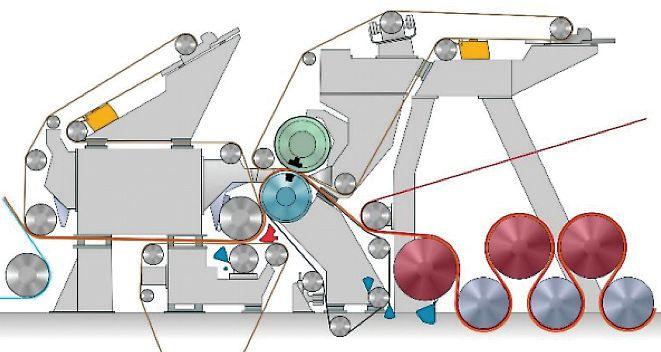
sections. Breaks in this first open draw limit machine speed and lower efficiency. Valmet has developed a press belt to close this draw, as shown in Figure 1. This has now been installed on three machines.
A third development from Valmet is the metal belt calender. In 2012, Valmet’s Mika Viljanmaa was awarded the Marcus Wallenberg Prize for this innovation. The advantage of the belt calender is better smoothness and printability with higher stiffness and less bulk loss. To date, 10 of these calenders have been installed.
Nanocellulose for paperboard
A recent development in papermaking is the use of nanocellulose in paper products. Broadly speaking, nanocellulose refers to small cellulosic particles. When added to paper products, nanocellulose can enhance strength, permit lightweighting, or give barrier properties. Nanocellulose can be added to the inner layers of paper, for example in a water layer in a multi-layer headbox, or applied to the paper surface by a variety of different coaters.
Jack Miller of Biobased Markets provided an update on the growth of nanocellulose in paper and paperboard. Nanocellulose can be divided into two broad classes. One is cellulose nanocrystals (CNC), which are discrete nanoparticles of sizes about five nm in diameter by 100 nm in length, typically produced by acid hydrolysis. The other is cellulose nanofibrils (CNF), nano-sized bundles of fibres with size of five to 20 nm in diameter by 500 to 3,000 nm in length, typically produced by mechanical means, sometimes with enzyme pre-treatment. CNC has possible applications based on its optical, electrical and chemical properties. CNF is good for strength and reinforcement. Both are also useful in non-paper applications, such as viscosity modifiers in drilling fluids, cement additives, wound dressings and scaffolds.
One of the problems with nanocellulose is the lack of common definitions in characterizing the material by size. This is demonstrated in Figure 2, where producers give different designations for nanocellulose of different dimensions.
Figure 1. Press belt wraps the centre roll to close draw between press and dryer sections.
Clearly, some standardization of terminology is required to properly understand the evolution of this emerging material.
The largest producer of nanocellulose material is FiberLean Technologies (see Table 1). As David Skuse explained, they produce a mineral/MFC composite by co-grinding pulp with a mineral, which acts as a micro-grinding medium. A wide selection of mineral and fibres can be selected to tailor properties for specific applications. In effect, the mineral can be chosen to provide opacity, wear resistance, gloss or other properties, and the MFC provides the glue. The resulting slurry has a consistency of one to two per cent. The composite is produced in satellite production plants at paper mills.
The total production of nanocellulose in tonnes was estimated to be 11,000 in 2017, 30,000 in 2020 and is projected to be 60,000 in 2025. However, because MFC can be made by highly refining fibres within paper mills, much additional production of nanocellulose may be taking place in mills and used internally and therefore not reported. Of the nanocellulose production reported, 75 per cent is being used in the mills where it is produced.
High-yield pulps for packaging
One of the challenges facing conversion of newsprint or specialty paper machines to packaging is modifying high-yield pulps (HYP) to meet the strength and surface properties required for these grades. Although many packaging and board grades are made with high-yield pulp such as CTMP to provide bulk and stiffness, these pulps are typically sandwiched between outer layers of chemical pulp. The economical conversion of mechanical pulp mills will often require paper made primarily from HYP. This will require brightening, probably with hydrogen peroxide, and strengthening,
CNF and MFC Specifications
potentially with CF or MFC.
Another approach was explored by Tove Joelsson and her colleagues from MoRe, Mid Sweden University and IPCO. Using a pilot steel belt press, running at low speed on the order of several m/min with two nips loaded to four and eight MPa and heated to temperatures up to 300°C, using a CTMP, they were able to achieve strength values close to that of kraft pulp. The concept is that under sufficient pressure and temperature, lignin will soften and glue the fibres together.
In order to avoid delamination and excessive adhesion, they used thin porous blotters on both sides of the pressed sheet. These experiments demonstrated the potential property improvements under these conditions. However, the challenge will be to duplicate this at commercial speeds. The CondeBelt dryer, which uses a metal belt that was patented in 1975, has met limited commercial success. Perhaps the application of HYP for packaging grades would be an incentive to modify
this design to apply nip pressure and to operate at higher temperatures.
Dryness after the press section
The moisture in the paper after the press section has a critical effect on the energy for drying. It also affects paper strength in the dryers and consequently paper machine runnability. The perennial questions asked by papermakers are: what is the maximum practical dryness after a press nip and what factors determine this limit? Dick Kerekes and I addressed these questions in our paper on equilibrium moisture. In previous papers, employing our Decreasing Permeability (DP) model, we showed that this limit is defined by the sum of equilibrium moisture and rewet.
Using solute exclusion measurements from papers by Stone and Scallan of Paprican, we showed that equilibrium moisture of paper subjected to mechanical pressure is determined by water held by surface tension within the fibres. Additional water can only be removed by higher applied pressure. Given the practical limits on the toughness of roll covers, belts and felts that limit maximum pressure, a practical limit on solids content from a press section is about 60 per cent. Higher pressed solids would require modifications to the cell wall of the fibre, perhaps using enzymes. PPC
J. David McDonald is president of JDMcD Consulting Inc., an adjunct professor at McMaster University and a PAPTAC Fellow.
Figure 2. Producers are not using standard definitions to characterize nanocellulose materials.
Table 1. Largest nanocellulose producers (tonnes per year, dry basis). Source:
Increasing cogeneration in Canadian pulp and paper mills: PART III – NEW INSTALLATIONS IN KRAFT MILLS
By Étienne Bernier, Abdelaziz Hammache (corresponding author), Sara Eskandarifar and Serge Bédard
Natural Resources Canada, CanmetENERGY, Industrial System Optimization Group
Abstract
With Canada’s 2050 net-zero emissions target, pulp mills must adapt to increased carbon taxes, potentially higher biomass costs, and the possibility of becoming a negative emissions industry. Cogeneration plays a central role in how mills can reduce production costs and find new revenue streams.
In kraft mills with aging boilers, a promising option is to rebuild the boilers with re-heat configurations, for additional electricity generation between eight and 23 MW/ktpd (megawatts per 1000 tons per day of pulp production). A riskier option is to gasify the hog fuel and/or black liquor for hydrogen-based combined cycle cogeneration, for additional electricity generation between 27 and 120 MW/ktpd. In the long term, configurations that can capture carbon, operate intermittently to balance wind power, and/or export green hydrogen may have a competitive edge. Without rebuilding the boilers, the most promising option is to add indirect contact economizers to the boiler and lime kiln flue gases to preheat the boiler feedwater immediately upstream of the deaerators, for additional electricity generation of about 5.5 MW/ktpd by an existing condensing steam turbine. Gas turbine cogeneration is possible by reusing the turbine exhaust as combustion air for the lime kiln, but this application provides much less benefits.
1. Introduction
Kraft mills in Canada face the challenge of reducing operating costs, including energy costs. In addition to numerous energy-saving initiatives, several mills have installed or upgraded green power generation systems in the last decade.
Steam turbines are the primary generator of electricity at most kraft mills in Canada, while providing the vast majority of their thermal needs at temperatures below 200°C. Most of the recent additional power generation capacity has been developed using condensing steam turbines fed by biomass boilers, with very low overall efficiency and adding no real cogeneration.
CanmetENERGY conducted a research project to determine what types of capital expenditures would increase cogeneration and bring in new sources of electricity revenue. This research was summarized in Part II of this series for the pulp and paper sector in general, and in this article for kraft mills in particular. This research complements past experience with supervisory-level optimization in pulp mill cogeneration systems, which was summarized in Part I of this series.
2. Increasing kraft mill cogeneration through major investment projects
Based on the analysis presented in Part II, the theoretical potential for increasing cogeneration in kraft mills is limited to a few broad categories:
• Increase pressure ratios and the steam temperature for steam turbines;
• Add gas turbines using syngas from black liquor and/or hog fuel gasification; and
• Produce electricity from waste heat. The need to eventually replace aging boilers is a major opportunity to achieve higher electricity generation through topping and bottoming cycle cogeneration rather than inefficient steam paths such as condensing.
2.1 Kraft mills with aging boilers
From a thermodynamic perspective, it is
more important to increase the pressure of the steam in the boiler than its temperature. A relatively high temperature is necessary to avoid excessive condensation in the turbines, in addition to providing some efficiency gains. The difficulty of finding materials to build superheaters in corrosive combustion environments limits their temperature.
Coal-fired boilers have long used reheating cycles to increase the pressure in the steam drum while limiting superheater temperature and turbine condensation. Babcock & Wilcox (B&W) has proposed a 2,500 psig re-heat recovery boiler design (B&W, 2009), but it has no known implementations. The most reasonable re-heating configuration for a kraft mill modernization project is to generate very high pressure, moderate temperature steam, expand it to the legacy pressure (600 psig or 900 psig), and return it to the boiler to re-heat it to the legacy temperature. This allows the use of the existing steam turbines, while rebuilding the recovery boiler and power boiler at different times. Only one new turbine would be required, taking the steam at very high pressure (2,500 psig or more) and discharging it at high pressure (600 psig or 900 psig).
An alternative, although not proposed by any boiler manufacturer so far, is to use an external superheater using gaseous fuels (natural gas, biogas, syngas, some non-condensable process gases) in a noncorrosive combustion environment. Simulations using CanmetENERGY’s COGEN software (see Section 3) showed that the efficiency of an 1,800 psig/560°C external superheated cycle is equivalent to a 2,400 psig/850 psig/450°C reheat cycle, while a 2,250 psig/600°C cycle performs
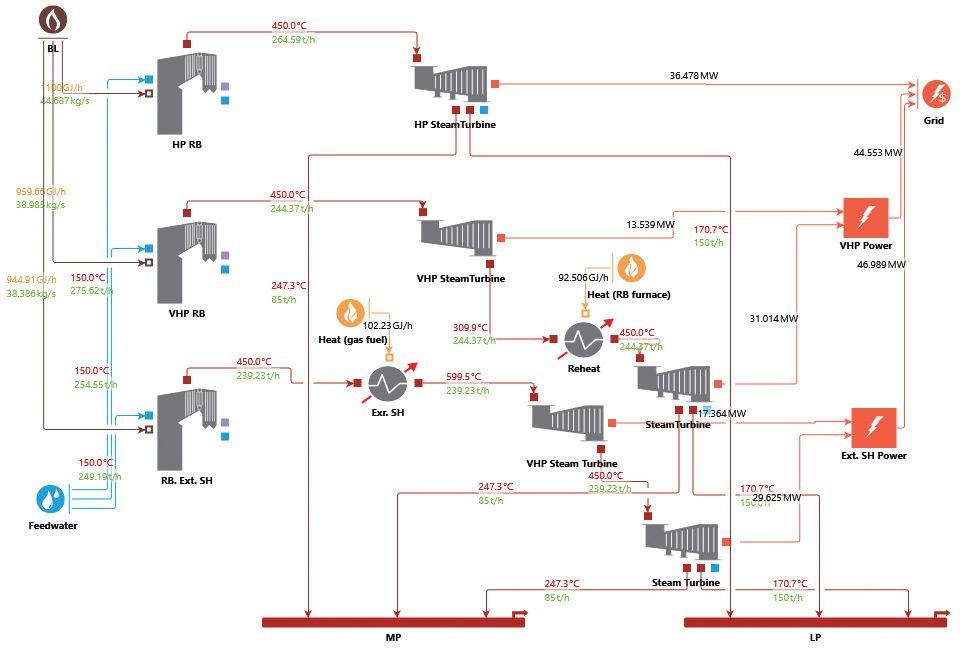
better (Figure 1). It also showed that taking the increment in gaseous fuel in isolation, the power generation efficiency (62 per cent HHV) is superior to a combined cycle.
Assuming a fixed total fuel input, the power generated by the new very-highpressure turbine is partially offset by a decrease in power from the condensing turbine. COGEN showed a net increase in power generation of eight MW/ktpd, for a recovery boiler conversion alone, plus a proportional amount for a power boiler conversion, and even more if the combined boiler flue gas is used to dry hog fuel. If there is no condensing turbine, re-heating requires more fuel but generates more power. In this case, rebuilding all the boilers and drying the hog fuel results in a net increase in power generation of around 23 MW/ktpd. With the external superheat option, some of the increased fuel purchases may involve natural gas rather than hog fuel, which would increase site GHG emissions, a potential drawback of this configuration.
To increase cogeneration further, gasification of hog fuel and/or black liquor is required to allow the installation of gas turbines. This would represent a significant increase in project risk, notably because black liquor gasifiers are not yet
well demonstrated at full scale. Gasification converts hog fuel and black liquor into a syngas composed primarily of carbon monoxide (CO), carbon dioxide (CO2) and hydrogen (H2). Gasification allows new opportunities, including pre-combustion carbon capture with net-negative CO2 emissions for the entire mill, combined cycle cogeneration using a hydrogen gas turbine, and debottlenecking the recovery boiler for additional pulp production. Gasification also allows chemical synthesis at the expense of cogeneration (see Section 4).
Cogeneration performance with gasification was evaluated using COGEN for a 1000 tpd kraft mill steam system without a condensing turbine. Black liquor and hog fuel gasifiers and a gas turbine were added with standard efficiencies. A heat recovery steam generator (HRSG) produces superheated steam at two existing steam pressures (850 and 60 psig), and waste heat from the HRSG exhaust is used to dry hog fuel for the gasifier. A parasitic electrical load is added for air separation, but not for CO2 separation. This is compared to re-heat boilers using the flue gas to dry hog fuel, which is still a lower capital cost option, but certainly not cheap and not as suitable for carbon capture (post-combus-
tion only). A condensing cycle is also used to comparatively match the re-heat boiler loads to gasifier loads, as shown in Table 1.
The results show that, although the backpressure gasification cycle is more efficient, by all metrics, than the condensing reheat cycle (32 per cent efficient using incremental hog fuel), re-heat boilers may provide a more valuable utilization of hog fuel in a dynamic electricity market. This is because the condensing reheat cycle can be operated very efficiently at the minimum condenser load during off-peak hours, while potentially providing more electricity when highly valuable, without locking in a significant need for increasingly expensive hog fuel sources. In comparison, when hog fuel and black liquor are fully gasified, the minimum hog fuel consumption to meet process steam demand (384 MW) becomes unacceptably large for most mills. The hogonly gasification option uses less fuel more efficiently, but is not thermally self-sufficient for fuel drying, requiring an external heat source, while providing less new electricity (27 MW) than its reheat counterpart (39 MW). Black liquor-only gasification has the opposite problem of lower efficiency and surplus heat.
Pre-combustion carbon capture, which preferably requires oxygen-blown rather
Figure 1. Screenshot of re-heat and external superheat options in COGEN.
than air-blown gasification, enables kraft mills to have separate H2 and CO2 streams and is likely to be an essential complement to gasification in kraft mills for two reasons. The first is that gas turbine manufacturers may not be willing to redesign sophisticated combustors for all possible syngas compositions for each turbine model, so relatively pure hydrogen may be the only gas turbine fuel other than natural gas that can be standardized in the near future. The second reason is that it creates a readily marketable stream of concentrated biogenic CO2, whether for geological sequestration (CCS) or processing and utilization (CCU). This CO2 could become very valuable in a low-carbon future, when there is a large difference between the cost of capture and the price of carbon, in addition to the marketing value of a negative carbon footprint. Several net-zero modeling studies conclude that reaching carbon neutrality by 2050 will require a considerable amount of carbon capture and sequestration in Canada and elsewhere, especially from biogenic sources. This confirms an emerging opportunity for kraft mills to become carbonnegative through cogeneration systems using pre-combustion, oxy-combustion or post-combustion CO2 capture.
2.2 Other opportunities
Other than replacing boilers, kraft mills
have few options to increase cogeneration, as most heat users are served by steam turbines and thus already benefit from highly efficient cogeneration. Potential minor upgrades, other than the supervisory controls presented in Part I of this series, can be made to combustion air systems, hog fuel handling and storage, and heat recovery within the steam plant.
The lime kiln is a heat consumer that does not benefit from cogeneration using steam and is a significant CO 2 emitter. This research examined several combinations of gas turbine cogeneration (topping cycle) and/or fuel switching to biomass, in terms of computational fluid dynamics and system integration. Only gaseous fuels were considered, so that they could be partly used in a gas turbine and avoid introducing non-process elements. The gas turbine exhaust can be introduced into the kiln combustion air, but the cogeneration potential was estimated to be less than 1.5 MW/ktpd, after excluding the primary air, which is closely linked to the burner design, and the portion of the secondary air that can be effectively heated by the lime produced. This low cogeneration potential is not surprising since calcination occurs at much higher temperatures than gas turbine exhaust and cannot benefit directly from this heat. It should be noted that all cogen-
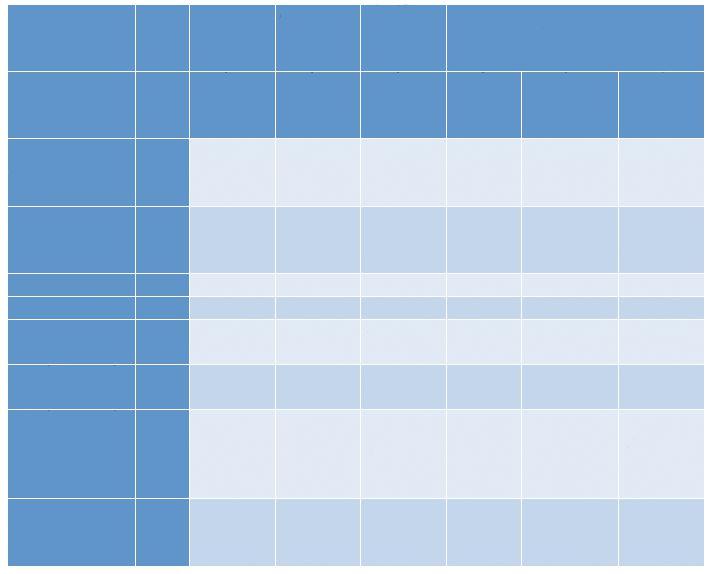
eration and/or fuel switching configurations without oxygen enrichment would require a redesign of the burner (turbine and/or kiln) and would generate a lower flame temperature, resulting in lower capacity (kiln de-rating) and loss of efficiency (higher stack temperatures). In the long term, there are probably better prospects for deep decarbonization of lime kilns through CO2 capture associated with oxy-firing, external combustion, electrothermal or electrochemical technologies, as the emission reduction can be tripled (thus net negative) compared to fuel switching. Until these new kiln technologies are developed, it seems preferable to switch fuels using the simplest configurations and without cogeneration.
Kraft mills can also increase bottoming cycle cogeneration by using waste heat from the flue gas to generate electricity. Three competing options are the organic Rankine cycle, the HRSG generating low-pressure steam, and acid-resistant indirect contact economizers to preheat boiler feedwater immediately upstream of the deaerators. The latter two options would generate electricity in an existing condensing steam turbine; otherwise, fuel can be saved. Indirect contact economizers generate the most additional electricity: up to 5.5 MW/ktpd (3.0 MW/ktpd from the recovery boiler, 2.0 MW/ktpd from the power boiler and 0.5 MW/ktpd from the lime kiln), when including what could also be heated using kraft process effluents.
3. COGEN software
As presented in Part I of this series, CanmetENERGY has developed COGEN, a software package to help Canadian industries optimize cogeneration systems (Figure 1). COGEN has been used extensively in this work, notably to model what-if scenarios for re-heat boilers, syngas turbines and HRSGs, boiler feedwater preheating, flash dryers (see Part II of this series) and lime kilns.
4. Emerging trade-off between cogeneration and green hydrogen
Canada’s goal of zero emissions by 2050 provides kraft mills with a unique opportunity to become carbon-negative and sell increasingly valuable CO2 in a reusable or sequestrable form. To facilitate CO2 separation and achieve higher cogeneration efficiencies, hydrogen is emerging as
Table 1. COGEN optimization comparative results for biomass gasification and re-heat boilers in a 1000 tpd kraft mill.
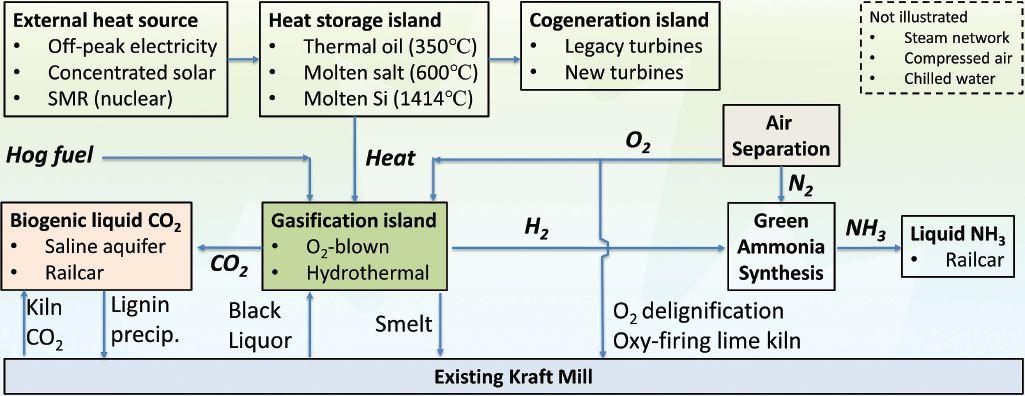
a promising energy vector (see Section 2.1). Simultaneously, the electricity grid is likely to evolve to assign little value to cogenerated electricity during off-peak hours and/or during periods of high wind (see also Section 4 of part II of this series). Instead, the grid would reward dispatchable loads capable of balancing intermittent renewables, such as electrical boilers (intermittent with a natural gas or hydrogen backup boiler), liquor pre-evaporation by vapour recompression (intermittent with backup liquor storage), and possibly electrical lime kilns (intermittent with backup lime and lime mud storage). In this context, one might ask whether kraft mills should at some point diversify their product mix by producing green hydrogen for chemical synthesis, while obtaining process heat by means other than combustion-based cogeneration, especially off-peak. Hydrogen products could include renewable natural gas, methanol, ammonia, other liquid fuels, or direct use in vehicles in nearby communities. Figure 2 illustrates what a kraft mill’s utility system might look like in 2050, among the many options CanmetENERGY will continue to evaluate over the next few years.
5. Conclusions
This study examined several new industrial cogeneration technologies and determined which investments have the best prospects for increasing cogeneration in pulp and paper mills. Kraft pulp mills have the highest heat load and, therefore, the widest range of options in the forest industry. Backpressure steam turbines remain an essential component of high-efficiency industrial cogeneration. The options with the greatest potential for additional electricity generation, re-heat boilers and gasification, are only available at the end of the life of existing boilers and are still considered risky (especially black liquor gasification). Heat recovery projects can also provide modest improvements in cogeneration performance.
New cogeneration investments require a long-term perspective, considering that the future smart electric grid environment may favour intermittent rather than base-load operation, while emerging applications such as chemical synthesis could consume increasing amounts of hog fuel. In a net-zero emissions policy context, kraft mills have the opportunity to become major providers of negative emissions achieved through carbon capture in both combustion and non-combustion systems, as well as through chemical synthesis.
Acknowledgments & References
The authors are grateful for the financial support received from the Program on Energy Research and Development (PERD3A03-001) and the Forest Innovation Program of the Canadian Forest Service, at Natural Resources Canada.
B&W (2009), Dual Pressure Reheat Recovery Boiler: Generate green power and reduce energy costs, http://www.babcock.com/en/resources/-/media/f2ffb7ec011542118889117117818c41.ashx

Figure 2. One possible carbon-negative kraft mill utility system in 2050.
THE FUTURE WORKFORCE
An evolving digital landscape is shaping trends that make pulp and paper more attractive to the next generation of digital native engineers
By William Dannelly
During my 30 years in the pulp and paper sector, I have never felt trends affecting the industry as acutely as I do now, largely due to the pandemic, which has accelerated the sector’s move towards a digital future. And with research from global management consulting firm McKinsey estimating that digitalization could save the industry $20 billion by 2025, the pace at which this change is taking place shows no signs of abating.
Let’s look at the main trends driving new opportunity and attracting different kinds of talent to the industry.
Digitalization
Digitalization is one of the key paradigm shifts shaping the future of the pulp and paper sector, particularly in the way it is creating new opportunities for the workforce. It is responsible for enabling significant autonomy, and increasing efficiency and greater transparency in production. Our industry is well placed to adopt a digital-first approach, which will be essential in competing with other industries for the best new talent. A new, technologically savvy generation of engineers are well suited to meet the opportunities and challenges presented by a digitally
enabled workplace. Together, pulp and paper must work to raise its profile as an attractive place for this group of people to build a career.
Part of this emerging revolution is a move towards remote working. The advances made in removing logistical barriers to allow more people to work remotely, from wherever they want to, have been astonishing. Edge and cloudconnected technologies mean that Generation Z’s digital natives will be able to make several different contributions all at once, from process optimization to customer service, from anywhere in the world. This level of exposure means they stand to gain experience faster than had previously been possible. Also, being able to work remotely means that talented individuals can choose to work from urban locations where they might prefer to live, rather than in the typically rural settings of pulp and paper mills, providing them with more choice and flexibility over their careers.
Current pulp and paper professionals will also be able to benefit from this expanded opportunity. Their knowledge of the pulp and paper process, coupled with a digital mindset, will open career advancement, relocation and collaboration opportunities. These remote specialists can be used as and when they are needed, enhancing the quality of output as and
Our industry is well placed to adopt a digital-first approach, which will be essential in competing with other industries for the best new talent.

when required.
As a recent example of this, my company delivered a blended upgrade for ABB Ability System 800xA from 5.1 to 6.1 and the most recent QMS software for an Alberta newsprint producer. We leveraged a centrally located expert delivery team for remote commissioning, with on-site support for the resetting of controllers and related tasks. This enabled the customer to meet their schedule while saving money on travel expenses.
There have also been advances in this area in hardware and control delivery. In India, we completed the commission of the Induction xP Plus Profiler system at PM3 at Bilt Graphic Paper Products Limited, Ballarpur, marking the first time that a control engineer was able to provide remote commissioning for such a project.
Gamification
A shift of skills recognition will also benefit the engineers of tomorrow, with a focus on including gaming elements in future automation systems designed to use the talents of Generation Z. This practice

A shift of skills recognition will benefit the engineers of tomorrow, with a focus on including gaming elements in future automation systems.
will be adopted across multiple levels of industry, from the design of a product all the way through to its mass production. Aside from improving the functionality of systems, it will make the sector more appealing to the young gaming generation.
We have already seen glimpses of what this can achieve at our company. In 2019, our interns developed a training application with augmented reality headsets that was both fun and progressive, as well as productive. And at our most recent annual hackathon, teams were formed with participants from multiple locations, where in the past they would have been more traditionally localized. The output was truly top notch, with the increased diver-
sity leading to very creative approaches to old problems.
Environmental accountability
Creating greater accountability for our environmental impact is another key factor in attracting a new generation of engineers to the workforce. More than ever, young people have a desire to affect change in society; they want to have a vested interest in companies that share their values and beliefs. To that end, it is imperative that we promote what we do to prove we are as committed to sustainability as any other sector.
Paper mills have invested huge amounts of money to reduce fossil fuel consump-
tion and increase energy efficiency. The entire paper and printing sector uses a very high amount of renewable energy from biomass, meaning that it contributes about one per cent of total global greenhouse gas emissions, according to a 2010 study by energy and climate consultancy Ecofys. For example, a recent installation of our Wet End Control, an advanced process control solution, helped an Indonesian paper mill reduce chemicals by 20 per cent among other reductions. By making the wet end process less variable with less raw materials, the mill was able to reduce downtime and run more efficiently.
Through engaging people with our efforts to switch to low-carbon fuels and sustainable forestry, as well as other environmental measures, we can appeal to the future eco-conscious workforce.
Skills and training transformation
While these advances are making processes more efficient and increasing staff engagement, it is worth highlighting a few key complex issues that may need to be addressed in the proliferation of digitized workspaces.
First, self-initiative and discipline is more essential now than it has ever been. With the flexibility to work remotely, selfmotivation is necessary to succeed without the consistent presence of a mentor or boss. The onus will be on the employee to find a work/life balance that works for them. At the same time, relationships with colleagues are an integral part of job success and satisfaction, and we need to find a way to protect these.
Equally important, the future workforce must not fall into the trap of thinking that their superior digital skills alone will get them hired. There must also be a level of understanding of how processes work to solve real problems. It is as much about how you apply the information, as it is knowing the information in the first place.
However, of all the trends we see emerging in the digital workplace, we cannot look past the necessity for true, on-the-job experience. Without that solid, traditional foundation in pulp and paper, even the most exciting digital solutions will lose their stickiness. PPC
William Dannelly is global product line manager for pulp and paper, ABB.
FOCUS ON WATER & CHEMICALS
Chemical oxygen demand analysis
MANTECH’s PeCOD analyzer technology provides automated chemical oxygen demand (COD) results in 10 minutes without the use of chemicals such as dichromate and mercury. The patented nanotechnology-based approach to COD analysis is used in pulp and paper, industrial, municipal and lab settings. The device uses the peCOD sensor, which is a UV-activated nanoparticle TiO2 (titanium dioxide) photocatalyst coupled to an external circuit. When a sample is introduced into the microcell containing the peCOD sensor, the TiO2 is irradiated by UV light, and a potential bias is applied. The UV light creates a photohole in the TiO2 sensor with a very high oxidizing power and organics in the cell are oxidized. This level of oxidization ensures a true measure of COD. The PeCOD L50 is available in benchtop, portable, automated or online options. mantech-inc.com
Packaging strength and lightweighting solution Kemira has patented strength and lightweighting chemical technology for fibrebased packaging grades.
Lightweighting of packaging grades is a key focus area for paper and board
companies, impacting the overall sustainability, cost-efficiency and quality performance, says the company.
On Mar. 23, Kemira was granted a new patent relating to the application of highly structured and effective silica sols together with glyoxalated polyacrylamide (GPAM) strength technologies in recycled fibre–containing board grades.
“The approach is unique: it provides higher-quality linerboard and also significantly improves paper machine stability and runnability,” says Michael Wallace, Kemira’s applications manager.
“Lightweighting can produce huge benefits for paper and board makers in packaging performance, fibre optimization and energy consumption.”
Wallace says it takes more than an additive to achieve board strength. “You need to understand the full process of proper chemical injection, wet-end charge balance, colloidal retention, on-line whitewater solids measurement, former drainage, press section water release, sheet consolidation and surface starch control to reach the best results.” kemira.com
Resource hub for sustainable packaging formulations
Solenis has launched an online hub that the company says will help consumer brand owners and packaging converters with sustainable formulations for fast-food packaging, corrugated board, single-use cups and other food packaging elements.
The specialty chemical producer’s new site lets consumers explore environmentally friendly barrier coating options used
in a wide range of single-use packaging materials, including cup stock, burger wrappers, folding cartons and moulded fibre bowls and plates.
From the resource centre, visitors can learn about Contour(SM) PFAS-free technology for moulded pulp applications. This innovation replaces polyfluoroalkyl substance (PFAS) surface treatments used on plastics, and offers oil and water resistance in pulp-based items such as plates, bowls and clamshell containers.
In addition, the hub provides packaging converters and brand owners with resources on biodegradable barrier coatings. Visitors can also browse information about additional TopScreen technologies, such as oil- and grease-resistant barrier coatings and bio-waxed based formulations. These advanced, plastics-free chemistries repel water and water vapour, hot and cold liquids, and oils and greases. solenis.com

Level detector for black liquor and soap
Dynatrol’s Interface Level Detector Type CL-10DJI detects the interface between black liquor and soap. This level system has no moving parts and does not require field adjustments. It can increase efficiency of the boiler recovery operation. The detector, made from stainless steel and Hastelloy C wetted parts, controls soap level and maximizes soap recovery. The on/off signal from the detector operates a SPDT relay in the EC-501A control unit. The relay contacts actuate alarms, indicator lights or process control equipment. dynatrolusa.com
TAPPI releases lime kiln guide
TAPPI has released a new reference and training guide called Lime Kilns and Recausticizing: The Forgotten Part of a Kraft Mill
Written for entry-level and operating engineers who are new to the industry, and as a refresher for more seasoned engineers, the new resource reviews the entire kraft chemical recovery cycle, as well as lime kiln chemistry.
The guide includes 11 chapters dedicated to all areas of the kiln, both process and mechanical. It covers recausticizing chemistry, green liquor scale formation, recausticizing equipment and recausticizing process control.
Peter W. Hart, TAPPI Fellow and director of fibre science at WestRock, Glenn M. Hanson III, TAPPI Fellow and technical sales support NCA for Metso Outotec, and Richard P. Manning, technical consultant, worked together as editors to provide a solid theoretical foundation, intermixed with practical operating experiences and troubleshooting guides.
“As more seasoned engineers retire,
Measurement system for Yankee hood efficiency
Toscotec has released the TT Drying Equilibrium for tissue line drying efficiency.
they take with them the knowledge about overlooked areas like the lime kiln,” says Hart. “Our intent is to help fill the gap for new engineers, providing them good operating practices and a solid understanding of the theories that back them up.”
Lime Kilns and Recausticizing: The Forgotten Part of a Kraft Mill, published by TAPPI Press, is available in hard copy or in e-book format. Orders can be placed online. tappi.org
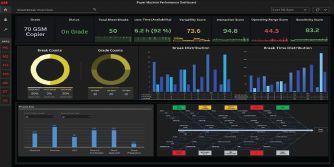
ABB releases digital sheet break analysis for paper mills
ABB has released a new service to identify the root cause of sheet breaks.
Sheet Break Performance automatically curates, calculates and contextualizes key data points into a user interface to identify the root cause of sheet breaks for
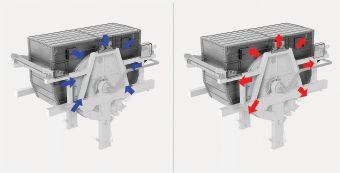
The system was originally designed by Voith and transferred to Toscotec for further development after Voith’s acquisition of the company last year. It ensures automatic regulation of the air balance in the Yankee hoods and air system.
The control and regulation logics are managed by a dedicated PLC (programmable logic controller) that communicates with the DCS (distributed control system) of the tissue machine.
The mill can easily access the data collected, stored and organized by the PLC on local monitors, tablets or smartphones, through a remote connection.
TT Drying Equilibrium consists of a set of various transmitters of physical data, including speed, flow rate, temperature, humidity and pressure, and of a data acquisition and processing system.
The calculation algorithms produce the mass flow rates inside all the air ducts leading into and out of the Yankee hoods, including outgoing air, make-up air and combustive air both on wet-end and dry-end.
The combustion air is regulated by the burner control system, while the flow of exhaust air can be regulated by the moisture control loop. TT Drying Equilibrium controls the dampers that allow for make-up air to enter the system, thereby maintaining a condition of balance over time.
In addition to controlling the air mass flows, the system also checks the actual balance using temperature sensors installed just outside the Yankee-hoods gap and of pressure transmitters inside the hoods. toscotec.com
swift corrective action, while also determining optimal operational parameters.
The diagnosis and root-cause identification of each sheet break event is traditionally performed manually by operators who need to access the information from different sources, such as process control systems, drives and quality management systems, which can take a while to corral.
ABB’s digital offering uses analytics, advanced algorithms and online monitoring to provide a root-cause analysis within one minute after the break.
Operators can monitor real-time variations in the operating parameters as well as the interactions between the various sections of the paper machine, and are to abnormalities and detrimental changes in the system that could lead to sheet breaks. abb.com
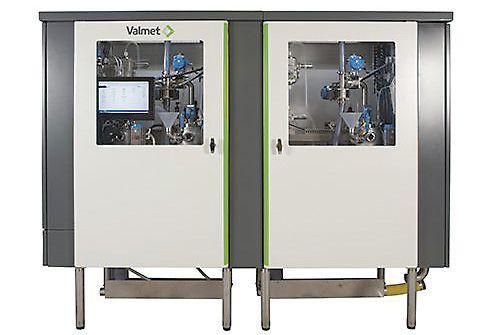
Fibreline analyzer for lignin content, brightness
Valmet has introduced the Valmet Fiberline Analyzer for pulp makers.
The tool measures pulp lignin content and brightness in addition to enhanced fibre and shive property measurements using high-definition imaging techniques.
Measurement data from automatically extracted pulp samples, in addition to inline sensor information, can be combined with real-time production targets to provide set points for chemical controls from the digester to final bleaching stages.
For softwood pulps, the basic controller uses a Kappa factor control modified with predictive feedback taking Kappa/brightness, shive content and COD (chemical oxygen demand) into account.
Valmet Fiberline Analyzer can also separately measure lignin and hexenuronic acid (HexA) to provide significantly improved control of the complex chemistry of cooking and delignification, especially with hardwood pulps. valmet.com
GIVING BACK
The latest community outreach initiatives from the pulp and paper industry
The Canadian forest products sector is passionate and devoted – not just to the industry itself, but also to its local communities. Here we share the initiatives of pulp and paper companies working to make positive social, environmental and economic impacts across the country.

Sixty-eight Mercer Celgar employees participated in the mill’s first Charity Walk Challenge, donating a total of $6,000 to B.C. Children’s Hospital, BC SPCA and a local women’s shelter.

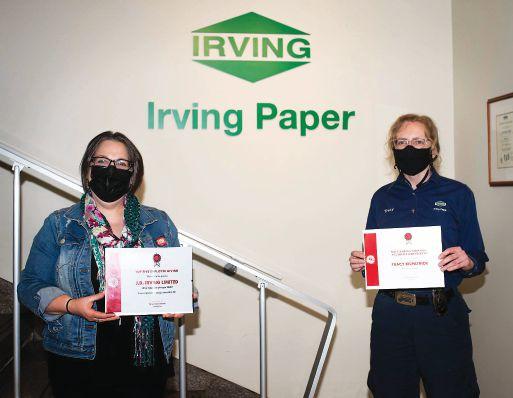
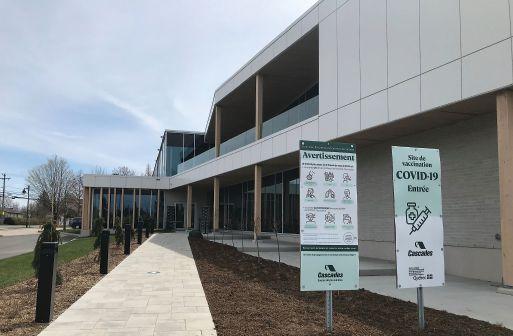
Let us help you share your successes. Tag @PulpPaperCanada or use #PPCGivingBack on Facebook, LinkedIn or Twitter, or send an email to the editor at kurquhart@annexbusinessmedia.com. We’d love to hear from you!
Kruger Products’ Big Assist program awarded the above 10 minor hockey associations with $10,000 apiece to help cover the registrations for hockey families in need during the pandemic.
J.D. Irving, Ltd. employees raised nearly $55,000 in 2020 for the United Way in New Brunswick. Tracy Kilpatrick (right), Irving Paper’s inventory control administrator, was recognized as an outstanding volunteer.
Cascades set up a COVID-19 vaccination hub for the general public in Kingsey Falls, Que. As of this writing they had administered over 2,800 doses in the span of a few weeks.
Photo: Mercer Celgar Facebook
Photo: Kruger Products
Photo:
J.D. Irving, Ltd.
Facebook
Photo: Cascades Facebook
Talent Canada, a national media brand for senior leaders and HR professionals, is proud to launch the Psychologically Safe Workplace Awards.
These aren’t vanity awards. The program is designed to provide your teams with individual data about their mental health, and your organization with a comprehensive dashboard showing where to focus resources.
Got two minutes? Go to PsychologicallySafeWorkplace.com and watch the explainer video.
Scan this for more information

Sponsors



Presented by:
“SCA Pure –a pure homerun”
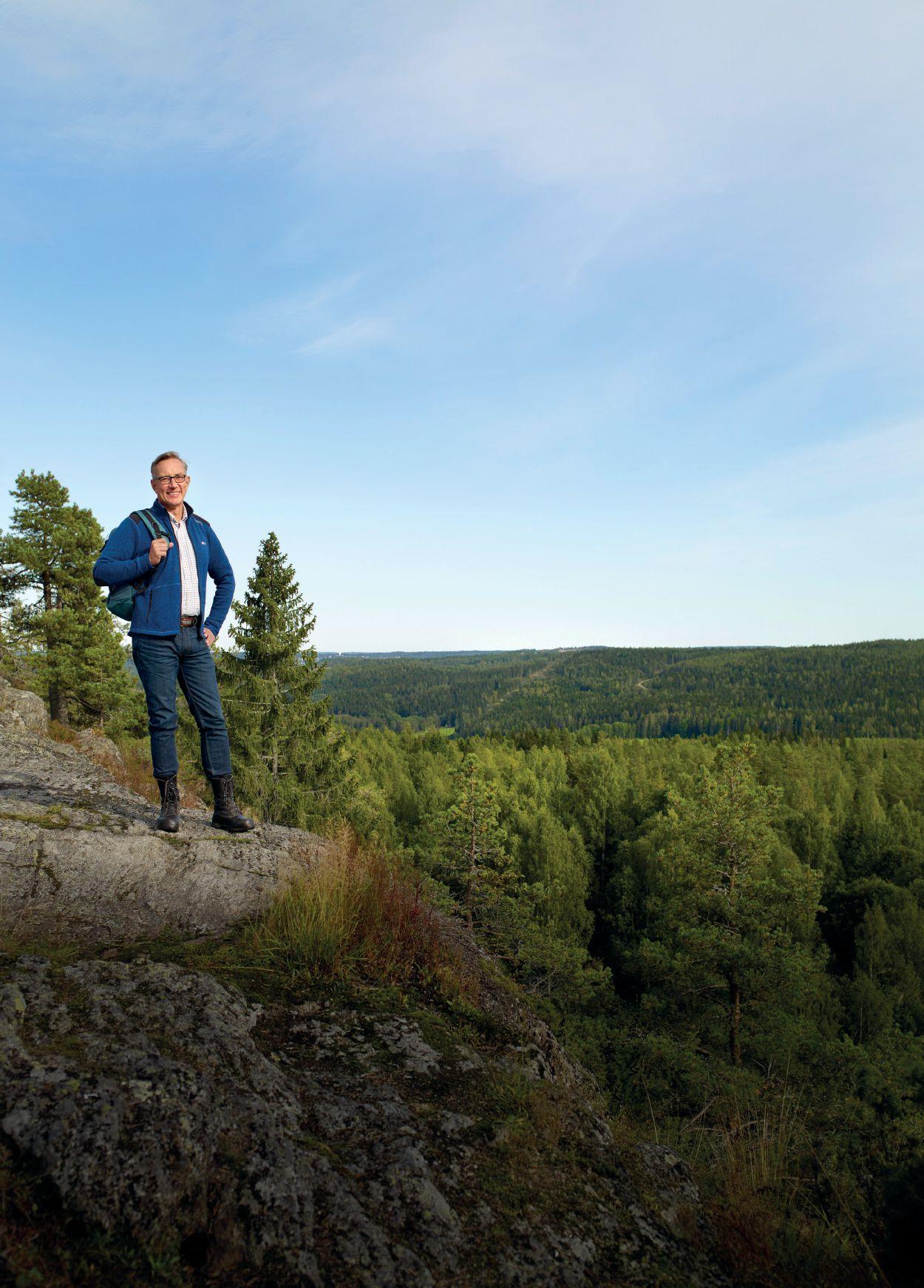
SCA Pure or Black Spruce
We’re happy to boast that our first year in North America has been a “Pure” homerun! This is the result of the combination of our very northern fiber and our brand new state of art pulp mill. In fact, we’re told by our customers that SCA Pure is a pulp that performs equally as well as the finest of Canadian softwoods.
Pure properties
SCA Pure is our premium quality NBSK pulp, offering worldclass strength properties and outstanding environmental performance, naturally complying with FSC® (FSC C013162).
That’s why we have named our new product SCA Pure. Pure, as in pure performance, pure profitability, and pure sustainability.
A Pure commitment
Chasing currency fluctuations and spot markets is a very poor long-term strategy. We, SCA, will build our pulp business on the shoulders off long-term relationship with customers in North America and Europe.
Yes, we are an ocean away and that’s why we have inventory in the Northeast, Southeast and Midwest.
When you think SCA think Softwood commitment to North America, Let’s talk!
For more information please contact Magnus Person, magnus.t.persson@sca.com, phone +46 72 556 43 99.
Magnus Persson. Sales director North America.