Having problems with stickies?
Sheet defects, holes, web breaks and reduced speed in your recycled board production?
Improve machine cleanliness and runnability with Kemira’s new Quick Inversion Polymers.
• Pump-and-Go
• Excellent Fixative
• Drainage and Retention booster
• FDA Food Contact compliant

PULP PAPER &


The changing safety landscape
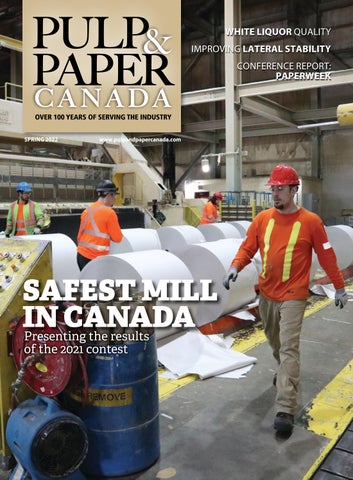
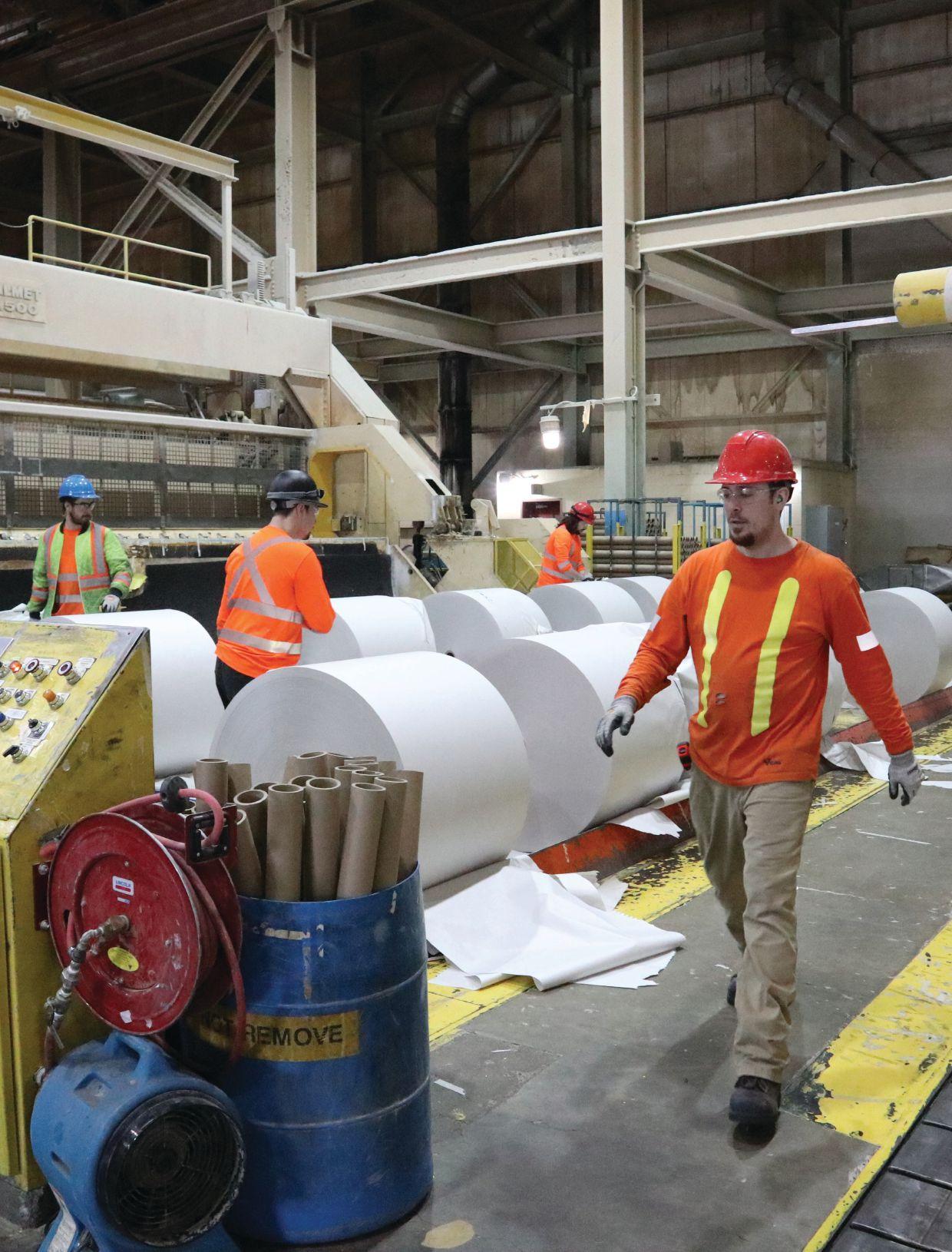
It is that time of the year again when we highlight the safety achievements of Canadian pulp and paper mills. Every year since 1926, Pulp & Paper Canada has been recognizing the efforts of the mills through its annual Safest Mill in Canada contest.
When mills achieve remarkable safety records, it is a celebration of the industry as a whole as a safe workspace. It shows that this industry values its people and considers their well-being as a critical part of its success story.
The entries for the 2021 Safest Mill in Canada contest reflect the kind of year it was, especially when it comes to the number of entries in each category. With the COVID19 pandemic still wreaking havoc in 2021, the industry saw quite a few temporary shutdowns and production curtailments. Every mill was doing its best to operate at full capacity and meet customer demands, while navigating ongoing challenges, including forest fires and logistical constraints.

Ray Ghosh Editor
The safety landscape has changed in many ways during the past two years. Observing social distancing rules, rigorous cleaning of surfaces and wearing masks were the norm until recently. While restrictions have been lifted to a considerable degree, the lessons learned are bound to leave a lasting impression on everyone. Today, the industry is equipped with the knowledge to pivot quickly and adapt to new safety rules, should the need arise again.
Worker health and safety is not just limited to physical well-being. This is another hard lesson that the pandemic taught everyone. While mental health was always considered an important part of health and safety, it has now become necessary and integral to it. Organizations today are weaving mental health into their health and safety programs. This is not just a trend; it is a permanent change.
Continuous worker safety training for all employees is critical in the pulp and paper industry. As more and more companies adopted digital tools and technologies to facilitate operations during the pandemic, it opened up the opportunity to deliver safety training through digital platforms. While there is no replacement for in-person safety training, mills have the option to complete some parts of the training digitally without hampering work schedules. Digital safety training is not a new concept. However, the pandemic highlighted the value it can provide. This is an option that many companies will continue to consider when designing their training programs.
Before signing off, I would like to applaud the efforts of all the pulp and paper mills in Canada for striving so hard to maintain safe workspaces for their employees. If you have thoughts to share about health and safety, reach out to me at srayghosh@annexbusinessmedia.com. PPC
READER SERVICE
Print and digital subscription inquires or changes, please contact Barb Adelt, Audience Development Manager
Tel: (416) 510-5184
Editor
SUKANYA RAY GHOSH
416-510-5225
srayghosh@annexbusinessmedia.com
Brand Sales Manager
ROSS ANDERSON
289-925-7565
randerson@annexbusinessmedia.com
EDITORIAL/SALES OFFICES
Fax: (416) 510-6875
Email: badelt@annexbusinessmedia.com
Mail: 111 Gordon Baker Rd., Suite 400, Toronto, ON M2H 3R1
COO
SCOTT JAMIESON
519-429-5180
sjamieson@annexbusinessmedia.com
Group Publisher
TODD HUMBER
416-510-5248
thumber@annexbusinessmedia.com
111 Gordon Baker Rd., Suite 400, Toronto, ON M2H 3R1
Phone: 416-442-5600
PRODUCTION
Media Designer Emily Sun
Account Coordinator
KRISTINE DEOKARAN
kdeokaran@annexbusinessmedia.com
Print in Canada ISSN 0316-4004 (Print) ISSN 1923-3515 (Digital)
PUBLICATION MAIL AGREEMENT #40065710
SUBSCRIPTION RATES
Canada $57.50 - 1 year; $92.50 - 2 year USA $139.00 CDN per year Overseas - $150.00 CDN per year
Occasionally, Pulp and Paper Canada will mail information on behalf of industry related groups whose products and services we believe may be of interest to you. If you prefer not to receive this information, please contact our circulation department in any of the four ways listed above.
Annex Privacy Office privacy@annexbusinessmedia.com
Tel: 800-668-2374
The editors have made every reasonable effort to provide accurate and authoritative information but they assume no liability for the accuracy or completeness of the text or its fitness for any particular purpose. All rights reserved. The contents of this publication may not be reproduced in part or in full without the publisher’s written permission © Annex Publishing & Printing Inc.
Sustaining member, Pulp and Paper Technical Association of Canada; Member, Alliance for Audited Media.


Sukanya
GreenFirst to revamp operations at Kapuskasing Paper Mill with government support
GreenFirst Forest Products is planning to restart the second paper machine at its Kapuskasing Paper Mill. The company received over $1.2 million from the Skills Development Fund of the Ontario government’s Ministry of Labour, Training and Skills Development. The funds will support the recruiting, hiring and training of more than 45 new employees.
“The COVID-19 pandemic has resulted in many challenges, especially on the North American and global newsprint markets. We are very pleased to receive the SDF funding from the Ontario government, which will ultimately allow for the creation of 45 new full-time positions with a focus on hiring candidates with manufacturing aptitudes that will become skilled trades or high-skilled operators,” said Paul Rivett, chairman of GreenFirst Forest Products.
GreenFirst acquired the Kapuskasing Paper Mill from Rayonier Advanced Materials on August 28, 2021. The mill was operating only one paper machine at that point. With the new investment, the company will begin restarting the second paper machine in May. This will help increase direct employment to about 300 jobs in Kapuskasing and surrounding areas. The mill is welcoming youth, women and Indigenous applicants for these positions. Beginning in May, GreenFirst will restart the second machine in multiple phases. Its goal is to achieve full production (seven days, 24 hours of operation) by October 2022.
“This is tremendous news for GreenFirst and the communities around Kapuskasing, we thank Minister McNaughton and the Government of Ontario for providing this opportunity,” said Rick Doman, CEO of GreenFirst. “The Kapuskasing Paper Mill is a well-established paper operation that we continue to invest in to become more productive, with a goal to achieve more stable and sustainable employment. We would like to thank our president Michel Lessard, our vice-president of operations West Andre Ouimette, our general manager Pascal Champoux and the entire Kapuskasing team for their significant contributions towards restarting the second paper machine.”
The funds received from the provincial government will be directed towards recruiting and training new employees, as well as current employees. This is to ensure that the workforce has the necessary skills to produce quality paper and meet required production targets safely and efficiently.
GreenFirst is partnering with local employment organizations and academic institutions, including the Employment Service, College Boreal, Schools, Indigenous communities, the Town of Kapuskasing and surrounding municipalities to continue to build and train its growing workforce in Kapuskasing.
The company has established a training platform, which includes online training and a standardized delivery in support of the integration of all new workers. The training also focuses on the development of existing employees moving into more senior roles.
This Employment Ontario project is funded in part by the Government of Ontario and the Government of Canada.
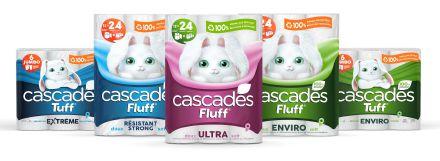
Cascades announces strategic plans for 2022 to 2024
Cascades recently unveiled its 2022-2024 strategic update, charting out what lies ahead for the company. The company’s strategy commits to leveraging its strong asset base and product portfolio to accelerate value creation and improve profitability. The strategy also introduces new financial targets focusing on free cash flow generation and a plan to improve the profitability of its tissue group.
“Our plan aims to generate value for shareholders, accelerate profitability improvement and strengthen our tissue business, all while continuing to prioritize sustainability, which has been at the core of our strategy since we started business,” said president and CEO, Mario Plourde.
In packaging, Cascades’ strategic plan aligns with market growth areas.
Key pillars of this action plan for the packaging segments include:
• Completing the start-up of Bear Island in Q4 2022
• Increasing integration with new converting capacity in the United States
• Accelerating the pace of new sustainable product development and commercial launches
• Growing the combined revenue of its packaging businesses to over $3.5 billion in 2024
• Targeting OIBD margins for 2024 of 19 percent to 21 percent in containerboard packaging and of 17 percent to 19 percent in specialty packaging products.
Cascades’ tissue business has been particularly impacted by the COVID-19 pandemic. The tissue market will provide opportunities for growth as the effects of the pandemic subside.
The company’s tissue assets are well-positioned to benefit from this recovery. Between 2017 and 2020 the company made significant investments to modernize and consolidate its assets and focus on volume and profitability improvements. Moving forward, its immediate priority is to execute a comprehensive action plan that will accelerate profitability and strengthen the fundamentals of the tissue business.
Key pillars of this action plan for the tissue segment include:
• Leveraging the well-capitalized tissue asset base and limiting investments to $35 million annually through 2024
• Focusing on production execution and efficiency
• Strengthening commercial strategies to drive value
• Achieving revenue of $1.7 billion and an OIBD margin of nine percent to 10 percent in 2024
Photo: Cascades

AV Group NB first to receive FSC certification in New Brunswick
AV Group NB has received Forest Stewardship Council (FSC) Forest Management Certification on its freehold land in York County, New Brunswick.
Certification of the 41,000-hectare Acadian Forest type under FSC’s National Forest Stewardship Standard is the first such instance in the province.
“AV Group is proud to have achieved this forest management first for New Brunswick. Acquiring this world-class certification is integral to not only the sustainability goals of AV Group but our parent company Aditya Birla Group as well,” said AV president and CEO Mike O’Blenis.
Under the FSC standard, the certified area must adhere to 10 core principles including principle three, which moves forward an expectation for meaningful consultation, engagement and collaboration with First Nation partners.
“We applaud AV Group on receiving FSC certification on its freehold land in New Brunswick. They are setting an example of environmental and social responsibility for other forest companies,” said Francois Dufresne, president and CEO of FSC Canada.
AV Group considers this a transition point for the company and a game-changer for their forest management activities in New Brunswick moving forward. Pulp produced by AV Group mills is used in the manufacture of textiles for woven and non-woven applications.
“As a key link in the man-made cellulose fibre supply chain, we must document and verify important aspects of our environmental, social and governance values for our customers. This certification will greatly enhance our credibility as a supplier of responsibly produced fibres from nature through the textile value chain,” added O’Blenis.
Domtar shares sustainability priorities in latest sustainability report
Domtar recently released its latest sustainability report titled “Sustainability priorities: 2030 and beyond.” The company developed its sustainability priorities with the help of its cross-company Environmental, Social and Governance Committee and inputs from various stakeholders.

“We’ve identified six broad priority areas,” says Paige Goff, vice-president for sustainability. “This approach will shape our strategy and specific goals moving forward. They include how we monitor and manage the effects of operations for our employees, customers, suppliers, communities and consumers.”
Domtar’s sustainability priorities are aligned with its efforts to responsibly use natural resources and reduce the long-term effects of its operations on the natural environment. The company plans on focussing on the following key areas.
• Verified fibre sourcing: Domtar will leverage technology to bring enhanced transparency to the sourcing and movement of fibre through its supply chain.
• Net-zero emissions by 2050: Domtar is working to develop a credible pathway to become a net-zero emitter of greenhouse gases by 2050.
• Water stewardship goal by 2030:Domtar has developed a full-cost-of-water model. The next step is to apply that model to all its pulp and paper manufacturing operations as part of its water stewardship roadmap towards 2030.
• Employee safety: The company will continue to execute awareness and prevention programs to eliminate the potential for life-altering hazards, minimize injury and identify safety risks before they occur. In addition, it will sharpen its focus to reduce the severity of incidents, beyond the scope of the number of incidents.
• Community engagement: Domtar will support the communities in which it lives, works and plays through monetary contributions to local programs to provide long-lasting community benefits.
• Diversity and inclusion: Domtar values a workforce that better reflects the diversity of the communities in which it operates and advances a culture of inclusivity in which everyone’s contributions are recognized and appreciated.
Canfor Pulp welcomes Kevin Edgson as its new president and CEO
Canfor Pulp Products announced the appointment of Kevin Edgson as its president and CEO, effective April 11, 2022. In his new position, Edgson will lead the charge on optimizing the value of the company’s business. His first step in this direction is to lead Canfor Pulp through a comprehensive business review when he joins the company.
Kevin Anderson, vice-president of operations, and Brian Yuen, vice-president of pulp and paper sales and marketing,
will be part of Edgson’s leadership team. They will also be key contributors to the business review.
“Kevin’s proven ability to build and lead highly effective teams, in combination with his extensive experience in the forest sector, make him the ideal choice to lead Canfor Pulp as the company works to improve operational reliability and optimize the use of our fibre supply,” said John Baird, Canfor Pulp’s board chair.
Edgson has extensive experience as a leader in the forest products industry, including his most recent decade-long stint as president and CEO of EACOM
Employee safety is a key focus area listed in Domtar’s latest sustainability report.
Photo: Domtar
Timber Corporation. He also worked with Millar Western Forest Products in multiple leadership roles of increasing seniority, including as the chief financial officer.
Pulp and paper mills receive CleanBC Industry Fund support to reduce emissions and create jobs
CleanBC Industry Fund, a British Columbia government program, is investing in the emission reduction and the adoption of cleaner technologies in different sectors, including pulp and paper. The fund is investing in new projects in the province that will reduce climate pollution and help businesses create new opportunities for people in the clean economy.
The funded projects will support a wide range of clean technologies, including energy-efficiency improvements at pulp and paper mills.
“This CleanBC program and the commitment of industry are creating greater opportunities to compete in a global economy that is increasingly seeking lowcarbon products,” said George Heyman, Minister of Environment and Climate Change Strategy. “By working with industry, we’re unlocking new investments in the province to significantly cut carbon pollution and support innovative, clean technologies to address the climate crisis and benefit communities.”
This third round of funding through the program brings the total emissions reduction from this program to six million tonnes of carbon dioxide equivalent (CO2e), which is equal to taking 130,000 cars off the road each year for approximately 10 years.
The CleanBC projects are supported by more than $70 million in carbon tax revenues paid by industry and are part of the program’s Emissions Performance stream. Industry proponents are contributing $74.5 million, with an additional $22 million coming from sources such as BC Hydro, FortisBC and other government programs, for a total combined investment of more than $166 million.
The projects were announced at a virtual event with Heyman and Conroy. Levi Sampson, president of Nanaimo Forest Product’s employee-owned Harmac Pacific pulp mill, was also present during the announcement. The Harmac Pacific pulp mill has been awarded two CleanBC
Industry Fund projects. The funds will be used by the mill for substantial energyefficiency upgrades and investments in its biomass boiler system, pulp dryer and building heating and ventilation system.
“By working through the CleanBC Industry Fund, we will be making significant energy efficiency improvements to Harmac Pacific’s operations by investing in cleaner technology that will substantially reduce our greenhouse gas emissions,” Sampson said. “This is fantastic
news for our employees and will help reduce energy costs and make our mill even more efficient and attractive for buyers looking for high-quality, low-carbon pulp products.”
Paper Excellence is also a recipient of a significant amount of the funding, which will be invested in four of its B.C. mills – Catalyst Crofton, Catalyst Port Alberni, Howe Sound Pulp and Paper and Skookumchuck Pulp.
SERVICE 360
Proper installation and repair of your dryer equipment will maximize drying capacity by keeping all the dryers in service. Kadant has the specialized knowledge and experience for safe, reliable, and expert installation of your rotary steam joints, syphons, dryer bars, and related equipment.

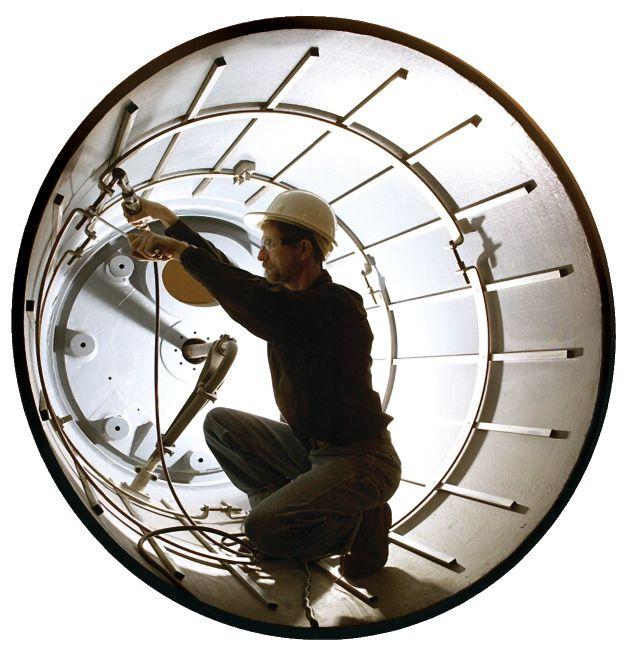

Category C - Less than 50,000 worker hours per
In conversation with Domtar’s Dryden mill
Pulp & Paper Canada: What has been the top safety priority for your mill in 2021? What are the major highlights from the year?
Domtar Dryden: In 2021 we rolled out three key awareness campaigns at the site.
Our “Big 8” campaign was developed to increase awareness of the activities that have the potential to result in a serious injury or fatality (SIF). The key Big 8 components consist of: 1. confined space entry; 2. lock-out tag-out; 3. Electrical; 4. powered industrial trucks; 5. hoisting and rigging; 6. hot work; 7. working at heights; and 8. breaking into the process.
We kicked this off with a promotional video where employees who worked reg-

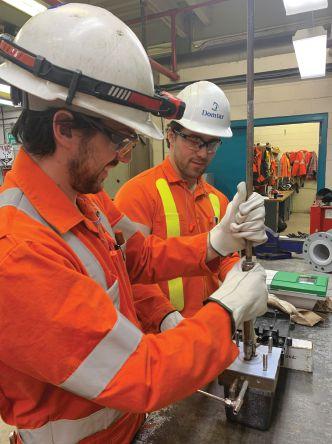
Photos: Domtar Dryden mill
ularly in these high-risk areas provided examples of how they work safely when performing these tasks. This was followed by leadership conducting ongoing “Big 8” safety audits throughout the site to promote and ensure understanding.
Additionally, a quarterly “Code Blue” campaign was introduced to encourage employee engagement related to safety. The concept behind Code Blue parallels that of the health sector where a Code Blue is deemed as critical. Code Blue proactive topics such as housekeeping, hand tool safety, the Big 8, proper labelling and hazard identification were all derived from industry trends. These Code Blue programs invite employees to provide their input in a variety of ways and have a chance at winning a prize. Leaders are then able to review the input and put improvements in place.
Early in 2021, we rolled out a mental health awareness campaign to help our employees through the difficult pandemic. Each day of the week saw a focus topic with tools related to various aspects of mental health. We also engaged employees mid-year in a challenge where employee volunteers danced to celebrate our one-year RI free milestone and enjoy some much-needed fun. A video reel was compiled and set to the song “Jerusalema”, a South African-inspired gospelinfluenced song, and was posted on our internal intranet for everyone to enjoy.
Highlights in 2021 include achieving one year of recordable injury free (RI) operations in May 2021 and hitting the milestone of one million hours worked without an RI in September 2021. The year ended with no lost time injuries, however a recordable incident was experienced in November of 2021.
In conversation with Resolute Forest Products’ Thunder Bay mill
Pulp & Paper Canada: What makes your safety system successful? How do you achieve success?
Resolute Forest Products, Thunder Bay: A successful safety system is not achieved by accident; it requires rigour, accountability and engagement. Active management commitment and employee involvement are key to ensuring a safe, injury-free workplace. Resolute’s safety management system is comprised of
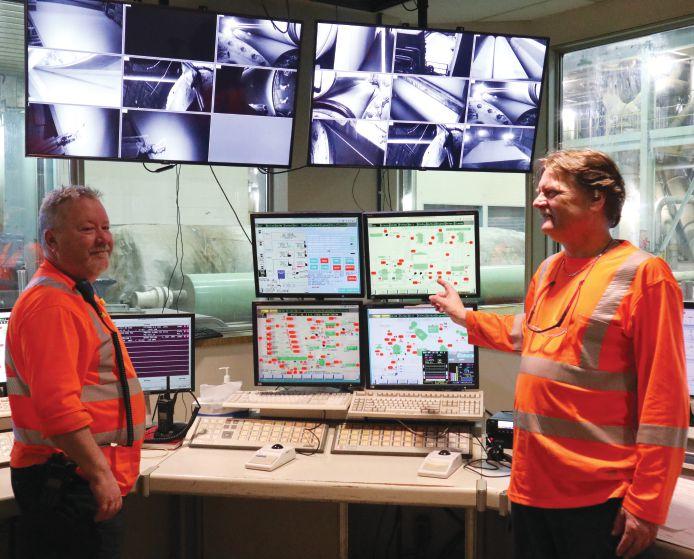
three pillars that drive our everyday focus on health and safety: one-on-one safety commitment discussions, hazard recognition and near-miss reporting.
P&PC: What has been the top safety priority at your mill for 2021? What are the major highlights from the year?
RFP, Thunder Bay: Keeping our workers safe is always a top priority. In 2021, Resolute achieved a worldclass company-wide OSHA incident rate of 0.47, despite the pandemic and other challenges. At the Thunder Bay mill, our safety focus last year included guarding, hazard awareness and training our workers to methodically approach tasks by using our ‘7 Prevention Reflexes’ program. Employees go through a series of questions to evaluate potential risks and hazards related to a job or task, allowing them the time to re-evaluate and approach a job or task differently if needed.
P&PC: How has the pandemic impacted safety programs in your mill?
RFP, Thunder Bay: The COVID19 pandemic prompted the mill to quickly adopt more digital tools for reporting and communicating. Many of these digital tools and options have now been integrated into the site’s safety management system. A good portion of our training has been provided virtually
since the outset of the pandemic, and this will probably continue to allow for flexibility in terms of schedules.
P&PC: What are your safety plans for 2022?
RFP, Thunder Bay: The site’s 2022 goals include improvements in the area of communications, training around root cause analysis and troubleshooting and preparing to pursue official ISO 45001 certification. We will also focus on the continued rigour of task-based audits at the supervisory level.
P&PC: How do mill employees respond to Resolute Thunder Bay’s health and safety mandates?
RFP, Thunder Bay: We have empowered our employees through near-miss reporting. This platform allows employees to report all issues, no matter how big or small, which are then reviewed by management daily. Each near miss is expected to be acknowledged by management within 48 hours so that a response can be provided. We have also involved many of our workers in the ongoing update of work instructions and standard operating procedures. By involving employees from the beginning through to the implementation stage, we can ensure that what we are releasing is relevant to the various jobs and tasks we have at the site.
Photo: Resolute Forest Products, Thunder Bay
Resolute Thunder Bay used digital tools during the pandemic to provide safety training.
Energy management and process debottlenecking
By Enrique Mateos-Espejel, FPInnovations
FPInnovations’ partnership with Natural Resources Canada’s CanmetENERGY continues to stimulate the Canadian pulp and paper industry by focusing on energy management, process debottleneck to facilitate the diversification of products and reduction of greenhouse gases emissions (GHG).
Energy efficiency and process debottlenecking have become essential to the pulp and paper industry in Canada to maximize mill assets operation and utilization and to facilitate the integration of new technologies as they transition to become carbon-negative processes and biorefineries. Energy efficiency is a key pillar of Canada’s climate change policy.1 The pulp and paper industry is one of the most energy-intensive sectors in Canada. Energy consumption in this sector represents 15 percent of the Canadian industrial sector secondary energy use.2 Although the industry covers most of its energy requirements with biomass fuels, fossil fuels are still used to produce heat and power and for calcination of lime mud in the kraft process.
A systemic approach
Pulping processes are deeply connected with many interactions between the main process departments and with the energy systems (water and steam). Therefore, a global process perspective is required to analyze the systems interactions and the maximum potential of operational improvement to develop optimal solutions’ strategies. The improvement roadmaps consider low-cost options in the short-term to improve process operation and energy efficiency while considering the medium to long-term perspective to debottleneck the process and substantially reduce GHG emissions.
A systematic approach has been applied to identify, quantify and classify process bottlenecks and operational and energy inefficiencies at the departmental and mill-wide levels. The approach focuses on maximizing the capacity of a process while improving its overall energy and operational performance. The approach consists of four steps. The

first step focuses on the communication with the mill management to establish improvement targets (for example, pulp production increase targets, operating cost reduction, energy and GHG emissions reduction, biorefinery integration). Those targets would guide the debottlenecking approach and process optimization. Then, bottlenecks are identified, screened and ranked. At this step, each department/process is compared to the established targets, thus pinpointing the existing bottlenecks and inefficiencies. The next step is process diagnosis, which uses multivariate data analysis, process simulation, unit operations best practices and root-cause analysis to identify the interactions between different process bottlenecks and operations. In the last step, the improvement solutions are established and a roadmap of measures is proposed to reach the desired targets.
Success stories
The approach has been successfully applied in several Canadian mills. For one of the mills, operational projects and projects with low/medium capital expense (CAPEX) resulted in up to six percent pulp production increase with EBITDA potential of over one million dollars a year. Energy reduction projects with no capital investment required were also identified and saved the mill 0.30.5 million dollars a year. The approach was also applied in another mill with the objective of optimizing the efficiency of
its existing energy recovery assets toward reducing GHG emissions. It resulted in a reduction of 9.5 kT of CO2eq/y (25 percent of their total non-biogenic GHG emissions) and potential savings of 0.7 million dollars a year (half the savings could be achieved with non-or low capital investment). For another mill where energy consumption had previously been optimized and bottlenecks had been identified and addressed, the approach was tailored to focus on in-depth data evaluation to identify parameters to be monitored to maintain and improve overall process efficiency. These results show that there are still opportunities in pulp mills to improve operational and energy efficiency to reduce costs and maximize overall efficiency.
Assessing the state of existing mill assets and operation is critical for improving mill competitiveness and reducing environmental impact. The systematic approach applied by FPInnovations and Natural Resources Canada’s CanmetENERGY provides Canadian pulp and paper mills with the guidelines and tools needed to make short and long-term strategic decisions that can improve process operations, energy efficiency and substantially reduce GHG emissions.
For more information, please contact Enrique Mateos-Espejel (enrique.mateosespejel@fpinnovations.ca), senior scientist in FPInnovations’ Thermal Process group. PPC
References
1. Environment and Climate Change Canada, “Pan-Canadian Framework on Clean Growth and Climate Change,” Environment and Climate Change Canada, Gatineau, 2016.
2. NRCAN, Office of energy efficiency, [Online]. Available: https://oee. nrcan.gc.ca/corporate/statistics/neud/ dpa/menus/trends/comprehensive/ trends_id_ca.cfm [Accessed 20 October 2021].
FPInnovations is a not-for-profit organization that supports the Canadian forest sector’s global competitiveness. fpinnovations.ca
Photo: SergeYatunin/Getty Images
WHITE LIQUOR QUALITY DURING KRAFT PULPING
Exploring how the quality of pulp is dependent on the quality of white liquor used for cooking
By Augusto Quinde
During continuous cooking operations there is a long list of parameters for monitoring that include three groups. These are wood chip quality, white liquor quality and cooking control.
The main purpose of a causticizing plant is to generate high quality white liquor (Na2S + NaOH) in sufficient quantities to secure steady pulping operations to maintain profitable pulp production operations that comply with environmental and government regulations.
White liquor preparation comprises the following steps:
1. Concentrating black liquor;
2. Burning concentrated black liquor in a recovery boiler to generate smelt consisting of sodium carbonate (Na2CO3) and sodium sulfide (Na2S);
3. Dissolving smelt in weak wash liquors in the dissolving tank to form green liquor that is sent to a green liquor clarifier to remove “dregs” or unburned carbon and other inorganics;
4. Slaking calcium oxide (CaO) in the slaker to produce calcium hydroxide [Ca(OH)2 or “slaked lime”] and then completing causticizing reactions in the “causticizers” to convert Na2CO3 to NaOH plus CaCO3 (calcium carbonate or “lime mud”);
5. Transferring white liquor to the white liquor clarifier to remove the “lime mud” [CaCO 3 and remaining Ca(OH)2];
6. Valcining lime mud in a lime kiln to form “reburned lime” or “quick lime” or CaO to be used again in the slaker;
7. Sending the clarified white liquor (Na2S + NaOH) to the digester.
Active Alkali (AA)
Effective Alkali (EA)
Total Alkali
Total Titratable Alkali (TTA)
(RB)
*Inactive chemical = Deadload
NaOH + Na2S
NaOH + ½ Na2S
NaOH + Na2S + Na2CO3 + Na2SO3
NaOH + Na2S + Na2CO3 + ½ Na2SO3
Sulfidity (percentage) (Na2S/AA) x 100
Causticizing efficiency (percentage) (NaOH/ NaOH + Na2CO3) x 100
Total Suspended Solids (TSS) ≤ 20 ppm
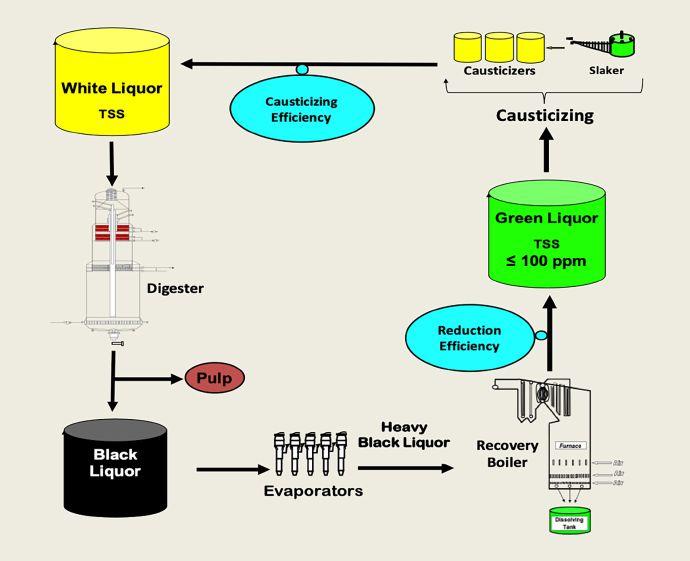
Table 1. Typical white liquor composition (Pyatte 1993)
Table 2. Most important white liquor parameters (Green and Hough 1992; Macdonald 1969)
Figure1. Important targets in the causticizing area
Due to environmental regulations, kraft pulp producers are setting trends towards increasing closure of pulp mills by integrating filtrates from the bleach plant and pulp mill into the recovery system. Therefore, this is a big problem that needs to consider not only the inherent chemical components of the dregs from the recovery boiler (such as, unburnt carbon, silica, non-process elements or NPE, etc.) but also the additional chemical waste coming from the bleach plant (Parsad et al. 1996).
A few kraft mills consider causticizing plants as dumping areas and/or unintentionally neglect them off technical assistance or improvement. Fortunately, green liquor clarifiers can be seen as suitable “kidneys” for control and removal of deadload and non-process elements. However, everything has a limit and it is better not to exceed it. The farther apart you are from a paper-machine, the less attention you receive from upper management and the causticizing plant is at the opposite end.
Poor green liquor quality has negative effects on all downstream operations starting with causticizing efficiency and/or white liquor clarification and/or lime mud quality and/or lime kiln operations (Shrinath and Buettner, 2000). Typical dregs content in green liquor is 700-1500 mg/l (Tormala and Markusson, 2013). If the dregs are not properly removed from the green liquor, then the lime mud generated will have more separation problems (such as, settling and filtering) (Azgomi, F. 2014). This paper discusses some aspects of the white liquor quality based on the amount of deadload and its chemical composition.
Variables during causticizing operations
Generating high quality white liquor is a very difficult task due to numerous variables involved during its preparation, starting in the recovery boiler and going through the causticizing operations. Most chemical reactions take place in the recovery boiler, slaker and causticizers and the remaining unit operations involve the separation of liquids and unwanted solids.
Important considerations for optimal separations should be taken in the following stages: green liquor; slaker; causticizing; white liquor clarification; lime kiln, etc. (Sanchez 2007). These variables affect important parameters of the white liquor that is produced through a closed causticizing operation that involves three cycles – calcium cycle; sodium cycle; and sulfur cycle.
Important parameters and targets in the causticizing area
Some important parameters and respective targets change from mill to mill. These are, white liquor concentration in gpl or lb/ ft3; sulfidity (percentage); effective alkali (percentage); and total titratable alkali (TTA). However, other parameters must have very specific targets for optimal performance of causticizing operations like: green liquor TSS (total suspended solids ≤ 100 ppm) (Shrinath and Buettner, 2000); white liquor TSS (≤ 20 ppm) (Sanchez 2007); recovery boiler reduction efficiency (90 to 94 percent); and causticizing efficiency (80 to 83 percent). The Na2S passes through the causticizing step unchanged (Tran and Vakkilainnen, 2016).
Representative composition of white liquor – The most common compounds present in white liquors are given in Table 1. Important white liquor parameters related to its composition and properties are given in Table 2.
Deadload
origins: How, why and when does it happens?
The white liquor active chemicals (NaOH + Na2S) react during pulping and then are washed out from the pulp into the black liquor, later sent to the evaporators and finally to the recovery boiler. The original chemicals going into the digester are recovered in the 97 to 98 percent range. Most of the sodium sulfate (Na2SO4) is reduced to sodium sulfide (Na2S) in the recovery boiler at reduction efficiencies around 90 to 94 percent and the sodium carbonate (Na2CO3) is converted to NaOH in the causticizers with recausticizing efficiencies in the range 80 to 84 percent (Tran and Vakkilainnen, 2016).
See equations 1 and 2.


Based on the above reduction efficiency and causticizing efficiency, not all of the sodium sulfate is reduced to sodium sulfide nor all the sodium carbonate is causticized to sodium hydroxide. Therefore, some sodium sulfate and sodium carbonate recirculate in the system. Furthermore, other compounds like sodium thiosulfate (Na2S2O3), sodium sulfite (Na2SO3), sodium chloride (NaCl), calcium carbonate (CaCO3) and a set of chemicals known as “non-process elements” together constitute what is known as “deadload”. The main deadload chemical components are sodium sulfate (Na2SO4) and sodium carbonate (Na2CO3) being the sodium carbonate by far the largest amount of deadload.
Effects of deadload and scaling deposits
It is evident that high levels of deadload negatively affect the functioning of some equipment, pipelines and pumps with process and economical consequences. The most common effects of deadload in a kraft mill are increased energy usage, greater chemical losses, scaling deposits reducing equipment capacity, downtime for cleaning operations, and lost production, among others.
Scaling takes place almost everywhere in a kraft mill, for example, in digester heaters and evaporators (Duggirala 1994), bleach plants (Shevchenko and Duggirala 2009), dissolving tanks, green and white liquor lines, slaker and causticizers. Removing most scaling deposits is a very expensive cleaning operation. Mills have the following options to consider – hydroblasting; wood chip leaching treatment at pH 2-3; ion complexing with EDTA or DTPA; acid cleaning; and deactivation of black liquor. The most common scaling deposits in a kraft pulp mill are given in Table 3 (Sithole 2002).
Equation 2
Equation 1
Deadload reduction
Kraft mills can reduce their deadload by reducing sodium carbonate (Na2CO3) by optimizing causticizing efficiencies; reducing sodium sulfate (Na2SO4) by optimizing reduction efficiencies; minimizing chlorides by reducing chloride inputs or purging it; and improving process control measurements at the white liquor plant (Paykkonen 2020). The largest contributor of deadload is sodium carbonate.
Increasing causticizing efficiency reduces more deadload than increasing the reduction efficiency. One percent increase in causticizing efficiency decreases the deadload by six to seven kg/mtp while a one percent increase in reduction efficiency decreases the deadload by two to three kg/mtp (Grace and Tran, 2009). The two most important variables to determine the effect of deadload reduction are the causticizing efficiency (CE percentage) and the reduction efficiency (RE percentage) (Chandra 2004). The primary benefit of reducing the deadload is in energy savings in the digester, evaporators and recovery boiler (Grace and Tran, 2009).
Optimization of causticizing operations
Here are some recommendations to improve causticizing operations and to min-
Scale Chemical composition Scaling location
Calcium carbonate –Calcite
Pirssonite
Burkeite
Sodium aluminosilicates
CaCO3
Digester heaters, evaporators, green liquor lines, lime kiln
Na2CO3 + CaCO3 Dissolving tank, green liquor lines
2Na2SO4 + Na2CO3 Evaporators
NaAiSiO4.Na2X X=CO32-, SO42-, 2Ac-, 2OHEvaporators, green liquor lines
Sodium carbonate Na2CO3 Dissolving tank
Calcium oxalate
CaC2O4 Digesters, bleach area
Calcium sulfate CaSO4 Digesters, bleach area
Table 3. Common scaling deposits, chemical components, and locations in a kraft pulp mill
imize scaling deposits in the equipment.
1. Having a good green liquor and white liquor plant design that must include buffering units to reduce process variations;
2. Maintaining the weak wash stream with 100 to 300 ppm suspended solids to help dead load scaling promoters to precipitate in the bulk rather than on equipment walls and/ or piping;
3. Insulating all green liquor lines properly;
4. Properly controlling (automatically) the dissolving tank
5. Reducing TTA variations to make correct lime dosage possible (Azgomi, F. 2014, Zuver 2021);
6. Monitoring the sources of non-process elements (NPE) into the system to avoid settling issues;
7. Purging metals efficiently with dregs removal;
8. Switching lines between the raw green liquor (RGL) and weak wash (WW) (Sanchez 2007);
9. Minimizing temperature drops across the heat exchanger at the green liquor
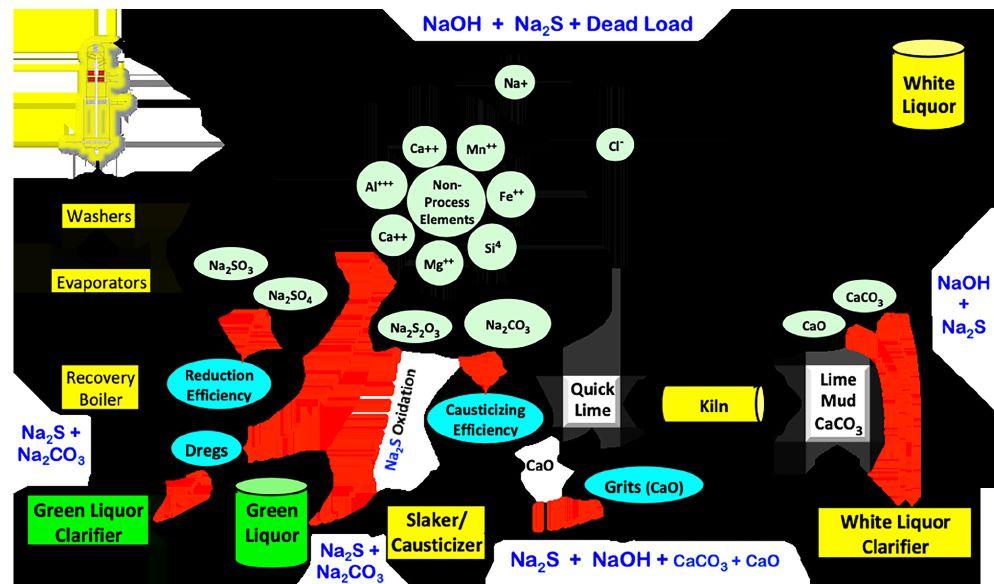
Figure 2. Sources of deadload in the kraft recovery cycle
clarifier to ensure temperatures in the slaker between 100 to 104°C (Green and Hough, 1992);
10. Minimizing the deadload by increasing reduction and causticizing efficiencies;
11. Searching for appropriate scaling prevention strategies; and 12. Optimizing usage of anti-scaling polymers.
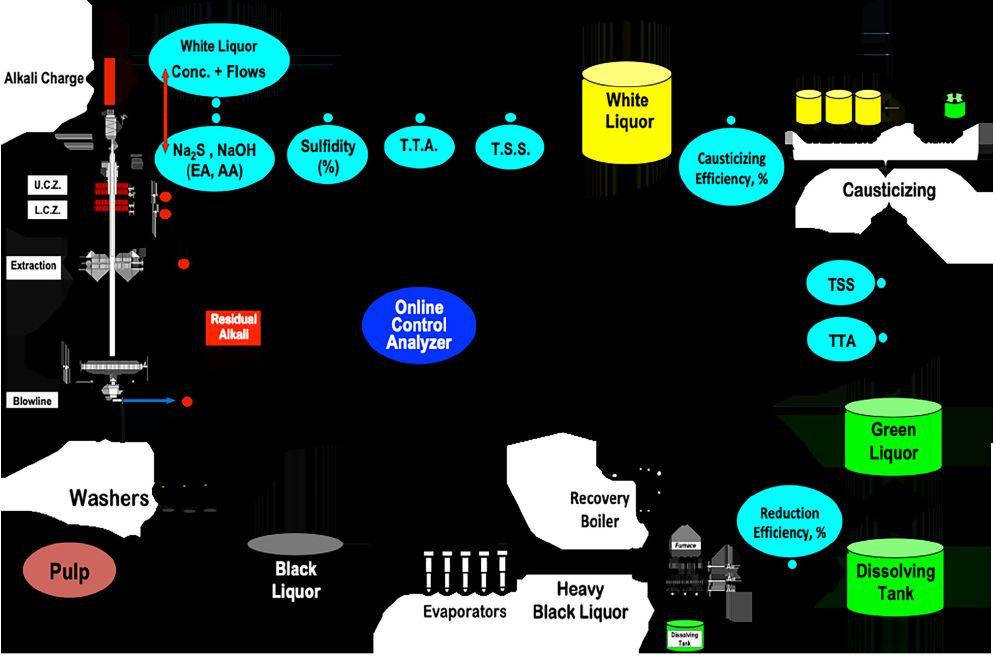
Optimization of the causticizing process can be accomplished by using the appropriate online control strategy that should include at least a green liquor TTAcontrol and a white liquor causticizing efficiency-control (Zuver 2021).
Online control of the kraft recovery cycle
Most kraft mills working at 40 percent or 60 percent over the manufacturer design must properly adjust new pulping parameters that include two very important ones: cooking temperatures and/or cooking chemicals. Of these two options, increasing white liquor requirements seems to be more difficult to satisfy, as we need to consider bigger volumes and high-quality cooking chemicals. The most evident effects on the equipment
High levels of deadload negatively affect the functioning of some equipment, piplines and pumps, with different consequences.
are the reduction of the retention time of most stages in the causticizing plant due to higher production rates that equates in higher liquor flows, higher amount of deadload due to lower efficiencies and consequently lower white liquor quality.
Leaving all the above parameters to be controlled by the operators is risky and an automatic online control system is necessary (Trung and Allison 2015). Online measurements are available for important determinations in several areas of the recovery and causticizing areas that can guarantee the production of excellent white liquor quality Online analyzers can determine sodium hydroxide (NaOH), sodium sulfide (Na2S), sodium carbonate (Na2CO3) and report active alkali (AA), effective alkali (EA), total titratable alkali (TTA), causticizing efficiency (CE per-
centage), and sulfidity (S percentage).
A typical online causticizing application can include five points for sampling –green liquor after dissolving tank; before slaker; top of slaker; causticizing vessels; and white liquor line to digester (Valmet 2015). Laboratory analysis requires manual sampling every four hours while online analysis can give results every six to eight minutes. An ideal online control system might be the one shown in Figure 3.
Final remarks
The quality of pulp depends on the quality of the white liquor used for cooking. This white liquor is as good as the quality of the green liquor from which it is generated (Shrinath and Buettner, 2000).
Modern white liquor plants must generate a high and consistent quality of white liquor in order to produce an optimal pulp quality and to avoid fluctuations/ disturbances in the digester. PPC
For the full list of references, check out the online version of the article in the ‘Features’ section of pulpandpapercanada.com
Augusto Quinde is president of AQuinde Pulping Consulting in Vancouver.
Figure 3. Online control of the kraft recovery process
IMPROVING LATERAL STABILITY
Tools to solve problems of web misregistration and baggy rolls
By J. David McDonald
Lateral (cross-direction) web movement on printing and converting equipment can cause wrinkles, misregistration and breaks. When this problem is common to all paper suppliers, the cause is likely either misalignment or a poorly functioning lateral position control of the press and should be solved there. However, if the problem only occurs with paper from a single supplier or a single paper machine, the cause is likely due to paper properties. This becomes a challenge for the papermaker to identify the root cause and implement a solution.
Misregistration in printing is an example of a problem created by the lateral movement of the web. In four or eight colour offset lithography printing presses, each colour is applied successively in separate printing stations. If the web shifts laterally between units, the colours will be applied in different positions.
What causes webs to move laterally? Baggy webs provide a clue. Webs that have a baggy edge in an open draw are prone to move laterally towards the slack edge. This is the result of an uneven machine direction (MD) tension profile in the cross direction (CD). The visual slackness can be reduced by increasing the draw and the average tension but this increases the probability of a web break. The uneven tension profile remains and no amount of spreading can correct this problem. In severe cases of bagginess, the only solution is to reject the roll.
Bagginess is typically caused by local, permanent expansion of paper in the machine direction. The paper has been extended in papermaking and the web is actually longer in the baggy areas in comparison to the adjacent taut areas. This can be demonstrated and quanti-
fied by measuring the length of long MD strips of paper taken from several CD positions. Strips of greater length are positions where the web has been permanently elongated and exhibits lower tension in unsupported spans.
Bagginess is an extreme example of a poor CD tension profile. Visual inspection can be used to evaluate the effect of process changes to alleviate the problem. However, lateral movement can occur even when the web appears flat in the open draw. The tension profile can be skewed but not to the point of causing bagginess. In addition, variations in draw can cause the web to oscillate laterally.
Measuring CD tension is an important step in determining the underlying cause of bagginess and lateral web movement. Although there are a number of commercial devices to measure the cross-direction tension profile, few are installed on commercial machines.
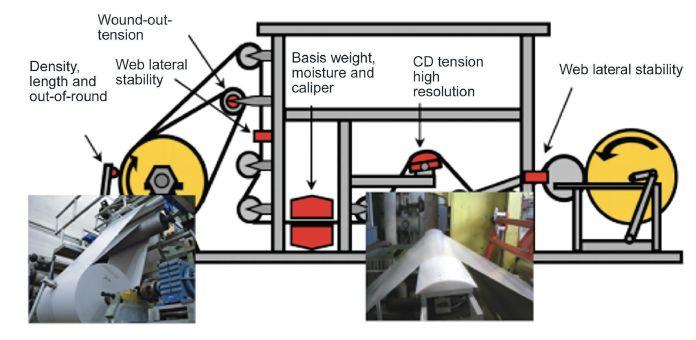
To address this issue, Frederic Parent and Jean Hamel of FPInnovations measured the CD tension profiles of commercial paper rolls up to 1.27 metres wide that were exhibiting problems
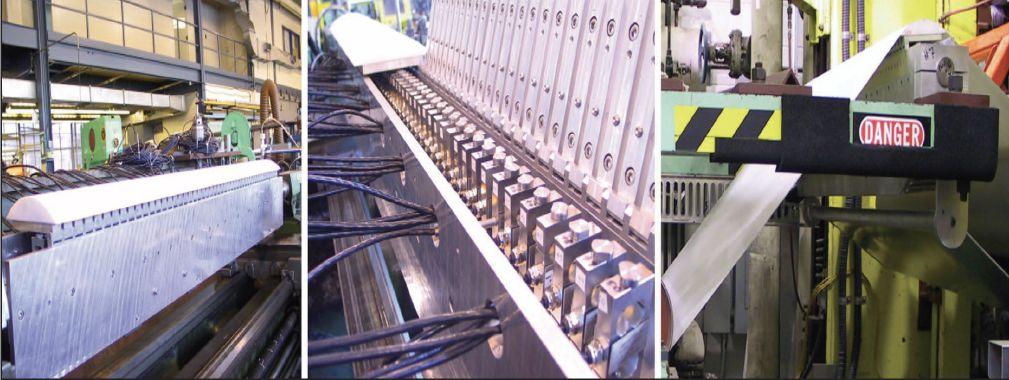
with bagginess [2] or lateral stability [1] on equipment called Roll Testing Facility (RTF) (Figure 1). This was done at high resolution (2.5 centimetres) using a tension beam equipped with load cells (Figure 2). This facility was equipped with two pairs of laser beam sensors to measure web lateral stability and a Honeywell-Measurex scanner to measure basis weight, moisture and thickness (Figure 1). These measurements, combined with those made in commercial printing plants, were used to identify the underlying paper properties and paper machine operating factors that contribute to bagginess [2] and lateral instability [1] Based on this understanding, changes were made to the operation of the paper machines which leveled the CD tension profile and corrected these problems. This was verified by means of measurements on the RTF and observations in the commercial pressrooms.
The authors also carried out an analysis of web behaviour in draws to identify the causes of lateral stability. In an open draw on a paper machine or between units on a printing press, the web is unsupported and the applied tension is
Figure 1: Schematic representation of the measurements performed on the roll testing equipment. The unwind is on the left.
related to the speed difference between units (V1 -V2) which can be expressed as the elongation of the web or strain.
(V1-V2)
V1 ε=
The tensile stress σ of a web in an open draw is proportional to strain (draw) as well as the properties of the paper:
σ = E (ϵ - ϵ0) where:
• E is the machine-direction modulus
• ϵ is the strain (draw)
• ϵ0 is the permanent strain.
This stress is related to the more commonly measured “tension”, T by the web thickness t:
Four key cross-direction profiles that affect CD tension profiles were identified: basis weight, caliper, MD modulus and moisture entering the dryer system. The aim is to have an even distribution in all four properties.
ness, its thickness or caliper is reduced and the paper is lengthened in the machine direction. Over-calendered areas will be areas of lower tension because of greater permanent strain.
Possible calendering problems include the positioning and operation of cooling air showers or heating coils, or uneven nip loading due to poor roll grinding or roll wear. The nip load profile may not be level due to incorrect crowns of solid rolls or the settings of variable crown rolls
Compounding the difficulties in addressing these problems is the lack of on-line measurement of moisture after the press section
If the components of the printing press are perfectly aligned and the paper properties are uniform in the CD direction, the tensile stress will also be uniform in the CD. Problems arise if either the elastic modulus (E) or the permanent strain ( ε 0) is not uniform in the crossdirection. This leads to uneven stress in the open draw. But what is the source of the unevenness?
The elastic modulus profile could be skewed by cross flows from the headbox leading to uneven fibre alignment or time varying changes caused by pressure pulsations in the stock system. Although some printing presses have lateral position control, generally this can’t compensate for movements that are too quick or severe. The solution requires adjustments to the headbox or the stock approach system. Permanent strain in the MD can be increased by calendering and by elongation in the dryer section. When paper is calendered to improve surface smooth-
In the dryer section, the degree of permanent strain depends on the moisture content of the paper. Wetter paper leads to larger permanent strain in the dried paper. Thus, an uneven moisture profile entering the dryers will cause a nonuniform permanent strain profile and ultimately an uneven tension profile in the dry paper.
There are multiple causes and solutions for uneven moisture profiles. They can originate in the cross-machine profiling systems such as steam showers or uneven nip loading in the press section. CD positions that are exposed to less heating or lower nip load will be wetter entering the dryers. Adjustments to the heating system or levelling the nip load profile may be necessary. For variable crown rolls, the profile can be levelled with the online controls. With fixed crown rolls, grinding can correct for wear or improper crown profiles. Another source of moisture streaks is felt plugging.
In summary, four key cross-direction profiles that affect CD tension profiles were identified: basis weight, caliper, MD modulus and moisture entering the dryer section. Thus, the aim is to have an even distribution in all four properties. Most machines have CD scanners for basis weight and caliper between the calender stack and reel. However, modulus of the dry paper and moisture before the dryers is not typically measured. Off-machine measurement of CD tension combined with lateral position sensors has proved to be an excellent tool to diagnose and solve problems with bagginess and lateral stability in printing and converting.
More details about the diagnosis and solution to these problems are given in the following references.
1. Parent, Frederic, Hamel, Jean and McDonald, J. David, Web lateral instability caused by nonuniform paper properties. Tappi J. 21(1):9(2022).
2. Parent, Frederic, Hamel, Jean and McDonald, J. David, A Guide to Eliminating Baggy Webs. Tappi J. 20(6):365(2021).
For further information, contact frederic.parent@fpinnovations.ca. PPC
J. David McDonald is president of JDMcD Consulting Inc., an adjunct professor at McMaster University and a PAPTAC Fellow.
Figure 2: The tension beam installed on the lathe during its fabrication (left), inside view of the 50 load cells (centre) and the beam in operation with paper on it (right) [1].
A FOCUS ON PAPER QUALITY AND UPTIME
Innovations in technologies for the pulp and paper industry ruled the discussions at PaperWeek Canada 2022.
By Martin Fairbank, ph.d.
PaperWeek Canada 2022, the annual conference organized by PAPTAC, took place virtually for the second year in a row this February 7 to 10. The packed program attracted almost 1000 attendees. Three sessions were dedicated to papermaking. Based on some of the best presentations, this article highlights some opportunities for paper mills to improve their paper quality as well as minimize downtime due to breaks, cleaning and fabric changes.
Papermaking additives
Maurice Rizcallah, global market development manager for Buckman, gave an overview of enzymatic fibre modification in papermaking. This is a technology that has been developed and gradually improved over the last 30 years. It provides the main benefits of strength improvement and machine speed, mostly by working on the surface of cellulose fibres to develop bonding. Many paper and board mills that use recycled fibres are looking for improved strength because the quality of their incoming fibre stream is decreasing due to higher recycling rates and more contamination. One way to develop strength is to increase refining. However, this can also reduce drainage as it results in more fibre collapse. Using enzymes prior to refining is a good strategy to develop strength without using refining or adding starch, virgin pulp or dry strength resins. Generally, a good enzyme strategy with the same amount of
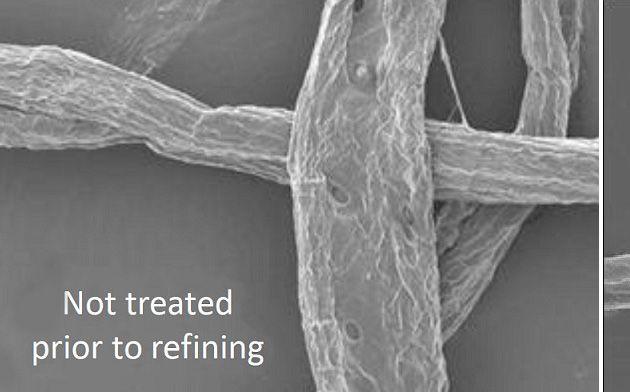
refining delivers higher strength. Reducing refining of an enzyme-treated furnish will deliver the same strength with higher drainage.
On the same theme of improving strength, Pascal Rivard, applications team leader for Solenis, gave a presentation on the use of dry strength additives. He pointed out that the needs of different paper grades drive different dry strength strategies. In graphic and specialty papers, the goals often include retaining high levels of filler substituting for fibre. This has led to the use of various types of starch and micro-particulate retention programs to compensate for the negative effect of mineral fillers on bonding strength.
In consumer bath tissue, there is a need for temporary wet strength, which traditionally has been provided by starch, enzymes and various other strategies. However, the latest generation of additives is based on glyoxalated polyacrylamide (G-PAM), a cationic resin delivering both temporary wet strength and permanent dry strength. G-PAMs are less
sensitive to high conductivity, high colloidal charge, dissolved salts and hardness, which are common in paper mills with closed water circuits. Weak fibre bonding can be provided either by hydrogen bonding of cellulose and starch or by ionic bonding using cationic additives. GPAM provides ionic bonding due to its cationic charge, as well as stronger covalent bonding by bonding to cellulose through its aldehyde groups. In packaging grades, not only is dry strength important, but many producers are looking at producing lighter basis weights without reducing strength. The use of additives that provide covalent bonding, such as GPAM or polyvinylamine (PVAm), is a key strategy.
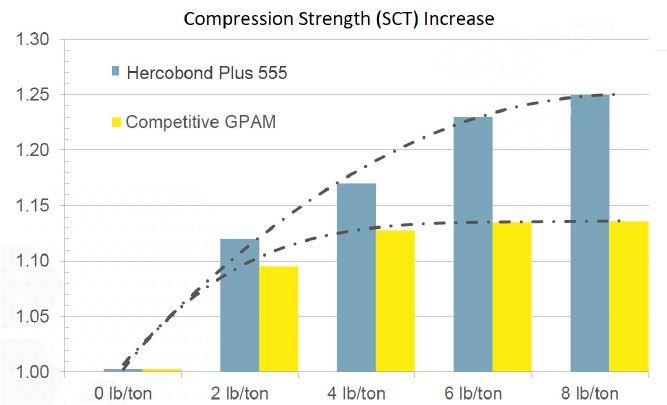
Solenis can now provide a system for generating GPAM onsite at a mill. Results were presented from a recent trial which showed that GPAM made onsite provides much more efficient dry strength. With a purchased GPAM product, the compression strength reached its maximum at a dosage of four pounds per ton, whereas the onsite generated better strength at the same dosage and additional strength
Comparison of purchased versus onsite-generated GPAM on compression strength of packaging grade.
Photo: Pascal Rivard, Solenis


response up to eight pounds per ton. The trial enabled a speed-up of 13 percent and furnish savings due to five percent less virgin kraft and five percent less refining energy.
Control of papermaking
When the wet-end chemistry on a paper machine is complex, it is challenging to troubleshoot problems and take the right decisions to optimize cost and quality. Matt Callicott, platform launch manager at Solenis, gave a presentation on his company’s artificial intelligence (AI) driven autonomous chemistry control system – Optix. According to Callicott, we are in a golden age of analytics, where results can be obtained that were not possible a decade ago. Lab tests every two hours on samples from the reel cannot predict what is happening on a minuteby-minute basis. Real-time online data can be used for predictive modelling to build virtual sensors that accurately estimate paper properties every 30 seconds. Adding machine learning and artificial intelligence can result in much better control of wet-end chemistry. Such sys-
tems are very good at reducing variability.
In one case study of wet tear strength control, using the AI system resulted in a reduction in wet strength variability of 28 percent while improving target adherence by 38 percent and reducing the wet strength resin dosage by 15 percent. Autonomous control can be applied in diverse applications wherever chemical additives are used, and the results can be monitored in real-time, providing good opportunities for cost savings and quality improvement while also achieving sustainability goals.
Fabric cleaning
Keeping the fabrics clean on a paper or board machine, especially with furnishes containing stickies and pitch, is an important job for preventing web breaks, preserving drainage and extending fabric life. Three presentations on this topic detailed the latest developments in this area.
Gilles Boulianne, team leader at Coldwater, gave a presentation on his company’s EZ Eco Smart Cleaner, a traversing cleaner head for forming fabrics. Traditional wire cleaning showers consume large amounts of water, are limited to pressures of 300 to 550 psi and create a lot of mist, sometimes requiring the installation of a mist removal box to keep the machine clean and dry. Some mills that experience buildup of stickies on the fabric also add chemicals via an additional shower to passivate the stickies.
Coldwater’s cleaning system contains 32 to 44 nozzle jets in a traversing cleaner head operating at 2000 to 2500 psi and rotating at 500 to 1500 rpm. Over 100 of these systems have been installed across Europe and Asia. The benefits can include 95 to 98 percent less water use, no mist production, much cleaner fabrics, no problems with plugged nozzles, power savings, reduction in sheet breaks and the possibility of longer fabric life. Coldwater also guarantees that no passivation shower will be required when using their system. Shawn Gray, assistant paper machine superintendent at Pixelle’s Chillicothe, Ohio freesheet mill then presented the results of an installation on his machine, where a mist remover was removed at the same time. Part of their justification to install the new fabric cleaning system was to reduce web breaks caused by the build-up of stock that fell on the web from the mist remover. The mill has also
seen substantial savings in water use as well as energy.
In the press section, Uhle boxes are used to keep press felts clean by pulling water and fibre from the felt as it passes over a vacuum zone. Traditional Uhle boxes are slotted, but the use of perforated Uhle box covers can deliver better efficiency. Roland Eckerstofer, project manager at Rochling Leripa, demonstrated that, with the right design, increased dewatering efficiency and fabric lifetime can be achieved using less energy. Part of the reason is a larger open area and longer dwell time over the Uhle box, which means it can be operated at a lower vacuum level. Payback time for replacing a slotted Uhle box with a perforated design can be as little as three months.
Finally, Denis Martin, sales director at Kadant, gave a presentation on his company’s dryer fabric cleaning technology –M-Clean. This is a modular high-pressure cleaning system installed as a traversing head on a beam, either on an intermittent or continuous basis. It dislodges contaminants with a high-pressure water shower (up to 600 bars) and collects them with an integrated vacuum system. The contaminants are collected outside the machine via a cyclone separation system. Of over 1000 installations worldwide, 89 percent are on dryer fabrics, mostly for liner and fluting grades. However, similar systems are offered for forming fabrics, backing rolls and press rolls.
Jean-Francois Poirier, production manager at the Cascades Cabano mill, then talked about two M-Clean units installed on the first two Unirun dryer felts of his corrugating medium machine in 2016 and 2019, replacing older cleaning systems. The felts were cleaned efficiently at 450 to 520 bars of pressure, eliminating a cleaning shutdown every two weeks, reducing paper break downtime by 10 hours per month, allowing a 3.8 percent increase in machine speed and increasing dryer fabric lifetime from six weeks to eight months.
For papermakers hoping to optimize performance and quality, investing in the latest technologies for wet end chemistry, control systems and fabric cleaning appear to be well worth a close look.PPC
Author bio: Martin Fairbank has worked in the pulp and paper industry for over 35 years and is a consultant, technical writer and Paptac Fellow.
Photo: Maurice Rizcallah, Buckman
Photo: Roland Eckerstofer, Rochling
Fibres without and with enzyme treatment before refining
Double slotted Uhle box cover
FOCUS ON SAFETY
2022 PPSA Safety and Health Conference scheduled for June
Pulp & Paper Safety Association’s 78th Annual Safety and Health Conference is set to be held in June, from 12 to 15. The conference will take place at Sawgrass Marriott Golf Resort & Spa in Ponte Vedra, Florida. Registrations are currently open for the event.
This year’s program focuses on the latest trends and technologies related to workplace safety, including leadership, “PostCovid: Where do we go from here?” OSHA updates, human organizational performance and contractor issues.
According to a statement by PPSA, attendees will learn about leading-edge safety innovations from industry suppliers at the New Technology Showcase and build relationships at this gathering of pulp and paper safety professionals.
The conference will feature expert speakers from within the safety community, as well as exhibits from vendors showcasing the latest innovations in personal and site safety. Speakers will share reliable methods, tools and inspiration to help the industry increase employee engagement.
Leaders who have empowered their employees to understand safety as a value rather than as rules or requirements, will share their success stories during the event.
Attendees will have the opportunity to network and collaborate with fellow executives, managers and front-line employees who are safety leaders in the industry. ppsaconference.org

Rockwell Automation introduces its new analog safety I/O modules
Rockwell Automation’s FLEX 5000 safety I/O is designed to provide device monitoring and functional safety protection for process applications. The new Allen-Bradley FLEX 5000 analog safety I/O modules can help process operators meet fail-safe requirements and minimize related downtime risks in a wide range of process applications.
The analog safety I/O modules offer integrated safety with systematic capability up to SC 3. The modules are TUV certified up to SIL 3, PLe, Cat. 4. They can be mounted in the same I/O bank with standard FLEX 5000 I/O modules to reduce system costs and complexity.
The FLEX 5000 analog safety I/O modules are ideal for process applications where speed or frequency measurement, temperature, pressure or flow sensor monitoring are required for functional safety protection.
FLEX 5000 I/O provides access to additional process diagnostics via integrated HART in the Studio 5000 Logix Designer application. They allow the direct termination of field signals. rockwellautomation.com

Pilz releases new versions of safety bolt PSENbolt
Pilz released new versions of the safety bolt PSENbolt which can be combined with the mechanical safety gate system PSENmech with guard locking. Users have the option to choose between standard versions and versions with a key. The solution consists of a mechanical bolt, handle and the new flexible, combinable safety switch. Standard versions are available along with versions with an integrated key. An escape release can be added to some of these. The versions with integrated key enable the bolt to be locked in the open position, when someone needs to access the plant for maintenance purposes, for example. Nobody else can close the gate from the outside and the machine cannot be restarted.
In combination with the safety gate system PSENmech with guard locking, PSENbolt achieves safe interlocking and safe guard locking up to PL d of EN/ISO 13849-1 or SIL CL 2 of EN/IEC 62061. If the coded safety switch PSENcode is added to the solution, safety gate monitoring up to the highest category PL e of EN/ISO 13849-1 or SIL CL 3 of EN/IEC 62061 is guaranteed. The PSENbolt versions can be used in numerous industries and applications, including the pulp and paper industry. The new versions can be used along with the mechanical safety gate system PSENmech with guard locking to help protect human and machine. They offer a mechanical solution for monitoring safety gates that are difficult to adjust or are exposed to heavy vibration.
As it is pre-assembled, it removes the need for in-house engineering and reduces development and installation work. The PSENbolt can be used in conjunction with the safety relay PNOZsigma or the configurable safe small controllers PNOZmulti 2.
Features of the PSENbolt include: complete solution comprising mechanical bolt, door handle and safety switches; suitable for applications up to PL e of EN/ISO 13849-1 and SIL CL 3 of EN/IEC 62061 with a coded safety switch; door hinge – right or left; escape release available as an accessory; versions with and without key; option to fit padlocks to mechanically prevent the door from closing; and protection type – IP67. pilz.com
Photo: Pilz GmbH & Co.KG
Photo: Rockwell Automation
‘Little Green Lies and Other BS’
By John Mullinder
Iwas maybe five when my older brother conned me into sinking my teeth into a piece of dried cow turd. I’m assuming it was cow turd because the few bulls on my uncle’s farm were penned separately, and visiting townies like us were warned to stay away from them, or else. Not that we did, of course. I remember scrambling for the fences once with an angry bull in hot pursuit because that same smart brother of mine had heaved a rock at it. Ah, the fond memories of childhood down on the farm!
But getting back to the turd. “Sinking my teeth” into this dried-out bovine patty is probably overstating it. More like cautiously brushing it with my lips. Although that could be revisionist history on my part.
I have no idea what my wise and obviously over-protective sibling told me at the time. But it must have been really convincing. Probably along the lines of “just like apple pie.” And I’m sure he blatantly lied about chomping down on one himself. Yeah, many times.
Anyway, bite or brush I did, my only memory of that day was a dry flaky taste of pastry nothingness. Definitely not apple pie. He, of course, takes great delight in reminding me of this incident today, preferably when other people are around. And I freely acknowledge my gullibility. Hey, I was only five!
But maybe I learned far more from that innocent little chomp-down than one might expect. Be wary of the con man and the smooth talker. And check out the apple pie first. In my early career in journalism, I really enjoyed the digging around, the research, the peeling back of the onion to get to the facts, before putting pen to paper, or today, keyboard to computer.
And in my second career, working on environmental policy issues, I discovered a wide-open field of opportunity for those inclined to mislead, obscure, exaggerate, spin, lie, fudge, and just plain old bullshit. And it’s not always the sales and marketing types. It’s environmental groups and governments as well.
That’s why I wrote Little Green Lies and Other BS. There is a huge amount of

misinformation, exaggeration, omissions and rampant confusion about so many environmental issues today, especially on social media. Did you know that there’s no such thing as an ancient forest? That cardboard doesn’t exist? That nothing is 100 percent recyclable or compostable? That generating waste doesn’t mean dumping it? That real recycling rates are just over 30 percent? That wheat straw as an alternative fibre is not as good as it’s cracked up to be, and that sugarcane (bagasse) is not waste?
You could spend a whole lifetime correcting some of this stuff. And getting mountains of nasty and anonymous abuse for doing so. So, I guess I’m sticking my neck out here by presenting the facts as I see them. Somebody’s got to do it!
So, what I have done in this book is assemble almost 40 different entries, arranged alphabetically from “Ancient” Forests through to “Zero” Waste. Generally speaking, the topics covered are forestry and paper, recycling and waste. I look at the difficulty in defining forestry terms like ancient, deforestation, degradation, old-growth; and at what exactly the boreal is, and how much of it is allegedly being “destroyed” by industrial logging. There’s also a section on ‘’killing’’ and ‘’saving’’ trees.
Words and definitions have distinct meanings that are unfortunately often confused. There are also commonly used words that require clarification in the context in which they usually appear (pristine, recycled, recyclable). Then there’re the straight-out ‘little green lies’, the exaggerations, the significant omissions, the smear campaigns against tissue and paper packaging, and yes, the sheer hypocrisy of some claimants.
How can you claim that clear-cutting “decimates the ecosystem” while singing the praises of a forest certifier that says clear-cutting is acceptable? How can you claim modern paper use is “wildly unsustainable” when part of your living comes from selling books printed on paper?
Some people will not like what I have written. Tough! They can always suggest changes or updates. But just the facts please. I’ve had my fill of apple pie.
Little Green Lies and Other BS: From “Ancient” Forests to “Zero” Waste is available in both paperback and Kindle formats. PPC
John Mullinder is an author and blogger with a solid background in both journalism and the paper industry. He was formerly executive director of the Paper & Paperboard Packaging Environmental Council (PPEC).
GIVING BACK
The latest community outreach initiatives from the pulp and paper industry
The Canadian forest products sector is passionate and devoted – not just to the industry itself, but also to its local communities. Here we share the initiatives of pulp and paper companies working to make positive social, environmental and economic impacts across the country.
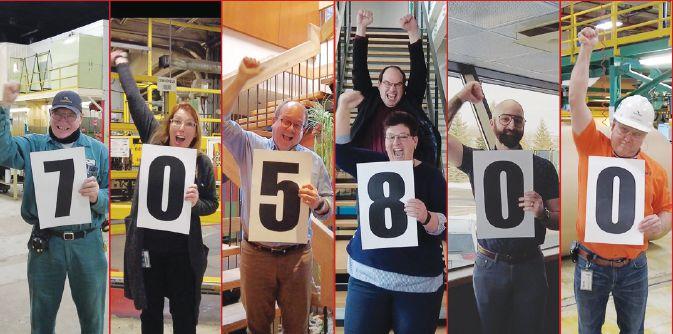
The Cascades units in Kingsey Falls, Victoriaville and Drummondville donated $705,800 to Centraide Centre du Québec. This donation exceeded last year’s amount by $77,200, surpassing the $700,000 mark for the first time.

Domtar Espanola Mill recently assisted and provided the Espanola Regional Hospital & Health Centre with a $6,000 donation to cover the cost of two massage chairs for hospital staff.
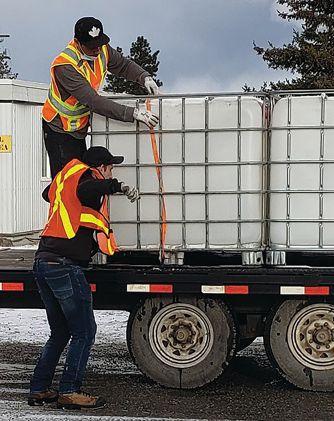
The 2021 wildfire season started the conversation between Ktunaxa Nation and Paper Excellence’s Skookumchuck Pulp mill about emergency support. Mill staff offered a small number of totes that hold water. The totes worked well, so the Ktunaxa communities requested for more. This winter, a total of 40 totes were donated to all four Ktunaxa communities.
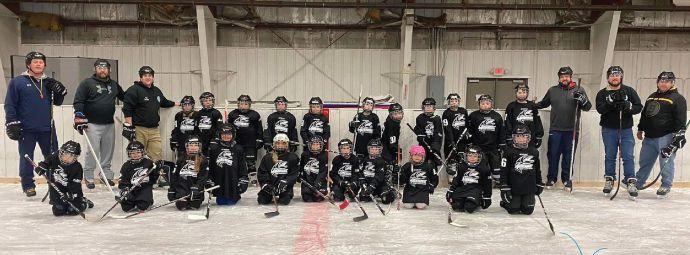
Twin Rivers Paper Company recently supported the Saint John Valley Youth Hockey Association, an organization started by a group of community members. To help this community organization, the company provided funds for youth hockey gear for 25 children participating in the program.
Let us help you share your successes. Tag @PulpPaperCanada or use #PPCGivingBack on Facebook or Twitter, or send an email to the editor at srayghosh@annexbusinessmedia.com. We’d love to hear from you!
Photo: Domtar Espanola
Photo: Cascades Facebook
Photo: Twin Rivers Paper Company Facebook
Photo: Paper Excellence Facebook
It’s been a rough two years, and mental health is in the spotlight more than ever.
What if there was a way to measure the mental health of your employees, giving them practical advice while at the same time providing your leaders with a powerful dashboard?
That’s what the Psychologically Safe Workplace Awards do, powered by Howatt HR’s Mental Fitness Index (MFI). This program is far more than a competition – they provide leaders with credible data, insights to make a real difference.
FIND OUT MORE AT WWW.PSYCHOLOGICALLYSAFEWORKPLACE.COM
Partnered with: