
Strength is a combination of fiber quality, fiber treatment, machine parameters, and chemicals. Kemira provides a broad portfolio of dry strength additives that give you the flexibility to optimize your production and cost. Turn improved strength into value through fiber and chemical savings, product quality upgrades, increased productivity, and basis weight reduction.
KEMIRA.COM


Change is happening in the forest products sector. The global events of this past year in particular – the toll of COVID-19, the pandemic’s impact on physical and mental health, and the momentum of the Black Lives Matter movement among them – have led to difficult and necessary workplace conversations across all industries, including this one.
From a gender diversity standpoint, it’s been amazing to watch the transformation in the forest products sector. In 2016, Statistics Canada reported that women comprised 17 per cent of the forestry workforce. In an effort to increase the visibility of these roles, Canadian Forest Industries, Pulp & Paper Canada and Canadian Biomass have been regularly sharing stories on the sector’s efforts to recruit, retain and advance women for the past three years.
During this short time, we’ve seen the development of a government- and industry-led national plan for gender equity, which has since implemented several sector-wide initiatives, such as detailed data collection on demographics and the creation of an online resource hub.

We’ve witnessed the work of organizations including the Forest Products Association of Canada (FPAC) with its #TakeYourPlace campaign highlighting women in the industry, and the Alberta Forest Products Association with its own #WomenInForestry project recognizing women working in that province.
We’ve reported on industry leaders such as Cascades and Kruger Products earning parity certification from the Women in Governance organization for their workplace policies that support career growth for women. We’ve watched the conversations expand to show how men play a role in women’s success, and how hiring more women in forestry makes good business sense.
We’ve seen the community rallying in large numbers to discuss these topics at industry conferences – including our very own inaugural Women in Forestry Virtual Summit, held Mar. 9. A total of 883 people registered for that event to hear leaders speak on gender equity, diversity and inclusion in the sector. (It was a compelling event for all – if you missed it, register for free to watch the recordings at WomenInForestry.ca.)
The progress is palpable: in July 2019, an Osler report showed that women now hold 23 per cent of director positions at TSX-listed companies in the forest products and paper sector – in 2016, that number was five per cent.)
Knowing how far forestry has come, even just in the past few years, gives us cause to celebrate. But we must acknowledge there is still a lot of work to do concerning diversity, equity and inclusion. The fact remains that women are underrepresented in the industry, as are marginalized groups such as Indigenous people (comprising seven per cent of the total workforce, inclusive of women) and Black people (comprising five per cent, inclusive of women).
They’re also paid less. Data collected by the steering committee of the Gender Equity in Forestry National Action Plan shows that women in the forestry sector earn, on average, less than men for the same job – and, in eight of the top 20 forestry occupations, the spread is greater than 25 per cent.
In an interview for WomenInForestry.ca this year, Jenna Strachan, Indigenous relations superintendent at Mercer’s Peace River mill, shared with me some wise words from a former mentor – that “intention is irrelevant.”
“I didn’t understand completely what he meant at the time,” she says. “But I think about it often and understand now that although good intentions are a great start, what matters the most is the impact.”
This advice applies across your organization – it’s not just about talent. The participating companies in our Safest Mill in Canada ranking (p. 12), for example, turned intentions into actions that had great impact on their workplace culture. Congratulations to them!
READER SERVICE
Print and digital subscription inquires or changes, please contact Barb Adelt, Audience Development Manager
Tel: (416) 510-5184 Fax: (416) 510-6875
Email: badelt@annexbusinessmedia.com
Mail: 111 Gordon Baker Rd., Suite 400, Toronto, ON M2H 3R1
Editor KRISTINA URQUHART 416-510-5143 kurquhart@annexbusinessmedia.com
National Accounts Manager LAURA GOODWIN 289-928-8543 lgoodwin@annexbusinessmedia.com
Group Publisher TODD HUMBER 416-510-5248 thumber@annexbusinessmedia.com
COO
SCOTT JAMIESON 519-429-5180 sjamieson@annexbusinessmedia.com
EDITORIAL/SALES OFFICES
111 Gordon Baker Rd., Suite 400, Toronto, ON M2H 3R1 Phone: 416-442-5600
PRODUCTION
Media Designer EMILY SUN
Account Coordinator BROOKLYN VAN DYK bvandyk@annexbusinessmedia.com
Printed in Canada ISSN 0316-4004 (Print) ISSN 1923-3515 (Digital)
PUBLICATION MAIL AGREEMENT #40065710
SUBSCRIPTION RATES
Canada $57.50 - 1 year; $92.50 - 2 year
USA $139.00 CDN per year Overseas - $150.00 CDN per year
Occasionally, Pulp & Paper Canada will mail information on behalf of industry related groups whose products and services we believe may be of interest to you. If you prefer not to receive this information, please contact our circulation department in any of the four ways listed above.
Annex Privacy Office privacy@annexbusinessmedia.com Tel: 800-668-2374
The editors have made every reasonable effort to provide accurate and authoritative information but they assume no liability for the accuracy or completeness of the text or its fitness for any particular purpose.
All rights reserved. The contents of this publication may not be reproduced in part or in full without the publisher’s written permission © Annex Business Media.
Sustaining member, Pulp and Paper Technical Association of Canada; Member, Alliance for Audited Media.


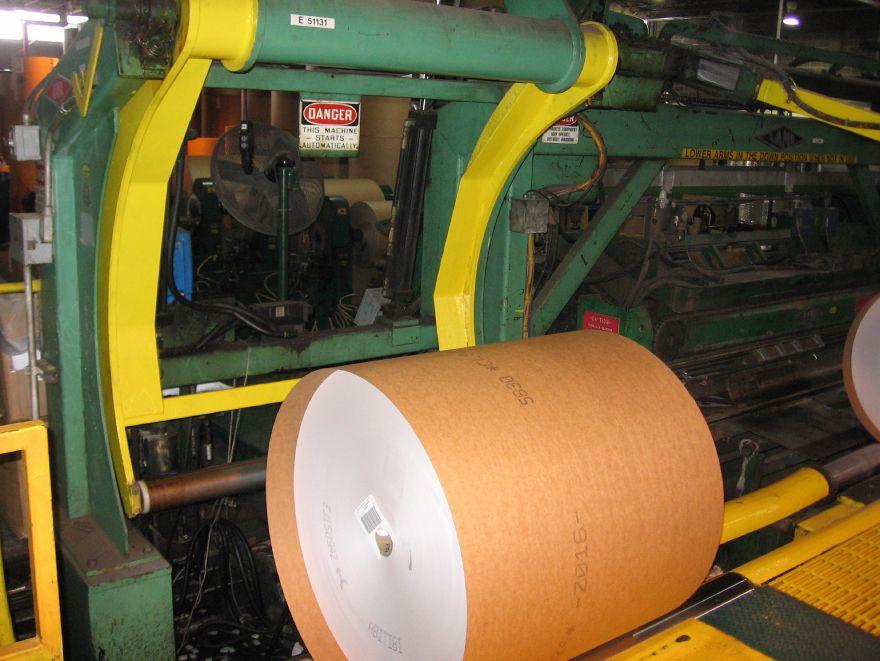
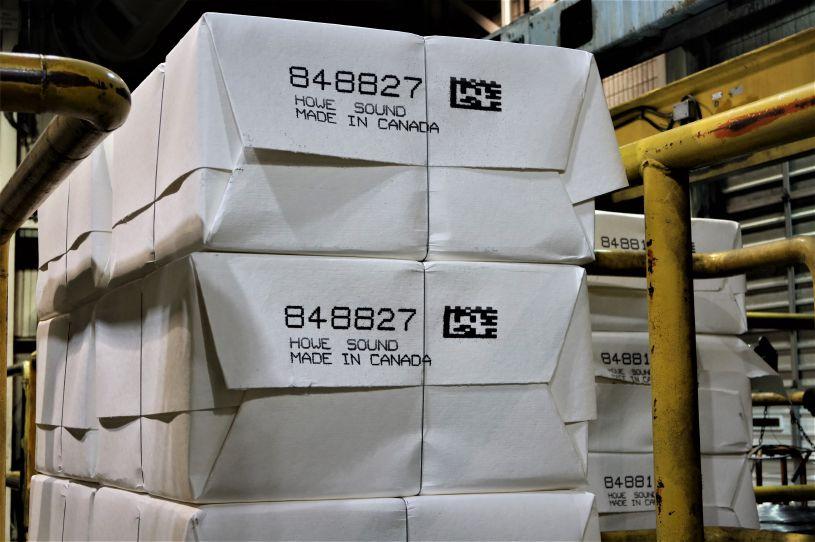
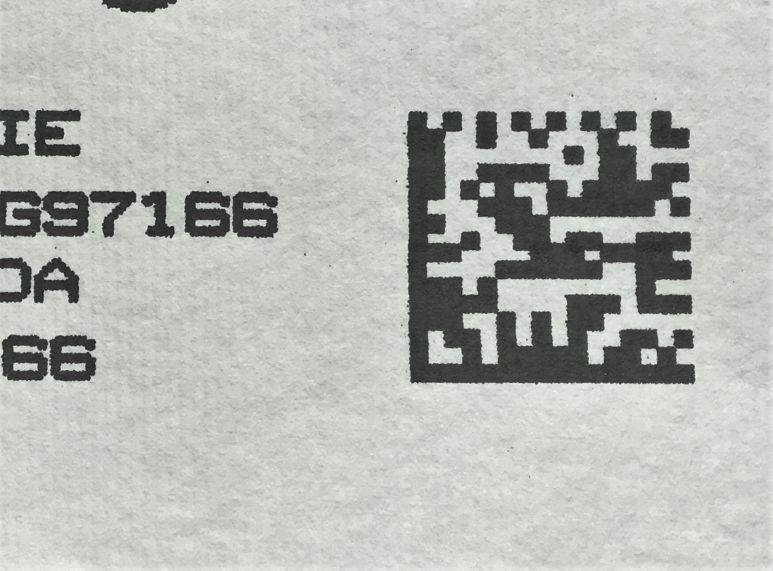
• HIGH QUALITY GRAPHICS & BAR CODES
• PRINTED WITH LOW COST WATER BASED INKS THAT USE FOOD GRADE ADDITIVES
Complete systems with:
• Mechanical
• Electrical
• Controls – Windows based with diagnostics
• Available ControlLogix remote modules
• Robust Printers
• Bar Code Scanners
No need to use delicate high resolution printers and expensive specialty inks.

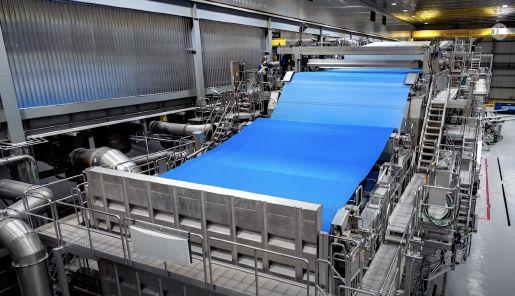
Kruger starts up $575M tissue plant, announces extra capacity
KP Tissue and Kruger Products have successfully started up their new $575-million tissue manufacturing plant in Brompton, Que.
Construction is complete on the new Sherbrooke manufacturing facility, which contains Canada’s largest and most modern through-air-dry (TAD) tissue machine. The new facility also comprises three converting lines, all of which have been successfully commissioned.
Kruger Products also announced an additional investment of $240 million to expand the Sherbrooke operation with new production lines and to construct another tissue manufacturing facility over the next three years. This investment is supported by $165 million in loans by the Quebec government through Investissement Québec.
“Considering the circumstances of the pandemic, it was an incredible feat to complete this massive project on time and on budget,” says Dino Bianco, CEO of Kruger Products, in a statement.
“On behalf of the entire Kruger Products team, I would like to extend a warm welcome and congratulations to the 180 new employees who have joined our team.”
Construction of the facility began in May 2019. At maturity, the TAD tissue machine will increase the company’s annual output by approximately 70,000 metric tonnes of bathroom tissue and paper towels for the Canadian and U.S. markets.
The additional capacity from the newly announced investment will add a bathroom tissue converting line to the existing Sherbrooke plant (called the BT Line), and build a new facility to house a light-dry-crepe (LDC) tissue machine and a facial tissue converting line (the FT Line).
Construction of the additional facility is anticipated to start in the summer of 2022 on a site adjacent to the Sherbrooke plant.
The BT Line and the FT Line will be commissioned in 2022 and 2023 respectively, while the LDC Machine is expected to start up a year later, in 2024.
LDC is one of the most widely used tissue-making technologies in the world. At maturity, the LDC Machine is expected to increase the company’s annual output by at least 30,000 MT. This project is also expected to result in the creation of 141 jobs, which will add to the 180 jobs already created by the previous TAD project.
The construction is expected to bring direct spending of about $110 million to the region and close to 410,000 person-hours for the construction of the new building and installation of the LDC Machine and two additional converting lines.
Catalyst’s Powell River paper mill to reopen Paper Excellence plans to restart Number 11 Paper Machine at Catalyst Powell River, a Paper Excellence company, on or around May 1.
In a statement, the company says the restart reflects the recent recovery in global paper markets and Paper Excellence’s commitment to the Powell River facility.
The machine was curtailed in the spring of 2020 after an external malware attack and the COVID-19 pandemic simultaneously impacted the mill’s paper production as well as global paper demand. A total of 200 jobs will return with the startup of the paper machine.
“This is long-awaited good news for Powell River,” says Patrick Corriveau, vice-president of paper and packaging at Paper Excellence.
“We deeply appreciate the patience shown by our employees. We know the extended curtailment had a significant impact on them, their families, our business partners and the greater community.”
Paper Excellence says it continues to be hopeful that improved global paper markets will enable it to restart the mill’s second paper machine later in 2021.

WestRock welcomed a new president and chief executive officer in March as Steven C. Voorhees stepped down from his position as president, CEO and director of the company for health reasons.
David B. Sewell succeeds Voorhees and has been appointed to the board of directors.
Sewell brings with him more than 25 years of commercial, marketing and general management experience. He joins WestRock from The Sherwin-Williams Company, the manufacturer and distributor of paint, coatings and related products, where he most recently served as president and chief operating officer responsible for global operating segments that generated $18.4 billion in sales.
Prior to joining Sherwin-Williams, Sewell spent 15 years at General Electric Company.
“David is a proven executive with a strong record of driving profitable growth, both organic and acquisitive, and building organizational capability that develops and nurtures excellent leadership and talent while driving a culture of equity and inclusion,” says John A. Luke, Jr., chair of WestRock’s board of directors, in a statement.
“Steve Voorhees has served WestRock with great dedication and distinction since its formation in 2015,” says Luke. “Under his leadership, the company has grown to $17.6 billion in sales through the execution of a growth strategy that has included the merger with MeadWestvaco, several strategic acquisitions and significant capital investments.
“He has had a lasting impact on our business strategy and the development of our values-driven culture. As a leader, and as a person, Steve is admired by the entire WestRock team, and the board wishes him and his family the very best.”
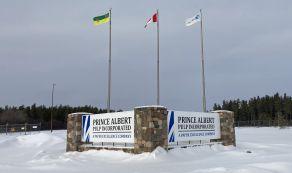
Paper Excellence invests over $600K in restart plan for Prince Albert pulp mill
Paper Excellence has invested more than $600,000 in engineering and consulting work focused on restarting the pulp mill in Prince Albert, Sask.
The company originally purchased the Prince Albert pulp mill in 2011. In a statement, Paper Excellence says it now plans to restart the facility as soon as possible now that the non-compete agreement with the former owner expired in March. In mid-January, the company installed signs at the mill entrance to signal its efforts to restart.
“We plan to replace the entire fibre line from the digester to the last bleaching stage. This will replace the heart of the mill and let us take full advantage of the existing recovery boiler which is one of the most modern in Canada,” says Carlo Dal Monte, vicepresident, energy and business development at Paper Excellence. “While this is an expensive strategy, it will simplify construction and minimize commissioning risks. Once we are up and running, we will also realize a significant improvement in product quality, operating costs and environmental performance compared to the mill that was shut down in 2006.”
In 2019, the company began working on the start-up plan for the mill, which is expected to cost about $550 million. Currently, Paper Excellence is carrying out engineering work for the new equipment and completing a detailed evaluation of the existing equipment that will be refurbished.
The company is meeting with the Saskatchewan government and 16 local Indigenous groups to discuss shared funding, project timelines and investment opportunities. Restarting the mill would add an annual capacity of 340,000 tonnes of NBSK to the company’s portfolio, as well as over 200 jobs.
A mothballed pulp mill in Port Alice, B.C. is undergoing a de-risking and environmental monitoring process so it can be “recycled.”
Dangerous chemicals will be removed or properly stored, equipment moved and structural repairs made to the facilities.
The Neucel Specialty Cellulose mill, which once produced sulphite dissolving wood pulp, is owned by Chinese company Fulida Holdings and owes a total of $272 million to creditors.
Price Waterhouse Coopers is overseeing the receivership and site cleanup. There is no indication about how the site will be used in the future.
The province of Nova Scotia has provided an update on the cleanup process for the waters of Boat Harbour, adjacent to the shuttered Northern Pulp.
Nova Scotia Lands will be responsible for removing all sludge material from the effluent treatment facility’s aeration stabilization basins.
The cleanup will begin once the federal environmental assessment process is complete and approved. The approval is expected in 2021, with the cleanup to start in 2022. The province is now working on a plan to dredge and dispose of the sludge to ensure the job is completed on schedule. The additional sludge removal is expected to cost $19 million.
Northern Pulp was originally the party responsible for removing the top layer of sludge, down to the level of a 1997 baseline survey.
The kraft pulp mill was ordered by the Minister of Environment and Climate Change to develop a decommissioning plan with details regarding the removal and disposal of all solid waste located within the open ditches, settling basins and aeration basins by Aug. 1, 2020.
The company, owned by Paper Excellence, was provided an extension to Feb. 28 but, due to technology delays, had not yet submitted the plan at the time of this writing. The province says the slowdown could in turn delay its commitments as to when the remediation project will be complete, so it will handle the removal process from here on out.
Domtar Corporation has completed the sale of its personal care business to affiliates of American Industrial Partners for US$920 million.
The company announced the sale at the beginning of 2021.
“The sale of the Personal Care business is part of our ongoing effort to strategically optimize our portfolio and allows us to strengthen our balance sheet, enhance liquidity and buy back shares,” says John D. Williams, president and chief executive officer, in a statement.
“I want to thank the employees for their hard work and dedication throughout the process, and for their contributions over the years.”
Michael Fagan, former president of Domtar Personal Care, has departed Domtar to continue leading the personal care business.
Port Hawkesbury Paper (PHP) has funded the installation of two meteorological towers on the proposed project site for a 112-megawatt wind farm in Nova Scotia.
PHP first announced in December 2019 that it was conducting due diligence alongside Canada Infrastructure Bank (CIB) at the site in Guysborough County to see if the project is financially viable.
These two towers will collect vital wind data over the next 12 months, which will serve to verify the wind resource over the project site and facilitate project design in terms of potential turbine distribution and arrangement.
Positive results from the due diligence process could enable construction to begin in 2022, subject to all appropriate legislative and regulatory requirements.
When built, this project would be the largest wind farm in Nova Scotia and supply green power directly to PHP. Construction of the farm would generate local employment and significant ongoing tax revenues in the province.
Should the project be found viable, it may lead to a CIB investment in the project, subject to all standard due diligence and decision making.
PHP is the largest energy consumer on the Nova Scotia grid, representing 10 per cent of the province’s demands.
Cariboo Pulp & Paper receives $135K to move pulp fibre
Cariboo Pulp & Paper will receive a grant from the Forest Enhancement Society of BC (FESBC) to use fibre that would otherwise be burned as slash.
The mill, located in Quesnel, B.C., will get $135,000 from FESBC’s $3-million round of funding to transport about 9,122 cubic metres of low-value pulp fibre in the Cariboo region back to the mill to manufacture pulp. This low-value fibre is normally uneconomical to move.
The latest round of funding supports 15 different projects in different regions of the province, with individual grant amounts ranging from $6,000 to $663,748.
The projects will allow about 250,000 cubic metres of post-harvest waste wood to be used in the production of pulp, wood pellets, electricity and compost for soil remediation.
Cascades featured as gender diversity leader in manufacturing report
Cascades is among five Ontario manufacturers profiled for their commitment to gender diversity in a new report by the Trillium Network for Advanced Manufacturing.
FPAC announces support of netzero advisory board
The federal government has announced the members of the new Net-Zero Advisory Board, which will identify the steps Canada needs to take to achieve net-zero emissions by 2050.
Members, who represent the scientific, academic, Indigenous, labour relations, cleantech/energy and climate change/environment spheres, will serve on a part-time basis for a renewable term of up to three years. They will engage with stakeholders, Indigenous people, youth, experts and the public on how the country will achieve its net-zero emissions goal.
In a statement, the Forest Products Association of Canada (FPAC) says it welcomes the non-partisan appointments made by Environment and Climate Change Minister Jonathan Wilkinson.
“Canada’s forest sector was one of the few industries that supported the Kyoto

The Gender Diversity and Ontario Manufacturing: Lessons from Five Leading Companies report presents case studies that show a concentrated effort on increasing gender diversity helps companies attract and retain top talent.
These cases also set a benchmark for other companies as they look to expand upon their supports for hiring, retaining and advancing women.
The authors found that improving diversity and inclusion is the result of conscious and intentional efforts made by company leaders at these five companies, and involves multiple initiatives as part of a comprehensive strategy.
For Cascades, which was awarded bronze-level gender parity certification from Women in Governance in 2019, diversity and inclusion initiatives have included identifying female employees to be trained in leadership programs, and offering diversity and bias training to recruitment teams.
Among other efforts, Cascades attracts more female applicants by using “feminine-coded” language to ensure women know the company is committed to diversity and inclusion.
The packaging manufacturer also tracks data about who occupies the roles at all levels of its organization, which helps to ensure women are in contention for leadership roles.
Looking to make workforce changes in your operation? Read Lead the Change: The Competitive Advantage of Gender Diversity and Inclusion by Kelly L. Cooper. The book illustrates why senior leaders should consider gender diversity a business imperative. Find the book at centreforsocialintelligence.ca/lead-the-change
Protocol, we were an early adopter of Paris Agreement commitments, and we will be there again to help power the drive to a net-zero carbon Canadian economy by 2050,” says Derek Nighbor, president of FPAC.
“We have the unique opportunity to go beyond net-zero and can do this by:
• Sequestering carbon and reducing land-based emissions through climate smart forestry and sustainably managing forests in the face of worsening pest, drought, and catastrophic fire risks;
• Locking carbon into long-lived wood products and innovative wood building construction;
• Building on our successful track record of reducing greenhouse gas emissions at our mills. Carbon emissions at Canadian forest product mills have been reduced by nearly 70 per cent since the early 1990s and we can do more;
• Using what would otherwise be wood waste to further green our operations and providing lower-carbon materials and biofuels to help other industries decarbonize.
“Canada’s working forests and Canadian-made forest products can help us fight climate change and drive post-pandemic economic recovery. We look forward to supporting the work of the Net-Zero Advisory Board so we can unlock both the environmental and economic potential of our sector.”
The PACWEST Technical Conference, normally held annually in Jasper, Alta. or Whistler, B.C., is going virtual for 2021.
The conference hasn’t convened since 2019, after being cancelled altogether in 2020 due to COVID-19 restrictions.
The event, staged by the International Brotherhood of Migratory Peddlers (IBMP), will be spread out on dates across several weeks rather than as one intensive conference. Roundtables, technical sessions and the conference wrap-up and awards ceremony will be hosted online from May 18 to Jun. 8.
Technical sessions tend to focus on emerging technologies, machine efficiency, mechanical pulping, the fibre line, bioproducts and energy, and innovation and research. Register and find more up-todate information at pacwestconference.ca.


Two Sides North America announces new president Kathi Rowzie, who has been running the day-to-day operations of Two Sides since March 2020, has assumed the role of president.
Phil Riebel, who started Two Sides North America nearly 10 years ago, retired Apr. 1.
Two Sides counts among its members forestry, pulp, paper, paper-based packaging, chemicals and inks, pre-press, press, finishing, printing, publishing, envelopes and postal operations companies.
“Everyone who has worked with Phil over the years knows him as a trusted colleague and passionate advocate for the sustainability of print, paper and paperbased packaging,” says Jeff Hester, chair of the Two Sides North America board of directors, in a statement.
“Our industry has benefitted enormously from his efforts to build Two Sides into an organization whose voice is recognized and respected across the paper value chain and among many of North America’s leading corporations. As Phil moves on from his Two Sides role to pursue other opportunities within the industry, I want to thank him on behalf of the board of directors for his dedicated service to our Two Sides members and our industry.”
“We also want to express our enthusiastic support for Kathi as she steps into her expanded role,” says Bill Rojack, vicechair of the Two Sides board of directors.
Rowzie’s career spans more than 30 years in corporate and consulting roles with Fortune 500 companies, including extensive experience in the paper industry and with industry customers.
“Kathi continues to bring new ideas and fresh perspectives that will be critically important as increasing consumer, government and ENGO attention to the sustainability of print and paper products makes Two Sides’ work more important than ever,” Hester adds. “The board looks forward to working with her as we seek to take Two Sides to the next level.”

Sylvain Girard
Resolute Forest Products appointed Sylvain A. Girard as senior vicepresident and chief financial officer as of Mar. 2.
His term coincides with the appointment of Remi G. Lalonde, Resolute’s former senior vice-president and chief financial officer, as the company’s new president
and chief executive officer. Girard will report to Lalonde.
Girard joins the company with 25 years of global financial and leadership experience, including nearly 20 years tenure in chief financial officer roles.
He most recently served as executive vice-president and chief financial officer of SNC-Lavalin Group. Previously, he held senior executive positions in finance with SNC-Lavalin, following 22 years with General Electric Company, where he held a number of positions.
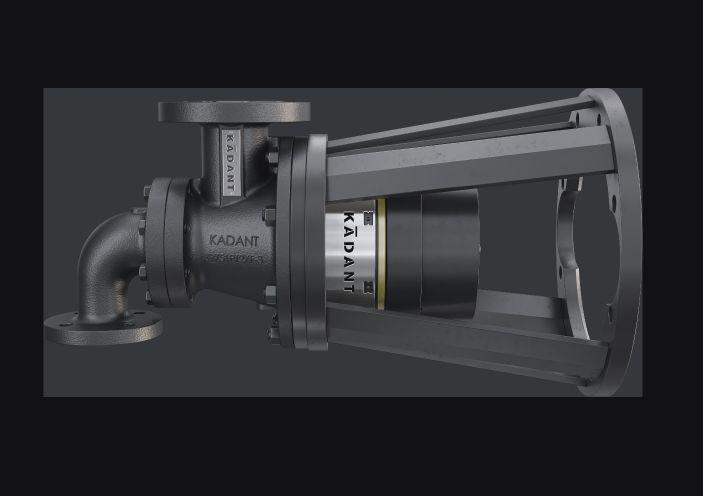
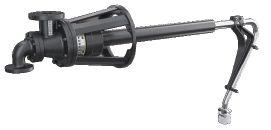
The PT2X™ rotary joint and stationary syphon system is designed exclusively for high-performance paper dryers. Its high-visibility seal wear indicator, protective shroud, and optional 200 psig capability enables dryer sections to run longer and faster.

By FPInnovations
You think you’re the only one who’s had issues measuring wood chip properties? Well, you’re not.
On-line and real-time measurement of wood chip properties — whether chemical or physical — at pulp mills has been a challenge. This is due to the complex nature of the material itself as well as the harsh industrial conditions in which it’s found.
Even though wood fibre represents a substantial expense for a pulp mill, surprisingly, little had been done in the industry worldwide to characterize wood fibre properties at the beginning of the manufacturing process. Up until recently, when FPInnovations decided that it’s time to do something about it.
Why is measuring wood chip properties so important?
Frequent measurement of wood chip properties at a low-cost could benefit the industry in many ways:
• Develop new and advanced process control strategies to optimize operations (digester, refiner and bleach plant). This would maximize the value of the fibre, minimize waste and keep production volumes and product quality on target.
• Facilitate process troubleshooting when issues arise in a mill (e.g., accelerated corrosion, pitch depositions, kappa variability, etc.).
• Help better manage chip piles through enhanced sorting and seasoning.
• Help better assess the quality and value of purchased supplies.
Over the years, a number of sensors that specifically measure biomass moisture content have appeared on the market. They mainly used ionizing radiation (X-rays and gamma rays), microwaves or near-infrared (NIR) waves.
Among NIR sensors, two stand out. One type employs only a few wavelengths, and the other, a wide spectrum, which is a method known as NIR spectroscopy.
The NIR spectrum is like a fingerprint. It carries a plethora of physical and chemical information about the material
investigated. NIR is also fast, it does not require contact with the material, and it does not present any health or safety hazards. This NIR spectroscopy sensor also offers a major advantage: in addition to moisture content, it can simultaneously measure a wide array of wood properties.
Based on the principle of NIR spectroscopy, FPInnovations’ Control group developed a new Biomass Sensor that is able to identify and characterize a multitude of wood chip properties, on-line and in realtime. The properties examined include moisture content, brightness, extractives, lignin content and carbohydrates content.
To achieve this, researchers created a database containing thousands of wood chip spectra for various commercial species. They also developed models that relate the spectral features to the properties of interest.
When the Biomass Sensor collects a new spectrum at the mill, the models are used to compare its features to those listed in the spectral database, allowing the sensor to make accurate predictions about the properties of the chips.
The Biomass Sensor can be easily and conveniently installed over a conveyor belt without any modifications.
Even though technology has been commercialized by FPInnovations’ licensee FITNIR Analyzers Inc., FPInnovations continues to add new capabilities to the Biomass Sensor and to leverage it in innovative and exciting applications.
For example, a new feed-rate control strategy for continuous digesters used the moisture content measurement of the Biomass Sensor to adjust based on the dry mass of the chips. This strategy helped keep the digester production rate on target and led to an overall increase in production.
The Biomass Sensor was also used to determine hog fuel moisture content and calorific value on the feed to a power boiler. This helped minimize power boiler instability caused by combustion of poor-quality hog fuel, and ultimately, avoid power boiler black outs. These two novel applications are only the beginning
of a new series of innovations that will be made possible by the continuous development of this technology.
In the future, on-line measurement of lignin content could also be used in a control strategy for continuous digesters to reduce Kappa variability. Chip brightness could potentially be used to optimize operations in the bleach plant for TMP mills. The determination of carbohydrates content could help optimize operations in bio-refineries and dissolved pulp mills. Knowledge of chip extractives content could possible help minimize issues such as pitch depositions and accelerated corrosion, and can also be of interest for the valorization of byproducts.
These new measurements could also find outlets in wood yard management by better assessing the quality and value of the supply, sorting the chips according to their properties, and gaining better control over the seasoning process. The possibilities are endless.
Through the development of the Biomass Sensor, FPInnovations has demonstrated that NIR spectroscopy can be used to perform reliable measurements of biomass properties in harsh industrial environments.
The Biomass Sensor has been used for several years in multiple mills in Canada and abroad to provide timely, reliable, and accurate real-time on-line measurements. These measurements, in turn, have been employed in process control strategies and have driven decision-making, bringing direct benefits to mill operations.
This represents the beginning of a new generation of sensors for the pulp and paper industry that are expected to significantly enhance fibre utilization and fibreline operations, thereby leading to significant economies.
For more information, contact Guillaume Hans, senior scientist at FPInnovations, at guillaume.hans@fpinnovations.ca. PPC
FPInnovations is a not-for-profit organization that supports the Canadian forest sector’s global competitiveness. fpinnovations.ca
TUESDAY, MAY 4
10AM – 12PM
WEDNESDAY, MAY 5 10AM – 12PM






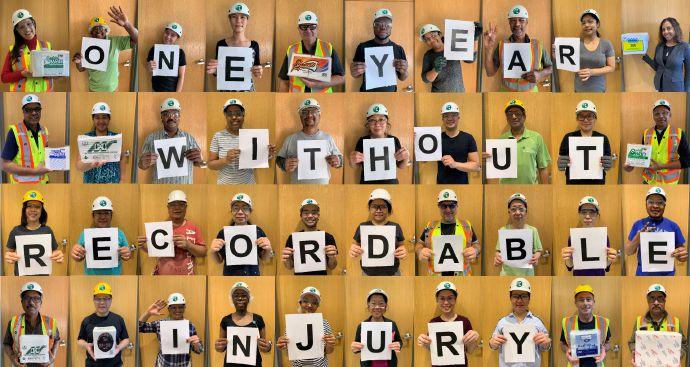
It was an unprecedented year in safety amid a global pandemic. On top of producing critical goods for COVID-19, mills implemented more stringent policies to curb the spread of infections, all the while safely producing essential goods needed by frontline workers, industries and consumers. That, coupled with all the industry’s regular safety protocols, arguably make this the most significant year in mill safety since
Pulp & Paper Canada started benchmarking performance in 1926. The annual Safest Mill in Canada contest recognizes the outstanding safety records of participating mills by ranking total recordable incidents (mill frequency) from lowest to highest. In the event of ties, mills are ordered by the most to least worker hours. Congratulations to all participating mills for their safety success in a very challenging year.
Safety in a mill is serious business, but COVID-19 made it critical. From stepping up sanitization to doubling down on distancing, mills share how they fared during the year no one expected
Compiled by Kristina Urquhart
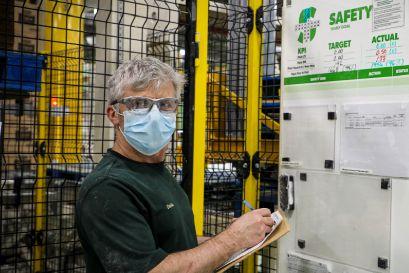
The way all employees showed resilience and a constant commitment to our customers by taking extra care at home, in public and at work to ensure we helped prevent the spread of COVID-19, protected our communities, and made high-quality household tissue products that Canadian families needed.
– Chad Paul, corporate health and safety manager, Irving Consumer Products
}“Seeing all the precautions come together resulting in safe completion of our annual two-week shutdown without any team members, contractors, or visitors being exposed to COVID-19.”
– Travis Shalapay, health and safety team lead, AlbertaPacific Forest Industries
“Completing the calendar year without recordable injury with over than 250,000 hours worked and no COVID-19 positive case in our facility.”
– Katiucia Magalhaes, health and safety coordinator, Scarborough Converting Facility, Kruger Products
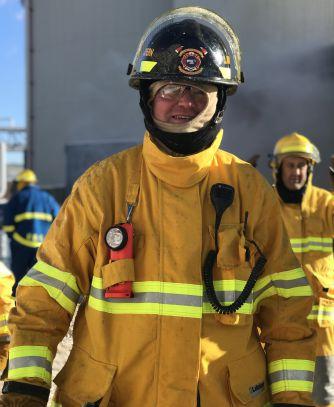
The co-captain of Port Hawkesbury Paper’s Emergency Response Team.
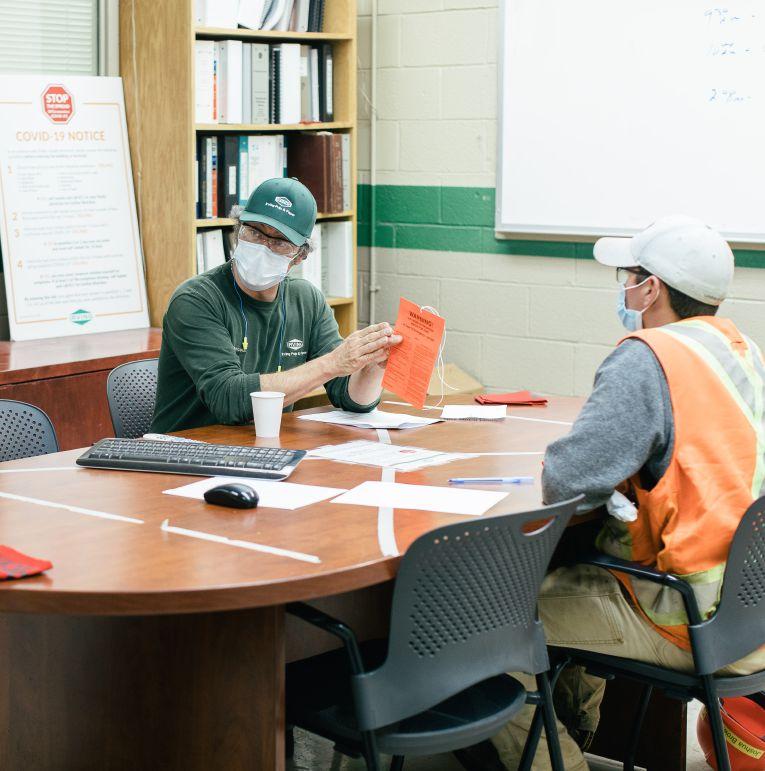
Are there any COVID-19
protocols that you anticipate keeping in place once the pandemic is over?
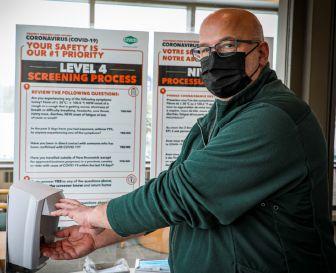
“We already had daily cleaning service in our facility but we made available PPE, tools and products for employees to disinfect machines and tables before using them. We want to keep those [items] available at the workplace.”
– Katiucia Magalhaes, health and safety coordinator, Scarborough Converting Facility, Kruger Products
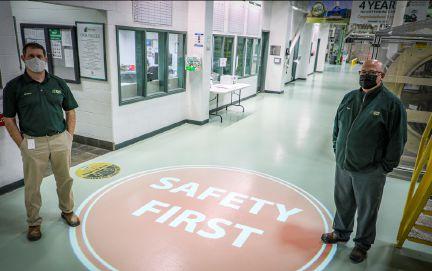
reminders
“Brantford Mill will keep its cleaning and sanitizing work areas in place once the pandemic is over. This will become part of our standard work.”
– Stan Boylan, health and safety coordinator, Sonoco Canada
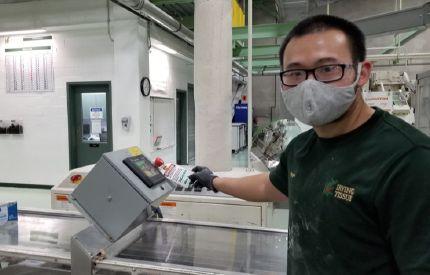
“Our focus on mental wellness and physical fitness. We will continue to support healthy habits like exercise, spending time with loved ones and seeking professional help if needed to cope with the added stress brought by the pandemic. We will also continue to communicate the benefits of washing hands during high-risk periods like flu season, employees screening themselves for symptoms of illnesses that could be passed on to their co-workers and staying home if employees are sick.”
– Chad Paul, corporate health and safety manager, Irving Consumer Products
A look at new approaches that can be used to automate safety in pulp and paper mills
By Treena Hein
While automation has been transforming manufacturing plants for decades, automation of safety is now coming into its own. By automating paper-based and manual safety-related processes using a variety of technologies and approaches, workers in pulp and paper mills are much better protected. And, because they save time, these automated approaches also boost plant productivity. Here are the current broad trends in safety automation, along with a glance to new technologies and future outlook, from some leading industry experts.
Safety in pulp and paper manufacturing used to be more focused on manual “point solutions,” where, for example, the safety of each machine is handled separately, explains Pierre Van Neste, global director of sales, plant and personnel safety and risk reduction software at Honeywell Process Solutions.
“Individual machines, safety training, personal protective equipment, etc. – handling these things individually is inefficient and involves silos of data that are disconnected, so it’s very difficult to access and analyze the data,” he says. “Now it’s becoming common practice to have most or all aspects of worker safety integrated with overall plant digitization. The growth in understanding of the power of integrated solutions has been slow across manufacturing, but it’s coming along now.”
Chris Morgan and Eric Haapamaki, applications engineers at Sudbury, Ontario-based Ionic Mechatronics, are also seeing increasing uptake of integrated safety solutions. “We’ve been doing presentations about this for over 10 years,” says
Haapamaki, “and now, safety analysis and implementation of integrated systems is 25 per cent of our business.”
Van Neste says how safety can be integrated with equipment assets, workforce management and site security. Employee badges (employing radio-frequency identification and/or other technologies) help ensure only authorized personnel are on site, but the integrated system also validates that the correct individuals are “safe” to work in a given area of the plant.
“With automated speed monitoring on the drive, the winder is automatically slowed or stopped if it’s going too fast,” says Morgan.
“If the required certification is not upto-date for a particular worker, the system will simply not allow entry,” Van Neste says. “Before such a system is put in place, there was either an inefficient paper-based system and/or siloed computer records where, for example, the dates for which given employees needed to do recertification courses were kept, and hopefully it was all accurate.”
It has also been left to workers to do proper lockout before approaching a machine, which has led to solutions to automate the process. “From my observations over the years, proper lockout takes time and it’s very rare that all procedures are followed, such as checking that there is no voltage running to that machine,” Morgan says.
“Everyone is relying on the worker to do things correctly, and we know that if procedures take a lot of time, things will get skipped even if there is a safety risk.
If you leave a situation to procedure, an accident will happen at some point.”
Ionic now offers an automated remote lockout system called SafeBox where a worker or supervisor requests entry into a given area and the system does the lockout, saving time and ensuring better safety.
Another way safety is being automated involves virtual reality (VR) technology, explains James Findlay, solution consultant at Rockwell Automation.
“We offer several VR systems such as Vuforia with our partner PTC that allow new workers and contract workers to understand plant layout and safety hazards before they arrive onsite,” he explains.
“This technology has been used in aerospace industries for years and it’s starting to come into other sectors. Then, when workers are onsite, we can switch to an augmented reality system, where you can have a module, for example, where a worker who’s been there for years can virtually show a new worker in the real environment of the plant how to use a machine and do the overall job in the most safe and productive way.”
Integrated systems for contractor management also provide significant safety and efficiency value. “The contractor ahead of time shows that the workers who will arrive have the required certifications and access,” Van Neste says.
“The work permit is requested ahead of time, so it’s ready when the workers arrive.” This system also provides a significant bonus, he adds, of being able to track “time on tool.” That is – geolocation is used to verify that the contractor was working at the correct machine, and, at inspection, that the inspector was present.
Accounting for all workers at an emergency muster point is another situation where safety is being automated (and greatly enhanced) through integration with a digitized site management system.
Without such a system, a designated person must manually record who is or is not at their designated meeting place. Now, digital badge systems can account for everyone automatically and can immediately locate anyone not present, guide workers to a safe zone, and so on.
“It also provides that critical situational awareness for emergency operations,” says Van Neste. “Supervisors not on site can understand what is happening and make the best decisions. Without this, it can be very dangerous, for example, to send someone to try and find a worker who has not reported, and there have been many cases where workers get really frightened and leave the site but don’t tell anyone they’ve gone.” He adds there should be a cloud-based component to data management because computing power could be affected by the emergency.
Yet another area of safety automation is the use of IoT and sensors that prevent
dangerous situations in the first place. “An example in a paper plant would be speed monitoring on a paper winder,” says Morgan. “Changing the speed has traditionally been done by a worker with a selector switch but with automated speed monitoring on the drive, the winder is automatically slowed or stopped if it’s going too fast.”
Morgan and Haapamaki also point to new radar-based sensors now available that are not affected by dust, smoke, fluid spray and other airborne materials the way traditional light/laser sensors are affected. Haapamaki adds that if a given sensor system produces a lot of false trips, employers will simply rip it out.
And different types of worker-focused sensors are already in use. The badges offered by Honeywell, for example, automatically alert spot-on personnel when a worker hasn’t moved for a given period of time or has fallen. “In today’s world, we have an increasing number of lone worker situations,” adds Van Neste, “and an automated system can monitor for things like falls but also allow workers to alert the system quickly and easily by pressing a panic button.”
Tech also already exists, he says, to detect if a worker has donned all the pro-
tective equipment required, and developments related to ergonomics are coming (for example, alerting workers when they aren’t lifting an item properly). Biometrics are also already included in some automated workplace safety systems, which can detect if a worker’s heart rate has changed or stopped, for example. “These systems can respond to events such as a heart attack that happens to occur at work,” says Van Neste, “and therefore go beyond work-related safety issues.”
Looking forward, Findlay believes artificial intelligence (AI) systems will play a greater role in plant safety. Rockwell is working with PTC to develop AI systems that do predictive modelling, for example, to prevent spills, map out emergency responses and more.
In terms of what company leaders should do to start taking safety automation to the next level, Findlay notes that the amount of technology available can make the process feel overwhelming. “Contact a reputable company,” he advises, “one capable of doing a full analysis of your needs and that will create a suitable digital transformation plan.” PPC
Treena
based in Ontario.
By Martin Fairbank, Ph.D
At PaperWeek Canada 2021, held virtually this year, one wellattended technical program was focused on tissue. To set the scene, Brian McClay, a Canadian industry consultant, talked about market trends.
One of the effects of the COVID-19 pandemic on the tissue market, as people are spending more time at home, has been a shift in demand towards consumer grades of tissue rather than “away-fromhome” commercial products. This means there has been a higher demand for the premium and ultra-premium grades preferred by consumers, with high bulk and absorbency, which can only be made on certain newer tissue machines.
Another trend affecting all markets is a planned expansion of pulping capacity in China, as they implement their “dual circulation strategy.” This is a long-term plan to rely more on internal circulation (the domestic market) and less on external circulation (imports and exports).
China implemented a ban on recycled fibre imports to China as of Jan. 1, and consequently there is a mad scramble to implement integrated virgin pulp and paper facilities in China over the next few years. McClay listed 34 pulping projects that have recently been announced, for a total capacity of 14.6 million annual tonnes. Clearly a current lack of secure wood supply will prevent many of these proposed projects from coming to fruition, but many bamboo plantations have been recently established or are planned,
and because bamboo has a short growth cycle of only three to five years, there will definitely be a major disruption in pulp imports to China in the next few years.
Xuejun Zou, manager, chemical process at FPInnovations, confirmed the increasing use of bamboo pulp in Chinese tissue. About half of Chinese bamboo production is currently used for tissue, and most of the newest machines in China use a combination of bamboo and eucalyptus kraft pulp.
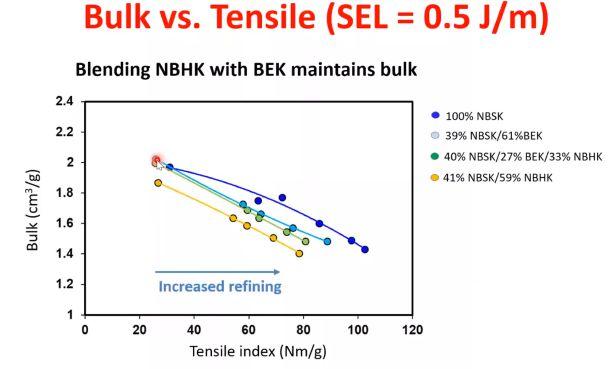
Zou looked at the effects of varying the pulp furnish in tissue produced on the FPInnovations pilot machine. The furnish was 40 per cent NBSK and the remaining 60 per cent either BEK (eucalyptus), NBSK (aspen) or a 50/50 mixture of these two. His results showed the 50/50 mixture performed as well as the BEK
in terms of strength and bulk, but the aspen pulp in the 50/50 mixture reduces tissue linting and dusting, which can be a major issue in converting plants (see slide below).
Tissue can be classified into four different quality levels: away-from-home, economy, premium and ultra-premium. The differences are mostly due to the amount of bulk, absorbency and softness, which are all related, since a bulkier sheet is generally both more absorbent and softer. There is usually a trade-off, however, between these desirable tissue properties and the sheet strength necessary for good runnability of both the tissue machine and the subsequent converting equipment.
A common element of several of the presentations was how to optimize tissue strength with a minimal effect on bulk, softness and absorbency. Five basic strategies were suggested:
• Choice of fibre and pulp types
• Structured tissue
• Soluble strength additives
• Pulp refining strategies
• Addition of cellulose nanofibres
Zhibin He, senior research scientist at the University of New Brunswick, briefed the audience on the relationships between fibre properties and tissue performance. It is well understood that long, flexible fibres such as northern softwood deliver tensile strength, whereas thicker-walled fibres such as southern softwood deliver bulk and absorbency because their lumens do not collapse as easily. Bulk and softness can also be achieved by using

hardwood fibres such as eucalyptus or acacia, due to their shorter, lower-diameter and flexible fibres.
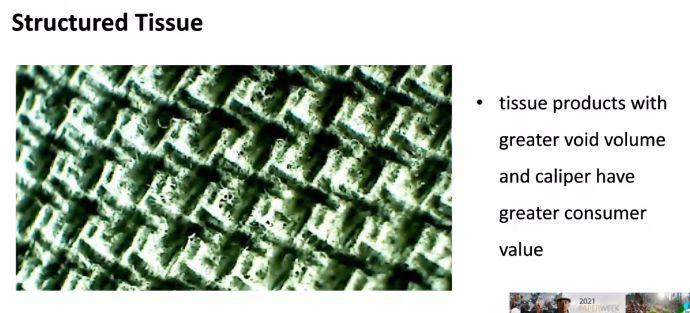
David Welsford, who works on field applications of new products for Solenis, talked about an upcoming development for high-bulk tissue. He showed an example of a high-bulk paper towel for mopping up kitchen spills, and part of a growing market in North America. Compared to conventional tissue machines where the Yankee dryer both presses the sheet and evaporates the water, the bulky structure of a structured tissue like the one illustrated is formed by the woven texture of the plastic mesh fabric, enabling a much higher caliper and water absorbency from the same basis weight of fibre.
The through-air drying (TAD) process dries the sheet through a combination of vacuum and hot air blown through the sheet, rather than pressing, which allows the structure applied by the fabric to be retained after drying. To remove the
sheet from the fabric without damaging this structure, a release agent is applied (typically four kilograms per tonne) to enable its removal without loss of bulk. Traditionally, this release agent is an oilbased product derived from petroleum.
One issue with the high temperatures involved is the tendency of this oil to produce a smoke or fog of atomized particles, which is a health and safety issue. A second issue is the discharge of this release agent into the waste stream, particularly in urban tissue mills that discharge to municipal treatment systems that have limits on fats, oils and greases (FOGs).
Solenis has been working on developing a safer and more sustainable product based on a bio-sourced and biodegradable product that meets all the other requirements of the application. Extremely promising field trials have been carried out. Some of the observed benefits include lower effluent toxicity, ability to meet municipal FOG requirements, 50 per cent lower dosage than conventional release agents, less machine room mist-
ing, reduced eye irritation, and a reduced requirement for adhesive between layers of tissue when making a multi-ply product. The product is not yet commercially available, because there is still more to be learned from trials, and production of the new release agent still needs to be brought up to commercial scale. It looks as if the product will be of great interest in certain niches of the tissue industry (see slides at left).
One method that has been shown to improve the bonding strength of tissue is the use of a wet-end additive such as cationic starch or spraying an uncharged hemicellulose product such as xyloglucan onto the sheet. Both these approaches will increase hydrogen bonding within the sheet and have little effect on the bulk.
Fibres are usually refined to maximize the surface area and the resultant fibre bonding, but too much refining can reduce the bulk. When using a mixture of pulps, it is helpful to refine the pulps separately, since hardwood and softwood pulps, for example, have different refining curves. It has also been shown that low-intensity refining, using gentler action with specially designed refiner plates, can develop externally fibrillated fibres, good for high surface area, with less damage to the lumens, preserving bulk.
Finally, nano-fibrillated cellulose (NFC) or cellulose filaments can be added to the furnish. This is a way of increasing the surface area of cellulose in the product, with the advantage that it is more easily retained than soluble additives. Recent results published in China showed that addition of NFC to bamboo pulp-based tissue handsheets showed an increase in tensile strength, bulk and water absorbency. As well as selecting appropriate paper machine technology, choosing the right fibres, refining strategies, and additives to meet the quality demands of their customers while minimizing the overall cost will become increasingly important to remain competitive in this field. PPC
Martin Fairbank has worked in the pulp and paper industry for over 30 years and is currently a consultant and technical writer.
By Étienne Bernier, Abdelaziz Hammache (corresponding author), Sara Eskandarifar and Serge Bédard Natural Resources Canada, CanmetENERGY, Industrial System Optimization Group
Abstract
In Canadian pulp and paper (P&P) mills, cogeneration relies heavily on backpressure steam turbines found in kraft mills and other mills with a large thermal load. However, cogeneration does not necessarily have to rely on steam turbines, especially in non-kraft mills. To explore this opportunity, CanmetENERGY conducted a research project to determine which types of cogeneration investments would allow additional electricity generation in these mills.
For many non-kraft P&P mills, one of the greatest opportunities is to extend cogeneration to thermal hosts that are too hot to be suitable for steam-based cogeneration, such as flash pulp dryers and tissue dryers. In these cases, a gas turbine can be used to produce electricity. The turbine exhaust can be sent directly to these dryers, and/or used to heat a thermal oil loop that redistributes the heat in the dryer and in other parts of the facility. It has been estimated that, just for the three Canadian Bleached Chemical Thermo-Mechanical Pulp (BCTMP) mills powered by high-CO2-intensity electricity, gas turbines could replace 50 MW of grid electricity using less fuel than a combined cycle. Organic Rankine Cycle cogeneration is also of interest in specific applications. Cogeneration is a highly energy-efficient approach to produce heat and power at the same time. However, cogeneration projects can increase reportable CO2 emissions, which can affect their long-term viability in the context of rising CO2 prices and falling off-peak electricity prices.
1. Introduction
Canada’s pulp and paper (P&P) mills face
the challenge of competing in shrinking global markets. As a result, it is imperative to reduce operating costs, including energy costs. In addition to numerous energysaving initiatives (Klaas, J.K. & al., 2009; Savulescu, L. & al., 2005, Martin, N. & al., 2000), mills are also seeking new revenue opportunities through the implementation of biorefinery processes (Maryam, M. & al., 2013; Rafione, T. & al., 2014), or the installation of green power capacity. Cogeneration systems meet the thermal needs of the mill and generates electricity as a by-product that is sold to a provincial utility, or used internally, thereby reducing the mill’s energy costs.
CanmetENERGY conducted a research project to determine what type of capital expenditures would be most likely to increase cogeneration in the P&P sector without the use of steam turbines. The main findings specific to mills with largescale steam systems, and kraft mills in particular, will be presented in Part III of this series, while the current article focuses on smaller systems. This research complements past findings about supervisory-level optimization of cogeneration systems in pulp mills, which were summarized in Part I of this series.
Cogeneration produces electricity and useful thermal energy more efficiently than producing the same amounts independently. Cogeneration with a topping cycle produces electricity at high temperature and supplies low-temperature heat to an industrial process. It requires a small fuel increment, relative to heat generation alone. Cogeneration with a bottoming cycle uses waste heat from an
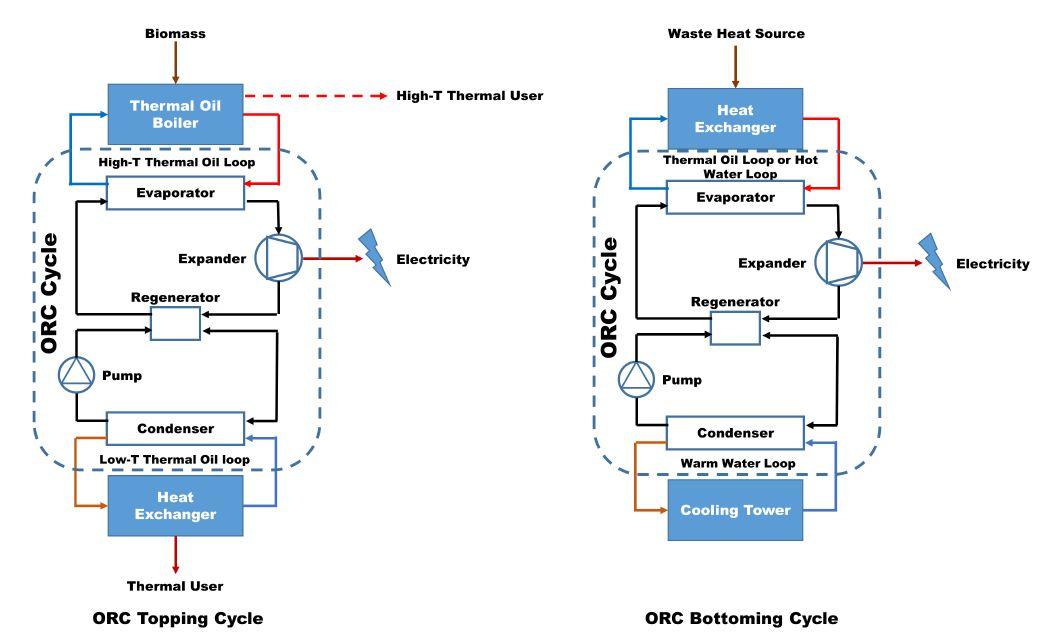
industrial process to produce electricity that is entirely free of CO2 emissions. Figure 1 shows examples of topping and bottoming configurations for an Organic Rankine Cycle (ORC). Note that topping cycles can also include backpressure steam turbines and gas turbines.
3. Increasing pulp and paper cogeneration through major investment projects
Since most cogeneration in P&P mills is currently provided by backpressure steam turbines, the potential for increasing cogeneration is limited to a few categories:
• Increase pressure ratios and steam temperature for steam turbines;
• Add gas turbines when the fuel is gaseous and/or the thermal host is hotter than 200°C;
• Explore alternative cogeneration cycles, such as ORC, for systems too small for more expensive steam systems; and
• Produce electricity from waste heat. During the screening stage of this research, several options were examined, such as condensing steam turbines, steam injection gas turbines and wet air gas turbines, to name a few, but were rejected because they were not really cogeneration (low overall efficiency), because they did not have suitable applications in this sector, or because they were immature technologies. Thus, in the following subsections, only the most promising options by plant type are explored. Cogeneration options for kraft pulp mills are covered in Part III of this series.
3.1 TMP and paper mills
Thermomechanical pulping mills (TMP) generally have steam systems, and most in
Canada have steam turbines, sometimes inherited from a pre-TMP life. These mills are unlikely to find an improvement path towards increased cogeneration. Indeed, from a heat integration perspective, TMP mills could generally be thermally selfsufficient through heat recovery (Ammara, R. & al., 2020, Ghezzaz, H., & al., 2020). There is hardly any true cogeneration in these mills, in the sense that the process steam supplied by the steam plant only reflects the suboptimal design/operation of the process heat recovery systems. For TMP mills without an existing turbine, it is generally not optimal to build a sophisticated cogeneration system, such as steam reheating and gasification combined cycles (presented in Part III of this series), when the effective heat requirement is low. Although applicable to TMP mills, these concepts would result in large power production islands without much true cogeneration.
TMP mills that have a hog fuel boiler but no steam turbine could consider an ORC topping cycle as a less-expensive alternative (see section 3.3). TMP or paper-only mills that have a natural gas (or biogas) boiler but no turbine could consider switching to a gas turbine with
a HRSG, or a reciprocating engine for electricity generation from biogas if the engine cooling requirements match a process hot water deficit. For most TMP mills, however, it seems more attractive to invest in heat recovery, with the long-term goal of achieving boiler-free operation after warm-up, especially in a context of increasing CO2 and biomass prices. The best case for cogeneration in this subsector can be made for paper-only mills, mills with plans to become a biorefinery, and mills that operate refiners intermittently due to variable wholesale electricity prices. In the latter case, cogeneration would be ramped up as TMP is ramped down, in order to take advantage of higher electricity prices while replacing the process heat supplied by the TMP. This situation may become more common in the future, as the increased penetration of intermittent wind and solar power, together with increased electrification of the economy, foster more industrial demand response programs.
Tissue mills and BCTMP mills have one important point in common, namely the use of natural gas drying equipment oper-
ating between 200°C and 500°C, which is too hot for steam turbine integration, but ideal for gas turbine integration, including the direct use of gas turbine exhaust as drying air. This represents the largest untapped cogeneration potential for these mills.
Tissue mills are usually equipped with a Yankee dryer and may have a throughair dryer (TAD). Andritz (Bauböck, J., 2006) has shown by simulation that four cogeneration configurations offer simple designs with adequate energy efficiency:
1. Exhaust gas from the gas turbine used in the Yankee dryer, no recirculation, the Yankee exhaust gas becomes combustion air for a very large boiler;
2. Exhaust gas from the gas turbine used in the Yankee dryer, partial recirculation, the Yankee exhaust gas becomes combustion air for a smaller boiler;
3. Exhaust gas from the gas turbine used in the TAD dryer, partial recirculation, the exhaust gas from the TAD is discharged to atmosphere;
4. Exhaust gas from the gas turbine used in the Yankee dryer, no recirculation, the Yankee exhaust gas is used in the TAD dryer, the exhaust gas from the TAD is discharged to atmosphere.
If the boiler is located relatively far from the dryer, the first two options can be problematic, but a thermal oil heat recovery loop could help reduce costs. The fourth configuration is more interesting in this respect (shorter distance between two dryers), but it has not been studied in detail.
BCTMP mills typically dry the fluff pulp in a flash dryer, which consists in a rapid two-stage co-current heat exchange between the drying air and the pulp floating in it. The first stage typically burns natural gas in recycled drying air, up to 350°C, while the second stage, closer to 200°C, burns natural gas in fresh air preheated using excess steam from TMP operations.
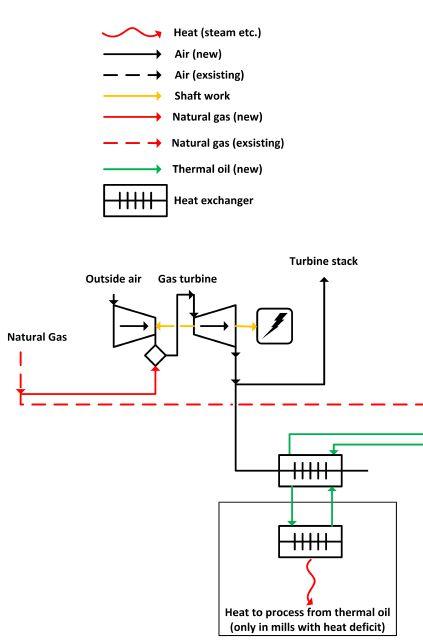
Energy-efficient cogeneration in BCTMP mills can use gas turbine exhaust directly in Stage 1 or 2, with a thermal oil heat recovery loop redistributing some of the heat to the other stage, as shown in Figure 2. Such a configuration has proven to be simpler and more flexible to design than a configuration relying exclusively on indirect heat exchange or static mixers. From a heat integration perspective, the detailed design and sizing of the turbine must take into account whether the rest of the mill is in heat surplus or in deficit.
Due to costs associated with biomass gasification and combustor redesign, tissue and BCTMP mills will likely use natural gas as the primary fuel if they install cogeneration gas turbines, blending some anaerobic digestion biogas if available. Cogeneration would thus increase reportable CO2 emissions, which would have to be weighed against alternate dryer heat sources such as biomass (see section 3.3) or electricity (see section 4).
Biomass thermal oil boilers can provide renewable process heat at a temperature up to 350°C. They are also easy to couple to ORC systems, either as a topping cycle, as shown in Figure 1(a), or as a bottoming cycle, as shown in Figure 1(b). Together, they form an attractive biomass-based cogeneration option for mill sites with a low heat load (compared to a kraft mill) that cannot afford the high fixed operating cost of more efficient steam turbines. These include:
• TMP and paper mills with a steam system but without a steam turbine.
For these mills, a biomass-based ORC topping cycle for the production of low pressure steam and/or hot water is the preferred cogeneration option;
• OSB mills, MDF mills, sawmills and others. For these mills, a biomass-based ORC topping cycle for various low temperature applications (<150°C) is also optimal;
• BCTMP mill flash dryers. The preferred biomass-based option is an ORC topping cycle to preheat drying air to 150-160°C, followed by additional heating using thermal oil taken directly from the biomass boiler (i.e., bypassing the ORC system). The power than can be generated is only 1/10 of the gas turbine in Figure 2, so cogeneration would not be a major driver for the conversion to biomass.
• Any mill capable of generating excess hot water (>90°C) using waste heat only, or with excess dirty steam being vented. For these mills, a ORC bottoming cycle would be a valid option.
Assuming that most ORC applications in the P&P sector (topping or bottoming) would be between 100°C and 150°C, an electrical conversion efficiency of eight to 14 per cent can be expected when used in a cogeneration configuration.
Given Canada’s commitment to be netzero carbon emission by 2050, investments in cogeneration need to be carefully considered. Cogeneration using natural gas results in emission factors of about 250 g CO2/kWh, the lowest of all fossil fuel–based electricity generation options. Short term, cogeneration using natural gas would provide a significant GHG reduction for provinces with a highCO2-intensity electric grid. However, this relatively low emission factor is still high compared to the average grid intensity that is being projected – or already in place – in most Canadian provinces. In addition, as intermittent renewables drive wholesale electricity prices below fuel prices for an increasing fraction of time every year (when CO2 price is included), heat pumps and electric boilers may become more attractive sources of process heat than cogeneration. Biomass-based cogeneration may also face increasing
competition from other uses of biomass that offset more CO2
On the other hand, even idled cogeneration assets can generate revenue, as they provide firm capacity to the grid and the ability to displace higher-emitting peaking power plants, while replaced by an electric heat source most of the time. To orient themselves in this context, P&P mills may consider full-time cogeneration, part-time cogeneration, part-time electrification and full-time electrification as four distinct heat generation options to re-assess periodically, based on their individual long-term merits.
This work examined several new industrial cogeneration applications, and determined which investments had the best prospects for increasing cogeneration in the P&P sector, sorted by mill type. By far, the lowest-hanging fruit in non-kraft mills comes from the direct coupling of natural gas turbines with BCTMP flash dryers in provinces where some electricity is generated from coal. This is a mature concept with simple engineering and has obvious short-term advantages. Direct turbine-dryer coupling is also possible in tissue mills.
TMP and paper mills have different
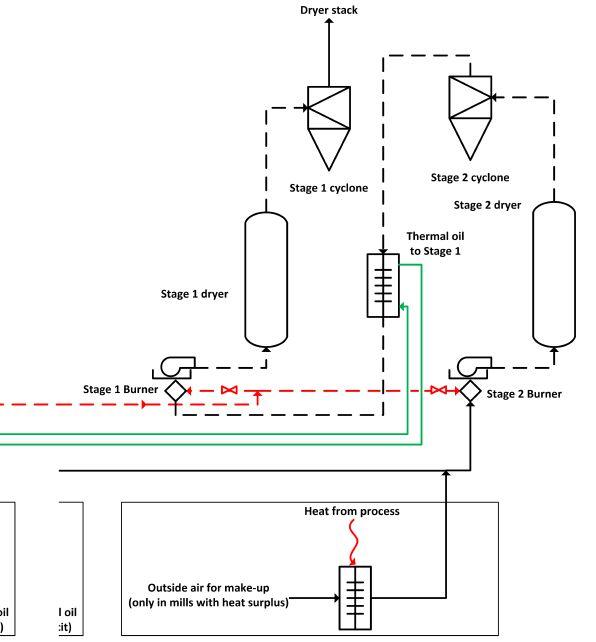
Figure 2. Gas turbine exhaust integration in a flash dryer: The cogeneration potential can be estimated to 17-18 MW per 1000 tpd of pulp production, using less incremental fuel than a combined cycle. This amounts to a total of 50 MW just for the three Canadian BCTMP mills powered by high CO2–intensity electricity. The opportunity to use reciprocating engines instead of a gas turbine was also studied, but it offers a lower thermal efficiency when integrated with BCTMP or tissue dryers.
cogeneration options, depending on what is already in place. In general, however, it seems more appropriate to focus on heat recovery, which significantly reduces the need for cogeneration for these mills.
Cogeneration based on ORC has proven to be a slightly less energy-efficient technology, but with much lower fixed operating costs, than equivalent backpressure steam turbines. Combined with biomass boilers, it is an attractive renewable option for a range of small-medium size facilities in the Canadian forestry sector (e.g. wood dryer, OSB mills, etc.).
Kraft mills also have the opportunity to retrofit their existing cogeneration systems. Due to their large heat load, the potential for additional electricity production is significant in kraft mills and will be covered in Part III of this series.
Investment in cogeneration of any kind will be increasingly challenging because, in the long-term, it will face increasing competition from wind and solar power, and process-heat derived from electricity. In principle, they could all coexist, alternating between peak and off-peak periods, to achieve minimum overall CO2 emissions. Future work at CanmetENERGY will focus on how P&P mills can benefit from additional decarbonization, bio-refining, electrification and flexible operation in a low-carbon future, from an energy systems integration perspective. Find Part 1 in the Winter 2021 issue of P&PC. PPC
The authors are grateful for the financial support received from the Program on Energy Research and Development (PERD3A03-001) and the Forest Innovation Program of the Canadian Forest Service, at Natural Resources Canada.
Ammara, R., Eskandarifar, S., Ghezzaz, H., and Bédard, S., (2020), TMP of the future: Challenges and Strategies, PACWEST conference 2020.
Bauböck, J., (2002), Effective Usage of Energy in Tissue Drying – Part I : Air system, heat recovery and cogeneration, TAPPI Papermakers Conference. 2006. TAPPI Press. Atlanta (Georgia, United States).
Ghezzaz, H., Bernier, E., and Bédard. S., (2020), TMP of the Future: Potential Pathways and Energy Integration Aspects, PaperWeek Canada, February 2020.
Klaas, J.K., Eric, M., Tengfang, X., and Ernst, W., (2009), Energy Efficiency Improvement and Cost Saving Opportunities for the Pulp and Paper Industry, Ernest Orlando Lawrence Berkeley National Laboratory.
Martin, N., Anglani, N., Einstein, D., Khrushch, M., Worrell, E. and Price, L.K. (2000), Opportunities to Improve Energy Efficiency and Reduce Greenhouse Gas Emissions in the U.S. Pulp and Paper Industry, Ernest Orlando Lawrence Berkeley National Laboratory.
Maryam, M., Mariya, M., Michel, P. and Jean, P., (2013), The forest biorefinery and its implementation in the pulp and paper industry: Energy overview, Applied Thermal Engineering, 1427-1436.
Rafione, T., Marinova, M., Montastruc, L., and Paris, J., (2014), The Green Integrated Forest Biorefinery: An innovative concept for the pulp and paper mills, Applied Thermal Engineering, 74-81.
Savulescu, L., Poulin, B., Hammache, A., Bédard, S., (2005), Water and energy savings at a kraft paperboard mill using process integration, Pulp & Paper Canada 106(9): T183-185.

By Henri Vaittinen and Antti Räisänen, Valmet Technologies, Järvenpää, Finland, and Abhay Bulsari, Nonlinear Solutions Oy, Turku, Finland
Hard nip sizing increases strength properties of liner or fluting more than conventional sizing methods like film sizing or pond sizing. When process variables of hard nip sizing are properly optimized, it becomes possible to improve quality and decrease raw material costs. For example, it becomes a lot easier to get more strength with less starch or fibres with hard nip sizing once quantitative information about the relations between strength and process variables is available. These relations are not very simple or linear, which is why conventional linear statistical techniques are not very effective. However, as this article demonstrates amply, nonlinear modelling is a powerful tool for describing these relations. The nonlinear models are now used to calculate cost optimal operating conditions such that the final properties of liner board are within desired limits.
Surface sizing is an essential process in the pulp and paper industry for improving the strength properties of base paper or board. In film sizing, the starch is applied mostly on the outer surfaces of the paper or board, and only a minor portion of the starch penetrates deep inside the structure of the base paper or board. Hard nip sizing (Figure 1) overcomes this weakness by using considerably higher pressure, allowing for much deeper penetration of starch and other sizing chemicals [1], and thus increasing the strength properties more than conventional surface sizing processes. It also produces better smoothness because hard rolls work like in calendering. As a matter of fact, hard nip sizer rolls and the loading system resemble more calenders than conventional sizer rolls. In hard nip sizing
process, the high nip pressure results in an optimal packing of fibres and the sizing through the z-direction of the web, resulting in maximized increase of SCT in cross direction and burst strength [2].
A good process can be improved further by tuning it optimally. All processes can be made more efficient. That requires quantitative knowledge of the effects of several variables. Writing or creating such equations is called mathematical modelling.
Mathematical modelling can be performed in various ways, and different ways are suitable for different situations. Mathematical models represent knowledge of quantitative effects of relevant variables in a concise and precise form. They can be used instead of experimentation if they are reliable enough. Mathematical models also permit the user to carry out various kinds of calculations, like determining suitable values of variables, which will result in desired product quality in an economic way.
Physical or phenomenological modelling is not particularly effective for pre -
dicting material properties like strength, thermal conductivity or solubility. Physical modelling usually requires a lot of assumptions and simplifications. Empirical and semi-empirical modelling, on the other hand, does not need any major assumptions or simplifications. Empirical models simply describe the observed behaviour of a system. Empirical modelling is feasible when the relevant variables are measurable.
Conventional techniques of empirical modelling, however, are linear statistical techniques. These tend to have serious limitations because nothing in nature is very linear, and particularly so in process engineering and materials science. It therefore makes sense to use better techniques of empirical and semi-empirical modelling, which take nonlinearities into account.
There is hardly any material behaviour that is absolutely linear. It is therefore wise to treat the nonlinearities rather than ignore them. Nonlinear modelling is empirical or semi-empirical modelling that takes at least some nonlinearities into account.
Nonlinear modelling can be carried out with a variety of methods. The older techniques include polynomial regression, linear regression with nonlinear terms and nonlinear regression. These techniques have several disadvantages compared to the new techniques of nonlinear modelling based on free-form nonlinearities, which do not require prior knowledge of the nonlinearities in the relations.
Among these new techniques, feedforward neural networks have turned out to be particularly valuable in chemical engineering [3] and materials science. Besides their universal approximation capability [4], it is usually possible to produce nonlinear models with some

istics – different raw materials, different compositions, and are produced by different batch, continuous or fed-batch processes. However, some things are common to modelling of various kinds of processes. Material properties or product properties, production rate and production economics depend on composition variables, process variables and dimension variables, as summarized in Figure 3.
Nonlinear models combined as shown in Figure 3 make process development a lot more efficient by drastically reducing expensive experimentation and by helping achieve better combinations of product properties, often optimized for cost.
Nonlinear modelling needs either experimental or production data. With Valmet Technologies, an experimental approach was chosen with 83 carried out experiments. A much smaller number would have been sufficient for this work if the experiments had been planned keeping in mind that nonlinear models would be developed later. Besides SCT index and burst index, air porosity, thickness and density were also measured from each of the experiments.
The results from three experiments presented in Figure 4 show the effect of base paper’s basis weight on the increase in SCT index and burst index. The experimental data taken into use was consistent and of very good quality, and as a consequence, excellent nonlinear models could be developed. The correlation coefficients of all the models were well above 90 per cent. It is natural that the nonlinear models perform very well since the effects are not very linear, while the linear models will not hesitate to predict even negative values of material properties.
After the data was analyzed to some extent, nonlinear models in the form of feed-forward neural networks were attempted using NLS 020 software to predict the increase in SCT index.
The input variables included basis weight of the base paper, size weight on top and bottom sides, the solids fractions in the sizing liquid, nip load, etc. It was possible to produce models with high correlation coefficients. The model selected for use had a correlation coefficient of 92.7 per cent and a standard deviation of prediction errors of 2.99 per cent (Figure 5). Similarly, nonlinear models were developed for burst index increase and for a few other properties including porosity.
extrapolation capabilities with feed-forward neural networks. Neural networks have been in use in process industries for about 30 years [5]. The multilayer perceptron, a kind of a feedforward neural network, is the most common one. Most neural network applications in industries are based on them [6-14]. Feed-forward neural networks consist of neurons in layers directionally connected to others in the adjacent layers (see Figure 2).
Nonlinear modelling has been utilized successfully for various industrial sectors including plastics [6], rubbers [7], metals [8], cement, concrete [9], medical materials [10], semiconductors [11], ceramics, glass [12], power [13], biotechnology [14], pulp, paper, etc. Different processes have different character-
The models were then implemented in LUMET system software, which allows various kinds of calculations from nonlinear models. Figure 6 shows the increase in SCT index against basis weight for different size weights. Figure 7 shows the increase in burst index against basis weight for different solids content on top side.
Optimization helps derive the maximum benefit from the process. Once we have the quantitative knowledge of the process in the form of equations, it becomes possible to determine good operating conditions.
In this case, we would like to derive the maximum strength from a small amount of starch. Or we would like to minimize the operating cost and still derive a certain desired increase in strength. This has to be done in presence of constraints on
several variables. The strength should not come at the cost of other properties. There are a lot of books that describe optimization methods [15] and are therefore not described here. However, this kind of calculations are now done with the nonlinear models implemented in a LUMET system, resulting in significant savings in starch.
One can derive a lot more value from a process by tuning it well. Composition variables, process variables and dimension variables affect product properties in a complicated manner, and people with even decades of experience cannot predict the quantitative effects of the relevant variables. As clearly seen in this case, it is possible to get more strength with less applied starch in surface sizing. A good process becomes better when tuned optimally, as in the case of hard nip sizing. Instead of trial and error experimentation, a small series of properly planned experiments makes it possible to derive the relevant quantitative information which is necessary to develop good nonlinear models. PPC
[1] J. Hakola, “Surface sizing with high nip pressure”, presented at the TAPPI conference 19PaperCon, Indianapolis, USA (May 2019)
[2] E. Pitschmann, “New technology HardNip PM1”, presented at the 28th International Munich Paper Symposium, Munich, Germany (March 2019)
[3] A. Bulsari (ed.), Neural Networks for Chemical Engineers, Elsevier, Amsterdam, 1995.
[4] K. Hornik, M. Stinchcombe, and H. White, “Multilayer feedforward networks are universal approximators”, Neural Networks, Vol. 2, (1989) 359-366.
[5] A. Bulsari, “Quality of nonlinear modelling in process industries”, Internal Report NLS/1998/2.
[6] A. Bulsari and M. Lahti, “How nonlinear models help improve the production economics of extrusion processes”, British Plastics and Rubber (September 2008) 30-32.
[7] A. Bulsari, J. Ilomäki, M. Lahtinen and R. Perkiö, “Nonlinear models of mechanical properties reduce rubber recipe development time”, Rubber World (September 2015) 28-33.
[8] A. Bulsari, H. Keife and J. Geluk, “Nonlinear models provide better control of annealed brass strip microstructure”, Advanced Materials and Processes (July 2012) 18-20.
[9] A. Bulsari, H. Kylmämetsä and K. Juvas, “Nonlinear models of workability and compressive strength help minimise costs”, Concrete Plant International, No. 6 (December 2009) 36-42.
[10] A. Bulsari, K. Lähteenkorva, E. Suokas and M. Huttunen, “Models add efficiency to bioabsorbable implant development”, Medical Design Technology, Vol. 19, No. 2 (March 2015) 26-28.
[11] A. Bulsari and V.-M. Airaksinen, “Nonlinear
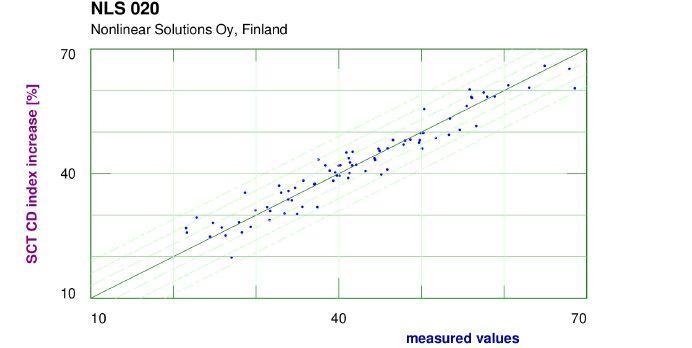
Figure 5. Predicted values against measured values of SCT index increase.
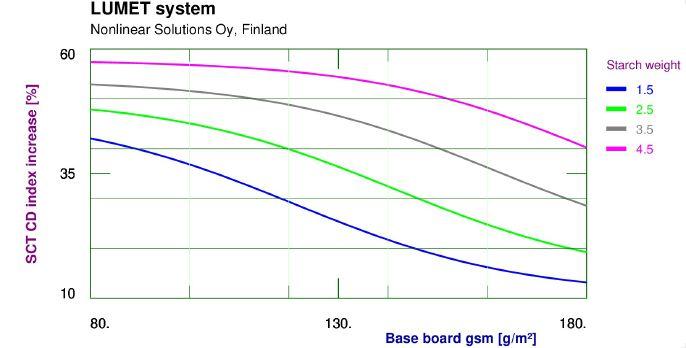
Figure 6. Increase in SCT index against basis weight for different size weights.
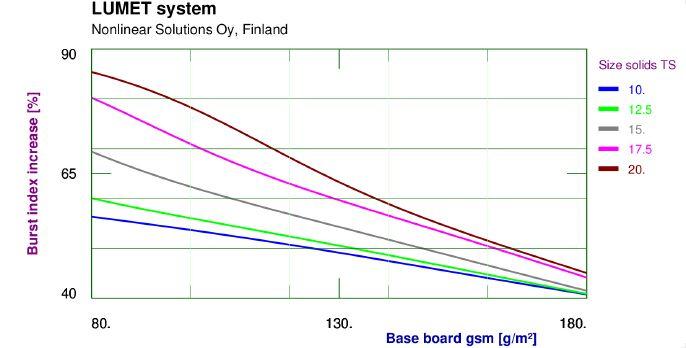
Figure 7. Increase in burst index against basis weight for different solids content on top side.
models used to address epi layer uniformity”, Solid State Technology, Vol. 47, No. 7 (July 2004) 33-38.
[12] A. Bulsari, P. Nurmi and M. Salonen, “Nonlinear models help to reduce production costs”, Glass Worldwide, No. 68 (November-December 2016) 118-119.
[13] A. Bulsari, A. Wemberg, A. Anttila and A. Multas, “Nonlinear models: coal combustion efficiency and emissions control”, Power Engineering
International, Vol. 17, No. 4 (April 2009) 32-39.
[14] A. Bulsari, E. Kiljunen and M. Suhonen, “Speeding development of an enantioselective enzymatic process for a pharmaceutical intermediate”, BioProcess International, Vol. 5, No. 8 (September 2007) 52-63.
[15] P. E. Gill, W. Murray and M. H. Wright, Practical Optimisation, Academic Press, London (1981) 136-140.
To celebrate International Women’s Day, Canada’s leading forestry media brands teamed up to deliver an exclusive virtual event. You can view the content on-demand, and stay on top of news throughout the year, at womeninforestry.ca
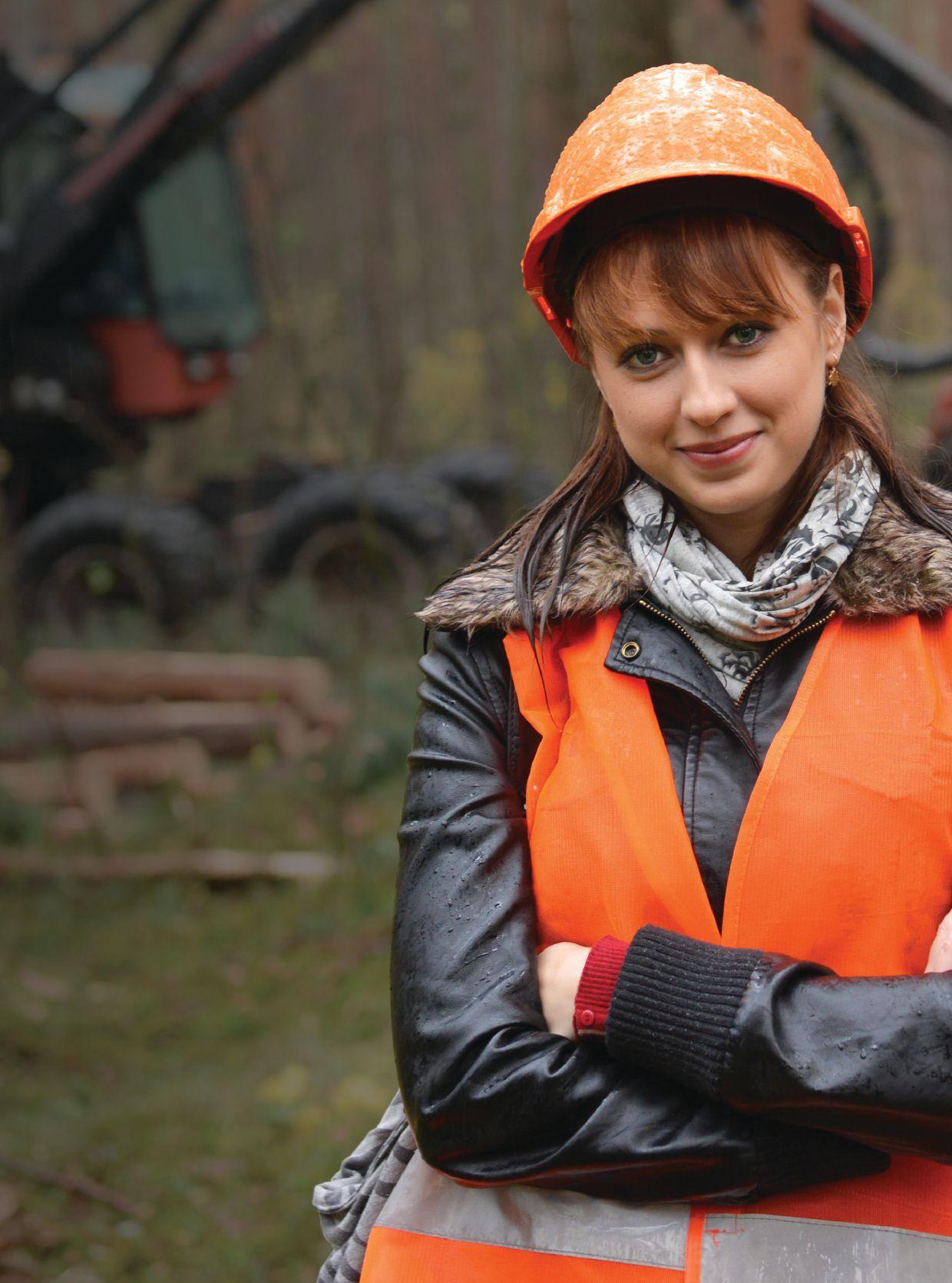
GOLD SPONSORS
SILVER SPONSORS






BRONZE SPONSORS





PRESENTED BY
Mobile equipment safety
Need to repair or service mobile equipment? Let everyone know with a visual barrier. Brady Canada has created a steering wheel safety cover. It indicates which forklifts, electric pallet jacks and other mobile equipment are down for service and should not be operated. The cover fits over a steering wheel and requires only a padlock, not a hasp. A pocket on the back houses vital information, like inspection cards. The steering wheel cover is ideal for many wheel diameters.
bradycanada.ca
New safety devices use data
Rockwell Automation has debuted two new smart safety devices that use data to substantially improve their safety compliance and performance.
The Allen-Bradley SafeZone 3 laser scanner with CIP Safety over EtherNet/IP and AllenBradley GuardShield 450L light curtain with CIP Safety over EtherNet/IP plug-in give users access to critical data needed for a comprehensive picture of machine or production line status.
ping. In addition, the CIP Safety capability expands available diagnostic data to alert users of common failures, such as the presence of dust on the scanner’s lens.
The GuardShield 450L light curtain with CIP Safety over EtherNet/IP plug-in protects personnel from injuries related to hazardous machine motion. The CIP Safety plug-in gives users more access to diagnostic data to improve productivity and flexibility. For example, users can see exactly which beams are tripped on the light curtain to better understand the cause of a downtime event.
CIP Safety is an extension to the Common Industrial Protocol (CIP), the application-layer protocol for EtherNet/IP. Smart products that use CIP Safety with technologies such as GuardLink help improve safety and productivity and simplify wiring. They also offer integration with an AllenBradley Compact GuardLogix SIL 3 control system.
rockwellautomation.com
PPSA Conference moved to October
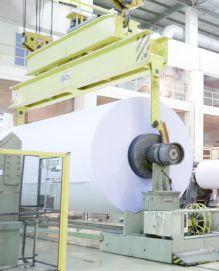
A producer of market pulp, paperboard and fibre-based packaging in New Zealand has tapped ABB to supply a specially designed winder safety system – the first of its kind in the country.
Oji Fibre Solutions has also contracted ABB for a winder drive control system and DCS880 drives at its Penrose mill. With the mill’s existing winder equipment installed more than 30 years ago, the upgrade will help Oji Fibre ensure safe and efficient future operations, in line with recently updated safety requirements.
Users can monitor machine health, increase uptime, improve flexibility and enhance safety.
These smart devices provide diagnostic information that can deliver valuable insights, such as where safety-related failures are occurring or if workers are following standard operating procedures. Users can put these insights to work to improve the productivity and sustainability of their production equipment.
The SafeZone 3 laser scanner with CIP Safety provides area detection inside a work cell. The addition of CIP Safety allows users to simultaneously operate multiple safety zones instead of switching from one to another. It also extends the scanner’s field range and provides vital diagnostic data over a single EtherNet/ IP connection.
This can improve productivity, such as by notifying workers with an alarm if they are nearing a hazard to help prevent a machine from slowing down or stop-
The Pulp & Paper Safety Association (PPSA)’s 77th Annual Safety and Health Conference will take place Oct. 17 – 20, 2021 in St. Petersburg, Florida. The PPSA expects to be able to hold the event live in the fall. Due to continued concerns over COVID-19, the event was moved to June from October.
Each year, more than 300 safety professionals throughout the forest products supply chain attend this event. The two-and-a-half-day conference will offer a variety of educational sessions, safety strategies, new technologies and critical industry safety updates.
Attendees will have direct access to industry suppliers and consultants, as well as networking opportunities with key safety experts. Also returning will be the popular New Technology Showcase, and the anticipated recognition program honoring 2021 recipients of the Executive Eagle Award, Safety Innovator Award and Industry Safety Committee/Team Award. ppsaconference.org
The new system features a range of winder safety improvement steps and devices including mechanical guarding (perimeter personnel access control via a retractable fence that keeps operators away from the danger zone), electrical controls (power interlocks), hydraulic controls (with redundancy), optical (safety light curtains) and safe speed monitoring.
The creation of safety zones allows operation in one zone to continue when another zone is infringed. The system automates manual tasks – such as hands-free threading, set change with automatic sheet cut off, automatic gluing or auto-measuring slitters.
The improved features are all supported by a new operator control panel with safety programmable logic controller (PLC) and new human-machine interface (HMI). ABB will also complete all factory acceptance tests and commissioning remotely.
Penrose Mill, has an annual output of more than 85,000 tons of containerboard liner and uses recycled sources collected by Oji Fibre’s Fullcircle recycling service. new.abb.com
FPInnovations successfully develops biodegradable mask for manufacture
FPInnovations has successfully developed a biodegradable mask for public use, and it is now ready for commercialization by Canadian manufacturers.
The $3.3-million collaborative research and scientific project between the organization and its partners allowed for the mask’s development using FPInnovations’ pilot-scale paper-machine.
In addition to the mask filtering materials, FPInnovations has identified and successfully incorporated elastic ear loops and nose pieces that are biodegradable. These mask components can be assembled readily on existing commercial mask-converting machines.
The mask has been assessed by external labs in accordance with international norms. With its unique product design, FPInnovations has also recently attained the more demanding ASTM standards of filtration efficiency and breathability that are required for procedure masks. fpinnovations.ca
UBC professor developing ‘green’ paper named as finalist for innovation award
An assistant professor of engineering at the University of British Columbia (UBC) developing a grease-resistant paper is one of two Canadian finalists for the global Blue Sky Young Researchers and Innovation Award. The award is part of a global initiative spearheaded by the International Council of Forest & Paper Associations (ICFPA).
The contest is an opportunity for forest sector researchers and professionals under the age of 30 to showcase how their ideas, practices, processes and technologies are advancing the global bioeconomy while sustaining the natural environment.
Finalist Dr. Kevin Golovin, an assistant professor of engineering at UBC, is researching the development of an
oil- and grease-resistant paper without using perfluorinated compounds (PFCs) by investigating nano-silicone brushes.
His work on next-generation water and oil-repellent coatings was inspired by the desire to develop greener and more eco-friendly alternatives to replace the harmful PFCs traditionally used.
Food packaging is an increasingly high-volume commodity product within the paper industry. However, PFCs cause paper to be considered non-biodegradable as they take hundreds of years to naturally break down.
The silicone technology developed by Golovin is biodegradable so it solves this issue, while reducing a mill’s carbon footprint (PFC production is carbonintensive) with a naturally green material.
The other finalist is Véronique Rouleau, a PhD candidate in forest sciences at Laval University, who is spearheading research to gain a greater understanding of the phenomena that govern soil organic carbon (SOC) storage in managed boreal forests. Rouleau’s proposal combines her deep knowledge of forestry, soil sciences
Domtar named a
and microbiology to develop actionable solutions for carbon sequestration and climate change mitigation through forestry practices.
The results of this study will ensure that forest management currently practiced in Quebec boreal forests contributes to climate change mitigation and provides a sustainable basis to a diversified, local, resource-use efficient and environmentally friendly forest-based bio-economy. ubc.ca
Resolute Forest Products plans to reduce its scope 1 and 2 absolute greenhouse gas (GHG) emissions by 30 per cent over the next four years.
The emissions will be measured against 2015 levels.
This new target builds on the company’s 83 per cent reduction in absolute GHG emissions from year-2000 levels, two-thirds of which reflect reductions in emission intensity.
resolutefp.com
Domtar has been named one of the winners of the Beyond the Bag Challenge, led by the Consortium to Reinvent the Retail Bag.
The consortium is a collaboration convened by Closed Loop Partners retailers, environmental partners, global design firm IDEO and others.
The challenge attracted more than 450 global participants, and nine winners were announced on Feb. 16.

The bag challenge asked participants, “How might we transport goods from retailer to destination in a way that is compatible with diverse retail systems, delivers ease and convenience for customers and reduces environmental impact?”
Following a period of review and selection with the consortium partners, Domtar’s submission was one of 58 that made it to the ideas shortlist. Afterward, a panel of expert external judges, the consortium founding partners, sector lead partners, environmental advisory partners and Closed Loop Partners convened and further reviewed the shortlisted submissions to select the top ideas.
Domtar’s winning submission is a 100 per cent paper-based material that is sourced from a renewable natural resource, robust enough for limited reuse in a bag application and curbside recyclable.
Domtar’s bag features properties not commonly associated with paper. It stretches and flexes up to 40 per cent and is stronger than conventional kraft bag paper.
The material is also up to 47 per cent lighter than conventional bag paper. The paper is responsibly sourced and curbside recyclable after its intended end use.
Domtar’s Catapult team, which includes individuals from market development and new technology innovation, engages in projects seeking to translate evolving market needs into innovative fibre-based products. domtar.com
latest community outreach initiatives from the pulp and paper industry
The Canadian forest products sector is passionate and devoted – not just to the industry itself, but also to its local communities. Here we share the initiatives of pulp and paper companies working to make positive social, environmental and economic impacts across the country.
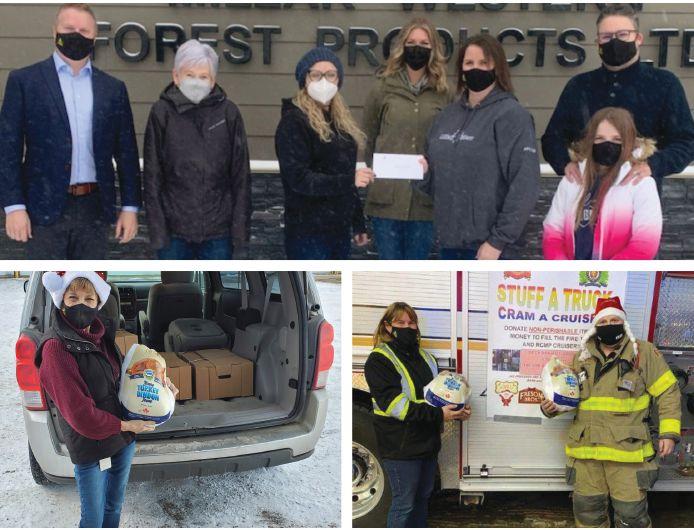
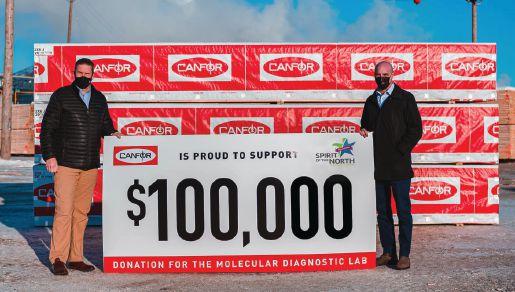


Employees of
a
to match the company’s $10,000 cash donation to local charities by collecting food and toys.
Let us help you share your successes. Tag @PulpPaperCanada or use #PPCGivingBack on Facebook or Twitter, or send an email to the editor at kurquhart@annexbusinessmedia.com. We’d love to hear from you!

May 18 to June 8 - 2021“
2021 EXECUTIVE PROGRAM COMMITTEE
Conference Chair
Kerry Morton
Program Chair
Jennifer Boese, West Fraser-Hinton Pulp
First Vice Chair
Gavin Baxter, Skookumchuck Pulp
Second Vice Chair
Adam Lancaster, Canfor Pulp
IBMP ORGANIZING EXECUTIVE
Mike Trivett – Valmet
Jason McCulloch – Kemira
Terry Good – Allnorth Consultants
Troy Reynolds – Valmet
James Thomas - Kemira
AWARDS
We will continue to acknowledge our presenters in 2021 with the following awards
H.R. MacMillan Trophy
BEST MILL TECHNICAL PRESENTATION
RUNNER-UP PRESENTATION (open to consultants and researchers)
BEST SUPPLIER PRESENTATION
BEST NOVICE PRESENTATION for first presentation by author (excluding presentation at Branch Meetings)
BEST STUDENT PRESENTATION
Until it is once again safe to meet face-to-face, we have moved to a virtual format. It is important to maintain our valued industry connections while we all navigate through the limitations due to COVID-19. Join Us!
CALL FOR
For inclusion in the Technical Sessions, submission of your Abstract Name/Summary is due now! Presentations must be completed and submitted by MAY 10.
Selection of presentations is based on several criteria including originality, technical merit, and mill relevance.
Time limit for presentations20 minutes with 5 minutes for Questions & Answers.
should be submitted to the PACWEST 2020 Program Chair:
Jennifer Boese – West Fraser-Hinton Pulp jennifer.boese@westfraser.com
For Registration and more information visit: www.pacwestconference.ca
PROGRAM OUTLINE
TUESDAY, MAY 18 through WEDNESDAY, JUNE 2
Meetings & Roundtables By Invitation Only
❖ Mill Managers & Sr. Executives
❖ Maintenance Managers
❖ Pulp Machine Superintendents
❖ Purchasing Managers
❖ Engineering Managers
THURSDAY, MAY 27 & THURSDAY, JUNE 3
❖ Technical Sessions Open to All TUESDAY, JUNE 8
❖ Wrap-up & Awards
To view our AGENDA with postings of our daily meeting times and sessions schedules , visit our website.
SCA Pure or Black Spruce
We’re happy to boast that our first year in North America has been a “Pure” homerun! This is the result of the combination of our very northern fiber and our brand new state of art pulp mill. In fact, we’re told by our customers that SCA Pure is a pulp that performs equally as well as the finest of Canadian softwoods.
Pure properties
SCA Pure is our premium quality NBSK pulp, offering worldclass strength properties and outstanding environmental performance, naturally complying with FSC® (FSC C013162). That’s why we have named our new product SCA Pure. Pure, as in pure performance, pure profitability, and pure sustainability.
A Pure commitment
Chasing currency fluctuations and spot markets is a very poor long-term strategy. We, SCA, will build our pulp business on the shoulders off long-term relationship with customers in North America and Europe.
Yes, we are an ocean away and that’s why we have inventory in the Northeast, Southeast and Midwest.
When you think SCA think Softwood commitment to North America, Let’s talk!
For more information please contact Magnus Person, magnus.t.persson@sca.com, phone +46 72 556 43 99.