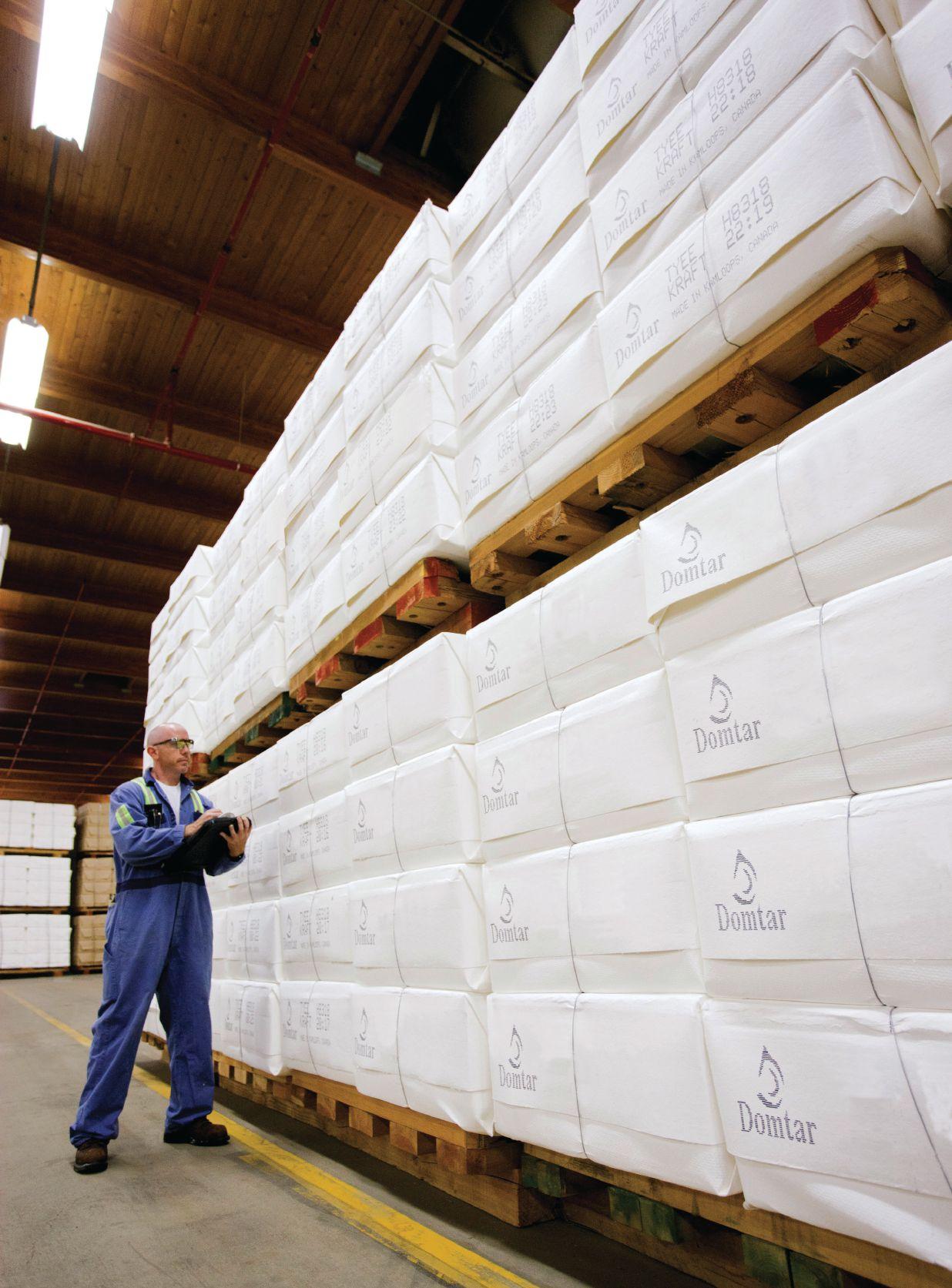










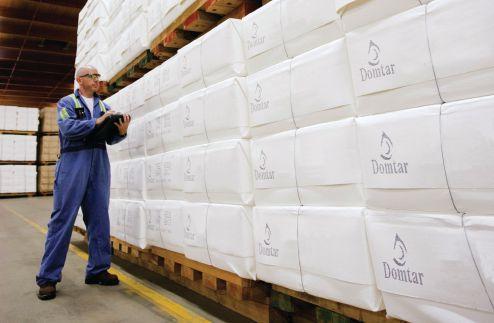


When I asked the participants of our annual Safest Mills in Canada contest (p. 14) what safety means to their organization, I received a number of encouraging comments.
I thought this one from Sonoco Canada was particularly astute: “Safety means we all go home to our loved ones in the same way we leave them for work each day.”
It’s as simple as that. Getting the 54,000-plus workers in the Canadian pulp and paper sector home safely every day should come before all else. In an industry that uses a lot of heavy equipment where workplace hazards are a daily risk, sticking to that mantra can be challenging.
Safety has been a cornerstone of this industry for decades. (Our Safest Mills contest has been running for 93 years!). The “safety first” concept came up in numerous responses to my aforementioned question. But what is the difference between saying “safety first” and actually epitomizing it?

Kristina Urquhart Editor
At the PaperWeek Canada conference in Montreal this past February, several speakers suggested how to pivot from being an organization merely concerned about safety to one that lives and breathes a safety culture.
That mentality extends across your entire organization, no matter if an employee is in a permanent role or a contract position. In her presentation, Anne-Marie Tétreault, senior expert for HSSEQ compliance and risk management at Cognibox, outlined how to extend your safety culture to contractors. She covers some of these steps in a follow-up article on the topic on p. 16.
Adam Hatt and Ron Guitard, co-chairs of the joint health and safety committee (JHSC) at J.D. Irving’s Lake Utopia Paper, shared how last year, they implemented a safety program at the mill, designed to get employees engaged. At a centrally located whiteboard, employees can file “Hazard IDs” reporting areas of concern or hazardous incidents. Also on the whiteboard is a tracking tool for employees to see how many days have passed without a safety incident.
As part of the Hazard ID program, employees were also trained on hazard recognition assessment, and are encouraged to take two minutes prior to a task to evaluate potential hazards and fill out a last-minute task assessment form.
The program has increased communication, given management deeper insight on the types of incidents recorded at the mill, and allowed for a consistent follow-up procedure accessible to all employees. Since beginning the Hazard ID program in the third period 2018, Lake Utopia Paper employees have identified 2,106 total hazards through 550 Hazard IDs, 1,196 pre-job safety audits and 360 JHSC audit hazards. The recordable incident rate dropped from six to one.
Hatt and Guitard say the program has created a proactive safety culture that gives employees a sense of ownership over themselves – and each other. Making sure everyone gets home safely at the end of each day is a team effort. PPC
Editor KRISTINA URQUHART
416-510-5143
kurquhart@annexbusinessmedia.com
National Accounts Manager
LAURA GOODWIN
289-928-8543 lgoodwin@annexbusinessmedia.com
COO
SCOTT JAMIESON 519-429-5180
sjamieson@annexbusinessmedia.com
President & CEO
MIKE FREDERICKS
EDITORIAL/SALES OFFICES
111 Gordon Baker Rd., Suite 400, Toronto, ON M2H 3R1
Phone: 416-442-5600
PRODUCTION
Media Designer
CURTIS MARTIN
Circulation Manager
BEATA OLECHNOWICZ bolechnowicz@annexbusinessmedia.com
Print in Canada
ISSN 0316-4004 (Print)
ISSN 1923-3515 (Digital)
Account Coordinator
STEPHANIE DEFIELDS
sdefields@annexbusinessmedia.com
PUBLICATION MAIL AGREEMENT #40065710
CIRCULATION
email: mchana@annexbusinessmedia.com
Tel: 416-510-5109
Fax: 416-510-6875 (main) 416-442-2191
Mail: 111 Gordon Baker Rd., Suite 400, Toronto, ON M2H 3R1
SUBSCRIPTION RATES
Canada $57.50 - 1 year; $92.50 - 2 year
USA $107.00 USD per year
Overseas - $115.50 USD per year
Occasionally, Pulp and Paper Canada will mail information on behalf of industry related groups whose products and services we believe may be of interest to you. If you prefer not to receive this information, please contact our circulation department in any of the four ways listed above.
Annex Privacy Office privacy@annexbusinessmedia.com Tel: 800-668-2374
The editors have made every reasonable effort to provide accurate and authoritative information but they assume no liability for the accuracy or completeness of the text or its fitness for any particular purpose. All rights reserved. The contents of this publication may not be reproduced in part or in full without the publisher’s written permission © Annex Publishing & Printing Inc.
Sustaining member, Pulp and Paper Technical Association of Canada; Member, Alliance for Audited Media.




2019
PROGRAM Committee:
JUNE 5 - 8, 2019
“THE FUTURE IS NOW” INVESTING IN PEOPLE, TECHNOLOGY & ASSETS
CHAIR: Surendra Singh – Alberta Newsprint
PROGRAM CHAIR: Kerry Morton
Mercer Celgar
1ST VICE CHAIR: Jennifer Boese
West Fraser-Hinton Pulp
2ND VICE CHAIR: George Milosevic Catalyst Paper
IBMP ORGANIZING Executive:
CO-CHAIR/PRESIDENT: Drew Lyon
OVAL International
1ST VP: Mike Trivett – Valmet
2ND VP: Jason McCulloch – Kemira
TREASURER: Terry Good Allnorth Consultants
SECRETARY: Troy Reynolds – Valmet
* H.R. MacMillan Trophy for BEST MILL PRESENTATION
* RUNNER-UP Presentation (open to consultants and researchers)
* BEST SUPPLIER Presentation
* BEST NOVICE PRESENTATION for first presentation by author (excluding presentation at Branch Meetings)
* BEST STUDENT Presentation
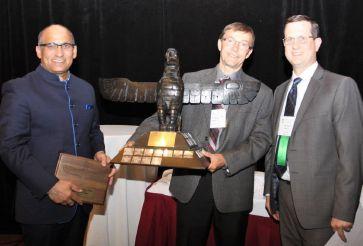
2018 HR MacMillan Trophy for BEST PRESENTATION awarded to BARRY HIRTZ – Canfor Pulp by PACWEST Program Chair & Chair
SURENDRA SINGH & STEVEN BULL
Join us at: The Fairmont Chateau Whistler WHISTLER, BC

To network with peers, industry leaders and technical experts. Enhance professional development learning about new technologies, process improvements and what’s being showcased for the latest industry challenges.
We are also pleased to present a full Spousal Program
For inclusion in the Program, abstracts must be received by MARCH 31, 2019 with presentation completion by MAY 24th
Selection of presentations is based on several criteria, including originality, technical merit and mill relevance
Time limit for presentations is 20 minutes with 5 minutes for Questions & Answers
should be submitted to PACWEST 2019 Program Chair:
Kerry Morton – Mercer Celgar kerry.morton@celgar.com
• Pulp & Paper Processes • Environment
• Sustainability / Energy • Human Resources
• Maintenance / Reliability • Safety
• Process Control • Student Session
For Registration and more information visit: pacwestcon.net
PROGRAM OUTLINE
WEDNESDAY, JUNE 5
INDUSTRY MEETINGS:
* PAPTAC Councillors (TBC)
* Mill Managers & Sr. Executives
* Energy Reduction Steering Committee
* Alkaline Pulping Committee
* Paper Machine Technology Committee
* Maintenance Managers RT
* SHORT COURSES:
#1 Project Management-Best Practices for Small Projects - David Mead (IPA)
#2 Controls & Operator Performance –Andrew Yik (Spartan Controls)
#3 Fundamentals of Bow Tie as a Risk Assessment Tool - Jenny Coleman (WorkSafe BC)
* Trade Fair
THURSDAY, JUNE 6
* Conference FORUM featuring leading Industry Managers & Analysts:
- Dr. Mark Martinez, UBC
- Andrew Hall, WOOD
- David Gandossi, Mercer International
- Brian Baarda, Paper Excellence
- TBA
* Pulp Machine Superintendents RT
* Maintenance Managers RT
* Technical Sessions
* Trade Fair
FRIDAY, JUNE 1
* 5K Fun Run
* Trade Fair
* Pulp Machine Superintendents RT
* Maintenance Managers RT
* Technical / Panel Sessions
* Feature Luncheon Keynote:
Realistic Futurist, Technology Navigator and Business Growth Expert – DAVID CHALK

* Awards Dinner & Dance
SATURDAY, JUNE 8
Annual Golf Tournament
A class action against Corner Brook Pulp and Paper will proceed, the Newfoundland and Labrador Court of Appeal has ruled, after overturning a decision that would have allowed the lawsuit to go to arbitration first.
According to a report by The Western Star, the lawsuit was brought forth by community property owners who claim their homes have been damaged by excess water seeping from the Deer Lake canal.
According to Wagners, a law firm representing the plaintiffs, the Deer Lake canal, officially called the Humber Canal, runs from Grand Lake to the Kruger Hydroelectric Power Generating Station in Deer Lake, Nfld.
The man-made canal connects the lake with the generating station, which is used to generate electricity to power the Corner Brook paper mill.
The property owners say there are deficiencies in the design and operation of the canal, and that 350 homes have been damaged by moisture and mould.
The class action had been appealed following a December 2017 decision by Supreme Court of Newfoundland and Labrador Justice David Hurley that agreed with Corner Brook Pulp and Paper Limited’s parent company Kruger Inc. in its application to have the class action go to arbitration before proceeding to court.
In 2018, Kruger Inc. committed to cleaning up the canal, which was found to contain sunken barges from the waterway’s original construction in the 1920s, and barrels from the 1940s or ’50s.
Resolute has rejected the offer by Repap Resources Group (under the name Rainy River Packaging) to purchase its idled pulp mill in Fort Frances, Ontario.
CBC News reports that on March 15, Repap submitted a “multi-million-dollar” bid to buy the property and reopen the mill, which closed in 2014.
In a letter to Fort Frances mayor June Caul, Resolute said that Repap’s offer “fell short on multiple levels.”
Resolute had already signed an agreement with a development company in January, but had until March 15 to review other bids.
The developer will likely demolish the mill to create a community space, and Resolute would retain its access to the Crossroute Forest, the main source of fibre supply for the area, until at least 2022 when its license expires.
Yves Laflamme, president and CEO, reportedly wrote in the letter that Repap did not secure sufficient financing, nor did it provide the necessary financial deposit.
“I am profoundly disappointed to see Resolute Forest Products reject the offer to buy and reopen the mill,” says Greg Rickford, MPP for Kenora-Rainy River and Ontario’s minister of energy, mines, northern development and Indigenous affairs, in a statement on his Facebook page. “I believe the paper mill is viable, and I know the community will continue to explore options that would see the mill open again.”
Peter deMarsh, an advocate of the Canadian forest sector and woodlot owners, was among the 157 victims of an Ethiopian Airlines plane that crashed shortly after takeoff from Addis Ababa in March, according to the Forest Products Association of Canada (FPAC).
“The forestry community lost an incredible man,” says Derek Nighbor, president and CEO of FPAC, in a statement. “Peter dedicated so much of his life to our sector and was travelling to Africa to do what he loved to do – talking about the environmental benefits of forestry and advancing opportunities for woodlot owners and forestry families around the world. He was a true champion of forestry on the global stage. We are saddened by this tragedy and extend our love and thoughts to Peter’s family and friends, and all families of the victims of this terrible tragedy.”
deMarsh lived in Taymouth, New Brunswick and was a long-serving president of the Canadian Federation of Woodlot Owners. He represented the interests of woodlot owners in Canada for the past three decades. He was also the chair of the International Family Forestry Alliance, an international group working for the interests of woodlot owners and forestry families from around the world. deMarsh was also dedicated to a number of causes, traveling around the world to share his expertise on rural farming and environmental issues.
Jean-David
Jean-David Tardif is taking over as president and chief operating officer of Cascades Tissue Group after Jean Jobin stepped down from his role.

“I indicated to Cascades’ management in recent weeks that I wanted to devote my time to personal projects,” says Jobin in a release. “This is therefore an emotional day as I announce that I am leaving Cascades and the Tissue Group after a career spanning more than 26 years. In doing so, I feel that my mission has been accomplished and I am sure the company has a capable and competent succession team as it continues forward.”
Mario Plourde, president and CEO of Cascades, thanked the outgoing president of the Tissue Group: “On behalf of all the Cascaders, I would like to thank Jean Jobin today for his outstanding years of service to our company. I would also like to wish him best of luck in his future endeavours. We have selected the person best prepared and best equipped to take on the challenge of being his successor: Jean-David Tardif.”
With a bachelor’s degree in mechanical engineering and an MBA, Tardif first joined Cascades in 1997. His career path has led him to work successively for each of the company’s three groups. In the Tissue Group, he was vice-president, consumer products, from 2013 to 2017. Since December 2017, he has held the position of vice-president, operations for Cascades Containerboard Packaging.
“I very humbly and enthusiastically accept the responsibilities of president of the Tissue Group,” says Tardif of his new appointment, which is effective immediately. “Despite the challenges we are facing today, I am confident that many opportunities await us and that we have not yet reached our full potential.”
Report released on Domtar Kamloops fatality
Human error and a manufacturing defect are what led to a fatal incident at Domtar’s Kamloops pulp mill in summer 2017, says a new report by WorkSafeBC, British Columbia’s workers’ compensation board.
The incident occured on June 29, 2017, resulting in a crane operator’s death and another worker’s serious injury. Unifor, the union representing workers at the mill, identified the deceased as Jim McLeod, 57.
Kamloops local news CFJC Today reported that the workers were situated on a crane chassis trying to put away a jib, which is a large piece of equipment for the crane’s boom. The jib fell and hit both workers, causing them to fall two metres to the ground below.
WorkSafeBC says that a mechanical stop had not been deployed by the workers, and that the manufacturer’s manual failed to identify the importance of the mechanical stop.
The province of Nova Scotia says it needs more time and information to review Northern Pulp’s proposed effluent drainage plan, leaving the future of the mill still in question.
Environment Minister Margaret Miller says Northern Pulp needs to flesh out the proposal it submitted on February 7 with a “focus report” that would include more data on potential impact to marine life and the treated effluent’s impact on drinking water.
The remaining questions from the provincial government will be provided on April 24, and the mill would have up to a year to answer them.
Northern Pulp has been ordered by the province to stop diverting its untreated effluent through a treatment facility close to the Pictou Landing First Nations reserve and into Boat Harbour by January 2020.
The mill’s proposed plan includes a new effluent treatment facility constructed on Northern Pulp property. A 15.5-kilometre water pipe would deliver treated effluent to Caribou Harbour.
The plan has been criticized by envi-
ronmental and fisheries groups in Nova Scotia such as Friends of the Northumberland Strait, who say the new pipeline plan remains a threat not only to the environment, but also the livelihoods of the local fishermen.
The mill maintains that protests staged by local fishermen in fall 2018 impacted its survey research of the strait, and has repeatedly asked for a one-year grace period on the January
2020 deadline to accommodate.
“We’re not going to be able to meet that deadline, given the information we received [today],” said Brian Baarda, CEO of Paper Excellence Canada, Northern Pulp’s parent company, on the day of the province’s announcement. He said the mill could be forced to close without an extension.
Northern Pulp’s closure would result in the layoff of 277 employees.
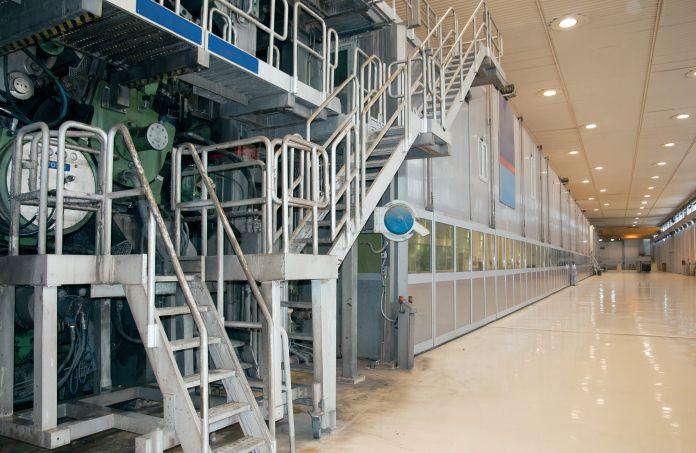

Neucel lays off remaining workers at B.C. mill
Neucel Specialty Cellulose has laid off the remaining workers at its idle pulp mill in Port Alice, British Columbia.
The Comox Valley Record reports that the 20 employees who have been maintaining the mill’s equipment found out about the layoffs when they happened Feb. 27, and had no written notice.
Don Vye, the head of the Local 514 union that represents the workers, also says he was unaware of the layoffs.
The Neucel Specialty Cellulose mill has been in a production curtailment since February 2015. When active, the mill – which is owned by Fulida, a Chinese textile company – produced sulphite dissolving wood pulp.
According to the Comox Valley Record, the mill owes taxes from July 2018.

Paper Excellence
Canada has completed its acquisition of Catalyst Paper Corporation in British Columbia.
The deal was announced in October 2018 and includes Catalyst’s three facilities located in Crofton, Port Alberni and Powell River, its Surrey distribution centre and headquarters in Richmond, B.C.
“This acquisition is a continued step towards Paper Excellence Canada’s longterm growth plan within Canada’s pulp and paper industry and clearly demonstrates its commitment to the province of British Columbia,” says Brian Baarda, chief executive officer of Paper Excellence Canada, in a release. “Together these combined operations will improve efficiency and sustainability in the forest industry in British Columbia and Canada.”
The Port Alberni operation will add 339,000 metric tonnes per year of coated and specialty (food) papers, directory and newsprint to Paper Excellence Canada’s portfolio. Crofton will add another 334,000 metric tonnes of newsprint and specialty (packaging) papers, and 336,000 metric tonnes of pulp, and Powell River will continue producing 334,000 metric tonnes of MF and soft-calendered uncoated papers, specialty (food, tissue and towel, industrial) papers and newsprint.
White Birch Paper’s Bear Island newsprint paper mill in Virginia has been idled as it awaits conversion to a linerboard facility.
The Richmond Times-Dispatch reports that the Hanover County mill will stop production for the time being, affecting 140 workers. The mill was capable of producing about 240,000 tonnes of newsprint per year.
Cascades acquired the mill in July 2018, at which time White Birch Paper leased the mill back and announced plans to operate the once-idled mill as a newsprint facility until it was ready for conversion to a recycled paper products plant. Cascades plans to invest $275 to $300 million to make the necessary upgrades, with a reopening targeted for 2021.
“The idea and attempt to keep the employees of Bear Island active through the mill’s transition in ownership and grade production has come to an unfortunate and premature end,” says Christopher Brant, president of White Birch Paper, in a statement.
Brant pointed to U.S. trade actions as one of the reasons it was a challenge to keep the mill open. “We walked into this project believing that the U.S. trade actions surrounding the uncoated groundwood paper business made the mill’s output a necessity for customers in the U.S. market for the two years planned,” says Brant. “A challenging restart of the mill and zero-tariff environment have forced us to weigh the viability of continuing production amidst waning market support for the mill and the perceived advantages it has to offer.”
A spokesperson for Cascades says the mill will try to hire back some of the staff once the facility is ready.
The Liberal government announced more than $250 million in funding to boost skills development and innovation in the forest products sector in its 2019 budget.
The investment includes $91.8 million over three years for the Forest Innovation Program, to support pre-commercial research and development in the bioeconomy, and $82.9 million over three years for the Forest Industry Transformation program, to support the industrial commercialization and adoption of innovative technologies and processes, contributing to clean economic growth and jobs.
Another $64 million over three years was allocated for the Expanding Market Opportunities Program, to increase and diversify market opportunities for Canadian forest products in offshore markets, and expand wood use in non-residential and mid-rise construction, including within Canada.
The funding also includes $12.6 million over three years for the Indigenous Forestry Initiative, to support forest-based economic development for Indigenous communities across Canada.
Cascades Inc. has announced it will cease operations of two tissue paper machines located in Ontario, affecting 68 positions at the plants.
The machines are located in Whitby and on Progress Avenue in Scarborough. The leases for both plants expire August 27, 2019 and will not be renewed.
In total, the sites produce 44,000 tonnes of tissue paper annually. The company says it will try to relocate as many employees as possible to its other business units located in the region, and that it will help employees who cannot or don’t wish to be reassigned to find new employment.
“[The machines’] unprofitability and the current market conditions have convinced us that it is better to source externally to supply our needs,” said Jean Jobin, outgoing president and chief operating officer of Cascades Tissue Group, in a statement.
The end date of the production remains to be determined.
Submitted by FPInnovations
British Columbia’s forest resources and fibre supply have supported the province’s economy and Canada’s GDP for decades. Although these resources have provided the province with natural advantages, relying on conventional products such as lumber, pulp and paper alone will not ensure the long-term success of the forest sector. Shifting global markets present opportunities for B.C.’s forest industry to offer next-generation forest bioproducts to advance a cleaner and more sustainable economy.
Convinced of the opportunity of building B.C.’s bioeconomy, the province’s ministry of forests, lands, natural resource operations and rural development (FLNRORD) and FPInnovations have been actively collaborating with academia and industry partners through B.C.’s Bioproduct Alliance (BioAlliance) in an effort to diversify the forest sector and lead it into the globally emerging bioeconomy. “B.C. has great potential to develop high-tech applications and sustainably utilize its natural resources to create novel products needed in the market,” says Wadood Hamad, science manager for the Transformation & Interfaces Group – Bioproducts at FPInnovations. “Our goal is to advance and establish B.C.’s bioeconomy through an evidence-based, scientific approach.”
The two partners have focused on developing a platform and roadmap for using bio-sourced materials for hightechnology applications. With an estimated 3.6 million oven-dried tonnes of recoverable post-harvest residual biomass in B.C., prospects for developing and commercializing new products from fibre waste are exciting. Sustainably managed and renewable forest biomass has the potential to provide more environmentally friendly bio-derived products and materials than conventional products derived from fossil fuels.
On March 11, 2019, a one-day symposium – hosted by FLNRORD and FPInnovations, supported by the Ministry of Jobs, Trade and Technology (JTT), VTT
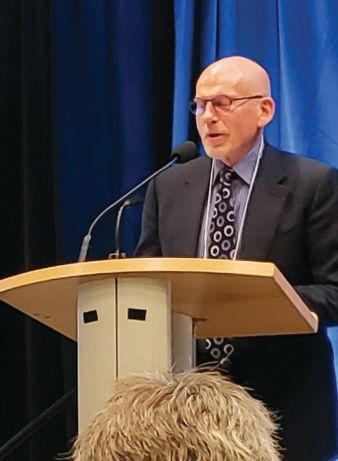
Technical Research Centre of Finland (VTT), Innovate BC, and the BC BioAlliance – was held in Vancouver to grow awareness on the abundant potential of using bio-sourced materials for high-value and high-tech products. The symposium, “Growing the Bioeconomy: Bio-Sourced Materials for High-Tech Applications,” used the co-located BCTECH Summit as a platform to bring together key players from industry, government and research organizations from within B.C., Canada and Europe. Key attendees included Bruce Ralston, minister of jobs, trade and technology, John Allan, deputy minister of FLNRORD, and representatives from multiple First Nations in the province.
During his opening remarks, John Allan clearly expressed the importance of creating new opportunities that will benefit the long-term competitiveness and success of the forest sector and, consequently, benefit the local and national economies. “Developing a forest bioeconomy will enable more processing and manufacturing of forest biomass to ensure we are capturing the most value from forest resources,” he said. “This will in turn create a more competitive industry, more resilient communities through job creation in urban,
rural and Indigenous communities, and a more sustainable future for the province.”
A well-rounded group of experts from FPInnovations, VTT, academia and industry provided a glimpse of the high-tech applications using bio-based materials that have already been implemented or are in development. Quite possibly the highlight of the day were two interactive panel sessions. The first panel explored the research and development of bio-sourced materials, focusing on the many opportunities and challenges surrounding the commercialization of products. The second panel, composed of well-known executives in the industry, discussed opportunities and challenges in the manufacturing of high-tech materials using bio-sourced components.
Throughout the symposium, attendees had the opportunity to view 3D printing demonstrations using innovative methods and materials from universities in B.C.’s Lower Mainland. Additive manufacturing, or 3D printing, is a technology with potential to revolutionize manufacturing, enabling custom parts to be made ondemand and eliminating huge capital costs for machinery and material waste. Relevant to discussions around re-invigorating and growing rural communities, 3D printing is a crucial component of small manufacturing operations proposed for remote areas where bio-sourced printing materials can be obtained from the local environment.
This is the first public forum on the topic of B.C.’s bioeconomy. The intention is to continue to grow and collaborate on biomaterials for high-tech applications, eventually transforming B.C. into an innovation hub in the bioeconomy sector.
More information on the symposium can be obtained by contacting Wadood Hamad, science manager for the Transformation & Interfaces Group – Bioproducts at FPInnovations, at wadood.hamad@fpinnovations.ca. PPC
FPInnovations is a not-for-profit organization that supports the Canadian forest sector’s global competitiveness. fpinnovations.ca
By Treena Hein
As always, supply and demand of pulp, paper and cardboard products are in flux. In pinning down current issues and future outlook, let’s first look at China. It’s anyone’s guess how China’s move in 2018 to restrict recovered paper imports will play out this year and next.
“China took 31 million tonnes in 2016 and it’s now down to about 16 million tonnes,” says Sanna Sosa, principal for North America at Pöyry, a consulting and engineering firm. “This caused a spike in the cost of recovered fibre in China and made it very challenging for North American collectors to stay in business. The Chinese containerboard industry has relied a third of their fibre needs on imported recovered fibre to manufacture 55 million tonnes of containerboard per year. Domestic collection needs to increase.
“The other options are to import finished containerboard from countries like the U.S. or Vietnam, import OCC (old corrugated cardboard) pulp, or import virgin fibre. Those options are expensive, even when compared to the costs of dealing with waste that’s in the imported recovered fibre.”
China, Sosa notes, is posting its slowest economic growth rate since 1990 (although it’s still at about 6.5 per cent), and fewer exports means there’s been a corresponding drop in demand for pulp and packaging, and their production. In North America, however, the ban has resulted in low costs of recovered fibre for domestic mills. “China doesn’t have trees, and we have been assuming that they will have to lift the partial ban,” says Sosa, “but the most recent news from China indicates there may be a total ban in 2020.”
Rod Fisher, president of Fisher International consulting firm and creator of the FisherSolve Next business intelligence platform for the paper industry, notes that smaller pulp producers are being disadvantaged by China’s stance, leading to

lower environmental impact and industry consolidation. “Major producers also made more money,” he adds, “when restrictions drove up the price of linerboard.” Fisher predicts that China will keep restrictions in place, but regulate them to allow in the “right amount” of OCC.
In terms of pulp prices, the economic slowdown in China (it buys 35 per cent of the world’s market pulp) has resulted in price drops of 25 per cent over the last three months, but that won’t last forever, says Brian McClay, president of the Montreal-based Brian McClay & Associates consultancy and chair of Trade Tree Online (TTO), a global pulp price indices provider and trading platform.
McClay says it’s “a big question” whether the slowdown in China will be temporary or longer lasting. He believes the answer depends largely on when and how the U.S.-China trade conflict is settled, because underlying demand for pulp and especially tissue products is strong in China and many other parts of the world – growing globally at about three and four per cent, respectively, per year. It’s interesting to note that in Quebec, KP Tissue and Kruger Products will begin construction this year on a $575-million state-of-the-art tissue plant in Sherbrooke (see p. 20). It
will be operational by early 2021 and will produce about 70,000 tonnes per year of bathroom tissue and paper towels – all of it, says McClay, based on market pulp. Going forward, global pulp demand will also be buoyed, in his view, because the rapid decades-long growth of paper recycling is now reaching its peak. “I think softwood pulp prices have already bottomed out in China but won’t get much positive traction until later this year,” he says. “But then, they should go up to record levels in 2020-21, as there is very little new pulp supply coming on stream globally before 2022 at least.”
In December, Moody’s Investor Service predicted that pulp prices would remain fairly stable in 2019. In Sosa’s view, higher pulp prices may become the new normal when demand once again outweighs supply, and pulp is a growing industry due to demand for tissue products. She says demand for softwood and especially bleached hardwood pulp is solid.
For his part, Fisher sees pulp prices in light of the market’s cycles, which are predictable with the right data. Many of pulp’s ups and downs are actually caused by inventory swings rather than just supply and demand changes, he says, as buyers speculate in prices and availability by
building or drawing down inventories. As a result, prices can move counter to what supply and demand trends would suggest.
Demand for certain paper products such as writing paper will continue to decline. McClay observes that global demand for newsprint dropped a “massive” eight per cent over the last year, “even with all the newspapers being sold due to Mr. Trump.”
Where then, does product opportunity lie? Most agree that it’s in the global trend away from plastic. “On the packaging side, over the past few months, the ‘plastic substitution wave’ has hit the shores of North America,” says Sosa. “A lot of the fast-food companies are now working to eliminate single-use products like straws, utensils, wrappers and Styrofoam cups.” This follows developments in Europe over the last few years that have included bans on plastic cups and plates, and Queen Elizabeth’s ban in early 2018 of plastic straws and bottles on all royal estates.
“There is huge opportunity for plastic substitution if the industry really acts on it,” says Sosa. “I would hope that companies are working with the big brands already. Fibre-based packaging has everything that the brands are looking for, but there is always a need for innovation – for light-weighting, in increasing the battery of properties that can be offered.”
Fisher agrees. He says new technologies are giving paper attributes such as greater stretch and strength, which will support fibre-based industries in replacing plastics.
“Innovation is never ending,” says Ian Lifshitz, vice-president of sustainability and stakeholder relations, Americas for Asia Pulp & Paper (APP). “We will continue to see paper manufacturers being challenged to develop solutions that meet the evolving marketplace.”
He says the rise of services such as Uber Eats and Grub Hub have made takeout more popular than ever with consumers, and that they are demanding more sustainable packaging. “Many are even willing to pay up to 10 per cent more” for sustainable packaging, he says. Any new solutions, however, must also maintain food quality. APP has developed a product line called Foopak Bio Natura, a fully compostable paperboard product that the company says replaces plastic, foam and PE-coated food packaging.
Mouldable/pressed pulp products are another example of industry innovation. These products range from deli food and takeout packaging to multi-cup carriers and grocery produce trays. “Rottneros in Sweden, with its new sustainable paper trays using BCTMP, is a really good example,” says McClay. “And soon straw-based pulp from a new mill [Columbia Pulp] in Washington State will be introduced into the molded pulp market along with wood pulp.”
Because the outlook for pulp remains fairly bright, McClay says there is a lot of potential to provide new life for Canadian pulp mills that are currently idle, such as the NBSK mills in Lebelsur-Quevillon, Quebec and Prince Albert, Saskatchewan. And, he says, it’s important to remember that new pulp mills are much more than just pulp mills. “They are biorefineries, producing green chemicals and materials that can be used in textile production and more,” says McClay. “They are also increasingly being built with co-gen plants. For instance, Mercer International’s NBSK mill in Stendal, Germany produces enough green electricity to supply a city of 60,000. It’s a big revenue stream.” PPC
Treena Hein is an award-winning science and tech writer based in Ontario.


A crushed roll of paper can cost manufacturers and their customers countless hours, dollars, and headaches. But by simply inserting core plugs into each roll, paper makers can save on damage and loss claims for just pennies per roll. As a family-owned New England company that has been producing core plugs for over 50 years, Souhegan guarantees a high-quality, steady inventory of the products you need, whenever you need them.
For more information on standard plug sizes and custom options call us at (603) 654-2311 or visit us online at www.souheganwood.com
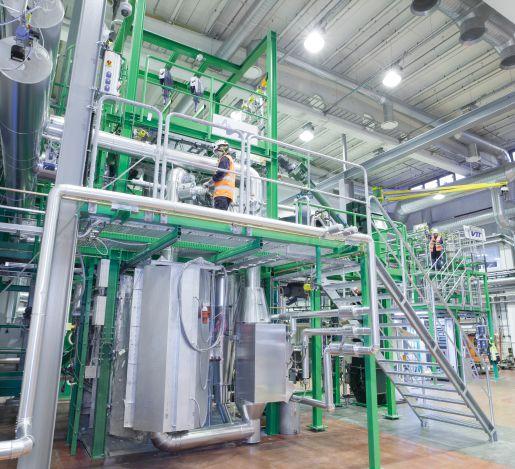
VTT Technical Research Centre of Finland has developed a sustainable new technique based on gasification to turn forest industry byproducts – such as bark, sawdust and forestry waste – into transport fuels and chemicals.
The new technique reduces carbon dioxide emissions by approximately 90 per cent compared to fossil fuels.
The approach uses gasification to turn biomass into intermediate products – liquid hydrocarbons, methanol or methane – in production units integrated with communal district heating plants or forest industry power plants. The products are processed further in oil refineries to make renewable fuels or chemicals.
Approximately 55 per cent of the energy content is turned into transport fuels and a further 20 to 25 per cent can be used to provide district heating or to produce steam for industrial processes. The new technique reduces carbon dioxide emissions by approximately 90 per cent compared to fossil fuels.
The process is based on VTT’s low-pressure, low-temperature steam gasification technology, simplified gas purification and small-scale industrial syntheses. Thanks to the smallscale approach, the heat generated by the process can be used throughout the year, and the process can be fuelled with local waste. Finland’s previous plans have involved considerably larger gasification-based diesel plants, the raw material demands of which could not have been satisfied with locally sourced waste. Moreover, it would have been impossible to make full use of the byproduct heat of the large plants, and their energy efficiency would have therefore been easily less than 60 per cent.
The BTL2030 project team estimates that the production costs of transport fuels made from domestic waste would amount to EUR 0.8–1 per litre of petrol or diesel. The new technology is set to become considerably more competitive as the costs of the raw materials of competing technologies increase, and the process is expected to be highly competitive at least from the year 2030 onwards.
Fortress Xylitol Inc., the xylitol R&D arm of Fortress Global Enterprises, is receiving $10 million in funding from Natural Resources Canada to help build a xylitol and complementary bioproducts demonstration plant.
The plant will be located at Fortress’s dissolving pulp mill in Thurso, Quebec. This funding from NRCan is in addition to the anticipated federal and provincial investments, grants, and loans of up to $17.4 million previously announced by Fortress on July 11, 2018.
The demo plant is intended to demonstrate technology for the co-production of value-added and sustainable bioproducts that can help transform the mill into a biorefinery. The process is expected to validate performance and produce pre-commercial quantities of food-grade xylitol and complementary bioproducts for testing and use by customers.
“The demonstration plant project builds on the acquisition of S2G Biochemicals Inc. and the company’s hemicellulose project at the Thurso mill,” says Giovanni Iadeluca, president and CEO of Fortress. “We are very grateful for NRCan’s support of this important project which could have a transformative impact on the optimization of wood resource utilization.”
The federal and Quebec governments have announced a combined $6.4-million investment to allow CelluForce Inc.’s cellulose nanocrystal facility to become the world’s first full commercial demonstration-scale plant of its kind.
The funding will support the production of 300 tonnes of nanocrystals annually at the new, state-of-the-art facility, and will allow CelluForce to increase production efficiency by 50 per cent and help create more than 100 jobs in the next commercial plant.
The funding is provided through Natural Resources Canada’s Investments in Forest Industry Transformation program and the government of Quebec by means of the MWFP’s Innovation Bois program and the Ministère de l’Économie et Innovation’s Fonds du développement économique.
The new material, which can be used in everything from papers to paints, electronics to adhesives and cement to cosmetics, is produced from the cellulose in trees.
The Quebec government is contributing a total of $14.2 million to CelluForce, including $2.5 million from its wood innovation program. This program is one of the key measures of the 2018–2023 strategy to develop Quebec’s forest products industry. In addition, Quebec is providing $11.7 million from its economic development fund, specifically $4.9 million in the form of equity investments and $6.8 million in the form of loans.
“This investment will allow us to maintain our leadership in the field and expand the development of improved products with our customers. It will further enable our continued growth,” says Sébastien Corbeil, president and CEO of CelluForce.


Since 1926, Pulp & Paper Canada has recognized mills that have achieved an outstanding safety record. As always, the mill with the lowest total recordable incident rate (mill frequency) in each category is the winner of that class for the year and receives a plaque and certificate. In the event of ties, the mills are ranked by the most to least total worker hours. Congratulations to all of our participating mills on their excellent safety records in 2018, and may 2019 be your safest yet!
“Working toward a common goal all together. Whatever your role, when it comes to safety, you cannot stand on the sidelines.” — Kruger Products
By Anne-Sophie Tétreault, Eng.
Health and safety is a perennial issue, especially in industries such as pulp and paper where workers are at risk every day while carrying out their duties. From exposure to noxious chemicals and noise hazards to maintenance on large machinery, the dangers present themselves in many phases of the pulping process and present several opportunities for risk.
There is a strong case for building a robust, company-wide commitment to health and safety in every organization. There are financial, business and legal cases to make as well as one of corporate social responsibility. But ultimately it comes down to human life, its inherent value, and the obligation an organization has in keeping that human life safe.
According to the Association of Workers’ Compensation Boards of Canada, of the 951 occupational health and safety fatalities in 2017, over half (486) were people working in trades and transport or who were equipment operators, and 35 per cent of the fatalities were due to a traumatic injury or disorder. These numbers speak directly to the pulp and paper industry, where many jobs involve operating heavy equipment where there is a very real risk of traumatic injury.
With confirmed risk there becomes a need for safety throughout your organization, and to ensure that all staff are on board.
Managing change and motivating staff is a challenge at the best of times. When your workforce is dispersed and sporadic, as

many contractor workforces are, getting them involved and interested in a new initiative can be even trickier.
These workers are not your own employees. Often enough, they do not even work for the contractor you hired, but rather for a subcontractor of your contactor. With so many degrees of separation, it can be difficult to know the competency level of these workers and to share important information with them. How can you effectively influence workers to adopt the same beliefs, values and norms regarding onsite safety – especially with contractors, who are not always immersed your company’s organizational culture?
A culture of safety (or any culture, for that matter) is not built solely by preaching slogans to employees, telling the employees to adopt safety values and calling the job done. Skilled managers build and maintain organizational culture by how they carry out their daily work.
In a contractor-based context, managers should consider doing the following:
• Expand their organization’s OHS pol-
icy to explicitly include contractors
• Write a contractor safety management program
• Require that contractors set aside resources needed for safety (and be ready to pay for it in overhead)
• Present to workers in a safety induction training the risks, their applicable life-saving rules and safety programs specific to their facility, complete with a sound verification of their understanding
• Read the safety plans and programs submitted by contractors; if weak, document why, ask for correction, and, if not correctable, conditionally qualify, impose your own programs, monitor closely, or disqualify all together
• Monitor the contractors’ OHS performance by reviewing yearly their injury and illness data, as well as legal infractions
• Ensure job-specific risk analysis for contractor work, complete with specifications of required controls. This
may include permits, mandatory work instructions to implement by contractors, worker qualification and personal protective equipment requirements
• Block access to site to workers with no valid evidence of training or qualification required
• Document unsafe contractor or individual workers that have been stopped, help contractors with their root-cause analysis, and apply a predetermined consequence, if applicable
• Inspect, audit, assess. Document, give feedback and the opportunity to improve, then use these for requalification based on real-life results
All of these actions and more are what will go beyond individual attitudes to shared thinking on what is meant to be safe when working for your company, whether as an employee or a contractor.
The incorporation of new technologies is effective in applying health and safety principles to contractor management. There are tools to manage contractors at every

point in the relationship, from the hiring process to job completion. Not only do these tools make the work quicker and more efficient, but they are also designed to mitigate risk and keep contractors safe as they go about their jobs.
These tools can assess the qualifications of contractors for jobs before the work begins and identify and manage training for contractors who might need it, ensuring that you and your contractors are set up for success before anyone steps foot onto the job site.
New tools can also complete risk assessments and identify contractors who are compliant so that you have the best team possible. Managers can track hazard analysis and required controls in real time with each contractor. Having this knowledge readily accessible can help you know who has valid training for a job, making job assignments more efficient.
Because the tools are online, they can be used in remote induction or safetyorientation training before a contractor enters the job site. This can free up bottlenecks common at the beginning of a job

to view a video or complete initial training, ensuring that that the job can start as soon as workers arrive. Once the training is completed, these tools will often compile, track and update the training records, saving managers time by keeping all relevant information in one place.
Once the work starts, tools can help to monitor job sites, including generating work permits for contractors based on training required and limiting access to risky job sites based on who is qualified. Many new tools connect site-access security control systems to CMS systems, ensuring that positively no non-qualified contractors’ and/or their workers are coming to site. Access can be as granular as specific areas in the plant to forbid access to dangerous zones, and can be verified every time someone tries to gain access.
Health and safety risk is an inherent part of the pulp and paper industry. Because much of the pulp and paper workforce includes contractors, it is important to build a culture of safety for both your workers and the contractors who work on your job sites. PPC











• TAPPI Dirt Count Capable
• Faster Start-ups with Higher Level Classification
• Reduction in Waste with Roll Quality Analysis
• Identification of Root Cause
• Integration to Procemex® Web Monitoring
• Application Specific Geometries for Detection
• Simple User Interface for Immediate Use






By Martin Fairbank, Ph.D.
Bleaching of chemical pulps has evolved a lot over the last few decades. As well as the evolution of chlorine dioxide bleaching, steps such as chelation, oxygen delignification, ozone, and addition of oxygen and/or hydrogen peroxide to the extraction stage have been added to the portfolio of bleaching technologies available – and bleaching can be done in three to six stages. This means there are a lot of variables to keep track of in the overall bleaching process. Good operating practice requires a good understanding of the fundamental reactions occurring, as well as sensors and control loops to make effective control possible.
At PaperWeek 2019 this past February, several bleaching presentations addressed aspects of improving bleach plant operation and cost control.
Mona Henderson, who works for Valmet as a business manager, talked about the challenges of running sub-optimized bleach plants with many constraints, old and overloaded equipment, or insufficient data on process parameters. She laid out a general approach to troubleshooting and optimization.
The first step is to map the existing operation, including cooking, washing and any oxygen delignification. The second step is to define the problems, including equipment problems, process limitations, high chemical dosages, missing or broken analyzers, and variations in production rate or unbleached pulp quality. The key to a successful solution is to identify and address the root cause and not just the symptoms. She demonstrated this approach using three case studies, showing how problems often begin upstream. She emphasized how important it is to understand the fundamental chemistry of the process in order to develop effective solutions.
Guy Normandeau, process solutions manager at Capstone Technology, presented a paper on behalf of his Swedish colleagues at sister corporation BTG and Karlstad University on the impact of dissolved organic matter in an EP stage. Carryover of dissolved organic matter from one bleaching stage to the next has a significant impact, and in this case the authors looked specifically at the effect on the EP stage. Carryover of dissolved lignin from a chlorine dioxide stage has a significant negative impact on the following EP stage, resulting in less delignification and less brightening of the pulp. The results indicated that this dissolved lignin can result in too low a pH for effective EP bleaching. While this can be compensated for by a higher sodium hydroxide charge in the EP stage, it is not as effective as having a well-washed pulp.
Scott Carmichael of Nouryon Pulp and Performance Chemicals presented another approach to improving bleaching performance, using a scorecard to evaluate overall efficiency and then identify areas for improvement. Industry benchmarks are derived from three sources: Nouryon’s database, lab studies and a bleach plant model. The database was first developed in 1996 and contains data from approximately 75 per cent of all North American bleach lines, classified by species, the presence of oxygen delignification and the number of stages. The majority of the data are from actual mill studies.
The scorecard provides values for comparison so that problem areas can be identified and improved. Some commonly occurring bleach plant problems are off-target D-stage pH values, non-optimized chlorine dioxide split between D stages, and feedstock variability.
A reliable measure of bleach plant performance is the oxidative equivalent Kappa factor (OKF), calculated by formula shown in Figure 1.
Figure 2 shows an example of OKF values for a three-stage softwood bleach plant. The OKF value of a client mill was 0.65, which is in the top 20 percentile for three-stage softwood bleach plants. Although this value could be affected by a higher bright-
ness target, it could also indicate problems such as high brown stock carryover (>10 kg/t of COD) or high feedstock variability.
The OKF is just one factor that Nouryon uses to evaluate bleach plant performance. Others include the E-stage caustic to active chlorine ratio (a high ratio indicates problems), the per cent delignification from brown stock to the first E stage, and the D1 multiple, defined as %ClO2 divided by the extraction stage Kappa number.
A common problem is that too much of the total ClO2 is applied to the D0-stage. Depending on the number of stages, the optimum distribution of chlorine dioxide is somewhere between 50-65 per cent in the D0, and the rest in the latter stages. When the distribution of chlorine dioxide is loaded too heavily in the front end, chemical is wasted. Carmichael concluded that when these factors deviate from the normal process range, individual stage parameters should be explored to determine the root cause.
Researcher Xuejun Zou gave a presentation on various strategies for reducing the cost of bleaching developed by FPInno vations. A specific approach that applies to chlorine dioxide use is Near-Neutral Brightening, which has been patented and implemented in several mills. This technology focuses on controlling the pH of a D stage to a pH near seven. This can reduce ClO2 demand as well as prevent brightness reversion of the final pulp.
bleach plant optimization is based on understanding the underlying behaviour of a mill’s specific pulp furnish and bleaching sequence. By running a series of lab experi ments, they discover the sweet spots for optimum bleaching performance, based on chemical dosage, pH and/or caustic charge, temperature and retention time. They can then recommend implementa tion of a mill-specific optimization strategy and control for each stage of bleaching.
John, New Brunswick, chose to imple ment a model predictive control (MPC) strategy to keep its bleaching costs in line. John Gillespie, bleach plant super intendent at the mill, gave a presentation on the project, done in partnership with Capstone and BTG.
and several sensors are located at critical positions in the bleach plant, including BLT-5500 (bleach load transmitters) and pH and brightness sensors. The BLT measures the lignin (or Kappa) content of both the fibre and filtrate by use of an optical measurement technique. MPC is an advanced control technique used in many processes, which involves building a model of the entire process based on signals from the sensors, “bump” tests in the process to measure the response of the system to changes in each variable, and set points such as final brightness and pH. The model is then used to deliver the desired results by constantly manipulating the variables in order to meet the set points.
The key advantage of a model-based control system is that brightness variability can be reduced significantly when compared to a manually controlled system, enabling bleach chemical savings. The mill experienced a few challenges in implementing the MPC system. Changes in production rate alter bleach tower retention times and can skew the model. Sensor fouling can lead to false readings that result
was able to develop a strategy to deal with this, which included building a “soft sensor,” or model-predicted brightness value, to indicate when fouling was occurring. When a sensor value differs significantly from the predicted value, the sensor can be taken offline and cleaned.
The final challenge was the training of operators to understand and work with the new control concept. There was a classroom component as well as coaching by Capstone on how to deal with deviations and events as they occurred.
The results speak for themselves. Over a nine-month period under MPC control, Irving achieved an average reduction of 20 per cent in total ClO2 and 26 per cent in total NaOH usage for hardwood pulp, and eight per cent and 19 per cent, respectively, for softwood pulp.
All the presenters agreed that while pulp bleach plants are complex systems, they can be kept running efficiently if enough measurements are in place to develop an understanding of the root cause of process upsets, backed up by a good fundamental understanding of the chemistry involved

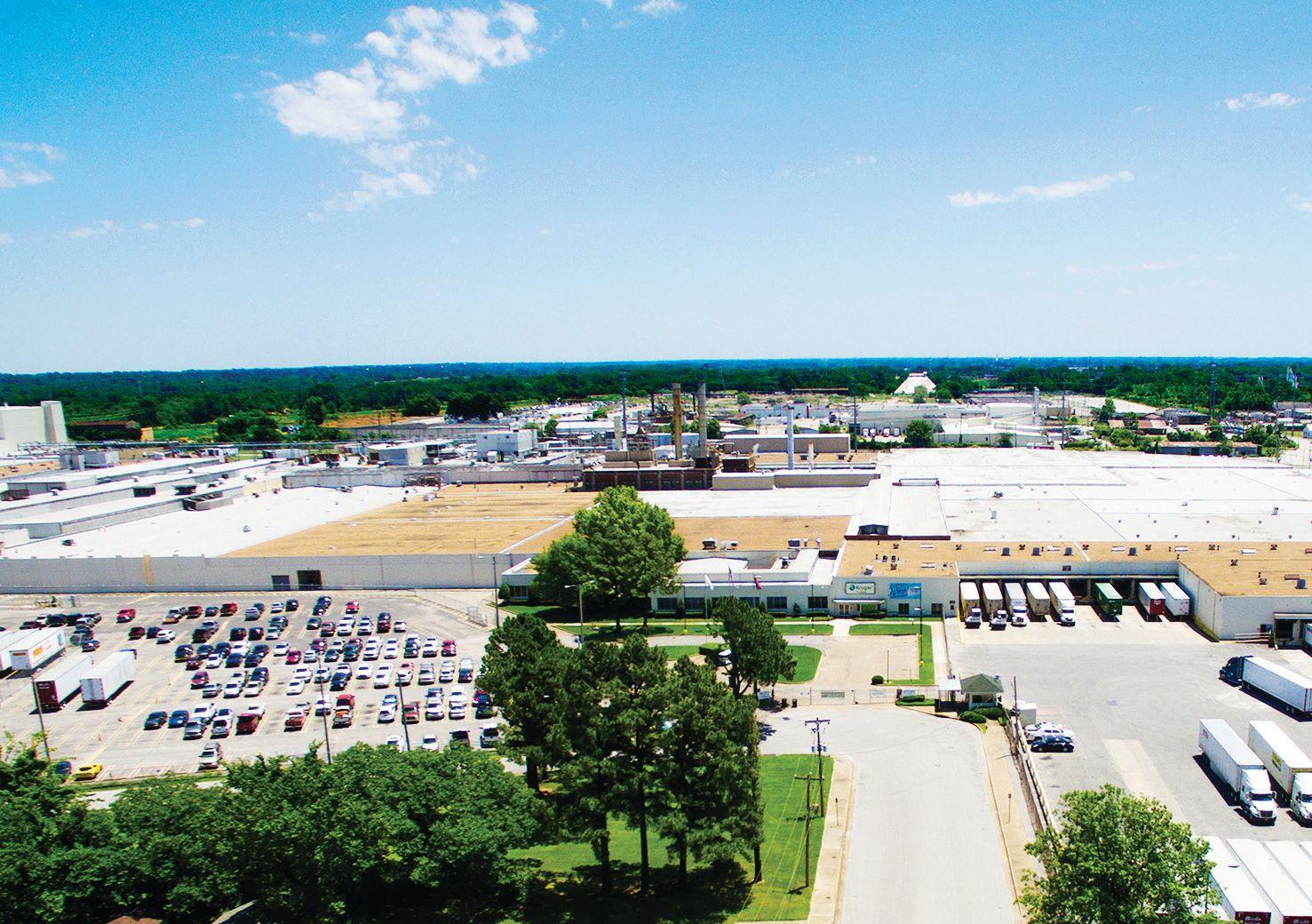
Kruger’s first TAD facility in Tennessee
We talk to the CEO of Kruger Products about the company’s $575-million investment to construct a new tissue facility in Canada
By Kristina Urquhart
At a time when many Canadian pulp and paper companies are looking to diversify their existing operations, Kruger Products is opening a brand new one.
In August 2018, Kruger Products, along with its publically traded entity, KP Tissue Inc., announced a $575-million investment to build a new state-of-the-art tissue making plant in the Brompton neighbourhood of Sherbrooke, Quebec, adjacent to an existing Kruger Inc. specialty papers facility. The new plant will create 180 permanent jobs and house Canada’s largest through-air-dry (TAD) machine, which
manufactures ultra-premium tissue.
This injection is just one of the latest investments that the Kruger Group has made over the last two years. In August 2017, a new $55-million paper machine started up at the Kruger Products plant in Crabtree, Quebec. And in September 2017, Kruger Inc. poured $377.6 million into diversifying its Brompton and Wayagamack, Quebec newsprint operations into production for specialty products, including labelling, digital printing and flexible food packaging.
All of these activities strengthen the company’s foothold in the Canadian market – where Kruger Products accounts for about one-third of all tissue sold in the
country and where Kruger Products makes up 45 per cent of all available consumer trademark tissue brands. “It’s a testament to our history that we are investing and building in Canada despite other strong location options in North America,” says Dino Bianco, CEO of Kruger Products. “Our roots are in Canada. That says a lot about us as a business and who we are.” Kruger Products employs 2,500 people – including 2,000 in Canada – and has been recognized as a top employer in the Greater Toronto Area (GTA) for seven consecutive years.
Kruger Inc., the majority shareholder of Kruger Products, was founded in 1904
and manufactures specialty papers, containerboard products and corrugated packaging, as well as cellulosic biomaterials, renewable energy, and wine and spirits. Additionally, it operates recycling and real estate divisions.
Kruger Products, the tissue division, specializes in bathroom tissue, facial tissue, paper towels and napkins for commercial, industrial and consumer use under brands including Cashmere®, Purex®, SpongeTowels®, Scotties® and others. The company manufactures tissue at all quality levels from value to ultra-premium for both retail and away-from-home markets in Canada and the United States.
The premium tissue segment is growing by two to three per cent every year, with an affinity in the market for the ultra-premium products. “We are running close to capacity,” Bianco notes. “If we’re going to be a competitive player going forward, then we need to add more capacity and particularly in the premium/ ultra premium segment.”
As the primary technology used to manufacture ultra-premium tissue, TAD is considered the gold standard for the segment. Kruger Products is making this multi-million-dollar investment despite a challenging cost environment. The cost of pulp on both softwood and hardwood has moved to near-record levels, and freight costs, while levelling out over the past few months, remain high. Analysts predict pulp prices will remain relatively stable this year (see more on p. 10) after a slower start, with underlying demand from China ready to hit as soon as the U.S.-China trade conflict is settled.
“Many people have asked me why would we invest in a new facility when industry costs are high and our margin structure is under pressure. And my point is it’s the best time to do so,” says Bianco. “If you can make the economics work now, when the margin comes back or pulp subsides a bit, then you’re ready to hit the market with speed, innovation and quality.”
To cut costs and stay aligned with the market in advance of the new construction, Kruger Products raised prices at the end of 2017, and again a year later. The company also implemented a cost reduction program in 2018, which was about twice as aggressive as in years past, emphasizing less work-related travel, keeping vacancies open, renegotiating procure-
ment contracts and deferring unnecessary maintenance.
“2018 was a tough year for all tissue manufacturers. With the speed and magnitude of pulp and freight cost increases, it was difficult for tissue manufacturers to respond quick enough to offset these costs,” says Bianco. “In 2019, we have priced our business and we are continuing to drive down costs through increasing capacity, improving efficiencies and reducing waste.”
The centrepiece of the new Sherbrooke tissue plant will be the TAD machine, which is Kruger’s second such machine. Its first TAD machine is located at the Memphis, Tennessee facility.
TAD tissue is characterized by more bulk and softness than traditional tissue, and uses less fibre and water to manufacture. First, water is removed from the sheet with a vacuum before hot air blasts through it for structure. The sheet is then fed through a dry press, which imprints a pattern to produce a more pliable product. The TAD machine offers flexibility on sheet counts and roll diameters. The entire process uses more energy than alternative tissue-making methods, but those higher costs are offset by the reduction in fibre.
When shovels hit the ground this spring, the project will create one million worker hours for construction, with start-up expected in the first quarter of 2021. At maturity, the new plant will be able to produce 70,000 tonnes annually of tissue products.
After reviewing several sites in the U.S. and Canada for the facility, Kruger Products selected Sherbrooke for its proximity to the border, favourable hydro costs and the support of the Quebec government through Investissement Québec, the provincial government’s economic development department, which agreed to invest $105 million by way of a convertible debenture.
Currently, Kruger Products is securing suppliers and assets for the plant –including the paper machine – converting lines and associated equipment for pulp handling.
The Sherbrooke TAD will be capable of producing paper towel, bathroom tissue and
facial tissue, with some new modifications to add heating and drying capacity and to increase efficiency on paper towel production. The converting lines will be flexible to produce a variety of pack sizes, including display packs and bonus packs. The team will install robotics in the plant where possible and use sensors to monitor assets and perform preventative maintenance.
“We don’t want to be bleeding edge, where we put in all the latest technology and then can’t use it,” Bianco explains. “And we don’t want to be losing edge – so we’re trying to manage where we’re going to invest now and where we can invest later once the technology is proven.”
Bianco says Kruger Products views the new Sherbrooke TAD machine as a North American asset rather than just a Canadian one. Using the two TAD machines in tandem, the company can optimize production for longer runs, and have the ability to make its supply chain more efficient.
Bianco cites Kruger’s Inc.’s project management experience and governance structure as integral to the project’s success.
New premium tissue capacities using TAD, NTT or ATMOS technology will be coming on stream elsewhere in the U.S. over the next few years, but so far, no others have been announced in Canada. Bianco says the growing demand in the premium segment, coupled with older assets being taken offline, will translate to the market capacity use remaining stable in the long term.
“Anyone can put in a TAD machine,” he says. “But we’ve got an incredibly strong supply chain, incredibly strong customer relationships, and strong brands. We have an integrated business model that allows us to leverage our whole footprint and all of our capabilities to be able to successfully utilize the capacity that comes out of that facility.”
The Sherbrooke TAD project is part of Kruger Products’ overall strategic five-year plan to connect more with its consumer and grow its product base, especially premium trademark in Canada and premium private label in the United States and Mexico.
“We’ve done this before. We know the technology and we know the infrastructure,” says Bianco. “It’s a little easier the second time.” PPC
Drive series for pumps, fans and compressors

Siemens has introduced the new Sinamics G120X drive, designed for use in pump, fan and compressor applications in industries such as pulp and paper, water/wastewater and other industrial environments.
Sinamics G120X has a power range of 1–700 hp (0.75–630 kW) and can operate in a temperature range from -4 to +140° F (-20 to +60° C) with any standard motor, including synchronous reluctance motors (SRM).
It has an integral DC choke, which the company says improves harmonics and EMC performance. Sinamics G120X meets all the latest and upcoming UL, NEMA and EN/IEC standards for 2019 and beyond and offers up to 100 kA short-circuit current rating (SCCR) for product safety and energy efficiency.
The compact design of the G120X saves space in the control cabinet and can also be integrated in to MCC solutions (including plug-in buckets). Even without an additional output reactor, Sinamics G120X drives enable motor cable lengths of up to 492 ft. (150 m) with category C2 or C3 filter and up to 1476 ft (450 m) without filter and have hardware-based SIL3-certified safety functions built-in.
The G120X has Class 3C3 coating, which is suitable for harsh environments where the presence of corrosive gases such as hydrogen sulphide (H2S) is present. A high C2 or C1 EMC category ensures the drive can be reliably used in any kind of industrial and public networks.
Sinamics G120X can be linked to the cloud-based Siemens Mindsphere IoT operating system by using Sinamics Connect 300 and the Mindsphere app Analyze MyDrives. This offers users the opportunity to analyze valuable operating data gathered from the drive, and enables the visualization and analysis of status information, providing users with data that can be used as the basis for process optimization and maintenance strategies. siemens.com

The Holland-based manufacturer Interflon has announced its range of high-performance lubricants is now available to paper and pulp manufacturers in the Canada and the U.S. The company has developed lubricants that are especially well suited to endure sawdust and paper dust contamination, high bearing and shaft speeds, high pressure and corrosion or washout caused by prolonged exposure to water.
Among others, Interflon’s lubricants include: Grease LS2, a heavyduty grease with water resistance, good for low-speed, high-loadbearing applications; Grease HTG, a high-temperature grease with extreme pressure resistance; Fin Super, a dry-film spray lubricant for medium loads and small-pitch chains; and Paste HT1200, a ceramic paste for assembly with excellent anti-corrosion and anti-galling properties, good to temperatures of 1200 degrees C.
MicPol, the lubricant technology developed by Interflon, derives its name from the process of micronization and polarization that its solid lubricant particles undergo. MicPol works by bonding magnetically with surfaces, which the company says creates a stronger and longer-lasting adhesion than can be provided by viscosity alone. Solid lubricant particles are micronized to as small as .03 microns, or more than 1,500 times thinner than a human hair. This allows the to penetrate and creep effectively, even into sealed bearings. interflonusa.com
Oil shear PTO clutch for high-volume pumps Force Control Industries introduces the PosiClutch 200 Series PTO clutch, a hydraulically actuated microprocessor-controlled oil shear PTO clutch ideal for highvolume pump applications.
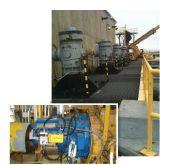
Designed to mount on a diesel engine with SAE 00 flywheel housing, this clutch can include up to four pump pads to drive additional hydraulic pumps, up to 400 HP. Advanced engineering design eliminates the need for separate transmission fluid cooling equipment, thereby eliminating components, hoses and fittings, which can leak and fail.
At 33.25 inches in length, including sheave support bracket the PosiClutch 200 Series PTO includes an internal brake that can be released to allow free movement of the output for inspection or freeing a jam.
A proprietary controller communicates through the J-1939 communications protocol used on most engines, to prevent damage by limiting engagement at proper engine speed, protecting the engine from overload and stall conditions, and detecting clutch damage. This control can also be used for remote start enabling the clutch to be properly engaged remotely, or automatically.
Each PosiClutch clutch consists of seven basic components: the input shaft connected to the motor or engine; the output shaft connected to the load; a clutch and brake stack consisting or multiple alternating friction discs and drive plates; a centrally located piston between the brake and clutch that will engage either the clutch, or brake, but never overlap to engage both at the same time; the piston seals (o-rings with Teflon liners on each o-ring; springs tending to push the piston to the brake side; and the transmission fluid that makes the whole unit possible.
There is virtually no wear of the friction material, so piston travel is reduced and uses less actuation air or hydraulic fluid to provide a quicker response. forcecontrol.com


ment of spreader roll services at its West Monroe, Louisiana, facility.
The company has formed a dedicated spreader roll team to resolve customer issues.
“Our West Monroe facility is at a convenient shipping location for most paper mills across the United States, allowing our customers to reduce freight costs and limit downtime,” says Richard Berry, senior vice-president sales, Voith Paper Fabric & Roll Systems, North America.
To prepare for its new spreader roll workshop, Voith invested in new equipment designed for rebuilds and repairs and added it to its West Monroe plant.
For customers needing new spreader rolls, the company offers EvoStretch, a spreader roll that uses a high-performance ceramic bearing to create a “self-healing” effect through smoothing the bearing races.
SolarStretch, a polyurethane sleeve for spreader rolls, is twice as abrasionresistant as standard rubber sleeve, the company says. Metal-surfaced rolls, including chrome-plated and tungsten carbide-coated rolls, are also available. voith.com
Scientists at the University of Waterloo have created a powder that could capture carbon dioxide (CO2) from factories and power plants.
The advanced carbon powder, developed in the lab of Zhongwei Chen, a chemical engineering professor at Waterloo, could filter and remove CO2 from emissions at facilities powered by fossil fuels, before being released into the atmosphere with twice the efficiency of conventional materials.
“This will be more and more important in the future,” Chen says. “We have to find ways to deal with all the CO2 produced by burning fossil fuels.”
The new process could also be used to
Dynatrol has introduced density systems that maintain accurate and continuous measurement of density, specific gravity or per cent concentration in-line or in vessels at process conditions. Applications for the pulp and paper industry include caustic soda, and pulp slurry additives.
The Dynatrol Density Cell is available in corrosion-resistant materials with broad temperature and pressure ratings. The cells are weather-tight and approved for most hazardous area classifications such as CL I, divisions 1 and 2. There are no motors, bearings, spindles or moving parts to maintain.
Dynatrol’s Digital Density Converter has an on-board microcontroller and is preprogrammed and calibrated. The software provided with the converter can display corrected gravities – using the density and temperature information generated by the cell. A two-line LCD displays temperature, density, corrected gravity, product frequency and status information. dynatrolusa.com
produce optimized carbon powders for applications including water filtration and energy storage, the other main strand of research in Chen’s lab.
CO2 molecules stick to the surface of carbon when they come in contact with it, a process known as adsorption. Since it is abundant, inexpensive and environmentally friendly, that makes carbon an excellent material to capture CO2, a greenhouse gas that is the primary contributor to global warming.
The researchers, who collaborated with colleagues at several universities in China, set out to improve adsorption performance by manipulating the size and concentration of pores in carbon materials.
The technique they developed uses heat and salt to extract a black carbon powder from plant matter. Carbon spheres that make up the powder have many, many pores and the vast majority of them are less than one-millionth of a metre in diameter.
“The porosity of this material is extremely high,” says Chen, who holds a Tier 1 Canada Research Chair in advanced materials for clean energy. “And because of their size, these pores can capture CO2 very efficiently. The performance is almost doubled.”
Once saturated with carbon dioxide at large point sources such as fossil fuel power plants, the powder would be transported to storage sites and buried in underground geological formations to prevent CO2 release into the atmosphere.
A paper on the CO2 capture work, “Insitu ion-activated carbon nanospheres with tunable ultramicroporosity for superior CO2 capture,” appears in the journal Carbon. uwaterloo.ca

SDT, an ultrasound solutions provider, has released the SDT340 data collector and UAS4.0, a cloud-connected condition-monitoring solution that combines ultrasound, vibration, temperature and RPM in one package.
Ultrasound and vibration are the two most relevant indicators of asset condition, especially where the assessment of bearing and gear health are concerned. Both parameters are measured using SDT340’s focUS Mode. The user can capture long data samples with 32K, 64K, 128K or 256K resolution.
Data acquisition time is adjustable from a few seconds up to 10 minutes. Inspect ultra-slow speed systems or even machines that do not fully rotate. The collector’s internal storage of 4.5+ GBs is coupled with a large (3.5” diagonal) colour display that works in splitscreen mode, recalls historical measurements and displays the time waveform and spectrum with live, scalable X-Y axis.
UAS4.0 is a scalable, multi-technology, multi-platform software used to manage and analyze SDT340’s data. Users can choose a stand-alone installation, a fully networkable server option, or host their asset condition data in the cloud. sdtultrasound.com
New tissue embossing techniques
Engraving Solutions, an Italian producer of embossing rollers for the tissue industry and part of the Körber AG Group, has devel oped three new digital and customized technologies for the tissue market.
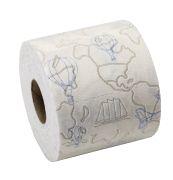
The Ghost roller uses two different micro-embossing techniques – chemical and mechanical – to produce highyield, bulky and soft tissue products with refined embossing.
The name evokes the special shape of the points, similar to a “ghost sheet.” The profiles of the engravings have been softened, and therefore act with less cutting aggressiveness on the paper. This allows a reduction in the strength loss that usually occurs during embossing when traditional rhomboid points are used.
The second technology is called Express, which allows for double-colour products using embossing alone. By adding coloured water to the pre-embossing station, on first pass the ply is decorated with one colour, and when it is passed
through the second embosser using coloured glue, the final product comes out with two different colours.
The last innovation is Smoothie, an embossing system specifically designed for entrylevel products that is capable of making the paper smoother and softer to the touch. This helps improving the handfeel of products made using traditional or recycled and unstructured paper, which feature low-weight and low quantities of long fibres and are usually are less appealing to the consumer.
With a single pass, the ply is embossed on the side portions, with or without the use of glue, and calendered on the central portion. All this is obtained using a single embossing station instead of requiring a pair of rolls or a machine dedicated to the calendering of the entire ply.
The final result is a roll that is smooth on most of its surface and aesthetically pleasing thanks to the application of (coloured or non-coloured) decorations. engravingsolutions.it
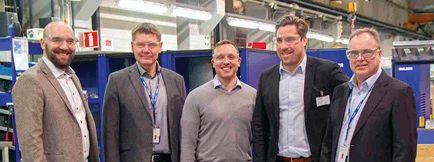
Sulzer and Tamturbo are partnering to bring new industrial air compression solutions to clients in pulp and paper.
They will collaborate on high-speed compressor technology with active magnetic bearings. The products allow for variable frequency electrical supply and advanced control technologies, with flow mechanics optimized by advanced calculation to ensure no energy is wasted.
Sulzer’s HST turbo compressor uses low-pressure compression in applications such as wastewater treatment.
Tamturbo manufactures high-efficiency turbo compressors that produce oil-free air to avoid contamination. sulzer.com

The Canadian forest products sector is passionate and devoted – not just to the industry itself, but also to its local communities. In this department, we’re sharing the initiatives of pulp and paper companies working to make positive social, environmental and economic impacts across the country.

Alberta-Pacific Forest Industries gave a $20,000 grant to the Plamondon/Wandering River Community Resources Society, which operates a free after-school drop-in centre for children aged 5-16, for roof and equipment upgrades.


The Cascades employees at Kingsey Falls, Victoriaville and Drummondville raised $600,353 for Centraide Centre du Quebec, an outpost of United Way.

Employees from Resolute Forest Products raised $38,000 and participated in a 32-kilometre trek across Saint-Jean Lake as part of a fundraiser for On the Tip of the Toes Foundation, a therapeutic adventures program for people with cancer.
Let us help you share your successes. Tag @PulpPaperCanada or use #PPCGivingBack on Facebook or Twitter, or send an email to the editor at kurquhart@annexbusinessmedia.com. We’d love to hear from you!

June 11, 2019
Prince George Conference & Civic Centre
Prince George, BC
At Kemira, we use our chemistry to improve your everyday. It means making your packaging lighter and stronger, your paper towels softer, and your print colors brighter. By adding our expertise, your everyday business runs smoother and more efficiently. Our job is to add value while adding peace of mind. We call it adding to your everyday.
