
The phenomena that impact paper and board runnability, end-product quality, and overall efficiency are often invisible. Kemira Predictive Wet End, a new digital service utilizing machine learning and advanced analytics, helps you discover and predict previously unseen process disturbances at your machine. With the reliable predictions, you can prevent problems before they occur.
Discover a new, data-driven way to optimize wet end chemistry. READ MORE AT: KEMIRA.COM/PULP-PAPER/KEMCONNECT/












The director of UBC’s
A





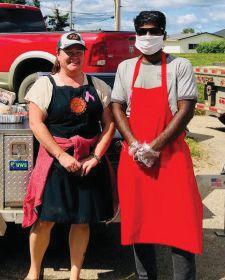

WhenFPInnovations announced in September that it had successfully developed a filtration material comprised of wood fibre for single-use, biodegradable face masks, the news (p. 27) made national headlines. It was a good opportunity for the public to consider some of the non-traditional ways we can use cellulose to replace petrochemicals.
Whether outside the pulp and paper industry or within it, conversations about the bioeconomy have been heating up ever since I joined this magazine two years ago. If anything, the COVID-19 crisis is increasing the chatter – many manufacturing industries are exploring new opportunities to diversify their supply chains and consumer bases.
With demand for some products, such as newsprint, in steady decline, Canada’s pulp and paper sector is one of the industries that needs to make some changes in order to stay competitive. In its 2019 State of Canada’s Forests report – which was released in May 2020 but collated from 2018 statistics – Natural Resources Canada (NRCan) says weak demand decreased the real GDP for pulp and paper in 2018 by 1.3 per cent, to $7.84 billion, compared to the year prior.

Kristina Urquhart Editor
Demand for pulp is expected to offset that decline a bit, but the agency advises that mills diversify their paper grades and move to more low-carbon projects that support the bioeconomy, such as cellulose nanocrystals production and/or lignin extraction.
That’s what TMP-Bio is doing for Resolute at its Thunder Bay mill, which produces newsprint and market pulp. The demo plant, a collaboration with FPInnovations, treats 100 metric tonnes of biomass per year to produce lignin and sugars that can be used in resins, animal feed additives and other bioproducts (p. 22).
There is funding available for these types of projects. For example, the $23-million TMP-Bio project included $5.8 million in federal investment, plus contributions from a range of other stakeholders. In July, NRCan announced an $82.9-million, three-year funding round for the Investments in Forest Industry Transformation (IFIT) program, which will bring low-carbon projects in biomaterials and biochemicals to commercial scale.
The industry needs to think outside the box when it comes to finding these new revenue opportunities, says Dr. Orlando Rojas, director of the University of British Columbia’s Pulp and Paper Centre and scientific director of the school’s BioProducts Institute. He recently sat down with me (virtually, of course) to record an episode for Pulp & Paper Canada: The Podcast (turn to p .10 for a short excerpt of our conversation).
Dr. Rojas, who recently joined UBC after a stint at Aalto University in Finland, suggests Canada look to its counterparts in Scandinavia for inspiration. Metsä Fibre is currently working on the project engineering for a biorefinery in Finland (p. 12). It would turn an existing pulp mill into a “bioproducts mill” capable of producing 1.5 million tonnes of pulp per year, plus materials for bioproducts. The new mill, which will get the go/no go sometime this fall, would feature fossil-free operations and 250 per cent self-sufficiency in electricity.
There is plenty of R&D happening in North America, too, and I’m pleased to highlight some of these fantastic projects in this issue on innovation. Check out a green repulping technology (p. 20), a biopolymer project (p. 18) and a new way to optimize energy use in kraft pulp mills (p. 14). And if you're working on an innovative project that you think the industry should know about, please email me at kurquhart@annexbusinessmedia.com PPC
Editor KRISTINA URQUHART 416-510-5143 kurquhart@annexbusinessmedia.com
National Accounts Manager LAURA GOODWIN 289-928-8543 lgoodwin@annexbusinessmedia.com Group Publisher TODD HUMBER 416-510-5248 thumber@annexbusinessmedia.com COO SCOTT JAMIESON 519-429-5180 sjamieson@annexbusinessmedia.com
111 Gordon Baker Rd., Suite 400, Toronto, ON M2H 3R1 Phone: 416-442-5600
PRODUCTION
Media Designer EMILY SUN
Account Coordinator
SHANELLE TOMLINSON stomlinson@annexbusinessmedia.com
Circulation Manager BEATA OLECHNOWICZ bolechnowicz@annexbusinessmedia.com email: bolechnowicz@annexbusinessmedia.com
Tel: 416-510-5182
Fax: 416-510-6875 (main) 416-442-2191
Mail: 111 Gordon Baker Rd., Suite 400, Toronto, ON M2H 3R1
Printed in Canada ISSN 0316-4004 (Print) ISSN 1923-3515 (Digital)
PUBLICATION MAIL AGREEMENT #40065710
SUBSCRIPTION RATES Canada $57.50 - 1 year; $92.50 - 2 year USA $139.00 CDN per year Overseas - $150.00 CDN per year
Occasionally, Pulp & Paper Canada will mail information on behalf of industry related groups whose products and services we believe may be of interest to you. If you prefer not to receive this information, please contact our circulation department in any of the four ways listed above.
Annex Privacy Office privacy@annexbusinessmedia.com Tel: 800-668-2374
The editors have made every reasonable effort to provide accurate and authoritative information but they assume no liability for the accuracy or completeness of the text or its fitness for any particular purpose. All rights reserved. The contents of this publication may not be reproduced in part or in full without the publisher’s written permission © Annex Publishing & Printing Inc.
Sustaining member, Pulp and Paper Technical Association of Canada; Member, Alliance for Audited Media.

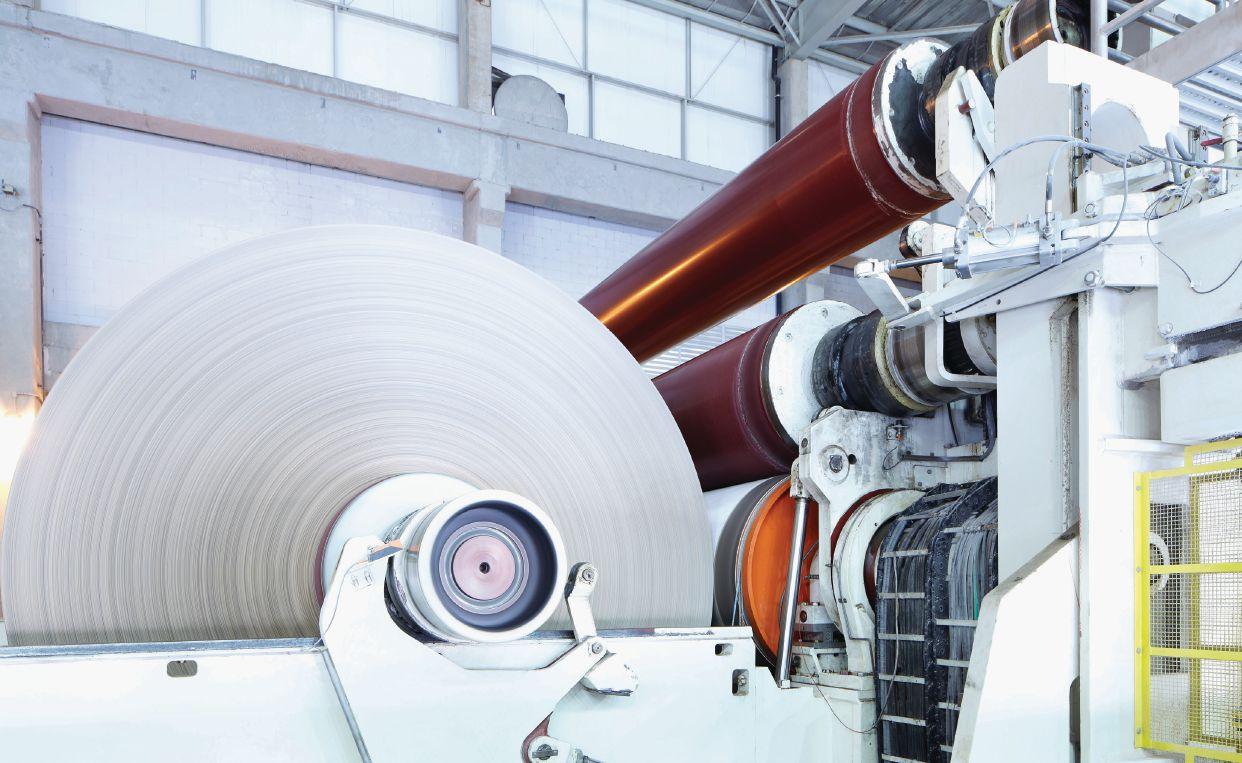


Paper Machine Drives Performance provides mills with near real-time insights for superior drive control and availability. This ABB Ability™ Performance Service for paper mills combines a digital twin that models your control performance with ABB’s extensive domain expertise to increase availability, runnability and quality. Mills will benefit from the only drives-specific, continuous monitoring service that provides predictive alerts and root cause insights to optimize performance and save mills money.
abb.com/pulpandpaper
Cascades to close Ontario containerboard plant, 125 jobs affected
Cascades has announced it is closing its Etobicoke, Ontario containerboard packaging facility within the next year, affecting 125 jobs.
The company says the closure is part of the “strategic repositioning” of its containerboard production in Ontario, which will improve productivity and reduce fixed costs.
Other units in the region will take on the Etobicoke plant’s production.
Cascades’ Etobicoke Containerboard Packaging operations will permanently close no later than August 31, 2021, and the property will be put up for sale.
The company says the closure has no impact on the activities of the Cascades Recovery+ facility and offices that are also located in Etobicoke.
“Cascades would like to thank its employees for their dedication and loyal service and will continue to count on them for the orderly transition of our existing business to our other plants,” says the company in a statement.
Catalyst Paper Corporation has been meeting with the mayor of Powell River, British Columbia to discuss short-term plans for workers to return to the mill as well as the mill’s long-term viability in the area.
Paper Excellence, Catalyst Paper’s parent company, curtailed production at the Powell River mill in mid-April, citing a lack of available fibre in B.C., the COVID-19 crisis’ impact on the supply chain and complications from an external malware attack that downed enterprise systems at several Paper Excellence mills.
At the time of this writing, there was not a timeline to restart the mill, and Mayor Dave Formosa had previously told local news outlets that reopening would require new products and a change in the market landscape.
The Powell River mill produces newsprint and uncoated mechanical specialty papers on two paper machines and employs 360 people.
Paper Excellence’s Crofton, B.C. operation, which was also temporarily shuttered at the same time as the Powell River mill, is now running again with one paper machine online.
Natural Resources Canada is providing up to $30 million to offset additional costs associated with COVID-19 safety measures for small and medium enterprises in the forest sector.
The government intends to work with the provinces and territories to deliver this funding, which will preserve jobs for forest sector workers, including approximately 7,000 tree planters, this year.
More specifically, the investment will help cover extra costs for things like sanitizing stations, additional accommodations and/or transportation, facilities and services to maintain social distancing, and personal protective equipment.
In addition, the funding will help support the scheduled planting of 600 million trees.
$9.9M
Kruger Products’ forthcoming tissue plant is on schedule, the company says in its second-quarter financial report.
The company broke ground on its Sherbrooke (Brompton TAD) Plant, located in Sherbrooke, Quebec, in spring 2019. Machinery is in the ramp-up phase and paper production is expected to begin in early 2021.
“Despite a temporary halt to construction as we implemented COVID-19 procedures, we are pleased to report that TAD Sherbrooke remains on time and on budget,” says Dino Bianco, CEO of Kruger Products, in a statement. “As planned, the first converting-line started in July and the ramp-up is progressing well.”
The $575-million plant will house a through-air-dry (TAD) tissue machine. TAD uses less fibre to obtain a bulkier, stronger ultra-premium product that is softer and more absorbent than traditional tissue.
Once fully commissioned, the plant will manufacture approximately 70,000 metric tonnes a year of ultra-premium bathroom tissue and paper towels.
“The new facility is central to our long-term North American growth strategy in the ultra-premium tissue segment,” says Bianco.
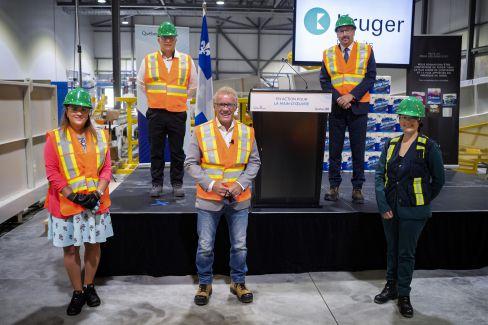
The company investing $9.9 million to establish a customized training program for future employees of the tissue plant.
In collaboration with the Industrial Training Centre of Excellence in Windsor, Quebec, almost 200,000 hours of training, or the equivalent of 30 weeks of paid training per employee, will be issued to 180 new hires, who will be working in a highly automated environment where technology will be ubiquitous.
The new training program has received support from the Quebec Ministry of Labour, Employment and Social Solidarity, which is reimbursing up to 50 per cent of eligible costs, through the MFOR program.
“The new program is specifically tailored to the needs of our new plant; it offers a wide range of specialized training to enable both university graduates and applicants with little or no pulp and paper experience to build a career at Kruger Products,” says Nadia Lamothe, human resources manager, operations at Kruger Products.
Canfor Pulp Products is conducting planned maintenance outages this fall at its Northwood and Taylor pulp mills in British Columbia.
The outage, which began in September, continues into October to complete a capital upgrade to extend the life of Northwood’s number five recovery boiler (RB5).
This Northwood outage will result in 48,000 tonnes of reduced NBSK pulp production, 30,000 tonnes of which is currently forecast for the third quarter of 2020.
The company’s Taylor BCTMP mill is currently scheduled to complete its maintenance outage in the third quarter of 2020 with a projected 5,000 tonnes of reduced BCTMP production.
Canfor Pulp saw an operating loss of $6.3 million for the second quarter, which it attributed largely to price fluctuations during the COVID-19 pandemic.
Kruger Specialty Papers will permanently shut down the newsprint, specialty papers and pulp production at its Brompton Mill in Sherbrooke, Quebec, affecting 189 jobs.
The closure follows a six-month temporary shutdown precipitated by the impact of COVID-19 and declining market demand.
As a result of the shutdown, Kruger’s overall annual production will be reduced by 100,000 metric tonnes of newsprint and 70,000 metric tonnes of specialty paper.
In a statement, Kruger says it will create a job reclassification committee to reduce the impact on the affected employees.
“Kruger wishes to express its sincere gratitude to all Brompton Mill employees for their service and dedication over the years,” the company says in a statement.
The water treatment plant will continue to operate, and the biomass cogeneration plant will restart. Approximately
25 staff will return to work to restart the cogen plant.
Canfor Pulp is receiving $2 million in funding from the government of British Columbia for a project that will convert forestry byproducts and wood waste to renewable energy.
The company’s Prince George kraft pulp mill will spearhead the project.
Once successfully demonstrated in B.C., the company plans to license the technology for Canadian and international use to help reach climate sustainability goals globally.
The funding is being made available through the province’s Innovative Clean Energy (ICE) Fund, which helps companies to develop clean energy projects.
ICE announced a total of $8.5 million in funding of projects province wide on Sept. 2.
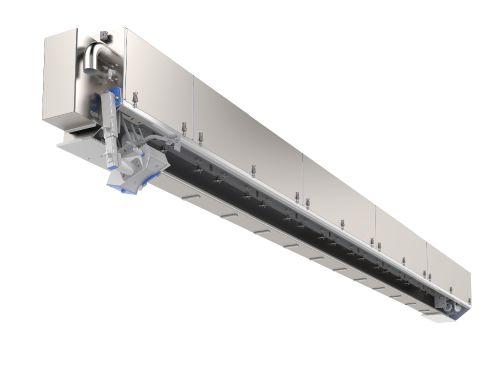
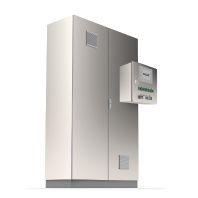
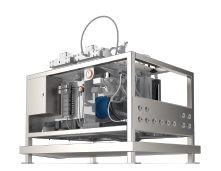
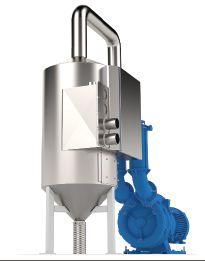
Kadant is a global leader in fabric cleaning with more than 1000 traversing high-pressure cleaning system installations worldwide. The M-clean system uses high-pressure water in combination with an effective evacuation and air knife system. This patented method removes stickies and chemical build up from the fabric’s surface to optimize cleaning, improve operation efficiency, and increase production.

AFPA names new senior vicepresident
The Alberta Forest Products Association (AFPA) has appointed Janis Simpkins as its senior vice-president.

Janis Simpkins
She will also chair the association’s environment committee and lead the organization’s sustainable growth initiatives, including the environmental, social and governance (ESG) portfolio.
Simpkins comes to the AFPA from Alberta Energy, where she served as executive director, strategic initiatives. Her work with Alberta Energy has centered on providing leadership to the development of a unified and actionable strategy for Alberta’s energy policy that aligns with ESG criteria and a long-term vision for the province’s energy resources.
Prior to moving to Alberta Energy, she held posts in both Indigenous relations, where she spearheaded the development of the Alberta Indigenous Opportunities Corporation, and economic development, trade and tourism, where she held key files such as U.S. relations coordination, investor confidence and northern development.
Before joining the Government of Alberta, Simpkins worked in the energy industry and served as reeve of the municipal district of Greenview. She is a recipient of the Governor General of Canada’s Queens Diamond Jubilee medal, honouring significant achievements of Canadians, for her work with communities and commitment to public service.
Fred Dzida, chair of the AFPA’s board of directors, welcomes Simpkins. “We are very glad to have Janis join us. The AFPA has been steadily growing our membership,” he says. “Janis’ skillset will broaden the range of services offered to members, especially those in the pulp and paper sector. Her knowledge will allow us to leverage our industry’s sustainability record to take advantage of opportunities created by the green economy.”
“I am very excited to be joining an organization with such a proud history and exciting future,” says Simpkins. “I have lived and worked in a forestry community, and led an organization dedicated to sustainable development in Alberta’s north. I know the important role that for-
estry plays in providing stable jobs and supporting local causes.”
Domtar receives approval from FSC for Wabigoon certification
Domtar says it has successfully completed a surveillance audit on the Wabigoon Forest in northwestern Ontario for the new Forest Stewardship Council (FSC) National Standard for Canada.
The audit took place the week of July 13, ending with the auditor’s recommendation for certification to be maintained under the new Canadian standard.
This new standard replaced the previous FSC Boreal standard and requires a comprehensive audit of legal compliance, protection of conservation values, environmental impacts, management planning and community relations including free prior and informed consent.
The audit process, which is designed to identify opportunities for improvement, found what the mill says were four minor non-conformance issues, all of which have since been addressed with action plans and approved by the auditing body.
“Our on-the-ground management practices, coupled with a rigorous provincially mandated forest management planning process, helps to hit the mark with FSC,” says Marie Cyr, general manager of the Dryden pulp mill, in a statement.
“We are proud of our record of sustainable forest management.”
The Wabigoon Forest was first certified to the FSC standard in 2008. Domtar is also licensed to manage the Trout Lake forest in Ontario, which is on target to undergo an FSC pre-assessment audit later this year.
The overall outlook for the global paper, packaging and forest products industry has been changed to positive from negative, reports Moody’s Investors Service.
Northern Pulp secures
$6.2-million loan to pay out severance, benefits
Northern Pulp’s laid-off workforce will receive their remaining severance payments after the mill’s parent company, Paper Excellence, was granted permission to lend $6.2 million.
Paper Excellence received approval on the loan from the British Columbia Supreme Court (where Paper Excellence is headquartered) on Sep. 25.
The money will be used to pay out severance and retiree benefits for the mill’s workforce, which was mostly laid off in January when Northern Pulp shut down. The few remaining workers maintaining the mill site will also receive salary continuation.
Graham Kissack, vice-president of Paper Excellence, says the payments will be issued ‘as quickly as possible.’
When the Nova Scotia–based kraft pulp mill applied for creditor protection in June, Paper Excellence offered a $50-million loan to be used for maintaining the mill, continuing development on the plan for a replacement effluent treatment plant, and paying out wages.
But it was conditional on Northern Pulp paying Paper Excellence first should the mill go bankrupt.
That original loan offer was met with objections by Nova Scotia government representatives, who said Northern Pulp owes the province $85 million and that the taxpayer should be paid before any other debt.
In August, B.C. Supreme Court allowed $15 million of the $50 million loan offer to be used for maintaining the mill, but ruled that the money couldn’t be used to pay wages.
The company then applied for permission to grant the new loan of $6.2 million, which did not have the same repayment terms.
The change to a positive outlook for the industry is driven by expectations that the consolidated operating income of the 41 paper and forest product companies rated by Moody’s globally will increase by six per cent to eight per cent over the next 12 months.
Moody’s says that the consolidated operating income from rated producers in North America and Latin America is anticipated to increase 12 per cent and nine per cent, respectively, even as the consolidated operating income from rated producers in Europe will decline.
This is primarily driven by the flowthrough of current peak North American prices for most wood products, as well as the rating agency analysts’ expectation of modestly higher global market pulp prices.
“We anticipate demand for most paper and forest product grades will increase in 2021 as the global economy emerges from the coronavirus recession,” says Ed Sustar, a Moody’s senior vice-president, in a statement.
Moody’s outlook for the market pulp sub-sector has changed to positive from negative, with operating earnings of the eight rated pulp products companies increasing about eight per cent over the next 12 months.
Meanwhile, prices for most grades of pulp are anticipated to similarly increase by about eight per cent from current neartrough levels over the next year, as limited new near-term capacity growth, anticipated supply disruptions with higher-thannormal second half 2020 maintenance downtime and increased pulp demand will likely allow market pulp inventory levels and prices to improve in 2021.
Further buoying pulp prices is the shift by Chinese paper producers to increasingly rely on market pulp, as China continues to phase out imported recycled fibre due to stricter environmental regulations.
The outlook for the paper packaging and tissue sub-sector is negative, with operating earnings of the 14 rated companies that are primarily driven by paper packaging and tissue operations declining by about two per cent over the next 12 months.
Following a surge in paper packaging and tissue demand as consumers loaded their pantries amid the pandemic, Sustar
says demand will slow for the balance of the year.
Nevertheless, the loss of demand from non-essential segments of the economy, such as restaurants and sporting events, has essentially been offset by higher e-commerce demand.
At-home consumption trends brought about by the pandemic have also helped to keep paperboard markets in balance, while stronger retail tissue demand has been partially offset by weaker awayfrom-home tissue consumption. Tissue demand is expected to normalize in the second half of the year as consumers look to use what’s in their pantries rather than buy additional products.
Similarly, the outlook for the printing and writing paper sub-sector remains negative as demand remains weak with many schools and office buildings still closed.
Partially offsetting this decline, however, is the increased demand for paper books, for both educational and entertainment needs, for consumers stuck at home, even as the increased reliance on digital technologies, like electronic storage and e-books, will likely persist to some degree post-pandemic.
The government of Nova Scotia has appointed a three-member board to oversee spending decisions of a $50-million trust fund established earlier this year to support the province’s forestry sector.
First announced in February following the closure of Northern Pulp, the Forestry Innovation Transition Trust may be accessed by companies, organizations or post-secondary institutions working and researching in the forestry and biological resources sectors.
The trust will support projects that align with the priorities developed by the forestry transition team for Nova Scotia’s forestry sector. Advice and guidance will be sought from sector leaders and innovators.
Projects eligible for funding may include the development of new highvalue products, the development of new or enhanced business models, processes or services, new inclusive economic growth opportunities in forestry, or new ecological services.
Forestry sector workers may also seek funding from the trust to support training or retraining, if all other education funding sources have been exhausted.
The fund will be available for five years, to March 31, 2025, or when the funds have been spent.
A World Trade Organization disputeresolution panel has published a report disagreeing with the countervailing duties that the U.S. established in 2017 on softwood lumber exports from Canada.
After a two-year review, a three-person WTO panel said the U.S. Department of Commerce and U.S. International Trade Commission incorrectly benchmarked Canadian timber prices in their calculation of stumpage fees.
The U.S. imposed the duties maintaining that Canada’s stumpage system, which sees fees paid to the provinces, unfairly subsidizes the Canadian forestry industry. U.S. lumber producers are privately operated.
In November 2017, Canada challenged the countervailing duties and, after consultations with the U.S., requested the WTO oversee the issue in March 2018.
The BC Lumber Trade Council (BCLTC) applauded the ruling. “For more than three years, our industry has paid billions of dollars in countervailing duties that today’s decision confirmed should never have been paid in the first place” said Susan Yurkovich, president and CEO of BCLTC, in a statement.
In its 225-page report, the WTO identified more than 40 instances where, in its own words, no “unbiased and objective” investigating authority could have reached the findings.
“This report is a scathing indictment of the U.S. Department of Commerce’s subsidy findings and the biased process it followed in reaching them,” said Yurkovich.
“For three decades, we have been saying that the U.S. trade remedy process is flawed. Unfortunately, this is just the latest chapter in the ongoing attack on the Canadian lumber industry. Each of the prior two lumber disputes ended with neutral, international tribunals issuing rulings that forced Commerce to rescind their flawed and unsupported subsidy findings for similar reasons.”
The director of UBC’s Pulp and Paper Centre and BioProducts Institute says value must drive the move to the bioeconomy
Dr. Orlando Rojas is one of the people leading the charge for the bioeconomy in Canada. As professor at the University of British Columbia (UBC), director of the UBC Pulp and Paper Centre, scientific director of the BioProducts Institute and the Canada Excellence Research Chair in Forest Bioproducts, Dr. Rojas brings his extensive knowledge to Canada at a time when developing sustainable practices is ever critical to the longevity of the forest products industry.
Dr. Rojas recently sat down with us for an episode of Pulp & Paper Canada: The Podcast to discuss how country’s burgeoning bioeconomy is key to the future of pulp and paper. Read an excerpt below, and find the full interview at pulpandpapercanada .com/podcasts.
Pulp & Paper Canada: In your view, what’s the biggest challenge facing the Canadian pulp and paper sector over the next decade?
Dr. Orlando Rojas: Basically, we cannot continue with the status quo. I think the pulp and paper industry in general – but also most importantly in Canada – needs to reinvent itself. We should be looking for higher product values. Of course, there is here a trade off between value and input volume. The pulp and paper industry is traditionally very high volume and, in my view, we have to start to look more and more closely [at] generating value. So, going from bioenergy at $100 per tonne or pulp and paper at $300 to $800 per tonne, to materials that can be $20,000 per tonne. For that, we need to really change our mindset. There are many opportunities in the area of packaging, textiles, biocomposites. In Europe particularly, there are many examples of developments in this direction. We need
to think, and use the research that is available domestically in Canada, to really propel those ideas to generate value. And [we] should be considering going beyond pulp and paper.
PPC: Sometimes it’s challenging on the company side to get past the hurdle of making that investment and testing out technology that’s not necessarily proven [at scale].

OR: That’s right. But then we have this idea of biorefineries, or what is called in Finland the ‘bioproducts mill,’ where large-volume production units are active and very dynamic. Around the different production units, we have satellite teams for bioproducts, especially chemicals or bioproducts or biomaterials. This concept of integration is very important. So, we don’t need to sacrifice what we already have or the capital that is invested. The units are already operating. It’s just an issue of integrating the typical pulp and paper mills, with all the production units that can be in charge of generating the value that I mentioned.
PPC: You feel that the growth of bioproducts is pretty crucial to Canada going forward in terms of making the pulp and paper sector viable?
OR: It’s a question of survival, of sustainability for the industry. I know some companies that today generate large profits from materials that were not known 10 years ago, and they are typical pulp and paper mills. So it’s really important. According to several of my calculations, the idea of replacing one per cent of fossil fuel and plastics by wood-based or forest-based materials can really represent a large revenue. Some companies, in the EU programs for instance, I know the calcula-
tions go to around $60 billion per year.
I think we need to be prepared to compete in the same streams. Canada is very well positioned given the forest resource that we have here and also, of course, the very high educational level in the industry and the universities.
It’s very important that we have alliances with government. It is so critical. I think this is not an issue or a challenge that can be solved by one sector of the industry, but really requires support from many different directions.
PPC: Government involvement, industry involvement – you’re doing that through the BioProducts Institute. For [companies] interested in working with a post-secondary institution like UBC – how do they facilitate that on a bigger scale?
OR: This is what really our mission is. We want to branch out, reach out to industry, and to look into opportunity. One thing that we’re already doing is forming what we call a Boreal Alliance between the BioProducts Institute and different research organizations, especially in Finland, Sweden and also Switzerland. Here we have the knowledge base that can help the industry to solve many of their problems and challenges, and also to think about the future. Bioproducts are economically viable and [can] perform in a way that is optimum and produce a solution for many of our materials needs. So it’s just a question of reaching out and establishing a conversation. PPC
Hear the rest of this conversation at pulpandpapercanada.com/podcasts.
Complete
•
•
•
•
•
•
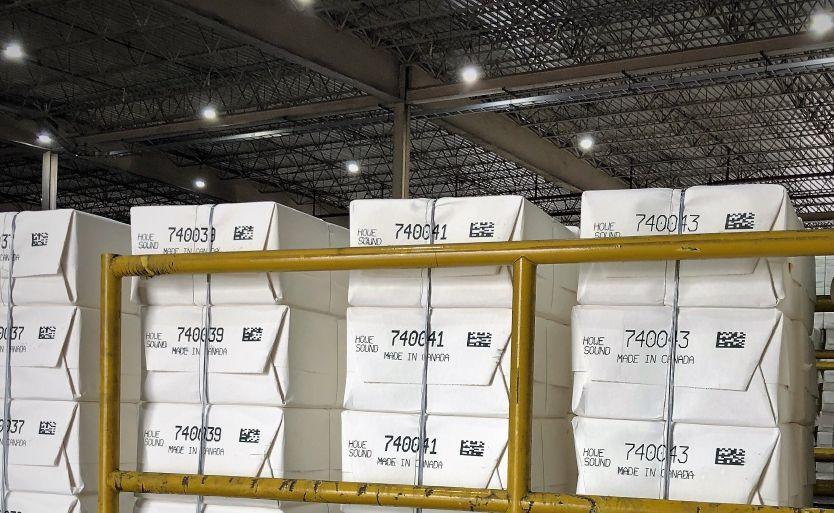

A $1 million grant from the Forest Enhancement Society of BC (FESBC) is allowing a First Nation–owned business to deliver waste wood that would have otherwise been burned to a pulp mill, pellet plant and power generation company.
Central Chilcotin Rehabilitation Ltd. is a joint venture company owned by the Tsideldel First Nation (Alexis Creek First Nation) and the Tl’etinqox government (Anaham First Nation).
The first phase of this project began in early 2017, when a $3.4-million grant from FESBC allowed the company to reduce wildfire risks and rehabilitate forests impacted by mountain pine beetles west of the Anaham community.
The $1-million grant, which FESBC provided in 2019, funds the second part of the project. It focuses on recovering and using at least 200,000 cubic metres of waste wood fibre that accumulated during the first phase of the project.
Recovered pulp-grade logs are being hauled to Cariboo Pulp in Quesnel. The remaining material is being ground up by Tsi Del Del Ltd. and shipped to either Pinnacle Renewable Energy’s pellet plant or sent to Atlantic Power to generate electricity, both located in Williams Lake.
The recovery effort has resulted in 200,000 cubic metres of residual fibre (about 3,300 truckloads) being used since the project started in September 2019, generating between $7 million and $8.5 million in sales for a product that would otherwise be burned.
Corner Brook Pulp and Paper is receiving over $442,000 in funding from the federal government to study diversification opportunities related to the bioeconomy.
The project will focus on minimizing risks related to the decline in demand for newsprint, and on ensuring the mill’s longevity in Newfoundland and Labrador’s forestry supply chain.
The province employs 1,125 direct and indirect forestry jobs in a variety of sectors such as transportation, equipment and maintenance.
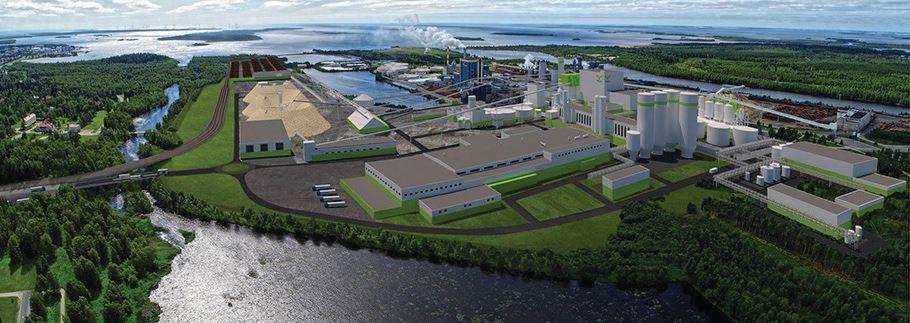
The project engineering for Metsä Fibre’s biorefinery – also known as a bioproduct mill – in Kemi, Finland began in August.
This includes the detailed engineering of the mill’s technology, civil construction, MEI installations and commissioning, as well as preparation for the project’s construction phase.
The decision on whether to proceed with the EUR 1.5 billion investment is estimated to be autumn of 2020, after the environmental permit process is completed.
In addition to the environmental permit process, the bioproduct mill project is currently in financing negotiations.
Second-phase preparatory work is already ongoing in the mill area in Kemi to ensure the smooth start of the construction phase of the bioproduct mill immediately after the investment decision has been made.
The engineering work will be carried out in cooperation with four main implementation partners: Valmet, ABB, AFRY and Fimpec.
If implemented, the mill will be built using advanced techniques, such as the sulphuric acid plant and the bark gasification. The bioproduct mill will not use any fossil fuels at all, and its electricity self-sufficiency rate will be 250 per cent.
If implemented, the Kemi bioproduct mill will produce around 1.5 million tonnes of softwood and hardwood pulp a year, as well as many other bioproducts. The investment would secure current 250 jobs in the Kemi mill area.
The bioproduct mill’s annual use of pulpwood, mainly procured from Finland, would be around 7.6 million cubic metres per year, which is 4.5 million cubic metres more than the existing pulp mill uses annually.
Funding for this project is provided through the Investments in Forest Industry Transformation (IFIT) program, which encourages the Canadian forest sector to implement unique technologies and produce new forest products for emerging markets.
Natural Resources Canada has launched a call for proposals for two programs that the agency says will boost the competitiveness of Canada’s forest sector.
The first program, Investments in Forest Industry Transformation (IFIT), will invest $82.9 million over the next three years to bring products to commercial scale, with a focus on low-carbon projects that result in new or diversified revenue
streams in the bioeconomy, such as bioenergy, biomaterials and biochemicals.
Pulp and paper and lumber mills, as well as new entrants to the forest sector, are invited to apply for the IFIT program.
To date, the IFIT program has funded 43 projects, producing a range of new bioproducts.
The second program, the Indigenous Forestry Initiative (IFI), will invest almost $13 million over the next three years to support Indigenous participation in forestry-related opportunities.
Projects fall under environmental stewardship, forest resource use and management, and forest bioeconomy participation. Examples include training and skills development, startup or expansion planning for businesses, and developing forestry-related tools and technologies.
A first-principles simulation tool ensures mass and energy balances are reconciled before optimizing processes in real time
By Kristina Urquhart
Pulp mills are responsible for about 30 per cent of industrial energy use in Canada, so monitoring usage and finding new opportunities for efficiency is a perennial goal for operators and management. But do you really know how much energy your pulp-making process is generating – or losing – in a given year?
Chances are, you don’t know the whole story, says Larry Wasik, president
of Aurel Systems, a software company that has developed a simulation tool to help pulp and paper mills understand processes such as energy or product tracking, and water management. Most of a pulp mill’s energy is produced by burning black liquor, hog fuel, natural gas, or fuel oil (such as bunker C) to produce steam at high pressure. The steam pressure is then reduced for use in mill processes, heating systems, or to generate electricity for internal use or to sell back to the grid.
But, according to Wasik, understanding of energy flows is often limited due to errors in measurement caused by sensor drift, inadequate sensors, non-linearity affecting calibration, lack of access for repairs and the impact of the corrosive environment. He points to the steam produced by boilers as an example. Adding up all the measured uses of steam often comes to quite a bit more, or quite a bit less, than the total steam produced by the boilers and de-superheating. Measured steam flows often don’t balance.
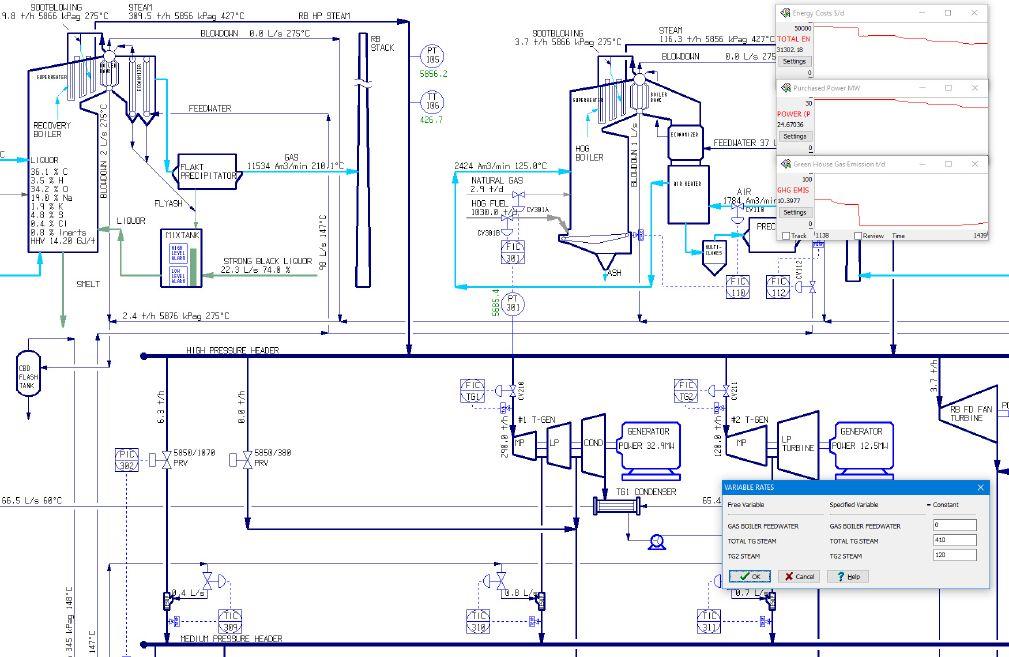
CADSIM Plus uses a firstprinciples simulation model, meaning it’s based on mass and energy balances.
“I've seen steam flow balances that are out by 60,000 kilograms an hour of steam – that's a lot of steam. That's kind of like a paper machine that you're out,” says Wasik. “If one says, ‘I think I can save 10,000 in the bleach plant,’ but then somebody tells you that your bleach plant measurement is out by 30,000, can you really still save that 10,000?” Wasik asks. “I have seen an entire steam system with continuous steam oscillations of 15,000 kg/h – yet those oscillations don’t even show up on trend charts on the data historian. How can you make a decision based on information that's that inaccurate? How can you best know where to go to next if you do not know where you are starting from?”
“For those trying optimization or trying to make decisions, they're compromised already. They have no idea where they're starting from. It’s like, say you want to go to Halifax – well, if you're starting in Saint John or you're starting in Vancouver, the instructions on how to get there are going to be a lot different.”
A simulator for accurate measurement
Wasik has been developing simulators since the early 1970s and, over the past 24 years, worked with the Aurel Systems team to create CADSIM®Plus, a chemical process simulation software that can perform mass and energy balances and simulate dynamic conditions.
Recently, over nine person-years of development effort has gone into what the company calls “dynamic data reconciliation” (DDR) to track chemical processes 24/7 as a “digital twin” (a virtual representation of a physical process). DDR pulls information from a plant’s DCS and uses simulation to balance processes, such as steam and fuel flows, before feeding that information and key performance indicators back into the plant historian at one-minute intervals.
Operators receive up-to-date reports to compare usage. The five worst measurements are identified each day and reported to instrument mechanics for potential recalibration or repair. Having a first-principles understanding of where the current process is what enables truly accurate real-time optimization and data mining.
The DDR technology will eventually be applicable to many industries, but Wasik says Aurel is currently targeting kraft mills and their power islands – including recovery boilers, hog boilers, power boilers, pressure reducing valves, turbo generators, etc. – after hearing feedback from energy engineers at many mills that they do not have a clear idea how to run the mill’s generators or what is the best way to perform a steam pressure letdown.
The power island “is one that everybody seems to have as a problem and they don't really understand it because it is very complex,” Wasik says. “On top of that, steam flows are notorious for being wrong. The tests we've done [with a power island energy model] indicate that for a typically sized mill, you could be saving between $1 to $5 million a year by understanding
how to find the operating sweet spot.”
Aurel Systems first implemented its DDR software on the energy system at Paper Excellence’s pulp and paper mill in Crofton, B.C. in 2006, and then in 2008 to track grade changes at Rayonier Advanced Materials’ specialty cellulose mill in Témiscaming, Quebec.
Prior to installation, Aurel had been doing data reconciliation at the Crofton mill with another software that used a matrix method. Evaporators would go down, for example, leaving the flows at zero. Multiple zeroes in a matrix lead to computation issues, so the data calculations would fail every time part of the process went down. Since installing CADSIM Plus, the Crofton mill has not experienced one data reconciliation calculation failure.
Aurel is now working on a new implementation for the power island energy system at another B.C. kraft pulp mill that combines the CADSIM Plus DDR of versions past with a new feature – real-time optimization.
CADSIM Plus uses a first-principles simulation model, meaning it’s based on mass and energy balances and physical transients.
“You can't make any more steam out of the boiler than the water going into the boiler. And the uses of the steam should add up to what the boilers make. So we reconcile all that data, doing thousands of simulation runs each minute, giving a best fit of the model through measured datapoints. In doing so, we correct the measurements,” Wasik says. Raw data measurements are obtained from the mill historian and balanced results and KPIs are returned to it.
The real-time optimization software starts from current process operation and finds the best performance conditions based on a set of economic goals. It iterates the “digital twin” model and tests thousands of different scenarios, updating information to the operator every 10 minutes. The optimizer provides operators the resulting best suggestion on what action to take based on changes from where the process is at – and how much money that action could save per year. Engineers can also use the model to test a process change themselves in order to be comfortable with the suggestions being made to operators.
“At different production rates, the answers to how much each turbine should be used, or how much steam you put through the pressure-reducing valves, and possibly even the fuel makeup of what you are burning, totally change depending on your production rate. Operators will often keep the process at status quo or at a conservative level without changing things,” says Wasik. “However, they're not getting to [that] sweet spot where they could be saving.”
Wasik says the machine learning developed for the CADSIM Plus real-time optimization process isn’t so much “artificial intelligence,” because it’s based on real information. And it works well because the true process operating state is known after data reconciliation.
“There's a saying in the industry that 80 per cent of advanced controls are turned off within two years. And the reason is they don't have a good model instantiated with the current process model,” he says. “We're putting in the rigour of forcing a balance and finding out where the process is. We think that for advanced process control, this will be a game changer.” PPC


A crushed roll of paper can cost manufacturers and their customers countless hours, dollars, and headaches. But by simply inserting core plugs into each roll, paper makers can reduce damage and loss claims for just pennies per roll. As a family-owned New England company that has been producing core plugs for over 50 years, Souhegan guarantees a high-quality, steady inventory of the products you need, whenever you need them.
We offer two different types of high-density, molded wood core plugs engineered specifically for the paper industry:
CENTER HOLE PLUG
With an easy-out design preferred by many end-use customers, an impressive crush strength, and a competitive price, our re-engineered Center Hole plugs are an industry favorite for all grades of paper.
• 3" Center Hole plugs have a crush strength of 2,300 lbs in a .668" walled paper tube.
• 4" Center Hole plugs have a crush strength of 5,000 lbs in a .25" walled paper tube.
CORSAVER™ PLUG
Designed for fine coated papers, the name says it all –this little gem can withstand three times more pressure than most other center hole plugs on the market. In independent testing, our CorSaver plugs withstood a 10,000 lb crush in a .668” walled paper tube.

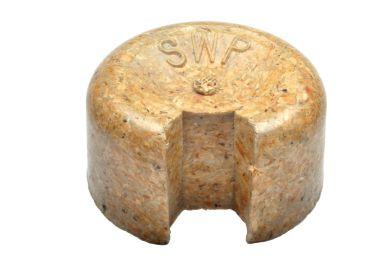
For more information on standard plug sizes and custom options call us at (603) 654-2311 or visit us online at www.souheganwood.com
How
By J. David McDonald
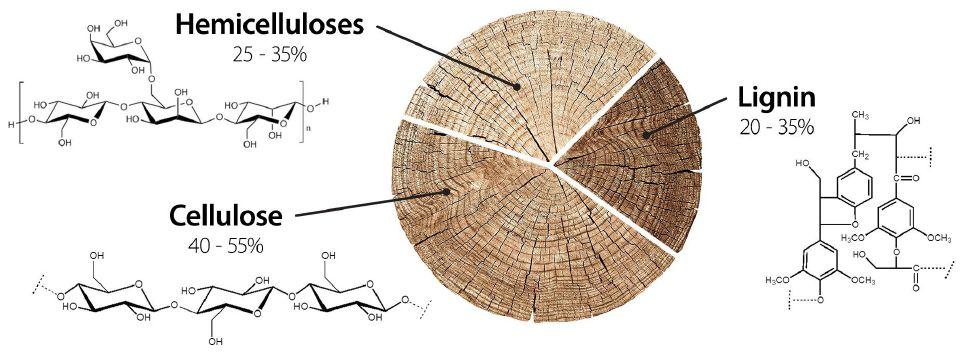
Enzymes are being used by the pulp and paper industry to reduce energy and chemicals by breaking down or degrading the polymeric components of woody biomass (Figure 1) into smaller, simpler molecules. But there are other kinds of enzymes that can modify or add chemical groups to cellulose, hemicellulose or lignin, so that they can be used in higher-value applications. This is the premise of Synbiomics, a large-scale research project supported by Genome Canada, Ontario Genomics and Genome BC led by Dr. Emma Master of the University of Toronto and Dr. Harry Brumer from the University of British Columbia. This is a four-year, $10-million project with research conducted at five universities (Concordia, Queen’s, Toronto, UBC in Canada, and Aalto University in Finland) and industry partners Canfor, DuPont, EcoSynthetix, Rayonier, InnoTech, IGPC, Millar Western, West Fraser and Fortress Advanced Bioproducts.
Nature is smarter than us. Whereas
we use brute force with high mechanical stresses at elevated temperatures, or harsh chemicals at high pressures, to convert wood into fibres and biochemicals, nature uses gentle chemicals such as enzymes under ambient conditions. Could we do better by learning from nature?
Enzymes are nature’s catalysts that are used to speed up chemical reactions. These catalysts are proteins made by microbes to break down wood into smaller chemical components. Familiar examples would be the bacteria in a termite’s gut or brown rot fungi that attack cellulose, leaving the darker materials behind. Years ago, these observations suggested that the enzymes within these fungi or bacteria could be used to naturally break down wood to pulp, and reduce the cost of chemicals and energy.
Over 40 years ago, various enzymes began to be used commercially in the pulp and paper industry. Cellulases are being used to improve drainage by breaking down dissolved and colloidal material, to lower refining energy, and in the production of micro-fibrillated cellulose (MFC)
and cellulose nano-crystals (CNC). Xylanases are used in combination with cellulases in deinking to improve recycling and to reduce chemical use. They can also cleave hemicelluloses, which can reduce bleaching process chemicals by up to 30 per cent. Lipases are used to control pitch in pulping by converting tri-glycerides to fatty acids, which are less likely to form deposits. Amylase is used to lower the viscosity of starch, esterase to break down stickies, and pectinase to reduce cationic demand of peroxide-brightened mechanical pulp. The global market for enzymes in the pulp and paper industry has been growing to over $250 million per year.
In contrast to previous technologies that have focused on the deconstruction of wood into simpler molecules such as sugars for conversion to fuels and chemicals, Synbiomics focuses on enzyme discovery from micro-organisms that can modify and upgrade the key components of wood to create bio-polymers and materials of higher value.
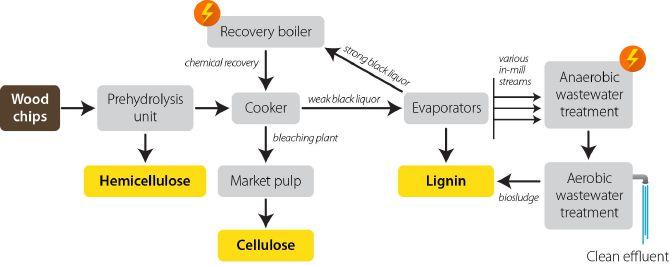
In kraft pulping, cellulose is the coveted product, while most of the lignin and hemicellulose is burned in a boiler to recover pulping chemicals and to generate energy (Figure 2). Wastewater generated throughout the mill gets treated in an aerobic activated sludge process where residual woody biomass gets converted to CO2 or ends up in biosludge. Increasingly mills are treating wastewater in an anaerobic digester to convert the biodegradable components into methane for energy (Figure 2). As shown in figure 2, if hemicellulose and lignin are segregated, enzymes could be used on these streams to increase their value.
There are many challenges in this area of research but the greatest one is the complexity of the chemistry. Diverse families of fungi and bacteria have devised their own unique chemistries to feed on lignocellulosic materials such as wood. The vastness of the different mechanisms can be overwhelming and confusing, but the opportunity is that there are special enzymes yet undiscovered that may impart special properties (e.g., tailored miscibility, enhanced reactivity) to cellulose, hemicellulose or lignin. By establishing enzyme screens that incorporate commercial conditions from the start, Synbiomics aims to identify enzyme and microbial technologies that can create new bio-based products.
Nature modifies and disassembles lignocellulosic material using enzymes and non-catalytic proteins that gently nudge and pry things loose. The analogy would be the tools that a watchmaker uses to repair a fine mechanical pocket watch. By contrast, in chemical and mechanical pulping, we are using a sledgehammer after which we pick through the shattered pieces.
To mimic nature’s processes, we need genetics. Each organism has a blueprint or instructions to make proteins (enzymes) for specific purposes in its DNA. Using sophisticated tools, it is possible to identify the strand of DNA that has the code for a known enzyme. The next step is to look for similar DNA strands that code related enzymes that could have special properties, such as new substrate preference or higher stability, using tools such as phylogenetic analysis and sequence similarity networks to analyze DNA for proteins of similar function.
To make a sufficient quantity of this enzyme, the DNA blueprint is incorporated into a host organism and sent to a bioreactor. This is done through recombinant DNA by grafting the DNA strand into a production host, such as fungi (Aspergillus niger – black mould) or bacteria (E. coli), which are selected to produce the enzyme. Cellulose, hemicellulose and lignin are then exposed to this enzyme to test for activity. Through this process, which can also include iterative improvement of the production host, a number of new enzymes are being discovered.
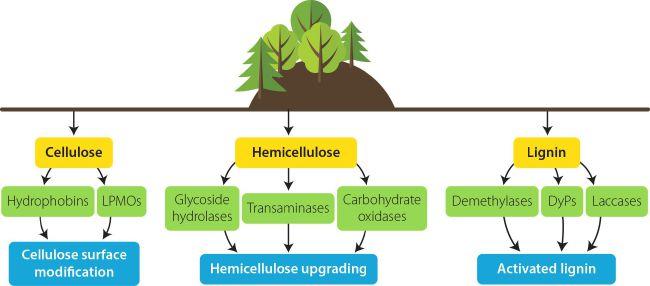
Synbiomics is uncovering enzymes that introduce new and desirable chemical functional groups to main lignocellulose fractions. Synbiomics’ is examining monooxygenases for the ability to tailor cellulose surfaces, -transaminases and carbohydrate oxidases to upgrade hemicellulose, and test dye-decolourizing peroxidases, laccases and o-demethylases as surface modifiers of lignin to increase reactivity (Figure 3). They are also looking at non-catalytic proteins from fungi, including hydrophobins and loosenins, which, as their names suggest, are predicted to alter physical properties (e.g., interfacial behaviour, porosity) of cellulosic materials.
Recent progress includes direct conversion of underused hemicelluloses into difunctional crosslinking molecules, and activation of industrial lignins through enzyme-mediated grafting. Technoeconomic assessments are performed with project partners to evaluate impact and product costs. Ultimately, their goal is to create a biocatalyst toolkit that will be captured in a gold standard database called CLAE (Characterized Lignocellulosic-Active Enzymes Database http://clae .fungalgenomics.ca), which will include genetic information, enzyme activity and operational conditions.
Synbiomics is integrating operational data of anaerobic bioreactors from partnering pulp mills with corresponding microbial community sequence data to provide more process stability and maximize energy recovery. Multivariate analysis is used to track the performance of full-scale anaerobic bioreactors, bringing immediate benefit to project partners.
Now entering its fourth year, the Synbiomics team is focusing on market assessment and demonstration of the most promising pathways. Equipped with new DNA sequence analysis tools, protein production hosts and a database of biocatalysts geared towards bio-based materials engineering, the Synbiomics team is building a community of practice within Canada to support the development of emerging bio-based economies. For more information, readers are welcome to contact Emma Master at Emma. Master@utoronto.ca. PPC
J. David McDonald is president of JDMcD Consulting Inc., an adjunct professor at McMaster University and a PAPTAC Fellow.
A pair of Canadian researchers has developed an innovative repulping technology for recycled paper
By Kristina Urquhart
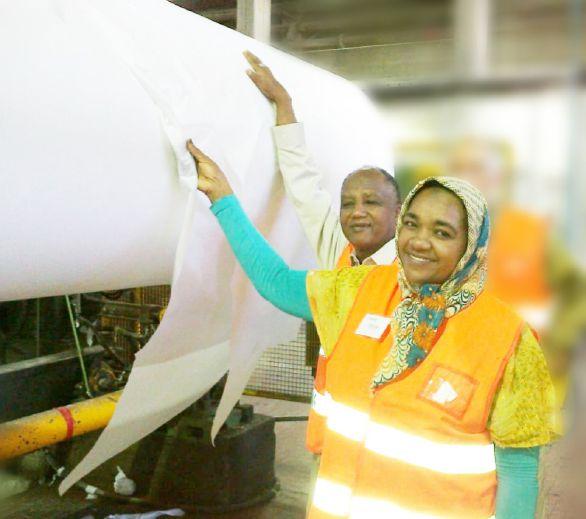
Ahusband-and-wife research team in Vancouver, B.C. have developed a patented new process that uses lignin to help turn recycled paper back into pulp, and that promises to cut costs, reduce energy use and be more environmentally friendly than traditional methods.
After studying the chemical behaviour of cellulose and water molecules for nearly two decades, Dr. Salah Awadel-Karim and Dr. Nagla Dawelbait, co-founders of SANATA Technologies Inc., were looking into a way to improve the fibre quality of recycled paper while producing less wastewater slurry.
“Most recycled paper industry companies are looking for a new technology to solve their problems,” says Dr. AwadelKarim, also CEO of SANATA. “In this case, what [were] the essential requirements of non-toxic efficient repulping methods needed to improve conventional technologies?”
There are more than 1,300 paper mills around the world that accept recycled furnish to turn it into another material, such as pulp that can be used again in the paper production process. The challenges with conventional recycled paper technology include the quality of the furnish (i.e. stickies and other contaminants), the amount of wastewater produced in the process, the cost (i.e. chemicals, disposal of heavy sludge, high production costs) and environmental concerns including greenhouse gas emissions.
Current paper recycling technologies – whether neutral or alkaline – can result in poor fibre quality, fine genera-
tion, fibre losses, high chemical use, and lower quality of the end product, says Dr. Awadel-Karim. The stiff fibres often found in recycled paper products – and, later, repulped materials – occur when the material gets wet, dries and then hardens. These stiff fibres are prone to breaking, meaning the repulped material is not as strong as it was when it was virgin fibre.
“Each of these problems has been addressed partially, not as root causes,” says Dr. Awadel-Karim. “There is still a need to improve use of water, energy, chemicals and other raw materials and to minimize solid waste, thermal pollution and emissions to air and water to eliminate toxic mill discharges and waste.”
The main cause of the problems is lignocellulosic hornification, he says. Hornification is the aforementioned stiffening of fibres, which is caused by the hydrogen bonding that occurs to pulp or other lignocellulosic materials when they dry.
SANATA Technologies’ new repulping method removes this lignocellulosic hornification and produces stronger fibres that are almost good-as-new.
Drs. Awadel-Karim, Dawelbait and the four other engineers and researchers who make up SANATA Technologies
work together on refining the process. Dr. Awadel-Karim invented the made-inCanada process, which received a patent this past June. Among other things, the patent covers the use of lignin to create a repulping solution, plus the repulping method itself.
In general terms, the invention introduces a lignin product into recycling processes to “slough off” the rigid shell that forms on pulp fibres after drying.
The detailed explanation is this: The method involves “using a lignocellulosic hornification remover (LHR) in an agitator vat or pulper, with optimization of the process variables depending on the reactivity of LHR quality, type of material being repulped and the desired characteristics of the pulp resulting from the project,” says Dr. Awadel-Karim.
The LHR is a solution blended with water molecule clusters and customized for every application that replaces nearly all of the chemicals used in conventional neutral or alkaline repulping methods. Together, the LHR and the optimization of variables can achieve complete dehornification of the cellulose.
From Dr. Awadel-Karim: “The hydroxyl groups (OH) of the cellulose molecules have greater affinity and act with no repulsion toward the attenuated H-bonds of
water molecules present in a LHR micro-cluster molecule. In other words, LHR offers a reactive medium with smaller molecule clusters and less sludge. It also secures a special type of swelling (intramicellar swelling) that renders the fibres more responsive, while conventional technology offers normal directional swelling.”
The LHR works both inside and outside the fibre to “break down the intra- and intermolecular H-bonds of both amphorous and crystalline cellulose (i.e. cellulose micelle crystallites).” This creates cellulose with open H-bonds, which allows for the complete removal of stickies, adhesives and ink particle additives without compromising the integrity of the fibre.
At peak conditions, the repulping technology produces zero per cent fibre rejects, and has the capability to further extend the life of paper because it allows pulp to re-enter the value stream with characteristics similar to virgin fibre.
And by separating the non-fibrous rejects so completely from the usable fibres, there isn’t as much sludge that ends up in the wastewater. Less sludge means there is not as much to take to landfill, and it also ultimately leads to lower COD and BOD readings in the wastewater.
“It is also ideal in an economic sense and reduction of chemical toxicity and gas emissions,” says Dr. Awadel-Karim. “It is noteworthy to mention that the technology is flexible enough to accommodate any necessary industrial agent input if needed.”
The company has so far conducted industrial trials at recycled paper mills. In order to implement its technology into a recycled paper mill’s process, SANATA must research to ensure that the process will work with the mill’s materials before conducting a three-day mill trial for verification of the technology at commercial scale, followed by a longer mill trial to document the technology benefits.
SANATA conducted a trial on a mill production line in 2013 to compare conventional technologies with the new repulping method. Drs. Awadel-Karim and Dawelbait determined that the physical and mechanical properties of paper products ultimately improved when using material that had been repulped with their method, and that the amount of virgin pulp required to
make a paper product decreased up to 60 per cent with the addition of their repulped material.
In total, about 3,000 tons of finished paper has been produced in this trial to verify the results, and production levels increased by at least four per cent. Production costs decreased due to less chemical consumption – use of other chemicals reduced by anywhere from 17-28 per cent. There was reduced energy consumption of 20 per cent in the stock preparation area, and energy savings in the fabrication area, including paper machine, was seven per cent. The repulping method also led to 28 per cent fewer fibre rejects.
“After the mill trial, we were able to prototype our customized solution to different furnishes and set up the optimization procedure for different finished product types,” says Dr. Awadel-Karim. “An interesting technical observation [is] that the frequent production problems encountered in the fabrication of lightweight paper have not been recorded at all through the application of the technology.”
SANATA Technologies is targeting its process to the 400 global companies that specialize in recycled paper products. In order to deploy the technology, no special equipment is needed. The customized solution gets added to the pulper, and operators adjust consumption based on the recommended variables determined by SANATA.
The company is actively licensing its technology to North American pulp and paper mills that specialize in recycling. For more information, visit www.sanata.ca. PPC

By Ellen Cools
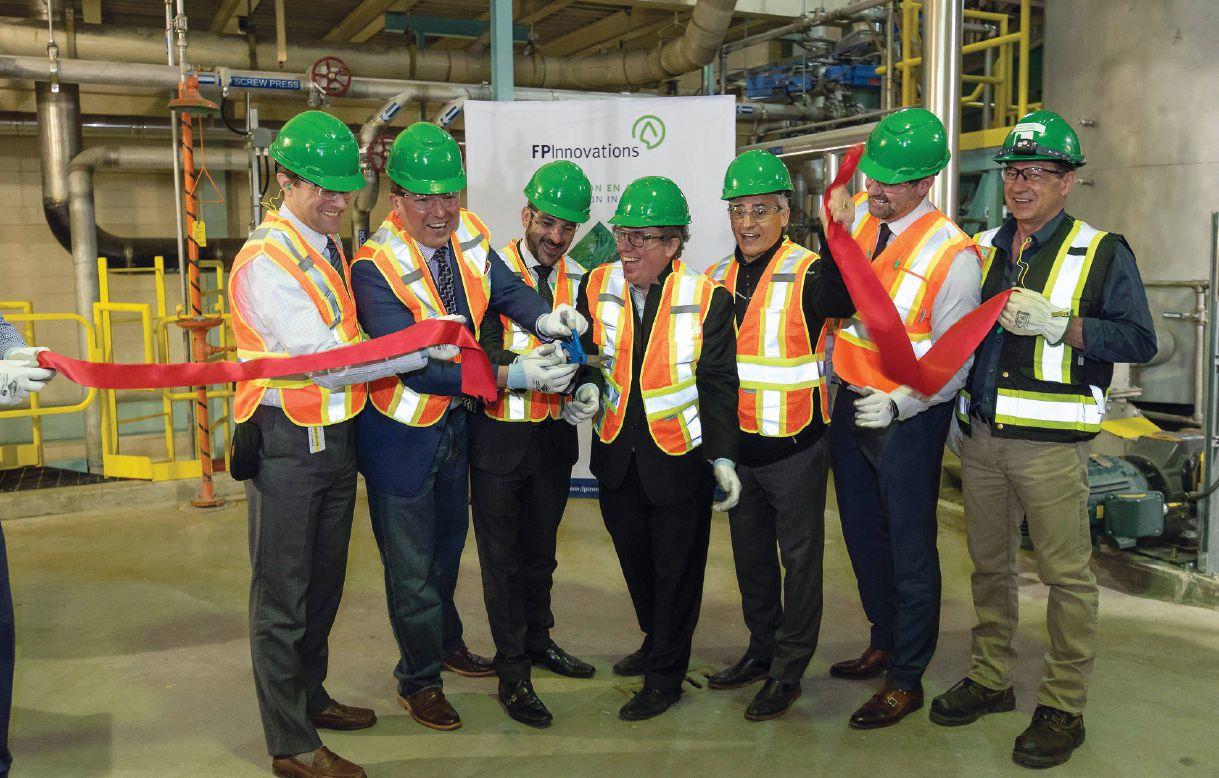
In May 2019, FPInnovations and Resolute Forest Products commissioned a new thermomechanical pulp (TMP)biorefinery in Thunder Bay, Ont. The plant, which can treat 100 metric tonnes of biomass annually, produces lignin and sugars that will be used to develop new bio-products.
But where did the idea for the TMPBio plant initially come from and how does it work?
Over the past few years, FPInnovations had been working on processes to produce different materials and chemicals. One of these processes was the production of sugars from cellulose and lignin from trees, Jean Hamel, vice-president of
industry at FPInnovations, tells Canadian Biomass (a sister publication of Pulp & Paper Canada)
“One of the challenges of producing sugars is that you need to take the biomass and physically separate the wood component to give you access to the enzymes, so [they] can easily chew the cellulose and transform it into two types of sugars (C5 and C6 sugars), and then separate the sugars from the lignin,” he explains. “The cellulose and sugars are chemicals that represent about 90 per cent of the mass of the tree itself.
“We came up with a technology that we call the TMP-Bio process, which makes use of refiners to break and open the fibres, react the enzyme with the cellulose and then separate the sugars and lignin com-
ponents, providing two streams of biosourced chemicals,” Hamel says.
“A big part of the process is to make the reaction with the enzyme and separate the products, and then clean up the two product streams to obtain the quality required for industrial and commercial applications,” he explains.
“What’s interesting is, if you look at how you make kraft pulp, what the kraft process does, it kind of dissolves the lignin around the cellulose, so the fibres remain intact,” he continues. “But in this process, we are doing the inverse – we are dissolving the cellulose and the lignin remains intact. The molecular structure of lignin we obtain from this process is closer to what you’d find in a tree than the kraft lignin. This is very interesting
for the industry as both lignins have different properties, increasing the range of potential new product applications that the forest industry can produce.”
Initially, FPInnovations tested this process in a small-scale pilot plant in their facilities, using separate units to test different phases of the process. They used the results of these tests to design a larger-scale plant as the process needs to be tested on an industrial scale and a continuous basis, Hamel says.
“What we had was all separated smallsize units and not necessarily very practical to produce significant quantities to be tested by potential users. Also, it was not sufficient to provide us with good information about how a full-size plant would look and how much it would cost because we needed to test and optimize the operating parameters,” he explains.
In developing this technology, FPInnovations wanted to use pre-existing equipment or processes as much as possible.
In 2016, the organization began discussing the possibility of developing a TMP-Bio pilot plant with its members and partners, and started looking for a site. Eventually, they formed a three-year strategic research alliance with Resolute Forest Products.
The partnership stipulates that FPInnovations is in charge of constructing and operating the plant, while Resolute hosts the plant at its Thunder Bay pulp and paper mill and supports the integration of the plant in their facilities.
Construction on the site began in September 2018. “It took about a year or two – eight months to build the plant, and then starting operations and commissioning,” Hamel says. “Now the plant produces sugars and lignin. We still have to do some fine-tuning, but we’re quite happy to have built the plant, as planned, on time and on budget, and we’re pretty happy with the outcome now.
“We have a lot of discussion and guidance working closely with Resolute to help us conduct the project, which consists of both the on-site process and product applications for the three-year duration of the project,” he elaborates.
Ten process units for the TMP-Bio process were installed in an area of Resolute’s pulp and paper mill that is no longer in use.
The project development, which ulti-
mately cost $23 million, required coordination from numerous supporting organizations. The federal government provided $5.8 million in funding to help accelerate the development of the plant, as well as production and commercialization of the green bio-chemicals derived from the TMP-Bio process.
Other key players in the project’s development included the Ontario Centre for Research and Innovation in the BioEconomy (CRIBE), FedNor, the Northern Ontario Heritage Fund Corporation (NOHFC), the Thunder Bay Community Economic Development Commission and the Ontario Ministry of Natural Resources and Forestry. The Ministère de Forêts, de la Faune et des Parcs du Quebec and the Nova Scotia Innovation Hub also contributed to the research on potential applications of the process.
Once the plant was commissioned, FPInnovations and Resolute received an additional $2 million through Natural Resources Canada’s Clean Growth Program.
FPInnovations and Resolute are now approximately two years into the threeyear project, and have found the new TMP-Bio plant represents an important step towards opening up new markets for the forest products sector.
“For the last two years, we’ve been working on the applications of this process, and we have identified 15 potential applications,” Hamel says. “We have decided to go further, focusing on testing four or five of those potential applications.”
Those applications include using the two types of sugars produced from the process (C5 and C6 sugars) in the chemical supply chain to produce plastic chemicals.
“Right now, there’s a big demand around the world in terms of research and product development for making chemicals from these sugars instead of making them from oil-based products. So, there’s a new supply chain building and the chemists can use these chemicals and these sugars to make a different type of chemical, like succinic acid, and so on,” Hamel says.
The lignin produced in the process can also be used in different applications, such as in resins. There is also the poten-
tial to use both lignin and sugar in applications such as animal feed additives.
Currently, a team of five researchers from FPInnovations work at the TMP-Bio plant full time.
“This is not an industrial process; it is a demonstration plant that is operating, and not on a 24-hour cycle,” Hamel explains. “We start the plant for a few days and then we stop and we look at the results to do some modifications. That’s really what demonstration plants are for. It’s to test different operating parameters aimed at optimizing the plant for the next phase, which will be an industrial site.”
Testing the process and conducting experiments will allow FPInnovations to determine the best operating conditions, detect potential issues and make changes so the future full-size plant will have the best operations at the lowest cost. It also helps them evaluate potential risk; for example, the team wants to test reactor materials to see if there are any problems with corrosion.
“That’s why nearly all of the process development goes through that phase – so you can minimize your risk when you’re going full-size and commercial,” Hamel says.
The next phase for the plant will depend on which application is determined to be the most viable and the size of its market, as well as the strategy around product development.
As the process is commercialized, FPInnovations will play a supporting role. The organization’s job is to make technologies such as the TMP-Bio process as mature as possible and reduce risks, obtain more information about the capital and operating costs, and to understand markets and customers, Hamel explains.
The ultimate goal is to have one of the organization’s members construct and operate an industrial site and develop the new market.
Regardless of which company takes up the torch, it’s clear the TMP-Bio technology presents multiple opportunities in new markets, especially as countries around the world look to transition from fossil fuels to renewable resources and processes. PPC
Ellen Cools is the editor of Canadian Biomass, where this article was originally published.
Conducting a seal energy audit can help to conserve energy, reduce emissions and improve reliability
By Brad Zurbrigg
Businesses are expected to constantly improve their financial performance while adhering to federal and provincial environmental regulations, increased occupational health and safety requirements, escalating raw material and energy costs, and competition from lower-cost regions of the world. Energy efficiency, water conservation, increased plant reliability and reduced CO2 equivalent emissions are high priorities for companies as they seek to minimize operational costs as well as maintain their reputation as an organization focused on sustainability.
Achieving these goals presents a particular challenge in the pulp and paper industry, where sealing water injection can result in up to eight litres of water per minute being injected into pumps and systems to flush and cool them. That water is then treated and discarded at the end of the process cycle.
Proactive businesses have found that auditing energy use in each link of the supply chain can deliver significant benefits, including the elimination of water waste along with significant reduction in energy consumption. A mechanical seal energy audit is a simple way to review energy usage and identify solutions.
Mechanical seals perform a simple but vital role – to prevent fluid leaking from the shaft region of pumps and other rotating equipment. To function correctly, the seal faces must be flushed with a constant, cool and clean liquid, and in many applications this is provided from a separate seal support system. A properly configured seal support system provides lubrication, prevents overheating (caused

22% - Seal Support System
37% - Operations
5% - Install/Align
12% - Process
4% - Seal
by dry running) and maximizes reliability.
In the selection of the seal support system configuration, or piping plan, there can be temptation by third-party consultants, OEM equipment suppliers, and/or plant maintenance and engineering staff to consider only the initial cost of a mechanical seal support system. The operational stakeholders responsible for energy consumption have limited visibility of how that seal piping plan impacts on wider energy usage and efficiency. The seal energy audit provides a useful bridge between these parties. Inadequate seal support systems contribute to 22 per cent of all mechanical seal failures (Figure 1).
The audit involves the inspection of each piece of equipment, recording seal arrangement, support system configuration, process data and seal system parameters such as water flow and temperature. Having collated the existing plant data
and performed heat flow calculations, it’s then possible to calculate the amount of energy impact of each and every sealed rotating shaft application on the plant. High energy use can be easily identified and reviewed to see if a more efficient seal and piping plan configuration is appropriate.
A typical summary from an audit report identifies potential opportunities, the investment required to upgrade and the potential returns. Most importantly, it highlights and prioritizes “low-hanging” opportunities, which with minimal investment can deliver significant reductions in energy use and improve seal, and consequently pump, reliability.
In seal injection processes, the starting point for quantifying energy waste is to read and graphically represent temperatures using thermography. The temperature scale shows the difference between the process temperature and the injected seal water.
If the process contains water and the final product is paper or concentrated liquor to fuel a recovery boiler, the water must ultimately be removed. And regardless of how the water is squeezed out or evaporated, energy will be consumed.
A typical example is a pulp and paper pump application where an API Plan 32 configuration is used. This involves injecting a clean or cool liquid at 70°F from an external source directly into the seal chamber and can be used with typical braided packing and single mechanical seals.
The process temperature is 145°F but a thermal imaging camera targeted at the seal chamber records a temperature of 123°F. This reduction is caused by the 70°F water being injected through the
support system. This means the seal water must be reheated to 145°F, requiring extra energy to stabilize the process temperature.
The energy cost is in the frictional energy consumed by the seal or packing, plus the pump heat soak, and the energy consumed in additional downstream processes to remove flush-to-process dilution and/or restore process temperature.
A general rule of thumb for pulp mills in Western Canada is for every gallon of water injected in to the black liquor process stream, it costs $0.01 CAD to evaporate it. Using a very conservative 1 gpm of injected seal water, that equates to over $5,000 CAD per pump per year. Applying the Fluid Sealing Association/European Sealing Association lifecycle cost estimator (version 4.1) and the built-in program defaults, this calculates predicted power consumption of 7.56 kW due to heat soak, equating to an energy cost of roughly $6,619 CAD a year per application.
Another key consideration in a seal energy audit is the energy impact of friction. In the Plan 32 example, the direct power consumption is roughly $130 CAD for a single mechanical seal and $779 CAD for mechanical packing. This
reveals a heat soak factor 50 times greater than the direct power cost of a single seal. Having considered all these factors, an effective seal energy audit will suggest fully costed solutions that achieve not only energy and water savings but increased reliability, reduced operational costs and possibly increased production opportunities. One solution could be simply to reduce the amount of liquid being injected into a system. However, this tends to compromise seal life.
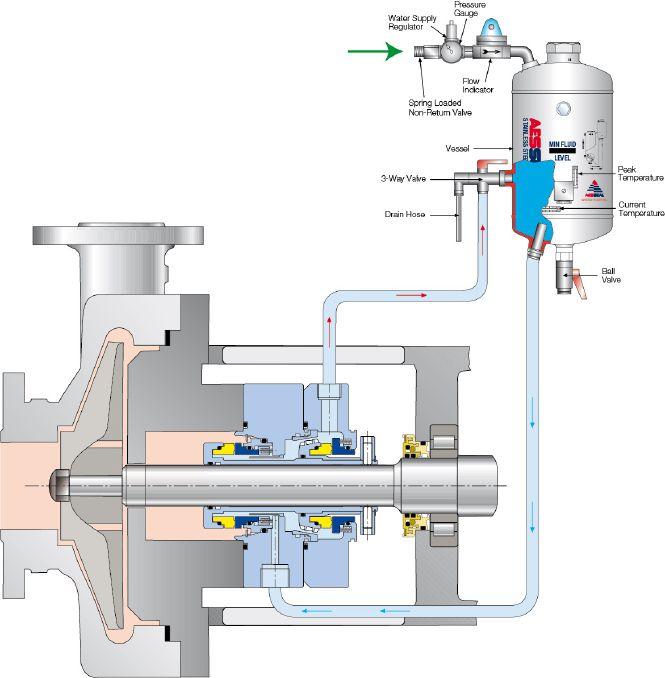
The most effective solution would be to upgrade the existing mechanical packing or single seal to a dual seal along with a seal support system in a modified configuration such as a modified Plan 53A, a pressurized barrier fluid circulation system for a dual seal configuration (Figure 2).
This extends seal life by controlling the mechanical seal environment. It operates with a barrier fluid at a pressure higher than the seal chamber, meaning the barrier fluid acts as the fluid film at the inner seal face set.
A modified Plan 53A is one of a number of advanced self-contained water
management systems now available. Water management systems are selfreplenishing and pressurizing, being able to regulate down the pressure available in a facility’s water line. In a typical system, pressure is controlled by a regulator on the top of a tank and make-up water is connected directly to the tank from a water header or water main.
If there is a loss of barrier fluid, the water source connection automatically recharges the system, while a flow indicator verifies that water is not entering into the process fluid. Water quality is controlled by using an in-line filter, which requires infrequent replacement because the flow of water is not continuous. A properly sized system can reduce water use to less than 150 millilitres per day. This also makes it possible to reduce filtration from 50-microns down to an optimal one micron.
Water management systems may cost more to install than simple flush configurations, but the lifecycle cost savings far outweigh the initial cost. An independent Canadian producer of kraft pulp upgraded 26 packed evaporator-area pumps to dual mechanical seals and water management systems in 2014. The flow to the evaporators was measured before and after the conversion project. The upgrade project resulted in a reduction of 97 gallons of water per minute. The subsequent reduction of steam usage in the evaporators was approximately 12 klb/hr, which represents a significant energy value. The ROI for this project was less than one year.
Following a seal energy audit performed in 2017 in partnership with a Canadian operation of a major North American producer of pulp and paper, it was calculated that converting 17 packed pumps to dual seals and water management seal support systems would realize a total savings on a yearly recurring basis of more than $200,000. It was discovered that the operation was evaporator-limited due to the ingress of flush water into the black liquor stream. The savings are a result of increased production, reduced maintenance costs, and reduced energy and flush water usage. The results have led this operation to further consider their liquor pump applications in the recausticizing area of the facility. PPC
Brad Zurbrigg is a technical sales representative at AESSEAL Canada.

ABB releases new range of pressure transmitters
ABB has launched a new range of pressure transmitters designed to meet key requirements in most manufacturing and production industries, including pulp and paper.
The PxS100 range will fulfil all routine requirements for pressure measurement. Features include QR codes for access to online operational instructions and advice, abrasive-resistant technology to protect the metallic diaphragm and ABB’s H-shield to protect against monatomic hydrogen and ensure measurement accuracy.
The PxS100 provides base accuracy of 0.25 per cent of span, with the option of improvement to 0.1 per cent. It is available in both gauge and absolute sensor variants and offers five different measurement ranges, covering applications from 40 mbar (16in H2O) up to 100 bar (1450 psi) thanks to its 10:1 turndown capability and full rangeability. abb.com
NewTek Sensors releases position sensors
NewTek Sensors has released the HATR series of hermetically sealed AC-LVDTs, which are temperature-, vibration- and debris-tolerant to serve in a variety of inline position measurement applications in the harsh and often caustic conditions
of pulp and paper mills.
For example, the sensors serve in process control systems to provide dimensional feedback on tensioning arm position and roller location to control paper thickness.
Featuring a welded ¾-inch hermetically sealed housing, the position sensors are resistant to debris, fluids and caustic materials and operate at high temperatures of 400°F. NewTek can customize the LVDTs with high-temperature materials and special packaging to operate in working temperatures from –200°F to 528°F.
Units are available in ranges of ±0.05 inch (1.27 mm) to ±10 inches (250 mm). Possessing linearity of <0.25 per cent of full range and repeatability of <0.01 per cent of full range, the HATR series LVDTs ensure consistent thickness of end product during process operations. newteksensors.com
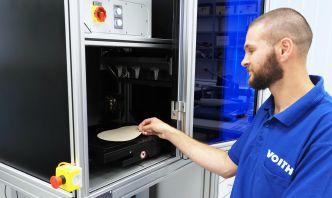
Voith collaborates on measuring method for detecting stickies
Voith is introducing a new measuring method to detect the unwanted tacky contaminants known as stickies.
The measuring method, developed in collaboration with the research institute Papiertechnische Stiftung Heidenau in Germany, uses a near-infrared (NIR) camera to allow reliable detection of contaminants along the papermaking process.
With NIR, the spectral measurements obtained are assigned to values of known contaminants. This allows further classification of the contaminants based on chemical composition.
Both adhesive and non-tacky contaminants can be identified and classified using the NIR measuring technology.
Since the new measuring method uses
laboratory sheets that can be produced by a laboratory sheet former and contain fibres, stickies and non-tacky contaminants, numerous intermediate steps in sample preparation are eliminated.
For example, the sticky contaminants in a stock sample no longer need to be concentrated in order to be analyzed.
The new NIR measuring method can be used to evaluate final paper samples in addition to stock samples. voith.com

Metsä Fibre targets pulp traceability with RFID tracking system
Metsä Fibre’s RFID tracking system is designed to improve traceability of pulp as it moves throughout the distribution system.
The RFID (radio frequency identification) tracking system is based on a small sticker that contains an electronic tag, which stores the pulp batch number and the batch data. The tag can store more information than a barcode. The quantity, technical properties and latest location can be verified in real time.
The tag is attached on both sides of a pulp unit with water-soluble glue. The tag can be scanned even if it is not visible. The tracking tag is scanned when the unit leaves the mill and at the harbour before transport. The RFID scanner can be hand-held or fixed, for instance, at the mill’s pulp conveyor.
When the tag is scanned, Metsä Fibre’s system connects the quality data of the pulp batch to the number sequence of the RFID tag and sends the data to the Fibre Online service.
The tag disappears during slushing and does not need to be separately removed from the batch. metsafibre.com
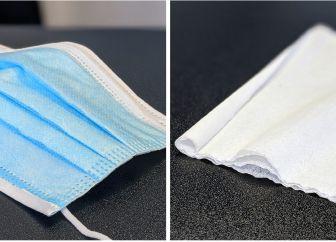
FPInnovations completes initial development of wood-fibre face masks
FPInnovations has successfully completed phase one in the development of biodegradable disposable face masks, and is ready to begin the second phase, which is expected to lead to an entirely made-in-Canada biodegradable solution for face coverings.
The company expects the full mask to be developed by December.
During an eight-week applied research sprint and with financial support from Natural Resources Canada, FPInnovations quickly completed the first phase and successfully developed a biodegradable cellulosic filter media.
The cellulosic filter media is the middle layer of a three-layer mask, made from sustainable wood fibres and suitable for single-use face masks for public use. Current single-use personal masks are made from petroleum-based plastics.
The average filtration efficiency of this new cellulosic filter media is currently at 60 per cent, surpassing the average filtration efficiency of a typical cloth mask, which is approximately 30 per cent.
FPInnovations’ research efforts, which received a total investment of $1.3 million from the federal government, now aim to further improve the filtration efficiency of the media to meet requirements for surgical masks, which may lead to potential new uses of the filter medium such as in-air filtration systems.
The cellulosic filter media is made from a blend of hardwood and softwood fibres from sustainable Canadian forests.
The organization says that the pulp and paper industry could meet the mask procurement needs of Canada within weeks without having to make changes to their production lines and without needing to make large investments in new equipment. fpinnovations.ca
TAPPI announces cash prize for research paper award TAPPI has announced the endowment of the Honghi Tran TAPPI Journal Best Research Paper Prize.
A $2,000 cash prize will be presented annually to the winner of the TAPPI Journal Best Research Paper Award.
For more than 17 years, the TAPPI Journal (TJ) editorial board has honoured the best of TJ content by nominating and voting for the TAPPI Journal Best Research Paper Award, which is determined by the scientific merit, innovation, creativity and clarity of a nominated paper.
Honghi Tran, Ph.D. has published more than 80 papers in TJ. He received the 2019 Best Research Paper Award for “The solubility of calcium carbonate in green liquor handling systems,” which he co-authored with his University of Toronto colleagues Alisha Gigli and Vladimiros Papangelakis.
A TAPPI member since 1980, Tran received TAPPI’s highest honour, the Gunnar Nicholson Gold Medal, in 2017. He is a TAPPI Fellow, PAPTAC Fellow and a Canadian Academy of Engineering Fellow.
Tran is a professor emeritus for the University of Toronto and was the director of the university’s Pulp and Paper Centre. He is also editor of the recently published Kraft Recovery Boilers, Third Edition and serves as the lead instructor of the TAPPI Kraft Recovery Operations Course.
“As an active contributor to TJ , I always want to see it flourish,” said Tran. “TJ is not only important for the researchers, but is also vital for the technological advancement of the pulp and paper industry. My hope is that the addition of the prize will encourage more researchers and technical personnel working for the industry to submit their research to TJ.”
Prospective authors from academic and research institutions, as well as speakers who present scientific papers at TAPPI conferences, are encouraged to submit their research for peer review and consideration for publication.
Submit an abstract at tappi.org/tjsubmit. The first Honghi Tran TAPPI Journal Best Paper Prize will be presented at TAPPICon, April 25-28, 2021 in Atlanta. Dr. Tran plans to make the presentation himself. tappi.org

Sustainable packaging producer Stora Enso is developing a new dispersion barrier technology for paperboard.
The company is investing approximately EUR 10 million at its Forshaga site in Sweden to develop and produce paperboard with barrier properties that are easier to handle in a recycling process, have a lower carbon footprint and can be compostable in industrial facilities.
The new equipment is expected to come into use during the second quarter of 2021.
Stora Enso Forshaga manufactures and develops barrier solutions that are required in certain packaging, for instance to protect against liquid, moisture, oxygen or fat.
Liquid packaging, beverage cups and certain food packaging are some of the products with a barrier that serves to protect the packaged product, while also ensuring that the packaging maintains its user qualities.
The investment in new dispersion technology aims to achieve the desired barrier properties in a more sustainable way.
Stora Enso Forshaga has an annual capacity of approximately 120,000 tonnes of barrier coating across two machines/coating lines, with around 100 employees.
Since the beginning of this year, the Forshaga site has also become a competence centre within Stora Enso’s packaging materials division.
The facility is responsible for producing and developing new bio-based barrier technologies and products. storaenso.com
TAPPI releases book on how to master papermaking additives

TAPPI has released a new publication to help paper technologists differentiate their products and better meet the paper performance needs of their customers.
“Readers will learn how to use functional additives as a tool to gain competitive advantages, efficiently leverage investments and fine-tune products,” says Martin A. Hubbe, one of the editors of Make Paper Products Stand Out: Strategic Use of Wet End Chemical Additives, published by TAPPI Press.
The addition of relatively small amounts of papermaking additives such as dyes, hydrophobic sizing agents, dry strength agents and wet-strength agents can significantly change the properties of paper.
Such agents can markedly affect attributes of the paper product, including colour, brightness, opacity, resistance to fluids, liquid absorption or holdout characteristics, as well as a wide range of strength attributes.
Make Paper Products Stand Out highlights many of the approaches that papermakers use to adjust and control critical properties necessary for the performance of their paper grades.
The book’s 19 authors dive into colorants, fluid resistance, absorbency, tactile and frictional effects, security papers, dry strength, printing paper, and bulky, formable, or foldable paper.
This is the second joint editorial effort for Hubbe and Scott Rosencrance. They co-edited Advances in Papermaking Wet End Chemistry Application Technologies , also from TAPPI Press, in 2018. The duo is already working on a third publication about process additives for paper. tappi.org
Corner Brook Pulp & Paper to house $8.9M provincial innovation centre
Corner Brook Pulp & Paper will soon house a centre devoted to research and development, business diversification and innovation for the province of Newfoundland & Labrador.
The mill is providing its vacant human resources building for the initiative, and
will be in charge of maintaining the facility.
The $8.9-million Corner Brook Centre for Research and Innovation is a project initiated by Memorial University’s Grenfell Campus and the College of the North Atlantic (CNA).
“Corner Brook Pulp and Paper is proud to support this initiative by providing and maintaining a venue that will foster innovation, stimulate economic growth and encourage local businesses,” says Darren Pelley, vice-president and general manager of Kruger Inc., Corner Brook Pulp & Paper’s parent company, in a statement.
Additional funding is being provided by the federal and provincial governments and the City of Corner Brook.
The province is putting forth $5.9 million to support an employer-sponsored training program developed and delivered by CNA.
A further $2.9 million from various stakeholders is being allocated for Memorial University to complete the redevelopment of the mill’s vacant building.
Corner Brook Pulp & Paper is also receiving $442,000 in federal funding to research the use of waste byproducts and develop new products under the umbrella of the new innovation centre (see p. 12). cbppl.com
FPInnovations debuts online research library with 10,000+ records
FPInnovations has launched an updated online library on its website containing 50 years of the organization’s forestry research.
The research library includes over 10,000 documents that cover everything from the fundamentals of forestry to innovative technologies.
The search engine will comb through the full text of reports instead of just using a keyword or abstract search. Users can search by industry sector, author or publication edition in addition to keywords.
A number of reports are free and searchable to the public, but FPInnovations members are able to access all reports and download reports specific to their own sector.
FPInnovations plans to add webinars to the database at a later date, and now sells printed versions of its publications through its virtual bookstore. fpinnovations.ca
Feds invest $300K in prototype of face mask made from pulp
A prototype for a mask made from wood pulp will be manufactured in Ontario after the project received $300,000 in funding from the federal government.
Pulp Moulded Products (PMP) in Newmarket, Ontario, which develops products made from Canadian pulp, will receive support from Kruger Inc. on the project.
The project will see PMP create a prototype for low-cost, non-surgical, disposable masks for civilians and industrial workers.
The masks will be made from KruPulp, Kruger’s FDA-compliant and FSC-certified pulp.
KruPulp products are composed of either recycled or virgin fibres that are sourced locally and responsibly. The fibres are converted into pulp through an optimized, energy efficient process, in a facility that relies on renewable power, including hydroelectricity and biomass steam plants.
The mask production and supply chain will also be 100 per cent in Canada, eliminating dependency on imports for the production of nonmedical masks.
“Through this project, we hope to achieve a reliable local supply of inexpensive, highly effective, antiviral, green masks that will help in the continuing efforts to protect Canadians through this difficult time,” says Gord Heyting, CEO of Pulp Moulded Products, in a statement.
“Kruger is very proud to contribute to the collective effort against COVID19 by helping PMP bring to market this innovative product entirely sourced in Canada and made from a renewable resource,” says Maxime Cossette, vicepresident of global sustainability and biomaterials, Kruger Inc.
Funding for this project is provided through Natural Resources Canada’s Investments in Forest Industry Transformation program, which encourages the Canadian forest sector to adopt and implement unique technologies and processes to produce new forest products for emerging markets. kruger.com
Diageo’s new sustainable packaging company to launch paper-based spirits bottle

Diageo, a food and beverage conglomerate, is launching a sustainable packaging technology company called Pulpex Limited with what it says is the first 100 per cent plastic-free paper-based spirits bottle.
Diageo – maker of Johnnie Walker, Smirnoff and Guinness – is partnering with venture management firm Pilot Lite on Pulpex Limited.
The paper bottle will debut with Johnnie Walker whiskey in early 2021.
Pulpex Limited has established a partner consortium of FMCG companies in non-competing categories including Unilever and PepsiCo, with further partners
expected to be announced later in the year.
Pulpex Limited has developed its scalable, paper-based bottle from sustainably sourced pulp to meet food-safe standards. The bottle will be fully recyclable in standard waste streams.
Pulpex Limited’s technology allows it to produce a variety of plastic-free, singlemould bottles that can be used across a range of consumer goods.
The packaging has been designed to contain a variety of liquid products.
pulpex.com
Valmet has entered into an agreement to acquire PMP Group in Poland.
The value of the acquisition is approximately EUR 64 million, plus a conditional and capped earn-out component.
The acquisition is estimated to be completed on Oct. 1 at the earliest.
Fabio Perini patents converting line upgrades for face mask production
Fabio Perini has patented technology to produce up to 10,000 biodegradable bamboo masks per minute.
The upgrade is available for Fabio Perini converting lines, new and/or already installed.

The technology, which was developed in just over a month during the coronavirus lockdowns, can be adapted to all main nonwoven materials, including a particular bamboo-based material that is biodegradable and can be disposed of with other organic waste.
These single-layer masks are useful for daily, collective and community use in places such as airports, public transportation, shopping malls, supermarkets, groceries and other workplaces.
“The solution makes our machines also capable of manufacturing certified masks; however, pairing these materials with plastic would make the masks nonbiodegradable. Nevertheless, together with different raw materials suppliers in the industry we are testing specific material solutions and we are confident of finding a solution soon,” says Oswaldo Cruz Jr., CEO of the Italy-based Fabio Perini S.p.A. and the Körber Tissue Business Area, in a statement.
“We work with toilet paper and paper towel manufacturers across the world, from China to the United States – we have seen an important change. Initially the request was to increase the production capacity of the machines, especially those for toilet paper, due to the ‘stock effect’ of these products, and to cope with this we even introduced a service for the fast delivery of machines,” he continues.
“As weeks went by, demand has focused more on folded tissue paper products, due to the increase in the number of disposable items being used to meet greater hygiene needs. I believe this will continue as a trend for a long time to come.” fabioperini.com
To hear more about Fabio Perini’s new technology and how the tissue industry has been affected by the COVID-19 pandemic, tune into Pulp & Paper Canada: The Podcast at pulpandpapercanada.com/podcasts.
PMP Group supplies process technologies and services for tissue, board and paper machines globally, focusing on small and medium-sized tissue machines and board and paper machine rebuilds. The net sales of the company were approximately EUR 70 million in the fiscal year 2019.
valmet.com
A Montreal-based pulp and paper expert was recently recognized with an achievement award by TAPPI, the Technical Association of the Pulp & Paper Industry.
J.David McDonald, president of JDMcD Consulting and an adjunct professor in chemical engineering at McMaster University, received the 2019 Research and Development Technical Award and William H. Aiken Prize from TAPPI’s International Research Management Committee (IRMC).
The award recognizes outstanding accomplishments or contributions advancing the technology of paper and related industries.
According to the committee, they were impressed with McDonald’s extensive studies in winding and press technology, alongside universal mathematical expressions.
McDonald previously worked at FPInnovations as vice-president, university programs and strategic partnerships, at the former Paprican as vice-president, research and education, and at AbitibiPrice, as a research associate and mathematician.
He also served as the senior advisor of FIBRE, the umbrella organization for the eight Canadian forest industry university networks.
McDonald is a fellow of both TAPPI and PAPTAC and has received many awards including the TAPPI Engineering Division Award as well as the highest technical awards from PAPTAC and from TAPPI. (He is also one of Pulp & Paper Canada’s regular contributors and wrote the article on p. 18.)
The award would have been handed out at TAPPI’s PaperCon conference that was postponed earlier this year due to the COVID-19 outbreak. PaperCon returns in April 2021 as TAPPICon. tappi.org
The Canadian forest products sector is passionate and devoted – not just to the industry itself, but also to its local communities. Here we share the initiatives of pulp and paper companies working to make positive social, environmental and economic impacts across the country.

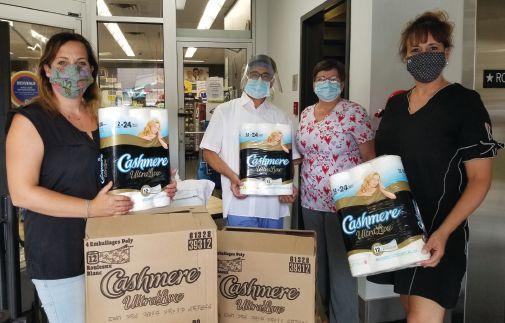
Let us help you share your successes. Tag @PulpPaperCanada or use #PPCGivingBack on LinkedIn, Facebook or Twitter. Or email our editor at kurquhart@annexbusinessmedia.com. We’d love to hear from you!

The world needs better, more sustainable food packaging.
With 100 years of unique chemistry expertise, Kemira provides today the most comprehensive product portfolio and application know-how for paper and board producers – from pulping and microbiological control to base paper production and barrier coatings.
Our end-to-end expertise enables safe and functional fiber-based food packaging that is fully renewable, recyclable, and repulpable.
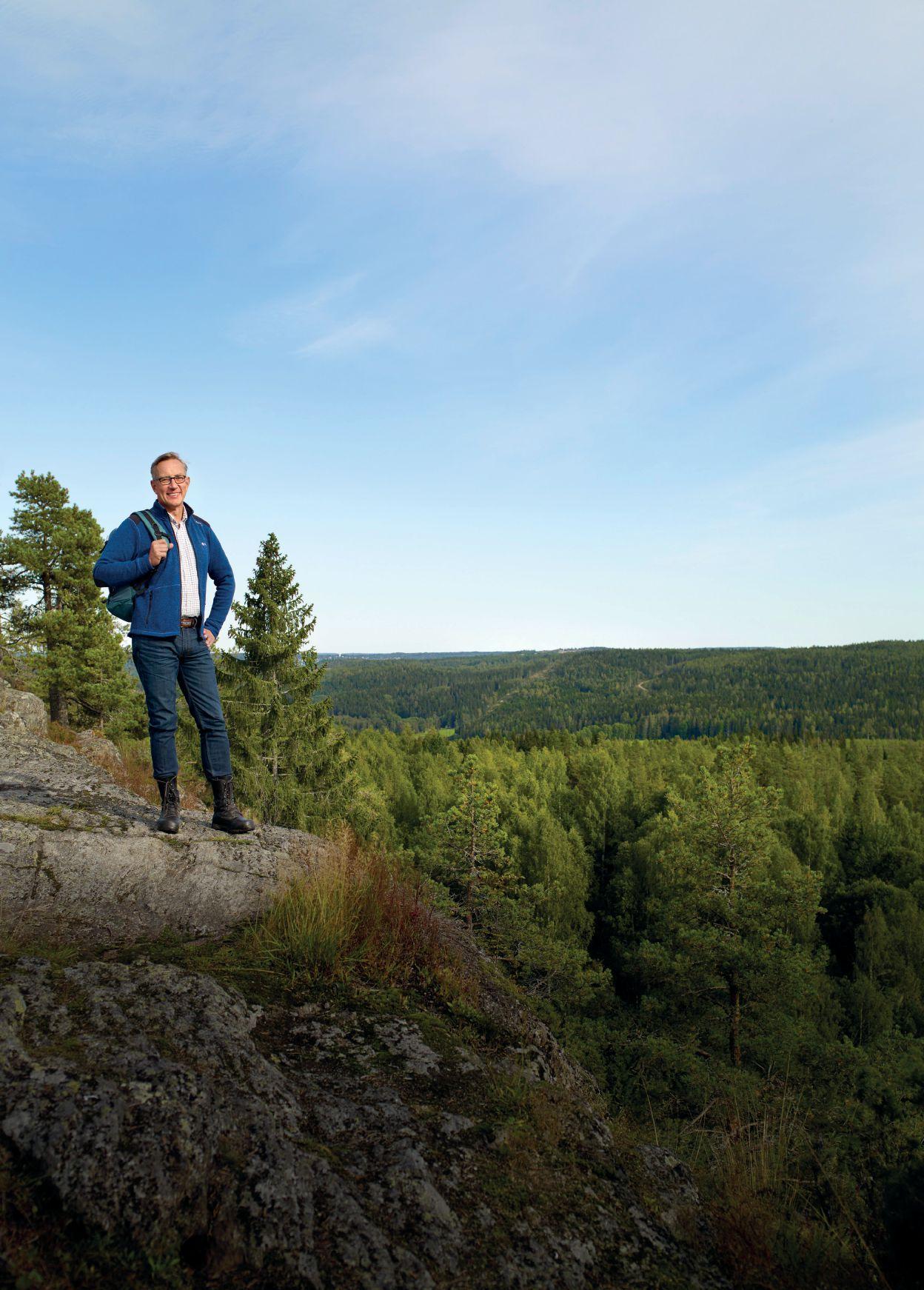
SCA Pure or Black Spruce
We’re happy to boast that our first year in North America has been a “Pure” homerun! This is the result of the combination of our very northern fiber and our brand new state of art pulp mill. In fact, we’re told by our customers that SCA Pure is a pulp that performs equally as well as the finest of Canadian softwoods.
Pure properties
SCA Pure is our premium quality NBSK pulp, offering worldclass strength properties and outstanding environmental performance, naturally complying with FSC® (FSC C013162).
That’s why we have named our new product SCA Pure. Pure, as in pure performance, pure profitability, and pure sustainability.
A Pure commitment
Chasing currency fluctuations and spot markets is a very poor long-term strategy. We, SCA, will build our pulp business on the shoulders off long-term relationship with customers in North America and Europe.
Yes, we are an ocean away and that’s why we have inventory in the Northeast, Southeast and Midwest.
When you think SCA think Softwood commitment to North America, Let’s talk!
For more information please contact Magnus Person, magnus.t.persson@sca.com, phone +46 72 556 43 99.