Schur and Company, Inc., established in 1975, is a market-driven manufacturing and repair facility focusing on the Pulp and Paper industry. Our repairs and new pumps are built to exacting OEM mechanical and operational specifications.
We specialize in new, exchange and repair of :
Thickstock
PULP PAPER &
Messaging your mill
At a PACWEST panel this past June, Dr. Mark Martinez, director for the Pulp & Paper Centre at UBC, said that, in addition to investments in research, recruiting for the pulp and paper industry requires ongoing changes to the curriculum.
“We have to look ahead to what the needs of pulp mills will be in 20 years, so we can educate [people] now and make them into the future leaders,” he said.
The theme of PACWEST was “The Future is Now: Investing in People, Technology and Assets.” A few weeks later, Pulp & Paper Canada addressed some of those topics on our first-ever survey on recruitment and retention in pulp and paper. I’m happy to share the results on p. 10.
Investing in assets over the next five years is indeed a priority for mill management – good news despite the global downturn in demand for fibre. Planned technology adoption includes new equipment (for 68 per cent of respondents), artificial intelligence/predictive analytics (56 per cent) and automation (44 per cent).
Kristina Urquhart Editor
But it was no surprise that, for management, the number one concern of the “invest in people, technology and assets” mantra is the people. The pulp and paper workforce is retiring and, with them, years of knowledge are disappearing from the manufacturing floor.
The phenomenon has become a bit of a perfect storm, because there is a very small pool of people available to fill those vacant positions. Sixty-one per cent of respondents said that not having enough applicants is one of their biggest challenges. Forty-two per cent said there is a lack of applicants with the correct combination of technology skills. Another obstacle: 65 per cent said it’s difficult to recruit people to work in remote areas, where most mills are located.
One respondent pointed out that we must fundamentally shift the way mills attract young people. Millennials and their successive cohort, the Gen Zs, are technologically savvy. According to Deloitte’s 2019 Global Millennial Survey, they also want to feel connected to the work they do, and will be more loyal to employers who are committed to social responsibility in areas such as the environment and diversity.
The paper’s authors suggest starting conversations with millennial and Gen Z employees to discuss the issues they care about, and how they might feel more engaged in professional development. They also advise companies take a vocal position on issues that have a societal impact.
Pulp and paper mills are already heavily involved in their local communities and in improving their effect on the environment. The industry has reduced greenhouse gas emissions by nearly 70 per cent since 1990 and is aiming to reduce another 13 per cent by 2030. Solutions to reducing plastic waste are making more room for paper in the marketplace. Canada is a leader in sustainable forest management. It’s time to let the younger generations know. PPC
Editor KRISTINA URQUHART
416-510-5143 kurquhart@annexbusinessmedia.com
National Accounts Manager
LAURA GOODWIN 289-928-8543 lgoodwin@annexbusinessmedia.com
Group Publisher
TODD HUMBER 416-510-5248
thumber@annexbusinessmedia.com
COO
SCOTT JAMIESON 519-429-5180
sjamieson@annexbusinessmedia.com
President & CEO MIKE FREDERICKS
EDITORIAL/SALES OFFICES
111 Gordon Baker Rd., Suite 400, Toronto, ON M2H 3R1
Mail: 111 Gordon Baker Rd., Suite 400, Toronto, ON M2H 3R1
SUBSCRIPTION RATES
Canada $57.50 - 1 year; $92.50 - 2 year
USA $107.00 USD per year
Overseas - $115.50 USD per year
Occasionally, Pulp and Paper Canada will mail information on behalf of industry related groups whose products and services we believe may be of interest to you. If you prefer not to receive this information, please contact our circulation department in any of the four ways listed above.
Annex Privacy Office
privacy@annexbusinessmedia.com
Tel: 800-668-2374
The editors have made every reasonable effort to provide accurate and authoritative information but they assume no liability for the accuracy or completeness of the text or its fitness for any particular purpose.
Sustaining member, Pulp and Paper Technical Association of Canada; Member, Alliance for Audited Media.
At Kemira, we use our chemistry to improve your everyday. It means making your packaging lighter and stronger, your paper towels softer, and your print colors brighter. By adding our expertise, your everyday business runs smoother and more efficiently. Our job is to add value while adding peace of mind. We call it adding to your everyday.
Environment minister asks for new review of whether Northern Pulp plan should go before feds Canada’s environment minister Catherine McKenna has requested a new recommendation of whether Northern Pulp’s plan for a new effluent treatment plant should undergo a federal environmental assessment.
McKenna appealed to the Canada Environmental Assessment Agency after new legislation passed at the end of August that requires extra consideration of a project’s impact on Indigenous people.
The project is currently undergoing a provincial environmental assessment, and Northern Pulp is expected to submit additional focus report documents to the government of Nova Scotia by the end of September.
McKenna had previously requested a recommendation of whether the plan should be reviewed by the federal government, but according to documents obtained by Nova Scotia paper The Chronicle-Herald, the Canadian Environmental Assessment Agency said in March that no such review would take place.
Northern Pulp, owned by Paper Excellence, has been ordered by the province of Nova Scotia to remove its effluent treatment pipe from its current location, which runs near the Pictou Landing First Nation and into Boat Harbour, by January 2020.
Fortress secures up to $15M loan to continue operations
Fortress Global Enterprises Inc. has secured up to $15 million in credit for its wholly owned subsidiaries, Fortress Specialty Cellulose Inc. and Fortress Bioenergy Ltd.
The first advance was $2.5 million, drawn on September 4.
The loan will allow Fortress uninterrupted operations after a disappointing quarter as it continues to execute a strategic and financing initiative, which includes seeking a recapitalization, restructuring and/or business combination transaction.
“We are very pleased to have completed the facility arrangements within an expedited timeframe with the help of our two senior lenders,” says Giovanni Iadeluca, president and chief executive
Fibre prices drop for most North American pulp mills in first half of 2019
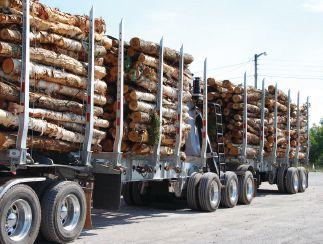
Wood fibre costs fell in most regions of North America during the first six months of 2019, with the biggest declines in Western Canada and the US Northwest.
Prices for pulplogs and wood chips in the US South bucked the trend, with softwood fibre moving up to its highest levels in three years and hardwood fibre prices hitting an all-time-high.
In British Columbia, the average price for pulplogs fell slightly to C$51/m3 in Q2 2019. In the interior of the province, pulplog prices were steady because pulp mills made a push early in the year to build up their inventories before the spring breakup. Production also slowed at several pulp mills due to lower NBSK prices. In the southwest coastal region, there were no significant supply or price fluctuations.
Of the three regions in Western Canada, residual chip prices in the interior of BC saw the steepest decline in Q2/19 at six per cent quarter-over-quarter, as a result of the slipping NBSK pulp prices (see more in the latest North American Wood Fiber Review). Wood chip prices in coastal BC fell just over two per cent from Q1/19 and were down four per cent in Alberta.
In Eastern Ontario and Quebec, weather-dependent harvesting challenges during the winter months resulted in mediocre hardwood log inventory levels in Q2/19. This caused the prices for hardwood pulplogs to edge upward to levels last seen in early 2016. There was no movement in the price for residual chips in Q2/19. However, the opening of two new pellet mills during the second half of the year is expected to upset the current supply and demand balance and could therefore change chip prices late in 2019 or early 2020.
In the Maritime provinces, mill and pulp mill inventories remained stable during the spring thaw. Sawmills were not running hard, so the demand for sawlogs was tepid. The price for softwood pulplogs remained flat in Q2/19, while the price for hardwood pulplogs rose by two dollars/odmt. This price increase was primarily due to higher handling costs of moving the pulplogs from auxiliary wood yards, as well as in some cases temporary bonuses.—Wood Resources International
officer of Fortress Global Enterprises.
“The provision of the facility will help address Fortress’ immediate financial needs during a period of unprecedented weakness in dissolving pulp pricing, and is a strong indication of the support and commitment of Fortress’s senior lenders to ensure that the Fortress Specialty Cellulose mill operations continue uninterrupted as we continue in earnest with our strategic initiative.”
Ten million dollars remains subject to approval of the Quebec government. The facility will accrue interest at a rate of 10 per cent per annum, payable monthly in arrears, with final payment due October 15, 2020 or earlier pending a restructuring that allows the loan to be paid in full.
Corner Brook Pulp & Paper to invest $625K in local port operations
Corner Brook Pulp & Paper will contribute $625,000 toward a project that will increase operational efficiency at the Port of Corner Brook.
The total investment includes $5.5 million from the federal government, $850,000 from the government of Newfoundland and Labrador, $2,325,000 from the Corner Brook Port Corporation, and $1.7 million from Logistec.
The investment will be used for a new warehouse to store goods, and a new crane to load and unload container ships. This project will allow goods to be shipped directly to international markets, resulting in faster delivery to customers.
The project will also reduce truck traffic, reduce greenhouse gas emissions, and enhance productivity and optimize the usage of the port.
“[The] federal-provincial investment towards transportation infrastructure at the Port of Corner Brook will play a major role in contributing to Canada’s transportation networks, while at the same time secure the future of our forestry sector and Corner Brook Pulp and Paper Limited,” says Gerry Byrne, minister of fisheries and land resources and MHA for Corner Brook.
Remembering David John Kraske
David John Kraske, who worked in the North American pulp and paper industry for over 30 years, has passed away at age 88.
The Sun Journal, a local paper in Maine, reports that Kraske died on September 4, 2019.
Kraske held numerous roles in the industry, starting at the Oxford Paper Company in Rumford, Maine and ending as the regional vice-president for Boise Cascade Canada in Kenora, Ontario.
He graduated with a Ph.D. from the Institute of Paper Chemistry in 1959, and taught chemical engineering at the University of Maine for five years before his retirement from teaching in 1992.
In lieu of flowers, Kraske’s family is asking for donations in his memory to the University of Maine Pulp and Paper Foundation Scholarship, or to Androscoggin Home Care & Hospice.
FPAC CEO elected ICFPA president
Derek Nighbor, president and CEO of the Forest Products Association of Canada (FPAC), has been elected president of the International Council of Forest and Paper Associations (ICFPA).
The ICFPA represents 18 pulp, paper, wood and fibre-based associations across 28 countries.
“It is an honour to be chosen by colleagues from around the world to assume this role at such an exciting time for forestry and the forest products sector,” says
APP celebrates 20 years in Canada
Two decades ago APP Canada, an independent subsidiary of Asia Pulp & Paper (APP), was established with one small location in Mississauga, two sales offices in Montreal and Vancouver, and the hope that the printing industry would respond favourably to its offering.
The early years focused on sales of coated and uncoated Riviera paper, photocopy paper and stationery. In 2005, APP introduced its coated paper and board products to the Canadian market.
“Twenty years ago, the industry was somewhat resistant to Asian paper, with concerns over its quality and how it will affect the machines and the finished products,” says David Chin, president of APP Canada. “But the printing industry soon realized the benefits of paper from Asia and how competitive it was with North American or European alternatives.”
In 2007, APP Canada moved to its current location on Hereford Street in Brampton, Ontario for added space to accommodate its 50-person staff and the need for a larger warehouse for its expanding product lines, which now also included Paperline photocopy paper. The company also opened additional sales offices in Calgary, Winnipeg and Edmonton.
Over the next decade, APP Canada received PEFC certification, introduced thermal paper and stationery products to the market and expanded its sales network nationwide.
The company invested in increased support for the paper packaging segments for consumables, household items and logistics.
In 2019, APP Canada is known for far more than photocopy and printing paper. The company recently introduced its completely biodegradable Foopak line of disposable cups and food containers. This year, it also announced the production of one of the first paper straw alternatives on the market, capable of performing as well as plastic alternatives.
APP’s combined pulp, paper, packaging product and converting capacity is over 19 million tons per annum.
Nighbor. “Canada was built on forestry. In Canada, I work hard every day to advance the opportunities that our sector brings to communities like the one I grew up in. In this new role, I look forward to working with my international colleagues to do the same thing on the global stage.”
Jane Molony, executive director, Paper Manufactures Association of South Africa and past ICFPA president, says, “We are very fortunate to have Derek’s leadership at this important time for our industry. Low-carbon, sustainable and renewable solutions are needed the world over and under Derek’s leadership the ICFPA is well positioned to contribute to public policy development for the benefit of global society.”
Nighbor takes up the role from the late Sylvain Lhôte, director general of the Confederation of European Paper Industries.
“Sylvain brought much energy and
enthusiasm to his work on behalf of ICFPA,” says Donna Harman, president and CEO, American Forest & Paper Association (AF&PA) and former ICFPA president. “We will remember his legacy and know that he would be pleased that his vision for ICFPA will continue to be carried out under Derek’s leadership. Derek’s experience in government and associations and his knowledge of the forest and paper sector make him the ideal person to lead ICFPA during a time when our industry is needed more than ever.”
Nighbor has 20 years of government and association executive experience in Canada, holding senior roles with the Government of Ontario, the Retail Council of Canada (RCC), Food and Consumer Products of Canada (FCPC), and now as president and CEO at FPAC. He will serve as president of ICFPA for the next two years in conjunction with his role at FPAC.
David Chin
Derek Nighbor
Union joins call for Ontario government to restart Fort Frances pulp mill
Unifor has joined the call for the Ontario government to get involved in the efforts to re-start a shuttered pulp and paper mill that was recently sold by Resolute Forest Products to a development company.
“We’ve been working with the Town of Fort Frances and other key stakeholders since 2014 when the mill closed to explore new ownership and a re-starting of the mill,” says Stephen Boon, Unifor national representative. “Re-starting this mill would see 600 direct jobs restored by next year.”
Riversedge Developments, a brownfield developer, now owns the mill site and, during the sale, signed agreements with Resolute that indicated the mill would not be restarted for pulp and paper operations. It is expected the mill will be demolished and the site repurposed. One of the potential reuses is for a cannabis processing facility.
The Town of Fort Frances has since submitted a request to the government to revoke Resolute’s Sustainable Forest Licence in the area – which covers the Crossroute Forest and its fibre supply to its Thunder Bay mill 350 kilometres away – and open it up to forestry companies that will bring jobs back to the area. The town is requesting the government overhaul the forest licence program into a communitydriven one.
Resolute maintains that the no-competition clause is standard protocol.
On August 16, Greg Rickford, minister of energy, northern development and mines, issued a statement that he wants to find a solution that will result in bringing jobs back to the mill site.
He said he met with Resolute to discuss the potential for a new forest licence program on August 14.
“Forestry operators across Northern Ontario need more certainty and greater access to fibre to support growth in the sector moving forward,” Rickford said in his statement. “Our government will proceed with a new province-wide forestry strategy that will allow for more access to fibre from across the province, under a model that is sustainable and renewable, and supports good-paying jobs and a wide range of social, environmental and economic benefits.”
Rayonier to sell Matane, Que. pulp mill to Sappi Rayonier Advanced Materials is selling its Matane, Quebec pulp mill and related assets to Sappi Limited, a global diversified wood fibre company, for a purchase price of approximately US$175 million.
The mill produces approximately 270,000 metric tons of high-yield pulp and sells the product globally for use in manufacturing paperboard, packaging, printing and writing paper. The Matane mill was acquired by Rayonier as part of its acquisition of Tembec Inc. in November 2017. Rayonier will continue to manufacture and sell approximately 240,000 metric tons per year of high-yield pulp out of its Témiscaming facility.
A manufacturer of paper, paper pulp and dissolving wood pulp solutions, Sappi Limited is headquartered in Johannesburg, South Africa and has over 12,000 employees with nine mills in Europe, three mills in America and four mills in South Africa.
Mark Gardner, outgoing CEO Sappi North America, says, “The acquisition eliminates the need to invest in a pulp expansion project at the Somerset Mill, which for the same investment would have delivered significantly less pulp. At the same time, this acquisition provides us with a healthy market pulp business with a strong customer base. We will work with our new customers during the transition and will of course honour all contractual commitments.”
The Matane transaction is expected to close in the fourth quarter.
Domtar names Marie Cyr new Dryden mill manager
Domtar Corporation has appointed Marie Cyr as manager of the company’s mill in Dryden, Ontario. She succeeds Jim Blight, who retired in August.
Since December 2013, Cyr has served as the pulp mill manager and superintendent of Domtar Windsor, responsible for developing the pulp mill’s overall strategy and leading its manufacturing operations.
Cyr has experience working with large teams in operations, maintenance and engineering. She joined the Windsor Mill
Canfor Corporation receives buyout offer from Great Pacific Canfor Corporation has received an offer from Great Pacific Capital Corporation to purchase the remaining Canfor shares it doesn’t already own for $16 per share.
Great Pacific Capital, owned by BC business magnate Jim Pattison, already owns 51 per cent of Canfor’s shares. The offer translates to a Canfor valuation of $2 billion.
Great Pacific says the deal, which would turn Canfor private, would cut down on costs associated with a public company listing.
Canfor is reviewing the unsolicited offer with a special committee of independent directors.
in 1995 as a maintenance engineer and project manager, and has held roles of increasing responsibility in maintenance and planning in the Windsor Mill’s pulp and converting operations.
The company says Cyr is a strong advocate for using the continuous improvement tools to foster a culture of learning and growth, and that she has an ability to quickly bring teams together and unify them toward accomplishing an objective.
Mercer International joins Alberta Forest Products Association
Mercer International, which operates a kraft pulp mill in Peace River, Alberta, has joined the Alberta Forest Products Association (AFPA) as a member.
The Peace River Pulp mill employs 285 people. Mercer also owns facilities in British Columbia, Germany and Australia, and has a global production capacity of about 2.2 million tonnes per year of kraft pulp, 550 million board feet of lumber and 400 megawatts of green electricity.
David Gandossi, president and CEO of Mercer, says, “Our focus on operational excellence, along with our unique approach to sustainability and ecosystembased forestry, align well with the objectives of the AFPA and we are pleased to join this important organization.”
The AFPA is the voice of Alberta’s forest industry. Forestry creates 40,000 jobs in Alberta and adds $7 billion to the provincial economy.
Marie Cyr
Kruger receives $2M to scale cellulose filaments
Kruger Biomaterials Inc. is receiving $2 million from the federal government for a commercial-scale facility to manufacture cellulose filaments, touted as the first of its kind in the world.
The project will upgrade the company’s existing plant in Trois-Rivières, Quebec, allowing Kruger Biomaterials to operate on a 24/7 basis.
Derived from natural and renewable wood fibres, cellulose filaments are a bio-based material that can enhance the strength, durability and overall functionality of many consumer and industrial products, including in specialty papers, plastic and concrete. They can replace chemical-based materials with applications in automotive, aerospace, etc.
Projects employing pulp residuals get $815K
Two projects that will use gene extraction technology on residuals from pulp and paper mills are receiving more than $815,000 in funding from Genome BC and the BC Pulp & Paper BioAlliance (BioAlliance).
Led by the University of British Columbia (UBC)’s Dr. Sue Baldwin and valued at close to $315,000, one project will use the concept of the “circular economy” to take pulp and paper mill residues, currently landfill, and use them to sequester nutrients from water at mine sites. This method would remove toxicity from the water and rehabilitate the soil.
A second project, led by UBC’s Dr. Lindsay Eltis and valued at over $500,000, will develop biological methods that can be used to transform black liquor from the chemical recovery process into usable consumer goods such as adhesives, foams and other applications. This would dramatically increase the value of black liquor and potentially enable a total increase in process output.
Both partnerships are in collaboration with BC’s BioProducts Institute and FPInnovations, working directly with partners of the BioAlliance. Along with UBC, FPInnovations is delivering the research program to the BioAlliance and playing a significant role in both projects. FPInnovations also contributes $300,000 annually to the BioAlliance.
Feds fund projects for bioplastics compostability
The federal government is handing out $300,000 to two small businesses for projects that will see the creation of compostable bioplastics made from forest-based residue.
The investment is the first phase of a Bioplastics Challenge, a collaboration between Natural Resources Canada and Agriculture and Agri-Food Canada for working prototypes of bioplastics.
The funding is being split between Quebec-based Bosk Bioproducts Inc., and Vancouver’s G-Kup Technology Corp. Bosk Bioproducts is developing an inexpensive bioplastic made from paper mill sludge and wood fibre residue that is compatible with plastic manufacturers’ existing equipment.
G-Kup Technology is developing an entirely plant-based, compostable singleuse coffee pod manufactured from bioplastic and wood fibre.
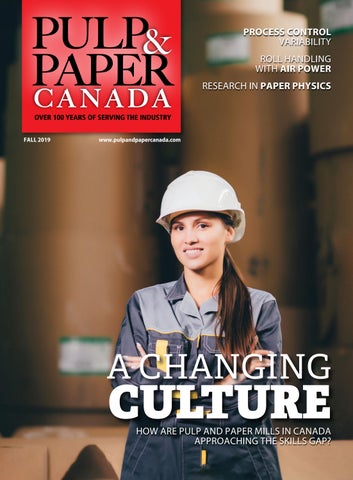
A CHANGING CULTURE
Our human resources survey establishes new market insights about how pulp and paper mills in Canada are approaching the skills gap
By Kristina Urquhart
This past summer, fuelled by the ongoing conversations in the industry about the skills gap, we conducted a survey of mill management to learn more about how pulp and paper mills in Canada are handling recruitment, reskilling and retention. Senior-level staff weighed in on hiring, training and investments – and we also asked non-management about their preferred methods of training and what job concerns keeps them up at night.
We had 66 responses from across the country, from mills big and small producing everything from kraft pulp to BCMTP, tissue to containerboard. Thank you for your participation!
New roles
“Every level/position has changed over the last decade,” said one respondent. “The ability to keep individual contributors in SME-type roles has been overtaken by the need for experience to advance into other roles.”
Some positions that have either taken on a new form or disappeared altogether over the past decade include consultants, clerical support and process operators – employees in roles affiliated with the distributed control system (DCS) now work alongside the IT departments on initiatives such as boosting cybersecurity. Onsite tradespeople such as masons, welders, fabricators and carpenters have been reduced by attrition, with contractors being employed instead.
Retraining and retaining
Sixty-seven per cent of respondents in senior roles said their mill would face the skills gap over the next five years by equal amounts hiring new workers and retraining/reskilling existing workers. Another 26 per cent said they would face digitization mostly by retraining/reskilling, and seven per cent said they would mainly be taking on new hires.
When it comes to training, mills are using a combination of strategies: peerto-peer training (80 per cent), continuous learning, online modules and apprenticeships/internships (each 68 per cent), coaching/on-the-job shadowing (64 per cent), vendor-specific training (60 per cent), third-party training companies (48 per cent), universities or research partners (12 per cent), and mobile apps (eight per cent). To see which methods workers prefer best, see p. 12.
As for retention, mills employ everything from competitive compensation (80 per cent), benefits packages (72 per cent), rewards or incentive for safety or production goals (56 per cent), ongoing training opportunities (48 per cent), safety programs (44 per cent), regular feedback (36 per cent), professional goal setting (28 per cent), personal goal setting (24 per cent),onboarding programs (16 per cent), and community service programs (eight per cent) to appeal to workers.
Here’s what else respondents shared with us.
“We need more youth involved with trades related to pulp and paper – maybe offer more opportunities for high school students to see what careers are available in local areas.”
“It’s the millennials that are needed to take over from the baby boomers. There has to be a change in the work culture to attract the millennial thought process. Perhaps we need to provide iPads and unlimited internet as a job benefit. Ask the question: what would attract a 20-year-old to a paper plant and have them excited to become an electrician or millwright or machine tender?”
“Be active in the community in promoting opportunities and quality of life by working in the forest industry. The perception is pulp and paper is in its golden years, yet technological advancements to meet social wants will put pulp and paper back as a vital industry, with many skill sets required.”
RESPONDENTS SAID
EVOLVING AN INDUSTRY
In my editorial last issue, I discussed the federal government’s $467,000 investment in the Canadian Institute of Forestry’s three-year action plan aimed at attracting and retaining women to careers in the forestry industry. (Find it at pulpandpapercanada.com/tag/women).
I recently checked in with Kelly Cooper, president of the Centre for Social Intelligence (CSI), a consulting firm for gender equality in the workplace, for an update on the project. She’s heading up the steering committee for the Gender Equality in Forestry National Action Plan.
At CSI, Cooper conducts gender gap audit assessments for companies pursuing gender parity certification. After a site visit and digging into a company’s existing policies, she can deliver recommendations for strategy development and implementation within a few weeks.
“[Companies] are all stumbling on how to get started, so they end up starting with things like unconscious bias training,” Cooper says. “I don’t think that’s the most effective way to go. You need to start with a business case with the C-suite, and release a few funds to do gap audit assessment. From there, you identify your gender strategy around how you want to create your actions. And from there, you roll it out. It takes a bit of time, but it’s impactful.”
In 2016, Cooper was approached about creating a national action plan for the forestry industry based on her work for a similar project in Canada’s mining sector. “I thought I could do more, and make it more impactful in many ways,” she says. For this round, she sought private sector funding in addition to government investment, and tapped an organization – the Canadian Institute of Forestry – to help boost the project at a national scale. “This is the first public-private project on gender equity in Canada of this size,” says Cooper.
She pulled together a committee that combines representatives from the public, private, not-for-profit, Indigenous and academic sectors. “The intention was that by having all these stakeholders at the table, we can basically cover the waterfront of all issues and work collaboratively towards gender equality in the sector,” Cooper says. “The important piece for me to see in this process is that these gender champions are never swapped out. Their individual participation is important. [They should] be the person carrying the torch throughout the whole process.”
Starting last November, the committee meets twice a year, alternatively on the east and west sides of Canada, to work on furthering the national action plan. It’s made up of about 40 per cent men, and
HOW IMPORTANT ARE THE FOLLOWING WHEN YOU ARE HIRING?
WHAT ARE THE BIGGEST CONCERNS/THREATS FOR THE OPERATIONS WORKFORCE AT YOUR MILL?
WHAT IS THE LIKELIHOOD OF YOUR MILL ADOPTING TRAINING VIA VIRTUAL REALITY (VR) OR AUGMENTED REALITY (AR)?
NON-MANAGEMENT: HOW DO YOU PREFER TO BE TRAINED?
IN
THE NEXT 12 TO 18 MONTHS, WHICH IS MOST LIKELY TO HAPPEN AT YOUR MILL?
7% CONTRACTION (LAYOFFS)
43% EXPANSION (HIRING)
50% NO CHANGE
WHAT IS YOUR PLANNED TECHNOLOGY ADOPTION FOR THE NEXT FIVE YEARS?
WHAT IS YOUR MILL’S EMPLOYEE TURNOVER RATE?
HOW HAVE AUTOMATION AND DIGITIZATION IMPACTED ROLES IN YOUR MILL?
92%
CHANGED JOB DESCRIPTIONS BUT HEADCOUNT ROUGHLY THE SAME
8% ELIMINATED JOBS
0% CREATED MORE JOBS
60 per cent women (for a full list of participating organizations, find this article at pulpandpapercanada.com/ tag/women). Each meeting is immersive, lasting over a period of 24 hours.
“That way, we really start developing relationships and building trust in the group,” Cooper says.
In April, writer and speaker Michael Kaufman addressed the group about how to engage men and boys in promoting gender equality. For the fall meeting, Cooper has invited Unifor to begin discussions on how the trade unions can be involved in the initiative.
“That’s a bridging opportunity – to learn what they’re doing, tell them what we’re doing, and start forging a new path together,” she says.
In order to build the action plan, which Cooper expects will be ready to implement by 2021, the committee is working on three specific areas:
• Building the evidence base: The committee plans to increase market data on forestry and gender representation. FPAC and Statistics Canada are both at the table, working on filling gaps in the existing available occupational data.
• Fostering an inclusive culture: “We’re looking at best practices across the sector, but also outside of the sector because there aren’t a lot in forestry,” says Cooper. “We are looking at how we can engage and communicate effectively so that we have ears turned on, and so that men are not blamed, but are advocates. They’re not the problem; they’re the solution.”
• Repositioning the sector: The committee plans to develop communications campaigns focused on not only attracting and retaining women to the sector, but also on having men evaluate how they may impact the advancement of women in the workplace.
Natasha Machado, an extension forester with the Canadian Institute of Forestry who is working with Cooper, says that the action plan will have ripple effects as the forest products industry goes through one of its biggest culture shifts. “We know there are going to be a lot of jobs coming up – if we look at diversification within the sector and a transition to the bioeconomy, there are going to be lots of opportunities for Indigenous people, new Canadians and women,” she says. “Creating pathways for them to be more involved and looking at why they haven’t been is going to strengthen our sector and better position us in the future.”
HAVE SOMETHING TO ADD TO THE CONVERSATION? Share your thoughts with our editor at kurquhart@annexbusinessmedia.com.
FORESTRY FOR THE FUTURE: delivering on Canada’s bioeconomy potential
By Robert Larocque, senior vice-president, Forest Products Association of Canada (FPAC)
Forest prod -
ucts have been a lynchpin of the Canadian economy for centuries, if not millennia. Our forests have allowed for a dynamic and resilient forest industry that is a world-leader in innovation and sustainability. Thanks to a combination of Canada’s rich forests, a drive to innovate and a commitment to creating a greener environment, our nation is uniquely positioned to lead the world in next-generation thinking around the bioeconomy. However, without a modern, adaptive regulatory framework and policies that support innovation and investment, the full potential for Canada to lead the world in biomaterials, biofuels and biochemicals might never be realized.
It should come as no surprise that innovation is a critical requirement for long-term growth and success. For its part, the forest products sector has been in the business of innovation for decades – long before the potential of the bioeconomy was fully understood. Since 2008 alone, more than $2 billion has been invested in cutting-edge science and technology that has allowed for the creation of sustainable, renewable biobased energy and products that help in the fight against climate change. Thanks in part to this innovation, household products like bath towels, nail polish and paints can now be manufactured by breaking wood into its component parts: cellulose, hemicellulose and lignin. What’s more, biofuels derived from biomass (harvesting and mill residues, and demolition wood waste) can help reduce dependence on fossil fuels, cut greenhouse gas emissions and minimize environmental impacts from industrial operations.
The exciting potential made possible by biofuels is already a reality in several locations in Canada. For example, thanks to $4 million in technological upgrades since 2014, the Mercer Peace River Pulp Mill in Alberta meets more than 90 per
cent of its on-site energy needs through biomass and renewable fuel sources, including sludges, pulping soap, noncondensable gases and turpentine. Since 2014, the mill has produced over 300Gwh of green electricity and plans to exceed 98 per cent bio-energy use in the near future.
In addition to biofuels and technologies that will enable everything from toothpaste to LCD screens to be made from wood products, the environmental advantages associated with building with wood products are now undeniable. Wood products require less energy to extract, process and transport; and wood buildings can require less energy to construct and even operate over time – all factors that result in fewer and lower greenhouse gas emissions.
Wood buildings also provide a unique and effective solution regarding the rising demand for green buildings. Not only does wood make beautiful and sustainable structures, it is more cost effective than other building materials and maintains proven safety and performance records against fire, seismic and wind conditions. British Columbia has already identified the green implications of wood buildings by making changes to its building code one year ahead of scheduled changes to the national building code – changes FPAC warmly welcomes.
Though industry must do the heavy
lifting to create the bioeconomy of the future, governments are uniquely positioned to support innovation and market development to help spur capital investment and solidify Canada’s place as the world-leader in the bioeconomy. The Canadian Council of Forest Ministers has acknowledged the important role played by governments at all three levels by publishing a Forest Bioeconomy Framework, highlighting areas of innovation collaboration and investment to further enhance the sustainability of the forest sector through research, innovation and strong, coherent public policy.
In its most recent budget, the federal government committed more than $250M in investments to accelerate innovation, diversify export opportunities, address supply chain bottlenecks and modernize regulations. A nimble and effective regulatory system is paramount to Canada seizing its opportunity in the bioeconomy. This will require policies that are responsive to changes and enable innovation, while providing a level of certainty to industry and investors.
With all this in mind we, at FPAC, believe it is imperative that Canada’s government and business leaders commit to continue to work together to leverage the forest products sector’s innovations and successes to ensure Canadians can go on harnessing the full potential of this fastevolving, future-ready industry. PPC
Solutions for Your Mill’s Day-to-Day Challenges
SEVEN Conference Tracks developed by industry professionals
• Energy, Recovery, Lime Kiln and Recaust
• Engineering, Reliability, Corrosion and Materials
• Environmental
• Nonwood
• Pulping and Bleaching
• Recycling
• Sustainability
Plus the IBBC Technical Program
SIX Sustainability Goals highlighted during the State of the Industry session
FIVE Panel Discussions addressing new solutions and best practices
FOUR Workshops provide hands-on experience
• Bleach Plant Operations
• Brownstock Washing
• Project Management
• Introduction to Lean Six Sigma
THREE Conferences for one registration fee
TWO Hot Topics Breakfasts focused on current operational issues
ONE New Technology Showcase offering the latest innovations Co-located with TAPPI’s:
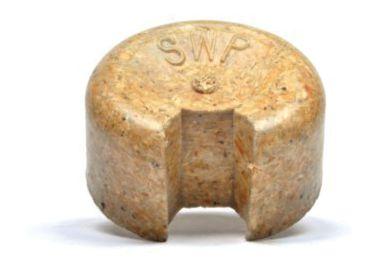
A crushed roll of paper can cost manufacturers and their customers countless hours, dollars, and headaches. But by sim p ly inserting core p lugs into each roll, p a p er makers can reduce damage and loss claims for just p ennies p er roll. As a family-owned New England com p any that has been p roducing core p lugs for over 50 years, Souhegan guarantees a high- q uality, steady inventory of the p roducts you need, whenever you need them
We offer two different types of high-density, molded wood core plugs engineered specifically for the paper industry:
CENTER HOLE PLUG
With an easy-out design preferred by many end-use customers, an impressive crush strength, and a competitive price, our re-engineered Center Hole plugs are an industry favorite for all grades of paper.
3" Center Hole plugs have a crush strength of 2,300 lbs in a .668" walled paper tube. 4" Center Hole plugs have a crush strength of 5,000 lbs in a .25" walled paper tube.
CORSAVER™ PLUG
Designed for fine coated papers, the name says it all –this little gem can withstand three times more pressure than most other center hole plugs on the market. In independent testing, our CorSaver plugs withstood a 10,000 lb crush in a .668” walled paper tube.
For more information on standard plug sizes and custom options call us at (603) 654-2311 or visit us online at www.souheganwood.com
CORSAVER PLUG
3" CEN ENNTER TE HOOLLE LE P PLUG
“The more information and the more numbers you have to work with, the better. Then we can start looking at where we are losing fibre through our system.”
TAKING CONTROL OF VARIABILITY IN THE PULP MILL
Advanced process control modules combine model predictive control, soft sensors and pulp tracking
By Martin Fairbank Ph.D.
In today’s pulp and paper industry, especially for commodity products in a stable or declining market, it is difficult for producers to improve profitability by increasing output, since there is no guarantee that extra product would find a buyer. One avenue that can be explored to improve the profitability of kraft pulp mills is to reduce their process variability, which can lead to cost savings from reductions in energy usage, chemical usage, off-spec tonnage and even maintenance downtime.
Process variability can have a number of causes, including raw material variation, sensor drift, control loop tuning, grade changes and human factors. The implementation of advanced process control strategies can minimize this variability and many producers are implementing these strategies in pulp and paper mills globally.
ABB has developed advanced process control (APC) modules it calls the OPT800 series, which fall under its ABB Ability optimization solutions for pulp mills. ABB has installed over 100 APC applications in the pulp and paper industry, including 20 in the last four years. I recently interviewed Dr. Abhijit Badwe, subject matter expert and business development manager for advanced process controls at ABB, to learn more about how his company helps implement APC.
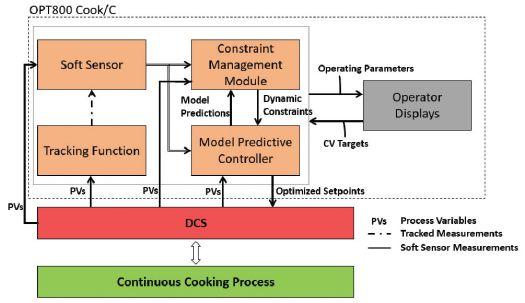
Control is accomplished by applying a combination of predictive controls and pulp-tracking techniques to reduce variability. Pulp tracking is a concept that can track the performance of various key pulp properties through the process, such as moisture content in wood chips, pulp conductivity in brown stock washers, or chemical dosage in the first stage of bleaching. These process variables are tracked in space and time up to the location of interest. These transformed variables help build a soft sensor model that is then used in the appropriate APC module for online prediction of controlled variables. If off-spec pulp is produced for ten minutes at the digester, for example, the system can predict when this slug of pulp will reach the various bleaching stages and adjusts bleaching parameters accordingly.
The pulp-tracking module also serves as a diagnostic and visualization tool for the operators. For example, if off-spec pulp or increased variability is observed at an intermediate stage in bleaching, the operator can drill down and determine the pos-
sible source(s) of this variability: off-spec process parameters in an upstream operation or even issues with wood chip quality. Furthermore, in the case of grade changes, the tracking function aids in accurate prediction of when the new grade would arrive at a given location along the fibre line. This helps in appropriate adjustment of recipe parameters to minimize production of mixed/intermediate grade pulp.
ABB’s OPT800 modules are designed for specific stages of the pulp process that combine a number of techniques, including traditional model predictive control (MPC), soft sensors, pulp tracking, and a patented novel “constraint management” module, which calculates new low and high constraints for manipulated variables (MVs) dynamically. The constraint management module enables the use of the tracking function in coordination with predictive controls to help pulp process controls that are typically characterized by nonlinearities, slow dynamics and highly interacting multivariable relationships amongst key process variables. This patented approach helps in taking corrective actions before the damage is done (a variability increase) as opposed to conventional controls that act after off-spec quality is detected/measured.
Applications of APC in the pulp mill
The main areas of the fibre line in a pulp mill that can benefit from variability reduction are pulping, brown stock washing and bleaching. For example, in figure 1, APC can be applied
Figure 1: Continuous digester control system.
in a continuous digester. In this case, the following variables are controlled:
• Kappa number (as estimated in the cooking zone)
• Residual alkali at extraction
• Chip level in the digester
• Blow consistency
Typical results of APC implementation in the digester include reduced variability in Kappa number and reduced steam consumption, resulting in lower energy and bleaching costs (Figure 2).
Brown stock washing
In the operation of brown stock washing, the main objective is to achieve removal of impurities in the pulp with a minimum of fresh water consumption. Poor performance at the brown stock washers can significantly affect the stability of operation and result in increased operating costs due to higher energy requirements at the evaporators and higher bleach use.
The control strategy used in the OPT800 Wash module involves computing optimal setpoints for (a) the dilution factor in each washing stage and (b) the defoamer charge to maintain the alkali loss at a specified target while respecting constraints on wash liquor inventory, i.e. the filtrate tank levels. This results in reduced usage of fresh water, a decrease in alkali losses and an increase in dry solids in the evaporation liquor, thereby reducing steam consumption in the evaporation plant.
In a recent European application, implementation of this strategy resulted in a 30 per cent reduction in alkali losses, 20 per cent reduction in fresh water consumption and a 12 per cent reduction in steam consumption in the evaporation plant.
Recovery area
APC techniques can also be applied in the recovery area of the pulp mill. ABB has developed OPT800 modules for evaporation, causticizing and the lime kiln. A British Columbia pulp mill wanted to reduce fuel consumption while also improving the quality of lime produced in the kiln. By applying OPT800 Lime, they were able to achieve a five per cent reduction in energy consumption and a more consistent residual carbonate in the re-burnt lime. Similarly, another Canadian mill in New Brunswick was aiming to produce consistent quality of thick black liquor while minimizing steam usage in the evaporation plant. With the implementation of OPT800 Vapor, the mill was able to reduce black liquor density variation by 40 per cent by optimizing steam usage.
Diagnose, implement and sustain
In order to estimate the potential benefits of APC, an initial study of the pulp mill and its behaviour must be carried out. A structured approach is used to work with clients through three stages of each project: Diagnose, Implement and Sustain.
In the Diagnose step, the first objective is an audit of the process along with its measurement and basic control system. Bottlenecks are determined, as well as what can be improved without adding any new controls, for instance by changing operating parameters or existing control loops. Secondly, based on expected variability improvement results, an action plan with an estimate of results obtainable from APC implementation is made with a predicted return on investment.
In the Implement step, first the appropriate OPT module is
installed, complete with pulp tracking, MPC, soft sensors and expert controls. The system is then tuned and the mill personnel are trained in using the system.
In the Sustain step, performance is monitored continuously and maintained at the agreed level, working with mill operators and staff. Payment is on a monthly basis and is performancelinked, i.e. payment occurs only when the performance reaches the agreed level. This can be either until the end of a negotiated contract period or on a perpetual basis, depending on the needs of the mill and how the project is structured.
Factors for success
When I asked Badwe whether every APC project has the same success rate, he observed that there are three critical success factors. First, it’s important to have good quality of both historical and live data. This will depend on the age of the underlying distributed control system (DCS); it can be difficult to extract data from older DSCs and to interface the optimization system with the DCS.
Secondly, success depends on having good sensors and accurate measurements. Some measurements are must-have items for success and others are good-to-have. Assessment of the measurement system is included in the Diagnose step of the project. If the measurement system is not up to par, the APC won’t deliver the anticipated results.
Finally, the mill that implements an APC project must be open to not only changing the way they operate their process, but also to allowing the process to be deliberately perturbed, or “bumped.” This latter step is necessary for a certain period during the Implement step, as it provides information to build the process model and understand how the variables interact. Willingness to explore the effects of changing each variable independently builds a better-quality model, which leads to a better quality of control achievable.
Conclusion
Advanced process control has evolved over the last 30 years with the availability of better sensors, better control strategies and cheaper and faster computing power. Driven by the opportunity to have better control over variability and reduce production costs, many more applications of advanced process control are likely to be installed to help pulp and paper manufacturers increase visibility and gain a competitive advantage as overseas competition increases. PPC
Martin Fairbank has worked in the pulp and paper industry for over 30 years and is currently a consultant and technical writer.
Figure 2: Stabilized production rate in a continuous digester reduces variability.
PAPER PUSHERS
How the power of air keeps paper processing facilities on a roll
By Randy Manus
Daily paper production and processing operations require the safe and precise movement of multi-ton paper, tissue, diaper and corrugated rolls. Bulky loads, such as three-metre wide, 5,000-kilogram (11,023-pound) parent paper rolls, must move from one station to another for conversion into smaller rolls.
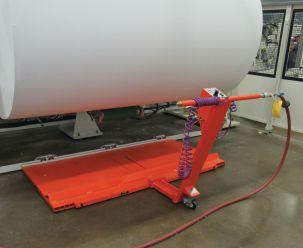
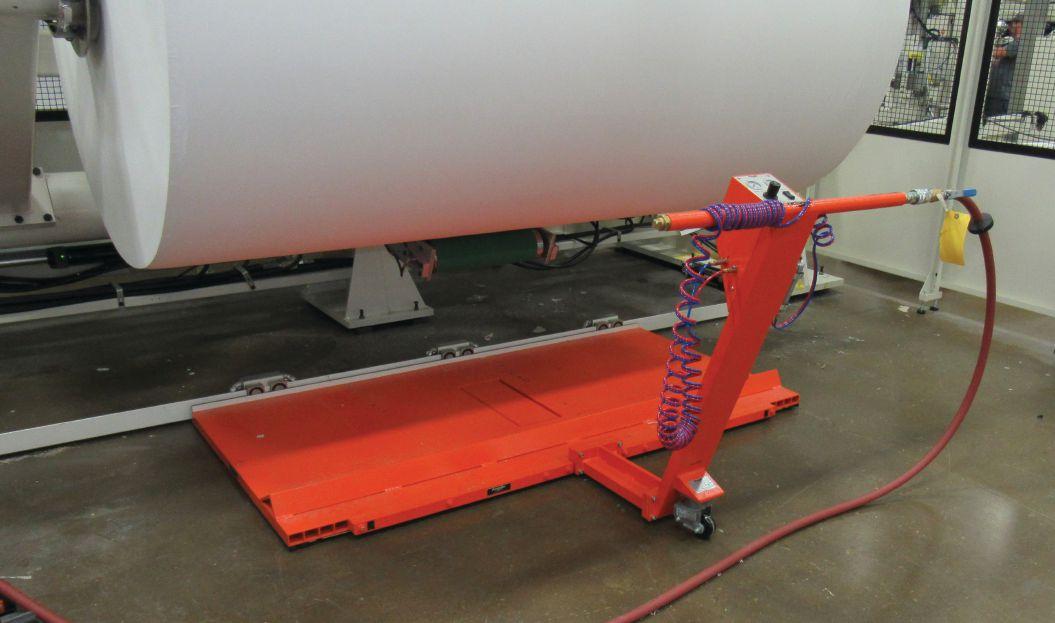
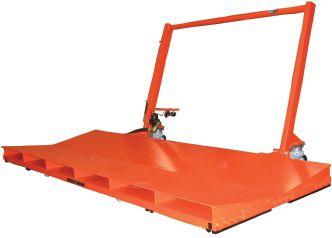
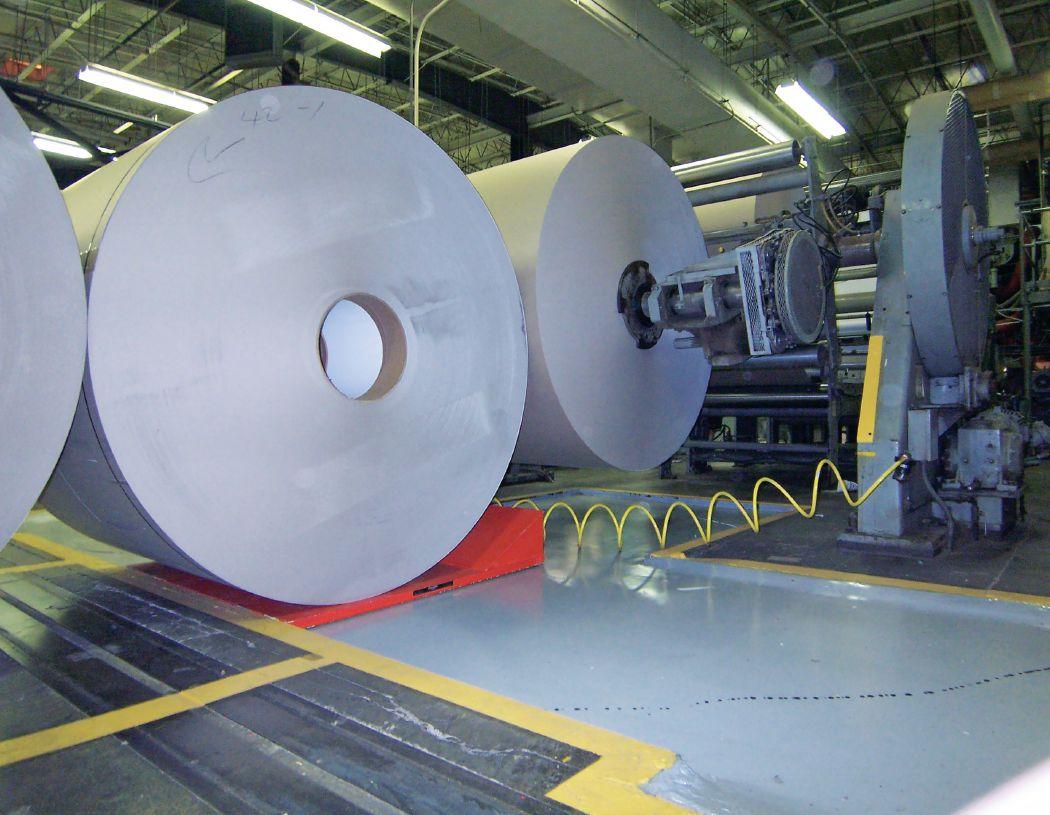
Enter air bearing machinery, specifically an air caster rigging system capable of transporting mega rolls of paper products simply by floating them from point of origin to the intended destination, be it splitter, spindle or saw. First, operators load massive rolls onto a pallet. Underneath, standard factory-available compressed air then creates a cushion that lifts the entire load. As the load floats on this thin film of air, its movement is controlled by an operator with no risk of impact damage, vibration or friction of any type.
Manipulating the roll
In general, air bearing-based equipment functions similar to a forklift pallet, with the exception of its legs, which are shaped in a 45-degree angle to slide under the paper roll. When operators turn on the compressed air, the air casters lift the pallet and engage the bottovm edge of the roll. At that point, the casters can move any size roll via nearly frictionless movement, making it possible for a single operator to manoeuvre in all directions in an unrestricted manner for precise positioning of the roll at its final location.
In some cases, facilities might install a small pit of a depth less than four centimetres (1.5 inches) in the floor underneath the paper loading area. An air-rigging pallet will then sit in that pit, flush with the floor around it. That enables the facility to place rolls in front of the paper machines, rolling them by hand onto the air pallet while a chock
underneath locks the rolls in place.
Facilities can choose from a wideranging selection of air bearing equipment to accommodate a variety of roll widths and complete different operational requirements. Smooth operations require facility- and product-friendly equipment. Air casters do not create pits or scrapes in the floor surface. However, it’s not just the facility floor that is protected by the equipment – so are the loads.
Taking care of tissue
Sometimes special steps may be needed to protect the load at the point of interface between the load-moving equipment and the roll. For example, tissue paper rolls are very delicate, so users will
typically apply a protective layer, e.g. ultra-high molecular weight polyethylene, to act as a buffer between the loadmoving equipment and the paper roll.
Once the load has been moved to its destination, it’s time to put it to work. An air bearing system eases the process here. These paper rolls may be spinning at thousands of rotations per minute, so precision and balance are critical. Friction, vibration and even slight imbalances can place both machinery and people at risk. An air bearing system helps alleviate the risk because the load is literally floating and therefore frictionless. It allows operators to line the load up perfectly, so that the machine can then pick up the roll from the pallet and start to unwind it.
Reducing safety risk
Long before the emphasis on ergonomics, rolls were loaded by people, which meant ongoing serious safety concerns.
As the load floats on a thin film of air, its movement is controlled by an operator with no risk of damage.
Only certain workers – very strong ones – were able to manipulate the loads, and they were not always able to complete their task safely. In 2017, Canadian workers suffered more than 56,000 back injuries in the workplace, accounting for the most injuries of any body part and 22 per cent of the total work injuries that year, according to the Association of Workers’ Compensation Boards of Canada.
Air-based moving systems greatly reduce the risk of these types of injuries. All the torque is eliminated because the load moves in zero friction. Virtually any team member can move the load. Strength requirements are unnecessary
when a cushion of air is doing the work. Omni-directional movement requires only minimal force to move or turn up to a 5,443-kilogram (12,000-pound) load in any direction.
With an air rigging system, one person can smoothly transport, rotate and precisely position heavy paper without the use of a forklift or floor track system. For paper facilities, more reliable processing coupled with increased operator safety can result in production gains. PPC
Randy Manus is a senior application engineer at AeroGo, Inc.
Hôtel
Four
ADVANCEMENTS IN PAPER SCIENCE
The latest research on paper properties from the International Paper Physics Conference
By J. David McDonald
The International Paper Physics Conference was held in Indianapolis, Indiana on May 5-8 in conjunction with TAPPI’s PaperCon. There were 31 papers in nine sessions covering the following topics: mechanical response of fibres, paper and board, moisture transport in tissue and paper, paper chemistry, water removal, converting and formability and the role of fines and nanocellulose in paper.
The conference opened with a tribute to the late Derek Page, a founding member of the Paper Physics Committee and formidable presence at Paper Physics Conferences and Fundamental Research Symposia. Paper copies of the J-FOR issue honouring Dr. Page, who spent much of his career as a researcher at Paprican (now FPInnovations) in Montreal, were reprinted by PAPTAC for those in attendance. The issue includes reviews of Page’s seminal work on paper strength and fibre properties as well as the latest research that builds on his ideas.
Here are some highlights from current research shared at the Paper Physics Conference.
Tissue’s unique fluid flow
Hygiene products are a growing segment of the paper industry and appropriately, a growing amount of open research is being devoted to this sector. Absorption of water is a key characteristic for towel and tissue. In most cases, this should be as quick as possible. The mechanism seems obvious – water flows into the voids between the fibres. Where else would water go? Surprisingly, water flows along the fibres, not as a uniform front, but in a very chaotic manner.
Two papers described these flows in detail: “Measurement of the dynamics of fluid sorption of tissue papers,” by Konrad Olejnik of Lodz University of Technology, and “Mesoscale liquid absorption properties of towel papers,” by Steven Keller of Miami University. Both papers used image analysis to analyze the advancing liquid in towelling or tissue. The heterogeneity of the towel structure caused by creping, fibre alignment and z-direction uniformity all affect wetting behaviour. The resulting water absorption causes structural changes such as fibre deformation and loss of bonds.
A lengthy discussion followed about using the Lucas-Washburn equation to model water absorption. This equation was derived for a porous media consisting of parallel cylindrical tubes for which there is an exact analytical solu-
tion. Although absorption measurements often follow the square-root of time dependence expected from the L-W equation, clearly the fibre matrix has a more complex structure than cylindrical tubes. The real mechanism depends on the solid elements rather than the voids. A new approach is required, either based on thermodynamics to account for the change in entropy as the fibre surfaces are wetted or a non-linear approach to recognize the chaotic nature of the advancing liquid front.
Defining curl deformation
Dimensional stability of paper – in particular curl – is a key property in many paper products. This out-of-plane deformation of paper is caused by hygroexpansion and requires 3D models to identify key features. The challenge for 3D models is to
The opening keynote at TAPPI’s PaperCon 2019 conference, which was co-located with the 2019 International Paper Physics Conference.
have sufficient complexity to represent real effects but not exceed realistic computing times. In his paper, “The role of the fibre and bond in hygroexpansion and curl of paper,” Artem Kulachenko of KTH Royal Institute of Technology described a non-linear, finite-element model using beam elements for fibres and beam-tobeam contact for fibre bonds. The results confirmed that the transverse expansion of fibres when exposed to water is a key factor in producing curl. However, the effect of longitudinal expansion is also significant and can account for up to 40 per cent of the deformation.
Surface roughness on the fibre level
Some of the most elegant work in paper physics has been the application of statistical geometry for well-defined random networks to describe paper properties from the characteristics of individual fibres. Almost every paper property including pore size, density and network uniformity has been previously modeled in terms of fibre morphology. One of the remaining properties, surface roughness, was addressed by William Sampson from the University of Manchester in his paper “Fibre-level model of paper roughness.” He showed that the arithmetical average roughness (Ra) and the root-mean squared roughness (Rq) can be expressed as simple functions of paper porosity and fibre thickness.
A new standard for compression strength
Packaging is a large sector of the paper industry and some key aspects of paperboard were covered in this meeting. Compressive strength of corrugating medium is typically determined by the Concora Medium Test (CMT – ISO 7263), which is the compressive force at failure of a strip of flutes held in place by adhesive tape. This test has several shortcomings, which include dependence on the properties of the adhesive tape, handling and preparation by the operator, and the fact that the failure mechanism can vary between buckling or delamination. To overcome these problems, Heinz-Joachim Schaffrath of the Technical University of Darmstadt described a new test in his paper “Compressive strength of an in S-shape fixed sample.”
The test is derived from the short-
span compression test using jaws that are displaced in parallel planes such that the paper takes a S-shape before it compresses. In effect, this measurement is on one-half of a flute and eliminates the problems with adhesive tape and sample preparation. The S-value depends on stiffness and buckling behaviour of the board and correlates well with CMT and FCT measurements. The precision is lower than the CMT, probably because the CMT test measures several flutes simultaneously whereas the S-test only measures one. This method is about to become a German DIN standard and has been proposed as an international standard.
Boxboard creasing dynamics
In order to make a box, the material must be creased and folded. During this process, the board may crack, causing a defect that could lead to a failure of the box. An important endeavour is to develop tests that can measure the “right” properties of the boxboard and the forces exerted by creasing tools to anticipate folder-cracking problems and make corrections. Tuomas Turpeinen of VTT Technical Research Centre of Finland demonstrated that a picture is worth a thousand words by using high-speed CCD imaging to determine the local strain rates when a board is deformed in his paper “Deformation dynamics in creasing and folding of board.” The images confirmed earlier model predictions of local shear strains for double-coated boards. They were also able to distinguish two qualitatively different delamination modes. In one of the modes, which appeared when relatively thick board was forced into a narrow groove, there was an unexpected expansion in the thickness direction, which has not been predicted by existing models.
Another paper on boxboard creasing entitled “On characterizing creasing severity that affects reverse-side cracking” was presented by Joel Panek of WestRock. Criteria for onset of creasing can be determined by means of equations that account for the geometry of the creasing equipment and the mechanical properties of the board. This work derived an expression for crease draw, the deformation along the crease, which can be computed for much deeper draws than the previously developed expression. The severity of creasing can be characterized by crease draw and
crease shear angle. Draw length was correlated with reverse-side cracking after a 180-degree angle reverse fold of a creased sample. Plotting penetration depth versus nominal clearance (distance between the board and side wall of creasing groove) is a practical way to identify the critical creasing threshold.
Foam forming gains ground
The process of papermaking is also traditionally included in this conference. A new approach to papermaking called “foam forming” was described. In contrast to traditional papermaking where most of the machine is devoted to water removal by pressure and heat, foam forming offers the promise of making paper with significantly less water and higher solids entering the dryer section. In addition, it offers the ability to tailor paper properties.
In his paper “Unique compression behaviour of foam-formed sheets in wet pressing and calendering,” Jukka Ketoja of VTT Technical Research Centre of Finland showed that even after pressing and calendering, foam-formed paper grades are bulkier than conventionally made paper. Foam forming adds a gaussian component to the conventional lognormal pore size distribution that can be controlled with bubble size. This feature means paper porosity and bulk can be tuned to desired values.
Lastly, nanocellulose, a topic of great current research interest, was covered from the perspective of recycling. Nanocellulose has been shown to enhance the barrier and mechanical properties of paper products, but there have been questions about its recyclability. Warren Batchelor of Monash University answered this question in his paper “Effect of recycling on the properties of nanocellulose – barrier and mechanical properties.” The answer is that although there a slight degradation of nanocellulose’s properties, it can be recycled.
The discussion on these and other topics will continue at the Paper Physics Seminar in Jyväskylä, Finland (June 1-5, 2020). PPC
J. David McDonald is president of JDMcD Consulting Inc., an adjunct professor at McMaster University and a PAPTAC Fellow who has worked in the pulp and paper industry for over 40 years.
FOCUS ON PROCESS CONTROL
IoT
condition
monitoring device for data collection
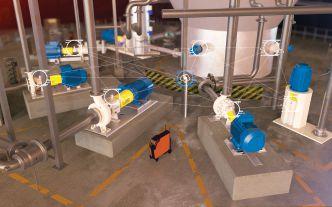
Sulzer has introduced a new wireless IoT condition monitoring called the Sulzer Sense solution, which includes wireless sensors that are attached to a pump, agitator, motor or any rotating equipment.
The sensors measure temperature and vibration and send the data to the cloud. This means that the operating status of the equipment can be remotely monitored 24 hours a day, seven days a week.
Sulzer Sense monitoring devices are battery powered and operate in a wireless mesh network.
The condition-monitoring feature identifies changes in condition parameters and indicates potential faults at an early stage. The new device will detect possible imbalance, misalignment, looseness and bearing wear. This supports predictive maintenance and can help to avoid sudden pump failure and eventual downtime.
The Sense data is sent to the cloud and can be monitored in Sulzer’s online service on a mobile, tablet, laptop, etc. anywhere and anytime. The customer can set an alert value and will automatically be alarmed if this value is exceeded. No manual measurement is required. sulzer.com
Quality assessment tool for recovered paper merQbiz, a solutions and analytics provider for buyers and sellers in the recov-
Shaking unit with digital controls
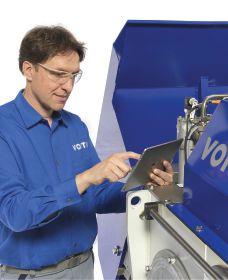
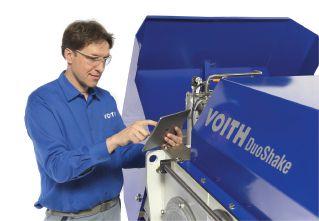
Voith has debuted the DuoShake DG (Digital Generation), an upgrade on the control and automation functions of the DuoShake shaking unit for optimum fibre orientation during sheet formation.
The company says the new features significantly improve process reliability and machine availability.
The system optimizes fibre orientation through high-frequency shaking of the breast roll, which results in excellent sheet formation of all paper grades and a low tensile strength ratio.
All relevant operating parameters can now be entered on site via a fixed operator panel or optional use of mobile devices such as tablets or smartphones. For transparency, a cockpit interface provides users with a real-time display of all main parameters, e.g. availability, stroke accuracy and drive frequency.
Important information – for example on hydrostatic pressure as well as air, oil and motor temperature – is presented as an easy-to-see traffic light system. A customizable notification system for warning messages allows for fast response times if needed.
DuoShake DG records actual operating times, with real-time data on maintenance intervals and service life of the most important machine components. If maintenance becomes necessary, the shutdown can be planned and scheduled to be as efficient as possible.
DuoShake DG also features a trend function for identifying and analyzing faults. In the event of faulty operation, an instantaneous evaluation allows for immediate intervention. With the help of a context analysis designed for a longer period of time, processes can also be systematically optimized.
As an optional service, an interface can be used to provide a connection between DuoShake DG and the Voith digital platform OnCumulus – a scalable, flexible and expandable data hub for the Industrial Internet of Things (IIoT). voith.com
ered paper (RCP) industry, has introduced BaleVision, a quality assessment tool to provide companies actionable insights into their RCP quality.
Conventional measurement methodologies – such as ocular inspections and bale breaking – can be labour-intensive and highly subjective. Furthermore, any data collected may be unreliable and provides very little information for both business decision-making and process optimization.
The quality assessment tool analyzes the bale from the inside out, collecting detailed data on fibre content, moisture, plastic, ash and other bale contaminants. merQbiz has partnered with the manufacturer PTS to be the exclusive distributor of the device in North America.
BaleVision significantly increases the volume of bales that can be inspected and delivers data analytics that provide information transparency via dashboards. Combining the customer’s data with market and seasonal data, the system supplies trend analyses for quality, operations, procurement and finance.
merQbiz will tailor the solution to each customer’s requirements, and it can be integrated with existing enterprise technology platforms or function as a stand-alone system.
To complement BaleVision, merQbiz is launching a new analytics platform that will house the dashboards and related services such as claims management and an RCP export procurement solution. merqbiz.com
Domtar wins $28.8M to improve fibre tech for plastic alternatives
The federal government has announced a $28.8 million investment in Domtar Inc. to support its $57.5-million project to implement new equipment and processes at its pulp and specialty paper mill in Espanola, Ontario.
Domtar’s project will involve commercializing its patented new “Stealth Fiber Technology,” which will produce stronger paper and allow for the production of innovative products that could replace singleuse plastics when it comes to, for example, medical packaging and food wrap.
According to Domtar’s website, Stealth Fiber Technology liberates the fibrils from the wood fibre, improving fibre-to-fibre bonding ability, which in turn increases tensile and bond strength. Converters can then run lighter basis weights with the same or better sheet performance or yield. Since the fibres conform more easily, they improve sheet formation, and the paper’s ultimate barrier or holdout properties increase.
The government says the innovations will increase Domtar’s competitiveness in the global market, reduce waste from production, and reduce greenhouse gas emissions by 48,000 tonnes annually at the Espanola Mill – the equivalent of removing 16,000 cars from roads.
As part of the investment, Domtar will maintain 430 jobs. The company will invest more in research and development and will develop a diversity and gender equity plan to engage with women and Indigenous communities. Additionally, upgrades to the Espanola Mill will improve air quality and reduce noise pollution for the people living in and around Espanola. domtar.com
AstenJohnson, Heimbach call off merger
The AstenJohnson and Heimbach paper machine clothing businesses have cancelled their pending merger.
“We regret to announce that the proposed transaction to merge the Heimbach and AstenJohnson PMC (paper machine clothing) businesses has been called off,” says AstenJohnson CEO Kevin Frank. “While both companies have a high level of respect for each other and saw great potential to merge, the obstacles simply proved too great to overcome at
BASF to sell its paper pigments business to DIC BASF is selling its global pigments business used in pulp and paper production, printing and packaging to fine chemical company DIC for €1.15 billion.
The transaction is expected to close in the fourth quarter of 2020. BASF, a German chemicals company, generated pigments business sales of approximately €1 billion in 2018.
“We have achieved our goal to find an owner who considers pigments a core strategic business,” says Dr. Markus Kamieth, member of BASF SE’s board of executive directors, responsible for the industrial solutions segment. “DIC pursues ambitious growth plans and has announced to further develop the business in the coming years. We are convinced that the pigments business will be able to unfold its full potential within DIC.”
DIC is a Japanese company listed at the Tokyo Stock Exchange with about 20,000 employees globally. The company, headquartered in Tokyo, was founded in 1908, is active in more than 60 countries and generated sales of approximately 800 billion yen in 2018. DIC is active in packaging and graphics, functional products, and colour and display.
“We have outlined a clear growth path for DIC with the target to increase our sales to 1 trillion yen, i.e. approximately €8 billion, by 2025,” says Kaoru Ino, president and chief executive officer of DIC. “In this context, BASF’s pigments portfolio is an important strategic addition in meeting our goals more expeditiously.” basf.com
this time.”
AstenJohnson, a global manufacturer of pulp and paper machine clothing, advanced and filtration fabrics, filaments, and nonwoven fabrics for filtration, automotive, cured-in-place piping and composites, says it continues to focus on its PMC and nonwovens business while searching for future strategic growth opportunities.
AstenJohnson employs approximately 2,100 people. Its corporate headquarters is in Charleston, South Carolina.
Heimbach is a manufacturer of clothing for the paper industry with 1,402 employees, headquartered in Germany with locations around Europe and Asia. astenjohnson.com
Andritz acquires chemical pulping company Kempulp
Andritz, the industrial technology group, has acquired the Swedish company Kempulp, a specialist provider of process technologies for the chemical pulping industry.
Kempulp designs and markets technologies used in chemical pulping, including pulp washing, oxygen delignification and bleaching technologies.
The acquisition includes all of Kempulp’s intellectual property rights, technical expertise, tools, systems and inventory.
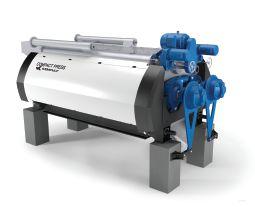
Kempulp has a number of well-known products and technologies in its portfolio, including the Compact Press, DualOx, DUFLOpump and DynaDisc.
“Kempulp’s products and process technologies will continue to be a strong player on the market, providing solutions that complement the Andritz technologies and equipment for specific chemical pulping processes – both for new plants and upgrades to existing installations,” says Joachim Schönbeck, executive board member of Andritz AG. “As a result, Kempulp’s process technologies and products will enable Andritz to offer optimized solutions to the benefit of its customers.”
The Kempulp organization will be fully integrated into the Andritz Pulp & Paper organization. Kempulp is located in Karlstad, Sweden and has approximately 30 employees.
Andrtiz Pulp & Paper is a global supplier of complete plants, systems, equipment and comprehensive services for the production and processing of all types of pulp, paper, board and tissue. andritz.com
Cognibox to deliver more training courses in maintenance, safety
Vector Solutions, an e-learning provider for industry, is expanding into Canada via a partnership with Cognibox, a contractor compliance platform used in the pulp and paper industry.
Cognibox clients in Canada and the United States will now have access to a portion of Vector’s Convergence Training catalogue, with more than 300 courses in health and safety and industrial maintenance to choose from.
“Cognibox’s understanding of complex digital contractor management needs and its well-developed e-learning platform make it a natural partner for our expansion into Canada,” says Jeff Gordon, CEO of Vector Solutions. “Cutting-edge technology like the 3D modelling used in Vector’s Convergence Training courses brings topics to life, allowing organizations to improve safety, reduce risk and optimize performance. Whether it’s providing visibility to hidden or microscopic machine parts or creating scenarios that could otherwise risk safety, these courses convey complex information and processes.”
The partnership will facilitate the certification of contractors’ employees with a click, directly in Cognibox. cognibox.com
Forest2Market, Fisher International acquired by Battery Ventures
Battery Ventures, a global technology-focused investment firm, has acquired both Fisher International, Inc., a firm supporting the pulp and paper industry with business intelligence and strategy consulting services, and Forest2Market, Inc. a firm supplying data, analytics, supply chain expertise and strategic consulting services to the global forest products industry.
Forest2Market and Fisher International will continue to operate individually as the transition is implemented.
Battery’s Jordan Welu and Dave Tabors will join Peter J. Stewart, founder and CEO of Forest2Market, on the board of directors.
Stewart will also become CEO of the combined organizations. Rod Fisher, the founder and president of Fisher International, will step away from the day-to-day management of the company and serve as a senior advisor to both the new CEO and Fisher International customers. fisheri.com
Kruger Packaging develops rightweighting course
Kruger Packaging has developed a free online course in rightweighting for members of The Independent Packaging Association (AICC) and The Packaging School.
“The Rightweighting course covers the topic from the history of paper in our industry to the performance of the package to case studies in the U.S. and Canada,” says Mike D’Angelo, AICC vice-president. “It is a worthy addition to the AICC Packaging School course catalogue, and we truly appreciate Kruger for donating so much time, energy and material to make this course a reality.”
Kruger Packaging L.P. specializes in the manufacture of containerboard products and corrugated packaging solutions
Emergency-stop pull-wire switches for web processing
ZF Electronic Systems is now carrying STEUTE’s broad ZS Series of emergency-stop pull wire switches in North America.
Typical applications include conveying systems, textile machinery and web processing operations.
Each switch is equipped with snap-action, NC positive-break contacts, providing a safe, reliable means for initiating an e-stop along the length of the installed pull-wire.
Switching function occurs if wire is pulled or breaks.
The switches are available for unidirectional and bidirectional operation up to 130 m, with IP ratings up to IP67.
Units feature an integral pushbutton reset, as well as rugged, die-cast aluminum, powder-coated housings. They are ISO EN 13850 and cCSAus-compliant. switches-sensors.zf.com
made from 100 per cent recycled fibre. The Montreal-based company employs 800 people and has four production sites, namely the Trois-Rivières Mill and the Place Turcot Containerboard and Specialties Mill in Montreal, and the corrugated packaging plants in LaSalle, Que., and Brampton, Ont.
“Our corrugated box plants in Montreal and Toronto are over 50 years old and they always aim to use the best substrate to maximize box performance using the least amount of fibres,” says Serge Desgagnes, vice-president, containerboard sales at Kruger Packaging. “They developed the concept of rightweighting, which is based on BCT instead of ECT, and discovered that it is the best way to satisfy customers without overpackaging.”
kruger.com
Colorado company partners with mill to turn hemp pulp into paper
A Michigan paper mill has converted hemp stalks grown and pulped in Colorado into rolls of hemp paper, marking an industry milestone for integrated industrial hemp processor PureHemp Technology.
PureHemp developed a new biorefining technology and operates its own mini hemp refinery that rapidly converts stalks into pulp and other usable co-products. PureHemp has been producing hemp pulp during the past three years and delivering the pulp to Boulder-based Bloomin’ Paper, where the pulp has been converted into handmade paper used for business cards, packaging and posterboard.
PureHemp is the first company in the world to produce cannabidiol (CBD) tinctures from hemp flowers and then use hemp stalks to make boxes for its CBD-based products. On July 19, 480 pounds of 100 per cent virgin hemp pulp shipped from Ft. Lupton, Colorado was used to make six thicknesses
of paper. As a conservative first step, the hemp was blended with 40 per cent virgin softwood pulp and 40 per cent virgin hardwood pulp, creating a 20 per cent hemp paper blend. The six different weights of paper will be used to make a variety of boxes and card stock.
“During the past three years, we’ve been making hemp paper from stalks on a small-scale,” says Ed Lehrburger, PureHemp’s CEO. “Plans are now underway to produce a 33 per cent blend of hemp paper followed by a 50 per cent blend later in 2019.”
Lehrburger says that a pound of hemp pulp can replace a pound of tree pulp – and hemp is fully grown about 120 days after planting.
“We made about two miles-by-22 inches of paper this month. We’re now officially open for business, providing hemp-based paper stock and packaging. The paper came out looking and feeling gorgeous. Now’s the time to establish the hemp processing infrastructure to utilize millions of pounds of hemp stalks grown in Colorado and around the world,” he says.
PureHemp’s advanced pulping technology is referred to as continuous countercurrent reactor (CCR) technology. Using a self-funded CCR pilot plant, PureHemp has demonstrated its biorefining innovation that rapidly extracts the fundamental constituents of the stalks – the cellulose-rich pulp, lignin and xylose-rich sugars – to make different bio-based products for many industries. In addition to producing pulp for papermak-
ing, the lignin co-product can be made into bioplastics and chemicals and the xylose sugars into xylitol. purehemptech.com
Voith develops shoe-blade gap former for packaging papers
Voith expands its portfolio in the forming section with the DuoFormer CBh – a shoeblade gap former solution for the fabrication of packaging papers at high production rates. Due to its compact design, the DuoFormer CBh is ideal for rebuilds where space is at a premium. Its dewatering elements are designed to achieve the best possible combination of dewatering capacity and paper strength with minimum effort.
Using a full ceramic slotted impingement shoe cover design and a high vacuum suction box (HiVac) instead of a suction couch roll, the DuoFormer CBh ensures high dry content.
The solution can be applied in a wide operation window, allowing for sustainable and reliable papermaking. It operates up to a maximum speed of 1,600 m/min. The drainage section’s capacity is exactly designed for desired production rates. voith.com
GIVING BACK
The latest community outreach initiatives from the pulp and paper industry
The Canadian forest products sector is passionate and devoted – not just to the industry itself, but also to its local communities. Here we share the initiatives of pulp and paper companies working to make positive social, environmental and economic impacts across the country.
Let us help you share your successes. Tag @PulpPaperCanada or use #PPCGivingBack on Facebook or Twitter, or send an email to the editor at kurquhart@annexbusinessmedia.com. We’d love to hear from you!
Resolute Forest Products
Kruger Products Twitter
Alberta-Pacific Forest Industries recently donated $25,000 to the Kikino Community Activities Society to build five greenhouses to grow fresh produce for the local community.
Meadow Lake Mechanical Pulp sponsored the annual Tony Cote Summer Games, a sporting event hosted in July 2019 by the Flying Dust First Nation in Saskatchewan.
Resolute employees and contractors participated in a spring cleanup in the area surrounding the mill in Thunder Bay, Ontario, collecting over 60 bags of garbage.
Employees at the Kruger Products head office in Mississauga, Ontario packed 75 backpacks with school supplies and tissue products for Big Brothers Big Sisters of Halton.
See the invisible
The world does not need more food packaging. It needs better, renewable ones.
Chemistry plays a key role in increasing sustainability and reducing food waste by enabling safe and functional fiber-based packaging.
But the features that make a food package more sustainable, more durable or smarter are almost always invisible. It’s time to pay attention to the unseen.