Adding to your everyday
At Kemira, we use our chemistry to improve your everyday. It means making your packaging lighter and stronger, your paper towels softer, and your print colors brighter. By adding our expertise, your everyday business runs smoother and more efficiently. Our job is to add value while adding peace of mind.
We call it adding to your everyday.

PULP PAPER &

Winning a trade battle and preparing for war
I’mpleased to introduce myself as the new editor of Pulp & Paper Canada. I’m joining the magazine at what seems like a pivotal time, with plant optimization – whether via openings (Kruger, p. 6), closures (Cascades, p. 6) or new technology (p. 25) – at the forefront of an industry that is adapting to fit a changing consumer landscape.
And it’s all against the backdrop of an ongoing trade dispute between Canada and the U.S. At the time of this writing, the re-negotiation of NAFTA is more or less in a deadlock. The 20 per cent tariffs that U.S. President Donald Trump imposed on Canadian softwood lumber last November are still in effect. Those duties were among the earliest in what has become a long line of retaliatory tariffs that Canada and our neighbours to the south have hurled at each other, including the U.S.’s anti-dumping and countervailing duties on supercalendared (glossy) paper and uncoated groundwood (newsprint) paper.

Kristina Urquhart Editor
The Canadian pulp and paper industry certainly applauded when both of those paper tariffs were overturned earlier this summer, after pressure from American print outlets that were feeling the sting of rising costs as a result of the duties – in essence, tariffs ostensibly enacted to promote Made-in-USA products actually caused other American businesses suffer. Similarly, according to the U.S.-based National Association of Home Builders, the higher price of lumber is driving up the cost of builds by USD $9,000 and making housing even more unaffordable for Americans.
Canada lodged a complaint about the lumber issue to the World Trade Organization (WTO) in March of this year, where it still sits in front of a dispute settlement panel. The WTO did rule in our favour on the paper tariffs, but what will happen with the lumber, as well as with steel and aluminum, remains to be seen. As the saying goes: we may have won a battle, but we haven’t yet won the war.
We’ll keep covering the effects of the trade dispute in our upcoming issues, and bring you the latest news on pulpandpapercanada.com. And we want to get you involved, too. What other stories would you like to read? What are you and your company doing to respond to all of these changes in the pulp and paper industry, or to advance them? Please add me to your mailing lists so I don’t miss any of your updates.
I’m also looking forward to visiting a few mills and attending industry events, starting with an in-depth pulp, paper and bio-products course with FPInnovations in October 2018. I’ll be sure to report back in the next issue with what I learned. In the meantime, please send a note to kurquhart@annex businessmedia.com to introduce yourself and to tell me what your company has been up to – and, for those participating, don’t forget to send me your year-end results for our 2018 Safest Mill contest, the results of which will be announced in our Spring 2019 issue. PPC
Editor
KRISTINA URQUHART 416-510-5143 kurquhart@annexbusinessmedia.com
National Accounts Manager
LAURA GOODWIN 289-928-8543 lgoodwin@annexbusinessmedia.com
EDITORIAL/SALES OFFICES
Group Publisher/Director of Content and Engagement
SCOTT JAMIESON 519-429-5180
sjamieson@annexbusinessmedia.com
President & CEO
MIKE FREDERICKS
111 Gordon Baker Rd., Suite 400, Toronto, ON M2H 3R1 Phone: 416-442-5600
PRODUCTION
Media Designer
EMILY SUN
Circulation Manager
BEATA OLECHNOWICZ bolechnowicz@annexbusinessmedia.com
Print in Canada
ISSN 0316-4004 (Print)
ISSN 1923-3515 (Digital)
Account Coordinator
STEPHANIE DEFIELDS sdefields@annexbusinessmedia.com
PUBLICATION MAIL AGREEMENT #40065710
CIRCULATION
email: mchana@annexbusinessmedia.com
Tel: 416-510-5109
Fax: 416-510-6875 (main) 416-442-2191
Mail: 111 Gordon Baker Rd., Suite 400, Toronto, ON M2H 3R1
SUBSCRIPTION RATES
Canada $56.50 - 1 year; $90.50 - 2 year
Outside of Canada - $113.00 per year
Occasionally, Pulp and Paper Canada will mail information on behalf of industry related groups whose products and services we believe may be of interest to you. If you prefer not to receive this information, please contact our circulation department in any of the four ways listed above.
Annex Privacy Office privacy@annexbusinessmedia.com Tel: 800-668-2374
The editors have made every reasonable effort to provide accurate and authoritative information but they assume no liability for the accuracy or completeness of the text or its fitness for any particular purpose. All rights reserved. The contents of this publication may not be reproduced in part or in full without the publisher’s written permission © Annex Publishing & Printing Inc.
Sustaining member, Pulp and Paper Technical Association of Canada; Member, Alliance for Audited Media.


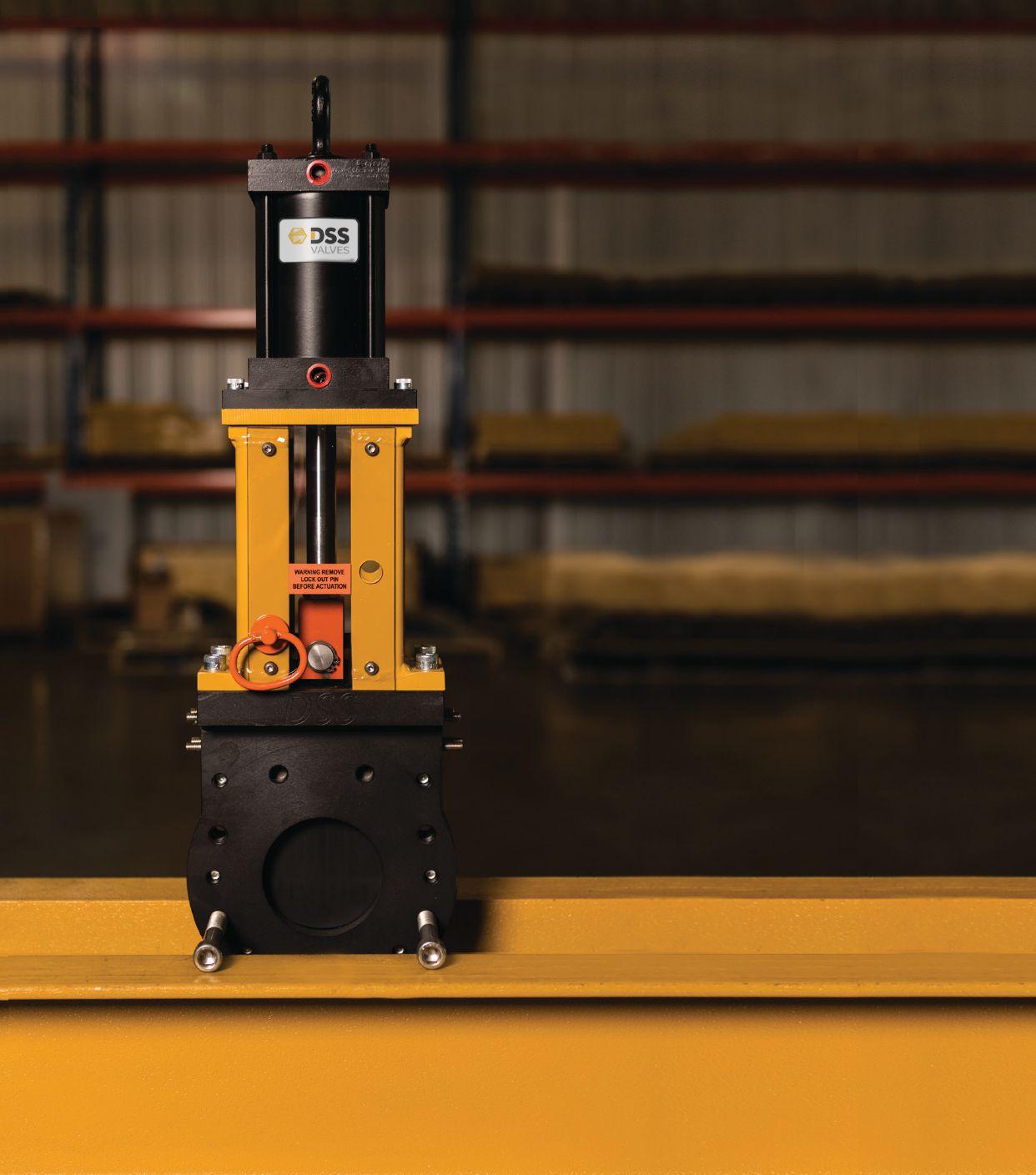
Proudly distributed by CGIS, these premier Severe Service Knife Gate Valves are ideal for the harshest applications found in Oil and Gas, Pulp and Paper, Chemical and Mining industries.
Contact sales@cgis.ca or visit www.cgis.ca to learn more.
Kruger invests $575M in new Quebec tissue plant
KP Tissue and Kruger Products have released a plan for a capital investment of $575 million to construct a new stateof-the-art tissue plant in the Brompton area of Sherbrooke, Quebec.
The project will establish more than 180 new jobs in the area and will feature Canada’s largest and most modern through-air-dry (TAD) machine. TAD uses less fibre to achieve a softer and plusher product. While Kruger Products has been operating a TAD machine at its Memphis, Tennessee plant since 2013, its TAD 2 machine will be the first of its kind in Quebec.
expected to begin in early 2019, and the plant is slated to commence production in early 2021. The project will generate over $250 million in direct expenses in Quebec and one million person-hours for the construction of the new plant.
The project is supported by the Quebec provincial government through Investissement Québec, which has agreed to invest $105 million by way of a convertible debenture. The remaining financing for the project is currently being finalized.
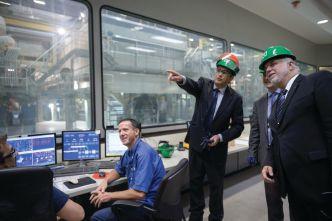
Kruger’s new plant project will create more than 180 jobs and generate over $250 million in direct expenses in Quebec.
Éric Massicotte, courtesy Kruger, Inc.
The new plant will be situated near an existing facility of the Kruger Group and will produce at maturity approximately 70,000 metric tonnes per annum of bathroom tissue and paper towels for the Cashmere, SpongeTowels and Purex brands.
Construction of the project is
Cascades to shutter Barrie and Peterborough sheet plants
Cascades has announced its intention to close two sheet plants in Barrie (Jellco) and Peterborough, Ontario by December 31, 2018.
The company says the plan is part of its ongoing efforts to reorganize and optimize its corrugated packaging platform. Production will be deployed to other Cascades facilities in the province.
“This decision will enable us to better align our existing production capacity and to improve service for our valued customers,” says Charles Malo, president and chief operating officer of Cascades Containerboard Packaging.
The closures will affect approximately 65 employees, who may be transferred to other business units where possible.
“This project is on an unprecedented scale for Kruger Products and will give us the additional capacity to continue to grow our business into the future,” says Dino Bianco, CEO of Kruger Products. “The Brompton site will also be part of a critical manufacturing hub in the region, working with our other locations in Crabtree, Gatineau and Sherbrooke.”
Cascades acquires Virginia newsprint mill
Cascades has acquired White Birch Paper’s Bear Island manufacturing facility in Virginia, for a cash consideration of US$34.2 million. Bear Island’s current newsprint paper machine will be reconfigured by 2021 to produce recycled lightweight linerboard and medium for the North American market. Prior to the conversion, White Birch will temporarily operate the site as a newsprint mill.
Charles Malo, COO of Cascades Containerboard Packaging, says the Bear Island site is in an ideal location for raw material sourcing and logistics. “[There are] several advantages including access to an experienced workforce with expertise in paper making. Moreover, the site provides a platform for continued growth through downstream converting capacity.”
The new machine is expected to have an annual production capacity of 400,000 U.S. tons. The conversion would require an estimated investment of between US$275 and US$300 million. Plans are to be finalized and approved by the board of directors in 2019.
Resolute to sell West Virginia pulp mill to ND Paper
Resolute Forest Products is selling its Fairmont, West Virginia recycled bleached kraft pulp mill to ND Paper, a subsidiary of Nine Dragons Paper Limited.
The deal is for US$55 million plus certain elements of working capital, payable in cash.
Nine Dragons is mostly involved in the production and sale of a variety of packaging paperboard products, including linerboard, high-performance corrugating medium, coated duplex board, as well as recycled printing and writing paper and specialty paper. In addition to nine paper mills in Asia, Nine Dragons also operates two U.S.-based facilities in Wisconsin and Maine through ND Paper.
ND Paper has agreed to offer employment to Fairmont mill employees, effective upon closing of the transaction, which is expected within the next two months.
“We are proud of the progress we have made together with the mill employees over the years to improve the Fairmont operation,” says Yves Laflamme, president and chief executive officer of Resolute. “We are pleased that the local community and broader region of the state will continue to benefit from the economic and social impact of the mill’s operation.”
“Proceeds from this asset sale will enable us to further increase liquidity, and continue to improve our balance sheet and financial flexibility,” adds Laflamme.
Photo:
FPAC calls
for
government support on forestry initiatives
The Forest Products Association of Canada (FPAC) has shared with the federal government its recommendations to enhance Canadian competitiveness, accelerate innovation and ensure future forests remain healthy in its 2019 pre-budget submission to the House of Commons Standing Committee on Finance.
To support jobs in rural and northern Canada, and to ensure a vibrant Canadian forest products sector, FPAC is calling on the federal government to support key investments in research and development and the commercialization of new technologies, continue with its aggressive trade diversification agenda and consider reforms to secure a healthy forest for future generations.
FPAC is calling on the federal government to:
• Build on the momentum of successful innovation programs and initiatives like those through FPInnovations, and the Investment in Forest Industry Transformation (IFIT) Fund.
• Continue its aggressive promotion of the use of Canadian wood, pulp and paper, and emerging bioproducts through long-term programs such as Expanded Market Opportunities (EMO) Fund.
• Support the further engagement of Indigenous partners in forestry operations through programs such as the Indigenous Forestry Initiative.
• Establish an industry-government working group on regulatory competitiveness to address cumulative regulatory burdens facing Canada’s forest sector in the face of increasing competition from markets like Brazil, Russia, Scandinavia and the United States.
• Alleviate infrastructure bottlenecks and address increasingly frequent transportation service interruptions through the implementation of the Transportation Modernization Act.
• Address the overall tax burden, including investment depreciation treatments.
• Ensure during the renegotiation of NAFTA that enhanced trade facilitation and trade remedies are key objectives.
• Ratify the Comprehensive and Progressive Trans-Pacific Partnership trade agreement, ensuring further access to the Asian market for the industry.
• Guarantee greater market access for the Canadian forest products, through the broad network of Canada’s trade offices and promoting “Brand Canada” around the world.
• In the face of growing fires, pests and other disturbances, support a detailed vision and action plan that will help secure healthy forests for future generations.
Currently, while enjoying strong world markets in most product areas, the competitiveness of Canada’s forest products sector against its global competitors is being challenged because of trade disputes, lack of reliable transportation infrastructure and policy and regulatory uncertainty related to carbon and forest operations. Maintaining the industry’s strong Canadian brand in the world is essential in order to maximize sector contributions to economic growth for Canadian workers, businesses and communities.
Nova Scotia to help finance wastewater treatment plant
The province of Nova Scotia is footing part of the bill for Northern Pulp’s new effluent treatment facility at Boat Harbour.
Paper Excellence’s Northern Pulp mill has been at odds with the community of Picton, N.S. over the mill’s request to pump wastewater into the Northumberland Strait instead of the lagoons that it has been using at the facility’s current location near Pictou Landing First Nation reserve.
A grant of more than $6 million was issued to Northern Pulp from the Department of Transportation and Infrastructure Renewal. The
money is earmarked for designing the new Pictou County wastewater facility, which will undergo environmental assessment by another department of the government.
Despite the local fishermen’s association and environmental groups objecting that both financing and assessing the facility is a conflict of interest, the Department of Transportation and Infrastructure Renewal maintains that the grant is an extension of the government’s ongoing discussions with Northern Pulp over who is responsible for paying for the new facility at Boat Harbour, the area’s effluentaffected former estuaryturned-freshwater lake.
Canadian Kraft Paper and Unifor Local 1403 sign deal
A new three-year collective agreement has been reached between Unifor Local 1403 and Canadian Kraft Paper (CKP).
Local 1403 represents 200 workers at the CKP mill and has been at the bargaining table for three months. The new agreement improves wages and includes other changes such as improved bereavement leave for 12-hour shift workers, a 10 per cent training premium, improved paramedical benefits, and an increased safety equipment allowance. Workers studying to get trades accreditation will also receive more paid time off to write exams.
Forest Practices Board has new chairman
The Forest Practices Board of British Columbia has appointed a new chairman. Kevin Kriese began his three-year term Aug. 7.
“The board serves a critical role in overseeing forest and range practices in British Columbia,” says Doug Donaldson, minister of forests, lands, natural resource operations and rural development. “Kevin’s experience will be a significant asset, as he brings his extensive contacts and relationships with industry, northern communities and First Nations with him.”
Kriese has degrees in natural resource management and forestry. He briefly worked for the forest industry and as a consultant, but the majority of his career has been with the provincial government. He has a long history of working on resource management issues in the North with the Integrated Land Management Bureau and the ministries of sustainable resource management and forests.
The Forest Practices Board is an independent agency that reports on compliance with forest legislation.
LaSalle and Place Turcot plants set for modernization Kruger has allocated $20 million to its LaSalle and Place Turcot facilities in Quebec for modernization projects set to be completed later this year.
The agreement comes nearly two years after the mill was nearly closed down by former owner Tolko. American Industrial Acquisition Corporation purchased the mill and saved it from closure, but wages had been cut 10 per cent as part of that deal.
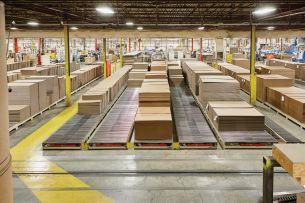
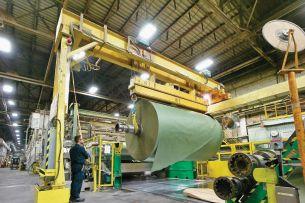
The LaSalle packaging plant recently dedicated a new converting line after a $10-million investment. The integrated, high-speed production line, which prints, folds and glues corrugated packaging, produces 24,000 boxes per hour, or 400 per minute, making it one of the fastest currently on the market and responsible for more than one-third of the plant’s production capacity. The European-made, fully automated machine operates 24/7 and also features a twin-head strapping machine.
In addition, Kruger is modernizing the corrugator at LaSalle–a project of almost $3 million–and replacing a palletizer to increase the plant’s efficiency.
First Nations, Kraft Paper form historic company
An historic 50-50 partnership between Nekoté (a corporation representing seven First Nations) and Canadian Kraft Paper (CKP) has been forged in Manitoba.
A new company called Nisokapawino Forestry Management Corporation has been formed under the new partnership to co-manage 8.7 million hectares of boreal forest, sharing responsibilities for forest management, maintaining sustainable forestry practices, protecting environmental values, and bolstering strong, local economies.
Nisokapawino is Cree for “two standing together,” and evokes a meaning that is deeper than partnership. Nisokapawino will operate within a tenure designated as Forest Management Licence 2 (FML-2). It is the largest forest tenure in North America, which overlaps with the traditional territories of nine First Nations, providing homes and livelihoods for
At Place Turcot Containerboard Mill, which has been manufacturing 100 per cent recycled containerboard since 1961, $9 million in modernization projects are underway. The improvements will see a 15 per cent reduction in GHC emissions and a reduction in water use.
The projects are part of Kruger’s continued conversion and maintenance program to increase productivity and reduce its carbon footprint. In 2016-17, Kruger invested another $250 million to convert a newsprint machine in Trois-Rivières for the production of 100 per cent recycled lightweight and highstrength linerboard.

thousands of people. It stores vast amounts of carbon and freshwater, and has abundant rivers, wildlife, fish and birds.
“I’m excited about the partnership,” says Chief Clarence Easter of Chemawawin Cree Nation. “CKP is the first company to recognize the value of working with First Nations. We wanted this equal partnership because they are operating in our backyard, and we make a living from our backyard – we have fishermen, trappers, berry pickers, medicine pickers. We have wildlife, like moose, that are important to us. By bringing traditional knowledge of our people, we can improve the process.”
Tony Zandos, senior advis-
er to CKP, says, “We are very proud and happy to be part of this historic occasion. At the time of the sale of the mill, CKP and First Nations leadership identified a need for joint participation in forest management decision-making. It was agreed a partnership would be formed that could meet the objectives of Nekoté, with respect to meaningful participation in forest management and enhanced opportunities for access to employment and business development, and meet the objectives of CKP with respect to access to reliable, low-cost fibre.”
Since November 2016, CKP and Nekoté have been working to create partner-
ship agreements that improve communication with rights holders and stakeholders on the FML, enhance understanding and opportunities around forest management decision-making, and create better access to employment and business opportunities.
Grand Chief Dumas, of the Assembly of Manitoba Chiefs, says, “I’m very optimistic about this opportunity. It has the potential to create a template for how economic and environmental issues will move in the future, in a responsible and effective way, with proper participation of First Nations interests, to the benefit of everyone.”
Nisokapawino develop forest management plans, silviculture and renewal plans and activities, and maintain the CSA Z-809 Sustainable Forest Management and ISO 14001 Environmental Management System certifications. This includes commitments to community involvement and feedback as forest management plans are developed.
Kruger’s LaSalle (L) and Place Turcot (R) plants.
Photos: Pierre Charbonneau, courtesy Kruger, Inc.
L-R: Grand Chief Arlen Dumas (Assembly of Manitoba Chiefs), Grand Chief Harold Turner (Nekoté), CKP Senior VP Tony Zandos, and Nisokapawino General Manager Andrew Forward.
Irvingmillsettlesdumpingcase
J.D. Irving Ltd. and the Crown have come to a resolution in a case that had J.D. Irving charged with 15 offences under the federal Fisheries Act due to alleged pollution from its pulp mill in Saint John, New Brunswick.
Few details are available about the agreement, which was reached during a pre-trial conference. The Crown has indicated there will be a reduc-
Fundingopensnew opportunitiesforB.C.forestry students
Those pursuing a career in the forestry industry will soon be able to access new education and training options following a $1-million investment in new and updated programs at six public post-secondary institutions in British Columbia.
The funding includes $328,000 to enhance the existing coastal forest resource certificate at North Island College with an in-field training and mentorship model, and to develop an applied forest resource diploma with industry leadership, mentorship and on-the-job training.
North Island College is consulting with local employers to develop the curriculum, and to ensure the certificate and the twoyear diploma position students and industry for long-term success. As planning continues, the program’s tuition, start date and curriculum details will be confirmed.
Kyle Porteous, a 2018 graduate of the coastal forest resources certificate program who now works as a timber cruiser assistant at Campbell River–based Ranger Forest Services, says, “There’s so much to forestry that people don’t realize. From the production side to road building, there are a lot of different careers within the industry. It gives me an opportunity to work outdoors, and see parts of the province you can only get to by helicopter or boat.”
Forestry in British Columbia is a major economic driver, accounting for one-third of all exports with a value of $14 billion, and almost 60,000 direct jobs. Forestry sector employment is changing due to manufacturing activity consolidating into fewer, but larger operations. However, value-added sectors such as plywood, cabinets, laminated timber and prefabricated housing are expected to thrive.
tion in the number of charges. Each of the charges has a minimum fine of $200,000 for a large corporation with a previous conviction (J.D. Irving Ltd. was last convicted on pollution charges in 2007, for dumping black and green liquor into the river).
Early last year, J.D. Irving Ltd. pleaded not guilty to all charges alleging that its Irving Pulp and Paper mill at Reversing Falls had dumped a “deleterious”
substance into the Saint John River for two years starting in June 2014. The Fisheries Act defines “deleterious” as something that could be toxic to fish, their habitats or the humans that may eat the fish.
At the time, an Irving spokesperson said the charges came from selfreported fish mortality rates in a lab, and not incidents that resulted in actual environmental damage.
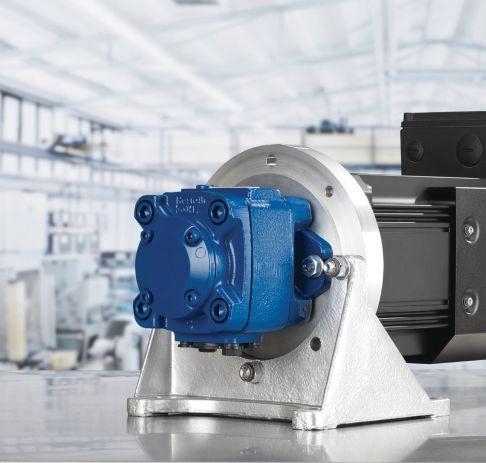
Sytronix: Intelligent Power on Demand

hydraulics with intelligent control for pulp and paper mills.
Rexroth Variable-Speed Pump Drives combine the reliability of power ful hydraulics with the efficiency of electronics that provides energy savings of up to 80%, along with such benefits as lower noise emission (as much as 20dB).
By combining the advantages of hydraulics with the control intelligence of electrical drives, motor speeds can be continuously adjusted to match the machine’s requirements, providing you the right amount of power only when you need it and at quieter operating levels.
Contact us for Industry 4.0 requirements at info@boschrexroth.ca
www.boschrexroth.ca/pulpandpaper
Order your free Hydraulics Performance Kit: www.boschrexroth.ca/hydraulicskit
For expert advice call 1-855-REXROTH or email us at info@boschrexroth.ca
Chips to bale: Optimizing the fibreline
By FPInnovations
For 25 years, Theodore Radiotis, lead scientist for fibre production and smart manufacturing, has been working with FPInnovations’ Chemical Pulping Group. Throughout that time, he has been a part of the organization’s close collaboration with the pulp and paper industry, cultivating innovative advantages for the sector.
Today, the group is uniquely armed with a full scope of technologies and tools blended with a wealth of knowledge amassed over the years, plus benchmarking data of over 20 mills for comparison and recommendations. Solutions that optimize fibreline processes and reduce production costs enhance mills’ competitiveness in both traditional and growth market segments.
A fibreline audit analyzes the entire pulp manufacturing process, from wood chips to bale, and is often the first step in identifying challenges that may be impacting productivity, costs or quality. “The goal is to ensure mills’ pulping processes are running at peak efficiency, thereby maximizing their operating capability and product quality,” says Radiotis. Formulating the optimal “pulpability” plan requires the team take on a holistic approach. Ideal wood and chip quality, fast rate of delignification, optimal use of additives, highest yield of unbleached pulp from wood, and best possible strength and bleachability are all factored into the equation.
For one customer, the audit revealed aggressive cooking conditions were causing a two per cent yield loss on wood and three times higher tensile strength loss than normal. It also uncovered the mill was pulping a high amount of over-thick chips, which increased screen rejects from 0.1 per cent to one per cent. The mill achieved significant efficiency improvement by working with FPInnovations to address these issues.
Projects often require the wisdom
of other teams within FPInnovations. This synergistic approach ensures customers receive thorough evaluations and comprehensive solutions. In this specific case, for example, bleaching experts demonstrated that the higher than usual sodium hydroxide charge in O2 delignification resulted in a 10 per cent strength loss compared to the typical loss of five per cent. Fibreline audits often extend to the bleaching process. Bleach plants that are not fully optimized can lead to excessive costs and sometimes compromise pulp quality. Radiotis explains, “Our in-house expertise covering the gamut of pulp processing, combined with our pilot plants in Pointe-Claire, enable us to pinpoint what is really happening in a mill’s process and offer practical recommendations.”
The Quebec-based pilot and laboratory facilities are fully equipped to simulate the chemistry of any pulping operations in order to determine causes of the issues at hand and to develop “sweet spot” operating conditions or a new pulp grade. With the information
generated from these lab optimization studies, FPInnovations can support the mill with a full-scale implementation.
Targeted technologies
FPInnovations’ technologies reinforce fibreline audits and expert consultation to assist mills in achieving their ideal outcomes.
• Near-Neutral Brightening (NNB): This patented near-neutral chlorine dioxide brightening technology effectively decreases bleaching costs by maximizing ClO 2 bleaching efficiency. Benefits: Reduces ClO 2 demand by up to five kg/MT, eliminates antichlor, and maximizes brightness and brightness stability.
• Paprilox™: Polysulphide is added into kraft pulping to improve hemicellulose retention and thus pulp yield. A patented technique for generating polysulphide in-situ, Paprilox can be retrofitted into a mill’s existing caustizing system to use lime mud as a catalyst. Benefits: Typical yield increases of 1.5 per cent on wood, a five- to 24-month payback period, and a five per cent to 17 per cent increase in tensile strength relative to conventional kraft pulp.
Fibreline operation improvements and cost reductions can have an annual financial impact ranging from approximately $0.5 million to over $1 million. From solving material or process problems to conducting comprehensive pulpability studies, FPInnovations continues to build upon several decades of research and industry experience in chemical pulping. With its commitment to long-term relationships with industry members, FPInnovations’ evolution of its knowledge base and technologies will persist, empowering pulp and paper mills in a globally competitive environment. PPC
FPInnovations is a not-for-profit organization that supports the Canadian forest sector’s global competitiveness. fpinnovations.ca


CLOSE THE LOOP TO REDUCE COSTS
Insights from PaperWeek Canada reveal money-saving opportunities in raw materials and dryer felts
By Martin Fairbank, Ph.D.
Efficient use of raw materials in papermaking means literally keeping them from going down the drain, and thus any recovery and reuse of fibre, chemicals or hot water is an easy way to reduce production costs. This can be a technical challenge, however. Two presentations during the Papermaking sessions at PaperWeek Canada in Montreal this past February discussed how to help close the loop and recover these raw materials. A third presentation brought news about an innovation in the dryer section.
Maximizing re-use of white water
A presentation given by David McGowan of Kadant dealt with best practices for fibre recovery and reuse of paper mill white water. White water solids from
the forming section are easily recycled by using the water to dilute pulp coming to the machine, but white water from other parts of the mill are more difficult to recycle. White water from the press section can contain felt hairs that are undesirable in the paper. And dilute white water can be used in showers, but any residual solids can plug or erode shower nozzles. Many mills sewer white water that is difficult to recycle, and make up this volume with fresh water. This results in some loss of solids, but the cost of heating that cold fresh water by 30 to 40 C is likely higher. The installation of equipment to further remove solids from, or “polish,” this white water to make it reusable in applications such as showers can often result in a good payback.
A disk saveall is the primary equipment for recovering fibre and recycling white water, and the clear leg of this saveall is hot water that can be re-used for showers if sufficient care is taken to ensure residual solids are removed. This should take place in two stages: first a strainer designed to remove several tonnes/day of fibre that can handle typical inlet solids content of 1,000-10,000 ppm, then a polishing step that can handle a maximum solids content of 200 ppm. The polishing step is designed to protect shower nozzles from plugging or eroding, and will likely only remove several kilograms/day of fibre. A good rule of thumb for nozzle protection is to divide the nozzle size by six to choose the pore size of the filter medium.
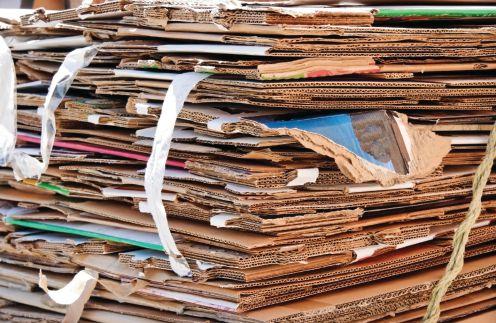
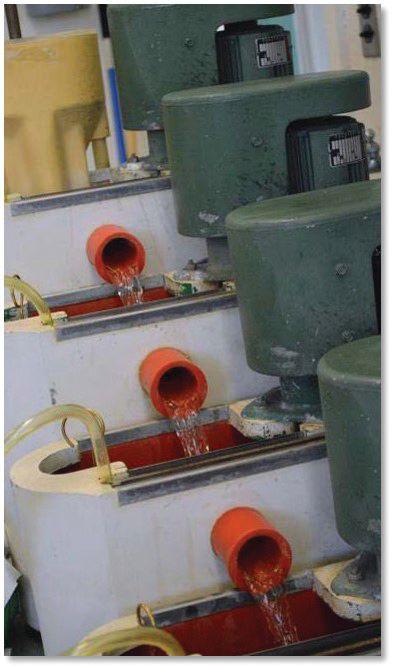
Kemira’s KemRevive concept employs a two-step process to recycle the starch from old corrugated containers (pictured) in the process.
Photo: Getty
Types of polishing filter
But before choosing capital equipment to do this, the existing equipment should be surveyed to make sure it is being operated according to best practices. A recent survey of 21 showers on four pieces of equipment at a tissue mill reported that optimizing the flow rate of those showers would result in 2,200 litres per minute of water savings. It is also important to replace worn nozzles, especially in highpressure showers, since this results in excessive water use.
The energy cost of using fresh water and sewering white water can contribute up to 75 per cent of the payback to such a project (see table below).
Re-using starch
A presentation by Mark Nelson of Kemira (based on a paper by Jaakko Ekkman) highlighted a raw material recovery opportunity that should be of great interest to manufacturers of recycled paperboard. Old corrugated containers (OCC) can contain a lot of starch, which is not only used in manufacturing the layers of linerboard and the corrugating medium between them, but in the glue that holds them together. Kemira has developed a patented technology that has the potential to recover some of this starch, providing not only a financial benefit, but also opportunities for improvements in strength and chemical oxygen demand.
The normal fate of the starch coming in with OCC is to end up as dissolved organic material in the effluent treatment plant. Dissolved starch can also lead to issues in the process when amylase enzymes present in the white water degrade it to sugars, which are a readily available carbon source for bacterial processes. In turn, this can produce bad odours from volatile fatty acid production, pH depression and increased dissolved calcium levels, as well
as potential runnability problems due to reduced efficiency of chemical additives. The traditional approach is to use high levels of biocides to prevent this bacterial action, and/or more use of fresh water and less-contaminated OCC.
Kemira’s patented concept, called KemRevive, employs a two-step process to recycle the starch in the process. First, it protects starch from degradation by using a specific inhibitor for amylase enzymes, called FennoSpec 1200. Secondly, a polymeric component improves retention of the protected starch on the machine. Normal levels of biocides are used at the same time.
In one case study, a European recycled linerboard mill used the KemRevive system, which resulted in a decrease in fresh starch addition from 30 kg/t to 14 kg/t, with no reduction in strength and an energy savings of 6 kWh/t from less stock refining. A second mill used the KemRevive system to enable speeding up the machine by five per cent.
This new technology is an innovative and promising way to make recycled board products more economical while adopting a more sustainable approach at the same time. Instead of allowing all that recycled starch to become food for bacteria, it can be re-used, lowering the amount of corn that has to be grown to produce that starch and reducing the number of deliveries of starch and the carbon footprint associated with those deliveries.
Safer, faster replacement of dryer felts
While the first two topics in this article describe how to close the loop around a paper machine, this last topic involves the physical closure of another loop: the dryer felt that loops around the dryers. It highlights an important innovation for papermaking that offers improvement
in productivity as well as safety. Blake Farmer of AstenJohnson introduced his company’s new laser-bonded dryer felts at the conference.
On many machines, dryer felts are only changed about once a year, and often the replacement process is unscheduled and unplanned. Because it is such a rare event, it may be the first time for many employees involved with a dryer felt change. Operating with an inexperienced crew in the hot and humid environment of the dryer section raises safety concerns.
Traditional dryer felts have woven seams, which are thicker than the felts themselves and can result in marks on the paper. This can be a problem in certain grades such as TAD tissue.
AstenJohnson has developed a laserbonded dryer felt, with a zipper-like seam bonded by a laser onto the two ends of the felt. The heat created by the laser beam at the interface creates a molten weld seam that fuses the felt and the seam together. Once installed, the two ends of the seam are connected by inserting a machine-width “pin” through the seam.
This innovation not only results in seams with no caliper difference and less likelihood of wear than a woven seam, but it can save time, since the pin can be pushed through the seam across the machine in as little as three minutes, likely involving less people than a traditional woven seam.
Furthermore, the felts are designed to be reversible, i.e. no sheet side and wire side, which means one less thing to check for during installation. These felts have been available for less than two years, and so far there are about 40 mills around the world using them. PPC
Martin Fairbank has worked in the pulp and paper industry for over 30 years and is currently a consultant and technical writer. Annual Cost of Water (380
MONITORING MOISTURE
Near-infrared moisture meters combine optimal quality and efficiency
By P&PC Staff
Measuring and controlling moisture content can impact product quality, production throughput and processing efficiency in the pulp and paper industry, not to mention the purchase price of wood chips, pulp, converted paper products and shipping costs.
Because paper is made from pulp wood fibres that are boiled, bleached, strained, flattened, dried into continuous webs, and then converted into various paper products, measuring and controlling moisture content is critical every step of the way. A pulp or paper product’s quality, drying efficiency and weight-based transactions can be adversely affected by improper moisture content.
Although traditional laboratory and online-based moisture measurement techniques are useful in the right settings, they have lacked the simplicity and flexibility required for frequent spot checks, which are key to analyzing a paper product’s eventual physical properties.
One common test is loss on drying, which measures the total material weight change after drying. However, such tests typically require a sample to be prepared and brought back to the lab. The test takes at least 15 minutes to several hours to perform.
The other common test is a Karl Fischer test. This procedure calls for chemical reagents to be added to the sample to separate the water from the remaining product, and is normally used on liquid samples. The water removed is compared with the initial mass or volume. Samples are generally small, making the assumption that a large batch is homogenous.
As a result, secondary test methods
have typically been used to deliver faster results. This type of test uses an indirect method and a single conversion to achieve accurate results. Secondary measurement techniques are routinely accepted as equal to the gold-standard methods.
Industry innovators have developed a simplified approach that allows even less-trained personnel to take portable, instant moisture reading spot checks of pulp and paper industry inputs, in-process conditions, or finished products as needed. This can be used for measuring wood chips and incoming fibre before the “value-add” of the mill begins. It can include checking pulp sheets before pulp mill processing, analyzing the web for wet streaks and uneven drying before or after dryer cans, inspecting incoming roll stock before conversion, and at end-product quality checks.
The approach involves moisture meters that use near-infrared (NIR) light for a highly accurate, non-contact, secondary measurement method that can deliver immediate, laboratory-quality moisture readings.
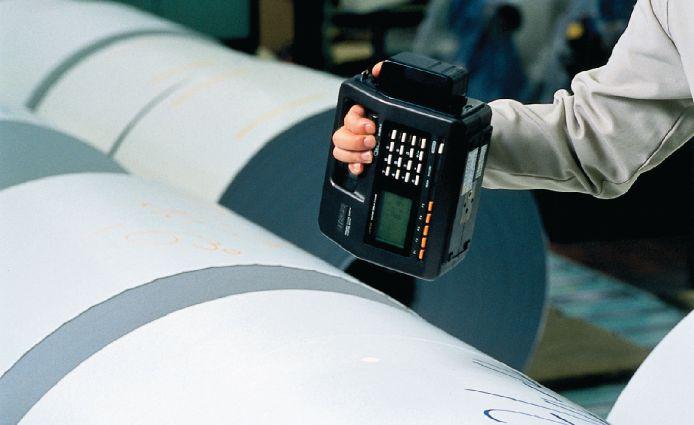
Unlike complex laboratory equipment, portable NIR equipment is designed for ease of use. For example, with Kett’s KJT130 handheld portable instant moisture meter, the user simply points the instrument at the product and the moisture content is instantly shown on a digital display, with results accurate to .01 per cent in a 0 to 100 per cent measurement range.
Such continuous monitoring can help to eliminate costly batch waste and provide superior data to optimize the process. Instant desktop options are available as well.
Not only can measuring moisture content in batch or continuous drying processes can help to optimize the process and significantly reduce energy costs, but also since moisture content contributes to the weight of pulp and paper, properly drying a product to acceptable limits before it is transported can greatly reduce shipping costs. PPC

Kett’s KJT130 moisture meter is a secondary measurement method that uses near-infrared light to deliver accurate, instantaneous readings.
Photo: Kett US
Total Chemistry Management
Kemira TCM (Total Chemistry Management) is a system that enables pulp and paper makers to improve operational efficiency and save costs through the optimized use of chemicals. With this strong partnership you get a full range of chemicals from a single supplier and benefit from the bestin-class application know-how and technical service.
In addition, we provide you with direct access to our smart process management technologies and the latest innovations from Kemira R&D.
Let’s work together to build value into paper.
tcm.kemira.com
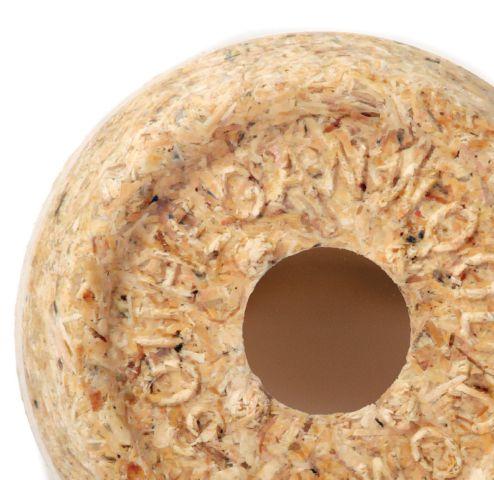


A crushed roll of paper can cost manufacturers and their customers countless hours, dollars, and headaches. But by simply inserting core plugs into each roll, paper makers can reduce damage and loss claims for just pennies per roll. As a family-owned New England company that has been producing core plugs for over 50 years, Souhegan guarantees a high-quality, steady inventory of the products you need, whenever you need them.
We offer two different types of high-density, molded wood core plugs engineered specifically for the paper industry:
CENTER HOLE PLUG
With an easy-out design preferred by many end-use customers, an impressive crush strength, and a competitive price, our re-engineered Center Hole plugs are an industry favorite for all grades of paper.
• 3" Center Hole plugs have a crush strength of 2,300 lbs in a .668" walled paper tube.
• 4" Center Hole plugs have a crush strength of 5,000 lbs in a .25" walled paper tube.
CORSAVER™ PLUG
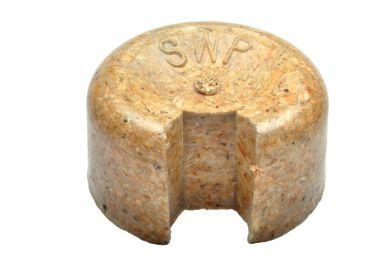
Designed for fine coated papers, the name says it all –this little gem can withstand three times more pressure than most other center hole plugs on the market. In independent testing, our CorSaver plugs withstood a 10,000 lb crush in a .668” walled paper tube.

For more information on standard plug sizes and custom options call us at (603) 654-2311 or visit us online at www.souheganwood.com
CORSAVER PLUG
3" CENTER HOLE PLUG
COMPETITIVE FORESTS
Tenure and governance should fall to the communities and companies dependent on Canada’s woodlands
By Tony Rotherham and Ken Armson
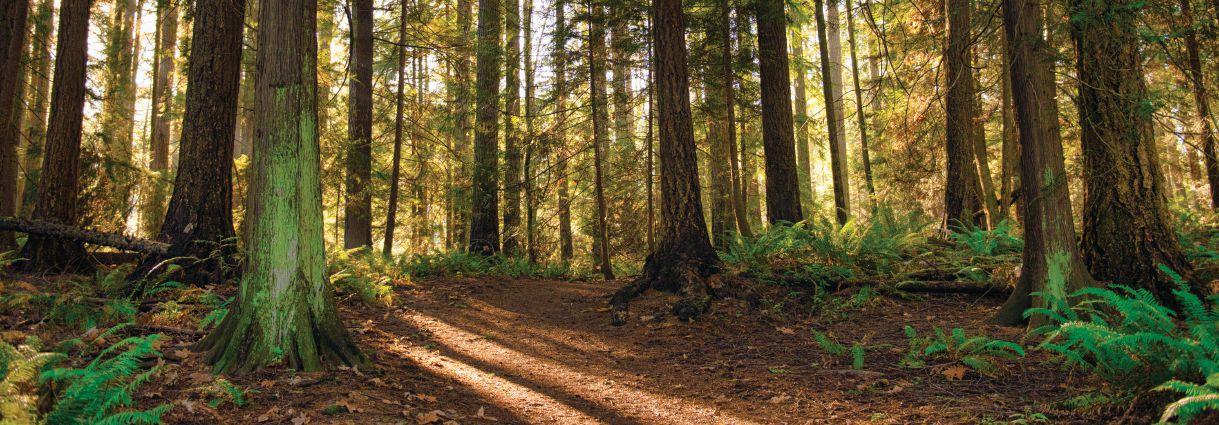
Canada has 397 million hectares (ha) of forested land. Approximately 190 million (48 per cent) is considered to be suitable for long-term sustainable management for the production of timber, while 165 million ha (87 per cent) of that forest is publicly owned and managed under the authority of the provincial governments. Another 20 million ha (10 per cent) are private woodlots owned by some 450,000 rural families across Canada, with the average size 40 ha. The balance, five million ha (three per cent), is in large blocks of private forestland owned by a mix of private investors, forest products companies and pension funds.
The allowable annual cut (AAC) is approximately 230 million m3 (165 million m3 of conifer and 65 million m3 of hardwood). This article, for the most part, excludes B.C. (The structure and supply chain of the industry in B.C. has been
different, due largely to tree size.)
From the beginning, the Canadian forest products industry has been driven by export markets. The industry has been through several significant structural changes in products and the supply chain since those early days. The pulp and paper industry used roundwood almost exclusively until 1960, when the use of sawmill chips started to replace the traditional use of four- and eight-foot logs (Figure 1).
But in the provinces from Alberta eastward to Newfoundland and Labrador, it was not until 1985 that most of the wood harvested was delivered as sawlogs to sawmills instead of as pulpwood to the pulp and paper mills.
This transformation from the exclusive use of roundwood by pulp and paper mills to increasing use of sawmill residues (Figure 1) brought benefits to the pulp and paper industry and the sale of chips brought a new revenue stream to the sawmills and enabled the growth of the lumber industry. The increasing use of sawmill residues by the pulp and paper
industry resulted in a significant improvement in the use of harvested logs. Beehive burners disappeared.
Between 2000 and the present there has been a change in the demand for forest products in the global marketplace. The demand for paper products – particularly newsprint – has declined, and demand for lumber has increased.
Fifty-eight of Canada’s 141 pulp and paper mills have closed since 2000. Companies vacated many large forest management licences previously managed to provide wood for those mills. New forest products industries have been sought to undertake management of these lands and to support the economies of the forest-dependent resource communities. Two positive factors are:
• a new and growing market for woodbased bio-products including wood pellets for energy generation, primarily to replace coal and oil, and
• the manufacture of timber panels and engineered wood beams such as crosslaminated timber (CLT), laminated
Photo: Getty
veneer lumber (LVL) and a variety of wood-based panels.
The significance of these changes is the increasing dominance of the solid wood sector.
All sectors of our forest products industry declined during the recent recession (2006–2011). Specific high-impact factors were: the collapse of the American housing industry and the explosion of internet communications. The harvest levels fell from over 200 million m3 in 2005 to 116 million m3 in 2009.
Tree size is largely irrelevant to the pulp and paper industry. Logs large and small go into the chipper. But the size and quality of logs is important for manufacturing lumber and wood-based panels. Tree size is also the single most influential factor in determining harvest costs and the production of lumber. The vast majority of logs are now delivered to sawmills. We should start to direct or forest management and silviculture to produce large-diameter sawlogs – not small-diameter pulpwood.
Silvicultural practices that control
stand density to promote diameter growth and log quality are needed to grow timber for the solid wood industry. However, the time required to benefit from the results of silvicultural treatments to improve tree size and quality is longer than the term of the tenure contract for most provincial licences signed with forest companies. In both volume and area agreements, some companies can look back on many decades of management and operations on their licence area, but few can look ahead with confidence to the future 50 years of wood supply from the same area. There are two reasons for this: markets change/companies rise and fall; and governments change the terms of the agreements.
But the forest-dependent communities remain. Therefore – except for the postharvest regeneration of their cut-over forestlands – the licencees have had no incentive to invest in silvicultural treatments to improve tree size and quality.
It has long been recognized by foresters that on any large area of managed forest there will be areas that have a com-
COMBUSTIBLE DUST TESTING SERVICES
bination of productive soils, good topography and access. These are referred to as “prime sites” and should be the focus for silvicultural treatments to improve tree growth, size and quality. In Canada, there are two basic forms of tenure on provincial forestlands: volume agreements and area agreements (Figure 2).
Volume agreements: The provincial forest manager is responsible for the longterm forest management plan and allocation of areas for annual harvesting operations. Post-harvest regeneration may be the responsibility of the provincial manager or the company that harvested the timber. There is little to no incentive to promote growth or enhance tree quality.
Area agreements: These agreements are traditionally signed with a single forest products company. The company is responsible for the preparation of a longterm forest management plan, subject to approval by the province. The company is also responsible for all forest operations including post-harvest regeneration. While the forest management licence may be for at least 25 years and renewable,


there is little evidence that companies managing area agreements have seen any incentive for long-term investment in silvicultural treatments to improve tree growth and quality.
At a conference in Quebec City several years ago, Michel Vincent, economist with the Quebec Forest Industry Council, emphasized the difference between “profitable” and “competitive”:
Profitable is an accounting term. It reflects the short-term accounting difference between revenues and costs; it is easily measured.
Competitive is a term used by economists. It encompasses the long-term relationships between suppliers and customers and reflects the combination of raw materials, labour, international trade, capital and the ability to maintain modern productive mills; it is difficult to measure. Competitiveness results in long-term profitability.
It was agreed that a competitive forest is the foundation of a competitive industry. Resource-dependent communities also depend on the quality of the forest.
We believe that provincial forest management policy should focus on developing and maintaining our managed forests to provide a competitive forest to support a competitive industry and prosperous communities. What are the characteristics of a competitive forest that will provide a combination of long-term and renewable economic, social and environmental benefits?
1. A healthy, productive, resilient and biodiverse forest.
2. A focus on improving timber size and quality appropriate to the needs of the industry and the marketplace for its products into the future. Management needs to ensure the conservation and maintenance of wildlife and habitats, water quality, as well as other values such as landscape aesthetics and forest recreation.
3. A focus on the provision of long-term involvement and economic benefits to the forest-dependent communities, including First Nations.
There are several ways in which a competitive forest may be established and managed. Tenure and governance are key aspects of this. The form of tenure should be a secure, long-term area agreement signed with a forest licence holder rooted in the communities and
1: The form of raw materials used by the Canadian pulp and paper industry, 1965-2010.
Canada - Tenure Systems Volume Agreements vs Area Agreements (also showing area of Private Forest Land)
companies surrounded by and dependent on the forest they manage.
- Tenure Systems
The form of management responsibility will depend on the location of the forest, the types of communities and forest industries involved, and the nature of the forest itself – flexibility is required. Ideally, the forest management licence holder will be a company with a board of directors that includes representatives from local communities, First Nations, forest industry and other forest-based enterprises. In several provinces there is a move towards such arrangements. The objective is the provision of secure tenure to provide the incentive to support long-term planning, the identification of prime sites and investment in silvicultural treatments to promote the improvement of tree growth, size and quality.
There is increasing pressure from urban society and special interests to set
forestland aside in protected status and “protect” it from management and harvesting. In some provinces, a proposal to replace volume agreements (managed by a government agency) with area agreements (managed by a forest products company) has been criticised as the “privatization” of public forests. Perhaps if forest tenure agreements were signed with forest management organizations –that includes municipalities, First Nations communities as well as forest companies and other forest-based enterprises – the establishment of a new type of area agreement might be met with greater acceptance by the general public and support from forest-dependent communities. PPC
Tony Rotherham (ret’d) has worked on woodlands operations in Canada and abroad. Ken Armson (ret’d) has been involved with silvicultural practices related to regeneration.
Figure
Figure 2: Forest tenures. Volume and area agreements on provincial forest lands and areas of private forest lands. Source: Neave and Rotherham 2003.
Technical Solutions for Today and Beyond
Providing real-world results in the pulping, power/recovery, environmental, and equipment reliability areas of the mill:
Seven Conference Tracks:
• Corrosion & Materials Engineering
• Pulping & Bleaching
• Engineering, Power & Recovery, Recaust, & Lime Kiln
Thirteen Panel Discussions:
• Automation
• Chip Supply Issues
• Detrashing
• Environmental
• Evaporators
• Recycling
• Environmental
• Sustainability
• Nonwood
• Recycling for Tissue Production
• Refractory Installation
• Reliability
• Stainless Steel and Alloys
• Value-adds from TAPPI TIPs




• Material Handling ct Management





• Young Professionals






Featuring Keynote Speaker
John Carpenter • President Nippon Dynawave Packaging
SUSTAINABLE PACKAGING
With an improved yield advantage over solid bleached substrate and its use of recycled fibres, folding boxboard technology is on the rise
By Ian Lifshitz
Folding boxboard (FBB) technology is changing the global standard.
Although mostly prevalent in the European and Asian markets, this multi-layer paperboard product has been on the rise in North America, where solid bleached substrate (SBS) has traditionally dominated the North American market. However, demand for SBS continues to decrease. Now is the time for the pulp and paper industry to be mindful of the growing FBB market and to begin thinking about how they can best adapt to this technology to give their customers the end-results they desire.
FBB has an improved yield advantage, as one ton of FBB provides a range of 15 to 23 per cent more sheet than one ton of SBS. Reduced pulp demands for FBB manufacturing means fewer trees are needed for the same end usage as SBS packaging. In fact, Asia Pulp & Paper (APP) China research has found that every three metric tonnes of FBB saves one tree.
There are pros in how the material is manufactured, involving both multi-layer and pulp combination. FBB is cost-effective as the middle layers are lighter and less dense, leading to reduced weight and ultimately lower shipping costs throughout the supply chain. The material used is highly formable, enabling intricate structural designs and die-cutting. The cup converting process is enhanced by an improved wicking performance.
It also offers excellent heat-sealing abilities and the option to use water-based glue for food and horticulture containers. APP’s proprietary water-based heatsealing coating is designated with kit level
10, which is the highest grease resistance classification available for APP. It is also microwaveable at a heat setting of 200 degrees C for up to three minutes and complies with brominated flame retardant (BFR) 36/2 and compost ability with European standard EN 13432.
In addition, FBB technology provides a solution to global market demands for use of recycled goods. Recycled paper products are widely considered a gold standard for many companies, but for sanitary reasons, food, beverage and hygiene product packaging needs to be made from virgin fibres. For the first time, FBB makes it possible to use renewable fibres by using recyclable fibres sandwiched between layers of virgin fibres. The general appearance may not have changed, but part of the new container will now have sustainable properties.
With slight die-cutting and scoring die adjustments, printers will also be able to take advantage of FBB’s smoother, consistent density and tighter, higher stability. The product has a superior print surface and the rigidity of the boxboard leads to
less warping, and better score and folding properties. The options for printed graphics include flexographic and offset printing, which are excellent when using FDA-approved food-grade inks at no more than 50 per cent ink coverage to maintain its composability. This material can also be embossed.
FBB’s rise, both globally and in North America, has been driven by consumer demand for environmentally sustainable solutions. According to the APP Paper & Packaging Consumer Trends Survey published last year, the sustainability of paper-based packaging is now more important than it was five years ago to half its consumers.
By understanding the attributes of FBB and adjustments required compared to other products on the market, the pulp and paper industry can maximize the benefit of this increasingly popular paperboard. PPC
Ian Lifshitz is vice-president of sustainability and stakeholder relations for the Americas for Asia Pulp & Paper.
CANNABIS & MILL SAFETY
By WSPS
Cannabis is set to be legalized for recreational use as of October 17, 2018. For many employers still struggling with how to accommodate employees who have been prescribed cannabis for medicinal purposes, this will create new challenges and questions. How do you define impairment and fitness for work? What types of tasks are safety sensitive?
“If you’re an employer, it’s reasonable to be worried,” says Dan Demers, senior manager, strategic business development for CannAmm Occupational Testing Services. “There are a lot of unknowns and a lot at stake.”
Five things you need to know
1. Cannabis is much more potent than it was even a decade ago and there’s no consensus on a safe limit. This makes it hard to measure and compare, which means there is no consistent standard.
2. Cannabis and alcohol affect the body differently and require separate approaches.
3. What people do on their own time matters. Cannabis affects critical cognitive functions in various ways and these impacts may linger for a significant period after use.
4. It’s easy to create a policy on your own. The difficulty lies in creating a policy that can withstand a legal challenge – and without a strong policy, your company may be vulnerable.
5. The larger your workforce, the more likely that substance use will impact your workplace.
What to do
• Act sooner rather than later and implement a policy before recreational use becomes legal.

• Balance a strong position on safety with a full commitment to accommodating medical conditions.
• Draft a comprehensive, legally defensible policy that addresses medical cannabis and recreational cannabis use, as well as all other required content in a fitness-for-duty program.
Established through the efforts of WSPS in 2014, the CEO Health + Safety Leadership Network is a group of leaders who share a commitment to building sustainable businesses and communities in order to optimize organizational health and safety performance.
Here is a sampling of insights from the network’s recent panel discussion, captured in “Marijuana in the Workplace: Conversations About the Impact on Employers and Employees,” a white paper published by WSPS. You can download a free copy at ceohsnetwork. ca/resourcelink/whitepaper/marijuanain-the-workplace/.
What employers need to know
• Prior to legalization, cannabis is the most prevalently used illicit drug in Canada.
• Consuming recreational cannabis at work is and will remain illegal.
• Cannabis use, particularly THC products (the principal psychoactive constituent), can cause residual impairment for 24 to 48 hours.
How to move your organization forward
• Review highlights of the federal cannabis legislation and your province’s new workplace rules.
• Update your hazard assessments to include the potential for impairment.
• Create a policy and program on the use of any substance that can cause impairment. Write the policy in a way that leaves room for dialogue. Include definitions of key terms, such as “impairment” and “fitness to work.”
• Consider the entire organization’s needs, not just safety-sensitive positions.
• Consult with stakeholders and experts. As the pulp and paper industry continues to focus on critical priorities such as production, optimization and cost, new challenges such as the legalization of recreational cannabis provide an opportunity to create competitive advantages by revisiting the organization’s culture. Impairment, whether due to drugs (prescribed or illicit), alcohol or fatigue serves as a reminder to revisit or build appropriate policies.
How WSPS can help
• Download WSPS’s white paper, Marijuana in the Workplace: Conversations About the Impact on Employers and Employees. wsps.ca
• Host a one hour on-site information session - call 1-877-494-WSPS (9777) or email customercare@wsps.ca.
• Sign up for our e-course: Impairment and Cannabis in the Workplace. PPC
Photo: Getty
TEST & MEASUREMENT
Sensor for dewatering
Valmet has introduced IQ Dryness Measurement, a tool that extends the company’s quality control systems expertise into the paper and board machine forming section.
Using microwave technology, the IQ Dryness measures the water layer thickness on the web, which can be used to calculate the web dry content. As well as removing most of the water, the majority of paper properties are also developed in the forming section.
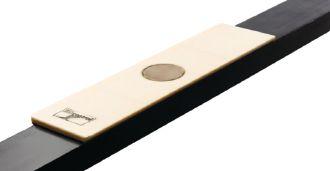
Unlike other measurement technologies, IQ Dryness is not sensitive to conductivity, which makes it suitable for use with all grades of paper and board. As well as energy savings with vacuum optimization, quicker startups, faster grade changes, fewer breaks and improved break recovery are all possible with continuous measurement of water.
Optimized dewatering not only improves bonding for multi-layer board machines but can also reduce the problems of blow-induced breaks caused by excess moisture in the middle layer entering the drying section. Additionally, the measurement facilitates the online monitoring fabric condition together with improved troubleshooting of pulsation, vibration and other quality-destroying wet end problems. The sensor’s small size enables measurement in places inaccessible earlier.
Thermal imager for temperature control
Fluke Process Instruments has introduced the ThermoView TV40 high-performance industrial thermal imager, which has been designed to withstand challenging environmental conditions.
Supported by intuitive analysis software, the new thermal imager provides a

fully integrated solution for temperature control, monitoring and data archiving to ensure process traceability as well as product quality.
The ThermoView consists of the rugged TV40 thermal imager and ThermoView software. It can be used in applications where multiple thermal imagers need to be displayed and operated alongside each other.
The standard TV40 is offered with an “on-board” lens, which means that there are no external moving parts. It operates in ambient temperatures up to 50 degrees C (122 degrees Fahrenheit) and is housed in an IP67 enclosure using industrial sealed connectors. The camera has a web interface, and basic setup can be performed via any PC with web browser. Remote motorized focus is used with sighting options based on IR-Fusion technology – simultaneous thermal and visible remote sighting for easy alignment and continuous monitoring of process conditions. The camera’s GigE interface allows for high-speed data transfer at 60 frames per second and a Power-overEthernet (PoE) option.
ThermoView software offers analysis and process monitoring tools and runs on Windows 7, 8 and 10 operating systems, with multiple language versions are available. Features include continuous or intermittent inspection of temperature events; independent emissivity for each area of interest and user-configurable setup of temperature conditions to trigger events or alarms; software designed to interface with process control equipment; temperature analysis tools for trending and product troubleshooting, as well as I/O alarming for over and under heating conditions; and capabilities for real-time isotherm, subtraction and histograms.
A light version of ThermoView software is available to help users become familiar with the features and benefits of the TV40 thermal imager. flukeprocessinstruments.com
Detecting interface between black liquor and soap
The Dynatrol Interface Level Detector Type CL-10DJI has the ability to detect the interface between black liquor and soap.

The level system is easily installed and has no moving parts.
The on/off signal from the Dynatrol Interface Level Detector operates a SPDT relay in the EC-501A control unit. The relay contacts are used to actuate alarms, indicator lights or process control equipment.
Meter monitors press felts
Feltest has introduced its AirSpeed/2 meter, which monitors the permeability of the press felts over the Uhle boxes in paper machines.
It’s important to measure felts to help plan machine downtime and control runnability problems.
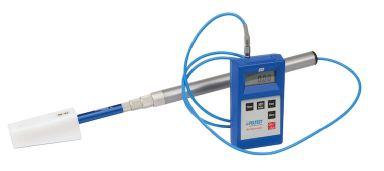
When applied on a running press felt, the AirSpeed/2 determines whether the felt is too open, too dense or operating properly. It also helps to determine whether the dosage of cleaning agents is appropriate. Its low-friction plastic head contains a high-precision vane that accurately measures the air speed through the felt. The rigid, telescopic rod is suitable for the paper mill environment, and the device records the minimum and maximum value per measurement.
Using VR to visualize new machines

Voith Paper’s Virtual Reality Solutions package offers paper manufacturers the ability to have a digital representation of a new machine within a matter of days. The system allows the machine to be “brought to life” before it is even built, either on a monitor or using virtual reality goggles. In the planning phase, this makes it easier to configure the machine and develop infrastructure (e.g. for stock preparation, buildings and access routes). Providing information to stakeholders is also a simpler process if the characteristics and functions of individual components and the entire machine can be represented realistically at any location in the world.
Virtual training programs allow personnel to acquire experience with the operation even though their paper machine may not yet be running. The training not only includes all work processes simulated step by step with the necessary tools, but it also focuses on occupational safety. For example, the replacement of a press sleeve or screen basket can be simulated and practised in a safe virtual environment before the task is due to be performed at the machine.
Infrared radiation quickens paper drying
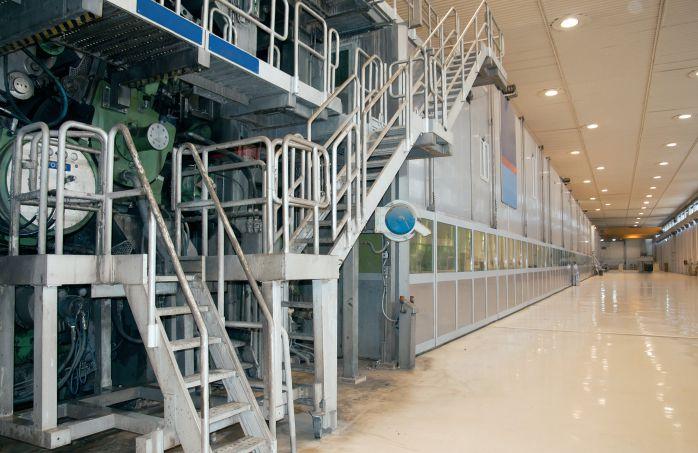
The drying process is responsible for much of the energy used in the paper machine, especially with premium tissue products such as toilet and kitchen towels. Dewatering is then performed by through air drying technique (TAD), which provides better absorption and softness. A new thesis shows that supplied energy via infrared radiation increases the drying rate and reduces the need for fossil fuels. Consequently, premium products could be produced with less environmental impact and at lower cost.
Titled “Through Air Drying - Thermographic Studies of Drying Rates, Drying Non-uniformity and Infrared Assisted Drying,” Karlstad University grad Aron Tysén’s thesis has investigated parameters related to drying rate and non-uniformity in TAD. The measurements show that the airflow through the samples varied with grammage and pulp type, where softwood pulp demonstrated much higher permeability compared to hardwood pulp. At low grammages, relevant to tis-
sue, no connection was found between the amount of airflow and the drying rate.
“Because the air is the process’ medium for energy transport, it means that we have encountered some form of bottleneck for how quickly we can dry with room-tempered air,” Tysén says. “I could then get past the bottleneck by adding energy via infrared radiation and thus achieving higher drying rates.”
According to Tysén, IR technology could also be used to characterize the

drying process with any paper-based product. Within the framework of his doctoral thesis, he developed a thermographic method that makes it possible to determine spatial local drying times with high resolution.
“With the right infrared camera, one should be able to see the drying behaviour of individual fibres in the sheet,” he says.
Since his thesis defense, Tysén has begun a role at the Research Institutes of Sweden as senior research associate, with continued focus on process variability.
Updated software improves cybersecurity
An updated version of Metso’s Expertune PlantTriage control loop monitoring software has been developed to further improve process plant operational efficiency, reduce cybersecurity risks and enhance profitability.
The new version provides a clearer view of PID (Proportional-Integral-Derivative) tuning benefits via a new performance evaluation dashboard and a performance summary panel. These features show the effect new tuning parameters will have on valve duty, relative response time, robustness, and performance.
Additionally, the PlantTriage Level Wizard is an advanced tool that tunes level controllers for surge tanks. The purpose of surge tanks is to maintain a constant flow to the next stage of the process. Proper tuning guarantees maximum use of surge, while preventing the tank from emptying or overflowing. The Level Wizard helps to achieve a proper balance.
The latest version also includes advances in cybersecurity. Users may now choose encryption on communications with PlantTriage servers. Other improvements make the browser interface more secure and robust, and less vulnerable to attack.
Paper surface functionality concept
PMP has developed the paper surface functionality (PSF) concept to support paper mills in improving the useful properties of paper or board. PMP’s PSF technology is aimed to generate cost savings and to increase profitablity in papermaking.
Combinations of various layers of barrier chemicals, coating colours and
starches can be applied in a purposeful and selected sequence on the paper or board surface and in controlled amounts. PSF technology uses a special spraying application technology and has an advanced process design for feeding and re-circulating the flow of material to the surface treatment units.
PMP is developing the concept in close co-operation with Patrick Sundholm Ltd. Oy. Pilot equipment is installed on a stateof-the-art pilot coater in KCL research plant in Otaniemi, Finland. Furthermore, a cylindrical laboratory coater (CLC) enabling pre-trials has been installed by KCL.
The technology can be implemented as retrofits in existing paper machines or off-line coaters.
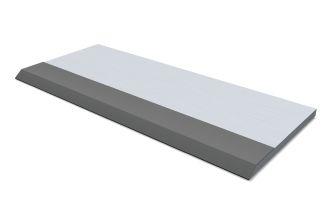
Thermal coating with improved structure
Voith Paper has introduced the TerraSpeed Supreme thermal coating, which the company says offers better stability and excellent sheet release as well as longer service life and fewer web breaks.
TerraSpeed’s roll coatings from Voith have been used successfully for several years. The new Supreme edition features new design parameters that give the coating outstanding performance values. The product has already been used successfully in more than 15 worldwide installations, including at Hamburger Austria and Mondi.
The new functional coating of TerraSpeed Supreme ensures stable roughness values and sheet release. Thanks to its improved coating structure, TerraSpeed Supreme minimizes web breaks and can reduce open draws. In addition, it enables substantially longer roll service life.
The high wear resistance of Voith’s TerraSpeed Supreme enables continuous doctoring at maximum load. The SkyTerra S blade with negative facet was specially developed for use with TerraSpeed Supreme.
Infrared pyrometer for wide temperatures
An infrared spot pyrometer for automatic, non-contact temperature measurement in harsh industrial environments has been developed by Fluke Process Instruments.
The Thermalert 4.0 is intended for use with temperatures ranging from minus 40 degrees Fahrenheit to 4,082 degrees Fahrenheit (minus 40 degrees Celsius to 2,250 degrees Celsius). The pyrometer series comprises 13 models with varied spectral responses, including dedicated sensors for metals, glass, plastics, paper and food products.
It is a smart, integrated sensor providing temperature measurement performance suitable for demanding factory automation applications. The device offers a choice of optics for long and short focal distances.
The advanced IP65/NEMA4 instrument employs real-time background temperature compensation and laser aiming, and its DataTemp Multidrop system software supports remote configuration, monitoring, field calibration and firmware updates.
Curtain coater without additional enclosure
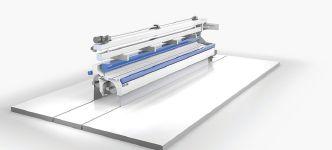
Voith’s new DynaLayer is a coater that achieves ideal colour application without an additional enclosure. The product achieves a particularly uniform coverage of the web with just one layer. In addition, unlike previous curtain coaters, DynaLayer can be operated without an enclosure, which not only improves access for the operator but also results in much lower operational and maintenance costs.
A nozzle insulation cover specially developed by Voith features air purging on both sides and prevents condensation on the nozzle lips, which could impair the quality of the coating application. In addition, Voith has introduced the concept of air shielding, where a transparent
air barrier shields the sensitive curtain against disruptive outside influences and therefore makes an additional enclosure unnecessary. Moreover, the operator can reach through the air shield at any time without causing turbulence or impairing coating quality.
At the same time, the latest generation of curtain coaters allows even more uniform CD and MD profiles to be achieved. This has a positive effect on the printability of the paper and produces a more homogeneous printed image. The number of costly web breaks is also reduced when using DynaLayer thanks to the non-contacting application of the coating. The uniform colour application by the new curtain coater is also useful when producing white board with a two-layer coating.
The coating unit generally achieves a perfect application with just one layer. If required, for example in the case of two different coatings, DynaLayer is available as a two-layer concept that can also be retrofitted.
Wearable technology increases safety Honeywell has developed a hands-free, wearable technology allowing industrial workers to work more safely, reliably and efficiently in the plant or in the field.

The company’s Skills Insight Intelligent Wearables feature a head-mounted visual display that responds to voice and brings live data, documents, work procedures and health and safety information into view. The technology also connects field workers with remote experts in real time and allows them to assimilate valuable skills and knowledge while working. Honeywell’s new technology uses the latest in hands-free mobile computing,

augmented reality, Industrial Internet of Things (IIoT) and mobility software. It combines the RealWear HMT-1Z1 handsfree wearable computer with Honeywell’s Movilizer platform, a cloud-based workflow solution, to support field service operations, specifically in hazardous locations. Other key features include operator task automation; visualization of live data; video capture and playback; instant access to remote experts via video chat; geo-localization, navigation and asset visualization; and rapid emergency evacuation and man-down assistance, which both use geo-location.
Drives provide automation integration
Cole-Parmer’s new Masterflex peristaltic pumps advanced networking drives provide options for popular networking protocols without the need to install gateways or adapters.
These communication protocols cover a broad range of connectivity and communication with most advanced auto-
The Next Generation Defect Detection for Higher Quality Production








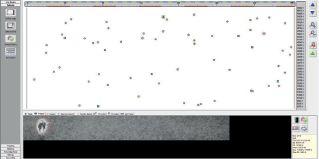

PROCEMEX® WEB INSPECTION SYSTEM
• TAPPI Dirt Count Capable
• Faster Start-ups with Higher Level Classification
• Reduction in Waste with Roll Quality Analysis
• Identification of Root Cause
• Integration to Procemex® Web Monitoring Application Specific Geometries for Detection Simple User Interface for Immediate Use






mation control systems. These drives are ideal for industrial networking, bioprocessing, plant automation or water/ wastewater applications.
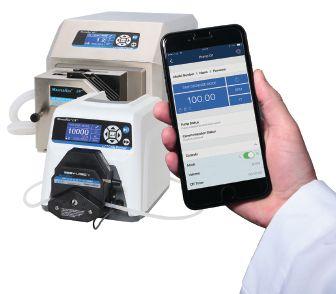
The new drive options include either native Ethernet/IP or Profibus bi-directional communication with Bluetooth low-energy (BLE) connectivity and a downloadable iOS-based mobile app to permit local pump monitoring and control. Cloud-based remote pump monitoring and control capability is available to provide pump status and alerts, and full operational control. The Masterflex drives are compatible with most of today’s advanced automation control systems, such as Allen-Bradley, Siemens, Emerson and Honeywell.
Advanced networking drives are now available on Masterflex L/S and I/P drives in either a benchtop console or a processsuitable NEMA 4X (IP66) enclosure.
Damping bearing system increases capacity
Voith’s new SmoothRun hydropneumatic damping bearing system for winders increases capacity by 15 per cent, reducing vibrations occurring during the winding process.
Hydropneumatic damping allows for higher operating speeds and better winding results. This compact upgrade solution is suitable for Voith and Jagenberg two-drum winders.
In conventional winders without special damping, vibrations can occur at higher production speeds for certain paper grades, and these vibrations can impair winding quality. To minimize the disruptive effect of vibrations during the winding process, the production speed and acceleration rates are reduced below the maximum capability of the winder.
The solution: with SmoothRun hydropneumatic damping bearings, the vibrations can be reduced even at high speeds, allowing the equipment to operate at consistently high production speeds. At the same time, SmoothRun improves the winding results and reduces the overall mechanical stress on the machine.
Feltest’s BodyCooling
vests help to reduce overheating in hot working environments
For paper machine operators, whether in production or maintenance, Feltest’s BodyCooling vests can help reduce overheating when working near hot equipment.
Hot working conditions can create faster heart rates, dizziness and loss of concentration.

The adjustable, reusable vests contain a patented polymer that transforms into a hydrogel when soaked in clean water for 45 minutes. The gel uses body heat to evaporate water and, in turn, cools down the body up to two degrees Celsius.
The vest will last for up to 48 hours before the worker needs to place the vest in the refrigerator on “standby” to gain another few days of cooling. Then, the vest needs to be activated with water again. This can happen often more than 100 times over the lifetime of the vest. The BodyCooling vests can also be placed in the freezer, which provides a more intense cooling feeling as the frozen hydrogel begins to melt.
Orange patches and reflector stripes help the flame-retardant vest be more visible on the plant floor.
The polymer used in the vests was originally used to cool athletes during the 2008 Beijing Olympic Summer Games.
Web application for real-time analysis
Valmet has released its DNA Dashboard concept, a web application that provides pre-analyzed, essential production process information as an easy-tounderstand visualization.
The DNA Dashboard is part of Valmet’s 2018 DNA Automation System collec-
tion, which has included improvements to IO products and OPC UA communication capabilities. The system is used in pulp, paper, energy and other process industries.
The dashboards use the real-time and history data already available through customers’ Valmet DNA Automation System. The new DNA dashboards make it possible to immediately see what is happening at a mill or plant and react to changing situations.
By connecting to existing system data via a stationary system or mobile, the Valmet DNA Dashboard can provide key performance indicators and information to different user roles at a mill or plant, from operators to the CEO.
The dashboards are available for alarm management for all industries.
Smart recycling labels
UPM Raflatac’s smart label solution is making recycling smarter. By adding the RafMore smart label solution to its RafCycle recycling process, the company can optimize the waste collection process of its customers.
The smart labels added to the recycling containers and scanned by a mobile app tell when the customers’ waste is ready to be collected.
RafCycle is a cost-efficient waste recycling solution that collects label release liner waste from UPM Raflatac’s partners throughout Europe. The RafMore smart label solution was tested with several RafCycle customers in Denmark and Sweden, and the waste material collected from these customers can be turned into new products at UPM Plattling paper mill in Germany where the paper release liners are de-siliconized and recycled into pulp and paper, closing the loop.
Previously, the waste collection process was done manually, which required much communication between UPM Raflatac and the customers.
Xellia Pharmaceuticals was an early adopter of the RafCycle program and enter into a circular economy solution for their glassine waste.
RafMore transforms traditional product packaging into connected packaging with a unique traceable identity. UPM Raflatac is planning to take RafMore into use in other countries. PPC
Bacterial nanocellulose tested as strength enhancer
A new research project has been launched to test bacterial nanocellulose (BNC) as a potential strength enhancer in board, textiles and bioplastics.
The project is being jointly undertaken by Umeå University in Sweden and Processum, a biorefinery development centre owned by RISE Research Institutes of Sweden, to develop methods for the production of BNC from residual streams from the pulp and paper industry. Both parties welcome collaboration from the pulp and paper industry as well as from companies on the application side.
nanocellulose.
Different types of nanocellulose can provide new and improved characteristics to several different materials. Research and most demonstration and production efforts so far have been focused mainly on cellulose nanofibres (CNF) and cellulose nanocrystals (CNC). Umeå University and Processum researchers will develop and scale up a method for production of BNC.
“At Umeå University, our research group has already been able to produce bacterial nanocellulose in laboratory scale based on residual streams from a pulp mill,” Professor Leif Jonsson, head of the research group, says. “We have produced small amounts of BNC, which we have added to paper with promising results. The paper got improved mechanical characteristics, i.e. higher tensile and tear index. Nanocellulose produced with the aid of bacteria differs from CNF and CNC. It is purer, has a higher degree of polymerisation, and is more crystalline and thinner.”
Bjorn Alriksson, Processum’s head of group, biotechnology, says today’s meth-
od of producing bacterial nanocellulose is expensive and inefficient and the growth medium is expensive.
“This is why we will use low-value residual streams from pulp mills as substrate, and the production will be carried out in stirred bioreactors to try to improve the production,” he says. “In this project, we will scale up the process starting in our laboratory scale multi-bioreactors, then continue with experiments in our 50-litre bioreactor, and finally we will produce BNC in a 600-litre reactor.”
The BNC will be tested in applications such as strength enhancer in board, textiles and plastics. The goal is to produce BNC from industrial residual streams for applications where relatively high volumes of BNC are needed.
Jonsson and Alriksson say BNC is an interesting product that can give improved characteristics to existing materials and can also be used for the production of entirely new bio-based materials. The researchers say they hope to have enough BNC for realistic application tests by the end of the project, and are open to national and international cooperation in different fields for joint development of applications.
CERES to further bioeconomy goals in lignocellulose and forest biomass
Finland’s Aalto University and VTT Technical Research Centre of Finland have signed a collaboration agreement to develop materials from renewable resources as they work toward sustainability and the bioeconomy.
The Academy of Finland – the country’s government funding body for scientific research – has granted EUR 9.5 million in funding for the first four years of the project, called CERES. An extension in funding for the next four-year period will be based on an interim evaluation. The total funding of the project is EUR 24 million.
CERES will function as a virtual knowledge centre to develop new methods and material solutions for biomass processing, and provide the industry long-term, globally cutting-edge R&D work.
Plant-based biomaterial is the future replacement for plastics. The purpose of the CERES “innovation ecosystem”
is to develop new materials, in particular those based on lignocellulose and forest biomass, for industrial-scale production of packaging, textiles and separation systems, as well as semiconductors, composites and solutions for energy storage.
According to VTT’s scenario calculations, if used to manufacture high addedvalue products, Finnish forest and field biomass could double in value by 2050. It is possible to do all this and, at the same time, reach the climate targets set for the country. This scenario work is the first analysis of Finland’s potential in the bioeconomy and its transition to a low-carbon economy, which takes into account all industrial and emission sectors.
The objective of Finland’s national bioeconomy strategy is to create 100,000 new jobs in the country and increase the bioeconomy output by EUR 40 billion by 2025. The research and development work to be performed under CERES will support the delivery of this objective and help companies to make new openings in the international market. PPC
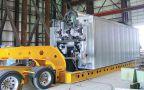
Björn Alriksson with one of Processum’s bioreactors, which will produce bacterial
GIVING BACK
The latest community outreach initiatives from the pulp and paper industry
The Canadian forest products sector is passionate and devoted – not just to the industry itself, but also to its local communities. In this department, we’re sharing the initiatives of pulp and paper companies working to make positive social, environmental and economic impacts across the country.
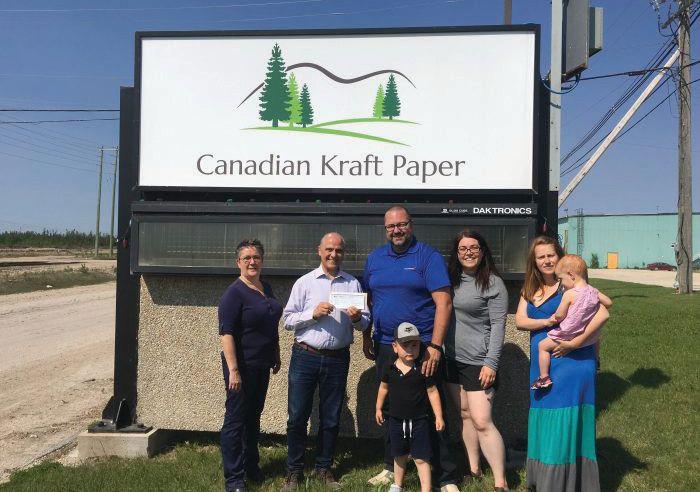
Canadian Kraft Paper is donating at total of $25,000 over the next five years to The Pas Families Building a Better Community Group Inc., to support the organization’s spray park for local families.
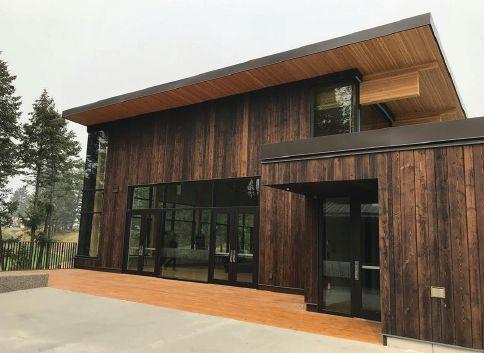
Canfor donated lumber to the Radium Hot Springs Centre, a community centre in Radium Hot Springs, British Columbia, where the company operates a mill. The wood is featured on the building’s exterior, as well as inside on ceiling panels and accent pieces.
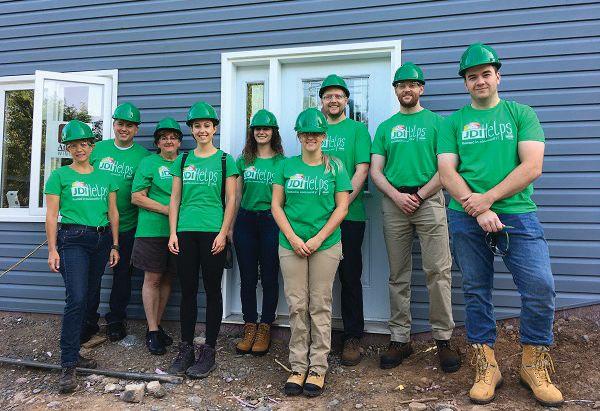
This past August, 19 J.D. Irving employees helped Habitat for Humanity to build a new home for a Saint John, New Brunswick family. JDIHelps, the company’s volunteer initiative, has donated $50,000 to Habitat for Humanity for materials, as well as employee time.
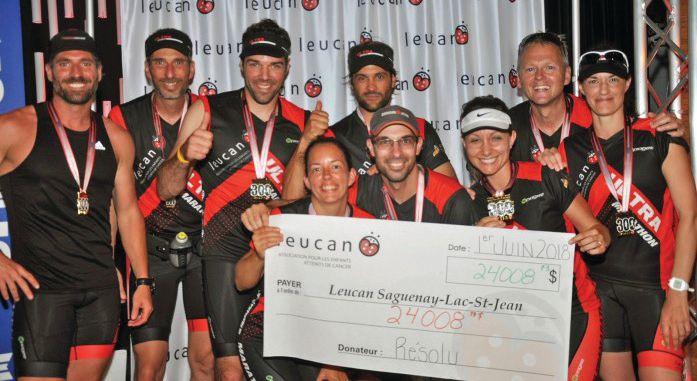
Nine Resolute employees in Quebec took part in the Ultramarathon this past spring, benefiting Saguenay–LacSaint-Jean chapter of Leucan, an organization that provides resources to young cancer patients and their families. Team Resolute raised $24,000.
Let us help you share your successes. Tag @PulpPaperCanada or use #PPCGivingBack on Facebook or Twitter, or send an email to the editor at kurquhart@annexbusinessmedia.com. We’d love to hear from you!
Photo: Canadian Kraft Paper
Photo: Canfor Facebook
Photo:
J.D. Irving Ltd.
Photo: Resolute Facebook
SOLIDEAL PON 775 NMAS
(NON-MARKING ANTI-STATIC PRESS-ON TIRE)
BY CAMSO
THE INDUSTRY’S FIRST NON-MARKING ANTI-STATIC TIRE
Resolves the important safety issue of static electricity generated by non-marking tires by eliminating static build-up which causes electric shock and truck damage
SAFETY BREAKTHROUGH
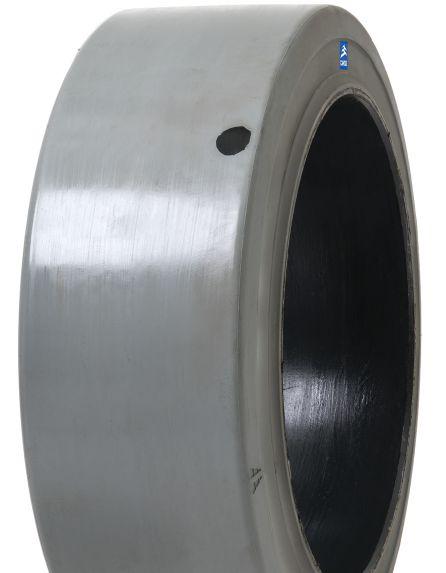
Patented anti-static technology
Special device which allows static electricity to dissipate from the forklift to the ground







Vybrant ®







Forget C lO2 limitations

















Vybrant 700 series pre-bleach enzymatic technology works to make Kraft fibers more bleachable, so your mill can achieve a higher final brightness without additional stages or equipment and with far less chlorine dioxide, reducing costs and environmental impact.
Stop reversion
Vybrant 900 series post-bleach enzymatic technology safely removes chromophores in bleached pulp to help you reach your brightness targets and significantly reduce reversion, so can you reduce or even eliminate the expense of optical brighteners and other bleaching chemicals
Learn more
For more information about Vybrant, contact your Buckman representative or visit buckman.com