CONVERTING R-22 CHILLERS: 9 THINGS YOU NEED TO KNOW

CONVERTING R-22 CHILLERS: 9 THINGS YOU NEED TO KNOW



16 HVAC
WHOLE HOUSE DUCTED HVAC: THE END IS NEAR?
Whole house forced warm air heating systems have seen their day simply because the promise of comfort and efficiency cannot be delivered in far too many older homes.
By Ian Mcteer
22 IAQ
UP IN SMOKE: PROTECTING INDOOR AIR
Maintenance proved essential during record-setting wildfire season in British Columbia.
By Jillian Morgan
24 BOILERS
STEP-BY-STEP PREP
Preparing condensing boilers for the winter
By Robert Waters
28 EVENT REPORT
DELEGATES EMBRACE LEARNING OPPORTUNITIES AT CIPHEX WEST
By Jillian Morgan and Kerry Turner
30 HVAC/R
THE NEED FOR LEAK DETECTION IN OCCUPIED SPACES
It is possible to detect refrigerant leaks in hotel room applications with intstruments designed specifically for the job.
By Tom Burniston

32 REFRIGERATION
WHAT TO DO ABOUT THAT PESKY R-22 CHILLER – PART II
The crucial pieces of information you need to convert that chiller.
By Dave Demma
38 PLUMBING
HOW TO ACHIEVE A SLEEK, OPEN LOOK
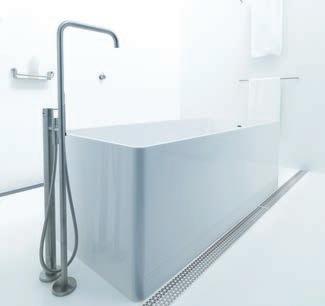
Considerations when specifying a linear drain.
By Elena Doxey and Christie Bacchioni
40 IAQ CLEARING THE AIR ON OZONE
New air cleaner UL validation aims to deliver on healthier indoor environments.
By Aaron Engel
42 TECHNOLOGY
STUDY SHOWS VIRTUAL REALITY MOTION SICKNESS CAN BE PREDICTED, COUNTERACTED
By Jillian Morgan
50 HYDRONICS
RUNNING BLIND
Keeping heat produced by an auxiliary boiler out of thermal storage. By John Siegenthaler
56 SUSTAINABLE BUILDING
CNL EARNS LEED SILVER FOR SUSTAINABLE LABORATORY
The Harriet Brooks Building is the latest project by CNL to meet energy efficiency targets. By Jillian Morgan
62 HEATING
BALANCING APPEARANCE AND PERFORMANCE
Convectors may be a solution for buildings with complex heating needs.
By Jim Herring
65 EVENT REPORT SUNNY OPTIMISM PREVAILS AT HRAI
50TH ANNUAL MEETING
By Kerry Turner
68 MARKETING
TOP 6 TIPS FOR HVAC AND PLUMBING PROS
By Elaine Durães
69 HVAC/R
HOW DO THERMOSTATIC EXPANSION VALVES WORK? By Jeffrey Staub


A WHOLE NEW METHOD OF DEALING WITH PESKY CUSTOMERS IS UPON US. Companies can easily send disgruntled customers into an endless loop of menu options, some of which never offer up a real live person to speak with.
After typing in your 12-digit account number, or your phone number countless times, even the most persistent person will eventually throw up their arms in despair and ignore the issue; or he or she will get creative and try and find a back door into the company.
Here is where it gets interesting. I used to be pretty crafty at finding another way in but with many companies now, there is just no way to do that.
Sadly, that endless loop can also occur with “human” customer service.

A friend recently needed some help resolving a telecom issue. On my first attempt to get a service technician out to do the repair I was left on hold for 17 minutes “due to unusually high call volume.” I was then passed from person to person. It was quite remarkable how well trained and how well scripted each of them was. I hardly knew I was getting the run around.
Kudos to the telecom company for mastering the art of messing with its customers.
On my second attempt 24 hours later, I spoke with someone who realized I was not going away and the issue was resolved. I simply cannot imagine my friend who is unwell, or most people for that matter, dealing with such an obstructive system, particularly on a cell phone.
A word to businesses: never mind the human factor; go for the humane factor. Your customer base is changing and customer service has to reflect that. Do not be shy about calling out businesses who have forgotten who pays the bills.

Editor

EDITOR
ASSISTANT EDITOR
ASSOCIATE PUBLISHER
ACCOUNT MANAGER
MEDIA DESIGNER
ACCOUNT COORDINATOR
CIRCULATION MANAGER
PUBLISHER
VICE PRESIDENT
PRESIDENT & CEO
Kerry Turner (416) 510-5218
KTurner@hpacmag.com
Jillian Morgan (416) 510-5201
JMorgan@annexbusinessmedia.com
David Skene (416) 510-6884
DSkene@hpacmag.com
Vince Naccarato (416) 510-5118
VNaccarato@hpacmag.com
Emily Sun
esun@annexweb.com
Kim Rossiter (416) 510-6794 krossiter@annexbusinessmedia.com
Urszula Grzyb (416) 442-5600 ext. 3537 ugrzyb@annexbusinessmedia.com
Peter Leonard (416) 510-6847
PLeonard@hpacmag.com
Tim Dimopoulos (416) 510-5100 tdimopoulos@annexbusinessmedia.com
Mike Fredericks

SERVICES: To subscribe, renew your subscription or to change your address or information please visit us at www.hpacmag.com.
Subscription Price per year: $43.00 (plus tax) CDN; Outside Canada per year:
US; Elsewhere: 1 year $92.50; Single copy Canada: $5.00 CDN. Heating Plumbing Air Conditioning is published 7 times per year except for occasional combined, expanded or premium issues, which count as two subscription issues.
MAIL PREFERENCES: From time to time we make our subscription list available to select companies and organizations whose product or service may interest you. If you do not wish your contact information to be made available, please contact us via one of the following methods: Tel: 416-442-5600 ext. 3552, Fax: 416-510-6875 or 416442-2191; E-mail: blao@annexbusinessmedia.com; or by mail: 111 Gordon Baker Rd., Suite 400, Toronto ON M2H 3R1
Annex Privacy Officer Privacy@annexbusinessmedia.com Tel: 800-668-2374
HPAC Magazine receives unsolicited materials (including letters to the editor, press releases, promotional items and images) from time to time. HPAC Magazine, its affiliates and assignees may use, reproduce, publish, re-publish, distribute, store and archive such unsolicited submissions in whole or in part in any form or medium whatsoever, without compensation of any sort.
NOTICE: HPAC Magazine, Annex Publishing & Printing Inc., their staff, officers, directors and shareholders (hence known as the “Publisher”) assume no liability, obligations, or responsibility for claims arising from advertised products. The Publisher also reserves the right to limit liability for editorial errors, omissions and oversights to a printed correction in a subsequent issue. HPAC Magazine’s editorial is written for management level mechanical industry personnel who have documented training in the mechanical fields in which they work. Manufacturers’ printed instructions, datasheets and notices always take precedence to published editorial statements.





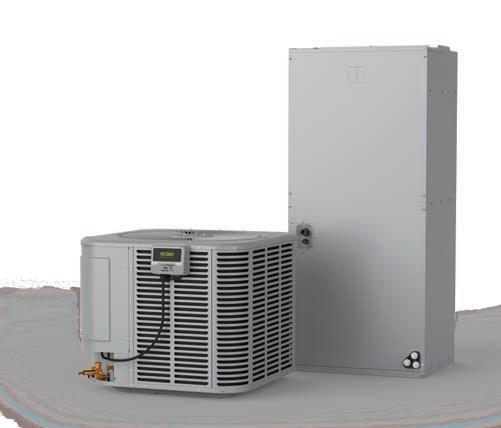

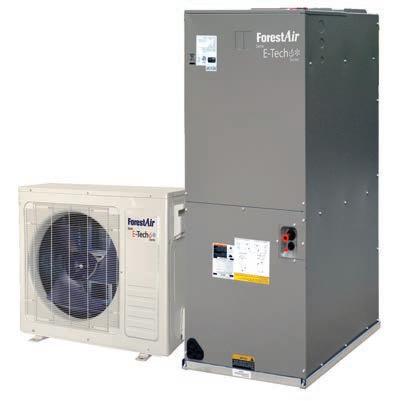
▪ DESIGNED FOR COLD CLIMATES
High heating performances in cold conditions.
▪ COMPACT OUTDOOR SYSTEM
Much more space efficient and lightweight than conventional systems.
▪ EASY TIME-SAVING INSTALLATION
With few electrical connections, and little to no ductwork, indoor and outdoor units can be installed with ease.
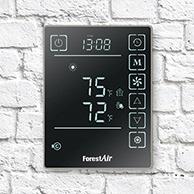
▪ USER FRIENDLY LED THERMOSTAT
Intuitive menu and superior comfort controls.
BY JILLIAN MORGAN
The provincial government will “wind down” the Ontario College of Trades (OCOT) as part of a bill to reform labour laws put in place by the former Liberal government. The Making Ontario Open for Business Act–or Bill 47, which passed November 21, 2018–will repeal amendments in Bill 148, introduced in 2017.
Amendments include freezing minimum wage at $14, repealing pay equity for part-time, temporary or casual workers, and axing a provision that allows for 10 days of personal emergency leave. A series of changes under the act specifically aimed at “modernizing” Ontario’s apprenticeship system will see an overhaul of current rules and regulations in the skilled trades.
“The current regulatory burdens placed on employers and apprentices create barriers to apprenticeship, making it difficult for Ontario to keep up in training the skilled tradespeople that will be demanded by the economy,” the provincial government stated in a release.
The College of Trades, which the province linked to “persistent challenges” in the regulation of skilled trades, fees, and rules for apprentices, journeypersons and employers, will be replaced under the act.
Other changes include setting all journeyperson to apprentice ratios at one to one and implementing a moratorium on trade classifications and reclassifications.
If passed, the Minister of Labour would be granted special powers, including the authority to take control of the College’s board of governors. The province stated it plans to “support an orderly transition and ensure continuity of services to employers, workers and apprentices.”
Ralph Suppa, president and general manager of the Canadian Institute of Plumbing and Heating, said in a statement that the organization expects the College will wind down in a “professional and effective manner.”
“Our engagement with this organization has always been with an eye towards creating win-win solutions for the markets we serve and we will gladly engage with government more directly in its absence,” Suppa said.
The province intends to develop a replacement model for the regulation of the skilled trades and apprenticeship system
by early 2019. David Weishuhn, chair of the Heating, Refrigeration and Air Conditioning Institute (HRAI), is “urging” the Ford government to involve the association in those plans.
“While the Conservative government is unlikely to create a burdensome replacement to OCOT, HRAI can ensure that any new system works for the HVAC industry,” Weishuhn said.
“While the formation of the Ontario College of Trades (OCOT) was initially not well received by most members of our industry, over the past several years, HRAI and its members have had some success influencing the policies and direction of the College. The main concern now is what will replace it?”
Weishuhn said the association is “generally pleased” with the proposed changes to Bill 148, which it expects will help small HVAC businesses “respond to the often-changing workloads that can be experienced.”
Though, he added that the moratorium on trade classifications and reclassifications could affect work underway to develop a Hydronic Heating designation that allowed qualified technicians to work on radiant floor installations.
The Provincial Building and Construction Trades Council of Ontario, however, stated in a release that the decision to wind down OCOT is “very concerning.”
“One of the original intents of the College was to professionalize the trades and remove government involvement in the regulation and administration of the trades in much the same way that teachers, lawyers, doctors, nurses and others have in their own regulatory bodies,” said Patrick Dillon, business manager of the council.
“Premier Doug Ford has an opportunity to get it right by removing government interference and keeping his pledge of less government involvement in industry affairs and streamlining the way in which trades are regulated.”
The council also raised concerns over a “one-size-fits-all” approach to apprenticeship ratios.
“Each trade is unique and having the appropriate apprenticeship ratio ensures that apprentices get the right training to qualify as journeypersons,” said Jim Hogarth, president of the council. “When industry comes together to determine the appropriate ratio, everyone benefits, including workers, contractors, owner-clients and the public.” www.ontario.ca
†
†
†



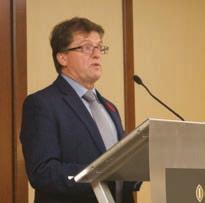
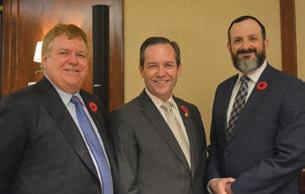
The Heating, Refrigeration and Air Conditioning Institute (HRAI) capped off a day of meetings on pressing industry issues at Queen’s Park with a reception in downtown Toronto.
Members of provincial parliament and HRAI representatives gathered at the InterContinental Toronto Yorkville on October 30, 2018 following the inaugural “Day at Queen’s Park.”
The event, which builds on the association’s “Day on the Hill” initiative, included 17 meetings with ministers, MPPS and policy advisors.
Nine HRAI volunteers–primarily contractors–and two staff attended the meetings.
“We had the opportunity to meet with MPPs… and explain how HRAI can be their bridge to the HVAC/R industry,” posted Victor Hyman, profit centre manager at EMCO Managed Equity Solutions, to LinkedIn.
Martin Luymes, HRAI vice president of government and stakeholder relations, said “a lot of progress” was made “on a number of files” in a speech at the reception.
Those files included developing a replacement policy on climate change in the wake of the now-axed GreenON program and cap and trade system; “re-imagining” the Ontario College of Trades; and “regulatory matters,” such as code harmonization, journeyperson-to-apprenticeship ratios, amendments to the Consumer Protection Act and changes to the Employment Standards Act.
Luymes added that he felt the industry was “underappreciated” and not well known. For that reason, he stressed the importance of the provincial government working with the industry–though he applauded the government’s efforts so far.
Doug Downey, parliamentary assistant to the Ontario Minister of Finance, affirmed the audience that Ontario is “open for business,” referring to the progressive conservative government’s recently passed bill, the “Making Ontario Open for Business Act.”
“Pleased to bring greeting on behalf of [Premier Doug Ford] to the Heating, Refrigeration and Air Conditioning Institute of Canada,” Downey tweeted. www.hrai.ca
CEO
Industry Training Authority (ITA), a skilled trades training agency in British Columbia, has tapped Shelley Gray, its chief operating officer (COO), to take over as interim CEO following the departure of Gary Herman.

In its search for a new CEO, Rod Bianchini, director of industry relations, will take the reins as interim COO. Bianchini has been with the organization since 2013, moving into his most recent title last year.
Gray joined the organization in 2013 as director of customer experience. She was appointed COO in January 2018. www.itabc.ca
Natural Resources Canada (NRCan) has published Amendment 14 regulations in the Canada Gazette Part II.
HVAC/R products covered in this amendment include:
• Walk-in coolers and walk-in freezers
• Commercial refrigerators, refrigerator-freezers and freezers
• Residential gas-fired furnaces (furnace fans)
• Large air-conditioners and heat pumps
• Packaged terminal air conditioners and heat pumps
• Residential oil-fired furnaces
• Chillers
• Gas-fired residential storage water heaters and oil-fired residential storage water heaters
• Large condensing units
HRAI and the Air-Conditioning Heating and Refrigeration Institute (AHRI) submitted comments on behalf of the members during various stages of the consultation process pertaining to large air conditioners and heat pumps and water heaters in cooperation with the Canadian Institute of Plumbing and Heating (CIPH).
NRCan’s reply to the comments they received for these products is within the Canada Gazette II. NRCan has removed the six-month coming-into-force date, and the regulations are effective immediately for water heaters only, while the balance of the Amendment will come into force on May 1, 2019, six months after the date of publication in the Canada Gazette, Part II.
Visit Canada Gazette or Natural Resources Canada’s website for details. www.nrcan.gc.ca

Student visitors participate in a Try-A-Trade and Technology activity at the 2018 Skills Canada National Competition in Edmonton, AB.
Nova Scotia has partnered with Skills Canada to encourage students to attend the 2019 Skills Canada National Competition (SCNC), to be held in at the Halifax Exhibition Centre from May 27 to 30.
The province’s Department of Education and Early Childhood Development signed on as school engagement sponsor to pro vide funding to schools that want to send teachers and students from elementary school up to senior high school to partici pate in the competition.
In recognition of SCNC’s 25th anniver sary, the competition will include related activities, special guests and industry celebrities.
More than 550 secondary and post secondary students are expected to compete in Halifax, NS for the title of na tional champion in over 40 skilled trade and technology skill areas. The organi zation will also host more than 50 Try-ATrade and Technology activities for approximately 7,500 student visitors.
“It is because of partnerships like these that we are able to engage stu dents and peak their interest about ca reers in skilled trades and technologies and demonstrate why these occupa tions are great career choices,” said Shaun Thorson, CEO of Skills Canada. www.skillscompetencescanada.com
The Quebec headquarters of engineering firm Ambioner has received the 2018 ENERGY STAR certification with a score of 93.
Strategies used to achieve high energy performance for the 11,000 square foot building–constructed in 2014–include: solar wall, heat pump, natural ventilation, rainwater recovery system and retention ponds, among others.
By its own measurements, Ambioner achieved a 53 per cent reduction in energy consumption compared to a reference based on the Model National Energy Code for Buildings (MNECB) 1997 and a 46 per cent reduction in energy cost consumption compared to a reference based

on the MNECB 1997 (MNECB was updated and renamed the National Energy Code for Buildings (NECB) in 2011).
The building also saw a 50 per cent reduction in water consumption.
Ambioner specializes in electromechanical design in the building sector, as well as in energy efficiency. It has carried out projects involving geothermal energy, heat recovery, thermal storage, biomass and cogeneration, to name a few.
www.nrcan.gc.ca www.ambioner.com
Continued on p12


The Mechanical Contractors Association of Canada (MCAC) elected Jack Bavis, project manager at the Cahill Group, as its president and board chairman for 2018/2019.
The association tapped Bavis at its 2018 national conference, held in Whistler, BC from September 19 to 22.
“It gives me great pleasure to step into this role,” Bavis said.

“Having worked with the MCAC Board since 2009, and worked previously with MCA Newfoundland and Labrador before, I know the value that our association brings to the mechanical contracting industry in Canada on issues of importance to our members.”
Bavis has more than 40 years of experience in the mechanical contracting business. He entered the field as an apprentice plumber in 1974, eventually working in estimating, procurement and project management during a 17-year career with Becker Contractors and for more than 20 years with the Cahill Group, headquartered in St. John’s, NL.
The association also presented Dan Milroy, director of sales and marketing, Bradford White, Canada with the 2018 Doug Crawford Memorial Award.
Members of the Associate Council selected Milroy, who served as chairman of the MCAC Associate Council. His responsibilities also included serving on the MSCC board of directors and the CEC Education Council.
The award recognizes an individual, individuals or company who has made a significant contribution to MCA Canada through long-standing voluntary participation, leadership and commitment to ensuring the success of Associate Members. www.mcac.ca
Ontario’s Energy Board has approved the amalgamation of Enbridge Gas Distribution Inc. and Union Gas Limited after a nearly year long review process.
Effective January 2019, the two utilities will form a single company called Amalco–which will secure 3.6 million residential, commercial and industrial customers across the province. According to the regulator, both companies estimate that the “cumulative benefit to customers” could reach $410 million over the ten year deferred rebasing period.
Enbridge and Union Gas have operated under private ownership since February 27, 2017. www.enbridge.com www.uniongas.com
NRCan provides financial assistance to support energy efficiency projects in Canada’s buildings sector to meet commitments under the Pan-Canadian Framework on Clean Growth and Climate Change. The following programs are currently accepting proposals.
Benchmarking, labelling and disclosure initiatives–NRCan provides financial assistance to support energy labelling and disclosure projects for the commercial and institutional buildings sector. NRCan’s priority is to support provinces, territories, and municipalities implementing labelling and disclosure and other stakeholders within those jurisdictions.
ISO 50001 implementations– Remarkable opportunities are now available for organizations looking to implement ISO 50001 in their commercial and institutional buildings, or industrial facilities. NRCan provides costshared financial assistance of up to 50 per cent of eligible costs, to a maximum of $40,000 per building or facility. Moreover, this financial assistance can be combined with other funding sources where available.
E-mail nrcan.buildings-batiments.rncan@canada.ca with questions or to request a project proposal template. www.nrcan.gc.ca
A project to construct Canada’s first net-zero supermarket is underway in Stouffville, ON.
The federal government provided $1.44 million to build the 40,000 square foot Longos Brothers Fruit Markets Inc. store, which aims to produce 65 per cent of its own energy through renewable technologies.
“Supermarkets are one of the more energy-intensive retail businesses due to their large cooling and heating loads,” said Ady Vyas, vice-president of energy solutions at s2e Technologies, provider of store’s microgrid. “Canada’s northern climate makes reducing energy use and therefore GHG emissions in supermarkets even more challenging.”
In partnership with Neelands Group Limited and s2e Technologies Inc., the supermarket aims to reduce between 1,500 to 2,000 metric tonnes of greenhouse gas emissions per year by integrating energy efficiency improvements, renewable energy systems and other sustainable technologies.
Federal funding for the project comes from Natural Resources Canada’s Energy Innovation Program. www.longos.com
Continued on p14



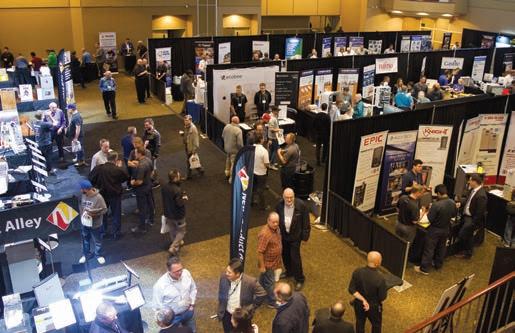
It was a full house as more than 1000 attendees made the trek to the Paramount Event Space in Woodbridge, ON for Noble’s 25th anniversary trade show.
The event, held September 27, 2018, featured more than 75 vendor exhibits, five seminars and a “New Products Alley.” A series of educational seminars throughout the afternoon covered hydronic heating and balancing and new rules for door-to-door sales.
John Barba, residential training manager at Taco Comfort Solutions, Inc., presented the “Complete Guide for a Hydronic Heating System” to a full room of attendees from 8:30 a.m. to 3:30 p.m.
The talk covered how to select and size boilers, pipe, pumps, CVs and controls. It also included how to understand ECM variable speed circulators: Delta P, Delta T and infinite variable speed.
A presentation by Blake Hartshorn, hydronic balancing specialist at Victaulic, titled “Hydronic Balancing and Control Technology,” discussed circuit balancing valve basics from selection to installation, and how to create energy efficient systems for optimal performance.
Coils can under-flow or overflow without balancing, Hartshorn said. This can lead to several problems, such as difficulties starting up after a set back, fluctuating temperature or unstable room temperatures.
Solutions presented include manual balancing valves, automatic balancing valves, differential pressure controls plus manual valves, and a pressure independent balancing control valve.
Other presentations included a seminar on changes to the consumer protection act, an IPEX System 636 Installation Training Certificate Course, with emphasis on proper solvent cementing, and a Gastite Flexible Gas Piping Certification. www.noble.ca
Two Canadian schools have been awarded in the annual Canada Green Building Council (CaGBC) Greenest School in Canada competition.
Lacombe Composite High School in Lacombe, AB and Trinity College School in Port Hope, ON were recognized for the use of solar arrays, geothermal greenhouses, urban beekeeping and efforts to decrease natural gas consumption.
CaGBC and the Canada Coalition for Green Schools announced the awards as part of World Green Building Week. The schools will receive a $1,000 cash award each to put toward a new or ongoing sustainability project.
Lacombe High School’s EcoVision environmental club has raised funds for the past 15 years for 32 solar arrays totalling six kW, along with a portable solar array, and a 42foot, energy-efficient geodesic tropical greenhouse with geothermal heat storage.
At Trinity College School, a five-year sustainability plan maps out efforts to reduce its environmental footprint. The school achieved a 23 per cent decrease in natural gas consumption over five years, which it partly attributed to upgrades to building automation systems and boilers.
Other initiatives by Trinity College School include regular electricity audits, a major lighting retrofit, and a 220kW solar PV installation with another 180kW planned.
The runners up of the 2018 Greenest School in Canada competition were Westwood Community High School in Fort McMurray, AB (second place), and Churchill Community High School in La Ronge, SK (honourable mention).
Schools that offer any grade from kindergarten to grade 12 in Canada are eligible to participate in the competition. When submissions are open, an online application form must be filled out. www.cagbc.org/greenschools

The Canadian Federation of Independent Businesses (CFIB) has developed a series of educational and workplace tools aimed at helping employers manage the legalization of recreational cannabis.
A webinar titled “Prepare your business for legalization” is free and open to the public. CFIB partnered with Canadian law firm Fasken to develop the webinar. It includes: what legalization means for private businesses, how to talk to employees about cannabis, and importance of a drug and alcohol policy.
Other resources, free to CFIB members, include an online course on workplace impairment and a drug and alcohol policy template. For non-members, the template can be accessed by filling out an online form at www.cfib.ca/cannabis.

Sheila Hayter, ASHRAE president, and Darryl Boyce, president-elect, recentlytestified before the Standing Committee on Natural Resources at the House of Commons of Canada.
Hayter and Boyce provided testimony focused on the technical tools, standards and guidelines ASHRAE develops that aim to help government, and the private sector, deliver on energy efficiency and building performance goals.
During the hearing, Hayter discussed how those resources could help drive energy policy, and aid the federal government in its development of a nationwide net-zero energy building code by 2030.
“As Canada moves toward a smart
Flushmate and Hydrolevel have issued product notifications for Canada.
Flushmate has recalled the Flushmate II 501-B pressure-assisted flushing systems due to impact and laceration hazards. About 17,300 were sold in Canada.
The system can burst at or near the vessel weld seam releasing stored pressure, which can lift the tank lid and shatter the tank.
Users are recommended to stop using the system, turn off the water supply to the unit, and flush the toilet to release the internal pressure. A free replacement unit and installation can be requested from Flushmate.
Hydrolevel recalled its HydroStat Model 3000 boiler controllers for the Slant/ Fin boilers due to a fire hazard. About 370 of the controllers were sold in Canada.
A malfunction in the recalled controller can cause the boiler to overheat, posing a fire hazard. Users of the Slant/Fin model VSPH boilers are encouraged to contact a contractor to schedule a free repair.
healthycanadians.gc.ca/recall-alert-rappel-avis/hc-sc/2018/67570r-eng.php healthycanadians.gc.ca/recall-alert-rappel-avis/hc-sc/2018/67928r-eng.php
grid, we welcome the opportunity to continue sharing our technical expertise to ensure this transition is done effectively and efficiently, and to also assist in providing the tools, resources, and knowledge to ensure proper operation of buildings in this new paradigm,” Hayter said.
During his testimony, Boyce stated the importance of optimizing the performance of Canada’s existing buildings and emphasized the need to focus on building operations to ensure optimal performance.
He pointed to ASHRAE Standard 100, Energy Efficiency in Existing Buildings; ANSI/ACCA/ASHRAE Standard 211, Standard for Commercial Building Energy Audits; ASHRAE Building EQ; and ASHRAE Standard 135, BACNET–A Data Communication Protocol for Building Automation and Control Networks. www.ashrae.org
The Quebec Minister of Energy and Natural Resources has tabled a draft regulation to modify existing regulation on the energy efficiency of electrical or
hydrocarbon-fuelled appliances, which will come into effect January 2019.
Former Energy and Natural Resources Minister Pierre Moreau stated in the draft the regulation is intended to harmonize the province’s regulations with federal regulations.
Under the regulation, some energy-efficient appliances must be labelled with an energy efficiency verification mark issued or authorized by a body accredited by the Standards Council of Canada.
Some appliances must also provide at least one permanent label bearing the identification of its manufacturer, its model number and its date of manufacturing, or bear a code identifying that date, such as the appliance’s serial number.
An appliance referred to in section 24 of the Act (chapter N-1.01) must provide a permanent label obtained from the minister certifying that the energy consumption is equal to or lower than that permitted by regulation results from the various authorized standards.
Devices covered by the new regulation include domestic hot water heaters, heating or air conditioning appliances and commercial refrigeration apparatuses, among others. www.gouv.qc.ca
Whole house forced warm air heating systems have seen their day simply because the promise of comfort and efficiency cannot be delivered in far too many older homes. BY IAN MCTEER
Automotive analogies can be useful in explaining otherwise obscure HVAC concepts because many consumers of heating and air conditioning systems also have cars and understand the joys and sorrows associated with four-wheeled ownership. For example, suppose some car enthusiast purchased a Chevrolet Impala brand new in 1975. Forty-three years later, let’s further suppose that the Impala is on its second engine using the latest computerized fuel management system. Regardless, it is still an obese, fuel guzzling beast that is going to require enormous amounts of cash and many hours of rework to bring it closer to today’s safety and emission standards. Better to simply buy a new car.
Similarly, a house purchased in 1975 may well be on its second or third HVAC system (engine), and it may have new windows and better insulation; however, the original duct system, designed for a furnace long since recycled into beverage cans, likely requires considerable renovation expense to suit today’s blowhard gas furnaces. Unlike the ’75 Impala, it is not so easy to run out and buy a better house.
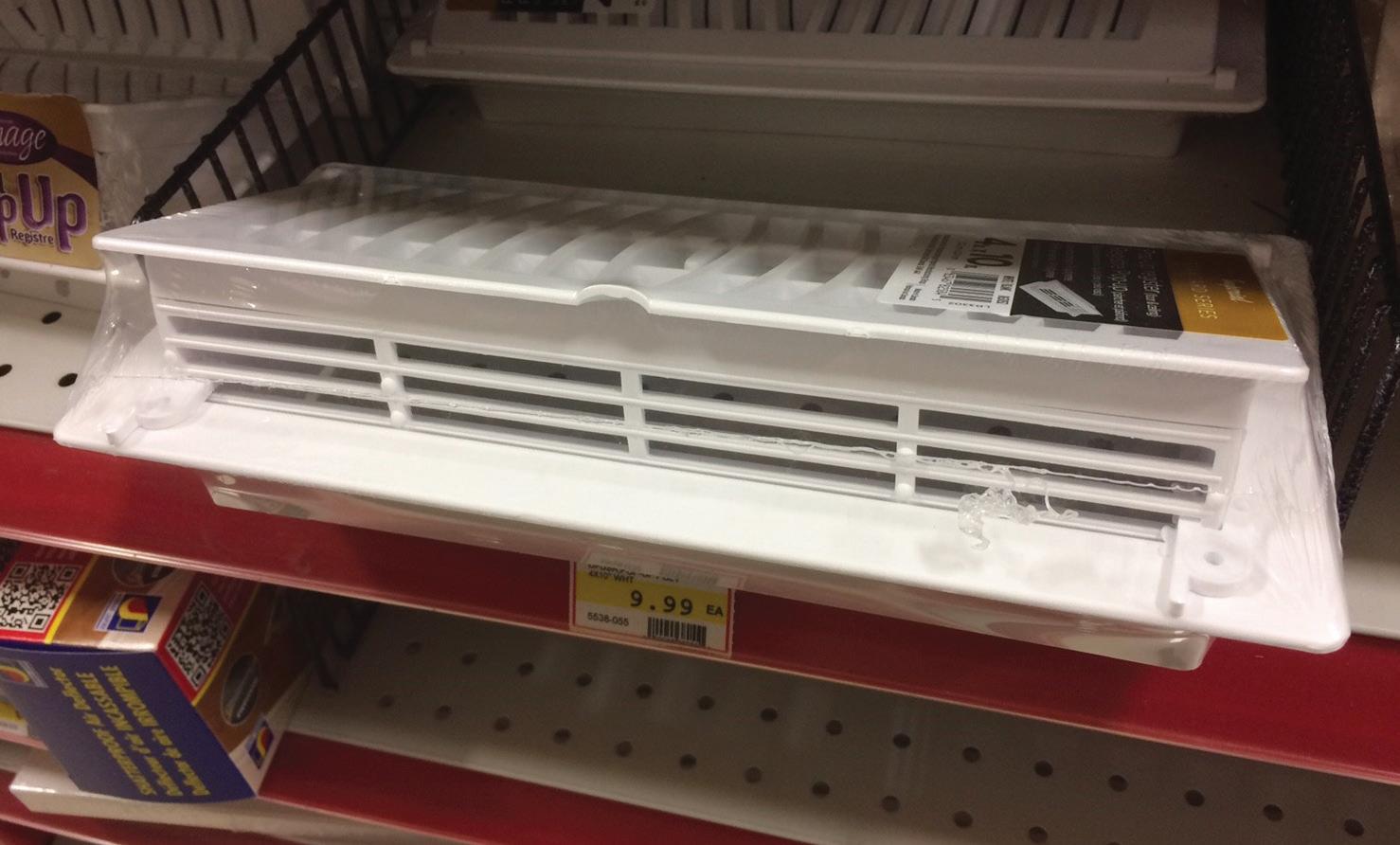
Snooping around in the heating aisle of any big box hardware store produces evidence that something is wrong with plenty of forced warm air heating and cooling systems. Why would any homeowner feel it necessary to purchase a duct booster fan or an adjustable floor register? It is obviously because they are not comfortable in one or more rooms of their poorly conditioned houses.
The manufacturer recommends the duct fan be installed within 10 feet of the register and be accessible for cleaning, not so easy if the room in question is the second floor master bedroom. Plus, the fan consumes 30 watts or more adding to the overall inefficiency of the system.
“Unlike the '75 Impala, it is not so easy to run out and buy a better house.”
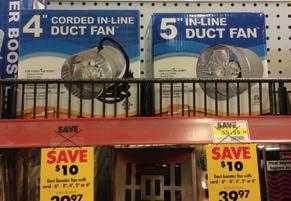
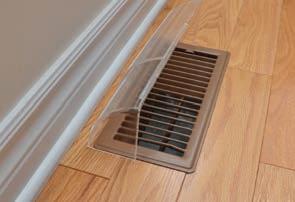
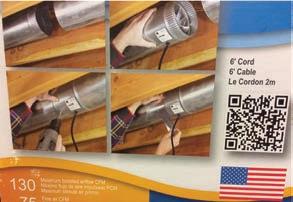
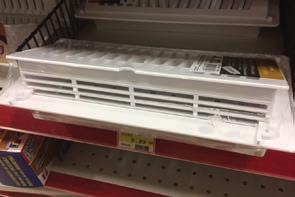
Purchasers of these products are not comfortable in one or more rooms of their poorly conditioned houses.
I have also seen a fan that sits on top of a floor register theoretically boosting air flow into the room.
Some homeowners believe directing airflow into the room away from the perimeter wall might lead to increased comfort.
Typically, supply outlets are called “registers” because they give direction to the air. Return inlets are referred to as grilles because they simply cover the duct opening. Proper floor registers are engineered products referencing details such as air pressure drop, throw, noise levels and air mixture. Throw is the distance from the register that air movement can be detected and is related to pressure drop.
To what height should the air be thrown? When selecting a register, a minimum of eight feet of throw is needed for the best possible air mixing. Air mixing is essential to providing comfort, proper ventilation and reducing air stratification. Air mixing blends air that enters a room through infiltration, and helps to stabilize temperatures on surfaces that affect comfort.
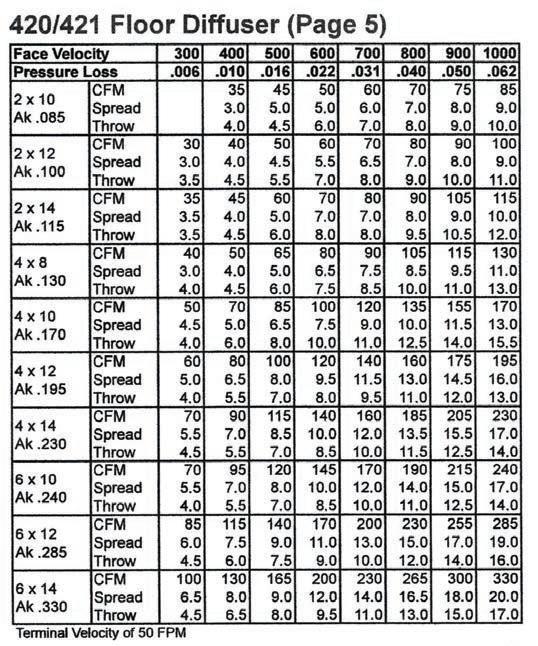
Notice in the Accord Engineering Table (Figure 1) that 4 in. x 10 in. floor register Model 101, when supplied with 85 cfm of air, will throw that air nine feet. A Hart & Cooley Model 421 register (Figure 2) needs 85 cfm to throw the air eight feet.
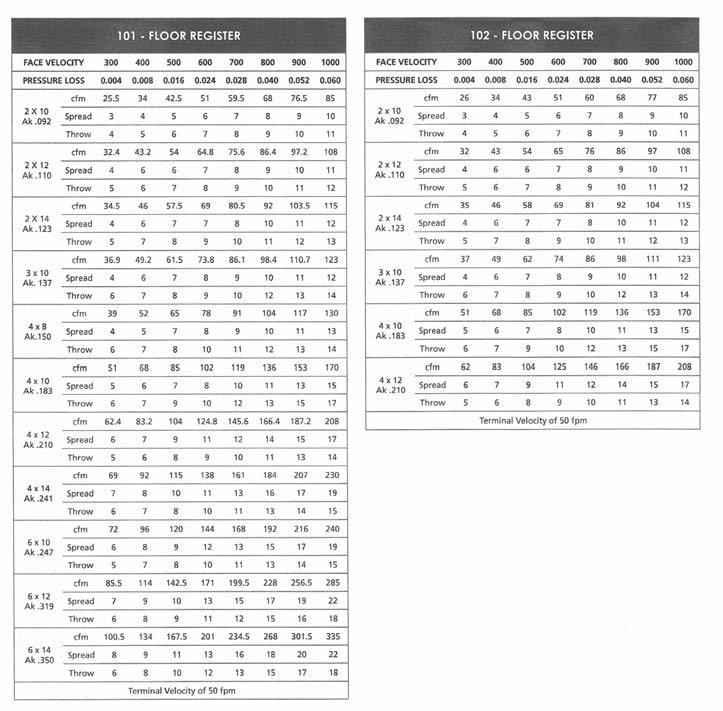
For a service technician investigating an alleged poorly performing heating system, the floor register data alone can be very helpful in determining why a particular room is uncomfortable.
The duct system distribution design should also allow for sufficient air changes per hour in order to maintain comfort. Suppose, for example, a technician measures 85 cfm at each of three 4 in. x 10 in. registers in a master bedroom measuring 18 ft. x 24 ft. x 8 ft. Using the formula:
Air Changes/hr = CFM x 60 minutes
Volume of the room
Thus,
255 cfm x 60 min
18 x 24 x 8
= 15300 3456
= 4.4 air changes per hour.
This is just barely enough air changes–typically a bedroom should have five to six air changes per hour. Two outlets should be balanced-up to 100 cfm each, improving the throw while providing better air changes for every hour the system fan runs.
As discussed in HPAC October 2018, the dynamic two-storey residential building designs that enticed post war ticky tacky box owners to show-off their style have been particularly hard to air condition. It is not hard to find a homeowner sadly acquiescing to near no-go lack of comfort zones in their expensive houses. Here is an apt rule of thumb I learned long ago: if you can’t heat a room, you will never cool it. Poor cooling performance in second floor bedrooms is a constant complaint–even if a well-constructed, properly bal -
anced air handling system is providing the numbers, too often customers complain about exaggerated temperature differences between the basement and the second floor.
Perhaps there are several other problems affecting both heating and cooling in the average home that cannot be readily reconciled by an HVAC technician. Here is a laundry list:
• Poorly insulated attic and walls causing the so-called flywheel effect that literally reheats the second floor after sundown
• Leaky windows or failed window units or windows left open
• Lack of shading on south facing windows
• Curtains or blinds left open during the day
• Doors/sliding doors unshaded and left open during the day
• Drapes, carpets or ceramic tiles blocking floor registers
• Furniture blocking registers and return air grilles
• Poor placement of registers and grilles
• Woefully inadequate return air especially from the second floor
• Decorative floor registers that provide no throw and create inadequate air mixing
• Handyman “adjustments” made to the air distribution system during renovations
• Irregular maintenance of HVAC equipment and filters
It seems that single zone forced warm air heating systems work best when the house is completely unoccupied. Once people and their possessions get in the way of throw and mixing, comfort and efficiency effectively disappear.
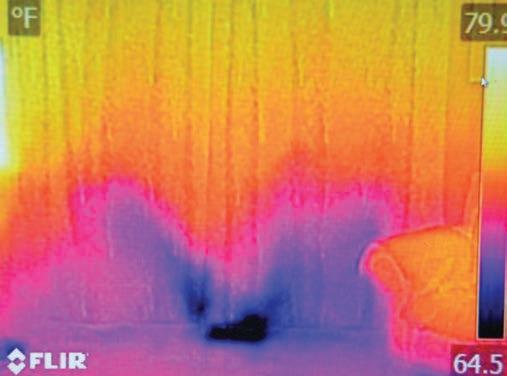
Typically, when the HVAC technician takes an airflow reading at a given register under a window, the floor length drapes are open and out of the way. A thermal image (Figure 3) shows what happens in cooling mode when the drapes are closed. Continued on p18
While the infrared camera cannot see the air, it can see the effect of the cool air and, in this case, too much air is being directed at the drapes. There is hardly any throw and not enough mixing. Eventually, the thermostat, located elsewhere, will be satisfied and this room will not be cooled satisfactorily.
In his article, “Design Illiteracy: The Root of All Evil in Architecture” (www.healthyheating.com), Robert Bean explains that, “…air temperature in codes relates to the space or, more specifically, the space where the thermostat is located. This is not explicitly stated but when code compliance is cited the thermostat reading stands as witness.”
For many decades, houses built in Canada utilizing singlezone ducted forced warm air heating systems have been thermally victimized by the thermostat location, almost always found in the first-floor dining room or in a hallway directly across from a bathroom. There is no way that a smart thermostat, even if powered by IBM’s Watson brain and communicating with a remote sensor, can ensure the occupants of the master bedroom are comfortable at any given time.
How does an HVAC contractor sell efficiency and thermal comfort having firsthand knowledge about the inherent inefficiencies of yesterday’s duct systems? Also, homeowners are not interested in factual arguments offered by service technicians and sales people about moving furniture away
from return air grilles or fitting shorter drapes in the interest of HVAC efficiency. Nor are consumers ready to spend thousands of extra dollars to renovate restrictive duct systems.
Any device that takes in air, conditions, and then discharges that air directly to the space without restrictive elements downstream is providing free air delivery. Ductless split systems leverage free delivery resulting in one of the best individual room comfort technologies available today.
When tied to a cold climate inverter driven heat pump, an indoor wall mounted air handler provides excellent air mix using a quiet but powerful tangential fan. Wall mounted units are designed to rapidly bring the room under control using a higher fan speed later reducing speed to provide a quiet maintenance air flow, drapes or furniture notwithstanding. Manufacturers have developed several exclusive technologies aimed at keeping inhabitants comfortable without annoying drafts. Enhancements such as automatic swing dampers moving up/down and left/right or dispersing air through thousands of micro air holes once the fast cooling cycle has ended make free delivery room comfort vastly superior to forced warm air systems.
Some manufacturers make incredibly versatile ducted systems running at higher static pressure, typically 1.5 in. w.c. Air is moved through a considerably smaller supply duct than used by conventional furnaces, often located in an attic although basement and alcove installations are possible. Conditioned air is delivered to the outlets through a 2 in. noise attenuated and insulated flexible tube. Air outlets are often placed in the ceiling about 5 in. from corners of the room.
Continued on p20

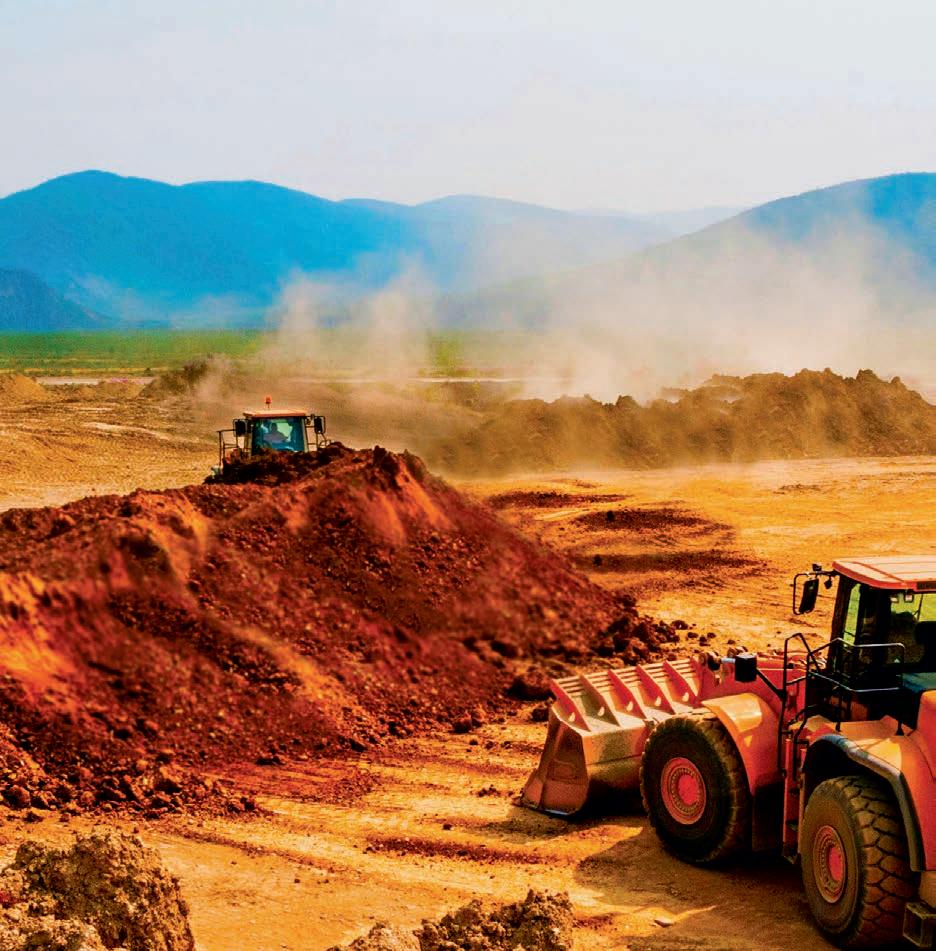

South facing room with blinds/ drapes left open. Passive solar heating too much for conventional AC system. Might help with heating until the sun goes down, then drapes should be closed.
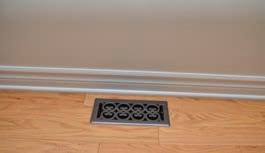
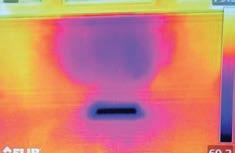
Decorative register allows too much air against outside wall–not enough throw, poor mixing.
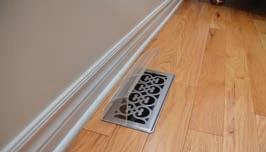
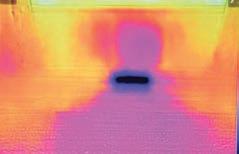
Decorative register with air deflector causes a draft at foot level while devoting too much cooling onto the carpet. No throw, no mixing.
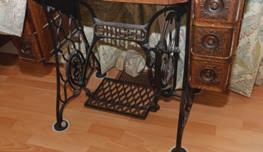
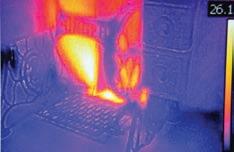
Heating or cooling mode: furniture and draperies prevent proper throw of conditioned air along the perimeter wall and without appropriate air mixing this room will have a noticeable temperature differential from the thermostat set point.
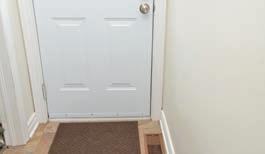
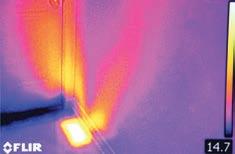
Poor location – too much air directed at the heavily infiltrated side door and nearby wall.

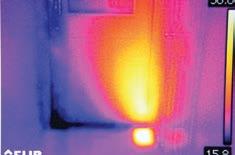
Poor location–too much air directed at leaky front door.
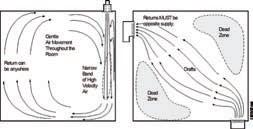
Air is moved through the room using the principle of aspiration defined as: “the production of movement in a fluid by suction created by fluid velocity.” Aspiration, according to one manufacturer, “creates an even, draft free environment.” One such system utilizes a modular air handler that can work with chilled water, hydronic heat, any manufacturer’s outdoor cooling unit, or a matched inverter drive heat pump.
There seems to be some public interest in purchasing a net zero house sometime in the future whether by prescriptive government regulation or by sentimental attachment to our seemingly struggling environment. Net zero or zero energy buildings (ZEBs) produce as much or more energy than they need over the course of a year.
British Columbia recently unveiled its voluntary “step code” in which the province “has committed to taking incremental steps to increase energy-efficiency requirements in the BC Building Code to make buildings net-zero energy ready by 2032.”
Ontario’s Doug Tarry, of Doug Tarry Custom Homes promises a ZEB with, “no spaceship in the basement.” Tarry is committed to using “The Dettson Smart Ducting HVAC System, for smaller ducting, better air flow and greater occupant comfort.” How refreshing to see a builder devotes some of his expensive marketing space to bragging about comfortable customers and advanced HVAC technology.
What about all the potential HVAC customers living with their ungainly 1960s air distribution technology? Many of them have already replaced one or two gas furnaces and perhaps one or two cooling systems; yet, the master bedroom is still, at best, semi-habitable during weather extremes in far too many cases.
Again, ductless and SDHV offer an affordable way forward for those customers who are expending too much energy trying to be comfortable in their homes. Until such houses are completely renovated to possibly even ZEB standards, the old proverb wisely noting that you can’t make a silk purse out of a sow’s ear applies.
Unfortunately, any traditional forced warm air system capable of delivering all the advertised energy benefits can easily be handicapped by the occupant’s lifestyle. Therefore, it is important for HVAC sales people and service technicians to know all the work-arounds. Ask the comfort questions of your customers, but be sure you know when HVAC is going to get in their way. <>
From Unico University, illustrating the concept of aspiration providing effective space conditioning.

Ian McTeer is an HVAC consultant with 35 years experience in the industry. He was most recently a field rep for Trane Canada DSO. McTeer is a refrigeration mechanic and Class 1 Gas technician.
TOOL-LESS CLUTCH ADJUSTMENT
Quickly switch cable sizes
RUBBER FEET
Anti-slip grip TRIDENT DECOUPLING TOOL
Easily disconnect cable sections SQUARE TUBING Added strength and durability CLEARING CAPACITY
Drain lines 2" - 8"
The RIDGID® K-5208 was designed for professionals who demand go-everywhere power. Its lightweight, compact design gives it unmatched portability, while its 700 RPM cable speed, ¾ HP motor and cable capacity – ranging from 7 ⁄8" to 1¼"– cut through the
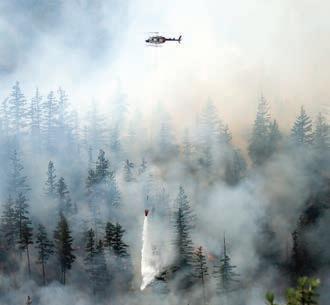
Maintenance proved essential during record-setting wildfire season in British Columbia.
BY JILLIAN MORGAN
British Columbia is cooling off in the wake of its most devastating wildfire season to date.
Scorching more than 13,000 square kilometres of the province, the wildfires prompted a nearly month-long State of Emergency in the summer of 2018. Smoke rising from the infernos severely degraded air quality–both indoors and outdoors–spiking pollution levels and putting HVAC systems to the test.
With back-to-back record wildfire seasons in the rear-view, Canada’s most westerly province must focus on preparation.
“Wildfires generate episodes of the worst air pollution that most people living in North America are ever going to experience,” said Sarah Henderson, senior scientist at the British Columbia Centre for Disease Control (BCCDC) and associate professor at the University of British Columbia’s School of Population and Health.
“This problem’s not going to go away… There’s no guarantee that 2019 is not going to be an equally bad wildfire season. Other parts of Canada are going to start seeing more and more of these extreme seasons and preparation is our best line of defence. Thinking well in advance of the wildfire season about how to keep indoor environments clean when the inevitable smoke arrives is going to pay off in the long run,” she added.
Fine particulate matter, one of many pollutants in wildfire smoke, poses the most serious health threat. Concentrations can reach 10 micrograms per metre cubed (µg/m³) on an average day in B.C. During periods of wildfire smoke, however, those concentrations can jump to 300 µg/m³.
“That’s a very large air quality impact,” Henderson said. “You can’t have outdoor air pollution like that without it getting indoors.”
The degree to which wildfire smoke infiltrates an indoor environment will vary based on the building type and HVAC system. Depending on proximity and size, wildfire–and all it burns up–can dirty coils or the water in cooling towers.
For Trane Canada representatives in BC, 2018 was a “bad year” for dirty and restricted condenser coils, resulting in high-pressure faults on air-cooled products.
“The filtration of smoke coming into buildings is, both from
The human body reacts to air pollution in the same way it might react to a bacteria or virus, and in response mounts an immunological attack, despite not actually being able to kill the pollution, Henderson said.
“When you breathe fine particulate matter–these are particles less than 2.5 microns in diameter–that pollution can penetrate quite deep into your lungs. It tends to generate irritation of the lungs and eyes and nasal passages… But it also generates inflammation,” she said, adding that effects will vary between individuals.
Common acute symptoms include watery eyes, a running nose, a cough or sore throat and a headache. When long-awaited rainfall extinguishes wildfires and cleans smoke out of the atmosphere, pollutions levels drop quickly over 48 hours.
“As soon as the smoke goes away, those symptoms will generally go away as well,” Henderson said. Inflammation, however, presents a more serious concern, particularly for individuals with pre-existing chronic conditions.
“What we don’t really know at this point is what the chronic effects of these smoke episodes are,” Henderson said. “We have a population living under very smoky conditions for two weeks, three weeks, maybe a month, we don’t know whether that affects their health for the year to come, for the next two years, for the next three years, for the rest of their lives.”
With the threat of increasingly extreme wildfires seasons, Henderson said its possible the long-term health of BC’s population will be affected.
“If there’s smoke of that magnitude outside, there’s definitely smoke inside as well. When these episodes occur, nobody can stop breathing, so everybody is exposed to that smoke. Some people are going to be more sensitive to it than others but the entire population is breathing in that air pollution,” she said.

a not-triggering-fire-alarms to human health perspective, really the biggest thing. Much bigger than worrying about the outside equipment because it doesn’t really care too much about the smoke,” said Timo Lucas, systems and equipment leader at Trane Canada West and area manager for Vancouver Island and Kelowna, BC.
Lucas said it is important to distinguish between visible smoke, typically one micron in size, and invisible smoke, less than .7 microns–adding that the ideal filtration system would remove both physical particles ranging in size from ½ to 1 ½ microns, as well as gasphase contaminants.
Smoke is mostly ash, he said, and could be compared to dust. If it gets in the water of a cooling tower, for example, a contractor may need to increase the cycles of concentration, meaning to flush the water more often. Filters will also need to be changed more frequently on equipment during smoky periods.
“From either an open-cooling tower or a closed, you should probably, if it’s fairly
smoky, pay a little bit closer attention. Maybe make an extra service visit to the equipment to see what’s happening with the water and/or if there’s any debris collecting on the fans,” Lucas said.
“Preparing for the 2019 wildfire season will ensure HVAC systems can stand up to extreme episodes...”
When it comes to protecting human health, Lucas adds that while passive filters and HEPA filters are effective, the best solution is electronic air cleaners, which remove harmful gas-phase contaminants and odour.
“You can actually smell ash and things like that, but you also smell and almost taste the gas-phase contaminants more. For that reason, suppose you’re in a building that has a MERV 13 filter, outside you look across the street and you can see a blue haze in the sky but indoors the blue haze is gone, but you can still sort of smell and almost taste the
smoke. The reason is that the gas-phase contaminants are still coming through into the building through that passive filter. The way that those odours can be controlled or removed is to remove the gas-phase contaminants,” he said.
While the bitter Canadian winter has taken a stronghold, preparing for the 2019 wildfire season will ensure HVAC systems can stand up to extreme episodes of smoke, protecting indoor air quality and human health.
“The reality is that most of us spend most of our time indoors. Even if only half of the smoke outside comes in, and it’s a really smoky day, you’re still getting a much higher exposure indoors than you would on a clean air day. Ultimately, the ideal approach to dealing with wildfire smoke would be the keep the indoor environment as clean as possible and keep smoke outside as much as possible,” Henderson said. <>
Author’s note: UL has created the validation for zero ozone air cleaning devices. See page 40 for more information.
BY ROBERT WATERS
Every year the impending winter season prompts Canadians to prepare for winter. Safely storing summer gear, closing the pool or cottage, putting snow tires on our vehicles are things we know we have do before old man winter arrives with a vengeance. But are your customers' condensing boilers ready for the rigours of the upcoming season? Heating systems in Canada work very hard combatting long winters, and a condensing boiler with a modulating burner will rack up lots of run hours. Ideally they should all have an annual service check up to ensure that everything is in peak operating condition. Like many pieces of mechanical equipment however, preventive maintenance for boilers is not always preformed like it should be. Doing a few simple tasks will ensure that a condensing boiler is prepared for winter, as well as ensuring that it performs efficiently and reliably for many years to come.
Condensing boilers are usually constructed with stainless steel heat exchangers, full modulation burners, and high-tech control systems. Due to their construction and components these boilers have a higher cost investment than traditional non-condensing boilers. It makes sense to take care of this investment to ensure a long and reliable service life.
It is interesting to compare servicing requirements for an automobile with a condensing boiler. When someone buys an expensive automobile they usually pay close attention to the manufacturer’s service requirements, and take the vehicle in for regular service and maintenance.
Why is it not the same for heating boilers? Just like an automobile it is an expensive investment and it also needs to
be serviced to keep it in optimum operating condition.
Any thorough pre-winter service call should start with a general overview of the boiler installation and the mechanical room. Darryl Singleton, vice president of Aqua-Tech Sales and Marketing Inc. in Burlington, ON, says “We always stress to our service technicians and contractors to check the environment first and think about everything that goes into the box before you start taking anything apart. By looking for clues upfront, you can often anticipate problems that you will see in the boiler.”
A general inspection should include looking closely at the venting system inside and outside to see if it is compromised in any way. With sealed combustion units, both the exhaust pipe and the intake pipe should be inspected for signs of debris build-up or small animal intrusions. Clean out any debris and repair any joints that show any signs of leakage before you start working on the boiler.
Inside the mechanical room inspect all of the hydronic piping and components carefully for any signs of water leakage. Look around the boiler area to see if any chemicals/liquids are being stored close by, and remove if necessary.
A quick check of the delta-T on the heating circuit can indicate possible problems with the circulating pumps. All of these quick initial checks will now set the stage for the main part of the boiler specific servicing to be performed.
The two primary areas that must be addressed when servicing a condensing boiler are the heat exchanger and the modulating burner assembly. Condensing boilers sold in Canada are available from a large number of manufacturers, however the heat exchangers are generally one of two types: stainless steel water tube (usually a coil design) and stainless steel fire tube design. There are other design types, as well as aluminum heat exchangers, but this article will focus on
these first two primary design types.
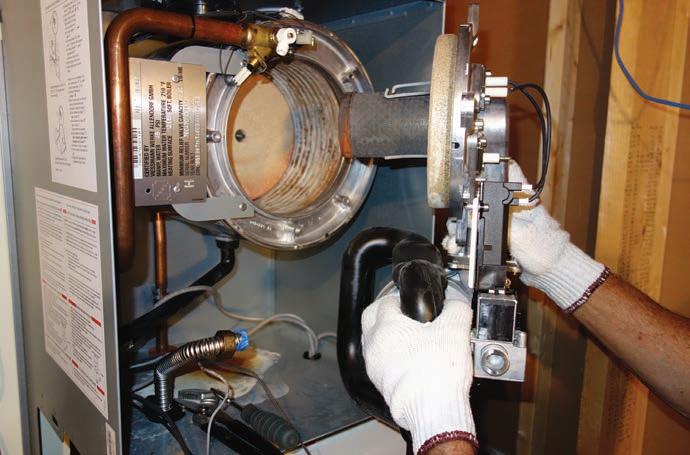
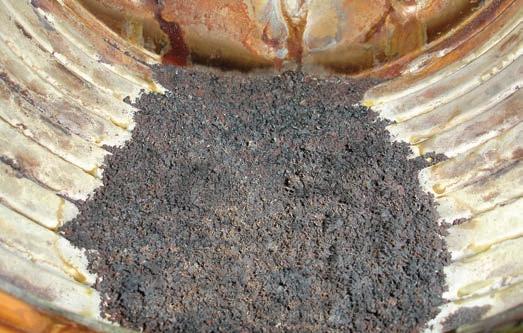
The fireside surfaces of the stainless steel heat exchanger (HX) should be inspected and cleaned annually. This requires that the gas connection be shut off, and the burner be removed. Depending on the model of boiler you are working on this can be relatively simple process, or may require some considerable disassembly of components. How much cleaning of the burner and the heat exchanger is required depends a lot on the environment the boiler lives in. Whatever gets drawn into the combustion air intake, such as dust, pollen and bugs, will tend to accumulate inside the boiler.
In general if the environment is clean then the burner/HX will tend to be fairly clean. This is not always the case however, and there are many examples of dirty environments which can cause significant burner/HX fouling issues. These include rural and agricultural areas, and areas with construction in the neighbourhood.
Even in clean environments, there are still organic compounds in the gaseous fuel that can cause deposits to form in the burner/HX. Build-up tends to be worse with propane gas so pay special attention to boilers burning this fuel.
Another thing to consider is that modern condensing boilers have much smaller flue gas passageways than old style cast iron and fin tube boilers making them more susceptible to fouling.
Once the fireside surface of the HX is exposed it must be cleaned. The cleaning should start with a vacuum cleaner to remove any larger particles that have accumulated in the combustion chamber. It is not advisable to use compressed air to blow anything out, as this can force particles farther into the flue gas passageways where they can become trapped. After vacuuming out all the larger particles, a nylon or plastic brush can be used to further clean the surfaces.
Metal brushes should never be used on stainless steel as they can damage the surface and shorten the material lifespan. Water can be sprayed into the heat exchanger to help cleaning, as it will drain out through the condensate p-trap.
With water tube coil HX designs the gaps between the coils often needs to be cleaned. Something that works very well
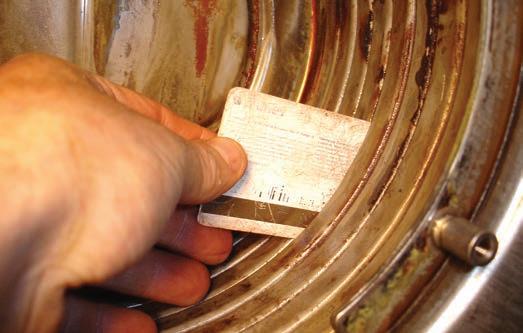
for this is an old plastic gift or credit card. Just make sure you don’t get it jammed in too tight! Mark Norris is the Viessmann Academy instructor at Viessmann Manufacturing in Waterloo, ON, and he explains that Viessmann sells a special metal gap cleaning tool for their boilers. According to Norris however, “This is the tool of last resort. It should only be required for boilers that have been severely fouled due to neglect. If the heat exchanger is cleaned annually with a nylon brush this tool should not be required.”
Condensing boilers with fire tube HX designs typically have the fire tubes that are oriented vertically. This helps provide them with a certain amount of self-cleaning effect. Vertical designs however are sometimes harder to inspect and get access to when they do need cleaning. Surfaces should be cleaned by vacuuming, wiping with a cloth or nylon brush, and rinsing with water.
In some cases the HX may need further cleaning and it is possible to use solvent-free cleaning solutions to remove surface coatings and discolouration. Cleaners used would typically be phosphoric or citric acid-based. If chemical cleaners are used it is very important to carefully follow boiler manufacturer’s instructions and the Material Safety Data Sheet (MSDS) of the cleaning agent manufacturer. All surfaces must be thoroughly flushed with water after cleaning.
The modulating burner assembly is next on the cleaning agenda as it must also be inspected and cleaned to keep it operating efficiently. In general pre-mix burners are not easily fouled, but they are at the mercy of their environment and whatever ends up coming in the air intake. According to Singleton, “Things can live in a pre-mix burner, especially organic material such as bugs, pollen and dust.”
Singleton also mentions that fouling problems are not always evident. “The self-adjusting nature of a modern power burner can keep the burner operating with no lock-outs. The burner and HX could still be very fouled however.”
Burners will have either mesh screens or very small holes which must be kept clean. Dirty areas on a burner can lead to hot spots which leads to material stress and poor combusContinued on p26
tion. Surfaces must be carefully vacuumed and brushed to remove debris. In cases of severe fouling the burner should be completely disassembled to clean all of the internal surfaces. With the burner out, check the condition of any refractory material and gaskets, and replace if they show any sign of wear.
Before reassembling the burner, the ignition and flame sensing electrodes must be inspected. The electrodes should be visually inspected for signs of fouling, change in shape, or damage to the porcelain components. Electrodes can be cleaned with a plastic brush or fine grit sandpaper. If the electrodes cannot be cleaned satisfactorily, are warped, or are just getting old, it is recommended that you replace them.
Norris says “Electrodes are consumables, and should be replaced regu -

larly. Electrodes are exposed to extremely high heat, and the stress on the metal tends to kill them over time. They are relatively inexpensive compared to the cost of a job site visit for a burner lock-out. You could spend time cleaning and re-installing the old ones, and still be back to the job a month later when they finally fail.”
A final thing to look at on the burner
is the ground wiring. A good ground path is essential for flame sensing, but it is often overlooked. Carefully check that all wiring is in good condition and is securely attached. Check the ground continuity using a continuity meter, and replace any ground wires or terminals if necessary.
After cleaning the boiler’s heat exchanger the condensate disposal sys-

You need
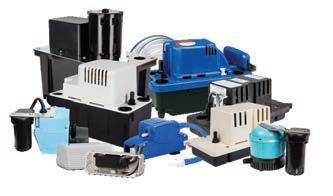
You provide answers to customer challenges, and for more than 75 years the Little Giant® brand has provided the dependable, water-guzzling solutions. When you combine our passion with yours, together we help prevent unnecessary damage to their valuables by eliminating unwanted water collection before it starts.
tem must be inspected and cleaned. Condensate that is created in the combustion chamber must always have a free path to flow away. If it plugs up with debris, then the condensate will back up into the appliance and eventually result in a burner lock-out. The main components of the condensate system are the p-trap, the piping to the drain, and optionally a condensate pump and a condensate neutralization system.
All of these components should be regularly cleaned and flushed. Most boilers have integrated p-traps that can be easily removed, disassembled and flushed out. Remember to fill the p-trap with some fresh water prior to starting up the boiler.
Now that heat exchanger, burner and condensate system have all been cleaned and reassembled, it is important to verify that you have good combustion. Modern condensing boilers are designed with a very fine tuned combustion process to maximize efficiency. They are not as forgiving as an atmospheric burner, so the combustion process must be verified and set up properly at commissioning and when serviced. It is not possible on most condensing boilers to actually see the flame in the combustion chamber. The only way to tell if the burner is running cleanly and efficiently is to use a combustion analyser to measure the flue gases. Verify that the CO2 levels are as per the boiler manufacturers recommended ranges. If required follow the manufacturer’s instructions to adjust the gas and air ratios to achieve good combustion.
Other components of the hydronic system must also be inspected and periodically serviced. These include, but are not limited to, the pumps and zone valves, expansion tank, relief valves, air vents and low water cut-offs. All of these components have specific servicing requirements, but unfortunately there is not enough space in this article to address them all in detail. A good topic for another time.
Condensing boilers when installed and serviced properly should give years of trouble free service. Maintenance however cannot be ignored. With their precision burner setups and their small flue gas and water passageways, serious issues can arise when they are neglected.
Singleton stresses that, “if you treat the investment with respect, it will serve you for many years”.
This is good advice to follow for all mechanical systems, but especially for condensing boilers. Now that the boiler is serviced you are ready to get the skis, skates and sleds out for some winter fun! <>

Robert Waters is president of Solar Water Services Inc., which provides training, education and support services to the hydronic industry. He has over 30 years experience in hydronic and solar water heating. He can be reached at solwatservices@gmail.com.
is your trailblazer when it comes to digitisation, design, efficiency and climate protection.

www.ish.messefrankfurt.com
info@canada.messefrankfurt.com Tel. 905-824-5017 World’s leading trade fair HVAC + Water Frankfurt am Main, 11 – 15. 3. 2019 New sequence of days: Monday – Friday
attests to topic relevance and speaker expertise, a win-win at Western trade show.
BY JILLIAN MORGAN AND KERRY TURNER
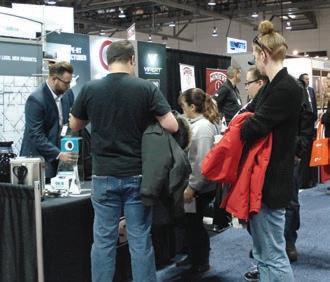
CIPHEX West two-day trade show ran November 7 and 8 and drew almost 3,000 visitors who checked out more than 200 manufacturer’s offerings. In addition, delegates were able to sit in on seminars addressing such topics as radiant ceilings, the 2020 National Plumbing Code (NPC) and rainwater harvesting.
Though simple in concept, executing a rainwater harvesting system requires an in-depth understanding of system design and key components. According to Edward Van Giesen, national sales manager for Watts RainCycle, early planning and analysis are essential to avoid running up costs.
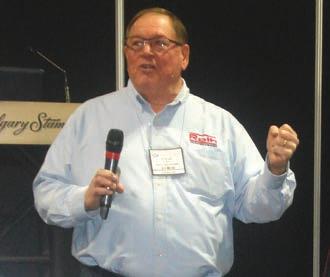
Giesen shared the fundamentals of commercial rainwater harvesting at CIPHEX and attracted a standing room only crowd.
The systems encompass everything from collection to end-use of rainwater, which Giesen noted refers to unused
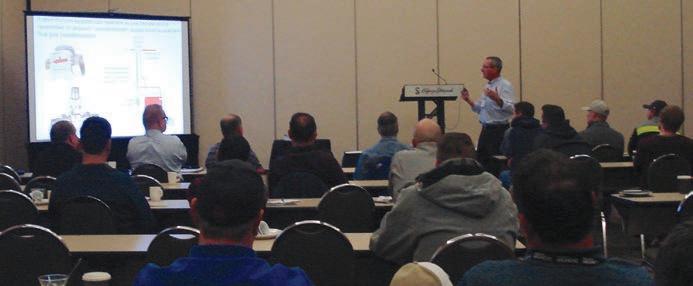
precipitation, not gray water, reused water, reclaimed water or recycled water. Typically, the set up includes an inlet pre-filter, storage, filtration, disinfection and distribution. Rain carries atmospheric pollution as it falls, so pre-filtration is essential, Giesen said.
The presentation analyzed a slew of pre-filter types, including inlet pre-filter with internal airflow, sloped screen filter, basket filter, hydraulic jump style filter and cascade style filter, among others.
He noted that one particular style–a baffle-type box with zero invert difference–could lead to a “bacterial soup” and will require frequent cleaning.
Giesen capped the presentation with a rundown of the fundamentals: have
proper ventilation, eliminate light, prevent animal access, allow for human access and consider equipment retrieval.
Rainwater harvesting is just one of the areas of change coming in the 2020 NPC, according to chief plumbing and gas administrator and inspector for the Government of Alberta, Sidney Manning. Among the other changes discussed by Manning at CIPHEX were water reuse, legionella, metrification, language, imported products, water reuse, and personal hygiene devices, to name a few.
A shift away from metrification, Manning said, will align with industry specifications, such as gauge and millimetre. Personal hygiene devices for water closets will also be included in the code.
The acceptance of imported European products into the Canadian market will grow by 500 labels this year, according to Manning. He added this offered a “huge opportunity” for wholesalers.
Water reuse will be the biggest change, though.
The code will see the addition of nonpotable rainwater harvesting systems, which includes a cistern, piping, fittings, pumps and other plumbing appurtenances required to collect and distribute rainwater.
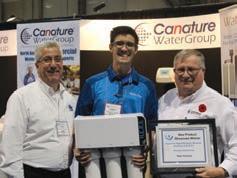
Sixty new products were featured in the 2018 CIPHEX West New Product Competition with eight of those products being named winners. To be a finalist each product must have demonstrated innovation in terms of utilization for function, while offering a variety of benefits to the industry members who sell, install or specify the products and, ultimately, to the end-user. New Product Competition winners, decided through a jury of industry experts, were presented with plaques by Ralph Suppa, CIPH president and general manager and show committee chair Austin Roth of Wolseley Canada.
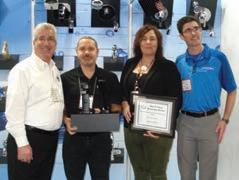
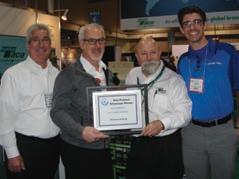
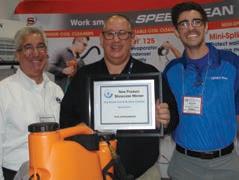
Heating category.
A non-potable rainwater harvesting system excludes rain barrels not connected to the plumbing systems. It must also be provided with a means to treat the water so the quality of the delivered non-potable water meets provincial or territorial requirements.
For the system design, roof surfaces used for non-potable rainwater harvesting systems must be inaccessible to vehicles and pedestrians.
Manning shared a few of the devices that non-potable harvested rainwater can supply, including water closets and urinals, trap priming, irrigation, hydronic systems and cooling tower make up systems.
He said “a lot of work” was done in particular around the language used for public versus private and potable versus non-potable water.
The updated code will include clarification regarding connections of non-potable water to potable water and public versus private systems. It will also include clarification of exemptions and prohibition of locations for non-potable water piping. The
code will also recognize unions for pumped sumps to “minimize conflict with prohibition of union joints.”
When it comes to variances, the code indicates that only a technical administrator can issue a variance in respect to: the pressure equipment discipline; a product, equipment, or distance measurement in the gas discipline; or a product, equipment or distance measurement in the plumbing discipline, according to Manning–and only a technical administrator may issue a province wide variance.
CIPHEX West is produced for the industry by the Canadian Institute of Plumbing & Heating, with support from the Canadian Water Quality Association, the Mechanical Contractors Association of Canada, the Mechanical Contractors Association of Alberta, the Canadian Hydronics Council, the American Society of Plumbing Engineers and the Thermal Environmental Comfort Association.
CIPHEX 2020 will be held in Vancouver on November 4 and 5 at the Pacific National Exhibition–Coliseum.
www.ciphexwest.ca
It is possible to detect refrigerant leaks in hotel room applications with instruments designed specifically for the job. BY TOM BURNISTON
Modern refrigerant systems are designed to be efficient and leak free. Refrigerant systems are pressurized and in reality, it is widely accepted that no pressurized system is entirely leak free; it is simply a case of how much, and where, the system is leaking. Often these leaks may be minimal and barely detectable, but improper installations, inadvertent damage, mechanical wear and a lack of maintenance can result in larger leaks that require mitigation. A larger refrigerant leak has a number of undesirable consequences for hotel owners and occupants, including:
• Inefficient HVAC system energy use and associated cost increases
• Ineffective HVAC system operation and associated repair costs
• Failed HVAC system operation and lost revenue resulting from unsaleable rooms
• Emissions of environmentally harmful refrigerant gas to the atmosphere
• A danger to the safety of occupants
Since its introduction in the early 1980s, variable refrigerant volume (VRV) and variable refrigerant flow (VRF) types of HVAC system have become increasingly prevalent in their use in the hotel sector. They present advantages including perroom control of temperature, cost effective and efficient installation, and both cooling and heating capability.
The design of these systems is such that in the event of a leak, the refrigerant charge that could leak into an occupied space is higher than in older types of HVAC system, which increases the risk of the undesirable safety, environmental and efficiency/cost consequences mentioned above.
It is now possible to detect refrigerant leaks in occupied space, hotel room applications with instruments designed specifically with the application in mind. These instruments can provide local alerts to the room occupants, connect to centralized facilities/building management systems, and instigate immediate automated mitigatory actions.
Modern design creates easily installed, aesthetically unob -
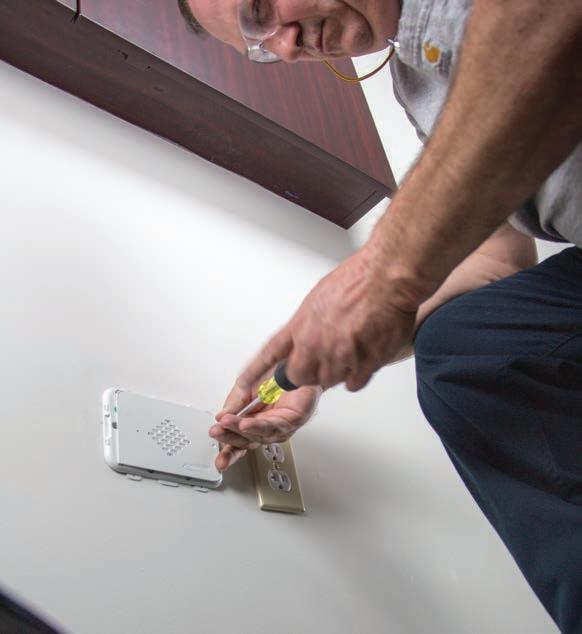
trusive and easily maintained instrumentation. The factors combine to enhance safety for the occupants, effective and efficient operation of the HVAC system, and minimize environmental impact.
CSA’s B52-13 Mechanical refrigeration code references ASHRAE 15-2013 and ASHRAE 34-2013. The stated scope of the ASHRAE standard is to establish safeguards for life, limb, health and property and prescribe safety requirements. ASHRAE 34-2013 establishes safety classifications for refrigerants and determines refrigerant concentration limits.
The ASHRAE standard is classed as a “National Voluntary Consensus Standard.” This means that while it represents best practice within the application, it is not mandatory code thus meaning significant engineering judgement can be applied when designing a system. Local and national codes must be reviewed when implementing a system design. It is good practice to work with the authority having jurisdiction (AHJ) as there may be variations in interpretations of these codes between jurisdictions,.
While the high-volume design of modern VRV/VRF systems are contributing to high efficiencies, they can present challenges for the HVAC system specifiers and architects when considering the maximum system charge calculations derived from section 7 of ASHRAE 15-2013. Most modern HVAC systems use the refrigerant R-410A, which as stipulated in ASHRAE 34-2013 has an eight-hour Occupational Exposure Limit (OEL) of 1,000 ppm (parts per million), which is the maximum level for human exposure over the designated period. ASHRAE 34 stipulates a Refrigerant Concentration Limit (RCL) of 140,000 ppm, the level at which the refrigerant gas
is deemed to present an immediate danger to health.
In the case of R-410A, this is because 140,000 ppm is the oxygen depletion level (ODL), where there is risk of asphyxiation, as stipulated in ASHRAE 34, clause 7.1.2. As clarified in ASHRAE 34, Appendix G.F.1, the ODL becomes the RCL in the case of R-410A because the danger of acute toxicity is actually at a higher level, of 170,000 ppm, than the danger of asphyxiation.
The RCL for R-410A equates to a limit of 26 lb of refrigerant per 1,000 ft3 of occupied space, as detailed with the standards. The RCL applies to hotel rooms, which are explicitly classified as “Residential Occupancy” by ASHRAE 15-2013, clause 4.1.3.
Ultimately, an HVAC system specifier when applying Formula 1 below derived from section 7 of ASHRAE 15-2013, may find that the refrigerant’s RCL is exceeded when considering VRF-type systems for relative small occupied spaces such as an office or hotel room.
Max Total System Refrigerant Charge (lb) = RCL (lbs / 1,000 ft 3) x Occupied Space Volume (ft 3) 1000
The volume of the occupied space should be calculated in line with the guidance in ASHRAE 15-2013, section 7.3. It is possible to design around the RCL and system charge limitations by using multiple smaller systems across the hotel. However, this may incur larger capital outlay, a more complex installation, and increased maintenance demands and costs over time.
These provisions are outlined to protect life, limb, health and property as per the scope of the standard. Essentially, it designates safety requirements for those personnel who may be in the machinery room where refrigerant may leak and where the total system charge of refrigerant may exceed the RCL. Clause 8.11.2.1 states that:
“Each refrigerating machinery room shall contain a detector, located in an area where refrigerant from a leak will concentrate, that actuates an alarm and mechanical ventilation in accordance with Section 8.11.4 at a value not greater than the corresponding TLV-TWA (or toxicity measure consistent therewith). The alarm shall annunciate visual and audible alarms inside the refrigerating machinery room and outside each entrance to the refrigerating machinery room. The alarms required in this section shall be of the manual reset type with the reset located inside the refrigerating machinery room.” – ASHRAE 15-2013 Clause 8.11.2.1
To transpose this onto a hotel room application, one can consider that a refrigerant leak detector should actuate an audible and visual alarm to the room occupant, and to the building/facility management team at a level not greater than 1,000 ppm R-410A. This approach also aligns with other standards applied internationally, such as EN 378:2016 which is enforced throughout the European Union.
The implementation of refrigerant detection in hotel room applications should be reviewed with the AHJ for approval, but can be seen to meet best practice within refrigerant ap -
plications through the increased safety it provides for hotel room occupants.
The application of refrigerant detection in a hotel room presents some unique design challenges. First of all, the detector should be placed in a location where the refrigerant is most likely to concentrate. As most VRV/VRF refrigerants are significantly denser than air, in the event of a leak it can sink to near ground level and accumulate there depending upon room ventilation. This means that a refrigerant detector should generally be at a level 10 to 12 inches from the ground.
In practical terms, this means generally being aligned with typical socket heights for electrical and telephone outlets, meaning the detector cannot be easily hidden from view in an area where it is still likely to be effective. As such, an aesthetically considered design which remains unobtrusive to the occupant is desirable.
For ease of installation, it makes sense to combine this aesthetic design consideration into a footprint that can install in standard electrical back boxes, sitting flush to the wall and allowing for easy conformance to building and electrical codes. In the event of a leak occurring, it is important that building management can immediately identify in which room the issue has arisen in order to effectively initiate mitigation of the leak. Therefore, the communications and connectivity of refrigerant detection instruments should be considered.
Communication protocols such as Modbus are readily integrated into building management systems, and can also deliver a wealth of additional information on instrument state, diagnostics and configuration. Additional connectivity may include local volt-free contacts to initiate immediate mitigation via the indoor HVAC unit in the affected room.
Maintenance of a system is important; therefore, systems should be trouble-free and require no special training. Innovations, such as plug-and-play and precalibration, can deliver a reliable method for ensuring the correct operation of refrigerant sensors. Automated calibration routines can also be used to ensure performance of instrumentation.
Pressurized HVAC systems are subject to leaking over time; it is simply a question of how much, when and where they leak. Innovative, application-specific design can make refrigerant detection an easily selected and implemented option for hotels installing modern, high volume-high efficiency HVAC systems. By following best practice widely used in the refrigeration industry, operators can enhance occupant safety, HVAC effectiveness, energy efficiency and environmental protection. <>
Tom Burniston is product manager, refrigerant leak detection, with Bacharach Inc.
The crucial pieces of information you need to convert that chiller. BY DAVE DEMMA
In Part I, which appeared in HPAC October 2018, the various considerations prior to undertaking a chiller conversion were discussed. What follows is a simple (or maybe not so simple) step-by-step procedure for actually converting a R-22 chiller.
1 Systems not operating properly with R-22 will not operate properly after the refrigerant conversion. A pre-conversion survey should be performed to ensure that system components should be checked for proper operation, and a list of any repairs should be assembled. Included in this survey should be a check of the system’s performance history. A system that has capacity issues on design high temperature ambient days might need an engineering review prior to the conversion. Any required repairs should be completed before or during the conversion.
2 Approximately a week prior: If an oil change (mineral oil to POE) is required, do it now. Field experience has shown that levels of remaining mineral oil higher than 5 per cent can be tolerated while still providing adequate oil return, yet compressor manufacturers still recommend that the percentage of remaining mineral oil after the refrigerant conversion be less than five per cent.
3 It would not be in anyone’s best interest to perform the refrigerant conversion, and find that a week later the system’s refrigerant charge was low. Prior to the conversion a complete system leak check should be performed, with all leaks properly repaired.
In addition, elastomer seals have a tendency to leak after a conversion is performed. This is not due to an incom -
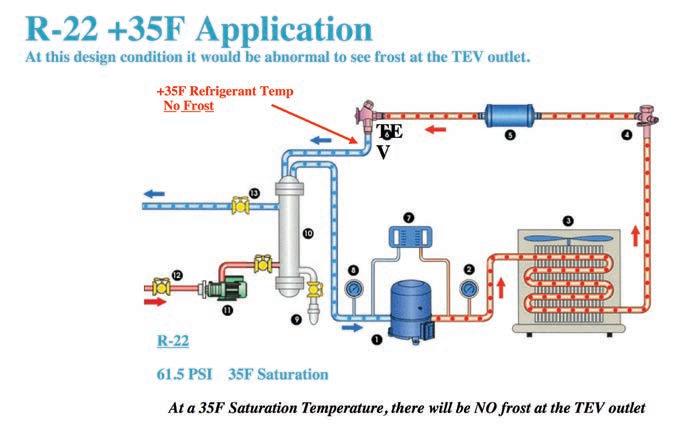
patibility issue, but due to the fact that elastomer seals will swell when in the presence of refrigerants.
It turns out that R-22 has the most aggressive swelling influence on elastomer seals, so after the conversion the seal will effectively shrink (the conversion refrigerant will result in a seal that swells less that it did with R-22). For example, lab testing revealed a Neoprene W O-ring in the presence of R-22 and mineral oil swelled approximately 4.1 per cent. The same O-ring was then exposed to R-404A and POE, and the swell was reduced by 2.6 per cent.
In addition, every elastomer seal will take a compression set once it is compressed in the valve or component that it is providing a seal for. Over time the seal will lose some of its resilience, preventing it from providing an adequate seal after the “shrinkage” takes effect. To avoid any potential leak after the conversion it is recommended that all elastomer seals be replaced. These would
include any O-rings (oil level controls, hand tight flare caps), tetra seals (used in some older model solenoid valves, which have been upgraded to wolverine seals), Schrader valves, pressure regulating valves, brass filter-drier shells, receiver level gauges, and so on.
4 Older model ball valves may not have leak proof caps. If available, leak proof caps should be acquired and installed. If not available, replacement of ball valves might be necessary.
5 Recovery of used R-22 from system. An accurate estimate of the system charge should be made, and the necessary amount of clean/evacuated empty recovery cylinders should be on hand to accommodate the removal of the R-22. Cylinders should not be filled to more than 80 per cent of capacity.
6 After replacing flow controls (if needed), replacing all filter-driers and oil filters (if used) and the system should be pressurized and leak checked. If no leaks are found, evacuate the system
down to 250 microns, with confirmation the vacuum holds.
7 While the system is being evacuated, it would be a good time to label the system with the new refrigerant. This might seem like an insignificant step, but imagine a technician taking a service call some weeks later and finding the system was low on refrigerant. Without knowing that a conversion had taken place, a technician might add R-22 to a system that has the appearance of still being an R-22 system. This is a potential costly situation that should be avoided and can be by simple labeling. If a log book is present, enter a summary of the work done during the conversion.
8 After the system has been properly evacuated, the new refrigerant can be added, and ultimately the system restarted. After the system has reached a stable operating condition, record and compare system operating conditions with those taken during the initial survey. Any pressure sensitive devices such as pressure controls, compressor unloaders, pressure regulating valves and system controllers should be reset for the correct pressure corresponding to the new refrigerant.
9 Finally, as most of these replacement refrigerants are high glide blends,
“Without knowing that a conversion had taken place, a technician might add R-22 to a system that has the appearance of still being an R-22 system. ”
the refrigerants should be charged as a liquid. Otherwise, due to the issue of fractionation (where the various components of the blend change states at differing rates), charging as a vapour will actually result in introducing a fractionated version of the refrigerant into the system, which will be a different configuration (per cent makeup of the various components) than how the refrigerant was originally blended.
All system TEVs should be checked for proper superheat setting and adjusted as required. If the refrigerant chosen for the conversion is a high glide refrigerant, then the technician will need to familiarize himself with the proper way to set superheat (and subcooling). Single component refrigerants such as R-22 will have a constant refrigerant saturation temperature at a given pressure.
I had a conversation recently with a contractor regarding R-407C chiller conversions. They were complaining there were issues with the R-407C and they were considering using another refrigerant for upcoming conversions.
After listening to their experiences, it
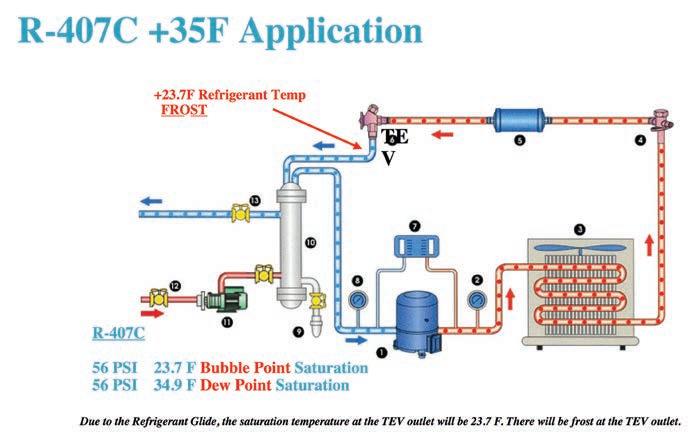
was determined their complaints were simply the result of not understanding the nature of a high glide blend.
Referring to Figure 1 (R-22 Chiller Application) and Figure 2 (R-407C Chiller Application) below, you will see a chiller application with a 35F SST. The pipe connecting the outlet of the TEV to the inlet of the chiller barrel will be at 35F. Because this is above the temperature which water freezes, there will be no frost on the pipe.
The same application with R-407C would have a dew point saturation temperature of 34.9F. This is the saturation temperature of the refrigerant where the last few molecules of liquid boil into a vapour. The bubble point saturation temperature, the point where the liquid first starts changing state into a vapour, is 23.7F. This is well below the temperature at which water freezes and it would be completely normal to see ice on the piping between the TEV outlet and the chiller barrel inlet.
The fact this section of piping had frost on it, whereas prior to the conversion frost was never seen on the piping, was the source of confusion/complaint. After the explanation was given that the glide was the culprit for the frost, the contractor was satisfied and happy. There were no other issues only the fact something was seen that was not seen before and it was mistaken as a problem. <>

Dave Demma holds a degree in refrigeration engineering and worked as a journeyman refrigeration technician before moving into the manufacturing sector where he regularly trains contractor and engineering groups. He can be reached at ddemma@uri.com.
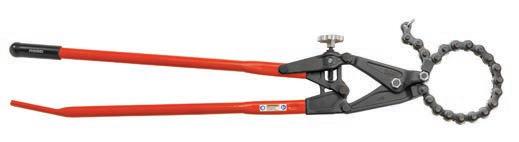
From Rigid, the Model 286 soil pipe cutter allows for repeated cuts on soil pipe up to 6 in. It features single stroke operation and outwardfacing hooks intended for connecting clay and cast iron pipe. The cutter includes integrated handles and a built-in cutting mechanism. www.rigid.com
Victaulic’s FireLock IGS Style V9 sprinkler coupling and FireLock IGS grooved sprinklers are designed for exposed applications. The coupling has one-bolt, is captured onto sprinklers with a connection size of ½-in., ¾-in. or 1-in., and transitions to 1-in. allowing for the standardization of 1-in. IGS outlets. www.victaulic.com
The RSC-900 wireless system from Reliance Detection Technologies shuts down water supply and sends app-based notifications when a leak is detected. The system consists of a central hub, a water shut-off valve/actuator and water flood sensors. It can connect up to 29 wireless devices to each hub. Lead-free shut-off valve sizes range from ½ in. to 1- 1 4 in. www.reliancedetection.com

From Taco Comfort Solutions, the 006e3 variable, wet-rotor circulator is designed for domestic hot water recirculation systems. Part of the 00e Series, it features a permanent-magnet ECM motor, compact design and multiple connection options. www.tacocomfort.com


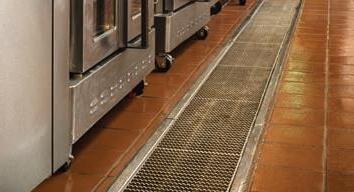
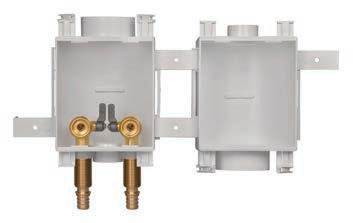
IPS Corporation has added outlet boxes with REHAU Everloc+ compression sleeve connections to its line of Water-Tite and Guy Gray fire-rated plumbing product brands. The connections will be available on washing machine, icemaker and kitchen outlet boxes. www.ipscorp.com

From Drummonds, the Ashburn cast iron bathtub with ball and claw feet is a compact, freestanding roll-top. It is 59 in. long and available in four finish options: polished, painted, raw or primed. The bathtub is made with dry fit vitreous enamel fused with cast iron. www.drummonds-uk.com
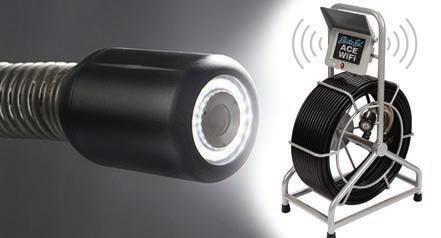
Electric Eel’s eCAM Ace Wifi inspection camera can be used to inspect pipelines ranging from 3 in. to 10 in. An auto iris adjusts lighting automatically. It has a video output jack for recording. www.electriceel.com
Noritz's PROCard app provides a live map of installed Noritz tankless water heaters, and error code alerts. WiFi capabilities can be installed without accessing the homeowner’s phone or mobile device. Once connected, homeowners have wireless control of the heater, including set point adjustment, on/off function and diagnostics. www.noritz.com
From Caleffi, the 574 Series reduced pressure zone backflow preventer is designed for residential and commercial plumbing systems. The valve is available in ½ in. and ¾ in. pipe sizes with NPT or press connections. It features a discharge air gap, isolation valves and pressure taps. www.caleffi.com
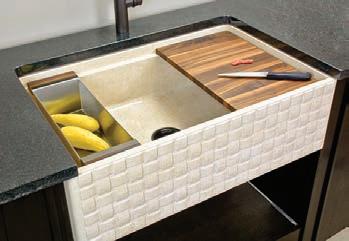
The Wave Front and Basket-Weave Pattern
sinks from
Forest are carved from either papiro cream marble or honed
Each sink comes with accessory options. www.stoneforest.com

The Clean Design brochure from Geberit lists wall-hung and floor-mount fixtures from ceramic manufacturers that are compatible with the company’s in-wall systems. Step-bystep methods of identifying the toilets and urinals compatible with the in-wall systems are included. www.geberitnorthamerica.com
Inline 1100 SpecPak pressure boosting system from Franklin Electric connects to commercial, industrial or large residential plumbing configurations. The water pressure system contains a pump, motor and drive. Each unit provides up to 60 lbs. of additional pressure. www.franklinengineer.com
From Knipex Tools, the gripping pliers series features universal, long-nose and welding gripping pliers. The 10-in. universal gripping plier offers toggle lever action and a pivoting bottom jaw that adjusts to square, round, hex and flat materials. The 8 in. long-nose gripping pliers are zinc-plated and feature long, narrow jaws at a width of 1⁄4 in., as well as a non-serrated gripping area. The welding gripping pliers feature movable jaws with clamps for work pieces and sections with high rides up to 1 1⁄2 in. The maximum gripping capacity of these tools is 3 17 32 in. All pliers feature one-hand operation, an adjustment screw and release level. The bodies of the pliers are made from rolled steel and gripping jaws are made from chrome vanadium electric steel. www.knipex-tools.com
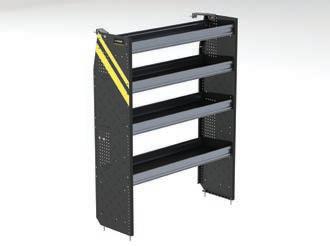

ASHRAE's Standard 90.1 online portal offers a suite of resources related to the Energy Standard for Buildings Except Low-Rise Residential Buildings. It features a multi-publication line tool, which allows users to view each publication side-byside or separately, as well as copy, paste, print or annotate. Access to the standard’s user manual is also available. www.ashrae.org/901portal
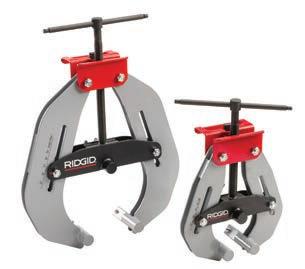
The pipe-welding clamp from Ridgid comes in two sizes: 2 in. to 6 in. and 4-½ in. to 12 in. It features a quickacting size adjustment and quick release buttons. The clamps include spring-loaded winged setscrews for three-point alignment and an integrated size gauge. It also features ACME threaded screws and steel construction. www.ridgid.com
Steel van shelving from Ranger Design features black end-panels and aluminum extrusions. The shelf trays are built from plywood and have a load capacity of more than 200 lbs. Accessories include metal dividers and stackable bins. www.rangerdesign.com
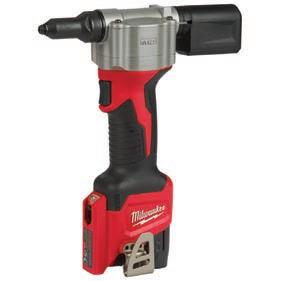
From Milwaukee Tool, the M12 rivet tool is designed to pop up over 250 4.8 mm. stainless steel rivets. It uses a scotch yolk mechanism and is powered by M12 Redlithium batteries. With a capacity of 2.4 mm., 3.2 mm., 4 mm. and 4.8 mm., the rivet tool can pop a range of materials including aluminum, steel and stainless steel. It features Redlink intelligence hardware and software and single-trigger engagement. A retention nosepiece and on-tool nosepiece storage are also included. It has a pull force of 2,000 lbs, a stroke length of 20 mm., and weighs 4.54 lbs with the battery. Nosepieces range in length, including 2.4 mm., 3.2 mm., 4.0 mm. and 4.8 mm. www.milwaukeetool.com
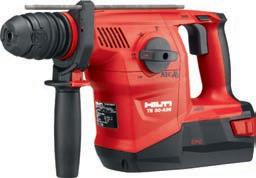
Hilti’s cordless combihammer TE 30A36 and cordless rotary hammer TE 6-A36 feature a 36V battery platform and intelligent power management system. TE 30-A36 features a B36/5.2 CPC battery pack platform, compatible with other Hilti tools. It also features an electro-pneumatic hammering mechanism and brushless motor. TE 6-A36 has a brushless drive, two compatible 36V batteries – B36/2.6 CPC Li-Ion compact and B36/5.2 CPC Li-Ion Industrial. www.hilti.ca


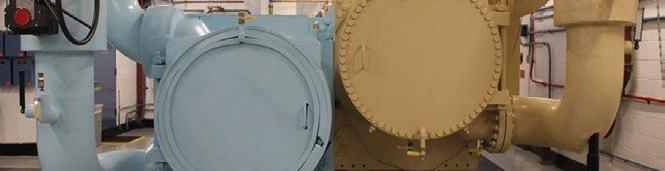
Goodway Technologies has launched a free online Chiller Fouling Calculator, which considers annual operating hours, average load, energy cost and rated chiller efficiency. It is intended for facility managers and personnel in charge of chiller maintenance. The calculator analyzes the costs of mineral and scale fouling in chiller tubes, and potential savings from removing these deposits. www.goodway.com
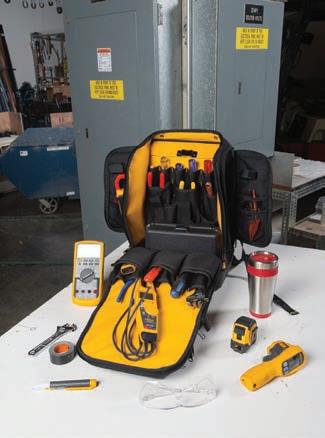
The Fluke Pack30 professional tool backpack is designed for an electrician’s DMMs, clamps, tools and accessories. It includes over 30 pockets and pouches, six main storage compartments and a pocket for tablets and laptops up to 12 in. wide. The backpack also features a waterproof, moulded bottom. www.fluke.com
From Danfoss, the HVAC/R Service Tool is an online troubleshooting platform intended for contractors and service technicians. It offers keyword search, and users can explore different parts of the cooling system to find potential problem areas and suggested solutions. Users can access instructions via a mobile device. www.hvacrservicetool.com
Reed Manufacturing has released its full-line Catalogue N++. With 92 pages, this version provides an eight-page new tools insert, and “best ever” designations throughout for models with improvements over prior Reed versions of that tool, including durability and functional performance. This catalogue includes product bullets, which highlight key tool features. www.reedmfgco.com

Clarity3 by Taco Comfort Solutions is a building automation system that uses BACnet protocol. The system offers mobile functionality, as well as searching and bookmarking options. It includes dashboards, reports and graphics, as well as commands and notifications. www.tacocomfort.com
Optivision red levelling products from Kapro Tools include the 905 Condor box level, 935 Optivision red 10-in. toolbox level, 946 Smarty 4-in. magnetic pocket level and 930 SmartCast heavy-duty mason’s level. The solid acrylic vial features an epoxy-locked tilted setting that offers a direct line of sight to the bubble. www.kapro.com
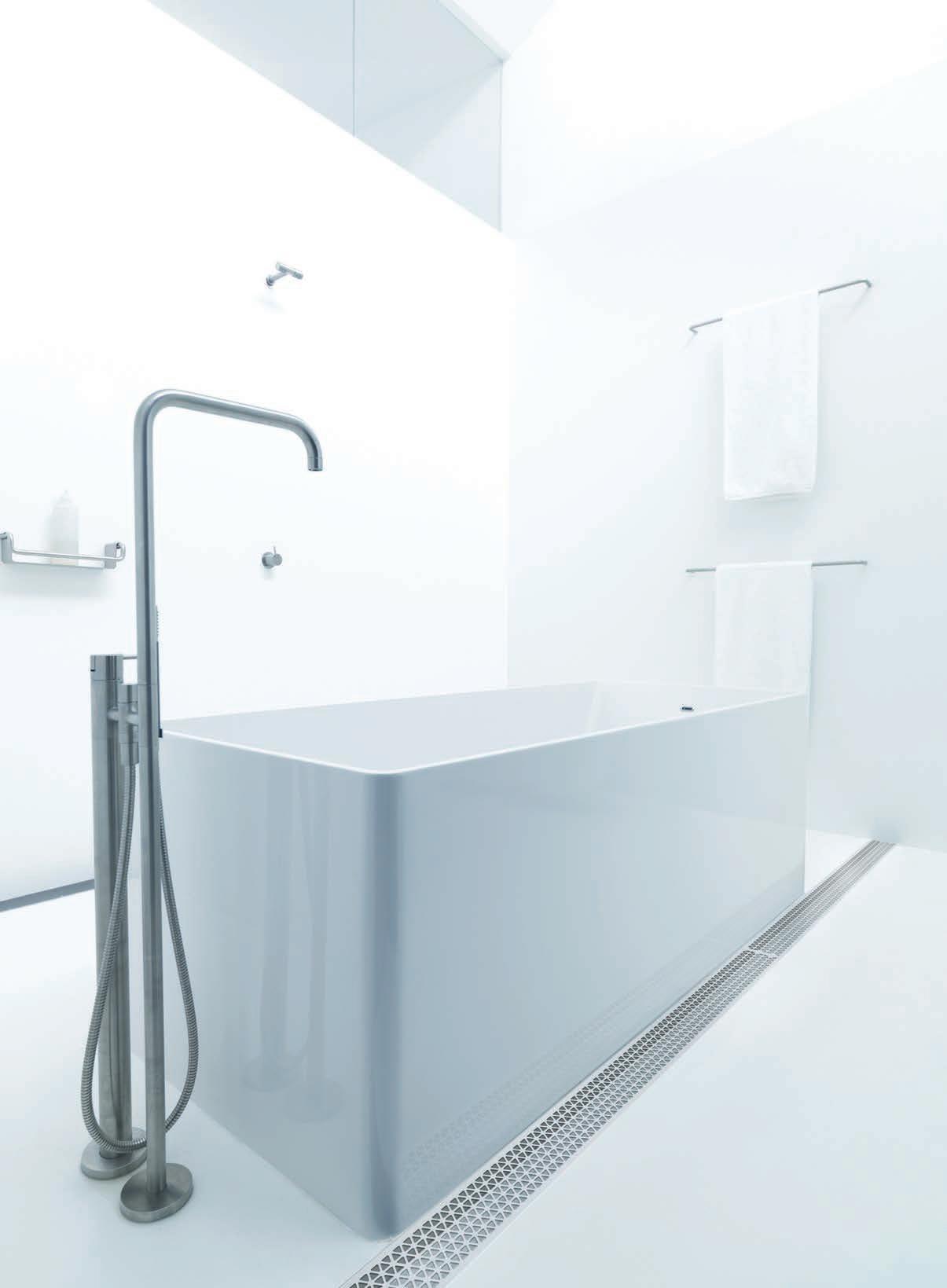
There are some important considerations when specifying a linear drain.
BY ELENA DOXEY AND CHRISTIE BACCHIONI
Linear drains have become top-ofmind, no matter what trade you are in (architecture, design, remodeling, general contracting, or plumbing). With linear drains, it is all about trying to achieve a sleek, open look for a client’s bathroom. Luckily, the process of specifying a linear drain can run just as smoothly as a traditional drain, providing you ask the right questions and plan ahead.
Here is a quick checklist of what to consider when specifying a linear drain:
1. What will the layout of the shower be?
2. Will the shower be barrier-free or have a curb?
3. Which waterproofing technique will be used?
4. What is the total flowrate of the fixtures?
We will dive a bit deeper into these with the explanations below.
What is the layout of the shower?
The dimensions and layout of the shower enclosure will likely determine the length of the linear drain and where it will be placed. If the project is new construction, you’ll have some freedom with the layout. A remodel, on the other hand, could possibly have some existing site-specific conditions that might place limitations on what is achievable.
The good news is that no matter what the layout is some linear drains can be cut-to-size, right on site, allowing for a perfect wall-to-wall installation, and the most efficient evacuation of water so there is no ‘pooling’ in the corners of the shower. As a general rule-of-thumb, linear drains are located at either the back or side wall of where the fixtures are installed, or along the threshold or entrance.
Will the shower be barrier-free or have a curb?
There may be specific reasons why a client requests a barrier-free shower over one with a curb. One client who may have mobility issues, or is doing
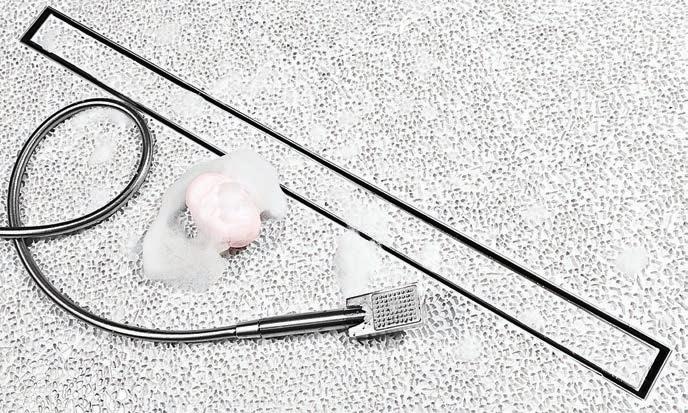
an aging in place renovation, needs the freedom and ease to access their shower without any limitations. Or, another client might just want the shower to feel like an extension of the bathroom without any barrier at all.
When trying to achieve a barrier-free shower, you could run into some issues –such as the floor height. Linear drains with a shallow channel or modern waterproofing techniques can help decrease overall floor height to achieve an easy, barrier-free installation. Furthermore, certain decorative styles or ultra-narrow widths are not advisable for barrier-free showers when placed along the threshold. Planning ahead, therefore, is the key factor to achieving a curb-less bathroom.
Which waterproofing technique will be used?
Different waterproofing techniques require different channel fabrications, so a decision must be made on which type of waterproofing will be done in the shower enclosure.
Traditional – Traditional waterproofing techniques are the more popular option in. They utilize a clamping flange to connect to the waste line. The PVC shower pan liner or rubber liner is most common, followed by other more regional-specific techniques that include hot mop (which is only used in California), and lead or copper shower pans (which are found in the Northeast). Linear drains that work with traditional waterproofing are Site Sizable® and can either be cut in the field or as a fixed length linear drain. Modern – Tile setters tend to be big
Clients may want the shower to feel like an extension of the bathroom without any barrier at all.
fans of modern waterproofing. There are two options to this technique: one uses a liquid membrane that dries into a hard surface, and the other uses a pliable fabric sheet. Whichever option is used, tile setters love the convenience of tiling directly on top of the surface, as this makes installation faster and easier. Modern waterproofing requires a linear drain channel with a flanged edge. This provides a surface for the liquid membrane (or fabric sheet waterproofing) to bond to the channel. The waterproofing then continues over the shower floor and up the walls. Flanged channel linear drains are available with either a vertical outlet or horizontal side outlet.
What is the total flow rate of the fixtures?
Flow rates of the specified shower fixtures need to be calculated early in the planning phase. The linear drain must be able to handle the combined flow rate of the fixtures installed in the shower. For example, a shower may include a rain head, hand-held, and a traditional showerhead, each with a flow rate of 2.5 gallons per minute. Standard linear drains can handle up to nine gallons of water per minute and connect to a two-inch waste line. High flow versions that connect to a three-inch waste line will accommodate a flow rate of 21 gallons of water per minute. <>
Elena Doxey and Christie Bacchioni are with EGC Group, content provider for Infinity Drain. Material was modified with permission from www.infinitydrain.com.
New air cleaner UL validation aims to deliver on healthier indoor environments.
BY AARON ENGEL
Twenty years ago, consumers knew very little about indoor air quality (IAQ) and its effects on their health in the home. Subsequent media attention and contractor awareness, saw a flurry of manufacturers offering IAQ air treatment equipment for homeowners wishing to improve their IAQ. Meanwhile, contractors saw opportunities for additional business.
Contractors began installing many of these devices within HVAC systems, which offer the most effective method for distributing treated air evenly throughout the household.
IAQ manufacturers helped nurture the trend with new and innovative marketing terms promoting technologies, such as ionization, plasma, oxidation, peroxides among many others.
Unfortunately, many of these marketed air treatment technologies produce ozone, by-products of ozone and/ or other reactive oxygen species (ROS). ROS, in particular ozone, has recently come under scrutiny as a source of respiratory irritation and even lung damage. Ironically, many of the actual technologies consumers were purchasing to improve IAQ can actually cause respiratory maladies the consumers were originally intending to avoid or treat.
To worsen matters, organizations such as Health Canada and the Centers for Disease Control and Prevention in Atlanta, GA report that those with the greatest risk to ozone exposure–older adults, infants and children–are the same consumers with higher incidences
of asthma or other lung diseases.
As the IAQ purification marketplace became inundated with products that produced measurable ozone emissions, there was an increase in negative media attention spotlighting ozone dangers. Subsequently, manufacturers, many of which purposefully designed ozone generation into products to create ozone’s distinct odour or scent, began substituting the word “ozone” with marketing terms.
This misguided marketing created confusion in the marketplace regarding the amount of ozone generation and off-gassing being emitted by several IAQ technologies, products, and brands. Consequently, consumers and even HVAC contractors, who wanted to install the safest products, had nowhere to turn for zero ozone emission confirmation.
Underwriters Laboratories (UL) in Northbrook, IL, recently took on the task of creating the validation for zero ozone air cleaning devices. UL 2998 is the environmental claim procedure with validation.
Contractors and consumers can now visit UL SPOT (ul.com/spot), which lists all types of sustainable products worldwide, especially those that are ECOLOGO Certified, a Canadian eco-label UL recently purchased.
The UL SPOT also lists validated zero ozone products under the site search
term of “HVAC Air Cleaners.” Qualifying zero ozone emission products must demonstrate they emit less than the maximum ozone concentration limit of 0.005 ppm (5 ppb) which is below quantifiable level for ozone testing. This is 10-fold less than permitted under test standard UL 867, which allows concentrations of 0.05 ppm (50 ppb).
Approved products also receive a validation badge that can be displayed on marketing materials and product labels.
The health concerns of exposure to ozone have been gaining increased attention among many organizations in many countries. Health Canada advises against using ozone generators in homes. It recommends a residential maximum exposure limit of 40 µg/m3 (20 ppb) ozone, based on an averaging time of eight-hours.
The U.S. Food and Drug Administration (FDA) was the first to set an ozone emissions limit of 0.05 ppm (50 ppb) for all medical devices. In 2008, the California Air Resources Board (CARB) targeted ozone emissions with a state-wide regulation requiring certification of all electronic air cleaners under UL 867’s 0.05 ppm (50 ppb) limit.
Most HVAC applications that utilize UV light devices to treat surface-bound or airborne micro-organisms use the germicidal UV-C wavelength of 254 nanometers (nm), which is the most lethal for micro-organisms and is also non-ozone producing. However, some UV-systems may not only utilize UV-C, but also a secondary wavelength called UVV (or vacuum UV) at the 185 nm, This UVV wavelength produces ozone.
Ozone producing devices cannot be visibly detected and will appear similar to zero-ozone versions. Prior to UL 2998 being established as a voluntary test and validation procedure for air treatment manufacturers, contractors and wholesalers had no resources or
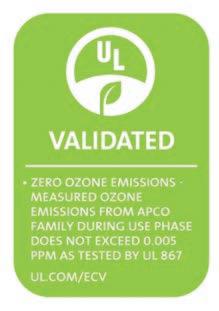
UL 2998 is the environmental claim procedure with validation.
standard methods of test for identifying true zero ozone UV disinfection air treatment systems.
Like the FDA and CARB, ASHRAE recently made known its viewpoint of ozone in its 2015 publication “Position Document on Filtration and Air Cleaning.”
The position document’s Section 2.6 states: “Ozone is harmful for health
and exposure to ozone creates risk for a variety of symptoms and diseases associated with the respiratory tract; Ozone emission is thus undesirable."
Section 3.2 of the document further states: "devices that use the reactivity of ozone for the purpose of cleaning the air should not be used in occupied spaces because of negative health effects that arise from exposure to ozone and its reaction products.”
Besides better occupant health in commercial buildings, specifying zero ozone air treatment devices also help facility owners satisfy requirements of green building design programs, codes and procurement policies including Leadership in Energy and Environmental Design, the International Green Construction Code (IgCC) and European Union guidelines and directives.
With the increased awareness re -
garding exposure to ozone in indoor environments contractors in the HVAC industry are poised to lessen the products that emit ozone, ozone by-products or other ROS.
Air treatment devices are an excellent add-on sale for contractors to increase profits, while also providing their customers with safe and healthy IAQ. Contractors and wholesalers should commit to products that are in their customer’s best interests and supported with UL 2998 to guard against the potential liabilities of ozone. <>
Aaron Engel is vice president of business development at Fresh-Aire UV, a North American manufacturer of residential, commercial and medical UV disinfection and carbon/titanium/ PCO-based systems. Engel can be reached at aaron@freshaireuv.com.

Premier, Single-Stage, Low Intensity Tube Heater
Product Features:
• Pre- and post-purge controls
• Self-diagnostic LED, microprocessor based circuitry
• 24 volt controls and power cord are standard.
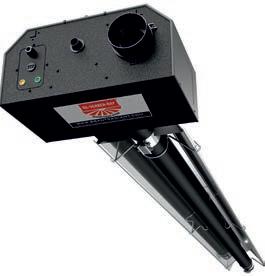
HPAC_Dec_Brant.indd 1
BY JILLIAN MORGAN
Motion sickness is poised to throw a wrench into the seemingly unstoppable rise of virtual reality, including its use among mechanical contractors. A team of researchers at the University of Waterloo have a solution.
Cyber sickness, or virtual reality motion sickness, can induce nausea and discomfort in individuals after they have participated in immersive virtual reality. The ailment’s debilitating effects raise health and safety concerns for contractors who use virtual reality in the field or for training.
“This has been a problem for years in immersive virtual reality. Some of those problems have been solved. Turns out you need really close mapping to how you’re physically moving in the real world and how your camera in the virtual world moves, for instance. But some people still experience sickness… So how do we solve this problem?” said Séamas Weech, postdoctoral researcher at the University of Waterloo Department of Kinesiology.
Weech is co-author of a recent study out of the university that hopes to predict and combat cyber sickness. The study involved collecting sensorimotor measures, such as balance control and self-motion sensitivity, from participants while they played a virtual reality game in which they were floating in space.
“What we found was very interesting,” he said. “The more that someone sways in response to a moving visual field, the less sickness they felt in virtual reality. This tells us those people may have more flexible sensory motor control processes. So they can actively change their use of sensory information better than others, leading to better adaptation to virtual reality.”
The virtual reality market is expected to reach around $50 billion by 2020. While the majority of that revenue is likely to come from the entertainment industry, the technology is increasingly adopted in engineering, health care, education and training.
“Information spreads quickly and virtual reality is not likely to have a very
While often used interchangeably, augmented reality (AR) and virtual reality (VR) refer to two different experiences.
VR is fully immersive. Users don a head-mounted display and other electronic equipment, such as gloves fitted with sensors, in order to be “transported” to a computer-generated simulation of a three-dimensional image or environment.
AR, on the other hand, involves the use of technology–such as a smartphone or tablet app–to superimpose a computer-generated image over the natural environment.
Mixed reality–a term gaining more traction–sits somewhere in the middle. It allows the user to experience virtual objects in the real world. Microsoft HoloLens is likely to be the most well-known mixed-reality technology.
Each technology will feature predominately in the entertainment industry, but the trades can take advantage, too. VR-based training is on the rise, and both AR and mixed reality offer a slew of benefits to contractors in the field.
positive reputation if one of the major stories surrounding the technology is the huge problem of cyber sickness. Solving that issue is most likely to be one of the key issues that determines the scale of the benefit to society introduced by virtual reality in the next 20 years,” Weech said.
Cyber sickness can last for an hour after using virtual reality, affecting balance, retention of information and fine motor control. Contractors using the technology may opt to terminate the experience or take breaks in the middle of a task.
“Not only can it be an unpleasant experience for the person experiencing it but it can also be catastrophic for their ability to perform especially in highstress situations like doing an installation,” he said. “When you’re experiencing cyber-sickness you’re much less stable than you would normally be. This could be quite a serious problem if an individual is in a situation where they need to maintain stability in order to be safe.”
Not all is lost, though. The study offers insight into how cyber sickness can be predicted and counteracted, so users can access the slew of benefits offered by virtual reality through a more tailored experience.
“The upside of the immersive virtual reality experience [is that] you can more naturally interact with your environment… You get better memory for the layout of a system, the parts of a system, and your learning will likely transfer well to the real world,” Weech said. <> Stay tuned for more on the role of augmented and virtual reality for troubleshooting and diagnostics in an upcoming issue of HPAC. See HPAC February 2018 for early coverage of this emerging technology.
April 24 & 25, 2019
Canada’s largest plumbing, HVACR, hydronics, electrical and lighting expo
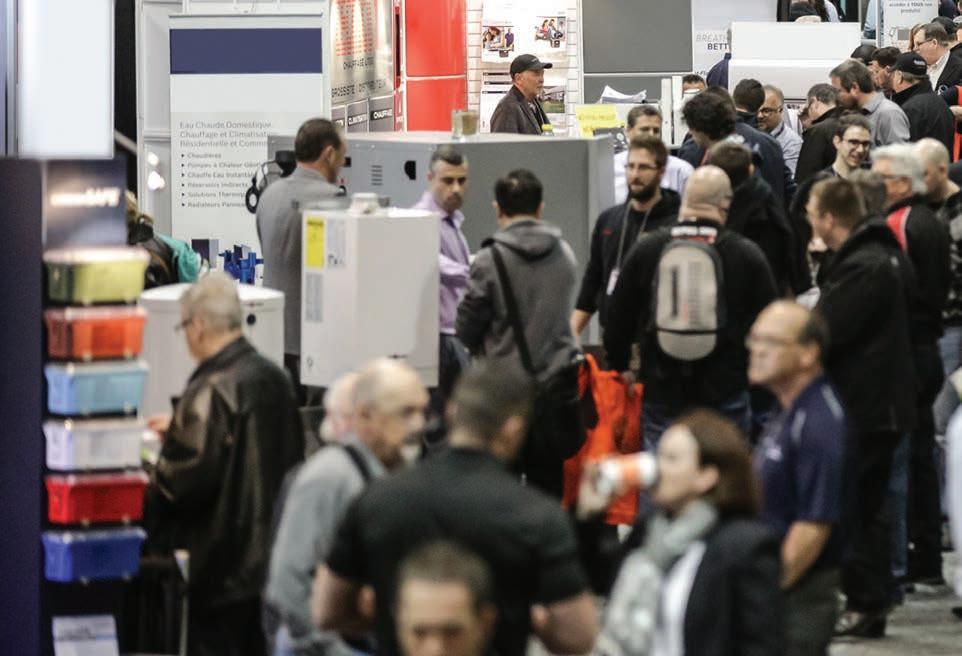
• Attend free seminars, many of which will offer continuing education credits
• see more than 400 exhibitors and thousands of products
• Visit the new Product showcase to see innovative energy and water efficient products
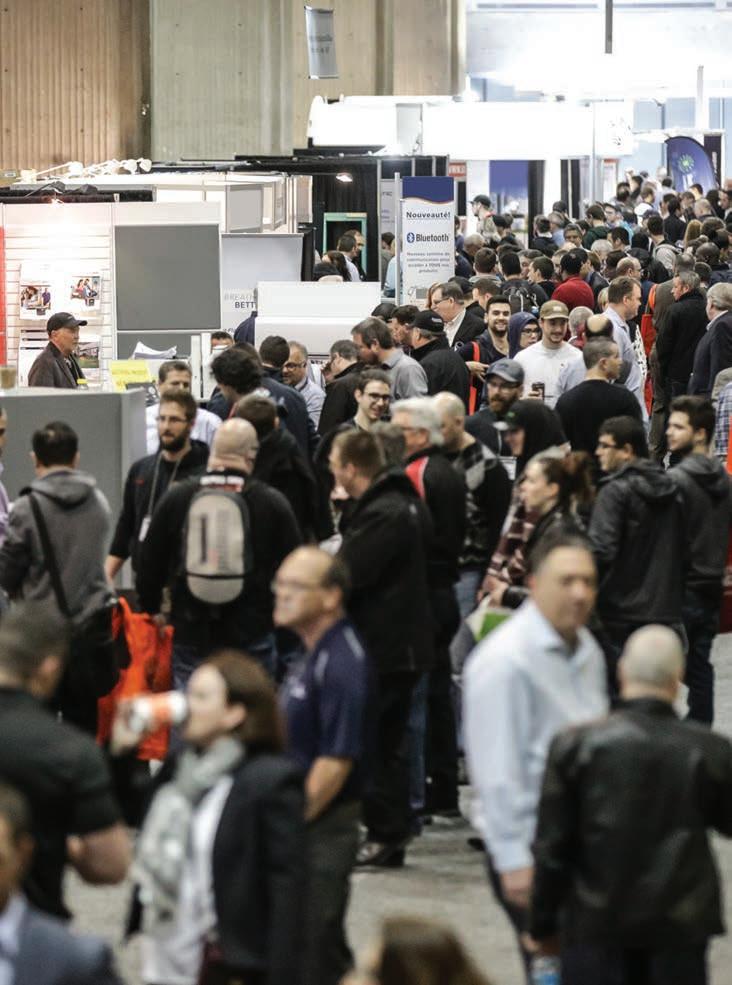
Free r egistr Ation up to April 23, 2019

chairman
Taylor apprised business meeting attendees of the town hall to be held November 20 where industry association risks, means of growing membership, improving the educational program and ongoing sources of revenue will be reviewed.
Douglas Porter, CFA, chief economist with BMO Financial Group, painted a reasonably positive economic picture at CIPH Ontario region’s first business meeting at the Mississauga Convention Centre.
With the signing of the tariff agreements Porter noted that a big risk was taken off the table. The subsequent “muted market response was because an agreement was expected all along,” explained Porter.
In terms of concessions, he noted U.S. access to 3.6 per cent of Canada’s protected dairy market and the raising of de minimise limits, which he expects will pressure Canadian retailers. Wins, according to Porter, include benefits to Canada’s auto sector from Mexico’s concessions; the retaining of the dispute settlement mechanism; and the Sunset clause with its 16-year lifespan and 6-year review period.
Porter, who has over 25 years of
experience analyzing global economies and financial markets, cited concerns around the deal as well: steel and aluminum tariffs remain in place and any future trade deal with China must be vetted by U.S. and Mexico.
Attendance was healthy at the October 25 event. Notably it attracted the highest number of first-time attendees to date.
The next business meeting will be held January 30, 2019 and features Gilles Essiambre on the topic of increasing effectiveness through the strategic and effective use of technology.
Speaker Chris Cummins will address leadership at the final business meeting on April 11, 2019. www.ciph.com

The integrated company announced a new tagline, “Built to Outperform,” and a new logo.
Superior Holding, Inc. has integrated its Richmond, VA-based English Boiler, LLC subsidiary into the Hutchinsonbased Superior Boiler.
Both arms of the company will now operate under the Superior Boiler name.
“This integration represents the completion of the next phase in our business strategy of joining the two entities together with a common brand and unified approach to marketing and business development,” said Superior Boiler CEO Doug Wright.
The Richmond location will focus primarily on watertube boiler applications. The Hutchinson location will focus on firetube boiler applications and ancillary boiler room equipment. www.superiorboiler.com
>> Saniflo Canada has partnered with Quebec-based sales agency Les Agences Lambert & Bégin Inc. to support its wholesale sales channel in the province. www.saniflo.ca www.lambertbegin.com

At 193,500 square feet, Master's building will bring together all the personnel and operations of the Oakville and Markham offices. A warehouse area of 177,500 square feet will also be annexed.
>> The Master Group recently held a ground-breaking ceremony to officially launch the start of construction on its new distribution centre in Vaughan, ON. Completion of the distribution centre is slated for fall 2019. www.master.ca
>> Wolseley Canada has extended its operations in Ottawa, ON with a new facility. The 11,000 square foot branch is located at 1050 Baxter Road, Units 7A/8A, and includes both plumbing and HVAC/R inventory. www.wolseleyinc.ca
>> Adey has expanded its Canadian coverage with three new manufacturer representatives in New Brunswick, Ontario and Alberta. Thomas Industry Sales, based in Fredericton, NB, will cover Atlantic Canada, including New Brunswick, Nova Scotia, Prince Edward Island and Newfoundland and Labrador. Kitchener, ON-based Yorkshire Systems Inc. will represent Ontario, Quebec and the Maritimes. Mechanical Equipment Sales Co. Ltd., headquartered in Calgary, AB with a second office in Burnaby, BC, will cover British Columbia, Alberta and Saskatchewan. www.adey.com
StatePoint liquid cooling technology will be used to maintain temperature levels for Facebook’s first data centre engineered in Asia.
Since 2015, Nortek has worked with the Facebook engineering team to develop a cooling solution that could handle Singapore’s high humidity and high temperatures, while addressing the sustainability issues facing large data centres.
The system uses a liquid-to-air exchanger in which water evaporates through a membrane separation layer to cool the data centre. The liquid-to-air membrane exchanger aims to prevent cross contamination between the water and air streams.
With the addition of a pre-cooling coil, the system is designed to maintain required cooling water and temperatures in humid climates using minimal supplemental mechanical cooling.
The average Power Usage Effectiveness (PUE) of existing data centres in the area is greater than 1.75, according to Nortek. This system is expected to achieve a PUE of 1.19. www.nortekair.com
Michigan-based Tecumseh Products Company has approved Honeywell’s Solstice N40 refrigerant with a lower global warming potential following “extensive testing.”
The refrigerant was approved for use in the reciprocating compressors used in Tecumseh’s global commercial refrigerant systems.
Solstice N40 aims to offer an alternative to use of R-404A in self-contained integral systems and condensing units, when utilized according to Tecumseh application guidelines. Based on hydrofluoroolefin (HFO) technology, Solstice N40 is used in almost 16,000 supermarkets in Europe. www.fluorineproducts-honeywell.com

Stelpro has announced a $24million investment at its SaintBruno-de-Montarville, QC plant.
The funds will see the addition of 65,000 square feet of space at the facility, devoted to increasing production and distribution capacity. Innovation and product development facilities will also be improved along with office space, according to the company.
The investment aims to create 50 jobs at the plant.
Work on the project began in June 2018 and will continue until the end of 2019. www.stelpro.com
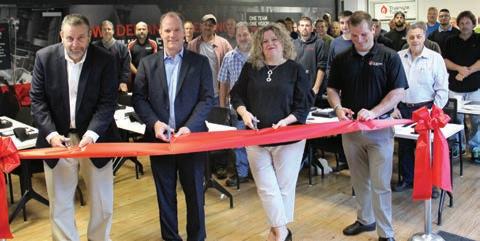
Triangle Tube has unveiled its live fire training room at its new corporate facility in West Deptford, NJ.
At the Triangle Tube Academy, technicians train contractors on real-world applications of Triangle Tube products. The course offers training on proper installation practices, system and pump sizing and troubleshooting. www.acv.com
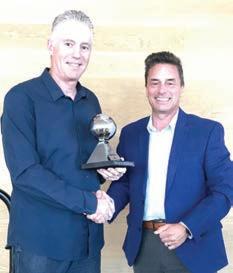
Larry Gill, manager of codes and standards at Ipex Inc., is the 18th recipient of the Canadian Institute of Plumbing and Heating (CIPH) Joseph K. Seidner Award.
In recognition of his contributions to Canadian plumbing codes and standards, Gill was presented the award at the annual Canadian Advisory
Council on Plumbing meeting in Saskatoon, SK.
“Larry is indeed a worthy and dedicated individual,” said Kevin Ernst, chair of the Plumbing and Mechanical Advisory Council. “Larry’s contribution to the Plumbing and Mechanical Advisory Council and the industry is well noted, valued and recognized by his peers in both Canada and the United States.”
Gill sits on multiple committees, including CSA B128, B602, B55, B1800, B70 and B137. He previously worked as a project manager in the plumbing, welding and windows programs at CSA.
The Joseph K. Seidner award was established in 2000 by the CIPH board of directors in honour of its namesake, who passed away in 2003. www.ciph.com
>> Western Canada distributor Bartle & Gibson Co Ltd. is expanding in Red Deer, AB with the acquisition of Triangle Supply Ltd. Triangle Supply will operate out of its current location in Red Deer for the foreseeable future and will be known as Triangle Supply a division of Bartle & Gibson Co Ltd. www.trianglesupply.com www.bartlegibson.com
>> ONCAP, a private equity platform of Onex, has purchased a majority stake in Walter Surface Technologies. Its parent company, the Walter Group, will retain a minority interest in the company. www.oncap.com www.walter.com
>> Watsco, Inc. has completed the acquisition of Kitchener, ON-based technology company Alert Labs Inc. The companies also released Sentree, a jointly-developed IoT device. www.watsco.com www.alertlabs.com/sentree

Lux markets residential and commercial lines, including Kono and Geo smart home thermostats.
>> Johnson Controls has acquired the assets of Lux Products Corporation, a manufacturer of residential thermostats and smart home products. www.johnsoncontrols.com www.luxproducts.com

Children from Cambodia’s Svay Leu District celebrate after Watts Water Technologies and Planet Water built a water filtration tower that provides 1,000 people with 10,000 litres of clean water per unit daily.
Watts Water Technologies has partnered with U.S.-based non-profit Planet Water Foundation to fund and help install two water filtration systems at schools in Cambodia’s Svay Leu District in Siem Reap Province. The filtration systems aim to remove harmful particles, bacteria and viruses.
The partnership is part of Planet Water’s Project 1000 initiative. Watts employees based in China, Korea, and New Zealand will help install the systems at the Chan Hea Primary School and Sakada Primary School, marking the 1000th
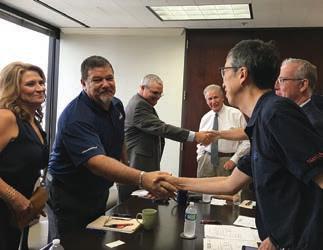
The Performance Plastics Louisiana facility will operate as Asahi/America, Inc.–PPI division.
>> Asahi/America, Inc.–a Lawrence, MA-based thermoplastic valve and pipe manufacturer–has acquired Louisiana-based fabrication shop Performance Plastics, Inc. www. asahi-america.com
AquaTower installation. Watts first joined forces with Planet Water in 2016. Since that time, the organizations have brought water filtration systems to Cambodia, China, Colombia, India, Indonesia, the Republic of the Philippines, and Puerto Rico.
www.wattswater.com
Viega has rolled out its trades education program, a supplement to school curriculum on the design, installation and function of plumbing and hydronic systems.
The Viega Trades Education Network (VTEN) program offers complete tooling packages, access to LoopCAD radiant heating and cooling systems design software and access to the company’s eLearning platform.
More than 1,400 users have enrolled in the eLearning program since the start of VTEN. The program also provides instructor’s conferences, workshops and comprehensive curriculum modules.
A partial list of the current modules includes: Hydronics 101, Piping and Controls, Trades Math and Blueprint reading, CAD and BIM and Radiant Design.
VTEN also offers credentialed classes for the company’s products, including ProPress and MegaPress for carbon steel and stainless pipe. www.viega.us/VTEN

A Calgary, AB-based environmental charity is the latest to earn a National Water Wise Award from the Canadian Institute of Plumbing and Heating (CIPH).
Green Calgary champions environmental leadership in
homes, workplaces, schools and communities in the city. CIPH awarded the charity for its Green Homes and Community program, which offers workshops, presentations and guides aimed at helping Calgary residents “incorporate simple and affordable green options.”
“Every community in Canada should be fortunate enough to have an organization like Green Calgary working on its behalf,” said Allen Taylor, chairman of CIPH. “Beyond its commitment to water conservation, we were duly impressed by Green Calgary’s efforts to bring environmental education and programming into schools.”
The association also lauded Green Calgary for it’s annual community rain barrel sales initiative, a program that has saved over one billion litres of water.
“Green Calgary prides itself on the notion that small changes will lead to big impacts and this award is honestly a huge honour for the environmental work we do,” said Conor Tapp, Green Calgary’s executive director. www.greencalgary.org www.ciph.com

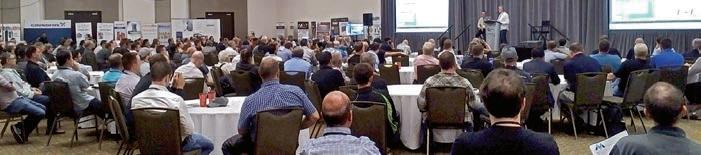
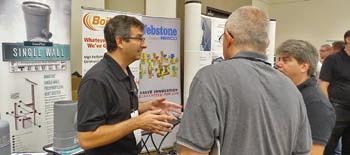
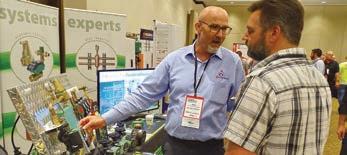
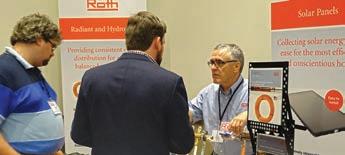
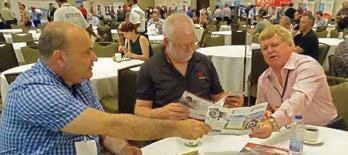

Sheldon Shiffner has been named manager of technical training North America with Salus North America. Prior to this appointment Shiffner was western sales manager with the company.

Cosimo Coffa has been named vice president of trade sales for Lixil Canada Inc. Prior to this role, Coffa held positions at companies such as LG Electronics, Lexmark, and Fujitsu.


Zach Theisen has been promoted to director of sales for lab and plumbing at T&S Brass and Bronze Works. Theisen, who joined the company in 2011, previously served as director of key accounts, plumbing, since early 2017, and he will maintain the responsibilities of that position in addition to his expanded role.
Stelpro has appointed Simon Fitzgeorge as Prairies territory sales manager. Fitzgeorge has more than 30 years of sales and marketing experience, 20 of these in sales management in various industries, including the electrical industry. His mandate will be to pursue the implementation of the company’s business plan in the Prairie marketplace.


Ryan Poznanczyk will take on the position of sales manager Superior Boiler’s Richmond, VA location (see MSN p44). Poznanczyk has been with English Boiler for more than 10 years

Spectrum Brands Inc. has named Ray Dupuis to the position of senior business development manager for the wholesale plumbing channel. He will be responsible for the Pfister and Fortis brands across Canada in the new construction space. Dupuis joins Spectrum from Zurn Canada, where he was the national sales manager.


Walter Surface Technologies, which was recently acquired by ONCAP (see MSN p46), has appointed MarcAndré Aubé to CEO and David Wright to vice president, corporate development. Aubé was promoted from his current role of president and COO. Wright joined Walter in 2015 as a business development manager.
GPS Insight has promoted Gary Fitzgerald to CEO. Fitzgerald joined the company in November 2016 from GE, where he served as vice president of technology. Former CEO and founder, Rob Donat, will remain with the company as chairman of the board. Wayne Holder, the company’s controller, moves to the CFO role and Jason Walker, vice president of sales, becomes chief revenue officer.

Imran Ahmad will takeover as president of Masco Canada. Prior to joining Masco, Ahmad held the role of general manager at Amazon’s robotics fulfillment sites in northern California. Previous to Amazon, Ahmad held a variety of global leadership positions at Eaton Corporation including general nanager of Architectural Products Group, Lighting Division.
Ouellet Canada has tapped Paulo Dos Santos for the position of territory manager, Ontario. Santos worked in the electrical market for distributors and manufacturers, and has experience in product specifications at engineering offices.


Yorkland Controls Ltd. has made three new hires to support its controls, automation and smart buildings market in British Columbia, including: Eric Balt, technical sales; Nancy Myers, business development manager, building automation and smart building technology; and Nick Silyayev, developer.

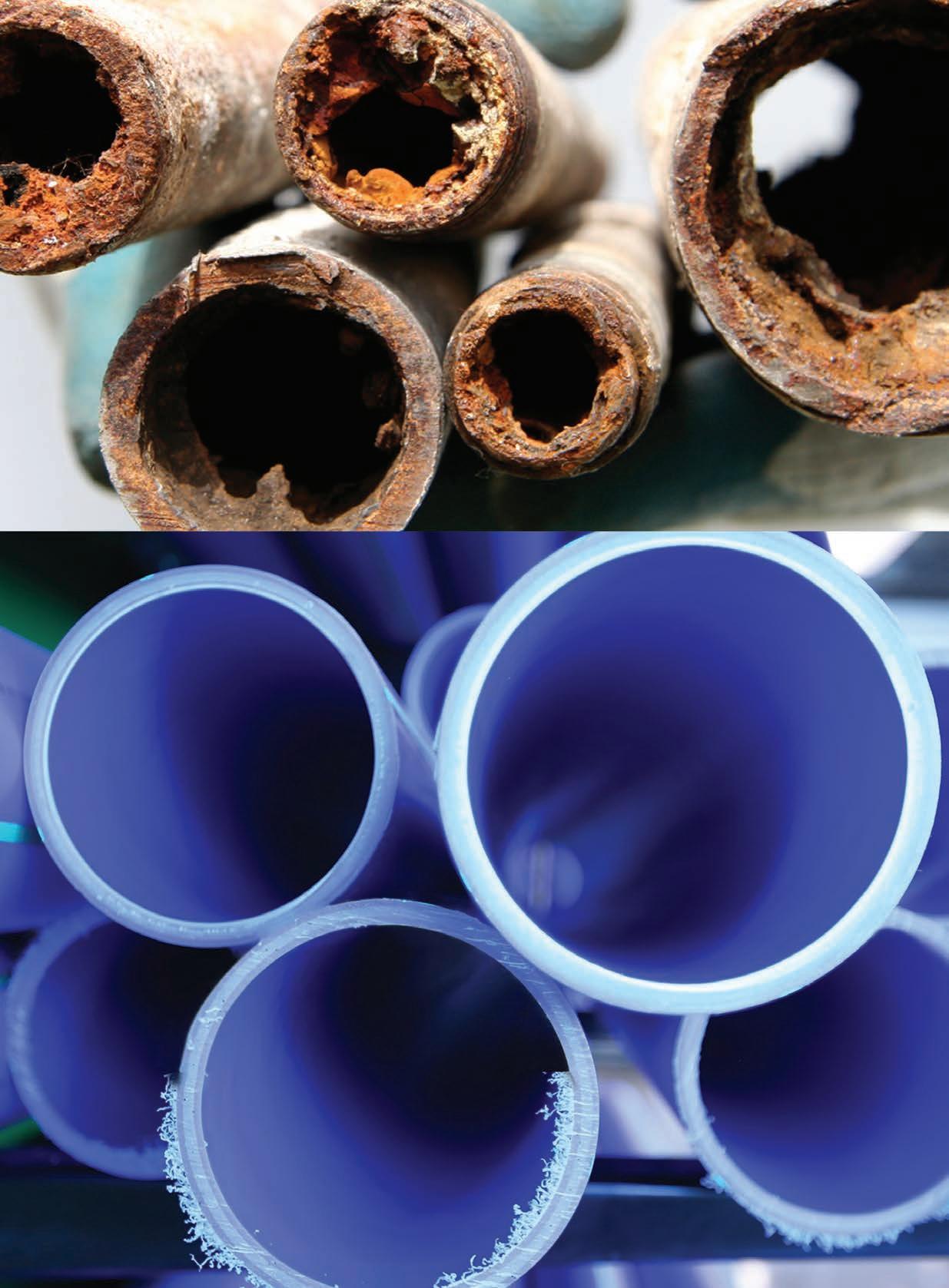
Pricing for steel mechanical piping systems is rising significantly. Lightweight, stably priced Aquatherm polypropylene-random (PP-R) piping is connected by quick, reliable heat fusion. Plus, PP-R doesn’t rust, scale, or corrode and it has a 60-year projected lifespan and many other benefits. Learn more at aquatherm.com
Most hydronic heating systems that have renewable energy heat sources, such as solar thermal collectors, an air-to-water or geothermal heat pump, or a biomass boiler, also have an auxiliary boiler. Many of these systems also have one or more thermal storage tank(s) that absorb excess heat when it is available from the renewable heat source, and park it for later use. The thermal storage tanks used in systems with solar thermal collectors and biomass boilers often contain several hundred of gallons of water.
The auxiliary boiler can be treated as a backup to the renewable energy heat source. If the renewable energy heat source is unable to provide any useful heat to the system the auxiliary boiler provides all the heat the system requires. This implies that the auxiliary boiler must be sized to handle the system’s full design load.
The auxiliary boiler can also be treated as a supplemental heat source. This refers to a situation where the renewable energy heat source is providing some of the heat the system requires, while the auxiliary boiler provides the remainder. In this capacity the auxiliary boiler would not necessarily be sized to handle the system’s design load.
In either of these roles it is important the auxiliary boiler operates only when necessary. It is also important that heat produced by the auxiliary boiler flows directly to the load rather than into thermal storage.
The rationale for the latter is based on the second law of thermodynamics. Fuels such as natural gas, fuel oil or
electricity are “high grade” energy. It is easy to store high grade energy for long periods of time without degradation. However, when high grade energy is converted into heat, which at the temperatures needed for space heating is a relatively low-grade energy, storing it for more than a few hours is difficult and expensive.
Think about this. If a 500-gallon tank contained water at 150F, and was located in a room at 70F, how long could the heat it contains be stored?
In theory, and regardless of how well insulated that tank was, heat would immediately begin “leaking” out of the tank. The insulation system on the tank would affect the rate of heat loss, but no insulation system can totally stop heat transfer as long as there is a temperature difference between the inside and outside of the tank. The moral: Do not use high grade energy to keep a
thermal storage tank at an elevated temperature while waiting for a load that eventually needs that energy.
One of the undesirable characteristics that I’ve witnessed on several systems with renewable heat sources is an inadvertent set of circumstances where heat created by the auxiliary boiler ends up in the thermal storage tank.
In one system that I had opportunity to visit the thermometer on a 700-gallon thermal storage tank associated with a pellet boiler showed an internal temperature of 145F. That, in itself, is not a problem. However, it became a problem when the person responsible for the system told me that the pellet boiler had not operated in over a month due to a maintenance issue.
So how was the tank maintaining that elevated temperature when the
boiler intended to heat it had been off for a month? Answer: a 3-phase electric auxiliary boiler.
The building automation system that staged the pellet boiler and auxiliary electric boiler did not “understand” that the pellet boiler was not operating. It kept the circulator between the thermal storage tank and distribution system operating and supplied heat to the system from the electric boiler, which was treated as a second stage heat source. The water returning from the distribution system flowed in and out of thermal storage and thus unnecessarily maintained it at an elevated temperature. While it’s arguable that this does not damage the system it certainly adds to uncontrolled heat loss into the mechanical room.
This inadvertent condition is usually the result of a controls that treat the renewable heat source portion of the system as fixed first stage heat input, and the auxiliary boiler as the second stage heat input. That is how a typical tandem boiler system would be controlled, and thus it is how many control systems would be routinely configured.
In most cases the controls just assume that both stages of heat input are available to contribute heat to the system whenever necessary. The controls do not necessarily verify if this “assumption” is valid. If the first stage heat source cannot provide the necessary supply water temperature to the distribution system, the controls activate the second stage heat source. The first stage heat source remains active. (The “go” signal to the first stage heat source is on and so are any associated circulators that move water through that heat source).
This is not a “big deal” when two identical boilers serve as the first and second stage heat inputs. However, when a large thermal storage tank is involved there is much greater potential for uncontrolled heat loss due to its high surface area. Furthermore, if the circulator between that tank and a biomass boiler remains on when that boiler is not producing heat, the boiler’s jacket and air flow through the combustion chamber increase uncontrolled and undesirable heat loss.
There is a relatively easy and inexpensive way to prevent this undesirable condition. To understand it, consider a system that uses a biomass boiler and its associated thermal storage tank as the first stage heat input.
Think of the biomass boiler and thermal storage tank as a single entity that we will call the “biomass heat source.” Heat supplied from this entity might come directly from the biomass boiler(s), or from thermal storage, or from both. It depends on the firing status of the biomass boiler(s) and the status of the load(s).
The “biomass heat source” is treated as a fixed lead heat source to the distribution system, in combination with and auxiliary boiler as the second stage heat source, as shown in Figure 1.
The “biomass heat source” is connected to the distribution system using a pair of closely spaced tees. This provides hydraulic separation between circulator (P2) and the distribution circulator (P4). Circulator (P2) could be a fixed speed circulator or as variable speed injection circulator. The latter allows it to regulate the supply water temperature of the distribution system. The auxiliary boiler is also connected to the distribution system using a pair of closely spaced tees for hydraulic separation. These tees are located downstream of the tees that connect the biomass heat source to the system. This arrangement allows the thermal storage tank to contribute heat to the distribution system at lower temperatures than would be possible if the tees for the auxiliary boiler were upstream of those from the biomass heat source.
The key to preventing inadvertent transfer of heat produced by the auxiliary boiler into thermal storage is comparing the temperature of the water returning from the distribution system to that at the upper tank header. As long as the Continued on p52
temperature at the upper tank header is a few degrees higher than the temperature of water returning from the distribution system, the biomass heat source can make a positive energy contribution to the space heating load. This control function is easily handled using a differential temperature controller.
Figure 2 shows a differential temperature controller, labelled as (T156) comparing these two temperatures at sensors (S3) and (S4). Circulator (P2) is only allowed to operate if the temperature at the upper header of the thermal storage tank, at sensor (S3), is at least 5F above the temperature at sensor (S4) on the return side of the distribution system. This prevents heat generated by the auxiliary boiler, which might elevate the water temperature on the return side of the distribution system, from being inadvertently sent into thermal storage. It also prevents flow from what might be cool thermal storage into the distribution system. If the temperature at sensor (S3) drops to within 3F of the temperature at sensor (S4), circulator (P2) is not allowed to operate.
The on/off temperature differentials of 5 and 3F are only suggested values. They include an allowance for temperature sensing accuracy. To minimize sensing error, it is best to use identical mounting techniques for both temperature sensors.
The outdoor reset controller, labelled as (T256) in Figure 2, turns on the auxiliary boiler and circulator (P3) when and if the water temperature supplied to the distribution system at sensor (S2) falls slightly below the current “target” temperature that can maintain adequate heat delivery to the loads. Using an outdoor reset controller to “decide” when the auxiliary boiler needs to operate allows the biomass heat source to contribute heat to the lowest possible temperature that can still maintain building comfort. That, in turn, allows for longer biomass boiler burn cycles,
closes on any demand for heating from loads
outdoor reset controller
which improve efficiency and reduce emissions.
The controllers shown in Figure 2 are not used to turn the pellet boiler on and off. That function is managed by a controller inside the pellet boiler (or in some cases an external controller) that measures the temperature in the upper and lower portions of the thermal storage tank. The pellet boiler and circulator (P1) are operated to maintain the temperature of the thermal storage tank within a specific range, regardless of whether the space heating load is on or off.
Figure 3 shows a simple electrical schematic that combines the differential temperature controller (T156) and outdoor reset controller (T256) to synergistically manage heat input to the distribution system.
The differential temperature controller (T156), and outdoor reset controller (T256), are energized only when there is a call for space heating. Together, they manage all heat input to the distribution
system from the two available heat sources. Heat input from the biomass heat source takes priority whenever possible, but comfort is never compromised. It is “guarded” by the outdoor reset controller and auxiliary boiler.
The combined logic provided by these two controllers, or their equivalent programming within a building automation system, is simple but effective. It prevents the system from “running blind” to a condition where heat from the auxiliary boiler is flowing into thermal storage. <>

John Siegenthaler, P.E., is a mechanical engineering graduate of Rensselaer Polytechnic Institute and a licensed professional engineer. He has over 34 years experience in designing modern hydronic heating systems. Siegenthaler’s latest book is Heating with Renewable Energy (see www.hydronicpros.com for more information).

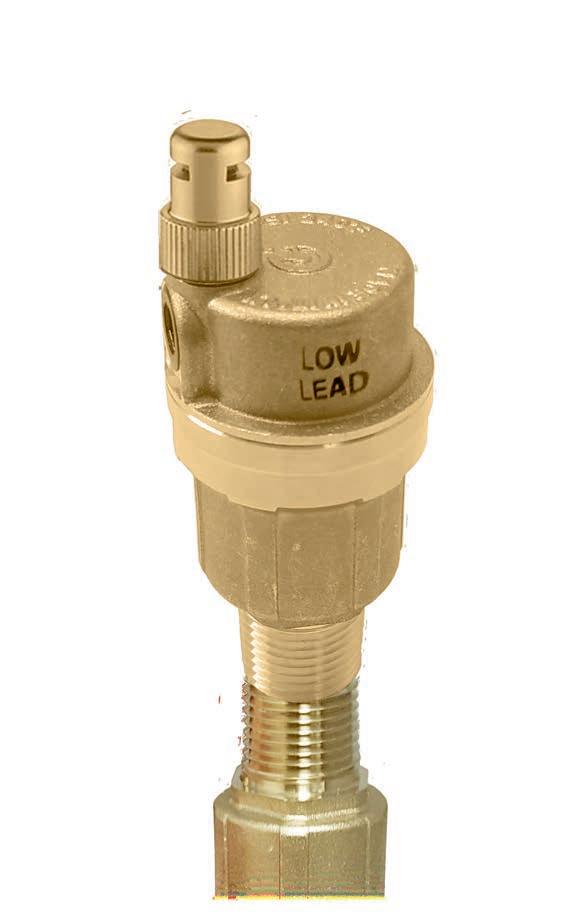












• Space-saving compact size; less than 4” tall.
• Vent is supplied with a safety hygroscopic cap to protect against potential vent leakage.
• It meets codes IPC, IRC and UPC for use in accordance with the U.S. and Canadian plumbing codes.
• Available in ½” NPT male connection.
Controlling and protecting your water


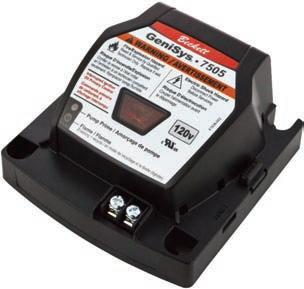
From Beckett, the 7505C GeniSys oil primary control is designed for use in applications under 20 GPH where CSD-1 lockout logic is required. The control allows a single retry on flame failure. It features an overlay label and other case changes, intended for moisture resistance. www.beckettcorp.com
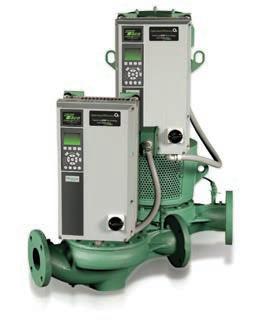
From Taco Comfort Solutions, the optimized efficiency (Oe) high performance package for commercial pumps includes pumps with a permanent magnet ECM motor and VFD, available between 3-hp and 30-hp. The package is offered with factory-programmed SelfSensing technology. www.tacocomfort.com
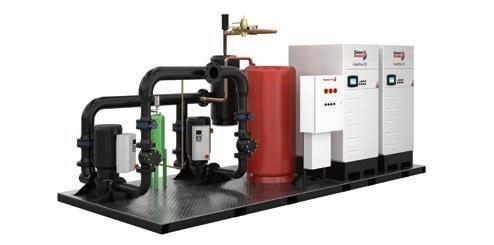
Pre-engineered, skid-mounted solutions from Cleaver-Brooks include a boiler, system pumps, air separator and expansion tank. A chemical pot feeder and glycol fill station are optional. The skids are available for gasfired, condensing boiler systems. www.cleaverbrooks.com
Webstone, a brand of Nibco, has released its in-line spring check valves. It features self-automated design that aims to prevent back flow, and an FKM soft seat designed to prevent leaks. The self-automated design prevents back flow via a stainless steel spring, and FKM soft seat prevents leaks. Made from lead free dezincification resistant brass, the valve can withstand up to 250F and 200 CWP and is intended for use in potable and hydronic systems. It is available in SWT and FIP connections, with sizes ranging from 3 8 in. to 2 in. www.webstonevalves.com

HeatLink's Smart System offers wireless and app-enabled control of the its hydronic heating systems for residential and small commercial property owners. It uses the Zigbee Home Automation wireless protocol andcan be controlled with web, android and iOS devices. www.heatlink.com/smartsystem

Aquatherm has released the first instalments of its TechTV video series. The series is designed to present information on designing, installing and maintaining systems using Aquatherm polypropylene pipe. www.aquatherm.com
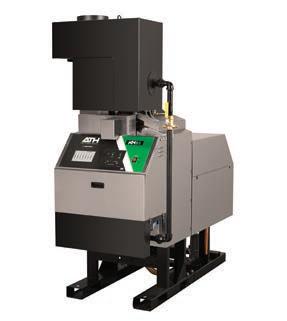
From Advanced Thermal Hydronics, the KN-Series Plus condensing boilers have a hydrophobic-coated finned stainless steel heat exchanger as well as a cast-iron heat exchanger. The full variable, full water-side boiler is certified for use with PVC and polypropylene vent materials. www.knseries.com























































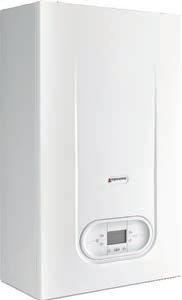

























































































• Available in condensing and non-condensing version 80-171 Mbtu



• Non Condensing model: ideal for high temperature heating




















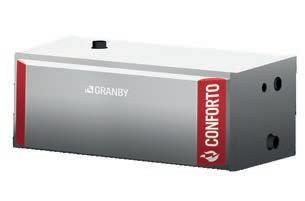






















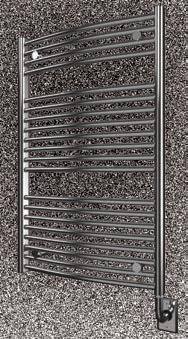









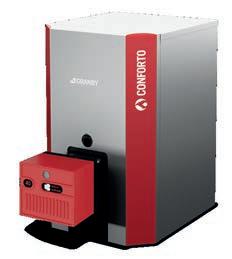






• Condensing model: ideal for low temperature heating
• Cost and space saving solutions
• 5-year parts and 10-year heat exchanger warranty













• Continuous modulation for greater savings












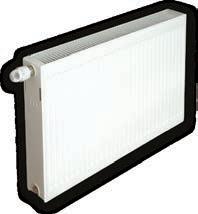
• Equipped with advanced electronic modulating controls










PANEL RADIATORS AND TOWEL WARMERS ELECTRIC BOILERS










• Size ranging from 6 to 24kw
• 5-year parts and 10-year heat exchanger warranty

• Up to 87% AFUE









• Triple pass design for increased efficiency
• Certified for use with oil and gas










• Chimney or direct venting
• Cold start operation





• Quiet, comfortable heating

• Radiant and convection heat distribution
• Space saving design
• Efficient heat transfer

• Variety of heights and lengths
• 5-year parts and limited lifetime heat exchanger warranty
• Isolating and balancing valves options for multiple installations layouts
• 10-year warranty
http://www.granbyindustries.com/intelligent-heating-appliances/
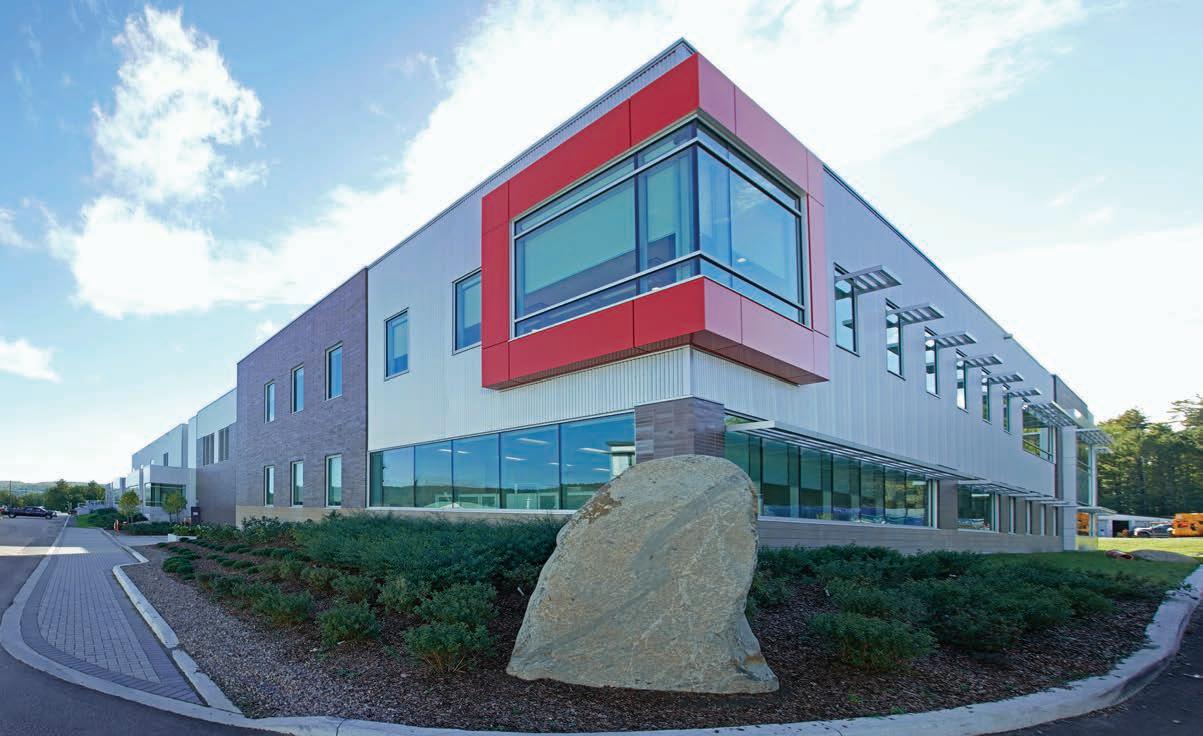
The Harriet Brooks Building is the latest project by CNL to meet energy-efficiency targets.
BY JILLIAN MORGAN
The Canadian Nuclear Laboratories’ (CNL) Harriet Brooks Building joins a handful of laboratories across Canada to earn LEED Silver certification.
Incorporating a slew of energy-efficient features, the 137,000 square foot material sciences facility is the latest project by CNL to bolster sustainability on its Chalk River, ON campus.
“It is important to our organization, to our staff and to our many stakeholders that we are delivering our work in a manner which places a high priority on environmental stewardship,” said Mark Lesinski, CNL president and CEO.
Harriet Brooks Building achieved a 20 per cent reduction in energy consumption compared to a similar, standard-design building, as a result of its green construction.
Outside, white pavement and a white roof aim to reduce the heat island effect, while exterior lights are designed to prevent “uplighting.”
Efforts to reduce water consumption include the installation of low-flow fixtures and drought tolerant landscaping. Rainwater is captured for use in the building’s bathrooms.
CNL also opted for zero use of non-toxic, non-flammable refrigerants in the building’s HVAC systems.
For the building’s maintenance, areas of storage and collection of recyclables were constructed, and a controllable lighting system installed, including occupancy sensors.
The redevelopment of Chalk River campus will see the construction of three new conventional buildings that will incorporate sustainable building materials.
A $250 million project is also underway to construct the Advanced Nuclear Materials Research Centre (ANMRC). The facility will consolidate capabilities from aging structures on the Chalk River campus scheduled for decommissioning.
CNL has also constructed a groundwater management system to manage rainfall runoff into the Ottawa River, and the organization reduced emissions by more than 30 per cent since transitioning the campus’ heating to natural gas in 2018.
“CNL has set sustainability objectives and targets for energy efficiency, clean energy utilization, waste management and conservation of resources to support continual improvement of our performance, and ensure we are respecting the natural environment we are so grateful to enjoy here in Chalk River,” Lesinski said.
LEED certification provides independent, third party verification that a building was designed and built to achieve high performance in location and transportation, sustainable site development, water savings, energy efficiency, materials selection and indoor environmental quality.
It includes a set of rating systems for the design, construction, operation, and maintenance of buildings, home and neighbourhoods. www.cnl.ca <>
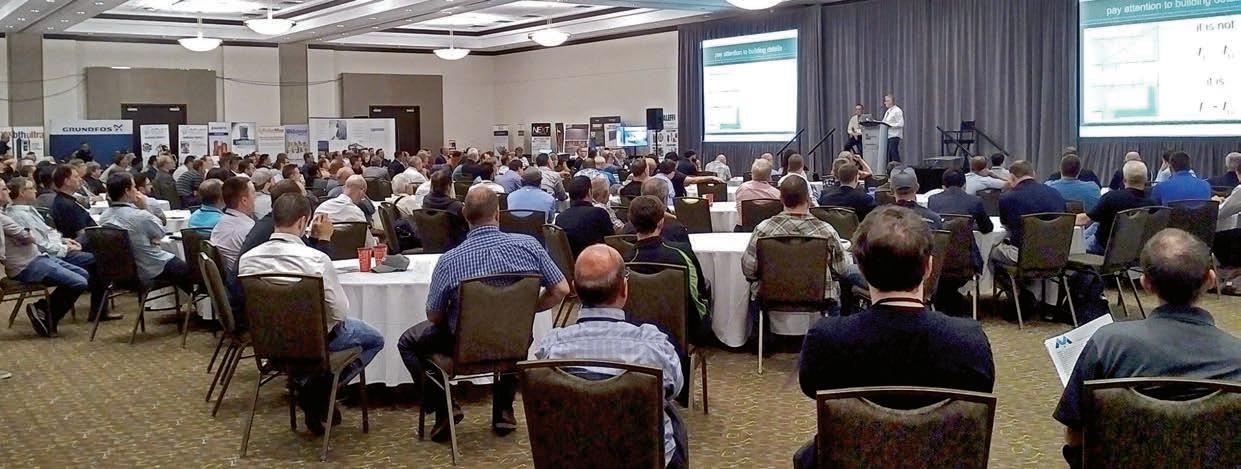
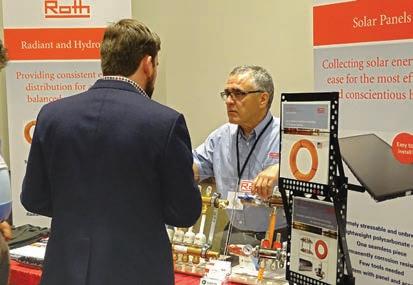
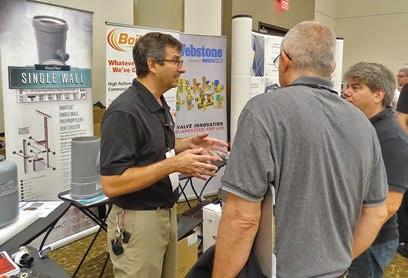
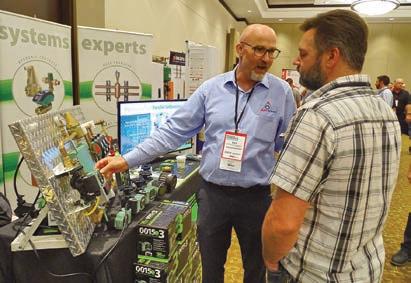
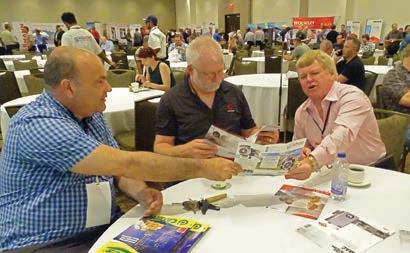

If you missed the 2017 Summit you missed all the new products and services from:
• ADEY • ADP • Aermec • Amtrol • Amvic • AquaHeat
• AquaMotion • Aquatherm • Armstrong • Axiom
• Bacharach • Bardon • Belimo • BoilerMag • Bosch
• Caleffi • Calefactio • Cash Acme • CB Supplies
• Centrotherm • Chemfax • Conbraco • Dahl • Danfoss
• Desco • Eco-King • EVO • Grundfos • HBX • HeatLink
• Heat Sheet • Hydronic Heating Technologies • IBC
• InsulTarp • Legend • Lochinvar • Maxxon • Navien
• NEXT • NTI • Nudura • Redmond Williams • REHAU
• Rinnai • Roth • Salus • Smith’s • Sinus • Spirotherm
• Taco • Tamas • Unico • Transom • Thermo 2000
• Uponor • Utica • Viega • Viessmann • Webstone
• Weil McLain • Wolseley • Wilo • Xylem • Z-Flex So don’t
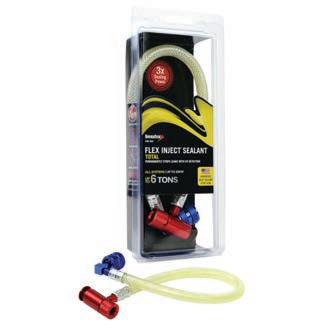
The Flex Inject Sealant Total from DiversiTech includes a UV dye and sealant. A push-button valve with a flex hose and misting orifice releases the sealant and dye, which travels with the oil and refrigerant, within the system at the same time. The UV dye is designed to expose leaks and hairline cracks in yellow (with a UV light), while the sealant fixes leaks. The sealant can stay in the system for up to 10 years. It is polymer-free and works with compressors, heat pumps, condensers, recovery units and other system components. www.diversitech.com
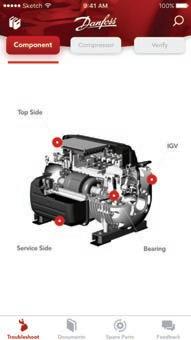
The TurboTool 2.0 app from Danfoss is intended for technicians who service the company’s Turbocor centrifugal compressors. Available for iOS and Android devices, users can select from a list of symptoms and the app will offer potential causes, correct operating parameters and possible solutions. It also includes videos, catalogues and service manuals. Scanning the compressor serial number with a smartphone camera or entering the part number or model number will prompt the app to display potential spare parts kits. www.danfoss.com
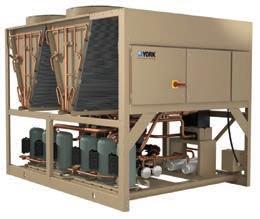
Johnson Controls York has expanded its line of YLAA air-cooled scroll chillers. The chillers (55 to 230 tons) offer full-load and part-load efficiencies. Made to order options now include variable speed drive condenser fans and integral pump packages. The units are equipped with 2 independent circuits for partial redundancy. It includes a brazed plate heat exchanger, a microchannel condenser and native building automation system communications, including BACnet, Modbus and N2. www.johnsoncontrols.com
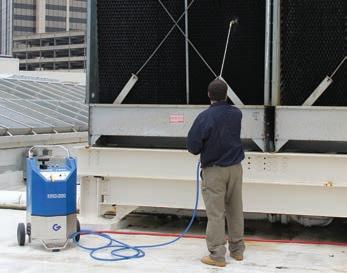

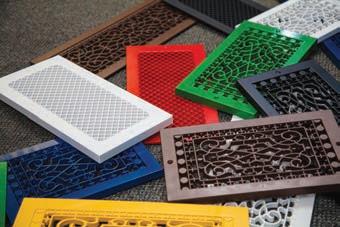
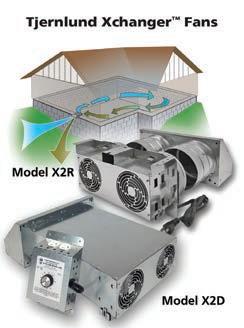
Tjernlund Products XCHANGER fans are available in two models. X2D can be mounted directly next to an outside wall, while X2R can be connected to the outside intake/exhaust hood. The hood includes 6 in. ducts. Both models have two reversible 90 CFM fans, which can be positioned to move air in either direction. Optional control methods include a wireless switch or a plug-in timer. www.tjernlund.com
TFC-200 tower fill cleaner from Goodway Technologies features wand extensions and nozzles, in addition to hose, wand and tool holders. The internal compartment holds a standard 5 gal. chemical cleaner. It includes heavy-duty, chemical resistant components and a dolly. www.goodway.com
Chemours has launched an online interactive global refrigerant regulations and solutions tool. The guide allows the user to navigate by country or region of interest, learn about regulations, select a market/application of interest and find products. www.chemours.com
SMI Ventilation Products offers two vent types, base board and wall mount, available in two styles, Essex and Victorian. Essex base board and wall mount grilles are available in 6 in. x 14 in. and 6 in. x 30 in. All Victorian base board and wall mount grilles have a height of 6 in., with width ranging from 10 in. to 30 in. The white plastic-moulded grilles can be painted to match a home’s décor. www.smivents.com
Continued on p60

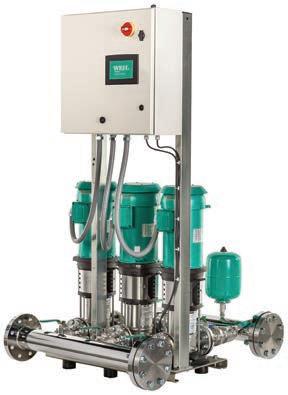
Weil Pump’s line of vertical multistage booster pumps and systems are available in two, three or four-pump configurations. The multi-pump systems offer real-time diagnostics and remote monitoring with variable speed control and balanced run time for each pump. The systems have a maximum head of 780 ft., maximum flow of 550-gpm, rated pressure of 232psi and a liquid temperature range of -4F to 248F. The systems are NSF-61 and NSF-372 certified, have full 304 stainless steel construction and feature 300 class ANSI flange connections. www.weilpump.com
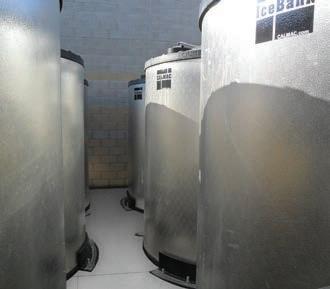
CALMAC IceBank ice storage tanks are integrated with Trane commercial HVAC systems. The tanks are intended to store energy and use that energy to cool commercial buildings during times when the cost of energy is high. The storage tanks come in two models: A and C. Model C tanks include modular, internalized main headers and a 100 per cent welded polyethylene heat exchanger. It has pressure ratings up to 125 psi. Model A has 2 in. flanges. www.calmac.com
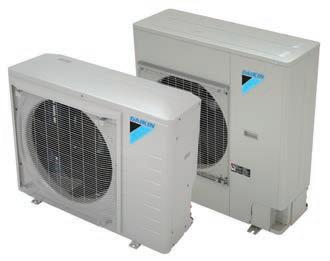
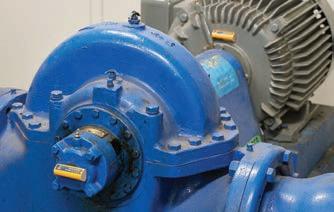
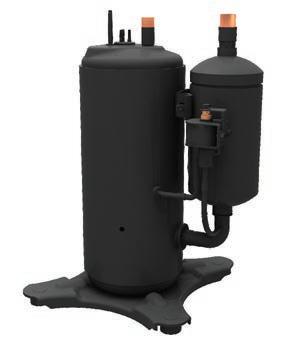
The LG rotary compressor, targeted at the 14 SEER level, is designed for split- and packagedsystem unitary residential HVAC applications. It is intended for single-family homes, apartments and other multi-family units. The rotary compressor offers a restarting solenoid valve that mechanically equalizes pressure, allowing it to start under a load without electrical start devices. The compressor’s discharge-check valve manages refrigerant in the high side of the system during off cycles. www.lg.com
The Daikin Fit condensing unit, available in 1.5- to 5-ton capacities, is powered by the company’s variable-speed swing inverter compressor. The unit requires 4 in. of clearance and offers efficiencies up to 18 SEER. It is compatible with Daikin’s line of communicating gas furnaces. www.daikincomfort.com
The Fluke 3560 FC vibration sensor captures vibration-screening data on imbalance and misalignment wirelessly and remotely. The data generated from the sensors is wirelessly transmitted and stored on Fluke Connect Condition Monitoring software. The software can generate automatic alerts when measurements go outside set parameters. The sensor has a frequency range of 10 Hz to 300 Hz, and has 5 per cent sensitivity accuracy. It has a temperature accuracy of +/- 2C. It is 2.42 in. x 0.95 in. and weighs 28 g. www.fluke.com
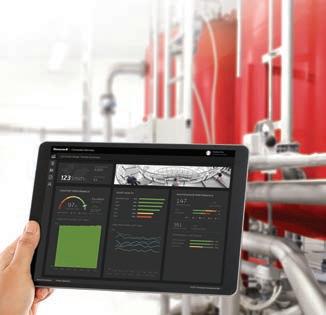
Honeywell’s Outcome Based Service for Mechanical Systems is a cloud-enabled building management service. It uses data analytics and sensor-based IoT connectivity to monitor mechanical equipment. Algorithms monitor HVAC controllers and components, including boilers, chillers and other hardware. The service module also taps sensor data to monitor the asset health of individual mechanical equipment, comparing current performance with optimal performance values to identify deviations. www.honeywell.com
Convectors may be a solution for buildings with complex heating needs. BY JIM
HERRING
Offices, hotels, schools, retail stores, sports facilities and other building types typically have rooms that can be efficiently heated by the use of electric heaters, such as convectors, radiant ceiling panels or infrared radiant heaters.
For these applications, the “appearance” of the heating unit is just as important as its performance.
Architects spend countless hours on interior design creating a desired atmosphere in these spaces. Think about how the use of light and the choice of color, furnishings and materials affect the ambiance in a hotel lobby or office boardroom. Consequently, heating units need to “blend in with” or “complement” their surrounding environment.
At the same time, these units must help specifying architects and engineers solve heating problems such as counteracting cold drafty areas near windows, reducing condensation of the glass and aiding in the de-stratification of the air in the space.
With all these factors to consider, there is no one-size-fits-all heating solution for every building. Rather, specifying architects and engineers must solve their distinct heating problems with customizable solutions to ensure optimal cost-efficiency and overall functionality.
For the right combination of customization and performance, convectors may be an ideal solution for buildings with complex heating needs.
Convectors are non-fan forced heaters that use natural convection to move the heated air back into the condi -
tioned space–making them much quieter than fan heaters. Without the use of a fan to blow air, the convector is an option if the goal is to minimize the circulation of dust and pollens.
Convectors are suited for use in areas with large spans of windows, such as offices, schools and hotel lobbies. Typically mounted at floor level on exterior walls and under windows, convectors provide an upward movement of air to counteract cold downdrafts and minimize condensation.
Available in a variety of sizes, configurations and colors, convectors also offer design and installation versatility. Contractors and engineers can leverage customizable features to develop convectors that fit the custom design specifications of a project, as well as solve heating problems without wasting energy or space. Models can be located in a trench, housed in custom enclosures or mounted in a variety of other ways.
An wide array of control options from built-in thermostats for controlling individual units to silicon controlled rectifier (SCR) controls that can integrate into Building Management Systems (BMS).
Convectors are typically installed along the perimeter of rooms to block the downdrafts caused by the cold outside wall cooling the air next to it, and to counteract transmission losses. In most cases, convectors are mounted at the floor level along an outside wall and under windows, allowing heated air to rise from the top of the unit and block the cold “down draft” air.
Convectors will draw colder air from
the floor area, heat it up and then release it toward the ceiling where it cools, falling back to the floor to complete the cycle. This cycling or rotating effect works best with low to medium ceilings of 8- to 10-foot heights.
To efficiently heat buildings with large expanses of multi-story windows, a second series of convectors can be included at every floor level to prevent the cascading effect of the downdraft. While the rising heated air is blocking the downdraft, it also provides a warm air curtain that acts as a buffer to prevent the heat loss from the space to the cold wall.
For well-insulated buildings with small amounts of glass, the use of more compact convectors may be sufficient. These heaters would only be mounted under the window area, allowing for fewer heaters to be installed and reducing the initial cost. These units, however, would still provide the dual function of counter-acting the downdraft and the transmission effect.
Commercial buildings run the gamut from hospitals and assisted-living facilities to schools, hotels and retail stores. To accommodate the very different environments in these facilities, many manufacturers of convectors offer a variety of styles and configurations including:
• Front- and bottom-inlet convectors
• Recess-mounted cabinet convectors
• Sill-line convectors
• Architectural convectors, which feature design elements that help them blend into or complement most interior spaces
Similar to residential applications, convectors in commercial applications should be installed on the exterior wall. Within individual office or conference areas, heavy-duty baseboards, draftbarrier convectors or sill-line commercial convectors are the best choice. The decor of the room as well as its heat loss will determine which style best suits the application.
Large open, multi-person, perimeter offices are ideal spaces for heavy-duty baseboards, draft barrier or sill-line commercial convectors and architectural convectors if the window area does not reach the floor. Placing the convector along the entire length of exterior wall eliminates the discomfort of the cold wall effect for people located nearby.
The use of convectors in lobbies is similar to large open offices except additional consideration must be given to the fact that people move around more in lobbies. Likewise, in lobbies with multi-story windows and atriums, the amount of heated air necessary to block the downdraft of this large expanse of window, and keep the moisture from forming on the top portion of the window, cannot be generated from floor level convection equipment alone. In these cases, sill or pedestalmounted convectors installed at floor level, working in conjunction with convectors mounted approximately every 10 to 15 feet up the window, will provide sufficient heated air.
Regardless of the office or lobby size, if floor-to-ceiling glass is present, pedestal convectors should be considered.
Since convectors have no moving parts and use natural air flow rather than forced air flow, they are ideally suited to quiet living spaces. This includes bedrooms and home offices where convectors can be installed along exterior walls under windows to provide silent, gentle heat.
However, when installing a convector, specifiers and engineers must ensure

there is adequate wall space for placement of furniture and drapery, and the location of electrical receptacles is taken into account to avoid dangerous hazards. Convectors with electronic hydronic elements have a lower surface temperature than standard convectors, making them safe choices for a nursery or child’s bedroom.
For basements, standard convectors should be installed along the aboveground walls to eliminate the cold downdraft, as well as under windows along other walls. Basements with interior divisions should have a heater and thermostat in each area. In large open basements, several smaller heaters will produce a better heated air distribution than a singular large heater. If the area is only occasionally occupied, portable baseboards may be the better choice. Heating the basement has the additional benefit of warming the floor of the rooms above adding to the main floor comfort level.
Factories, warehouses, sports complexes and similar facilities require heaters that can withstand a great deal of abuse but still function properly with
little maintenance.
For restrooms, lunchrooms, small to medium workshops and assembly areas with low to medium ceilings, slope top or cabinet-style heavy-duty convectors provide even heating, yet are constructed to withstand normal daily industrial abuse.
Used on exterior walls, the sloped design of slope top convectors prevent them from being used as shelves or step stools. Cabinet convectors can be recessed when space is limited and the wall that the heater is recessed into is a non-exterior wall. In some industrial applications, there is the potential of hazardous gasses being present, and explosion-proof convectors may be better suited for these spaces.
Convection heaters can meet the heating demands of virtually any building without sacrificing aesthetics or efficiency. Easily customized, made-to-order convection solutions enable specifiers and engineers to blend heaters into their designs without wasting energy or budget. <>
Jim Herring is the supervisor of total custom solutions and technical services at Marley Engineered Products.
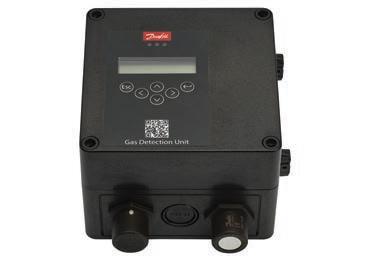
Danfoss fixed gas detectors range from basic to heavy-duty models with sensor technology. The detectors feature an analog or RS485 Modbus connection. be connected to external systems directly to activate alarm devices. www.danfoss.com
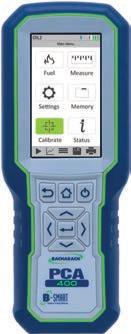
From Bacharach, the PCA 400 combustion and emissions analyzer platform offers sensor protection for CO, NO, NO2 and SO2 sensors. It offers NOx measurement down to 0.1 ppm. The device also offers near-field communications and the ability to connect and control the analyzer with a mobile app. App capabilities include: remote control and display save data, report generation, GPS location data and data sharing. www.mybacharach.com
The Sensaphone combination sensor communicates via Modbus. It is used exclusively with the company’s Sentinel Pro system to monitor indoor air temperature and humidity levels. It measures temperature from -32F to 122F and non-condensing relative humidity from 0 per cent to 100 per cent. It features a backlit LCD and menu.
www.sensaphone.com
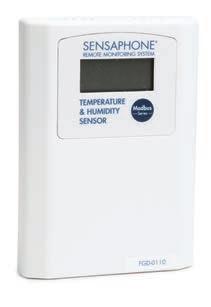
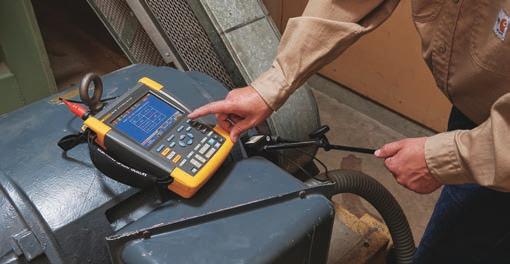
Fluke's MDA-510 MDA-550 motor drive analyzers are available for troubleshooting single-phase and three-phase motor drive systems. The portable MDA-500 series measures a series of motor-drive parameters, including voltage and current. www.fluke.com
From Watts, Syncta cloud-based software is designed for backflow test reporting and submission. The user can access customer and device information from a smartphone, tablet or laptop. Test results can be submitted using water purveyor-required forms. www.syncta.com
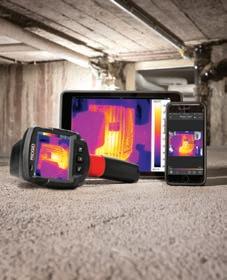
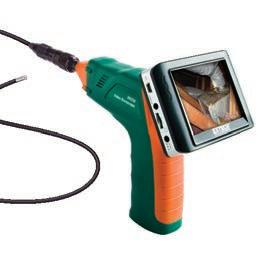
Ridgid’s thermal imager product line provide thermal images ranging from 160 x 120 pixels to 320 x 240 pixels. Select models show a digital camera image alongside the thermal image. The imagers feature SuperResolution with pixel shift technology. E-assist is available with RT-5x, RT-7x and RT-9x models.
www.ridgid.com
From Extech Instruments, the BR2504 wireless video inspection borescope is designed to access openings as small as 4.5 mm. It has a 2GB capacity to record video or take photos, in addition to a 3.5 in. colour display. Captured video can be viewed on the unit’s monitor or transferred to a computer via the 2GB SD card or USB cable.
www.extech.com
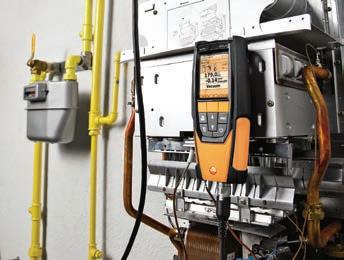
testo’s 320 combustion analyzer is programmed for 20 fuels and features a colour graphic display, expanded memory and up to 500 measurements. It includes a hardened cam-lock fitting and detachable gas sampling probe. www.testo.com
BY KERRY TURNER
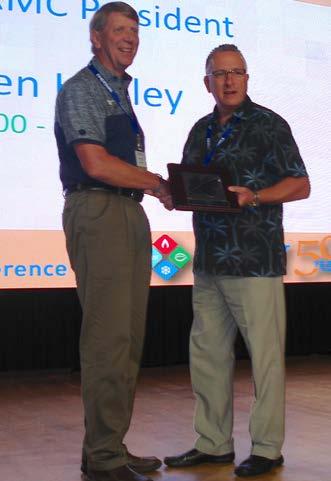
It was fitting that the Heating, Refrigeration and Air Conditioning Institute celebrated its 50th annual meeting and conference at a tropical location.
Attendees enjoyed an invigorating program, along with the amenities and warm temperatures at the Paradisus re -
sort in Playa del Carmen, Mexico.
Opening night on October 14 featured the 2017/2018 Year in Review and a view of the future from HRAI’s new president and CEO Sandy MacCleod.
The addition of CEO to the leadership title is just one change implemented by
David Weishuhn, incoming HRAI chair and 2017-2018 chair of HRAI’s Contractors Division, announced the recognition awards for outstanding leadership within the division and the HVAC/R contractor community on October 14.
Peter Steffes, formerly of Ideal Heating and Cooling in Windsor, ON received the Craig McCarty Memorial Award in appreciation of his long-standing dedication to HRAI’s Contractors Division and the HVAC/R industry. Steffes has been on the Contractors board of directors since 2004. From 2012-2013 he was vice-chair of the division and was chair of the Contractors Division from 20132015, becoming chair of the HRAI Board of Directions in 2015.
The Gearld Inch Award for Chapter Leadership recognizes the special efforts of volunteers who have been instrumental in keeping HRAI affiliated chapters and local/regional groups viable and meaningful to members. Peter Inch of Roy Inch & Sons Service Experts in London, ON received the award for his work with the HRAI London chapter.
MacCleod since he joined HRAI in June 2018.
In an organizational shift, he has created two director roles: director, operations and services, held by Frank Diecidue and director, member engagement, held by Loretta Zita. Martin Luymes, who was director of programs and relations, assumed the role of vice president, government stakeholder relations.
In his financial report Diecidue attributed HRAI’s healthy financial position in 2017-2018 to increased education revenues as a result of its partnership with the Ontario Geothermal Association. In Ontario the demise of GreenON, which was spurring much of that growth, has created some instability in the marketplace.
To ensure HRAI’s continued success and growth MacCleod intends to impleContinued on p66
Chair: David Weishuhn, Blue Flame Heating and Air Conditioning
Past chair: Bruce Passmore, EMCO HVAC
Vice chair of HRAI and Manufacturers Division chair: Dennis Kozina, Emerson Climate Technologies Canada
Secretary-treasurer of HRAI and Wholesalers Division chair: Richard Gosselin, TML Supply
Contractors Division chair: Rob Flipse, Gordon Latham Limited
Manufacturers Division vice chair: Scott McDonald, Johnson Controls L.P. Wholesalers Division vice chair: Ray Newstead, Refrigerative Supply
President and CEO: Sandy MacLeod
ment a multi-year strategy for the national organization with multiple reviews. “I believe this is the way to go,” said MacCleod.
A plan to bring the Day on the Hill model to the provincial government has already seen progress with a “Day at Queen’s Park” with the new Conservative
OPPORTUNITIES ACROSS
government in Ontario on October 30. Observations, barbs and predictions on the political scene were offered up by guest speaker Huw Williams of Impact Canada. His closing advice was that “whatever happens on climate change, HRAI needs to be at the table-if you are not at the table you are on the menu.”
The Heating, Refrigeration and Air Conditioning Institute of Canada (HRAI) offers a variety of residential and commercial courses. The Small Commercial Air System Design course builds on the Small Commercial Heat Gain & Heat Loss Calculations course. The three-day program includes how to design commercial air distribution systems for applications of up to 3 stories and 600 sq. metres per storey. For scheduling opportunities, tel. 800.267.2231 ext. 237, or e-mail amantei@hrai.ca. www.hrai.ca
CEC’s Gold Seal Accredited Advanced Project Management course, offered in partnership with the University of Waterloo, is a four-day program focus on improving leadership, management and advanced project management skills. It is designed for experienced project managers and senior project managers. To register, contact Tania Johnston at tania@mcac.ca.
The Canadian Hydronics Council (CHC) has partnered with NAIT and British Columbia Institute of Technology to provide course blocks toward CHC certification for hydronic system designers and installers. At NAIT students can register for online or paper-based learning and have nine months to complete each block. www.ciph.com
TECA’s Quality First training programs are developed by the industry, for the industry, setting minimum standards for the residential and light commercial heating, ventilating and cooling trade in BC. Courses provide contractors with the information they need to install equipment that operates safely and comfortably at rated efficiencies. www.teca.ca
Thomas Mueller of Green Building Council, Cold Dynamics founder Greg Scrivener, internet security expert Chris Mathers and Corey Diamond from Efficiency Canada were also on the program. HRAI will hold it 2019 annual meeting and conference August 25-27 in Niagara Falls, ON at the Sheraton on the Falls Hotel. <> www.hrai.ca

Since 1997, over 30,000 representatives of industrial, commercial and institutional (ICI) organizations have enrolled in the Dollars to $ense energy management workshops. In 2016, the material was completely remodeled and updated; it is now presented in 30 modules, which can easily be used as building blocks for organizations that have limited resources or that wish to focus on specific topics. www.cietcanada.com
Under agreement with AGSHP, HRAI will be providing IGSHPA training courses for geothermal heat pump system designers and installers in Ontario. The courses are in support of the recently established GreenON Low Carbon Technologies Incentive Program requirements, using IGSHPA certified trainers. The IGSPHA Accredited Geothermal Installer course covers ground-source heat pumps systems, while IGSPHA Certified Residential Geothermal Designer course will train attendees on how to properly design a residential geothermal heat pump. For details contact Angie Mantei at 800.267.2231, ext. 237 or e-mail amantei@hrai.ca. www.hrai.ca
Canada Green Building Council is offering this four-hour course as part of its Green Professional Skills Training (GPRO) program. It teaches the basics of sustainability and provides an overview of the essential strategies and work practices that make buildings more efficient. GPRO covers the “green gap” between standard trade skills and the new awareness required to successfully implement sustainable building practices. It is the prerequisite for all GPRO trade-specific courses. www.cagbc.org
Winter Conference
January 12-16
The 2019 ASHRAE Winter Conference will be held in conjunction with the AHR Expo at the Georgia World Congress Center in Atlanta, GA. www.ashrae.org
February 19-21
Co-located with KBIS, the International Builders’ Show show will be held at the Las Vegas Convention Centre, Las Vegas, NV. www.buildersshow.com
January 14-16
The Air Conditioning, Heating, Refrigerating Exposition returns to the Georgia World Congress Center in Atlanta, GA for its 2019 show.
www.ahrexpo.com
Estimating Conference
February 27-March 1
The sixth annual Construction Education Council conference will be held in Calgary, AB. www.mcac.ca/cec
February 19-21
This year’s Kitchen and Bath Industry Show (KBIS) will be held at the Las Vegas Convention Centre, Las Vegas, NV. www.kbis.com
CCOHS Forum: The Changing World of Work
March 5-6
Canada's National Centre for Occupational Health and Safety will hold this national event in Winnipeg, MB at Delta Hotels by Marriott. www.ccohs.ca
Solar Canada Conference and Exposition
May 8-9
The event will be held at the BMO Centre in Calgary, AB. www.solarcanadaconference.ca
March 11-15
The ISH trade fair will be held at the Messe Frankfurt in Frankfurt, Germany. www.ish.messefrankfurt.com
National HVAC/R Educators and Trainers Conference
March 3-5
The conference for HVAC/R instructors will take place at the South Point Hotel in Las Vegas, NV. www.escogroup.com
April 24-25
Industry professionals will gather at Place Bonaventure in Montreal, QC for the Mécanex/ Climatex/Expolectriq/Éclairage (MCEE) 2019 trade show. www.mcee.ca
HRAI Annual Meeting and Conference
August 25-27
The Heating, Refrigeration and Air Conditioning Institute event will hold it’s meeting at the Sheraton on the Falls Hotel in Niagara Falls, ON. www.hrai.ca
CIPH ABC
June 16-18
The Canadian Institute of Plumbing and Heating Annual Business Conference will take place at the Delta Prince Edward Hotel in Charlottetown, PEI. www.ciph.com
Canadian Hydronics Council Conference
September 24-25
The conference will be held at the Ottawa Conference & Event Centre in Ottawa, ON. www.ciph.com
ASHRAE Annual Conference
June 22-26
The 2019 conference will take place in Kansas City, MO. www.ashrae.org
SMACNA Annual Convention
October 20-23
The Sheet Metal and Air Conditioning Contractors’ National Association will hold the convention at the JW Marriott Austin in Austin, TX. www.smacna.org
This highly successful trade show and conference will take place September 19, 2019. Stay tuned for more details.
BY ELAINE DURÃES
Small installers and contractors can face an uphill battle when it comes to self-promotion–tight budgets, time constraints, and a lack of dedicated marketing personnel and resources leave some wondering how and where to start. But like many things, marketing can be as simple or as complex as you want it to be. Even the busiest professionals can use these six tips to boost their business:
1 Get free support for being a great installer. Just like credit card companies and airlines, manufacturers often offer free programs where, after going through a selection process, star installers can be rewarded for their work with access to business or website support tools, or local advertising paid for by the manufacturer. Other benefits of joining these programs include support with financing options and networking and quarterly events.
2 Grow your business with Facebook. More customers are hop -
ping online to search for quality services, and Facebook is one of the leading channels they are using. Do not miss out on the potential to grow your business online–create a Facebook business page showcasing all of your services and expertise.
3 Keep up with the industry. Looking to get insight from others in your industry? Many manufacturer loyalty programs offer access to an exclusive Facebook group where installers and contractors nationwide can connect to gain insight on technologies, training and trends from others in the industry.
4 Manage your reviews. We all know word of mouth helps drive business, and in the digital era, that comes in the form of online reviews. Positive reviews can be incredibly beneficial for smaller businesses looking to make a name for themselves, so encourage your customers to leave reviews about their experiences on social media sites. You can do this by sending a follow-up email after
installations or projects that asks them to review you on your Google Business or Facebook page.
5 Stay current on your training. One thing a contractor can never get enough of is training–and yet one thing contractors do not have enough of is time. With digital methods like webinars and e-academies becoming increasingly popular, you can watch and learn the latest trainings and techniques at your own convenience. Check out training resources from manufacturers’ webinars.
6 Use existing resources. Have no idea where to start when it comes to an online business strategy? Google recently released step-by-step instructions and tips on how to expand your digital presence with its Digital Workshop. It is a good starting point for an overview on how to get online with your business. <>
Elaine Durães is the marketing and training manager at Bosch Thermotechnology.
BY JEFFREY STAUB
AA thermostatic expansion valve (TXV) as shown in Figure 1 is a refrigeration and air conditioning throttling device that controls the amount of refrigerant liquid injected into a system’s evaporator—based on the evaporator outlet temperature and pressure—called the superheat.
Figure 2 shows the different phases and pressures the refrigerant goes through as it is pumped through the system, moving through the evaporator, the compressor, the condenser, and the throttling device which injects liquid refrigerant into the evaporator before it moves into the compressor.
There are three different forces at work in a TXV: bulb pressure, spring pressure, and evaporator pressure (see Figure 4). Bulb pressure comes from the bulb that is mounted at the outlet of the evaporator; the bulb senses the suction temperature and drives the diaphragm down if there is an increase.
Spring pressure is constant and pushes up against the diaphragm, counter to the bulb pressure. The spring
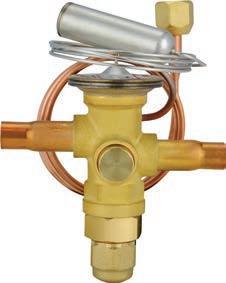
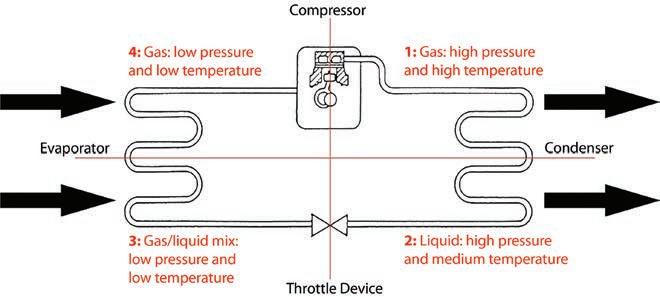
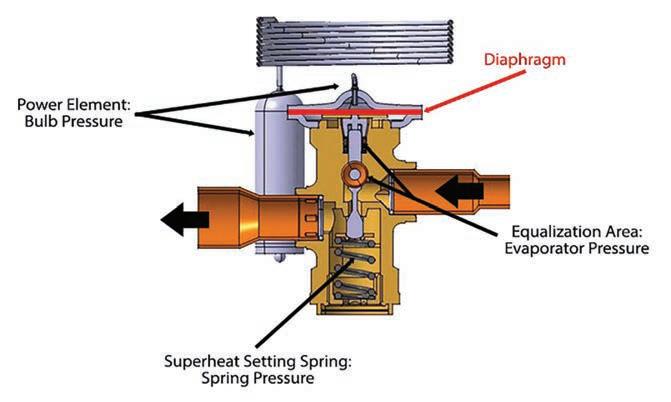
Figure 3 While there are different types of TXVs, each one has some things in common: a diaphragm, a power element, a setting spring, and an orifice
pressure is calibrated when the valve is set by the equipment manufacturer or the installer. Evaporator pressure pushes the diaphragm up when the suction pressure increases and comes from the evaporator load on the system, which varies according to different operating conditions, such as room temperature changes. Based on the balance between these three pressures, the valve will either open or close.
TXVs are available with either internal or external pressure equalization (see Figure 5). Externally equalized valves are recommended for multi-circuit systems because they account for excessive pressure drops coming from distributors and through the evaporator. Externally equalized valves sense the
evaporator pressure from the equalizer line connected to the evaporator outlet. Internally equalized valves sense the evaporator pressure at the outlet of the valve. The majority, if not all, of air conditioning systems in the North America that use TXVs, use externally equalized valves.
Figure 6 shows two types of port designs. In conventional or single port designs, the diaphragm can be influenced by pressure changes in the condenser. The general rule of thumb is that a conventional port design works best in systems with less than five tons of refrigerant, while larger systems work best with a balanced port design (though it is not uncommon to use a balanced port valve in smaller systems).
A balanced port design isolates the condenser pressure from affecting the opening of the valve, necessitating the use of O-rings. However, the more O-rings used, the more friction will be created, requiring design measures to negate frictional loss in the TXV.
While there are several types of bulb charges, two common charges used in air conditioning systems are universal charge and anti-hunt charge as shown in Figure 7.
With a universal charge, the bulb filled with a liquid cross charge. Whenever the bulb senses an increase in suction line temperature, the liquid expands, increasing the pressure in the fixed volume, and pushes the diaphragm down, thereby opening the valve and allowing more liquid refrigerant into the evaporator.
Unfortunately, vaporization is a dynamic process, which can produce sporadic superheat at the evaporator outlet. Think of liquid refrigerant changing to vapour like a pot of boiling water: the liquid does not instantaneously become a gas
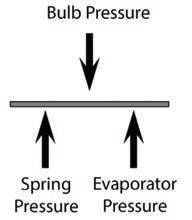
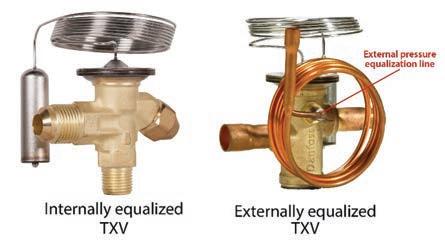
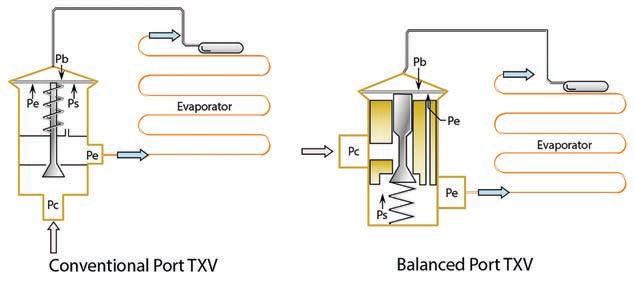

once the boiling point is reached, but changes into steam erratically.
Similarly, the bulb might sense vapour one instant and liquid the next. In this scenario, a bulb with a universal charge will rapidly open and close the valve, a process called hunting. Hunting reduces the system’s efficiency, shortens the valves lifespan, and increases the risk of liquid refrigerant making its way to the compressor, which will damage it.
To avoid hunting, some TXVs add a ballast to the bulb (usually a clay brick), creating what is known as an anti-hunt charge. The ballast dampens the rate of expansion within the bulb, stabilizing the bulb pressure against the diaphragm by dampening the rate of temperature change to the bulb charge compared to the rate of temperature change of the suction line. This stabilization ensures
that the TXV operates more efficiently and better protects the compressor.
There are two common approaches to what makes up bulb charge fluid. The first approach is to use the same refrigerant used in the system, that is using R-410A in the bulb for an R-410A system.
The other common approach is called a cross charge. Cross charged bulbs mix a combination of different refrigerants with gases to flatten the pressure-temperature (P-T) curve. Cross charges enable the TXV to perform similarly regarding the change in opening degree for a given change in superheat across a range of evaporator temperatures. <>
Jeffrey Staub is director, regional applications Americas, Danfoss. He can be reached at JeffStaub@danfoss.com.



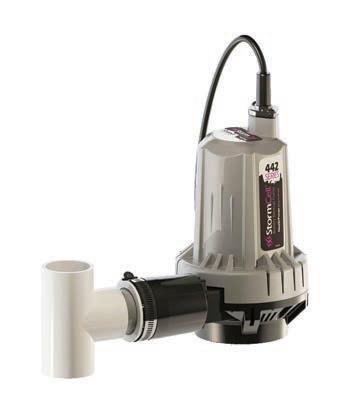
The new StormCell® series of battery backup pumps from Liberty feature advanced professional-grade chargers, energy e icient pumps for longer run times, and optional NightEye® wireless technology for remote monitoring through your smart device.
• Available in both standard and wireless connected models
• Professional-grade chargers (10 amp and high-output 25 amp)
• Single and dual battery systems
• Energy efficient DC pump (manufactured in the U.S. by Liberty)
* Model 442-25A, StormCell® Group