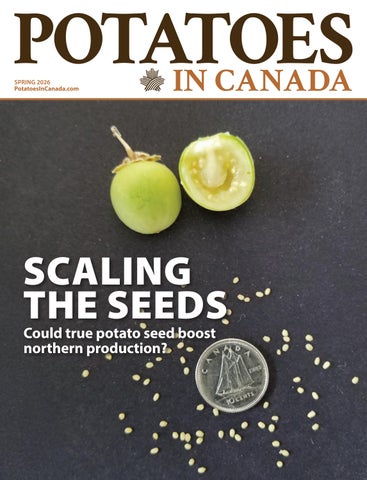
SCALING THE SEEDS
Could true potato seed boost northern production?
MANZATE® MAX FUNGICIDE





Refuse to lose yield to early and late blight in your potato crop this season with Manzate® Max fungicide. With a powerful, proven active ingredient, Manzate Max comes in a convenient liquid formulation that’s easy to use and is a compatible tank-mix partner. Feel confident in your results this season with a low-use rate, wide application window and no crop rotation restrictions. Additionally, you can earn valuable Grower Rewards with your purchase.
Win the blight fight with Manzate ® Max fungicide today.

10 | Less bag, more biology
There are arguments for using less fertilizer – but how can it be done right?
By Jack Kazmierski
12 | The new normal?
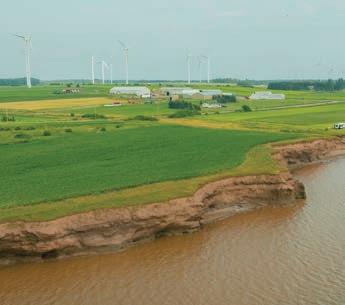
How did PE.I.’s dry summer strain potatoes – and how can the island build back its resilient industry through science?
By Jim Timlick
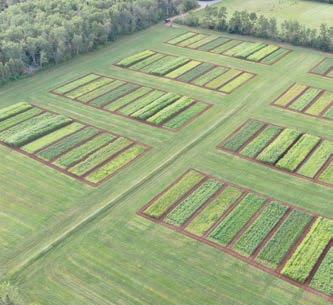
18 | PVY, meet AI
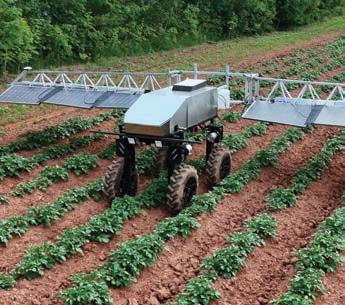
Using machine learning to train an automated system to detect a pesky virus.
By Treena Hein
Bree Rody
Carolyn King

BREE RODY EDITOR
REAL LIFE GRINS AND VIRTUAL WINS
Iam writing this column from a hotel in beautiful Brandon, MB after returning from the Suds and Spuds reception at the annual Manitoba Potato Grower Days. At the reception, I experienced something I suspect we’ve all had happen at least once: while getting ready to leave for the night, I saw a friendly face, and a quick hello turned into an introduction to that person’s table, and suddenly I had a handful of new friends and stuck around for an extra 40 minutes conversing about everything from our travel conditions to the nuances of Potato Virus Y. In this case, that friendly face was Manitoba Agriculture’s Vikram Bisht, who introduced me to a table full of his colleagues and friends New Brunswick to Manitoba.
Gather in-person is essential when you work in an industry as widespread and as rapidly advancing as the potato industry. You can bring in ideas from Washington State, New Brunswick, Minnesota and more to a room of Manitoba producers and they will all find value.
Virtual events, however, are also a great complement to these events – and they’re not just a “COVID-era” relic.
We hosted our sixth annual Canadian Potato Summit in January, with hundreds of virtual attendees taking in panels from homes, offices, home offices and more. The Zoom format still enabled the audiences to ask questions – and ask, they did – and our speakers, many of whom contributed to group panels, displayed great chemistry with one another, even from different provinces.
For example, Canadian Produce Marketing Association general president Ron Lemaire shared the association’s insights on the annual industry update panel, explaining that the third and fourth quarter of 2025 saw a rise in consumer demand for potatoes, thanks to the vegetable’s very convenient nature. He added, “We can’t underestimate air fryers – about 60 per cent of U.S. households have bloody air fryers!” His fellow panelists, United Potato Growers general Victoria Stamper and Canadian Potato Council general manager Caleigh Hallink-Irwin held back laughter from their respective screens.
For scientific research, researchers from AAFC and academic institutions such as Lethbridge Polytechnic and University of Guelph shared the latest on diseases, insect pests and breeding. This ranged from explanations on why potato wart requires such complex research to more creative solutions for the ever-elusive Colorado Potato Beetle.
More pros to both in-person and virtual? Well, for one thing, I’m a hugger – and a hand-shaker, a high-fiver and a hand-talker. A good opening night mixer gets all that in – plus all the exciting research talk!
But on the other hand, if you roll into a conference late and miss that panel you were really hoping to see, well, that’s it. For virtual summits like ours, we have all the sessions posted online – for free – at PotatoesInCanada.com/virtual-events/canadian-potato-summit-2026/
Speaking of online content: with Spring 2026 being our only print issue, you can look forward to more great web-exclusive features and interviews on PotatoesInCanada (dot) com all year round –we’ve been talking to some of the most brilliant potato minds in Canada, the U.S. and even overseas to bring you great potato stories in 2026. Because, whether they’re virtual or in-person, the most important tool to advance the industry is – in my opinion, at least – the art of conversation.



TRUE POTATO SEED: OPPORTUNITIES AND CHALLENGES
Could true potato seed help advance northern food security?
by Carolyn King
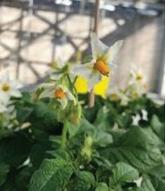
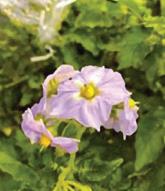
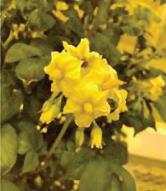
True potato seed (TPS) – the seed from the pollinated flowers of potato plants – has a mix of advantages and disadvantages compared to seed tubers. Researchers from Agriculture and Agri-Food Canada (AAFC) are working to overcome the hurdles and capture the benefits of TPS, particularly when it comes to potato production in northern communities.
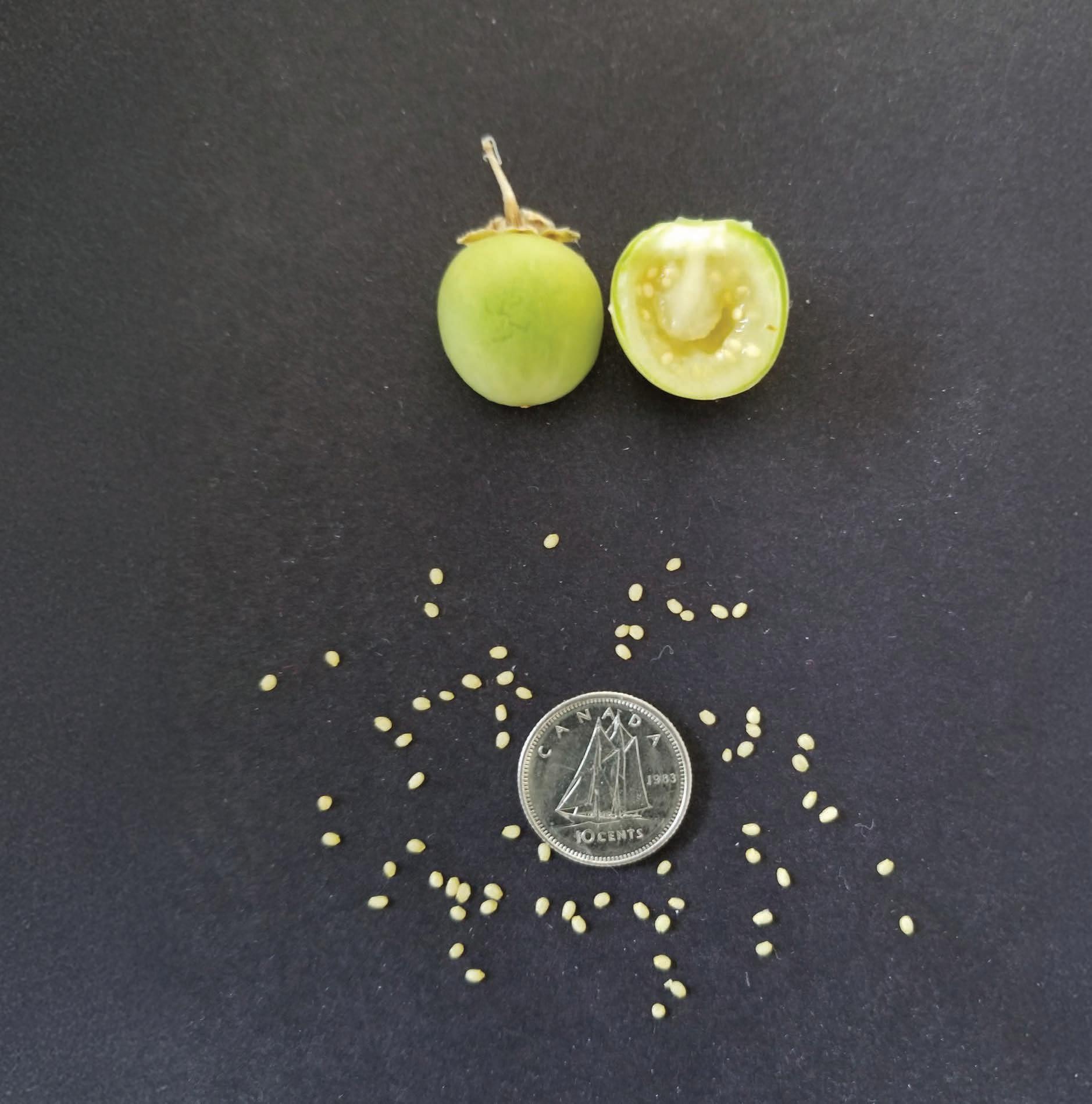
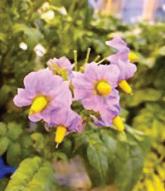
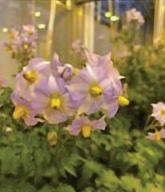
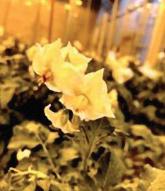
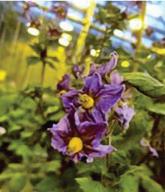
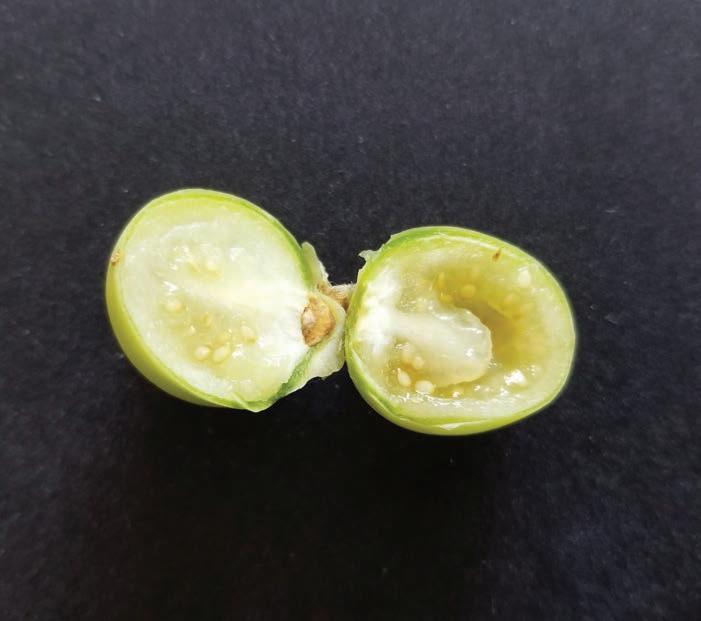
“True potato seed forms when the pollen from the male flower parts fertilizes the ovary of the female flower parts. The seeds are formed within a fruit called a seed ball [which can contain hundreds of seeds]. The tiny seeds are about 0.5 to 2 millimetres in length,” explains Helen Tai, a research scientist with AAFC in Fredericton, New Brunswick.
TPS’s mix of genes from a pollination event results in genetic diversity that is very useful to breeders aiming to improve potato traits. In contrast, asexual reproduction via seed tubers produces genetically identical clones, which is great for producing a uniform crop, so commercial production currently relies on seed tubers.
Tai outlines several ways that TPS could be used in commercial production systems: it can be seeded directly into a field and the crop can be harvested for the market or for seed tubers; TPS can be seeded into trays indoors to grow seedlings for transplanting in a field; or the indoor seedlings can be used to produce mini-tubers indoors, which can be planted in a field.
She sees some important potential benefits from TPS production systems.
“One of the great advantages with TPS is that very, very few diseases can be trans-
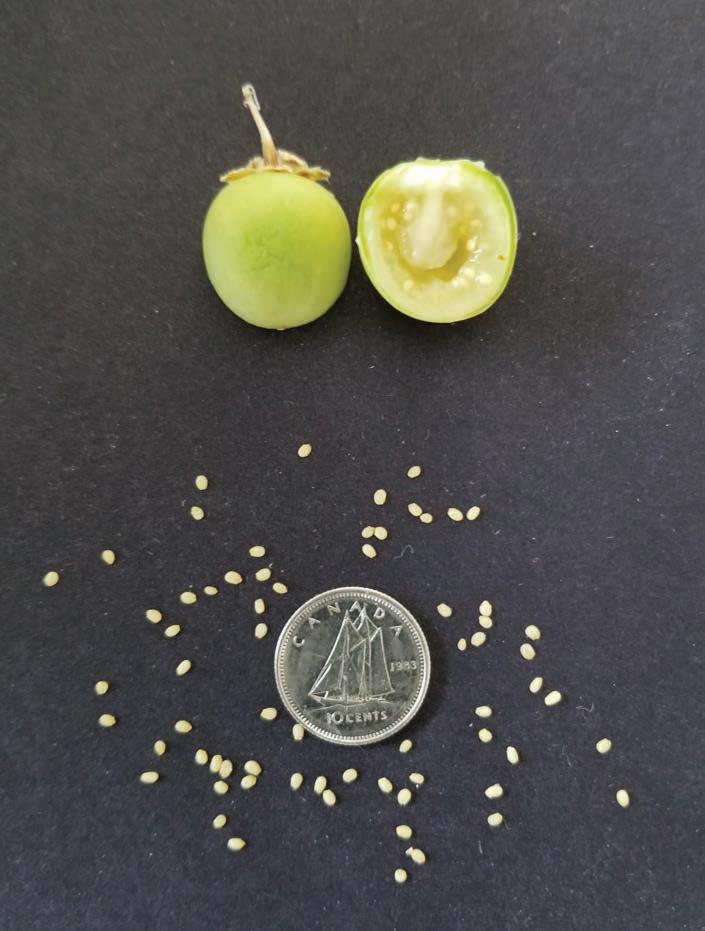
Potato seed balls can contain hundreds of true potato seeds – dime for scale.

mitted by true potato seed, whereas a whole panoply of diseases can be carried by the tuber,” she says. Another advantage is that seed increase is much faster with TPS than seed tubers, so variety development could respond more quickly to changing market needs. TPS also has a role in hybrid potato systems, which have exciting potential to improve potato traits, including traits for northern production.
Some of the constraints to using TPS systems are that they tend to be more labourintensive than seed tuber systems, and the crop is not genetically uniform.
Toward resilient northern food systems
Tai’s interest in TPS comes in part from the possibility that TPS could help improve food security in northern communities. Other AAFC researchers, like Julia Wheeler, are also working on issues in sustainable northern crop production.
“Lots of people in northern communities are very interested in producing more foods locally. They recognize that there is a physical and mental health benefit from this and a benefit to getting more reliable access to fresh produce,” says Wheeler, a research scientist with AAFC in St. John’s, Newfoundland.
“Access is such a big thing in northern communities given the fact that most of the fresh food is imported and the fact that many of these communities are at the end of very long supply chains. So, when the food gets there – if it gets there in the first place – it
is not always very good quality and it is expensive to purchase. Being able to produce fresh produce locally improves overall access to fresh food and that’s an important part of building up a resilient local food system.”
TPS could help overcome several hindrances to northern potato production. For example, Tai notes that the small, lightweight seeds can be transported much more easily and less expensively than seed tubers. TPS also requires a lot less storage space than seed tubers, which is important in northern communities where storage space is often limited. As well, a seed tuber might remain viable for about a year or 18 months, depending on the storage conditions, whereas TPS can have a decades-long storage life.
TPS production practices for the North
Given TPS’s advantages for northern production, what would it take to make TPS production work for northern communities?
That’s what Tai and her colleagues examined in a project that started in 2020; they are now writing up the results. The project team included: Tai, David De Koeyer and Kyle Gardner at AAFC Fredericton, and David McKenzie, Wheeler and Linda Jewell at AAFC St. John’s. A lot of the project’s field trials occurred at AAFC St. John’s.
“The goals of our project were to identify some of the challenges that would be facing true potato seed and to understand the needs of northern communities with respect to potato traits,” says Tai. This AAFCfunded project worked on TPS seeding
methods and breeding systems.
In terms of seeding methods, a key challenge tackled by the team was that TPS has a delay in emergence of about two weeks, which they already knew about from growing TPS in New Brunswick.
“I had a previous project with a group in the Northwest Territories. They planted some of the TPS material that David De Koeyer, our breeder in Fredericton, had identified as being early,” explains Tai. “When they had trialled that TPS in Hay River, they confirmed that this delay was getting to a point where potato production was compromised in Hay River.”
The seeding method experiments to determine if various practices could help overcome the emergence delay included presoaking the seeds indoors, which helped to increase plant emergence rates. They also had some success with using row covers and plastic mulches to help with establishment of direct-seeded seedlings. As well, they tried starting the plants indoors and then transplanting them outdoors, and growing transplants in containers so the plants could be sheltered at first before putting them outside.
However, Tai points out that indoor production steps may not be an option in some places. “Northern communities usually have limited space indoors; if they are growing things indoors, they would want that to be something they could eat directly.”
The team also conducted trials to see how early direct seeding and seedling transplantation could be done. They found that early transplanting dates resulted in larger plants but plant losses were much higher than later transplanting dates. The team also evaluated different fertilizer placement practices for direct seeded TPS and transplanted TPS seedlings.
Traits for northern potatoes
“The most important characteristic for growing potato in the North – emphasized by northern growers and our own experience – is earliness. We need early-emerging, short-season plants that can tuberize in a very short amount of time,” notes Tai. This need is especially important given the emergence delay associated with TPS.
So, Tai has been working on earlinessrelated traits such as cold hardiness, frost hardiness and the ability to develop tubers despite the long daylengths of the northern
Tai’s research includes working on diploid potato inbreeding using AAFC’s collection of diploid germplasm, like the plants shown here left by retired breeder Hielke De Jong.
growing season.
“Some of the work that I do is with wild potato relatives, including wild relatives from the High Andes, where it is extremely cold and the growing season is relatively short. Those are some of the wild species we are using in our pre-breeding program to develop germplasm that would have advantages for northerly locations,” she says.
Tai has also been working on the daylength issue. She explains that potato has a gene called CDF1 that makes the plant dependent on having shorter daylengths to tuberize. However, the natural range of potato (which originated in South America) includes southern Chile, which has long days during its growing season. So potato germplasm already includes natural CDF mutations that make the plant day-neutral. Tai is working on developing a system using gene sequence information and genotyping assays to select for day-neutral plants with the natural mutation in the CDF1 gene.
Breeding TPS tetraploids
The project team also worked to address the challenge of having too much genetic variability in TPS systems.
Current commercial potato varieties are tetraploids, meaning that they have four
sets of chromosomes. So crosses between two potato plants can result in a lot of genetic variation in the TPS. Tai says, “If the genetic variation is too high, it is really difficult to manage the crop, [and the variability may affect crop acceptability for processors and consumers]. So, it is advantageous to have a more uniform crop.”
She explains, “When planting a tetraploid TPS crop, you are planting a family of related individuals from a cross. And some of those families are really genetically variable, and some are not. So, part of what we researched in our project was how to select for low genetic variation in the tetraploid TPS families.”
The project team has identified tetraploid TPS families with low variation and has started working on selection for trait uniformity in tetraploid families for AAFC’s breeding program.
Tai also notes that a Saskatchewanbased company, Tuberosum Technologies, has made progress in selecting TPS families with low variation in traits and has already released several TPS varieties.
TPS diploids & hybrids
TPS is also connected to Tai’s interest in breeding with potato diploids, which have
two sets of chromosomes. She says, “A diploid breeding system with half the genetic material makes it easier for us to genetically improve the crop for all sorts of advantageous traits – quality, disease resistance, pest resistance, abiotic stress resistance.”
According to Tai, there are naturally occurring diploids in potatoes as well as ways to reduce a tetraploid potato to a diploid, so diploid potato breeding is feasible. She is particularly interested in diploid inbreeding to make genetically uniform lines.
Inbreeding tetraploid potatoes would be extremely difficult, but other researchers have recently identified a capacity to inbreed diploid potatoes. Tai says, “This inbreeding of diploid potatoes helps us go toward a hybrid breeding system. In a hybrid breeding system, you cross two inbred lines together and get what is called hybrid vigour, which they take advantage of a lot in corn. [The true potato seed from a hybrid cross is genetically uniform and] you would propagate the hybrid lines using the true potato seed.”
A hybrid diploid breeding system would offer genetic uniformity and introgressing new traits would be easier, plus the use of TPS would greatly reduce the disease risk. Tai notes, “Diploid breeding will allow us to increase capacity to improve the crop genetically, including traits for the North, and to bring it to the true potato seed production system as well.”
As part of the recently completed project, Tai worked on diploid inbreeding, making use of a large collection of diploid potato germplasm developed by previous AAFC breeders. She also has a current diploid breeding project in partnership with Progest 2001 Inc., a private potato breeder, Laval University and McGill University.
TPS, the North and next steps
“An important lesson about northern production is that not all of the North is the same. The climate differences as you go north are one thing. Another issue is what are the community needs? What does the community have for resources to carry out crop production? Are they able to muster together an indoor production system? Are they going to be strictly dependent on putting the crop into the ground? What are their soil resources?” says Tai.
“So, there isn’t just one way to move forward. I think there are going to be multiple
A true potato seedball cut open, revealling the insides.
IMAGE COURTESY OF AAFC
possibilities. And each community has its own take on this, and there will have to be customization to the different situations. But there are some general things that we need to work on to advance the whole possibility of potato production in the North. And one of them is to see how well we could get true potato seed working and to see if that integrates into the production systems in the North.”
Other AAFC research is also helping to advance northern potato production. For example, Wheeler led a recent project that included an evaluation of the use of biodegradable plastic mulch in potato production at: St. John’s; Happy Valley/Goose Bay, Labrador; and Whitehorse, Yukon. The mulch’s purpose is to warm the soil and trap moisture to help accelerate crop germination and development, and hopefully result in higher yields. The mulch is intended to break down over the course of the growing season and become integrated into the soil. The mulches didn’t provide a consistent yield benefit at St. John’s and Happy Valley/ Goose Bay. However, they worked better at Whitehorse, which has a drier summer cli-
mate with less rain and longer daylight in the summer than the other two sites.
As well, she led a recently completed project at the same three sites to assess the performance of readily available potato varieties. It identified which particular varieties performed well at each of the sites.
Wheeler points to the potential to use TPS in tailoring potato varieties for northern conditions. “A lot of potato varieties weren’t bred to be grown in cold climates. True potato seed represents an opportunity to hit that issue from the start and potentially build up to a crop that would be very appropriate for northern climates.”
Tai is hopeful that more funding will become available for TPS research. “Once we prove that the diploid breeding system is viable then I think we’ll see a resurgence in interest in true potato seed production systems.”
She sees two possible opportunities that could “give TPS a start in Canada.” One is to target organic potato production. “Certified seed tubers cannot be produced organically because you need to use a lot of different products to be sure that the tubers are certi-

fied disease-free, but organic growers could use TPS.”
The other possibility is to target home gardeners and small market gardeners. “TPS would allow us to deliver developed varieties faster to the consumer, so you could offer home gardeners a lot of different varieties. Also, they wouldn’t care as much about having to start something indoors or having a two-week delay in the production of tubers. And TPS can be shipped to their door.” In addition, because home gardeners don’t always use seed tubers that are certified, home gardens can sometimes become repositories of serious potato diseases. TPS would give home gardeners an option with very low disease risk, which would also help safeguard the commercial potato industry.
Although questions remain around how well TPS could work in northern production systems, ongoing research on the many aspects of TPS and northern production have the potential to contribute to valuable advances in potato variety development and production and in northern food security.
Gold standard in potato protection.
Potato growers demand excellence. Win big this season by protecting your potatoes from insects, weeds, and plant-parasitic nematodes. From start to finish, Corteva Agriscience™ offers a suite of high performing products to elevate the performance of your potato crop. Talk to your local retailer to learn more.
EARLY-SEASON RISK MANAGEMENT KEY TO CROP SUCCESS
Starting mitigation efforts at planting can yield long-term benefits.
There’s no question that commercial potato production has its challenges, and Canadian growers seeking to maximize their yields of top-quality spuds are being advised to stack the deck in their favour by taking steps to mitigate problems before they begin.
“Your highest yield potential is before that potato is ever planted. As soon as you put it into the ground, there are only things taking away from it,” says Justin Dalebozik, Fruit and Vegetable Sales Agronomist for Bayer Crop Science. “Your main priority is to set that potato up to have the best possible growing conditions for the season. You want to put your best foot forward.”
Dalebozik notes the challenges Canadian potato producers grapple with can vary from year to year and from region to region. In some parts of the country, wet soils and cool temperatures in spring can delay emergence, slow growth and increase disease pressure. In others, dry conditions can impact spud quality and yield potential. And let’s not forget the joys of late-spring frosts, which can damage emerging plants, delay maturity, reduce yields and affect uniformity.
Often, it’s the decisions producers make early in the season that have the greatest impact on crop yields and spud quality later in the year.
“Here in Manitoba, we basically have two weeks to put everything in the ground and there are so many questions that farmers need to ask themselves,” Dalebozik says. “If spring conditions are poor and it’s wet, decisions need to be made. Are we mucking it in? Are we waiting? If we wait too long, how much yield are we leaving on the table? If we muck it in, how much yield are
we leaving on the table? Because we know there’s going be seed rot.”
Dalebozik advises growers at risk of seed rot to make sure their seed temperatures match their soil temperatures and fall within the optimal range before planting.
“Soil temps above 7 C are better than below, but we want them capped at 18 C. If they’re over 18 C then you’ll have to warm up that seed – otherwise, you’ll get condensation, which can lead to seed rot. You do not want that seed piece to sweat,” he says.
While Dalebozik places seed rot at the top of his list of early-season woes, Colorado potato beetles also represent a bright blip on his radar. In regions where they’re a problem, overwintering adults start attacking plants shortly after emergence and large-scale infestations can completely defoliate plants leading to significant yield reductions.
“We obviously want that pest to be mitigated as much as possible,” he says.
Aphids are another major pest that producers in some parts of the country face; partly because large-scale infestations can cause foliage to yellow and wilt, but mostly because many species transmit potato viruses that can significantly degrade tuber quality and diminish yields.
And while those insects bear highlighting, producers also need to be on the lookout for others, including potato flea beetles, potato leafhoppers and plant-pathogenic nematodes.
Early season management is key to success
Dalebozik and Sherri Tedford, Fruit and Vegetable Customer Solutions Agronomist for Bayer, both agree that worst-case
scenarios can often be mitigated by implementing early season best management practices.
Beyond investing in high-quality seed and selecting pest-free and disease-free (or tolerant) varieties, those practices include planting into warm, well-drained soils, handling seed gently to minimize wounds, sanitizing seed cutting and planting equipment, integrating non-host crops in rotations, choosing suitable planting sites, optimizing fertilization, making use of physical barriers, reducing pests at field perimeters, scouting for early signs of damage and applying seed piece and/or infurrow treatments.
“There’s not really one true silver bullet,” Dalebozik says. “Everything in potatoes requires an integrated approach. We need to have multiple means to solve the same problem.”
Tedford seconds this, adding the biggest single mistake she sees growers make is waiting too long to address potential issues.
“[Producers] don’t want to have to make those investments if they’re unnecessary, but you can really get yourself into a tough situation because remediation is so hard. If you know that you have a risk, you’re better off being a little more proactive,” she says. “You’re protecting your investment by trying to prevent any early onset of issues that can lead to a compounded problem later. It’s
infinitely easier to prevent disease and loss than it is to remediate it.”
Products play vital role in an integrated approach
For his part, Dalebozik advocates for getting the season off to a strong start by integrating in-furrow and seed-piece treatments into early-season management practices. One product he particularly likes is Emesto® Silver by Bayer, a fungicide seed-piece treatment used to coat potato seed pieces to protect them against Fusarium tuber rot and seedborne Rhizoctonia (the cause of black scurf, stem and stolon canker) as well as silver scurf.
“If that seed is contaminated with any Fusarium, Rhizoctonia, or any sort of seedborne disease, that seed-piece treatment keeps it contained,” he says. “It prevents it from spreading further, getting worse, and limits your seed rot.”
If Colorado potato beetles and/or aphids are also a problem, Dalebozik points to Emesto® Complete as an all-in-one seedpiece treatment that includes an insecticide in addition to the fungicide found in Emesto Silver. As well as controlling Colorado potato beetles and aphids, it also targets potato
flea beetles and potato leafhoppers.
“It’s a necessity that we have these tools to help our production,” Dalebozik says, calling out Colorado potato beetles by name. “Our production would be diminished to almost nothing if we didn’t have these tools to help protect the crop.”
Tedford and Dalebozik both point to Minuet® biological fungicide as an important tool that suppresses soil-borne diseases such as Rhizoctonia root rot, black scurf and stem canker. This concentrated in-furrow biological fungicide also protects against pink rot and root rot caused by Fusarium, Phytophthora and Pythium spp.
“Close to 70 per cent of the acres in Manitoba are now getting Minuet – and there’s a reason for it,” Dalebozik says. “[Producers] are seeing the benefits, and we are still finding benefits that it’s bringing to the table.”
Minuet is compatible with in-furrow products like Velum® Prime, a fungicide/ nematicide that primarily targets plantpathogenic nematodes while also suppressing early blight and black dot. Velum® Rise delivers excellent control of soil-borne diseases such as Rhizoctonia solani (black scurf, stem canker)
as well suppression of early blight, black dot and white mould. It’s also important to note that black dot (Colletotrichum coccodes) and plant pathogenic nematodes are some of the causal agents of the potato early dying (PED) disease complex.
Both agronomists stress there is no one right solution that will work on every farm, in every region, for every year. The key is for producers to be aware of their risks and take steps to mitigate them at the first possible opportunity to give themselves the best chances of preserving potato quality and maximizing yield potential.
“There’s never a perfect answer,” Dalebozik says. “You just hope that you pick more right answers than wrong answers on that season.”
Brought to you by Bayer Crop Science, in partnership with AmplifybyAnnex.com and Potatoes in Canada.

FIELD A WINNING TEAM WITH BAYER.
From the rst day in the eld, you can count on Bayer for an all-star lineup of high performing crop protection that increases yield potential for your potatoes.
Bayer seed-piece treatments, fungicides and insecticides give your potatoes the crucial protection they need to knock this season out of the park.




Scan the QR code for more information about Bayer Crop Science’s solutions for potato crops.
T:7.125"
T:4.75"
LESS BAG, MORE BIOLOGY
Can Canadian growers move away from commercial fertilizer?
by Jack Kazmierski
By any measure, fertilizer has been one of the great success stories of modern agriculture. However, it can also be one of its biggest headaches. As prices rise and environmental scrutiny tightens, potato growers across Canada are asking a hard question: How far can we reduce our reliance on commercial fertilizer without sacrificing yield, quality or profitability?
The fertilizer paradox: Indispensable, but imperfect
There is no getting around it—commercial fertilizer helped build modern potato farming. “The increase in agricultural productivity was possible due to the development and mass production of chemical fertilizers, the introduction of modern agriculture [and] high-yielding varieties, and use of other inputs, including pesticides,” says Judith Nyiraneza, research scientist with Agriculture and Agri-Food Canada (AAFC).
Nyiraneza stresses that the soil organic matter is an important source of crop nutrients. Fertilizer provides supplemental nutrition to the plants, “And in most cases, the proportion of nutrients derived from the soil is higher than from fertilizers.”
In other words, a significant share of plant nutrients still comes from the soil itself—specifically organic matter and mineral reserves. Fertilizer supplements that supply, but it does not replace it.
The downside of using fertilizer can’t be ignored, however. Cost is
a major factor as fertilizer prices have swung wildly in recent years, driven by energy costs, geopolitics, and supply-chain disruptions. Environmental losses and diminishing returns are other key concerns. According to Nyiraneza, “Application of lower amounts of fertilizer than the plant requires can lead to yield decline, but applying higher than the optimum can affect the quality of the crops [reduce the nutritional content of foods], represent an unneeded extra production cost for producers, and negatively impact the air and water quality.”
Scott Anderson, science coordinator at the Charlottetown Research Centre with AAFC says historically, “Fertilizer has been a pretty cheap form of insurance,” since it gave growers steady yields, regardless of the growing conditions or management practices. “That’s why we’ve seen a consistent use of fertilizer for potato production,” he says.
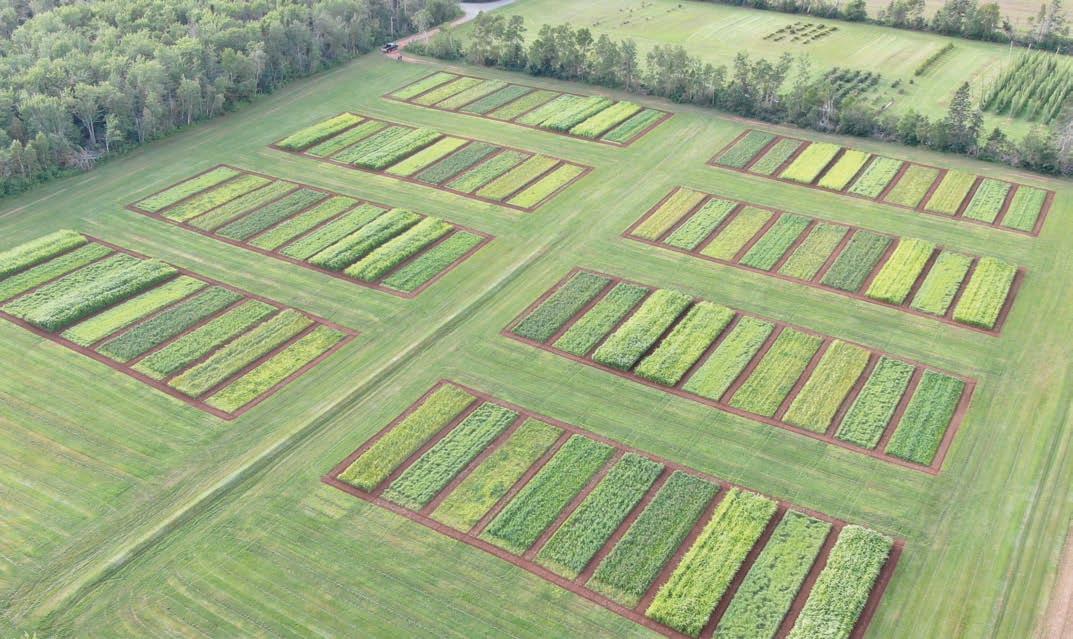
TOP: Field trial testing the impacts of different full season cover crops with and without cow manure on potato productivity, soil health, and nitrogen cycling at Agriculture and Agri-Food Canada Harrington Research Farm, Charlottetown, Prince Edward Island.
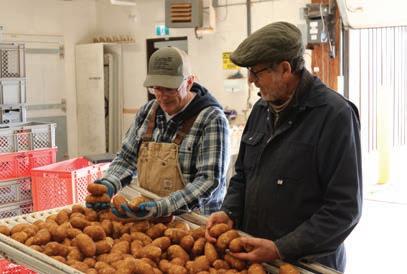
INSET: Scott Anderson (left) and Roger Henry (right) grade the plowdown challenge potatoes at the Charlottetown Research and Development Centre.
Feeding the soil, not just the crop
Reducing reliance on commercial fertilizer boils down to a key principle: Feed the soil first, so the soil can feed the crop.
“Unhealthy soils, such as a compacted soil, can show deficiency of nutrients even when they are applied in sufficient amounts,” says Nyiraneza. “Beneficial management practices to increase soil organic matter will allow better soil aeration, soil infiltration and drainage, and ability to hold nutrient and water.”
Studies demonstrate that crop productivity was increased by integrating organic and inorganic nutrient sources, adds Nyiraneza. Soils rich in organic matter behave like nutrient banks. They hold water longer, improve aeration and root growth, and support microbial communities that slowly release nutrients in plant-available forms.
“Finally, efficient weed, pest and disease management programs are crucial to sustaining crop productivity,” says Nyiraneza.
The above-mentioned practices will improve soil health, which has a more important effect on plant growth than their fertilizer value, Nyiraneza explains. “The soil structure
controls the nutrients, water and air movement, while providing a habitat for microbes and supporting root growth,” she says.
Growing potatoes without commercial fertilizer
Is it possible to grow potatoes without using any commercial fertilizer whatsoever? The short answer is yes, sometimes, on some fields — but it’s risky.
“Depending on the farm, the risk may be that the plants will not grow to their maximum potential, and thus yield will decline in certain fields, with even greater consequences if the practice continues over time.”
Studies show 30 to 50 per cent of crop yield is attributed to synthetic fertilizers. Remove them entirely, and yield losses are likely, unless soils have exceptionally high nutrient-supplying capacity. “Each farm is different,” she says. “In certain fields, the soil is the main source of nutrients, while in others, the fertilizer is the main source.”
In other words, if the soil already has a high nutrient supply capacity, Nyiraneza argues that it is possible to supplement crop nutrition with animal waste and green
manure, rather than commercial fertilizer. “The benefits would enhance the nutritional content of foods, and growers can save money that would otherwise be spent on purchasing and transporting commercial fertilizers,” she says.
Replacing commercial fertilizer with organic options
One of the benefits of commercial fertilizer is that it can be applied when it’s actually needed. Organic fertilizer from plants or animal materials, on the other hand, need to be broken down into forms that can be used by plants, and may not be synchronized with the plant demand, or be available in sufficient amounts, Nyiraneza explains.
“Organic fertilizer applied in excess or improperly can also be responsible for environmental degradation similarly to synthetic fertilizer,” she says. “Replacing commercial fertilizer with organic fertilizer can result in yield decline, unless the soil nutrient supply capacity is enough to satisfy crop nutrient demand.”
Some organic amendments, she adds, are a reliable source of nutrients (i.e. liquid
AND STAY THERE. GET OUT IN FRONT

Get ahead with Orondis® Advanced fungicide and give your potatoes thejump on late blight and white mould. Its proven resistance management and flexible application timing keeps you in the lead all season long.
Orondis® and the Syngenta logo are trademarks of a Syngenta Group Company. © 2026 Syngenta.
manure), others are beneficial in improving soil structure, and have lower fertilizer value (i.e. compost). “It is Important to know the soil status and the benefits of an implemented management practice,” she says.
According to Marisol Quintanilla, associate professor and nematologist at Michigan State University, manure offers other benefits too. “Manure,” she says, “Especially poultry manure, has been very effective at killing nematodes, while also providing nutrients and micronutrients.”
Quintanilla explains growers need to be careful regardless of whether they’re using manure or commercial fertilizer, since both can contaminate the environment if not properly applied or if misused. “Manure isn’t foolproof,” she says, “But the benefit is that you’re recycling nutrients, and you’re adding organic matter for beneficial organisms.”
Quintanilla notes the nitrogen from commercial fertilizer can be lost to the water table or into the air. Conversely, the nutrients in manure and compost are more stable. “The nutrients are not as concentrated, and you will still lose some, but less that you would with commercial fertilizer,” she says.
Best practices that consistently pay off
While commercial fertilizer may be a quick solution, it is possible to cut down by adopting best practices and planning accordingly.
Nyiraneza lists the following beneficial management practices: organic amendment incorporation, reducing the intensity and frequency of soil tillage, adopting long and diversified rotations (if possible), and minimizing the time the soil is left bare by maintaining live plant roots as long as possible.
She explains that these practices will enhance beneficial soil microorganisms, soil structure and nutrient use efficiency, as well as the soil’s ability to supply nutrients.
“Following local nutrient recommendations and applying the four ‘R’ principles will increase nutrient use efficiency,” says Nyiraneza. “Studies have demonstrated that the synchrony between N released from fertilizers and the plant peak N demand was enhanced by split-N fertilizer application and the use of enhanced N fertilizers resulting in increased yield and reduced N losses.”
Beneficial management practices
While beneficial management practices can increase agricultural resiliency, boost pro-
ductivity, and reduce the impact on the environment, Nyiraneza warns that they are also context-dependent. In other words, fertilizer is not a one-size-fits-all solution.
“Certain regions follow a two-year potato rotation, while others follow a three-year rotation,” she says. “Eastern Canada is characterized by high rainfall and sandy loam soils with low soil organic matter. The focus is on reducing soil erosion with winter cover cropping and nurse crops. The climate is drier in western Canada, and the soils are high in soil organic matter. Growers put emphasis on conservation tillage to manage soil moisture, and rely on irrigation for certain cash crops.”
In addition, certain farms focus on producing early maturing potato varieties that require less nutrients than would be required by late-maturing varieties. “Early maturing varieties can be harvested earlier to allow seeding winter cover crops, which reduce soil erosion and take up residual soil nutrients after potato harvest,” says Nyiraneza .
Moreover, while certain farms are rainfed, others are irrigated, which means growers can apply nutrients with irrigation to increase their efficiency, Nyiraneza explains. “Certain farms have adopted precision agriculture technologies in managing water and nutrients, while others do not have access to the needed tools. These differences will impact the amount of fertilizer applied, their use efficiencies, as well as maximum yields.”
Michigan State University’s Quintanilla says that nutrient management is paramount. “Cover crops, for example, can prevent erosion while the roots and the plant biomass hold on to some of the nutrients,” she say. “You’ll never be able to hold on to all the nutrients. You’ll always lose some. But the goal is to lose less.”
Choosing the right cover crop is key. “A lot of the brassica, especially oilseed radishes, tend to be beneficial,” she says. “They are effective at reducing nematode diseases, and they hold nutrients pretty well during the winter season. They grow well in the cold season, and in the spring, the residue is very easy to deal with. It’s not very fibrous, which makes it easier on your tillage equipment.”
Agriculture Canada’s Anderson says that his research, including the well-known Plowdown Challenge, proves that a properly managed cover crop rotation can significantly boost nutrient levels in the soil.
“Carefully managing when you plow and what you plow can add a lot of nitrogen to
your soil,” he says. “And if you manage it well, it will grow the supply of nitrogen in your soil, and that will help you reduce your reliance on fertilizer.”
That said, Anderson is quick to point out that he’s not recommending eliminating fertilizer altogether. “Agronomy is still agronomy,” he says. “You’re going to need your N, P and K from somewhere. Inorganic fertilizer is readily available, and I’m a firm believer that if you manage it properly, it’s not an issue.”
Cover crop options and crop rotation schedules
Claudia Goyer, research scientist with AAFC has been conducting studies with McCain at the “Farm of the Future.” She has been looking at cover crop options and crop rotation timing. More specifically, she is comparing two-year crop rotation cycles with three-year cycles, and looking at the advantage of using a diverse mix of plants for the cover crops.
Goyer says that soil tends to react quickly to a diversity of plant matter. Although all the data isn’t available yet, she concludes that the three-year cycle is better than a twoyear cycle because it results in less damage from pathogens, and it gives growers a better yield overall. “If you can go even longer for your crop rotation, you’ll be controlling disease even better,” she says. Another important benefit: “Although the green manure is adding more plant residue and nitrogen content, it’s also helping with the soil moisture content,” she says, “and it’s really helping make the soil more resilient.”
Her team employed a “multi-mix” approach when considering cover crop options, with either three or six plant species planted together (including clover, alfalfa, rye grass and others) on a plot of land. The right mix of plants, she says, depends on the growing conditions in your local area, noting that it takes a bit of trial and error to get it right. “We saw an improvement in yield with a multi-mix approach,” she says,.
While experts aren’t suggesting growers completely eliminate the use of commercial fertilizer, it is possible to reduce reliance on it. The research is clear: Healthier soils supply more nutrients, lose less to the environment, and make every pound of fertilizer work harder. Feed the biology first, fine-tune fertilizer to fill the gaps, and you’ll spend less on inputs, face less risk, and set your farm up for long-term resilience.
THE NEW NORMAL?
After P.E.I.’s dry summer, growers look to agronomic solutions for the future.
by Jim Timlick
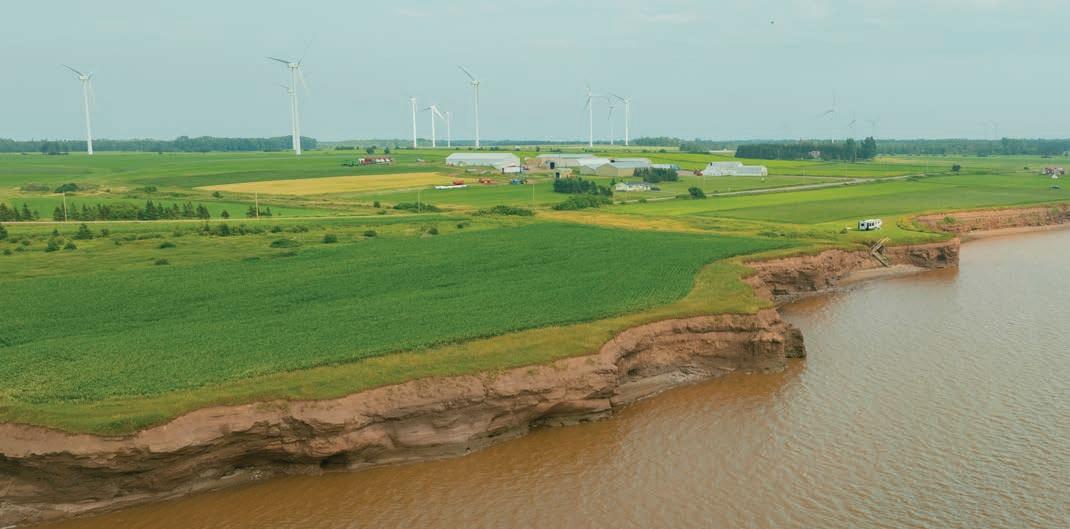
No matter how you look at it, 2025 was not a good year for potato producers in Prince Edward Island.
The province nicknamed the Garden of the Gulf was anything but this past summer. Extreme drought conditions plagued growers throughout the summer months and had a huge impact on yields.
Data from from AAFC shows many parts of P.E.I. received around half of their normal rainfall for the three-month period of July, August and September. To make matters worse, August was one of the driest months in the province’s history, with the Charlottetown Airport recording just 12.2 mm of rain compared to its normal average of 96.3 mm.
As a result, the province recorded one of the largest year-over-year decreases in potato production in recent history. According to Statistics Canada, P.E.I. produced 21.8 million hundredweight of potatoes in 2025,
a drop of 15.9 per cent from the previous year and by far the largest decline of any potato producing province this past year.
Greg Donald, general manager of the P.E.I. Potato Board, says the 2025 season started with great promise which ultimately turned to disappointment due to the rainfall deficit many regions experienced.
“We had this beautiful looking crop going into July: really good emergence, a nice looking canopy. But from about the middle of July on, we just didn’t get any rain until it was too late in the fall,” he says.
“So during the most important time of the year, with tuber initiation and bulking, we had very little moisture and we had record temperatures. At the little farm the potato board owns we hit 39 degrees one day … and most place had at least seven days in that summer period that were over 30 degrees. A lot of wind, no rain, excessive heat. It was kind of the perfect storm.”
Those conditions had a significant nega-
tive impact on growers in virtually every region of the island, although Donald says the impact wasn’t as pronounced in areas that received some late summer rains.
Katie MacLennan, her husband Jonathan and their son Gabriel operate MacLennan Properties Ltd., a fourth-generation family farm located in the community of West Cape where they grow about 750 acres of processing and seed potatoes each season.
While they were more fortunate than most when it came to the amount of rain their farm received last summer, MacLennan says it was probably the driest summer they experienced since the infamous 2001 “summer without rain.”
“I think overall, we probably fared the best over all of the island, but still it was really, really, really dry. It was extremely dry here,” she says. “Where we are and where our farm sits it’s very sandy soil. During the summer the ground was like
cornstarch in a lot of places. It was so dusty come digging time, unbelievably dusty. We hadn’t seen such dry weather in years. There was only one other year that was that bad [2001] and this one might have been pretty close to it.”
The conditions were something of a mixed blessing for producers. Lack of precipitation meant reduced disease and weed pressures, so the potatoes that did grow were mostly high-quality. However, limited water available to tubers during the critical bulking stage meant fewer leaves and stems, resulting in reduced biomass and slowed sugar production for tuber growth. That meant fewer, and smaller, tubers.
“The seed potato we had looked beautiful. It was really good size as far as seed goes, but the quantity wasn’t there. The sets just didn’t have enough time to really produce a whole lot of potatoes … underneath the plants,” MacLennan says. “Production-wise, the quality was there too, but the quantities were not.”
You need only tour warehouses where the MacLennans store their potatoes to see the impact of last summer’s drought.
They’re not even close to being full. The one upside is that they won’t likely have to worry about excess moisture in the crop causing any kind of disease issues this winter.
“We have some years that we’re worrying about juice running out the door, like moisture and stuff like that. This is not going to be one of those years,” she says, laughing.
So, what happens now, you might be asking. What can producers in P.E.I. do to recover from such a disappointing season?
Of course, there is some financial relief available to help ease the sting. That includes joint federal-provincial programs such as AgriInsurance and AgriStability which help cover some of the losses producers have to deal when margins drop below a certain threshold.
While that help is welcome, Donald says it only goes so far. “Those program provide some help, but they don’t pay the same as if you sold the crop. They just help to cover your costs and keep you going for another year,” he explains. “The challenge is that if you have too many years like this one then the benchmark yield gets so low that it helps even less so we can’t afford to have too
many years like this one. Some farms can get through like this year, but if it happens too many times it hurts. Growing potatoes these days is very expensive. It’s well over $5,000 [in production costs] per acre.”
Donald stresses that P.E.I. potato producers don’t need any additional loans to deal with situations like this past year’s drought. What his organization would like to see is both the provincial and federal governments provide growers with some additional support for infrastructure upgrades on their farms. He says that’s especially true when it comes to electricity generation and distribution. In many cases, farmers have to pay out of pocket to have three-phase power installed on their farms. And if a farmer who solar panels on their warehouse they are not allowed to sell any excess power it generates. Instead, they only receive credits from the local power company which are reset to zero every 12 months.
“You can’t keep generating power and sell it back to the province. You can in other provinces, but you can’t here. That’s just bizarre,” he says.
Some additional support for installing

irrigation or drainage tile systems would also be welcomed, he adds, especially with droughts becoming an increasingly common occurrence in recent years. An irrigation system can cost as much as $400,000 for 80 acres.
MacLennan agrees and says many farmers would welcome such support. “I know there have been some applications going in for some irrigation systems this year. I know that’s happening. I think farmers are really looking towards the future,” she says.
Donald says the number of P.E.I. potato farms using irrigation has increased significantly over the past decade. It’s now in use on between 10 and 12 per cent of those farms and he expects that number to climb in the years to come. “The trend is absolutely, definitely towards hotter temperatures and to more extremes. That means we’re going to need more irrigation and more drainage tile and everything in between.”
Another trend that is likely to continue in P.E.I. is a move by potato producers to more drought-resistant varieties. That trend began a decade ago and has seen the Mountain Gem variety supplant Russet Burbank
as the No. 1 variety grown in the province. The Caribou variety is also gaining traction.
“It’s a good example of how irrigation is important but also the new varieties,” says Donald. “Mountain Gem is much more drought-resistant than Russet Burbank and it requires about a third less nitrogen, it matures about two weeks earlier and it yields about a third better than Russet Burbank. It checks a lot of boxes.”
P.E.I. producers have been among this country’s leaders when it comes to improving soil health, which Donald doesn’t expect is going to change, especially with drought becoming an increasing concern. He says cover crops are being grown on an increasing number of potato farms to help build erosion control and help the soil to better withstand the hotter, dryer conditions that are becoming increasingly common.
How potato farmers in P.E.I. cope with those hot, dry conditions in the future could be determined in labs like the one research scientist Bourlaye Fofana works out of at the AAFC’s Charlottetown Research and Development Centre.
Over the past decade he has studied
UPGRADE YOUR SPRAYER WITH



more than 800 different genetic lines of potatoes. One of the primary focuses of his research is developing potato germplasm that could be used to produce new varieties that are resistant to environmental stresses such as drought. Some of his results were published in the January 2024 edition of the scientific journal Frontiers in Genetics While his work on diploid potatoes (potatoes that have two sets of each chromosomes in their genetic makeup) has not yet impacted Atlantic growers, it could eventually be used by breeders to accelerate the development of commercially available potatoes that are more drought resistant.
Fofana says the climate is changing. which means we must adapt crops to thrive as those conditions continue to evolve.
“Drought episodes are becoming frequent and intense. Developing crops that cope, adapt and perform with less water is the challenge to be taken. For P.E.I., with limited water resources, the challenge is already there with continued decline of potato production due to lack of irrigation and/or resistant cultivars.”



PVY MEETS AI
Early detection through a new system could change everything.
by Treena Hein
They’re starting with Potato Virus Y (PVY), but they won’t stop there.
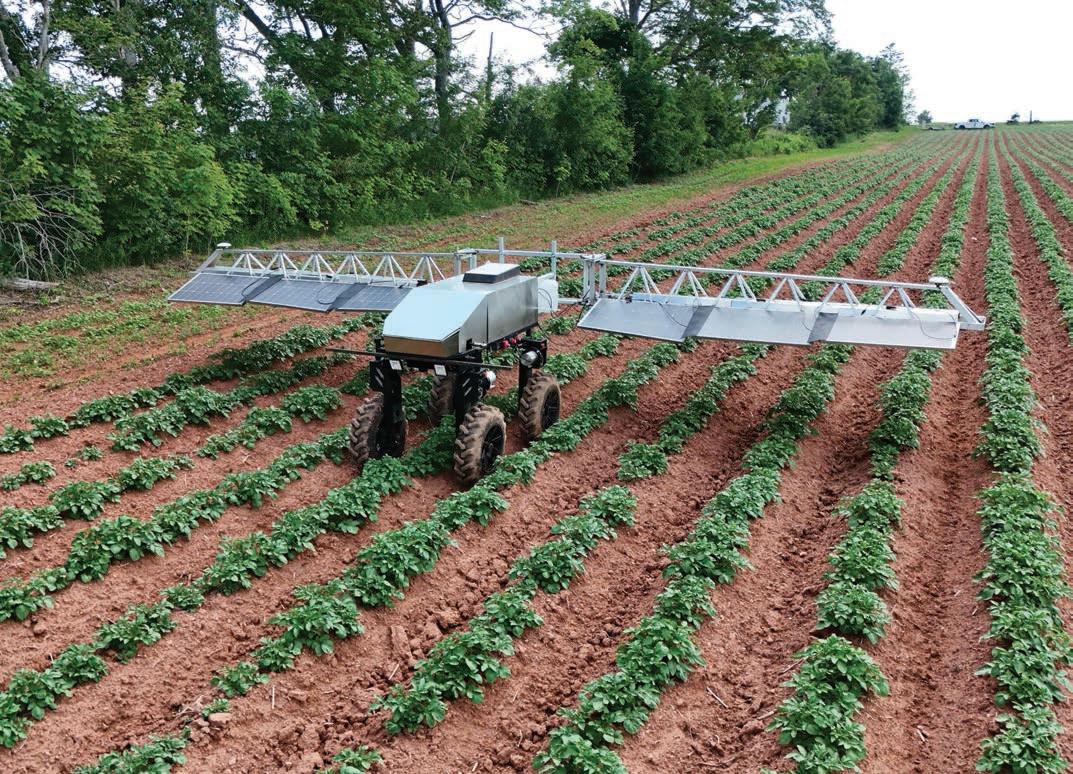
A team of Canadian scientists is working with a full range of regional industry stakeholders to commercialize an AI system called AgriScout for early identification and mapping of PVY infections – and eventually the early detection of other pests and diseases in potatoes and beyond.
AgriScout is the brainchild of Gurjit Randhawa, assistant professor in the School of Computer Science at the University of Guelph, and Aitazaz Farooque, professor of precision agriculture at the Canadian Centre for Climate Change and Adaptation, University of P.E.I. (UPEI). A close collaborator, Dr. Mathuresh Singh, recently retired from serving as the managing director at a renowned regional lab called Agricultural Certification Services (ACS) in New Brunswick. Other close collaborators include staff at P.E.I. Potato Board (especially Research & Agronomy Specialist Ryan Barrett) and Potatoes New Brunswick, along with several very experienced potato growers.
PVY is one of the most economically-significant diseases for Canadian potato farmers – and it’s especially challenging for seed
growers, who are required to keep PVY levels under a very low threshold. Dr. Khalil Al-Mughrabi, potato pathologist of the NB Department of Agriculture, Aquaculture & Fisheries, notes that the timing of PVY detection is very important for effective management of this disease in seed potatoes, and the automated AgriScout system therefore offers a suitable solution to quickly identify PVY-infected potato plants and prevent the spread of the virus.
Indeed, Randhawa explains that right now, it’s next to impossible for seed growers to adequately scout for PVY. “It requires manual examination by very experienced scouts who must check the leaves of each and every plant for symptoms,” he says. “This takes a long time, and there is a severe shortage of experienced scouts. Identifying this disease is not an easy task for anyone.”
Farooque adds that “with the effects of climate change, I think we will see more viral strains emerging. We don’t know what the future will hold for PVY, but it will likely be more challenging with varying symptoms and strains.”
ABOVE: AgriScout is an AI-powered, automated system that assists in the scouting and identification of PVY-infected potatoes.

Origins of the system
The project began a few years ago when the PEI Potato Board and Potato NB reached out to Randhawa and Farooque about the challenges of dealing with PVY amidst a huge lack of experienced scouts.
Other technology firms and academic groups around the world were starting to work on machine vision and AI systems for detecting crop diseases and pests, so the Randhawa and Farooque tested the feasibility of using this tech, starting with some images from potatoes grown in the greenhouse. “We developed our own robot,” recalls Farooque, “and then added the machine vision system onto it, capturing highresolution images along with the GPS coordinates of where the image is taken, known as ‘geo-tagged’ images.” As these images are taken, AgriScout’s AI analyzes them for signs of PVY infection and then directs the farmer to specific plants for treatment or removal, sharply minimizing the effect of this devasting disease.
“We wanted to be able to develop an interactive map at the end of the day that will guide the grower automatically to specific areas that are infected so those plants can be
pulled as quickly as possible,” says Farooque. “You will have the map on your phone and are directed to the right location.”
Barrett notes that PVY reduction has always been a priority for their seed improvement working group, and growers have repeatedly noted the lack of trained roguers available. He calls the AgriScout work so far “very impressive” and says “we’re excited about the potential to bring this technology to commercialization in the near future.”
Training AI
Because scouting for this disease is not easy for humans, it’s also not easy for an AI. “There are many different potato varieties combined with different strains of the virus, in addition to different soils and climates in Canada, so you will end up with different leaf symptoms,” Farooque says. “You’re not going to necessarily see the same symptom of infection every time, which makes it really challenging for both human scouts and AI models.”
Another challenge too, noted in the team’s first year of developing the system, was sun angle. “If the sun, and thus the plant leaves, are too bright and we are cap -
turing images with a great deal of light reflection, it’s all the harder to identify symptoms,” Farooque explains. “So, based on that experience, we added a shading mechanism to provide consistent imaging, so that the patterns and symptoms of the virus are much more visible, making it easier for our model to pick out those infected plants. And your model also has to be given images taken on cloudy days, on rainy days, early in the morning, late in the evening, every time of day and night and weather condition. The more variables you have in your data, more foolproof your model is going to be.”
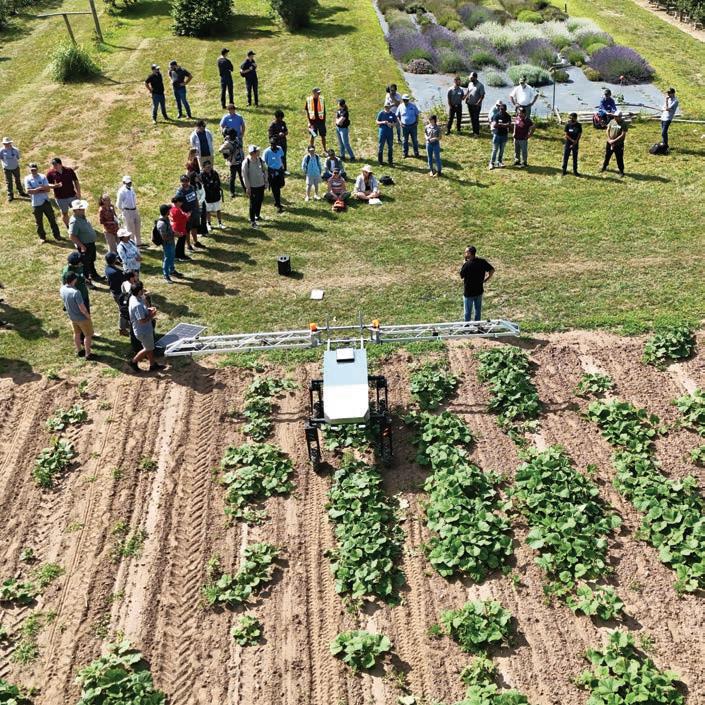
Randhawa also explains that developing the system in collaboration with farmers was very important because it then has a much higher chance of widespread adoption. “They have seen firsthand all our research, testing and validating the images from their commercial farms,” he says, “Because it’s been developed with them all along, I think there is quite a bit of appetite from the potato growers for this system.”
Full collaboration
In the process of training the AI to recognize diseased leaves, working with Singh (and yler MacKenzie, R&D coordinator) at ACS was invaluable. “Dr. Singh is known as a guru of PVY, so we approached him and he was pleased to be involved,” says Farooque. “His lab is the only one in Atlantic Canada, I believe, where there is analysis of fields on a regional scope to determine where PVY is occurring, patterns of infection and so on. So that’s where we did our testing and trials. From a pathology perspective, we inoculated PVY at very low levels – one, two, three per cent infection – to build a database of images to train the AI, with all the possible symptoms and different variations in the symptoms at different infection levels.”
Working with specialists like Barrett was also invaluable. “We needed the model to understand when symptoms are not PVY, they are symptoms for something else, and we’ve had a very close interaction and collaboration with Ryan and other team members to figure out what we are collecting in terms of images,” says Farooque, “and to make sure we are identifying everything correctly for the model to train on.”
MacKenzie explains that ACS Lab led a pilot field validation of AgriScout, using lab diagnostics as the basis for validation, com-
plementing the extensive work of Randhawa and Farooque in comparing AgriScout and human visual scouting. “We followed the robot through a large, PVY-infected Russet Burbank field, collecting ~500 leaf samples from imaged plants for lab confirmation of PVY status,” he reports. “This rigorous validation achieved an overall accuracy of 76 per cent accuracy in AgriScout correctly identifying PVY-infected plants and rejecting non-infected plants, with a particular strength in avoiding false positive detections. These results give us confidence in the AgriScout’s potential as a decisionsupport tool for PVY management.”
AgriScout is already on par with human scouts. Over the next two years, the team will further test and refine the technology with farmers and ACS Lab, with commercialization to follow.
Keeping farm costs low
As AgriScout moves towards the marketplace, there will also be a focus on ensuring it’s as low-cost and convenient as possible. “We don’t want to increase farm expenses,” says Randhawa. “We want the system to be
integrated easily onto a tractor, sprayer, cart or ATV, whatever piece of equipment farmers already have and works best.” AgriScout is also based on simple parts that are easily integrated, note Randhawa and Farooque, which they think will also make its cost significantly lower than competitors.
Taking a look at ROI for farmers, if AgriScout is set up on a sprayer or tractor that’s legally permitted to operate autonomously, farmers can therefore run AgriScout at night and use the same piece of equipment for other things during the day. “That’s where part of the return comes in,” says Randhawa, “but also through improved disease control. We did a rough estimate for an average potato farm, and we have found ROI is achieved quickly, but we will be performing a detailed economic analysis. And the bigger the farm size, the faster the ROI.”
Most of all, this team is very excited to be solving an impossible problem for potato farmers. “The shortage of scouts really is severe,” says Randhawa. “You cannot just send anyone to go and look for those diseased plants. You need someone which has decades of experience who can look by
eye on those plant leaves and then say with surety, this is infected. Scouts also need good weather conditions to go into the field, and they can cover only about three to five acres a day. But now we will be making available a system that works 24 hours a day and covers a huge area quickly and is within reach economically.”
And AgriScout won’t take over anyone’s scouting job, because there are few scouts available. “And you will need people to manufacture all the components and integrate those components and oversee and analyze the results, says Randhawa. “Humans are going to be there always to shape sustainable farming technologies to lower the cost of production and increase farm profitability.”
And as mentioned, AgriScout will eventually be trained not only for potato diseases and pests, but also for other crops/ pests/pathogens. “We are optimistic about our success, but at the same time, we are very careful that we want to solve the PVY identification problem in a real-time and efficient way, so we have that to build on,” says Farooque.


GUEST COLUMN
BEYOND THE BAG
Where is the next wave of value hiding in Canadian potatoes?
For all the talk of declining fresh potato consumption, Canada still moves volume, with growers and packers who hit demanding specs in tough markets.
But at retail, too much of the fresh category still behaves like a commodity built around big bags, discounts and price wars, whereas growth is in the edges of the category: convenience, colour, provenance and story-telling quietly command a premium. That is where the next wave of value is hiding for growers, packers and marketers willing to move beyond the bag.
From bulk staple to “what’s for dinner tonight?”
The potato has not disappeared from the plate; it has lost the battle for time and attention in busy households competing with ready meals, meal kits and fast food.
Consumer work in North America points to the message: convenience sells. Fast prep, minimal mess, smaller packs and clear instructions are often the deciding factors between potatoes and what is within arm’s reach at 5:30 p.m. The success of mini and “creamer” potatoes, microwave-ready formats and roasting kits is no accident. They answer a weeknight question: can I make this quickly, and will my family eat it? For shippers, the lesson is this: if the only fresh SKU you are known for is a large, unbranded bag, you are competing in the lowest-margin part of the game.
Convenience formats: the entry ticket to premium
The fresh aisle shows where value is being created. Across Canada you will find:
• Mini and “creamer” potatoes in small, often pre-washed packs;
• Steam-in-bag offerings where the package doubles as a vessel;
• Grill- or oven-ready kits with a tray and seasoning, designed to go straight into the oven or air fryer
Several brands have built their positioning around small, consistently sized potatoes and simple cooking instructions. Their promise is straightforward: quick, reliable, everyday use.
Sometimes the answer is modest: Shifting from large poly bags to smaller, stand-up pouches aimed at singles and couples; clearly labelling “air-fryer friendly” or “sheet-pan supper” mixes; adding simple recipe ideas or QR-linked videos instead of complex kits. In these cases, the format helps the selling – not just the price.
Colour, character and the power of differentiation
On a shelf dominated by beige, colour and character stand out. Coloured flesh and skin varieties – purples, deep reds, tricolour mixes
LUKIE PIETERSE CONTRIBUTOR
– remain a small share of Canadian acreage, but they attract outsized attention at retail. They create instant visual disruption and give retailers something new to feature, and fit naturally with “eat the rainbow” and antioxidant narratives.
The risk is treating every novelty as a short-lived fad. Without consistent supply, agronomic support and eating quality, coloured lines can disappoint both retailers and consumers. Serious niche plays still require discipline in the field and the packing shed.
Provenance and story: local is no longer a niche
Canadian shoppers often say they care about “local” food and regional producers – but are frustrated by vague claims and confusing labels. Many want to know where something is grown and have at least a basic sense of how it is produced.
Potatoes have natural advantages here: strong regional identities, visible growing areas and family operations that have supplied the same markets for decades.
There is room to lean more into regional brands, named farms or families, and simple production stories. This does not require turning every bag into a long essay, but does require using the real strengths of Canadian production – food safety, traceability, storage know-how, regional reputation – as front-of-pack assets rather than fine print.
Clean labels, trust and “quiet sustainability”
Across categories, shoppers are increasingly wary of buzzwords around sustainability. They are interested, but do not want to decode a forest of logos every time they buy supper.
For potato marketers, this points to quiet sustainability: Focus on practices that make agronomic and business sense, like -fficient fertilizer use, smart irrigation, energy-conscious storage and reduced shrink; plain-language communication that doesn’t rely heavily on certification claims; and backing any claims with programs, grower initiatives or processor partnerships, so if someone asks “what does that mean?” there is a clear answer
In many cases, a straightforward statement such as “grown in X region, stored in modern facilities that reduce waste” will do more to build trust than a cluttered wall of icons.
Canada’s potato industry is world-class in agronomy, storage and processing. The next frontier is not in what happens in the field or factory alone, but in how fresh potatoes show up to the shopper.
The opportunity for Canadian growers and packers is to stop leaving value on the table – and start owning the part of the category that has been sitting, until now, just beyond the bag.
Canadian agriculture and food needs more talented people.
Each year, CABEF helps students to pursue rewarding agri-food careers through seven $2,500 scholarships. We’re looking for the future leaders who will help this industry meet tomorrow’s challenges.
Do you know someone who needs to fund their future in agri-food? Tell a student today.
Scholarship application deadline is April 30, 2026
Want to help support the next generation of agri-food leaders?
Become a “Champion of CABEF.” This program allows your organization to directly sponsor a deserving student. Contact CABEF at info@cabef.org.

LOTS OF OPTIONS. ONE DESTINATION.
Our products help you on your way to higher yield and superior quality.
Aim® EC herbicide – Tank-mix with Reglone® Desiccant for more complete vine kill, leading to better tuber quality.
Beleaf® 50SG insecticide – Reliable aphid control, unique anti-feeding action and low impact on many important beneficials*, with a short 7-day PHI.
Coragen® MaX insecticide – Residual control of ECB and CPB with a short 1-day PHI, in a new, highly concentrated formulation that covers more acres with less.
Cygon® 400EC insecticide – Consistent, locally systemic control of leafhoppers, with a short 7-day PHI.


Exirel® insecticide – Systemic, residual control of sucking and chewing pests, including CPB, ECB, armyworms, flea beetles and aphids, with a short 7-day PHI.
Verimark® insecticide – Fast uptake for in-furrow control of CPB and potato flea beetle.