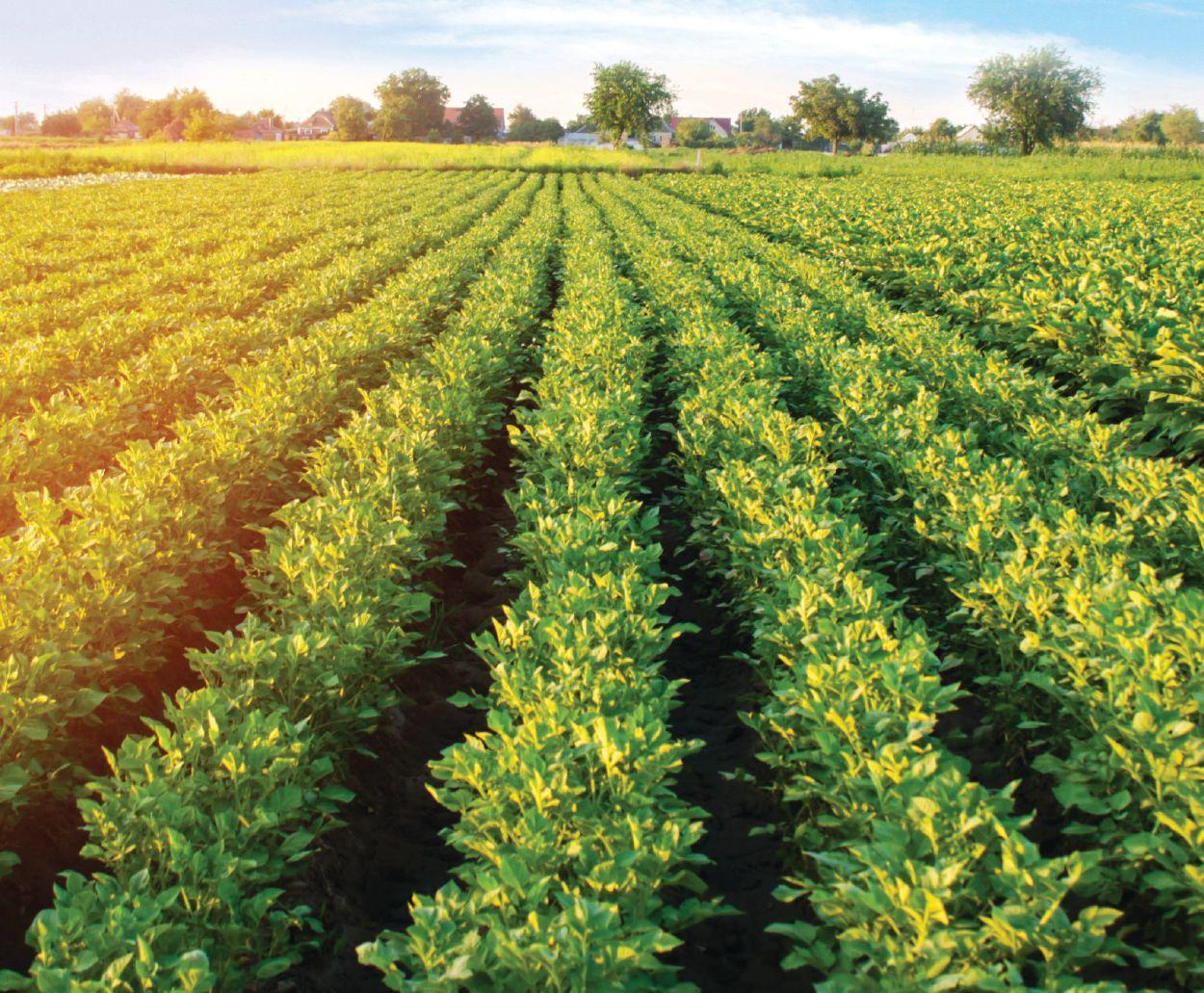
Next-gen potato protection is here. Miravis® Duo is a clear level up on foliar fungicides, offering improved early blight control and extended, broad-spectrum disease protection. So now, you can take potato quality from 8-bit pixelated—to crisp, clear HD. No cheat codes required.
To learn more about Miravis® Duo fungicide, speak to your Syngenta Sales Representative, contact the Customer Interaction Centre at 1-87-SYNGENTA (1-877-964-3682) or follow @SyngentaCanada on Twitter.
New research suggests Verticillium wilt disease management is possible with the right variety and biofumigation method
By Rosalie Tennison
20 | Cover cropping strategies for the Prairies
Cover crops and nitrogen cycling in a Saskatchewan potato rotation
By Carolyn King
Boost growth lag with variable rate products
By Rosalie I. Tennison
ON THE WEB
The potato vine crusher By Potatoes in Canada
DEREK CLOUTHIER EDITOR
WE ALL WANT POTATOES ON OUR PLATE
As new as I am to the potato industry in Canada, it didn’t take long for me to recognize the trials and tribulations growers must overcome to put one of the country’s (and world’s) most loved foods on the table.
For those of you who haven’t had a chance to pick up the latest issue of Top Crop Manager – West, let me introduce myself: I am the new editor for both the above-mentioned publication and the one you hold in your hand now. I’m trying to fill some rather large shoes, replacing Stefanie Croley, who remains with Annex Business Media, but in a different role. Prior to joining Annex, I was a managing editor with a Calgary media company, and for several years before that, I was the western bureau chief for a B2B media company covering the commercial transportation sector in Western Canada and part of the U.S. Though I have much experience on the media side of things, I don’t have much (actually, let’s just say I have none) on the potato industry side, so like I wrote in my first editorial for Top Crop Manager – West, I will be relying on Potatoes in Canada readers to teach me a few things along the way.
Staying on the topic of learning new things, I was able to attend my first industry event in January, when I visited Brandon, Man., for Manitoba Potato Production Days. A much larger event than I was expecting, the main thing that stood out to me – aside from the fact that you can make donuts out of potatoes, and they are absolutely delicious – was the seemingly endless hurdles growers must overcome to bring their yearly yield to fruition. Whether it’s pink rot, early blight, late blight, common scab, Fusarium dry rot or that menacing little wireworm (see pg. 6 in this issue), growers have a lot to worry about with potato health.
When it comes to overall farm commodities in Canada, potatoes sometimes gets undeservedly overlooked due to other large players like dairy, wheat, canola and cattle. Which, in my opinion, makes this niche market that much more important for Canadian consumers. You’d be hard-pressed to find a household in Canada or the U.S. that doesn’t have a bag of potatoes in their cupboard. The fact that this starchy tuber (I just learned the word tuber recently) reigns so supreme as a North American dietary staple, the growers who battle these diseases, manage unpredictable weather and deal with regulatory uncertainty need to be applauded for what they do.
And, as my first order of business, let me do just that. We all know how farming in general as an occupation has shrunk over the decades – the number of farms decreasing by 44 per cent since 1976 – which makes what you do that much more important. For that, I say, “thank you,” and I look forward to meeting many passionate potato growers as I take on this new challenge of covering your industry.
You’re behind Canadian agriculture and we’re behind you
We’re FCC, the only lender 100% invested in Canadian agriculture and food, serving diverse people, projects and passions with financing and knowledge.
Let’s talk about what’s next for your operation.
FCC.CA DREAM. GROW. THRIVE.
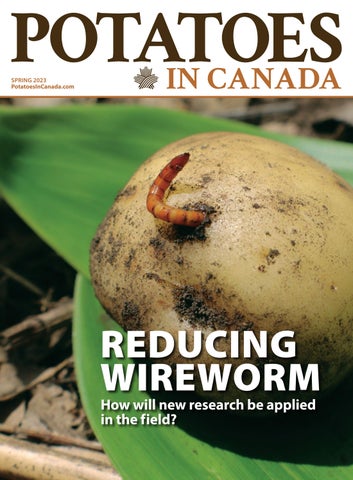
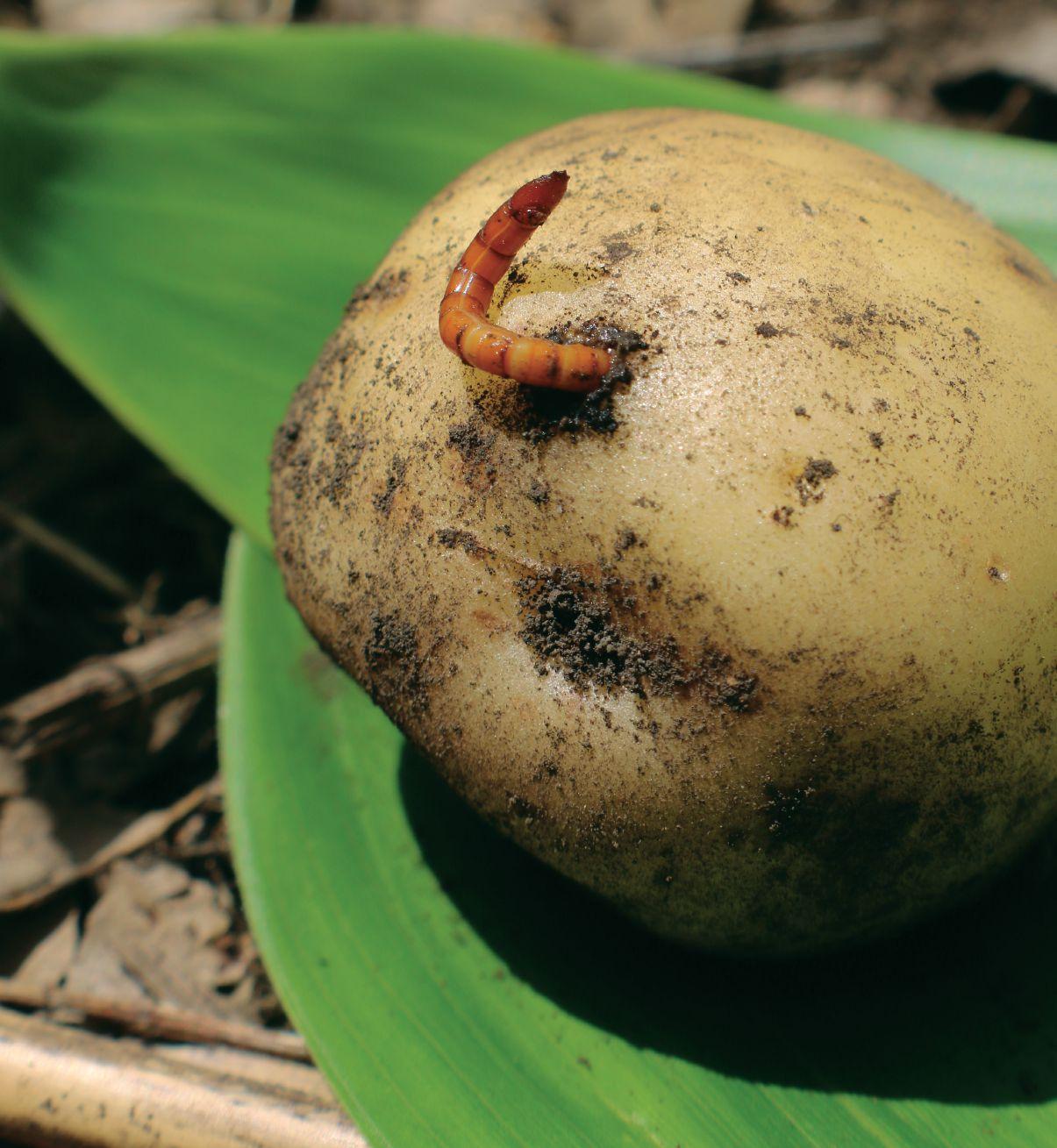
REDUCING WIREWORM RISK
How will new research be applied in the field?
by Julienne Isaacs
Few Canadians know as much about controlling wireworm in conventional potatoes as Christine Noronha. An Agriculture and Agri-Food Canada (AAFC) research scientist based in P.E.I., Noronha has led three successive Canadian Potato Council/Canadian Horticultural Council cluster projects funded by the Canadian Agricultural Partnership – all focused on wireworm in potato.
The third project, which began in 2018 and will wrap up in early 2023, looked at various aspects of wireworm control, including rotation and alternative control strategies, insecticide efficacy and pheromone trapping.
One component of the project was a wireworm population survey in P.E.I. The first wireworm population survey on the Island was conducted in 2009, with successive surveys in 2012, 2016, 2019 and 2022, says Noronha. For each survey, adult click beetles were collected from 85 sites across the Island to get a sense of population makeup and dynamics.
“We were seeing populations going up, and in 2019 we saw a re-
duction. We think it’s because [growers] started to use mustard and buckwheat in rotation [around 2015], and the population reduced over time,” she says.
Taken together, the results of each component of Noronha’s research add up to significant gains in wireworm control.
Insecticide research
There are very few insecticides registered for use against wireworms in potatoes in Canada. The neonicotinoid insecticide clothianidin saw its use restricted by the Pest Management Regulatory Agency (PMRA) in 2021 to a single foliar application in potatoes each season. Thimet 20-G, the organophosphate phorate, is still registered in Canada, but is highly toxic. Its use is also limited.
“There is an urgent need for novel alternative treatments that provide competitive tuber blemish protection and wireworm reduction
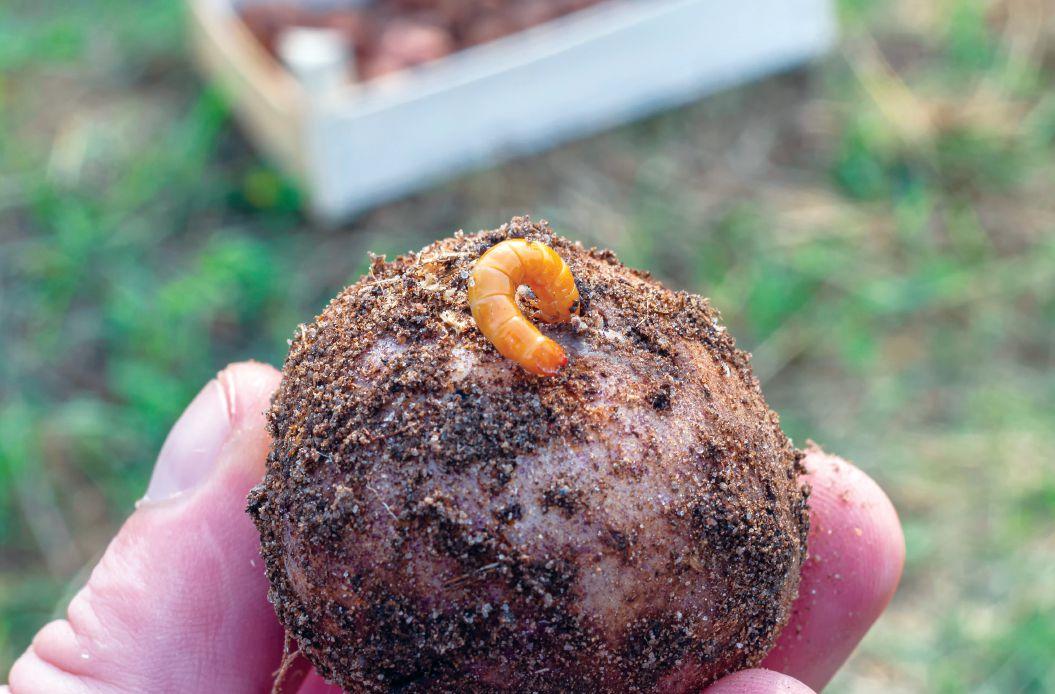
ABOVE: The first wireworm population survey in P.E.I. was conducted in 2009, with successive surveys in 2012, 2016, 2019 and 2022.
PHOTO: KORDEO / ADOBE STOCK.
So much power. So little effort.
Just one 2-litre jug of highly concentrated Coragen® MaX insecticide gives you extended control of cutworms, armyworms, western bean cutworm, Colorado potato beetle and European corn borer, not to mention excellent tank-mixability and the ability to apply any time, day or night. The smaller jug means better handling, easier storage, and less plastic to recycle. Coragen® MaX insecticide lightens the load on bees and many important beneficials* too. This season, leave the heavy lifting to Coragen® MaX insecticide.
with a safer human and environmental portfolio,” writes AAFC research scientist Willem van Herk in a new publication.
Noronha and van Herk were both involved in testing broflanilide, a Group 30 meta-diamide insecticide, for efficacy against wireworm as part of its PMRA registration.
BASF registered broflanilide under the trade name Cimegra in 2020 in potatoes and corn. Noronha says the product can be used as a seed-piece or in-furrow treatment.
Clothianidin worked by paralysing or intoxicating the insect, but didn’t always cause mortality. Broflanilide also targets the nervous system of wireworm larvae, but ultimately kills them, which can help reduce populations over time, says Noronha.
Pheromone research
Pheromones are chemical substances released into the environment that signal an insect is ready to mate. Once chemists can synthesise an insect species’ particular pheromone signature, these unique chemical codes can play a fascinating role in monitoring and control.
Currently, synthesized pheromones are primarily used to attract and monitor populations, but they can also be used to disrupt mating, when so much synthesized pheromone is pumped into the environment that males can’t find females. There have also been studies that used pheromones to transmit pathogenic fungi to male click beetles, who would then transmit the fungi to females, and both would die, says Noronha.
Sometimes there’s cross-species susceptibility to a particular pheromone synthesis, she adds, but sex pheromones are typically unique to particular species because mating happens within species.
Along with van Herk and Gerhard Gries, an animal communication ecology professor at Simon Fraser University, Noronha has been attempting to crack the code of a particular European species of wireworm, Hypnoidus abbreviatus, that is present in P.E.I.
“It hasn’t been successful,” Noronha says. “With some species, we
can’t find the pheromone. I’m going to try again, but there are other species that are in Western Canada [for which van Herk was] successful in finding the pheromone, and they work really well.”
Rotation crops
Currently, there’s a big push to use a variety of crop mixtures in rotation with potato, says Noronha, both for their soil health benefits and potential to control pests.
Two good examples are mustard and buckwheat. Mustard is known to have biofumigation properties and can help reduce pest pressure in a field. Less was known about buckwheat, until recently.
In collaboration with her AAFC colleague Jason McCallum, Noronha has run several projects looking at whether buckwheat can suppress wireworm in potato rotations. In the lab, mixtures that included just 25 per cent buckwheat were enough to suppress populations.
“We found that [when] wireworms feed on the buckwheat, they stop growing and eventually die. What was really strange was that they liked the buckwheat–given a choice they’ll eat it versus other crops,” she says.
Last year, Noronha ran field trials looking at mixtures with varying percentages of buckwheat or mustard planted together with sorghum sudangrass, barley and other crops. The field trial results aren’t yet in, but the research is promising, says Noronha. If buckwheat shows the same efficacy in the field as it does in the lab, it could be a game-changer for East Coast farmers. Noronha is writing a wireworm management manual that will include suggestions for farmers on combining all of these techniques in an integrated pest management package.
Noronha’s wireworm project hasn’t been renewed as part of the industry-led newest cluster funding rollout, but given the significant strides that have been made over the last few years, the future is brighter for wireworm control.
PHOTO: EMJAY SMITH / ADOBE STOCK.
Mustard is often used as a crop mixture with potato to improve soil health and potential control of pests.
PLOT A AGAINST DISEASE. REVYLUTION
Veltyma fungicide, with Revysol technology, provides broader, stronger and longer protection.
Potato growers can rise up against disease like never before thanks to Veltyma® fungicide. It combines the enhanced performance of Revysol® and the proven Plant Health Benefits1 of pyraclostrobin for optimal protection against early blight, black dot and brown spot. Visit agsolutions.ca/veltyma to learn more.
1 Plant Health Benefits refer to products that contain the active ingredient pyraclostrobin.
STATE OF THE INDUSTRY PROVIDED DURING CANADIAN POTATO SUMMIT
Yields for 2022 were above five-year average.
by Potatoes in Canada
The Canadian Potato Summit returned in January for another successful virtual event, with a range of speakers addressing such topics as disease, nitrogen dynamics in the potato root zone and an overall review of the industry for 2022 and going forward.
For 2022, Canadian potato crop yields were above the five-year average at 322 hundredweight per acre compared to 320 in 2021 and 293 in 2020. The five-year average sits at 311.
Production estimates were up 9.4 per cent over the five-year average, at 122,970 million hundredweight.
In Ontario, Shawn Brenn, president of Brenn-B Farms in Waterdown, Ont., says the province’s planting season was good, with few
interrupters and excellent conditions.
After planting, however, there was variability across Ontario mostly due to differing weather.
“It just really depends regionally on where you are located if you got those rains or you didn’t,” says Brenn. “August was very hot for everyone, so there were certainly times when the crop was stressed.”
Once the crop was put in the bins, reports from growers were similar to the province’s weather, being somewhat inconsistent.
“Not the best year for Ontario potato growers, but it certainly
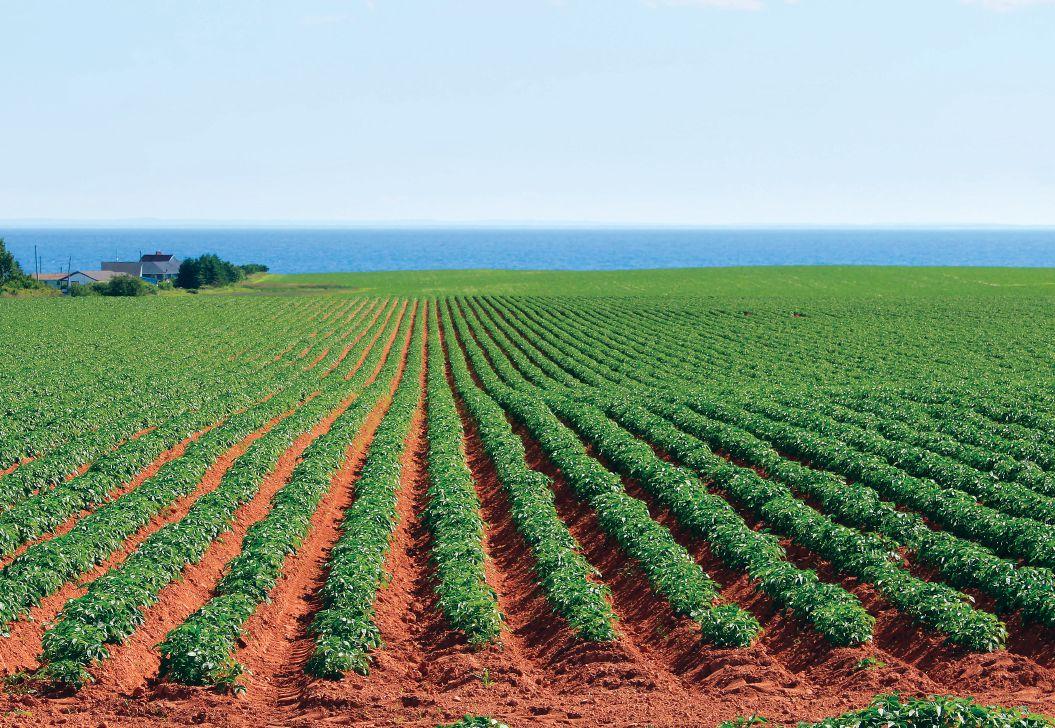
ABOVE: A potato field in P.E.I., where despite the impact of Hurricane Fiona, growers had a good growing season in 2022.
PHOTO: GVICTORIA / ADOBE STOCK.
could have been worse,” says Brenn.
Greg Donald, general manager of the P.E.I. Potato Board, says 2022 was up and down for growers in the province, with shipping restrictions to the U.S. due to the potato wart issue front and centre.
“When the border did open, we experienced significant demand, movement was brisk,” says Donald, adding that losses from the border closure were around 300 million pounds. “When the border opened, things quickly returned, and we couldn’t keep up with the demand.”
The start of P.E.I.’s growing season was like Ontario’s, with a good spring and adequate rain, but Hurricane Fiona triggered a “glitch” in September, which delayed harvest time.
“We had great harvest weather,” Donald says of after Fiona, “And had a very comparable crop to 2021. Growers were very happy with the yield.”
Pink diseases
Gary Secor, a professor of plant pathology at North Dakota State University, led off the summit, providing a comparison of potato diseases that have similar
symptoms and can therefore be difficult to identify.
Focusing on diseases one would see during storage or immediately after harvest, Secor highlighted “pink” diseases, such as pink rot, pink eye, late blight and rubbery rot.
“These all have some common symptoms that can have some overlap and can cause some confusion,” says Secor. “They all have some aspect of a pink colour in their symptom development, and they all usually produce some white growth on the skin of the tubers…and oftentimes the eyes are affected.”
With pink rot, infection first occurs in the field, and no wound is necessary for infection, unlike many of the other diseases. Tuber tissue turns salmon pink after cutting and exposure to air for approximately 15 minutes. The tissue is also soft and fluoresce under UV light. Wet conditions favour pink rot, and there is limited spread in storage but there is an ammonia smell while in storage.
The cause of pink eye, Secor says, is unknown, as it primarily affects the bud end of the tuber, is also associated with
wet conditions and in storage and a cork tissue accumulates making the tuber difficult to peel.
Late blight is a problem anywhere potatoes are grown and is the most serious potato disease worldwide, says Secor. It is a community disease, meaning it spreads far and fast and can cause serious economic loss. Cool, wet weather spawns late blight, affecting all parts of the plant above and below ground with symptoms that are not always clear.
Rubbery rot is considered a new player on the potato disease front, with some European countries and the U.S. reporting cases.
Caused by a yeast-like fungus, rubbery rot makes the potato feel rubbery and damp to the touch and can display a reddish tinge. Other symptoms can include a sour milk odor, patches of white mycelium on the tuber surface and is associated with warm, waterlogged soils near harvest time.
The Canadian Potato Summit is a halfday virtual event that launched in 2021 with live sessions that focus on the industry and agronomy updates from leaders in the potato sector.
Tough year for your farm this year, huh?
That's a rough break... Sounds like there’s a lot going on. Let's talk about it.
Yep, I can’t seem to catch a break with this weather, but that’s farming for you.
In agriculture, we can’t always be close together but that doesn’t mean we’re far from help. Talking about our mental health can be as easy as talking about the weather. Rather than toughing it out, let’s talk it out, together. That’s why we’re here. The Do More Ag Foundation connects you to mental health counseling, training, and education tailored for Canadian farmers and their families. Visit domore.ag for agriculture-specific mental health tips and resources.
HOT-HEADED MUSTARD IMPROVES BIOFUMIGATION
New research suggests Verticillium wilt disease management is possible with the right variety and biofumigation method.
by Rosalie I. Tennison
Inconsistent results from using biofumigation to control Verticillium wilt and other soil-borne pathogens in potatoes has soured some growers on using this viable disease control option. Growing a non-money-making crop in the hopes the cost will be recouped the following year with lower pest and disease pressure and improved yields puts some growers off attempting the procedure. However, new research in Manitoba is showing that using mustard for biofumigation can be very successful. The tactic to achieve success is to seed a variety of mustard proven to offer the best fumigant properties and to faithfully follow the guidelines developed by researchers.
For basic biofumigation success, growers need a crop that produces a high amount of biomass in a short growing period and that will offer the highest output of fumigant properties once incorporated into the soil. Many crops, such as sorghum, buckwheat, rapeseed and others, can be used as cover crops for biofumigation. But the most successful for potato growers is mustard.
“Planting into soil infected with Verticillium wilt can lead to the loss of up to half the crop,” says Dr. Zack Frederick, the applied potato research agronomist for Manitoba Horticulture Productivity Enhancement Centre (MHPEC) in Carberry. Commercial fumigants can be toxic and have an environmental impact, he continues, and that is why he has been focussing his work on crops that act successfully as biofumigants. “Mustard can control Verticillium but is markedly less toxic.”
Mustard has been used for biofumigation over the years but with mixed results. Frederick believes the variety of mustard used is the problem. In fact, growers can’t rely on just any garden variety mustard. Instead, they need to use cultivars specifically bred for biofumigation and the best varieties were originally bred in Italy.
“We are working with a variety of mustard – Caliente Rojo – that
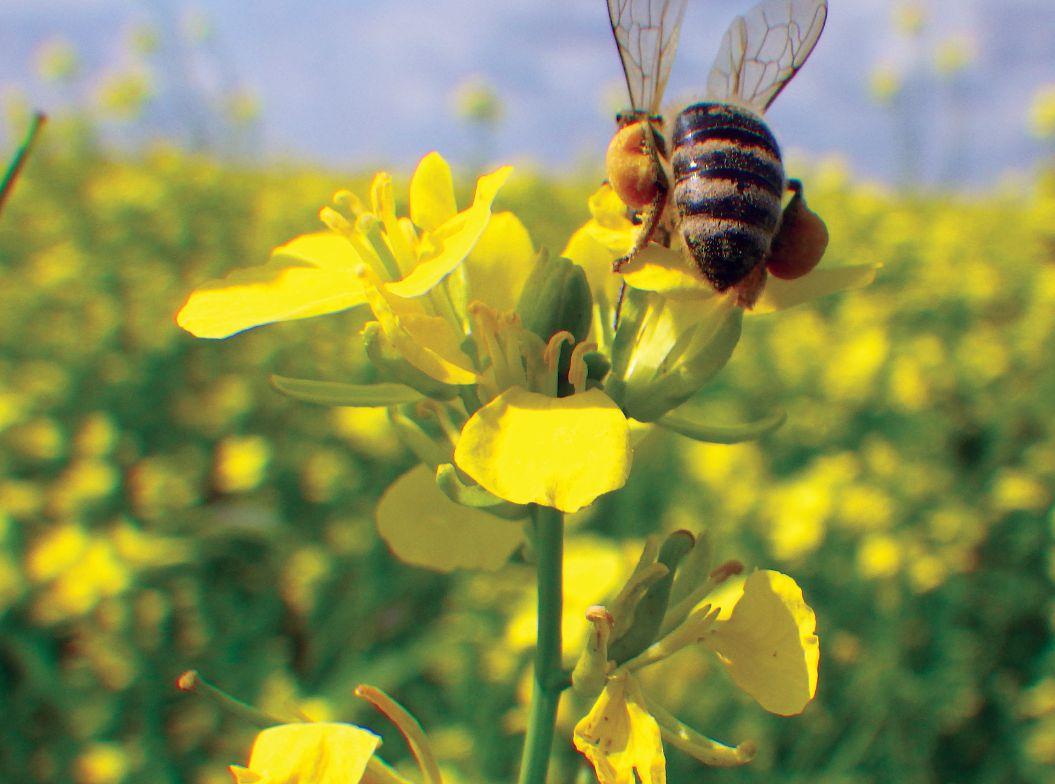
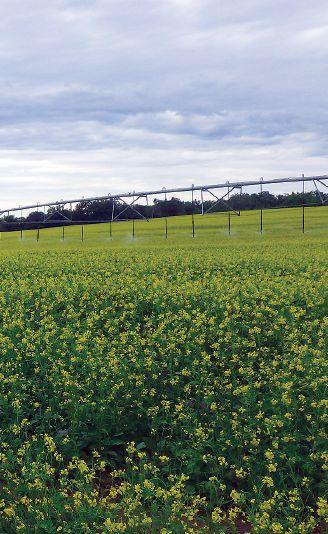
ABOVE: A bee visits a mustard field. Mustard has been used by potato growers as a cover crop for biofumigation.
PHOTO COURTESY OF ZACK FREDERICK.
is too spicy for human consumption, but is toxic to Verticillium in the soil,” Frederick explains. “We are now working to determine if the cost of the mustard seed justifies its use as a biofumigant.”
The efficacy of Caliente Rojo is not lost on the seed provider in Washington, who is working with breeders in Italy to improve the attributes of the variety. “I’m not a plant breeder, but I can evaluate plants in the field and mustard has a chemistry that will help
potato growers control diseases,” says Dale Gies of High Performance Seeds. “Caliente Rojo is the best variety for the purpose because only a handful of mustard varieties have the capability to biofumigate.” He says the Italian breeders are currently improving Caliente Rojo to get consistent results and with enough biomass and glucosinolates to get the job done.
Growers whose experience with biofumigation was unsuccessful need to under-
stand that more is required than just the right plant. The entire process of biofumigation in a field requires timing, the correct amount of moisture, and effective harvest and integration of the crop.
“It’s not as simple as we thought,” admits Gies. “We’ve identified the needed compounds and now work is being done to measure how much biomass is needed to be effective when combined with soil conditions. We’ve learned from laboratory work that biofumigation can be successful, but we have to be able to replicate it in the field.”
In Manitoba, field replication using the Caliente line of mustards is still a few years away. Frederick and his colleague, Haider Abbas of Manitoba Agriculture’s Crop Diversification Centre in Carberry, have tested other varieties of mustard to try to identify the amount of glucosinolate each produces and the amount of biomass. “Our core purpose is to achieve high biomass,” Abbas reports. “Because the plants are chopped and the resulting biomass is sealed into the soil for the winter, the greater the amount of biomass achieved the better.”
The researchers also discovered that some mustards are better at controlling certain pests than others, so they envision a future where growers would identify the pest they want to suppress prior to their potato crop and then seed the mustard variety that is most effective. Growers can find guidelines for successful biofumigation on the MHPEC website (mbpotatoresearch.ca/research-reports). The report covers the best practices for planting the recommended mustard variety to fertility to eventual incorporation of the mustard crop.
“When using the Caliente Rojo variety, growers need to be prepared to irrigate,” Frederick explains. “A lot of water is needed to grow Caliente and I like to see the crop at least five feet tall. Preferably, about eight inches of water is needed by the seed. Once the plants have reached their height before seed set, the mustard needs to be destroyed and then ploughed into the soil.”
Frederick says harvesting after a heavy frost is good because the cold, brittle plants can be flailed into smaller pieces that are then incorporated into the soil.
“If the strict protocol we have developed is followed, this means biofumigation works,” Frederick says. He admits that using mustard as a biofumigant could add $250/
Mustard and cover crop emerging several weeks after being planted.
Biofumigation setup with tractors, flails and discs.
acre to the cost of growing potatoes. But he also points out that the cost of commercial products to control Verticillium or other pests and diseases will be saved. Frederick adds that mustard biofumigation could offer multiple values, such as also reducing common scab and reduction of wind erosion. Work will proceed towards developing definitive production and results information but, he says, it could be 2024 before those recommendations are available to growers.
Meanwhile, Gies plans to continue searching for the best variety to achieve effective, predictable biofumigation. “We think we understand how this all plays out but we still have a lot to learn in terms of efficiency,” he admits. “We say biofumigants are ‘some assembly required’. We can do anything commercial chemicals do with biofumigation, but we need a variety that is consistent and forgiving, heat tolerant, and grows quickly. Also, a variety with winter tolerance would be really useful because it is hard to time the planting for effectiveness.”
Gies will continue to talk to the breeders in Italy about developing the perfect mustard for potato growers’ use. Frederick and Abbas will hone the process of producing the best biofumigation process using the available Caliente Rojo variety. What is promising in the ongoing research is that effective biofumigation is possible according to the present recommendations, so potato growers can start reaping the benefits.
Mustard being irrigated.
BOOST GROWTH LAG WITH VARIABLE RATE PRODUCTS
Researchers are perfecting ways to reverse mid-season plant development slump.
by Rosalie I. Tennison
Potato crops are vulnerable at row closure when the plants begin setting tubers and there is still space for weed and disease pressure. Often growers notice crop development lags during this period. Researchers at the Manitoba Horticulture Productivity Enhancement Centre (MHPEC) in Carberry determined the slump in growth in July is due to nitrogen deficiency. Since most growers diligently apply fertilizers to meet the crop and soil’s needs and often do mid-season fertigation, the group questioned what was happening in the field when crop development slowed. What was the reason behind the slump and could it be rectified to ensure a successful crop?
“We began looking at the time period where the plant needs fertilizer,” explains MHPEC potato research agronomist Dr. Zack Frederick. “We saw good application of nitrogen at the start of the season, but in July the soil was deficient. If fertigation was used in July, the plant was often able to overcome the deficiency.”
However, Frederick became concerned about the timing of application. It is possible in theory, he says, to balance the nitrogen in
mid-season when the nitrogen deficiency was observed, but there are variables that need to be considered.
“An unexpected rain could leach all the nitrogen away from the plants,” Frederick notes. “So we needed to find a product that could resist a catastrophic variable such as rain.”
To avoid what they were seeing in the field, the team considered other methods of nutrient delivery. They began by comparing applications of urea and ESN (environmentally smart nitrogen) in small plot trials to see if they could ensure nitrogen would be available to the plant, when needed, but also protected from loss due to environmental factors.
“ESN can stick around longer and can cover the two-week window when the plant may need more nutrition,” Frederick explains about their choice of product.
After four years of research, they have some answers but not enough to guarantee success in a field environment. To garner more
ABOVE: Nitrogen-deficient plots in early July.
PHOTO COURTESY OF ZACK FREDERICK.
Get your potatoes off to a great start with innovative solutions from Bayer
New technology makes it easy to create art. And crop protection solutions from Bayer make it easier to grow your best potato crop yet. New innovations like Minuet® biological fungicide, a concentrated soil-applied biological for potatoes, support increased crop quality and yield potential. Plus, it’s a great fit with trusted products such as Emesto® Silver fungicide seed-piece treatment and Velum® Prime nematicide/fungicide. So you can start the season right and keep your potatoes as pretty as a picture.
information, they are adding SUPERU to the pre-plant and top dress schedule in 2023.
Adequate moisture is a concern for the research team when considering the potato’s growing cycle. In Manitoba, where potatoes are grown most often in sandy soils, Haider Abbas of Manitoba Agriculture’s Crop Diversification Centre in Carberry says water seeping through the sand can take the nitrogen with it causing both moisture and nutrient deficits. By using slow release fertilizer products, he says the issue of nitrogen loss is greatly reduced.
“Our results showed that, when the potato needs small to moderate amounts of nitrogen in mid-growth season and that was combined with a moderate amount of moisture, leaching was minimized and the crop produced on target,” Abbas says. He adds they were able to determine that broadcasting the variable rate product was more effective than side-banding. However, work is still being done to determine the most effective amount of nitrogen and timing of the application.
To help Frederick and Abbas in their 13-acre plots, they began using drone technology to assess the status of the crop. Even though the plots were “flat as a pancake”, according to Frederick, they still relied on 3-D topographical maps provided by a drone. The maps pinpointed areas where fertilizer had been originally applied and also indicated where nitrogen deficiency was occurring.
Going forward, Dr. Nasem Badreldin will introduce hyper-spectral drone technology to map the plots and identify what is seen in the field. The University of Manitoba soil scientist says the information he can gather will benefit growers beyond identifying nutrient deficiency, such as the expected yield and degree of drought. But, it takes time to build the algorithms to ensure accurate information.
“We create a library of colour spectrums that we can use as a signature of a particular problem,” Badreldin explains. “We can use various types of sensors to assess nitrogen concentration along with other biophysical properties in the plant. We monitor soil moisture content and salinity, and we compare our findings with field sampling. What we end up with is a blueprint of how
this algorithm can work at least 90 per cent of the time.”
For example, how is nitrogen deficiency interacting with other variables, such as soil moisture or soil texture? While Badreldin’s drone technology has many applications for improving potato production and protection, his research team will be able to explore the cumulative impacts of climate and agricultural practices on soil health and annual potato production in Manitoba.
“While we have been able to replicate problems growers are having, we haven’t been able to pinpoint a solution yet,” Frederick admits. The team compared data using a range of variability but they have yet to determine exactly how much supplemental nitrogen needs to be added mid-season. He hopes by fine-tuning the data they can give growers a definitive guide to follow to achieve their desired results.
“We are slow to achieve our goal because of the type of statistics I am using,” Frederick says. “This is a cautious approach, but it will result in a clear story and rigid proof for large and small scale operations.”
“It’s important to come up with the best possible treatment,” adds Abbas. “We have been sharing our work with producers, but this research is still in its early days and we don’t have something we can guarantee will work in a field situation.”
The algorithm that will be developed by Badreldin’s research team will map a field using a drone to show where an additional bump of fertility is needed and could indicate where variable rate technology could be employed. He assures growers who don’t have access to drone technology that, once developed, the algorithm could be adjusted for satellite imaging. Although, he admits the satellite imagery won’t be as accurate as that provided by the drone due to the differences between the two technologies.
For now, the team knows mid-season applications of slow release products can work, but they are still examining how much is needed and the optimum timing of the application. Ultimately, they want to give growers an answer that is cost-effective and that will result in a crop of potatoes that meets the needs of processors.
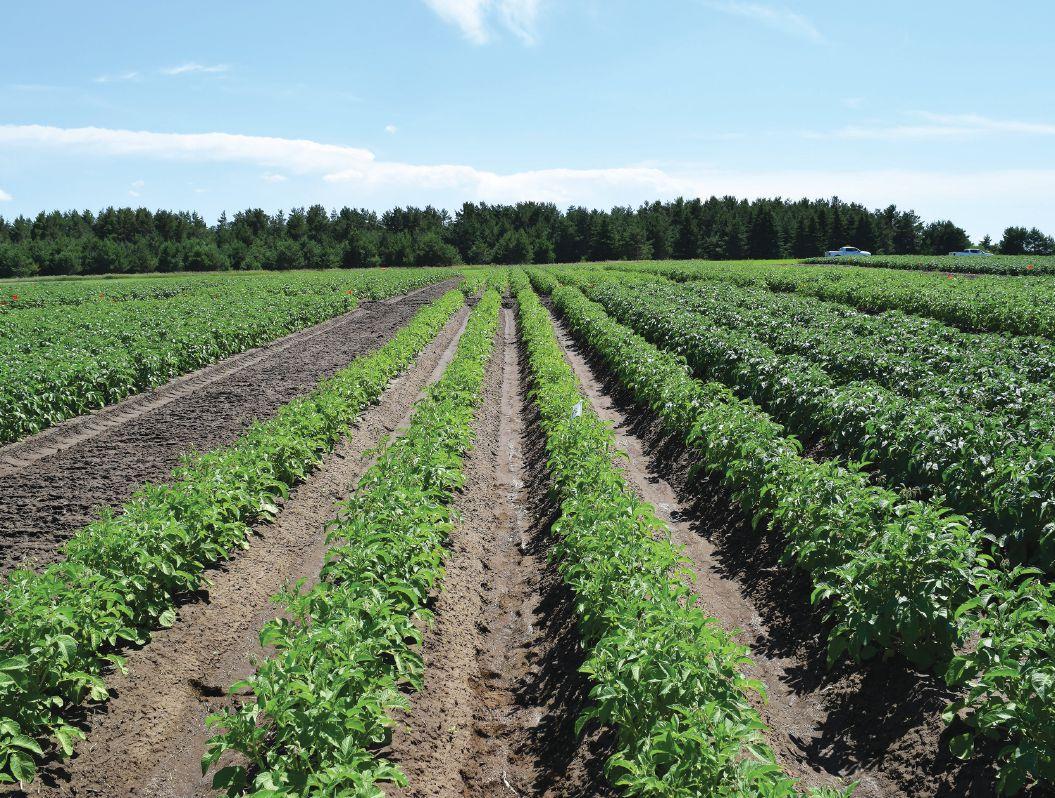
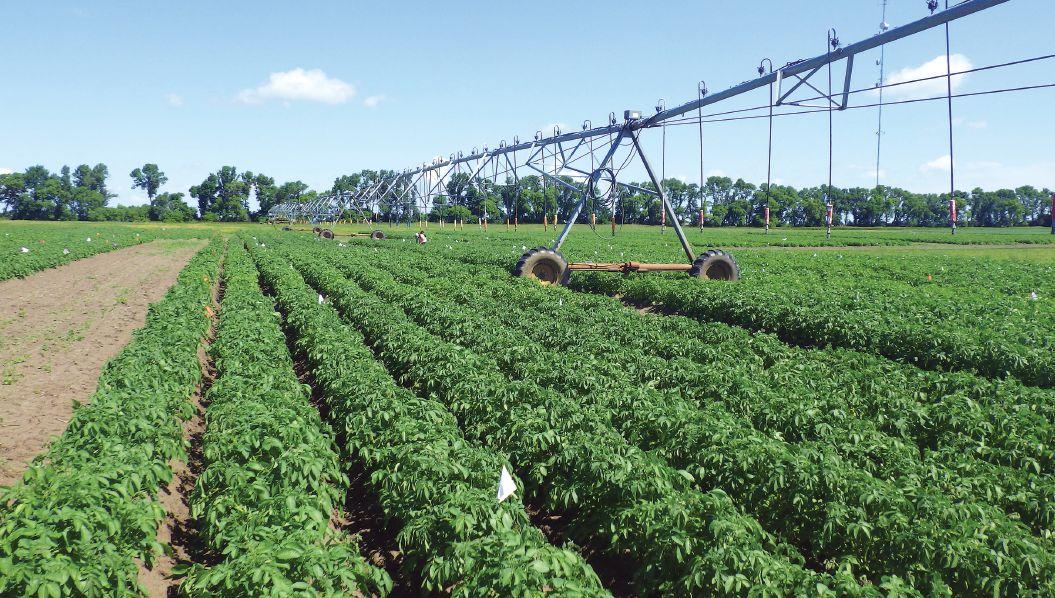
An off-site nitrogen study plot where the Manitoba Horticulture Productivity Enhancement Centre conducts its research.
COVER CROPPING STRATEGIES FOR THE PRAIRIES
Cover crops and nitrogen cycling in a Saskatchewan potato rotation.
by Carolyn King
“Cover cropping has been recognized as a promising management practice that can provide several agronomic, environmental and economic benefits.
However, on the Prairies, the short growing season and the dry conditions make it challenging to integrate cover crops into cropping systems,” says Olivia Otchere, a research technician with Kate Congreves’ research group at the University of Saskatchewan.
As an MSc student, Otchere carried out a recently completed study that looked at the viability of using cover crops in Saskatchewan and assessed one of the key potential benefits of cover crops – the improvement of soil nitrogen cycling.
Congreves led this study, which was conducted in collaboration with Yvonne Lawley at the University of Manitoba and funded by the Western Grains Research Foundation.
Nitrogen and cover crops
Otchere notes that, depending on the growing conditions, only
about half of the nitrogen fertilizer applied to a crop is typically used by that crop. The unused nitrogen is at risk of losses through leaching and gaseous emissions. Such losses are harmful to the environment and a waste of valuable fertilizer inputs.
Cover crops can help with this problem. Otchere explains, “Research elsewhere in Canada shows that using crop rotations that include cover crops can improve crop nitrogen-use efficiency. Cover crops can help tie up nitrogen when it would otherwise be lost, and then give it back to the soil in time for cash crop production.”
The study team wanted to know if this nitrogen cycling benefit would also occur under Saskatchewan growing conditions. So, they conducted a field experiment at Saskatoon from 2018 to 2021 using underseeded and shoulder-season cover crops.
Potato has high nitrogen needs and typically receives high nitrogen fertilizer rates, so cover crops that improve soil nitrogen cycling could be very helpful.
We’re looking for six women making a difference in Canadian agriculture. Whether actively farming, providing agronomy or animal health services, or leading research, marketing or sales teams, we want to honour women who are driving Canada’s agriculture industry.
Platinum Sponsor:
Gold Sponsors:
Bronze Sponsor:
and submit your nomination.
MARCH 31, 2023
They looked at a long rotation of wheat-canola-potato-pea without cover crops, and this same rotation with cover crops. The cover crop sequence was: wheat (red clover)-canola (berseem clover/oat mixture)-potato (fall rye)-pea (tillage radish/mustard mixture). The red clover was underseeded to wheat, while all the other cover crops were planted after harvesting the cash crop. In the following spring, the cover crops were terminated with herbicides before the next cash crop was seeded.
The experiment also included a wheat–canola rotation as an example of a short rotation, and alfalfa as an example of a perennial crop system.
The plots were fertilized in the spring based on the soil test recommendations for each main crop. The fertilizer rates were based on conventional practice (so they were not adjusted based on the cover crops’ nutrient needs in the rotation with cover crops).
Nitrogen (N) is available to plants as soil inorganic N, either in the form of ammonium (NH4) or nitrate (NO3), which can be lost to the environment. In this study, the team monitored plantavailable N in several ways including: pre-plant soil nitrate; soil inorganic N supply rate; and potentially mineralizable N, which is the fraction of soil N that is fairly easy for microbes to break down and make available to plants over the growing season.
The team also collected data on the cover crops, such as ground cover and above-ground biomass, and data on the cash crops, such as crop yield and above-ground biomass, and calculated crop N-use efficiencies.
Potatoes and cover crops
Although potato is not a major crop in Saskatchewan, it is a good example of a crop with high N needs that typically receives high N fertilizer rates. Also, the tillage, hilling and harvesting operations in potato production systems increase the risk of soil erosion and the loss of soil organic matter and nutrients. Therefore, cover crops can be valuable in potato production systems for improving both
soil health and nitrogen cycling.
Otchere explains why the team chose a berseem clover/oat mixture as the cover crop between canola and potato. “When you have a mixture of legumes and grasses, the legumes can fix nitrogen while the grasses can scavenge for excess nitrogen from the soil. The mixture of berseem clover and oat was chosen to effectively manage nitrogen for two of the main crops in the rotation which are both high-nitrogen users, canola and potato. The idea was that any residual nitrogen losses would be minimized by the oat due to its nitrogen scavenging abilities, while the berseem clover fixes nitrogen. So, at the end of the day, their combined effect would ensure a lower carbon to nitrogen ratio and a faster breakdown of tissues which might improve the nitrogen supply in time for the potato crop.”
Fall rye as the cover crop between potato and pea has several potential benefits, notes Otchere. “Fall rye develops rapidly and produces considerable amounts of biomass. Pea, as a legume, can increase nitrogen supplies by N fixation. By returning the rye residues with a higher carbon to nitrogen ratio to the soil, nitrogen might be immobilized temporarily, which would reduce the potential for nitrogen losses after pea harvest.”
Fall rye also offers other possible advantages; for instance, it is winter-hardy and competitive with weeds, and it is good at scavenging N, building soil organic matter and preventing soil erosion.
Result highlights
Otchere points to some of the interesting findings from this study.
First of all, the results suggested that cover crops could be viable in the Prairie region since the cover crop species in this trial were able to become established and achieve some growth. However, their above-ground biomass amounts were far lower than the typically desired amounts for cover crops, so there is definitely room for improvement.
The study’s winter-hardy species – red clover and fall rye – produced more biomass than the non-hardy species – berseem clover/oat
In this study’s four-year rotation, a berseem clover/oat mix was seeded as the shoulder-season cover crop between canola and potato.
and tillage radish/mustard.
Red clover and fall rye were also good performers in terms of their N content. Red clover had the highest N content, but fall rye was a close second due to its ability to scavenge and store N in its large amount of biomass.
The results also showed that the cover crops in this study could influence soil N cycling, but only during the fall, when they reduced postseason soil N losses through cover crop N uptake. Furthermore, the long rotations with and without cover crops were not significantly different from each other in terms of their crop yields, crop N-use efficiencies and in-season N dynamics.
It is possible that the spring N fertilizer applications may have masked any cover crop effect on the soil inorganic N supply in the summer. Another possibility is that the relatively low amounts of cover crop biomass may have limited the cover crops’ influence on N cycling.
“Interestingly, when cover crops were included in the long rotation, the cropping system tended to behave more like a perennial system in terms of the regulation of nitrogen,” says Otchere. So, over a longer time frame than the three years of this study, the cover cropped rotation could potentially have bigger benefits for N cycling.
Take-home messages, future research
“On the Prairies, especially in potato production, cover cropping might be a useful tool to help manage soil nitrogen, but we acknowledge that more work still needs to be done to figure out how we can optimize the economic, environmental and agronomic benefits of cover cropping,” says Otchere.
“I believe that for cover crops to be successful on the Prairies, several factors need to be considered like species selection, methods of integration, management, weather conditions and fertilizer management.”
For example, she would like to see longer-term research to identify and develop fast-growing, winter-hardy cover crop species and varieties that perform well under Prairie growing conditions and to find ways to add cover crops into Prairie cropping systems earlier
in the growing season.
Otchere concludes, “Cover cropping has been promoted as being a sustainable and suitable management practice that can influence nitrogen availability as well as provide many soil health benefits. Today, cover cropping is not a really widespread practice on the Prairies, but a recent survey found farmers are adopting cover crops even in the driest regions of Alberta, Saskatchewan and Manitoba. As researchers, we need to catch up so we can better support our farmers.”
Syngenta_Potato_Portfolio
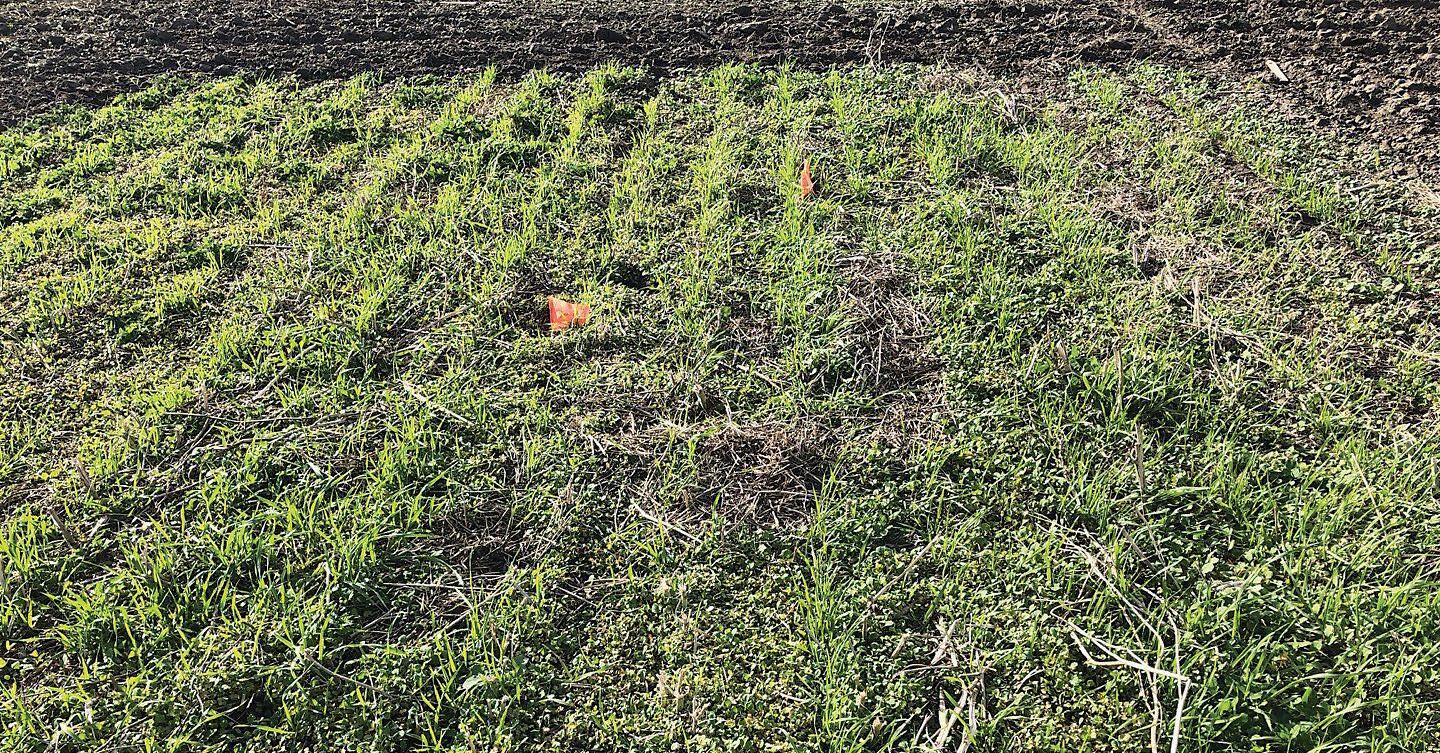
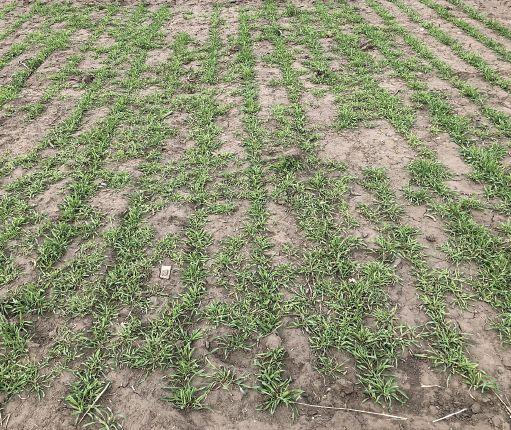
Fall rye after overwintering: fall rye was one of the better performing cover crops in this Saskatoon study, but all the cover crop species produced relatively low amounts of aboveground biomass.
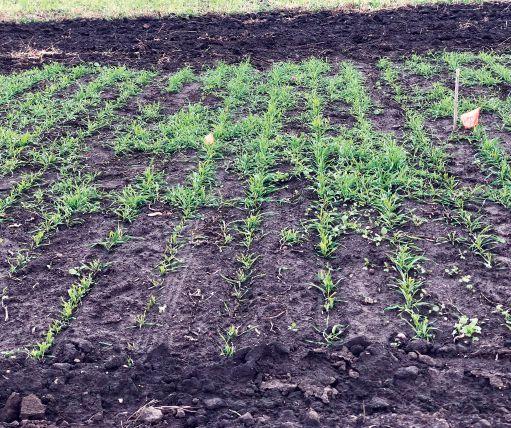
Fall rye in the fall, planted after the potato harvest.
THE POTATO VINE CRUSHER
We discuss the potential of this new technology on controlling the European corn borer.
by Potatoes in
Canada
Andrew McKenzie-Gopsill, a weed scientist with Agriculture and Agri-Food Canada (AAFC) in Charlottetown, P.E.I., was a recent guest on Potatoes in Canada’s (PIC) podcast Tuber Talk, and he outlined his research on a piece of equipment called the “potato vine crusher.” This device is used to help control the European corn borer (ECB) population and has successfully reduced these pests in the field, but its ability to fly between fields means all farms in a given area would have to employ the technology to see a beneficial effect overall. McKenzie-Gopsill discusses the history of the potato vine crusher and the trials he is running to determine its potential for weed seed management.
PIC: Potatoes seem to be a high-risk, high-reward crop. Can you share a little bit about the background of the potato vine crusher and the research AAFC scientists were using it for about 10 years ago?
McKenzie-Gopsill: This system was originally designed by our entomologist here at the Charlottetown Research Centre, Dr. Christina Rona. She’s done a lot of work on potato paths, more recently on wireworm. A little over 10 years ago now, she had a project – I think it was involved with the Pesticide Risk Reduction Program – looking at trying to reduce pesticide use in potato production. She came up with this system to control European corn borer larvae that overwinter in desiccated potato stems. This system was just a set of rollers that attached to the back of the potato harvester. Then, as the potatoes were being harvested, the vines that would normally just be dumped back onto the ground are fed with a set of brushes into those rollers and then crushed and dropped back on the field. She never published anything on it. No peer reviewed manuscripts, but you can find some fact sheets online on the AAFC website. She was getting [around] 95 to 100 per cent control of this larvae. So, a huge reduction in the population of that overwintering European corn borer larvae. Unfortunately, the European corn borer is mobile, it will fly around, so even though you may control all of the borer population within your fields, they can just fly in from neighbouring fields the next season. So, the vine crusher for control of European corn borer is really going to be a community approach. You need everybody within an area to be managing this or to be all proactively using this to try and manage it to have a big effect on European foreign-born populations within a locality. I think that kind of was what killed the vine crusher at that time.
Then, I was doing a presentation at the University of Prince Edward Island, and it was to the fourth-year undergrad thesis class.
When I got to a slide about harvest wheat seed control, which is a relatively new paradigm in weed science, all about managing the weed seed bank and trying to remove weeds or revitalizing or destroying weeds in the field. I was talking about this concept and [someone] said, “We have the system that we developed that was in the back of potato arcs that might be useful for this because all harvest weed seed control systems that exist right now are for crops that are combined.” Any other systems like the Harrington Seed Destructor, which would probably be the most well-known, that is either a tow-behind unit from on the back of the green combine or is fully integrated into the back of a combine.
Obviously, potatoes are not harvested with the combine, it’s the custom harvester, so we can’t employ any of the kind of traditional harvest routine practices. The vine crusher had just been sitting at our research farm up in the rafters collecting dust for the past 10 years. That kind of led me to the study and the work we’ve been doing over the last little bit.
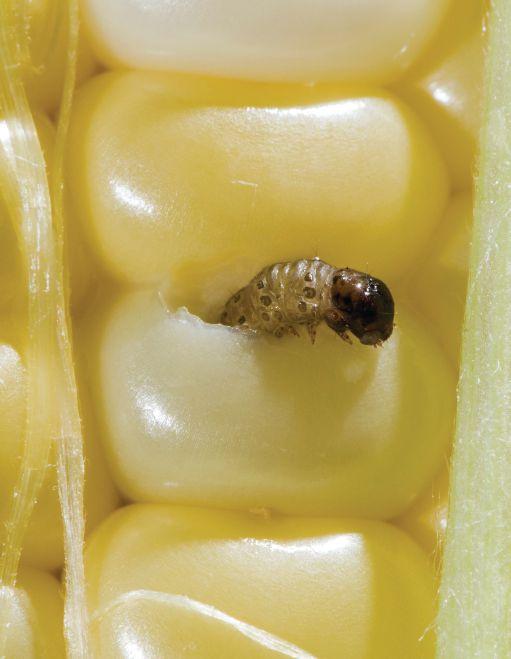
European corn borer larvae eats its way through an ear of corn.
PIC: When was it that you started the work on considering weed control with it?
McKenzie-Gopsill: There are a couple of different variables that we can evaluate on the vine crusher. There are two main variables we could play around with trying to optimize control. One is the tension that pulls the rollers together. That is set by a spring that is either adjusted by compressing it, and then there’s the speed that the rollers actually spin. We wanted to initially determine how to look at roller retention. So, we had to figure out a way to measure spring compression. My grad student and I went to a local gym and we’re sitting there putting weights on top of these springs to try and generate a spring constant, which would be how much tension is applied or force is being applied on the spring based on how much you’re compressing it. We figured all that out and then COVID-19 happened. That kind of shut us all down. We were all set to go. We had all the experiments designed and then we weren’t able to get back into our research farm for quite a few months. I think all this
testing ended up actually happening in the winter of 2020 and then over into 2021.
PIC: I imagine it takes a bit more spring tension to crush weed seeds and insects.
McKenzie-Gopsill: Yes. We initially designed two sets of experiments to try and optimize both roller speed and spring tension. We started with spring tension, and we decided to look at one species in particular – common lambsquarters. My labs documented resistance to Sencor Metribuzin, which is the number one product that potato producers in our region use and rely on for weed management. We’re around 50 per cent of our populations in potato fields are resistant to Sencor. So, we decided to do all our initial testing using that species and we learned a little bit of some interesting biology with that species while testing. The seeds are very small, so you’re dealing with a two-millimeter diameter seed. That was another thing if we could figure it out; if we could crush
When recycling ag containers, every one counts
Great job recycling empty pesticide and fertilizer containers (jugs, drums and totes). Every one you recycle counts toward a more sustainable environment in your agricultural community. Thank you.
REMEMBER! You can also return empty seed, pesticide and inoculant bags* for environmentally safe management. Details at cleanfarms.ca
*In PEI, add empty fertilizer bags.
info@cleanfarms.ca @cleanfarms
a really small seed, we’d probably have greater efficacy on a larger seed and any kind of those grasses like barnyard grass or yellow foxtail. We did find a big effect of roller tension. Not surprisingly, as we increased our roller tension, which pulled those rollers together, we got greater efficacy. But interestingly, when we started crushing our lambsquarters seeds, as we increase the tension, we saw germination actually went up. So, two things that we think are going on there. One is that we’re breaking dormancy of the seeds and it’s resulted in an increase in germination. Two, which was the kind of interesting part that we had never seen before, is when you crush it lambsquarters seed, sometimes one half of it will still germinate. We did it initially in a petri plate and then we went over and put them into field soil, and under field we get a reduction in germination. So, what we think is happening is it’s not likely a plant can survive. It’s missing its root or its developing meristem. It resulted in fatal germination when we put it on the field soil.
PIC: Since this technology enables farmers to not build their own machines, and it doesn’t come like a package deal, it makes it a lot simpler for them to know that one aspect is kind of the important one when dealing with seed mortality.
McKenzie-Gopsill: Yes. It’s very important to keep those rollers in place. Once we optimized those, the roller tension and the roller speed, we tested the system out on five different species. Again, we want common lambsquarters and ragweed pigweed to very small seeds. And then we went with three seed species that are a bit larger, so yellow foxtail, barnyard grass and then a volunteer canola seed. We saw much higher efficacy on all of those larger weed seeds, probably because you’re getting more tension – there’s a tiny gap for that seed to pass through. With lambsquarters we were getting about 65 per cent control under controlled conditions in our Petri plates. All of our other species, it was ranging between 87 and 94 per cent. So, really high efficacy on controlling any of those. We were basically dealing with something like a canola crusher where we could see canola oil on our roller after crushing them. Then for the next experiment we wanted to get as close as we could under controlled conditions to a potato harvest, so we took all our weed seeds, instead of doing them all in isolation, we mixed them all together, along with some potato biomass and sent that all through at the same time. Here’s where we saw again, greater efficacy on our large weed seeds, but there was just too much variability with our small seeds. What’s probably happening is that potato biomass, or there’s large weed seeds, were pushing those rollers apart slightly, and then letting all those small seeds fall through. So, in some situations, we got good control, some situations we got a moderate control; just a lot of variability there, all because those small seeds could pass right through. So again, emphasizing how important it is to have those rollers close together. But also, as you mentioned, how producers can just build this themselves, because there’s no IP controlling this. It’s freely available to the public.
PIC: If the biomass is going through, does that control the European corn borer, as well?
McKenzie-Gopsill: Yes, so it is kind of like an IPM. You’re potentially getting some insect management, as well as some weed seed control there.
PIC: You spoke of the Harrington Seed Destroyer and how weed seed crushing is not necessarily a new technology in that field. What does it do when it crushes the seeds to essentially kill them off?
McKenzie-Gopsill: The development of this technology is really a response to the herbicide-resistant issues that producers face. If you’re dealing with a herbicide-resistant weed, it is going to escape your herbicide and then set seed. The biggest effect you can have on a weed or herbicide-resistant population is in that first year after resistance develops, if you can prevent those seeds from getting back in the field, then you may have had resistance developed but it’s not going to spread. Using this type of system, if you’re at the really early stages where resistance is just developing, hopefully you can remove those seeds from the field and then you’re not going to have that herbicideresistant population there. If you already have resistance, this system can reduce the amount of seed that’s there. So, you’re just reducing your weed pressure overall, so having an impact on your population within that individual field. There’s a study just published within the last year from some weed scientists down in the U.S. where they’re dealing looking at harvest weed seed control on Palmer Amaranth, which is resistant to pretty much everything we throw at it. And, from some of their simulations, they show that harvest weed seed control as low as 20 per cent efficacy – removing 20 per cent of the seeds that would normally go back into the system – will maintain our populations. So, if we have any greater efficacy, then we’re going to have a reduction in our population. But as long as we can maintain a 20 per cent efficacy, which our system here has greater efficacy than that at least under the conditions that we’ve evaluated so far, then we can have a positive effect on reducing our population within that field of whatever particular weed we’re targeting.
PIC: Will this summer see field tests or is it still a little ways off from that?
McKenzie-Gopsill: We are hoping to field test this year. I didn’t have any fields that were suitable last year, but this year, we’ve got some potato fields out at our research farm, so we’ll be field testing this, harvesting potatoes and then doing some seed-bank measurements comparing using the potato vine crusher versus not using the potato vine crusher and seeing if we’re having an effect on the weed seed bank there.
PIC: What are the implications for potato growers, and is this something potato growers can access currently?
McKenzie-Gopsill: The plans are freely available. Anybody can build this system if they like. Logistically, it should work. It shouldn’t interfere with the potato operation. It’s not going to gum up your harvest or anything like that. Whether or not it actually has an effect on the weed seeds, we don’t know. We’ll hopefully evaluate some of that this season. But yes, it’s a system that’s available to potato producers right now that they can start building and attaching their equipment to and at least control European corn borer larvae and potentially control some weed seeds at the same time.
At UPL, we’re committed to bringing new solutions to the potato market that optimize productivity and efficiency. So our ProNutiva® program combines tried and true products like MANZATE® MAX fungicide with new biological innovations like OHM™ biostimulant for disease control and enhanced plant performance in one pass. Adding OHM biostimulant to your first application of MANZATE MAX fungicide provides superior protection against early and late blight with the added benefit of improved nutrient uptake and crop vigour.
To learn more about our complete portfolio for potatoes, visit gowithwhatworks.ca.