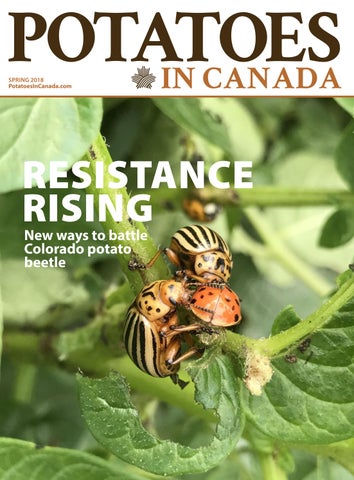
RESISTANCE RISING
New ways to battle Colorado potato beetle

You’re proud of your potato crop. Let’s face it. No one ever looks back and wishes they’d spent more time controlling crop damaging, yield robbing insects. We get that. Coragen® insecticide delivers extended residual control of European corn borer, decreasing the number of applications needed in a season. And, if your Colorado potato beetle seed treatment control breaks late in the season, Coragen® insecticide can provide the added control you need, so you have time for more important things. Did we mention it’s also easy on bees,* beneficials* and the environment?
Visit FMCcrop.ca or call 1-833-362-7722 to learn more.
TOP CROP
MANAGER
5 | Battling Colorado potato beetle
Primary weapons aren’t working like they used to. What are the alternatives?
By Mark Halsall
8 | Prepping for planting
Setting the stage for a successful growing season.
By Carolyn King
14 | The library of potatoes
The importance of the Canadian Potato Genetic Resources lab.
By Madeleine Baerg
ON THE WEB
Inisde you will find helpful tips for minimizing bruising at harvest (including a harvest management checklist), maintenance and upgrades for your ventiliation and control systems, and prevention and management for potato storage diseases. Visit

JANNEN BELBECK | ASSOCIATE EDITOR
CAUTIOUS EYES ON WHAT’S TO COME
Colorado potato beetle. Potato virus Y. Dickeya. Disease and pests that plague potato growers continue to grow and evolve. So too do the rules and regulations that monitor the use of pesticides and seed treatments. With the Pest Management Regulatory Agency (PMRA) in the middle of re-evaluations, growers have urged the government agency to reconsider their stance on fungicides, insecticides and herbicides before final decisions and recommendations are made (most coming in December 2018). Groups like the Canadian Potato Council have been working with the PMRA to ensure these useful and often-necessary pesticides are not lost for good.
The PMRA re-evaluations include eight fungicides, four insecticides and one herbicide. Although no one is certain what exactly the new regulations will look like, all 13 pesticides will not be able to maintain their uses as they were before. In fact, nine of these pesticides were originally planned to be completely removed from agricultural use, while the remaining four were proposed to have some uses cancelled, and limitations to other uses. For example, Dithane and Polyram are on the chopping block to be completely removed from agricultural use, while Captan and Bravo are two of the fungicides proposed to have some uses cancelled and others limited, come December. Within this, there is extreme concern for managing pathogen resistance, and for potatoes as a crop specifically, of note is the concern of late blight resistance and Fusarium spp. for infected seed.
David Jones, the potato industry coordinator with the Canadian Horticulture Council, speaking at Manitoba Potato Production Days this year, says that proposed regulatory decisions have not been favourable to the horticultural/potato industry. Therefore, grower input via surveys is critical to correct PMRA assumptions for revised risk assessments.
Researchers and the agriculture industry as a whole continue to work hard correcting these improper assumptions with how growers utilize these products. In any case, continuing to research alternatives in defeating pests and diseases is still imperative. Breakthroughs in breeding and genetics could go a long way in helping fight pests like the Colorado potato beetle (see page 5).
Weed and disease detection at its earliest stages is also imperative in securing a safe and healthy crop. In this issue of Potatoes in Canada, you’ll find stories of the work and due diligence done by growers to scout, monitor and test potato seed in order to eliminate the possibility of a disease destroying crops (see the stories on page 8 and 12). Exciting news out of the weed management front as well: Researchers out of P.E.I. are in the process of developing and testing cost-effective sensor technology to control weeds while reducing input costs (page 18).
Continue to stay involved with industry leaders and groups – your voices and experience help to shape our industry. And as always, we wish you a prosperous growing season.
TOP CROP
MANAGER
POTATOES IN CANADA SPRING 2018
ASSOCIATE EDITOR Jannen Belbeck • 888.599.2228 ext 211 C - 226.931.5608 jbelbeck@annexweb.com
ASSOCIATE EDITOR Jennifer Paige • 1 888 599 2228 ext 277 C - 416-305-4840 jpaige@annexweb.com NATIONAL ACCOUNT MANAGER Danielle Labrie • 888.599.2228 ext 245 C – 226.931.0375 dlabrie@annexweb.com
COORDINATOR Alice Chen • 416.510.5217 achen@annexweb.com MEDIA DESIGNER Brooke Shaw CIRCULATION MANAGER Urszula Grzyb • 416-442-5600 ext. 3537 ugrzyb@annexbusinessmedia.com
PUBLISHER Diane Kleer • 519.403.8816 dkleer@annexbusinessmedia.com COO Ted Markle • tmarkle@annexbusinessmedia.com PRESIDENT & CEO Mike Fredericks
PUBLICATION MAIL AGREEMENT #40065710 RETURN UNDELIVERABLE CANADIAN ADDRESSES TO CIRCULATION DEPT. e-mail: subscribe@topcropmanager.com
Printed in Canada ISSN 1717-452X
CIRCULATION e-mail: blao@annexbusinessmedia.com Tel.: 416-442-5600 ext. 3552 Fax: 416-510-6875 or 416-442-2191 Mail: 111 Gordon Baker Rd., Suite 400, Toronto ON M2H 3R1
SUBSCRIPTION RATES Top Crop Manager West - 9 issuesFebruary, March, Mid-March, April, June, September, October, November and December1 Year - $47.50 Cdn. plus tax
Top Crop Manager East - 7 issuesFebruary, March, April, September, October, November and December - 1 Year - $47.50 Cdn. plus tax
Potatoes in Canada - 1 issue

BATTLING COLORADO POTATO BEETLE
Resistance is rising for the neonicotinoid insecticides that are the primary weapon against this pest. What are the alternatives?
by Mark Halsall
Ever since becoming widely used in Canada in the late 1990s, neonicotinoid pesticides have helped keep Colorado potato beetle (CPB) populations in check. But the pest could be poised for a comeback, due to growing CPB resistance to neonics and the prospect of the Group 4 insecticides being banned from Canadian potato farms.
Heath Canada’s Pest Management Regulatory Agency (PMRA) proposed a ban on imidacloprid (the first neonicotinoid to be registered for CPB control) in November 2016, and plans to release a final decision in December of this year on whether to phase out the popular pesticide used to control insect pests in a wide range of crops. The PMRA has also reviewed the use of two other neonic products, thiamethoxam and clothianidin, and proposed a ban for some crops, while limiting its uses on others. The final decision is also expected to be released in December 2018, according to the government of Canada’s website.
Ian Scott, a research scientist with Agriculture and AgriFood Canada (AAFC) based in London, Ont., says the loss of neonicotinoid chemicals would be deeply felt.
“It definitely would have an impact on potato pest management. [It’s] been a very valuable class of insecticides to potato growers, so anytime you lose something like that there’s going to be impact until other solutions are found,” he says.
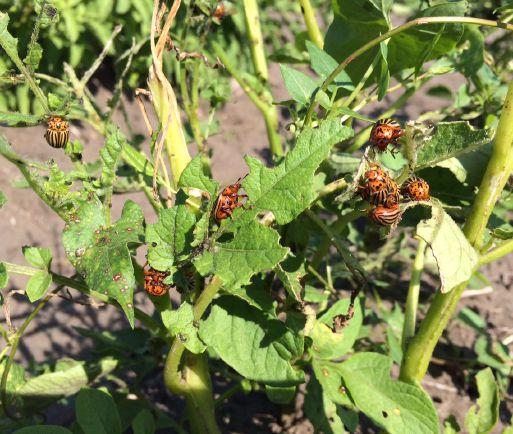
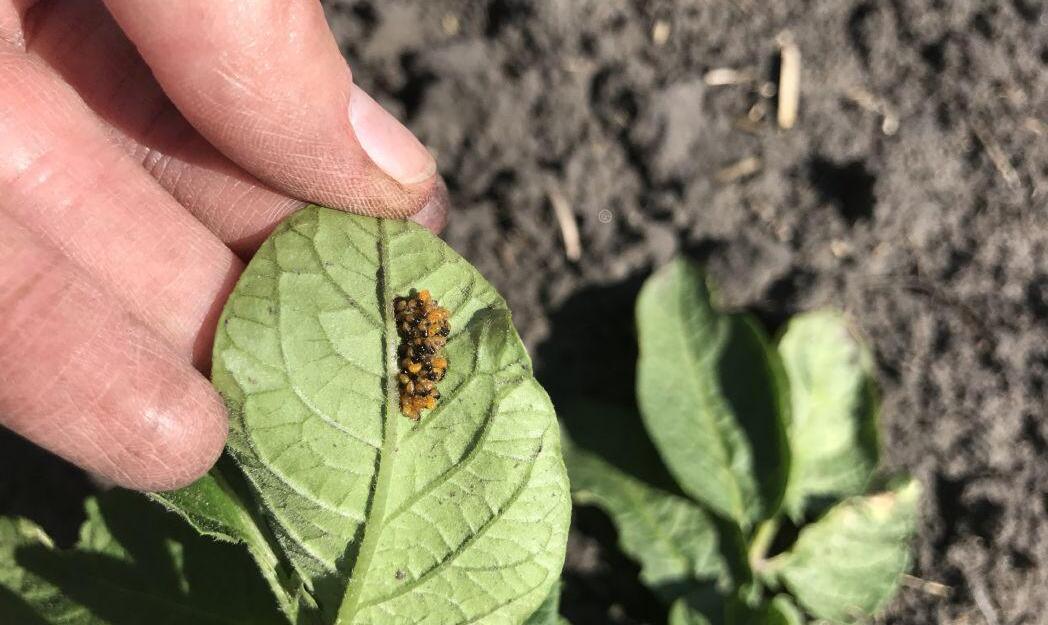
TOP: Colorado potato beetle egg mass.
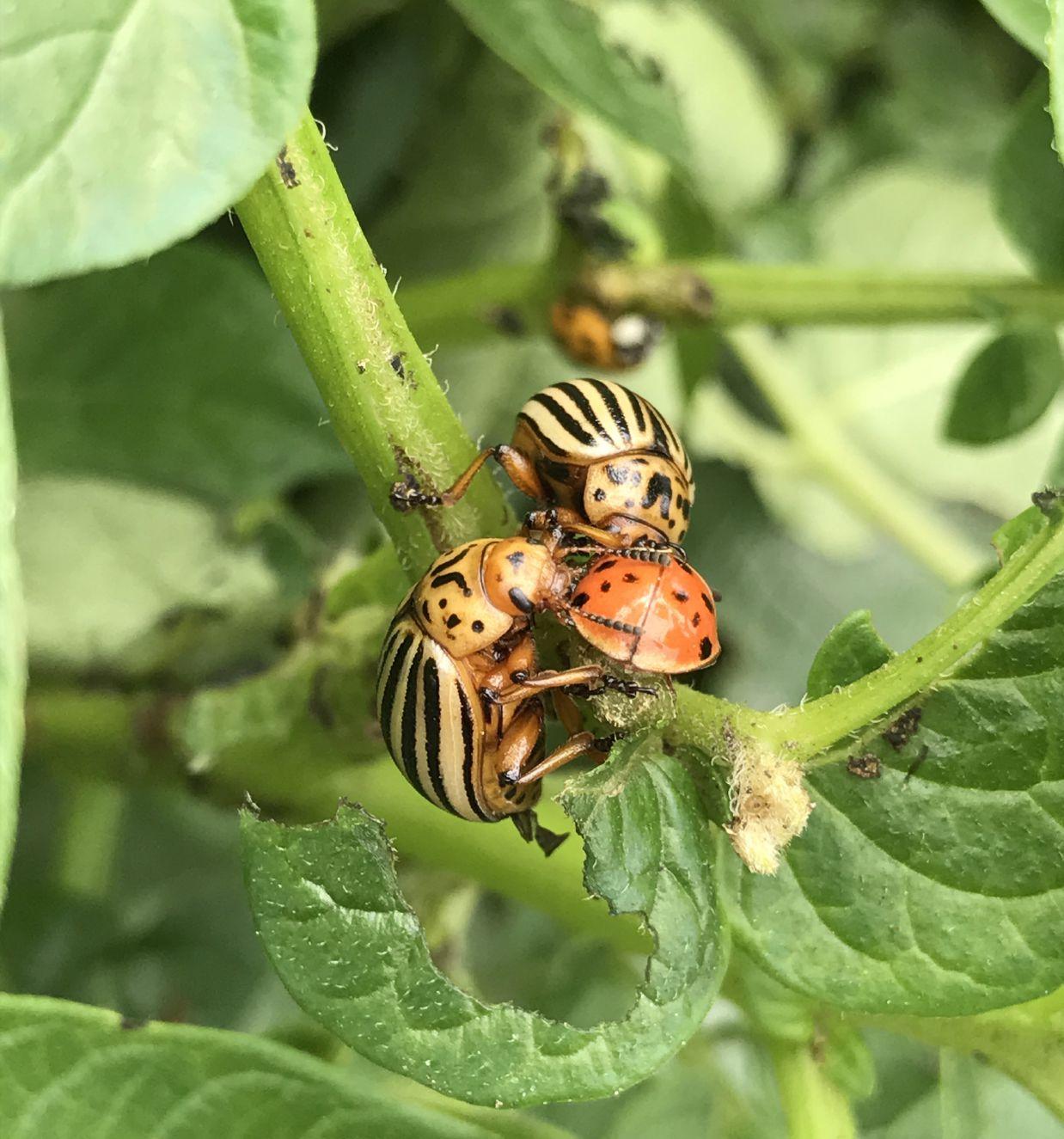
BOTTOM: Colorado potato beetle adults feeding in the field.
Scott’s research has included monitoring CPB populations in different parts of the country for neonicotinoid resistance and crossresistance with other insecticides. He, along with two other AAFC scientists and the Canadian Horticultural Council, have put together a proposal for a five-year, Canadian Agricultural Partnership-funded project that would further CPB resistance work and assess new management options for controlling the beetles.
“Part of what’s been driving this work is the fact that there is concern over what’s going to happen with the neonic products. Whether or not there’s going to be reductions [in use] or complete removal of these products, we don’t know at this point,” Scott says. “I think that’s one of the things that growers would like to see going forward – what are the alternatives, how can we work with the products that are going to be available if the neonics are not?”
According to Tracy Shinners-Carnelley, vice-president, research and quality enhancement for Manitoba’s Peak of the Market, there really isn’t very much in the way of effective replacements for neonics – at least not yet.
“The regulatory challenges that these chemistries are facing means the industry has no choice but to rethink how we manage CPB,” she says. “The dilemma is, you need to have other effective chemistries to be able to use if you walk away from using neonics. We really don’t have a lot of those options.”
Foliar insecticide
Shinners-Carnelley says a study led by Peak of the Market has been evaluating management strategies to control resistant CPB populations. The three-year research project wraps up this year, and has assessed different combinations of seed treatments, in-furrow and foliar insecticides.
One non-neonicotinoid insecticide that showed good control in the study was the foliar insecticide Delegate. “It performed very, very well,” Shinners-Carnelley says, “but we need to make sure that it is used wisely so we maintain it into the future as an excellent chemistry.”
“History has clearly shown that CPB can develop resistance to every chemistry that is thrown at it – it’s just a matter of time. So, we really need to make sure that we’re only using these newer classes of chemistry when they are needed because we need to keep them effective as long as we can,” she says
A key part of this stewardship may mean having to revisit and validate economic thresholds for applying foliar insecticides – and potato farmers having to get accustomed to seeing many more beetles in their fields.
“Growers have in many cases forgotten what it’s like to have to manage CPB with foliar insecticides, because when the neonics were first introduced and for many years after that, they worked exceptionally well. For the most part, they controlled that pest to the point where growers never really had to worry about tolerating a measurable number of beetles in a field or monitoring defoliation,” Shinners-Carnelley says. “It’s a very uncomfortable feeling for growers to go out and scout and see their plants being chewed on or see patches of the field that have a high infestation of beetles.”
A key part of this stewardship may mean having to revisit and validate economic thresholds for applying foliar insecticides – and potato farmers having to get accustomed to seeing many more beetles in their fields.
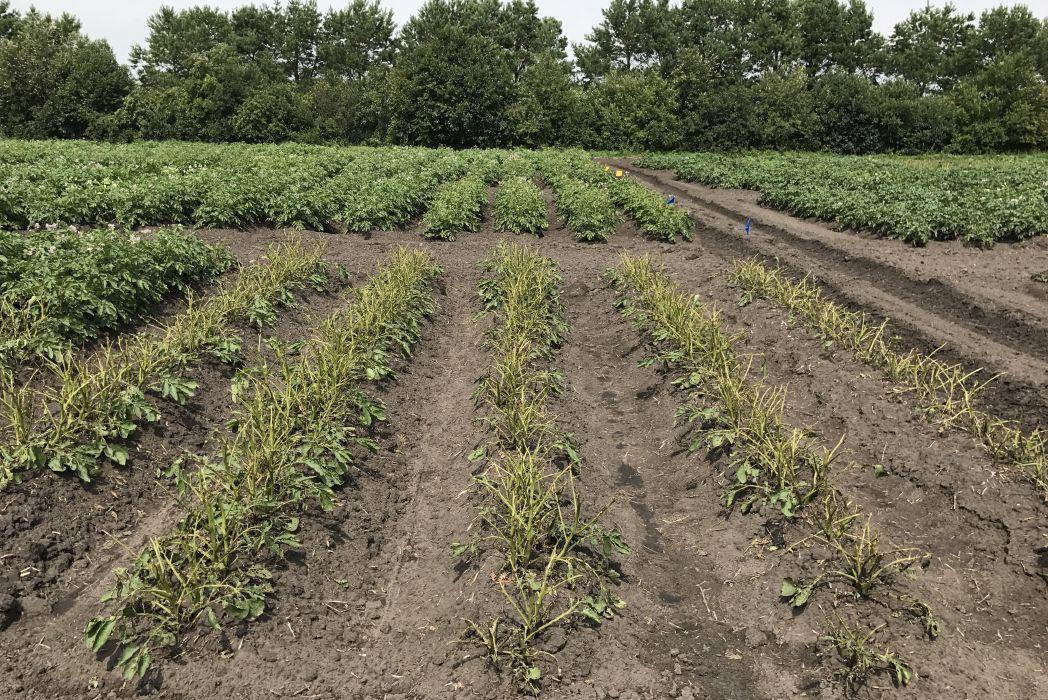
Potato plants decimated by Colorado potato beetle.
Shinners-Carnelley adds that when developing thresholds, different factors such as the number of beetles, the amount of defoliation, the type of potato variety, crop maturity and the length of season all need to be taken into account. “All these things are variable so one threshold is not going to apply to everything.”
Field trials conducted during Shinners-Carnelley’s research study indicate that despite growing CPB tolerance to neonicotinoids, the chemicals still have an important place.
“It goes against best practice but the recommendations I’ve been using based out of this this trial are that in the short-term, growers need to be using the highest labelled rate of the products so that they’re getting the longest duration of control,” she says.
“We have very few other chemistries, so yes in an ideal world
BREEDING TO DESTROY CBD
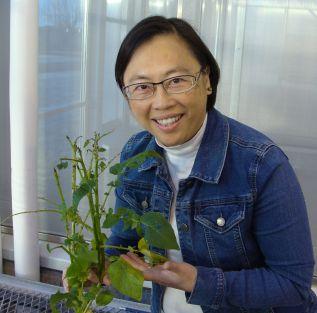
Chemicals in the leaves of potato plants, produced naturally by the plant, may hold the key to a new way in controlling Colorado potato beetles. Agriculture and Agri-Food Canada (AAFC) research scientist, Helen Tai (pictured here) has turned to the leaves growing on wild potato relatives – leaves that Colorado potato beetles won’t eat – as a new approach to keep the pest away.
Many plants in the potato family contain natural defence chemicals that protect plants against insects and pathogens. Using mass spectrometry and other sophisticated tools, Tai was able to identify what’s in the wild potato plant leaves that make the beetle avoid them.
where we had multiple classes of effective insecticides the recommendation would be simple. It would be ‘don’t use neonics, go and use another class of chemistry.’ But we just don’t have those one-for-one alternatives.”
Scott is hopeful that more viable alternatives to neonicotinoids will eventually be developed. “I think the industry is very innovative in its approach to all aspects of potato production and pest management, and I know it’s always looking within Canada and outside for other solutions,” he says.
Integrated pest management
For now, Scott believes integrated pest management (IPM) is a grower’s best bet for CPB protection. A combination of chemical and cultural techniques, he says, will help slow resistance development and also prolong the effectiveness of current CPB insecticides.
Scott points to crop scouting as important tool for potato farmers. “I think the more monitoring the growers can do, the earlier that they can diagnose a problem in the field before it gets out of hand,” he says.
Scott recommends producers rotate chemical classes in season if possible and also try not spray insecticides too often, since this also kills predators that help keep CPB populations down by feeding on the insect’s eggs and the early stages of the beetle. Other non-chemical strategies for CPB control listed by Scott include crop rotation and varying the timing for planting potato crops.
Scott notes that maintaining field borders can also help reduce the spread of CPB populations. He says buffer zones around potato fields can provide more habitat for CPB predators, and can also act as a physical barrier for the beetles.
Shinners-Carnelley says IPM is always a good idea when it comes to insect control. But she cautions that some recommended practices such as buffer zones and crop rotation aren’t always practical when it comes to a bug like CPB, since it isn’t soilborne and can easily fly between fields.
Potato breeders at the Fredericton research and development centre used cross-breeding of a wild relative with common popular potato varieties to develop a potato with built in beetle resistance. Not all of the potatoes from the cross carry the resistance, but the profile that Tai discovered identifies which ones do.
Colorado potato beetles are already showing a resistance to the popular pesticides used by potato growers adding to the need for new solutions. Tai sees use of beetle resistant varieties together with integrated pest management methods as an alternative approach to mitigate pesticide resistance. These resistant potato varieties can provide growers with
an option to avoid serious crop losses. Two of these new resistant potatoes are already in the breeding program and available to industry to trial.
TextcourtesyofAgricultureand Agri-FoodCanada.
PHOTO COURTESY OF AAFC.
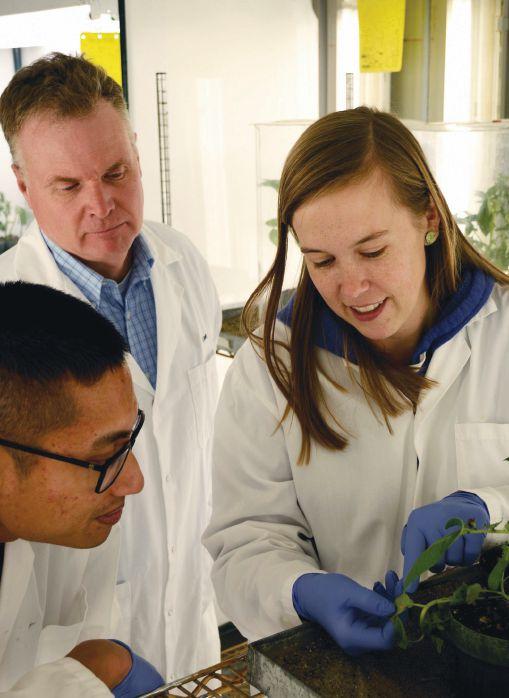
LEFT: Ian Scott (top left), Sophie Krolikowski and Vincent Atienza inspect a Colorado potato beetle sample at Agriculture and AgriFood Canada’s London Research and Development Centre.
PHOTO COURTESY OF ALEX MOLNAR.
PREPPING POTATOES FOR PLANTING
Set the stage for a successful growing season.
by Carolyn King
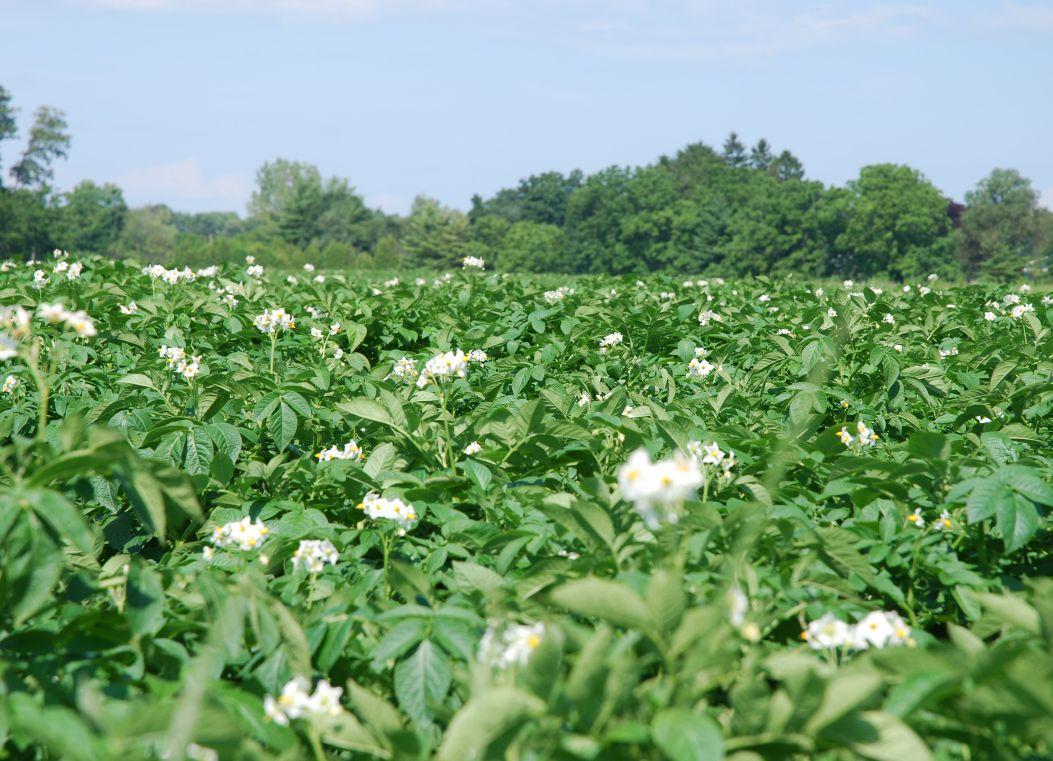
The practices used in selecting and preparing seed potatoes for planting play a big role in getting your crop off to a great beginning.
Selecting seed
When it comes to seed selection, seed health is top priority. “Healthy seed is the foundation of a high-quality crop and high marketable yield. Management practices will not make up for a seed lot with poor vigour,” says Eugenia Banks, a potato consultant for the Ontario Potato Board. “Growers strive to produce a complete stand of uniform plants with the potential for high yield and quality. That requires quality seed.”
She identifies key factors to consider when selecting seed: “Choose seed that has been inspected by the Canadian Food Inspection Agency (CFIA) and graded as certified or higher class. The seed should be essentially free from seedborne diseases including Fusarium dry rot, late blight, soft rot, common scab and Rhizoctonia. There should be no stem-end discoloration.
“The seed should be firm, not spongy; firmness indicates it was stored properly. The seed should have a uniform size and no tuber defects, and it should be true to type,” Banks says.
“Testing for potato virus Y (PVY) should show the infection level is less than four per cent. Also, if the seed was produced in jurisdictions where Dickeya dianthicola – the new blackleg disease –was a problem the year before, growers should request a test for this emerging, destructive bacterial disease.”
As well, Banks advises growers to avoid physiologically old seed. The physiological age of a seed lot depends not only on its chronological age but also on the environmental and management conditions that it has undergone. Physiological age increases with things like growing season stresses, warm storage temperatures, wounding, bruising and cutting.
Knowing a seed lot’s physiological age helps in making decisions on how to prepare the seed lot for planting. To check a seed lot’s physiological age, place a few tubers in the dark at about 18 C for a few weeks and watch how the sprouts grow. If there are no sprouts, then the seed is still dormant. If only one or a few big sprouts occur at the apical end, then the seed is young. If sprouts are coming from many eyes, then it is middle-aged. If the sprouts are branched, then the seed is old – too old to produce a vigorous stand.
ABOVE: Healthy seed is the foundation of a high-quality crop.

The world has never seen a nematicide like this before.

Velum® Prime nematicide is making big news. No wonder. Now you can make yield-robbing nematodes a thing of the past, and expect more out of your crop. It even offers early blight protection. To integrate it into your potato protection program, apply it in-furrow at planting. And give your potato yield a chance at being out of this world.
Get the yield-enhancing details at cropscience.bayer.ca/VelumPrime

Compared to middle-aged seed, young seed is more vigorous but tends to emerge slower, to produce fewer but larger tubers, and to mature later. If you have young seed, then you have the flexibility to choose whether you want to plant young seed or to use warming and/or cutting practices to move the seed toward middle age.
Mike Wind of Windiana Farms near Taber, Alta., grows chipping varieties and Russet Burbank for the french fry industry. He has developed a set of seed prep practices that have been working well for their farm for about the last 10 years. His tip for seed selection is to know your seed source. “Your relationship with your seed supplier is very important.”
“We like to bring our seed in five weeks before planting, if possible. That way we can get the temperature of our seed where we want it,” he adds.
Potato pathologist Khalil Al-Mughrabi, with the New Brunswick Department of Agriculture, Aquaculture and Fisheries, offers tips for when the seed is delivered. “Before bringing seed onto a farm, all machinery, cutting knives and equipment [that will come in contact with the seed] should be disinfected,” he says.
“Growers should visually inspect seed potatoes within 24 hours of delivery. Any signs of a disease in the seed should trigger a red flag. Send a sample to your extension service department to have a formal diagnosis done. Growers can cut a sample of tubers and look for rot symptoms. A buyer has only 24 hours to request a re-inspection after delivery. Some growers ask for a test certificate indicating freedom of the seed lot from late blight.”
Warming, cutting, precutting
Even though cutting is a common seed preparation practice, Banks sees a lot of advantages to planting whole seed.
“Cut surfaces provide points of entry for bacteria and fungi. While there are seed treatments for fungal pathogens, mainly Fusarium dry rot and Rhizoctonia, there are no treatments for bacterial pathogens like blackleg and soft rot, which can cause poor emergence in wet years. In addition, cut seed is not recommended for varieties that have most of the eyes concentrated near the bud end and only a few eyes near the stem end. Cutting these varieties results
in many blind seed pieces that will not produce plants,” she says.
“Planting whole seed eliminates the cost of cutting. Whole seed is also more tolerant to the stresses of high soil moisture and low soil temperature. However, whole seed is more expensive because of the extra grading required to produce seed lots of uniform tuber size.”
Nevertheless, she notes, “Ontario potato growers are successful in cutting, treating and planting potato seed. Trials comparing whole and cut seed do not usually find differences in marketable yield or tuber quality unless there was a cool, wet spring.”
Before handling, the seed needs to be warmed up from its recommended storage temperature of three to four degrees. Warming helps prevent bruising, and it may also be needed to break dormancy and speed up crop emergence.
If seed is to be cut, Banks generally recommends warming it to about 10 C a few days before cutting. “Warm seed not only cuts better with less tissue tearing, but is also more physiologically active and heals faster than cold seed,” she explains. “However, warming seed tubers for periods longer than two weeks or at temperatures higher than 10 C can result in excessive sprouting and physiological aging leading to lower yields, decreased tuber set, and smaller tubers.”
Al-Mughrabi recommends grading the seed again after cutting to remove any tuber rot, and frequently disinfecting the cutting equipment using quaternary ammonium-based products. Banks adds, “Seed cutters should be cleaned and sanitized at least daily while cutting, and always before cutting a new seed lot.” The knives need to be kept sharp.
The seed should be cut in blocky pieces, with a preferred size range of 1.5 to about 2.0 ounces (43 to 57 grams). For varieties with wider in-row spacing, the seed pieces should be slightly larger than 2.0 ounces. Pieces smaller than 1.5 ounces produce fewer stems. Very large seed pieces tend to have more severe bruising, which increases the risk of seed-piece decay, and to have poorer emergence and less vigorous growth.
Controlling the variation in seed size is also very important. Banks explains, “A wide variation in seed piece size results in skips and doubles because of inconsistent feeding through the planter.”
At MacAulay Farms Inc., near Souris, P.E.I., they grow Prospect, Shepody, Russet Burbank, Ranger Russet and Dakota Russet varieties, producing their own seed for some of these. They grade the seed in early to mid-April and then put it back into their temperature-controlled storage, keeping it at about 3 C until cutting time approaches. Then they let the seed gradually warm to about 7 C and cut the seed. “The majority of the potatoes are cut into blocky, good-sized seed pieces,” explains co-owner Paul MacAulay. “The seed is then treated and placed in bulk trucks with air moving through, for one to two days, before planting.”
At Windiana Farms, they precut and treat their seed up to three
“Growers should visually inspect seed potatoes within 24 hours of delivery. Any signs of a disease in the seed should trigger a red flag. Send a sample to your extension service department to have a formal diagnosis done. Growers can cut a sample of tubers and look for rot symptoms.”
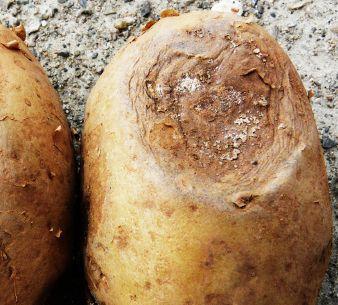
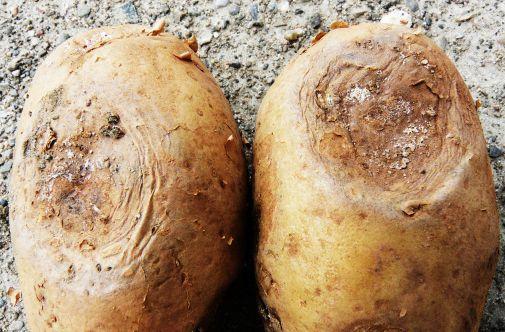
Seed potatoes should be essentially free from seed-borne diseases including Fusarium dry rot (shown here), which can cause poor emergence and serious economic losses.
PHOTO COURTESY OF EUGENIA BANKS.
weeks before planting. Precutting involves cutting, treating and curing the seed, then storing, re-warming and planting it.
“Precision temperature, airflow and humidity conditions are extremely important for storing cut seed. Also piling at a low height is a must,” Wind says. “We then keep the pile temperature as cool as when the seed came in. Then we adjust the pile temperature to match the soil temperature as the soil warms, so the seed and soil will be at the same temperature at planting.”
“The seed treatment application is a very important. We found that seed piece decay has all but been eliminated using this process,” he adds.
Banks explains that proper curing and storage conditions are critical for precut seed because of the high risk of seed piece decay, particularly from Fusarium dry rot. To cure precut seed, she advises holding it for about six to 10 days after cutting under conditions that favour wound healing. Those conditions include about 95 per cent relative humidity (but no free water), airflow that provides adequate oxygen and removes excess carbon dioxide, and proper temperatures based on the seed’s physiological age. She recommends a temperature no higher than 7 C for middleaged precut seed, and 15 C for young precut seed. She adds, “Some growers use pallet boxes to hold precut seed while others place it in piles no more than four to six feet deep.”
After precutting and curing, the seed can be stored at around 4 or 5 C and about 95 per cent relative humidity for one or more weeks until a few days before planting, when it is re-warmed.
“Seed lots with excessive bruising or evidence of diseases such as Fusarium dry rot or soft rot are poor candidates for precutting.
In addition, only seed that is physiologically young or middle-aged should be precut because precutting ages the seed,” Banks points out.
Seed treatment considerations
“Seed treatment provides a low-cost insurance policy for protecting seed until the first shoots emerge,” Al-Mughrabi says. “However, there are a finite number of seed treatment products available to Canadian growers that are designed to combat pests and diseases affecting specific regions of the country. As a result, the arrival of new products on the market is always noteworthy – but growers should be aware of the costs and benefits in order to make wise choices.”
He adds, “Seed treatments can sometimes help emergence by protecting the cut surface from certain soil pathogens. Always read product labels before use. Fungicidal seed treatments are no substitute for healthy, properly handled seed.”
“Liquid and dust formulations are available,” Banks says. “Some varieties with very low dry matter and high water content do not tolerate well liquid seed treatments. A good example is the fresh market variety Colomba. Only a dust seed treatment should be used with Colomba; a liquid seed treatment makes it susceptible to soft rot.”
Pre-planting tips
Banks lists some practices to keep in mind when getting ready to plant: “Sanitize and calibrate the planter. Make sure there are no planter parts that bruise the tubers; bruises affect seed vigour. Do not leave seed potatoes for long periods of time under the sun on hot days. Cover the seed truck with a tarp on rainy days or park it under a canopy. Also, train personnel on safety regulations.”
“We
Sam Bourgeois, Agvocate Apple Producer
DEFENDING AGAINST DICKEYA
The North American potato industry is ramping up efforts to contain the blackleg-causing pathogen that’s caused significant crop losses in the U.S. in recent years.
by Mark Halsall
Potato industry stakeholders from across the United States gathered in Bangor, Maine in November 2017 to deliberate on Dickeya, the aggressive disease that’s devastated thousands of potato acres in the U.S. since its first major outbreak in 2015.
Sponsored by the University of Maine Cooperative Extension, the one-day summit drew more than 160 seed potato growers and buyers, research scientists, and other industry representatives, all eager to hear about the latest developments in the fight against Dickeya.
Topics covered included the current Dickeya situation in U.S. and Europe, emerging Dickeya species, the latest advances in detection of the disease, and the needs of future Dickeya research. The conference also focused on new strains of Pectobacterium, another pathogen in the blackleg complex that’s become a growing cause for concern for potato producers in the U.S.
Gary Secor, a plant pathologist from North Dakota State University (NDSU) and one of the organizers of the event, says the conference was a big success. “It exceeded all of our expectations
for attendance and content,” he says.
Dickeya discussions have dominated the potato meetings circuit in both the U.S. and Canada the past couple of years as the North American potato industry looks for ways to contain the disease.
A bacterial pathogen that’s been affecting potatoes in Europe since the 1970s, Dickeya can be transmitted over long distances and across national borders through infected plant material, which can include other vegetables and some ornamental plants.
The disease is now found in numerous potato producing areas in the U.S., particularly in Maine and other states along the eastern seaboard. Because Dickeya in potatoes is primarily spread through infected seed, a growing number of seed growers and buyers are choosing to test potato seed lots for the pathogen.
Secor says the consensus among attendees at the recent Dickeya conference was that the amount of Dickeya found in seed and commercial potato fields in the U.S. appeared to be down in 2017, compared to 2016.
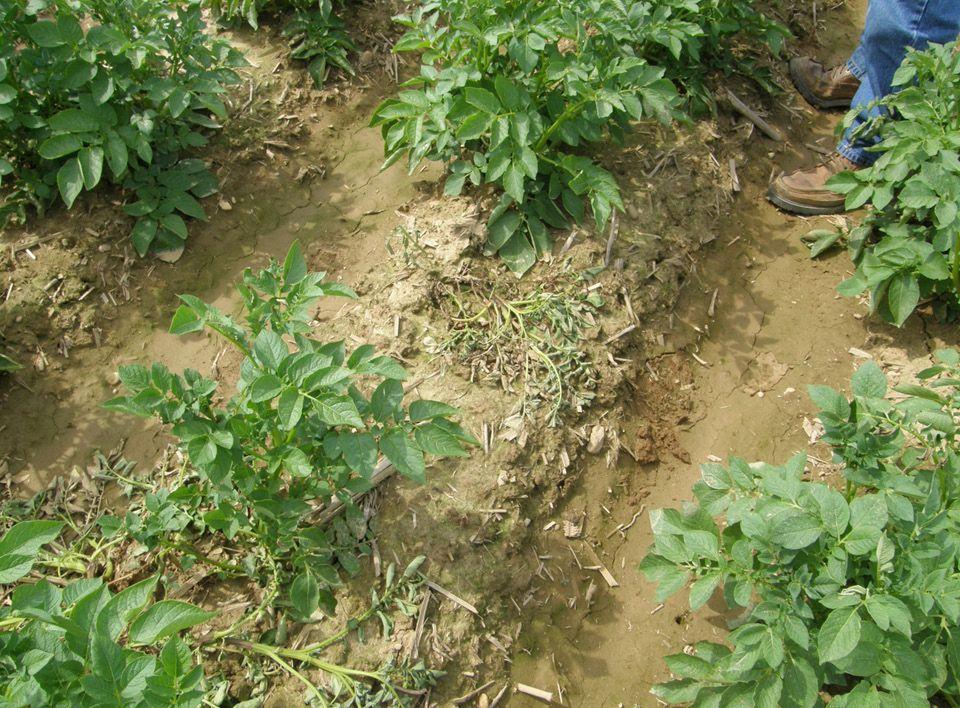
ABOVE: A potato plant killed by Dickeya.
PHOTO COURTESY OF STEVE JOHNSON.
He believes one reason why is that as seed lot testing for Dickeya has grown more popular, it could mean fewer infected seed lots are making their way into commercial production.
Secor says his lab at NDSU found Dickeya in two Canadian potato samples, one from Ontario in 2014 and another from New Brunswick in 2016. While he hasn’t heard about any other Canadian seed lots being infected with Dickeya, Secor says that doesn’t mean growers in this country should rest easy.
“I think that certainly the potential is there for Dickeya to be present and I think the Canadian farmer should be aware of that and take it seriously,” Secor says.
Steve Johnson, a potato specialist with the University of Maine Cooperative Extension and the main organizer of November’s Dickeya summit, also confirms there has been a few Canadian samples sent to his lab that tested positive for Dickeya. “It is present in Canada.”
Agricultural Certification Services (ACS) in Fredericton began offering Dickeya testing in 2016. Mathuresh Singh, director of ACS, says most of the test requests have come from seed potato buyers in the U.S. asking for Dickeya screening for imported New Brunswick potatoes.
Singh notes that his lab performed about 100 Dickeya tests in 2016 but only about “half that amount in 2017.”
“This year it looks like there isn’t as much pressure from [seed] buyers really to go for this testing,” he says. Singh believes fears of Dickeya making inroads into Canada have lessened somewhat, which may have contributed to fewer screening requests.
Singh also believes the present level of Dickeya in Canada does not pose a serious threat to Canadian producers right now. He says the Canadian Food Inspection Agency’s seed potato inspection program has strict tolerance for blackleg infection, which helps ensure fields are free from pathogens like Dickeya that cause the disease.
In the U.S., blackleg has not been part of the industry’s seed certification process.
Singh stresses Canadian growers still need to remain vigilant to ensure Dickeya doesn’t gain a foothold here. He says potato farmers should watch closely for symptoms of blackleg in their fields, and if it does show up, test infected plants to see if it’s Dickeya or if symptoms are caused by other, more common blackleg pathogens.
Control starts with seed
Johnson says any best management efforts to control the Dickeya must start with seed. “It’s plant pathology 101: exclusion, eradication, avoidance. You don’t plant it. If you do get it, you don’t replant the seed, and you try to avoid buying stock that had Dickeya in it. If you don’t bring Dickeya in with your seed, chances are you’re in pretty good shape.
Johnson recommends that growers select seed that’s been tested at independent laboratory and confirmed to be free of Dickeya dianthicola (the main type of Dickeya in the U.S.).
He also urges growers to choose seed from farms where the pathogen has not been detected, and which have a zero-tolerance approach to Dickeya dianthicola
Johnson and Secor agree there’s still much to be learned about Dickeya, including determining all of the different ways it can spread. Dickeya is not a soilborne disease, and so far, seed potato tubers are the only confirmed source of the pathogen in potato crops.
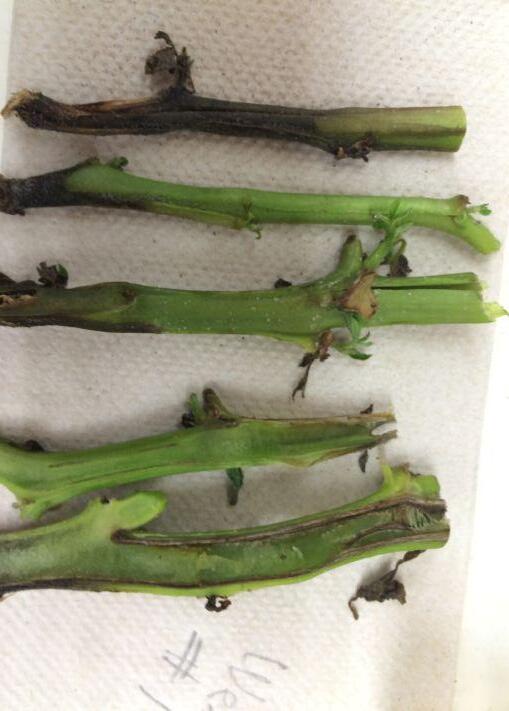
Examples of stem lesions and vascular browning caused by Dickeya.
“That’s one of the big questions we have: ‘where [is] Dickeya coming from, how is getting into those early generation seed lots?’” Secor says.
He points out that September marked the beginning of a fouryear, $2.5 million research study into better detection methods for Dickeya and Pectobacterium and how the diseases are transmitted. Researchers will also look into developing disease resistant potato varieties as well as the economic impact of Dickeya and Pectobacterium on seed and commercial potato production in the U.S.
“We’ve got about 15 scientists from around the country all the way from Oregon to Maine involved in this project,” Secor says.
He notes that one area being scrutinized by researchers is whether things like horticultural plants, landscape materials or flower bulbs could be contributing to Dickeya’s spread. Researchers are also investigating water as another possible transmission source.
“If we can identify where its coming from then we eliminate that source, we can flush out all the infected seed lots [with testing], and eventually we’ll get back to having clean seed,” Secor says. “That’s really going to be the secret I think – getting the clean seed.”
In Canada, the ACS lab in Fredericton is examining the possibility that infected water used for irrigation or spraying could be a source for Dickeya contagion in potatoes.
Singh says the study is part of two-year project funded by the New Brunswick government that’s also validating various Dickeya detection methods. The project wraps up March 2018.
PHOTO
GENE LIBRARY KEEPS POTATOES ALIVE
The Canadian Potato Genetic Resources lab is essential to ongoing and future potato research.
by Madeleine Baerg
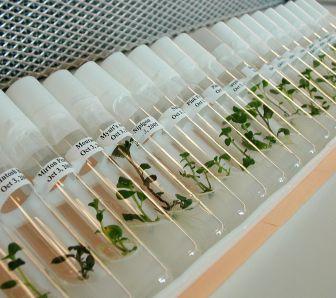
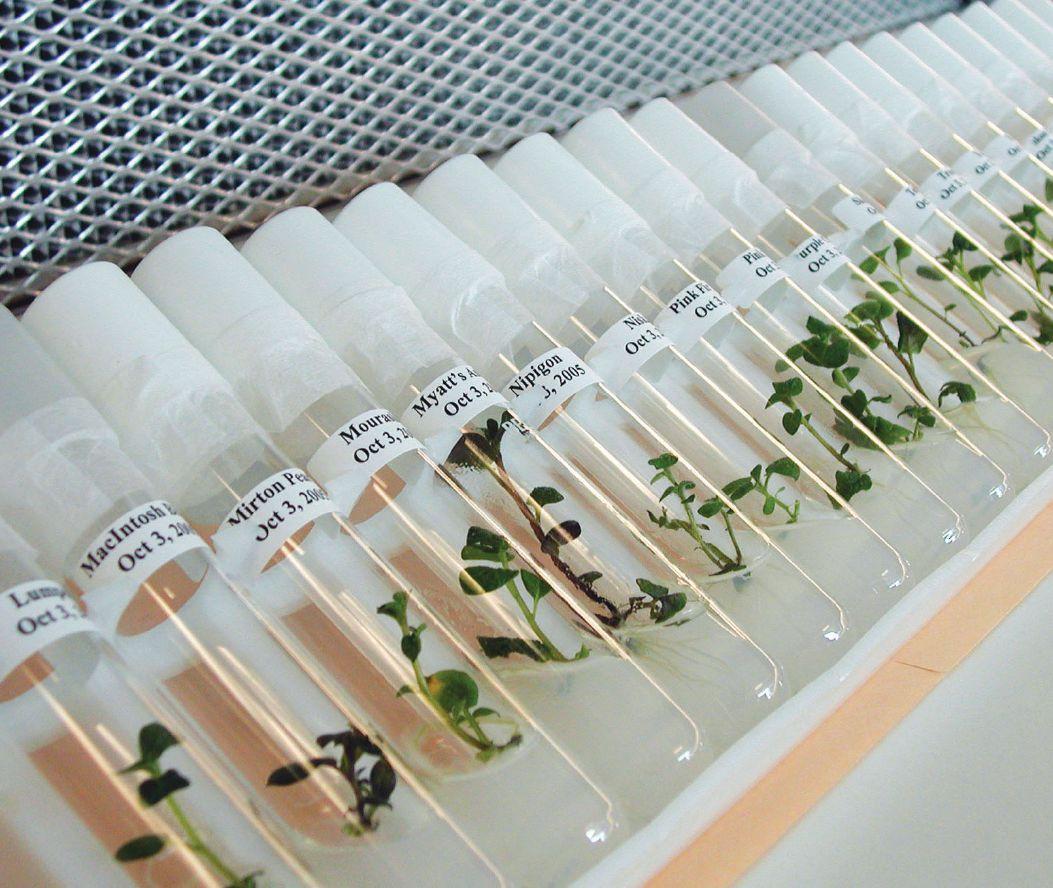
Inside Agriculture and Agri-Food Canada’s (AAFC) high tech Canadian Potato Genetic Resources (CPGR) lab in Fredericton, N.B., hundreds of small glass test tubes contain vital keys to Canada’s potato growing future. The gene bank – a living library of almost 180 potentially high-value potato breeding lines – is an important component of Canada’s ongoing potato research, proof of our commitment to global food security, and our last line of defence against potato disease or natural disaster.
The gene bank collection focuses on varieties and lines most important to Canada’s northern climate. It includes both heritage and modern-bred accessions as well as unique genes found in wild populations, in exotic varieties, and via Canadian scientists’ breeding initiatives.
“It’s very important to preserve all unique traits for future generations,” says CPGR’s curator, and research scientist Benoit
Bizimungu. “We collect everything that may have traits of interest.”
The gene bank’s collection encompasses traits that are recognized as important today and those that may prove vital tomorrow.
“We don’t know what is ahead. New emergent pests and diseases, drought, climate change, soil changes, or other unknown changes may come. If you don’t keep your gene resources wide and broad enough, you won’t have the diversity to address those challenges,” Bizimungu says.
In addition to preserving priority genes long into the future, the gene bank also facilitates access to genetics for research occurring in the here and now.
“The genetic resources collected here are available to any
ABOVE: High value potato breeding lines grow as tiny plantlets in hundreds of test tubes at the CPGR lab.
PHOTOS COURTESY OF CPGR.
researcher. When someone starts a breeding program targeting specific traits and doesn’t have anything in their own collection, the first thing they do is call the gene bank. My role is to recommend and assist,” Bizimungu says.
The gene bank’s genetic collection is particularly useful for genomics research. Potatoes are typically tetraploids –containing four sets of chromosomes, rather than diploids like most other plants. Additional chromosome sets result in a “blurring” effect, which makes genomic discovery complicated. However, certain varieties and wild relatives of potatoes, particularly those from South America, have differing numbers of chromosomes. Some varieties have as many as five or six sets of chromosomes; others have just two sets. Researchers interested in genomics often turn to the gene bank not just for specific traits, but also for specific traits contained in cultivars with fewer chromosome sets.
Alongside preserving the living library, Bizimungu and his gene bank colleagues conduct their own research on the collection, searching for new traits that may be hidden inside old varieties.
“Many old varieties were grown with minimal inputs. So, those old varieties may have some useful genes for the future,” he says. “For example, maybe they require less fertilizer, or maybe they are more resistant to stresses. Especially now as we move towards more resilient agriculture, those kind of traits would have real value.”
In fact, most varieties that offer disease resistance today come from Canada’s gene bank accessions or from the U.S. potato gene bank, Bizimungu says, since those collections provide the “starting material” for potato breeding efforts by scientists across North America.
Canada is one of 194 member states in the United Nations’ Food and Agricultural Organization (FAO). As a signatory of the FAO’s International Treaty on Plant Genetic Resources for Food and Agriculture, Canada agrees to the “conservation and sustainable use of all plant genetic resources for food and agriculture,” as well as the “fair and
equitable sharing of the benefits arising from the use of these genetic resources.” In practice, this means Canada agrees to abide by the FAO’s rules about how plant genetics must be handled, and to freely share all of its plant genetic resources with scientists from around the world.
“No one country is self-sufficient in terms of genetic resources. We depend on each other,” Bizimungu says. “Global food security is a worldwide effort. We receive requests from scientists from around the world to access our germplasm for specific traits. We are open to providing genetic material to anyone who requests it.”
Because potatoes produce tubers rather than easily storable seeds, maintaining genetic resources over the long-term is more complicated with potatoes than other crops. In addition to curating potato tubers, Bizimungu and his team grow live tissue samples: tiny plantlets grown in slow-growth media in temperature-controlled growth chambers. Every six-to-eight weeks, the seedlings are replicated into new media
“Global food security is a worldwide effort. We receive requests from scientists from around the world to access our germplasm for specific traits. We are open to providing genetic material to anyone who requests it.”
to allow additional growth. The gene bank also keeps a collection of “microtubers”: tiny tubers grown in test tubes that last for up to one year.
In the summer, the gene bank takes cultivars of every variety and grows them out in field conditions.
“A very important part of our work is collecting data. We characterize [the varieties] every year when we grow them out, documenting traits of interest through publications or on our website,” Bizimungu says.
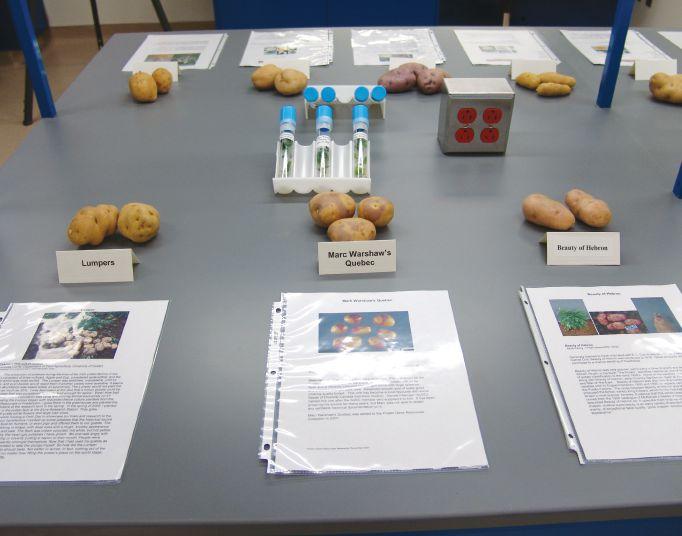
Canada’s potato gene bank opens regularly to tours. Educating farmers, the larger agricultural industry, and everyday Canadians about the gene bank’s important work is a priority Bizimungu particularly values.
“It’s exciting to see how the public has a very strong interest in the gene bank. People understand the role of banking in their day-to-day lives. When we describe this collection as a way of saving for the future, the message is very well received,” he says.
“Everyone is affected by what we do here. Without genetic resources, our food security would be compromised. Potatoes are one of the most consumed vegetables in the world. It’s important as a crop but also to the economy. Preserving the foundation of our genetic resources is very important.”
Public education is a key priority for the Canadian Potato Genetic Resources lab.
FIGHTING POTATO VIRUS Y
Potato growers now have more effective strategies for controlling potato virus Y, thanks to the findings of a major Canadian research study.
by Mark Halsall
Potato virus Y (PVY) affects both yield and the quality of the crop, making it one of the most dangerous diseases faced by commercial potato producers. Spread by aphids and through infected seed lots, PVY has been managed with varying levels of success by Canadian growers for many years, but the rise of more aggressive and faster-spreading strains has made it even more challenging to control.
For the past five years, a major Canadian research study has been looking into developing more effective strategies for controlling PVY. The project is co-ordinated by the Canadian Horticultural Council and funded by the Canadian Agri-Science Cluster for Horticulture 2, as well as potato industry partners, and wraps up in March 2018.
Mathuresh Singh, the director of Agricultural Certification Services in Fredericton, is the project lead. Singh says the research has led to a greater understanding of new strains of PVY and their effect on commercial potato varieties. He adds it has also identified numerous science-based best management practices for reducing the disease spread on farms, which in severe cases can see yield losses due to PVY of up to 80 per cent.
There are currently three types of PVY in Canada: PVYO and two newer strains, PVYN:O/Wi and PVYNTN . Singh says the study has confirmed that the newer, more necrotic strains are displacing PVYO in several important potato-growing provinces. Necrotic symptoms can cause tubers to rot, leading to losses in both yield and quality.
The study has also catalogued the impacts of each of the PVY strains on close to 30 commercial potato varieties, including Russet Burbank, the main processing potato in Canada. According to Singh, Russet Burbank potatoes are highly susceptible to PVY but typically only show foliar symptoms.
“We have not found any tuber symptoms in Russet Burbank in any of our screens, but we did see some loss in yield,” Singh says. “The disease reduces the plant vigour, and that leads to less tuber production.”
The researchers have identified a number of commercial varieties, such as Innovator and Viking, that are less susceptible to the new strains in terms of visible symptoms and tuber yield loss. They have also found that two varieties, Eva and Musica, appear to be resistant to infection by any strain of the virus.
The research has also shown that PVYN:O/Wi and PVYNTN have a greater transmission efficiency than PVYO. Singh says the rise of PVYNTN is particularly troublesome because of its high transmission rate, as well as its ability to cause necrotic rings on tubers. Most potato cultivars with the PVYNTN strain will exhibit mild to no
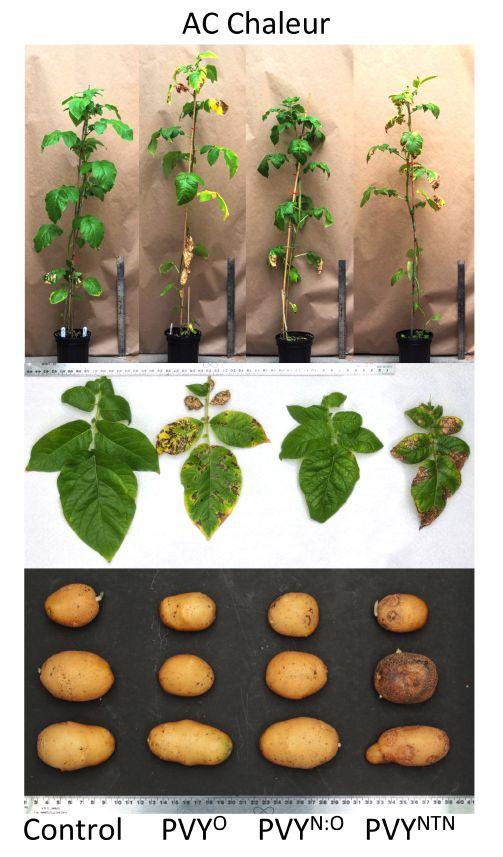
ABOVE: Pictured is a comparison of symptoms expressed by three PVY strains on AC Chaleur potato plants that were grown in a greenhouse from disease-free plantlets. Six weeks after artificial inoculation of plants with the PVYO, PVYN:O/wi and PVYNTN strains, the infected plants exhibit variable symptoms compared to the virus-free “control” plant.
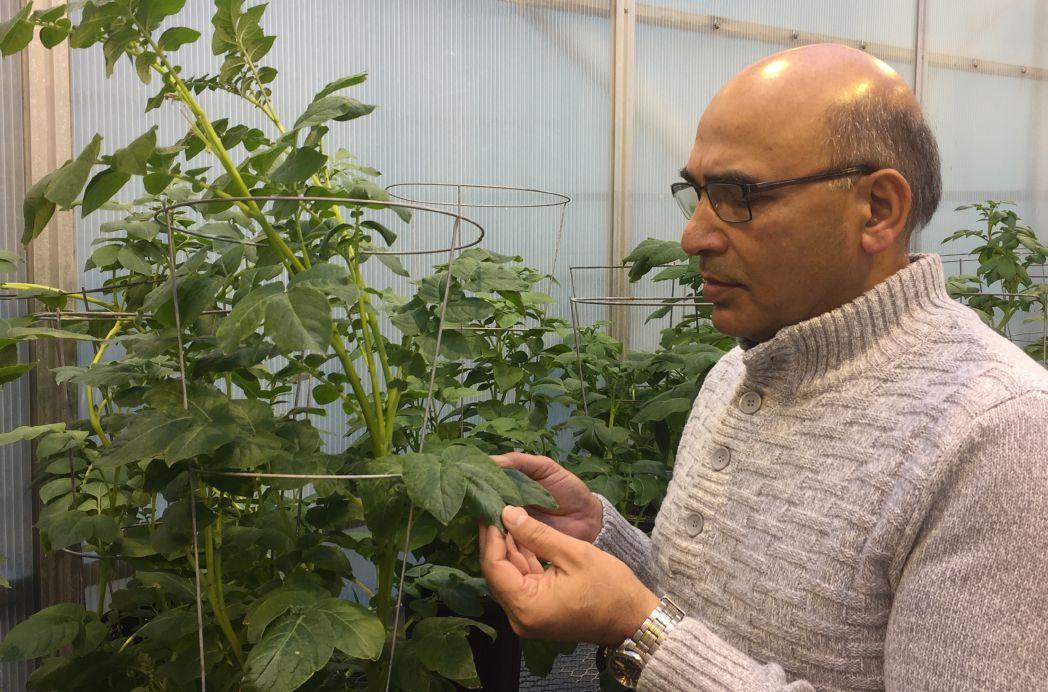
foliar symptoms, he says, but in three susceptible varieties (Yukon Gold, AC Chaleur and Envol) it can cause necrotic tuber lesions or rings that can make the entire crop unmarketable.
Singh notes that the PVYNTN and PVYN:O/Wi strains exhibit distinct and typically cryptic symptoms compared to PVYO, which can make them more difficult to identify in the field. As a result, rogueing operations to manually remove infected plants from the field during the growing season are often less successful, he says, as are traditional seed certification techniques such as visual inspection during the crop growing period and winter grow-out of seed samples.
Best management practices
The study does include a number of recommendations for helping seed potato growers fight PVY by targeting the insects that carry the disease. According to Singh, PVY is transmitted by more than 50 aphid species and an abundance of aphids in potato fields has been shown to significantly increase PVY spread.
“Since the disease is spread by so many species of aphid, it’s very hard to manage,” Singh says.
The study’s best management practices for controlling diseasecarrying aphids involve a combination of mineral oil and insecticide spraying that acts to minimize the on-farm spread of PVY in seed potato operations.
Under the PVY research program, different spray programs were tested through field experiments that took place in New Brunswick and Manitoba from 2014 to 2016. Results of the trials were published in the American Journal of Potato Research in 2017, and they’ve also been widely presented at numerous potato conferences and grower meetings in Canada and the U.S.
“Our trials were conducted … in two very different potato growing regions of Canada, yet the results and recommendations from them are consistent and thus should be generally applicable
across the country,” Singh says.
According to Singh, frequent mineral oil spraying that starts early and continues season long, supplemented often with insecticides in a simultaneous spray, has shown the greatest potential.
“We recommend that as soon as you can see green leaves coming out of the ground, you should start protecting those plants,” Singh says. He adds if growers wait until later to begin mineral oil or insecticide applications, the disease may already be present and spreading in the field and their PVY management practices won’t be as effective.
Singh notes processing potato operations aren’t permitted to spray mineral oil, so the best defence for them is to plant certified seed that’s either PVY-free or has extremely low levels.
“The first strategy is starting with clean seed,” he says. “If there is no PVY, there is no inoculum that can spread the disease, even if you have a lot of aphids.”
Another recommendation is for growers to start rogueing early, especially in tractor rows subject to mechanical PVY transmission, in order to remove sources of inoculum and prevent in-field PVY spread. Singh adds early top killing of potato plants will help prevent late season disease spread.
Crop rotation, border crops and management of volunteers are also recommended as best management practices for controlling PVY.
According to Singh, the PVY research project has already had a significant impact within the potato industry. “It’s been very successful,” he says.
Singh notes that the mineral oil or insecticide approach advocated by the study has not only resulted in a sharp reduction in PVY in New Brunswick but has also helped producers in other provinces get a much better grip on the disease.
“I would say in general, PVY is in a declining trend,” Singh says.
Mathuresh Singh, director of Agricultural Certification Services (ACS) in Fredericton, observes PVY expression in potato plants grown from secondary infected tubers in the ACS lab.
WEED CONTROL GOES DIGITAL
Researchers are combining new digital tools, computer technologies and machine learning to bring cost-effective weed control solutions to the field.
by Donna Fleury
Although still in the early stages, this weed control solution is being designed as an advanced spot-spraying precision technology that will help farmers reduce input costs and add another management tool to their integrated management systems.
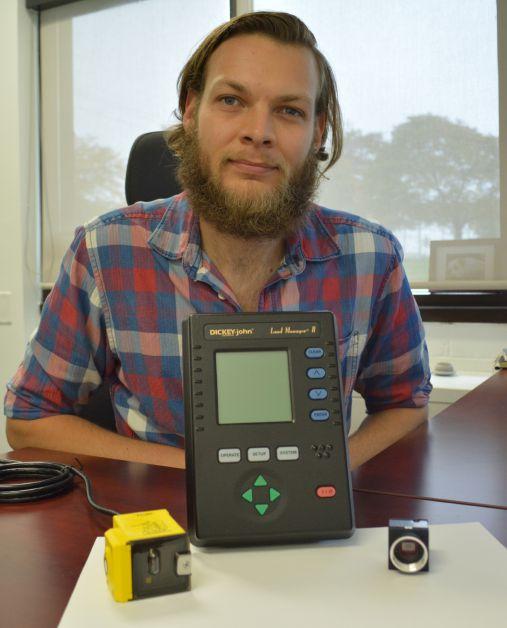
“We are developing a high-tech ground-based sensor technology as another cost-effective precision agriculture tool for weed control in potatoes and other crops,” says Andrew McKenzie-Gopsill, weed scientist with Agriculture and Agri-Food Canada (AAFC) in Charlottetown, P.E.I. “There has been lots of work done with drones to develop prescription-based maps that are fed into the control system of the sprayer to only spray where there are weeds based on the map. However, these systems take a lot of preprocessing power and a lot of work before actually going out to spray. Our goal is to remove the need for all of that pre-processing work and develop ground-based sensors that can recognize crop plants, bare soil patches and weeds, and then selectively apply herbicides to only the weeds in real time.”
This five-year project was initiated in 2017 and is still in the early stages of data collection, including many crop images at different stages – from early season through to canopy closure. McKenzie-Gopsill is collaborating with engineer Aitazaz Farooque at the University of Prince Edward Island to use digital cameras and computer algorithms to train sensors to identify crops. “We are essentially using standard RGB digital images combined with algorithms and machine learning to train the machine to identify the characteristics of potato crops versus everything else,” McKenzieGopsill says. “We need to be able to balance processing speed while maintaining high enough accuracy so the machine can recognize a potato plant with three or four characteristics in the field.”
The system is being designed as simple and cost-effective as possible. The whole control system would be mounted to an existing sprayer, including a small inexpensive camera mounted above the canopy, and a mini computer to connect to the sprayer control system to control which nozzles are turned on or off. With expected reductions in input costs and no pre-processing costs, McKenzieGopsill estimates the payback should be fairly fast.
In 2018, McKenzie-Gopsill will be collecting data on potato plants. The objectives are to be able to train the machines to accurately identify a potato plant. (And ultimately, a range of crops that growers would have in their rotations.) By training the sensor to accurately identify specific crops and bare ground, it doesn’t need to know all of the different weed spectrums in different fields.

“There are challenges with getting the sensor to recognize the key crop characteristics under different light conditions or time of day or wind. Therefore, we need to collect a wide range of digital crop plant images under different conditions so the system can accurately recognize the crop plant under any typical field spraying conditions a grower might have,” McKenzie-Gopsill says. “Once we complete the data collection over the next few years, we will field test the algorithms and the complete system, and once its fully operational, it will be an easy system. Once installed, growers will be able to go into their field to spray, flick a switch and they are ready to go. When available, this technology will be another cost-effective tool to help farmers manage weeds and reduce input costs, as well as reduce the potential risk of herbicide resistance.”
ABOVE: Weed scientist Andrew McKenzie-Gopsill with digital camera, sensor and controller mechanism that can be mounted on a sprayer and tractor to read crop plant locations.




Titan Emesto. The number one performing seed-piece treatment, six years and counting.
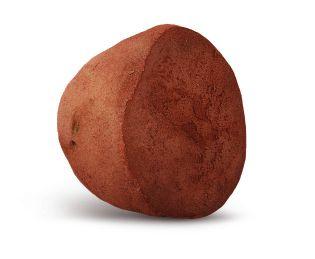
Another year, another year on top. Titan® Emesto® is the number one potato seed-piece treatment in Canada. The unique red formulation is easy to apply and easy to see. It protects against the broadest spectrum of insects –including Colorado potato beetle and aphids – plus all major seed-borne diseases, including rhizoctonia, silver scurf and fusarium, even current resistant strains. It takes a lot of con dence to grow a healthy potato crop, season after season. And we’re proud Canadian potato growers keep choosing Titan Emesto to do it.
Learn more at TitanEmesto.ca