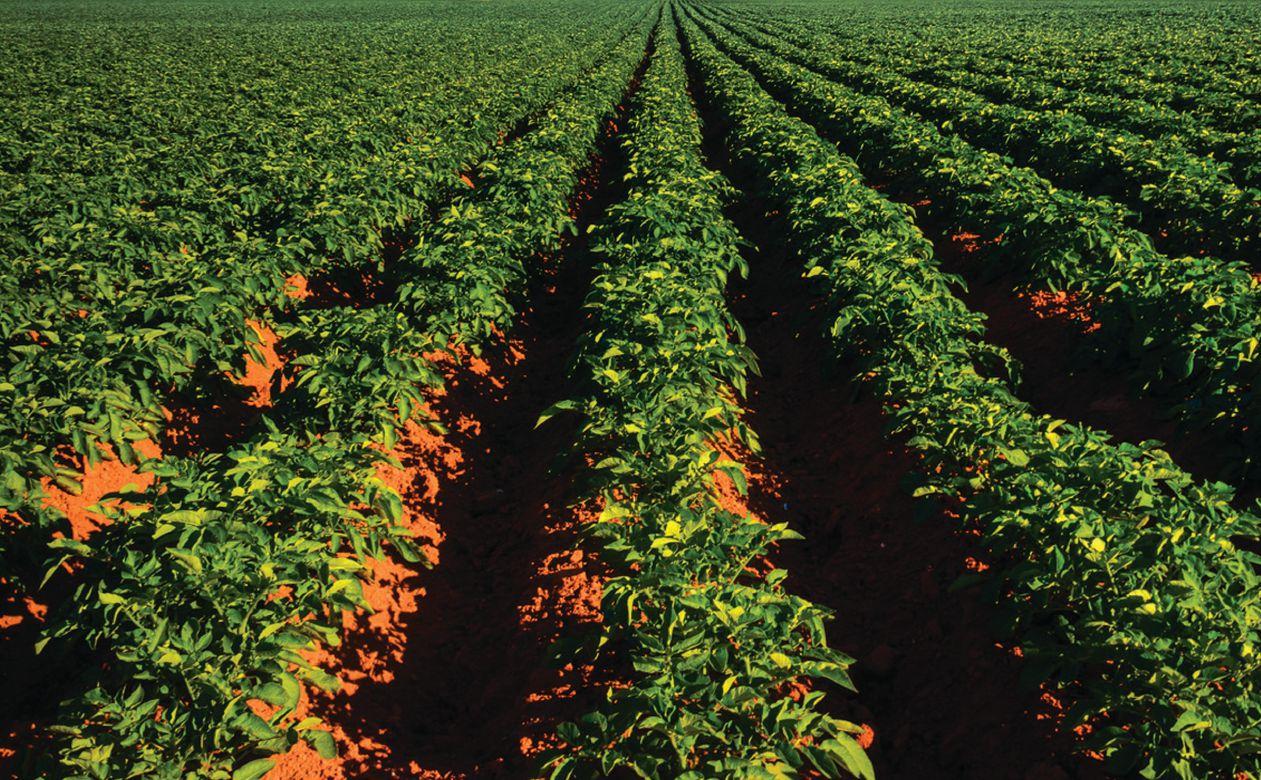
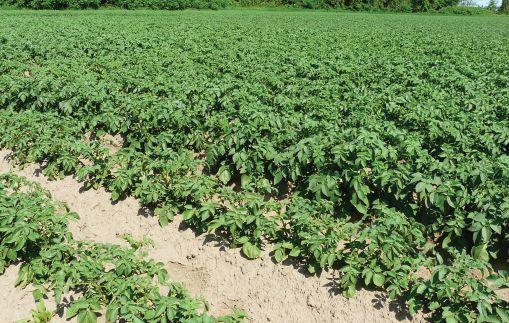
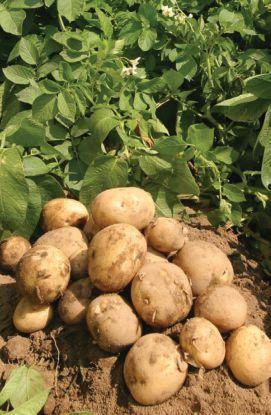
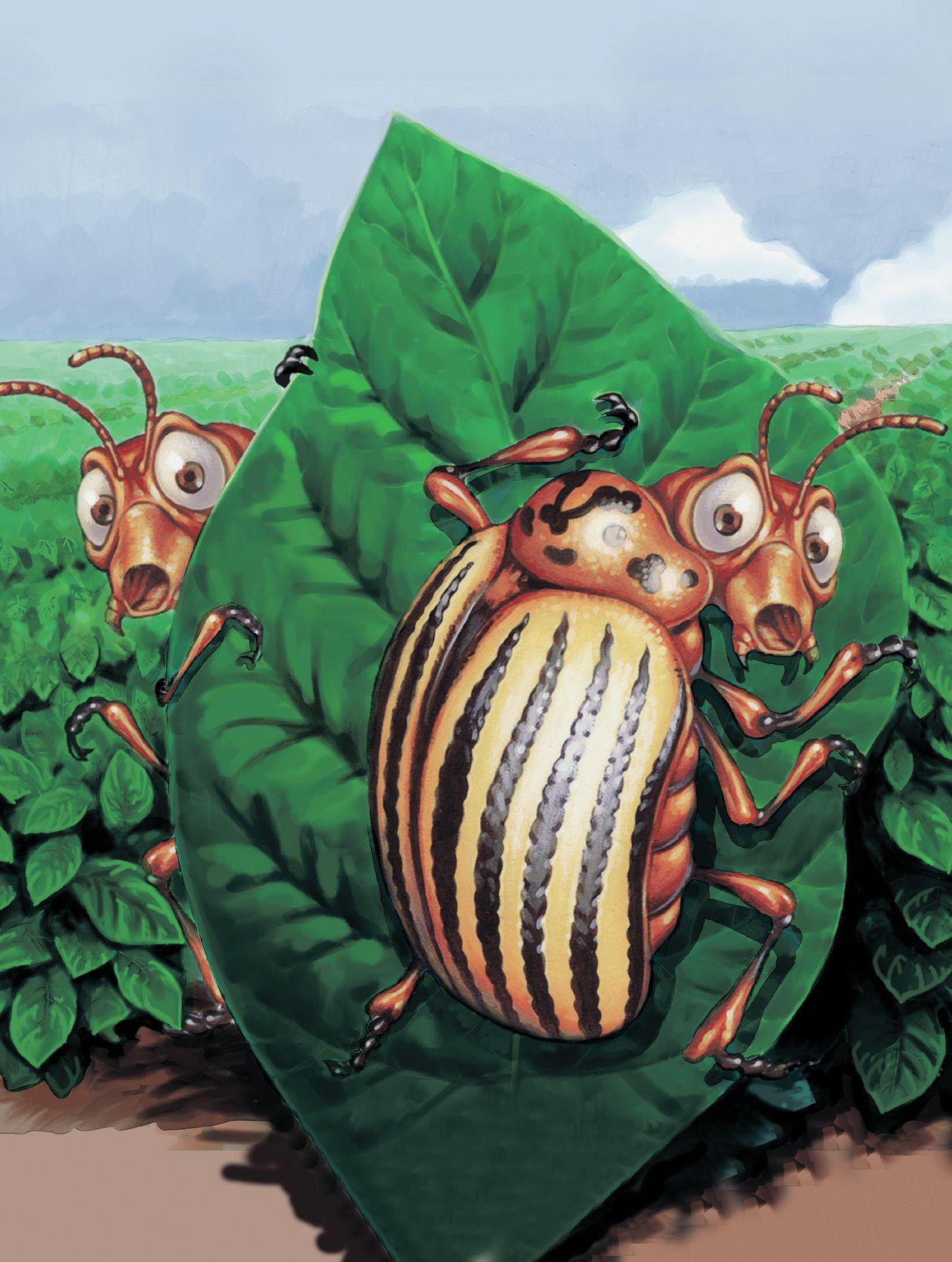
You’re proud of your potatoes, but let’s face it. No one ever looks back and wishes they’d spent more time with Colorado potato beetle and European corn borer. We get that. DuPont™ Coragen® insecticide belongs to a new class of chemistry with a novel mode of action that delivers exible, long-lasting control of key insects, so you have time for more important things. It’s also easy on bees, bene cials and the environment. For farmers who want more time and peace of mind, Coragen® is the answer.
Questions? Ask your retailer, call 1-800-667-3925 or visit coragen.dupont.ca
By Treena Hein
technology What makes chloropicrin a good pick?
By Rosalie I. Tennison
Our precious water
By Treena Hein
By Rosalie I. Tennison
business management Labour concerns in Canada’s potato fields —Part 2
By Treena Hein
Top Crop Manager is offering an early spring edition of Potatoes in Canada sponsored by DuPont Canada. This issue includes an update “Potato Pest Control Guide.” It provides comparative charts on products and the various diseases, insects and weeds they control. Readers will find numerous references to pesticide and fertility applications, methods, timing and rates. We encourage growers to check product registration status and consult provincial recommendations and product labels for complete instructions.
TOP CROP
EASTERN
rOTaTION r ESE arch u PDaTE
Long-term study in Manitoba identifies economically and environmentally sustainable rotations.
by Treena Hein
“Identifying economically and environmentally-sustainable rotations that optimize crop yield and quality while maintaining or enhancing soil quality is critical for the processing potato industry in Canada,” says ramona Mohr, a sustainable systems agronomist at agriculture and agri-Food Canada in Brandon, Manitoba.
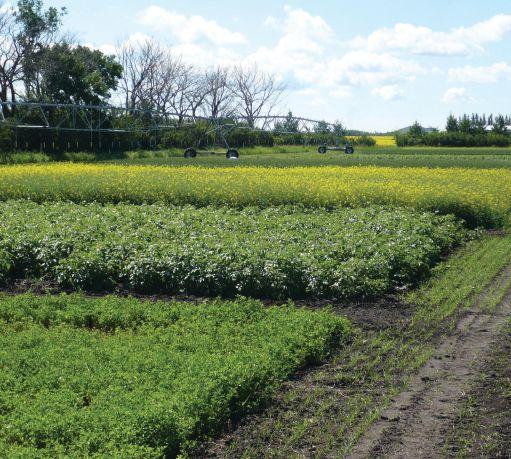
Mohr and her colleagues have been studying this for a long time. In 1998, they initiated a 14-year experiment in Carberry, Manitoba involving six crop rotation treatments (see table on page 6), with irrigation only used on the potato crops to reflect the production practices of the area.
“at the time the study was started, pressure on the limited amount of land that was under irrigation in Manitoba, and the high value of potato relative to other crops had created interest in the use of two-year rotations,” Mohr notes. “However, we also looked at three and four year rotations to reflect standard practices.”
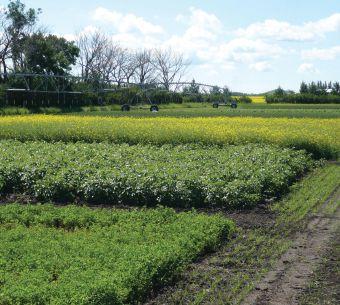
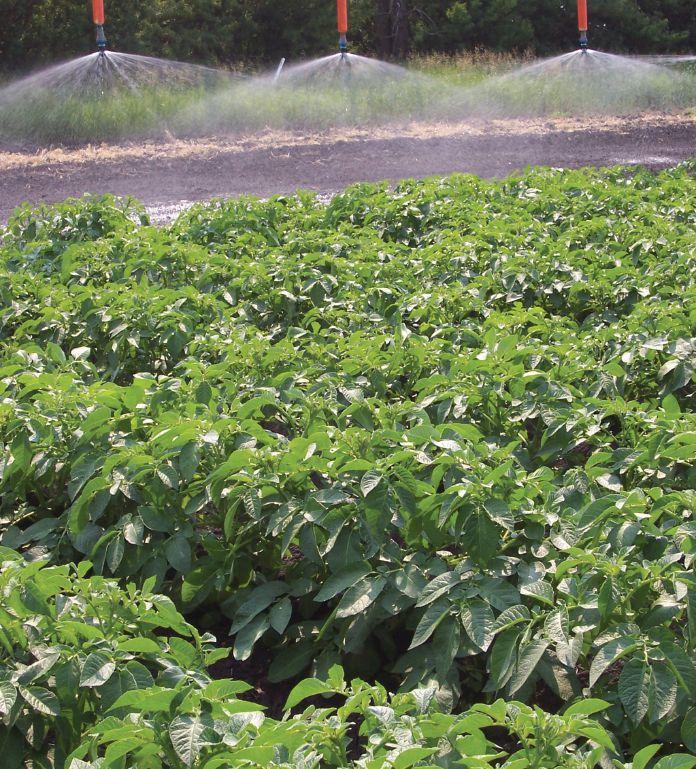
aboVe: in this study, irrigation was used only on the potato crops to reflect the production practices of the area.
Priscila Vansetti Director, Crop Protection Business DuPont Canada
Canadian growers have a well-deserved reputation as being among the world’s best producers of safe, high-quality food. at DuPont, we are proud to provide crop protection solutions that enable growers to maintain that reputation.
In recent years, as the needs of growers have changed, we at DuPont have worked to evolve our product offering and our approach to customer service. We want growers to count on DuPont to help them get the most out of their crops, from seed all the way through to harvest.
In 2012, growers had access to three new DuPont fungicides: Vertisan™, acapela™ and Fontelis™. The performance of these fungicides was impressive across the board. They delivered powerful disease control for our customers’ high-value crops and we look forward to showcasing even better results after the 2013 growing season.
Looking to the future, we are researching many other products for Canadian growers. With the development of DuPont™ Cyazypyr™ insecticide, we will be launching three new insect control products that reduce the damage caused by insects and help improve crop health and yield.
not only is DuPont investing in innovative crop solutions, we are also investing in our people so they can serve you better.
Today, with a growing need to feed the world and create new energy solutions, we see both opportunities and challenges ahead for Canadian agriculture. DuPont is ready to support the industry as it meets these challenges, with our innovative technology, customized solutions, in-field service and agronomic advice.
DuPont is pleased to work with Potatoes in Canada and we wish you every success for your 2013 growing season.
in 1998, ramona mohr, a ‘sustainable systems agronomist’ at agriculture and agri-Food canada in brandon, manitoba and her colleagues initiated a 14-year experiment in carberry, manitoba involving six crop rotation treatments.
Canola was included as a rotational crop to test if it would reduce disease potential in potato. alfalfa was included as a rotational crop in one four-year rotation to assess the impact of a perennial legume on disease incidence, weed populations and soil properties, in comparison to a four-year rotation of annual crops only. Wheat and oats were also included to reflect commonly grown cereals in the region.
“We found that in the first nine years, no single rotation or group of rotations consistently out-performed the rest, but this changed as the rotations matured,” says Mohr. “During 2002 to 2009, canola-containing rotations produced higher yields in 2002, 2004 and 2005, but not beyond 2005. From 2007 to 2009, two-year rotations produced a markedly lower yield than three and four-year rotations but then yield differences appeared to diminish.”
Between the three and four-year rotations, no statistical differences were noted although P-C-W and P-C-a-a were most often among the higher-yielding rotations.
“In general, rotation had little effect on tuber quality factors such as hollow heart, fry colour and specific gravity,” Mohr adds, “likely because factors that influence quality such as variety, nutrient management and irrigation, as well as environmental factors like temperature, were consistent among rotations within a given year.”
The presence of canola promoted some diseases (such as ‘potato early dying’ PeD wilt disease) while suppressing others such as fusarium dry rot. “It appeared that one of the Fusarium species that causes Fusarium Head Blight in wheat may also have infected potato,” notes plant pathologist Debbie McLaren.
Having a perennial alfalfa crop in the rotation appeared to increase the potential for sclerotinia, even in four-year rotations, as
Rotations used
both canola and alfalfa are sclerotinia-susceptible. In terms of weed incidence, having alfalfa in the rotation did result in an increased occurrence of alfalfa, sweetclover and medic in the other crops. Short rotations did not increase the weediness of the potato crop.
“With soil erosion, the potential for this is always higher following potato in rotation as crop residue cover is below the level required to control it,” says soil scientist alan Moulin. “We found that soil organic carbon did not change during the first seven years of the study.”
analysis of the later years is currently underway, but no additional soil organic carbon data is available at this time. “Soil microbial communities were found to differ between soil depths, among rotations, and among phases within a rotation,” adds soil microbiologist Marcia Monreal.
Higher wireworm larvae populations were measured where wheat preceded potato and in most cases, a higher percent of damaged tubers was observed in this rotation. “We found lower wireworm populations where canola had been grown prior to potato,” says Mohr. “This is likely due to the application of thiamethoxam (Helix Xtra) to canola seed and the production by canola of glucosinolate degradation products, both of which may deter wireworms and click beetles. Wireworms also have a preference for crops other than canola.”
Looking at the study from an overall economic perspective, because potatoes are a high-value crop, shorter rotations and potato yield were the biggest factors driving profit.
“The P-C rotation therefore had the highest net revenue from 1999 to 2005 because of potato value and yield, not canola,” says economist Mohammad Khakbazan. “However, after 2005, the economic performance of two-year rotations declined due to lower yields.”
P-C-W was also among the higher revenue-generating rotations, while P-C(a)-a-a and P-W-C-W tended to have lower economic returns due to the low frequency of potato in rotation. averaging across the period 1999 through 2010, there was no difference in net revenue among potato rotations, but a trend toward higher net revenue for potatoes in two-year compared to three-year and fouryear rotations. “results suggest that, despite the production risks associated with two-year rotations in the longer-term, an economic argument can be made for using two-year rotations in the shortterm due to the high value of the potato crop,” Khakbazan notes.
Disease, specifically PeD, appeared to be the main driver influencing marketable potato yield as neither weed pressure nor declining soil quality were closely associated with yield declines in the two-year rotations.
“The Potato rotation Study at Carberry was discontinued in 2011 after fourteen growing seasons,” says Mohr. “In 2012, the entire experiment was planted to soybeans, and soybean yield and quality will be measured to determine the effect of the various rotation treatments.”
Ramona Mohr, Byron Irvine, Mohammad Khakbazan, Debra McLaren, Marcia Monreal and Alan Moulin at the AAFC Brandon Research Centre in Brandon, MB; Dale Tomasiewicz and Alison Nelson at the Canada-Manitoba Crop Diversification Centre in Portage la Prairie.
P hoto courtesy of ramona mohr.
TITUS™ PRO: THE STRAIGHTEST PATH TO A CLEANER FIELD.
Introducing new DuPont™ Titus™ PRO herbicide for potatoes in Western Canada. As a convenient co-pack, Titus™ PRO brings together rimsulfuron and metribuzin to deliver exceptional post-emergent control of all kinds of grassy and broadleaf weeds. By combining two modes of action, Titus™ PRO is also a valuable resistance management tool and keeps your re-cropping options flexible. One case treats 40 acres. One try and you’re sold.
Questions? Call 1-800-667-3925 or visit cropprotection.dupont.ca.
WhaT MakES chlOrOPIcrIN a g OOD PIck?
Controlling soil-borne pathogens are easier with a century-old product.
by rosalie I. Tennison
The variety of soil pathogens keep potato growers busy mitigating their potential crop damage, but a product that has been around for nearly a century is becoming more welcome in fields. Chloropicrin has a long track record of effectiveness on many soil-borne pathogens, including verticillium wilt, scab, Colletotrichum (black dot), rhizoctonia, fusarium, and phytophthora. First used on pineapples in Hawaii, the product is making its way into Canada’s potato fields.
“Chloropicrin could be one of the more expensive inputs, but our market would not be growing in Canada if growers were not getting a benefit from using it,” observes Dr. Chad Hutchinson of Triest ag group, Inc., the north Carolina-based distributor of chloropicrin. Since its introduction to Canada in 2000, the soil fumigant has gained fans in Ontario, Quebec, and nova Scotia. It is now being tried on potatoes in Manitoba.
“This product has been around long enough that it has a proven track record,” Hutchinson adds. Chloropicrin is marketed by Triest as PicPlus, a blend of 86.5 per cent chloropicrin and a proprietary solvent that minimizes volatilization.
First identified as a scab-fighter by Ontario Ministry of agriculture, Food and rural affairs potato specialist, Dr. eugenia Banks, chloropicrin has impressed Ontario growers with how it reduces scab pressure, thereby leaving tubers much more marketable. The product is injected and packed into the row in the fall and a cover crop can be planted over it. In the spring, the cover crop is desiccated and potatoes can then be planted. If applied in the spring, potatoes should not be planted for three weeks after chloropicrin goes in the ground.
“Chloropicrin controls the organisms that limit root growth and allows for a greater root system to develop, which can more efficiently use water and withstand stress,” explains Hutchinson. “This translates into more foliage growth and improved yield.”
“There is a substantial yield increase that is related to reduced disease pressure in the field,” adds Jeff Douglas of Douglas agricultural Services Inc. in Simcoe, On. “By clearing up the scab in fields, the marketable yield increases. The growers who are using it see a significant yield advantage.”
Douglas says the cost per acre varies depending on transportation and delivery, but using chloropicrin will cost between $350 and $400 per acre. He says that the yield increases he has seen are between 80 and 100 cwt per acre over a variety of fields and the incidence of scab was reduced by an average of 30 per cent.
“Chloropicrin is the best product for soil-borne diseases in Canada and it is the only one that has action on scab,” Douglas says. There is also an environmental benefit, according to Hutchinson, and add that one pound of carbon dioxide is needed to produce one pound of chloropicrin. However, two pounds of carbon dioxide is scrubbed from the atmosphere when it is used in potatoes.
“We encourage growers to use chloropicrin in test plots on their farm initially,” he continues. “We want them to see the results and then make their own decisions based on their use of the product.”
He adds that very few growers who take this challenge decide the product is not for them.
a product that is tough on scab and is effective on a number of other soil-borne diseases, plus has a proven track record, is worth a look. additionally, when used as directed, chloropicrin does improve quality and yield.
“If growers weren’t seeing a return, they wouldn’t use it,” observes Douglas.
Photo
successful field use of chloropicrin. the bottom left two rows are part of the check plot.
Research Update.
DuPont has submitted a registration request for a new insect control product for potato crops. Studies show that this product reduces potato insect pest pressure, allowing for superior crop establishment and the opportunity for improved yields.
The new product will be called DuPont™ Benevia™ insecticide and it will be the first product to control a variety of chewing and sucking pests. Benevia™, powered by Cyazypyr™, has shown in research trials to be effective on many pest species including Group 4 neonicotinoid resistant Colorado potato beetle, European corn borer, variegated cutworm, potato flea beetle and aphids.
Research trials have demonstrated plant health benefits to crops protected with Benevia™: it controls mixed pest populations consistently, rapidly, and effectively, protecting foliage from feeding damage. Rapid feeding cessation can also reduce disease transmission of some insect-transmitted diseases, and the fast-acting protection of Benevia™ can deliver immediate cessation of feeding, protecting crops from feed damage in as little as seven minutes.
The advanced formulation of Benevia™ is optimized for superior foliar leaf penetration and spray coverage. Benevia™ moves readily into plant tissue, delivering rainfastness and improved availability to pests. It is a new mode-of-action for sucking pests, and it controls pests resistant to other modes-of-action. It is a strong fit for Integrated Pest Management programs too: Benevia™ has been shown to impact multiple life stages, preventing the population growth of prolific pests.
Benevia™ has presented moderate to very low impact on pollinators and beneficials and very low mammalian toxicity which means it is convenient to use, with excellent crop safety and a low impact on the environment.
Disease management products manufacturer/supplier (will not appear) common name
chemical group (rotate groups to manage resistance) (check label for details) resistance
important: the Potatoes in Canada Potato Pest control tables are a guide only.
is highly recommended that growers refer to local provincial guides and labels and consult with processors and packers.
3
diseases notes
rhizoctonia (stem and stolon
important: the Potatoes in Canada Potato Pest control tables are a guide only. it is highly recommended that growers refer to local provincial guides and labels.
reduces tuber blight, suppression of white mould.
may also be applied through sprinkler or pivot irrigation. tank-mix with a protectant for Late blight control.
use only as a tank-mix with a protectant fungicide. kickback - up to 72 hours.
crop re-entry restriction.
apply in a 6-8inch band directly over seed pieces in furrow.
Late blight and late blight tuber rot control.
use only as a tank mix with Dithane or bravo.
unique mode of action for early blight protection.
Post harvest for silver scurf.
famoxadone - same resistance group as strobilurins - rotate with non-strobilurins. Late blight kickback - up to 72 hours.
systemic fungicide for highly effective control of late blight.
2 s s * resistance grouping: the fungicide resistance advisory committee (frac) assigns group numbers to identify resistance grouping. m indicates multi-site activity.
insects notes
Canadian potato growers want more. at dupont, we’re doing more.
DuPont is taking potato crop protection far beyond our traditional strengths, with innovative chemistries found in new products like DuPontTM VertisanTM fungicide: the new and highly potent fungicide that provides excellent protection against early blight, grey mould and rhizoctonia. VertisanTM is a new Group 7 fungicide, making it a valuable resistance management tool. Still, this is just one of the high-performing potato product solutions coming your way from DuPont.
Here are our other trusted potato solutions designed for today’s potato farming needs:
DuPontTM Assail® insecticide: This trusted product’s systemic, translaminar and residual action gives you up to three solid weeks of control on Colorado potato beetle.
DuPontTM Coragen® insecticide: This innovative insecticide delivers extended residual control of European corn borer.
DuPontTM Curzate® fungicide: The preventative, post-infection and antisporulant activity of Curzate® make it the heart of an effective late blight management program.
DuPontTM Tanos® fungicide: Delivers superior protection against early blight and late blight, rain or shine.
DuPontTM Prism® SG herbicide: For excellent post-emergent control of quackgrass, redroot pigweed, triazine-resistant hairy nightshade, lamb’s-quarters and annual grasses, Prism® SG has you covered. For more information on DuPont potato solutions, please visit cropprotection.dupont.ca or call 1-800-667-3925.
potato pest control 2013
Weed control products (not registered in all provinces. some processors do not accept use of all products.) m anufacturer/supplier (will not appear) c hemical group Pre-plant burndown Pre-emergence burndown Pre-plant soil incorporated Post-plant soil incorporated Pre-emergence surface applied f oliar applied Desiccant
Variety cautions in some provinces * tank-mixes not registered in all provinces * tank-mixes not registered in all provinces aim ec fmc/nufarm 14
chateau WDg Valent canada 14
Dual ii magnum syngenta 15
excel super (not in mb) bayer cropscience 1 • glyphosate various 9 •
belleisle, tobique,/ no post-emergence on early varieties, red-skinned, atlantic, eramosa Linuron(7)
notes: *conditions apply: check provincial guides or product labels for details and specific weed control ratings. some provincial guides include control ratings not shown. some tank-mixes may not be registered in all provinces: additive effects and antagonism may also occur. some products and tank-mixes are only recommended for certain varieties. Various formulations may be available and additional application rates may be recommended. ** Dandelion not on label for some glyphosates. some potato processors do not approve use of some products.
Dual ii magnum(15), Linuron(7),
grassy weeds Volunteers broadleaf weeds
perennial weeds b arnyard grass f oxtail, green f oxtail, yellow Wild oats Vol. barley Vol. corn Vol. flax Vol. canola/mustard Vol. sunflowers Vol. wheat b uckwheat, wild c atch fly, night flowering c hickweed c leavers c ocklebur f lixweed h empnettle k ochia Lady’s thumb Lamb’s quarters m allow, round-leaved m ustard, wild n ightshades Pigweed, red root Pigweed, prostrate Purslane r agweed r ussian thistle s hepherd’s purse s mart weed, annual s tinkweed Dandelion Quackgrass s owthistle,perennial t histle, c anada Warnings aim ec herbicide can be applied only one time per growing season.
•
s
•
•
•
•
s
•
•
minimum of 5 cm soil must be covering the vegetative portion of the potato plant at time of application. requires irrigation to ensure activation prior to emergence. Do not apply at or post emerge.
1 hour rainfast.
s not on emerged potatoes in evening/cloudy/stressed.
Low rate on sandy soils.
80 days to harvest.
• apply before potatoes flower/30 days to harvest. Do not apply during periods of extreme drought or excessive moisture. •
s
Post
•
• control important: the Potatoes in Canada Potato Pest control tables are a guide only. it is highly recommended that growers refer to local provincial guides and labels and consult with processors and packers. s suppression only
not on muck soils/total applied restriction.
**not triazine-resistant lamb’s quarters.
s no row cultivation until 5 days after application/90 days to harvest.
seed piece treatments
manufacturer/ supplier (will not appear) common name chemical group application rate (grams/50kg seed) aphid colorado
actara 240sc syngenta thiamethoxam thianicontinyl up to 24.4 mL/100kg
important: the Potatoes in Canada Potato Pest control tables are a guide only. it is highly recommended that growers refer to local provincial guides and labels and consult with processors and packers.
disease notes
black scurf fusarium (dry rot/ seed piece decay)
rhizoctonia (stem and stolon canker)
seed-borne common scab silver scurf Verticillium wilt
important: the Potatoes in Canada Potato Pest control tables are a guide only. it is highly recommended that growers refer to local provincial guides and labels. refer to label product rates specific to seeding rates.
for disease control add treatment following application of admire 240. for disease control add treatment following application of alias 240.
s • • • a co-pack of actara 240sc and maxim D, controls races of fusarium spp. Determined to be resistant to fludioxonil and or thiophanatemethyl.
for disease control add treatment following application of grapple.
• Plant as soon as possible after treatment. use second application for cut seed.
s • • • treat cut pieces soon after cutting. s=suppression only.
• Plant as soon as possible after treatment. use second application for cut seed.
• • • treat cut pieces within six hours. Do not use after mertect used in storage. for wireworm suppression and control of above-ground pests, use higher rate.
• • • for wireworm suppression and extended residual control of above-ground pests, use higher rate of titan.
• Plant as soon as possible after treatment. use second application for cut seed.
• • • apply as a mist on potatoes going into storage.
Our Pr E c IOu S WaTE r
How scientists are using cutting-edge technology to better understand groundwater systems in New Brunswick.
by Treena Hein
Farming potatoes or any other crop is about understanding and managing many important elements in a sustainable way. Soil, crop protection products, plant genetics, fertilizer, weather, water – farming is about using the latest science and technologies relating to these factors to make sure we have a great harvest, while at the same time doing our best to protect the environment.
Understanding water quality issues in the Black Brook Watershed, in the heart of the potato belt in northern new Brunswick, is the work of Dr. Serban Danielescu, a hydrologist based at the aaFC’s Potato research Centre (PrC) in Fredericton who has a joint appointment with environment Canada (eC) and agriculture and agri-Food Canada (aaFC). His quest to protect water quality in agricultural areas while helping farmers stay productive is part of a long-term collaboration between aaFC and eC, one that brings together leading researchers from inside and outside government.
The team includes PrC colleague and fellow hydrologist Sheng Li, and others from the University of new Brunswick (UnB), the eastern Canada Soil and Water Conservation Centre, nova Scotia
agricultural College, and the new Brunswick government. “We are aiming to provide the best possible tools for decision-makers, including farmers, on which practices can be used to best protect water quality,” Danielescu says.
Collaboration between the various organizations involved in water research is common in Canada. “It provides significant advantages by leveraging resources and building on common needs,” he says. “It also helps secure the right technical support and scientific expertise.” Interdisciplinary teams are also best, because they are able to tackle the complexity of ecological systems and the multifaceted nature of environmental issues, adds Danielescu.
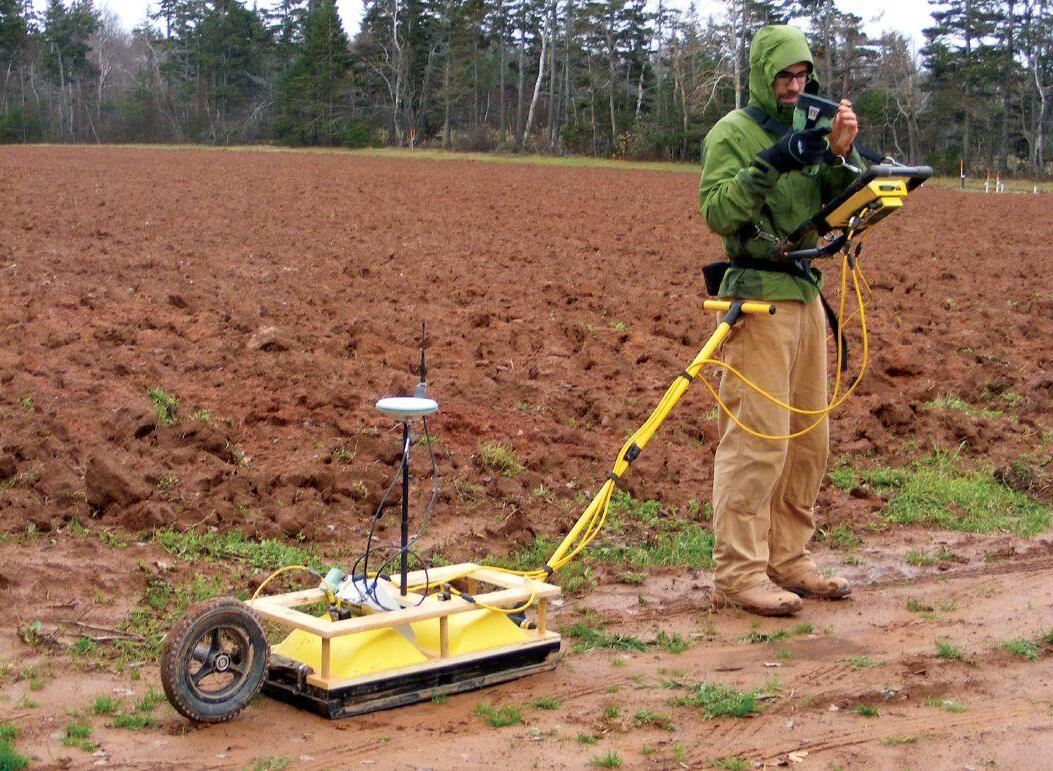
To gather information on soil, thickness of subsurface layers, bedrock configuration and depth to the water table, Danielescu is using ground-penetrating radar (gPr), a non-invasive, relatively inexpensive method. “Integrating gPr into this groundwater research is being achieved through collaboration with Dr. Karl
aboVe: dr. serban danielescu conducts a ground penetrating radar survey to measure water quality in new brunswick’s potato belt.
When it comes to protecting your high-value potato crop, you shouldn’t settle for anything but the best. Vertisan™ – a powerful new fungicide for managing rhizoctonia and early blight in potato crops. Start your crop strong with an effective in-furrow application of Vertisan to guard against early rhizoctonia infections which can often lead to lower potato yield and quality.
Vertisan™ is also a powerful new tool against sclerotinia and other yield robbing diseases in canola, pulses and sunflowers. No matter what the season brings, you can count on Vertisan™ to deliver high yielding, high quality crops.
Questions? Ask your retailer, call 1-800-667-3925 or visit vertisan.dupont.ca.
computer modelling and more
In the first step of creating a model, the spatial aspects are defined using topographical and geological information from gPS surveys, satellite imagery and maps. Once defined, the model domain is then filled with site-specific data that can come from site surveys (for example, physical properties of the bedrock such as porosity and permeability), monitoring (for example dynamics of groundwater levels, weather conditions) and sampling (nitrogen concentrations in groundwater, for example). “In the next step,” Danielescu explains, “the model is calibrated to make sure the data it produces is acceptably close to the actual site conditions.” This model can then be used in different scenarios – for example, what happens if fertilizer use is reduced, or rain patterns change?
Other than ground-penetrating radar and computer models, Danielescu also employs other technologies. “I use pressure transducers for continuous monitoring of groundwater levels, and dielectric sensors for measuring electrical conductivity, water content and temperature above the water table,” he says. “I also use things like borehole camera video surveys for investigating particular features in the substrate and wells.”
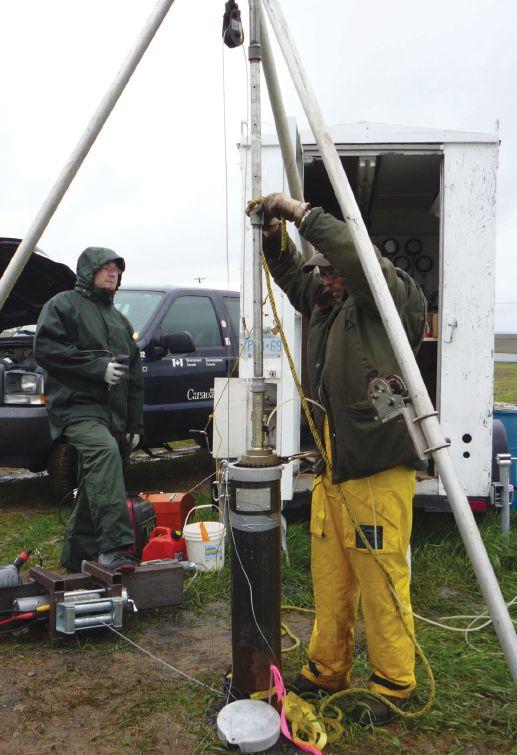
He and his team also collect water and bedrock core samples using conventional equipment, such as specialized submersible pumps and drilling rigs with diamond coring capabilities, and then analyze the samples for chemical composition and physical properties using specialized instruments and other resources.
Butler from the Department of earth Sciences of UnB (Fredericton), who is an expert in using and developing geophysical methods for engineering, environmental and exploration applications,” Danielescu explains.
The information is used to set parameters and develop computer models of groundwater movement – a large factor in water quality. The models produce representations of the groundwater flow and transport of chemicals in the subsurface environment. “Models can be developed at different scales and have various levels of complexity, depending on your research objectives,” Danielescu notes. They vary in approach and can represent the physical environment into one, two or three dimensions, and can extend from one site (such as one farm field) up to the scale of a watershed.
“In my research, the models are important tools for looking into the interactions between groundwater and surface water, and for understanding the impacts of various contaminants - for example, excess nitrogen leaching from agricultural operations on aquatic ecosystems,” he explains. “Some of the models I use allow for the tracking of flow amounts and the fate of contaminants from the moment the precipitation reaches the ground and infiltrates in the soil, until the groundwater is discharged to streams and further reaches coastal waters.”
While Danielescu uses complex programs available for modelling groundwater flow and transport, he also built his own more simplistic models that can be developed and used with the capabilities of a standard office workstation and minimum software requirements.
Other methods not traditionally used for groundwater research also sometimes need to be used. “For example, naturally-occurring stable isotopes of nitrogen (n) and oxygen from nitrate present in water are used to detect where n in groundwater came from, based on the fact that various n-containing compounds have specific signatures,” Danielescu explains. “nitrogen-based fertilizers have a different signature than organic wastes. Similarly, naturallyoccurring hydrogen and oxygen isotopes of water are used to identify whether the water we have sampled is from rainfall, subsurface flow or some other source.”
Danielescu has also used a novel approach centred on airborne Thermal Infrared radiometry for quantifying groundwater discharge into coastal areas. It involves using an airplane-mounted infrared camera to map the contrast between cold groundwater water plumes mixing into warmer estuarine water.
Danielescu’s research into surface water interactions and the sources and fates of nutrients in groundwater addresses both aaFC and eC priorities – enhancing the environmental performance of the Canadian agricultural system, and preserving and enhancing the quality of our environment, specifically aquatic ecosystems.
“Once my research has been published in reports or peerreviewed journals,” he adds, “the results can be used by various departments and organizations to adapt current regulations and policies, change environmental management practices, identify science gaps or establish new research directions.”
In terms of how research such as his impacts the typical potato farmer, Danielescu recognizes that individual farmers face “the difficult challenge of balancing out long-term economic and environmental sustainability versus immediate net returns” in their use of crop protection products, fertilizer and so on.
“To this effect, farmers must build up a tremendous amount of information ranging from market pressure and climate variability to rock solid science,” he says. “as scientists we only hold a piece of the puzzle.”
dr. serban danielescu and a colleague conduct hydraulic testing in new brunswick.
gENE Pr ESE rvaTION f Or
T h E fu T ur E
The Potato Gene Resources Repository has a new look.
by rosalie I. Tennison
Often in the background of many improvements in potato breeding in Canada, the Potato gene resources repository in Fredericton, nB, is now in a better position to assist breeders and researchers thanks to a new space that opened in 2012. The repository is integral to preserving potato germplasm and supplying potato materials to those that request them. Following the large renovation, the repository now has a better workspace and storage that is more secure.
“The importance of the repository is to preserve and protect biodiversity,” explains Dr. Benoit Bizimungu, curator of the repository. “We may need some of this material in the future and it’s important to maintain a broad genetic base to meet that need. Without genetic resources, we could not respond to the needs of society in terms of food demands and sustainable production.”
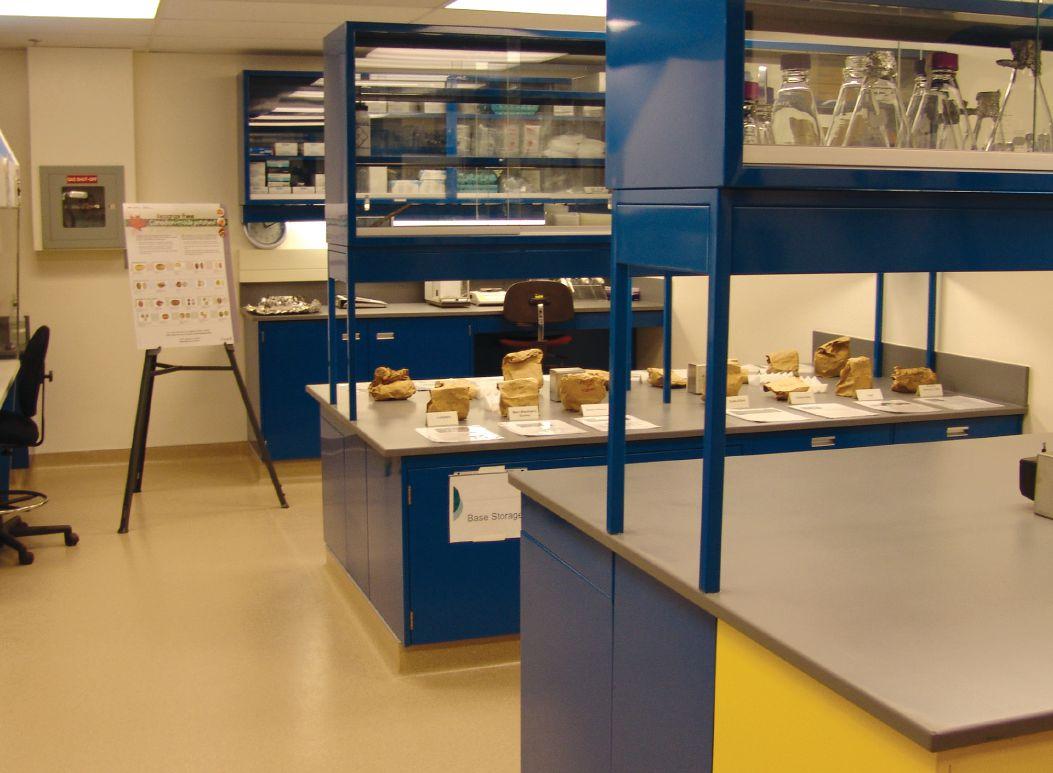
The new space includes a secure room to house controlled environment cabinets, a media preparation and sterile transfer
room and a glassware preparation room. all the areas are designed to meet international standards for security of germplasm. The repository provides germplasm to researchers around the world and there needs to be assurances that all the material is free of disease before conservation and distribution.
“Our major focus is Canadian diversity that can be used in Canadian breeding because it is adapted to the Canadian climate or has attributes with significant economic or environmental impact for Canada,” Dr. Bizimungu continues. “Some of the older varieties we have in the collection tolerate drought stress better and we may need to go back to this material for breeding if climate change continues. We also have material from South america that grows well under dry conditions.”
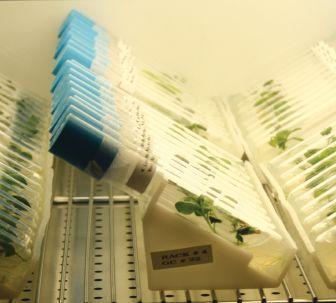
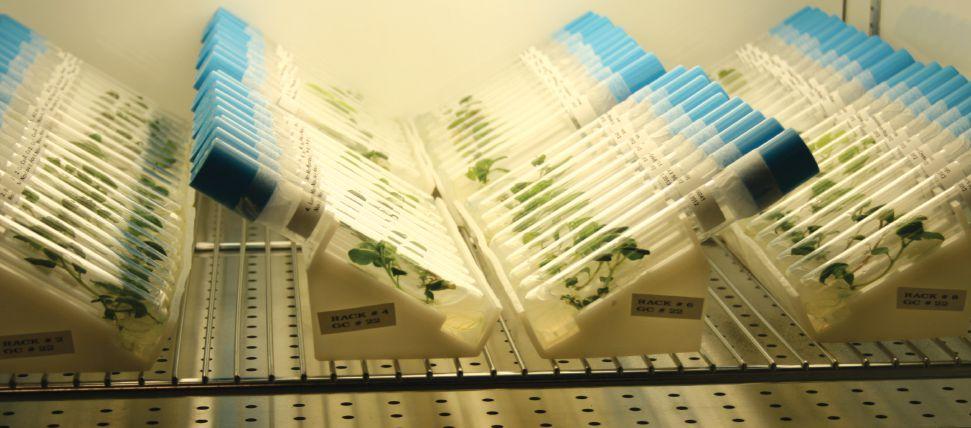
aboVe: the plant tissue transfer room, which is part of the new research space in the potato gene repository.
continued on page 26
Photo
l ab Our c ONc E r NS IN POTaTO f IE l DS – ParT 2
Examining what higher Canadian unemployment rates may mean.
by Treena Hein
In the last issue, Potatoes in Canada examined the changing landscape of migrant worker access in Canada. We looked at the implications of farmers in Canada can now draw workers from more countries, differences between migrant worker programs, and issues surrounding the debate over employer-specific versus sector-specific work permits. In Part 2, we’ll now look at factors that will likely to affect migrant worker availability, as well as some youth and migrant labour concerns that surfaced in alberta in 2012.
although high unemployment caused by the ongoing recession may mean that more Canadians are open to taking labour jobs on potato farms, the Canadian government is making plans to ensure that happens. The government announced in april 2012 that preparations are being made to link the federal employment Insurance program to the Temporary Foreign Worker program, which could mean employment insurance benefits could be restricted or denied to people in areas where foreign workers have been hired in the past, thereby encouraging Canadians to take the jobs. In addition, it could mean that employers in these areas could be denied access to foreign workers. response from agricultural employers across the country has been mixed, as the thought of hiring Canadians to take jobs under duress seems rife with difficulty to some. The United Potato growers of Canada (UPga), Potato growers of alberta (Pga) or the Ontario Potato Board (OPB) all refused to comment.
Skilled labourers are a different matter for government and various industries. Those with skills usually seek to become a permanent resident of Canada instead of applying as temporary workers – which tens of thousands do so annually. The huge number of applications has led to a seven-year processing backlog, and Citizenship and Immigration Canada has dealt with this by destroying applications from over 280,000 people. The $130 million in fees paid by applicants with unopened files is being refunded and they will soon be able to re-apply under new criteria. However, those who had files that were just about to be processed are upset, and have launched a legal challenge to try and avoid having to re-apply.
The federal government is also making other changes with regard to immigrant workers. The Provincial and Territorial nominee programs will be expanded, allowing provincial/ territorial governments to go through current applications and highlight those that match their needs. In addition, the creations of the Canada experience Class will mean that the best and brightest foreign students and skilled workers who already have
experience in Canada will no longer have to leave the country in order to apply for permanent residency. Lastly, the federal government will make an announcement in January 2013 regarding changes to the immigration point system.
young workers in alberta’s potato industry
During the summer of 2012, concerns surfaced over the use of youth on alberta potato farms. David Swann, a former alberta government Opposition Leader and a current Liberal ML a, asked Frito Lay Canada to consider turning away alberta potatoes until the province tightens laws pertaining to on-farm child labour and farm labour in general. In an august report in the national Post newspaper, Swann said he decided to focus on the potato industry because it is relatively common to see children as young as eight working on conveyor belts to grade potatoes. at the same time that he supports families having the freedom to do what they want with their children, he says he only wants to ensure health and safety guidelines are applied to all workers on farms –recognizing that employees sometimes have to do backbreaking work.
alberta is unique in not having child labour laws apply to farms and having substantially less regulation of agriculture labour practices than other provinces. The United Food and Commercial Workers International Union of Canada (UFCW, based in Toronto and formed in 1979) declares on its website: “alberta’s most dangerous industry continue to be excluded from the protections of the Occupational Health and Safety act; from the right to refuse unsafe work, and from coverage under the Workers’ Compensation act if they are injured or killed. Why must workers in alberta agriculture suffer from a system that is wrong, deadly and discriminatory?”
eric Musekamp, president and founder of the Farmworkers Union of alberta (FUa), is a strong supporter of legislative change. On its Facebook page, the FUa states that it “In alberta, there are…no child labour standards. Paid farm workers in alberta are excluded from all labour legislation – employment standards, labour relations, occupational health & safety, Workers’ Compensation Board. This means they are not given even the most basic rights held by most workers. They cannot legally unionize, and are not even guaranteed the provincial minimum wage. We are talking about workers on industrial operations, not family farms.”
The alberta Federation Labour is also among those in support of creating legislation to protect provincial farm workers. In
august 2012, the editors of the Lethbridge Herald newspaper also came forward in support in an editorial. Over august and September, the provincial government was grilled in the legislative assembly several times and stated that the issues are being studied.
Pga did not respond to questions about how many children under 16 may be working on alberta potato farms, how much of the use of young workers might be due to oil patch labour demand, or what might have been the effect on industry of Swann’s call for Frito Lay to temporarily boycott aB potatoes.
Pga did respond to questions, however, on whether or not provincial agricultural labour regulations need to be tightened and how many complaints there have been concerning migrant labourers. Pga executive Director Helmut Leili says, “The
g ENE Pr ESE rvaTION
alberta potato growers have always and will continue to work with the alberta government on issues relating to labour. The government has not now or any time in the past, indicated to us that the practices we are using are non-compliant with good agricultural practices. We have always worked constructively with government if or when issues arise that need addressing.”
He adds: “The migrant worker program has worked very well for workers working for alberta potato growers. as a matter of fact, the programs have high levels of oversight, not only by the government of alberta but also the governments of Canada and the countries where migrant workers arrive. There is no story in alberta. We do behave with both high levels of integrity and moral standards that are beyond reproach for the vast majority of our growers.”
continued From page 24
The value of the repository lies in its hundreds of potato varieties both old and new and from other parts of the world. researchers and breeders can access the collection and use the material in their research. Without the repository, research would be much more difficult as required materials would have to be sourced elsewhere – if they still exist. The repository is linked to a network of other gene banks around the world and, if needed, Canadian researchers can access the network through the Canadian repository.
Dr. Bizimungu says a repository for any crop is important to ensure the genetic resources are not lost. “We don’t want to lose genes from any germplasm that may have significant economic or environmental value,” he cautions.
The repository provides in vitro plantlets and greenhouse or field tubers for breeding, research and heritage preservation. a growing interest in heritage or specialty potatoes, both for home consumption and what traits they might have that could
improve modern varieties, makes the collection particularly interesting.
“a major goal in breeding is to develop varieties that are more environmentally friendly,” adds Dr. Bizimungu. “Some accessions from South america are grown without chemical products or have natural resistance to diseases and we think we may be able to use these to improve north american varieties.” By having access to a larger collection of genetic resources through the repository, researchers and breeders can more easily respond to potato production and environmental challenges.
“The new space is great! It allows for potato gene resources work to be done in a more efficient and secure manner,”
Dr. Bizimungu says. He adds that the added security meets international standards so the repository can continue its important work to preserve potato germplasm which, someday, could improve the genetics of potatoes growing in farmer’s fields.
aboVe: in-Vitro plantlets of stored potato accessions in the potato gene repository.
Photo courtesy of Potato g ene
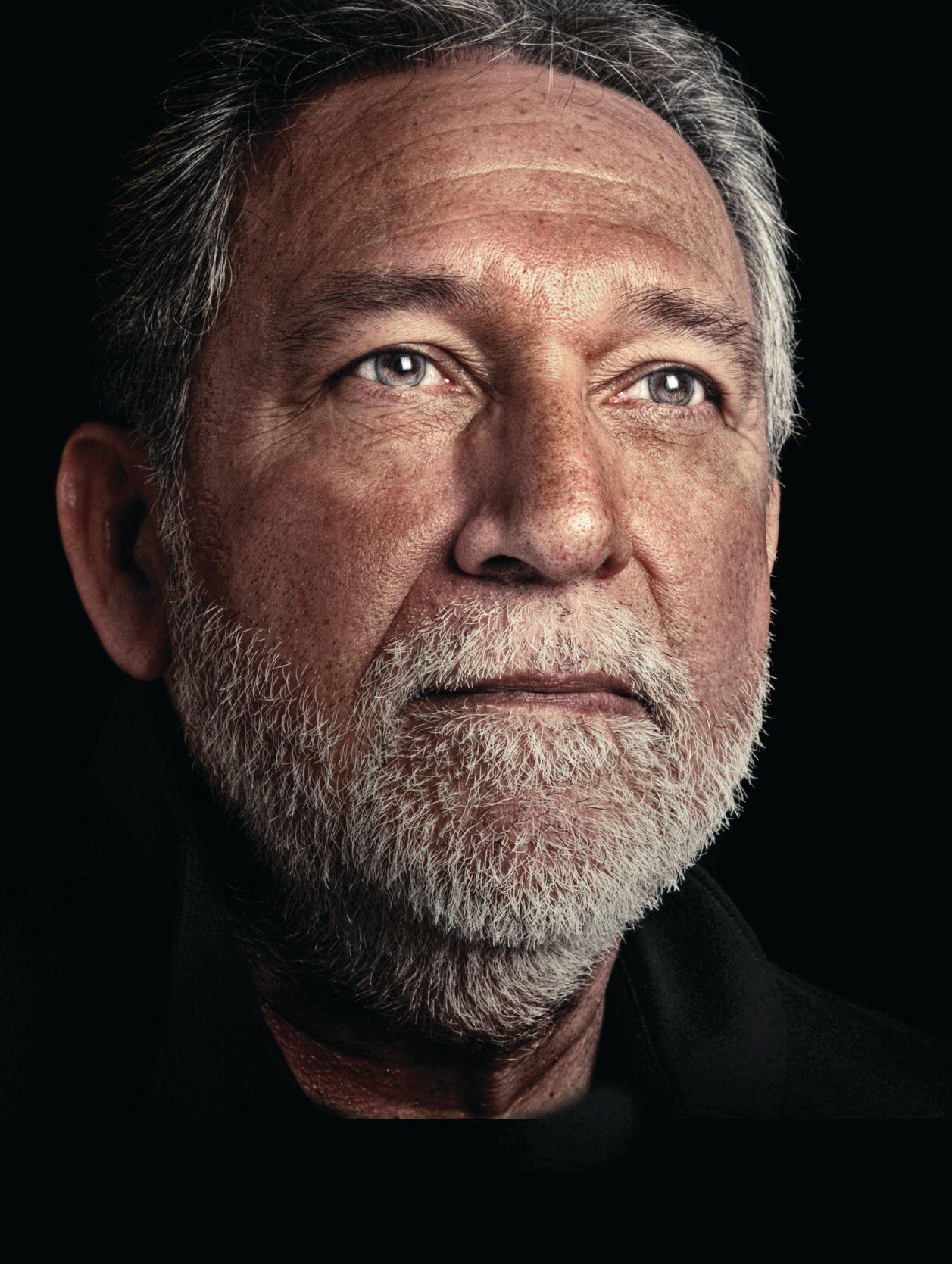
As a potato grower, you can track your career by how long and how well you’ve contended with costly diseases like late blight. Fortunately, DuPont™ Curzate® fungicide has been with you every step of the way. With preventative, post-infection and antisporulant activity, Curzate® protects your crop like no other potato fungicide. Its unique kick-back action controls disease at the point of infection and inhibits all stages of the pathogen life cycle. Yesterday, today and tomorrow, when late blight is the problem, Curzate® is the answer. Questions? Ask your retailer, call 1-800-667-3925 or visit curzate.dupont.ca
1983. More grey hair. Bad blight season again.
2013. Focus on quality and pro t. Blight in for a rough one.
1990. More wrinkles. Blight to blame.
1982: First crow’s feet. Worried about blight.
1973: First grey hair. Bad blight season. Coincidence?
1987. High stick to the mouth. Blight eliminated in rst round.