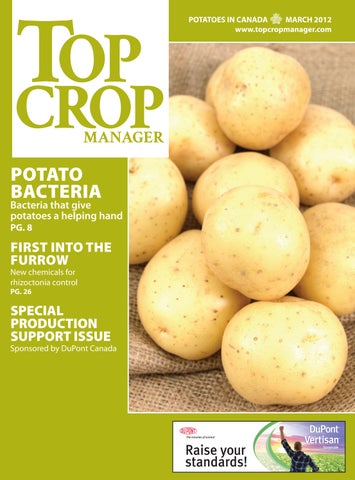
TOP CROP MANAGER
POTATO BACTERIA
Bacteria that give potatoes a helping hand PG. 8
FIRST INTO THE FURROW
New chemicals for rhizoctonia control PG. 26
SPECIAl PROdUCTION SUPPORT ISSUE Sponsored by DuPont Canada

Bacteria that give potatoes a helping hand PG. 8
FIRST INTO THE FURROW
New chemicals for rhizoctonia control PG. 26
SPECIAl PROdUCTION SUPPORT ISSUE Sponsored by DuPont Canada
Controlling insects in your valuable potato fields takes power and precision. That’s why growers trust DuPontTM Coragen® insecticide over other products. Coragen® is an advanced, new-generation insecticide with a unique mode of action for extended residual control of European corn borer and Colorado potato beetle. It even controls insect biotypes that are resistant to other products. For growers, Coragen® means exceptional control of their toughest insect problems, and who knows, it may give you a bit more time to play.


Treena Hein
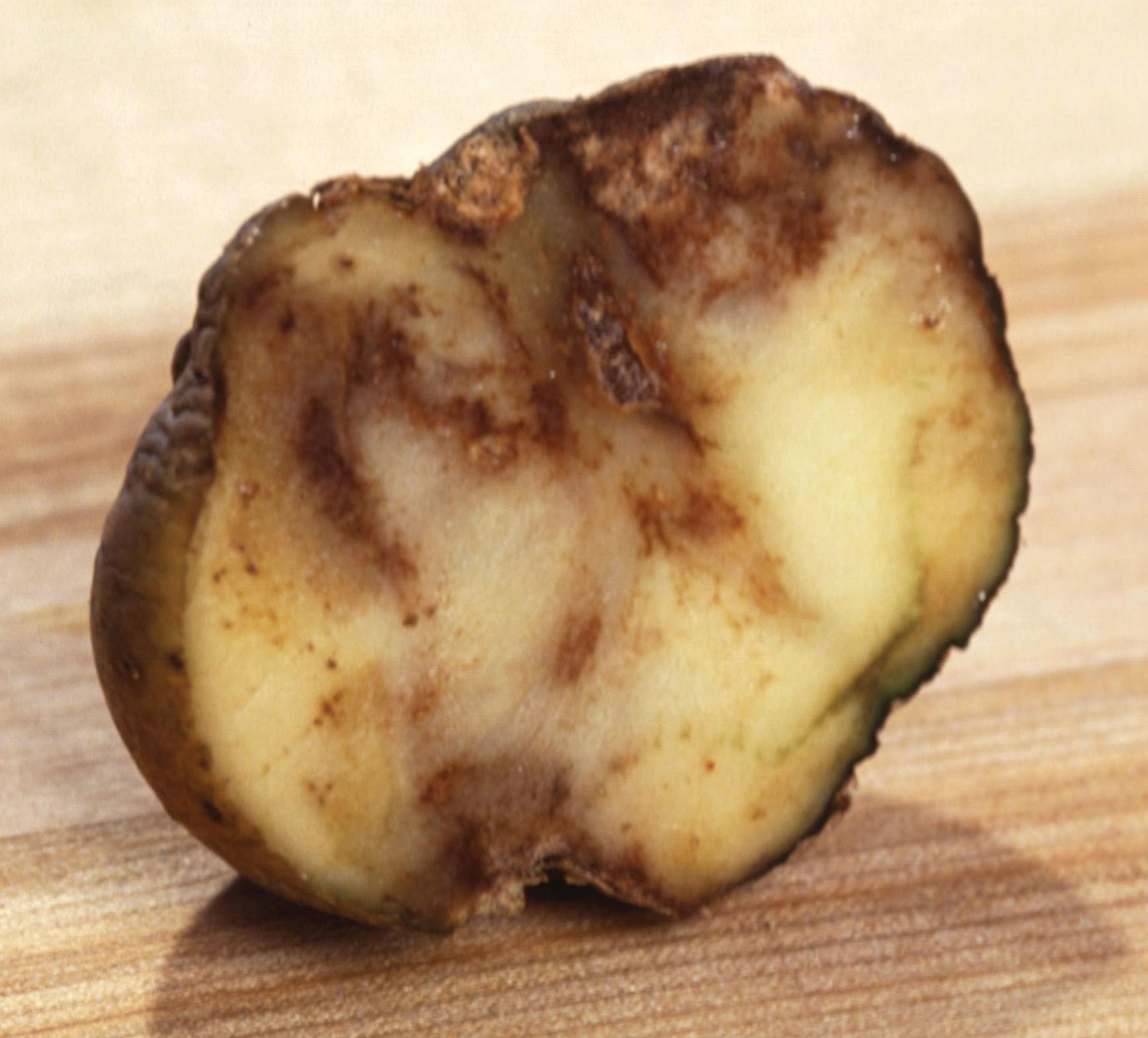
Pests and diseases
Beneficial potato bacteria
By Carolyn King
Minimizing risk in 2012
By Treena Hein
First into the furrow
By Rosalie I. Tennison
Markets and Marketing
Stepping up to the plate
By Rosalie I. Tennison
CLUBROOT-RESISTENT VARIEITES genist, se nullut min re ento vendererum eatur aute nus. Omnis restiatur atum reperum natur alique volo illest lant odi de estrumque volorero destivolut optatquid quist pedigen daerum, temquist hitateces ut quaspis quatem.
www.topcropmanager.com
Top Crop Manager is offering an early spring edition of Potatoes in Canada, sponsored by DuPont Canada. This issue includes an updated “Potato Pest Control Guide.” It provides comparative charts on products and the various diseases, insects and weeds they control. Readers will find numerous references to pesticide and fertility applications, methods, timing and rates. We encourage growers to check product registration status and consult provincial recommendations and product labels for complete instructions.
POTATOES IN CANADA MARCH 2012
EDITOR Sara Avoledo savoledo@annexweb.com
ASSOCIATE EDITOR David Manly dmanly@annexweb.com
EASTERN SALES MANAGER Steve McCabe • 519.400.0332 smccabe@annexweb.com
WESTERN SALES MANAGER Kevin Yaworsky • 403.304.9822 kyaworsky@annexweb.com
SALES ASSISTANT Mary Burnie • 519.429.5175 888-599-2228 ext. 234 mburnie@annexweb.com
PRODUCTION ARTIST Gerry Wiebe
GROUP PUBLISHER Diane Kleer dkleer@annexweb.com
PRESIDENT Michael Fredericks mfredericks@annexweb.com
PUBLICATION MAIL AGREEMENT #40065710 RETURN UNDELIVERABLE CANADIAN ADDRESSES TO CIRCULATION DEPT. P.O. Box 530, Simcoe, ON N3Y 4N5 e-mail: subscribe@topcropmanager.com Printed in Canada ISSN 1717-452X CIRCULATION e-mail: subscribe@topcropmanager.com Tel.: 866.790.6070 ext. 202 Fax: 877.624.1940 Mail: P.O. Box 530, Simcoe, ON N3Y 4N5
SUBSCRIPTION RATES Top Crop Manager West - 8 issuesFebruary, March, Mid-March, April, June, October, November and December - 1 Year - $44.25 Cdn. plus tax Top Crop Manager East - 7 issuesFebruary, March, April, August, October, November and December - 1 Year - $44.25 Cdn. plus tax Specialty
Disease testing and control should be a central focus in 2012.

priscila Vansetti Business Director Du pont Crop protection
by Treena Hein
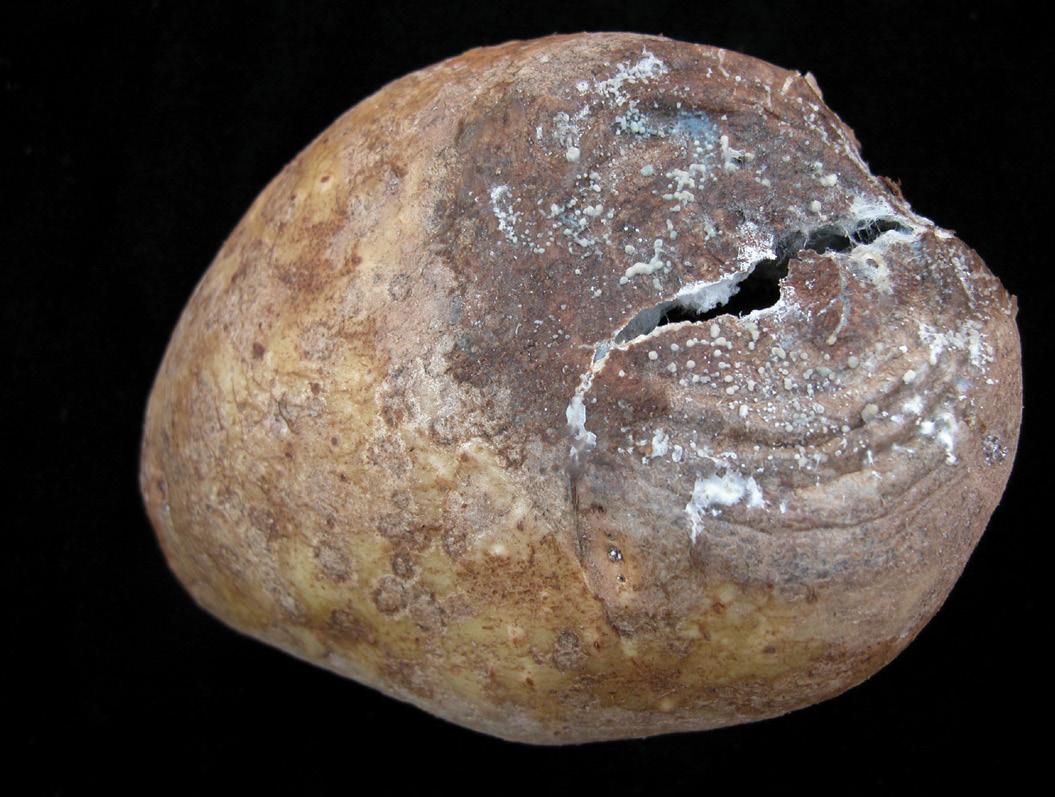
“This coming season, it is very important for growers to ensure the seed they will plant is healthy,” says eugenia Banks, a potato specialist with the ontario Ministry of agriculture, Food and rural affairs. one disease threat of note is common mosaic (pVY0). “Levels of this virus in your seed should be below eight percent and there should be no pVYntn, the tuber necrotic strain of common mosaic,” Banks says. Yukon gold is particularly susceptible to this virus, with losses that can easily reach 50 percent. Banks therefore advises all growers who plan to grow Yukon gold in 2012 to have a pVYntn test done on their Yukon gold seed. another important issue related to seed for the 2012 season is fungicide resistance that’s been detected for Fusarium sambucinum , the main Fusarium species causing dry rot. Banks says that because F. sambucinum has developed some resistance to fludioxonil (Maxim) and to thiophanate-methyl (Senator) –fungicides commonly used as seed treatments to control dry rot – losses due to the fungus causing poor potato plant emergence are increasing. To minimize dry
Canada is home to some of the world’s best producers of high-quality potatoes. Du pont is proud to be a part of this industry by providing crop production solutions that enable growers to maximize the yield and quality potential of their crop.
Du pont has an award-winning research and development pipeline and we are excited to be launching a variety of new products for Canadian growers. This year, potato growers will have access to the latest innovations with the launch of Du pont™ Vertisan™ fungicide.
Vertisan™ is a potent new fungicide powered by a brand new active ingredient that locks on tighter to fungus enzymes to stop disease. It’s a powerful step forward in fungicide technology and it will help growers produce higher-yielding, higherquality potato crops by managing diseases such as rhizoctonia and early blight.
o ther products from the Du pont portfolio, such as Du pont™ Coragen® insecticide, help maximize yield and quality by providing extended residual control of e uropean corn borer and Colorado potato beetle.
We’re pleased to help bring you this special issue of Potatoes in Canada . It’s packed with useful information to help you produce a better crop and maintain your spot as one of the best producers of potatoes in the world.
We will continue to collaborate with you, our customers, to anticipate your needs, provide answers that contribute to long-term prosperity and help create a sustainable global food supply. p lease contact your local Du pont representative or visit our new website at cropprotection.dupont.ca to learn more about our crop protection solutions.
I wish you all the best in the coming growing season.
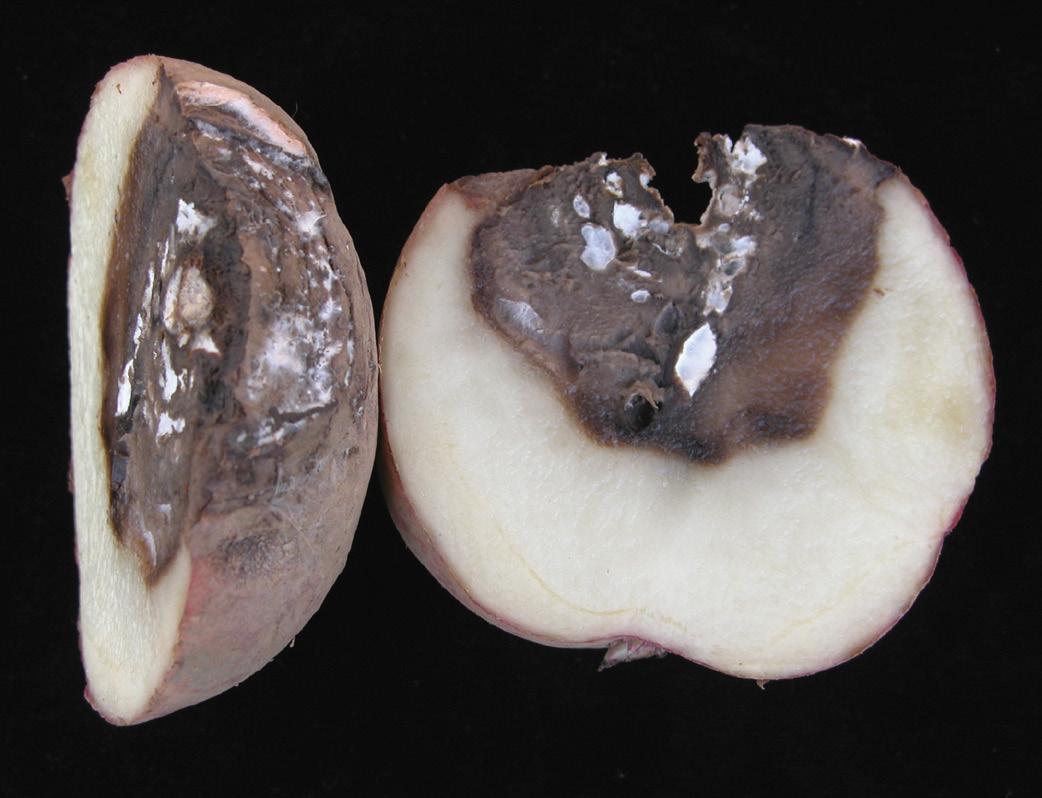
to manage resistance of Fusarium and other fungal diseases, denys says seed growers should ensure they are using multiple modes of action to reduce carryover of resistance in seed stocks.
rot losses, Banks says it is critical to purchase seed that has as little dry rot as possible, so inspect seed carefully upon receipt. (See sidebar on testing availability below.) She also advises warming seed tubers to at least 10 degrees Celsius (50 degrees Farenheit) before handling and cutting to minimize injury and promote rapid growth, as cold tubers are very prone to bruising.
In addition, Banks cautions growers to thoroughly clean and disinfect their seed storage areas before receiving seed. “also disinfect seed-cutting and seed-handling equipment often and clean up well between seed lots,” she says “g rade out obviously rotted tubers before they reach the cutter – and make sure the knives on the cutter are very sharp, so that you get smooth cuts that heal easily.”
The next step is to treat seed pieces with an effective seed treatment to help control seed decay. “Then, plant any seed that has a Fusarium problem in warm soil and cover with as little soil as is practical,” Banks concludes. “Coarse-textured soils warm up faster and are better drained than fine-textured soils. This allows the seed pieces to tuberize quickly and helps the plants
become established.”
Chris Denys, seed care technical lead ( e astern Canada) for Syngenta Canada, also thinks growers need to put extra effort into making sure their potatoes tuberize properly in 2012. “We have seen some e rwinia Soft rot recently that could have been prevented,” he says. “It’s caused by a lack of oxygen to cut-andtreated seed potatoes, when there is not enough ventilation and the temperature is too warm.” Denys recommends that if you are storing potatoes after cutting and treating the piles is no higher than 1.8 metres, with good ventilation and a maximum storage temperature of 10 degrees Celsius. “ e rwinia can also occur with planting into saturated soil,” he adds, “so if you’re not set up to store properly and have heavier soils, do your cutting and treating just before you have ideal planting conditions, and plant immediately.”
To manage resistance of Fusarium and other fungal diseases, Denys says seed growers should go over their strategy to make sure they are using multiple modes of action to reduce carryover of resistance in seed stocks. “Seed growers must use a secondary mode of action (in addition to Fludioxonil, Maxim Liquid and Cruiser Maxx potatoes), such as a mancozeb-based product like MaximMZ (dust formulation) or a straight mancozeb product if using a liquid seed treatment, such as Cruiser Maxx potatoes.” processor and table growers should use a mancozeb product if their seed stock is confirmed to have Fusarium species that are insensitive to common fungicides.
Vanessa Currie says growers will always have environmental stresses to worry about, but if they are growing a range of high-quality, diverse varieties, then every year they can have a successful crop. “I also suggest they consider growing the new lines being offered by agriculture and agri-Food Canada,” says Currie, a breeding technician in the University of guelph’s Department of plant agriculture. “Whether you produce chipstock, tablestock or french fry, there are new varieties available which can enhance competitiveness and profitability.” She would also like to see more growers get involved in research in 2012, and attend more meetings to learn what research has to offer.
“ research is a co-operative and collaborative process and we welcome the involvement of potato growers,” she notes.
Agricultural Certification Services Inc. (ACS) based in Grand-Falls, New Brunswick, is a testing laboratory accredited by the Canadian Food Inspection Agency to perform testing on potatoes for various pathogens, including viruses. ACS provides services to growers and potato industry personnel in New Brunswick, Prince Edward Island, Nova Scotia, Quebec, Ontario, Manitoba, Alberta, the United States and other countries. In Prince Edward Island, the industry-operated Potato Quality Institute in Charlottetown does virus testing for potato growers.
Starting in early 2011, the Prince Edward Island Department of Agriculture
and Agriculture and Agri-Food Canada (AAFC), with support from Syngenta, began offering a new free service to P.E.I. and Canadian potato growers to test potato seed lots for Fusarium dry rot. The lab is located in Charlottetown and is operated by AAFC researcher Dr. Rick Peters. If found, the Fusarium species are tested for sensitivity to commonly used fungicides, with results generally available within three weeks. The service will be offered again in 2012 and will help growers ensure they are using a fungicide that is effective against any Fusarium species that may have affected seed lots, says Brian Beaton, potato industry co-ordinator with the department.
In taking samples, growers are advised to collect 10 to 15 tubers. “Any tubers that are showing disease symptoms should be included in the sample especially if they have cuts or cracks,” Beaton says. “Tubers that are completely rotted should not be included. Place the samples in a sealed plastic bag and send them immediately.”
Syngenta Canada’s Chris Denys believes growers must be especially careful in taking samples. “Keep in mind that lab tests can produce ‘false negative’ results due to poor sampling,” he says. “Infected potatoes could be missed, so take your time to get a representative sample. It’s worth the effort.”
Safe on all varieties of potatoes, including seed potatoes and early maturing varieties • Outstanding post-emergent control of quackgrass and annual grasses • Controls redroot pigweed and has activity on broadleaf weeds like lamb’s-quarters • Flexible recropping options • Wide window of application New! DuPont™ Solumax® soluble granule technology:
- Offers the convenience and benefits of a dry product that acts as a liquid.
- Increases the bioavailability of the active ingredient to the weed.
- Saves you time with easier tank-cleanout.
Questions? call 1-800-667-3925 or visit cropprotection.dupont.ca
by Carolyn King
One day soon, you might be able to give your potato crop an extra boost from beneficial bacteria, thanks to some innovative studies by o ntario researchers.
“o ur whole goal is to find ways to reduce crop inputs of chemicals like pesticides or fertilizers, through biological methods,” says Dr. amy Turnbull, a research scientist with a &L Biologicals Inc. in London, o ntario. a &L Biologicals is the research division of a &L Canada Laboratories, a private company specializing in soil, plant tissue, fertilizer and water testing.
Turnbull started investigating beneficial bacteria for potatoes in 2010. Her interest is in the bacteria found in the potato’s rhizosphere, which is the soil surrounding its roots, and its endosphere, which is the internal tissue of the roots.
The rhizosphere is a zone about 1 millimetre wide right next to a plant root. This zone is rich in compounds such as sugars and proteins that are released by the plant root into the soil.
Depending on the exact compounds, certain types of microbes will flourish in a plant’s rhizosphere, while other types will decline. Similarly, the conditions inside a plant’s roots will favour certain species of microbes over others. Some of the types of bacteria that thrive in the rhizosphere or endosphere may help the plant, some may harm it, and some are neutral.
Continued on Page 20
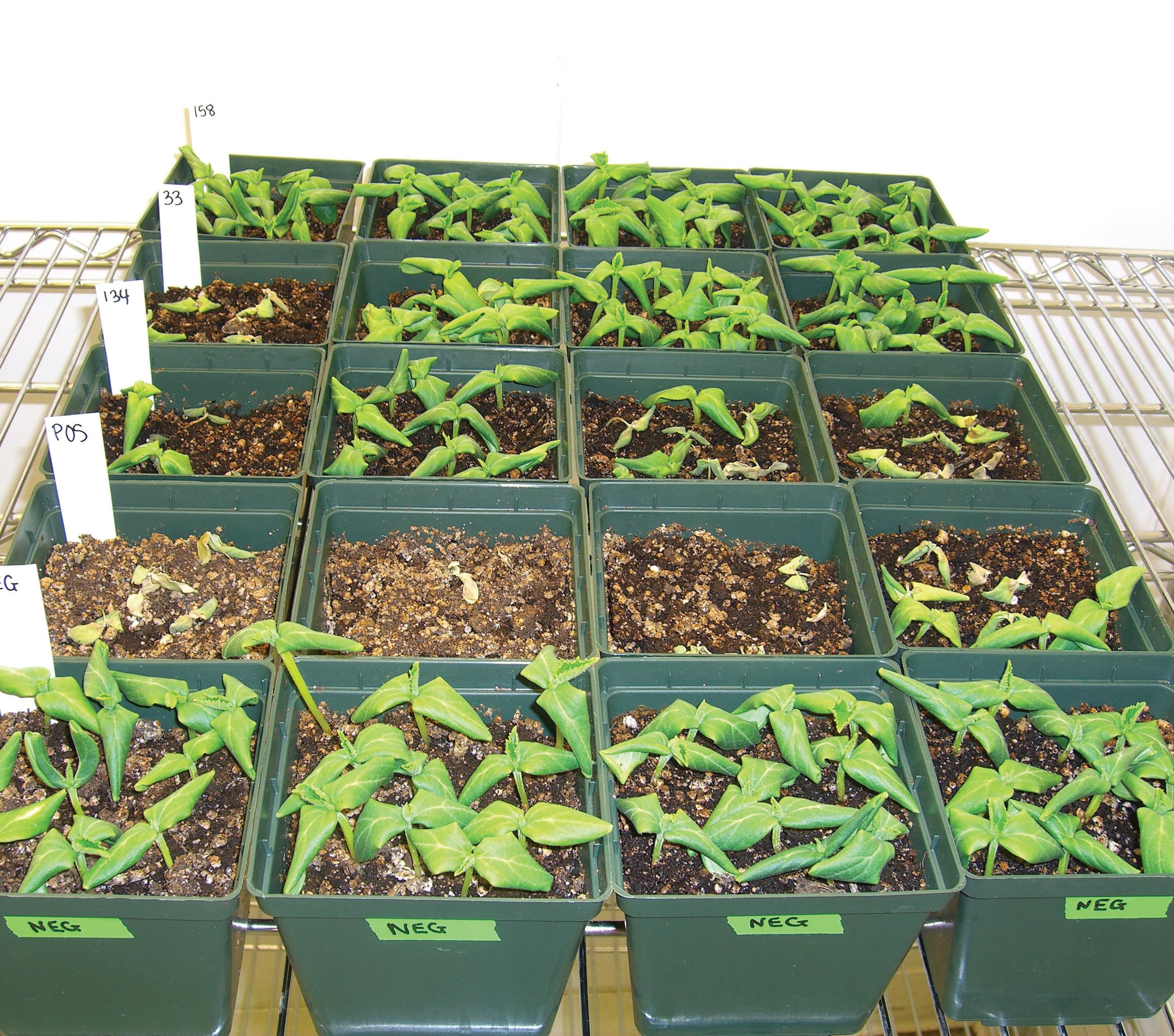
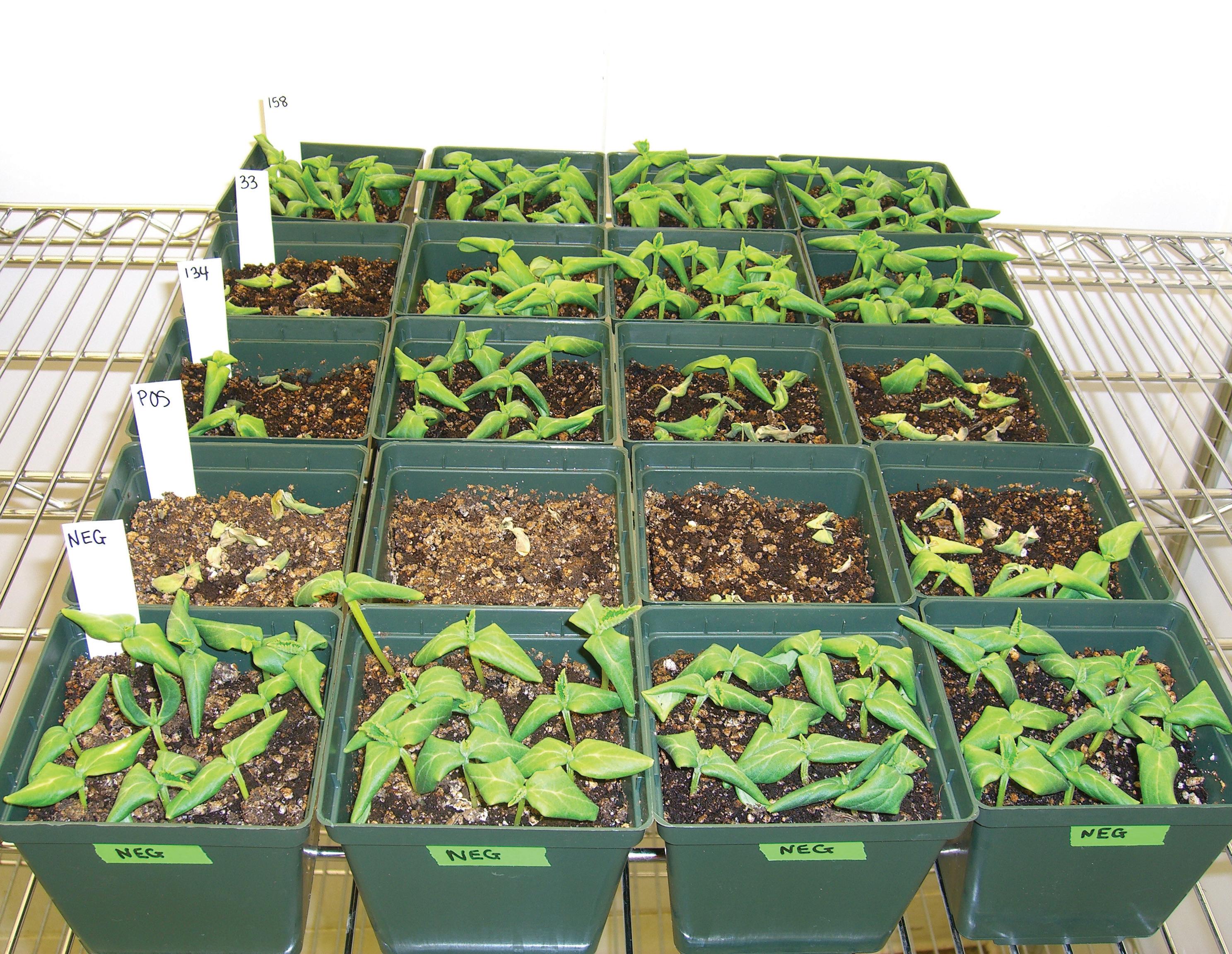
aBoVe: one of turnbull’s experiments involved growing cucumber seeds in soil infested with Pythium, a fungal pathogen. the treatments (from front to back) are: negative control (no bacteria added and no Pythium in soil), positive control (no bacteria added, Pythium in soil), Pseudomonas bacteria strain 134 added to soil with Pythium, Pseudomonas strain 33 added to soil with Pythium, Lysobacter bacteria strain 158 added to soil with Pythium strain 158 was the best treatment because it had the greatest number of surviving seedlings (as many as the negative control).

disease management products Manufacturer/supplier (will not appear) common name
chemical group (rotate groups to manage resistance) (check label for details) resistance
important: the Potatoes in Canada Potato Pest control tables are a guide only. it is highly recommended that growers refer to local provincial guides and labels and consult with processors and packers.
(stem and stolon canker)
important: the Potatoes in Canada Potato Pest control tables are a guide only. it is highly recommended that growers refer to local provincial guides and labels.
or 7-10 3 • reduces tuber blight.
crop re-entry restriction.
crop re-entry restriction.
7
use only as a tank-mix with a protectant fungicide. Kickback - up to 72 hours.
crop re-entry restriction.
crop re-entry restriction.
6
3
unique mode of action for early blight protection. May also be applied through sprinkler or pivot irrigation.
3
1
6
6
4
Apply in a 6-8inch band directly over seed pieces in furrow.
Late blight and late blight tuber rot control.
• use only as a tank mix with dithane or Bravo.
Apply in a 6-8inch band directly over seed pieces in furrow.
A1 and A2 late blight strains may have resistance.
unique mode of action for early blight protection.
Post harvest for silver scurf.
famoxadone - same resistance group as strobilurins - rotate with non-strobilurins. Late blight kickback - up to 72 hours.
3
7 2 s s * resistance grouping: the fungicide resistance advisory committee (frAc) assigns group numbers to identify resistance grouping. M indicates multi-site activity.
important: the Potatoes in Canada Potato Pest control tables are a guide only. it is highly recommended that growers refer to local provincial guides and labels and consult with processors and packers.
days between applications
Max. times per season Aphid cutworm, late season Blister beetle colorado potato beetle european corn borer flea beetle Leafhopper
Lygus bug (tarnished plant bug) Wireworm
important: the Potatoes in Canada Potato Pest control tables are a guide only. it is highly recommended that growers refer to local provincial guides and labels.
Maximum seasonal use rate 249 ml/ha for cPB ; ph of water between 5 and 9 for best control.

When it comes to protecting your high-value potato crop, you shouldn’t settle for anything but the best. Introducing DuPont™ Vertisan™, a powerful new fungicide for managing rhizoctonia and early blight in potato crops. Start your crop strong with an effective in-furrow application of Vertisan to guard against early rhizoctonia infections which can often lead to lower potato yield and quality.
Vertisan is also a powerful new tool against sclerotinia and other yield robbing diseases in canola, pulses and sunflowers. Vertisan™ is the next-generation Group 7 fungicide that stops disease in its tracks with residual, preventative and post-infection activity. No matter what the season brings, you can count on Vertisan™ to deliver high yielding, high quality crops.



Weed control products (not registered in all provinces. some processors do not accept use of all products.)
Manufacturer/supplier (will not appear) c hemical group Pre-plant burndown Pre-emergence burndown Pre-plant soil incorporated Post-plant soil incorporated Pre-emergence surface applied f oliar applied d esiccant
Variety cautions in some provinces * tank-mixes not registered in all provinces * tank-mixes not registered in all provinces
Arrow Makhteshim-Agan 1
chateau Wdg Valent canada 14
dual ii Magnum syngenta 15
excel super (not in MB) Bayer cropscience 1
glyphosate various 9
superior
Linuron(7), Patoran(7), sencor(5), Afesin(7)
gramoxone syngenta 22 • russett Burbank, cherokee Linuron(7), sencor(5)
Lorox df, Lorox L, Linuron 480 novasource 7 • sencor(5)
Poast ultra BAsf 1
Prism sg dupont 2
reglone syngenta 22
select/centurion Bayer cropscience 1
sencor Bayer cropscience 5
Venture L syngenta 1
Belleisle, tobique,/ no post-emergence on early varieties, red-skinned, Atlantic, eramosa Linuron(7)
sencor(5)
notes: *conditions apply: check provincial guides or product labels for details and specific weed control ratings. some provincial guides include control ratings not shown. some tank-mixes may not be registered in all provinces: additive effects and antagonism may also occur. some products and tank-mixes are only recommended for certain varieties. Various formulations may be available and additional application rates may be recommended. ** dandelion not on label for some glyphosates. some potato processors do not approve use of some products.
dual ii Magnum(15), Linuron(7),
grassy weeds Volunteers Broadleaf weeds
Perennial weeds
Barnyard grass f oxtail, green f oxtail, yellow Wild oats Vol. barley Vol. corn Vol. flax Vol. canola/mustard Vol. sunflowers Vol. wheat Buckwheat, wild c atch fly, night flowering c hickweed c leavers c ocklebur f lixweed h empnettle Kochia Lady’s thumb Lamb’s quarters Mallow, round-leaved Mustard, wild n ightshades Pigweed, red root Pigweed, prostrate Purslane r agweed r ussian thistle s hepherd’s purse s mart weed, annual s tinkweed d andelion Quackgrass s owthistle,perennial t histle, c anada Warnings
•
•
•
•
s
•
•
Minimum of 5 cm soil must be covering the vegetative portion of the potato plant at time of application. requires irrigation to ensure activation prior to emergence. do not apply at or post emerge.
• 1 hour rainfast.
s not on emerged potatoes in evening/cloudy/stressed.
Low rate on sandy soils.
• . 80 days to harvest.
s
•
Post
•
• Apply before potatoes flower/30 days to harvest. do not apply during periods of extreme drought or excessive moisture.
not on muck soils/total applied restriction.
**not triazine-resistant lamb’s quarters.
• • • • • s no row cultivation until 5 days after application/90 days to harvest.
s suppression only
• control important: the Potatoes in Canada Potato Pest control tables are a guide only. it is highly recommended that growers refer to local provincial guides and labels and consult with processors and packers.
seed piece treatments
Manufacturer/ supplier (will not appear) common name chemical group
Application rate (grams/50kg seed) Aphid colorado potato beetle flea beetle Leafhopper Wireworm Black scurf
Actara 240sc syngenta thiamethoxam thianicontinyl up to 24.4 mL/100kg
Admire 240 Bayer cropscience imidacloprid chloronicotinyl 26-39mL/100kg
Alias 240 MAnA imidacloprid chloronicotinyl 26-39mL/100kg
cruiser Maxx Potato syngenta thiamethoxam + fludioxonil thianicontinyl + phenylpyrrole
grapple/grapple2 cheminova imidacloprid chloronicotinyl 26-39mL/100kg
solan MZ norac concepts/ engage mancozeb ethylene bisdithiocarbamate 250
Maxim MZ syngenta fludioxonil phenylpyrrole 250
Maxim PsP syngenta fludioxonil phenylpyrrole 250
Maxim Liquid PsP syngenta fludioxonil phenylpyrrole 5.2mL/100kg
PM 223 global Protein Products zein product none 135g/100kg
Polyram 16df BAsf metiram dithiocarbamate 225-325
PsPt 16% uAP mancozeb dithiocarbamate 500g/100kg
senator PsPt engage Agro thiophanatemethyl benzimidazole 250
titan Bayer cropscience clothianidin chloronicotinyl 10.4-20.8mL/ 100kg
titan emesto Bayer cropscience clothianidin + penflufen/ prothioconazole chloronicotinyl/ sdhi/triazole see label
tuberseal norac concepts/ engage mancozeb dithiocarbamate 250
in-storage seed treatment
Mertect syngenta thiabendazole benzimidazole 88mL/1000kg
important: the Potatoes in Canada Potato Pest control tables are a guide only. it is highly recommended that growers refer to local provincial guides and labels and consult with processors and packers.
disease notes
Black scurf fusarium (dry rot/ seed piece decay)
rhizoctonia (stem and stolon canker)
seed-borne common scab silver scurf Verticilium wilt
important: the Potatoes in Canada Potato Pest control tables are a guide only. it is highly recommended that growers refer to local provincial guides and labels. refer to label product rates specific to seeding rates.
for disease control add treatment following application of Admire 240. for disease control add treatment following application of Alias 240.
s • • • A co-pack of Actara 240sc and Maxim Liquid PsP. for disease control add treatment following application of grapple.
• Plant as soon as possible after treatment. use second application for cut seed.
s
s
s
• • • treat cut pieces soon after cutting. s=suppression only.
• • • treat cut pieces soon after cutting. s=suppression only.
• • • treat cut pieces soon after cutting. s=suppression only. Quickly dries and seals cut surfaces and protects seeds in wet, cold soils.
• • Plant as soon as possible after treatment. use second application for cut seed.
• Plant as soon as possible after treatment. use second application for cut seed.
• • • treat cut pieces within six hours. do not use after Mertect used in storage. for wireworm suppression and control of above-ground pests, use higher rate.
• • • for wireworm suppression and extended reisdual control of above-ground pests, use higher rate of titan.
• Plant as soon as possible after treatment. use second application for cut seed.
• • • Apply as a mist on potatoes going into storage.
Continued FroM Page 8
In her potato study, Turnbull’s first step was to grow potatoes in soil samples from potato-producing areas in o ntario and prince e dward Island. Then she analyzed the bacteria from the rhizosphere and endosphere of these potatoes. She found several hundred different strains of bacteria, approximately half of which were unknown until now.
She explains, “In the past, researchers studying bacteria near the roots focused on those species that are easiest to culture in the lab. But the massive advances in D na sequencing technology in the last five years now enable us to sequence the D na of all the microbes from inside the root and from the soil around the root. So we’re finding bacteria that scientists previously didn’t know were there.”
D na sequencing allows researchers to identify the types of bacteria in a sample and also to determine which types are the most abundant. It turns out that the easy-to-culture bacteria are not necessarily the most abundant types in the rhizosphere and endosphere.
Turnbull is concentrating on the most abundant types based on the hypothesis that those types likely have the largest impact on plant performance. So she worked out how to isolate and grow those abundant bacterial strains in the lab.
Then, through lab and growth chamber experiments, she evaluated the strains in terms of several agriculturally significant behaviours. “We’re looking for bacteria that: produce phytohormones that enhance plant growth; provide nutrients, either by fixing atmospheric nitrogen or by solubilizing insoluble soil nutrients like phosphorus, and supplying those nutrients to the plant; or produce antibiotics or other chemicals that control plant pathogens,” she explains.
So far, Turnbull has found 13 strains able to fix nitrogen and 14 strains able to solubilize phosphorus in lab experiments, and she is now evaluating their effects on potato plants growing in soils with low levels of nitrogen and phosphorus. She has also identified seven strains that are able to control specific fungal pathogens, such as Pythium or Rhizoctonia, in potato plants. and she has found 21 strains that produce hormones that can improve the growth of potato plants.
Using these promising strains, Turnbull is currently creating and testing different communities of beneficial bacteria to see how well they are able to establish themselves on and near potato plants, and to what degree they help improve plant
health and productivity. eventually she hopes to develop various ways to use the beneficial bacteria to enhance potato production, such as disease-suppressive compost, nutrient amendments and inoculants for seed potatoes.
other bio-studies that could help potato production
Turnbull’s study is one of several a &L projects related to biological methods to improve potato health and yields. She notes, “We have a long-running field experiment to investigate different green manure treatments to see how they affect potato yield and two important potato diseases, Verticillium and scab. We also have some field tests in collaboration with growers to test different organic products for reducing the incidence of scab. and we are collaborating with a potato breeder from pe I to evaluate the performance of nitrogen-fixing bacteria on different varieties of potatoes.”
a s well, a &L is working on a major effort to identify indicators of soil health for growing crops, including potatoes. The company’s aim is to eventually offer a service to farmers who want to know whether or not a treatment they have applied to their soil has enhanced beneficial bacteria.
Several interested growers are working with a &L to develop this concept. Turnbull says, “at present, if growers apply some treatment to their soil, they don’t really know if they have changed the population of microbes in the soil or on the plants. So, after they have applied that treatment, they could pull up some of the plants in the treated soil and some from untreated soils. Then we can test those samples and determine if the treatment caused a shift in the bacterial populations or not.
“ right now we can just say if there’s been a shift. o ur goal is, in the next year, to be able to say whether it’s been a good shift or a bad shift in terms of soil health.”
To carry out this type of bacterial research, a &L is developing a molecular method to track complex microbial communities. This method doesn’t rely on culturing microbes, so it avoids the problem that the most abundant bacteria are difficult to culture.
Turnbull says, “We have these ideas [for biological approaches to improving plant health and productivity], and we have the ability to track the entire microbial community [using this molecular method]. That opens the door for doing further studies.”
For instance, the company’s researchers have several studies that are looking for answers to their questions about bacterial communities, such as what roles do the different species in a community play, how do the bacteria interact with each other and with the plant, what is the purpose of those interactions, and what are the factors affecting which types of bacteria predominate in a community.
With the increased understanding of microbial ecology that could come from such studies, they hope to develop further practical applications of beneficial bacteria for enhanced production of potatoes and other crops.
Contact: Dr. Amy Turnbull, Research Scientist, A&L Biologicals Agroecology Research Services Centre, 2136 Jetstream Road London, ON N5V 3P5, aturnbull@alcanada.com


There is always the threat of disease, resistance and other dangers in the new year, but every grower must do his or her part to help minimize it.
by Treena Hein
As is often the case, there’s good news and bad news to report on the potato disease front in 2012.
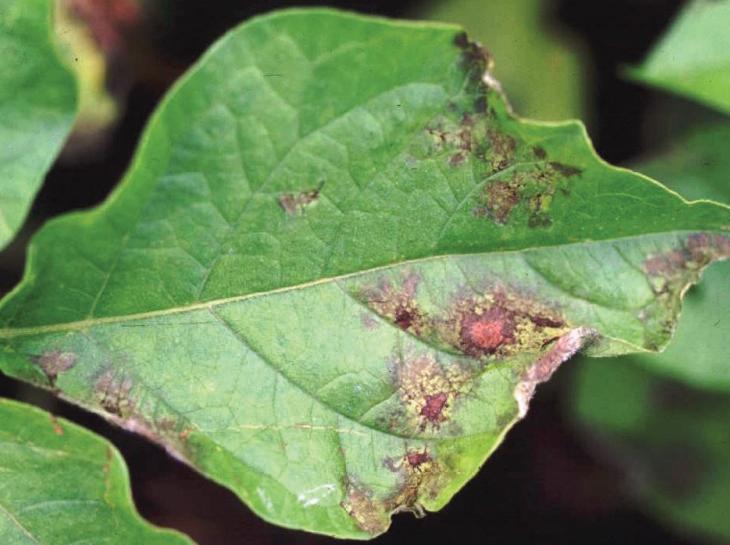
While resistance to fungicides, disease incidence and the number of pathogen strains being detected in Canada have all grown, a new national analysis initiative and a new testing lab are now in place. “Late blight (caused by Phytophthora infestans) incidence became more widespread in 2011 in Canada in both potatoes and tomatoes,” says Dr. rick peters, a potato disease scientist at the agriculture and agri-Food Canada (aaFC) Crops and Livestock research Centre in Charlottetown, prince edward Island. “We’re also finding new strains of the pathogen in different locations across the country, which is very alarming.” peters says there are at least five strains in Canada right now, compared to the traditional long-term scenario of one main strain known as US-8 up until two years ago.
Dr. Khalil al-Mughrabi says long-distance movement in seed tubers and garden centre transplants has been a large contributing
factor in the rapid spread of new genotypes across Canada. “genotype US-23, which was previously detected only in the United States, has come to dominate in British Columbia, alberta, Saskatchewan and Manitoba,” notes the plant pathologist with the Department of agriculture, aquaculture and Fisheries’ potato Development Centre in new Brunswick and adjunct professor at Dalhousie University and the nova Scotia agricultural College.
“although US-23 infects both potato and tomato, it was more aggressive on tomato and was the only genotype recovered from commercial garden centres.” In 2010, US-8 was dominant throughout Canada and was the only genotype detected in isolates from new Brunswick and prince edward Island. That year, other genotypes detected in Canada included US-11 in alberta, US-24
Continued on Page 25
toP:

A highly water-soluble source of granular micronutrients and secondar y nutrients with application rates that maximize coverage for all your crops.
UltraYield ® Micronutrients ensure maximum crop health through research suppor ted agronomics.
Full Line O ering of High Water-Solubility and Low Analysis
NuBOR10
Copper 12
BroadMan20
EZ20
Bean Mix
Corn Mix
10% B, 10% Ca, 5% Mg, 3% S and 70% W/S
12% Cu, 6% Zn, 14% S and 65% W/S
20% Mn, 12% S and 65% W/S
20% Zn, 14% S and 70% W/S
20% Mn, 4% Zn, 1% B and 50% W/S
20% Zn, 4% Mn, 1% B, 1% Cu and 50% W/S
Potato growers are experts at ‘multi-tasking,’ but how can they be more successful?
by rosalie I.
Tennison
Complexity abounds in the potato industry, from precise planting and caring for the crop, to managing storage to delivering the crop in a timely and safe manner to processors. Breeders work tirelessly to develop varieties with disease resistance or yield advantages, companies continually work to improve chemistry for pest control, and manufacturers tweak equipment to protect the crop through harvest, storage and transport. Despite all this concentration on helping growers, there are gaps in the system that could, if filled, make a big difference in the industry.
It is not as though there is not enough research being done, but, maybe, different research is what is needed. That is not to say that companies and research organizations do not recognize when there is a need, but it can take months to develop a research plan, get funding and additional staff, if needed, and see the project to completion. For growers who need solutions, waiting months, or maybe years, is not acceptable.
There is a general feeling that better consumer education is needed to keep potatoes on the plates of consumers and make them mindful that potatoes are a healthy food choice. Through no fault of theirs, growers have to fight the perception that potatoes are too high in carbohydrates and that french fries are greasy and unhealthy. “There is too much misinformation on talk shows given by people who have no scientific basis for their opinions,” states Dr. robert Coffin, a private consultant from prince edward Island, and formerly with Cavendish Farms. “potatoes are a highquality food. They contain a wide array of nutrients: carbohydrates, protein, vitamins and minerals and no cholesterol. French fries are fried in vegetable oil with the finished product being approximately six percent oil by weight. Sometimes, we are given the incorrect information that french fries are high in fat, when, in fact, on average there is the same amount of oil in french fries as in salad dressing.”
Coffin says more needs to be done to educate the media in the subjects of biology and nutrition and before consumer education can be better accomplished. “Consumer education will help farmers,” he says.
Coffin cites the removal of genetically modified (gM) potatoes as a lost opportunity for growers to control insect pests and virus diseases, with reduced use of pesticides. He suggests, if gM
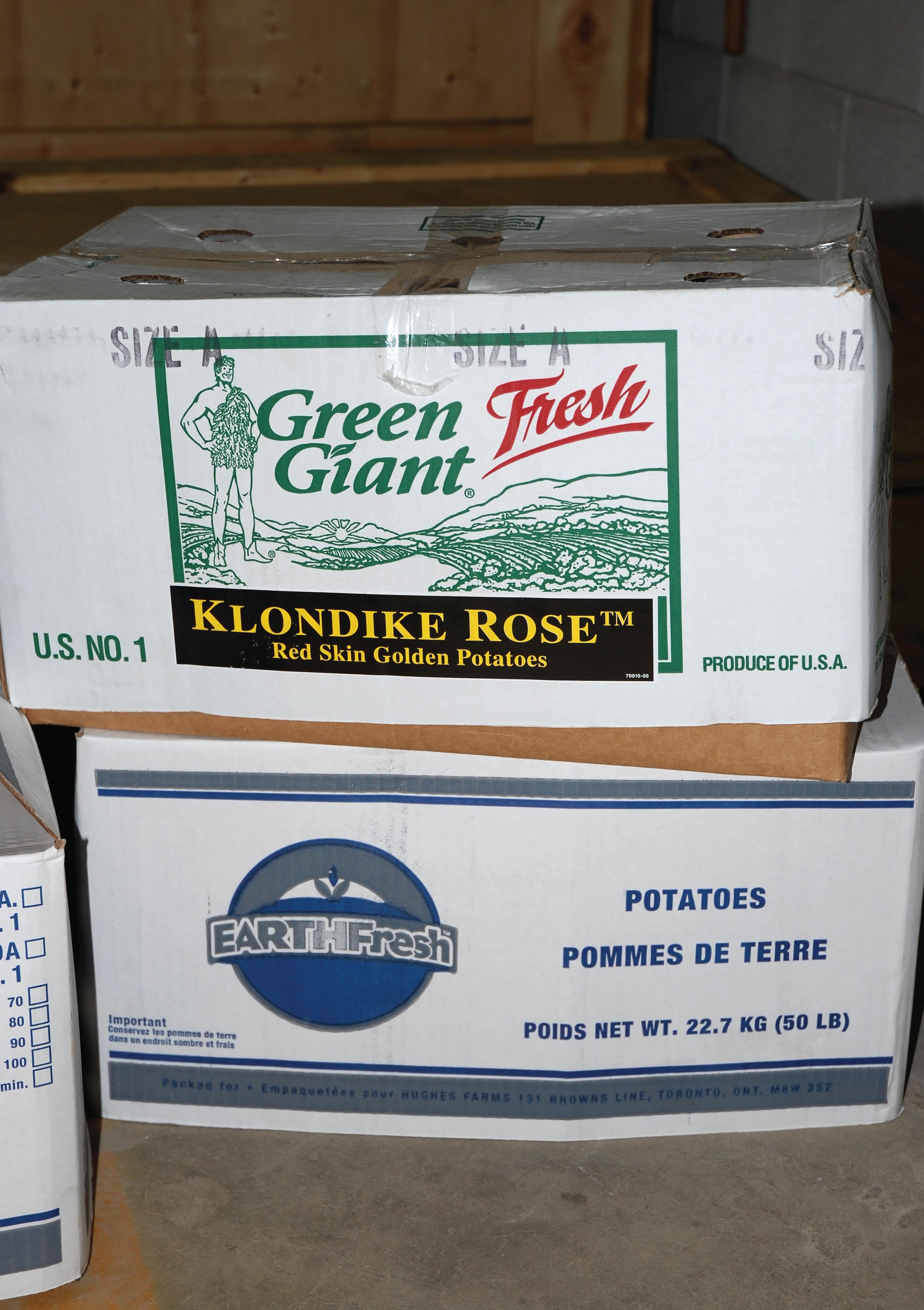
earthFresh Foods, based in toronto, markets its klondike rose potatoes under the green giant label, believing consumers will find greater buying comfort in a trusted name.
potatoes are reintroduced, emphasis needs to be placed on their nutritional qualities. one company that is trying to increase knowledge about potatoes is earthFresh Foods. Based in Toronto, the company is attempting to build brand identification for potatoes and to educate consumers through store displays and product sampling. earthFresh Foods has been providing produce to
consumers through grocery stores for almost 50 years, so the company’s commitment to the industry is assured. recently, earthFresh Foods trademarked the name “Klondike rose” to describe a yellow-fleshed, red-skinned potato, and the company is selling it in bags through grocery stores under the “green giant” label. “We started seven years ago evaluating a couple of unique european varieties and then we built a marketing plan,” explains Tom Hughes, earthFresh Foods president. “We put the potatoes in a green giant bag so there would be an element of trust. The actual name of the variety is rosara, but by trademarking a name to describe the potato, we have the opportunity to change out the variety if another comes along that meets our criteria of taste, appearance and yield.”
The potatoes are grown on contract to allow earthFresh Foods to control the supply, which puts more money in growers’ pockets.
Hughes admits that marketing Klondike rose has been a challenge because consumer acceptance is slow. “It has been difficult to get it into stores and the second challenge is proving that this potato is better than average,” he says. “We do a lot of trials, handing out free samples at stores and doing in-store demos.”
He adds that the challenge arises in markets where consumers are very loyal to one variety. He cites the example of Yukon gold, born in guelph, ontario, where a great majority of ontario consumers will only buy their homegrown spud. Hughes believes more funding needs to go towards helping various sectors in agriculture differentiate themselves from their competition south of the border. “The US industry is bigger than ours and they are more efficient and, as a result, they are getting ahead of the Canadian potato industry, which leaves our growers struggling,” he says. “our company could use some government help to purchase badly needed capital, so that we can differentiate our products and market these products more effectively in the USa and, then, in turn, we could pay our growers more. also, we could be more competitive if we had better export marketing programs and better and more efficient machinery at the grower level. We need to be in the US market because we produce more than we can consume, yet, very few growers are competitive enough to export south. even $50 million would help the industry a great deal over the next several years.”
The ideas and commitments to support growers are many, but there is no central agency to sort through the ideas and see that progress is made on them. Currently, research is done by government or private industry in conjunction with grower organizations or private companies, such as earthFresh Foods, undertaking their own initiatives. Some partnerships are formed but there is little
being done to catalogue what projects are being undertaken, how they are being funded and what is still needed. It is possible that grower support is being doubled up, as similar projects or initiatives are being undertaken in both Western and eastern Canada.
What may be needed, in the end, is the formation of a national agency to record the work that is being done and to distribute the results. Small initiatives have been undertaken to eliminate overlap and repetition of information, such as the national potato Late Blight Working group, but a grander national approach needs to be developed for the potato industry across the country. If a group or organization steps up to the plate to fund and arrange such a consortium, growers will likely get more of what they want, and need, with greater success to follow.
Continued FroM Page 22
in Manitoba, and US-22 in ontario. “In 2011, we saw US-23 and US-24 in eastern Canada,” adds al-Mughrabi, “most likely as a result of acquiring infected seed potatoes from western provinces.”
genotype US-8 is still the most aggressive and common strain in prince edward Island, says peters, but it is now showing resistance to ridomil, a fungicide that has been avail-
able for 10 years. “However, some new strains are showing a greater sensitivity to it,” he notes. “each strain is different.”
In 2011 came the establishment of a much-needed crosscountry network for characterizing strains of late blight, the national potato Late Blight Working group. “For the first time, we have a co-ordinated national strain identification and analysis program.”
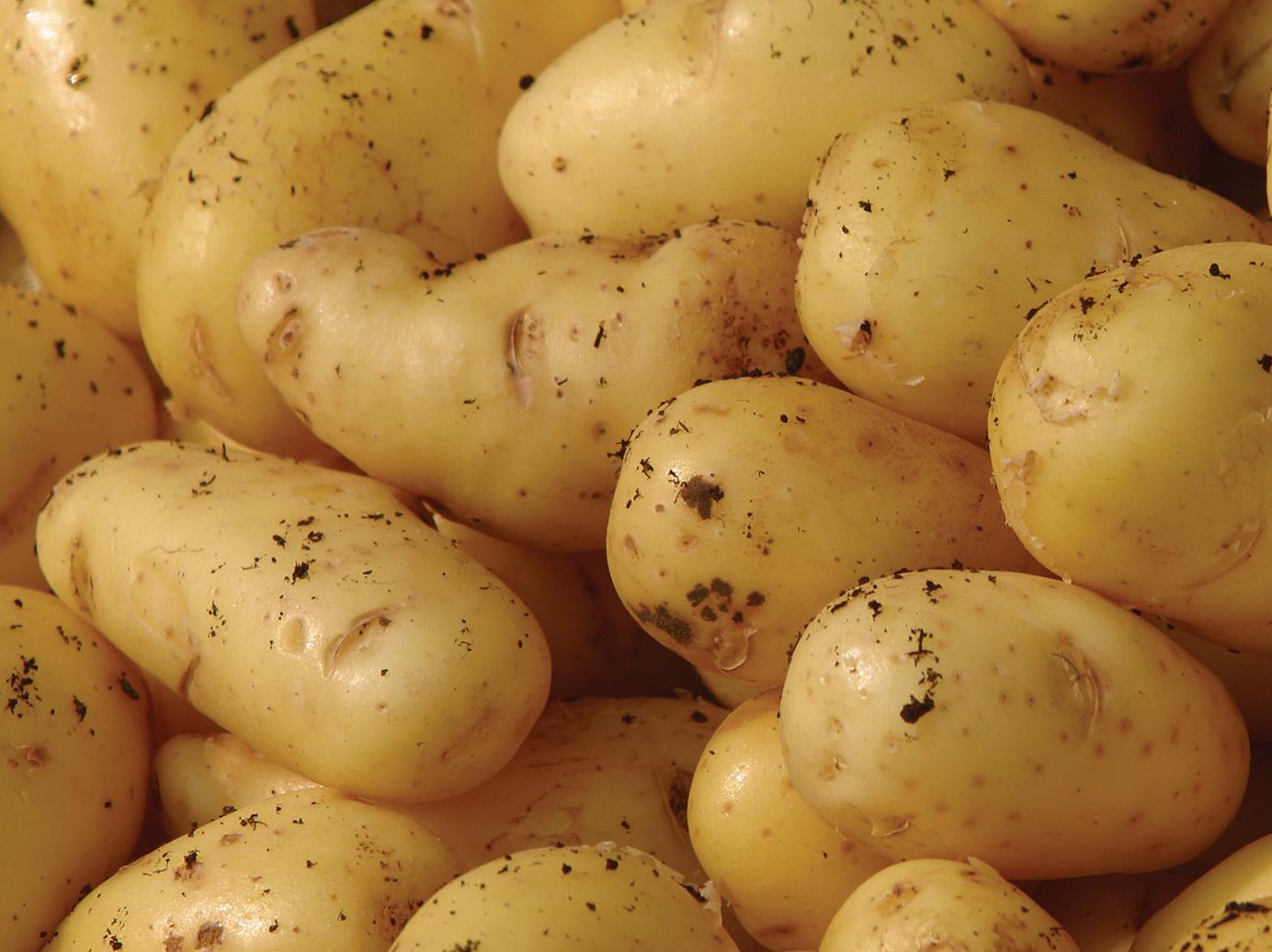
A new chemistry for rhizoctonia control is available for spring 2012.
by rosalie I. Tennison
Growers have been waiting for another option for managing rhizoctonia and now one is available. Dupont is releasing Vertisan this spring and the bonus is it contains new chemistry within group 7 products. It also offers management of early blight as a foliar spray, giving growers another option for early blight.
“Dupont has developed the next generation of group 7 herbicides with this product,” says Sylvain Legault of Dupont. “This is new chemistry for rhizoctonia management with low risk of resistance, but growers should still use common sense and be vigilant when using any product.”
Vertisan is a succinate dehydrogenase inhibitor (SDHI fungicide) with the active ingredient of penthiopyrad, according to Legault. It works by blocking respiration at complex II. In furrow, it will work to prevent the development of rhizoctonia by systemically moving through tissue, which is an action unique to SDHI class fungicides. It works similarly when used as a foliar application to minimize the effects of early blight.
gilles Hamel, a researcher in Quebec, used Vertisan in furrow on a small plot of norland potatoes in 2011. “The symptoms of rhizoctonia
were low in the plot,” he says, compared to what was observed in the control plots or those that had applications of competitive products. His full report on his use of Vertisan was not available for this article, but he believes the control looked very promising.
Vertisan compares favourably with other rhizoctonia management products in the same class, but the difference in chemistry gives growers another option for fungicide rotation. “Vertisan is very potent against the pathogen that causes rhizoctonia – not all SDHI fungicides are – which is what makes it so unique,” adds Legault. “It also offers excellent crop safety, which is something growers want.” He says Vertisan is showing control on both black and silver scurf, but further testing is being done before adding these to the label. Dupont is also actively pursuing the effectiveness of using penthiopyrad as a seed treatment. growers with rhizoctonia and early blight problems can look forward to trying a new chemistry during the 2012 growing season. So far, the initial results from test plots in ontario, the Maritimes, and Quebec suggest this new option for control of these diseases will be a welcome addition to growers’ disease management toolbox.



Curzate® delivers multi-level control of late blight, no matter when it strikes.
Grower experience and research prove it: the way to control late blight in potatoes is to hit it early, hit it hard and hit it with DuPont™ Curzate® fungicide. Its preventative, post-infection and antisporulant activity protects your crop better than any other potato fungicide. Curzate® delivers unique kick-back action to control disease at the point of infection and it inhibits all stages of the pathogen life cycle. Locally systemic activity rapidly penetrates foliage and stem surfaces to deliver fast-acting, long-lasting control. Curzate® should always be tank-mixed with Manzate® Pro-Stick™ Don’t wait for late