How today’s printing companies are capitalizing on print-enhancement technologies
16 Five keys to drive customer loyalty
Top tips that will help positively impact your customer’s buying process
DEPARTMENTS
GAMUT
5 News, Calendar, People, Installs, Globe, Dots
Technology Report
19 A sneak peak at some of the new technologies and services on display at Print 18, running September 30 to October 2
New Products
21 Detailing new solutions from Adobe, EFI, Epson, GSE, HP, Kodak, Koenig & Bauer, Konica Minolta, Mactac, Markem-Imaje, miip, Mutoh and Neenah
Spotlight
26 Jason Lisi, Chair of Ryerson University’s School of Graphic Communications Management
COLUMNS
FROM THE EDITOR
4 Alyssa Dalton
Building brand trust
CHRONICLE
10 Nick Howard
When a deal is a deal... until it isn’t! How Komori won the war by losing the battle – the Harris Web Saga
SALES
13 David M. Fellman
Interruptions revisited
Too much talking and not enough listening – are you guilty of committing this cardinal selling sin?
Building brand trust
Earlier this year Amarula Cream Liqueur released a special edition bottle collection with its well-known elephant branding individualized by HP Indigo digital printing. The first stage of the ‘Name Them, Save Them’ campaign raised awareness of the African elephant as an endangered species by letting consumers visit a virtual African savannah where they could design and name a one-of-a-kind African elephant. In turn, these consumer-produced designs were used to decorate individualized labels on 400,000 Amarula bottles — one bottle for every African elephant still surviving in the wild.
ment to the brand’s effective marketing tactic, promoted through a mixed media campaign supported by personalized packaging, print and digital communications, and a swift social media strategy.
Branding not only drives consumer sales, it also serves as a powerful company differentiator. A recent Cone/Porter Novelli Purpose study found 77 percent of survey respondents feel a stronger emotional connection to purpose-driven companies over traditional companies, while 78 percent believe companies must do more than “make money” — they need to positively impact society as well.
Zac Bolan, Wayne Collins, David Fellman, Victoria Gaitskell, Martin Habekost, Nick Howard, Neva Murtha, Abhay Sharma
Associate Publisher Stephen Longmire slongmire@annexbusinessmedia.com 416-510-5246
Media Designer Lisa Zambri lzambri@annexbusinessmedia.com
A 2018 Cone/ Porter Novelli Purpose study found 77 percent of respondents feel a stronger emotional connection to purpose-driven companies over traditional companies.
In collaboration with HP, SA Litho, a Cape Town-based label producer, transformed the bottles into unique pieces using an HP Indigo WS6800 press with HP SmartStream Mosaic variable design technology, leveraging two seed patterns in a variable design software algorithm. In less than a week, SA Litho completed the printing of the 400,000 labels, HP explains, which was produced on a metallic substrate using ElectroInk CMYK and white.
“Individualizing Amarula bottles is a powerful way to reinforce the message that every elephant is an individual with a unique personality,” said Saramien Dekker, Global Marketing Manager for Amarula. “This campaign is about creating a connection between humans and elephants, and becoming actively involved in raising awareness and saving our elephants.”
In partnership with conservation group WildlifeDirect, Amarula recently launched its latest campaign initiative, ‘Don’t Let Them Disappear,’ in countries around the world, including South Africa, the United States, Brazil, Germany and Canada. On August 12, World Elephant Day, a life-sized elephant ice sculpture –consisting of roughly 103 blocks of ice and weighing an estimated 9,344 kilograms – appeared in Toronto’s Distillery District. Over the course of the day the ice sculpture slowly melted in the summer heat, symbolizing the rate at which African elephants are being killed for their ivory.
A week prior to World Elephant Day, the @AmarulaElephant Twitter account and hashtag #AmarulaTrust launched, giving a voice to the elephant ice sculpture so it can share its story and spread the word about the disappearance of its brothers and sisters in Africa in real time, before disappearing itself.
The liqueur company’s wildly popular, global campaign on African elephant preservation and protection is a testa-
“In fact, companies that lead with purpose will stand to build deeper bonds with existing consumers, expand the consumer base and enlist those brand advocates to share the brand message,” states the research report.
A July 2018 article published by Kantar TNS, a U.K. research and market information group, looks at how brands can inspire trust in today’s evolving environment with the three i’s framework: Integrity, identification and inclusion.
“The concept of trust has usually been associated with stasis more than change. It brings up images of age-old, time-tested, large, solid brands and organizations with large and loyal user bases,” Anjali Puri, Global Director, Qualitative Offer and Expertise, at Kantar Insights Division, writes.
She describes the perception of integrity as “doing what you promise, and owning and making up for it when promises are broken.” Identification, she explains, is the ability to have access to one’s real, authentic self; for brands, this means creating a human face to represent the set of values it stands by.
Inclusion, the final ‘i,’ rests on building a sense of kinship, whether by virtue of being family, community, country or even people with shared values, Puri writes. “At its best, inclusion means that the brand cedes some control to its customers, and asks them to invest something of themselves in the brand’s world. We trust our kin because they are an extension of us –we are invested in them.”
As Steve Jobs once famously proclaimed, “A brand is simply trust.” 77%
Account Coordinator Alice Chen achen@annexbusinessmedia.com 416-510-5217
Circulation Manager Barbara Adelt badelt@annexbusinessmedia.com 416-442-5600 ext. 3546
Circulation apotal@annexbusinessmedia.com
Tel: 416-510-5113
Fax: 416-510-6875 or 416-442-2191
Mail: 111 Gordon Baker Rd., Suite 400, Toronto, ON M2H 3R1
Group Publisher Diane Kleer dkleer@annexbusinessmedia.com
President & CEO
Mike Fredericks
Subscription rates
For a 1 year subscription (10 issues): Canada — $42.00 Canada 2 year— $69.00
United States — CN$74.00
Other foreign — CN$144.00
Mailing address
Annex Business Media
111 Gordon Baker Rd., Suite 400, Toronto, ON M2H 3R1
RRD plans to help Sobeys streamline its in-store communication, as well as drive integration and consistency across its retail banners.
R.R. Donnelley & Sons Company (RRD) has landed a new agreement with Sobeys, one of Canada’s largest national grocery retailers, covering store marketing and decor signage print, as well as production, procurement, fulfillment, warehousing, logistics and installation support. The agreement, which extends to more than 1,200 Sobeys stores and over 1,500 additional stores within its independent and wholesale operations, aims to help Sobeys streamline in-store communication execution, and drive integration and consistency across its various retail banners. With headquarters in Stellarton, N.S., Sobeys has been serving the food shopping needs of Canadians since 1907.
Kodak announced in August it has begun a process to sell its Flexographic Packaging Division (FPD), which produces and markets the Flexcel NX system of flexographic imaging equipment, printing plates, consumables and related services. For the last 12 months, FPD reported revenues of US$150 million and Operational EBITDA of US$33 million. Kodak says it will continue to make “significant investments” in FPD during the sale process by expanding manufacturing capacity and developing advanced technology to help meet customer needs. CEO Jeff Clarke says the improved capital structure following the transaction will allow the company to increase its focus on demonstrated growth engines, while continuing to invest in and provide solutions across the commercial printing, film and advanced materials industries.
The new partnership will enable Omet to sell Durst’s Tau label printing products in North America.
CALENDAR
September 25-27, 2018
Labelexpo Americas
Donald E Stephens Convention Center, Chicago, Ill.
September 26-27, 2018
PAC to the Future II, Retail Reinvented Montreal, Que.
September 30-October 2, 2018
Print 18
The Central Group has acquired Packaging Technologies Inc. (PTI), a Concord, Ont., designer and manufacturer of graphic corrugated packaging and point-of-purchase displays. The new collaboration aims to strengthen and expand the Central Group’s service and product offerings across all subsidiaries including Central Graphics and Container Group Ltd. and Independent Corrugator Inc. A privately-held Platinum member of Canada’s Best Managed companies, the Central Group is a Mississauga, Ontario-based firm that combines in-store strategy, research, design and execution with analysis and reporting.
Esko has purchased Blue Software of Chicago, Ill., from Diversis Capital and Schawk Digital Solutions. Esko, a software and hardware provider, says combining Blue’s label and artwork management software with its Platform for Brands will deepen its investment in the industries where product packaging is critically important. As part of Esko, Blue joins the Danaher Product Identification platform of companies, which also includes Pantone, MediaBeacon, X-Rite, AVT, Videojet, FOBA, Linx and Laetus.
Quebec commercial printer Solisco has partnered with PrintReleaf, enabling its clients to select reforestation equivalent to the paper used on their projects. A print industry sustainability and reforestation standard, PrintReleaf seeks to offer brands, graphic designers and printers an alternative to chain-of-custody standards
currently available. First introduced at Print 17, PrintReleaf is described as the only technology platform that measures a customer’s paper usage and certifiably reforests that usage on an equivalent basis. The program automatically plants trees equivalent to the paper used by printers and converters, with plantings certified by an independent agency. Founded in 1991, Solisco has grown to more than 400 employees, becoming one of Canada’s largest printers.
HP has announced it will acquire Apogee Corp., a U.K.-based office equipment dealer and independent provider of print, outsourced services, and document and process technology, for £380 million (roughly C$644 million). HP says the acquisition will build on its strategy to: Enhance its A3 and A4 product portfolio; build differentiated solutions and tools to expand its Managed Print Services (MPS); and invest in its direct and indirect go-to-market capabilities. Following the close, Apogee will operate as an independent subsidiary of HP, with a governing board comprised of HP and Apogee management.
Unifor is urging the federal government to speed up policy measures to save Canada’s newspaper industry after Postmedia announced it will stop printing eight weekly newspapers and one daily in Ontario, Alberta and Manitoba. The media company is also cutting 10 percent of its workforce across the entire newspaper chain. The affected titles are Camrose Canadian, Strathmore Standard, Kapuskasing Northern Times, Ingersoll Times, Norwich Gazette, Petrolia Topic, Northern News, The Graphic, and Pembroke Daily Observer.
Durst and Omet have formed a strategic partnership in North America that allows Omet exclusive access for sales of the Durst Tau product line, with full
McCormick Place South, Chicago, Ill.
October 18-20, 2018
SGIA Expo
Las Vegas Convention Center, Nev.
October 24-28, 2018
All in Print China
Shanghai, China
November 5-7, 2018
Digital Packaging Summit
Ponte Vedra Beach, Fla.
November 8, 2018
Canadian Printing Awards
Palais Royale, Toronto, Ont.
November 12-16, 2018
IS&T Color and Imaging Conference Vancouver, B.C.
April 11-13, 2019
Graphics Canada
The International Centre, Mississauga, Ont.
June 16-26, 2020
drupa 2020
Dusseldorf, Germany
implementation expected by Labelexpo Americas 2018. The new partnership, they explain, will provide label printers extended engineering capabilities, added services, and combined digital and flexo printing expertise from a single source.
Hop Industries is introducing Hop-Syn GO, a new grade designed for all models of the HP Indigo digital press. Described as 100 percent recyclable, the new grade is a surface-treated, clay-coated, calendered polypropylene substrate. It is “extremely” scuff resistant, the company says, and is ideal for menus, identification cards, retail tags and more. Hop-Syn GO is UV resistant up to three months outdoors and can be scored and grommeted, Hop Industries notes.
INSTALLS
Canon Canada is welcoming Phil Hampson to the role of Senior Director, Production Printing Systems, PPSG. With over 20 years in the graphics industry, Hampson most recently served as the National Sales Manager, Canada, for the Graphic Systems Division of Fujifilm North America Corporation.
Electronics For Imaging (EFI) CEO Guy Gecht has informed the company’s board of directors he intends to step down from his operating role. Gecht will continue to serve as CEO until his replacement is named, and says he is committed to working closely with the new CEO to ensure a successful transition. He will remain a board member following the CEO change.
Chris Kyger will take the reins as President of Sun Automation Group. In his previous role as Vice President of the company, he worked alongside the senior leadership team to implement new systems and drive innovation and product development. Kyger joined Sun more than a decade ago and has over 25 years in the corrugated industry having also worked for Staley, Langston, and United Container Machinery. He has worked in the areas of field service, sales, operations, aftermarket (parts and service) and brings over 20 years of management, customer relationship and technology experience to his new role.
Fujifilm North America Graphic Systems Division is welcoming Steve Bennett, a former 20-year veteran of the company, to the role of Vice President of Packaging Solutions. Throughout his career at Fujifilm, he held various roles in sales, product marketing and development, corporate communications, wide-format solutions, and electronic imaging. Most recently, Bennett served as Vice President of Sales, North America, at Esko-Graphics, where he was responsible for top-line sales and income contribution for all solutions.
Dr. Peter Lechner has been appointed the new CEO at Koenig & Bauer Flexotecnica, succeeding Christoph Müller, who moves to the company’s supervisory board as Chairman. He previously held leading positions at various companies in Germany, the United States and the Czech Republic.
EyeC-America is expanding its team with two new staff members in response to the “rapidly growing print inspection markets” in Canada and the U.S. Mauro Consalvi joins EyeC-America as Sales Manager for the labels and flexible packaging markets in North America. Over the past 30 years, he has represented various OEMs in the package printing and converting markets. Meanwhile, Stephanie Reilly joins the company as Service Team Assistant and Customer Service Representative for EyeC-America.
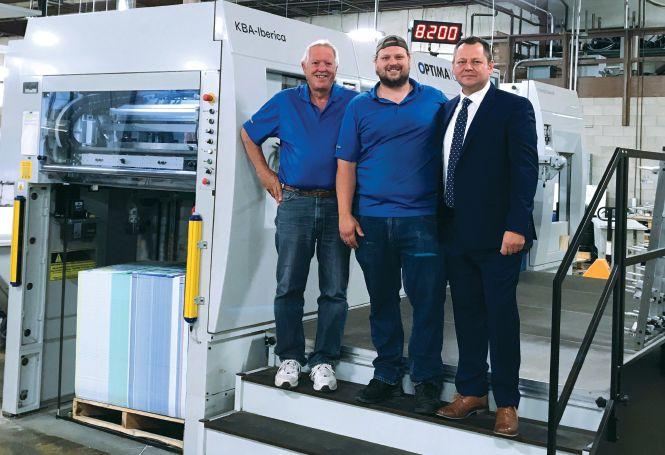
Family-owned offset print shop Battlefield Press replaced a die-cutter from a different manufacturer with a new KBA-Iberica Optima 106 die-cutter in May. With the installation of the Optima 106, along with other recent equipment purchases, the Burlington, Ont., shop predicts it will grow by 15 to 20 percent per year.
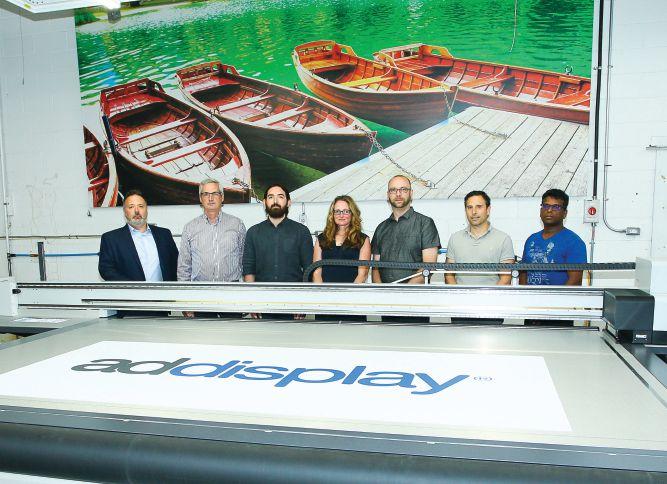
Ad Display says it is increasing its production capacity by four times in Quebec with the installation of a swissQprint Nyala LED large-format flatbed printer and the Kongsberg Esko CNC cutting table. Purchased through Cansel, the system is described as the first 10-foot Nyala LED installation in the province.
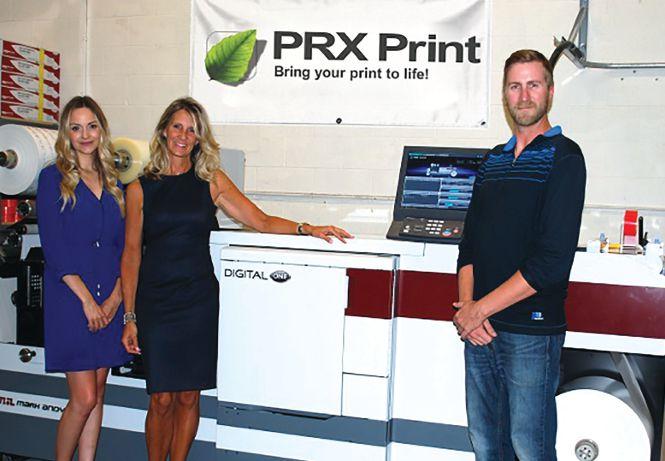
Full-service label manufacturer and print agency PRX Print projects 50 percent growth after its recent Mark Andy Digital One installation. The firm plans to tap into the system’s label embellishment features such as decorative cold foils and spot varnishes, explains Debbie Gilbert, PRX President (centre)
CPC Packaging invests in four Bobst machines
European packaging solutions company CPC Packaging says it is improving its production capabilities and efficiency with its recent equipment investment.
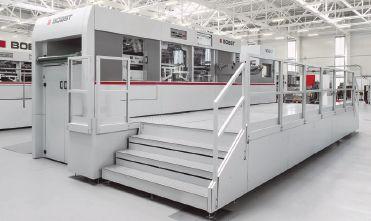
CPC is acquiring four machines, three of which are flatbed die-cutters: Novacut 106 ER, Expertcut 145 PER and Mastercut 145 PER for its Cartons Business Unit. The solutions are described as featuring a state-of-the-art register system, intelligent feeders and quick-change tooling, all complemented by ergonomics and automation. Also part of the investment is a RS 6003C HS high-speed gravure printing press. The machine features Bobst’s Total Automatic Pre-register Setting system, which completes the pre-register procedure of all print units, whether it is a new or repeat job.
CPC Packaging operates nine factories in France and Germany and describes itself as a one-stop-shop for cartons, flexibles and labels.
How will Avanti Slingshot Print MIS help your print shop succeed?
Our web-to-print jobs are sent to Avanti Slingshot without any re-keying. That alone saves us 15 hours/week, and significantly improves accuracy and efficiency.”
First Primefire installation in the United States
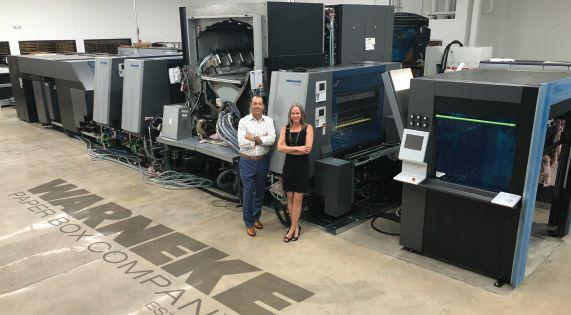
Warneke Paper Box of Denver, Colo., recently began installation of its new Heidelberg Primefire 106. The seven-colour industrial inkjet 40-inch B1 size digital press will allow the packaging printer to expand its business by collaborating with customers on targeted short-run packaging campaigns and provide added security to cartons through variable content.
With a 100-year-old history, Warneke Paper Box Company is a custom manufacturer of folding cartons, set-up boxes, point-of-purchase displays and pocket folders.
Being the first commercially available industrial inkjet digital printing system in the 70 x 100 (40-inch) format, the Primefire 106 is designed for high production volumes, Heidelberg explains. Based on the platform of the Speedmaster XL 106, the machine is described as giving packaging printers the confidence of over 80 percent available print uptime, while easily integrating into offset environments. Heidelberg explains the Primefire’s direct-to-sheet seven-colour imaging registration allows for unique security printing features to be incorporated, along with variable content, for anti-counterfeiting packaging designs.
The Primefire 106 boasts print quality of 1,200 x 1,200 dpi with initial production speeds of 2,500 sheets per hour and is designed to achieve volumes of up to 1.5 million sheets per month. The modular platform is designed to accommodate further speed increases and feature updates without having to replace the press, explains Heidelberg.
Printful invests US$6.6 million in tech upgrades
Graphics.
Keith Sullivan, President, Sull
Printful, a print-on-demand drop shipping company, says its recent multimillion-dollar technology upgrade will allow it to offer better quality prints and faster order fulfillment times, especially during the holiday season.
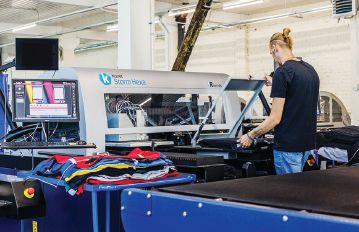
All three Printful facilities in North Carolina, California and Latvia now use Kornit Storm Hexa-R printers which are said to capture a wider colour spectrum of direct-to-garment (DTG) prints, making the final product even more vibrant and truer to the colours customers see on their screen, Printful describes. The total investment cost of the project is roughly US$6.6 million. The company, which employs a 400-plus person team across the United States and Europe, has invested almost US$13.2 million in printing technology over the last five years.
Printful has invested almost US$13.2 million in printing technology over the last five years.
Warneke Paper Box explains the new press will help expand its business by collaborating with customers on targeted short-run packaging campaigns.
Pictured here is the Novacut 106 ER Autoplaten flatbed die-cutter, one of four recent CPC Packaging machine investments.
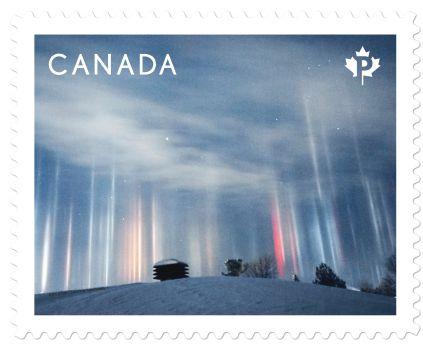
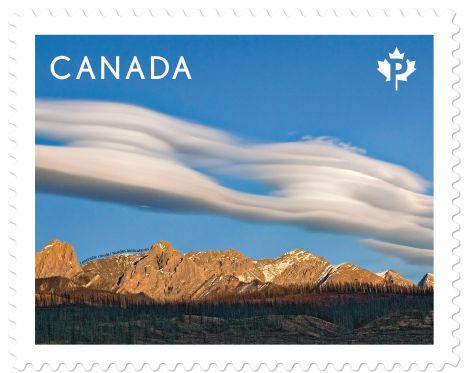
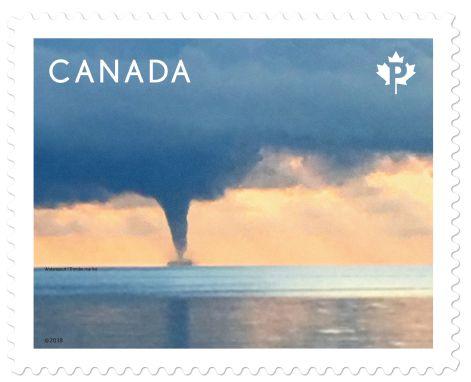
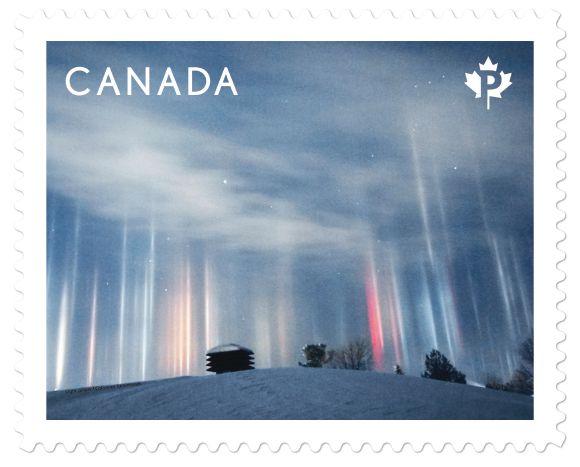
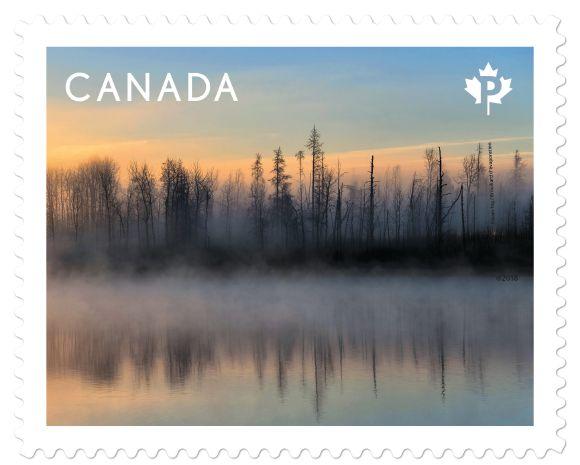
New postage stamps highlight Canada’s weather wonders
The beauty of Canadian nature takes centre stage in Canada Post’s latest stamp issue. Weather Wonders Part 2 is a five-stamp issue that showcases some of Canada’s most awe-inspiring weather phenomena in photographs taken from across the country. This year’s release, which follows the popular Weather Wonders issue of 2015, features five photos of impressive weather events – steam fog, a moon halo, a waterspout, lenticular clouds and light pillars – captured by amateur and professional photographers.
Taken in Jasper National Park in Alberta, Marilyn Dunstan’s photo showcases lenticular clouds (stamp 1), which are sometimes called UFO clouds due to their disc-like shape. Meanwhile, Garry M. Cass photographed a waterspout over Lake Ontario near Toronto, Ont. (stamp 2). The swirling funnel of water is often described as being as dangerous as landbased twisters.
A striking photograph of light pillars (stamp 3) reflecting the city lights of North Bay, Ont., is captured by Timmy Joe Elzinga. These light pillars can appear when ice crystals in the air reflect light drawn from artificial sources. When posted online, the images went viral, drawing worldwide attention, Canada Post explains. Stamp 4 shows a moon halo in Whistler, B.C. Shot by David McColm, the weather phenomenon is the result of airborne ice crystals refracting the moonlight on a chilly night.
Mark Newman’s photograph of a thick layer of steam fog over an unidentified British Columbia lake (stamp 5) was taken just as an icy wind caused humid air to condense over the warmer surface. Featured on the cover of the booklet of 10 stamps, his steam fog shot captures a dramatic, moody scene.
The souvenir sheet and Official First Day Cover include all five weather-themed stamps designed by Parcel Design of Toronto, Ont.
Weather Wonders Part 2 is a five-stamp issue that showcases some of Canada’s most incredible weather wonders in photographs taken from across the country.
When a deal is a deal, until it isn’t!
How Komori won the war by losing the battle — The Harris
Web Saga
By Nick Howard
n April 29, 1983, the palm trees were swaying on a warm Florida spring day.
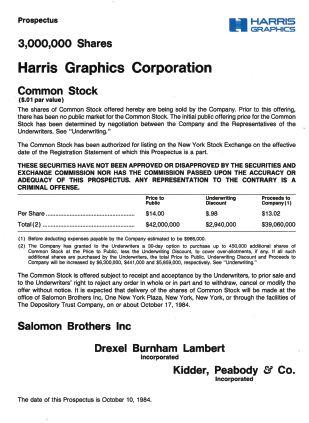
At its Melbourne headquarters, Harris Corporation’s senior management let out a huge sigh. After prolonged negotiations they had finally offloaded the massive Web business to a consortium of senior management, led by longtime Web division employee James Pruitt and several bankers. This leveraged buy-out (LBO) needed to raise the US$225-million sale price included Clayton & Dubilier, Kidder Peabody & Co., Solomon Brothers Inc. and notorious junk bond firm Drexel Burnham Lambert Inc.Yes, that firm that employed the stock pumping trader — Michael Milken. This was to be the printing industry’s largest deal ever.
Can we help you pack?
At the time of the transaction, it was reported the Web division represented about 24 percent of the sales and profits of Harris Corp., but the sale only represented “book value.” An odd announcement when it seemed everyone on Wall Street agreed this division had boasted a growth rate of 16 percent during the last several years. But in 1983 Harris Corp. just couldn’t close the sale fast enough –offering up employees, special deals on land and buildings – anything including, one suspects, helping Pruitt and the boys pack up their offices. Don’t let the door hit you on your way out!
Certainly there was nothing wrong with the product. Harris Web was legendary and engineered iconic presses such as the M200 and M300. The M1000 was the most popular heatset web press ever made. Harris seemed to have a sense that the growth of print was about to decline and moreover, electronics would be a much better horse to have in the race. Looking back now it’s remarkable to see Harris’s foresight. In 1982, Harris Corp. sales were $1.72 billion (all figures in U.S. dollars). Today it is a $6-billion business with no connection to its roots as a printing press builder in Ohio.
Onward and upward or so this new entity, renamed Harris Graphics, thought. These folks owned the world’s largest and most successful web manufacturer in the
world and at a discount. Now laden with debt and fees from the bankers (Clayton – $3 million, Drexel – $1.75 million), the firm struggled. After all, we were coming out of a severe recession and building web presses was an expensive business.
A very short three years later, Harris Graphics would be sold again. Bridled with meagre cash flow, the company sought to go public and engineered an IPO during the summer of 1984. However a scathing article in the June 25th Barron’s newsletter downplayed the exuberance of Wall Street. Harris Graphics was pummelled for being cheeky and greedy boys and Barron’s questioned why anyone would want to pay such a high premium for stock from a company that just a year prior had bought the business on the cheap.
The IPO had friends, namely Ivan Boesky, the infamous stock trader. All the noise drew interest from an odd bedfellow in Chicago. AM International, the new name for the old duplicator business of Addressograph-Multigraph, jumped in and bought Harris Graphics in June 1986 for $246-million, including $100-million of assumed debt. In December 1986, AM was subpoenaed by the Securities & Ex-
change Commission (SEC) for information about AM’s acquisition. This was due to the SEC’s probe into Drexel-Burnham-Lambert’s association with arbitrageur Boesky. Even though AM negotiations were secret, Boesky, it was learned, had already accumulated Harris Graphics stock and held as much as 8.4 percent by late October 1985. What a coincidence.
Have I got a deal for you!
Boesky, Drexel and financier Saul Steinberg had reaped fat profits on the Harris Graphics IPO, helping to pump the stock prior to a sale. Boesky was loosely characterized as Gordon Gekko in the movie Wall Street. It was also Boesky, who in 1986, would implicate Michael Milken before he himself was imprisoned and forking over a $100-million fine. Not to be outdone, the attorney for the southern district of New York, Rudy Giuliani, honed in on Milken for which Milken too went to jail. No accusations were ever brought against these men or AM International.
The ramp-up to AM’s purchase actually began in May 1985 when the billionaire Bass family of Texas made a play for Harris at $17 per share. Bass would go on
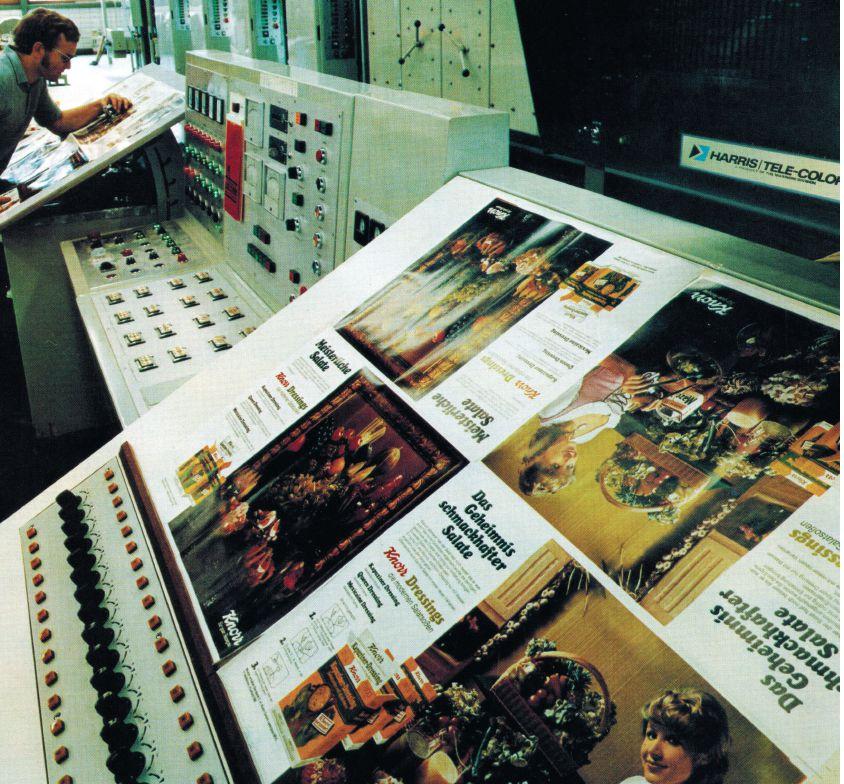
This image of the Harris M1000 16pp heatset web press shows a splicer from the Telecolor control console.
to sell New York’s Plaza Hotel to Donald Trump in 1988. AM swooped in and paid $22 per share ($246 million) in 1986.
AM quickly figured out web press margins weren’t what it hoped. Adding to the misery they had a bunch of other serious technical problems, especially in the Fort Worth plant, that were dragging down the business. There would seem to be a fissure between competence and ineptitude at AM from the start.
Prior to summer 1987, Komori Printing Machinery Co., Ltd. (now Komori Corporation) began to sniff around the AM/Harris business. Komori attempted overtures to AM’s CEO Merle Banta and at the same time quietly started accumulating AM stock.
In fact Komori owned 3.9 million shares or 7.6 percent of AM by the time it turned up the heat. Initially Banta rebuffed Komori. Then came an offer — $181 million cash plus Komori’s AM stock and assumption of $52 million in debt totalling $250 million. Banta and AM gleefully accepted and the house was sold! Or was it? Both parties would go on to sign a non-binding letter of intent.That last bit would prove to be the chink in the armour of a deal. The suave move buying up stock was the only reason AM would sit down with Komori in the first place. Earlier attempts by Komori had been loudly rejected.
By Independence Day 1988, Komori was giddy with excitement over the scoop. Just think, a mere 68 years prior it was Harris who introduced the offset press to Japan. Now Komori, long in the shadows, would own the iconic press maker. Overnight Komori would leap-frog to a place at
the top of the printing game. Takeo Shimamura (GM of Komori’s planning office) explained Komori simply had no excess capacity to produce enough web presses. These comments came just after Komori had recently sold a whopping $55-million press order to France’s Imprimerie Jean Didier. Harris’s Montataire,
France, factory was just what Komori needed for its beachhead into Europe. Shimamura also said no one at Komori had even toured any of the Harris factories yet, but rumours indicated Chairman Ichiro Komori had indeed walked through the New Hampshire plant.
Thrown under a bus...
Mine’s bigger than yours
In August 2018, manroland web systems and Goss International completed the transaction to combine their businesses, creating a new company that will operate under the brand name manroland Goss web systems.
By July 1988, that non-binding contract would raise its ugly head. AM shocked the industry when it announced it had another buyer and for more money! Clearly Banta and AM relished having someone top Komori’s offer. M. Sato, Komori’s senior managing director, was really fuming when he said, “We may conclude to refuse to participate in a process in which only one of two bidders has complete information.” So who was this mystery late bidder?
But here was AM, just barely dodging Chapter 11 bankruptcy in 1984, making money again — in spite of lousy management, buying Harris Graphics in 1986, and now essentially getting its money back by selling the Web division to a pintsize Komori who had sales of $430-million in 1987. AM reported revenues of $688 million in 1987 and its Harris Graphics division posted sales of $326 million.
Heidelberg, after spending $300 million, went on to pour millions more into the Harris Web group, eventually purchasing the Sheridan bindery division from AM in 1996. The M3000 Sunday press came under Heidelberg’s watch. Now up against the mighty Goss, Heidelberg spent another fortune retooling its newspaper portfolio, launching the Mainstream just about the time newspapers started feeling the effects of the Internet.
For a short time it felt like all-out war between Heidelberg’s Horst Schlayer and Bob Brown of Goss. Finally in 2004, bleeding from both the Web and Kodak Digital segments, Heidelberg sold off Harris to Goss and held a 20 percent stake in Goss for its efforts.
So one might ask, who was the real winner in the Harris Graphics business? Clearly Komori was. Had Komori been successful, it surely would have suffered the same fate as Heidelberg. Perhaps the size of Harris could have ruined a much smaller business — too many plants and people, and too much overhead.
An image of the Harris Graphics prospectus sent out to the market for those interested in purchasing shares.
Across the Atlantic Ocean, Heidelberger Druckmaschinen (Heidelberg) – at the very top of the food chain – was also having a banner year. Sales and margins were up and Heidelberg already had a fledgling web program.Were the Japanese thinking they could scoop this prize? Not without a fight! Recent events had also troubled Heidelberg ever since Komori had come out with its Lithrone sheetfed in 1981. Komori went from being harmless to rivalrous. Heidelberg, at that time, was four times the size of Komori, posting sales of $1.2 billion in 1988.
By July 28, 1988, Heidelberg stormed in and threw another $50 million at the feet of AM. All done in secret. Not even Komori knew its offer had been shared with others. AM immediately said yes and handed over the car keys to Heidelberg. Komori attempted a “Hail Mary” and fired off an odd offer of $203 million just for the Harris European operations. Characterized as laughable, analysts could not fathom such a bizarre offer — somewhat likened to trying to buy the two front seats of a car along with the radiator. Between clashing designs and I.P. it was somewhat ridiculous and quickly ignored.
Heidelberg’s deal pushed Komori aside with only a stalking horse or topping-up fee of $5.25 million. Along with the cash, Komori received a promise it could unload the now-unwanted 7.6 percent stock in AM. By 1992 Komori held 6.4 percent and one surmises that on AM’s 1993 foray into another Chapter 11 perhaps Komori was stiffed again, holding worthless shares.
Although Harris was a leader in webbased machinery and excelled at pretty much every segment, the Web business itself was about to nose dive. In 1988, no one saw it coming. Back then it was all about running speeds, automation and more colour.
In an era when there was seemingly endless demand, it was the right time to buy a web press builder. Today the Web business is but a trickle of its former self. Even manroland web systems joined forces with Goss in 2018.
Komori went on to develop successful web presses such as the System 38S and wisely stayed out of the newspaper/Coldset segment other than a 1989 purchase of the French company Chambon (specialty narrow web and gravure) and Toshiba’s Web business. Komori used its own talents to grow the business. And grow it did, now recognized around the world not only for sheetfed but also web.
Heidelberg took a major financial hit when it offloaded Harris and again with its joint venture with Kodak. But they too were smart to exit before it was too late. Today both Heidelberg and Komori are wiser, smarter companies looking at the next wave of print technology: Digital. Komori lost that bloody Harris battle – which was particularly unfair – but ended up winning the war. Sometimes you win by losing first.
NICK HOWARD, a partner in Howard Graphic Equipment and Howard Iron Works, is a printing historian, consultant and Certified Appraiser of capital equipment. nick@howardgraphicequipment.com
Interruptions revisited
Too much talking and not enough listening – are you guilty of committing this cardinal selling sin?
By David M. Fellman
n a recent column, I wrote about setting priorities and dealing with interruptions. That was a discussion of time management strategy and technique. This month, I have interruptions on my mind again, but from a different perspective. Over the last couple of weeks, I have observed several salespeople and a couple of candidates for sales positions committing what I consider to be a cardinal selling sin — interrupting the person they really should be listening to.
I
Too much talk
One of my most disappointing observations is most printing salespeople talk way too much. In fact, I’ve developed a seminar session titled The top 5 ways to talk yourself out of a sale, which are:
1. Too much talk, not enough listening
2. Too many features, too little benefits
3. Pitching vs. storytelling
4. Making it all about price
5. Blind persistence
I plan to write about all five of these selling sins over the next few months, but I want to focus on just the first one today. And I want to stress it’s bad enough most salespeople talk too much — it’s even worse when they talk at the wrong time, and by that, I mean hijacking the conversation when it is the other person’s turn to talk.
The art of conversation
Think about how a conversation is supposed to work. One person talks, then the other. The transition may be affected by a question or by a statement but either way, the ideal conversation is a back-andforth exchange of information, opinions and perspectives.
Your challenge as a salesperson is to fully understand your counterpart’s opinion or perspective. If you don’t accomplish that, you’re just blasting out information and are leaving it up to your counterpart – your suspect, prospect or actual customer – to make the decision
you’re hoping for. Here is a bit of fundamental sales wisdom: The decision to buy from you is too important to leave up to them. Sadly, that’s what most printing salespeople do. They make their presentation and then maybe ask for the order, but they don’t solicit and address the buyer’s concerns or objections as part of the process.
Now let’s consider an even worse transgression, the one I observed several times during the last few weeks. In each of these cases, the buyer volunteered a concern, and one of them even said, “Let me tell you what concerns me.” Before those words were fully out of her mouth, the salesperson said, “Wait, I forgot to tell you about how we’ve been in business for more than 20 years, which means you can be sure we’ll be here for 20 more,” and then proceeded to list several local printers who were no longer in business. The buyer then said, “That’s not what concerns me,” and before those words were fully out of her mouth, the salesperson started talking again, saying, “Well, I think you should be concerned, because printers are going out of business left and right around here. OK, what was it you wanted to ask me?”
At this point, the buyer looked at her watch and said, “We’ll have to leave that for another time. I have something else I have to get to.” Translation — I don’t want to talk to you anymore.
I would never...
I can hear you thinking – I would never do that – but I want you to be aggressively objective and consider whether you might be guilty of a lesser example of this cardinal sin. As I mentioned, I have observed several examples of this sort of behaviour over the last couple of weeks, including one situation where I was listening in on the salesperson’s side of a
According to Salesforce research, 92 percent of all customer interactions happen over the phone, while 85 percent of customers report being dissatisfied with their phone experience. 92%
telephone call, and heard her raise her voice a couple of times, which made me think she was talking over her prospect’s attempt to get into the conversation.
Think back on my comment about information, opinion and perspective. And let’s add one more word to our conversation — relationship. Now a question: Can you gain all the information you need, including your counterpart’s opinion and perspective, and build a solid relationship if you aren’t willing to let your counterpart into the conversation?
Maybe we should add one more word into this conversation — likeability. I’ve stressed before that the buying decision is more about trust than about like, but that only means you need more than them liking you to get them to buy from you. If they don’t even like you, it’s hard to imagine them trusting you enough to buy from you.
One final thought for today. As I mentioned, I’ve observed this same sort of behaviour in people I have been interviewing for sales positions. I bet it won’t surprise you that none of those people got hired.
Bad habits, whatever they are, don’t lend themselves to success. Please give some thought to whether you have this particular bad habit, and if you do, work hard to eliminate it.
DAVE FELLMAN is the president of David Fellman & Associates, a graphic arts industry consulting firm based in Raleigh, N.C. He is a popular speaker who has delivered keynotes and seminars at industry events across the United States, Canada, England, Ireland and Australia. He is the author of “Sell More Printing” and “Listen To The Dinosaur.” Visit his website at www.davefellman.com.
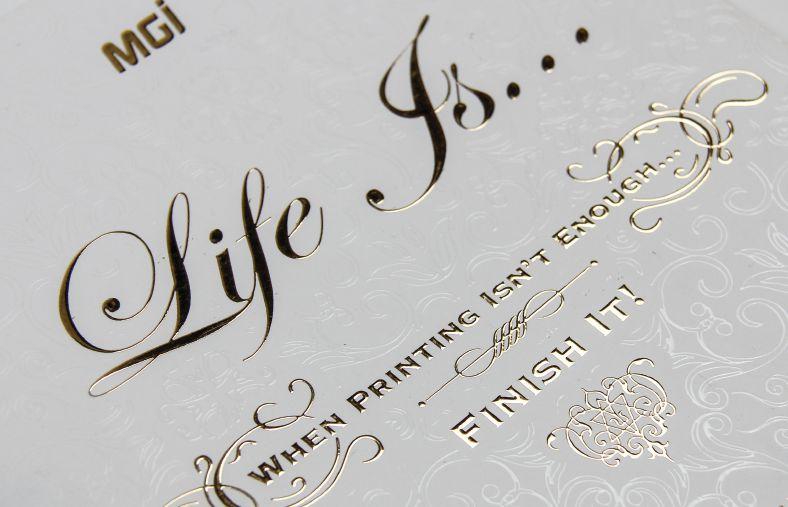
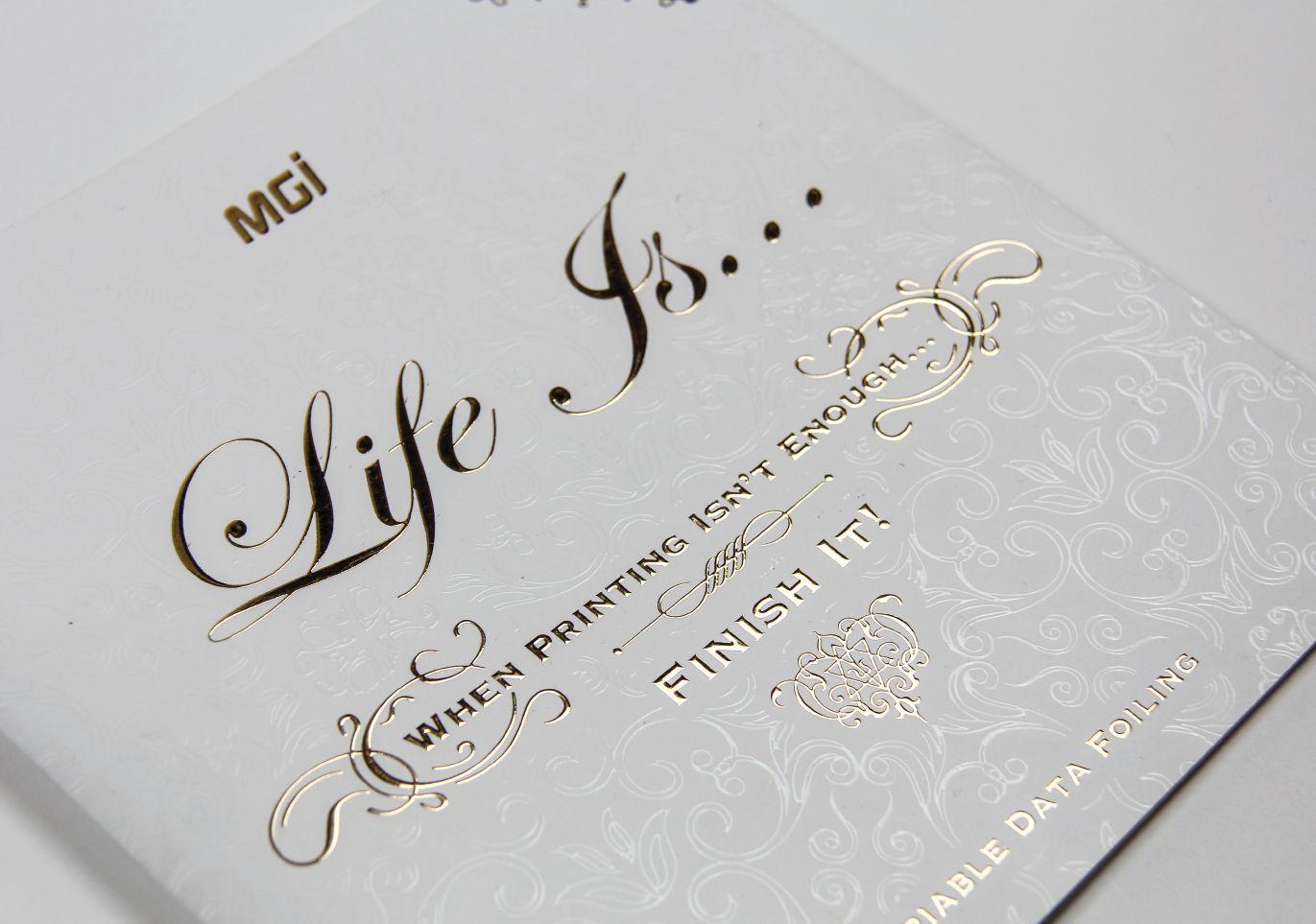
An example of foil decoration using Print Panther’s MGI JETvarnish 3DS and iFOIL S. Using MGI’s inkjet and hot foil stamping processes, the system provides digital spot UV coating in plain 2D and 3D formats, plus embossed and foil textured effects.
POSTPRESS DESIGNS
How today’s printing companies are capitalizing on printenhancement technologies
By Victoria Gaitskell
With an abundance of new print-finishing technologies flooding the market, printers may wonder how to separate the glitzy effects from bona fide business opportunities. To aid in this dilemma, PrintAction turned to an assortment of business leaders for their thoughts on how to leverage new finishing technologies.
New opportunities
“A common theme our clients express is that print enhancements help make a printed product more ‘permanent,’” says Richard Kouwenhoven, President and COO at Hemlock Printers in Burnaby, B.C.
“A strength of print as a medium and how it differentiates itself from digital properties in the marketplace is that it produces an actual physical object that feels neat to hold and is special to the recipient. The renewed energy around using print to do something special is quite exciting for the industry.”
Jeff Taylor, Senior Vice President of Manufacturing and Operations at Hemlock, says in the 1980s and 1990s, it was mandatory for companies to summarize their business successes in a printed annual report. Today Hemlock has seen a resurgence with large companies using print to reinforce their brand, celebrate special events, and orient new hires. For example, fast growing tech companies are now communicating their culture and values to personnel through recurring magazines and perfect-bound books.
Hemlock’s most popular finishing options include UV and other specialty coating treatments and a variety of decorative techniques on coloured substrates, especially for covers. “We research different stocks to add tactile interest and different embellishments to make the product stand out, such as metallic, glitter or holographic foils and coatings – which can be applied overall or heavily in what we call a ‘high build,’ or only in certain spots to add a tactile element, such as grit. Some of our more elaborate projects might combine a dozen of these different methods. They give the piece a higher perceived value,” Kouwenhoven explains.
Hemlock says it has been focused on developing new perfect-bound products since its 2017 purchase of a Muller Martini Allegro Perfect Binder. “We use perfect binding as a way to enhance the look and quality of the final piece and make it unique by adding functions such as pockets, flaps, insets and overhanging covers,” Taylor says. “After doing R&D on finishing equipment and trends, we thought we needed this state-of-the-art equipment for our customers. We can’t figure out why more of our peers in North America aren’t investing in finishing equipment of the same calibre.”
Finishing versus decorating
Jeff Peterson, Executive Director of the Foil & Specialty Effects Association (FSEA) in Topeka, Kansas, distinguishes between more utilitarian as opposed to more decorative postpress operations. “One of the things I’d like to do is create a better definition of some of the terms used in postpress. I hear the term ‘print finishing’ a lot, but I define it as any type of process that could be used after printing. I prefer to use the terms ‘print decorating’ or ‘print embellishments’ for the more decorative versus the more production-oriented bindery operations.”
Peterson adds that in practice the line between production and decorative finishing processes is still blurred. For example, in lamination, if the film you are using has a leather or holographic pattern, then you are decorating the printed sheet as well as protecting it.
At Print 18, Peterson will lead a presentation on the foil-decorating methods available today, how they are performed, and which applications are best suited to each method. “There are new metallic foil-decorating methods on the market today that weren’t available just several years ago,” he says.
Know thy customers
Nikos Kallas, President of Metropolitan Fine Printers Inc. (MET) in Vancouver, B.C., believes the days of ‘buy it and they will come’ are over. “Your clients aren’t going to spend double the money on a new finishing feature just because it looks cool,” he says. “The key is helping your clients be
more successful. Everyone needs to justify their investment in terms of ‘What’s it going to do for me?’ They are interested in new technology that can help them make more sales or build better brand awareness, all within a reasonable cost.”
Kallas recalls a job MET did for a telecom company to sell NFL ticket subscriptions. “It [was] a booklet with a cover made of artificial turf. It was targeted to only 1,000 recipients and very expensive to produce. Although the client reported a high return from the project, they didn’t want to repeat the financial risk by printing it again.
“A lot of the decorative specialty stuff is meant for short run, not long run.”
He emphasizes the need to tailor the offering to the individual client. For example, a client selling toilet paper probably doesn’t need raised UV on the packaging, but may want to try a new synthetic, environmentally friendly wrapping to improve sales. In other cases, “beautiful graphics that pop off a sheet will be worth the investment, if the resulting product makes the consumer spend five more seconds looking at the piece. If a client is printing a black-and-white catalogue, you might convince them to go colour and add PMS [Pantone Matching System] Metallic, spot UV and raised foil.”
Meanwhile, Taylor says Hemlock only invests in new technology if the team is 100-percent convinced they have the volume or can grow the volume of business to support it. The firm also uses an annual advisory group to gain market insight and feedback. “We ask them how we can enhance our services and their environmental standards...and what direction technologically they’d like to see us take, which helps us steer away from a shiny object that might sound exciting but our customers will not support,” he says.
Research before buying
For commercial printers considering the acquisition of new finishing technology, Peterson suggests partnering with a finishing company first that is already running that technology to see the types of potential business it attracts. “Eventually the printer may get to a level where bringing the technology in-house makes sense...or decide the partnership is more cost-effective and it makes more sense to [keep] doing what they do best.”
Before purchasing Canada’s first MGI JETvarnish 3DS and iFOIL S in 2016, Christine Yardley, now President of Print Panther of Oakville, Ont., travelled to Chicago, Ill., to witness it up and running at another printing company. She says the trip helped her gain much greater clarity in terms of how the equipment would physically fit into Print Panther’s own space and the types of jobs it is capable of doing.
Following the acquisition, it took Yardley’s team between six to nine months to
METALLIC INNOVATION
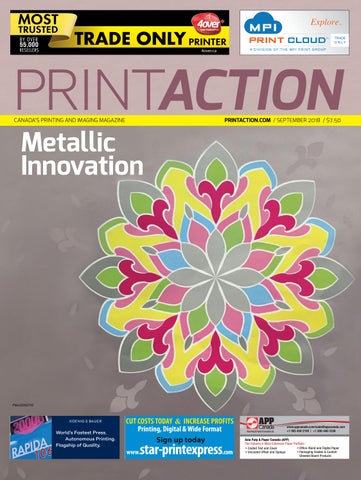
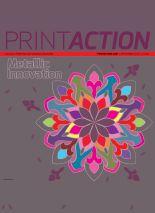
PrintAction’s cover was produced by Xerox on its new Iridesse Production Press using silver and clear dry inks in addition to CMYK. The iridescent background was achieved using 20% magenta on a silver underlay, creating brilliant shimmery hues when layered under CMYK. Silver and clear spot effects accentuate the overall design.
fine-tune their handling of software, graphic design and materials to make the new equipment work best for their jobs. “Now we’re very fussy about the print work we take in from other printers,” she says. “I call it ‘preferred trade’ because we understand our sweet spot and stick to what we’re good at.”
Continuous investment
In Mississauga, Ont., C.J. Graphics’ 240,000-square-foot facility houses North America’s first Scodix Ultra Pro with Foil. Installed in 2015, the system produces foil with run lengths from one up to 10,000, designed to enhance packaging, brochures, business cards, invitations, book covers and other products.
In 2015, the company also acquired Canada’s first Highcon Euclid II+ system, described as the first fully digital cutting and creasing machine for converting paper, labels, folding carton and micro-flute.The Euclid, supporting both conventional and digital press production, incorporates Highcon’s patented Digital Adhesive Rule Technology (DART) and polymers to produce creases, as well as high-speed laser optics to cut a range of substrates.
“It takes a while to build up the market for it, there is no question, but I can tell you we have two major accounts – one out of the U.S. and one out of the U.K. – because of those machines,” said Jay Mandarino, C.J. Graphics President and CEO, in an April 2018 interview with PrintAction “We are very sales driven and we have always invested in technology and it has made us successful. You have to find new stuff all of the time.”
The facility’s advanced digital finishing department also features a wide range of off-line coating devices, and lamination, die-cutting, foil stamping and blind embossing equipment and services.
Growth potential
The market for decorative finishing technology and processes will continue to grow, Peterson predicts. “There are more alternatives out there now to achieve a decorative metallic look or UV coating, so whatever the application, you can choose the right way to go. Printers are looking for ways to separate themselves from competitors [by] creating eye-catching graphics. Labels and cartons are going to continue to be important to brand managers. I think all these factors will help keep metallic foils and coatings relevant for years to come.”
Top: The Feel packaging has a soft-touch coating applied and is foiled stamped with rose-gold foil. Bottom: The 8X covers have a flood dull coating with clear foil and embossing, with folders that have a delustered laminate and are clear foiled and embossed. PHOTOS COURTESY HEMLOCK PRINTERS
FIVE KEYS TO CUSTOMER LOYALTY
While
many factors will affect the outcome of a purchase, these top tips
can help positively impact your customer’s buying process
By Taylor Boerboom
There are countless brands to choose from and just as many reasons to choose –or not choose – one over another. What drives a consumer to purchase an object or service from one company over the next?
Although many factors affect the outcome of a purchase, taking these five actions will help you positively impact your customer’s buying process.
1. Personalize your message
People love to see and hear their own name — which explains why there are so many name keychains at souvenir shops and brands like Coca-Cola that have personalized their products down to the can. Consumers like to feel as if something was made just for them.
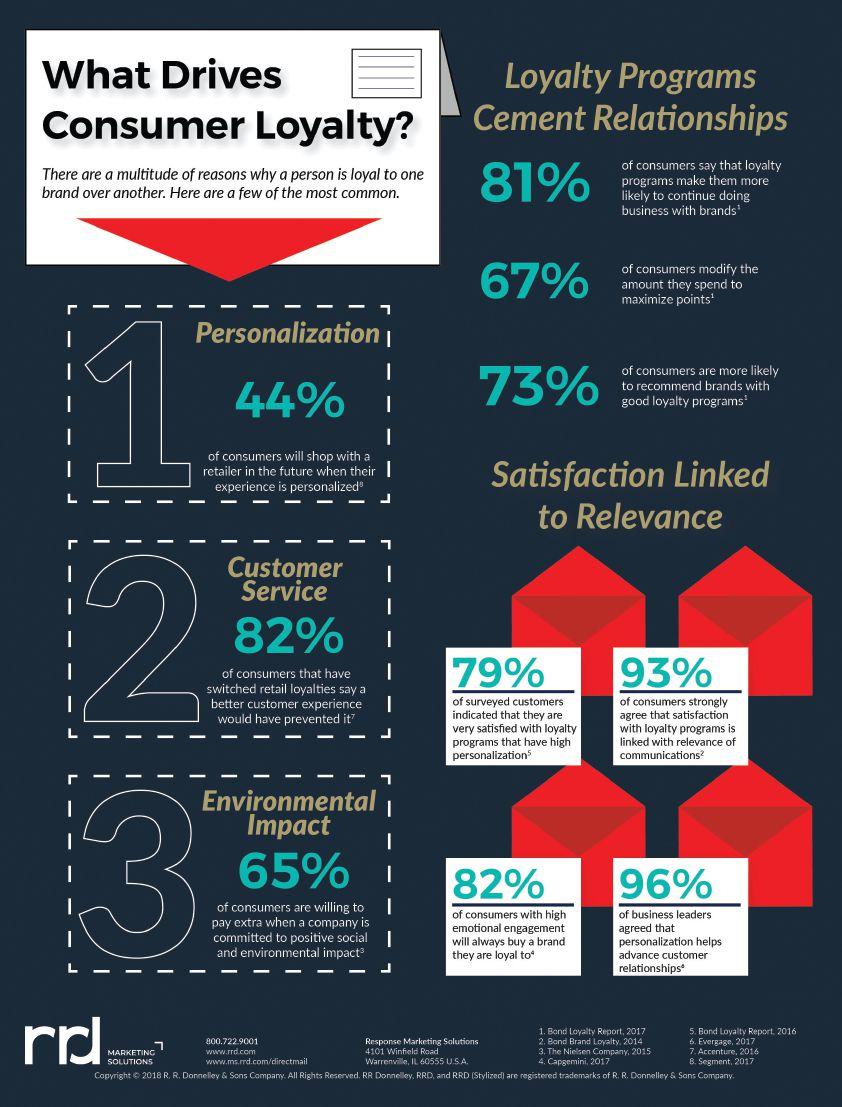
But personalization isn’t limited to the product itself. Now, the experience of purchasing must be personalized. Every action, coupon and touchpoint should be tailored to each individual customer. Consumers aren’t afraid to speak out about what they expect either. In a recent study by customer data platform Segment, 44 percent of consumers noted a personalized shopping experience will lead to another future shopping trip.
2. Improve customer service
Customer service is the voice of the company and is a large part of driving customer loyalty. It doesn’t matter how eye-catching your advertising is or how competitive your prices are, if the interaction between customer and company is poor, your sales will reflect it. More than half of consumers say they have switched
APP Canada’s best-selling paperboard product
Zenith Hi-Brite offers features that are unique to the market – an aesthetically-pleasing 94 brightness and a 7-10% yield advantage allowing for more efficiency in cost and waste reduction. Zenith Hi-Brite performs excellently in printing, folding, die-cutting, and scoring for a wide range of promotional, premium packaging, card and cover applications.
• Triple Coating for crisp reproduction of sophisticated and intricate graphics
• Blue-White Shade for a more authentic, sharper print quality, critical for featuring images of people, consumer electronics and food products
• FDA Compliant for food and pharmaceutical packaging, including an added resistance barrier perfect for fast food packaging that require grease resistance
• Innovative Surface Treatment for high speed printing that can result in 10-13 percent more print impressions
providers in the past year due to poor customer service, an Accenture survey found.
3.
Take a stand about environmental impact
Sustainability is a worldwide effort, and consumers are taking notice, seeking out
more brands that engage in corporate social responsibility. By taking a stand on environment matters, enforcing better business practices, and letting the public know about it, companies will connect with consumers who care about the same things they do. In fact, according to Nielsen, just under 66 percent of consumers
Customer service is the voice of the company and is a large part of driving customer loyalty...if the interaction between customer and company is poor, your sales will reflect it.
Evergage research finds 96 percent of marketing leaders agree that personalization helps advance customer relationships. 96%
are willing to pay extra for products and services that come from businesses that are committed to positive social and environmental impact.
4. Introduce loyalty programs
It doesn’t matter if you sell products, services, tires or makeup, loyalty points have proven to have a positive impact on sales. Eighty-one percent of consumers say loyalty programs make them more likely to continue doing business with brands, according to the annual Loyalty Report by Bond Brand Loyalty. Consider a sandwich shop where every tenth sandwich is free. Most consumers will keep going back to that shop just to be rewarded in a small way.
Not only will they keep coming back, 73 percent of consumers are actually more likely to recommend brands with good loyalty programs, according to the same report. Oftentimes the best advertising comes from happy customers and their positive word of mouth.
5. The right timing pays
Overall satisfaction of loyalty programs is closely linked to content relevance, according to an earlier version of the Loyalty Report. In fact, 93 percent of consumers who strongly agree that communications from a loyalty program are relevant also report high satisfaction with the program. You could be offering a great deal on baby formula, but if the consumer who receives the mailer doesn’t have a baby, it’s a waste of time and money.
By collecting even a small amount of data through loyalty program sign-up forms, you can get to know your customers better, including major life events that may be coming up in their lives. Whether that event is a wedding or the birth of a new baby, targeting your direct mail campaigns accordingly will be key.
Successful business leaders understand a more targeted approach to reaching customers significantly elevates a company’s brand. In fact, 96 percent of marketing leaders agree that personalization helps advance customer relationships, according to Evergage.
Once these relationships are built, you must continue to drive customer loyalty. Most consumers – 82 percent – with high emotional engagement will always buy a brand they are loyal to, finds Capgemini. It’s more cost-effective to retain a customer than to go out and attract a new one. Maintaining the relationships between business and customer will ensure your loyalty programs and communications are relevant.
As we’ve seen time and time again, relevance equals response.
TAYLOR BOERBOOM is product marketing manager for RRD Response Marketing Solutions. This post and infographic were originally published on blog.rrdonnelley.com.
Print 18 preview
Running September 30 to October 2 in Chicago, Ill., Print 18 will feature new technologies and services from more than 400 exhibitors. Below are some show highlights that will be on display.
Tilia Labs
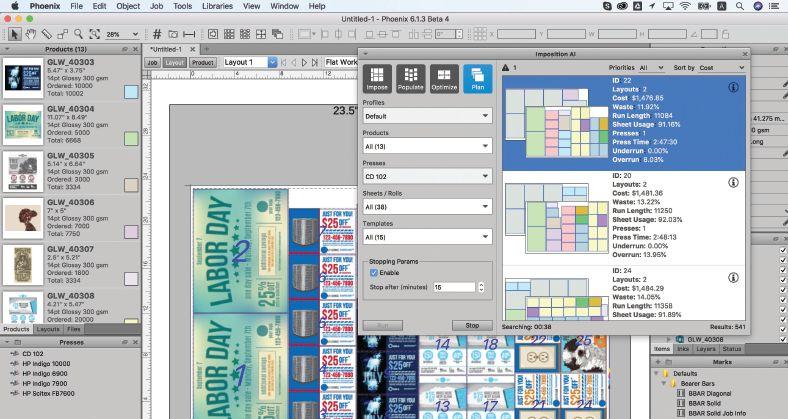
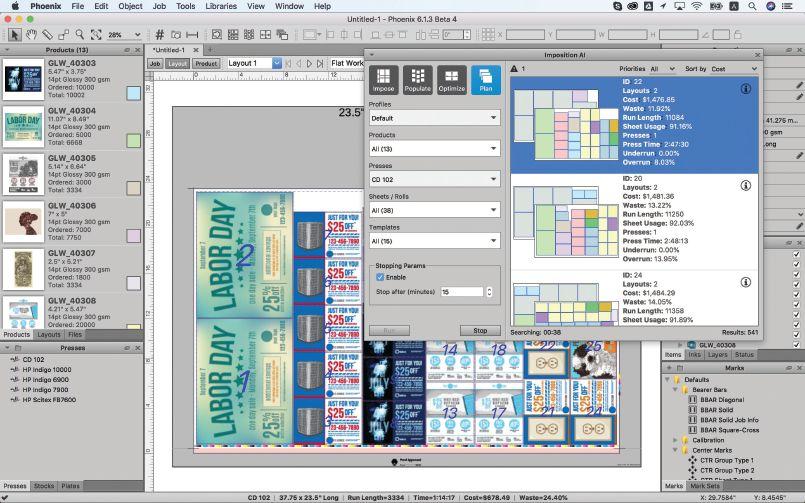
At Print 18, Tilia Labs will offer an exclusive preview of advanced Phoenix features developed for applications such as folding and binding for sheet- and web-fed production including books, brochures and catalogues. The sneak preview of Tilia Labs’ imminent Phoenix 7.0 release focuses primarily on automated postpress planning and imposition. By extending the benefits of the solution to encompass the breadth of folding, binding, stitching, and cut and stack processes, Tilia Labs says it is responding to demand from customers and technology partners. Included among the highlights for highspeed automated planning of folded and bound products are: Folding pattern library with standard folding patterns such as common JDF formats; custom folding – the ability to create bespoke customized folding patterns through an intuitive graphical interface; intelligent product ganging – products dynamically grouped to help support book binding and assembly; optimized lane-based planning for web presses; and flexible grouping rules using custom properties for layouts and strips/lanes. The Tilia team will also highlight additional performance improvements for wide formats in the forthcoming release of Phoenix 7.0, including: Advanced artwork tiling – options for controlling tile sizes, placement order, overlaps, gaps and glue areas; and extended support for finishing devices with addition of ZCC output for Zund systems as well as DXF CAD output for different devices.
Standard Finishing Systems
Standard Finishing Systems will present a range of feeding and finishing solutions, with live demonstrations in die-cutting, perfect binding and trimming, slitting and creasing, folding, saddlestitching,
inspection systems, and roll-fed print solutions. Machines featuring advanced automation and new technology are among the highlights, the company says.
The Standard Horizon StitchLiner Mark III is the latest introduction in Horizon’s line of saddlestitchers, featuring expanded booklet size and increased productivity up to 6,000 booklets per hour. The system can produce landscape-size booklets, 12 x 12-inch calendars, and pocket booklets as small as 4.5 x 3.5 inches. The Mark III boasts fully automated setup, including stitching head settings, with no manual adjustments required for book thickness at the trimmer, delivering higher quality booklets, even for variable stitch length and variable page count booklets, Standard explains. Also featured is the Standard Horizon AFV-566/TV-564 Folder, featuring a buckle plate designed to promote consistent, accurate folds and accommodate a wider range of substrates. The system boasts automatic scoring navigation and double-sheet detection, improved registration, and easier sheet loading, describes the company. Other folders on display include the AFC-746F Large-Format Folder and AFC-566FG Folder, offering a variety of fold patterns at speeds up to 42,000 sheets per hour.
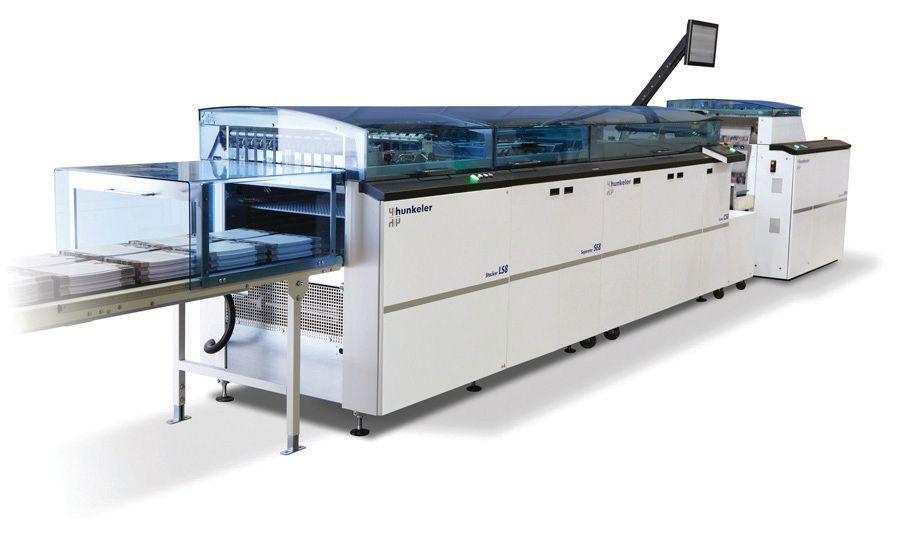
Hunkeler’s 2017 Generation 8 will be demonstrated in two unique solutions at the show. The first is a Roll-to-Fold Solution for direct mail, featuring the Horizon T-566 Folder, as well as the Hunkeler DP8 Dynamic Perforator, WM8 Web Merger and CS8-II Chip-out Rotary Cutter. The second is a combination solution showing Gen8 Roll-to-Stack inline with the Horizon StitchLiner 6000 Saddlestitcher.
Standard plans to showcase the Hunkeler Generation 8 Roll-to-Stack at Print 18.
Aurigma
Aurigma intends to showcase its new InDesign support for its Customer’s Canvas online web-to-print editor at the tradeshow. The new support, Aurigma explains, will allow printers and marketing providers to harness Adobe InDesign functionality to create professional-looking design templates that end-users can personalize online. Previous versions of Customer’s Canvas supported the Adobe Photoshop format, and adding InDesign to the family will allow current and future customers to reduce the learning curve for designers creating templates and publishing them to the website, the company explains. Show attendees will be able to experience the new technology firsthand and receive guidance from the Aurigma team on the uses and benefits of Adobe InDesign support.
Benford UV
The Print 18 preview of Tilia Phoenix 7.0 will focus on automated postpress planning and imposition.
U.K. UV systems manufacturer Benford UV will showcase its latest Dual UV technology at Print 18. The system, Benford explains, incorporates LED, eco and conventional UV and cures low energy UV inks and coatings as well as traditional UV products. With some printers still using conventional drying methods like spray powder to dry inks and coatings, UV curing is an alternative that offers quicker turnaround, resulting in more
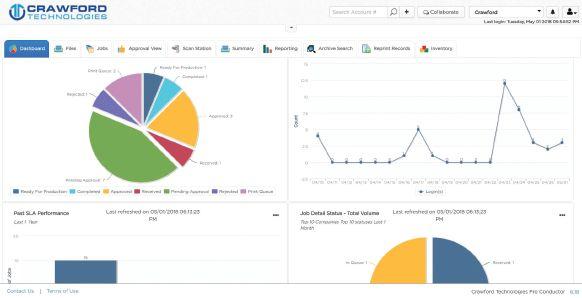
A snapshot of the Crawford Pro Conductor, which is designed to help users plan, implement, manage and monitor automated production workflows.
print opportunities while providing better quality print, says Benford.
Crawford Technologies
Toronto-based Crawford Technologies plans to highlight its Pro Conductor, Pro Inkjet Express and QA in the Cloud solutions at the Chicago show. Pro Conductor, it explains, is designed to make it easy to plan, implement, manage and monitor automated production workflows. With a selection of modules to support different environments that
can be integrated with other systems and processes, Pro Conductor aims to orchestrate every step of an endto-end workflow. The web-based dashboard allows internal operations and customers to view real-time job status and SLAs for increased accuracy and efficiency. Additionally, customizable reports offer a view into a range of KPIs. Meanwhile, Pro Inkjet Express is designed to help print and mailing service providers implement automated workflows for inkjet presses.
The solution supports migrating processes without the need to recompose print streams or go back to original applications, explains the company. It leverages the capabilities of production inkjet presses with support for changing output formats, adding/removing barcodes, combining small jobs or segmenting large jobs. Designed to help maximize equipment capabilities and add in-line colour, the solution runs on all standard platforms, including mainframe, and supports various input and output formats.
Crawford’s QA in the Cloud, based on the same system used for over 20 years by Crawford Technologies for its own software regression testing, automates document testing within a printer’s environment. With QA in the Cloud, Crawford says an unlimited amount of test cases can be set up and continuous regression testing can be managed with on-premises or secure Cloud licensing options, ensuring every document produced is accurate.
DocketManager
DocketManager will present the latest updates to its management
system as well as its integrated storefront solution. The new features include: A newly rebuilt unlimited Customer Web Portals (W2P); management of customers and prospects with a connected CRM; tools to create and manage operational processes such as estimating, order management, production workflow, inventory control, accounts receivable and profit analysis; order tracking through workflow management; real-time shop-floor data collection; and integrated shipping module.
The DocketManager System is a Cloud/Software-as-a-Service based print management solution with an integrated web-to-print system. The system includes a suite of modules for customer management, estimating, production, accounting and e-commerce capabilities. DocketManager aims to help users manage the entire company from one system and leverage the tools needed to stay competitive. It is designed to handle full or hybrid shops that include digital, offset, wide format, label, in-plant operations, inventory distribution as well as 3D and other specialty markets.
Detailing new solutions from Adobe, EFI, Epson, GSE, HP, Kodak, Koenig & Bauer, Konica
Minolta, Mactac, Markem-Imaje, miip, Mutoh and Neenah
Markem-Imaje CoLOS is said to reduce packaging run costs by 15 percent by helping users minimize coding errors.
Kodak Prinergy System
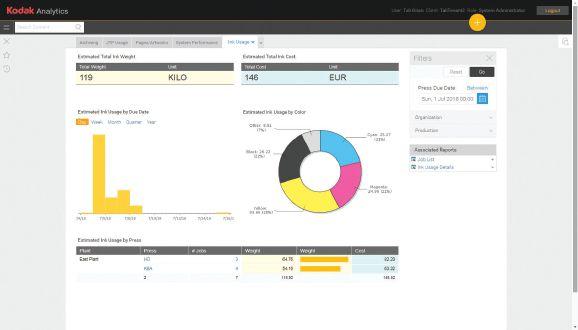
Kodak is releasing its new Decision Analytics Software-as-a-Service offering for Kodak Prinergy System, a solution designed to optimize the use of consumables and drive cost savings for offset printers. The service, Kodak explains, will analyze and predict ink usage on press, helping to improve efficiencies, lower costs and reduce risk. The Decision Analytics – Ink and Plate Usage Service is designed to help printing companies base their business and labour planning, job quoting and consumable purchasing decisions on historical and predictive usage data.The ability
to monitor results by plant, press, product and/or job aims to help users uncover business insights and meet customer requirements while reducing manufacturing costs.
Markem-Imaje CoLOS
Markem-Imaje has released Version 6.0 of its CoLOS information management system, a software designed to provide users with higher uptimes, throughput and compliance in product coding and packaging activities. The CoLOS information management system, Markem-Imaje explains, aims to minimize risk of coding errors, en-
suring compliance with regulations that is said to help reduce overall packaging running costs by up to 15 percent. The company says the automation it provides cuts manual data entry and message data maintenance by 90 percent, while halving changeover time between product run. CoLOS uses structured message design and integrates with information and ERP systems. The company says the new printer per-
formance module helps improve uptime by giving production teams easy access to real-time printer performance indicators and dashboards. Immediate alerts of printer problems can now be sent to mobile, tablet and desktop devices.
Adobe PDF Print Engine
5
Adobe in July 2018 announced version 5 of Adobe PDF Print Engine (APPE 5), extending PDF
Kodak aims to deliver next-level business growth with its new predictive ink and plate usage service for Prinergy Cloud.
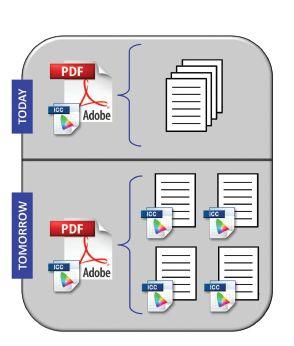
New Adobe PDF Print Engine 5 features include support for PDF 2.0 files such as Page-Level Output Intent.
Print Engine’s colour reproduction with new capabilities to harness the potential of digital and conventional presses.With “ongoing innovations” in ink and inkjet heads, the company explains PDF Print Engine 5 is designed to maximize colour impact in the coming generation of textile presses, industrial print stations, and digital presses for label and packaging production — especially for printing on flat and contoured surfaces including paper, plastic, fabric, metal, ceramic, glass and food products, it says. As well, the new colour features are designed to help strengthen support for Expanded Color Gamut (ECG) digital presses with ink-sets that go beyond the four-colour base of cyan, magenta, yellow and black to magnify the visual and tactile effect of brand messaging, Adobe explains. Agfa Graphics says its Apogee 11 prepress solution will be the first product to incorporate Adobe PDF Print Engine 5.
Epson SurePress L-4533A/ AW digital label press
Epson in August announced its SurePress L-4533A/AW digital label press has been evaluated and approved by Pantone, a provider of professional colour management services and tools, for its capability to achieve 91 percent of the Pantone Solid Coated Colors within delta E of 1.5 CIEDE2000. As such, the SurePress L-4533A/AW is certified to reach its full Pantone coverage capabilities when used in conjunction with the Avery Primax 250TC/ S692N/BG40W/BW6033B PS label media and Epson ink. Designed for prime label converters and commercial printers, the Epson SurePress L-4533A/AW is a six or seven-colour inkjet digital label press for shortrun label printing. Epson explains the 91 percent coverage certification is so wide that Epson regularly uses the XCMYK input profile versus
GRACoL and SWOP profiles made for earlier generations of pre-digital six-colour equipment. The L-4533 uses a four-colour workflow with the RIP and the press determines the orange and green automatically, it explains, helping simplify the operation and save time. The expanded colour selection, Epson says, allows SurePress L-4533A/AW owners to address more applications, such as flexible packaging with photographic images.
miipCam Mini web viewer
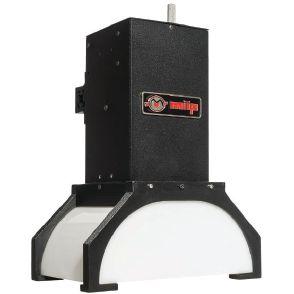
Miip, a Quebec manufacturer of web inspection tools for printers and converters, plans to introduce its latest mini web viewer camera at Labelexpo Americas 2018. According to miip, the new miniaturized model makes it practical to immediately send a replacement camera as needed while reducing installation time. As well, the company notes that miniaturization will increase portability, helping to create new product uses. The miipCam Mini web viewer features LED illumination that works on most reflective surfaces, in addition to “unlimited” position and label row scan, remote control UI for simplified operator mobility, and “distortion-free” image quality.
Miip describes the miipCam Mini as a flexible, ultra compact web viewer that allows flexo press operators to monitor print quality, registration and die-cut.
EFI Fiery DFE for Konica Minolta AccurioPress 6136
Electronics For Imaging (EFI) and Konica Minolta in August announced a new EFI Fiery digital front end (DFE) designed to drive the AccurioPress 6136 series of monochrome digital presses from Konica Minolta. Running on the latest EFI Fiery FS300 Pro software platform, the EFI Fiery MIC-4160 external DFE is the first Fiery server for black-and-white print engines
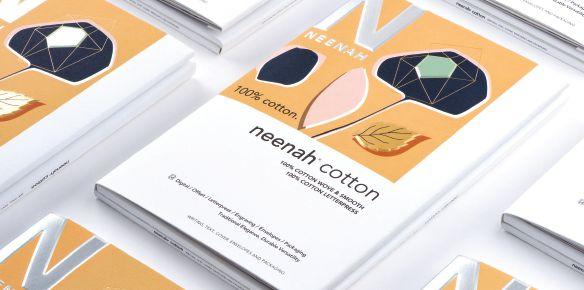
Available in four shades of white and three colours, Neenah describes the new 100 percent cotton papers as the “perfect palette for modern design applications as well as personal and business correspondence.”
to launch on the new NX One server platform with Fiery QuickTouch. Described as being nearly 50 percent faster than previous generations, the DFE is compatible with the new Konica Minolta IQ-501 Intelligent Quality Optimizer for automated density control and front-to-back registration. The latest Fiery Command WorkStation used with the DFE aims to deliver a unified job management interface for all Fiery Driven printers including cut-sheet, wide-format, superwide-format and high-speed inkjet devices. New bi-directional communication provides synchronized, real-time paper catalogue updates that can be entered from either the press or the Fiery Command WorkStation interface, along with new paper tray assignment tools. Optional EFI Fiery JobMaster software available with the DFE is designed to simplify the process for creating manuals and other long documents with visual tools for tab insertion, scanning and image editing, as well as media assignment.
Neenah cotton papers
Neenah says it intends to reinvigorate the cotton fibre paper category with its new Neenah cotton papers, a 100 percent cotton paper designed to sustain letterpress, engraving, and foil stamping, as well as offset and digital printing applications. Available in four shades of white and three colours (Mint, Blush and Gray), customers can choose from a Smooth, Wove and Letterpress finish and a range of available weights. A Letterpress Digital finish is offered in 90 and 110 Cover, engineered to perform on the latest digital printing presses, explains Neenah. The new cotton papers are made from cotton linters, a byproduct that is recognized by the EPA as recovered fibre, making them a naturally sustainable product, Neenah says.
HP Indigo commercial printing capabilities
At IGAS Japan 2018 HP Indigo showcased several new advances designed to help printing companies boost value, quality and automate digital print production. The HP Indigo 12000HD Digital Press now offers a new HP Indigo FM screening technology. Demonstrated at IGAS for the first time, HP Indigo HDFM mode places ink dots in random-like distribution, designed to increase the accuracy of ink dot placement and eliminate the appearance of rosette patterns and moiré, it explains. The result, HP says, is increased sharpness in highly detailed images and halftone text applications. HP says any HP Indigo 12000HD can benefit from this new print mode, particularly professional and wedding photography, and any commercial application with graphical text, such as brochures, posters, invitations and more. HP Indigo ElectroInk Silver for commercial print on the HP Indigo 7900 digital press was also launched. The new ink enables one-pass printing of silver applications, as well as a wide gamut of metallic colours using standard papers without the need for metallic substrates, says HP. As well, brand protection solutions, including the new HP Indigo ElectroInk UVYellow and Blue, and other solutions for anti-counterfeiting, track and trace, as well as process control, are now available.
Koenig & Bauer C16
The new Koenig & Bauer UV coater offers production speeds of up to 60,000 rph and boasts highly automated operation, automatic cleaning and anilox roller change within a few minutes. The coating unit is suitable for full-solid finishing of covers or as spot coating for partial finishing of printed images. The company explains a compact UV dryer is integrated into the super-
2. SUPERIOR TECHNOLOGY — Die crease without a die, then fold and even glue all on the same machine, up to 30 pt.
3. INTEGRATED MODULAR UNITS — Combined in-line finishing: crease, fold, glue, tipping, envelope inserting, ink jetting (Duplex), clip seal (3 sides), mail prep.
4. SAVE ON POSTAGE COSTS
As a Certified Canada Post Direct Marketing Specialist, we get contract pricing reductions.
5. RETURN MAIL PRODUCTS — Customized “Return Mailers” created in-line with “U” or “BOX-shape” remoistenable glue, time perfed applications and envelope formation.
6. MINI-BOOKLETS — Saddle-stitch and trim 2-up booklets in-line to the size of a business card. No need to trim off-line, or do 2 passes.
7. HIGH SPEED EQUIPMENT — High speed Tipping, Folding, Saddle-stitching and soft folding ensuring on time delivery.
SHOP — Die Cutting, Bindery, Data & Lettershop.
structure after the coating unit to allow a wide range of paper substrates to be processed. Koenig & Bauer explains the UV coater processes substrates with a grammage of between 60 to 250 g/m² (38 to 160 lbs). Between 2 and 5 g/m² of coating is applied depending on the anilox roller.
Meanwhile, it says intelligent copy control in the quarterfold makes for a trouble-free folding sequence, and as a result, production conditions are always consistent irrespective of operator skill. As well, copies are slowed with minimum abrasion and aligned in the direction of fold during deceleration, says the company, noting the automatic copy control system is self-adjusting regardless of production speed and copy thickness.
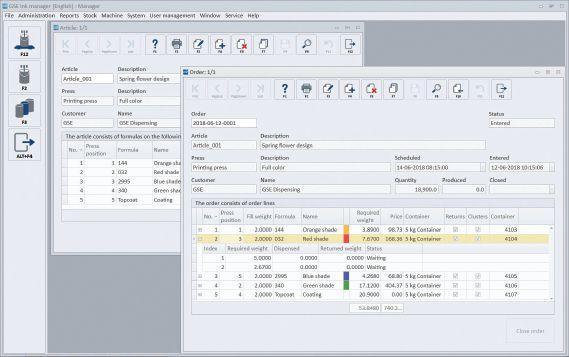
Enhanced GSE Ink manager
Ink logistics provider GSE has enhanced its Ink manager software by introducing an optional module designed to bring improved control of job procedures, costs and better traceability. Introduced in July, GSE Ink manager will help converters minimize ink-related waste, providing improved ink yields, enhanced reporting and business planning, and reduced setup times, the company says. The new accompanying management software module, GSE Article management, features two control elements to help the operator achieve accurate cost estimates when printing a design or article, GSE explains. Additionally, its ink calculator automatically determines the amounts of colour needed for printing each
article. As well as volume, it can also calculate the printed surface area covered by each colour, based on the length, width and coverage factor. GSE Ink manager software is now standard with GSE’s complete range of Colorsat dispensing systems for flexo, gravure and screen inks.
Mutoh VJ-1638UR
In July Mutoh introduced its new VJ-1638UR 64-inch-wide UV-LED inkjet printer for the commercial print, and sign and display markets. Developed for roll-to-roll printing, the VJ-1638UR’s staggered dual printhead design and dual UV lamps on both sides of the printheads aim to provide high productivity while offering UV ink that is VOC-free, low-energy consumption and odourless curing. Also, Mutoh’s Cool Technology is designed to reduce working temperature, which allows printing on heat-sensitive media, explains the company, while varnish ink provides spot varnish and multi-layer printing.
Mactac e-commerce website
Mactac, a supplier of pressure-sensitive adhesives, is launching an improved company website, boasting quick and easy access to product information. Mactac says the new website capabilities include: The ability to search for solutions through product and application categories; a Business Services Portal to track shipments, view inventory and pricing information, request quotes and monitor invoice history; and a dealer locator tool for searching local distributors.
GSE Ink manager software aims to help users minimize ink-related waste, provide improved ink yields and enhanced business planning, and reduce setup times.
Polar: any size/older or newer models (66/72/76/78/82/90/92/107/115)
Horizon-BQ: 220/240/260/440/460
Jason Lisi / Chair of Ryerson University’s School of Graphic Communications Management
In July 2018, Jason Lisi was appointed the new Chair of Ryerson University’s School of Graphic Communications Management (GCM), a leading graphic communications school with 640 full-time students and 30 full- and parttime faculty and staff. Lisi started teaching at Ryerson in 2003 after working in the printing industry, primarily in prepress and premedia roles. Active in critical industry standards and specification development, he currently serves as the Canadian Head of Delegation for ISO TC 130. He also served as Chair of the Curriculum Committee, leading the development of a new curriculum for GCM, now in its final year of being rolled out.
How is GCM unique from other print-related programs?
JL: We are the only degree-granting program [for the print industry] in Canada and only one of a few in North America. This fall we will bring in our largest first-year class ever at just over 190 students. Looking at year-over-year figures, we keep increasing our enrolment as well as application [numbers]. What makes GCM unique is that while it is a four-year university program, it [offers] a hands-on, interactive experience, so students can learn a balance of theory and practical, technical and business. Critical thinking is a big part of our curriculum. From day one, we [motivate] our students to think outside-the-box and be creative with their solutions. In our new curriculum, students can take a business plan course where they [essentially] have to come up with a business plan and prove it can [be implemented] or a thesis-style course to help prepare them for possible future graduate studies. It’s a huge undertaking. What’s exciting is that some graduates over the years have actually taken the business plan they’ve created at GCM and launched businesses.
Why was a new curriculum needed?
JL: There were a couple reasons why we wanted to update our curriculum; the first reason being how we were teaching the courses hadn’t changed in about 25 years. The content was constantly being updated so students were being taught the latest and greatest but the actual way the courses were structured was reminiscent of how the industry was 25, 30 years ago. We realized that if we kept going with this, eventually it would become very difficult to upgrade the curriculum to remain relevant. We did a huge amount of consultation with our advisory council, alumni, students and vendors when [designing] the new curriculum to see what they felt should be included. The goal was to create a new curriculum with built-in flexibility and adaptability, so as the
industry continually evolves, we can evolve with it.
We have always been first and foremost a print school, and with the new curriculum, we’ve strengthened that commitment. In the old curriculum, students didn’t have many choices — the [program] was the same for all students with the exception of their liberal studies courses. With the new curriculum, we’ve introduced concentrations so students can choose specific courses and gain [expertise] in areas such as packaging, advertising or digital printing.
Smithers Pira predicts the global printing industry will reach US$814.5 billion in 2022, increasing 0.8 percent year-on-year from US$785.0 billion in 2017. 0.8%
Any recent investments at GCM?
JL: We’ve recently invested in a number of packaging equipment pieces — one is a machine that will apply top and side labels to little jars; another is a machine that will do foil wrapping for items like chocolate bars and granola bars.
We’re [focused] on expanding our offerings in packaging right now, as we’re now well-established in lithographic printing, digital printing and wide-format inkjet. We’re very fortunate to have tons of support from the industry. What’s key is that these aren’t one-time donations but longtime relationships that really enable us to do what we do.
How would you describe print’s evolution?
JL: From what I’ve seen, printers have gone from specializing in one thing and doing it exceptionally well to having to offer a variety of different solutions, while still doing them exceptionally well. You can’t just be a lithographic printer anymore, you have to be a lithographic printer with wide-format capabilities and digital presses as well as some bindery capabilities and in-house prepress. [Today’s printers] have to be able to offer a client who wants multiple solutions all of those options. It’s really a testament to just how [agile] our industry is. Of course, there will always be some growing pains when [an industry evolves] but in my opinion, the industry is stronger now than it’s ever been.
What excites you most about print?
JL: Everything — when I see what is capable today, it just blows my mind. While the print industry is classified as a manufacturing industry, it’s [unique] in that every single job that is completed is a custom job — there are no two products coming off a press that are identical. It’s a really exciting industry to be in, one that is constantly evolving and it keeps getting better and better. I always look forward to seeing what’s next.
Differentiate your products with the help of Sun Chemical’s full range of coating solutions. Our coatings are designed with just the right finish or resistance to optimize your application. You can also enhance your image with our specialty coatings that engage the senses or provide a functional barrier.
All that with the same high quality, service and innovation you’ve come to expect from Sun Chemical — your single source for inks and coatings.
Request your copy of our white paper, How a Full Lineup of Coatings Can Transform Packaging, at www.sunchemical.com/coatingslineup or contact us at 1-708-236-3798.
ACUITY ULTRA: THE NEW SUPERWIDE STANDARD
Unlike anything currently available, the Acuity Ultra produces almost photographic quality at unprecedented speeds of up to 236 sq. m per hour, ideal for high-end interior graphics. And with a new low film weight and high-density UV ink, running costs are impressively low. Capable of printing on up to three 160 cm rolls simultaneously, as well as graphics up to 500cm wide, the Acuity Ultra is set to become the new superwide standard