7 Packaging machines land in Loire Valley, Keighley, North Carolina, Guwahati, Kuala Lumpur and Czech Republic
PRINTWORK
11 A look at some of the best flexo, label and carton packaging work done over the past year
NEW PRODUCTS
31 Latest packaging technology from Canon, Domino, Epson, Esko, Heidelberg, Highcon, HP, Manroland Web, Scodix, Sun Chemical, Tilia, Xeikon and Zünd
PRINTACTION STORY ARCHIVE
33 Six recent feature stories focused on packaging available online
Mark Andy has acquired Presstek, a global supplier of DI (direct imaging) offset plates and presses, and CTP solutions.
Wilken, CEO,
Presstek’s Zahara waterless plates division, which is not being acquired by Mark Andy, will be spun into a new company, Verico Technology, led by former Presstek CEO Yuval Dubois.
Nestlé in April unveiled a goal to make 100 percent of its packaging recyclable or re-usable by 2025, with a vision to have none of its packaging end up in landfill or as litter. The company intends to focus on three areas: Eliminate non-recyc-
lable plastics; encourage the use of plastics for better recycling rates; and eliminate or change complex combinations of packaging materials.
“Plastic waste is one of the biggest sustainability issues the world is facing today,” said CEO Mark Schneider. James Rowley becomes President of Glenmore
Custom Print + Packaging of Vancouver, BC. He previously served as General Manager, from late 2012, helping to establish the family company as one of Western Canada’s premier printing operations. Founded in 1981, Glenmore now has
more than 130 employees and is one of Canada’s leading independent custom print and folding-carton manufacturers, while also venturing into roll label printing.
Sun Chemical in March 2018 acquired the metal deco ink business of PPG, a supplier of paints, coatings and specialty materials. PPG and Sun Chemical are both long-standing players in the metal packaging industry.
Sun Chemical explains the acquisition reflects its strategy to grow by acquiring businesses that complement its existing operations. The company explains adding PPG will expand both its operational territories and its overall position in the global metal deco market. The
purchase, according to Sun Chemical, creates the widest ink portfolio in the metal decoration market.
Transcontinental in February acquired Multifilm Packaging Corp., a flexible packaging supplier located near Chicago in Elgin, Illinois, employing
François Olivier, President and CEO of TC Transcontinental.
more than 70 people, In April, Transcontinental then reached an agreement to acquire
Coveris Americas for $1.72 billion. Since entering the market in 2014, Coveris represents Transcontinental’s seventh flexible packaging acquisition, which is expected to close in the third
quarter of 2018. Today, the company’s packaging division has close to 1,000 employees and its North American platform comprises seven production plants and one premedia studio.
Graphic Packaging Holding Company
in January
2018 completed the combination its existing businesses with International Paper’s North America Consumer Packaging business. Graphic Packaging owns 79.5 percent of the combined company and will be the sole manager. International Paper will own 20.5 percent of the combined company. Graphic Packaging has assumed $660 million (all figures in U.S. dollars) of International Paper debt. On a combined basis, Graphic Packaging is
Kevin
Mark Andy
now one of the world’s largest integrated paperbased packaging companies with approximately $6 billion of projected revenue and approximately $1 billion of projected EBITDA post-synergies. Graphic Packaging holds two Canadian operations in Cobourg and Mississauga, Ontario. In November 2017, Graphic Packaging agreed to acquire the assets of Canada’s Seydaco Packaging Corp. Shai Lior, an HP Fellow, received the Gutenberg Award from the Society for Imaging Science and Technology “for contributions to the
invention and development of liquid electrophotography printing technology.” Lior is leading technical developments in the Liquid Electro Photography (LEP) process and materials for HP Indigo printing solutions. He pioneered the development of key technologies like on-the-fly colour switching, Intermediate Transfer Member, oneshot process, Binary Image Development processing, and LEP paper handling.
Ondrej Kruk becomes President of Pantone and X-Rite, owned by Danaher. For the last three years, Kruk has been the general manager of
Alltec, a Danaher business offering laser marking and engraving technology under the Alltec and FOBA brands.
At Alltec, Kruk defined and executed on a multi-industry growth strategy. Kruk has also held numerous management roles at Videojet, a global leader in coding, marking and variable data printing solutions. He was instrumental in growing Videojet’s secondary packaging and product decoration businesses into mature global ventures.
Apex International, described as the world’s largest anilox roll manufacturer, expanded its existing distribution relationship with Anderson & Vreeland Canada (AVC). Starting in January 2018, AV Canada be-
came the Apex North America exclusive partner for sales and support for all Canadian provinces for the anilox market. AVC has serviced the Quebec and Eastern Canadian provinces for the last 12 years for Apex.
Kodak this year is celebrating the 10-year anniversary of its Flexcel NX System, designed to enable flexo printers to develop high-res flexo printing capabilities and implement them in a commercial, standard production environment. Kodak’s Flexcel NX System was meant to offer a solution to some of the limitations of the established digital LAMS technology, and push the use of the digital flat top dots in flexography. Flexcel NX Plates allowed packaging printers to
achieve new levels of quality, and removed some of the key variables in plate production, according to Kodak. The company has sold more than 500 Flexcel NX Systems worldwide.
Jason Lisi is set to become the next Chair of Ryerson University’s School of Graphic Communications Management (GCM), starting July 1, 2018. Ian Baitz, the outgoing Chair who began his tenure in 2009, will continue as a professor in the GCM program. After working in the printing industry, primarily in prepress and premedia roles, Lisi started teaching at Ryerson in 2003.
Ondrej Kruk, President, Pantone and X-Rite.
Shai Lior, HP Fellow.
Jason Lisi of Ryerson GCM.
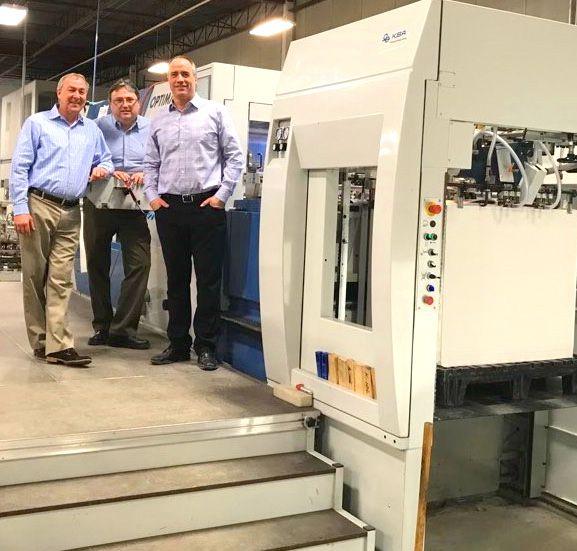
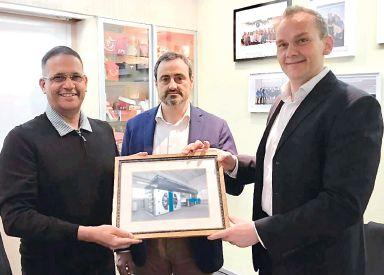
Ellis Paper Box, part of the Ellis Group, Canada’s largest independent producer of folding-carton work, recently installed an Optima 106 K die cutter from KBA-Iberica pictured with (left to right) Tom Fitzgerald, KBA-Iberica manager; Mike Gibson, Ellis Paper Box plant manager; and Dave Ellis, President of Ellis Paper Box.
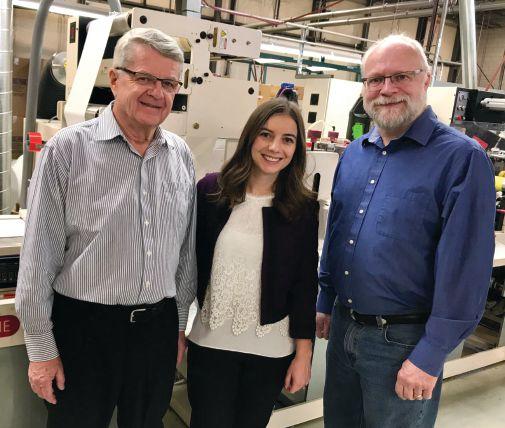
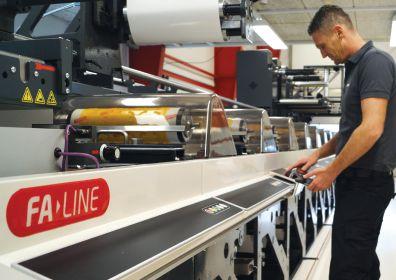
Cambridge Label of Cambridge, Ontario, described as the largest printer of trade labels in Canada, acquired an 8-colour, 17-inch-wide Nilpeter FA flexo press with full UV, pictured with (left to right) Terry Sinclair, President and Owner, Deanne Sinclair, General Manager, and Mitch Whatford, Plant Manager.
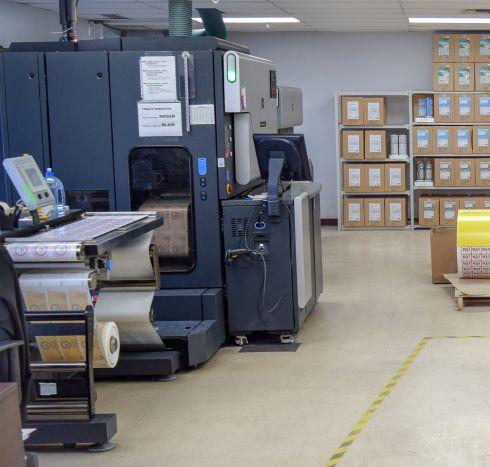
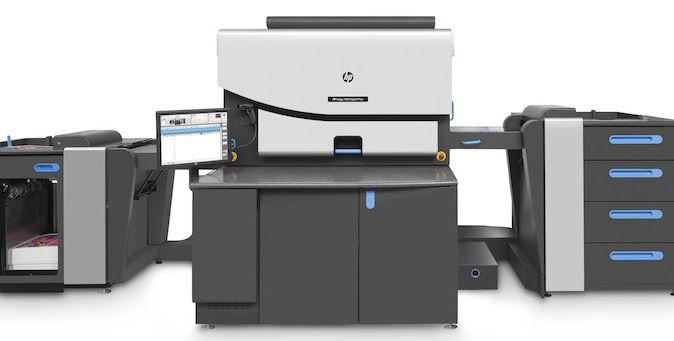
Jet Label & Packaging Ltd., described as Western Canada’s largest producer of labels and printed tape, has acquired duplicates of critical machinery, including the pictured HP Indigo press, and components to provide what the company describes as total platform redundancy at its primary manufacturing facility in Edmonton, Alberta.
Associated Labels and Packaging of Coquitlam
,
Précigrafik of Sherbrooke, Quebec, in mid-2017 became the first Canadian company to install an HP Indigo 7900 press, featuring seven ink units. The firm, which has over 70 employees, explains it has nearly doubled its colour print production capacity since installing the press. Précigrafik has a client base of more than 40,000 small- and medium-sized businesses.
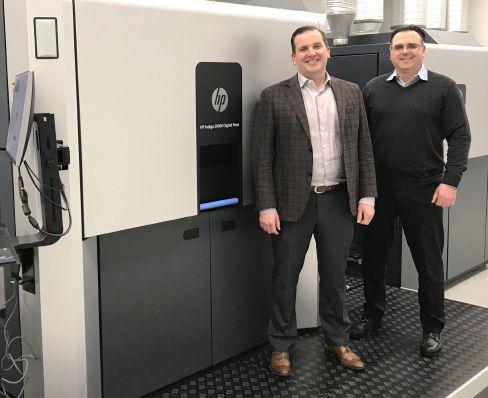
British Columbia, a premium label printing and flexible packaging company, has added a new HP Indigo 20000 press, pictured with Jay Ashworth and Shaun Ashworth. Founded in 1981, the company occupies more than 100,000 square feet with 24-hour-per-day press runs.
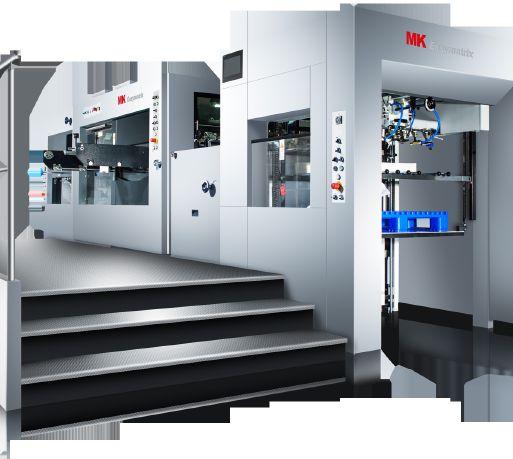
Graphiscan of Montréal, Quebec, in mid-2017 installed an Easymatrix 106 CS diecutter from Heidelberg to grow its packaging department, which accounted for 25 percent of its business at the time of the installation. It was the first company to purchase the Easymatrix in North America to run alongside a five-colour Speedmaster CD 102 with coater.
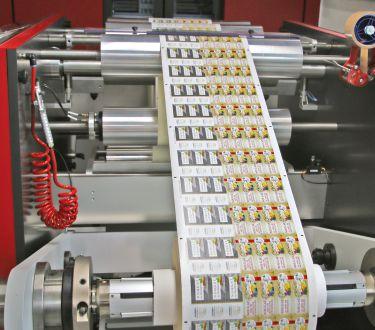
Xeikon CX3 for Loire Valley labels
Anjou Etiquettes of Loire Valley, France, has installed a five-colour Xeikon CX3 to better position itself in the market of high-quality, short-run labels, particularly around versioning work. Since it was founded in 1978, Anjou Etiquettes has built up expertise across the label manufacturing supply chain from graphic design to
Reflex Group’s new 14-colour FA flexo press from Nilpeter will primarily be used for high-end beverage labels, craft beers, wine, spirits, cosmetics and combination labels.
printing and from processing to logistics. The company produces labels on rolls and sheets, as well as non-stick labels, for industries like agribusiness, phytosanitary, cosmetics and wine.
The Xeikon CX3 joins offset and letterpress at Anjou Etiquettes, which manufacturers high-quality labels for the wine industry. The CX3 dry toner technology, however, is well suited for a range of customers who need structured paper labels printed with hot- or
Nilpeter labels in England
Reflex Label Plus acquired a new 14-colour FA flexo press from Nilpeter, for its Keighley site in England, to meet demands for unique designs and embellishments. This will be the sixth Nilpeter press put in the Reflex Label site in a little over 20 years. The Reflex Group was formed in 2002 and
cold-stamped gold foil and raised text.
“We estimate that digital printing will soon account for between 15 percent and 20 percent of our global business,” said Maurice Darré, Chairman of Anjou Etiquettes. “We have already received a number of orders for short printing runs in the cosmetics and confectionery industries. We are now also able to service the market for unique labels used for traceability and in the fight against counterfeiting.”
now focuses on products like self-adhesive labels, shrink sleeves, linerless labels, flexible packaging, inmould labels, artwork, and design.
“The label sells the product. In this ever-growing market, there are more and more craft breweries and distilleries, all looking for shelf appeal, wow factor, and differentiation from competitors,” said Shaun Hanson, Operations Manager, Reflex. “At the same time, labels are getting very compli-
The Xeikon CX3 complements existing printing equipment at Anjou Etiquettes, including offset and letterpress machines.
cated, and the use of multiple print processes is often necessary to meet customer demands with regards to unique designs, high quality and embellishments.”
Reflex Label Plus’ new FA holds 10 flexo units, two hot foil/embossing units, cold foil, and two fully independent RSI screens. The press will primarily be used for high-end beverage labels, craft beers, wine, spirits, cosmetics, and combination labels.
North America’s first Nozomi in North Carolina
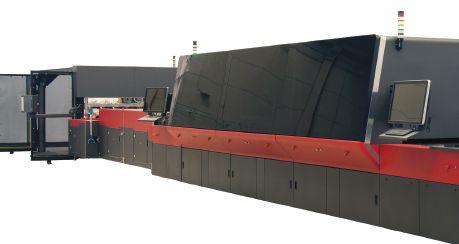
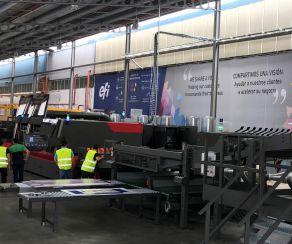
Complete Design & Packaging (CDP), an independent corrugated packaging provider based in Concord, North Carolina, was the first business in North America to invest in EFI’s Nozomi C18000 single-pass LED corrugated press. Installation of the six-colour press for direct-to-board printing
Seven Rapidas for TCPL in India
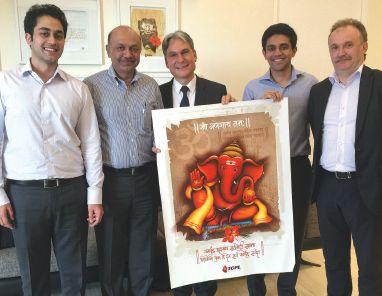
TCPL Packaging, one of the largest packaging printing companies in India, ordered three Rapida 106 sheetfed presses from Koenig & Bauer at drupa 2016, including its second long special press. Now a total of six Rapida 106 presses are in operation at TCPL, two at each of its three loca-
CDP’s founder, Howard Bertram, started the business in 2002. Today, the company offers analogue flexo and litho lamination corrugated printing for retail applications. CDP currently does some prototyping and very short-run digital work on a multipass flatbed inkjet printer, but Bertram
and his business partner, Scott Sumner, aim to use the Nozomi to provide regionalized and customized packaging.
“There are a lot of flexo and litho lamination options out there today, but customers face limitations in their marketing without digital printing, and as a young, independent company, we want to be on the leading edge of that offering,” said Bertram. The world’s first Nozomi C18000 was in-
stalled in Spain. The 71-inch wide press is rated for speeds of up to 246 linear feet per minute with throughput of up to 6,600 2.6 x 3.3-foot boards per hour.
tions in Haridwar, Silvassa and Guwahati. A seventh press was scheduled to arrive in early 2018. The company was established in 1990 and today employs a workforce of 1,200.
The Guwahati plant received a special press with six inking units, coating tower, two intermediate drying units, and a three-fold delivery extension. It has a UV function, pile logistics and has been set 450 mm higher for is scheduled to begin in the fourth quarter of 2017, with production operations going live by the end of the year.
packaging production. The newest Rapida 106 is the company’s second with a such a special configuration. In Haridwar, a long Rapida 106 with eight inking units, coating tower and extended delivery, as well as a cold foil module, has been in production for two years.
The six Rapida 106 presses in operation at TCPL have a total of 50 printing and finishing units.
The EFI Nozomi C18000 single-pass LED inkjet press is aimed at corrugated board production.
The management of TCPL and KBA’s Dietmar Heyduck (centre) present the first print on the new Rapida 106.
EVO in Kuala Lumpur
Interpress Printers, which focuses on the printing of fast-food packaging from its headquarters in Kuala Lumpur, recently expanded into new premises in the Malaysian capital. The company opted for a new flexo printing line from KBA-Flexotecnica, a
subsidiary of Koenig & Bauer AG. The EVO XD press is scheduled to come on stream by the end of the year. Interpress was founded almost 10 years ago and already has almost 200 employees. In late January 2018, SCGP Solutions of Singapore, which belongs
Asahi shift for Colognia Press in Czech
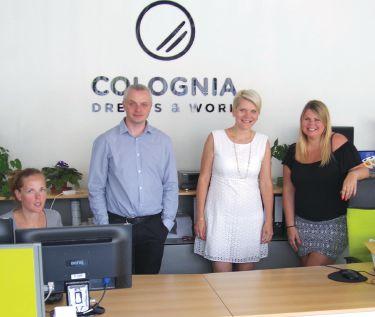
Czech-based Colognia Press claims to have achieved 100 percent improvement in press uptime by switching to Asahi Photoproducts’ platemaking system, including the AWP water-washable plate featuring Pinning Technology for what the company describes as clean transfer printing.
“With the flexo plates we were using, we had excessive stop times to clean or replace plates,” said Bohdan Holona, Manager of Desktop PublishColognia Press’ work with Asahi’s Pinning Technology for Clean Transfer was to be featured at Labelexpo Europe 2017.
to the Siam Cement Public Co., acquired a majority stake in IPP.
Its new EVO XD, with its eight printing units, a new dryer generation and a newly developed coating unit, includes the fully automatic impression control system A.I.F.
the
ing, an in-house design studio at Colognia. “For long-run jobs, this meant half of the time printing the product was downtime. Even for shorter runs, we were not happy with the colour consistency from the beginning to end of the job. Changing or cleaning the plates can often negatively affect the quality of the product.”
Colognia Press uses a tool from Plantyst to gather real-time data. “This allowed us to see any machine’s pro-
duction efficiency in real time,” Holona stated. “So we know for absolute certainty that these results are accurate.
“Our press uptime was 20 percent to 25 percent with our previous plates. Now we are seeing uptimes of 50 percent or more on most days.”
Pinning Technology, explains Asahi Photoproducts, is designed to enable a clean ink transfer and prevents ink accumulating on the plate surfaces and shoulders in screen areas.
After signing
contract (left to right): Ratha Kerisnan, Managing Director IPP; Andrea Dallavalla, KBA-Flexotecnica; and Andreas Friedrich, Managing Director, KBA Asia-Pacific.
Products need to stand out in a crowded market and your customers need exceptional packaging designs which can be rapidly changed. Our digital technology streamlines your workflow and makes short run printing faster and more cost-effective - allowing customers to test and perfect their packaging.
Want to learn more about packaging & opportunities for your business?
We’ve got you covered. Canon has put together this special feature on how packaging is changing and, most importantly, what print opportunities exist for your business.
Océ Arizona® 6100 High Flow Vacuum Series
Easily pull down porous & warped substrates for:
• Short Run Packaging
• Package Prototyping
• Printed Plywood Panels
• POP Displays
• Hoarding
Océ ProCut Series with Auto Pilot
Fast forward finishing by reducing operator intervention with the Auto Pilot option that automatically identifies and initiates processing of all jobs placed on the cutter.
CHECK IT OUT NOW
RIGID
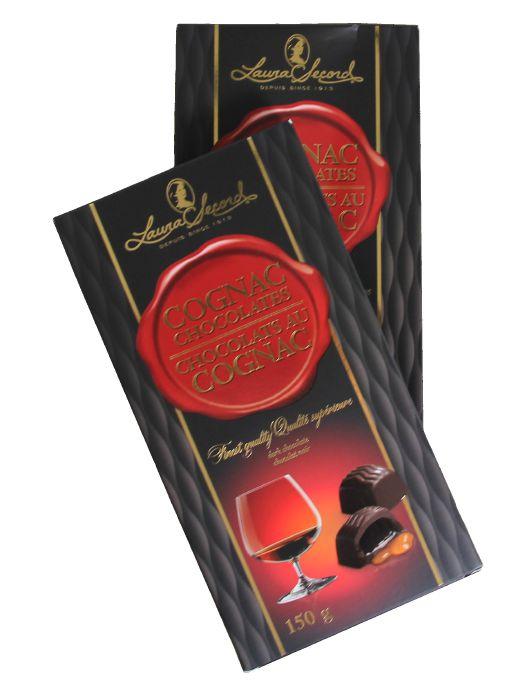
Canadian Printing Awards 2017, Gold Production Challenge: The Laura Secord project was a 22,000 run on a 5-colour Heidelberg CD press using 18-point SBS and a quality level of 250 lines per inch. The four-colour process job features matte and spot-uv varnishes, as well as gold-foil stamping. Impression Paragraph explains Laura Secord was after eloquent packaging to make its product distinct, which was achieved through the use of a rich black and detailed hot stamping. The company also had to carefully work with fonts to achieve impeccable results, which was helped by its existing food-box certification.
Rigid Packaging
Gold: Laura Secord Chocolates, Impression Paragraph
Bronze: Canadian Club Premium Original 1858, CJ Graphics
LABELS OFFSET
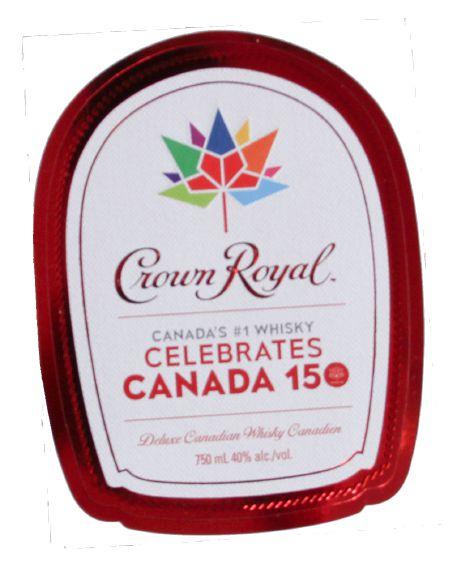
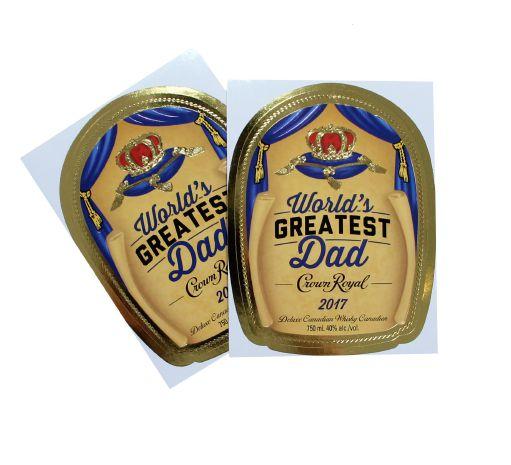
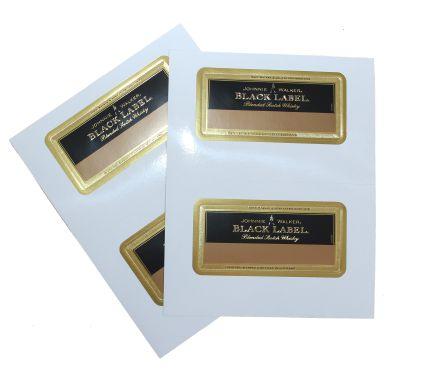
Canadian Printing Awards 2017, Gold Production Challenge: This special project for Crown Royal was produced in a limited 5,000 piece run to help celebrate Canada’s 150th birthday. CJ Graphics explains the highlight of this project, as well as its greatest production challenge, was in producing its red-foil stamping. The same approach was taken in producing Crown Royal’s Greatest Dad project (Silver), while CJ Graphic swept the offset labels category with its Johnnie Walker Black Label work.
Labels, offset
Gold: Crown Royal Celebrates Canada 150, CJ Graphics
Silver: Crown Royal World’s Greatest Dad, CJ Graphics
Bronze: Johnnie Walker Black Label, CJ Graphics
LABELS FLEXO
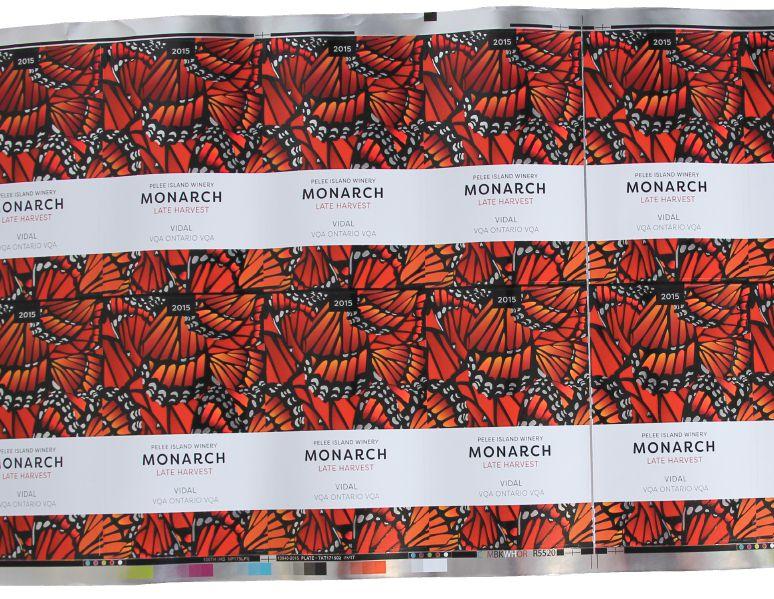
Canadian Printing Awards 2017, Gold Production Challenge: The Monarch Late Harvest project was run on a Nilpeter FB5500 at 4,500 metres, with the goal of creating an illusion of motion. The label was printed on a silver metalized paper for the wing tips to add a dash of shine, explains Artcraft, subtle enough to look like they are dancing. The white ink had to be near perfect in laydown to cover the naming panels, as if it were white semigloss paper; and then behind only the CMYK gradations of orange and Match Colour for the Monarch wings. An overall flood of imprintable matte UV was applied and finished off with a tactile rotary silkscreen.
Labels, flexography or gravure
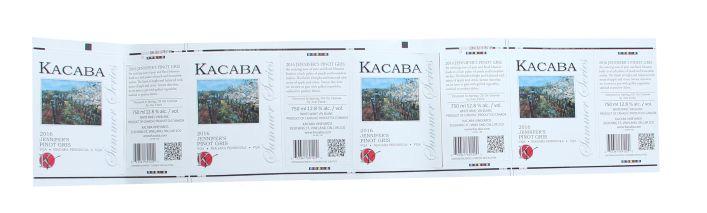
Gold: Monarch Late Harvest, Artcraft Label
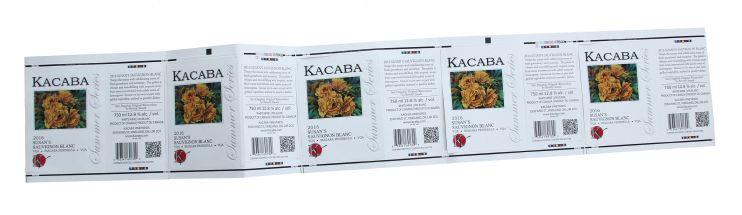
Silver: Kacaba Susan’s Sauvignon, Artcraft Label
Bronze: Kacaba Pinot Gris, Artcraft Label
GRAVURE SPECIALTY EFFECTS
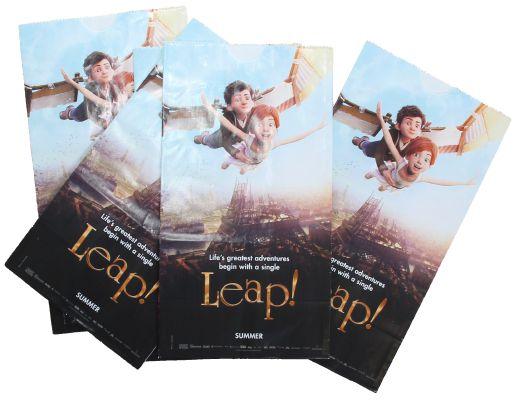
Canadian Printing Awards 2017, Gold Production Challenge: The Leap Popcorn Bag project, produced in partnership with Color Ad of Winnipeg, was run on a W&H Heliostar at 26,000 metres. Schawk explains the promotional bag encompasses the full tonal range of gravure printing, while holding extremely small reverse type legibly and in register. Schawk also points to the challenge of holding colour consistency and gray balance throughout the run.
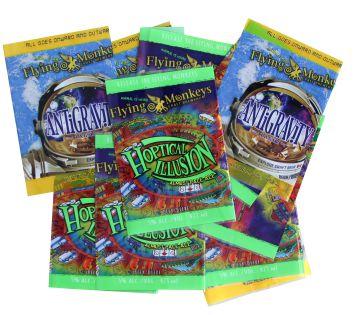
Canadian Printing Awards 2017, Gold Production Challenge: The Flying Monkeys Hoptical Illusion project, produced in partnership with Safety Seal, ran on a 26-inch Aquaflex at 8,000 metres. The label uses a registered holographic treatment, which created a challenge in maintaining a tight register during the printing process.
Flexo & Gravure
Gold: Leap Popcorn Bags, Schawk!
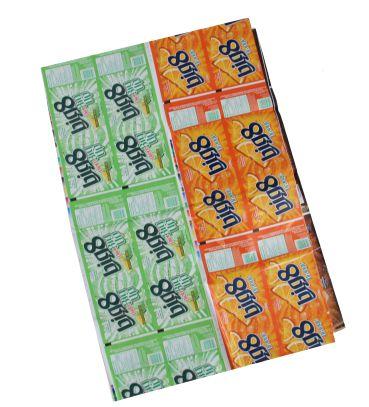
Silver: Big 8 Beverages,
Farnell Packaging
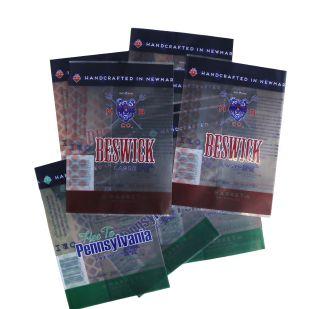
Bronze: Beswick, Schawk!
Specialty Effects
Gold: Flying Monkeys, Schawk!
Tech Insiders, critical trends in digital and offset packaging technologies
By Jon Robinson
From flexible to carton work, four industry leaders share their insights on the world of packaging and how printers can leverage modern sheetfed offset and digital (inkjet and toner) presses for today’s packaging sector, including:
Roy Oomen
HP Indigo Category Leader, North America, HP
Ed Pierce Product Marketing Manager, Fujifilm Graphic Systems
Sean Springett CEO, Manroland
Sheetfed North America
Brett Rogers Technical Sales Manager, Komcan
Roy Oomen / HP Indigo Category Manager, North America / HP Inc. / Atlanta, Georgia
What stands out about the Indigo 20000 in terms of capabilities for digital packaging?
RO: I think what stands out about the Indigo technology, in general, is the one-shot process on the packaging presses, and the same on the label presses. That means all of the colours
are built up on rotation on a blanket and transferred in one pass. With most print processes you have multiple passes for the colours and the material may actually be contorting or changing because of temperature or whatever. We transfer all of those colours in one pass.
Why is Pack Ready important for HP’s packaging interests?
RO: We found a way to combine HP ElectroInk and laminate it to a piece of material, without an adhesive, and achieve a really high bond. And by the way, achieve it instantaneously. We call it zero cure time.
What typically happens in flexible packaging whether you are laminating a water-based or solvent-free or solvent-based sheet, you have a wait time that can be anywhere from a day, a day and a half, all the way up to five days.
How does the 20000 address spot colours and how important is ElectroInk White?
RO: With the Indigo 20000, we had two stations of white ink feeding into one ink tank because there is so much white ink being utilized… As far as
ElectroInk and spot colours, it is really no different than any other Indigo digital press model. Most customers will often run orange and or violet on say 20 or 15 percent of their jobs. The great majority runs are on a four-colour process and when there is a need for a specific spot colour we have the ability to mix that and so we can achieve 97 percent of the Pantone book… The system also has a spectrophotometer – as do all of the Series 4 presses, 12000, 20000 and Indigo 30000 – and we leverage that to make sure we maintain consistency. Most of the time when we have flexo printers come in [to HP’s Atlanta facility] they are blown away by the capabilities… There are just things we can do with photographic images, highlights, drop shadows and things of that nature that are very hard for them to do in flexography.
Can the 20000 leverage HP’s Enhanced Productivity Mode, with CMY printing?
RO: I worked with the narrow-web
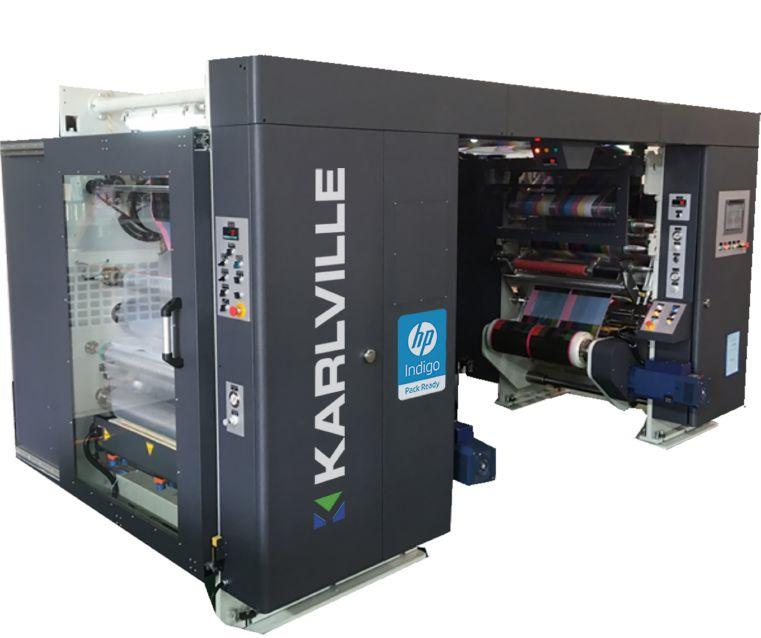
HP in partnership with Karville has created the critical Pack Ready system to handle packaging output from digital press systems.
series at the very first beta site of Enhanced Productivity Mode, going back to an older generation of presses, and 20000 is no different. From my point of view, it is probably a capability that our
customers could leverage even more… When you compare three and four colours, it is a 33 percent productivity increase. It is significant and all Series 4 presses have it.
What impact has the Indigo 30000 press already made on the folding-carton sector?
RO: I did the beta-launch agreements on the 30000, so I am familiar with it…
We seem to do really well in a couple of areas: health and beauty, and pharmaceutical, so a lot of cartons where you can get at least a 4-up on a B2 press sheet.
And we have also seen a lot of adoption in the speciality-card business, loyalty cards, financial cards. We have a number of customers who have added second units, but in the beginning our customers had to learn a lot. In many cases, these were brand-new customers who were getting their first digital press.
What growth does HP see in the packaging sector when it comes to digital printing?
RO: We typically look at print volumes and I can tell you they are growing rapidly… When you look at the statements that Alon Bar-Shany [VP and GM of HP Indigo] has made, our vision is that label and packaging will become about half of our business and we are on this quest to become a multiple-billion-dollar business unit.
Our investment is deep… and you will see us continue to expand. For instance, I never thought we would be at a point where we could do retortable packaging, which we have been able to achieve now on the Indigo 20000 with specialty coating. It is very demanding flexible packaging.
Our customers see this investment from HP. Our expectations around packaging are high and that goes for all of the packaging markets – corrugated, flexible packaging, folding carton.
– Suitable for all packaging/POP
– Robust, multifunctional tooling
– Now with Over Cutter Camera for highspeed, one-shot register mark capture
– Automatic/robotic load & off-load options
– Modular, upgradeable, easy to use
Available for personal demonstrations any time in Franklin (Milwaukee), WI
Ed Pierce / Product Marketing Manager / Fujifilm, North America, Graphic
Systems Division
Why is the J Press 720 unique technology?
EP: Fujifilm really blazed the trail in the production inkjet segment, being the first to really develop the technology and refine it. The generation that we see today is producing an offset or better than offset quality. The adoption rate has excelled over the past 18 to 20 months.
There was some early success with the first generation when the technology was introduced in 2008. The first generation then debuted in 2011, and then the second or third generation was placed in our demo centre in late 2014.
But it was really being brought to market in the mid-2015 range when we truly started going to market and having awareness activities going on. And the adoption rate has gone from like
two sales over a period of two years to where we are now installing our 31st [J Press 720 system] in North America... and we have a population of over 100 globally.
What changes have been made to the press platform?
EP: There were some significant changes made. There were some customers who in good faith invested in the technology early on and most of those customers received a free of charge upgrade from gen-1 to gen-2 on Fujifilm’s dime.
Some of the technological upgrades and advancements that done were based on the improvement of variable data printing. The original generation ran variable data at half speed. And that was corrected to run at full speed, at 2,700 sheets per hour, with abso-
lutely zero delay.
[The new generation] also introduced our technology for variable in using a barcode, where we place a barcode on the front side of the sheet. It has variable on the first side and when it is turned in real time inline in the paper path that barcode is scanned.
The data resides on the server... in about 1.3 seconds that data is at the print heads and the ink is being jetted with the correct information to that reverse side.
How are printers are leveraging the J Press in packaging?
EP: We have been seeing a growing install base in the folding-carton market as well. In the early days that was not an area that we focused on. We wanted to first get some traction into the commercial space but we have a lot of
factory is a commercial version running a 3-point to a 14-point stock. However, with a couple of parts – and literally it is just a couple of parts – your configuration would become what is referred to as the F, or folding-carton, version of the J Press [as opposed to the commercial J Press 720S version]. This version can run an 8-point to a 24-point stock.
What key trend is driving the carton market for digital presses?
flexibility to address the folding-carton market, so we have been seeing very nice growth there as well.
Why is the J Press making an impact in the traditional folding-carton space?
EP: Some of the reasons why are higher fidelity in colour, repeatability, the ability to reproduce colour in a larger colour gamut than what you are going to get off of competitive technologies, and then the flexibility of the ink.
We are running an aqueous-based pigment ink. UV inks and toners tend to crack when you cut, crease and fold. Aqueous-based ink does not. It can fit into your existing post-printing operations. You do not have to retool.
These are key areas for J Press gaining a foothold in packaging.
How is the J Press configured, or perhaps reconfigured, to handle packaging work?
EP: Every press that comes from the
Understanding the areas where the J Press fits, can it then handle most carton applications?
EP: Yes – We do not hear requests for anything more than 24-point stock. We see a lot of 18 to 20 point. We do see some 24 point. We have customers running dedicated presses to folding carton with 20 to 24 point.
One of the advantages of this is that, while we have customers with presses dedicated to the folding carton space, we also have some who want to switch it back and forth, which is flexibility that the J Press provides.
EP: The trend is toward shorter and shorter runs… we are finding the trend in the commercial space is not different at all from the trend in folding carton space. It is being driven by a lot of the same needs, so boutique offerings for short-run folding carton work, local and regional packaging, test-market packaging, working with agencies, end of life.
When you look at the folding-carton world... I will share an example from a customer where they will have an average run length of 1,300 folding cartons, for a box of pasta. That very same box will have a 156 different SKUs of the same box, but it is just printing a different brand name on that very same box.
So [this customer] has an average run length that is extremely short at 1,300 but it is 156 different SKUs. You cannot do that in the traditional offset world.
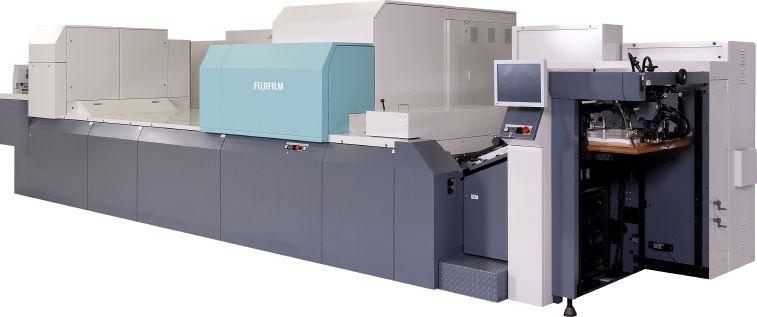
Fujifilm’s new generation of the J Press 720 was introduced in 2015, as the pioneering platform now has more than 100 global installs.
Sean Springett / Chief Executive Officer / Manroland Sheetfed North America
How can commercial printers enter folding-carton market?
SS: I would suggest using caution is prudent, especially since the landscape is evolving through consolidation in the packaging segment. I can only speak to how I have seen this transition occur in the past and, at best, the migration to package printing from commercial is a gradual event. A commercial printer must consider their existing niche served and what aptitude and skill-sets they already have that can be put to good work in making a leap, or dipping their proverbial toes in the packaging arena.
Major and medium players in packaging are highly skilled and tooled. If a commercial printer is attempting to compete in the volume business, they need to retool their factory, areas like sheeting, structural engineering, die cutting, gluing,
and die making is typically more foreign to commercial applications, at least by scale.
Are commercial printers focused on packaging growth?
SS: I believe a stronger concept in the years prior; the trend was always about complimenting, be it packaging or any number of additional services. We see commercial printers furthering their niches, not often in packaging. I have been amazed at how talented many of the independent commercial operations have been in entrenching themselves with their customers. The evolution of many commercial printers into marketing firms has been a more successful trend in my opinion.
The technology advances in IT, the ideology of print being a compliment versus the single primary
export of a commercial printer, is intriguing. Many have evolved into a more savvy business model with multiple revenue streams. Couple this with the marriage of sheetfed offset and digital. Whereas digital has crept into what was considered traditional offset, the newest sheetfed offset technology is creeping into what was always regarded as short-run digital.
What is the complexion of today’s short-run carton market?
SS: The ideology of volume versus short run is almost dismissive in regards to larger packaging firms. Many of them, whether global, national or an independent viscerally defend the market space regardless of run specifics. The larger firms equip themselves to handle the shorter runs but often struggle with big business problems
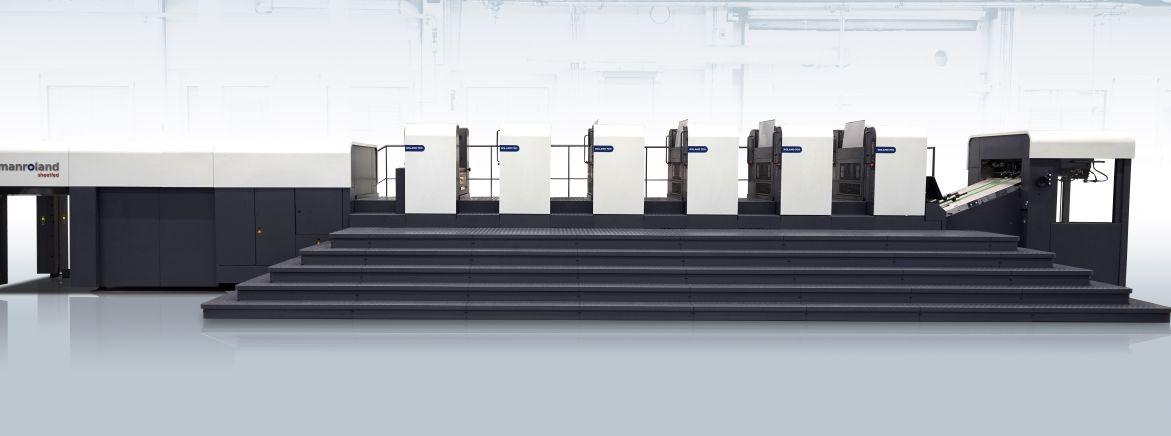
The Evolution is built on a brand new platform from the ground up to address the growing trend in 40-inch offset packaging work.
where some of the smaller independents shine in this arena. This is the space a smaller independent packaging house or a commercial printer can capitalize on.
What type of automation do you need to focus on short-run carton?
SS: It is less about the individual process of the equipment and more about the overall operation of a
system. In today’s terms, it’s about transparent productivity. The ability to measure the performance of the asset, being a sheetfed offset press and determine how to optimize the performance... the ability to provide the information is less important compared to being able to disseminate it and help the printer improve productivity and fully utilize the asset.
What
market activities are driving
folding-carton work?
SS: Predominately food products for the folding-carton market, with increased demand for convenience-oriented products for the volume side of the business. Increased demand for bespoke-oriented products such as cosmetics and specialty products has caused the B1 format to see an increase in sales.
Are packaging press sales growing or is it more a decline in commercial press sales?
SS: When new offset high-performance equipment becomes operational, optioned and equipped to the highest automation level, I believe we will see a little more offset in the digital sphere.
At the same time, new offset and new digital can do the work of two or three of its predecessors. By sheer economics, press sales will decline regardless; I favour the opinion that our market is far more variable in nature.
How far off is inkjet from making an impact on short-run carton?
SS: Speed is the Achilles’ heel of inkjet. In order for inkjet to gain a more mainstream focus, it will need to increase the sheets per hour and continue to economize the ink costs.
How can commercial printers enter or grow their carton work?
BR: I think that everyone is recognizing that one of the keys to growth is to diversify to a certain degree. Be more to your customers. I think that commercial printers need to realize, and are, that while packaging is different, and has many different factors, it is
still at the root ink on paper – or board. By exposing yourself and learning about the intricacies of the packaging market, you can bring solutions forward to your existing customers, to be more to them than what you currently are. Having said that, focus on the education. Folding-carton work is different… and as such, research and
development must take place in order to enter into it, just as entering any different segment of the business would be.
Are commercial printers in fact focused on this transition?
BR: Many are – yes. I don’t think there is a printer out there that has plans to exclude packaging from their offering. But they recognize that there is infrastructure, costs and processes, that are required to enter into this segment. And that can be tough on the ROI, based on speculated work, as opposed to existing business.
What is the complexion of today’s short-run carton market?
BR: The short-run carton market is available to every printer – to a degree, and can be entered into with relatively minimal investment. I think the buyers are different at this level as
well. Larger-run products are more commoditized in nature and, as such, are tougher to get a handle on without very significant understanding and entrenchment into the process. Shortrun carton printing is available to most printers if they wish to go after it, and can manage the processes.
What type of equipment or automation do you need to focus on short-run carton work?
BR: I don’t think that any transition is easy, but I can say that if you are looking at transitioning into short-run folding carton, the right printing solution, as well as finishing is key. Shortrun technologies have historically had their limitations in substrate thickness, material, and susceptibility to dust and other issues associated with lower grade stocks, like recycled, or CCNB. That is changing and technology is improving, so entering into the
short-run market is more favourable. From the finishing standpoint, finding the right fit might be a little tougher given the infrastructure costs. Die cutting equipment, tooling, finishing equipment, and space has to be a consideration too.
How far off is inkjet from making an impact on short-run carton?
BR: Inkjet is in one of the best positions to offer a short-run packaging solution, given the substrate flexibility that is available, the quality – and more specifically consistency – and the ability to withstand postpress operations like scoring and folding. The only limitation that I see at this stage is the production of special colours. Bear in mind, the reproducible gamut is increasing; and couple that with the fact that customers are becoming increasingly more tolerant of 4-colour process representation of their brand, particularly when considering the costs per piece, as well as the ability
to significantly reduce run lengths, and even produce variable packaging.
How is Komori/Komcan helping printers make this transition?
BR: We are focused on this transition, as evidenced by our commitment to inkjet as the digital/short-run technology of choice. We also have partnered with Highcon for the ultra short run and even variable die cutting capability, while offering true creasing, as opposed to cut scores – a requirement for the packaging market. These are the solutions that are required for the transition to the folding-carton market, because, let’s be honest, nobody is entering into this with a dedicated new 40- or 56-inch packaging press, and full complement of diecutting, folding gluing, and infrastructure for the longer-run market.
What new Komori technologies are helping its position in carton?
BR: In addition to the Impremia IS29 device and Highcon Digital Die Cutting solution, Komori is focused on ensuring the success of our users, current and future, with our traditional offset offering. Substrate thickness, flexibility, HUV and LED offerings, and numerous other components are at the forefront of our R&D focus and subsequent product offering.
In terms of sheetfed press sales, how important is packaging relative to commercial printing?
BR: Packaging is the stronger of the two markets right now. With a slight edge, we are seeing the investment of new, larger-sized sheetfed offset into the packaging market. But having said that, the commercial market is still performing well, so we are seeing a good amount of interest from the commercial side. But packaging is definitely more active, relative to the number of players and size of the market.
Komori Americas made a distribution deal with Highcon to sell its unique digital finishing technology aimed at carton in North America.
VARIOMAN – Boost Quality – Cut Costs
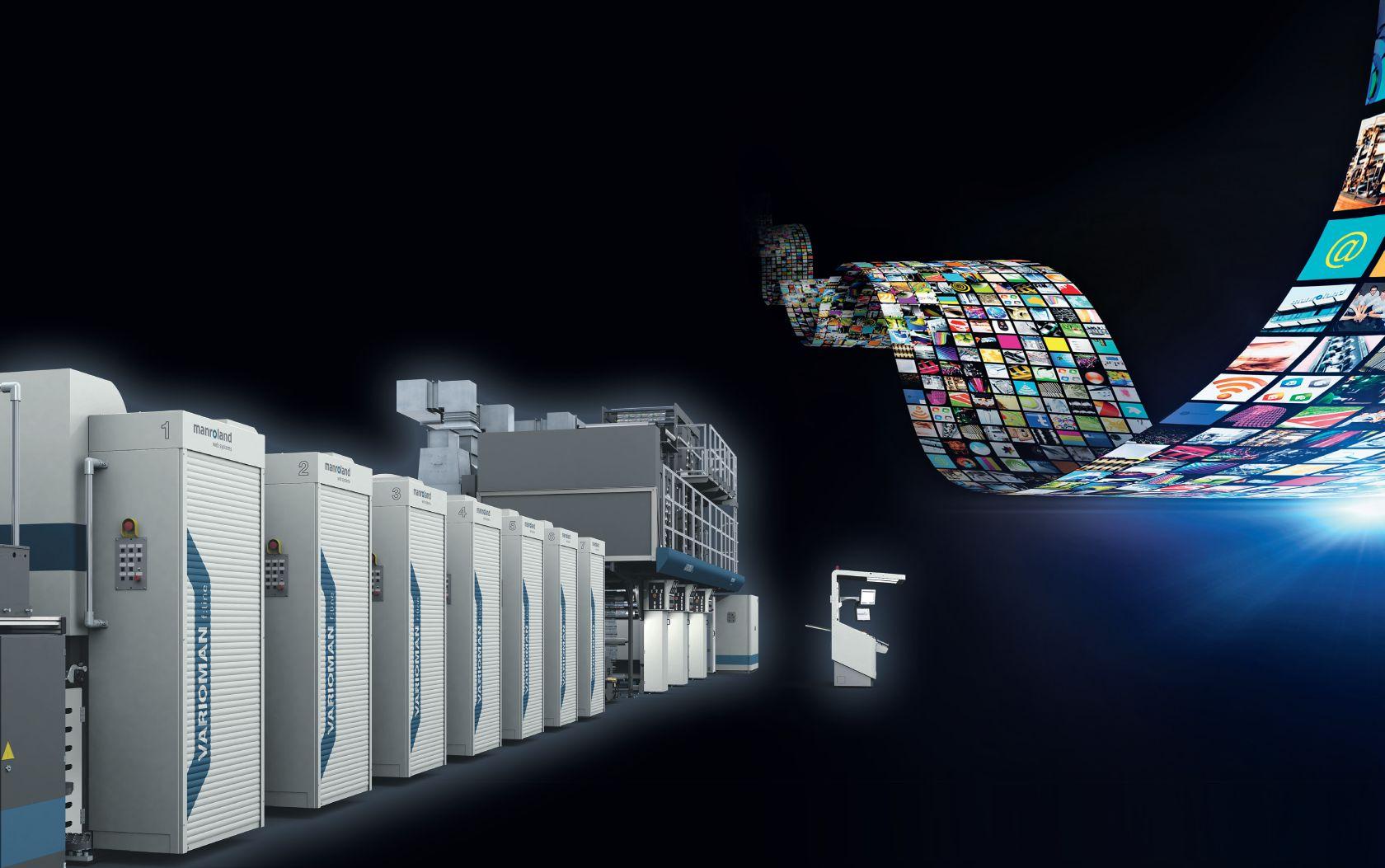
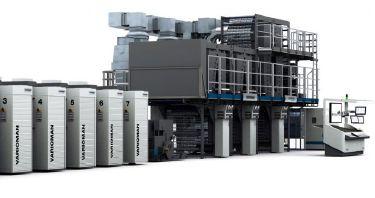
A new dimension for flexible packaging printing: VARIOMAN is the new technology platform for modern flexible packaging printing. The market demand is a press that offers brand differentiation, increased comfort and additional packaging sizes. This is given by the extraordinarily designed VARIOMAN. As offset hybrid press, it bypasses weak points of other technologies. In combination with gravure-, inkjet- or flexo printing units, the VARIOMAN covers production gaps at medium print runs with excellent offset printing quality. manroland web systems
manroland-web.com
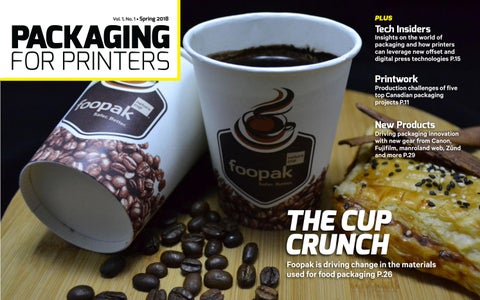
The Cup Crunch
How Asia Pulp & Paper’s Foopak brand is driving change in the materials used for food packaging
By Jon Robinson
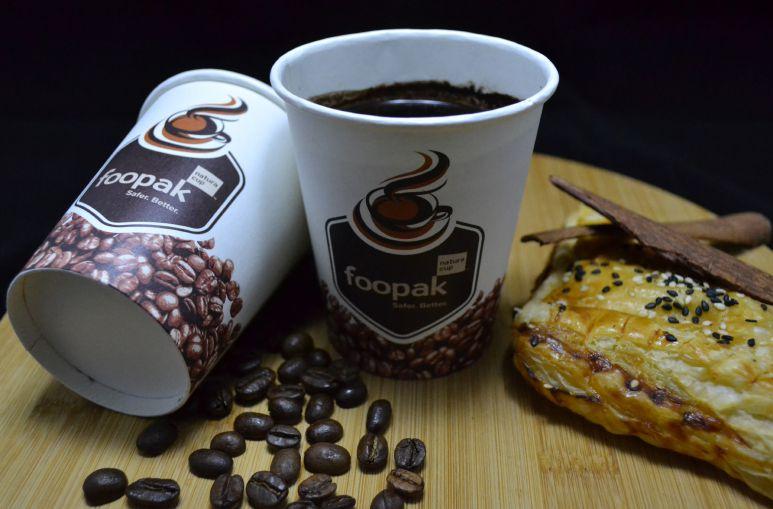
The Foopak range is Asia Pulp & Paper’s emerging portfolio of food contact packaging papers designed to support food and beverage customers operating across the entire retail spectrum. The company has been pouring research dollars into Foopak because it sees enormous global opportunities to supply both functional and environmentally progressive paper products.
The outlook is largely based on Asia Pulp & Paper’s (APP) unique integrated mill position, which touches the entire production chain from tree plantations and pulping to papermaking and converting. The company is also printing its Foopak materials in terms of both an R&D push and for
early brand adopters overseas.
“My data shows 4.5 percent CAGR for food packaging until 2025, so it is quite promising business,” says Paulus Harianto, Product Manager of Foopak, APP Indonesia. He describes how Foopak products leverage new bio-resins that, in some cases, replace polyethylene coatings to stop chemical migration, without changing the aroma or taste of packaged food that can be effectively stored.
“Coating is the biggest challenge of the food industry, because you need it for heat and functionality. We think we have a good solution for it,” says Ian Lifshitz, VP, Sustainability & Stakeholder Relations, Americas, APP.
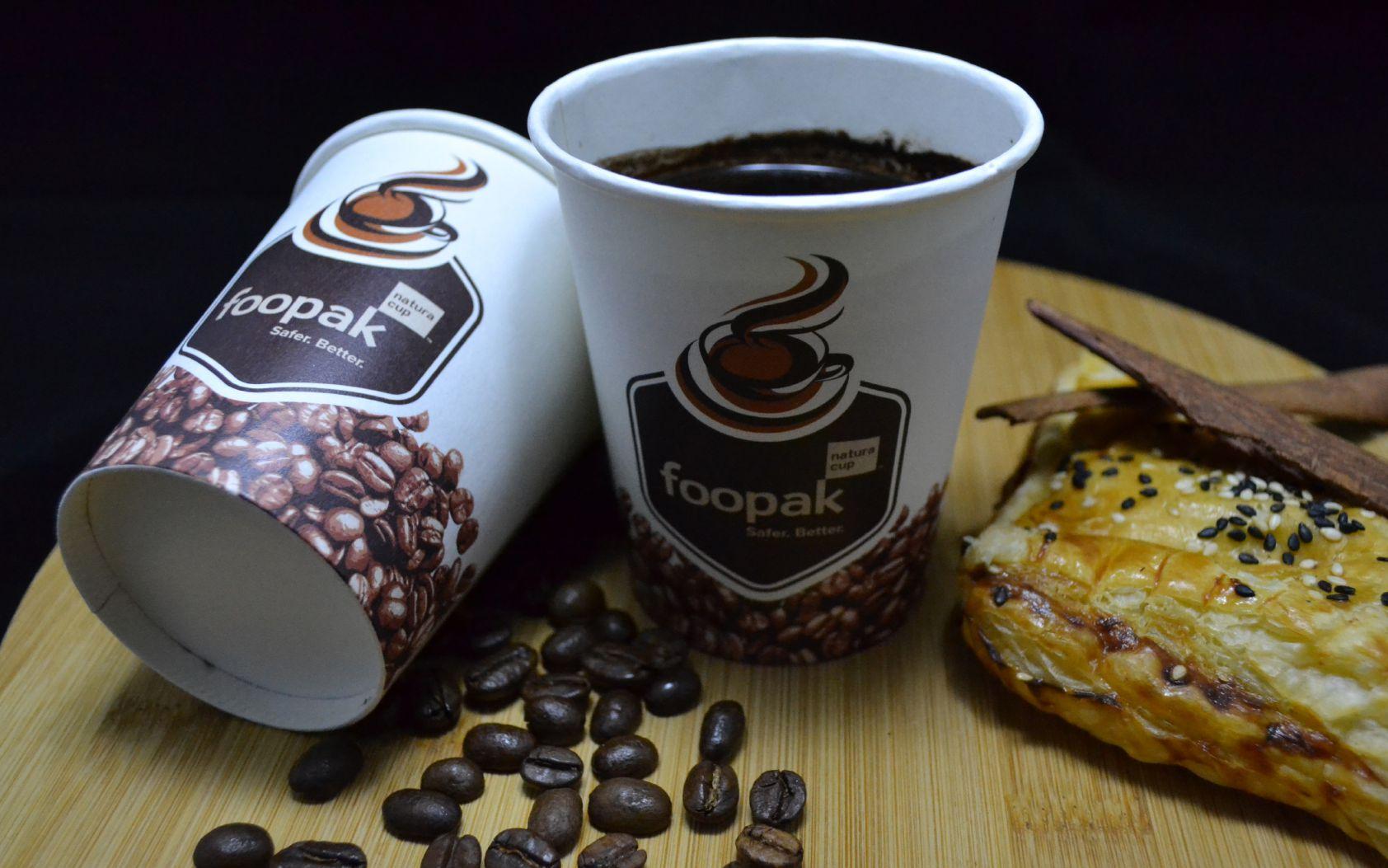
Foopak is taking on the challenge of creating materials for biodegradable cups, which will eventually target hot liquids with new resins.
The Foopak Bio Natura Cup, for example, is a new 100 percent biodegradable and recyclable beverage and food cup. Testing has proved it is fully compostable within 12 weeks.
Alongside the cup are a wider range of products spanning applications like greaseproof papers and boards, cupcake and other baker liners. APP be-
lieves this new product range of Foopak is set to revolutionize many packaging markets, particular as the beverage cup crunch is putting enormous pressures on brands to use more sustainable options.
“Food packaging has multiple requirements around FDA and coatings and things like that. Brands like Star-
bucks, for example, are looking for solutions to promote their sustainable values but to also create a functional product… especially in the U.S.,” says Lifshitz. “Canada is different because we have a stronger recycling infrastructure. In the U.S., we know there are limitations around recycling.”
Lifshitz explains APP has been working closely with a converter in Texas to test the product before a larger Foopak roll-out in North America. The FDA-certified Foopak suite in-
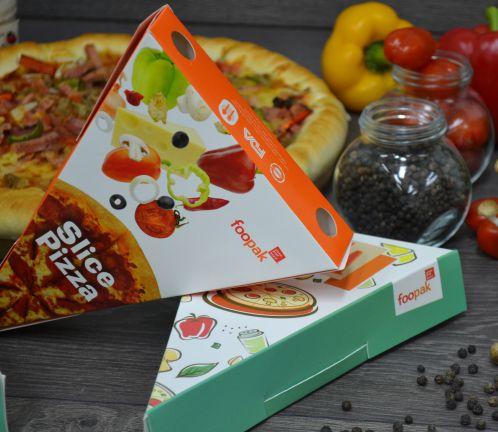
cludes greaseproof papers and boards and an assortment of liners for baked goods; hot/cold liquids; hot, greasy or frozen foods; dairy and confection. All of the paper and board products in the Foopak suite, explains APP, are finish coated for various end use applications and have a strong surface for the printing of multiple branding colours.
“In terms of channels in North America... We try to go to the brand owners first but we know the brand owners do
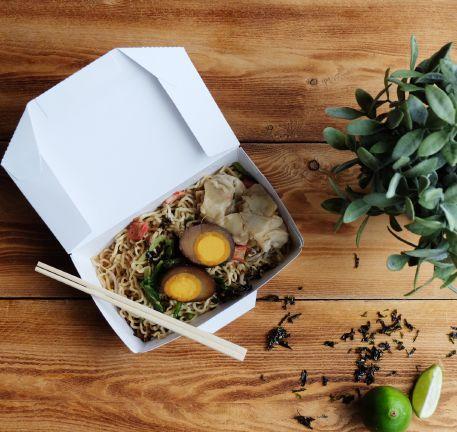
The Foopak Grease Proof Board is suitable for direct contact with food products and capable to protect its content from moisture evaporation, making this grade a suitable solution food packaging.
percent of respondents while grocery or food shopping. APP’s water-based coatings alleviate the expensive plastic separation, but it also presents new challenges for printing.
not buy direct. They go through their converters,” says Lifshitz. “We will talk to the brand owners and introduce the sheet. Then they will go to the converter and say, ‘Can you buy this or explore this,’ or vice versa.”
According to a 2016 consumer survey conducted in the U.S. by ORC International, on behalf of APP, sustainability attributes/environmental impact considerations, including recycled materials and packaging, are extremely or very important to 50
“Currently we are running at from 65 up to 75 cups per minute,” says Muhammad Adjiedarmo, Product Development Manager, Corporate Research and development, APP Indonesia. “In other parts of the world people are looking for more than 150 cups per minute. This is a new segment being developed by us and I expect, by the third of fourth quarter of this year, that we will find a solution for the next generation of biodegradable packaging, with compliance for higher speeds and compliance for hot air. Because the approach through hot air is totally different compared to ultrasonic. You need very small fine tuning during cup making itself.”
APP is also working on moving Foopak into double-sided coating production to improve both runnability and opportunity.
Flenex FW offers the highest quality and f astest speeds.
Only the world leader in printing plates could bring you water-washable flexo plates you truly have to see to believe. With a total processing time of less than 40 minutes, Flenex FW from Fujifilm offer the fastest platemaking process in the industry – and they do it with unmatched print quality.
With exclusive Fujifilm water-washable chemistry, Flenex FW plates provide improved ink transfer capability and greater durability than other leading plates. That means faster job turnaround, maximized press time and lower labour costs. And with a one percent flat dot structure that consistently produces 200 lpi at 4,400 dpi with brighter, cleaner print results, your next choice in flexo plates should be clear. IT’S NOT A MYTH.
To learn more visit: Fujifilm.ca/Flexo
manroland web VARIOMAN
In February, manroland web systems introduced its new VARIOMAN printing press for flexible packaging. The pilot press, called the VARIOMAN f:line, is an offset gravure hybrid press that prints foils. The company explains this new press, based on its mixture of offset and gravure, provides short makeready and changeover times with reduced start-up waste. The VARIOMAN f:line is ideally suited for printing flexible foils for shrink-sleeve applications. The VARIOMAN fits in the production gap of medium-sized print runs, excelling in areas of varnishing, adhesives and opaque white.
VARIOMAN’s
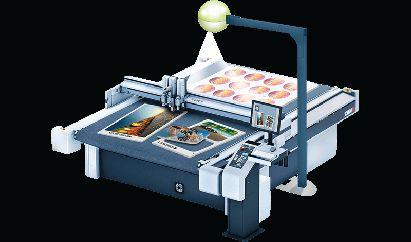
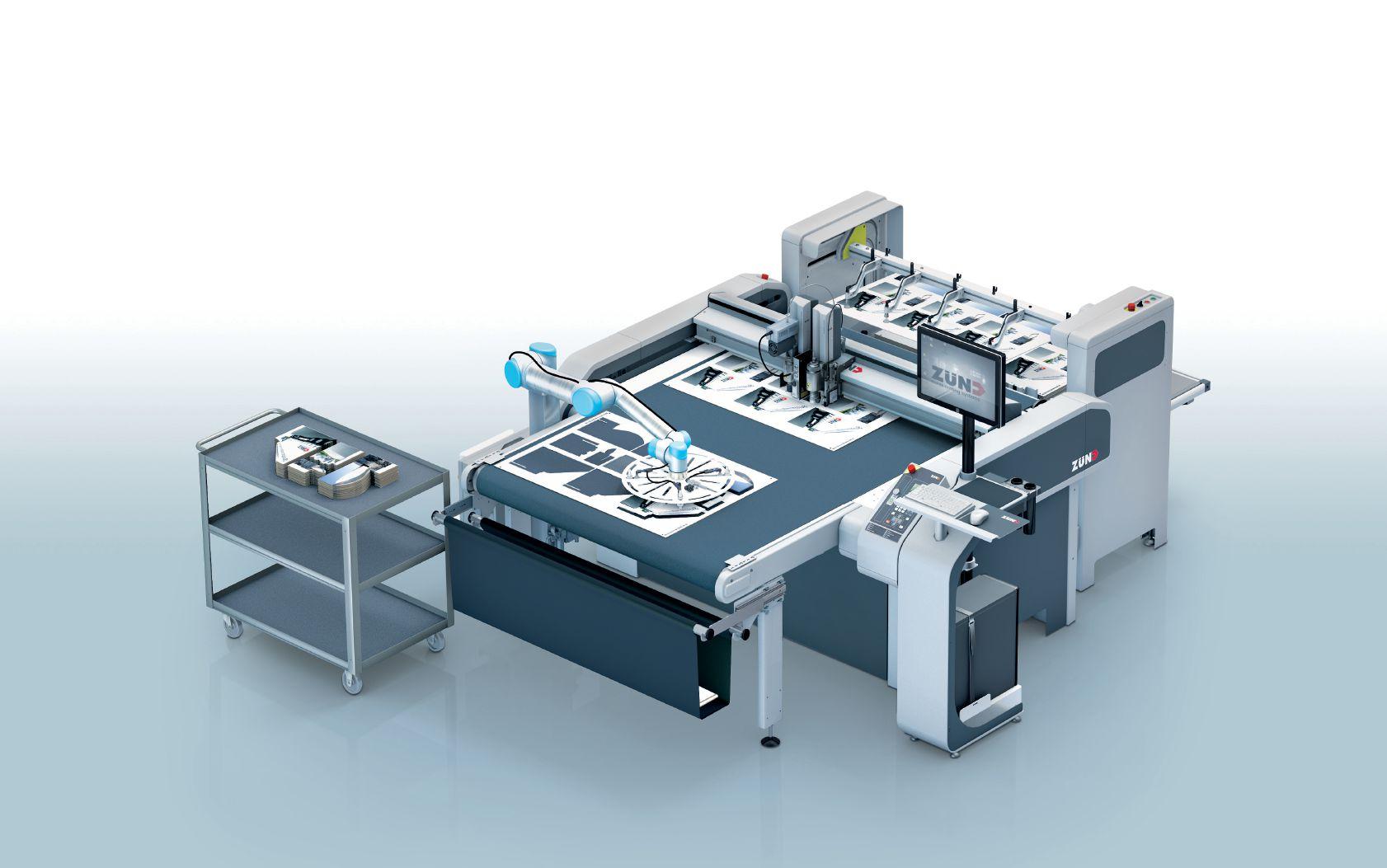
Zünd Over Cutter Camera System
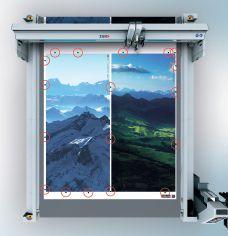
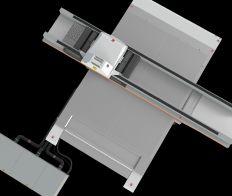
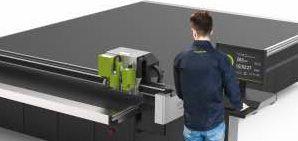
In March, Zünd introduced its new Over Cutter Camera OCC, which allows the company’s cutting systems to more quickly process printed materials. Zünd explains the fully automated OCC takes a single shot to capture all register marks at once, in a matter of seconds. The Over Cutter Camera OCC captures all points in a maximum area of 3.2 x 3.2 metres (126 x 126 inches) and can be added to any Zünd G3 cutting system. With the Over Cutter Camera OCC, Zünd is providing what it describes as an expansion to the traditional method of sequential register-mark capture with an ICC camera. The OCC system is powered by Zünd Cut Center ZCC and takes one image to register all marks visible in the working area.
Highcon Euclid IIIC
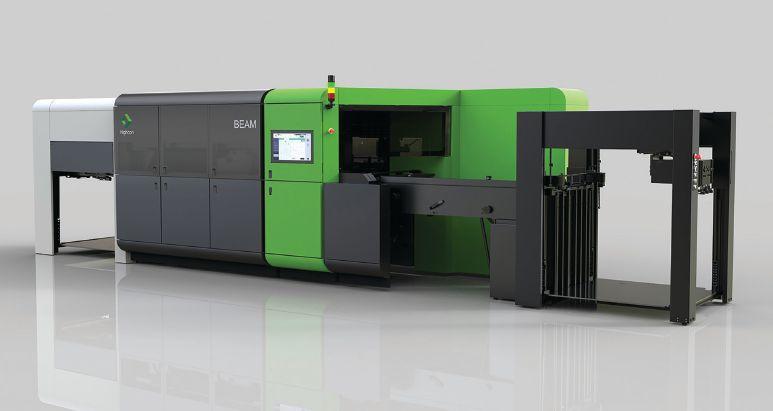
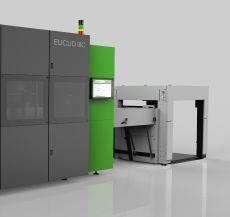
Highcon in February launched its newest postpress system in the Euclid IIIC, which extends the company’s third generation of cutting and creasing machines into the sector of corrugated and fluted substrates. The Euclid IIIC is designed to save on the production and storage of die-cutting forms, while providing flexibility for JIT production and short runs. The Euclid series also provides customized perforations with cleaner edges and easier opening, explains Highcon, and variable-data etching for customization.
Highcon’s Euclid IIIC targets corrugated work.
Canon Océ Arizona 6100 High Flow Vacuum Series
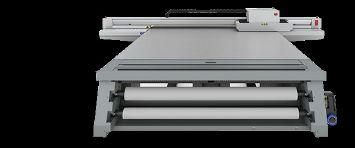
In January, Canon Canada introduced its new Océ Arizona 6100 High Flow Vacuum (HFV) Series for working with corrugated and plywood printing. Canon explains the Océ Arizona 6100 HFV Series easily pulls down porous, warped substrates to create challenging packaging, display, and interior décor applications. The 6100 HFV series was developed to streamline production of short run packaging, package prototyping and temporary displays.
special offset printing units have been developed with Goebel GmbH.
The Over Cutter Camera OCC captures all points in a maximum area of 3.2 x 3.2 metres (126 x 126 inches) and can be added to any Zünd G3 cutting system.
Arizona 6100 HFV handles difficult substrates.
The Kongsberg C66’s 3,210 x 4,800-mm (W x L) work area supports both large-format and multi-zone production.
Esko Kongsberg C66
In November, Esko launched the Kongsberg C66, a finishing table designed for short-run production of corrugated applications. The Kongsberg C66 can run at 100 metres per minute and handle either manual multi-zone production of large 2.2 x 3.2-metre (87 x 126-inch) sheets or single-zone production of large 2.5 x 4.8-metre (98 x 189-inch) corrugated sheets. It can work with corrugated containers made from HD double-wall or triple-wall corrugated and packaging and POP displays. The system is capable of processing other materials required in protective packaging environment like foam-cushioning.
Heidelberg XL 106-DD
Heidelberger Druckmaschinen AG is now offering an enhanced rotary die-cutter based on the XL technology, primarily targeting the in-mould label market. Based on a recent Awa Global Inmould Study 2017, the in-mould market is growing globally at around 4.3 percent and more than two thirds of the worldwide production is required for food packaging. The new Speedmaster XL 106-DD, explains the company, unites two key production steps in a single machine, describing this as a unique combination in the market. The rotary die-cutter’s first unit places the injection hole in the label for the subsequent production process by means of a die on a magnetic cylinder with a high level of precision. Heidelberg explains even the tiniest holes of five millimeters diameter or more are possible.
Epson SurePress L-6034VW
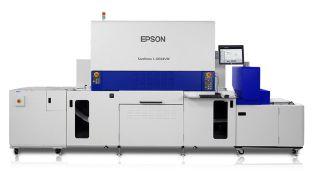
In May 2017, Epson introduced its new SurePress L-6034VW, a UV-based label press for short- to mid-run jobs. The L-6034VW is Epson’s first single-pass industrial press, the first to use PrecisionCore linehead technology, and the first to use Epson’s low migration LED UV curing ink. The company explains the L-6034VW is suitable across a range of industries, including health and beauty, nutraceuticals, and food and beverage, as well as standard consumer packaged goods. The L-4033AW a 7-colour inkjet press with white ink for using clear and metallic substrates.
Heidelberg’s combination of the two production steps in a single pass means a doubling of the die-cutting throughput.
The L-6034VW is suitable for a range of industries like health and beauty, nutraceuticals, food and beverage and general packaging.
Domino K600i fluorescent ink
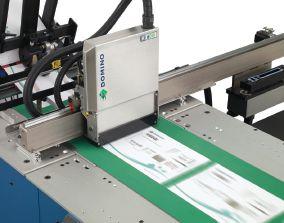
The Domino K600i can be integrated into a web-fed press or used as a standalone roll-to-roll solution or finishing line.
In August, Domino Digital Printing Solutions launched a fluorescent ink, UV80CL, for its K600i piezo drop on demand ink jet printer. The ink designed for security printing and brand protection to help firms battle counterfeiting and forgery. Domino’s UV80CL ink prints clear, but fluoresces green, under an ultraviolet UV-A 365nm blacklight. It can be used to print 2D codes, barcodes, alpha numeric codes, images, graphics and personalized data.
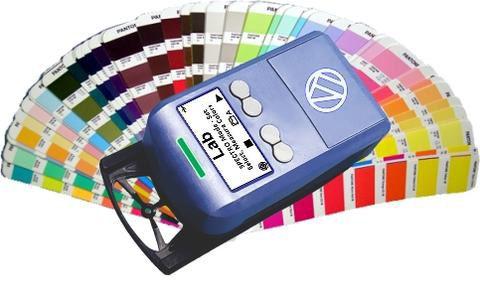
The Presto Spectro includes a built-in 32 colour customizable library that is expandable to thousands of colours.
Beta Presto Spectro
In January, Beta added the new Presto Spectro product to its line of colour densitometers and spectro-densitometers, aimed at both multiple colour offset or flexo presses. It can measure offset plates as well as print. It features what the company describes as Red (Stop) and Green (Go) traffic light indicators to show printers whether colour is within their specified working tolerances. The unit sells for approximately US$3,499. The Presto Spectro measures density, dot gain, dot area, gray balance, trapping order, L*A*B*, Lch, Delta E, and opacity. It also includes a new feature called Spot Color Tone Value (SCTV).
Sun Chemical SunCure Aspire UV
In January 2018, Sun Chemical launched a new UV offset ink developed, explains the company, to make sophisticated graphics look stunning and vibrant on high-end luxury folding cartons, while at the same time providing the longer-term shelf appeal. The new ink system, called SunCure Aspire UV, has been formulated to exhibit what Sun Chemical describes as immense colour transparency to help create vivid colour graphic effects on metallized, lenticular and holographic board stocks frequently used for pharmaceutical, perfume, liquor, cosmetic and POP applications. The company continues to explain that SunCure Aspire UV inks offer excellent transfer, a wide water window, a high degree of lithographic stability, very high pigment strength to ensure mileage on press, and good lightfastness so shelf appeal remains consistent over time.
Nilpeter FA flexo press
In August 2017, Nilpeter introduced a newly updated FA flexo press which the company describes as the most versatile flexo press on the market. It includes a new user interface and fully mobile print controls. The FA press provides a strong level of stability, explains the company, with a tight register tolerance and quality printing on multiple substrates relative to the company’s earlier versions. Based on Nilpeter’s Clean-Hand design approach, the FA provides clean hands during press operation, with a minimum of hands-on press interaction. The company also explains with the new press that all data is saved, jobs can be recalled, and the press will auto register. The new FA design allows printers to enhance the performance and capability of their press with Value-Adding Units, as well as Application and Automation Packages.
TRESU FlexiPrint
TRESU FlexiPrint’s includes an automatic indicator shows when blade replacement is necessary.
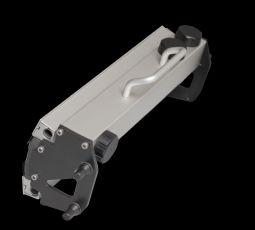
In March 2018, TRESU of Denmark introduced its FlexiPrint Reservoir SAVEink chamber doctor blade, described as a light, fast-change inking system for narrow-web UV and water-based flexo applications that can be used without an ink pump. TRESU explains the chambers are air-tight and prevent leakage based on patented seals, while they can be installed or removed safely in five seconds without the risk of spilling ink. To introduce the unit to its mounting, the operator locks it to the anilox roll, and rotates it from a six-o’clock to a nine-o’clock position. Removal reverses the process.
Scodix Ultra2 Pro with Foil Station
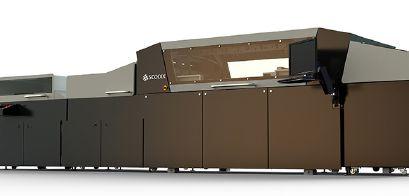
In November 2017, Scodix introduced the new Scodix Ultra2 Pro Digital Enhancement Press with Foil Station, describing the system as “the ultimate multi material platform.” The existing Scodix Ultra Pro system was capable of producing nine different applications and the Scodix Ultra2 is designed to provide more flexibility, quality and productivity. Users of the Scodix Ultra Pro will be able to upgrade to the Scodix Ultra2 starting in 2018. Scodix first introduced the Scodix S system in 2012, followed by the Scodix Ultra. Today, close to 300 Scodix systems are installed worldwide.
Sun Chemical Migration-compliant Metallic Inks
In October 2017, Sun Chemical introduced a set of migration-compliant metallic inks for sheetfed offset printing. The new set, part of Sun Chemical’s SunPak FSP range of bio-based, lithographic inks for board and paper, comprises four colours – silver, rich gold, rich pale gold and pale gold. The SunPak set of migration-compliant, metallic inks is now available in Europe, North America and South America. The inks are ideally suited for food packaging, explains the company, as they have been fully certified as migration-compliant. Developed to ensure that there is no batch-to-batch variation and offering a storage life of 12 months, the new inks will be dispatched to customers as a ready mixed, one-pack system.
Tilia Cerm integration
In December 2017, Tilia Labs of Ottawa, Ontario, a developer of planning, imposition and automation software for the graphic arts, entered a new partnership aimed at label printers. In a development with Cerm, a MIS provider to this sector, the two companies will combine their strengths to offer integrated prepress capabilities for label print production. The initial result of the collaboration between the two companies is new integration between Cerm MIS and tilia Phoenix ganging capabilities to deliver a plug-and-play solution for optimizing sheetfed label production workflow, from design through to distribution.
Xeikon CX500
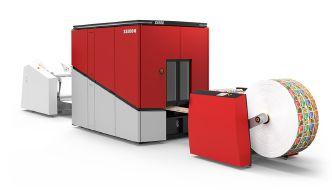
In October 2017, Xeikon introduced the new Xeikon CX500 digital label press, which the company describes as its first press based on a new generation dry toner platform. It is scheduled to be commercially available in 2018. The CX500, with a web width of up to 520 mm (20.47 inches), is designed for larger sized labels, labels requiring an opaque white or an extended colour gamut. It also features full rotary printing technology and speeds of up to 30 metres per minute (98 feet per minute). The wider web of Xeikon CX500 is part of the company’s dry toner Cheetah Series aimed at the high-end self-adhesive label market. Xeikon explains it also complements the narrow-web CX3 press introduced in 2015. Like the Xeikon CX3, the CX500 runs on Cheetah toner, which is based on Xeikon’s ICE technology and is designed to cope with the higher speeds.
Xeikon CX500 is part of the company’s dry toner Cheetah Series aimed at the high-end self-adhesive label market.
Scodix Ultra2 supports quicker switching between polymers.
Digital label printing is one of the most attractive segments for printing growth led by significant new demands from brand owners for short-run versioning and variable print work. Discover some of the challenges and opportunities of entering the market.
The Ellis Group, one of Canada’s most powerful independent packaging companies for more than three decades, is intent on increasing its throughput for the modern demands of the market, while maintaining its unique blend of quality and service.
EFI hosted its annual worldwide user conference, called EFI Connect, at the Wynn in Las Vegas from January 23 to 26, 2018, including a range of new products and updates for the packaging market. A report from the conference floor.
A view from the floor of EskoWorld, hosted by one of the world’s most powerful suppliers in the packaging world, as Esko executives, product managers and engineers mingled with more than 500 technology users from across the United States and Canada.
Amarula, the South African producer of cream liqueur, releases a special edition of 400,000 bottles with its well-known elephant branding individualized by HP Indigo digital printing, to raise awareness for endangered elephants.
Manufacturing Geometries: The State of 3D Printing
3D printing begins to move past consumer hype into industrial design and onto the production floor, as manufacturing and logistics companies plan for significant changes to their business models.
Greg Neath will leverage his more than 30 years of experience in Canada’s printing industry to provide insight into change management, business strategy and sales growth tailored to printing professionals. He will share the view of TC Transcontinental’s corporate transformation, including its strategic shift into flexible packaging and its strategy of solidifying its printing leadership position in key verticals, namely retailer-related services. Mr. Neath will discuss the learned opportunities and challenges of TC Transcontinental Printing’s direct mail operations and growing focus on in-store marketing. He will leave attendees with actionable items and key takeaways.