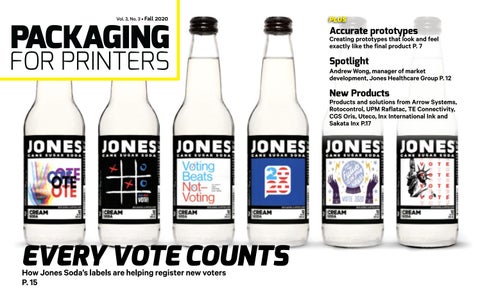
EVERY VOTE COUNTS
How Jones Soda’s labels are helping register new voters
Accurate prototypes
Creating prototypes that look and feel exactly like the final product P. 7
Spotlight
Andrew Wong, manager of market development, Jones Healthcare Group P. 12
New Products
Products and solutions from Arrow Systems, Rotocontrol, UPM Raflatac, TE Connectivity, CGS Oris, Uteco, Inx International Ink and Sakata Inx P.17
Editor
Kavita Sabharwal-Chomiuk
kchomiuk@annexbusinessmedia.com
416-510-5142
Associate Publisher
Stephen Longmire
slongmire@annexbusinessmedia.com
416-510-5246
Media Designer
Lisa Zambri lzambri@annexbusinessmedia.com
Account Coordinator
Alice Chen
achen@annexbusinessmedia.com
416-510-5217
Circulation Manager
Beata Olechnowicz
bolechnowicz@annexbusinessmedia.com
416-510-5182
Circulation
bolechnowicz@annexbusinessmedia.com
Tel: 416-510-5182
Fax: 416-510-6875 or 416-442-2191
Mail: 111 Gordon Baker Rd., Suite 400, Toronto, ON M2H 3R1
Group Publisher
Diane Kleer
dkleer@annexbusinessmedia.com
COO
Scott Jamieson
sjamieson@annexbusinessmedia.com

FEATURES
7 Accurate prototypes
In packaging prepress departments, it is now possible to create prototypes that look and feel exactly like the final product
Annex Business Media
111 Gordon Baker Rd., Suite 400, Toronto, ON M2H 3R1 printaction.com
Tel: 416-442-5600 • Fax: 416-442-2230
15
Jones Healthcare Group’s manager of market development on the benefits of NFC packaging technology and how it helps engage customers
Every vote counts
How Jones Soda labels are helping register new voters
DEPARTMENTS
CCL Industries, a specialty label, security and packaging solutions company, has signed the New Plastics Economy Global Commitment led by the Ellen MacArthur Foundation. The foundation was launched in 2010 and is dedicated to accelerating the transition to a circular economy by designing out waste and pollution, keeping products and materials in use, and regenerating natural systems. Since its creation, the Ellen MacArthur Foundation has become known as a global thought leader on the circular economy, keeping it on the agenda of decision makers across business, government and academia.
The New Plastics Economy, part of the Foundation, is a circular vision for plastic
in which it never becomes waste. In 2018, the New Plastics Economy launched the Global Commitment to “unite businesses and governments to commit and work for change in the production, use and reuse of plastic.”
The company is making the following commitments: all CCL label products and solutions will be recyclable, reusable or compostable by 2025; CCL will cut today’s level of waste by 90 per cent globally by 2025 and eliminate all landfill from its manufacturing process by 2030 in North America and Europe;
CCL will use a fixed financial percentage of its R&D resources annually towards further development of sustainable and circular products; and CCL will continue to work collaboratively across the
plastic value chain to ensure packaging is sorted and recycled in practice and at scale by developing enabling label solutions. In the coming years, the company says it will invest in technology and resources to achieve these targets.
Screen has joined forces with adhesives specialist Lintec
to enhance the availability of low migration labels and adhesives. This move comes in response to the growing demand for technology that protects packaged food from
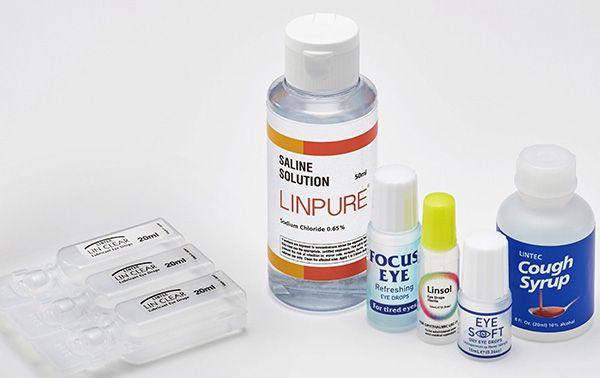
Screen and Lintec have teamed up to enhance the availability of low migration labels and adhesives.
toxic substances.
“We consider food packaging safety a responsibility of the entire supply chain. We therefore work with partners whenever possible to enhance the availability of safe and low migration packaging,” said Taishi Motoshige, sales and operations manager at Screen Europe.
Screen launched the Truepress JetL350UV+ LM, a low migration label printer, three years ago. The printer uses special low migration inks to offer enhanced safety by using a nitrogen purge mechanism for accelerating the curing of UV inks.
Although low migration labels are vital for food packaging safety, the adhesive used to adhere the labels to packaging is also important, which has led Lintec to invest
in R&D to improve its ultra-low migration adhesives. The two companies have teamed up to ensure their technologies work smoothly while meeting regulatory standards.
Over the past 10 years, the development of sustainable packaging has accelerated at Sun Chemical as the awareness of environmental issues has increased, as well as the demand for cutting and recycling household waste and reducing emissions from carbon and other pollutants. As a result, Sun Chemical has organized a Corporate Sustainability Committee to further strengthen its approach to addressing the sustainability needs of the packaging industry.
The Committee is comprised of eight executive
leaders, including Myron Petruch, Carlo Musso, Chris Parrilli, Fernando Tavara, Robert Fitzka, Greg Hayes, Russell Schwartz and Jim Van Horn.
The Committee will work to guarantee company-wide engagement in sustainability initiatives and will build and oversee the company’s sustainability strategy, ensuring that proper resources are assigned for timely and effective implementation.
Nicolas Bétin has been appointed Sustainability Business Leader for Sun Chemical, and Dr. Nikola Juhasz has been named Technical Director of Sustainability. Stakeholders in other divisions and regions at Sun Chemical will also play a key role in advancing the company’s efforts for more sus-
tainable technologies in the packaging markets.
Domino has hired Lloyd Kent as senior sales manager for corrugated, digital printing North America.

Lloyd brings over 30 years of experience to the role, including past positions at EFI, HP and Bobst, where he spent 15 years selling corrugated and folded carton machinery in the U.S. He also has experience as sales development manager, national & regional sales manager and regional market director.
Lloyd is very involved with
AICC, the Independent Packaging Association, where he is an Ambassador, introducing incoming members to existing AICC members and helping them feel welcomed into the association.
Domino joined the corrugated sector in June 2020 with the introduction of the X630i digital aqueous inkjet corrugated press, which interested Lloyd.
“I am excited to join Domino with the responsibility of debuting a new digital single-pass printer, the X630i, to an industry I have been involved with for over 20 years,” he said.
Lloyd Kent
Zünd packaging/graphics promotion:
– Popular G3/S3 cutter configurations currently available at unprecedented discounts
– Contact us for details and a personal quotation
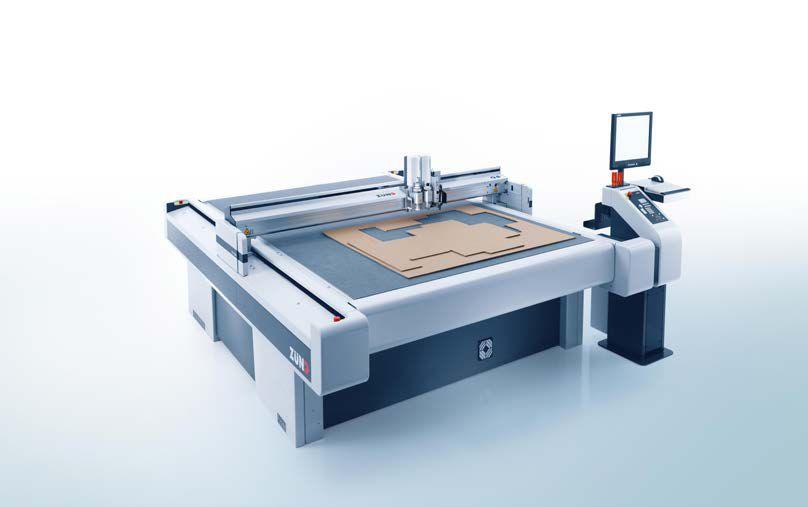
Schedule your personal virtual demo anytime. No travel required.
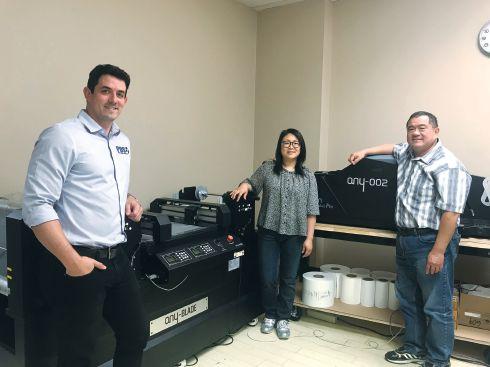
Print Resources Group has expanded its product offering with the recent addition of the Any-002 Digital Label Printer and AnyBlade Label Finisher.
“Labels & packaging is a fast growing industry and with this latest install, PRG is able to increase revenue and capture some of the market share,” said the company.
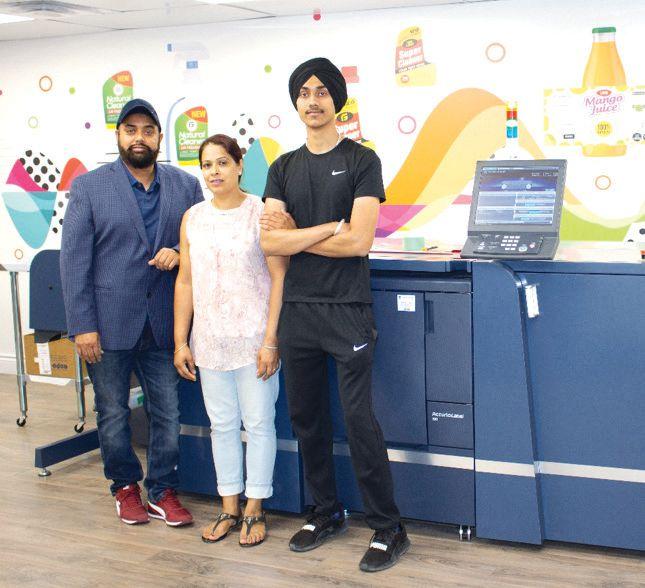
Brampton, Ont.’s Flora Graphics has installed the first Konica Minolta AccurioLabel 190 Digital Label Press in Ontario, along with a Scorpio 3500 Label Finisher to help meet demand for label products. Flora Graphics says the AccurioLabel 190, which was designed for narrow web applications, will help the shop produce up to 200,000 labels per day.
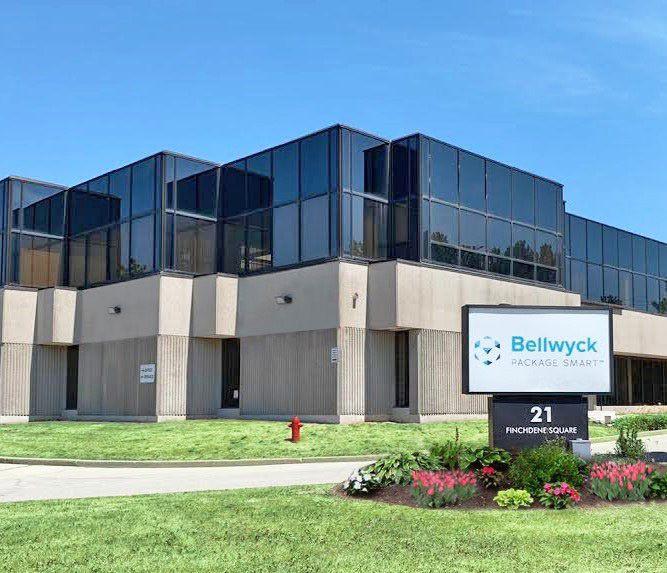
Bellwyck has announced it has completed its three-pronged strategic press-acquisition initiative, which includes the installation of two first-in-Canada presses: the longest Heidelberg Speedmaster CX 102 press in Canada, which offers a number of options for luxury brand packaging concepts, and the first Mark
Andy Digital Series HD Hybrid Press, an innovative digital label press, in Canada.
Accurate prototypes
In packaging prepress departments, it is now possible to create prototypes that look and feel exactly like the final product
By Erik Schmitt
In most packaging prepress departments, proofing and prototyping is a particular challenge, especially considering the needs of brand colour expectations matching. Given the complex nature of conventional (lithographic or flexographic) print variables such as ink viscosity, dot gain, screening, packing materials and many others, there is no wonder it can be confusing to clearly communicate ex-
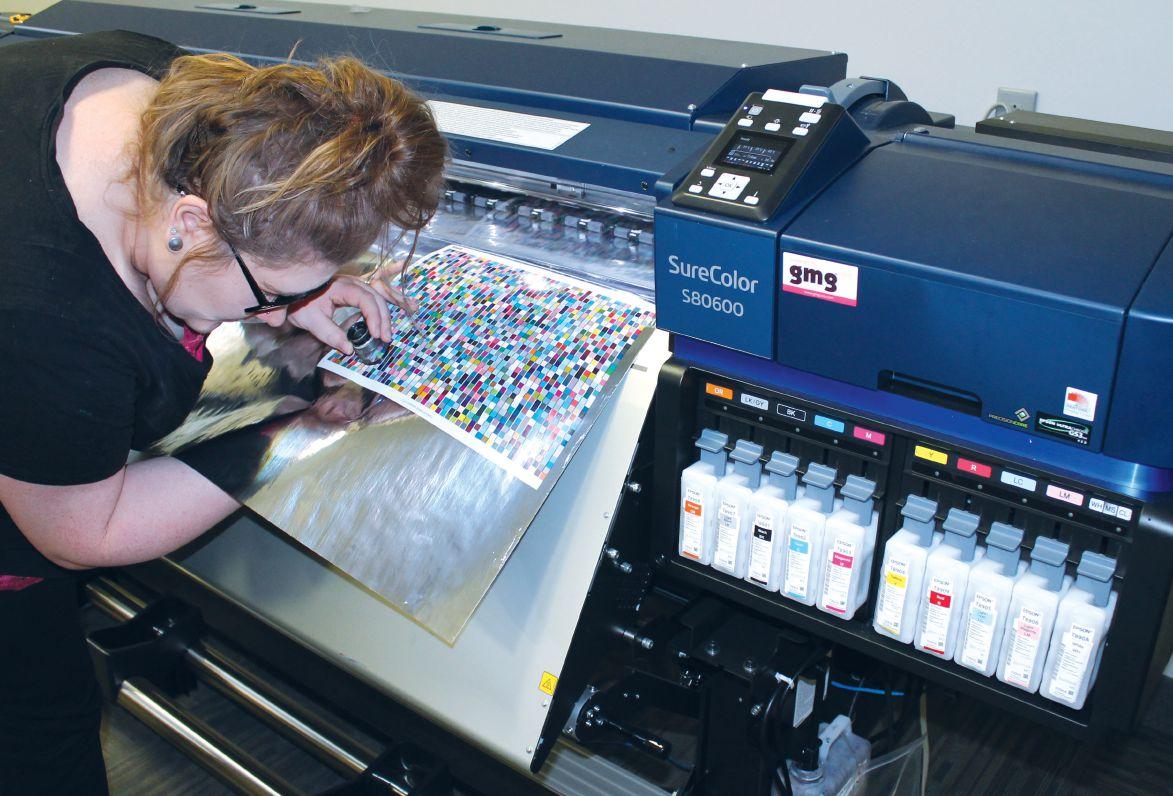
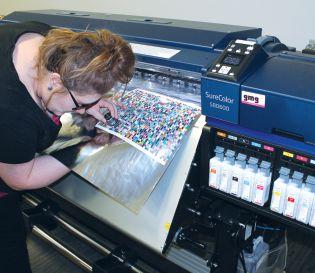
Rachel Desjardins performs quality control duties.
iety of print production variables; never mind proving to customers that you can do it. pectations to demanding brand owners.
How do you demonstrate colour-accurate proofs on unusual substrates like films, foils and adhesives? It is difficult enough to control your own in-house processes and the wide var-
Previous solutions could create prototypes that only resembled the final product. Now it is possible to create prototypes that look and feel exactly like the final product. By connecting superior colour management software to extended gamut digital printers, anyone can produce exceptional, colour-accurate prototypes on a wide variety of substrates. It closes the gap between traditional prototyping and contract quality proofing.
Knowing what it will look like first
With the increased use of multi-colour printing and different combinations of ink types, substrates, screening and finishes, package and label printing involve a lot of press fingerprinting, ink drawdowns and file manipulation. Fingerprinting, or press/printer profiling, is difficult to do and, conducted by experts, can cost many thousands a day. All processes, whether conventional or digital, are affected by dynam-
ic changes in environment and printing conditions. The goal is to create a repeatable “golden state” that can be maintained. This is all possible. Using the latest profiling technology, a print provider can easily predict press performance and determine quality characteristics. From past live jobs, with minimal input like a colour bar, or a few measurements from known referenced live areas, a knowledgeable service provider can create an exceptionally accurate brand colour or target press reference.
Different printing technologies, and the variety of service providers and end output printing conditions lead to deviations. ‘Please match to previous’ is now more common regardless of your printing process. By leveraging spectral data profiling and conversion technology—which precisely predicts the overprinting of process and spot or gamut expanding colours— users can avoid lengthy correction loops on press before running a job. Printing
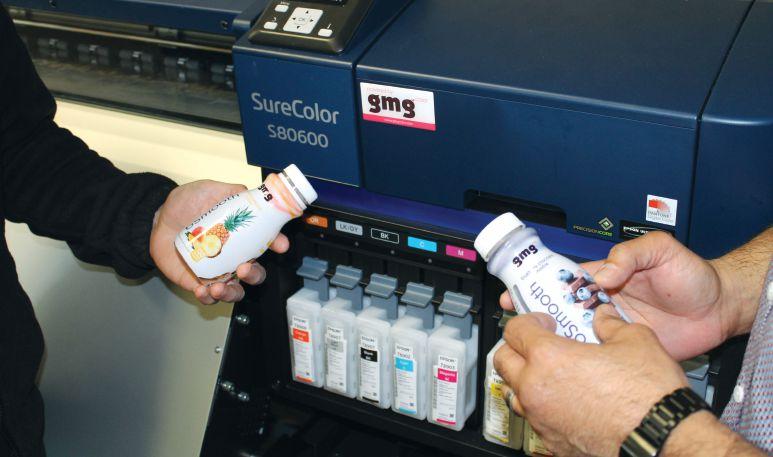
It is now possible to create prototypes that look and feel exactly like the final product.
process, substrates and finishing enhancements are taken into consideration. If parameters are similar enough, an accurate prediction proof, separation strategy or direct-to-production material prototype can be quickly calculated without the need to reprofile your end output device— whether conventional flexo, offset or the wide variety of digital reproduction technologies available.
With the right combination of process controls, profiling software and procedures, it is possible to precisely and repeatedly predict the colour appearance of any combination of inks, substrates and finishes of the final desired product. Combinations of spot colours or gamut expanding inks with conventional CMYK can be accurately reproduced before the job gets to press. Once a press fingerprint or printer
profile is finalized, the prediction of output device behaviour can be accurately predicted to ensure that customer expectations are met. All involved in the project can be satisfied that brand colours are attained, and we all are able to profitably meet our objectives.
Printing wide gamut on a wide variety of substrates
tight tolerances to ensure consistent performance and colour reproduction stability. It bridges the gap between a contract colour proof on inkjet paper and direct-to-substrate laminated simulations from the past, with faster print speeds. All of this can be done with simple integration into a supported colour proofing system.
SureColor
In choosing a device that can reproduce a job without going to production equipment, the Epson
S80600 solvent printer is an interesting option. While satisfying the need to reproduce vivid colour, it is equally nimble in its ability to cover the wide gamut of colour to demonstrate accurate proofs, from paper to finished product prototypes. Many different materials are available, including sealable pouch films, shrink wrap films, metallized foils, folding carton boards, and laminate heat transfers to actual printing material.
The printer can be calibrated within
Because of the printer’s small droplet size, even halftone dots can be replicated. This is not a simulation, but the exact dots from the same final files that existing workflows ultimately image to plate. Potential problems such as moirés and incorrect trapping settings are visible in advance, via the proof.
Leaving creation of colour accurate prototypes to itself
Based in London, Ontario with a production facility in Fayetteville, Arkansas, Autumn Graphics Ltd. is a privately-owned company providing pre-media production, plate production, brand management, 3D packaging
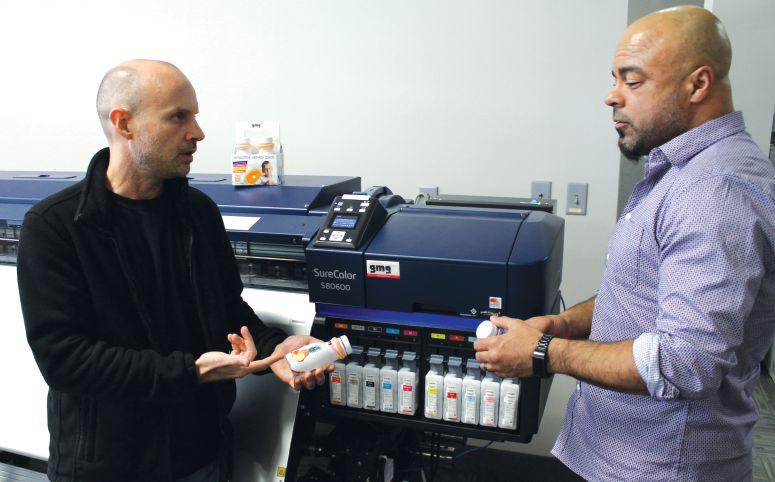
development, print production technical services and packaging lifecycle workflow tools. It has served consumer product companies, converters, printers and advertising agencies since 1982. By continuing to invest in technology, people, processes, and research and development, Autumn Graphics secures the ongoing success of both itself and its customers.
Prior to inkjet prototypes, Autumn Graphics used transfer systems to provide proofs on a substrate. They were looking for a solution that would enable them to increase prototype quality for complex packaging designs and achieve a better colour match for the final print result.
“By transitioning to 100-per-cent inkjet proofing rather than lamination
From left, Jay Oudekerk, colour correction operator and Corey Douglas, customer service representative.
systems, we determined we could produce more efficient, cost effective and accurate prototypes,” says Ben Abray, president of Autumn Graphics.
1982
Autumn Graphics Ltd. has served consumer product companies, converters, printers and advertising agencies since 1982.
“We wanted to grow our inkjet proofing options rather than other systems, and determine what tools could simulate as many types of printed results as possible,” adds Hugh Wilson, Autumn Graphics technical services manager. “The ability to more accurately simulate print conditions without requiring press trials would be really helpful. A graphic trial on press, of course, is the best way to prevent surprises—dealing with issues from ink, anilox, etc. However, if we could use a good predictive model to represent what may happen down the road, that would be very useful.”
Autumn Graphics invested in GMG colour management technology about seven years ago. While they rely on its colour accuracy, another important
piece was the remote proofing. They can send accurate colour files to remote calibrated devices anywhere in the world.
“GMG ColorProof was reasonably straightforward to implement,” recalls Wilson.
“The GMG OpenColor learning curve took just a little longer because it is very different than typical colour tools. Its fingerprinting takes advantage of sophisticated, proprietary spectral prediction technologies.”
Autumn Graphics invested in its Epson SC-80600 a bit less than a year ago. Its colour gamut was large enough and output was reasonably fast enough, so they could create prototypes on a wider range of substrates. It allowed them to remove slower, noninkjet proofing options and replace them with more efficient technology to create colour-accurate prototypes.
Autumn Graphics had worked with an outside service for prototypes, but
it cost a significant amount of money.
“Prepress proofs have always been accurate. However, the accuracy of prototypes has taken a step forward,”
Abray says. “It lets us produce more prototypes, more efficiently, on specialty substrates without the same subsequent increase in human resource and production costs.”
Creating customer expectations is something you don’t do in production.
“With prototypes, one of the challenges is that we have to send, fairly quickly and inexpensively, a sample with reliable colour. We produce any proof or prototype with colour management based on the profile we created from the actual flexo or offset press that will run the job, accurately representing process and spot colours,” Wilson notes.
Using the new process not only has cut production costs, but has also reduced shipping costs and timelines.
“It has given us the ability to achieve compressed deadlines for proofs that
require different substrates,” Abray says. “In the past, we would have planned for longer lead times to generate our prototypes. But now we expect shorter lead times, condensing time to market.”
While the cost of one prototype is not prohibitive, imagine if a brand owner wants to see a number of sample prototypes that, ultimately, do not go to market.
“Our system offers the brand considerable savings. And, the ability to produce accurate prototypes really helps take the surprise out of the process,” Wilson says.
“Our responsibility is to show samples that represent what can be produced on the press, so that the customer does not have unachievable expectations,” Arbay says. “Many brand owners still need to see what a physical prototype looks like. Now, they can see it in accurate colour.”
Erik Schmitt is GMG director of sales for Canada.
Sponsors:
CHAMPIONS OF PRINT AWARDS
Presented by
Do you know of an individual or company in the Canadian print industry that has made a significant contribution to their community or used innovation to meet community or Canadian needs during these unprecedented times?
If their contribution was fundraising, a charitable donation, volunteer hours and/ or the manufacturing and/or donation of PPE, or they have used innovation within their current operation to meet the COVID-related demands of their community or the country, nominate them for PrintAction’s Champions of Print Awards.
Andrew Wong / Manager, Market Development / Jones Healthcare Group
Andrew Wong is the manager of market development, Innovation Solutions Group at Jones Healthcare Group, a developer of packaging solutions for complex, highly regulated industries, such as healthcare and cannabis. We spoke with Andrew about why a company would choose NFC packaging technology and how it helps engage customers.
How and why would a company decide to implement NFC technology in its medication packaging?
AW: For Jones Healthcare Group, implementing new technology or innovation is always geared toward solving problems in response to market and consumer needs. We view NFC in the same lens – NFC on product packaging or labels is particularly useful for anyone looking to accomplish the following:
1. Encouraging a desired behaviour outcome;
2. Knowing your consumers’ or patients’ wants, requirements and behaviour; and
3. Fully understanding your product’s lifecycle.
All to promote safety, health and well-being while driving important supply chain and business insights.
How does NFC technology work in medication packaging? What are some other applications that it can be used for?
AW: NFC can help address common business problems for medication packaging such as anti-counterfeiting, grey market diversion tracking, dosage/usage instructions and adherence. What’s exciting about NFC is one single tag on a package or product can execute all these applications.

NFC works through a tap interaction, such as tapping a smartphone to a package. When an NFC reader is placed near an NFC tag, a digital action is triggered on the reading device. An NFC tag can trigger a smartphone to launch a webpage or app, make a phone call, or record information into a database or digital ledger for example.
So on one hand, NFC connected
“The upside of the NFC medication adherence solution is we can integrate this into almost any medication dispensing format.”
packaging is very simple: tap your smartphone onto an NFC-enabled product or package and something happens on your smartphone. On the other hand, the endless combinations of experiences and applications that can be launched from an NFC-enabled product or package highlights the broad value complexity for a brand and/or consumer.
Consider a pack of multi-vitamins with an embedded NFC tag. With a quick tap of a smartphone, a consumer can be served a digital experience with the following:
• A message saying the pack is authentic. NFC provides a secure level of authentication unmatched by traditional tamper labels or holograms. Thanks to backend server authentication, even if an NFC is duplicated, only the original tag will display the “authentic” message.
• Additional product information
and brand messaging, including instructions on the best way to use this product, promotional videos about the benefits of the product and more.
• A dosage tracking application, which allows consumers to tap onto the pack every time they take a vitamin. Adherence metrics could even be displayed to the consumer with aspects of gamification to encourage consistent use. There is research demonstrating the promising use of gamification techniques for improving patient behaviour.
Now consider every time a consumer taps onto that pack of vitamins, the brand receives data corresponding to that interaction. This may include time and location of interaction, length of interaction, what occurs during that interaction, the specific device interacting with the product, as well as the unique identifier encoded into each
NFC.
This means brands and manufacturers can uncover where/when interactions occur, who is interacting, what that interaction was, as well as which exact product (not just SKU, but exact serialized product) with which the person interacted.
That last point is important for grey market diversion tracking. If you have a batch of products slated for distribution in one geographical location, but all the tap interactions from that batch are occurring in a different location, it is likely diversion has occurred. The grey market is problematic for all industries; not only is it nearly impossible to enforce and track, but diversion translates to significant lost revenue and endangers consumers, particularly for pharmaceutical products diverted outside of safe supply chains.
As the march toward regulated serialization expands around the
globe, each NFC tag can also act as a serialized code thanks to its unique ID. This means brands can serialize their products without adding printed codes, plus they can amortize the cost of serialization with an NFC tag that can also improve consumer safety, engage consumers and provide valuable item-level interaction data.
NFC can help address common business problems for medication packaging such as anti-counterfeiting, grey market diversion tracking, dosage/ usage instructions and adherence.
How does transmitting printed electronics work?
AW: Through a proprietary printing process developed with support from the National Research Council of Canada, we can use traditional printing methods to print conductive inks onto common packaging materials like paperboard as part of our CpaX™ connected packaging offering.
Importantly, we can add printed electronics to disposable packaging at price points conducive for mass deployment.
Over the past two years, we have pilot-tested this solution in pharmacies, universities and research organizations across United Kingdom, Spain and Canada, and we’re currently undergoing our latest (and largest) patient trial in the United States.
We have even developed an NFC version of our medication adherence solution. The difference is that instead of persistent monitoring through printed electronic circuits, the NFC version involves a user tap interaction to confirm dosage. This is a great way to facilitate behavioural change. The upside of the NFC medication adherence solution is we can integrate this
At the moment, we are using this printing technique on our Electronic Medication Adherence solution. We print circuit patterns across the top of each blister cavity of a disposable medication package, and connect that disposable blister card to a reusable monitoring device. The reusable monitoring device sends electronic pulses through the printed circuit and can detect in real-time whether medication has been removed from a blister cavity.
into almost any medication dispensing format, such as inhalers, syringes, standard pharmacy vials, etc., and of course, it comes at a price point more conducive for mass deployment.
How does connected packaging help engage customers?
AW: At Jones, we’ve been developing and refining our NFC packaging integration capabilities for the past several years in anticipation of this moment through our CpaX™ connected packaging offering. We believe our ability to facilitate high-speed integration of NFC and other electronic tags into packaging formats such as cartons and labels will play an integral part in the future connected packaging ecosystem.
Andrew’s responses were edited for length. For more Q&A Spotlight interviews, please visit www.printaction.com/profiles.
Every vote counts
How Jones Soda’s labels are helping register new voters
By Kavita Sabharwal-Chomiuk
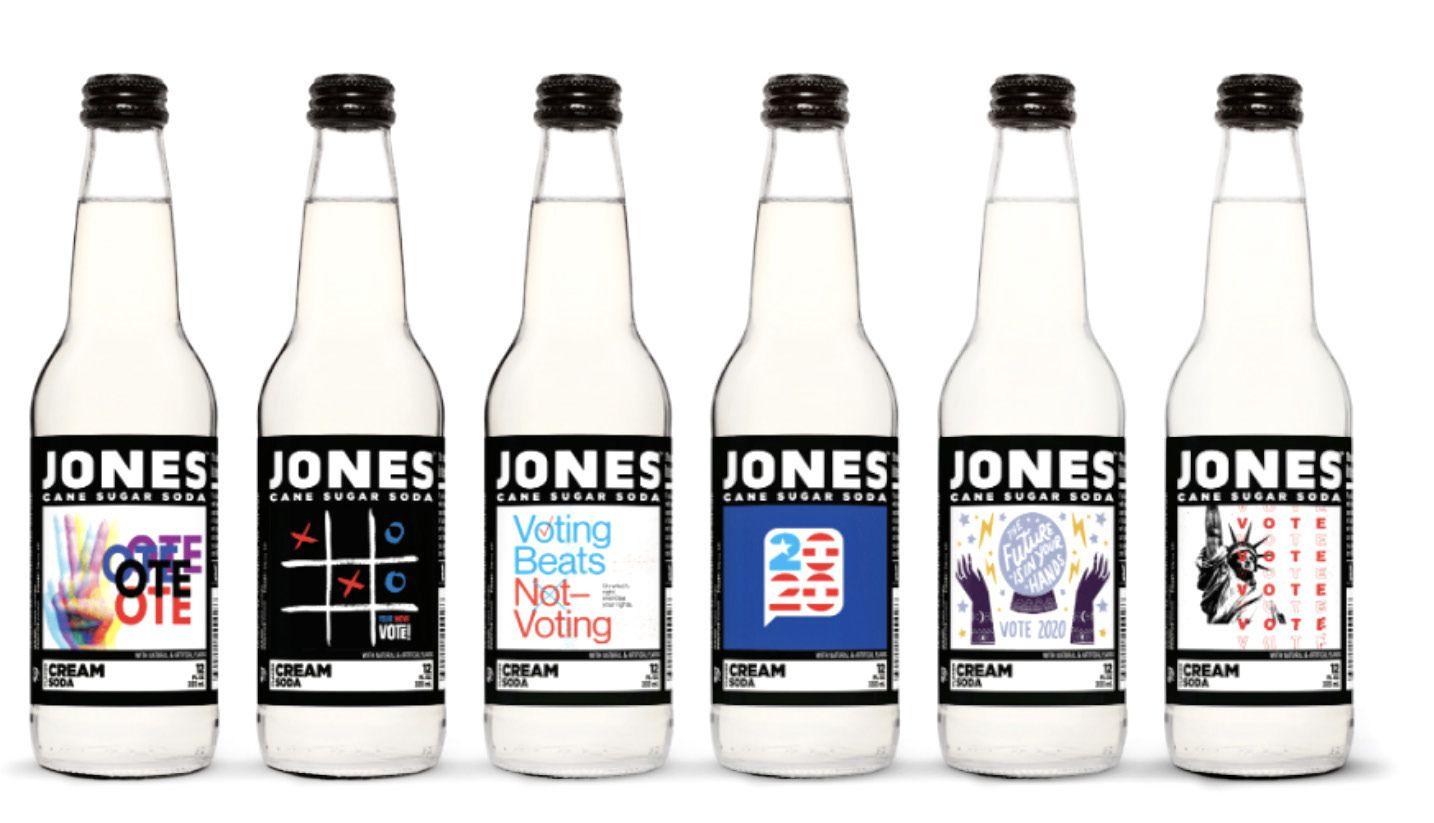
Jones Soda Co. is a long-standing craft soda brand known for its unique flavours and quality ingredients. Perhaps more so, Jones Soda is distinguished by its regularly-changing labels that feature photos sent in from its customers, helping create a strong brand identity. Now,
Jones Soda has teamed up with the non-profit and non-partisan Voter Participation Center (VPC) to put voter registration directly into customers’ hands.
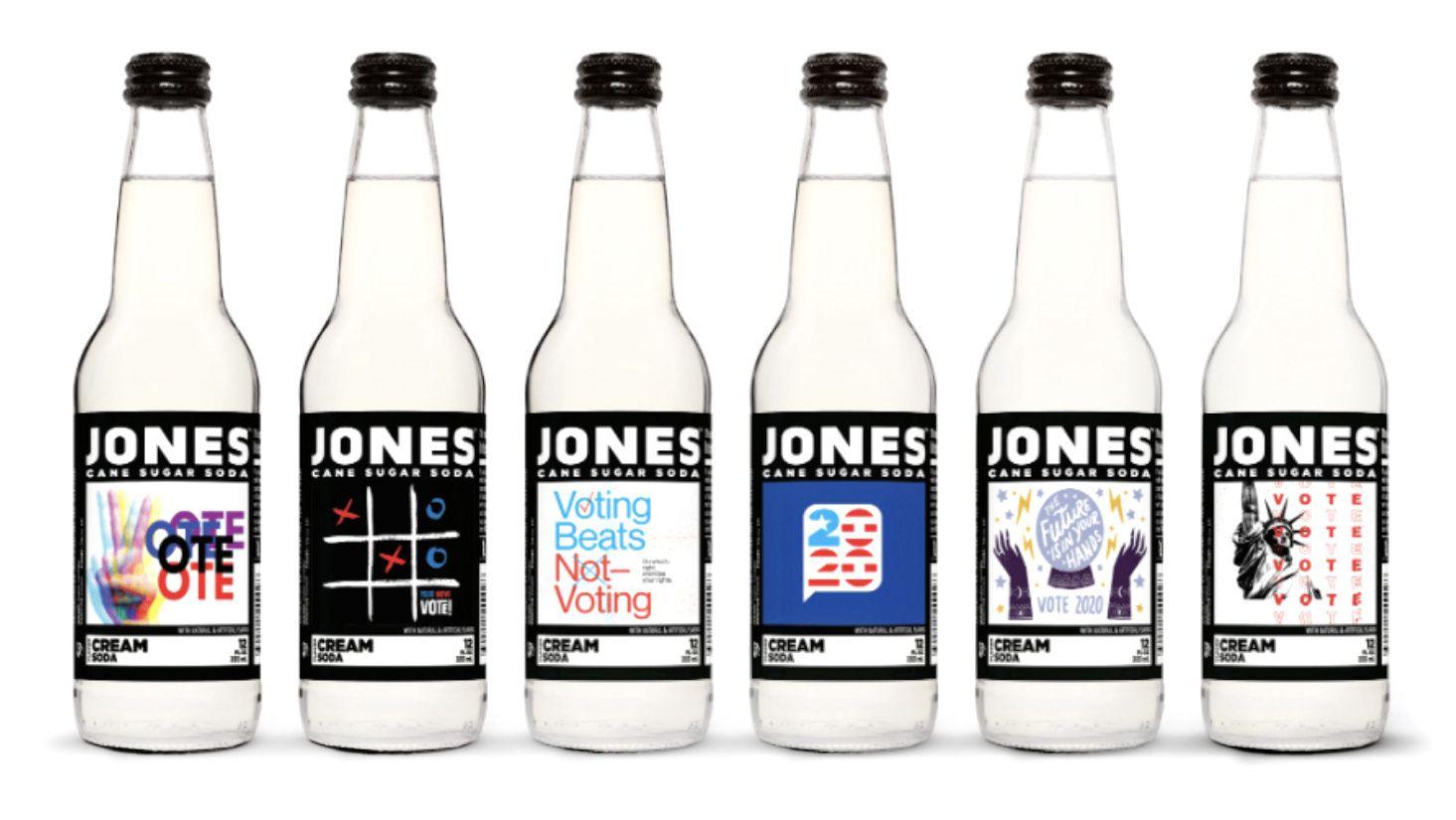
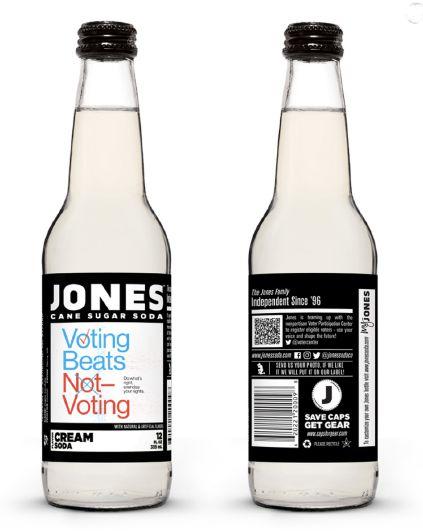
The two companies have partnered on voting-themed labels featuring QR codes that will take customers direct-
ly to a voting registration site. Powered by the VPC, the bottles allow eligible United States citizens to register to vote, check their current registration status, and find information on voting guidelines and state registration deadlines from their smartphones. The bottles featuring
the limited-edition Vote 2020 labels reached store shelves at the beginning of September.
The design
The soda labels feature six different designs created by artists and consumers in a total print run of 500,000.
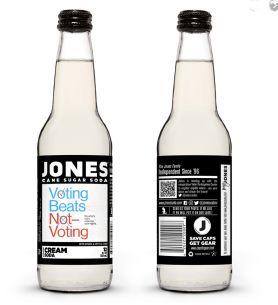
The graphics include a “Voting Beats Not Voting” message and a label emblazoned with the word “Vote” several times, superimposed over an image of the Statue of Liberty. The label is embedded with a QR code that enables online voter registration in about two minutes with a driver’s license or a state identification card.
“The right to vote is a cornerstone of American democracy but millions of eligible voters aren’t registered even in a normal year, and this year is obviously not normal,” said Jones Soda interim CEO Jamie Colbourne. “Registration numbers are at historic lows because the pandemic has shut down many voter registration sites and live events. We created our Vote 2020 bottles to both inspire people to register and give them a way to do it without even putting down their drink. We hope to reach our core consumer set, Gen-Zers, who make up 10 per cent of the eligible voting pool, and make a real impact on
the voices that get heard on Election Day and beyond.”
The initiative is the latest in Jones Soda’s history of printing special edition labels, as they did during the presidential election of 2008, when their labels featured each of that year’s candidates. Earlier this year, Jones Soda bottles also featured labels with “Messages of Hope,” sharing images of positivity during the COVID-19 pandemic.
Every voice counts
The label is embedded with a QR code that enables online voter registration in about two minutes.
Leading up to the election in November, the Voter Participation Center is increasing its mail, digital and text outreach efforts to encourage members of the Rising American Electorate, including unmarried women, people of colour and young people, to register to vote. Since its founding in 2003, the VPC has worked with its partner, the Center for Voter Information, to help over five million people
register to vote. During this election cycle alone, the organizations have together helped over one million people register to vote and have helped another 2.5 million people send Vote-by-Mail applications to local election officials to be applicable to vote from home.
“With COVID-19 putting traditional in-person voter-engagement efforts on hold, partnering with Jones Soda is among the most creative new approaches we are using to empower historically under-represented voters to participate in democracy,” said Tom Lopach, president and CEO of the Voter Participation Center.
“Everyone who buys a Jones Soda looks closely at the labels because they’re fun and constantly changing, so it’s a great opportunity for us to both call attention to the importance of voting and enable people to register on the spot simply by using their smartphones.”
ArrowJet Aqua 330R
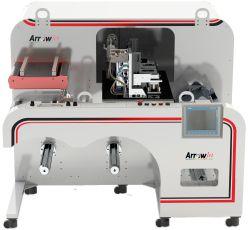
Arrow Systems has launched the ArrowJet Aqua 330R, which features Memjet’s DuraFlex printhead technology, providing the flexibility of digital printing, and durability and fast speeds with aqueous pigment inkjet technology. The printer offers up to 1600 x 1600 dpi resolution at speeds of up to 150 feet per minute, and can be configured to either work offline or paired with inline finishing options.
The ArrowJet Aqua 330R also features a large unwind and rewind with capacity up to standard 30-inch rolls, an inline edge guide, inline IR curing and integrated RIP software for precise colour matching and variable data printing.
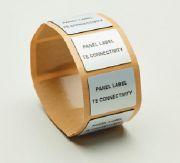
TE Connectivity TTDS-245
TE Connectivity has launched new TTDS-245 thermal transfer printable adhesive-backed panel labels, which use high-performance adhesive foam. TE’s panel labels are die-cut pieces on a liner in a roll offered in standard and custom colours and shapes. Panel labels have three layers – a printable topcoat that provides protection, a central film for stability and structure and an adhesive layer which can adhere to many surfaces, including low surface energy and powder coatings. Unlike traditional rigid metal or plastic engraving plates, the adhesive foam backing can conform and adhere to textured surfaces, uneven surfaces and rounded shapes, and are suitable for both indoor and outdoor applications.
Rotocontrol DT-340
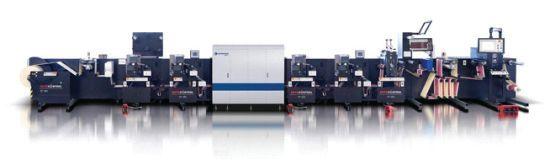
Rotocontrol and Domino have partnered on the Rotocontrol DT-340 digital label finishing machine with integrated Domino N610i label press. The N610i offers up to seven colours including opaque white, 600dpi native print resolution and speeds up to 70m per minute. Compliance for food packaging is also offered with the new Domino UV95 ink set.
The DT-340 provides multiple die cutting and printing stations, lamination, cold foiling, hot stamping, label inspection, small roll programmable auto turret winding and 100 per cent servo control from Bosch Rexroth.
UPM Raflatac Label to Label
UPM Raflatac’s Label to Label is the first range of paper face materials constructed from up to 30 per cent post-consumer waste (PCW), containing recycled label backing.
The label liners are collected by UPM Raflatac and through other industry initiatives. They are de-siliconized and converted to raw PCW, at which time a raw materials supplier makes new paper label face stock from PCW containing recycled label fiber. This label face stock is then turned into the Label to Label product by UPM Raflatac.
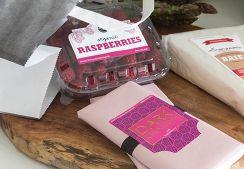
The Label to Label range is constructed from up to 30 per cent post-consumer
The ArrowJet Aqua 330R was designed for mid- to high-volume label and packaging production.
New thermal transfer labels from TE Connectivity render the use of rivets or bolts in engraving obsolete.
waste.
Rotocontrol’s DT-340 digital label finishing machine with an integrated Domino N610i label press.
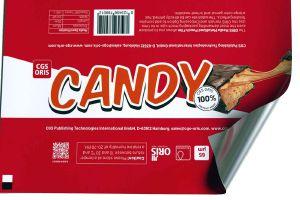
CGS Oris pouch film
Uteco Sapphire EVO W
Kodak recently launched a digital flexible packaging press, in partnership with Uteco. The Sapphire EVO W is the first flexible packaging press using Kodak’s latest continuous inkjet technology. The Uteco Sapphire EVO W is the company’s second product developed in partnership with Kodak for digital flexible packaging production.
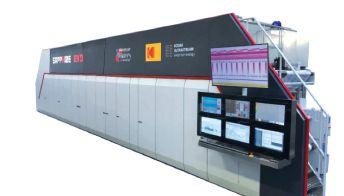
CGS Oris has added a new pouch film for solvent printers to its media portfolio. Kodak and Uteco recently teamed up to create a digital flexible packaging press.
CGS Oris has launched a new pouch film for solvent printers. The pouch film has both a white side that can be printed on, and a metalized side that feels like an aluminum composite film, often used in the food industry for pouches, snack bars or other similar products.
The white-laminated side of the substrate enables fewer passes through a printer and significantly reduced ink coverage, because it eliminates the need for a base white layer to be printed. This also shortens drying time and makes the production process faster and more efficient.
All pouch films feature a large colour space, heat sealability and direct printability. The entire media range for solvent printers has been specially developed to meet the requirements for the production of proofs and prototypes in the packaging sector.
The press can print flexible packaging applications on plastic films and paper. It prints CMYK inkjet at 600 x 1800 dpi across 49.2 in print width, at speeds of up to 500 feet/minute. The press is available with in-line priming, flexo-white and post coating and a hot air/IR drying system. Used with the Sapphire EVO, water-based Kodak Prosper Press QD Packaging Inks have been certified for indirect food contact.
Inx Genesis GS
Inx International Ink and Sakata Inx have released Genesis GS washable label ink, a product that was recognized by the Association of Plastic Recyclers (APR) in March for meeting or exceeding the group’s strict testing protocol for washable and recyclable PET shrink sleeve applications.
Genesis GS inks meet the PET-CG-02 Critical Guidance Protocol established by APR. It maintains properties in accordance with APR guidelines required for shrink sleeve applications and exhibits bleed resistance in caustic bath solutions. The ink is separated from the substrate and removed from the label material during the bath, making completely recyclable packaging an option.
APR noted that all colours with and without white backing, and with inside overprint varnish on Bonpet BR1 cyrstalizable film, met or exceeded APR’s PET-CG-02 Critical Guidance Protocol for Clear PET Articles with Labels and Closures. This recognition was based on the technical recyclability of the decorated label innovation with PET bottles and applies only to the decorated sleeve labels.
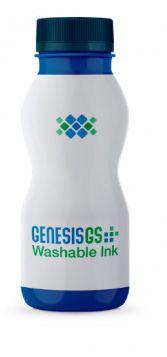
Genesis GS washable ink was recognized earlier this year by the Association of Plastic Recyclers (APR).
There’s
a better
way.
We get why solvent is king. It’s been around for a while, and other options have not been able to compete with its quality. But that’s changed. Improved water wash technology has arrived, and Flenex plates are the proof. They process 3x faster than solvent and 1.5x faster than thermal, and the gradation and superior print quality with the ability to hold a 1%, up to 99% dot.
No more disposing of nasty chemicals. No more waiting on drying time. Just 30 minutes of total processing.
Learn more and transform your plates at www.fujifilmpackaginginsights.com/flenex-fw/.