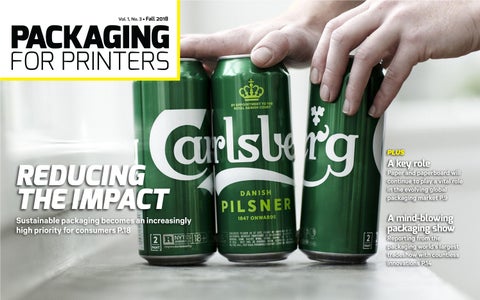
Sustainable packaging becomes an increasingly high priority for consumers P.18
PLUS
A key role
Paper and paperboard will continue to play a vital role in the evolving global packaging market P.9
A mind-blowing packaging show Reporting from the packaging world’s largest tradeshow with countless innovations P.14
Editor
Alyssa Dalton
adalton@annexbusinessmedia.com
416-510-5225
Associate Publisher
Stephen Longmire
slongmire@annexbusinessmedia.com
416-510-5246
Media Designer
Lisa Zambri
lzambri@annexbusinessmedia.com
Account Coordinator
Alice Chen
achen@annexbusinessmedia.com
416-510-5217
Circulation Manager
Barbara Adelt
badelt@annexbusinessmedia.com
416-442-5600 ext. 3546
Circulation
apotal@annexbusinessmedia.com
Tel: 416-510-5113
Fax: 416-510-6875 or 416-442-2191
Mail: 111 Gordon Baker Rd., Suite 400, Toronto, ON M2H 3R1
Group Publisher
Diane Kleer
dkleer@annexbusinessmedia.com
President and CEO
Mike Fredericks
FEATURES
Paper and paperboard will continue to play a vital role in the evolving global packaging market according to recent research from Smithers Pira 14 A mind-blowing
A look at the packaging world’s largest show with a record 2,865 companies and countless innovations
18 Reducing the impact
Sustainable packaging becomes an increasingly high priority for consumers
20 Spotlight Marc Raad, Executive VP, Significans Automation
23
The Central Group acquires Packaging Technologies
The Central Group has acquired Packaging Technologies Inc. (PTI), a Concord, Ont., designer and manufacturer of graphic corrugated packaging and point-of-purchase displays. The new collaboration between Central and PTI aims to strengthen and expand the Central Group’s service and product line offerings across all subsidiaries including Central Graphics and Container Group Ltd. and Independent Corrugator Inc.
“With a diverse range of high-profile clients, our acquisition of PTI supports The Central Group’s strategy to lead the future advancement and continued high-performance of Consumer-Packaged
Goods and Retailers – we continually seek out and offer high-value, innovative products, services and leading technology solutions that meet and exceed our customers’ business objectives,”
Central CEO, Rick Eastwood says.
A privately-held Platinum member of Canada’s Best Managed companies, Mississauga, Ontario-based The Central Group is a performance-at-retail company combining in-store strategy, research, design, and execution with analysis and reporting. Its products include displays, packaging, branded fixtures, retail environments and digital interactions. PTI will continue to operate under the PTI brand.
“Central’s acquisition of PTI provides a major growth
opportunity for both of our businesses through extended services for our wide and diverse range of clients. Both businesses will benefit from a history built on enhanced design, print innovation and a commitment by both to expand product and service offerings to mutual and new customers,” PTI President Tim Boissinot says.
Kodak to sell Flexographic Packaging Division
Kodak says it has begun a process to sell its Flexographic Packaging Division (FPD), which produces and markets the Flexcel NX system of flexographic imaging equipment, printing plates, consumables and related services. For the last 12 months, FPD reported revenues of US$150 million and Operational EBITDA of US$33 million. Kodak says it will continue to make “significant investments” in FPD during the sale process by expanding manufacturing capacity to help meet customer needs. CEO Jeff Clarke says the improved capital structure following the transaction will allow the company to increase its focus on demonstrated growth engines, while continuing to invest in and provide solutions across the commercial printing, film and advanced materials industries.
Cascades to close two Ontario corrugated plants
Cascades has announced plans to close two sheet plants in Barrie (Jellco) and Peterborough, Ont., as part of its ongoing efforts to reorganize and optimize its corrugated packaging platform in Ontario.
The plants will be closed by December 31, 2018, affecting approximately 65 employees. Production will be deployed to other facilities in the province, Cascades explains.
“This decision will enable us to better align our existing production capacity and to improve service for our valued customers,” said Charles Malo, President and Chief Operating Officer of Cascades Containerboard Packaging.
Steve Bennett returns to Fujifilm to lead packaging segment
Fujifilm North America Graphic Systems Division is welcoming Steve Bennett, a former 20-year veteran of the company, to the role of Vice President of Packaging Solutions. Throughout his career at Fujifilm, he held various roles in sales, product marketing and development, corporate communications, wide format solutions, and electronic imaging.
Steve Bennett has been named Vice President of Packaging Solutions.
He most recently served as VP Sales, North America, at Esko-Graphics, where he was responsible for top-line sales and income contribu-
tion for all solutions. Fujifilm explains Esko is a strategic partner of Fujifilm and its products will continue to be an integral part of Fujifilm’s packaging strategy.
ICP Industrial expands into Canada
ICP Industrial, a division of Innovative Chemical Products Group, has formed ICP Industrial Canada. With operations already in the U.S. and Mexico, the additional footprint in Canada aims to help drive the company’s international growth strategy. In addition to the formation, ICP
Industrial Canada has entered into a strategic partnership with manufacturing representative firm Divicor of Montreal, Que., to supply its pressroom consumables to the Canadian market.
Resource Label Group, a full-service provider of pressure sensitive label, shrink sleeve and RFID/NFC technology for the packaging industry, has acquired Ingenious Packaging. Terms of the transaction were not disclosed. Located in Toronto, Ont., Ingenious services customers across the food, beverage, health and beauty, spirits, nutraceutical, distribution, tobacco and pharmaceutical industries. Ingenious is fully equipped with flexographic, digital and offset printing capabilities and the ancillary finishing assets to produce pressure sensitive, cut and stack and in-mold labels as well as shrink sleeves and banding products.
“Resource Label, with the backing of First Atlantic and TPG Growth, will provide the support to meet both the current and future growth needs of Ingenious’ customers throughout North America, with special focus on our foundation of Canadian customers,” says Bob Simko, President and CEO of Resource Label. Simko also announced the company has placed an order for a new 17-inch wide Mark Andy P7 flexographic press for the facility.
Bosch seeks buyer for packaging business
Bosch says after considering all strategic options, it is looking for a buyer for its packaging machinery business, more specifically the pharmaceuticals and food units of the Packaging Technology division. Citing a need to focus on the transformation ahead, Bosch says it has not identified any sufficiently relevant synergy effects in terms of business or technology that might offer the division prospects for the future within Bosch.
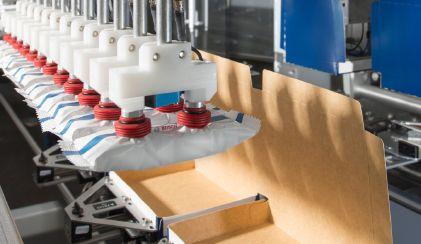
Bosch says it is seeking a buyer for its packaging business, noting that packaging technology is not part of the group’s core business.
PrintPro Digital & Offset Printing has acquired the first Xerox Iridesse production press in Canada, an investment it says will help achieve the double-digit revenue growth it has maintained since 2012. With six toner stations, Iridesse is described as the only digital press that can print metallic gold or silver dry ink, CMYK and clear dry ink in a single pass. The Winnipeg, Man., firm says it plans to take advantage of the press’s
range of metallic hues by entering the packaging market. It intends to use Iridesse as its go-to digital colour press to serve its customers in the manufacturing, mining, healthcare and automotive industries, as well as academic institutions, not-for-profits and associations.
“We strongly believe that investing in new technology is critical to staying relevant to our customers,” says Bhadresh Bhatt, Founder and President, PrintPro.
Founded in 1989, PrintPro is a family-owned commercial printer, operating in the same facility as two complementary businesses the family owns: Olympic Printing, specializing in offset printing, and React Signs, a sign producer. In addition to Iridesse, PrintPro operates a Xerox Versant 80 Press and a Xerox D110 Printer.
Full-service label manufacturer and print agency PRX Print projects 50 percent growth after its recent Mark Andy Digital One installation. Founded in 2010, the Mississauga, Ont., company provides full-service packaging solutions to customers across a range of industries, offering clients “one-stop packaging shopping” for printed labels, forms, boxes and shrink sleeves. Additionally, it provides marketing agency-type services such as graphic design, packaging consulting and support services for tradeshow and product rollout programs to support branding strategies. Due to increasing demands, printed labels became a larger part of the PRX Print product mix and the company was experiencing strong demand for cost-effective, short-run digital labels with fast turnaround times. Trends toward just-in-time ordering, small-quantity, multiple-ver-
sion printing, coupled with oftenchanging label regulations and the need to contain costs, were key factors in driving this growth, PRX Print estimates.
Gilbert says key features that drew her to the Digital One are the “pay as you go” no-click-charge structure, an eco-friendly footprint with minimal waste, the toner-based technology and all-in-one (printing and die-cutting) functionality.
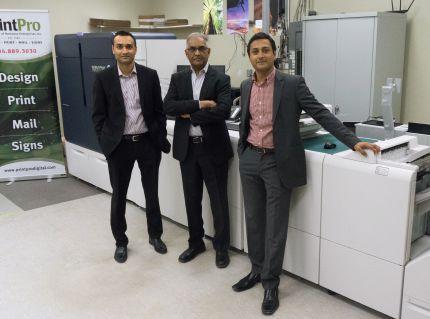
L to R: Gaurav Bhatt (Sales), Bhadresh Bhatt (CEO & Founder) and Nirav Bhatt (Production) of PrintPro.
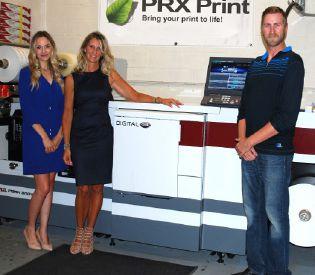
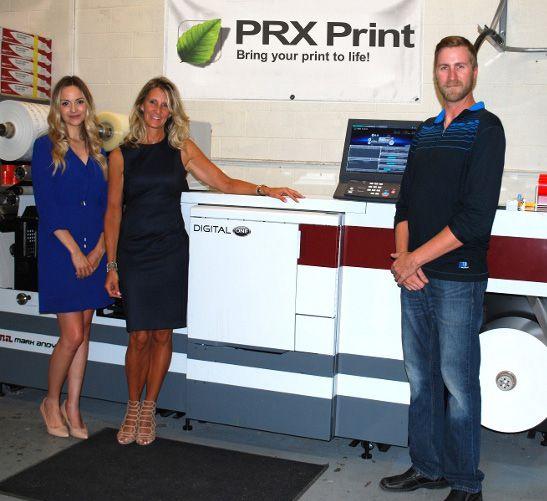
L to R: Kristina Sauve, Office & Production Manager; Debbie Gilbert, President; and Andrew Stewart, Press Operator at PRX Print.
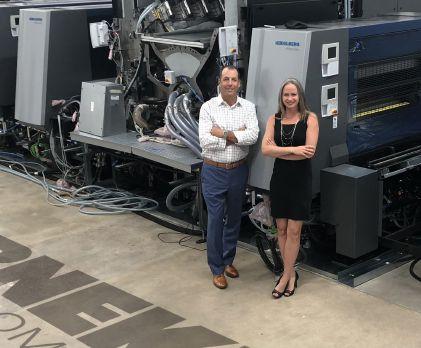
Peachtree Packaging & Display, a manufactaurer of semi-permanent/ corrugated and permanent point-ofpurchase and direct to consumer graphic & experiential packaging solutions, has increased its capabilities with the acquisition of a Göpfert Evolution High Board Line five-colour
CPC Packaging invests in four Bobst machines
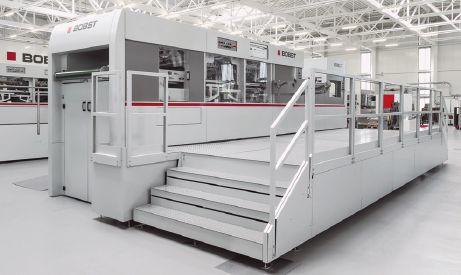
European packaging solutions company CPC Packaging says it is improving its production capabilities and efficiency with its recent equipment investment. CPC is acquiring four machines, three of which are flatbed die-cutters: Novacut 106 ER,
dual die-cutting press.
The investment will provide the firm with an additional capacity of 10,000 full-size sheets per hour and the ability to produce more than 180,000,000 additional square-feet per year.
“As a trusted caretaker of some of the world’s most recognizable brands, we have an obligation to provide our customers with access to the absolute best technology and equipment the industry has to offer. Industry leaders must have industry leading technol -
ogy,” says Chad Wagner, President and CEO of Peachtree Packaging.
Nicknamed the ‘Spaceship’ among the Peachtree Packaging team for its futuristic appearance, the press is fully automated and can manage projects up to 110-inch printing width.
Göpfert explains the press can print 100+ line screen. The 86.61-inch board line in combination with the open machine architecture enable operators to set the machine while production is running. As a result, print
units are made ready while other projects are still running, making speed to market for customers even faster. The system also features a print control camera, vacuum sheet transport, and servo driven technology to help adjust for deviations.
Peachtree Packaging recently also purchased a 74-inch Post specialty folder/gluer, Hycorr 115-inch rotary die-cutter, and a 118-inch Revicart specialty folder/gluer with multi-feeder.
Expertcut 145 PER and Mastercut 145 PER for its Cartons Business Unit.
The solutions are described as featuring a state-of-the-art register system, intelligent feeders and quickchange tooling, all complemented by ergonomics and automation. Also part of the investment is a RS 6003C HS high-speed gravure printing press. The machine features Bobst’s
Total Automatic Pre-register
Setting system, which completes the pre-register procedure of all print units, whether it is a new or repeat job.
CPC Packaging operates nine factories in France and Germany and describes itself as a one-stop-shop for cartons, flexibles and labels.
Pictured here is the Novacut 106 ER Autoplaten flatbed die-cutter, one of four recent CPC Packaging machine investments.
Vietnamese printer Phu Thinh expands into
packaging
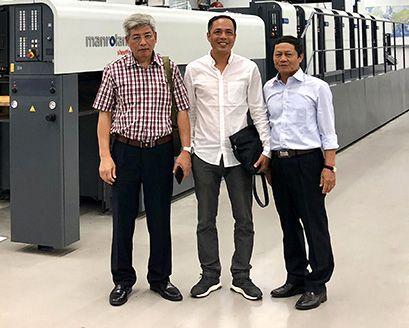
Phu Thinh Printing, a commercial printer in North Vietnam, has recently invested in a new six-colour Roland
700 Evolution with coating module press which will be operational in the fall. With its recent investment, it plans
First Primefire installation in the United States
Warneke Paper Box of Denver, Colo., has installed its new Heidelberg Primefire 106. The seven-colour industrial inkjet 40-inch B1 size digital press will allow the packaging printer to expand its business by collaborating with customers on targeted shortrun packaging cam- paigns and provide added security to cartons through variable content.
to expand into the label and packaging field and focus on the growing domestic market for plastic and foil printing.
“We strive to provide customers with high-quality products at reasonable prices, and in a timely manner, to suit their individual needs,” says Tran Đuc Phuong, Phu Thinh Printing Director and Co-founder.
The press features a printing speed
of 16,000 sheets/hour, combi-inks with three LED Interdecks and LED UV EOP, a SmartCard printing performance package with ink blowing devices, washing line and TripleFlow inking system. Several QuickChange functions together with PressPilot Visualization, ColorPilot Smart and SpectroDrive are designed to result in more efficient quality control.
Being the first commercially available industrial inkjet digital printing system in the 70 x 100 (40-inch) format, the Primefire 106 is designed for high production volumes, Heidelberg explains. Based on the platform of the Speedmaster XL 106, the machine is intends to give packaging printers the confidence of over 80 percent available print uptime, while easily integrating into offset environments. Heidelberg says its direct-to-sheet seven-colour imaging registration allows for unique security printing fea-
tures to be incorporated for anti-counterfeiting packaging designs.
The Primefire 106 boasts print quality of 1,200 x 1,200 dpi with initial production speeds of 2,500 sheets per hour and is designed to achieve volumes of up to 1.5 million sheets per month.The modular platform is designed to accommodate further speed increases and feature updates without having to replace the press, explains Heidelberg.
Phu Thinh Printing is described as one of the top three commercial printers in North Vietnam.
Warneke Paper Box explains the new press will help expand its business by collaborating with customers on targeted short-run packaging campaigns.
Products need to stand out in a crowded market and your customers need exceptional packaging designs which can be rapidly changed. Our digital technology streamlines your workflow and makes short run printing faster and more cost-effective - allowing customers to test and perfect their packaging.
Want to learn more about packaging & opportunities for your
business?
We’ve got you covered. Canon has put together this special feature on how packaging is changing and, most importantly, what print opportunities exist for your business.
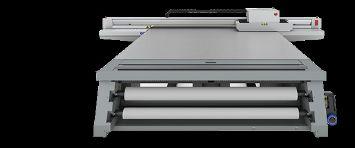
Océ Arizona® 6100 High Flow Vacuum Series
Easily pull down porous & warped substrates for:
• Short Run Packaging
• Package Prototyping
• Printed Plywood Panels
• POP Displays
• Hoarding
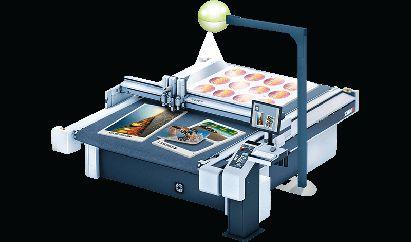
Océ ProCut Series with Auto Pilot
Fast forward finishing by reducing operator intervention with the Auto Pilot option that automatically identifies and initiates processing of all jobs placed on the cutter.
CHECK IT OUT NOW
A key role
Paper and paperboard will continue to play a vital role in the evolving global packaging market according to recent research from Smithers Pira
By Smithers Pira
Overall growth in dollar value terms for packaging was depressed for the years spanning the middle of the decade – although this is largely attributable to relative strength of the dollar against other currencies across that period. Still in 2017, value reached US$851.1 billion, a 2.8-percent growth compared to 2016 at constant prices. This steady expansion is anticipated to continue across the next five years, rising slightly to 2.9 percent year-onyear across this period, to reach $980.4 billion in 2017.
Regional perspectives
The continuing trend towards large-
scale mergers and acquisitions – for example the creation of WestRock from MeadWestVaco and RockTenn – is testament to the relative maturity of the packaging industry in developed world regions, like North America and Western Europe. The analysis in the recent Smithers Pira report, The Future of Global Packaging to 2022 , indicates that emerging and developing economies will contribute just over 70 percent of world packaging consumption growth from 2017 to 2022. Asia is the largest market accounting for 42.1 percent of world packaging consumption in 2016. North America is in second place accounting for 24.3 percent of world packaging
consumption, ahead of Western Europe with 18.4 percent. The emerging and developing regions of Eastern Europe, South and Central America, the Middle East and Africa account for the remaining 15.2 percent of world packaging consumption. Asia is forecast to grow packaging consumption at the fastest rate, led by China and India. This is largely attrib-
utable to growing populations, rising disposable incomes, and a transition from traditional markets to the purchasing of packaged consumerist goods, especially in the food segment. China alone is forecast to represent almost 48 percent of world packaging consumption growth through to 2022 with India accounting for a further 8.5 percent.
Material segments
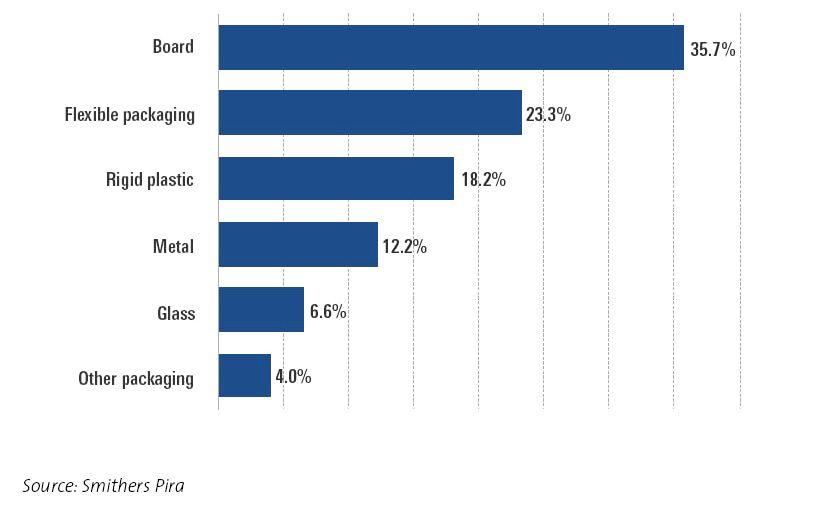
Board and paperboard (corrugated, folding carton stock and liquid paperboard) is the largest packaging material type covered in the Smithers study. It accounted for 35.7 percent of world packaging consumption in 2016, followed by flexible packaging (plastic, paper and foil) with 23.3 percent, rigid plastic packaging with 18.2 percent and metal with 12.2 percent.
Flexible packaging is forecast to grow consumption at the fastest rate through to 2022, driven by advantages in lightweight, demand for
smaller more convenient packaging and improvements in design. Growth will be strongest for flexible plastics which are already two-thirds of the market, but flexible papers will perform only slightly less well across the five year forecast, with aluminium seeing the smallest boost, as pricing and improvements in competing barrier materials squeeze its share.
Food markets dominate flexible packaging consumption accounting for three-quarters of global consumption in 2016. Meat, fish and poultry; confectionery; dried food; and savoury
snacks are the largest food markets for flexible packaging. Pharmaceuticals, medical, cosmetics and toiletries are the largest non-food markets for flexible packaging.
Flexible papers
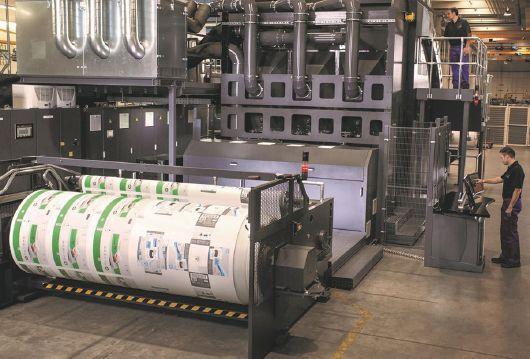
Press builders like HP are collaborating with specialists in corrugated board handling to develop a new generation of high productivity inkjet press for printing boxes.
SOURCE: HP
While flexible paper packaging has been under threat from flexible plastics in some applications, it will remain an important constituent of the flexible packaging market for the foreseeable future. This is due to a combination of factors, its low cost, its perceived good environmental credentials, its use in laminations – often as a light barrier – and because consumers enjoy the tactile effect. A number of plastic films have been modified to mimic the feel and look of paper, while offering the benefits of moisture barriers inherent with plastic films. Matte finish BOPP is an example of such a film.
Papers continue to dominate some packaging applications, such as flour,
sugar and some soft cheeses. Papers are still used widely in medical packaging; fast food wrap and metallized paper cigarette bundle wrap, as well as less formal developing world retail sectors.
Dried food, processed meals and savoury snack markets present growth opportunities for extrusion-coated papers, along with specialty medical packaging papers.
Corrugated board
Growing environmental concern is benefitting the corrugated board market due to the perceived and real environmental benefits of cellulose-based packaging. However, lightweighting of board constructions is hampering volume growth slightly, although the impact on value is less pronounced.
Corrugated packaging companies are putting increased emphasis on shelf-ready packaging that significantly reduces the workload for un-
packing and displaying products. This trend is now deepening with the rise of discount retailers – such as Aldi and Lidl in Europe – and convenience store selling, which are more likely to use less labour-intensive shelving options and have fewer of their own branding priorities. This presents an opportunity for the brand to determine how their product is presented in store and gives an opportunity for them to invest in printed graphics for on-shelf differentiation.
This trend dovetails neatly with the wider availability of inkjet printers for corrugated board, giving brand greatly expanded options for versioned packaging, including bespoke designs of corrugated formats for short run promotions.
Flatbed inkjet systems have been available for corrugated for several years, but productivity and cost have limited these; often to point-of-sale displays, rather than packaging.
Across 2017 to 2022, this situation
will change as a new generation of high productivity inkjet presses –like the HP T1100S – especially de signed for volume corrugated print are already seeing their first commercial installations.
E-commerce
The unspectacular, if steady, rise in demand for packaging in retail outlets contrasts with that in the e-commerce segment. The value of packaging demand into this sales channel was $28 billion in 2017, and will more than double by 2023. Over 75 percent of this is for corrugated formats, causing a surge in demand for fanfold for fit to packing applications, new designs for returnability, and lighter weight flutings that minimize the size of postal shipments.
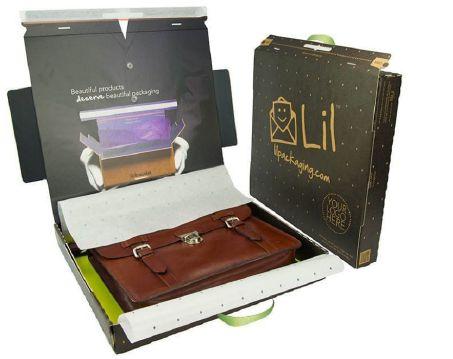
E-commerce shipment places a premium on both protection and message communications on brand packaging. SOURCE: LIL PACKAGING
From a packaging designer’s perspective with a customer encountering their goods away from a shop, serving staff and, other prompts such as point-ofsale displays; packaging is taking on an increasing important role as the primary touch point for brand identity.
This is generating interest in new designs that create an opening or unboxing experience.
Pack printing is also a key medium in this new arena with many e-commerce retailers and brands investing in high-quality graphics on the exterior and especially the interior of the package, for decorative impact. This in turn is creating a spur for new linerboards that can carry improved imagery.
The position of folding cartons within global packaging will face competi-
tion in the future from new more streamlined pack formats – like resealable stand-up pouches – that do not require secondary cartons. Additional competition will also be seen from upright flexible packaging, e.g. shrink film for multi-packs of beverages, and corrugated boxes. Future demand will also be affected by factors such as falling sales of tobacco and cigarettes, and an increase in offshore production of toys and sports products that are shipped pre-packed.
Higher paperboard prices, which impact on profitability, may another challenge, but in the short term board prices are generally decreasing as a result of rising European board output and high exports from an oversupplied Chinese board market.
Folding cartons demand is predicted to grow in four main end-use segments. More spending is expected
on luxury items, while the on-the-go eating trend will drive demand for retail carryout cartons. A larger aging population and health enfranchisement worldwide will also increase demand for cartons in the pharmaceuticals category. Environmental factors and lightweighting is also expected to underpin faster than average growth in use of beverage cartons. Folding cartons will also benefit from the digital print revolution.
New dedicated inkjet platforms are joining toner-based systems in this segment, which has been targeted as the first by Landa Nanography with its B1-format S10 press now in beta testing in Israel.
Liquid packaging board
Liquid packaging board consumption is likely to be maintained over the next five years. With 70 percent of this market used in dairy and 20 percent
in fruit juices it will benefit from the healthy eating trend in developed markets, combined with growing consumption patterns in the emerging markets.
There is a growing trend for liquid packaging board producers to use renewable resources in order to enhance their environmental credentials.
In 2016, for example, Tetra Pak announced the launch of a new version of Tetra Brik Aseptic 1000 Edge with Bio-based LightCap 30. This is the first aseptic carton package in the world to receive the highest class of Vinçotte certification for its use of renewable materials. The new package is manufactured using a bio-based plastic film and cap.
Innovations like micro-fibrillated cellulose (MFC), being pioneered by the likes of Stora Enso, offer the prospect of a biodegradable barrier film capable of replacing aluminium foil in liquid cartons.
Carton manufacturers are also
introducing new and innovative carton products. These include the Combidome carton bottle from SIG Combibloc and Elopak’s Pure-Pak Sense Aseptic carton. The novel design and functional features of Pure-Pak Sense Aseptic cartons include easy-to-fold lines and the convenient flattening of cartons to reduce volume in waste and recycling facilities.
Liquid carton producers are also responding to consumer demand for packaging suitable for on-the-go drinking. Tetra Pak launched two portion-size packages in April 2017 to meet growing demand for on-the-go beverages. The Tetra Prisma Aseptic 200 and 250 Edge with Dreamcap 26 build on the success of the Tetra Prisma Aseptic 300 ml, which has more than 100 customers and packages more than 340 brands.
Tetra Pak forecasts that worldwide demand for portion packages under 250 ml will grow to 72 billion litres by 2019, up 10 percent from 2016.
Giving surfaces the life they deserve
Established in Canada since July 2018, ICP Industrial Canada is a leader in the development, application, and technical support of specialty coatings and adhesives for the packaging, labeling, and graphic arts industry with leading brands Nicoat® and MinusNine Technologies.
ICP Industrial Canada’s strategic partner, DIVICOR, a manufacturer’s representative firm will support supplying its pressroom consumables to the Canadian market.
DIVICOR is represented by a Canadian team who have been leaders in the consumable sector for over 30 years and have a deep knowledge and expertise of the printing industry.
CAPACITY & QUALITY
PORTFOLIO
Industry’s most comprehensive portfolio of high-performance UV/EB, aqueous, and specialty coating and adhesive technologies.
PASSION
Over 165,000 Square Feet of Manufacturing Space throughout North America with dedicated quality control to ensure product consistency for large and small scale customer requirements. info@divicor.ca
Our passion lies in delivering high-quality consumer solutions, dedication to quick turnaround times and industry-leading product development at our two Innovation Centers.
SERVICE
Dedicated R&D, Technical Service and Technical Sales teams that provide coating solutions and manufacturing support.
A mindblowing packaging show
A look at the packaging world’s largest show with a record 2,865 companies and countless innovations
By Martin Habekost
One year down, just two more to go! It’s been a year since Interpack 2017 and PrintAction is already counting down to the next edition of the world’s largest industrial show for packaging, taking place May 2020. Join us as we revisit the highlights from last year’s incredible tradeshow.
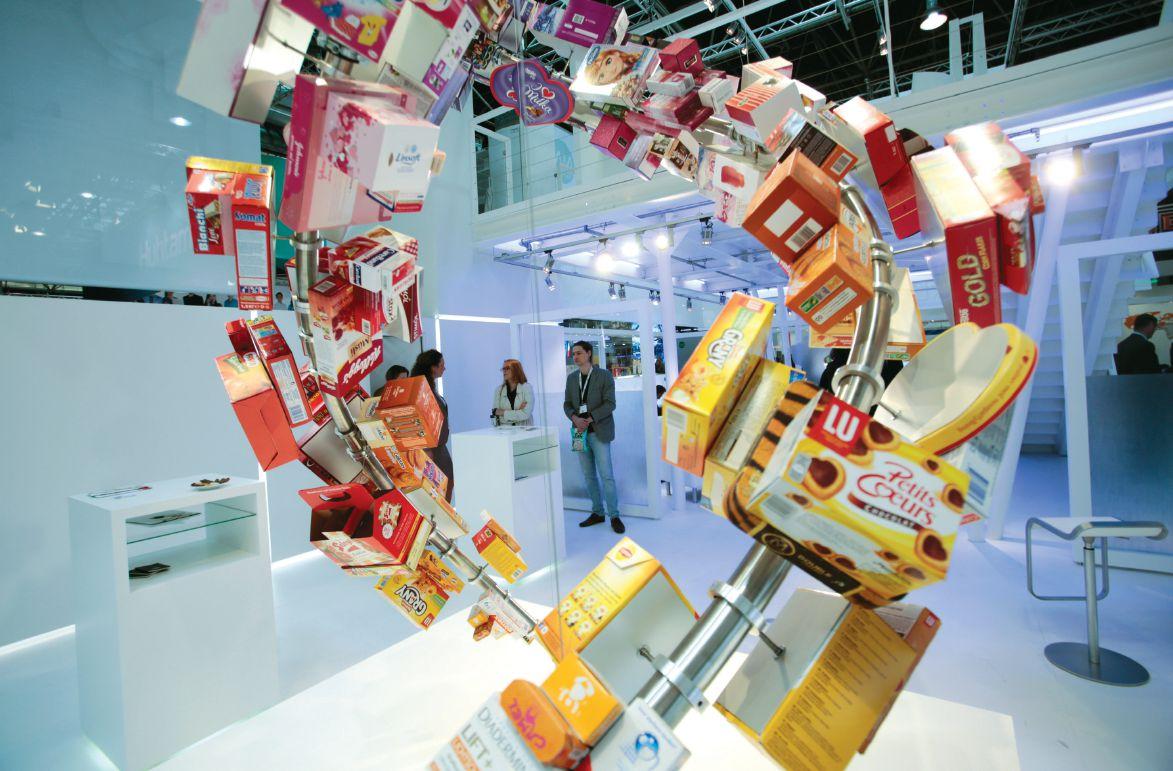
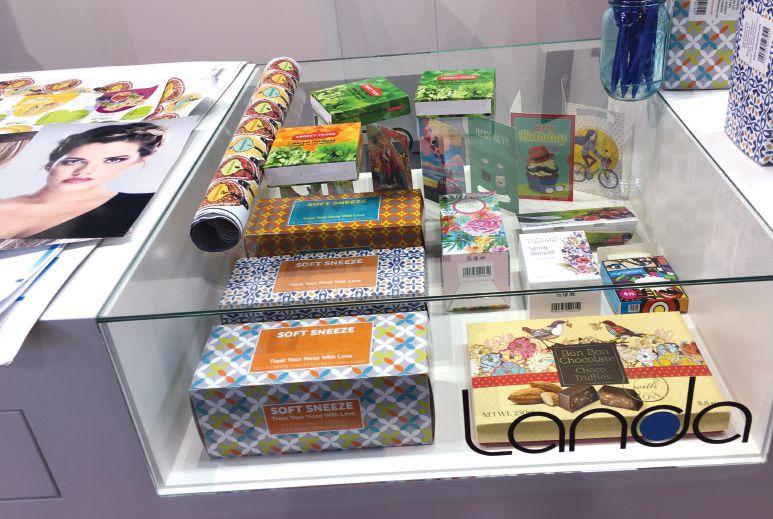
Some of the thousands of innovative packaging samples on display at Interpack 2017.
Interpack 2017 was held May 4 to 10, 2017, at the Düsseldorf, Germany fairgrounds, familiar to so many of
Canada’s commercial printers as the home of the quadrennial drupa trade show. Interpack has a repeat cycle of every three years instead of drupa’s every four years. In the year 2020, both tradeshows will take place in the
same year, Interpack in May and drupa at the end of June.
Although I set foot in every hall, it is impossible to give a complete overview of the trade show.
Interpack 2017 had 170,500 visitors to the trade show and approximately 75 percent came from abroad. Visitors came from a total of 168 countries.
The official survey conducted with visitors at the show gave a 98 percent
Anyone who has been to drupa knows the sheer size of the fairgrounds in Düsseldorf. Interpack is in no way smaller. All 18 halls were filled with exhibitors and their products. On top of the 18 regular halls, there were also two special exhibits put up in tents, resulting basically in 20 halls and all were in relation to packaging.
scoring of satisfied and very satisfied. This is a new record for Interpack in regards to the number of visitors and the satisfaction the visitors felt with attending the show.
From the dizzying array of exhibitors and products, a few topics stood out at the show: Industry 4.0 and digitalization, traceability of products, sustainability, and customization.
What is industry 4.0?
Industry 4.0 is about the connectivity of machines among each other, in the whole production line and also back to the manufacturer of the machine(s).
Industry 4.0 is also about the full automation of a production process. The human operator is used only to stop the machine if the need arises.
Industry 4.0 is about the Internet of
Things (IoT), the smart factory and Cloud computing. Through the connection of machines, work pieces and systems intelligent networks are created. Existing through the entire value chain, these networks can control each other autonomously. Come to think of it, that sounds a bit ominous, but this is a discussion for a different time.
The question for today remains, how does the packaging industry benefit from Industry 4.0? Industry 4.0 will lead to faster, more accurate production of any type of packaging. The number of defective items that won’t make it to the customer will be reduced even more. Systems will be able to self-diagnose and initiate any maintenance that needs to be done. Intelligent systems will allow for more accurate scheduling of production, so clients can be more informed in regards to arrival time of their order.
The smart networks in Industry 4.0 will also go beyond a single factory.
These networks will be across the entire value chain, breaking down the barrier of the closed factory.
Traceability of products
The traceability of products was also a big topic at the show. The digital integration of production lines together with marking equipment (laser-etching, ink-jetting batch number, serial number, unique ID numbers), allows for the creation of very traceable products.
There were 170,500 visitors to Interpack 2017, according to show organizers, and approximately 75 percent came from abroad and three-quarters of them were decisionmakers.
Quite a number of companies showed very visible ID codes, especially in the pharmaceutical sector, while others showcased ways of giving unique IDs to every single package that came off a production line that were not very visible or only readable with a special reading device. One could ask oneself, why is this all necessary?
The answer is simple. More and more products are getting counterfeited these days and it gets harder and harder to differentiate between the original and the counterfeit product. Being able to produce not only unique batch numbers and lot numbers, but also unique ID numbers for each package produces a new level of product security. Since such a large number of unique ID numbers are created, big data and Cloud computing capacities come into play to manage these vast amounts of data.
At the moment, most of these unique ID numbers cannot be verified by the end consumer, but development is being done so the consumer can also test a product for its validity. Different avenues are now being tested. Again big data and Cloud computing come into play, when the customer will be
able to verify a product for being genuine. Maybe this can be done through a phone app, but it remains to be seen what the future will bring.
Sustainability
After my first visit to Interpack in 2011, I wrote in PrintAction about the strides that have been made in regards to using plant-based materials for packaging materials and the use of bioplastics. This trend continued at Interpack 2014 and now at Interpack 2017. Personally, I was very happy to see that a company has come up with a Stryofoam-type material that is made from plant-based materials and has very similar insulating properties. This material can rot in a commercial composting facility in 90 days, which is the criteria for compostability.
I also talked to a Chinese company that makes plastics based mainly on PLA (Polylactic acid). The representative I talked to said that there is quite the demand for PLA-based plastics. If
Surprise of the show
As I walked through the halls, I ran into Gilad Tzori from Landa. I wrote about Landa in PrintAction in June 2016 in my drupa report. I asked Gilad what he was doing at Interpack and he told me that they had teamed up with the largest folding carton printer in Germany to have an exhibit at Interpack. The print company is one of the beta sites for the Landa S10 machines. After seeing Tzori, I went to the hall where Landa had its exhibit. I talked to one of their representatives and I was able to get some packaging examples that had been printed on an S10 machine, the same machine that will be used by a folding carton printer in Germany. Personally, I was excited to see that Landa presses are making their way into commercial press rooms. I was also told that
a Chinese company is getting into this business, it means they have found a way to make this a cost-effective process and they have enough raw materials available to produce in substantial quantities. Many other companies have shown how they could manufacture their products using less raw materials and less energy and, therefore, lower their overall environmental impact. A lot of packaging material is still petroleum-based. These materials have great barrier properties, are lightweight and can be formed into all kinds of shapes. This is all very good, but what can happen with the plastic waste? One possibility would be the incineration of this type of garbage for the generating of heat and electricity, but that is not always the best solution. One innovative company showed how to transfer plastic filmtype garbage into a material that is shaped into 2×4 type planks, that can be used to build tables and park benches. This material is actually quite strong and not very susceptible to breakdown by outdoor elements.
Landa is planning to roll out the W10, the roll-to-roll printing machine, before the 2020 drupa tradeshow.
Packaging trends
A trend that was already emerging at drupa continued at Interpack. This trend was shorter run lengths for a certain SKU, more individualization of packaging and custom ordered packaging. All this is only possible with the use of digital printing technologies. Digital print technologies in combination with different finishing technologies were exhibited. The combination of digital printing technologies with finishing technologies like cold foiling were also shown. One ink company showcased a collection of tools that will help with achieving a custom colour on a specific substrate a lot faster than how it is currently being done. Through colour measurement, profiling and inkjet proofing and printing of the colour sample, it is possible to cut down on the time that
is needed to achieve a good colour match. This ink company is using colour technology hard- and software from world leaders to reach this goal. Overall, the printed packaging is going to be more colourful, feature more special effect inks, and will react very quickly to market trends and marketing campaigns. All this is done in the name of catching the customer’s attention to sell more of your own product in comparison to the competitor. My view of Interpack was more through the glasses of a packaging print company than a person interested in robotics, filling lines and sorting equipment. I am well aware that a lot more than that was shown at Interpack, but every visitor came to the show with their own perspective. It was definitely worth going and if you have the chance to go, just go. Attending the Interpack tradeshow gives you quite a perspective on how large the packaging sector is worldwide.
Reducing the impact
Sustainable packaging becomes an increasingly high priority for consumers
By PrintAction staff
Consumers are increasingly putting pressure on manufacturers to improve the impact that packaging has on the environment, with ethical packaging now becoming a ‘must have’ quality when purchasing a product, according to data and analytics company GlobalData.
Results of a recently released GlobalData global consumer survey finds 75 percent of consumers worldwide now think that living an ethical or sustainable lifestyle is important to creating a feeling of well-being.
“This sudden interest in sustainability has been driven by more open discussion via social media, and in-
creased government lobbying resulting in action against plastics. The result of this pressure is evidenced by changes to legislation, such as the UK introducing a minimum 5p charge for plastic carrier bags,” Mayu Teeven, Consumer Analyst at GlobalData, says. “Using sustainable packaging to reflect cleaner and healthier living has become a priority for many consumers. As demand for organic and natural products grows, and the clean label trend continues to increase in popularity, having non-recyclable plastic packaging will start to limit the success of products which rate highly on ethics and sustainability in other parts of the supply chain.”
“As demand for organic and natural products grows, and the clean label trend continues to increase in popularity, having nonrecyclable plastic packaging will start to limit the success of products which rate highly on ethics and sustainability in other parts of the supply chain.”
Research continues into recyclable materials, with the University of Warwick recently discovering lignin, a new type of biodegradable plastic made from tree glue that can be discarded with food scraps.
Lignin normally holds cellulose fibres to stiffening plant stems, and researchers found that it can be turned into a strong, moldable plastic. Although the process of creating this material is still difficult at this stage, it
could be on shelves within five years if scientists can ascertain a more efficient way of breaking down lignin, explains GlobalData.
“Currently, the biggest challenge for producers is to convince consumers that sustainable packaging materials are worth the extra cost,” Teeven says. “Although there are long-term savings to be made by manufacturers moving to more sustainable materials, in the short term, prices will likely need to increase to cover the research and development costs of developing new materials and upgrading machinery to work with the new packs.”
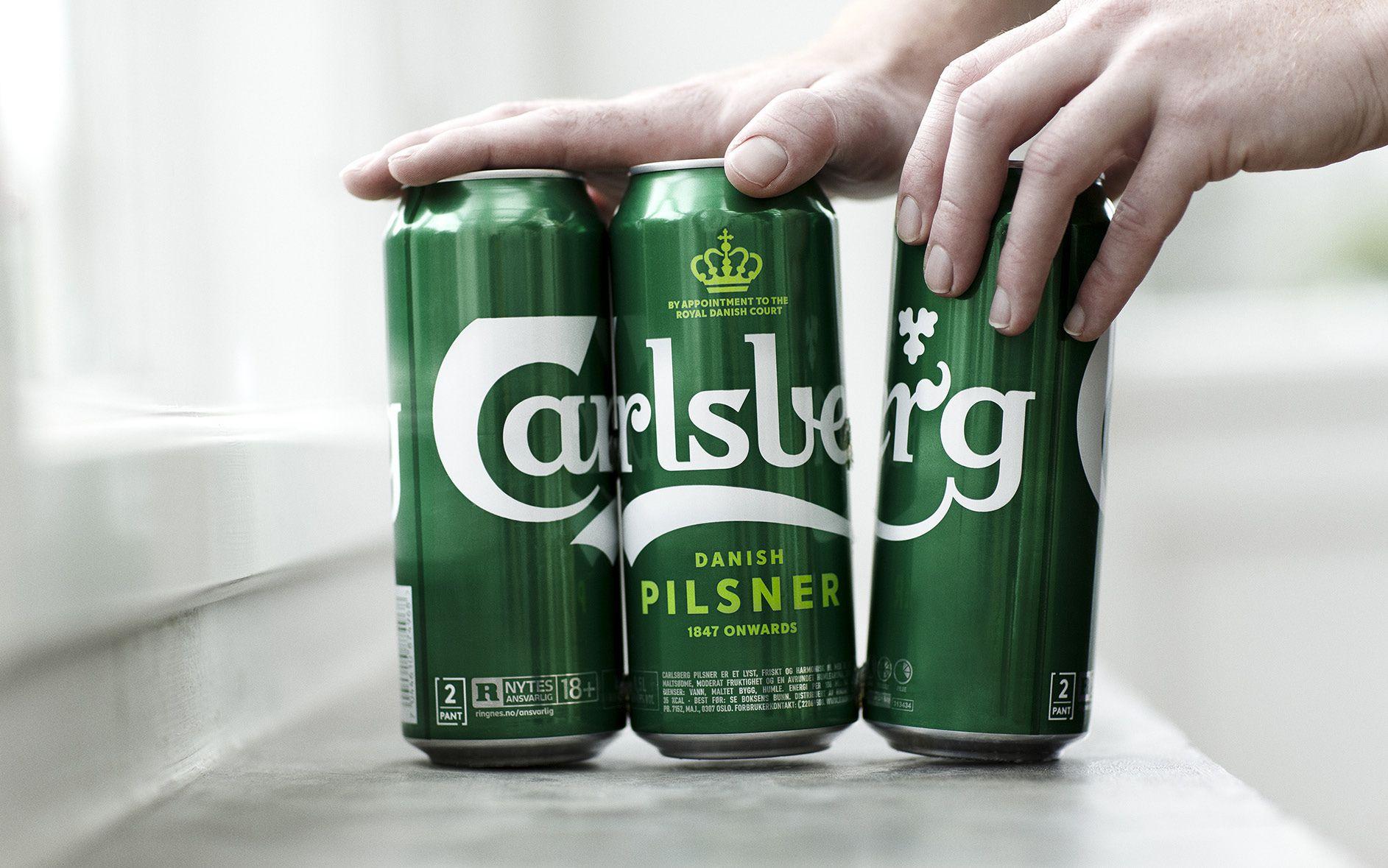
NEW CARLSBERG PACKAGING REPLACES PLASTIC WITH GLUE
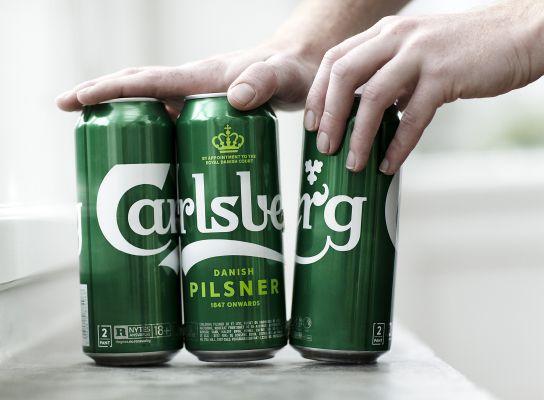
Carlsberg cans will soon sport a more sustainable packaging. The company has launched Snap Pack, a solution where Carlsberg cans are glued together in a multipack instead of using shrink-wrapping, hi-cone rings or other secondary packaging solutions.
The innovation was invented by KHS subsidiary NMP Systems, and developed together with Carlsberg over the past three years. It is now being launched as a world premiere for cans under the name Snap Pack.
“Carlsberg’s Snap Pack will significantly reduce the amount of plastic waste and we look forward to offering consumers a better beer experience with less environmental impact,” explains Cees ’t Hart, CEO of the Carlsberg Group. The brewery group expects that by dispensing with shrinkwrapping in its can packs, up to 76 per cent of plastic can be saved – in absolute figures this amounts to more than 1,200 tons per year, when fully rolled out.
In the run-up to the market launch, the Carlsberg Group invested in market research in order to better understand the wishes and needs of its customers. The result: sustainability is one of the most important purchasing criteria for consumers. Carlsberg then developed its sustainability program Together Towards ZERO which includes initiatives such as reducing carbon emissions through increased recycling and reuse of materials.
A particular challenge was the composition of the adhesive which bonds the filled cans with only a few adhesive dots to create a stable pack. “We have succeeded in developing an adhesive that works without damaging the printing ink and lacquer on the can,” Christoph Georg von Aichinger, Senior Sales Director at NMP Systems, says.
Carlsberg plans to implement Snap Pack for for cans as four and six packs including the carrying handle, and will sell it in the U.K. and Norway with Denmark, Carlsberg’s home country, in early 2019.
Another benefit of the solution, Carlsberg explains, is having perfectly aligned cans, enabling consumers to easily identify the product and find it on the shelf.
“Aligning the layout of each single can in the Nature MultiPack creates a so-called billboard effect. This effect brings a larger visual communication area for the brand displayed on the shelf,” von Aichinger says.
Marc Raad / Executive VP / Significans Automation
Toronto, Ontario-based Significans Automation Inc., a newly formed global professional services company that formerly operated as Myrpress Consulting Inc., has
launched its prepress custom workflow automation solutions. Established this year by a team of graphic arts experts who share more than 100 years of experience between
them, Significans Automation creates colour-managed, custom automated workflows that are built on existing foundational systems. Led by Marc Raad and Mircea Petrescu, the company says its customers can expect an “entirely integrated” operation that automates labour-intensive jobs, eliminates barriers to enhanced productivity, and facilitates robotics and robotic workflows in the future. Raad describes how increased automation will help drive print efficiency and development.
How would you describe the state of the print industry?
MR: We are in a pre-robotics era — we will see a lot more robotics, as well as artificial intelligence, drive businesses like printers, converters, brand owners, and the supply chain. Robotics and AI will drive our future
printers which have to automate their processes to take advantage of these innovations. Businesses become more profitable only when they take costs out of operations in the “new” competitive marketplace.
Print and automation will continue to work hand-in-hand. Printers don’t really have a choice. Their clients and suppliers are all going down this path and printers have to embrace automation to be competitive. Profitability is a top challenge facing printers and it is dwindled if operations aren’t efficient. We propose that companies become much more automated within their operations as well as with their customers; this allows them to gain more control in an optimized way.
Why adopt integrated solutions?
MR: When the first computer came
out it was big and bulky, and the average graphic arts business couldn’t afford it. Now computers are all around us and are quite affordable, and you can see people walking around everywhere with iPads and cellphones and many other [modern technologies]. Affordability is the driver for automation. As automation becomes more affordable in the coming years, I predict more companies will adopt it, which will also enable the smaller [commercial] printers to better compete against the larger players. Our goal is to build upon the software systems printing companies already have. When a system is tailored for a particular business, that business gains an asset and is able to continue building up its intellectual property. The natural gains facilitate a competi-
tive advantage, control, speed and independence. What I’ve noticed over the last couple of years is that most [individuals] hold back from adopting innovative approaches because they are so engulfed with the day-to-day operations that they’re unable to support a long training period. Integrated solutions are the “easy button” for print shops. Customized integration will give decision-makers the opportunity to invest in more innovation and gain faster ROI.
We create easy to adopt and manage modern and unmanned workflows. I say unmanned carefully because we don’t want to displace workers but unfortunately the economic [landscape] is changing the role of humans in certain production
environments, especially those who perform a very laborious graphical or manual process to prepare files for printing. [We hope] these individuals will become the administrator and manage these processes through control dashboards. The skill that they have is always going to be a necessity because if something should fail – that odd time it does –and automation cannot fulfill a job, then that skilled labour is required.
Why is print still a good industry to be in?
MR: Print is all around us — it’s the way we communicate and interact with people across the globe. Reports show the printing industry is within the top five industries globally. Yes, there are less pages being printed today but if you look at segment growth, which is quite apparent, there is growth in large-format, packaging and labelling – a lot of which you can’t
do without, for example, labelling for ingredients. You can’t just put any print on a bottle and tell the [public], ‘Go figure out what the ingredients are by looking it up on the Internet.’
This is an industry I’ve called home for 25 years and during that timeframe, it’s changed radically — moving from a very mechanical, hands-on process to where many organizations are adopting an e-commerce platform.
Today’s print companies are diversifying their business offerings and at the same time, are looking at how they can push for more automation. From what I see, the adoption of automation is not something people are scared of, it’s something they want to embrace. This [mindset] will allow us to be much more competitive and be on the cutting edge.
VARIOMAN – Boost Quality – Cut Costs
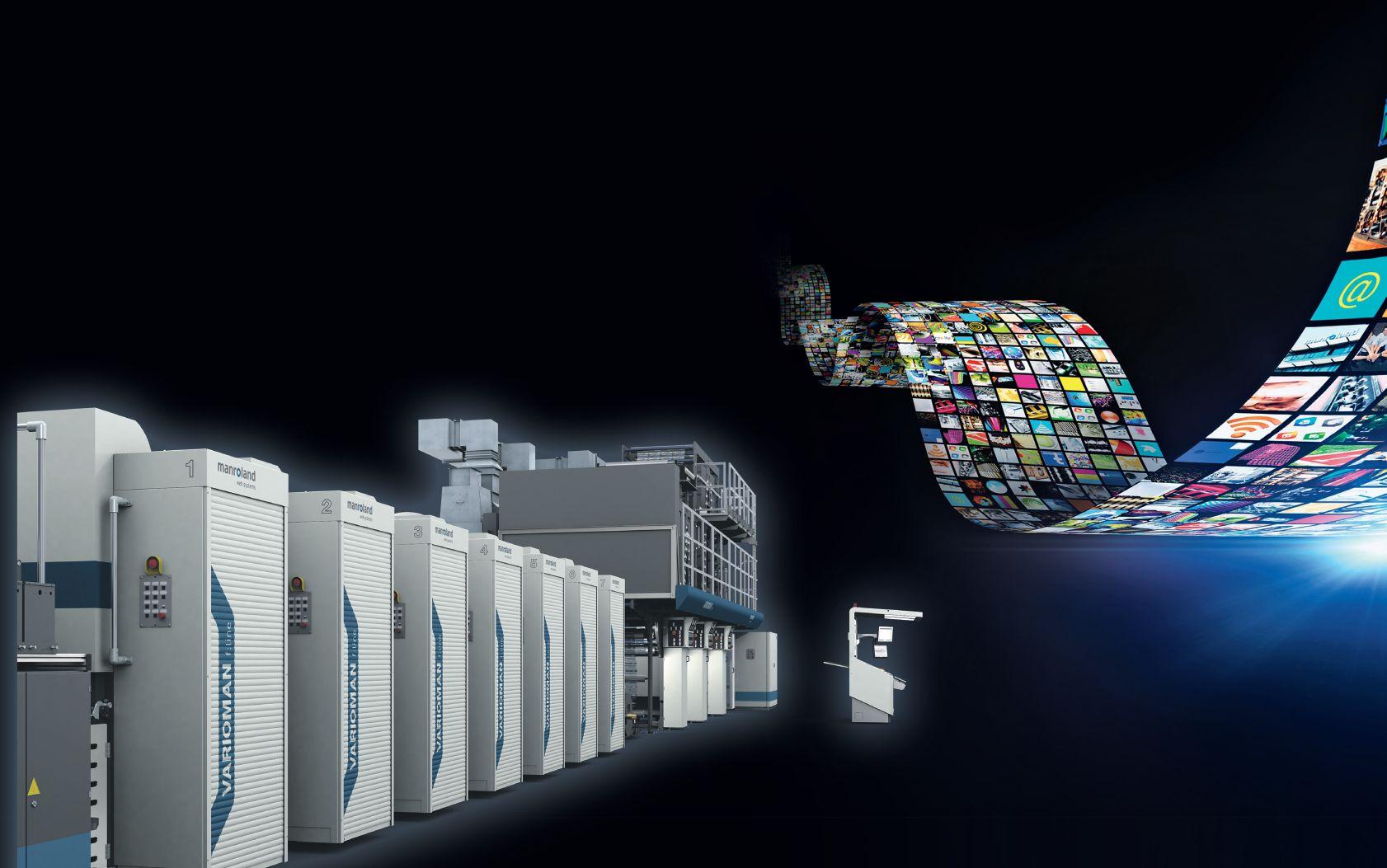
A new dimension for flexible packaging printing: VARIOMAN is the new technology platform for modern flexible packaging printing. The market demand is a press that offers brand differentiation, increased comfort and additional packaging sizes. This is given by the extraordinarily designed VARIOMAN. As offset hybrid press, it bypasses weak points of other technologies. In combination with gravure, inkjet, or flexo printing units, the VARIOMAN covers production gaps at medium print runs with excellent offset printing quality. manroland Goss web systems
www.manrolandgoss.com
Laetus SmartSpect camera
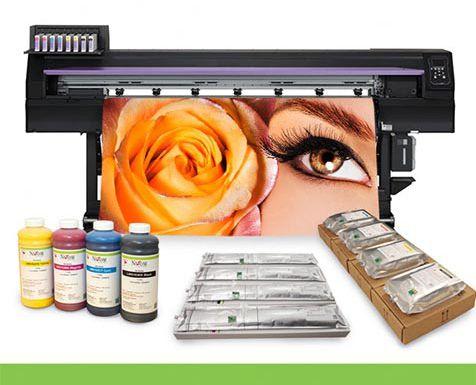
Nazdar 184 Series solvent inkjet ink
Nazdar Ink Technologies has announced the 184 Series, a newly developed digital imaging ink formulated specifically as a high-performance alternative for Mimaki JV150/300 and CJV150/300 digital printers using Mimaki BS4 ink. Nazdar says users will benefit from low odour and enjoy the convenience of a range of packaging options, including 600-ml bags and 2000ml bags compatible with MBIS.
Nazdar says the 184 Series is suitable for a range of packaging options.
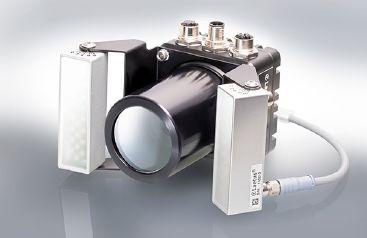
The SmartSpect camera boasts a compact design, making it easy to install in confined spaces and challenging industrial environ- ments, says Laetus.
Laetus says it has brought to the market the next generation of fully integrated smart cameras for optical quality control with the new SmartSpect. Suitable for checking-type tasks on packaging lines that can only be covered by a single camera, the camera features CMOS sensors which generate and process high-resolution images inside a single unit, while the integrated Intel dual-core embedded processor processes the image data obtained, with no need for an additional PC or controller, Laetus explains. The package contains vision-inspection applications for checking barcodes and both OCV and OCR reading. Two different resolutions are available at the time of launch, as well as a choice of different lighting versions.
Keyline print shop management software
Printing management software Keyline can now be integrated with other systems through apps available from Keyline developer Crispy Mountain’s AppStore. Designed to offer a holistic approach, Keyline covers various areas of a print shop, from quoting and calculating to production planning and control, warehouse management, packaging and logistics, accounting, statistics and analysis. Keyline is described as a lean management system that can communicate with other applications and machines through open interfaces. The system permanently sends events, such as when objects are created, changed or deleted. An app can pick up on these events to trigger processes and workflows. That way, event-driven process chains can be designed and processes can be automated, explains the company.
Aurigma Customer’s Canvas Packaging
At Print18, Aurigma presented Customer’s Canvas Packaging, an online editor that allows printing companies to add packaging personalization to their online storefronts and automate the packaging ordering workflow. With support for parametric models, the web-to-packaging solution lets customers choose a package size on the website and automatically generates a die-cut template based on their selection. By using Customer’s Canvas Packaging, printing companies can offer their clients the opportunity to create a package design online, preview the result in 3D, and order the packaging for printing.
W&H selects Xaar 5601 for new digital printer
Windmöller & Hölscher is developing its first digital, single-pass press for flexible packaging using Xaar 5601 printheads. According to Xaar, W&H is the first OEM to publicly announce its next generation of printers will be driven by the Xaar 5601. The development, the parties explain, is a first step into digital solutions for W&H. Using Xaar’s new Thin Film Piezo Silicon MEMS technology, the Xaar 5601 features over 5600 nozzles, capable of jetting up to 8 litres of fluid per hour.
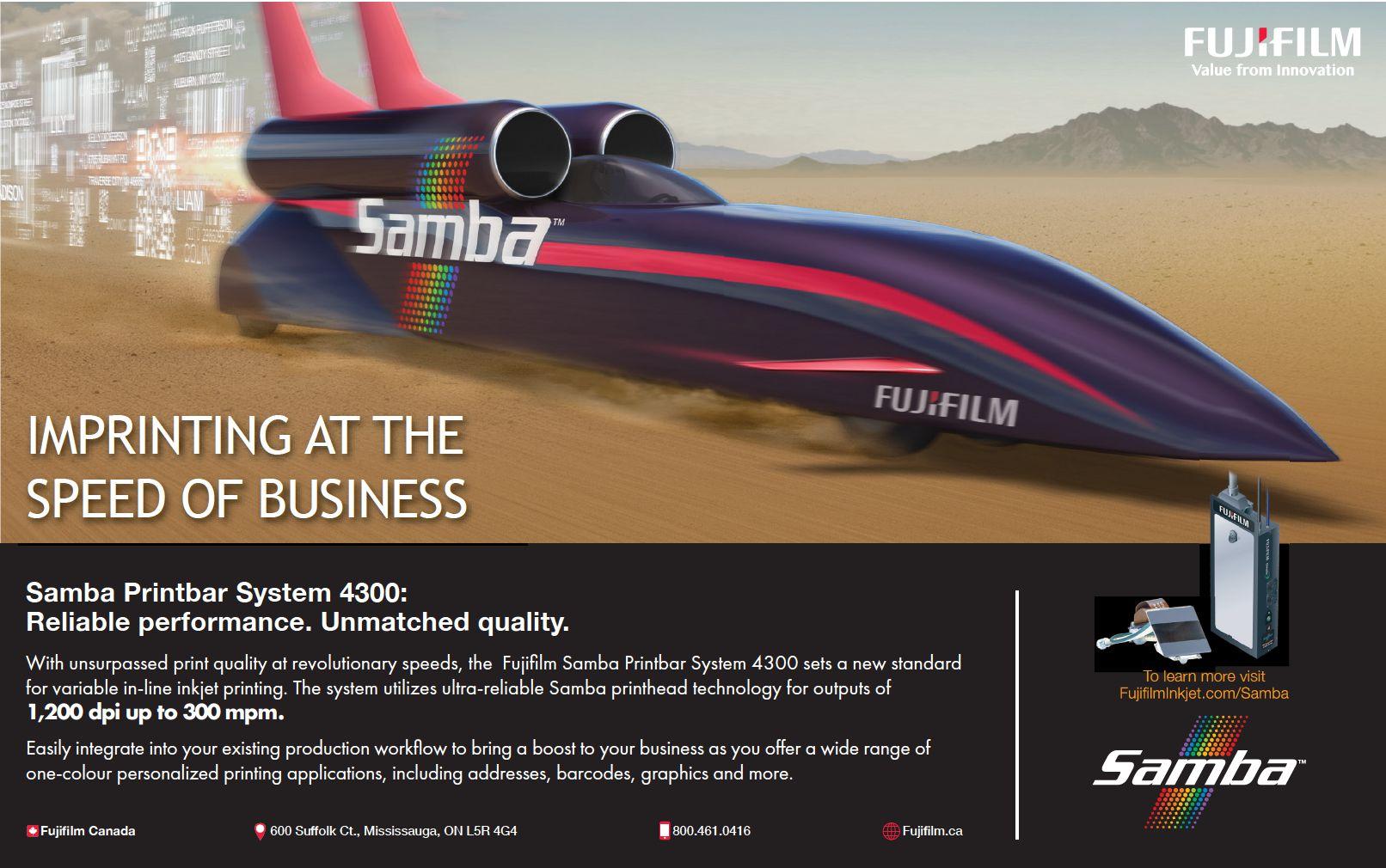
Fujifilm Samba PS4300 printbar
The Graphic Systems Division of Fujifilm North America has released the first product in its Samba Printbar System line, the Samba PS4300, for the commercial and packaging printing segments. It can be integrated into existing print equipment or manufacturing process to add variable inkjet imprinting capabilities, including offset presses, flexo presses and mailing tables. The new system has a print width of 1.6 inches, with printheads delivering a native 1,200 dpi and speeds up to 1,000 feet per minute.
HP PrintOS app store
At Dscoop Dallas 2018, HP unveiled the PrintOS Marketplace, described as a new solutions community for the HP PrintOS Cloud-based print production operating system. Designed to provide tools for printers using HP technologies, Marketplace will offer production and design tools from both HP and third parties.
OneFlow System Systems and HYBRID Software are the first two partners enrolled in the PrintOS Marketplace. Pre-release versions of their app solutions were demonstrated in the HP Dscoop showcase. OneFlow’s AutoFlow solution automates manual prepress operations including artwork fetching, checking, fixing and manipulation. HYBRID Software’s PACKZilizer is a Cloud-based application to prepare packaging files for production. Additionally, some 20 HP solutions partners have already integrated their solutions with PrintOS.
MCT VersaTech2 flatbed packaging cutter
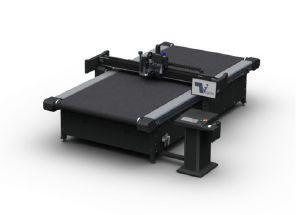
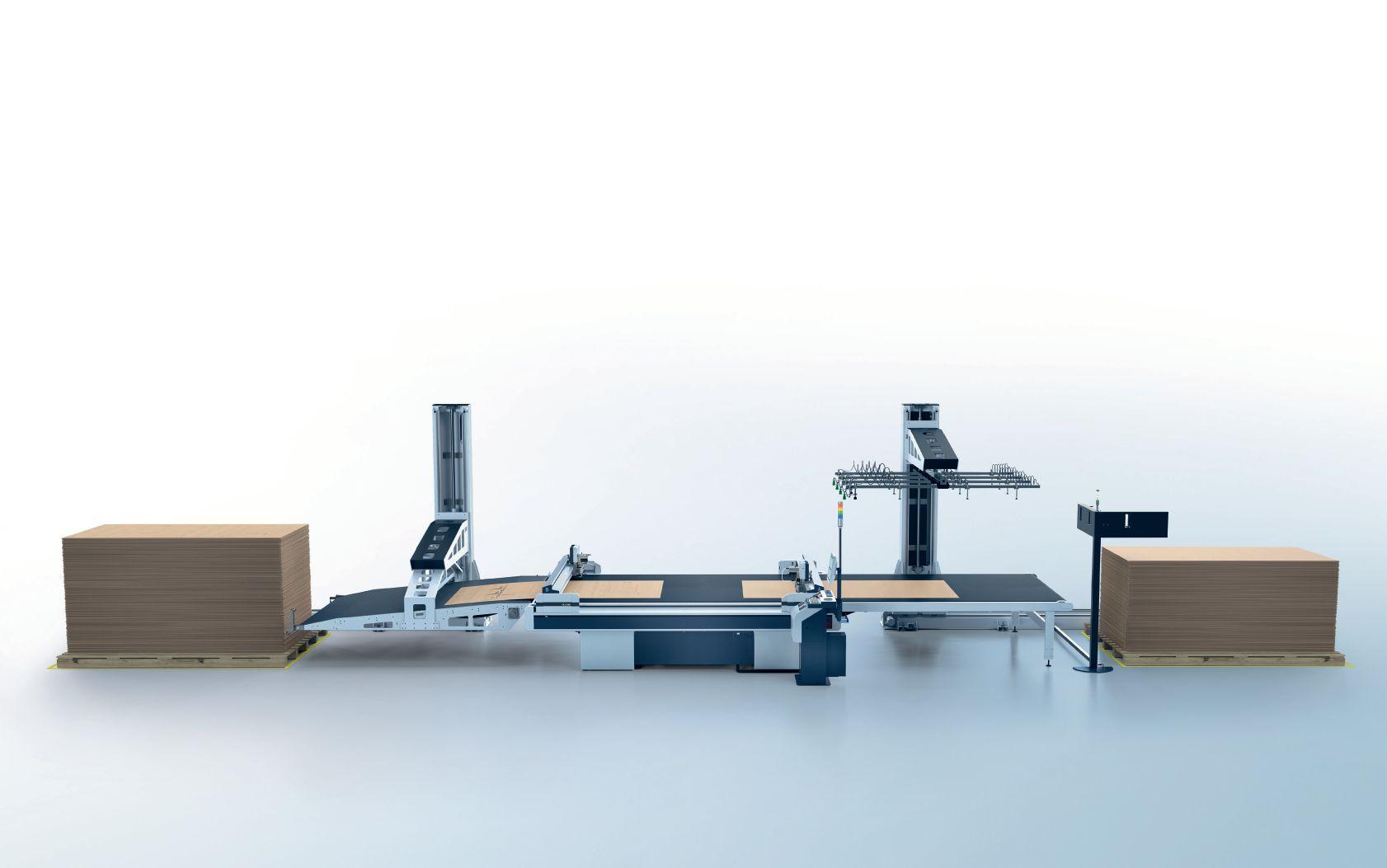
MCT Digital has released a new mid-level flatbed cutter solution for package prototyping and short to medium-run production. The VersaTech2 system comes in 1.6 m, 2.5 m, or 3.2 m flatbed or full conveying versions, including full cutting lengths up to 6.4 m. The new offering, MCT says, can be configured as flatbed cutters without automation for prototyping, or with the addition of board feeding, conveying and offloading capabilities, may be used as a short-run packaging solution. The solutions run at a speed of up to 78 inches per second and 1.25 g acceleration. Included in the flatbed system are a knife and creasing tools, along with a full cutting mat underlayment. MCT explains the system can also be fitted with an extended conveyor to improve offloading capabilities.
Samba drop-on demand inkjet printheads can print drops at over 100 khz, Fujifilm explains.
W&H selected Xaar 5601 after a series of successful tests were conducted.
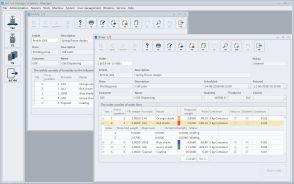
Enhanced GSE Ink manager
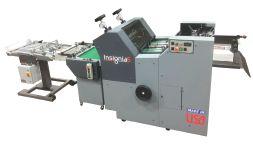
Rollem Insignia 6
Rollem’s SGIA exhibit featured the new Insignia 6 die-cutter with a hang tag die-cutting application and Rollem SS semi-slitter for partial slitting PSA materials. With a 20 x 20-inch sheet size, the Insignia 6 converts a variety of products in the growing markets of tags, labels and packaging.
A 13 x 19-inch sheet of 30 up hang tags will be die cut, hole punch, and edge perforated all in one pass delivering the hang tags ready for retail use. Insignia also performs kiss-cutting, scoring, cut-scoring embossing and in-line folding/gluing for folded carton work. Insignia delivers up to 4,000 sph and the ability to cut up to 30 pt. thickness. It is offered in three other sizes, 15 x 20-inch, 24 x 30-inch B2 sheet size, and the Insignia X3 which offers a 24 x 24-inch sheet size.
Ink logistics provider GSE has enhanced its Ink manager software by introducing an optional module designed to bring improved control of job procedures, costs and better traceability. Introduced in July, GSE Ink manager will help converters minimize ink-related waste, providing improved ink yields, enhanced reporting and business planning, and reduced setup times, the company says. The new accompanying management software module, GSE Article management, features two control elements to help the operator achieve accurate cost estimates when printing a de- sign or article, GSE explains. Additionally, its ink calculator automatically determines the amounts of colour needed for printing each article. As well as volume, it can also calculate the printed surface area covered by each colour, based on the length, width and coverage factor.
Mactac paper and film craft beer labels
Officially announcing its entrance into the craft beer labeling market, Mactac Roll Label has launched a new line of all-temperature pressure-sensitive paper and film craft beer labels. Designed to meet the unique needs of craft beer brand owners, the new labels are specially formulated with a variety of facestocks and finishes. With roughly 13 products available, Mactac offers semi-gloss, white and clear film options for bottle applications as well as chrome films for cans. Mactac explains the new craft beer labels are designed with either Mactac’s 640-AT acrylic adhesive or Chill At hot-melt rubber adhesive.
Adobe PDF Print Engine 5
Adobe released version 5 of Adobe PDF Print Engine, extending PDF Print Engine’s colour reproduction with new capabilities to harness the potential of digital and conventional presses. With “ongoing innovations” in ink and inkjet heads, Adobe says PDF Print Engine 5 is designed to maximize colour impact in the coming generation of textile presses, industrial print stations, and digital presses for label and packaging production – especially for printing on flat and contoured surfaces including paper, plastic, fabric, metal, ceramic, glass and food products, it says. As well, the new colour features are designed to help strengthen support for Expanded Color Gamut digital presses with ink-sets that go beyond the four-colour base of cyan, magenta, yellow and black to magnify the visual and tactile effect of brand messaging.