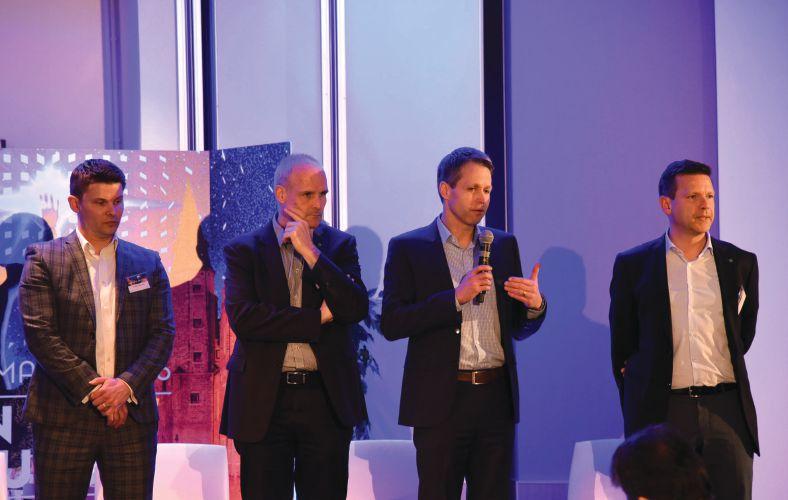
In the run up to drupa 2016, several companies with Belgian ties gather in scenic Bruges to showcase their newest software tools to drive print
18 SHOPPING FOR BUSINESS GROWTH
Messe Düsseldorf hosts journalists from around the world to preview a range of drupa 2016 innovations
22 COMMERCIAL LARGE FORMAT
This month’s drupa Expert Article Series describes the maturation of wide-format inkjet and new opportunities it provides for commercial printers
Departments
GamUt
5 News, People, Calendar, Dots, Installs, Archive, Globe
teCH repOrt
25 Digital drupa
Previewing the inkjet and toner presses that will be a main attraction in early June at drupa 2016
marKetpLaCe
29 Industry classifieds
spOtLIGHt
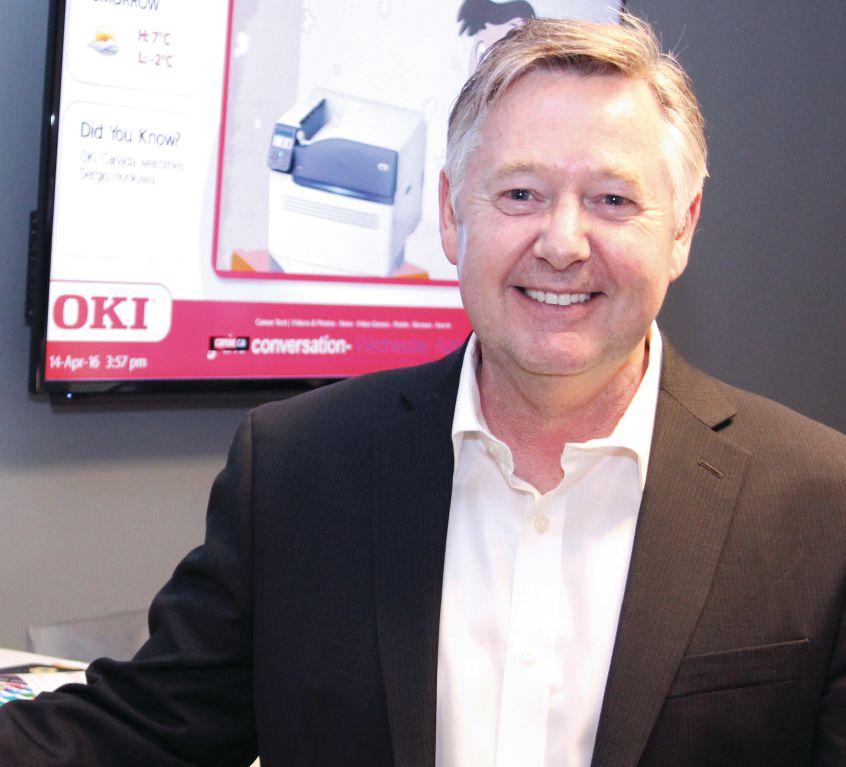
30 Mark Price, Regional Sales Manager, OKI Data Americas
COLUmns
FrOm tHe eDItOr
4 Jon robinson
A printing patriarch
Remembering Gaetano Gagliano, founder of St. Joseph Communications
DeVeLOpment
10 steve Falk
Online collaboration tools
Tips on how to leverage the growing, free Google ecosystem
teCHnOLOGY
12 martin Habekost
TAGA tech diversity
Five keynotes describe the progress of print and its near future
A printing patriarch
Gaetano Gagliano, founder and Honorary Chairman of St. Joseph Communications, passed away on April 14, 2016, at age 98. He has been a true patriarch to Canada’s printing and imaging industry, building a company that has employed thousands of people over its 60-year history and also maintaining deep community ties throughout its existence. A statement by St. Joseph immediately following his passing describes Gagliano as, “A man with unrivaled determination, strength of character and deep faith and passion.”
3m
The number of Canadian homes reached by the Salt +Light television network, founded by Gaetano Gagliano in 2003, which is also streamed in more than 160 countries.
Perhaps only rivaled by the late Pierre Péladeau, who founded Quebecor in 1965, and Rémi Marcoux, who co-founded Transcontinental in 1976, Gaetano Gagliano was one of Canadian printing’s most-influential businesspeople for decades and ultimately expanded his influence across a range of sectors to build one of Canada’s most-powerful communications companies.
Unlike Quebecor and Transcontinental, however, St. Joseph – named for the patron saint of workers – has remained as a privately held company and, therefore, continues to be more closely driven by Gaetano’s foundational business and personal values. His sons Tony, John and Frank Gagliano – Executive Chairman and CEO; President, Print Group; and Vice Chairman, respectively – are the primary leaders of the company today, which employs around 1,300 people.
About two years after he immigrated to Canada from Italy at age 38, in 1954, Gaetano Gagliano bought a small handfed press and started St. Joseph in the basement of his family’s Toronto home. With the support of his wife, Giuseppina, Gagliano focused on letterpress work in the early days as passion and dedication – investment in lithography – began to build St. Joseph into a significant Toronto commercial printing operation by the 1970s.
In the 1980s, the company continued its litho growth and also began to diversify into what were, at the time, leading-edge communications driven by computerization. St. Joseph was one of the first print operations in North America, arguably the world, to see the future value in digitized content and began to structure its company accordingly. By this time, Gaetano’s sons had joined the operation in management roles, including Tony Gagliano who became President at age 29, while brother John Gagliano would drive printing operations.
Together, the Gaglianos were early adopters of premedia strategies to leverage print and take advantage of new online medias and specialty communica-
tions networks, from television to digitized catalogue production for Blue Chip clients.The company was one of the first in North America to embrace strategies like consumer engagement and content-driven marketing, with major clients like Walmart, Sears, L’Oreal, GM, Loblaws and Shoppers Drug Mart.
St. Joseph today also continues to embrace its printing roots, highlighted by a 2010 commitment to create a 17-acre print communications campus at its headquarters in Concord, Ontario. Building from Gagliano’s foundations, St. Joseph has now been recognized as one of Canada’s Best Managed Companies for 13 consecutive years in Deloitte’s annual program.
“My father is honoured to have been recognized by the industry he loves so much,” said John Gagliano, accepting PrintAction ’s Lifetime Achievement Award on behalf of Gaetano during the 2014 Canadian Printing Awards. “Comparing that first small press to our pressroom floor today, it’s amazing how much he accomplished in his career and how much the industry has evolved. Despite the advancements and new technologies though, it’s my father’s love of print, and his belief in print as a powerful communications medium, that remains at the heart of our business.”
In a National Post article, Tony Gagliano explains his father continued working at St. Joseph until age 95, visiting the shop floor and speaking with employees as part of his daily routine, meeting with family to discuss corporate strategy: “They worked, laughed, argued and forgave, and always had their father to remind them that life, despite what they accomplished, was worthless if they didn’t live in ‘God’s grace.’”
At age of 86, Gagliano founded Canada’s first Catholic television network, Salt+Light Catholic Media Foundation, which has become an inspiration to people from all walks of life around the world. It launched in 2003 and now reaches three million Canadian homes, some 160 countries, and broadcasts in English, French, Italian, Mandarin and Chinese.
Gagliano received the Order of Canada in 1998, two honorary university doctorates, and Italy’s honorary title of Commendatorer. His patriarchal presence is best remembered by 10 children, 35 grandchildren and 16 great-grandchildren.
Editor Jon Robinson jrobinson@annexweb.com 905-713-4302
Contributing writers
Zac Bolan, Wayne Collins, Peter Ebner, Steve Falk, Victoria Gaitskell, Martin Habekost, Nick Howard, Nicole Rycroft, Abhay Sharma, Trish Witkowski
Publisher Paul Grossinger pgrossinger@annexweb.com 905-713-4387
Associate Publisher Stephen Longmire slongmire@annexweb.com 905-713-4300
Director of Soul/COO Sue Fredericks
Media Designer Lisa Zambri
Circulation Manager Barbara Adelt badelt@annexbizmedia.com
Customer Service Angie Potal apotal@annexbizmedia.com Tel: 416-510-5113 Fax: 416-510-5170
Mail: 80 Valleybrook Drive, Toronto, ON, M3B 2S9
Subscription rates
For a 1 year monthly subscription (12 issues): Canada — $40.95 Canada 2 year— $66.95 United States — CN$71.95 Other foreign — CN$140.00
Mailing address
Annex Business Media 222 Edward Street Aurora, ON, L4G 1W6 printaction.com Tel: 905-727-0077 Fax: 905-727-0017
More than 300 people, students and printing companies, participate in the 2016 job fair for Ryerson’s School of Graphic Communications Management.
ryerson University’s annual Job Fair for the School of Graphic Communications Management (GCM) featured 69 participating companies, including two firms from Vancouver, and one each from Buffalo, Ottawa and Guelph, and more than 190 students over five hours. The GCM Job Fair, which began in the late1980s, is now run in a speed-networking format where graduating students and potential interns spend 10 minutes interviewing with prospective employers before moving on to a new table at the sound of a gong.
Ryerson’s GCM program continues to grow in enrollment and currently has 602 full-time students, including around 180 who were admitted into their first year for 2015/2016. Ninety-one students are eligible to graduate GCM this year. Based on a curriculum change two years ago, GCM students can now specialize in specific areas like packaging or publishing in the final two years or their four-year degree program. Students can also now complete minors in areas like business, human resources, or professional communications.
toronto Club of p rinting House Craftsmen at the Duncan House recognized local printers for their award-winning work in the Toronto IAPHC Gallery of Superb Printing competition. A handful of secondary and post-secondary students were also honoured with Tai Chi Award Scholarships for their achievements in industry-related programs. The Toronto Craftsmen also presented winners of its annual Graphic Challenge Competition, which this year included 54 submissions from eight educational programs. In the Gallery of Superb Printing competition, C.J. Graphics
won both the Best of Show Award and Best Use of Ink Award, sponsored by Heidelberg Canada and Taniguchi Ink, respectively, while Colour Innovations won the Best Use of Bindery Award. Other winning companies included Polytainers, The AIIM Group, Wellington Printworks and Webcom.
Harmony printing of Toronto, Ont., entered receivership in late March.
Don Gain, President and owner of Harmony, who plans to retire after the company winds down, has been one of the most-influential leaders in the Canadian printing industry for more than two decades, including his 11-year role as Chair of the Canadian Printing Industries Scholarship Trust Fund, which in September 2015 awarded 35 students $56,000 in funding. Gain was also instrumental in establishing Ryerson’s University’s dedicated building for the School of Graphic Communications Management.
Insource Corp. hosted dozens of printers from Greater Toronto for a full day of demonstration sessions on the RISO ComColor X1 Series of inkjet printing systems. The event focused on the X1’s unique position as a cut-sheet colour inkjet system,
printing at speeds of up to 150 pages per minute in simplex or 75 pages duplex, with the ability to add colour to pages or envelopes at costs of around two cents per page. Insource, concentrating its RISO distribution in Ontario, Montreal and Western Canada, has installed more than 20 systems over the past year (primarily in Toronto). “This product provides a lot of solutions for different problems,” says Suzanne Wakefield, Managing Partner of Insource, “Because you can go into a variety of situations and RISO can still be the answer, even if it is a different problem from printer to printer that we are solving.”
b obst Group sa and WIFAGPolytype Group, both of Switzerland, entered into what the companies describe as exclusive negotiations with regard to Bobst acquiring WIFAG-Polytype’s coating technology business by the second quarter of 2016.WIFAG-Polytype is a privately owned manufacturer of printing machines for plastic containers and tubes, as well the development of coating and laminating equipment for multilayer films and papers. Bobst generated around $1.8 billion in revenues in its most recent fiscal year and has a presence in more than 50 countries, runs 12 production facilities in eight countries and employs close to 5,000.
pollard b anknote of Winnipeg, Manitoba, signed an extension to its three-year contract for the printing of instant tickets with Danske Lotteri Spil A/S, Denmark’s national lottery. Pollard is lottery partner to more than 50 lotteries worldwide. Under this extension, Pollard will continue to provide instant tickets and related services to Danske Lotteri until March 31, 2017. Their partnership began in 2008 and today includes key innovations like Scratch Tab games and Pollard’s proprietary Scratch FX technology.
KKp barrie becomes the first Color-Logic certified printer in Canada running the Ricoh Pro C7100 press, which was installed in the facility in late-2015. The cut-sheet C7100x
was introduced in late-2014 with a fifth colour station for printing with either white or clear toners. The press prints at 80 pages per minute (ppm) with a maximum sheet size of 13 x 19.2 inches and a rated maximum monthly volume of 240,000 letter-size pages.
International paper of Memphis entered into a definitive agreement to sell its corrugated packaging business in China and Southeast Asia to Xiamen Bridge Hexing Equity Investment Partnership Enterprise. International Paper’s corrugated packaging business in Asia has 18 plants and a workforce of approximately 3,000 employees. Under terms of the transaction, International Paper will receive approximately RMB 1 billion (US$150 million), subject to post-closing adjustments and other payments, including the buyer’s assumption of liability for loans of around US$50 million to be paid to International Paper within six months of closing.
Heidelberg received a €100 million loan from the European Investment Bank (EIB) to support its R&D activities. Heidelberg states the funds will be directed toward the digitization, software integration and expansion of its digital printing portfolio. The loan can be drawn down in tranches, each with a seven-year term. Heidelberg explains this is the first time a large German company has benefited from the European Fund for Strategic Investments.
Objectif Lune of Montreal became a Certified Microsoft partner to better leverage its software focused on bridging the gap between systems that create personalized, multichannel and automated customer communications. Objectif Lune was founded in 1993 and employs 245 people in 24 sales offices around the world. The company states it has developed partnerships with more than 1,900 resellers.
Correction notice: In the October 2015 issue, PrintAction identified PDS as a Ryobi distributor. PDS currently sells used/refurbished Ryobi machines.
Members of C.J. Graphics accept their Best of Show and Best Use of Ink Awards from Toronto Craftsmen President Bill Kidd.
Andre D’Urbano, National Sales Manager for RISO Canada, leads Insource’s X1 demonstrations.
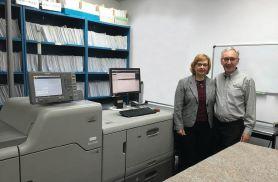
Susan and John Morton of KKP Barrie with their Ricoh C7100.
Ford and Deco Labels
2010.
rob Ford, former mayor of Toronto, passed away in late March at age 46, after a battle with cancer. Prior to taking office, Ford was a principal of Deco Labels and Tags, based in Etobicoke, Ont. He became the first printer to occupy the city’s mayoral office since William Lyon Mackenzie was elected as Toronto’s first mayor in 1834. Ford served as CFO of Deco Labels, which was founded more than 50 years ago by his father, Doug Ford Sr., working closely with brothers Doug and Randy Ford to grow Deco Labels into one of Greater Toronto’s largest label printing operations, while also developing his firebrand of politics as a City Councillor that lead him to victory – by 93,669 votes – in Toronto’s October 25, 2010, Mayoral election.
InstaLLs
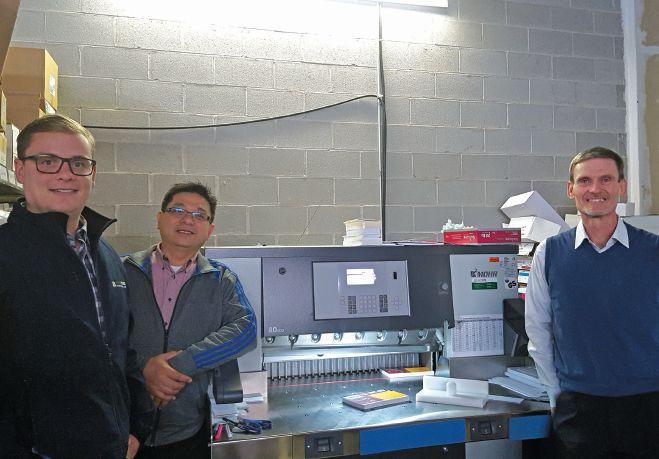
minuteman press in Vaughan, Ont., installed a new MOHR 80 ECO paper cutter, pictured with Brennan Wright of Sydney Stone (L to R), Fred Lai, owner of Minuteman Press Vaughan, and Peder Rejmers, Head of Business Development with Adolf Mohr Machinefabrik.
ross mcConnell, founder of Gateway Visual Communications of Mississauga, Ont., passed away on March 22, 2016, at age 80. McConnell’s pioneering print efforts saw him, along with his late wife Eunice, open the city’s first reprographics firm in September of 1975, at the time called Gateway Reproductions Ltd. McConnell had gained his reprographics expertise by spending the previous 10 years as a sales leader with Xerox Canada. McConnell’s sons, David and Brian, now lead the operation as President and VP of Operations, respectively.
Karen Heumann is joining the Supervisory Board of Heidelberger Druckmaschinen AG, which is to become official at the press makers’ Annual General Meeting on July 28, 2016. Heumann is a founder of marketing agency thjnk AG. She previously spent close to 20 years in leading roles at international advertising agencies and is noted as having substantial experience in the work carried out by supervisory boards.
Hidenori Fujioka becomes President of Roland DG succeeding Masahiro Tomioka who continues as Representative Director and Chairman of the company.
After serving as Director of RISO KAGAKU, Fujioka joined Roland DG in 2014 to streamline its R&D activities. He also led the creation of a new mid-term global business plan that is now being implemented by the company.
Vyomesh Joshi becomes CEO of 3D Systems, one of the first large-scale manufacturers of 3D devices, based in Rock Hill, South Carolina. Joshi worked with HP’s Imaging and Printing group for 32 years between 1980 and 2012, helping to turn the division into a $26 billion business as an Executive VP during an 11-year period.
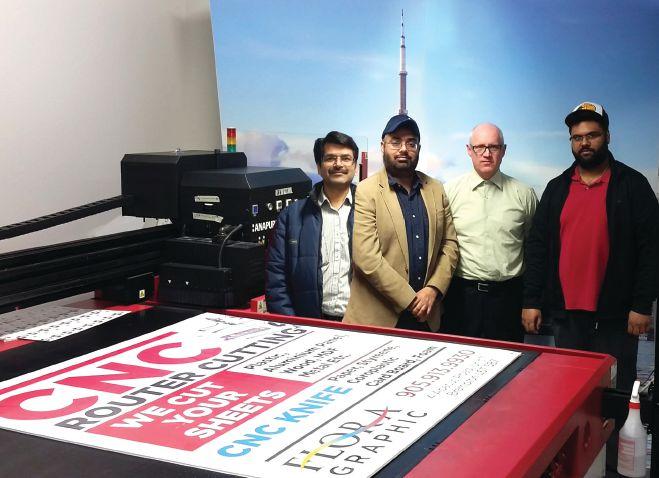
Flora Graphic & printing of Brampton, Ont., installed an Agfa Anapurna M2540 FB system, pictured with (L to R) Sanjeev Verma; Inderjit Flora, President; James Burghgraef of Agfa; and Aman Mankoo. Established in 1997, Flora Graphic focuses on applications like vehicle wraps and graphics, real estate signage, displays and exhibits, and POP.
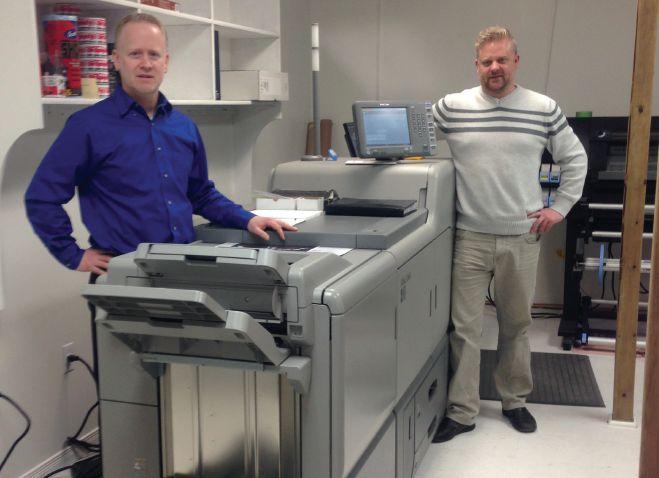
sir speedy, a printing and marketing franchise in Markham, Ont., installed a Ricoh Pro C7100X, pictured with Neale and Sean McKittrick. Installed in late 2015, the Ricoh C7100X includes vacuum feed paper tray and the ability to create saddlestitched booklets and print with clear toner.
profiled in PrintAction November
RyeTAGA wins third straight Helmut Kipphan Cup
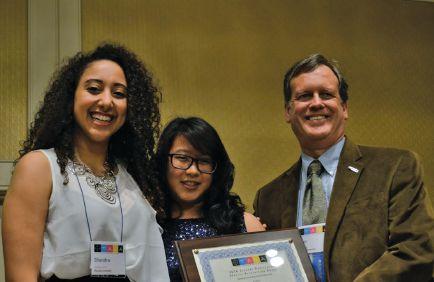
RyeTAGA, the TAGA student chapter of Ryerson University’s Graphic Communications Management (GCM) program, won the Helmut Kipphan Cup for the third consecutive year last week at the TAGA conference in Memphis, Tennessee. The Kipphan Cup is top prize awarded after a judged competition for the best student produced and written journal – based on technical content, print quality, and design – presented at the TAGA conference. It is also the fifth time RyeTAGA has won the award since the competition was established in 1993.
Fourth-year Ryerson GCM student Diondra Filicetti, who served as Co-President of this year’s RyeTAGA team, won the Harvey Levenson Undergraduate Student Paper Award for her report Methods to Calculate the Number of Reproducible Spot Colours for Different Printing Processes. GCM instructor Scott Millward served as Faculty Student Advisor for RyeTAGA’s 2015/2016 efforts, which was also received the TAGA Conference Attendee’s Choice Award for its journal.
The winning journal
RyeTAGA’s 2016 award-winning journal was enclosed in a thermal-laminated, chrome-cased slipcover with RyeTAGA written across the front in 100 percent CMY UV ink. The slipcover was produced at Global Imaging in Mississauga. RyeTAGA members worked on the pressroom floor with Global Imaging’s production team to produce the journal’s feature slipcover. The layout of the journal was planned and designed by RyeTAGA’s Creative Director, James Lai, who set an ambitious goal to emulate as much of colour spectrum as
possible. All of the journal’s inside pages were printed using GCM’s Xerox 700 system. RyeTAGA’s Multimedia Director, Natalie Mainville, oversaw the use of augmented reality with the journal leveraging an application called Aurasma.
ryetaGa 2015/2016 executive team
Diondra Filicetti, Co-President
Jessica Tam, Co-President
Kim Sipkens, Corporate Relations Director
Vanessa Blum, Financial Director
Natalie Mainville, Multimedia Director
James Lai, Creative Director
Anthony Krystecki, Marketing Director
Jasmine Keo, Production Director
Scott Millward, Faculty Advisor
May 16-18, 2016
epicomm annual Conference
Hyatt Regency, Savannah, GA
May 18
pre-drupa, DIa seminar series
Location To Be Determined Toronto, ON
May 18
OpIa awards night
St. Georges Golf & Country Club, Toronto, ON
May 31-June 10, 2016 drupa
Düsseldorf Fairgrounds, Germany
June 7, 2016
Canadian packaging, top 50 packaging Ideas
Mississauga Convention Centre, ON
June 15, 2016
OpIa sWOb Golf tournament Rockway Golf Club, Kitchener, ON
June 16, 2016
DIa Golf tournament
St. Andrews, Aurora, ON
June 22, 2016 printaction printForum Mississauga Convention Centre, ON
September 14, 2016 Craftsmen Golf tournament Royal Woodbine, Etobicoke, ON
September 14-16, 2016 sGIa expo
Las Vegas Convention Center, NV
September 23-24, 2016 COnsaC
International Centre, Mississauga, ON
September 25-28, 2016 Graph expo 2016 Orange County Center, Orlando, FL
September 28-29, 2016 paC Conference Niagara Falls, ON
October 18-22, 2016 all in print China
New International Expo Center, Shanghai, China
November 10, 2016
Canadian printing awards Palais Royale, Toronto, ON
November 30-December 1, 2016 paCKeX montreal 2016
Palais des congrès de Montréal, QC
April 6-8, 2017
Graphics Canada International Centre, Mississauga, ON
DOts
Ryerson GCM’s RyeTAGA team receives the Kipphan Cup in Memphis, Tennessee.
RyeTAGA Co-President Diondra Filicetti (left) receives the Harvey Levenson Award for best student produced research paper with Co-President Jessica Tam.
arCHIVe
15 years ago
Quebecor World is primed to become exactly what its name suggests: A Canadian company that will consolidate the printing world. After almost two years of a non-acquisition strategy, the company has fully repaid bank borrowing for the $2.9 billion purchase of World Color Press and is again planning to extend its reach farther across the globe.
Quebecor World is already the world’s largest commercial printing and media services company. In 2000, the company had sales of more than $500 million.
30 years ago
25 years ago
John Young, founder and President of Youngblood Communications, passed away suddenly on May 8, 1991, in Toronto. A native of Northumberland, England, Young’s career in publishing began soon after he immigrated to Canada in 1951. By 1960, following his initiation as an advertising salesman for both Maclean Hunter and Hugh C. Maclean Publications, which later became Southam Business Publications, the entrepreneur in him determined that the time had come to go into business for himself.
Armed with a typewriter, a small rented office in the King Edward Hotel, and a line of credit from a trusted partner, Young managed to put together the first issue of Printing and Packaging News. A companion publication called Applied Graphics was then added to his publishing stable. After a difficult economy in 1969, however, Young re-launched his magazine titles under the masthead PrintAction to be the definitive voice of the Canadian graphics industry.
The per foot cost offered in a typesetting agency’s 1986 classified ad to run inputted text – first keyed in at your own terminal – through their AM Comp/Set. The ad’s headline reads, “Need Type in a Hurry?”
$1.20 $200
Price of a used Vandercook Proof Press, according to a 1976 PrintAction classified ad. Today, a Vandercook in good condition might sell for a price well over $5,000, as per online listings at Vanderblog.
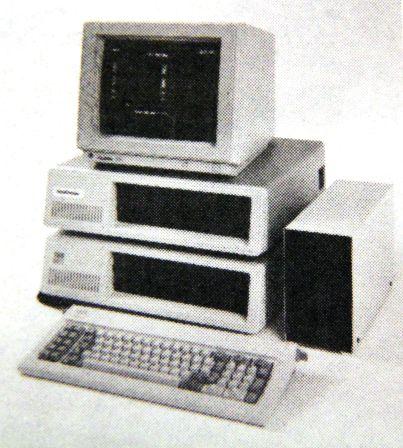
The DataChange Electronic Media Conversion System from Alpha Graphics Ltd. reads, writes and formats over 150 floppy disk formats. Suited for installation in typesetting, word processing and data processing environments, the DataChange runs on the IBM PC, incorporating the latest advances in user interface design and microprocessor technology. No formal programming experience is necessary to use DataChange and, because it employs IBM hardware, it can offer integrated office automation.
40 years ago
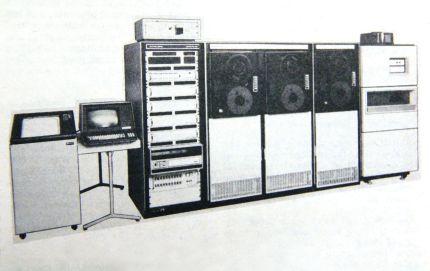
Mono Lino has a newly installed system for electronic typography. It is a special computer-based system capable of producing complete made-up pages of information at speeds of up to 2,000 characters per second. One of the largest single type libraries in North America has been put under total electronic control: 2,000 type styles from around the world will be available at the touch of a key for instantaneous use. And, as new type faces become available, the scanner digitizer system will enable a printing company to update that range, maintaining a top 2,000 current typefaces.
Charles Cavell, President and CEO, Quebecor World.
Mono Lino’s system features 128K memory and a 100 MB disk drive.
DataChange runs on an IBM PC.
40%
Increase in longevity with digitally printed traffic signage, according to specialized printer Korman Signs of Henrico, VA, which became the first company in the world to install the new EFI H1625-RS printer in late-2015.
FFP leverages Asahi in Northampton
FFP Packaging located in Northampton, UK, invested in its branded Platinum Print platform, powered by Asahi technology. The company, with a workforce of 140 employees, specializes in high-quality flexible packaging, heat seal lidding films and films for high temperature or oven use.
“We are achieving quality that we could only dream of in the past,” said Paul Hesketh, Print Development Manager at FFP. “In addition, we have reduced costs and turnaround time, both critical elements of success in today’s fastpaced world. Thanks to our partnership with Asahi Photoproducts, we have been able to complement our solvent-based inhouse platemaking facility with a more environmentally balanced water-washable plate solution and absolutely delight our customers with the results.”
After due-diligence and inhouse focused on finding the next generation of flexo quality, FFP selected an Asahi AWP 4835 P plate processor (48 x 35 inches) and Asahi AWP-DEF water-washable plates based on the quality and speeds they were able to achieve with this configuration. FFP operates with three modern 8-colour flexography presses, including its recent installation of a second W&H Miraflex commissioned in early 2016. The company also runs five lamination machines, and an array of finishing equipment including slitting, laser perforation, hole punching and re-seal label applicators.
FFP explains its Asahi plate project is responsible for its recent nomination for Outstanding Technical Innovation in 2016 EFIA print awards program.
Brazilian book maker adds FormerLine
Last year, the major textbook publishing house FTD Educação in São Paulo invested in the FormerLine variable folding system from manroland Web Systems in combination with a RIMA System book block collator, increasing its inkjet capacities at the end of 2015. For efficient, automatic job processing on the new digital printing line for book printing, FTD Educação also employs the Workflow Bridge and MasterQ software from manroland Web.
As part of the inauguration of the first FormerLine in the Americas, manroland Web worked with its local sales and service partner ‘groupwork’ in Brazil and host FTD to organize a major customer event, attended by around 30 representatives of the largest Brazilian print shops.
During the presentation, different book blocks were produced on the fly, with varying sizes and page counts to highlight the versatility and flexibility that the FormerLine book block technology offers to customers. FTD produced the book blocks inline with its inkjet-based HP T400 web press.
Offset security in Hungary
Hungary-based ANY Security Printing Company PLC is described as a security printing house trusted for generations in Central and Eastern Europe. The 165-year-old company is an authorized supplier of NATO. Recently, in order to shorten the lead time and better meet the increasing demands of its clients, ANY Security Printing decided to install a brand-new six-colour Roland 500 press with UV. The 500 press can print on a range of substrates from 0.06-millimeter lightweight paper to 0.6-millimeter-thick plastics, while also allowing production with both wet and dry UV offset for greater flexibility.
“As we make identity cards and passports for our customers all over the world, including the new Hungarian eID cards that were launched on January 1, 2016, this new press will help us so that the number of colours, visible or invisible, can be multiplied. The precision makes it possible to use micro text, Guilloche lines, IRIS elements,” said Gábor Zsámboki, the company’s CEO.
ANY Security’s experience in security printing products also includes producing different UV security inks and laser-printer toners for protection of personalized data in ID documents. Billions of Hungarian tax stamps have also been produced by ANY Security for more than 20 years. The company has been running another sheetfed offset machine from Manroland Sheetfed, an RZF with UV. “This machine still works very precisely,” Gábor said. ANY Security, with around 800 staff members, explains it takes great pride in producing print work based on accepted international standards.
Paul Hesketh, Print Development Manager at FFP, and Paul Chant, Branch Manager of Asahi Photoproducts Europe.
Gábor Zsámboki, CEO, ANY Security Printing Company.
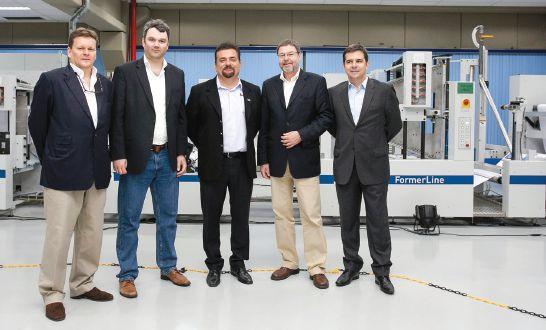
Franz Freiherr von Fürstenberg (L to R), Christoph Blank, Reginaldo Soares Damasceno, Roman Herold, and Ricardo Raimundo in front of the FormerLine.
Online collaboration tools
How to leverage the growth in powerful collaboration tools, including the always evolving, free google ecosystem
By Steve Falk
Scanning a 70-page PDF of the official WWI military record of Lieutenant Collins, veteran of the Canadian Expeditionary Forces, had me thinking about the army of paper pushers it took to coordinate a battalion of troops in the days before computers.
This all started a few years back when a family trip to Victoria, BC, my mother-inlaw’s birthplace, led us to the provincial archives in search of family documents. Since then, the military records, which were only partially available to the public, have been scanned and organized and are available online. A few searches through the military site today and my wife and I were staring in amazement at the 100-yearold scanned outer envelope, forms, medical and dental records, pay stubs and injury reports of her grandfather.
In 100 years, the look of record-keeping has not changed that much. Spreadsheets have replaced columns in pre-printed forms. Bank statements still look the same, although they were once hand-written. Schedules still appear as rows and columns of time, date, place, activity – much like a production schedule looks today.
I started to imagine the huge effort it
took to pre-print the forms, store them, keep them dry while on duty, complete them accurately, stamp and date them over the course of the soldier’s service. More than 600,000 Canadians enlisted during WWI. If each had 70 pages of documents, it means that 42 million pieces of paper were pushed around just for troop records. These records kept a record of their location, health status, financial standing, vacation history, means of transport, the names of superiors and mentions in dispatches (testimonials). Sounds a bit like a LinkedIn profile of today.
Real-time, real value
Technology has put a lot of those paper pushers out of work over the years. But keeping and sharing vast amounts of information has only become more important. Working in the printing sector, we are faced with logistical challenges every day. There are a lot of tools we can put to the test in our environment – and they will be a lot more effective than pre-printed forms, hand-written scribbles and rubber-stamped itineraries.
In my last article, I wrote about SmartSheet.com. This online shareable spreadsheet on steroids is great for collaboration in a team. If that tool had existed in 1914, those 70 pages of documents would have been available for review anywhere in the world, at any time, and updates would have been relayed to superiors, and family if necessary. Some 42 million pages of records would be in the cloud: Searchable, shareable and secure. (Refer back to last month’s PrintAction if you are curious about my thoughts on SmartSheet’s use in print production.)
Google’s free-access ecosystem for business has grown at an astounding pace over the past decade, signalled by the number of related apps, as artists paint a mural in Google’s new Toronto office.
There are other tools that are also worth considering for your print production environment. Sometimes these make the internal workflow more effective. Other times they can bring a client into a more active and collaborative role, which they usually appreciate, and help to lock you into a great relationship.
$67B
Google’s advertising revenue generated in its most recent fiscal year, in part from approximately 247 million U.S. unique visitors and a market share of 63.9 percent among U.S. search-engine providers.
The mother of all of these collaborative toolkits is Google for Work. You may have a free Gmail account, but this is more substantial. You pay for each user and you are not bothered by the advertising that clutters your free Gmail account.There are over five million organizations using Google for Work (including PrintAction) and 60 percent of Fortune 500 companies subscribe. It knits all your contacts, calendars, email, documents, spreadsheets, intranets and presentations together. You get a chat network and an online meeting place where screens, cameras, microphones, etc. can be shared so members of your team can choose one of many ways to share information. Oh, and it’s mobile too, so it works well with your phones and tablets. One of the best parts – You do not have to host this on your own servers and Google is almost never down. Handy tip: Buy a backup package from another company like Backupify. It only costs a few dollars per user, but you can backup all of your information and retrieve it quickly if anyone deletes files, emails, etc. that you need to get back. Once again, it’s not hosted at your facility, so there’s no need for storage, servers or technicians.
When I started using Google for Work (it had a different name then), Microsoft had not yet launched a cloud-based office
suite, but it should be mentioned here that Microsoft Office 365 Productivity Tools is now a very comparable tool. If you do not want to learn a new platform and your team is already very familiar with Office, your time might be best served looking at Microsoft. You can find comparison articles and charts online by searching “Google at Work and Office 365 Comparison”. The details there will help you decide which is best suited to your work situation.
Having these tools should change the way you work. You have more choice but you still need to work smart. You have many channels to choose from to communicate with colleagues and clients -- email, chat, a net meeting, a shared document, a shared spreadsheet, voice over Google Hangouts, VOIP phones on the desk, an SMS text to a cell phone or walking over to someone’s desk and asking in person.
Team exercises
One exercise we conduct with teams is asking each person to describe how they prefer to be reached under differing circumstances. It’s best to know if someone does not mind being texted on their cell phone in an emergency, but prefers not to conduct day-to-day affairs that way. When do you escalate the level of communication to a phone call, or does that person even keep a cell phone handy all day? It’s something we did not have to think about, but the context of the communication can determine which channel you use to reach out. Botching it can send the wrong message, erode collaborative efforts and cause friction. One person feels slighted when an email is left unanswered for 30 minutes and another has a tolerance of two days. One hates a voice message and another does not know how to use call history to see what they’ve missed and get back quickly. The changes in your work do not come without some preparation, but with the increased options, you can reduce the amount of back and forth, shrink your inbox and keep more people in the loop with fewer back and forth.
Shared calendars also mean you can cut down on the ping-pong of email and phone calls. You’ll easily find openings in your team members’ schedules so you can plan a meeting, invite attendees and be pretty certain they will all be free. This was always available to the larger users of Microsoft Office, but now even two-employee firms can have this affordable option, and share it with colleagues, freelancers and clients, so that they can all have visibility to plan meetings
and projects.
Shared docs are another simple time saver. I’m writing this article on a shared doc and I’ll have an offsite editor look it over. We can work together on it from distant points, leave each other comments and save it in an easily searchable form for future reference. I’ll just search PrintAction 2016 in my Google Drive and up will pop articles with that content or title. As easy as searching the Web for an article, the power of Google now searches your files and helps you find what you need.
Collaboration software also has a whole category that is filled with virtual workspaces. It’s the software equivalent of pushing all of your team members’ desks together in a room instead of having them all on different floors. Virtual workspaces are great for teams who work at a distance. They can help with client/ vendor planning, project management and internal collaboration. During the planning of a recent direct mail campaign that had a designer, client and ourselves in three distant cities, we worked with Trello.com, on the suggestion of our client. It seemed to keep all parties abreast of the three weeks of production.
Re-writes, edits and art files could be dragged and dropped into Trello and status updates posted as each user progressed. There are other options such as Slack and Sharepoint that have similar capabilities. Once again I recommend searching for comparison articles to find the one best suited for your situation. Then, read about how to best use the tool, practice with it, explain to the other users what you expect to see communicated through the virtual workspace, how frequently and with what level of detail. There is a whole new etiquette and set of expectations that comes with each of these new work environments.
This tech collaboration thing can seem daunting. The new options just keep rolling out at a fearsome rate, but take some comfort in it.We never want to return to the manual paperwork, manila folders and file cabinets of the past.These new tools will make information more accessible, shareable and just could make you a more profitable printer in the process.
CALL FOR ENTRIES
TAGA tech diversity
during the premier event for research in north american print, five keynotes address industry progress
By Martin Habekost
the middle of March is a time of year when researchers and technology evangelists from the printing world gather at the annual Technical Association of the Graphic Arts (TAGA) conference, held this year in Memphis, Tennessee. An unusual aspect of this year’s TAGA conference was that there were five keynote addresses, instead of the traditional four, addressing the future of technology.
The first keynote presented by Mike D’Angelo, Managing Director Americas for Goss International, focused on why offset printing remains today’s dominant printing process around the world. D’Angelo pointed to a key trends affecting the current print market, including: Many magazines are still being printed, the book market is stable, the newspaper decline has stopped, and packaging is a growth business.
Commercial printing seems to have turned a corner, according to D’Angelo, but there is no doubt the run lengths are shorter, less pages per job are printed, more localized versions are produced, and the use of automation has increased. Newspaper printing needs a new business model, according to D’Angelo, with smaller, more agile presses. This in turn will translate into printing localized content to help stabilize newspaper sectors.
The packaging market sees increased competition and more versions of the same product are being printed. Web offset printing also offers some price and speed advantages in comparison to sheetfed offset. Offset plates are cheaper to make than flexo plates and web offset printing offers a unique speed advantage, not only in press terms, but also in the number of times materials need to be handled and stored.
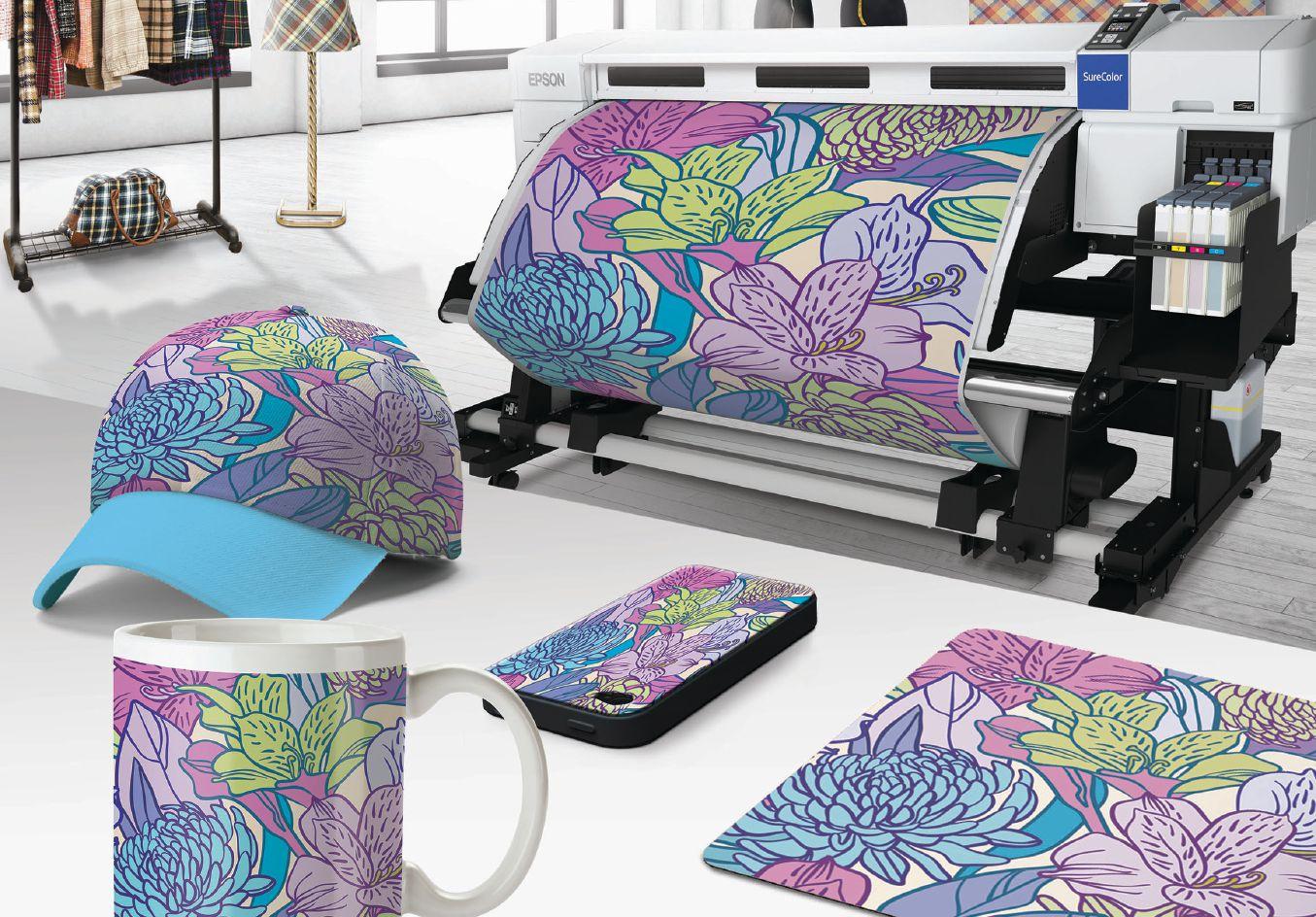
The second keynote was given by Liz Logue, Senior Director Corporate Business Development with EFI, speaking about printing on textiles and ceramics with inkjet technology. Logue stressed a little-known fact that 50 percent of ceramic tiles and 40 percent of display graphics are digitally printed. Digital
textile printing is gaining traction and currently only five percent of all textiles are digitally printed.
Rotary screen printing is still the dominant print technology for textile printing. Inkjet inks are adapted for textile printing and fast fashion turnover provides digital-printing textile opportunities. New digital designs enable new profits. Increases in print speed and resolution for digital textile printing helps with the transition from conventional to digital print technologies. From an environmental standpoint, Logue explains digital printing is also less water polluting than conventional print methods.
The next keynote speaker was Kevin Berisso from the University of Memphis, who talked about The Internet of Things (IoT) and posed an intriguing question to the crowd by referencing The Terminator movie series: Are we building Skynet? In truth, Berisso was really asking what exactly is IoT, because there are now so many definitions out there about this critical movement in business processes.
Berisso explains IoT is based on physical devices that are networked, collect data and make automatic decisions. An IoT solution needs to combine hardware and software, has to interconnected, and must interact with its environment.
The fourth keynote was given by Janos Verres, Program Manager at Palo Alto Research Center (PARC), speaking about the next generation of Printed Electronics. First, Verres give a brief historical overview of PARC and some of the many innovations made there that are now part of everyday live, such as the Graphical User Interface, ethernet connection and laser printing.
Verres also talked about how energy will be democratized and why the future will be personalized. He explained how this future will be driven by smart devices, smart analytics and smart infrastructure. In the future, electronics will have any form, any shape and will reach new levels of complexity. Yet, they still need to be easy to fabricate using flexible printed and hybrid electronics. IoT will change from Internet of Things to Internet of Everything. This will lead to ubiquitous intelligence and computing. Printing technologies will help shape the Internet of Everything, with integrated printing platforms that will be part of multi-process printing workflows. Simple electronics will be printed with very small memory capacity, which will be printed.
The fifth keynote was given by Don Schroeder, Director of Solutions Development at Fujifilm North America, speaking about key trends in inkjet printing. The use of inkjet technology is growing fast based on new print heads even as
more paper products must be adapted to work well with inkjet inks. Although the use of inkjet printing is growing, Schroeder explains it still is only 0.5 percent of global print production volume. High-speed inkjet printing is gaining traction beyond its current primary use for transactional printing. Its main challenges remain paper quality, costs and availability, in addition to capital costs and printing speed. Inkjet presses have become more expensive and people shy away from the risk of buying a new, expensive inkjet press that might become superseded in two years time. The amortization period is too short.
Schroeder also pointed to inkjet printing benefits: Less set up time, less waste, quick turnaround, variable data printing, low volume reprints, less consumables and less maintenance. Inkjet printing also offers a larger gamut than offset printing, as it makes inroads into the packaging and label markets. Looking at folding cartons, for example, the new Heidelberg Primefire 106 will be shown at drupa 2016 running with Fujifilm’s inkjet technology, reaching speeds of 2,000 sheets per hour.
The remaining TAGA program outlined critical technology progress, including a presentation on expanded gamut printing and, importantly, asking what is the correct colour sequence of CMYK plus OGV (seven colours) to find the best combination to achieve maximum gamut. Another presentation showed how the FOGRA 51 dataset and resulting ICC profile was put together before its public release. Other key topics printers should investigate included: Cross-media communications, PDF X/4, the influence of optical brighteners, new colour management tools for digital printing, shorter product cycles for packaging, print quality of 3D objects, printable films based on hemicellulose, inline direct-mail automation, on-press control of metallic inks using M3 measurement condition, CxF/X4, lamination for consumer packaging, spectral colour control, resistive gravure inks made with soy protein, print gloss, and how to extract capacitors out of recycled printed electronics.
TAGA once again delivered the message that innovation remains a key driver of the printing industry and that its proprietors must embrace change.
martIn HabeKOst
received his Ph.D. in Analytical Chemistry from Universität Hannover. He is Associate Chair for Ryerson University’s School of Graphic Communications Management. mhabekos@ryerson.ca
TAGA 2016 featured keynote insight from (top to bottom): Mike D’Angelo of Goss, Liz Logue of EFI, Kevin Berisso of Memphis University, Don Schroeder of Fujifilm, and Janos Verres of PARC.
Software in the Spotlight
Belgium continues to be a hotspot for printing and imaging software development, which was on full display in late march as some of the industry’s most-powerful companies previewed their drupa 2016 technologies in Bruges
By Zac Bolan
For a country only slightly larger than the Greater Toronto Area, Belgium punches well above its weight class when it comes to the graphic arts. Widely know for waffles, chocolate and strong beer, Belgium is also the breeding ground for significant imaging software technologies that touch all corners of the printing industry.
Once considered a minor attraction at drupa, software has become a major draw at the now triennial print gathering, largely based on its pure Return On Investment power. In the run up to drupa 2016, several companies with Belgian ties gathered this March in scenic Bruges to showcase some of their latest technologies, and roll out their drupa 2016 announcements.
Esko packaging
Esko has deep roots in the Belgian prepress world. Formed in 2002 through a merger between Ghent-based Barco Graphics and Denmark’s Purup Eskofot, the company continues to grow and strategically join forces with other commercial print and packaging prepress companies such as Artwork Systems and Enfocus. Now operating within the Danaher group of companies, Esko provides one of the leading print and packaging prepress workflow solutions available in the market place.
At the Bruges event, Esko unveiled its drupa plans which revolve around software solutions to support its “Packaging Simplified” mantra. Through extensive surveys, Esko R&D deduced its customers were facing shorter run lengths with greater numbers of print jobs, higher quality demands and an operator skills
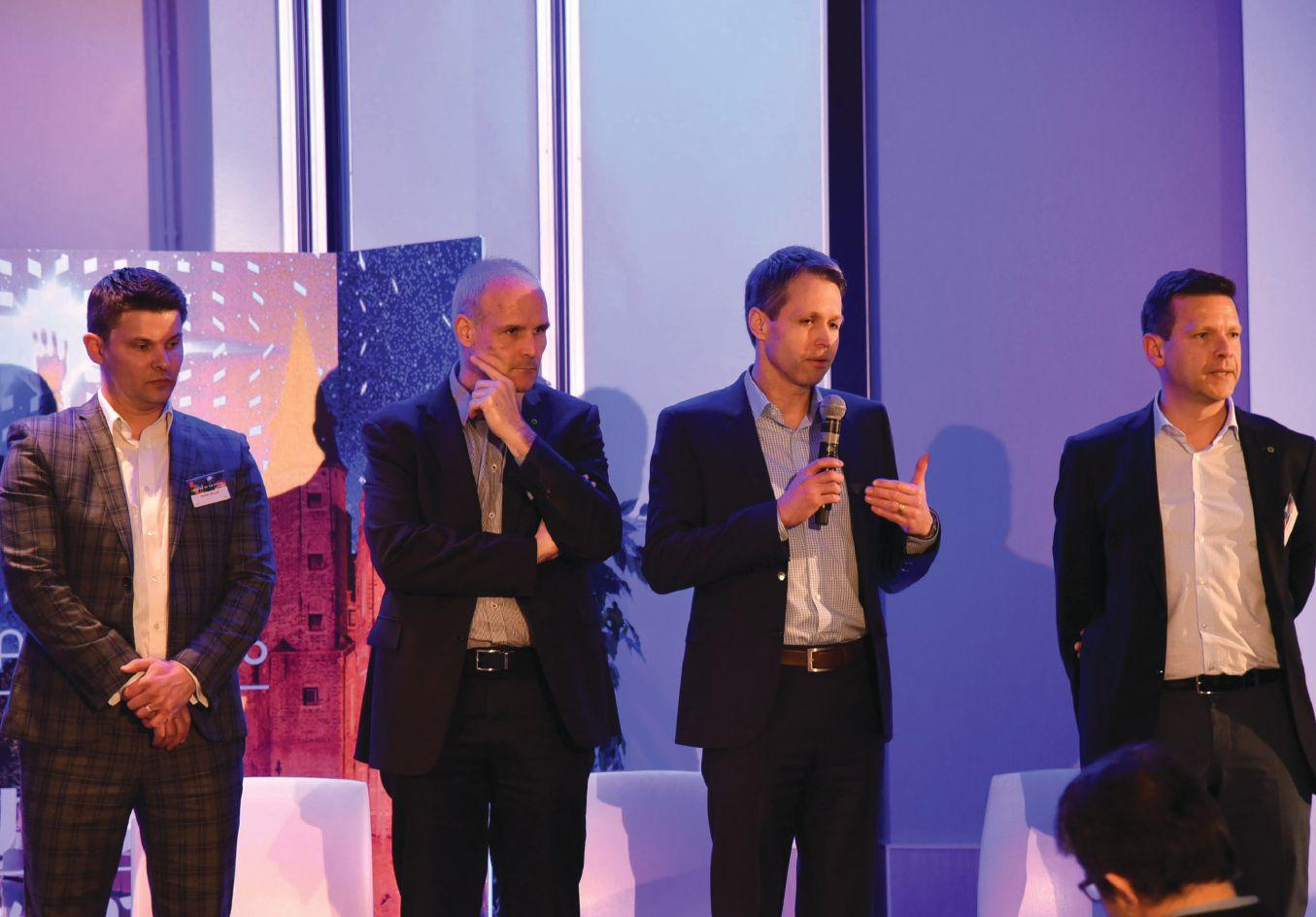
Esko executives describe packaging advances (from left to right): Russell Weller, Business Development Manager EMEA; Geert de Proost, Director, Software Engines; Udo Panenka, President; and Wim Franssen, Product Group Director, Interactive Application Software.
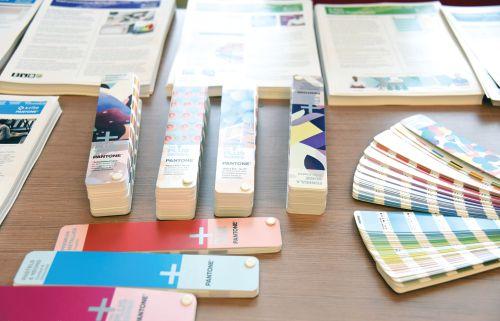
Set to unveil 112 new shades, the Pantone Plus Series tops out at 1,867 colours.
gap. To address those needs, Esko will be launching a major re-imagining of its production suite under the Esko Software Platform umbrella at drupa.
Aside from improving the user experience across all applications, Esko’s new platform promises enhanced content management capabilities and 3D viewing support in new modules for WebCenter – an online packaging project management solution. Additionally, Esko will be introducing ArtPro+, a platform independent native PDF editor for prepress.
315K
Thousands of experts, with exhibiting companies from more than 130 countries, who were on hand at the most recent drupa exhibition in 2012.
Perhaps the more significant development of the Esko Software Platform is new flexible licensing and deployment options. Users can opt for traditional licensing or subscription models, choosing to deploy solutions on-site or in the cloud.
Enfocus Switch Appstore
In addition to showcasing the latest Pitstop technologies at drupa 2016, Esko partner company Enfocus will be promoting its new Switch Appstore, launched on February 25, 2016, to coincide with the recent release of Switch 13. The latest version of the popular Enfocus automation and modular DIY workflow application now supports Apps, modules, plug-ins and scripts created by an approved cadre of developers, and available through an Appstore.
“I am a huge believer in co-creation business models and building environments where companies can work together,” explains Fabian Prudhomme, Enfocus VP. “That’s what we’ve done with the Switch Appstore.
year and very complex scripts might cost hundreds of dollars per year.
“By drupa we hope to have 40 to 50 apps in the store and up to 100 by the end of the year,” says Prudhomme. “And interestingly, we’ve seen a huge jump in Switch registrations since the launch of the Appstore.”
A number of other enhancements are included in Switch 13 such as support for web based messages, allowing users to view log messages remotely. With the new Switch WebServer component users can connect to the Switch Server through a web browser. Additionally, Switch 13 sports an improved user interface – leaving the legacy Windows 95 look behind.
“Another major announcement at drupa is our new PDF Review module for Switch – a product developed jointly with Chili Publish,” adds Prudhomme. “We have incorporated Chili rendro into PDF Review for accurate PDF streaming capability, to which we’ve added our PDF review tools because our customers are moving towards an online work environment. PDF Review will allow users to open a PDF online, select objects, inspect, analyze and approve PDF files before sending the file to whatever next step the workflow dictates.”
Chili Publisher and rendro Chili plans to turn some heads at drupa 2016 with rendro 1.0 – promising fast and precise rendering of production PDF files for review and inspection on any device supporting HTML5. CHILI rendro can also include a 3D module that can display PDF content in actual application scenarios. The rendro technology is available as a JavaScript SDK giving developers access to an extensive set of elements, eliminating the need for a browser plugin.
or Illustrator documents, 3D viewing capability for packaging and labels, support for Chinese, Korean and Indonesian documents and TrueType fonts.
X-Rite and Pantone
Recognizing the global shortage of hues and shades, Pantone will be unveiling 112 new ways for designers to drive pressmen crazy at this year’s drupa. With the new shades, the Pantone Plus Series tops out at 1,867 colours – providing the design community with the most comprehensive palette of colours available for creating mood or protecting brand.
On a more online note, Pantone will be showcasing the PantoneLIVE Private Cloud at this year’s show. The Private Cloud is a secure, online space for designers, commercial printers and packaging converters to accommodate and share colour libraries across the graphic supply chain. As a part of the PantoneLIVE ecosystem, this should help printers and converters deliver more consistent colour to their shared client. Rationalization Service, another new addition to PantoneLIVE, analyzes and consolidates colour libraries to eliminate duplicates and improve consistency.
Cerm
Cerm produces business management software for narrow web printers (labels), and is a very focused company with a niche mandate – one they perform very well. However, when company was acquired by Heidelberg in 2011, their software was rebranded for the offset market as Prinect Business Manager, an integrated part of the Prinect Software Suite. Though tightly incorporated with Heidelberg, CERM continues to evolve its narrow web product under its own brand.
132K
Number of visitors, at drupa 2012, who came to Germany with immediate investment intentions, according to show organizer Messe Düsseldorf.
“Now people who have put a lot of effort into developing configurators, scripts, or Switch-based solutions for one or two of their customers have a platform where they can open their portfolio of solutions to the entire world and benefit other customers. Enfocus tests all the apps on different platforms, and different OSs because we want to guarantee the quality.”
Prudhomme explains all of the apps are subscription-based, so users pay annually based on prices set in agreement with the app developer. As a result, the apps will range in price depending on their complexity. He expects some simple scripts might cost between $20 or $50 a
“Enfocus is our first official OEM agreement,” explained Geer Fransen, rendro product manager. “While we are initially focusing on graphic arts applications, we see great potential for rendro outside that market. For example, the governments of the European Union want to take all their documents online using the PDF/A standard. Similar things are happening in North America. Also, it was striking to see the results of the Ghent PDF workgroup study showing how little of the PDF specification is supported properly. We see rendro as a solution for PDF accuracy moving into government and education markets.”
Also debuting at drupa, the latest release of Chili’s popular B2B online editing solution – Chili Publisher. You might not immediately recognize the product name because Chili Publisher provides the backend DTP tools for many online print and publishing portals. Publisher 5.0 brings enhanced capabilities to browser-base designers such as the ability to convert and work with Adobe InDesign
At drupa Cerm will be showcasing the fruits of their collaboration with a new product for sheet-fed offset label printers in the form of an automated ganging function. The Cerm MIS and Prinect Prepress will conspire together to calculate the best possible imposition for Wet Glue Labels on press.
You’ll find Cerm partnering with a number of companies besides Heidelberg at drupa, including Esko, Chili Publish, Gallus, HP and Xeikon to name a few. Through this community engagement, Cerm hopes to demonstrate their solution goes far beyond traditional MIS functions by driving complete automation of narrow web printing workflows. It used to be all about the iron back in the halcyon days of drupa past! But through the years, graphics has become as much about technology, connectivity and automation as it was about ink on paper. drupa has evolved to a triennial schedule to keep pace with these advances and has emerged as the pre-eminent showcase for innovations in MIS, workflow and online tools. See you there!
Counterfeiting is a global problem. In your world, that means thieves are trying to steal your most prized possession — your reputation. Fortunately, Sun Chemical has the anti-counterfeiting technology you need to protect your brand and reputation. From infant formula to adult beverages and more, it’s just one more way Sun Chemical helps you go securely from concept to consumer — all from a single, trusted source.
Request your copy of our white paper, Anti-counterfeiting Technologies for Packaging, at www.sunchemical.com/ anticounterfeiting or call 1-708-236-3798. working for you.
Shopping for buSineSS growth
more than 100 print journalists descended on düsseldorf in early march to have a firsthand look at some of the technologies and strategies that will be unveiled at drupa 2016
By Victoria Gaitskell
drupa, the world’s largest trade show for print and cross-media solutions, is famous enough to rate a year-round mention in 11 languages on the double-decker Hop-On Hop-Off Tour buses in Düsseldorf, Germany, drupa’s host city. This year’s massive trade show helps visitors target exhibitors and vice versa by organizing exhibits into six growth sectors: Print, Package Production, Green Printing, Multichannel (Big Data and Web-to-print operations, variable-data printing, Internet-based marketing tools such as augmented reality and QR codes), 3D Printing, and Functional Printing (printed electronics and conductors, sensors, medical electrodes, electroluminescent lights, solar cells).
The last two sectors in particular, 3D and functional printing, invite visitors to explore new technologies beyond the realm of traditional commercial print. During the first week of March, I joined 100 or so journalists from around the world at the 3-day pre-drupa 2016 International Media Conference, where 15 of drupa’s 1,650 exhibitors presented a virtual candy store of new technologies they plan to exhibit.
Their presentations came complete with impressive specifications detailing how these technologies operate faster, more efficiently, more reliably, less expensively, or with less environmental impact than previous generations of technology. Additionally, I was impressed to hear some suppliers emphasize their commitment and methodology for helping customers identify and successfully implement new profit centres to grow the
DrUpa
1,650
Number of exhibitors scheduled to take part in drupa 2016, running from May 31 to June 10, 2016, in Düsseldorf, Germany.
customer’s business and strategies to reap the most from equipment investments the customers have already made. This type of practical support from suppliers, together with meticulous advance calculation of ROI on any new technology purchases, seems especially important right now, because recent developments suggest that Canadian printers may be inclined to shop at this year’s drupa.
Renewed optimism
January 2016 saw the national economy expand for the fourth consecutive month and Gross Domestic Product grow 0.6 percent from the month before (its best month since 2013). Goods-producing industries like printing expanded by 1.2 percent. Then in March, Canada added 40,600 jobs, driving the national unemployment rate to 7.1 percent from 7.3 percent in February (the largest month over month increase since October). After bottoming out at a new 13-year low near 68 cents U.S. earlier this year, the Canadian dollar rose over 77 cents U.S. in March, becoming the best performing major currency in the world since January.
Simultaneously, the third in a series of Global Trends reports commissioned by drupa, showed that printers across the world feel increasingly optimistic about their business prospects in 2016 and plan to invest in production equipment: 53 percent in print technology, 50 percent in finishing, and 38 percent in software and workflows.
will be on hand throughout drupa to talk to print service providers about their development plans and aspirations, offering practical guidance and insight through such successful tools as the Canon Business & Innovation Scan and Essential Business Builder Program.”
With over 4,000 square metres of exhibit space, Canon is one of drupa’s biggest exhibitors this year. The company plans to exhibit the full gamut of its inkjet and toner-based solutions, from small to wide format.
At the pre-drupa media conference, as just one example of an emerging opportunity for printers, Peter Wolff, Head of Commercial Print Group, and Mark Lawn, Head of Professional Print Group, for Canon Europe cited inkjet book production, where demand for printed books persists alongside decreasing run lengths and increasing orders from one-time authors and self-publishers:
has greatly increased the number of substrates its cutsheet inkjet presses can handle with a new ColorGrip inline paper conditioning option. Lawn adds that the ability to print on multiple substrates is important for emerging applications in décor: Covering tables, walls, floors, and glass for decoration or to communicate key messages.
189K
Thousands of international visitors, representing approximately 60 percent of all visitors, who visited the most recent drupa exhibition in 2012.
The drupa report further suggests that North American printers are already ahead of the global pack in several ways. Along with their counterparts in South America and Africa, they reported price increases, while printers in Europe, Australasia, the Middle East, and the rest of Asia said their prices are falling. North American printers also reported that they offer a greater variety of value-added services and, together with printers in the functional print market no matter where they’re located, engage to a greater extent in Web-to-print operations than printers on other continents. These various factors may well encourage Canadian printers to spend on the offerings at drupa. When making purchases it would be astute for printers to enlist the expertise of drupa suppliers who will go the extra mile to help them perform the due diligence that is so necessary before a technology purchase to ensure its successful outcome.
I found one promising example in a March-1st press release explaining Canon’s new #UnleashPrint campaign at drupa. It reads: “At drupa 2016, visitors will discover how Canon can help them ‘unleash print’ by combining technology innovation with expertise in implementing intelligent new business models that elevate print’s ability to respond to changing customer needs. Canon experts
“The ability to print and distribute smaller quantities of books on demand via digital colour inkjet is cost-effective, eliminates the risks of mass production, the waste and returns of unsold books, storage costs, and lost sales of titles that are out of print. Additional strategies to enhance the reader’s experience, such as versioning, variable-data printing, and emerging technologies like augmented reality allow digital print to intermingle seamlessly with virtual content,” explains Lawn. Although Canon holds its annual Publishing and Book Printing Conference at its Customer Experience Center near Munich, a European publishing hub, he says the same book production opportunities apply equally in Canada.
“Canon works with printers on things like the challenge of imposing orders for multiple individual books into an efficient, cost-effective single run or how to split a single printing job between full-colour and black-and-white pages,” he continues. “Also, as more intelligent finishing systems evolve, they are allowing for more in-line finishing processes. Before print on demand, book binding was usually perfect bound, but now we can also do case binding and saddle stitching.”
Among its innovations at drupa, Canon will display the Océ ColorStream 6000 Chroma continuous feed inkjet press, configured with the Zero Speed Splicer u40 and Libra One book block solution by Tecnau to demonstrate fully automated book production of pre-glued book blocks. Also on exhibit will be the Océ ImageStream 2400, a continuous feed inkjet press already installed in Europe but being shown for the first time at an open exhibition.
In a recorded testimonial, Michał Rejnowski, CEO and owner of Totem.com. pl, says one reason he purchased the ImageStream 2400 was because of its unique ability to print at high quality on standard offset coated stock at high speed. Canon
With a similar eye to diversified substrates, Epson will exhibit 13 new professional production inkjet printers and presses covering an enormous range of applications, including labels and stickers, signs and displays, vehicle wraps, photography, fine art, décor, apparel and product decoration. Duncan Ferguson, Director of Professional Printing Solutions for Epson Europe, says Epson makes a point of working with customers to help them grow their businesses gradually, organically, and strategically by adding several different printers to handle multiple ink sets and substrates. In turn, this diversified equipment enables printers to implement what he calls print-farming strategies to acquire an ever larger share of their clients’ printing requirements.
Printers visiting drupa are encouraged to seek out not only the latest and greatest technologies but also suppliers who, like the above examples, will invest time, expertise, and practical, personalized guidance to support each customer’s success.
Welcome to Düsseldorf
Although the population of Düsseldorf proper is only 593,682, some 150 million people live within a 500-kilometre radius of the German city, representing 35 percent of the European Union’s total population. Düsseldorf functions as Germany’s second financial centre (after Frankfurt) and ranks sixth in the world on Mercer’s 2016 Quality of Living survey. Its rebuilding after World War II includes work by international celebrity architects Steven Holl, David Chipperfield, and Frank O. Gehry. It is also known for its Fine Arts Academy Kunstakademie Düsseldorf, lively modern art and upscale fashion scenes, and Altbier, a unique variety of beer.
During drupa, joint initiatives between drupa organizers Messe Düsseldorf and the local tourist authority will include the introduction of 3D-printing exhibits, a paper art market, and a fashion collection made of paper into major shopping areas, and “Wolfgang”, a double-decker bus converted by the GoetheLab at the nearby Technical University of Aachen into a mobile 3D-printing laboratory. Bakeries, hotels, and the airport will distribute “druPRINTen” cookies modelled on the traditional imprinted biscuits called printen which also originated in Aachen.
The signs indicate that printers are headed for an enlightening and enjoyable drupa 2016.
Dr. Martin Habekost Associate Professor and Associate Chair, School of Graphic Communications Management, Ryerson University
Session: Is It All Digital Now, A Report from drupa
Nick Howard President, Howard Graphic Equipment Session: Capital Investment for Printers
Rob McLean Vice President of Commercial Banking, BMO Financial Group Session: Secrets to Access Financing
Jon Robinson Editor, PrintAction Sessions: Impressions from drupa Moderator: drupa for Canadian Printers
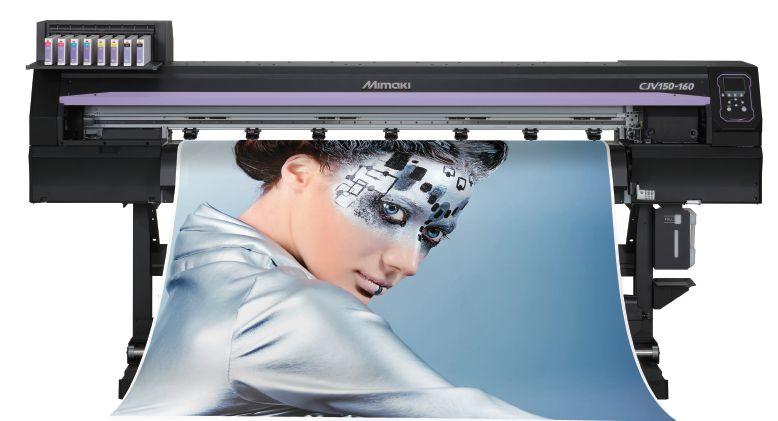
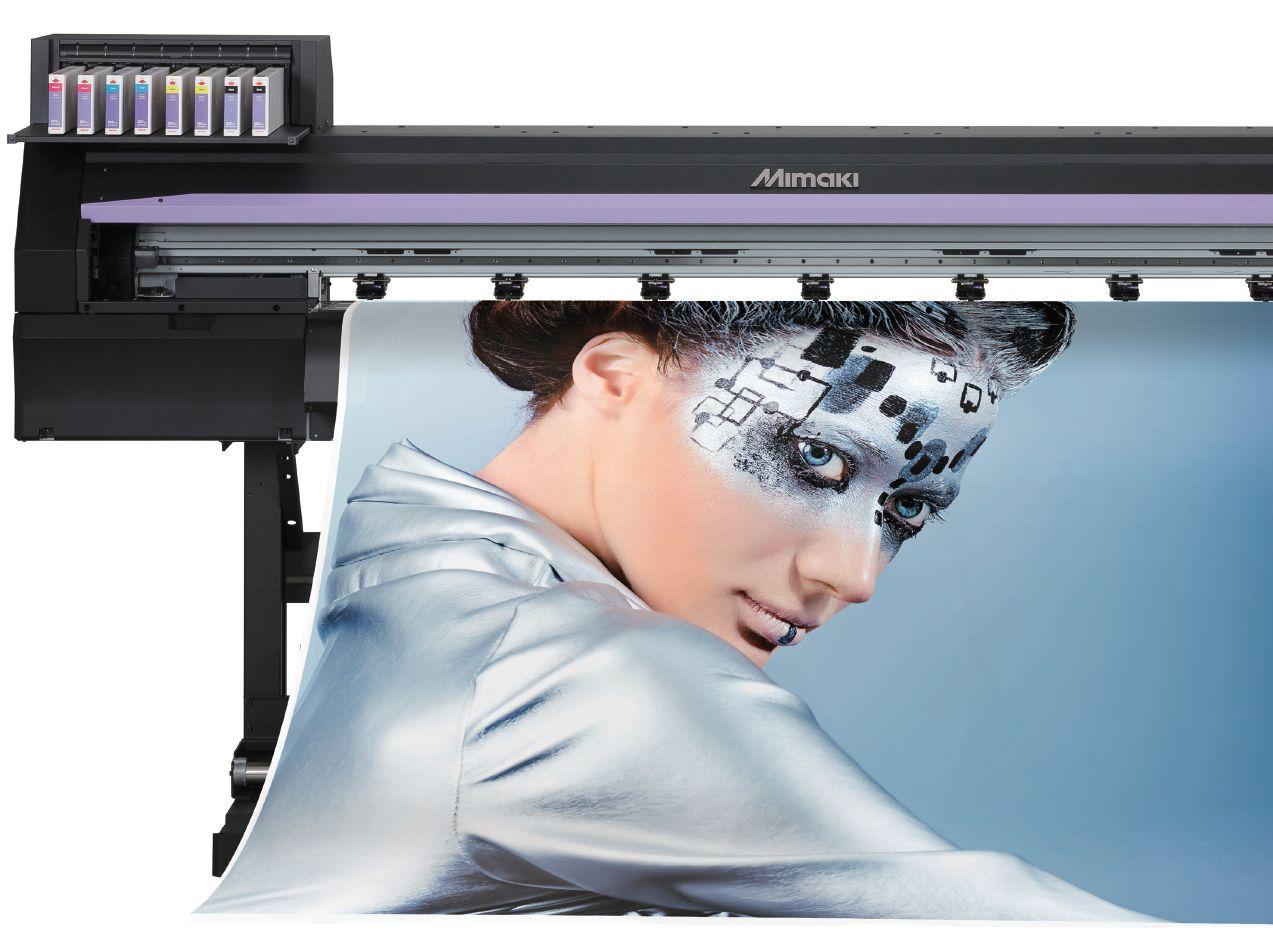
The Mimaki CJV150 solvent printers, with a silver ink option, include a cutting system to expand into applications like labels, T-shirt transfers or prototypes.
CommerCial large format
this month’s drupa Expert article series describes the incredible growth in large-format inkjet imaging as a stable and robust sector for commercial printers to realize new value
By Sophie Matthews-Paul
not so many years ago wide-format inkjet printing was still in an experimental stage and could not be considered a serious contender for most commercial environments. Advances in technology have been rapid and inkjet has become the preferred process for many display applications. Where wide-format has scored, complemented by advances made in associative software and available materials, is by bringing versatility and flexibility to all industry segments where the digital revolution has opened doors to low volumes, one-offs, versioning and variable data.
As the growth in wide-format print continues, it is noticeable that users of machines are moving to new niche and
specialty areas where digital technology can realize jobs that, formerly, were not feasible. The ability to experiment with inkjet and different materials is simplified because of fast-set-up and changeover, the ease of the prepress process and the viability of producing one-offs.
Historic print service providers face new challenges from recent entrants that opt to take on a niche or specialist segment, rather than merely become a metoo operation focused on speed.Versatility is still key to the throughput benefits of inkjet and diversification can often prove to be the key factor that drives better margins and greater profitability. Ergo, effective workflow is as important as the throughput rates of a particular print device, and investment must be quantified against expected daily volumes, diversity and variability of work.
“We know many of our customers are
DrUpa LarGe
using our printers to produce a wide variety of products on a range of substrates to meet the needs of their customers and to maximize ROI. So one printer can be used to produce everything from retail POS graphics, pop up banners and self-adhesive decals and labels to wall coverings, external displays and vehicle wraps,” says Richard Barrow, Senior Product Manager, Epson Europe.
Mike Horsten, General Manager Marketing EMEA at Mimaki, concurs: “I believe that diversity in the offering is the key to success. For the most part, a single production type of print company no longer exists. Offering a diverse series of printing products is making the one-stopshop a reality.” Flexibility is now encouraged by technologies developed to minimize down-time during job changeover and the ability to produce applications that are right the first time.
Advances do not lie only in the print engine’s design and construction; of increasing importance is the benefit of an efficient end-to-end workflow plus integration with onward services like printto-cut environments, MIS and JDF compliance. “It is fairly obvious to calculate how a company can increase its throughput and its profits by printing more work on a wider, faster printer,”
says EFI’s VP of Inkjet Solutions, Ken Hanulec. “But it is too easy for companies to overlook the ways they can also get better results with a better workflow. So it is definitely a way to gain a competitive edge that needs to be recognized.”
Mimaki’s Horsten, explains, “If you are a large print house with multiple printers the workflow is crucial to survival. Without a good MIS system or an automated workflow the amount of work would kill any company in the long run. On the other hand, the demands for perfect workflow are not so important if you are a small company and you know your entire customer base.”
Agfa’s Paul Adriaensen endorses the relevance of workflow in today’s print operations: “Good throughput means that the machine outputs correctly the first time and every time, job after job. Workflow automates input file and data processing, colour management, printer and finishing settings in order to avoid delays during the entire production process.” Today’s users of wide-format printers can come from any background, whether they happen to be designers, former specialists in typesetting or repro, sign makers or screen printers. But every print service provider should look at the bottom line and not just production costs.
Horsten emphasizes: “There are still companies that don’t calculate the entire workflow cost before adding margin. If they can look at the whole cost structure of their business they would know the profitability for the work carried out.”
Growth in the wide-format segment is based on machine technologies and reliability, running costs, diversification in application type and balancing volume against the versatility of low numbers and one-offs. But device flexibility is proving to be a key factor in future investment where fewer print engines can generate the right volumes across a range of applications. “Diversity is one of the reasons customers like using our hybrid roll/flatbed printers. Many of our customers need to be able to print as many different types of jobs as possible, from corrugated displays printed to traditional banners to everything in-between,” says Hanulec. Since drupa 2012, inkjet developments have continued apace, with new inks and faster machines, automated material handling, print-to-cut and LED curing. New chemistries include water-based UV-curable formulations, the challenge presented by latex chemistries and the capabilities of aqueous, solvent and UV-curable options that continue to be used in everyday environments.
Digital drupa
nkjet and toner presses – both liquid and dry – will be a major force at drupa 2016 in early June, as these printing processes are now fully mature and beginning to specialize into applications that can drive new business for commercial printers.
Heidelberg Primefire
Heidelberger Druckmaschinen is extending its digital printing portfolio for drupa 2016 with a world premiere of a B1-format, inkjetbased system called Primefire 106. The inkjet technology was built leveraging Heidelberg’s offset technology and the inkjet developments of Fujifilm. Heidelberg explains its core competencies of technologies like non-contacting paper sheet guide, feeder and delivery are incorporated into the system. Primefire 106 is aimed at short to medium production runs.
As of drupa 2016, Heidelberg will introduce its entire digital printing portfolio under a standardized product line called Fire. As a result, the Heidelberg digital printing portfolio will have the following structure as of drupa 2016: Primefire 106; Versafire CP/CV is the new name for the existing Linoprint CP/ CV digital printing systems (launched in cooperation with Ricoh in 2011); Gallus Labelfire 340 is the new product name for the former Gallus DCS 340 for label printing; and Omnifire 250/1000 is the new name for Heidelberg’s 4D printing systems, replacing the former name Heidelberg Jetmaster Dimension 250/1000.
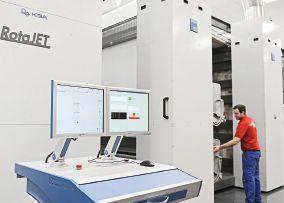
KBA RotaJET L and VL
KBA’s RotaJET L digital press is described as a roll-fed inkjet press for the publishing and commercial printing markets. It has been expanded to print wider web widths and on a greater variety of substrates. The RotaJET series starts at a 30-inch web width and can be supplied by KBA in widths of up to 81 inches. The new KBA RotaJET L and RotaJET VL inkjet presses are both aimed at industrial application markets, while the latter is more conducive for unique applications like floor laminates. The modular RotaJET L platform is available in five different web widths from 35.2-inches to 51.1-inches and can be upgraded in the field. The RotaJET VL inkjet press is available with a printing width of over 5.2-ft
or over 6.6 feet. Additionally, KBA explains it can be configured to suit all fundamental application areas in the high-volume digital printing segment. Retrofitting future generations of printing heads is also possible for colour content. KBA explains this allows users to react quickly and economically to changing demands without a need to invest in an entirely new machine.
2. SUPERIOR TECHNOLOGY — Die crease without a die, then fold and even glue all on the same machine, up to 30 pt.
3. INTEGRATED MODULAR UNITS — Combined in-line finishing: crease, fold, glue, tipping, envelope inserting, ink jetting (Duplex), clip seal (3 sides), mail prep.
4. SAVE ON POSTAGE COSTS As a Certified Canada Post Direct Marketing Specialist, we get contract pricing reductions.
5. RETURN MAIL PRODUCTS — Customized “Return Mailers” created in-line with “U” or “BOX-shape” remoistenable glue, time perfed applications and envelope formation.
6. MINI-BOOKLETS — Saddle-stitch and trim 2-up booklets in-line to the size of a business card. No need to trim off-line, or do 2 passes. 7. HIGH SPEED EQUIPMENT — High speed Tipping, Folding, Saddle-stitching and soft folding ensuring on time delivery.
MGI JETvarnish 3D Evolution
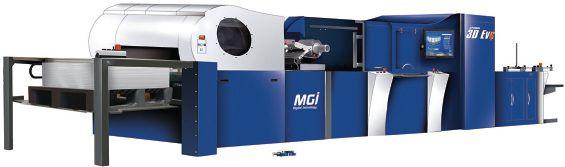
MGI plans to debut a new system within its JETvarnish 3D digital enhancement product portfolio, called the JETvarnish 3D Evolution. The JETvarnish 3D Evolution is described as the world’s first B1 scalable sheetfed Digital Enhancement Press and features a modular and field upgradeable architecture, digital foiling and an upgradeable inkjet expansion system with three available substrate size options ranging from 52 x 120 cm (20 x 47 inches), 64 x 120 cm (25 x 47 inches), as well as 75 x 120 cm (29 x 47 inches).
The B1+ size (29 x 47 inches) format option is designed to give printers and converters the ability to run fully personalized short, medium and long runs in a cost-efficient and “die-less” manner for packaging applications. Every piece finished on all of MGI’s JETvarnish 3D systems can be a unique blend of digitally-embellished images, text, data and brand designs using spot varnish, 3D raised varnish and digitally embossed foil in one pass. The JETvarnish 3D Evolution is described as a high-production system that incorporates pallet stacking, automated inkjet head cleaning, new automatic feeding, as well as a new artificial intelligence-based sheet registration system, all of which will be unveiled and launched at drupa 2016.
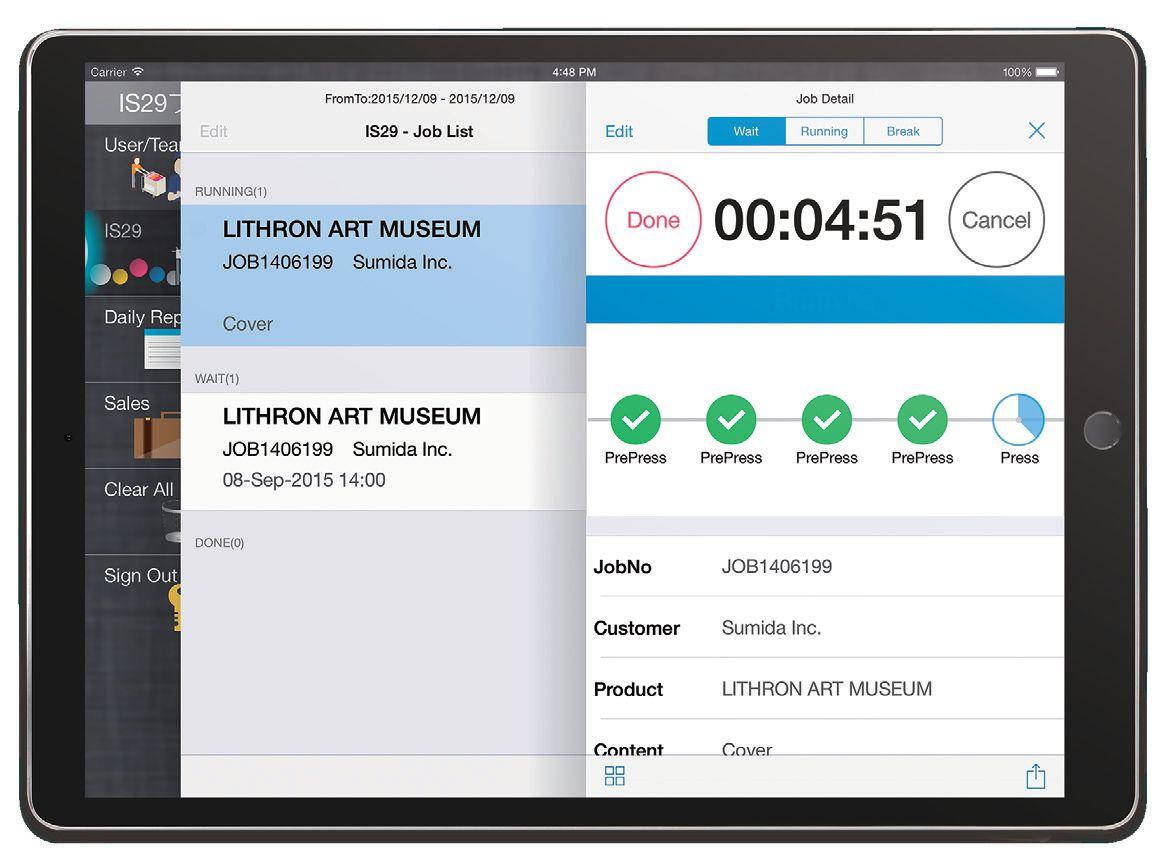
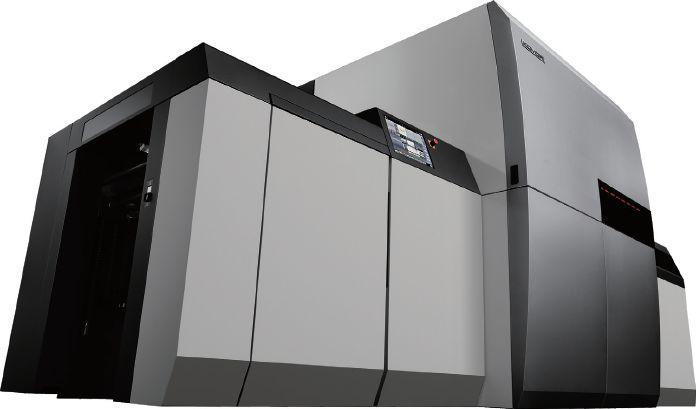
Komori Impremia IS29/ NS40
After its introduction four years ago in Germany, drupa 2016 marks the start of general availability of the Impremia IS29, Komori’s inkjet UV printing system. The Impremia IS29 is capable of printing on a range of stocks. By taking advantage of UV inkjet characteristics, Komori explains the system is suited for not only commercial print applications, but also package printing. Also being demonstrated on the Komori drupa stand is the new B1-size Impremia NS40 printing system that uses the branded Nanotechnology
under license from Landa Corporation. Komori explains this new product will perform high-speed printing at 6,500 sheets per hour and is B1-size inkjet printing system.
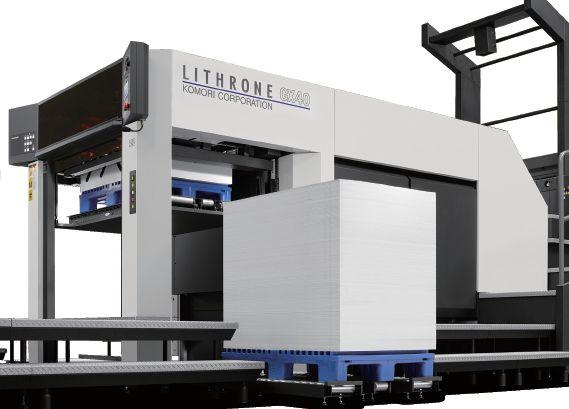
On the offset side, Komori’s Lithrone GX40 with coater will also be on the stand, exhibited with optional accessories that include its PDF Comparator System, Sheet Numbering System and automatic mask creation software for improved inspection efficiency in packaging applications. All offset presses on Komori’s show booth will be equipped with proprietary H-UV curing system and demonstrated using K-Supply H-UV ink. Making its debut in Düsseldorf is the new Lithrone G29 29-inch offset printing press and the new Lithrone G37 for producing a 25 x 37-inch maximum sheet size.
Landa Nanographic S10
Engineered for the packaging and converting industries, the single-sided B1 (41 inch/1,050 mm) format Landa S10 Nanographic Printing Press is designed for the production of folding carton, POP/ POS and corrugated boxes. Landa states its S10 press prints 13,000 sheets per hour with off-the-shelf substrates.
With a crossover point of around 30,000 boxes and higher when ganging jobs or adding variable barcodes, Landa states the S10 provides a digital solution for more than 50 percent of all packaging jobs. Landa explains the press generates up to five times the throughput of other digital printing presses, provides plate-free printing for folding carton and boxes. The press also supports coated and uncoated off-the-shelf substrates, and delivers scalable printing from single copies to versioned jobs.
Landa explains its branded Nanographic Printing Process offers lithographic quality printing with the efficiency and versatility of plate-free digital printing. High-resolution ink ejectors deliver 1,200-dpi resolution in high coverage, multiple grey levels, and strong
MGI’s new JETvarnish 3D Evolution produces personalized work in a die-less process.
colour definition. Landa states images appear vivid, sharp, and uniform – similar to anything produced by an offset press. The Landa S10 press features an inline coating unit to enhance printed output using flood or selective coating of aqueous or UV materials.
Xeikon Trillium One
Xeikon is set to launch Trillium One at drupa with a liquid toner printing process first presented at drupa 2012. A joint development project between Xeikon and Miyakoshi, Trillium One is an LED-based system capable of running at 60 metres (200 feet) per minute at 1,200 dpi, with a print width of 500 mm (19.7 inches). Xeikon explains it combines cost-effectiveness, high quality and speed in a unique printing press poised to change the digital printing market. Direct marketing materials and catalogues have been identified by Xeikon as potential high-quality markets for Trillium One, with more targeted markets and applications expected to be added over time. Trillium’s level of quality is due its imaging heads (1,200 dpi) and the small toner particle size of less than two microns used in the Xeikon-crafted high viscosity liquid toner.
At drupa, Xeikon will also launch its newly developed Flatbed Die-cut Unit, the Xeikon FDU, for end-toend printing and converting of folding cartons. The Flatbed Diecut Unit is designed for nearline finishing of digital work, but can also accommodate offset litho runs.
This 2000-sheet-per-hour FDU system handles sheet sizes from 400 x 400 mm (15.7 x 15.7 inches) up to 530 x 1,000 mm (20.9 x 39.4 inches) and a maximum die cut size of 490 x 700 mm (19.2 x 27.6 inches). Substrate thickness can range from 160 to 890 micron for paper and carton board and also microflute corrugated board can be finished, making it suitable for completing both offset and digital runs.
HP Indigo HP Inc. plans to release eight new or enhanced presses to its portfolio, including five Indigo presses and three PageWide Web presses, which will be highlighted at drupa. The company describes the press expansion as representing its most-significant Indigo technology breakthroughs in 20 years. The new HP Indigo portfolio includes three sheetfed presses, the HP Indigo 12000, 7900 and 5900, as well as the oversize B1-format duplex HP Indigo 50000 press, HP Indigo WS6800p for photo specialty applications, as well as an enhanced HP Indigo 20000 equipped for commercial applications. The new and enhanced presses build on the HP Indigo platforms announced at drupa 2012.
The new HP PageWide Web Presses T490 HD, T490M HD and T240 HD expand HP’s High Definition Nozzle Architecture (HDNA) inkjet platform. The 42-inch HP PageWide Web Press T490 HD is a colour duplex press running at up to 1,000 feet per minute in perform-
The Landa S10 Nanographic Printing Press operator Cockpit2.
Trillium One runs toner particle size of less than two microns.
quotes@teckmark.com • www.teckmark.com
•
•
ance mode. Its monochrome variant, the HP PageWide Web Press T490M HD is aimed at high-volume book manufacturers. The HP PageWide Web Presses T470 HD and T480 HD now offer 500 fpm in quality mode, a 25 percent increase since introduction.The new 22-inch HP PageWide Web Press T240 HD prints at speeds of up to 500 fpm in performance mode, a 25 percent speed increase, and 250 fpm in quality mode. With a monthly duty cycle of up to 60 million pages, the T240 HD is designed for commercial, production mail and book printing providers.
Kodak Ultrastream and NexPress
Kodak at drupa plans to debut a range of new technologies, including its next generation inkjet platform called Ultrastream, a new NexPress ZX3900 press, cloudbased software packages, and new Sonora offset printing plates, among other technologies. Ultrastream, built on Kodak’s continuous inkjet Stream technology, is aimed at moving production inkjet into the mainstream of commercial and packaging printing. It will be showcased for the first time at drupa in an 8-inch configuration for label production, and feature what Kodak describes as a smaller drop size and precise placement accuracy for higher resolution, clean lines and additional detailed definition. Ultrastream technology will co-exist in the market along with Stream technology to offer different platform options. Ultrastream’s writing system includes a modular print head that can be implemented in
widths ranging from eight inches to 97 inches for different applications. Kodak explains it produces 600 x 1,800-dpi resolution at speeds of up to 150 metres per minute on a variety of paper and plastic substrates. The new NexPress ZX3900 toner-based press will also be running at drupa, with a delivery date aimed for early 2017. It supports thicker paper and the use of synthetic substrates, which can be leveraged for short-run packaging applications like labels, tags and small folding cartons, as well as differentiated commercial and publishing products. In conjunction with the NexPress ZX3900, Kodak also plans to preview a new NexPress platform that has not yet been unveiled. There will also be a new Opaque White Dry Ink for NexPress systems for the Fifth Imaging Unit.
Xerox Brenva, Trivor 2400 Xerox at drupa plans to launch two new inkjet presses, including the Brenva HD Production Inkjet Press and the Trivor 2400 Inkjet Press. Targeting a production gap between high-end toner and low-end inkjet presses, the Xerox Brenva is a cutsheet inkjet press that Xerox initially expects to disrupt light direct mail, transactional and book markets. The Brenva is to incorporate many of the paper-path components of the Xerox iGen press line, as well as an inline spectrophotometer to assist with calibration and profiling; object-oriented colour management to distinguish text, graphics and images; and a K-only mode to run as a monochrome press.
The Xerox Trivor 2400 is a scalable continuous inkjet press initially targeting speeds of up to 551 feet (168 metres) per minute in colour and 656 feet (200 metres) per minute in monochrome. The small-footprint press will initially be targeted at catalogues, magazines and colour books. A new print server developed in partnership with EFI, the Xerox IJ Print Server, will handle multiple data streams. Availability of the Trivor 2400 with the IJ Print Server will be revealed at drupa. The Brenva HD will be available in Europe in May 2016 and in North America in September 2016. Shipments will begin June 2016.
A new twin Indigo called the HP Indigo 8000.
Ultrastream will co-exist in the market along with Stream technology.
sOUtHern GrapHIC sYstems
JOb FaIr
Due to exciting growth, our SGS Toronto Campus is looking for Project Managers, Graphic Operators, 3D Operators, and Colour Operators with Graphic Communication Management degrees and/or experience. http://sgscojobfair.eventbrite.ca/ 416-252-9331 www.sgsintl.com
HeIDeLberG DIe CUttInG
maCHIne FOr saLe
A 22 x 29 inch Heidelberg Cylinder Die Cutting Machine is available in great working condition.
Contact Paul at 416-567-1738
Email: office@toppress.ca
GrYpHOn GrapHICs, FOILstamper/DIeCUtter
Minimum 1 year experience required. Competitive wages, flexible hours, full
benefits and a friendly working environment. Please provide a list of machinery you have experience with. All inquiries will be kept confidential. 2nd split shift hours available.
Website: www.gryphongraphics.ca
Contact: Jennifer@gryphongraphics.ca
Heidelberg: K-Line/S-Line/Speedmaster/GTO/MO
Komori: 1, 2, 4 or 5 colours & any size
Adast: 714/715/724/725
Mitsubishi: Any model
Ryobi: 2800CD/3200CD-MCD/640K
Itek: 960/975/985
Hamada: 600/700/800/E47/RS34
Shinohara/Fuji: 66/65 1,2 or 4 colours
Sakurai: 1, 2 or 4 colours and any size (newer model)
Polar: any size/older or newer models (66/72/76/78/82/90/92/107/115)
Horizon-BQ: 220/240/260/440/460
Mark Price / Regional Sales Manager / OKI Data Americas / Mississauga, Ont.
OKI Data is one of the world’s largest imaging technology manufacturers, established in 1881 as Japan’s first telecommunications manufacturer, Tokyo-based OKI Electric Industry. The company generated more than $4 billion in annual revenues last year and has representatives in more than 100 countries, but remains as a relatively unknown power in Canada’s commercial printing industry.
Five months ago, OKI Data’s Canadian arm moved into a new Mississauga headquarters and is focusing more on pushing into the commercial segment. For years, OKI has been best known selling office and consumer impact printers, thousands by the month. Led by Mario Poulo, OKI’s Canadian operation is prepared to make an impact on the production printing sector based on a range of new technologies, including its C900 Series that can now run additional white and clear inks.
One of the company’s greatest strengths rests with its early development of LED imaging, which several other manufacturers are only now touting as driving their own next-generation systems. PrintAction spoke with Mark Price, who has been with OKI’s Canadian operation for seven years, about the company’s growing production print platform.
What new OKI systems should excite commercial printers?
MP: We are very excited about the opportunities of our five-colour boxes. Traditionally, we have had CMYK and now we are adding CMYK plus a fifth station. We are adding more colours as we go down the line, but today what we have available is white or clear coat and it adds a new dimension. We have several boxes where we can do CMYK plus white and on heavy medias up to 360 gsm and 12 x 18, actually 12 x 52, so a small print shop can compete very nicely with some larger shops.
How aggressive are price points on OKI’s five-colour machines?
MP: Whereas our [C900 Series] would be in the neighbourhood of $30,000, [a common competing system] is in the neighbourhood of $120,000, which is quite a commitment to make when you start thinking about how much business do I need to come in the door to offset that.
You are not going to lose quite as much sleep at night if it is a $30,000 investment. And our [LED-driven] imaging quality is great. From a production standpoint, they are also very reliable products so it is a really good way to get into a market and be competitive… You can start thinking about doing colour on dark stock or white on dark stock, for example.
What finishing can be added to OKI?
MP: There is a wide range of folding, finishing, laminating, slitters that you can add on. You can really specialize in one area or you can open up so that whatever walks in the door you can handle. [End customers] are getting creative in terms of how they are putting together files and printers need a lot more flexibility in terms of what media they are printing on. We are able to handle everything from a very light transparent material to a heavy 360/380 coated card stock.
What is OKI’s key tech position?
The monthly average of consumer-level impact printers sold by OKI, as the company moves to leverage its high fidelity LED imaging in commercial printing markets.
MP: OKI is all about colour. The core of OKI’s business is an LED colour engine. We were one of the first developers of an LED engine and all of our products – even our office products – are all built on an LED engine and that is how we get our high-fidelity colour. Every system is solid-state LED… It gives us a lot of capability on specialty products.
Why is OKI’s C711DW label system unique?
MP: It is actually a combination of technology between OKI and Allen Data. We provide the print engine and then there is a winder and rewinder that will take either cut-sheet or roll-fed labels… with a finishing system that can die-cut and laminate. As a low-run
label solution, if you are a micro-brewery, for example, and constantly going through a lot of labels, changing them on bottles, doing runs of two, three, 5,000, it is a wonderful solution.
How is OKI increasing its print presence?
MP: We have not done a wonderful job in getting the OKI brand to be a well-known name within the printing industry. A lot of folks do know us and they associate OKI with fine colour output, which is a good thing for us. We want to make sure we maintain that association. In the past, we did not have a wide range of products to really appeal to the professional graphics market place. We are brining in a lot more products both organically, developed through OKI, and also we have acquired a number of companies to expand our product line within the graphics arena.
What has been a key recent OKI acquisition to get deeper into production print?
MP: OKI recently acquired Seiko Instruments, which is wide format and a couple of systems that are now resold as OKI boxes… still manufactured by Seiko Instruments but it is actually now part of OKI. They have two lines, inkjet and toner. So we have added both.
SHOP ANYTIME ANYWHERE GOSPICERS.CA
FAST, EASY & CONVENIENT
Access Product Information 24/7
View Up-to-Date Pricing
Download our Latest Price Book
Check Available Inventory
Improve Purchasing Efficiencies
Order from Order History
Shop Securely Anytime
Streamlined Shopping Experience from Login to Checkout
Get product information and view up-to-date inventory and pricing. Streamline your procurement by creating customized shopping lists, view order status and order history with a click of the mouse.
Domtar EarthChoice® Office Paper is a great-looking, everyday paper that represents your commitment to environmental responsibility. Featuring ColorLok ® Technology, it is designed to provide optimal printing results. To learn more visit www.egpaper.com or domtar.com.