Four of Canada’s technology leaders discuss the current state of production inkjet and what impact it is having in the domestic printing market
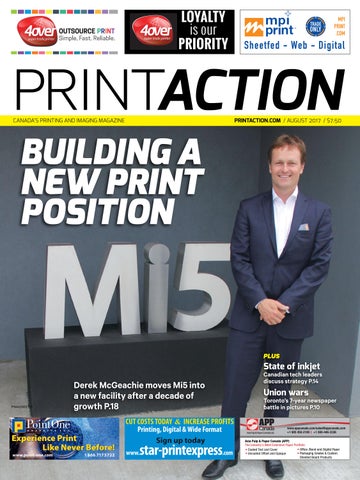
18 Mi5 builds a new print position
After a decade of acquisitions, Mi5 Digital has become one of the most formidable printing operations in the competitive Greater Toronto market
DEPARTMENTS
GAMUT
5 News, People, Calendar, Dots, Installs, Globe, Archive
TECH REPORT
22 PRINT 17 preview
A range of technology suppliers provide their booth highlights for the upcoming Chicago tradeshow
MARKETPLACE
29 Industry classifieds
SPOTLIGHT
30 Jesse Hirsh, Futurist & Researcher, Media Management, discusses how Artificial Intelligence is creating new influences in today’s smart, fast and unregulated economy
COLUMNS
FROM THE EDITOR
4 Jon Robinson
Empower a nerd circle
Before the fall season hits full bore, it is a good time for printers to establish task forces for the future and a nerd circle for the present day
CHRONICLE
10 Nick Howard
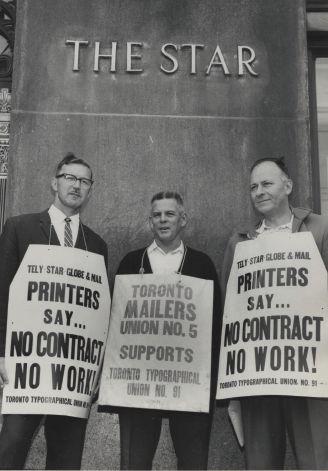
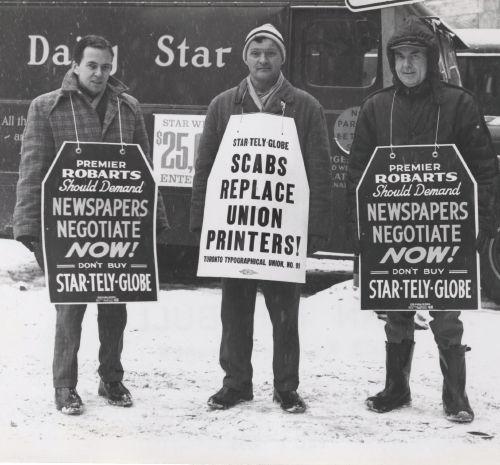
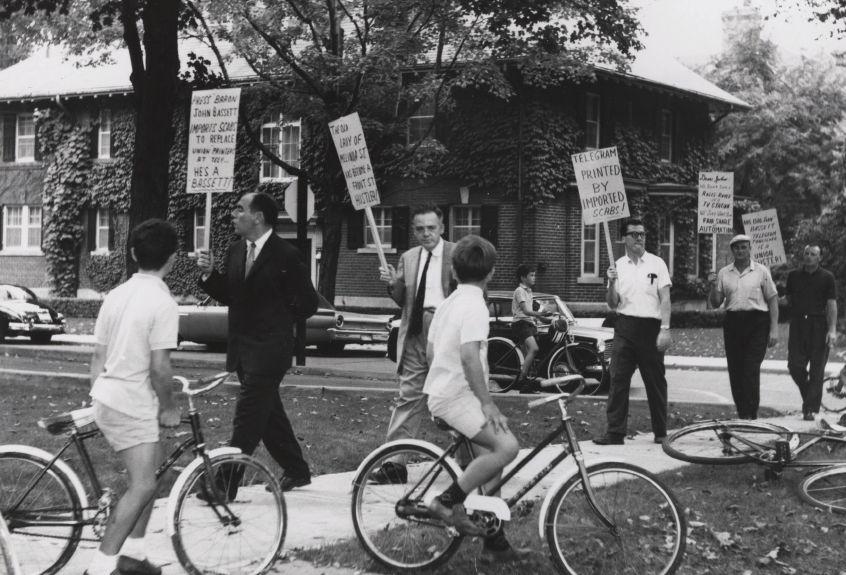
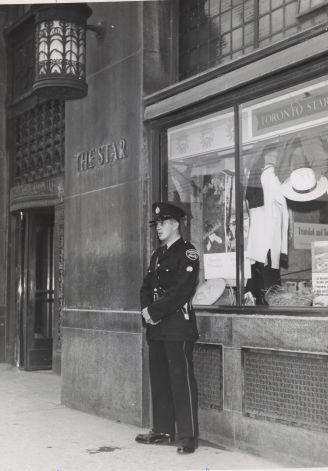
A print union fights a war it couldn’t win What is arguably the most decisive printing strike in Canadian history lasted for seven years as technology began to trump tradition at Toronto newspapers 18 10 6 14
Empower a nerd circle
Futurist Jesse Hirsh in late May provided an hour-long keynote at an Ontario Printing & Imaging Association dinner about the direction of communications technologies. He focused on how Artificial Intelligence is creating new influences via online automation and mixed reality (virtual and real), describing how today’s smart, fast and unregulated economy is impacting the business world – and where to find opportunities.
izations are undertaking to engage their leaders, develop future leaders and recruit emerging leaders are simply wrong. Only 23 percent of the study’s 5,000 participants felt they were learning from, or engaged with, other generations at work, while 70 percent of workforces are disengaged from their colleagues and their work. Based on research Donohue presented with Purdue University in November 2016, they identified this disengagement is costing companies $2,600 per employee per month.
Editor Jon Robinson jrobinson@annexweb.com
Contributing writers Zac Bolan, Wayne Collins, David Fellman, Victoria Gaitskell, Martin Habekost, Nick Howard, Neva Murtha, Abhay Sharma
Publisher Paul Grossinger pgrossinger@annexweb.com 416-510-5240
According to Donohue Learning, 77 percent of the activities and initiatives organizations are undertaking to engage their leaders, develop future leaders, and recruit emerging leaders, are simply wrong, based on a 2016 study with 5,000 participants.
At the end of his presentation, Hirsh offered two takeaways to the OPIA crowd “in which this wild and exciting world can be tamed and understood.” The first is what he called a nerd circle, where once a month anyone in the organization who is curious can come to the table and talk about the app they just installed on their smartphone or the way in which a new service or concept might impact your industry or company.
“Tragically, Canada, amongst OECD countries, has the lowest R&D rate in the private sector, partly because we are just not as large as other economies so we tend not to have the types of resources needed to invest in R&D,” said Hirsh. “But we live in the kind of knowledge economy in which R&D is future profit – it is future capability.
“So I offer the nerd circle as a kind of hybrid, an ad hoc R&D policy in which you are leveraging the curiosity of your personnel, of your colleagues, so that you can come together and try to pool that curiosity and knowledge to get a sense of what is happening and where it is going.”
The greatest challenge of leveraging the collective intelligence of most any company today is based on distinct generational divides never seen before in the workplace. Whereas one age group may be apt to talk about emerging online services, an older group will be more aware of the growing impact of blockchains or distributed ledger technology, as well as access to client information or the streamlining of logistics.
Dr. Mary Donohue, CEO of Donahue Learning, addresses this generational issue in a new white paper called The Death of the Manage-me Workplace. The paper focuses on retaining skilled employees by looking at how generational team members communicate, as it relates to lost sales and hidden costs.
Donohue argues learning is what inspires and engages employees despite their age bracket and supports this hypothesis with a 2016 study conducted with 5,000 participants from across North America. The study found that 77 percent of activities and initiatives organ-
Donohue breaks down the basics of the generational divide starting with Millennials (born between 1980 and 2000) as your Communication Capital: “These are the people whom you want in your workforce to invigorate others with excitement for new ideas. They are trendsetters. They align with the ethics and morals of the organization.”
Gen Xers (1960 to 1980), explains Donohue, are your Intellectual Capital. “They are the heart of your organization. They understand the value of your business and its people, and how these relationships have worked with customers.”
Boomers (1945 to 1960) are your Cultural Capital. “They have all the knowledge about how the organization developed and what makes it tick, and can build trends for the organization. They are motivated by helping others and the organization; in other words, they work to the mission.”
Before the fall season hits full bore, it is a good time for printers to establish a nerd circle or more formal task forces to address business challenges for their future, ideally focusing on Hirsh’s second opportunity takeaway – the open source automation of business processes.
“May you live in interesting times... the difference between how people relate to that curse is if you feel you have access to knowledge then it really is exciting times. You feel empowered and you feel as if there are ample opportunities for prosperity and fun. But if you don’t have access to that knowledge, these are not exciting times. These are terrifying times in which the rapid rate of technological change can seem insurmountable,” said Hirsh. “But I argue in leveraging the collective intelligence of your company, in leveraging the openness of the Internet and the opportunities afforded by the movement of free and open source that there are excellent opportunities for us as a city, as a province, as a country to not only prosper, but to excel quite dramatically.”
JON ROBINSON, editor jrobinson@annexweb.com
Associate Publisher Stephen Longmire slongmire@annexweb.com 416-510-5246
For a 1 year monthly subscription (12 issues): Canada — $40.95 Canada 2 year— $66.95 United States — CN$71.95
Other foreign — CN$140.00
Mailing address
Annex Business Media 80 Valleybrook Drive Toronto, ON, M3B 2S9 printaction.com Tel: 416-442-5600 Fax: 416-442-2230
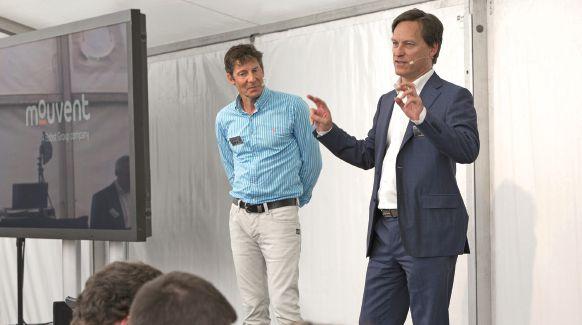
Bobst and Radex have launched Mouvent as a new company to develop digital printing technologies, primarily for textile and label markets, corrugated board, flexible packaging and folding carton work. Central to company, which is comprised of 80 employees in Switzerland, is Mouvent Cluster technology developed by Radex and described as a “quantum leap for the industry.”
Mouvent states this cluster technology allows it to develop the smallest digital printers in their category – closer to desktop printing than to traditional analogue presses – making them compact, lightweight and easily accessible. Mouvent writes the software and develops inks and coatings around the printers. Its first machine targets 8-colour textile printing.
Quark Software was acquired by Parallax Capital Partners LLC, a California private equity firm, founded in January 1999 to make investments in middle market software and related technology companies. It has since acquired more than 20 companies typically generating anywhere from $5 to $100 million in annual revenues. Parallax states it intends, through organic growth and acquisitions, to help Quark accelerate the adoption of its content automation tools, which enables organizations to deliver content (text, video, data, etc.) to any format and channel – mobile, print, Web and more. In May 2017, Quark released a new version of QuarkXPress software.
C.J. Group of Companies purchased Clixx, one of the top mailing
facilities in Canada, from WestRock Company. WestRock had owned Clixx for a little more than a year after reaching an agreement in December 2015 to acquire six Cenveo Packaging facilities.
Clixx is now added to C.J. Group’s roster of 30 companies, which are to be housed in the company’s new 230,000-squarefoot facility in Mississauga, Ontario, scheduled to begin operations by October 2017. Clixx veteran Sherwin Abrazaldo will head up the new C.J. Group Clixx division, which offers a full line of direct-mail services like variable data printing and binding, in-house data and postal technologies, pick and pack, kitting and fulfillment, inserting, tipping, and many other related mailing services. Clixx began in 1986 as A&T Mailing Services.
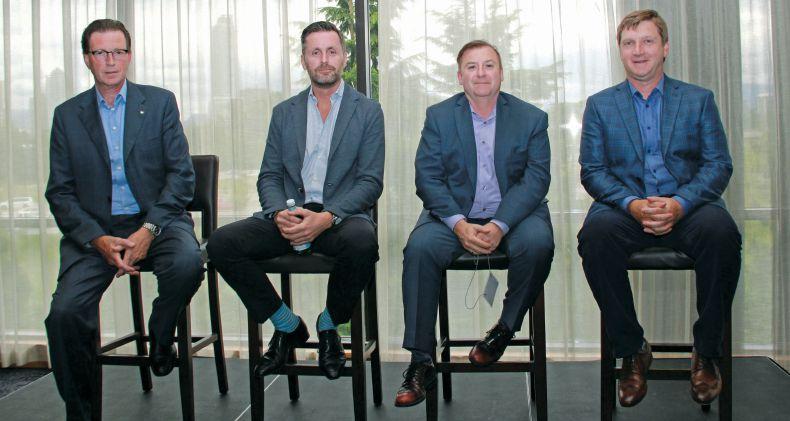
PrintForum West took place in June at the Delta Chelsea in Burnaby, BC. Attended by more than 100 printing professionals, the daylong conference began with an hourlong panel discussion featuring three of Canada’s youngest printing leaders: Nikos Kallas of MET Fine Printers, Richard Kouwenhoven of Hemlock Printers and James Rowley of Glenmore Custom Print + Packaging. Neva Murtha and Catherine Stewart of Vancouver-based Canopy discussed the need for transparency in making
environmental production claims. Kodak’s William Li, Color Technology Manager and Patrick Kerr, Product Manager, Unified Workflow Solutions discussed technology advances. Andy Rae of Heidelberg then discussed the impact of Big Data and Industry 4.0 in printing, including the concept of The Smart Print Shop. The day concluded with a panel discussion on the state of production inkjet (see page 14).
LSC Communications, the Chicago-based printing entity spun off from RR Donnelley in October 2016, entered into a definitive agreement to acquire Creel Printing, a privately owned offset and digital print company based in Nevada. Creel has some 700 employees operating out of six facilities across the country. LSC holds two of its 49 facilities in Canada. Led by CEO Thomas Quinlan III, LSC ranked No. 3 on the latest Printing Impressions 400, reporting 2016 revenues of US$3.65 billion with approximately 20,000 employees.
Print The Future, headquartered in Vancouver and described as an omni-channel 3D printing company, plans to file an Initial Public Offering with the U.S. Securities and Exchange Commission (SEC). Once approved by the SEC, Print The Future will offer 2,000,000 shares of common stock at US$10.00 per share. The company states it plans to open 200 brick and mortar stores around the globe. In these stores, both amateur and professional designers will be able to design and print 3D objects to fit their spaces.
CET Color, a manufacturer of wide-format UV flatbed and
hybrid printers, has added Nustream Group to its dealer channel to look after Quebec and Eastern Canada. Located in Montreal, Nustream provides technological distribution and services to commercial, label and packaging, photographic and art reproduction printers. Located in Atlanta, GA, CET Color operates out of an 80,000 square-foot facility and provides a line of wide format UV printers, as well as a recently introduced flatbed cutter.
drupa 2020 will feature a brand new hall as Messe Düsseldorf GmbH recently broke ground on a multi-functional hall with conference facilities for the fairground’s southern area. The project is expected to be complete by summer 2019. It will also feature what Messe describes as a fully glazed new entrance south complete with a translucent, LED-lit canopy roof and adjacent underground parking.
TC Transcontinental released results for the second quarter of Fiscal 2017, ended April 30, 2017, with revenues increasing by $1.5 million, or 0.3 percent. The company saw net earnings increase by $41.0 million, from $5.4 million to $46.4 million. “In the printing division, the results of our retailer-related services were solid, and we began to provide the new services under the terms of the expanded agreement with Lowe’s Canada,” said François Olivier, CEO of Transcontinental. The company continues its process to sell the local newspapers in Quebec and Ontario.
Cenveo launched Kadena 2.0 as a cloud platform focused on print and mail communications, fulfillment and supply chain management for mid- to largesized enterprises. Kadena is a collection of modules with plug-and-play flexibility to be quickly deployed to fit customers’ business requirements. At the core of Kadena is K-Center, a SaaSbased e-Commerce hub that acts as a control centre for initiating, tracking and coordinating print, fulfillment and sourcing projects across the supply chain.
Jean-Pascal Bobst (right), CEO of BOBST Group SA, introduces Mouvent.
Nikos Kallas of MET, James Rowley of Glenmore and Richard Kouwenhoven of Hemlock.
Jay Mandarino, President and CEO, C.J. Group.
Neil Patel, Founder and CEO, Print The Future.
TC Transcontinental CEO François Olivier.
Ted Egawa, Director President and Chief Executive Officer, Canon Canada, is one of five new business leaders to join the Toronto Global Board of Directors, which itself is comprised of 14 people from both business and community operations. Appointed by the Toronto Global Mayors’ and Chairs’ Strategy Council, the board is designed to enhance the reputation of the Toronto region as a premiere global business destination. In addition to Egawa, new members of the board include: Mark Cohon, Executive Chairman, Georgian Bay Spirit Co and Chair of the Juno Awards; Janet Ecker, ViceChair President and Chief Executive Officer of the Toronto Financial Services Alliance; Geneviève Bonin, Director Partner, Management Consulting, PricewaterhouseCoopers Canada; and Lisa de Wilde, Director Chief Executive Officer, Ontario Educational Communications Authority (TVO).
INSTALLS
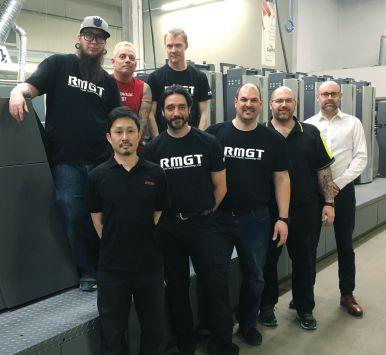
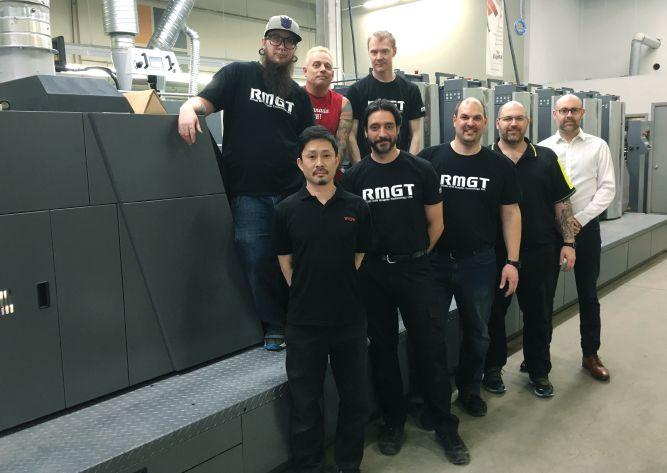
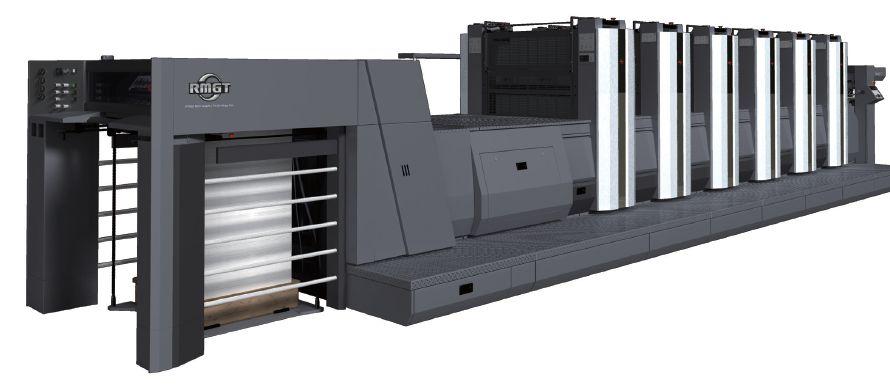
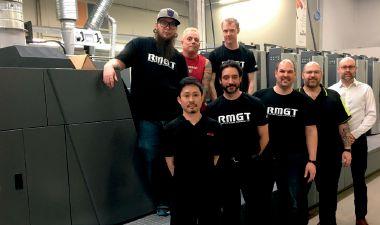
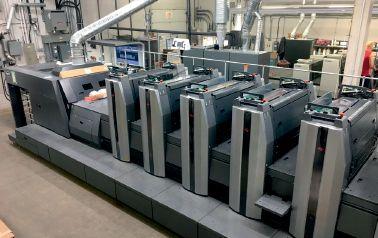
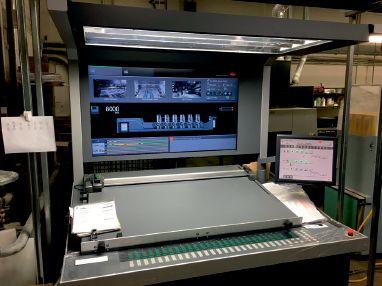
Capital Colour, a full-service printing company based in Edmonton, Alberta, has installed an RMGT 9 series sheetfed offset press manufactured by RYOBI MHI Graphic Technology (RMGT) and purchased through Canadian distributor KBR Graphics.
Parry Nitchos and Peter Nitchos in late June both joined Toronto-based C.J. Graphics Inc., a member of the C.J. Group of Companies. With more than 40 years of sales leadership and expertise in the printing industry, Peter Nitchos will take over as Director of Sales for C.J. Graphics, as well as its 30 divisions under the C.J. Group umbrella. Parry Nitchos is joining C.J. Graphics as a Senior Account Manager.
Eric Owen joins Memjet of San Diego as General Manager in its Commercial Print business unit. In this role, Owen will oversee the sales, marketing, and distribution activities that will increase awareness and adoption of Memjet’s single-pass inkjet technology in high-volume commercial print and packaging markets. For over 20 years, he held leadership roles at Eastman Kodak Company, most recently overseeing worldwide sales and marketing activities in Kodak’s Enterprise Inkjet Systems Division.
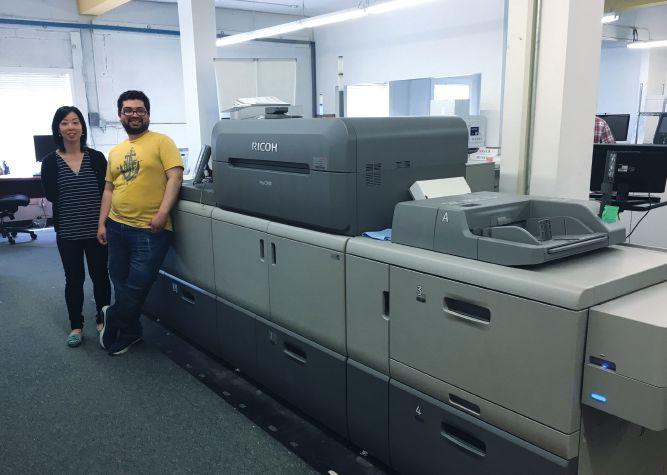
First on Colour, a full service printing company located in Calgary, Alberta, has invested in a Ricoh Pro C9110, adding to its recently installed Ricoh Pro C7110X (late 2015), and Ricoh Pro 8100. Founded more than 20 years ago, the company focuses on both toner and offset colour printing, while also providing design and finishing services.
Rich Freeley becomes Director of Sales for MBO America to oversee the activities of MBO’s sales managers throughout the United States, Canada and Latin America. He succeeds former Director of Sales Lance Martin, who has assumed the newly created position of VP of National Accounts. Freeley most recently served as an Inkjet Specialist with Canon after spending time with Heidelberg, HP, NexPress and Xerox.
Dscoop Americas expanded its board with six new members, including: Amanda Bass, Senior Manager of Creative Services, Aflac; Chris Reine, Indigo Operations, Franklin Press; Charles Ohiaeri, Chief Fulfilment Officer, Zazzle; Paul Hudson, CEO, Hudson Printing; Craig Curran, Senior VP Sales and Marketing, Nosco; and Martin Aalsma, VP, BR Printers.
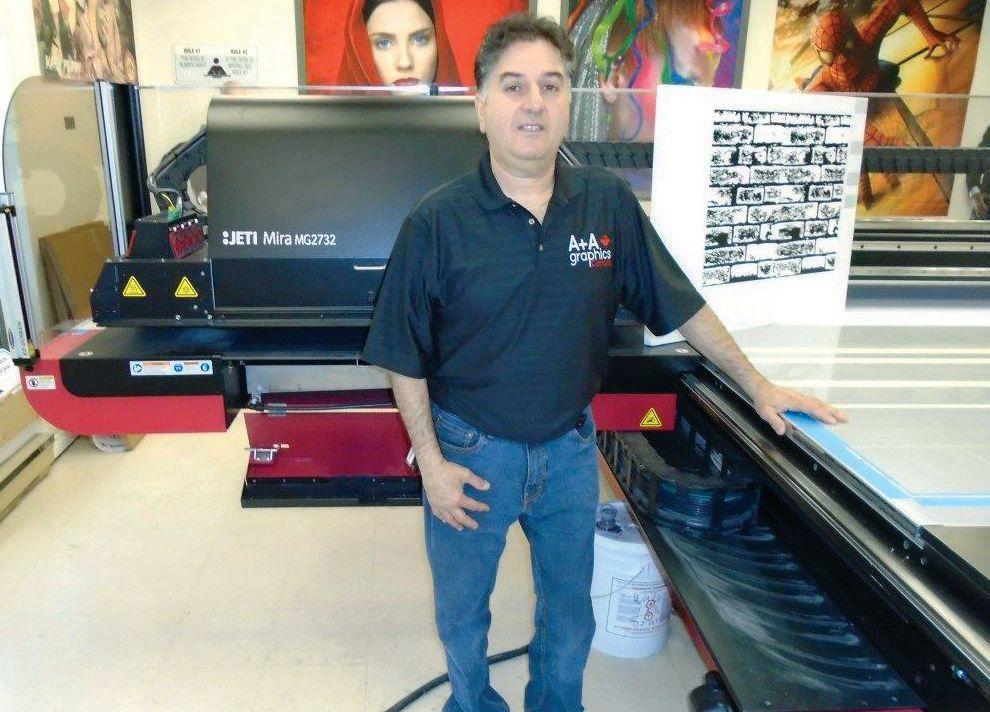
A+A Graphics Canada of Toronto has installed an Agfa Jeti Mira MG 2732/HS, pictured with Ara Sahakian, who recently moved his operation into a larger 15,000-squarefoot production facility. The Jeti Mira reaches speeds of up to 231 square metres per hour via its dockable roll-to-roll extension.
LITHOMAN 32-page commercial web in Bratislava
Slovenska Grafia, which is one of the leading heatset printers in Bratislava, Slovakia, invested in a 32-page, long-grain commercial web offset press. After a significant investment in two manroland LITHOMAN presses in 2011, the new LITHOMAN replaces an older 16-page press. This is a further step by the company towards high volume commercial printing.
Its new 32-page printing machine provides flexible production, especially for the company’s targeted market sector of magazines and catalogues with small runs. For this type of printing, the new press is equipped with a cylinder circumference of 1,156 mm, a web width of 965 mm, a manroland web systems reel splicer RSC 15, four printing units and fully automatic plate change with APL. It also includes Inline Control Systems for ink density, colour register and cutoff register to provide high quality and low-waste rates. The new press will also feature the latest generation of PECOM-X.
“We have been able to strengthen our market position steadily due to courageous investments during the last years. We are consequently continuing this journey now by investing in a premium product from the world market leader in web offset printing,” said Rudolf Rosskopf, CEO of Slovenska Grafia.
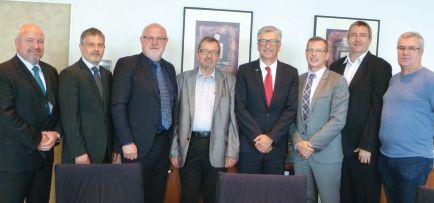
At the contract signing in Bratislava: from left to right.: L. Kovacik (manroland Czech Republic), S. Zapf (manroland web systems), P. Kosik (Production Director SG), A. Tuharsky (Chairman of the Board SG), J. Aumiller (manroland web systems), R. Rosskopf (CEO SG), L. Ciklamini (Technical Director SG), and K. Polakovic (Technical Service).
Rapida 106 for Deluxe Packages in Karachi
A seven-colour Rapida 106 in a double-coater configuration will be entering production at Deluxe Packages in Karachi, Pakistan, in autumn. It is the longest sheetfed offset press ever installed in the 60-year history of the company, which operates a two-shift system and prints around 35 million sheets per year. It supplies packaging for the pharmaceuticals, cosmetics and confectionery branches, as well as POS displays.
Rehan Shafi Siddiqui and Zeeshan Mustafa Shafi Siddiqui represent the second generation at the helm of the family business. Deluxe Packages today occupies more than 43,560 square feet of production space at its existing facility. A new factory adds a further 174,240 square feet. With more than 150 employees, the company generates an annual turnover of around US$55 million and is one of the leading packaging companies in Pakistan.
In the past, the company used various half- and medium-format presses with four to six colours, and so the arrival of the 11-unit Rapida 106 heralds a new strategy. Deluxe Packages’ postpress department is also dominated by the latest die-cutting and folder-gluer technologies.
The print format and production output of the Rapida 106 are important factors for the company. The increasing complexity of packaging designs, explains Deluxe Packaging, calls for additional printing units for spot colours, and the double-coating facility is a further prerequisite for high-quality multiple coatings and UV finishes. The press is prepared for mixed conventional/UV production, features 450 mm raised foundations and incorporates dedicated accessory packages for both board and plastics printing. Its automation includes fully automatic FAPC plate changers, CleanTronic Multi washing systems for the alternating use of different ink systems, and CleanTronic UV.
World’s second DDC-810 lands in Maryland
Printing Specialist Corporation, based in Glen Burnie, Maryland, expanded its finishing with the installation of a new Duplo DDC-810 Digital Spot UV Coater. The full service commercial printer is the second in the world to purchase machine, which utilizes 600 x 600 dpi inkjet technology, UV lamp curing, and camera image registration to apply a gloss varnish to defined areas of the substrate.
Established in 1970, Printing Specialist is equipped with HP Indigo and Heidelberg presses, and focuses on producing unique items such as double-thick and edge-painted cards, letterpress, custom die cutting, and digital colour matching. “By having the DDC-810 in our plant, we can more easily do mockups for our designer clients and control our costs and turnaround times,” said Gary Habicht, President of Printing Specialist.
The DDC-810 features an air suction feed and handles maximum paper sizes of 14.33 x 29.13 inches up to 450 gsm. Its CCD camera system along with the unique registration marks ensures the accurate alignment of the raised spot UV layer onto the printed document.
3
Newly formed All4Labels of Witzhave, Germany, acquired three PANORAMA Hybrid presses from Danish press manufacturer Nilpeter. All the presses support 5-colour inkjet engines in various combinations with flexo processes, hot foil/embossing, and QuickChange die-cutting.
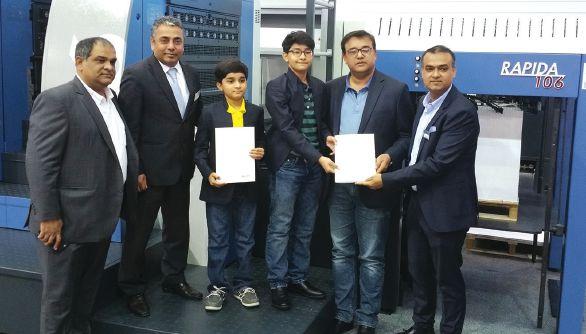
Signing of the contracts at drupa last year (left to right): Zeeshan Mustafa Shafi Siddiqui, Deluxe Packages; Bhupinder Sethi, KBA sales department; Mikayil and Amaan Siddiqui, Deluxe Packages; Rehan Shafi Siddiqui, Deluxe Packages; and Akhlaq Khan, Imprint Packaging Solutions.
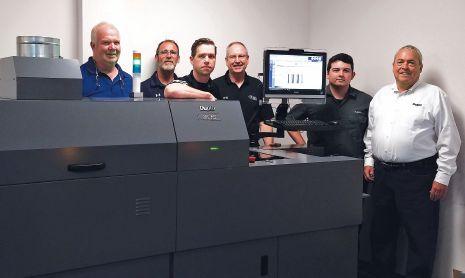
Pictured, from left to right: Joe Kroh, Scott Nehrkorn, Justin Habicht, and Gary Habicht from Printing Specialist; Jake Gandara and Bill Lagarde from Duplo USA.
ARCHIVE
15 years ago
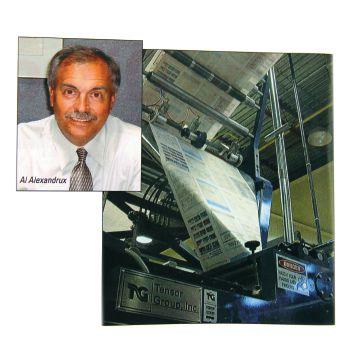
Adopting a Web Profile: Sixty-five hundred pounds of cutting edge machinery, a new Prolific Web moniker and 27 years of tradition bring The Prolific Group into a new era of web offset printing. In March, six semi-trailers carrying pieces of a new Tensor 1400 press brought an new printing process to the Winnipeg-based sheetfed printing operation. Al Alexandruk explains Prolific stands to take huge strides in a market that is mostly flooded with decades old equipment. The Tensor is able to run 40,000 products per hour because of specially fitted Helicoc gears. The press is one of the fastest in Western Canada, able to go trough a 1,200-foot roll of paper in under an hour.
$42.5K
For sale (1992 classified): Adast 525 2-colour perfector 15x20 1988 model 3M dampening with recirculation numbering and perforating attachments.
$42,500.
$263K
For sale (2002 classified): Printing company in prosperous KW area. Sales approx. $200,000 with tremendous growth opportunity. Price includes approx. 50% equity in 35,000 square ft building with air and new furnace. Asking $263,000.
20 years ago
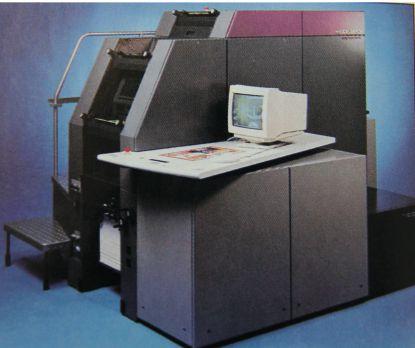
Heidelberg at PRINT 97: As an indication of the importance of this show, Heidelberg has reserved 88,000 net square feet in McCormick Place South, the largest contiguous space ever occupied by a single vendor in any U.S. trade show, regardless of industry. Products being highlighted include Heidelberg Direct Imaging’s Quickmaster DI-4 digital colour press. Winner of a 1995 InterTech Award, the Quickmaster DI-4 handles a maximum sheet size of 13 3.8 x 18 1/8 inches and a maximum operating speed of 10,000 iph.
plate cleaning and wash-up devices.
25 years ago
At Avanti, we’ve helped hundreds of printers significantly improve profitability with our award-winning JDF-certified Print MIS.
Avanti Slingshot helps you deliver more jobs, in less time, with the confidence in knowing that every aspect of your shop is integrated into one powerful Print MIS platform.
For many shops, the answer is “Yes”. But what about yours? Is there an ROI for YOUR shop with a Print MIS? Come to booth 635 at Print 17 and try our simple ROI tool to find out.
a question about Print MIS ROI?
Waterless Printing Demo Exhibits Speed and Quality: A series of waterless printing seminars held at Komori Canada’s showrooms in Milton, Ontario, and Montreal demonstrated the tremendous print results that can be realized with the process, which is ideally suited to printing operations specializing in high-end applications. In live demonstrations, several printers expressed astonishment at the quality – dot structure in particular – of a sample printed at 375 lines per inch. Of equal amazement to many in attendance was that acceptable colour and registration were easily achieved in under 10 sheets. According to John O’Rourke of Toray, which first began marketing the technology in 1997, the three major benefits to working with waterless plates are increased productivity, better print quality and less harm to the environment. While admitting the process is more popular in Europe and Japan, O’Rourke explains, “The system has really taken off in the past two years. We’re experiencing 200 percent annual growth right now.”
Prolific’s Tensor 1400 has 2-high and 4-high towers, reaching 20 feet in the air.
The Quickmaster DI-4 features laser diode imaging technology, automatic plate changing,
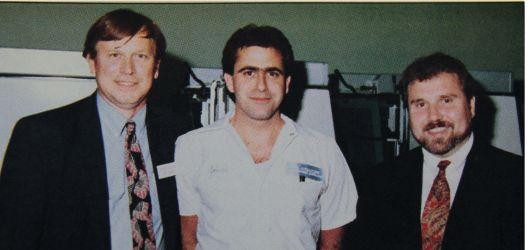
At the waterless printing seminar at the Komori Canada facility in Montreal are (left to right): Richard Drong of Sun Chemical, Komori waterless plate specialist John Conis, and John O’Rourke of Toray.
DOTS
Wrap masters cover a championship boat
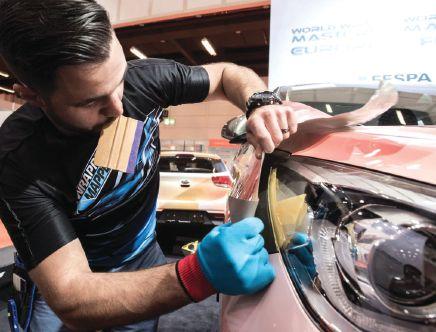
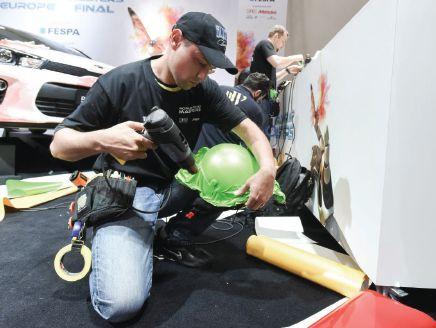
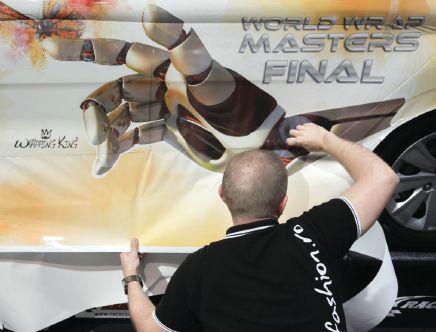
Some of the world’s best vinyl installers battled in the World Wrap Masters competition held during FESPA 2017 in Hamburg, Germany. The finalists in the annual program were tasked with wrapping the side of a raceboat in just 60 minutes.
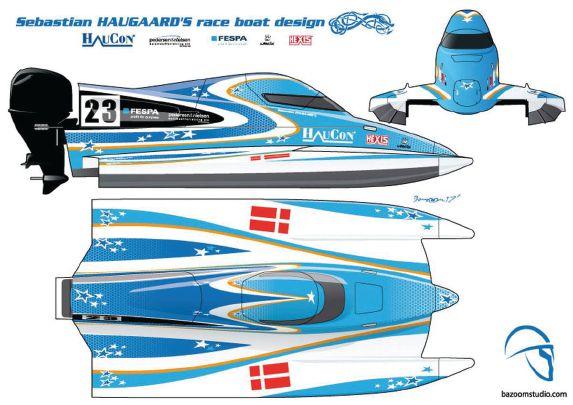
The design of the wrap came from Patrick Charrier of Bazoom Studio, France, through an earlier competition to determine what would be applied to a speedboat used by the Haugaard Racing Team in the 2017 World Formula 4 UIM Powerboat Championship. Prerequisites for the design included the boat number (22), the racing team’s logo and the logo of World Wrap Masters sponsor Hexis.
“The inspiration for my design came from the Danish Drakkar [aka Viking longboat]. The general idea was to give an impression of movement to the boat, even when it’s at a standstill. Blue and white are the top colours for a boat – lots of white for the pontoons to contrast with the surface of the water,” said Charrier. “The gradated honeycomb patterns evoke the composite materials used to construct the boat. The stars are included to reference the pilot, the tightrope walker in his cockpit, as well as a nod to shooting stars and speed on water.”
The winning design was chosen by the driver of the raceboat, Sebastian Haugaard Trads, who said, “Bazoom Studio’s design is unique and personal, incorporating beautiful flow lines and colours. We have not yet seen similar designs in the racing community and are confident this design will differentiate us in the field.”
Chris Hooper from the UK would eventually win the Wrap Masters Europe competition, with second and third place awarded to Ruan Greef from South Africa and Traian Moldovan from Romania, respectively. All three finalists will go on to compete in the World Wrap Masters Final.
The Wrap Masters Final participants were first asked to wrap a section of a Formula Renault car in 45 minutes, as well as helmets in the creative round. Contestants competing in the final rounds come from Norway, Sweden, Mexico, USA, Eurasia, Africa, Brazil, Russia and Ireland.Two finalists were then tasked with wrapping the side of Haugaard’s raceboat.
CALENDAR
August 10, 2017
OPIA Toronto Golf Classic Angus Glen, Markham, ON
August 18, 2017
Canadian Printing Awards Early Bird Entry Deadline
CanadianPrintingAwards.com
September 10-14, 2017 Print 17
McCormick Center, Chicago, IL
September 20-23, 2017
Pack Print International Bangkok, Thailand
September 15, 2017
Canadian Printing Awards Entry Deadline
CanadianPrintingAwards.com
September 25, 2017
Pack Expo Las Vegas Las Vegas, NV
September 25-28, 2017
Label Expo Europe Brussels Expo, Brussels, Belgium
September 27-29, 2017 SFI Conference The Westin, Ottawa, ON
October 4-6, 2017
PSDA 2017 P2P Technology + Innovation Summit 2017 Sheraton Hotel, New Orleans, LA
October 10-12, 2017
SGIA Expo 2017 New Orleans, LA
October 23-25, 2017
Digital Packaging Summit 2017 Ponte Vedra Beach, FL
October 27-28, 2017
Sign Expo Canada International Centre Mississauga, ON
October 31-November 3, 2017 IPEX 2017 Birmingham, UK
November 9, 2017
Canadian Printing Awards Gala Palais Royale, Toronto, ON
March 22-24, 2018
Sign Expo 2018
Orlando Convention Center, FL
May 15-18, 2018
FESPA 2018 Global Print Expo Messe Berlin, Germany
World Wrap Masters finalists worked on a speedboat used by the Haugaard Racing Team in the 2017 World Formula 4 UIM Powerboat Championship.
A union war they couldn’t win
As modern offset machines began to impact the world of news, technology trumped tradition at Canada’s three main newspapers
By Nick Howard
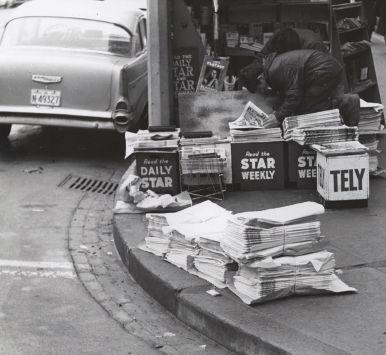
n the mid-1960s when I was a small boy, my father took me through the back door of 80 King Street West in Toronto. The noise was unbelievable, as were the gargantuan monsters inside. This was the Toronto Daily Star and I had witnessed the presses printing the evening edition live.
Men were everywhere, some just standing, others climbing all over the monster presses. But it was the noise that I remember most: machinery and webs of paper whirling – spinning and racing through the machine units. Finally, ending at the folder in sections only to be carried off again by claws on an endless snake-like chain.
I was captivated. This is where I fell in love with print. By 1971, the Toronto Star would purchase one of five new Hoe-Crabtree Viceroy Mark II double-width presses that could print a 144-page paper at speeds of 70,000 copies per hour. All by letterpress and in their new home at One Yonge Street.
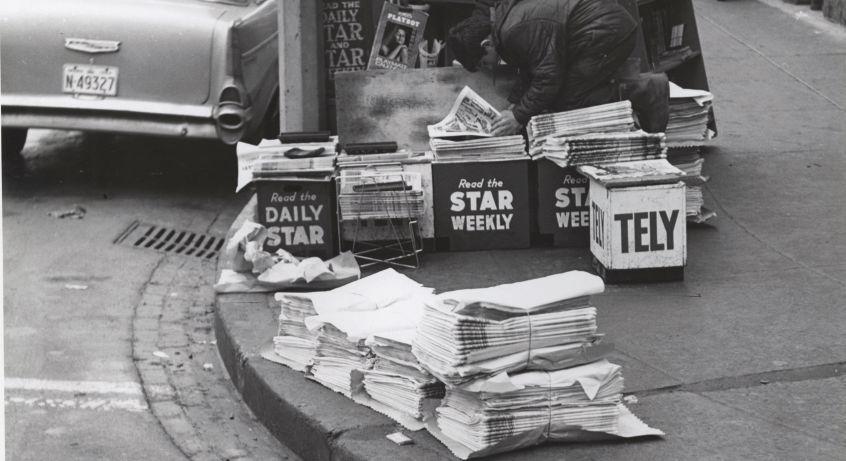
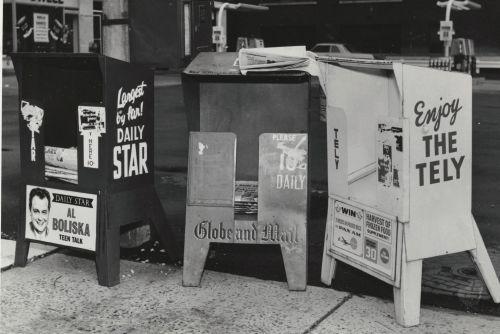
But what I didn’t realize or even understand, as I stood there wide-eyed, was that there was a strike raging with all three of Toronto’s dailies. Not only was the Toronto Star involved but so was The Globe & Mail and Toronto Telegram The Telly, as it was called, was run by John Bassett. Bassett along with other Toronto media moguls also owned Baton Broadcasting.
The Toronto Typographical Union (TTU) found itself in labour negotiations with all three publishers in 1963. Known as TTU #91, the union had until that time enjoyed relative harmony with the publishers. The oldest Union in Canada, the TTU had taken a stand back in 1872 when they struck George Brown’s Globe demanding a nine-hour day. Some suggest it was this catalyst that gave us Labour Day in September.
Besides the dramatic strike of 1872, the
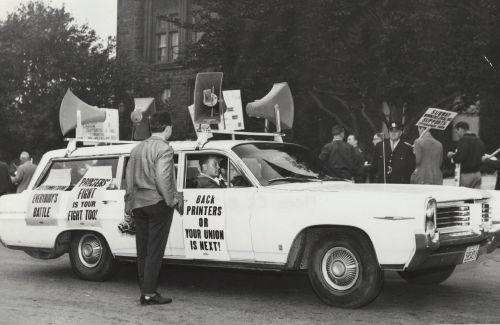
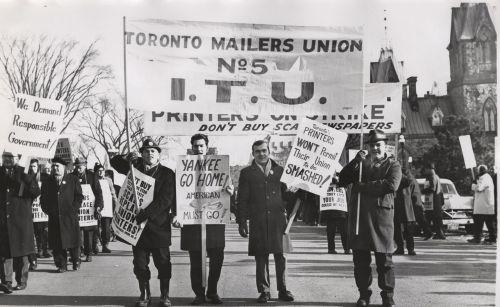
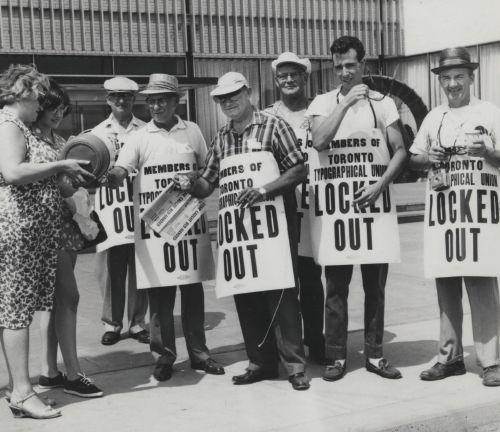
The greatest newspaper strike seen by Canada began in 1964 and lasted until 1971, when the once powerful Toronto Typographical Union was finally busted, after 139 years, by powerful media companies intent on adopting industry-changing technologies.
TTU had coexisted peacefully with its employers and, back in 1907, won the first eight-hour day when all other industries were struggling through nine- and 10hour days. The TTU was not a unilateral organization. In 1866 they joined the American National Typographic Union –latter called the International Typographic Union or ITU. Even so, things in Canada amongst all the printing trades unions were rather bucolic.
In 1964, technology was at the root of the strike. For decades very little in the way of new processes entered printing plants. In Sally F. Zerkers splendid book, The Rise and Fall of the Toronto Typographical Union 1832-1972, she writes that in 1896 it took an average of 635 man-hours to produce 10,000 copies of a four-page newspaper section. Thanks to Mergenthaler’s Linotype and new stereotyping technologies, by 1926 the same four pages could be produced in just 17.4 man-hours. A productivity increase of 264 per cent.
“I think the future of Canadian newspaper publishing is bright, provided publishers assess accurately the changed role of a newspaper and also take advantage of new automated processes,” wrote John Bassett in the Toronto Telegram, February 1969. “The main problem facing publishers is that of rising costs. The problem of rising labour costs can be met through reasonable negotiations with unions which will provide publishers the right to avail themselves of new processes while protecting the existing jobs.”
Working without a new contract, as the old one had expired at the end of 1962, the TTU set about to get another two-year agreement with various demands. A fourday week was included along with the nominal pay rises and shift premiums. But
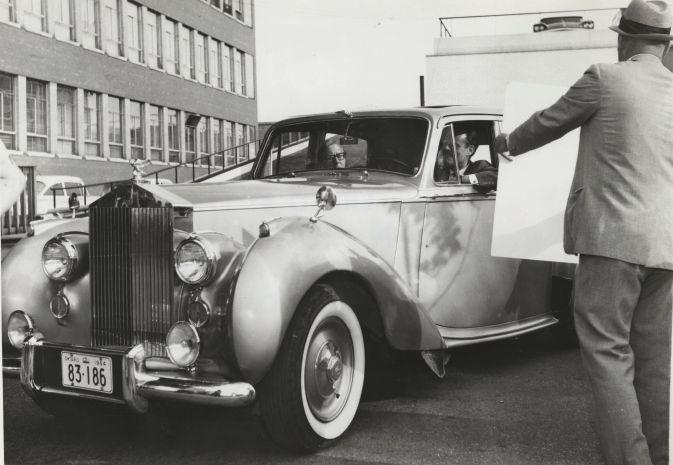
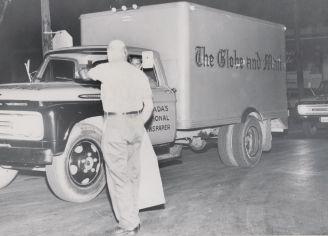
The union was incensed by publishers hiring scabs and union busters from the U.S., while the publishers complained of harassment and vandalism to their equipment. Media baron John Bassett (pictured driving his Rolls into the Telly’s plant) had been singled out as the primary enemy by the TTU.
1892
The Star (originally known as the Evening Star and then the Toronto Daily Star) was created in 1892 by striking Toronto News printers and writers, led by future Mayor of Toronto and social reformer
Horatio Clarence Hocken, who became the newspaper’s founder, along with another future mayor, Jimmy Simpson.
one issue was relatively new.
That was technology and its impact on job security. In 1963 there were just over 1,000 members in the TTU. The roles had dwindled for decades prior. The other printing Unions, including Pressman’s, Stereotypers & Electrotypers, Photo-Engravers, Mailers and Bookbinders, had contracts that were not in the same cross hairs. Other than a pat on the back, none of these unions did anything to help fight for the TTU.
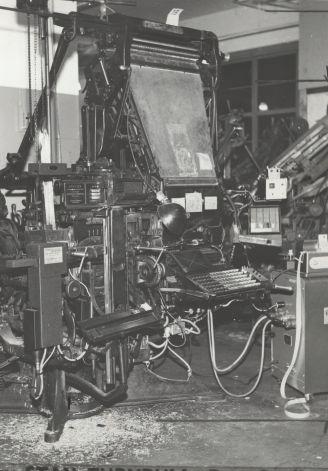
Various new technologies had come on the scene and almost all focused on one area: type matter preparation. Harris Intertype and Mergenthaler Linotype along with Fairchild had developed faster tape-based machinery driven by newfangled computers. These devices could spit out miles and miles of perforated paper tape.
To make matters even more dire, the copy was already justified and the tape could be fed into new linecasting machines thereby eliminating the operator. Faster and cheaper got even better when the wire services such as Canadian Press and Reuters could supply their news stories on tape and feed directly into the new machines. Publishers loved it all and wanted more. New devices using film fonts were also entering the publishing world and nobody knew where that would lead.
The TTU was really concerned. Recent NewYork negotiations with its unions had produced some reasons for optimism as contracts stipulated that no man would lose his job (yes they were all men!), if and when new processes replaced old. But the publishers held the upper hand. Now perforated tape could be composed by women. They were well suited and faster typists – cheaper too.
“The effect of current trends is already manifesting itself in the form of less security for our members insofar as their future in the industry is concerned. The great technological advances indicate a definite trend to reduce staff. Indeed it is our view that the five-day week was spawned from the depths of the depression and, equally, we judge that the technological advances noted so far are only a forerunner of what is to come,” read the Toronto Newspaper Union’s negotiating report and argument for a fourday week, January 8, 1963.
The strike began on July 9, 1964, after months of haggling back and forth. True the TTU may have settled earlier but each time a draft was sent to the Colorado Springs ITU headquarters, it came back altered. This angered the publishers greatly. No manner of growls and hissing from the workforce could change the publisher’s minds as they had the upper hand and knew it. So the TTU was locked out. The publishers called it a strike while the union said it was a lock-out. Threats from both sides ensued. The union screamed about
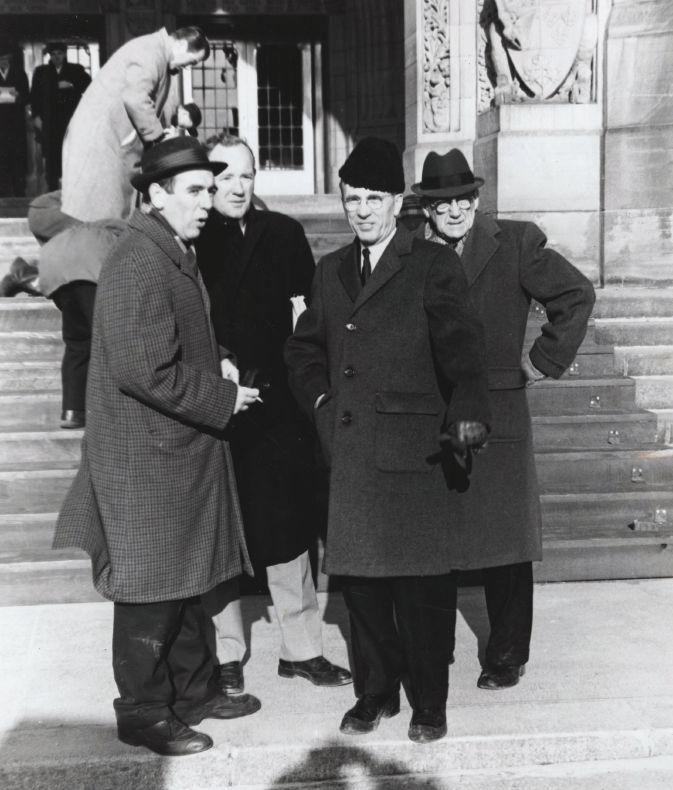
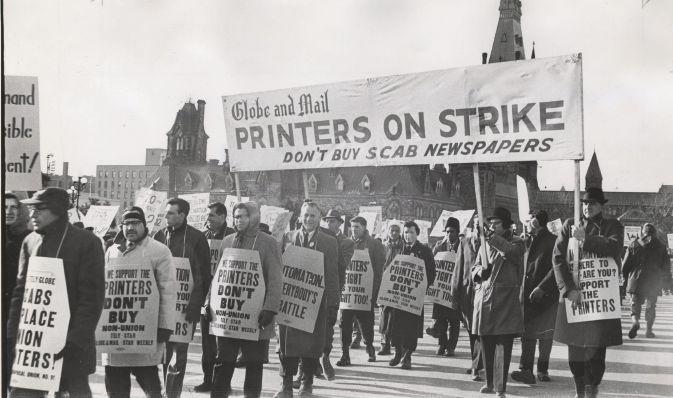
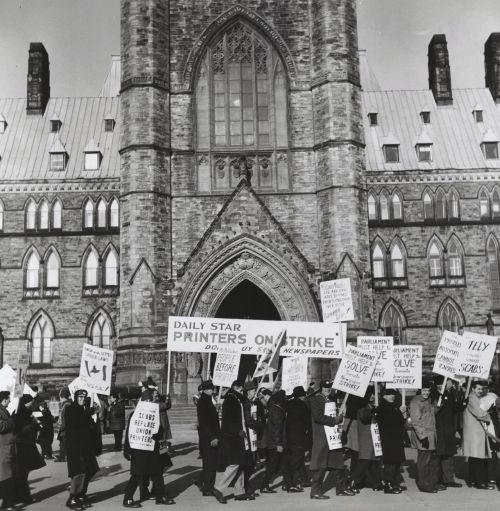
The newspaper strike was national news as picketers come out in force in front of Parliament
Stan Bullock, Reid Scott, TC Douglas (top left).
in Ottawa (top right).
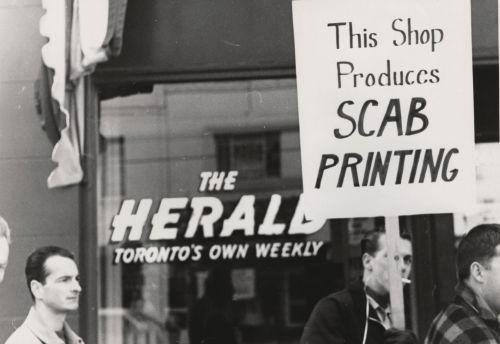
publishers hiring scabs and union busters from the U.S. while the publishers complained of harassment and vandalism to their equipment.
The newspapers continued to get their papers out and with these new technologies even faster than before. There was an impasse and it was never settled.The TTU basically picketed year after year earning strike pay until notified by the ITU in 1971 that all benefits would cease. The TTU was broken after 139 years.
Oddly enough, the Toronto Telegram facing losses, closed its doors in 1971 and sold its mailing list to the Toronto Star The Telly also rented out its Goss presses to the Toronto Star as the Star was in the midst of moving to One Yonge Street. John Bassett had been singled out as the main enemy by the TTU. Bassett’s loses may have had nothing to do with the strike and more to do with the competitive nature of the newspaper industry in Toronto.
The Telly vacated its building at 440 Front Street West only to see The Globe & Mail move right in with presses and hot metal typesetting in tow. The Globe also brought their ornate front entrance too.
The TTU was a fixture in Toronto media and book publishing, but looking back through history we can study just how new technologies give birth to new
The TTU basically picketed for more than six years earning strike pay until notified by the ITU in 1971 that all benefits would cease.
opportunities and profits. In 1964, there was absolutely no way a union could stop technology. Fast forward to 2017 – the story is exactly the same. Owners of print media businesses will never stand still when around the corner a technology will do away with costs. Labour is a major element to overhead. We may all decry companies such as Amazon and Walmart for driving down prices on everything from groceries to books but most of us shop there anyway.
The photocopier business used to call their equipment “green button printing”. Today’s printers are no different than Bassett and his cohorts. They will always embrace technological improvements. Blossoming digital equipment is set to explode even further and faster and we can see this with the rapid decline of offset machinery in the commercial segment. There is but one lesson from the past: learn from it and don’t repeat it.
, a partner in Howard Graphic Equipment and Howard Iron Works, is a printing historian, consultant and Certified Appraiser of capital equipment. nick@howardgraphicequipment.com
NICK HOWARD
and
STATE OF INKJET PRODUCTION
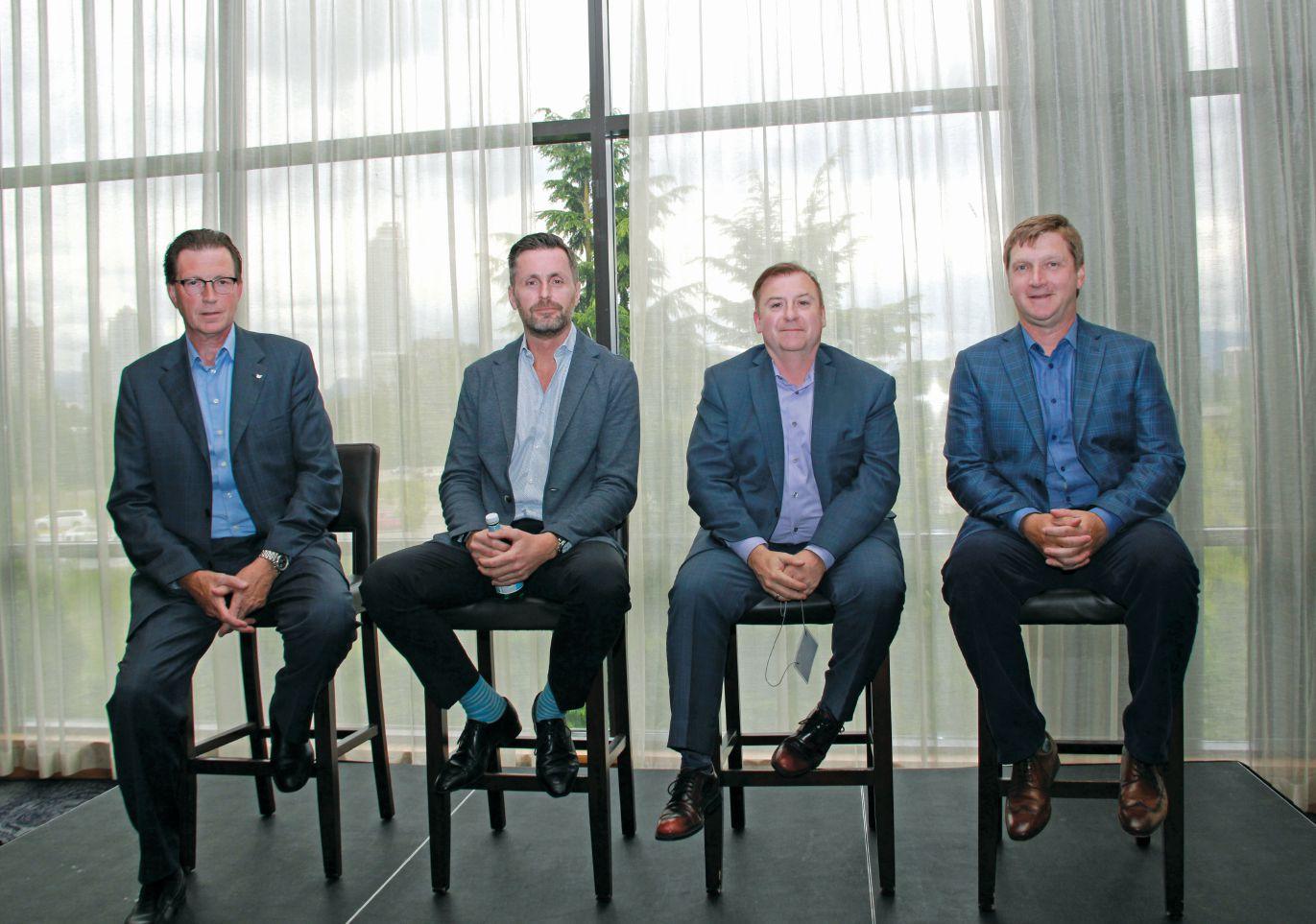
Four of Canada’s technology leaders discuss the current state of production inkjet technology and what impact it is having in the domestic printing market
By Jon Robinson
After decades of intense research and development, supported by unprecedented technology partnerships, production-strength inkjet on the cusp of disrupting commercial printing. In mid-June, four of Canada’s technology leaders travelled to Burnaby, BC, to participate in a panel discussion focused on the business strategy of production inkjet at PrintAction’s one-day PrintForum West conference. The panelists included: Alec Couckuyt, Senior Director, Canon Canada, Professional Printing Solutions Group; Brad King, VP, Graphics Communications, Xerox Canada; Ray Fagan, Shee tfed Product Manager, Heidelberg Canada;
and Edward Robeznieks, VP of Sales, Ricoh Canada. Below are key excerpts from their hour-long discussion.
Why should printers invest in inkjet today, are we past the bleeding-edge?
Alec Couckuyt: Yes – we are past the bleeding edge. There has been tremendous evolution in the technology with inkjet… The commercial printer right now is really looking at how can I better serve my customer and inkjet technology together with offset, wide format and digital are all services that are being offered. It really has gone from just putting ink on paper to how can I better serve my customer in a total cycle.
Brad King: Cutsheet inkjet is new from a strategic point of view. In Canada, we have one [Xerox Brenva] install that we can talk about and two others we
Edward Robeznieks, Vice President of Sales, Ricoh Canada.
September 10-14, 2017
McCormick Place | Chicago, IL USA PRINT2017.com
PRINT 17 convenes the entire printing and imaging community—come connect, collaborate, and discover YOUR next profit opportunities.
• Discover YOUR new sales streams
• Innovate YOUR business with the newest trends and technologies
• Determine YOUR new growth strategies and next business opportunities
• Manage YOUR costs and improve YOUR efficiencies
cannot talk about, so it is still fairly new. There is a lot of interest from commercial printers about these products – how it fits, what are the applications, where does it play. More products and applications are coming and the inkjet space is very close to exploding.
Ray Fagan: If you think about cutting-edge or bleeding-edge technology it is still, in my opinion, in its infancy in terms of long-term development. We took the advantage of some existing platforms of the XL 106 sheet transport, feeder, delivery that have been around a long time.. and we partnered with Fuji for the inkjet heads using Samba technology and their expertise to combine both technologies into one machine. We got to market fairly quickly and launched it at drupa.
There are still a lot of learning curves, a lot of consistency challenges… But our first [Primefire 106] press has been installed in Europe with a beta site at a packaging customer and we will do another machine this year. The roll out will continue to be slow... By 2018 we will finish our beta testing and move into serial production.
Ed Robeznieks: Because we migrated to our [Ricoh] 60000 platform we are able to now go to commercial printers and say you can move offset work over. We can run coated stocks, thicker stocks… we are not running 300, 350 gsm, but we are running 250, 260 and that has opened up the door.
Copywell in Toronto put in a VC60000… They took an original application which was sold as an [offset] sheet run and have now billed 2.5 to 3 million feet a month, which are true offset transfer applications.
How does inkjet present new opportunities for printers?
Couckuyt: An example of a new application for one our clients is magazines… They are actually personalizing or regionalizing the advertising in the magazine. Part of the magazine is printed offset and then the variable part is printed on the inkjet web and then they assemble it. That is an advantage they can sell to their client – the ability of having regionalized information for a specific advertiser.
So it is a new way of approaching the market and creating new opportunities. The critical part is that we can now combine variability with static… The question of whether inkjet can replace offset is the wrong question. Offset and inkjet together open more opportunities for clients.
King: When inkjet came out it was roll-to-roll, big machines, two million plus investment in capital. You needed big volumes to justify the roll-to-roll devices and there were not a lot of printers who could participate in the economics of inkjet.
Now the technology is coming down for lower volumes, as an investment with cutsheet devices, so that mid-sized commercial printers can start playing in this game... You can do a short-run campaign with similar economics that the big players are using today. That is where inkjet is really going to open up big opportunities.
These devices are not $100,000 yet – still a pretty good number that you have to spend – but they are not $2.5 million roll-to-roll devices that need to be running 3, 4, 10 million impressions a month to have the economics make sense.
Fagan: Because [Heidelberg’s] Primefire is basically focusing on the packaging market, as we roll out the product, there are a lot of things happening in packaging that are forcing those printers to look at economics a little bit differently. As run lengths decrease in packaging, it is harder to make money because you do not have the pure volumes. The customer demand for individualization is growing and it is really in its infancy.
We have seen jobs where a 100,000 sheet run is broken into batches of 500 cartons... and this is where the digitization of the industry and the industries around us in advertising are driving manufacturers to do something quite a bit different. Major brands are really forcing that upon packaging printers.
We also see a lot of legislation for packaging with batching and traceability of the package through UPC codes. It could be in the European market in the near future where every single box has an individual identification marker on it so that we can trace it back to its origins. And this is due to the amount of piracy.
Robeznieks: As the price goes down for devices inkjet will become more attractive. It is good for us in a way as manufacturers. Because there is so much downward pressure on operating costs right now, it is becoming difficult for us to make a profit because of servicing the equipment and toner-based technology requires a lot more service than inkjet-based technology.
So it is better for us in the long run, from our perspective, to move toward inkjet. Your gain [as a print-
er] is operating costs and flexibility where you can do variable, but you are going to be able to take advantage of significant cost savings with inkjet versus toner.
How do you describe total cost of ownership for inkjet to printers?
Couckuyt: Inkjet uptime is a really critical issue. If you are used to a digital press, uptime is in the 60, 70 percent range. If you look at [Canon’s] i300, for example, it has a minimum uptime of 95 percent. When we start talking about total cost of ownership, for a commercial printer and a specific job, that could mean dedicating three shifts [on a toner device] or doing it with inkjet in two shifts… when you look at the evolution of inkjet devices a lot of R&D effort went into building those machines so that they really look after themselves.
King: Inkjet is new technology, that over the next 15 to 20 years, I feel is going to change the printing industry. It allows variable print onto all substrates... It is going to allow us to offer our customers, and printers’ customers, some pretty impressive product solutions to help keep print alive... having strong economics to keep print relevant for people who use marketing communications.
This is really where inkjet TCO will help keep print alive, because it is variable and it will have something valuable to sell to the people who want to use print as a marketing vehicle versus just going digital.
Fagan: We do not see inkjet supplanting offset in a large way for quite some time. We think they are going to run in harmony based on what is being produced. And if you follow that philosophy, the total cost of ownership for the offset printing press can also be improved... because you have another alternative which improves the total cost of ownership on your other equipment.
You are also reducing costs in prepress and you are reducing costs in other areas of building. You do not have to warehouse products. There are a lot of other costs that inkjet lends itself to... that lends itself to a facility’s overall production cost.
Robeznieks: There are still heavy users of offset technology that are going to be difficult for us to strip away... it really comes down to a manufacturer partner who understands a certain vertical really well and who can help you understand your client base and then figure out where the footprint fits.
Why will variable be more impactful for inkjet than it was for toner?
Robeznieks: I’m going to give the non-politically correct answer but it is not. If you have a good working relationship with your client and can help them with variable campaigns, it doesn’t matter what you use – inkjet, toner, there are lots of ways to interact with the client.
What is very interesting is the next phase of inkjet which will be direct to shape... That is a whole different ball game, because now you are going to have things done on the manufacturing line. All of a sudden our devices are no longer creating labels, they are going directly to their object. And all of us are looking at how to get into that space.
Fagan: Big Data has been slow in being understood by a lot of people... in terms of managing the data and properly executing it into a portfolio of products. I really think Big Data in general, Industry 4.0, all of that growth we are seeing right now is accelerating at a very high pace and it is going to become much more manageable to do large variable data programs, computing that information, managing it and getting it where it needs to go. I see growth in that area with inkjet.
King: There is a [Xerox] customer in Toronto who has figured a bit of this out. When you go onto a Webpage and click on a couple of items you thought of buying – and then forget about it or leave to go somewhere else – they are actually grabbing that data. That night, they run a batch file with those three items you looked at, print it the next day on a direct-mail piece and it gets mailed out to that customer within 24 hours. That is where I see some of this very interesting data management… You can do a great direct-mail campaign on a very cost effective platform like inkjet.
Couckuyt: As a printer, you have to be involved in a lot more than just putting ink on paper... you have to be able to handle data, make sure it is being utilized and sent out to the client in record time to have relevance. This is where we as an industry have to be able to take in that data, configure the data properly, and get it out as fast as possible. We are under pressure to really understand what it is that our clients are communicating, what they need. Inkjet technology and the combination of different technologies, where you go inline or nearline, whichever way you set it up, is an answer to producing relevant communications tools for your client.
Capital Colour makes waves as the first printer in Edmonton, AB to showcase LED-UV technology
Seven years ago, Brian Todd, president of Capital Colour, purchased the business from then owner and founder Fred Neuschmid. They hit the ground running, and with their most recent purchase of a RMGT 9 series offset press, they are showing no signs of slowing down any time soon.
Based in Edmonton, Alberta, Capital Colour installed the RMGT 9 series press, a 920ST5+LED+CUV, 5-color sheetfed press, the first of its kind installed in Western Canada running both Panasonic LED-UV instant ink curing and Grafix HiCure UV coating systems. The shop does an incredibly wide variety of work with everything from magazines and booklets to brochures and flyers, with about 85% of the business being 4-color work. “We are the epitome of a commercial printer,” said Todd. Most of their process color work is being run via the LEDUV instant ink curing without coating while the conventional UV coating curing system is used to produce a wide range of super-high-gloss and other high-end coating effects.
The LED UV curing has “already saved our bacon several times,” said Todd. “We have literally taken a job off the press and immediately started cutting and putting it into bindery. Normally we would have had to wait half a day — or even overnight — to touch those jobs.” In addition to turning jobs around much faster, LED UV instant ink curing has provided the ability to print without heat, odor or spray powder.
With that kind of differentiation, it’s no surprise the shop has counted the purchase as an immediate success. “As a matter of fact, we are backlogged on work — we gained more work because of it, which is a very good problem to have,” said Todd.
The RMGT 9 Series press allows the shop to compete on most of the work that would usually require a 40-inch press, without actually having to invest the money or the space in such equipment. He noted that the shop has already been able to produce work in-house that they previously would have either not bid on at all, or would have had to outsource to one of their competitors in the market. Previously, Capital Colour ran a maximum sheet size of 20 x 28” and now, they are capable of printing on a maximum sheet size of 25 x 36” — a significant advantage since this permits more multiple ups on a single sheet than on their former equipment permitting them to replace two half size presses with the one 25 x 36”, 8-up press.
It might be tempting to think the shop would stop there and catch its collective breath, but Todd is never one to let the market pass him by. The next step is to start running non traditional substrates like synthetics and plastics with a goal of opening up even more new markets. While focused on meeting customers needs, Capital Colour will continue to invest in new technologies, and will continue to lead the charge as one of the most innovative printers in the market.
BUILDING A NEW PRINT POSITION
After a decade of growth and acquisitions, Mi5 Print and Digital has become one of the most formidable printing operations in Greater Toronto, now housed in an 180,00-square-foot facility
By Jon Robinson
Mi5 Print and Digital Communications Inc. began l ife 14 years ago as one of Canada’s first all-digital prepress bureaus. The importance
of that history is immediately seen when you walk through the front offices of its new 180,000-square-foot facility, designed from the ground up by the executive team, and onto its production floor.
Dead centre in Mi5’s digital printing department, which is separated from the 40-inch litho area, sits a large prepress room, open to the production floor by a glass wall stretching more than 30 feet across its front. Brightened by 90,000 gallons of white paint, the digital depart-
ment – nicknamed The White House –holds a range of small-format Heidelberg offset and Xerox toner presses, as well as industrial large-format inkjet systems from Inca, Fujifilm and Scitex. Mi5’s digital department is built for redundancy and peak periods with two of most every imaging system, even compressors and back-up generators are duplicated.
Next, you will notice Mi5’s receiving and shipping doors at opposite sides of the building, accommodating two and four 53-foot tractor-trailers, respectively. Excited to finally have a blank canvas after moving through a range of existing plants, Derek McGeachie, Mi5’s founder and CEO, and Steve Tahk, Executive VP and GM, often worked late into the night determining how print would flow through the building, west to east. To ensure work never moves backward and
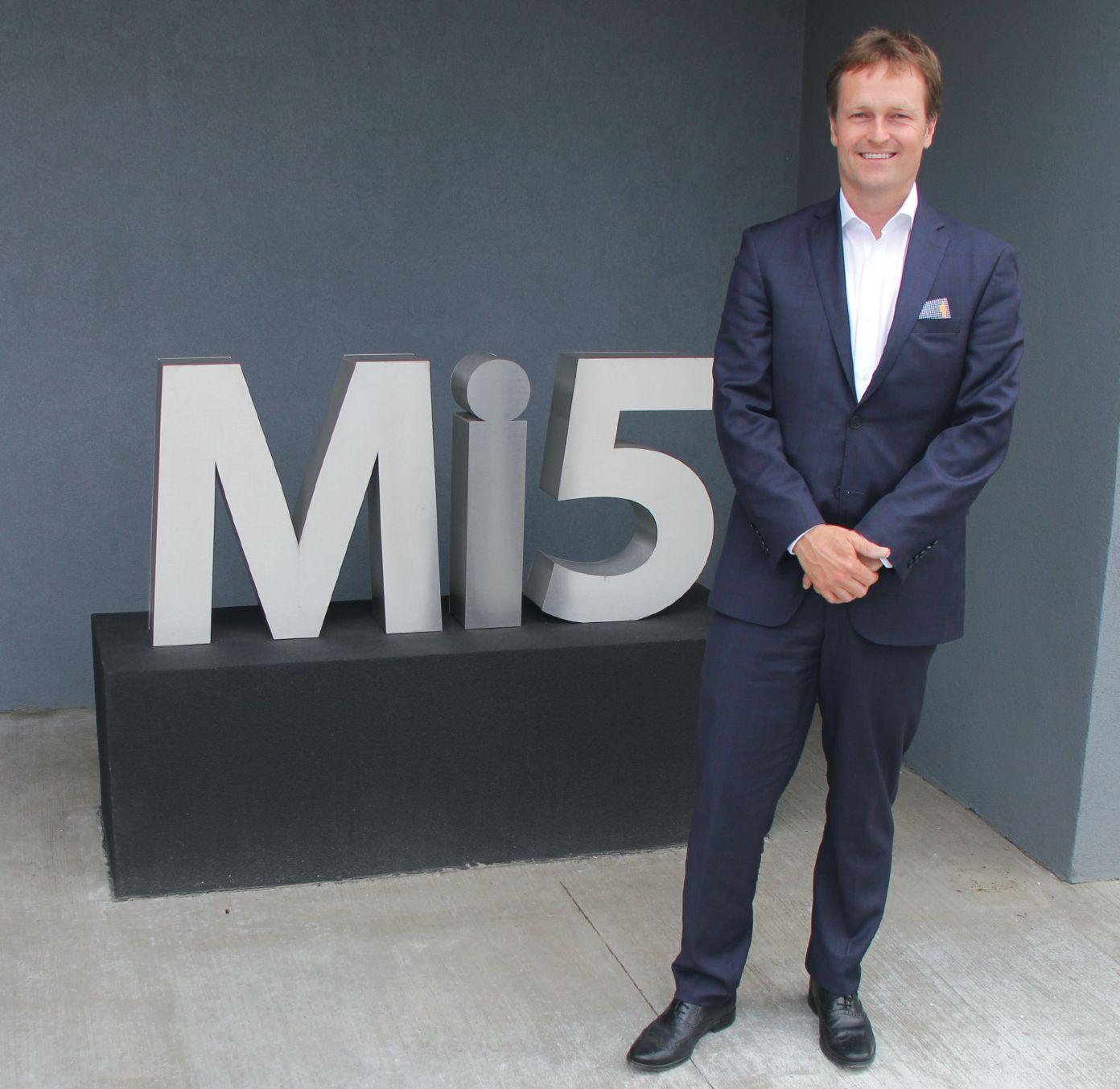
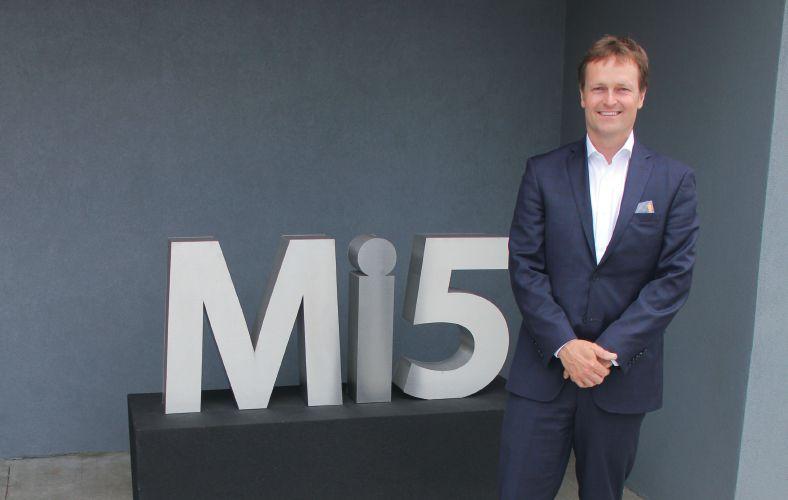
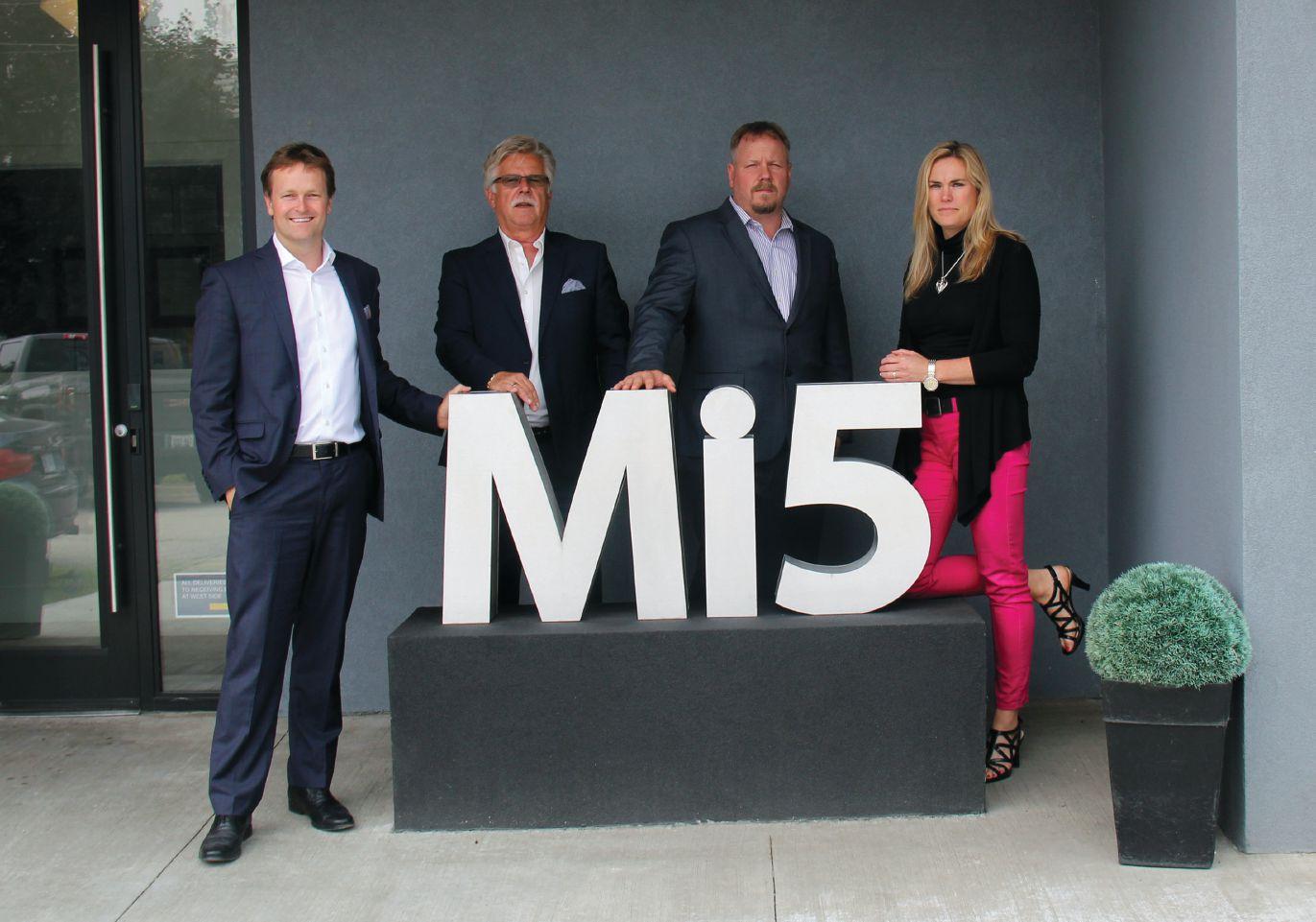
Mi5’s Derek McGeachie, CEO & founder; Al Monteath, EVP; Steve Tahk, EVP & GM; and Sheryl Sauder, CVO.
Productivity World Champions! Most Cost Effective Platforms in the Industry.
At Heidelberg, many of our Customers are happy to discuss a new installation of a Speedmaster Press. The excitement and execution of large equipment installations are exciting times for print based companies big and small.
However, it is rare to go back to an installation and report on the overall implementation of the equipment and discuss the impact of the purchase a few years on.
But that is exactly what Heidelberg asked “Data Communications Management” to discuss for this story. The Company installed and commissioned a Heidelberg Speedmaster CX-1026+L press in their “Center of Excellence” facility in April, 2015) as part of the new build-out started in late 2014.
The parameters required by Data Communications for a new press set forth a daunting challenge:
• Remove two older presses of similar configuration and replace with one press
• Incorporate the total production of both machines, and leave available capacity for growth
• Current capacity was based on 24Hr/6-day crewing on both older machines
• Do so within a budget that had to fit into the overall move to the new facility
As Ken Mateshaytis (Calgary GM) states: “Once we decided to reduce our “70 X 100” press park down to one machine, the numbers had to work. There was no going back. If targets were not achieved, the mission would have been a failure and result in lost customers, lost credibility and lost revenue”.
Heidelberg worked hand in hand with the Data Communications Management team to fully understand the total impressions required, the job change times needed to achieve these impressions, and the proper level of automation needed to produce the results.
The research concluded in the end that a Heidelberg Speedmaster CX-102-6+L (with aqueous coating) provided the right match. Capable of producing at 16,500 IPH, and equipped with AutoPlate Pro fully automated plate changing system, Inpress Control inline colour and register measurement, Wallscreen intuitive operating system with Intellistart and Preset Plus feeding and delivering, Heidelberg felt that the press would reach and exceed the expectations put forth.
Now, two years into the installation, how are things looking for Data Communications?
“At this point, the press has produced 85,000,000 sheets” says Ken. “The plan was for 40,000,000 per year, so we are 5,000,000 ahead of goal. Don’t forget the part about additional capacity. We are in a good position. The operators love the user friendliness of the machine, they call Intellistart “auto pilot” and that makes them more efficient every day. They are under pressure to perform, but it doesn’t show.” The average run length on the Heidelberg Speedmaster CX-102 is around 6,000 sheets, with job change times at 8-12 minutes depending on complexity.
Leigh Busch, Vice President National Operations also likes to point out that “we have realized that there is efficiency in the one press operation and workflow. Removing the redundancy of the second 40 inch machine was concerning, but ultimately forced us to be more efficient all around. Being consistent leads to being predictive in production, which is much better for planning throughput”
One example of this is that the Press Operators now have the capacity to produce their own plates. “The automation on the press opens up time for the guys to perform other tasks, reducing touch-points in throughput and creating efficiencies” explains Ken. “In this way, the operators now have the flexibility to organize the shift to suit the most efficient approach, which ultimately leads to increased throughput”.
The Heidelberg Speedmaster CX-102 was a small part a larger three year Journey for Data Communications Management. Currently, they operate seven large “Centers of Excellence” across Canada, employing some 1,400 people. Plant specialization is a key driver and the company has retooled accordingly. Recent acquisitions have broadened and fulfilled sections of the market that were deemed important to DATACM’s client base. In the print output segment of the business, 50% is offset, 30% is digital and 20% is flexo.
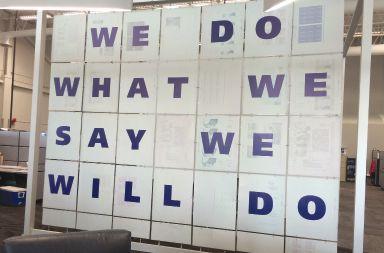
The “motto” that hangs at the entrance of the Calgary Center of Excellence states: “We do What we Say we Will Do”. Leigh Busch holds that motto close to his heart, and when making a final comment on how the Heidelberg Speedmaster CX-102-6+L has performed since it arrived on site, he states “It does what Heidelberg said it would do, and then some. That is unusual in large equipment sales these days. And it continues: uptime, press availability and net output are all a testament to the service follow-up post installation.”
“That was also a huge concern” adds Ken, “when going down to one machine. But as Leigh has said: everything to do with this installation performs as sold.”
At Data Communications Management, nothing stands still for long, indicating exciting times ahead for one of Canada’s largest information providers.
Mi5 Print and Digital has been named as one of Canada’s fastest growing companies nine years in a row by Profit magazine.
always toward shipping, the executive team – after some healthy debate – decided to forgo marketing atheistic in favour of efficiency, which is literary measured in operator footsteps, by facing its Xerox presses away from the entrance.
Walking past the prepress unit and into Mi5’s main litho department reveals four 40-inch Heidelberg presses, including 8-colour and 10-colour perfectors equipped with roll-to-sheet and two 6-colour UV machines. A pad for a fifth 40-inch sits open with electrical ready to go. Eight folders on the opposite side of the aisle signal all of Mi5’s full-size litho work also flows west to east. Toward the back of the building, it is then easy to pick up a huge postpress configuration, with three stitchers and 21 pocket folders, as well as the tail end of a full-size web press. The 2006 Heidelberg M130 was delivered in January 2017 and scheduled to be operational by the end of July.
After starting up in the back of an industrial garage with a 5-colour press, Mi5 has been transformed into one of Canada’s largest privately owned printing operations – with more than 150 employees generating revenues of $29 million in its most recent fiscal year. Mi5 has been recognized as one of Canada’s fastest growing companies nine years in row on the Profit 500, which measures businesses on five-year revenue growth. Through a decade-plus of acquisitions and technological investment, Mi5 has secured the work of leading brands and caught the attention of Toronto’s print community as an innovative shop with press capacity.
Print investments
Mi5 Print and Digital has developed well over 200 online portals for its customers.
Mi5 began putting the Heidelberg web press together in March, after 17 cement trucks were backed into the building to directly pour its pad. “This machine has been immaculately maintained. It is probably the best used press I have ever seen over my years in the industry,” says Tahk, who holds an ownership position in Mi5 with McGeachie and Chief Visionary Officer Sheryl Sauder. Tahk explains even the rollers on the 40,000-iph press look like they were put in last week and that the only problem found during installation was a drained battery on a PLC programming unit – basically a watch battery.
“We are in the process of creating an ink series for it. We are going to bring ProBrite to heatset,” says Tahk. “It is a full web so we can now offer circulars to fashion, food and cosmetics clients who need a superior colour gamut.” Tahk, who began his career with ink manufacturer huber before helping to manage large plants with Grafikom, Quebecor and Matthews, Ingram and Lake, is one of the country’s leading colour-control specialists. He was instrumental in the development of Mi5’s unique ProBrite, MetalMaX, MiCote and XLCote ink and coating offerings, which helped to secure the print work of
colour-critical brands like Starbucks. “ProBrite came about through some considerable amount of research and development. We were actually looking at a seven-colour series… but the cost of three extra specials and taking them off the perfecting machines didn’t make it a viable product for most clients.” Instead, Mi5 created its own four-colour process series leveraging intense pigments and internal algorithms. “The ink is expensive, but you can take ordinary substrates at a very reasonable cost and make something pretty spectacular with it. A lot of times we’re taking customers off that number one sheet, bringing them down to a number two, or even a number three sheet, and giving them a far better product.”
Given common industry estimates of ink being three percent of the cost of a print job and substrates 40 percent, Tahk explains the strategy of doubling ink costs in favour of less expensive paper allows Mi5 to print a superior product with competitive pricing. The same ProBrite approach will soon be applied to the web offset world, in addition to Mi5’s growing interest in packaging, which includes the use of UV ProBrite for printing direct to substrates and also laminating corrugated. “I would say at least 30 percent of our clients have used it on one project,” explains Tahk, “and there’s a number of clients who use it on a regular basis.”
Research and development has always been a part of Mi5’s strategy to attract and retain clients. In recent years, its R&D effort has focused on developing online portals to drive efficiency for a range of print campaigns. With the recent addition of large-format programs, Al Monteath, Executive VP, Sales & Operations, estimates Mi5 has now developed more than 200 print portals for its clients. Monteath joined Mi5 approximately two years ago and played a major role in establishing the company’s new building. He orchestrated the massive move, which included 86 pieces of equipment, without work interruption.
“I have been in this for over 40 years, with five plants, so I have a lot of experience,” says Monteath. “One of the main reasons I came here at this point in my career is that things were changing and all of a sudden I found a group who believes print still does matter and there is a better way to do it – we invest in technology and we invest in people.”
In addition to its skilled operators, running challenging applications, Mi5 now has a department working exclusively on client-facing automaton, front-end design, software integration and programming. “JIT [Just In Time] only started six or seven years ago and it hasn’t taken over in all firms,” says Monteath, describing a recent print audit for a potential client who ended up having more than $300,000 worth of useless inventory in warehouses across Canada. “We set up
over 25 portal entries for them and their people just go on 24 hours a day to order 200, 500... we are doing it all JIT, because of our capacity here.”
For another large client, Mi5 was able to eliminate what had become known as Reprint Wednesdays based on a national instore signage and fulfillment program, which the print executives are hesitant to share in greater detail. “We focus on what is important to the client,” says Monteath. “We’ve had some new clients that have come on board, who we’ve been working on for the last year and a half, that have really come to fruition.”
Mi5 now produces about 90 percent of its clients’ work internally. “We’re doing more work with the customers that we’ve always had and the key really has been the penetration into those brands with the additional capabilities we have here,” says Tahk. “The expansion of the plant has paid off… Derek has always been the one pushing for innovation – new products, new ideas and all-around delivery of a high-quality customer experience.”
Future investments
McGeachie was born into a printing family and recalls being around a pressroom since the age of eight. Today, at age 45, he understands the dynamics of printing as well as any seasoned executive. “I am a relatively young guy and it is a longer-term play,” says McGeachie, who invested $13.5 million for the new building and improvements, after renting a portion of Mi5’s 85,000-square footprint in Markham spread across three shops.
“I think we are watched – absolutely –and the last 12 to 24 months were exceptional, so a lot of industry players will be asking what are they doing. Some of them might be hopeful that we stub our toes,” says McGeachie. “We have been in business 15 years now and have been profitable every single year. We are a good company. It is a solid shop.
“Any money we put into the building is going to be ours and we get to enjoy the slow appreciation of the building, which is nice, but that was kind of secondary. It was more to stabilizer our production footprint,” says McGeachie. He notes the importance of leveraging Mi5’s unique technologies like ProBrite to set itself apart with clients, but the new building also provides purer production efficiency.
“You have to be a low-cost producer or you are going to be in trouble.” Mi5’s current workflow initiative, led by Tahk, is integrating a full Avanti Slingshot MIS installation and tie together its new plant.
“Mi5 is one of my children basically... it is important to me,” says McGeachie, noting they have already gained a permit to expand by another 30,000 square feet.
“We are here to stay. This will be our last move. It is a big enough plant to support Toronto, Canada, North America and it is where we want to be.”
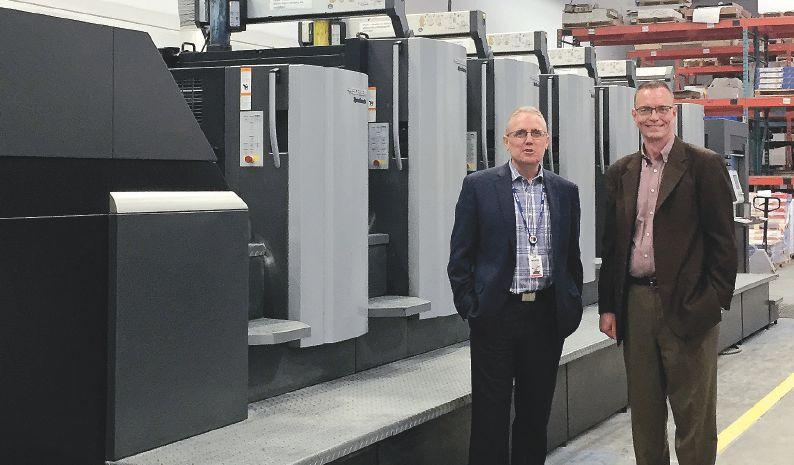
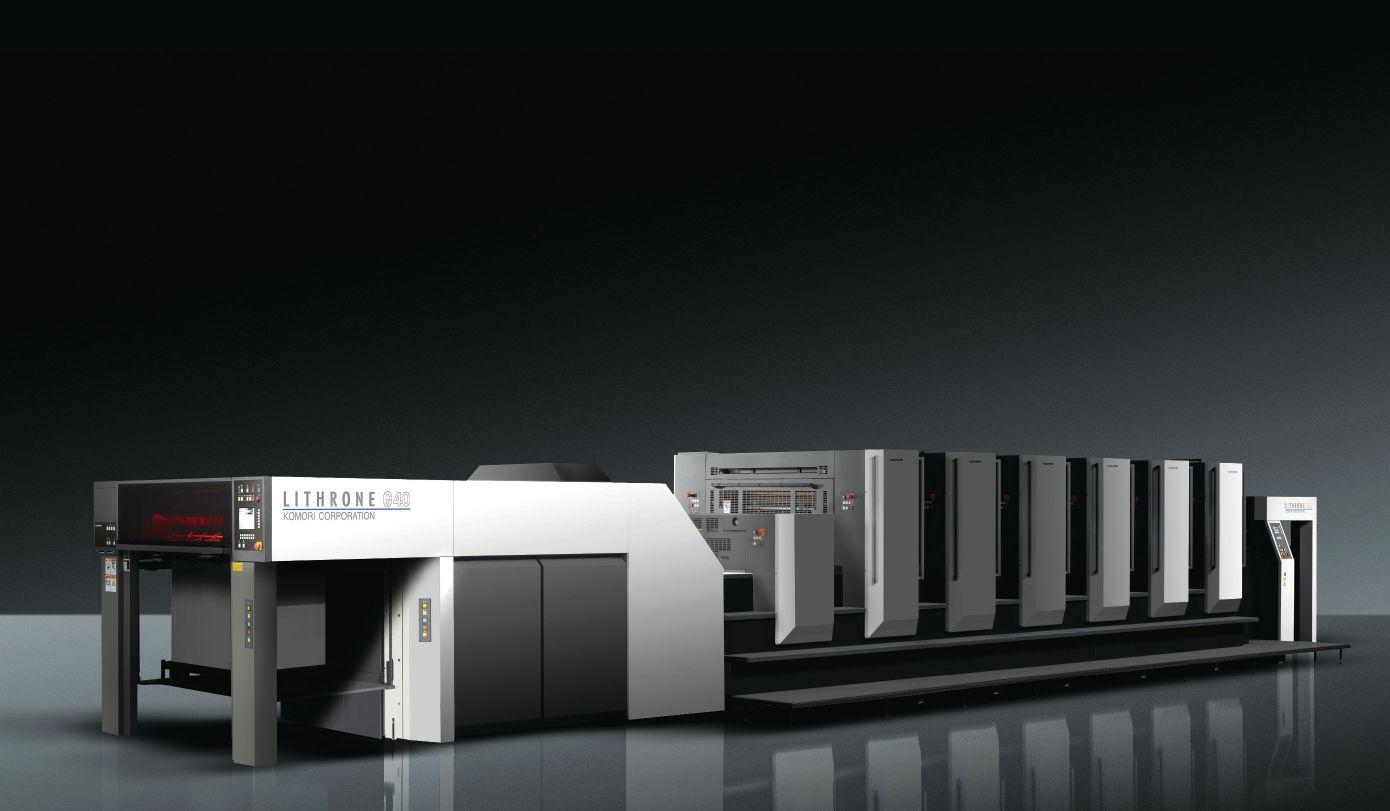
BEST DEAL PURCHASES KOMORI LITHRONE
bdprint.com
“ ”We are always looking to serve our customers better and faster. With technology consistently changing at a fast pace, our company is dedicated to staying on the forefront,” said Benson Hong, President and co-owner of Best Deal. “This press will address the constant demand for quicker turnarounds without sacrificing quality, as well as extend our reach into new unique markets and colour-critical projects.
Best Deal’s GL-640 press is equipped with the Print Density ControlSX, Print Quality Assessment system, and closed-loop colour and registration control to maintain colour densities with virtually every sheet. The H-UV curing system allows for producing high-end colour work and coatings on challenging substrates, from ultrathin stocks to thicker boards. Best Deal holds G7 Certification and runs a range of high-end work from luxury catalogues and packaging pieces.
The new Komori Lithrone also features fully automatic plate changers, auto-wash systems, and Komori’s KHS-AI auto-learning system. “We are incredibly proud that Best Deal Graphics and Printing has chosen the Komori… We are confident that the GL-640 press will elevate Best Deal’s position as high-end print provider as they discover the full potential of the press and all that it has to offer,” said Steve Ranson, President of Komcan.
905-873-7870
PRINT 17 preview
unning from September 10 to 14 in Chicago, Illinois, PRINT 17 is to feature new technologies and services from more than 450 exhibitors. Below are some of the highlights that will be on display at the trade show, which takes place every fifth year as a larger version of Graph Expo.
Fujifilm
This September, Fujifilm highlights the North American debut of two presses: the Acuity LED 3200R and the Inca Onset B1 format press. The Acuity LED 3200R is a superwide format roll press in a CMYK configuration with lower LED energy usage. Fujifilm explains users can double efficiency by leveraging its twin roll printing function with two 60-inch (1.52 metre) media rolls. The Acuity LED 3200R saves time, media and ink on backlit applications using a high-density mode and an LED lightbox for proofing while printing.
The Inca Onset B1 format press, built on the same platform as the Onset X Series and the SpyderX, has been developed to offer high-quality, short-run B1 print for those operating in the offset, screen and industrial printing markets.
HP
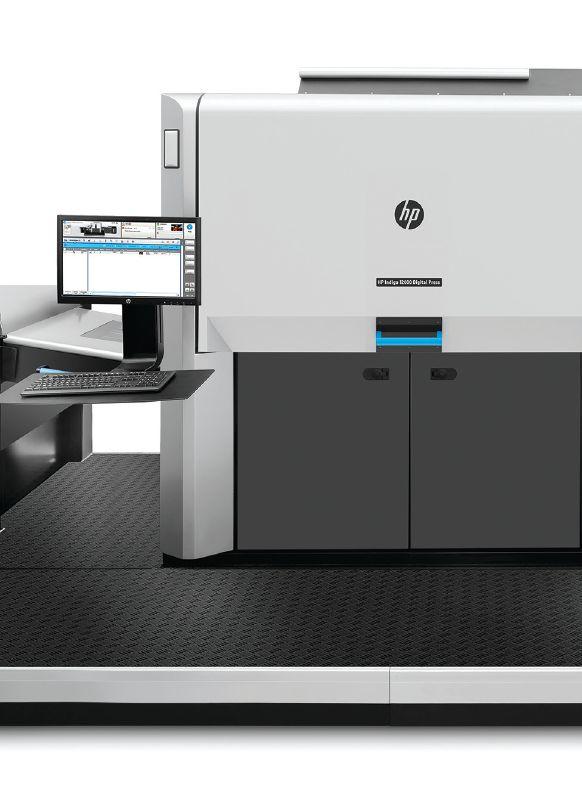
HP highlights the Indigo 12000 B2 press and the HP Latex 3600 series. In May 2017, HP introduced the new HP Latex 3600 and 3200 printers based on technology first launched in 2009.The 3.2 metre HP Latex 3600 and HP Latex 3200 printers support higher volume printing and an improved monthly duty cycles. The HP Latex 3200 is geared toward PSPs that want to produce a range of applications like retail/outdoor advertising, events/exhibitions, vehicle graphics and interior décor.
The HP Latex 3600 is designed for larger PSPs needing long-run, uninterrupted printing. It can handle production peaks of up to 35,000 square metres per month and is well suited for dedicated application production, such as banners,
backlits, wallcoverings, and retail or event signage. The new HP Latex 3600 and HP Latex 3200 printers offer a tiling mode. The company explains users can save up to one linear metre per roll using the HP Latex Media Saver, while a single operator can manage up to four printers simultaneously. HP will also highlight its PageWide 8000 with the PageWide XL Advanced Suite of software.
EFI
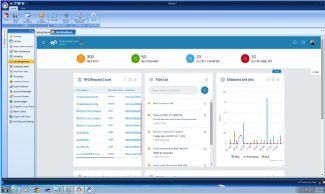
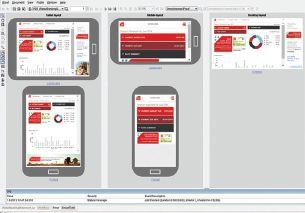
EFI highlights its new Productivity Workbench, which provides an actionable Web-based intelligence dashboard with one-click real-time access to task-based, customized, business-critical data for all six of EFI’s Productivity Suite workflow products.
The company also highlights its new version 5 of the EFI Fiery Color Profiler Suite. It includes a Printer Match module that now offers gray-balanced G7 calibration to set presses to a near-neutral state before profiling them so that the appearance of printed output matches across multiple presses. The new version of EFI Fiery Impose software features Dynamic Gangup Imposition automation, which gives users the ability to calculate row and column values to maximize usage of a sheet surface for a given digital print job. It allows users to reduce the number of templates and hot folders they need to create by establishing automation and re-using workflows for impositioning based on media size.
Baumer hhs
Baumer hhs highlights its Xtend³ as its new controller, launched at drupa 2016. Featuring a 21.5-inch touchscreen, the system centralizes all information for the extrusion gluing, hot melt and the array of quality control devices available. Embedded in the system are help menus that also feature videos to make it easy for the operator to either troubleshoot or seek technical information. The system can be configured to collect the production data required by the customer and can be connected to the network to allow remote
HP Indigo 12000 produces up to 4,600 colour B2-size sheets per hour.
access for troubleshooting. All of the current Baumer hhs sensors are supported by Xtend³.
Launched in conjunction with the Xtend³ system is a new piston pump, which the company describes as greatly simplified by eliminating the regulator features pressure on demand for reliable high pressure extrusion gluing. The design is also maintenance free with no oil required. Baumer hhs is also highlighting the aerto gun that is pneumatically controlled, works with a range of adhesives and features strong cut off to minimize tailing.
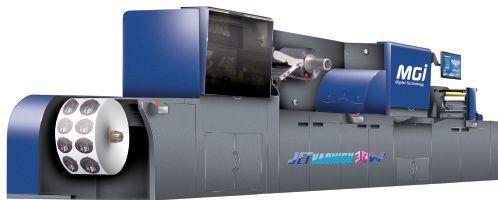
MGI’s JETvarnish 3D and iFOIL for digital embossing and hot foil stamping.
Konica Minolta
Konica Mintola highlights the Accurio Press C6100 as its new flagship toner press. The 100-page-per-minute press features the new IQ-501 Intelligent Quality Optimizer, a fully automated inline, closed loop quality management system. It provides automatic colour and density control and front-to-rear registration. A built-in spectrophotometer allows for colour-matching to industry standards such as G7 and Gracol. As well, MGI Digital Finishing Solutions will highlight the JETvarnish 3D and iFOIL for digital embossing and hot foil stamping. It eliminates the need for films and dies, producing jobs from one to thousands of sheets.
The Acuity LED 3200R runs 60-inch rolls.
EFI Productivity Workbench dashboard.
GET JAZZED.
The next chapter in your imaging success story starts at the 2017 SGIA Expo (New Orleans, October 10–12). Join us for three days exploring aisles filled with the industry’s major suppliers, connecting with the top names in imaging and learning new ways to make your business better.
The SGIA Expo is North America’s largest imaging event, with 540 exhibitors and a complement of top-notch education led by the biggest names in graphics, signs, installation, printed electronics, industrial and functional printing. Miss it, and you’ll be singing the blues.
Register at
SGIAExpo.org
“The SGIA Expo is hands-down the best graphics convention in the world. A must-attend for anyone related to this industry.”
540 exhibitors COUNTLESS possibilities
40+ educational options 3 days of opportunity
Standard Horizon
Standard Horizon highlights its BQ-480 as the newest product in Horizon’s line of perfect binders. The BQ-480 features set-up and changeover for variable book production, where it reaches a maximum speed of 800 books per hour for book-of-one production, supporting book thicknesses from 0.04 (1 mm) to 2.56 (65 mm) inches. Designed to meet the requirements of PUR book binding, the BQ-480 includes a gentle elevator delivery system with a 5-mm drop to deliver books without damage or marking.
The company is also highlighting Hunkeler’s POPP8 machine generation, released in 2017, for highspeed inline finishing of inkjet printing systems. Building off of the POPP6 line, POPP8 modules on hand at PRINT 17 include: the WM8 Web Merger, CS8 Rotary Cutter, SE8 Offset Module, LS8 Stacker and WI8 CIS-based Web Inspection. POPP8 systems can be configured near-line or inline with print engines.
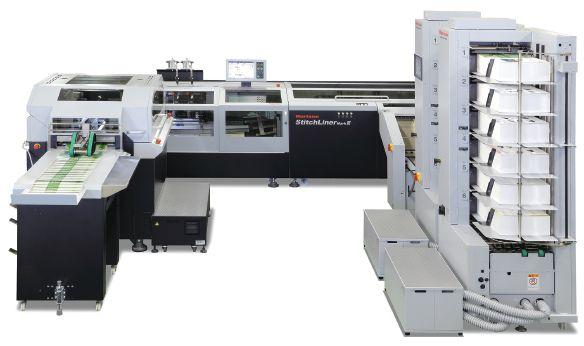
Making its North American debut at PRINT 17, the new StitchLiner Mark III features expanded booklet size and increased productivity of up to 6,000 booklets per hour. The system can produce a range of applications, including landscape-size booklets, 12 x 12inch calendars and pocket booklets down to 4.5 x 3 inches. The StitchLiner Mark III provides automated setup, including stitching head settings, with no manual adjustments required for book thickness at the trimmer.
GTI Graphic Technology
GTI highlights its iQ Soft Proofing Systems designed to make precise visual comparisons between a computer monitor and the proof or print. An iQ enabled viewing system
provides repeatable accuracy based on a specially designed light sensor, the iQ. The handheld iQ light sensor wirelessly communicates with an iQ compatible viewing station and captures the brightness level of the monitor. This data is automatically communicated to the iQ viewing station where it is used to calibrate the light level of the viewing station to achieve an optimal match to the luminosity of the monitor. iQ proofing is included in the desktop SOFV-1xiQ and it is available on EVS and VPI viewing stations, and on overhead luminaires.
GTI is also highlighting Executive Viewing Stations like the EVS D50 colour viewing stations which include electronic ballasts with Graphiclite T8 fluorescent lamps to produce strong light evenness, rearwall illumination, and enhanced energy efficiency. A print bar and LiteGuard II, which displays lamp warm up, lamp hours, and remaining lamp life, is included. EVS viewing stations are available with a variety of storage options. Flat file sets consisting of eight drawers or two-door storage cabinets can be used alone or combined with one deep or two shallow file drawers.
Ricoh
Ricoh highlights its new Pro C5200s and Pro C5210s that produce colour and black-and-white documents at up to 65 and 80 ppm, respectively, reaching VCSEL resolutions of up to 1,200 x 4,800-dpi. Along with optional oversized media support, the Pro C5200s works with medias of up to 360 gsm simplex and 300 gsm duplex at 13 x 19.2-inch standard format. The optional oversized media support provides a 13 x-27.5 inch format.
Ricoh is also highlighting the Pro C7100 X Series as a 5-station tonerbased press with the ability to print
Standard Horizon StitchLiner Mark III runs up to 6,000 booklets per hour.
Clear, White, and now Neon Yellow Toner. Also on display, the Pro 8200 Series includes black-and-white multi-function production systems for high volumes. The Pro 8200 Series can print up to 96 pages per minute.
Zünd
Zünd highlights its Zünd Design Center (ZDC) as an Adobe Illustrator plug-in to create packaging and three-dimensional displays from folding carton, corrugated cardboard, honeycomb/corrugated display board, ACM, PP and PVC. Now on version 3.0, ZDC provides a library of templated designs. The software includes a 3D preview tool to consider measurements, logos, patterns and other graphic elements.
Zünd is also showcasing the versatility of its M-2500 cutting systems, which provide modular tool and material-handling options for a range of cutting needs. The G3 flatbed cutter is qualified for industrial use and multi-shift, 24/7 operation.
Avanti
Avanti is highlighting Slingshot’s Mail and Postage Accounting module to manage and streamline mailing processes. Designed to reduce the effort required to consolidate postage receipts, payments and reporting, the module allows users to analyze mailing activities by account, department, project or postal class, as well as generate postage reports based on a specific date range for a customer.
Avanti is also highlighting Slingshot’s Scheduling Reservation System, which allows employees to reserve press time before the receipt of a confirmed sales order to communicate the earliest possible date of completion to the customer before their commitment.
The company is also highlighting Slingshot’s Wireless Warehouse
Management tool designed to be implemented in a warehouse location with the addition of wireless scanners that report back to the Avanti Slingshot Inventory modules. Avanti is also highlighting Slingshot integration with Avalara AvaTax, which allows print shops to calculate sales tax automatically for estimates, sales orders, and invoices without the need to maintain tax tables within the Avanti Slingshot database.
Amazing Print
eCardBuilder Version 5.2 is to be released at PRINT 17 and will have a multilingual interface with more products. Amazing Print explains the new version of the Web-to-print design engine eCardBuilder 5.2 will feature 100 new products and thousands of additional templates as a free upgrade to current users. Some of the new upgrades include new template creation functionality, new language support for multilingual Websites, new image editing capability and image cropping and resizing improvements.
The tool’s improved mobile optimized interface will allow ordering and designing on any smartphone or tablet device, while desktop users will benefit from increased speed and better aesthetics. A new version of APIs will allow deeper connectivity in popular shopping carts and Websites. eCardBuilder users can additionally upgrade to a PosterDesignerPlus+ Web-to-print poster designer and ordering interface based on eCardBuilder framework directly from Canon Canada.
Aleyant
Aleyant highlights its cloud-based software including PrintJobManager, an estimating, pricing and production management tool to create selling prices from material, equipment and labour costs. It enables pricing controlled in one location to provide instant pricing for
Zund’s G3 M-2500 cutting systems provide
RS SuperiorSuperior Binder y Ser vices Inc.
TECHNOLOGY — Die crease without a die, then fold and even glue all on the same machine, up to 30 pt.
3. INTEGRATED MODULAR UNITS — Combined in-line finishing: crease, fold, glue, tipping, envelope inserting, ink jetting (Duplex), clip seal (3 sides), mail prep.
orders whether through an online store or via a mobile device on a sales call. Pricing information is then pushed automatically to Pressero, a private B2B and public B2C online storefront, which instantly updates pricing for items in your storefronts. When there is a price change for raw material, labour or equipment in PrintJobManager, this change will automatically update within Pressero storefronts. Also when an order is placed in Pressero, it is automatically pushed into PrintJobManager, helping users manage job production, including time-tracking capabilities. Within Pressero, users call sell standard or off-the-shelf items, custom items via either the built-in eDocBuilder online design templates or customer supplied artwork. Fulfilling orders from finished goods, including tracking inventory levels, is also supported.
Accura MIS
ing with the combination of variable sleeve offset printing units, a corona treatment, EB or UV drying, and gravure printing units with dryers. This allows films to be printed with high quality and variability.
manroland web is also highlighting its PECOM-X software with Inline Controls and the plugins WorkflowBridge, MasterQ and Imposer. WorkflowBridge is a JDFbased fully automated pre-setting and processing program, while MasterQ is for job management and Imposer for automatic imposing. PECOM-X automation and press controls software provides tools for startup and cutoff waste, registration, colour, density, dampening and tension control. These tools can be retrofitted on non-manroland presses.
4. SAVE ON POSTAGE COSTS —As a Certified Canada Post Direct Marketing Specialist, we get contract pricing reductions. 5. RETURN MAIL PRODUCTS — Customized “Return Mailers” created in-line with “U” or “BOX-shape” remoistenable glue, time perfed applications and envelope formation.
MINI-BOOKLETS — Saddle-stitch and trim 2-up booklets in-line to the size of a business card. No need to trim off-line, or do 2 passes.
HIGH SPEED EQUIPMENT — High speed Tipping, Folding, Saddle-stitching and soft folding ensuring on time delivery.
Accura highlights version 5.01 of its MIS and Accura Online 5.03, which are both now available. These upgrades are free to all existing customers. Features of these two updates include contact to office linking, social media features for your company and users, revamped quote template library, new proofing synchronization settings, purchase order copying, Accura UI theming, new client and supplier payment terms, invoice output, and enhanced CRM integration. Major new features in Accura Online 5 include fully responsive UI, Website themes with interchangeable widgets, customizable main menu system, administrator dashboard, client branding, and multiple product images.
manroland web systems
manroland web, while having no live equipment, is focusing on its expansion beyond the standard web offset market. The includes highlighting the VARIOMAN packaging press, with the VARIOMAN f:line packaging press officially launching for the public in North America at PRINT 2017. This offset-gravure press produces printed films, work-
The company is also highlighting its FoldLine and FormerLine digital finishing systems, which have more than 20 installations worldwide. FoldLine is a flexible-format folding and finishing line, while FormerLine is a book-block finishing line for inkjet work. These systems can finish a variety of products at inline speeds up to 1,000 feet per hour, and also efficiently produce micro-jobs or book-of-one jobs.
Colter & Peterson
Colter & Peterson is highlighting the E-Cut series, a new economy line of paper cutters, as well as a 45-inch SABER paper cutting system with automated knife adjustment and a 31-inch PRISM paper cutter. Both the SABER and PRISM will be demonstrated with the 15-inch Microcut PLUS Cutter Control System, which provides a programmable touchscreen and new software with enhanced graphics for converted JDF files. The added graphics program is colour coordinated, allowing the operator to see what they are cutting so they can determine what to keep and what to throw away. Other benefits include microcip and microfacts features, where programs are uploaded from the network connection with a USB device using CIP3 and CIP4 files. No additional hardware or software is necessary.
A map of Aleyant’s new cloud-based software hierarchy.
CHILI publish
CHILI publish highlights new features of CHILI Publisher, an online document editing tool. This includes a new server rendering module that operates five times faster. All major features (text wrap, drop shadow, blend modes, variables, text layout) are fully HTML optimized. The updated rendering ties in with an improvement in the HTML editor loading speed. The Input Method Editor (IME) goes HTML, which allows any data to be received as input. Browser-based users of Latin keyboards can now also input data from languages that use more graphemes, like Chinese or Arabic. On handheld devices, users can deploy the numeric keypad or the screen display to show the data. It also enables speech to text on iPad.
RMGT
Graphic Systems North America (GSNA) is highlighting its RMGT 9 Series long perfector press at PRINT 17. The RMGT 928 perfector at the show will be equipped with the chamber coater, fully automatic plate changer, 55-inch press control display center and LED UV curing, demonstrating 16-page signature production.
Epson
Epson highlights the SureColor P5000 Commercial Edition with SpectroProofer, which is making its debut at the printing tradeshow. The 17-inch desktop production printer incorporates new imaging technologies to provide enhanced performance for the commercial and graphic design, flexographic and proofing markets. Leveraging the 10-colour Epson UltraChrome HDX pigment ink set, the Sure-
Color P5000 Commercial Edition uses violet ink for an expanded colour gamut, to deliver what the company describes as an industry-best 99 percent PANTONE PLUS FORMULA GUIDE solid-coated colour matching.
The SpectroProofer high performance inline spectrophotometer,
developed jointly with X-Rite, automates profile creation, optimization and verification tasks for simplified contract proofing. Featuring a refined design, the printer includes a 10-channel PrecisionCore TFP print head that employs a new ink-repellant surface coating, along with improved dust and static control for reduced nozzle clogging and maintenance, and supports printless nozzle checks for time, production and resource efficiency.
Crawford Technologies
Crawford is highlighting its PRO Conductor solution with an interactive dashboard that provides organizations with insights and real-time updates on everything happening within their production workflows, including the status of integrated production hardware and software solutions. The dashboard can be configured for a number of different users, providing self-service and transparency to
CHILI publish has created an HTML ecosystem for its rendering tools.
Epson’s SureColor P5000.
Solutions for the Printing Industry
❏ One program manages entire company
❏ Enter data once and use it many times
❏ Enhances client service
❏ Work smart, work efficiently
❏ Increases speed - accuracy from estimates to invoices
The company is also highlighting its new PRO Preference Manager as a standalone solution for automating customer preference management for multi-channel communications, including print, digital, mobile Web and ADA accessible formats. Using open APIs, it can be integrated with other business processes and customized for any internal and customer requirements. Crawford is also debuting its QA Suite, which includes both on-premise and cloud-based solutions, as well as modular components for specific document testing requirements, including file comparison, proofing and approval and automated testing.
Duplo
GMC Software
GMC Software highlights GMC Inspire Designer for creating, managing and delivering customer communications across multiple channels. GMC Inspire Designer, as part of GMC Inspire, integrates with a print service provider’s core systems, enabling repurposing of existing print-based content to create digital communications.
Duplo highlights its DDC-810 Digital Spot UV Coater. The DDC810 utilizes inkjet technology and gives images depth and raised textures with a gloss varnish. It features a CCD camera recognition system ensuring image-to-image registration and PC Controller software. The DDC-810 is designed for short-run applications. It can process up to 21 sheets per minute (A3) and paper weights from 157 to 450 gsm (coated paper).
Komori
The software features an omnichannel preview that can simultaneously display on one screen the print, Web, tablet and mobile versions of the communication for quicker testing and compliance.
Memjet
Komori highlights the Impremia IS29 press, which features a UV inkjet architecture to print on a range of stocks. Komori explains this allows the system to be used for commercial printing and packaging applications. As a 4-colour system, the Impremia IS29 provides singleand double-sided printing, rated by the company to run at speeds of 3,000 and 1,500 sheets per hour, respectively. The press handles a maximum sheet size of 585 x 750 mm, with printing areas of 575 x 735 mm (single-sided) and 575 x 730 mm (double-sided).
Memjet is debuting DuraLink, which is built around a pigment-based long-life print head. With five times the nozzle-level redundancy, DuraLink print heads do not need to be replaced as often as previous Memjet heads, while also requiring less maintenance and enabling longer print runs. DuraLink print heads provide a 1,600 x 1,585 dpi resolution, while its pigment-based platform can be used for various applications in commercial printing, packaging and industrial printing.
OEM partners can build customized presses that offer print widths from 8.5 inches up to 100 inches, speeds of up to 200 metres per minute (656 fpm), and one to eight colours simplex or duplex.
GMC Inspire Designer integrates with a PSP’s core system.
Komori’s inkjet-based Impremia IS29 press.
DIGITAL/BINDERY OPERATOR
WANTED
Experienced Digital/Bindery Operator required in SW Mississauga. Operating Konica & HP 310 with industry standard software and related bindery operations for digital print and large format.
Email resume to: george.stern@ minutemanpress.com
Tel: 905-822-1110
Fax: 905-822-1161
Website: www.mississauga11.minutemanpress.ca
PREPRESS OPERATOR (JUNIOR)
MI5 PRINT AND DIGITAL
The Junior Prepress Operator is re -
sponsible for providing consistency and accuracy in regards to colour, file setup & structure, workflow and overall quality. Training will be provided to the successful candidate. Joining the diverse and successful prepress team at Mi5, the role of the Junior Prepress Operator is to keep this department running in an efficient and profitable manner, to continue our high level of customer satisfaction and to exceed our client’s expectations.
Responsibilities:
Report to the Prepress Department Manager. Layout graphics to customer’s specifications. Manage colour as per client brand standards. Preflight
and troubleshoot all customer files. Utilize Avanti Software for clocking on/off jobs. Utilize the Adobe Creative Suite efficiently. Experience with Fuji XMF Workflow or similar imposition software/workflows. Manage files according to the IAC standards and G7 methodology. Maintain a well organized and clean work area/environment.
Key Qualifications: 1-2 years of experience as a Junior Prepress Operator, Adobe Creative Suite program experience. Excellent communication skills (Verbal and Written). Enjoys a challenging and fast-paced environment. Ability to work as a member of the team or indi-
vidually as needed. Ability to multitask. Detail oriented, punctual, consistent, efficient. Diploma or Degree in an accredited Graphic Communications Management or related field of study. Knowledge of the print production process as it relates to offset printing.
Email resume to: prepress.jobs@ mi5print.com
PREPRESS SUPERVISOR - PRINT/ PACKAGING
Leading print/packaging manufacturer that has an excellent opportunity for results driven. Prepress Supervisor with proven track record to manage and develop the prepress team towards the achievement of maximum efficiencies and growth.
Ideal applicant will be an Effective team leader, Customer-focused, Strong prepress/graphics skill set with experience in prepress, technical solutions, and quality assurance teams.
Please send your resume to aschofield@deangroup.ca
Jesse Hirsh is one of Canada’s best known futurists through his Metaviews Media company, which focuses on research and consulting around new media business models, big data, and the strategic use of social media. He recently provided an hour-long keynote about the direction of communications technologies during an Ontario Printing & Imaging Association meeting.
Hirsh focused on how various forms of Artificial Intelligence are creating new economies by leveraging the Web, automation and mixed reality (virtual and real). The following excerpts are from his speech about how the smart, fast and unregulated economy of the future might impact the business world.
The primary impact of technology
JH: It I would offer as a disclaimer that pretty much everything I’m saying tonight does currently exist in the present. it just might not be immediately accessible. And I begin by arguing that the primary impact of technology has been to change our relationship with authority. And I when I use the word authority really I mean who we listen too, who we trust, whose rules or morality we follow and a great example of this is our media.
Twenty years ago, the only people who would be quoted in The Globe and Mail or appear on CBC Radio were people I would describe as institutional authorities, presidents, executive directors, ministers, as if the logic of the media at the time is that the only people they would put on that stage, in that position of power, were folks who had already been vetted by an organization and, therefore, were worthy of our trust.
Fast forward to the present and any idiot with a Twitter account will be quoted in The Globe and Mail tomorrow. Actually, no, let me revise that, any idiot with a Twitter account can become President of the United States, without any professional experience and even without any relationship to reality; and this speaks to how a new kind of authority is emerging in our world. if you look at the scholarly literature, they use the phrase cognitive authority. it would be nice to think that a cognitive authority is a subject matter expert, but in fact in a media environment, saturated with noise, a cognitive authority is someone who provides signal amidst that noise.
The rise of ambient commerce
JH: Ambient commerce has become the Holy Grail for big tech companies, which is really about anticipating what people want before they know they want it. A great example is Google’s app in the United States called Shopping Express. It is a search engine that you can go and search
$2.5k
The market price for a Bitcoin in July 2017 had doubled in a matter of weeks to $2,500. The first blockchain was conceptualized by Satoshi Nakamoto in 2008 and leveraged the following year as a core component of Bitcoin currency.
for actual retail products. Google will show you all of the stores near your house that sell toilet paper. You can specify your preferences… It will show you the cheapest price and then deliver it to your door within 60 minutes. Amazon has a similar program and they claim they can get it to your door in 30 minutes. Oh, by the way, Google happens to be heavily invested in self-driving cars and robotics to help their logistics.
Now two and a half weeks later… Google sends you a quick note saying, ‘we realize you are running out of that toilet paper press here and we will automatically send you a new batch.’ Two and a half weeks after that, they do not even give you the notification, that toilet paper shows up at your door.
On the retail level, economists have talked the Big Box Effect or the Walmart Effect, which was really the impact of big box stores on main street businesses... A similar shift is happening when it comes to ambient commerce, because if Google and Amazon can meet your consumer needs before you even realize you need them – well – what role does advertising play when it comes to influencing what products you chose. All of a sudden, you can see the rise of these new monopolies based upon their access to consumer information, based on their ability to streamline logistics.
Blockchains and Bitcoins
JH: Another radically transformative technology that seems to be impacting every sector is something called the blockchain or distributed ledger technology. Now many of you may have heard of Bitcoins... an attempt to create a currency for the Internet, in the same way that Canada is defined based on not just geography but economy. And if you think of the Internet as a state, as a nation, in theory it needs its own currency and that’s why a lot of people are speculating that Bitcoin might be it.
A blockchain is really just a database, a ledger, except, unlike a traditional database it is distributed. So instead of sitting on one server, it can sit on many servers and it can have lots of people entering data into it while still being secure and having integrity. For Bitcoin that database runs a currency. But there are tons of examples of how people use databases and, therefore, how the blockchain could be very valuable. Toyota recently announced they are going to use a blockchain to share information in their self-driving cars [to] track information on where it goes and how it performs... A blockchain is a medium of trust and, as a medium of trust, it is dealing with the distrust that often exists when doing business.
SHOP ANYTIME, ANYWHERE GOSPICERS.CA
FAST, EASY & CONVENIENT
Access product information and view up-to-date inventory and pricing 24/7. Streamline your procurement by creating customized shopping lists, view order status and order history with a click of the mouse.
Browse Our Product Catalogues
Perform searches using keywords, product catalogues and product codes.
View Our Inventory GOspicers shows how much inventory is available so you can plan your production with certainty.
Streamline Your Purchases
Create and organize My List with commonly purchased products to streamline and improve efficiency.
Spicers is a leading distributor of commercial print and business papers, specialty products, graphic solutions, sign and display media and industrial packaging supplies with distribution centres strategically located across Canada. 877 790 2335 | shop online at gospicers.ca
Check Out Securely
Your GOspicers order will be processed in the same timely and thorough manner that you’ve come to expect from Spicers.
Track Your
Orders
GOspicers indicates date entered, estimated shipping date and current status.