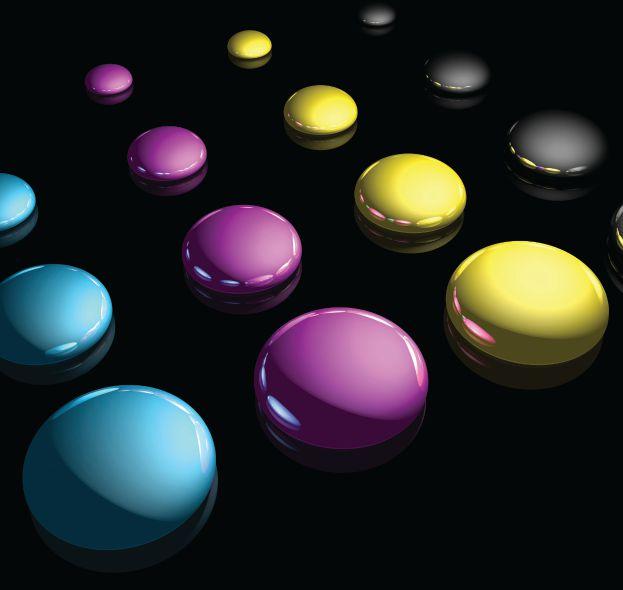
A technical view of the past, present and future of one of inkjet’s most-critical and expensive components
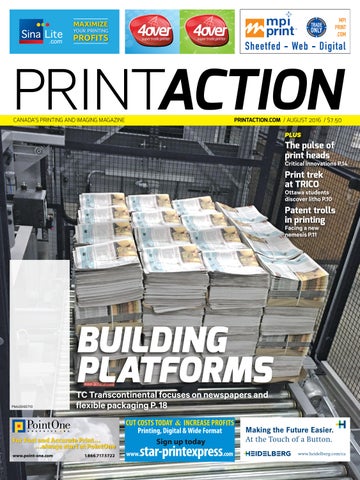
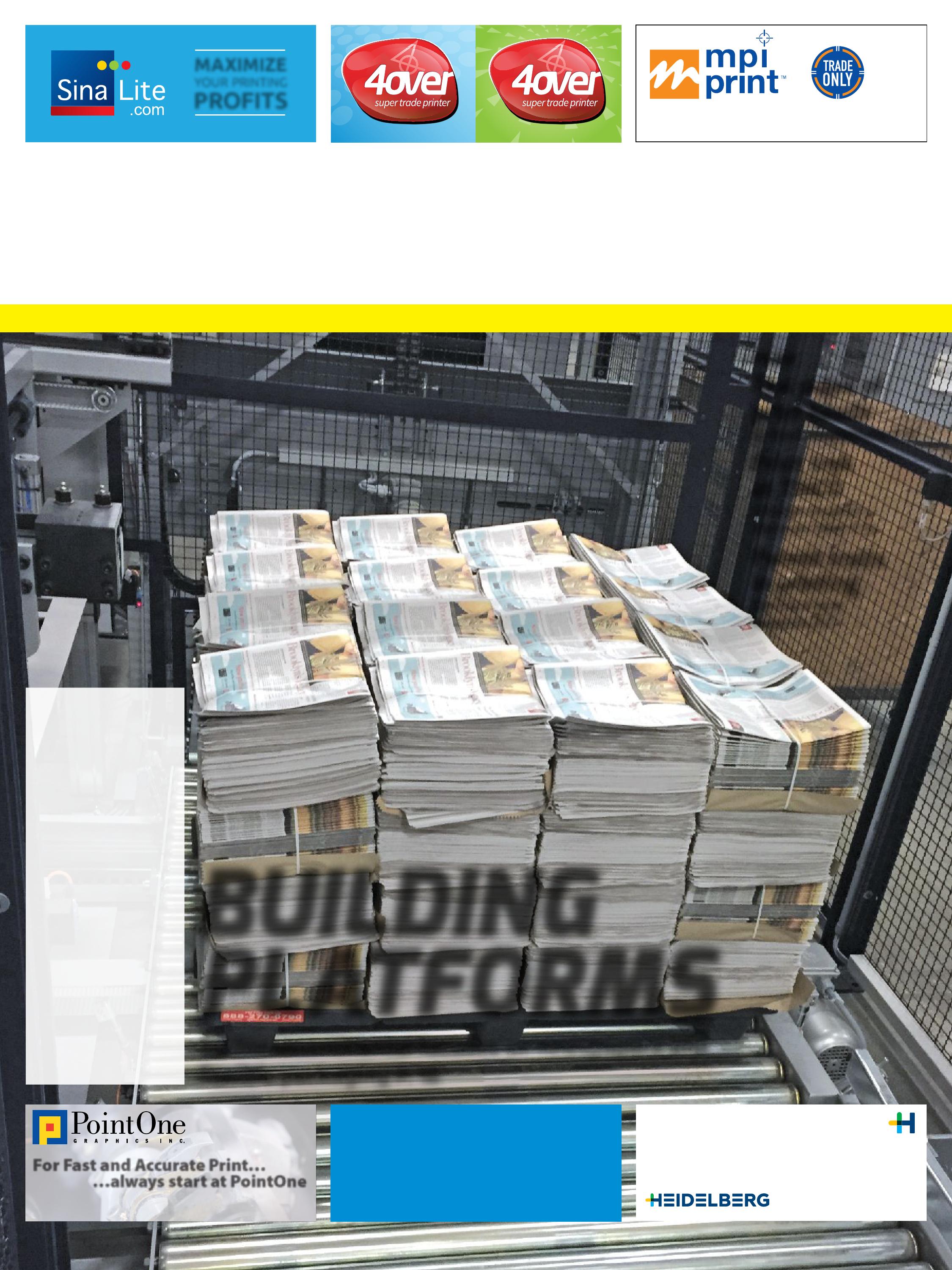
18 Building print platforms
Major newspaper and packaging initiatives mark TC Transcontinental’s 40th year of business
22 My drupa experience
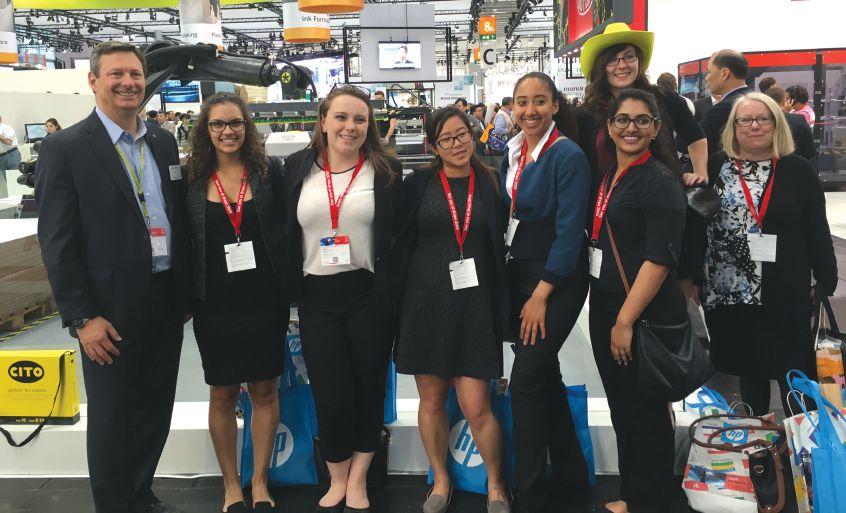
Five students from Ryerson’s GCM share their most memorable moments from drupa 2016
DEPARTMENTS
GAMUT
5 News, People, Calendar, Dots, Installs, Globe, Archive
TECH REPORT
26 Inkjet innovations Wide-format systems, applications, and consumables
NEW PRODUCTS
27 Detailing tech from Agfa, EFI, Fujifilm, HP, INX, Konica and more
MARKETPLACE
33 Industry classifieds
SPOTLIGHT
34 Q&A with Martin Bailey, Chief Technology Officer, Global Graphics
COLUMNS
FROM THE EDITOR
4 Jon Robinson
A return to industrialism
Printing is ready to embrace the business evolution of Industry 4.0
EDUCATION
10 Irving Osterer
Print trek at TRICO
High school students in a specialized program tour an Ottawa print leader
DEVELOPMENT
11 Harvey Levenson Patent trolls in printing
Printing faces a new nemesis impacting its growth and employment
TECHNOLOGY
12 Christian Knapp
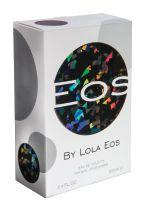
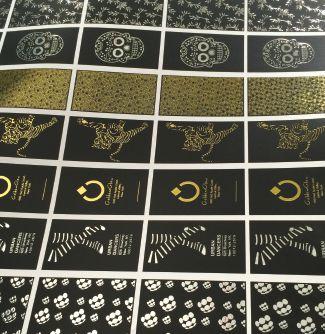
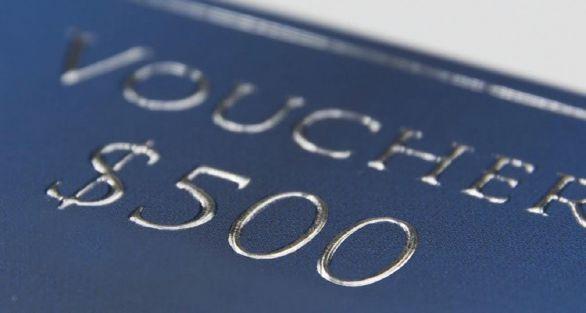
Show me the foil
Three studies on the value-add benefits of print enhancement technologies 18 14 34
A return to industrialism
When the term Web 2.0 seeped into business vernacular in the mid2000s, it seemed to hold little concrete meaning. It was Internet ether following crazed venture capital funding of nascent but often flawed online business strategies. Web 2.0 initially seemed like a makegood promise for millions of lost dollars.
In hindsight, Web 2.0 is now the descriptor for the foundation of user-generated content manifested most obviously as billion-dollar social media platforms. It has created completely new businesses amassing enormous wealth – in a matter of years as opposed to decades – as younger generations successfully tap into a robust online economy.
$10B
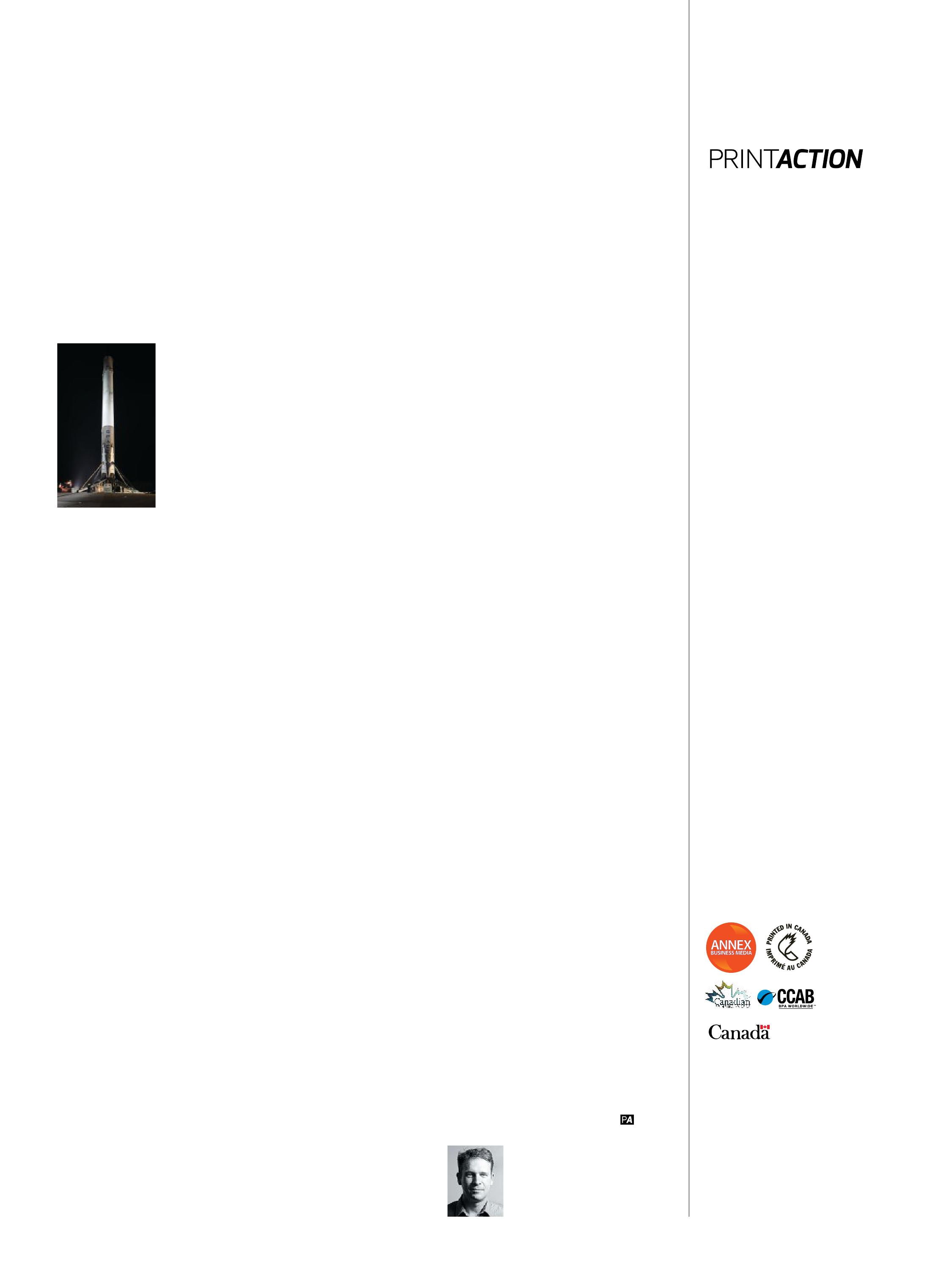
SpaceX is the world’s fastest-growing provider of launch services with more than 70 launches on its manifest, representing more than $10 billion in contracts, including a $1.6 billion contract with NASA for 12 cargo resupply missions to the International Space Station.
Industry 4.0 is a much more relevant evolutionary term for the printing industry. Unlike Web 2.0, which certainly drove the Internet to become a GDP factor, Industry 4.0 ultimately involves the deployment of tangible goods, factories, machines and equipment.
The Internet of Things is an important business term to understand, but perhaps more of an acknowledgement for the revolutionary – existing – network infrastructure built by the likes of Cisco, Sun and Oracle. Industry 4.0, which includes The Internet of Things amid its most prevailing and complicated definitions, is a term to describe the new wealth to be generated from an overdue return to industrialism.
For more than 50 years, the greatest business innovations to emerge out of stable economies have been generated around computing, from software and graphical user interfaces to processor chips and communications networks (both micro and macro). As Moore’s Law reaches its limit, which Intel’s CEO stated to be a reality in 2015, Industry 4.0 arrives for business visionaries to begin leveraging decades of computing power to drive industrial equipment.
Elon Musk, who was born in South Africa but also holds Canadian and American citizenships, is the ultimate Industry 4.0 visionary. In 1995, Musk and his brother, Kimbal, used a small family loan to start Zip2 and develop online city guides for newspaper publishers, leading to contracts with The New York Times and Chicago Tribune
In 1999, Compaq acquired Zip2 for $307 million in cash and, within weeks, Musk’s proceeds co-founded an Internet-based financial services company called X.com. A year later, X.com merged with Confinity, which held a money transfer service called PayPal. Musk was PayPal’s largest shareholder when eBay bought it for $1.5 billion in
2002.Within weeks, Musk founded a new company called SpaceX with the ambitious goal of jumping the commercial space industry by building rockets.
With NASA’s retirement of its Space Shuttle program and mounting U.S. tensions with Russia, whose Soyuz rockets are today relied on by most space agencies to carry cargo and people beyond Earth’s gravitational influence, Musk saw opportunity to undercut the dormant astronautic activities of Boeing and Lockheed Martin. Focused at the time on aeronautics, these defense giants reacted by forming the United Launch Alliance (ULA). Today, with a base $1.6 billion NASA contract for 12 resupply flights, it costs SpaceX around $60 million to launch a payload aboard one of its Falcon 9 rockets. A ULA launch costs around $225 million – Space Shuttle missions were upwards of $1.5 billion per launch, depending on cargo.
Driven to make money, SpaceX developed a reusable Falcon 9 rocket (first stage) that in 2016 has twice successfully returned to Earth, landing on barge in the middle of the ocean after delivering an ISS payload. A SpaceX launch burns relatively little in fuel ($300,000), meaning there are significant cost savings with a reusable first stage rocket. The company estimates it would save 30 percent, around $43 million a launch.
Commercial space company Blue Origin, controlled by another online magnet in Amazon’s founder Jeff Bezos, has also successfully landed reusable rockets, although much smaller. None of this would be possible without taking advantage of Industry 4.0, applying incredible processing power to industrial equipment.
Tesla is another prime example of Musk’s Industry 4.0 leadership, applying processing power to self-drive his battery-powered Tesla cars. Robotics will play a major role in Industry 4.0 and happen to be a Canadian specialty – driven by the Canadian Space Agency. Robotics will become a force for all manufacturing. Industry 4.0 is well underway and it is a positive development for the printing industry, which has lived on the edges of this business term for decades, processing billions of bits and bytes to million-dollar machines, offset, inkjet and toner. An industry that spent the past two decades forcing its machines to speak fluently with each other is ready for Industry 4.0.
Editor Jon Robinson jrobinson@annexweb.com 905-713-4302
Contributing writers
Zac Bolan, Wayne Collins, Peter Ebner, Victoria Gaitskell, Martin Habekost, Nick Howard, Nicole Rycroft, Abhay Sharma, Trish Witkowski
Publisher Paul Grossinger pgrossinger@annexweb.com 905-713-4387
Associate Publisher Stephen Longmire slongmire@annexweb.com 905-713-4300
Director of Soul/COO Sue Fredericks
Media Designer Lisa Zambri
Circulation Manager Barbara Adelt badelt@annexbizmedia.com
Customer Service Angie Potal apotal@annexbizmedia.com Tel: 416-510-5113
Fax: 416-510-5170
Mail: 80 Valleybrook Drive, Toronto, ON, M3B 2S9
Subscription rates
For a 1 year monthly subscription (12 issues): Canada — $40.95 Canada 2 year— $66.95 United States — CN$71.95 Other foreign — CN$140.00
Mailing address
Annex Business Media 222 Edward Street Aurora, ON, L4G 1W6 printaction.com Tel: 905-727-0077 Fax: 905-727-0017
PrintForum Inkjet panelists Edward Robeznieks, VP and GM, Ricoh Canada; Brad King, VP, Graphics Communications, Xerox Canada; and Ray Fagan, Sheetfed Product Manager, Heidelberg Canada.
PrintForum took place in late June with more than 100 people attending the PrintAction-hosted conference held at the Mississauga Convention Centre, featuring exhibitors Canon Canada (event sponsor), Delphax, Domtar, Grand Valley Direct, IMAC, Insource, PDS, Sydney Stone and Veritiv. Martin Habekost, Associate Chair of Ryerson’s GCM program, noted the highly positive atmosphere of drupa 2016 before spending an hour discussing both digital- and conventional-printing trends at drupa. The event closed with a panel discussion on production inkjet technologies with leaders from Canon, Delphax, Fujifilm, Heidelberg, Kodak, Ricoh and Xerox.
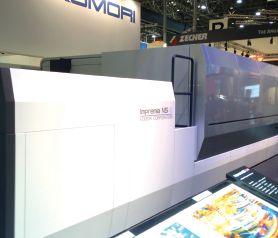
The Burke Group of Edmonton, Alberta, became the first printing operation in Canada to sign a letter of intent to purchase the new Komori Impremia NS40 press, which uses Landa Digital imaging built on a Komori platform. Komori explains the inkjet press uses independently developed water-based inks that bond to the substrate while printing at speeds of up to 6,500 sheets per hour.
Xaar plc, a longstanding developer of inkjet technologies, acquired Engineered Printing Solutions (EPS), a Vermont-based developer of specialized printing equipment for sectors like sectors promotional, packaging, automotive, apparel, medical, sports equipment and toys. The acquisition is Xaar’s first as part of its strategic vision to achieve £220 million in annual sales by 2020. Founded by Julian Joffe in 1985, EPS in 2015 generated $14 million in revenue, employing 60 staff.
Webcom Inc. of Toronto, which provides manufacturing and data services for book publishers, is launching a new print-ondemand service called BookOnDemand by the third quarter of 2016. The company was an original collaborator on the worldwide launch of the HP OneBook, which leveraged Webcom’s knowledge of book publishing pain points and inkjet production expertise when printing one book up to thousands. Webcom BookOnDemand is designed to integrate with HP PageWide and Indigo presses in an automated production workflow.
Idealliance and Epicomm completed their merger, creating a single U.S.-based printing association that will now address both management and technological issues. The new Idealliance is headquartered in Alexandria, Virginia, and has more than 3,000 members in the U.S. and with affiliates in China, South Korea, India, and Mexico. Idealliance explains its resources are segmented within six primary services, including: Best practices and working groups, certification and training, advocacy and advancement, strategy and consulting, education and events, and publications and research.
Memjet and HP Inc. reached a global, confidential settlement for the dismissal of all current actions between the parties and a cross-license. In August 2015, Memjet filed a patent infringement lawsuit against Hewlett-Packard in a Californian District Court alleging infringement of eight Memjet patents related to its Waterfall technology. Memjet’s lawsuit also claimed it is entitled to recover damages resulting from the use of patented technology in HP’s PageWide printing systems. Memjet claims to hold several thousand U.S. and foreign patents in page-wide inkjet printing.
TC Transcontinental Inc. of Montreal continues its packaging growth with a third acquisition, Robbie Manufacturing, a flexible packaging supplier located in Lenexa, Kansas. Transcontinental’s first acquisition in the flexible sector was Capri Packaging in 2014. In 2015, the company doubled its revenues in this area by purchasing Ultra Flex Packaging. Robbie specializes in on-site packaging for grocery stores, food processors and shrink wraps for multipack consumer goods. With more than 175 employees, Robbie generated US$50 million in annual revenue in its most recent fiscal year.
C.J. Graphics of Toronto and Friesens of Altona, Manitoba, were among four Canadian printing companies to win Best of Category awards in the U.S.-based 2016 Premier Printing Awards competition, hosted by the Printing Industries of America. Both received two awards each, with C.J. Graphics winning for Invitations and Digital Printing, while Friesens won in the categories of Cookbooks and School Yearbooks. Mi5 Print of Mississauga received a Best of Category award for Business and Annual Reports, while Prime Data Communications of Aurora won for Variable Data Printing.
Electronics For Imaging of Freemont, California, purchased Optitex Ltd., a developer of integrated 3D design software aimed at the textile industry – for the adoption of so-called fast fashion. Privately held Optitex is to be integrated into EFI’s Productivity Software business unit. EFI explains the maximum purchase price of Optitex is approximately US$52.8 million, which includes a US$20 million upfront cash payment, US$3 million of which was placed into escrow, and annual cash earnout payments over three one-year periods of up to an additional US$32.8 million in total. EFI explains the purchase is expected to contribute as much as US$6 million in revenue for the balance of 2016.
Planet Paper Group, a familyowned company with three locations across Canada, acquired Tricor POP of Cleveland to expand its reach in the U.S., while also enhancing its end-to-end display, packaging and merchandizing offerings. The family-owned business, with more than 300 employees, will operate as Planet Display & Packaging Inc. Terms of the transaction were not disclosed.
4over purchased ASAP Printing of North Carolina, which expands 4over’s network to 16 locations in North America. 4over describes itself as an industry leader in print order fulfillment and as a print provider to more than 40,000 industry professionals.
François Olivier, President and CEO, TC Transcontinental.
Komori’s Impremia NS40 press on display at drupa 2016.
Len Lauer, CEO, Memjet.
Mike Collinge, President and CEO, Webcom.
Steve Falk, President, Prime Data.
Doug Edwards, CEO, Xaar.
Chad Friesen is to assume the role of President and Chief Operating Officer of Friesens Corporation at the beginning of October, when the company’s current President and CEO, Curwin Friesen, steps down. After helping to lead Friesens for more than 20 years, Curwin Friesen is taking on a new role as Senior VP of Business Development for Ashley Global Retail. Chad Friesen will also continue in his current role as GM of the Yearbook Division at Friesens, based in Altona, Manitoba.
began with Metal Box in 1987. With P&L responsibility for Crown’s beverage can business, he also opened a new $50 million manufacturing facility in Turkey. Lockley has also held key industry positions as Chairman of Metal Packaging Europe and Chairman of Beverage Can Makers Europe.
CALENDAR
August 31, 2016
Canadian Printing Awards Entry Deadline
Palais Royale, Toronto, ON
September 14, 2016 Toronto Craftsmen Golf Tournament Royal Woodbine, Toronto, ON
September 14-16, 2016 SGIA Expo Las Vegas Convention Center, NV
Jeff Ekstein, President of Willow Printing Group in Concord, Ontario, has been elected as the new Chair of the Canadian Printing Industries Scholarship Trust Fund (CPISTF), which was initiated in 1971 and has since provided over a million dollars in funding to students pursuing a career in the graphic communications industry. Ekstein succeeds Don Gain, who served as Chair for 11 years. Mike Collinge, CEO of Webcom, has been appointed as Vice Chair of CPISTF and Sean Murray, President of Advocate Printing and Publishing, as Treasurer. The CPISTF provided $56,000 in scholarships to 35 students in 2015.
Matt Bennett becomes President of the Americas for Advanced Vision Technology, which is based in Israel and develops print inspection, process control and colour control systems for the packaging, label and commercial print markets. Prior to joining AVT, Bennett served as Sales Director of Packaging, North America, for HP Inc., where he helped lead HP’s entry into the flexible and folding carton markets. Prior to that, he spent 17 years with Heidelberg as a salesperson, regional manager and, ultimately, vice president.
Annette Plummer becomes Director of Marketing of North America for SA International (SAI), which develops software for signage and wide-format printing, as well as CAD/CAM tools for CNC machining. Plummer rejoins SAi having previously managed marketing activities for its EnRoute software. The company, which recently released Flexi 12 signmaking and EnRoute 6 CAD/CAM software, has a network of resellers around the world with over 100,000 customers in more than 50 countries.
Peter Goff becomes Chief Executive Officer of a new U.S. subsidiary for HERMA GmbH, a Germany-based provider of labeling machinery and self-adhesive labels and materials, which launched on July 1. HERMA U.S. Inc. is headquartered in Fairfield, New Jersey. Goff is the longtime Director of Sales for the company’s subsidiary in the United Kingdom and has been with the company for 25 years.
Peter Lockley is the new President of INX Europe, overseeing operations of INX Group companies in the Czech Republic, France, Italy, and the UK. He most recently served as Senior VP, Bevcan Europe and the Middle East, at Crown Packaging Europe after a 29-year run at the company that
Kent Anderson becomes President of Jeco Plastic Products, a manufacturer of plastic pallets and containers for the global printing and automotive industries since 1973. Prior to joining Jeco, Anderson was VP of Business Development at the Indiana Economic Development Corporation, and Executive Director of the Columbus (Indiana) Area Metropolitan Planning Organization. Jeco production facilities include rotational plastic molding and thermoforming capabilities unique in North America.
Brian Phipps becomes President of Mutoh America Inc., focusing on wide-format inkjet printing equipment sales and operations in both North and Latin America. Phipps has worked for Mutoh America since 2004 and most recently served as Vice President and General Manager. In his new role, Phipps will be working closer with Mutoh Japan on new products and the company’s future direction.
James Martin becomes President of finishing equipment maker MBO America. He previously served in various executive, sales and marketing roles at Unisource Worldwide and Heidelberg USA. Martin was most recently CEO of the Printing Association of Florida, which produces the Graphics of the Americas trade show. MBO America, based in Marlton, New Jersey, is the top location in terms of generating revenues among MBO’s five global regions. Martin currently serves as Chairman for the Sonoco Institute of Packaging Design and Graphics at Clemson University.
Steve Fuller, former VP and CMO of L.L.Bean Inc., and John Fowler, Vice Chairman and Executive Vice President of Global Strategy & Corporate Development of Quad/Graphics, have been appointed to Quad/Graphics’ board, bring the company’s number of directors from eight to 10. Under Fuller’s guidance, online sales at L.L.Bean grew by nearly US$1 billion. Fowler joined Quad/Graphics in 1980 as its top financial executive, helping Quad evolve from a family-owned firm with fewer than 300 employees and around US$21 million in sales to one of the world’s largest print providers with than 22,000 employees on three continents and around US$4.7 billion in sales.
Yunuén Sánchez becomes Global Marketing Director for Flint Group Flexographic Products. She holds a Master of Science degree in Textile Engineering as well as a Business Administration degree and a certification as Six Sigma Black Belt. Born in Mexico, Sánchez has worked in Europe, U.S., and Latin America. She is based in Stuttgart, Germany.
September 21
OPIA London Golf Classic Pine Knot Golf and Country Club
September 23-24, 2016 Sign Expo Canada International Centre, Mississauga, ON
September 25-28, 2016 Graph Expo 2016 Orange County Center, Orlando, FL
September 27, 2016 PAC Golf Tournament Niagara-on-the-lake, ON
September 28-29, 2016 PAC Conference Niagara Falls, ON
October 18-22, 2016 All in Print China New International Expo Center, Shanghai
October 19
OPIA, Captain of Industry Dinner, Phil Crawley, The Globe St. Georges Golf, Etobicoke, ON
November 3-4, 2016 RDG Designthinkers Sony Centre, Toronto, ON
November 10, 2016 Canadian Printing Awards Gala Palais Royale, Toronto, ON
November 25, 2016 CMA Awards Show
Westin Harbour, Toronto, ON
April 6-8, 2017
Graphics Canada International Centre, Mississauga, ON
May 12-13, 2017 grafik art Montreal Place Bonaventure, Montreal, QC
March 19-24, 2018 IPEX London, UK
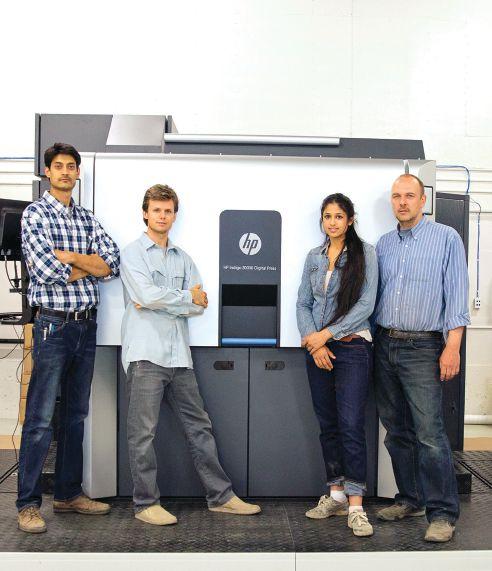
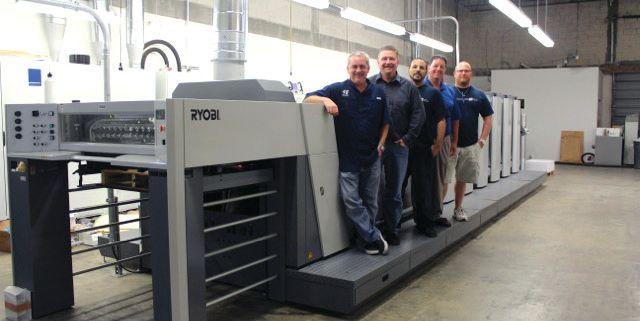
Swiss Pack Canada of Burlington, Ont., installed the first HP Indigo 20000 press in Canada, pictured with Soek Walia, Print Operations Manager, Philippe St-Cyr, GM, Pia Dombkowski, Operations Controller, and Christian Dombkowski, Manufacturing/ Logistics. Swiss Pack specializes in stand-up pouches, coffee bags, custom printed pouches and three-side seal pouches including flat and pillow designs.
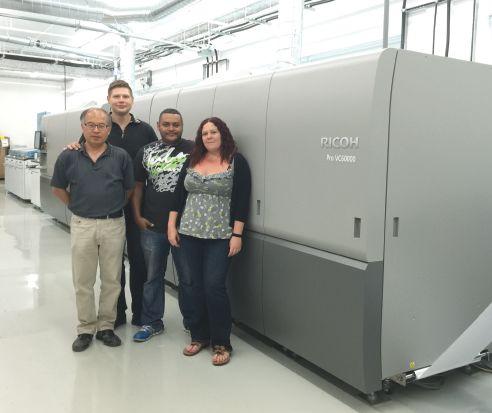
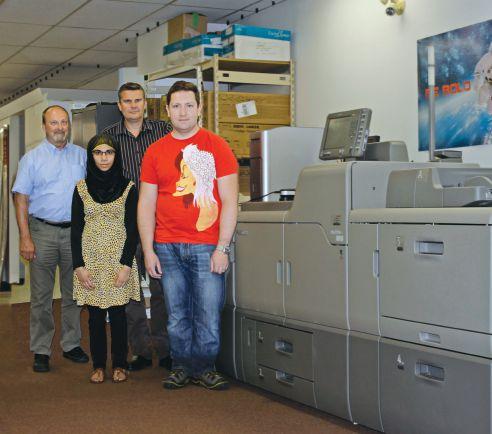
Copywell of Woodbridge, Ontario, installed two Ricoh production systems, including a Ricoh Pro C9110 and Canada’s first continuous-feed Ricoh Pro VC60000 inkjet printing system, pictured with Jerry Sung, Fedor Ivanouna, Ryan Pillay and Trina Al-Hani.
Oil City Press, a commercial printer located in Calgary, Alberta, installed a Ricoh Pro C7110X, pictured with VP Doug Kletke, Fathima Jamaldeen, Ron Brouwer and Chris Jackson. The Pro C7110X reaches speeds of 90 pages per minute and outputs work at up to 1,200 x 4,800-dpi resolution.
Star Trek turns 50
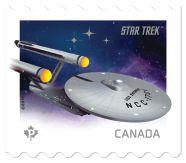
To commemorate the 50 anniversary of the original television series Star Trek, Canada post has issued a series of stamps, featuring three Canadian science fiction icons, William Shatner (Montréal), who played Captain James T. Kirk, and James Doohan (Vancouver), who played Montgomery “Scotty” Scott, as well as John Colicos (Toronto), who played Klingon Commander Kor. Canada Post also connects Spock to Canada based on Vulcan, Alberta, which shares its name with his home planet. Dr. Leonard “Bones” McCoy rounds out the special stamp issue.
The stamps were printed by The Lowe-Martin of Ottawa, Ont., while lenticular pieces of the collector series was produced by Outer Aspect based on designs by Kosta Tsetsekas of Signal Design Group. Based in Auckland, New Zealand, Outer Aspect specializes in what it calls MotionPrint imaging and has over 16 years experience in the design and manufacture of lenticular products. MotionPrint technology includes the use of high definition 3D with a high frame rate animation taken from up to four seconds of HD film footage.
Under license by CBS Consumer Products, the collections includes five stamps depicting cast members from Star Trek: The Original Series. The U.S.S. Enterprise and a Klingon D7-class battle cruiser are featured on coil stamps, while two special-effect lenticular stamps are available that rerun of classic scenes from the television series. Canada Post issues a range of products around the collection, including a prestige booklet, official first day covers, souvenir sheets, uncut press sheets, panes, booklets, postcards and stamp dispensers.
Four limited-edition items add to the fleet of collectibles: a framed print signed by William Shatner, a framed stamp pane cancelled with a gold-ink postmark of the Enterprise’s shuttlecraft, a lenticular enlargement, and a lenticular uncut press sheet which is a first for any postal administration. The high-value, $5 lenticular stamps measure 46 mm x 34 mm and are available in a souvenir sheet of two stamps.
GLOBE
Resolution cutting in Melbourne
1.7M
Millions of impressions logged by a second generation Fujifilm J Press 720S since being installed six months ago at Walsworth, a family-owned Marceline, Missouri-based publishing and print services provider.
Walsworth is among the 35 largest printing companies in the United States as well as a Top 10 book printer, with over 250,000 square feet of printing and binding facilities in Marceline.
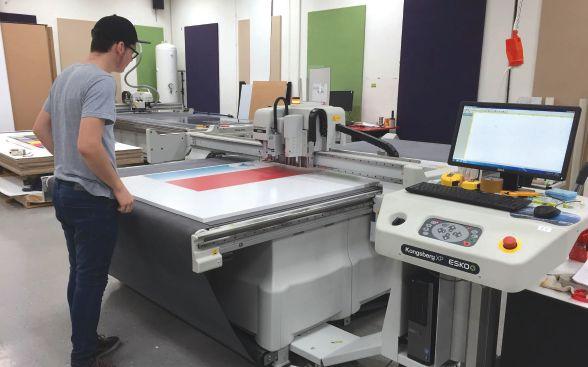
Signage specialist Resolution Imaging of Melbourne, Australia, has installed an Esko Kongsberg XP cutting table, which is the third Kongsberg the company has added beginning with an XL system seven years ago. In 2015, the company, which describes its print offering as providing “enhanced utility and environmentally responsible retail display solutions,” purchased Screen’s new Truepress Jet W3200UV-HS flatbed UV system (released in 2014). The W3200UV joined a Durst Omega 1 inkjet machine.
“We mainly use the Kongsberg XP for cutting boards; anything from ReBoard and print board to expanded PVC and polypropylene,” said Darren Watkins, Director at Resolution Imaging. “I think it would only take you about a half days training to be able to run the XP. Basically, you throw the sheet on the table and it almost cuts itself. And the jobs can be quite complex. For example, there are not many jobs we do that are just a square cut. Our work is shapecut and three-dimensional, especially with the ReBoard material.”
At the front end, Resolution Imaging is running Esko’s i-cut Suite with applications for preflighting and editing; optimized sheet layout; registration; and general prepress automation. “We run the i-cut Vision Pro system on it,” said Watkins. “Using the Esko software, and ArtiosCAD means we can do full 3D mock-ups before we go to the cutting table. We can actually show the client a 3D PDF before we commit to print. Everyone has an idea of what they want, but seeing it in 3D makes it really clear for them. Often we will design and the customer can apply their graphics to our design or we can do it for them.”
Watkins describes the signage market in Melbourne as quite competitive, resulting in a need for speed – even with complex cuts – in the shorter run part of the market where Resolution Imaging has established a niche.
Hederman
Hederman Brothers, a commercial printer located in Ridgeland, Mississippi, placed an order for a new 41-inch, six-colour KBA Rapida 106 press, plus coater, featuring Air Motion Systems LED UV technology and QualiTronic ColorControl inline colour control.
Hederman began in 1898 with brothers Robert and Tom Hederman working in a second story office over a Chinese laundry and barbershop, before moving to a new location in 1907, where they company would reside for 85 years. In 1928, Hederman purchased the first offset press to operate in Mississippi. In 1955, the company then installed its first two-colour offset and its first electronic typesetting system in 1965.
With its new Rapida 106, the 118-year-old, family-run, fourth-generation firm will be retiring two older sheetfed presses and installing its first KBA press during the fourth quarter of 2016. It will be the first press in North America with two AMS high power XP-11 LED lamps and multiple docking points included at end of press.
“Our goal is to continually serve our customers with the highest quality, most advanced technology and fastest throughput,” said Doug Hederman, CEO of Hederman Brothers. “We chose this specially-configured press with proven automation and technology from KBA because we believe it will surpass the high expectations and demands of our loyal customers and address the speed, quality, and innovative designs that we produce for them.”
Gosselin increases throughput in Florida
Trade printer Gosselin Graphics of Fort Lauderdale, Florida, installed a RMGT 7 Series 755 GXL-E press, which has increased throughput by 25 percent and reduced its need for overtime shifts. “Jobs that would have taken 12 hours before now can be done in an eight-hour shift on our new RMGT 7 Series [press],” said John Gosselin, who started the trade-only company in 1997 out of his father’s garage with a Hamada 665 11x17inch, two-colour press. “I learned the printing trade in high school.”
Customers were asking for spot UV work, Gosselin explained: “They wanted the ability to sell work that requires inter-deck drying capabilities.” The way RMGT does it is by a process it calls Chemical Embossing. Purchased through Paper Handling Solutions and Graphics IV, a dealer in Florida, the five-colour sheetfed press features an inline coater with inter-deck dryers for either ultra-violet or aqueous coatings.
Gosselin still has a Hamada model on its pressroom floor, an 18-inch, four-colour H-434 press. The company has been a RMGT customer for nearly 10 years now, also running a straight four-colour RMGT 754 press, as well as a four-colour 3304 and two Xerox toner presses. “We measure productivity by how many gang runs we run per night, which usually averages around 10,” said Gosselin, adding that he runs a three-shift operation in his 15,000-square-foot facility. With the inline UV coating capability, “my guys are done by 7 am now – they don’t have to wait for someone [else] to apply the coating off-line. Before [the new press], they were cutting until noon the next day.”
Resolution Imaging’s new XP handles ReBoard, print board, expanded PVC and polypropylene, which often comes off its Truepress Jet W3200UV.
Gosselin Graphics is now a $6 million company running three RMGT presses.
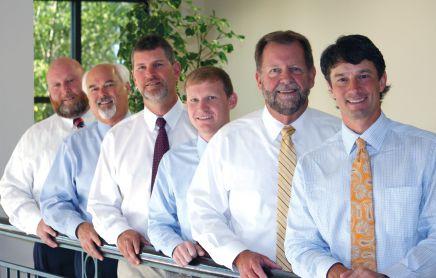
Doug Hederman, President and CEO; Rick Smith, Executive Vice President; Coby Parker, Comptroller; John Shaw, Printing Manager; Bert Jackson, Executive Vice President; and James Houck, Operations Manager.
ARCHIVE
30 years ago
A Fax Machine May Soon be an Indispensable Tool: Fax is the hottest item in the office equipment market right now, and graphic arts companies have started to use it to save time and reduce costs. Facsimile equipment, which is much smaller than your average copier, scans an original document, converts the images into electronic signals and sends the impulses over telephone lines where the receiving facsimile machine creates an exact reproduction of the original material.
In 1978, it took six minutes to send a one-page document and the quality was very poor. It has take almost eight years to refine the process. The new generation of facsimile machines are digital, rather than analogue, can transmit a page in 15 seconds or less, and the clarity of reproduction has improved immensely. Some equipment available today can send halftone photos in 16 shades of grey.
25 years ago
A Day in a Colour House: The sun rises earlier in a colour house, as the night shift is stripping up the last few colour separations while awaiting the morning crew, which will pick up the pieces on a few ongoing jobs. Most prepress houses run 24 hours a day, cranking out colour separations and stripping them together. Just as the night shift ships its last set of quads, the couriers start arriving with raw material for the day shift – new negatives, new layouts and new problems.
The production manager and their assistant review the production reports from the night shift supervisor along with any noteworthy dockets, and in consultation with the sales department they prepare a schedule for the day. They have at their disposal some very expensive equipment and highly skilled scan operators, layout artists and film strippers, all of whom must be able to cope with the daily pressure of tight deadline and inevitable equipment breakdowns.
At any one time there may be upward of 100 jobs in various stages of production, from initial scanning and page layout through client approval and final output. A variety of customized forms are attached to the job docket at different stages, such as colour correction or image assembly so the client can be billed the correct amount for the work performed.
A typical job would be a zone-change on a flyer for a major auto parts retailer whose product mix and pricing vary for different regions of the country. To produce the film for a new version of the flyer, the employees of the colour house need to scan the new slides, colour correct them to match the existing images and retrieve the previous page layout, update the images and text, produce a proof for client approval, and output new film and proofs for the printers. And, because this is not a rush job, they would have about five hours to complete it.
1,000
The Xerox Research Centre of Canada employs researchers from more than 35 countries. Since receiving its first patent in 1979, XRCC has received more than 1,000 U.S. patents, a milestone that has attracted the interest of the Canadian Federal and Provincial governments and the global research community.
20 years
ago
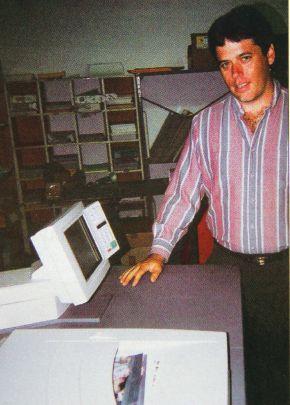
Xerox Sells First DocuColor: Trade Impressions of Toronto becomes the first printer in Canada to purchase the DocuColor 40 Digital Colour Production System, which Xerox explains could function as the world’s fastest full-colour, standalone copier or a networked output device. The first unit purchased by Trade Impressions will operate in the former capacity. The work coming off the DocuColor 40 will be “typical colour copying as far as multiple originals and multiple copies,” says company President, Greg Seed. Trade Impressions, a trade-only copy shop, also runs a Xerox DocuTech, Xerox Majestic and Xerox 5090.
Trade Impressions President Greg Seed with the Xerox DocuColor 40.
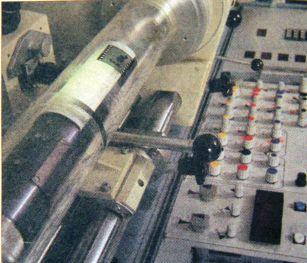
The original artwork – in this case a 35-mm slide – has been mounted on a transparent plastic drum and loaded in the scanner. The coloured control knobs allow the operator to modify the scanning parameters for the cyan, magenta, yellow and black channels in the image.
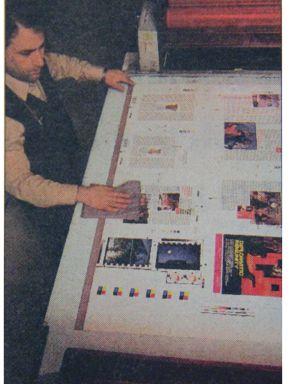
Once the colour separations have been produced, most colour buyers will insist on a film proof, such as a Cromalin or MatchPrint, to provide assurance that the colours are correct. A Cromalin is composed of layers which must be laminated and layer trimmed and checked for quality control.
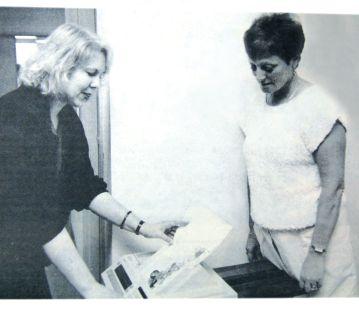
Melissa Chan, Art Director at Universal Fonts and Communications in Toronto, sends a copy of art work to a client over the company’s fax machine.
Print trek at TRICO
High school students in a specialized communications program work with a local Ottawa company to learn about the printing trade
By Irving Osterer
Young adults routinely participate in interactive online activities ranging from Facebook and Twitter to sophisticated multi-player games, chat rooms and blogs. It only makes sense, that for today’s students, an experiential approach to learning is a priority.
Merivale High School’s FOCUS program offers students in the Ottawa Carleton District School Board a unique opportunity to complete a concentrated one semester Communication and Design program that will prepare them for post secondary diploma and degree programs in graphic design, animation, photography and interactive multi media.
So although students will require a digital camera and some computer skills for their Graphic Design, Photography and Animation courses, they should also be prepared to arrive at visual solutions using a variety of pencils, ink pens and paint as well as with current vector drawing software. The program has a 25 seat Mac Lab and also boasts an intaglio press, which makes printmaking exercises possible, and a 10-station darkroom for developing and printing 35 mm film. Students primarily use Adobe software, but spend time with QuarkXPress and other applications they may encounter.
The FOCUS also involves a thorough immersion in printing technologies, and for the program’s offset lithography unit, the school enlisted the services of senior account and customer experience manager Jonathan Stokes of TRICO Evolution in Ottawa.
Poster objective
TRICO serves clients across Canada and the northern United States from its offices in Montreal, Ottawa, Kingston and Vancouver, accounting for 350,000 square feet. In September 2015, Delta Business Solutions and TRICO entered into an agreement to combine forces and operate as one company under the TRICO brand.
With more than 240 employees, the company focuses on products and services across six lines of business: contract packaging, warehousing and logistics, display and signage, commercial printing, direct marketing, and marketing analytics and insight.
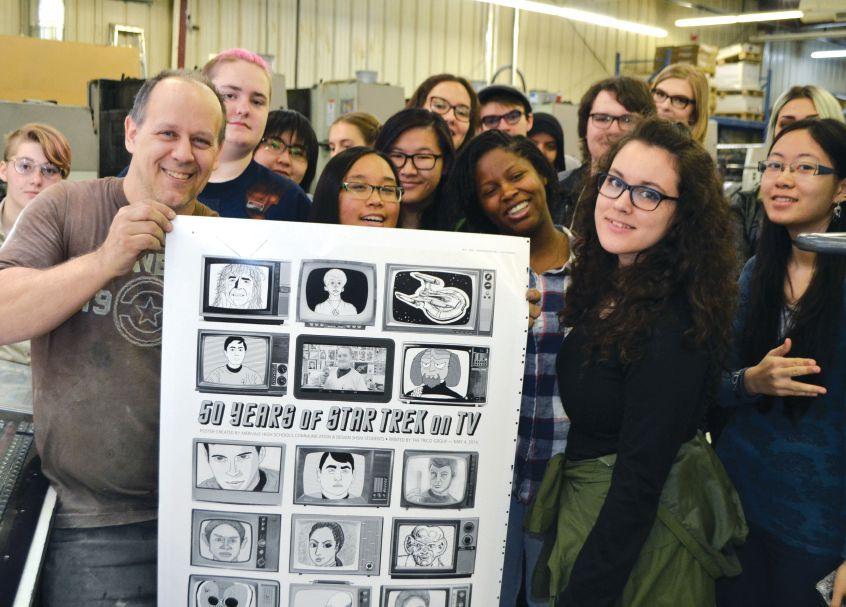
The FOCUS students’ objective at TRICO was to have the entire class contribute artwork for a poster marking Star Trek’s 50th year on television. The first series, now referred to as The Original Series, debuted in 1966 and followed the galactic adventures of James T. Kirk and crew of the starship Enterprise, an exploration vessel of a 23rd-century United Federation of Planets.
Students were given their choice of media, with the understanding that their final artwork would appear only in black and white. Some of the students chose to do artwork with traditional tools, others used Adobe Illustrator to make vector drawings. Because the sequels, movies, animated films and graphic novels are so easily accessible, and a much-hyped new series is in the works (planned for a January 2017 release), the students were all familiar with all the characters.
After the initial artwork was completed, all images were scanned at the proper resolution and then imported into a QuarkXPress document where the appropriate typographic notes were added. The finished poster was exported to PDF and FTPed to Stokes at TRICO.
When the class arrived at TRICO to see offset lithography in action, students were first shown how a printing job is scheduled
Merivale High School students in Ottawa’s unique FOCUS program witness the production of their Star Trek poster art firsthand at TRICO.
726
Number of Star Trek episodes spanning six science fiction/ fantasy television series, in addition to 12 motion pictures and hundreds of novels. As well, there are Star Trek tableltop role-playing games, trading card games, console and computer video games, action figures and model kit spaceships, and other works of fiction.
and how files are processed when they come to the plant, reinforcing the time-sensitive nature of the business.
Stokes brought the FOCUS program students to the plate-processing station and there a skilled technician burned an aluminum plate of the Star Trek poster job and gave it to us for display at our school art show.
In the pressroom
The class next entered the printing area, where one of the TRICO pressmen had our poster printing plate mounted on the large litho press ready to go. The students were able to observe all the fine tuning done before a job enters production.
The class, whose printing experiences for the most part only included photocopiers, laser and inkjet printers were surprised at the speed and fidelity of offset lithography. They were also impressed by how efficiently large amounts of paper could be cut and trimmed with such accuracy. Our day at TRICO evolution finished on a high note in the board room, with Stokes showing impressive samples of critically acclaimed work done for corporate clients. Each student left with a few copies of their Star Trek poster and a greater appreciation and respect for the printing trade.
IRVING OSTERER is the Department Head Fine Arts and Technology Merivale High School in Ottawa, Ontario. For more information about Merivale’s Fine Arts and Focus Program go to www.merivalefinearts.wikispaces.com.
Patent trolls in printing
Printing faces a new nemesis impacting its ability to grow and invest for the future
By Harvey Levenson
Patent trolls, the epitome of greed, thoughtlessness, and unethical behaviour, are impacting the survival, growth, and development of printing and related companies. The printing industry in the United States, for example, has been in a state of decline over the past 20 years (from approximately 55,000 companies to under 30,000 today).
Traditionally a low-profit industry, printing companies and their suppliers are trying to find ways of increasing products and services focusing on digital technologies and related applications in order to increase profits and to save jobs.
Patent trolls are inhibiting such growth and are causing companies to consider closing, downsizing, and laying off employees because they cannot afford to absorb the huge fees being demanded by the trolls, while also maintaining or growing business. The trolls are equivalent to extortionists with no sense of business morals and ethics, or of the push to grow companies, produce jobs, and maintain domestic industries.
Companies faced with the threat of patent troll litigation should not settle by paying license fees, but should partner in pooling resources to pursue invalidation of the patents in question. Such challenges are often won – between 35 and 85 percent of patents being invalid has been reported.
I recently completed a study, available upon request, with a review of the related literature, a case study of three patents of questionable validity claimed by two patent troll plaintiffs to be infringed upon by printing industry companies, and a survey of present defendants and those who were already sued and opted to settle out of fear and intimidation.
This study concludes that printing and related companies sued by patent trolls should not enter into a single-company litigation that can cost more than a settlement. Giving in to patent troll license fees or other demands will exacerbate the problem and encourage additional intimidating and threatening lawsuits in an attempt to extort funds from companies doing honest and legal business, working hard to survive and grow, and provide employment opportunities for skilled staff
members. A solution is bringing together all of the companies named in a suit that has been filed by patent trolls, and to work as a unit in bringing the matter of alleged patent infringements before a patent office for invalidity hearings.
How they troll
A patent troll is a company or person that purchases a patent and then sues another company claiming that the use of one of its products infringes on the purchased patent. Trolls attempt to enforce patent rights against alleged infringers far beyond the patent’s actual value or contribution to the technology or the industry that the patent represents. Patent trolls typically do not manufacture products or provide services based upon the patents in question. They use patents as legal weapons, instead of actually creating any new products or ideas to improve business, commerce or society. Trolls are in the business of threatening and creating litigation.
Further, trolls often buy-up patents cheaply from companies that are looking to monetize patents that have little or no value, or should have not been granted to begin with, because of Prior Art demonstrating that what the patents teach was obvious prior to the time of application for the patent. These patents are subject to an invalidity contention and termination by the patent body when alleged infringers contest the trolls. They are typically very broad, covering generic or well-known types of applications that should never have been patented to begin with.
In possession of these broad and vague patents, the troll then sends out intimidating letters to those they argue infringe on their patents. It is a scare tactic that preys on innocent companies that are merely providing a service needed by society. These letters threaten legal action unless the alleged infringer agrees to pay a licensing fee, which can often range to the tens of thousands or even hundreds of thousands of dollars. Many who receive in-
Today’s greatest areas of patent activity in digital communications, from 1998 to 2013, show continued growth from the United States and Japan, as China emerges (Source: World Intellectual Property Organization).
fringement letters will choose to pay the licensing fee out of fear, and because patent litigation is extremely expensive and can involve lengthy and time-consuming court deliberations.
Challenges to invalidate patents are often won, and up to 85 percent of patents being invalid has been reported at a Congressional Senate Judiciary Committee addressing the matter.
Unfortunately, companies threatened by patent trolls are often inexperienced in dealing with lawsuits, are intimidated by being served legal warrants, cannot afford to retain attorneys, and some give in to the demands of trolls. I am again urging those in the printing and related industries to not give in to the demands of patent trolls, but to contact attorneys and other experts working diligently to protect businesses and individuals from patent troll extortion. As previously noted, such extortion typically comes in the way of demands for expensive license fees for using some very basic office or production equipment needed to conduct day-to-day business. Some examples are scanners, copy machines, and Web-to-print technology. Also as previously noted, the licensing fees being asked could be in the six-figure range and, hence, very scary to the small-business person working hard to eke out a living to support a family and to support jobs for employees. The claim typically made by trolls is that the accused is using equipment that has one or more parts described in an obscure patent that was sold to a troll in an attempt to monetize it.
The assignee to the patent at some point may have come to realize that the patent is of questionable value and sought a troll to intimidate people and businesses using technology or applications that are even remotely taught by the patent. The troll then claims infringement and threatens a lawsuit if a license fee is not paid by a certain time.
HARVEY LEVENSON,Ph. D., is Professor Emeritus and former Department Head of the Graphic Communication Department at Cal Poly State University. hlevenso@calpoly.edu.
Show me the foil
Three studies look at price sensitivity and why enhancement systems are finding their way onto the floors of commercial printers
By Christian Knapp and Lynn Kolevsohn
Long gone are the days when commercial, packaging or folding carton printing companies switched on their presses, finished the jobs in ample time, sent out the invoice and received payment in 30 days, all whilst making a decent return. Outside a particular niche, print has become an hyper-competitive manufacturing process with printers of all shapes and sizes competing fiercely with one another. The industry is also facing a stable and growing online-marketing engine, competing for dollars with powerful ROI-measuring email broadcast campaigns and a range of effective social media platforms like LinkedIn, Instagram, Bing, Flickr, YouTube and Twitter. One recent report pegged the number of available social media avenues at 47.
Nowhere is print’s hyper-competitive market more apparent than in the Greater Toronto Area where the vast majority of Canadian printing operations are located and where making money in print is challenging (an industry euphemism for bloody tough).
Offset, digital, flexo, screen, large-format and electrostatic print are all specific manufacturing processes addressing specific end-user needs, and almost all will end up with printed product based on or simulating Cyan, Magenta, Yellow and Black (CMYK). Instances where printers compete for new accounts or fight to retain existing ones often result in charging for paper whilst giving away CMYK.
There is some logic to this approach, ultimately because the equipment must be paid for, running the machinery provides some overhead recovery and it keeps employees working. The real quandary, therefore, is how to make money from print in new areas, whilst constantly reducing
operational costs and competing for business? Many printing companies are focusing beyond the press to find answers and digital foiling technologies can provide new paths.
Addressing the issues of value-added print
A multitude of seminars, webinars, and educational sessions (often sponsored by equipment suppliers) focus on the benefits of Value Add Printing. This is another euphemism for enhancing printed matter by offering new and exciting formats, shorter runs, new folds in finishing, exciting smells or tactile surfaces. All are possible in exchange for added investment.
A guiding example is digital printing. It offers commercial, packaging, folding-carton and label printers the ability to reduce run length, offer size and/or product flexibility and provide on-demand custom tailored print. No surprise that printers have embraced digital.
Adding digital foil is an emerging and exciting value-add benefit when used in combination with a digitally driven print enhancement engine. It offers flexibility, on-demand production and – most importantly – affordable differentiation. The $64k question is how can printers make money from this?
In order to address this question, the California Institute of Technology (Caltech) conducted an experiment in which the end-user price sensitivity was tested in respect to tactile print enhancement. This study has been published by UK-based Folding Carton magazine in its 2015 edition, based on a report by Malcolm G Keif, Colleen Twomey and Andrea Stoneman of the Graphic Communication Department of California Polytechnic State University. The authors conclude that limited price increases are possible; in other words, en-
print with soft touch tactile features allows brands/printers to raise prices to end-users by up to five percent. Sustainable price increases are a development that printers have not seen in years given the commoditization of CMYK.
Price sensitivity known from other print markets applies less in the beauty, cosmetic, toiletry and fragrance sectors as foiling can increase the sales price by 10 to 40 percent depending on the end product, according to research by the Foil & Specialty Effects Association.
One study does not make it so, but two or three might. The British Royal Mail looked at measuring user interaction with direct mail back in February 2015. In the Private Life of Mail survey (Royal Mail MarketReach, February 2015), the authors concluded that several factors, such as the effects of tactile printing, have a measurable, positive impact on a reader’s emotional responses.
The study states: “Behavioural marketing experts, Decode, scanned recent academic literature for [the Royal Mail] to see what had been discovered about the importance of touch in human psychology. They demonstrated that there are strong reasons why getting consumers to engage physically with a brand is likely to have a strong effect on them. Multisensory stimulation seems to alter the way the brain processes messages – often making processing quicker, which is key for driving emotional response to messages or brands.”
hancing
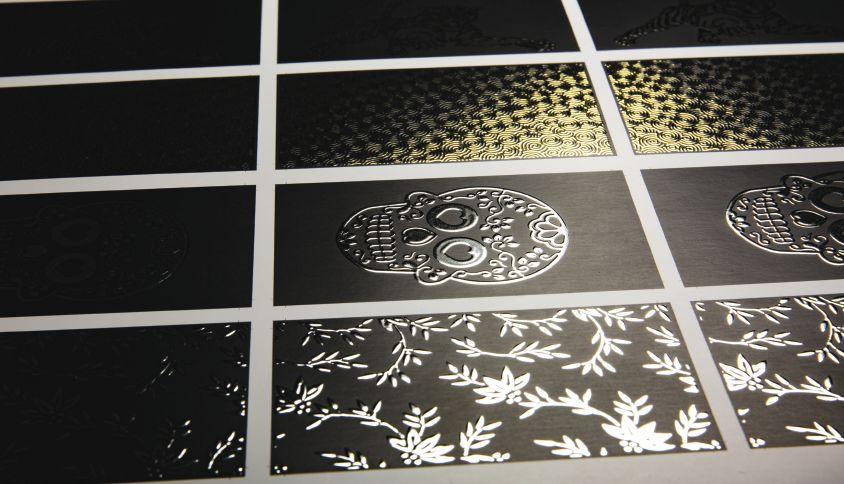
Foil effects on display at Graph Expo 2015 illustrate the options of what digital systems can accomplish today.
In essence the combination of vision and touch allows brands to interact more effectively with consumers through emotion. This is Value Added Printing. The Royal Mail’s studies an endowment effect – a sense of ownership over a printed item derived from sight and touch –translates into a 24 percent increase in value, which in turn stimulates print, and consequently, should be attractive to printers. So tactile printing increases user engagement and allows for price increases, but what about foil?
Foil is commonly used in luxury products by applying gold or silver as these materials appeal to the emotive side of the end user by suggesting scarcity.
Results from research on the impact of high-visibility enhancements research, by the Foil & Specialty Ef-
fects Association 2013 (An Initial Study into the Impact of High-Visibility Enhancements on Shelf Presence), concludes that there are overwhelming responses for “first fixation” of foil stamped packaging for all types of packaging analyzed. Price sensitivity known from other print markets applies less in the beauty, cosmetic, toiletry and fragrance sectors as foiling can increase the sales price by 10 to 40 percent depending on the end product. “The ability of a product to attract the shopper’s visual attention has a strong influence on a consumer’s decision to purchase”. The study demonstrates that participants had significantly longer total fixation duration on the foil stamped packaging when compared with other packaged goods.
The Caltech findings, the Royal Mail study and the Foil & Specialty Effects Association research make a clear and convincing argument for value-added services - such as tactile surfaces and foil - as new product offerings for printers.
Foiling increases brand engagement with end users and differentiates print beyond simple CMYK resulting in more sales and higher returns (anywhere from five to 40 percent).
As inkjet pushes into commercial print, press makers are adopting new approaches to match fluid, drop size, and frequency to better suit both quality and volume applications.
THE PULSE OF PRINT HEADS P
A new article series takes a technical view of key issues surrounding one of the most critical and expensive components of inkjet presses, as it relates to adoption by commercial printers
By Jon Robinson
rint head development is a deeply technical field which appears to sit beyond the need of understanding for most printing operations. Until ink systems become more open and robust, however, the next several generations of production inkjet machines are certainly to be tuned to applications by the print heads they employ.
The newest generation of production inkjet systems provide significantly more application flexibility primarily through the use of compensative paper primers. It will be several years still before inkjet systems can be plugged into a commercial printing operation with an offset-like expectation of quality across a range of print work. A plethora of new inkjet-build partnerships over the past couple of years, be-
tween offset press makers, print-head developers and component players, will ultimately result in a range of inkjet machines and investment options.
The pulse of print heads article series is designed to better understand the most-critical components of any production inkjet press. Part 1 of the article series looks at the relatively simple discussion of drop size and greyscale, before taking a deeper look at the manufacturing of print heads, press builds, and ink chemistries, which are all crucial factors for mass inkjet adoption in commercial print.
Sizing up ink drops
A key objective of print head R&D for years saw companies pushing the delivery of smaller and smaller drops of ink with the goal of improving overall inkjet quality. A natural question arises over whether inkjet systems applied in a commercial
Looking good on paper matters. ColorLok® Technology gives paper more vivid colors, bolder blacks, and faster drying times.* Learn more at colorlok.com VIVID COLORS BOLDER BLACKS FASTER DRYING
Domtar EarthChoice® Office Paper is a great-looking, everyday paper that represents your commitment to environmental responsibility. Featuring ColorLok ® Technology, it is designed to provide optimal printing results. To learn more visit www.egpaper.com or domtar.com.
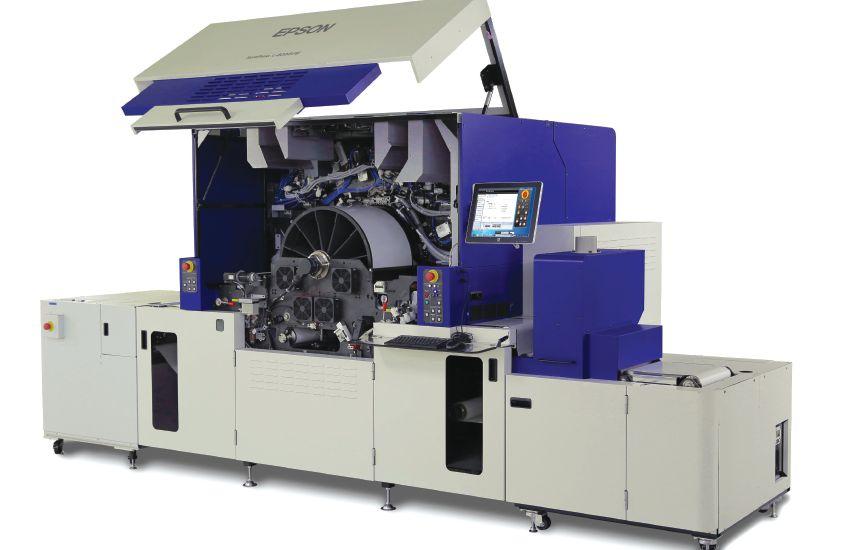
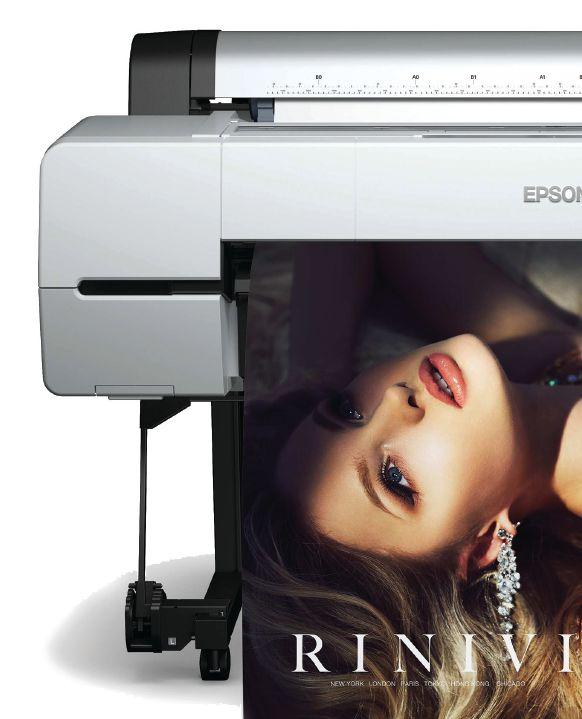
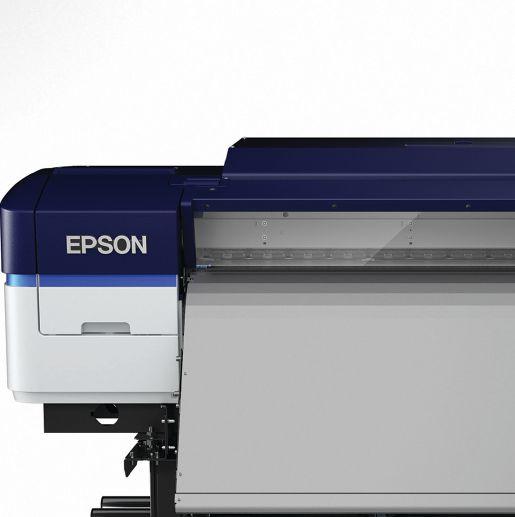
Top image: Epson’s SurePress technology leverages the PrecisionCore head and, according to the company, may turn toward water-based inks by its third machine generation.
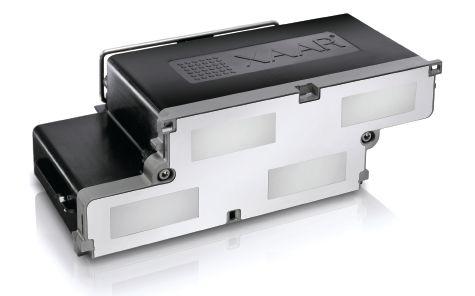
Bottom image: Xaar’s 5601 head features a Z design to reduce printzone challenges.
600 dpi
A print head with a nozzle pitch of 300 dpi, with two staggered rows, will have a native resolution of 600 dpi. Alternatively each row may print a different colour, which keeps the press compact and aids registration of colours.
setting require the jetting of larger drops for producing higher volume work. The final answer, of course, relates to the type of applications being produced, but commercial printing ultimately thrives on as much press flexibility as possible.
“There seems to be a bit of maturing in the market. Cheaper, faster, better is where everyone wants to go, but I don’t necessarily think a small drop is the solution for everyone,” says Jason Remnant, Product Manager with Xaar. “What you are seeing now is that OEMs are learning that actually we can get just as good print quality, or maybe better print quality, by using a slightly bigger drop and making sure it lands in the right place.”
Xaar is one of the world’s only remaining independent print head developers, providing its technologies to dozens of OEMs to then build their full printing systems. After earning his physics degree, Remnant joined Xaar’s Science Park as a 22-year-old. “When I first joined, I remember building print heads that only had about 10 or 12 nozzles in them and we were lucky if they fired 100 hertz let alone 100 kilohertz – things have massively changed.”
Remnant explains Xaar’s new thin-film 5601 print head, demonstrated for the first time at drupa, can jet over eight litres of ink per hour – “These things are turning into significant fluid pumps.” A key challenge in building industrial-grade inkjet presses is that smaller drops also face more turbulence from the air currents created between
print head and passing substrates. This becomes an issue as press speeds increase, particularly with cutsheet systems where papers move more freely than on tensioned webs. “Smaller drops don’t always end up where you want them to,” says Remnant. “They can become like fine mist.”
Xaar is working closely with Ricoh in the development of the new thin-film, silicon-based 5601 head. “Print heads that can eject drops at a very high frequency allow both high-resolution printing – image quality – combined with high-speed paper transport – image volume,” says Joseph Ryan, Director Business Development, Ricoh Printing Systems America. “The new [5601] thin-film print head will move the benchmark for the best quality and volume on a digital press.”
Larger ink drops, moving toward and beyond 30 picolitres, will make the most impact in the textile sector, where greater swaths of colour are required. Commercial printing continues to require a high standard of resolution as expected from customers. “It is my experience that commercial printers want smaller drop sizes, to print with greater resolution, rather than larger drop sizes for wide area coverage,” says Ryan. “Larger drop sizes are most needed in additive manufacturing applications.” Most print head developers are deeply involved with additive manufacturing, where the Holy Grail will also be found around high-volume manufacturing.
“When you are going into the commercial markets you want to balance that high resolution with just pure ink volume, getting it out of the head,” says Mike Pruitt, Senior Product Manager Industrial Markets, Epson America. Pruitt explains Epson’s PrecisionCore technology, which represents a product line that can be tuned appropriately for the market, can run at a high rate of 50,000 pulses per second with the ability to push out 32-picolitre drops.
Like Epson, HP integrates its own complete inkjet systems based on robust print head lines, albeit using thermal tech-
nology as opposed to piezo. “HP HDNA [High Definition Nozzle Architecture] offers smaller drop sizes for improved smoothness of colour transitions and lower image grain in highlights and midtones,” says Ross Allen, Senior Technical Specialist, HP Inkjet Technology Platforms. “Larger drop volumes are generally associated with lower printing resolutions, and those are not the kinds of applications and businesses HP is focused on.”
Greyscale drops
The jetting of variable drop sizes is another inkjet innovation commercial printers can take advantage of. “In commercial it is about varied drop size. You might go to small drops in some cases, but in a lot of cases you just want to layout ink,” says Pruitt, who explains some print heads today can coalesce ink drops while in flight to increase volume. This approach also creates challenges for dot accuracy. There is a growing movement to have different-sized nozzles patterned within a print head to eject different-size drops as needed.
“Today we have examples where people use true dynamic greyscale,” says Remnant. “They are using the variable drop size to print at a low native resolution, but [placing] high levels of information down to give it higher power visual resolution. But it means they do not move the media as fast.
“You have other people who really want a thin-film layer of ink, so they prefer the smallest drop, high uniform resolution, so they use what we call bindery mode – the non-dynamic greyscale mode. The beauty now with inkjet is you have the flexibility to chose what you want to do.”
When asked how commercial printers should think of print heads in terms creating ideal drop patterns, Ross explains: “They don’t need to – and shouldn’t – be concerned with details of the print heads. Halftoning algorithms in the image processing pipeline – from the RIP to the print head drive circuits – in each printer take care of placing coloured dots of ink in patterns that reduce artifacts such as banding and grain.
“Commercial printers should be concerned only about proper colour management,” Ross continues, “composing files that can be printed within the colour gamut of the inkjet printer they are using.” Ross explains inkjet presses like the HP PageWide Web Presses have a colour gamut larger than 4-colour offset. “HP offers colour management tools to take files composed for offset standards to print them with colour fidelity on a web press.” Offset presses, of course, can use more than four colours with spot inks or manipulating ink channels for extended gamut.
“Ink is the most important and complex part of inkjet printing,” says Allen, “and innovation in print heads and printers is driven by innovation – and evolution – in ink chemistry.”
With millions of impressions produced, the 2nd generation J Press 720S is the proven digital inkjet press solution to compete for more of your customers’ brand business.
You’ll appreciate how fast the J Press 720S gets out of the blocks. No plates and virtually no makereadies to slow you down. No wasted sheets or time in running up to color either. Just send the PDF file to the press and instantly print litho-quality images on standard offset coated and uncoated sheets.
Our prints finish strong too, with flexibility designed to take full advantage of your existing finishing equipment. J Press 720S sheets can handle lamination and coatings for high end jobs like photo books, calendars, and brochures. And, the J Press 720S is the first production inkjet press to be certified by Idealliance to GRACol 2013 standards.
Seeing is believing. Visit fujifilminkjet.com today.
BUILDING PRINT PLATFORMS
Recent newspaper and packaging activities highlight the 40th year of business for Canada’s largest printer, as TC Transcontinental prepares for the future around two key strategic platforms
By Victoria Gaitskell
In 2016, Montreal-based TC Transcontinental, North America’s third largest and Canada’s largest printer, with over 8,000 employees in Canada and the United States and 2015 revenues of $2 billion – is celebrating its 40th year in business.
Additionally, in the past few months, the company has made headlines multiple times for other reasons: In May, Transcontinental sold off all of its newspaper assets in the province of Saskatchewan, amounting to 13 newspapers and associated online properties, and closed its printing plant in Saskatoon. In June, Transcontinental acquired Robbie Manufacturing, the third packing company it has purchased in the United States in just over two years. In July, the company commenced a five-year contract to print Canada’s largest-circulation daily newspaper, the Toronto Star, after its owners, Torstar,
announced plans to shut down its printing plant in Vaughan, Ontario.
Transcontinental’s past few months of widespread activity, seemingly disparate events, fit into the company’s strategic plans for growth in both the newspaper and flexible-packaging sectors.
Local publishing
Katherine Chartrand, Director of TC Transcontinental’s External Communications, clarifies that the May sale of TC Media’s Saskatchewan newspaper assets occurred because the assets were small in number and geographically remote from the bulk of TC Media’s other newspaper assets, which are based in Quebec and the Atlantic provinces. “Because of the limited synergies with the rest of our newspaper assets, it was simply not efficient for us to continue publishing a small cluster of newspapers in Saskatchewan,” she says.
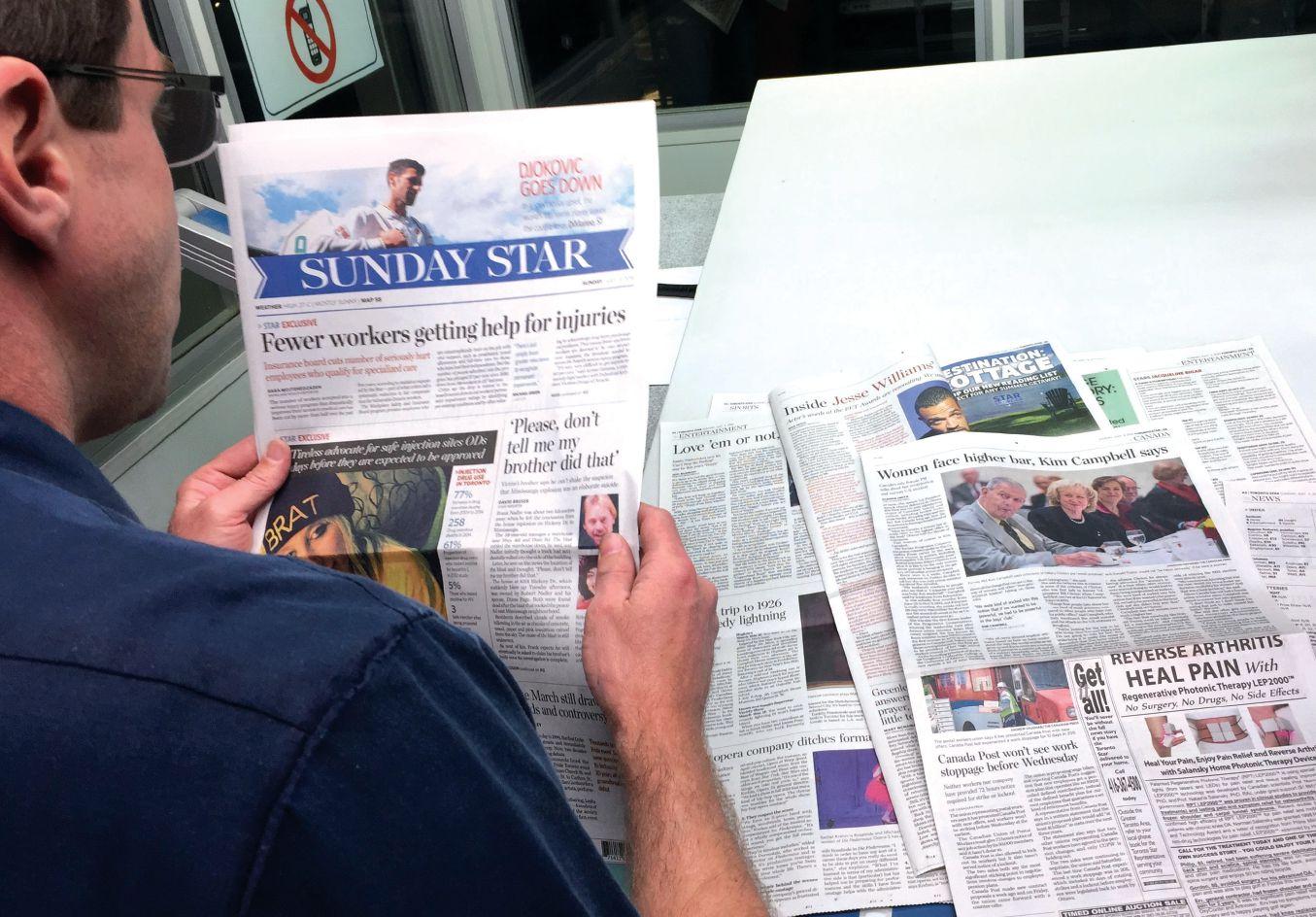
On July 2, 2016, TC Transcontinental’s modern hybrid newspaper plant in Vaughan began its five-year print contract with Torstar Corp.
The buyer of TC Media’s Saskatchewan newspaper assets, Star News Publishing Inc., already published five community newspapers in Alberta and Saskatchewan and printed over 60 community newspapers in Western Canada.
“Because of Star News Publishing’s location in Wainwright, Alberta, and longstanding roots in that region, the sale made sense,” says Chartrand. “They are in a better position than we are to plan and maintain the growth of these assets.”
She adds that the closure of the Saskatoon plant, with an accompanying loss of about 30 full-time jobs, was a direct result of the decision to sell the newspapers:
“The buyer prints their own papers at their Alberta facility, and the remaining commercial printing volume in our Saskatoon plant didn’t justify keeping the operation open.”
Chartrand recounts that around the 1980s TC Media first started to expand its publishing activities with the acquisition of Les Affaires (a paid-by-subscription business weekly) and other financial publications (plus consumer magazines which it later sold; 15 of them for example, to Quebecor Inc.’s TVA Group in 2014.)
Subsequent acquisitions since the 1980s by TC Media include 20 Telemedia weekly papers in the greater Montreal area in 1995, 32 Cogeco newspapers in Quebec and Ontario in 1996, and the purchase of 74 Quebec weekly papers from Quebecor subsidiary Sun Media in 2014.
to five years for local media publishers to cover part of their content-production costs;
• Temporary financial incentives for up to five years for local media publishers to support investments in the digital transformation of their business model;
• Increased ad spending by government institutions in local print and digital media; and
• A review of the way recycling fees are calculated so that publishers can pay reasonable amounts based on their recent circulation volumes rather than outdated data.
Chartrand adds, that besides community newspapers, TC Media is the largest publisher of French educational resources in Canada, with an annual count of more than 12,000 educational books in French annually, covering all grade levels. The company also publishes more than 800 French and English titles in the supplemental educational and general interest areas.
Newspaper printing
TC Transcontinental not only publishes community newspapers as described above, but also continues to position itself as a newspaper printer par excellence.The company began its new five-year printing contract with the Toronto Star on the evening of Saturday, July 2, at its modern Vaughan, Ontario plant, a 30-minute drive northwest of Toronto.
thing very unique in newspaper printing,” he explains. “What this capability allows us to do, which helps in our pricing model, is to run newspapers at night, which are usually cold set – although The Globe and Mail runs some heat set on their outside cover and some of the internal sections –then run flyers during the day. All of our flyers are heat set.”
He says, besides The Globe, TC Transcontinental produces work for Torstar, Postmedia, and other newspaper publishers at their facilities in Vaughan, Calgary, Vancouver, Halifax, plus two plants in Montreal. In 2009, Transcontinental built another plant near Fremont, California, equipped with three hybrid Man Roland web presses with similar capabilities to the KBAs in Canada, to produce the San Francisco Chronicle, a paper they still print. “To print a daily newspaper, you have to be relatively close geographically to where the paper will be delivered, within a few driving hours,” Reid explains.
He continues: “Flyer work is our biggest segment in print and it’s very stable. Our research and the fact that we print billions of flyers each year demonstrate that consumers still like their printed flyers. Our customers still say they are the best way to drive traffic to retail stores.”
Weekday circulation experienced a decline not seen since the immediate aftermath of the Great Recession.
At present Chartrand says TC Transcontinental is the largest publisher of local newspapers in Quebec and Atlantic Canada, with 111 titles in Quebec (including the daily Métro Montreal, all but one title free of charge), 35 titles in Atlantic Canada (including seven paid dailies, 17 paid weeklies, and other free-of-charge weeklies and periodicals), and two in Ontario (Seaway News in Cornwall and Orléans Star in Gloucester, both free weeklies.)
“We are proud to provide high-quality information to the communities we serve and are working hard to develop effective multi-platform solutions for our advertisers in these regions,” says Chartrand. However, she adds, a constant decline in advertising revenues year over year makes it especially challenging for TC Media and other publishers of community newspapers to continue providing high-quality information, while also endeavouring to convert their operations to more sustainable digital business models.
Brian Reid, President of TC Transcontinental Printing and TC Transcontinental Packaging, explains: “Our Vaughan plant is a relatively new facility with stateof-the-art technology and a team that’s very experienced in printing newspapers. When the Star first opened their own plant in 1992, almost 25 years ago, it was also state of the art, but obviously technology has evolved a lot since then. From 2007 to 2010, when TC Transcontinental opened our Vaughan plant, we invested roughly $800 million to upgrade our entire North American print platform. I think our investments in new technology provide the Star with the opportunity to get a high-quality product on new equipment and also reduce their printing costs.”
In Quebec, TC Transcontinental distributes its newspapers and retail flyers through its own marketing product called Publisac, a weekly bag containing printed flyers, newspapers, and specialty promotions with advertising printed on the outside that is hung on the door of households across Quebec (approximately 3.5 million homes). Elsewhere in Canada, the company manages the distribution of flyers to some 10 million more households through Targeo, its own Pan-Canadian distribution strategy and brokerage service.
“Newspapers are down a little bit because their revenue from advertisers has declined,” says Reid. “Some specific segments are better suited to online advertising, things like automobiles, so there is not nearly as much advertising for cars in printed newspapers these days. Real estate advertising has declined as well.
Average weekday newspaper circulation in 2015 fell 7%, the most since 2010, which Pew Research explains to be a drop due entirely to print circulation, which declined by 9%, while digital circulation increased by 2%.
To offset this present economic challenge, along with other Canadian media companies and associations, TC Transcontinental is currently seeking the support of various levels of government. Chartrand reports, that in April, François Olivier, President and Chief Executive Officer of TC Transcontinental, recommended an action plan to the Federal parliamentary Standing Committee on Canadian Heritage, including:
• Temporary financial incentives for up
Reid continues: “Our model is a little different than traditional manufacturing environments. For outsourced newspapers we work with highly skilled, self-directed teams and a lot of automation. The result is a very efficient operation that allows us to make the investments we need, still make a reasonable return, and at the same time provide savings considered to be significant by the news publishers who decide to print with us.”
Reid says equipment highlights at Vaughan include two KBA Commander CT hybrid presses, both 66-inches wide with four towers and an individual capacity of 48 broadsheet pages in one path.
“Hybrid means we can run both heat set and cold set and combine them – some-
“As a result, newspapers are re-envisioning their models and choosing to outsource their printing so they can focus on their core business of providing content, rather than printing, which requires constantly upgrading the platform with capital investment. We have developed a model that’s win-win, so we can offer savings to newspaper publishers, yet still make a reasonable return that allows us to maintain a state-of-the-art printing platform.”
Flexible packaging
In explaining what made Robbie Manufacturing such an attractive prospect, which Transcontinental acquired in June, Reid says culture is always one of the most-critical factors when the company is considering an acquisition: “Since the inception of our business 40 years ago, we
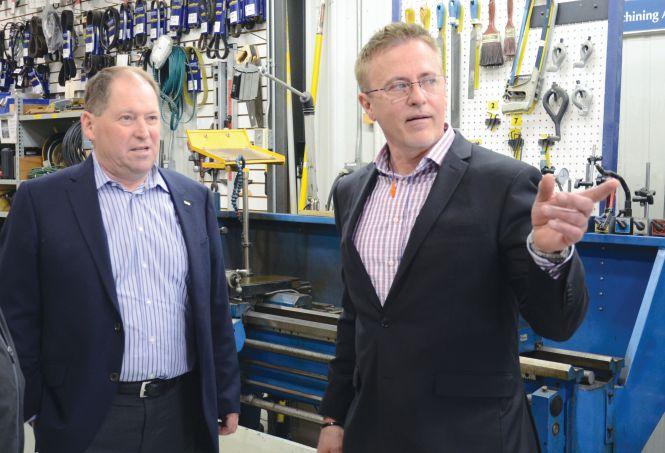
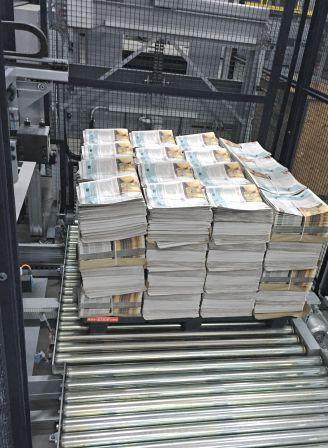
Clockwise: Brian Reid, President of TC Transcontinental Printing & TC Transcontinental Packaging (left), speaks with Keith Roy, GM of Transcontinental LGM-Coronet in the maintenance area, while visiting the Winnipeg plant in May. Transcontinental’s first print run of the Star in Vaughan. Robbie manufacturing print samples.
Newspaper advertising revenue experienced its greatest drop since 2009, falling nearly 8% from 2014 to 2015.
Fully one-fourth of advertising revenue now comes from digital, but not because of growth in that area: Digital advertising revenue fell 2% in 2015.
Non-digital advertising revenue fell more, dropping 10% in 2015.
operate a certain way based on values that come from our founders, the Marcoux family.
“These values are innovation, team work, performance, and respect in the way we treat customers, suppliers, and each other internally. Because we spent a lot of time getting to know the owner and leadership team at Robbie, we were able to get a very good sense, that although they used some different terminology to describe it, their culture was similar to ours.
Reid continues to explain that Robbie Manufacturing also possessed a strong management team who were very supportive of the transaction and wanted to stay on. “Because we’re relatively new in flexible packaging, we need strong, talented people who are experienced in flexible packaging to add to our team.
tions to the printing caused by stretching the film around the product. Using their method, only when the film is in place can you actually read what is printed on it.
“Robbie’s national salesforce is nice, too,” says Reid, adding to the list of reasons behind the acquisition. “It expands our sales coverage across U.S.”
represents a clear shift in the company’s revenue generation, over the past couple of years? Reid explains: “First, for many reasons, the flexible packaging segment is experiencing a lot of growth: it’s cheaper, it distributes better, in many ways it’s more environmentally friendly – there are lots of reasons why there is a big shift toward it.”
In 2014, the latest year for which data were available, newsroom employment declined 10%, more than in any other year since 2009. The newspaper workforce has shrunk by about 20,000 positions, or 39%, in the last 20 years.
“Third was their capability to add to our packaging portfolio with grocery-store pouches for products that include deli items and frozen foods, as well as packaging for multipack consumer goods.”
Typically, Reid explains, if you buy a threepack of, say, household cleaners in aerosol cans or plastic bottles, the products come wrapped together with shrink wrap film over a cardboard base.
But Robbie figured out an alternative packaging system for multiple consumer goods that eliminates the cardboard tray and prints on really, really thin shrink wrap film in a way that compensates for distor-
The Robbie Manufacturing plant in Lenexa, Kansas, is also about an hour and 15 minutes drive from Clinton, Missouri, site of the first packaging company Transcontinental purchased, called Capri Packaging. Reid says the production managers at Robbie and Capri already knew one another before Transcontinental acquired both companies. Capri prints rolls of packaging for dairy products, the largest being cheese and next largest yogurt. In May 2014, when Transcontinental acquired Capri from Schreiber Foods Inc., the Green Bay dairy company with over $5 billion in annual sales.
Transcontinental retained a huge 10year contract with Schreiber which gave them security with the transaction. In September 2015, Transcontinental made its second acquisition of a packaging company by purchasing Ultra Flex Packaging Corp. in Brooklyn, New York, a manufacturer of roll-stock, pouches, and bags for the coffee, tobacco, confectionery, snack foods, and pet foods segments.
Why has Transcontinental moved so decisively into flexible packaging, which
“Second, the manufacturing process for flexible packaging is very similar to what we already do in our offset printing. The process still involves prepress, printing, and finishing, the big differences being that for flexible packaging we print on plastic instead of paper, and we use flexo plates instead of offset plates,” says Reid.
“The finishing methods are also different, most involving converting and laminating, but still we have some familiarity with these processes. They’re not entirely foreign to us.
“The third reason is that flexible packaging hasn’t been consolidated yet. The fact that there are a lot of players allows us to look at acquisitions and ideally try to build a North American platform, both through organic growth and by seeking opportunities for acquisitions in the U.S. and Canada.” Transcontinental has since installed a new press, laminator, and slitter at Capri, and a new press and lamination line at Ultra Flex. We plan to make similar investments in the growth of other companies we acquire,” says Reid. “For sure, there will be more acquisitions.”
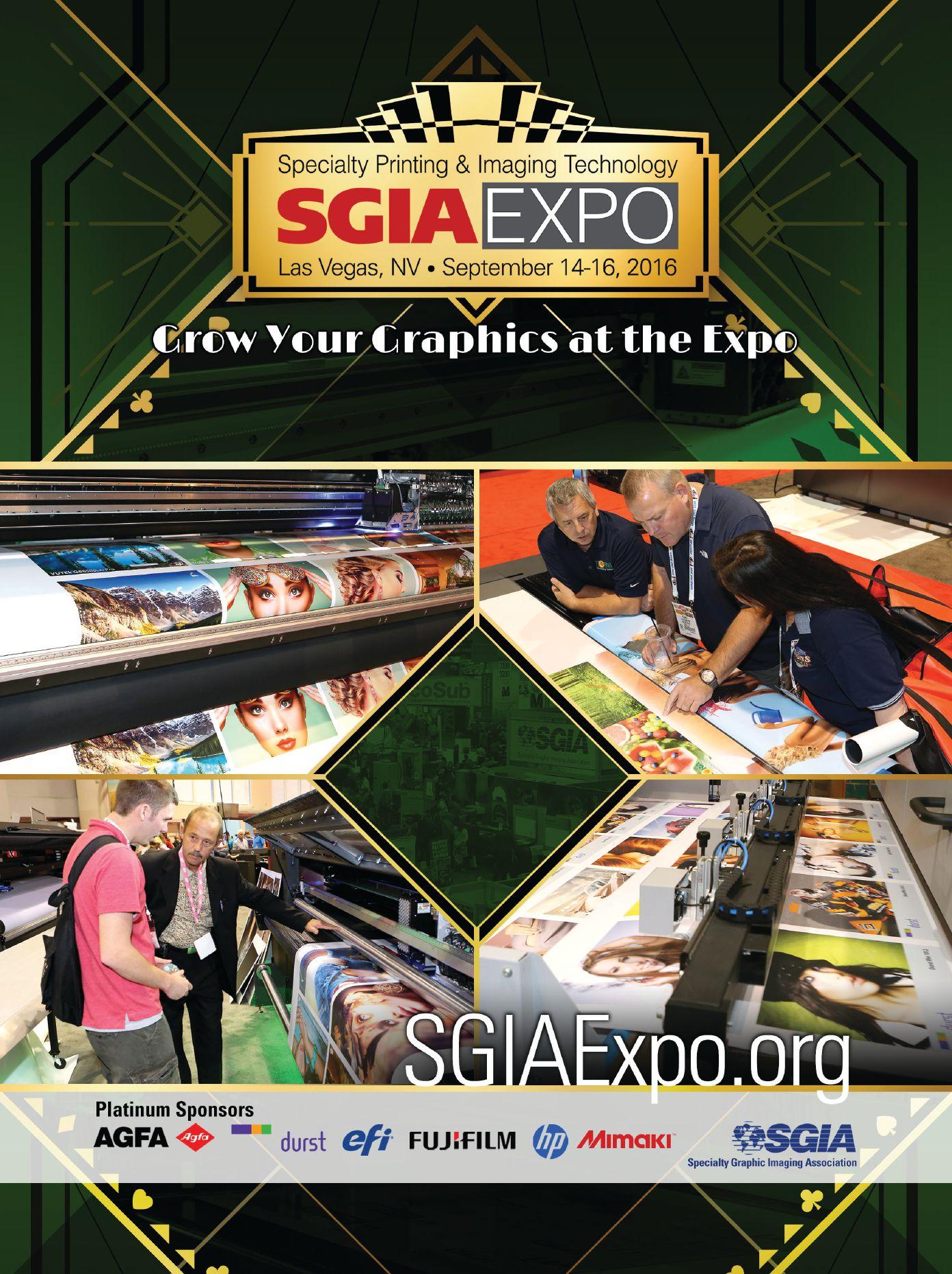
At the 2016 SGIA Expo in Las Vegas, graphics producers will gather to experience the newest equipment for rigid substrates, textiles, containers and electronics, including: flatbeds, roll-to-rolls, hybrids, single-pass, dye sublimation and much more from the industry’s leading exhibitors. You’ll also see the most innovative software, automation solutions and color management tools available.
You can’t miss the best show for graphic imagers: 2016 SGIA Expo, September 14–16 in Las Vegas!
MY DRUPA EXPERIENCE
Five students from the Graphic Communications Management program of Ryerson University share their highlights after having the opportunity to experience the future of printing technology at drupa 2016
Clarity for the future by Eleesa
Jacob
“I have never been so excited to see paper!” These were the words that stuck with us even after we traveled through the grounds of drupa with a fire in our souls and blisters on our feet. This trip for me was hands-down the trip of a lifetime. Before we left for Germany, I heard many stories and descriptions from people who tried to explain the magic of drupa, but it was not until I arrived in Düsseldorf that I was filled with a pang of adoration not only for our main printing industry, but also for packaging and finishing.
It’s no joke when we people say that drupa is a trade show like no other in our industry. From the introduction of white inks in digital systems to the advancements of 3D printing, drupa 2016 proved to be the ultimate platform for businesses large and small to showcase their contributions
to the print and design industry. Granted, my first day of classes at GCM were enough to have me sold on the idea that I was not only in the right program, but in the right industry.
Thanks to this trip, I was left mesmerized by the complexity of the processes required to take what’s designed and produced on computers to produce it on paper or almost any substrate imaginable. I was awestruck by how even a thin metallic coating on an image could elevate the consumer-to-product experience or how a clever packaging design can be used to not only keep the contents intact, but also have the ability to persuade consumers into wanting the item! Put the two together and you have a product ready to be bought regardless what the packaged contents are. Being design-oriented from the start, I can easily say that HP and Scodix were the companies that intrigued me the most. Not
Students from Ryerson GCM, pictured on Rhine river bank just outside of the Altstadt in Dusseldorf, witnessed the world of print at drupa 2016.
only were their machines impressive, they had booths (or a full hall in HP’s case) showcasing the many varied applications produced by their technologies. HP was largely focused on packaging while Scodix used its platform to show how much a spot finish can enhance the final printed piece. These two booths not only intrigued me, but they have opened my eyes to the possibilities and beauty our industry has to offer, as well as how I, as a designer, can think beyond traditional 2D boundaries.
Apart from my time spent at the various booths, I could not help but think about how diverse our industry truly is! I had the pleasure of meeting industry professionals from all over the globe who had nothing but passion for what they did. Not only that, but this trip was testament to the fact that my future in this industry will be shaped and influenced by individuals who believe creativity and vision to be border-less.
All in all, I went into this trip representing Ryerson on an international level despite not knowing much about the individuals who accompanied me, but if the relationships, memories and inspiration I developed are any indication of what the future of this industry has in store for me, well… I’m in good hands! My deepest thanks go out to those who made drupa 2016 a trip I will always come back to.
Direct-to inkjet by Jessica Tam
It’s been an absolutely amazing experience to be able to go to drupa 2016. Before arriving, my expectations were minimal as I was not sure what was to come, other than hearing drupa was the trade show to attend if you are in print. Everyone within our industry was excited as drupa approached, everywhere I went, from the TAGA conference to the OPIA awards dinner.There was a buzz here and there as to what next big technology trend would highlight the show.
The first day was overwhelming yet exciting as I saw numerous presses running and learned so much when I talked to all the different people at the show. I had a realization of time ticking past, as there was so much to see you could spend all 10 days exploring the fairgrounds. The most apparent trend that stood out to me, throughout the entire show, was automation. Not only unique software automation, but the fact that all vendors were thriving to be the fastest amongst their competitors. There were many amazing print samples at the show, but with quality being a given nowadays, I picked up on the automation vibe at drupa. Vendors
highlighted minimal labour, easy functionality and speed on their booths.
Machines like Xerox’s Direct to Object Inkjet Printer was a memorable example of this automation trend. What stood out to me about this Xerox printer is that it can print on any substrate or object and the finished product comes out within seconds. Personalization on products is made easy with the Direct to Object Inkjet Printer; anything from printing on water bottles to headphones with your initials on it is done at a fast speed of around 30 objects per hour. Many other companies like HP highlighted a range of inkjet printers and I felt that drupa 2016 demonstrated inkjet-printing capabilities have reached another level. Everyone’s buzz in the past was about digital printing overtaking lithography sheetfed, yet I think inkjet printers demonstrated vastly improved abilities at drupa 2016. drupa is another world that has opened up my curiosity and I cannot wait to see what there is to come within our industry. Print is not dead, it is just evolving into something bigger and better.
Production Inkjet by Diondra Filicetti
drupa 2016 definitely made a statement and showed many that the equipment manufacturers are keeping up with industry trends which demand greater variability and flexibility, shorter makeready times, and more customized jobs. Exciting new technological developments, upgrades and advancements left many impressed after the 2016 tradeshow. As a first timer at drupa, the sheer size of the tradeshow was overwhelming. Time was tight and it was impossible to see everything, or even a fraction of everything. I found that production inkjet had a large presence at the show. From many different vendors and different configurations, it was evident, that through production inkjet, equipment manufacturers have created solutions that meet the need for variability, customization, and the efficient production of shorter runs.
Heidelberg introduced the Primefire 106 at drupa 2016 as a joint venture with Fujifilm. This industrial inkjet press capable of printing a maximum sheet of 28 x 40 inches was a showstopper in the Heidelberg booth. Loaded with Fujifilm Samba inkjet heads and inks, this seven-colour press uses CMYK plus orange, green and violet to expand the printable gamut to reach up to 95 percent of the Pantone 2008 library within a
Ryerson’s GCM student team visits Esko’s booth at drupa 2016 with Esko North America’s VP of Sales, Steve Bennett (far left), and Acting GCM Chair, Gillian Mothersill (far right).
DE2000 of two. The Samba heads fire at a maximum of nine billion drops per second, delivering a resolution of 1,200 dpi. Before the sheets enter the press, they must be preconditioned to receive the ink and prevent the dot gain from the water-based inkjet inks. This occurs in the conditioning unit after the feeder.
The Primefire 106 also looks very similar to a traditional Heidelberg Speedmaster XL 106 offset press with an identical sheet feeder. This unit alone is capable of running at traditional offset speeds of up to 18,000 sheets per hour, however, the printing speed is 2,500 sheets per hour.
There will be an upcoming productivity mode with a print speed of 5,000 sheets per hour. The inkjet press is driven by Heidelberg’s Prinect Digital Front End. An interesting feature of the delivery system is the automatic ejection system and direct travel, which delivers a sheet directly onto the inspection table and can also eject imperfect sheets into a waste unit. This reduces the need for operator intervention by physically pulling sheets out of the delivery.
pressed by the size of the show, my entire visit to Germany, and the new perspective that I have taken away from the print and graphic arts industry.
I had been to trade shows before, but none at all quite like drupa. Not only was the show extremely huge and well organized, but the energy in the air at drupa was incredible. A positive vibe could be felt across drupa’s massive and seemingly endless number of halls, with crowds of people suited up in business wear excitedly roaming the site. I also enjoyed many inspiring displays and demonstrations put on by the different companies showcasing their new products, innovations and advancements; all the way to the drupa city, which further showed the use and importance of the technologies in the industry –all the while allowing for a German cultural experience. The fact that drupa was so large, that there was absolutely no way one could possibly see everything the show had to offer, was astounding.
drupa awarded me with a better understanding of not just printing technologies, but also of the industry. I never seemed to realize how big it truly is, or how important print really is and how it can affect everyone’s lives the way it does.
Digital innovations by Taylor Alderdice
drupa is an incredible opportunity for industry professionals to show off and promote their new technologies and never-ending supply of beautiful samples to those who live and breath the print industry.
As a first-year student in Ryerson’s Graphic Communications Management Program (GCM), looking forward to year two, it was a privilege to be selected to attend drupa with my fellow students and professors this past June. I was able to experience, participate and be educated in our innovative industry in a hands-on environment where I was fully immersed in print.
In each hall of the convention center there was always something going on, whether it was attending an informative demonstration, being mesmerized by a running operation, or collecting as many samples as could possibly fit into your carry-on to bring home. drupa had something for everyone. The digital innovations being presented reminded me of past lectures from school where professors taught us about how much the industry has advanced to date. When I toured around the many halls at drupa, I was continually impressed with the innovations for packaging.
The percentage of international visitors is up 16% from four years ago. This figure can be attributed to Asian visitors with 17% of international visitors coming from this continent alone (2012: 13.6%).
Heidelberg’s target market for this press is packaging, specifically folding cartons. The press is suitable for this market because it can handle thick stocks (up to 0.6 mm), is capable of versioning and variation, and has a wide colour gamut to achieve the many spot colours used in packaging applications. With this type of equipment, oneto-one marketing campaigns will be easily attainable and spot colours can be run without setup time. It will be exciting to see future upgrades and enhancements to this press in addition to further advancements in the digital category. The Primefire 106 however provides variability, customization, and efficient production of shrinking runs in a large sheet category.
drupa City by
Melissa Williams
My drupa experience is one that I will always remember.The drupa trade show was undoubtedly the most-impressive trade show I have been to thus far. I was im-
I’m grateful to have been given the opportunity to attend drupa so early in my career. I cannot however, forget to touch upon my time in Germany as well. Not only was the show greater than what I had imagined, but my stay in Germany was an amazing one too. I travelled with six other students and professors from Ryerson University and we were able to experience a few cities in Germany rather thoroughly. In our time leading up to drupa, we were lucky enough to have an in depth and hands-on experience with gravure printing at Stuttgart Media University.
We also had a visit to the Gutenberg Museum where saw the “one and a half” of Gutenberg’s magnificent bibles. We traveled, walked and explored Stuttgart, Dusseldorf, Heidelberg, Mainz and Wiesbaden. We witnessed some outstanding views and ate many delicious meals. I must again emphasize the food! Highlights for me were the Schnitzel and Spargel, the size of the pork knuckles, the beer, and, of course, the endless amounts of Gelato.
The opportunity to attend a show like
Within Hall 17 was HP’s mini and fully functioning print shop which was demonstrating and essentially live-streaming the true performance of its products. As I walked around the hall, one demonstration that really caught my attention was focused on the HP Indigo 20000 press and the HP Indigo 8000 press. These were the main topics of a filmed demonstration which then presented the new and improved HP Indigo ElectroInk Premium White. Both presses use the Premium White and where the HP Indigo 20000 focuses on the ability to produce a variety of packaging applications the HP Indigo 8000 has achieved the status of being the industry’s go-to digital narrow web label press. Both of these astonishing presses use the Premium Ink for brands to create a product with a unique finished look. Compared to the previous HP Indigo ElectroInk White, the Premium White is able to cover the same amount of surface area using four hits less than its predecessor to achieve the same finished look.
Now, as the new school year is quickly approaching, I am excited to share with my fellow classmates and GCM peers all of the information I learned at Drupa and how the print industry is continuously growing. Thanks to companies such as HP, the future is bright for those who push the boundaries and keep reinventing print.
The industry’s most exciting and all-inclusive
showcase of the hottest technology in printing today is branching out in new directions for 2016. Sunny Florida—the international gateway to Latin America and beyond—will draw a fresh set of attendees and exhibitors, all eager to cultivate new business relationships. Here among 100s of exciting new product introductions and unique new print applications are the “seeds” for your business growth. Looking to turn over a new leaf? Discover a fresh crop of profit opportunities at GRAPH EXPO 16.
September 25–28, 2016 Orange County Convention Center - North | Orlando, Florida GraphExpo.com
Inkjet innovations
The growth of wide-format inkjet systems, software and consumables continues
Mutoh ValueJet 1938TX
In April 2016, Mutoh released its new 75-inch ValueJet 1938TX printer made for high-production direct to textile printing. The 1938TX, with a staggered dual print head design, reaches speeds of up to 914 f2/h on a variety of fabrics like closed, open non-stretch, face-in and face-out roll media. It is rated to print at 1,440 dpi and can hold up to eight-colour capability with an open ink platform. Heavy-duty feed and take-up systems are included, as well as a built-in ink trough for the ability to produce flags and other open fabrics.
HP Latex 500/1500
In April 2016, HP introduced the Latex 500 and Latex 1500 Series, aimed at medium- to- large display printers with increasing volumes. New features of the 64-inch Latex 560 and 570 printers include more unattended printing with a new spindle-less pivot table and automatic skew adjustment to load rolls in one minute or less, heavy-duty roll handling of rolls up to 55 kg (121 lbs), as well as a status beacon for real-time production monitoring from a distance. It prints at speeds of up to 248 square feet per hour (f2/h) or 23 m2/h in indoor mode. Users can also produce highly saturated prints using new vivid print modes with 50 percent more ink density. The Latex 500 series also features a new wiper roller accessory for better quality results on lowcost banners and self-adhesive vinyl.
The 126-inch (3.2-metre) HP Latex 1500 printer is described by the company as a robust, affordable super-wide system for both indoor and outdoor applications, including PVC banners, self-adhesive
vinyl, textiles and double-sided prints. Printing at speeds of up to 74 m2/hour (800 f2/h) in outdoor production mode and up to 45 m2/h (800 f2/h) in indoor mode, the printer leverages 1,200-dpi HP thermal print heads, auto nozzle replacement, an optical media advance sensor (OMAS), and an embedded spectrophotometer.
Epson SureColor P10000
In February 2016, Epson introduced its new 44-inch SureColor P10000 inkjet system aimed at the upscale retail display graphics and fine art photography printing. Joining the 64-inch SC-P20000, the new SC-P10000 leverages an 8,000 nozzle PrecisionCore MicroTFP print head, a new media feeding system, and a reformulated Epson UltraChrome PRO nine-colour pigment ink system. The company explains, when compared with other Epson systems on the market, the new SureColor P10000 is capable of producing quality output up to 2.8 times faster.
The SureColor P10000 utilizes a new 2.6-inch tall, 10-channel PrecisionCore MicroTFP print head capable of printing output of up to 2,400 x 1,200 dpi. Epson explains UltraChrome PRO is the first pigment ink set to feature four levels of grey ink technology, including Gray, Light Gray, Dark Gray, and Black pigments. In addition, the SureColor P10000 utilizes improved Resin Encapsulation Technology for output with strong gloss uniformity, and overall contrast ratio and clarity.
EFI Midmarket Print Suite MIS
EFI recently debuted what the company describes as a major release of the EFI Midmarket Print Suite MIS workflow, version 4.0. The new workflow software suite features tools aimed at the signage community. The suite features EFI’s Pace MIS software at its core and includes a range of out-of-the-box, integrated systems that are certified by EFI.
Fujifilm Acuity Select 20
In March 2016, Fujifilm launched its Acuity Select 20 Series as a replacement line for the existing Acuity Advance Se-
lect. The new UV flatbed printer series reaches print speeds of up to 362 f2/h (33.6 m2/h) working with substrates of up to two inches thick (50.8 mm). The Select 20 Series also now includes the option of using light cyan and light magenta, aimed at reproducing fine art or photographic images. As well, Fujifilm explains the addition of a pneumatic pin registration system delivers easier media loading, while new UV lamp technology allows for thinner media to be printed. The Select 20 Series now features what
Fujifilm’s Acuity Select 20 works with substrates of up to two inches thick.
3.5%
Large-format printer shipments grew 3.5% in 2014, according to IDC, when compared to 2013, while revenue from those shipments declined by less than -1%.
Fujifilm describes as an improved high-pressure vacuum system, designed to reduce masking of the bed for easier media loading. It will also be available in both the standard 98.4 x 49.2 inch (2.5 x 1.25 metre) and X2, 98.4 x 121.3 inches (2.5 x 3.08 metre) print-bed sizes, with a roll option available for both.
Zünd D3
The Zünd D3 cutter is a new dual-beam system, largely based on the G3 series, aimed at high-volume, industrial applications. Zünd explains D3 productivity gains are primarily due to its dual-beam
construction: Twin beams operating simultaneously in one production workflow, with each beam carrying up to three tool modules. The D3 systems are available in four sizes ranging from the D3 L-3200 with a working area of 1,800 x 3,200 mm (71 x 126 inches) to the D3 3XL 3200 with a working area of 3,210 x 3,200 mm (126 x 126 inches). D3 cutters allow for the addition of new tools, modules or automated load/off-load devices.
Roland VersaUV LEF-300
In January 2016, Roland DGA introduced the new and larger VersaUV LEF-
300 to its line of benchtop UV-LED flatbed printers, which also includes the existing LEF-12 and LEF-20 models. To accommodate greater quantities and larger-sized items, the LEF-300’s printing area has been expanded to 30 inches wide by 13 inches long, which equates to an imaging area 50 percent larger than the LEF-20.
Durst Alpha Series
In March 2016, Durst launched its Durst Water Technology for the Alpha multipass series, a new printing system for the textile printing segment with available print widths of between 190 and 330 cm. The system employs one-step pigment inks and automatic material pretreatment for producing textiles, clothing and upholstery coverings. The press can be configured with up to 8 colours and 64 Alpha-S print heads that achieve a native resolution of 600 dpi and a print speed of 460 linear metres per hour.
SPGPrints JAVELIN
In June 2016, SPGPrints launched its new JAVELIN designed as an entry-level textile printing system for the production of up to two million metres per year, as opposed to its existing PIKE printer (launched in 2015) rated to produce up to 13 million square metres per year with an array of 43 Fujifilm Samba print heads. PIKE holds an 1,850-mm print width delivering variable dot sizes (from two to 10 pl) at a resolution of 1,200 x 1,200 dpi.
EFI VUTEk FabriVU
The new 3.2-metre EFI VUTEk LX3 Pro hybrid roll/flatbed LED inkjet printer is rated for a throughput of up to 3,420 f2/h (318 m2/h). The aqueous-ink soft-signage printer also offers greyscale imaging and LED technology. The Quantum LXr LED printer, a dedicated roll-to-roll
printer, described by EFI as an economical alternative to latex printers, features 7-picoliter imaging and print resolutions up to 1,200 dpi in four colours with optional white.
The EFI VUTEk FabriVU 340 is a 3.4-metre dispersed dye-sublimation ink printer developed by EFI Reggiani, which EFI acquired in 2015. The new FabriVU product line, which is also available in a 1.8-metre size, runs water-based inks and is aimed at soft signage and banner applications.
Coveris Magic WRAPIT
In March 2016, Coveris’ Advanced Coatings Digital Imaging division introduced its Magic WRAPIT wrapping paper. WRAPIT is a 5.8-mil heavy duty, durable, inkjet printable wrapping paper with a luster surface that is compatible with solvent, UV cure and latex printers. It is designed for producing custom or personalized gift wrap.The company explains the product is strong, flexible and easy to fold and wrap around gifts.
GMG OpenColor 2.0.4
In May 2016, GMG released version 2.0.4 of its multichannel profiling software called OpenColor with an ability to create separation profiles that can be exported to other applications. OpenColor 2.0.5 will offer dot proof profiles for GMG proofing solutions. To make proofing simpler, explains GMG, OpenColor calculates high-precision profiles and then transfers them to GMG ColorProof for printing. GMG has also introduced a plug-in that allows GMG separation profiles to be imported directly into Adobe Photoshop. With it, users can utilize MX4 separation technology, including re-separation and ink optimization profiles, on the desktop rather than in a server-based environment.
The Zund D3 cutter features a unique two-beam for productivity.
Durst’s Alpha 190 multi-pass machine is aimed at the traditional textile printing segment.
The JAVELIN is an entry-level textile production system.
Roland TrueVIS uses the company’s new FlexFire print heads.
Epson SureColor S-Series
In January 2016, Epson launched its most-advanced line of SureColor S-Series roll-to-roll solvent printers – the 64inch SureColor S40600, S60600 and S80600. The new series leverages fourth-generation Epson UltraChrome GS3 solvent inks, an all-new media-feeding system, and what the company brands as Dual-Array PrecisionCore TFP print heads – aimed at signage, vehicle graphics and fine-art reproduction markets. Developed over a four-year period, the SureColor S-Series’s GS3 solvent inks are formulated for fast-drying. The SureColor S80600 inks a new GS3 Red ink, as well as optional White or Silver ink.
HP Scitex 9000
In June 2016, HP released the new Scitex 9000 press rated to produce up to 90 beds per hour with full automation, while operator-dependent manual media handling is targeted at around 60 beds per hour. This relates to a 500,000 square metre per year duty cycle for a range of applications like point-of-purchase signs and displays. The Scitex 9000 press is upgradeable in the field.
HP also unveiled new HDR245 Scitex Inks designed to work on flexible, rigid
and select plastic medias, providing what HP describes as higher quality work at faster speeds, with up to 86 percent Pantone coverage and print longevity of up to two years outdoors.
Drytac Scrimless Banner
In March 2016, Drytac released its Scrimless Banner product, a 15-mil smooth, double-sided PVC/PET blockout banner media for use with interior and exterior short-term graphic applications. Drytac explains the product is primarily suited for retail environments where sturdy, professional signage is required, adding that Scrimless Banner is dimensionally stable and has high tensile strength to keep graphics straight and taut. Its lay-flat, non-curl characteristics, explains Drytac, prevent graphics from looking wrinkled or worn, making it suitable for hanging banners or banner stand graphics.
ONYX Graphics Thrive
ONYX Graphics recently released version 12 of Thrive, which the company describes as a full featured, scalable workflow based on the Adobe PDF Print Engine. Thrive v12 provides automation with what ONYX brands as Quick Sets,
designed to eliminate manual steps. Also included is Thrive Production Manager, which provides a real-time, browser-based dashboard into print production from any location.
ONYX Connect, a JDF-based interface, is available as an optional module for Thrive. The open system provides what the company describes as a simple developer interface to connect current business workflow to ONYX software. It also includes the ability to automate job submission through JDF and hot folders.
Fujifilm Uvistar Hybrid 320 UV
HP finished 2014 as the global leader in the wide-format market based on number of shipments, according to IDC, with a 40.9% market share. The top five manufacturers make up more than 80% of global wide format shipments.
Fujifilm’s new Uvistar Hybrid 320 UV is a 3.2-metre combination flatbed and roll printer, capable of producing output at speeds of up to 2,100 f2/h. The inkjet system uses Fujifilm Dimatix Q-Class print heads and Fujifilm Uvijet inks. The eight-channel configurations delivers CMYK, Lc, Lm, Lk and orange inks. A nine channel configuration is available to add white ink. The Versa-Drop technology of the Dimatix Q-Class print heads allow the press to image in greyscale with droplet sizes ranging from 10 to 30 picoliters. The Uvistar Hybrid 320 also leverages what Fujifilm describes as a patented tri-lobal belt and six-zone vacuum system.
Mimaki TS30-1300
In April 2016, Mimaki introduced the TS30-1300 dye sublimation printer for light production environments. This 54inch wide, roll-based model is a dedicated dye sublimation transfer paper printer aimed at first-time users or design shops producing short-run pieces, samples and custom work for transfer to textiles or hard surfaces. The TS30 can reach print speeds of up to 211 f2/h (19.6 m2.h) in four-colour mode.
Drytac JM55 Force
In January 2016, Drytac introduced its JM55 Force as part of its new JetMounter model of wide-format roller laminators. Described as a heavy-duty, entry-level laminator, Drytac explains JM55 Force has a maximum laminating width of 55
OpenColor 2.0.4 creates separation profiles that can be exported to other applications.
Epson’s S-Series uses new UltraChrome GS3 inks.
Thrive is based on Adobe PDF Print Engine.
inches (1,397 mm) and is described as being well suited for mounting, laminating and decaling pressure-sensitive materials. It features large 4.7 inch (119.4 mm) diameter non-stick rollers; speed control up to 20 feet (six metres) per minute; a maximum nip opening of one inch (25 mm); top and bottom auto-grip supply shafts with brake tension control on the operator side; single mechanical height/pressure adjustment; and an interchangeable 110V or 220V electrical configuration.
Agfa Jeti Automation
In April 2016, Agfa unveiled new automation and feature enhancements for its Canadian-made Jeti Tauro and Jeti Mira UV inkjet printing systems. The Jeti Mira can now include a dockable RTR system that attaches to the front of the flatbed table, Agfa explains, reducing the distance the media needs to travel (less media waste) and further decreasing the chance of skewing while also improving accuracy.
The 105.9-inch (2.69 metre) Jeti Mira flatbed printer features a moving gantry for industrial workloads and produces work in six colours plus white, with optional primer or varnish. With six vacuum zones, Agfa explains the Jeti Mira’s Print & Prepare mode reduces downtime and increases productivity by allowing operators to load one side of the table as the other side is printing.
Roland TrueVIS
In May 2016, Roland launched what it describes as its most-advanced printer/ cutter ever in the TrueVIS VG-640 and VG-540. These printer/cutters are equipped with four new Roland FlexFire print heads to deliver droplet placement in three sizes and a 25 percent wider print swath compared to previous models. The combination of the new FlexFire head and new TrueVIS INK provides print speeds of up to 34.8 m2/h on banner in dual CMYK ink configuration.
Available in 64-inch and 54-inch models, TrueVIS VG Series inks come in 500-cc pouches that fit into reusable cartridges, sliding into a hidden ink bay. In dual CMYK configuration, up to one litre of ink can be loaded for each colour for unattended production. A new, Bluetooth-enabled Roland Mobile Panel allows users to remotely perform control panel functions with smartphones or tablets (iOS or Android).
Inca Digital Onset X Series
In October 2015, Inca Digital unveiled the new Onset X Series of large-format flatbed inkjet printing systems, sold globally by Fujifilm. The Onset X3 is described as Inca’s fastest-ever printer, reaching speeds of up to 900 m2/h (9,687 f2/h). The systems also leverage a 25zone vacuum table and UV control to help eliminate masking, and a carriage that can incorporate up to 14 ink channels. Users can start out with the Onset X1, which runs at up to 560 m2/h (6,027
f2/h), producing 112 full-bed sheets per hour. The X Series handles substrates in sizes up to 3.22 x 1.6 metres (126 x 63 inches) and thicknesses up to 50 mm.
Canon Arizona 2200
In May 2016, Canon unveiled the Océ Arizona 2200 Series of UV flatbed printers, which build on the Arizona 500 Series to deliver sellable prints at speeds of up to 63.4 m2/h. The system leverages new six-colour Océ VariaDot greyscale printing. The Arizona 2200 also features pneumatic registration pins for loading and the Automated Printhead Maintenance System for hands-free print head cleaning in less than 25 seconds per colour. Patented Active Pixel Placement Compensation technology employed by the system is designed to provide uniform print geometry across both the flatbed table and roll-media option. A new UV curing system reduces heat output by 15 percent, expanding the range of heat-sensitive flexible media, including thin film and self-adhesive PVCs.
Sihl 3699 TriSolv PhotoArt
In February 2016, Sihl released a new gloss photopaper designed for imaging on HP Latex or similar eco-solvent systems. TriSolv PhotoArt is designed to deliver a wide colour gamut with fast drying. It is also compatible with solvent and UV curable printers. As an outdoor paper it will last for up to three months under normal weather conditions.
Agfa’s 105.9-inch Jeti Mira features a moving gantry.
JM55 Force has a maximum laminating width of 55 inches.
Canon’s Arizona printer features Océ VariaDot greyscale piezoelectric printing.
Roland VersaUV LEF-300 has a 50 percent larger imaging area over previous models.
Detailing new technologies from Agfa, Appvion, Duplo, EFI, Fujifilm Dimatix, HP, INX, Kala, Konica Minolta, MBO, Presstek, RISO and SEI
Dimatix Material Printer DMP-2850
In July 2016, Fujifilm unveiled the new Dimatix Material Printer DMP-2850 aimed at printed electronics, displays, and similar applications. The product, to be available from September 2016, with enhanced user applications coming in the first quarter of 2017, is an upgraded version of the company’s DMP-2831 platform that was launched more than 10 years ago as a laboratory tool for the development of inkjet deposition fluids and processes (approximately 1,000 units are placed worldwide).
DMP-2850 includes an embedded 64-bit PC preconfigured with Microsoft Windows 8.1 and updated Drop Manager software. Two highspeed cameras with finer resolution optics for drop-watching and print inspection functions. More options
for complex printing will be available with feature recognition, auto registration functions, and support for multi-layer printing. Jetting evaluation and drop watching operations will also benefit from automated analysis.
EFI Fiery Navigator
In June 2016, Electronics For Imaging released Fiery Navigator, a new cloud-based product to give print service providers insight into their production data to optimize resource allocation, ensure compliance with operating procedures, and make smart equipment decisions. Fiery Navigator is the first offering based on EFI’s new cloud platform. Fiery Navigator captures operational data points and displays production analytics for Fiery Driven printers in a comprehensive, customizable dashboard.
The Dimatix DMP-2850 will be a complete platform for precision printing of materials, jetting analysis and fluid development.
Fiery Navigator consists of four modules, Dashboard, Sync, Manage and Alert.
Kala Laminator
Kala is launching a new range of heat-ready laminators. The Starter HR – like its predecessor Starter cold roller laminator – is designed and manufactured in France. With a heat-assisted top roller the Starter HR can achieve fixed-temperatures of up to 40 ° C, reducing silvering and producing the optimum finish. This entry-level laminator holds three pressure levels exerting uniform pressure across the rollers. The Starter HR can handle simultaneous mounting and laminating of a single side, coloured backgrounds and mounting onto boards up to two inches thick. it is Available in three widths, 108 cm (43 inches), 140 cm (55 inches) or 160 cm (63 inches).
Presstek DI AutoColor
In June 2016, Presstek LLC introduced DI AutoColor as a colour management system for the company’s presses. Driven by X-Rite technology, DI AutoColor is a closed-loop colour control system that includes ExactLoop, a touchscreen interface software program and the X-Rite eXact Scan, a Bluetooth-enabled spectrophotometer. The eXact Scan is capable of simultaneously measuring M0, M2 and M3 in scan mode for both spot and scan readings. Colour management data is automatically sent to the ExactLoop software, which makes automatic adjustments to the ink keys on press, leading to extremely predictable, repeatable color.
Appvion Triumph Ultra P
In April 2016, Appvion received additional pigment ink qualifications for its Triumph Treated Ultra P high-speed inkjet offering. Triumph Treated Ultra P is now qualified to run on Ricoh Pro VC60000 and InfoPrint 5000 Series, Kodak Prosper 5000 xii and 6000, and well as all HP T series (T200, T300, T400) inkjet presses. Appvion launched Triumph Treated Ultra P in January 2016.
RISO Fiery DFE
In May 2016, EFI entered into a partnership with RISO to launch a Fiery digital front end (DFE) for new high-speed, full-colour RISO ComColor inkjet printers. The Fiery DFE, ComColorExpress FS2000C, will be based on the latest Fiery FS200 Pro platform. The ComColor GD series provides an entry into high-speed cutsheet inkjet printing.
Konica Minolta Dispatcher Phoenix Version 6.0
In July, Konica Minolta Business Solutions released Dispatcher Phoenix Version 6.0. available in different vertical editions to address specific business needs. The new version includes added support for enterprise-level users, enhanced security, and a new Web interface.
A new feature called Dispatcher PhoenixFailover is included in case one server unexpectedly goes down, all workflow functions are automatically moved to the Dispatcher Phoenix Failover server. Load Balancing is a document processing tasks can be automatically spread across multiple servers, preventing bottlenecks and speeding processing time. Automated redundancy, synchronizing and replicating workflows between all Dispatcher Phoenix servers are supported. Dispatcher Phoenix Web Dispatcher is a Web user interface that provides centralized access to enterprise tools.
Agfa Azura TU
Agfa’s new Azura TU plate is said to have a solid ink-accepting image, capable of printing 150,000 copies in one run. Azura TU covers all sizes of sheetfed presses from B2 up to sheetfed format 6 and 7 for book and display printing. Agfa explains the plate allows for the elimination of chemicals and water consumption can be reduced by up to 95 percent compared to conventional prepress systems. The Azura plate was launched in 2004 based on Agfa Graphics’ ThermoFuse technology,
Kala’s Starter HR laminator is available in three widths up to 63 inches.
Your Printing Experts
characterized by particles in the aluminum plate coating that fuse to each other and bond to the plate when the plate is heated.
INX HMJ-250
In September at LabelExpo, INX International Ink will unveil its new HMJ-250 medium batch automated ink dispenser. The HMJ-250 is a medium-sized a batch ink dispenser built for INX by HMJ tech. The machine features automated valve cleaning and single point dispensing with narrow-neck jugs to six-gallon pails. The system is designed to work with HMJ tech’s modular media farm, which can draw from a range of sources including kits, drums and bulk containers. The HMJ-250 can be customized for any ink room and can be configured for up to 24 stations of water-based, UV-curable or solvent-based inks.
Duplo Esper DM-230V
In June, Duplo unveiled its new Esper DM-230V Direct Mail Collator.The Esper DM-230V is a unique solution that’s been designed to collate a range of marketing materials such as brochures, coupons, postcards, booklets and more. With 23 feeding stations, the DM-230V collates marketing pieces and delivers them into a wrap-around sheet ready for distribution, all with a very low noise level. The Esper DM230V collates up to 9,000 sets per hour and features a small footprint and low energy consumption. It’s aimed specifically at direct-mail marketers and advertisers, bulkmail services, co-op mailers, and other mailing and fulfillment companies.
Image
The HP Jet Fusion 3D 4200 printer is designed for prototyping and short-run manufacturing needs, with high productivity to meet same-day demands at the lowest cost per part. A synchronized set of tools includes intuitive software, an innovative HP Jet Fusion 3D Processing Station with Fast Cooling, and high-quality materials.
The HP Jet Fusion 3D 4200 Printer will be delivered in late 2016, with the HP Jet Fusion 3D 3200 Printer following in 2017. Pricing for the HP Jet Fusion 3D 3200 Printer starts at $130,000.
SEI Laser BLU
The new SEI Laser BLU line is designed for manufacturers of backlighting, interior designers and visual communication companies. There are three separate offerings in the SEI Laser BLU line, the Flatbed plotter Series, the Galvo Series Flexi BLU, and the Matrix BLU. Each are highly specialized for their own tasks. The Flatbed Plotter series can cut and engrave PMMA plates with laser quality, for LED LGP application from 3 to 6 m²/h. The highly advanced CO2 laser cutters and marking systems are equipped with high performance linear motors, making it capable of higher speeds.
• High Resolution
• Virant Colours
MBO A10
• Crisp & Clean
• 9x12 - 10x13
Invitation
• 2 days delivery Many sizes availabl • #8 - #9
HP Jet Fusion 3D
HP is now offering two new 3D printers designed for rapid prototyping and production. The HP Jet Fusion 3D 3200 printer is ideal for prototyping, offering improved productivity and the capacity to grow usage at a lower cost per part.
In June 2016, MBO presented three new delivery systems in the A10, A7-Digital and A700. The A10 Log Stacker system provides rapid processing of folded signatures with a single operator. The A7-Digital Signature system was designed specifically for use with MBO’s digital book block equipment. The A7-Digital can deliver signatures and book blocks at high speeds, and can add spot glue along the spine for handling at the delivery. The new A500/A700 Stacking system by MBO is for delivering different formats of folded product in a single stack, or multiple-up sheets in separate stacks.
DIE CUTTER, RR DONNELLEY
Die Scorer/Die Cutter Operator for a Heidelberg TS 105 Die Press. Qualifications/Experience Required: Applicant must know how to set up and run the press for scoring-perfing-die cut sheets. Know how to ruled up sheets to make die. Ability to work on other bindery machines when die cutting is slow or not available. Applicant should be bondable. Health and safety awareness is required. Willing to be flexible as per work requirement. Minimum 3 years experience.
RR Donnelley is committed to providing accommodations for people with disabilities. Accommodation will be provided in all parts of the hiring process as required under RR Donnelley’s Integrated Standards policy. Applicants need to make their needs known in advance. Your request for accommodation requirements will be maintained as personal and confidential. RR Donnelley is committed to employment equity and encourages ap -
plications from women, Aboriginal people, persons with disabilities and visible minorities.
Qualified candidates can apply by forwarding their resumes in a word document to: munish.sharma@rrd.com
SALES REPRESENTATIVE
Wellington Printworks of Mississauga is looking for a dynamic Sales Representative. Wellington Printworks is a rapidly growing one-stop print shop, serving local, national and international
customers from its Mississauga location.
Services include in house conventional litho, digital printing, full bindery, and fulfillment and trade partners in web, screen, and large format.
Position offers a high degree of autonomy and requires self-motivated, competitive, positive individual with excellent time-management and organizational skills who is dedicated to meeting performance goals and company objectives.
Candidate requires: Demonstrated knowledge of conventional printing and related services. Effective listening, business communications, presentation and negotiation skills. Proven record of sales success and customer service experience. Project Management experience preferred. Strong communication, networking and presentation skills. Professional, courteous, sincere and positive manner and demeanour. Valid drivers’ licence and vehicle.
Sakurai: 1, 2 or 4 colours and any size (newer model)
Polar: any size/older or newer models (66/72/76/78/82/90/92/107/115)
Horizon-BQ: 220/240/260/440/460
Martin Bailey / Chief Technology Officer / Global Graphics / Cambridge, UK
For three decades, Martin Baily has developed unique expertise in building products for processing digital documents. He was a principle driver behind the JDF and JMF formats as CEO of CIP4 from its inception in 2000 until late 2006. He has lead a range of CGATS, ISO and PDF/X task forces as a global expert on industry standards and page-description languages.
As CTO of Global Graphics for the past decade, his knowledge is infused into the ubiquitous Harlequin RIP. PrintAction spoke with Bailey about the company’s new Fundamentals program to help inkjet press manufacturers overcome technical hurdles.
What is Global Graphics Fundamentals?
MB: For the last several years, a number of inkjet vendors have approached us with questions on whether we can help them build DFEs to go with inkjet presses that they have created or solve problems around the speed or quality on presses they are already shipping. And now Eric Worrall is heading up our [BreakThrough Engineering Service] and we’ve essentially formalized what we had been doing in a more ad-hoc manner. [Fundamentals] is designed to allow a press vendor to bring a new press to market more quickly and to be more confident that it is actually going to deliver the speed and quality and functionality that they want to provide to their users.
What area is of most concern for inkjet?
MB: We have talked quite a lot over the last couple of years, in particular, about halftone ink quality of using greyscale heads on single-pass inkjets. It is an area that a lot of people seem to be struggling with.
Why is there little inkjet screen discussion?
MB: There [is] very good technology in the wide-format space – multi-pass, fairly slow speeds, with many inks and levels of droplet size on the heads... but we do not see people doing significant work on the half-toning in the high-speed, single-pass production space. We do find that there are real problems there. That the drop placement isn’t as accurate as you would really like it to be, partly because of dot shape deformations, because you get elliptical marks where the drop actually hits because the substrate is moving so rapidly. You tend to have pseudo random coalescing of adjacent dots. It is quite not random enough though. There tends to be a directionality to it, so that at normal reading distance you get a visible texturing. We have been working with three or four press vendors for a couple of years now to improve the output they can produce on their presses – to absolutely minimize the texturing effects and simultaneously ensure
we are hitting the maximum total area coverage, ink lay down.
What is the best screening approach?
In practice the lightest drops can usually easily reproduce more than 50% of the tones, according to Global Graphics, sometimes up to 80%. If three or four drop sizes are used, then the three larger sizes will all be used for the tones that are darker than 50 to 60%.
MB: There are good reasons to do the screening in different places depending on the workflow. In many cases, it makes sense to do the screening inside the RIP, if you can, simply because you are moving less data around post-RIP... When you consider that the fastest inkjet presses at the moment consume something around 20 gigabytes of raster per second then reducing that data transport requirement is a very significant gain.
But, in other cases, there are good reasons why people want to do the screening at the last minute in order to do on-the-fly recalibration, or head-to-head calibration, because of the width of the press, etcetera, and do that in a near close-loop environment… There are people who are using other people’s RIPs and unhappy with the quality they get from the screening or the speed they get at the screening. It is a very useful first step for them to say, ‘I am going to throw away the screener that came with the DFE… I am going to plug in Global Graphics ScreenPro because it is a lot faster and gives the quality I need.’
How are inkjet speeds and DFEs related?
MB: Building a DFE for one of these very, very high speed [inkjet presses] requires as much emphasis on systems engineering as it does on the RIPping, colour management, etcetera… that is hitting 1,000-feet-perminute speed, which is aqueous. A lot of the people we tend to be working with at the moment are on UV and it is coming out at about 230/250 feet per minute. So far it is a lot slower than aqueous. I do not know if it is going to stay that way.
When will inkjet move deeper into commercial print sectors?
MB: They are pecking away at a number of different sectors to start with… obviously, the direct-mail market as a sort of adjunct to the transactional space, where inkjet has been used for decades, but now pushing into much more graphically rich work. They are being used in the book and publication space. It is also being used in some of the newsprint markets, which is kind of relating to book. It hasn’t really gone into magazines yet, because it is only fairly recently that aqueous inkjet presses have got to the point where you can print at a sensible price on coated paper. That has been a fairly big breakthrough in the last year, 18 months.