THE ONTARIO TECHNOLOGIST

PRINTED HOUSES? Yes, and you can live in one 3D








PRINTED HOUSES? Yes, and you can live in one 3D


Noor Sahyon, C.E.T.
BY MICHELLE MALCOLM-FRANCIS

Welcome to the all-new OT — The Ontario Technologist reimagined!
We’re beyond excited to unveil a fresh, dynamic look designed to elevate your reading experience. With more interactive articles, richer stories, and a layout tailored to what matters most, this isn’t just a redesign — it’s a transformation built around your voice, needs, and professional journey.
There’s an undeniable spark that comes with embarking on something new — it fuels our imagination, pushes us to explore bold ideas, and builds excitement for what lies ahead. New ventures ignite curiosity, spark innovation, and inspire us to create something meaningful — something we can all look forward to with anticipation and
pride. That’s exactly how I felt about the redesign of The OT — a transformation that not only excites me personally but also mirrors the way technicians and technologists approach their work: with curiosity, adaptability, and a forward-thinking mindset that drives progress in every project and initiative.
Take 3D printing, for instance — a technology once seen as futuristic, now turning heads in the construction world. In our Big Stories feature on page 40, “3D printed houses? Yes, and you can live in one,” we dive into how this cutting-edge innovation is used to build real homes in Ontario. It’s not science fiction — it’s happening now and redefining how we think about homebuilding.
The frontiers of industrial automation, aerospace, and stormwater management are revolutionizing not just the workplace but the world around us, too. These game-changing innovations are reshaping how we approach everyday tasks and global challenges. Check out The OT’s Big Stories and Short Takes sections to discover how innovations in these sectors reimagine our world—and trust me, you’ll learn something new!
In The Profession section, you’ll get an insider’s look at the exciting initiatives OACETT is driving forward, both across the province and right in your local community. From groundbreaking efforts shaping the profession’s future, spotlighting members like you, and highlighting our professional and social events and valuable business insights, this section is all about keeping you informed and inspired. Whether it’s governance updates, professional highlights, or behind-the-scenes stories, we’re here to bring you the latest, straight from the heart of your Association.
New ventures ignite curiosity, spark innovation, and inspire us to create something meaningful — something we can all look forward to with anticipation and pride.
So, join us in reading this new and inviting issue of The OT. Enjoy! |
OACETT is dedicated to excellence in the engineering and applied science technology profession in a manner that serves and protects the public interest.
The Ontario Technologist is published four times a year by: The Ontario Association of Certified Engineering Technicians and Technologists (OACETT) 10 Four Seasons Place, Suite 700 Etobicoke, Ontario, Canada M9B 6H7 Tel: (416) 621-9621 • Fax: (416) 621-8694 www.oacett.org
Please direct all inquiries, submissions and subscription requests to OACETT at the above address.
The Ontario Technologist is published in conjunction with: Annex Business Media 111 Gordon Baker Road, Suite 400 Toronto, ON M2H 3R1
Tel: (416) 442-5600 • Fax: (416) 442-2230
EDITOR
Michelle Malcolm-Francis editor@oacett.org
MEDIA DESIGNER
Svetlana Avrutin
ACCOUNT COORDINATOR
Cheryl Fisher
SALES CONTACT
OTads@oacett.org
Subscription rates
One year: $24 (Canada), $48 (U.S.A.), $96 (International). Please add 13% HST. HST Registration #107796658
©2025. The opinions expressed in this publication are not necessarily those of the Association. Neither The Ontario Technologist nor OACETT assumes any responsibility or liability for damages arising from any error or omission or from the use of any information or advice printed in this publication.
Letters regarding the journal should be addressed to the Editor at the Association’s address. Letters regarding the Association and other related subjects may also be addressed to the Editor for forwarding. International Standard Serial Number (ISSN) 0380-1969.
Publications Mail Agreement #40062764. Return undeliverable Canadian address to: Circulation Department, 10 Four Seasons Place, Suite 700, Etobicoke, ON M9B 6H7.
EDITOR FAVS:

Deputy Minister of Transportation
Douglas Jones, C.E.T., recounts his career journey and value of OACETT membership. See page 22

Get to know Stephanie Pesheau, C.E.T., CAPM, CLC, the winner of the president-elect election.
Watch video
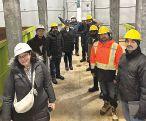
Central region members visit Duffin Creek Water Pollution Plant
Watch video

In this episode of the TECH TAKES Podcast, host Louis Savard, C.Tech., explores the world of anaerobic digestion (AD) technology, a game-changing process that turns organic waste into renewable energy and organic fertilizer.
Joined by Dave Ellis, MASC, P.Eng., principal engineer and director of Azura Associates, and Trisha Aldovino, a chemical engineer and process analyst, their lively discussion explores how AD, a process rooted in nature and refined by engineering, is revolutionizing waste management and contributing to green energy solutions.
Learn about the evolution of AD, from its industrial beginnings 150 years ago to its modern applications across municipal, agricultural, and industrial sectors. Discover its benefits and potential to reshape our environmental and economic future.


Listen to the podcast at https://www.oacett.org/tech-takes or on your favourite podcast app!

HOST
Louis Savard, C.Tech., conducts thought-proving interviews with industry leaders, government officials, academia and influencers on hot topics relevant to the engineering and applied science profession.

The past two years have passed in what feels like a heartbeat—and I can’t believe this is my final “First Word.” As I reach this milestone, it feels like the perfect moment to pause, look back, and reflect on all that’s unfolded at OACETT during my time as your president.
I started as president under a brand-new governance model, which I was fortunate to have had a role in developing while I was president-elect and chair of the Governance Review Task Force. Based on feedback from the Governance, Policy and Strategy Committee, the transition has been well-received, resulting in efficient and effective functioning at the new Board and Committee levels and more opportunities for members to engage and volunteer at a provincial level.
My commitment to openness and transparency has been most tangibly demonstrated, I think, through the continuation of the fireside chats, where members regularly receive a high-level update on what’s new at OACETT, followed by a fully open Q&A session about anything OACETT-related.
Recognition of our members is always a priority, and we have seen advances as a result of our government relations activities, particularly
recognition of our members’ subject-matter expertise. OACETT was also specifically recognized on the floor of the Provincial Legislature during National Engineering and Applied Science Technology (NEAT) week last November.
I am very proud of the new three-year OACETT Strategic Plan launched in January. To my knowledge, it was the most consultative process OACETT has ever undertaken, and it resulted in a plan that is very much focused on the needs and aspirations of our members.
I am also proud that the Board of Directors approved OACETT’s first Diversity, Equity, and Inclusion framework this past November. During the strategic planning process, one of the core values we established for OACETT was “belonging”—we want an association where all members feel welcome.
The discussions about the proposed name changes have been a very engaging, if controversial, topic and demonstrate my desire to achieve results through our membership within Technology Professionals Canada and Technology Accreditation Canada. Look for further information and consultation leading to a decision at a special meeting of members to be called for this purpose in the fall.
We have established a more proactive approach to emerging technologies, benefitting our members like last year’s AI Summit and the Technology Showcase feature at our annual conference.
Given my start in the then-IETO, I was pleased that the updated CPD program was launched this year. Members shared their challenges/concerns about the previous program, and OACETT listened!
We have continued to host annual joint leadership summits with our complementary association partners, PEO, OSPE, and ACECOntario, continuing a collegial coexistence that not all our provincial counterparts enjoy.
My list could go on, but only so much real estate is available for my musings. It has been my honour to serve as your president for the past two years, and I am very grateful for the faith demonstrated in me to take on this critical role. OACETT will be in excellent hands when Christopher van Dop steps into the President’s role in June, and I look forward to continuing my involvement as your past president. |
Micheal Mooney, C.E.T., is president of OACETT.

The Ontario Association of Certified Engineering Technicians and Technologists, a self-governing, non-profit organization, maintains standards of excellence in the practice of engineering and applied-science technology in Ontario. Founded in 1957, the Association became provincially legislated in 1984, and has statutory powers and responsibilities.
PRESIDENT
Micheal Mooney, C.E.T.
PRESIDENT-ELECT
Christopher van Dop, C.E.T.
PAST-PRESIDENT
Rosanna Tyrer, C.E.T., rcji, CAPM
CENTRAL REGION
Governance, Strategy and Policy Committee chair
Norman Sandberg, C.E.T.
EASTERN REGION
Finance and Audit Committee Chair
Brian Raymond, C.E.T.
HORSESHOE REGION
Diversity, Equity and Inclusion Committee Chair
Shelley Parker, A.Sc.T.
NORTHERN REGION
Registration and Professional Practice Committee Chair
Stephanie Pesheau, C.E.T.
TORONTO REGION
Member Engagement and Services Committee Chair
Roy Sue-Wah-Sing, C.E.T.
WESTERN REGION
Human Resources Committee
Member-At-Large
Samuel Nammari, C.E.T., P.Eng.
Young Professionals Committee Chair
Mladen Ivankovic, C.E.T.
Student Representative
Liam Croft
APPOINTEES
Daniel Liao
Heads of Technology Representative
Alex Lusty, LLB
Public Representative
EX-OFFICIO MEMBER
Cheryl Farrow, MBA, CAE
OACETT Chief Executive Officer
DIRECTOR, FINANCE AND CORPORATE SERVICES
Lily Rudeychuk, CPA
DIRECTOR, REGISTRATION AND PROFESSIONAL PRACTICE, AND REGISTRAR
Barry Billing
DIRECTOR, MEMBER ENGAGEMENT, SERVICES AND GOVERNMENT RELATIONS
David Terlizzi
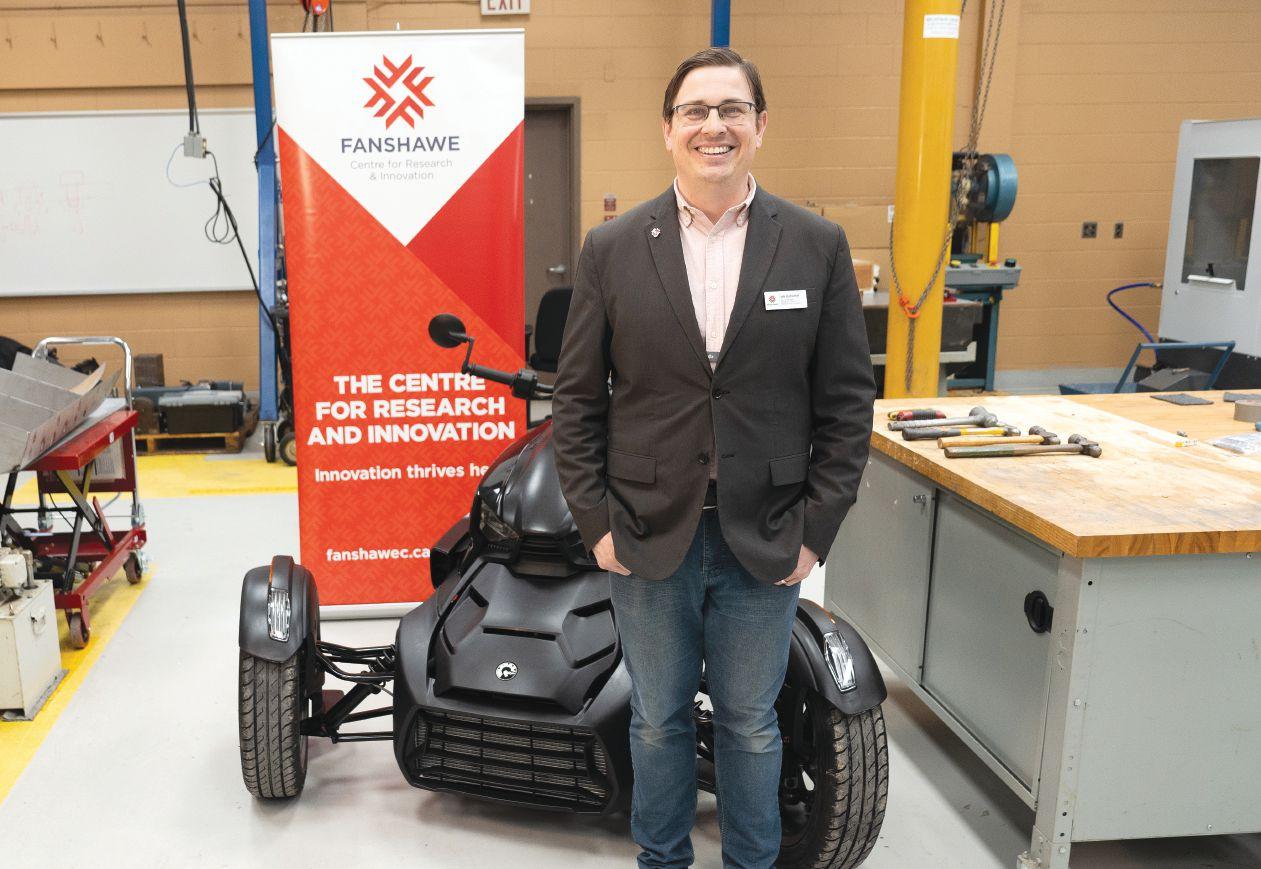
OACETT enters an electrifying adventure with Fanshawe College
BY DAVID TERLIZZI
This thought experiment turned into reality to challenge the Fanshawe Center for Research and Innovation to highlight the technical capability of OACETT students, faculty, and facility and demonstrate the synergy possible when Ontario’s brightest college students, expert faculty, and OACETT unite under a common goal.”
BY DAVID TERLIZZI

OACETT is proud to announce the launch of the “AI Transformation in Ontario: Impacts, Challenges, and Opportunities for Technicians and Technologists” Guide, a pivotal new resource for its members.
This guide directly responds to the rapidly evolving landscape of AI and its profound impact on our profession. Ontario has quickly become a global leader in Artificial Intelligence (AI), home to more than 400 AI companies and institutions like the renowned Vector Institute. Recognizing the significance of this growing sector, OACETT hosted an AI Summit at Humber College’s Barrett Centre for Innovation last spring and began working on a resource guide for the profession.
AI has been our pressing question at OACETT since ChatGPT was first released in late 2022. A new world of words was introduced quickly, including large language models, pre-training, deep learning, artificial neural networks, etc.
AI goes way beyond the immense wonder of ChatGPT and is genuinely a stunning advancement in history. The concept
This guide helps demystify this complexity, outlining significant regulatory developments like Canada’s Artificial Intelligence and Data Act (AIDA) and Ontario’s recent legislative moves in AI governance.” “
of AI has been around since the 70s, but back then, it was relegated to some brilliant people working to figure this all out in some nondescript buildings. We thank the British-Canadian computer scientist Geoffrey Hinton for a large part of this success. Now that it is “out,” what does it mean for your jobs, and how will it affect your profession?
That’s why various stakeholders, including members, industry experts, government representatives, and academic leaders, convened to explore AI’s transformative effects on engineering technology. They discussed labour market evolution, ethical implications, and governance challenges.
Why is this AI guide crucial for OACETT members? Simply put, AI is reshaping the roles and responsibilities of engineering technicians and technologists across Ontario. The guide highlights key areas of transformation, including the automation of routine tasks, allowing professionals to dedicate more time to complex problem-solving and innovation.
AI’s integration into the workplace does not imply replacing human expertise; instead, it emphasizes augmenting human capabilities and reshaping job responsibilities. We have been down this road many times before, although it feels a bit different this time. But for argument’s sake, Automated Teller Machines (ATMs), which, when introduced in the 80s, had bank tellers wondering if their jobs were gone and a new career was the only option. This box, full of various technologies such as a card reader, cash dispenser, security software, and unique networking and security features, was a big deal back then. While the bank teller position has dwindled over the years, many tellers are now performing different tasks –some of which provide more value to the bank.
However, transitioning to an AI-enhanced workforce is

much different and requires thoughtful preparation and significant upskilling. The guide underscores our members’ need to master new competencies like prompt engineering, data modelling, critical thinking, and advanced problem-solving techniques. OACETT is committed to developing tailored continuous professional development (CPD) courses and interactive workshops to support this transition, empowering members to harness AI effectively and ethically.
AI brings unique challenges around bias, accountability, privacy, and transparency. As engineering technicians and technologists, our commitment to ethical practice and public safety remains paramount. OACETT’s certification model is built around the Professional Practice Exam, which includes a review of OACETT’s Code of Ethics and Rules of Professional Conduct. The guide introduces essential ethical frameworks such as IEEE Ethically Aligned Design and the Montreal Declaration for Responsible AI, providing practical advice on how our members can embed ethical considerations into everyday workflows. This ethical-by-design approach ensures that engineering solutions are technically robust, ethically sound, and socially responsible.
Policy and governance of AI are also rapidly evolving areas that technicians and technologists must navigate carefully. Currently, the regulatory landscape is a patchwork of proposed laws and voluntary guidelines, creating uncertainty for practitioners. This guide helps demystify this complexity, outlining significant regulatory developments like Canada’s Artificial Intelligence and Data Act (AIDA) and Ontario’s recent legislative moves in AI governance. Understanding these policies enables mem-
bers to anticipate and align with future regulatory requirements, minimizing risks and maximizing compliance. One needs to take a cursory review of the EU AI Act to see how cumbersome and complicated it can get when you try to encompass too much into a regulatory document.
Further, the guide emphasizes OACETT’s advocacy efforts to ensure our profession has a voice in shaping Ontario’s AI governance frameworks. However, at the guide’s core is a vision for OACETT members to remain at the forefront of technological innovation. AI differs significantly from any past technology due to its capacity to adjust and improve. It is akin to the invention of electricity. Our sleep patterns changed forever when the electricity allowed every street corner and room to blaze with artificial light every moment of the day. So will AI.
Lastly, the guide proposes recommendations for policymakers and academic institutions, advocating for increased funding for AI-related training, more substantial representation of our members in regulatory discussions, and integration of AI competencies into college curricula. OACETT will continuously update its Code of Ethics to include responsible AI practices, reinforcing our collective commitment to professional integrity and public trust.
The launch of this AI guide marks the start of a significant process moving forward in reshaping our profession and equipping Ontario’s engineering technicians and technologists with critical insights and strategies to navigate the AI-driven future successfully. |

To read the AI Guide, go to https://bit.ly/ OACETTAIGuide.
OACETT wants input from members and partners on how you feel AI will shape the Association precisely and the profession more broadly, how you use AI in your workplace, and what your thoughts are on the AI Guidance document. Scan the QR code and let us know your thoughts.

BY DAVID TERLIZZI
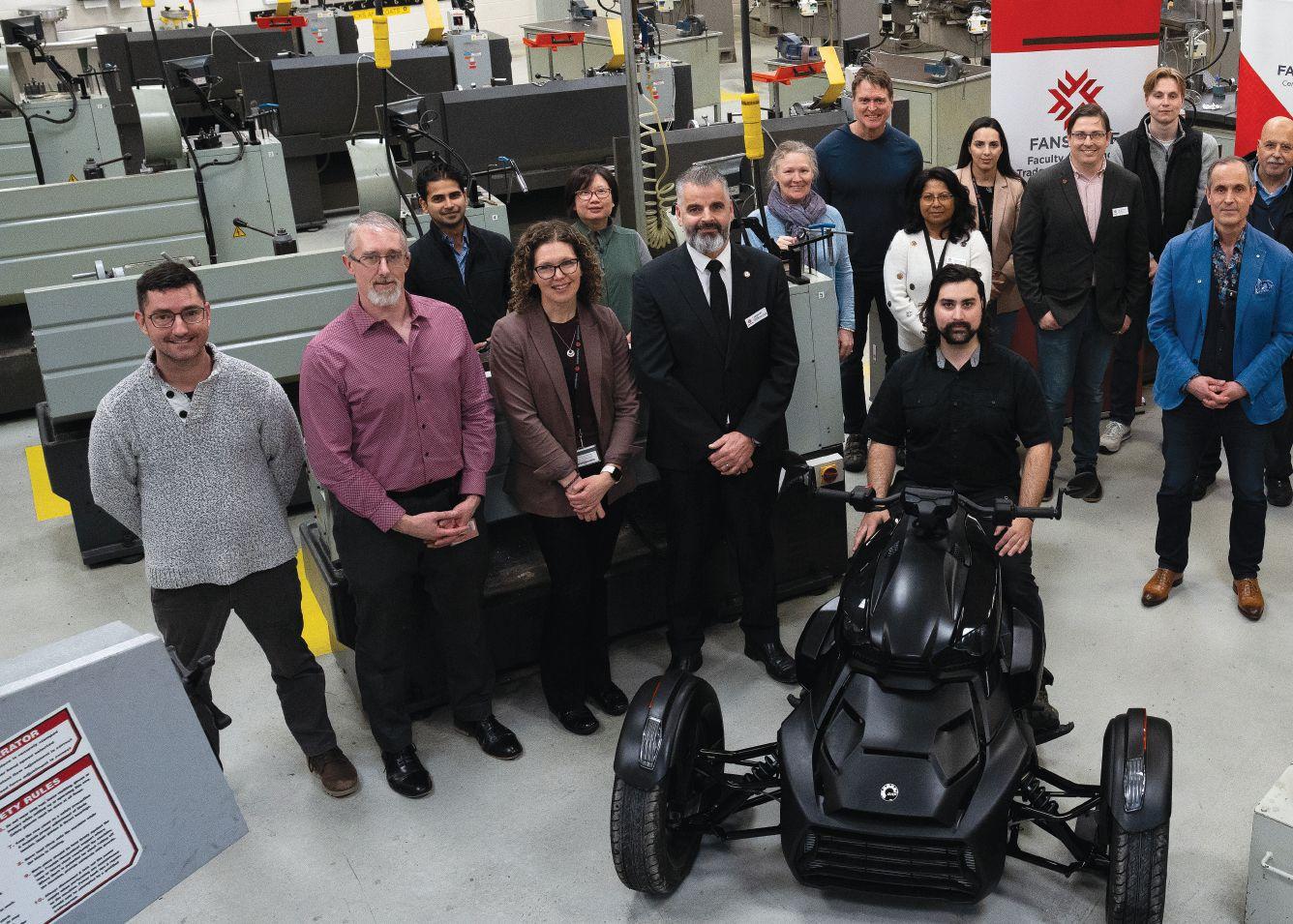
OACETT enters an electrifying adventure with Fanshawe College
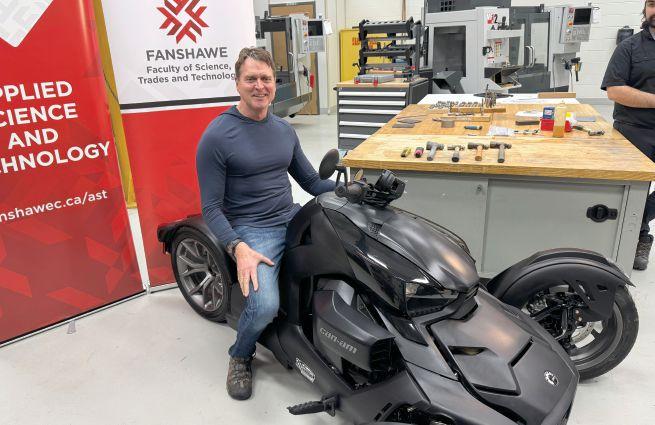
Mix one part serendipity, two parts innovation, and a dash of audacity, and you have OACETT and Fanshawe College partnering on an ingenious project to electrify a Can-Am Ryker reverse trike – a leap forward in sustainable transportation that showcases the transformative potential of research partnerships.
This thought experiment turned into reality to challenge the Fanshawe Centre for Research and Innovation to highlight the technical capability of OACETT students, faculty, and facility and demonstrate the synergy possible when Ontario’s brightest college students, expert faculty, and OACETT unite under a common goal.
Fanshawe College’s Centre for Research and Innovation has taken the lead on the technical side, involving students and faculty across multiple disciplines. Under the guidance of seasoned professionals such as Martin Volkening, Dr. Ke Liu, Matthew Lockwood, and Majid Abdoos, students gain invaluable hands-on experience—from mechanical disassembly and electric system design to rigorous testing and final assembly. The students involved witness firsthand the journey from theory to practice, preparing to build on this project in their future careers.
OACETT’s role goes beyond managing logistics and timelines. With a clear vision for promoting the value of certified technicians and technologists, OACETT is leveraging its extensive network and marketing expertise to amplify the project’s impact. Our strategic promotion ensures that this initiative not only garners widespread attention but also positions OACETT as a sustainable technology and innovation leader.
The project addresses pressing global challenges: reducing urban emissions, enhancing sustainable transportation, and mitigating climate
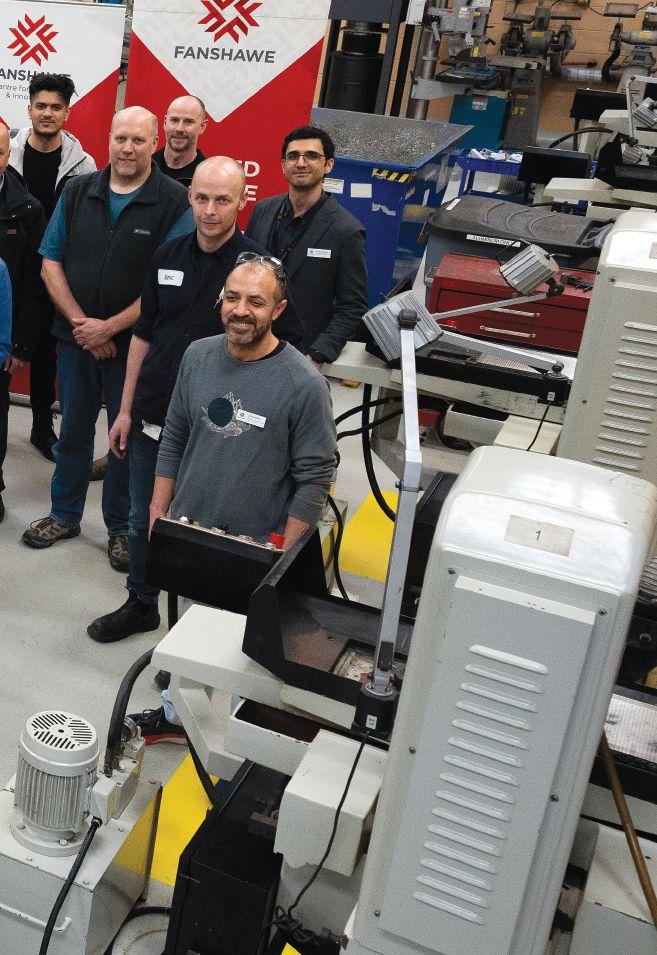
change. By transforming a conventional internal combustion engine trike into a sleek, efficient electric vehicle, this collaboration directly contributes to Ontario’s green mobility goals and sets an example for similar initiatives worldwide.
Beyond the immediate impact, this project significantly benefits OACETT’s membership. It positions the Association as a pivotal player in innovation, providing members with a strong case study on the critical importance of collaboration between OACETT and academia. It also showcases the cutting-edge capabilities and creativity of our colleges and OACETT, reinforcing our vital role in Ontario’s economic and environmental future.
This project will also enable OACETT and Fanshawe to engage with new audiences, including potential students interested in engineering technology and applied science fields, sustainable transportation, and innovation. The promotional efforts surrounding the electrified trike will elevate OACETT’s and Fanshawe’s brand visibility, showcasing our commitment to addressing environmental issues and supporting cutting-edge technology.
This partnership is a pilot project as part of OACETT’s new research and development fund to eventually partner each year with one college. OACETT has committed up to $20k each year. Through such dynamic alliances, Ontario will continue to lead, innovate, and thrive. As the electrified trike moves from prototype to finished concept, keep your eyes and ears peeled as OACETT updates members on the progress of this 12 to 16-month project. The final reveal will be worth it! |
COLLEGE STUDENTS:
Monday, May 26 @ 12:30 PM
Monday, June 2, June 23 @ 12:30 PM
More dates are available. Visit online.
INTERNATIONALLY EDUCATED PROFESSIONALS:
Thursday, May 29 @ 1:00 PM Thursday, June 5 and June 19 @ 1:00 PM
More dates are available. Visit online.
NEED TO WRITE YOUR OACETT PROFESSIONAL PRACTICE EXAM? IT’S A CERTIFICATION REQUIREMENT.
QUESTIONS? Contact Trishia at ttedoldi@oacett.org.
Conference and gala season are upon us again; this year, OACETT is ready to bring some serious “newness” to the table. If you’ve been to the annual OACETT conference before, you know it’s a highlight on the calendar for engineering and applied science technology professionals from across Ontario. But 2025 things will be bigger, better, and more engaging than ever. So, why should you attend? Well, let me tell you—this is one event you don’t want to miss.
This year’s event, with the fitting theme of “Building Ontario,” will take place at Caesars Windsor from June 13 to 15.
If you’ve ever been to this waterfront paradise, you’ll know it’s a top-tier venue that’s as stylish as spacious. We’re talking 110,000 square feet of conference space—roughly equivalent to two football fields (minus the end zones), but who’s counting? Not only does it provide ample room for everything the conference has to offer, but the hotel also boasts a variety of amenities, including an indoor pool, a state-of-the-art fitness center, and a casino for those who enjoy testing their luck after a day of intellectual heavy lifting.
But wait, there’s more! The conference space is exclusive to OACETT attendees, making the experience even more intimate. In other words, it’s our space for two days to network, learn, and connect—without the distraction of random tourists or people trying to find the buffet.
The OACETT conference has always been a fantastic way to meet industry leaders, collaborate with peers, and learn about the latest engineering and applied science technology

trends. But we’re shaking things up this year with several exciting additions and changes.
For the first time, OACETT is hosting a dedicated session just for students. Whether from local colleges like St. Clair, Lambton, Fanshawe, or beyond, students are invited to an exclusive career growth session on Friday, June 13, from 4:30 p.m. to 5:30 p.m. The best part? Admission to the Welcome Night Dinner and Reception is free for students attending this session, offering them the perfect opportunity to network with established professionals over delicious food, lively music, and games.
This year, the conference kicks off Friday afternoon, June 13, with a more extensive speaker schedule spread across both Friday and Saturday—a two-day feast of knowledge rather than one.
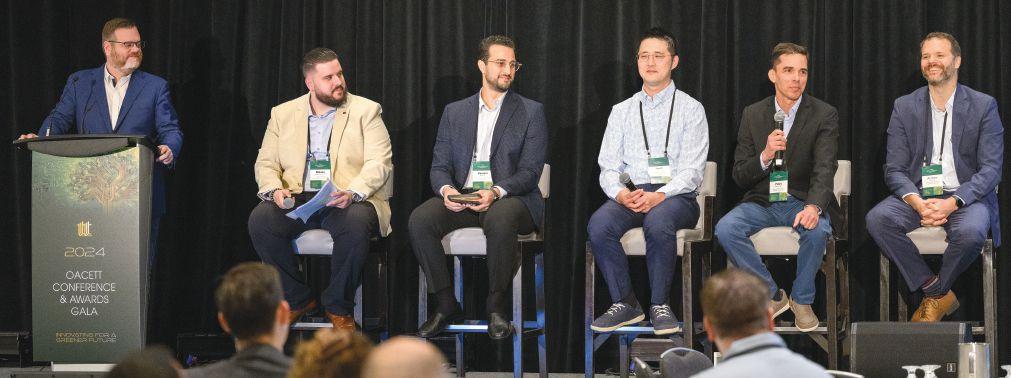
110,000 square feet of conference space—roughly equivalent to two football fields. Free admission to the Welcome Night Dinner and Reception for students attending student information session.
Panellists have engaging discussion on tangible strategies and technologies to decarbonize Ontario’s economy at OACETT’s 2024 Conference.
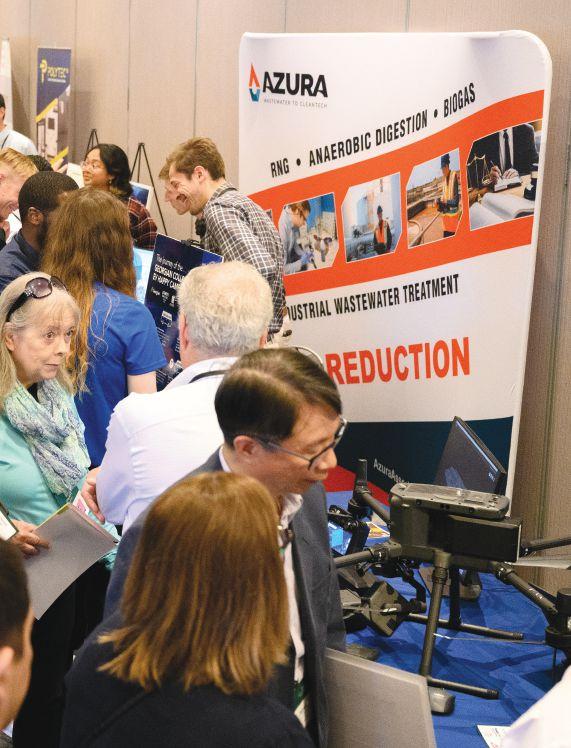

The conference begins with opening remarks and a keynote by Greg Lindsay, urbanist and futurist, who will dive deep into “Where Will You Live in 2050?” Lindsay’s talk promises to be both eye-opening and maybe a little unsettling as he combines climate science, demographics, and AI to predict what regions will thrive (and which ones might…not). If you’ve been considering purchasing a lakefront property, you might want to hold off until after this session.
But don’t worry, we’re not leaving you hanging after such a big keynote. The panel on Infrastructure Challenges and Opportunities in Ontario will follow, featuring industry experts discussing everything from transportation to energy to the built environment. They’ll explore the obstacles standing in the way and the opportunities that will revolutionize how we live and work in Ontario. Trust me, you won’t want to miss it.
Continuing Professional Development (CPD) is a massive part of the conference experience. This year, the CPD offerings are expanded with two concurrent sessions on Saturday, June 14. Topics include:
• Mobile LiDAR applications in infrastructure
• The five principles of passive house – building for efficiency and comfort
• The power of digital building innovation
• Building code changes
These sessions will offer something valuable for every attendee, whether you want to deepen your technical expertise or get a pulse on the latest industry trends.
The OACETT conference has always been a fantastic way to meet industry leaders, collaborate with peers, and learn about the latest engineering and applied science technology trends. But we’re shaking things up this year with several exciting additions and changes.” “
By popular demand, the Technology Showcase is making its grand return. Set for Saturday, June 14, from 1:30 p.m. to 4:00 p.m., this event is an interactive experience to see the latest innovations and cutting-edge technologies from companies, colleges, and organizations. And because we know you’re busy (and want to network), the showcase has been extended, so everyone will have plenty of time to visit all the stations, fill out their passports, and maybe even win a prize or two. It’s the perfect blend of learning and networking, all while you’re exploring the future of engineering and applied science technology. If your company, college or organization wants to showcase your innovation or project, please contact Marc at moutridge@oacett.org.
Interactive networking coffee breaks
We know the best conversations often happen between sessions, so we’re introducing Interactive Networking Coffee Breaks. Grab your coffee, make rounds at sponsor tables, and collect stamps in your passport—because who doesn’t love a good challenge? Plus, prizes are up for grabs so you might walk away with more than a caffeine buzz.
As if the conference weren’t enough, the 2025 Award Gala promises to be the cherry on top. The President’s Awards Dinner offers ample opportunities to mingle, celebrate, and recognize the achievements of OACETT members, non-members, and organizations dedicated to advancing the engineering and applied science technology profession. |
Julia Farner, CAE, is marketing and communications manager at OACETT.
Building Ontario: The 2025 OACETT Conference & Awards Gala This year’s event, with the fitting theme of “Building Ontario,” will take place at Caesars Windsor from June 13 to 15.

The 2025 OACETT Conference and Awards Gala isn’t just an event—it’s an event for professionals in the engineering and applied science technology sectors. With more networking opportunities, new and exciting speaker sessions, and a promising technology showcase, this year’s gathering is designed to engage and inspire you in ways you won’t find elsewhere. So, what are you waiting for? Be in the New, get to Windsor, and experience all that OACETT offers.
BY JENNI THOMPSON
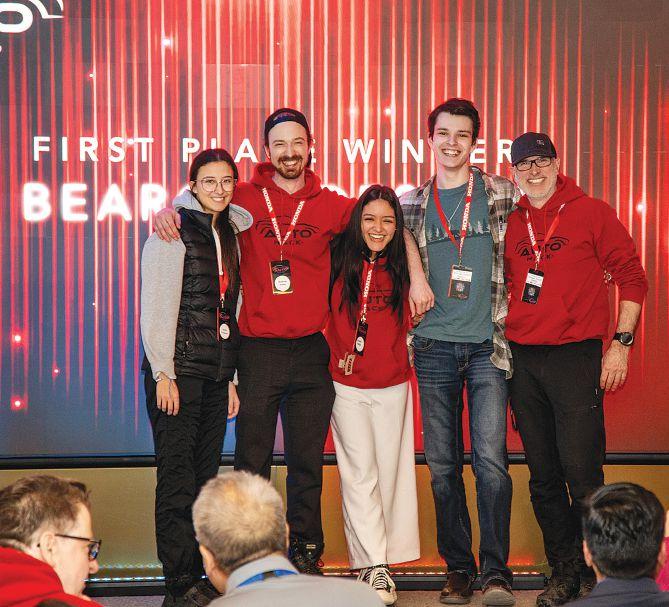
OVER AN INTENSE 27 HOURS, POST-SECONDARY STUDENTS FROM ACROSS ONTARIO TACKLED REAL-WORLD CHALLENGES IN AUTOMATION AND ADVANCED MANUFACTURING AT AUTOHACK 2025, HOSTED BY GEORGIAN COLLEGE.
Students were challenged to conceptualize a manufacturing cell or autonomous vehicle concept to prepare post-secondary students for careers at Honda. Teams applied technical skills, creativity and teamwork to prototype concepts in different ways, including virtual simulation, engineering designs, and even with arts and crafts materials.

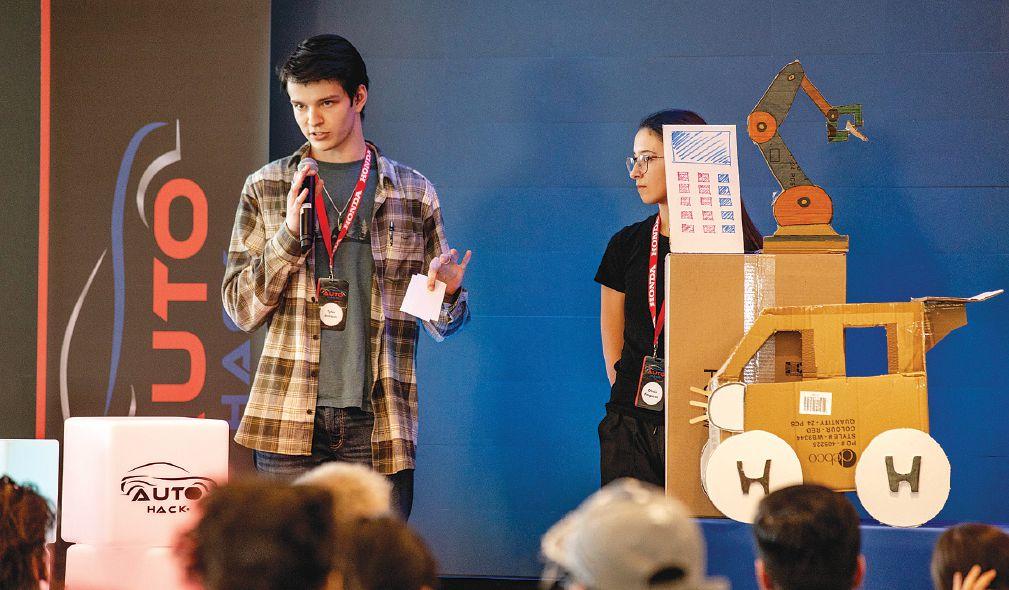
Georgian College was thrilled to host AutoHACK 2025 at its Barrie Campus, welcoming up to 150 post-secondary students from across Ontario.
present their winning idea at
2025 at Georgian College.
OACETT INVITES ELIGIBLE STUDENT MEMBERS TO SUBMIT APPLICATIONS FOR THE NATIONAL ENGINEERING AND APPLIED SCIENCE TECHNOLOGY (NEAT) WEEK 2025 CAPSTONE COMPETITION.
The Capstone Competition, held annually, is a team competition for students completing their engineering technology diploma studies from one of Ontario’s polytechnic institutes and colleges. This competition showcases, celebrates, and recognizes the innovation and ingenuity that exists within our province.
The top entry from each province will be entered into NEAT Week’s national competition. The top three finalist projects from across the country will be presented during NEAT Week via a webinar, and the webinar audience will select the final winner in November.

The deadline to submit the application is September 26, 2025. For more information, visit www.oacett.org/ about-us/ national-affiliations/neat-week
Honda of Canada Manufacturing, the Ontario Vehicle Innovation Network, the governments of Canada and Ontario, and Employment Ontario supported AutoHACK 2025, which took place March 21 and 22.
This year’s challenge provided students with practical experience in problem-solving and industry-relevant processes. With guidance from Honda and other industry mentors, participants explored automation, manufacturing, and emerging technologies, gaining valuable insight into practical applications.
The top teams presented their solutions live before an expert panel of judges. Bearcat Designs won first place with its innovative approach to a manufacturing cell training tool to support student learning.
AutoHACK is more than a competition – it offers a glimpse of career opportunities, real-world experience, industry connections, and the confidence to develop and apply new skills. As manufacturing evolves, events like AutoHACK play a crucial role in preparing students for the workforce by equipping them with the knowledge and skills they need to succeed.
AutoHACK 2025 also reinforces the vital role of post-secondary-industry collaboration in driving innovation and preparing the next generation of skilled professionals to lead the future of advanced manufacturing. |

of Canada Manufacturing, the Ontario Vehicle Innovation Network, the governments of Canada and Ontario, and Employment Ontario supported AutoHACK 2025, which took place March 21 and 22.
The Capstone Competition, established by Technology Professionals Canada (TPC), is comprised of OACETT and nine other provincial member organizations and aims to promote the achievements of engineering and applied science technology students and the institutions that educate them.
May 29 – 30
11th Annual Urban Transit Infrastructure Symposium, Eastern Canada
Novotel Toronto North York Hotel, Toronto https://bit.ly/urbantransitinfrastructuresymposium
June 13 – 15
OACETT Conference & Awards Gala Caesars Windsor Hotel, Windsor https://bit.ly/oacettconferenceandawardsgala
June 9 – 10
Retrofit Canada Conference Beanfield Center, Toronto https://retrofitcanadaconference.energyconferencenetwork.com/
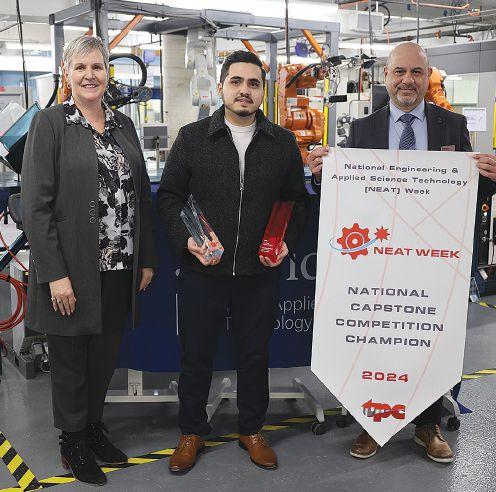
ON FEBRUARY 19, OACETT HELD A CEREMONY AT SHERIDAN COLLEGE TO CONGRATULATE THE FIRST 2024 NATIONAL ENGINEERING AND APPLIED SCIENCE TECHNOLOGY WEEK (NEAT) CAPSTONE COMPETITION WINNERS.
Ontario’s Vikram Pandey and Hughroy Staple from Sheridan College won the Capstone Competition for their “Hydrothermal Carbonization (HTC) of Plastic Waste” project. They are sharing a grand prize of $1,500, and the competition has also helped these students gain industry recognition.
The ceremony provided valuable information about OACETT. It also sparked insightful discussions and provided sharing opportunities for collaboration between Sheridan College and OACETT to enhance student engagement, professional development, and certification pathways.
In the future, Sheridan will promote the Capstone Competition, certification options, and other OACETT initiatives to its students.
Pictured from left to right: Cheryl Farrow, CEO of OACETT, 2024 Capstone Competition winner Vikram Pandey and Amjed Majeed, associate dean, Faculty of Applied Science and Technology, at Sheridan College for the congratulatory ceremony on February 19.

OACETT members have access to 1000s of perks. MemberPerks is a premium perk platform offered to you by OACETT, designed to help you save while you shop. Get started today!
Step one:
Scan the QR code or visit oacett.venngo.com to activate your account.
Step two:
Use your OACETT membership ID & your Email address to create your MemberPerks account.
Popular Perks for you Instore and Online:


Step three:
Download the Venngo App. Enter your organization’s Site ID (oacett) and sign In.

Plus offers from national and local favourites! MemberPerks is available as Venngo on the App Store or Google Play Store.





In the rapidly evolving field of engineering technology, fostering partnerships is a critical step toward tackling ambitious projects. That’s why Envision Consultants Ltd. (EnVision) joined OACETT’s 360 Partnership Program –which aims to support the business needs of engineering technology companies and organizations.
EnVision understands how increasing population pressures and climate change impacts have accelerated the need for more sustainable and resilient infrastructure. To this end, it has developed a sustainable infrastructure framework tool to help professionals plan, design, and deliver more sustainable infrastructure projects of all types and sizes.
The Envision framework is a decision-making tool that allows infrastructure owners, engineers, designers, architects, planners, contractors, and other stakeholders to evaluate projects across a broad range of sustainability indicators, or “credits,” that address environmental, social, and economic dimensions of sustainability to encourage systemic change. At its core, Envision is about supporting higher performance through better choices in infrastructure development.
Envision’s work on the HBC Basement Modifications project
EnVision’s work on the Hudson’s Bay Corporation (HBC) Basement Modifications project highlights how their expertise and commitment to excellence have positioned them as a leader in providing multidisciplinary engineering and consulting services.
This initiative in Toronto supports the Ontario Line—a transformative subway project designed to enhance connectivity and reduce congestion.
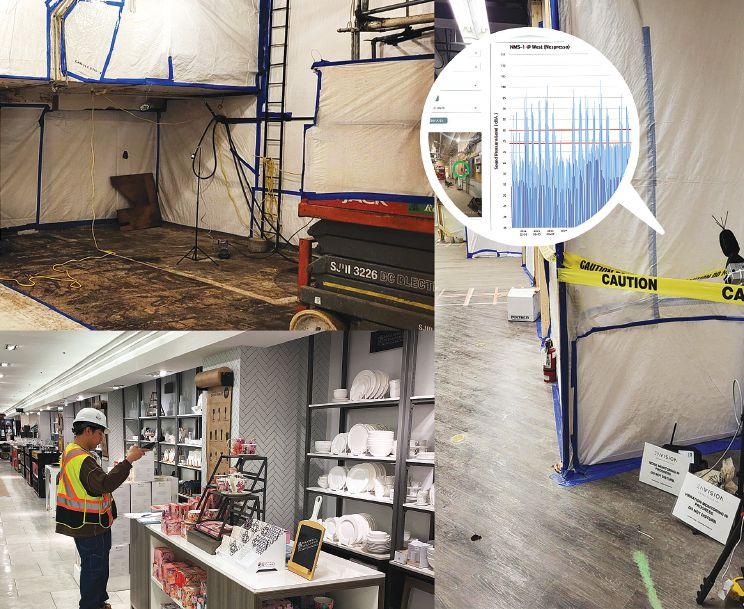
The HBC Basement Modifications project presented numerous challenges, from limited space for geotechnical investigations to operating near bustling public areas. EnVision’s multidisciplinary team of engineers, technicians, and technologists has delivered exceptional results despite these hurdles. They have supervised interior drilling, collected geotechnical and environmental samples, implemented and managed real-time monitoring systems for noise, vibration, and air quality, and collaborated with the project team to analyze data, prepare detailed reports, and ensure strict compliance with environmental management plans. The team has maintained project efficiency by employing precise fieldwork and data-driven decision-making while addressing complex technical challenges and providing comprehensive project delivery.
Implementing EnVision’s in-house developed centralized data platform was a significant aspect of the project. This platform enables real-time updates on noise, vibration, and air quality, minimizing information delays and facilitating
Team members certified as C.Tech.s and C.E.T.s brought proven expertise, up-to-date knowledge, and a commitment to high standards.
swift implementation of mitigation measures. Furthermore, the team’s proactive communication with stakeholders has ensured smooth coordination and timely resolutions to emerging challenges.
members
EnVision’s success on this project also underscores the vital role of certified engineering technologists and technicians.
Team members certified as C.Tech.s and C.E.T.s brought proven expertise, up-to-date knowledge, and a commitment to high standards. Their skills and professionalism enhanced the quality of work and reinforced EnVision’s reputation as a trusted partner in complex engineering endeavours. These certified professionals provide EnVision a competitive advantage, enabling the company to exceed client expectations and consistently deliver innovative solutions.
This project exemplifies EnVision’s ability to excel in high-stakes initiatives while leveraging the strengths of a talented and certified team. Their work on the HBC Basement Modifications project sets a benchmark for engineering technology excellence, paving the way for a more connected and innovative future. |
Attended and stationary noise and air quality monitoring methods used and uploaded to EnVision’s in-house data management platform.

Envision Consultants Ltd. (EnVision) joined OACETT’s 360 Partnership Program – which aims to support the business needs of engineering technology companies and organizations.
BY CHERYL FARROW, MBA, CAE
Proposed changes to the C.E.T. title and the name of the Association
As OACETT members were advised in fall 2024, the members of Technology Professionals Canada (TPC), which is the national alliance of the provincial organizations representing and regulating engineering and applied science technicians and technologists, determined that there would be value in having a harmonized national title for technologists, like C.Tech. is for technicians.
Each provincial organization agreed to explore with its respective members the preferred title, Professional Technologist or P.Tech. Given the potential for this change, the OACETT Board of Directors thought it might also be appropriate to consider a name change for the Association simultaneously (there would be economies with the extensive marketing that would result), resulting in a fresh and updated image for the organization.
Consultation on these proposed changes has been underway with OACETT members since November 2024, when a “sentiment survey” of members resulted in an amazing 7820 responses or a 39 per cent response rate. The full survey results, including all the verbatim comments, are available to members through the Member Portal. In addition, staff and the Board of Directors have reviewed some of the additional questions posed in the survey
responses, and a further Q&A document has been posted in the Member Portal. That includes a detailed multi-year budget, considering expenses beyond the original $160,000 and addressing only the anticipated costs in 2025.
The Fireside Chat on March 6 was an additional opportunity for some questions to be asked and answered – the recording and additional questions and answers are posted on the website. The senior leadership invited questions at the Annual Chapter Meetings, and there will be a further opportunity to share information during the Annual General Meeting on Saturday, June 7, both in terms of an update from the president and during the Q&A.
At the February 28 meeting of the Board of Directors, Board members determined that the question of potential name changes is so important that it will be addressed at a special meeting of members to be scheduled in fall 2025 just for this purpose rather than trying to squeeze it into the Annual General Meeting during an election year. OACETT’s leadership will also host one more open webinar dedicated to answering any remaining questions about the name changes before the fall special meeting. |
Cheryl Farrow, MBA, CAE, is CEO of OACETT.
ON MARCH 6, OACETT’S SENIOR VOLUNTEER AND STAFF LEADERSHIP HOSTED MEMBERS IN OUR MOST RECENT FIRESIDE CHAT WEBINAR.
If you review all the material available and have questions you don’t see answered yet, you are welcome to share them with president Mooney at president@ oacett.org.
THE Q&A DOCUMENT WILL BE REGULARLY UPDATED WITH ANSWERS TO ADDITIONAL QUESTIONS THAT ARE RECEIVED.
We will have another shorter Q&A session as part of the Annual General Meeting on June 7, and another Fireside Chat webinar will be scheduled for November.
Watch your email for the invitation, and we hope you’ll join us!
Our Fireside Chat provides opportunities for transparency, dialogue, and exchange with members, a priority for OACETT leaders, and is proving very popular with members. Seven hundred eighty-one members registered for the event, and 510 were online at the peak. It was a pleasure to welcome president Micheal Mooney, C.E.T., back from his leave as he hosted the event. He kicked things off by reminding members about the new mandatory CPD program launched on January 1. Two information webinars have been hosted, and they are available to view on the website if you would like more information about the new program. Members were also reminded that
OACETT’s new three-year strategic plan is posted on the website as well, and the plan represents a significant shift to focusing on members in terms of recognition, growth and service delivery.
President Mooney then provided an update on the proposed change of the technologist certification title from C.E.T. to P.Tech. and the possibility of a name change for OACETT. Consultation on these proposed changes will continue through the year until the matters are brought to a special meeting of members this fall. The date is to be determined. The full survey results from November 2024 are available through the Member Portal, as well as an additional set of questions and a detailed multi-year budget. Please see the article above for more details.
Finally, president Mooney shared
concerns about the challenges being faced by our college partners, which are leading to the closure of campuses and the cancellation of programs, some of which are in engineering technology and applied science disciplines. OACETT will continue to monitor and will provide advocacy support where we can.
Questions were then invited from those in attendance, and a wide variety of topics were explored, including those noted above, updates on government relations activities, relations with other associations, and topics for CPD offerings.
As is usually the case, there were so many questions that there wasn’t time to answer all of them. Written responses to the remaining questions have been posted on the website, along with a link to the webinar recording. |
IN JANUARY, STEPHANIE PESHEAU, C.E.T., CAPM, CLC, WAS THE SUCCESSFUL CANDIDATE FOR THE PRESIDENTELECT POSITION FOLLOWING OACETT’S 2025 ELECTION.
Since 2019, Pesheau has been dedicated to OACETT’s growth. She began as the Women in Technology representative for the Thunder Bay Chapter, launching the Women in Technology Social, a key event in the community, now supporting collaboration between the local chapters of OACETT and PEO. In 2020, she became vice-chair and then chair in 2022. Her contributions led her to serve as northern regional IETO representative on OACETT’s Council in 2022.
As an IETO councillor, she contributed to the Education and Exam Committee, helping to revise the OACETT eBook to reflect the new governance model and updating college course material. Now, as the northern regional director on the OACETT Board and chair of the Registration and Professional Practice Committee (RPPC), she helped launch the updated CPD program and championed the introduction of the Asynchronous Professional Practice Exam Prep Course, available to all engineering technician and technology programs province-wide, through OntarioLearn, as a college credit.
Pesheau also played a key role in developing OACETT’s 2025-2027 strategic plan, witnessing that member and chapter input actively shaped the direction. Member

feedback helped the board focus on expanding recognition, membership growth, service enhancement, and emerging technologies.
Pesheau is the CAD development supervisor and an owner at TBT Engineering Limited. TBTE is a multidisciplinary engineering firm with locations throughout Ontario and is majority female-owned. Pesheau also teaches Professional Practice at Confederation College, preparing students for the OACETT PPE exam. She also serves on the Thunder Bay Chamber of Commerce Board and chairs Thunder Bay’s Young Professionals Taskforce.
Through her leadership, Pesheau will champion initiatives aligned with OACETT’s strategic plan, valuing transparency and ensuring engagement, adaptability, and relevance in the engineering technology and applied science profession. |
Congratulations, Stephanie! We wish you success in your new role.
Watch video

In accordance with Bylaw 20, Section 7, Subsection 7.1 and 7.2, notice is hereby given to certified members of the Ontario Association of Certified Engineering Technicians and Technologists of the annual meeting to be held:
for the purpose of:
• election of the Board of Directors for the 2025-2027 term
• approval of 2024 year-end Financial Statements
• the appointment of auditors for the fiscal year 2025
• and other such business as may properly be brought to the attention of the said annual meeting of members.
Cheryl Farrow, CEO/Secretary
NOTICE TO: The voting (certified) members of the Ontario Association of Certified Engineering Technicians and Technologists. Registered members of the Association in good standing may exercise their voting rights under Subsection 7.7 of Bylaw 20 and, by means of proxy, appoint a person as their nominee to attend and act at the Annual Meeting of Members in the manner, to the extent and with the power conferred by proxy. Only voting members are entitled to complete a proxy form; nominees must also be certified members in good standing. The proxy form below will give your nominee permission to vote on all questions raised at the Annual Meeting. If you wish to limit your proxy to one or more questions, or to instruct your nominee as to the manner in which your vote is to be cast, you must so indicate in writing at the bottom of the proxy form. Please note that when the AGM materials are published, an electronic proxy will be available, allowing Certified members to cast their votes directly against the meeting motions. Certified members can choose to wait for this option to exercise their proxy if desired. A proxy holder may also be appointed electronically for any business that may arise at the meeting.
In accordance with Bylaw 20, Subsection 7.7: A proxy shall be in writing and shall be acted on only if it has been received at OACETT’s office (10 Four Seasons Place, Suite 700, Etobicoke, ON M9B 6H7) or with the Secretary of the Association, not less than forty-eight (48) hours prior to the day of the meeting or any adjournment thereof. A proxy shall expire at the close of the meeting for which it was intended, or at the close of any adjournment thereof. A proxy may be revoked by an instrument in writing executed by a Certified member or by their attorney authorized in writing and deposited either at the Head Office, at or with the Secretary of the Association at any time prior to the start of the meeting, or any adjournment thereof, at which the proxy is to be used. The proxy is revoked upon either of such deposits. If a Certified member who submits a proxy ultimately attends the meeting, the proxy will automatically be revoked.
Sincerely,
Cheryl Farrow, CEO/Secretary
ONTARIO ASSOCIATION OF CERTIFIED ENGINEERING TECHNICIANS AND TECHNOLOGISTS
The undersigned Certified Member of the Ontario Association of Certified Engineering Technicians and Technologists hereby appoints
of (city/town)
(if no other name appears, the OACETT president-elect) as the nominee of the undersigned to attend and act at the Annual General Meeting of Members of the said Ontario Association of Certified Engineering Technicians and Technologists electronic meeting on the 7th day of June, 2025 at 10:00 a.m. and at any adjournment or adjournments thereof in the same manner, to the same extent and with the same power as if the undersigned were present at the said meeting or such adjournment or adjournments thereof.
Dated at (city/town) , this _____________ day of _______________, 2025.
BY DENNIS FURLAN
A true testament of OACETT success and reciprocity in action
Many college students are familiar with events with association booths to inform prospective graduates about their career options. Some students might end up walking right by. But DARREN LORO, C.E.T., listened to what OACETT had to offer, and it’s had such a profound effect on his career that he’s decided to give back.
It all started about 10 years ago when Loro studied transportation engineering technology at Mohawk College in Hamilton. He says, “When I stopped by that booth and learned what being a part of OACETT meant and what those letters after your name can do for your career, I knew that’s the direction I wanted to go.”
So, Loro ended up joining OACETT as an associate member and worked diligently to obtain his C.E.T. accreditation. He says, “I had a very competitive attitude toward my career, even as a student. I wanted to get a leg up and set myself apart. And, after learning about OACETT and interacting with the great people there, I knew it would open up doors for me in a way that simply going on my own couldn’t do.”
Loro has started giving back to OACETT and his profession by volunteering as a college liaison with the organization’s Hamilton Chapter. He says, “I want to tell students in the same position I was 10 years ago that OACETT benefits for grads are real. What they say can happen with an OACETT designation is what happened with me, and it can happen for you, too.”
And what exactly are some of those promises and open doors? Loro explains: “It’s amazing what those letters after your name can do. Many employers have heard of an OACETT designation; some even require one. But even those that aren’t familiar, those letters communicate that you have a recognized higher level of expertise and competence.”
Eventually, Loro ended up in what he considers his dream job. He’s now a project manager in transportation development review for Halton Region in Oakville, where he reviews transportation-related aspects of development applications along regional roads (e.g., subdivisions, employment blocks, high rises, and more).
He says, “Halton Region is maybe a perfect example of an employer that appreciates an OACETT designation. First, they ranked it highly in the list of candidate preferences for the job. Second, a requirement of my job is maintaining my OACETT designation. They even cover my membership costs. So, it’s a win-win situation all around.”
And that’s what Loro wants to communicate with students he interacts with as an OACETT college liaison. He says, “Find your ideal job. Get to where you want to go both professionally and personally and let OACETT help you do so by becoming a member.” |
Find your ideal job. Get to where you want to go both professionally and personally and let OACETT help you do so by becoming a member.” “


It’s not always easy to spot someone who truly loves their job—unless you work at Ontario’s Ministry of Transportation (MTO). There, DEPUTY MINISTER DOUGLAS JONES, C.E.T., is a living example of how passion, technical expertise, and a commitment to public service can fuel a remarkable career and love of what you do.
Jones’ journey showcases what’s possible when engineering professionals pursue excellence with dedication and heart. With a background in engineering and a C.E.T. designation through the Ontario Association of Certified Engineering Technicians and Technologists (OACETT), Jones has become a respected leader in the transportation sector.
A science-loving kid to a career in construction
Jones grew up in Nova Scotia, the son of science-inclined parents and was a self-described “amateur science nerd” who loved chemistry sets, launching rockets, and building transistor radios. After earning a Bachelor of Science from Acadia University, he worked for a geotechnical engineering
consulting firm. That early experience in road construction laid the groundwork for his future career.
After several years in Halifax, the firm sent him to manage materials quality at an airport project in Timmins, Ontario. That led to work in the Toronto area, where he connected with construction materials companies and eventually joined a predecessor of Lafarge. There, he conducted quality control testing and developed mix designs for asphalt and concrete on highway projects—his first exposure to the MTO.
The role immersed him in the construction industry where he expanded his experience across various industry segments through management roles based in Winnipeg, Toronto and Virginia.
When his company was bought out, Jones transitioned to Canada Post—his first public sector role—at a time when the organization was shifting its focus due to the rise of e-commerce. “They had to change their culture, become more customer-focused, and improve productivity,” he says. “So, they asked me to come in and work on that.” He stayed for nine years, eventually overseeing 50,000 employees and a $4 billion budget as senior vice president of operations.
Jones then transitioned to municipal government as deputy city manager for the City of Edmonton, which was facing unique challenges and presented an excellent opportunity for him to drive positive change. There, he applied his public sector knowledge to implement lean processes and Six Sigma methodologies, focusing on eliminating waste and reducing non-value-added time. “We had some wins in improving productivity,” he says proudly.
His career also took him to New Brunswick to lead WorkSafeNB, a provincial crown corporation responsible for workers’ compensation and occupational health and safety. “It was an eye-opener,” he says. “Companies that invest in health and safety can have amazingly positive outcomes. But I also saw tragedies when safety programs failed.”
What makes Jones especially effective as a leader is his technical background. “It’s good when you have grassroots knowledge and empathy for what your workforce is going through,” he says. That understanding has helped him connect with technical teams in both the public and private sectors.
Whether at Canada Post or MTO, he has consistently pushed for operational excellence, innovation, and service efficiency. He believes it is essential for individuals, no matter where they are in their careers, to continuously improve their skills and knowledge to stay at the forefront of their field – something that has stuck with him as he has moved from one sector to another.
His commitment to continuous improvement is clear. “In the public sector, competition may not be there, but customer demands are always changing,” he explains. “Everybody is looking to do things better, faster and
cheaper, and your government is no different.” He says he often asks the question “why?” to challenge the status quo and drive innovative thinking.
Now at the MTO, Jones oversees $4 billion in annual operating expenses and a 10-year, $100 billion capital investment program, primarily focused on transit and highway infrastructure—which benefits commuters daily. His responsibilities include everything from driver’s licences to ferry services to remote northern airports, as well as commercial transportation enforcement and compliance.
His experience in geotechnical engineering and road building is invaluable in managing complex projects and engaging with firms critical to Ontario’s transportation network. His time in the municipal and provincial government has also helped him understand diverse stakeholder perspectives and foster collaborative solutions.
“It’s a fantastic time to be deputy minister of transportation,” Jones says. “I’ve had the opportunity to influence legislation and help improve the lives of Ontarians.” All of which makes him very proud.
Jones credits much of his professional success to his OACETT certification. The C.E.T. designation signifies technical credibility, ongoing learning, and alignment with industry best practices. It also provides access to a strong professional network and recognition within the engineering community. Today, while driving over roads and bridges and walking by buildings he helped construct over the years, he is regularly reminded of the valuable experience gained and the wonderful people he has connected with over the years.
At the MTO, he emphasizes hiring people with the right skills and competencies—and that includes OACETT-certified professionals. “They’re a key part of the team we need to grow and expand,” he says.
Jones encourages emerging professionals to seek varied experiences. “You’re going to build your value,” he says, reflecting on a career that has spanned private enterprise, public service, and more.
In every role, Jones has brought a blend of curiosity, commitment, and leadership. His journey proves that with passion, technical insight, and a desire to make a difference, great things can happen—one opportunity at a time. |
Michelle Malcolm-Francis is the editor of The Ontario Technologist.
SNAPSHOT OF DEPUTY MINISTER DOUGLAS JONES, C.E.T.
Earned a Bachelor of Science from Acadia University.
Edmonton Joined municipal government as deputy city manager for the City of Edmonton.
His career also took him to New Brunswick to lead WorkSafeNB.
$4 billion in annual operating expenses and a 10-year, $100 billion capital investment program Jones oversees at the MTO.
It’s a fantastic time to be deputy minister of transportation. I’ve had the opportunity to influence legislation and help improve the lives of Ontarians.” “
BY KRISTEN FRISA

Building a successful career and giving back to her profession
DAYNA MUSCLOW was initially attracted to engineering because it allowed her to see construction projects go from a small idea to a finished structure.
Musclow was educated through the Civil Engineering Technology program at Algonquin College. Still, she didn’t wait to finish her diploma to start a career in the field—during summer breaks, she worked in the public works sector of the local township.
Working on road projects, Musclow worked with a strong female leader who supported her career ambitions. “She was outnumbered on the job, but she was a very strong figure. It gave me hope that this is where I wanted to go,” she said.
Following school, she took a quality control position that allowed her to be on job sites, travelling with the paving crew and venturing into pits and quarries to take samples that she would test for quality in the lab.
Musclow considered herself in full learning mode and was very well supported on the job. “I took every opportunity I could to ask lots of questions,” she said. “My coworkers always wanted to help me learn and help me understand what they were doing in the process and why they were doing it.”
Now, Musclow uses her experiences and education to support project teams as a senior project coordinator for Thomas Cavanagh Construction. In her work, she develops project plans, ensures safety compliance and quality standards to help carry out the job, and develops relationships with clients, all while monitoring project progress to address any issues that arise. “It’s really cool to see the project from the planning stages all the way to being complete. You start with a field, and in the end, you have a whole subdivision there.”
It’s really cool to see the project from the planning stages all the way to being complete. You start with a field, and in the end, you have a whole subdivision there.”
Musclow is enrolled in another educational opportunity—a project management course through Algonquin College — that she’ll complete while she works.
In the meantime, she’s giving back to the construction community by participating in Women in Tech (WIT) with OACETT, building a network of women in the tech industry. “It celebrates the connection between women in this work,” Musclow said. “I’m trying to build a bigger network in our area. I would love to see more women sharing our experiences and growing together.”
Musclow credits her early, strong female mentor as one of the reasons she feels as comfortable as she is in her career. “She broke down so many walls that I no longer have to face,” Musclow said. “We’ve come so far, and women are treated as equals now.”
Musclow wants more women to know that gender barriers haven’t prevented her from enjoying and excelling in her career so far. “Never let that be a factor in deciding your career path because there’s so much opportunity here for people that are female,” she said. |
•
•
•



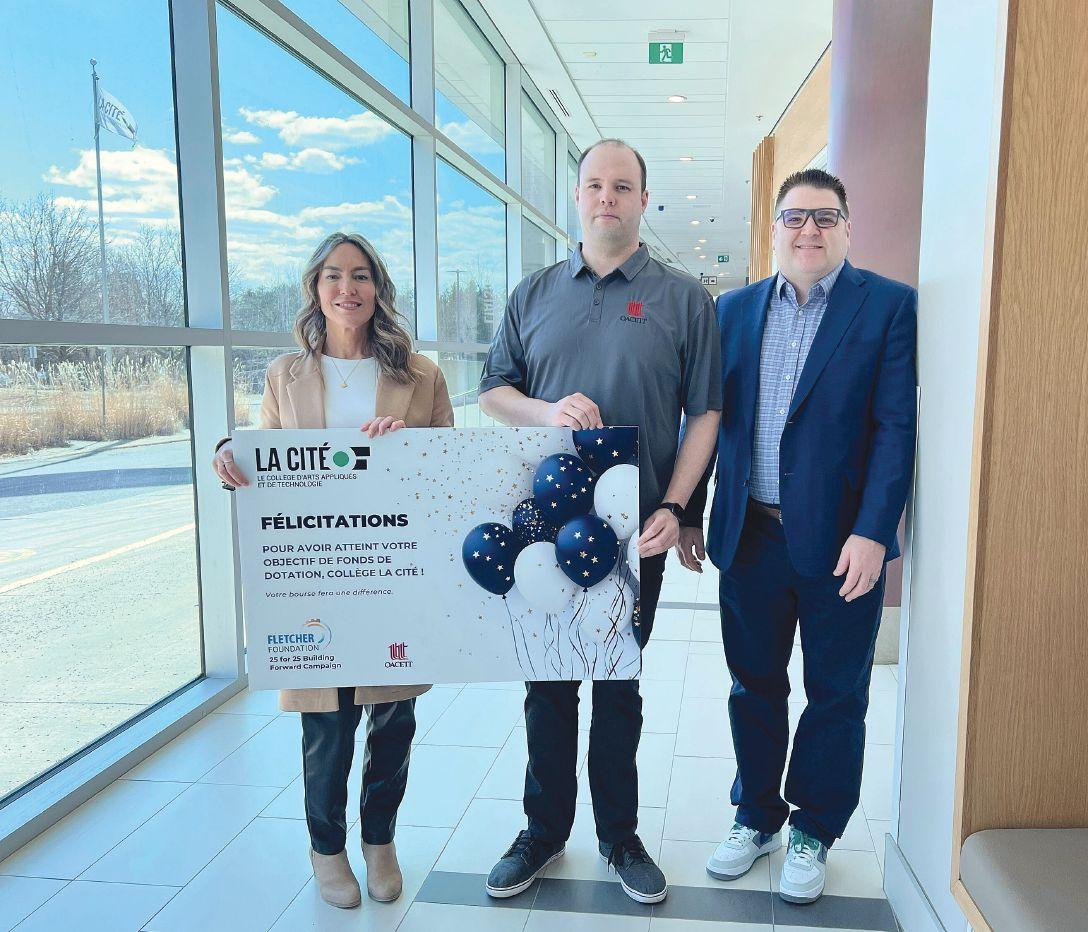
The Fletcher Foundation just hit a thrilling milestone in one of its boldest fundraising missions yet—the Building Forward Campaign! In an exciting finish, both La Cité College and Lambton College reached their endowment fund goals, officially completing the circle and securing endowed funds at all of Ontario’s colleges. It’s a significant win for the future of technology education across the province!
“What incredible news!” exclaims Bob Jameson, C.E.T., Fellow OACETT and chair of the Fletcher Foundation. “Back in 2012, the trustees dared to dream big—we set out to amplify the impact of bursary programs across every Ontario college. Our vision? To guarantee a $1,000 annual
bursary (in perpetuity) for engineering technology students enrolled in OACETT-recognized programs right across the province. And now, here we are—mission accomplished! Thanks to the generosity of corporate and private donors, that dream is a reality. It truly doesn’t get better than this.”
In 2022, Fletcher Foundation president Cheryl Farrow kicked off an energetic “Push Campaign” to rally support from OACETT chapters, the remaining colleges, alumni, and local employers to bring the Building Forward Campaign across the finish line—and it worked. With generous contributions from Eaton Industries, the Ottawa Chapter, dedicated OACETT members, and matching funds from OACETT itself, the final stretch was powered through. These combined
These combined efforts provided the crucial boost needed for the remaining colleges to hit their $40K endowment targets, turning ambition into achievement.”
efforts provided the crucial boost needed for the remaining colleges to hit their $40K endowment targets, turning ambition into achievement.
This past March and April, executive members from the Lambton and Ottawa Chapters made special visits to Lambton College and La Cité College to personally celebrate the


game-changing achievement of securing a lasting bursary award that will support engineering technology and applied science students for generations. It was a proud, decisive moment marking a legacy of opportunity and impact! |
DONATE TO THE FLETCHER FOUNDATION
To donate, visit www.oacett.org/about-us/ fletcher-foundation.
from left to right: Christiane Matte, director of philanthropy and alumni, La Cité College; Adrian Meunier, C.E.T., rcji, OACETT Ottawa Chapter vice-chair; and Patrick Mainville, academic dean, Skilled Trades Institute, Agri-Food Institute, Technology, Arts and Communication Institute, Toronto satellite campus, La Cité College.


JUST OVER A YEAR AGO, OACETT LAUNCHED THE MUNICIPAL INFRASTRUCTURE DESIGNATIONS PROGRAM, DESIGNED TO INCREASE THE SAFETY AND RELIABILITY OF ONTARIO’S MUNICIPAL INFRASTRUCTURE AND ANOTHER WAY THE ASSOCIATION HAS IMPLEMENTED THE HIGHEST PROFESSIONAL STANDARDS IN ORGANIZATIONS AND MUNICIPALITIES ACROSS ONTARIO.
The Municipal Infrastructure Inspector (mii) and Municipal Infrastructure Contract Administrator (mica) designation titles are offered to OACETT-certified members who are qualified to work on municipal infrastructure projects and do municipal work.
The designation program addresses growing concerns about project quality, the need for qualified personnel, and the significant investments in municipal water, wastewater, and storm sewer systems.
Since the launch, more than 180 certified members have applied for the designation.
Recently, The Ontario Technologist checked in with some of the newly certified mii and mica designation holders to get their input on the motivating factors that encouraged them to obtain the new designation and how they have shared that recognition since being awarded. Here is what they had to say.

certified members have applied for the designation, since the launch.

Q: What was your reason for applying for a Municipal Infrastructure designation?
I applied for the mii designation because although I have many years of construction inspection experience, I didn’t have anything to indicate that I am qualified.
– Darrin Wills, C.Tech., rcji, mii (Niagara-on-the-Lake)
To attain a formal (and more specific) designation reflecting professionalism, experience, knowledge and commitment to managing municipal infrastructure assets.
– Brandon Demeester C.E.T, mica (City of Cambridge)
I pursued the Municipal Infrastructure designation to strengthen my ability to deliver capital programs that address our municipality’s growing demands. This designation equips me with the advanced knowledge and skills to meet stringent regulatory requirements and implement innovative, energy-efficient technologies. By ensuring compliance with environmental standards, I can enhance the quality and value of our wastewater infrastructure investments. Ultimately, this designation bolsters my professional credibility and reinforces our commitment to sustainable, resilient infrastructure, prioritizing public safety and environmental stewardship.
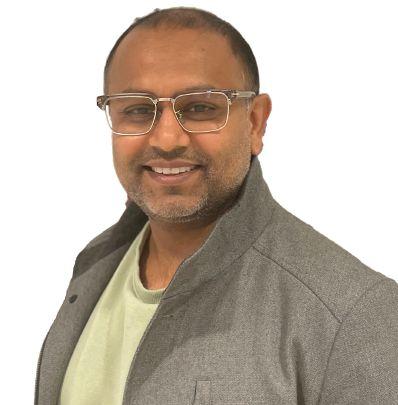
– Sumant Patel, C.E.T., mica (City of Guelph)
I obtained the designation to make myself more sellable. I plan to receive the mica designation in the future.
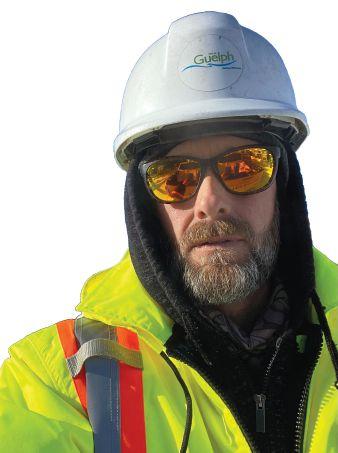
– Palakkumar Patel, C.Tech., mii (City of Guelph)
I have been a senior municipal inspector for many years, and the work has involved many aspects of my discipline. It is rewarding to be recognized for this achievement, and it has taken many years of hands-on experience and continuing education to obtain this designation.
– Jim Oriotis, A.Sc.T., rcsi, mii (City of Richmond Hill)
I acquired the designation to demonstrate competency to my public employer.
– Steve Shingler, C.Tech., rcji, mii (City of Guelph)
The mica designation provides the recognition deserved as a professional in the municipal water drinking system industry. It acknowledges the different paths one might take to become qualified as a contract administrator within municipal infrastructure.
– Matthew Walden, C.Tech., mica (City of Guelph)
$484 BILLION value of infrastructure owned and operated for the public
$250-$290 BILLION planned over the next 10 years
1.5 MILLION homes built by 2031
$615.3 MILLION Wastewater collection main replacement & construction
$558.1 MILLION Watermain replacement & construction
$169.2 MILLION Expansion of water resource recovery facilities
$168.1 MILLION Road construction, intersection improvements, and active transportation
$20 MILLION Sophia trunk storm sewers
$18.2 MILLION Ministry of Transportation (MTO) projects
$16.4 MILLION Mapleview Drive E Road expansion
$13.3 MILLION Bayview Drive new transmission watermain & road expansion
$11.7 MILLION Bunkers Creek culvert & watercourse improvements from Innisfil to Lakeshore
$26.5 MILLION Road, bridge & stormwater maintenance
$3 MILLION in parking infrastructure
$2.3 MILLION Solid waste automated cart system

$1.6 MILLION Implementation of facilities GHG reduction initiatives/Net-zero transition plan
Q: How have you promoted this accomplishment since being awarded mii or mica?
Since being awarded the designation, I have used it in my correspondence with my signature and have had other professionals inquire about it.
– Darrin Wills, C.Tech., rcji, mii (Niagara-on-the-Lake)
A congratulatory email message for those who gained this accomplishment was shared with our senior management team, including the mayor and members of the Council, who responded with great enthusiasm, knowing that their efforts to allocate resources and funding to repair and replace aging infrastructure would be in the hands of qualified and dedicated staff.
– Brandon Demeester C.E.T., mica (City of Cambridge)
Since earning the mii designation, I have promoted its importance within my team and at community forums, highlighting how it improves our capacity to manage municipal infrastructure effectively. By integrating this achievement into our operational strategies, I’ve empha-
sized our commitment to quality assurance and continuous improvement in wastewater services.
– Sumant Patel, C.E.T., mica (City of Guelph)
I have shared this accomplishment through the memos, emails, reports, and other documentation I sign, where I proudly show the designation after my signature. I have also tried encouraging others in my field to work towards and obtain these designations.
– Jim Oriotis, A.Sc.T., rcsi, mii (City of Richmond Hill)
I have promoted this title by adding the protected professional designation to my email signature and business correspondence.
– Steve Shingler, C.Tech., rcji, mii (City of Guelph)
Since being awarded the mica designation, I have shown this accomplishment on my LinkedIn profile and added it to my business signature. This has led to many colleagues asking for more information about mica and the steps needed to achieve this designation.
– Matthew Walden, C.Tech., mica (City of Guelph)
The designation program addresses growing concerns about project quality, the need for qualified personnel, and the significant investments in municipal water, wastewater, and storm sewer systems.
HOST (GUEST)
David Terlizzi, director of member engagement and services, government relations, OACETT
GUEST
Neil Wilkinson, associate director of Niagara College’s Walker Advanced Manufacturing Innovation Center (WAMIC)


at https://www.oacett.org/tech-takes
EPISODE 14 Innovating the future: Inside Niagara College’s Walker Advanced Manufacturing Innovation Center (WAMIC)
Discover how WAMIC and the Research Innovation Division turn ideas into realworld solutions across manufacturing, green energy, healthcare technology, and IT. From prototyping and testing new technologies to developing practical products and processes, these institutions empower small and medium-sized businesses while shaping the future of engineering and applied sciences.
this episode of
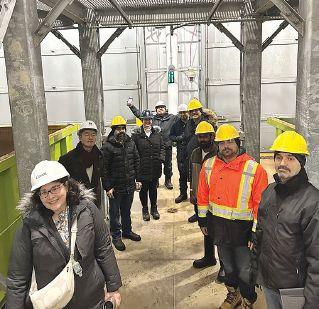
On January 18, OACETT’s Central Region members participated in a CPD-approved tour of the Duffin Creek Water Pollution Plant. Members learned about the liquid treatment portion of the wastewater process and participated in high-level discussions of preliminary, primary, and secondary treatment, disinfection and dichlorination. The Ontario Technologist wanted to share knowledge about the plant, so we conversed with Michael Liebregts, one of the facility’s tour guides, to learn more. Here is what he shared with us.
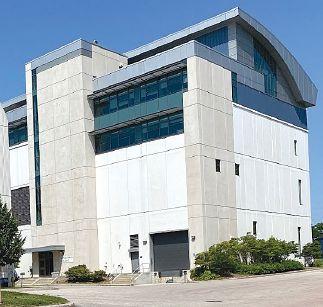
What are the water treatment processes at this plant, and what are the key stages involved in cleaning polluted water?
Duffin Creek Water Pollution Control Plant is a class IV conventional activated sludge wastewater treatment plant. The plant has two major treatment streams: liquid treatment and solids handling.
The liquid treatment portion comprises of influent pumping, preliminary treatment, primary treatment, secondary treatment, and disinfection.
Solids handling comprises of anaerobic digestion, dewatering, and incineration to process solids at the Duffin Creek Plant. Solids from the liquid treatment stream begin in the anaerobic digester, which helps reduce organics and stabilize the solids. After digestion, the sludge is dewatered via centrifuge to form a sludge cake. Finally, the sludge cake goes to the incinerator, where it is processed as fuel. This process removes most moisture and produces steam to offset energy consumption and the
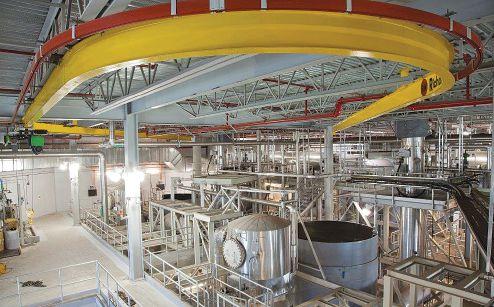
Plant’s heating requirements. The end product is ash, which is shipped to a local cement processing facility where it is recycled.
What are some of the biggest challenges facing water treatment plants today, particularly concerning pollution control?
Aging Infrastructure and population growth are two of the biggest challenges facing wastewater treatment plants today. Infrastructure rehabilitation must keep up with our growing population. Aging infrastructure and growing population will lead to increased plant flows, which can reduce plant capacity. Investing in our infrastructure and new technologies is essential to keep up with this demand for our systems, which the region is doing.
Another challenge concerning pollution control is per and polyfluorylalkyl substances, also known as PFAS. The fate of these chemicals through the wastewater treatment process is

currently unknown, but Durham Region is conducting a study with the University of Waterloo to learn more.
What are the plant’s most common pollutants, and how are they effectively removed?
The main types of pollutants are the following: biological oxygen demand, total phosphorus, total ammonia nitrogen, total suspended solids, and E.coli. Biological oxygen demand, a measure of organics, is removed through primary clarification and secondary treatment. Total ammonia nitrogen is removed via nitrification during secondary treatment. Nitrification converts total ammonia nitrogen into nitrate, which is much less toxic to the environment than total ammonia nitrogen. E. coli is removed during the disinfection phase, and sodium hypochlorite kills the bacteria. Effective removal is ensured through rigorous testing at multiple stages of the treatment process.
QTell us about yourself.
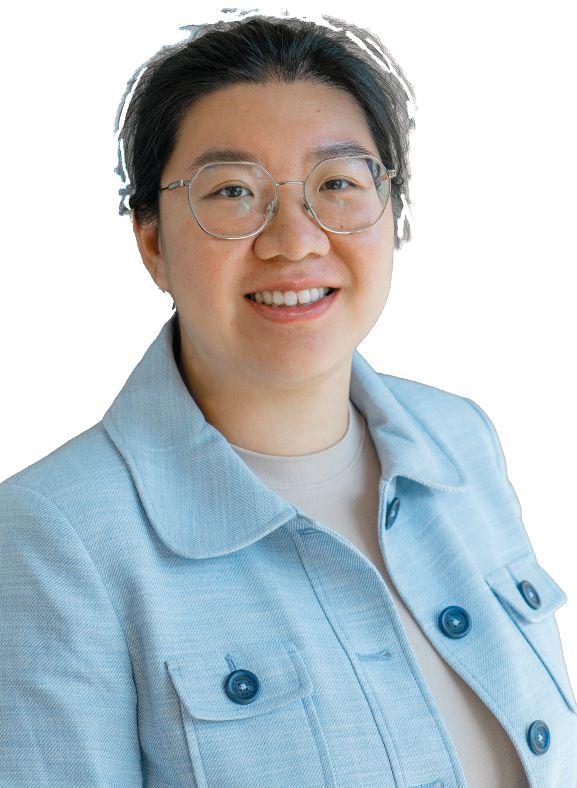
I am an engineering designer in the land development department at R.V. Anderson Associates Limited. I graduated from Conestoga College’s Civil Engineering Technology Program in 2014 and McMaster University’s Civil Engineering Infrastructural Technology Program in 2019. I joined OACETT in 2012.
Q
When did you begin volunteering?
I started volunteering in 2023. It has allowed me to share my expertise and grow alongside experienced colleagues. I am grateful for the opportunities to teach and learn within this vibrant community.
Q
What volunteer roles have you fulfilled?
I am currently the York Chapter treasurer, an inspiring and fulfilling experience that has allowed me to collaborate with like-minded professionals and contribute to our shared goals.
Q
What volunteer role was the most rewarding to you? And why?
Organizing events and meeting chapter members has been the most rewarding role because it allows me to bring people together to create meaningful connections. I also enjoy seeing the impact of these events on the professional community.
Q
What do you enjoy most about being an OACETT volunteer?
I enjoy working with a friendly group of people who feel like family. They provide valuable mentorship and genuinely care about each other.
Q
What is your most significant personal or professional achievement?
My first article was published in the Winter 2025 edition of OACETT’s magazine, The Ontario Technologist. The title is “Lake Gibson Headwall Rebuild Advances Thorold’s New Subdivision Construction.” Read it when you can!
Q
What advice would you give a prospective member and/or volunteer?
Get involved and stay engaged. Volunteering when you can is a great way to build connections and make meaningful impacts on the community.
SANDRA DAHSSI LONDON CHAPTER, WOMEN IN TECHNOLOGY REPRESENTATIVE
Tell us about yourself.
In 2018, I graduated from Seneca College with an advanced diploma in chemical engineering technology, and last year, I graduated from Cape Breton University with a Bachelor of Engineering Technology in environmental studies. I want to further my studies with a master’s in environmental science at the University of Toronto. I joined OACETT in 2022.
When did you begin volunteering?
I began volunteering for OACETT’s London Chapter in 2024.
What volunteer roles have you fulfilled?
I am the London Chapter’s Women in Technology (WIT) representative.
QWhat volunteer role was the most rewarding to you? And why?
I participated in my first Women in Technology event in February. I also participated in the Fletcher Foundation Spring 2025 Community Cleanup Challenge and would like to volunteer for the Kai Lahde, C.E.T., Student Awards ceremony this year.
What do you enjoy most about being an OACETT volunteer?
It gives me an opportunity to engage in webinars and meetings and obtain resources that enrich me with valuable knowledge and information to take home.
What is your most significant personal or professional achievement?
My most significant accomplishments are achieving higher education and joining OACETT. I am also looking forward to getting a job opportunity in the field so I can start showcasing my skills and gain relevant professional work experience, as that is a goal of mine.
Q
What advice would you give a prospective member and/or volunteer?
The WIT rep role is an excellent opportunity for growth as a volunteer with OACETT. I would encourage them to learn as much as possible as a member.

MY MOST SIGNIFICANT ACCOMPLISHMENTS ARE ACHIEVING HIGHER EDUCATION AND JOINING OACETT. I AM ALSO LOOKING FORWARD TO GETTING A JOB OPPORTUNITY IN THE FIELD.” “
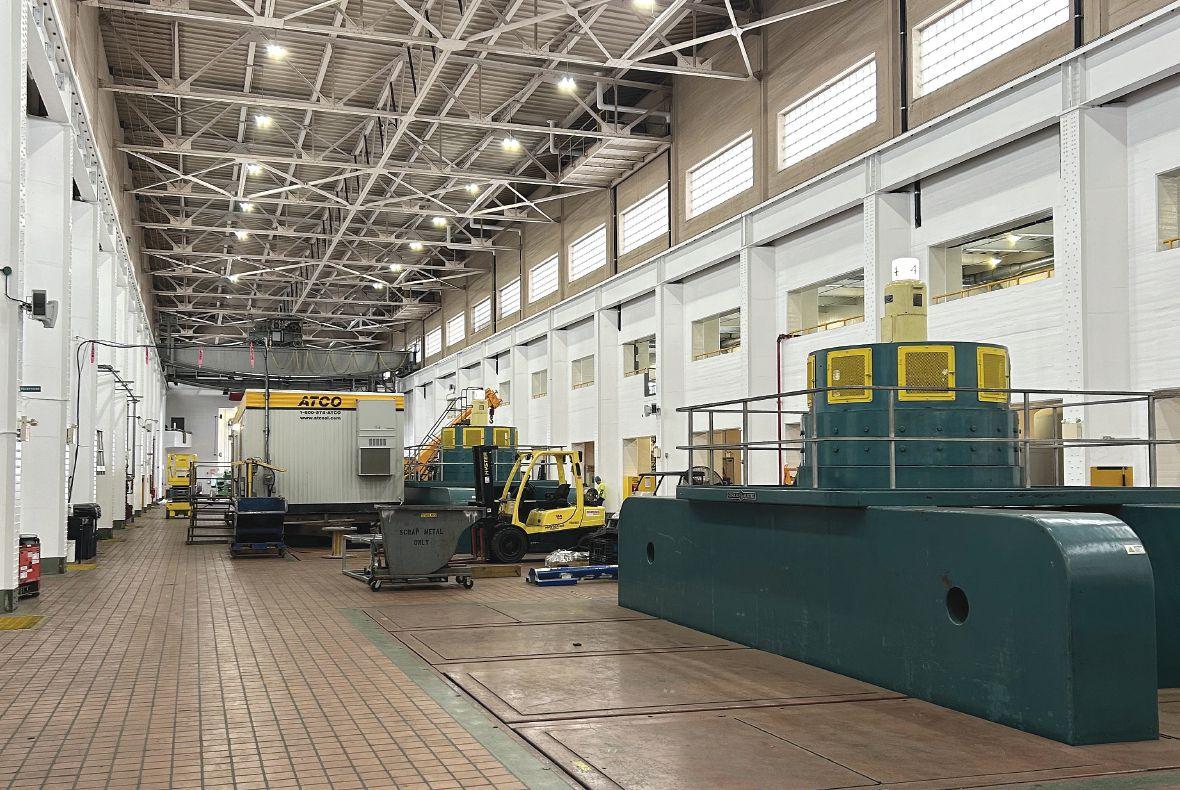
In January, the Renfrew County Chapter organized a tour of the Ottawa River Chenaux OPG Generating Station. This impressive facility showcases sophisticated electrical design and system integration, with advanced security layers, critical system replication, and capital investments in existing hydro stations. These initiatives align with OPG and IETO regulatory mandates to increase generation capacity. As a run-of-river site, the station’s new state-of-the-art bypass gate controls will enhance speed and provide better flood control for vulnerable areas.
Larry McHenry, C.E.T., Renfrew County Chapter chair: renfrewcounty-chapter@oacett.org.
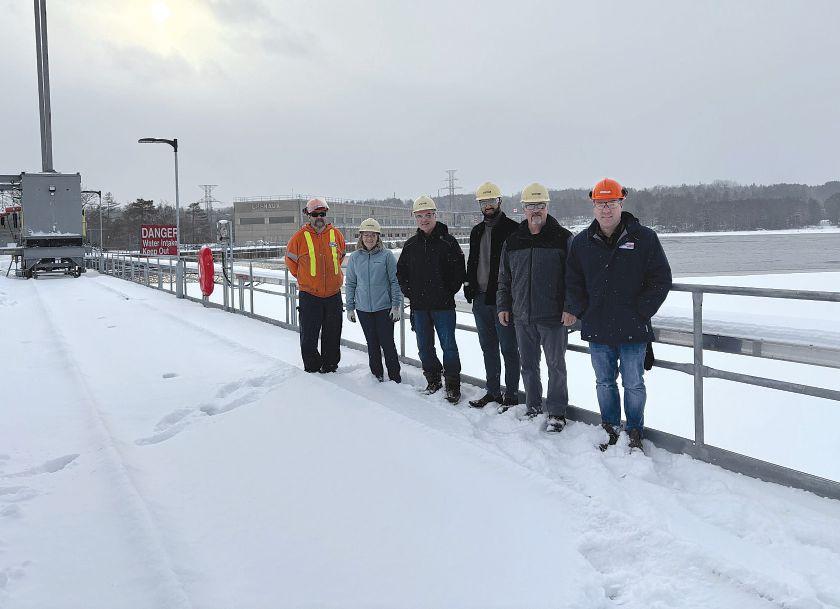
The Kingston Chapter wrapped up 2024 with a series of engaging events, including a bowling event in collaboration with St. Lawrence College (SLC), a Kingston Frontenac’s Hockey Meet and Greet, and a BGC Southeast Robotics Lab tour—all of which had a great turnout and provided excellent opportunities for networking and socializing.
Team 2708 Lake Effect, a robotics competition team affiliated with the Limestone District School Board (LDSB), welcomed students from the board and showcased their competitive robots, highlighting the LDSB’s engineering excellence.
Kingston Chapter continues to build momentum with monthly meetings. The chapter is excited about the upcoming Bridge Busting Competition, which will showcase the creativity and expertise of SLC’s civil engineering technology students. There is also potential for an SLC Billiard’s night later in the year.
Bruce Fudger, C.E.T., Kingston Chapter chair: kingston-chapter@oacett.org.
Kingston Chapter members enjoy a friendly competition with St. Lawrence College students for the SLC Bowling Night Tournament Event.
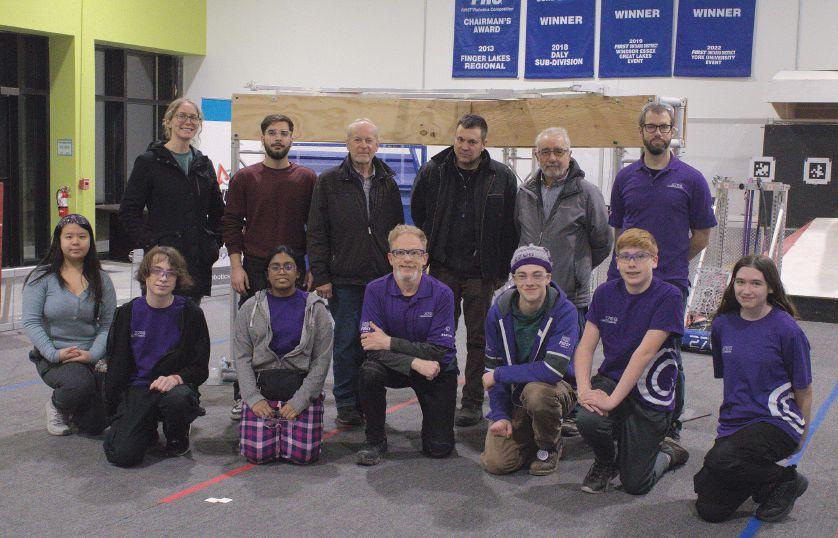
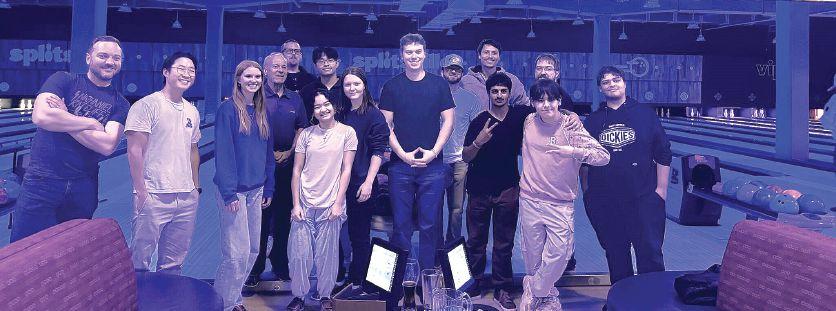

Julia Farner, marketing & communications manager, OACETT; Marc Outridge, corporate outreach & sponsorship lead, OACETT; Darren Loro, C.E.T., Hamilton Chapter college liaison and Hamilton Chapter executives Ken Browne, C.E.T. and William Stewart, C.E.T., attended the Winter 2025 Meet the Grad/Employer event at Mohawk College of Applied Arts and Technology’s Fennell Campus on March 4. The event, sponsored by Mohawk College’s Building and Construction Sciences program, allowed current students to network with potential employers and professional associations such as OACETT, Hamilton & District Heavy Construction Association, and Ontario Building Officials Association.
The OACETT team spoke with many students and held a draw for two student memberships. The winners were Joseph Napoleone, a civil engineering technology student, and Kirk Balbuena, a civil engineering technician student.
Mark Jakubowski, A.Sc.T., Hamilton Chapter chair: hamilton-chapter@oacett.org.

The London Chapter hosted a delightful gathering at the Eleven Sixty Bar and Grill during the Christmas season. President-elect Christopher van Dop, C.E.T., opened the get-together with warm greetings, followed by remarks from Member Engagement and Services Committee representative Shervin Reyhani, C.E.T. Peter Nicholas, C.E.T., Fellow OACETT, provided an inspiring speech, and the atmosphere was filled with excitement as the gift table draws began. A heartfelt thank you to all the volunteers of the London Chapter for their continued support and dedication.
Peter Nicholas, C.E.T., London Chapter chair: london-chapter@oacett.org.
The Grand Valley Chapter was pleased to host a NEAT Week mentoring seminar at Conestoga College. This event provided an excellent opportunity to connect with potential student members, associate members, and those looking to upgrade their certification. We answered questions and guided attendees toward maximizing the value of their certification. A special thanks to the college and all who attended for making this event a success. We look forward to hosting similar events in the future—keep an eye on your email and social media for updates.
During the holidays, Grand Valley Chapter members and their families were invited to the Princess Twin Cinema for a special screening of E.T. It was a wonderful experience to enjoy this classic film on the big screen, and everyone who attended had a fantastic time—a big thank you to Julia Evers, A.Sc.T., for organizing the event.
Michael Luyckx, C.E.T., Grand Valley Chapter chair: grandvalley-chapter@oacett.org.
The Sudbury Chapter held its 15th Annual Pool Night at Rhythm’N’Cues. The event featured an exciting 9-Ball Pool Tournament, with a few students in attendance. The food was great, the pool games were thrilling, and the attendees enjoyed networking throughout the evening.
Antonio Radford-Paz, C.Tech., Sudbury Chapter chair: sudbury-chapter@oacett.org.
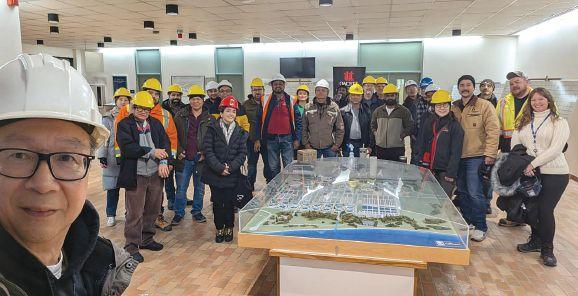
The York Chapter started the year with its first regional tour at the Duffin Creek Water Pollution Plant. The event was so successful that it sold out within the first day. Members enjoyed connecting with one another and participating in such an informative experience.
Phelia Kung, C.E.T., York Chapter chair: york-chapter@oacett.org.

On February 22, curling enthusiasts gathered at the Stroud Curling Club for a thrilling day of competition hosted by the Georgian Bay Chapter. Players showcased their skills on the ice while spectators enjoyed the spirited competition. The event concluded with a prize ceremony, celebrating the participants’ excellent play.
Andrew Monkman, C.E.T., Georgian Bay Chapter chair: georgianbay-chapter@oacett.org.
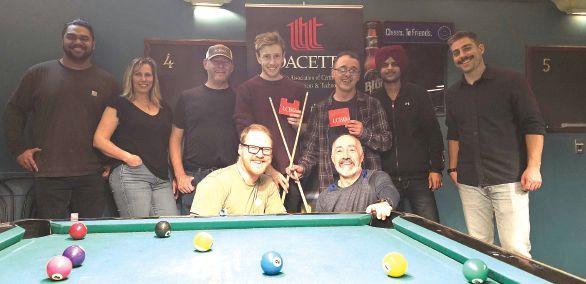
In December, Toronto Central Chapter (TCC) participated in Seneca Polytechnic’s SEMET Technical Project Showcase, where students from the electronics, electromechanical, and computer engineering technology programs presented their final thesis projects in a friendly competition. TCC members interacted with students, voted for their favourite projects, and sponsored the top prize, Best in Showcase. The award went to electromechanical students Rene and Paolo for their “Cable Twister” project—now OACETT’s newest members!
In January, TCC hosted a webinar, “Unlocking the Power of Technical Data,” presented by Dr. Mark Ebden, P.Eng. The session offered valuable insights into data analytics and machine learning, engaging an enthusiastic audience of 45 attendees. Thank you, Karen Craigs, C.E.T., for organizing the event.
The TCC executive also gathered for a dinner celebration at Granite Brewery & Tied House to mark the end of the season and the New Year holidays.
Briscoe, C.Tech., Toronto Central Chapter chair: torontocentral-chapter@ oacett.org.
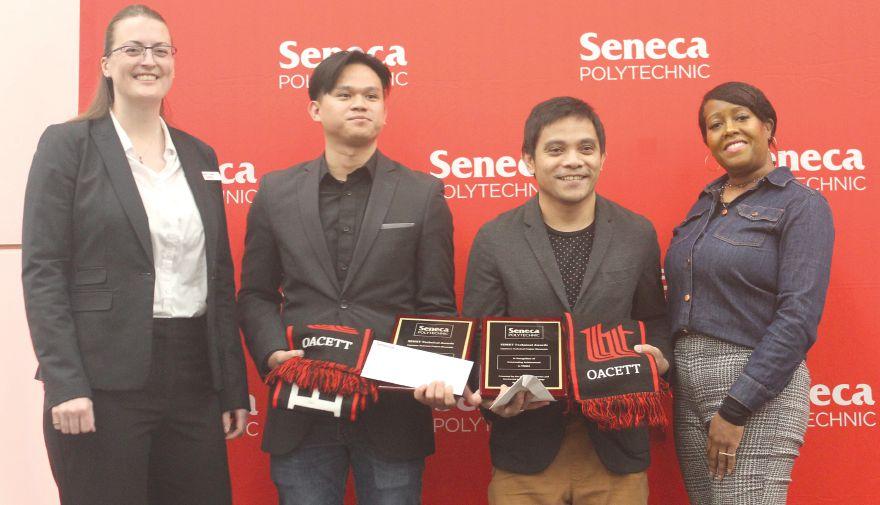
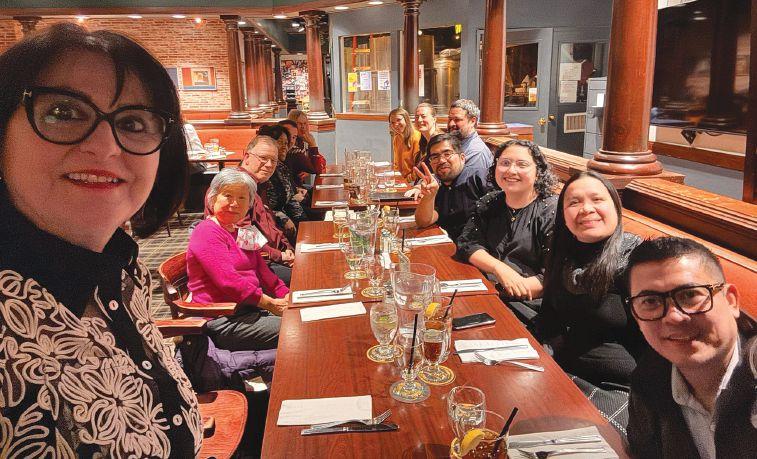
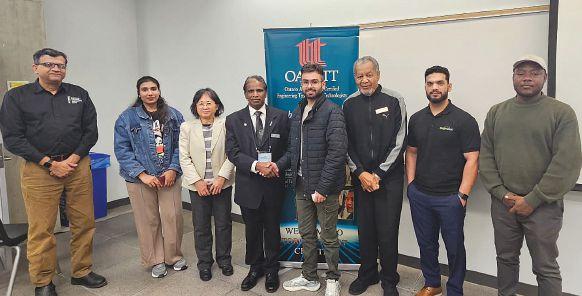
The Toronto East Chapter recently hosted a “Jumpstart Your Career” seminar at Centennial College’s Progress Campus. The seminar highlighted the benefits of becoming an OACETT member, focusing on career growth, advancement opportunities, and salary potential. The students in attendance showed strong commitment, and the event included a prize for one lucky student: a complimentary one-year student membership.
Pasha Mohammed, C.Tech., Toronto East Chapter chair: torontoeast-chapter@oacett.org.


By Dennis Furlan
ot too long ago, the world was amazed that a printer could produce 3D objects such as a toy gun or a miniature Eiffel Tower. A few short years later, they’re actually making buildings and houses from 3D printers, and the impact it could have on construction and sustainability could be significant.
First, what exactly is 3D printing? It’s a process that takes 3D modelling using computer-aided design (CAD) software and slices it up into thin, horizontal layers using other software. Computer instructions are then sent to a special 3D printer, which actually produces these layers one at a time using materials such as plastic, metals, composites, concrete, and more.
In fact, the technology is called additive construction, which creates objects by depositing materials, layer by layer, from a digital design. Its advantage is that it can make complex objects in quicker times using less waste. This is in contrast to subtractive construction, which has been traditionally used. It reduces materials from a solid object, such as wood and metal, to produce a finished product, which can produce significant product waste.



By Frank Teixeira, C.E.T., LET
Industrial robots u sed for stacking boxes—once a marvel—have evolved into something much more advanced and widespread. Today, they dominate manufacturing, excelling in material handling, joining, and dispensing, particularly in the automotive industry. But their reach is expanding fast. From life sciences to e-commerce and even into food production and agriculture, these robotic workers are revolutionizing industries in ways once unimaginable.
In manufacturing, advancements in machine vision technologies, both two-dimensional and three-dimensional, for part quality inspections and positional data have enabled robots to know where to pick or place a part without fixtured pick/place locations.
Machine vision can also be used to determine positional offset information of the robot’s end effector or to determine the spatial ‘frame’ of the location of a fixture or pallet.

More recently, machine vision has been used instead of traditional line tracking (using an encoder) to follow parts on a moving conveyor. For example, FANUC Robotics’ integrated vision system, known as iRVision, seamlessly incorporates machine vision capabilities into robotic operations, enhancing automation processes through visual detection and analysis. It includes AI machine learning algorithms to easily set up target objects (workpieces), for the robot to find or evaluate. This technology simplifies complex goals, such as having a robot with a single camera unloading an industrial bin full of randomly placed parts. A robot outfitted with a camera mounted on an AMR (autonomous mobile robot) can travel throughout the plant floor, servicing multiple machining centres or stations.
“
The projections for future industrial robot installations are pretty impressive, and we can bet that the ingenuity of applications will continue to wow us.”
The last three years have seen a dramatic increase in the application of collaborative robots, also known as cobots. Unlike a typical industrial robot, which requires guarding around its working area and safety-rated devices to allow access, a cobot will enable humans to work safely in its vicinity.
Cobots have advanced sensors and software to detect human presence and prevent accidents. Its inherent electronic and software features continuously monitor the robot’s power/force and speed. An external force applied on a robot (even a light tap) stops the collaborative robot immediately. Given the limited operational speed in collaborative mode, the reduced installation costs and smaller
footprint may not always be practical if production throughput cannot be maintained. However, in some cases, object or people-monitoring area scanners allow the robot to operate at full speed in non-collaborative mode.
Safety considerations, such as handling sharp parts, must be considered before committing to a collaborative application. For these complex, case-specific reasons, it is always advisable that a safety engineer is involved in the early stages of a project involving cobots. The scenarios we see in the industry vary and include palletizing at the end of a food processing line, quality control inspections, part assembly, welding and much more. Although few end-users attempt to integrate cobots into their production facility, the best approach is dependent on pre-engineered solutions system integrators.
For decades, industrial robots were engineered to operate individually or in small, plant-floor-level local networks. These local networks enable robots and other automation devices, such as programmable logic controllers (PLCs), various robots or passive devices, such as sensors, to share information to perform repetitive tasks efficiently and consistently. Local industrial network design is still relevant, but Industry 4.0 has enacted the benefit of expanding data transmission to other applications beyond the plant-floor level.
The digital age revolution has numerous benefits for industrial robots. For one, the robot has become another device or a ‘thing’ in the Industrial Internet of Things (IIoT) realm. Now, robots can share very useful information with PC-based software applications, creating a marriage between operational technology (OT) and information technology (IT) and a relationship with quantifiable paybacks.
With robots, data such as power consumption, axis torque, speed and runtime, historical trends allow

experienced robot experts or analytical software to predict maintenance requirements before a failure happens. For example, the FANUC robotics cloud-based service, called ZDT (Zero Down Time), monitors a plant’s robot’s health and alerts the customer of issues and software configuration changes. Where process data is concerned, such as welding currents, part counts, downtime, cycle times, etc., critical production information dashboards can give the process experts a clear view of what’s happening on the floor.
In addition to data analytics, there is a newer philosophy of controlling production parameters from the enterprise level (IT). This can be slightly controversial since many believe such decisions should be left to plantlevel (OT) engineering employees. The future, however, appears to be going beyond just remote control of parameters. Production scenarios already exist that will configure and run robot production remotely. One can imagine the challenges that this sort of technology push continues to present to machine safety experts.
Control room-level software such as SCADA (supervisory control and data acquisition) systems or enterprise-level (administration and management) software have traditionally received data from plant-floor devices indirectly via data gateways or PLCs. Often, these would be comprised of complex networks of different communication protocols with innate transmission latency. To adopt common and open IIoT communication standards, an increasing number of automation hardware companies offer MQTT (message queuing telemetry and transport) communication options. OPC-UA is another, more established protocol that enables direct, bidirectional communication between devices such as robots and large systems. Such flexibility comes with proper network architecture design to optimize network traffic and cybersecurity considerations. One approach to handling these constraints is by using an “Edge” device that acts as a single point of data transfer and storage (useful to maintain data integrity

during network outages) between the plant devices and the enterprise-level applications – all communicating in a single communication protocol.
That leads to another growing perspective on robotic control through third-party applications. External motion control (EMC) is an advanced robotic implementation for specific applications that few engineering firms use. One way to implement EMC is the TCP/IP (transmission control protocol/ Internet protocol) stream of motion instructions or offsets utilizing the robot’s native motion planner. An alternative is a UDP (user datagram protocol) stream of joint or cartesian increments where complex robot kinematics need to be considered. Finally, a file download of a dynamically modified regular robot program is another method to implement EMC. Depending on the option, the controlling device could be a PC, a PLC or an external sensor (such as a laser distance sensor or external

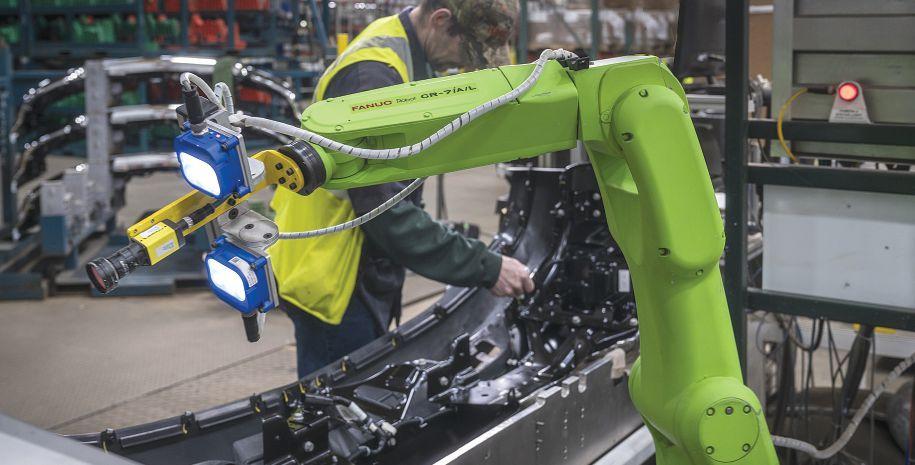
camera). The use case for such advanced technology is predicated by the requirement to dynamically modify the robot’s path trajectory, where running pre-programmed positions will not suffice or in low-volume/ high-mix production needs. Examples are remote joystick control, haptic surgery control, space remote control and vegetable harvesting.
ROS development is creating a flexible, open-source software framework designed to control and manage robots. It provides tools and libraries that help developers build complex robot behaviours, manage hardware components, and handle communication between various systems within a robot.
A significant future use of EMC is in developing the ever-evolving robotic operating system (ROS). ROS development is creating a flexible, open-source software framework designed to control and manage robots. It provides tools and libraries that help developers build complex robot behaviours, manage hardware components, and handle communication between various systems within a robot. It simplifies the process of programming robots by offering reusable code and standardized interfaces, allowing developers to focus on specific tasks rather than reinventing essential functions.
Behind the ROS movement are large investors, leveraging existing and
future open-source robot libraries for various robot models and applications and pairing these with user-friendly, low-code web-based interfaces. AI machine learning algorithms will also be key features of such systems, particularly in environment perception and process optimization. Eventually, EMC will be used instead of the OEM (original equipment manufacturer) motion/application software to control the robots throughout manufacturing and other industries. Industrial robot technology continues to evolve in ways that were hard to imagine, even just a decade ago. In parallel, humanoid robot development and public exposure through videos and social media are conditioning the public to view what many once considered a frightening sight. The projections for future industrial robot installations are pretty impressive, and we can bet that the ingenuity of applications will continue to wow us. |
The cybercrime triad sneaking up on the construction industry
By Scott Birmingham, C.E.T., C.I.M.
“We move dirt – we don’t have anything a hacker would want.”
That statement, or some variation, is common among heavy civil construction companies that build roads, bridges, sewers, and other civil infrastructure. Suppliers and consultants echo similar sentiments: “We make pipe...” “We design roads…” “We sell traffic management…”
A cyber attack is less likely to force a complete shutdown of a job site as dramatically as it can a critical infrastructure such as a pipeline, utility, school, medical office, accounting firm, insurance company, or any other business Mike Rowe wouldn’t feature on the TV show “Dirty Jobs.”
Whether rehabilitating a bridge, repaving a major highway, or replacing municipal sewer lines, the money involved in those projects is a tempting target for criminals.” “

Yet all heavy civil construction companies move something cyber criminals want: Money.
Clever cyber criminals know that their payday is in the substantial dollar amounts involved in civil construction. Whether rehabilitating a bridge, repaving a major highway, or replacing municipal sewer lines, the money involved in those projects is a tempting target for criminals.
Though ransomware attacks, like the one Colonial Pipeline experienced, happen to construction companies, they are not necessarily as lucrative for cyber criminals as other forms of attack. Unfortunately, most civil construction companies overlook those different forms of attack.
To avoid an attack, a company must implement three types of controls—technical, administrative, and physical—to manage the risk of a cybersecurity incident effectively. Technical refers to setting up and maintaining cybersecurity systems, including antivirus, spam filters, and firewalls. Administrative are policies regarding who has access to what information and what they’re allowed to do with it, procedures for onboarding and offboarding

employees, and contingency plans when something goes wrong. Physical is the locking up of sensitive documents and job site iPads (when not in use).
Without these guardrails, mishaps can happen. Unfortunately, a paving company in Ontario experienced a near-miss, almost costing them $1,000,000 in cash flow. If the attack had occurred during the peak construction season, it would have been between $10,000,000 and $15,000,000. Here’s what happened to them:
An accounts receivable employee looked through her junk folder. She noticed an email from her boss requesting a spreadsheet listing customers with outstanding balances and customer contact information for payment approvals. She salvaged the email from her junk folder and did what was asked of her. She exported the information from the accounting system and replied to her boss.
Later that day, she asked her boss if he had everything he needed. At that point, they both realized something was wrong. She had sent the list to a cybercriminal who had impersonated her boss.
The subsequent investigation revealed the following:
• The email came from a free Gmail account, not a company email.
• The spam filter worked correctly, putting her email in her junk folder.
• The email system correctly identified the email as originating outside the company by adding a warning to the message: “Caution! Email is from an external source.”
• Human error caused the problem. But it wasn’t a simple oversight like accidentally clicking on a link.
• Despite enrolling in a security awareness training program to teach people to identify fraudulent emails, the employee hadn’t completed the training or testing.
• Even though security awareness training was in place, the company didn’t have a policy requiring employees to participate.
Based on these findings, the company concluded that the technical controls (spam filter and “external” banner) worked properly. However, the administrative controls didn’t work as expected, and security awareness training was ineffective. With no policy for security awareness
$1M
A paving company in Ontario experienced a near-miss, almost costing them $1,000,000 in cash flow.

training, the company had no legal recourse to discipline the employee. Also, despite complying with cyber insurance requirements by having security awareness training, the lack of an enforceable policy and the employee’s poor participation record meant that any claim for losses would most likely be denied.
The company recognized the resulting risks, including the possibility that criminals could use the stolen information for blackmail and the potential loss of $1,000,000.
One week after the mishap, customers received legitimate-looking payment change notices supposedly from the company. The criminal(s) had purchased a domain name near-identical to the company, making distinguishing between legitimate and fraudulent email difficult.
Thankfully, none of the customers fell for the scam because they had been previously warned about the risk. The company reported the fraudulent domain, which led to its removal, and a new technical control was added to monitor for newly registered domains that resembled theirs.
In another scary scenario, the owner of a consulting firm (“Nick”) received notice from a client (a construction project owner) saying one of the firm’s employees stole $600,000 from them, and Nick’s company must repay it or face legal action.
Nick was confused. The employee (“John”) had been with Nick for years and was completely trustworthy.
The client had received an email from John informing them a contractor working for the owner was changing banks and included instructions to redirect the next scheduled payment. When the contractor sent the next invoice to the client (not through John), they paid it according to John’s instructions.
However, after 60 days, the contractor hadn’t received payment and inquired about it. The client responded with proof of payment. The contractor informed the client that the banking information on the payment record was incorrect. The ensuing back-and-forth revealed the banking change
The investigation concluded that technical controls on John’s personal laptop were inadequate (the remote access “infection” was undetected) and administrative controls at the client either didn’t exist or weren’t followed.”
notice came from John, not the contractor. Nonetheless, the client followed the change instructions. Because the change notice came from John, the client concluded he had stolen the money and provided John’s original email to Nick as evidence. John denied sending the email to the client.
An investigation revealed that the original email and multiple follow-up emails to confirm the change were legitimately sent from John’s account. No trace of the email chain was found in John’s account. Whoever sent the emails had insider knowledge of the contractor/client relationship. The investigation also confirmed that John’s email account was protected with multi-factor authentication (MFA) without signs of being hacked.
The consulting firm’s employees all used personal laptops because the firm relied on a “bring-your-own-device” to work strategy. Because John’s laptop was not company property, he was responsible for his security, not Nick’s company. It appeared that John was either guilty and tried to cover his tracks, or he had been framed.
Nick’s security team discovered that John’s laptop had been accessed remotely, allowing someone to control everything, including John’s email. Their discovery explained how the perpetrator was familiar with the client/ contractor relationship and how MFA was defeated. John used his laptop daily to access company emails, so the remote criminal accessed John’s email through his computer and could do anything John could do. John was exonerated.
No two businesses have the same risk profile or resources to manage. So, not everyone would be as fortunate to face only minor consequences from a security incident as the companies in these examples did. Regardless of a company’s risk profile and resources, the following recommendations can be used to mitigate risk:
1.
Conduct regular security risk assessments (at least annually).
2.
Don’t treat information security as a one-and-done project. As cybercrimes become more sophisticated, security must evolve as part of a company’s continuous improvement strategy.
Nick explained the findings to the client, but they remained adamant that because the change request originated from an email belonging to Nick’s company, he was responsible for the $600,000 loss.
Nick then questioned their change management and payment approval processes, since the change request obviously hadn’t been properly vetted. After those questions, the client withdrew the demand for reimbursement without providing a reason. However, they did fire Nick’s firm, so he didn’t come away unscathed.
Despite Nick’s company not doing anything wrong, a cyber-criminal caused the loss of a client and almost $600,000.
The investigation concluded that technical controls on John’s personal laptop were inadequate (the remote access “infection” was undetected) and administrative controls at the client either didn’t exist or weren’t followed.
While Nick couldn’t influence the client’s security practices, he could prevent future incidents by strengthening his own. He implemented a complete security program, starting with a comprehensive risk assessment. Among Nick’s many risk-mitigation steps, he issued every employee a company-owned, properly secured laptop.
The heavy civil construction industry is no less vulnerable to cybercrime than any other sector, making cybersecurity a critical investment. By dedicating more resources to threat evaluation and protection, companies can
3.
Create a security culture within your company through training, policies, and procedures.
4.
Think, “It’s not a matter of if we’ll experience a cyber attack, it’s when,” and create multiple layers of protection.
5.
Create and rehearse an incident response plan (IRP). To draw on a sports analogy, teams practice plays so that they know how to execute on game day. Do the same with your IRP.
fortify their defences. A well-crafted risk management strategy—combining technical, administrative, and physical safeguards—acts as a shield against devastating financial losses and reputational damage. Taking these steps could save you from a world of trouble. | Scott Birmingham, C.E.T., C.I.M., is the principal consultant of Birmingham Consulting Inc.

BY PETER SAUNDERS
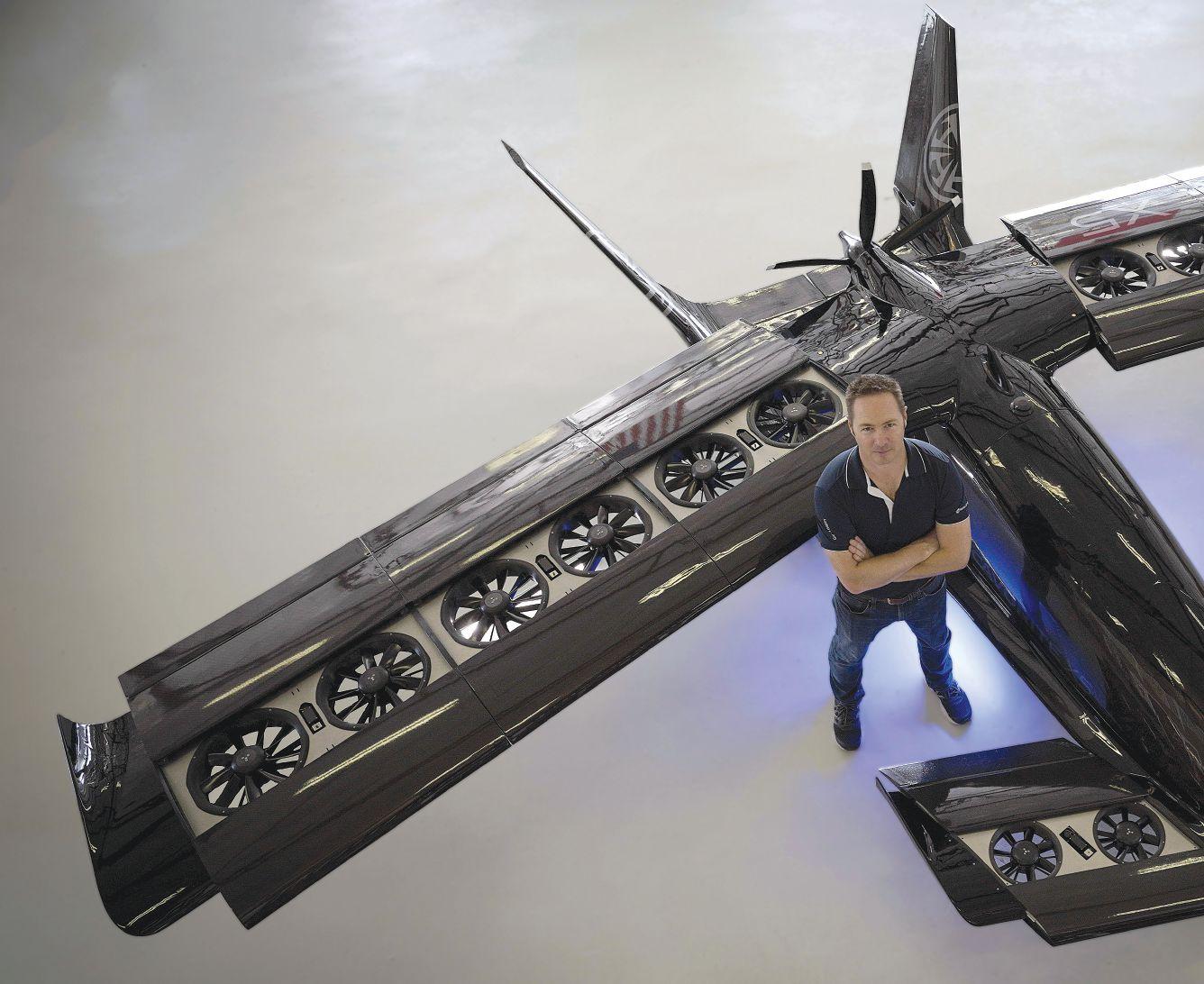
6,300 lbs
an estimated gross weight
450 km/h
Horizon Aircraft, an aerospace engineering firm based in Lindsay, Ont., is working to develop one of the world’s first hybrid (i.e. gas/electric) vertical takeoff and landing (VTOL) aircraft. Dubbed the Cavorite X7 and currently in the prototype stage, it is designed to take off and land like a helicopter without needing a runway, thanks to 14 lift fans in its wings. Once airborne, however, sliding panels will cover those fans, and the X7 will fly with the low-drag turboprop configuration of a normal airplane.
With an estimated gross weight of 6,300 lbs, projected useful load of 1,500 lbs, estimated maximum cruising speed of 450 km/h and average range of over 800 km with fuel reserves, the X7 is intended for commercial transportation, medical evacuation (medevac), supply delivery, disaster relief, military and regional mobility purposes. It will measure 2.8 m high and 11.6 m long, with a 15-m wingspan, and carry up to six passengers and one pilot.
“It’s for missions where you require vertical takeoff and/or landing capabilities, but most of the flight is simply going from point A to point B,” explains Horizon’s CEO, Brandon
Robinson (pictured with the half-scale prototype now undergoing flight tests).
Particularly distinctive within the VTOL field is the X7’s hybrid electric system, which allows it to recharge its batteries both en route and after landing, allowing it to be ready in less than 30 minutes for its next flight.
“To make money in air operations, you’ve got to keep the aircraft airborne,” Robinson notes. “Our aircraft will be ready to go before the passengers are.”
The X7 is expected to generate 75 per cent less hydrocarbon emissions than a typical helicopter over a similar mission. Simulations suggest it will cost 60 per cent to 70 per cent less per mile to operate than a helicopter while moving people and cargo almost twice as fast.
“Our aircraft leverages extremely efficient wing-borne flight with its simplicity and low-cost maintenance,” says Robinson, “whereas helicopters are costly to operate, with many points of failure that take maintenance costs through the roof, and inefficient for flying from A to B.”
Horizon is now building the full-scale aircraft, which Robinson expects will be ready for demonstration flights
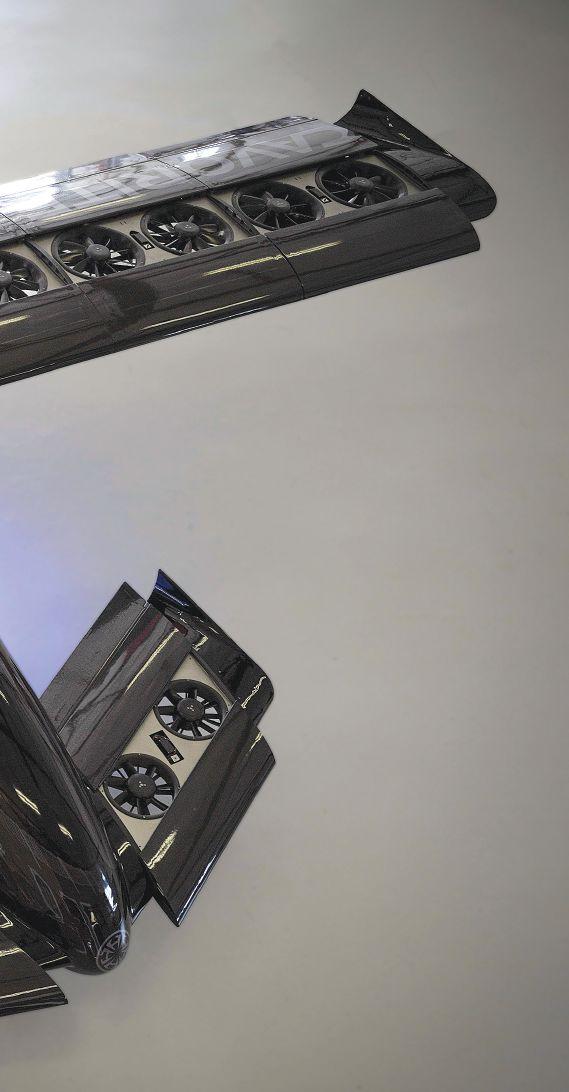
Our aircraft leverages extremely efficient wingborne flight with its simplicity and low-cost maintenance.”
– Brandon Robinson, CEO “
within the next 24 to 30 months.
“We have taken a practical approach,” he says, “with an elite team of world-class talent to design, manufacture, test, break, gather data and then rapidly improve the design.”
And on that note, the company is actively seeking engineers and technicians to help complete the X7’s development journey.
“We get hundreds of applications per spot,” says Robinson, “and we only hire and work with the best, which is how we can make progress quickly.” |
Seven post-secondary institutions, including Humber Polytechnic, have a collective of researchers advancing drone technology with the advent of an aerial compliant manipulator – a drone with four propellers, two standing legs and a cord-like flexible robotic arm that can operate in constrained spaces.
– Source: Globe and Mail $600 billion contribute to Canada’s GDP
The unmanned aerial manipulators project is backed by the Canadian Foundation for Innovation and provincial funders. When ready for the market, these manipulators, which combine the agility of a drone with the dexterity of robotic arms, will position Canada as a leader in drone technology through patentable techniques, new products, licensable software, and job market growth in industries such as agriculture, construction, mining, and logistics, which currently contribute more than $600 billion to Canada’s GDP.
In 2024, Canada ranked second in drone readiness, and in 2023, Canada became one of the first countries to propose comprehensive regulations for lower-risk drone operations beyond visual line-of-sight.

Three associations representing municipal builders call for standardized road-building specifications and procurement practices at the municipal level to reduce efficiencies and economies of scale amid rising construction costs caused by the Trump administration’s tariffs.
The Toronto and Area Builders Association, Greater Toronto Sewer and Watermain Contractors Association, and Heavy Construction Association of Toronto are sounding the alarm about critical transportation and house-enabling infrastructure projects that risk accumulating higher costs and continued economic uncertainty.
By standardizing construction specifications and contracts, construction costs will reign in, and the groundwork for sustainable growth and cost-effective infrastructure solutions will be laid without altering how infrastructure is designed, built, financed and maintained throughout the province. Breaking down interprovincial trade barriers and harmonizing practices across municipal boundaries are solutions that will bring faster construction timelines and create significant cost savings for taxpayers.
– Source: Toronto and Area Road Builders Association
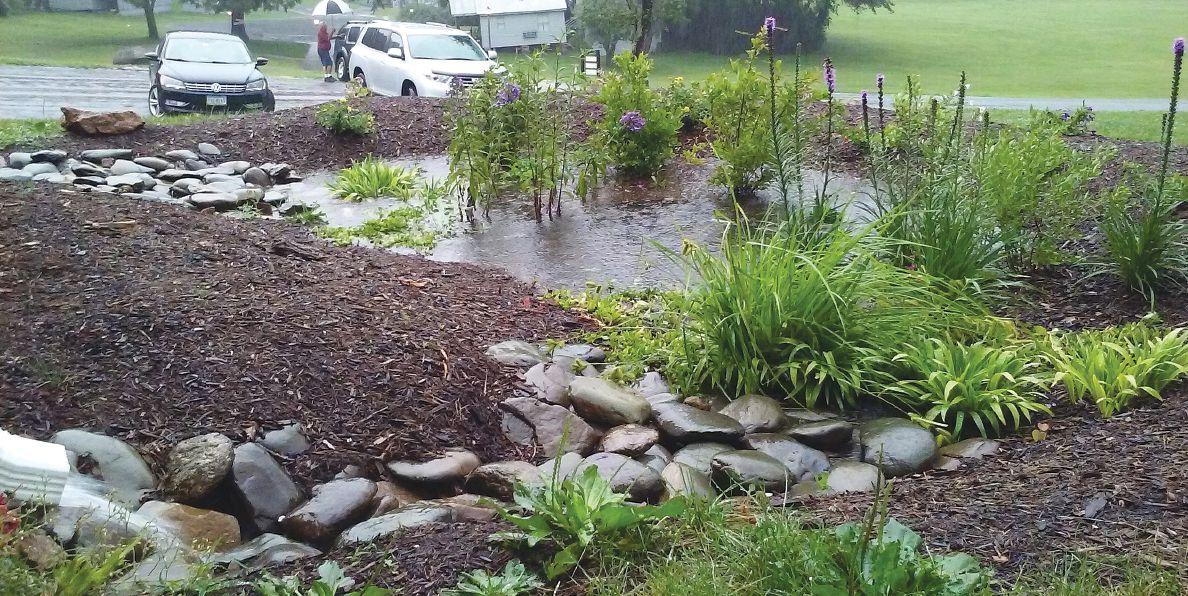
In September 2025, to demonstrate the effective techniques of Low-Impact Development (LID), a rain garden will be installed on Silver Spire Church’s property in downtown St. Catharines to manage stormwater naturally, promote biodiversity, and engage the community. The rain garden will collect runoff from a downspout on the Off-Campus Living property.
The Niagara Artists’ Centre is allowing the use of its roof to launch a tipping bucket for rain data collection. Brock University is helping model urban hydrometrics, and Niagara College supports soil sampling efforts. LID strategies enhance urban sustainability by managing stormwater quantity and improving runoff quality in the most effective ways, including installing bioretention, bioswale, and rain gardens. For the Silver Spire Church’s rain garden, the LID technique will manage natural water flow by holding rainwater on-site rather than allowing it to move quickly through the stormwater system.
This approach reduces runoff, improves water absorption, and filters pollutants from the stormwater before they reach local waterways. LID is especially beneficial for water-infrequency communities and areas facing the urban heat island effect, as this rain garden design incorporates retaining stormwater runoff, infiltrating into the subsurface, and
reducing pressure on municipal drainage systems while enhancing biodiversity and improving air quality.
Lindsay Taylor, former sustainability director for the St. Catharines Downtown Association, stated, “During my tenure, I often heard from businesses and community members that access to water was limited due to the lack of public water fountains and taps. LID offers a solution by storing rainwater in the landscape, helping address water scarcity. While this rain garden is just the start, we hope to explore water storage methods in another area near a community garden on the property.”
Beyond ecological benefits, this rain garden is a model for community-driven restoration and beautification. Volunteers will help design, plant, and maintain the garden, reinforcing that small-scale intervention projects contribute to climate resilience. This project is an example of an innovative small-scale stormwater management design that aims to store, retain, and filter rainwater. It mimics Mother Nature by slowing down the movement of water to the storm system and enhancing its capacity.
This project would not have been possible without the support of the St. Catharines Downtown Association, Brock University, and Niagara College. |
MERIAM YAAGUB, C.E.T., RCJI, HAS A NEW ROLE AS ROAD OPERATIONS TECHNOLOGIST WITH THE HALTON REGION’S ENGINEERING AND CONSTRUCTION PUBLIC WORKS DEPARTMENT. In this role, she is responsible for maintaining Halton’s road system. Some of her duties include reviewing permit applications, overseeing road maintenance programs, assisting with procurement, and conducting inspections. Previously, Yaagub was a road operations technician for the Halton Region.
AMY ZAWADA, C.TECH., HAS JOINED UTILITIES KINGSTON AS A WASTEWATER TREATMENT OPERATOR. In her new role, she operates and monitors the City’s wastewater pumping stations and treatment facilities, ensuring compliance with safety and MECP regulations through process control, equipment calibration, troubleshooting, and data reporting. Zawada was previously the chief operator of water & wastewater treatment with the District Municipality of Muskoka.
ABEDALRHMAN NABAS JOINED ALECTRA UTILITIES AS A RECORDS AND MAPPING TECHNICIAN. In this role, he maintains and updates the utility’s geographic information system to ensure accurate mapping of electrical distribution assets. He analyzes, verifies, and integrates field data, engineering designs, and asset records. Nabas is also an active OACETT Georgian Bay Chapter member.
FAVIO RUIZ TRELLES IS NOW WITH GRAHAM CONSTRUCTION & ENGINEERING INC. as a planning and scheduling coordinator, establishing project schedules for significant transit infrastructure projects and developing progress reports, cashflows, and dashboards. Before this position, Trelles was an inspector in integrated planning and public works with the City of Waterloo.
ROBYN GOULD, C.TECH., RCCA, HAS BEEN HIRED BY ROBINSON CONSULTANTS AS A CONTRACT ADMINISTRATOR, OVERSEEING AN EMERGENCY WATER MAIN REPAIR FOR THE CITY OF OTTAWA. With an impressive 25 years of experience in MTO projects, Gould worked her way up to the contract administrator position. Before this role, she spent 13 years at Morrison Hershfield.
STEPHAN PHILIPPOT, C.TECH., HAS JOINED DRYDEN FIBRE CANADA AS AN ELECTRICAL/ INSTRUMENTATION TECHNICIAN. In this role, he manages mill projects, updates and creates AutoCAD drawings, provides electrical and instrumentation support, develops engineering packages for new projects, and helps manage the capital budget. Before this position, Philippot worked as a network provisioning specialist at Bell Canada.
HAROLD NDJE BITJAH HAS JOINED GOODKEY WEEDMARK & ASSOCIATES AS A MECHANICAL DESIGNER TWO. In this role, he designs and drafts plumbing, fire protection, and HVAC systems for various Greater Ottawa Region and Toronto projects. Before this, Ndje Bitjah was a VDC designer at LAR-MEX Inc. for four years.
HARRISON LEITCH, C.TECH., HAS BEEN PROMOTED TO CHIEF OPERATOR OF WATER TREATMENT FOR THE TOWN OF SMITHS FALLS. With seven years of experience in the profession, including three years full-time with the town, Leitch now provides leadership and supervision for facility staff, organizing and directing operations at the municipality’s Class IV water treatment plant. Leitch serves on the Ontario Water Works Association’s Young Professionals (YP) Committee and OWWA Small Systems Committee.
JAMES KRETZ HAS JOINED THE CITY OF ST. CATHARINES AS A TECHNICIAN OPERATOR II, GIS. In this role, he develops engineering plans for municipal infrastructure design projects, completes as-built drawings, creates technical sketches, processes survey data, and assists with construction inspections. Kretz previously worked as an applied research technologist – remote sensing at Mohawk College.
ANDREW VAN WYK, C.E.T., PMP, HAS EXPANDED HIS ROLE AT M. SULLIVAN AND SON LIMITED, WHERE HE NOW SERVES AS PROJECT MANAGER AND LABOUR RELATIONS MANAGER. A fifth-generation family member at Sullivan, van Wyk has been a project manager for nearly 12 years, a role that remains his primary focus. In his labour relations role, he provides guidance on labour contract negotiations, addresses grievances and jurisdictional disputes and supports the management team with collective bargaining and contract interpretation.
CHUKWUEBUKA ADOLPHUS MABU, C.TECH., HAS JOINED LAKESIDE PROCESS CONTROLS AS A FIELD SERVICE TECHNICIAN—INSTRUMENTATION. In his new role, he applies his technical skills and passion for automation to enhance industrial instrumentation systems, demonstrating the power of continuous learning and professional reinvention. Mabu previously served as an electrical and instrumentation maintenance engineer at Aradel Holdings.
WHAT’S GOING ON? We want to hear from other members who have recently changed jobs, received a promotion or an award, or completed an educational program. Make sure your fellow OACETT members read about it in The Ontario Technologist. Promote your success – send your submissions to the editor at editor@ oacett.org.
James Adams, C.Tech.
Joseph Hamilton, C.E.T.
Luigi Papais, C.Tech.
This listing represents those who reached their milestone between December 6, 2024, and March 26, 2025.
25 year members
Alvin Adel, C.E.T.
Joseph Adjei, C.E.T.
Stephanie Agar, C.Tech.
J Fraser Anderson, C.E.T.
Lazo Angelopoulos, C.Tech.
Haroldesius Anies, C.E.T.
Thomas Arsenault, C.E.T.
Marcelino Astillero, C.E.T.
Dennis Aultman, A.Sc.T.
Jean Marc Babin, C.E.T.
Kevin Bainbridge, C.E.T.
H. William Ball, C.E.T.
L Sean Ballaro, C.Tech.
Brian Bentz, C.E.T.
Lonnie Berry, C.E.T.
Amar Bhella, C.Tech.
Dustin Bouchard, C.E.T.
Jean Bouffard, A.Sc.T.
Daniel Broerse, C.E.T.
Pasquale Castelmezzano, C.E.T.
Dino Clivio, A.Sc.T.
Licinio Costa, C.E.T.
Garfield Cummings, C.E.T.
Dwaine Dawson, C.E.T.
Gregory Dikran, C.E.T.
Glenn Duke, C.Tech.
Stephen Dyce, C.E.T.
Jay Eyles, C.Tech.
Anthony Fallone, C.E.T.
Daniel Fell, C.E.T.
Kateryna Fiyalko, C.E.T.
Donald Ford, C.Tech.
Bobby Frappier, C.E.T.
Roberto Frasca, C.E.T.
Mark Furniss, C.E.T.
William Garland, C.Tech.
Nathan Gerber, A.Sc.T.
Anthony Gibbons, A.Sc.T.
Patrick Gosselin, C.Tech.
Kenneth Aarup, C.E.T.
40 year members
Enzo Antinucci, C.E.T.
Jamshid Anvari, C.E.T.
Benjamin Barkey, C.E.T.
Robert Bieler, C.E.T.
Jennifer Birch-Schofield, C.E.T.
Donald Boissonneault, C.E.T.
Mickey Caldwell, C.E.T.
Antonio Castagna, C.E.T.
Rhys Cavill, C.E.T.
Anthony Crecca, C.E.T.
Shawn Healey, C.Tech.
Jeffrey Henry, C.E.T.
Jason Herbert, C.E.T.
Jayson Hill, A.Sc.T.
Jeremy Hoekstra, C.Tech.
Paul Huet, A.Sc.T.
Gregory Hyde, A.Sc.T.
Jeffrey Isaac, C.E.T.
Sahar Jamshidi, C.E.T.
Scott Jesney, A.Sc.T.
Scott Johnson, A.Sc.T.
Shannon Judge, C.E.T.
Karpal Khara, C.E.T.
Bryan Kless, A.Sc.T.
Jonathan Klingenberg, C.Tech.
Garett Korber, C.E.T.
Annie Kwok, C.E.T.
Christopher Lafleur, A.Sc.T.
Gregory LaForge, C.E.T.
Lyle LeDrew, C.E.T.
Christopher Ledsham, C.E.T.
Willie Maghirang, C.E.T.
Allan Major, C.E.T.
Dean Malott, C.Tech.
Jim Mantopoulos, C.E.T.
Luigi (Gino) Martino, C.Tech.
Samir Matta, C.E.T.
William Mayes, A.Sc.T.
Ronald McCarthy, C.E.T.
Gerald McIsaac, C.E.T.
Daniel McKinnon, C.Tech.
Sudarshan MeenakshiSundharam, C.Tech.
Dennis Mella, C.E.T.
Justin Metras, C.E.T.
Sean Miner, C.E.T.
Lu Nguyen, C.Tech.
Janet O’Carroll, C.E.T.
Ramon Ombac, C.E.T.
Leo Cusumano, C.E.T.
Joseph Dubaich, C.E.T.
Philip Dwyer, C.E.T.
Kenneth Frederick, C.E.T.
Dennis Glas, C.E.T.
Michael Godin, C.E.T.
Richard Hart, C.E.T.
Dirk Heine, C.E.T.
Brian Hesch, C.E.T.
Wayne Hewison, C.E.T.
David Hurst, C.E.T.
Timothy Papez, C.E.T.
Alain Patoine, C.E.T.
Barbra Perreault, C.E.T.
Jeyakumar Pillai, C.E.T. Glenn Ponka, C.Tech. Janet Porter, C.Tech. Ryan Ramlogan, C.E.T. Marcio Ramos, C.E.T. Geoffrey Reed, A.Sc.T. Jeff Reid, C.E.T. Jenny Renaud, C.E.T. Mario Riccio, A.Sc.T. Kevin Roesner, C.Tech. Lisa Romanko, A.Sc.T. Nadine Rondon, C.E.T. Brent Rowe, A.Sc.T. Ravinderbir Sagu, C.Tech.
Royce Sararas, C.Tech. Mauricio Saya, C.E.T. Soyab Sheri, C.E.T. Ravi Sikand, C.E.T.
Stephen Sim, C.E.T. Sean Soanes, C.Tech. Philip St Pierre, C.E.T. Bradley St. Louis, A.Sc.T. Edwen Thiessen, C.E.T. Matthew Thurston, C.Tech. Alexey Timofeyev, C.E.T. Rosanna Tyrer, C.E.T. Haththella Upathilake, A.Sc.T. Robert van den Berg, C.E.T. Jack Van Gemeren, C.Tech.
Denise Van Osch, C.E.T. Pierre Vandall, C.E.T. Tawny Walker, C.E.T. W. Garth Wigle, A.Sc.T. Jeffrey Yeo, A.Sc.T.
Craig Jewett, C.E.T.
Steve Johnston, C.E.T. E. Jolly, C.E.T.
Glenn Jones, C.E.T. Fiaz Kara, C.E.T.
Steven Keenan, C.E.T.
Michael Lamb, C.E.T.
Grant Lewis, C.E.T.
Anthony Longo, C.E.T. Vito LoPiccolo, C.E.T.
Mahmoud Lotfi-Sarvestani, C.E.T.
Bruno Macchia, C.E.T.
This listing represents those who reached their milestone between December 6, 2024, and March 26, 2025.
40 year members
50 year members
Robert Mackenzie, C.E.T.
John Marley, C.E.T.
Jonathan Maybury, C.E.T.
Terry McCann, C.E.T.
John Middleton, C.Tech.
Blair Mills, C.E.T.
Randell Morrison, C.E.T.
Charles Mossman, C.E.T.
Scott Ongarato, C.E.T.
Andrew Pearce, C.E.T.
William Afful, C.E.T.
William Agnew, C.E.T.
Robin Bennett, C.E.T.
Dale Boost, C.E.T.
Murray Busato, C.E.T.
Cosmas Gikizas, C.E.T.
Syed Hussain
William Isaacs, C.E.T.
George Pellarin, C.E.T.
Steven Polec, C.E.T.
Brian Pound, C.E.T.
Michael Pratt, C.E.T.
Duncan Pringle, C.E.T.
Ronald Rae, C.E.T.
Roderick Ralphs, C.Tech.
David Richards, C.E.T.
Jeffrey Rolph, C.E.T.
Robert Rubino, C.E.T.
Nooruddin Salamath, C.E.T.
Thomas Kehoe, C.E.T.
Tahseen Khan, C.E.T.
Eric Lewis, C.E.T.
Michael Lowe, C.E.T.
Paul Maslovskis, C.E.T.
Otto Matz, C.Tech.
Stephen Miners
David Pike, C.E.T.
Barbara Schueler, C.E.T.
Michael Shannon, C.E.T.
Richard Short, C.E.T.
Jayne Smith, C.E.T.
Richard Sutherland, C.E.T.
John Tatasciore, C.E.T.
Paul Weber, C.E.T.
Adam Weremi, C.Tech.
Edmond Wong, C.E.T.
Frank Piva
Joseph Spano, C.E.T.
John Tevelthuis
John Thomson, C.E.T.
Josef Wisniewski, C.E.T.
William Woolsey, C.E.T.


Certified Engineering Technologists
Adnan Abou Always, C.E.T.
Shania Chhom, C.E.T.
Jeith Diga, C.E.T.
Myles Douglas, C.E.T.
Leizl Fallarna, C.E.T.
Jonathan Fallat, C.E.T.
Zuriel Garcia, C.E.T.
Ethan McCaw, C.E.T.
Eva Mencin, C.E.T.
Shazleena Shareef, C.E.T.
Ardalan Taherkhani, C.E.T., rcji
Certified Technicians
Narayan Batliwala, C.Tech.
Ashmita Bista, C.Tech.
Luis Boggiano, C.Tech.
Ryan Bryce, C.Tech.
Lincoll Casalla, C.Tech.
Changhoon Choi, C.Tech.
Roxana Costea, C.Tech.
Sebastian Distefano, C.Tech.
Thanh Sang Do, C.Tech.
Cody Fisher, C.Tech.
Elias Frechette, C.Tech.
Justin Garcia, C.Tech.
Marcus Jones, C.Tech.
Carly La Scala Dowe, C.Tech.
Jordan Mainville, C.Tech.
Joey Manlangit, C.Tech.
Joseph Myhaluk, C.Tech.
Luke Oluka, C.Tech.
Jaykumar Patel, C.Tech.
Jesal Patel, C.Tech.
Dayne Perry, C.Tech.
Cory Peters, C.Tech.
Stuart Plunkett, C.Tech.
Leonardo Rohde, C.Tech.
Mohammed Saeed, C.Tech.
Rong Shi, C.Tech.
Sungbin Shin, C.Tech.
Tareg Shrufi, C.Tech.
Amanpreet Singh, C.Tech.
Neven Skipina, C.Tech.
Paritosh Sonavane, C.Tech.
Nicholas Thompson, C.Tech.
Phat Tieu, C.Tech.
Danny Trifunovich, C.Tech.
Gelick Varghese, C.Tech.
Pedram Zamani, C.Tech.
Associate Members
Hussein Al-asady
Roberta Alvarenga
Fadi Asad
Paul Auciello
Sydney Beatty
Ruby Bhairon
Amanjot Chauhan
Leah Chiddenton
Cameron Clarkson
D’Astice
De Francesca
Michael Dias
Scott Donelle
Alexander Emms
Javin Gurupersad
Brian Hren
Zafar Iqbal
Gustavo Jaramillo
Mariya Jogy
Shamaine Kittson
Utsav Kumbhani
Chun Lam
Makki Abadi
Rajendra Makwana
Kelvin Maraviya
Macenzi Marriott
McGrath
Joel Mendez
Moazzam Mohammed
Atharuddin Mohammed
David Momperousse
Leon Mugwiza
Supun Nandasiri
Ken Nascimento
Son Nguyen
Nitinkumar Patel
Pratikkumar Patel
Lee Pearce
Paolo Pecchia
Mitchell Pozsonyi
Shaukat Qureshi
Nicole Radulovic
Tyler Robinson
Gnanakumar Sadacharavel
Ryan Saunders
Surenth Shanmugam
Akshay Sharma
Tushar Sharma
Shavet Shavet
Matthew Shirvan
Teshome Sidamo
Simranpreet Singh
Michael Szylak
Donald Teddy
Julius Valiente
Tayeb Wahidi
Brandon Wiersma
Fowzak Abdulla
Pouria Abtahi
Stephen Benjamin
Rene Jr Borromeo
Kaydence Cardinale
Denzel Corpuz
Carter Debutte
Louis Den Haan
Maulikkumar Desai
Boopathi Dhanasekaran
Ardwin John Diaz
Jessica Dunkley
Ikwuagwu Ekeledo
Mathias Jose Folleco Alfaro
Husanpreet Singh Gill
Gage Greenwood
Thomas Harris
Ricardo Hernandez Morales
Herly Herrera
Jonah Hobbs
Camryn Hollywood
Vanessa Howells
Saqib Imran
Haamith Mohamed Ismail
Prabhjot Kaur
Rielly Kerkhof
Deepak Khanal
Lavish Kumar
Sofia Lozada Aguilar
Patricia Mandon Mangahas
Manish Manish
Roberto Martinez
Jovanni Mcdonald
Lucas McLennan
Raj Mehta
Almonzir Mohamed
Noah Moore
Maria Soledad Ortega Quezada
Nicolas Palka
Diego Proano
Paolo Austin Quiamco
Dhiraj Rajbanshi
Bryan Ramroop
Tatiana Rodriguez Jaramillo
Samarakkody Mudiyanselage
Tharkani Gayathri Samarakkody
Syed Shahidi
Maria Silvero
Gurkirat Singh
Gurwinder Singh
Gurwinder Singh
Nikhil Suresh
Nasar Syed
Tanish Tanish
Albert Tofan
William Tompkins
Patrick Woodward
Yangwei Wu
Sungsil Yang
EXISTING MEMBERS IN ROAD CONSTRUCTION
Certified Technicians
Curtis Bettiol, C.Tech., rcsi
Namitha Isac, C.Tech. rcji
Associate Members
Hassan Alame, rcji
Moh’d Almasri, rcji
Alexander Emms, rcji
Gurdeep Singh, rcji
Municipal Infrastructure Inspector
Robert Richardson, C.Tech., rcca, mii
latest news, stories, products, videos and industry events.
WELCOMING NEW MEMBERS. RECOGNIZING CERTIFIED MEMBERS.
Certified Engineering Technologists
Victor Berezhnyuk, C.E.T.
Kensonsun Bernade, C.E.T.
Midhun Roy Bimal Roy, C.E.T.
Luis Borba, C.E.T.
Jonathan Caplan, C.E.T.
Triston Castell, C.E.T.
Nick Colucci, C.E.T.
Eric Ferguson, C.E.T.
Jared Fleming, C.E.T.
Perry Gagne, C.E.T.
Hayder Ghulam, C.E.T.
Alysus Guzman, C.E.T.
Ahmed Hef, C.E.T.
Tyler Houthuys, C.E.T.
Robert Hudspeth, C.E.T.
Travis Keeler, C.E.T.
Shamil Khafizov, C.E.T.
Xiaocong Ma, C.E.T.
Noah Mallick, C.E.T.
Alex Martins, C.E.T.
Kevin Mc Ewen, C.E.T.
Nathan Morris, C.E.T.
Joel Munilal, C.E.T.
Dayna Musclow, C.E.T.
Paolo Pecchia, C.E.T.
Hassan Rahimi, C.E.T.
Alan Ritcey, C.E.T.
Karanveer Singh, C.E.T.
Todor Vukadin, C.E.T.
Fan Zhang, C.E.T.
Certified Technicians
Hassan Alame, C.Tech., rcji
Chia Asaad, C.Tech.
Mohamad Baydoun, C.Tech.
Pawan Bhatt, C.Tech., rcji
Christopher Ciuffini, C.Tech.
Angelo Della-Gatta, C.Tech.
Christine Demers, C.Tech.
Remon Essa, C.Tech.
Mohammad Fatehzada, C.Tech.
Sabrina Fitzgerald, C.Tech.
Helwys Gonzalez Lorenzo, C.Tech.
Raviraj Gowreea, C.Tech.
Jacob Gregoire, C.Tech.
Mark Grossmith, C.Tech.
Amy Kramer, C.Tech.
Kuldeep Kuldeep, C.Tech., rcji
Yan Lao, C.Tech.
David Law, C.Tech.
Harmanpreet Maan, C.Tech.
Haseeb Malik, C.Tech.
Mark McGregor, C.Tech.
Richard Mellett, C.Tech.
Daniel Menezes, C.Tech.
Abram Neufeld, C.Tech.
Binh Nguyen, C.Tech.
Matt O’Grady, C.Tech.
Eric Onokpikini, C.Tech.
Parth Pandya, C.Tech.
Jerosalem Paraan, C.Tech., rcji
Hadi Refaei Khaloghlimogh, C.Tech.
Bilal Rizvi, C.Tech., rcsi
Nicholas Rutka, C.Tech.
Christopher Sawatsky, C.Tech.
Dhaval Shah, C.Tech.
Yogesh Sharma, C.Tech., rcji
Vu Tran, C.Tech.
Phyoe Wai Kyaing, C.Tech.
Henry J Westenberg, C.Tech.
Zavian Wilson, C.Tech.
Omar Youssef, C.Tech.
Maria Zamora Astorga, C.Tech.
Associate Members
Mohamed Abdelfadee
Mohammed Abu-Halimeh
Moeed Ahmad
Mohammed Ahmed
Adewunmi Alowode
Junaid Amjad
Thomas Anderson
Darian Armstrong
Hassouna Ashour
Raj Barot
Matthew Baxter
Devin Beaulieu
Moayed Ben Yahya
Nirav Bhalani
Brian Blaney
Kelly Bollenbach
Kaushal Boraniya
Logan Bradshaw
Maria Erica Calacal
Justin Campsall
Ruben Carvalho
Jeffrey Chan
Siu Leung Chan
Michael Chang
Mark Chisholm
Adam Choquette
Stéphane Clément
Matthew Coelho
Muhammed Cuned
Aaron David
Don Davis
Bernard EM Del Castillo
Daniella Della Siepe
Jaydeepkumar Desai
Manpal Dhillon
Khoa Do
Steven Efthimiades
Kayode Esho
Tristan Euringer
Michael Felice
Mazen Ferawana
Shane Finnessy
Kyle Ford
Eric Freeze
Adelani Gbadebo
Seyed Hossein Ghaffari
Kyle Gilhooly
Austin Greenhow
Paul Guenette
Dieter Hastings
Lori Heittola
Levi Humber
Kabiru Ipaye
Osa Iyare
Piolo Jacinto
Colby Jackson
Omar Jaffer
Khalid Jama
Peter Janzen
Anila Tresa Jose
Manosh Kasthoori
Alyssa Keller
Morteza Khashaypoor
Ryan Kitchen
Sarah Kruis
Akshay Kumar
Shaun Landon
Eyosias Desta Langena
Leendert Laros
Tenneil Lee
Austin Leschuk
Allan Lloyd
Christine Lundsgaard-Nielsen
Stephen MacDonald
Georgekutty Madathil
Gian Carlo Manigbas
Phaneendra Mantena
Brendan Martin
Derek McKinley
Tye McLachlin
Wajid Mehmood
Kamal Mistry
Bhavin Modi
Mohamed Mahir Mohamed
Hussain
Shahriyar Khan Mohammed
Garrett Mullin
Jordan Mulvihill
Valeriy Mykhaylyk
Anant Navadiya
Samuel Ebube Nnah-Ogbonda
Kingsley Nze
Stephen Oniya
Akwasi Amponsah Oti
Mac Gilbert Palomares
Drew Passero
Akash Mineshbhai Patel
Ashlee Pattison
Jackson Penner
Jessica Penz
Nisheet Pillai
Stephen Prasad
Daniel Pukas
Atif Qureshi
Ryan Rachwalski
Jennifer Rafanan
Vignesh Rajaraman
Pravesh Ramlogun
Sai Kumar Ranaveni
Yuvraj Randhawa
Vishal Kumar Rathod
Sumit Ravish
Pourya Rezazadeh
Darrell Robil
Miles Robinson
Yeniffer Rodriguez
Benjamin Rouw
Patrick Rykiert
Demar Saddler
Abhimanyu Saini
Marsha Sakchekapo
Nelson Salamanca
Said Salha
Shyni Sam
Laith Sarhan
Devarsh Satapara
Christine Sebesta
Eric Seguin
Husam Shalabi
James Shubat
Michael Angelo Sibunga
Vyacheslav Silantev
Agamdeep Singh
Amandeep Singh
Harvinder Singh
Inderkirpal Singh
Navjot Singh
Vijaysinh Solanki
Jonathan Stumm
Chaudhry Haider Sultan
Harby Tabinas
George Hubert Tabucan
Elyas Tawerghi
Muhammad Tayyab
Rajat Timalsina
Vicente Torculas
WELCOMING NEW MEMBERS. RECOGNIZING CERTIFIED MEMBERS.
Ryan Brideau, C.Tech.
Sabin Chand, C.Tech.
Thomas Corbett, C.Tech.
Nuno Cordeiro, C.Tech.
Blair Daniels, C.Tech., rcji
Joshua DeGroot, C.Tech.
Mohammad Fahim, C.Tech.
Harjot Gahlla, C.Tech.
Shira Ghimire, C.Tech.
Adam Grin, C.Tech.
Dhaval Harpal, C.Tech.
John Hart, C.Tech., rcca
Ankit Italiya, C.Tech., rcji
Kevin Kingswood, C.Tech.
Brian Lee, C.Tech.
Maria Leji, C.Tech.
Nicholas Lidstone, C.Tech.
Chukwuebuka Mabu, C.Tech.
Suel Martin, C.Tech.
Alexander Moir, C.Tech.
Mario Montuoro, C.Tech., rcsi
Daniel Naccarato, C.Tech.
Aaron Naphan, C.Tech.
Andrew Newman, C.Tech.
Ian Ockenden, C.Tech.
Sehee Oh, C.Tech.
Christopher OSullivan, C.Tech.
Geofrey Owora, C.Tech.
Devangkumar Patel, C.Tech.
Christopher Polap, C.Tech.
Samuel Poole, C.Tech.
Matthew Ramnauth, C.Tech.
Brian Ramsammy, C.Tech.
Mitchell Roloson, C.Tech.
Tyson Roubos, C.Tech.
Arnold Ruhimbaza, C.Tech.
Zaed Sahem, C.Tech.
Colin Sauve, C.Tech.
Lucas Schoenfeldt, C.Tech.
Abin Sebastian John, C.Tech.
Jeremy Siddall, C.Tech.
Sanjeevan Sivayogan, C.Tech.
Vishesh Soni, C.Tech.
Raymond Sun Kit On, C.Tech.
Jacob Suppa, C.Tech.
Jan Andrew Sy, C.Tech.
Ernest Tabah, C.Tech.
Shehjad Uniya, C.Tech.
Samjith Paul Vijaya Paul Nirmala, C.Tech.
Stephen Webster, C.Tech.
Brandon Wiersma, C.Tech.
Blade Wilson, C.Tech., rcji
Stephanie Wybrew, C.Tech.
Arthur Adamczak
Adesoji Adedokun
Abdalrahman Alfakir
Muhammad Ali
Asad Ali Khan
Samaneh Alidousti
Nick Allen
Hassan Al-Shamaa
Anas Al-Udayli
Anthony Ambrosio
Mamtaz Ansari
Justin Au Yeung
Min Thu Aung
Artur Avetisyan
John Martin Balatero
Ricardo Augusto Barbosa Quintão
Pereira
Michelle Cadungog
Alexander Callaghan
Jonathan Calvert
Caitlin Corcoran
Peter Cowman
Vishal Danodia
Tyler Digby
Marcus Divincenzo
David Duni
Fabian Alberto Duque Duque
Sally Eshak
Jordan Espinosa
Temitope Faleye
Liam Farquhar
Curtis Fernandes
Brandon Forsythe
Stephen Gerrits
Devon Good
Kyle Greenside
Prakash Gubhaju
Md Tarif Hasan
Jenny Hill
Brooke Hindle
Md Arafat Hossain
Susan Irwin
Christine Jordan
Alhussain Kaneen
Daniel Karpovich
Andrew King
Prosper Korsorku
Paul Kowalczyk
Gabriel Landry
Anthony LaSelva
Lina Leslie
Baohua Li
Stephen Liscumb
Daniel Lok
Michelle MacLellan
Cody Mader
Vivekkumar Madhavani
Mike Reynan Manila
Dominic Mazza
Andrew McGowan
Charles McIntyre
Abbas Mohammadibidhendi
Rommel Mola Cruz
Charles Morden
Alexander Ngoho
James Opavsky
Jack Palmer
Divya Patel
Niraliben Patel
Piyush Premjibhai Patel
Rudra Patel
Yash Patel
Sylvio Pelletier
Usama Pervaiz
Dustin Riley
Josh Rodriguez
Piyush Rupareliya
Abdallah Salman
David Sams
George Santiago
Mona Shahbandi
Syed Usama Shahzeb
Gurjeet Singh
Carly Smith
Reiley Smith-Jolicoeur
Tirth Solanki
Michael Soliman
Bhavi Sonkusare
Certified Engineering Technologists
Ahmad Imtiaz, C.E.T., rcca
Mohd Oryia, C.E.T., rcca
Lee Visutski, C.E.T., rcca
Certified Technicians
Temidayo Abdussalam, C.Tech., rcji
Olivia Dinsmore, C.Tech., rcji
John Hart, C.Tech.
Jake Krupa, C.Tech.
Paritosh Sonavane, C.Tech.
Anton Zibarev, C.Tech.
Municipal Infrastructure Inspector
Joseph Mario Costanza, C.Tech., rcji, mii
Adam Superville
Steven Sutton
Scott Talbot
Velmurugu Thushyanthan
Michaela Troupe
Salma Uddin
Mark Van Weert
Amith Gowda Venkatesh
Scott Volpe
Kush Vyas
Nidhi Walia
Mitchell Weber
Kyle Willemsen
Justin Wright
Hamid Reza Yousefi Aghdam
Syed Zaidi
Mohammad Reza Zhian
Student Members
Kayden Albernaz
Husam Alderawi
Colin Anderson
Christine Joyce Aranez
Jishnu Balan
Connor Beckley
Nathaniel Bower
Romeo Gian Buenaventura
Arianne Cariaga
Yeung wai Chan
Rushabh Deulkar
Sean Egeland
Dinera Elpitiya Bulathsinhalage
Municipal Infrastructure Contract Administrator
Justin David Metras, C.E.T., mica
Associate Members
Joseph Ball, rcsi
Seyed Hossein Ghaffari, rcji
Zafar Iqbal, rcji
Neway Kabe, rcji
Bhavin Modi, rcji
Shaukat Qureshi, rcji
Sai Kumar Ranaveni, rcji
Akshay Sharma, rcji
Tushar Sharma, rcji
Jugraj Singh, rcji
Karen Turner, rcsi
Foadali Zolfaghari, rcji
Angus Ferguson
Adjovi Fiagbe
Brett Gilliam
Abdullah Tahir Goraya
Yulong Guo
Kemar Hanna
Muhammad Kashif
Simranjeet Kaur
Ethan Kehoe
Rahul Kumar
Mathieu Laurin
Chau Ciang Liang Huang
Narendra Kumar Mahato
Ayyaz Mahmood
Peter Jan Malaluan
Nancy Michaud Brun
Thomas Miedema
Ben Monti
Jaimini Munjani
Damilare Okeowo
Mojoyin Oloyede
Noah Palladino
Sydney Parent
Abhishek Patel
Shreeya Patel
Echell Jan Ranga
Jaehun Rhim
Nicholas Rosati
Andrea Russell
Naveed Samuda
Shahriar Sazzad
Neerja Shelat
Ben Shipman
Udaybir Sidhu
Bibek Bahadur Singh
Hargurveer Singh
Harsimran Singh
Khan Stephens
Michael Taddeo
Christine Taggart
Braeden Tardif
Leroy Taylor
Paul Tessier
Mariana Torres
Dingxi Wang
Daniel White
Tristin Yuill
Evan Bancroft, C.E.T.
Eric Bentzen-Bilkvist, C.E.T.
Ashmita Bista, C.E.T.
Joseph Brosseau, C.E.T.
Matthew Cebrynsky, C.E.T.
Alexandre Cloutier, C.E.T.
Alexandria Cupoli, C.E.T.
Nishilkumar Dalal, C.E.T.
Brodie Fischer, C.E.T.
Cory Grant, C.E.T.
Susan Irwin, C.E.T.
Anujbhai Jani, C.E.T.
Mary Mable Ashna Kuranganthara
Sebastian, C.E.T.
Julie Lalonde, C.E.T.
Jingtian Lu, C.E.T.
Marie Modeley, C.E.T.
Paula Rodriguez, C.E.T.
Heamapriyan Tharumaratinam, C.E.T.
Sriram Venkatesan, C.E.T.
Adam Westbrook, C.E.T.
Braden Whelan-Ellis, C.E.T.
Brennan Woods, C.E.T.
Jazmyne Woolley, C.E.T.
Amylee Young, C.E.T.
Richard Addai, C.Tech.
Muhammad Afnan, C.Tech., rcji
Anuskar Anbalagan, C.Tech.
Sonal Banskota, C.Tech.
Pearl Barrett, C.Tech.
Haley Bozanis, C.Tech.
Andrew Bullock, C.Tech.
James Cassir, C.Tech.
Steven Chachel, C.Tech.
Jino Chacko Thaiveettil, C.Tech.
Yu Chen Chang, C.Tech.
Kelsi Doughty, C.Tech.
Joshua DuMoulin, C.Tech., rcsi
Steven Efthimiades, C.Tech.
Shane Finnessy, C.Tech.
Kyle Gardner, C.Tech.
Basil George, C.Tech.
William Guthrie, C.Tech.
Ali Jaffry, C.Tech.
Romana Jannat, C.Tech.
Quinton Jarvis, C.Tech.
Scott Keall, C.Tech.
Joshua Keefe, C.Tech., rcji
Robert Kelly, C.Tech.
Muhammad Khizar Khan, C.Tech.
James Leatherdale, C.Tech.
Jordan McFadden, C.Tech.
Mehulkumar Mistry, C.Tech.
Joseph Monighan, C.Tech.
Jelena Muegge, C.Tech.
Thomas Newbery, C.Tech.
Caroline Nowak, C.Tech.
Kevin Ormiston, C.Tech.
Gilbert Osayemwenre, C.Tech.
Michael Podolan, C.Tech.
Stephen Prasad, C.Tech.
Amol Ramana, C.Tech.
Hardik Ramani, C.Tech.
Laura Rivera, C.Tech.
Nija Sathyan, C.Tech.
Matthew Serafin, C.Tech.
Michael Angelo Sibunga, C.Tech.
Ranjeet Singh, C.Tech.
Surinder Singh, C.Tech.
Sofin Sunny, C.Tech.
Cailean Toner, C.Tech.
Anuj Vaghela, C.Tech.
Jesse Verhey, C.Tech.
Ryan Weir, C.Tech.
Shaik Khaled Ahmed
Mohammed Albhaisi
Mohamed Ali
John Joseph Barrion
James Bellamy
Gabriel Bello
Chinchu Benny
Ryan Berry
Ross Beyers
Hirdejit Singh Bharot
Bradley Box
Annalisa Bulasa
Jansel Cadaeg
Dean Caines
Rhemelyn Calaoagan
April Rose Calubiran
Arun Chirakkakudy Shajan
Drew Cullen
Tanvit Dhaliwal
Zachary Dick
Robert Dipietro
Shiela Duquez
Kyle England
Leonid Fidler
Garrett Fraser
Joshua Friedrich
Sagar Gill
Ray Goze
Andrew Haagsma
Mohammad Haider
Syed Arslan Haider
Trevor Haight
Christopher Hasson
Amanda Holcombe
Kaung Wei Hset
Ace Justice Javellana
Ahmed Kabir
Parth Kalathiya
Sunil Khanal
Yogesh Koli
Volodymyr Kondin
John Krasko
Ka Wai Ku
Suneet Kumar
Anthony Lamadeleine
Yanquan Lei
Michael Love
Thomas Madsen
Mahsa Mahdiyun
John Mcnerney
Pallav Mistry
Subham Mittal
Alexandre Montminy
Nicole Morin
Jose Motomochi Lozano
Aung Zaya Myo
Kelsey Numan
Rashil Odatheri
Ihunanyachukwu Onuegbu
Aakash Patel
Ankitkumar Patel
Deep Patel
Jay Patel
Kashish Patel
Meet Patel
Tirth Patel
Fritznel Point-Du-Jour
Prashant Prashant
Rotsen Reno Quitoy
Nehal Ragoobeer
Yahya Rahman
Deepika Rajan
Benjamin Roberts
Sheynique Sam
Diviank Sarmal
Alessandro Scafati
Maryam Setayesh Sanai
Mansi Shah
Mobeen Shah
Jaswinder Singh .
Arshdeep Singh
Arshvir Singh
Karamjeet Singh
Surendra Subedi
Ngai Hei Tam
WELCOMING
Jacob Teather
Thomson Thomas
Varun Trivedi
Kyaw Tun Maung
Lorelei Twining
Stefan Vacca
Sydney Van Leeuwen
John Charles Vandyck
Vanoudheusden
Shaishav Vavdiya
Weerasooriyage Weerasooriya
Savannah Wells
Chun Wai Wong
Sung In Yoon
Mengshu Yuan
Ahmad Zahidi
Ebenezer Adejuwon
Vimitaben Ahir
Hunter Albis
Gaganjeet Singh Babbar
Nataraj Balasundaram
Shavinder Singh Bhullar
Kerrington Blackburn
Juan Briceno Chavez
Oscar Calvo
Alex Cen Feng
Selva Surya Chandrasekaran
Kanchan Chaudhary
Sean Donohue
Promise Eleazu
Keegan Fisher
Carson Frazer
Mikel Grabanica
Mark Green
Kaitlyn Guevarra
Madeline Hamilton
Derek Hawkins
Michael Heaslip
Min Thu Hlaing
Shahzaib Hussain
Jose Inocencio
Ian Johnston
Zain Ul Hassan Kahloon
Ranjithselvan Karuppusamy
Mandip Katuwal
Aammreen Kaur
Celine Kavanaugh
Braden Kilner
Benjamin Kroon
Jeffery Kuffour
Robynn Grace Lee
Julia Main
Sarah McIntyre-Hayes
Sohaib Mohammed Abdul Wasse
Zachary Mungal
Sadia Nawshin
Nhu Nguyen
Shaker Bin Ohid
Anthony D’Costa
Natthawut Dechrapepong
Susanne Derwish
Carter Dombek
EXISTING MEMBERS IN ROAD CONSTRUCTION
Certified Engineering Technologists
Md Saimum Haque, C.E.T., rcca
Muazam Khan, C.E.T., rcca, P.Geo. Riteshkumar Patel, C.E.T., rcca
Fahad Rao, C.E.T., rcca
Certified Technicians
Sehajdeep Singh Anand, C.Tech., rcca
Trevor Hood, C.Tech., rcsi
Moe Ali Komaiha, C.Tech., rcji
William LaRosa, C.Tech., rcca
Mohammed Mohammed, C.Tech., rcsi
Mohammadkazem Naseri, C.Tech., rcca
Sasikumar Palani
Meshwa Pandya
Keshav Pant
Aurora Paradis
Timothy Ryan, C.Tech., rcji
Trevor Stapleton, C.Tech., rcca
Municipal Infrastructure Inspectors
Mark Gosnell, C.E.T., mii
Jason Hack, C.E.T., rcsi, mii
Girish Mehta, C.E.T., rcca, mii
Municipal Infrastructure Contract Administrators
Kyle Gibson, C.E.T., rcsi, mica
Shazeem Hussain, C.E.T., mica
Serguei Kabanov, C.E.T., rcca, mica
Mohd Oryia, C.E.T., rcca, mica
Sumant Patel, C.E.T., mica
Marc Vaccari, C.E.T., rcca, mica
Brandon Vandermeer, C.E.T., mica
Matheos Woldeyohanes, C.Tech., mica
Rupesh Parajuli
Dhruvkumar Patel
Krishna Patel
Parthkumar Patel
Vaikalya Patel
Sangam Paudel
Gabriella Petrucci
Kyle Pimentel
Kismer Anjo Quito
Bryton Ratte
Yaxi Ruan
Rassym Salem Omar
Roshan Sapkota
John Schumacher
Jini Sheeba John
Suresh Shrestha
Gagan Ajit Singh
Dylan Smith
James Starshuk
Libina Stephen
Aromal Suresh Sheela
Daryl Lanu Tamukong
Archana Theres
Joshua Thibeault
Dakshesh Vadaliya
Bruce Valente
Bijil Vijayan
Brady Viklen
Amir Yergazin THE PROFESSION | RECOGNITION
Sharmila Wagle
Jinhan Yang
OACETT staff and members send their sincere condolences to the family and friends of the following members. They are remembered.
Gordon Bird, C.Tech.
David Free, C.E.T.
Peter Ladewig, C.E.T.
John McCarthy, C.E.T. H P Niggli
Kevin Pelch, C.E.T.
David Scherle, C.E.T.
John Toth, C.E.T.
Kurt Williams, C.E.T.
Ronald Wilson, C.E.T.
Richard Woods, C.Tech.

Associate Members
Shaik Khaled Ahmed, rcji
Hassan Ghulam, rcji
Aakash Jani, rcji
Manosh Kasthoori, rcji
Darian Kusik, rcji
Mahsa Mahdiyun, rcji
Masoumeh Sadat Makki Abadi, rcji
Subham Mittal, rcji
Chukwuma Okeke, rcji
Kush Patel, rcji
Sylvio Pelletier, rcji
Usama Pervaiz, rcji
Surendra Subedi, rcji
Muhammad Tayyab, rcji
At OACETT, certified technicians and technologists join forces with government, industry, and colleges, and the public to solve Ontario’s challenges and help grow your career. Our certification is your success.
GOOGLE BRINGS THE BROAD KNOWLEDGE OF ITS GEMINI LARGE LANGUAGE MODELS INTO THE WORLD OF ROBOTICS.

Why it matters:
The move could pave the way for robots that are vastly more versatile but also opens up whole new categories of risks as AI systems take on physical capabilities.

JUNE 13-15, 2025 CAESARS WINDSOR HOTEL & CASINO THE PROVINCE’S BLUEPRINT FOR SUCCESS
Join engineering technology and applied science professionals for two days of professional networking, impactful learning, and celebration of achievements. Plus, Earn Your CPD Hours!