Nowhere to





04 | From the Editor
Q&A: Featuring Manisha Mistry of CSA Group 30 | Time Out
The strange side of the
JACK BURTON

From the Editor
By Todd Humber, Senior Editor
04 | From the Editor
Q&A: Featuring Manisha Mistry of CSA Group 30 | Time Out
The strange side of the
JACK BURTON
By Todd Humber, Senior Editor
The headline on the cover of this issue says it all.
Technology has made it absolutely impossible to hide, which has huge upsides for worker safety and equally massive concerns for individual privacy.
Safety professionals and employers are only limited by their imagination when it comes to the ability to track and check-in on workers, regardless of where they’re located. Technological advancements have made almost anything possible.
The mix of WiFi, cell signals and satellites mean we can keep tabs on staff — from Victoria in the west to St. John’s, N.L., in the east; from Windsor, Ont., in the south to Alert, N.T., in the north.
The only question, really, is where we draw the line — because the line has to be drawn.
The business case for investing in technology to track workers can’t be subsidized by thoughts of productivity improvements.
If you tell a worker you’re adopting technology that will send alerts if they suffer a catastrophic fall or are exposed
EDITORIAL ADVISORY BOARD
to unsafe levels of dangerous gases, you’ll get a nod and a thank you.
But if they hear that same technology also reveals how long they went on break, or exactly where they went, the smile will start to fade.
That’s where the line should be drawn: Safety systems are designed to ensure workers go home safe, not to give management an excuse to send staff packing.
Not everyone will embrace this binary invasion of zeroes and ones. To ease the concern of staff, we have to tell the real-life stories — which is what we’re doing in these pages.
Because the truth is safety tracking and monitoring technology has already saved lives, both on the job and after hours.
We know it has the potential to do more, and it’s on leadership to prove to workers that is the only goal of these systems.
There can be no crossing of the streams, to steal an ancient line from Ghostbusters. It doesn’t mean organizations can’t, or shouldn’t, monitor employees for HR purposes — but that technology needs
Paula Campkin: chief safety officer, Energy Safety Canada
Marty Dol: president and founder, HASCO Health & Safety Canada
Uyen Vu: Institute of Work & Health
Natalie Oree: prevention consultant, SAFE Work Manitoba
Norm Keith: partner, KPMG Law LLP
to be completely separate from the safety gear.
To get sustained buy in, turn to some tried-and-true methods: Communication, HR policies and common sense need to come into play in a big way.
Management needs to say, unequivocally, these systems are used for OHS and no other purpose. That means no mining of the data to support accusations or discipline, no matter how tempting.
Once that hurdle is crossed, most workers and unions will openly advocate for these systems. They’ll charge them, test them, wear them and embrace them.
and
There are even more powerful tech possibilities on the horizon.
Safety experts and vendors are embracing artificial intelligence and predictive analytics to help turn all this real-world data into powerful prevention programs. That will enable even further shifts in the profession designed to stop injuries in their tracks.
It means, one day, a great safety program might sound a little like this: “Siri, keep my workers safe.”
Winter 2023 Vol. 39, No. 1 ohscanada.com
READER SERVICE
Print and digital subscription inquiries or changes, please contact Angelita Potal
Tel: 416-510-5113
Fax: 416-510-6875
email: apotal@annexbusinessmedia.com
Mail: 111 Gordon Baker Rd., Suite 400, Toronto, ON M2H 3R1
SENIOR EDITOR
Todd Humber 289-264-4883 thumber@annexbusinessmedia.com
MEDIA DESIGNER Graham Jeffrey
ACCOUNT CO-ORDINATOR Cheryl Fisher 416-510-5194 cfisher@annexbusinessmedia.com
AUDIENCE DEVELOPMENT MANAGER Serina Dingeldein 416-510-5124 sdingeldein@annexbusinessmedia.com
BRAND SALES MANAGER Silvana Maiolo smaiolo@annexbusinessmedia.com
SENIOR PUBLISHER Paul Burton 416-997-0377 pburton@annexbusinessmedia.com
COO/ GROUP PUBLISHER Scott Jamieson sjamieson@annexbusinessmedia.com
Printed in Canada
ISSN 0827-4576 (Print) ISSN 1923-4279 (Digital) PUBLICATION MAIL AGREEMENT #40065710
SUBSCRIPTION RATES
Published four times per year WINTER, SPRING, SUMMER, FALL Canada $100/yr plus tax USA $130/yr (100 USD) Foreign $214/yr ($164.50 USD)
Occasionally, OHS Canada will mail information on behalf of industry related groups whose products and services we believe may be of interest to you. If you prefer not to receive this information, please contact our circulation department in any of the four ways listed above.
Annex Business Media Privacy Office privacy@annexbusinessmedia.com Tel: 800-668-2374
No part of the editorial content of this publication may be reprinted without the publisher’s written permission © 2023 Annex Business Media All rights reserved. Opinions expressed in this magazine are not necessarily those of the editor or the publisher. No liability is assumed for errors or omissions.
All advertising is subject to the publisher’s approval. Such approval does not imply any endorsement of the products or services advertised. Publisher reserves the right to refuse advertising that does not meet the standards of the publication.
Richard Quenneville: senior director of corporate services, T. Harris Environmental Management
Maureen Shaw: lecturer and presenter
Dylan Short: managing director, The Redlands Group
EllisDon has launched a Fit Your Frame campaign, aimed at providing construction safety vests to women and gender-nonconforming persons whose frame and body type are not best served by traditional vest offerings.
"Traditional safety vests are not built to fit women or gender-nonconforming persons, and we wanted to change that,” said Jennifer Khan, vice-president of inclusive diversity. “Every day, EllisDon is working towards more inclusive measures on our sites and in our offices.”
The construction company has partnered with Md Bespoke, a Black-owned Canadian custom clothing manufacturer, to produce vests that will uphold the quality and function of traditional vests, with better fitting and size options.
Nominations are now open for OHS Canada’s popular Top 25 Under 40 program for 2023.
“This is a chance to turn the spotlight on the young talent on your teams, and recognize the amazing work that the next generation of safety leaders is doing,” said Todd Humber, senior editor for OHS Canada. To be considered for the 2023 competition, nominees must be under the age of 40 as of Dec. 31, 2023.
All nominees should: demonstrate a strong work ethic; show leadership and initiative; actively seek new opportunities for training and education; and be involved in industry associations, projects and/or initiatives.
The deadline to submit nominations is Friday, Aug. 4, 2023. Visit www. OHSCanada.com/Top-25-Under-40.

Number of nominations received in 2022 for OHS Canada's Top 25 Under 40 program. Winners for 2023 will be announced and celebrated at the OHS Honours gala in Toronto in the fall.
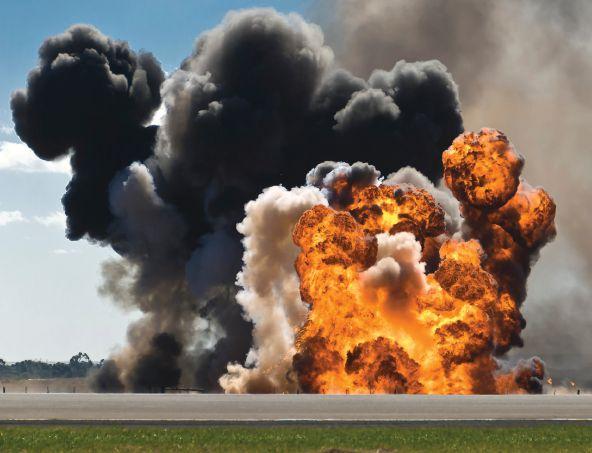
The man killed in the explosion at Ssonix Products in St. Catharines, Ont., has been identified by family members as Ryan Konkin, 37.
A GoFundMe page organized by his sister, Nicole, confirmed he was killed in the incident. The explosion happened on Jan. 12 and Konkin passed away the next day in hospital.
“We are devastated by the hole left in our lives and the effect on the people in the community,” the page states.
Konkin was born in Yorkton, Sask., and lived with his fiancée Natalia and her family in St. Catharines.
“Ryan could most often be found fishing, gardening, shovelling someone’s driveway,
picking up trash in the parks, playing with random animals, making kids smile and sharing his favourite dishes with anyone who was available,” it states.
He is survived by his son, and the GoFundMe page is raising money to help his family through “these challenging roads ahead.”
His response to adversity was “Everything is going to be alright,” it said.
“We really want to help Natalia continue the life they were building together and see their dream of sharing joy through their food truck through.”
To donate, visit gofundme. com/f/keeping-ryans-spiritvibrant.
Find the latest workplace health and safety-related news, columns and analysis from across Canada on our website! ohscanada.com
Police in Barrie, Ont., have laid criminal charges against a construction company following a vehicle accident last summer that killed six.
On Sunday, Aug. 28, 2022, at about 2 a.m., while conducting a missing persons investigation, uniformed officers from the Barrie Police Service came across the crash scene.
The car fell into a concrete pit — known as a tunnel access shaft — in the middle of a road under construction. Reports indicate the shaft was 10 metres wide and 20 metres deep. The accident claimed the lives of two females and four males who ranged in age from 20-23.
As a result of the investigation, Con-Drain Company has been charged with six counts of criminal negligence causing death.
An investigation into a workplace accident that injured a worker under the age of 14 in Quebec has led to recommendations on the proper use of all-terrain vehicles (ATVs) and a reminder about obligations for employing young workers.
The CNESST launched an investigation following the incident at a campground last year in Saint-Gabrielde-Valcartier. CNESST said the campground employed more than 175 workers under the age of 14.
For more than 100 of these workers, the employer had no signed parental authorization — and they had all provided work and received pay before reaching the age of 14.
It said employers can hire workers under 18, but certain conditions apply. It also pointed out that workers who are required to attend school cannot be asked to work during school hours or at night.
Number
of workers at a
Quebec campground under the age of 14 who did not have signed parental forms authorizing them to work at such a young age.
Workplace health and safety charges have been filed against an Ottawa company and its president in relation to an explosion in January 2022 that killed six workers.
Court filings show the charges, filed under the province’s Occupational Health and Safety Act (OHSA), include allegations that Eastway Tank failed to ensure the process of loading and “wet testing” a truck was carried out in an area with no potential sources of ignition.
It also alleges that both Neil Greene and Eastway Tank failed to provide “adequate information, instruction, and supervision to workers on safe fuel storage and handling procedures.”
The Ministry of Labour confirmed to OHS Canada that three charges were filed against the company, and three against its president, Neil Green. “Our thoughts are with the family and colleagues of the individuals who passed away,” the Ministry said in the statement.
Four companies are facing charges after a worker died on a winter road in Nunavut last year. Sabina Gold and Silver Corporation, Matrix Aviation Solutions Inc., Matrix Kitikmeot Ltd., and Gallant Restorations Incorporated are facing 10 charges under the territory’s Safety Act and Mine Health and Safety Act.
That includes charges of failing to implement and maintain work practices, failing to ensure the health and safety of everyone at the work site, and neglecting or refusing to provide information related to the safety investigation.
The charges are related to a workplace fatality where a bulldozer fell through the ice of a winter road near Bathurst Inlet in January 2022.
Ontario is offering employers free naloxone kits, and the training for workers to use them, in an effort to combat opioid overdoses. Kits are required to be available in high-risk workplaces by June 1, 2023.
Naloxone is a life-saving medication that can temporarily reverse an opioid overdose, restore breathing within two to five minutes, and allow time for medical help to arrive.
“I know only a small minority of opioid related deaths occur in workplaces, but I’ll be damned if we don’t do our part in helping save lives,” said Monte McNaughton, Minister of Labour, Immigration, Training and Skills Development.
“We’re past the point of talking. We

need all hands on deck to end the stigma surrounding opioid overdoses and dependency so we can save lives,” he said at a downtown Toronto bar.
Ontario, like the rest of Canada, is in the middle of an opioid epidemic made worse by a toxic supply of recreational street drugs, he said. Of the workers who died from opioid-related causes last year, 30 per cent were employed in
construction – by far the most impacted industry.
Bars and nightclubs have also seen increased opioid usage and accidental overdoses, often because of recreational drugs laced with deadly opioids such as fentanyl and carfentanil.
High-risk workplaces also includes employers who become aware, or ought reasonably to be aware, that there may be a risk of opioid overdoses in their workplace. That includes, for example, if a worker discloses an opioid use issue, if needles or other opioid paraphernalia are found at the workplace or any information that would lead them to “reasonably conclude there is a risk of overdose in the workplace,” the province said.
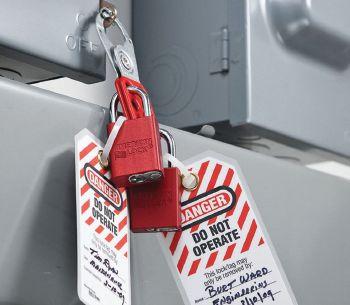
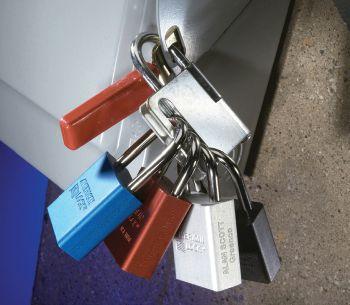



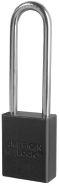
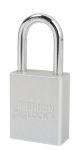




Anodized Aluminum Safety Padlocks
Lightweight and durable aluminum body with anodized finish for Lockout/Tagout
Uses FDA approved lubricants for food processing
Over 10, 000 key changes with 9 colours available
Available Keyed Different, Keyed Alike and Master Keyed with 1”, 1-1/2” and 3”
Alberta is making changes to its Occupational Health and Safety Code that will take effect on March 31, 2023.
Changes to the code align with best practices, modern standards and technology, and keep Alberta in line with other Canadian jurisdictions, the province said. In making changes to the code, Alberta’s government focused on the parts that required the most immediate updates, it said.
Changes include harmonizing language, reducing duplication and adopting best practices in the eight updated parts. There are eight areas changing including sections on oil and gas wells, noise exposure, first aid, managing control of hazardous energy, explosives, mining and miscellaneous amendments.
Workers’ compensation benefits for mental health injuries needs to be expanded beyond workplace harassment and traumatic events, according to the Manitoba Federation of Labour (MFL).
It’s calling on the provincial government to introduce legislation to ensure the Workers Compensation Board (WCB) of Manitoba provides workers who suffer mental health injuries on the job with the same support as workers who suffer physical workplace injuries.
Currently, the WCB only provides coverage for mental health injuries arising from certain specified causes, such as workplace harassment or traumatic events, but does not support mental health injuries that are caused by other identifiable workplace stressors like extreme stress, burnout or toxic workplaces, it said.
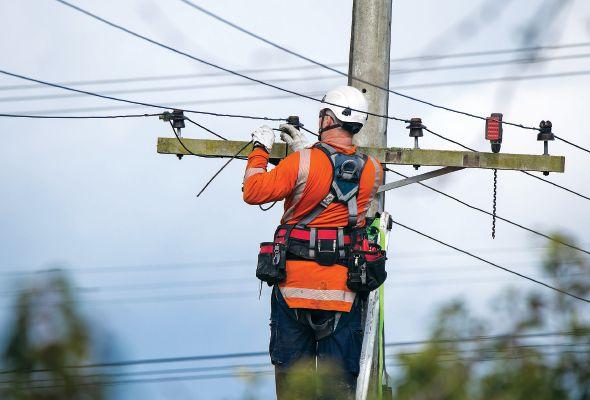
A worker at NB Power was killed on the job on Jan.17, according to the utility.
Percentage of mental health claims rejected by the Workers Compensation Board of Manitoba between 2018 and 2021.
“Last night, an incident involving two NB Power powerline technicians conducting power restoration work in the Moncton area resulted in a fatality and injury to a second powerline technician,” the company said in a statement.
“The NB Power family sends our heartfelt condolences to the family and friends of our colleague during
this difficult time and our thoughts are with our colleague in hospital.”
It said that “safety is at the heart of everything we do” and that losing a team member was devastating to “our entire NB Power family.”
It said it is co-operating fully in the investigation with WorkSafe NB and the Royal Canadian Mounted Police (RCMP).
“As the situation is under investigation, no further details are available at this time,” it said.
Police say two brothers killed by police in a shootout outside a Victoriaarea bank were there for a gunfight, not a robbery.
An investigation by the Vancouver Island Integrated Major Crime Unit says 22-year-old Isaac Auchterlonie and his twin, Mathew, hung around for 11 minutes after they were given the cash with the objective of having an armed confrontation with police. Investigators say the men had strong anti-government and anti-police views and their goal was to kill and harm as many officers as possible. Six officers were injured in the ensuing gunfight. An earlier report said police fired as many as 100 rounds at the suspects, killing them both.
RCMP Cpl. Alex Berube said both suspects had “the intention of causing serious harm” when they entered the bank. They were wearing balaclavas and full body armour and were each carrying semi-automatic rifles. "It was determined the suspects primary objective was to shoot and kill police officers," said Berube.
Ontario has apologized to mine workers in the province who were exposed to McIntyre Powder.
The apology was delivered in the legislature by Monte McNaughton, the Minister of Labour, Immigration and Skills Development.
“It has been more than 40 years since McInytre Powder has been used in Ontario mines, but for the thousands of miners who were exposed to the powder, it might as well have been yesterday,” he said. “They were told by their employers that this powder would help protect them from lung disease and that they had to inhale it to continue working in the mines.”
The substance, touted as a health
and safety tool by the province to protect workers from silicosis, was a harmful aluminum dust. Workers were put into sealed rooms, where the toxic powder was dispersed into the air. It has since been linked to neurological health effects, including Parkinson’s disease, according to the Occupational Cancer Research Centre and Ontario’s Workplace Safety and Insurance Board (WSIB).
About 25,000 miners were exposed to the powder from its introduction in 1943 until it was phased out in 1979.
McNaughton said survivors have had to deal with the lingering effects of the powder, including lung disease and Parkinson’s.
search for answers at ‘vast’ Quebec explosion site where three workers were found dead
The investigation into the causes of a fatal blast at a propane company north of Montreal could be long and complex, police said, after three bodies were found at the site.
Officials are dealing with a “vast” scene complicated by snow, hazardous materials and objects that were projected far from the scene, provincial police spokeswoman Eloise Cossette said.
“It’s a very large scene with piles of debris, so we need to be very careful,” Cossette said.
The propane company later said the missing people included two employees and a subcontractor. They have been identified as: Celine Pilon, 65, of St-Roch-de-l’Achigan, Que.; France Desrosiers, 65, of nearby l’Epiphanie; and Christophe Paradis, 26, of nearby Mascouche.
Five days after the explosion, investigators were “still looking for answers” about what caused the blast, Cossette said. She said there were several types of fuel at the scene, including propane, gasoline, diesel and heating oil. Searchers had to shovel snow from the scene before they could sift through piles of debris, Cossette said, adding that the force of the blast scattered evidence far away and burned some of it.
“It’s long-term, meticulous work,” she said. The police major crimes unit has also been conducting an off-site investigation that includes speaking with a number of witnesses. Cossette declined to say if police suspect any crimes had been committed, but she said the investigation includes taking legal steps, such as obtaining warrants.
Mayor Sebastien Marcil said in a statement that the explosion had left residents with three questions: who, why and how?
“We hope that all energies can now be devoted to finding answers to the questions that remain," said Marcil.
More than 30 affected people were in attendance for the apology, including six miners who breathed in the dust.
He addressed some of his remarks to Janice Hobbs-Martell, the daughter of Elliot Lake miner Jim Hobbs. She founded the McIntyre Powder Project and has been lobbying for an apology.
“I want to be there for my dad,” said Hobbs-Martell in an earlier interview with the Subdury Star. “I want to be there for my mom, I want to be there for my family, and for the mine workers who were exposed; all of my McIntyre Powder Project mine workers and the ones whose names I will never know. I think it’s very important that they hear this while they’re still alive.”
22_003846_CN_OH_n_S_NOV_DEC_CN Mod: November 2, 2022 4:38 PM Print: 11/03/22 10:01:10 AM page 1 v7


By Norm Keith
Arecent Ontario court decision provides some insight into why trial courts must give clear and comprehensive reasons in their judgements in occupational health and safety prosecutions.
The case is a reminder of the fallibility and the limitations of the judicial system as a means to improve workplace safety. The case also has important implications for the legal defence of “due diligence” to the OHS profession. Since due diligence is judge-made, hopefully this case will promote clear reasons for judgement regarding the defence of due diligence in future OHS prosecutions.
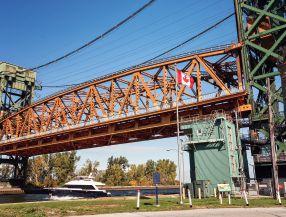
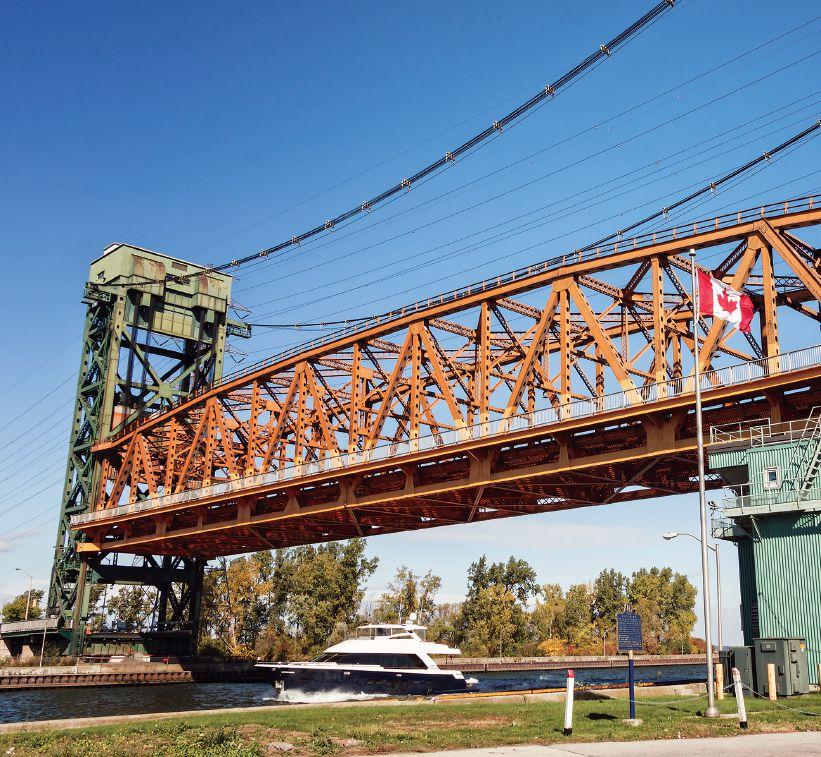
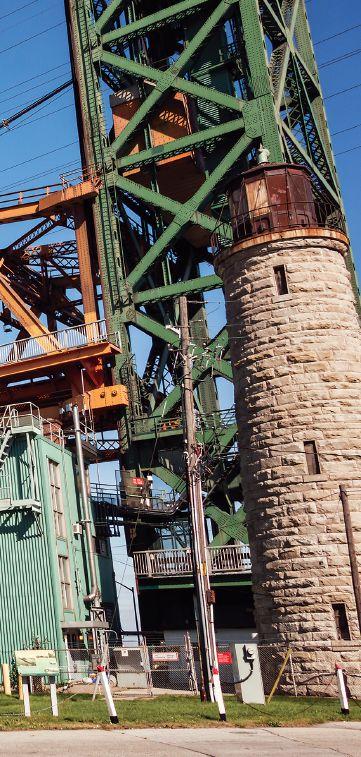
The Burlington case involved maintenance workers at a Canal Lift Bridge in Burlington, Ont. The workers were using rope attached to a machine to pull an aerial cable over the span of a bridge. In course of the work, the rope broke, and the sudden release of tension caused the cable to whip backward — severely injuring an employee of the maintenance company involved in the work.
The Ontario regulator investigated the accident and eventually charged the employer with 5 charges under the Occupational Health and Safety Act (OHSA). As in all OHS prosecutions, one of the defences available to the employer to respond to the OHS charges was the defence of due diligence.
The seminal case of Sault Ste. Marie provided the clear and enduring legal standard for the “due diligence defence.” The defence has both a theoretical and practical aspect. The theoretical aspect is the re -
quirement to have an occupation health and safety management system (OHSMS) that has identified, assessed and either eliminated or provided controls for workplace hazards consistent with applicable OHS law.
The practical aspect of the defence is the requirement of the employer prove the effective implementation of the OHSMS in the workplace where the incident took place. In an OHS trial, a judge’s reasons must address both aspects of the defence and be available to scrutiny by an appeal judge if there is an appeal by either party affected party.
In the Burlington case, after a lengthy and expensive 13-day trial
before a Justice of the Peace, the employer was convicted of four of the five charges. The convictions were appealed by the employer. The employer argued on the appeal that the reasons for judgement were not clear or even comprehensible.
In her decision, Justice J. Campitelli said the following about the Justice of the Peace reasons for judgement that resulted in the conviction:
• “It is impossible to determine how the issues presented at trial were resolved”
• “It is unclear whether the Justice of the Peace made any findings of fact or drew any relevant inferences from the evidence”
• “The reasons for judgment are completely silent with respect to any legal analysis the trial Justice may have engaged in with respect to the issues raised at trial.”
The appellate court also went on to say that the “… Justice of the Peace [is] accountable to the public for the judgements they render.” The poor quality of the reasons for judgement also “… denied the Appellant a meaningful appeal [on the defence of due diligence] and resulted in a miscarriage of justice.”
The trial judgement in the Burlington case failed to provide any explanation for rejecting the due diligence defence. The absence of
adequate reasons was held on the appeal to be a legal error. The appeal was allowed, the trial judgement was overturned, and the case was sent back for another trial. This resulted in significant legal costs to the employer, the public for costs incurred by the OHS regulator and the costs to the administration of the judicial system for a new trial.
From a safety profession perspective, there are additional implications of the Burlington case:
1 . The parties to the proceeding, typically the employer and prosecuting OHS regulator, should know why the trial court did or did not accept the due diligence defence in the reasons for judgement;
2 OHS legal enforcement needs to be credible and beyond reproach to enjoy public confidence; a failure to have clear and comprehensive reasons for judgement to meet the needs of the parties, the public, and to OHS professionals;
3 OHS cases decisions establish precedents in the application of the due diligence defence in a particular industry; since the law has an educational role for workplace stakeholders and OHS professionals in that industry to prevent future legal contraventions and workplace accidents, reasons for judgement are critical.
In my experience, due diligence case law may also be very helpful for OHS professionals to review for “lessons learned” in their workplace and industry. I have spent a great deal of time using real OHS court decisions as case studies to help employers, management and workers understand how to improve OHS in the workplace. For example, in my one-day course, ‘OHS Law and Due Diligence for Managers and Supervisors’, case studies illustrate the principles of an effective OHSMS and the legal defence of due diligence.
In summary, the Burlington case makes it clear that if the due diligence defence is not reviewed, analyzed and explained by the trial court, this amounts to a legal error reviewable and reversable on appeal .
E mployers need to know that their investment in an OHSMS can be relied upon in an OHS prosecution to provide the defence of due diligence. OHS prosecutions may be initiated by politically motivated OHS regulators, angry family members of injured workers, or communities seeking revenge rather than justice.
The justice system needs to provide a fair trial and be trusted to consider and weigh the evidence of the due diligence defence in all cases. For that, we need clear and comprehensive reasons for judgement.
Finally, it must be remembered OHS prosecutions are serious legal proceedings with serious penalties for defendants being prosecuted. Directors and officers of corporations in Ontario can now be fined up to $1.5 million per offence and jailed for a year, or both.
The fair trial rights of defendants should not be sacrificed on the alter of regulatory expediency, public opinion or emotional reactions to hard facts. OHS prosecutions may cripple businesses financially, ruin careers of managers and supervisors, and damage the reputation of all involved regardless of the outcome at a trial.
S ince due diligence is a judgemade defence, based on binding precedents, the Burlington case makes it clear that trial justices need to provide reasons for judgement, especially regarding the defence of due diligence, in a manner that is clear and comprehensive based on the evidence before the court.

By Lisa McGuire
Through the pandemic, many leaders have felt the impact of fatigue, stress, depression and other mental health challenges on the physical health and work performance of their already stretched teams.
Increasingly, leaders are coming to appreciate that post-pandemic economic recovery depends on a mentally healthy workforce that can cope with frequent, and often unexpected, change.
Mental Health Commission of Canada statistics highlight the scope and impact of the problem. With 47 per cent of working Canadians considering work to be the most stressful part of their day, psychological health problems have become the leading cause of disability in Canada. The cost to Canada’s economy is now approaching $51 billion per year — with $20 billion coming from work-related causes.
On the flip side, research shows psychologically healthy and safe workplaces experience fewer lost-time injuries, have more engaged employees and higher retention rates, and have more successful return-to-work programs for injured workers. An effective and successfully implemented workplace mental health program drives profit, productivity, and staff retention — signaling the value the employer places on the well-being of its team members.
C learly, in 2023, workplace mental health needs to remain a priority for every business leader.
According to the 2021 Priorities for Business Leaders, a whitepaper by Oasis Paychex HR that surveyed 300 business leaders, employee mental health and well-being is increasingly at risk with chronic exposure to occupational stress.
Assessing and addressing psychological

risk is a key skillset for anyone tasked with identifying hazards and managing risk. If someone is experiencing poor mental health and increased psychological stressors, it may be reflected in a change in performance.
The 2009 BC Human Rights Tribunal landmark judgment for Bertrend vs. Golder Associates found that:
When an employer discovers that an employee is suffering from depression, they have a duty to accommodate that employee to a reasonable degree.
The existence of such a condition can be reasonably inferred from observation and from the testimony of employees themselves, even in the absence of medical evidence. (Emphasis added.)
Even though this case specifically references depression, the same could be applied to any mental health challenge or stressor. To date, BC and several provinces have added violence and harassment explicitly to their Workplace Compensation Acts.
Because the employers’ duty of care now includes both physical and mental health, leaders need to be intentional about creating a positive workplace culture where
workers feel comfortable talking to about their mental health.
Every organization is unique. Businesses might be large or small, may require shift work or have staff working both onsite and remotely. Understanding the specific business needs is critical to tailoring effective mental health supports and wellness strategies to support and benefit the entire team.
Nearly every successfully implemented mental health strategy is long-term and impacts employees at every level. Ensure that these include a response plan for traumatic events–such as accidents and fatalities at the workplace or even deaths of coworkers–as well as ongoing strategies to promote general mental health wellness. By integrating mental wellness strategies into a company’s existing occupational health and safety programs, it will encourage behavioural change and help expand the thinking of managers, workers, and OHS team beyond physical safety.
By ensuring that every people leader in the organization receives mental health training, leaders are equipping them with the tools to recognize and respond to the needs of team members experiencing psychological stressors. And by developing a regular schedule of review, they can stay on top of what’s working and identify gaps in current mental health and wellness strategy and programs.
Mental health organizations such as the Canadian Mental Health Association, the Centre for Addiction and Mental Health, and the Mental Health Commission of Canada, along with provincial health and safety associations such as the Manufacturing Safety Alliance of BC, offer a wealth of resources, information, training, and support to help businesses adapt to these emerging needs.
E nsuring a psychosocially safe and healthy workplace is key to a business’ competitiveness, sustainability, and longterm growth.
Congratulations to the newest CRSP/PSAC and CRST/TSAC certificants!
following individuals have been granted certification as a Canadian Registered Safety Technician (CRST)/Technicien en sécurité agréé du
Elyanah Aquino CRST
Tanner Asham CRST
Natasha Braganza CRST
Michael C. Carew CRST
Philip John Carlson CRST
Michele I Corby CRST
Christine Cousins CRST
Benjamin T Cracknell CRST
Jarred R Dargis CRST
Jessica Celine De Pao CRST
Kent Sherman Fuson CRST
Michael Gouthro CRST
Chelsey Gulak CRST
Ryan Alexander Helpard CRST
Melissa Ann Janson CRST
Shelley Ann Karakochuk CRST
Tristan RJ Kisilowsky CRST
Kiran Komattil CRST
Gia Nhi Le CRST
Leanne Lohnert CRST
Yu Ning Luo CRST
Jennifer Mazur CRST
William McCartney CRST
Theodore McPherson CRST
Rachel Moore CRST
Mosopefoluwa Moronkeji CRST
Peter Phuoc-Duy Nguyen CRST
Jenna Palmer CRST
Thomas Anthony Patrick CRST
Michael James Pieper CRST
Olivier Plante CRST
Emily Pollock CRST
Daniel Prudente CRST
Shawn Conrad Reis CRST
Angela Margaret Ross CRST
Sandeep Shunmugarajah CRST
Cole Sorokan CRST
John Scott Stamcos CRST
Alyson Stickle CRST
Marta Anna Studzinski CRST
Abdirahaman Suelaman CRST
Rafael Christian Tenebro CRST
William JT Thompson CRST
Warren Vignal CRST
Phanthipha Anita Vongsa CRST
Zachary Zoz CRST
The following individuals have been granted certification as a Canadian Registered Safety Professional (CRSP)®/Professionnel en sécurité agréé du Canada (PSAC)®
Olufemi Oladele Afolayan CRSP
Adeola Adedoyin Banjoko CRSP
Nathan Mik’hael Boswell CRSP
Arielle Connelly CRSP
Leonardo Cotrufo CRSP
Gavin Curley CRSP
Priska Dubreuil CRSP
Gregory Fedorowich CRSP
Kathrin Elisabeth Fee CRSP
Kimberly Joy Finuliar-Beckford CRSP
Zachary Shawn Fitch CRSP
Jillian Michelle Foley CRSP
Heather Lynn Fortuna CRSP
Sarah Frank CRSP
Alexis Morgan Gamble CRSP
Eugene Gerhardt CRSP
Milayna Goruick CRSP
Jeffrey Bowen Gosney CRSP
Zishan Haq CRSP
Kaja Heister CRSP
Joseph Janabi CRSP
Yeo Eui Ju Jeong CRSP
Marc Alexander Jones CRSP
Shuwathie Kalatharan CRSP
Steven Dean Kazoleas CRSP
Patrick Roger Knight CRSP
Elisa Koene CRSP
Sidney Sai Yin Kwong CRSP
Laurie Laronde CRSP
Chelsea LaRose CRSP
Patricia May LePrieur CRSP
Nicholas John Maschmedt CRSP
Kelly Mean CRSP
Paul John Millea CRSP
Brian Wesley Millis CRSP
Nelson Ray Navasero CRSP
Kimberly Neal CRSP
Janice Lynn Nyvoll CRSP
Prosper Othuke Oghalomeno CRSP
Uchenna Okoroji CRSP
Harleen Kaur Panfer CRSP
Véronique Pepin CRSP
Olga Petukhova CRSP
Manveer S Phagura CRSP
Amjad Poovathingal Mohammedali CRSP
Michael Principalli CRSP
Thomas Proietti CRSP
Suzan Katarina Prpic CRSP
Hugo Racine CRSP
Bhooma Raghavan CRSP
Abdel-Rahman M Sabriye CRSP
Steven Scuor CRSP
David John Smith CRSP
Seth Staples-Allen CRSP
Tsz Ming Suen CRSP
Darryl Patrick Swain CRSP
Somayeh Taleiekankloo CRSP
Sergiu Tanase CRSP
Ripson Thekkumpuram Jose CRSP
Lacy Thurman CRSP
Sydney Laine Undseth CRSP
Ashleigh Diane Van Ryn CRSP
Monica Wettlaufer CRSP
Jeri Wolfe CRSP
Brandon Wong CRSP
Yi Yu CRSP
By Todd Humber
The car was covered in mud, pushed off a British Columbia highway by a landslide in the Rocky Mountains.
Inside the vehicle were two people — an employee of Crescent Energy and her husband, who were on vacation. Her phone, though, was in full work mode and the safety app provided by her employer enabled her to send a message to emergency services.
“ The RCMP had driven past them on the highway, thinking they weren’t there,” said Joel Leetzow, president of Aware360, the company behind the SafetyAware app on her phone. “But because of the GPS tracking, they were able to turn around and go back, find them and extract them.”
L ast year, the safety systems provided by the Calgary-based company received 400 SOS signals, he said.
“In our world, that constituted
400 employees who went home to dinner with their families last year that might not have otherwise,” he said. “I see that inspiration in our people every day. It’s almost like working at a firehouse. People walk through our door knowing they’re coming to work to save lives.”
Technology has made it impossible to hide — which from a workplace safety standpoint is a great thing, he said. There can be a seamless switch from WiFi to cellular to satellite so the worker doesn’t have to do anything and is still monitored and protected, he said.
One of the most interesting devices to come out this past year is the Bivy Stick, said Leetzow. It’s a headless satellite communicator, meaning it doesn’t require a keyboard, he said.
“ Historically, you’d have to realize you’re out of coverage, log in to the satellite device, create the handshake and go into it manually,” said Leetzow. “Now, all that’s done through the app seamlessly
“When we're dealing with life and safety, it's imperative that there's a trust created."

— whether you’re in satellite coverage or not.”
There are so many devices available that can monitor workers, including consumer products like the Apple Watch.
“ The fall detection on an Apple Watch is, by Apple’s definition, a residential grade device,” he said.
“So it works, but it does not work to the point that it’s not going to create false alarms.”

False alarms remain the biggest challenge with any system, because it allows people to say they don’t trust it and therefore won’t use it, he said.
“When we’re dealing with life and safety, it’s imperative that there’s a trust created,” said Leetzow.
There is a real crossroads between consumer and industrial use, and the consumer side is doing a lot of innovations that will be helpful down the road, he said.
An Apple Watch can effectively provide information on heart rate, blood pressure and temperature, which can be useful in predicting and preventing heat stroke or heat exhaustion, he said.
“If we can see a drop in blood pressure, and we can see an increase in human flesh temperature, we can basically predict that person is going to have a heat-related incident,” said Leetzow.
B randon Egli, customer success manager at St. John’s, N.L.-based Telelink — a company that offers monitoring services — said the consumer devices are getting more powerful and useful in OHS.
“Apple’s new iPhone 14 actually integrated a SOS via satellite connection into their phone,” he said.
“Remote working has always been at the mercy of technology, and those

remote workers having that connectivity.”
While that just enables messages to be sent out, there are other devices with satellite capability that have things like no motion or fault detection as an extra layer of protection, he said.
“ We would get those alerts and we’d be able to dispatch based on the escalation plan and following that through with the client to ensure the individual can get help in the situation that they’re in.”
He’s also seeing increased interest from industries that haven’t typically monitored workers as the number of people working from home has increased in the wake of the pandemic.
“There are organizations that have put in place something as simple as an application that their employees can use to check in,” he said.
AI and being predictive about risk
It can result in a lot of data, which can enable both providers and safety professionals to move beyond being reactive. The industry has progressed to a point, said Leetzow, where it can truly be predictive about risk.
“The crossroads for us it two things. One is artificial intelligence and the ability to take datasets from devices
and use them to create predictions,” said Leetzow. “The second is the ability to leverage biometric devices for the worker themselves. I think of it as electronic PPE.”
Organizations want vendors to do predictive analytics, because it can lead to tangible improvements in safety and measurable cost savings from workers’ compensation, he said.
He pointed to car insurance companies that offer discounts to drivers who agree to put trackers on their cars that measure their driving habits.
“Well, the same thing is happening in the industrial sector around insurance and maybe more importantly, there are things that are simply uninsurable because the risk is currently unmeasurable,” he said.
Barry Nakahara, senior manager of prevention field services at WorkSafeBC, said it’s important to remember that a lone worker isn’t necessarily alone.
“ We also look at workers in isolation, so you could have a couple of workers way out in the bush surveying,” he said. “They are in fact alone, even though they’re together.”
And lone doesn’t necessarily mean remote, either.
There has been increased interest in ensuring staff working from home are monitored and safe, including the use of check-in apps.
“ We’ve seen that for several years, in retail operations — particularly as you move into evening or late night — where staff gets reduced,” said Nakahara, or with people in social services going out into the community.
There is an obligation to keep all these workers safe which, from the employer’s perspective, is relatively simple, he said. It’s about identifying and eliminating hazards, or at least minimizing the hazard, for lone workers, he said.
In B.C., for example, if an employer can’t eliminate the hazard it must “minimize the risk from the hazard to the lowest level practicable using engineering controls, administrative controls or a combination of engineering and administrative controls,” according to the Working Alone or in Isolation regulations in the legislation.
In B.C., the regulations break down the procedures for checking on the well-being of a worker who is assigned to work alone or in isolation. This includes:
• procedure for checking a worker’s well-being must include the time interval between checks and procedure to follow in case the worker can’t be contacted, including provisions for emergency rescue
• a person must be designated to establish contact with the worker at predetermined intervals and the results must be recorded by the person
• a check at the end of the work shift must also be done
• the procedures must be developed in consultation with the joint committee or the worker health and safety representative, as appropriate
• time intervals for checking on a worker must be developed in consultation with the worker assigned to work alone or in isolation.
It also notes that high-risk activities require shorter time intervals between checks. The preferred method is visual or two-way voice contact, but it allows for a one-way system if that’s not practical. It needs to allow the worker to call or signal for help, and which will “send a call for help if the worker does not reset the device after a predetermined interval is acceptable.”
The intensity and variety of occupational hazards presented by confined space worksites demands robust legislation and diligence from employers – but is that enough?
By Jack Burton
In December, a 54-year-old man was trapped underground and drowned while working on a ruptured pipe in Mississauga, Ont.
Incidents of workers being killed while in confined spaces remain all-too-common, which an average of 100 confined space fatalities happening across Canadian workplaces each year, according to WorkSafeBC.
Confined spaces exist across a variety of industries, such as construction, mining, and manufacturing, and come in numerous forms — including silos, pipelines, and
furnaces. This range creates a number of distinct hazards, including suffocation, chemical volatility from pressure buildup, and fall risks or mobility issues.
Anu Dhar, a spokesperson for the Ontario Ministry of Labour, Immigration, Training and Skills Development, confirmed that while investigation of the incident in Mississauga, Ont., is ongoing and thus specifics cannot be disclosed, they are assessing numerous aspects of the workplace for compliance with the province’s Occupational Health and Safety Act.
Provincial occupational health and safety legislation provides a number of regulations that employers must fulfill to ensure any confined spaces can be safely entered and operated within, no matter the nature of the space or the tasks being performed within it.
Among Ontario’s regulations, “one of them is that of course training needs to be provided for everybody who is going to be entering this space,” said Walter Yoo, senior associate lawyer at Monkhouse Law.
“The employer also has a duty to
“It's really important to think of the conditions that might exist well before anybody goes into these types of spaces."
keep track of who’s been provided with that training, so that’s quite important in terms of a record keeping perspective, in order to ensure that the organization is compliant.”
In addition to training, “other legal requirements are that there needs to be adequate ventilation, regular testing for flammable materials and atmospheric pressure, along with proper means of communication to the outside,” Yoo said.
Integrating these elements is a requirement for all worksites to have an outlined safety plan for operating in these spaces, including a rescue plan should things go awry. Employees must be trained on proper protocols outlined in this plan before being allowed to enter or operate in any confined spaces present.
Many provincial OHS acts require that a professional safety assessment be conducted to inform the safety plan for confined space workplaces.
This gives employers an understanding of the risks present and how to manage them, and in turn equips workers with an awareness of safely operating in the space.
“It’s really important to think of the conditions that might exist well before anybody goes into these types of spaces,” said Suzana Prpic, senior manager of prevention field services at WorksafeBC. “Hazard assessments are required, and

Worksites are required to have a safety plan for operating in confined spaces, including a rescue plan should things go awry.
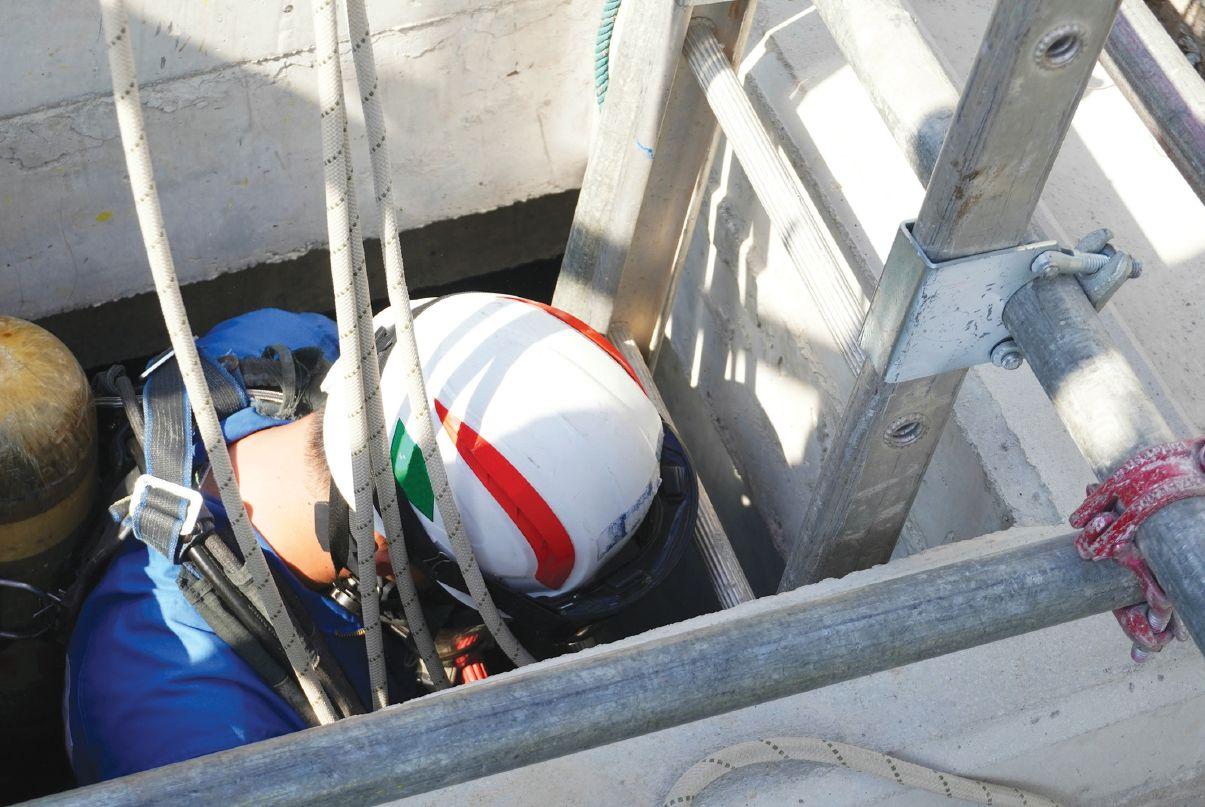
workers must not enter until they are complete. A confined space entry program will describe how to safely do this, and must be developed by a qualified person.”
A professional assessment provides the data necessary for developing a safety blueprint tailor-made for the demands of the space: “The location, the configuration or the use of the space are all taken into consideration during the assessment, and then professionals look at what conditions might be present when work is being conducted in that space,” Prpic said.
Even where compliance exists, the elevated hazards of confined spaces can still challenge the safety of an environment. Prpic believes a common mistake employers make when it comes to ensuring safety in these spaces is insufficiently ensuring employees are fully aware of the dangers and perimeters of the confined space itself, and thus suggests additional training and ample signage.
“One issue is many workers really don’t realize that they’re entering into a confined space, so again, use proper signage that determines and communicates that hazard for every confined space,” she said. “Beyond that, it’s about communicating with workers so that they’re informed, educated, and engaged in terms of telling you if they find a new possible hazard in the space.”
The heightened danger of confined spaces presents a level of threat to workplace safety that Andrew Mudge, executive-director of the Workers’ Health and Safety Centre, believes are not fully captured by existing occupational safety legislation.
“With limited routes of entry and exit, a lack of natural ventilation and sudden changes to atmospheric and physical conditions, confined spaces are among some of the most dangerous environments in which
Experts point to the success of mandated standards, such as working at heights in Ontario, and say confined space should get the same treatment.
to work,” Mudge said. “Countless needless deaths in confined spaces tell us existing regulations are not enough on their own.”
Mudge spoke of the impact the organization has seen based on their successful advocacy toward Ontario’s mandated training standard for working at heights for construction workers as evidence that richer training expectations should extend to safety legislation for confined spaces as well.
“Prior to the province’s mandatory training standard for construction workers working at heights, adequate training was deemed acceptable for this hazardous work too. We know better now,” Mudge said. “The evidence is in that our working at heights training standard saves lives, and I am confident similarly regulated confined space entry training would benefit workers as well.”
99 Crompton Dr. Barrie ON L4M 6P1
Tel: 647-699-7702
Web: www.aed.ca
PO Box 12104 Sylvan Lake AB T4S 2K9
Tel: 888-566-3343
Web: www.aohna.org

Calgary Place II, 355 4 Ave SW Calgary AB T2P 0J1
Tel: 587-287-1125
Web: avetta.com
Avetta leads the world in connecting leading global organizations across several industries including oil/gas, telecom, construction materials, facilities management and many others, with qualified and audited suppliers, contractors and vendors. The company brings unmatched access and visibility to its client’s supply chain risk management process through its innovative and configurable technology, coupled with highly experienced human knowledge and insight. We contribute to the advancement of our clients’ sustainable growth by protecting supply chains from a wide range of potential risks through trusted contractor prequalification, safety training and monitoring, regulatory compliance, insurance/financial stability, and other areas of risk. Avetta currently serves more than 450 enterprise companies and 125,000+ suppliers across 120+ countries. Visit www.avetta.com for more information.
6700 Century Ave Suite 100 Mississauga ON L5N 6A4
Tel: 905-567-7198
Web: www.bcrsp.ca
The Board of Canadian Registered Safety Professionals (BCRSP) is
a public interest, not-for-profit, federally incorporated selfregulating organization which sets the certification standards for the OHS profession. BCRSP strives to advance the body of knowledge, the competency of the profession, and the value our certificants bring to society. The BCRSP grants the CRSP® and CRST certifications to individuals who successfully complete the certification process through application assessment, interview, and examination. The Board governs its certificants in order that the public interest may be served and protected.

710 COCHRANE DRIVE MARKHAM ON L3R 5N7
Tel: 800-263-6179
Web: www.BradyCanada.ca Brady is a manufacturer of complete solutions to help increase safety, security, productivity and performance throughout your facility – everything from printing systems, software and high-performance labels, to facility signs, safety devices, expert safety services and more.
Simply put, we do what others don’t in ways they can’t. We offer innovative products backed by years of research and development. Beyond our quality products and reliable solutions, we add value for our customers through strong partnerships and a commitment to solving important problems.

Brandt training programs provide students with the basic principles of material handling and construction equipment operation, load handling, maintenance, and safety, and is the only training that provides students with a practical operator assessment required by Occupational Health & Safety (OH&S) and Canadian Standards Association (CSA). After successful completion of the theory test and a final practical assessment, an Operator Equipment Safety Certification is provided to students. Enhance your safety, productivity, efficiency and confidence on the job with Brandt Equipment Safety Training. Our certification meets and exceeds
safety standards across Canada with OH&S and CSA compliance.
Web: brandt.ca/Material-Handling
BRANDT TRACTOR BC INTERIOR
604 Industrial Road 3
Cranbrook BC V1C 4V2
Tel: 250-426-3400
BRANDT TRACTOR CALGARY
10121 Barlow Trail NE
Calgary AB T0M 0E0
Tel: 403-248-0018
BRANDT TRACTOR EDMONTON
10630 176 St NW
Edmonton AB T5S 1M2
Tel: 780-484-6613
BRANDT TRACTOR FORT MCMURRAY
360 MacKenzie Blvd #5 Fort McMurray AB T9H 4C4
Tel: 780-791-6635
BRANDT TRACTOR LETHBRIDGE
1521 33 St N
Lethbridge AB S7L 0X2
Tel: 403-330-8859
BRANDT TRACTOR RED DEER
101 Burnt Park Dr
Red Deer AB T0M 0E0
Tel: 403-343-7557
BRANDT TRACTOR REGINA
Highway #1 East Regina SK S4P 3R8
Tel: 306-791-7777
BRANDT TRACTOR SASKATOON
800 60 St W Saskatoon SK S7K 3N2
Tel: 306-664-4141
BRANDT TRACTOR WINNIPEG
3700 McGillivray Blvd
Winnipeg MB R3Y 1X2
Tel: 204-231-2333

DRAEGER SAFETY
CANADA LTD.
2425 Skymark Ave., Unit 1
Mississauga ON L4W 4Y6
Tel: 905-212-6600
Fax: 905-212-6602
Web: www.draeger.com
Draeger was established in 1889 as a manufacturer of gas detection and respiratory protection and serves customers worldwide. The current portfolio includes stationary and personal gas detection systems, respiratory protection equipment, fire training systems, thermal imaging cameras and alcohol and drug detection units. “Technology for Life” is the guiding philosophy. Whether in clinical applications, industrial safety applications, oil & gas, mining or fire and emergency services, Dräger products protect, support and save lives. www.draeger.com
ENNIS SAFETY SECURITY & CONSULTING GROUP
8-11 (Unit 2) Calkin Drive
Kentville NS B4N 3V7
Tel: 902-678-1510
Web: ennissafety.ca
FIT FOR WORK
233 Cameron Street
Corunna ON N0N 1G0
Tel: 519-333-8654
Web: www.fitforwork.ca
CANADIAN SOCIETY OF SAFETY ENGINEERING
PO Box 51031 RPO Eglinton Square
Toronto ON M1L 4T2
Tel: 437-374-4340
Web: www.csse.org
Fit For Work is an industry leader in providing innovative health care solutions to any work force. Let our experienced health experts help manage workplace injuries, minimize WSIB costs, reduce unnecessary recordable injuries, and provide drug testing. With offices in the GTA and southwestern Ontario we can design a program tailored to your specific needs.

1831 North Park Avenue
Burlington NC 27217-1100
Tel: 336-227-6211
Web: www.glenguard.com
GlenGuard is the ultimate fabric for arc-rated, flame-resistant (AR/ FR) protective apparel – delivering the perfect blend of comfort, durability, and versatility. GlenGuard is lightweight and breathable to keep workers comfortable, and its protective properties are engineered to overcome and outlast even the harshest conditions. GlenGuard’s inherently flame-resistant fabrics are available in three unique weights –4.5 oz., 5.3 oz., and 6.4 oz. – and an array of vibrant colors. There are many variables that you can’t control in the field, but you can control compliance. Because it’s not what your workers wear, it’s how they wear it. And comfortable workers are less likely to cheat compliance. Specify GlenGuard and enable your workers to be more compliant with their FR work wear. For more information, visit www. glenguard.com.
INDUSTRIES, INC.
305 Bend Hill Rd Fredonia PA 16124
Tel: 724-962-9231
Fax: 724-962-3611
Web: http://www.graceloneworker.com
Do You Have People Working Alone? Use an employee check-in system and a lot can happen between employee “check-in’s”. You need an Immediate Notification System
Grace Lone Worker Systems:
• DO NOT - use cellular networks
• DO NOT - Require internet connections
• INTEGRATE with SCADA/Fire/ Weather Alarms
• BEST OF ALL - NO Subscription Fees
Do You Have People Working at Heights?
Fall Detection and Suspension Trauma Prevention that exceeds traditional standards for Fall Safety Self-Rescue. When a worker is unable to selfrescue, you need a WorkForce® Immediate Notification System
Grace WorkForce® Systems:
• PREVENTs SUSPENSION TRAUMA with an Immediate Notification of a worker in distress – when selfrescue is not possible WorkForce® is there to automatically make a distress call
• USED ALSO IN LONE WORKER APPLICATIONS

29 Centennial Road, Unit 3 Orangeville ON L9W 1R1
Tel: 888-940-3645
Fax: 289-201-3335
Web: www.groovebadges.com
Groove Identification Solutions specializes in helping organizations protect employees, visitors, contractors and assets with innovative technology.
• Photo Identification Card Printers, Systems and Printer Ribbons- Sales and Support for HID Fargo, Evolis, Zebra, Matica, Magicard, Entrust Datacard and IDP Smart
• Photo Identification Card Printing Service. New! IDpack in the cloud Corporate Photo ID Badging Service
• Visitor and Contractor Management Solutions and Visitor Badge Supplies-Track and manage onsite employees, visitors, and contractors with touchless workplace sign-in, desk booking, wellness checks, and more
• Access Control- Card Readers, Proximity Cards, HID Global Cards and RFID
• Badge accessories, Custom Printed Safety Breakaway Lanyards, Badge Reels and Badge Holders.
Serving Safety and Security Professionals Since 2006.
Free Consultations, Expert Advice and Low Prices, call today! 1-888940-3645 or Shop online! www. groovebadges.com

PO Box 24078, Windermere PO Edmonton AB T6W 2W2
Tel: 866-337-4734
Web: hseigroup.com
HSE International can provide a diverse range of practical, custom-
tailored services and solutions to help you address your most pressing health and safety risks and challenges, and help meet your due diligence and compliance needs and goals. We provide a diverse range of complementary services including audit and assurance, management consulting, risk advisory and training to our clients throughout Canada and abroad.
Our consultants and advisors are recognised as leading practitioners in occupational health, safety, environmental, contractor management, and personnel learning and development strategies. Our approach is geared for sustainability – both financial and cultural. We are passionate about keeping people safe at work and we help organizations to improve and change the way safety is perceived and handled across their business.
We have a better business bureau (BBB) A+ rating and are a certified diverse supplier.
70 Floral Parkway
Toronto ON M6L 2B9
Tel: 416-248-5625
Fax: 416-248-9945
Web: idn-inc.ca
IDN Canada has 10 locations across Canada:
• 1228 Old Innes Road Unit 317 Ottawa, ON K1B 3V3 phone: 613.749.2172
• 2010 30th Avenue NE Unit 15 Calgary, AB T2E 7K9 phone: 403.291.4844
• 9681 45th Avenue Edmonton, AB T6E 5Z8 phone: 780.944.0014
• 8052 Winston Street Burnaby, BC V5A 2H5 phone: 604.253.0017
• 39 Mosher Drive Dartmouth, NS B3B 1E5 phone: 902.468.1373
• 1600 rue B eaulac Saint-Laurent, QC H4R 1W8 phone: 514.956.0248
• 1800 Appleby Line Unit 5 Burlington, ON L7L 6A1 phone: 905.319.7400
• 37 Mosher Drive Dartmouth, NS B3B 1E5 phone: 902.468.0772
• 445 Milner Avenue Unit 5 Scarborough, ON M1B 2K4 phone: 416.295.5625

INHABIT
112196 266 Ave w
Foothills AB T1S3B4
Tel: 403-923-5957
Web: www.inhabitwellness.ca www.workovery.com
inHabit partners with organizations to lead healthy and resilient work teams. We provide resources, education, and equipment designed to help hard working people navigate their workday with more energy, comfort, focus, and better sleep. Our clients invest in employee retention, resilience, and mental health while building confidence in their people’s ability to thrive through periods of high stress and heavy workloads. Our flagship offering is The Workovery MethodTM;, a workplace retention and resilience program that delivers on-the-go skills training in resilience. This program is designed to teach hard working people how to prevent and recover from the side effects of unresolved stress while they work. The result is a psychologically safe working life where workers lead revitalizing workdays even when stress is high and time is tight.
...because stress in the workday is inevitable - the side-effects don’t have to be.
NATIONAL INSTITUTE OF DISABILITY MANAGEMENT AND RESEARCH
4755 Cherry Creek Rd
Port Alberni BC V9Y 0A7
Tel: 778-421-0821
Fax: 778-421-0823
Web: www.nidmar.ca

Tel: 289-351-2920
Fax: 833-905-6532
Web: www.olfa.com
Ever since Yoshio Okada, the founder of OLFA CORPORATION, invented the world’s first snap-off blade cutter in 1956, OLFA has been committed to developing practical and safe handheld cutting tools.
OLFA products are made with top quality materials under stringent production procedures to deliver superior performance. OLFA is proud of the unwavering quality that goes into every product.
OLFA is committed to making tools that improve how people cut by developing products with an unmatched level of sharpness and that are easy and safe to use. This includes professional-grade tools used in constructions trades, shipping and warehouse operations, office work; as well as tools used in the creative world of papercrafts, quilting, modeling, and more. OLFA Safety Knives come in a variety of models to protect all levels of users, including semi-automatic knives, fully automatic knives, and concealed blade knives.
Every OLFA product is the result of OLFA’s commitment and attention to detail.

ONTARIO BOLLARDS INC.
53 Armstrong Avenue Unit 1
Georgetown ON L7G 4S1
Tel: 289-891-8559
Fax: 905-248-3629
Web: www.ontariobollards.com
Ontario Bollards is a leading supplier of industrial protection products. Our innovative polymer based guarding products will keep your people and equipment safe from forklift impact with industrial-strength barriers that flex upon impact, absorbing the impact energy, and then returning to their original state with significantly reduced risk of damage to the shop floor. Reduce maintenance costs, repairs, replacement and downtime with polymer based guardrails that do not corrode, rust or fade, never need painting and bounce back after impact.
70 Planchet Rd Concord ON L4K 2C7
Tel: 905-660-6700
Fax: 905-660-6903
Web: http://www.roncosafety.com
RONCO is a world-class manufacturer of PPE (Personal Protective Equipment), specifically designed for ultimate comfort, durability and value in workplace applications that require protection for HEAD, HAND and BODY. Founded in 1996, RONCO has grown its distribution network to serve thousands of customers across Canada, USA and other countries. RONCO and its partners are safety specialists, committed to consistent quality, outstanding customer service and innovation to serve an everevolving PPE marketplace. The RONCO brand is your guarantee of quality and safety in the workplace. In 2021, RONCO’s first manufacturing plant in Canada went operational. Located in Woodbridge, Ontario this facility is manufacturing 2 styles of N95 masks and 3 styles of pleated surgical masks.

SSC JOHNSON PROFESSIONAL CA INC.
1 Webster Street
Brantford ON N3T 5R1
Tel: 519-756-7900
Web: www.scjp.com
SC Johnson ProfessionalTM is part of SC Johnson, a family company and one of the world’s leading manufacturers of household cleaning products and products for home storage, air care, pest control and shoe care, as well as professional products. The company has a long history in the professional market, in which it started operating in the 1930s.
SC Johnson ProfessionalTM provides expert skin care, cleaning & hygiene solutions for industrial, institutional and healthcare users. This incorporates our range of specialist occupational skin care products along with well-known
SC Johnson brands and innovative professional cleaning & hygiene products.
Our purpose is to bring innovative, quality products and services to professional markets that rethink how people and organizations experience skin care, cleaning and hygiene. We enable customers to gain real benefits in terms of cleaner, healthier and safer workplaces and public environments.
2507 Macpherson
Magog QC J1X E06
Tel: 819-843-2121
Web: www.showagroup.com
SHOWA stands for the highest degree of hand protection and innovation. Our technology has forever changed our industry, the safety of manual labour and the impact we make on the environment. We pioneer the quality, performance and protection to give ordinary hands extraordinary abilities. As a fully owned, 100% integrated manufacturer, we create all our own machinery, yarns, coatings, polymers, designs and hand formers. We control every step of our process, each step of the way for 100% quality control at every level. With 9 production facilities across the globe, 5,500 employees worldwide and over 100+ researchers, we innovate globally and locally. We are SHOWA.

68 Mumford Lively ON P3Y 1L8
Tel: 705-692-2234
Web: https://sofvie.com
Sofvie is a powerful and comprehensive health and safety platform. Use it across your business to increase efficiencies, mitigate risk, optimize collaboration, and - most importantly - save lives!
Across mining, construction, and manufacturing industries, Sofvie helps minimize uncertainty, mitigate safety concerns, accelerate workflow, and increase communication and engagement – all in real-time.

36 Vimy St. Acton ON L7J 1S1
Tel: 519-853-1920
Fax: 519-853-4469
Web: www.superiorglove.com
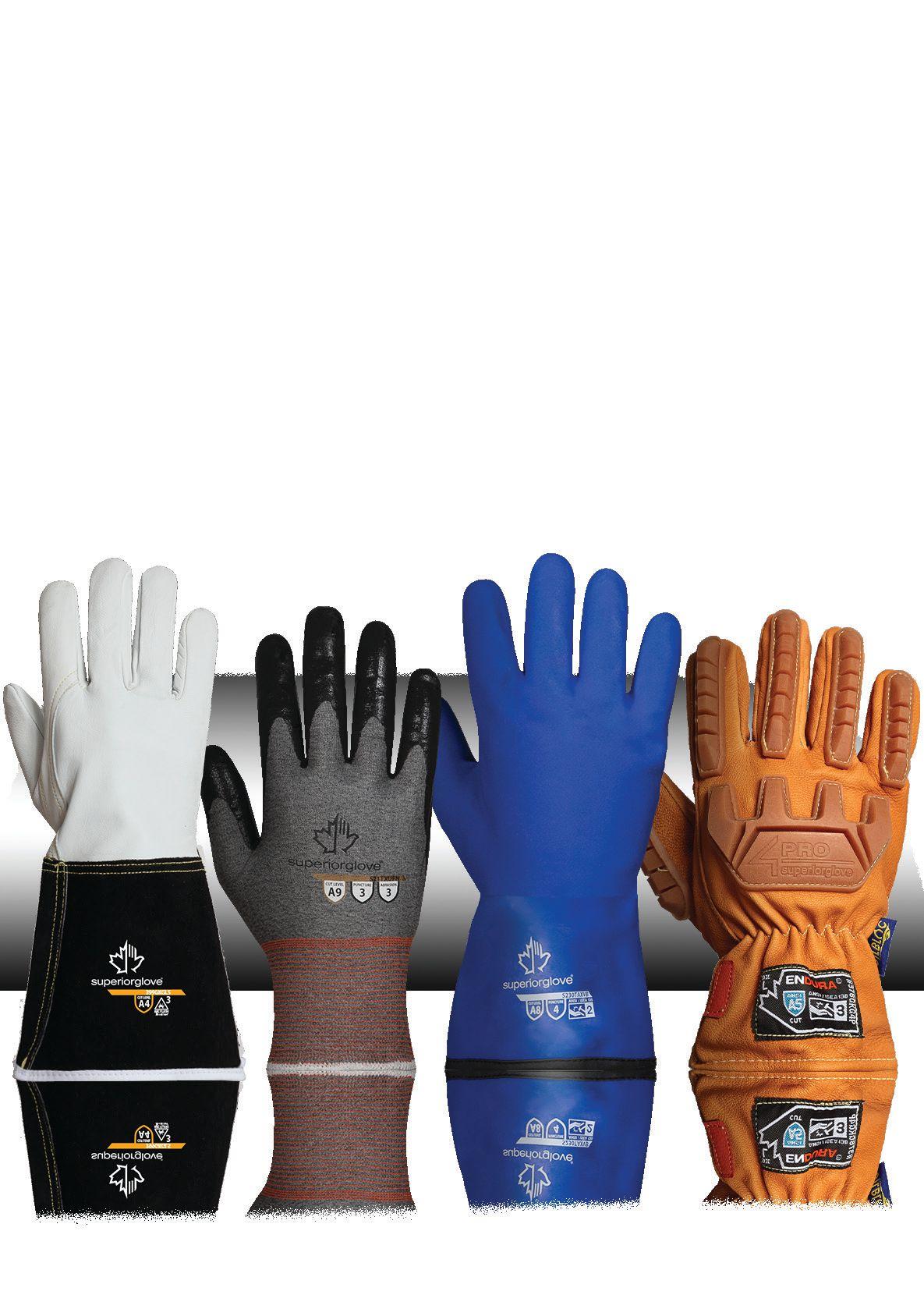
Superior Glove is a leading innovator in the design and manufacture of safety gloves and sleeves. For more than 100 years, Superior Glove has been protecting workers across the globe with specialized hand and arm protection for every major industry. Superior Glove’s headquarters is located in Ontario, Canada, and their team and companyowned/operated production facilities span across Canada, the United States, and Central America.

1250 Sheppard Ave
West Toronto ON M3L 2A6
Tel: 416-661-1100
Fax: 416-661-3447
Web: waynesafety.com
Proudly Canadian owned and operated, Wayne Safety has been providing safety solutions for over 74 years. We’ve built our business on the things that matter most to our customers: Service, Expertise, Quality and Value… and we constantly strive for new heights to ensure we bring you the best we have to offer. Whether you’ve been a customer for many years, or are dealing with us for the very first time, our objective is to serve you well and have our reputation for excellence bring you back, time and time again
We’re at your service – every day. We go above and beyond to ensure that you have the information you need to make the safety decisions you need to make… then we’ll get the product to you on time!
A winning combination!
Our lines are “top drawer”. And we’re constantly scouring the globe for innovative products to ensure that you have access to the best quality items at the best price
7b Pleasant Blvd # 975 Toronto ON M4T 1R2
Tel: 416-428-1710
Web: wearcrafft.com
Specializing in providing you, whether big or small the right uniform industry apparel/accessories that will keep you safe and enhance your companies appearance...with full decoration..
675 Cochrane Dr. Suite 710, East Tower Markham ON L3R 0B8
Tel: 416-441-1939
Web: whsc.on.ca
Workers Health & Safety Centre (WHSC) is Ontario’s only government-designated occupational health and safety training centre. With 35 years’ experience, WHSC provides the highest quality training for workers, their representatives and employers in every workplace, regardless of sector, size, location or union status. WHSC’s hazard-based training provides the knowledge and skills to proactively
identify, assess, control, and wherever possible eliminate hazardous working conditions. Our training programs help meet and exceed legal requirements. They include training for joint health and safety committee Certification, health and safety reps in smaller workplaces, Federal committees and reps, supervisors, WHMIS, working at heights, workplace violence, workplace mental health, indoor air quality and safe lockout. Delivery options include publicly scheduled, in-house and custom options, in instructor-led, online, virtual or in-person classrooms as appropriate.
583 Oxford Street
East London ON N5Y 3H9
Tel: 519-601-2420
Fax: 519-601-2940
Web: https://workplaceinjurymanagementtraining.com
No two WSIB situations are ever exactly the same. Your unique needs are important and we can help you meet them. We offer customized training solutions to fit the knowledge gaps that exist within your business and deliver
them in a way that works for you. Allow us to educate your team on how to navigate the WSIB system, save costs, know and understand your obligations and what measures you need to take to remain in compliance. From half-day sessions to multi-day experiences our knowledgeable team can help. We would like to hear what your challenges are and work collaboratively with you to solve them. Workplace injuries happen unexpectedly and your team needs to be ready to handle them. Empower your HR/HS team and supervisors to understand the steps to take when an employee is injured. Knowing when and how to file a WSIB claim followed by an effective and timely modified work offer means faster back-to-work programs and fewer WSIB costs.

5100 Creekbank Road Suite 300 Mississauga ON L4W 0A1
Tel: 905-614-1400
Fax: 905-614-1414
Web: www.wsps.ca
Workplace Safety & Prevention Services (WSPS) is a not-for-profit
organization committed to protecting Ontario’s workers and businesses. It serves more than 171,000 member firms and 4.2 million workers across the agricultural, manufacturing and service sectors. A proud partner in the province’s occupational health and safety system and a trusted safety advisor since 1917, WSPS has a rich history of making workplaces safer.
1306 Algoma Road
Ottawa ON K1B 3W8
Tel: 613-688-2845
Fax: 613-248-0711
Web: www.yowcanada.com
An award winning safety training provider, YOW Canada develops courses and materials to help Canadians with occupational health and safety compliance. With over 20 years of industry experience, we proudly offer fully trackable, user-friendly training courses and outstanding customer support.


Air Quality
Workers Health & Safety Centre
Associations
Alberta Occupational Health Nurses Association
Board of Canadian Registered Safety Professionals
Canadian Society of Safety Engineering Fit For Work
Workplace Safety & Prevention Services
Confined Space
Fit For Work
Grace Industries, Inc.
Workers Health & Safety Centre
Emergency Equipment
AED.ca
Emergency Management
AED.ca
Fit For Work
HSE International
Workers Health & Safety Centre
Environmental Services Fit For Work
Ergonomics
Fit For Work
inHabit Workplace Wellness Inc.
Workers Health & Safety Centre
Workplace Safety & Prevention
Services
Eye Protection
RONCO
Wayne Safety Inc
Wearcrafft
Face Protection
Wayne Safety Inc
Fall Protection
Brandt Tractor - BC Interior
Brandt Tractor - Calgary
Brandt Tractor - Edmonton
Brandt Tractor - Fort McMurray
Brandt Tractor - Lethbridge
Brandt Tractor - Red Deer
Brandt Tractor - Regina
Brandt Tractor - Saskatoon
Brandt Tractor - Winnipeg
Fit For Work
Grace Industries, Inc.
Wayne Safety Inc
Workers Health & Safety Centre
Fire Protection
Draeger Safety Canada Ltd.
Workers Health & Safety Centre
First Aid
AED.ca Fit For Work
Flame Resistant Clothing
GlenGuard
Wearcrafft
Foot Protection
RONCO
Gas Detection
Draeger Safety Canada Ltd.
Hand Protection
OLFA North America Inc.
RONCO
Showa
Superior Glove
Wayne Safety Inc
Wearcrafft
Head Protection
Draeger Safety Canada Ltd.
RONCO
Wayne Safety Inc
Health & Safety Software
Avetta
HSE International Sofvie Inc.
Hearing Protection
RONCO
Wayne Safety Inc
Identification Products
BRADY CANADA
Groove Identification Solutions Inc.
Wearcrafft
Workers Health & Safety Centre
Industrial Hygiene
Fit For Work
SC Johnson Professional CA Inc.
Workers Health & Safety Centre
Workplace Safety & Prevention
Services
Lone / Remote Worker
Fit For Work
Grace Industries, Inc.
Groove Identification Solutions Inc.
inHabit Workplace Wellness Inc.
Machine & Tool Safety
Fit For Work
Ontario Bollards Inc.
Workers Health & Safety Centre
Material Handling
Brandt Tractor - BC Interior
Brandt Tractor - Calgary
Brandt Tractor - Edmonton
Brandt Tractor - Fort McMurray
Brandt Tractor - Lethbridge
Brandt Tractor - Red Deer
Brandt Tractor - Regina
Brandt Tractor - Saskatoon
Brandt Tractor - Winnipeg
Ontario Bollards Inc.
Workers Health & Safety Centre
Noise Control & Monitoring
Workers Health & Safety Centre
Pandemic Planning
Fit For Work
HSE International
inHabit Workplace Wellness Inc.
Workers Health & Safety Centre
Workplace Safety & Prevention Services
Personal Protective Equipment
Draeger Safety Canada Ltd.
Grace Industries, Inc.
Ontario Bollards Inc.
RONCO
Wearcrafft
Workers Health & Safety Centre
Respiratory Protection
Draeger Safety Canada Ltd.
RONCO
Wayne Safety Inc
Safety Manuals & Posters
Brandt Tractor - BC Interior
Brandt Tractor - Calgary
Brandt Tractor - Edmonton
Brandt Tractor - Fort McMurray
Brandt Tractor - Lethbridge
Brandt Tractor - Red Deer
Brandt Tractor - Regina
Brandt Tractor - Saskatoon
Brandt Tractor - Winnipeg
HSE International
Workers Health & Safety Centre
Workplace Safety & Prevention Services
Safety Products, Agriculture
AED.ca
Ontario Bollards Inc.
Wayne Safety Inc
Wearcrafft
Safety Products, Manufacturing
AED.ca
Brandt Tractor - BC Interior
Brandt Tractor - Calgary
Brandt Tractor - Edmonton
Brandt Tractor - Fort McMurray
Brandt Tractor - Lethbridge
Brandt Tractor - Red Deer
Brandt Tractor - Regina
Brandt Tractor - Saskatoon
Brandt Tractor - Winnipeg
Grace Industries, Inc.
IDN Canada
Ontario Bollards Inc.
Wayne Safety Inc
Safety Products, Traffic
AED.ca
Ontario Bollards Inc.
Wearcrafft
Safety Products, Utility AED.ca
Grace Industries, Inc.
IDN Canada
Ontario Bollards Inc.
Wayne Safety Inc
Safety Supplies & Equipment
AED.ca
ENNIS Safety Security & Consulting
Group
IDN Canada
Ontario Bollards Inc.
RONCO
Wayne Safety Inc
Wearcrafft
Slips & Falls
Fit For Work
Workers Health & Safety Centre
Training & Education
Brandt Tractor - BC Interior
Brandt Tractor - Calgary
Brandt Tractor - Edmonton
Brandt Tractor - Fort McMurray
Brandt Tractor - Lethbridge
Brandt Tractor - Red Deer
Brandt Tractor - Regina
Brandt Tractor - Saskatoon
Brandt Tractor - Winnipeg
Fit For Work
HSE International
inHabit Workplace Wellness Inc.
National Institute of Disability
Management and Research
Workers Health & Safety Centre
Workplace Injury Management Training
Workplace Safety & Prevention Services
YOW Canada Inc.
The early months of the year can bring about a refreshed and renewed focus for many. But these Canadian winter months are also marked by blustery weather conditions and the seasonal threat of respiratory viruses.
Many communities across the country continue to experience cases of respiratory viruses, including influenza (flu), respiratory syncytial virus (RSV), and SARSCoV-2 which causes COVID-19. Most respiratory infections spread through prolonged close contact with someone who is carrying the virus. That’s why it’s important to help keep workplaces, homes, and communities safe by remaining focused on preventing the spread of germs.
Protecting workers is essential, not only for their physical and psychological well-being, but also to help keep workplaces open and operating safely. Both employers and workers can take precautions to help keep workplaces and communities safe.
Respiratory virus season typically occurs from November to April each year, according to the Public Health Agency of Canada (PHAC). There are, on average, 12,200 hospitalizations and 3,500 deaths each year related to the flu specifically.
Since the beginning of this respiratory virus season, there were several weeks at the national level in which rates of illness related to flu and RSV were above typical levels expected for that time of year, according to Respiratory Virus Detection Reports from PHAC.
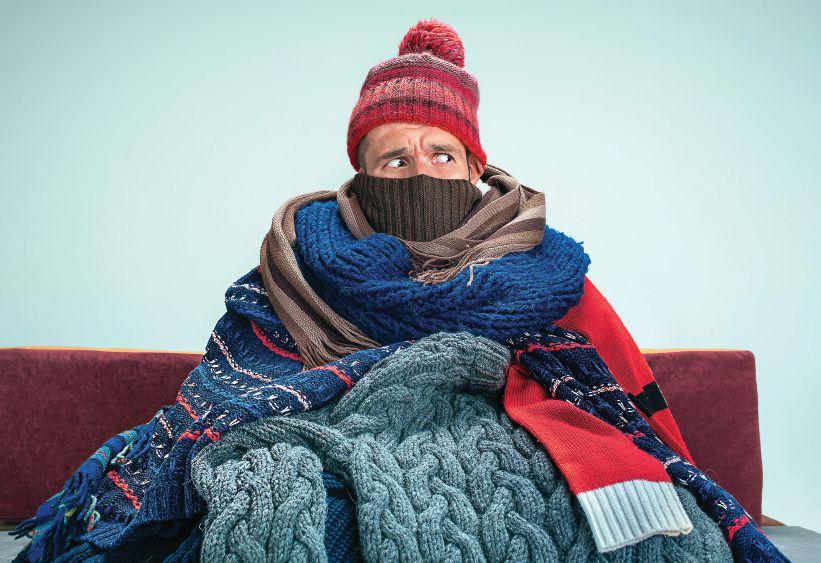
These viruses can affect anyone. However, some people are at higher risk of experiencing serious complications, including adults aged 60 and over, pregnant women, and people living with a chronic health condition. Risk factors can vary between viruses.
Respiratory viruses can have both economic and psychological impacts on workplaces and workers. For example, a business can experience disrupted operations if workers are away due to illness or if they must care for loved ones who are ill. This can lead to increased workloads and stress among workers taking on additional tasks, and in some cases, absenteeism can be especially disruptive to business continuity. Businesses and employers alike can experience financial impacts due to decreased productivity and missed
work, respectively. Several factors can increase the risk of spread at work. It can be challenging to remain physically distanced at work, making the risk of prolonged contact with someone carrying the virus higher.
Poor ventilation can affect workers indoors, especially if tasks involve physical exertion with increased breathing rates. Congregate settings where large numbers of people gather, like schools and bunk houses, put workers at increased risk, particularly if compliance with public or workplace health measures is low, including low vaccination rates against the flu and COVID-19. Workers are at increased level of risk when more of these factors exist in the workplace.
To better understand the impact on your workplace, consider the characteristics of your unique work environment and workforce. It may be helpful to complete an updated
risk assessment based on respiratory viruses. How, when, and where could workers be exposed and what factors might increase the spread?
Some key considerations include high traffic and shared work areas like building entry points, break rooms, and hallways. Job positions, including receptionists, cleaners, and medical workers, should also be assessed since the nature of their tasks can impact exposure to viruses. Also consider work factors, such as how often the job requires close proximity to others or working directly with vulnerable populations. Personal factors, like whether workers take public transit or live in multi-generational households, as well as local community characteristics, including rates of respiratory illness and vaccination, are also key considerations.
Once you have completed an updated risk assessment, update your hazard control program accordingly. Consider including controls related to physical distancing, ventilation and air filtration, and screening. Review your cleaning and disinfecting procedures and remind workers about good hand hygiene and respiratory etiquette. In some cases, you may need to adjust your controls on wearing masks, using personal protective equipment, and getting vaccinated.
The most effective measures control viruses at the source, followed by those along their path. The least effective measures protect at the worker level. But note that no single action or control measure is completely effective against all the different ways that respiratory viruses can spread. A layered approach that combines workplace health and safety controls with public health
measures provides the strongest protection against exposure. With each added layer, the risk decreases. Whenever possible, consider removing or replacing hazards with something less harmful. For instance, allow for remote work, facilitated through technologies such as teleconferencing, virtual meetings, and online forms. Limit travel if possible.
Consider engineering controls such as improving indoor air ventilation and filtration and installing physical barriers or motion-activated devices to prevent contact with high-touch surfaces. Adjust your furniture and workstation layout to maximize physical distancing. Offer contactless payment and other touchless or online options. Changing how people work can also make a big impact. Clearly communicate administrative policies and procedures, rules, and risks. Ensure sick leave policies encourage workers who are sick to stay home. Consider staggering shifts, limiting occupants, and screening all workers and visitors. Create a cleaning and disinfecting program for hightouch surfaces and objects. Practice physical distancing, good hand hygiene, and respiratory etiquette. If PPE like fit-tested respirators, face shields ore gowns are applicable to hazards and activities in your
Ensure sick leave policies encourage worker who are stick to stay home. Where possible, provide accommodations for people who are at high risk of severe disease or outcomes.
workplace, train workers on how to properly use and maintain them.
Most importantly, creating a culture of safety and prevention can help ensure workers do not face any
barriers when adhering to policies and procedures. Where possible, provide accommodations for people who are at high risk of severe disease or outcomes or are at high risk of exposure to respiratory viruses.
Workers can also take measures to protect themselves and others from respiratory viruses. One of the most effective ways is to get vaccinated against COVID-19 and the flu. Everyday preventive practices are important too. Practice healthy hygiene habits by washing or sanitizing your hands frequently and coughing or sneezing into a tissue or the bend of your arm, instead of your hand. High-touch surfaces and objects should be cleaned often.
Wear the highest quality, well-constructed and well-fitting mask available to you when indoors, even if you are not required to, especially in crowded or poorly ventilated spaces. When possible, improve ventilation by opening doors and windows to get outside air.
Workplace health and safety and community health impact each other, so choose lower risk activities whenever possible to reduce the risk of spread both at work and at home.
Stay informed about the impact of respiratory viruses in your community as public health and government authorities in each jurisdiction continue to update guidance.
Everyone has a role to play in contributing to the organization’s safety culture, working towards prevention, and keeping each other healthy and safe. Remember not to let your guard down. Remaining vigilant and following protective health measures will help contribute to healthy and safe workplaces and communities alike, throughout the respiratory virus season.
CSA Group is a global organization dedicated to safety, social good and sustainability. It is a leader in standards development and in testing, inspection and certification around the world, including Canada, the U.S.A., Europe and Asia. CSA Group’s mandate is to hold the future to a higher standard.

Over the past decade, many organizations have steadily invested in resources to support the mental health and wellbeing of employ-
ees, a movement accelerated with the introduction of COVID-19 in 2020.
A s an organization committed to health, safety and sustainability, CSA Group is focused on psychological health and safety through its standards development organization, but also through the resources and benefits it offers to its more than 2,000 employees located around the world.
Above and beyond offering an inclusive set of benefits and resources for employees, CSA Group has been steadfastly investing in and building a ‘culture of care’ with employees in the driver’s seat.
M anisha Mistry, senior director, health, safety, sustainability and environment (HSSE) and diversity, equity and inclusion (DEI) at CSA Group speaks to OHS Canada about this culture and the recently launched Mental Health Ambassador Program.
W hat is CSA Group ’s approach to employee psychological health and safety?
The psychological health and safety of our employees has always been important to us. In 2019, we initiated ‘Project Care’, a strategic project led by a global committee with a focus on elevating the organization’s mental wellbeing strategy. Since then, we have made significant strides in expanding and strengthening our resources and offerings, leveraging insights and feedback from employees to continuously improve.
In addition to building a package of competitive benefits and resources, we have been very focused on education and training. Regardless of their position, CSA Group offers employees the opportunity to participate in training that offers practical solutions for dealing with mental health, while helping employees learn more about mental health. All employees participate in training
to understand mental health and different conditions, recognize signs of concerns, learn how to support a colleague, and discover steps to take in a crisis. This past year, we rolled out training for people managers, mental health first aid training, and launched a Mental Health Ambassador Program.
Can you tell us more about the Mental Health Ambassador Program?
In 2022, CSA Group trained 70 Mental Health Ambassadors across most of the locations where we operate. At the core of their role, ambassadors act as a bridge between an employee who may be in distress and the many resources available to them. Our ambassadors are familiar with internal protocols and policies and can provide referral pathways and resources, when requested. Representing employees from different levels, departments, and locations, and subject to a confidentiality agreement, the intent is to create a more psychologically safe environment for employees in distress to seek out the assistance they may need.
In addition, CSA Group’s Mental Health Ambassadors are responsible to act as role models and promote a healthy lifestyle as a champion for mental health and wellbeing within the organization. They also take the lead in promoting discussions on mental wellbeing when opportunities present themselves.
inspired the introduction of CSA Group’s Mental Health Ambassador Program?
The introduction of the program was driven by a couple of factors. CSA Group’s ‘culture of care’ is focused on establishing a workplace devoid of stigmas associated with mental health, and an environment where employees can safely speak
about the challenges that they are facing. Across our organization, we are focused on providing training focused on building a baseline of mental health knowledge for all employees, including specific training for people managers. Although this training was well received and is important, we recognized the need for a group of trained individuals who can more strategically and impartially support employees. Additionally, we are hopeful that our ambassadors can play a role in increasing awareness and usage of our mental health benefits and tools because we recognize that navigating our robust set of resources can be overwhelming, especially in moments of distress.
How were ambassadors trained?
Training ambassadors is three step process. First, employees are required to successfully complete mental health first aid training and receive certification through a licensed provider. Second, employees must successfully complete a specialized ambassador training facilitated by CSA Group’s Employee Assistance Program provider. Finally, a confidentiality agreement must be completed prior to ambassador activation. Once designated an ambassador, employees must attend regular meetings and complete ongoing training.
Looking at CSA Group’s mental health and wellness program holistically, how has the introduction of the Mental Health Ambassador Program strengthened or complemented the program?
The introduction of ambassadors helps us build a bridge between the many resources and tools that we offer and our employees. Internally, launching and promoting a global program of this significance gives our HSSE team the chance to shine
a spotlight on psychological health and safety as a broader topic, which is always a win. We have successfully used our company intranet, town halls and team meetings to spread the word.
For organizations considering implementing an ambassador program, are there challenges or learnings that you can share?
As a global organization operating in multiple time-zones and countries, coordination of regionally relevant training can pose some challenges. However, these learning pains were overshadowed by the overwhelmingly positive response and feedback from stakeholders across our organization.
CSA
Their role is to act as a bridge between employees in distress and the resources available to them.
Moving into 2023, we will prioritize growing the program in all regions that we operate. To keep our ambassadors engaged, we will offer ongoing training, keeping a close eye on any micro and macro trends that may be influencing the lives of our employees.
What will CSA Group’s HSSE team be focused on in 2023?
As we return to a post-pandemic work environment, psychological safety will continue to be an objective and priority for our team. Specifically, we will focus on inclusive leadership, supporting leaders in strengthening some of the core competencies needed to support the creation of safe and supportive spaces for employees.
As we see more employees head into the office, we will also be undertaking a “safety reboot” helping employees get reoriented to our offices and labs, including providing basic safety training. Overall, we will work on strengthening the organization’s safety mindset, as some of what used to be second nature is not as top of mind for employees who have been working remotely. Hazard recognition will be a critically important component of this.
CRH
CRH Canada Group finds 'concrete way' to raise awareness about mental health with innovative campaign
By Todd Humber
The pandemic put a lot of focus on workplace heroes — the essential employees who risked their health to keep society humming, including health-care workers, first responders and even grocery store staff.
But that spotlight never really hit the construction industry, which put its collective head down and soldiered on throughout all the lockdowns and uncertainty.
“I don’t want to say our people were forgotten but, I mean, they’re not nurses. They’re not doctors, they’re not the topof-mind individuals,” said Shannon Truax-Wardell, director, occupational health and safety, construction and materials at CRH Canada Group.
The struggles her teams faced over the last few years were just as real — with many not knowing where to turn or what to do, she said.
“ We did some research for North America and found out that construction is actually in the top three for suicide rates among men,” she said.
In the United States, the rate of suicide among construction workers is 53.3 per 100,000, according to 2022 data from the Centres for Disease Control. The only sector with higher rates was mining and oil and gas extraction.
It started the company on a wellness journey, focused on both physical and mental health. Tapping into expertise from its on-staff nurses, it held a mental health
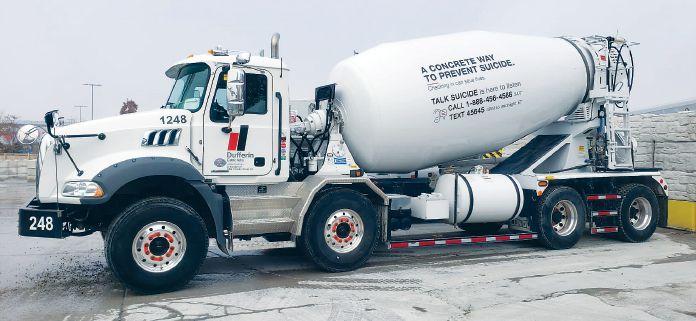
awareness week in May 2022. That led to nearly two dozen calls from workers to the nurses about mental health, she said.
She noted that the male bravado cliché of “suck it up, get the work done” is real, but evolving — especially with the next generation of employees flooding in.
“ They have more education around mental health, and it’s helping to shift the conversation a bit,” said Truax-Wardell.
“As a whole, people are recognizing maybe it’s not OK to just sit there and say suck it up,” she said. “You need some help.”
CRH Canada Group is well positioned for those conversations because of its safety culture, she said.
“ We’re very fortunate, because we worked very hard on that,” she said, which means employees often feel more comfortable saying they need help.
The search for ways to spread the word also led to an epiphany: Why not put a message on the side of vehicles — visible to workers and the public alike — to encourage workers to seek help by promoting the Talk Suicide hotline. And that’s exactly what happened.
“It was about what we can do to support our people as well as the greater public,” she said. The slogan is clever and catchy: “A concrete way to prevent suicide.”
S lapping words on a truck may sound easy but getting buy-in for such a public campaign is often easier said than done.
The answer to this pitch from management, though, was an immediate and resounding yes at CRH Canada Group, she said.
“ I’m not going to lie, I thought I was going to have to fight,” she said. But that fight never materialized as management bought into the concept 100 per cent from the start — and the plan is to expand the messaging to other vehicles.
R ight now, the company has five ready-mix drums bearing the information. Soon it will launch on aggregate haulers and potentially even on pickup trucks.
“ We actually have on our tailgates that Talk Suicide number as well for our lightfleet pick up trucks,” said Truax-Wardell.
The reaction from employees has been phenomenal, she said.
“ We had one employee, in a testimonial he sent in, say he was proud to work for a company that actually takes mental health seriously,” said Truax-Wardell.
The first truck hit the road in mid-November, and will be on the roads regularly across southern Ontario and in Quebec, including the Greater Toronto Area, Kitchener, Ont., and Montreal.
(AP) - Two people in Florida were arrested after one of them made a 911 call to get help with moving belongings from a home they were burglarizing.
Deputies responded to a home after a 911 call was made but nobody spoke, the Polk County Sheriff’s Office said. At the home, the deputies concluded that nobody lived there, but they found a male suspect and his girlfriend inside.
While talking to deputies, the female suspect told them that she had called 911 for the purpose of having law enforcement help them move their belongings from the house they were burglarizing. They also wanted to get a ride to the airport so they could spend the weekend in New York, the sheriff’s office said.
‘Cousin
(AP) - A “Cousin Eddie’’ display in Kentucky apparently looked a little too real and police were called to check it out.
After receiving the call, a dispatcher described the scene to responding officers as “a male standing outside. He is naked. He has a robe covering part of his body. He is exposing himself, and he has a hose between his legs.’’
Officers arrived at the Shepherdsville home to find a mannequin in the yard that looked like Cousin Eddie from ``National Lampoon’s Christmas Vacation.’’ It was decorated with a robe, a hat, a cigar and a beer and was holding what appeared to be an orange hose, WDRB-TV reported.
Homeowner Joni Keeney said she decided to put up the display from her favourite Christmas movie to have some fun.
Responding officers did get a laugh and took some photos of the display, WDRB reported. “Never a dull moment,’’ Shepherdsville Police Chief Rick McCubbin said.
$75K
The lights that never go out
A high school in Massachusetts can't turn off its lights. For about a year-and-a-half, a computer glitch has kept the lights on 24/7 at the 248,000-squarefoot building. There are about 7,000 lights always on, and the board estimated it has spent about $75,000 in excess electricity. The school expects to have the glitch solved in February.
A collection of weird and wild workplace health and safety headlines from Canada and across the world.

(CP) - On New Year’s Day, a CN Railway worker in Humboldt, Sask., found an unexpected surprise: someone had left a little orange kitten in one of the railroad’s warm-up shacks.
He had been left with a bowl of food, but nothing else. And with temperatures in the -20 Cs, his paws had frozen to the ice. The worker had to chip him out, and found a local family to look after him.
The next day, when the worker came back to the shack, he heard crying. He went in and found another kitten in the snow, badly frostbitten and in need of medical care.
After chipping the little gray cat out of the ice, he took her to the Humboldt and District SPCA.
They named her Doodlebug, for her happy, loveable personality. Shelter staff member Kassidy Remenda, who stepped up to foster Doodlebug, said the kitten has a long road ahead of her.

(AP) - Indian police have arrested an unruly airline passenger following a complaint by a woman aboard an Air India flight from New York that he urinated on her in business class.
New Delhi Police spokesperson Suman Nalva declined to say what the man, Shankar Mishra, told investigators after his arrest. The Times of India newspaper cited Mishra as saying that he was drunk and could not believe what he had done. A court sent him to prison for 14 days as police investigate the complaint accusing Mishra of outraging the modesty of a woman during the New York-New Delhi flight. If convicted, he faces up to three years in prison.

IT
OHS CANADA IS HOSTING A LIVE VIRTUAL EVENT ON MARCH 23, 2023, TO LOOK INTO SOLUTIONS IN THE WORKPLACE TO KEEP ALL WORKERS SAFE.
Research from the CSA Group found just six per cent of Canadian women say the PPE they wear is designed for them.
That has forced them to make troubling modifications, using things like duct tape, to get through the day — compromising their safety as it can make the gear ineffective.
JOIN US FOR THIS HALF-DAY FORUM AS WE DISCUSS THE ISSUE, AND PRACTICAL SOLUTIONS, TO ENSURE WORKERS ARE GETTING THE GEAR THEY NEED.
Registration is free!
For more information visit:
WomeninOHS.com
SPONSORSHIP OPPORTUNITIES
Contact Silvana Maiolo
Brand Sales Manager | 416-722-8403
smaiolo@annexbusinessmedia.com
SPEAKING OPPORTUNITIES
Contact Todd Humber
Senior Editor | 289-264-4883
thumber@annexbusinessmedia.com
Brandt Operator Safety Training
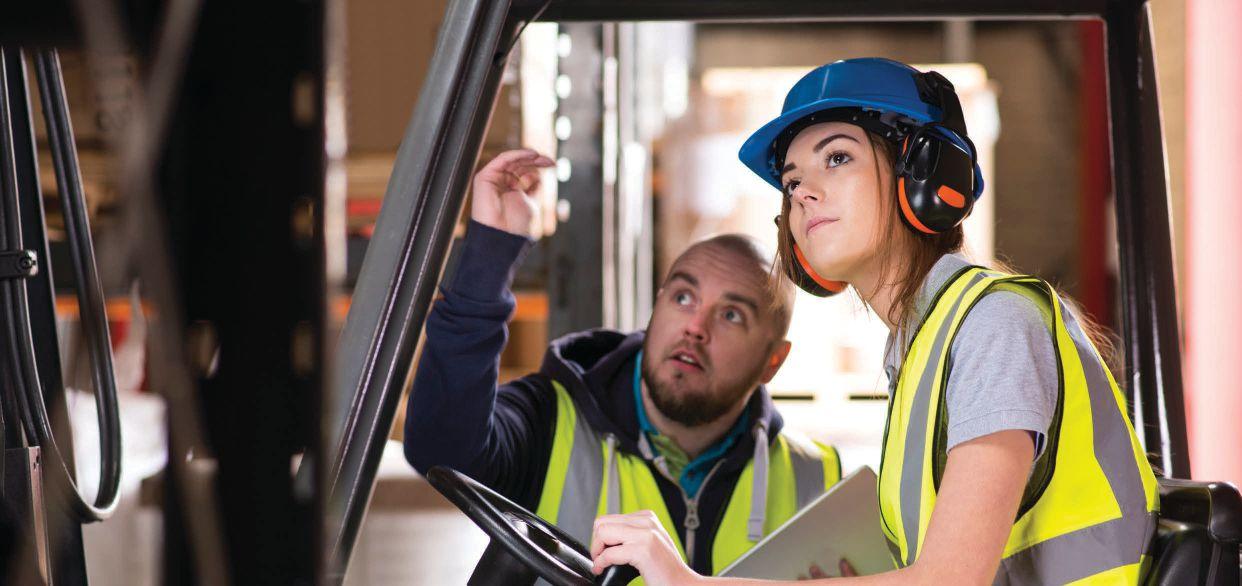
Enhance your safety, productivity, efficiency, and confidence on the job with Brandt Operator Safety Training.
Learn how to load handle, drive & maintain a range of forklift types.
CRANE & RIGGING
Gain an understanding of how to inspect & safely operate overhead & truck-mounted cranes.
Get certified in a day with our all-inclusive skid steer course.
Understand all aspects of telehandler operation, from start up to shut down procedures.
Take our full-day excavator course & get certified.
MOTOR GRADER
Industry-leading training on motor grader handling, safety & operations.
Get certified for in-house training with our 2-day course. ALSO AVAILABLE
FRONT END LOADER
Industry-leading training on wheel loader handling, safety & operations.
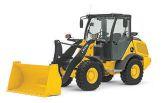
FALL PROTECTION
Master fall protection systems & skills that meet regulation requirements.

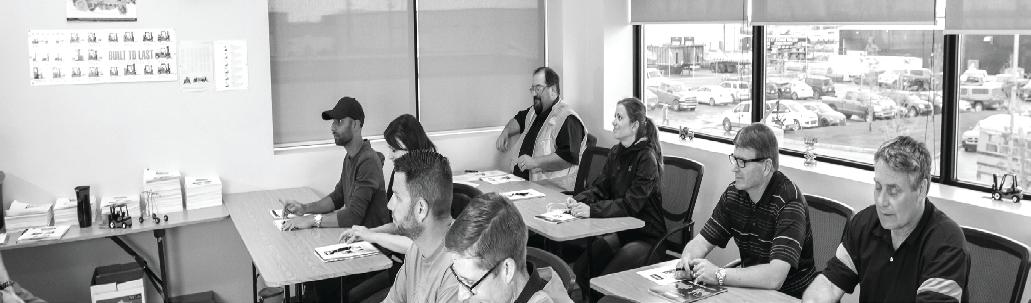
Visit us online at: brandt.ca/material-handling